Recent Articles:

News 8/25/10

August 24, 2010 News 8 Comments

From Teaberry: “Re: Verizon vs. Comcast. To provide the secure backbone for HIEs.” I keep hearing that Comcast will make some big healthcare moves soon, so we’ll see if that’s one of them.

From Eclipsys Observer: “Re: Allscripts and Eclipsys leaders. Under fire and intense scrutiny as the merger unfolds. The Newco has not identified a single product management leader, with John Gomez and Jon Zimmerman vying for power. Rumor is that Gomez is in the lead.” Unverified.

8-24-2010 5-58-15 PM

From DigiGuy: “Re: Roche/Ventana purchases BioImagene. You probably knew about it before it happened.” The Swiss drug maker will pay $100 million in cash to acquire the privately held California-based BioImagene, which sells a digital pathology system (slide scanner, biomarker analysis software, workflow, etc.) for tissue-based cancer diagnostics. The drug makers are struggling for some reason (prescription prices make that hard to believe) and are all over personalized medicine.

From WhatDoYa Know: “Re: Yale CIO job. [name omitted] is in line for it.” I left out the name while I wait to hear back from that person. Lack of response usually means confirmation. I’m waiting on that rumored Siemens surgery system vendor acquisition since John Glaser didn’t reply when I e-mailed.

From Toomer: “Re: Ingenix. I bet their next acquisition will be iSoft.” That wouldn’t surprise me, although I don’t know how interested they’d be in a company with minimal US presence.

From Wildcat Well: “Re: NJ’s HIE program. They held a conference call Friday for fielding questions from EMR vendors. The good Garden State showed themselves to be sometimes unyielding, under-informed, and at times down right combative with EMR vendor participants.” Unverified. I can’t decide if that’s necessarily a bad thing.

From Oregon Lab Guy: “Re: Portland weekly tabloid article about open source and HIT’s ‘gold rush.’ It suggests that we have ‘thousands’ of EHR experts roaming the streets of the Rose City – OHSU must have a big lecture hall!” The article says that Portland is the country’s open source capital even though the big companies took ideas and people from there and moved elsewhere. It bemoans the lack of follow-through with good ideas born there, mentioning that Portland’s techies have a reputation for wanting to head out at 5:00 each day (kudos to them). It’s a pretty good article, using the cynical mandatory EMR analogy that I thought I made up — requiring restaurants to use electronic order-taking and processing to improve their efficiency and reduce mistakes. Above is a July OSCON lecture on open source in HIT from Deborah Bryant of the OSU Open Source Lab.

Cumberland Consulting Group is named to Inc. magazine’s Top 5000 Fastest-Growing Private Companies for the second straight year, a nod to its 34% growth and its increase from 53 to 91 consultants in the past year.

Former Allscripts COO Ben Bulkley is named president and CEO of Fluidnet, an Amesbury, MA maker of what looks like a pretty sweet IV pump.

8-24-2010 5-51-21 PM

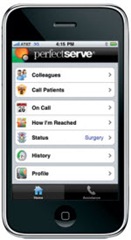
PerfectServe announces its Clinician iPhone application, which works with its system to allow doctors to make calls using the internal directory and manage their on-call schedules and notification preferences.

Ingenix completes its acquisition of Picis. That didn’t take long.

8-24-2010 6-05-11 PM

Industry longtimer Rich Goldberg, formerly of Misys and Confluence Medical Systems, joins TeleTracking as SVP of strategy and business development.

HITECH and MyEMRChoice.com are written up in the Philadelphia paper.

McKesson CEO John Hammergren is chairing the search committee of HP’s board that will choose a successor for ousted CEO Mark Hurd.

Dana-Farber Cancer Institute implements Informatica for data integration.

NIST’s approved testing procedures for temporary certification of EHRs are here.

Clairvia announces GA of mobile open shift alerts and scheduling for its physician scheduling system. The Durham, NC-based company, which sells resource management and scheduling systems, has executives from Atwork and Per-Se. It changed its name from AtStaff this past spring.

Northern Virginia RHIO will use GE Healthcare’s Global eHIE system to bring patient medication histories into Inova Alexandria Hospital’s Picis EDIS.

A PHI-containing and apparently encryption-free laptop is stolen from the University of Kentucky Medical Center.

E-mail me.

HERtalk by Inga

From KISS: “Re: (Company X). Is it me or do these guys have the worst elevator pitch ever?” I left out the vendor’s name, but I agree that it’s a pretty bad pitch when you can’t figure out what the company sells. It’s a shame that so many companies get caught up with using all these non-descriptive but trendy buzz words in an attempt to pitch their products. As Mr. H says, “they get too highfalutin’”. Note to marketing types: Keep It Simple Stupid for those of us who don’t want to read/hear your pitch more than once just to understand what you’re offering.

community hospital monterrey

Community Hospital of the Monterey Peninsula (CA) selects RelayHealth’s HIE solution to connect and exchange clinical data with physician practices. RelayHealth, by the way, just achieved full EHNAC accreditation for its e-prescribing services.

Sage North America adds its healthcare division products to Sage’s Partner Advantage program, meaning its EHR/PM/EDI are now available through resellers.

McKesson names Eisenhower Medical Center (CA) and HealthFirst Care Systems (MN) the winners of its 2010 Distinguished Achievement Award competition for outstanding use of McKesson’s HIT products.

intermountain

Intermountain Healthcare (UT) contracts with The Advisory Board Company for its OptiLink patient acuity solution.

BayCare Health System (FL) confirms news we reported over a month ago: Tim Thompson, most recently CIO at the Methodist Hospital System, is BaycCare’s new CIO.

Children’s National in Washington DC successfully implements the AuditACE compliance solution from Streamline Health Solutions.

CHRISTUS Health premiers a MEDSEEK-developed enterprise website that consolidates its 16 sites.

Mahaska County Hospital (IA) fires two employees for snooping in patient medical records for purely personal reasons. The violated patients included the ex-wife of a current boyfriend, an ex-husband, a husband, the mother of an adopted child, and a hospital volunteer. Ah…it is so tempting to ignore the law and common sense and just be nosy.

epic heaven

Epic moves into Heaven and the local papers have photos to prove it. The Madison and Verona papers provide updates on Epic System’s newest building (Heaven), which includes a curving, stainless steel slide that lets employees shoot from the first floor down to underground parking. With Campus 2 scheduled for completion next year, Epic is now contemplating a third campus. Judy — send me an invite because I really want to try out the slide.

Lenox Hill Radiology (NY) contracts with Professional Data Systems to manage Lenox Hill’s IT department.

The University of North Carolina Health Care System signs a contract to implement the Lawson Health Resource Management suite.

The North Texas REC selects WaveTwo, LLC as an official agent, tasked with helping physicians to implement EHRs and qualify for economic incentives.

erwait

I’m guessing that someone at Methodist Le Bonheur Healthcare (TN) has not signed the Oprah No Phone Zone pledge. The hospital says it will post updates on ER wait times every two minutes. The information can be accessed via Methodist’s Web site or by texting ERwait on a mobile phone. OK, I know they are not the only hospital offering this type service and I don’t mean to pick on them, but for some reason when I read their announcement, I envision a driver speeding down a highway while texting for wait times while looking in the rear view mirror to the back seat at a child holding his arm and screaming in agony. But really, I am sure it is a great service. So great that I see that MetroWest Medical Center (MA) is launching a similar program.

Canton-Potsdam Hospital (NY) names Jorge C. Grillo its new CIO. One of his priorities will be the implementation of a $2 million EHR system (Meditech, I believe.) He’s the former CIO of the Island of Bermuda’s Hospital System (sounds like a nice gig),

KLAS takes a look at RIS, awarding the top satisfaction rating to Epic Radiant in the 200+ bed hospital market. Avero interWorks and NovaRad tie for the number one spot in the community hospital market segment and FUJIFILM Synapse IS is the leader in the ambulatory market. The top four functionality items on providers’ wish lists include management reporting tools, flexible scheduling, rollout of mammography tools, and critical test results management functionality.

Modern Healthcare readers vote President Obama the most powerful person in healthcare. Lots of politicians and policy wonks fill out spots 2 through 100 on the magazine’s annual ranking of the 100 Most Powerful People in Healthcare. Rumor has it that Mr. H came in at #101.

inga

E-mail Inga.

Healthcare IT from the Investor’s Chair 8/23/10

August 23, 2010 News 10 Comments

clip_image002   =  clip_image004 clip_image006

clip_image008 clip_image010 ?

First, let me offer my apologies to all, especially Mr. H. and Inga, for the heinous length of time between posts. It won’t happen again.

It’s been an interesting time with multiple industry-shifting M&A transactions (but not much in the way of public equity activity). The big question on everyone’s minds these days is not “Who is Salt?” but rather, “What is Ingenix?” (a) a drunken sailor? (b) a whale at the HCIT casino? (c) just too darned wealthy? (d) a genius assembling parts in a way that has yet to become clear? I would submit it’s actually (e), all of the above.

Let’s take each in turn. Ingenix, as all likely know by now, is the wholly-owned IT subsidiary of UnitedHealth Group, one of the largest publicly traded managed care companies. Mr. HIStalk himself recently posted a list of its recent buys.

The first thing that’s noteworthy to me is its dramatic movement from only managed care-focused companies — such as Symmetry, Claredi, or AIM — towards first the hospital business office (CareMedic, Executive Health Resources) and then towards the clinical side of the healthcare system (Picis and, most recently, Axolotl).

When Ingenix tried to buy managed care claims system vendor TriZetto a few years ago, it was going to make the questionable bet that its competitors would purchase their core systems from them. A stretch, but one with precedent. Now it’s betting that hospitals and physicians will not only pay real money to the Great Satan of Managed Care, but that they’ll entrust their clinical data to it as well.

(A provider-focused HIE vendor I know was recently licking their virtual chops over the prospect of selling against a managed care company. Even consumers will likely start to wonder if they want UnitedHealthcare to have the moment-by-moment deep clinical data inherent in some of the recent purchases).

Let’s talk valuation for a moment. As a buyer, Ingenix is, in many ways, ideal for a number of reasons. First, recall that by SEC regulation, public companies have to disclose any material information to their shareholders. The definition of material, however, is open to some debate.

When you’re owned by a company with a $35.5 billion market capitalization that expects to generate $5 billion of cash this year, materiality is a blessedly high bar (by way of comparison, Cerner’s total market cap is $5.7 billion). What this means is that outside shareholders can’t second guess the prices paid. It is, in effect, like a transaction between private companies.

Let’s imagine for a moment that Eclipsys was a private company. Because of their relative sizes, Allscripts still would have had to disclose the purchase price. It would also have been held, at some level, accountable to its shareholders for what it paid, imposing an additional layer of market discipline. Ingenix/United, in contrast, doesn’t view any of its acquisitions in the space as financially material, which no doubt helps loosen the purse strings.

An even better attribute in a buyer than ability to remain silent is ability to pay. At the time of its last earnings release (Q2), Ingenix’s parent United raised its guidance for cash from operations by $200-600 million (or almost as much as CPSI’s enterprise value). I’m sure Bill Gates’ kids would concur — when your parent generates that kind of money, you can pretty much buy what you want if they’ll let you! So when your business generates cash of almost $14 million per day, money is just not a problem.

Now I wonder is this a casino whale or a drunken sailor? One smart HCIT company president opined to me that this characterization was offensive to drunken sailors everywhere, but perhaps he’d just been outbid. Personally, I’m leaning towards whale. Unlike Misys in the 90s, United clearly understands healthcare and Ingenix clearly understands HCIT. Even some of the prices paid, if scuttlebutt is to be believed, aren’t totally irrational (though they are unquestionably aggressive).

Let’s consider Picis as an example. The company was widely rumored to have sold for about 3x 2009 revenue or about 12x 2010 EBITDA. By way of comparison, Eclipsys is selling to Allscripts for 2.1x trailing revenues and 10.5x forward EBITDA. Who’s getting the better deal? Eclipsys has a much broader product offering, but Picis’ products have great depth in the few areas of the hospital in which it plays. Both companies are coming off difficult years with fairly robust growth forecasts. Both have a great ARRA/Meaningful Use story to tell, which pushes their multiples upward.

Bottom line, to me, it appears to be a very aggressive, but not totally absurd price. Now, on the pricier side, Executive Health Resources was purchased for over $1 billion, and I’ve heard Axolotl went for as much as 9x trailing 12-month revenues, which seems a different story.

Finally, there’s the matter of motivation, which I expect is multi-fold. I have no doubt that there’s a grand strategy at play here that will be likely be revealed by the company once the pieces are assembled. But in addition to that, each year the operational dollars that are deployed towards these IT solutions are almost certainly to be counted towards patient care (as opposed to other business purposes). This will have the effect of making the optics of its medical loss ratio appear more attractive to government regulators. Further, I believe there will ultimately be some actual patient care improvements in many cases.

Ordinarily I’d say time will tell if the prices paid are fair, appropriate, or even reasonable; but in this case absent a total implosion, lack of materiality will likely make it difficult ever to learn. I’m aware of a few assets that Ingenix is on the hunt for. I’m sure, to their current shareholders, that the price paid will quite material indeed.


Ben Rooks is the founder of ST Advisors, LLC, a consultancy which works with HCIT companies and their sponsors typically on issues around strategy, financing and outcomes/exit planning . He earned an MBA in healthcare management from The Wharton School of the University of Pennsylvania, was a leading healthcare IT equity research analyst and then worked as an investment banker in over 25 successfully closed healthcare and medical technology transactions valued from $40 to $365 million.

Monday Morning Update 8/23/10

August 21, 2010 News 31 Comments

8-20-2010 8-59-14 PM

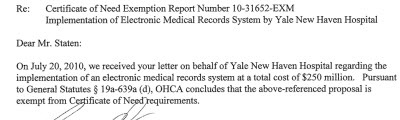
From The PACS Designer: “Re: Yale’s Epic cost. $250 million!” TPD, who tells me he works for Yale in some capacity, sent over a copy of the Certificate of Need response for Yale New Haven Hospital’s Epic implementation. No wonder it took them awhile to find the money.

8-20-2010 9-07-50 PM

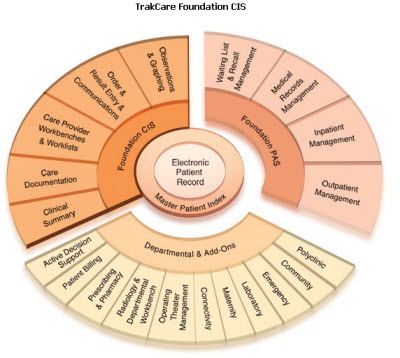
From Anon: “Re: VA and DoD. I’m not sure Epic is the frontrunner, but I think you are close. InterSystems is the likely winner with their TrakCare product. Take a poke around and see the massive size of their new implementation workforce and the sizable country-based contracts. It’s worth noting the rumor that InterSystems is allowed to sell Trakcare in only two ways to avoid waking the sleeping Wisconsin cash cow: outside the US and to the US government.” Interesting … InterSystems is strong at integration and of course has endless expertise in Cache’ and MUMPS, not to mention that as a big and very profitable company can probably make believable promises to the military. I notice they’ve also been steadily increasing their annual lobbying expense, over $200K in 2009 and much of that going to VA database issues. InterSystems acquired the Australia-based TrakHealth in 2007, rolling the Web-based enterprise system into their integration and HIE offerings. You may be on to something. Even if not, I like your thought process.

From Soliloquist: “Re: Epic and the DoD. I just can’t see a scenario for this working. This would be the ultimate culture clash, as you state. I also am having trouble envisioning how the government could take the heat for forking over billions for such a system. It wouldn’t fly when the media got wind of the deal and Epic would be unwilling to cut a deal. They don’t need the business.” See new poll to follow.

From Book ‘em Danno: “Re: HIMSS and Forbes HIT magazine insert. A full-page ad costs $37,000. The lowest price option is a 1/6 page ad for $7,000.” Verified – BED forwarded pricing information.

From Traveler: “Re: Siemens. I heard they are buying [surgery software vendor’s name omitted]. Have you heard anything?” I e-mailed John Glaser now that he’s in charge at Siemens, but I haven’t heard back so far. I’ll leave out the vendor’s name for now since it annoys me that unscrupulous competitors immediately start flashing the rumor to prospects to create FUD, but I’ll update when/if I hear.

From CTCIO: “Re: two Connecticut academics lose data. Our attorney general is on it!” A UConn laptop containing information on 10,000 undergraduate applicants is stolen from an IT department cabinet. Then came another stolen laptop at Yale School of Medicine, that one with information on 1,000 patients. Encryption was not mentioned in either case.

From Irene: “Re: LTC. I am the VP of IS for a small non-profit that serves adults the ages of 20-60 with severe physical disabilities. Although the organization falls under the Long Term Care regulations and is almost solely Medicaid reimbursed, the consumers are not typical of a LTC skilled nursing facility (frail elderly). Average length of stay is 10 years. We are entering work for EHR readiness and I am looking for any/all vendors that implement solutions outside of the Acute Hospital space, that have flexibility in their design and integration between clinical and financials, and ability to data warehouse long term health data. Any information would be appreciated.” If you have advice for Irene, please leave a comment.

8-21-2010 10-31-33 AM

From BackToOurRoots: “Re: EncounterPro EMR. Going open source. Wondering what this means for their current customers …” I don’t get the strategy even after reading their reasons the product went open source, only a couple of which seem to be relevant.

From WNA Wannabe: “Re: paperless at the VA.” What a strange story … a VFW claims representative makes “a unilateral decision to go paperless” and shreds all the files he has without making electronic copies. Or at least that’s the claim – the story gave me headache as everybody involved in handling the paperwork of veterans seems to blame everyone else for missing documents that are shuffled from one group to another. I didn’t realize that VFW helps veterans with that kind of paperwork, either. Paperless, done right, would be an apparent improvement.

From HITGeek: “Re: NHIN. See Twitter #newNHINnames.” Some pundits make up witty NIHN replacement names. My acronyms are always sophomoric semi-profanities, so I’ll keep quiet even though mine are funnier.

8-20-2010 9-19-36 PM

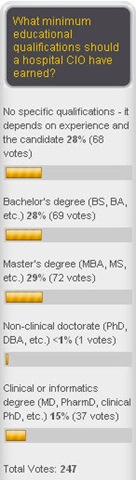
It seems that we can never reach consensus on the CIO education issue, still divided equally among “it doesn’t matter", a BS, or an MS. New poll to your right: would Epic be a good replacement for the DoD’s AHLTA?

A reader sent over the paper evaluating hospital EMR usage in California, which concluded that EMR usage was associated with higher costs and lower nurse productivity. The methodology was as I expected and have seen in other studies conducted by people outside of healthcare (the authors are business school professors): take some conveniently available but questionably useful databases, match them up, and try to find generalizable conclusions. It just didn’t work for me. The analysis started with the HIMSS Analytics database (which I wouldn’t trust too far since it’s a self-reported sampling), assumed that EMR implementation started a year after contract signing since that date wasn’t known, and then matched that information with cost and nurse staffing databases. It covered nine years and ignored all other relevant events that occurred during that time (mandatory nurse staffing laws, changing reimbursement, individual hospital quality improvement projects, shift of patient load from inpatient to outpatient, etc.) Some of the conclusions make the data relationships questionable: EMRs were associated with reduced nurse overtime, sophisticated EMR usage was associated with higher costs and longer stays (ignoring the fact that certain kinds of hospitals are more likely to be sophisticated EMR users), and high-level EMR usage increased complications but decreased mortality. EMRs are categorized only by usage level, not how well they were implemented, what level of integration they have, and which vendor’s product was involved. And of course, the biggest problem: “associated with” is a long way from “caused by.” I just can’t get excited about the article, but if you can, feel free to send in your analysis.

The same primary author, by the way, used similar survey data noodling to conclude that EDs with sophisticated EMRs have a lower length of stay for eventually admitted patients by nearly 25%, but admitted another finding that seems to invalidate the entire premise: basic EMRs didn’t really help. I’m not buying that, either. I’d be more convinced by a short-term, one-hospital case study that measured LOS before and after an EDIS implementation. I’d also be highly wary of assuming that inpatient admission times reflect ED efficiency (instead of inpatient efficiency in having available beds, for example).

Cerner adds nearly 400 employees so far this year, bringing their total to 5,185. 

CEOs of the five largest health insurance companies made $200 million in 2009. Cigna’s outgoing CEO got $111 million in retirement benefits, while the not-retiring CEO of UnitedHealth Group received salary and options worth $108 million. Apparently those of us actually working in non-profit hospitals made the wrong career choice in choosing to deliver care rather than administer it, although wildly overpaid CEOs are hardly unique to healthcare.

8-21-2010 9-56-39 AM

Maybe the folks at Zacks Investment Research need to update their spell check dictionary.

Another stolen laptop containing patient information, this time from Cook County Health and Hospitals System. They vow to review encryption practices. Honestly, can’t someone come up with an encryption method that’s easy to implement and invisible to the end user? Organizations clearly understand the value of encryption but aren’t doing it, so that tells me it’s too much of a pain.

E-mail me.

News 8/20/10

August 19, 2010 News 6 Comments

8-19-2010 9-37-50 PM

From Scatman Crothers: “Re: Stanford Hospital and Clinics. Replacing Dell Perot, which has just a few months to transition and leave. Accenture is taking over the whole thing.” Unverified. Perot got that seven-year deal in 2004, so maybe Accenture won the next round.

From No Surprise Here: “Re: EMRs. A study of California hospitals shows minimal positive effects of EMRs.” I hesitate to comment because the article is not up in full text yet, but it concludes: “EMR implementation was associated with 6-10 percent higher cost per discharge in medical-surgical acute units. EMR stage 2 increased registered nurse hours per patient day by 15-26 percent and reduced licensed vocational nurse cost per hour by 2-4 percent. EMR stage 3 was associated with 3-4 percent lower rates of in-hospital mortality for conditions.” I’ll be interested to see whether the authors attempted to quantify before and after results from individual hospitals, and if so, how they handled the other variables that surely changed in the study’s nine-year timeframe. My experience with these database-driven analyses, usually conducted by publish-or-perish academics, is that they use public information that’s conveniently available but not terribly relevant, leaving logic holes you could drive a truck through. I’ll review the article once it’s out.

From Jennifer: “Re: CPOE and meaningful use. My hospital uses protocol orders for meds that are triggered by specific criteria. For example, a lady comes in with a troponin of 1.0, which orders a contraindication screening for the nurse to complete. If no contraindications exist, then aspirin and Toprol are automatically ordered. These orders go to the queue for the attending physician to sign and are driven by evidence-based practice, but aren’t considered written, verbal, or direct. How would these be defined under Meaningful Use?” I’ll say upfront that I have no idea and I doubt HHS does either, but it seems reasonable to count them as physician-entered (feel free to correct me if you know for sure). The physician has agreed to use of the protocol and is the first signer of the order, so that sounds like a CPOE order to me and it’s certainly not a paper order. I’ll also add that one of the seldom-discussed aspects of MU is that it resembles Most Wired in that you turn in your own numbers with minimal chance of being audited, so in the absence of definitive guidance, I’d count those orders. Not to mention that evidence-based order sets like this are exactly what the government should be encouraging.

From HIT Insider: “Re: Eclipsys. Another sales leader departs – Jay Colfer, SVP who managed the biggest revenue producing team in the company. Big loss.” Unverified, but not surprising if true. If you’re a sales stud, you can work anywhere without the uncertainty of an impending acquisition on prospects and your own career possibilities. I wouldn’t say it’s a negative development for either the company or the individual.

Listening: new Iron Maiden, slower and more complex than their frenetic 80s stuff, lapsing more into non-wimpy progressive (think Ritchie Blackmore’s Rainbow or Rush with some AC/DC admixed in). I never liked them much, but this is really good. It’s a long album, but I’m on my third listen and liking it better each time.  Based on this live video, I’d definitely go see them.

Weird News Andy warns ahead of time that this story might offend some sensibilities, so I shall word it carefully. A newly delivered mother in China claims that her midwife, unhappy with the insufficient tip given to her by the father, sutures shut a nearby but unrelated opening. Also from WNA: a quality analysis concludes that church-owned hospitals deliver better quality care than for-profit ones, with Catholic hospitals also outperforming community hospitals.

8-19-2010 9-39-18 PM

HIMSS is involved, for some reason, with a November advertising insert in Forbes called Transforming Healthcare Through IT. The pitch: “Produced in partnership with the Healthcare Information and Management Systems Society (HIMSS), Forbes’ special Health IT report offers participating advertisers the opportunity to share how your organization will contribute to healthcare transformation through IT.” Whatever happened to just doing it instead of preening in front of a business reader audience? I’d bet that the only companies that sign up are those that are publicly traded or those that yearn to be.

Thanks to AdvancedMD for supporting both HIStalk and HIStalk Practice at the Platinum level. The Draper, UT-based company offers a Web-based practice EHR, practice management, medical billing, scheduling, and e-prescribing. The company also offers its AdvancedBiller program, which connects billing service partners with practices. As often happens, our first contact with the company was when Inga interviewed CEO Eric Morgan a couple of weeks ago, apparently triggering the company’s interest in supporting what we do. It’s a good interview — Eric and Inga covered the pros and cons of being a privately held company, EHR market consolidation, how AdvancedBiller competes with companies like athenahealth, and the influence of hospitals on practice EHR adoption. Thanks to AdvancedMD for supporting HIStalk and its readers.

University of Chicago Medical Center partners with a technology company to produce an epilepsy monitoring system that uses Bluetooth and a smart phone to continuously stream EEG information to a monitoring center. Interesting: it won’t work in iPhones because Apple hasn’t opened up the APIs it needs. Also interesting: the company has patented a technology that uses text messages to trigger smart phone events, which I assume means that monitoring centers could “order” additional diagnostics remotely by cell phone.

Industry longtimer J. R. Hughes, most recently at McKesson, joins the nine-employee healthcare consulting firm The Winkenwerder Company, which has some impressive clients.

8-19-2010 9-45-45 PM

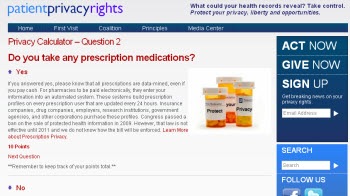
Patient Privacy Rights releases its Health Privacy Risk Calculator, which is really kind of pointless since just about every American will score in the High Risk red zone (it only takes three positive answers to questions such as do you have insurance, do you take prescription meds, and do you pay for any health-related products using checks or credit cards). Actually, I guess that was the point.

Holzer Consolidated Health System (OH) chooses help desk and performance monitoring services from CareTech Solutions.

I’ve joked that the VA and DoD should get rid of their expensive, contractor-managed systems and just buy Epic even though I’m not sure it could cleanly replace VistA or AHLTA. I recently mentioned the NextGov-generated nugget that the DoD is soliciting proposals for an AHLTA replacement. If that happens, there’s no way it will be any vendor except Epic, even though Cerner got its foot in the VA’s door by selling them Millennium lab (or nearly so — I’m not clear on whether a deal was ever signed). Epic’s the only company with experience with decentralized organizations of that size (Kaiser), not to mention that Epic’s nearly clean-sweeping the big hospital market. Benefits to DoD: it’s ready to implement instead of taking years of expensive AHLTA rewrites, it won’t choke like some of the bad software that the trough-lappers have written for the government, it will be a heck of a lot cheaper, and lots of clinicians will already know how to use it. Disadvantages: Epic’s “our way only” model won’t fly too well with the military brass, it will be missing quite a few key pieces that are unique to DoD, and there would be quite a culture clash between the Woodstock-like bunch from Wisconsin and the inside-the-beltway crew cuts.

Sponsor jobs: Web Developer, Regional VP, Project Manager/Web. On Healthcare IT Jobs: Sales Client Executive (New England), Health IT Sales, Director of Ancillary Systems, Senior Director, Applied Clinical Informatics.

I mentioned the Emendo CapPlan capacity planning software back in May. The New Zealand company wins a six-hospital deal in Canada and says it’s still planning to go after the US market.

Philips invests in a $250 million medical technology venture capital fund that will focus on home health, sleep improvement, image-guided therapies, and clinical decision support.

Rhode Island Congressman Jim Langevin visits fast-growing EHR vendor Amazing Charts, with the company’s presentation including such items as forced EHR adoption, overpriced EHRs, and the need for transparency of Regional Extension Centers (the company’s obviously got a bit of a ‘tude, which I like).

McKesson CEO John Hammergren was one of the HP board members who forced Mark Hurd out. Wonder if he’s a candidate to replace him?

Former TeleTracking sales VP Joseph Gentile joins another Pittsburgh company, healthcare robot vendor Aethon, in the same role.

MidSouth eHealth Alliance signs for the CareAlign HIE solution from Informatics Corporation of America (still my favorite company name).

8-19-2010 9-54-05 PM

Testing the North Carolina Healthcare Exchange: WakeMed and Moses Cone Health System.

Israel-based satellite services vendor Gilat Satellite, which wrote off its $4.5 million investment in Axolotl almost immediately after it made it 10 years ago, will get $24 million in cash from the proceeds of Axolotol’s sale to Ingenix, with the possibility of getting another $3 million per the contract terms.

I’m trying to strike at least a sham of work-life balance lately, so naturally I’ve fallen a bit behind as a result. I promise you’ll like me better if you indulge me by patiently awaiting any delayed e-mail replies.

E-mail me.

HERtalk by Inga

athenaclinicals

athenaHealth announces a standalone option for its athenaClinicals product. Clients had been required to use it with athenaCollector. Removing the billing and PM service requirement will likely help athenahealth get into more opportunities, especially those involving hospitals and their affiliated physicians. Pricing is expected to be a flat fee per provider per month, based on patient volume.

The Homeland Security Department plans to acquire an EHR to manage illegal aliens detained by immigration officials. DHS says the EHR could be a commercial, government-developed, or hosted service.

Over half a million Mississippi Medicaid beneficiaries can now use Shared Health’s HIE, whose contract with Mississippi Medicaid includes the implementation of an EHR and e-prescribing system for state Medicaid providers.

jonathan bush girish

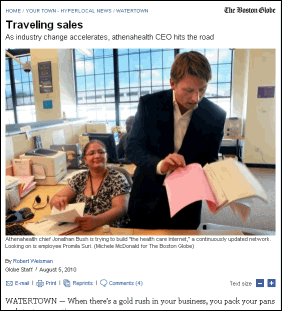
Now this could be fun. Jonathan Bush from athenahealth Girish Navani of eClinical Works square off to discuss their views on the future of HIT and how each is dealing with their larger rivals. It’s September 29th in Boston.

CMS names Ingenious Med an official 2010 PQRI Registry.

St. Edward Mercy Medical Center (AR) is scheduled to go live September 26th on Epic. The local paper shares some of the detail on training requirements for users: physicians 12-16 hours, nurses and LPNs 24 to 27 hours, CNAs 6 hours, and schedulers 4-28 hours. Physicians with the hospital’s cross-town rivals are also preparing for an EHR live. By the end of the month, Sparks Health System should have several practices operational on NextGen’s EHR.

From the latest HIStalk Practice: Good Neighbor Community Health Center (NE) selects Sage Intergy CHC; the AAFP’s Center for Health raises some concerns about Meaningful Use; and, compensation for doctors in hospital-owned groups now exceeds pay for those in other type practices.

St. Charles Health System (OR) selects Velocity Technology Solutions to host and manage its Lawson ERP and Kronos time and labor management applications.

amanda hage

Cumberland Consulting Group promotes Amanda Hage to principal.

Members of West Virginia’s Governor’s Office of Health Enhancement and Lifestyle Planning discuss the hurdles of adopting HIT and agree that EHR utilization is a problem. Stephen Sebert, MD, the council chair for the West Virginia Medical Association, provided this comment: “I have an electronic system already, but the thing is it’s not being used.”  Don’t you know his EHR vendor is cringing a bit.

Rebranding: the 20-year-old Medical Transcription Industry Association changes its name to Clinical Documentation Industry Association.

coshocton

The interim administrator of Coshocton County Community Hospital (OH) says the hospital will begin a six-month installation of a new Meditech system in April. Financing for the $4 million project may be an issue: as of July, the hospital had a $3.5 million operating loss. The administrator says funds for the $246K software down payment are available from reserve funds and financing options for the rest of the project “will be researched” between now and April. The hospital hopes the system will eventually qualify them for $4.5 million worth of stimulus dollars. I wonder how many dozens (hundreds) of community hospitals around the country share similarly dismal financial pictures? Meditech, by the way, was chosen over two other vendors for “functionality, cost, and meeting government mandates.”

GetWellNetwork introduces a new interactive care solution designed for senior patients.

Orlando Health (FL) and Advocate Good Shepherd (IL) contract with PerfectServe for its clinical communications system. In addition, Hoag Hospital (CA) signs an agreement to expand its PerfectServe services to its new Irvine facility, scheduled to open later this year.

inga

E-mail Inga.

HIStalk Interviews Peter Neupert, Corporate VP of Microsoft’s Health Solutions Group

August 18, 2010 Interviews 10 Comments

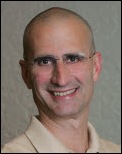
Peter Neupert is corporate vice president, Health Solutions Group, of Microsoft of Redmond, WA.
8-18-2010 7-43-07 PM 

I haven’t heard much about HealthVault lately. How would you characterize that product and the personal health record market in general?

You have to remember that the personal health record market is a function of how connected is it, right? People don’t want to enter data on their own. They want to be able to connect with their physicians, or connect with their service providers. What we have been focused on is providing the plumbing to get the connections. 

I think there’s been a lot of interesting or exciting activity in the last year, mostly at the policy level. When you look at Meaningful Use and Blue Button and all those things that are saying, “Hey, let’s all get together to get the plumbing going, and then we can really unleash the power of HealthVault,” which is to say that I can share the data, I can reuse the data, I can have applications take advantage of this connectedness in addition to what I want to do direct with my physician or care provider.

I think it’s been an idea that has been very, very helpful in framing the debate, in framing what the right answer is, making people understand that it was feasible and doable, and here’s what it would look like and how to make it work. So, I’m really glad that we’ve invested in it. In the last couple of years, we’ve been investing in the plumbing to make reality happen faster when people start to open the connections.

That didn’t seem obvious up front. There wasn’t disappointment that it’s taken this long?

I’m always disappointed when things take a long time because I think, in general, the health industry moves more slowly than other industries when adopting these kinds of consumer technologies or other things. But it, I think, has more to do with industry structure than anything else. We always understood that we had to do the plumbing in order to make HealthVault a consumer success.

As somebody who’s grown up through the operating systems business, you understand that you have to do an awful lot of work to bring together the physical device and the compute power and the video and the other kinds of things together, and then have an application on top of it to make it really compelling for an end user.

So, no, it wasn’t a big surprise, but that doesn’t mean that I’m not still disappointed that it’s taking many years of investment and talking to get to this stage where I actually think people have put in plans to have consumer portals that will connect HealthVault in a meaningful way.

What about the Medstory search engine? That was one of the first investments in healthcare and I haven’t really heard much about it. I think the site still says its beta, but I guess there are parts of it in Bing?

Yes, more than parts of it in Bing. You know, I’m delighted to be able to say that that acquisition got integrated into our core platform. It was one of the four channels.

You’ll remember when Bing launched, they launched with four domains that were built out. Health was one of them, all based on that technology that we acquired in Medstory. So, the fact that the Medstory site is still out there and live is more an artifact of the acquisition than what the technology has turned into inside the halls of Microsoft.

What about Global Care Solutions? It was bought to some fanfare, but now it’s going away. What was so attractive about a hospital information system with a very limited customer base in Asia to begin with? And then, what changed in two years to make it something that wasn’t that important any more?

I think the way to think about the Global Care acquisition is we have always had a vision around a plug-and-play capability and the ability to have this data aggregation platform — our Amalga UIS — and being able to have flexible solutions that sit on top of that and enable a class of workflows that are important to enterprises.

The domain knowledge and the solution focus of the Global Care acquisition were what was interesting to us. We, perhaps, mis-estimated the amount of work it would take to take some of those solutions and make them easily available on our UIS platform. From a timing point of view, it didn’t happen in the way we’d hoped.

We want to focus on UIS, focus on the value creation of workflows that fit the gaps. You know — care coordination, patient safety, things that are not in the same transactional workflow that might be in a patient administration system or an order entry system. We figure that is a better use of our investment dollars today.

What is the strategy for UIS?

I think people in the CEO chair, as they evaluate their IT strategic roadmap going forward, have to say, “What are the right characteristics of my plan that allow me the agility and flexibility to meet the changing conditions in the marketplace? Am I going to get bundled payments? Am I going to buy more hospitals? How do I get closer affiliation with physicians? What are the right IT strategies to accomplish that?” While at the same time, “I’m getting pressure to do CPOE,” however that’s defined.

My view, in conversations with CEOs and CIOs, is that a one-size-fits-all is not the best strategic roadmap and not the most flexible one. Amalga UIS is a cornerstone piece of middleware that allows you to get more value out of your existing departmental systems or EMR system — depending upon where you are in that implementation — and gives you the flexibility to acquire; to create new workflows that deliver value; to deal with new payment models that deliver value; to take some risk because of some of the capabilities; to be more predictive; and is an important component of your future strategic roadmap. That’s the role for Amalga.

Is it a big enough product to be worth Microsoft’s time?

Yes.

Do you see it extending in some other way with other technologies? That rumor’s out there about mobile device integration with some other vendors, some workflow pieces. Is this just a centerpiece or is it going to stand alone?

I didn’t mean to be flip, but our strategy isn’t a product-specific strategy. Our strategy is how do we deliver value through technology to help users? Those users are integrated delivery networks, academic delivery networks, life sciences companies, and others. There are many components along the stack for Microsoft that allow them to meet the mission critical and business critical needs that they have.

Amalga’s a great component of that. HealthVault’s a component. Those two things get connected. We connect to SharePoint, we connect to SQL. We’ll connect to, yes, mobile applications.

The question is what’s the right framework and component architecture that really allows you to do what people wanted to do for forever? Whether they talk about it as interoperability or they’re talking about SOA, or they talk about it in some other sort of interchange mechanism, we’re bringing it to life and bringing it to life in a way that people can get value out of it today.

We believe in the extension model that says, “Hey, you’re not going to get dead-ended in a particular vendor perspective.” Ours is — any data that you get in, you can get out. We’ll make it easy to get out. We’ll make it easy to reuse. We’ll make it easy for you to get the BI components that you need to still use the tools you use when you do BI and you don’t have to change everything.

I think it’s a very compelling strategy. Yes, it’s going to extend in all different kinds of ways both up the stack, if you will, in terms of specialized uses or applications, and in a breadth way, and perhaps even in a depth way when you look at how do you add new sensor class information or real-time streaming information or other types of data sources?

The great thing about health is there’s a huge amount of economics. Data really matters. Big data really matters when you think about where imaging and discovery is going. There’s going to be a huge amount of computation, and it needs to be delivered in a mobile way and in different scalable ways — for the individual, for the population of a doctor, for the population of a county, for the population of a country. We need to be able to scale along that dimension as well. We think we have the right infrastructure and architecture to be able to do that.

What about the Sentillion acquisition?

We’re really excited with bringing Sentillion on board — making the connection with their customers, maintaining their momentum and their customer satisfaction, and beginning to build the integration into our environment and our Amalga products to where we have 1+1=3. So we’re pretty excited about that.

What do you think about the proposed Allscripts acquisition of Eclipsys given that you have relationships with both companies and in New York Presbyterian, in which you share a customer?

We share lots of customers with Eclipsys. I’m less knowledgeable about which of all of our customers are also using Allscripts.

I think the vision of the Allscripts and Eclipsys guys is a good vision of how do we bring together, in a modern architecture, inpatient and outpatients and a lot of things they have hanging off the sides that not everybody knows? I think any time you merge different code bases, you have both the opportunity and a challenge to make that easy for customers and seamless. We hope to be part of helping them to accomplish that.

From a competitive framework, when you look at what’s happening in the US marketplace, it seems to be that’s what customers are looking more and more for — how do you bring these inpatient and outpatient environments together for better patient coordination and different workflows? It was hard for either of them to get to alone, and it’s really going to be about how do they go out and execute and make the promise at the marketing level, at the customer level, a reality at the technology level? Which is true of all acquisitions, right? That is always the hard part.

New York Presbyterian, I think you signed some agreements with them for both HealthVault and Amalga. Do you see that relationship changing once their two other products are under a single banner, or do you think you’ll be involved in whatever it takes to tie those products more tightly together?

I’m really excited about our relationship with New York Presbyterian. If you talk to Steve Corwin or Aurelia Boyer, I think they would say the same thing.

I don’t think the change in the vendor relationship will impact us one iota. They have a very complicated environment. They have some Epic, they have some Allscripts, they have a lot of Eclipsys, they have lots of GE, they have some Siemens scheduling. I mean they have a lot of stuff in there. Amalga is playing an integrative role, as is HealthVault playing an integrative role.

New York Presbyterian is one of our flagship thinkers in terms of how do they use these components that they’ve now invested in to meet their strategic goals as a business, both for their internal employees and providing better tools for them; and as a customer-facing, how do they leverage the connected care environment for their own competitive positioning?

We are working on their strategic roadmap. I’m very optimistic that we will continue to do more with New York Presbyterian in establishing better ways to leverage technology for them, and for their customers, using the foundational components of HealthVault and Amalga.

What do you think the lessons learned are from the problems that Connecting for Health is having in the UK?

How much time do we have? [laughs]

I’m kind of an engineering kind of guy. When you looked at the problem 4-5 years ago, the concept of a large, centrally planned, standards-driven paradigm for a large integration care delivery like NHS is always interesting on paper, but at the architectural level, I think they made some mistakes.

At the operational level, I think they made some challenging things in terms of how, really, was it going to work? It was just a little bit ahead of its time, if you will, in terms of what it was trying to accomplish, and probably off focus with the means by which they were trying to accomplish it.

The goals of a national patient repository — they’ve largely accomplished the goals for a large DICOM repository and making that part of the workflow better. But in other parts on the enterprise side for the hospital and the integration with the primary care trusts hasn’t really happened, so the technology challenges that they have remain. Not dissimilar to the technology challenges that we have in the United States when it comes to data interchange, patient record interchange, the ability to do really good registries — patient-centered registries as opposed to disease-specific registries.

As the combined payers and providers in this country, they’re motivated to focus on improved chronic care management, and the technology infrastructure they built for Connecting for Health didn’t really help them accomplish that goal. They’re now looking at, how do we do that?

I don’t know if you’ve stayed up to speed on the policy conversations that are coming out of the NHS, but I find it fascinating that they not only are trying to devolve the technology implementation plans, they’re trying to devolve the whole approach to how they think about planning for care and empower different stakeholders in that and have it be more decentralized — decentralized in a sense that it’s really important to them to empower the consumer, the patient.

They’re thinking about how can they create a marketplace for services where the patient consumer is a key component of the voting, if you will, with their dollars or with their actions? And, they’re devolving it to the general practitioner in terms of what are the right care endpoints at the right point in time in working with consumers?

They are thinking radically about re-architecting their delivery system. What the right technology is to help do that in a more decentralized approach is definitely in the future because that is more likely to lead to successful experimentation and adoption.

I’m pretty excited about what the NHS is trying to do. I think it’s a big shift and change. It will be interesting to see how they manage that big shift and change going forward.

It’s a pretty expensive lesson so far to realize they were on the wrong track. Are we prepared to not make the same mistakes here?

I think there are two things. One, it’s not clear how much money they’ve actually spent. I know they spent some. I know they got some value out of what they spent, and I know they froze some spending in other dimensions. But actual dollars spent, it’s not the reported number. At least that’s what I’m told by leaders over there.

I think the lessons that the United States is going to go through is really about will incentivizing EMR adoption through the construct of Medicare and Meaningful Use lead to better outcomes in and of itself, or is it just a component of a series of changes that are required to lead to better outcomes?

In my Senate testimony over a year ago, before they passed the HITECH Act, I argued — or tried to articulate — that technology’s not an end in itself. It’s a means to another end. What technology is appropriate is partly a function of what goals are you trying to accomplish? When people talk about EMRs, they imbue an EMR with all kinds of things that are sometimes true and sometimes not true in what today’s EMR systems do. Or, in how they are implemented in today’s institutions.

I think we need a more precise conversation about the role of technology: the role of reimbursement systems, the role of how we adopt technology given what goals we’re trying to go after to, perhaps, learn the right lessons.

I sit on the Institute of Medicine roundtable that’s talking about a learning healthcare delivery system. George Halvorson, at the time of the policy debate, the health reform debate, made a pretty clear and compelling statement that we ought to focus,as President Kennedy said, “We want to go to the moon,” that the right way to focus our health policy debate is say, “Hey, we want to improve the number of people with H1BC under control by 80%, or have 80% of them be under control.” That’s the single, best way to manage the cost curve.

Then you say, “What technologies do I need, and how much do I spend to make that happen?” Which is different than saying, “Hey, let’s everybody incentivize to have EMRs.” So, I think there’s a lot to be learned on focusing on the health outcomes and the system outcomes we want, and then to look at the technologies that are most appropriate to deliver those outcomes.

And also, to recognize that we have a lot of data in the source systems already, you know? Lab data’s digital. Medical data’s digital. Even in the small primary care systems they’re digital at some point of the process. Being able to capture, aggregate, and identify would allow you to get more value for your technology spent, perhaps. We’ve been pretty consistent about that and we still believe that. I think we’re not a lone voice in that perspective.

In terms of global health, if you went to another country with problems similar to ours — whether it’s infant mortality or chronic disease — probably the last thing you’d want to throw billions of dollars at is to make hospitals more efficient inside the four walls. You’d address health issues, not healthcare delivery issues. Are we throwing too much money at too little of the problem?

The private companies — hospitals, CEOs, IDNs — they’re looking at it and saying they understand that they need to go beyond the EMR and that they need to go beyond their four walls. That they see the future of payment reform, meaning they have to figure out how to get paid for not doing things. And so they’re already acting as if a change to payment systems really happens.

Now they’re not doing it with 100% of their investments, but they are all investing in that’s where the future’s going to be. I don’t exactly know what I need to do, but I need to be investing in.

When I look outside the US, I think the politics really matter. When you look at what China’s doing, they’re trying to move more of their care delivery out of the hospitals. They’ve got lots of motivation to do that because their hospitals are overwhelmed and overcrowded and they still have a high length of stay. They’ve put in a lot of infrastructure to move people out, but their hospitals are really very different than our hospitals. They are big clinics in addition to being big, acute care delivery stuff.

When I look at what’s going on in Germany, they’re really struggling to figure out what promise … what’s their social compact? What promise can they do, and how do they think about primary care versus secondary care? And again, you have the private delivery system actually innovating more — both from a financial and a technology point of view — than the public system.

I would say that NHS, as we already talked about a little bit, is also very much looking at their investment level. I think what you see people saying both with dollars and with decision makers trying to put more into a “prevention regime” than in a “make me more efficient” inside the “once I’m already sick” regime. That’s where you have these combined payment systems where they have more incentive to really focus on doing that.

But yes, I see lots of stuff all around the world where people … there’s just no really good business model for prevention. It’s a hard problem.

Form factor passes for innovation in healthcare, such as having cool iPad and iPhone apps. That’s where Microsoft seems to be at a considerable disadvantage to Apple and probably Google as well. How do you get involved in that, or do you want to be involved in a market where it’s less about what the application versus just having it untethered?

I would disagree with your premise to start with. Not to say that there isn’t adoption of lots of cool stuff, and so when an iPad comes out or an iPhone comes out, you see a lot of adoption in healthcare. My observation would be, however, healthcare gets less value out of those kinds of investments than other technologies and that it’s a lot of noise. It’s not really where people are spending the money, or the things that they’re making mission critical.

We look at innovation as really enabling transformation in reengineering. The “wow” stuff doesn’t enable that kind of transformation in reengineering. I’m happy to focus on less cool stuff from an end user point of view, but if I can deliver ten times the power and actually get data sharing to really work at one-tenth the cost with some of the stuff that we’re doing, I think I’ll win a lot of business and delight a lot of physicians when the speed is faster; delight a lot of nurses when I make their job easy because they don’t have to go look for information, it’s all in one spot; and win in the trenches as opposed to winning on the “in” gadget or popularity group. I think that takes a deep understanding of what problems you’re trying to solve, what jobs are really important, and how the flow and diversity and heterogeneity of data meet in order to be able to do that.

I think Microsoft is way better situated than either Apple or Google to solve the hard problems. I think if you look at our investments in HealthVault and understanding the ecosystem, and building a set of applications, and keeping pace with the changing conversation around privacy and security and app sharing and all that other kind of stuff, that we have demonstrated the level of understanding and our willingness to continue to make incremental investments to make it a reality. So, I’m happy to compete with popularity, a brand, versus reality of technology all day long. We’ll win in the long run. We may not win in the short run.

What technologies do you see that are innovative and potentially influential that have not yet really taken hold in the market?

I don’t claim to be an expert. You know, there are all kinds of really cool stuff going on. I think if I’m a CIO today or a CEO today, I think the one thing I might be asking myself as I look at a five-year time horizon is, “How do I think about cloud computing? How do I think about really changing the cost environment and the serviceability environment of my application stack at a time when budgets are getting pressured?”

And yet, I’m going to have more data. I’m going to have more applications. I’m going to have more users. I’m going to have more everything, but I’ve got to do it with less dollars. What is the strategy that will allow me, as an enterprise, to really make that a reality and still give me the flexibility to meet my changing business needs? If I want to really cuddle up with a payer or take, at risk, a large percentage of the population and I need information systems to manage that, how do I fit that into my declining footprint? Do I get some leverage out of being able to do predictive analytics in the cloud? Or, how do I think about being able to contribute to solving cancer with a large population and connecting and sharing that kind of stuff in the cloud?

Those would be the kinds of innovations that I would want to have on my horizon before I go sink a bunch more money in physical hardware or a data center or some other thing that may have a short shelf life. And, it certainly doesn’t help my P&L.

I see lots of really interesting stuff going on there. I’m not sure that its stuff that the CMO gets that excited about, but one that probably folks should be thinking about.

Any concluding thoughts?

You know, I think we’ve had a great conversation. We’re excited to be part of the health IT community. We think we, as a player that has both the consumer and enterprise offering — and perhaps a slightly different approach at trying to solve the problem — to help remind people to think beyond the EMR. We’re really excited to be part of the community and look forward to making our customers and our lives better by the smart application of technology to the hard problems in health.


News 8/18/10

August 17, 2010 News 10 Comments

8-17-2010 2-25-35 PM

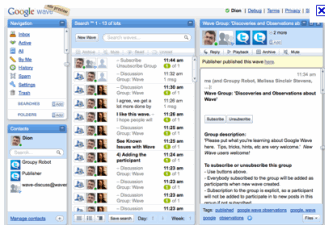
From The PACS Designer: “Re: Box.net. With the Google Wave application headed to Google’s archives, another collaboration tool called Box.net may offer an alternative for developers. The path to Meaningful Use is being studied by many, and the Box.net collaboration tool can work with Google Apps to satisfy the need to work together to improve healthcare processes.”

From Jim: “Re: Ed Marx. Although I read HIStalk regularly, I haven’t paid enough attention to him. The recent mention of his strategic plan got me to go back a read many of his postings. I don’t know how I’ve missed him, but what a find. He is one of the more refreshing and inspirational voices in HIT. Very belated congratulations on spotting his talent and sharing it with us. Thanks.” I’ll accept those compliments on behalf of Ed and add my own since I agree completely. I should mention, though, that you didn’t actually miss Ed’s earlier postings here — he’s been posting only for a few months. He had been writing for one of the rags and decided to make a change, part of which involved my back-loading all of his earlier posts to HIStalk. I think he’s found a wider and apparently more appreciative audience. Inga gets some credit, too, since she was his main contact (everybody likes Inga, of course).

8-17-2010 2-26-52 PM

From Defiant: “Re: Tiger Institute for Health Innovation at the University of Missouri. Next month will be its anniversary. Would you be interested in interviewing leadership there about the progress made to date and what their vision is all about?” Sure.

Thomas Jefferson University Hospitals contracts with 3M for document management and abstracting solutions.

Sacramento Maternal-Fetal Medicine (CA) chooses the SRS hybrid EMR.

8-17-2010 1-25-34 PM

We reported a reader’s rumor awhile back that suggested the Department of Defense might be thinking about mothballing its multi-billion dollar AHLTA EMR system. That may be correct, according to some sleuthing by NextGov, which found this solicitation buried in TRICARE procurement documents. It suggests that the military is considering commercial alternatives. The scope (warning: .DOCX) includes inpatient, outpatient, intensive care, ED, expeditionary, and ambulatory surgery, with “integrated support” of lab, pharmacy, radiology, and PACS. The EHR piece must cover telehealth, referral tracking, decision support, identity management, secure messaging, NHIN integration, cost accounting, personal health records, and a patient portal.

8-17-2010 2-28-46 PM

Thanks to the readers who tipped me off early about the Ingenix acquisition of Axolotl. Actually, Ingenix itself was prompt in sending over the announcement. Much appreciated. I think many people had failed to notice the company’s impressive string of acquisitions until I listed some of them yesterday.

Pittsburgh paramedics are upset with the county’s $10 million dispatching system upgrade, which they say is incorrectly prioritizing calls.

QuadraMed will offer clinical practice guidelines from CPMRC to its QCPR customers.

HIMSS, WEDI, EHNAC, and NACHA (that’s a bunch of acronyms, but they’re spelled out in the press release) release a white paper covering HITECH and HIPAA compliance for financial institutions.

Australia’s prime minister funds $225 million for telehealth sessions, plus more money for provider hardware and a videoconferencing-based triage service.

An Australian doctor accused of defrauding Medicare in 90% of her hormone testing patients says the government is wrong in saying she maintained incomplete medical records that did not include complaints, procedures, and histories. She says she’s just one of the 90% of doctors with bad handwriting, but has since computerized and “now I write a big story and I don’t abbreviate anything.”

An odd medication error: a mother who had just delivered triplets by C-section is ordered morphine. She was holding one of the babies when the nurse pushed the morphine into the baby’s IV line instead of hers. The baby’s fine, but the mom is suing anyway. The hospital has since created a policy that prohibits giving meds to moms in the NICU.

E-mail me.

HERtalk by Inga

Former Siemens Healthcare CEO Jim Reid-Anderson  is the new president and CEO of Six Flags Entertainment. I’m sorry, but that statement is just a bad joke waiting to happen (chime in, if you are so inclined.)

Moses Cone Health Systems (NC) and WakeMed Health & Hospitals (NC) are working with their state’s hospital and medical associations, as well as Thomas Reuters and CareEvolution to develop and launch the North Carolina HIE. The HIE will initially connect seven hospitals, three EDs, and 57 physician practices.

Over 40 health systems join Premier healthcare alliance’s ACO Readiness Collaborative and work together on building the critical components of accountable care organizations. Those 40 health systems represent a lot of hospitals and doctors who are betting ACOs are going to have a big impact.

If ACOs aren’t enough to give you a bit of anxiety, perhaps consider the pending v5010 deadline. Robyn O’Connell  of Hayes Management Consulting shares information and advice for migrating to v5010 here.

methodist hospitals gary

The Methodist Hospitals (IN) intend to fully implement Epic’s EMR within the next 30 days.

The local business journal chronicles the leadership of API Healthcare CEO J.P. Fingado, who left Cerner two years ago to head up API. Francisco Partners bought API  shortly after his arrival. Since 2008, the 28-year old company has gone from serving 600 hospitals to 700, increased sales from $40 to $50 million, and grown its employee base from 250 to 330. Sounds like Fingado is doing something right.

eric morgan

Here’s a recap of some good stuff from HIStalk Practice, just in case you missed it:

  • An interview with AdvancedMD Inc. CEO Eric Morgan, who shares some insights on industry consolidation, on the advantages of being a private versus a public company, and on some of his company’s recent successes.
  • Dr. Joel Diamond rants a bit about statistics. Try not to grin.
  • If you need some inspiration, read about the work of Kenyan pediatrician Dr. Sidney Nesbitt, who Dr. Gregg Alexander calls an “amazing pioneer.”
  • I rally for the co-founder of DoseSpot, who may have been an entrepreneur longer than he’s been shaving.

MidSouth eHealth Alliance (TN) signs a multi-year contract with ICA to provide its CareAlign HIE solution.

Orlando Health partners with Isabel Healthcare to implement its diagnosis decision support checklist tool.

Patient Access Solutions intends to integrate the iMedicor portal into its offerings, plus provide users access to iMedicor’s ClearLobby platform.

Persuading influential medical centers to adopt EMRs helps speed adoption by neighboring hospitals. That’s the conclusion of a study published in Management Science, which looked at what mechanisms influence the rapid spread of technology in hospitals. Apparently hospitals seem to follow a “social contagion” model. Note the parallel with fashion: celebrities first, then the rest of us. Draw your own conclusions.

ca telehealth

Governor Schwarzenegger and a bunch of dignitaries launch the $30 million California Telehealth Network initiative, which aims to connect over 800 healthcare facilities to a statewide medical-grade network of healthcare and emergency services.

Odd: the police are called to a Burger King, tasked with removing a woman taking blood and urine samples in the bathroom. The woman claimed to be an RN working for a mobile medical exam company and collecting samples for insurance screenings. At least she wasn’t working the drive-through.

Chinese hospitals are apparently not the safest placed to work. During the month a June, a doctor was stabbed to death by the son of a patient who died, three doctors were severely burned when a patient set fire to the hospital office, and a pediatrician was injured after he jumped out a fifth floor window to escape the angry relatives of a newborn that died under his care. Such violence is apparently standard fare for Chinese physicians. Now if I were a Chinese doctor, I might be asking Steven Slater some advice on how to resign.

inga

E-mail Inga.

Readers Write 8/17/10

August 16, 2010 Readers Write 3 Comments

Submit your article of up to 500 words in length, subject to editing for clarity and brevity (please note: I run only original articles that have not appeared on any Web site or in any publication and I can’t use anything that looks like a commercial pitch). I’ll use a phony name for you unless you tell me otherwise. Thanks for sharing!

How Would You Define a Secure Database?
By Robert J. Rogers, MD

8-16-2010 6-34-13 PM 

While driving to work in late June, my phone rang. I saw it was my office manager calling. For those of us who own our practices, an early morning call from the office manager is rarely good news.

“Dr. Rogers, someone broke into the office last night and stole the computers!”

Thus my partners and I began our saga of learning the ins and outs of dealing with a potential breach of protected data. We are the “Texas allergy clinic” referenced by Mr. H in the Monday Morning Update of 8/9/10.

(Let me briefly mention now that our database was purely for our practice management system. We do not use an EMR yet. More on that later).

Selfishly, my first thought was, “I hope our backup is good”. A few years ago, we experienced a server crash and learned that our backup was corrupted, requiring a manual rebuild of our database. Fortunately, we learned the backup was fine when the new computers were installed. I naively thought our biggest challenge was behind us.

We decided to check with the Texas Medical Association regarding our reporting responsibilities. We were directed to the AMA’s summary of the HIPAA Data Breach Notification Rule, which was enacted in September of last year. It was at this point that we learned the very important distinction between password protection and encryption.

As I suspect is true in most offices, we were under the impression that our database was secure since we needed a username / password combination to gain access to it. We use a well-known practice management system supported by a local reseller. Password protection was the only security measure discussed.

However, we learned that the database was considered vulnerable if it was not encrypted, thus triggering our reporting responsibilities (first class letter to each affected party, and notification of local media if more than 500 individuals are affected). I will leave it to your imagination to consider the logistics of sending letters to 25,000 patients.

This was a nightmare until we learned that commercial printers and mailing services can handle everything — stuffing, addressing, stamping, and mailing (for a fee, of course). [Mr. H — I didn’t actually complain about the cost of this process. I just responded to the reporter’s question regarding the cost of the mailing.]

Being victims of this crime has triggered a number of questions that I hope some of you may be able to answer. Now that I have learned the importance of encryption, I wonder why encryption is not automatically provided by all vendors? Is it complicated and/or expensive?

In an informal survey of my physician friends, none of them understood the importance of encryption. None had asked their vendors about encryption. Many of these doctors host their own servers.

Our potential data breach was important mainly due to the potential for identity theft since we don’t use an EMR (fortunately, in this case). That’s bad enough, but I worry even more about the thousands of physicians who use EMRs and may not use data encryption, thus making sensitive medical information potentially accessible.

As a patient, should you ask your doctor about the security measures in place?

The Data Breach Rule requires notification of the local media if more than 500 patients are affected. I wonder about the wisdom of that requirement. Might the thief be unaware of importance of the stolen server until learning about it from media reports?

Because of our experience, we elected to change to an ASP model for our software, using an off-site server accessed through an encrypted virtual private network. We think this is an adequate level of security, but we thought our previous system was secure, too. Is our database now secure?

As we rush to encourage all physicians to use EMRs, how can we make sure that all involved understand these important security issues?

Robert J. Rogers, MD is a physician with Fort Worth Allergy and Asthma Associates of Fort Worth, TX.

The Business Associate “Relationship”
By Stephanie Crabb

8-16-2010 6-29-01 PM

We are working with many customers who are looking to implement Data Loss Prevention as part of their information security and compliance programs. The best-practice deployment of these solutions requires collaboration with the HIS application vendors that contribute to the ePHI data life cycle such that the DLP solutions can efficiently and effectively content fingerprint targeted data “at the source” in the applications themselves. To some, this might fall under the rubric of “integration” as we have come to define it in healthcare, a common practice.

One small client of ours, a hospital of just 20 beds with an unwavering commitment to patient privacy and data security, approached its core HIS vendor, Meditech, with a formal request to connect directly with the database (aka “dictionaries” in Meditech-speak) to accomplish the implementation of its DLP solution. The data set was minimal — six fields of basic, and I mean basic, data to start. 

This request, surprisingly to us, was met with a firm “no” from Meditech. Why? They consider this “customization.”

Respecting Meditech’s longstanding position in this area, I personally worked with our customer to develop the business case to present to Meditech as to why they needed Meditech’s re-consideration. We cited areas around breach notification, uses and disclosures, and the like to inspire cooperation from Meditech and to put into clear context that DLP was a technology being adopted specifically to demonstrate compliance with HITECH and MU.  

The Meditech account representative acknowledged that they would need to do better in the future, but until they had a “critical mass of requests” from their clients to work with another vendor (like the client’s selected DLP vendor), their answer was still no. Understanding that our client’s Meditech account rep only has so much authority, my CEO and the client CEO requested a personal meeting with Howard Messing, only to be told that Mr. Messing could not accommodate their request. 

This is about a simple permission that the vendor could absolutely grant and requires little to no effort on its part whatsoever. It is a permission that other HIS vendors have eagerly provided. Oh, the vendor did offer to sell our client a module that would make this “easier” to the tune of $40K, even though what the client needs to access is already present in their its implementation.

DLP is not the only emerging technology that holds tremendous promise for organizations looking to reduce their data loss / data breach risk, enhance the controls around their data and its uses, and protect patient privacy. Unfortunately, covered entities cannot accomplish the implementation of these technologies alone. They need the business associate to collaborate, facilitate, and, sometimes, participate. And let’s face it, the rise of technologies like DLP that offer compensatory controls for privacy and security has resulted, in part, because the HIS vendors have been slow to respond with their own system capabilities.

I really do not mean to single out Meditech here. There are certainly other vendors who subscribe to similar operational models. This is, however, precisely the client service mindset that needs to change and that HITECH is requiring, particularly when technology is not the barrier. If these implementations are technically possible and largely resource-neutral to the vendor "business associate," why delay or deny their clients the opportunity to close the privacy and security gaps that are requisite to achieving meaningful use?

While the content of the NPRM may set about a chain of events whereby business associates become even more conservative in their commitments to privacy and security collaboration with their covered entity partners, there really is no where to hide, regardless of how ambiguous HIPAA and HITECH may be written. If you are in this space and in the business of touching ePHI in any way, you have to be “all in” — technically, operationally, and in the way you serve your clients and the industry at large.

It is simply not acceptable to relegate privacy and security considerations to the back burner, or worse yet, leave leave your client holding the bag. OCR recently clarified that “willful neglect” includes failure to take action when one recognizes a risk. Business associates who fail to respond when requested by covered entities to address a perceived risk could find themselves in an uncomfortable and costly position if a breach occurs and it could have been avoided.

Stephanie Crabb is VP of client services with CynergisTek of Austin, TX.


Why Are Lab Orders from Ambulatory EHRs So Hard?
By Ken Willett

8-16-2010 6-45-01 PM 

While hospitals with integrated inpatient EHR systems are claiming high adoption rates for CPOE (in some cases 100%), most providers in ambulatory settings are still creating lab orders outside their EHR. What makes it so much harder?

An integrated HIS system, which includes lab and radiology ordering, can present the provider with the correct choices for that hospital’s services. In the ambulatory world, the EHR is much more limited (being less expensive), yet the variety of external service providers is larger. There are generally multiple labs, with ordering rules governed by insurance contracts, and each has its own test catalog, data requirements for the order, HL7 dialect, and requisition formatting requirements.

The provider wants to quickly capture what tests to order and why. Their manual process is to make a few strokes on a preprinted superbill or order slip. It’s very hard for an automated system to compete with that. Ordering facilities in the EHR are often cumbersome, while at the same time too generic to capture the specifics needed by the lab or radiology provider.

The lab, on the other hand, needs an order which is complete, with billing information, the lab’s order codes, appropriate Ask at Order Entry (AOE) questions answered, and the correct requisition and specimen labels printed. To try to assure that orders coming to the lab are accurate and complete, the lab will generally provide an order entry application and workstation to the practice, for use by a phlebotomist or other staff person.

Having a lab-specific ordering application addresses the problem of making sure the order reflects the most current compendium data of that lab (test codes, AOE questions, specimen requirements, and medical necessity rules), at the expense of having a separate ordering application for each lab (and in many cases, due to Stark laws, separate workstations, printers, etc.). Re-entry of order data, together with the need to use multiple ordering applications, significantly increases the likelihood of error.

Improving lab ordering within the ambulatory EHR is difficult because ordering rules need to be configured for each lab and compendium data needs to be constantly updated. This is a significant burden for each practice to
undertake.

Given that we are now in an environment with much more seamless connectivity between applications (with web services and other technologies), I believe a better solution is to move the ambulatory ordering function out of the EHR itself and instead provide orders via a connected SaaS application. This can allow compendium data management to be done in one place for multiple practices and multiple labs while still giving the provider and phlebotomist direct access to a universal ordering interface.

Only some EHRs have the necessary integration capabilities to allow this sort of user interface extension. Still, this seems like a promising direction to improve provider adoption of electronic orders.

Ken Willett is president and CEO/CTO of Ignis Systems of Portland, OR.

Ingenix Announces Axolotl Acquisition

August 16, 2010 News 3 Comments

8-16-2010 6-03-40 PM 
Ingenix announced after the market close today that it will acquire health information exchange technology vendor Axolotl of San Jose, CA. Terms were not disclosed.

”HIEs are bringing us closer to the point where all the health care professionals patients select to oversee their care can connect to share information and optimize outcomes," said Andy Slavitt, chief executive officer of Ingenix. "We will work with Axolotl to continue to meet the needs of multiple HIE stakeholders and to expand its technologies that serve health care communities."

We reported on July 23 that Axolotl was seeking a buyer that would be named soon, although the early rumors suggesting RelayHealth as that buyer were incorrect. We reported the Ingenix rumor earlier this afternoon.

Ingenix, a subsidiary of the Fortune 100 UnitedHealth Group, has acquired several healthcare IT companies this year: QualityMetric (outcomes measurement), Executive Health Resources (compliance), and Picis (high acuity systems). Other recent healthcare IT acquisitions by Ingenix include AIM Healthcare Services (payment solutions), Healthia Consulting, Lewin Group (consulting), CareMedic (revenue cycle), Global Works Systems (software), Integris (IT management), Claredi (e-commerce), HealthWatch (payment systems), Innovus Research (pharma software), Advana (claims management), Distance Learning Network (continuing education), and Symmetry Health Data Systems (analytics).

Monday Morning Update 8/16/10

August 14, 2010 News 26 Comments

8-14-2010 8-31-00 PM

From Delgado: “Re: contracts. I thought you might want to check out a contract between an HIE and its EMR vendor participants. Some doozies: the price is fixed for all EMR vendors with no deviation and the vendor can’t charge for support for the first five years.” I was amused that this particular HIE requires that any communication to it be sent by both snail mail and fax. Maybe HIEs don’t really buy into the whole idea of electronic communication of important information.

From Nuther1BitesDaDust: “Re: MedeAnalytics. If Ralph Keiser is in as SVP, then Sandy Cugliotta must be out. When will they stop shooting the sales leader messengers? The stuff is losing in the market.” Unverified. Both still list the company as their current employer.

Listening: Sister 7, reader-recommended, female-led funk or rock or something (whatever it is, I like it). I can’t figure out if the Austin band is still active.

8-14-2010 5-05-21 PM

The magazines try to convince everybody that Most Wired matters. It doesn’t, according to the 82% of industry expert readers who said on my poll that it’s irrelevant to their choice of hospital (if HIT experts don’t care about a hospital’s HIT, who should?). New poll to your right, because I’ve run a similar one before and I know people get stirred up about it: what educational level should a hospital CIO have achieved? The poll accepts comments, so feel free to argue your position while expressing it.

I interviewed Debby Madeira, a nurse manager at Huntington Memorial Hospital (CA) about mobile devices on HIStalk Mobile. I don’t get the chance to interview front-line people all that often, so I would welcome more opportunities.

Verified: Ben Clark, SVP of client support for Allscripts, is leaving. He’ll be replaced by his Eclipsys counterpart, Cos Battinelli.

8-14-2010 8-33-45 PM

The Milwaukee paper does a nice piece on API Healthcare’s success following its acquisition by Francisco Partners and its appointment of J.P. Fingado as CEO.

Response to Ed Marx’s post on multitasking was overwhelming, with over 100 folks requesting a copy of his personal strategic plan. Inga and I e-mailed out a bunch of copies until Ed offered to let me make it available for anyone to download here (he felt sorry for us having to send individual copies). Note: browser quirks sometimes cause it to download as a .zip file (at least on my PC), so just rename it back to .docx so Word can open it.

Weird News Andy won’t refuse this story: paper medical records from four Massachusetts hospitals, including pathology reports, are found in a public dump. The hospitals said the former owner of a billing service used by their pathologists told them he dumped the records when he sold the company in June. I think he’ll probably regret that decision.

Shareholders of Eclipsys and Allscripts approve the acquisition of the former by the latter.

A reader sent over a copy of the McKinsey article that says hospitals will need to spend $80-100K per bed to meet HITECH requirements (with HITECH money offsetting only a small percentage of that), but will save $25-44K per bed per year as a result. Unfortunately, the article was light on detail, making any kind of critique impossible.

8-14-2010 8-08-58 PM

UK hospitals are using a not-for-profit social networking site for patients to post updates about the condition of patients. Patients can post messages or use instant messaging. NHS says the service doesn’t cost them anything to use, plus it saves nurses time since family members don’t have to call them for updates. Brilliant. I’d be selling ads, though.

Big contractor CSC says it will sue if NHS cancels NPfIT as it’s threatening to do.

E-mail me.


Epic Staffing Guide

A reader sent over a copy of the staffing guide that Epic provides to its customers. I thought it was interesting, first and foremost in that Epic is so specific in its implementation plan that it sends customers an 18-page document on how staff their part of the project.

Epic emphasizes that many hospitals can staff their projects internally, choosing people who know the organization. However, they emphasize choosing the best and brightest, not those with time to spare. Epic advocates the same approach it takes in its own hiring: don’t worry about relevant experience, choose people with the right traits, qualities, and skills, they say.

The guide suggests hiring recent college graduates for analyst roles. Ability is more important than experience, it says. That includes reviewing a candidate’s college GPA and standardized test scores.

I bet many readers were taught by their HR departments to do behavioral interviewing, i.e. “Tell me about a time when you …” Epic says that’s crap, suggesting instead that candidates be given scenarios and asked how they would respond. They also say that interviews are not predictive of work quality since some people just interview well.

Don’t just hire the agreeable candidate, the guide says, since it may take someone annoying to push a project along or to ask the hard but important questions that all the suck-ups will avoid.

Epic likes giving candidates tests, particularly those of the logic variety.

Given my dismal experience with clueless hospital HR departments (was that redundant?), I love this guide.


Editorial Critique

Chris Lehmann, editor in chief of the online-only Applied Clinical Informatics, asked me to discuss this editorial from the current issue. It’s called Electronic Health Records – Beyond Meaningful Use, written by Asif Ahmad, soon-to-be outgoing CIO at Duke University Health System (he’s leaving for US Oncology next month). Some of its points:

  • HIT adoption in academic medical centers has experienced two key events since 2000: (a) publication of an IT chapter in IOM’s 2001 Crossing the quality chasm, and (b) the HITECH act.
  • HITECH makes it too easy for hospitals to look at EHRs as just having a checklist of features that lead to a buying decision.
  • Hospitals should use analytics to continuously improve their EHR systems.
  • Duke believes that the natural extension of Meaningful Use includes (a) support translational research; (b) support patient empowerment; (c) streamline care delivery; (d) reduce costs; (e) enable knowledge extraction and application.

It conclusion, as I inferred it, is that instead of rushing to buy and implement new EHR products simply to qualify for HITECH payments, hospitals should use and improve what they have to meet their local needs.

My first reaction was that the editorial states the obvious. However, I’m reconsidering since cooler heads need to prevail during the EHR gold rush that’s consuming the energies and budgets of many hospitals, many or most of which are likely to be disappointed by the result.

Contrary to popular perception, HITECH does not require providers to buy new systems. They’ll get paid for results, not rebated for newly incurred IT capital expense. As long as their existing system is certified, the rest is based on how they use it. It’s not a vendor problem.

For some providers, their HITECH checks will be pure gravy. They’ll just use their existing systems better and earn a check without spending any new capital dollars.

For other providers, disappointment lurks. Just buying a new system doesn’t get you anything. Writing a big vendor check won’t automatically trigger even bigger government checks. HITECH money must be earned the hard way — by creating change.

I’ve been involved in a few hospital EHR selections and implementations. It takes quite a while to do them wrong and even longer to do them right. I would bet most of the Johnny-come-latelys won’t be ready by 2012 even if their vendors are. And I can only hope they don’t harm patients in their frenzied attempts to take the HITECH checkered flag.

Asif’s third point is easy to gloss over. Everybody talks about analytics, so it’s easy to miss his point: EHRs are massively complex living and breathing packages of processes that coalesce around business and clinical rules that are almost always poorly defined and documented. EHR customers cause many more EHR failures than EHR vendors. These aren’t set-it-and-forget-it systems that can be checked off as completed once the switch is thrown and the IT people are sent away to work on other stuff.

Asif doesn’t offer examples of analytics, but here are some I came up with. How has CPOE changed ordering and utilization patterns? How quickly can be be used to correct clinical problems, such as inappropriate drug utilization or lack of documentation needed for research or reimbursement? How quickly can CPOE and decision support changed clinical practice based on new findings, such as new dosing algorithms or promising adjustments in how diabetic patients are managed? How often do providers heed guidance offered in order entry and documentation? How have clinical system changes impacted length of stay, cost per DRG, and outcomes? What information is available to analyze outcomes by provider, by treatment, or by predisposing factors? What can be done to standardize practice by the use of order sets and predefined pathways? How can clinical systems support applied research, such as the effect of rotating antibiotics on a given service or the use of new medical devices in selected patient populations?
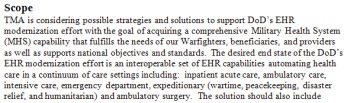
One of the most disgraceful aspects of US healthcare is also one of the least noticed: it takes decades before doctors actually use in practice the mountains of available (and expensive) research that could improve lives. Unless someone or something pushes them forcefully, doctors keep practicing like they did straight out of residency (that’s not opinion, that’s fact). The best way to get their attention is to pay them to do it a certain way. The second best way is to push them electronically by making it convenient for them to do the right thing.

Asif’s last point is also easy to gloss over as fluff, but it’s not. Let me paraphrase to make his point more clear: hospitals are lazy, incompetent, or both if they can’t think of anything better to do with their expensive new EHRs than punch an MU checklist and bank their stimulus check. I believe that’s Asif’s challenge to hospitals: do something with your EHR that benefits patients and not just your CFO.

Those with hospital experience know how big IT projects progress: (a) internal interest turns into impatience after the fun parts of the project, like site visits and system selection, are over; (b) once the hard work begins, the vendor and product chosen are almost always maligned as deceitful, undesirable, and unresponsive; (c) going live is such a drawn-out process that the project team is disbanded immediately afterward to catch up on deferred work; and (d) nobody goes back to measure before-and-after performance and push the organization to keep using, improving, and learning (often because that wasn’t budgeted upfront).

The five points he lists as the role of the EHR are nearly universally applicable. Even if they aren’t, every hospital should make their own list: what exactly do you hope to accomplish with this software other than to make people use it in some unspecified way? What are your success criteria and how will you measure them in a way that’s specific to patients? Is the organization capable of mandating change?

Practice makes perfect in almost everything, including EHR usage. Nobody get it right at go-live. Docs scream, nurses roll their eyes, and the IT people cast downward glances at their shoes even more often than usual. When the first batter doesn’t knock one out of the park, the crowd streams for the exits.

None of that makes any sense whatsoever. Quality improvement is, by definition, continuous. Usually it happens without anyone even noticing until some obscure quality geek armed with Excel e-mails out a graph that startles everyone: holy crap, we actually changed something for the better. The overriding question should always be: are we delivering better patient care today than we were yesterday?

Uncle Sam, Asif, and your vendor can tell you how to Meaningfully Use your EHR. They can’t tell you how to use it meaningfully. There’s a difference. Each hospital must choose its own goals and the methods by which it will achieve them. MU is the least common denominator, the gentleman’s C that causes no shame, but earns little respect. What hospitals do beyond being minimally compliant with the MU checklist is meaningful. That’s the part that will make all those taxpayer billions worth it.

HIStalk Interviews Larry Hagerty, President and CEO, MedAptus

August 13, 2010 Interviews 3 Comments

Larry Hagerty is president and CEO of MedAptus of Boston, MA.

Tell me about MedAptus.

Our focus is on the revenue cycle. We develop software tools, information capabilities, and related services to improve charge capture and charge management.

The company is about 10 years old. We’re headquartered in Boston. We have a development office in Raleigh, North Carolina.

We’re trying to eliminate inefficiencies and improve processes in the revenue cycle. Our customers are generally physician practices. The bulk of our product is in professional charge capture, or physician charge capture. We’ve been fortunate enough to be very successful in the major academic centers and integrated delivery systems because we’ve focused on flexibility and configurability of systems and integration with other systems and scalability.

Because we’re in the revenue cycle, clearly a lot of our value-added is in financial return. We do a lot of work in improving the top line of our customers because we’re helping them avoid missing charges. We help them in terms of the efficiency of that as well because we’re automating things that haven’t been automated and streamlining processes and helping them with compliance.

Charge capture sounds easy. Why isn’t it?

It’s a great question. I think that one big reason is that when one knows best what needs to be charged — which is as close to the point of care as you can be — the tools and systems that are in place aren’t really tuned to help you capture that and to manage it. The clinicians are working in a clinical environment. The systems and tools that they’re working with are geared to supporting that activity. The financial systems and administrative systems speak a different language.

A lot of our work is trying to make it easy for the doctors to capture what they need to know from that administrative or billing perspective and make that workflow between the doc and the administrative and coding staff very, very easy. These systems, again, they’re oriented differently. Connecting that and streamlining it is really where we spend most of our time and attention.

The industry is talking almost exclusively about the potential payout of meeting Meaningful Use requirements. How would you coach a physician looking at that potential return versus improving the way they capture and bill charges?

I probably couldn’t position it as one versus the other. I would say that, with regard to the charge capture work that we do — again, which interacts with the clinical domain but is not a direct part of it — there’s a much more clear and direct and immediate financial return, and it’s very significant. The clinical systems and Meaningful Use are trying to drive fundamental changes in clinical process. There are longer-term returns on those types of things. Also, there is a real return around the stimulus money.

Really, you have to be attacking both. It’s about timing and sequencing and integration.
When you look at the typical practice PM or EMR, what charge capture deficiencies does it have?

Depending upon what type of EMR system they have and how structured the documentation activity is in the creation of the initial charge, we make it very easy to do that to the extent that the system isn’t using it.

What’s more important are the things that go beyond that. We promote a lot more rules and flexibility and configurability to the physician. We do a lot to create the workflow between the physician and the administrators and the coders. We also do a lot of work that most EMRs don’t, around reconciliation and a lot of things that can be done to make sure that all the charges are captured independent of the tools around where the physician is entering their material.

That’s particularly true in an inpatient setting as well, where the EMRs and the operating systems that a physician may be working with don’t exist in the inpatient setting or they’re not there or not available.

We have a charge capture capability that cuts across those things and makes the job a lot more easy for them. We do things that are just out of scope, really, of a lot of their outpatient and office EMRs.

When you look at the big picture of the revenue cycle, what are the most important trends you’re seeing lately?

There’s a lot of consideration about reimbursement and reimbursement systems and how good the current system is and what we ought to be looking at in terms of bundling, whether it’s bundles of types of patients, or bundles of procedures and capabilities that go around an inpatient visit. I think that’s a very, very important issue and it’s going to change the way things happen.

ICD-10 is coming. Maybe it comes exactly when it’s projected now, or maybe it’s a little bit later, but that’s also a fairly significant item of operational impact.

Lastly, the fact that the EMR is going in place. That’s there, it’s going in, and the stimulus has helped with that. It’s had a big impact on our systems because we’re much more attuned to and aggressive about how our tools directly interact with and integrate and leverage that technology that’s being put in place than we might have been four or five years ago when those things were not moving as fast.

You mentioned ICD-10. How hard is it, overall, and how important is it to keep up with all the coding requirements that are constantly changing?

It’s tedious, it is hard, it’s extremely important, and it’s one of the values that a firm like ours provides because there’s leverage in doing that across multiple customers. It’s not impossible to do; it’s just a lot of work.

Something like ICD-10 is really more of a fundamental shift about the number of codes and some different approaches to the way the classification system is structured. That creates an additional challenge, but that’s what we do.

Isn’t it duplicitous for the government to talk about simplicity and transparency in healthcare, and yet it makes something as simple as getting paid so complex that companies like yours exist to support that?

One could only agree that the reimbursement system is not optimal and it ought to be streamlined. Frankly, we try to drive to do that. I think there’s plenty of room to streamline and improve and optimize processes and systems even with a lot of simplification.

What I would try to do is start the discussion around what are my objectives and what do I want to incent? Because that’s what the reimbursement system ought to be designed to do.

I do think that concepts of bundling are relevant in a number of these situations. I think concepts — to some level — of bundling around types of patients and things like that make sense. I think at various levels within the delivery system, counting what people do is an important part of reimbursement, but that may not be the case at the highest levels of reimbursement all the time.

I just think it’s going to be evolutionary. I would focus first on what objectives are you trying to get accomplished, and how to try to do that. Obviously, there’s a lot of discussion about does a reimbursement system incent more volume than one needs? I’d be looking at some of that if I were in a position of authority in looking at reimbursement systems.

What we’re trying to do is based on the rules that are put in place by the government and other payers. We’re trying to make sure that our customers accurately and efficiently bill properly against those rules. Our job is to understand what they are and get it right the first time. We streamline the process and make sure that the providers are getting it done accurately.

What percentage increase of charges that a practice is entitled to collect might a practice see with your product?

It’s a significant percentage. Five to 10% is not unusual. If they are in a paper process prior to us working with them, $20-30,000 a physician per year is a very routine kind of return that we get. This is because of things they may miss when they’re in an inpatient setting, defensive under-coding, and the inability to reconcile. We make sure they’ve captured all the business they’re charging. It’s a meaningful percentage.

How have the RAC audits changed your business?

They’ve probably created a little bit more of an incentive to use a tool like this because we create an audit trail of the billing and coding activity. As we’ve evolved our tools over time, we’ve expanded our audit capabilities. In a number of settings, data has been extracted to support the compliance work that our customers are doing.

Looking at the big picture of revenue, what impact do you think healthcare reform is going to have?

One is the volume of care through the government and other insurance mechanisms is going to expand. The mix of how reimbursement, or the mix of payments, will increase through the structured insurance industry. That’s an expansion kind of activity for the providers.

I think on the flip side, it would only be prudent to expect that there will be more pressure on reimbursement and more economic pressure on providers. So, while there’s an expansion of volume that’s going to go on, I think there’s going to be an increased push — and one that’s going to be more intense than has been felt in the past — around being efficient and effective and high-quality and high-caliber, both clinically and administratively.

Many people think physician practice reimbursement is going to go down no matter what. How do you see practices reacting if that happens?

I hope they get more competitive. You know, improve their processes. I think that’s what they need to do. Now obviously, we have a wonderful system of clinical capabilities, but there are real opportunities to do things better.

Any kind of environment where you’ve got an opportunity to automate things that can be automated, you have an opportunity to reduce cycle times. You have an opportunity to reduce errors, whether it’s administrative errors or clinical errors. You have an opportunity to reduce frustration, at least within the walls of the provider institution, by improving processes.

All those things have to happen, and happen more effectively. I think that’s the only move that will be a successful one.

When you look at the Meaningful Use requirements, do you see that as doing enough to encourage the kind of behavior that will make practices more efficient?

I would say that it’s probably a start and directionally good, but my personal view — and this doesn’t have much impact on our business directly — is it has to go beyond those things. Whenever you have rules like that, I think sometimes they get at form over substance. I think more has to be done over time.

If you look five to ten years down the road, what are your plans for the company?

We’re a niche leader in what we do. We’ve had a very good run. Our track record is good. Our customer base is strong. We see this area of charge capture and linking the clinical and the administrative systems more effectively being a big growth area. All of our energy is on doing as good a job as we can do with that and expanding our capability.

We’ll probably be doing more in the future with regard to channel partnerships with HIS vendors. For example, we have a nice growing relationship with Allscripts today, so we’ll probably do a little bit more of that, but our focus is all on this particular area. Whatever happens with us down the road, we expect that this charge capture and charge management functionality to be at the core.

Final thoughts?

With our policy reform and a lot of what’s going on in the industry, this is such a real important time for the delivery system. The rules are changing. We think it’s a neat time to improve operationally, clinically, and organizationally. There’s probably no more important time to try to get more aggressive and innovate in ways that can pay off than now.

News 8/13/10

August 12, 2010 News 10 Comments

From Buck S. Pearl: “Re: West Virginia Health Information Network. It’s tough to explain paying a $200,000 salary for overseeing five temporary workers. The HIE’s director resigned abruptly a few months ago before the RFP was complete. They need to finish the RFP, pick a vendor, and start building the HIE or there’s going to be political hell to pay.” The biggest atrocity is that they’re try to convince people that their WVHIN acronym should be cutely pronounced “Win”, which surely nobody’s buying. Being an HIE, they’re burning through state and federal grant money like the party will never end.

From Luria: “Re: Catholic University’s MSIT-HIT. I figure this is the result of HITECH, but what do you do with a MS in IT with a concentration in HIT? Do CIOs really favor a newly-minted Master’s over a clinical background or work experience?” I would see it as an add-on to both that might help land some jobs that aren’t too specific (i.e., not project management, implementation, software analysis, etc.) I doubt it would get you a job on its own, but it could get someone into management. You’re probably right that it’s riding the HITECH coattails since it even mentions Meaningful Use. Let’s hear what readers think.

From DeAnne: “Re: Microsoft. They’re working with a vendor to create a mobile physician workflow solution for Azyxxi-Amalga.” Unverified.

Listening: Razorlight, catchy indie rock by guys from England and Sweden. I’ve listened to three of their albums today, one of them twice. A reader asked what music I listen to in the gym, so here’s the current heavy rotation: Hole, Beatnik Termites, Nine Black Alps, After Forever, and Luscious Jackson. It changes since I play stuff to death and then move on, but these have stood the test of time and and are fast enough to keep me from establishing a too-slow running pace that will propel me off the back of the treadmill.

8-12-2010 9-58-25 PM

Ed Marx’s post on multitasking was a hit, obviously. He has updated it with responses to those questions he was asked. Ed is, I think you’ll agree, The Man.

Some stuff you can (and should) do here: (a) stick your e-mail address in the Subscribe to Updates box to get instant notices when something new goes up; (b) justify my expense in buying a search engine application by using the Search All HIStalk Sites box, which digs though everything in HIStalk Practice, HIStalk Mobile, and seven-plus years of HIStalk without you having to lift a finger other than the one with which you click the little magnifying glass; (c) Friend or Like us on Facebook on the widget to your right to stroke the emotionally needy Mr. H and Inga; (d) report a rumor using the ugly green but securely anonymous Rumor Report box; (e) check out the ads of my sponsors, consider them when doling out your business, and thank them publicly or otherwise for keeping the HIStalk fires burning.

Sponsor jobs: Web Developer, HL7 Analyst, Regional VP of Sales, Clinical Product Specialist.

Weird News Andy sprouts this story, in which a man’s suspected tumor turned out to be a pea plant growing in his windpipe. He was fine once de-legumed.

8-12-2010 8-04-04 PM

This fascinates me: pictures taken by GPS-equipped smart phones and cameras contain invisible geotags that identify the exact location at which the picture was taken. It’s possible but complicated to disable that function in iPhones, but if you don’t, pics taken outside your home tell anyone who cares precisely where you live. Check out this site, which runs a stream of posted tweet pictures and the addresses from which they were taken, of which the site’s creator described the typical reactions: “’I’m going to punch you out,’ or ‘No duh, like I didn’t already know that’ or ‘Oh my God, I had no idea.’”

8-12-2010 8-07-05 PM

Thanks to the folks at ZirMed, a new Gold Sponsor of HIStalk. The Louisville, KY company offers services that include eligibility verification, payments, claims management, ERAs, collections, and analytics. Their latest offering is Patient Notebook, a green way to manage statements by sending them electronically and allowing patients to view, manage, and pay them online, saving providers 40% on mailing costs in the process. The provider can view delivery information and print a paper statement if needed. It also sends an electronic reminder and then a paper statement to patients slow to respond. Thanks very much to ZirMed for supporting HIStalk.

An LA Times blog suggests that HP CEO Mark Hurd got a raw deal by being ousted over falsifying $20K on expense accounts to hide his alleged philandering, citing the case of HP director and McKesson CEO John Hammergren. It argues that Hammergren joined his fellow HP board members in holding Hurd accountable for the same standards as other HP employees, yet McKesson admitted it fudged the formulas used to calculate Hammergren’s nest egg to raise it from $74 million to $85 million. I mentioned his “golden coffin” bennies last year, saying

Those provisions pay a lump sump to heirs when a senior executive dies, $25 to $39 million when John Hammergren meets his maker (in addition to the $80 million his family would get from his retirement plan) … You would think he founded the company instead of just coming on board eight years ago. Maybe Senator Grassley should look there if he wonders why healthcare is so expensive. But, if MCK shareholders would rather he get the money than them, so be it.

The VA starts posting a monthly list of data breaches that include lost BlackBerrys, unencrypted e-mails, mis-mailed prescriptions, and missing laptops (to their credit, all six laptops reported missing or stolen in July were encrypted). A fun non-breach item reported: a VA employee was caught using someone else’s SSN on her employment documents. “Per the OIG, the employee is definitely using the wrong SSN. The question is why.”

8-12-2010 8-56-54 PM

A tech article describes the SafeBaby Breast Milk Tracking (SBMT) system, which bar code matches babies against mothers and also checks expiration dates.

8-12-2010 10-02-16 PM

WakeMed (NC) rolls out Axial Alerts, an open source platform that allows pediatricians to review real-time clinical information from the ED of WakeMed’s new children’s hospital. I mentioned the Raleigh-based Axial Exchange in February when I listed the participants on the Health IT Venture Fair at HIMSS. Some of its execs are from Red Hat.

Jobs: Senior Project Manager, Epic Inpatient EMR Manager, NextGen Consultants, Marketing RFP Consultant.

A McKinsey Quarterly article (or at least the teaser part I can see as a non-subscriber) says HITECH-encouraged EMR adoption could save $40 billion per year.

Massachusetts regulators approve creation of a doctor shopper database to curtail prescription drug abuse.

Transition of control of Marin General Hospital (CA) from Sutter to the local healthcare district has gone well, except that “some of the imperfections have been in the IT area.” They had problems between their McKesson systems and their printers, causing delays in the outpatient lab. The CMO said the integrated system should be an improvement, but the nurse’s union rep said she’d heard the software was hard to use.

8-12-2010 9-50-47 PM

Dell is pitching its Android-powered Streak tablet to schools and will go after the healthcare market starting in the next few weeks.

E-mail me.

HERtalk by Inga

From Get Off of My Cloud: “Re: Ben Clark. He’s left Allscripts.” Unverified. Clark is/was the SVP of support for Allscripts and had been with Misys for a decade before that. True or not, I suspect we’ll see plenty of changes at Allscripts and Eclipsys over the coming months as talent is “synergized.”

dragon search

Nuance introduces Dragon Medical Mobile Search, a free iPhone app that allows physicians to search for medical information using voice technology. A physician can use voice commands to search a variety of sources, such as Medline, Medscape, and Google. Definitely sounds cool. Anyone tried it?

NYC REACH, the REC for New York City, selects Business Technology Partners as a preferred vendor to help physicians implement EHR solutions.

CareFusion says it will cut about 700 management and support jobs following a big decline in net income. The company posted Q4 net income of $52 million compared to $96 million a year ago and expects the cuts will save as much as $120 million per year.

Microsoft names FormFast as a Certified Partner.

southwest medical center

Southwest Medical Center (KS) selects Summit Healthcare and the Summit Express Connect interface engine to manage its Meditech connections.

Rhode Island’s medical board reprimands a neurosurgeon when a patient complains her medical record documented services she did not receive. The doctor blames his EMR, saying he erroneously clicked on items using the software’s drop-down menu tools. The insurance company was also billed. The board was skeptical of the doctor’s claim based on the number of items selected. He’ll have to attend a medical record-keeping class and pay $500 in administrative costs.

CliniComp announces that seven US Air Force, Army, and Navy military treatment facilities implemented its Essentris EMR in the second quarter.

IBM is working with the VA to test a new paperless claim process. The VA hopes the electronic process will reduce its backlog of 497,000 pending disability claims. Am I the only one shocked that this process is just now going paperless?

Another step in the right direction: the VA’s CIO says that for the last month and a half, the VA has been successfully using the DOD’s personal ID system for each of its service members. Meanwhile, the VA expects to announce its plans for modernizing VistA by the end of the year

DR Systems announces six new contracts for its Unity RIS/PACS, each worth between $225,000 and $1 million.

mobilemd

Pinnacle Health System (PA) will deploy MobileMD’s eShare module, which allows providers to exchange messages and share clinical documentation electronically.

A new reseller alliance between Crossroads Systems and Dell Services gives Meditech customers new options for virtual tape backup and encryption. The Crossroad solutions TapeSentry and SPHiNX are certified by Dell for Meditech and will be the first two products offered.

Cardinal Health Foundation awards over $1 million in grants to help 40 organizations improve healthcare efficiency and quality. Some of the selected projects include implementation of CPOE and/or bedside medication administration, medication reconciliation, and e-prescribing.

What you may have missed in yesterday’s HIStalk Practice: a good read from HemOnc Today that examines the good and the bad of EHR implementations; an iPhone app for identifying adverse side effects; and AirStrip Technologies scores some VC money. Oh, and show me you care by signing up for the e-mail updates when you pop over to the other site.

Hospital execs as a whole are underwhelmed with existing enterprise resource planning (ERP) tools, according to a new KLAS survey. The report’s author says, “Providers say they can expect either robust functionality or service and attention — not both.”  McKesson was the highest-rated vendor with a score of 74.5 out 100. Oracle was a relatively close second; Lawson was ranked a distant third.

Global IT and engineering provider Smartronix expands into HIT with the purchase of HIE vendor Cogon Systems. We interviewed the CEO three years ago.

In odd but non-HIT related news, a Seattle police officer tickets the parked vehicle of a 36-year-old man who appeared to be sleeping in the driver’s seat. The officer attempted to wake him by tapping on the window. When he failed to respond, she assumed he was a sound sleeper. Less than an hour, later the man’s girlfriend tracked him down with a GPS. Medics believe he had been dead in the car for several hours before he was found (and ticketed). The deceased man won’t be required to pay the $42.

inga

E-mail Inga.

CIO Unplugged 8/12/10

August 11, 2010 Ed Marx 112 Comments

The views and opinions expressed in this blog are mine personally and are not necessarily representative of current or former employers.

Confessions of a Reformed Multitasker

I was wrong. Multitasking is overrated. It’s the thief of our times.

8-11-2010 6-25-00 PM

New Years Eve 2008, on a plane en route to our Marx Family Annual Strategic Planning Retreat (above), I read Chasing Daylight. The author, Eugene O’Kelly, was the CEO and chairman of KPMG. At 53, he was diagnosed with a terminal brain tumor. He quit his job to settle accounts with friends and family and write a book to convey what he learned through the experiences of life and death.

Based on the principles espoused in the book, I added the following to my personal strategic plan:

  • Live in the Moment
  • Energy > Time
  • Consciousness > Commitment
  • Create Perfect Moments

The above principles originated from research done by the Human Performance Institute. I attended their “Corporate Athlete” training, where these concepts, and related evidence-based theories, took on renewed meaning. The idea of energy management struck me. I will post on energy management and the fit leader this fall.

Bottom line: if you desire high performance, then don’t multitask. Avoid a multitasking lifestyle if you care about the personal message you are sending people.

Gulp. Seriously? Guilty!

It had to start at home. Almost every evening, I’m home for dinner by 6 p.m. That’s a sacred time. But now, no BlackBerry, no checking messages, no calls, no social media, no vendor meetings. My energy and focus are on my family. Love is a verb. I show my love by giving them my undivided attention. Emotional energy is a relational factor that surpasses time. I don’t tell them, I show them that they are more important than my vocation.

In fact, the stronger the family relationship, the stronger I am as an employee. I find that leading others is a rewarding honor, and by definition, a CIO must give energy to those he serves. I have stopped multitasking where face-to-face encounters are involved.

8-11-2010 6-29-21 PM

I still multitask as described in Green Standard Time (above), but never when I’m with people. What message does it send when I’m not fully engaged?

Has your manager ever multitasked while you share your ideas or answer a question? How did it make you feel? Have you had to repeat questions or respond to duplicate inquiries as a result of someone multitasking? How about during conference calls when you call on someone only to get silence…and their phone isn’t on mute. (Guilty)

I wonder how many people I have inadvertently frustrated by having to revisit subjects previously discussed because I’d been trying to juggle tweeting, e-mailing, and preparing a presentation? Was I genuinely in the meeting to begin with?

After observing a leadership meeting, one of my favorite docs admonished the group for focusing more on e-mail than on the discussion. Kudos to him! How much productivity had been lost?

I am a huge advocate of technology and for displacing paper and paper-based processes with automation, but we must exercise balance. Use your iPads, mobiles, tablets, and laptops to conduct business, but be disciplined and remain focused on the subject and people, not your e-mail or twitter feeds. Make time for that later.

For those who still believe they can effectively multitask while still giving appropriate attention to family and staff, try this simple test from the New York Times. A Google search will reveal numerous scientific studies to support my thesis that high performance and multitasking are mutually exclusive. In fact, Stanford researchers found that multitasking may degrade our ability to think clearly, to separate relevance from irrelevance, and to remember and learn. They conclude by saying, “By doing less, you might accomplish more.”

The way I spend my time and invest my energy reveals what I believe most deeply.

***For those who have an interest in strategic planning on a personal basis, please leave a comment. We will send you a copy of my one-page personal strategic plan that contains the principles mentioned above and will provide you with a template from which to create your own plan. I have one-page plans like this for my career, marriage, and family. UPDATE: due to the large number of requests, the plan has been made available for download here.

Update 8/12/10

Thank you for the feedback. Clearly I was not alone in this journey! I will savor the overwhelmingly positive comments because future posts may nor resonate so well.

I do plan to tackle the challenging subject of the fit leader this fall. Good thing I was a soccer referee for so many years. I can handle the crowd when they don’t like my call.

Samantha Brown asked a couple of good questions. First, do I really make it home each evening by 6 p.m.? When I am in town, the answer is yes 98% of the time. I only have one routine after-hours meeting. It is a physician leadership dinner meeting that takes place bi-monthly. I am able to attend the meeting “virtually” from a hospital close to my home. As long as I am back in time for our weekly Argentine Tango lesson (a few doors down), the world is in harmony.

Finally, I did differentiate two types of multitasking. I am a proponent of multitasking, just not when it involves people directly. Are their circumstances when you are with people but you do not need to pay attention? Sure, but I would ask myself, “Is this the best use of my time?” If the answer is no, don’t be part of that meeting.


Ed Marx is a CIO currently working for a large integrated health system. Ed encourages your interaction through this blog. Add a comment by clicking the link at the bottom of this post. You can also connect with him directly through his profile pages on social networking sites LinkedIn and Facebook, and you can follow him via Twitter – User Name “marxists.”

News 8/11/10

August 10, 2010 News 9 Comments

From Staff Infection: “Re: HealthPort. I overheard that the Germany-based CompuGROUP is looking to expand beyond its Noteworthy acquisition. They want to have 30,000 US physician customers by the end of 2010 and have been peeking inside the kimono of HealthPort. Not a pretty sight, but I bet the brain trust at the Thurston Group (manages HealthPort) would unload it on the cheap. Reminds me of the old Steve Martin line of how to make a million dollars and not pay taxes — spend $30M on Companion Technologies and drive it into the ground and sell it for $1M.”

8-10-2010 9-21-29 PM

From Misys_Ex: “Re: from the QuadraMed user group. Michael Simpson, SVP of product strategy, has resigned after six months on the job.” Unverified.

From Alanya: “Re: your Las Vegas rant. That’s why I LOVE reading your blog. You make me laugh out loud on a Monday morning. It’s nice to get your perspective for those of us who are office-bound. Keep it up!” Thanks, sweetie. You may regret encouraging me.

From Irene O. Tican: “Re: McKesson. Lee Fowinkle, VP of engineering at McKesson Ambulatory, has left. He was leading the single database project and his departure will have a significant impact on MCK’s ability to deliver an ambulatory MU product.” Verified, at least the part about his MCK departure. I’m cackling to myself at the fake name I made up for this reader’s post, by the way (oncologists will get it).

8-10-2010 9-26-10 PM

From The PACS Designer: “Re: Google Wave. TPD has posted about the collaborative aspects the Google Wave platform. Google has announced that it’s ending all development on Google Wave. Some EHR experimenters are unhappy with this news, as they wanted to incorporate the Continuity of Care Record (CCR) and the Continuity of Care Document (CCD) using Google Wave to provide a complete record of a patient’s treatment history across institutions.” I can’t say I’m too surprised at this rare Google misstep. I got an early invitation to Wave, watched the endlessly long video that tried to explain it, tried it for a few minutes, and walked away for good because I couldn’t see the point. If you can’t explain it in less than an hour of edited video, nobody’s going to bite.

From Cassie: “Re: Mercer. Mercer has apparently lost another piece of IT equipment and thus lost employee data for City of Boise employees. I doubt Mercer is going to be signing deals in the State of Idaho anytime soon.”

From Amy: “Re: Aprima Medical Software User Group in Dallas. This is one of the best events I have attended. I am very happy with the path Aprima is taking. This is not an advertisement, but a shout-out for a job well done. An industry colleague turned me on to HIStalk – love it!” President/CEO Michael Nissenbaum invited me to attend the next one after reading my ACE recap. I interviewed him two years ago when the company was called iMedica and had recently licensed its product to Misys (now Allscripts) to sell under the MyWay name. He’s a pretty funny guy.

From Joe: “Re: pagers. Although it would seem this technology should have disappeared, some facilities do not have call penetration. They are also cheaper for workers who just need to receive brief messages.”

Watching: Pushing Daisies, an outstanding and highly awarded comedy-drama with some surprisingly effective poignant and romantic moments (I might have sniffled a couple of times — I’m sentimental). The narration and art direction is outstanding, as is the snappy dialog, the acting, the music, and the always endearing Kristin Chenoweth (instantly recognizable as Bebe’s chirpy assistant Portia from Frasier) and Swoosie Kurtz. Like most shows that require a reasonably cognitive audience, this one died fast, but has arisen from the dead (no pun intended) on Netflix. My highest recommendation.

Kern Medical Center (CA) recovers from a malware attack that took down most of its systems.

8-10-2010 7-08-32 PM

The Center for Biomedical Informatics at The Children’s Hospital of Philadelphia creates a free iPhone app that classifies adverse events in clinical trials.

My last post asking for keynote speaker suggestions generate several comments at the end of the article. Check it out.

8-10-2010 7-19-25 PM

Former QuadraMed VP Larry Visk joins PerfectServe as EVP of sales.

8-10-2010 7-24-39 PM

Santa Clara Independent Physician Association signs up for the Excelicare system (HIE, clinical apps, disease management) from AxSys Technology.

8-10-2010 7-30-39 PM

Omnicell will co-market Sentinel RCM (medication functions for 340B billing, drug diversion, inventory, drug cost, and J-code management) from Sentry Data Systems.

Ralph Keiser, formerly of Eclipsys, joins MedeAnalytics as SVP of provider sales.

MedNetworks raises $5 million in Series A funding. Its technology, licensed from Harvard, maps the social networks of doctors to empower its clients to “leverage existing data to disseminate information and focus interventions,” which suggests equal potential for good and evil.

Weird News Andy notes “a Hefty piece of lifesaving equipment” as a paramedic fashions a makeshift incubator from a trash bag and towels to save a preemie weighing less than two pounds.

8-10-2010 8-00-23 PM

This is exciting: Microsoft will start a beta of Visual Studio LightSwitch this month. It’s an business application builder (desktop and cloud) for non-programmers that can tie into information from SQL Server, SharePoint, and other data sources. I’m all over it once it’s up.
8-10-2010 8-04-36 PM

I was annoyed by the sluggish performance and uncomfortable bulk of my ancient laptop at ACE, so I bought an HP Pavilion DM3-2010us when I got home. I love the 13.3” display, 4.2 pound weight, long battery life, a fast boot option to get to the Web, and built-in webcam and N-capable wireless. It’s like a super-powered, stylish, reasonably sized Netbook. $499.95 at Office Depot after rebate. I didn’t realize how much I hated Windows Vista until I got this one with Windows 7, which is excellent. Now I don’t have to be jealous of those Mac users and their 13.3” lightweights. All it doesn’t have is a DVD drive: $37 for a USB-powered external at Newegg. I’ll be getting some looks at Panera, I hope.

HIMSS VP Pat Wise does a Q&A on What Meaningful Use Means to Nurses.

Actuaries estimate that medical errors cause the US economy almost $20 billion per year.

8-10-2010 8-44-18 PM

Speaking of actuaries, even the Medicare Chief Actuary says CMS’s optimistic estimates of Medicare cutbacks are a load of crap, at least unless voters are OK with providers going broke and refusing them service.

8-10-2010 8-53-54 PM

SaaS productivity application vendor Zoho and NetSuite form MedicalMine, a consumer tool for managing children with autism. Phase II involves a physician version and an EMR. Zoho has cool, easy-to-use apps, so this could be interesting.

Vangent will pay $65 million to acquire 450-employee Buccaneer Computer Systems, which provides healthcare IT services to the government. I found this interesting: Buccaneer, which previously processed Cash for Clunkers vouchers, wants to ride the wave of federal HIT spending, which is what caught Vangent’s interest.

One of the cooler things I’ve seen on a company’s home page: check out Kronos and the cute Australian who strolls out chatting from behind the application screen shot.

Oracle’s Larry Ellison criticizes HP’s board members for forcing CEO Mark Hurd to quit despite finding that he did not violate the company’s sexual harassment policy. “The HP board just made the worst personnel decision since the idiots on the Apple board fired Steve Jobs many years ago.”

I’m a bit behind in my e-mails, interviews, etc. as I get reacquainted with Mrs. HIStalk after my little Lost Wages junket, so bear with me. I have 15,000 sent e-mails in Yahoo Mail, if that gives you an idea of the volume of interaction I have with readers, sponsors, etc. Happily, I might add, so don’t let that stop you from giving me a holler.

E-mail me.

HERtalk by Inga

joanne wood

Meditech restructures its client services operations with the promotion of Joanne Wood to SVP of client services, Leah Farina to VP of client services, and Helen Walters to VP of clients. The three execs have a combined 68 years tenure with the company, which says a lot about these women and the company (all good). We reported this on July 30, but the official announcement just came out.

Lowell General Physician-Hospital Organization (MA) implements MedVentive’s business and clinical intelligence platform to manage risk contracts.

Another HIT acquisition: EHR/PM solution provider MedLink purchases Health Informatics, supplier of the Health Informatics Digital Pen and MD Form Manager. MedLink, by the way, partners with Patient Access Solutions to participate in the SunCoast RHIO program. MedLink’s president predicts 500 participating practices will generate over $11 million in EHR sales over the next four years.

madison center

Madison Center (IN/MI) reports a $25,000 reduction in transcription costs within two months of moving to Webmedx’s web-based medical transcription service.

Press Ganey Associates acquires the Quality Indicator Project division from the Maryland Hospital Association. The QI solutions provide tools for quality reporting, collection, and reporting.

Orion Healthcare Ventures completes its acquisition of Aspyra.

cooper university

The CEO of Cooper University Hospital (NJ) reports the facility is now live on Epic’s physician documentation with 100% CPOE usage.

Former Eclipsys SVP Ralph Keiser joins MedeAnalytics as SVP of provider sales. Prior to Eclipsys, Keiser had senior leadership positions with EPSi, Cerner, and @OUTCOME.

In the first half of the year, MEDSEEK increased its total gross sales bookings 40% over the same period last year. YTD revenue grew 18%.

Merge Healthcare reports a $30.9 million Q2 loss, in part due to costs associated with its Amicas acquisition. Total sales, which include figures from Amicas, grew 89% to $29 million.

Nuance Communications also posts a loss amid higher revenue for its second quarter. The company lost $1.53 million, compared to last year’s $2.82 million loss. Revenue grew 13% to $273.2 million. Investors expected more revenue, leading the stock price to slip 16% on Tuesday.

gregg alexander

Over on HIStalk Practice, Dr. Gregg Alexander comments on the industry’s newest bedfellows: insurance companies and EMR companies. Dr. Alexander calls it a move, “that would surprise most of us about as much as hearing that Coke and Diet Coke are actually made by the same company.”

At St. Mary Medical Center (CA), four staff members are fired and three disciplined for posting photos of a dying patient onto Facebook. The patient had multiple stab wounds and was nearly decapitated from a throat slashing. If you like blood and guts, I guess that might be pretty thrilling stuff and actually get you a few thumbs up. But seriously, how can people be so stupid?

Methodist Healthcare System (TX) selects TeleTracking Technologies’ RadarFind RTLS for five of its hospitals.

Highmark partners with A.D.A.M to provide a new iPhone application that includes medical reference content for members.

I forgot to mention last week that I finally got my new iPhone4. I hate the reception, which is not nearly as good as what I had on the 3G, and definitely not as good as a regular old cell phone. I’m looking for suggestions on bumpers or cases. I had the Otter before and I liked it because it was quite heavy duty and was survived being thrown between my purse and the console of my car. Now I’m open to anything that might enhance reception, if that is possible.

Memorial Hospital of Union County (OH) selects DigitalPersona Pro to provide secure EHR access and biometric authentication.

NextGen is awarded two-year accreditation as a provider of continuing medical education for physicians by the Accreditation Council for Continuing Medical Education.

Here’s a story that I am sure warms Dr. Deborah Peel’s heart. A US appeals court upholds the constitutionality of a Maine law that allows doctors to withhold their individual prescription-writing information from data mining companies.

UC Health University Hospital (OH) contracts with MRO Corporation to incorporate MRO’s ROI processing services with its EMR.

Wellpoint plans to align its P4P incentives with Meaningful Use criteria and implement a financing program to support HIT in rural and underserved communities.

high heel

From Weird News Andy, here are details on study by an Iowa State University student who obviously does not understand fashion. For her thesis, the student looked at the whether or not wearing high heels increased the risk of developing osteoarthritis. Big surprise here: the higher the heel, the greater the risk of joint degeneration and knee osteoarthritis. And (duh) heel heights change walking characteristics (slower speeds and shorter  strides). Any woman who has sacrificed her feet for fashion for any length of time could have saved this researcher lots of time and money and told her the same thing. Heels are about looking hot, not being sensible.

inga

E-mail Inga.

Readers Write 8/9/10

August 9, 2010 Readers Write 4 Comments

Submit your article of up to 500 words in length, subject to editing for clarity and brevity (please note: I run only original articles that have not appeared on any Web site or in any publication and I can’t use anything that looks like a commercial pitch). I’ll use a phony name for you unless you tell me otherwise. Thanks for sharing!

EHR Exit Strategy
By Robert Doe, JD

While negotiating license agreements for my clients, we typically focus on functionality issues, warranties, uptime representations, support issues, etc. However, with all the distractions in the world of incentive payments and penalties, one thing I suggest my clients give some additional thought to is: will happen when the relationship with the EHR vendor ends? What will be the “exit strategy”? What do you need to include in the contract with the vendor to ensure the transition to a new system?

One significant concern to consider is what will happen to the data contained in the medical records that your organization has entered into the EHR system after the license agreement has terminated or expired? If the system is being utilized by multiple organizations, will you be required to leave a copy of the information in the system? You will also want to have a clear plan as to how your organization will take the data to a new system upon termination of the relationship with the EHR vendor. Can records be easily copied and/or exported electronically with the current EHR system? It is my understanding that this may not always be a simple task.

In addition, what issues might arise if the license agreement terminates abruptly, as may happen in the event of a breach of contract? The main concern becomes business continuity. You may want to consider including a provision in the license agreement obligating the vendor to provide transition services while you transition to a new system. Ideally, you should be able to fully use the EHR system during this period. Typically, the user pays for these services.

While most organizations are focused on finding and implementing an EHR system, I would suggest giving some thought to the life cycle of the system and devising an “exit strategy” for the time when the license is terminated or expires. Your license agreement should include appropriate provisions to allow you to carry out a smooth transition.

Bob Doe is a founding member of BSSD, an information technology law firm located in Minneapolis, MN.

Our Organization’s Comparison: Cerner vs. Epic
By Roe Coulomb

You asked in a previous post why Epic beats Cerner for every important deal. I previously worked at an organization that did a side-by-side comparison between Cerner and Epic, eventually choosing Epic. I thought it might be helpful to your readers to know the factors that went into that decision.

Corporate Culture

What’s not to like about an organization that has a CEO as accessible as Judy? One year at HIMSS, I observed her rearranging the waste baskets in their booth to make it more user-friendly for her staff servicing customers. That’s servant leadership!

Even before they moved to Verona, their corporate headquarters felt like a college campus. That was partly due to the age of the employees, but also their dress code and the eccentric artwork they’ve acquired over the years.

Does Neal or his top echelon of VPs even attend HIMSS? I’ve never seen him. If the suits do attend, I bet you won’t see them at the booth rubbing shoulders with the average Joe.

Their corporate headquarters is your typical Fortune 500. Lots of suits. Stuffy. Need I mention the bad PR from Neal’s e-mail tirade that was leaked a few years back?

Integration of Ambulatory and Inpatient Records

This is a significant factor for any organization that has a large employed physician group and wants an integrated database for their billing/ADT and EMR data. There are huge opportunities for streamlining things like medication reconciliation from physician office to the inpatient setting and back to the primary care doc.  

Not to mention that providers who practice both in an office and do inpatient work as well have only one application to learn. Once they are doing order entry and documentation in their office, implementing CPOE and clin doc in the hospital is far simpler (for those physicians, anyway).

Epic’s got this nailed! Cerner, not so much.

Implementation Philosophy 

Your 7/28 post said, “A CIO reader who knows both systems says Cerner requires clients to take ownership of the design and use outside consultants, while Epic offers a more turnkey implementation at a higher price."

That’s true to some extent (the Epic turnkey statement), but it wasn’t always that way. Epic got lots of feedback from their customers that there were too many options and decisions of how to implement a specific function. They picked best practices and made that into their model system.

Nevertheless, there are still a lot of consulting firms out there with Epic practices and I am not aware of a major medical center that has installed Epic without using consultants.

Software Usability

At the end of the day, all that other stuff doesn’t really matter if the software sucks. How usable it is for employees and docs is what counts. 

During the evaluation we did at my former employer, Epic was simply easier to use. Cerner’s screens were very busy with all kinds of tabs and lots of clicks and keystrokes. I recall one screen where there were 30 “chart-like” tabs across the top of the screen.

I recently viewed a Cerner demo at my current employer of how a nurse would change one piece of data, like a heart rate, acquired through a monitor device interface. First, click on the cell with the data, click Clear, click Sign to accept the remaining data, go back to the cell, click Edit, enter the new results, click Sign again.

It’s been awhile since I saw this on Epic, but my recollection is that it was like making a change to data in a spreadsheet. First, highlight the data to be changed, over-type with the new results, click Accept. Far simpler!

You said, "… which would seem to indicate that Millennium isn’t up to the task. In other words, a $6 billion market cap company with a single, fairly low-rated product line that’s getting hammered by a smaller and much higher-rated competitor should think about developing a better product."

Isn’t that what Millennium was supposed to do for Classic?  I recall reading about the hit Cerner took to its bottom line the years they put a lot of resources into developing the new Millennium architecture. I guess one measure of how successful that was is how many Cerner customer’s are still using Classic?

Finally, I think you hit the nail on the head: "..Cerner has built a business that could weather Neal’s transition or sale to another organization, but we don’t know that with Epic". Judy won’t be running Epic forever. What happens when she’s gone? Can Carl or whoever replaces her continue to run it as a private company or will they be forced to sell?

Monday Morning Update 8/9/10

August 8, 2010 News 39 Comments

From Your Name Here: “Re: Community Health Systems. Medicity wins VOC, beating out RelayHealth.” Unverified.

8-8-2010 8-50-52 AM

From Scotty B: “Re: ACE. I guess you scared the cardboard Mr. HIStalk into hiding today.” The vendor who misappropriated my Smoking Doc logo at the Allscripts user meeting demonstrated at least a little bit of creativity in acknowledging their transgression. Two readers with what I assume are tongues in cheeks are urging me to sue them.

8-8-2010 5-51-28 PM

From Lem Hewitt: “Re: ACE. I wish you would go to Epic’s UGM and do a similar report.” Now that would be interesting — I’m kind of embarrassed that I’ve never thought of doing that. Lem generously offered to cover the hotel costs using his Marriott points. I’d have to swing some time off from the hospital and probably find a customer willing to let me pose as their fake employee. Something to think about although there’s not much time left.

From Dirk Squarejaw: “Re: speakers. Do you know of any dynamite speakers for a CIO-type crowd?” I get asked this question a lot, so I’m appealing to readers to suggest outstanding speakers they’ve heard. The criteria: (a) inspiring; (b) unbiased; (c) not the HIMSS semi-celebrity types who charge thousands of dollars, like the guy who sawed his own arm off or Dana Carvey; (d) not just canned speech-readers riding the rubber chicken circuit. Ideas? I should disclose that I’ve been asked a couple of times to do keynotes, but I always decline – I have nothing insightful left to say that I don’t say right here, so I’m leaving it all on the field, as the jocks say.

8-8-2010 5-56-21 PM

From Ollie: “Re: mobile healthcare. I was getting blood drawn at Emory Midtown and saw an infectious disease MD tapping away on an iPad in the Starbucks line. I asked how he liked it using his Cerner PowerChart EMR that way. He said it loves it, it runs great, he places orders, does documentation, etc. He was happy to share and smiling when he said it. An MD reviewing an EMR, maybe even placing orders, while in line to get coffee … what is the world coming to?” That’s pretty cool. As much as we debate software usability, mobile device capabilities are right up there when it comes to physician satisfaction — just like it is in the consumer world, where the same old e-mail app takes on another dimension when you can use it untethered.

From Geri: “Re: objectivity. How do we know that an anonymous Mr. HIStalk doesn’t have interest that conflict with those of his readers? I’m not accusing, just asking.” Here’s how I would judge anyone running a site like HIStalk: (a) do they have a hidden agenda, like owning stock in a particular company or profiting in some undisclosed way? I have no way of proving it, but I don’t. (b) are they pitching their own profitable endeavors such as consulting, speaking, or landing a board gig? (c) do they shill out every possible revenue source, such as spamming readers with sponsored e-mail blasts? (d) have they ever actually worked in the field, particularly on the non-profit side, or did they just cruise in and hang out a shingle proclaiming to be an expert? and (e) does the author try to use his or her readership to make themselves more famous and influential? Feel free to judge me on any of the above — you have seven years’ worth of evidence to review. Staying anonymous keeps me honest — there’s no way to cash in even if I was tempted, i.e. there’s no such thing as an anonymous celebrity. It’s a fair question, though, and there’s more information on my About HIStalk page.

Listening: new from the highly regarded Arcade Fire.

8-8-2010 6-43-19 AM

It appears that we remain collectively unconvinced that HIEs can figure out how to support themselves financially, like trust fund babies who struggle when daddy’s money (or Uncle’s in this case) is gone. New poll to your right: if you were seeking hospital care, would you care whether a hospital is on the Most Wired list or not?

8-8-2010 5-54-30 PM

Tucson Medical Center’s CEO talks a lot about its Epic implementation in her blog entry about upcoming layoffs that were triggered by a 10% drop in inpatient volumes. One the one hand, “While costly, the investment was worth it because, as we were told by Epic last week, we are far ahead of other hospitals in terms of system optimization,” but reading between the lines, she seems to say that the labor needed to implement it caused the hospital to miss its productivity goals.

Kaiser reports Q2 numbers: $11 billion in revenue and $313 million in operating income. They, too, talk a lot about Epic / HealthConnect, saying that members exchanged 5.3 million messages with their providers in the first six months of the year.

8-8-2010 9-07-38 AM

Looks like the Sunny Sanyal rumor was on the money. He’s at T-System now. Thanks to You’ll Know Who for the original rumor and Mark for telling me about Sunny’s updated LinkedIn profile (done since my original report, apparently, since I checked it originally and it was unchanged).

Somebody breaks into a Texas allergy clinic and steals four PCs containing PHI, although as one of the docs said, “We’re an allergy clinic, so I don’t think there was anything embarrassing taken.” The clinic complains that it cost them $15,000 to send the mandatory breach notification letters to its 25,000 patients, more than the cost of replacing the computers.

8-8-2010 6-21-39 PM

A reader sent over a note about the death of Christopher Heller, MD, FACS, a co-founder of hospital software vendor MIDAS+. Condolences can be sent to his family via this e-mail address or left on the obituary page.

Encore Health Resources announces its EHRight solution, which helps map EHR technology to the MU requirements, match clinical data elements to quality measures, and assess EHRs.

Medicare’s fraud contractors, which cost taxpayers more than $100 million per year, come under the gun of Senator Chuck Grassley, whose investigation finds that they take six months to send their cases to law enforcement and only seven percent of the suspicious billing they identify is recovered. Also noted: the Program Safeguard Contractors are poor at identifying new fraud trends. The Obama administration, of course, says it will fix everything, with the only announced change so far being to give the groups a new name.

8-8-2010 5-58-31 PM

The travel habits of athenahealth CEO Jonathan Bush are profiled in the Watertown section of the Boston paper. “I literally rent [an] airplane every Tuesday morning, and I hit five cities by Thursday night, every week. I’m cold calling . . . That’s my life now. It’s like any government fiscal stimulus thing — it’s a gold rush.”

Sharp Community Medical Group signs up for the just-announced Collaborative Care Solution jointly sold by IBM and Aetna. I’m not entirely clear on exactly what it is, but it sounds like analytics. I’m always skeptical about IBM’s healthcare intentions even when insurance companies aren’t involved, so I’ll assume it’s a repackaging of a hodgepodge of its existing technologies that will tap into insurance company billing data for clinical purposes (always questionable), with a key motivator being getting stimulus money. Reference is made to HIE-type services as well. They say it will cost less than $1,000 per doctor.

The Milwaukee paper writes up AskHermes, software developed by University of Wisconsin-Milwaukee researchers that uses natural language processing and artificial intelligence to review medical case descriptions to recommend treatments.

A study looks at telepsychiatry, in which patients are interviewed on camera with the resulting video analyzed later by psychiatrists. I found that of minimal interest, but that announcement (and a couple of unrelated ones that talked about video recordings of patient encounters, including remote ICU monitoring) suggest that the multimedia EMR is finally at hand.

Oracle’s punishment if found guilty of defrauding the government by overcharging it for software could reach $1 billion. Imagine being the former Oracle employee who is the sole whistleblower in the case.

Ingenix releases a version of its CareTracker PM/EHR with specific functionality for Federally Qualified Health Centers.

8-8-2010 5-40-30 PM

Incoming medical students at the UC Irvine School of Medicine will receive an iPad preloaded with mandatory course materials and hundreds of medical applications. Interesting: they’re ditching the sage-on-the-stage lecture model in favor of student-controlled learning. That’s the big announcement if you ask me.

MedAptus announces GA of the new version of its Intelligent Charge Capture system, which runs in the iPhone and iPad.

MEDecision releases Alineo 3.0, the new version of its case, disease, and utilization management system.

eHealth Insider reports that NPfIT is about to be scuttled as part of its decentralization, even losing the Connecting for Health name in a program to cut its massive costs. The government is putting CSC on the hook to reduce its costs dramatically and the Microsoft enterprise licensing deal has already been cancelled.

Odd lawsuit: the widow of comedian Bernie Mac sues his dermatologist for not recognizing his symptoms of respiratory failure. The doctor says he told him to get to a hospital and he did.

E-mail me.

Final Thoughts – Allscripts Client Experience 2010

I have to say that I enjoyed ACE a lot, although I can’t pinpoint what I liked about it specifically. I think it may have been that, unlike HIMSS, the attendees had modest egos. I saw no one pontificating, traveling with a sycophantic entourage, or working their pectorals with a foot-long string of “I Love Me” badge ribbons. These are mostly frontline people from practices and hospitals, i.e. my kind of folks. I liked the Allscripts people, too. The logistics were manageable, the lunches and opening reception held in the Hub with vendors was a smart idea, and there were plenty of essentials at hand (restrooms, break-time snacks, and entertainment).

One more full disclosure item: I take my “everyman” role seriously, so I turned down an e-mailed company invitation to meet personally with Glen Tullman. I appreciated the offer, but it wouldn’t be right to claim to be objectively reporting “from the ground” and while meeting personally with the CEO. I came and went anonymously.

Friday’s sessions may have appeased the person I talked to who felt the conference wasn’t detailed enough. In looking back, Thursday’s meetings were heavy focused (intentionally, I’m sure, to accommodate one-day attendees) on Meaningful Use and product roadmaps. Friday moved into deeper topics at a product level. My favorite was one from ColumbiaDoctors on their Enterprise implementation — it was candid and informative about the challenges of changing the culture of a huge organization that is quite set in its ways (one of the more interesting presentations I’ve ever attended, actually). They used the classic commercial above, which even though I’d seen it before, made me inadvertently laugh disturbingly loudly a couple of times, probably jolting the adjoining attendees into thinking a psycho had crashed the session. I think I was overly caffeinated from the readily available soda from the break.

Most impressive to me, however, was that Glen made good on his promise to fix the breakfast line problem. It was gone Friday morning. I had a feeling he was serious when he announced in the opening session that he had designated a team to make it happen. Now if only he had a similar chance to re-do the Friday night bash, which involved moving from a huge line to get into the House of Blues to multiple huge lines to get food and more huge lines to get drinks (guaranteeing that either your drink was warm or your food cold in your unsuccessful quest to enjoy them simultaneously as they raced from opposite directions toward room temperature). The house band was OK if you like Top 40 covers (I abhor them, but these guys were adequate) and they had karaoke (I’m not a fan, but that Chris dude who knocked out a deadpan but flawless “Baby Got Back” with beer in hand might have changed my attitude). It was fun, just a little too packed.

8-8-2010 6-01-15 PM

I checked out a demo of the patient portal (Allscripts / Medfusion / Intuit). Well, sort of — they were running screen shots instead of a live demo, which I hate with a passion (I always assume that either the demo people or the product are untrustworthy when they aren’t willing to risk showing it live). It looked good in the screen shots, anyway, showing functions for patient communication, scheduling and charging for online consultations, pulling EMR data into notes for patients, scheduling appointments, and placing incoming patient communication into the chart. I’m a little surprised that Allscripts is trusting another company to provide such an important part of its offerings. I’m just guessing, but I bet Allscripts had a strong interest in acquiring Medfusion before deep-pocketed Intuit came along to push the price into the stratosphere so they could latch onto the financial transaction possibilities it creates.

I saw Enterprise running on an iPad in the Innovation booth. It was really cool — clearly the iPad is just the right size to balance portability with screen real estate. I still can’t figure out how I’d comfortably hold the thing for extended periods, though.

A complaint I heard more than once from both Enterprise and Professional users: Allscripts has experience in implementing all kinds of specialties, yet each implementation starts over from scratch. The plea was to use the content and knowledge from one implementation to expedite future implementations. I’ve complained to vendors about that before — as long as a new client is willing to take the risk of using someone else’s ideas and the old client doesn’t mind, it sure would be nice to start with a non-blank slate and piggyback on their experience.

I talked to an Enterprise customer who was not only happy with the product, but very satisfied with Allscripts support. She said the case backlog was ridiculous at one point, but the company brought in some new leadership and added resources to the point where she’s getting quick callbacks from people who know what they’re doing.

8-8-2010 6-03-08 PM

Funny, but even though the presentations talked a lot about Meaningful Use, I didn’t hear it mentioned much by the attendees. Either there’s just no collective experience to make it worth discussing or practices aren’t all that interested in it. I’m almost concluding that it’s (b). Those of us in the industry who talk about it knowledgably and constantly may be overestimating the HITECH knowledge and interest level that’s out there in the real world. And these are the practices astute enough to send people to a national user meeting, not the average small-practice customer.

I wandered into the area where sessions for users of Allscripts hospital products were meeting. I had to wonder if they felt like orphans since so much of the emphasis was on practice-based PM/EMR. I didn’t connect with any of them to ask. I don’t know if the Eclipsys users will be rolled into the next meeting, assuming the acquisition goes through.

Las Vegas is my least-favorite city. It’s sleazy, tacky, and not even cheap any more. Fake beaches in the middle of dull desert moonscape, fake cleavage, fake celebrity chef restaurants (think your local mall’s food court at 10 times the price), and shows that (as Mrs. HIStalk points out) mostly involve aged celebrity tweeners too passe’ for Hollywood and a only a small step above Branson. I caught the 5 a.m. shuttle and even then the casino had plenty of people (families with small children, two-fisted drinkers, and groups of scantily clad women whose motivations were not clear, making for an interesting but depressing mix). The airport was a madhouse, although kudos for having free WiFi good enough for me to stream Better Off Ted while waiting for my flight. I’ve been to meetings there maybe 4-5 times and am always happy to leave. It was a good setting for ACE, though, since the deals were good and the logistics were outstanding.

When it comes to Allscripts, it came across as a bigger and more polished company than I anticipated. It’s growing fast, maybe a little too fast to stay connected with its customers in the same ways, but scaling well in general and trying to add technology to replace some of the “just call me directly” type of contact that’s no longer feasible. I don’t know how a salesperson would figure out which of the many overlapping EMR products to push at a prospect, a situation that will be more confusing when those from Eclipsys are brought into the fold.

Customers seem to be adapting to the idea that their vendor has changed since they signed up, which is always a challenge (it’s like getting married, only to have your new spouse gain weight, join a cult, and start sleeping around). Unless someone like Oracle buys the company, Allscripts seems early in a lofty trajectory given its ambitions and footprint and it appears to be executing pretty well, with the Eclipsys acquisition being a crucial test. Thanks to the folks there for inviting me to attend without even asking to influence what I might say.

News 8/6/10

August 6, 2010 News 13 Comments

From Astonished: “Re: University Medical Center of Southern Nevada in Las Vegas. They have selected McKesson over Epic as VOC.” Oh, my. They should print up a lot of signs now that say, “Remember, this one was cheaper.”

8-5-2010 8-24-29 PM

From Patty: “Re: your logo’s head. I spy your cartoon likeness at the MBA HealthGroup booth at ACE. Your head is smaller than I imagined it would be.” I checked it out during the opening reception and you are right — they apparently lifted my logo’s image, which cost me a pretty penny to have custom drawn. They need to do something clever to placate me, so I’ll go by their booth again Friday to see if they’re creative enough to have come up with something. Stop by and ask them. I take enough heat from literalists who don’t get the intended irony of the pipe-smoking doc.

From RumorReporter: “Re: Eclipsys and Allscripts. Word on the street is that once the merger is completed, all finance functions will be relocated to India. So who is coming out on top here?” Unverified. It’s probably not a big deal (if it’s true) as long as it’s the grunt stuff that makes up a lot of what finance does.

8-6-2010 1-22-39 AM

From You’ll Know Who: “Re: Sunny Sanyal. The former McKesson Provider Technologies president now the CEO of T-System.” Unverified.

From PrettyKitty: “Re: Epic Beaker LIS. After a four-year project rolling out Epic to 10 of their hospitals and replacing existing systems in an effort to standardize, Sisters of Mercy Health System is developing Epic’s Beaker lab application for their next two hospitals to be implemented in the second quarter of 2011. They had been retaining and integrating the previous lab systems — Cerner and Meditech — but have been told that Beaker is ready. They are in the selection process for a Blood Bank system since Epic will not offer that.”

From Dino: “Re: Kaiser. They say they have 99.96% availability. At least now we know that $5 billion doesn’t even get you five nines of uptime. They have come a long way from aiming for 99.7%, though! Remember that Oakland forced Pleasanton to come up with a ‘revised systems availability formula’ a few years ago — a formula that would have made Arthur Andersen blush. It basically only counts the power being off in the data center as downtime. Still, if you’ve got $5 billion and some change, you can get a nice, fully (and somewhat frequently) functioning EMR than can help improve and save lives. We just need to get the cost down and the reliability up, and then we’re good to go.”

From Iggy: “Re: Healthport. Rumor has it that they are about to unload much of the non-release of information portions of their business. Wonder if they are shedding non-profitable lines of business to make a go of going public again?” The release of information and PM/EMR company filed for a $100 million IPO a year ago, but postponed it in November because of market conditions.

8-6-2010 12-49-01 AM

A reader sent over an internal announcement from the CEO of Saint Peter’s Healthcare System (NJ). They’re cutting 200 positions and have parted ways with their executive director and CFO. The reader points out that they’re spending millions to replace Cerner with McKesson.

Eclipsys announces Q2 results: revenue up slightly, EPS $0.03 vs. -$0.07. They also announce a new Sunrise customer – South Nassau Communities Hospital.

8-6-2010 1-09-19 AM

ONC adds an information site for EHR incentives.

A story by The Huffington Post Investigative Fund says that ONC and FDA are at odds over federal oversight of EMRs. The story led off describing upgrade-related Cerner problems at Trinity Health that included posting orders to incorrect patients and a four-hour downtime because of medication order problems.

I told you on 7/30 that Ingenix was rumored to be buying Executive Health Resources, which helps hospitals with reimbursement, quality, and efficiency. The acquisition was announced Wednesday.

Pennsylvania insurer Highmark will pay bonuses to physician practices that meet Meaningful Use EMR requirements.

I’ll have to keep it a bit brief tonight since I’m tired from lots of endless Mandalay Bay walking and schmoozing, Allscripts beer, extended treadmill time, and typing on my laptop keyboard, which I don’t like much. I’m uber behind on e-mail, but I will try to catch up over the weekend.

E-mail me.

From Allscripts Client Experience 2010

I’m in Las Vegas, checking out ACE 2010 as an attendee. Full disclosure: Allscripts invited me and comped the registration and hotel, but I’m paying otherwise. I’m still anonymous to them and I told them I was going to report what I saw and heard objectively. I don’t usually go to user meetings, but I knew the timing would be perfect to hear what people think about Meaningful Use and PM/EMR systems.

Note: the questions I asked were opened ended, such as, “What products do you have and how do you like them?”, so I was not asking leading questions that were positive or negative. Still, I can’t say for sure that the comments I got were representative of the Allscripts customer base. And keep in mind that I have no hands-on experience with any Allscripts product, so I’m just a wide-eyed noob at this conference.

They say 3,500 people are attending, which I believe since at least 3,000 of them were in the Starbucks line at 7 a.m. due to logistical challenges that I don’t need to explain since we attendees heard the gracious Allscripts apologies all day, from Glen Tullman on down. But no kidding, that was the longest line of people I’ve ever seen, at least 2-3 hours’ worth snaking back hundreds of yards (you people are seriously hooked on caffeine), and the buffet lines weren’t much shorter. It didn’t bother me since they had fruit and drinks in the meeting area anyway, so I was just as happy with a protein bar and a Diet Pepsi.

Some observational bits:

  • Half the attendees were first-timers, the registration person told me.
  • The lunch buffet was the best I’ve ever had at a conference. In fact, the overall meeting logistics were outstanding, from the handouts to the music to the friendly Allscripts people always willing to guide folks to their meeting room or connect them with an Allscripts contact.
  • On the other hand, I don’t want to see another orange shirt for a year or two.
  • A couple of users told me their Patient Portal (which I was told is the former Medfusion, but I don’t know that for sure) attempted implementations were disappointingly unsuccessful. They liked the promise of the portal, but said it was not ready for prime time. That’s a problem since it’s basically required to meet MU requirements. It’s obviously a key part of the Allscripts strategy (and an expensive recent acquisition for Intuit), so getting those problems fixed is key. There were demoing some pretty cool online payment functions.
  • Related to that, several users said their main gripe with Allscripts was releasing and pitching products that aren’t ready (not uncommon for vendors in general).
  • One user said the QA of Allscripts is much better than before.
  • I saw a couple of iPads in use.
  • Glen is an excellent speaker. Most of those I heard were good, except one who inserted the dreaded conversational crutch “sort of” every 2-3 sentences. Nuance was in the Hub and I wanted to ask them to use their speech recognition capabilities to set off a siren each time she did that, which should provide operant conditioning to help her stop. This is a near-epidemic – when I edit my interview transcriptions, I have to exterminate dozens of “sort ofs” in probably half of them.
  • The biggest news to me was the announcement of the Allscripts Referral Network, a service that lets users of Allscripts products communicate with each other. People seemed to be pretty happy about that announcement, including a practice manager and a consultant I talked to. Glen said they’ll open it up to users of other vendors’ EMR products by the end of the year.
  • Odd products that had surprisingly fanatically supportive users that I talked to: Homecare and Tiger.
  • I wanted to look at Payerpath, but I forgot to stop by. Maybe tomorrow.
  • A couple of people said they felt the meeting felt more like a heavily orchestrated cheerleading session and sales opportunity than something geared for their benefit. Hopefully they’ll get more out of it in the remaining sessions. I saw some very meaty sessions on the agenda, especially in the more specific technical and product tracks, so I’m pretty sure there are nuggets to be mined through careful session choices.
  • I went to the Professional roadmap meeting. A show of hands made it clear that even though MU awareness is nearly universal, very few attendees are really ready for Meaningful Use. Based on the graph shown of client release levels, a great percentage of Professsional’s 2,000 sites will need some serious upgrading. Most are on Version 8.3 and down.
  • I saw one person wearing a badge that said “No Hybrid EMR”.
  • I got no indication that MyWay is on the outs. They showed its MU deliverables and I spoke to several users who love that product, including some surprisingly large ones (one Enterprise EHR customer said semi-seriously that they were considering replacing it with MyWay). I think it’s a keeper for the company.
  • I asked one somewhat unhappy Enterprise user what they would be using otherwise. They hated Epic and said the product to beat was Greenway. Another liked Sage Intergy, saying it was truly integrated between PM/EHR instead of the “two screens” method of visual integration.
  • I talked to a handful of Enterprise users. That group seems to be the least happy with Allscripts, with gripes that include unresponsive support, lack of proactive contact from reps, the cost of buying the Stimulus Pack vs. Analytics (Allscripts was a bit evasive on pricing, turfing users off to their reps, but promised to make it right for customers who have purchased previous products), database bloat caused by the technical method of updating physician notes, and some obvious residual bad feelings from the premature TouchWorks Version 11 upgrades that caused significant practice disruptions. It’s always hard to keep the bigger customers happy, I guess, but Allscripts needs to do some work to delight that constituency again from what I heard.
  • I got the sense that all of the Allscripts growth has strained communication capabilities (reps not calling back, no direct access to support people, etc.), which may explain some of the new customer tools that Glen introduced.
  • One person bragged on how great their remotely performed upgrades are, with everything done overnight or over a weekend by Allscripts.
  • Glen showed an “upgrade wizard” thingie called the Upgrade Enablement Center that was explained further in the Enterprise MU session. It was created for migrating Misys users to Professional, with parts of it used by the customer and parts by Allscripts, but they said there’s work remaining for it to be finished. They said they had cut migration downtime from 4-6 days to 4-6 hours with the tool. One user said they had experience with it and thought it was great.
  • One Enterprise customer said they have no worries about meeting MU requirements since their doctors happily enter their own orders.
  • Glen also announced a new Web service that allows customers to one-stop-shop a lot of Allscripts services and communicate with each other.
  • Allscripts announced a new Web-based project management tool, where a client chooses their desired date for a the Stimulus Set upgrade and the application backs them into a schedule that Allscripts can work from.
  • Eclipsys was barely mentioned, probably since it’s not a completed transaction yet.

As someone with no skin in the game but a lot of conference experience, ACE is fun and well run. The company has obviously grown hugely and has a pretty big vision, although with a few inevitable rough spots in execution that are probably inconsequential in the big picture. I’d like to hear from my fellow attendees who are real customers, though, so please leave a comment if you’re at ACE. You know how conferences are – you can ask a bunch of people and all will report different conclusions.

News 8/4/10

August 3, 2010 News 10 Comments

From HIStalk Junkie: “Re: Alert Medical. The company has hired and fired several chronically underfunded US ‘consultants’ / salespeople, preferring to pay straight commission. Some have said they won’t pay for even basic tools for understanding the US market. I have run into them in several countries. They hired a very smart fellow who was at HIMSS looking for a US partner to ‘invest’ in the chance to represent ALERT. Sounds to me like they want to sell their US marketing rights. They have no revenue cycle product, but a very pretty clinical product” Unverified, although I do remember that someone told me that before.

8-3-2010 8-01-56 PM

From J.G. Giant: “Re: odd but true. In keeping with the season, I thought you would appreciate this. Keep up the excellent work!!!” I wonder if these providers use EMRs?

From Hitchens: “Re: Meditech. I work for a Meditech partner and I hear they are looking at offering Allscripts for certain interfaces. Also, this may be Step 1 in a buyout of Meditech by Allscripts, as Meditech’s founders have been looking for a few years to exit and the $$ now is so high.” Unverified. Seems unlikely, but it’s a crazy industry right now.

From LISales: “Re: Epic Beaker LIS. Word on the street is that they have one SMALL site using the system within the Wisconsin area, but nothing major yet. I’ve also heard that they are beefing up the development team while including the licensing right to the module within ALL of their enterprise licensing agreements. Also heard is that the functionality is being somewhat oversold compared to actual capability with no desire to develop certain aspects of a full-scale laboratory’s needs, Blood Bank to name but one.” Unverified.

From UKnowMe: “Re: business associates. What training are consulting firms using to ensure their employees take appropriate measures with regard to PHI?”

From Kermit: “Re: NHS. Britain is proposing a shake-up. Here’s one article.” The new government changes its mind about its pre-election promise to leave healthcare alone, planning a reorganization of NHS. The goals are to move central control back to doctors, cut out administrative layers, and give patients more say-so. Here’s an interesting (condescending) quote from a research group about giving doctors control of the equivalent of a $3.4 million annual budget each to pay other providers:

It’s like getting your waiter to manage a restaurant. The government is saying that GPs know what the patient wants, just the way a waiter knows what you want to eat. But a waiter isn’t necessarily any good at ordering stock, managing the premises, talking to the chef — why would they be? They’re waiters.

From The PACS Designer: “Re: OneNote on WP7. As we learn more about Windows Phone 7 (WP7), it appears Microsoft will be pushing the use of MS Office OneNote for mobile users with its scheduling, meeting notes, and To Do List features, among others in the application.”

8-3-2010 9-07-34 PM

From Cassie: “Re: Mercer does it again! Apparently Mercer lost another piece of IT equipment in the great state of Idaho, this time for St. Al’s hospital ,therefore losing numerous employee data. Supposedly it’s been missing for months (and is still missing) and Mercer is just now telling St. Al’s staff.” Verified. Mercer lost a backup tape in March containing information on 1,000 employees of St. Alphonsus.

Watching (instead of Listening this time): Better Off Ted, a just-cancelled, brainy comedy from my streaming Netflix recommendations (rightly so — I love it). What’s not to like about a soulless, thoroughly evil and Dilbert-esque conglomerate (its motto: Money before People, and check out the amazing phony commercials) and the ever-luscious Portia de Rossi? It rounds out my personal TV triumvirate that includes Arrested Development (there’s Portia again) and 30 Rock. All are on Netflix, so I can watch whenever I have time (which is rarely).

Surescripts will announce tomorrow that Microsoft HealthVault users will be able to download their pharmacy prescription history into their PHR.

mHealth Summit books Bill Gates as a keynote speaker. I’m thinking about attending since I need to get out from behind a desk more often.

8-3-2010 7-04-14 PM

RIM announces the BlackBerry Torch 9800 and BlackBerry 6 OS, offering a slide-out keyboard, a touch screen, and a 5-megapixel camera. I think it’s safe to say that iPhone and Droid users won’t be interested, but it might keep some non-corporate BlackBerry users in the fold for awhile longer and placate the business user suffering from iPhone envy. The Torch will cost $200 with a two-year AT&T contract.

Weird News Andy packages this story with a pun: “He asked the nurse if he could use her needle and thread and thought she said ‘suture self’.” A man with a leg cut waits an hour to be seen in an ED in Sweden. He becomes impatient, notices the “needle and thread” in the room, and sews the cut up himself. Unappreciative hospital employees reported him for using hospital equipment without authorization.

Thanks to Neil Versel at FierceHealthIT for saying nice things about Inga and me in mentioning our little link exchange project. I like that he envies “the Cult of Mr. HIStalk,” which I’m pretty sure is apocryphal, but it still makes a good fantasy for my next dull hospital meeting. He does seem to harbor some doubt that I work in a hospital, but I assuredly do, full-time and mostly happily. My self-selected theme song is Rush’s Working Man.

8-3-2010 7-31-25 PM

A hospital in Australia says its upgraded Philips Intellivue Clinical Information Portfolio has reduced ICU costs by 20-25%. If provides clinical decision support, a patient summary, clinical guidelines called “care bundles”, order management, ICU scores, digital picture documentation, analysis and reporting, and wireless access.

Keane Optimum 3.1 earns CCHIT Preliminary IFR Stage 1 certification as an inpatient EHR.

July’s HIStalk stats for those scoring at home (you know who you are): 97,368 visits, 138,957 page views, 5,941 e-mail subscribers. As always, thanks to my readers and sponsors. Back in the old days, I wrote HIStalk without either and would do it again, but it’s a blast knowing someone’s actually reading.

VMware will co-market Imprivata’s authentication and single sign-on products with its VMware View virtual desktop.

Boston-based SV Life Sciences, which has invested in six HIT companies, plans to fund more healthcare IT startups, with a primary interest data mining solutions. Its investments include Vitalize Consulting Solutions, Phase Forward, and eMed Technologies.

GE and Intel form a 50-50 joint venture to start a technology company that will target telehealth and independent living, extending their alliance from last year. That squares them off solidly with Philips, it would seem.

Orion Health announces GA of Rhapsody 4, a new version of its integration engine. Features: secure Web services, support for lookup tables, a monitoring API, Web-based monitoring tools, and a drag-and-drop user interface for analysts.

The Singapore Ministry of Health awards Accenture a contract to implement its national electronic health record system, scheduled for initial release next year. 

8-3-2010 9-13-39 PM

A New York Times investigation finds that at least 400 patients in eight hospitals have been overdosed on radiation during CT brain perfusion scans. The FDA was unaware of the problem and doctors and hospitals missed symptoms such as hair loss in the irradiated areas. GE’s equipment wasn’t the problem, but two hospitals said technicians confused a feature that raised radiation levels and thought it lowered them, saying the feature was “counterintuitive.” Interesting: Cedars-Sinai, one of the hospitals named, overdosed a member of its board of governors, who left the board when she found out. The best comment came from a plaintiff’s lawyer: “What is amazing and seems painfully obvious is if someone walks in with a band of hair missing around the entire circumference of their head, you would ask the question: Have you had a CT scan? Not ‘What did you eat for breakfast yesterday that would cause your hair to fall out today?’”

E-mail me.

HERtalk by Inga

A bi-partisan group of legislators introduces the EHR Incentives for Multi-Campus Hospitals Act, designed to ensure that multi-campus hospitals receive their fair share of economic recovery dollars. The way the law is written, multi-campus hospitals receive the same dollars as a single hospital despite higher implementation costs.

condell

Advocate Health Care (IL) is deploying Fusionfx physician portal from Carefx Corporation at its recently acquired Condell Medical Center facility. Condell is also in the process of migrating from McKesson Horizon to Cerner.

The 100-physician Manhattan’s Physician Group selects ITalagen to host, support, and manage its EHR.

Corner Children’s Hospital (IL) plans to integrate its EpicCare inpatient clinicals with GetWell Town, a pediatric interactive patient care solution. The connection will support the bi-directional flow of patient information so that nurses can order educational material specific to a child’s diagnosis, then document progress in the patient’s record.

renaissance

The local paper highlights the transition of Doctors Hospital (TX) to Cerner EHR and its desire to automate 300 community physicians.

Fremont Area Medical Center (NE) advances its HIE plans, signing a contract to implement Lawson Enterprise Exchange.

slot machine

I don’t love Las Vegas, though I usually find a one-or two-day visit  is pretty fun. I had hoped to trek to Sin City this week to attend ACE with Mr. H, but alas, “real” life is getting in the way. In exchange for keeping the home fires burning, I’m thinking Mr. H should waste at least $20 in quarters playing the slots on my behalf. If you are one the 3,000 attending, feel free to send me some pics.

OA Centers for Orthopaedics (ME) chooses the SRS hybrid EMR for its 41-specialist practice.

Greater Baltimore Medical Center (MD) picks eClinicalWorks to provide EMR and PM to its 100 employed physicians.

bagwell

Scott Bagwell takes over as SVP of sales and marketing for Passport Health Communications. Bagwell held a similar position with McKesson Pharmacy Systems and RelayHealth Pharmacy Solutions.

Q2 results for Henry Schein: earnings up 14%, though North American medical sales fell 0.4%. Total revenues of $1.85 billion exceeded analyst expectations.

Marion General Hospital (OH) implements GE Centricity Enterprise via a remote hosted delivery option.

A new eHealth Initiative survey on HIEs finds that the number of exchanges is growing, with at least 73 of 234 total HIEs now operational and transmitting stakeholder data. This is up from 57 last year. Sustainability continues to be a challenge, although 107 report they aren’t dependent on federal funds. Another challenge: addressing government policy. Participants also say the HIEs are helping reduce staff time and redundant testing.

Speaking of HIEs, the Electronic Healthcare Network Accreditation Commission (EHNAC) names the Utah HIE the first entity accredited through the HIE Accreditation Program.

mills penisula

From another local paper: the soon-to-open Mills Peninsula Medical Center (CA) will have no paper records. The new Sutter Health facility is replacing Peninsula Medical Center, which runs Epic.

Finally, Nielsen Co. says Americans spend 23% of their online time checking out Facebook, Twitter, and other social media sites. Which reminds me: Mr. H and I would love to suck more time out of your day, so feel free to friend us on Facebook and become a HIStalk fan.

 inga

E-mail Inga.

Text Ads


RECENT COMMENTS

  1. RE NEJM piece: He shouldn’t future-conditional with “they can retreat, which might mean abdicating medicine’s broad public role, perhaps in…

  2. The sentence was "most people just go to Epic UGM" - that's people going to Epic's annual user conference and…

  3. Merry Christmas and a Happy New Year to the HIStalk crowd. I wish you the joys of the season!

  4. "most people just go to Epic" that's a problem because then EPIC becomes a monopoly in healthcare, if it isn't…

Founding Sponsors


Platinum Sponsors


Gold Sponsors


RSS Webinars

  • An error has occurred, which probably means the feed is down. Try again later.