


News 1/14/11
From Just the Fax, Ma’am: “Re: CSC’s healthcare group. From the confidential e-mail, ‘The market conditions in the overall economy have impacted our ability to build pipeline and to close on those opportunities we have been able to identify and pursue. As a result, financial performance is far below our commitments and we have been directed to improve our forecasts by reducing costs.’ The action: non-billable employees and those billable with less than 40% productivity must take 10 days of PTO or unpaid leave between January and April. IMHO – significant cause is inability to staff opportunities due to implementation consultants leaving right and left.” Unverified.
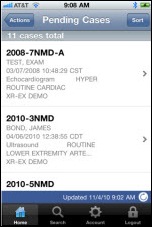
From The PACS Designer: “Re: XR-EXpress. An interesting image and data viewing software app for the iPhone called XR-EXpress has been released by New Mexico Software. You can manage cases, orders, and patient records easily and also check patient’s exam results.”
Listening: brand new rock-punk from Cage the Elephant from Bowling Green, KY. They’re barely old enough to shave, but they sound good, with some rawness that hints of the Strokes or Pixies.
On the Jobs Page: Senior Project Manager, Director of Consulting – Healthcare IT, Allscripts V11 Implementation Consultants, Sales Representatives. On Healthcare IT Jobs: Epic Program Director, Enterprise Architect, IT Systems Analyst, HPP Functional Analyst.

Some of the nicest people you’d ever want to know are with Encore Health Resources, starting at the top with industry long-timers Ivo Nelson (chairman) and Dana Sellers (CEO). Encore sponsored the great HIStalk HIMSS reception at Max Lager’s in Atlanta last year, with Ivo, Dana, and our pal Amy getting elbow-deep in the minutiae with me to make sure you had a blast (Ivo made the executive decision to go open bar instead of drink tickets, which saved quite a few of you a small fortune on the overage). They now want to support us even more by becoming an HIStalk Platinum Sponsor, which I appreciate. Everybody knows Ivo – he founded Healthlink and sold it to IBM in 2005. I’m pretty sure EHR (get it?) is following Healthlink’s trajectory of unbelievable growth, solid reputation, and happy consultants (the company is already racking up awards for being a great place to work, so check out their job listings). Encore provides services such as strategic planning, system selection, implementation, optimization, health analytics, and project management. I interviewed Ivo a year ago when nobody (including me) had heard of Encore — he provided some surprisingly heartfelt and profound answers that are worth a re-read, which I just did. Thanks to Encore Health Resources for supporting HIStalk.
William Beaumont Hospitals (MI) expects to get $10.3 million in HITECH money.
I thought of something I’d like to write about: what it’s like selling for Epic. Surely there’s a former Epic iron-mover out there who would talk anonymously. The company claims they do no marketing and implies that their sales process is simple, but there must be more to that story given the large number of big deals they’re signing.
I’m whisking Mrs. HIStalk away for short hiatus somewhere warm and sandy this weekend (Inga’s terse but sincere directive: “Don’t drink the water. Do drink the beer.”) Inga and Dr. Jayne will be handling the Monday Morning Update so that I might travel laptop-free, although I’ll have the trusty iPod Touch for sneaking an occasional, furtive glance at e-mail.
I’ll be closing the HISsies voting in a couple of days, so if you got an e-mail link, use it soon. If you weren’t on the HIStalk e-mail subscriber list as of last Saturday, you can’t vote, sorry. Tying the poll to an e-mail address prevents the usual Internet vote fraud since only those I’ve e-mailed can vote (it worked the same way last year). I know that method excludes those who read by RSS reader or who just cruise over whenever they feel like it, but that’s the only way I could come up with to prevent companies from urging candidate-specific company voting and to hopefully block robo-voting scripts.
ONC’s David Blumenthal hits YouTube to pitch EMRs, citing survey results in hopes of eliciting the bandwagon effect among fence-sitters.
WSJ covers the growing number of patients ordering their own lab tests online, with heart-related tests being the most popular. One patient’s seemingly backward approach struck me as funny: “She says she would call her doctor if she got a worrisome test result.” Most states require a physician order, but the lab companies are hiring doctors to sign them after a quick review of the online request. Sometimes you do wonder, though: do certain tests or medical items really require a physician’s supervision for safety, or is that just a way to prop up the price?

Welcome to new HIStalk (and HIStalk Practice) Platinum Sponsor MD-IT. The Boulder, CO company is the leader in medical documentation for physician offices and clinics, offering them an alternative to “EMR interfaces that require you to become data entry clerks” in creating an using electronic clinical notes. The big picture includes the preferred form of data entry, a chart viewer, e-prescribing software, Internet access to patient records, and provider-to-provider messaging. Specific options include dictation transcribed by medical language specialists; front-end speech recognition as a standalone application or Word add-in; a Web-based platform for creating, storing, and sharing clinical notes; and several EMR options (built into its platform, interfaced to an existing EMR, or a package including the Ingenix CareTracker PM/EMR) that it says let doctors “dictate your way to Meaningful Use.” The company offers its services through a nationwide network of regional offices. Thanks to MD-IT for supporting HIStalk and HIStalk Practice.
As I’m prone to do these days, I moseyed to YouTube to see if MD-IT had anything there. Above is a demo of a doctor using its software.
HHS will open the 45-day comment period for potential Stage 2 Meaningful Use objectives next week. The proposed objectives and measures for Stages 2 and 3 are here (warning: PDF).
Randall Stephenson, AT&T chairman and CEO, tells a Brookings Institution panel that robust broadband will change the healthcare model, particularly monitoring and diagnostics. The head of Time Warner went for the funny bone in his assessment of healthcare bandwidth needs: “We’re just thinking about making more doctor shows.”
EHR users speaking at the Implementation Workgroup of the HIT Standards Committee are concerned about meeting Meaningful Use requirements, mostly involving timelines, cost of compliance, and lack of government guidance. Some I found in my skimming:
- RECS don’t have consistent standards.
- Using a computer during a visit requires doctors to develop an entirely new approach to the patient visit and the time required to document it.
- One practice couldn’t pay its owners because of the cost of an unexpected server replacement.
- A hospital system said it couldn’t get straight answers about some of the requirements, spending 15 hours per week and tens of thousands of dollars in attorney fees. They submitted 21 questions to CMS, with 10 marked as solved even though only one was answered. They submitted eight to ONC and got four answers.
- Several hospitals and practices had to develop their own reports even though they are paying the vendor for a certified product. Those reports had to be changed as CMS and ONC clarified the requirements.
- Customers are being forced to buy software they don’t need. Example: a hospital has its own integration with Google Health, but interpretation suggests they’ll have to buy the unneeded product of their vendor since it was used by the vendor to earn Complete EHR certification.
- The same hospital interprets the regs as requiring them to re-certify their own tools, such as file transfers, every time they apply an upgrade to their EHR or interface engine, with a cost of $8,000 to $10,000 each time.
- From a recent clarification, hospitals must own software that can meet all Meaningful Use requirements, even if defers those requirements for Stage 1.
- Intermountain Healthcare says they don’t think they’ll make the Stage 1 deadline in time at all hospitals, saying they have “a huge and seemingly insurmountable challenge in front of us as things stand today.” They’re not getting timely answers to their questions from ONC and CMS.
- One hospital using a certified vendor with certified quality reports says they’ve had to create their own reports anyway, which they called “an onerous, difficult and time consuming process.” They added, “It is our understanding that only one Epic customer has been able to successfully run all of the Eligible Hospital MU reports.” They’re delaying their attestation.
- One group’s pediatric practices have too few Medicaid patients to quality for incentives, so they aren’t really incented to use EHRs.
- A hospital informaticist expressed concern that too many EHRs are earning certification for Stage 1 that may not be around to move to Stages 2 and 3. He also suggested that usability should be incorporated into the certification process.
- The most entertaining comments came from James Fuzy of Mississippi Health Partners. He says EMR interfaces are too expensive and not standardized and suggests giving hospitals money to do the connectivity because they have the expertise. He doesn’t like mandatory statewide HIE participation since they would have to pay for it even though they have their own HIE. He suggests a Meaningful Use Guide for Dummies since doctors don’t know what it means and most don’t think they money will ever be paid anyway. He says that insurance companies buying HIEs is like “the fox now guarding the hen house” to use the information to direct care; he instead suggests that if insurers want patient data, make them pay the providers for it.

A Weird News Andy diversion: a hospital in what sounds like a dangerous part of Chicago has decided it will no longer accept ambulance patients, saying it can save $25 million per year and increase its outpatient business.
A self-serving Council for American Medical Innovation poll finds that 58% of respondents want the federal government to spend more on medical innovation. As Inga would say, the same percentage also like babies, puppies, and world peace. Never ask if people want something, especially if it sounds noble; the real test is to ask them to hand over the cash to pay for it.
Interesting: a woman whose Wii Fit Balance Board shows her leaning to one side gets checked out, resulting in a diagnosis of Parkinson’s disease. She said, “It’s quite amazing that a computer game was able to point out there was a problem.”
GE Healthcare’s CEO says “the US has snapped back” and it can grow profits 10% per year, although the snapping back seems to refer to increased healthcare spending, which is really not much of an accomplishment unless you like to watch a country slowly going broke.

Transcription software and services vendor iMedX, fresh off several acquisitions, raises $2.5 million in equity financing, increasing its total to $17 million.
The federal government sues New York City’s government for running a Medicaid mill, saying it authorized 24-hour home care for patients without obtaining documentation of need and costing federal taxpayers tens of millions of wasted dollars.
Drug shortages are driving hospitals crazy, but it’s not just them: FDA intervenes to help prisons obtain imported sodium thiopental after domestic supplies run short, delaying death row executions. They’re testing new drugs for their people-killing power.
HERtalk by Inga
From Wilbur: “Re: Arizona shootings. Bad news on top of horrible news from out here in the great Southwest. Dumb, dumber, dumbest.” University Medical Center fires three clinical support staff members for accessing the medical records of victims of last weekend’s shooting. Officials say they are not aware that any confidential information was publicly released. The hospital has a zero-tolerance policy on patient privacy violations (cheers).
From Claude Noel: “Re: Manitoba eHealth. Saw a weird negative post about the project. Actually the project is going extraordinarily well. This is a very cool project that has had surprisingly little problems with implementation thus far.”
From Z-man: “Re: Moses Cone. I hear that as part of their contract with Epic, Moses Cone has to hire 92 FTEs that Epic screens and approves. Crazy, but I think it is a formula that works.”
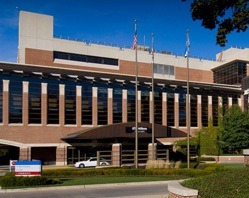
NorthShore University HealthSystem launches Epic’s MyChart application for the iPhone, iPad, and iTouch.
Ten Sisters of Mercy Health Systems hospitals are targeting to begin their 90-consecutive-day Meaningful Use validation on April 1. Mercy says it has invested more than $450 million for EHR across its 28 hospitals and has the potential to earn $140 million in incentives.

Honolulu physicians practicing near Kapiolani Medical Center at Pali Momi are forming an HIE and will use the Wellogic Community solution to connect with labs, pharmacies, hospitals, and other providers.
Also from the Aloha state: The East Hawaii Region of Hawaii Health System Corp. commits to meeting an end-of-year deadline to implement EMR (Meditech, I believe). East Hawaii Region hospitals are eligible for more than $7 million in stimulus funds.
HP wins a 52-month, $30 million contract to create a statewide Medicaid HIE for Texas. The project includes creating an electronic health history system for all Medicaid patients.

Former Surescripts exec Kate Berry is appointed CEO of National eHealth Collaborative. Interim CEO Aaron Seib will continue with eHealth as a senior leader.
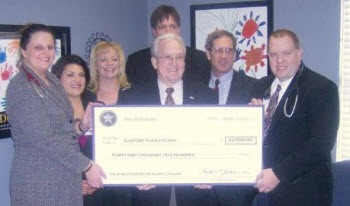
Are you curious how Gastorf Family Clinic (OK) managed to get their $42,500 stimulus check just two days after applying? A big thank you to Practice Manager Darrell Ledbetter for sharing details on HIStalk Practice. Bottom line: they were committed; their vendor (e-MDs) had the software in time; and they had solid assistance from their REC. Ledbetter says this initial payment alone almost covers what the practice paid five years ago for their EHR set-up.
Other goodies on this week on HIStalk Practice: an interview with Practice Fusion CEO and founder Ryan Howard, who shares some details of his company’s unique business model. Primary care docs and specialists have communication problems that aren’t necessarily improved with HIT. Nuesoft introduces its Nuetopia service and publishes another fun video. You know the drill: sign up for e-mail updates while you are over there. We are about to hit 1,000 confirmed subscribers. I promise to give you a free HIStalk Practice subscription if you are lucky subscriber # 1,000.
According to ONC, recent surveys indicate that 81% of hospitals and 41% of office-based physicians intend to seek Meaningful Use stimulus funds. Only 14% of office-based physicians say they are not planning to apply for incentives. David Blumenthal says these numbers indicate that the Meaningful Use process is increasing the willingness of providers to adopt EHR systems and that, “we are seeing the tide turn toward widespread and accelerating adoption and use of health IT.”
At this week’s advisory HIT Standards Committee meeting, several HIT gurus spoke out in support of including medical images in the next stage of Meaningful Use. Blumenthal agrees that it raises a number of questions worth tackling.

Alvarado Hospital (CA) sends layoff notices to 249 employees, or about 25% of its staff. The layoffs, which begin March 13th, affect 91 nurses, 10 pharmacists, and 13 technicians. Sad situation, but at least the financially troubled hospital gave workers 60 days’ notice.

Sponsor Updates by DigitalBeanCounter
- HealthTrust Purchasing Group aligns with 3M Health Information Systems to offer clinical documentation improvement consulting services and software and 3M IC-10 transition planning services to HealthTrust’s network of 1,400 acute care facilities.
- Picis receives certification for its EDIS, perioperative, and critical care products – all are compliant with Stage 1 Meaningful Use measures.
Edwards Air Force Base (AFB) replaces its PACS with McKesson’s Medical Imaging PACS under a new contract with the DoD. - Nuance announces that 100% of ED physicians across St. Anthony’s Hospital Group (Centura Health) are using Dragon Medical to document patients’ medical reports.
- Memorial Hospital and Manor (GA) chooses ImageNow document management, imaging, and workflow from Perceptive Software for its HIM and registration departments, hoping to phase out paper medical records weighing an estimated 830,000 pounds.




















































Traditionally Professional Courtesy is something that physicians gave each other - but we had to be careful with it when…