


News 4/27/11
Top News

 The VA and DoD agree to “buy” rather than “build” a joint EHR in an apparent change in direction from their last announced plans. They will round out missing departmental modules by looking first at any available internally developed systems and will develop their own applications only as a last resort.
Reader Comments

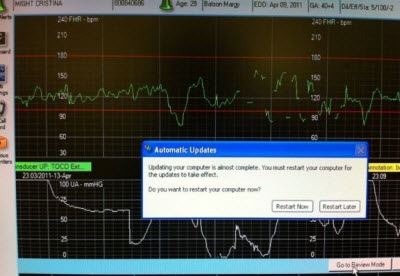
From Professor Paul MD: “Re: Amazon cloud downtime. For those who didn’t know, their northern Virginia data center that hosts EC2 and RDS services went down hard for 24 hours last week and didn’t recover all volumes until late Sunday. A small company that apparently does ECG monitoring repeatedly begged for help on Amazon’s public online forum, bringing up good points on what to consider when hosting health apps on the cloud. I like the Halamka shout-out, too.” Someone immediately questioned why they would be running a mission-critical life-or-death system on the cloud, to which the original poster answered, “Well, it is supposed to be reliable.” One of several uncharitable responses was:
If you were smart, you would have a disaster recovery plan for just this kind of thing. Judging from your lack of said preparations, you lot figured the cloud never goes down, and got greedy by not wanting to spend money on hot standby machines on a different infrastructure. Good going. Hope none of your cardiac patients croak because you’re going to get sued into next week…
That news item does encourage good discussion. If your organization runs cloud-based apps, please share what actions you’ve taken, both contractually and technically, to prevent and mitigate outages. What happens if your Internet connectivity dies (killed in most cases by the proverbial cable-shearing backhoe excavating for some minor project outside your facility using erroneous city-produced utilities maps?) What is required to maintain a hot swap site? How often do you test? Send me what you can and I’ll share it here.
From Olivia: “Re: McKesson. Gio Colella and Pam Pure might have a different opinion about how big winning that patent lawsuit against Epic would have been. That was just a place to start. Think Kaiser. Then think about all the other vendors with similar solutions. That sure would have helped to justify the purchase of the original RelayHealth company, which happened not long before the lawsuit was filed. Another intriguing story for cocktails and dinner sometime.” Is that an invitation?
From Puts and Gets: “Re: Cerner. More changes in the plastic hair lineup. The stock has had an artificial ride up since investors don’t have a decent, large-scale pure play in health IT, so they get the default money. They are going down the other side of that first roller coaster hill later this year.” I’ll steer clear of this debate and mark it Unverified.
From NotAnEpicShill: “Re: Epic. Another Epic employee here. What Lucy Gucci describes may be true for some Epic employees, but there are plenty of us whose jaws drop when we see things like that on the Web. I myself work about 45 hours a week (50-55 a few times a year during a crunch) and have a pretty good balance of life to work.The same holds true for many, many people with whom I work. I just wanted to get it out there that though certainly not everything at Epic is sunshine and roses, the rumors of our misery are greatly, greatly exaggerated.”

From Madrigal: “Re: Neil Pappalarado. Just announced at the Meditech shareholder’s meeting that he had a minor stroke last week. He’s still in the hospital, but is expected to make a full recovery.”
From Human Factors: “Re: ONC usability meeting. The general consensus was that EHRs are difficult to navigate, time-consuming, frustrating, cluttered and disorganized, and unsearchable. They lead to fatigue and ultimately burnout, do not adequately support disabled users, do not adequately support clinical workflows, and they disperse and bury critical information. Most of the discussion was around provider pleas to either make usability standards part of certification or mandate a common user interface. There was also a call for EHRs to be held to accessibility guidelines, to support easy data migration from one to another, and for vendors to be more transparent about their internal usability guidelines. A Cerner spokesperson contributed this interesting insight: ‘The tools [EHRs] are designed for the volume of documentation instead of the value of the information.’”
From Private Pyle: “Re: ONC usability fireworks last Thursday. You have to listen to the recording and read through the testimonies on ONC’s site. The docs told vendors their systems sucked, then consumers told them they were disconnected electronically and don’t have the information they need to be an engaged member of the care team, the vendors whined about new requirements and said that certifying usability would kill innovation, and the usability experts tore up the crappy vendor systems. A heated exchange ensued. The vendors tried to use the analogy of cars and that it makes no sense to put parts from three different makers together, but the committee trashed that, saying monolithic platforms have such a high barrier to change that customers are at the mercy of the vendor. I truly believe the monolithic vendors will not disrupt themselves and we will see some serious challenges that will provide capabilities and price points that will destroy the current market.” I wrote a few thoughts at the end of this post about the meeting. Usability measurement and any new federal involvement in it is obviously a big topic that gets a lot of folks stirred up. Comments from all viewpoints welcome.
HIStalk Announcements and Requests
Readers occasionally tell me they’re having trouble reading HIStalk because of errors or slow load times. The culprit in 100% of those cases so far has been long-obsolete versions of Internet Explorer. IE is a far inferior browser to begin with (feel free to check page load times on any media-rich site if you don’t believe me), but it’s really trouble-prone in old versions. Here are some suggestions.
- If you must use IE, upgrade if possible to the latest version your operating system will support – Version 9 if you have Vista or Windows 7, or Version 8 if you’re on XP.
- If your computer isn’t in IT lock-down mode, download Firefox or Chrome, at least to read HIStalk. You can still leave IE on your PC for any purposes for which it’s required.
- HIStalk is supported by the sponsors whose ads you see on the left, which means we all benefit when you read the site normally. If you can’t load the page, however, add /print to the link you get in the e-mail update to view a text-only version (so instead of this link, use this one instead, for example). Or, read via RSS reader (I use Google). You’ll miss a lot of other stuff, too, though – polls, links to the latest comments, upcoming events, etc.
I had to re-send an e-mail update that failed on the server for some reason, so if you got the same e-mail on both Friday and Tuesday, I promise I’m not intentionally spamming you. There was no way to pick up where it left off or to even tell how far down the list of 7,311 subscribers it got, so I started it over.
Acquisitions, Funding, Business, and Stock
Halfpenny Technologies says 13 new clients have signed up for its integration technology framework for delivering interfaces among hospitals, labs, and EMRs.
Huron Consulting announces its Q1 financials: revenue up 11.9% to $143 million and diluted EPS from continuing operations up 46.2% to $.19/share.
Keystrokes Transcription Service acquires competitor MTS of Texas, including its TxMTI online transcription school.
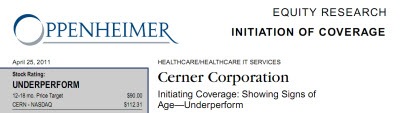
Oppenheimer initiates coverage of Cerner with an “underperform” rating, saying the company is “showing signs of age” with flat software sales even as HITECH brings buyers to the market, lower margins as services replace software sales, and a price-to-earnings multiple more appropriate for a software high flyer than a low-excitement services business. They also didn’t like the fact that the departure of COO Mike Valentine was announced on April 22 when the stock market was closed, saying “the timing of his departure is curious” unless he turns up almost immediately as CEO of a good-sized company (and if anyone knows where he’s going, let me know).
EncounterPRO chooses Intuit Health’s patient portal to offer its 300 pediatric practice EMR customers.
Consulting firm Computer Task Group (CTG) reports Q1 numbers: revenue up 22%, EPS $0.17 vs. $0.11. Healthcare revenue was up 30%, mostly from big EMR projects.
Sales
The Metropolitan Chicago Healthcare Council announces plans to develop the MetroChicago HIE using Microsoft’s Amalga and technologies from CSC and HealthUnity Corp. Seventy percent of the hospitals in Chicago are participating, with the notable exception of NorthShore University HealthSystem.
The Missouri Health Connection picks Cerner to build a statewide HIE, although they’re still negotiating the price.
The Missoula, MT paper reports that St. Patrick Hospital, part of Providence Health System, is moving to Epic. Cross-town competitor Community Medical Center is implementing NextGen for outpatient and will add Cerner inpatient next year.
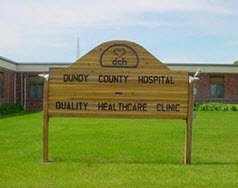
Dundy County Hospital (NE) purchases Healthland’s EHR for its 14-bed critical access facility, anticipating a Q3 2011 go-live.
Salina Regional Health Center (KS) will implement Summit Healthcare Downtime Reporting System as part of its disaster recovery strategy.
People
Ben Foster rejoins Huron Consulting as managing director of its healthcare practice and will work with providers to improve their revenue cycle.

MetroSouth Medical Center (IL) names Steven H. Rube, MD as medical director of the hospital’s seven community health centers and CMIO for the hospital. He’s the former CMO and EVP of EmpowER Systems.

UC Health (OH) appoints Anil Jain, MD as the organization’s first CMIO and SVP. He was a senior executive and physician at Cleveland Clinic.

eHealth Initiative founding CEO Janet Marchibroda is named chair of the Bipartisan Policy Center’s Health IT Initiative. She has also worked as chief healthcare officer of IBM and was COO for the National Committee for Quality Assurance. BPC, a non-profit think tank, launched its health project in January, led by former senators Tom Daschle and Bill Frist and former governors Mike Rounds and Ted Strickland.

Robert Barber, 64, director of financial services at Carolinas HealthCare System (NC), was shot and killed last Friday morning by an unknown assailant in an apparent robbery attempt while walking outside a coffee shop near his home in Charlotte, NC. He was a retired Air Force Reserves colonel, held a doctorate in health administration from the Medical University of South Carolina, and was a part-time instructor for several universities. He had held several executive positions in his 19 years with CHS, including stints as CFO and CEO in affiliated hospitals, and was a former president of the North Carolina chapter of HFMA.
Government and Politics
Norton Healthcare (KY) agrees will pay the federal government $782,842 to settle allegations of Medicare overbilling. Federal prosecutors contend that Norton submitted charges for evaluation and management services that were never performed.

 Dartmouth-Hitchcock Medical Center (NH) will pay over $2.2 million to state and federal agencies for improper Medicare, Medicaid, and Tricare billing. The payment includes over $344,000 to a former Dartmouth-Hitchcock physician who blew the whistle on the improper billing, which allegedly included charges for services delivered by unsupervised residents.
The American Telemedicine Association (ATA) calls for CMS to remove restrictions on telemedicine for ACOs. Recommendations include more medical videoconferencing access in metropolitan areas, home-based videoconferencing, and delivery of therapy services via telehealth.
Other
Performance scores for the four top interventional lab providers tighten to within five points of each other, according to KLAS’s latest report. KLAS notes that GE, Philips, Siemens, and Toshiba have slowed down the delivery of market-changing developments. In addition, healthcare reform and reimbursement pressures have resulted in increased provider innovation and the move toward multi-use labs.
A former employee of Carthage Area Hospital (NY) says its systems vendor CPSI was “thrown under a bus” when the hospital blamed the company for its billing problems. She says the problems started before CPSI was implemented, the hospital declined to send employees to Alabama for training because of the expense, and they replaced the business office manager who had received training right after they went live.


In case you have been living under a rock (or perhaps you’re just a normal guy) there’s a big wedding coming up Friday morning. I can’t decide if I will watch it live or set the DVR. Maybe both so I can relive the moment a few times. I did buy a special hat for the occasion, since I hear hats are an essential fashion accessory for royal weddings. And of course, some new shoes. Maybe Mr. H can come up with a Union Jack theme for next year’s HIStalkapalooza so I’ll have a chance to wear these beauties again.
Sponsor Updates
- Sunquest’s Physician Portal 5.1 earns modular ONC-ACTB certification from CCHIT.
- Mark N. Bair, MD, R.Ph and Jordan L. Schlain, MD join Ingenix’s independent advisory board. Bair is and ED physician and CEO for Emergency Medical Services, Inc. in Utah. Schlain practices internal medicine and is medical director and founder of Current Health Medical Group (CA).
- Culbert Healthcare Solutions completes the implementation of Epic’s ambulatory suite of products at the 200-provider Vancouver Clinic (WA). The project took less than 12 months to implement from kickoff to go-live.
- TeleTracking Technologies releases its Patient Flow Dashboard, powered by TeleTracking XT application, which monitors the real-time status of enterprise-wide flow operations.
- Capario names Stephen Garcia as CFO.
- Orthopaedic Surgery Associates (MI) selects SRS EHR and CareTracker PM for its 13 providers.
- Vocera Communications announces that its first quarter revenues grew 56% compared to 2010. Vocera also added its largest client to date, a Department of Defense hospital.
- The iDoc document imaging and management solution from CareTech Solutions earns certification as an EHR module.
- Aspen Advisors is highlighted by Consulting magazine as one of “Seven to Watch” consulting firms. The magazine cited the company’s doubling of headcount and revenue since 2009 and the fact that 40% of its employees have at least 20 years of healthcare experience.
Thoughts on ONC’s Certification / Adoption Workgroup’s April 21, 2011 Meeting on Usability
I haven’t had time to listen to the audio, but I got a few interesting nuggets from skimming the meeting materials:
- What folks are calling “usability” is really more “suitability to task,” not just counting clicks and seeing if on-screen terminology is consistent, but measuring how long it takes to do common tasks. In other words, ugly screens don’t matter too much as long as experienced users can get their work done quickly and accurately.
- Because of that, vendors are worried about new “usability” requirements that may go well beyond usability, not to mention the need to have a consistent, unbiased way to measure usability in whatever way it is defined.
- To compare usability among products requires definition of a perfect EMR, which puts the government in the position of designing systems.
- Vendors claim they have all kinds of formally trained usability experts who have design authority over applications, but customers don’t seem to think the final product reflects that fact.
- Users working with the same application rarely agree on the number and significance of usability problems.
- Any measurement of usability needs to take place in a real-life work setting, not in a lab.
- Some safeguards built into EMRs would be considered negatives by usability experts, such as the requirement for providers to review existing patient data, avoiding the dangers of “auto-complete” functions, and inclusion of the government-required signoffs and notifications that users resent and don’t find useful.
- According to one practitioner, systems don’t work as well as paper in her practice. Examples: ordering a routine mammogram electronically takes 10 minutes, entering a family history on paper takes 24 seconds on paper and two minutes in the EHR, systems don’t highlight important information from the electronic clutter they create, and EHR information (such as with scanned documents) may be “in the record” but not easily accessible.
- A provider urged the government to require vendors to design systems around a common schema to allow easy switching from one product to another, and also to require them to follow an app store model that supports picking and choosing from among competing functions.
- Several presenters said the government itself makes usability worse by requiring entry of generally worthless information, such as IV end times.
- Jacob Reider MD of Allscripts admitted that as a frustrated EHR user in 2004, he wrote a blog post blasting Allscripts for designing a system that took 40 seconds to enter a patient’s blood pressure. He said “the president of the company that had developed the EHR I was using to request that I delete the post, as it was costing the company sales.” He went to work for the company 18 months later (he must have either impressed them with his insight or inspired them to put him on the payroll to keep him quiet).
And some interesting comment snips from ONC’s usability committee blog:
- If the Federal government wants to really accomplish they goals they list, every medical entity needs to be on the same system so it is seamless and information can be shared. Usability experts need to be brought in ASAP before the entire project fails. This should have been done before the project was ever launched!
- Developers tend to follow what they know, retreading what’s been done before and packaging it with sharp marketing.
- I truly don’t understand the arguments against standardization, when data exist to support it. Standardization has saved countless lives with respect to mission-critical systems, and EHRs are decidedly mission-critical systems. In fact, standards often originate as a response to accidents and disasters that occurred because of a lack of standardization. To say that having standards regarding font sizes, color contrast, and a host of other usability-related variables clearly related to human performance “stifles innovation” is a weak argument.
- The current failure to act responsibly on this and other safety-related issues in health IT is an important ethical question that needs badly to be publicly discussed. It is wonderful that ONC has raised the issue, but unfortunately, it is several years too late, as care delivery organizations are currently too busy installing what’s available today in order to get the stimulus money to really attend to usability; and vendors are too busy managing these new installations to invest in the sort of thoroughgoing redesign that is needed.
- I am horrified when I look at the design of HIT which violates standard, well-known usability principles. When I tried to publish a paper on a particular EMR design that was particularly horrifying, the lawyers stepped in and said we were not allowed to publish any screen shots (which would show the issues) as this **violated the contract with the vendor**. In discussions with them, the vendor argued that their design was user-centered because it was successfully transitioned from the company’s prior use of the software as a restaurant management system!
- I hate my wonderful EMR. It has decreased my efficiency, decreased my face time per patient, not eliminated errors and resulted in significant employee dissatisfaction. In addition, it is not information-ful: when I read outside records on a complex patient and have to wade through page after page of meaningless review of systems, immunization histories, pharmacy records, vital signs, etc., etc. and never find what the patient was really feeling or what the reasons for the referral are, I have just wasted another 10 minutes that I could have spent with the patient – finding out relevant stuff! However, all important components of billing and compliance have been duly fulfilled (excuse my misapprehension that this was supposed to have something to do with patient care).
Contacts
Mr. H, Inga, Dr. Jayne, Dr. Gregg.






































 Healthcare IT is one big reason that private practice docs are taking down their shingles and going to work for hospitals, according to experts

 This week exclusively on HIStalk Practice:








That, or we see if Judy will announce Epic's new Aviation module (probably called Kitty Hawk) that has integrated Cruise…