Recent Articles:

News 12/9/11

December 8, 2011 News 6 Comments

Top News

Microsoft and GE announce the formation of a joint venture company that will take over most of the people and assets of the Microsoft Health Solutions Group along with specific GE Healthcare products. See the HIStalk story from early Thursday, which includes insights from interviews with the key executives involved.


Reader Comments

12-8-2011 6-45-08 PM

inga_small From Curious Reader: “Re: Black Book Rankings. I am confused about Black Book’s results. Do they break out their ratings by hospital size? CPSI usually sells to community hospitals, not the same ones Epic sells to. I don’t know how those are comparable. How is Black Book even defining and EMR? Picis is a surgery and anesthesia vendor — they don’t really have an EMR system.” This report includes multiple categories including under 100-bed hospitals, community hospitals, large hospitals, health systems, and EDs. Per Black Book’s website, the rankings are based on survey results that cover 18 performance areas. To make the Top 20 list, vendors must have at least 10 unique clients participate. Results for these ratings were based on 12,075 validated responses. There is no mention on how an EMR is defined, though it may be included in the full report. In you need to further satisfy your curiosity, you can purchase a report for $3,250, but note it will only include details on a single category and not all the inpatient EHR categories.

12-8-2011 9-07-25 PM

mrh_small From EMR Wannabe: “Re: GE and Microsoft. From trying to work with it, I know that Amalga UIS is an overly complicated hairball. I wasn’t sure about Qualibria, although last year when I asked a GE team how the knowledge project with Intermountain Health was going, they just broke into laughter and said, ‘depends who you ask.’ I said, ‘Well, I’m asking you,’ to which they took the Fifth (amendment, not bottle). Now with this announcement, we can see that Microsoft and GE decided to combine, and then bury, their respective dead or dying.” Amalga seems cool, but I don’t hear much from its customers once they’ve signed contracts, so NewCo should work to get the word out. I hope the companies really are planning to do something innovative like the announcement says. However, those with long memories will find it hard to forget (or forgive) historical examples of big, unfocused vendors who brashly stormed the HIT gates and then slunk off quietly shortly thereafter, unceremoniously dumping the charred remains of once-proud companies they had burned through and hoping the smell of utter failure would wash out of their Teflon-coated corporate suits. Recall when Baxter and IBM formed IBAX and quickly sold it off to HBOC, relieved to put distance between themselves and the albatross they had spawned from their passionate but short-lived union by creating a new company and not really caring whether it succeeded or failed.

For those scoring the Microsoft-GE JV at home, I’d watch for: (a) an indication of how much money the partners are investing vs. just letting the new organization sink or swim on whatever revenue it can muster; (b) the announcement of a real, delivered, buzzword-free product; (c) press releases listing newly signed contracts from paying customers that aren’t cherry-picked partner sites getting something else in return; (d) a lengthening roster of third-party developers that buy the “ecosystem” story and build useful apps on top of it; and (e) the assignment of experienced, high-ranking executives to the new company (so far new CEO Michael Simpson is the only person named and he’s been with GEHC only since 2010.) Some would say Peter Neupert’s retirement was the most negative aspect of the news (and it wasn’t even included in the announcement,) but to me it’s the fact that the announcement was made in such a hurry that they hadn’t even chosen a company name yet. We will report their progress here, good or bad. I’m as guilty as anyone about moaning that nobody innovates, then laying on the scorn when someone tries, so I’ll try to be cautiously optimistic, even though in talking to Neupert and Simpson Wednesday before the announcement, I couldn’t figure out exactly what they are planning to build, who the customer will be,and how the odd lot of products will contribute to the end result. I’m neutral on most of the products named since I’ve heard little about them, but I hope the former Sentillion people and applications don’t suffer in the chaos since they deserve better, having created a strong base of hospital customers that rely on their technologies.

mrh_small From SmallMe: “RE: Microsoft HSG. Major RIF and re-org in advance of the HSG/GE joint venture announcement.” According to our Microsoft contact that I asked to confirm, “Like all companies, Microsoft evaluates our business priorities regularly. As we evolve HSG’s strategy, we’re concentrating more on building a compelling platform and have eliminated a small number of positions to align with current priorities.”  

12-8-2011 8-59-18 PM

mrh_small From EthicsInHealthcareBusiness: “Re: RSNA. I’m surprised there isn’t more stringent hiring vetting by big vendors. Take the example of [vendor VP name omitted], who while at [vendor name omitted] was named in a federal lawsuit (CIVIL NO. 2004-116) accusing him of fraudulent pricing in dealings with government purchasing agents. The lawsuit was dismissed on a technicality, but it drove a parallel criminal investigation by the Defense Department and the US attorney’s office in Philadelphia. Why would a company risk this potential liability?” I omitted the specifics since, as you said, the lawsuit was dismissed and his innocence must be presumed. If he’s found guilty by the Feds, I’ll name names. His previous employer was known both globally and historically for shameful bribery. I blurred their name only a little above, but enough to say I didn’t unfairly name the company specifically.

mrh_small From Erik: “Re: McKesson. Halting all development of Horizon Clinicals 10.3 and deployment of Horizon Enterprise Revenue Manager.” Unverified. I got several e-mails from MCK employees Thursday morning that a company call was in progress (our readers are so loyal I’m surprised they didn’t conference us in.) Inga asked what was up and I told her if I had to guess, I would say MCK is either killing off Horizon or moving its revenue cycle efforts from HERM to Paragon since both had been rumored previously. I’ll be crowing to her endlessly if both guesses are correct, although I must credit readers who reported those possibilities to me in the first place starting many months ago. I’ll know more Friday, as McKesson Provider Technologies President Dave Souerwine asked to brief me. Unfortunately it will be late in the afternoon since I have to get home after work from the hospital to do it (darned day job!), but I’ll recap in the Monday Morning Update if not before.

mrh_small From MCKWorker: “Re: McKesson. All HERM staff essentially laid off. New direction for development, to combine with Paragon. HERM employees will have 60 days to interview for positions with that new strategy.” Unverified. It’s funny that Inga pinged a couple of her MCK sources and they told her company bigwigs had warned them that HIStalk would be probing for information. They were correct. Inga and I were flattered, even though the compliment was almost certainly unintentional. Apparently they weren’t too worried about anyone but us being on top of the breaking news and caring enough to dig beyond any official announcement.

mrh_small From Must Remain Anonymous: “Re: McKesson. It has finally happened! The call came today that McKesson will cease development of its Horizon product. All support will stop in seven years. Product development will now focus on the Paragon application instead. To be announced to their physician advisory council tomorrow morning. It is about time that McKesson drops the dead weight.” Unverified, until Friday anyway. If true, that would be truly remarkable given that Paragon has been close to being killed off several times, as Vince has explained in his HIS-tory lessons. Horizon has ample problems, but to think of Paragon as MPT’s flagship product is a mind-bender. If true, kudos to that little engine that could for hanging in there, excelling over and over, and giving the company an overachieving understudy for when its star couldn’t make curtain call.

And lest we forget among the corporate announcements from the several companies mentioned here, there are people behind these decisions, grunts like you and me who leave their families every day to do the best job they can, competently even though their expertise is related to products no longer in favor, who are torn with worry about their future livelihoods that are being manipulated invisibly by factors entirely beyond their control as corporate drones judge them unfairly on what they do today rather than their ability to contribute in a different way tomorrow (I hate that about corporate BS more than anything). Right now, they’re putting on a game face to try to make a nice Christmas or Hanukkah for their kids and families without seeming too preoccupied by work stuff that shouldn’t be intruding on their celebrations and religious observations, but at night when the lights go out, they are sleepless in contemplating what could change for them and those who depend on them. Join me in beaming some positive thoughts their way because I’m guessing they could use them right about now. I’ve been there and it sucks, but it eventually gets better.

mrh_small From Kurt: “Re: McKesson. I’m hearing they announced that they are spending $1 billion in healthcare IT. Is this correct? If so, this is more than most other vendors combined.” I’ll let you know soon. That sounds like an awfully large number even for a company of McKesson’s size, but I’m not ruling anything out. If they asked me for advice (not likely), I’d say they should show some leadership (meaning spend money) in building innovative solutions that will make their HIT presence respectable (i.e., high KLAS scores and a growing customer base), unlike their fellow conglomerate vendors that seem to be happy milking the wrinkled, desiccated udders of their thinning herds of malnourished and badly aging cash cows. In McKesson’s defense, they did make a huge investment (and later write-down, unfortunately) in developing HERM, so give them some credit for taking action, even if the result wasn’t what they had hoped. Corporate management has changed since then (and probably for that reason), so perhaps the environment is more conducive to nimble innovation now. I’d have to see that to believe it since it’s a rarity in a huge, publicly traded company.

12-8-2011 9-13-22 PM

mrh_small From Leotardo: “Re: Epic in the UK. Old news?” Two big-name English hospital trusts name their short list of potential post-NPfIT EMR vendors: Cerner, Epic, and Allscripts. The report says that “Epic is known to have invested heavily in the Cambridge procurement.” The Brits had better price out flights from London to Madison before finalizing a budget since they would be creating a massive carbon footprint for the endless mandatory training visits. Britain was one of few places where Cerner could pursue business knowing that Epic wouldn’t be sitting across the table, so news of an Epic win would not be celebrated in KCMO. And if Epic loses, that would be even bigger news since they usually don’t.

mrh_small From Wildcat Well: “Re: Costco selling Allscripts MyWay. Isn’t that an insult to every EHR sales rep out there? What exactly will Allscripts sales reps do now? The EMR adoption bubble is developing a very short shelf life.”

12-8-2011 8-31-36 PM

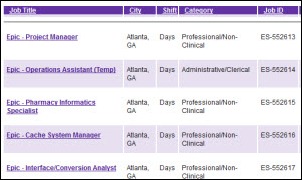
mrh_small From JB: “Re: Epic. I think this job would be humorous to highlight.” Epic hires only fresh-from-college greenhorns, so if you are experienced in healthcare IT, informatics, consulting, or process re-engineering, this is your one chance to get your foot in the Star Trek-themed door. I wonder how many Epic dishwashers have passed the company’s notorious MUMPS programming test?

mrh_small From Poutine: “Re: Quebec’s medical error registry. Finally done after being promised in 2002, but not getting provider data.” Provider error reporting is mandatory, but a third of them submitted incomplete information, while nine hospitals claimed “technical difficulties” that prevented them from filing even one report.

mrh_small From Skeptic: “Re: Micky Tripathi’s breach article. Part of me says. ‘Well done for a conscientious job.’ It’s not as if the folks involved had much of a choice in how to respond if they wanted to be law-abiding and careful stewards of the cards handed them by our system. The rest of me says. ‘This is insane.’ A street thief  steals a laptop and there is ‘an infinitesimally small chance’ the information would be accessed and/or abused. We spend $300K direct dollars and another large chunk of internal time — not to mention hours spent on the government regulatory side — addressing it, after which the thug still has the laptop and the exposure is still infinitesimally small. How much will we spend when the risk is real? And the lesson learned is that we all need to behave even more carefully and institute even more policies. This is great news for security companies, government agencies, and regulators. It’s horrible news for patients. Every dollar we spend on this kind of craziness is a dollar not available for patient care. At present, we’ve managed to construct a ridiculously expensive system relative to actual care delivered. This is an index case of how we’ve done it. (a) lesson one: no amount of anything is going to prevent this sort of thing. That’s not an excuse to be careless, but we need to use some common sense when applying blame. This blame falls on the thief. Period. (b) lesson two: the most sensitive data the healthcare system owns is financial. Identity theft is worth cash; PHI is close to worthless despite the paranoia surrounding it. We need to find ways to universally encrypt ADT/financial information and to not bind it so tightly to PHI. (c) lesson three: if we want to deliver better healthcare, there are better places to spend our patients’ money.”


HIStalk Announcements and Requests

inga_small Thanks to Micky Tripathi’s outstanding contribution on his organization’s patient data security breach, traffic on HIStalk Practice has been especially heavy this week. We’ve posted a number of other great items over the last week including Brad Boyd’s discussion on the need for clinically integrated organizations. Other news bits of note: CMS releases a well done MU toolkit for providers. Physicians are fairly unaware of ACOs and don’t know if they should join one. Only 4% of all eligible providers have been paid incentives for meaningful EMR use. Physician wait times are shortest in Wisconsin and longest in Mississippi. Requests: (a) read HIStalk Practice regularly because it thrills me to know that my father is not the only one tuning in; (b) next time you need to purchase something HIT-related, consider the offerings of our sponsors; and (c) sign up for HIStalk Practice e-mail updates because I love knowing that I am not the only one with an overflowing inbox. Thanks for reading.

mrh_small On the Jobs Board: Manager of Professional Services, Senior Trainer, Senior Software Engineer. On Healthcare IT Jobs: NextGen Workflow Process Consultants, EMR Application Specialist, Technical Services Manager.

mrh_small Inga, Dr. Jayne, and I take risks writing HIStalk. We could get fired from our real jobs if unhappy companies figure out who we are and complain to our bosses about something we’ve said about them. We could lose sponsors for reporting news objectively and stating our opinions honestly (GE, Microsoft, and McKesson are all HIStalk sponsors, for a current example, but we still have to say what we think or else we’d be just another rag that uncritically spews vendor-friendly non-news). We could lose long- or short-term significant others because we sit in front of computers way too much, or risk letting life pass us by as we fixate on the relatively tiny topic of healthcare IT after spending already-long days at work (tonight’s HIStalk took me 5.5 hours, so my total non-work time in the past 24 hours, including sleep, was about six hours.) If you want to provide some reward to offset that risk, (a) sign up for e-mail updates for HIStalk, HIStalk Practice, and HIStalk Mobile; (b) connect with us on Facebook and LinkedIn; (c) support our sponsors, especially those we have to occasionally say negative things about, by clicking their ads, checking them out in the searchable, indexed Resource Center, and sending them consulting RFIs; (d) send us rumors, news we might have missed, and updates on what’s going on where you work; and (e) help us find the good news of IT helping patients, IT people doing commendable work, and IT companies innovating and making a difference. Thanks for being part of what we do, which means you’re actually part of who we are.


Acquisitions, Funding, Business, and Stock

12-8-2011 7-55-08 PM

inga_small A day after we (and thus you) were tipped off by HIStalk reader Elroy, Streamline Health Solutions announces that it has signed a definitive asset purchase agreement to acquire Interpoint Partners for $5 million. We like to think they had to fast-track the announcement because of Elroy’s rumor report.

12-8-2011 4-05-38 PM

Humana acquires healthcare analytics company Anvita Health.


Sales

12-8-2011 4-09-31 PM

The federal government awards McKesson Provider Technologies its DIN PACS III contract, allowing it to sell PACS and related sub-systems to all branches of the US armed forces and civilian defense department agency facilities. The two-year contract has a potential value of $30 million.

12-8-2011 4-10-43 PM

Morehead Memorial Hospital (NC) selects Unidesk for desktop provisioning and application delivery for its VMware-based Virtual Desktop Infrastructure.

Meridian Health (NJ) to ICA’s CareAlign 3.0 for its 95 locations.

Group Health Cooperative of South Central Wisconsin and Group Health Cooperative of Eau Claire (WI) select McKesson Analytics Advisor.

Tidewell Hospice (FL) chooses Allscripts Homecare and EPSi financial management.

China-based diagnostic testing vendor Kindstar Globagene Technology chooses PathCentral’s anatomic pathology system for its 2,000 hospital customers in China.

Personal health record vendor MMRGlobal, which runs the MyMedicalRecords.com site, says Surgery Center Management has offered $30 million to license its patents for the PHR, patient video site, and document management system for providers.

12-8-2011 9-52-39 PM

CSC says it expects its NPfIT contract will be extended by an extra year through 2017, despite the company’s past problems delivering implementations on schedule that contributed to the cancellation of the $19 billion project. CSC expects to earn up to $3 billion for the 12-month extension. The former CIO said CSC would probably sue if its contract was cancelled, concluding that it might be cheaper just to pay them.


People

Medical documentation software provider Emdat hires Michael Grayson (Eclipsys, Sentillion, IDX) as VP of strategic partnerships.

12-8-2011 6-06-38 PM 12-8-2011 6-07-34 PM 12-8-2011 6-08-34 PM 12-8-2011 6-09-17 PM

HIMSS adds four members to its board of directors: Dana Alexander, RN, MSN, MBA, FHIMSS (GE Healthcare); Brian R. Jacobs, MD, MS, FHIMSS (Children’s National Medical Center, DC); Kenneth R. Ong, MD, MPH, FACP, FIDSA, FHIMSS (New York Hospital Queens); and Fred D. Rachman, MD, FHIMSS (Alliance of Chicago Community Health Services.)

Encore Health Resources expands its client services leadership team with the hiring of Greg Bluth, Ken Frantz, Jason Griffin, and Jim Kearns.

12-8-2011 6-30-09 PM

MED3OOO’s board of directors promotes Carl Smollinger from executive VP of ACO and employer services to COO.


Announcements and Implementations

12-8-2011 4-20-47 PM

NYU Langone Medical Center implements IOD’s release of information solution.

Wolters Kluwer Health releases its expanded IPhone app, UpToDate MobileComplete.

University Behavioral HealthCare (NJ) goes live on Stockell Healthcare Systems’ InsightCS Revenue Cycle Information Management platform.

DrFirst partners with Atlas Medical to offer physicians the ability to place lab/rad orders and review results via DrFirst’s Rcopia e-prescribing solution.


Government and Politics

12-8-2011 2-35-30 PM

Medicare and Medicaid have paid 2,868 hospitals and 21,425 EPs approximately $1.8 million for the Meaningful Use of EHRs through the end of November.

12-8-2011 8-29-49 PM

Dr. Jayne mentions below, but here’s a list of all Medicare EPs who have received HITECH money through September 30.

The State Department and the US Coast Guard sign an interagency agreement to share Epic’s EHR and access to VLER, the EHR used by the US Armed Forces EHR for its current and retired members.


Other

VA employee unions raise concerns that a plan to add RTLS technology will lead to staff monitoring. The VA is issuing a $550 million draft request for proposals for RTLS to interface with cleaning and sterilization equipment. The department claims it has no official plans to tag and track employees. One union representative views any plans to use RTLS to track employees as “the beginning of Big Brother” and “and invasion of privacy.”

12-8-2011 4-22-12 PM

Meditech announces it will return to the HIMSS conference this year as an exhibitor. In looking at the HIMSS conference site, it does not appear that Cerner will be following Meditech’s lead in coming back.

Programmers world-wide celebrated last weekend with Random Hacks of Kindness, where self-proclaimed hackers developed programs for humanitarian purposes. Among them were an emergency response system for the Samoan Islands, a real-time disease tracking system, and an app that can scan a photo of water-borne bacteria to determine if it’s safe to drink.

The FBI subpoenas several businesses in its investigation into the financial dealings of Wayne County, MI. Among the companies whose contracts are being reviewed is Strategic Business Partners, a Detroit IT company that has billed the county for $22 million over several years, some of that for developing EMR software for the county jail.

A hospital in Canada being sued for malpractice by a patient who suffered a stroke during surgery tries to convince a judge to give it access to the patient’s Facebook and Twitter accounts, her computer, and her iPhone. The hospital’s argument was that since the patient claims her health and enjoyment of life had been harmed, they should be able to look for evidence to the contrary. The judge said no, calling it “ a classic fishing expedition without the appropriate bait.”


Sponsor Updates

12-8-2011 8-51-19 PM

  • The Advisory Board Company’s Crimson business unit wins the Best Booth award at the IHI forum in Orlando, with recognition of its employees for their knowledge and demonstration skills.
  • GE Healthcare releases a white paper that highlights the use of Centricity Practice Solution to achieve Meaningful Use requirements.
  • Healthwise launches Healthwise Spanish Knowledgebase, which includes evidence-based health information.
  • Symantec Health and DrFirst will present at April’s EPCS Leadership Symposium.
  • Blanton Godfrey, co-founder of the Institute for Healthcare Improvement, keynotes at TeleTracking Technologies’ 2011 Client Conference and predicts that better workflow choices will determine winners and losers after health reform.
  • DIVURGENT releases a white paper on the selection of the right IT infrastructure for ACOs.
  • The Irish Health Service Executive announces that four of its 35 hospitals are live on McKesson’s Horizon Medical Imaging PACS, with the remainder coming up within 20 months.
  • T-System’s CMIO Robert Hitchcock MD and CFO Steve Armond CFO discuss how to use IT to make an emergency department profitable.
  • Lawson Software introduces Infor10 Lawson S3, which includes integration between Lawson technology and products and applications from its newly acquired company Infor.
  • e-MDs customer James F. Holsinger, MD, PC wins the 2011 HIMSS Ambulatory Davies Award of Excellence for the quality of patient care through practice’s Meaningful Use of EHR.
  • MedVentive was selected to participate in last month’s Mid-West BluePrint Health IT Innovation Exchange Summit.
  • Intelligent InSites posts congratulations to President and CEO Doug Burgum, who is also chairman of the board of the SuccessFactors, just acquired by SAP for $3.4 billion. He was also an early investor and leader of Great Plains Software, which Microsoft acquired for $1.1 billion in 2001.

EPtalk by Dr. Jayne

HIPAA 5010 report: just a tad more than three weeks left until the January 1, 2012 deadline. Although CMS has announced that it won’t enforce compliance until March 31, don’t let the extension fool you. Many in the industry are predicting transaction rejections and cash flow interruptions to those who are not ready. CMS will be looking for non-compliant physicians who are expected to provide proof that they are preparing to be fully compliant.

clip_image001

It’s National Influenza Vaccination Week through Saturday. I’ve been impressed by the Centers for Disease Control and its use of social media (they had me at the Zombie Apocalypse.) Hospitals and health systems are steadily moving towards making vaccination a condition of employment whether you’re in direct patient contact or not. Several of the “IT guys” I work with always complain about it since they don’t work in the hospital proper and I usually have to remind them it’s not just about patients, but also about lost workforce productivity and increased healthcare costs. People do still die from the flu and it’s recommended this year for everyone age six months and older. Please get your flu shot, especially if you’re in a high-risk group.

The American Medical Association publishes a “How To” guide for Accountable Care Organizations and Co-Ops. Chapter Six includes advice on EHR incentive programs. It’s not a bad read for those who either have been living under a rock the last several years or just need a refresher on the basics. I like the chapter’s closing paragraph:

As is clear from this chapter, the adoption of a certified EHR system and the achievement of Meaningful Use is a very arduous task. Eligible professionals should remember that the incentives or penalties that are the consequences of this task are not insignificant.

Speaking of Meaningful Use, if you’re a Safety Net provider, I thought this upcoming webinar from the Health Resources and Services Administration (HRSA) looked interesting: Tips for Overcoming the Gray Areas of Meaningful Use for Safety Net Providers. At least someone is admitting there are some gray areas. Presenters from Regional Extension Centers and CMS will review “problem areas” that include vendor relations, attestation, and troubleshooting quality measures. It’s December 13 at 2 p.m. EST. You can send questions in advance to healthit@hrsa.gov

clip_image003

CMS has a new web page that shows MU incentive payment and registration data through October 2011. Maps show payment and registration breakdowns by state as well as individual state reports of registrants and payments. For those of you who want to know if your colleague in the doctor’s lounge was just blowing smoke, here’s the list of those who have already received payments.

There was an announcement earlier this week that Medicare will allow mining of its claims database for the purpose of creating report cards on providers. Employers, insurers, and consumer groups will have access to the data and physicians will be individually identifiable. People have been after this data for a long time, but I’m not sure how useful it will really be. There are so many other factors that go into determining quality other than sheer volume and claims data. One prominent hospital I worked at appeared on some payer reports as having poor numbers for morbidity and mortality for certain high-risk procedures. Once the case mix was analyzed, it was apparent that this tertiary referral center really did have patients that were sicker than average and also that they were willing to attempt procedures on patients so sick that other facilities wouldn’t even consider it. We’ll just have to see what comes out of the data.

I’m back from the rodeo and settling back into the daily routine of crunching quality reports of my own, as well as doing never-ending upgrade planning and dealing with ever-cranky colleagues. I do have something big planned for next week, but you’ll have to keep reading to find out what it is. Let’s just hope it doesn’t end up involving law enforcement or a bail bondsman.

Have a question about Meaningful Use, CMS, or whether the wearing of red Rocky Mountain jeans really says something about a girl? E-mail me.

Print


Contacts

Mr. H, Inga, Dr. Jayne, Dr. Gregg.

Microsoft, GE Form Healthcare Joint Venture

December 7, 2011 News 10 Comments

image

Microsoft and GE Healthcare announced this morning that the companies will form a joint venture, creating a new company that will offer software tools for managing population health to improve outcomes and cost.

Microsoft will move its Health Solutions Group employees and assets to the new company, effectively ending its direct involvement in provider healthcare technology. Corporate Vice President Peter Neupert announced his retirement from Microsoft.

The new company, which has yet to be named, will be launched in the first half of 2012. Microsoft will contribute its Amalga health intelligence platform, the Vergence context management and single sign-on solution, and the expreSSO enterprise single sign-on product to the joint venture. Those products had been acquired from MedStar Health (Azyxxi) in 2006 and Sentillion (Vergence, expreSSO) in 2009.

Microsoft HSG’s hospital systems product line that was acquired from Thailand-based Global Care Solutions in 2007 had already been retired, but was sold to Orion Health in October 2011.

GE Healthcare will provide its eHealth HIE and the Qualibria clinical knowledge application that it is developing with Intermountain Healthcare. 

In an interview with HIStalk, Neupert said the bulk of HSG employees will be transferred to the new company, joining those GE Healthcare employees who are assigned to the eHealth and Qualibria projects for an initial headcount of 700. The company’s headquarters will be in Redmond, WA.

Microsoft’s HealthVault will not be part of the joint venture, Neupert told us, explaining that HealthVault needs to remain “independent and consumer-facing.”

The announcement states that the new company will deliver “a distinctive, open platform that will give healthcare providers and independent software vendors the ability to develop a new generation of clinical applications.”

Neupert explained that Microsoft Amalga will be the base layer of the new offering, bringing in data from other systems and adding metadata. GE Healthcare Qualibria will provide advanced data descriptors such as clinical vocabulary and context (such as where a patient’s blood pressure was taken and whether the patient was sitting or lying down at the time.) External applications can then retrieve data, data meaning, and workflow context from the new system. “Provider and payor will become intermixed,” Neupert said. “Our customers already do cohort management. How do we get really good at making cohort groups discoverable and manageable in an interesting way?”

Neupert said the platform will have open APIs for developer access. Amalga’s services can manage healthcare-specific requirements such as access controls and auditability, allowing third-party developers to build solutions around large enterprise databases.  “In a patient-centric world, you want the data to be separate from the app,” he told HIStalk. “You want competition to be based on user interface and functionality, not a vendor’s ability to lock up the data. Customers want choice.”

The announcement indicates that the new company will market its products globally. Neupert said that there’s always a difference between ambulatory and inpatient care and that all governments want to tie in home care. He expects the new products to assist in those efforts, acknowledging that countries will evolve differently.

Michael J. Simpson, general manager of GE Healthcare’s Healthcare Knowledge & Connectivity Solutions practice, has been named CEO of the new company. He joined GE Healthcare in 2010 after a few months as SVP of product strategy for QuadraMed. Before that, he spent 5 1/2 years as general manager and chief technology officer of McKesson’s Horizon Clinicals business unit.

Simpson told HIStalk that he plans to enable customers to be amazed, opening up the user experience to caregivers and bringing the cultures of software development and customer relationship management to the patient. “Connectivity across inpatient and outpatient will require new platforms,” he said.

CIO Unplugged 12/7/11

December 7, 2011 Ed Marx 10 Comments

The views and opinions expressed in this blog are mine personally and are not necessarily representative of current or former employers.

Transformation Through the Written Word

12-7-2011 6-56-55 PM

My nephew Jordan, at the time a high schooler, was thinking about careers. Spring Break of 2009 found him shadowing “Uncle Ed,” exploring healthcare. He awoke with me each morning for 5 a.m. workouts and remained engaged until we returned home for 6 p.m. family dinners. Free time was spent developing content for an innovation workshop he would help me lead for one of our hospital leadership teams.

We nailed the workshop. The hospital president was so impressed with Jordan’s facilitation techniques that he offered him a job upon college graduation. We left that Friday session exhausted but high, ready for a Starbucks reward! Immersed all week in healthcare and spending time with physicians and leaders, his career decision crystalized. After graduating as class valedictorian, Jordan began an eight-year journey as a University of Colorado Medical School BA/BS-MD student, one of only ten chosen in the nation.

An elite runner, Jordan serves me humble pie each time we connect. We met up a couple months ago and put in a few hard miles. A college freshman, he asked me for my views on Gawandi’s The Checklist Manifesto and how it has influenced our culture. A month later he asked me about Johansson’s The Medici Effect; What Elephants and Epidemics Can Teach Us about Innovation.

We met up recently in Denver, and, during this run, he wanted to know my views on Johnson’s Fire in the Mind; Science, Faith, and the Search for Order. “Uncle Ed, where does science end and religion begin?” He loses me on the hill. Is this my nineteen-year-old nephew?

The more I learn about his medical school program and curriculum, the more impressed I am. They have something special going down at UC School of Medicine with their focus on stimulating personal and professional growth through book studies. Every other week, these future physicians tackle another book and debate.

Book and debate reinforced my IT department’s approach. I was not a reader in my youth, but as my hunger grew for leadership, I began devouring the written page. A causal correlation emerged. The more I learned, the more effective I became.

I asked my direct reports to read with me, and I observed the same causality. If these book studies were helpful for my teams, then what about my entire organization? Twelve years and counting, my desire to be a continuous learner has not abated. I have seen the transformative impact on my organizations. Hearing about Jordan’s medical school inspired me to continue pressing forward.

Many people stopped learning the day they graduated. Having book studies in the work place carries numerous benefits. Studies remove excuses and make learning convenient. The studies bring a cross-section of individuals together who might not otherwise meet each other. Cohorts ensure accountability, and nobody shows up to class unprepared. Relationships form. Engagement deepens. Leadership is honed. New ideas stimulate innovation. Sometimes we invite our strategic partners. Learning happens. People grow.

How to develop a program in your workplace:

  • Charge a modest fee for the class. Return the fee for 80% attendance. Unreturned fees are donated to United Way.
  • Lead the first set of classes yourself so you can model the process. Then delegate teaching to your direct reports. Expand to line staff as you find alignment between a person’s passion, ability to teach, and the general need for the topic.
  • Classes early in the day have the most traction.
  • Books with associated workbooks work especially well.
  • Meet weekly and run each class 6-8 sessions for one hour.
  • Offer a variety of classes quarterly.

Here is a sample listing of the books we have leveraged through the years. While we have our reliable classics, we always scan for new books. And yes, we have gone digital:

  • 17 Irrefutable Laws of Teamwork
  • 21 Indispensible Qualities of a Leader
  • 21 Irrefutable Laws of Leadership
  • 360 Degree Leadership
  • 5 Dysfunctions of a Team
  • A Long Obedience in the Same Direction: Discipleship in an Instant Society
  • A Message to Garcia
  • Accounting for Non-Accountants
  • Application Stuff for Non Apps
  • Axiom
  • Blown to Bits
  • Built to Last
  • Business Etiquette for Dummies
  • Checklist Manifesto
  • Churchill on Leadership
  • Clever: Leading Your Smartest, Most Creative People
  • Competing on Analytics: The New Science of Winning
  • Computer Factoids
  • CPHIMS Prep Guide
  • Creative Whack Pack Deck-Book Set, Success Edition
  • Cyber Warfare
  • Death By Meeting
  • Developing the Leader Within You
  • Disintegration
  • Drucker on Leadership
  • Emotional Intelligence
  • Finance for Dummies
  • Financial Peace
  • First, Break all the Rules
  • Fish
  • Getting to Plan B: Breaking Through to a Better Business Model
  • Good to Great
  • Gung Ho!
  • Hardwiring Excellence
  • Heart of Change
  • Here Comes Everybody
  • High Five
  • Higher Standard of Leadership
  • Hospital Management
  • Hospitals: What They Are and How They Work
  • How to Give a Damn Good Speech
  • How to Listen to God
  • Human Sigma
  • If Disney Ran Your Hospital
  • Innovators Dilemma
  • Innovators RX
  • Inside the Magic Kingdom
  • IT Risk
  • It’s Your Ship
  • Jack; Straight from the Gut
  • James and the Giant Peach
  • Judgment: How Winning Leaders Make Great Calls
  • Kick in the Seat of the Pants: Using Your Explorer, Artist, Judge, & Warrior to Be More Creative
  • Lead with Luv
  • Leadership (Giuliani)
  • Leadership Lessons Learned
  • Leadership Secrets of Attila the Hun
  • Lincoln on Leadership
  • Making Teleworking Work: Leading People and Levering Technology for High Impact Results
  • Medici Effect: What Elephants and Epidemics Can Teach Us about Innovation
  • Now Discover Your Strengths
  • Orbiting the Giant Hairball
  • Outliers
  • Overcoming the 5 Dysfunctions of a Team
  • Please Understand Me (Myers-Briggs)
  • Raving Fans
  • Redefining Global Strategy
  • Safe Patients, Smart Hospitals,
  • Same Kind of Different as Me
  • Servant Leadership
  • Social Intelligence
  • Strengths Finder 2.0
  • Sustained Innovation
  • Technical Stuff for Non Techies
  • The Art of War
  • The Big Switch: Rewiring the World, from Edison to Google
  • The Black Swan
  • The Element: How Finding Your Passion Changes Everything
  • The Fifth Discipline
  • The Five Temptations of a CEO
  • The Four Obsessions of an Extraordinary Executive
  • The Fred Factor
  • The Future Arrived Yesterday
  • The Future of Management
  • The Innovator’s Prescription (Innovator’s RX)
  • The Leadership Challenge
  • The No Asshole Rule
  • The Power of Pull
  • The Purpose Driven Life
  • The Shallows: What the Internet is Doing to Our Brains
  • The World is Flat
  • Thinking for a Change
  • Today Matters
  • True North:  Discover Your Authentic Leadership
  • What Difference Do It Make Stories of Hope and Healing
  • What Got You Here Wont Get You There
  • What Were They Thinking
  • Where Good Ideas Come Innovation
  • Who Moved my Cheese
  • Wikinomics
  • Wild at Heart

Our next family reunion is in Seattle during the summer. If I want to keep up with Jordan, I’d better keep reading!

Ed Marx is a CIO currently working for a large integrated health system. Ed encourages your interaction through this blog. Add a comment by clicking the link at the bottom of this post. You can also connect with him directly through his profile pages on social networking sites LinkedIn and Facebook and you can follow him via Twitter — user name marxists.

News 12/7/11

December 6, 2011 News 7 Comments

Top News

12-6-2011 6-19-43 PM

Costco announces its entry into the PM/EHR software and services business through its partners, Etransmedia Technology, Inc. and Allscripts, moving from a test phase to full launch after experiencing high demand. Costco will offer the Allscripts MyWay PM/EHR along with hosting maintenance, support, training, implementation services, and unlimited claims processing for $499 per month. The company will have a booth at HIMSS.


Reader Comments

inga_small From Unibroue: “Re: Kaiser MU-payment mishap. The doctor who did not receive her MU incentive because Kaiser mistakenly claimed it is now making progress towards collecting her money. After a couple of attempts, she connected with the right person at Kaiser, they have corrected the registration issue, and the doctor should now be able to have her payment processed correctly.” Many thanks to our great readers who offered advice and contact names to help this doctor straighten things out.

inga_small From Fancy Schneider:Re: HIStalk’s reputation. I was recently in a meeting at a hospital and HIStalk came up. Someone commented that it was the only place where they could get real information in an industry that is swamped with vaporware.”


inga_small From Bob Coli, MD: "Micky Tripathi’s First-Hand Experience with Patient Data Security Breach. This is the best overview of a PHI security incident that I have seen to date. Every word is valuable to consumers, healthcare professionals, and everyone else in America striving to achieve maximally secure and efficient data portability and fully interoperable HIE.” Other readers concur with Dr. Coli, with some urging that Micky’s post be “mandatory” reading and naming it HIStalk’s “Post of the Year.” Even Mr. H, who is parsimonious with his praise, called Micky’s piece “outstanding” and suggested that if there were Academy Awards for blog posts, that this one would be a shoo-in. The cost of the breach (above) should get your attention, after which you can read the article here.

12-6-2011 6-31-00 PM 12-6-2011 6-34-57 PM

mrh_small From Dave Miller: “Re: University of Arkansas for Medical Sciences. Some news for HIStalk. Our RFP scoring committee has recommended Epic. We still have to nail down funding and get the contract done, but the die is cast.” Dave, who is vice chancellor and CIO at UAMS (cool license plate) says they will replace Eclipsys Sunrise and Medipac on the inpatient side and Logician and Signature for ambulatory, plus a bunch of miscellaneous systems. Dave’s an old friend of HIStalk who has kept in touch since his days at University of Chicago Medical Center.

mrh_small From Benzyl: “Re: PQRS. Do you see the number of submitting practices increasing or decreasing this year? What about hospitals? It seems that submissions slowed down after the incentive was reduced from 2% to 1% this year, or maybe other programs are getting the attention of practices.” Readers, chime in with your comment if you like.

mrh_small From Long-Time Reader: “Re: HIT spending. I was wondering if you know what percentage of total healthcare spending HIT represents? Awesome site!” I’ll again go to readers who might a data source since I don’t know that I’ve seen an HIT-specific number that’s more precise than the typical “technology” that covers medical equipment.

12-6-2011 9-20-14 PM

mrh_small From Gladys Kravitz: “Re: Cape Coral Hospital (FL). I was told by someone who works there that their Epic go-live didn’t go well, taking two hospitals down for several days. The person said administration was responsible since they didn’t go for the ‘deluxe’ Epic package from Epic and tried to manage the implementation on their own.” Unverified.

mrh_small From Dadudadu: “Re: HIStalk. I hate to draw the comparison, but your statement about doing what you love and the money will follow sounds a lot like the philosophy of Epic. That intangible sense of purpose, unadulterated by the naked self-interest introduced by the pursuit of money or power or fame is, of course, what makes this website so great. And results, paradoxically, in more Money, Power, and Fame than you want. Be honest, what pays more at this point: HIStalk or your day job? Regardless, kudos to you for finding what you love, and doing it well so we all can benefit from it. Thanks.” One thing I should have added to my statement is that you almost have to work for yourself to either (a) do what you really love in the way you want to do it, and (b) reap money, power, and fame, since by definition, corporate employers fully expect to arbitrage the difference in what you’re worth vs. what they pay you, laying claim the great majority of that difference by rebating tiny raises and bonuses to encourage your occupational inertia for their continued benefit. I admire Epic for at least appearing to have something other than their corporate bottom line front and foremost, although it’s rare that good-sized companies can create and maintain a “we just want to do good work” philosophy, especially after the founders step aside (no different than when humbly wealthy self-made parents leave their fortunes to bratty, entitled children.) It’s probably empowering to have a lot of money, but I’m just as empowered by not needing much of it. If I ever quit my day job, which I admit contemplating on occasion, my questionably achievable goal would be to work for myself instead of someone else for a change.

12-6-2011 9-34-23 PM

mrh_small From Elroy: “Re: Streamline Health. Acquiring Interpoint Partners, to be announced next week.” Unverified. Streamline does document management, while the Atlanta-based Interpoint Partners offers business intelligence and analytics. Streamhealth’s President and CEO Robert Watson, who took the job in February 2011, was previously a director of Interpoint. That adds credibility to the rumor.

mrh_small From The PACS Designer: “Re: NPfIT Roundable. The UK’s NPfIT has had its ups and downs, but they are still looking to the future and have assembled a group to talk about it.”

mrh_small From LanMan: “Re: Cerner. Buying IP blocks from now-defunct Borders? What for? And I heard this from a Brit publication?” Actually you could have heard it here since I mentioned it on December 2. At $786K, it was supposedly the second largest transfer of IPv4 addresses after Microsoft bought $7.5 million worth from also-defunct Nortel. IP addresses are about to become harder to obtain and more expensive with the advent of IPv6, which is replacing the current IPv4 as it runs out of available addresses. Cerner could be buying the addresses for resale, but I would speculate that it’s just ensuring that it will have enough for its own use for the foreseeable future, or perhaps to avoid expensive network infrastructure upgrades that IPv6 addresses will require.

12-6-2011 9-09-47 PM

mrh_small From Lyssa Neel: “Re: native EMR apps for the iPad. Our app, VitalHub Chart, sits on top of Cerner PowerChart and makes data available to clinicians in a native iOS interface. Please take a look and let me know what you think.” Lyssa, whom I notice sports an impressive PhD in computer science from MIT, is CTO for VitalHub. Their product was developed at Mount Sinai Hospital in Toronto. Cerner users, what do you think?

mrh_small From Early Girl: “Re: Microsoft Health Solutions Group. Some kind of announcement involving GE Healthcare will be made this week, either GEHC acquiring HealthVault and/or other MSFT products or some kind of marketing agreement.” Unverified.


HIStalk Announcements and Requests

12-6-2011 9-22-33 PM

mrh_small Travis Good is on the ground at the mHealth Summit, so you can check out his reports on HIStalk Mobile. He says attendance is an impressive 3,500.

Acquisitions, Funding, Business, and Stock

Healthcare quality improvement firm Avatar International acquires HR Solutions, a human capital management consulting firm that specializes in clinical engagement.

12-6-2011 9-24-10 PM

Streamline Health posts a Q3 profit of $296,000, up 212% from a year ago. Revenue fell 4% to $4.3 million.

12-6-2011 6-49-35 PM

Health Tap raises $11.5 million in Series A funding, raising its total to $14 million. It provides an online community where anyone can ask questions to US-based physicians at no charge. The company says that 6,000 physicians are participating so far, attracted by the “gamification” of earning reputation points for answering questions or agreeing with answers provided by other doctors. Big-name investors in the 12-employee company include Eric Schmidt (Google) and Ester Dyson.

SAIC reports Q3 numbers: revenue flat, EPS –$0.27 vs. $0.46, but exceeding analyst earnings expectations by a penny after excluding one-time items. The company said it paid $190 million in cash to acquire Vitalize Consulting Solutions in July 2011.


Sales

12-6-2011 3-49-42 PM

QuadraMed RCM client Memorial Hospital of Sweetwater County (WY) chooses QuadraMed’s Computerized Patient Record and Quantim Electronic Document Management.

12-6-2011 3-50-54 PM

The San Diego Beacon Community selects Santech’s SanText SMS platform to send text messages to parents for appointment reminders and to inform them of their children’s immunization needs.

Lehigh Valley Health Network (PA) selects Orion Health’s HIE for its 50+ hospitals, clinics and health centers.

Association of Ontario Health Centres signs a 10-year contract with Canada-based EMR vendor Nightingale Informatix, which says it will earn $9 million in revenue in the first three years.


People

Mary Crouch joins Orchestrate Healthcare as its Meditech Practice Manager. She was previously with Laughlin Memorial Hospital (TN).

12-6-2011 6-23-34 PM

Tad Jacobs, DO, CMIO of Avera Medical Group (SD), is promoted to chief medical officer.

12-6-2011 8-42-57 PM

TriZetto names Pierre Samec, formerly of Expedia, as EVP/CTO.


Announcements and Implementations

The Greater Houston HIE announces the formation of its collaborative HIE network, which includes representation from over 60 hospitals across 14 counties.

12-6-2011 3-56-34 PM

St. Francis Hospital & Health Services (MO) announces plans to launch its Epic EHR on March 31, 2012.

Aintree University Hospital NHS Foundation Trust implements CCube Solutions’ electronic document management system, powered by Kodak production scanners and Kodak Capture Pro Network Edition imaging software.

gloStream will integrate clinical decision support from DiagnosisOne into its EMR.

Trustwave announces MyIdentity, a cloud-based two-factor authentication solution that supports five mechanisms (digital certificates, one-time SMS message passcodes, voice call-back, pushed login alert to mobile, and a mobile app that generates a one-time password.)

12-6-2011 9-31-43 PM

Caristix launches Cloak, which strips patient-identifiable messages from HL7 data for creating sample messages or clinically valid data for testing. The company, which was featured in HIStalk Innovator Showcase in November, offers a seven-day free trial.


Innovation and Research

Microsoft Research is applying spam-fighting techniques to the analysis of HIV cells, finding similarities in how viruses mutate as they attack the immune system and spammers who fine-tune their payloads to bypass spam filters.

mHealth Alliance announces its Top 11 in 2001 Innovators Challenge. Winning apps include pregnancy surveillance, voice-powered information retrieval, diagnostic tools for telemedicine, counterfeit drug detection, patient teaching, physician collaboration, patient communication, baby tracking, and care reminders. Above is a demo of an smart phone-based EMR developed by Martin Were MD, MS of Regenstrief Institute for HIV treatment and control in Kenya.

12-6-2011 8-35-11 PM

IRobot, the company behind the Roomba vacuum cleaner, applies for a patent for AVA, a five-foot-tall robot with a “head agonistic design” that can accommodate tablets or smart phones.


Other

The board chair for Maryland eCare says that mortality rates have fallen 30% across hospitals that have implemented its telehealth systems that supplement ICU coverage at rural hospitals.

12-6-2011 4-04-32 PM

CPSI pays $9.5 million for its new Mobile, AL corporate headquarters, which includes 16.5 acres and 135,500 square feet of office and warehouse space. The company had been leasing 13 buildings in the same office park.

12-6-2011 3-15-55 PM

inga_small EHRrtv publishes its MGMA interview with the always entertaining (and interestingly-attired) Jonathan Bush of athenahealth. He’s like no other CEO out there.

Aetna and ProHealth Physicians (CT) say that their four year Provider Collaboration program has resulted in 37% fewer inpatient hospital days on a risk-adjusted basis and 35% few hospital readmissions.

12-6-2011 3-32-21 PM

CPSI, Cerner, GE Healthcare, and Picis earn top client satisfaction scores in Black Book’s ranking of inpatient EHR vendors, obviously reaching vastly different conclusions than KLAS.

12-6-2011 3-40-43 PM

The Leapfrog Group includes 65 hospitals (including 18 Kaiser facilities) on its list of Top Hospitals, based on the delivery of quality care.

mrh_small An article in Wired magazine called Apple’s Secret Plan to Steal Your Doctor’s Heart is not particularly focused or convincing, but a fun read. I couldn’t figure out its conclusion other than (a) doctors like using an iPad because it saves them time; (b) hospitals seem to be warming up to them; and (c) Steve Jobs had a small interest in healthcare after trying unsuccessfully to develop a Pixar CT imaging system. Like many articles these days, it seems  highly analytical and fresh until you think about precisely what you learned and realize that it wasn’t much.


Sponsor Updates

12-6-2011 3-43-43 PM

  • Elsevier introduces Procedures Consult App for iPad, iPhone, and iPod Touch.
  • Adler Hey Children’s Hospital and Liverpool Women’s Hospital (UK) select Perceptive Software’s ImageNow electronic document management system.
  • Wolters Kluwer Health announces its acquisition of Medknow PVT Ltd, expanding its open access publishing business.
  • Capital Health (NJ) goes live on Wellsoft EDIS in its four emergency departments.
  • dbMotion announces the 2012 schedule for its Insights into HIE seminar series.
  • Michael O’Neil, founder and CEO of GetWellNework, moderates a discussion on mHealth and the role of patient education and monitoring medical compliance at this week’s mHealth Summit.
  • Qualcomm Life Inc. and AirStrip Technologies collaborate to offer mobile monitoring to home health providers and patients.
  • Capario launches a streamlined payer enrollment process.
  • Teradici combines Imprivata OneSign Virtual Desktop Access with its PCoIP Firmware release 3.5.0 to offer virtual desktop access via access cards and ID badges.
  • A Practice Fusion press release discusses five top trends and surprises in HIT for 2011.
  • In a December 12 Webinar, South Jersey Health System CIO Thomas Pacek  will share how MobileMD is helping his organization’s physician network to grow and coordinate patient care.
  • Nebraska Health Information Initiative announces that physicians are now sharing patient immunization information with NESIIS through the HIE’s Axoloti-powered platform from OptumInsight.
  • San Diego Business Journal profiles Awarepoint and its four new RTLS patents.
  • Vibra Healthcare (PA) selects PatientKeeper Physician Portal and Mobile Clinical Results for its long term acute care hospitals nationwide.
  • Forst & Sullivan awards AT&T its Competitive Strategy Leadership Award for its approach to mHealth.

Contacts

Mr. H, Inga, Dr. Jayne, Dr. Gregg.

Curbside Consult with Dr. Jayne 12/5/11

December 5, 2011 Dr. Jayne 3 Comments

For those of you who are my Facebook friends, you may have noticed that I’m at the National Finals Rodeo this week. (And if you’re not my friend on Facebook… well, you know what you need to do to keep up with all my travels and adventures.) Despite my love of all things technology, I really am a cowgirl at heart.

12-5-2011 9-12-05 PM

For those of you who are not rodeo fans, NFR is in Las Vegas. I’m amazed at how the city transforms itself for different constituencies. The casinos of the headquarters hotels are filled with the sounds of country music. Shopping areas are featuring cowboy boots in the window instead of rhinestone stilettos (although there are plenty of rhinestones on the boots.) The cocktail waitresses at one bar I’ve been to several times in the past have given up their leather bustiers and miniskirts in favor of tight jeans and white cotton shirts. If there’s any place on earth that’s a triumph of marketing, it’s Las Vegas.

So what does this have to do with healthcare and technology? A couple of things.

First, let’s talk about marketing. We always think about vendors when we think of marketing. Nearly every vendor’s ad campaigns these days prominently feature the twin terrors of Meaningful Use and Accountable Care. If those aren’t mentioned, then it’s revenue cycle or other financial aspects of health care.

I think we forget about the sheer amount of hospital marketing that goes on, however. Just like the casinos marketing to the cowboys (many of whom have wallets the size of their belt buckles – and trust me, Jayne and her crew have been checking out some jeans pockets on this trip) the hospitals, surgery centers, and physicians are heavily marketing towards whatever demographic they feel has the fattest wallets or deepest pockets.

Driving around most cities, you see plenty of healthcare-related billboards. One hospital I passed recently boasts a Heart Hospital. What does that mean? Do they do more heart cases than anyone else? Are their outcomes better than others? Or do they just want the perception of being specialized to try to garner business when their volumes are the same as the hospital across town?

Everyone is tweeting their emergency department wait times. I’d like to see them tweeting their nurse-to-patient ratios or their infection rates instead. That would really create some interesting discussion in the community about which facility is the best.

Physicians and other providers aren’t much different. Going after high-paying patients is an art form. Medical buildings (and some physician offices, too) are installing complimentary coffee kiosks to go with their waiting room check-in kiosks. Ancillary services including cosmetic and convenience offerings are proliferating faster than Medicare Wellness exams. Availability of after-hours physician access at premium prices is becoming more commonplace. Concierge-type practice models such as MD VIP are going mainstream. My travel companion noticed a special advertising section in the Southwest Airlines Spirit magazine this month that featured not only concierge medicine, but other specialty and alternative practices.

Hospitals and physicians have their own internal marketing campaigns as well. It may be as simple as signs in a primary care office reminding diabetic patients to take off their shoes prior to seeing the physician or as complex as a multi-hospital multimedia hand washing campaign (complete with Big Brother surveillance, as we’ve seen recently) or promoting desired behaviors such as vaccine compliance through viral videos.

The medical establishment is increasingly marketing technology to patients. Not only emergency wait times, but also patient portals, secure messaging with providers, lab results online, bill pay, and a host of other services. Many of these offerings not only add value to patients and families, but also have the potential to significantly increase the bottom line for healthcare organizations. Payers are in the game as well as employers, with many offering health promotion and disease prevention as well as online enrollment, updating, and claims management features.

12-5-2011 9-15-09 PM

Many agree there are health benefits to increased patient education and empowerment. But the jury is still out on some of these marketing efforts. I’m interested to hear what HIStalk readers think about marketing – on the vendor, client, and patient sides. Have an opinion? I promise to read your comments just as soon as I’m finished watching the action. Tonight is “Tough Enough to Wear Pink Night.” I’ll let you guess what color my boots are.

Print

E-mail Dr. Jayne.

Readers Write 12/5/11

December 5, 2011 Readers Write 6 Comments

Submit your article of up to 500 words in length, subject to editing for clarity and brevity (please note: I run only original articles that have not appeared on any Web site or in any publication and I can’t use anything that looks like a commercial pitch). I’ll use a phony name for you unless you tell me otherwise. Thanks for sharing!

Note: this special edition of Readers Write features a special contribution from Sam Bierstock, for which the length limits were waived.

A 19th Century Perspective on Physician Adoption
By Sam Bierstock, MD

12-5-2011 6-54-08 PM

I first recognized that there was a pattern to the challenges of physician adoption of information technology in 2001. At that time, I convened a meeting of CMOs and clinical IT champions for hospital clinical information systems of all sizes, and quickly learned that they were all facing similar challenges. Basic human nature does not differ much, even in organizations that feel they are unique.

When I wrote about the importance of supporting what I called “Thoughtflow” as opposed to “workflow,” I was surprised by the widespread endorsement of the concept by clinicians, but disappointed by the sluggishness of vendor design processes to truly support the way clinicians think and work in an age of real-time data availability. I’ve been around long enough to start to see that begin to change, although I am not sure that this is because of vendor enlightenment or simply a generational turnover. The Israelites had to wander in the desert for 40 years to wait for a new generation of people to enter the Promised Land. Perhaps adoption is improving because of generational turnover as much as from demonstrable value.

A historical perspective dealing with the way healthcare was practiced during the second half of the 19th century, considering the patient safety issues of the day and the political climate, is intriguing. It says much about human nature, resistance to change – and the physician adoption champion of all champions, Joseph Lister.

In the 82 years between 1841 and 1923, six United States presidents died in office – four in the space of 40 years, five in 60 years. William Henry Harrison died of pneumonia and pleurisy in 1841. Zachary Taylor died of acute gastroenteritis in 1850 (with subsequent conspiracy theories suggesting that he was poisoned.) Abraham Lincoln was assassinated in 1864. James Garfield died after being shot by Charles Guiteau during his fourth month of service as president in 1881. William McKinley was assassinated by Leon Frank Czolgosz in 1901. William Harding died in office in 1920 of a “heart attack.”

We’ve had 10 presidents during the last 50 years. Comparing the timeframes, this rate of loss would be equivalent to us losing Kennedy, Nixon, Carter, Clinton, George Bush, Sr., and Obama while they were in office. Of the six presidents that died between 1841 and 1923, three had their fate tied to assassin’s bullets. Those occurred over the span of just 37 years (Lincoln 1864, Garfield 1881, and McKinley 1901.) One can only imagine the impact on the national psyche of these serial attacks on the lives of our presidents. One man in particular must have suffered a heavy emotional toll, for Robert Todd Lincoln bears the unique distinction of being the only person ever to be present at three presidential assassinations.

Regardless of the precipitating event, in many cases, the direct cause of death of these presidents was due to medical care that ranged from abysmal to totally incompetent.

In the later half of the 19th century, hospitals were not viewed as a place to go to recover from an illness or to have surgery. Hospitals were where you went to die. Surgeries were performed at home or similar environment. Illnesses such as influenza, mumps, diphtheria, or pneumonia – and especially infected wounds – were death sentences. In the absence of antibiotics, for instance, the vast majority of Civil War wounds resulted in death from infection.

Doctors’ standard operating garb were black smocks that they rarely washed or changed – if ever. A blood-encrusted smock was something of a status symbol and an indication of experience, and therefore presumed expertise. Surgical instruments were carried about in bacteria-laden, velvet-lined cases, and were not cleaned between operations beyond a quick wipe with a much-used handkerchief. If an instrument was dropped during a case, it was picked up off the filthy floor and used to continue the procedure (boots and shoes were not routinely cleaned off before entering the operating room). At Jefferson University in Philadelphia, the same table was used to dissect cadavers as was used to perform operations on live patients.

Things were so bad that the leading cause of death for hospitalized patients was termed “hospitalism.” Some thought that hospitalism was the result of toxic ether that surrounded hospitals.

In the 1880s, there were approximately 60 medical schools in the country – none certified by any organization – and students often had only one year of training. Until Lister came along — and for many years after he began to promote his theories about microbes causing infections — the idea of invisible organisms that could cause infection was laughable and readily dismissed by the vast majority of physicians.

Talk about a physician adoption challenge and patient safety!

In a political context, the state of presidential medical care went far beyond patient safety and had a direct impact on national policy and survival. This was a time when vice presidents were not hand-picked by the presidential candidates. They were selected by their party at their respective conventions, often by virtue of having the second largest number of nominating votes. As a result, the vice president and president were often of widely differing political views if not polar opposites, and often didn’t like each other very much.

James Garfield hardly ever spoke to his vice president, Chester Arthur. Garfield was vehemently opposed to the patronage system that infested national politics and Arthur was a product of it (although to his credit, he underwent a significant change in attitude once he assumed office.) Grover Cleveland and his second vice president, Adlai Stevenson, Sr., differed markedly on the key issue of the day, the gold standard versus the silver standard in our monetary system – an issue that had dire implications during a period of severe economic crisis. Woodrow Wilson and his vice president Thomas Marshall did not see or talk to each other while Wilson was incapacitated by a massive stroke until the day that Wilson left office.

None of these presidents relinquished power while ill or unable to perform their duties. Not until 1967, when the 25th Amendment to the Constitution was enacted after the death of John Kennedy, was the country assured that the vice president would assume presidential powers in the event that the president became unable to exercise his duties.

The death of a president during these times, therefore, had enormous impact on the direction of the country. Physicians caring for ill presidents were under enormous pressure to be sure that they could save their patients.

To avert public panic, presidents often went to great lengths to hide their human frailties and illnesses from the press. Unlike today, they were generally successful at doing so. Unknown to the populace, Abraham Lincoln became extremely ill with influenza for one month shortly after delivering the Gettysburg Address and lingered near death. Garfield did not die until two months after being shot, and aside from being subjected to the most barbaric care of any president, was reported to be in good condition and recovering steadily in bulletins issued to a nervous public several times a day. Chester Arthur suffered from “Bright’s Disease” (chronic nephritis) which he persistently denied publicly, but which took his life within two years of his leaving office.

Grover Cleveland underwent a secret operation to remove a presumed squamous cell carcinoma on his palate shortly after beginning his second term. (He is the only president to be elected twice in non-contiguous terms). In order to maintain secrecy, the procedure was performed on a friend’s yacht by a team of doctors who removed about a third of his palate, four teeth, and a portion of his upper jaw. He simply disappeared from public view during this time. He even kept his surgery secret from his vice president. When Adlai Stevenson wanted to know where the president was, Cleveland sent him on a length trip to the West Coast to keep him in the dark and to avoid the possibility that Stevenson would muster support for his position on the silver standard. In 1967, pathologists were finally allowed to examine the tissue removed from Cleveland’s mouth, which turned out to be a verrucous carcinoma – tumors that do not metastasize, but which can cause death local extensive local invasion.

Nor did the public know that Woodrow Wilson was rendered non-functional by a severe stroke toward the end of his presidency. In fact, few people knew that he had suffered several strokes prior to being elected for his first term. For the remainder of his last term in office, virtually all presidential decisions were made by his wife Edith – who, as a result, is often referred to as our first female president.

Warren Harding’s doctor, Dr. Charles Sawyer, was undoubtedly the most incompetent of presidential doctors. Appointed as the president’s private physician because of a long personal relationship, Sawyer had only one year of medical school training. Sawyer liked to prescribe medication based upon the color of the pill – once prescribing a dose of soda water with two pink pills for the president. Even though Harding was hypertensive and had significant orthopnea, exhaustion, and shortness of breath, Sawyer failed to recognize the clear symptoms of congestive heart failure, which he dismissed as “a touch of food poisoning.” Harding died in the Palace Hotel in San Francisco in 1923 at age 57 after a grueling trip to Alaska.

The most egregious care administered to a president by far was that applied to James Garfield – a man who would have undoubtedly been destined to greatness, but having served only 200 days in office, has been delegated to historical footnote status. Garfield was popular, exceedingly capable, honest, and brilliant. A man of natural congeniality, he withstood the most unimaginable procedures without complaint and generally in silence.

Garfield was shot by Charles Guiteau in the Baltimore and Potomac Railroad Station in Washington, DC on July 2, 1881 (now the site of the West Building of the National Gallery of Art.) He did not die until September 19 of the same year. During the assassination attempt, he was hit by two bullets, the first grazing one arm and the second entering his back. As he lay vomiting on the filthy station floor, his doctor inserted an unwashed finger into the back wound in an effort to locate the bullet. This was repeated multiple times by a series of doctors (16 physicians gathered), after which the wound was repeatedly probed with unsterile instruments. At one point, a probe became lodged between fragments of Garfield’s eleventh rib and removed only with great effort and resultant pain to the president. Dr. D.W. Bliss then used his finger to widen the wound so he could probe further. Over the next two months, Garfield was subjected to repeated probing of the wound with unsterile fingers and instruments, non-aseptic incisions to drain abscesses, and other invasive procedures in an effort to locate the bullet, which was, in fact, located harmlessly in fatty tissue behind the pancreas. Eventually, the original three-inch deep wound was converted to a twenty-inch long contaminated, purulent gash stretching from the president’s ribs to his groin.

Garfield’s original wound was entirely survivable even in the 1880s, and he would almost certainly have survived it had his doctors not repeatedly introduced sources of infection which ultimately resulted in his having systemic abscesses and resultant septicemia. Thousands of civil war veterans lived long lives with bullets embedded in their bodies. Garfield ultimately died of a ruptured splenic artery.

It is an interesting sidelight that a Herculean effort was made by Alexander Graham Bell to perfect his newly invented metal detector in time to save President Garfield. He worked tirelessly on the device day and night and devoted endless hours to this cause. X-rays had not yet been invented and it was deemed essential to locate the position of the bullet for possible removal. Bell was finally permitted to try his device on the president, and did so on two occasions. Garfield himself was apprehensive of the new device and was fearful of being electrocuted. Bliss, allowed Bell only to examine one side of Garfield’s body, being convinced that that was where the bullet was lodged (in fact, it lay on the opposite side.) To his great dismay, Bell detected a constant series of signals indicating metal over a diffuse area and could not understand why. He later learned that Garfield was lying on a brand new type of mattress – a coil mattress filled with metal springs.

And then there was the matter of facial hair.

In the second half of the 19th century, it was considered the norm for presidents to have facial hair, something unimaginable in our current image-conscious times.

Although John Quincy Adams and Martin Van Buren had extensive sideburns, presidents were clean shaven until Abraham Lincoln grew a beard when an 11-year-old girl suggested that he do so. For the next 52 years, facial hair became the trend, so much so that it became unimaginable for a president to be clean shaven. Beards were thought to prevent pulmonary problems and throat disease. The last president to serve with facial hair was Taft (who left office in 1913.) His successor Woodrow Wilson had a white beard during his illness and just prior to leaving office.

Beards and facial hair were almost an expectation of the day. One can only wonder about the magnitude of iatrogenic disease caused by the introduction of infectious agents by uncovered beards on physicians wearing blood-encrusted smocks and using filthy instruments during these times.

Enter Joseph Lister.

Lister spent much of the 1870s and 1880s trying to convince the world that germs existed and were the cause of wound infection. He was received with derision and frequent outright hostility. One medical journal editorial stated that, “We are as likely to be as ridiculed in the next century for our blind belief in the power of unseen germs as our forefathers were for their faith in the influence of spirits.” Doctors could simply not accept that microbes might be lurking in the air and on their hands.

In many cases, doctors might be persuaded to try antiseptic techniques by boiling their instruments prior to surgery, and at the same time be completely unaware of the need to maintain asepsis. If a previously sterilized instrument fell to the floor, it would be picked up and wiped off with an unsterile cloth and used to continue the operation. If infection resulted, the doctor would then dismiss Lister’s ideas.

Lister lectured and promoted his theories tirelessly, pointing to his own remarkable success in reducing post-operative infection. Gradually he began to gain a following, when doctors such as W.W. Keen began to use aseptic techniques in Philadelphia’s St. Mary’s Hospital after hearing Lister speak. The infection and mortality rates plummeted almost immediately, and other hospitals rapidly followed suit. Antiseptic techniques became the norm within a decade.

Lister died in 1912, having lived to see universal adoption of his aseptic techniques. He did not live to see the introduction of a household product bearing the unauthorized use of his name just two years later– Listerine mouthwash.

This historical perspective says much about human nature and resistance to change. Lister was committed to his cause, but encountered a 19th century version of the physician adoption challenges of the first decade of the 21st century. The possibility that a universal conversion to digitalized medicine will have the same impact on saving lives that aseptic techniques had seems unlikely, but it is clear that breaking through the boundaries of embedded practices has never been easy in our industry. Current day champions have a big set of shoes to fill.

Samuel R. Bierstock, MD, BSEE is the founder and president of Champions in Healthcare, LLC, a strategic consulting firm specializing in clinical information system implementation and healthcare IT business strategies.

Bottomline Technologies Acquires Logical Progression

December 5, 2011 News Comments Off on Bottomline Technologies Acquires Logical Progression


Financial software vendor Bottomline Technologies announced today that it has acquired the assets of Logical Progression of Cary, NC, which sells the Logical Ink mobile provider documentation solution for hospitals and large clinics. Terms were not disclosed.

Logical Ink is an interactive paperless forms platform that the company markets as an intuitive, workflow-based alternative to traditional computer documentation. Bottomline Technologies will offer that product as part of its healthcare product portfolio.

Logical Progression was featured in the HIStalk Innovator Showcase in June 2011.

Comments Off on Bottomline Technologies Acquires Logical Progression

Monday Morning Update 12/5/11

December 3, 2011 News 12 Comments

 12-3-2011 4-30-02 PM

From It’s All Good: “Re: [vendor name omitted]. In post-acquisition happenings, staffers have been required to sign a highly restrictive non-compete agreement or face termination, with a number of 10+ year veterans opting not to sign and accepting termination instead. Next up, aptitude tests for those who remain. Pushing out seasoned veterans without having ready replacements is not a best practice.” At least it’s a free country, where the employment commitment works both ways. I admire those who took their walking papers instead of sticking around if they were really that unhappy. Complaining about your job while staying in it is like telling everybody how your spouse mistreats you – if you truly feel demeaned or endangered, stop talking and get out of the situation immediately. The bad thing about company belt-tightening is that you first lose the people with marketable skills and experience, leaving you stuck with those who don’t have anywhere else to go. Update: I concur with a reader’s comment that my “spouse” comment sounded insensitive, so I reworded to be clearer what I meant.

From Farina: “Re: being anonymous. It’s a shame you’re anonymous as you know more than pretty much all of the people that I talk to at vendors, VCs, or healthcare orgs. You’d also make a great advisor for a lot of companies.” I’m happy keeping a low profile, which also keeps me as focused and honest as a monk in a locked-down monastery. Not to mention that “knowing” is different from “doing,” obvious since I still toil in the salt mines of a non-profit hospital. Sometimes I’m envious of those with greater ambition and different skills who create and run large organizations and make names for themselves, but this is still the best “job” I’ve ever had (and the longest held at 8.5 years and counting.) I’m not motivated by money, power, or fame, so I’m fine. I firmly believe that if you do something you really enjoy for reasons other than making money, the money will find you anyway.

12-3-2011 3-19-32 PM

It surely cannot be possible that Christmas is just three weeks away and the HIMSS conference is just eight weeks after that. I get slammed every year in January and February doing the HISsies, gearing up for HIStalkapalooza, setting up our little HIMSS sponsor appreciation lunch, handling a big surge of e-mails of all kinds, and running around the conference anonymously and telling you about what I’m seeing (and trying to keep up with my real job at the hospital, of course.) If you need anything from me, this is a great time to let me know since I’ll be heads-down from New Year’s until March.

12-3-2011 3-07-27 PM

Nearly half of respondents say they have a problem buying into healthcare-related ideas that are presented by someone who’s overweight. New poll to your right: did you go to HIMSS last time and will you be going in February? I registered and made travel arrangements last week. This past year on February 20, Las Vegas was sunny with a high of 46 degrees compared to the normal high of 64. Exhibitors are going to hate the location since they’ll be competing for attendee attention with casinos and showgirls.

12-3-2011 3-50-28 PM

Our own Travis Good MD of HIStalk Mobile will be reporting from the mHealth Summit in the DC area starting Monday. Here’s his preview and links for following along with him this week (sign up for updates and you won’t miss anything). HIStalk Mobile is a media partner, meaning Dr. Travis gets to play intrepid reporter and prowl around areas that are off limits to regular attendees (OK, I’m not sure there really are any of those, but that makes it sound more exclusive than just taking notes along with everybody else.) Big-name keynoters include the Surgeon General, the chairman of the FCC, Kathleen Sebelius of HHS, and some notables from Qualcomm, Apollo Hospitals Group, Verizon, and West Wireless Health Institute.

12-3-2011 9-22-42 PM

I’ve just posted on HIStalk Practice Micky Tripathi’s gripping, highly educational account of having his organization’s patient data breached. It’s long, detailed, full of documentation and like nothing you’ve ever read since nobody has ever talked so openly about their own organizational mistakes. We all know data breaches are potentially embarrassing, but you’ll be surprised (unless you’ve lived through a breach yourself) at the gray regulatory areas, the “who’s really responsible” question (shocker: legally, it wasn’t Micky’s organization, Massachusetts eHealth Collaborative), and just how much money and effort is required to go through the required steps. I’ve preached for years about encrypting mobile devices, so if budget is your barrier, send a copy of the article to your CEO and I bet the project will be quickly funded. I always enjoy Micky’s regular HIStalk Practice columns since he’s not only an expert, he’s also one of the most engaging writers I know. In this case, has served the entire industry, for which we should all be grateful. I consider this piece to be mandatory reading for just about everybody.

Listening: Odessey and Oracle from The Zombies (and yes, I spelled it correctly). This is the innocence, psychedelia, and British Invasion fascination of the 1960s captured permanently on vinyl like a prehistoric bug in amber. By the time this album came out in 1968 the band was broke and disbanded (they could barely afford studio time and had to record it in mono.) Time of the Season climbed the charts and the group still declined to tour, so fake groups gave concerts using their name, with one even grabbing the band name’s trademark that had expired. For my money, I’d take this album over Sgt. Pepper’s and Pet Sounds as the best of the decade (right up their with Love’s Forever Changes and either The Doors or Strange Days from The Doors).

I had some major upgrade work done on the site over the weekend. Most of it is behind the scenes, but if you read HIStalk, HIStalk Practice, or HIStalk Mobile on a smart phone or iPad, you may see some improvements. I noticed that the iPad display was sometimes fuzzy for reasons I could never figure out and that seems to be fixed, plus there’s new support for Apple’s Retina display.

My Time Capsule editorial this week from five years ago: HBOC 1, Everybody Else 0, in which I opine, “Among those involved were certainly some crooks and some fools, but let’s not forget those who suffered most, those McKesson lifers who had stashed away years’ worth of shares of their unexciting company’s stock instead of risking their future on flaky fads like Microsoft and Dell. When lonely old conservative widower Dad McKesson brought home a sexy young step-mom named HBOC, she stole the kids’ piggybank.”

12-3-2011 6-36-13 AM

Welcome to new HIStalk Platinum Sponsor Etransmedia Technology. You may recall that the Troy, NY company facilitated the offering of Allscripts MyWay nationally through Costco, but they’ve created quite a few products of their own related to PM/EHR, patient connectivity, physician mobile, revenue cycle, and clinical documentation. The SaaS-delivered EtransConnect ACO product suite has tools for connectivity, patient identity management, a clinical data repository, and an orders report portal for providers, rounding those solutions out with a community patient portal and back-end analytics tools. The company’s ambulatory EHR toolkit provides a full-function patient portal (appointments, health histories, messaging, refills, consents, online statements, and structured data exchange such as by CCD). Also offered is custom reporting modules and a mobile charge capture app that lets physicians document their hospital rounding activities to send charges back to their own EHRs for billing. The company just announced that it’s  #155 on Deloitte’s Technology Fast 500 with a 647% revenue growth over the past five years. Thanks to Etransmedia Technology for supporting HIStalk and its readers.

12-3-2011 6-56-08 AM

Thanks to Intelligent InSites for supporting HIStalk as a Platinum Sponsor. The Fargo, ND company’s tagline is Enabling the Real-Time Enterprise, which it does with an extensive list of RTLS-powered solutions (asset management, patient flow, bed management, infection control, patient and staff safety, environmental monitoring, and mobile information access.) The company just announced its enterprise Big Data analytics solution that uses the wealth of information it captures to identify trends, track key performance indicators, and call out process improvement opportunities. Also just announced is a consulting service that helps hospitals identify specific areas (and hard-dollar impact) in which RTLS-powered solutions can improve outcomes, patient satisfaction, and cost. I was intrigued that the company’s largest investor and interim CEO is Doug Burgum, who bootstrapped and ran fellow Fargo company Great Plains Software until Microsoft bought it for $1.1 billion in 2001. Thanks to Intelligent InSites for helping me do what I do.

I like to get the big-picture view of a company by checking out an introductory video (I’m lazy and have a short attention span), so I found the one above for Intelligent  InSites on YouTube.

The new Plano, TX office of MedAssets will consolidate over 1,000 employees in a building covering 225,000 square feet. The company’s corporate headquarters is in Alpharetta, GA, which I note has a population around 60,000 and about the same number of HIT-related company offices (slight exaggeration.)

12-3-2011 8-32-45 AM

The IT team behind the US Army’s MC4 battlefield EMR wins the top IT team award from the Association of Military Surgeons of the United States. Receiving the award above is Lt. Col. William Geesey, project manager (on the right.)

Vince Ciotti takes a slight detour from his ongoing HIS-tory of HIT software vendors, this time leading off a series on consulting firms. Vince is looking for your first-hand stories, so if ampersanded names like Coopers & Lybrand and Ernst & Whinney cause one of those TV dream bubbles to appear over your upraised head as you dreamily recall the glory days of dark-suited Big Six accountants descending on your hospital with their weapons of choice (legal pads, expense accounts, and blank RFPs for selling add-on work), then feel free to reminisce with him for future installments.

An ED doctor in Canada admits that he looked up medical information on his girlfriend’s former husband during a child custody dispute. The hospital’s computers have a 10-minute logout period, so the doctor would go behind users who left their PCs logged on to look up records under their user ID. The hospital’s SVP of medicine says it hopes to implement a card-based computer system that automatically logs users off, so there’s a sales opportunity if your company offers those.

12-3-2011 4-08-15 PM

Ed Marx has a big go-live at Texas Health Resources and found this signage amusing.

A fascinating Forbes article called The Bomb Buried In Obamacare Explodes Today – Hallelujah! says the only truly important part of the Affordable Care Act took effect on Friday. That’s when the medical loss ratio part of the law kicks in, requiring insurance companies to spend 80% of the premium dollars they collect on medical care (if they underspend, they have to write customers a check.) The author says this marks the slow but sure death of for-profit insurance companies because they know they can’t do that and still make a profit, so they are already moving to more profitable businesses (but read the comments at the end for some interesting counterpoints, with a notable one being that insurance companies make most of their profit from investing the money until it’s spent anyway and that’s not changing.) A snip from the article:

So, can private health insurance companies manage to make a profit when they actually have to spend premium receipts taking care of their customers’ health needs as promised? Not a chance – and they know it. Indeed, we are already seeing the parent companies who own these insurance operations fleeing into other types of investments. They know what we should all know – we are now on an inescapable path to a single-payer system for most Americans and thank goodness for it. Whether you are a believer in the benefits of single-payer health coverage or an opponent, mark this day down on your calendar because this is the day seismic shifts in our health care system finally get under way. If you thought that the Obama Administration chickened out on pushing the nation in the direction of universal health care for everyone, today is the day you begin to understand that the reality is quite the contrary.

12-3-2011 9-30-03 AM

Raul Recarey, president and CEO of the Missouri Health Connection HIE, quits after eight months on the job.

12-3-2011 9-46-00 AM

HCI’s USA-built Android-powered RoomMate Healthcare TV for hospitals includes a patient and visitor whiteboard, a web browser, video and music options, a pillow speaker, an an optional hard drive for video streaming. It comes in screen sizes from 22 to 42 inches and includes just about every kind of connectivity available. It integrates with the company’s MediaCare2 product, which allows hospitals to send “information prescriptions” to specific patient TVs, such as educational videos, images, and announcements. It also allows hospital staff to control patient TVs from a central location.

Stupid lawsuit: a prisoner sues his former hostages, a newlywed couple whose home he broke into while evading police on suspicion of murder. The couple agreed at knifepoint to hide him, but called police when he fell asleep. He brandished the knife again and was shot by a SWAT team officer. He’s suing the couple for $235,000 worth of medical costs and emotional distress, saying they breach breached  an oral contract by turning him in.

E-mail Mr. H.

An HIT Moment with … Ramsey Evans, CEO Prognosis Health Information Systems

December 2, 2011 Interviews Comments Off on An HIT Moment with … Ramsey Evans, CEO Prognosis Health Information Systems

An HIT Moment with ... is a quick interview with someone we find interesting. Ramsey Evans MBA, is president and CEO of Prognosis Health Information Systems of Houston, TX.

12-2-2011 6-31-12 PM

What’s on the minds of small hospitals these days with regard to operational challenges, healthcare IT, and Meaningful Use?

Executives at small hospitals are thinking about the same issues that their counterparts at larger hospitals are struggling with: financial challenges associated with shrinking reimbursements; the relentless need to improve quality; and, of course, the rush to achieve Meaningful Use in order to qualify for government incentive funds.

However, the obstacles faced by healthcare providers and patients in rural areas are vastly different than those in urban areas. Rural hospitals are smaller in size, have limited assets and financial reserves, and a higher percentage of Medicare patients due to their populations being older than urban populations.

The desire to achieve Meaningful Use is exacerbating a frustration that hospitals have been struggling with for years — the time and money that it takes to implement EHRs. It’s the No. 1 headache out there, but it is especially vexing for rural hospitals as they simply don’t have the same financial and human resources that larger providers have. Our Web-native technology enables rural and community hospitals to move from signing to implementation to the realization of Meaningful Use in less than 120 days, which translates into a significant time to value as well as the lowest total cost of ownership.

The big-hospital market has shaken out to just two or three vendors that regularly sign new customers. What’s the competitive landscape in the smaller hospital market?

A similar shakeout is underway in the smaller hospital market. Vendors are realizing that it takes special product offerings and service to meet the needs of the rural and smaller community hospitals. Some of the large vendors are trying to bring their systems into the smaller hospitals, but they are finding that the solutions and the service model just don’t mesh with the way critical access and smaller rural community hospitals operate. Simply repackaging their monolith systems into a smaller box with a slightly faster implementation is not what’s required for this unique market.

Realizing that smaller hospitals simply cannot afford the multi-million dollar, client-server based systems that take years to implement, we focus on disruptive innovation. In his seminal book The Innovator’s Dilemma, Clay Christenson explains that a disruptive innovations improve a product or service in ways that the market does not expect, typically first by designing for a different set of customers in the new market and later by lowering prices in the existing market. His follow-up book explains how the disruptive innovation concept could play out in healthcare by delivering capabilities formerly only available to large providers with huge budgets to smaller providers that can then leverage such solutions to improve care delivery. That’s what we are trying to do.

How advanced are your client hospitals in their use of your clinical documentation, ordering, and clinical ancillary applications?

Our clients don’t have the same level of complexity as large tertiary hospitals with a range of specialties such as cardiology, oncology, and pediatric departments or Level Four trauma centers. So IT system utilization is in line with their charter. But they still have to provide quality care  and document it.

They should be able to leverage an EHR that will enable them to do that as well as larger hospitals. That’s really the issue we are addressing. Take a look at the inequities. According to the National Rural Health Association, Medicare patients with acute myocardial infarction who were treated in rural hospitals were less likely than those treated in urban hospitals to receive recommended treatments and had significantly higher adjusted 30-day post AMI death rates from all causes than those in urban hospitals.

Our system can help to close this digital divide. Our “clinical visual pathway” makes it easy for nurses and physicians to deliver the best care by simply following a visual map that walks them through standard best practice scenarios while treating a patient.

How are your customers and you as a vendor affected by the push toward alignment with physician practices and the developing ACO market?

With our target market of rural, critical access and smaller community hospitals, we haven’t seen much focus today on ACOs. These smaller providers traditionally focus on defined requirements, instead of those that are in a constant state of motion such as the ACO requirements were in the past several months.

With defined ARRA regulations for Stage 1 and defined incentives, leaders at these hospitals have been keenly focused on identifying a way to meet the requirements. With the final ACO rules recently published, though, these hospitals are likely to begin to add ACOs to their list of challenges and it will start to become a concern.

What’s the future of interoperability among hospitals and practices?

There is an ever-increasing interest in evaluating both hospital and physician EMR systems at the same time. Providers in rural communities understand that there is real value in sharing records, as patients frequently receive care from various providers across a region. And providers really want all of this sharing to be seamless. They want to make it possible for patients to go from facility to facility and simply have their medical information follow them.

To make good on this notion, we are working with a number of our hospital clients to help support the West Texas RHIO, where eight hospitals across a region are accessing records via a shared EHR. The RHIO enables clinicians to access patient records at any of the hospitals, such as when a patient shows up in an emergency room or is transferred. As such, doctors and other clinicians can provide care with access to complete information, which, in turn, enables them to make the best care decisions and save lives in the process. 

This arrangement makes it easy to create a virtual health information exchange. That’s because authorized physicians can retrieve patient records from any of the hospital databases once they are verified with user name and password. In contrast, most emerging health information exchanges across the country involve competing organizations, usually with different records systems, creating a network from scratch to share certain patient information. It’s just an example of how innovation can make it possible for healthcare organizations to go beyond what was possible with the formerly dominant technologies.

Comments Off on An HIT Moment with … Ramsey Evans, CEO Prognosis Health Information Systems

Time Capsule: HBOC 1, Everybody Else 0

December 2, 2011 Time Capsule Comments Off on Time Capsule: HBOC 1, Everybody Else 0

I wrote weekly editorials for a boutique industry newsletter for several years, anxious for both audience and income. I learned a lot about coming up with ideas for the weekly grind, trying to be simultaneously opinionated and entertaining in a few hundred words, and not sleeping much because I was working all the time. They’re fun to read as a look back at what was important then (and often still important now).

I wrote this piece in November 2006.

HBOC 1, Everybody Else 0
By Mr. HIStalk

mrhmedium

I didn’t even know Charlie McCall was on trial. The former HBOC chairman was acquitted of a securities fraud charge last week and got a mistrial on six more counts as a lone juror’s holdout deadlocked the jury. I feel deprived that I missed a blow-by-blow report of his being grilled and then left to await his fate. All these years of waiting: “Wonder when they’ll get Charlie?”

In case you’re a newbie, HBO & Company was the pre-Enron corporate malfeasance poster child, a prodromal symptom of dot-coms in waiting that used its optimistically valued stock to buy everything in its path. The frenzied transacting caught the attention of drug wholesaler McKesson like the mating dance of a spider, which paid a mind-boggling $14 billion for the company in January 1999.

Industry long-timers chuckling knowingly, having watched similar companies take it in the shorts for the same expensive, ill-advised, and dispassionate dabbling in healthcare IT. Investors scratched their heads after running their calculators and finding no possible way that HBOC was worth that kind of money. The general consensus of all interested parties: what the hell was McKesson thinking?

Three months later, McKesson’s stock tanked on charges of book-cooking by Charlie’s crowd. Shareholders lost $9 billion of wealth in a single day, thereby unwillingly participating in the ultimate assessment of HBOC’s value.

McKesson’s executives were perhaps the only people on the planet who weren’t suspicious about the Atlanta high-flyers. Everyone was swapping insider horror stories. I sent two anecdotes to a healthcare IT publication in 1998 (who missed out on the scoop of the century by ignoring them.) First: I’d heard from an HBOC employee that he was ordered to mail out empty tape boxes to customers for not-ready enhancements so revenue could be recognized anyway. Second: HBOC programmers, all of whom in some areas had revenue targets, griped about booking their estimates long before any work was done. Recognizing revenue on the basis of a shipping receipt? Oh, my.

You know how it ended. HBOC’s brass were indicted, McKesson’s were fired. Charlie went off sailing (so the story goes.) The reeling McKesson lost employees, came up with strange ideas like co-CEOs, jumped on the dot-com era right as it imploded (taking with it hastily conceived names like i-this and e-that), and retired the stench-ridden Pathways name.

Cipher in the nearly $1 billion they eventually paid to settle shareholder lawsuits and the grand total for those few weeks of financial fornication is $10 billion. What they got for their trouble was a mongrel pack of products HBOC had hastily snapped up for financial growth without any real plan except to keep the printing presses busy running off stock certificates.

Among those involved were certainly some crooks and some fools, but let’s not forget those who suffered most, those McKesson lifers who had stashed away years’ worth of shares of their unexciting company’s stock instead of risking their future on flaky fads like Microsoft and Dell. When lonely old conservative widower Dad McKesson brought home a sexy young step-mom named HBOC, she stole the kids’ piggybank.

The stock went from the mid-80s to the mid-teens. People I knew glumly tried to estimate how many more years they’d have to work until retirement with 80% of their investment gone. Even today, after eight years and with good company management, McKesson’s stock has recovered by only about half.

Only the jury can decide whether Charlie McCall and his associates are guilty or innocent, but I can say one thing: if they are found guilty, then I hope the pain they receive is commensurate with the pain they caused.

Comments Off on Time Capsule: HBOC 1, Everybody Else 0

News 12/2/11

December 1, 2011 News 6 Comments

Top News

12-1-2011 3-53-40 PM

12-1-2011 3-52-51 PM

EDIS vendor Forerun will acquire substantially all the assets of competitor Emergisoft, including customer contracts, product rights, software, and services. Emergisoft President Jordan Davis will be the new VP of sales and CTO Godson Menezes takes over as director of operations. Forerun was formed in 2006 to commercialize ED software developed at Beth Israel Deaconess Medical Center in Boston. John Halamka is on the company’s advisory board.


Reader Comments

12-1-2011 6-55-23 PM

mrh_small From Ralph Hinckley: “Re: Pat Cline of Quality Systems. Has officially left.” He announced in July that he would be retiring this year.

12-1-2011 7-05-19 PM

mrh_small From The Tom: “Re: Carrier IQ. PC World has an article about Android devices that should raise concerns for folks using them in healthcare. I would think this has HIPAA implications.” A security researcher finds that performance monitoring software vendor Carrier IQ, which says its product is running on 150 million phones, is apparently installing virus-like software on Android, BlackBerry, and Nokia smart phones that logs every keystroke, screen touch, and Web search. The company got nasty with a quick denial and a cease-and-desist letter to the researcher, but after he put out a video showing what he had found, Carrier IQ suddenly gritted out an apology. Maybe their software can log how many times cell phone users call the dozens of law firms that are no doubt filing class action suits as we speak.

12-1-2011 8-45-37 PM

mrh_small From Giselle: “Re: Medical Justice. Have you heard about the questionable agreements they sell to private practice physicians? The Center for Democracy and Technology has filed a complaint with the Federal Trade Commission arguing that the company itself was engaged in ‘deceptive and unfair business practices.’” Medical Justice is mostly known for applying a heavy legal hand to anyone (especially patients) who posts less-than-stellar comments about physicians on public sites, especially those of physician rating services (some of those sites claim Medical Justice also plants fake glowing reviews of its own.) Medical Justice also files counterclaims against expert witnesses with their state licensing boards and encourage physicians to make their patients sign contracts (a “Mutual Agreement to Maintain Privacy”) promising they won’t say anything negative about them. Every one of these services is of question legality (or at least questionable enforceability), but I can’t say that I don’t agree at least a little with what they do given absurd malpractice lawsuits.


HIStalk Announcements and Requests

11-30-2011 2-40-33 PM

inga_small Here’s what we have been up to at HIStalk Practice over the last week: Dr. Gregg preps for his audience with HIT’s Queen and King, aka Secretary Kathleen Sebelius and National Coordinator Farzad Mostashari. MU attestation figures from Greenway, athenahealth, and meridianEMR. AMA intros My Medications, a consumer app to track meds and allergies. CDC reports on ambulatory EMR adoption rates. Coming soon: the best “best practice” article you may ever read on how to handle a security breach, courtesy of Micky Tripathi of the Massachusetts eHealth Collaborative. If you aren’t yet a HIStalk Practice subscriber, this is the time to do it because Micky has some great stuff coming our way.

mrh_small Thanks to Cindy for her nice post covering the various flavors of post-acute care (and thanks to the classy readers who posted their appreciation in comments on her article – she’s new at this, so she can probably use the encouragement.) Cindy will be following up shortly in a post about the IT systems used in those organizations. She and others have offered to keep HIStalk readers informed about developments in the post-acute areas, which I guarantee will soon be hitting the radar of CIOs as their hospitals start getting penalized for readmissions that might have been preventable by better care coordination and use of technology. It’s one of those things that the tea leaves (and experts) are telling me we should be talking about now rather than later.

mrh_small On the Jobs Board: Java developer, IS Director – Hospital, Solutions Marketing Manager, Expert Communications Consultant. On Healthcare IT Jobs: SQL/EHR Programmer, Epic Certified ASAP Builders, Technical Services Manager.

12-1-2011 10-24-04 PM

mrh_small I keep forgetting to mention these: the Resource Center lets you search for vendors or navigate through a rather slick index of product and service categories, with a nice description and contact information for each one you find. Brand new is the RFI Blaster (a working name), where you can enter just a few details about the consulting help you need, attach a document if you want, and then shoot the result off immediately to one, some, or all of HIStalk’s sponsors that provide consulting services, putting yourself in the catbird’s seat to sit back and wait for responses. We’re always trying to do cool stuff for sponsors, and cooler still is that both of these ideas came from provider readers who like giving business to those who support us.

12-1-2011 7-58-17 PM

mrh_small Welcome to new HIStalk Platinum Sponsor Aventura. The Denver-based company’s technology provides doctors and nurses with near-instant access to the information they need at the place they need it, allowing them to spend more time with patients instead of pounding their keyboards in frustration and griping to the CIO about poor response time and convoluted logons. We found each other through my Innovation Showcase when my panel of reviewers voted them in (there’s a ton of information at that link, including videos, interviews, etc. that were part of their application.) CEO Howard Diamond has been really supportive in sending nice notes every now and then after our initial interview, also letting me know that he has hired three HIStalk readers recently. I was surprised and pleased to have the company support HIStalk as a sponsor, which I appreciate. Thanks to Howard Diamond and the Aventura folks (including those HIStalk readers who have just joined them) for supporting my work.

mrh_small Here’s Alegent Health’s testimonial about Aventura, just in case you don’t feel like clicking over to the Innovator’s Showcase post.

mrh_small We all have success metrics in our personal lives: the number of people who call us on our birthdays, how often our kids come home, and how many former flames turned just-friends still seem to harbor a bit of smoldering passion in remembrance of what once was. Out here in Internet-land, it’s a cold and inhospitable environment, so all Inga, Dr. Jayne, and I have as our feel-good accomplishment measures are numbers: (a) e-mail signups; (b) reader comments and rumor reports (c) shallow expressions of like via Face and LinkedIn;  and (d) clicks on the ads of sponsors who beam us into your living rooms. On the other hand, like a Pavlovian experiment, you can boost our mood using nothing more than your keyboard and mouse to increment those numbers by which we pitifully measure our self worth. And for that, we thank you.


Acquisitions, Funding, Business, and Stock

12-1-2011 3-50-47 PM

Tele-ICU program provider Advanced ICU Care closes on a new round of equity funding led by Trident Capital.

12-1-2011 7-50-53 PM

Hospital systems vendor eCareSoft will acquire Expert Sistemas Computacionales, a Mexico-based software developer. It’s an odd transaction given that eCareSoft is the US affiliate of the company it plans to acquire. Its SaaS-based, certified inpatient system was launched in January. The company signed Central Texas Hospital (TX) as a customer in April, claiming small hospitals can go live in as little as 120 days.


Sales

12-1-2011 3-55-45 PM

HealthBridge (OH) selects Clinical Architecture’s Symedical Server for its HIE infrastructure.

12-1-2011 3-57-23 PM

The Louisiana Health Care Quality Forum chooses Arcadia Solutions to help define its statewide quality improvement and measurement objectives and the HIT tools required to implement them.

The VA and DoD  award Harris Corporation two multi-year contracts worth $17.1 million to help their doctors operate an eye injury and vision registry.

12-1-2011 4-02-36 PM

Florida Memorial Hospital and Medical Center of Manchester (TN) select RazorInsights’ ONE-EHR.

12-1-2011 5-57-22 PM

Oakwood Healthcare System (MI) will expand its use of Streamline Health Solutions’ document management program through a direct licensing agreement and the purchase of additional Streamline Health solutions.


People

12-1-2011 5-58-50 PM

Myca Health, developers of Hello Health, promotes Steven Ferguson from VP of product management to patient management officer.

Health Revenue Assurance Associates appoints former Medical Learning manager Peggy Harper as its director of ambulatory services.

12-1-2011 4-08-17 PM

Cognosante adds Davis Foster (Evolvent, Vangent) as chief business development officer and SVP.

Healthcare robot maker Aethon names Peter Seiff as SVP of business development and product strategy. He was previously with McKesson Pharmacy Systems.

Nephrologist Thomas Stokes MD, medical informatics director at East Alabama Medical Center (AL), is recognized by the state hospital association for his involvement with the organization’s EMR implementation. The hospital says he donated money for employee education and also programmed a problem list that helped it qualify for $4 million in MU money.


Announcements and Implementations

The Kansas Health Information Network and ICA announce that KHIN has signed up its 1,000th provider to its statewide HIE that uses ICA’s CareAlign CareExchange and CareConnect technology.

12-1-2011 10-11-59 PM

Gateway Regional Medical Center (IL) goes live on Concerro’s ShiftSelect solution.

Nason Hospital (PA) implements the Access Intelligent Forms Suite to generate forms, wristbands, and medication barcodes for patients in its Siemens MS4 system.

McKesson will introduce RightStock, a usage tracking system for its AcuDose-Rx medication cabinets that helps prevent drug stock-outs, at the ASHP Midyear in New Orleans.

12-1-2011 7-34-27 PM

Nazareth Hospital (PA), part of Mercy Health System and Catholic Healthcare East, went live Thursday on CPOE with Meditech Client Server version 5.65. The reader-provided announcement from its internal Web site is above..


Government and Politics

12-1-2011 7-24-25 PM

mrh_small The New York Times takes another look at Newt Gingrich’s Center for Health Transformation, which he insists isn’t a lobbying firm even though it works similarly (the difference, he says, is that he takes money only from clients whose positions align with his own). The newspaper found an unsecured backup of the members-only section of CHT’s site and turned up minutes of a conference call in which Gingrich had arranged joint meetings between his members and top-ranking federal officials on the topic of electronic medical records. Clients paid up to $200K annually for memberships, with CHT taking in $55 million over 10 years. One of the companies he pitched was HealthTrio, which he said could deliver a UK-type EHR for every US citizen for 10 cents per person per month (the company just named Gingrich to its advisory board this past June – above.) A Congressional staff member said off the record that Newt talked a lot about members of his center without disclosing that they were paying him: “It was a year before I even realized that the Center for Health Transformation was even a for-profit company because it didn’t sound like one.”

Former Massachusetts House Speaker Salvatore DiMasi starts his eight-year stint in federal prison after being convicted in June of taking kickbacks for steering state contracts to Cognos (IBM). He claims to be innocent and outraged.


Other

inga_small CRN, a publication whose target audience is VARs and resellers, profiles Dell and its EMR VAR program. Dell has shifted its EMR sales approach away from direct to the customer after discovering that implementing a system from vendors like Allscripts or NextGen requires more integration than Dell initially realized. Of course, anyone who has been in HIT for some time could probably have advised Dell that implementing an EMR is not like installing Quicken. Dell is now partnering with local VARs that can provide onsite support and with application providers that offer solutions certified to run on Dell technology.

12-1-2011 3-39-14 PM

inga_small If you think you have mother-in-law issues, consider what it might be like to have Lisa Dawn Mack as your family matriarch. The former Valley View Hospital employee is arrested for stealing $178,000 from the hospital and another $47,000 from her daughter-in-law. She allegedly stole a portion of the money in a relatively mundane fashion by filing unauthorized mileage reimbursements. However, she also hired her daughter-in-law at the hospital, overpaid her for her consulting work, then had the daughter-in-law reimburse the overpayments  directly to Mack for the purpose of repaying the hospital. She also had the daughter-in-law give her a portion of her check to pay the IRS, but just kept the money for herself.

mrh_small Cindy our post-acute care expert turned up this interesting article: an Irish hospital sends out male nurses in bicycles to the homes of senior citizens who are seeking to be admitted. The nurse approves the admission or is empowered to deliver the needed care directly in the patient’s home if they determine admission is not necessary. The patient avoids the stress of a hospital stay and society avoids the cost of it.

mrh_small Cerner wants to buy all 65,536 IP addresses held by defunct Borders Books for $12 each.

mrh_small Weird News Andy is showing a fondness for a 50-year-old cartoon in labeling this story, “Flying squirrel in the ER, no big deal. Now if they had a moose …” This particular version of Rocket J. Squirrel was found in an ED trauma room of Robert Wood Johnson University Hospital (NJ), where it repeatedly flew into a glass wall trying to escape. The fire department gently escorted it off property and released it in a nearby wooded area, possibly eliciting fan mail from some flounder.

mrh_small Here’s a Medical Justice-type news item, although that organization isn’t named as being involved: an 83-year-old man fresh out of ICU after having a stroke is greeted by his neurologist, who breaks the ice by saying he “had to spend time to find out if you were transferred or died.” The family is appalled and the patient’s son posts negative comments about the doctor’s bedside manner on several websites, quoting one of the neurologist’s colleagues who called the doctor “a real tool.” The doctor files a defamation suit against the man, but the judge dismisses the case, saying “a real tool” is too vague to be considered defamatory.


Sponsor Updates

12-1-2011 6-09-43 PM

  • Mountainside Hospital (NJ) achieves Meaningful Use using its clinical system from Healthcare Management Systems.
  • Passport Health offers a white paper discussing the increased importance of patient payments in the healthcare revenue cycle.  
  • Rita Russell, senior director of program management for RelayHealth, will present at NCPDP’s Education Summit in February.
  • Melinda Noonan DNP, RN, NEA-BC, director of nursing operations for Rush University Medical Center, is quoted about how her organization uses data from TeleTracking Technologies to predict staffing needs, patient volumes, and other trends.
  • Forbes names Shareable Ink to its list of America’s Most Promising Companies.
  • The Greater Houston HIE appoints Encore Health Resources founder Ivo Nelson to its board.
  • Sentry Data Systems offers a white paper on HRSA’s 340B drug billing audits that start in February.
  • NetApp awards World Wide Technology Inc. two Partner Excellent Awards.
  • CynergisTek and Diebold will host a December 13 webinar entitled Managing and Monitoring Healthcare Data.
  • MEDSEEK announces that 1,000 hospitals are using its eHealth solution.

EPtalk by Dr. Jayne

Social media is increasingly used to gauge public health, according to American Medical News. It cites a study that appeared in Archives of Pediatrics & Adolescent Medicine that looked at Facebook posts to identify college students who may have drinking problems. I’d like to take this opportunity to remind everyone of the perils of friending co-workers and (gasp) your boss. And to my employees who are my Facebook friends, feel free to filter your drinking exploits from my news feed (unless there is a good martini recipe involved.)

In CMS news, the deadline for all Medicare providers to re-enroll has been pushed back to 2015. That’s an additional two years to try to ensure smooth processing without significant backlogs or other unintended consequences. Additional changes to the enrollment system including electronic signatures, document upload, “seamless” password resets, and other features are slated to be online by the end of 2012.

12-1-2011 6-31-07 PM

With physicians facing a 27% cut in Medicare reimbursement effective January 1, many are reconsidering their participation options. Although we’ve seen these threatened pay cuts several times over the last decade, this is the first time I recall seeing the AMA advertise a Medicare Participation Kit to guide physicians as they consider becoming non-participating providers. It includes sample letters to patients for providers choosing to opt out or limit their Medicare panels as well as informational downloads.

I mentioned recently a study that showed that physicians who own nuclear and stress testing equipment are more likely to order those tests. Presented this week at RSNA was a study looking at MRI imaging. Physicians who owned MRI machines had more than twice the number of normal results as physicians who had no ownership ties.

A study from the Department of Veterans Affairs looked at Internet-delivered provider education as a way to reduce cardiovascular risk in patients who have had heart attacks. Providers received educational modules, practice guidelines, literature summaries, and e-mail reminders for more than two years. Looking at seven clinical indicators, there was minimal difference in outcomes.

In non-technology news, Pfizer’s blockbuster drug Lipitor went generic Tuesday night. I wonder if patients were lined up outside the pharmacies at midnight like readers waiting for a Harry Potter installment?

For those of you who are probably like me and work in front of the TV, this article about infertility and laptop use was of interest. It seems that use of Wi-Fi connected laptops has been shown to decrease sperm quality. For the curious, the sperm were randomized and exposed to laptops after reaching the lab. Investigators conclude that actual human studies are needed.

12-1-2011 6-32-54 PM

A friend sent me this news item for Inga. The Rock ‘n’ Roll Las Vegas Stiletto Dash is set for this weekend at the Palazzo. Competitors must wear at least a 3” heel for the 50-yard dash, which ends (fittingly) at a champagne bar. Heels cannot be taped, tied, or adhered to the foot. I think Inga and I may have to do our own Stiletto Dash at HIMSS – I’ve already started looking for the perfect shoes for HIStalkapalooza.

Print


WANTED: S&M Show Seeks Mosh Pit
By Dr. Gregg

Certainly you heard the word of the deadline pushback to ease the pressure on folks trying to decide whether or not to hit the Stage 1 starting blocks. Madam Secretary Kathleen Sebelius announced that little gem Wednesday at a meeting held in the Unified Technologies Center of Cuyahoga Community College in Cleveland. Along with this, she and Dr. Mostashari announced the new findings of a doubling of EHR adoption in just the past two years.

However, this was yesterday’s news, and I’m fairly sure you’ve already read enough diversity of opinion via tweets or blasts or blogs on it. So instead of yet another “what does this really mean” rehashing, I’d like to share a few thoughts I thunk while sitting in the crowd at the aforementioned Sebelius & Mostashari Show in Cleveland.

12-1-2011 6-21-55 PM

First off, Kathleen Sebelius moved up this year from 57th to 13th on the Forbes list of “The World’s 100 Most Powerful Women.” You can see why: she has a countenance that shows the ferocity acquired from uncounted political battles and the seemingly stern “hide” that comes from learning to slough off the daily barrage of slings and arrows that inevitably fly in that eternal battleground.

Yet, as I hear from folks who know her well, she is also approachable in public and attentive to the opinions and presence of those around her. Plus, according to Wikipedia, she’s a huge jazz fan and has an untarnished record going of attending thirty (30!) consecutive New Orleans Jazz Fests. Now, I don’t care how stern you may appear on a panel or in a board meeting: anybody who has ever been to NOLA’s Jazz Fest knows a little something about how to have fun and what some really, really good music is all about.

So, following the main act by Sebelius and Friends (i.e., the panel discussion,) up steps “The Mostashari.” I wanted to say that he was the opening act for Sebelius given her position, power, and the fact that she was the headliner. However, since his act followed hers — and especially because of the supreme “choreography” of his act — I’m not sure this is true. To say he stole the show would be absolutely true.

Even before the “show” had begun, Farzad was working it. He came into this roomful of some 100+ folks and glad-handed all around before the show started, grinning that infectious grin of his almost non-stop. He was engaging, but at all times obviously a man on a mission.

During the opening panel’s time on stage, Farzad would be very attentive-appearing, but with an almost unobtrusive manner and with an almost a rhythmic beat, he’d be checking e-mails or texts. (Both he and the Secretary would text or check e-mails off and on continually throughout the performance, of course. Even Ms. Sebelius was pretty discrete about it, I must admit.)

But, when the panel was done and break time was over, it was time for the real show to begin: “Farzad: The Champion Physician Champion.”

Originally, the “intimate discussion period” was supposed to be with Farzad and about 12 of us. But, some 50 or so folks were still hanging around after the break, apparently thinking they might be a part of this session. We had already started out into a hallway to head toward a smaller room for the chat when it became clear that there was some confusion as to just who was invited. With barely a skipped beat, Farzad says, “That’s great! Let’s just make it an intimate meeting with 50.” So, about face, back to big room we went.

Now, as many of you may have read here, I used to do sound engineering in the “big time” rock-n-roll world. I gotta tell ya’, I’ve never seen an act by any band or performer – especially by ANY geek, even the inimitable Steve Jobs – that had more true “rock star” quality than did Dr. Mostashari.

12-1-2011 6-26-25 PM

He steps down off the stage onto the floor to be at the same level as the crowd. He bounces from one side of the room to the opposite. He is charged with energy. He starts off the show with the requisite rock star proclamation: “Ohio, you’re my new favorite state!” (Hello, Cleveland!) He bounds back and forth. He actively engages the crowd. He applauds audience contributions at every opportunity. He sits on the dais, takes off his suit jacket, and rolls up his shirt sleeves, ready to get to work. He challenges the crowd. He unflinchingly accepts challenges from the crowd. He throws in a last “Ohio, I love ya!” before the show ends. He sticks around a good amount of time afterwards to talk to the masses.

Dr. Mostashari, you are, sir, without question, a rock star. You are the head cheerleader for all HIT physician champions and you are superb in the role. Thanks for the great show.

The only thing missing was the Mostashari Mosh Pit.


Contacts

Mr. H, Inga, Dr. Jayne, Dr. Gregg.

Post Acute Care Market and Providers 11/30/11

November 30, 2011 News 16 Comments

I am a long-time reader of HIStalk. Even though I do not work in the acute care space, I find that monitoring what is going on in hospital and physician practice IT helps in planning for what might be coming down the road for post acute care.

A while back, there was a request for information about providers in the post acute care market, and I thought, “Hey, I know about that.” So, like the “long-time listener, first-time caller” that you hear on radio talk shows, I contacted Mr. H about a journalistic opportunity. He agreed, so here we go.

This article is the first of a two-part series about providers and technologies in the post acute care market. This is not meant to be an exhaustive analysis, but more of an overview to give you a bit more insight in to this part of the health care continuum.


Home Health

The term home health includes several types of providers, which can be quite confusing for consumers and healthcare practitioners alike. For purposes of this discussion, home health means a Medicare-certified agency that provides skilled care services. In 2009, 3.3 million Medicare beneficiaries received care from 11,400 home health agencies, for which Medicare paid $19 billion.

Population served

People who are under the care of a physician who require intermittent (less than eight hours per day), skilled (nursing, physical therapy, occupational, or speech therapy) home health aide, or medical social services. Almost exclusively, the payer is Medicare. Other payers include Medicare HMO, Medicaid, and commercial insurers. Home health eligibility is not dependent on a hospital stay; however, hospitals are by far the majority referral source for home health.

Special rules and regulations

The “patients” must be confined to their home in order to receive services. “Confined to home” is a misunderstood regulation in home health, even amongst the providers themselves. Essentially, what Medicare says is: the patient should leave the home only infrequently, and, when they do, it is a significant and taxing effort, usually because of medical reasons.

Medicare-reimbursed home health services are not for long-term custodial care. The services are focused on helping the patient become independent as soon as possible. The average number of visits (all disciplines) per patient for a 60-day episode of care in 2008 was 37.

Reimbursement structure

In 2000, Medicare changed from “we will pay you what it costs you” per-visit reimbursement to the Prospective Payment System. Patient acuity (clinical and functional) is measured at specific points in a patient’s episode of care. These skilled assessments are performed using the OASIS assessment tool. The result of the assessments is a Case Mix Weight (acuity) that determines how much money the home health agency will receive for a 60-day episode of care. Patients do not pay a co-payment or deductible to receive home health services.

Regulatory environment

Post acute care is highly regulated, with regular on-site surveys by state and federal regulators. Many home health agencies have achieved accreditation through the Joint Commission or other accrediting bodies.

Ownership

Home health agencies can be affiliated with a hospital, free-standing, for-profit, or not-for-profit.


Private Duty

Private duty home care agencies provide home care aides, companion care, homemaker services, and possibly nursing services in the client’s home or place of residence.

Population served

This varies tremendously from agency to agency—from newborns to seniors. Some agencies provide only unskilled (aide and companion care) and some provide highly skilled nursing (infusion, ventilator) services.

When compared to the costs associated with a retirement community, private duty home care can be an affordable option for many seniors. The average annual cost for a nursing home is $69,715. The average annual cost for an assisted living facility resident is $36,372. (Source: MetLife Market Survey of Nursing Home & Assisted Living Costs). Seniors who want to remain in their homes can often do so cost effectively with a few hours of care a week. For example, 20 hours of companionship home care a week costs approximately $1,500 a month, or an average annual cost of $18,000.

Reimbursement structure

Many services are paid directly by the “client”. Some insurance models will pay for some private duty services — Medicaid, long term care insurance, worker’s compensation, and commercial payers.

Regulatory environment

This is all service dependent. If only companion services are provided, depending on the state, only a business license may be required. If personal care (home care aide) or skilled nursing services are provided, then state department of health services (or equivalent) regulations will apply.

Ownership

There are some national chains, but many are privately owned by individuals who tend to be active in their local communities.


Home Health Registries

The reason I specifically chose to discuss registries is because they many times are confused with home health agencies since their name or advertising may include “home health.” These businesses are essentially a referral agency. They are the middleman between certified nursing assistants, home health aides, companions, etc. and an individual looking for services.

Population served

No particular population—newborns to seniors.

Special rules and regulations

None, since they are only a placement resource.

Reimbursement structure

Cash. They take a percentage from the person that is able to gain employment from their referral.

Regulatory environment

Business license. May having a bonding requirement.

Ownership

Private.

Hospice

Population served

Individuals who are terminally ill, their families and friends, and the communities in which they are located. Most hospices accept payment from Medicare, Medicaid, and commercial payers. Some with excellent funding may not require the individual to pay and will not bill insurance.

Hospice services may be provided in the client’s place of residence (home, assisted living facility, and skilled nursing facility) or a dedicated hospice facility, many times referred to as a “Hospice House.”

Special rules and regulations

Specifically, I will discuss the regulations for a hospice that is reimbursed by Medicare. All of the “clients” must have a “Certification of Terminal Illness” signed by a physician that states that it is reasonable to believe that the individual has less than six months to live due to their terminal illness. When the individual elects the Medicare Hospice benefit, they are stating that they no longer will seek curative treatment for that specific ailment. This election may be revoked by the person at any time during their care in hospice if they decide to receive potentially curative treatments for the terminal illness.

A significant percentage of the services hospices provide must be performed by volunteers. The agencies are responsible for supporting their local communities with education about terminal illness and will provide counseling services to the community — for example, in a high school where a tragedy has taken place. Hospices must provide bereavement services for 13 months after the person has died to any person designated to be a member of the client’s “family.”

Reimbursement structure

Paid on a per diem basis for as long as the client is under Medicare-reimbursed hospice care. Medicaid and commercial insurers will pay differently depending on the state and the client’s policy.

Regulatory environment

Medicare regulations state that the care provided to the client is done by an “interdisciplinary team” made up of nurses, social workers, spiritual support, aides, counselors, and the hospice medical director.

Ownership

National chains, hospitals, foundations, and communities,


Skilled Nursing Facilities, Nursing Homes, Long-Term Care

A nursing home or skilled nursing facility (SNF) is normally the highest level of care for older adults outside of a hospital. Nursing homes provide what is called custodial care, including getting in and out of bed, and providing assistance with feeding, bathing, and dressing.

However, nursing homes differ from other senior housing facilities in that they also provide a high level of medical care. Each resident’s care is supervised by a physician, with skilled nursing care and rehabilitation services available on site. Some facilities specialize in stroke care, dementia and cognitive services, neurological disorders, etc. Many folks who have had orthopedic surgery (total joint replacements) will go to the skilled nursing facility to get rehabilitation services after their acute care hospitalization.

2011 statistics: 15,682 facilities serving 1.4 million residents. The average facility size is 109 beds at 80% of capacity.

Population served

Mostly frail seniors, the severely disabled, and individuals with cognitive disorders.

Special rules and regulations

It is said that outside of the nuclear industry, long-term care providers are the most regulated. There are local, state, and federal regulations. Under the federal Older Americans Act, every state is required to have an Ombudsman Program that addresses resident and family complaints and advocates for improvements in the long-term care system.

Like home health, a standardized clinical and functional assessment called the MDS must be performed at regular intervals to determine the resident’s acuity and the services they require, which drives reimbursement.

Medicare residents must have a qualifying hospital stay prior to admission in to the SNF. Medicare will cover 100 days of service for that “spell of illness.” If the resident is discharged from the facility prior to the 100th day, either to the community or the hospital, they can return to the facility within 30 days and continue that same 100 days of coverage. If they do not, they must wait for 60 days and have another three-day hospital stay in order for Medicare to cover another episode of care. So if they return to the facility between Day 30 and 60, Medicare is not paying.

Reimbursement structure

Medicare 14.2 %, Medicaid 63.6%, other/government 22.2%. There are some commercial payers, workers compensation, and long term care insurers.

Ownership

National chains, regional companies, private, for-profit, not-for-profit. About 6% are hospital owned.


Assisted Living Facility

Assisted living is a retirement housing facility that provides independent living while offering extra help where needed. Some common services are help with getting dressed, laundry assistance, transportation, housekeeping, cooking and preparing meals, and medication assistance.

Assisted living facilities can stand alone,or be a component of a senior living facility which includes independent living, assisted living, and skilled nursing facilities all on one campus. Many assisted living facilities have special secured (locked) dementia or “memory” units.

Population served

Individuals of retirement age.

Special rules and regulations

Have to meet many of the same regulations as a skilled nursing facility with regard to building, safety, personnel requirements, etc. Nursing oversight is required for personal care services and medication assistance. Ombudsman oversight occurs in this environment as well.

Reimbursement structure

Mostly reimbursed by the individual. Some long-term care insurers will cover.

Regulatory environment

Highly regulated, oversight by the state where the facility is located.

Ownership

National chains dominate the market, some affiliated with religious organizations.


Durable Medical Equipment

Durable medical equipment is special equipment for home use that provides therapeutic benefits or helps patients perform tasks they would otherwise not be able to accomplish. Durable medical equipment is defined as equipment that can withstand repeated use, serves a recognized medical purpose, generally is not useful to an individual without an illness or injury, is appropriate for home use, and is prescribed by a physician as medically necessary.

Typical equipment supplied: wheelchairs, hospital beds, lift chairs, scooters, diabetic supplies, canes, crutches, walkers, commodes, home oxygen, and traction. Many vendors will have a retail store front and equipment warehouse with home delivery service.

Population served

Newborns to seniors.

Special rules and regulations

Depends on the payer source and whether or not they are accredited. Medicare reimbursement brings special requirements.

Reimbursement structure

Cash, commercial payers, Medicaid, Medicare.

Regulatory environment

Recent changes to the DME landscape has turned the industry upside down. Section 302 of the Medicare Modernization Act of 2003 (MMA) established requirements for a new Competitive Bidding Program for certain durable medical equipment, prosthetics, orthotics, and supplies (DMEPOS). Under the program, DMEPOS suppliers compete to become Medicare contract suppliers by submitting bids to furnish certain items in competitive bidding areas, and the Centers for Medicare & Medicaid Services awards contracts to enough suppliers to meet beneficiary demand for the bid items. The new, lower payment amounts resulting from the competition replace the Medicare DMEPOS fee schedule amounts for the bid items in these areas. All contract suppliers must comply with Medicare enrollment rules, be licensed and accredited, and meet financial standards.

Ownership

Some national chains, many private.

I hope this information helps you understand these post-acute health care services and providers. Part Two of this series will cover the information systems typically found in these environments, who the major players are, and what things to consider if looking to partner with these entities in shared payment arrangements, or ACOs.

Cindy Gagnon, RN, FNP has worked as a provider of post acute care services as well as a functional / clinical designer, implementation specialist, and manager of support services within the post-acute care information technology community. You may contact Cindy at: cindy.gagnon@comcast.net.

Meaningful Use Stage 2 Deadline Extended

November 30, 2011 News 3 Comments

Under a news release headline of “We can’t wait: Obama Administration takes new steps to encourage doctors and hospitals to use health information technology to lower costs, improve quality, create jobs” HHS announced today that providers starting participation in the Medicare EHR incentive programs in 2011 will not be required to meet Stage 2 standards until 2014, a year later than was originally announced.

The previous timetable allowed providers to sit out a year and begin participation in 2012, thereby automatically extended their own Stage 2 deadline until 2014.

The announcement includes an HHS reminder that “doctors who act quickly” (by February 29, 2012, according to previously published dates) can still qualify for 2011 incentive payments.

The announcement also cites a new CDC study that found that 52% of office-based physicians plan to seek HITECH money, with 34% of practices now using electronic records software with at least “basic” capability.

From the announcement:

HHS also announced its intent to make it easier to adopt health IT. Under the current requirements, eligible doctors and hospitals that begin participating in the Medicare EHR (electronic health record) Incentive Programs this year would have to meet new standards for the program in 2013.  If they did not participate in the program until 2012, they could wait to meet these new standards until 2014 and still be eligible for the same incentive payment. To encourage faster adoption, the Secretary announced that HHS intends to allow doctors and hospitals to adopt health IT this year, without meeting the new standards until 2014. Doctors who act quickly can also qualify for incentive payments in 2011 as well as 2012.

These policy changes are accompanied by greater outreach efforts that will provide more information to doctors and hospitals about best practices and to vendors whose products allow health care providers to meaningfully use EHRs. For example, in communities across the country HHS will target outreach, education and training to Medicare eligible professionals that have registered in the EHR incentive program but have not yet met the requirements for meaningful use. Meaningful use is the necessary foundation for all impending payment changes involving patient-centered medical homes, accountable care organizations, bundled payments, and value-based purchasing.

News 11/30/11

November 29, 2011 News 17 Comments

Top News

mrh_small HIMSS EHR Association responds to NIST’s EHR usability draft. Its concerns:

  • There’s no proof that usability issues are a barrier to EHR adoption
  • The document does not take into account how EHRs are used in practice
  • The document’s references are old and the checklist-based review method has limitations
  • The stated expert review requirements are “unwieldy and unproven”
  • The summative testing requirements are impractical and don’t reflect practice customization and limitations imposed by vendors of the underlying operating system
  • Users prefer a system that’s efficient to one that’s easy to learn and the main beneficiary of usability improvements would be novice users
  • Usability reviews are subjective and even expert evaluators often don’t reach the same conclusions
  • Prescriptive standards for functionality and aesthetics will hinder innovation

Reader Comments

11-29-2011 7-55-04 PM

mrh_small From Blue Horseshoe: “Re: ViaTrack acquisition by NextGen. Verified.” According to the e-mail, QSI’s acquisition of its NextGen EDI partner closed on November 14, with the goal of expanding the company’s inpatient EDI market (with no impact to its ambulatory clearinghouse partners, the e-mail emphasizes).  

11-29-2011 9-23-51 PM

mrh_small From Red Flag Raised: “Re: Epic. Why are they talking to the New York Stock Exchange?” Epic’s CFO speaks at the Wisconsin School of Business in a presentation stated to be “a practice run through the material that the Epic group is planning on giving to the NYSE.” The topic was on the Dodd-Frank Act that addressed Wall Street reform. A bit of sleuthing turns up Anita Pramoda’s November 29-30 NYSE audience – a CFO forum for institutional investors at NYSE Euronext. She’s moderating the session, which doesn’t appear to have anything to do with an Epic plan to go public. Unrelated: she’s apparently also the CFO of OnTech, which makes self-heating drink containers for coffee. Above is what rather surprisingly displayed when I pulled up her LinkedIn profile.

mrh_small From ShakingMyHead: “Re: UMCSN in Las Vegas. Finally signed an agreement to buy Horizon Clinicals. Now that is weird news.” The hospital chose McKesson as vendor of choice in August 2010, but ran into money problems until McKesson apparently came way down on price.

11-29-2011 6-53-52 PM

mrh_small From The PACS Designer: “Re: Nimbula. TPD has blogged about cloud applications in the past, and now that the concept is becoming widespread, thought HIStalkers would like to try out this concept themselves. Now they can with a free trial called Nimbula Director 1.5.” The company says the product provides “a one-stop virtual data center management solution.”


Acquisitions, Funding, Business, and Stock

11-29-2011 3-22-15 PM

Optometry HIT company RevolutionEHR is raising $600,000, according to an SEC filing.

11-29-2011 9-26-39 PM

Xerox subsidiary ACS acquires The Breakaway Group, developers of the PromisePoint cloud-based service that allows providers to practice using their EMR technology in a simulated environment.


Sales

11-29-2011 3-29-00 PM

Beth Israel Medical Center (NY) signs a five-year contract with CriticalKey for its KeyEngine software, which enables the electronic transmission of patients results from Beth Israel’s RIS system to the individual EMRs of participating physicians.

The Johns Hopkins Hospital selects Versus Advantages RTLS for staff locating, asset tracking, and automated nurse call cancellation.

Abbeville Area Medical Center (SC) selects Virtual Radiologic’s Enterprise Connect, a PACS alternative solution.

11-29-2011 3-26-20 PM

Wake Forest Baptist Medical Center (NC) chooses Huron Consulting’s Click Portal software to automate clinical trials business processes.

Vitera Healthcare Solutions announces that Medical Group of North County (CA), Bloomingdale Medical Associates PA (FL), Doctor’s Medical Center (FL), Rheumatology Associates PC (MA), Women’s Care Group, PC (TN) and Robert C Byrd Clinics (WV) have selected Vitera Intergy Meaningful Use Edition EHR solution.

Northern California Surgery Center selects the ProVation EHR solution for ambulatory surgery centers from Wolters Kluwer Health.

St. Jude Heritage Medical Group (CA) chooses MediRevv for insurance resolution A/R management services.

Acuo Technologies announces contracts for its vendor neutral archiving solution with University of Rochester Medical Center (NY), Kettering Health Network (OH),  and CHRISTUS Health (TX).


People

11-29-2011 5-11-46 PM

Good Shepherd Medical Center (TX) appoints Ralph Holcomb as CIO. He was previously with Baylor Jack and Jane Hamilton Heart and Vascular Hospital (TX).

11-29-2011 5-13-44 PM

MedQuist Holdings hires Matt Jenkins as SVP of corporate business development. He was previously with Allscripts.

11-29-2011 5-15-19 PM

Elsevier/MEDai names Thomas H. Zajac as president. He was previously with CareScience and TSI.

11-29-2011 7-04-06 PM

Cardiology center software vendor Perminova announces Craig Collins as its president and CEO. He was previously with PetriTech.

Medicalis names Jim Boyle (Stentor, Perot) as COO and Guy Anthony (Solaicx) as CFO.


Announcements and Implementations

Children’s Mercy Hospital & Clinics (MO) completes its 30th installation of SeeMyRadiology.com for the communication of radiology images between hospitals, imaging centers, and physician practices.

11-29-2011 3-30-05 PM

Willis-Knighton Health System (LA) deploys EMC Symmetrix VMAX storage systems to accommodate its Meditech, Siemens Soarian, and Sectra PACS applications.

University Behavioral Healthcare, a division of the University of Medicine and Dentistry of New Jersey, goes live on vxVistA and vxMental Health Suite from DSS, Inc.

11-29-2011 9-32-06 PM

Martin Memorial Health Systems (FL) gets a mention in the local paper for going live on the first phase of its $80 million Epic EMR this week. VP/CIO Ed Collins checked in with an update last week.

Kony Solutions announces Member Mobile, which allows health plan members to browse and purchase plans, locate care services, request appointments, check benefit status, and refill prescriptions.

RTLS vendor Intelligent InSites will introduce its “big data” business intelligence solution at IHI’s quality improvement forum in Orlando next week. The company also announces a consulting service to help hospitals place a value on their RFID and RTLS technologies.

Walgreens subsidiary Take Care Health Systems, which operates employer health and wellness centers, will run Cisco’s San Jose health center and provide telemedicine services from there to the company’s Durham, NC campus using Cisco’s HealthPresence technology.  

11-29-2011 7-07-45 PM

Healthcare imaging vendor Barco announces MediCal QAWeb Mobile, calibration software for tablets used for viewing medical images. A free version is available on iTunes.

Select Data introduces an iPad application for use in the home health market.

Candelis announces that its cloud-hosted medical image services will be integrated with Microsoft HealthVault, allowing patients to import and share images.

11-29-2011 9-34-13 PM

Montage Health Solutions says that its enterprise search and analytics technology for EHRs and radiology information systems is live at Keck Medical Center of USC (CA), Children’s National Medical Center (DC), and University Health Network (Ontario).


Government and Politics

11-29-2011 8-42-59 PM

Rep. Tom Marino (R-PA) is taking heat from critics of his bill that would allow providers to report suspected EMR-related errors without legally admitting wrongdoing. Attorney Cliff Reiders, who sues providers for a living, says giving providers immunity would “encourage the wrong thing” and wouldn’t provide encouragement to improve EMRs.

The National Library of Medicine updates its RXNorm clinical drug vocabulary, adding standardized drug names linked to NDC numbers and also including the full NDC set from the Red Book by Thomson Reuters.

The VA says 89% of its project milestones were met on time in FY2011, exceed the goal of 80% that was set in 2009 when fewer than 30% of its projects were finished on schedule.


Innovation and Research

ONC announces four finalists for its developer challenge for apps related to using public data for cancer prevention and control. They are Ask Dory! (locates nearby clinical trials), My Cancer Genome (provides treatment options based on clinical trials involving specific genetic mutations), Health Owl (provides cancer recommendations from family history and demographics), and Cancer App by mHealth Solutions (offers suggestions for reducing cancer risk).

Technology developed by a hospital in Israel allows the family members of patients undergoing cardiac catheterization procedures to watch in real time on their iPads. The original version of the story said the app was co-developed by McKesson, but that reference has been removed.


Other

Sanford Health (ND) is hiring 100 part-time and full-time employees to help with its $8 million transition to the Sanford One Chart EHR (aka Epic).

Oxford University Hospitals Trust pushes back this week’s Cerner go-live at three of its hospitals, saying it needs more time to prepare.

inga_small I couldn’t help but reminisce about  Mrs. Fletcher reading this story. An 81-year-old woman activates her medical alert system when her 55-year old daughter attacks her in bed after an argument over money. Paramedics saved the day.

inga_small One day I will check out RSNA, mostly because I am intrigued by the size and scope of the event. OK, I also like the idea of holiday shopping on Michigan Avenue. RSNA was expecting about 700 exhibitors and over 58,000 attendees from over 100 nations. If you are there, send us an update and your best photos.

UCSF, Brigham and Women’s Hospital, Weill Cornell Medical College, and Inland Imaging partner with Medicalis to form a radiology workflow consortium to enable direct scheduling of radiology orders from the point of care.

Karen Pletz, the former president of the Kansas City University of Medicine and Biosciences, is found dead in her Florida home. Under her leadership, the school expanded its campus and fund-raising efforts, but she was abruptly fired in 2009 amidst charges of embezzling $1.5 million.

11-29-2011 9-37-02 PM

MedicalRecords.com, which offers a free online database of EMR applications to generate leads that it sells to vendors for $150-300 each, says the 400 EMR vendors clamoring for business is “like a gold rush” with 7% of them buying its leads.

The New York Post runs just-released compensation information for executives of New York’s hospitals, naming four hospital CEOs whose one-year bonuses exceeded $1 million. Herbert Pardes, retiring CEO of New York-Presbyterian Hospital, made $4.3 million, while the CEO of a struggling 326-bed hospital came in #2 with $4.2 million in total compensation in a single year.

mrh_small Weird News Andy, observing that “people are smarter than governments” since healthcare insurance doesn’t carry a two-year contract like cell phones, likes this story: a study finds that “jumpers and dumpers” are taking advantage of a Massachusetts law that forces insurers to accept patients with pre-existing conditions. They are buying insurance, having expensive elective surgery, and then dropping coverage. That practice costs the state $37 million per year. WNA also likes this story about electronic surveillance of hospital handwashing practices, which he entitles, “Big Brother is Washing You.”


Sponsor Updates

11-29-2011 6-19-36 PM

  • Quality IT Partners sponsored the 12th Annual Scott Hamilton & Friends Ice Show and Gala, held in Cleveland on November 5. The company’s guest was a patient undergoing cancer treatment at Cleveland Clinic. 
  • Medical Transcription eXpress joins MD-IT as a Medical Transcription Service Organization associate, allowing it to resell the MD-IT platform and EMR.
  • Nuance Healthcare and Bayer HealthCare’s MEDRAD launch an interoperable solution that connects the MEDRAD Certegra informatics platform and Nuance PowerScribe 360 reporting technology .
  • Sarah Corley MD, CMO of NextGen Healthcare, and Gregory Sheffo MD, CMO of Clearfield Hospital (PA) will discuss the impact of healthcare reform to the ambulatory care sector during a December 15 Webcast.
  • Dell says its acquisition of InSite One a year ago has increased its managed object count by 25%, with the company managing over 65 million clinical studies and 4.5 billion diagnostic imaging objects.
  • Robert Hitchcock, MD FACEP, T-System VP and CMIO, discusses five key reasons a CDS should be used in the ED.
  • Worcestershire Acute NHS Trust goes live with Orion Health Clinical Portal.
  • At RSNA, Merge Healthcare unveils its cloud-based platform Honeycomb along with its first application, free image sharing.
  • T-System expands its partnership with Iatric Systems to include interfacing technology for hospitals connecting T-SystemEV EDI with enterprise EHRs.

Contacts

Mr. H, Inga, Dr. Jayne, Dr. Gregg.

Curbside Consult with Dr. Jayne 11/28/11

November 28, 2011 Dr. Jayne 2 Comments

clip_image002

Now that Thanksgiving has come and gone, we’re officially in that nebulous zone called “The Holidays.” For many, this includes hectic family gatherings, school programs, and travel to see relatives. College students return home to agitate parents and siblings.

For physician offices, it marks the beginning of cold and flu season. For IT teams, it often it signals a lull in the implementation of projects because no one wants to deploy new technology when physicians and staff are alternating time out of the office with packed schedules (usually required to accommodate said time out of the office.)

I officially boycotted Black Friday by purchasing nearly nothing, despite needing to pick up a new external hard drive. I was happy to see my municipality issuing tickets to big box retailers that opened at midnight, citing laws preventing 24-hour operation of retail enterprises. I’m not the neighborhood Grinch by any means, but I am glad to see someone countering the steady pressure of rampant consumerism. I did buy some coffee (a delightful peppermint mocha) while visiting with a friend, but I’m sure that didn’t make a blip on the Black Friday cash register.

One good thing about The Holidays is that travel often brings people to town that I don’t get to see too often. I had the rare chance to sit down with my longest-standing friend. We started our healthcare careers together at the tender age of 13 as hospital volunteers, aka Candy Stripers. Cecilia always wanted to be a nurse and I always wanted to be a doctor, so it was a friendship forged of common interests with a sprinkling of adventure.

We started volunteering on the mother/baby ward (yes, they were called wards back in the Cretaceous period,) refilling plastic pitchers with ice chips and answering the nurse call light system. My favorite part was using the Addressograph machine to stamp paperwork when new patients arrived, assembling charts in large plastic three-ring binders. I guess that means my interest in health information goes back to the very beginning (or maybe I just liked the smell of mimeograph ink).

After a while, I tired of being the ice chip police and transferred to being the “checkout girl” at the gift shop. The computerized cash register made the job fun. I enjoyed the tally reports that it created for the end-of-day close. Maybe that’s where my interest in technology comes from.

Being Candy Stripers gave us unlimited access to the hospital (in the pre-HIPAA era, things were very different.) I still can’t believe they let teenage girls do the “pharmacy run,” driving a cartful of drugs to every ward including the locked psychiatric ward (at my hospital, robots now do that work). We saw the hospital from the ground up – from central stores to sterilization to food prep to pharmacy to nursing and beyond. It gave you a solid understanding of all the different people needed to make patient care possible. It allowed you to be close to the action, but not too close (thankfully, we weren’t on duty the night that a baby was delivered in the lobby bathroom.)

Cecilia and I thought it would be cool to work together when we grew up. I could have a private practice and she could be the office nurse. Although I did ultimately end up with that practice (at least for a while,) she specialized in cardiac nursing and prowled the telemetry and post-surgical step-down units. The hospital where we started faced a declining census and was torn down to make room for outpatient offices. I still have a brick from the demolition. Ironically, a decade later they’re thinking about building a bed tower there due to rising hospitalizations among the increasingly aged population of our home town.
Being a nurse on the front lines, Cecilia really has seen the transformation of healthcare delivery first hand. She has nearly a decade more experience than I do, working in the trenches while I was still slogging through medical school and residency. She has worked through every buzzword you can think of. We always commiserate about having to deal with patient-focused care that’s actually profit-focused, centers of excellence that really aren’t that excellent (but the administrators think that if you call it that, it makes it automatically great,) and goofy regulations and policies.

Spending time in major hospitals throughout the country, we’ve both found that the more hospitals think they’re unique, they more they really are the same. Clinical care has been commoditized. 

It’s a bit humorous, but we both wound up in the same situation for clinical work. Although she works for a major health system just a few miles from her home, they don’t employ her – she’s staffed by an agency hundreds of miles away because the hospital doesn’t want to spend the money to employ full-time nurses. I’m in the same boat because my hospital doesn’t actually employ any of the hospital-based physicians either, relying on a staffing company to insure us and administer our schedules. It’s a long way from what we thought we were getting into way back when.

I can’t complain, though. Being a mercenary doc from the clinical perspective allows me to indulge my IT passions and still see patients. It does make one wonder, though,what’s next in healthcare. When the majority of workers at a hospital aren’t actually employed by the hospital, what’s that going to mean? How do you ensure training and consistency? How do you handle an ever-changing and increasingly complex environment? How does it impact patients? We’ll just have to wait and see.

So here’s to The Holidays. I hope you have the chance to connect with friends and colleagues old and new. Stay safe, stay sane, and take some time to recharge. If what we’ve seen this year is true, it’s only going to get busier in 2012.

Have a question about eggnog recipes, call light systems, or making the perfect ice pack out of a rubber glove and paper towels? E-mail me.

Print

E-mail Dr. Jayne.

An HIT Moment with … Nick van Terheyden MD, CMIO, Nuance

November 28, 2011 Interviews 2 Comments

An HIT Moment with ... is a quick interview with someone we find interesting. Nick van Terheyden MD is CMIO of Nuance Communications.

11-28-2011 6-31-29 PM

IBM is hyping Watson after what amounted to one big commercial for it on Jeopardy!. Does it really have immediate usefulness in healthcare?

Anyone who watched Watson outperform its game show counterparts in the original Jeopardy! challenge would agree that its potential in healthcare is both evident and enormous. As with many new technologies, however, there is still much to be done. In fact, it is quite likely that some of the applications for this technology have not even been imagined yet. But either way, it is clear that Watson represents a springboard to revive the initiatives behind artificial intelligence and its application to medicine.

While our vision for this is clear, getting there will involve many additional components and steps that were not part of the Jeopardy! challenge. If Watson is to enter the medical setting, it must first be integrated into the clinical workflow, offering caregivers more complete clinical knowledge that is contextually relevant and immediately available at the point-of-care.

What makes Watson better than the many other analytic tools out there?

Traditional expert systems use forward and backward reasoning, which follows rules from data to conclusions and from conclusions to data. Creating a system around these principles requires detailed logic statement construction and understanding, and needs to include every aspect of the domain knowledge. The process is time consuming and difficult to achieve and maintain in domains with large knowledge.

Watson, however, uses natural language processing, a wide range of search methods, data association, and statistical linking to create hypotheses from data. In the Jeopardy! challenge, Watson was able to consume data and create a knowledge base that exceeded the reigning champions in general knowledge.

In healthcare, we can load Watson with large quantities of clinical source data and rank patient-specific information against a vast matrix of values and identifiers. These observations can then be used to create a ranked list of clinical knowledge relevant to that one unique patient.

Nuance and IBM are working with Columbia and University of Maryland to determine where Watson can contribute to healthcare. How will that process work?

Actually, Nuance entered into a three- to five-year research partnership with IBM and will employ a combined staff of some 30 to 50 dedicated experts, researchers, and engineers from both companies. IBM and Nuance continue to explore ongoing clinical research with a range of partners, including Columbia and University of Maryland. These clinical sites are highly important in capturing the active clinical perspective and to ensure that what ultimately is introduced to the clinical setting aligns with what is needed for successful adoption.

How will Nuance’s speech recognition and Clinical Language Understanding (CLU) be integrated with Watson’s analytic capabilities?

Nuance’s speech recognition and Clinical Language Understanding (CLU) technologies can enable natural interaction and exchange with Watson, and will ultimately eliminate the need for keyboard interaction. Additionally, Nuance’s CLU technology will help to assign additional detail to knowledge that Watson consumes and preprocess patient data making the Watson responses more relevant and accurate.

You’re presenting at RSNA. Can you provide a preview of what you’ll be talking about?

I am excited to be presenting at RSNA this year. I will provide an update on Watson in healthcare — particularly as it relates to the world of radiology — covering key aspects of the underlying technology and what differentiates Watson from other reasoning engines and expert systems. I’ll outline some of the Watson use cases currently under consideration.

HIStalk Interviews Scott MacKenzie, CEO, Passport Health Communications

November 27, 2011 Interviews 4 Comments

Scott MacKenzie is CEO of Passport Health Communications of Franklin, TN.

11-21-2011 8-34-22 PM

Tell me about yourself and about the company.

I’ve been CEO of Passport since 2009. I worked originally with Electronic Data Systems as a programmer in healthcare. I’ve worked with Cerner, NDC Health, and McKesson. I came to Passport in 2009, so I have a lengthy background in healthcare, always in healthcare technology.

At Passport, our focus is on patient access and payment certainty. With patient access, our focus is on the front end, or the onboarding part of the process when the patient is entering the healthcare system, be it the hospital or the physician’s office. Understanding the demographics, understanding their benefits, making them aware of their responsibility, and trying collect if possible.

Also, looking at the order and understanding if you need to run medical necessity, if you need to make them aware of advance beneficiary notification, if you need to run pre-certification. It’s really a focus on the front end of trying to get everything as clean as possible to avoid denials, avoid rework on the back end, and to make the patient aware of their responsibilities so there’s no confusion later on.

Around payment certainty, obviously getting that patient payment where appropriate and also payment certainty in terms of using that information to drop a clean claim if it’s covered by a third party. 

That’s our focus. We’ve been around since 1996 in that market. We’ve got almost 2,000 hospitals and over 6,000 physician organizations that work with us.

Several companies offer a similar roster of services. What interests your customers about Passport instead of one of your competitors?

I think the biggest difference with Passport is we have worked to be the experts at what we do. This is what we do. For example, we look at the content going to the payers and coming back from the payers. We have teams of people that actually study that. We normalize that information and put it in the right format for the provider so they know what to do.

If you look at the flagship product at Passport, One Source, it began with taking that payer response and putting it on a Web site where the provider could look at it. It would be the response regardless of which payer you are dealing with. If you’re dealing with Blue Cross Blue Shield, Aetna, Cigna, Medicaid, or Medicare, it all shows the same way with the same fields.

As you know, there are standards, but is still a lot of variation in terms of how the payers respond within those standards. We spend a lot of time normalizing that information, normalizing those responses, and really getting the provider what they need to make the right decision relative to the patient’s benefits and the patient’s responsibilities. We specialize in understanding and analyzing this information.

We can also understand and analyze it and put it into an HIS system. We co-exist with the HIS system that the provider has chosen and put that information in there so they don’t have to do a lot of rules or a lot of rewriting to try to re-codify that information based on one payer’s response being different from another payer, for example.

We’ve also written a Software as a Service package that covers the whole workflow of patient access and also the back-end revenue cycle tied to that. We’re really focused on making it exception-driven, trying to drive the workflow to get the best results and to hold the staff accountable in terms of checking the right things, making sure that it’s a quality registration, and it’s a quality claim as well. Having that software available is something that differentiates us from what  you might think of as traditional clearinghouse.

Do you often find patients mis-categorized as self-pay, or those who produce an insurance card but really don’t have coverage?

We check the demographics. If they’ve given information around their name, birth date, and address and it doesn’t all check out, we can say, “This does not look like the same person as what’s been presented.”

There’s a significant number of folks where the initial coverage they present is not correct, but we are able to find the correct coverage, maybe secondary coverage or maybe alternative coverage. There’s also a number of self-pays where we run through a coverage determination process and we find coverage. Perhaps the birth date was put in incorrectly or the name was misspelled. We’ll go through algorithms where we try to find common spellings of different names.

There are also situations where for some insurers, you’ll get a higher hit rate if you don’t send certain information. For example, don’t send the middle initial if it will give you a response that the patient isn’t found or isn’t covered.

Where are hospitals with the ability to quote prices and accept patient payments at the point of service?

I think it’s still relatively small, but I think that’s one of the highest growth areas.  It’s being driven by the fact that it’s revenue leakage. Once that person leaves, your collectability drops. What I’ve read is about a 50% write-off rate plus up to 20% cost to collect. There’s a significant haircut once that person leaves the office.

It’s also driven by the fact that people are responsible for a higher portion of their payment. You see these high-deductible health plans, you see employers shifting more to the employee. It used to be no big deal if we wrote off part of that. Now, it’s significant. We’re seeing a lot of activity. Most of the for-profits are doing it. I think most of the non-profits are looking at it and are in the process of implementing or at least considering it. I’m guessing 20% of the market does more than just the co-pay. But it’s a very high-growth area for us and a very high-growth area in the market as well in terms of estimating the additional payment and collecting it.

Do you think the lack of penetration of point-of-sale pricing is because of technical reasons, or is it that people struggle with the idea of paying upfront for routine healthcare services?

I think it’s the second piece. Healthcare has been an entitlement for a long time. You have a lot of non-profits that have come to exist to provide healthcare. It’s very difficult for them to have those hard conversations in terms of the patient’s responsibility.

I also think a lot of people feel they’re entitled to healthcare, that it’s different than getting your car fixed. I understand in the emergency room that care has to be given, but if it’s an elective surgery or an elective process, it’s totally appropriate to have to pay for that. Personally, I like knowing what my responsibility is because I usually get the bill. I’ll wait until the third or fourth bill to find out what the actual collection amount is. Knowing that upfront allows people to plan as well.

But like you say, it’s like in any other industry for more and more people to be accountable for their cost of care. Also, for them to understand the price of what they’re doing. It’s one of the levers that we can use to drive down the cost by people being smart consumers, so I think it’s good for the system as well.

Do see any possibility that that will move even closer to the patient, where instead of getting a bill after their treatments, the provider says something like, “I’m going to give you this shot, but here’s what it costs” and maybe the patient says, “Well, no, it’s not worth that.”

I do. I know there are some companies that are out there trying to do it.

The problem right now is that a lot of providers are uncomfortable giving their lowest price. Maybe they’ve guaranteed certain insurers certain prices. There are a lot of concerns around pricing transparency.

I do see a lot of movement in the market in terms of companies that want to do that. I think more and more consumers are interested in that. A lot of our clients use our payment estimation product for people who call in. There are people who are medical shoppers. Our employees, for example, can choose a high-deductible health plan where if you spend intelligently, you can keep the money left over in your healthcare account. That’s your money. That causes people’s behavior to be different, where people do ask, “How much is this going to cost?” The provider needs to be able to respond. 

I do think that will become more common. It’s still a small portion, so I don’t want to over-represent it, but I do think it’s a growing portion of the population who wants to understand the cost of that care before it’s provided. More and more providers want to be able to give that to them. I read an article that Walmart is looking at becoming more active in the provider community. That will be interesting to see how they change it as well.

Hospital charges are mostly funny money. They often don’t even know what something costs – they just made up some charge years ago and increment it every year by some percentage increase. Would Passport ever be involved in hospital charging?

We don’t do anything in terms of helping them to create a charge, but we pull their historical information so that they can understand what they’ve charged historically for that procedure. Then they can load rules in terms of, “Here’s how much I would charge a self-pay patient for that.” We help them give an estimate for a call-in, walk-in, or if they’re doing another procedure and the patient wants to know what it’s going to cost. It actually prints it out on a PDF. The hospital can hand this to the consumer and they can ask them for payment right then and there if they’d like to.

We definitely do that today. That’s generally driven by norms in the market, as opposed to, as you said, building up a cost-based structure. It’s more based on market norms in terms of what they’ve been charging for that similar procedure based on their third-party agreements and based on other self-pays. That’s definitely something that we support.

I think probably everything’s been said about version 5010 that ever needed to be said but do you have anything interesting to add to that whole debate?

No. We’ve got a number of payers live now, but there’s a huge amount that still are not. It’s going to be interesting to see how all of this occurs.

A lot of work has gone into it. At this point, we’re past the point of investment. We’re really at the implementation stage. We see a lot more activity happening right now. More providers are testing and more payers are coming out with it. It’s a huge amount of work. There’s so many things going on with 5010 and ICD-10 and the Affordable Care Act. Hopefully they’ll result in benefits down the road.

If Accountable Care Organizations take off like everybody seems to think, what will the effect will be on your business?

The biggest thing will be that at the point of eligibility or at the point of accessing the health system, it’s not only going to be, “Are you covered?” but “Are you covered here?” and, “Are you covered here, and under what pricing mechanism?” 

Depending on how this all finally rolls out, you may find that when you go to a particular provider, the answer is “Yes, you can have services here, but here’s the differential on terms of the payment that will be made for this.” I think it’s going to add an additional dynamic to the eligibility process:  “You’re covered, you’re covered for this procedure, but you may or may not be covered at this location.”

I think there will also be more dynamics in not just getting you in for that procedure, but setting up the logistics for that procedure for follow-up.  Such as, “We’re going to do this knee replacement, but while you’re here, we need to set up your physical therapy and make sure we follow up with those appointments so we provide the standard of care that we’re committed to as part of the ACO.”

The onboarding process will become more rigorous. That’s an opportunity for Passport. It’s going to make our transaction more important.

Everybody’s jumping into the ACO waters because the government says it’s a good idea and they’re afraid someone else will do it first. Is the IT support available to let them be successful?

I think it’s going to have to evolve. For things that people are committing to or looking at, there are capabilities in systems, but those capabilities have to be turned on or implemented.

There will be cultural changes that have to take place totally separate from the technology. There’s been such a wave of new technologies over the past few years that I think the footprint’s in place, but a lot of people who’ve turned on this technology just got it on. They’re going to have to do additional things in implementing it and in terms of what they track to support the ACO.

A lot of the technology that’s out there didn’t originally consider this concept of a commitment across a spectrum of care. I think there’s probably some upgrades to some of the systems that will have to occur, with additional investment or additional tweaking. But we’re a lot better prepared than we were five years ago.

Any final thoughts?

Healthcare has always been dynamic. If  you look at what’s going on now with ICD-10, 5010, and the Affordable Care Act, there’s a lot of transitions occurring. Those challenges are opportunities for technology to help.

My goal, and I think the goal of all technology suppliers, is how can we make our technologies support these changes and have the least impact to providers? That’s going to be the challenge we’ll all face in the next few years. Is technology going to support the ACO movement? I think it’s the responsibility of the technology suppliers to invest in their technologies, to upgrade their systems to support these things. The changes aren’t going to stop. Having flexible technologies and having people who are engaged in making that technology stay current with the changes will be important.

I also think that engaging the patient is going to become more and more important in terms of standards of care, the patient being accountable for care in terms of coordination. I hope you’ll see a lot more around patient engagement and people taking more of an active role in their care. That’s another way we can improve people’s health and reduce cost to the system.

Text Ads


RECENT COMMENTS

  1. That startup mentality can be very positive or very negative based on the person. If they're someone who is great…

  2. I want it to triage incoming communication from multiple channels (works and personal email, SMS, Teams). If the message didn't…

Founding Sponsors


Platinum Sponsors


Gold Sponsors


RSS Webinars

  • An error has occurred, which probably means the feed is down. Try again later.