Recent Articles:

Monday Morning Update 12/17/12

December 15, 2012 News 16 Comments

12-15-2012 3-08-24 PM

From John: “Re: ONC. What happened to its announced intention to publish an EHR safety action and surveillance plan? It was announced in November 2011 and was supposed to be finished within 12 months.” 

12-15-2012 5-29-57 PM

From California Dreamin’: “Re: MMRGlobal’s patent trolling lawsuits for patient portals. I hear ONC and the California Attorney General are interested in the company’s reason for e-mailing individual hospitals about its patents. The company seems to be going after hospitals rather than vendors for patent infringement.” The former is unverified, while the latter does seem to be the case as the company’s lawyers cast the net wide, apparently including just about every hospital as a potential patent violator.

From Former Allscripts Employee: “Re: HHC lawsuit. I know for a fact that Glen and many others at Allscripts (as well as many outside of the company) are convinced that Epic is fleecing its customers. They feel Epic’s costs – especially the undisclosed long-term costs of operation – are outrageous and are hurting healthcare. As a former employee who participated in many C-level conversations, I’m guessing that they hope to use the lawsuit to bring those costs to light through the discovery process. Moreover, Allscripts has in fact demonstrated the integration of its ambulatory and inpatient EHRs at least one live site. And I’m sure they feel HHC could benefit from connectivity to Allscripts systems currently in place at Columbia, NewYork-Presbyterian, Memorial Sloan-Kettering, North Shore Long Island, and other NYC-based health systems serving millions of local patients whose records would be helpful to HHC providers. So while I agree it’s a dumb PR move for Allscripts, it’s not necessarily a bad business decision.”


12-15-2012 6-57-36 AM

Most poll respondents don’t think FDA should create an Office of Wireless Health, which opens up another question: if you feel that way, why? Leave a comment with your thoughts. New poll to your right: how has the Allscripts lawsuit against HHC and Epic affected your opinion of the company? As always, click the Comment link on the poll once you’ve voted to explain your position.

12-15-2012 4-52-08 PM

Speaking of the Allscripts lawsuit, the company sent over this statement in response to Friday’s HIStalk write-up:

Allscripts filed the lawsuit because NYCHHC failed to even address, much less resolve, significant concerns that Allscripts’ raised in its agency-level protest concerning the propriety of HHC’s iCIS award decision. Documents produced by HHC indicate that the agency failed to follow the rules governing the competition and overlooked hundreds of millions of dollars in potential savings offered by Allscripts’ proposal. In these times, it is critical that public procurements be awarded through the conduct of fair competitions that objectively assess the merits of competing proposals and document a reasonable basis for the decision. From all available information, the HHC award to Epic is lacking in all of these respects. Allscripts’ product is currently being used by some of the most prestigious organizations in New York, we offered substantial cost savings over the life cycle of the project, and we committed to creating more than 100 new technology jobs in the City. Had proposals been evaluated properly, we believe that our offer was clearly the best value for the City. Our goal remains the same: We want transparency in the process… we want the bid process reopened so that the competing proposals can be reviewed fairly, consistently and side-by-side to ensure that the taxpayers of NYC obtain the best value Electronic Health Record solution.

HIStalk Practice joins HIStalk Connect in receiving a design facelift, although not an identical one because of the length and type of articles. HIStalk is next and it will look very much like HIStalk Practice, which I think is easier to read and less claustrophobic than this 2007-era layout you’re reading that has served nobly for all those years.

I made a new Spotify playlist with old and new cool stuff from The Cult, Superchunk, Guided By Voices, Grizzly Bear, and others. It’s a work in progress since I may add more as I keep listening.

12-15-2012 1-48-45 PM

QxMD releases its free medical literature app, which allows browsing through topic reviews, reading journals, searching PubMed, and sharing articles via social media.
12-15-2012 1-54-14 PM

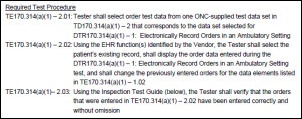
ONC announces the release of the 2014 Edition Test Method for EHR Certification.

In England, a government spending watchdog considers a review of the Department of Health’s payout to CSC for terminating its sole provider status as NPfIT was being dismantled. The Department of Health has said its ongoing support payments to CSC are funding centralized support, which critics say gives CSC a competitive advantage. Cerner has already raised concerns.
12-15-2012 1-57-02 PM

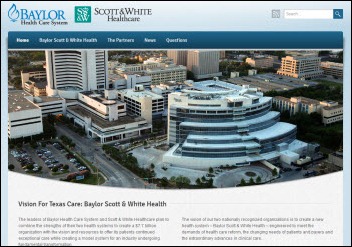
Baylor Health Care System announces that it will merge with Scott & White Healthcare, creating the largest not-for-profit health system in Texas with 34,000 employees, 42 hospitals, 4,000 physicians, and $8 billion in annual revenue. They created Vision for Texas Care site to explain the rationale.
NextGen Healthcare over sent an explanation of Michael Lovett’s new role mentioned in Friday’s post: “Michael Lovett is the senior vice president and ambulatory division manager for NextGen Healthcare. This is a newly-created role and Michael is responsible for developing and implementing the division’s strategic plan and ensuring that this plan is aligned with the company’s strategic direction.”
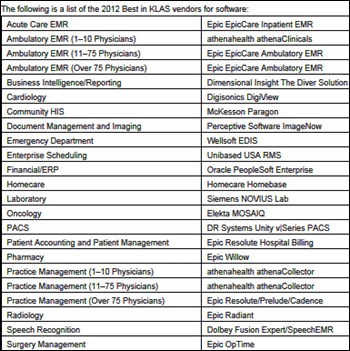
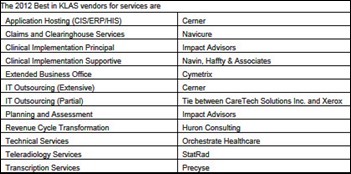
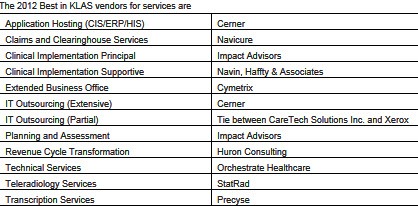
Just in case you missed Inga’s Friday morning post, here are the Best in KLAS winners for 2012. Notable factoids from it: (a) it was not surprising that Epic was by far the highest-ranked product suite, but McKesson Paragon beat Cerner to come in at #2, while the usual other big-hospital contender Allscripts finished next to last at #8; (b) McKesson came in last in physician practice rankings, with Cerner, Vitera, and Allscripts rounding out positions 7 through 9 ahead of it; (c) in the all-important inpatient EMR category, nobody’s even close to Epic, while Allscripts and Meditech populate the bottom; (d) Siemens Soarian takes the #1 spot for community EMR, although Prognosis, Meditech C/S, and RazorInsights had similar scores but were excluded because of confidence levels or because that’s not their primary market; (e) Epic is easier to beat in departmental systems, where it lagged other vendors in ED, scheduling, and anesthesia. The top three vendors overall were Epic, Wolters Kluwer, and 3M, while the bottom three were Agfa, McKesson, and Allscripts.
12-15-2012 2-35-08 PM

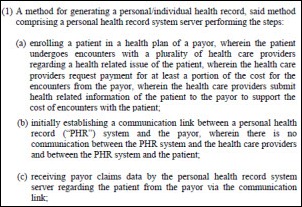
HealthTrio files a patent infringement lawsuit against Aetna and its ActiveHealth Management and Medicity subsidiaries, claiming that its patient portal patents have been violated.

Healthland will make the FollowMyHealth Universal Record Solution from Jardogs available to customers of its patient engagement portal.

12-15-2012 4-56-32 PM

A jury returns a $140 million medical judgment against an Alabama hospital following the 2008 death of one of its patients by insulin overdose. The patient’s physician had dictated the results of his medication reconciliation, and since his original paper form was being scanned, the offshore-prepared transcription was used by a nurse as an order. The patient was given 80 units of Levemir insulin — 10 times the prescribed dose — and died. Testimony in the trial indicated that India-based transcription companies like the ones involved follow more lax standards. Precyse Solutions, the American company to which the hospital had contracted its transcription services, claimed that its Indian subcontractors follow American error standards, but deposed officials from those companies testified that they do not. The defendant’s attorney said the mistake should never have happened because the nurse should not have used the unreviewed transcription document to create an order. He also says hospital employees and physicians did not know that transcription work wasn’t being performed in-house, adding that the hospital’s executives did not know even the names of the Indian companies until the deposition. Those companies had previously settled with the plaintiff.
12-15-2012 5-02-54 PM

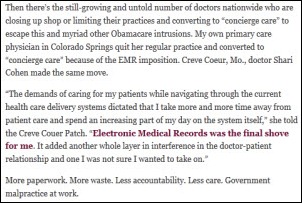
Conservative commentator Michelle Malkin calls HITECH a "big fat bust," saying it is not adequately supervised, it has created cronyism, and it has negative effects on job creation and privacy. There’s not a single original thought in the entire piece, as it was obviously just assembled from readily available Internet content. It claims that Epic "lobbied loudest for the mandates" as one of the dated "hard-drive dependent software firms." She also makes the classic but nearly unforgivable mistake of editorializing loudly about providers who are fraudulently receiving payments for using EMRs they already owned, apparently unaware that HITECH was written precisely to encourage that practice. Unlike Cash for Clunkers, EMR drivers get paid for driving their same old cars.

An article in Iowa newspaper says that the i-PHACTS system developed by the state’s Department of Public Health in 2010 to track available hospital beds is nearly useless for placing patients because it’s only updated daily. A medical student is creating his own version, but it has the same limitation — integration with hospital systems is complex and hospitals aren’t willing to manually update their information on unoccupied beds regularly.

A North Carolina business paper profiles Greensboro-based Intellect Resources, which it says has quadrupled sales in each of the last two years as it provided consulting and recruiting services for hospitals implementing electronic medical records.

Health Management Associates, the subject of a "60 Minutes" report claiming its hospitals admitted patients needlessly, says the program’s sources were disgruntled former employees, one of them a physician who used court-sealed information provided to him by the program to amend his lawsuit afterward. The doctor changed his 2010 lawsuit when he saw sealed details claiming that the company’s ED software was being used to increase admissions, adding that claim to his own already-filed suit. HMA says its ED doctors don’t make admission decisions and they’ve stopped using the software.
12-15-2012 5-04-45 PM

An armed visitor shoots a police officer and two employees of St. Vincent’s Hospital (AL) on a nursing floor at 4:00 a.m. Saturday. Their injuries are not life-threatening. The suspect was shot dead by a second police officer.

Medicare’s $77 million fraud detection system, widely panned after audits found it had prevented only around $8,000 in fraudulent claims, is now claimed by CMS to have saved $115 million, although the report does not indicate how many providers were suspended from Medicare as a result. The report also indicates that the actual savings was $32 million, with the higher total being claimed as the future value of fraud that would have happened otherwise.
12-15-2012 5-06-37 PM

Health management and analytics systems vendor Medecision will lay off 83 employees in Wayne, PA headquarters, according to WARN act documents filed with the state. The company says those affected work in software development, program management, and technical support.
12-15-2012 2-39-03 PM

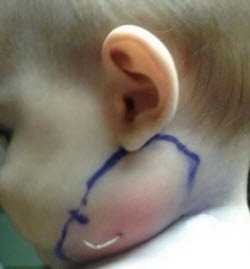
Weird News Andy is tickled by this story, which he snickeringly subtitles, “Little Angel.” Doctors eventually figure out what’s causing the swollen jaw of a seven-month-old girl: a two-inch feather embedded in her cheek.

Here’s Vince’s holiday gift for you, “The 12 Days of Go-Live.”

AMDIS Lover provided this message from the AMDIS listserv taking a tongue-in-cheek view of the Informatics Board Certification exam that launches in 2013. He says not all readers will appreciate it, but it captures the essence of existence of CMIOs. The original came from Joe Boyce, MD, CIO/CMIO of Heartland Health (MO).

Communications. Combine the following medical, cultural, and technical TLAs and FLAs  into a meaningful sentence. You may use one pronoun, one verb, two prepositional modifiers, and a gerund.  Ex: IMHO, CMIO NCQA PCMH FAQs without LOINC, HL-7, or SNOMED FYIs were DOA and SOL. SNAFU. 

PS: if you know all these, you do not need to complete the rest of the test.

  1. SQL, LOS, CMS, PDQ, CDS, MSSP, MRSA, TIN, RAC
  2. HTML5, CVA, TJC, CFO, FYI, CXO, EDW, HIE, AKA
  3. CPOE, CTO, SOL, HIPAA, ACO, TIA, IMHO, GOMER
  4. PERL, TWAIN, ACA, VTE, PHR, CAPTCHA, POS, POC

Patient management. Who will have the most useful problem list?

  1. Five different hospitalists, NPs, and nurses using a combination of ICD9/10, SNOMED, and homegrown synonyms, with no one in charge
  2. A 70-year-old GP using free text
  3. Surgeon – two items for 84-year-old ICU patient
  4. Neonatologist — 27 SNOMED items for a three-day-old
  5. Patient’s PHR

Training. Which of the following techniques works least badly?

  1. Day-old pizza and handouts in the lunch room
  2. Department meetings at 7 a.m. on a Monday
  3. E-mails from people no one has heard of
  4. At-elbow support by people who just heard about  the project yesterday

Leadership. You have 15 hospitals over four states. Which model of leadership works best?

  1. Central (disconnected, jet lagged, and intermittent)
  2. Local (random, quirky, and adversarial)
  3. Democratic (but only certain people can vote)
  4. A CMIO with no direct reports, graded on “influence”

Fill in the correct phrase or words.

  1. CFO is to Budget as Sphincter is to __________.
  2. Twitter is to Communications as Static is to ____________.
  3. Regulation is to Efficiency as Friction is to ____________.
  4. ACO is to HMO as Deja vu is to ___________.

Order management. You are leading a CPOE installation and want to use the latest evidence-based guidelines. What is the right approach?

  1. Call a meeting of department leads, take two years, then make them up yourself
  2. Use third-party content, send to department leads, wait six months, then make them up yourself
  3. Use your paper-based content and sneak in the latest content with the one guy who comes to your meetings (i.e., make them up yourself)
  4. Google

Support. You are stopped in the hall and asked to design a new system that will save this physician maybe 2 –3 clicks a week, but will take your team at least two months of design, development and testing, two more months of training the entire staff, along with disrupting everyone else’s workflow. What is your response?

  1. Ask them to send you an e-mail describing the effort, knowing that they are “too busy” to get around to it
  2. There is no other correct answer

Software selection. You have been asked to select a new EMR for your 200-bed hospital. What  are the first steps you should take?

  1. Change your bed number to 500 so Epic will talk to you
  2. Watch the Cerner salespeople twitch when you ask one of them to demo the entire “standard implementation”
  3. Read KLAS, develop detailed requirements, do reference visits, then cave in to the most powerful docs (that couldn’t be bothered to come to demos) because they heard that System X was hard to use
  4. Go to HIMSS for wine and dine, then play spin-the-pocketbook and pray you get the “mature” implementation team promised by a sales guy you will never see again

Statistics. Which of the following principles are true?

  1. Pareto principle – 20 percent of the producers will make 80 percent of the product, but they will not be paid like it
  2. Death panel principle – 5 percent of the population consumes 50 percent of the costs, but you can’t do anything about it
  3. Incentive principle — the other 80 percent (see Pareto) will spend more energy gaming the system than producing
  4. Software development principle – 3 percent of the use cases will drive 80 percent of the timeline delays

Meetings. As CMIO, you are invited to a 2.5 hour mandatory budget meeting. What is your response?

  1. Attend with iPhone and iPad charged and catch up on e-mail
  2. Dial in while getting work done from your office, knowing that the CFO’s secretary will not be able to figure out the teleconference link
  3. Attend, listen closely, and wait for the moment when a physician’s fiscal wisdom will be most appreciated
  4. CMIOs do not get invited to budget meetings, and if they do, that is when you use the spam filter excuse.

Alerts. What is the most effective method of providing meaningful alerts to busy clinicians?

  1. Goldilocks – community-based balanced approach that will still get you eaten by the bears, and the “ community” will be nowhere around
  2. Overalerting — as determined by docs who just want to know when they are definitely going to kill someone
  3. Underalerting — as determined by your legal representation
  4. Individually tuned for relevancy, with actionable orders easily accessible within the order, highlighting only important info that you didn’t know and makes a difference in this unique patient (available in the next release)
  5. Horror stories in the physician’s lounge

User interface. Which of the following is the most effective modality for communicating key clinical information?

  1. A 24-inch LCD monitor with 5,347 elements in three-column view, vertical scrolling, and 23 colors
  2. An iPhone with no information on the top screen, but multiple branching links which will eventually lead you to YouTube
  3. An angry nurse that  you have not returned pages to for over an hour
  4. An intern whose pre-med major was theatre arts

13.  Pa55Words. Which of the following is optimal policy?

  1. Same password for all your applications “HckerPLsDoEmails2OK?”
  2. Four factor – iris scan, voice profile, 10-character randomly generated password changed every three months, with RFID embedded chip, Comrade
  3. Three strikes, you get pepper spray
  4. Prefilled sticky notes attached when shipping monitors

Contacts

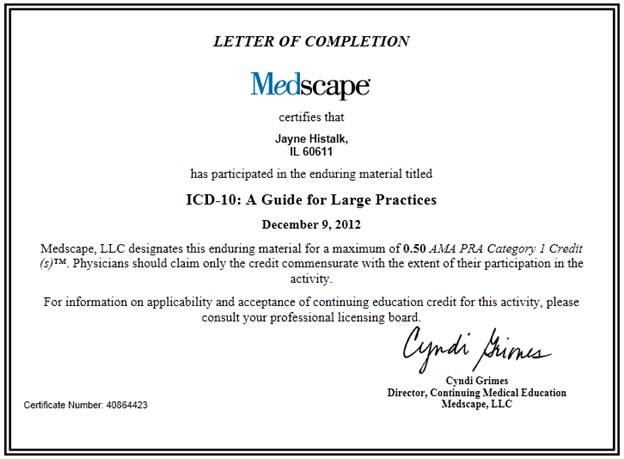
Mr. H, Inga, Dr. Jayne, Dr. Gregg.

More news: HIStalk Practice, HIStalk Mobile.

HIStalk Interviews Yann Beaullan-Thong, CEO, Vindicet

December 14, 2012 Interviews Comments Off on HIStalk Interviews Yann Beaullan-Thong, CEO, Vindicet

Yann Beaullan-Thong is CEO and founder of Vindicet.

12-14-2012 8-47-50 PM

Give me some background about yourself and about the company.

I’m the founder and CEO of Vindicet. We started the company in 2009. Prior to that, I was the vice president of e-business at Aetna for a division called Intellihealth. It was the first public healthcare website prior to WebMD.

My intention when I started the company was to create a software company that would provide affordable, process-oriented solutions to providers. In 2009, I met Dr. John Votto, CEO at Hospital for Special Care and a thought leader for long-term acute care hospitals. I was asked to provide a system to make the referral process more efficient.

As we started to build a patient referral tool, I took the bet that bundle payments and ACOs will be here to stay and will need systems to support these new business models. We morphed our referral tool into a coordination tool to manage the patient through the continuum of care.


Who does the company compete with?

Indirectly, we can compete with a lot of other players, like Curaspan, Cerner or Allscripts. The patient management process, the referral process, the compliance process , the admission and discharge process are supported by many vendors. They are part of the problem — too many vendors supporting different processes at the facility level.

We are the only system that can support all these processes for the ACO or enterprise health system level using one platform. We are able to provide a safe transition care tool using a light Enterprise Resource Planning approach.


Describe the referral process as it exists and how you think it will look under the new models of care.

Today with a fee-for-service payment, each facility operates as an island. Referrals are no more than a discharge to home or a post-care facility. Moving forward with ACOs, the referral is becoming a central component. The financial compensation will be tied to the overall outcomes. Tracking the patient through the entire continuum of care and managing the coordination of care between the different providers will be essential to optimizing outcomes.

Let’s assume that a patient comes in for congestive heart failure and they are a Medicare patient. We know that out of 10 patients, five to six might will end up into a post-care facility. Suddenly everybody has to be very well aware of how well they’re going through the entire episode. Not just from the acute side, but when they are discharged to a long-term acute care and then moved into an inpatient rehab center and finally discharged home under the supervision of a home health agency.

Under a bundled payment model, you’re going to be responsible for that whole episode. Under this coming model, absolutely nobody is prepared to deal with this new challenge.

Initially, we designed a referral system for standalone post-care facilities. Through the years, we modified it to become a multi-facility transitional and coordination care system. Our unique approach allows us to integrate the enterprise coordination process with patient management and compliance reporting.


Do you see new companies starting to try to do what you’re already doing?

There are a lot of companies that are coming to the space, but we are about 18 months ahead. We have been approached by some large companies, very large payers who are looking into the ACO space.

I am looking to make the coordination of care more efficient between providers, including primary care physicians. I would say that the problem I’m trying to resolve is transitional care. An EMR is not solving that problem. An EMR is designed to provide care at the delivery point. It’s not designed to manage care across providers.

It’s interesting, because when I started the company about three years ago, a lot of people were asking me to build an EMR. My answer was, “There’s plenty of EMRs. The last thing you need is another one.”

Also, talking to CEOs and CFOs, I often hear, “OK, now that we have an EMR, we need to integrate with the ambulatory care services and post-care facilities.” And in the same breath, they will say, “We are running out of money with this EMR project.” Literally people are looking at each other around the room and saying, “How are we going to do this? How are we going to pay for it?”

Either you build what I call islands — EMR for post care, EMR for ambulatory care, and for acute care — and spend a ton of money to add the bridges. Or, let’s look into a system that will allow us to have one view of the patients across the continuum. That’s when I come in with my poor man’s solution.


Do you think providers believe that HIEs will provide that capability or that interoperability is the answer? Are they beginning to realize that just talking to other systems may not be enough?

Executives are starting to realize that it’s not as easy as it sounds to integrate legacy systems. HIEs don’t address the process issues. Also, I’ve noticed a trend of information overload. It is not just pulling the information, but making it relevant and usable.

The other riddles that need to be solved when we’re talking about the HIEs — besides the exchange of information — is integrated process. You’d have to integrate various processes if you’re going to go through a longitudinal-type of continuum of care. It’s not just tracking the information at each point of care with different providers. You need a seamless process on how you can move a patient from one place to the other.


Do you think providers are ready not only technologically, but as you said process-wise, to be able to function effectively in that kind of environment?

I’ll try to give you a response that is apolitical. I’m absolutely convinced in my fiber that as a country, if we don’t resolve our healthcare problem, we will go bankrupt. We’re already at 16 percent of GDP.

If you’re going to do reimbursement based on outcome, which is where the industry is going (the Kaiser model), we are going to need to collect a lot of data and use key performance indicators to increase efficiency. We are already there. 

I just built a CMS data quality tool for 17 long-term acute care hospitals where they had to report outcome within 24 hours for discharges and within four days when it comes to admissions,. They need to report outcomes to the government in order to avoid the 2 percent penalties.

Moving forward, the government is going to ask for more data. Collecting data is a very expensive business. Healthcare systems out there are struggling to implement an EMR system, and now we are asking them to track outcomes through the different providers. Most of providers have no funding left following an EMR implementation, and now we want them to fund projects to track patients across the continuum.


I guess hospitals aren’t happy when they have to come to you, then?

They’re not, but I came up with a value proposition that makes the solution affordable. A lot of clients tell me, “How do you make a living with the way you’re selling it?” I say, “Don’t worry. I’m OK.” I moved away from the licensing per bed to unlimited number of users. It’s time as an industry to think out of the box and come up with solutions that are affordable.


Will other vendors get that model of following a long-term strategy rather than just charging the absolute most they can?

I think they will have to. One of the reasons why I believe that system is going to do well is transparency. I truly believe that transparency will exist in healthcare. I come from a payer and they’re probably not the most transparent players, but they have the tools to become more transparent.

They are data-driven companies. I learned one thing. If you want to be efficient, you need to change your mindset from being non-profit to a mindset of better outcomes in order to stay in business. You need to be transparent. You need to be transparent in front of the patient. You need to be transparent with physicians. I think as an industry, it’s time we start to be transparent. If we do not become transparent, we’re going to go broke, period. It cannot stay the way it is.

I think there’s a movement out there toward change. All of us recognize that there’s need for a change, and I think the change will come from the outside. I always say when an industry has a problem, the answer is not within. Usually the guys that start to find the answer are guys that come from other industries.


Any concluding thoughts?

As an industry, in healthcare, we need to change our mindset from a non-profit mindset to what I’m calling for-profit, where we’re going to be more accountable. To be more accountable, you need to collect data. To collect data, you need to build systems that implement new processes. I envision healthcare facilities being managed like a Walmart by the minute to keep costs down.

When I go to see CFOs in hospitals, they manage their business by quarter or a year ahead. There’s a need to manage your business by the minute. To get there, we need to start to collect data. Not just clinical data, but financial data and administrative data .We need to create key performance indicators, or KPIs. If you don’t run the business according to KPIs, there’s no way in the world that you’re going to change the way you are operating.

The government is probably going to make people more accountable and switch from fee-for-service to pay-for-performance. However, we’re a long way from being efficient. I see  government mandating more and more data collection for compliance. As an industry, that’s where we’re going. Whether you’re from the left or the right doesn’t matter. Accountability is the buzzword. I think it’s going to force the entire industry to learn to do more with fewer resources.

Comments Off on HIStalk Interviews Yann Beaullan-Thong, CEO, Vindicet

Time Capsule: Community Physicians and Technology: Think Convenience Store Owner, Not Society-Minded Scientist

December 14, 2012 Time Capsule Comments Off on Time Capsule: Community Physicians and Technology: Think Convenience Store Owner, Not Society-Minded Scientist

I wrote weekly editorials for a boutique industry newsletter for several years, anxious for both audience and income. I learned a lot about coming up with ideas for the weekly grind, trying to be simultaneously opinionated and entertaining in a few hundred words, and not sleeping much because I was working all the time. They’re fun to read as a look back at what was important then (and often still important now).

I wrote this piece in February 2008.

Community Physicians and Technology: Think Convenience Store Owner, Not Society-Minded Scientist
By Mr. HIStalk

mrhmedium

I have had the magic revelation. I know now why we healthcare IT people can’t figure out the seemingly puzzling behavior of small-practice doctors when it comes to technology adoption.

Here it is. Once they hang out a shingle, they’re no longer society-minded scientists. They’re small business owners.

The next time someone talks about physician practices, replace that term with “convenience store owner.” They’re on every corner, they compete vigorously for business, they watch expenses with an eagle eye, and they pay themselves only after everybody else gets paid. And unlike convenience store owners, they have to deal with insurance companies who tell them what they’ll get paid and hammer them with a mass of ever-changing regulations.

They’re also going to look at IT a lot differently than doctors in hospitals. Or especially, than hospitals themselves. Any money they spend on IT comes out of their own pockets. Any help they need doesn’t come from the friendly IT department — they have to find someone and pay high rates for even simple tasks, like installing a PC or figuring out connectivity problems.

Technology cheerleaders get frustrated that docs don’t just buy systems and get with the program so everybody can benefit. The problem is that everybody doesn’t benefit. Doc has just made a donation to insurance companies, patients, and hospitals who all appreciate the boost in their well-being from his or her investment. That doesn’t even include the extra time required to maintain electronic documentation, which always takes longer than scribbling. Physicians have just one thing to sell: time. They protect it strenuously, as they should.

We hospital types forget that 90 percent of a general practitioner’s time and even more of his or her income comes from their small business. Seeing patients in the hospital is a cost of doing business, not the day’s focus. While the hospital folks are going to meetings and delivering care as part of a big team, Doc’s out there on the front lines taking all comers, armed only with a few minimally trained assistants and whatever’s in his or her head, trying to improve health and provide a positive customer experience in an average of six minutes per visit.

The people they deal with in hospitals have, for the most part, never run a small business. They’ve always worked for someone else. The world looks a lot different when the only employer who’ll take care of you is you.

From an economic standpoint, doctors are paid to work. If we’ve got some kind of beef about excessive use of diagnostic procedures or esoteric treatments, we need to stop paying for them. That convenience store owner will sell you cigarettes and beer that are bad for you because (a) you want them, and (b) it adds to their bottom line. There’s a word for those civic-minded C-stores that stop selling them on principal: defunct.

Doctors are pretty much stuck in the small business model. The problem is that we’re expecting them to hold hands and join the choir even though they’re struggling to keep the doors open given rampant competition, reduced payments, and a fickle market.

I’m making a point to think twice before ripping doctors for not jumping all over e-prescribing, pay for performance, or interoperability. Unless you’ve got a rock-solid argument that would convince a convenience store owner, you’re wasting your time.

Comments Off on Time Capsule: Community Physicians and Technology: Think Convenience Store Owner, Not Society-Minded Scientist

KLAS Releases 2012 Best in KLAS Awards 12/14/12

December 14, 2012 News 6 Comments

Epic takes top honors for Overall Software Vendor,  Overall Software Suite Vendor, and Overall Physician Practice Vendor in the 2012 Best in KLAS Awards.

Epic sweeps eight Best in KLAS award categories and athenahealth receives the second most Best in KLAS wins. Impact Advisor was named the number one Overall Services Vendor.

12-14-2012 6-12-15 AM

12-14-2012 6-13-46 AM

Morning Headlines 12/14/12

December 14, 2012 Headlines Comments Off on Morning Headlines 12/14/12

Allscripts Sues NYC Health & Hospitals Over Contract Award

In an inexplicable strategic decision, Allscripts files suit against both NYC Health & Hospitals and Epic over HHC’s recent selection of Epic over Allscripts.

Streamline Health Reports Third Quarter Fiscal Year 2012 Financial Results

Streamline Health reports Q3 results, with 52 percent increased revenue and EPS –$0.11 vs. $0.03.

Battle Mountain General Hospital Selects Prognosis HIS Enterprise Solution for Fast Usability and Adaptability

Prognosis HIS is awarded vendor of choice by Battle Mountain General Hospital.

Bill Moran Named Chief Information Officer at The Brooklyn Hospital Center

Bill Moran is named CIO of The Brooklyn Hospital Center, leaving his position as SVP and Health Practice Principal Executive at Dell.

5th Annual HIMSS Security Survey

HIMSS surveys HIT professionals on security policies, auditing, and budgets. More than half of the survey respondents reported an increase in budget for information security.

Comments Off on Morning Headlines 12/14/12

News 12/14/12

December 13, 2012 News 7 Comments

Top News

12-13-2012 6-46-09 PM

Allscripts files suit against NYC Health & Hospitals along with Epic Systems over the $303 million contract HHC awarded to Epic in late September. The complaint says the award is “arbitrary, capricious, an abuse of discretion, and lacks a rational basis” because it claims Epic’s proposed cost is $535 million more than that of the Allscripts proposal. HHC says it will defend its decision and added, “Allscripts’ claim that it underbid Epic by more than half a billion dollars is absurd and strikes us as an ill-fated attempt to reassure investors and inflate its sagging stock price. Unfortunately, as our multi-year review has revealed, Allscripts lacks a truly integrated EMR solution and has repeatedly lost business to Epic and other vendors as a result.” MDRX shares closed Thursday at $10.80, down 2.44 percent and indeed sagging at less than half their February price.


Reader Comments

From Bain Marie: “Re: Allscripts sore loser lawsuit against New York HHC. They had to deal with Hurricane Sandy and now will spend a fortune to defend themselves against Glen’s bizarre public accusation that its prospect would pay almost anything to avoid buying its product. Would you say this is the dumbest move in HIT history?” It’s certainly in the top handful, and probably the undisputed #1 in the “desperation” category (HBOC’s frenzy to mate with McKesson was even more desperate, but Allscripts wins on style points for suing a non-profit hospital.) I won’t editorialize further since Allscripts employees, shareholders, prospects, customers, and potential acquirers (if indeed any are still interested) are probably already amply embarrassed by this latest in a string of bad company decisions that always send competitors running gleefully to the scanner to make sure prospects get copies. That’s my opinion. If you work for a hospital, especially one with Allscripts connections, I’d like to hear yours. If you work for Allscripts, I’d be even more interested.

12-13-2012 7-30-50 PM

From Nasty Parts: “Re: Mike Lovett. Promoted to replace Scott Decker at NextGen.” Unverified. His LinkedIn profile shows a new job of SVP/QSI Division Leader – Ambulatory Division.

From  Kaiser Surgeon: “Re: video by KP ambulatory surgery staff at Fremont Ambulatory Surgery Department. They are well known for high-volume cataract surgery on our Kaiser patients. They do seem to have an esprit de corps.” I’m always a sucker for hospital music videos like this one.

12-13-2012 8-26-46 PM

From Former Stanley Tool: “Re: Healthcare Informatics Associates. Stanley Healthcare Solutions is shutting it down.” Unverified, but searching LinkedIn finds at least one former employee who is freshly entering the job market.


HIStalk Announcements and Requests

inga_small If you have been busy holiday shopping and missed reading HIStalk Practice this week, here are some highlights. Two-thirds of EPs will apply or have applied for MU incentives. ONC says that more office-based physicians are using EHRs that have higher-level functionality to meet MU objectives. ED use declines when patients have access to after-hours service from their primary care provider. HHS offers tools to protect PHI on mobile devices. Physicians spend more time on health content-specific websites than any other health sites, though more are also visiting EHR portals. Epocrates releases a native app for iPads and iPad minis. Dr. Gregg pronounces the consumer the heir to throne of healthcare. I made the “nice” list again this year, but the only gift I need is a few more e-mail sign-ups on HIStalk Practice. Thanks for reading. (P.S. If you are a shoe distributor, own a wine shop, or are a male admirer who likes to give expensive jewelry, please disregard the “only gift I need” statement.)

12-13-2012 7-54-55 PM

Welcome to new HIStalk Platinum sponsor RazorInsights. I’m guessing the Kennesaw, GA-based company found HIStalk because I’ve run several non-anonymous hospital reader comments about the company’s ONE Enterprise HIS for rural, critical access, and community hospitals. It offers a single-database, certified, cloud-based hospital EHR. Every one of the company’s live hospital clients have earned Meaningful Use payments. Customers enjoy one database, one simple user interface, and capabilities that include a master patient registry, patient encounter management, nursing documentation, CPOE, and physician offline orders. It’s available in multiple editions that include clinicals only, clinicals plus financials, clinicals plus ambulatory, and the Enterprise Edition including all of those. Customers can go live in as little as 90 days, enjoying cost-effective training services and around-the-clock support. People always bemoan the lack of new companies and new, scratch-built technologies in the inpatient EHR business, so here’s one for you. The company’s management has plenty of industry experience, including folks with pharmacy and nursing degrees along with vendor experience. To learn more, sign up for a live product webinar on their site or check them out at the HIMSS conference in a few weeks. Thanks to RazorInsights for supporting HIStalk.

I always head over to YouTube when introducing a new company just to see what’s out there, so here’s an introductory video from RazorInsights. You’ll get a hint about the company’s name early in the video, although you might have to Google the reference like I did.

It’s an odd time of year to be swamped at the hospital and at HIStalk, but that’s the case. I work on HIStalk until at least 10 every night and I’m back in the same chair by 5 the next morning before I head out to work. I try to respond to requests quickly, but it often doesn’t happen, and re-sending the e-mail or expressing indignation doesn’t change my time constraints one bit. I usually catch up over the weekend, though.


Acquisitions, Funding, Business, and Stock

Cerner will repurchase up to $170 million of its common stock.

Global Record Systems acquires the eCastEMR platform and service business from eCast Corporation.

Streamline Health Solutions reports Q3 results: revenue up 51 percent, EPS –$0.11 vs. $0.03.

12-13-2012 5-57-40 PM

LocalMed, a patient self-scheduling software company that won $3,500 in seed capital from the LSU Student Incubator, will establish its headquarters in Baton Rouge, LA and plans to hire 52 employees by 2016.


Sales

Sales Battle Mountain General Hospital (NV) selects ChartAccess EHR and FinancialAccess from Prognosis HIS .

HealthInfoNet, the HIE for Maine, signs a three-year agreement with Arcadia Solutions for its Analytics and Quality Data Warehouse platform for clinical data warehousing. Aracadia will also test the linkage of the HIE’s clinical data with claims data from the state’s All-Payer Claims Database.


People

12-13-2012 5-59-40 PM

The Brooklyn Hospital Center (NY) names Bill Moran (Dell) SVP and CIO.

12-13-2012 6-00-17 PM

Lisa Rawlins (Broward Health) joins SRG Technology as director of health care.

12-13-2012 9-13-18 PM

Norman Joseph Woodland, who co-invented the bar code as a graduate student in 1951, has died at 91.


Announcements and Implementations

Joslin Diabetes Center (MA) will use de-identified clinical data from Humedica for education and research activities.


Government and Politics

ONC launches a mobile device security initiative that provides white papers and articles to help providers understand how to protect patient information on mobile devices. The site is a product of HHS’s March 2012 Mobile Device Roundtable along with tips and information contributed during its 30-day comment period. Included is a video titled Worried About Using a Mobile Health Device for Work? Here’s What to Do!


Technology

AT&T unveils a prototype of Asthma Triggers, a wireless sensor that sends air quality data to mobile devices.


Other

The Leapfrog Group, criticized by hospitals to which it assigned below-average patient safety grades last month, announces a partnership with Johns Hopkins Medicine to fine-tune its scoring methodology, also vowing that, “the Hospital Safety Score is here to stay.”

More than half of HIT professionals report a budget increase for information security, according to a HIMSS survey. Other key findings:

  • Most hospitals are conducting risk analyses, with 71 percent performing an analysis at least annually
  • One in five respondents say their organization experienced a security breach in the last year
  • More than half the organizations spend three percent or less of their IT budget on securing patient data
  • Two-thirds report that their organization conducted an audit of their IT security plan.

12-13-2012 9-06-44 PM

Paper medical records belonging to a recently raided and closed unlicensed pain management clinic in Florida are found in the dumpster of a nearby Dollar Store. Also found in the trash: used syringes and uncashed checks made out to a contracted pain doctor who was apparently being paid $1,500 per day to crank out oxycodone prescriptions.

Tampa General Hospital’s bond ratings agency calls out the hospital’s “compressed profitability” as being due to Epic implementation costs, lower inpatient utilization, and state Medicaid cuts.


12-13-2012 8-34-32 PM

Weird News Andy continues his armchair medical reviews with this article, in which Children’s Hospital of Philadelphia injects a disabled form of HIV into a six-year-old whose leukemia was expected to kill her within two days, hoping to stimulate her immune system enough to allow her to receive a bone marrow transplant. Six months after the infusion, the T-cells are still working and she’s in remission.


Sponsor Updates

12-13-2012 9-58-49 PM

  • Mercy Regional Health Center (KS) expands its use of the Access Intelligent Forms Suite into its human resources department.
  • Vitera Healthcare announces the general release of Live Chat, which provides customers with immediate online access to Vitera customer support.
  • Surgical Information Systems enhances its perioperative information systems to provide interoperability with Siemens Soarian Clinicals.
  • Agilum Healthcare Intelligence publishes a white paper that includes strategies to help small and mid-sized hospitals overcome common obstacles to obtaining useful business intelligence.
  • Levi, Ray & Shoup sponsors this week’s Next Generation Healthcare Summit in San Antonio.
  • Emdeon discusses the benefits of utilizing check reader devices at the point of service in a newsletter article.
  • Adirondack Radiology Associates (NY) shares how it has increased coder productivity and reduced denials since implementing the Optum Computer-Assisted Coding solution. 
  • API Healthcare’s Deborah Moore shares thoughts on the use of HIT to increase quality of care and patient satisfaction in a blog post.
  • Informatica offers predictions on where technology is heading in 2013.
  • Fourteen CareTech Solutions customers win a total of 20 eHealthcare Leadership Awards for their CareTech-designed websites.
  • RSource, a provider of receivables management recovery solutions, and Streamline Health Solutions will cross-market each other’s services within their client bases.
  • Winthrop Resources Corporation will offer equipment financing and advice to customers of MPC, an IT asset lifecycle management company.
  • The British Columbia Ministry of Health selects McKesson as the vendor of choice for its radiologist peer review initiative.
  • First Databank and JAC Pharmacy sponsor the Improving Patient Safety award at the NHS Isle of Wight Awards 2012.
  • NextGen Healthcare will offer Aviacode’s cloud-delivered medical coding services to its customers.

EPtalk by Dr. Jayne

Finally, a data breach that doesn’t involve a lost or stolen laptop.  Dr. Travis tweeted about the breach at Carolinas HealthCare where an “unauthorized electronic intruder” (is there such a thing as an authorized intruder?) obtained access to a provider’s inbound and outgoing e-mails. Although there is no evidence that the information has been misused, impacted patients are being offered free credit monitoring services.

Should a hacker gain access to my work e-mail account, have fun reading all the incessant whining and complaining from physicians who hate EHR, the implementation process, the group’s compensation model, required CME, coding/compliance audits, and a host of other things. It just might scare you straight and make you never want to hack again.

clip_image002

Physician social networking site Doximity issues a call for fellows who will “gain insight into the power of entrepreneurship and technology in healthcare, engage with physician thought-leaders from across the country, and leave your mark on healthcare.” Applicants must be licensed physicians (MD or DO) and the time commitment is two hours per week. I can’t imagine it would be anywhere near as fun as writing for HIStalk, but if you’re looking for something interesting to do with your free time, it might be worth a shot. Applications are due December 31.

Inga has started getting invites for the HIMSS social scene, and as a good BFF should, she is sharing them with me. I’m definitely counting down to New Orleans (in fact, tried out some new shoes today that I hope will be both sassy and comfortable in the exhibit hall) and to seeing the HIStalk crew. I’m in the process of finding the perfect date for HIStalkapalooza. With any luck, he’ll be wearing a bow tie.

clip_image004

I asked last week for stories about the best (or worst) office holiday party ideas. Reader Rabbit takes the prize with his submission:

My wife’s practice is having their office party at a local brewery’s tap room, also known for great food. One of the doc’s hubby runs their hop farm, which also does farm-to-table stuff. Oh, wait:

  • It is on a Saturday at 10:30 a.m.
  • There is no drinking. The legal department says it can’t support drinking during any “sanctioned” event, even if off site and even if I pay for my own and don’t work for them.
  • It is a pot luck where the docs cook main courses. Which means this guy (pointing at myself) has to wake up and start cooking Cornish game hens or smoked brisket at 5 a.m. in order to have the meal ready. Even if I went the boring turkey route, I need to rise before the sun to cook on a Saturday. The rest of the staff don’t bring anything, but sit around and judge that the doctors (and their wonderful spouses) can’t cook.
  • It is still a "Christmas Party" and we are expected to dress “festive,” which means I must don gay apparel that supports a religion I don’t follow.
  • No kids. Good luck finding a 10 a.m. babysitter in a college town on a Saturday that is reliable and sober.
  • There is also a three- hour-long White Elephant that ends the afternoon with us getting some sort of broken scented candle or a wine bottle sack/holder that looks like St. Nick.

Fa-la-la-la-la, la-la-la-la — my foot.

Oh, and I promise to take a picture of me standing in the corner seething wearing my favorite Santa sweater. Happy Holidays!

I must say I’m looking forward to the sweater pics. I definitely have some wardrobe that could hold its own in any holiday sweater contest.

Print


Contacts

Mr. H, Inga, Dr. Jayne, Dr. Gregg.

More news: HIStalk Practice, HIStalk Connect.

Morning Headlines 12/13/12

December 12, 2012 Headlines 2 Comments

Mediware Buys MediServe to Continue Expansion

Mediware Information Systems announces the acquisition of MediServe, a Chandler, Arizona-based provider of electronic documentation solutions for inpatient and acute care rehabilitation.

Pennsylvania Patient Safety Authority Studies Electronic Health Records’ (EHR) Safety

Pennsylvania’s Patient Safety Authority reviews 3,099 EHR-related events and determines that 89 percent resulted in no harm, 10 percent resulted in an unsafe condition but did not result in harm, and fifteen individual events resulted in actual patient harm.

Maine tops states for provider rate of EHRs, meaningful use

National Health IT coordinator Farzad Mostashari, MD, commends Maine, Kentucky and Ohio for having the most accelerated adoption of EHR rates in the nation during ONC’s annual meeting.

Cerner Announces Share Repurchase Program

Cerner approves a buyback of $170 million of its common stock, representing 1.2 percent of the company’s outstanding shares, as it closes out a year in which its stock is up more than 29 percent.

HIStalk Interviews Winjie Tang Miao, President, Texas Health Harris Methodist Hospital Alliance

December 12, 2012 Interviews 3 Comments

Winjie Tang Miao is president of Texas Health Harris Methodist Hospital Alliance of Fort Worth, TX.

12-12-2012 6-19-03 PM

Tell me about yourself and the hospital.

I’ve been in healthcare for about 12 years now, all with Texas Health Resources. I guess it’s rare nowadays to be with an organization that long. THR is a faith-based, not-for-profit healthcare system in the Dallas-Fort Worth area. We have about 25 hospitals, a large physician group, and other healthcare services.

In my 12 years, I’ve been really privileged to work in three of our facilities, but most recently at Texas Health Harris Methodist Hospital Alliance, a brand new hospital that just opened in September.


When you look at the organization’s overall positioning and strategy, how important is IT?

I think it’s essential. Our stakeholders are demanding more of us, “us” being healthcare and the healthcare industry as a whole. We need technology to help us met their expectations of us, and honestly, our own expectations of ourselves.


Do you see the technology becoming more visible to patients or becoming more of a competitive differentiator?

Yes, I think it’s definitely already more visible to patients. For example, in our facility, we have technology now where you can look at your medical record in real time while you’re lying in your bed. You know what the physician has ordered for you in the morning and the afternoon. 

The education that’s been ordered for you now gets automatically pushed out. If I’m a congestive heart failure patient and I require some smoking cessation education, for example, technology enables us to make sure that patient gets that education and that they receive the education as documented in real time. All of that is direct technology that the patient sees.

I think there’s a lot of technology, though, that is really there to enhance the human capacity that patients may not necessarily see. Those are some of the things that I’m most excited about. How do we make the environment more user friendly for our caregivers, our physicians, our nurses, and all the staff that are at the facility? Because as we know, as the baby boomers retire, the workforce is going to shrink. We really need that technology to help bridge that gap.

In terms of being a competitive edge, I think there are certain parts that are going to be non-negotiable. I think an EMR is going to be non-negotiable. You’re going to have to have it, so I don’t think that’s a competitive edge. But I think having some other technologies — like proactive tools that will help improve management of chronic conditions and those type of things — would be a competitive edge.


What is the most innovative of the technologies that you’re using or planning to use?

What I would say is innovative is not necessarily the technology in itself. We do have a patient information device. We do have RTLS throughout our facility. But it’s not the technology that is innovative for me.

I think what is innovative in this particular facility is how we’re integrating all those technologies together. How does Vocera talk to RTLS and to nurse call? How does that mean that, OK, now that I have I have a patient discharged, I can just take their RTLS locator tag, dump it in a box, and because it’s in that box, it automatically sends a note to TeleTracking to say, “Now it’s time to clean this room.” The housekeeper on Vocera automatically gets notified because through RTLS, we know that that’s the housekeeper on that floor. A process that normally would take either multiple phone calls or multiple clicks on a computer is now automated in real time.


As a new facility, you’ve probably had conversations with vendors about what technology you’re going to use and how you’re going to use it. Is that different from what the other Texas Health Resources hospitals use?

I think the extent that we’re integrating all the technology is more than what other Texas Health facilities have. That required many vendors to come into the room and have a conversation that they’ve actually never had. Vendors who had never met each other, even though we’ve had their systems in some of our hospitals for years, because it was very siloed. We bought the nurse call system or we bought the Vocera system or we bought Epic or whoever it was. We bought these systems, we implemented them vertically, and then we integrated them horizontally. 

There were a lot of vendor meetings that we had. In fact, as we were choosing what systems to go with, one of the most essential criteria that we made the decision on which vendors to go with was either past history and experience that they could demonstrate a
successful collaboration and integration or a willingness that they showed to be able to do that.


Is the IT support centralized, do you have some IT people locally in the hospital, or some of both?

All of our IT is centralized at the system office. From the system office, there are certain members of our IT team that are deployed locally.


What expectations do you have of the IT department and the folks leading it?

I have the same expectation that I have of any leader in the organization, which is one of collaboration, transparency, communication, and all those good things.

In terms of specific IT leaders, though, I’ve had the opportunity to work with a variety of IT leaders in my career. I think that what separates the good IT leaders from the exceptional IT leaders are the ones who are able to balance that creativity and desire to be on that leading edge and try new things with an understanding of hospital operations. Having that knowledge, having the common sense, and really sometimes the humility to say, “You know what? That’s a great technology. I’d love to put it in, but it really doesn’t make sense for us, and here’s why.”


In terms of the risk involved with being innovative, is there conclusion about how much IT innovation is the right amount?

I really think it’s based on the culture of the organization that you’re in. Implementing new technologies and being innovative is really about change management. If you have a culture that is used to change, open to change, wants that change, is able to function still and maintain high performance while going through change, then that organization, I think, can tolerate more innovation.

In an organization where perhaps you don’t have as talented of leaders, both from the IT and the operational side, to manage that change through, then it doesn’t matter if it’s even the smallest of innovations, managing that is going to be difficult. You’re not setting yourself up for success. I think being able to gauge the level of tolerance in an organization is important, but for those who have that capacity, then I think go for it.


Between the operational leadership and the IT department, who should look for something innovative and who should lead that change if and when it happens?

I hate to give “it depends” answers, but I think it depends. [laughs] When I look at how we created this facility and all the technology that we’re integrating, some of the best ideas came from the IT side and some of the ideas came from the hospital operation side. It’s really a blending of the two.

I think ultimately deciding whether or not to pull the trigger on a specific technology requires everybody at the table. Then once that decision is made, clear delineation of roles and responsibilities for that particular technology, because again, all technologies aren’t created the same, either. 

You may have something like telephones. We made a decision to go with a particular platform. While that’s really read better from the IT side, it’s not as invasive from a clinical standpoint, Obviously we all need telephones, but it doesn’t require a whole lot of clinical expertise to do telephones. We just need to make sure they’re programmed correctly so the clinicians use them properly. But you take something like Vocera or nurse call or AirStrip OB, which is much more clinical, I think the ratio changes. 

I think having a “one process fits all” solution is unwise. I’ve seen that happen sometimes. I think that’s where the roadblocks come in and some organizations have run into trouble. But to really look specifically at the innovation, and for this particular innovation, what are the roles and responsibilities going to be? A strong PM does that and can manage that through the organization for a successful implementation.


In large health systems, the smaller facilities or the bigger ones or the ones that are furthest away sometimes feel they’re not getting the right amount of IT attention. What’s the IT secret to making sure that you’re engaged and feeling like you’re well served as part of an organization that has several people who want those same things?

It’s funny you ask me that question. I mentioned that I’ve been with Texas Health for 12 years. I’ve been at one of our largest facilities — it’s 850 beds. In fact, that’s where I started my career. Then I went to literally the smallest facility in our system, which had 36 beds.

What I’ve always said is I think the key to success from an IT standpoint is understanding that smaller facilities don’t have less needs, they just have different needs. I say that from a management standpoint, too.

I remember being in a larger facility early in my career. I’d  look at the smaller facilities go, “Gosh, they have it so easy. They only manage this and it’s a small patient population. Of course they’re outcomes are great, because they only have 18 patients to manage compared to the 800 that we’re managing here.”

And I remember when I first got to the smaller hospitals, I’d look at the larger hospitals and think, “Gosh they have it so easy. They have all these layers of support and people that just do education. Whereas at the smaller facilities a lot of times, the managers take on additional roles and wear multiple hats because you can’t have a million FTEs taking care of 36 patients.”

When I had those two experiences, I remember one day sitting back and going, “It’s not that one job is easier or harder than the other,” which is the perception when you’re in those facilities. They’re just very different jobs. I think from an IT standpoint, it’s the same thing. The needs aren’t less, they’re just different. The good IT leaders can go in and understand what those needs are and deliver on those.


I would think it’s unusual for someone with a degree in biomedical engineering to be in a leadership role. Do you think that gives you more affinity with the IT operation or are you an outlier among your peers who went through a more traditional undergraduate program?

I would say that I’m definitely an outlier amongst my peers. I’m not familiar with any of my peers who have an engineering degree.

I think that having an engineering degree and understanding systems and processes and being trained in that gives me less angst in terms of dipping my toe in the technology waters, because I have a little better understanding of how things work. Clearly I’m not a computer programmer — the last time I programmed was in C++ , so that’s definitely not something you want me doing [laughs], but at least the philosophy behind that and how it works. I think the mystique is maybe less and so the apprehension is less.


You went through a construction project, which forces you to be as innovative as you can knowing that you’ll be stuck in that footprint for a while. What are some of the innovations in the new facility that would not have been common in older facilities?

I think that if you look at older facilities and facilities that were planned 20-30 years ago, most healthcare was provided in a hospital or in a doctor’s office. You sought healthcare because you were sick.

Today, your healthcare happens in a variety of environments — from your home thanks to telehealth, to the doctor’s office, to even your local drugstore. Walmart now has minute clinics or different things like that. Or you go to a surgery center or a freestanding lab. There’s a lot more venues now to deliver healthcare.

We understand that we need to optimize well-being in order to really control healthcare costs, not just take care of people when they’re sick, which is what we were focused on doing 20-30 years ago. For us, designing a new facility was trying to design a system where care is rendered where it makes the most sense. Going back to that engineering background that I have, how do you optimize the system, both from a cost and a convenience perspective? 

In our facility, for example, we don’t have a large outpatient imaging area because a hospital isn’t the most cost-effective place to the get that service. In our facility, we have a separate ambulatory surgery center that’s wholly owned as part of the hospital. We did that for two reasons. One, patients don’t want to pay a high hospital deductible in order to have some-day surgery. They want to pay whatever it is on their plan, $250 co-pay and have their surgery and go home. But a lot of times, we’re still doing those outpatient surgeries in a hospital.

Secondly, I can build that surgery center space at significantly less cost than I can build hospital space. I’m not going to get into the details of why that is, but that’s just how it is. If we know that we can deliver that care in a more efficient setting, we’re going to do that.

And of course, technology has played a big part in building design as well. The most obvious example is the first hospital I worked in had a medical records department the size of a football field. At our facility, we have a fully deployed EMR, so we didn’t build medical records storage at all. We get to use that space for other things. Those are just a few examples.


In that planning of what the future looks like, both healthcare in general and your organization and your facility specifically, what are the most pressing opportunities and threats looking five to ten years down the road?

I think the biggest opportunities are being creative and developing those new processes and systems to address things like coordinated care across the continuum. As we move towards managing the health of populations and ACOs, what does that look like? Do we build that? Do we partner with somebody who’s already an expert in that? Do we acquire that? How does that all work together? 

Getting to create something new in an industry is fun and exciting and a great opportunity for a lot of innovation and growth. I think the challenge to that, though, is that our current reimbursement system is still build on that per-click system. We take care of you when you’re sick, and when you come to my hospital and you need your appendix taken out, I get paid for that appendix to be taken out.

What we need to be careful of is that as we transform our organization and as we optimize health and well-being, that the timing is appropriate and sustainable for the organization. 

The final wildcard which I’m sure everybody is aware of and throws out there is, we still do not understand the full impact of the Affordable Care Act. All that is still being developed and rolled out. How do we implement the exchanges and what are the rules for exchanges? All that good stuff is still coming, so I think that’s still a big wildcard.


What would surprise people most about what it’s like running a hospital?

I will tell you, what surprises most people that I talk to outside of the healthcare industry is that either (a) we do not employ our physicians, or (b) a physician does not necessarily run a hospital. People really think, “Oh, physicians don’t work for you in the hospital?” That’s really the thing that surprises people the most.


What do you like best and least about your job?

I think what I like best is that at the end of the day it’s very fulfilling and challenging work. It’s an exciting time to be in healthcare. There’s a lot of change going on. What we’re doing hopefully at the end of the day improves the lives of the people in the community you serve. Having that fulfilling, big-picture goal drives me and sustains me.

In terms of what I like least, I think that just like anybody else, the parts I like least are the parts that aren’t necessarily value-added to meeting the goals of the organization and making necessarily our stakeholders’ lives better. Things that perhaps required from a regulatory standpoint, or certain things that we do that we have to do for governmental reasons.

Mediware Acquires MediServe

December 12, 2012 News Comments Off on Mediware Acquires MediServe

12-12-2012 6-07-02 PM

Mediware Information Systems announced today that it has acquired inpatient rehabilitation and respiratory services documentation systems vendor MediServe. Terms were not disclosed.

Mediware President and CEO Thomas Mann was quoted as saying, “Most analysts agree that the percentage of care delivered outside traditional hospital rooms will continue to increase over the next 20. To meet these growing needs, Mediware has aggressively pursued technologies that improve the effectiveness of these organizations, looking to improve quality and efficiencies while lowering costs. Our expansion into home infusion, home medical equipment, and home health are examples of this strategy.”

The Chandler, AZ-based MediServe has 2,500 facilities as customers and has been in business for more than 25 years.

Comments Off on Mediware Acquires MediServe

Morning Headlines 12/12/12

December 11, 2012 Headlines Comments Off on Morning Headlines 12/12/12

WebMD to eliminate 250 jobs in cost-cutting push

WebMD announces that it will lay off 250 employees as it concludes a year in which its stock is down 63 percent.

Patient records held to ransom in Australia

In the latest ransom-ware attack, Russian hackers hijack the EMR servers of an Australian medical practice, demanding $4,200 to decipher the now-encrypted files

Oroville Hospital Open Sources eRx VistA Module

Oroville Hospital releases a freeware eRx solution that supports all of the capabilities required for Meaningful Use 2 and integrates with the VistA EHR.

Souerwine Leaves McKesson Provider Technologies

McKesson Provider Technologies confirms on HIStalk that David Souerwine, president of the group, has left the company “to reassess where he wants to spend the remaining time of his career.”

Charlotte healthcare software firm hires new CEO, changes name

Rothman Healthcare renames itself PeraHealth and hires Stephanie Alexander as CEO.

Comments Off on Morning Headlines 12/12/12

News 12/12/12

December 11, 2012 News 7 Comments

Top News

12-11-2012 9-44-42 PM

WebMD Health Corp. will eliminate 250 jobs, or about 14 percent of the company’s workforce, in an attempt to reduce operating expenses by about $45 million. The company has suffered declining ad and sponsorship revenues and its stock price has fallen 63 percent since the start of 2012.


Reader Comments

12-11-2012 7-00-39 PM

From Former MCK’er: “Re: Dave Souerwine, president of McKesson Provider Technologies. Gone and ‘pursuing other opportunities,’ according to an e-mail sent to employees Monday.” Several readers forwarded the internal e-mail from McKesson Technology Solutions EVP/Group President Pat Blake, to whom Dave’s former management team now reports. I confirmed Dave’s departure with a McKesson spokesperson: “After an intense period of execution and putting McKesson Provider Technologies on a positive strategic course, Dave decided to leave to reassess where he wants to spend the remaining time of his career. Dave played a key role in our Better Health 2020 strategy working with other presidents across our Technology Solutions businesses, and those efforts will continue as we focus on helping our customers prepare for the complexities of health reform.”

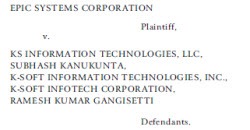
From Unbarred: “Re: Epic’s lawsuit against a consulting firm. It’s an intellectual property lawsuit in which Epic claims tortuous interference, breach of contract, trade secret misappropriation, and other related transgressions. They say the defendants inappropriately logged into the customer area of Epic’s website to access an ambulatory training video. Epic wants all of its material returned and removed from any website on which it was loaded, along with punitive and actual damages.”

From The PACS Designer: “Re: IT convergence. With all of the mobile devices and desktop workstations accessing data of all types in daily activities, it becomes more important for IT management to control the platform running everything viewed by users. Microsoft realizes the need and is addressing the challenge by incorporating Windows 7 and 8 in their .NET Framework software. As more vendors migrate to Windows 7 and/or 8, the pressure will build to move towards Microsoft’s .NET Framework solution to enhance IT convergence.”


HIStalk Announcements and Requests

12-11-2012 6-52-54 PM

Welcome to new HIStalk Platinum sponsor Ormed of Austin, TX. The employee-owned company’s product line includes financial management  (AP/GL, asset management); decision support (EIS, cost accounting, budgeting, dashboards); supply chain management; human capital (scheduling, HR, payroll, employee self-service); e-commerce transaction services; and accounts receivable. Ormed MIS decision support for healthcare includes Cyberquery information access, which delivers vital business intelligence information to authorized employees as graphs, reports, or spreadsheets. The fully integrated Ormed MIS software and Ormed X2 B2B portal help create efficiency, cost savings, and controls across the entire organization. The company has been working since 1989 to provide hospitals and other healthcare organizations with tools for timely and informed decision-making, cost-effective growth, and improved service and satisfaction levels, with over 5,700 software applications in use in the US and Canada (see the interactive user map, which lists its customers). Thanks to Ormed for supporting HIStalk.


Acquisitions, Funding, Business, and Stock

Sutherland Global Services will pay $184 million for the business process outsourcing unit of the India-based Apollo Hospitals Enterprise, which provides IT support services to more than 150 US healthcare organizations.

A Nuance Communications investor day presentation predicts a paradigm shift that will favor the company’s speech recognition and natural language processing products, observing that nearly every mobile device includes capabilities covered by a Nuance offering. Key product lines include the Dragon family, OEM versions of its speech recognition products increasingly being incorporated directly in computer hardware, voice-enabled televisions, and cloud-based speech recognition. Nuance’s healthcare division reports strong growth, aided by the HITECH act and relationships with EMR vendors such as Cerner and Epic.

12-11-2012 8-20-41 PM

Rothman Healthcare, which developed the Rothman Index for analyzing data points to identify hospitalized patients whose condition is worsening, renames itself PeraHealth and hires Stephanie Alexander (MedAssets) as CEO.

12-11-2012 9-08-46 PM

Kansas City-based Health Outcomes Sciences will relocate to Overland Park and expand from 13 to 37 employees in the next five years. The company, which is seeking incentives from Kansas state government for the move, offers the ePRISM clinical predictive modeling tool for improving outcomes. CEO Jim Wilson was previously president of Craneware and has worked for Cerner and Oacis.

The parent company of LifeCare Holdings, which operates 27 long-term acute care hospitals in 10 states, declares Chapter 11 bankruptcy to allow the company to be acquired by a group of its lenders.

LSU announces plans to form public-private partnerships for the operation of three of its hospitals, hoping the $12 million it will receive in advance lease payments will help it avoid the previously announced layoffs of hundreds of employees. The state announced similar privatization agreements for two additional hospitals in Houma and Lafayette as it dismantles its charity hospital system.


Sales

12-11-2012 9-49-02 PM

Duke University Health System (NC) will implement TeraMedica’s Evercore Smartstore and Univision modules for medical image management.

The University of Kentucky contracts with CSI Healthcare IT for project management and support services for current and future software applications.

Providence Health Care (BC) selects MModal Fluency for Transcription as the speech platform for all Lower Mainland Health Authorities hospitals and facilities.

North Oaks Health System (LA) selects iSirona’s device connectivity solution to integrate with Epic.

Cumberland Center for Healthcare Innovation (TN), a 29-practice ACO, will use clinical data analytics technology from Clinigence.

Sanford Health (ND) chooses Click Portal from Huron Consulting Group to manage HHS-mandated conflict of interest disclosure rules.

12-11-2012 9-50-16 PM

Sentara Healthcare (V) chooses Accalarad’s medical imaging solutions for its imaging centers and hospitals in Hampton Roads.


People

12-11-2012 6-03-55 PM

Clearwater Compliance hires Ashley Bampfield (Bampfield Communications) as director of marketing.

12-11-2012 6-06-01 PM

Cone Health (NC) promotes Steve Horsley to VP/CIO, replacing the retiring John Jenkins.

12-11-2012 7-14-29 PM

Ross Martin, MD, MHA (Deloitte Consulting) is named VP of corporate relations and business development of AMIA.

12-11-2012 7-39-45 PM

Jay Colfer (Prognosis Health Information Systems) joins Surgical Information Systems as sales EVP.

Phil Pead (Allscripts) is named president and CEO of application development tools vendor Progress Software. He was serving as executive chairman and interim CEO.

I interviewed Joseph Kvedar, MD of the Partners Center for Connected Health about his involvement with Wellocracy on HIStalk Connect.

Peter Cyffka (O’Melveny & Myers, House of Blues) is named CFO of Epic Systems.

The National eHealth Collaborative elects six officers including Janet Corrigan (National Quality Forum), Tom Fritz (Inland Northwest Health Services), Paul Uhrig (Surescripts), Bill Spooner (Sharp HealthCare), Michael Barr, MD (American College of Physicians), and Leslie Kelly Hall (Healthwise).


Announcements and Implementations

12-11-2012 9-51-58 PM

MaineHealth and Maine Medical Center go live on their $150 million Epic system, with which the organization hopes to qualify for $50 million in EHR incentives.

HIMSS names Mount Sinai Medical Center (NY) as the winner of the enterprise Davies Award. HIStalk sponsor Culbert Healthcare assisted Mount Sinai with the application process, including developing quality improvements measures and a return on investment model.

Bassett Medical Center (NY) goes live on Epic.

Community Health Solutions of America deploys Cognizant’s ClaimSphere HEDIS for compliance measurement and reporting.

Meridian Health (NJ) upgrades to ICA’s CareAlign Exchange platform, which includes Direct messaging, CCD repository, a patient identity manager and registry, HISP capabilities, and global opt-out for patients.

12-11-2012 9-53-33 PM

Oroville Hospital (CA), the first hospital to self-deploy the VA’s VistA, releases a self-developed, open source e-prescribing module under the name eRx VistA, which meets Stage 2 MU requirements.

University of Utah Health Care offers online access to its database of 40,000 patient satisfaction surveys, including comments about its 1,200 physicians.

Emmi Solutions announces EmmiPrevent, a population health management application that initiates interactive calls to patients to encourage then to take preventative action.


Government and Politics

12-11-2012 8-06-51 PM

National Coordinator Farzad Mostashari becomes a Blue Button user on behalf of his parents, finding that the straight download of claims data is hard to interpret even for a physician like himself. However, he finds that the iBlueButton app, which recently won an ONC programming challenge, does a nice job of reformatting the information into a usable list of problems, diagnoses, encounters, and treatments. In a suspiciously dramatic story, he reports that he downloaded the data Thanksgiving day, his father developed an emergent medical condition on Black Friday, and he was able to immediately share his freshly downloaded data with a specialist.


Innovation and Research

It happens every year right after the mHealth Summit concludes: an mHealth expert and advocate expresses frustration that the few clinical studies involving mHealth technologies usually fail to show any conclusive benefit, with most of the positive accounts coming from purely anecdotal reports. Or as NIH Director Francis Collins, MD, PhD said succinctly, "The plural of ‘anecdotes’ is not ‘data.’"

CardioMEMS, an Atlanta-based company that is developing wireless body monitors, wins the Intel Innovation Award.

12-11-2012 8-45-29 PM

An article in The Atlantic profiles a non-profit South Dakota "patient-less hospital" that provides long-distance critical care to rural hospitals in six states. Avera Health Network uses two-way video consulting to provide what it calls "hands in pockets doctoring," covering 60 percent of the ICU beds in South Dakota. They’re expanding to cover nursing homes and prison infirmaries. While the program reduces the cost of sending patients to major hospitals, it says its main benefit is to limit the decline of small, rural communities.

UCLA gastroenterologists test a program in which patients with inflammatory bowel disease are given free iPads to enter their information for remote monitoring by nurses. The software also provides education, a job coach function, mental health coaching, and even traffic reports for patient trips to the office. The UCLA Center for Inflammatory Bowel Diseases originally announced the program in September.


Technology

FDA is developing guidelines for how drug companies can promote their products using social media, but in the mean time, the manufacturers are finding new and unregulated ways to market their wares in potentially deceptive ways. Way back in 2010, the agency sent warning letter to Novartis for using a Facebook widget to market a leukemia drug by placing ads on the news feeds and profile pages of individual Facebook users.


Other

Epic seeks to buy an additional 38 acres of land from a zoned subdivision southeast of its existing 811-acre property. The company presented conceptual plans to Verona, WI city officials that include proposals for a fourth and fifth campus. Some residents expressed concern that Epic’s never-ending construction projects are encroaching on nearby homes and creating noise and traffic throughout the area, but others expressed support for Epic’s plan to reserve part of the land for a park and said the company at least makes a better neighbor than closely spaced apartment buildings.

12-11-2012 6-24-09 PM

A KLAS report covering business intelligence finds that the most significant impact of BI solutions involves knowledge dissemination and end-user adoption.

India launches its first cloud-enabled eHealth Center for delivering primary care in remote regions. It provides remote medical consultations and sends SMS-based patient reminders.

12-11-2012 7-06-41 PM

Russian hackers hijack and encrypt the electronic patient files of a clinic in Australia, demanding $4,200 to restore the information. Experts say the clinic doesn’t have much choice but to pay up in this latest episode of so-called ransomware, but warn that paid-off hackers often hit the same victims again to demand more cash.

Greek hospitals are struggling in the country’s economic crisis, facing supply shortages and budgets cut by half. A neurologist says pay cuts have left him making $1,600 per month for a 100-hour workweek, while patients can’t get medication because the government can’t pay its pharmacy bills. Greek healthcare, critics say, is like the rest of the country’s economy in suffering from corruption and mismanagement.

Weird News Andy likes this “pacemaker for brains” story in which Johns Hopkins researchers implant a stimulation device in the brain of an Alzheimer’s patient in the hopes it will stop cognitive decline. Also from the infectious weirdness that is Andy: five Cedars-Sinai heart valve transplant patients contract staph infections when the gloves of their surgeon develop tiny tears, allowing bacteria from the wound on his hand to infect them. The hospital says the surgeon is no longer performing operations there.


Sponsor Updates

  • Besler Consulting President Brian Sherin addresses the company’s growth over its 25 years in business in a newsletter article.
  • Emdeon reviews the top priorities of its channel partners.
  • William Bithoney, MD of Truven Health Analytics and Jeffrey Softcheck of Silver Cross Hospital address the future of healthcare and improving care quality and outcomes at this week’s IHI conference in Orlando.
  • StartUp Beat profiles PatientPay and its billing and collections technology.
  • NextGen launches its 8 Series EHR content, which includes embedded MU criteria and an optimized seven-tabbed clinical workflow.
  • The Orange County Register names Kareo a “Top Workplace in Orange County.”
  • Prognosis will integrate its EHR platform with DrFirst’s e-prescribing solution.

Contacts

Mr. H, Inga, Dr. Jayne, Dr. Gregg.

More news: HIStalk Practice, HIStalk Connect.

Morning Headlines 12/11/12

December 10, 2012 Headlines Comments Off on Morning Headlines 12/11/12

ACOs, already surging, poised for even more growth

The American Medical Association publishes a snapshot on ACO growth which it says shows significant traction leading into 2013, based on the more than 500 organizational applications submitted to CMS this year requesting ACO recognition.

Bipartisan Policy Center Calls for Greater Use of Electronic Tools to Engage Patients and Drive Improvements in the Cost and Quality of Health Care

ONC’s Farzad Mostashari, MD and former US Senate Majority Leader Tom Daschle host a technology discussion in conjunction with the release of a BPC report calling for greater use of mHealth technology to streamline care and reduce healthcare costs.

Epic Systems close to owning more land in Verona

Epic is in the process of adding 40 acres and 8-10 office buildings to its “Intergalactic Headquarters.”

Central Tennessee ACO adopting clinical analytics software

The Cumberland Center for Healthcare Innovation, a central Tennessee ACO, will implement Clinigence clinical analytics software to help meet Medicaid Shared Savings Program goals.

Bassett Medical Center Implementing Inpatient EMR

Bassett Medical Center goes live on Epic Inpatient after ambulatory clinics completed their Epic implementation this summer.

E-Mail Incident Involves Some Patient Information

Carolina HealthCare System notifies 5,600 patients of a data breach after a hacker was discovered to have accessed  a physician’s e-mail account over a six-month span.

Comments Off on Morning Headlines 12/11/12

Readers Write 12/10/12

December 10, 2012 Readers Write 7 Comments

Submit your article of up to 500 words in length, subject to editing for clarity and brevity (please note: I run only original articles that have not appeared on any Web site or in any publication and I can’t use anything that looks like a commercial pitch). I’ll use a phony name for you unless you tell me otherwise. Thanks for sharing!

Note: the views and opinions expressed are those of the authors personally and are not necessarily representative of their current or former employers.


Baseball Traditionalists: Whose “Use” was More Meaningful?
By Robert D. Lafsky, MD

Isn’t it fascinating to follow the daily progress of a battle that pits traditionalists against digitally-armed insurgents? On the one side are deeply-entrenched practitioners of an ancient art dependent on subjective judgment calls that, in their view, can only be described in descriptive natural language. On the other side are advocates of a granular hard data approach that, although tedious and opaque to the untrained, reveals insight into previously unseen trends and realities.  

Ain’t baseball something?  

You do have to admit, if you’ve read the sports pages lately, that the battles in the sport eerily reflect arguments that run through the pages and comment sections of this blog. I cite as the crowning example the brouhaha over the naming of Miguel Cabrera as this year’s National League Most Valuable Player.

The traditionalists have a powerful argument for Cabrera. For one thing, his Detroit Tigers won their division and went to the World Series, while second place Mike Trout’s LA Angels finished third in their division. And Cabrera was the first Triple Crown winner (highest batting average, most homers, and runs batted in) in 45 years. He had a knack for hitting when it really counted, and he selflessly agreed to move to third base from first when the Tigers acquired the powerful but slow Prince Fielder. The traditionalists say it’s obvious he’s the MVP.

But the “Moneyball” guys have their points about Trout. Using highly sophisticated and detailed data, they determined using a measure called “wins over replacement,” — using not only batting statistics, but defensive and even individual ballpark factors to compare Trout to an average replacement player — he accounted for 10.7 additional wins for the Angels over 6.9 Tiger wins for Cabrera. And that, to them, is what matters. All that other stuff is dismissed by these “Sabermetricians” as mere “narrative.”

But the traditionalists could ask, I suppose, the following cogent question:  whose “use” during the season was more “meaningful”? 

That’s an obvious parallel  to current trends in medical computing, right? Well, let’s not forget an obvious point. Baseball has always been a thing entirely made up by humans. Before these high-end statistics were developed, it had a clear-cut set of rules and a clear-cut goal–scoring the most runs in the most games.  

Medicine’s rules, on the other hand, are essentially defined by nature, and after more than 40 years in the field, I still wonder what the goals of practice really are. Fewer deaths, of course, but that’s really hard to count. And we know that people focus on a lot of other things that don’t affect critical outcomes like death and disability.

So, no — it’s way more complicated.  And advocates of evidence-based practice make valid points. We won’t settle any arguments here. But I know that obtaining and analyzing data is hard.  

Which is why we need baseball.  Go ahead and break for home, Bryce Harper. When that happens, we don’t need no stinkin’ statistics.

Robert D. Lafsky, MD is a gastroenterologist and internist in Lansdowne, VA.


The EHR Conversion Staffing Dilemma: Cost vs. Go-Live Disaster
By Don Sonck

12-10-2012 6-50-14 PM

With the window to initiate participation in the Medicare EHR Incentive Program expiring in 2014, the next two calendar years are certain to be chaotic within the EHR arena. With an ever-increasing number of hospitals and physician groups already scheduled to implement an EHR and still others in the final selection stage, internal and external resources necessary to staff these critical and expensive projects are already at a premium.

Particularly on the acute support side of these projects, professional consultants (internal and external) who possess clinical experience and know firsthand the inner workings of a hospital or ambulatory environment should be utilized. Ratios of one acute EHR professional for every four to five core clinical staff members is optimal. Any ratio greater typically results in frustration and morale decline, extended end user adoption, residual training, and of course, increased expense.

Far too often I’ve encountered healthcare systems of all sizes (as well as physician practices) that underestimate the importance of clinical support staff. During EHR post-mortem discussions, leadership rues the fact they overlooked or underappreciated the skill and expertise that clinical resources bring to the table, particularly during the critical 4-6 weeks just prior and subsequent to go-live. Too often, the main focus and budget allocation is on the EHR build and associated infrastructure costs. IT consultants are justifiably a majority slice of the overall project budget pie, but these same resources are ill prepared for and lack the “soft” skills to prosper as super users with core clinical staff during that chaotic go-live window.

My advice? Do not rely solely on overtime utilization of existing staff, the float pool, or seasonal staff. Make sure you pay for the ala mode on top of that budget pie in the form of nurses, therapists, and physicians who are seasoned in both go-live experience and the particular EHR vendor software to which you are migrating. When blended with existing core staff, these clinicians can assist in both patient care and technical guidance on the electronic charting process, easing your clinical team’s anxiety, reducing overtime, minimizing the need for additional EMR training consultants, and accelerating the adoption and knowledge of the EHR software.

When considering the employment of third-party clinical support staff, avoid the pitfall of waiting until the eleventh hour to pull the trigger. Human resources and nurse recruiting teams have enough on their plate without the added burden of answering these questions for themselves:

  • How will nurses and physicians learn the system and treat their patients at the same time?
  • What scheduling challenges will we experience due to the temporary decrease in productivity?
  • Who will handle my core employees’ technology aversion?
  • Will overtime compensate for coverage during classroom training time?
  • What will be our electronic charting standards be day one, week two, and month one?
  • Who will be taking care of orientation, credentialing, and my other duties during implementation?
  • What will my patients experience be during go-live?

Be an early adopter of the clinical staffing question, at least six months prior to go-live. Your CFO, CIO, and CNO will all thank you.

Don Sonck is director of EMR staffing solutions of AMN Healthcare of San Diego, CA.


Questions for ONC and the Obama Administration
By John Gomez

The Meaningful Use program requires technology to be adopted and utilized by healthcare providers and payers throughout the United States. The funding for these programs is coming from federal tax dollars  All that is well and good. In the long term, we will hopefully see a good return on these investments through standardized care, lowered administrative overhead, and a reduction in medical errors that affect patients.

The technology that is designed, developed, tested, and deployed to support Meaningful Use requires literally thousands and thousands of engineers, consultants, product and program managers, not to mention all the system administrators, network managers, and others. It is perplexing to me though, that in these times of economic hardships, many healthcare software vendors and secondary software service providers offshore these positions. 

For instance, companies like Allscripts have huge staffs in India and smaller presence in Canada. Some companies are offshoring to Israel, China, and Europe. Given that we as taxpayers are funding the Meaningful Use program, shouldn’t there be a provision requiring that those companies benefiting from these programs only utilize US-based resources? 

There is potentially a silly argument that could be made that if were to require these companies to use US resources, they would need to charge more for their products and services and that would ultimately cause a deeper burden to the taxpayer. That is an accurate knee-jerk response based on lack of information and research.

We could keep these jobs here in the United States and not increase the cost of operations for these companies if these companies fill these positions in areas of the United States that are hardest hit by the current state of our economy. The level of talent, required training, and other factors would be similar if not better then that which is encountered outside our borders.

I realize that this is not a simple problem. Wall Street and private equity firms are more interested in margin improvement then really considering the long-term benefit to our country. But in my eyes, I think that creating jobs here is a priority. 

We should do what we can to get more Americans working, even if it impacts the margins of healthcare software companies or slightly raises the cost of software or services. When you have a program as big as Meaningful Use, the benefit should be well beyond that of its primary objective.

John Gomez is CEO of JGo Labs of Asbury Park, NJ.


Stage 2: You Ain’t Finished ‘till the Paperwork is Done
By Frank Poggio

Many years ago I saw a cute little cartoon that pictured a three-year-old climbing off a commode. Standing next to him was his mother, instructing him that he wasn’t finished until his paperwork was done. Well now, the characters in that cute cartoon can be replaced by a vendor and the ONC, respectively.

Two new Stage 2 test scripts for certification will require vendors to supply documentation previously not needed under Stage 1. They are:

  1. Safety Enhanced Design – 170.314(g)(3), and
  2. Quality Management System – 170.314(g)(4)

Safety Enhanced Design (SED). In early drafts of Stage 2, this criterion was referred to as User-Centered Design. The primary impetus for SED came from the November 2011 IOM report (Health IT and Patient Safety: Building Safer Systems for Better Care) that lamented the lack of built-in safety elements in many clinical software products.

An excerpt from the ONC test script describing SED follows:

This test evaluates the capability for a Complete EHR or EHR Module to apply user-centered design for each EHR technology capability submitted for testing and specified in the following certification criteria:

§ 170.314(a)(1) Computerized provider order entry

§ 170.314(a)(2) Drug-drug, drug-allergy interaction checks

§ 170.314(a)(6) Medication list

§ 170.314(a)(7) Medication allergy list

§ 170.314(a)(8) Clinical decision support

§ 170.314(a)(16) Inpatient only – electronic medication administration record

§ 170.314(b)(3) Electronic prescribing

§ 170.314(b)(4) Clinical information reconciliation

The Tester shall verify that for each EHR technology capability submitted for testing and specified in the above-listed certification criteria, the Vendor has chosen a user-centered design (UCD) process that is either:

A) UCD industry standard (e.g.; ISO 9241-11, ISO 9241-210, ISO 13407, ISO 16982, and ISO/IEC 62366); and submitted the name, description, and citation or,

B) Not considered an industry standard (i.e. may be based upon one or more industry standard processes); and submitted the named the process(es) and provided an outline and description of the process(es)

The Tester shall examine each Vendor-provided report to ensure the existence and adequacy of the test report(s) submitted by the manufacturer. The Tester shall verify that the report(s) conform to the information specified in NISTIR 7742 Customized Common Industry Format Template for Electronic Health Record Usability Testing.

Full EHR vendors must address this new requirement, while EHR Module vendors can skip it if your certification request does not include any of the above criteria. On the other hand, if your EHR Module includes even one of the above, you then must address the SED for that criteria.

The second new criterion questions the use of a Quality Management System 170.314(g)(4). The ONC-published test script states the following:

For each capability that an EHR technology includes and for which that capability’s certification is sought, the use of a Quality Management System (QMS) in the development, testing, implementation and maintenance of that capability must be identified.

– The Vendor identifies the QMS used or indicates that no QMS was used in the development, testing, implementation and maintenance of each capability being certified

– The Tester verifies that for each capability for which certification is sought, the Vendor has

  1. Identified an industry-standard QMS by name (for example, ISO 9001, IEC 62304, ISO 13485, ISO 9001, and 21 CFR, Part 820…)
  2. Identified a modified or “home-grown” QMS and an outline and short description of the QMS, which could include identifying any industry-standard QMS upon which it was based and modifications to that standard
  3. Indicated that no QMS was used for applicable capabilities for which certification is requested

Clearly ONC is interested in learning more about what QA tools vendor use (if any) for each of the submitted Stage 2 criteria. Under Stage 2, per step 3 above, you do not have to have a formal (or any) QA process available. No QMS is an acceptable answer. But, you can easily guess what will happen in Stage 3. Words to the wise: if today you do not incorporate in your systems development a formal and documented QA process, better get one soon.

Last year in a previous HIStalk post I referred to the FDA coming to EMR systems through the back door. SED is a big step in. I fully expect the criteria covered to expand in Stage 3, and expect the depth and extent of the documentation submission to expand as the test agencies (ACB) gain more experience in 2013.

Lastly, if your staff is not familiar with the ISO and IEC standards, better do some homework. I suspect that the best of breed /specialty and new HIT startup firms would have a more difficult time in addressing SED than the large legacy firms. Documentation and QA are typically not their strongest suits.

All the new Stage 2 criteria and test scripts can be found here.

Frank Poggio is president of The Kelzon Group.


The Jury is No Longer Out
By Nicholas Easter

Very recently, I was a summoned to District Court for my civic responsibility of jury duty. Unlike many Americans, I relish the opportunity to sit for a jury trial, as it affords me the great opportunity to assist in the beautiful process of democracy. Unfortunately, the attorneys did not choose me this time around. But there is always next week, when I will be summoned to return.

Due to my freedom from this specific trial, I can comment on some of the particulars, but the important message from this trial comes from the other panelists as the voir dire was conducted.

In short, the case was/is an inmate at a federal detention facility (prison) attempting to sue members of the healthcare team at the facility for negligence in treating his life-threatening illness. A mix of guards, nurses, PAs, and a doctor being sued by an inmate for violation of the 8th Amendment to the US Constitution, since it is a constitutional question, was remanded to Federal District Court.

Eighteen lucky people were selected to move from the pews to the comfy seats in the jury panel. Each was interviewed by the judge and asked a series of questions to whittle the number down to 10 jurors.

Among the questions was a seemingly innocuous one: “What is your opinion on the healthcare provided to inmates?” Each of the 18 responded that they believed it was a right for each and every prisoner to receive fair and adequate medical attention. Of the panelists, there were teachers, engineers, consultants, unemployed persons, and the director of a local emergency room’s nursing team. I repeat, every single one thought it was the duty of the Federal Department of Corrections to provide ample and adequate healthcare to its inmates.

I believe it is time to formally reaffirm that a majority of this country believes that access to quality healthcare is a right afforded to each and every citizen, even felons. It is this basic comment on the structure of our society that gives a full and formal mandate to our leaders in Washington DC to complete the process of unifying the delivery of healthcare in America to make it accessible and affordable for all Americans.

If 18 randomly selected Americans above the age of 18 without any prior convictions for felonies can confirm that this basic right is required for criminals, then it ought to signal that it is high time to continue to find ways to make this an affordable reality for the remainder of Americans.

Social scientists agree that the “Social Strain Theory” is accurate. The greatest impetus to criminal behavior is poverty. America’s healthcare system can easily push even the most well-heeled patients into poverty. Hopefully the healthcare system of tomorrow will recognize the sharpness of its sword as it begins to eradicate a lot of ills that befall our society.


Curbside Consult with Dr. Jayne 12/10/12

December 10, 2012 Dr. Jayne Comments Off on Curbside Consult with Dr. Jayne 12/10/12

It was cold and rainy, so I decided to file my state license renewal this weekend. When I was in a community practice, the office manager used to take care of that (as well as credentialing, liability insurance renewals, and just about everything else). Now that I’m in informatics, I’m on my own. The administrative assistant I share with four other people barely has time to open the mail and manage our calendars, let alone handle something like licensure renewals.

My state requires a certain amount of Continuing Medical Education (CME). Although I meet that requirement without issue each year just through routine activities and journal articles, it’s only half of the amount required by my specialty society. I was grateful for the reminder to catch up on my hours. Coincidentally, CMS continues to send e-mail bulletins about ICD being “closer than it seems” and one sent this week stated they had CME available.

(Apparently they partnered with Medscape Education back in September, but I must have missed the original announcement.)

I decided to check out the ICD-10 CME. There are two modules and an article offered. The modules are targeted towards small to medium practices and large practices, respectively, and are specifically for physicians. The article is more general for all health care providers. Since I work in Big Healthcare, I made a cup of tea (Earl Grey – hot) and settled in for the large practice video.

The video is narrated by Daniel Duvall, MD MBA of the Hospital and Ambulatory Policy Group at CMS. I liked that it didn’t claim that ICD-10 was going to improve care or make our lives easier. It was clear about stating that there would be “much more specificity in information sharing” and that the key point of relevance for physicians was that it is necessary for claims submission and those who delay may not be reimbursed.

I’d have liked the CME better if it had been self-paced. It wouldn’t allow me to fast forward and one couldn’t forward the slides at his or her own pace. I can generally read faster than I can listen to someone read slides to me, and find that I learn more reading things on my own rather than being lectured to. There was some choppy editing that was a little annoying, so by six minutes into it I was pretty much “done” but couldn’t blast through it.

Luckily it did allow me to skip to the test (which I aced – it only had three questions) and the subsequent course evaluation. I was disappointed that the evaluation wasn’t specific to this kind of educational activity. It asked me if I planned to modify treatment plans, change screening or preventive practices, incorporate different diagnostic strategies into patient evaluations, or use alternative communication methodologies with patients and families. It’s always nice to have questions that are actually relevant to the course just taken.

For a physician who doesn’t know much about ICD-10, the course provides a reasonably good base. For anyone who is deep into an ICD-10 playbook, it’s not worth the time unless one is killing time or needs CME hours. I realized when I got to the end of the course that I probably should have verified how I was logged in to Medscape. At least it will make a nice addition to the certificates on the wall of my home office.

clip_image002

Print

E-mail Dr. Jayne.

Comments Off on Curbside Consult with Dr. Jayne 12/10/12

Morning Headlines 12/10/12

December 9, 2012 Headlines Comments Off on Morning Headlines 12/10/12

Health IT training center opens

The Jewish Healthcare Foundation, the Pittsburgh Regional Health Initiative, and Health Careers Futures form the Pittsburgh-based Quality Information Technology (QIT) training center, with the goal of training health professionals on emerging technologies that will add emphasis on coordinating care and measuring the quality of care.

For ER doctors, an extra hand on the keyboard

Rochester General Hospital’s use of scribes in the ED, which realized an annual $600,000 savings last year and is credited with allowing ED staff to treat 30 percent more patients per shift, is profiled in a local paper.

Third-party revenue cycle expertise reduces healthcare costs, tightens processes

Strong growth in the revenue cycle management segment is being attributed to meaningful use, ICD-10 plans, and reduced payments.

Panetta says DoD, VA to ‘meet or beat’ iEHR rollout goals

DoD announces a revised plan that will expedite the completion of the iEHR rollout, culminating in a 2017 go-live.

Comments Off on Morning Headlines 12/10/12

Monday Morning Update 12/10/12

December 8, 2012 News 8 Comments

12-8-2012 10-47-35 AM

From HITEsq: “Re: Epic. It appears they aren’t happy with some consultant, suing two individuals and three similar sounding entities (KS Information Technologies). They were granted a motion to seal the complaint to protect sensitive information. Maybe someone knows more.”

12-8-2012 7-55-53 AM

The government should get more proof that providers have met Meaningful Use requirements before sending them a check, according to 72 percent of poll respondents. New poll to your right: should FDA create an Office of Wireless Health as proposed by Rep. Michael Honda (D-CA)? I’ve generously included a “don’t know/don’t care” option for those anxious to participate despite indifference to the topic.

My latest Spotify playlist includes the usual mix of music I like, including Villagers, This Providence, Gov’t Mule, Faith No More, and going back decades, Mountain, Throwing Muses, and even the virtually unknown 60s Detroit band Frijid Pink. I spend a fair amount of time choosing what I think is worth listening to and then play the list several times to make sure it makes sense, not that I’m in need of extra work. Give it a listen if you’re stuck in a musical rut.

12-8-2012 8-23-29 AM

I never look at (and in fact am annoyed by) infographics, those trendy, huge, multi-font pictures that fool short attention span Internet skimmers into thinking they understand a complex topic, often created by someone who hopes their agenda will be accepted as truth instead of opinion because it’s easier to stare at dumbed-down pictures instead of using your brain to read something more challenging and informative. If you don’t feel that way, cruise over to ONC’s EHR infographic for consumers. At least theirs is footnoted.

The secretaries of Veterans Affairs and Defense say they will present a plan in January to speed up the VA-DoD EHR integration. The planned go-live date of 2017 may be moved up. 

Manitoba’s eChart HIE  will allow users to hide their information even though they can’t opt out of the service. It will contain prescription information, immunization histories, demographics, and lab results.

The Jewish Healthcare Foundation, the Pittsburgh Regional Health Initiative, and Health Careers Futures form the Pittsburgh-based QIT training center, funded by the foundation and the County tourism office. It will offer training to healthcare executives and workers on emerging technology. ONC Deputy Director Jason Kunzman is former CFO of the foundation. Also announced was the QIT Health Innovators Fellowship program for graduate students in the health professions, who will submit IT solutions for judging in a 10-week program.

Healthcare provider CIOs on the 2013 Computerworld Premier 100 IT Leaders list:

  • Horace Blackman, Department of Veterans Affairs
  • George Brenckle, UMass Memorial Health Care
  • Thomas Bres, Sparrow Health System
  • Sonya Christian, West Georgia Health
  • Chad Eckes, Cancer Treatment Centers of America
  • Randall Gaboriault, Christiana Care Health System
  • Theresa Meadows, Cook Children’s Health Care System
  • Mark Moroses, Continuum Health Partners Inc.
  • Stephanie Reel, Johns Hopkins Health System
  • Kathleen Scheirman, Kaiser Permanente
  • Thomas Smith, NorthShore University HealthSystem

12-8-2012 9-11-37 AM

A new KLAS report on revenue cycle performance finds that Meaningful Use, reduced payments, and ICD-10 fears are forcing providers to examine their revenue cycles more closely for efficiency and effectiveness, with many of them engaging outside assistance.

RSNA attendance was down 9 percent this year, with possible reasons being lack of technology breakthroughs and a new policy that required guest attendees to pay.

12-8-2012 9-47-54 AM

A technical school in the Philippines creates a telenurse training program, preparing nurses to offer their patient consultation services via smart phones. ClickMedix, an online health company is participating, offering the nurses access to its smart phone application, doctors, and medical library in return for a percentage of their billings. Experts say it’s time to create business models for nurses to become online health consultants. I tracked down ClickMedix, which turns out to be a US-based company (Rockville, MD) formed by faculty and students of MIT and Carnegie Mellon to address global healthcare challenges. The company’s mHealth platform offers modules for delivery of medical services, patient management, administration, and healthcare services purchasing.

Ergonomics researchers warn that the increased use of EMRs and other keyboard-based technologies for long periods of time raises the risk that providers will sustain repetitive stress injuries as happened when offices computerized in the 1980s. A small study found that more than a third of doctors reported RSI-related pain in their neck, shoulders, back, or wrists. In what could be an indirect measure of the uptake of EMRs, another small provider study found that more than 90 percent use a computer, averaging more than five hours a day.

12-8-2012 10-07-12 AM

An article in the Rochester paper describes the use of contracted scribes in the ED of Rochester General Hospital, which says its 60 ED scribes cost $1 million annually but save the health system $1.6 million per year. According to the associate ED chief, “When you come to see the doctor, you want to see the doctor. You want eye contact. You don’t want us standing at a computer screen. I care for people. I’ve never been trained to be a good typist or a data entry specialist.”

An Atlanta nephrologist serving as the medical director of a clinic owned by dialysis provider DaVita files a whistleblower lawsuit against the company under the False Claims Act after noticing that its computer systems showed large amounts of wasted drugs. His suit claims DaVita overcharged Medicare for up to $800 million over eight years by intentionally using oversized vials of medication and discarding the remainder, billing Medicare for unavoidable waste. The doctor was noticed by his fellow whistleblower, a nurse who says the company was pushing employees to increase their drug revenue. The company says CMS approved all of its practices.

12-8-2012 10-22-02 AM

Scheurer Hospital (MI) renovates its patient rooms to include technology improvements, placing a computer in each room to allow nurses to document at the bedside. They also added a new patient call system that alerts nurses on cell phones.

The former executive director of Syringa General Hospital Foundation (ID) is sentenced to six months in prison and is ordered to pay $115,000 in restitution after pleading guilty to using the hospital’s computer system to transfer money to her personal accounts.

Aetna will pay $120 million to settle lawsuits claiming that it used databases from UnitedHealth Group’s former Ingenix unit to intentionally underpay insurance claims for members using out-of-network medical services. UnitedHealth paid $350 million in 2009 to settle a similar lawsuit in New York, at which time Aetna also settled by agreeing to stop using the Ingenix database and paying $20 million to help create an independently developed replacement for it.

Weird News Andy says he now knows how your mom always knew what you were thinking. Researchers find that a mother’s brain often hosts living cells from her children born decades earlier. WNA also digests new medical research as being an explanation for crazy cat ladies: a common cat parasite is found to have the ability to enter the human brain and to possibly cause behavioral changes.

More on CPSI in this week’s HIS-tory from Vince, putting it into current perspective by reviewing the MU success of its customers and how its practices parallel those of Meditech and Epic. Next up is NextGen’s inpatient division, so connect with Vince if you can help him out with background information.


Contacts

Mr. H, Inga, Dr. Jayne, Dr. Gregg.

More news: HIStalk Practice, HIStalk Mobile.
Time Capsule: Sun Was Right: The Promise of Healthcare Applications Requires a Grid, Not a Data Center Full of Servers

December 7, 2012 Time Capsule 3 Comments

I wrote weekly editorials for a boutique industry newsletter for several years, anxious for both audience and income. I learned a lot about coming up with ideas for the weekly grind, trying to be simultaneously opinionated and entertaining in a few hundred words, and not sleeping much because I was working all the time. They’re fun to read as a look back at what was important then (and often still important now).


I wrote this piece in February 2008.

Sun Was Right: The Promise of Healthcare Applications Requires a Grid, Not a Data Center Full of Servers
By Mr. HIStalk

mrhmedium

Sun Microsystems has been saying for years that “the network is the computer.” I hooted when I first heard that because it seemed so transparently self-serving, but I actually think the company was right all along. Sometime, maybe sooner than later, your data center won’t need servers. In fact, you probably won’t need a data center or IT staff at all (so in an ironic twist, you can use that space to store paper medical records).

I came to this conclusion after realizing that those Sun thin client blowhards were right, too. All the software that’s important or cool these days runs over the Web, not on a desktop PC. I’ve traded Office bloatware and piggish e-mail clients for free, stripped down versions that run on the ubiquitous information grid known as the Internet. Tastes great, less filling. I can get my job done, derive and create greater value, and let somebody else worry about what’s under the hood.

In other words, I don’t need a loaded PC any more than I need a gas generator, a TV antenna, or an outhouse. The grid is better, cheaper, and more reliable to meet those needs. All I need is a connected appliance. But more importantly, the network adds tremendous value. You contribute a little by joining, but you get a lot in return (well, hopefully not in the outhouse part of my labored analogy, but you know what I mean).

That’s how physician billing vendor athenahealth works. It applies the collective knowledge of thousands of customers to instantly update reimbursement rules for all the practices on its grid. Doctors’ offices don’t need a roomful of souped-up computers or an expert on arcane billing practices. They just need a connection to the grid.

Back in the hospital, we’re still using the same old (literally) applications, monolithic piles of esoteric and proprietary hardware that require skilled care and feeding, connected by a fragile spider web of interfaces and middleware that often causes problems with response time, downtime, and botched upgrades. Even when they’re up and running, those systems have plenty of functionality but zero intelligence, obediently regurgitating stored data in a format that’s little different than how it was entered.

The Holy Grail is to pull data back out in a way that lets hospitals learn something actionable, like which antibiotics work best or which lab values correlate with genomic profiles. Few hospitals have the capability to even get that kind of information from their own locally stored data. Fewer still can tap into the collective knowledge of their fellow IDN members. And nearly none can focus the accumulated intelligence of hundreds of peers when making important clinical and business decisions.

New technologies such as Software as a Service will allow hospitals to move to the next level of collaboration – actually pooling their collective expertise with that of their fellow grid users. The applications themselves could be expertly managed by experts and paid for as a service instead of buying racks of servers and installing patches.

Organizations centralized IT in the first place to gain leverage, reduce costs, and reduce risk. Hosted applications are the next step up the food (and value) chain. Capital requirements should be less, space and people requirements minimized, and they’d get the best IT talent money can buy, not just the best that’s willing to move to International Falls, Minnesota.

Hospitals are uniquely positioned to share knowledge compared to nearly every other industry. Most of them are non-profits, those more than 50 miles a way aren’t competitors, and few disagree that healthcare costs are sucking the wind out of our economic sails. For that reason, it will soon make good sense to shut down the endlessly duplicated silos of locally maintained hospital IT and get on the grid instead.

Text Ads


RECENT COMMENTS

  1. ... because it's a construction worksite. (It's a bit more evident from the second photo in the linked post.)

  2. I can't get past the helmets and safety vests. On everyone. Including the model patient. What, are they expecting the…

  3. I'm all for a startup mentality, but there really needs to be a net positive return for all that time,…

  4. Re: It would be interesting to compare after-hours use of generative AI solutions by patients who have access to after-hours…

  5. Would be interesting to see what Providence St. Joe's return has been on all their adventures. When I was on…

Founding Sponsors


Platinum Sponsors


Gold Sponsors


RSS Webinars

  • An error has occurred, which probably means the feed is down. Try again later.