Recent Articles:

HIStalk Interviews Dan Schiller, CEO, Salar

January 4, 2013 Interviews 1 Comment

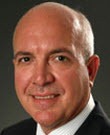
Dan Schiller is CEO of Salar of Baltimore, MD.

1-4-2013 7-58-26 PM

Salar has been through a couple of acquisitions. Explain what happened and how the company will operate going forward and the changes Constellation Software will make.

To say it’s been an interesting ride is an understatement. In the last 15 months, Salar has been purchased three times.

Initially we were bought by Transcend Services, a transcription company, in August 2011. Our hope was to create a budget-neutral documentation transition solution for existing Transcend customers by moving them off transcription and on to TeamNotes, Salar’s electronic physician documentation platform. Before we were able to formalize and launch this strategy, Nuance purchased Transcend to expand Nuance’s share of the transcription services market. This was early 2012, and we became a small blip on the larger corporate radar.

While we may not have been given the visibility we wanted, we used this time to focus on our internal processes, customers, and R&D. I think it was time well used. We’ve emerged with a new Web-based platform that we’ve deployed over the last few months to a new customer.

That brings us to our acquisition in early December by Constellation Software, Inc. We think Constellation is an ideal partner for us. They’re focused on growing vertical market software businesses that provide mission-critical solutions. They have a solid track record of purchasing and nurturing software companies in many industries. Most importantly, they believe in us – the strength of our solutions and our team.

So no immediate changes. They’re going to let us do our thing. I believe we already have the best electronic clinical documentation and billing workflow solution on the market, and with Constellation’s support, I believe we will be even stronger on the other side of 2013.


You’re a programmer moving into an executive leadership role, which rarely happens since the business world often ends up being like Dilbert and the pointy-haired boss. What are your priorities for the company and what parts of the job are you looking forward to?

I might feel out of place if this were a clothespin factory, but I know how to build software pretty well. Technical innovation has always been key to Salar’s identity, so it’s natural that a software engineer has always been at the helm. Hey, if you call in the middle of the night, you might still catch me on Tier 3 support. I hope to keep up my spot in the rotation for as long as I can.

My main priority is keeping us innovative, agile and relevant in front of all the change this industry will see in the next few years. We have always felt that, at their core, initiatives like Meaningful Use, ICD-10, and quality-driven payment reform are documentation problems, which are right in our wheelhouse.

The bottom line is that I’m eager to leave behind the mess of the last 15 months and lead this company into a very exciting future. I am fortunate to have a smart group of people who are passionate about solving real problems. With their support, this is going to be fun.


Salar’s selling point in documentation with TeamNotes has been a form-type metaphor that users could customize to look like familiar paper forms. How are users responding to that, and what kinds of devices are they using it on?

We all know that there are still large facilities using paper documentation, so that metaphor still translates to some degree. But TeamNotes has evolved far beyond just mimicking paper notes, and that’s been driven largely by the evolution we’ve witnessed in how comfortable physicians have become with technology. They want it to work for them, not against them.

For example, they want the ability to interface clinical data within their notes, jointly author notes with the entire care team, and capture structured data. Our newest version of TeamNotes enables physicians to do all these things, and do them on their preferred desktop, laptop, or mobile device. As our template content has become richer with each implementation, all of our users benefit.


Where do your documentation products fit with a hospital that’s already running a major EMR?

All of our customers already have major EMRs in place. In each case, the EMR was not able to fill their inpatient documentation needs functionally or achieve acceptable physician adoption rates. In most cases, the documentation tools are not intuitive and too rigid to fit varying clinical workflows. With Salar, each hospital has developed notes that are intuitive, reportable, and effective in their unique workflows. In our opinion this is how you achieve physician adoption of electronic clinical documentation.

There have been a lot of great strides within the industry to develop CLU and CAC tools to accommodate notes coming out of the EMR because they were never structured well in the first place. To get any sort of specificity out of a flat unstructured note, you’re required to use some expensive tools or employ smart people to deduce what happened at the point of care. This specificity needs to occur at that point of care, in the physician’s hands, and the outcome must be represented in a structured, discrete way.

These CAC tools are tremendously capable, but are employed in the wrong place in the process. By embedding CAC capabilities into the documentation workflow, Salar helps hospitals realize the full potential of their EMR investment.


How do you see your market and products changing as healthcare reform continues over the next several years?

For the short term, the customizability of our documentation platform makes us ready for everything we’re going to see in the next year or so. For ICD-10, we’re incorporating NLP tools from HLI and other vendors to accomplish meaningful front-end CDI at the point of documentation. For Meaningful Use or any other report-heavy regulations, the ability to add specific fields overnight is going to allow customers to handle these changes without any additional overhead.

Looking out a little further, we will be focusing on the front-end CDI loop in TeamNotes. By incorporating more computer-assisted tools to physicians, as well as providing for more complicated workflows with CDI staff, we believe we can truly maximize the value of these tools for both hospital and physician.

We’re very interested in how Physician/CDI/Billing workflows develop and how we can facilitate a more efficient process. We’re also very interested in the ACO model and what needs to be provided from both a reporting and a documentation perspective. We think we’re in a good position to accommodate multiple reimbursement models because of our customizable templates.

In the longer term, we’re looking at how other workflows within hospitals – and workflows between hospitals and other care organizations – are starting to blend. There are many processes that have been overlooked and underserved from a technology perspective, and for the good of the patient population, should be optimized. We can’t wait to solve these problems.

Morning Headlines 1/4/13

January 4, 2013 Headlines Comments Off on Morning Headlines 1/4/13

Lexmark Acquires Acuo Technologies

Acuo Technologies, archive and clinical content manager vendor, is acquired by Lexmark’s Perceptive Software unit for $45 million

Welsh, Carson, Anderson & Stowe Completes Acquisition Of GetWellNetwork

GetWellNetwork is acquired by PE firm Welsh, Carson, Anderson & Stowe. GetWellNetwork just signed a deal with the VA last month to provide in-room patient engagement solutions across 21 facilities.

Patient Portals: Providers Choose Path of Least Resistance

A new KLAS report on patient portals shows that most physicians are going with whatever product their EHR vendor is offering. “The existing EMR vendor relationship appears to be more important than any other factor when choosing a patient portal,” said report author Mark Allphin. “While functionality and ease of use are important to providers, they take a back seat compared to providers’ desire to manage fewer vendors and interfaces.”

SRS Receives Substantial Investment from Thoma Bravo

Thoma Bravo, a PE firm which holds equity in Hyland Software and Mediware, invests an undisclosed sum in SRS Software.

TriZetto Acquires Claims Workflow Automation Company To Further Enhance Efficiency of Healthcare Payers And Providers

TriZetto acquires Healthcare Productivity Automation, a Franklin, TN-based vendor of an automated claims administration solution.

Comments Off on Morning Headlines 1/4/13

News 1/4/13

January 3, 2013 News 2 Comments

Top News

1-3-2013 6-59-26 PM

Lexmark and its Perceptive Software unit announce the acquisition of vendor neutral archive and clinical content management vendor Acuo Technologies for $45 million.


Reader Comments

1-3-2013 5-47-14 PM

From John Galt: “Re: new layouts. Like the new site look and the good folks over at Dodge that lent a hand. But LOVE the slicker presentation on HIStalk Connect!” I like that layout, too. It’s really modern and lightweight, just not quite appropriate for HIStalk since our posts here are longer and need a more text-intensive page. If you haven’t checked out the former HIStalk Mobile lately, Dr. Travis and Lt. Dan have been getting some Twitter love for some recent posts in particular, Top 10 mHealth Stories of 2012 and Connected Health Predictions for 2013, and James Harris has contributed some nice pieces as well. We’ll be announcing new sponsors and new features shortly. We might be able to use more help if you’re big on the topics we cover and you like to write – e-mail me if you’re up for it.


HIStalk Announcements and Requests

This is the last chance for your HISsies nominations. I’m fascinated that all but one nomination for “stupidest vendor action” involves the same company, but for several actions, which will make an interesting HISsies ballot for sure. A few people e-mail every year to complain that I put the same companies and people on the ballot, apparently missing the not-so-subtle point that readers do the nominating, not me. The moral of the story: submit your nominations and feel instantly superior to the complainers.

If your organization has been submitting events to the HIStalk Events Calendar, take note: only to HIStalk Platinum sponsors will be able to submit events from this weekend on. Also, if you miss the Smoking Doctor logo, you can see it there since I forgot about that page when I had the site redesigned, mostly because the events display right on the main page of HIStalk and I don’t go to the full calendar display as often. Fear not – the Smokin’ Doc will live on, free of both political correctness and lung carcinoma.

On the Jobs Board: Marketing Manager. That’s all for the moment since most companies disengage from hiring over the holidays, so Aspen Advisors gets sole billing this week.

1-3-2013 7-40-58 PM

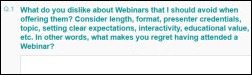
Companies keep asking me to help with Webinars, which I’m considering, but only if I can do them better than everybody else in making them fun and educational. My two-question survey asks what you like and don’t like about Webinars and how I can raise the bar. I would appreciate your thoughts. I have a short attention span, so my Webinar wish list includes sending the slides in advance by e-mail, playing music or chat while I’m waiting for an on-time start, limiting speaker intros to 10 seconds, clearly identifying a program as educational vs. a product pitch at signup, requiring interactivity such as polls, taking questions in advance and in writing and choosing the best ones to answer, and keeping the whole thing to around 45 minutes.

1-3-2013 6-08-11 PM

Thanks to Intelligent Medical Objects, an HIStalk Platinum sponsor for two years that has expanded its support also sponsor HIStalk Practice and HIStalk Connect at the Platinum level. Only a handful of companies have achieved that trifecta. IMO provides a “Common Ground for Health Vocabularies” via terminology mapping tools (ICD-9 and ICD-10, SNOMED, HCPCS, RxNorm) for vendors and vocabulary products for healthcare organizations. A recent offering is a search engine appliance kept current on medical terminology, allowing vendor partners to participate in true semantic interoperability. I can’t decide which physician customer quote I like better: (a) “Installing IMO was the single, most important improvement we have made to our EHR system,” or (b) “I am impressed by my inability to stump IMO.” I like the backgrounds of the company’s executives, too: Frank Naeymi-Rad (CEO and chairman) has a PhD in computer science, they have physicians in a couple of executive roles, and CFO Bac Palomo is not only a Stanford MBA but also a graduate of the United States Naval Academy and a former Naval Aviator. I know I’ll hear from Dr. Jayne since every time I mention IMO she e-mails me to gush about how much she likes its products as a CMIO, so I probably should have just let her write a summary from a customer perspective. Thanks to Intelligent Medical Objects for supporting our work.

1-3-2013 6-26-38 PM

Also extending its support is Divurgent, a three-year HIStalk Platinum sponsor stepping up to also support HIStalk Connect at the Platinum level. The company’s consulting work spans activation management, advisory, clinical transformation, and RCM. You may know Partner Colin Konschak, who is active in HIMSS and has co-authored books on consumer behavior and medicine and ACOs. The rest of the team has a lot of healthcare experience as well, and the company has won awards for growth and being a “best place to work.” The company blog has meaty rather than fluffy posts, critically examining ACOs, the use of physician scribes, and hospital readmissions. We appreciate Divurgent’s ongoing support.


Acquisitions, Funding, Business, and Stock

1-3-2013 5-21-04 PM

PE firm Thoma Bravo, LLC, which holds equity in Hyland Software and Mediware, invests an undisclosed sum in SRS Software.

1-3-2013 5-22-14 PM

Access acquires CPI and merges with Access FSA, developer of the Formatta Electronic Forms Management Suite.

1-3-2013 6-54-29 PM

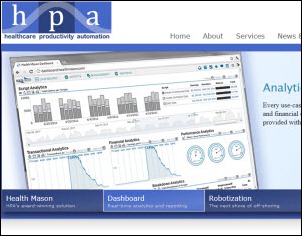
TriZetto acquires Healthcare Productivity Automation, a Franklin, TN-based vendor of workflow automation solutions. HPA offers Health Mason, which automates claims administration.

1-3-2013 6-57-02 PM

Private equity firm Welsh, Carson, Anderson & Stowe acquires GetWellNetwork, which offers patient engagement solutions that include in-room systems. The Bethesda, MD-based GetWellNetwork is the KLAS leader in the Interactive Patient Systems category.

1-3-2013 8-11-37 PM

Behavioral software vendor Netsmart Technologies, led by former Cerner COO Mike Valentine, acquires Defran Systems Inc., which offers software for human and social services organizations.

1-3-2013 7-47-15 PM

Kyruus, which offers software for physician networks and referral management,  raises $11 million in a Series B funding round, increasing its total to $19.6 million.


Sales

Health Inventures selects ZirMed as a preferred business partner and will offer ZirMed’s EDI solution suite to its ASC and surgical hospital clients.


People

1-3-2013 5-23-33 PM

Health Dialog, a subsidiary of Bupa and a provider of population health management solutions, promotes Robert Mandel, MD to CEO.

1-3-2013 8-53-12 PM

Progress Software names Chris Perkins (Eclipsys, Per-Se, Emageon) as SVP/CFO, reporting to newly hired President and CEO Phil Pead.


Announcements and Implementations

Palisades Medical Center, Engelwood Hospital and Medical Center, and Deborah Heart and Lung Center join the RelayHealth-powered Jersey Health Connect HIO.

1-3-2013 7-08-42 PM

Audax Health signs a five-year strategic alliance with Cigna to develop a digital engagement platform for Cigna customers that will include "fun and engaging health related activities and information.”


Government and Politics

1-3-2013 6-52-03 PM

ONC makes Cypress, its CQM testing and certification tool, available for vendor download. It’s also offering a January 10 online demo.


Innovation and Research

Researchers with Truven Health Analytics project that health plans will incur 4.8 percent growth in allowed medical and pharmacy costs in 2013.

Johns Hopkins researchers find that hospitals that hide inpatient psychiatric records in their EMRs have a much higher readmission rate for psych patients. Says the lead author physician, “If you have electronic medical records, that’s a good step in the right direction. But what you really need to do is share the records with non-psychiatrists. It will really make a difference in terms of quality of care and readmission rates. Let’s not keep mental health records out in the cold.”


Other

1-3-2013 1-44-38 PM

Providers are feeling increased pressure to engage patients at deeper levels because of the urgency surrounding Meaningful Use and accountable care, according to a KLAS report on patient portals. Provides most often select patient portals based on convenience and vendor relationships. Third-party portal vendors earning strong satisfaction scores include Jardogs, RelayHealth, and Intuit.

1-3-2013 2-40-15 PM

The Hospice of North Idaho will pay HHS $50,000 to settle potential HIPAA violations following the loss of a laptop that contained the personal data of 441 patients. The settlement is the first involving a PHI breach affecting fewer than 500 individuals.

UNC Health Care (NC) exploits a collections loophole that allows it to siphon money owed to it directly from the tax refunds of patients. The health system and its physician group took in nearly $8 million by that method in 2012. Says a physician group VP, “It’s a useful tool.” A patient anxious to fight the “facility fee” that UNC tacks on to the doctor bills of practices it has acquired was disappointed to find that he’ll miss his day in court because the hospital didn’t sue him and instead simply docked his tax refund, saying it’s required to do so under state law.

A hospital in Scotland gives a patient 13 times the intended radiation dose, caused by “a software bug as a result of an upgrade.”

1-3-2013 8-19-28 PM

1-3-2013 8-22-28 PM

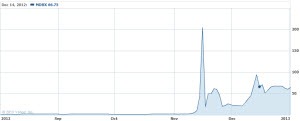
MedBox, which sells a Pyxis-type dispensing cabinet for medical marijuana, opens an office in Massachusetts expecting big business now that a new state law legalizes medical marijuana. Had you invested $10,000 in the company’s stock six months ago (see chart above), your shares would be worth more than $252,000 today, and for a day or two in mid-November, over $820,000 as exuberant pot profiteers ran up the company’s market cap to more than $2 billion with a single-day advance of 3,000 percent.

The South Florida Business Journal covers the lawsuit filed by an Allscripts MyWay customer against the company. The attorneys claim they’ve received calls from “many doctors” complaining about MyWay since the suit, which seeks class action status, was filed. The article says Healthcare Data Solutions, the largest Southeast reseller of MyWay, is helping its 500-plus MyWay customers migrate to Professional or the competing Aprima product, while HDS itself will become an Aprima reseller.

Weird ICD-10 codes will be worth the painful conversion strictly for parody value, with this Nuesoft video titled “Dumb Ways to Die Parody: New ICD-10 Codes to Try” being a particularly creative effort. Hopefully there’s a code for “getting an simple, annoying, and insanely catchy tune out of your head after watching a video,” referring not to Gangnam Style, but rather to the object of the parody, Dumb Ways to Die, which has hit 36 million YouTube views.

1-3-2013 7-25-54 PM

Weird News Andy has apparently emerged from his sun and sand hiatus to file this story about Vomiting Larry, a robot that simulates a barfing norovirus sufferer so scientist can figure out how far the virus can be spread. A set of the ‘bots, some sorostitutes, and streaming LMFAO music could pass for a homecoming weekend frat party.

WNA’s enthusiasm this week is infectious, as he injects the story of eight employees fired by IU Health Goshen Hospital (IN) for refusing to receive flu shots. WNA notes that one fired nurse questions why employees don’t have a choice but the shot is optional for patients.

Strange: a teacher who suffered spinal cord damage after abusing nitrous oxide for months sues the stores that sold it to him, claiming he’s now the champion of those whose illegal usage has harmed them. According to the manager of one of the head shops he’s suing, “I think it’s kind of a stupid lawsuit, personally. It’s like going to McDonald’s and suing them because you got fat because you ate it every day, or buying a nail gun and nailing your face or your foot.”


Sponsor Updates

1-3-2013 9-19-13 PM

  • Impact Advisors Recruitment Director Amy Reid is featured in a podcast about using social media for effective recruiting.
  • eClinicalWorks hosts roadshows this month in Dallas and Miami to highlight Stage 2 MU requirements.
  • ZirMed offers a free 60-day trail of its Analytics business solution to clients using its claims management and electronic remittance advice products.
  • Fulcrum Methods publishes a case study featuring Community Medical Centers (CA) and its success using Fulcrum solutions to select a new HIT framework.
  • CommVault’s Product Marketing Manager Emily Wojcik weighs in on integrated versus point level approaches to enterprise information archiving in a blog post.
  • The Nashville Post names Agilum Healthcare Intelligence to its list of the top 25 technology companies in Nashville.
  • An API Healthcare blog post discusses how healthcare staffing and scheduling solutions can help facilities focus on patient outcomes and cost reductions while tracking employees’ hours and skills.
  • Care360’s ChartMaxx version 5.6 earns certification through the FairWarning Ready certification program.
  • Santa Rosa Consulting announces its first Best in KLAS ranking, coming in at #5 in the Clinical Implementation Supportive segment with a score of 88.9.

EPtalk by Dr. Jayne

clip_image002

I rang in the New Year with a glitch, as the Google cloud somehow vaporized the post I sent to Mr. H on Monday. For those of you who assumed I was absent due to a little too much celebrating, thanks for thinking of me as your official HIStalk party girl. I learned this year that kissing exercises all 34 muscles in the face (thanks, Twitter!) so I hope everyone was able to get some exercise as the clock struck midnight.

It’s been amazingly busy at work this week, more so than I expected. People actually came in on Wednesday ready to work and didn’t seem as draggy as they usually are. Lots of chatter about the fiscal cliff though. I’m glad that the short-term patch does avoid the 27 percent Medicare payment cut that was looming, but it didn’t do much for the long-term problem of how we finance healthcare in the US. I’m sure there’s more drama to come as the new Congress is sworn in.

As we look at cutting healthcare costs, patients continue to switch from brand to generic medications and also from one generic version to another. A recent study finds that changes in pill color have an adverse effect on medication compliance. When the appearance of the medication changes, patients are less likely to take it as directed. I wonder if there’s a similar impact when EHR vendors change the colors and layouts of screens? Does it make us less facile as users, even subconsciously? I’m a huge fan of changing the user interface to make it more usable, but changing colors without good reason is just annoying. I experienced annoyance and distraction this summer when our ER tracking board inexplicably changed from blue to gray along with some backgrounds and icons that morphed for no discernable reason.

The AMA shares its list of the “most intriguing medical facts of 2012.”  Highlights include:

  • Laughter enhances a person’s intake of air and increases endorphins released by the brain.
  • US rural areas have 25 percent of the population but only 9 percent of the physicians.
  • One-third of new prescriptions never get filled.
  • 58 percent of US office-based prescribers sent prescriptions electronically in 2011.
  • Medical identity theft has become the fastest-growing type of identity theft in the world.
  • 75 percent of physicians with an EHR say the system improved care.
  • 61 percent of patients say they trust information posted by physicians on social media.
  • More than 70 percent of staffers in medical offices say they feel rushed when taking care of patients.
  • Conversion to ICD-10 will increase the number of code sets from 13,000 to 68,000.
  • Chronic diseases account for up to 75 percent of US health spending.
  • Up to 30 percent of US health care spending is spent on unnecessary tests and services.

Grant alert: Although ONC is avoiding formal governance for the Nationwide Health Information Network, grants will be offered to those involved in HIE governance to encourage them to develop and share best practices. Sharpen those pencils, folks.

Print


Contacts

Mr. H, Inga, Dr. Jayne, Dr. Gregg.

More news: HIStalk Practice, HIStalk Connect.

TriZetto Acquires Healthcare Productivity Automation

January 3, 2013 News Comments Off on TriZetto Acquires Healthcare Productivity Automation

1-3-2013 10-10-31 AM

TriZetto announced that it has acquired Healthcare Productivity Automation, a Franklin, TN-based vendor of workflow automation solutions.

HPA offers Health Mason, which automates claims administration.

According to TriZetto SVP Harish Mysore, “The acquisition of HPA underscores TriZetto’s continuing investment strategy to provide innovative, integrated technology and service solutions that simplify healthcare and improve both its efficiency and effectiveness for payers, providers and members. This acquisition builds on our commitment to enhance payer-provider collaboration by increasing the quality, accuracy and efficiency of claims processing and payment.”

Comments Off on TriZetto Acquires Healthcare Productivity Automation

GetWellNetwork Acquired by PE Firm WCAS

January 3, 2013 News Comments Off on GetWellNetwork Acquired by PE Firm WCAS

1-3-2013 9-49-40 AM

Private equity firm Welsh, Carson, Anderson & Stowe announced this morning that it has completed the acquisition of GetWellNetwork, which offers patient engagement solutions that include in-room systems. The Bethesda, MD-based GetWellNetwork is the KLAS leader in the Interactive Patient Systems category.

According to WCAS General Partner Michael Donovan, “GetWellNetwork is the most innovative and rapidly growing company delivering patient engagement solutions to healthcare providers. Patient engagement and satisfaction have emerged as a business imperative and critical area of focus for the healthcare industry, and as a result, we are excited about the future opportunities that lie ahead for GetWellNetwork.”

Terms of the acquisition were not disclosed. GetWellNetwork CEO MIchael O’Neil will continue in his current role.

Comments Off on GetWellNetwork Acquired by PE Firm WCAS

Lexmark Acquires Acuo Technologies for $45 Million

January 3, 2013 News Comments Off on Lexmark Acquires Acuo Technologies for $45 Million

1-3-2013 9-41-21 AM

Lexmark announced this morning that it has acquired Acuo Technologies, which will position Acuo’s vendor neutral archive software as part of Lexmark’s Perceptive Software business.

According to Perceptive Software President and CEO Scott Coons, “Perceptive Software’s rich process and content solution combined with Acuo Technologies’ Universal Clinical Platform will provide users a single, enterprise-wide view of all patient medical information from within the EMR system. Physicians will have immediate access to all patient information—from prescriptions to x-rays, ultrasounds, CT scans and more—from directly within the EMR, regardless of the department in which it was conducted or the technology used to create and store it. This data is then presented in the context of the patient, so when the physician pulls up a patient record in the EMR, all clinical content living outside that record is presented. This immediate, broad view of the patient drives both efficiencies and better patient care. Presenting this powerful content-based medical record in one solution will be unique to the market.”

Comments Off on Lexmark Acquires Acuo Technologies for $45 Million

Morning Headlines 1/3/13

January 3, 2013 News Comments Off on Morning Headlines 1/3/13

Hospital groups unhappy with fiscal cliff legislation

Hospitals are left holding the bill as fiscal cliff legislation stops a 26.5 percent payment cut for Medicare physicians, but shifts nearly half of the cost to hospitals by further reducing hospital payments over the next 10 years.

Laptop Stolen From Gibson General Hospital

A laptop stolen from the home of a Gibson General Hospital employee during a burglary compromises the names, addresses, Social Security numbers, and clinical information of 29,000 patients.

Kyruus raises $11M to advance ‘big data’ health IT

Big data startup Kyruus raises $11 million in series B funding, bringing its total to $19.6 million in just its second year of operations. Kyruus uses EHR data and algorithms to figure out which doctors within a network are most efficient at specific procedures and why, hoping to drive better health care outcomes and lower costs. It communicates this information to physicians within the network when they are referring patients for consultations.

Separate may not be equal: A preliminary investigation of clinical correlates of electronic psychiatric record accessibility in academic medical centers

The International Journal of Medical Informatics publishes research findings comparing readmission rates of patients whose psychiatric records are made available to the clinical team via the EHR versus when the psychiatric records are treated as confidential. The study concludes that having a single, merged chart correlates with improved clinical care as measured by lower readmission rates for psychiatric patients.

Comments Off on Morning Headlines 1/3/13

Readers Write 1/2/13

January 2, 2013 Readers Write 9 Comments

Submit your article of up to 500 words in length, subject to editing for clarity and brevity (please note: I run only original articles that have not appeared on any Web site or in any publication and I can’t use anything that looks like a commercial pitch). I’ll use a phony name for you unless you tell me otherwise. Thanks for sharing!

The views and opinions expressed are those of the authors personally and are not necessarily representative of their current or former employers.


Don’t Exclude Existing CDS Tools from Conversations on Eliminating Diagnostic Error
By Peter Bonis, MD
1-2-2013 5-52-34 PM

Diagnostic error is a pervasive and potentially deadly problem. The New York Times article, “For Second Opinion, Consult a Computer?” underscored the significant potential health information technology holds for reducing harm related to an incorrect diagnosis. Several tools have already been developed and ongoing advances in computational science may ultimately produce approaches that surpass the best of human cognitive skills.

Significant challenges remain in achieving such a vision. At present, commercially available tools that can assist in generating a differential diagnosis have not yet proven to be highly effective in reducing the burden of diagnostic error in clinical practice. There are a number of limitations to existing technology and the way in which it can be used into the workflow. In fact, many of these systems received a barely passing grade in “A Follow-Up Report Card on Computer-Assisted Diagnosis—the C+ Grade,” published in December 2011 by the Journal of General Internal Medicine.

Furthermore, helping clinicians achieve a comprehensive differential diagnosis (and ultimately a correct diagnosis) represents only a subset of the opportunity that health information technology has to offer to reduce cognitive errors. Multiple studies have demonstrated that two out of every three clinical encounters generates a question that, if answered, would change five to eight care management decisions each day. Unfortunately, only 40 percent of questions are routinely answered, and sometimes not with the best contemporary medical knowledge. Existing clinical decision support (CDS) tools not only assist clinicians in generating a differential diagnosis, but they also address the broader need for cognitive support in diagnosis and management-related decisions.

CDS allows clinicians to answer approximately 90 percent of their questions. Dozens of studies have demonstrated a link between CDS and clinically substantial changes in diagnosis, management, and acquisition of medical knowledge. CDS has also been directly linked to improved health outcomes, including hospital length of stay and mortality. It has a proven impact on increased quality, safety, and efficiency of care by providing actionable, detailed, evidence-based answers to clinical questions at the point of care.

Proper care cannot be achieved without a correct diagnosis. Better tools and changes to workflow will continue evolving to reduce potentially tragic outcomes associated with diagnostic error. However, the dialogue surrounding what is still evolving – differential diagnosis software – should not overshadow the larger canvas of what is already here – CDS at the point of care.

Peter Bonis, MD is chief medical officer of UpToDate, part of Wolters Kluwer Health.


The Seven Deadly Sins of EMR Success
By Frank Poggio
After some 40-plus years in the healthcare IT world and after reading Vince Ciotti’s extensive history of HIT published in HIStalk during the past year, I asked myself, “What have we learned? What does it tell us?” Or is it just the ramblings of old war horses that can’t stop running down the history trail? 

From my years in the trenches coupled with Vince’s extensive anthology, I’ve distilled it down to two simple rules:

  1. HIT/EMR buyers just love the fair-haired boy or new glamour model.
  2. Like all glamour models, they have a runway life of about a decade.

Just look at the history, decade by decade (my apologies to Vince for being so brief).

Decade Glamour Model
1960s IBM
1970s SMS (Siemens)
1980s Technicon (Alltel/Eclipsys)
1990s HBOC (McKesson)
2000s Cerner
2010s Epic

These vendors were or are the dominant top-tier vendors in each decade. Not necessarily in terms of the largest number of installs, but when a major vendor selection was made during that decade, it usually went their way.

Then after about a decade, they start to stumble. Not collapse, but stumble, and it was downhill from there. Maybe in some cases preceded by a long plateau, but soon enough they hit the down slope. Some hit it faster and harder than others, such as HBOC. Others have a very long and slow downhill run, like Siemens (SMS).

Glamour models don’t blossom overnight. It took SMS maybe 10 years to hit their stride and HBOC at least 20 when you include the life cycle of the companies they acquired. Cerner and our new darling Epic started in the 1980s. Not surprising, it takes at least 10-15 years to blossom.

Of course there were and are many second- and third-place vendors such as McAuto, Saint, Baxter, and the various mini system vendors. And there were ones that stayed away from the top tier of the market and focused on smaller facilities, like Meditech and CPSI.

Now why is it that the top-tier glamour model always seems to fatten, then fade? Why couldn’t IBM, SMS, Technicon, and McKesson hang on to the brass ring for more than a decade?

My theory is their demise is in the DNA of HIT/EMR. Nothing lasts forever, least of all top-tier HIT companies. Along with their chosen industry, they are destined to sow the seven seeds of their own destruction. Those are:

1. Constantly changing regulations

The plethora of health care regulations is innumerable. It all started with Medicare and its complex billing and reporting in 1967. Then TEFRA, Price Controls, DRGs, CHINS, RIOs, JCAHO, FDA, CLIA, HIPAA, FLSA, and on and on. Today it’s MU, ARRA, P4P, ACO, HIE, ACA, EBM, Outcomes, and more to come. And that’s not to mention the many state and local regulations starting with Medicaid.

All these mean more software modifications and updates. Every update will generate at least a dozen bugs that will come back to bite you when you are least prepared.

2. Moore’s Law

The law has been great for hardware, maybe not so great for software developers. Just about the time our glamour model has everything together, out comes a new style (technology).

Remember mainframes, minis, micros, dumb terminals, lunch box computers, notebooks, client-server, peer-to-peer, thin clients, fat clients, chubby clients, Internet, Web-based, PDAs, and so it goes? That’s just the hardware. Now add to that a tsunami of software languages and tools. IBM promoted at least 20 languages and core development tools during its healthcare reign. Oracle and Microsoft are not far behind.

3. More installs equals more costly support

As the successful company grows, its geographical footprint grows, and meanwhile it extends its application portfolio. All this success makes for more complex and costly support. Things are bound to go wrong, and the market will hear about it. It starts with small pimple, then some wrinkles, and then grows into lesions.

The only way to slow or stop the pox is to significantly invest more in support, fix code problems before they fester, increase quality control, or maybe do a full rewrite. That can take tens of millions of dollars and decades of years as witnessed by Siemens (Soarian) and McKesson (Paragon). And all are non-revenue generating (see Seed # 6).

4. Medicine – science or art or both?

Information technology to automate the science piece can be complex, yet it’s more straightforward than applying IT to the art component. Then add to that the ever-changing nature of medicine. The majority of today’s protocols, procedures, and medications did not exist 10 or 15 years ago. Medicine is a moving target and the information it generates is orders of magnitude beyond 1980. Changing medicine also means more enhancements, more support, and more fixes.

5. Pursuit of the perfect design becomes no design

Some firms get mesmerized by the latest tools, then get caught up in the perfect design syndrome. While they are immersed in designing the perfect evening gown, the glamour model is sent down the runway half naked. Technology perfection becomes the enemy of good. Then after missing too many delivery dates, their back is against the wall and they fall into the next trap: “Code now, ask questions later.” At that point, the downside has arrived.

6. Need for capital, or who’s in charge here?

You need capital to keep your systems up to speed and address all the mammoth medical, regulatory, operational, and technological changes. There are only two ways to get it.

From profits (via installs- see Seed # 3). That gets more difficult as you grow and deal with size and industry changes. 

From investors, either private or public. If you prefer private investors, there may not be enough sources. The public stock route has its own unique problems. To keep feeding this monster, you’ll need more and more investments. But after your outside investors are on board, it’s not uncommon for them to have a change of vision, plan, or agenda. It’s a marriage, and like some marriages, you don’t know your real partner until the honeymoon is long over.

7. Pride before the fall

As the glamour model nears the end of the runway, her eyes are blinded by the light and her head is in the clouds (no pun intended). So much so she loses her footing and falls off the stage. In the HIT world, this is usually described as “marketing got way ahead of development.” As an old friend once told me, “When you start eating your own marketing BS, death can’t be far away.”

Any one of the preceding can be assigned to any of our past leading models. In most cases, to more than one. Any one seed can be the beginning of the end, with some more deadly than others. Usually it’s a combination of several that cause our glamour model to fall off the runway.

At this point you may ask, “Who will be the glamour model of 2020?” Stay tuned for the next chapter. You may be surprised.

(Vince’s full HIS-tory series covering over 50 HIT vendors is at http://HISPros.com.)

Frank Poggio is president of The Kelzon Group.


One More Time, With Meaning
By Jonathan Bush

1-2-2013 6-15-48 PM

The federal government’s Meaningful Use (MU) incentive program has been getting plenty of ink lately – and not the good kind. I enjoyed reading Reed Abelson’s article in The New York Times a few weeks back, “Medicare Is Faulted on Shift to Electronic Records,” which outed the program’s “vulnerability” to fraud and abuse. It cited the OIG’s report blasting the government for failing to properly police payouts to doctors and hospitals. It got me thinking again about this program – one that’s had doctors lining up to buy EMRs like its Black Friday at Best Buy.

First, let me say that I honestly believe the government’s Keynesian efforts through the HITECH Act to stimulate adoption of the EMR have been noble. I don’t blame them. There was nothing going on. Even if they were just paying doctors to collect data and never send it anywhere (like paying farmers to pour milk out on the side of the road) they’d still have accomplished the desired effect of getting things rolling. I get it.

But as currently conceived, MU is moving providers backwards, investing big money to make caregivers less able to move information across the health system. Billions are being spent by health systems to put doctors on pre-Internet software that doesn’t actually lay the groundwork for sustainable information exchange. As Abelson suggests, the OIG is right to be alarmed. But not just because of the risk of fraud. They should be alarmed because even when obeying the rules, caregivers don’t need to actually connect and send data. They just have to “attest” to having the capacity to do it… someday … hypothetically.

Why is CMS asking for “attestation” rather than actual data? Because they don’t have the sophistication to receive the data. When our service teams attest on behalf of our clients, they have to manually enter data into a CMS website because CMS doesn’t have the technology to receive an electronic download of data from our cloud-based network. The fact that the government can’t implement the very technology that it is demanding of healthcare providers is … awkward.

So what needs to happen? Let’s pay for the fruits of MU rather than for the “attestation” of it. If MU stays as toothless as it is now, then yes, the only way to avoid fraud is to send out thousands of OIG inspectors. But a far cheaper and cleaner way to solve this problem is to pay only for flows of useful data. If they can’t give you the data, they can’t get paid. If the government can’t receive the data, then they shouldn’t be asking for it in the first place. This will quickly stem the flow of wasted dollars into closed pre-Internet systems that will never realize important goals for health information exchange.

It’s time to graduate from well-meaning Keynesian approaches – where the committee decides the test and whoever passes the test can have the money – to a true market-based approach. Receivers who need patient information can define what they need and pay a nominal fee to anyone who sends it to them electronically for the favor of efficiently sending clean, relevant, and meaningful data. Just like it works in banking and every industry other than healthcare. The fees can then come right out of administrative savings, not out of taxpayers’ pockets. The result will be a dynamic, sustainable market for the exchange of clinical data which will help drive down costs and improve outcomes. Now that would be meaningful.

Jonathan Bush is CEO, president, and chairman of athenahealth.


The Department of Duh
By Robert D. Lafsky, MD

We have an elderly couple living at my house now. Oh, right, that’s me and my wife, come to think of it. But because we’re old, we still read the daily paper. And we sometimes amuse each other by writing red pen comments in the paper for the other one to see.  (This is kinda like Twitter for you younger readers out there.)  

Anyhow, one of my favorite comments is written above something that’s particularly obvious or overdue:  the heading “Department of Duh.”

My wife is a civilian, though, so I can’t do that with medical journals. But the elite New England Journal of Medicine sure gave me an opportunity in the December 27 issue with a “perspective” article called “Higher-Complexity ED Billing Codes—Sicker Patients, More Intensive Practice, or Improper Payments?”

Now don’t get me wrong, this is a serious academic piece, based on the recent OIG report on reimbursement categories. It has its own statistical analysis of a representative sample of Medicare ED visits, confirming more use of higher CPT codes in recent years. And it goes through a lot of potential causes, including sicker patients and “an increasingly interventionist ED practice style.”(I can confirm that one—it seems any symptom in the Major League strike zone in my ER here gets an abdominal CT.)

But further on the author talks about the influence of electronic records and the effect of “clickable check-boxes that easily satisfy coding-complexity criteria.” And later, “The EHR may also facilitate improper behavior, such as clicking multiple items in the ‘review of systems’ that patients were not directly asked about.” 

As one of my favorite colleagues would often respond, “Gosh, d’ya think?” 

We don’t need to or have the space to reargue this and all related points here. But what’s really fascinating to me as a regular reader of NEJM and Annals of Internal Medicine is how little they’ve been dealing with a process that’s been fundamentally changing the practice of medicine at the ground level over the last half decade or so. 

NEJM presents the most up-to-date scientific information, but very little about how the applecart of diagnostic thinking is being overturned by the EMR process. Especially in their renowned “Case Records of the Massachusetts General Hospital,” which present a mystery case to the senior expert in the exact same traditional format they used when I started reading them in the 1970s. (OK, they did start using tables for labs sometime in the late 1980s, I think). 

The real issue here is the passivity that elite medical thinkers have shown toward the radical transformation of medical records and consequent changes of medical thought processes that have been taking place. There’s a lot more to say about this, but I’d sure like to see that visiting expert professor try to unravel a difficult case using nothing but the printed output from a typical EMR. 

File that under Department of Duh. 

Robert D. Lafsky, MD is a gastroenterologist and internist in Lansdowne, VA.


Morning Headlines 1/2/13

January 1, 2013 Headlines Comments Off on Morning Headlines 1/2/13

2012 in Review

John Halamka, MD discusses the major healthcare IT-related events of 2012.
Medicare Program; Request for Information on Hospital and Vendor Readiness for Electronic Health Records Hospital Inpatient Quality Data Reporting

CMS wants to hear from hospitals and health IT vendors about streamlining the reporting process for the Hospital Inpatient Quality Reporting Program.

Pain Clinic of Northwest Florida, Inc. files a lawsuit against Allscripts

After pulling the plug on MyWay, Allscripts is sued by Pain Clinic of Northwest Florida, which claims that Allscipts misled the clinic about the quality and functionality of MyWay.

Comments Off on Morning Headlines 1/2/13

News 1/2/13

January 1, 2013 News Comments Off on News 1/2/13

From Sal the Stockbroker: “Re: HIStalk. For seven of your 10 years I worked for a healthcare IT company and followed you religiously, even though you trashed our marketing a few times (we deserved it!) I still follow three years after I left IT. While dispensing news, opinion, rumors, and research, you all seemed almost like family. I will still follow, if nothing else but to see the latest Spotify playlist or WNA’s weekly clincher. Thanks to all of you, including Mrs. HIStalk for putting up with your insane work hours, loud music, and blogging obsession.” Thanks for the encouragement – it helps during those long, lonely evenings. Mrs. H probably knows my music only from the bass and drum beats since my room (office? study? den? All sound pretentious) is above the kitchen, although she works in that room only a fraction of the time I’m in mine — she’s often asleep in bed by the time I’m finished. I’ve started using headphones, though, since the sound is cleaner.

Happy 2013. It’s not even 9:00 a.m. Eastern time on New Year’s Day as I’m writing this and the web stats show that 30 people are reading HIStalk online right now. I figured everybody would be sleeping in, so it’s either early-rising go-getters or hard-partying folks who haven’t yet called it a night who are reading Ed Marx’s piece on creating a family plan.

My New Year’s Day plans including watching the Rose Parade with Mrs. HIStalk, the only televised parade I’m willing to watch with her since I have zero tolerance for dull scripted banter, endless product placements, anything related to Disney, and lip-synching, bottom-feeding pseudo-celebrities pitching lame TV shows that are, not coincidentally, airing on the same TV network that’s running the parade. (I repeatedly recite those observations while we’re watching the Thanksgiving and Christmas parades until we’re mutually relieved that I wander off to Netflix or the iPad.) The comes bowl games, which interest me for around 30 minutes until I go do something else, and then we always eat hot dogs as a New Year’s tradition since we were so poor when we were first married that we couldn’t afford anything else to eat on the folding card table and chairs that served as dining room furniture, which was fine because we didn’t have a dining room either. Then it’s back to work tomorrow and the inevitable HIMSS conference ramp-up that awaits through March once I get home each day.

Final December stats for the one reader who asks: 116,659 visits and 224,820 page views, up considerably from December 2011’s numbers.

HIStalkapalooza details and sign-ups will be up on January 19 or thereabouts.

1-1-2013 8-21-47 AM

Pain Clinic of Northwest Florida, Inc. files a lawsuit against Allscripts for pulling the MyWay rug out from under the practice, also seeking to have their complaint certified as a class action lawsuit. The wording of the complaint reads like someone dashed off an angry e-mail and their attorney just pasted it into a Word lawsuit template. It says MyWay was “buggy,” that Allscripts had little ability to bring it up to HITECH standards since they acquired rather than developed the source code, and the company made “fraudulent” statements insisting that the integration of MyWay was going great until the company “admitted defeat” in October 2012. It also claims that Allscripts told MyWay users they would be charged “thousands of dollars in fees” to get access to their own databases if they chose to walk away and that in some cases users were upgraded “without that user’s consent or knowledge” (how is that possible?)  It’s easy to understand why the practice is upset – they bought MyWay four months before it was put on life support.

1-1-2013 8-32-48 AM

Welcome to new HIStalk Platinum Sponsor EDCO Health Information Solutions of Frontenac, MO. The company has been helping healthcare organizations and HIM departments manage their patient information for over 50 years. Its Solarity software creates a complete electronic patient record, indexing and reviewing documents in a single step using proprietary document recognition algorithms instead of bar codes to index documents faster and more accurately. The result is a streamlined HIM process, improved return on investment on EHR systems via increased efficiency and physician adoption, and reduced A/R days due to faster chart turnaround time. The IT people like the integration, while the finance department likes paying as an operating rather than a capital expense. The company also offers the SaaS-based Solcom electronic document management system that allows hospitals to eliminate paper, enjoy seamless viewing of scanned records, and build custom workflows to maximize efficiency, all of which contribute to proactive revenue cycle management, point-of-service information capture, use of remote coders, and a fully electronic chart. Check out the case studies from Allegiance Health, Health First, Ottawa Hospital, and others. Thanks to EDCO Health Information Solutions for supporting my work.

I found this video on EDCO Solarity. It’s a nice 70-second overview.


1-1-2013 8-07-17 AM

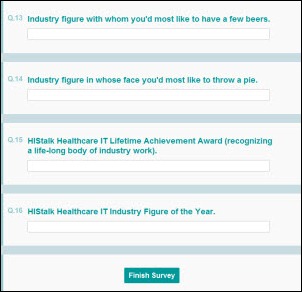
It’s a new year, so it’s time for the HISsies Awards to start up. What were the smartest and stupidest vendor actions of 2012? Which companies are the best and worst? What buzzwords are you sick of? If you had a pie, in which industry figure’s face would you like to throw it? And in the more serious categories, who’s your choice for Industry Figure of the Year and the Lifetime Achievement Award? It all starts with the nominations, from which the final ballot will be created. The nominations form is open and your civic duty calls.

This is a chance for you to spare me the frequent and frustrating after-the-fact dialog in which someone claims that I’m clueless or biased because their pet choice wasn’t included on the HISsies ballot. I patiently explain that had they and their like-minded peers spent 30 seconds filling out the nomination form instead of complaining, their preference might well have been on the ballot. It’s simple Civics 101 – the most-nominated choices go on the ballot. Don’t assume someone else will do your work for you in nominating your preference. Nominate now or forever hold your peace. 

I’ll create the final ballot in a week or so. It goes only to readers who have subscribed to the e-mail updates, which prevents the admittedly fun ballot box-stuffing that happened during the first few years of the HISsies. Back then I was just happy that companies wanted a good-category win (“best vendor” or “best CEO”) enough to strong-arm their employees to vote for them.

Last year’s HISsies results are here if you need a refresher. I’ve done the Lifetime Achievement Award for two years and no repeat winners are allowed, so nominate someone other than John Glaser and Judy Faulkner.


Contacts

Mr. H, Inga, Dr. Jayne, Dr. Gregg.

More news: HIStalk Practice, HIStalk Connect.

Comments Off on News 1/2/13

CIO Unplugged 1/1/13

December 31, 2012 Ed Marx 141 Comments

The views and opinions expressed in this blog are mine personally and are not necessarily representative of current or former employers.

What Do I Stand For?

But I still wake up . . .
Oh Lord, I’m still not sure, what I stand for
What do I stand for? Oh what do I stand for?
Most nights, I don’t know any more.

I like the tune Some Nights by the indie alternative group fun. You can argue the meaning of the song, but the hook, “What do I stand for?” resonates with millions, including me.

The issue people struggle with most is discovering purpose in life. This is one topic I’m frequently invited to speak on and the one concern for which people often ask my help. In light of this, I’m revisiting a blog from a few years ago that I hope you’ll find practical.

I have no secret formula nor warrant that what worked for me and my family will work for you. Making life easy and eliminating challenge is not my goal. Living out purpose involves inherent trials. What I offer are principles and a process that will facilitate your journey into discovery and could possibly transform your life on different levels. I’ve shared these ideas for many years in different cultures and have witnessed dramatic change.

Let’s set the record straight: resolutions don’t work.

The first thing I ask those who ask for help is, “What’s your plan?” Such as, what is your mission, vision, values, objectives, etc. I’ve never received an articulate first-time response. But when I ask people about their organization’s plan, they’re quick to answer.

The dichotomy is evident. Why would you take the time to memorize and labor to achieve the plans of your organization but not do the same for yourself or your family? The good news: you already possess the tools and experience to close this gap. But it takes time, energy, and determination.

I finished grad school in 1989 with business planning concepts drilled in my brain. My company embraced these concepts, and I knew our execs jetted off to resorts to spend considerable time planning. Market performance confirmed a strong correlation.

For me, the disconnect came in hearing of their struggles on the personal side of the ledger. One particular Fortune article reinforced my thought process: “Why Grade ‘A’ Execs get an ‘F’ as Parents.” Having just started a family and career, I was searching for ways to have success in both.

Could I increase the odds of personal success by adopting business theory?

Our First Family Retreat

The Marx family’s strategic planning adventure began modestly. Short, inexpensive trips away from home reduced distraction and stimulated creativity. These trips morphed into more elaborate excursions, but the focus always remained on strategic planning.

12-31-2012 7-57-23 PM

Our first retreat in nearby Estes Park cost us about $100. We worked on a one-page plan that became known as the “Marx Family Constitution.” Originally written in 1990, it has withstood the test of time.

Since incorporating this process, we’ve all experienced dramatic increases in the quality of our careers and relationships. Our oldest, now age 25, had coached his college peers in these concepts. Not long ago, my wife heard our youngest, age 19, encourage her boyfriend to discover his life purpose and come up with a plan to live it out. Julie and I recently celebrated our 27th wedding anniversary and are still twitterpated.

I don’t have the space to share the numerous examples, but I can share the one that had the most impact. My son, age eight at the time, took a ruler and pointed to the values section of our Marx Family Constitution that hung prominently in our family room. “Dad,” he said, “was that honoring mom when you yelled?” Seven months prior, when deciding which six values needed improvement, he had contributed the word “honor.” He called me on it. Accountability!

We aim to live out what Rick Warren calls The Purpose Driven Life. Decisions on how to spend our time, energy, and resources are guided by past retreats. I could go back through 20 years of documentation and show you at least one significant event that happened each year in my career, marriage, and family. Could you?

Keeping it Fresh

Take annual retreats to focus on your plan. Get out of Dodge and spend time in a setting where beauty can inspire. A place free of distraction. As leader, your job is to facilitate.

WARNING: never force your ideas down the family’s throat. Instead, invite them to dream and evaluate. Kids especially need to think for themselves. Review your plan and encourage transparent dialogue about performance. Record the highlights of the previous year. What are the gaps and how do you close them? Include significant others and engage your kids. Teach them. Envision them — but NEVER do it FOR them. Commission them. Then watch them rock not only your world, but also the world around them.

Disney makes for great vacations. Planning retreats make for enabling identity and significance.

Take Action

Forget resolutions. They don’t work. No organization runs with resolutions. Market share would drop, and eventually you’d go bankrupt.

Schedule your first retreat and prepare to write, because earth-moving ideas existing ONLY in your head haven’t the magic to propel you forward. Write them out. Teach them. Actualize them. You only live once.

There’s nothing worse than going through planning exercises merely to have the plan collect dust. Create a living vision. When someone asks you a career or life question or you face a major decision, your purpose will keep you standing.

What do you stand for?

***If interested in creating a plan for your career, life, etc., leave a comment. I will send you a copy of my one-page strategic plans (personal, career, family). I will include a retreat guide designed to stimulate thoughts and ideas around your mission, vision, values and objectives as you put your plan together.

Ed Marx is a CIO currently working for a large integrated health system. Ed encourages your interaction through this blog. Add a comment by clicking the link at the bottom of this post. You can also connect with him directly through his profile pages on social networking sites LinkedIn and Facebook and you can follow him via Twitter — user name marxists.

Morning Headlines 12/30/12

December 31, 2012 Headlines Comments Off on Morning Headlines 12/30/12

Higgins Calls for Expanded Use of Electronic Medical Record

Congressman Brian Higgins (D), of New York’s 27th congressional district, speaks on the floor of the House of Representatives highlighting the need for increased adoption of EHRs and HIEs and the benefit they each played in the wake of Hurricane Sandy.

Higher-Complexity ED Billing Codes — Sicker Patients, More Intensive Practice, or Improper Payments?

The New England Journal of Medicine publishes an article in response to the OIG and HHS investigation of EHR-induced fraud, suggesting that a change in the role EDs play in medical care, as well as a change in average ED patient demographics could just as easily account for the increase in higher reimbursement claims.

Greenway Medical CEO: ‘You have to practice going public before you go public’

Tee Green, CEO of Greenway, gives advice to business leaders considering an IPO.

Form 8-K for ALLSCRIPTS HEALTHCARE SOLUTIONS, INC.

Diane Adams, EVP of culture and talent at Allscripts, departs taking 12 months’ severance, her target bonus, a year of health benefits, accelerated vesting, and a retention bonus.

Comments Off on Morning Headlines 12/30/12

Monday Morning Update 12/31/12

December 29, 2012 News 5 Comments

From Thankful: “Re: 10 years of HIStalk. I’m not sure I’d be as competent as I am now, as an HIT professional, without the 10 years of contributions from you and your team. I’m not one for trying to make people remember me; I’d rather do what makes sense at the moment. But in all honesty the HIStalk contributors are all getting nice words for your tombstones!” Thanks. It’s hard to believe I wrote the first HIStalk in 2003 and haven’t stopped. I doubt my tombstone gazers and obituary readers will care about HIStalk, so its eventual absence there probably means I need to find a more lasting and non-anonymous legacy.

From The PACS Designer: “Re: TPD’s List of iPhone Apps. Working on an update, so let me know of apps that readers might like.” The fitness apps I’m using at the moment are Half Marathon with Jeff Galloway (I’m training for spring 13.1, with my longest single run being this past weekend’s rather chilly 11 miles), and from the same developer, XFit Push Ups.

12-29-2012 6-32-48 PM

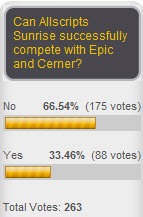
Two-thirds of poll respondents say Allscripts can’t successfully compete with Epic and Cerner. New poll to your right: are you confident that your doctors and hospitals can keep your medical information secure and private?

I’ve created a new Spotify playlist with what I’m listening to at the moment: The Shins, Sam Phillips, Everything But The Girl, Bob Mould, The Jayhawks, and quite a few more artists old and new. I firmly believe that you’re headed down the slippery slope to codgerly irrelevance if you just keep mindlessly listening to the same old songs or the musical equivalent of a minivan (unchallenging jazz, computer-assisted dance music, or soundtracks), so I’m always trying new stuff.

12-29-2012 7-29-39 PM

Greenway CEO Tee Green gives advice to entrepreneurs contemplating eventually taking their company public:

  • Think long term.
  • Structure your board and run its meetings like a public company would.
  • Bring in a CFO and general counsel with IPO experience and start quarterly reporting as practice.
  • Build relations with investment bankers and choose outside counsel they have worked with previously.
  • Choose reliable auditing and accounting partners.

12-29-2012 7-32-09 PM 

Petroleum industry BI vendor Drilling Info Inc. names former QuadraMed CFO Dave Piazza as its CFO.

12-29-2012 7-37-00 PM

Allscripts files its SEC 8-K form for the departure of Diane Adams, EVP of culture and talent. She gets 12 months’ severance, her target bonus, a year of health benefits, accelerated vesting, and a retention bonus. She does even better if the company changes hands in 2013 – she’ll get two years’ salary and bonus.

12-29-2012 8-18-14 PM

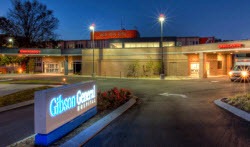
Gibson General Hospital (IN) notifies 29,000 patients of the theft of an employee’s unencrypted laptop from their home, presumably an IT support person since the hospital stated that the employee’s job “requires around-the-clock access to the hospital’s electronic medical records system.”

12-29-2012 7-44-28 PM

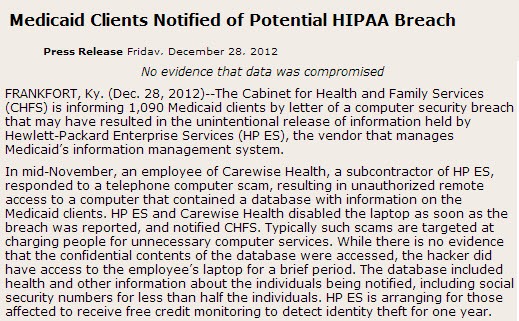
Kentucky’s Cabinet for Health and Family Services is notifying over 1,000 Medicaid recipients that their information was exposed when an employee of Carewise Health, a subcontractor for the state’s Medicaid computer system HP Enterprise Services, fell for a telephone scam and gave an unknown hacker access to the employee’s laptop.

Congressman Brian Higgins (D-NY) uses the House floor to urge increased adoption of electronic medical records. Translation: keep the EMR-related dollars flowing to his district, with the specific bacon he brought home helpfully listed in the press release to impress the folks back home.

Brian Ahier posted this presentation from HHS CIO Frank Baitman that lists the department’s challenges for 2013.

Vince sends this HIS-tory of Quality Systems / NextGen, getting into the spirit of the company’s dental origins by throwing down a challenge to find all the tooth-related references he included (I counted five).

Happy New Year to everyone. History suggests that I’m going to be super busy from now until after the HIMSS conference, so if you need anything from me, now’s the time.


Contacts

Mr. H, Inga, Dr. Jayne, Dr. Gregg.

More news: HIStalk Practice, HIStalk Connect.

Time Capsule: In a Capitalist Society, Somebody Will Always Sell a Fat Man a Speedo or an Unprepared Hospital a Clinical System

December 28, 2012 Time Capsule 5 Comments

I wrote weekly editorials for a boutique industry newsletter for several years, anxious for both audience and income. I learned a lot about coming up with ideas for the weekly grind, trying to be simultaneously opinionated and entertaining in a few hundred words, and not sleeping much because I was working all the time. They’re fun to read as a look back at what was important then (and often still important now).

I wrote this piece in March 2008.

In a Capitalist Society, Somebody Will Always Sell a Fat Man a Speedo or an Unprepared Hospital a Clinical System
By Mr. HIStalk

mrhmedium

One great thing about capitalist America is that people will sell you anything you can afford, even if you’re likely to do something stupid with it. Klutzes can get chainsaws. Fat guys can buy Speedos. Elected officials can hire prostitutes.

And hospitals with minimal chance of success can buy clinical information systems.

Any IT system can be misused. It’s the clinical ones that usually create the most awe-inspiring mushroom clouds, however. They come with irrationally high hopes, require the unwavering participation of stressed clinical users, and push the competency limits of both vendors and hospital IT shops.

The hospital loses millions. The vendor loses reputation points. Patients lose the chance for better or less-expensive outcomes. Money talks, however, so the customer signs on the line which is dotted, gets one last handshake from the salespeople they’ll never see again, and eventually realizes the magnitude of what’s required to get value from their big-ticket purchase. Gulp.

Would-be clinical systems customers are like that crazy 16-year-old driver down the street, except no learner’s permit or exam is required, just cash. Hospitals perform endless vendor due diligence, but those vendors don’t return the favor by saying, "Our analysis tells us that you’re going to be an unsuccessful customer who will bad-mouth us for your own shortcomings, so we’ll pass."

Let’s stretch reality by pretending that vendors might actually turn down prospects that are sure to fail. What kind of questions should they ask?

  • Can you provide a list of at least three big, successful change management projects you’ve done in the last five years?
  • Do you monitor and publish IT metrics, including those that measure user satisfaction?
  • Are your physicians compliant with rules involving the drug formulary and chart completion?
  • How standardized are your order sets?
  • How standardized are your forms and how do you manage them?
  • Can you document participation and results of your clinical committees?
  • When was the last time your executives communicated a big vision that inspired cultural change?
  • How dissatisfied are your users with current manual and paper processes?
  • Are you so desperate to keep nurses and other short-supply employees that you let them break all but the most serious rules?
  • Are you willing to take a productivity hit while users are being trained?
  • Where will this project fall on the "most important organizational project" pecking order?
  • How often are operational VPs involved in big change projects?
  • Who does or doesn’t agree that this solution is the best answer to the problem we’ve identified?
  • Have you set aside money for ongoing support?
  • How mature is your project management function?
  • Do you maintain an IT strategic plan that aligns with the organization’s overall strategic plan?
  • Have you identified who gains and who loses power and prestige with this change?

Smart consultants could develop an easy hospital self-assessment tool that would predict with 90 percent accuracy whether a hospital’s implementation of a given system is likely to be successful. Vendors won’t develop it, though, because it would discourage prospects. Hospitals won’t either, because if they were smart enough to ask that question, they would be smart enough to already know the answer.

The current environment is simple to comprehend. Vendors sell products, customers use them to deliver results. Unfortunately, we’re seeing lots of the former, but far less of the latter. Everybody blames vendors, but let’s be honest – a guy who buys an extra-large Speedo should know better.

Morning Headlines 12/28/12

December 28, 2012 Headlines Comments Off on Morning Headlines 12/28/12

New system for patient records in place at Carthage hospital

Mercy McCune-Brooks hospital, a 52-bed critical access hospital in Missouri, goes live on Epic.

$1 million grant to health group aimed at improving continuity of care throughout South Jersey

NJSHINE receives a $1 million grant to connect seven southern New Jersey hospitals in a health information exchange network.

CFO Outlook for 2013 Grim

Hospital CFOs report financially uncertain times as they look toward 2013. With pressure coming from government mandates and insurance denial management systems, CFOs express concern over the year to come.

AwarePoint Lands $4,000,000 New Financing Round

RTLS technology vendor AwarePoint nets $4 million in a new financing round from an undisclosed investor.

Comments Off on Morning Headlines 12/28/12

News 12/28/12

December 27, 2012 News 1 Comment

Top News

12-27-2012 9-01-25 PM

A year-long investigation by The Washington Post finds that healthcare is among the sectors most vulnerable to hackers because it lags other industries in fixing known security holes, quoting one expert who said, “If our financial industry regarded security the way the healthcare sector does, I would stuff my cash in a mattress under my bed.” A physician user of OpenEMR, which was called out in the article for its security vulnerabilities, left this comment:

I maintain OpenEMR under Linux at my wife’s medical clinic. Behind two firewalls, not accessible over the public internet. We considered WorldVista, but that is written in MUMPS, and requires Windows clients (not on our network). WorldVista is more suited to megapractices like the VA system it was written for. OpenEMR has many problems, but being open source, the problems are being found and fixed rapidly. Software developers are encouraged to join the effort to improve it. Other alternatives include hugely expensive systems like Epic (which infests most local hospitals) and various Web-based services moving information over the public Internet (dangerous!) That is how Epic works – and anyone with two login/passwords to a megahospital system can get access to hundreds of thousands of patient records. Scary, yes – but if more barriers are added, time is lost and PATIENTS WILL DIE.


HIStalk Announcements and Requests

I don’t need an Official Red Ryder Carbine-Action, 200-Shot Range Model Air Rifle, but I could use some gifts that carry no danger of shooting my eye out: (a) sign up for spam-free e-mail updates, basking in the knowledge that doing to will make you eligible to vote in the upcoming HISsies awards; (b) support HIStalk’s sponsors by reviewing and possibly clicking their ads (now on your right), checking out their listings in the Resource Center, and using the couldn’t-be-easier Consulting RFI form to painlessly solicit consulting proposals; (c) connect our respective social ganglia on Facebook, Twitter, and LinkedIn; and (d) slip us news and rumors via the methods listed under the “Report News and Rumors” box to your right, which includes a new option: call my Rumor Line at 801.HIT.NEWS and leave a message, which thanks to Google Voice will be transcribed and e-mailed to me along with the original recording.

It’s almost New Year’s, so I’m setting my priorities for 2013. I’m looking for HIStalk-related projects or activities that would be more personally satisfying and society-benefiting than just making money, which doesn’t interest me all that much (obviously, since I work for a non-profit hospital). Thoughts?


Acquisitions, Funding, Business, and Stock

12-27-2012 7-26-24 PM

Awarepoint secures $4 million in new financing from an undisclosed investor.

12-27-2012 7-27-19 PM

McKesson says its $2.1 billion purchase of PSS World will be finalized in the first quarter.


People

12-27-2012 9-38-02 PM

The Oregon Community Health Information Network (OCHIN) names Scott Fields, MD (OHSU – above) CMO, Jonathan Merrell (Cherokee Nation Health Services) VP of performance improvement, Tim Burdick, MD (Fletcher Allen Health Care) CMIO, and D’Angela Merrell (US Public Health Service) clinical improvement professional.


Announcements and Implementations

HIEs Healthcare Access San Antonio and Integrated Care Collaboration begin sharing patient information.

12-27-2012 3-39-49 PM

Mercy McCune-Brooks Hospital (MO) goes live on Epic.

12-27-2012 9-23-15 PM

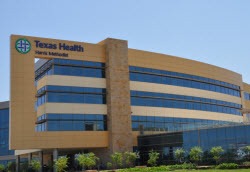
Texas Health Harris Methodist Hospital Alliance (TX), which opened as a new 50-bed hospital in September, earns HIMSS Analytics EMRAM Stage 7 recognition. I interviewed Winjie Tan Miao, the hospital’s president, two weeks ago.

The NJSHINE (NJ) HIE gets a $1 million grant from the New Jersey Department of Health to connect seven hospitals.


Other

12-27-2012 12-53-37 PM

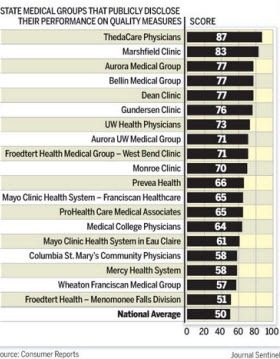
Consumer Reports rates the performance of 19 Wisconsin medical groups based on quality measurements for cancer screening, care of people age 60 and older, and treatment of patients with heart disease. ThedaCare Physicians and Marshfield Clinic earned the top spots.

The LSU hospital system notifies 416 patients that their information, including checking account numbers, has been stolen. A former billing department employee and six other people have been charged with identity theft after creating and passing counterfeit checks and ID cards from scanned check images stored in LSU’s computers.

Pittsburgh systems UPMC and West Penn Allegheny fight to acquire each other’s affiliated physician practices, leaving patients unaware of the change and sometimes forcing physicians to practice outside of Allegheny County beginning immediately without notifying their patients to satisfy non-compete clauses. The medical records stay with the practice, leaving the patient to figure out their options

University of Michigan Health System notifies 4,000 patients that their information may have been exposed in the theft of an unsecured PHI-containing electronic device from the car of an Omnicell employee.

Efforts by the Metropolitan Chicago Healthcare Council to create Chicago-area HIE may fail as just 18 of 30 targeted health providers agree to join. Money is a sticking point, with some hospitals being asked to pay six-figure annual fees to participate. Health systems are also concerned with the uncertain value of the exchange, especially at a time many are investing heavily in their own IT systems.

12-26-2012 2-44-19 PM

A third of providers say they have experienced varying levels of payment delays during the HIPAA 5010 transition, with clearinghouses causing 52 percent of those delays, according to a KLAS report.

Hospital CFOs look ahead to 2013 with concern, worried about:

  • The resources required to justify admissions
  • Possible payment and cash flow problems due to Medicare changes
  • Funding quality initiatives to support value-based payment systems
  • The high cost, questionable return, and change involved with technology implementation
  • Hiring more doctors
  • Trying to scale physician compensation to what the practice actually produces
  • Engaging physicians who practice only an outpatient setting
  • Managing growth by acquisition
  • Improving clinical documentation for patient safety and quality
  • ICD-10

12-27-2012 9-18-00 PM

A maternity hospital in a Nairobi, Kenya slum admits that it holds mothers of newborns as prisoners until they pay their hospital bills. The hospital is accused by one woman of having guards beat mothers who try to leave without paying. According to the hospital’s director, “We hold you and squeeze you until we get what we can get. We must be self-sufficient. The hospital must get money to pay electricity, to pay water. We must pay our doctors and our workers. They stay there until they pay. They must pay. If you don’t pay, the hospital will collapse.” The charge for a normal birth is $35, while a C-section runs $70 and the daily room charge is $5. A first-person report (from which the above photo came) is here.


Sponsor Updates

  • Vonlay offers tips on how to quickly recycle an IIS application pool in a blog pos.
  • PeriGen hosts a Webcast on improving financial results in obstetrics January 16 and 30.
  • Shareable Ink’s President Stephen Hau discusses mHealth applications and how they can liberate physicians and data in a guest article.
  • Dennis Weissman, founder of Washington G-2 Reports, will deliver the keynote at the Lifepoint Informatics user conference Orlando March 21.
  • Liaison Technologies offers a white paper discussing the use of cloud-based data integration to overcome interoperability challenges in health systems. 
  • API Healthcare executives participate in a giving back campaign.
  • Business NH Magazine names Digital Prospectors Corp a top small company to work for in New Hampshire.
  • Dave Caldwell of Certify Data Systems shares insights on the barriers and issues that need to be addressed in order for the healthcare industry to achieve widespread interoperability.
  • Besler Consulting will participate in next month’s HFMA MA/RI Annual Revenue Cycle Conference in Foxborough, MA and the Region 11 Annual Healthcare Symposium in Las Vegas.
  • Thomson Reuters includes 3M, AT&T, and Fujifilm on its list of the World’s Top 100 Most Innovative Organizations for 2012.
  • Saint Luke’s Health System (MO) shares how Philips Healthcare Consulting helped the organization build an eHealth strategy of regional outreach and physician-to-physician relationships to drive growth.
  • ZirMed releases its 2013 PQRS Suggested Measures and Monitoring tool.

EPtalk by Dr. Jayne

The use of Health Information Exchanges is one of my pet topics, particularly issues around governance. I’m happy to see ONC hosting one of their Town Hall meetings on the topic. It will be held on January 17, so there’s still plenty of time to sign up.

It’s always fun to get together with family over the winter holidays. This year’s hot topic among the Medicare set was the concept of Accountable Care Organizations. They wanted to know my opinion. Unfortunately, I had to give the answer of, “It depends.” Even though there are core principles for ACOs, there seem to be many different flavors out there.

Patients need to realize that a key driver of ACOs is slowing the growth of healthcare spending. Quality and meeting patient needs are also goals. For patients involved in ACOs that have a long history of managing quality and cost initiatives, there may not be much of a difference in care because referral relationships and practice patterns are already established. However, for health systems that have not been functioning in shared care models, there may be trouble ahead. There will be a significant learning curve for participating physicians and their care teams.

The subtleties of the ACO patient assignment regulations can cause situations where providers are ensnared by a single ACO. Patients also need to find out whether they will be able to continue to see all the providers from whom they receive care or whether they will have to change to specialists within the ACO. I also think it’s funny that when seniors are talking about ACOs and their benefits, they refer to the Affordable Care Act. When they’re talking about the negatives, they refer to Obamacare. They’re one and the same, folks.

With the holiday, it was a snow news week. Hopefully as people are trickling back into their offices things will pick up. In the mean time, please give your friends at HIStalk the best gift of all – send your rumors, newsy tidbits, and other reports our way.

Print


Contacts

Mr. H, Inga, Dr. Jayne, Dr. Gregg.

More news: HIStalk Practice, HIStalk Connect.

Morning Headlines 12/27/12

December 26, 2012 Headlines Comments Off on Morning Headlines 12/27/12

HIPAA 5010 Transition: Thirty Percent of Providers Report Payment Delays

KLAS releases a market analysis of claims management and clearinghouse vendor performance through the HIPAA 5010 transition, during which thirty percent of providers reported significant payment delays. Navicure is named Best in KLAS.

OIG Advisory Opinion

OIG has published an advisory opinion clarifying that the federal anti-kickback statute is not violated if a hospital gives a practice free access to an EHR interface for orders and results.

Drchrono: Onpatient to replace Google Health January 1

As Google Health prepares to eliminate access to patient health records on January 1, freeware EMR vendor drchrono releases a PHR alternative that will accept data transfers from still-active Google Health accounts.

Healthcare sector vulnerable to hackers, researchers say

The Washington Post claims  healthcare is among the most vulnerable industries in the country to hackers, though far fewer attacks are carried out as compared to attacks on financial, corporate, and military networks.

Comments Off on Morning Headlines 12/27/12

Text Ads


RECENT COMMENTS

  1. ... because it's a construction worksite. (It's a bit more evident from the second photo in the linked post.)

  2. I can't get past the helmets and safety vests. On everyone. Including the model patient. What, are they expecting the…

  3. I'm all for a startup mentality, but there really needs to be a net positive return for all that time,…

  4. Re: It would be interesting to compare after-hours use of generative AI solutions by patients who have access to after-hours…

Founding Sponsors


Platinum Sponsors


Gold Sponsors


RSS Webinars

  • An error has occurred, which probably means the feed is down. Try again later.