Recent Articles:

Morning Headlines 5/14/13

May 13, 2013 Headlines Comments Off on Morning Headlines 5/14/13

Report: Global health IT market to hit $56.7 billion by 2017

A recent analysis of the global health IT market forecasts an annual growth rate of seven percent driving the $40.4 billion industry as high as $56.7 billion by 2017.

Winners Announced for New York Patient Portal

The New York eHealth Collaborative’s Patient Portals for New Yorkers contest has concluded with Mana Health taking first place honors. Mana Health’s portal includes secure e-mail communication with providers, an audit trail of patient chart accesses, and a clean and intuitive layout.

Medical Association Backs Bills to Cut Red Tape

Texas lawmakers have passed a bill that will allow providers to start swiping patients driver’s licenses to collect identification information for claims processing. The change is supported by the Texas Medical Association, which has suggested in statements that automating the recording of demographic information will free up a significant amount of time for clinic staff.

Dangers found in lack of safety oversight for Medicare drug benefit

ProPublica releases an online tool that displays individual physician prescribing behaviors in easily understood graphics intended to highlight how far from "typical" a physician’s prescribing practices fall for their specialty. The underlying data comes from four years of Medicare Part D 2007-2010.

Comments Off on Morning Headlines 5/14/13

EHR Design Talk with Dr. Rick 5/13/13

May 13, 2013 Rick Weinhaus 2 Comments

The Data-Ink Ratio

In the last several posts, we’ve been considering the two major high-level user interface designs for organizing a patient’s EHR record over time – the Snapshot-in-Time Design that formed the core of much paper-based charting and the Overview-by-Category Design that has been much more widely adopted by EHR vendors.

Despite the widespread adoption of the Overview-by-Category design, it does a poor job of helping the physician understand the patient’s record as a narrative that unfolds over time. As a result, most EHRs employing the Overview-by-Category design also provide a workaround that does, in fact, provide the physician with a snapshot-in-time view – The Text-Based Workaround.

In my last post, we saw a major problem with the text-based chart notes generated by most EHRs – they have an exceedingly low data density. In addition, they often have a second problem –a low data-ink ratio.

The concept of the data-ink ratio was introduced in 1982 by Edward Tufte, a pioneer in the field of data visualization – the field of how to present abstract information graphically in formats optimized to take advantage of our high-bandwidth visual processing system.

Tufte defined the data-ink ratio as the amount of ink used to display data divided by the total amount of ink used in the graphic or display. He proposed that, within reason, good visual designs maximize the data-ink ratio, both by devoting a large share of the graphic to actual data and by pruning unnecessary and redundant non-data. Think of the data-ink ratio as the signal-to-noise ratio for graphics.

Let’s return to the same EHR-generated text-based chart note we’ve been considering and investigate how well it maximizes the data-ink ratio. The mockups shown below are a composite design based on several widely used EHRs.

In order to see the mockups and read the accompanying text, enlarge them to full screen size by clicking on the ‘full screen’ button clip_image001in the lower right corner of the SlideShare frame below.

Rick Weinhaus, MD practices clinical ophthalmology in the Boston area. He trained at Harvard Medical School, The Massachusetts Eye and Ear Infirmary, and the Neuroscience Unit of the Schepens Eye Research Institute. He writes on how to design simple, powerful, elegant user interfaces for electronic health records (EHRs) by applying our understanding of human perception and cognition. He welcomes your comments and thoughts on this post and on EHR usability issues. E-mail Dr. Rick.

Curbside Consult with Dr. Jayne 5/13/13

May 13, 2013 Dr. Jayne 1 Comment

clip_image001

I attended a very traditional medical school. We weren’t allowed to actually think about diseases (let alone actual patients) until the second year. Once we had nearly finished the second year coursework and had learned enough about diseases to merit his appearance, one of the more senior members of the clinical faculty would teach.

Dr. Elliott was an extremely well known internal medicine physician who had published enough papers to scare the willies out of all of us. Since we hadn’t met him before, we didn’t know what to expect from his lecture. We quickly figured out that although he looked a little bit like Santa Claus, he wasn’t bearing gifts unless that gift was a personality that was a cross between Dr. House and an extremely grumpy teddy bear.

All the syllabus said about the lecture was the title: “Sick or Not Sick.” Dr. Elliott went up to the podium and started reading a patient case study. At the end, he’d look out over the class and say, “Sick, or Not Sick?” and call on some poor unsuspecting student.

The student would give his or her answer, which was invariably wrong. We were used to reading about diseases, so we figured if the patient in question had anything that sounded like one, they were “sick.” Only after sitting through about 20 minutes of torture did he begin to tell us what he was looking for.

By definition, “sick” was a patient who needed hospital admission. “Not sick” was someone who could be cared for in the ambulatory setting. To second-year students, all of them sounded pretty sick.

Flash forward to today. Probably none of those patient would be classed as “sick” since we’re now discharging patients that are sicker than those we used to admit. Once the length of stay is reached, it’s a race to get them out of the hospital.

The simple black-and-white nature of “Sick or Not Sick” crossed my mind today as I was reading a depressing string of articles. Topics included the 80 percent C-section rate at private hospitals in Brazil; the rise of patient empowerment; the drastic increase in healthcare costs as a portion of our economy; and the rabid competition of hospitals for market share.

I have to mention that I was reading these articles in the frame of mind of someone who is extremely tired of the consumer culture in which we live and just survived an ER shift where no less than three patients threatened to report me to the state board for “denying care” when I was delivering evidence-based practice for viral illnesses. Overlay a couple of articles about how one of the richest people in the world is trying to end polio and improve sanitation around the world with a flashback of the patient who threw her bedazzled iPhone across the room because I had to unplug it to use the outlet for a medical device, and there you have it.

If we want patients to be rational thinkers about their healthcare, they need to be both intellectually and economically engaged. We need to play a black and white game of, “Do I need it to get better or is it a marketing gimmick that will drive up all of our costs?” as we look at hospital initiatives.

I’ve written before about hospitals that post their ER wait times on the Internet or services that allow pre-scheduling of ER visits. Sure, that can increase patient satisfaction. But is it actually going to make me better? Probably not. Would I pay extra out of pocket for it? Probably not. So why is the hospital spending thousands of dollars on IT systems to support it?

Same thing with “dining on demand,” which has been a nightmare at my hospital. Since I started my medical career as a Candy Striper delivering meal trays on a labor and delivery ward, I’ve seen lots of hospital meal trays over a fairly decent period of time and have even partaken of a few myself. Is allowing a patient to order their meals on a touch-screen at the bedside cool? Sure. Does it allow patients to eat when they want? Definitely. Has it improved the quality of the food in proportion to the amount of money it cost to interface the ordering system with the EHR dietary orders and the additional personnel cost needed to operate like a restaurant and make sure it’s all accurate? That’s debatable. Again, will it actually improve my clinical outcomes or is it something we just think we need? Would I rather have a lower nursing ratio or dining on demand? I know what I would choose.

We need to think carefully about cost vs. convenience and quality vs. gimmicks. More are more people are going without healthcare this year than I’ve ever seen. It’s largely due to cost. This is driving hospital revenues down at the same time that costs to lure patients with the latest robots and gadgets are going up.

It’s time to stop the madness. It’s time for all of us – patients, physicians, and administrators – to stop thinking about “me” and start thinking about “we.” Put down the smart phones and stop being self-absorbed and look at the world around you. There’s a difference between “need” and “want” and “what is good for you.” We all need to embrace that difference as quickly as possible.

Have a gimmicky system at your hospital that cost more than it was worth? Are you tired of the tail wagging the dog? E-mail me.

Print

E-mail Dr. Jayne.

Morning Headlines 5/13/13

May 12, 2013 Headlines Comments Off on Morning Headlines 5/13/13

Cash-strapped hospital bosses employ American IT expert on a salary of £25,000 A MONTH…and even picked up his bar tab and his laundry bill

In England, Rotherham NHS Hospital is being criticized for spending $40,000 a month on consultants in hopes of salvaging a struggling $60 million Meditech implementation.

District Medical Group Partners with Medical Scribe Program to Optimize Electronic Medical Record

Phoenix, AZ-based District Medical Group hires scribes to support physician documentation in its transition to an EMR. The scribes has improved physician workflow and eliminated transcription costs.

UPMC Q3 operating income down by half

University of Pittsburgh Medical Center reports a nearly 50 percent drop in Q3 revenue compared to the same time last year. The drop-off would have been closer to two-thirds lost had UPMC not picked up a $53 million return on its 2006 investment in dbMotion, which sold to Allscripts this March for $235 million.

Tampa Stakes its Claim to Lead Healthcare into the Future

In an effort to attract jobs, Tampa is developing a city-wide program to embrace technology and best practices to reduce overall healthcare costs, generally the second highest cost for businesses after payroll. The program is being offered in lieu of the traditional tax breaks offered as an incentive by most cities.

Comments Off on Morning Headlines 5/13/13

Monday Morning Update 5/13/13

May 12, 2013 News 6 Comments

From The PACS Designer: “Re: PACS advice. TPD worked with Herman Oosterwijk at a previous employment and benefited from his knowledge of DICOM and its attributes. He just published an Aunt Minnie article on the top 10 things to consider when replacing your PACS. It’s well written and can help lead the migration to more robust PACS/RIS/Archive solutions. ”

From Leverage: “Re: MModal. For your expert to further reflect on, from S&P’s ‘Leveraged Commentary & Data,’ May 10, 2013.” I fear my excellent MBA finance grade may have been a sham given that I understood very little of the writeup, which was summarized as, “MModal is seeking roughly two years of covenant relief via a loan amendment package that launched yesterday afternoon. The deal is on a tight time frame, with responses due on Monday, sources said.” One Equity Partners, which acquired the company last year, will instead of executing an “equity cure” add $20 million in new equity.

From Quietly Working: “Re: McKesson. Has concluded that a shareholder relationship with Automation isn’t required to enable clinical and technological integration with healthcare software and pharmacy distribution providers. As such, McKesson has made the decision to divest the Automation business. Their intent to sell was announced earlier this week.” I did mention that along with the company’s decision to sell its international technology business in summarizing the earnings call last week.  

5-11-2013 7-48-14 AM

EHRs aren’t the problem when hospitals experience financial setbacks during or after their implementation, with 40 percent of respondents saying it’s more that hospitals have unrelated issues that they don’t address. New poll to your right: should Meaningful Use Stage 2 be delayed a year as recommended by CHIME?

5-12-2013 11-42-47 AM

Welcome to PerfectServe, sponsoring HIStalk, HIStalk Practice, and HIStalk Connect at the Platinum level. PerfectServe’s cloud-based, HIPAA-compliant platform helps hospitals improve efficiency and care by providing reliable and secure clinical communications (voice, online, and mobile.) It’s used by more than 30,000 physicians to communicate more easily, representing more than 10,000 practices and 60 hospitals that include Advocate Health Care, MemorialCare, Hoag, WellStar, and Orlando Health. PerfectServe connects every clinician, whether on campus or off, allowing them to use voice-powered lookup by name or service and incorporating on-call schedules and physician preferences with every transaction documented and analyzable. Patient-endangering communications breakdowns caused by complicated coverage and communications rules are eliminated, while the average customer saves 12,000 hours each year in wasted nurse time. Just announced last week was DocLink, a private and secure HIPAA-compliant texting, voice messaging, and real-time call routing system for doctor-to-doctor communication. The company offers case studies (the one I read randomly involved reducing time to treatment of stroke patients by simultaneously notifying both the neurologist and neuroendovascular specialist with escalation or backup for non-response), white papers, and studies. Thanks to PerfectServe for supporting HIStalk, HIStalk Practice, and HIStalk Connect.

Here’s a YouTube video illustrating how nurses contact physicians using PerfectServe by telephone.

5-12-2013 2-12-26 PM

UPMC made an $18 million profit on its $35 million investment in Israel-based interoperability technology vendor dbMotion when the company was sold to Allscripts for $235 million in March 2013. 

5-11-2013 7-58-58 AM 5-11-2013 7-59-57 AM

CIC Advisory names Liz McNamara, MHA (ECG Management Consultants) as business intelligence service line leader and Eric Zuhlke, RN, BSN, PMP (Abrazo Health Care) as IT strategy and planning service line leader.

5-12-2013 11-05-51 AM

Aventura will announced Monday that it has promoted VP of Sales and Marketing John Gobron to acting CEO, replacing the retiring Howard Diamond.

5-11-2013 8-46-31 AM

Eric Novack, MD, PhD (Valley Orthopaedic Consultants) joins Intelligent InSites as senior medical advisor.

5-11-2013 8-54-47 AM

Bobbie Byrne, MD, MBA, VP/CIO of Edward Hospital (IL), tells me they went live on Epic big bang at both hospitals on April 28, on time and on budget. They’ve hit CPOE numbers in the 75 percent range since go-live day, impressive given that it’s a community hospital with few in-house physicians. I interviewed her in December 2011 (she had some very interesting thoughts, having been an Eclipsys SVP and CCHIT clinical director) and I have proposed that we do an update.

MModal’s Catalyst for Quality wins the top healthcare IT innovation award from the North Carolina Health Information and Communications Alliance and Intel.

A Brandeis professor of health policy says CMS’s release of hospital charge master data for common Medicare DRGs is “useless and misleading” because nobody pays list prices for services, hospitals tune their individual charges based on payor mix and desired margin, and the public has no idea what any of this means. A Harvard public health professor says the information offers one benefit: “It helps people understand how ridiculous and complex our system has become.”

5-12-2013 11-11-55 AM

Vince Ciotti offers a tip for frequent travelers: spend the $100 for a five-year registration for TSA’s Pre-Check program. He used it for the first time at LAX last week and skipped the mile-long security lines, only needing to have his boarding pass scanned at the empty pre-check security lane, a standard X-ray with shoes and belt on instead of the full-body scan, and then a standard bag X-ray except that laptops and liquids don’t require removal. I also noticed that the program was expanded to some international flights last week.

Forbes contributor, Avada CEO Dave Chase, says Tampa, FL is throwing out the marketing and tax breaks approaches to get corporations to locate there and instead will pitch its lower healthcare costs, second only to payroll expense as a cost of running a white collar business. The city’s May 13 MediFuture 2023 event features Harvard professor author Clay Christensen talking about disruptive healthcare innovation. Chase, who is also speaking at the event, says hospitals are making the same mistakes newspaper publishers made in the 1990s in worry about competition from each other instead of from outsiders. Examples of the “shadow” healthcare system are workplace clinics, national primary care providers, retail clinics, domestic medical tourism, and Medicare Advantage programs.

District Medical Group (AZ) implements a medical scribe program at two Phoenix children’s clinics as doctors learn to use their new EMR. An orthopedic surgeon says the scribes eliminated transcription costs and improved the revenue cycle, adding that, “Scribes may have very well saved the clinic by helping with the implementation of the new EMR. Having EMSS [the scribe service] here definitely allowed the clinic to get back up to its running speed in less than the anticipated amount of time."

In the UK, debt-ridden Rotherham Hospital Trust is criticized for paying a US consultant almost $40,000 per month to try to save its struggling $60 million Meditech implementation that has caused lost appointments and financial problems.  

5-11-2013 8-40-18 AM

Allscripts (one-year share price in blue vs. the Nasdaq above) reported all-around bad quarterly numbers last week. From Thursday afternoon’s conference call:

  • CEO Paul Black stated that the lawsuit against New York City Health and Hospitals Corp., filed when Glen Tullman was running the company, was dropped because, “This management team does not believe it is in the company’s long-term interest to pursue such litigation.” You may recall that the lawsuit won the attention of HIStalk readers, who proclaimed it the “Stupidest Vendor Move” of 2012 in the HISsies awards voting.
  • Black predicts that rip-and-replace projects will wane.
  • The company’s focus seems to be moving toward integrating disparate systems, or as Black described it, “Innovation to accelerate our leadership in ensuring multivendor interoperability through open community architecture.” That led to the acquisition of dbMotion and Jardogs (now Follow My Health) as well as the GA of Allscripts Community Care Director, which hospitals use to manage post-hospital care.
  • Black said, “Sunrise Financial Manager is one factor impacting our ability to capture larger mind share within our client base.”
  • The consolidation of offices was mentioned as one cost-cutting move, with the hopes of saving $50 million per year by 2014.
  • Company revenue was down because of the shift to subscription-based contracts (apparently that excuse was part of the Eclipsys acquisition since that company used it every quarter for years). Allscripts reported revenue drops in both system sales and maintenance for the quarter.
  • Less than 25 percent of Sunrise clients are running 6.0, with many of them planning to skip that release and jump to 6.1 instead.
  • When asked how Allscripts pitches against competitors, Black mentioned revenue cycle management, hosting, total outsourcing, and population health management.

Also notable from the Allscripts earnings call is the highest and most annoying concentration of the phrase “kind of like,” this impressive demonstration of a verbal crutch firepower coming from the Morgan Stanley analyst’s question: “So can you just kind of like give us a little bit more color about kind of like your clients? Are they making kind of like long-term retention commitments? Or are clients more kind of like taking it — taking more of a wait-and-see approach and kind of like taking it kind of like one step at a time?”

5-12-2013 11-22-20 AM

ESD celebrated Mother’s Day by providing surprise Mother’s Day gifts for each of the women at Mom’s House of Toledo, which helps low-income single mothers earn an education that will allow them to break the cycle of poverty and welfare.

Vince finishes up his HIS-tory of GE Healthcare, covering its very early entry into healthcare in the 1960s, its exit in the 1970s, its re-entry in the 1990s, and what Vince says could be the company’s fall back down the healthcare IT revenue chart. He brings up an item that I may have missed: GEHC sold its Centricity Pharmacy product to Canada-based BDM IT Solutions in March 2013, which is interesting because GE bought BDM Information Systems and its RxTFC system in 2002 and renamed it Centricity Pharmacy.


Contacts

Mr. H, Inga, Dr. Jayne, Dr. Gregg, Lt. Dan, Dr. Travis.

More news: HIStalk Practice, HIStalk Connect.

125x125_2nd_Circle

Readers Write: Managing Total Medical Expense While Improving Health Outcomes

May 10, 2013 Readers Write Comments Off on Readers Write: Managing Total Medical Expense While Improving Health Outcomes

Managing Total Medical Expense While Improving Health Outcomes
By Michael Gleeson

5-10-2013 8-53-34 PM

As our healthcare system evolves and payment reform expands, providers are forced to deliver higher quality care at a lower cost to curb explosive growth in national expenditures seen in past decades. As a result of this paradigm shift, the industry is responding.

In order to accommodate the incentives and priorities set forth by the Affordable Care Act (ACA), health systems must elevate the importance of primary care. This care model is shifting, with many adopting a patient-centric “Medical Home” approach to patient management. This new model emphasizes cross-provider care coordination, risk-stratified patient management, and proactive, preventative care.

Organizations are also using data more effectively. Increased adoption of electronic health records (EHRs), has led to valuable clinical data that can be mined and analyzed to inform health plans and providers on both their patient population as well as clinician behavior. However, the problem is that it isn’t being mined correctly. By integrating claims and clinical data, building trust and acceptance by care delivery professionals, and reorganizing care teams around actionable information, health systems will start demonstrating reductions in medical costs while improving patient outcomes.

So where should you start?

The four key pillars for success outlined below focus on improving health outcomes and managing total medical expense as critical elements in achieving lasting change within the practice.

Building Trust and Sharing Data

Despite significant investment in technology and data sharing by health systems, health plans and most primary care providers still have no visibility into their patients’ activity outside the four walls. And some health systems are hesitant to share data and/or performance with their counterparts, so as a result, it’s important to do the following when integrating with the network:

  • Create data governance policies. It is important to have a policy that dictates the use and exchange of shared data.
  • Establish role-based security and blinded data policies. This is a good rule for those who are apprehensive to share information. Not everything needs to be shared in order to drive change.
  • Data validation. Assessments to ensure that the data presented to the practice accurately reflects the activities at the point of care is critical to building trust.

Patient Attribution and Outreach

Quality improvement programs are often hindered by the challenge of accurate patient designation. If you can’t accurately identify who is responsible for a patient, you can’t improve the care rendered to them. Health plans often provide member rosters, but these can be large, burdensome to work with, and are often wrong.

It’s important to implement a system that will absorb the membership files from multiple plans, sync this data with the EHR and Practice Management data, and generate a list of members who are inaccurately attributed. The upkeep on this process, once it’s started, can be done monthly and will only take a couple of hours. With the attribution problem solved, the practice can reach out to the non-engaging patients it was responsible for and re-immerse them in primary care.

Fast, Accurate, and Actionable Data

In the whirlwind of external data feeds and complex EHR data structures, finding meaning can be a long process. Utilizing a flexible, transparent and vendor-agnostic data warehouse system allows information from multiple EHR feeds and claims files to aggregate on a nightly basis. This data is merged into a simple, patient-centered data model for reporting and analytics use. A focus on the EHR’s clinical data ensures near real-time analysis and greater relevance to the providers and care teams, resulting in more accurate and efficient patient results that can be monitored accordingly.

Transforming Clinical Care Teams

Even with access to timely and accurate data, practices can still struggle to improve outcomes because of inadequately aligned care teams. Providers are burdened with excessive documentation requirements in poorly optimized clinical systems. When a PCP is spending 10+ hours a day documenting in their EHR, they do not have the time and energy to consume the relevant information to drive proactive care management and move the needle on patient performance measures.

Arranging these roles appropriately within the care team maximizes resources and is critical to successful patient care. Medical Assistants should become the primary consumer of reports and act as a quarterback for the team, beyond their role of taking vitals. Using pre-visit planning reports, they should identify care gaps and coordinate with the RN and care manager to ensure the right actions are taken before the patient arrives. This will enhance the interaction and allows all current and potential problems to have the time to be addressed.

The inevitability of healthcare reform is forcing practices nationwide to shift how they view, plan and deliver care. While there is a renewed focus on managing quality and cost containment, this requires health systems of all sizes to master their data assets and align care team roles around the right tools and mandates.

As noted earlier, this charge is not easy. However, many organizations are currently rising to and conquering this challenge by utilizing these four pillars of success. By meticulously positioning themselves in line with this industry transformation, and keeping their goals and attention keenly on improving patient care and dissolving excessive costs, real improvements are being identified in the current health environment.

Michael Gleeson is senior vice president of product strategy for Arcadia Solutions.

Comments Off on Readers Write: Managing Total Medical Expense While Improving Health Outcomes

Time Capsule: Dirty Geeks and They’re Done Dirt Cheap: How Wall Street’s Huddled Masses Could Reshape Healthcare IT If We Just Asked Them

May 10, 2013 Time Capsule 5 Comments

I wrote weekly editorials for a boutique industry newsletter for several years, anxious for both audience and income. I learned a lot about coming up with ideas for the weekly grind, trying to be simultaneously opinionated and entertaining in a few hundred words, and not sleeping much because I was working all the time. They’re fun to read as a look back at what was important then (and often still important now).

I wrote this piece in October 2008.

Dirty Geeks and They’re Done Dirt Cheap: How Wall Street’s Huddled Masses Could Reshape Healthcare IT If We Just Asked Them
By Mr. HIStalk

125x125_2nd_Circle

Healthcare IT has always been inbred. The same folks just keep moving between provider and vendor, hospital operations and IT, and Organization A and Organization B. The name tags change, but the faces stay the same. Most of the value of the HIMSS conference is in reconnecting with all those folks who scattered like billiard balls since you saw them last.

HIT is an esoteric discipline, at least according to those who are in it. We’ve kept it that way by demanding healthcare experience for most jobs, ensuring that few strangers and their highfalutin’ new ideas enter our comfortable midst (it also helps that healthcare pays less and uses bizarre technologies that the rest of the techie world has never heard of, like MUMPS and Magic).

Nobody knows whether healthcare will dodge the economic bullet this time around. If it does, lots of non-HIT techies will be pressing their noses to our glass, seeking a chance to start earning a paycheck again. It will look like that Twilight Zone episode where the guy is holding a gun on his neighbors to keep them out of his bomb shelter.

This Mariel boatlift of geeks could be great news for healthcare. Banks and investment companies were (note the past tense) full of experts in online transaction processing, security, project management, and forecasting. What will we tell those folks when they drop by?

Traditionally, it would be a slightly more polite variant of “hit the road.” No healthcare experience means we don’t want you, no matter how skilled and experienced you are at the same kinds of technology that we’re planning to use. We’re healthcare and we’re different.

That’s a mistake. The industry could use some new, baggage-free ideas from people who have spent their lives doing what healthcare is just now learning about: running large-scale, mission-critical systems and conducting business innovatively over the Web. And right now, especially if your hospital or company is anywhere near New York, Boston, Chicago, Hartford, Charlotte, or other cities that revolved (note past tense) around the financial services industry, I bet you could hire them for about the same money you pay those same old retreads.

This could be the most exciting HIT development in decades. Many of our bread-and-butter applications are old, poorly secured, and Web-indifferent. Developing portals and RHIO connectivity is a snap compared to keep tracking of some of those bizarre investment instruments their former finance bosses just choked on.

Interested in patient payment systems, real-time adjudication, Web-based customer service, or throughput modeling? Those are the folks who could knock that out right now, already used to skipping lunch and working long hours.

Healthcare has always been jealous of banking IT people, visibly grinding their jaw when innocent outsiders make the inevitable comparisons of their cutting edge work vs. healthcare’s 1980s-era challenges still being solved. Deep down, we knew they were right. Former hospital staff turned self-taught analysts couldn’t hold a candle to the best and brightest techies who headed to Wall Street in droves and moved that industry from staid old storefronts to cutting edge electronic commerce. Hey, their stuff works – it’s not their fault that their big-dollar bosses were a lot dumber than everybody thought.

Now we get even. Pay them a lot less, squeeze them into cubicles, and make them take orders from clinicians turned semi-programmers. The tortoise won this race. We don’t care about your international arbitrage software – just write an EMR system that doctors will actually use.

Think of this as your own Wall Street bailout, with benefits.

Morning Headlines 5/10/13

May 9, 2013 Headlines Comments Off on Morning Headlines 5/10/13

Allscripts swings to first-quarter profit loss

Allscripts releases Q1 results: a $11.6 million loss on the quarter resulting in a -$0.07 EPS compares to a $5.8 million profit and $0.03  EPS for the same period last year. The stock was down 10 percent in after hours trading but is up 47 percent on the year.

Philips, Al Faisaliah Medical Systems officially open Philips Healthcare Saudi Arabia

Philips announces the opening of a joint venture with Al Faisaliah Medical System to market Philips solutions in Saudi Arabia.

HHS Releases Hospital Data on Charge Variation to Promote Transparency

HHS releases hospital charge data to promote cost transparency.

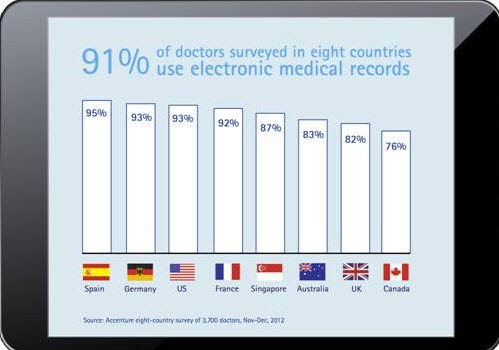
Accenture Eight-Country Survey of Doctors Shows Significant Increase in Healthcare IT Usage

A recent study highlights electronic medical records utilization trends across eight countries. The United States is leading all nations in the adoption of EHRs and nears the top of HIE adoption.

Comments Off on Morning Headlines 5/10/13

News 5/10/13

May 9, 2013 News 7 Comments

Top News

5-9-2013 7-31-07 PM

Allscripts reports Q1 results: revenue down 4.8 percent, EPS –$0.07 vs. $0.03, missing estimates on both.


Reader Comments

From IT Exec: “Re: HIStalk. Thanks for everything you do. My day wouldn’t be complete without spending a few hours on there.” Thanks. Mine either.

From PCP Doc: “Re: athenahealth. Just got back from their user conference. Jonathan Bush did not mince words on stage, just like in their earnings call, when talking about ‘companies of Epic proportions.’ Athena going to Haiti to install an EMR in a rural clinic that treats spinal injury patients was a noble touch.”

From Green Lantern: “Re: CMIO searches. I am aware of a couple of hospital systems that restarted their search rather than make an offer to an existing applicant. Does that happen often with CMIO searches vs. other C-level corporate officers? Are there enough applicants, or are hospitals being unreasonable?” Your thoughts are welcome.


HIStalk Announcements and Requests

inga_small Highlights from HIStalk Practice this week: the AMA’s board of trustees chair criticizes the federal government for mandating the use of EHRs under threat of monetary penalty while simultaneously accusing providers of cloning documentation. Frederica Krueger responds to the AMA’s complaints in a “Nightmare on EHR Street” Readers Write post. DigiChart changes its name to Artemis. American Medical News reviews the status of various lawsuits against Allscripts since the company announced plans to stop regulatory development of its MyWay product. CMS creates a timeline for aligning quality measurement and reporting for multiple initiatives. Dr. Gregg considers patient engagement and patient empowerment from both the provider and consumer points of view. Get your fix of ambulatory HIT news and sign up for the email updates while you are there. Thanks for reading.

On the Jobs Page: Open Positions in Development, Senior Manager Engineering Development, Clinical Analyst.


Acquisitions, Funding, Business, and Stock

5-9-2013 7-31-44 PM

HealthTap raises $24 million in series B funding led by Khosla Ventures.

5-9-2013 7-32-33 PM

Alere reports Q1 results: revenue up 10 percent, EPS $0.09 vs. –$0.05, beating expectations on both. The company also acknowledged that an investment firm that is a major shareholder will launch a proxy fight.

5-9-2013 10-04-47 PM

The Advisory Board Company reports Q4 results: revenue up 19.1 percent, adjusted EPS $0.33 vs. $0.31, beating analyst expectations for both.

5-9-2013 7-29-59 PM

Canada-based vertical software vendor Constellation Software acquires Quantitative Medical Systems of Emeryville, CA, which offers dialysis-specific revenue cycle and EMR software.


Sales

5-9-2013 6-16-19 PM

The Mount Sinai Medical Center signs a multi-year agreement for Cureatr, a mobile app designed by one of its residents that offers HIPAA-secure group text messaging for care coordination.

Chicago Health System ACO (Vanguard Health Systems) selects Care Team Connect’s integrated care management platform.

SSM Health Care – St. Louis (MO) selects the EDCO Health Information Solutions day forward medical record scanning services for use at its seven area facilities.

Quality Health Solutions, formed to support the virtual network of seven healthcare systems and Medical College of Wisconsin, chooses population health management and clinical integration solutions from Valence Health.


People

5-9-2013 9-14-13 AM  5-9-2013 9-17-38 AM    5-9-2013 1-21-59 PM
Culbert Healthcare Solutions adds Jason Faaborg (Dell), Tom Gurdak (CSC), and David Howe (Public Consulting Group) as VPs of sales.

5-9-2013 6-25-26 PM

Forbes profiles Imprivata CEO Omar Hussain in an article on leadership.

5-9-2013 7-22-43 PM

Adventist Midwest Health names Thomas Schoenig (Wyoming Medical Center) as regional CIO.

5-9-2013 8-40-57 PM

Care collaboration platform vendor CareInSync names Steve Curd president and CEO. The company also announced a follow-on investment from California HealthCare Foundation’s Health Innovation Fund.

NCPDP names First Databank’s VP of Health Policy and Industry Relations Tom Bizzaro to its board of trustees.

Mike Vandiver (SecureWorks) joins Ingenious Med as CFO.

Charlie Ditkoff (Bank of America Merrill Lynch) joins Cumberland Consulting Group’s board.


Announcements and Implementations

5-9-2013 9-37-23 AM

Royal Philips and Al Faisaliah Medical Systems open Philips Healthcare Saudi Arabia, a 50-50 joint venture to market and sell Philips solutions and services in the Kingdom of Saudi Arabia.

5-9-2013 10-04-50 AM

Geisinger Health System (PA) will give patients access to their doctors’ notes in its RWJF-funded OpenNotes program, in which 82 percent of participating patients opened up at least one EMR note.

5-9-2013 7-39-33 PM

Martin’s Point Health Care will present at the AQA meeting in Washington, DC on May 13. They use Forward Health Group’s PopulationManager at all nine sites and 70 provider panels for micro and macro reporting.

API Healthcare and TeleTracking Technologies enter into a strategic partnership to offer API’s workforce optimization solutions and TeleTracking’s workflow automation offerings.

Project MIST takes first place in an athenahealth and MIT H@cking Medicine-sponsored hack-a-thon for its glaucoma eyedrop spray canister.

Lake Tahoe Regional Hospitalists (NV) and Shasta County Hospitalists (CA) deploy MedAptus for inpatient charge capture.

5-9-2013 10-09-07 PM

Rochester General Hospital (NY) implements EDCO Health Information Solutions’ point of care batch medical record scanning solution.


Government and Politics

HHS releases data on inpatient charges that shows significant variations in pricing, such as joint replacement that ranges from $5,300 to $223,000.


Innovation and Research

5-9-2013 9-49-26 PM

Healthfundr launches its equity-based crowdfunding platform for health startups, open to accredited investors only and working with more established companies.


Technology


Epic gives VMware Horizon View “Target Platform” status for EMR delivery through a virtual clinical desktop, quoting Metro Health CIO William Lewkowski as saying the move is saving his organization $1.6 million per year.


Other

5-9-2013 10-12-15 PM

Fletcher Allen Health Care (VT) will lay off 40 staff members and outsource its transcription services to Nuance Communications, which will offer jobs to 35 affected transcriptionists.

5-9-2013 6-32-04 PM

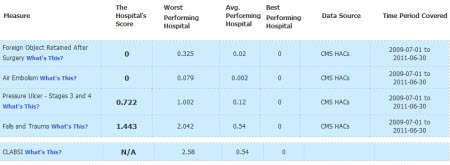
The Leapfrog Group finds in its spring update that hospitals have made only incremental progress in addressing errors, accidents, injuries, and infections that kill or hurt patients. Sixteen hospitals received an “F” grade.

Gila Regional Medical Center (NM), struggling with uninsured patient volumes, downgrades employees, halts an expansion project, and postpones implementation of a new hospital information system.

Keynote speakers at the MUSE conference May 28-31 in Washington, DC will be Farzad Mostashari and George Will.

5-8-2013 3-03-08 PM

A Surescripts report finds that 69 percent of office-based physicians actively e-prescribed last year and nearly half of patient visits generated an electronically-delivered medication history, 31 percent more than in 2011.

Allscripts will add 350 new jobs over the next five years in Raleigh, NC as it consolidates its US engineering centers. State officials will extend up to $5.35 million in incentives if Allscripts meets investment and hiring goals and maintains its 1,266 jobs in Raleigh.

5-9-2013 3-52-39 PM

An eight-country survey of physicians finds that 93 percent of US physicians report using an EMR. E-prescribing rates were highest (65 percent) among US providers, as were rates for entering patient notes into EMRs (78 percent.) While the majority of doctors in all countries report EMR and HIE have had a positive impact on their practice, US doctors were the least likely to report that their use reduced organizational costs.

Ken Roberts, MD and Jim Granfortuna, MD sing about EHRs in “Our Song of Epic Proportions.”

5-9-2013 8-06-59 PM

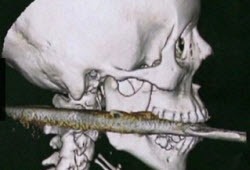
Weird News Andy wonders, “What is it with Brazilians and harpoons lately?” A couple of weeks ago a Brazilian guy accidentally shot a harpoon into his own head. Now a Brazilian man cleaning his spear gun in the living room accidentally shoots off a spear that goes through the mouth of his wife, who was in the kitchen at the time. She’ll recover fully. And in another incident, a Brazilian teen fishing in the Amazon River mistakes his brother for a fish, shooting a harpoon into his face and then paddling 195 miles in a canoe to take him to the hospital.

WNA also ponders this story, in which a South Florida plastic surgeon is arrested for using waterboarding-type torture on his girlfriend for 16 hours after being angered by her Facebook post.


Sponsor Updates

5-9-2013 7-02-12 PM

  • Consulting firm Virtelligence and its client Cone Health (NC) donated 400 tree seedlings via the Arbor Day Foundation to the Guilford County School System, whose students planted the trees around the Triad. The company tracked the number of pages printed during the Epic implementation and used an online program to estimate the number of trees required (361) to manufacture it.
  • NTT Data moves its North American corporate headquarters to Plano, TX.
  • EClinicalWorks releases agenda details for its 2013 National Users Conference October 11-14 in San Antonio.
  • Holon Solutions hosts a May 15 Webinar introducing the value of building an HIE.
  • Sandlot Solutions Director Rosalind Bell discusses how recent emergencies highlight the need for HIEs.
  • Billian’s HealthDATA releases its Provider Portal benchmarking database, which gives hospitals and health systems data for competitive analysis.
  • In a company blog post, Patientco addresses the growing patient payment problem.
  • Red Herring names Awarepoint, InstaMed, and Kony Solutions finalists for its 2013 Top 100 North American Award, which honors private technology ventures.
  • Aspen Advisors consultants will co-present at two sessions during next week’s Texas HIMSS Conference in San Antonio. Aspen’s Director of Clinical Informatics Mark Van Kooy, MD will participate in a panel discussion during an executive summit in San Francisco May 15-17.
  • Kathy LePar, VP of strategic services for Beacon Partners, offers recommendations for healthcare organizations for creating an integrated, holistic approach to strategic enterprise initiatives.

EPtalk  by Dr. Jayne

Georgia Governor Nathan Deal signs the State Physician Shield Act, which is aimed at preventing use of Affordable Care Act provisions to establish standard of care in liability cases. Supporters want to ensure that payment guidelines aren’t used to define care standards to the exclusion of individual patient factors or other clinical standards.

CMS releases Medicare provider charge data for the top 100 most frequently billed discharges across 3,000 hospitals. The variation across some procedures is as much as tenfold.

CNBC recently ran a piece on bad habits demonstrated by younger job-seekers. There are certainly a lot of relatively young workers in IT departments, but I’ve found that regardless of age, behavior is becoming more boorish. I may not be Emily Post, but I’d like to offer some etiquette tips for the age of social media:

  • Learn how to put your phone on silent. Practice this skill often.
  • Texting or checking e-mail on your phone while in face-to-face meetings is just rude.
  • Choosing “Darth Vader’s Theme” as your supervisor’s ringtone is not a career-advancing move, especially if you haven’t learned to put your phone on silent.
  • If you’re hosting a Web-based meeting and sharing your desktop, turn your instant messenger and e-mail notifiers off. I’m tired of seeing embarrassing, unprofessional, and distracting messages come across while I’m trying to work with you.
  • If you’re attending a meeting by conference call, don’t multitask unless you have the skills to pull it off. Asking, “Can you repeat that? I was on mute.” makes no sense and brands you as inattentive and illogical.
  • If you join a meeting late, don’t waste the group’s time with excuses. Say “I’m sorry” then sit down and get to work.
  • Lock your Facebook page down like Fort Knox unless you can keep your mouth shut. Do you really think it’s smart to advertise to your co-workers that you accepted prime hockey tickets from a vendor and thereby violated corporate policy?
  • Learn how to use Scheduling Assistant, Busy Search, or whatever tools your company uses when inviting people to meetings. If an attendee is already booked and you make them “required,” have the courtesy to discuss it and obtain approval first.

clip_image002

Speaking of meeting etiquette, it’s been a rough week, so I was happy to see a tweet for The Ridiculous Business Jargon Dictionary. I think I’m going to try “acluistic” in a meeting I have scheduled for tomorrow and see if anyone figures it out.

Print


Contacts

Mr. H, Inga, Dr. Jayne, Dr. Gregg, Lt. Dan, Dr. Travis.

More news: HIStalk Practice, HIStalk Connect.

125x125_2nd_Circle

Morning Headlines 5/9/13

May 8, 2013 Headlines 1 Comment

Athenahealth and MIT H@cking Medicine Announce Winners of Hack-a-thon

MIT and athenahealth co-hosted a hack-a-thon this past weekend and have announced a winner of among the 20 teams that competed. Top honors and $5,000 went to Project MIST, which came up with a hardware prototype that helps glaucoma patients overcome aiming difficulties and more easily administer their eye drops.

Geisinger Gives Patients Access to Doctors’ Notes

Danville, PA-based Geisinger Health System will give patients complete access to their physician notes within the health systems patient portal in an effort to increase patient engagement. The decision follows a pilot program that showed promising results.

The National Progress Report on e-prescribing and Safe-Rx Rankings: Year 2012

More than 40 percent of prescription were transmitted electronically in 2012, according to a recently released study from Surescripts.

Memorial ‘still on path’ to join MaineHealth despite Maine Med’s financial problems

Conway, NH-based Memorial Hospital’s CEO Scott McKinnon reports that MaineHealth’s recent Epic problems are not enough to derail Memorial Hospital from joining MaineHealth. In earlier interviews, McKinnon had cited working under a system-wide Epic platform as a primary reason for joining MaineHealth.

Morning Headlines 5/8/13

May 7, 2013 Headlines Comments Off on Morning Headlines 5/8/13

McKesson 4th-Quarter Net Down 50% Amid Lower Revenue, Higher Costs

McKesson reports a fourth quarter profit of $259 million, down from $521 million a year earlier. Revenue was down 3.4 percent, missing analysts’ expectations. The technology solutions sector saw revenue increase 6.2 percent over the year, with a gross annual revenue of $913 million. Stock ended flat on the day and was up 1.5 percent in after hours trading.

A Bold New Vision for Meditech

John Halamka, MD, CIO of BIDMC, reports his initial impression of plans for Meditech 6.1 which he says will be a cloud-hosted system based on standards, Web-centric and mobile-enabled, with both inpatient and outpatient capabilities, complete with analytics, a PHR, and care management tools.

The discriminatory cost of ICD-10-CM transition between clinical specialties: metrics, case study, and mitigating tools

A study published in JAMIA finds that transitioning to ICD-10 will be difficult and disproportionately costly to specialists. The study found that only 60 percent of ICD-9 codes have a direct ICD-10 equivalent, while the other 40 percent will require clarification.

UCSF Creates Center for Digital Health Innovation, Names Director to Lead It

UC San Francisco will create a Center for Digital Health Innovation to lead the institution away from "disease-based treatment approaches" and toward "individualized precision medicine." The new Center will be run by UCSF Medical Center CMIO Michael Blum, MD.

Raleigh clinic says X-rays were stolen, may have included patient information

A Raleigh, NC clinic alerts patients that X-rays were stolen and patient information may have been compromised when a sham scanning and archiving company stole the x-rays for their silver content and then disappeared.

Comments Off on Morning Headlines 5/8/13

News 5/8/13

May 7, 2013 News 8 Comments

Top News

5-7-2013 10-43-55 PM

McKesson reports Q4 results: revenue down 3.4 percent, adjusted EPS $1.45 vs. $2.09, missing expectations on both. In the earnings call, John Hammergren mentions that the company will exit its international technology and hospital automation business. I don’t know which product lines hospital automation includes, for instance whether that means the medication packaging and distribution systems business (ROBOT-Rx, AcuDose-RX, etc.) Technology solutions revenues were up 3 percent, but profit was down 16 percent, “well below our expectations.”


Reader Comments

From The PACS Designer: “Re: Windows 8. The unfriendly start menu for Windows 8 has Microsoft scrambling to fix the problem.” The company admits that its flagship product has a steep learning curve as it forced users to use its touchscreen-friendly tile-based graphical system instead of giving them the familiar Start button.

From Kaye: “Re: HIStalk sponsorship. This remains the best value we get for the money in advertising!” Thanks – that’s a nice comment and we appreciate it, especially coming from a company that has sponsored multiple HIStalk sites since 2009.

5-7-2013 10-45-46 PM

From Anesthesiologist: “Re: Google Glass. How can I partner with companies to develop applications that might be useful in the perioperative setting?” If you’re interested in working with this doc, e-mail me and I’ll forward to him.

From Arcane: “Re: Epic implementation. Do you know of a source for rollout and post-live support staffing numbers?” I have many readers and consulting firms that have implemented Epic, so please add a comment with your thoughts.


Acquisitions, Funding, Business, and Stock

5-7-2013 10-46-35 PM

Greenway reports Q3 results: revenue up 3 percent, adjusted EPS $0.01 vs. $0.08, beating earnings estimates of –$0.02  but falling well short of revenue expectations. The company blames a faster-than-expected shift to subscription-based pricing. Shares are near their 52-week low. President and CEO Tee Green also said in the earnings call that with HITECH in the rear-view mirror, buyer fatigue has set in over the past several quarters. Training revenue was also impacted, he said, by customers choosing train-the-trainer and pushing training back to after the quarter’s close.  He also said that Greenway’s participation in CommonWell hasn’t resulted in any sales (without expressing puzzlement at the analyst who apparently thought it might) but said more companies are signing on.

5-7-2013 10-47-20 PM

InstaMed raises $3.5 million in an internal round of funding.

5-7-2013 10-48-05 PM

Healthcare transaction processing firm MediSwipe signs a term sheet with a Chicago-based PE fund to receive up to $600,000 over the next nine months.

5-7-2013 10-48-35 PM

Vocera Communications reports Q1 numbers: revenue down 3.1 percent, EPS –$0.14 vs. -$0.08. CEO and Chairman Bob Zollars says the company saw an increase in new customer signings but did not complete several significant hospital deals.

Siemens Healthcare posts a 4.9 percent increase in Q1 profits, although revenues fell 2 percent.

5-7-2013 10-50-27 PM

Qualcomm Life acquires HealthyCircles, a startup that supports the secure sharing of patient data.

WebMD CEO Cavan Redmond, who has been on the job less than a year, will leave the company, along with CFO Anthony Vuolo.

Perceptive Software blames recent acquisitions for its decision to lay off about 40 employees, or three percent of its workforce.


Sales

5-7-2013 10-51-42 PM

Massachusetts General Hospital selects eHealth Connect Referral Portal from eHealth Technologies to support two-way communication between the hospital and its referring doctors.

East Kent Hospitals University NHS Foundation Trust chooses Harris Corporation’s Clinical Integration Platform to integrate data from six clinical systems across five sites. East Kent will also use Imprivata’s OneSign single sign- on technology.

Upper Peninsula Home Health, Hospice and Private Duty (MI) will implement the Procura for Hospice solution.

SCL Health System (CO) selects Leap-10 from Wolters Kluwer Health to streamline its conversion to ICD-10.

Amarillo Legacy Medical ACO (TX) selects eClinicalWorks Care Coordination Medical Record to advance its ACO objectives and coordinate care among its 100+ provider members.

Physical Rehabilitation Network will deploy NextGen Healthcare’s EHR, PM, PatientPortal, and NextPen products across its 100+ locations and use NextGenRCM Services for revenue cycle management.

Virtual Radiologic signs a five-year deal with Visage Imaging to implement Visage 7 Enterprise Imaging Platform for its 400 radiologists in a read-anywhere environment.


People
5-7-2013 10-38-08 AM

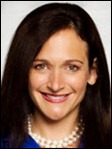
Ernst & Young names Intellect Resources President and CEO Tiffany Crenshaw a finalist for Entrepreneur of the Year 2013 in the Southeast region.

5-7-2013 11-09-04 AM

Former Cerner VP Ian Chuang, MD joins Netsmart Technology as CMO/VP of healthcare informatics.

5-7-2013 11-14-09 AM

Former National Coordinator Robert M. Kolodner, MD joins telehealth provider ViTel Net as VP/CMO.
5-7-2013 2-26-52 PM

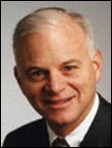
Care Team Connect names Richard Popiel, MD (Regence BCBS) to its board.

5-7-2013 3-32-46 PM

Healthcare software solution provider MedicaSoft, LLC appoints Mike O’Neill (VA Center for Innovation) CEO.
5-7-2013 7-29-50 PM

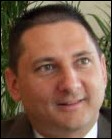
Beebe Medical Center (DE) names Michael J. Maksymow, Jr. (Continuum Health Alliance) VP/CIO.
5-7-2013 10-27-30 PM 5-7-2013 10-28-38 PM

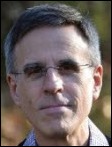
QPID hires Gary Zakon (ModelLogic) as VP of engineering and Caroline Smyth (Smyth Consulting) as VP of sales.
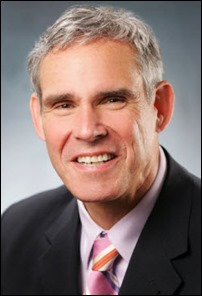

5-7-2013 8-31-06 PM 5-7-2013 8-31-57 PM

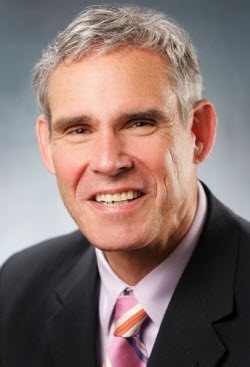
Eric J. Topol, MD is named editor-in-chief of Medscape. What’s most interesting to me is that his ongoing full-time employer Scripps Clinic apparently Photoshopped his black suit jacket to look like a white lab coat in the pictures above from their site.


Announcements and Implementations

Access is named as a Meditech Collaborative Solutions vendor, offering Meditech customers an integrated solution to capture and upload electronic signatures and data collected from clinical systems and medical devices.

5-7-2013 10-53-44 PM

Johns Hopkins Medicine integrates Epic with Hyland Software’s OnBase enterprise content management solution in its ambulatory and inpatient departments.

Philips launches Healthcare Transformation Services, a global business unit to provide consulting services to hospitals and health systems.

Trustwave introduces a mobile security practice to help enterprises with their BYOD strategies.

HCA MidAmerica Division equips seven hospitals and multiple physician offices in its Midwest region with Accelarad’s medical imaging solution.

Lifespan (RI) completes its rollout of the the TeamNotes electronic documentation system from Salar.
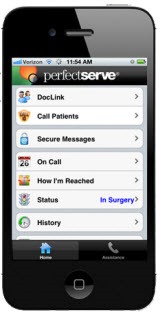
5-7-2013 8-07-30 PM

PerfectServe launches DocLink, a secure communications network for physician-to-physician communication.


Government and Politics
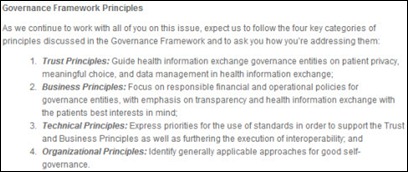
5-7-2013 10-21-35 AM

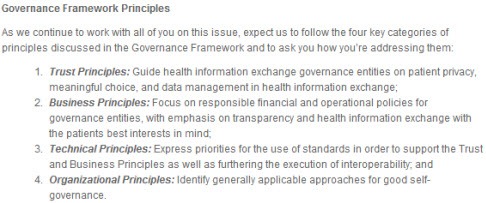
ONC publishes a governance framework for trusted health information exchange to help HIEs and other healthcare organizations understand ONC’s priorities and how to align with “national priorities.”
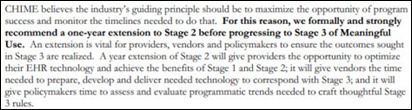
5-7-2013 10-54-20 AM

CHIME recommends in a letter to six Republican senators a one-year extension for Stage 2 MU before progressing to Stage 3. CHIME contends the extra year will give providers the opportunity to maximize their EHR technology to achieve the benefits of Stage 1 and 2 and give vendors time to “prepare, develop and deliver needed technology to correspond with Stage 3.”
5-7-2013 9-10-19 PM

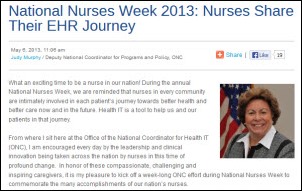
Deputy National Coordinator Judy Murphy, RN kicks off National Nurses Week with a blog post on the role of nurses in healthcare IT and an invitation for nurses to share their stories.


Innovation and Research
5-7-2013 8-55-50 PM

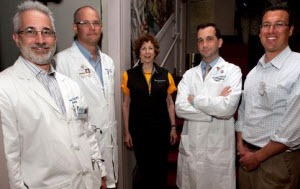
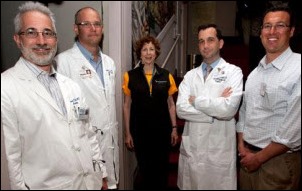
UCSF creates the Center for Digital Health Information. It will be led by UCSF Medical Center CMIO Michael Blum, MD, who will assume the newly created position of associate vice chancellor for informatics and who will continue to lead its Epic implementation (physician leaders of the project are pictured above, with Blum on the left). Current projects include a team-based communications platform, an open source diabetes management system, a Web-based collaboration tool for virtual tumor boards, and a social media-based cardiovascular study.

Kaiser Permanente Center for Total Health will hold a Google Glass event in Washington, DC the evening of June 18.
5-7-2013 10-17-39 PM

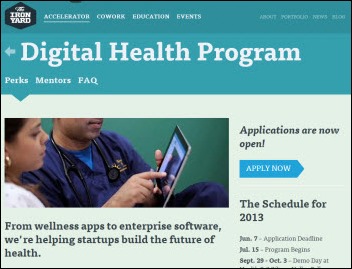
South Carolina-based Iron Yard launches the Digital Health Program accelerator and incubator in the Spartanburg area.


Technology

Bloomberg TV covers the technology used by Palomar Medical Center (CA) and the "hospital of the future.” Palomar Health Chief Innovation Officer Orlando Portale is featured.


Other

An Imprivata-sponsored study finds that clinicians waste 45 minutes per day in using inefficient communication systems such as pagers.

Hospital IT leaders are focused on accommodating greater mobile and wireless connectivity to their networks and with ensuring the security of patient data in BYOD environments, according to a HIMSS Analytics study.
5-7-2013 8-13-09 PM

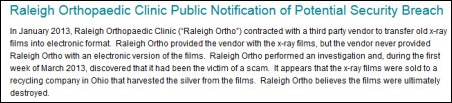
A Raleigh, NC clinic warns patients that it was scammed by a company that claimed it would digitize the practice’s old X-rays, but instead harvested their silver content and then destroyed the films.
5-7-2013 10-56-14 PM

University of Rochester Medical Center warns 537 patients that their PHI may have been compromised when a resident lost a USB drive containing quality improvement information. The hospital thinks it went to the laundry and was destroyed.

John Halamka reports on new Meditech 6.1 development after mixed response to Version 6: a cloud-hosted system based on standards, Web-centric and mobile-enabled, with both inpatient and outpatient capabilities, complete with analytics, a PHR, and care management tools. He says it will ship in 2014.
5-7-2013 9-01-55 PM

Drug chain CVS shuts down its drug company-sponsored refill reminder program because of limitations imposed by the new HIPAA Omnibus Rule on using patient information for marketing.

Weird News Andy refers to this story as “brain drain.” A man who thought his year-round runny nose was caused by allergies finds that it’s actually brain fluid leaking from a tiny hole. It’s been fixed and he’s fine. WNA also likes this story, in which researchers claim to have found the cause of graying hair (hydrogen peroxide buildup in the hair follicle) and a cure for both gray hair and vitiligo (a proprietary treatment involving a UV-activated enzyme).


Sponsor Updates
5-7-2013 10-36-38 PM


  • API Healthcare and The DAISY Foundation offer The Nurses Week Story Contest, with submissions from nurses due May 12.
  • McKesson releases version 13.0 of its Homecare solution.
  • Orion posts a video featuring Orion clients that have solved interoperability challenges.
  • More than 200 hospitals using CareWorks content management system from CareTech Solutions have received 32 Website awards in the past year.
  • Truven Health Analytics finds that healthcare spending is 20 percent higher for public sector employees than for the private employee population.
  • Passport Health Communications names Texas Health Resources, Trinity Medical Center (AL), and Kadlec Regional Medical Center (VA) winners of its Leaders at the Forefront of the Healthcare Experience contest for best healthcare access management practices.
  • Gwinnett Medical Center (GA) discusses how using RelayHealth services helped the hospital remove patient billing obstacles.
  • iHT2 hosts a May 29 Webinar on security, privacy, and compliance risks in a post-reform era.
  • Greenway Medical President and CEO Tee Green discusses the compatibility of innovation and other topics with PGA tour partner Jason Dufner.
  • Red Herring names Kony Solutions a finalist for its Top 100 North America award, which honors the year’s most promising private technology ventures.
  • EBSCO announces its intent to collaborate with the American College of Physicians to give ACP access to its DynaMed evidence-based clinical summary resources and literature surveillance.
  • Gartner names Health Catalyst to its list of Cool Vendors in Healthcare Providers 2013 and profiles Shareable Ink in its update on 2011 winners.
  • Greenway Medical releases agenda details for its PrimeLEADER 2013 user conference in Washington, DC August 22-25.
  • CommVault launches a customer education services program that includes customized user training and access to online training courses for its Simpana software.
  • ADP launches a Website to help clients and other employers plan for and comply with the Affordable Care Act.
  • Nuance names seven healthcare organizations winners of its Voice of the Customer award for improving quality of care, reducing costs, and accelerating EMR adoption using speech recognition and clinical language technology.
  • CCHIT extends EHR Module certification to the latest version of the Medseek Empower patient portal.
  • TELUS Health and McGill University enter a three-year joint venture to conduct research on how best to use technology to improve health and healthcare delivery for Canadians.

Contacts

Mr. H, Inga, Dr. Jayne, Dr. Gregg, Lt. Dan, Dr. Travis.

More news: HIStalk Practice, HIStalk Connect.

125x125_2nd_Circle

Morning Headlines 5/7/13

May 6, 2013 Headlines Comments Off on Morning Headlines 5/7/13

Greenway Reports Fiscal 2013 Third-Quarter Results

Following lowered year-end forecasts that caused a 22 percent one-day drop in stock price last week, Greenway sees an additional 2.8 percent drop after releasing its Q3 earnings report. The company suffered a $2.8 million net loss from operations over the quarter due to fewer one-time system sales and lower training and consulting revenue. Shares closed at $11.94, $0.11 higher than their 52-week low.

Electronic Health Information Exchange Governance Framework Released

ONC releases its regulatory framework for health information exchanges. It establishes a common foundation and spells out regulatory exchange conditions for public and private HIEs to align with.

CHIME Calls For One-Year Extension of Stage 2 Meaningful Use

The College of Healthcare Information Management Executives sends a letter to six Republican senators recommending a one-year extension to Stage 2 Meaningful Use before progressing to Stage 3.

ATA kicks off its annual meeting with a call for Mercy

The American Telemedicine Association kicked off its annual meeting in Austin, TX with Mercy Health President and CEO Lynn Britton giving the keynote address, in which he spoke of about telemedicine and the return on investment Mercy Health realized from its initiatives.

Comments Off on Morning Headlines 5/7/13

Readers Write: Transitioning from Fee-for-Service to Fee-for-Value Requires Outcomes-Focused Patient Engagement

May 6, 2013 Readers Write 1 Comment

Transitioning from Fee-for-Service to Fee-for-Value Requires Outcomes-Focused Patient Engagement
By Richard Ferrans, MD, ScM

Critical to success under new care models is creating the right IT infrastructure to break down walls and foster better partnerships between hospitals, physicians, payers, and patients alike. We can no longer view inpatient and outpatient settings as different businesses. We must share complex clinical data between the “Care Layer” of physician and hospital EHRs and the “Value Layer” of HIT to integrate their disparate records and promote clinical analytics, value decision support (VDS), care coordination, and digital patient engagement.

Presence Health is the largest Catholic health system in Illinois with 12 integrated hospitals, 29 senior care locations, and more than 4,000 providers and 100 primary and specialty care medical practices. In January 2013, our Accountable Care Organization (ACO), Medicare Value Partners, joined the more than 250 other ACOs established through the Centers for Medicare and Medicaid Services’ Shared Savings Program.

A major part of our journey to becoming an ACO was the integration of employees, providers, and systems during the 2011 merger of Provena Health and Resurrection Health Care that created Presence Health. The combined experience and excellence of the two organizations is helping us succeed in the Shared Savings program. Specifically, both Resurrection and Provena, each with significant Medicare and Medicaid patient populations, had undertaken clinical integration and quality improvement pilot programs before the merger.

The proven patient outcome and financial improvement results of these efforts prepared us for the transition from a fee-for-service model to one based on value. Nevertheless, achieving the CMS’s required 33 quality of care measures while controlling costs will be a challenge.

An integral piece of our “Value Layer” is our patient engagement technology platform that allows us to provide patient-centric communication. We chose our partner, Emmi Solutions, because they have been focused on patient engagement for more than a decade. They have a complete solution proven to motivate patients to take preventive action, transition from one care setting to the next, and participate in shared decision making.

The technology supports web, mobile and interactive voice response (IVR) all in a single platform to deliver actionable information to patients. The platform uses language patients can understand and connects with them at their convenience and on devices they already own – both in and outside the hospital or healthcare setting.

Our patient engagement solution was first introduced to the Presence Health system at Presence Saint Joseph Hospital in Chicago. A survey of nearly 200 patients who had accessed the technology on the Web, conducted over a six-month time period, showed that 94 percent of patients said the engagement platform answered questions for which they normally would have called their doctor. In addition, 92 percent said it motivated them to change their lifestyle and all patients indicated it gave them a better understanding of their treatment options.

We do not passively “educate” patients, but rather use our interactive technology to engage patients in a two-way process where they become motivated participants in their care, exchanging information, validating understanding, and sharing concerns. This is more than a discreet intervention. It is a comprehensive set of reminders, calls to action, and tools needed throughout one’s entire healthcare journey.

We are in the process of expanding it across the Presence Health system and ACO to broaden our ability to cost effectively manage the health of populations and improve both clinical and financial outcomes.

Another reason we chose this technology is because its platform tracks the delivery and consumption of information, which enables us to measure the impact of patient engagement down to the individual patient level. With healthcare transitioning from a fee-for-service to a fee-for-value model, being able to quantify the return on IT investments is becoming a business imperative. Not only are we being held accountable, so is our vendor partner.

Richard Ferrans, MD, ScM is system vice president of Presence Health and CEO of Medicare Value Partners.

Curbside Consult with Dr. Jayne 5/6/13

May 6, 2013 Dr. Jayne 2 Comments

clip_image002

I think many of us in the healthcare IT trenches have simply become beaten down. There are dozens of different initiatives, regulations, and “incentives” causing daily pressure to change how our systems deliver care and how we interact with patients.

Some days I feel like I’m barely able to keep my head above water. There are so many competing priorities you can’t afford to get too worked up over any one issue or you might be sucked under.

In my informatics role, I’m exposed to a lot of different venues for care delivery. This week I served as a locum tenens in a primary care office and again had to confront something that has bothered me for years: pharmacies sending electronic requests for refills on controlled substances when they cannot be refilled electronically. Not only is this bothersome, but it wastes significant time in the practice.

Yes, I’m aware that the DEA issued rules that allow electronic prescribing of controlled substances. However, for this to be legal, the physician has to use certified e-prescribing software and two-factor authentication. Additionally, the pharmacy has to upgrade their systems to receive and process the prescriptions.

My state was one of the last to clarify its requirements for these transmissions, so adoption has lagged. Practices aren’t going to go through the credentialing process if the pharmacies aren’t ready, and our informatics team checks with the pharmacies monthly to see if they’re prepared to accept these scripts.

Our region has several major pharmacy chains that have spent the last decade sending refill requests for drugs that physicians cannot prescribe electronically. The physician (or his/her designee) has to deny the prescription electronically (otherwise be marked as “unresponsive” by the pharmacy intermediary system) then either call the script in if that’s permissible, or print and sign a prescription to mail to the patient or for the patient to pick up. These chains are still not enabled to receive DEA-compliant controlled substance prescriptions, yet they continue to send these refill requests that cannot be processed.

When I first saw this years ago, I called the pharmacy and asked why this was happening. I was told that the prescription management software couldn’t tell the difference between controlled and non-controlled substances, so they couldn’t block the inappropriate refill requests. They didn’t think their vendor would be willing to make a change. Flash forward and it’s still happening. I have to wonder why. Have systems not evolved in nearly a decade? Can vendors really not fix this?

It makes me wonder — where are the Meaningful Use requirements for all the other software systems with which my EHR has to interact? Why aren’t the pharmacies required to document the numerator and denominator for “percentage of refill requests sent that are actually legal to refill?” Why are only the providers and hospitals eligible for penalties?

If we’re going to have de facto regulation, let’s treat everyone the same – from the pharmacy to home health to post-acute care. When only some of the players are jumping through hoops and we’re just passing the meaningless work from one part of the industry to another, we’re not transforming medicine — we’re just being wasteful.

Print

E-mail Dr. Jayne.

Morning Headlines 5/6/13

May 5, 2013 Headlines 1 Comment

Two Cerner live sites go to tender

In England, two NHS hospitals release an RFP seeking a replacement for their Cerner systems.

AMA says EHRs create ‘appalling Catch-22’ for docs

Steven Stack, MD, chair of the AMA board of trustees. spoke at a CMS listening session on billing and coding within an EHR system. He questioned the government’s mandating the use of EHRs while simultaneously orchestrating a witch hunt over cut-and-paste fraud accusations associated with physician documentation. Sack points to the generic, nearly uniform output of EHR documentation systems for causing a false perception fraud.

TriZetto Corporation Announces Reorganization of Leadership Team

TriZetto announces an executive reorganization as CEO Trace Devanny departs immediately leaving an empty seat that will be temporarily filled by TriZetto board member Vicky Gregg. An executive search is underway for a permanent replacement for Devanny. Jude Dieterman, formerly EVP and COO, has been promoted to the newly created role of president.

Govt moves to roll out ambitious e-health plan

The health department in India has issued an RFP for its recently announced e-health plan, which calls for each citizen to have a health card to hold demographic data and an integrated EHR that will automate hospital processes and bring all information into a centralized state health information system.

Monday Morning Update 5/6/13

May 5, 2013 News 16 Comments

5-4-2013 3-43-24 PM

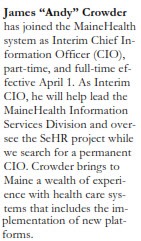
From MaineMan: “Re: MaineHealth / Maine Medical Center. Names interim CIO.” According to the March 25 employee newsletter, Andy Crowder (JC Solutions Group and Florida Hospital before that) is serving as interim CIO.

From The PACS Designer: “R: Intel’s Haswell. We are about to enter a much faster PC user experience with architecture from Intel called Haswell. One of the key features is Haswell provides is a nine-hour battery life through the use of more efficient chips. You can expect to see Haswell powered PC’s in the fourth quarter.” The article says the chip may revive the rapidly dying PC business by making them more competitive with tablets. Of course, that’s what Intel said about the Ultrabook, which hasn’t made Intel-powered laptops a bit more attractive vs. a Macbook Air or an iPad.

5-4-2013 2-00-21 PM

Three-quarters of respondents don’t think it makes sense for innovation conferences to exclude hospitals and physicians under the assumption that they helped cause the problems that seen to require more innovative approaches. New poll to your right: several hospitals have reported financial losses that occurred as they were implementing an EHR. Who is to blame?

Thanks to the following sponsors, new and renewing, that have recently supported HIStalk, HIStalk Practice, and HIStalk Connect. Click a logo for more information.

5-5-2013 9-32-33 AM
5-5-2013 9-26-12 AM
5-5-2013 9-33-39 AM
5-5-2013 9-31-32 AM
5-5-2013 9-19-25 AM
5-5-2013 9-22-33 AM
5-5-2013 9-24-10 AM
5-5-2013 9-23-19 AM
5-5-2013 9-20-44 AM
5-5-2013 9-25-16 AM
5-5-2013 9-21-48 AM
5-5-2013 9-30-42 AM

Two NHS trusts running NPfIT’s Cerner implementation issue tenders for replacement systems.

5-4-2013 2-51-08 PM

Centegra (IL) will go live on McKesson Paragon on May 6.

Some quotes from Jonathan Bush during the athenahealth earnings call Friday:

  • The company that started as an ill-fated birthing clinic and used to hold all-hands meetings from the tailgate of the Jeep Wagoneer is entering the big show. We have done well at the land war that is selling back office services doctor-to-doctor and hospital-to-hospital, but for the first time, we have a crack at the hearts and minds campaign.
  • Take athenaCoordinator. It is a really easy way for any health caregiver to connect to every other one without the complexity of an organ transplant. It is a two-week sales cycle and a two-hour implementation process.
  • We’ve already just announced today Epocrates EDU, which is a whole version of Epocrates to help educators, medical schools, the texting that we are going to be rolling out, secure HIPAA-compliant, patient-related texting between doctors. We’ll be able to attach links to athenaClinicals next year so that doctors who aren’t clients of athenaClinicals will be able to take a quick look at a patient face sheet in athenaClinicals.
  • I think we are seeing — particularly the folks who got pregnant with Epic, sort of they’re going to this sort of desperate burn-bright tactics. We heard where Yale-New Haven has told all the doctors that have privileges that they will either this piece of shit Epic that none of them want or do you have their privileges revoked. So there’s that kind of tactic going on. "Oh, we can’t interface." I’m like, "What you mean? Epic interfaces all the time. They actually do it really well." … The folks that have gone off and laid down more money than they have on Epic have, in the back of their mind, that they are going to make a real impact on referral patterns by getting doctors on to Epic that don’t want to be on it. And it’s — really, Epic is the only one. Cerner builds interfaces, no problem.

5-4-2013 3-19-19 PM

TriZetto announces that CEO Trace Devanny will leave the company immediately after two years on the job “to pursue other opportunities” as a search is undertaken for his replacement. EVP/COO Jude Dieterman is promoted to president, a newly created role. Board member Vicky Gregg will assume the role of non-executive chair.

Intermountain Healthcare is working with Blue Cirrus Consulting to develop a homegrown tele-ICU solution.

UCSF lauches MeForYou.org at the OME Precision Medicine Summit. The precision medicine project will link people with genetically similar others via their genomic information, environmental factors, and their EHR information to help guide clinicians. They differentiate it from personalized medicine in that in precision medicine, the information used goes beyond genomic data and scientists can tap into that information directly to guide research and treatment.

5-4-2013 4-41-19 PM

Team Break Fix won the $25,000 grand prize at the Cajun Codefest 2.0 in Lafayette, LA last week.

Weird News Andy says this gives heart attacks the finger. The EndoPat test predicts heart problems by checking blood flow in the fingers.

Vince has a Part 3 installment on GE Healthcare in this week’s HIS-tory.


Sponsor Updates

  • Cynthia Davis, RN, co-founder and principal of CIC Advisory, is named Entrepreneur Woman of the Year by the St. Petersburg (FL) Area Chamber of Commerce Women’s Leadership Council.
  • Allscripts posts the agenda for its ACE conference, to be held August 20-23 in Chicago.

Contacts

Mr. H, Inga, Dr. Jayne, Dr. Gregg, Lt. Dan, Dr. Travis.

More news: HIStalk Practice, HIStalk Connect.

125x125_2nd_Circle

Text Ads


RECENT COMMENTS

  1. It doesn't look like much more than a computer facing a wall!!

  2. Really interesting perspective — especially around the EHR market. What I’m seeing lines up with this: Epic keeps consolidating, Oracle/Cerner…
  3. Why does the displayed "exam room of the future" still have the classic "clinician has their back to the patient"…
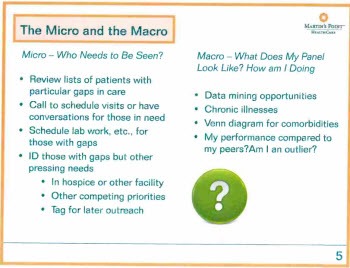
Founding Sponsors


Platinum Sponsors


Gold Sponsors


RSS Webinars

  • An error has occurred, which probably means the feed is down. Try again later.