


Readers Write: Big Data / Shmig Data
Big Data / Shmig Data: Thoughtflow 2015 and the Coming Age of Incessant Data
By Samuel R. Bierstock, MD, BSEE

In the years following the Institute of Medicine’s “Crossing the Quality Chasm,” there was widespread acknowledgement that we could do a better job in caring for our patients and a shared belief that the path to accomplishing that task lay in the adoption of clinical information systems. That idea was great, but actual attainment of the goal was hindered by the failure of vendors and designers of electronic clinical information systems to fully understand the full vantage point of their target end users. Clinicians simply resisted the structured workflows that designers assumed would make for acceptance. There followed more than a decade of physician resistance, dismal adoption rates, and billions of dollars spent in implementation efforts to encourage clinician utilization of EHRs.
It was not the long anticipation of the attrition of aging computer-resistant retiring physicians, nor was it their replacement by tech-savvy young doctors that caused the uptick in the number of clinicians using electronic health records (EHRs). It took the good-old US government and the mandates of Meaningful Use to do that.
Unfortunately, neither can the increased adoption of EHRs by physicians be attributed to a better job in the design of clinical workflow processes by vendors. In fact, if anything, the financial pressures on hospitals fearing loss of Meaningful Use dollars and associated penalties resulted in pressure being exerted on physicians to use whatever hospital EHR systems were in place in spite of negative impact on clinical efficiencies and the ability of physicians to get their work done. As a result, we embarked upon and remain in a period of administrative / medical staff friction wherein hospital administrators need their medical staffs to be using their EHRs while many physicians feel impeded in simply getting their work done and view hospital pressure as purely financially motivated.
In 2003, I first described what I felt was the missing essential ingredient to physician adoption of EHRs. The widely heralded and sought-after workflow support was not the answer. Workflow is a mechanical approach to a goal or task – “do this, then do that” and “click here, then click there.” It seemed clear to me that what needed to be supported was not workflow, but Thoughtflow, a concept I defined as the process by which a clinician identifies, accesses, prioritizes, and acts upon data and information.
In 2006, my article entitled “Thoughtflow — The Essential Ingredient for Physician Adoption of Implemented Technologies: Why Clinicians Have Still Not Adopted Clinical Technology and Where Vendors and Clinical Leadership have had it All Wrong” received a very widespread and supportive response. While a great many changes in EHR design could have helped support Thoughtflow, they were slow in coming and for the most part inadequately based on a true understanding of what it is like to practice medicine. A decade later, they remain essentially missing.
Are more physicians using EHRs today? Yes. Do they find that EHRs make their lives easier or their professional work more efficient? Clearly, no.
Emergency rooms represent the ultimate environment for needed efficiencies in the delivery of care. Emergency rooms with EHRs in use have an average of 35 to 40 percent drop in physician efficiency and up to 40 percent increase in the number of patients who leave without being seen due to long waiting room times.
The 2013 KLAS report showed that the largest EHR hospital vendor is consistently rated in last place on virtually all parameters of clinical efficiency by physician users.
While I think it can be said that vendors have failed to recognize the need to support Thoughtflow and to build in creative feature functionality to truly support the way clinicians think and act, in fairness it must be pointed out that technologies essential to success in this regard have simply not been available. Today however, they are.
- Voice recognition software has steadily improved with respect to both accuracy and reliability.
- Language processing tied to vocabulary standards and ICD-9 / 10 coding and increasingly accurate optical character recognition allow for ever-improving accurate extraction of structured data from unstructured data in a variety of formats (dictated notes, PDF documents, etc.)
- Increasingly maturing clinical decision support systems that are integrated into clinical documentation systems can be linked directly to order sets and treatment protocols – effectively presenting clinicians with what they need to choose from, refine, and work from.
In short, the technology exists to anticipate the needs of the clinician quite literally from the spoken word to suggested action. Coupled with innovative and creative designs, capabilities such as these can minimize the age-old pariahs of EHRs — the number of required clicks and the amount of multiple-screen navigation required to accomplish both simple and complex tasks.
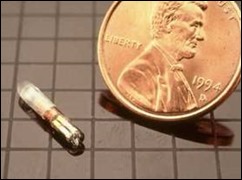
Aside from these issues regarding EHRs, it is obvious that the healthcare industry is about to be revolutionized by wearable, implantable, and digestible devices resultant from the exponentially explosive micro and nanotechnology world. Literally, devices appear every six months that were inconceivable only six months previously. Examples are too numerous to list, but consider Intelligent pill bottles that report if medication has been taken, watches that can produce a full six-lead EKG from one point of contact with the skin, shirts and vests that measure and report the amount of fluid in the lungs, cell phone apps that create and display ultrasound images and even X-rays, necklaces and bracelets that report sleep and ambulatory patterns, vital signs, falls, position — and on and on. The vast majority of these are applicable to ambulatory people, the elderly requiring remote monitoring for hypertension, cardiovascular disease, and diabetes.
Hospitals need this data to mitigate against the risk of readmission. HIE, ACOs, and population management entities need this data for trend analysis, quality of care assessment, and predictive analytics. Clinicians need this data to track their patients’ progress and intervene as required.
The concept of big data is about to appear minuscule compared to the barrage of data we are about to be capable of capturing. We are not talking about big data. We are talking about incessant data.
The data must be delivered in a way that enhances care by those responsible. The last thing an internist wants is 24-7 data pouring in with the blood sugar levels of all of his or her diabetic patients. The data is going to have be in standardized format and integrated with the EHR in use in a fashion that it is properly absorbed into the patient record, run through appropriate knowledge engine algorithms, and delivered in a useful fashion only if caregiver awareness is of essential importance or an action is required. It must support Thoughtflow so that it can be efficiently applied to and enhance workflow patterns — not congest them and thereby diminish efficiencies and make clinicians’ lives harder in getting their work done.
There is also to consider the additional data that is going to hit servers as we get better and better at extracting structured data from unstructured data (PDF documents, dictated documents, free text documentation, and eventually handwritten notes).
And let’s not forget the data coming from the increasingly popular use of micro- and nano-technological wearable devices used by the healthy and sports-minded population. Most or all of this data is on the servers of the companies selling heart monitoring watches, intelligent sneakers, devices that count steps, report posture, and record sleep and wake patterns. Eventually I believe this data will be important to population managers in retrospect, in real time and for predictive analytics, and also available to clinicians in the same manner and with the same challenges accompanying data related to active disease and health problems.
All of this data has to be delivered in a way that enhances Thoughtflow or it will become a barrage of information to be sorted through and further compromise the efficiencies of caregivers, care delivery entities, quality assessors, payers, and analytic models.
As monolithic, stagnant EHRs that dominate the healthcare market remain encased in mechanical workflows, innovative EHRs will have to maximally utilize evolving technologies to support clinical Thoughtflow if we are going to be able to derive maximal benefit from the coming exponentially explosive amount of incessant data.
Sam Bierstock, MD, BSEE is the founder of Champions in Healthcare. The term “Thoughtflow” as applied in healthcare is a registered trademark with all rights for commercial use reserved by the owner.
















































"A valid concern..." Oh please. Everyone picks the software they like and the origin of that software is an afterthought.…