Recent Articles:

Morning Headlines 6/11/20

June 10, 2020 Headlines Comments Off on Morning Headlines 6/11/20

Kyruus Secures $30 Million Investment from Francisco Partners

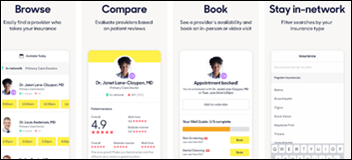
Provider search and scheduling software vendor Kyruus raises $30 million in funding from Francisco Partners.

Cerner Gets Potential $99M VA Software, Hardware Sustainment Task Order

The VA gives Cerner a $99 million task order for sustainment support of hardware and software associated with its EHR modernization project.

Cue Health Closes $100 Million Series C Financing to Support Launch of Rapid Molecular Testing Platform

App-based testing company Cue Health will use $100 million in new financing to expand its San Diego headquarters and further develop and commercialize its portable COVID-19 testing kit.

QGenda Announces Strategic Growth Investment From ICONIQ Capital

Iconiq Capital invests in Atlanta-based healthcare workforce technology company QGenda. 

Comments Off on Morning Headlines 6/11/20

Readers Write: An Interoperability Data Challenge — Out and Back Demonstrating Reflection

June 10, 2020 Readers Write 10 Comments

An Interoperability Data Challenge — Out and Back Demonstrating Reflection
By Brody Brodock

Brody Brodock is a principal with AdaptTTest Consulting of Raleigh, NC.

I want to offer up a challenge that will express the current state of interoperability within regional systems. The challenge involves the top N most frequently used values within domains, exchanged via C-CDA within your community of practice, reconciled and incorporated, then returned to the sender, where the originating sender then reconciles and incorporates the returned items.

This should be a simple task that any certified EHR can accomplish with 100% accuracy. However, if you get better than 80% success in the first part of the exercise, I will be greatly surprised. If you can successfully exchange above 50% on the second round, I will be impressed. I would even argue that two systems from the same vendor will be challenged.

We should keep this to the required domains: medications, problems, and medication allergies. Other domains should be left out to reduce complexity. This gets messy really quickly.

You will need to gather from your system:

  • Problems. Problem text, problem code, problem code set, status, date added, date updated, and onset date.
  • Allergies. Allergy category, allergy severity, reaction, reaction severity, allergy dates with specificity, status, and the codes for allergy and allergy reaction.
  • Medications. This might get trickier as some systems load meds into different table sets depending on the order type (prescription or order). But essentially you need the medication name, medication code, status, date of entry, order expiration date, dose, dose form, frequency, SIG, PRN, and DAW.

Once you gather these extracts, (you might need to limit the period), you should slice and dice the data to tell you what the most frequently used (MFU) items are. You don’t generally need to associate the metadata to other data elements. Knowing that the top medication allergy is penicillin is sufficient, the top reaction might be hives — they don’t need to be associated in this round.

HIPAA note: watch out for names in the SIG, and purge any “zzz” names you come across.

Now that you have your list, take the top 10 from each and add them to your new patient. Then another set of patients that reflect the metadata objects: status, dates, reactions, severity, PRN, DAW, etc. If you have the ability to add free text med allergies, then submit a patient safety defect report to your vendor, but send the free text allergy anyway. Try “pentillacillian” with “anti fylaktic” — yes, I have seen that.

Medications should be a mix of your top 10 prescriptions, plus your next 10 with your top SIG, plus the next top 10 with all of your statuses. Add a couple that are tapered dose, vaccines with multiple dosages, and multiple formulations (albuterol syrup, pill, and rescue inhaler) all active.

Your CDS/DUR systems are supposed to alert for for all of these domains. Once you reconcile and incorporate these items into your system, pick a couple of items like penicillin with anaphylaxis and attempt to prescribe that. You should get an alert. A significant battery of CDS/DUR tests should be done with this data.

Now that you have built up the patients, have your development team automate them so they can be duplicated on demand. If you don’t have an automation team, ask your vendor for their scripts. These tests should be part of your standard operational and production qualification tests — OQ/PQ.

Now send these patients via a summary of care or a transfer of care (try both — they should be different) to your geographic neighbors. Whichever systems from which you receive transfers, referrals, and notes. They will be ambulatory, acute, ED, SNF, and specialty facilities. But more importantly, they will be different systems, or at least different configurations of like systems.

Take these C-CDAs and send them through your Direct HISP, email, or sneaker net (HIPAA rules apply and these must be fake patients). You can name them “MedicationTest-xxx” where xxx is an alpha counting scheme: aaa is the first, aab the second, all the way to zzz being patient 676. If you can create patients with numbers in them, I would be surprised, but go ahead and try one of those patients too. “Patient 0” shouldn’t be possible, so it will probably blow up on the receiving end.

The receiving facility should then bring in the C-CDA and perform reconciliation of the listed domains. Problems, medication allergies, and medications should now be in this patient’s record.

The expected result is 100% accuracy in the exchange. No conversions, no substitutions, no increased or decreased specificity, no “go fish” in presenting the user with a series of options to reconcile. These are the most frequently used, so there should be no problem.

Your actual results will not be even close to 100%. You will have allergies that switch category, reactions that aren’t recognized, medication APIs that are switched to brands, problems that are either more specific or less specific than the incoming problem, dates that will increase specificity from year or null to DD/MM/YYY:Time, and multiple formulations that will be considered duplicates (three albuterol formulations).

Now without further modification, the receiving facility should create the same type of C-CDA and return it to the originating facility. A full round trip. The record that is returned will look like a completely different patient than the one that you sent out. Statuses and dates will be converted to something else and your medication intolerance will suddenly become a medication allergy. All sorts of fun here.

This is why healthcare interoperability singlehandedly enables the fax industry.

This is the first part of a long and complex set of tests, a simple out and back. Yet the exchange will demonstrate how badly the industry needs to get its data house in order. The results will not change just because you were using different technology. If you are using FHIR to write data back into your solution, you are going to have the same problems.

Morning Headlines 6/10/20

June 9, 2020 Headlines Comments Off on Morning Headlines 6/10/20

PatientPing Secures $60 Million in Series C Funding to Continue Expansion of National Electronic Notifications Network

PatientPing raises $60 million in a Series C funding round, increasing its total to more than $100 million.

Babylon Health admits GP app suffered a data breach

London-based Babylon Health fixes a software error that allowed several users to view the archived telemedicine sessions of other patients.

Kristin Myers, MPH, Appointed Executive Vice President, Chief Information Officer, and Dean for Information Technology

Mount Sinai Health System (NY) promotes Kristin Myers, MPH to EVP/CIO and dean for IT.

Comments Off on Morning Headlines 6/10/20

News 6/10/20

June 9, 2020 News 5 Comments

Top News

image

PatientPing raises $60 million in a Series C funding round, increasing its total to more than $100 million.


Reader Comments

From X-Treem Geek: “Re: Duke–UNC anti-trust lawsuit brought by physicians. Looks like they will soon face a new lawsuit for faculty.” Duke University and University of North Carolina paid $54.5 million in mid-2019 to settle a class action lawsuit in which academic physicians found evidence of a decades-long “no poach” agreement in which the schools agreed to avoid recruiting each other’s doctors to keep salaries in check. The new case seeks damages for non-medical faculty members who were not part of the original lawsuit.


HIStalk Announcements and Requests

Cerner tells me that tiny analytics vendor Surgisphere – which is under fire for its use of EHR data of unknown provenance to publish error-filled, now-retracted COVID-19 research studies – is not a Health Facts customer. Surgisphere has declined to disclose how it obtained a massive database of de-identified patient encounters from hospital EHRs, and many large health systems say they’ve never provided such data to the company. Meanwhile a non-profit in Africa that was using a Surgisphere-provided COVID-19 Severity Scoring Tool powered by the same database rescinds its recommendation of the software.

Thanks to the following companies that recently supported HIStalk. Click a logo for more information.

image
image
image
image
image
image
image
image


Webinars

June 10 (Wednesday) 1 ET. “COVID-19: preparing your OR for elective surgeries.” Sponsor: Intelligent Medical Objects. Presenters: Janice Kelly, MS, RN, president, AORN Syntegrity Inc.; David Bocanegra, RN, nurse informaticist, IMO. The presenters will cover the steps and guidelines that are needed for hospitals to resume performing elective surgeries and how healthcare information technology can optimize efficiencies and financial outcomes for the return of the OR.

June 18 (Thursday) 12:30 ET. “Understanding the ONC’s Final Rule: Using FHIR HL7 for Successful EHR Integrations.” Sponsor: Newfire Global Partners. Presenters: Bob Salitsky, healthcare IT expert, Newfire Global Partners; Jaya Plmanabhan, MS, healthcare data scientist. This fast-paced, 30-minute webinar will provide an overview of the Final Rule and describe how technology vendors, payers, and providers can use FHIR HL7 to deliver true interoperability. Attendees will learn how to define the data, technology, and flows needed for their EHR integration projects; how products can retrieve health information while meeting compliance regulations; and the benefit of adopting quickly to the future of data exchange while simplifying future integration efforts.


Acquisitions, Funding, Business, and Stock

image

Business Insider profiles Doxy.me, which saw the user count for its browser-based telehealth platform jump from 80,000 in January to 700,000 now. The company is run from the house of the CEO, Medical University of South Carolina Assistant Professor Brandon Welch, MS, PhD, whose doctorate is in biomedical informatics. Headcount has increased from 15 full-time employees to more than 50. The company says it isn’t interested in the pitches it is suddenly getting from venture capital firms that have until now characterized telehealth platforms as a commodity. Welch, who says the company’s main competitor is Zoom, concludes, “The only thing providers care about is a way to connect with their patients. They don’t need all the other crap that other telemedicine solutions are providing. We just keep it simple and made it easy to sign up.” Doxy.me’s basic product is free, with paid upgrades available for expanded functionality and institutional use.

image

Banyan Medical Systems offers its virtual care and telemedicine platform with no upfront costs to eligible hospitals that are waiting for funding from FCC’s COVID-19 Telehealth Program. I did a double take at the company’s information page that says funding expires on June 31, 2020, a day that will live in infamy for not actually existing.


Sales

  • Poplar Bluff Regional Medical Center (MO) will implement Pulsara’s telehealth and communication platform.
  • Rady Children’s Hospital – San Diego chooses Syft’s Synergy for supply chain management.
  • FDA will use HealthVerity’s privacy-protected data exchange for performing COVID-19 research on real-world datasets.
  • North Carolina’s HHS will use a COVID-19 version of the OpenBeds Critical Resource Tracker to track treatment and equipment resources across the state. The existing OpenBeds platform was developed to allow states to pool their behavioral health resources. OpenBeds is owned by Appriss Health, which is best known for its state prescription drug monitoring program systems.

People

image

Mount Sinai Health System (NY) promotes Kristin Myers, MPH to EVP/CIO and dean for IT.


Announcements and Implementations

A Black Book survey finds that 93% of hospitals and large physician practices have seen financial IT system shortcomings exposed during the pandemic. Most CFOs say they will not reduce or defer financial system spending as they look to IT to improve revenue capture and to provide analytics and forecasting support.

Nemours Children’s Health System (FL) saw its telehealth visit count jump from 800 in April 2019 to 30,000 in April 2020, where it uses InterSystems technology to exchange information between its EHR and the its CareConnect virtual system for scheduling appointments.

OptimizeRx says that a partnership with an unnamed organization will expand the reach of its specialty medication platform to 300 health systems that use Cerner and Epic.


Government and Politics

Insurers, hospitals, and unions are pushing Congress to spend $100 billion to pay the COBRA insurance payments of 27 million laid-off workers who would basically get their health insurance for free. They are also supporting expanded ACA subsidies and Medicaid, but expect the COBRA bill to gain the widest support in Congress since it bypasses ACA-related politics.


COVID-19

image

WHO makes a questionable statement that people who are free of COVID-19 symptoms don’t spread the infection, failing to differentiate between “asymptomatic” (infected patients who never experience symptoms) from “pre-symptomatic” (those who are infected but don’t exhibit symptoms until days later). WHO based its conclusion on a tiny review of contact tracing in China, whose findings are not in agreement with four rigorous studies that used actual data instead of people who simply speculate that their infections came from someone with symptoms. The resulting mass media clickbait interpretation makes the definitive statement that people won’t become infected if they avoid those with obvious symptoms, which could affect mitigation strategies such as encouraging social distancing and wearing masks. UPDATE: WHO clarifies that 6-41% of people who are infected don’t have symptoms but can still spread it, with 40% of infections coming from those symptom-free people. WHO says it regrets calling such spread “very rare.” Bottom line: nothing new has been learned and WHO takes a black eye for allowing scientists to confuse the public with poorly worded or researched comments, although they are at least allowing scientists to speak without bureaucratic filters. WHO also said in its correction that nobody should assume that its employees who are speaking at press conferences are speaking on behalf of WHO, which is truly bizarre.

Experts warn that temperature screening of employees and customers provides false reassurance given New York data showing that 70% of people admitted to the hospital for COVID-19 did not have a fever.

image

Getting people back to work in high-rise office buildings that house thousands of workers creates a new problem with social distancing – limiting the number of people who are allowed in an elevator simultaneously while avoiding having them log-jammed in close proximity in the lobby.

HHS will run out of its free supply of remdesivir by the end of this month as Gilead tries to ramp up production of the antiviral, whose modest benefit to hospitalized COVID-19 patients was enough to convince HHS to distribute it to some hospitals.


Other

image

Mozilla names the OpenMRS EHR as one of three open source winners of a $50,000 grant from its COVID-19 Solutions Fund. The award will be used to create the OpenMRS Public Health Response system that will include data collection tools, reports, and interfaces with public health systems.

Tuesday saw mixed messages from CMS Administrator Seema Verma on telehealth. She told STAT that “it would not be a good thing to force our beneficiaries to go back to in-person visits,” but then hinted that CMS needs to look at whether it should pay the same rates as in-person visits. She then said in an announcement encouraging the reopening of healthcare facilities that “while telehealth has proven to be a lifeline, nothing can absolutely replace the gold standard: in-person care.” I’m wondering if those who jubilantly predicted that the telehealth genie could not be put back in the bottle may have overestimated, as it seems clear that many providers and patients prefer in-office care; practices are more efficient (and therefore more profitable) when their providers are flitting between multiple exam rooms simultaneously, using non-physician helpers optimally, and perhaps upselling other services; kludgy solutions like Zoom and Skype offer an underwhelming, make-do experience; and the couple of months of virtual-only visits may not have been adequate to permanently change habits. All it would take is a pullback in CMS’s emergency payment and licensure policies to fill the waiting rooms again.

image

In India, a state government investigates the case of an 80-year-old hospital patient whose family could pay only part of his bill. The hospital, worried about collecting the balance owed, refused to discharged the man and instead tied him to the bed.


Sponsor Updates

  • CompuGroup Medical sponsors recognition of Teachers of the Year in its US headquarters in Phoenix. The company provides CGM ELVI for telehealth, which allows teachers and students to connect virtually for counseling and speech therapy sessions.
  • Artifact Health engineering VP Jake Lieman describes the company’s experience in integrating its mobile physician query platform with Cerner using Cerner’s APIs.
  • Impact Advisors is named to CRN’s 2020 Solution Provider 500 list for the sixth consecutive year.
  • Clinical data exchange capabilities from InterSystems helps Nemours Children’s Health System scale its CareConnect telemedicine service.
  • XpresSpa will use AdvancedMD’s practice management and EHR software at its new XpresCheck COVID-19 screening and testing facilities in US airports.
  • CompuGroup Medical recognizes Teachers of the Year in Phoenix, the home of its US headquarters.
  • Elsevier Clinical Solutions adds Portuguese-language content to its COVID-19 Healthcare Hub.
  • Ellkay supports the Alpine Learning Group’s virtual Go the Distance for Autism Ride as a platinum sponsor.

Blog Posts


Contacts

Mr. H, Lorre, Jenn, Dr. Jayne.
Get HIStalk updates.
Send news or rumors.
Contact us.

125x125_2nd_Circle

Morning Headlines 6/9/20

June 8, 2020 Headlines Comments Off on Morning Headlines 6/9/20

Siemens Healthineers and Geisinger Announce Value Partnership to Drive Digital Healthcare

Geisinger (PA) signs a 10-year contract with Siemens for its digital health offerings, diagnostic imaging equipment, and on-site staff support.

VA, Bristol Myers Squibb Foundation deliver cancer care to Veterans via teleoncology

The VA will use a $4.5 million grant from the Bristol Myers Squibb Foundation to offer veterans expanded access to cancer care via telemedicine.

ChristianaCare develops telehealth Employee COVID-19 Symptom Monitoring and Testing Program for businesses and employers

ChristianaCare (DE) develops a COVID-19 symptom-monitoring, testing, and virtual care app for employers.

Comments Off on Morning Headlines 6/9/20

Curbside Consult with Dr. Jayne 6/8/20

June 8, 2020 Dr. Jayne 1 Comment

Most of the journal articles that come across my desk during the last couple of months have understandably been about the novel coronavirus or its downstream effects. Since there have been a flurry of retractions of articles recently, I was glad to see this study that took me back to my healthcare IT roots.

One of the main reasons my first practice implemented an EHR was to increase safety – reduce handwriting errors, reduce medication errors through the addition of allergy and interaction checking, reduce errors due to missing or incomplete data, and more. Although we did see some initial improvements, it quickly became apparent that EHRs could be the source of safety issues we didn’t even dream of in the paper world.

The study, published in JAMA Network Open, looks at trends in EHR safety performance in the US from 2009 to 2018. The authors drew data from a case series using over 8,600 hospital-year observations from adult hospitals that used the National Quality Forum Health IT Safety Measure, which is a computerized physician order entry (CPOE) and EHR safety test administered by the Leapfrog Group. The authors found that mean scores on the overall test increased from 53.9% in 2009 to 65.6% in 2018. However, they noted “considerable variation in test performance by hospital and by EHR vendor” going on to voice concerns that “serious safety vulnerabilities persist in these operational EHRs.”

Digging into the methodology, the Health IT Safety Measure test uses simulated medication orders that have been previously proven to either injury or kill patients. They are entered into the system under study to determine how well it can identify potentially harmful medication error events.

Looking deeper at the measures, it was interesting to see the difference between the various levels of clinical decision support: Basic Clinical Decision Support (CDS) scores increased from a mean of 69.8% to 85.6% where Advanced Clinical Decision Support scores increased from a mean of 29.6% to 46.1%. Basic CDS functions include drug-allergy, drug-route, drug-drug, drug/one-time dose, and therapeutic duplication contraindications. Advanced CDS functions include drug-laboratory, drug-daily-dose, drug-age, drug-diagnosis, and corollary orders contraindications. Researchers looked at whether the EHR’s CPOE system correctly generated an alert, warning or stop (soft or hard) after entry of an order that may cause an adverse drug event.

The Health IT Safety Measure test is included in the Leapfrog Group’s annual hospital survey and is performed by a hospital staffer. Detailed demographic data is provided for test patients, including diagnoses, laboratory results, and more. These test patients are loaded into the EHR so that they function the same as actual patients. (Hopefully this is all being done in a copy of the production environment, but the study didn’t mention the specifics.)

Once the patients are created, a clinician is supposed to enter test medication orders for those patients and record how the EHR reacts to the orders, including whether it generates alerts, and if it does, which kind. Hospital staffers are then responsible for entering this data into the tool. The tool includes protections against the hospital trying to game the system, such as control orders that aren’t expected to generate alerts. The process is also timed and must be completed in under six hours.

As I read the study, I kept waiting for the juicy part where we would learn the details about which of the “hospitals using some EHR vendors had significantly higher test scores.” The authors used self-reported data and reported each vendor with more than 100 observations as a single vendor, although it grouped all vendors with fewer than 100 observations as “other.” Unfortunately, “vendor names were anonymized per our data use agreement.” Although the vendors all had overall scores that were in the same ballpark (ranging from 53% to 67%) the minimum/maximum score data literally ranged from zero to 100%.

The closest statement I could find to anything that might indicate how real-world vendors performed was this: “In our results, the most popular vendor, vendor A, did have the highest mean safety scores, but there was variability among Vendor A’s implementations, and the second-most popular vendor had among the lowest safety scores, with many smaller EHR vendors in the top 5 in overall safety performance. Additionally, while we found significant variation in safety performance across vendors, there was also heterogeneity within vendors, suggesting that both technology and organizational safety culture and processes are important contributors to high performance.”

As someone who has spent many thousands of hours doing consulting work in the area of organizational change, that last statement hit the nail on the proverbial head. I’ve been in plenty of hospitals and offices where safety features have been disabled or modified, and for reasons including alert fatigue and the cumbersome workflows needed to override alerts, as well as organizational culture. It would be interesting to see whether the top-performing installations were using the vendor’s EHR out of the box or in a modified fashion, and what the CPOE build actually looked like.

The authors note several limitations, including the fact that the data set only includes hospitals that completed the Leapfrog survey, which may not be representative of all US hospitals. Although it was out of scope of this study, I would be interested to see how ambulatory EHRs would fare in such an analysis. In my experience some ambulatory systems can be even less uniform, as IT teams are pressed to perform whatever customizations or configurations are requested by the physicians who sign their paychecks. I’ve seen organizations that allow physicians to turn off all medication alerts, and others who require physicians to slog through a mind-numbing parade of low-quality alerts throughout the day, and everything in between.

Regardless, the study was thought-provoking, and I hope it generates thought for additional opportunities designed to assess EHR safety and measure vendor progress towards a more optimized EHRs in the future. It will be interesting to see what the data looks like in another five years or 10, and whether individual institutions improve in their performance. I would be interested to hear observations from any hospital IT staffers or clinicians who have been involved in performing this test, including whether you feel your scores are representative of the organization’s safety culture.

What do you think about EHR safety data? Leave a comment or email me.

Email Dr. Jayne.

Morning Headlines 6/8/20

June 7, 2020 Headlines Comments Off on Morning Headlines 6/8/20

Electronic Health Records: Ongoing Stakeholder Involvement Needed in the Department of Veterans Affairs’ Modernization Effort

A GAO review finds that the VA has implemented effective configuration decision-making in its Cerner implementation by holding national workshops and creating 18 EHR councils, but needs to improve representation at local workshops.

NorthShore provides real time genomic decision support to 10,000 patients using the ActX Service

NorthShore University HealthSystem completes a precision medicine program in which genetic data is loaded into ActX’s genomic service, then used within Epic to alert medication-ordering clinicians of potential genetics-related side effects, efficacy, or dosing considerations.

Hospitals could struggle — and more will go bankrupt — until they get patients back in the door

Many hospital operators say the pandemic-induced surge of telemedicine visits over the last several months won’t be enough to keep them from bankruptcy or from consolidating with neighboring health systems.

Comments Off on Morning Headlines 6/8/20

Monday Morning Update 6/8/20

June 7, 2020 News 5 Comments

Top News

image

A GAO review finds that the VA has implemented effective configuration decision-making in its Cerner implementation by holding national workshops and creating 18 EHR councils, but needs to improve representation at local workshops.

The report also notes that while the VA and DoD both user Cerner, coordination is needed to allow sharing of information and tasks, such as VA’s requirement to maintain durable orders for life-sustaining treatment across patient encounters that is not supported by the DoD’s Cerner configuration.


Reader Comments

From Quinn Martin: “Re: rebranding. Why so hostile to the marketing folks?” That was Dr. Jayne, but I agree with her conclusion. Rebranding is admirable, but publicly pontificating about it and the process that went into it is not. Companies for some reason feel the need to yammer on in press releases about the naively aspirational big-picture ideas that led them to choose a particular website color or logo style (probably just to stroke the marketing people who dreamed it up) and the whole world just rolls its eyes. Just do it and let your audience react without trying to forcibly steer them to pre-conclude how wonderful it all is. My experience is that even though non-marketing company executives grudgingly go along with the process, they aren’t simultaneously committing to implement corporate change as part of the pig-lipsticking process, so it’s usually fluff anyway. Show, don’t tell.

From Creole Mustard: “Re: HIMSS. Pledges to stand against racial inequality.” I will provide a pro bono communication plan for this effort – publicly report how many people of color are on the HIMSS board and executive team, then ask vendor and provider organizations to do the same. I’ll recycle my advice from above – show, don’t tell.

From Didn’t Attend: “Re: HIMSS. Do you agree with Dr. Jayne’s assessment of HIMSS as greedy because they aren’t giving HIMSS20 refunds?” Not exactly. HIMSS was always about profit, highly paid executives, behaving like a vendor, and profitably commingling providers and vendors in a boat show environment that had little to do with patients or actual health. However, it clearly met a market need, as evidenced by its ever-increasing headcount and revenue. My take: I don’t think HIMSS is financially capable of providing HIMSS20 refunds even if it were inclined to do so, especially given the uncertainty of the conference industry in general, from which HIMSS generates $43 million of its $95 million in revenue. Imagine sitting around the HIMSS conference room table trying to plan HIMSS21 amidst the choking dust that remains from the implosion of HIMSS20. Where HIMSS needs to step up is in transparency and honesty instead of brandishing its force majeure clause in the faces of the members and exhibitors who express concerns – those members are really all it has left at this point. HIMSS20 was scheduled for just three months ago, so maybe they are still crafting strategy and exploring options, but I think the wounds are festering rather than healing. Now is the time to win us all back over. Other cancelled conferences seem to be doing a better job of managing the fallout, and while it’s probably unfair to compare leadership styles, I think former CEO Steve Lieber would have taken positive control of the narrative instead of creating a communications void that its critics are happy to fill.


HIStalk Announcements and Requests

image

More than 80% of poll respondents prefer to work from home at least one day per week.

New poll to your right or here: Would you trust medical research findings that are based on analyzing the EHR data of hundreds of hospitals?

I celebrated the anniversary of the heroics of D-Day, now 76 years in the rear-view mirror, by reading “A Train Near Madgeburg,” a previously untold story of how Americans (mostly teenagers) of the 743rd Tank Battalion, which was one of three tank battalions that landed in the first wave on Omaha Beach, became the world’s first witnesses to the horrors of the Holocaust in April 1945. They rolled into Germany, and purely by serendipity, found and liberated a train full of 2,500 starving concentration camp prisoners who were minutes away from being exterminated to hide evidence of crimes against humanity to the the tune of millions of deaths. The author, a high school teacher, told the stories of those boys of long ago and those mostly women and children they saved, bringing them together in reunions at his school to provide their first-hand accounts. I was uncomfortable with the similarity of those 1933-1945 events to today’s headlines, but I was moved by the actions of one battle-fatigued, eight-man M5 light tank crew who, deep into Nazi Germany and surrounded by mostly hostile locals, were left alone overnight in their single light tank to guard the train’s occupants, who they assured were “under the protection of the United States Army.” Few books capture both the worst and best aspects of humanity like this one and the lessons it contains are worth careful study.


Webinars

June 10 (Wednesday) 1 ET. “COVID-19: preparing your OR for elective surgeries.” Sponsor: Intelligent Medical Objects. Presenters: Janice Kelly, MS, RN, president, AORN Syntegrity Inc.; David Bocanegra, RN, nurse informaticist, IMO. The presenters will cover the steps and guidelines that are needed for hospitals to resume performing elective surgeries and how healthcare information technology can optimize efficiencies and financial outcomes for the return of the OR.

June 18 (Thursday) 12:30 ET. “Understanding the ONC’s Final Rule: Using FHIR HL7 for Successful EHR Integrations.” Sponsor: Newfire Global Partners. Presenters: Bob Salitsky, healthcare IT expert, Newfire Global Partners; Jaya Plmanabhan, MS, healthcare data scientist. This fast-paced, 30-minute webinar will provide an overview of the Final Rule and describe how technology vendors, payers, and providers can use FHIR HL7 to deliver true interoperability. Attendees will learn how to define the data, technology, and flows needed for their EHR integration projects; how products can retrieve health information while meeting compliance regulations; and the benefit of adopting quickly to the future of data exchange while simplifying future integration efforts.


Acquisitions, Funding, Business, and Stock

image

NorthShore University HealthSystem completes a precision medicine program in which genetic data is loaded into ActX’s genomic service, then is used within Epic to alert medication ordering clinicians of potential genetics-related side effects, efficacy, or dosing considerations. Long-timers know ActX founder and CEO Andy Ury, MD, whose leadership history includes Physician Micro Systems and Practice Partner. In an unrelated note, whose “let’s just make up words” idea led to the grammatical abomination of “NorthShore” and “HealthSystem?” The CEO blabbered on in 2008 about how the former Evanston Northwestern Healthcare had “outgrown its name,” the “NorthShore” part communicates the all-important “prestige,” and the “brand equation” needed to include “University,” all of which were guaranteed to ensure “ushering in a new era.” I’m guessing the locals just call it “North Shore” anyway are are either indifferent to or annoyed by the impersonal “system” in the name.


Announcements and Implementations

image

Scripps Mercy Hospital San Diego is using Dexcom’s continuous glucose monitoring system for managing inpatient diabetics, including those with COVID-19 who would otherwise require finger sticks.


COVID-19

The government of Delhi, India files charges against a private hospital that failed to report its COVID-19 test results using the government’s mandatory reporting app. The chief minister also issued a warning to hospitals that he says are turning away COVID-19 patients to free up beds to sell on the black market.

image

US combined deaths for pneumonia, influenza, and COVID-19 as a percentage of the total continue to taper off sharply, on track to return to pre-COVID levels. Total US coronavirus deaths are at 111,000, with the projection that has been most accurate over time predicting 190,000 deaths by September 1.

CMS acknowledges the wide discrepancy between its just-published data on COVID-19 cases in Virginia nursing homes with data from the state’s Department of Health. CMS reports that one nursing home has had 90 residents die of COVID-19 when in fact it has had zero deaths in zero confirmed cases. CMS also reports only nursing home information, while the state includes assisted living centers in its totals. The industry’s trade group says CDC’s slow approval of new accounts explains the 29 facilities that did not report at all. Virginia has refused to provided totals for specific nursing homes since the state defines corporations as “persons” whose confidential information cannot be published.


Sponsor Updates

  • Pivot Point Consulting Managing Partner Rachel Marano joins Vaco’s latest Free Yourself podcast, “Flexing to the Curve in Healthcare IT.”
  • PerfectServe recognizes customer St. Elizabeth Healthcare as its 2020 Healthcare Champion.
  • The Late Late Show host James Corden will keynote Pure Storage’s Pure//Accelerate Digital event on June 10.
  • Santa Rosa Consulting publishes a new case study featuring Berkshire Health Systems.
  • Spirion welcomes new board members T.E.N. CEO Marci McCarthy and Fannie Mae Deputy General Counsel Jennifer Mailander.

Blog Posts


Contacts

Mr. H, Lorre, Jenn, Dr. Jayne.
Get HIStalk updates.
Send news or rumors.
Contact us.

125x125_2nd_Circle

Weekender 6/5/20

June 5, 2020 Weekender 2 Comments

weekender


Weekly News Recap

  • Amwell files IPO documents.
  • Two major medical journals retract influential coronavirus-related articles that analyzed encounter data from Surgisphere, a tiny company whose capabilities and transparency were questioned by experts who found flaws in the articles.
  • R1 acquires Cerner’s RevWorks RCM outsourcing business for $30 million.
  • Private equity firm Rubicon Technology Partners takes a majority position in patient access center platform vendor Central Logic.
  • Change Healthcare acquires retail pharmacy technology vendor PDX for $208 million.
  • Virtual diabetes clinic vendor Onduo names former National Coordinator Vindell Washington, MD, MHCM as interim CEO.
  • Tested hospital EHRs failed to flag potentially harmful medication ordering problems one-third of the time.

Best Reader Comments

[Dr. Jayne] wrote that “a unique patient identifier would help and would bring us into line with many other developed nations.” I think this is a notion that is still up for debate. In fact, the first session of the day spoke to what an identifier gets you and its limitations. Yes, other nations have patient identifiers, but these nations are also single-payer (national health systems). So it’s a bit apples and oranges. (Catherine Schulten)

The new CEO and outside investors have had Cerner on a track to shed low margin business units, such as RevWorks. The Cerner revenue cycle software solutions all remain, an organization just can’t outsource their rev cycle staff and leadership to Cerner RevWorks anymore. They can still do that with companies such as R1 and other RCM organizations. (Dodele)

If the WHO is only feeling mildly petulant, they could simply charge the US for continued access to the ICD an amount comparable to the totality of what we were paying as members. That way WHO efforts will remain financially supported in coping with the pandemic and they won’t have to be bothered with dealing with chaotic input, conspiracy theories, etc. from the US leadership. (WHO fan)


Watercooler Talk Tidbits

SNAGHTML79b29954

Readers funded the Donors Choose teacher grant request of Ms. W in Texas, who asked for microscopes for her third grade class. She reported in February, “With the gift of handheld microscopes, my students were able to dig deeper into understanding how soil is created and the difference between soils from multiple regions. When they actually saw the tiniest of sand crystals that are broken down from larger rocks and bits of leaves and decaying animals of the humus layer, they experienced for themselves the learning that is required of them by the state. When students are involved with their own learning, they take ownership of that knowledge which gets ingrained deeper with that experience than just the surface. It also gave them a glimpse into what scientists really do when conducting science experiments. It is for this reason I believe they need first hand experiences with first class tools. Your donation has helped put these tools into their hands. Without a doubt, you have aided in inspiring future scientists to dream big. Thank you.”

Amazon-owned Whole Foods fires an employee who was keeping a running online count of COVID-19 cases in the company’s stores. Katie Doan was dismissed for “time theft,” which she says involved a 45-minute panic attack. Her list shows 340 workers who have tested positive and four who have died. 

SNAGHTML79cec81d

Workers are finishing transformation of the long-shuttered, 4,500-bed Cook County Hospital in Chicago into hotels and medical offices. The developer says the building is 550 feet long but only 80 feet wide, which he says is “like a 50-story building on its side.” The renovation is part of a $1 billion project that includes apartment construction.

Northwest Mississippi Regional Medical Center fires a nurse whose Facebook rant against protesters concluded with, “It is time we take this country back from you animals so be very careful about what your next step is because it can lead to 6 feet under! Trump is fixing to put your asses in jail or a grave. I hope it is the latter of the 2.” Most shocking is that she didn’t use the two key strategies for people who confidently espouse a position but then regret it when public reaction hits their personal bottom line: (a) claim that their account was hacked; or (b) compose a suddenly literate, thoughtful post about why their original comments were misunderstood and don’t define their consistently saint-like behavior. On the other hand, I’m not sure I’m comfortable with the “cancel culture” of firing someone for comments they make off the clock and unrelated to their jobs purely out of employer embarrassment (I say that as someone who was nearly fired from my hospital job for honestly and anonymously reporting vendor cluelessness in my early HIStalk days).

image

A Florida celebrity plastic surgeon self-styled as “Dr. Miami” offers drive-through Botox treatments. He says the mobile facial injections make perfect sense in pandemic times, but his website makes it clear patients will need to come inside for his $13,000 Brazilian Buttlift, his $10,000 breast augmentation, and $7,500 nose job. It would be interesting to compare his career to whatever he told Washington University in St. Louis School of Medicine to convince them to give him an incoming class spot. Most of his celebrity patients are D-list stars of sleazy reality shows, he wrote a kids’ book titled “My Beautiful Mommy” that pushed elective plastic surgery, and he took heat for a song and video he commissioned titled “Jewcan Sam (A Nose Job Love Story)” that promised Jewish high school boys the chance at romance if they “get their nose circumcised.”

image

ESPN will award Quebec-based Kim Clavel, RN with the Pat Tillman Award for Service. She took a leave from her nursing job last year to pursue a pro boxing career, after which she won the NABF flyweight championship. She is now working as a night-shift nurse at retirement and elder care centers.

image

A mother and daughter who graduated from different medical schools this year are matched to residency programs at LSU Health. This is apparently the first time that a parent and child graduated medical school in the same year and then were chosen for residency at the same site. The Ghana-born mother – who is also a RN and family nurse practitioner  — also holds three master’s degrees in nursing, health administration, and leadership.


In Case You Missed It


Get Involved


125x125_2nd_Circle

Morning Headlines 6/5/20

June 4, 2020 Headlines Comments Off on Morning Headlines 6/5/20

Amwell confidentially files for IPO amid surging demand for remote health care

Telemedicine company Amwell files for an IPO that may take place in September.

Surgisphere: governments and WHO changed Covid-19 policy based on suspect data from tiny US company

An investigation finds that governments have changed their COVID-19 policies using apparently flawed research findings from virtually unknown US analytics vendor Surgisphere.

New U.S. Data Rules Aim at Clearing Up Jumbled Virus Picture

HHS issues new guidance to standardize the reporting of COVID-19 testing data, requiring facilities to submit data on race, gender, and zip code, among other details, by August 1.

Intermountain Healthcare Names Ryan Smith as New VP and Chief Information Officer

Ryan Smith, MBA (Health Catalyst) will become Intermountain Healthcare’s VP/CIO upon the retirement of Marc Probst, MBA, later this month.

HHS Provides an Additional $250 Million to Help U.S. Health Care Systems Respond to COVID-19

HHS provides health systems an additional $250 million to help them expand virtual care and telemedicine services, train staff, procure PPE, and coordinate COVID-19 responses.

Comments Off on Morning Headlines 6/5/20

News 6/5/20

June 4, 2020 News Comments Off on News 6/5/20

Top News

image

Governments around the world have changed their COVID-19 policies using apparently flawed research findings from virtually unknown US analytics vendor Surgisphere, whose handful of employees includes a science fiction writer and an adult entertainer.

image

Lancet has retracted the paper and NEJM has begun the retraction process for hydroxychloroquine-related articles that were based on suspicious data from the company, which is led by founder, CEO, and former vascular surgeon Sapan Desai, MD, PhD.

image

Surgisphere, which does not identify any scientific advisory board that oversees its work, recently pivoted from publishing medical textbooks. It claims to have created a real-time database of 240 million anonymized patient encounters from 1,200 healthcare organizations in 45 countries, It says the information is provided by “our hospital customers,” although the company declines to name them and no hospitals have come forward as being among those data-providing customers.

Desai says the company has 11 employees. He says it uses AI/ML to perform the data analysis, further explaining, “The labor intensive task required for exporting the data from an electronic health records, converting it into the format required by our data dictionary, and fully de-identifying the data is done by the healthcare partner.”

I found a 2015 paper with Desai as the lead author that used Cerner Health Facts as its data source, so I’m wondering if that’s what Surgisphere uses. I’ve asked Cerner to confirm and am waiting to hear back. I have confirmed that the source is not Epic Cosmos.

As an HIStalk reader says, “This is a major setback for science and the credibility of medical expertise.” I would add that it may also call into question how researchers use aggregated EHR data to draw clinical conclusions when they may not fully understand the semantics and sourcing of that data, especially when most of us know how messy and maddeningly inconsistent EHR data can be even within a single health system, with the potential of AI/ML to introduce further errors while trying to clean it up.


Webinars

June 10 (Wednesday) 1 ET. “COVID-19: preparing your OR for elective surgeries.” Sponsor: Intelligent Medical Objects. Presenters: Janice Kelly, MS, RN, president, AORN Syntegrity Inc.; David Bocanegra, RN, nurse informaticist, IMO. The presenters will cover the steps and guidelines that are needed for hospitals to resume performing elective surgeries and how healthcare information technology can optimize efficiencies and financial outcomes for the return of the OR.

June 18 (Thursday) 12:30 ET. “Understanding the ONC’s Final Rule: Using FHIR HL7 for Successful EHR Integrations.” Sponsor: Newfire Global Partners. Presenters: Bob Salitsky, healthcare IT expert, Newfire Global Partners; Jaya Plmanabhan, MS, healthcare data scientist. This fast-paced, 30-minute webinar will provide an overview of the Final Rule and describe how technology vendors, payers, and providers can use FHIR HL7 to deliver true interoperability. Attendees will learn how to define the data, technology, and flows needed for their EHR integration projects; how products can retrieve health information while meeting compliance regulations; and the benefit of adopting quickly to the future of data exchange while simplifying future integration efforts.


Acquisitions, Funding, Business, and Stock

image

RCM company R1’s shares jumped over 9% on the news that it will acquire Cerner’s RevWorks business in a transaction valued at $30 million. As part of the deal, Cerner will offer R1’s software and services to customers and prospects. In an April 2019 earnings call, company reps said RevWorks had grown stagnant, contributing $200 million in annual revenue. Cerner had been using its RevWorks offerings “to more tightly align the client to Cerner” for additional sales of its software and services.


Sales

  • Cumberland River Hospital (TN) selects RCM software and services from TruBridge, and EHR technology from CPSI sister company Evident.
  • CHI Texas Health Network selects Innovaccer’s FHIR Data Activation Platform to help it better manage utilization, care workflows, and patient outreach.

People

image

Moffitt Cancer Center promotes interim CIO Elizabeth Lindsay-Wood, MBA to the permanent VP/CIO position.

image

MDLive names Cynthia Zelis, MD (University Hospitals) as chief medical officer.

image image

Intermountain Healthcare hires Ryan Smith, MBA (Health Catalyst) as VP/CIO. He replaces Marc Probst, MBA, who will retire.

image

AI-powered physician assistant developer Saykara hires Joy Efron (Glytec) as VP of marketing.


Announcements and Implementations

Change Healthcare announces GA of Connected Consumer Health, which includes provider search, appointment scheduling, patient intake, messaging, and billing.

Healthfully adds NextGate’s enterprise master patient index to its white-labeled personal health and wellness record.

image

Banner Health will use video technology to conduct rounding on patients with COVID-19, repurposing patient room TVs with videoconferencing via virtual care technology from VeeMed and Intel.
image

Beauregard Health System (LA) implements SOC’s Telemed IQ software for critical care, inpatient neurology, emergency neurology, psychiatry, and cardiology.


Government and Politics

Congressional sources say the VA probably won’t restart its Cerner rollout until the fall because of COVID-19 demands.

image

A GAO review finds that the “Mar-a-Lago group” of three influential associates of President Trump meddled in the VA’s decision-making as private citizens, including influencing its selection of Cerner, but GAO says it was outside the scope of its investigation to determine whether the group constituted a formal advisory committee whose membership and role carry legal ramifications. Mostly it seems the three — none of whom have any government or military experience — wasted the VA’s time in demanding to become involved, pitching themselves and their associates for various projects, and asking newbie questions using the mandate from the president that left VA officials uncertain about how much effort to spend dealing with them.

HHS provides health systems an additional $250 million to help them expand virtual care and telemedicine services, train staff, procure PPE, and coordinate COVID-19 responses.


COVID-19

SNAGHTML76385bb8

HHS issues new COVID-19 testing data requirements that it hopes will give it better understanding of the outbreak. Laboratories must report de-identified COVID-19 testing results to the CDC in one of three ways: (a) through local health departments via HL7 or CSV; (b) by a centralized platform such as AIMS whose information is then routed to CDC; or (c) via an HIE. Required data elements include patient demographics (age, race, ethnicity, sex, ZIP code, and county of residence); provider name and NPI; and date ordered and collected. The same information must be provided for home-based tests. HHS asks (but does not require) that the patient’s name, address, phone number, and date of birth be collected and reported. Also recommended but not mandatory is that the lab results include the test result, unique patient identifier, LOINC-coded test ordered, device identifier, and accession number.  HHS wants to start receiving the new data elements as soon as possible, but no later than August 1.

Morgan Stanley’s COVID-19 model shows a slowly expanding epidemic in the US, with cases and/or hospitalizations rising in Arkansas, Arizona, North Carolina, Washington, Utah, and Texas, leading to its concerns that the US will experience an earlier second wave than other Western nations and will carry a big infection burden into fall as reintroducing mitigation strategies afterward may not be feasible.

Sweden’s top epidemiologist admits that the country’s controversial strategy of avoiding lockdowns to allow mounting a sustained COVID019 response has not been successful, as its 43 deaths per 100,000 population ranks among the worst globally and the country’s economy is slumping anyway.

Premier asks HHS to make 24 temporary, COVID-related regulatory waivers permanent, primarily those involving telehealth. They include allowing non-rural providers to provide services, expanding the types of practitioners, allowing audio-only visits, and expanding telehealth to occupational and behavioral health services. Premier also recommends changing EMTALA to allow pre-admission screening, allowing nurse practitioners and physician assistants to perform routine medical tasks, and eliminating the rule that requires Medicare patients to undergo a three-day inpatient hospital stay before they can be admitted to a skilled nursing facility.

image

Fitbit secures Emergency Use Authorization from the FDA for its new Fitbit Flow ventilator. The wearables company developed the device with help from the Mass General Brigham Center for COVID Innovation and emergency physicians at Oregon Health & Science University.

image

A study published in the New England Journal of Medicine finds that hydroxychloroquine did not prevent people who had been exposed to COVID-19 from developing the disease.


Other

A Cleveland Clinic analysis of EHR data finds that while behavioral health ED visits dropped by 28% with the implementation of stay-at-home orders, suicide-related encounters decreased by 60%. The authors don’t know whether the drop-off was due to people not seeking mental health care, using behavioral telehealth services as an alternative, or experiencing fewer suicidal thoughts while isolated. The authors will correlate these findings with actual suicide rates once those are published.


Sponsor Updates

  • Wolters Kluwer Health’s customer support teams for UpToDate, Ovid, and Lippincott each win a NorthFace ScoreBoard Award from the Customer Relationship Management Institute.
  • Microsoft awards Billings Clinic (MT) and Health Catalyst a joint 2020 Health Innovation Award.
  • Health Data Movers publishes a new case study, “COVID-19 Rapid Response.”
  • Dina will sponsor the June 18 virtual demo day of Home Health Care News, where it will showcase its COVID-19 employee health screening and reporting tools.
  • Hyland donates $10,000 to The Foundation of FirstHealth’s COVID-19 Response Fund.
  • KLAS recognizes Impact Advisors with top marks in its Clinical Optimization Services 2020 report.
  • Nordic releases a new edition of its HIT Breakdown podcast, “Automating submission of data to registries.”
  • CentralLogic publishes a new case study, “Arizona Surge Line: A unique collaborative response to the COVID-19 pandemic and beyond.”
  • Bright.md announces that its Smart Exam virtual care technology is now available in Epic’s App Orchard.
  • Health Data Movers announces new account managers.
  • Health Catalyst will participate virtually in the William Blair Annual Growth Stock Conference on June 10 and the Goldman Sachs Annual Global Healthcare Conference on June 11.

Blog Posts


Contacts

Mr. H, Lorre, Jenn, Dr. Jayne.
Get HIStalk updates.
Send news or rumors.
Contact us.

125x125_2nd_Circle

Comments Off on News 6/5/20

EPtalk by Dr. Jayne 6/4/20

June 4, 2020 Dr. Jayne 3 Comments

I attended the ONC working session on patient identification and matching on Monday. It was scheduled as a seven-hour Adobe Connect meeting, and for me, getting the most out of it in this format was challenging.

The only agenda available had been sent more than a week prior, along with my registration confirmation. It had two, three-hour blocks with the broad titles of “Challenges around Patient Identification and Matching – Boots on the Ground” and “Exploring Potential Solutions.” Under those blocks they had a list of individuals and their organizations, without a lot of detail around what they would be presenting.

According to the welcome, each presenter was supposed to have about eight minutes to speak. I tried to make my own time-boxed agenda, but it quickly was off by more than 10 minutes, so I gave up.

The first three sessions were largely review for anyone who has been dealing with this problem. Although the speakers were good, I wasn’t sure I wanted to commit a full day to gambling that I’d hear something I didn’t already know. It would have been good if the agenda included the theme of what each presenter was going to discuss so we could tune in and out in a way that made sense for us.

One of the best (or worst, depending on how you look at it) parts of some of the presentations was the inclusion of examples of how things have gone wrong due to poor matching. It’s terrible from the patient perspective, but it is useful to provide concrete examples to try to engage stakeholders who may not think matching is a priority issue.

I continue to see organizations create their own matching nightmares by deliberately creating duplicate charts for patients depending on their payment status. I worked with one client who had separate charts when the payer was employee health versus when they were using insurance or cash pay. I understand their concern about having the employer have access to sensitive medical information, but if you have an employee health department that has to certify an employee’s readiness / safety for work, shouldn’t they have all the pieces of the puzzle? I worked with another practice that had separate charts for work comp versus insurance visits for a patient, simply because they didn’t understand how to use their practice management system to set up different payers on a patient and toggle from visit to visit.

Overall, the speakers did a great job of keeping within their time block, often running shorter than anticipated. Frank Opelka from the American College of Surgeons talked about silos in surgical care. The number of tax IDs that touch a patient during a major surgery could be more than 20. That’s pretty unbelievable,  but of course is believable in healthcare.

I really enjoyed hearing from Congressman Bill Foster of Illinois, who was a co-author of legislation last year that attempted to remove the ban on activities in support of a national patient identifier. I didn’t know much about him before today, but I was impressed by his background as a businessperson and also a scientist. He worked as a high-energy physicist at the Fermi National Accelerator Lab and was part of the team that discovered the top quark. For science nerds, that’s pretty cool.

I also enjoyed Henry Wei’s explanation of “circles of trust” that evoked Robert DeNiro in “Meet the Parents.” Another great quote was David Speights from Appriss Health, who notes that regarding matching, “We’re trying to science the heck out of this.”

The bottom line for the day: Improved patient matching is a critical need, and a unique patient identifier would help and would  bring us into line with many other developed nations. A lot of smart people are working on this, but many barriers remain.

clip_image001

We are all knee-deep in COVID-19 projects, dealing with furloughs and working outside our usual norms. but CMS continues its churn with various rulemaking and other activities. On May 11 they issued the FY 2021 Inpatient Prospective Payment System (IPPS) for Acute Care Hospitals and Long-Term Care Hospital (LTCH) Prospective Payment System (PPS) Proposed Rule. That’s a lot of abbreviations right there within a single rule, but I guess calling it the IPPSAPCLCHPPSPR would be a bit much.

The proposed rule includes minimum 90-day reporting period in CY 2022; maintenance of the Electronic Prescribing Objective’s Query of Prescription Drug Monitoring Program measure as optional for five bonus points in CY 2021; renaming the Support Electronic Referral Loops by Receiving and Incorporating Health Information measure to the Support Electronic Referral Loops by Receiving and Reconciling Health Information measure; and increasing the number or quarters of electronic clinical quality measure data reporting. Comments can be submitted through 5 p.m. ET on July 10.

Speaking of COVID-19, Quest Diagnostics has received Emergency Use Authorization (EUA) approval for its self-collected COVID-19 test last week. They hope to have half a million kits available by the end of this month. Other vendors already have similar tests available, but providers aren’t falling all over themselves ordering the tests for their patients. There are serious concerns about the self-swabbing ability of patients and with the ordering and management of the tests.

Go Mississippi: The Mississippi Hospital Association is launching a state-wide health information exchange in partnership with several regional hospitals and health systems. Initial capabilities will include admission and emergency department visit notifications, along with post-acute care transfer updates. Later phases will include clinical document exchange and referral management.

clip_image002

HIMSS is at it again, spending its efforts on frivolous activities such as “rebranding” rather than figuring out how to earn back trust among members and show attendees who are still smarting from financial losses. Last week they launched new branding for their regional chapters.

I really dislike it when organizations discuss their branding strategy. Branding, when done right, should be invisible to the consumer. I dislike it even more when the branding strategy is explained in buzzwords. “Our HIMSS brand architecture has been designed to do two things. First, to maximize clarity across our brand spectrum for both internal and external audiences. And second, to enable us to realize our full brand value, both now and in the future.”

I’m pretty sure most of us already recognize the HIMSS brand by its exorbitant fees and punitive housing and refund policies. Great job, marketing folks.

Happy 17th birthday to HIStalk this week. Being part of this industry has been a wild ride at times and I’m glad to have shared the journey with the HIStalk team and all our readers.

Email Dr. Jayne.

Readers Write: Hospital Vital Signs: The EHR Doesn’t Know Everything

June 4, 2020 Readers Write 2 Comments

Hospital Vital Signs: The EHR Doesn’t Know Everything
By Keith Boone

Keith “Motorcycle Guy” Boone is informatics adept and SANER Project leader for Audacious Inquiry of Baltimore, MD.

image

In the fight against COVID-19, it is imperative to understand and monitor the vital signs of our healthcare system – the hospitals and health systems that are playing a critical role –  to ensure that we can provide patients with unfettered care as this global pandemic plays out.

To this end, numerous agencies at the local, state, and federal levels are attempting to monitor the pulse, EKG, respiration rate, and chemical balance of hospitals across the country for a better assessment of whether the hospitals we rely on to keep people safe are themselves up to the task. This information is needed to rapidly identify the hospitals that need supportive care as they face COVID-19 head to head.

Today’s data collection efforts are focused on extracting data from the EHR, which focuses on data elements such as bed numbers and bed types, ventilator use, and death rates. While this is a great place to start, the EHR is just one critical information system within a hospital.

Similar to how the body has many flows — or as these were once explained, humors — a hospital also has a network of systems that manage its overall wellbeing and operations.

  • Asset tracking solutions monitor the physical inventory in a facility, and asset management systems can both pinpoint the location of a ventilator or anesthesia system and report its present operational status.
  • Bed management solutions help a hospital streamline patient flow, ensuring that patients are getting into beds as fast as possible. They identify if beds that need cleaning are being turned around quickly and whether patients are being discharged efficiently.
  • ICU and central monitoring solutions keep track of patient telemetry inside the ICU, bringing signals from the monitors and medical devices at the patient’s bedside to the central nursing station, possibly long before the information is available in the EHR.
  • Inventory management solutions keep track of consumable medical supplies – simple service parts such as ventilator tubing,  medicines, lab test reagents, personal protective equipment, and the cleaning and disinfectant supplies that a hospital goes through faster than your most germophobic relative.
  • Workforce management solutions track the flow of staff and are often linked with identity management solutions that grant privileges, identify credentials, and monitor access points.
  • Some hospitals have command centers into which many essential data elements flow. These have compelling visual displays, dashboards, and teams of staff who manage hospital capacity, but they are rare outside of larger academic medical centers, and even the most advanced command centers may not be able to readily share data outside their own system. 

The list goes on and on. These systems collectively determine the pulse or heart rate of a hospital.

While a hospital’s EHR system may be considered the brain of an organization by many who think about hospital information systems – and that’s probably not a bad analogy – a critical failure in any one of these other systems can be debilitating to hospital operations. Though EHRs may be the highest level as the most business-critical decision-making element of a hospital, they cannot track all the functions of an organization that are essential for efficient and prolonged patient surge operations.

To truly understand the health of a hospital and its level of readiness for taking in a surge of critically ill patients requires tracking more than just what is going on in its brain. In our analogy, the heart, the lungs, and liver represent a hospital’s staff, supplies, and equipment. All of these are tracked by other systems.

Some of these systems connect to the EHR, and extracting data via the EHR rather than from the system directly is possible. However, in these instances, speed and clarity may be sacrificed for simplicity. The originating systems often know something well before it is shared with the EHR, just as your stomach responds to food without your brain having to decide how to handle it. Some of these data sources may have no direct connection to the EHR at all, yet their importance to the overall vitality of the system remains undiminished.

As we experience our 100-year pandemic event, the healthcare industry is learning that it didn’t think of everything that hospital leaders might need to know considering equipment or critical supply or staffing shortages. The magnitude of this response has drawn national attention to the critical infrastructure deficiencies in our healthcare, public health capacity, and surveillance systems.

But a silver lining in this endeavor is the rapid progress that is being made by passionate and committed individuals and organizations coming together to solve these complex data sharing and interoperability challenges. HL7 International is doing a tremendous job supporting their members by enabling the secure and rapid transfer of information about hospital bed capacity and availability of critical resources during public health emergencies. From May 13-15, they held a virtual connectathon to demonstrate projects in development. It is promising to see such rapid progress being made through data standardization using FHIR-based APIs.

As an industry, we need to support standards across the many information systems inside a hospital. We need to expose the critical vital signs these systems have to hospital leaders so they can work with public health and emergency response agencies to ensure that appropriate measures are being taken to address this pandemic. While we don’t yet have a consistent approach to sharing data from disparate sources within the healthcare system, it can be achieved.

Morning Headlines 6/4/20

June 3, 2020 Headlines 2 Comments

R1 Announces Agreement to Acquire Cerner RevWorks

RCM company R1 will acquire Cerner’s RevWorks RCM outsourcing business in a transaction valued at $30 million.

VA Likely Can’t Debut EHR Until the Fall

Politico reports that congressional sources say the VA likely won’t relaunch roll outs of its new Cerner system until the fall, giving it more time to focus on caring for COVID-19 patients.

Change Healthcare Inc. Reports Fourth Quarter and Full Year Fiscal 2020 Financial Results

Change Healthcare reports Q4 results: revenue up by 1%, adjusted EPS $0.42 vs. $0.37 beating both revenue and earnings expectations.

Morning Headlines 6/3/20

June 2, 2020 Headlines Comments Off on Morning Headlines 6/3/20

Central Logic Announces Strategic Investment from Rubicon Technology Partners

Private equity firm Rubicon Technology Partners takes a majority position in patient access center platform vendor Central Logic.

Netsmart Expands Coding and Billing Service Offerings with Acquisition of QIRT

Netsmart acquires post-acute and behavioral consulting firm Quality In Real Time, adding the company’s OASIS, MDS, and coding and advisory consulting services to its McBee business.

Wellbox Acquires Oculus Health’s CCM Services Business

Chronic care management and remote patient monitoring company Wellbox acquires the CCM division of Oculus Health, which will now focus on the development of AI-powered, patient relationship management software.

Comments Off on Morning Headlines 6/3/20

News 6/3/20

June 2, 2020 News 5 Comments

Top News

SNAGHTML6ab6c122

Private equity firm Rubicon Technology Partners takes a majority position in patient access center platform vendor Central Logic.

Terms were not announced, but pre-deal rumors suggested a deal value of $110-125 million. The company had previously raised $14 million.

I interviewed President and CEO Angie Franks four months ago.


HIStalk Announcements and Requests

This week marks HIStalk’s 17th birthday. I put together a snapshot of that summer of 2003 last year just to remind long-timers what was happening in the health IT world back then:

  • Some big healthcare names were George W. Bush, Tommy Thompson, Tom Scully, Dennis O’Leary, Erich Reinhardt, Linda Kloss, Anthony Principi, and Neal Patterson.
  • Hospitals were struggling with early CPOE implementations.
  • Kaiser Permanente had just chosen Epic.
  • Cerner had just made its first UK sales and opened its new headquarters.
  • HIMSS offered HIMSS03 in San Diego (with keynotes from Jeff Immelt, Rudy Giuliani, and Patch Adams) following Summer HIMSS in Chicago and also launched Solutions Toolkit, the predecessor to HIMSS Analytics.
  • Computers ran Windows XP while users licked their wounds caused by Windows ME and awaited / dreaded the promised magic of Windows Vista as the effects of the “every other Windows release sucks” rule were about to be felt.
  • People sent messages on BlackBerry devices and talked on the Nokia cell phones that dominated the market four years before the IPhone came out.
  • Companies such as MercuryMD, Misys, First Consulting Group, Per-Se, IDX, Healthlink, Quovadx, Alaris, and Sentillion were making a few sales.
  • Health IT news came slowly and with little critical review other than from expensive, low-circulation newsletters such as “Inside Healthcare Computing” and “HIS Insider.”

image

Readers whose primary news interest is one or a handful of companies occasionally ask for a separate “news feed” for just those companies. That’s not practical to do since each HIStalk news post contains a lot of unrelated news items to support convenient reading, but this sample page shows the most recent news mentions of Cerner (just as an example) that I’ve copied/pasted into a single page with original dates. It wouldn’t be too hard to keep company-specific pages updated, and the bonus to readers is that instead of just being a bunch of low-quality stuff from around the web, it would just be those stories that I’ve already vetted as being worthy of a news post mention. Let me know if you would find this useful, and if so, for which companies. I won’t bother creating more work for myself if it isn’t important to someone.


Webinars

June 10 (Wednesday) 1 ET. “COVID-19: preparing your OR for elective surgeries.” Sponsor: Intelligent Medical Objects. Presenters: Janice Kelly, MS, RN, president, AORN Syntegrity Inc.; David Bocanegra, RN, nurse informaticist, IMO. The presenters will cover the steps and guidelines that are needed for hospitals to resume performing elective surgeries and how healthcare information technology can optimize efficiencies and financial outcomes for the return of the OR.


Acquisitions, Funding, Business, and Stock

image

Change Healthcare acquires retail pharmacy technology vendor PDX for $208 million.

image

Healthcare Growth Partners polls 80 private equity funds about COVID-19’s impact, concluding that those investors are slightly bullish on health IT for the long term compared to the overall market. About 25% of the firms are either pausing activities until the market stabilizes or are waiting to see how COVID-19 plays out, but companies are not generally targeting distressed or discounted opportunities. Many of their portfolio companies are applying for federal relief programs, delaying payables, and seeking additional capital. Most respondents expect a full economic recovery to be unlikely until a COVID-19 vaccine is introduced. All expect to continue closing deals, although half will be looking harder at pricing or strategic value.

SNAGHTML6b475b91

NextGen Healthcare reports Q4 results: revenue up 1%, adjusted EPS $0.20 vs. $0.23, swinging to a GAAP loss that fell short of Wall Street expectations but still beating revenue expectations.

image

Netsmart acquires post-acute and behavioral consulting firm Quality In Real Time, adding the company’s OASIS, MDS, and coding and advisory consulting services to its McBee business.

image

Konica Minolta Precision Medicine acquires Backpack Health, which offers a personal health record and anonymized research data collection app.

Canada’s Well Health completes its acquisition of Indivica, which serves 1,900 primary care clinics in Canada and represents Well Health’s seventh EHR vendor acquisition.

Allscripts names retired KPMG executive Beth Altman to its board.


Sales

  • North Central Health Care (WI) will implement Cerner’s Behavioral Health EHR in three multi-specialty behavioral facilities.
  • Northwestern Memorial HealthCare (IL) chooses Visage Imaging’s Visage 7.
  • Hospital Sisters Health System will use Empiric Health’s AI-driven analytics to address unwanted clinical variation, mining operative notes with natural language processing to form surgical cohorts to identify outliers.

People

image

Cerner hires Jerome Labat (Micro Focus) as CTO.

SNAGHTML6ae9870f

Sandy Phillips (Analytic Intuition) joins HIE Networks as CIO.


Announcements and Implementations

Epic partners with its local county agencies to implement Coordinated Care Management, a technology platform that streamlines healthcare and community services to address social determinants of health. Epic is waiving part of its license and implementation fees.

A study finds that 88% of acute hospitals send information to HIEs at the patient’s transition of care, but only 56% of inpatient psychiatric units provide that information electronically.

Surescripts releases Real-Time Prescription Benefit for Pharmacy, which allows pharmacists to advise patients on out-of-pocket costs and alternatives using pricing, coverage, and prior authorization information from the patient’s insurance.


COVID-19

CMS reports that COVID-19 has hit US nursing homes hard, with the first publicly announced count (which is likely underestimated) count showing 60,000 confirmed cases and 26,000 deaths, with 450 staff members also dying of the infection. Meanwhile, USA Today analysis of state-reported data that, unlike CMS’s numbers, includes assisted living facilities places the number of deaths at nearly 41,000.

A WHO-conducted meta analysis of 172 studies confirms that frontline medical workers should be wearing N95 masks, which offer 96% protection against coronavirus versus 77% for surgical masks. Eye protection appears to offer additional benefit. For public spaces, distancing of at least three feet and wearing of cotton masks were associated with protection. Experts are frustrated CDC was slow to recommend masks and later downgraded its recommendation of N95 masks to surgical masks on the basis of supply rather than effectiveness.

A China-based manufacturer of N95 masks misses a deadline for earning US federal safety certification, voiding its $1 billion deal with the state of California for which it has already been paid $495 million. The company was supposed to provide 300 million masks, but NIOSH turned down its certification due to “concerning” issues with its design, manufacturing, and quality inspection. Electric vehicle manufacturer Build Your Dreams opened a plant in China in March that it said would allow manufacturing 5 million masks and 300,000 bottles of disinfectant per day, leading to a deal with the state that critics called “secretive.”

Experts remind that temperature checks aren’t very useful for COVID-19 screening since most patients who test positive don’t have fever, especially before they start showing symptoms.

White House coronavirus testing czar Admiral Brett Giroir has been reassigned back to his regular HHS job as of mid-June and will not be replaced.

image

The state of Nevada contracts for COVID-19 testing from G42, an artificial intelligence company whose ToTok messaging app is used to spy on civilians in the United Arab Emirates. University Medical Center is performing tests provided by G42 and is considering using its product for population health management and genomics studies. ToTok became popular in UAE because the country bans Internet calls and the app provides a seemingly government-approved way to conduct video and text chat, which security experts say is the government’s covert way of getting users to install spyware voluntarily instead of hacking their phones.


Sponsor Updates

  • Collective Medical end users can now sponsor home health organizations to rapidly onboard and begin collaborating on care for shared patients.
  • Impact Advisors is recognized in KLAS’s }Clinical Optimization Services 2020” report.

Blog Posts


Contacts

Mr. H, Lorre, Jenn, Dr. Jayne.
Get HIStalk updates.
Send news or rumors.
Contact us.

125x125_2nd_Circle

Morning Headlines 6/2/20

June 1, 2020 Headlines Comments Off on Morning Headlines 6/2/20

Change Healthcare pays $200M+ for pharmacy IT firm

Change Healthcare acquires PDX, a Texas-based developer of enterprise pharmacy management software, analytics, and clinical technologies, for $208 million.

NextGen Healthcare, Inc. Reports Fiscal 2020 Fourth Quarter and Year-End Results

NextGen reports Q4 2020 results: revenue up by 1.3%, EPS $0.20 vs. $0.23, missing earnings expectations but beating on revenue.

Cerner Names New Chief Technology Officer

Jerome Labat (Micro Focus International) joins Cerner as CTO.

Tia gets over $24 million to build a network of holistic health clinics and virtual services for women

New York City-based Tia will use a $24.75 million Series A funding round to expand its virtual and brick-and-mortar clinical services to new markets.

Comments Off on Morning Headlines 6/2/20

Text Ads


RECENT COMMENTS

  1. The CEO sentenced to jail for massive healthcare fraud will get pardoned in a week.

  2. The comments are true above. HIMSS is facing serious leadership and governance concerns, particularly involving the CEO and head of…

  3. "A valid concern..." Oh please. Everyone picks the software they like and the origin of that software is an afterthought.…

  4. I don't disagree with you completely, but to take the counterpoint: there is plenty of precedent for saying "this *entire…

Founding Sponsors


Platinum Sponsors


Gold Sponsors


RSS Webinars

  • An error has occurred, which probably means the feed is down. Try again later.