Recent Articles:

News 9/16/20

September 15, 2020 News Comments Off on News 9/16/20

Top News

image

MDLive secures $75 million through a $50 million crossover equity investment from Sixth Street Growth and $25 million in debt expansion from other investors, bringing its total raised to nearly $175 million. The company plans to IPO early next year.


Webinars

September 17 (Thursday) 1 ET. “ICD-10-CM 2021 Updates and Regulatory Readiness.“ Sponsor: Intelligent Medical Objects. Presenters: June Bronnert, MSHI, RHIA, VP of global clinical services, IMO; Theresa Rihanek, MHA, RHIA, mapping manager, IMO; Julie Glasgow, MD, clinical terminologist, IMO. IMO’s top coding professionals and thought leaders will review additions, deletions, and other revisions to the 2020 ICD-10-CM code set that will be critical in coding accurately for proper reimbursement.

Previous webinars are on our YouTube channel. Contact Lorre to present your own.


Acquisitions, Funding, Business, and Stock

image

Capsule Technologies receives FDA 510(k) clearance for its Vitals Plus monitoring solution with Masimo’s NomoLine ISA CO2 module, giving providers the ability to monitor patients for respiratory deterioration in addition to other vital signs.

image

Change Healthcare will permanently close its headquarters in Nashville and transition as many as 700 employees to remote work.


Sales

  • In the UK, the Hampshire and Isle of Wight Integrated Care System will implement Cerner’s HealtheIntent population health management software and HealthEDW analytics.
  • The State of Utah selects HHS Technology Group’s MediBook software to be the backbone of record-sharing software patients, providers, and payers can access during natural disasters.
  • The Nebraska Health Information Initiative will leverage Collective Medical’s ADT-based care coordination software.

People

image

Ray Wolski (Wolters Kluwer Health) joins Lumeon as chief revenue officer.

image

Experity names Calibrater Health co-founder Tim Dybvig SVP of patient engagement following its acquisition of the company.

image

Craig Bloom (Cancer Treatment Centers of America) joins Intercept Telemed as chief growth officer.

image

Medication safety software vendor Tabula Rasa HealthCare hires Bob Sullivan (Corsis) as its first CTO.


Announcements and Implementations

image

Adventist Health (CA) adds provider look-up and patient self-scheduling capabilities from Kyruus to its website, and embeds them within its Cerner-powered patient engagement software.

AHIMA will offer Meditech Expanse as part of its online VLab, which offers students access to multiple software programs and corresponding lab lessons.


COVID-19

New research from 23andMe finds that people in blood group O seem to test positive for COVID-19 less frequently than those with other blood types. The research, part of a forthcoming study still awaiting peer-review, also found that people who tested positive and had a specific variant of a certain gene seemed more likely to have serious respiratory symptoms. Analysts caution that these findings, while novel, won’t impact treatment decisions.


Other

image

Former Kansas City Chiefs right guard Laurent Duvernay-Tardif, MD shares his experience working for nine weeks in a long-term care clinic in Montreal during the initial COVID-19 outbreak, and his reasons for opting out of the 2020 NFL season. He will instead study nutrition, biostatistics, and epidemiology at Harvard’s T.H. Chan School of Public Health via online classes.

image

After launching as an invite-only program a year ago, Amazon opens up its HIPAA-compliant Alexa skill program to interested app developers. Atrium Health, Swedish, Livongo, and Cigna were among the program’s initial participants.

image

Apple adds a blood oxygen monitoring feature to the newest version of Apple Watch, unveiled today at the company’s product event. It will partner with three healthcare organizations to study the feature and its benefits. Apple is also working with Mount Sinai Health System to study the impact of COVID-19 on front-line healthcare workers using the watch.


Sponsor Updates

  • Everbridge announces that the latest version of the Everbridge COVID-19 Shield: Contact Tracing app is available in the Apple and Google app stores.
  • The Over Quota podcast features Arcadia VP of People Operations Tammi Pirri.
  • An annual Black Book Market Research survey ranks North American Partners in Anesthesia as the top Anesthesia Management Services outsourcing vendor for the fourth consecutive year.
  • Ellkay will exhibit at the AHIP National Conference on Medicare, Medicaid & Dual Eligibles through September 17.
  • ESolutions exhibits at the virtual HBMA 2020 Conference through September 17.
  • Ingenious Med’s point-of-care solution is now available in the Epic App Orchard.
  • Nuance’s Dragon Ambient eXperience clinical documentation software is now available through Microsoft Teams for virtual consults.
  • OptimizeRx partners with Epion Health to give patients point-of-care access to savings programs sponsored by life sciences companies.
  • Saratoga Hospital staff recount how Vocera Badges worn under PPE helped them prepare for and manage surges of COVID-19 patients.
  • Google Cloud hires Hans Thalbauer (SAP) as managing director of global supply chain, logistics, and transportation solutions; and Paula Natoli (Blue Yonder) as director of supply chain, logistics, and transportation solutions for North America and Latin America.

Blog Posts


Contacts

Mr. H, Lorre, Jenn, Dr. Jayne.
Get HIStalk updates.
Send news or rumors.
Contact us.

125x125_2nd_Circle

Comments Off on News 9/16/20

Morning Headlines 9/15/20

September 14, 2020 Headlines Comments Off on Morning Headlines 9/15/20

MDLIVE Announces $50 Million Crossover Equity Investment from Sixth Street Growth

MDLive secures $75 million through a $50 million crossover equity investment from Sixth Street Growth and $25 million in debt expansion from other investors, bringing its total raised to nearly $175 million.

Industry Vet Ron Lattomus Named Director of Federal Programs at Cerner

Cerner hires Ron Lattomus (DRS Global Enterprise Solutions) to head its federal programs, including the VA’s EHR modernization project.

Carbon Health Partners with REEF to Launch 100 Pop-up COVID-19 Testing Clinics Nationwide, Expanding Access to Testing and Primary Care

Tech-heavy primary care company Carbon Health establishes 100 pop-up COVID-19 testing clinics that will eventually transition into permanent care facilities.

Comments Off on Morning Headlines 9/15/20

Curbside Consult with Dr. Jayne 9/14/20

September 14, 2020 Dr. Jayne 2 Comments

image

Over the last decade, I’ve spent a good chunk of my professional time on the road, sometimes for weeks at a time. I’ve also done the “five cities in three days” shuffle, which isn’t my favorite but can be a fun challenge. I haven’t been on a plane since March 3rd of this year, which seems strange when you’re used to traveling all the time. I had over a dozen trips booked when COVID reared its ugly head, and until this week wasn’t sure when I’d fly again. COVID or not, I was called back into duty this week and traveled to help a friend in need. Now that I’ve dipped my toe in the travel waters, I’ll share what I learned for any healthcare IT road warriors who might be called back into service.

I’ll admit that as I got ready, I had forgotten some of my travel routines. I had to make a point of going through all of my things to make sure I had what I needed. Since I rarely go anywhere but work, I rarely have more than $20 in my wallet, so I had to restock that. I also had to find my airport parking card, which luckily was in the coffee mug on the kitchen counter where I left it, along with some random gift cards that I’m not sure I’ll ever use. I also realized I didn’t remember how to use my iPod, which was pretty embarrassing, although I did figure it out before I had to visit the Apple support website. (Yes, I still use an iPod for music, because I don’t want to drain my phone battery, and it fits in a shirt pocket on the plane so it’s one less thing to have in your hands.)

The parking shuttle had seats clearly marked with bright yellow “don’t sit here” signs, and the other folks on the bus with me were playing along. However, I failed to notice the sign on the parking garage’s lobby that said I’d have to call for a pickup when I arrived back, which came to haunt me later. Now I know, but it seems like they should have had that signage on the bus and not just on the building. The garage has eliminated valet parking and I’d estimate that less than 10% of spaces were in use.

The terminal lobby was fairly busy, with security looking pretty “normal” for the time of day I was traveling, although the TSA Precheck line was empty. The whole Precheck process at my departure airport was unchanged, except for the TSA agent making me lower my mask briefly while she checked my ID. I’m glad I didn’t have my N95 on at the time because that would have been a production. They did have a hand sanitizer dispenser at the end of the security screening area where people organize their things, but there was a group of people standing in front of it, which wasn’t ideal. Fortunately, I had three different kinds in my bag, so a quick spritz and I was on my way.

The volumes are low enough at my airport that Southwest Airlines was only using every other gate, and they had a funny stream of rotating messages at the empty ones. That allowed travelers to spread out in the gate areas, which were the only places to sit because the seating areas at the takeout restaurants had been removed in favor of stickers on the floor for people to stand in line. Only one of the bar/restaurants was open and it had reduced seating. Less than half of the newsstand/snack places were open, which led to some lines that were not very socially distanced, and only one of two Starbucks locations was open. Bottom line, if you’re going to travel, you should bring your own snacks just in case.

There seemed to be a lot of families traveling (even a few groups with shirts and accessories that marked them as obviously Disney-bound) along with a sports team, which was kind of surprising. I saw very few solo travelers, which tells me there weren’t a lot of business types, unless they were taking their family in tow. Very few people had roller bags or hand luggage, which was a change from what I usually see.

I did notice that the Benefit makeup kiosk had been replaced by one selling personal hygiene products including hand sanitizer, antibacterial wipes, and masks. Speaking of masks, I saw entirely too many adults with masks off, most were eating and drinking coffee but were unmasked for an extended period of time. I saw no children with bad mask habits, and even the teenagers were doing pretty well. The boarding process was good with Southwest only boarding 10 people at a time and only on one side of their usual line-up area, so we were well-spaced. They are still serving snacks and water, but nothing else, and the seat back pockets are empty except for the safety information cards. Southwest is only booking 2/3 of the flight so that middle seats can remain open, and I had the emergency exit row to myself.

I landed at Dallas Love Field and was the only person on the rental car shuttle, and it took me a minute to realize that the shuttles had been combined for National, Enterprise, and Alamo, and that all three vendors were operating out of the same building. There were exactly three available cars on the giant (but empty) lot and with two of them I could smell smoke through my mask, so those were a big nope. The traffic on the Dallas North Tollway was every bit as wild as it usually is, so at least there was a small bit of the trip that was consistent with the “old normal.”

When it was time to head home, I was screened at the rental car drop off and asked if I or anyone I had been in contact with on the trip had been tested for COVID or had a positive result return. I wonder how many people actually say yes to that? Since I was on the ground for less than eight hours, it was a resounding no for me. The rental shuttle back to the terminal was also serving as a shuttle for airport staff, who weren’t great about masking until they actually stepped onto the bus. The shuttle was packed, which wasn’t great.

Security at Love Field was nearly empty for my return trip, although I did have one of the last flights of the day scheduled. The DAL TSA procedure was a little different, with the TSA agents in glass booths with louvered speaking openings (kind of like a movie theater ticket booth). They wanted the passenger to put their boarding pass on the scanner but wanted to personally handle the ID, which was different from my earlier flight. Also, all the TSA agents working the scanners and x-ray machines were wearing face shields.

I did see a few passengers with face shields in Dallas, and the mask wearing there was pretty solid. The terminal at Love Field was much busier than the one at home, and the food court was fully open although seating was reduced by about half. Many of the newsstands and carry outs were closed, including my favorite gelato one, but fortunately I still had trail mix. My flight was delayed by a medical issue on the incoming plane, which the folks from Dallas Fire and Rescue handled quickly. The flight only had 50 ticketed passengers on a plane that seats somewhere near 170, and they actually made people space out for weight and balance. Only two of six emergency rows had people in them, so once again I had all the legroom. Only about one passenger in five had luggage for the overhead bin.

Deplaning was another issue entirely, as people raced up the aisle as soon as the seatbelt sign turned off, crowding up in the front of the plane. It was easy to avoid by staying in my seat, and the flight attendants were pretty aggravated and made people back up right away. All services in the airport were closed by the time we arrived, and then my failure to notice the “call for pickup” sign at the parking garage bit me. It was a decent night to sit outside and wait for one to come, which fortunately happened sooner than later.

Knowing that I traveled, lots of people have asked whether I thought it was safe and whether I’d do it again. I was very comfortable with the spacing on the plane, but I know other airlines aren’t doing it as reliably as Southwest. In deciding to make this trip it was a calculated risk, and given the circumstances was worth making. I’m not sure I’d be as crazy about leisure travel though or having to do it under more crowded conditions. I’m scheduled for another flight next month, so we’ll have to see what things look like then.

Have you done any business travel recently? What did you think? Leave a comment or email me.

Email Dr. Jayne.

Morning Headlines 9/14/20

September 13, 2020 Headlines Comments Off on Morning Headlines 9/14/20

New Virtual Plus care plan in Washington

Kaiser Permanente launches Virtual Plus, a virtual-forward health plan for members in six Washington counties to get care for their non-urgent issues via phone, online chat, video, or email.

Tech Executive Pratap Sarker Joins Greenway Health as President

Greenway Health hires Pratap Sarker, MBA (Conduent) to the newly created position of president.

Exclusive: Change Healthcare shutters HQ, moves hundreds of employees virtual

Change Healthcare will close its headquarters in Nashville and transition as many as 700 employees to remote work.

Comments Off on Morning Headlines 9/14/20

Monday Morning Update 9/14/20

September 12, 2020 News 4 Comments

Top News

image

Kaiser Permanente launches Virtual Plus, a virtual-forward health plan for members in six Washington counties to get care for their non-urgent issues via phone, online chat, video, or email.

KP says it is conducting 65% of appointments virtually versus 20% prior to the pandemic, which led it to create the plan.

Members will be attended to by the same doctors and clinicians that work in KP locations, who will have their EHR data available. The patient may be asked to complete an in-person visit for follow-up.

Members will also have access to KP’s pharmacists through online or video visits, with delivery of 30-day supplies of medications within 1-2 days.

Kaiser Permanente says Virtual Plus will be its most affordable health plan. Individual visits are covered at no charge.

Virtual visits are available only when the patient is within Washington due to laws that prevent doctors from providing care across state lines. Members can receive in-person care while traveling out of state at any KP location, in-network urgent care, or CVS MinuteClinic in states in which KP doesn’t operate. Referrals to the in-person option are not required, but patients will have a cost depending on their plan’s benefits.

Virtual Plus will be available beginning January 1, 2021 pending state approval.


Reader Comments

image

From Publicly Anonymous: “Re: volunteering for COVID vaccine trials. I received a typo-laden email, ostensibly from AstraZeneca’s research partner, and dismissed it as spam. I was contact the next day by phone to set up an appointment. The consent forms seem legitimate and the study location is my former PCP. I’m not sure if this is spam or if the intentional typos are to recruit less-educated people.” Investor-backed, North Carolina-based research services vendor Javara Research (or is that “Reserach?”) is legit, but this is certainly an embarrassingly poorly edited email if it really did come from them. Information in the email seems the same as that of a Javara Facebook post that is recruiting volunteers for the same study, so I’m pretty sure it’s the real thing. Let’s hope that the rigor of their science exceeds that of their editing.


HIStalk Announcements and Requests

image

Most poll respondents would not be comfortable working for a company that regularly fires adequate performers in seeking to replace them with stars.

New poll to your right or here: What is your recent experience with virtual conferences? They probably aren’t going away any time soon, so feel free to add your comments about the features you like or would recommend to make them more valuable.

I received only a few responses to hanging out your health IT marketing/PR shingle, so either few have done it or they’re reluctant to talk about their experience.

SNAGHTML8864c46

Welcome (back) to HIStalk Platinum Sponsor Meditech, which took a short, understandable break while focusing on the COVID-19 needs of their clients and employees. The company has been an EHR leader for over 50 years, and I’ve never seen anything like the reinvention and reinvigoration that came from (or that led to) development of its web-based Expanse EHR, which also offers a mobile experience, virtual assistant, and virtual care, all with a no-capital subscription pricing model. The company’s leadership team (of which six of 14 members are women) have all worked their way up through the ranks, with a quick eyeballing of the exec team roster showing that those with the shortest company tenure have still been there for 30 years. Thanks to Meditech for supporting HIStalk since 2016.

I found a new YouTube video overview of Meditech Expanse.


Webinars

September 17 (Thursday) 1 ET. “ICD-10-CM 2021 Updates and Regulatory Readiness.“ Sponsor: Intelligent Medical Objects. Presenters: June Bronnert, MSHI, RHIA, VP of global clinical services, IMO; Theresa Rihanek, MHA, RHIA, mapping manager, IMO; Julie Glasgow, MD, clinical terminologist, IMO. IMO’s top coding professionals and thought leaders will review additions, deletions, and other revisions to the 2020 ICD-10-CM code set that will be critical in coding accurately for proper reimbursement.

Previous webinars are on our YouTube channel. Contact Lorre to present your own.


Acquisitions, Funding, Business, and Stock

image

Venture-backed national radiology practice Radiology Partners will acquire competitor Mednax Radiology Solutions for $885 million, increasing its radiologist count to 2,400. The transaction includes Virtual Radiologic, which Mednax acquired for $500 million in 2015. Radiology Partners raised $700 million a year ago and said it would likely pursue acquisitions. It has raised $2.4 billion in total.


Sales

  • Atlantic Health System standardizes on storage-as-a-service supplier Pure Storage, which it originally selected as a scalable foundation for Epic.

People

image

Greenway Health hires Pratap Sarker, MBA (Conduent) to the newly created position of president.


Announcements and Implementations

SNAGHTML91e20dd

Cerner will integrate AxiaMed’s patient payment solution with Millennium and other products.

Elsevier announces the US launch of PatientPass, a cloud-based personalized patient education platform that is listed in Epic App Orchard.

image

Southern Ohio Medical Center goes live on Meditech.


COVID-19

A cardiac magnetic resonance imaging study of 26 Ohio State athletes who are recovering from COVID-19 infection finds that 15% seem to have myocarditis and another 31% have findings that suggest myocardial injury.

Contact tracing finds that 12 children who were infected with COVID-19 in Utah child care facilities spread it to at least 12 of 46 adult contacts outside the facility.

image

UC San Diego and UC San Francisco will pilot the use of the Google/Apple Exposure Notification smartphone app to see if student volunteers who receive notifications will self-isolate more quickly.

Politico reports that politically connected, non-medical HHS communications employees have demanded to be given control over CDC’s weekly public health journal to “ensure it is fair and balanced and complete” in matching White House statements. HHS officials claimed that CDC’s reporting of coronavirus spread in a Georgia overnight camp was intended to undermine the President’s push to return children to schools, to the point that the officials considered shutting down the publication. HHS spokesperson and former Trump campaign official Michael Caputo responded to media inquiries by claiming that his oversight is required because of “ulterior deep state motives in the bowels of the CDC.”

The Oxford COVID-19 vaccine trial of AstraZeneca resumes after one participant’s suspected adverse event was determined to present no risk to the others.

President Trump’s touting of convalescent plasma treatment for COVID-19 has stifled the expected spike in demand as people recall his previous erroneous claims about the efficacy and safety of hydroxychloroquine. The American Red Cross says that demand has not increased even as federal taxpayers paid for a $340 million public relations campaign to encourage plasma donation.


Other

image

Insurance claims analysis by the Health Care Cost Institute finds that non-urgent care dropped tremendously in April, which isn’t surprising, but people aren’t catching up with deferred preventive care such as mammograms, vaccinations, and colonoscopies as many assumed would happen with re-opening.

Several medical journals publish the first clinical trials guidelines for AI protocols and publication.


Sponsor Updates

  • OpenText opens registration, and announces the agenda and speakers for OpenText World, which will be hosted virtually October 26-29.
  • Redox releases a new podcast, “The State of Interoperability in 2020 with Redox’s Brendan Keeler.”
  • CareSignal’s remote patient monitoring technology has supported tens of thousands of patients with heart failure, COPD, diabetes, depression, and dozens of other conditions for a duration of more than 20,000 patient years.
  • CoverMyMeds, Health Catalyst, InterSystems, Premier, RxRevu, and SailPoint will sponsor HLTH VRTL October 12-16.
  • Spok publishes a new infographic, “Ray Baum’s Act and Kari’s Law.”
  • SymphonyRM, Intermountain Healthcare, and MDClone significantly enhance care for chronic kidney disease patients in early identification and engagement.
  • Harlem Consolidated School District will use donated space at Experity’s headquarters to store furniture so that it can build out socially distant classrooms on its campus.
  • Visage Imaging will present at the Society for Imaging Informatics in Medicine’s virtual conference, CMIMI20, September 13-14.
  • Chung Shan Medical University Hospital in Taiwan joins the TriNetX research network to streamline research and accelerate data analysis.
  • The Royal National Orthopaedic Hospital NHS Trust in England reports an 84% improvement in care team response time after replacing pages with the Vocera smartphone app and hands-free communication badge.
  • WebPT becomes the Alliance for Physical Therapy Quality and Innovation’s first At-Large Member and strategic partner.
  • Wolters Kluwer Health publishes a new report, “Nurse Executives: Driving Change in the Era of COVID-19.”
  • Zen Healthcare IT launches an educational video series on national trusted exchange networks.

Blog Posts

Sponsor Spotlight

image

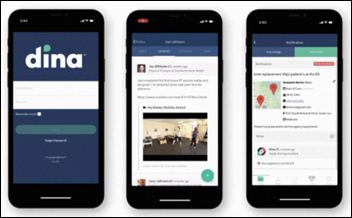
Dina powers the future of home-based care. We are an AI-powered care coordination platform that can activate multiple home-based service providers, engage patients directly, and plug into remote monitoring devices. Dina helps professional and family caregivers capture rich data from the home, using artificial intelligence to recommend evidence-based, non-medical interventions. The platform creates a virtual experience for the healthcare team so they can communicate–and help patients and families stay connected–regardless of location.

(Sponsor Spotlight is free for HIStalk Platinum sponsors).


Contacts

Mr. H, Lorre, Jenn, Dr. Jayne.
Get HIStalk updates.
Send news or rumors.
Contact us.

125x125_2nd_Circle

What I Wish I’d Known Before … Striking Out On My Own in Health IT Marketing/PR

I wish I had started freelancing sooner, especially in healthcare. It is so rewarding working in a field where the products or services you’re marketing can make a positive impact on someone’s health.


Don’t! The debacle of health insurance makes this an exercise in major frustration and heartache and massive risk. You can buy “insurance,” but since its not really insurance but rather a Costco membership to buy (maybe) at lower cost, you are left holding the bag and it just takes once medical issue and you are f$%#ed. Thinking about getting LTD insurance – good luck since you can only get coverage for whatever your current income is, and as you strike out, that will be low and maybe non-existent, so your previously viable LTD is nigh on useless Getting back in likely proves even harder once you discover your mistake. Suck it up and accept the crappy work environment and be grateful you have health insurance.


I started my own healthcare IT-specific product marketing business eight years ago, after 25 years in corporate product marketing in healthcare. Here is what I have learned:

  • Building a business takes three times longer than one expects.
  • In general, people have their own concept of product marketing, which (incorrectly) tends to revolve around advertising and sales sheet creation.
  • Everybody thinks they’re a marketer!
  • Business leaders don’t understand that marketing efforts take 6-10 months to have an impact. They expect an immediate impact on their sales.
  • Most healthcare IT business leaders are technical and believe that marketing is unnecessary. They frequently believe “if I build it, they will come,” which is never true.
  • Many healthcare IT business leaders under estimate the importance of collaborative reference sites and their role in marketing.

I did the solo thing for 20-plus years and it was great, yet came with a lot of headaches. Before leaving your current job, I have the following suggestions:

  • Assess your core competencies, focus on what you do best, then identify companies that need your services.
  • Survey colleagues to determine the fees you will charge. Simultaneously, create an initial business plan outlining how many hours you have to bill per month to pay yourself and pay for your business expenses (don’t forget to calculate taxes).
  • Line up a client or two and have them sign a simple contract committing to a minimum monthly fee for your services. Sample contracts are online for free or a minimal fee. Then, quit your current job.
  • At minimum, set up a sole proprietorship with your state. Preferably, set up an LLC or S corp to get some legal protection. All of this can be done online without paying someone to do it for you.
  • Set up company bank account. If you have some cash, you can self fund yourself for a while and place it into the account (essentially making a personal loan to your new business). The account will add accountability and tracking for your business expenses, which are deductible.
  • Determine office needs — what you have, what you need to purchase, including computers, phones, software, internet access, etc.
  • Set up website (free or low cost), and create your social media presence.
  • If you’ll need health insurance, get quotes to determine premium costs.
  • Evaluate other types of insurance you’ll need, e.g., workers comp, home office insurance policy rider, liability, errors and omissions, etc. Many large companies require contractors to have a $1 million liability policy and $1 million errors and omissions policy.
  • Consult with a CPA to learn what is deductible and how often you’ll have to file taxes (usually quarterly, at first), and what software they’ll want you to use to track everything (QuickBooks, Peachtree, etc.).

Most importantly, ask yourself: Will all of this be fun, or an even larger hassle than your current job? And, will you have a security net for situations when clients pay slowly or not at all?

I didn’t have all of these items in place when I quit my job and went solo, and things still worked out for me. I had a wonderful experience, and wouldn’t trade it for anything. After two decades of running a business, I decided that I wanted something different and took on a role at an amazing company. No regrets so far.

Lastly, Google is your friend. Search for lists and tutorials on starting your own business. Literally everything you need to know is out there if you search for it.

I wish you the best!


Weekender 9/11/20

September 11, 2020 Weekender 1 Comment

weekender 


Weekly News Recap

  • Hyland will acquire Alfresco.
  • Amwell’s IPO plan values the company at $3.6 billion.
  • Zocdoc’s former CEO sues the company, claiming his co-founders and the CFO ousted him in a coup.
  • A federal court dismisses a patient’s lawsuit against University of Chicago Medical Center and Google for using his data for machine language training.
  • HIMSS confirms that a HIMSS20 exhibitor has filed a class action lawsuit against it over refund policies for the cancelled conference.
  • VA accelerates its Cerner implementation plan for VISN10 in the Midwest.

Best Reader Comments

Inviting mediocrity to find an opportunity elsewhere sounds about right to me. Of course, some people may not be the right fit for a particular job, but if you can figure out where they excel, then you have keepers. On the flip side of that equation, if you can’t manage strong talent, then maybe you need to be a better manager. I have found that when I hire good people, they get stuff done, and the impossible becomes possible with a few more weeks of effort. Think about Mayo Clinic, their administrators are docs, they are about the mission, the mission is valid and impactful, and anything that falls outside the mission is ‘reviewed’ for relevancy. They swore an oath and the oath means something. I found that same commitment in the service — plenty of people who were mediocre, and plenty of team players who strove for excellence — you weeded the bad, encouraged the mediocre, and rewarded the excellent. (Brody Brodock)

Can’t imagine having a team full of All Stars! What a headache. Someone needs to do the work and keep the ship moving. Interesting that the bribe is top salary in the industry and keep looking over your shoulder. Can’t imagine what that does for balance and family life. And, take a vacation any time you want because no one is looking. Not so fast, when you get back you find out you lost the race for “who would you fight for competition?” Absolutely crazy. There will come a time when this generation will self destruct. (William Reay)


Watercooler Talk Tidbits

image

Readers funded the Donors Choose teacher grant request of Ms. W in South Carolina, who asked for civil rights books for her elementary school class. She reported in early March, “Thank you for supporting our students in reading! Through building our classroom library, you are helping to provide texts that the students can read at their own independent level and with texts that engage them. They love reading and learning about social studies topics. With a classroom as diverse as our the Civil Rights Movement is a topic that we all care about deeply. They were so excited and proud to check out and add these new texts to their individual book boxes to read this week! Thank you once again for your love and support of our students and their love of reading!”

image

Criminal defense lawyers for former Theranos CEO Elizabeth Holmes will arrange a psychiatric evaluation that they hope to use to support a “mental disease” defense.

image

Two COVID-19 field hospitals totalling 2,500 beds that were built in less than two weeks in Wuhan, China in early February were closed one month later, along with 14 other temporary hospitals, when President Xi Jinping declared that the outbreak had ended. The two big hospitals were sealed off on April 15, with state media saying they were both full at one point and that the 1,500-bed one had treated 2,000 patients.

image

A former EVP of struggling Wheeling Hospital (WV) will receive $10 million as his whistleblower share of the $50 million that the hospital will pay to the federal government to settle charges that it paid doctors based on the value of their patient referrals. The hospital had countersued, saying that Louis Longo was also a partner with Deloitte and did not report his concerns to the hospital’s compliance officer and instead, as a bitter former executive, decided to “extort a settlement.” 

The wife of a urologist who has pleaded guilty to Medicare fraud, who was also his office nurse, is sentenced to probation for ordering employees to re-use “certain anorectal devices.”

image

Nephrology fellow Nyan Pyae, MD leaves the hospital after a 106-day COVID-19 stay, including 80 days in the ICU and 26 on ECMO. 

image

Reebok’s ad campaign for a new shoe line that is tied to the upcoming movie “Wonder Woman 1984” features real-life Boston nurses.


In Case You Missed It


Get Involved


125x125_2nd_Circle

Morning Headlines 9/11/20

September 10, 2020 Headlines Comments Off on Morning Headlines 9/11/20

Hyland enters definitive agreement to acquire Alfresco

Hyland will acquire Alfresco, which offers cloud-native content services solutions.

Grand Rounds Secures $175 Million Investment, Led by The Carlyle Group, to Accelerate Clinical Navigation and Virtual Primary Care

Grand Rounds, which offers self-insured employers a health navigation app, telemedicine services, and medical opinions for their employees, raises $175 million.

Radiology Partners Signs Definitive Agreement to Acquire MEDNAX Radiology Solutions

Radiology Partners will acquire Mednax’s radiology solutions business, including teleradiology software used by 500 virtual radiologists, for $885 million.

Comments Off on Morning Headlines 9/11/20

News 9/11/20

September 10, 2020 News Comments Off on News 9/11/20

Top News

image

Telehealth vendor Amwell announces IPO details that include selling $525 million in shares that, along with a $100 million private placement with Google, will value the company at $3.6 billion.

The company’s SEC filing says that it lost $88 million on $149 million in revenue in 2019 and has lost $113 million on revenue of $122 million in the first half of 2020.

The filing also indicates that Amwell, working with its investor Google, will develop an app-free video visit platform called Amwell Now.

Founders, brothers, and Co-CEOs Ido Schoenberg, MD and Roy Schoenberg, MD, MPH each hold shares worth about $300 million at the IPO price. Their Class B shares give them 51% voting power at all times.


Reader Comments

From Non-Attendee: “Re: virtual conferences. I would not attend, even at no cost, since I don’t like watching video in real time.” Neither would I. I would rather watch recorded sessions afterward, where I’m free to fast-forward, bail out if it gets boring, or skim a transcript, which plays up the advantages of video compared to in-person sessions. Virtual conferences have significant challenges: (a) educational sessions weren’t the primary draw for most conference attendees, who were looking more for networking and self-celebration, and the overall quality of these sessions isn’t enough to carry the concept; (b) it already feels virtuous to attend an online session and being required to pay for it makes it even less of a draw (expensive universities have that same challenge); and (c) people are already sick of staring at on-screen video wearing sweatpants all day. I was leery of the value of conference educational sessions even pre-pandemic, having skipped them entirely at the last several HIMSS conferences after wasting time in sessions that were poorly done, boringly presented, and that contained increasing amounts of promotion of companies and the presenters themselves, so watching those same questionable presentations on video is about as compelling as an Adam Sandler movie marathon.


HIStalk Announcements and Requests

image

A reader asked me to create a Meditech news history page like I did for Cerner, so that’s done and also added to the top menu in the “Company News History” category. News items that were significant enough to make the HIStalk news cut will be copied and pasted there, creating an easily referenced longitudinal view of “real” company news that will get longer and more valuable over time.

We always offer new sponsors a little sweetener this time of year. Sign up now and Lorre will make your renewal date 12/31/21, giving you the rest of this year free. Existing Platinum sponsors get a deal, too – I’ll run a Sponsor Spotlight if you fill out this form. Contact Lorre or Jenn. It will at least give you something to do while waiting out the long dry spell until HIMSS21. 


Webinars

September 17 (Thursday) 1 ET. “ICD-10-CM 2021 Updates and Regulatory Readiness.“ Sponsor: Intelligent Medical Objects. Presenters: June Bronnert, MSHI, RHIA, VP of global clinical services, IMO; Theresa Rihanek, MHA, RHIA, mapping manager, IMO; Julie Glasgow, MD, clinical terminologist, IMO. IMO’s top coding professionals and thought leaders will review additions, deletions, and other revisions to the 2020 ICD-10-CM code set that will be critical in coding accurately for proper reimbursement.

Previous webinars are on our YouTube channel. Contact Lorre to present your own.


Acquisitions, Funding, Business, and Stock

image

Hyland will acquire Alfresco, which offers cloud-native content services solutions.

image

Truepill, which just raised $75 million in a Series C funding round, says that its annual revenue will reach $200 million by the end of the year. The company offers API-connected, white-label pharmacy and lab services to sites such as Hims and Nurx that sell direct-to-patient prescriptions for hair loss, erectile dysfunction, and weight loss. Truepill is launching a third product line in which it will sell at-home lab tests. Co-founder Umar Afridi was working as a CVS pharmacist three years ago, while his co-founder is a biomedical engineer who came from LinkedIn.

image

The co-founder and former CEO of one-time health IT high flyer Zocdoc, which offers consumer-facing provider search and scheduling, sues the company that was once valued at $1.8 billion, claiming that his two co-founders and the company’s CFO pushed him out in a 2015 coup. He wants his old job back.

image

Grand Rounds, which offers self-insured employers a health navigation app, telemedicine services, and medical opinions for their employees, raises a $175 million investment that increases its total to $270 million.

Healthcare Growth Partners says in its August review that “M&A is back and the velocity of the rebound has outpaced all expectations” with summer deals that include recapitalizations of WellSky, QGenda, and Edifecs and M&A involving Teladoc-Livongo and Waystar-ESolutions. The health IT sector has delivered a 42% return year to date.


Sales

  • Tampa General Hospital and USF Health go live on CareMesh to deliver event notifications, referrals, and transitions of care from Epic to community providers and practices.
  • Monument Health will implement Nuance’s Dragon Ambient Experience conversational AI for capturing encounter information that then updates the EHR.
  • Four of Finland’s regions will work with Cerner to develop a digital platform to support moving municipal healthcare services under a regional authority.
  • Mount Sinai Health System chooses Artifact Health’s mobile physician query platform for clinical documentation improvement.
  • RWJBarnabas Health will implement Wellsheet’s EHR predictive workflow tool in seven of its hospitals. The health system is an investor in a fund that has a financial interest in Wellsheet.

People

image

Uber Health GM Dan Trigub – who previously served in a similar role with Lyft — will leave the company after two years to launch a care access startup.

image image

Behavioral health data analytics vendor Evidation Health names Christine Lemke as co-CEO and appoints co-CEO Deb Kilpatrick, MS, PhD as executive chair of the board. The company has five co-founders on its executive team.


Announcements and Implementations

image

Meditech launches Expanse Virtual Assistant, a voice navigation system powered by Nuance that can allows users to perform hands-free actions.

image

East Alabama Medical Center goes live on the Enhanced Physician Documentation System of Crossings Healthcare Solutions, which provided virtual training and conversion support. The company offers Cerner Millennium enhancements that include solutions for documentation, order renewal, catheter management, physician notification, quality advisors, direct submission of professional billing from the chart, blood transfusion advisor, insulin management advisor, patient care dashboard, ED triage management, interdisciplinary rounding, a CCL smart template wizard, and tools to compare builds and perform change management. Demos are online.

B. Well Connected Health launches a COVID-19 return-to-work solution for employers that includes a self-screening questionnaire and recommendations.

The latest results of the Social Progress Index finds that only the US, Brazil, and Hungary have move down the list since it was first published in 2011. The US — which came in at #28 among 163 countries in areas that include nutrition, safety, freedom, the environment, and health – finished behind 96 countries in access to quality healthcare.

AMA adds two coronavirus-related CPT codes to cover time spent complying with safety protocols and running antibody tests.

image

Virtual, site-less clinical trials vendor Science 37 adds EHR integration to its platform.

Strata Decision Technology completes the 50th virtual implementation of its StrataJazz financial planning, analytics, and performance applications since mid-March, including Duke University Health System, Christus Health, and Sharp HealthCare.


Government and Politics

image

An investigation by House and Senate Democrats finds that CMS Administrator Seema Verma spent $6 million of taxpayer funds on GOP-connected consultants who billed up to $380 per hour to promote her personal brand by pitching her for magazine interviews and leadership awards. One consultant threatened to bar a Modern Healthcare reporter from CMS press calls after the magazine ran a story Verma didn’t like, while another scored her a photo shoot for a HealthLeaders puff piece. Taxpayers footed a consultant’s $3,000 bill to arrange a “girls’ night” that was thrown in Veema’s honor at the home of USA Today Washington Bureau Chief Susan Page, while another charged $1,000 to place an op-ed on Fox News to tout President Trump’s changes to the Affordable Care Act. She also disclosed details about her plan to overhaul the EHR market to the consultants three months before the new rules were released – after overriding the concerns of federal officials — in hopes of getting CNN’s Sanjay Gupta to run a story on her.

image

CMS launches Care Compare, a provider search website for consumers.


COVID-19

image

President Trump says in audio recordings of interviews with journalist Bob Woodward that were made over several months that he knew, even before the first US COVID-19 death in early February, that the virus was deadly. He described to Woodward in significant detail how coronavirus spreads, its lethality, and that young people are infected, but says he intentionally kept that information from citizens because he didn’t want to create a panic. He said publicly for weeks afterward that COVID-19 was no worse than flu, that it would go away on its own, and that mask-wearing was unnecessary. The President tweeted Thursday afternoon that the recording shows his “good and proper answers,” and otherwise Woodward should have reported them at that time to save lives instead of holding them for a future book.

Florida’s state government orders counties to stop publishing infection details for individual schools, citing privacy concerns. The state has threatened to withhold funding for districts that did not open by August 31. WHO says that the infection rate should be under 5% for safe school re-opening, while Florida’s average is 14.5%. The state has seen more than 10,000 positive cases in children under 18 since school started.

image

University of Wisconsin will move all classes online for two weeks and will quarantine students in two of its largest dorms after seeing 1,000 COVID-19 infections five days after it started classes under its “Smart Restart” program. At least 46 outbreaks are linked to the Madison campus and test positivity rates are at 20%. The university wisely won’t send students home to spread the infection further. The university’s interim president is former governor Tommy Thompson, who served as federal HHS secretary from 2001-2005.

Eighty percent of polled Americans don’t expect a COVID-19 vaccine to be widely available by Election Day, but if it does hit the market, 54% say they won’t take it.


Other

JP Morgan’s annual healthcare conference in San Francisco will move to a virtual format in January. The influential gathering is best known for creating a constellation of nearby meetings of moneyed folk who aren’t even attending the conference proper, a ticket that is mighty hard to come by. Zoom will likely not prove to be a good substitute for glad-handing and deal-making. Seema Verma is a keynote presenter, referred to in the program as “Dr. Seema Verma” even though I believe her highest degree is an MPH, not a doctorate.

UK Health Secretary Matt Hancock says NHS will receive $65 million to support several AI/ML projects.

A Health Affairs article lists five ways to integrate telehealth into primary care practices:

  1. Pay the same rate for telehealth and in-person visits.
  2. Create billing codes and payment models to cover the time that is required to address technology issues.
  3. Provide insurance coverage for home monitoring devices such as connected thermometers and blood pressure cuffs.
  4. Provide incentives for companies to develop telehealth technology that is more patient- and provider-friendly, including integrating interpreter services.
  5. Review malpractice issues such as delivering care across state lines, standards of care, and the possible propensity of patients to sue a provider they have never met in person.

Sponsor Updates

  • In England, Royal National Orthopaedic Hospital NHS Trust reports an 84% improvement in care team response time after replacing pagers with Vocera’s smartphone app and badge.
  • Saykara President and Chief Medical Officer Graham Hughes, MBBS writes ”The promise of conversational AI in helping restore the doctor-patient relationship.”
  • Jvion’s momentum continues in 2020 with initiatives to address COVID-19 disparities, expanded product offerings, and industry recognition.
  • Gartner includes CI Security as a Representative Vendor in the Managed Detection and Response category in its “Market Guide for Managed Detection and Response Services” report.

Blog Posts


Contacts

Mr. H, Lorre, Jenn, Dr. Jayne.
Get HIStalk updates.
Send news or rumors.
Contact us.

125x125_2nd_Circle

Comments Off on News 9/11/20

EPtalk by Dr. Jayne 9/10/20

September 10, 2020 Dr. Jayne 1 Comment

clip_image001 

My organization uses a scheduling app to manage the work arrangements of our 500+ employees. We switched to it a couple of years ago, moving from one that we were starting to outgrow. The hope was that the new one would have more robust features, but in some ways, it was a step backwards because it didn’t have a mobile app at the time of the switch. They promised it would be available in a couple of months, but in reality it took almost a year to deliver.

When I logged in after the Labor Day holiday, I discovered that they had re-skinned the platform. My easily usable and well-ordered list was now represented as tiled buttons across the middle of the screen, forcing my eyes to track all the way across rather than just parsing down a list as I was used to. The vendor included a page on the re-skinning, bragging on their “fresh fonts” and removal of wasted space, although at least for my access level, the amount of white space is unchanged. Hopefully there are some big wins for the people preparing the schedules behind the scenes, but for the majority of us, it was unremarkable.

We’re in the middle of re-credentialing with some of our payers, and I’m shocked at how manual the process is. All the providers have to print, sign, and scan documents as part of the process. I threw a flag on one payer’s play because the document I was asked to sign said I consented to be bound by their Provider Participation Agreement and their Provider Administrative Manual as viewed on a portal I don’t have access to. When I pushed back on our in-house credentialing folks about wanting copies of the documents I was agreeing to, I received a phone call about ‘being difficult.’ Apparently, the majority of my physician colleagues signed it without reading all the terms, which is somewhat concerning. When I finally received the documents 10 days later, there were over 100 pages to read. There’s no mechanism for electronic signature on these either, so I didn’t bother to ask about that. Since I have to print and scan, they can wait a little longer.

clip_image002

CMS will close the comment period for the 2021 Proposed Rule for the Quality Payment Program at 5 p.m. ET on October 5. Due to the pandemic, CMS is focusing primarily on “essential policies including Medicare payment to providers.” Key elements include: an increase in the complex patient bonus; postponing implementation of the MIPS Value Pathways until 2022; and removing the CMS Web Interface as collection and submission types for reporting MIPS quality measures beginning with the 2021 reporting period. Comments can be submitted via Regulations.gov as well as through snail mail or overnight mail.

clip_image004

The American Medical Association announced new CPT codes this week, with one intended to help practices charge for the added supply and staff cost generated by operating in the COVID world:

99072 Additional supplies, materials, and clinical staff time over and above those usually included in an office visit or other non-facility service(s), when performed during a Public Health Emergency as defined by law, due to respiratory-transmitted infectious disease.

Don’t get too excited about billing for them just yet. At the same time as they created it, AMA also sent recommendations to the Centers for Medicare and Medicaid Services recommending coverage for them. It will take time for them to be approved by payers, and I suspect that some will try to bundle this code with other services and not pay it, despite its intent. Either way, it only works when we are subject to a declared public health emergency due to respiratory illness, so we’ll have to see how many people actually receive money by billing it. We’ll also see how long it takes EHR vendors to get the code loaded in their systems.

clip_image006

A couple of friends of mine scored some kicky socks at the hospital blood drive. An opinion piece in JAMA Internal Medicine this week highlights the continued inability of many gay men to donate blood. Author Greg Zahner, MD summarizes the history of the restrictions on these donations. For younger physicians and healthcare folks who might not have been around in the pre-HIV world and don’t know the history, or for those who want us to have an adequate supply of blood products, it’s an interesting read.

clip_image008

Lots of people have taken up new hobbies during the pandemic, and I admit to some pastry therapy as well as continuing to learn a new musical instrument. A family member double-dog-dared me to sit for the amateur radio licensing exam, which I completed this weekend. The Greater Los Angeles Amateur Radio Group VEC is one of 14 FCC-recognized Volunteer Exam Coordinators. Exams are usually administered in person, but GLAARG has delivered over 1,000 exams via Zoom since April 2020. I have to say the physical arrangements were as intense as some of the high-stakes examinations I’ve taken to further my medical career. Applicants have to be in a room without any potential reference materials and no chance for interruption and are monitored by a panel of three volunteer examiners while they take the online test. There’s nothing quite like welcoming three strangers into your hall bathroom, where you’re sitting with a laptop and a TV table. You have to show the entire room, including floor and ceiling, to make sure there is no contraband.

It was a well-organized process, with applicants first being oriented in a large Zoom waiting room until they were “teleported” to breakout rooms where they went through a pre-check process to ensure good audio and video, and where they made sure all browser extensions were disabled and popups were suspended before being migrated to the actual testing breakout session. Although I had an initial glitch where one of the panel members couldn’t see all of my shared screen, he was quickly replaced by another examiner. The exam went smoothly with instantaneous grading and electronic signatures on the FCC-required documentation. Even with taking the exam during a holiday weekend, the FCC processed my license quickly and I was ready to hit the airwaves on Tuesday morning.

It’s been fun learning something completely new, although there were some exam questions dealing with the effects of radio frequency emissions on the human body as well as those on how to avoid being electrocuted that overlapped with my previous studies. The amateur radio community is a welcoming bunch, and to any of you out there, I send you a hearty “73.”

Did you try new things or pick up a new hobby during the pandemic? Leave a comment or email me.

Email Dr. Jayne.

Morning Headlines 9/10/20

September 9, 2020 Headlines Comments Off on Morning Headlines 9/10/20

Update: Closing on $75 million in new cash, Truepill plans at-home testing service as it nears $200 million in annual revenue

Telemedicine and pharmacy fulfillment company Truepill will use a new $75 million funding round to develop at-home testing services by the end of the year.

Progressive Care Enters into Letter of Intent to Acquire Telehealth Service Provider MyApps Corp.

Progressive Care acquires MyApps and its CallingDr white-label telemedicine service for $10.2 million.

Independent physician-owned practices adopt more quality improvement strategies

An observational study conducted by researchers at George Mason University finds that independent, physician-owned practices adopt more quality improvement strategies than their hospital-owned and community clinic counterparts.

Comments Off on Morning Headlines 9/10/20

HIStalk Interviews J. Erin Hutchinson, Owner, Narrative Shift

September 9, 2020 Interviews Comments Off on HIStalk Interviews J. Erin Hutchinson, Owner, Narrative Shift

J. Erin Hutchinson, MA is owner of Narrative Shift of Herbster, WI.

image

Tell me about yourself and the company.

I’m a Midwestern farm girl, so I don’t like to talk about myself, as most of us don’t. I’ve spent my career starting companies, starting with clothing stores and video store chains. I have 45 years’ of experience in the healthcare technology world. Ten years ago, after launching many small ventures, I started what is now Narrative Shift.

We help founder-led companies and startups in the healthcare and biotech space successfully launch their products and services. We help them craft compelling narrative to create curiosity and excitement among their target customers so that they are interested in having a conversation. All of us are bombarded with lots of shiny marketing stuff, but it’s hard to get your message out there so that people take action and have that initial sales conversation. We do full-service graphic design, marketing, and go-to-market strategy. It’s a startup advisor in a box, as I like to say.

You went from being a psychologist to leading teams at Epic, engineering companies, and consulting firms. How have you applied your psychology knowledge in those roles?

I worked for Epic back when it was fewer than 100 people. In my late 20s, I was working with physicians and surgeons who were new to technology, to the point that I had to teach them how to turn on a computer and use a mouse. A surgeon threw a keyboard at my head once, so that’s when I used my clinical psychology skill set to get people to change.

In helping new companies get launched and bringing more revenue to tech startups, I draw from that background of how we communicate and connect with other people. Companies tend to get myopic. They may have the best thing since sliced bread, but they lose track of being able to put themselves in their customer’s place. I help these companies craft their identity and craft their story so that it is communicated and connects with their target audience.

Tech people are not always the best at the human element, so my background has helped a lot. Plus I was a child and adolescent psychologist where humor is important, especially when you are working with young kids. I bring that to my work with my clients. Starting and growing a company is hard work and I like to bring a little bit of fun to that.

What is narrative therapy?

I was trained in, and my dissertation was in, using the narrative approach in working with children and adolescents. I could bore anyone to tears with all of the heavy post-modern theory aspect of narrative therapy, but in essence, it’s that we as humans create meaning and communicate with each other through through narrative, through stories. That is the core element of how we express our experience. The essence of successful design and marketing is that you have to communicate to your customer through a story.

Bringing the narrative therapy approach involves working with your clients to understand the narratives that shape their world view, and then working with them to re-author those in the way that they see themselves. Maybe they can re-author their narratives to psychologically shift their perspective.

Founders are usually interesting and have a lot of personality and humor, but they seem to be coached into dullness as their companies grow, to the point that all communication is filtered through conference rooms pull of people who suck the life out of it. Can large companies be interesting and fun?

To be 100% transparent — and sometimes I’m painfully so — one benefit of owning a company is that you can choose to be that way. I choose not to work with many large, established companies. They are either overly prescriptive about “this is how we must present ourselves” or they have armies of corporate marketing people who are maybe good at putting on events, but not so great in figuring out better ways of connecting with their customers.

We in healthcare are do a really bad job of using creative ways to get the interest of target customers and target markets. I set a rule with clients that if they want shiny, happy stock photos of people who look like doctors and nurses, then they need to find a different agency to work with. I generally shy away from those companies that grow and become the Borg.

Early-stage or founder-led companies, which more often maintain that entrepreneurial culture, are more open to being creative and asking for help to find their voice, establish their identity, and craft the narratives that will get prospects interested. I’m probably trying too hard to be politically correct in saying that big companies are boring. Those that grow successfully need to maintain that fine line, but cut through the noise by being a little bit irreverent and not being afraid to try something different in their marketing. It’s easier to do that if you have strong leaders who maintain that entrepreneurial spirit and don’t hire a bunch of marketing Borgs or large agencies without experience in healthcare or healthcare tech, which perpetuates this culture of stock photo websites and material and messaging that all looks the same.

How much do you help create strategy rather than just communicate it?

It’s a little bit of both. I love working with smaller companies and startups because I’ve been in the role of starting companies. I’ve been a part of many ground-floor new ventures. I’ve done the work. I didn’t just get a marketing or design degree. I’ve gone through the process of getting funding and I know what that takes.

With my background as a therapist, many clients ask for help because they hate their website or their sales pipeline isn’t growing. But most of the time, that ends up turning into a combination of helping to craft the strategy, especially from a go-to-market perspective, as well as the messaging and those narratives. I find it impossible to separate those two. Maybe it’s because I’m opinionated, honest, and open that I can’t hold back, so I give my advice and clients can take it or leave it. I can’t just churn out stuff that looks pretty and sounds good. If I can help someone with their strategy and to be more successful in growing their company, I’m going to do that.

Because of my background and being one of the few firms out there that specializes in the provider market, they don’t have to spoon feed me and educate me on their business and their customers. I know it. That also helps me to be more strategic and holistic in the work that I do with my clients. It also means they don’t have to go through the agonizing process of writing a lot of copy for me to clean up because I can already articulate what is needed to their customers.

Social media tech companies have embraced psychology in ways that aren’t entirely positive, getting people to keep coming back, pushing analytics-targeted ads, and entertaining them with short videos. Does that change the way that companies might get and keep the attention of prospects?

Because of the evolution of media and how people consume information, there’s no longer a standard recipe of what will work for a particular type of company or customer. I tell clients that some things aren’t worth wasting your time on. You aren’t going to get a hospital CEO to call you just because you have a great Twitter feed. Some clients I’ve worked with think a social media presence will magically result in more customers.

I wish that the diversification of media and expansion of the ways people get information make it easier to grow your company and to get the attention of your customers, but frankly, it has made it a lot harder. You have to spend more time understanding who they are, developing your buyer personas, and then figuring out where they are. What are they looking at? How do you get in front of them and get their attention? You need to have a multi-pronged approach. We no longer have four TV channels, three radio stations, and two newspapers.

It goes back to psychology understanding. What do you have to offer? What is your secret sauce? What makes you special? Whose attention are you trying to get? The psychology component gets infused into figuring out which tools to leverage and crafting campaigns and materials that are targeted at these types of potential customers. That was simpler before social media.

Some companies based their entire marketing strategy around the HIMSS conference, then reaped whatever benefit they received for a whole year. How will that change in the absence of in-person conferences for now and with provider customers whose priorities are dramatically different than they were six months ago?

I’ll be blunt. If there is one upside to the pandemic that we’re living in, it’s that it upended the HIMSS apple cart. My guidance to clients for at least the last five years is, don’t do it – don’t spend the majority of your marketing budget on this one event. Feedback from the last 10-15 companies that I’ve worked with, which has gotten louder over the last few years, is that they sunk a ton of money into HIMSS and got next to zero return, other than meeting a few new people. I’m hoping that this has forced companies to reevaluate and rethink their spending. I will be curious to see, by the end of this year or the middle of next year, if companies look back and realize that HIMSS didn’t really impact their bottom line that much, and they got good results using other methods.

Will that level the playing field so that small companies can use creativity rather than a big bank account and sprawling booth to chase business?

The benefit is that people have to think differently about getting their name out there and marketing themselves. The benefit of in-person conferences was getting face time in forcing your way in front of those most likely buyers. The companies that will succeed now will be creative and able to adapt. That’s harder for a large company that has entrenched corporate marketing departments and strategies, where it’s harder to adapt and be willing to diversify in trying different things and methods. Established, bigger companies put 75% of their marketing budget into HIMSS or other conferences. Now there’s the freedom to take that money and be more creative and use a variety of marketing campaigns.

Smaller players are relegated to the HIMSS “basement,” sometimes literally on the fringes of the big show floor. This is a time where it’s harder to get healthcare buyers to pay attention to you. They playing field is leveled if you are creative an willing to try different things. Your prospects aren’t getting the impression that since you don’t have a big booth, you’re not worth talking to.

I live in a very rural, isolated part of the country that relies on tourism. I’m involved in the local farming and arts communities. We have offered for 15 years a local artist studio tour, with hundreds of people visiting this tiny town of 100 people that I live in. We couldn’t do it this year because of the pandemic, so we pivoted to a virtual tour. We’ve had three times the traffic as we had last year, which had been our most-attended year. This has made made everybody think differently about how you can market and sell art and for artists to connect with potential buyers as well as just people who appreciate art. Corporate America and companies that sell into the provider market might be surprised by the amazing results they can see if they connect with people virtually.

What psychological observations do you have from working in 100-employee Epic now that it’s 10,000-employee Epic?

They have had to adapt some things as they have grown, but I’m not surprised that the company’s culture has remained consistent, since it is 100% driven by the founder. She has remained consistent in her perspective on how she wants the company to be portrayed, even in things like not wanting to get a bunch of “professional” marketers and designers.

Back in the day, I was one of the people producing the UGM multimedia presentations. It was all employees, and now they have people they pay to do that. But the company has always been proud of not devoting tons of time and resources to sales and slick marketing, and that has helped them continue that same kind of vibe. Going back to pure psychology, Judy established the narrative of what she wanted Epic to be early on and has not deviated much from that as the company has grown.

Some great case studies will be written in the next decade or so that Epic didn’t follow the rules of the road, but still scaled the company without growing up, maturing, and making everybody wear suits. People will look back and see that you can be true to yourself if you establish that really strong identity and strong narrative. You can grow and become the monolithic, 10,000-pound gorilla.

Do you have any final thoughts?

Everyone is struggling. 2020 has been a year that none of us could have expected. If you are struggling, like we all are, this is a great time to reevaluate and take a look at how you are communicating and defining the story you want to tell. Think about trying something different, because honestly, what’s it going to hurt? The rules have been broken by the fact that we are living in a completely new reality. Have fun with that a little bit.

Comments Off on HIStalk Interviews J. Erin Hutchinson, Owner, Narrative Shift

Morning Headlines 9/9/20

September 8, 2020 Headlines Comments Off on Morning Headlines 9/9/20

United States District Court Northern District of Illinois Eastern Division: Memorandum Opinion and Order

A federal court dismisses a class action lawsuit that was brought by a University of Chicago Medical Center patient who objected that the hospital shares the de-identified records of adult patients with Google for machine learning research.

NIH awards Fairfax company $39M contract

The National Institutes of Health awards Vibrent Health a $39 million contract to continue providing participant management technology for its All of Us research program.

ConnectiveRx and HelpAround Transform Mobile Access for Specialty Medication Patients

ConnectiveRx invests in HelpAround, a patient engagement and medication adherence startup that is focused on app-based messaging for patients undergoing specialty treatments.

Seattle health tech startup Optimize.health raises $15.6M for remote patient monitoring service

Optimize.health raises $15.6 million after pivoting from developing smart pill bottles to remote patient monitoring services.

Telehealth firm Amwell looks to raise about $560 million in U.S. IPO

Amwell expects to raise $560 million through its mid-September IPO of 35 million shares priced at between $14 and $16.

Comments Off on Morning Headlines 9/9/20

News 9/9/20

September 8, 2020 News Comments Off on News 9/9/20

Top News

image

A federal court dismisses a class action lawsuit that was brought by a patient of University of Chicago Medical Center who objected that the hospital shares the de-identified records of adult patients with Google for machine learning research.

The plaintiff says the hospital shares patient dates of service and free-text medical notes, both of which could make it easier for Google to re-identify their data. He adds that the company could link his information to the many databases it controls, including geotracking information, which could compromise his anonymity.

The court found that while the hospital probably breached the express contract that is represented by its Notice of Privacy Practices by “selling” de-identified data in return for free software licenses, courts have not ruled that such data has market value. It also said that the plaintiff did not prove that the value of his records was diminished by having them shared with Google.

The court noted a legal precedent in which a HIPAA violation can’t be pursued as a breach-of-contract lawsuit.

The patient sought damages, an argument that the court found was not supported by proof of any losses. The ruling also observed that the plaintiff signed the hospital’s authorization form, which specifies that patients don’t get paid even if their information is used to create commercial value.


Reader Comments

image

From HITCurious: “Re: HIMSS20. The exhibitor settlement contract alludes to class action lawsuit. Anyone have details?” HIMSS provided a timely response to my inquiry, which I appreciate:

HIMSS confirms that in early June, one of its exhibitors filed a lawsuit in federal district court in Illinois, seeking a refund of fees for the 2020 Global Conference. This exhibitor also seeks to represent a class of other exhibitors that it claims are similarly situated. This lawsuit is captioned HatchMed Corp. v. Healthcare Information and Management Systems Society, Inc., Case No. 1:20-cv-03377 (N.D. Ill.). HatchMed alleges that HIMSS had an obligation to refund fees paid by exhibitors for the 2020 Conference, after the Conference was cancelled due to COVID-19. No class has been certified, and HIMSS disputes the basis for HatchMed’s claims. 

HIMSS is grateful for the support of exhibitors and attendees through these unprecedented times, and gratified by the overwhelming support of exhibitors for the upcoming HIMSS21 conference, scheduled for August 2021.

[HatchMed, which sells nurse call cables and device mounts and reports 2-10 employees, booked a 10×20 booth for $11,075].


HIStalk Announcements and Requests

image

Reminder: if you have struck out on your own in health IT marketing/PR at some point in your career, share your experience with those who are considering such a move.


Webinars

September 9 (Wednesday) 1 ET: “APIs for Data Liquidity in Pandemic Times.” Sponsor: Chilmark Research. Presenters: Brian Murphy, research director, Chilmark Research; Gautam “G” Shah, VP of platform and marketplace, Change Healthcare; Drew Ivan, chief product and strategy officer, Lyniate; and Dave Levine, MD, co-founder and chief medical officer, Datica. This webinar will present the findings from a recently published research report on the state of the healthcare API market. The presenters will describe their work in deploying APIs to enable new functionality to address COVID-19. They will cover the use cases that have been most reliable for enabling effective data liquidity, how developers are using APIs to respond to the pandemic, and how different parts of the healthcare system are making APIs more widely available.

September 17 (Thursday) 1 ET. “ICD-10-CM 2021 Updates and Regulatory Readiness.“ Sponsor: Intelligent Medical Objects. Presenters: June Bronnert, MSHI, RHIA, VP of global clinical services, IMO; Theresa Rihanek, MHA, RHIA, mapping manager, IMO; Julie Glasgow, MD, clinical terminologist, IMO. IMO’s top coding professionals and thought leaders will review additions, deletions, and other revisions to the 2020 ICD-10-CM code set that will be critical in coding accurately for proper reimbursement.

Previous webinars are on our YouTube channel. Contact Lorre to present your own.


Acquisitions, Funding, Business, and Stock

image

ConnectiveRx invests in HelpAround, a patient engagement and medication adherence startup that is focused on app-based messaging for patients undergoing specialty treatments.


People

image

Access EForms promotes Rob True to VP of professional services.

image image

Collaborative Imaging names Arun Douglas (Zinc) chief technology and security officer and David Silva (Baylor Scott & White Health) chief compliance officer.

image image image

Health Catalyst co-founder Steve Barlow returns as SVP after a three-year missionary stint. Bryan Hinton will be promoted to CTO in replacing Dale Sanders, who will move to senior advisor.

image

Australian Digital Health Agency hires Amanda Cattermole, MS, MBA (Services Australia) as CEO. She replaces Tim Kelsey, who took an SVP job with HIMSS in January 2020.


Announcements and Implementations

SNAGHTML2dd7ec7

A new KLAS report finds that health system use of a single vendor for all revenue cycle needs remains a work in progress, with clients of Change Healthcare and Experian Health reporting the highest usage of available components as the slow transition from best-of-breed solutions continues. Waystar clients say they want to implement available patient access functionality, those of NThrive say its technology can handle complexity, and both companies have multiple customers using HIM functionality that has limited industry-wide enterprise use.


COVID-19

image

North Carolina becomes the latest of several states for which published COVID-19 numbers have been skewed due to data reporting problems. The state’s HHS says that unspecified technical issues have caused hospitalization data to be underreported since Friday.

image

Stat assesses the progress that has been made by Operation Warp Speed in its first five months:

  • It spent $10 billion to support vaccine manufacturer research and production.
  • It spent $450 million to support the monoclonal antibody treatment manufacturing capacity of Regeneron (and soon to Eli Lilly, which is working on a similar product). This is its only investment in COVID-19 treatment.
  • It has done little with diagnostics.
  • It has issued $500 million worth of no-bid contracts with companies that manufacture syringes and glass vials.
  • Stat gives OWS low marks for transparency, such as explaining why it chose particular vaccine projects to fund.

Economics researchers estimate that the 500,000 attendees in early August’s Sturgis, SD motorcycle rally — most of whom did not wear masks or use social distancing — created 250,000 new coronavirus cases that will incur $12 billion in public health costs.

A pre-print of a randomized study of 464 hospital inpatients by India-based researchers finds that convalescent plasma treatment was not associated with reduced mortality or a halt in disease progression. The authors note that while CP therapy is authorized for off-label use in India and is safe, it requires a lot of resources to collect and store plasma and its sale on the black market has driven prices up.

The Washington Post says that businesses that perform “deep cleaning,” spray disinfectant freely, and make employees wear gloves is just “sanitation theater” that may distract from the more important need for people to socially distance, wear masks, and avoid enclosed spaces. it may also provide a false sense of security in making it appear that the virus can be controlled.

image

A pathologist employee of Texas-based freestanding ED operator Physicians Premier ER quits after the company bills his insurer $11,000 for a COVID-19 antibody test. The doctor, who ironically oversees the company’s COVID-19 antibody testing program, was a temporary employee between jobs whose short-term “junk insurance” plan was issued by United Healthcare-owned Golden Rule. ED staff told him that he wouldn’t have to pay anything. Golden Rule paid $2,100 without questioning the total, but then the facility sent him a bill for $8,900, which included services he says he didn’t receive in his 30-minute visit. The company’s advertising says the test costs $75 and Medicare pays $42 for it. The doctor reported his concerns to Golden Rule, whose investigator told him he wasn’t surprised and then didn’t follow up.


Other

image

A local news outlet looks at the impact observational studies that are published through Epic’s recently launched Health Research Network have had on COVID-19 treatments:

  • Data queried by researchers at Lee Health (FL) showed that COVID-19 patients were three times as likely as others to develop blood clots, which led doctors to routinely give blood thinners to high-risk patients.
  • Mount Sinai Health (NY) researchers found that patients in their 60s and 70s with dementia were more likely to be hospitalized or die from COVID-19 than patients the same age without dementia.
  • Epic’s own analysis of COVID-19 patients with high blood pressure found those on RAAS inhibitors did no worse than those on other drugs, and did better than those not taking any blood pressure medication.
  • The company’s months-long analysis of cancer screenings has found that, though they have rebounded from significant drops in the spring, they’re still one-third lower than normal.

Sponsor Updates

  • Arcadia publishes a new case study, “CareMount ACO Uses Arcadia Analytics to Build a Narrow SNF Network and Reduce ALOS by 4 Days.”
  • Collective Medical enables SNFs to rapidly generate reports on COVID-positive patients and report to CMS.
  • ESolutions publishes a new white paper, “How the RAP Phase Out will Affect HHA Billing Requirements.”
  • Everbridge risk intelligence provides major corporations, healthcare organizations, and government entities with situational awareness to mitigate threats from COVID-19.
  • Health Catalyst completes its seventh annual and first ever virtual Healthcare Analytics Summit, with record registration of over 3,500 attendees.

Blog Posts


Contacts

Mr. H, Lorre, Jenn, Dr. Jayne.
Get HIStalk updates.
Send news or rumors.
Contact us.

125x125_2nd_Circle

Comments Off on News 9/9/20

Morning Headlines 9/7/20

September 6, 2020 Headlines 2 Comments

VA reboots health record rollout

The VA’s implementation of Cerner’s scheduling solution in the Midwest’s VISN10 region will be followed there by the full Cerner rollout.

Race for Coronavirus Vaccine Pits Spy Against Spy

The FBI warns University of North Carolina and other universities that state-sponsored cyberhackers from China, Russia, and Iran are targeting their COVID-19 research data.

Lessons from a Virus Tracing Dud

The state of Utah paid $3 million plus $300,000 per month to a small technology firm to develop its Healthy Together contact tracing app, which is being used by just 200 people.

Monday Morning Update 9/7/20

September 6, 2020 News 3 Comments

Top News

image

FCW reports that the VA’s implementation of Cerner’s scheduling solution in the Midwest’s VISN10 region will be followed by the full Cerner rollout there. VISN10 will go live on the VA’s 1.1 capability set for small and medium-sized hospitals.

COVID-19 has delayed developing the 2.0 set for its large centers that will go live first at Mann-Grandstaff VA Medical Center in Spokane, WA. Go-live there is set for spring 2021.

VISN10 was the first scheduling go-live because Wylie VA Ambulatory Care Center was a user of the previous Epic-powered MASS scheduling, which is being retired.

I’m assuming that this change explains the VA’s recent award of a $161 million work order to Cerner for infrastructure work in VISN10, which was announced last week without details.


Reader Comments

From Legal Beagle: “Re: telehealth medication counseling. The White House has asked the Supreme Court to reinstate a rule that requires women who are seeking pregnancy-ending drugs to make a physical visit to a doctors’ offices or clinics to pick up the pills for home use, which was a previous FDA requirement that was relaxed due to COVID-19 exposure concerns. What science exists to explain FDA’s view that only this particular drug out of thousands requires a face-to-face encounter instead of telehealth for patient safety? ACOG and others are challenging the must-travel rule, which the White House is asking the Supreme Court to overrule even pre-trial.”


HIStalk Announcements and Requests

image

Poll respondent expectations for Amazon Halo are low. Naysayers say the wearable isn’t all that innovative among a plethora of fitness trackers, while one respondent provides this rather brilliant if non-cheery warning: “Imagine if you will a dystopian corporate future where one of the largest companies in the world provides all products and meals in a cardboard box left at your door, your personal data is bought and sold without your knowledge, and they provide you with faceless grey tracking bands that silently tracking your movements and health metrics. Oh wait, I’m describing Amazon today.”

New poll to your right or here, triggered by something you’ll read further down the page: Would you be comfortable working for a company that regularly fires “adequate” employees in seeking only stars?

image

A reader asked me about leaving the corporate health IT world and hanging out their own shingle in areas such as marketing and PR. If you’ve done that sometime in your career, please share your experience and I’ll run the answers on HIStalk.

Thanks to the following companies that recently supported HIStalk. Click a logo for more information.

SNAGHTML5016f2f1
image
image
SNAGHTML5017b2a7
SNAGHTML501afa31
image

Listening: Pentagram. I believe that “Starlady” is one of the most brilliantly written and performed hard rock songs ever, not even counting that it was recorded on a shoestring by a bunch of nobodies. I will listen to that song 10-20 times in a row every now and then just to appreciate the drumming and guitar and the way the rhythm swells and the transitions move it in different directions. Kiss’s Gene Simmons and Paul Stanley watched a mid-1970s rehearsal and decided to pass on signing Pentagram to Casablanca Records because they weren’t pretty (hello, no-makeup Gene Simmons, meet mirror) and Kiss is more of a profit-obsessed corporation than a group of inspired musicians (not to to mention the least-talented band I’ve ever seen play live). I’m due a re-watch of “Last Days Here,” a documentary about Pentagram’s rocky history and its only permanent member and modestly talented Bobby Liebling, whose mental and drug problems created a large group of alumni – 11 guitarists, nine bass players, and 11 drummers. But in the late summer days of 1976, their supernova was captured on primitive recording equipment while the world was distracted by lesser musical lights.


Webinars

September 9 (Wednesday) 1 ET: “APIs for Data Liquidity in Pandemic Times.” Sponsor: Chilmark Research. Presenters: Brian Murphy, research director, Chilmark Research; Gautam “G” Shah, VP of platform and marketplace, Change Healthcare; Drew Ivan, chief product and strategy officer, Lyniate; and Dave Levine, MD, co-founder and chief medical officer, Datica. This webinar will present the findings from a recently published research report on the state of the healthcare API market. The presenters will describe their work in deploying APIs to enable new functionality to address COVID-19. They will cover the use cases that have been most reliable for enabling effective data liquidity, how developers are using APIs to respond to the pandemic, and how different parts of the healthcare system are making APIs more widely available.

September 17 (Thursday) 1 ET. “ICD-10-CM 2021 Updates and Regulatory Readiness.“ Sponsor: Intelligent Medical Objects. Presenters: June Bronnert, MSHI, RHIA, VP of global clinical services, IMO; Theresa Rihanek, MHA, RHIA, mapping manager, IMO; Julie Glasgow, MD, clinical terminologist, IMO. IMO’s top coding professionals and thought leaders will review additions, deletions, and other revisions to the 2020 ICD-10-CM code set that will be critical in coding accurately for proper reimbursement.

Previous webinars are on our YouTube channel. Contact Lorre to present your own.


Acquisitions, Funding, Business, and Stock

image

Shares in the exchange traded fund Global X Digital Health & Telemedicine underperformed the broader market in the past month, slipping 1.9% as the Nasdaq index rose 4.2% and the S&P 500 was up 3%.

SNAGHTML5b1aa1fe

Shares in videoconferencing tech firm Zoom run up 41% after the company reports strong, pandemic-fueled revenue and earnings, making the company worth more than IBM and increasing the value of shares held by its founder-CEO to $20 billion. I wouldn’t be a buyer given low switching costs and barriers to entry, questionable future demand, and the target on its back that comes with sudden, unplanned ubiquity, but maybe my lack of vision is why I’m not wealthy. A $10,000 investment in ZM on March 6 would be worth more than $32,000 today, or $40,000 had you sold last Tuesday.


Sales

  • Holy Redeemer Health System expands its partnership with Dina to connect its hospital and home care agencies and organize and empower its post-acute, home and community-based care providers.

COVID-19

Several drug companies that are working on a COVID-19 vaccine will sign a pledge that they will release a vaccine only after data exists to prove that it meets efficacy and safety standards, seeking to reassure the public that White House pressure to get a vaccine on the market before the election won’t affect their science. President Trump suggested Friday that he is involved in the regulatory process, saying that a drug companies have told him that vaccine approval would take 2-3 years under a “a more typical kind of president.”

image

The FBI warns University of North Carolina and other universities that state-sponsored cyberhackers from China, Russia, and Iran are targeting their COVID-19 research data. China is using information taken from the World Health Organization to choose targets and is also using its US university research partnerships to collect information, while China and Russia are using social media to spread disinformation about the virus to fuel the US anti-vaccine movement.

SNAGHTML5b1d02d1

The state of Utah paid $3 million plus $300,000 per month to a small technology firm to develop its Healthy Together contact tracing app that is being used by just 200 people, even after the state shut down its primary but most controversial feature of user location tracking. The primary business of year-old tech firm Twenty, which developed the app, is an meet-up app that targets Millennials. Both founders are BYU graduates.

The WHO says new evidence shows that severe and critically ill COVID-19 patients should be treated with steroids such as dexamethasone, hydrocortisone, and methylprednisolone as a standard of care in first-line treatment. 


Other

image

I read an interesting article on the culture of Netflix, which the company makes sure that prospective employees understand before hiring on. Some points:

  • The mission, vision, and value statements of most companies are ignored. They demonstrate their actual values by who they reward and who they fire.
  • Netflix encourages independent decision-making, shared information, plain speaking, and the avoidance of rules in creating dream teams of people, valuing people over process.
  • Good employees listen before reacting, think clearly under pressure, and are concise and articulate in speech and writing.
  • Employees are expected to say what they think if it’s in the best interest of the company, even if it is uncomfortable, and are expected to say things about co-workers only if they would be willing to say them to their faces.
  • The dream team concept means that “we give adequate performers a generous severance package” so they can replace them with a star. They suggest that people who value stability, seniority, and companies that are willing to work around ineffective performance look elsewhere.
  • Netflix has a team, not a family, since families include unconditional love and life-long attachments that teams do not. They say, “Unconditional allegiance to a stagnant firm or to a merely adequately performing employee is not what we are about.”
  • Managers run the “keeper test” to decide who to retain – which if their employees would they fight to keep if they were considering leaving the company?
  • The company does not hire “brilliant jerks” since the cost to teamwork is too high.
  • Netflix does not give raises, but instead surveys the talent market and pays at the top end of what employees could make elsewhere since “the market for talent is what it is” and “your economic security is based on your skills and reputation, not on your seniority at one company.” They encourage employees to interview for jobs outside the company and share what they learn with their managers.
  • The company observes that as companies get bigger, they place too much emphasis on process, the average talent and passion level slips, and they then throw more management at the pockets of chaos that result and stifle creative thinkers who question the status quo.
  • All company documents are published for everyone to read and comment on.
  • The company does not implement spending controls, contract signing controls, and policies for travel, entertainment, and gifts, assuming that employees will use good judgment and seek advice as needed.
  • Netflix has no vacation policy except to take one when needed.
  • Employees get to choose the mix of salary versus 10-year fully vested stock options for their salary. Employees who leave keep the full value of their options.
  • Netflix has seen a few examples of employees abusing their freedom, but avoids over-correcting because most employees can be trusted.
  • Decisions are made by one assigned “captain” instead of committees that are slow and diffuse responsibility and accountability.
  • The company does not believe in executives who remain immersed in deep product details or micromanagement, instead priding itself on how few decisions senior managers make.

image

CNET describes Sutter Health’s use of EICUs in two hubs to scale up services to handle up to 600 patients to meet any COVID-19 surge. It also observes the geographic opportunities, such as Emory Healthcare’s use of intensitivists in Western Australia to monitor its patients in Georgia. Sutter says that development of the EHR was the most important for their EICU program, followed by increased bandwidth, high-definition cameras, and cheap LCD monitors.


Sponsor Updates

  • Opus Research recognizes Nuance as a leader in its “Intelligent Authentication and Fraud Prevention Intelliview Report.”
  • Consulting and managed services firm IntraSystems will offer its customers Citrix app monitoring solutions from Goliath Technologies.
  • OpenText publishes a new study, “Hybrid Cloud Enables Agile Content Management and Collaboration.”
  • Pure Storage names Jason Rose (SAP) chief marketing officer.
  • Spirion launches new compliance and analytics products to simplify compliance with expanding privacy laws and regulations.

Blog Posts


Contacts

Mr. H, Lorre, Jenn, Dr. Jayne.
Get HIStalk updates.
Send news or rumors.
Contact us.

125x125_2nd_Circle

Weekender 9/4/20

September 4, 2020 Weekender Comments Off on Weekender 9/4/20

weekender 


Weekly News Recap

  • Analytics-powered remote patient monitoring vendor Biofourmis raises $100 million.
  • Nordic lays off 72 employees.

  • The US Coast Guard goes live on DoD’s Cerner-powered MHS Genesis.

  • Personal health record and real-world evidence vendor PicnicHealth raises $35 million in Series A and B funding rounds.
  • TigerConnect acquires Adjuvant’s physician scheduling tool.
  • AMA releases CPT 2021.
  • Ascension Health announces plans to lay off 223 IT employees and outsource their jobs.
  • Konica Minolta will pay $500,000 to settle false claims act charges related to its acquired Viztek Exa EHR.

Best Reader Comments

”If Medicare requires use of something [CPT codes], it should be in the public domain, but there’s too much money and lobbying involved to make a change” nailed it. But isn’t money and lobbying so much of what has led to our great American non-system in the first place? (Kevin Hepler)

Any well-designed archive should require multi-level authentication to delete any study. Preferably this has at least three distinct administrators who all need to sign off on any deletion, even an individual one, let alone thousands. VNAs and even standard PACS archives don’t delete the data, but instead just change the pointer to the revised study it if a study is modified. That way you still have both studies saved. The disaster recovery data in the cloud should NEVER be allowed to be deleted by ANYONE under ANY circumstance. (Youshouldknowbetter)

Not sure why PicnicHealth was able to raise that kind of round as their pricing model is anything but sound. Maybe for the most worried well, Silicon Valley parents types (e.g. those with $$$ to spare) but for the vast populace, that pricing is a non-starter. (John)

InfoGard is paid to rubber stamp certifications and treats some fraud fines as the cost of doing business. I think the real story here is that HHS and the feds rely so heavily on private contractors and private industry. Teasing out why and enacting change is something not even on anybody’s radar. Fifty years ago, the feds would have just done this certification work themselves and there wouldn’t be the same mismatched incentives. Now it is outsourced three different ways, costs more, and still nothing gets done. (IANAL)

I find it interesting that the testing organization, (InfoGard) couldn’t ferret out hard-coded data. It is really as simple as sampling from the top n (100) plus alpha and noticing that every time you change the value for n the source system has to go back and redo their work. Or, asking the question, “Can you show me your dictionary for x in SQL?” then ask them to do a count of that dictionary and compare it to the expected value. If you are off by hundreds of thousands, then you hard-coded values. By that I mean, RxNorm has 70k? values in the in/min and brand TTY? If the solution under test can’t show an RxNorm table, or its equivalent (Medispan, First Databank, Multum) with a pretty close proximity to that number, then you have a Houston moment. This isn’t rocket surgery. That pattern of ask/fail/return with the correct answer wouldn’t pass a grade school teacher’s closed book exam sniff test. Just as it should never have passed their tests. (AnInteropGuy)

Have you invested in the Echo ecosystem from the beginning and participated in the evolution of functions that go way beyond just “features”? If so, you may know how it has enabled neurologically compromised seniors to have voice-activated and managed communication access they would not otherwise have, along with fall risk options, security, and safety, all for no additional cost beyond the acquisition of devices, plugs (flex), etc. The core premise of Halo is not simply for the worried well. I appreciate the non-screen and the investment in the core and am very much look forward to the evolving features and benefits. There are a lot of “worried well” gadgets out there (remember the HIMSS-aligned “Misfit” series). Halo is not one of them. (Smart Platforms)

[Paper forms are still used] because the UI of a typical paper form has been developed for several hundred years and the UI of your tablet was developed by some contractor who just learned “hello world.” Paper doesn’t freeze or run out of battery or break when you drop it or require an IT guy or struggle to be read by the tech averse. Plus the company pays the receptionist to sit their anyway and they are the only place in town that accepts your insurance. (IANAL)


Watercooler Talk Tidbits

image

Readers funded the Donors Choose teacher grant request of Ms. H in Michigan, who asked for math games for her readiness program for students aged four or five. She reported in early March, “The math games were used for our March into Math event that encourages parents to learn and take home math-related materials to help children continue to learn at home. This by far was the most successful mathematics event we have hosted so far. The room was completely filled. As students walked in with their parents, they immediately saw the table display of all the games and became very excited about our evening. These materials have helped us demonstrate a variety of mathematic concepts that are needed for them to be successful in pre-school as well as transitioning into kindergarten. Thank you for your support and making an impact on the lives of my students.”

CVS-owned chronic care management service Accordant apologizes to a patient who described her anxiety over COVID-19 to one of its telephone nurses, who then told the woman that she didn’t need to worry because “the CDC is lying to us and doctors are being paid to lie about COVID.”

Americans who are used to day-tripping to Mexico or Canada to buy prescriptions or medical services for much less money are “trapped in their own healthcare system” now that those borders have been closed to non-essential travel. A Texas man had dental work done in Mexico for $750 that would have cost $10,000 on this side of the border, then found that he could buy his $275 insulin for $20 there. He formerly skipped eating for days at a time to ration his insulin, calculating his lifespan at the number of days’ supply of insulin he has on hand plus three days. A pharmacy in Vancouver that has served some American customers for years is dealing with those who have been laid off, taking the distinctly non-American approach of, “We’ve sent them what they needed and we tell them, pay us when you can.”


In Case You Missed It


Get Involved


125x125_2nd_Circle

Comments Off on Weekender 9/4/20

Text Ads


RECENT COMMENTS

  1. I have a hard time believing that Ken "unconvicted felon" Paxton does anything in good faith. Daily reminder that during…

  2. Epic's EDI (interoperability) R&D spend is probably more than the total R&D spend of any other competitor. Epic invests millions…

  3. As a former long time EHR salesperson for a competitor of Epic all I can say about the lawsuit is…

  4. The orthopedic and PT strain is 100% accurate. Had a knee injury in the family and the doc had to…

  5. I don't think the Paradigm transaction includes OncoEMR....just plans to collaborate on it. Looks like the only bought the clinical…

Founding Sponsors


Platinum Sponsors


Gold Sponsors


RSS Industry Events

  • An error has occurred, which probably means the feed is down. Try again later.

RSS Webinars

  • An error has occurred, which probably means the feed is down. Try again later.