
Recent Articles:

News 6/9/21

June 8, 2021 News 6 Comments

Top News

image

Scotland-based RCM vendor Craneware will acquire Sentry Data Systems, a Florida-based hospital pharmacy procurement, revenue cycle, and compliance solutions business, for $400 million.

Sentry offers software and services that support health system 340B drug purchasing programs.


Reader Comments

From Little Wing: “Re: software. I’m looking for a company that develops AI-based applications that a local government could use to track and report on the treatment and care for abused children in the social services program.” Readers, suggest a company from your experience and I’ll forward the information.


HIStalk Announcements and Requests
image

Welcome to new HIStalk Platinum Sponsor Azara Healthcare. The Burlington, MA-based company is the leading provider of data-driven analytics, quality measurement, and reporting for the Community Health and physician practice market. Azara solutions empower more than 1,000 Community Health Centers, physician practices, Primary Care Associations, Health Center Controlled Networks, and clinically integrated networks in 36 states to improve the quality and efficiency of care for more than 25 million Americans through actionable data. Specific products include data reporting and analytics; care management; patient outreach; MIPS and APMs management and reporting; patient registry and population health; and the FHIRstation interoperability platform. Recent company news includes its merger with the population health division of SPH Analytics and its #1 Black Book ranking in end-to-end population health vendors, best-of-breed provider technology. Thanks to Azara Healthcare for supporting HIStalk. 


I’m required to occasionally purge inactive email subscribers from the HIStalk Updates list. You might want to enter your email address again just to make sure you didn’t fall off the list inappropriately (you won’t get duplicate emails regardless). Signing up for no-spam email updates is the secret weapon of more than a few industry leaders who are driven to be the first to know.


Webinars

June 24 (Thursday) 2 ET: “Peer-to-Peer Panel: Creating a Better Healthcare Experience in the Post-Pandemic Era.” Sponsor: Avtex. Presenters: Mike Pietig, VP of healthcare, Avtex; Matt Durski, director of healthcare patient and member experience, Avtex; Patrick Tuttle, COO, Delta Dental of Kansas; Chad Thorpe, care ambassador, DispatchHealth. The live panel will review the findings of a May 2021 survey about which factors are most important to patients and members who are interacting with healthcare organizations. The panel will provide actionable strategies to improve patient and member engagement and retention, recover revenue, and implement solutions that reduce friction across multiple channels to prioritize care and outreach.

Previous webinars are on our YouTube channel. Contact Lorre to present your own.


Acquisitions, Funding, Business, and Stock
image

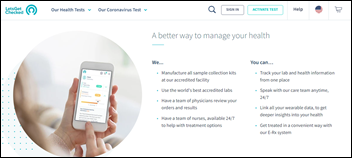
At-home testing company LetsGetChecked raises $150 million in a Series D funding round, increasing its total to $260 million.

image

San Francisco-based primary and urgent care company Carbon Health marks its first foray into chronic condition management with the acquisition of digital diabetes clinic Steady Health. Carbon Health hopes to have 1,500 clinics across the country within the next four years. It operates 70 clinics in 13 states and offers virtual care in select locations.

image

Membership-based primary care company One Medical will acquire Iora Health, which offers similar services for seniors, for $2.1 billion. Iora Health co-founder and CEO Rushika Fernandopulle, MD will become One Medical’s chief innovation officer.
image

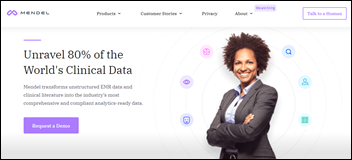
Mendel will use an $18 million Series A funding round to further scale technology that uses AI to make sense of unstructured health data from health records and medical literature. The startup markets its services to healthcare organizations that are looking for analytics-ready data.


Sales

  • Gillette Children’s Specialty Healthcare (MN) will implement Infor’s CloudSuite Healthcare software with assistance from Bails & Associates.
  • Twin County Regional Healthcare (VA) will offer telecardiology services from Access Physicians, a division of SOC Telemed.
  • Together Women’s Health (MI) selects Emerge’s ChartGenie, ChartScout, and ChartPop data conversion and integration tools to help two of its member practices transition to Athenahealth.
  • UMass Memorial Health will power its new Hospital at Home program with Current Health’s remote care management technology.
  • South Texas Physician Alliance selects LeadingReach for referral management and care coordination.

People

image

Erich Huang MD, PhD (Duke Health) joins Onduo as chief scientific and innovation officer.
image

HealthTrust promotes Michael Seestedt to CIO.

image

CitiusTech names Bhaskar Sambasivan (Eversana) president.

image

Hospital supply chain, analytics, and interoperability solutions vendor SCWorx promotes Tim Hannibal to CEO.

image

Conversational AI vendor Orbita hires Patty Riskind, MBA (Qualtrics) as CEO.


Announcements and Implementations
image

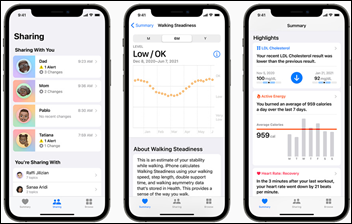
Apple adds new health-related functionality to IOS 15, including the ability to share health and wellness data from its Health app, new trending tools for health measures and goals, a Walking Steadiness measure, improved lab results display, and the option to store immunization and test results directly in the Health app. Apple Watch adds a measure of respiratory rate during sleep and a new Mindfulness app. Cerner announced that it will support the enhancements in the fall.

Wolters Kluwer Health releases telehealth-specific Health Language value sets for use in claims processing, care coordination, and benefits systems.
image

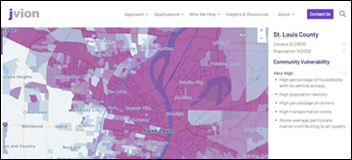
Jvion develops a Behavioral Health Vulnerability Map to help providers better address conditions that contribute to mental illness.

Augusta Health works with care and social services coordination software vendor Unite Us to develop Unite Virginia, a tech-enabled care coordination network for healthcare and social services providers.

Seven hospitals in Ontario will go live on a shared Epic system in December.
image

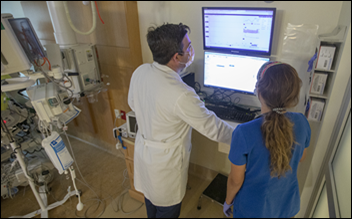
MUSC Health (SC) implements Etiometry’s clinical decision support software in its cardiovascular ICU, with an eye to also installing it in the OR.

KLAS distills its information on each of the four major health system EHR vendors into individual “Complete Look” reports, which conclude:

  • Allscripts — C- in product, C- in loyalty, 18% of customers report deep interoperability as adoption of DbMotion wanes. Sunrise has 4% of US hospital beds. Sunrise is an integrated, highly customizable platform, but Sunrise Ambulatory Care and Sunrise Financial Manager are not widely used. For transformational technology, significant interface maintenance is required since each system has its own database.
  • Cerner — C in product, C+ in loyalty, 28% of customers report deep interoperability as customers benefit from its CommonWell connection. Millennium has 25% of US hospital beds. Cerner offers a broad Millennium suite that reduces third-party integration and is proven in both large and small organizations, but patient accounting is a weakness and the company’s less-prescriptive implementations lead to variability in customer success.
  • Epic — B+ in product, A in loyalty, 63% of customers report deep interoperability with Care Everywhere and its connection to Carequality. Epic has 42% of US hospital beds. The company’s fully integrated suite has topped all software suites for 11 years running, is proven in big health systems, and offers a widely used patient portal and population health management solution, although it has a high upfront cost and some modules require in-house expertise to build.
  • Meditech — B+ in product, A- in loyalty, 10% of customers report deep interoperability as most customers use point-to-point interfaces or HIEs, although its CommonWell connection is used by some early adopters. Expanse has 4% of US hospital beds. Meditech offers consistent development on Expanse, integrated offerings, and affordability that has made it the leading product for community hospitals, but Expanse costs more than the company’s legacy solutions and larger health systems have been historically hesitant to choose it.

Other
image

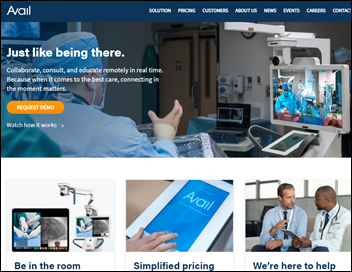
Teladoc sues Avail – which offers an audio-visual platform that supports surgery collaboration, consultation, and education – for infringing on three of its patents.

Amazon offers Prime customers a six-month supply of some common prescription medications for $6 with free two-day delivery.

Two universities – one a non-profit, the other a for-profit – are vying to give Montana its first medical school. Colorado-based Rocky Vista University College of Osteopathic Medicine wants to open a satellite college in Billings, while Benefis Health System (MT) CMIO Paul Dolan, MD, MMM is leading an effort to bring a non-profit medical school operated by Touro College and University to Great Falls. The US has eight for-profit medical schools opened or announced, all of which are in the West and all but one of which offer osteopathic rather than allopathic training.


Sponsor Updates

  • CHIME releases a new episode of its Leader to Leader podcast featuring Dr. First President Cameron Deemer.
  • CarePort develops Quality Score, a scoring system that summarizes the quality of care delivered by skilled nursing facilities for short-stay patients.

Blog Posts


Contacts

Mr. H, Lorre, Jenn, Dr. Jayne.
Get HIStalk updates.
Send news or rumors.
Contact us.

125x125_2nd_Circle

Morning Headlines 6/8/21

June 7, 2021 Headlines Comments Off on Morning Headlines 6/8/21

One Medical Announces Agreement to Acquire Iora Health

Membership-based primary care company One Medical will acquire Iora Health, which offers similar services for seniors, for $2.1 billion.

Clinical AI Technology Leader Mendel Raises $18M in New Capital

Mendel will use an $18 million Series A funding round to further scale technology that uses AI to make sense of unstructured health data from health records and medical literature.

Craneware to Raise GBP140 Mln to Help Fund Sentry Acquisition

RCM vendor Craneware will acquire Sentry Data Systems, a hospital pharmacy procurement, revenue cycle, and compliance solutions business, for $400 million.

Comments Off on Morning Headlines 6/8/21

Curbside Consult with Dr. Jayne 6/7/21

June 7, 2021 Dr. Jayne 6 Comments

Last month, the National Academies of Sciences, Engineering, and Medicine released their report on high-quality primary care for US residents. The National Academies are private, non-profit organizations formed with the goals of informing US public policy and providing independent analysis and advice. After spending a couple of decades in academic medical centers and integrated healthcare delivery networks, I have a greater degree of trust for independent analysis compared to some of the output I’ve seen from “not-for-profit” organizations that have billions of dollars in the bank.

The report is titled “Implementing High-Quality Primary Care: Rebuilding the Foundation of Health Care.” The Academies’ press release is quick to note that “no federal agency currently has oversight of primary care, and no dedicated research funding is available. The report recommends the US Department of Health and Human Services (HHS) establish a Secretary’s Council on Primary Care and make it the accountable entity for primary care, as well as an Office of Primary Care Research at the National Institutions of Health (NIH).”

The report outlines a plan where patients should be able to have consistent primary care and that they should declare their primary care provider annually so that payers can ensure accountability and quality measures. This sounds similar to what I experienced on a rotation in the United Kingdom many years ago, where patients were expected to “register” with their general practitioner so that they would have a source of care if they needed it. This is very different than some of the consumer-oriented models of care that are booming in the US, where healthcare has become purely transactional, and many patients value convenience above all else. The decline in primary care availability over the last several decades has fueled growth in urgent care and retail clinics, and patients no longer see continuity or having a relationship with a primary care provider as something important.

In my experience, that erosion of respect and responsibility has contributed to a decrease in the number of students who want to go into primary care fields. Compensation is another big factor, and the report recognizes that as well, calling on more equitable compensation for primary physicians as compared to subspecialty care. There’s still a perception in the US that the best and brightest medical students go to the high-dollar subspecialties. As I sat doing my quarterly board certification questions tonight (which were quite difficult), it made me reflect on how much better it would be if the best and brightest were drawn to primary care, where they could solve diagnostic dilemmas firsthand rather than having to refer those cases out or potentially order tens of thousands of dollars in diagnostic testing.

The report notes that primary care practices were initially left out of COVID-19 relief packages and that they have not been fully utilized in support of testing, contact tracing, and vaccination efforts. It suggests that pandemic-related changes should become permanent, including coverage for telehealth services and reductions in documentation requirements.

I was intrigued by some of the suggestions made by the committee. One was that CMS should increase physician payments for primary care services by 50%. For practices struggling with a razor-thin margin, that would be a good start. Even better would be if non-CMS payers followed suit or increased their rates even higher than 50%. Another recommendation would be that CMS identify overpriced healthcare services and reduce the rates on those services to make them less attractive. I’m sure professional groups and vendors will oppose that, though, depending on whose cash cow might be in line for the sacrifice.

One of the major things that goes unsaid in the report is the massive culture change needed in US healthcare. We need to shift from a culture that venerates technology for the sake of technology to one that venerates knowledge and wisdom, with the appropriate and judicious use of technology as appropriate. Patients have grown to equate high-tech care with high-quality care, even when studies show that the technology is not helpful. I’ve seen dozens of patients come to urgent care hoping we will order advanced imaging studies, such as MRI scans, where they’re clearly not indicated, because patients feel like having an MRI will give them an easy answer. Why do four to six weeks of physical therapy and conservative management to see if your problem gets better when you can just have an MRI?

The needed culture change also applies to pharmaceuticals. We have to make some of the best initial treatments, like diet and exercise, more attractive than just popping a probably-expensive pill. This is a place where technology might really give us a boost, if we can use gamification and people’s inherent competitive natures to spur them to action. Technology can help give positive reinforcement and provide interventions and coaching that patients may not have had access to without it. Attitudes towards non-pharmaceutical interventions aren’t going to change overnight, though.

The committee also calls on leadership to use digital technology to make primary care more efficient, higher quality, and more convenient. It calls on the Office of the National Coordinator for Health Information Technology to address clinician user experience part of the next set of certification requirements.

A big piece of efficient data management though isn’t going to be the user interface of individual systems – it’s going to be addressing once and for all the absurd level of information blocking that goes on between health systems in the same city. As an independent urgent care physician, I could not get a single one of the four health systems in town to grant me access to their systems for “refer and follow” data access, regardless of how many patients I sent them or how many of their patients I cared for when their own physicians were unable to see them. I wish I had a fraction of the dollars I wasted ordering duplicate tests because I didn’t have full access to my patients’ health records.

I don’t think that anyone disputes the idea that a strong primary care infrastructure would not only improve people’s health and save lives, but would save our country a tremendous amount of money. Other nations (whether wealthy industrialized ones or middle-tier countries) have seen this value and have constructed their healthcare systems accordingly, while we have constructed ours around special interests, shareholders, and profit. According to the Organization for Economic Cooperation and Development, 5% of US health spending goes to primary care compared to 14% in other wealthy nations.

Although I started my career in the primary care trenches, I struggle to encourage medical students to follow that path unless they have a full understanding of the current state of things. I enjoy focusing my informatics work on trying to strengthen technologies that support primary care, but it’s going to take a lot more than bells and whistles to truly make it an attractive career again. As the pandemic eases, we’ll have to see what governmental entities have to say about the recommendations in the report, and how many decades it might take to make them a reality.

What do you think about the need to rejuvenate primary care? Will culture continue to dominate regardless of how much technology we try to throw at it? Or will we just watch history repeat itself? Leave a comment or email me.

Email Dr. Jayne.

HIStalk Interviews Richard Caplin, CEO, The HCI Group

June 7, 2021 Interviews Comments Off on HIStalk Interviews Richard Caplin, CEO, The HCI Group

Richard “Ricky” Caplin is CEO of The HCI Group of Jacksonville, FL and CEO of healthcare and life sciences of Tech Mahindra of Pune, India.

image

Tell me about yourself and the company.

I’m married to Danielle and we have three children — Callie is eight, Rilen is six, and Brooks is three. I started the company 12 years ago at the height of Meaningful Use. We began in strategy implementation and training on electronic health records. We grew to be one of the largest firms in our space. 

I sold the company about four and a half years ago to Tech Mahindra. which is a leading firm in the digital transformation and managed services space. At the time we sold it, we were about 1,000 employees plus a bunch of contractors. The idea was that we could bring their services and use our domain expertise and clients. We have done that successfully. We are one of the largest consulting firms in healthcare. We still do a lot of implementation and strategic roadmaps, but it’s more project-based work or large-scale managed services. As a matter of fact, we just closed one of the largest managed services deals ever in the application space. 

We also do a lot in the digital transformation space, such as robotic process automation and digital charters. We do automation as a service. We have launched a new company called HealthNxt, which is an enterprise-wide virtual health platform. So we started in the strategy and implementation space and today we are known as one of the leading innovation and visual transformations firms in healthcare. At the end of last year, ISG, Forrester, and Black Book all had us at the top in innovation and digital transformation categories.

What do you think will change with whatever the post-pandemic normal looks like?

I think we have already started to see change, both in health systems and in big cities. You might have had 500 employees in your IT organization in New York City, Chicago, or San Francisco, and all of a sudden you went virtual overnight. A lot of those people are never moving back into the cities and the office space isn’t needed. I have talked to many organizations that are working on new design layouts that are more of a hoteling system with innovation and collaboration space.

Once you have a relationship with someone, it’s a lot easier to conduct virtually. But still, as you are hiring new employees, you need to build that rapport and chemistry. People are emphasizing that team-building aspect in the way they are laying out their office space. But it also changes the way you pay your employees and where you recruit from. You can be in New York City and hire someone in Mobile, Alabama, so it is readjusting the entire pay school for people in big cities and small cities since all of a sudden you’re in a more national and even international hiring environment.

The way we work and interact day to day are also changing. When you look at how healthcare is being delivered, there’s all of a sudden a window to do things that really hadn’t been focused on before. A lot of organizations didn’t have digital charters and roadmaps, and all of a sudden that’s the way of the future. You are seeing huge upticks in telemedicine, and while we know it is coming down some, there will be a new normal. You’ve seen organizations do remote patient monitoring. We’re going to see a lot of stuff around virtual hospitals and eICU. A lot of organizations are focused on their digital front doors and you are seeing that in the way healthcare is delivered. Health systems are becoming more like technology companies first, and they have to be to compete in the new world.

You offer a fixed-price digital transformation strategy. What results are you seeing?

The first category is the operations of an organization and how they can do things more efficiently. What processes can be automated? There is a lot of opportunity in HR, payroll, revenue cycle, and even facilities and maintenance to automate processes and run more efficiently.

Beyond doing things better and cheaper, you look at the delivery of healthcare. What does your current landscape look like? Organizations may be using multiple telemedicine platforms or may not be doing remote patient monitoring, or if they are, only for a very specific use case or two. A lot of them got into it around COVID, but there’s so many different disease states with use cases for remote patient monitoring. Very few use virtual hospital, eICU, or virtual physical therapy. Many organizations are just starting the journey of deciding what their digital front door will look like and how they will engage with consumers outside the walls of the hospital. That’s a huge part of the strategy.

How are you seeing health systems using robotic process automation and what benefits are they realizing?

I’ll give you a basic example. When you are onboarding a new employee, you may have a bunch of paperwork that needs to be done. You may need several approval signatures. That’s a lot of manual work and a lot of processes. You’ve got orientation, things like that. You might have seven, eight, maybe even more people who touch that process and it takes up a big piece of their time. There’s a lot of paperwork and approvals moving back and forth. If you can automate that process from start to finish, where humans don’t need to even touch it but instead maybe click on an approval button when it pops up, things will be done faster, cheaper, and more efficiently.

That’s a basic example. But think about any process where people are involved — especially things like revenue cycle and facilities – and the size of some of these hospitals and health systems. You have many people monitoring and touching their electrical and lighting facilities, and a lot of those processes now can be automated as well.

Outside of healthcare, I’ve had a conversation with the CIO of the state of Florida, which has a budget of about $100 billion. He gave me an astounding number. He thinks that through automation, we can take something in the neighborhood of 30% out of our state budget. I also got together with a gentleman who is running for mayor of New York City, Andrew Yang. He’s a former presidential candidate. I had dinner with him last Friday, and we talked about the city’s permitting process. For anyone who has dealt with big government, how long does that take and how many people have been doing it for years? You can automate that entire process. Andrew Yang thinks there’s significant savings, similar to the state of Florida, that could be achieved in big government.

We have always had screen-scraping tools and basic automation tools. What has changed from a technology perspective to suddenly make RPA a hot topic?

That’s a really good question. I’m not an expert by any stretch of the imagination, but from my high-level view of what’s possible now, I think there’s a willingness for organizations to try it out. You have a lot more automation companies as well. There’s a whole bunch of them that have emerged and grown. The technology is advanced and there’s tons of applicability. We are winning some of these large-scale managed service projects, but a big piece of what we’re doing isn’t just the labor arbitrage, it’s the process transformation. We are taking a forward bet on what we will be able to automate.

How do you see health system C-suite roles changing now that chief digital officers and chief experience officers are joining CIOs?

We looked at the transformation over the past five or 10 years. The CIO has become a much more important executive role, really one of the leading executive roles in any senior leadership team. Technology touches everything. But now we are seeing the same thing occur, where this consumerism that you talked about, or this chief digital officer role, is driving everything. It’s a strategic role, it’s an operational role, and you have technology. So you will see one of two things happen. The CIO is either going to become a functional role reporting to the chief digital officer, or chief information officers are going to evolve into chief digital officers and they are going to own IT. But it’s a more strategic role where IT is a component of the digital strategy.

Health systems are outsourcing their IT work to offshore firms and in some cases to Optum. What trend do you see?

I think you hit on this earlier. There may have been some movements earlier in automation, but now you are seeing a much bigger uptick. The majority of technology has migrated to the cloud and it is more readily available. I think you will see a permanent shift in large-scale managed services or outsourcing. COVID shed light on that. Organizations had new pressure to decrease operating expenses and run more efficiently, and you saw a big uptick in these large-scale projects.

We won a couple of large deals. We’ve been able to save organizations in excess of 30% of their operating costs while giving them a better service level agreement than they were doing internally. As I speak to CFOs and CEOs — not just CIOs — they don’t want to be in the business of commodity IT. They want to be in the business of delivering world-class healthcare. It has been proven by from organizations like ours and others that you mentioned that the savings is there, and if we can deliver a high-quality product, there’s no reason for them to go back to want to run IT, especially with the pace that technology is involving.

You can’t keep up with some of the things that are happening with cloud. With the cybersecurity risk, it may not be the best thing for you to do. You may want a partner that has a balance sheet that’s going to own those processes, even just from a de-risking standpoint. But I think the pace of change, the amount of risk, and the opportunity for savings are all permanent changes that we didn’t see before. The adoption of technology in 10 years has been tremendous. I don’t think a lot of that will go back. We will see more and more of it.

Do you have any final thoughts?

It’s going to be exciting to watch. Tech Mahindra is positioned very nicely to be a leader. We are hopefully going to continue to grow our managed services business and deliver value, but we are also all in on being a digital leader and with our virtual health platform HealthNxt, which I see becoming one of the largest platforms in this space. Time will tell. COVID served as a catalyst, where we saw a lot of innovation happen in one year that might have otherwise taken multiple years, and that will continue. As the new normal comes back, technology is going to lead the way in how we deliver healthcare.

Comments Off on HIStalk Interviews Richard Caplin, CEO, The HCI Group

Book Review: “Big Med”

June 7, 2021 Book Review Comments Off on Book Review: “Big Med”

image

Authors David Dranove (Northwestern University strategy professor, PhD in economics, healthcare system antitrust expert) and Lawton R. Burns (Penn health care management professor, PhD in sociology, long-time analyst of physician-hospital integration) aren’t very cheery about the prospects of our profit-driven US healthcare system in their just-published “Big Med.” They repeatedly use the term“ depressing” to describe the mess we’re in. While they offer few optimistic solutions, they provide a valuable service in at least explaining how we got here.

Health system consolidation has resulted in poorly run, bigger organizations whose incentive is to maximize profit and business size rather than manage cost or improve health. Despite health system claims that their mega-mergers will result in efficiency, scale, and lower costs, that never actually happens. The only predictable result of such M&A activity is that newly enlarged health systems use their market clout to raise prices, to the point that they drive half to two-thirds of US healthcare spending. Yet only 5% of consumers blame hospitals and doctors for an expensive, broken health system, and nobody even notices that the revenue and executive compensation of big health systems exceed that of some major global brands

The magnitude of the problem keeps growing, but the problem itself goes back to the beginnings of health insurance. A government report from 1928 concluded that wasteful spending made healthcare inaccessible to most Americans. It called for universal health insurance, provider integration, payment reform, and a focus on prevention. The American Medical Association was a loud critic of all forms of health insurance, eventually including Medicare and Medicaid (they lumped all forms of health insurance together as being Communist), but they liked the idea of the prepaid hospital insurance plan that Baylor Hospital created in 1929 that eventually spread into a national Blue Cross umbrella. Insurance company board members were mostly hospital executives who made sure that the plans supported blank check spending – the insurer couldn’t question the amounts billed, hospitals were not forced to compete on price or quality, and the insurance plans did not require patient cost-sharing that would give them incentive to shop around or audit their own bills. Doctors kept their autonomy without hospital oversight and were immune from having their decisions questioned.

The rollout of Medicare and Medicaid dramatically increased the percentage of insured Americans, which then drove jumps in hospital bed count, physician numbers (many of them high-earning specialists), and overall healthcare spending. Hospitals started affiliating with medical schools to create academic medical centers. The jump in healthcare spending strained federal and state budgets, leading to these unsuccessful cost containment efforts:

  • Prospective payment system. Hospitals learned to game the system.
  • Capitation. Primary care doctors were unwilling to take on risk since they couldn’t control the expensive decisions made by specialists.
  • Certificates of need to limit facility growth. Hospitals controlled the local politics involved with reviewing applications, legitimizing the megaprovider status quo. Only big health systems could afford the lawyers and consultants that were needed to successfully argue competitive issues.
  • Ambulatory surgery centers. Hospitals simply stole the formula and built their own, as the percentage of hospitals with outpatient departments increased from 26% in 1975 to 77% in 1988. Hospitals insisted that insurers grant them exclusive rights to perform outpatient surgery, with the closed networks, raising ASC legal challenges that mostly failed because of the difficulty involved in defining the extent of the local market that in which competition would be limited.
  • Antitrust laws. Hospitals used their political cloud and some creative defining of their markets (based on their multiple facilities and patient travel patterns to tertiary care facilities) to deflect legal challenges.

Hospitals faced multiple threats in the 1990s – reduced federal payments, ASC competition, and the proposed Clinton health plan that called for massive restructuring in payment and delivery. Urged on by consultants and trade magazines, they pursued vertical integration, in which everyone wanted to be Kaiser Permanente in owning physician practices and health plans and working with private equity-backed practice management firms. Models that were developed in California and Minnesota were copied even though PCPs were the only providers who were heavily capitated. The result was that health systems:

  • Made their flagship hospital’s CEO the health system CEO.
  • Pursued horizontal mergers with feeder institutions.
  • Acquired primary care and specialist practices.
  • Opened freestanding outpatient and diagnostic facilities.
  • Ran therapy and home care services.
  • Bought long-term care facilities.
  • Launched their own insurance plans (sometimes).

The larger, more complex organizations favored executives whose approach was pure business rather than hospital administration. They focused on economies of scale, centralized management, systems building, and group purchasing. Health systems developed complex corporate structures and holding companies, some of them unrelated to healthcare, and moved to product line management in which unprofitable services were eliminated regardless of local need. Doctors were held accountable to economic credentialing.

Health systems competed to buy physician practices, paying $1 million or more upfront to acquire a PCP practice that was netting $150,000 while guaranteeing the income, hours, and freedom from oversight of the selling doctors. They ended up with the same doctors making the same number of referrals, except that they had spent fortunes buying their practices and watching physician productivity drop. Physician-hospital organizations mostly lost money as they generated no managed care contracts, much less risk-based contracts. IDNs allowed nearly all medical staff into their PHOs instead of choosing more cost-effective ones or trying to change practice patterns. Specialists who didn’t want to risk their high incomes beat the system by threatening to take their business to other health systems.

Physicians, meanwhile, formed their own integrated delivery networks, hoping to let someone else deal with EHRs and billing. They signed up with now-defunct but then high-flying national physician practice management firms such as PhyCor and MedPartners.

The end result of IDNs was no change in cost or quality, lots of money spent chasing scale, the emergence of highly paid health system executives who listened too closely to consultants, slow decision-making, and loss of connection with frontline staff and physicians.

Lack of EHR capability doomed integration in the 1990s. Health systems used EHRs to control the “physician’s pen” and turn those systems into billing machines, but patient documentation diverged from clinical reality in being cranked out solely to increase billing. Extracting clinical information was hard because most of it was in non-discrete form.

Hospital acquisition of practices picked up again due to hospital-friendly billing policies in which CMS, which allowed them to bill more for the same physician performing the same work in the same office. Cardiology and radiology practices were attractive targets.

The authors list a few solutions that haven been touted to help contain healthcare costs along with why they don’t think they will work.

  • Accountable care organizations, aka “HMO lites.” They have not delivered cost savings, and even optimistic CMS estimates show a possible Medicare saving of just 0.04%, with providers spending twice as much to join run twice as much as the potential savings.
  • Triple Aim (population health, per-capita cost, and patient experience). Hospitals have little influence over life expectancy and morbidity.
  • Scaled-up medical practices. Scale economies usually taper off once a physician group is larger than 5-10 physicians, although the high cost of EHRs may have raised that optimal group size to 25-50 doctors. Mergers are not subject to antitrust review unless an insurer complains and expansion is usually piecemeal and hard to track as 1-2 doctors are added in each transaction, so regulatory oversight of acquisitions is minimal.
  • Consumer activism. Most Americans don’t understand the cost and mortality of chronic disease. They don’t pay most of the cost, so avoiding low-value care isn’t important to them.
  • Disruption. Doesn’t work in healthcare because lower quality at a lower price isn’t acceptable. Disruptors don’t bring new resources or capabilities, don’t understand healthcare, and mostly attempt to ride M&A activity to success.
  • Smart technology and apps. The high-cost 20% of the population with expensive chronic conditions have little to gain from their use. Vendors usually bypass that market because it is hard to reach.
  • Mergers, such as CVS-Aetna combining drugstores with in-store clinics. This type of combination hasn’t historically improved care coordination and didn’t accomplish much when megaproviders tried it. Their only asset is convenient store locations and the average clinic sees only 10-30 patients per day and loses money, which is why Walgreens dropped the idea and partnered with local health systems. Analytics and predictive modeling haven’t done much for insurers since at-risk members must be contacted, activated, and convinced to change behaviors.
  • Digital health technologies. Little evidence exists that they have had any impact on access, cost, and quality. Transparency tools don’t translated into lower spending because their users are mostly young and healthy. People don’t worry about healthcare costs once they have reached their deductible because they aren’t the one paying.
  • Artificial intelligence. Good at predicting health, but not good at advising physicians how to address it. AI doesn’t work well in the absence of rules, when information is lacking, or when decision-making isn’t clear cut.
  • Telemedicine. Evidence of cost savings is minimal. It may be more widely used by the “worried well” than the chronically ill and thus may promote excessive use of screening tests that introduce their own risk.
  • Genomics and personalized medicine. These are a breakthrough for only small patient populations. They explain only a small percentage of health status variation versus patient behaviors.

The authors make these recommendations:

  • Change antitrust oversight to look at value chains. Reward those that use big data, develop treatment protocols, incent quality, and match patient needs. Savings should go beyond the 1-2% that having a competing hospital in a given market offers. Each market should have at least three competing value chains, at least one of them made up of independent providers, and make divestiture mandatory in smaller markers where megaproviders already dominate (or as an alternative, leave them alone if they agree to keep costs below Medicare reimbursement plus a small markup). Require all provider mergers to be pre-notified to the Federal Trade Commission, recognizing that most of them will be exempted because of low risk. Don’t try to regulate cross-market mergers.
  • Recognize that fee-for-service isn’t all bad, especially when high-deductible insurance plans require patients to approve the cost.
  • Put clinicians in charge of running health systems, no different than engineering firms, software companies, and law firms that are led by experts who members respect and follow.
  • Improve EHR interoperability.
  • Increase home-based care and improve care transitions.
  • Improve communications among providers.
  • Align bonuses. Simple metrics do not capture what any given doctor knows about the performance of their peers.

The takeaway of the book is that non-profit megaproviders are the biggest driver of healthcare costs and are using their local and regional goodwill to get away with competition-impeding mergers, indefensible pricing, and lack of operational and financial transparency. Market forces, technology, and consumerism won’t create price-lowering and quality-increasing competition as they have in other industries. The ever-increasing number of physicians who are employed by big health systems has blunted the potential physician pushback on the status quo, employer pressure has been mostly a bust, and consumers are still left being automatically enrolled in an “only in America” reverse lottery in which contracting a major illness is likely to leave them bankrupt while everybody else continues in the status quo happy that it didn’t happen to them.

Thanks to the HIStalk reader who asked me to review this book and to University of Chicago Press for providing an electronic copy.

Comments Off on Book Review: “Big Med”

Morning Headlines 6/7/21

June 6, 2021 Headlines Comments Off on Morning Headlines 6/7/21

SAIC to Acquire Federal Health IT Company Halfaker and Associates

SAIC will acquire government health IT contractor Halfaker and Associates for $250 million in cash.

UF Health still investigating ‘cybersecurity event’ related to Central Florida servers

UF Health Central Florida’s two hospitals go back to paper following a May 31 ransomware attack.

Carbon Health dives into digital diabetes care with virtual clinic acquisition

San Francisco-based primary and urgent care company Carbon Health marks its first foray into chronic condition management with the acquisition of digital diabetes clinic Steady Health.

Comments Off on Morning Headlines 6/7/21

Monday Morning Update 6/7/21

June 6, 2021 News 3 Comments

Top News

image

SAIC will acquire government health IT contractor Halfaker and Associates for $250 million in cash.

image

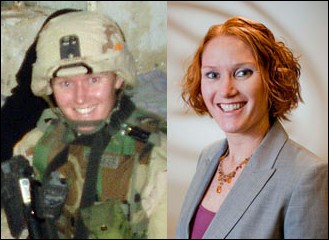
Former Army Captain and West Point graduate Dawn Halfaker started the company in 2006 after she retired as a combat-wounded amputee from injuries she sustained from a rocket-propelled grenade attack in Baghdad in 2004. She was commander of a military police platoon in the 3rd Infantry Division during Operation Iraqi Freedom. She is the company’s president and CEO.

Halfaker and Associates brought in $166 million in revenue last year from contracts with the VA, HHS, and CMS. 

SAIC says the acquisition will help it increase its digital transformation presence.


Reader Comments

From Stout Lad: “Re: HIMSS21. No keynote speakers named yet?” All are marked “TBD” except for a couple of former governors and Alex Rodriguez providing his healthcare viewpoint from between second and third base. Exhibitor count is at 535, about the same as at the 1998 conference. 


HIStalk Announcements and Requests

image

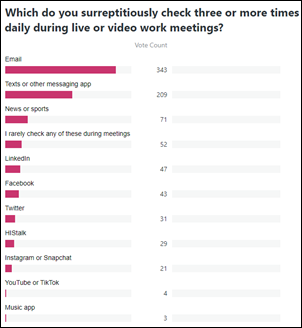
Poll respondents who sneak looks at their phones during work meetings are most often checking email or text messages. I’m happy that HIStalk finished OK in the list, but mystified at the appeal of LinkedIn unless the meeting is going so poorly that job-hunting is the obvious alternative.

New poll to your right or here: Should the federal government issue a national patient identifier?

image

Welcome to new HIStalk Platinum Sponsor Intrado Healthcare. The company helps health systems leverage communications technology to improve care coordination, increase patient volumes, and reduce operational burdens—all while delighting patients through meaningful digital engagement. Deep EHR integration means clients manage even the most complex engagement workflows with ease. Offerings include patient engagement, appointment management, care management, on-demand messaging, patient digital experience, and vaccination solutions. Intrado, formerly known as West Corporation, delivers 40 million patient engagements each year to its 10,000 provider customers, with a 25-year history of supporting leading healthcare providers. Thanks to Intrado Healthcare for supporting HIStalk. 


Thanks to these companies for recently supporting HIStalk. Click a logo to learn more.

image
image
image
image
image
image
image
image


Webinars

June 24 (Thursday) 2 ET: “6 Recommendations to Create a Better Patient & Member Experience.” Sponsor: Avtex. Presenters: Mike Pietig, VP of healthcare, Avtex; Matt Durski, director of healthcare patient and member experience, Avtex; Patrick Tuttle, COO, Delta Dental of Kansas; Chad Thorpe, care ambassador, DispatchHealth. The live panel will review the findings of a May 2021 survey about which factors are most important to patients and members who are interacting with healthcare organizations. The panel will provide actionable strategies to improve patient and member engagement and retention, recover revenue, and implement solutions that reduce friction across multiple channels to prioritize care and outreach.

Here’s the recording of week’s webinar “Diagnosing the Cures Act – Practical Prescriptions For Your Success.”


Acquisitions, Funding, Business, and Stock

Shares in the Global X Telemedicine and Digital Health exchange-traded fund dropped 3.9% in the past month versus the Nasdaq’s unchanged value. It’s up 12% in its 10-month existence versus the Nasdaq’s 27% rise. Its biggest holdings are Nuance, Guardant Health, Omnicell, Agilent, LabCorp, Insulet, Illumina, and Change Healthcare.


Sales

  • Mayo Clinic will implement Visage Imaging’s AI Accelerator and collaborate with the company to commercialize the product.

People

image

Joi Smith, MBA (Bodhi Lane) joins Protenus as VP of people operations.


Announcements and Implementations

McLaren Bay Region (MI) goes live on Cerner.


Other

UF Health Central Florida’s two hospitals go back to paper following a May 31 ransomware attack.

Sally Sliger, a clinical data analyst at non-profit hospice TRU Community Care (CO), wins the first of five $1 million lottery prizes that the state of Colorado is randomly drawing from those who have been vaccinated for COVID-19. People who are dying of COVID-19 in vaccine-deprived countries must have interesting thoughts about Americans who refuse free shots that could save themselves or others until someone ups the ante with a free lottery ticket, beer, or doughnut.


Sponsor Updates

  • The following HIStalk sponsors have achieved “Cybersecurity Transparent” designations from KLAS and Censinet: Agfa HealthCare, AGS Health, Arcadia.io, Cerner, Divurgent, Health Catalyst, PerfectServe, and Twistle.
  • OptimizeRx will be inducted into LD Micro’s “Hall of Fame” for best-performing companies that have attended prior LD Micro conferences.
  • KLAS rates Nordic a top performer in the expansive firms category in its latest “Application Management & Help Desk Services” report.
  • PatientPing will present during the DirectTrust Summit June 10.
  • Audacious Inquiry publishes a new e-book, “Disaster Preparedness and Emergency Planning: How to Improve Care Coordination During Natural Disasters.”
  • PerfectServe’s Nurses of Note program honors Hampton Roads Community Health Center COO Erica Johnson and the COVID-19 vaccination nursing team.
  • Pure Storage is recognized by TrustRadius as a leader in enterprise flash array storage and object storage for the second year in a row.
  • WebPT co-founder and Chief Clinical Officer Heidi Jannenga joins the Flinn Foundation’s Board of Directors.
  • SOC Telemed will host the Telemed IQ Summit October 20-21 in Fort Lauderdale, FL.
  • Spirion earns a “Major Player” position in the IDC Marketscape: Worldwide Data Privacy Management Software 2021 Vendor Assessment.”
  • Summit Healthcare publishes a new client use case, “Ste. Genevieve County Memorial Hospital Selects Summit Exchange Interface Engine for Affordable, Power Integration.”
  • Revive Health’s podcast features SymphonyRM VP of Applied AI & Growth Chris Hemphill.
  • Talkdesk announces the agenda for Opentalk 2021: Making every moment matter.

Blog Posts


Contacts

Mr. H, Lorre, Jenn, Dr. Jayne.
Get HIStalk updates.
Send news or rumors.
Contact us.

125x125_2nd_Circle

Weekender 6/4/21

June 4, 2021 Weekender 3 Comments

weekender


Weekly News Recap

  • Ascension begins its mass layoff of remote IT employees with 82 workers in Indiana, whose jobs will go to offshore outsourcers.
  • CareCloud acquires Santa Rosa Staffing from MedMatica Consulting Associates.
  • Ensemble Health Partners acquires automated patient engagement software company Odeza.
  • Scripps Health starts notifying 147,000 patients that ransomware hackers offloaded their data.
  • A review finds that healthcare AI design is nearly always flawed by lack of large-scale training and external validation.
  • England’s Clarity Informatics is acquired by Agilio Software.
  • Epic begins bringing employees back to campus and announces an in-person UGM 2021 for vaccinated attendees.
  • Doctors in England warn consumers about NHS Digital’s plan to extract the GP clinic data of 55 million people to create a de-identified research database.
  • Doximity announces IPO plans.
  • Virtual care company Babylon Health will reportedly go public via a SPAC merger that will value the company at $3.5 billion.

Best Reader Comments

The Meditech database literally cannot contain French language data as there is no support for the various accented characters. Thus you also have the issue of, the portal may be in French, but the data will all be English. The net result? No matter how technically good this portal effort was, it’s a kluge solution. Citizens using it will see an awkward mix of English and French content. (Brian Too)

I am always amused when someone assumes that they can take software that was built specifically in one language, for that language, and somehow migrate it to other languages. Software localization and translation are non trivial things, with considerations for everything from how dates are represented to how the thousand marks are “ticked.” “All your bases are belong to us” anyone? I even had a group tell me that they were going to sell to the Japanese market because that market used English. The idea died quickly with the purchase of a Japanese keyboard and switching to Romanji that ‘looked like English’ but was UTF16 character based. (AnInteropGuy)

Has any clinician had a positive experience with Doximity? It seems like they make their money off recruiter spam and fake clicks on their ads. (IANAL)


Watercooler Talk Tidbits

image

Readers funded the Donors Choose teacher grant request of Ms. B in Louisiana, who asked for a USB headset for her class of first graders, half of whom will be in the classroom and the others on virtual connections. She reports, “The headset has provided me the opportunity to keep the two types of learners separate. My coworkers complain that the background noise is an issue for the learners at school and at home. My virtual students can unmute and ask me questions without my in person students getting distracted. More importantly, the virtual students, who already have the distraction of being at home, do not have to hear the constant commotion of the classroom. For me personally, I had such anxiety to start this year; the year of the unknown and how to make all this work. The headset is not only comfortable, but has made teaching much easier.”

VA OIG says an Arkansas VA hospital should have done more to oversee a pathologist whose alcoholism has been blamed for at least 600 major diagnostic errors, including some that were related to cancer. The facility did not act on complaints that he was working while intoxicated, even after he failed a blood alcohol test. He received a 20-year prison sentence.

image

The British Indian Nurses Association, which was formed last year to support nurses from India who take jobs with NHS, offers virtual COVID-19 care training for nurses who are still in India.

image

A nurse in England who publicly claims that NHS is a “death squad” that is murdering vulnerable patients with COVID-19 vaccine, that no vaccine has ever been proven safe or effective, and that COVID-19 is caused by 5G telephone signals loses her nursing license for spreading disinformation. Former NHS nurse Kate Shemirani, who appeared publicly and on videos while wearing scrubs and a stethoscope and touting her nurse background, now calls herself an “aesthetic nurse practitioner.” She previously said that the people who accuse her being wrong or lying are mostly”overweight, envious nurses” who are jealous of her appearance.

Northwell Health Nurse Choir receives accolades for its performance on “America’s Got Talent.”


In Case You Missed It


Get Involved


125x125_2nd_Circle

Morning Headlines 6/4/21

June 3, 2021 Headlines Comments Off on Morning Headlines 6/4/21

Ascension lays off 92 remote IT workers in Indiana

Ascension begins its layoff of 651 remote IT employees with 92 Ascension Technologies workers in Indiana, whose jobs will be moved to an offshore outsourcer.

UPMC Forms Realyze Intelligence to Drive Patient Care with AI

UPMC and its commercialization arm launch Realyze Intelligence, which mines structured and unstructured EHR data to identify patients who could benefit from interventions.

We at MedMatica and Santa Rosa, are incredibly proud to announce that we have joined CareCloud.

CareCloud acquires Santa Rosa Staffing, which was formerly part of Santa Rosa Consulting, from MedMatica Consulting Associates for $10 million in cash.

CentralReach Acquires Behaviorsoft, a Fast-Growing End-To-End EMR Platform Catering to the Needs of Small Applied Behavior Analysis Therapy Providers

Behavioral EHR vendor CentralReach acquires Behaviorsoft, which offers EHR/PM solutions for small applied behavior analysis therapy practices.

The Future of Our Workplace: Flexibility to Manage Work and Life at Cerner

Cerner will offer its employees a hybrid working environment in the fall, with individual teams choosing their own time frames for returning to in-office work.

Comments Off on Morning Headlines 6/4/21

News 6/4/21

June 3, 2021 News 9 Comments

Top News

image

Ascension begins its layoff of 651 remote IT employees with 92 Ascension Technologies workers in Indiana. Their jobs will be moved to an offshore outsourcer.


Reader Comments

image

From Spam in the Can: “Re: heading back to work. Let’s see photos of readers returning to their offices!” Above is a posted photo of Jonathan Teich’s work group back in the office at InterSystems. Send me your team-in-office photo to celebrate another step toward a new, vaccine-enabled normal.

From IANAL: “Re: Jonathan Bush. Zeus Health lists him as CEO in its job listings, but his LinkedIn says he is still executive chairman at Firefly Health.” Zeus Health is in Watertown, MA and has several former Athenahealth executives on its team, but I’ve seen no confirmation of Bush’s employment. I assume it won’t conflict with his Firefly board responsibilities. Zeus Health seems to be doing healthcare API work in stealth mode.

From Shingle Hanger: “Re: striking out on my own. What success have you seen with people who leave a health system or vendor job to work for themselves?” Not much. Most of the folks I know who have done it realized pretty quickly that they had overestimated their marketability, sending them back into corporate arms at first opportunity. That’s especially true of those who ventured out mid-career or beyond, often after they were let go or realized that their streak of upward career mobility had ended, but failing to realize the significant differences involved in working for themselves instead of someone else. I assume it’s not easy to give up a predictable income and benefits, corporate trappings such as an assistant and sweet office, and the reliable ego-stroking of aspirational underlings. It must be jarring to just sit at home with ever-increasing desperation waiting for the phone to ring while trying to remain upbeat. I would personally omit from LinkedIn those 1-2 year self-employment stints as solo consultants, executive coaches, and freelancing that are squeezed in between corporate jobs since their presence signals failure of either planning or execution.


HIStalk Announcements and Requests

image

Welcome to new HIStalk Gold Sponsor KONZA. The Topeka, KS-based company operates health information exchanges in multiple states, including Kansas, Missouri, Louisiana, Mississippi, Georgia, South Carolina, New Jersey, and Connecticut. It is deeply committed to connecting healthcare providers, patients, health plans, and its technology partners together to organize healthcare data into information that will drive healthcare transformation. Patients, health plans, physicians, healthcare facilities, and other healthcare providers from across the country benefit from KONZA’s delivery of unequaled actionable intelligence. Thanks to KONZA for supporting HIStalk.


Webinars

None scheduled soon. Previous webinars are on our YouTube channel. Contact Lorre to present your own.


Acquisitions, Funding, Business, and Stock

CareCloud acquires Santa Rosa Staffing, which was formerly part of Santa Rosa Consulting, from MedMatica Consulting Associates for $10 million in cash.

Revenue cycle solutions vendor Ensemble Health Partners acquires Odeza, which offers an EHR-integrated consumer communications platform.

Behavioral EHR vendor CentralReach acquires Behaviorsoft, which offers EHR/PM solutions for small applied behavior analysis therapy practices.

Social care marketplace vendor Aunt Bertha raises $27 million in funding.

Emme, which offers a birth control pill reminder app and tracking case, launches a birth control prescription delivery and telemedicine service that covers 16 states.

Cerner is named to the Fortune 500.

image

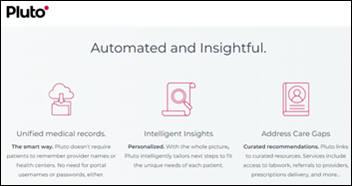
London-based “hospital at home” and decentralized clinical trials platform vendor Huma makes an unspecified investment in Pluto Health, a Duke University spinout that assembles patient data from multiple sources for review by researchers, providers, and patients themselves.


Sales

  • Mongolia’s Ministry of Health licenses the UpToDate clinical decision support from Wolters Kluwer, Health for all of the remote country’s healthcare professionals, who can download the content to mobile devices to use in areas that have no internet connectivity.
  • Canada’s Royal Victoria Regional Health Centre implements Everbridge’s digital wayfinding solution for indoor turn-by-turn navigation, which became more important as COVID-19 forced closing some entrances and eliminated volunteer access.
  • Antelope Valley Hospital selects Goliath Technologies to troubleshoot Citrix and Cerner issues for faster resolution.
  • Baptist Health of Northeast Florida chooses Gozio Health’s mobile wayfinding system.
  • Geisinger is implementing Certify Health’s facial biometrics positive patient ID system.

People

image

Alphabet-owned Verily names Amy Abernethy, MD, PhD (FDA) as president of its clinical research business, which is expanding to offer a clinical evidence generation platform that will support clinical trials and real-world evidence studies.

image

Relatient hires David Klasnick, MBA (StayWell) as COO.

image

GAO appoints Caravan Health founder and executive chair Lynn Barr, MPH to the Medicare Payment Advisory Commission. Her career includes time spent as a health IT consultant and hospital CIO.

image

Tod Thompson, MBA (Optum) joins Central Logic as COO.

image

Stanford Health Care CIO Eric Yablonka, MBA retires.

image

England’s NHS Digital hires informatics nurse Jo Dickson, MS (Nuffield Health) as chief nursing officer.


Announcements and Implementations

Galesburg Cottage Hospital goes live on Medsphere’s CareVue Cloud EHR and RCM Cloud.

image

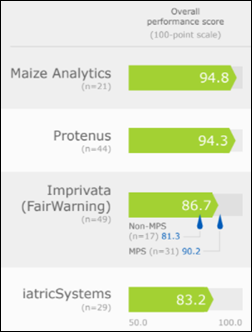
A new KLAS report on patient privacy monitoring finds that Maize Analytics and Protenus are the standouts, offering strong service and deploying AI-powered monitoring that reduces manual work. Managed privacy services customers of Imprivata’s recently acquired FairWarning report high satisfaction, although non-MPS users of the product are less optimistic about its functionality and development path. Cerner customers often use its low-satisfaction P2 Sentinel but have Imprivata, Maize, and Protenus as alternatives; Epic sites fare best with Maize and Protenus; and Harris-owned Iatric Systems performs best for Meditech sites.

Aigilx Health will integrate NextGate’s EMPI with its HIE data aggregation platform to support identity matching, expanding on work that was done for Rochester RHIO.

image

UPMC and its commercialization arm launch Realyze Intelligence, which mines structured and unstructured EHR data to identify patients who could benefit from interventions.

Change Healthcare expands its self-service API resources for developers, which include an API marketplace, technical documentation and tutorials, a testing sandbox, and a developer community.


Other

A Stat article says that while healthcare AI interest is strong, a review of 400 studies that were related to using it for COVID-19 shows that all were flawed, mostly due to lack of large-scale training and validation against external datasets. The authors found that just 73 of 161 FDA-approved AI products have disclosed the amount of data that was used to validate their product and only seven reported the racial makeup of their study populations. It notes a high-profit Icahn School of Medicine study that touted a COVID-19 detection algorithm for chest CT scans that equaled the performance of senior radiologists, but the system was actually trained, tuned, and tested on a tiny sample of unknown completeness from hospitals in China and was then not retested against an independent dataset of known provenance.

Scripps Health begins notifying 147,000 people that hackers downloaded their information during a ransomware attacked that left the health system offline for four weeks. Scripps says the patient information was obtained from documents and the hackers did not penetrate Epic.

Systems at UF Health – The Villages (FL) are taken offline due to a ransomware attack.


Sponsor Updates

  • Get-to-Market Health founder Steve Shihadeh and Microsoft CNIO Kathleen McGrow, DNP, MS participate in a fireside chat that looks back at the accuracy of their healthcare predictions for 2020 and what they expect in the next 12 months.
  • The Chartis Group will collaborate with HFMA on a four-part research series about the future of the healthcare industry.
  • KLAS names InterSystems a top leader in EHR market share in Italy and the Middle East, according to a new report on “Global (Non-US) EMR Market Share 2021.”
  • Jvion Chief Marketing Officer Lizzie Feliciano contributes to STAT, “The US mental health care system failed my brother – and millions like him.”
  • Meditech releases a new podcast, “How The Valley Hospital used surveillance technology to move nurses from the computer to the bedside.”

Blog Posts


Contacts

Mr. H, Lorre, Jenn, Dr. Jayne.
Get HIStalk updates.
Send news or rumors.
Contact us.

125x125_2nd_Circle

EPtalk by Dr. Jayne 6/3/21

June 3, 2021 Dr. Jayne Comments Off on EPtalk by Dr. Jayne 6/3/21

I had a virtual happy hour this week with some friends who also practice telehealth. We were swapping war stories about trying to help patients navigate their technology so that we could have more productive telehealth visits. One of them mentioned a story that they had seen recently about California-based Welbe Health and its goal to integrate telehealth into their PACE programs.

For those of you who might not be familiar with the CMS Program for All-inclusive Care for the Elderly (PACE), it’s been around for approximately 30 years. It is designed to serve older patients who are covered by both Medicare and Medicaid. The goal is to keep the population healthy and provide additional supports beyond traditional medical care, including meals, socialization, and day programs.

Welbe Health has partnered with a company called GrandPad to provide “senior-friendly” tablets to allow program participants to easily access their care team along with additional health and wellness resources. Since PACE programs typically include a multidisciplinary team of physicians, social workers, dieticians, and home health staff, it makes sense to be able to bring all of those players into the patient’s home virtually when the patient can’t travel or otherwise needs to remain distant.

GrandPad published a case study on Welbe Health. It looks like they did a rapid rollout to more than 250 seniors over a few days, with the average age of users being 85. I’ll definitely be keeping an eye out for more data and information on the project since it’s not one that many organizations seem to be tackling. If the devices are truly as intuitive as they sound, I’m sure all the grandchildren who may be used to performing tech support for their elders will be breathing a sigh of relief.

clip_image001

Speaking of telehealth, Teladoc health has announced its annual Forum, to be held July 20-21 as a virtual event. They held a similar event last year that had some great speakers and offered some solid telehealth perspectives, so I’ve added it to my calendar. There are also regional receptions being offered for both face-to-face and virtual interaction, so it will be interesting to see how those play out.

I hope the Mayo Clinic System offers telehealth services to support the patients at the six clinics that it is closing across Iowa, Minnesota, and Wisconsin. The clinics are said to have had low patient volume even prior to the pandemic. Patients are being referred to nearby communities for care. It’s never easy to have to change doctors, and I hope the transition is as seamless as the Mayo Clinic Health System website makes it sound. Physicians continue to retire at a rapid pace in my community and others who aren’t quite to retirement age are starting to reduce their practice commitments. The next few years will be challenging to those who are looking for primary care physicians.

clip_image003

As someone who has spent many years dealing with patient matching, I’m always eager to read about initiatives dedicated to solving the problem. The Patient ID Now coalition recently released a document titled “Framework for a National Strategy on Patient Identity.” The coalition, which has 40 healthcare organization members, calls for a public / private partnership including the federal government, public health authorities, and the private sector. Many of us have experienced the perils of poor matching for decades and are gratified that the COVID-19 pandemic has shined a light on some of the challenges. We’ve seen problems with making sure that test results are affirmatively matched with the correct patient regardless of the site of testing or the setting of downstream care, and also issues with trying to have accurate vaccine data when patients may have received doses from a National Guard-run drive through clinic and also a retail pharmacy.

The Patient ID Now workgroup formed in January 2021 and includes representatives from HIMSS, the American College of Surgeons (ACS), the American Health Information Management Association (AHIMA), CHIME, Intermountain Healthcare, Premier Healthcare Alliance, the American College of Cardiology (ACC), academic institutions, hospitals, and more. Only time will tell whether the group can help kick the patient ID issue forward after years of congressional roadblocks and pressure from highly vocal opponents.

As many organizations are moving to make distributed workforce arrangements permanent, Epic has fired up its homing beacon to bring workers back to campus. Starting July 19, workers are expected to be on site at least three days each week. This increases to four days each week August 1, and by September 1, they will need to be onsite nine days out of every two weeks. Employees who are not fully vaccinated will be required to mask and distance. The annual Epic Users Group Meeting is slated for August 23-25, but only for those attendees that are fully vaccinated. I’m curious what solution they’ll choose for validating vaccine status. All of my colleagues who work at Epic-using systems are still under travel restrictions, so it will be interesting to see how many people are actually able to attend.

clip_image005

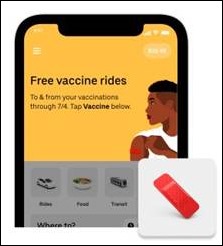
Uber continues to offer free rides for vaccine appointments. From May 24 through July 4, users can get up to four free rides (up to $25 each) to and from vaccination appointments. Users can select the Vaccine button to schedule a trip. Drivers will be paid in full, but according to the email I received, tips are still appreciated. I wonder how many drivers are thinking carefully about having unvaccinated or partially vaccinated people in their cars, as opposed to just generally not knowing the vaccine status of most of the people they are transporting. As a healthcare provider, whether my clients / patients were vaccinated or not gave me some sense of peace, but I suppose it’s different when you’re up close in a patient’s face examining them versus having them at least a couple of feet away in your back seat.

clip_image006

I was invited to become a beta user for Accelerate, which states it is “the purpose-built digital platform from HIMSS.” I’m not sure whether this is a true beta testing opportunity or if they are just telling everyone who signs up in the first wave that they’re beta testers, but I was intrigued. The invitation notes that “Accelerate is still in development, access to the platform as well as any content posted on Accelerate is shared with you on a confidential basis; we appreciate your discretion.” I feel a bit spy-like, so I won’t even tell you if I signed up or not. If anyone else signed up and wants to anonymously share your impressions, leave a comment or email me.

Email Dr. Jayne.

Comments Off on EPtalk by Dr. Jayne 6/3/21

Morning Headlines 6/3/21

June 2, 2021 Headlines Comments Off on Morning Headlines 6/3/21

Ensemble Health Partners Acquires Digital Patient Communications Platform, Odeza, to Transform Patient Experience

RCM vendor Ensemble Health Partners acquires automated patient engagement software company Odeza.

Nation’s leading social care network Aunt Bertha raises $27MM to deepen social impact, expand products

Digital social services referral company Aunt Bertha raises $27 million in a funding round led by Warburg Pincus, bringing its total funding to $49 million.

Privia Health Reports First Quarter 2021 Financial Results

After going public in April, Privia Health reports a slight increase in Q1 revenue to $213.6 million.

Comments Off on Morning Headlines 6/3/21

Morning Headlines 6/2/21

June 1, 2021 Headlines Comments Off on Morning Headlines 6/2/21

CompuGroup Medical acquires VISUS Health IT

CompuGroup Medical acquires Germany-based PACS and healthcare content management vendor Visus Health IT.

147,000+ May Have Had Personal Information Compromised in Cyberattack: Scripps Health

Scripps Health (CA) begins notifying patients that their data may have been compromised in the May 1 ransomware attack that forced its IT systems offline for several weeks.

Healthcare tech firm Clarity Informatics sold to fast-growing firm

Clarity Informatics, whose back office software is used by 80% of GPs in England, is acquired by medical practice software vendor Agilio Software.

GPs warn over plans to share patient data with third parties in England

Doctors in England warn the public about NHS Digital’s plan to extract the medical data of 55 million people in de-identified form to a database that will be made available for third-party research and planning.

Comments Off on Morning Headlines 6/2/21

News 6/2/21

June 1, 2021 News Comments Off on News 6/2/21

Top News

image

Physician networking site Doximity, which introduced a telemedicine service last year, hopes to raise $100 million in an IPO that would allocate up to 15% of its shares to qualifying physician members.

Doximity’s filing notes that it is used by 1.8 million medical professionals working in the nation’s top 20 hospitals and health systems.

The company’s revenue, which is largely subscription-based, jumped nearly 80% last year to $207 million.


HIStalk Announcements and Requests

SNAGHTML45a0489

Happy 18th birthday to HIStalk, which I started spontaneously on a Memorial Day weekend back in 2003 when I didn’t have anything interesting to do. I apparently still don’t.  

image

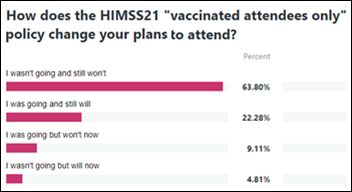
Slicing and dicing last week’s poll results shows that 29% of those who were planning to attend HIMSS21 won’t go because of the conference’s mandatory COVID-19 vaccination requirements, while 7% of whose who weren’t planning to attend now will. Announcement of the new policy failed to change the intentions of 86% of respondents, most of whom weren’t going to attend anyway.

New poll to your right or here: Which do you surreptitiously check three or more times daily during live or video work meetings? I edited the poll after posting it to include HIStalk just for fun although I doubt many folks (other than me) are pulling it up three times per work day.


Webinars

June 3 (Thursday) 2 ET: “Diagnosing the Cures Act – Practical Prescriptions for Your Success.” Sponsor: Secure Exchange Solutions. Presenters: William E. Golden, MD, MACP, medical director, Arkansas Medicaid; Anne Santifer, executive director, Arkansas Department of Health – Office of Health Information Technology; Kyle Meadors, principal, Chart Lux Consulting. A panel of leading experts will provide practical guidance on how to prepare for the Cures Act. Will it upend your business model? What is information blocking? How can standardized technologies be applied to meet Cures Act requirements? What must I do now as well as in the next five years?

Previous webinars are on our YouTube channel. Contact Lorre to present your own.


Acquisitions, Funding, Business, and Stock

CompuGroup Medical acquires Germany-based PACS and healthcare content management vendor Visus Health IT.

image

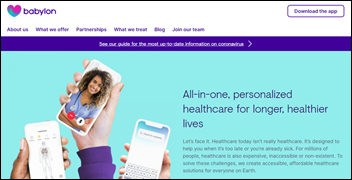
Virtual care company Babylon Health may go public via a merger with special purpose acquisition company that has lined up $270 million in funding in valuing the company at $3.5 billion. London-based Babylon’s first attempt at going public via an SPAC fell apart earlier this year.

image

Epic will require employees to return to work at its Wisconsin headquarters in part-time capacities beginning July 19. The company had attempted a similar return-to-work scheme last August, but dropped the plan after facing pushback from employees.

Clarity Informatics, whose back office software is used by 80% of GPs in England, is acquired by medical practice software vendor Agilio Software.


People

image

Industry long-timer David Madaffri (Philips) joins Mach7 Technologies as SVP of global sales.

image

Cone Health (NC) promotes CMIO Valerie Leschber, MD to SVP / chief medical officer.

image

Loyal hires Angela Jones, MS (Meazure Learning) as VP of customer success.

image

UofL Health promotes Debbie Mullins, MBA to VP/CIO.


Announcements and Implementations

image

Epic announces that its UGM 2021 – Stories of Legend and Lore – will be held as an on-campus event in Verona, WI August 23-25, 2021 for fully vaccinated attendees. Registration and hotel reservations open June 17.

image

Hampton Regional Medical Center (SC) opens a tele-ICU that connects ICU patients virtually with clinicians from telemedicine company Hicuity Health and Medical University of South Carolina, which provided grant money for the unit.

image

Syracuse Area Health (NE) will convert to Cerner this fall.

Surveyor Health develops SurveyorAI, technology that combines patient data with drug knowledge from First Databank to offer clinicians medication management tools for remote care, including risk stratification, clinical decision support, and educational resources.


Other

Doctors in England warn the public about NHS Digital’s plan to extract the medical data of 55 million people – everyone who has been registered in a GP clinic – in de-identified form to a database that will be made available for third-party research and planning. The Doctors’ Association UK says NHS DIgital has not done enough to explain to patients how their data will be used and how they can opt out. A medical confidentiality group cautions, “They’re trying to sneak it out. They are giving you six weeks nominally, and if you do not act based on web pages on the NHS Digital site and some YouTube videos and a few tweets, your entire GP history could have been scraped, never to be deleted.”

image

Insurer Lemonade, which portrays itself as a AI-savvy technology company, apologizes for suggesting in a since-deleted tweet that its AI analyzes non-verbal cues (physical or personal features) to automatically reject claims. The company – which sells homeowner’s, renter’s pet, and life insurance – clarifies that it uses facial recognition technology to detect claims that are submitted under more than one identity, but then sends those claims to human reviewers for a final decision. The company’s IPO filing says that its AI Jim chatbot system “handles the entire claim through resolution in approximately a third of cases … without human intervention,” but Lemonade admits that while it calls the system “AI Jim,” it uses plain old programming rules rather than the sexier-sounding AI do much of the work.

image

Sturdy Memorial Hospital (MA) reveals that it paid hackers an undisclosed amount of ransom after some of its systems were held hostage in February.

University of Washington researchers review several AI models that have claimed to be able to diagnose COVID-19 from chest X-rays and find that they rely on irrelevant data, such as patient position or age. They caution that such models therefore may not be generalizable outside the original setting, also noting that that most providers don’t use X-rays to diagnose COVID-19 anyway. At least one of the models has been deployed in multiple hospitals. 

The New Yorker posts a sad, enraging article called “The Death of Hahnemann Hospital,” which describes how selling a historic hospital that served vulnerable patients to a private equity firm turned out to be a predictably bad idea.


Sponsor Updates

  • Kyruus appoints Tina Brown-Stevenson (UnitedHealth Group) and Rob Coppedge (Echo Health Ventures) to its Board of Directors.
  • Health Catalyst will present during the William Blair Growth Stock Conference June 2.
  • SOC Telemed will present during the William Blair Growth Stock Conference and Jefferies Virtual Healthcare Conference June 2.
  • Agfa HealthCare publishes a new white paper, “What is Enterprise Imaging, Really?”
  • AGS Health meets KLAS/Censinet Cybersecurity Transparent Initiative requirements.
  • Alcatel-Lucent Enterprise receives a 2021 Silver Medal rating by sustainability assessor EcoVadis.
  • Ascom signs a six-year contract with a German hospital group for mobile IP-DECT communications and alarm solutions.
  • CareSignal joins the Population Health Alliance.
  • Cerner releases a new podcast, “Geisinger’s innovative approach to wellness and addressing healthcare inequities.”
  • EnterpriseTalk features Change Healthcare VP of Platform and Marketplace Gautam Shah.
  • CHIME will host its Summer Forum June 16-17 across three cities featuring eight past and present ONC leaders.
  • PM360 features ConnectiveRx Product Manager of Enterprise Analytics Kylie Hall as part of its Elite 2021 Leader of the Future program.
  • CloudWave is included on Modern Healthcare’s list of “Best Places to Work in Healthcare.”
  • Divurgent VP of Technology Emily Carlson has been named one of Consulting Magazine’s “2021 Women Leaders of Technology” in the category of Innovation.
  • Elsevier Clinical Solutions supports the State of California in expanding its COVID-19 online learning program for registered nurses.
  • PatientPing announces that Innovaccer will become a reseller of its Pings real-time notification solution, embedding it within the Innovaccer Health Cloud.

Blog Posts


Contacts

Mr. H, Lorre, Jenn, Dr. Jayne.
Get HIStalk updates.
Send news or rumors.
Contact us.
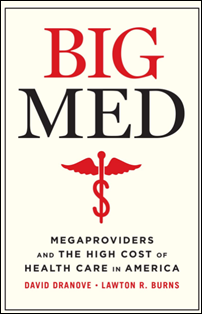
125x125_2nd_Circle

Comments Off on News 6/2/21

Morning Headlines 5/31/21

May 30, 2021 Headlines 1 Comment

Web Doctor Babylon Is Said to Near $3.5 Billion SPAC Deal

Virtual care company Babylon Health is in talks to go public via a merger with special purpose acquisition company Alkuri Global Acquisition Corp.

Health-tech company Doximity files for IPO and says doctors will get up to 15% allocation

Physician networking site Doximity, which introduced a telemedicine service last year, files IPO paperwork that includes allocating up to 15% of its shares to physician members.
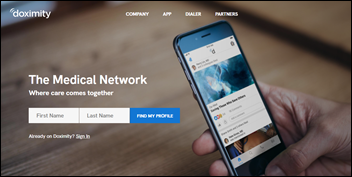
Epic Systems requiring workers to return to office July 19, resuming in-person customer meeting

Epic employees will return to its Wisconsin headquarters in a part-time capacity beginning July 19, while fully vaccinated customers will be invited to its on-campus users conference in late August.
Weekender 5/28/21

May 28, 2021 Weekender Comments Off on Weekender 5/28/21

weekender 


Weekly News Recap

  • Ireland’s health system says it may be weeks before it goes back online following a May 14 ransomware attack.
  • McKesson will combine RelayHealth and two of its other businesses under the CoverMyMeds organization and name.
  • VA OIG says the VA’s $16 billion Cerner implementation budget failed to include up to $2.6 billion in required infrastructure upgrades.
  • Google will develop algorithms for HCA Healthcare using HCA’s patient data.
  • Iodine Software acquires Artifact Health.
  • Weight loss app vendor Noom raises $540 million in new funding at a $3.7 billion valuation.
  • Bassett Healthcare will outsource analytics, IT, and RCM to Optum, which will take on 500 Bassett employees.
  • Zocdoc fixes a software problem that exposed patient data.
  • FBI says that at least 16 US healthcare and first responder networks were attacked by Conti ransomware in the past year.

Best Reader Comments

PE has absolutely brought a net negative in terms of societal value – they have sucked dollars out and devastated so many major areas of our society and economy – newspapers, retailers, housing stock, emergency rooms, ambulances and now of course, hospitals. And VCs are not too far behind. But as the guy says in the documentary – hey, don’t blame them for taking advantage of the way rules of the game are set up. Of course, no one says the quiet part aloud – that these guys are also actively funding politicians who block any changes to rules of the game. (Ghost of Andromeda)

Buried in an Epic EHRN.org study published today, Epic now has data on over 100 million people in Cosmos. (EHRN Watcher)

Looks like a net shift of ~30,000 beds from Epic to Cerner in the United States. I think it raises a couple of questions – although # of hospitals are still roughly similar does this put a dent in the narrative that Epic and Cerner are the two biggest fish in the sea? Seems like Epic is starting to pull away on this one. Perhaps the DoD and VA contracts may have been a bit of a poison pill for Cerner. (EHRMusing)

I don’t think it is reasonable to expect health insurance or health insurance tech startups to be profitable before they are at national scale. There are high costs to enter that market. To my mind, there are two Medicare Advantage strategies that potentially could work. First is that mega health systems are well positioned to offer MA plans but don’t have the organizational competence to do it. Bright is sort of going for that. Second is for the insurer to successfully insert themselves between the patient and the interaction with the high cost healthcare system, then guide the patient to lower cost alternatives. If there aren’t lower cost alternatives available in the market, the insurers should provide them. This is a little bit of Devoted Health’s strategy and a bit of UHC’s strategy. (IANAL)

Does Cerner currently have an employee exodus? That seems to be a concern at the hospital organization I work with. Lots of turnover in IT. Can’t imagine it wouldn’t also apply to vendors, especially if one is struggling. How is Cerner doing? And Meditech? And Epic? Or what about Allscripts? I’m definitely concerned for our own turnover, but am much more scared.if our vendor is also losing people we work with. (Neil’s Parking Lot)

For all those who are vaccinated, what’s the concern by August whether there are people on the [HIMSS21] floor that are not? I have an idea. “Let’s assume attendees are stupid and will all require vaccinations. Then we will tell them if they present a topic, they need a face shield to protect vaccinated people from vaccinated people. Oh, and we can’t have the vaccinated people too close, so we’ll spread out their booths. Then, cocktail hours in booths, oh no, we can’t have that. Push them outside in the August Las Vegas temps and they can drink warm wine and beer to go along with to go bags. They can shout at each other six feet away. Plenty of business will get done there. Oh and we won’t tell them that we cannot require the support staff, Venetian employees, and anyone else that will be on prem to be vaccinated.” Never mind what everyone does on their own time in casinos, bars, restaurants and god knows where in Vegas. But, we are protecting them and others.” LAUGHABLE – who’s falling for this stuff? (Mike_T)


Watercooler Talk Tidbits

image

Readers funded the Donors Choose teacher grant request of Ms. M in California, who asked for a headset and webcam for teaching her transitional kindergarten students virtually, She reports, “Thank you for helping this old teacher ( I didn’t think I was old until we started Distance Learning) get hip with new technology! Having a extra webcam that I can use as a document reader really helps my instruction daily. I can Zoom with students on one screen and share the work with the camera. This is especially important with our littlest learners when we are learning how to write our letters. Students learn so much through teacher modeling, I can model how to color in the lines, write from top to bottom and read from left to write. So much learning fun. Thank you!”

image

Doctors in India threaten to sue a politically connected, billionaire yoga guru who told followers that “allopathy [medicine] is a stupid and bankrupt science,” claimed that medicinal treatment has killed more people in India than oxygen shortages and COVID-19, and questioned why doctors get sick if medicine is so efficient. He also recorded a video mocking people who were desperately searching for oxygen cylinders for their relatives who were dying of COVID-19, urging them to “just breathe the free oxygen.” His company sells a COVID-19 cure that is made up of three herbs, falsely claims that the product has been cleared for use by WHO, and when threatened with charges for misleading claims, instead convinced the BJP government to distribute 100,000 of his kits as an immune booster. 

image

A new book called “Women in White Coats” looks at the “she-doctor” panic of 1869, when students of Woman’s Medical College of Pennsylvania attended a medical lecture at Philadalphia’s Pennsylvania Hospital. They were forced to enter via the back stairs; subject to curses, thrown objects, and tobacco-spitting by the 300 male medical students in attendance; and were stoned by the male students as they left while someone played the taunting military discharge song “The Rogues March.” The county medical society had previously barred women from attending public teaching clinics or joining medical societies.

image

The husbands of two IT employees of Children’s Healthcare of Atlanta go into renal failure within days of each other, requiring a transplant from someone other than their wives due to blood type mismatch. The employee were sharing their stories with each other when they realized that they were each a match for the other’s husband, so they donated kidneys that were successfully transplanted.


In Case You Missed It


Get Involved


125x125_2nd_Circle

Comments Off on Weekender 5/28/21

Morning Headlines 5/28/21

May 27, 2021 Headlines Comments Off on Morning Headlines 5/28/21

Change Healthcare Inc. Reports Fourth Quarter and Full Year Fiscal 2021 Financial Results

Change Healthcare reports Q4 results as it prepares to be acquired by OptumInsight: revenue flat, adjusted EPS $0.42 versus $0.42.

HSE staff asked to turn on computers but it will ‘take weeks to get back online’

Ireland’s health service asks employees to turn on their 80,000 computers to automatically install a ransomware decryption key that a cyberattacker reportedly provided at no cost, but says it will still take weeks to return systems to normal.

Digital Health Company Pack4U Secures $20 Million in Private Equity Funding to Optimize Prescribed Medication

Prescription delivery and remote patient monitoring company Pack4U raises $20 million in a private equity financing round.

Comments Off on Morning Headlines 5/28/21

Text Ads


RECENT COMMENTS

  1. Merry Christmas and a Happy New Year to the HIStalk crowd. I wish you the joys of the season!

  2. "most people just go to Epic" that's a problem because then EPIC becomes a monopoly in healthcare, if it isn't…

  3. Only if CEO can post 'bail' which nowadays stands at 1B$ paid directly to the orange president or his family…

  4. I enjoy reading about the donations to Donor's Choice by HIStalk members. I also believe in the worthiness of Donor's…

Founding Sponsors


Platinum Sponsors


Gold Sponsors


RSS Webinars

  • An error has occurred, which probably means the feed is down. Try again later.