Readers Write: HIE Encounter Notification Solutions and Meaningful Use

November 19, 2014 Readers Write Comments Off on Readers Write: HIE Encounter Notification Solutions and Meaningful Use

HIE Encounter Notification Solutions and Meaningful Use
By Rob Horst

image

I joined esteemed colleagues from Johns Hopkins Community Physicians (JHCP) in presenting an HIStalk webinar on November 12 titled “3 Ways to Improve Care Transitions Using an HIE Encounter Notification Service.” Some of the attendee questions during and after the webinar required more insight into how ENS helps Eligible Hospitals (EHs) meet Meaningful Use Stage 2 (MU2) and the Transitions of Care (TOC) Measure.

In the way of background, EHs and critical access hospitals (CAHs) that transition or refer a patient to another setting of care are required to provide a summary of care record for more than 50 percent of transitions of care and referrals. This MU2 measure has proven challenging for many organizations to achieve. The method of getting a summary of care record to the right destination and then calculating the number of summary of care records that are actually received is imprecise.

image

On September 22, CMS issued FAQ 10660, clarifying that a third-party organization that plays a role in determining the next provider of care and that ultimately delivers the summary of care document can count in the measure’s numerator for EHs.

Part of the challenge of meeting the TOC measure is that EHs/CAHs and providers must clearly identify the intended recipient of the transition or referral and verify that the summary of care was received by the intended recipient via one of the allowed transport methods. ENS has a unique capability that can help EHs/CAHs meet the TOC measure.

ENS is capable of sending a C-CDA summary record using the same logic that it uses to send EHs/CAHs encounter notifications to subscribers. Using the patient demographic information in the header of the C-CDA, ENS is able to match the patient with the subscriber’s patient panel and send the document with the same accuracy and predictability that it does with encounter notifications. Once the C-CDA is sent to the subscriber, ENS logs the acknowledgement of when it was accessed and is able to provide a report back to the C-CDA sender with the critical metric needed to calculate the numerator for this measure.

We received these questions during and after the webinar that might provide clarity for those considering their options.

How does ENS help EHs/CAHs satisfy the TOC requirement?

EHs/CAHs, primary care physicians, and specialists submit panels (patient rosters) to ENS. When a patient is discharged from the EH/CAH, the EH/CAH generates a C-CDA from their Certified Electronic Health Record Technology (CEHRT) and sends the C-CDA to ENS via one of the allowed transport methods. ENS uses the patient data in the C-CDA header and the patient rosters to identify the correct PCP or specialist and automatically send a summary of care document to the receiving provider.

How does ENS help provide relevant metrics for the EH/CAH to use in its numerator calculation?

ENS will provide a report to the EH/CAH that includes data elements such as the patient identifiers, receiving subscribers, and time of receipt of the C-CDA. These data elements can be used in calculating the numerator.

Does ENS have to be CEHRT?

No. ENS is not the technology that is creating and transmitting the C-CDA and therefore does not need to be CEHRT.

Rob Horst is a principal with Audacious Inquiry of Baltimore, MD.

Readers Write: Leveraging Technology for Communicable Disease Care

November 19, 2014 Readers Write Comments Off on Readers Write: Leveraging Technology for Communicable Disease Care

Leveraging Technology for Communicable Disease Care
By Paul J. Caracciolo

image

The Ebola crisis has been another wake-up call for healthcare providers to get prepared for national and global medical emergencies. Experts agree that it is only a matter of time before the world experiences another pandemic, such as the flu of 1918 that killed many of millions worldwide.

The recent outbreak of Ebola in West Africa and subsequent spread to the US has caused providers to re-examine how they handle sick (and potentially infected) patients, but we don’t have to use Ebola as the example. The seasonal flu still has a significant impact on health and many deaths occur each year. This past year has also seen the rise of enterovirus D68, sickening many hundreds of children across the country, resulting in several deaths.

The proper care of patients with communicable disease is a concern. We want to ensure that patients receive appropriate care, but at the same time, we need to take precautions around the containment and spread of disease. Recently, CNN News reported statistics that approximately 4.5 percent of reported Ebola cases in West Africa are infected caregivers. In the case of Ebola, disease management is further complicated considering the 21-day incubation period, with possible imposed isolation and continuous monitoring of potentially infected patients during this time.

Solutions can be implemented now that could make a huge difference in not only increasing the quality of patient care, but also protecting caregivers from prolonged or unnecessary exposure to sick patients.

Telehealth / telemedicine. It would be beneficial to have this capability in sick patient rooms to control access. This would allow remote consults with disease specialists, primary care providers, ancillaries, or whoever needs direct access to these patients and their caregivers. This solution could be expanded to include two-way audio and video with nursing staff and HD video conferencing between the patient and their families. Or in the case of isolation for potential infection, patients could communicate with their loved ones, employers, benefits providers, or anyone else on the outside.

Virtual patient observation. This solution includes video equipment, network integration with nurse call, and intelligent software that can be configured to be sensitive to patient movement. A monitoring console can be presented at a nurse station computer or accessed mobile from tablets. Several patients can be monitored from one station, or select rooms can be monitored. Coupled with two-way voice communication, this can be a powerful tool.

Alert and alarm management, workflow enhancement. This middleware that can capture relevant patient data from monitoring devices and lab results and then present this data to caregivers on mobile devices. Staying with the theme of patient and caregiver safety and more efficient workflows, this technology can streamline communications. Alarms from biomedical equipment in a patient’s room can be triaged by the configured system, thus preventing alarm fatigue for caregivers and focusing attention on critical alarms. Additionally, these applications can use push notification technology to send out critical lab test results, with related information, to the mobile devices of clinicians Secure text messaging, typically another feature, can streamline communications and record the information and send it to the EMR to complete the care record and maintain compliance.

Care team collaboration applications. Having the ability to share patient related data is key to keeping care teams on the same page. Access to the EMR may not be feasible for all caregivers involved. The ability to share documents, notes, lab results, and images (and imaging) among care team members wherever they may be is powerful. Even caregivers who are suspected of being infected (and in isolation) could still be part of a productive care team with these applications. Cloud applications could be used on demand and are easily scalable to fit emergency scenarios.

Hospitals can take action now to be better prepared to deal with outbreaks. Although many hospitals may not have formal isolation rooms, they may want to designate and prepare certain rooms that could be used in a more formal manner if needed in emergencies. For instance, specific nurse wards, floors, or group of rooms could be outfitted with these technologies. In time of emergency, the emergency protocol would kick in, with technology in place and workforce trained. These technologies can also be used on demand for triage or isolation tents, with portable versions of telemedicine and virtual patient observation solutions.

Paul J. Caracciolo is chief healthcare officer of Nexus – A Dimension Data Company of Valencia, CA.

HIStalk Interviews Joe Torti, CEO, ESD

November 19, 2014 Interviews Comments Off on HIStalk Interviews Joe Torti, CEO, ESD

Joe Torti is founder and CEO of ESD of Toledo, OH. 

image

Tell me about yourself and the company.

I started in healthcare IT in 1983 when I got out of graduate school. I worked in healthcare IT for a few years and left the industry. In 1990, I was talking to some people that I worked with for a couple of years and they said, "There’s a need for this."

I felt entrepreneurial at that time and I went for it. I was an HBOC project manager on a few jobs working for myself. Then I slowly started hiring people as I talked to people I knew or met more people in the industry. I started building up the practice one consultant at a time.


The company just announced some layoffs and a restructuring, which is something most companies aren’t as forthright about. What challenges led to that decision and what have you learned from it?

We had increased our sales force to get more exposure to the market. As the forecast got closer and closer, we realized that the market for our products and the consulting industry in general was down. A good majority of the clients that we dealt with that were ripping and replacing systems had already done it.

A major portion of our business is still go-live and staff augmentation, which have slowed down significantly throughout the industry. One of our contracts, a very large one, just moved from April to the end of the year. We did not see that in our sales forecast and our salespeople were not seeing a lot of traction in the market for the next three to six months. That’s what drove our right-sizing, if you want to use an industry phrase. 

We have not closed. We’ve sized for the market we see over the next three to six months. We have kept key people in key positions to move forward in the market that we see.


How has the business changed in the past two years?

Two years ago, everybody was trying to get Meaningful Use dollars. They were putting in systems. The staff augmentation on these projects was huge. The activation part of the business was huge.

Since a lot of the organizations have made the decision, they’ve moved ahead a lot of what we thought was going to be first half 2015 work. They dropped ICD-10 work, spent the money on other projects, and now they’re back to spending it on ICD-10 because they’re trying to get that done.

The market will be very strong again over  the next two to three years. Even though a lot of hospitals have made the call on switching or upgrading, a lot of them are still making that decision.


Where do you see the opportunities going forward?

There will be activation work in the next  18 months, but optimization is the opportunity. Clients have said, “We put in a model system or a vanilla system and now we need to make it work for us better.”

We are uniquely qualified in that area because of our clinical focus. Many of our consultants are clinical, with very good knowledge of multiple installations of certain software . They can come back to a client and help them optimize it based on best practices from around the country.


How will you take the company forward?

Our COO, Kelly Myles, is an RN. We’ve always marched to her saying, "Whatever we do affects the patient eventually." That’s been our guiding force. 

We provide good consultants who are focused on doing the best job so that the patients have the best experience with whatever organization they’re in.


Do you have any final thoughts?

Our business has been successful because of the value of the consultants that we have built relationships with. That part of our business remains unchanged. We’ve spent many years developing those relationships and working with the same consultants over the years. We know their expertise very well.  They’ve worked for ESD on many projects. 

We have multiple clients that we’ve been working with since 2005 or even 2003. They still have confidence in us, every one of them.

Moving forward, we will provide the same level of quality to our clients. We will keep those relationships intact. Our changes will allow us to be there for the consultants and for our clients.

News 11/19/14

November 18, 2014 News 4 Comments

Top News

image

HIMSS, IHE, and the EHR/HIE Interoperability Workgroup (created and led by the New York eHealth Collaborative) announce their combined efforts to streamline connectivity between EHRs and HIEs. IWG, formed in 2011 to improve that connectivity, will use ICSA Labs to test and certify products beginning in early 2015. It will continue its focus on standards and certification of query-based exchange and the use of Direct. The organization includes several HIEs and a large number of EHR vendors, including Cerner, Epic, and McKesson. 


Webinars

November 19 (Wednesday) 1:00 ET. Improving Trial Accrual by Engaging the Digital Healthcare Consumer. Sponsored by DocuSign. Presenters: B. J. Rimel, MD, gynecologic oncologist, Cedars-Sinai Medial Center; Jennifer Royer, product marketing, DocuSign. The Women’s Cancer Program increased trial accrual five-fold by implementing an online registry that links participants to research studies, digitizing and simplifying a cumbersome, paper-based process. This webinar will describe the use of e-consents and social marketing to engage a broader population and advance research while saving time and reducing costs.

Vince Ciotti and Frank Poggio delivered an HIStalk webinar Tuesday that held my rapt attention all the way through: “Cerner Takeover of Siemens, Are You Ready?” These guys have 90 years of healthcare IT expertise between them, including living through more than a dozen acquisitions as insiders, and both of them are cynical, snarky, and highly knowledgeable. Both also contribute regularly to HIStalk. Thanks to them for doing a great job. We had something like 280 attendees online and I’m sure the YouTube video recording will get a bunch of views — the record is held by Dim-Sum’s DHMSM 101 DoD one, which has been viewed 1,300 times in addition to the views it got directly from HIStalk and during the live session.


Acquisitions, Funding, Business, and Stock

image

Analytics technology vendor MedeAnalytics acquires OnFocus Healthcare, which sells performance management systems.  

image

Online wellness coaching vendor Fruit Street Health offers free shares in the company to those who lost their investment in CEO Laurence Girard’s previous failed venture. I wouldn’t bet my money on those shares either since it charges $300 per month for four weekly video calls with a fitness coach and dietitian, at least not before reviewing this site whose entire mission is “to protect investors from Laurence Girard” that claims he has said repeatedly that Prevently was a Ponzi scheme and that he’s not disclosing several other failed ventures.

CVS Health will open a 100-employee technology development center in Boston for “building customer-centric experiences in healthcare” and to connect with health-related startups. The company — which operates drugstores, pharmacy benefits management, specialty pharmacies, and MinuteClinic retail clinics — will also open three drugstores that will be used for live testing of new digital technologies. Its Digital Health group is headquartered in Woonsocket, RI, where it recently opened a Digital Experience Center.

Kaiser Permanente will open retail clinics inside four California Target stores. Insurance competitor Blue Shield of Competitor says it will contract to have its members covered in the KP locations, which will also accept Medicare and Medi-Cal in offering services for minor illness, checkups, and chronic disease monitoring.  

image

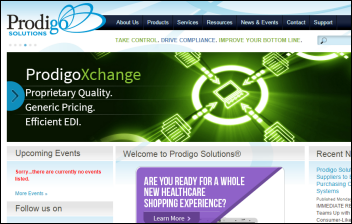
UPMC sells its 51 percent interest in the procurement systems vendor it created — Prodigo Solutions — to a private equity firm, realizing a $9 million gain.

image

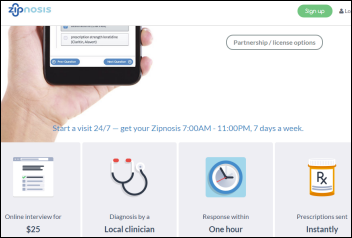
Zipnosis, which offers consumers a $25 televisit using an automated interview and clinician review, receives an undisclosed seed round investment.

image

North Bridge Growth Equity secures a majority stake in Atlanta-based Ingenious Med.


Sales

Chicago-area FQHC Mile Square Health Center chooses Forward Health Group’s PopulationManager and The Guideline Advantage.

image

Memorial Healthcare (MI) and King’s Daughters Medical Centers (MS) engage Iatric Systems to perform EHR-neutral integration with Apple Health.

image

Orlando Health (FL) chooses Ingenious Med’s charge capture system.

Ob Hospitalist Group (SC) chooses PatientKeeper Charge Capture for its physicians that provide services to 75 hospitals.

image

Arnot Health (NY) selects eClinicalWorks for EHR and health exchange for its 160 providers.

image

Virtual Radiologic chooses SyTrue’s natural language processing systems to extract information from its radiology reports, with plans to use the company’s Semantic Search to present teleradiologists with exams similar to the one being reviewed to drive clinical performance and efficiency.

image

St. Elizabeth Healthcare (KY) selects Strata Decision’s StrataJazz for cost accounting, budgeting, capital planning, and financial planning.

Rio Grande Valley HIE and University of Texas Health Science Center choose Wellcentive’s population health management solutions to help manage the care of people with diabetes.


People

image

CTG promotes Ted Reynolds to SVP with responsibility over CTG Health Solutions.

image

George Evans (Singing River Health System) joins Sagacious Consultants as principal consultant.

image

The HCI Group names John McDaniel (NetApp) as VP of innovation and technology solutions.

image

AMC Health hires Bruce Matter (GE Healthcare) as SVP of sales and client development.

image

Afik Gal, MD, MBA (PwC Consulting) joins QPID Health as VP of product innovation.

image

Siemens Health Services CEO John Glaser will join Cerner after its acquisition of SHS is complete. He says, “I’ll join as a senior vice president, focused on driving technology and product strategies, interoperability, and government policy development.” Leaders of acquired companies don’t usually last long, so we’ll see. As Vince and Frank said in Tuesday’s webinar, Siemens customers should get any promises in writing from Cerner, not from Siemens.

image image image

Cal INDEX HIE hires Greg LeClaire (Aetna) as CFO; John Lee (Oracle) as CTO;  and Doug Hart (ConvergeHealth) as VP of marketing and corporate communications. Also hired but with no photo available anywhere I could find on the web: Andrea Leeb, RN, Esq. (LA Care Health Plan) as chief privacy officer. I’m amazed at technology people who don’t keep their LinkedIn profile current or who don’t include a photo of reasonable quality. Mistake #1 (second only to not including a photo at all): shrinking down the head shot to horrible quality, missing the point that LinkedIn thumbnails it automatically while still displaying the full-sized original when clicked. Mistake #2: using an informal snapshot that adds distracting features such as the shoulders of other people from the cropped group photo or a Hawaiian lei. Of course this advice comes from someone whose own profile doesn’t have a photo, but I have an excuse: LinkedIn shut mine down until I removed the “Caddyshack” image of Carl Spackler.


Announcements and Implementations

image

Faith Community Hospital (TX) successfully attests for Meaningful Use Stage 2 shortly after choosing and implementing the RazorInsights EHR and using its Meaningful Use Dashboard.

Memorial Healthcare System (FL) is sending referral information from its ED to Henderson Behavioral Health (FL) to integrate medical and behavioral services. The health system sends HL7 C-CDAs from Epic to Henderson’s Netsmart CareRecord EHR that include completed labs, demographics, medical summary, meds list, and vital signs.

The Greenville, SC paper profiles ChartSpan Medical Technologies, which has developed a new PHR app for iOS.


Government and Politics

image

A Federal Trade Commission investigation into website privacy certification company TRUSTe results in a $200,000 settlement. TRUSTe didn’t perform some of the the annual website privacy audits it promised. It also failed to require certified sites to display an updated seal indicating TRUSTe’s conversion to a for-profit company in 2008. 

Michigan’s top-earning doctors in CMS’s Open Payments database of drug and device company payments explain their income as follow, a good example of just how complicated the issues are around medical payments:

  • A diagnostic radiologist who was paid $688,000 by a medical device manufacturer says he doesn’t use the needle biopsy and software he developed because he no longer does biopsies. He says he supports Open Payments to expose doctors who are paid to use products on their patients.
  • A GP who was listed as earning $571,000 from a drug company is actually the medical director of a clinic that was paid for conducting three studies. The doctor does research work only and is paid a salary by the clinic, while the drug company payments were made to the clinic itself and he received nothing.
  • A plastic surgeon who earned $341,000 in drug company money for training doctors to use an Allergan breast implant says he doesn’t promote the product and loses money when consulting for up to $5,000 per day since that’s a tenth of what he would make otherwise.
  • A University of Michigan Medical School orthopedic surgeon who was paid $201,000 in royalties for a knee replacement device says he follows his employer’s conflict of interest guidelines and doesn’t receive royalties when the device is used by anyone within UM.
  • An orthopedic surgeon who made $196,000 from device companies says he holds 55 patents and he tells patients if he’ll get paid for using a particular one.

Innovation and Research

A study finds that use of EMR-triggered, telephone-based prescription refill reminders for heart-related drugs was associated with very slightly improved medication compliance and outcomes.

image

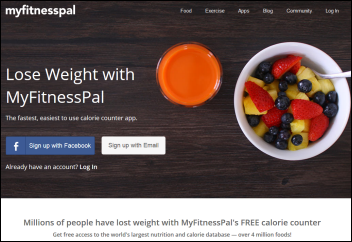
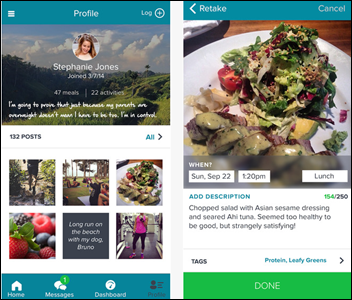
A small, short-term study finds that smartphone-based weight loss apps (specifically MyFitnessPal) don’t really help users lose weight.

A Penn Medicine study finds that ambulatory clinic doctors prescribed generic drugs as a higher percentage when the EHR was modified to require an extra click to show the brand name item.

image

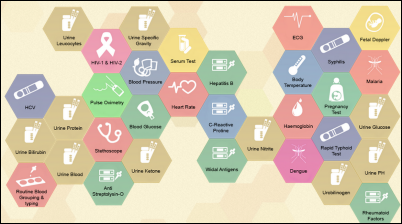
The Washington Post profiles the Swasthya Slate, an inexpensive device that connects to Android-powered phones and tablets to perform 33 diagnostic tests. The device has been tested in India, where it excelled at detecting preeclampsia, increasing the rate of needed testing, and reducing administrative time for healthcare workers from 54 percent of their day to 8 percent. They expect the cost of the device to be around $150 at full production and see potential for its use with telemedicine.  

image

Walgreens will offer inexpensive, minimally painful blood tests from startup Theranos, with the service already launched in the Phoenix area.


Technology

image

Statistical software vendor SAS co-founder and CEO Jim Goodnight, PhD, a North Carolina programmer turned multi-billionaire,  tells a banking technology magazine that the data warehouse is not obsolete:

Fraud, customer intelligence, compliance — if you have the right set of data all together, you can use that set of data, you don’t have to keep go looking for data every time you need something. That’s one thing Hadoop provides. It’s a great place to store data. Also, you’re buying these 1.2 terabyte disks at about $300 apiece, you can hang 20 of these on a server and it’s local, so you can read the data straight on the machine … We’re seeing a shift away from that kind of hardware [IBM mainframes] to commodity. People are dropping AIX boxes and going to Linux x86 boxes and Intel chips. The chipsets are incredible. Dell has a machine we really like, it’s called an R920 and it has four slots, you could put four chips each with 16 cores, you end up with a server with 64 processors, you can put three terabytes of memory in that machine, and it’s about $100,000.


Other

Brigham and Women’s Hospital (MA) announces that the information of 1,000 patients was exposed in September when a robber held up a doctor at gunpoint, tied him to a tree, and forced him to give up his cell phone and laptop passwords. 

The bonds of Duke University Health System (NC) remain at an ‘AA’ rating despite a $65 million reserve adjustment due to a collections slowdown caused by its Epic implementation and problems with new IT systems at both North Carolina Medicaid and Blue Cross Blue Shield of North Carolina.

In Ireland, the health service is reviewing why a five-hospital group invited only one vendor to respond to a clinical information system RFP. Auditors also want to know whether the former CEO of the hospital group disclosed that he previously worked as a consultant for the company, Northgate Public Services.

image

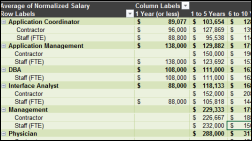
The provider folks behind “Just Epic Salary” make their survey results available for free Excel download. Some of the highest average salaries were for permanent hire physicians ($348,000), permanent hire management ($243,000), and contracted application management ($187,000), although even with 753 responses some of the categories had a small sample size.


Sponsor Updates

  • CIO Review names secure communications vendor PerfectServe as one of the “20 Most Promising Healthcare Tech Solutions Providers in 2014.”
  • Versus Technology announces that Amerinet members will receive discounts on its RTLS products.

Contacts

Mr. H, Lorre, Jennifer, Dr. Jayne, Dr. Gregg, Lt. Dan, Dr. Travis.

More news: HIStalk Practice, HIStalk Connect.

Get HIStalk updates.
Contact us online.


125x125_2nd_Circle

Curbside Consult with Dr. Jayne 11/17/14

November 17, 2014 Dr. Jayne 3 Comments

clip_image002

Color me less than thrilled that the Institute of Medicine is now asking for EHRs to capture additional social and behavioral data as part of Meaningful Use Stage 3. That’s assuming that Meaningful Use is still viable now that the money is nearly gone and more than half of ONC’s senior leadership has left in recent months. Practice administrators have been dazed and confused trying to figure out if they are better off trying to apply for hardship exceptions, take advantage of the flexibility rule, or throw in the towel altogether.

I recently met a practice administrator who swore up and down her providers were attesting for Stage 2, even though they hadn’t yet installed a patient portal and didn’t have a Direct interface. Then again, she also thought that Patient-Centered Medical Home was some kind of design/construction initiative rather than a practice transformation activity, so I shouldn’t have been surprised.

I understand that the Institute of Medicine sees EHRs as a great place to mine data for research, but patients are already weary of having their privacy invaded. Anyone remember the Florida legislation to control whether providers could ask about firearms in the home? My vendor actually had to code in a setting where a practice could hide the firearms questions to avoid running afoul of the law.

Although we’re pushing patients to be more engaged and it’s nice to work with them when they are, at least in my world the majority of patients don’t care about engagement. They just want to be treated and get back to work, their kids, or whatever else was going on in their lives before they got sick. They’re not interested in proactively managing their health when they’re living paycheck to paycheck and think that even questions about alcohol and tobacco use (which are clearly linked to major health outcomes with most people understanding their significance) are over the line.

When we had to start asking about race and ethnicity, we spent on average two to three minutes per patient explaining why we needed that information and helping patients figure out how to answer the question. Many patients thought they were interchangeable, so we were at the front desk educating them on the vagaries of demographic data rather than collecting their co-pay and speeding them back to see the doctor. At least those particular pieces of demographic information don’t change over the life of the patient, so you only have to ask them once.

Now the academic crowd is going to push us to ask about factors that could change at every visit, including depression, education, intimate partner violence, financial resource strain, physical activity, social connections/isolation, and stress. I can tell you without gathering data or an exhaustive chart review that most of my patients would require discussion of the last four.

As a good primary care physician, I should be asking about these things anyway, but I want to ask about them at an appropriate time during an appropriate visit, after I have built a relationship with the patient. I don’t want them turned into screeners that my staff has to administer to every single patient so we can avoid being penalized.

Will providers be judged on the percentage of patients who follow advice to manage these issues, like we’re currently judged on the number of patients we can convince to go for colonoscopies or mammograms? That’s not what I signed up for as a physician. I should do my best to encourage my patients, but didn’t I spend a lot of time in medical ethics learning about patient autonomy and how the paternalistic model of healthcare delivery has to go? We’re just asking for more cherry-picking by providers as they dismiss non-compliant patients from their panels to improve their numbers.

Most patients don’t understand that their data is already being used for research by health plans and other payers without their specific understanding or consent. Sure, it’s probably in the fine print somewhere and it’s either aggregated or de-identified, but if you asked them whether they understand where their data goes or what it’s used for, they would say no. When people think their information might be used in a way they don’t want it to be used (or to be out of their control), they’re going to lie.

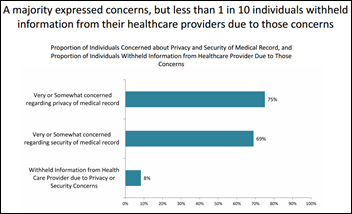
Mr. H’s recent poll showed that nearly half of HIStalk readers have withheld medical information from a provider due to privacy concerns. I’m one of them, I admit. Parents are lying on the California home language survey  because they don’t want their children labeled as “English learners” for fear they will miss out on other educational opportunities. The old medical school adage of “take the amount of alcohol the patient says he uses and double it” reminds us this is not a new phenomenon.

How about let’s actually get people to use the EHRs they already have and use them well rather than pushing more minutiae on overburdened end users? A friend of mine has an EHR with a great onboard reporting tool, yet hasn’t leveraged it at all for actual clinical care. They’re so busy trying to get their patient portal enrollment numbers up and micromanaging the rest of their “all or none” Meaningful Use metrics that they’ve lost their ability to do cancer prevention outreach, immunization campaigns, or other interventions that have been actually proven to save money as well as improve people’s lives. And that, dear readers, is a shame.

What do you think should be in Meaningful Use Stage 3? Email me.

Email Dr. Jayne.

Monday Morning Update 11/17/14

November 15, 2014 News 2 Comments

Top News

image

EHealth Initiative releases its “2020 Roadmap” as a preliminary private sector alternative to the federal government’s Meaningful Use agenda, obviously sensing as others have that ONC’s rapidly decreasing influence will leave a power void in the industry. Some of its points, all of which are aimed at the federal government:

  • Reward providers for outcomes (quite a few of the proposed activities involved incentive payments, with no suggestion that the federal handouts be curtailed).
  • Focus federal policy on interoperability.
  • Simplify quality measurement programs and standardize measures for quality, cost, patient satisfaction, and value.
  • Hold the October 2015 ICD-10 date firm.
  • Push Meaningful Use Stage 3 back.
  • Focus federal policy on the minimum necessary data requirements to manage the health of individuals and populations.
  • Encourage HISPs to publish their provider address directories.
  • Encourage the use of APIs to support core functions.
  • Put more emphasis on Direct-based capabilities, including awareness.
  • Encourage the use of REST and FHIR.
  • Shift EHR certification to measure what the market wants, including interoperability, safety, and security.
  • Consider post-acute and behavioral health providers in interoperability programs.
  • Help define the elements of a nationwide interoperability ecosystem, help overcome privacy and security barriers, and use government purchasing and regulatory clout to advance interoperability.
  • Align federal interoperability efforts across the DoD, VA, NIH, FDA, and CDC.
  • Improve patient and data matching capabilities.
  • Study the costs and benefits of letting patients control the use of their own information.
  • Create a data breach policy guidebook and a trust framework.


HIStalk Announcements and Requests

image

Nearly half of the respondents to my poll have withheld information from a provider because of medical records privacy concerns. New poll to your right or here: why did you leave your last job? You can elaborate further after voting by clicking the poll’s comment link. I especially like stories involving management incompetence since I’ve seen plenty of that.


Last Week’s Most Interesting News

  • The Institute of Medicine recommends adding 17 new mandatory patient social history data collection items, such as financial resources and social connections, to EHRs via the Meaningful Use program to give researchers more insight into social determinants of health.
  • UCSF School of Medicine Professor Bob Wachter, MD adds his voice to those calling for ONC to either be refocused on interoperability or shut down.
  • The UK’s Department of Health issues a broad and bold patient-focused health IT plan covering the next several years.
  • Reuters reports that the Federal Trade Commission is reviewing how Apple’s HealthKit manages and shares user health information, adding that Apple is considering hiring a health privacy expert.

Webinars

November 18 (Tuesday) 1:00 ET. Cerner Takeover of Siemens, Are You Ready? Sponsored by HIStalk. Presenters: Frank L. Poggio, president and CEO, The Kelzon Group; Vince Ciotti, principal, HIS Professionals. The Cerner acquisition of Siemens impacts 1,000 hospitals that could be forced into a “take it or leave it” situation based on lessons learned from similar takeovers. This webinar will review the possible fate of each Siemens HIS product, the impact of the acquisition on ongoing R&D, available market alternatives, and steps Siemens clients should take to prepare.

November 19 (Wednesday) 1:00 ET. Improving Trial Accrual by Engaging the Digital Healthcare Consumer. Sponsored by DocuSign. Presenters: B. J. Rimel, MD, gynecologic oncologist, Cedars-Sinai Medial Center; Jennifer Royer, product marketing, DocuSign. The Women’s Cancer Program increased trial accrual five-fold by implementing an online registry that links participants to research studies, digitizing and simplifying a cumbersome, paper-based process. This webinar will describe the use of e-consents and social marketing to engage a broader population and advance research while saving time and reducing costs.

Recent webinar videos on YouTube:

Keeping it Clean: How Data Profiling Leads to Trusted Data

3 Ways to Improve Care Transitions Using an HIE Encounter Notification Service


Acquisitions, Funding, Business, and Stock

image

Siemens says it will keep its healthcare unit, ending speculation that it wanted to sell that business as it did its healthcare IT and hearing aid divisions.

image

Cleveland Clinic creates a company and website to distribute its self-developed software and technology developed by the academic medical centers in its Healthcare Innovation Alliance.


Sales

Mercy chooses Emmi Solutions to provide patient information tools.


People

image

UnitedHealth Group announces executive changes that include adding to the duties of its Optum division CEO Larry Renfro, who was named vice chairman of UnitedHealth Group in charge of strategic and key client relationships. His responsibilities include OptumInsight, which is the software and consulting part of the business.

image

Ross Martin, MD, MHA tweeted out this picture from Sunday’s Fun Run at the AMIA annual meeting in Washington, DC.  In the photo are Ross (AMIA), Danny Sands,MD (BIDMC),  Tom Payne, MD (UW Medicine), and Bill Hersh, MD (OHSU).

image

Also from the AMIA conference: John Glaser of Siemens receives the William W. Stead Award for Thought Leadership in Informatics.


Announcements and Implementations

ONC released its 10-year plan Thursday. While it captured at a high level some of the same ideas expressed in eHealth Initiative’s “Roadmap 2020” report, it was less prescriptive and more self-congratulatory. I didn’t find much interesting in it other than its intention to define common data elements and to create a feedback loop between EHR-collected information and published quality information. The UK’s Department of Health digital strategic plan was a lot more interesting and patient focused than either of these in my mind.

image

Baystate Health (MA) opens the TechSpring healthcare IT incubator where it will work with vendors such as Premier and Cerner, funded by a $5.5 million grant from the Massachusetts Live Sciences Center.

image

Vanderbilt University will move Vanderbilt University Medical Center into a financially separate organization that can “act nimbly and more independently in a rapidly changing healthcare environment.”

Healthcare IT companies making the Boston Globe’s “Top Places to Work” list include Kronos, athenahealth, Philips,  NaviNet, Imprivata, and Park Place International.

Wolters Kluwer Health launches the Consumer Education Center, which allows providers to create their own consumer health information website using the company’s medication handouts, drug interaction checker, and drug identification tool.


Government and Politics

image

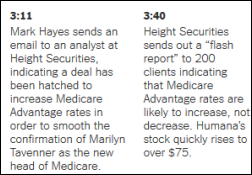
A Securities and Exchange Commission investigation finds that CMS employees apparently tipped off investment firms that Medicare was about to increase provider payments 19 months ago, sending insurance company shares soaring two days before the decision was announced publicly. Investigators found that at least 456 CMS employees knew about the increase beforehand and believe that 44 investment funds made trades based on the information insiders provided. An internal CMS email says CMS struck a deal to raise Medicare Advantage payments in order to  get Marilyn Tavenner confirmed as CMS administrator.

image

Meanwhile, a Washington Post investigation finds that HHS paid MIT economist Jonathan Gruber $400,000 to help design the Affordable Care Act even as the White House cited him as an unbiased expert who supported its plan. HHS paid him another $2 million to review Medicare’s prescription drug program. Gruber is best known for his comments from several recently discovered videos, including, “If you have a law that makes explicit that healthy people pay in and sick people get money, it wouldn’t have passed. Lack of transparency is a huge political advantage and basically call it the stupidity of the American voter or whatever … This bill was written in a tortured way to make sure the CBO did not score the mandate as taxes. If CBO scored the mandate as taxes, the bill dies.” Gruber help design the Massachusetts reforms that inspired the ACA, of which yet another video captures him saying, “The dirty secret in Massachusetts is the feds pay for our bill … Ted Kennedy … and smart people in Massachusetts had basically figured out a way to sort of rip off the feds for about $400 million a year.” The New York Times says at least CBO was clear on providing guidance on how to write the ACA legislation “in order to not move trillions of dollars of healthcare expenditures onto the federal budget.”


Technology

Reuters reports that early Google Glass developers and users appear to be losing interest in the product, which is still in beta with no announced rollout date. Of 16 Glass app developers, nine abandoned their projects because of poor business or device limitations, while three that were working on consumer apps refocused on businesses. Several key Glass developers have left Google and a funding consortium of high-profile VCs appears to have shut down.


Other

A Wharton School African forum called “Can Technology Enable Healthcare for All?” finds that simple technologies could improve poor conditions, such as giving expectant mothers cell phones and tracking vaccines with barcodes. A speaker said that Kenya Airways quickly deployed technology and protocols to limit the spread of Ebola, with a result of “Ebola is actually more feared in New York than Nairobi.”

image

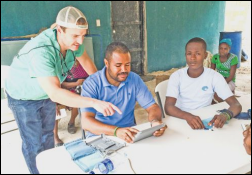
The Columbus, MS paper describes the iPad-powered EHR created by local dentist Patrick Singley, DMD (on the left in the photo above) for his medical mission trips to underdeveloped countries. He has formed a non-profit organization and is offering the system to other groups.

In the UK, Cambridge-affiliated Addenbrooke’s Hospital says rumors of widespread problems with its $300 million Epic IT system are false, but admits a patient’s on-screen OR record was missing information and that surgeries have been postponed due to problems with blood transfusion analyzer interfaces.

“Remote Area Medical,” a film covering the non-profit volunteer medical relief corps of the same name, opens in New York on November 28 and nationwide December 5. It focuses on a single three-day clinic held at the Bristol Motor Speedway in Tennessee. Remote Area Medical was founded by former “The Wild Kingdom” host Stan Brock in 1985 to provide free medical clinics. Most of its work is in its home state of Tennessee, which is apparently the only state that allows volunteer doctors licensed in other states to practice.

image

Boston Magazine runs a feature on the completely solar powered 1966 Volkswagen Bus of Daniel Theobald, co-founder and CTO of patient check-in system vendor Vecna Technologies. He chose that particular vehicle to convert because it’s a “big open box” for experimentation and it was large enough to hold his wife and their seven children. 

image

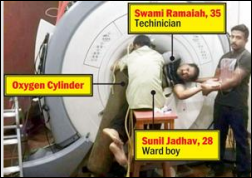
Sing along with Weird News Andy: “I am stuck on the MRI ‘cause the MRI’s stuck on me.” Two hospital employees in India are injured when one of them brings a patient’s oxygen tank into an MRI room, pinning both employees to the giant magnet for four hours as staff tried to turn it off.  The hospital blames GE Healthcare for what it says was a malfunctioning switch.


Contacts

Mr. H, Lorre, Jennifer, Dr. Jayne, Dr. Gregg, Lt. Dan, Dr. Travis.

More news: HIStalk Practice, HIStalk Connect.

Get HIStalk updates.
Contact us online.


125x125_2nd_Circle

News 11/14/14

November 13, 2014 News 7 Comments

Top News

image

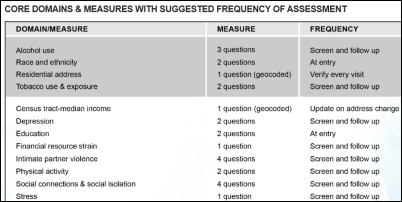
The Institute of Medicine urges ONC and CMS to add additional social and behavioral health measures to EHR certification and Meaningful use criteria to allow researchers and health systems to uncover determinants of health. The unshaded items on the list above, involving 17 patient questions, would be new for most providers.


Reader Comments
image image

From Flatus Maximus: “Re: ONC’s data matching project. I can’t believe that ONC thinks that these two (or anyone, for that matter) can solve this problem in two years given the huge legal an policy issues. I don’t think ONC understands that this is a socio-technical problem that requires more than a technology fix.” ONC and HIMSS bring in two people to solve the patient identity matching problem via HHS’s “Innovators in Residence” program that temporarily hires technologists to fix specific problems. Hired were Catherine Costa, RN (marketing director at PatientPoint) and Adam Culbertson (NIH biomedical informatics fellow). Political reality takes the obvious answer off the table: a unique consumer ID with biometric verification.


HIStalk Announcements and Requests

This week on HIStalk Practice: The Massachusetts eHealth Institute offers grants to spur EHR adoption among behavioral health and long-term care providers. New York inches closer to becoming the largest HIE in the nation. SCHIEx and GaHIN launch one of the first state-to-state HIE connections. Billings Clinic implements vein scanners. Envision Medical Group selects new Aprima RCM services. Florida Heart & Vascular’s IT Administrator details the tough time they’ve had with EHRs.

This week on HIStalk Connect: The Nokia Health Sensor XPRIZE competition concludes, with DMI Diagnostics taking the $525,000 grand prize. Samsung opens its SAMI health data SDK service to developers and showcases its new open design Simband prototype. Two Singularity University grads raise $12 million to launch a machine learning-backed population health platform. Ginger.io announces a handful of new research partnerships that will test its behavioral health app within a variety of remote patient monitoring initiatives.


Webinars

November 18 (Tuesday) 1:00 ET. Cerner Takeover of Siemens, Are You Ready? Sponsored by HIStalk. Presenters: Frank L. Poggio, president and CEO, The Kelzon Group; Vince Ciotti, principal, HIS Professionals. The Cerner acquisition of Siemens impacts 1,000 hospitals that could be forced into a “take it or leave it” situation based on lessons learned from similar takeovers. This webinar will review the possible fate of each Siemens HIS product, the impact of the acquisition on ongoing R&D, available market alternatives, and steps Siemens clients should take to prepare.

November 19 (Wednesday) 1:00 ET. Improving Trial Accrual by Engaging the Digital Healthcare Consumer. Sponsored by DocuSign. Presenters: B. J. Rimel, MD, gynecologic oncologist, Cedars-Sinai Medial Center; Jennifer Royer, product marketing, DocuSign. The Women’s Cancer Program increased trial accrual five-fold by implementing an online registry that links participants to research studies, digitizing and simplifying a cumbersome, paper-based process. This webinar will describe the use of e-consents and social marketing to engage a broader population and advance research while saving time and reducing costs.


Acquisitions, Funding, Business, and Stock

image

Australian telecommunications company Telstra’s health division acquires 2 percent of New Zealand-based Orion Health prior to Orion’s upcoming IPO that values the company at $725 million.

image

MMRGlobal, which makes a lot of its money licensing (via nuisance vendor infringement lawsuits) its PHR and other medically related technology, took in nearly $2 million in the most recent quarter, up 1,584 percent over last year. I interviewed CEO Bob Lorsch last year and asked him some pointed questions about the company’s business model – you can decide what you think about it.

image

Xerox invests in telemedicine kiosk vendor HealthSpot and will provide it with cloud hosting, system integration, and claims processing services.

The Portland, OR business paper highlights the $150 million venture fund of Providence Health & Services, which is looking for healthcare startups in telehealth, wearables, clinical applications, and e-commerce that seek up to $5 million. The fund is finishing due diligence on four unnamed companies. The fund’s partner explains, “The point isn’t just financial. Our chief investment officer could buy bonds. Our goal to make products and services that help our community, our patients, our members and providers.”
image

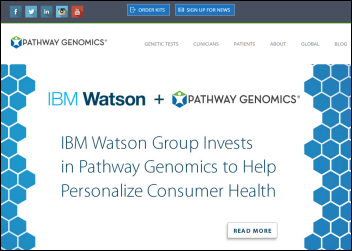
IBM invests an unspecified amount from its Watson investment fund in genetic testing company Pathway Genomics, which will develop a Watson-powered mobile app that will answer a consumer’s health questions by analyzing information from their wearables, genetic markers, and electronic health records.


Sales

Baylor Scott & White Health selects McKesson’s Performance Analytics, Analytics Explorer, and Pay-for-Performance for financial analytics.

City of Health and Science University of Turin, Italy chooses InterSystems TrakCare.

Wellmark Blue Cross and Blue Shield (IA) will implement employer reporting from MedeAnalytics.

Presbyterian Medical Services (NM) selects the analytics platform of Lightbeam Health Solutions.

Christus Health signs a five-year extension with Strata Decision Technology.

NantHealth licenses Streamline Health’s Looking Glass analytics to track populations and compare clinical effectiveness.

image

MaineGeneral Health (the combined words represent their conceptual mistake, not my typographic one) renews its Allscripts Sunrise and TouchWorks agreements and adds FollowMyHealth.


People

image 

Nordic Consulting CEO and co-founder Mark Bakken will leave the company to start a venture capital fund in which he and Nordic will invest.

image

Ed Kopetsky, CIO of Lucile Packard Children’s Hospital Stanford (CA), receives the Distinguished Achievement Award of his alma mater, University of Wisconsin-Madison and its College of Engineering.
image

Allina Health announces that CEO Ken Paulus will retire at the end of the year, with President and Chief Clinical Officer Penny Wheeler, MD replacing him. She’s done quite a bit of work with their Epic and data warehouse systems.


Announcements and Implementations

Named to Deloitte’s “2014 Technology Fast 500” are DrFirst, Etransmedia, Imprivata, InstaMed, Kareo, Liaison Technologies, Qlik, VMware, and ZeOmega.

image

Silver Hill Hospital (CT) implements QPID Health’s Cohort App to product HBIPS behavioral health quality metrics and will work with the company to deliver a behavioral health portal.

Billings Clinic (MT) goes live on patient identification via palm vein scanning using technology from PatientSecure that is integrated with its Cerner system.  

The medical school of Mount Sinai (NY) enrolls its first patient in a televideo-powered prostate cancer clinical trial, working with real-time patient management solutions vendor AMC Health.  

The state HIEs of Georgia and South Carolina connect to each other with the help of technology partners Truven Health Analytics and CareEvolution.
image

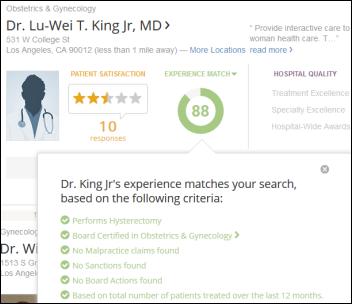
Healthgrades launches a new version of its doctor search site that uses claims data to show users the level of experience a doctor has with a given procedure or diagnosis.
image

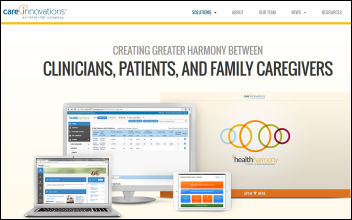
Intel-GE Care Innovations announces Health Harmony, a remote patient monitoring platform that aggregates information for clinician review and helps them collect the new $40 per month Medicare payment for chronic care management. The joint venture was started in January 2011. Only one executive remains of its original 10-member management team.

Novant Health (NC) joins the federal eHealth Exchange, adding that so far this year it has shared 148,000 patient records via Epic’s interoperability as well as a total shared record count of 38 million this year.


Government and Politics

UCSF School of Medicine Professor Bob Wachter, MD says the “accidental” Meaningful Use program has achieved its goals of putting stimulus dollars on the street and increasing EHR use, but says that Meaningful Use Stage 2 is an indication that ONC should be put out to pasture once it has handed out its remaining incentive money. He says it’s time to declare victory, move Meaningful Use toward encouraging API-driven interoperability, and let quality and clinical demands rather than government checklists drive the technology market.

CMS releases three free ICD-10 education resources that offer CME and nurse CE credits.
image

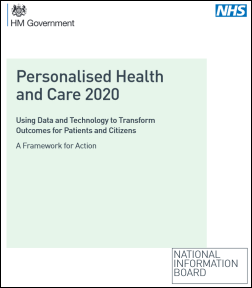
In the UK, the Department of Health’s National Information Board creates a wide-ranging, technology-focused policy draft covering digital health over the next several years. Highlights:

  • EHRs are used by 96 percent of doctors, but only 4 percent of them allow patients to see their information. All will be required to offer patient access by April 2015.
  • Technology has had minimal impact on the patient experience.
  • Interoperability is a big problem, as hospital systems are “impenetrable” and little electronic information exists for nursing home and hospice patients.
  • Hospitals and practices don’t integrate their services with mental health and social care.
  • Digital services should be the default delivery channel, with services such as appointment booking and prescription refill requests combined into a single information platform (an extension of NHS Choices) that requires citizens to verify their identity through the Government Digital Services IDA program.
  • Health-related apps and devices should be nationally accredited and service marked to encourage their adoption
  • Specifications will be published by April 1, 2015 for accessing NHS’s core systems, such as Spine and e-referrals.
  • NHS England will pilot technology in which patients will hold their electronic records and a personal budget.
  • A national pilot will give consumers a PHR that they control that is also available in real time to clinicians, which will also include their end-of-life preferences.
  • NHS will seek universal adoption of its healthcare ID number, which was introduced in April 2014 as the primary identifier in clinical correspondence.
  • NHS will propose that clinical systems adopt clinical structure standards developed by the Academy of Royal Medical Colleges.
  • The entire health system will adopt SNOMED CT clinical terminology by April 2020, while additional work with semantic web technologies will be undertaken.
  • NHS England will develop a standard for adopting the GS1 identification standard of patients, products, and places as well as RFID tagging.
  • NHS will reduce the number of organizations that collect patient information for purposes other than clinical care, moving by 2020 to process that requires patients to consent to having their data shared.
  • The Department of Health has created the role of National Data Guardian for health, which will lead efforts inform patients where their data has been used and the benefits they received as a result. Named to the role is Dame Fiona Caldicott, chair of the Oxford University Hospitals NHS Trust and a psychiatrist whose government-created committee reviewed the protection and use of patient information in 1997.
  • Technology made available under the General Practice Systems of Choice will be more selectively targeted to encourage integrated services, SaaS-based systems for new providers of primary care services, and innovative systems for non-hospital services.
  • IT investment will shift to investments that support older citizens, those with chronic conditions, and those being cared for informally.
  • NHS England will decide with the GPSoC contract ends in April 2018 whether it should continue or whether PCP payments should be increased to let them buy whatever systems they want as long as they meet data standards.

Also in England, the $6 billion fund created to reduce ED visits and readmissions of elderly patients is declared a “shambles” by auditors who say it probably won’t save NHS even one-third of the original $1.5 billion estimate.

image

A Reuters report says that the Federal Trade Commission has been meeting with Apple for several months to make sure the health information contained in HealthKit and Apple’s upcoming smart watch will be managed appropriately and not shared with third parties as was found to be the case with health and fitness apps from other companies. Sources say Apple is considering hiring a health privacy czar.


Innovation and Research
image

A study of Pennsylvania’s mandatory hospital patient safety reporting database finds that “advanced EMRs lead to a 27 percent decline in patient safety events.” I was predisposed to not liking the article because its overly cute title asks a question rather than states a conclusion (“Saving Patient Ryan – Can Advanced Medical Records Make Patient Care Safer?”) and its regurgitative academic meandering goes on for 40 painful pages. However, I originally assumed the authors didn’t look at individual hospital performance pre- and post-EHR, but I asked an expert in statistics to wade through the endless graphs and methods to tell me and he says they did, which is admirable. That still leaves a few weak links – underreporting of errors, failing to distinguish between how individual EHRs were implemented, and non-EHR confounders that make proving causation difficult – but overall it seems to be pretty solid as long as you trust the HIMSS Analytics database, which was built for selling data to vendors for marketing rather than research.


Other

India-based hospital chain Narayana Health, best known for performing high-volume and low-cost heart surgeries, opens Health City Cayman Islands in a joint venture with Ascension Health. It expects the 108-bed hospital, its first outside of India, to expand to 2,000 beds as it capitalizes on a location near (but not in) the US for medical tourism. The hospital chain prices its services in flat rate bundles and sends the patient a single, all-inclusive bill. The Cayman Islands hospital has a sophisticated EHR, its clinicians use Google Glass and smart watches to review information and communicate with patients as they round, and (most interesting to me) every patient gets a mobile tablet that is updated with their most current information. The chain is also a big user of telemedicine, where India-based command center doctors monitor patients all over the world. Health Catalyst created the video above that includes a profile of Narayana Health’s founder, philanthropist and cardiac surgeon Devi Shetty, called “the Henry Ford of heart surgery” by the Wall Street Journal. He also designed a comprehensive health insurance plan for poor farmers in India that costs 20 cents per month.

An interesting survey finds that Americans are increasingly worried about their electronic privacy, yet continue using the services they distrust (social media, text messaging, email, and cell phones) because they don’t see an alternative. They’re also willing to give up privacy in return for getting something free, such as providing personal information to use a website.
image

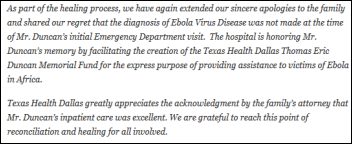
Texas Health Resources apologizes, creates a memorial fund, and pays an undisclosed settlement to the family of deceased patient Thomas Duncan for discharging him from its ED without making an Ebola diagnosis. Meanwhile, Duncan’s fiancée signs a book deal.
image

The former CFO of Shelby Regional Medical Center (TX) pleads guilty to falsifying the hospital’s Meaningful Use attestation in November 2012, earning it a $785,655 CMS payment. He faces up to five years in federal prison. The CFO, who rose from the position of maintenance worker, claimed the hospital used EHRs when in fact it remained mostly paper-based and entered minimal EHR information after discharge. He attested using the Social Security number of another employee who refused to put his own name on the form. The for-profit hospital, since closed, was one of six owned by Tariq Mahmood, MD, who was involved in the scheme and was found guilty in July 2014 of healthcare fraud, identity theft, and conspiracy. He threatened to fire coders who declined to falsify diagnosis codes and hand-wrote his own additions to patient records to maximize billing. The six hospitals were paid $18 million in HITECH money despite ongoing allegations of fraud from former administrators going back to 2008. CMS didn’t even know Mahmood owned multiple hospitals.

image

Spartanburg Regional Healthcare System (SC) celebrated Veterans Day by honoring 240 of its employees, volunteers, and contractors who are veterans. VP/CIO Harold Moore (second from left) was among the executives serving lunch. It looks like barbeque given the squirt bottles of what could be the mustard-based South Carolina style sauce that isn’t my favorite, but the picture wasn’t clear enough for definitive zooming.
image

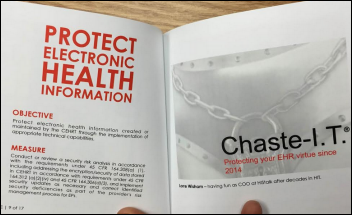
Niko Skievaski polls some of his fellow Epic alumni to determine why they left the company, with results that aren’t too surprising since they are similar in most places: lack of work-life balance, technicians with poor people skills who are promoted into management, and lack of company appreciation. Meanwhile, copies of Niko’s “MU2 Illustrated” art book have arrived from the publisher and are ready to ship. His projects are often fun, marginally commercial, and reflective of his youthful optimism, so Lorre contributed some art and I wrote the book’s foreword. We’ll probably have a virtual launch party or something just for fun and maybe invite him to sign books at our microscopic HIMSS booth.

Weird News Andy gestated this story that makes his heart go pitter-patter. Doctors at a Florida hospital perform CPR for three hours trying to resuscitate a woman who had an amniotic fluid embolism (which has a fatality rate of at least 25 percent, up to 90 percent in some studies) during an otherwise successful C-section. The team called the family into the room to say goodbye after 45 minutes of a flat-line ECG, but just as they were pronouncing her, she spontaneously revived. The baby is fine and the mom is not only alive, but miraculously free of brain damage.


Sponsor Updates

image

  • MediQuant’s employees launch a fundraiser to help build a school in Sierra Leone, with a goal of $5,000. A fundraiser will be held tonight (Friday) in Broadview Heights, OH and donations are being accepted. Company President Tony Paparella spent two years as a Peace Corps volunteer in Sierra Leone and will personally match the funds raised. Tony also plays harmonica in the company band The DeCommissioners and their “Legacy System Blues.”
  • First Databank informatics pharmacists Joan Kapusnik-Uner, PharmD and George Robinson, RPh will present sessions on pharmacy informatics and drug terminology standards at AMIA’s Annual Symposium November 15-19 in Washington, DC.
  • TeraMedica will debut Evercore 6.0, the latest version of its vendor-neutral archive, at RSNA.

EPtalk by Dr. Jayne

clip_image002

I’ve subscribed to multiple CMS mailing lists in an attempt to stay current as an Eligible Provider. It’s to the point, however, that it’s a rare day when I don’t hear from CMS when I open my inbox. This morning’s offering gave me chuckle, however, as CMS is “pleased to announce that the 2012 Electronic Prescribing (eRX) Incentive Program Supplemental Incentive Payments are now available.”

Originally I thought it was a typo, but yes, now that it’s November 2014, you can get your money for 2012. I hope no one switched jobs because payments are going as a lump sum to the taxpayer ID associated with the claims. I’m not sure why it takes 20+ months to figure out the payments, so feel free to clue me in.

I spent a couple of days earlier in the week at Ebola response training. Our hospital asked for physician volunteers and I was assigned to be one of the clinical documentation liaisons. Essentially my job would be to scribe documentation as the care team treats patients. We’ve not been designated as a primary response site, but are training anyway, which is probably a good thing.

It’s a bit of a strange feeling though to have your EHR skills valued above your clinical skills. Experiencing what our scribes deal with on a daily basis was also an eye-opener. I’m putting some thoughts together on how to improve their documentation protocols and workflows.

There are still exhibitor openings available at the mHealth Summit’s Consumer Engagement and Wearables Pavilion. Even better, if you need a sassy spokesdoctor to show off your wearables, I might know where to find a couple. You could also pick our brains on what primary care physicians really think about wearables and how we do or do not want to handle the volumes of data that can be produced as patients quantify themselves.

I’m a big fan of my Garmin, but I’m pretty sure my doc just wants to know that I run at least five days a week as opposed to knowing what route I chose and what my lap split times were. My EHR vendor is starting to integrate personal tracker data and what we’re seeing come in is far more than we would ever want to see.
clip_image004

It’s possible that being at some vendor events last week has given me trade show fever. Although I wasn’t initially looking forward to the upcoming HIMSS conference — the keynote lineup certainly didn’t help — I found myself today dusting off last year’s Social Schedule Pocket Guide so I can keep my eye out for noteworthy happenings and interesting events.

For anyone making his or her first trip to the big show, HIMSS is offering a series of “HIMSS15 Unveiled” webinars for attendees to learn about the event’s education, exhibition, and networking opportunities. Learning objectives for the webinars promise to “identify the latest initiatives designed to enhance the attendee experience.” I’m hoping those initiatives involve mid-afternoon martinis and massage therapists at the end of every exhibitor aisle.
clip_image006

The holidays are approaching and I’m already dreading the dinner table conversations. In addition to the usual topics of Medicare and Social Security, we also have the recent elections as a potential discussion thread. To make things even better, the Supreme Court has agreed to hear King vs.Burwell, which addresses insurance premium subsidies under the Affordable Care Act. Thinking about those combinations almost makes me wistful for my favorite holiday table topic: health conditions of people that aren’t at the table.

Are you starting to plan for HIMSS? Have any suggestions for the holiday table? Email me.


Contacts

Mr. H, Lorre, Jennifer, Dr. Jayne, Dr. Gregg, Lt. Dan, Dr. Travis.

More news: HIStalk Practice, HIStalk Connect.

Get HIStalk updates.
Contact us online.

 

125x125_2nd_Circle

CIO Unplugged 11/12/14

November 12, 2014 Ed Marx 4 Comments

The views and opinions expressed in this blog are mine personally and are not necessarily representative of current or former employers.

China

Thanks to a recommendation by friend and peer Pamela Arora, I was invited by the Chinese government to speak about health information technology. Having visited 29 years ago for my honeymoon, I was eager to return. This time, I would not be smuggling in bibles, but freely sharing lessons learned from my healthcare technology experiences.

image

After a 14-hour plane ride, I landed in Beijing and was greeted by my gracious host, Michael Wang. Michael is an English-speaking administrator at the China-Japan Friendship Hospital, the primary hospital for the city and party officials. We shared much in common and bonded over many meals, discussing our values and ideologies. Heck, we even did Starbucks together! We would later catch up with Pamela, who was also invited as a speaker.

You may be wondering how I survived eight days without Facebook, Twitter, Google, and YouTube. The answer: barely.

I had shared in advance my Top 10 list of sites to visit and they gave me a personal tour guide. It was freaking unbelievable. Although not a fan of Asian cuisine, I promised I would eat and drink everything set before me. Gulp. I managed. Incidentally, sea cucumbers are not ocean vegetables!

We also bonded through the ritual of shared shots. In China, each toast is a three-shot minimum. I, well … lost count of the toasts. What happens in Beijing stays in Beijing.

As you would expect, we toured the magnificent Friendship Hospital. Our guide and senior host was hospital president XU Shuqang MD, PhD. Dr. Shuqang now serves as the Party’s undersecretary of health for emergency management. A very friendly man with a great sense of humor. We connected on several levels, as both China and USA share many of the same challenges in healthcare.

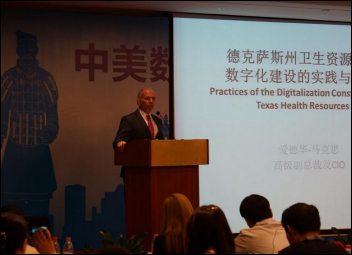
As a big believer in the power of technology to help transform healthcare, Shuqang was personally responsible for the content of this conference. Every hospital in China took part. The equivalent of the ONC sat in the first row. The 2014 Chinese EMR and Hospital Information Management Association Congress was underway. I still pinch myself. Was I really a featured speaker? Humbled.

image

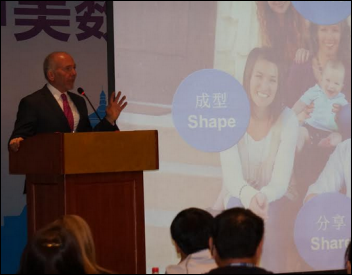
They employed simultaneous translation, which helped my speech go very smoothly. Until slide 12. Michael had entered the Chinese translation for all of my English bullet points, but for some reason, for every slide after the 11th, the English bullets disappeared.

It gave me pause, but I collected myself and then went on from memory. Thankfully, I recognized the pictures along the way that told a story related to the content. All was good. Who would know?

image

What did they want to learn about? Meaningful Use, HIE, privacy and security, and HIMSS stages of EHR maturity. Because I couldn’t imagine not talking about it, I threw in a few nuggets on leadership as well. What good is all that other stuff if nobody can lead and execute?

They were ahead of us in some areas such as telehealth, but behind in other areas such as EHR adoption and HIE. We learned from one another and developed a lifelong friendship that transcends political ideology. We are in this to transform healthcare. Indeed, the world is flat.

As I headed home, I reflected. My new friends. The amazing sights and sounds. The beautiful people. I came away with renewed hope. Hope for the world.

What resonated with me most was one of the triple-shot toasts given by Dr. Shuqang. “Despite ideological differences,” he said, shot glassed raised, “our two super powers can collaborate and truly transform healthcare and make this world a better place for the citizens of every country.”

They will be in Texas visiting Pamela and Children’s Health. I aim to catch up on progress made since we first met. I also hope they’re ready for some Texas cuisine!

Ed Marx is a CIO currently working for a large integrated health system. Ed encourages your interaction through this blog. Add a comment by clicking the link at the bottom of this post. You can also connect with him directly through his profile pages on social networking sites LinkedIn and Facebook and you can follow him via Twitter — user name marxists.

News 11/12/14

November 11, 2014 News 9 Comments

Top News

image

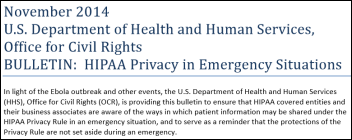
HHS’s Office for Civil Rights issues a bulletin covering HIPAA privacy obligations in Ebola-type emergency situations. It bends the HIPAA rules a bit, clarifying that a provider can share patient information “with anyone” as needed to prevent an imminent public health threat, but points out that media disclosure is limited to acknowledgment (not announcement) that an Ebola patient is being treated and a statement of their condition, provided that the patient has not expressed a preference otherwise. That means hospitals can’t release an Ebola patient’s name unless a reporter asks about that patient specifically, in which case the hospital can acknowledge their presence and condition.


Reader Comments

From The PACS Designer: “Re: Dropbox. It can now operate inside Microsoft Office.” Office users can edit their documents directly from Dropbox and share them from inside Office apps, which are now free for iOS users and as such are residing at the top of the App Store popularity lists. Gartner predicted previously that standalone file storage and sync would be dead within a few years, emphasizing that users don’t want to screw around with a separate app like Dropbox as much as they just want to save and share within their software of choice. The competitive landscape gets murkier with Microsoft’s recently announced unlimited storage for Office 365 users, which you might expect would take Dropbox (and certainly the lagging #2 Box) out of the picture entirely. That doesn’t even factor in Google, which offers free basic storage and a full terabyte for $10 per month. The differentiators for healthcare should be: (a) the provider’s willingness to sign HIPAA business associate agreements; (b) enterprise-grade audit trails and permissions to give the IT department some degree of control; (c) controlled sharing within the enterprise only; and (d) APIs that allow vendor and self-developed apps to store information in a HIPAA-compliant manner in the cloud to eliminate the most common breach exposure of misplaced unencrypted devices. Vendors offering only consumer-grade storage will find it hard to survive commoditized competition, especially at the ridiculous valuation levels given to the top few.

From Lysandra: “Re: our new company infographic. I thought you might want to run it on HIStalk.” I hate infographics, which dumb down already easily understood factoids into simplistic picture for those folks whose lips tire from reading more than three words. I don’t trust anyone, particularly an anonymous infographics creator, to tell me how I should think by packaging up often questionable information into a pretty graphic, urging me to not worry about the trees they have dismissed in providing their own description of the forest.


HIStalk Announcements and Requests

image

Welcome to new HIStalk Platinum Sponsor Stella Technology. The San Jose, CA-based company offers consulting and technology services and has strong domain expertise in HIE — its tagline is “exchange, coordinate, and collaborate.” They can help with Meaningful Use, ACOs, registries, patient engagement, remote monitoring, systems integration, messaging, provider and patient identity management, consent management, public health reporting, and Direct Secure Messaging. They are experts on interoperability standards for messaging, documents, and semantic interoperability. They can assist HIEs with architecture, emerging technologies, analytics, governance, business and marketing plans, privacy, and stakeholder engagement. The company offers turnkey products as well: Caredination (a communications and handoff tool that connects the care team with patients as they move among care settings) and Clinical Staging Database (an extensible relational store with a canonical clinical data model). Integration Toolkit will be introduced in 2015. You might know some of the executive team since the CEO, CTO, implementation SVP, and founder were all involved in leading Axolotl (now Optum) through its 2010 acquisition. Thanks to Stella Technology for supporting HIStalk.

image

Thanks to Elsevier, which will be co-sponsoring HIStalkapalooza at HIMSS15. I’ll have more sponsors to announce later, but in the meantime, I still have openings for companies that want to co-sponsor or to book a private box for entertaining guests (which includes much-coveted tickets to the event itself). The amount of support will drive the number of people I can invite since events are a lot more expensive per attendee than you might think when you’re offering an open bar, dinner, and a topnotch band (I still have fantasies about a cheap outdoor barbeque and keg party instead). Email me if your company is interested in participating in HIStalkapalooza.

image

HIStalk readers funded the purchase of English/Spanish picture dictionaries to help students in Ms. Weigand’s Louisiana middle school class who are newly arrived in the US (with a matching grant from the Bill & Melinda Gates Foundation via DonorsChoose.org). Ms. Weigand, a Teach for America teacher, sent the photo above of students using the dictionaries.


Webinars

November 12 (Wednesday) 1:00 ET. Three Ways to Improve Care Transitions Using an HIE Encounter Notification Service. Sponsored by Audacious Inquiry. Presenters: Steven Kravet, MD, MBA, FACP, president, Johns Hopkins Community Physicians; Jennifer Bailey, senior director of quality and transformation, Johns Hopkins Community Physicians; Robert Horst, principal, Audacious Inquiry. Johns Hopkins Community Physicians reduced readmissions and improved quality by implementing a real-time, ADT-based encounter notification service (ENS) to keep the member’s healthcare team informed during transitions in care. Johns Hopkins presenters will describe the clinical, operational, and financial value of the ENS for care coordination along with its technology underpinnings.

November 18 (Tuesday) 1:00 ET. Cerner Takeover of Siemens, Are You Ready? Sponsored by HIStalk. Presenters: Frank L. Poggio, president and CEO, The Kelzon Group; Vince Ciotti, principal, HIS Professionals. The Cerner acquisition of Siemens impacts 1,000 hospitals that could be forced into a “take it or leave it” situation based on lessons learned from similar takeovers. This webinar will review the possible fate of each Siemens HIS product, the impact of the acquisition on ongoing R&D, available market alternatives, and steps Siemens clients should take to prepare.

November 19 (Wednesday) 1:00 ET. Improving Trial Accrual by Engaging the Digital Healthcare Consumer. Sponsored by DocuSign. Presenters: B. J. Rimel, MD, gynecologic oncologist, Cedars-Sinai Medial Center; Jennifer Royer, product marketing, DocuSign. The Women’s Cancer Program increased trial accrual five-fold by implementing an online registry that links participants to research studies, digitizing and simplifying a cumbersome, paper-based process. This webinar will describe the use of e-consents and social marketing to engage a broader population and advance research while saving time and reducing costs.


Acquisitions, Funding, Business, and Stock

image

Telehealth provider MDLIVE acquires Breakthrough Behavioral, which offers online behavioral health counseling. Former Apple CEO John Sculley is mentioned as being investor of the $49 per visit MDLIVE, but then again he’s best known for firing Steve Jobs from Apple and we know how that turned out.

image

Specialty EHR vendor Modernizing Medicine secures $15 million of a planned $20 million funding round.

image

Healthcare.com, which benefits from the mistyped web addresses of people looking instead for Healthcare.gov, raises $7.5 million in Series A financing for its health insurance policy search engine.

Premier announces quarterly results: revenue up 15 percent, adjusted EPS $0.33 vs. $0.31, beating Wall Street expectations for both. From the earnings call:

  • The company’s revenue growth was fueled by its SaaS-based informatics products, particularly its population health management offerings that include contributions from recent acquisitions Aperek and TheraDoc.
  • Premier has 3,400 hospital customers representing 68 percent of community hospitals.
  • The company is developing the first surgical home collaborative with the American Society of Anesthesiologists in 43 hospitals.
  • President and CEO Susan DeVore says the company’s Aperek acquisition is critical in supporting the supply chain management need of members, while TheraDoc’s offerings will be integrated with PremierConnect to drive further clinical surveillance solutions.
  • The company is using technology from its Meddius acquisition to integrate ambulatory information across diverse EHRs in a given health system.
  • Premier continues to review potential acquisitions in the areas of supply chain, pharmacy, alternate site, physician preference, care management, risk stratification, ambulatory data, and population health management.
  • DeVore said of the demand by customers to unleash EHR value, “We do hear from our members that they are frustrated with the difficulty in connecting disparate vendors, disparate transactional systems, and EMRs and they’ve spent a lot of money installing EMRs. They are looking for more efficient ways to get data… it is driving not only our SaaS based-subscriptions, but our PremierConnect Enterprise as Mike discussed and the advisory services that wrap around it because remember it’s not just the technology, but it’s how do you take those insights and how do you actually reduce cost or improve quality. We are hearing actually a lot more from our members now too, something Mike mentioned, which was this need for data scientists, and data managers, and data governance and all the complexities that go with data, which we can provide as a service.”

Sales

image

Sundance Behavioral Healthcare System (TX) chooses HCS Interactant Revenue Cycle, Financial, Mobile, and Insight.

image

Mercy Health (OH) expands its Explorys relationship by adding Risk Models and Value-Based Care Program Framework.

Catholic Health Initiatives (CO) chooses Allscripts Hosting Solution for its TouchWorks EHR. CHI signed a $200 million hosting and IT management contract with India-based Wipro just over a year ago, so that status of that deal isn’t clear.

Humana chooses Valence Health’s tools for population health management.

image

The VA selects Jive Software’s collaboration tools to share medical best practices.   


People

image

Neiman Marcus hires Sarah Hendrickson (Children’s Medical Center of Dallas) as its first VP/chief information security officer.

image

Joe Norris moves from interim to permanent CIO of New Hanover Regional Medical Center (NC).

image

Awarepoint promotes Tim Roche from CFO to CEO.

image

Carl Smith (Best Doctors) joins CompuGroup Medical US as GM of the laboratory division.

image

The FCC names informatician Chris Gibbons, MD, MPH of Johns Hopkins Bloomberg School of Public Health as distinguished scholar in residence, where he will contribute health IT, analytics, and population health expertise.

image

Accretive Health names Dave Mason (RelayHealth) as chief strategy officer.


Announcements and Implementations

Mitchell County Hospital District (TX) connects to the Texas Tobacco Quitline using Holon’s CollaborNet HIE platform.

Allscripts adds secure patient payments capability from TrustCommerce to its FollowMyHealth patient engagement platform.

image

Xconomy profiles Madison-based startup HealthMyne, which appears from its poorly descriptive website to be doing something with merging diagnostic images and text to make them searchable.

image

Appointment reminder technology vendor Talksoft introduces the ability for hospitals and practices to develop brand-specific iPhone and Android apps that use its technology.

image

Kronos will integrate technology from TeleTracking to offer an integrated staff management solution that uses TeleTracking’s Capacity Management Suite for real-time patient volume data. 

image

Non-profit health decision information vendor Healthwise announces that its materials have been used 1.5 billion times as of Tuesday morning.


Government and Politics

The American Medical Association just won’t give up its griping about Meaningful Use. It now demands that penalties be eliminated and that the Meaningful Use program be refocused on interoperability. In other words, nobody complained when taxpayers threw $25 billion at providers (including AMA’s members), but now that they have to start earning it, it’s unfair. AMA also voiced its support for FSMB’s previously published telemedicine policy — more details in my interview with Alexis Gilroy, JD, who served as a subject matter expert to FSMB.

Two HIV-related government sites finally start using SSL encryption for web- and smartphone-based user sessions. A security expert drily notes the irony that HHS enforces HIPAA, yet wasn’t protecting confidential patient information.

image

A movement claiming to be grassroots (without providing details) urges that Congress support the nomination of Vivek Murthy, MD as surgeon general. He was nominated a year ago but wasn’t confirmed because of his stated beliefs that guns are a health hazard.


Other

image

Farzad Mostashari, MD tweeted out the comment he left on the New York Times article that described how hospitals make it hard (and expensive) for patients to get copies of their own records. His comment wasn’t approved, so his screen shot is the only record.

A federal investigation finds that clinical staff attending to Joan Rivers failed to notice her deteriorating condition and didn’t start CPR until several minutes afterward. The report says her anesthesiologist initially documented that she was given 300 mg of propofol, but changed the record afterward to note a 120 mg dose instead, saying that the initial dose documentation was a mistake caused by double-clicking the default value. I’ve seen doctors falsify documentation (both paper and electronic) after making a mistake, so it will be interesting to see if the wrong dose was actually given and not just charted.

Anthem Blue Cross customers in California receive wellness emails that contain their private information in the subject line, with an example of: “Don’t miss out — call your doctor today; PlanState: CA; Segment: Individual; Age: Female Older; Language: EN; CervCancer3yr: N; CervCancer5yr: Y; Mammogram: N; Colonoscopy: N.” 

image

The summary graphic from KLAS’s just-released EHR interoperability review shows Epic and athenahealth leading the pack in contributing to the success of their customers. Meanwhile, KLAS corrects Politico’s overhyped headline that proclaimed “KLAS to Epic: Stop Putting Words In Our Mouth.” KLAS simply said that Epic’s claim as being #1 for interoperability isn’t technically correct since KLAS issues separate reports for interoperability and HIE, but it clarifies that “KLAS never had any such discussion with Epic to stop putting words in KLAS’s mouth.” So if you’re keeping score at home: KLAS corrected Epic, Politico dumbed it down incorrectly, then KLAS corrected Politico.

image

A law firm’s telemedicine survey (and obligatory cute results infographic) is getting exposure from sites that aren’t paying attention to how the survey was performed. The conclusions seem insightful on first glance: 90 percent of organizations are implementing telemedicine and 36 percent expect 10-30 percent usage among patients within three years. Those glossy conclusions inspired ecstatic headlines from some sites anxious to summarize uncritically, but what they missed is that only 57 people responded (of an unstated number of surveys sent, making calculation of the response rate impossible) and job titles and organization types were all over the place. Example: only 52 percent of respondents were from hospitals, which means that big, seeming bold and authoritative insights were drawn from only 27 hospital respondents. The survey also asked questions that no single respondent was likely to have answered correctly given that they covered technology, reimbursement, and strategic planning. It’s embarrassing that people cover lame surveys as news, much less without critiquing their methodology.

HIMSS makes iffy choices in its “extraordinary roster” of HIMSS15 keynotes. Greg Wasson, president and CEO of Walgreens, gets the Monday morning slot, which in my mind should be reserved for someone with selfless healthcare-related accomplishments that might inspire non-profit provider attendees instead of a $14 million per year big-company CEO. At least Wasson is a pharmacist by training and has only ever worked for Walgreens, starting there as a pharmacist intern, and the company’s use of IT in its retail setting is nothing short of brilliant. Tuesday’s keynote is the CEO of Humana, which hasn’t always been a beacon of patient-focused healthcare practices, while President George W. Bush gets pushed back to an awful Wednesday 4:30 p.m. slot. HIMSS seems to be moving toward having for-profit CEOs as keynotes, having done the same with the mHealth Summit in the past two years — Aetna CEO Mark Bertolini got the prime spot in 2012 even as his underlings in Aetna’s healthcare IT vendor companies were setting up their booths in the exhibit hall and the same thing happened in 2013 with Qualcomm’s CEO as the opening keynoter.

Canada is observing the first Digital Health Week this week, although the only events scheduled appear to be some tweet chats and webinars.

image

Brigham and Women’s Hospital hires an SVP/chief business development officer to launch a consulting service, saying it needs “new sources of revenue in order to sustain our precious mission.”

Wellcentive establishes a $1,000 scholarship for a military veteran attending medical school.

A 30-year-old Madison, WI woman tries to avoid bankruptcy caused by her cardiac arrest at 29, when an ambulance mistakenly transported her to out-of-network St. Mary’s Hospital. She’s stuck with a $50,000 bill instead of the $1,500 one she would have owed as a patient of in-network Meriter Hospital three blocks away. Blue Cross Blue Shield paid $156,000 of her $254,000 tab for a 16-day stay and the hospital reduced her balance owed to $10,000, but she still has to pay the other bills that included out-of-network physicians, the ambulance ride, and therapists. She can’t afford to get married until she sees what numbers her various providers make up.

Weird News Andy sends his greetings as follows: “Their has bin found a vieres that makes u less smart. LOL.” Scientists determine that a virus found in lake algae shortens human attention span, although even they aren’t quite sure why that’s important.


Sponsor Updates

  • CIO Review names DataMotion to its “20 Most Promising Healthcare Consulting Providers” list for its Direct Secure Messaging solution.
  • Gartner recognizes VisionWare in its “Magic Quadrant for Master Data Management of Customer Data Solutions” for the sixth consecutive year.
  • Visage Imaging will demonstrate its Visage 7 Enterprise Imaging Platform along with its integration capabilities at RSNA.
  • PDR Network will exhibit at and sponsor iPatientCare National User Conference (NUCON 2014) November 14-16, exhibiting its PDR Brief and PDR Search patient drug education solutions.

Contacts

Mr. H, Lorre, Jennifer, Dr. Jayne, Dr. Gregg, Lt. Dan, Dr. Travis.

More news: HIStalk Practice, HIStalk Connect.

Get HIStalk updates.
Contact us online.


125x125_2nd_Circle

Curbside Consult with Dr. Jayne 11/10/14

November 10, 2014 Dr. Jayne 1 Comment

clip_image002

Assuming that it doesn’t get delayed yet again, ICD-10 is a little less than 11 months away. For those of us who had been preparing for the most recent and now-postponed transition date, it’s time to dust off our implementation and training plans if we haven’t done so already.

My organization had already done a fair amount of informational outreach to physicians and other providers, so most people know what it is and that eventually they will have to use it. Their actually readiness to do so, however, is variable.

I have to admit that I’m not well versed on our plans for the transition in the hospitals. As our employed physician base has grown, I’ve had to focus more and more of my time on the ambulatory projects. Although I’m still privileged for inpatient medicine, I rarely see patients in that environment.

Even so, the communication from our hospital to rank-and-file admitters has been spotty at best. I think I’ve seen maybe a handful of emails since the last delay. Hopefully they will get on their game soon at least as far as communicating with community providers is concerned.

On the ambulatory front, however, we’re really gearing up. We’ve been on the ICD-10 ready version of our EHR and practice management software for a year. It was helpful that they bundled the ICD-10 functionality in with the 2014 Meaningful Use Stage 2 content so we didn’t have to take multiple upgrades.

Now that they’ve had a little bit of a hiatus with regulatory requirements, our vendor has again turned to coding actual functionality and usability updates, which puts me in the lane again for an upgrade prior to ICD-10.

Timing the need to educate everyone around an upgrade is tricky with ICD-10. We do plan to bring all the ambulatory end users in for some type of formal training for both processes and don’t want them too close together (training fatigue) or too far away from the go-live dates. We also have to remain sensitive to the realities of pulling people out of office.

Although I wrote a few weeks ago that we’re doing computer-based modules for new practice go-lives and for addition of incremental staff, we’re still planning to do classroom training for these two projects. We’ll likely supplement them with on-demand resources as well, but right now I’m planning for traditional training.

We did purchase some external vendor content for ICD-10 for certain high-dollar and complex subspecialties, but I’m responsible for organizing the plan for medicine-based subspecialties and primary care. We had external trainers in last year to train our core team (physician leaders, compliance officers, auditors, training staff, etc.) but I’m sure most of us have forgotten the nuances. We’re going to have them back after the first of the year to deliver a refresher.

In addition to the classroom training planned for closer to October 1, we’re scheduling monthly lunch and learn sessions to re-familiarize people with the concepts of ICD-10 and prepare them for more intense documentation. During the decade we’ve been on EHR, many of our providers have developed an affinity for voice recognition-based narrative documentation. Since they’re not using the discrete elements of the EHR as much as they used to, their ability to leverage discrete data to suggest appropriate ICD codes will be limited.

We anticipate that those who are afraid of learning a new coding system may want to rely more heavily on the EHR’s computer-assisted coding features, which will require retraining on the template-based workflows for those providers. Being able to identify those individuals early will be good, especially since we didn’t exactly budget for basic EHR retraining as part of our ICD-10 transition. I’m hoping we can leverage super users in the practices and our regional physician champions to assist, but I want to make sure all the bases are covered.

Although some of our providers complain about the restrictions of being employed, ICD-10 is a prime example of why physicians are willing to give up a degree of autonomy in exchange for corporate management structures. I’m working with two other people to put together our strategy and it will be rolled out to all of our practices. If those sites were independent, they’d be on their own to find a consultant, develop a program, or potentially try to just wing it.

Of course, those organizations that aren’t even on their ICD-10 ready software yet have additional work cut out for them. I don’t envy the upcoming months for them. With the estimated cost of the transition ranging from $50K for small practices to millions of dollars for the rest of us, there’s a lot at stake.

Are you ready for ICD-10? What’s your strategy? Email me.

Email Dr. Jayne.

Monday Morning Update 11/10/14

November 8, 2014 News 3 Comments

Top News

 image

Allscripts shares dropped 15 percent Friday after turning in underwhelming revenue, earnings, and sales numbers after the market’s close Thursday. From the earnings call:

  • CEO Paul Black admitted that “we would have liked to have delivered a stronger performance.”
  • The company says it’s making big investments in remote hosting capabilities, but that effort has hurt short-term profitability.
  • CFO Richard Poulton said, “It’s not lost on us that the stock has gotten beaten up a little bit. It’s something we’re talking about.”
  • Black says Q4 is always a strong quarter and expects that to continue.
  • Of the DoD EHR bid, Black said, “They’ve made some very specific requirements in the RFP response that you have an innovative and interoperable platform with world-class content, workflows, and an open systems architecture. So we feel very good about where we are.”
  • Black said the hospital EHR business is all replacement sales now, adding, “The folks that are looking at the next 10 years are looking at organizations who have thought through and have invested in a long-term strategy and approach to having an open systems approach to and a very robust set of offerings for the multitude of caregivers that exist in a total population health-centric environment as compared to a traditional environment from the past years.”
  • Black said reduced sales don’t mean things have stalled, but rather that Q3 is always slower except for last year.
  • Black said the company won’t break out population health management sales as an overall percentage even though that’s the greatest demand area, saying, “We wanted to make sure our client base did not think that we are abandoning our foothold of being a core systems provider of EHR and rev cycle management solutions.”

HIStalk Announcements and Requests

image

It’s a fairly even split among a large number of poll respondents as to whether CommonWell will have a significant impact on interoperability. It’s also interesting to see which IP addresses brought out the vote, with the big ones being CommonWell members McKesson and athenahealth as well as non-member Epic. New poll to your right or here: have you ever withheld information from a provider because of medical record privacy concerns?

Tuesday is Veterans Day, set aside to honor every person who has served in the US Armed Forces. If you served, thank you. If not, this is a good day (like every day) to thank someone who did. Military members don’t get to choose the locations or causes for which they are asked to put their existence on the line, which makes their service even more selfless. I observed the upcoming holiday by reading and enjoying “The Last of the Doughboys: The Forgotten Generation and Their Forgotten War,” in which the author interviewed the last World War I veterans before they all died shortly after, being 100 or more years of age. It’s not just a recap of World War I (which like the Korean War, tends to get lost in the shadows of World War II and even Vietnam), but rather a reminder of what it’s like to be on front lines that are full of confusion, irrational leadership, and the horrors of war.


Last Week’s Most Interesting News

  • Cerner and Epic exchange barbs about Epic’s interoperability capabilities and what CommonWell’s interoperability contribution will be.
  • The 2015 work plan of HHS’s Office of Inspector General indicates that it plans to extend its audits to include cloud-based EHR services and vendors as well as hospital downtime readiness.
  • Allscripts is hit with several negative news items: poor quarterly results that send its share price south, a $9.7 million judgment against it in a lawsuit brought by Etransmedia for deceptive trade practices, and public reports of Sunrise system problems at South Australia Health.
  • The Medicare physician fee schedule for 2015 adds several telehealth payment items and relaxes the EHR requirements for earning Chronic Care Management monthly checks.
  • The HIT Policy Committee reports that total Meaningful Use payments have reached $25 billion.

Webinars

November 12 (Wednesday) 1:00 ET. Three Ways to Improve Care Transitions Using an HIE Encounter Notification Service. Sponsored by Audacious Inquiry. Presenters: Steven Kravet, MD, MBA, FACP, president, Johns Hopkins Community Physicians; Jennifer Bailey, senior director of quality and transformation, Johns Hopkins Community Physicians; Robert Horst, principal, Audacious Inquiry. Johns Hopkins Community Physicians reduced readmissions and improved quality by implementing a real-time, ADT-based encounter notification service (ENS) to keep the member’s healthcare team informed during transitions in care. Johns Hopkins presenters will describe the clinical, operational, and financial value of the ENS for care coordination along with its technology underpinnings.

November 18 (Tuesday) 1:00 ET. Cerner Takeover of Siemens, Are You Ready? Sponsored by HIStalk. Presenters: Frank L. Poggio, president and CEO, The Kelzon Group; Vince Ciotti, principal, HIS Professionals. The Cerner acquisition of Siemens impacts 1,000 hospitals that could be forced into a “take it or leave it” situation based on lessons learned from similar takeovers. This webinar will review the possible fate of each Siemens HIS product, the impact of the acquisition on ongoing R&D, available market alternatives, and steps Siemens clients should take to prepare.

November 19 (Wednesday) 1:00 ET. Improving Trial Accrual by Engaging the Digital Healthcare Consumer. Sponsored by DocuSign. Presenters: B. J. Rimel, MD, gynecologic oncologist, Cedars-Sinai Medial Center; Jennifer Royer, product marketing, DocuSign. The Women’s Cancer Program increased trial accrual five-fold by implementing an online registry that links participants to research studies, digitizing and simplifying a cumbersome, paper-based process. This webinar will describe the use of e-consents and social marketing to engage a broader population and advance research while saving time and reducing costs.


Acquisitions, Funding, Business, and Stock

image

MedAssets reports Q3 results: revenue up 5.5 percent, adjusted EPS 0.34 vs. $0.31, beating expectations for both.

image

The Advisory Board Company announces Q2 results: revenue up 12 percent, adjusted EPS $0.43 vs. $0.31, beating earnings expectations but falling short on revenue. Shares dropped 11 percent Friday on the news. Above is the one-year share price chart for ABCO (blue, down 22 percent) vs. the Nasdaq (up 18 percent).

image

CompuGroup Medical US will move its headquarters from Boston to Phoenix on January 1.

image

Orion Health chooses Scottsdale, AZ as the North American and UK headquarters of its population health management division, expecting to hire 100 people within a year and up to 400 over the next three years. Incentives pushed Scottsdale past Nashville, Atlanta, and Raleigh.   

image

Truven Health Analytics will acquire life sciences stakeholder management software vendor Heartbeart Experts. I spent several unsuccessful minutes perusing the company’s website to try to figure out what they do, which led me to conclude that it would probably be clear if I needed its services. 


Sales

Envision Medical Group (MI) chooses Aprima’s RCM services.

image

Rite Aid will pilot the use of HealthSpot’s telemedicine kiosks in some of its Ohio markets.


People 

image

Rick McCarthy, CIO of St. Vincent’s Health Services (CT) and a retired US Navy commander who served as a CIO and ran a medical unit in Afghanistan for a year, will deliver the keynote Veterans Day address in Trumbull, CT on Tuesday.

image

Jay Deady (Awarepoint) joins Recondo Technology as CEO.


Announcements and Implementations

The 2014 Midwest Fall Technology Conference will be held November 12-14 in Chicago, organized by six Midwest HIMSS chapters. It’s offering a hefty provider registration discount in order to hit its desired 50-50 ratio of providers to vendors.

image

Georgia Health Connect launches as a regional HIE using technology from Liaison Technologies. It plans to connect to the Georgia Health Information Network.


Government and Politics

The Massachusetts medical board makes its final recommendations for a law going into effect in January 2015 that will require all physicians to demonstrate EHR proficiency and Meaningful Use skills. The final wording hasn’t been approved, but proposed regulations would require physicians to meet one of the following:

  • Participate as an EP in Meaningful Use Stage 1.
  • Be employed, contracted, or credentialed by a hospital that is participating in Meaningful Use Stage 1.
  • Complete a three-hour accredited CME program on EHRs.
  • Sign up for Massachusetts Health information Highway.

Innovation and Research

A study finds that EHR information paired with human resources system data can be used to measure the value added by individual nurses, finding that individual nurse performance explained 7.9 percent of the variance in patient clinical condition changes. It concluded, not surprisingly, that a nurse’s educational level and work experience correlated positively.


Technology

image

Iodine releases a Google Chrome browser extension that displays the definition of a medical term when the user hovers over the word on any web page.


Other

A New York Times article describes the difficulty that a featured patient had in getting his own medical records from the hospital, as it turned into a six-week ordeal of snail mail, phone calls, $100 in copying fees, and an eventual physical trip to the hospital to wait for a stack of paper documents to be handed over. A Harvard professor blames competition, saying that medical records are held hostage to prevent patients from going elsewhere. Former National Coordinator David Blumenthal, MD, weighs in: “When hospitals talk about HIPAA or charge for releasing records, what they’re really saying is, ‘I don’t want to do this and I have to find an excuse.’”

In the UK, a survey finds that 71 percent of citizens aren’t aware that they’ll be able to review their own medical records online by April as promised by the Patient Online initiative spearheaded by Health Secretary Jeremy Hunt. Only 3 percent of practices offer online access at the moment, but all are supposed to be ready by April. Doctors are worried about the time they’ll spend explaining medical records to patients given that 75 percent of patients want records written in plain while only 21 percent of doctors agree. The survey found that percent of doctors say the medical record is a reference tool for their use, not something intended for patients.

The widow of IDX co-founder Robert Hoehl donates $5 million to a variety of Burlington, VT non-profits.


Contacts

Mr. H, Lorre, Jennifer, Dr. Jayne, Dr. Gregg, Lt. Dan, Dr. Travis.

More news: HIStalk Practice, HIStalk Connect.

Get HIStalk updates.
Contact us online.

125x125_2nd_Circle

News 11/7/14

November 6, 2014 News 14 Comments

Top News

image

The 2015 work plan of HHS’s Office of Inspector General includes several EHR-related items beyond the usual Meaningful Use payment audits. OIG will audit the security of cloud-based service providers (including EHR vendors) and will review the downtime policies of hospitals. OIG’s future efforts “may consider the significant challenges that exist with respect to overseeing expenditures for health IT, the interoperability and effective sharing and use of health care data for medical care, and emergency preparedness and response.”


Reader Comments

image

From Zippy: “Re: Alameda Health System. The outgoing CEO removes the blame for its financial problems from Siemens Soarian.” The five-hospital system’s CFO told its board last month that its financial meltdown was caused by its $77 million Siemens/NextGen implementation, but the outgoing CEO says the system’s own managers — not Siemens — caused its problems. He specifically blamed two unnamed former health system executives.

image

From Sauerkraut: “Re: Siemens. The hearing aid business sold for more than twice the HIT business with lower revenues and the usual higher multiples of software businesses. Perhaps Ben Rooks can explain.” Singapore-based Siemens Audiology Solutions posted $860 million in 2014 revenue and just sold for $2.68 billion, or three times revenue. The healthcare IT business had about $1.2 billion in annual revenue and sold for $1.3 billion. I would guess the revenue multiples are based on profitability, market position, and future prospects rather than revenue. My impression is that Audiology is a turnkey business while Health Solutions is a slightly shabby fixer-upper with a reputation problem. There’s also the issue of having few qualified buyers, which would have kept the price down and given Cerner a clear shot at picking it up for a bargain basement price.


HIStalk Announcements and Requests

This week on HIStalk Connect: Microsoft and Jawbone unveil new fitness trackers, Microsoft in an attempt to capitalize on the digital health trend and Jawbone trying to differentiate itself in the emerging smartwatch market. Rock Health raises its next investment round and announces that it will fund accepted startups with a $250,000 seed round. Google revamps its Flu Trends platform to include CDC data in an effort to boost accuracy.

This week on HIStalk Practice: Healthcare buzzwords reach a "tipping point." DuPage Medical Group begins offering e-visits. The Eye Institute of Utah implements a new patient portal. Portland’s healthcare IT accelerator scene doubles. 5 O’clock Records rebrands. ONC launches a new innovation challenge. Thanks for reading.

I was clearing out space on my phone for an iOS upgrade, which forced me to decide which apps to delete since some are data hogs. My “can’t live without” survivors are below. What are yours?

  • Yelp. Probably my most-used app.
  • Motion-X GPS Drive. The best GPS I’ve used and the only paid app on my list, although it barely qualifies at 99 cents.
  • Slydial. lets you call someone’s cell phone voicemail directly in case you just want to leave a message without talking to them.
  • Airline apps. American is my most-used one.
  • GateGuru. Helps me find decent airport food and check an airport’s flight board.
  • OpenTable. I will sometimes make a restaurant reservation an hour before eating just to make sure there’s a table waiting, plus I trust the reviews and lists (I often also look at TripAdvisor).
  • Uber. I use it occasionally, although I’ve been burned expensively a couple of times by the surge upcharge.
  • Kindle. I don’t mind reading books on my phone’s small screen.
  • Spotify. I subscribe to Premium so I can play music offline.
  • Speedtest. I check Internet speed the moment I set foot in a hotel or house where I need to work, although usually I can’t do much more than swear and fret at Stone Age speeds (less than 3 Mbps down and 1 Mbps up).

Listening: new indie folk from Portland, OR-based The Decemberists, which sound a bit like R.E.M. Peter Buck has played on some tracks, although not on their pretty good cover of my favorite R.E.M. track, “Cuyahoga”.


Webinars

November 12 (Wednesday) 1:00 ET. Three Ways to Improve Care Transitions Using an HIE Encounter Notification Service. Sponsored by Audacious Inquiry. Presenters: Steven Kravet, MD, MBA, FACP, president, Johns Hopkins Community Physicians; Jennifer Bailey, senior director of quality and transformation, Johns Hopkins Community Physicians; Robert Horst, principal, Audacious Inquiry. Johns Hopkins Community Physicians reduced readmissions and improved quality by implementing a real-time, ADT-based encounter notification service (ENS) to keep the member’s healthcare team informed during transitions in care. Johns Hopkins presenters will describe the clinical, operational, and financial value of the ENS for care coordination along with its technology underpinnings.

November 18 (Tuesday) 1:00 ET. Cerner Takeover of Siemens, Are You Ready? Sponsored by HIStalk. Presenters: Frank L. Poggio, president and CEO, The Kelzon Group; Vince Ciotti, principal, HIS Professionals. The Cerner acquisition of Siemens impacts 1,000 hospitals that could be forced into a “take it or leave it” situation based on lessons learned from similar takeovers. This webinar will review the possible fate of each Siemens HIS product, the impact of the acquisition on ongoing R&D, available market alternatives, and steps Siemens clients should take to prepare.

November 19 (Wednesday) 1:00 ET. Improving Trial Accrual by Engaging the Digital Healthcare Consumer: How to Increase Enrollment with Online Consents and Social Marketing. Sponsored by DocuSign. Presenters: B. J. Rimel, MD, gynecologic oncologist, Cedars-Sinai Medial Center; Jennifer Royer, product marketing, DocuSign. The Women’s Cancer Program increased trial accrual five-fold by implementing an online registry that links participants to research studies, digitizing and simplifying a cumbersome, paper-based process. This webinar will describe the use of e-consents and social marketing to engage a broader population and advance research while saving time and reducing costs.


Acquisitions, Funding, Business, and Stock

image

Aspen Advisors will be acquired by healthcare management consulting firm Chartis Group, with Aspen’s Managing Principal Dan Herman joining the board of Chartis.

image

Allscripts announces Q3 results: revenue up 4 percent, adjusted EPS $0.06 vs. $0.05, missing analyst expectations for both. Shares dropped sharply in after-hours trading following Thursday afternoon’s announcement, down around 15 percent to levels not seen since early 2013.

Meanwhile, activist hedge fund Blue Harbour Group increases its ownership in Allscripts to 7 percent of the outstanding company shares, up from 5 percent. Blue Harbour Group says it avoids public shareholder fights by investing only in companies that welcome its ideas for unlocking value, happy to make money from share price appreciation rather than selling off parts piecemeal. Its Allscripts ownership stake looks like around $170 million worth, right in line with its stated sweet spot of $100-$200 million. Allscripts shares have dropped 7 percent in the past year and 38 percent in the past five years.

image

Healthgrades acquires digital marketing form COCG to enhance its strategic marketing services for hospitals.

image

Siemens reorganizes its remaining healthcare lines into a separate business as it suggested it might do several months ago, which won’t do much to squelch the rumors that it wants to sell of the whole package and get out of healthcare completely. Siemens just announced that it will sell its hearing aid business for $2.7 billion. It previously sold the HIT business to Cerner and its microbiology line to Beckman Coulter. Like GE, Siemens is putting big money into energy-related product lines.

image

Francisco Partners invests an unspecified amount in medication benefits network provider CoverMyMeds.

image

Shares in Merge Healthcare hit a 52-week high Wednesday, having jumped 33 percent in the past two weeks. Above is the one-year MRGE share price (blue, up 23 percent) vs. the Nasdaq (red, up 18 percent).

image

The Department of Defense awards Fulcrum a five-year, $13.9 million contract to update the systems used by DoD’s year-old Richmond, VA EHR testing facility and to open a second health IT testing center in West Virginia. Both will support DoD’s DHMSM EHR replacement project.

image

Global Healthcare Exchange will acquire Atlanta-based procurement software vendor Vendormate.

image

Etransmedia wins a multi-million award in its deceptive trade practices lawsuit against Allscripts. An arbitration panel ruled that Allscripts convinced Etransmedia to buy MyWay EHR licenses in advance to improve its own financial performance, but then “deliberately sabotaged” MyWay sales by retiring the product in October 2012, leaving Etransmedia holding millions of dollars in unsold licenses. Etransmedia has since developed its own Connect2Care product.


Sales

image

Beaumont Health System (MI) chooses PHYND’s Provider Population Management Platform for 20,000 physicians.

Rhode Island awards 3M the analytics contract for its All-Payer Claims Database that will aggregate claims and provider data to publish consumer-facing quality and cost information.

The VA will add two service networks to its Philips eICU program, expanding its ICU remote monitoring service to 1,800 beds.


People

image

Prison health provider Corizon Health names Andy Flatt (HealthSpring) as CIO.

image

Fogo Data Centers hires William Esslinger, Jr. (Esslinger Tech Law) as CEO and board member.

image

Peter Dolphin (PatientKeeper) joins Advanced Practice Strategies as EVP of sales.

image

National Library of Medicine Director Don Lindberg, MD will retire in March 2015 after more than 30 years on the job. He was also the first president of AMIA.


Announcements and Implementations

image

Cerner CEO Neal Patterson says in a blog post that the company will provide CommonWell services to its clients at no charge (after a “nominal setup fee”) through January 1, 2018. He adds that CommonWell will make its interoperability services available at a low cost, passed through from participating vendors to their clients. He emphasizes that CommonWell will never sell data.

image

A new startup, MD Revolution, launches RevUp, which allows providers to collect Medicare’s new $40 per month chronic care management payment through team-based monitoring of a user’s fitness device data. The HealthKit-enabled RevUp supports provider-user messaging, personal health coaching, and an unspecified level of integration with EHRs. It appears that the company provides all of the coaching services. Founder Samir Damani, MD, PharmD is a Scripps cardiologist. Also on the executive team is CIO Jean Balgrosky (former Scripps SVP/CIO) and SVP of Business Development Parker Hinshaw (founder of maxIT). The company’s page also neatly summarizes the requirements to collect the monthly payment that starts in January 2015 — 20 minutes of non face-to-face care of Medicare patients with two or more chronic conditions. .

image

Blood Bank of Alaska implements Mediware’s blood center management and donor recruitment systems.


Government and Politics

image

An ONC survey finds that most consumers (75 percent) are concerned about the privacy of their medical records whether paper or electronic, but few (less than 10 percent) are worried enough to withhold information. Three-quarters of respondents want their providers to use EHRs and share their information with their other providers. Survey pluses:  it was a random-dial telephone survey that removes online-only and self-selected participant bias and it had a good number of responses, but the folks willing to take a cold-call survey may not be representative. Survey minus: it was conducted last year.

image

CMS postpones its eHealth Summit, scheduled for December 5, until further notice.


Innovation and Research

image

The Wall Street Journal highlights companies that are working on diagnostics that can detect Ebola quickly, including BioFire Defense (which I wrote about quite a bit last week), CorGenix Medical (a $15 non-instrument system that works like a home pregnancy test), Chemnio Diagnostics Systems (a $10 finger-stick test),  and OraSure Technologies (which is considering development of a mouth swab-based test like the one it offers for HIV).

A nine-hospital study finds that use of a structured patient handoff procedure among medical residents was associated with a 23 percent reduction in medical errors and a 30 percent drop in preventable adverse events. Residents used a mnemonic-driven checklist for both oral and written handoffs.


Technology

image

Microsoft announces free versions of Office for the iPhone and updated versions for the iPad, with Office for Android coming soon.

image

Qualcomm Life Director of Business Development Kabir Kasargod urges wearables developers to move from activity trackers to the real healthcare industry:

Go from the children’s table to the grown-up table. If you’re serious about this, embrace the FDA. Learn how HIPAA works. Make sure it’s connected to the [electronic medical record] and that all the health laws are observed. There’s a tremendous dearth of innovation here. I would move away from fitness and go hardcore into health. That’s where the money is.


Other

image

A Pennsylvania business paper profiles Pittsburgh-based Health Monitoring Systems, whose service monitors hospital EHR information to provide real-time outbreak information to public health departments.

image

PayPal co-founder and early Facebook investor Peter Thiel says he is skeptical about healthcare IT, big data, and cloud computing.

image

Epic responds to Cerner CEO Neal Patterson’s calling the company “immoral” for being an interoperability “black hole” among EHR vendors at Cerner’s user group meeting. Epic’s statement:

Epic is No. 1 for interoperability performance as ranked by actual users surveyed by the highly respected firm KLAS. Epic can interoperate with any other electronic health record that meets government standards, regardless of vendor. We support open standards rather than private platforms such as CommonWell that further privatize and monetize exchange of health information.

image

A Health Affairs blog post by MedStar Health’s influential informatics expert Peter Basch, MD says the Meaningful Use program is impeding interoperability by its rigid, metric-driven approach that fails to meet the needs of providers and patients. He adds that EHRs don’t work well for advanced primary care models that emphasize chronic disease management and care coordination and observes that today’s version of interoperability makes matters worse by more widely spreading clutter-filled summary of care and visit summary documents.

image

S&P downgrades the bonds of Wake Forest Baptist Medical Center (NC) because of large receivables write-offs and the high ongoing expense of its Epic system.

image

PeaceHealth (WA) ends affiliation talks with Ocean Beach Hospital (WA), with PeaceHealth’s CEO saying his organization is too busy and too far over budget on its Epic implementation to take on a new hospital.

image

The tweets of Scripps cardiologist Eric Topol, MD have the highest signal-to-noise ratio of just about anybody even though he gets a bit app-happy at times, so I enjoyed this interview, in which he made some interesting points. He’ll be delivering a keynote presentation at the Digital Health Conference 2014 November 17-18 in New York City.

  • Patients will help diagnose and monitor themselves using algorithms, leaving doctors to focus on treatments.
  • Continuous monitoring will allow patients to stay at home, reducing hospital usage.
  • Virtual visits can help with the difficulty involved in getting a PCP appointment, which he says requires a six-week lead time in Boston.
  • A major shift to virtual visits will reduce trips to the doctor’s office.
  • Patients will bear much of the responsibility and cost of their health.

Weird News Andy expects this story to fill a void. A bus driver in Egypt attempts to dodge a mandatory urine drug screen by submitting a sample from his wife and is surprised to hear from officials, “Congratulations, you’re pregnant.”


Sponsor Updates

  • RazorInsights publishes a company video, a brilliantly done history that includes founder interviews.
  • Surgical Information Systems names Indiana Orthopaedic Hospital (IN) as a Center of Excellence.
  • HCI group posts “Meaningful Use to Meaningful Care” by William Bria, MD and Robert Steele, RN.

EPtalk by Dr. Jayne

clip_image002

The November 30 deadline for eligible hospitals to report for the 2014 Medicare EHR Incentive Program is fast approaching. I haven’t been on the attestation site lately, but I am told that the 2014 Flexibility Rule options are available. If that doesn’t work, you can still apply for a hardship exception, but if you’re just now figuring out that you need one, I feel for you.

Speaking of Meaningful Use, several providers at my hospital forwarded links to articles about the dismal attestation statistics, demanding that we consider “stopping this nonsense” and “get back to practicing real medicine.” They’re not alone, although most national groups are focusing on shortening the reporting period for 2015 and adding additional flexibility. CHIME, the AMA, MGMA, and of course HIMSS are among the loudest voices.

With the Flexibility Rule slowing some organizations’ upgrade schedules, CMS also made some updates to the final 2015 Medicare fee schedule. Primary care practices can report Chronic Care Management codes on whatever certified EHR they were on as of December 31 of the previous calendar year, rather than being required to use 2014 CEHRT. Additionally those services can be billed using a CPT code instead of a G code. I’m not sure why that’s an advantage, but provider groups seem happy about it.

If you have nothing else to do this weekend, it’s 1,185 pages of glory and includes summaries of comments received while it was under consideration. Comments are being accepted through December 30 and it goes into effect January 1, so read up. Any document that includes five and a half pages of acronym explanations is bound to be a hit.

clip_image004

I’ve been recovering this week from a Continuing Medical Education conference. I’m not a huge fan of Las Vegas, but it seems like a lot of conferences are held there. After learning about dermatological diseases in a drab hotel ballroom for two days, a conversation in the row ahead jogged my memory that the NextGen One user group meeting was starting at the tail end of my trip. A quick call to Bianca Biller confirmed that she was also in town, which improved my spirits. In addition to being one of the smartest revenue cycle experts I know, she is also the most fun.

She warned me that tight security was keeping non-registered people out of the conference center, but was able to score me a pass to the Navicure client event on Monday at the Hard Rock Live. I was feeling a little giddy when I got carded at the door until I realized they were carding everyone. We arrived fairly early, but the party was already in full swing. The Atlanta-based band was fantastic and it was fun to watch medical practice folks kick back to Journey and James Brown covers. Since MGMA had wrapped up a few days earlier, she said there were a lot of vendors staying over, so we headed out to hit a couple more get-togethers. We ended up with the obligatory wild and crazy taxi ride, during which Bianca received a marriage proposal from the cabbie.

We dialed it down a notch and stopped by the Intelligent Medical Objects suite at Mandalay Bay for a glass of wine and some much-needed time off our feet. There we ran into one of Bianca’s nurse informaticists, who lured us to the casino with the promise of riches to come. I was content to watch others gamble and to do some people watching – the number of folks still in Halloween costumes several days after the fact was pretty entertaining. Although I missed MGMA this year, I felt like I at least got my party fix and that will hold me until HIMSS.

clip_image006

My new nurse friend was the big winner of the night, where I was lucky to walk away with the same $20 I started with. The Cerner conference was also this week, but I haven’t heard anything about it.

Do you have conference pictures or a crazy taxi story? Email me.


Contacts

Mr. H, Lorre, Jennifer, Dr. Jayne, Dr. Gregg, Lt. Dan, Dr. Travis.

More news: HIStalk Practice, HIStalk Connect.

Get HIStalk updates.
Contact us online.


125x125_2nd_Circle

Readers Write: A Practical Response for Ebola Relief

November 5, 2014 Readers Write 3 Comments

A Practical Response for Ebola Relief
By Paul Molingowski

image

The noise surrounding the current Ebola outbreak is tremendous, with a Google search producing 385 million results. Hospitals, clinicians, NGOs, and governments around the world are scrambling to develop effective responses and put preventive measures in places.

Despite all of the attention – or perhaps because of it — there have only been four confirmed Ebola cases in the United States. Compare that to Sierra Leone, which has 3,778 confirmed cases (5,338 suspected) in a population of only 6 million people.

My point in writing this article is to help shed light on an overlooked problem that is a terrible side effect of Ebola: starvation.

image

I was blessed to be able to travel to Sierra Leone early this year. It is a wonderful country. We know many men, women, and children who have been impacted by Ebola. Our group’s scheduled departure was just as the first Ebola cases were being diagnosed. Our friends in Sierra Leone with literal boots on the ground have done a tremendous job with limited resources to provide education, medical supplies, basic healthcare, and village support.

There is still a huge need for food for the suspected Ebola victims and their families who are quarantined. Normally in Sierra Leone, hospital food is supplied by the families of patients. Since the patients are isolated and often treated with fear, this sometimes means they are not fed.

When families are quarantined in their homes for 21 days, they are surrounded by armed guards and left with little food or water. Some escape to avoid starvation, spreading the disease to other villages. Also, the already fragile economy of Sierra Leone has been hurt by the epidemic, causing food prices to rise dramatically. Simply put, providing food to starving victims will help stop the spread of Ebola.

Other big needs are for medical supplies and effective transportation. Hospitals and treatment centers do not always have the resources to provide gowns and do laundry, so patients who are sick are often left dirty and naked to fend for themselves.

image

I can personally attest to the poor condition of the roads in Sierra Leone. Most are dirt, which means they are severely rutted and can become almost impassable in the rainy season, making it very difficult to deliver aid. Motorcycles are a great way to get around and we are providing more.

The practical response is to donate to Ebola relief efforts.

Paul Molingowski is sales director of Skylight Healthcare Systems of San Diego, CA. He is on the board of EduNations, which builds and operates schools and digs wells in Sierra Leone.  One hundred percent of donations go directly to food, medical supplies, and motorcycles.

News 11/5/14

November 4, 2014 News 9 Comments

Top News

image

The HIT Policy Committee reports that 93 hospitals have been paid Meaningful Use Stage 2 payments through September vs. nearly 4,000 that earned Stage 1 money. EPs had 2,282 MUS2 attesters vs. 266,067 who earned Stage money. None of that matters much since attestation runs all the way through 2015 and there’s not a lot of reason for providers to jump on early, but critics will miss that point in calling MUS2 a failure early in the game. The total of the Meaningful Use money handed out so far exceeds $25 billion.


Reader Comments

image

From Popinjay: “Re: Remedy Informatics. Has apparently shut down, according to customer QOPI.” Oncology quality assessment organization QOPI cancels its fall reporting round, saying it has no choice after technology provider Remedy Informatics “unexpectedly ceased all business operations on October 21.” The Salt Lake City-based company, which provide registry and research informatics products, hasn’t responded to my inquiry. I interviewed CEO Gary Kennedy several years ago and was impressed with the technology, but the company’s business model changed a couple of times since then.

From Remy C: “Re: [company name omitted]. The company, one of the larger former-Epic consulting firms, is losing faith from its partners after ‘spreading itself too thin.’ Two of its staffing partners are withdrawing from offering subcontracts after the company’s problematic attempt at adding go-live support.” I’ve removed the company names since the rumor is so vague that there’s no easy way to confirm it, but I’m more interested in the overall trajectory of Epic consulting firms anyway. Epic go-live support would seem to be a good business line as long as there’s enough of them to keep people working.

image

From Walkin’ Dude: “Re: Neal Patterson’s keynote speech at Cerner Health Conference Tuesday. He skewered Epic (without naming them) by saying that it’s immoral that they use their closed system for competitive advantage. He sais CommonWell will cover 50 percent (of patients? data? visits?) and that he’s reasonable sure Meditech will join and add another 25 percent of market share. He said that Epic, with 30 percent of the market share, is a data sharing black hole.” That’s Neal above on the right, sharing the CHC podium with John Glaser from Siemens Health Solutions, which will become part of Cerner early next year. Neal said GPS devices are an example of what can happen when proprietary standards are opened up.


HIStalk Announcements and Requests

Listening: reader-recommended indy folkers The Accidentals, two newly-graduated female high school students from Traverse City, MI who have written 45 songs, played 500 shows, scored two movies, and play 13 instruments between them. 


Webinars

November 5 (Wednesday) 1:00 ET. Keeping it Clean: How Data Profiling Leads to Trusted Data. Sponsored by Encore, A Quintiles Company. Presenters: Lori Yackanicz, administrator of clinical informatics, Lehigh Valley Health Network; Randy L. Thomas, associate partner of performance analytics, Encore, A Quintiles Company; Joy Ales, MHA, BSN, RN, senior consultant, Encore, A Quintiles Company. Data dictionaries, organizational standards, and pick lists for data entry fields may describe the intent of a particular data field, but don’t guarantee that the data captured in the source system actually reflects that intent. Data profiling is the statistical analysis and assessment of the data values in source systems for consistency, uniqueness, and logic to ensure that the data landing in a data warehouse or analytic application is as expected. Attendees will learn which projects benefit from data profiling and the resources needed to accomplish it.

November 12 (Wednesday) 1:00 ET. Three Ways to Improve Care Transitions Using an HIE Encounter Notification Service. Sponsored by Audacious Inquiry. Presenters: Steven Kravet, MD, MBA, FACP, president, Johns Hopkins Community Physicians; Jennifer Bailey, senior director of quality and transformation, Johns Hopkins Community Physicians; Robert Horst, principal, Audacious Inquiry. Johns Hopkins Community Physicians reduced readmissions and improved quality by implementing a real-time, ADT-based encounter notification service (ENS) to keep the member’s healthcare team informed during transitions in care. Johns Hopkins presenters will describe the clinical, operational, and financial value of the ENS for care coordination along with its technology underpinnings.

November 18 (Tuesday) 1:00 ET. Cerner Takeover of Siemens, Are You Ready? Sponsored by HIStalk. Presenters: Frank L. Poggio, president and CEO, The Kelzon Group; Vince Ciotti, principal, HIS Professionals. The Cerner acquisition of Siemens impacts 1,000 hospitals that could be forced into a “take it or leave it” situation based on lessons learned from similar takeovers. This webinar will review the possible fate of each Siemens HIS product, the impact of the acquisition on ongoing R&D, available market alternatives, and steps Siemens clients should take to prepare.

November 19 (Wednesday) 1:00 ET. Improving Trial Accrual by Engaging the Digital Healthcare Consumer: How to Increase Enrollment with Online Consents and Social Marketing. Sponsored by DocuSign. Presenters: B. J. Rimel, MD, gynecologic oncologist, Cedars-Sinai Medial Center; Jennifer Royer, product marketing, DocuSign. The Women’s Cancer Program increased trial accrual five-fold by implementing an online registry that links participants to research studies, digitizing and simplifying a cumbersome, paper-based process. This webinar will describe the use of e-consents and social marketing to engage a broader population and advance research while saving time and reducing costs.


Acquisitions, Funding, Business, and Stock

image

Drug information provider PDR Network merges with LDM Group, which improves medication adherence by connecting patients, prescribers, and pharmacists via personalize messaging. PDR says its network will now include 250,000 prescribers and 16,000 retail pharmacies. Former LDM Group President and CEO Mark Heinold is named CEO of PDR, while former PDR President and CEO Richard Altus will join majority shareholder Lee Equity as operating advisor.

image

Aetna will acquire Chicago-based retail health insurance platform vendor Bswift for $400 million to extend Aetna’s proprietary insurance exchange strategy.

image

image

CPSI announces Q3 results: revenue up 14 percent, EPS $0.83 vs. $0.66, beating revenue estimates but missing on earnings. Above is the one-year share price chart of CPSI (blue, up 3.8 percent) vs. the Nasdaq (red, up 17.8 percent). President and CEO Boyd Douglas (above) said in the earnings call that 38 of the 200 hospitals that have attested for Meaningful Use Stage 2 are CPSI users, placing it behind only Epic. CFO David Dye, responding to an analyst’s question about CPSI’s KLAS scores, said, “Our KLAS scores have been hit or miss now for 25 years. We don’t have particularly good relationship there. But I’ll put our performance up against anybody else who’s been ahead of us over that time frame” and says the company’s churn rate is at an all-time low. Dye said in answering a question about CPSI’s CommonWell participation that it’s not opening up sales opportunities, but adds, “It’s probably a bit cheesy to say that we all did this out of the goodness of our hearts, but I think it’s closer to that. I think it’s going to help us with new business. I will say that we’ve got some competitors in our space that haven’t joined yet, and that we certainly aren’t afraid to mention that when we’re talking to the potential hospital clients. But to say that we expected and/or now expect that to benefit us competitively, I think would be a stretch … we didn’t think the government was ever going to do it.” 

image

Imprivata announces Q3 results: revenue up 41 percent, adjusted EPS –$0.16 vs. –$0.34, beating earnings expectations and meeting on earnings.

image

Physical therapy EHR vendor WebPT acquires WebOutcomes, which offers an online outcomes tracking tool for PT/OT.

image

Release of information vendor Healthport, which entered into an agreement last week to be acquired by a New Mountain Capital investment found, announces its merger with competitor Supna Healthcare Solutions.

Truven Health Analytics acquires JWA Consulting, which offers Lean consulting that Truven will pair with its data analytics and consulting capabilities.

CVS Health reports Q3 results: revenue up 9.7 percent, adjusted EPS $1.15 vs. $1.06, beating expectations for both in a quarter in which it changed its name from CVS Caremark halted tobacco sales.

image

In Canada, Clearwater Clinical raises $2 million in funding. The company, founded by an ENT surgeon, offers Clearscope (smartphone video recording for endoscopy) and Shoebox (an iPad-powered hearing tester). Mayo, Hopkins, Mass General, and CHOP are among its listed clients.


Sales

image

St. Mary’s Hospital (CT) chooses Imprivata Cortext for clinical communications.

image

Campbell County Health (WY) chooses Cornerstone Advisors to lead its Meditech Pathway Implementation project.


People

image

Don Reed, VP/CIO of Crozer-Keystone Health System (PA), receives a lifetime achievement award from the Philadelphia business newspaper.

image

UPMC’s Children’s Hospital of Pittsburgh names Srinivasan Suresh, MD, MBA (Children’s Hospital of Michigan) as CMIO.

image

Jim Gibson (Jimenez Consulting Solutions) joins Hayes Management Consulting as VP of strategic services. 

image

GetWellNetwork CIO David Muntz is awarded CHIME’s Board of Trustees Legacy Award.


Announcements and Implementations

image

Cerner will integrate data from the smart glucose monitor of Livongo Health, launched by former former Allscripts CEO Glen Tullman in September 2014.

EHR vendor Amazing Charts announces GA of its new practice management system.

NextGen announces at its UGM a mobile version of its patient portal, native iPad EHR support, a population health management solution, a HISP Direct Secure Messaging connectivity offering, and a cloud-based version of its EHR/PM systems that will be released in 2015.


Government and Politics

image

CHIME uses CMS’s new (and very early, like election returns an hour after the polls close) Meaningful Use Stage 2 numbers (17 percent of hospitals, 2 percent of EPs) to again urge the agency to reduce the 2015 reporting period from 365 days to 90 days. Parent organization HIMSS jumps with a melodramatic stretch in suggesting that raising the bar on taxpayer EHR handouts “hinders our nation’s ability to improve the quality, safety, cost-effectiveness, and access to care.”

An ONC-commissioned report finds that providers participating in accountable care models are hindered by lack of EHR interoperability, with more work also required on analytics and clinical decision support systems.

image

HHS names Anjum Khursid, MBBS, MPAff, PhD (Louisiana Public Health Institute) as the public health representative to the HIT Policy Committee.


Innovation and Research 

image

Microsoft opens the preview release of Skype Translator, which performs real-time speech translation between users. Translation is a big and expensive problem for hospitals, so it could be interesting.

image

Microsoft again – the company opens up unlimited OneDrive storage for Office 365 customers (Home, Personal, and University users – coming soon for Business).

image

Cerner will break ground on its $4.45 billion Three Trails campus in south Kansas City on November 12.


Technology

Nudge launches Nudge Coach, which combines information from a person’s wearable devices into a single “Nudge Factor” number that doctors can quickly review. The company was formed by two 2010 Wofford College graduates who played semi-pro soccer together. 

image

Butterfly Network raises $100 million to create an iPhone-sized ultrasound scanner that it says will be as cheap as a stethoscope.

A three-subject study finds that Google Glass creates blind spots in the eyes of users.


Other

University of Colorado Health CMIO CT Lin, MD performs a non-model version of “House of the Rising Sun” for hospitals going live on Epic, recorded at UGM. He didn’t mention his ukulele when I interviewed him in April.

image

In Australia, the opposing political party says the April 2016 opening of New Royal Adelaide Hospital at risk unless the government fixes its Allscripts Sunrise patient management system, rollout of which was put on hold in July following billing and medication errors, physician complaints, and lack of funds due to higher than expected legacy system maintenance costs. South Australia Health hinted originally that it might sue Allscripts because of rollout delays, but now says it expects to resolve its issues with the company privately

The Wall Street Journal covers EHR vendors that are adding Ebola-specific functionality. It profiles Mass General, which is using a new application from its own EHR-searching spinoff QPID Health that matches patient symptoms and travel history to alert users of potential infection.

In Canada, William Osler Health System holds its second competition for students to develop Android patient experience apps next week, offering a $10,000 first prize. Last year’s winner created HosNav, which gives diagnostic testing patients parking directions, way-finding, and test preparation instructions.

image

A Boston news service highlights big Massachusetts campaign donors, with InterSystems billionaire founder Terry Ragon topping the list with $3.3 million in contributions to Democratic super PACS and candidates.

Novant Health (NC) will demote 150 medical secretaries to medical unit receptionists and cut their pay up to 10 percent following its EHR implementation that eliminated the position’s most complex task — order entry. The local paper notes that the timing could have been better given that executive retirement plan changes caused recent eye-opening lump sum payouts, such as the $8.2 million paid to CEO Carl Amato in 2013, of which $6.1 million was pension related.

A poorly written article in The Michigan Daily covers the student health service implementation by University of Michigan Health Systems of what it calls a “filing system” and then “MiChart,” not only misspelling MyChart but confusing the Epic patient portal with the provider-facing inpatient and ambulatory modules. The article says 50 percent of patients are using MyChart, but only 5 percent are using it to schedule appointments.

image

Odd: a six-foot, iPhone-shaped monument honoring Steve Jobs at a St. Petersburg, Russia university is taken down, with an executive explaining that the announcement by Apple CEO Tim Cook that he is gay violates Russian law as “a public call to sodomy.”


Sponsor Updates

  • Strata Decision Technology is named a winner of the Chicago Innovation Awards.
  • ZirMed will host its user group meeting November 10-12 in Louisville, KY.
  • EClinicalWorks, Greenway Health, PerfectServe, RazorInsights, Sandlot Solutions, and Shareable Ink are named to CIO Review’s “20 Most Promising Healthcare Tech Solutions Providers 2014.” The publication’s “20 Most Promising Healthcare Consulting Providers” includes DataMotion, Leidos Health, and TrainingWheel. 
  • ESD wins a CHIME CIO Fall Forum award for best video.
  • KLAS ranks Premier’s ACO advisory services as #1 in best overall performance.

Contacts

Mr. H, Lorre, Jennifer, Dr. Jayne, Dr. Gregg, Lt. Dan, Dr. Travis.

More news: HIStalk Practice, HIStalk Connect.

Get HIStalk updates.
Contact us online.
 

125x125_2nd_Circle

Curbside Consult with Dr. Jayne 11/3/14

November 3, 2014 Dr. Jayne Comments Off on Curbside Consult with Dr. Jayne 11/3/14

I’ve taken a few clinical informaticists under my wing over the last couple of years. I shouldn’t be surprised, but I am still baffled that organizations expect someone to take a lead role with clinical software but don’t give them any training or support. I’m not talking about software training (although that may be a factor) but rather assistance with the skill set needed to manage the things that are about to come their way.

Clinical informaticists come in all shapes and sizes and with all kinds of titles and varying levels of experience. That’s the first thing I tell them – to forget about what their title might be and figure out what their duties actually are. The second thing to do is to figure out whether they have the skills to tackle their given areas of responsibility and to put together a plan to prepare for them.

Organizations tend to be penny-wise and pound foolish in this regard. They expect physicians to learn many of these things on the job, but sometimes forget to tell teams they’re responsible for helping to build that provider. That can create fiction among the teams and is often a challenge when providers are not comfortable with exposing a lack of knowledge and need for assistance.

In my first CMIO-type job, I was responsible for managing clinical content for a good-sized outpatient medical group. There was a team of young-ish (well, at least younger than me after umpteen years of training and medical practice) analysts that held the keys to the system as far as modifications were concerned. I was overwhelmed in my role (trying to do the job in four hours a week) and trusted that they were being straight with me.

They weren’t too keen on trying to help me learn the back side of the EHR. The IT team didn’t budget any time for me to go to training other than what I had as an end user. I decided to dig in with the system’s user manual and, believe it or not, read it cover to cover.

That experience was a serious eye-opener. First, I learned that the system had many more capabilities than I knew of. Second, I learned that my team had been snowing me as far as how challenging various configurations and customizations really would be if we wanted to perform them.

The trick was figuring out how to leverage my new knowledge without letting the team know I had discovered the mismatch between their work capacity and the product delivered. In hindsight, the portable putting green and disc golf equipment in their part of the office should have been a clue.

Although I tell them to try to forget about the title, it can be important especially if the title indicates the level of respect or support a clinical informaticist will have in the broader organization. My first stab at this was as a medical director. The CMIO title wasn’t even an option, as there had never been one and the CIO stated he didn’t feel it was necessary to have a CMIO. In itself, that gave me significant insight as to what I was signing up for. However, the only other titled physician leader was also a medical director and that was reassuring.

Regardless of the title, the ambulatory arm of the organization positioned me well and publicly explained my role and responsibilities as far as approving clinical content and working with providers to optimize the EHR implementation and ongoing use. This was important when physicians pushed back in areas that were clearly in my realm because I knew I could count on leadership to back me.

Unfortunately, some of my new colleagues are facing less than optimal situations. One is already chief of service in his procedural subspecialty at the hospital (with all the committee meetings and responsibilities that go with that) and yet is charged with leading a rollout for a largely ambulatory medical group. Although he’s very interested in clinical informatics and has done some coursework, the deck is already somewhat stacked against him.

The odds are also not in his favor regarding how the leadership positions him. Although they’re publicly telling physicians he is going to “run” the application team and “lead” implementations, the staff actually reports in a different vertical whose top leader is openly hostile to the idea of physician leadership. He’s gone on record as saying that CMIOs are “useless” and it does not appear anything has been done to modify the behavior or to ensure public support of the new physician leader.

I’ve seen that before firsthand, when IT and operational teams had difficulty working together. In one organization where I worked, the project’s executive sponsor forced the IT director and the operations director to have regular breakfast meetings with a report out of the issues they were working on to build their relationship and ability to collaborate. No one likes being “forced” to play nice, but sometimes that type of structured intervention is helpful (and often necessary).

In addition to title and responsibilities, the other thing newly minted clinical informaticists need to address up front is compensation. There are still organizations out there that think the job can be done under the “other duties as assigned” clause of the job description. Unless a clinician is only expected to manage a narrow window of content or functionality, it’s just not realistic.

I’m a full-time CMIO (my clinical practice is all on the side, outside of my primary employer’s control) and trying to manage user needs, application limitations, regulatory requirements, accountable and value-based care, and everything else requires coordination with multiple teams and resources. Compensation needs to be appropriate for the level of work being done as well as the responsibility involved and the overall impact to the organization.

Compensation should also include a budget for continuing education in informatics as well as the calendar protection needed to attend sessions and spend time gathering new skills. In my first medical director position, I actually lost my continuing education budget because our bylaws decreed that only full-time clinical physicians received CME funding. It took me 18 months to get training courses approved through our IT staff development budget, which specifically excluded CME courses. Talk about a Catch-22.

Being a CMIO, medical director, director of medical informatics, or clinical champion — or in my case, Jayne of All Trades — can be a rewarding experience. It’s even more so when organizations are committed to setting us up for success, although that’s not always the case.

Have a CMIO horror story? Email me.

Email Dr. Jayne.

HIStalk Interviews Sam Rangaswamy, CEO, ZeOmega

November 3, 2014 Interviews 1 Comment

Sam Rangaswamy, MS is founder and CEO of ZeOmega of Plano, TX.

image

Tell me about yourself and the company.

I started ZeOmega in 2001. I came from a technical background in the airline industry and realized that the healthcare industry is really far behind in terms of adoption of IT tools.

We started the company to service the needs of payers who wanted to do disease management and care coordination. Fourteen years later, we have 24 or so million American lives on our platform. We are making a difference in the way healthcare is being managed in the country today.


How far along is the industry in the journey toward population health management and the technologies that are required to support it?

It’s an interesting perspective from where we started. What we realized was that getting provider engagement was always a challenge. Providers were never really required to do population health management or focus on value.

We quickly realized what was happening was that the kind of interventions or the care that the provider should  own was pretty much outsourced to the plans, in a sense, since there were no billing codes. There were no real mandates for providers to do this. They were more focused on volume. The payers had to take on this burden, obviously, because of the full risk that they take.

We quickly realized that ultimately providers will need the same kind of capabilities. Today we are starting out with maybe a Medicare shared service program. A lot of tools out there are focusing on the population segmentation and focusing on getting them up to par with measures that are published by CMS.

But really, that’s just the tip of the iceberg. Over the last 14 years, the kind of problems we’ve solved with entities taking full risk … there will be a day of reckoning for a lot of the provider systems that that’s where they ultimately need to be.

The tools that are out there right now are just focused on population segmentation and providing gaps in care alerts. They’re just the tip of the iceberg. Ultimately, we have to get to a point where these providers can take on full risk, maybe service employers directly. That’s where we would like to see the industry mature.


Insurance companies have had those capabilities for years and now they’re turning the responsibility over to folks who don’t have them. What are the biggest pitfalls for those providers who are just starting to understand the new expectations?

What you saw at HIMSS the last couple of years is a focus on technology and analytics and very nice dashboards for providers and decision-makers to look at. But ultimately it needs to go to the next level, where there’s provider engagement, where providers are really looking at this and have a way to act upon that information without having to build entire care teams that are a very expensive resource.

Also, to a point that when they go on to take on full risk and maybe service local employers, the ability to slice and dice administrative information, not just clinical information, so that you can target people for the right set of programs. That’s where ultimately they will realize the gaps in the current tools that are available in the industry. A lot of the players that have been doing this in the disease management arena or care coordination arena for a long period of time understand these challenges and have those kinds of solutions.


Are patients, especially the most expensive ones, interested in being engaged?

You’re talking of consumer engagement. In our experience, it is probably the 1 percent of the population that are really, really obsessed with their health or taking care of themselves that will engage with all the fancy tools that are out there. The 20 percent that are the sickest that really need access to the physician, that would love to have their personal phone number because access is a big issue for them and they have complex issues, ultimately it is focusing on those individuals in terms of patient engagement that will yield the results.


Amazon uses its databases to communicate with its customers on a massive scale, yet it makes the relationship feel personal. Can that be done in healthcare?

Yes, absolutely, to the extent that you have that patient-centric view. We like to call them members because everybody starts off as a member in a community or in any system until they become a patient. To the extent that you have information about them, you can make it a very personal experience, especially with the advent of sophisticated tools on the mobile devices. You can target interventions and get engagement at that level. It’s definitely the ones that have complex conditions will be more than willing to engage.


Is patient engagement a technology problem or is it just hard for providers who never had to make an effort to keep in touch with patients to change the way they think?

Technology is an enabler, as in any human situation. Ultimately you need a whole set of staff that are trained to address this problem on the provider side. Just simple issues around health literacy or care coordination. I’ve talked to executives of hospital systems who basically think that most of the nurses should be retrained as case managers because that’s the level of intervention you need with some of these members.

As long as a human element is involved, the technology only enables and helps. Clearly the automation for the 80 percent of the population is where the technology will help. The 20 percent need that human touch in order to make that patient feel secure and trusted and participate in the process.


Going back to your early history in the market, not many companies have had both providers and insurance companies as customers. Is it hard to reach and target both sets of audiences to talk about your product?

It’s a traditional sales challenge because there are different markets and how you position the product to address their specific pain points. It’s a different set of vocabulary, if you will, at least at the current time because providers really don’t know what they need.

It is a challenge in telling the story and helping them understand where they will need to be in the future. They’re starting off ground zero with whatever platforms they can purchase today to meet their MU requirements, for example. But eventually they will need to scale up and they will need those kinds of platform capabilities. Obviously it’s the messaging and helping them understand what they don’t know is always a challenge in the new market and that’s what we are also seeing.


Do you think Meaningful Use is driving bad decisions or encouraging providers to make decisions too quickly just to check the box?

Yes, absolutely. Whenever there’s a mandate and when the requirements are a checklist item and how you meet them is up to you, you can cobble together a set of platforms that are really not integrated, becoming more inefficient than what you were without them. Certainly I think there is that aspect as well.


How do you distinguish he company from competitors and get your message out among all the noise in the market?

We have to continue to tell the story like we have. Obviously there’s a education piece. We have to get the ear of the decision-makers and paint the picture of what they will need in the future.

While they may start off with just a little widget on our platform, eventually the benefits of scaling up and going from purely analytics to complete analytics-enabled workflow, where we reach out across the care continuum, especially when you have bundled payments and all the complexities associated with full risk. That’s the message that we are putting out there and we continue to do that.

I think we are probably an year or two away from serious providers who want to take on risk and really understand that. In a year or two, I think the market will finally come around for enterprise platforms like us.


Cerner just said in their earnings call that the population health management systems market will be bigger than the electronic health records market. How do you see that market evolving and what factors will determine which vendors emerge as the leaders?

From my standpoint, it all goes back to the reform that the Federal government is mandating. It goes back to payment reform and the focus on value, which means now the providers will have to get really efficient in their care management processes, redesigning workflows.

In terms of the EMR vendors, they were glorified data collection tools and a lot of static information for humans to process. But when we are talking about large populations to the extent of a million or two million, the kind of sophistication you need to slice and dice the population and target them to the interventions that are specific to the population, that’s where ultimately the providers will have to head. 

Ultimately the EMR vendors, as much as they’re installed in a group practice or in a single delivery system, will quickly realize that healthcare information is fragmented. It’s all over the place. It’s not just about data integration, but then delivering that actionable intelligence back to the stakeholders that may not necessarily be on one EMR platform.

That’s where technologies that can take that actionable information and communicate with multiple systems in the healthcare delivery system and bring all of these payers, especially in the bundled payments scenario, being able to do effective care transitions between all the players involved in that bundled payment … that’s where eventually everybody will have to end up. It’s rules-driven workflows. It’s not just clinical data, but administrative information, information around multiple domains of health, which will ultimately drive how these processes are enabled.

Unless you can handle information across multiple domains and use that in a meaningful fashion, just collecting data and presenting a report is not going to help. I think that’s where you’ll see the industry mature to eventually.


Do you if you have any final thoughts?

Ultimately while the dashboard vendors and the analytics vendors today are getting their foot in the door, it will be interesting to see how much more the federal legislation or the laws that are unplanned or planned will impact how providers take to this. We are focused on major players, dominant players in our market like maybe a hospital system or a payer system, who have the leverage to make change in a certain region or a geography. That’s where we are focused on right now because they are the ones who have the real challenge.

We see that as the foundation. Lessons learned from these players will eventually impact how the legislation and how the laws are designed to truly affect change across the healthcare system in the country.

Monday Morning Update 11/3/14

November 1, 2014 News 7 Comments

Top News

image

CMS adds a scope of service element to the final version of the Medicare Physician Fee Schedule for Calendar Year 2015 that would require providers who bill for Chronic Care Management services (a new reimbursement item) to use certified EHRs and patient-centered electronic care plans for demographics, problem list, meds, allergies, and a structured clinical summary record, using that technology to manage care transitions. The schedule also provides payment for several types of telehealth visits, including annual wellness and psychotherapy.


Reader Comments

image

image image

From BigDeal: “Re: Epic lawsuit against Tata. Filed quietly Friday evening.” Epic sues India-based Tata Consultancy Services, seeking an injunction and damages for what it alleges is misuse of Epic’s confidential information. The lawsuit claims that Tata’s people downloaded information from Epic’s UserWeb in an “elaborate campaign” that could give that company an advantage in its project to develop a competing product. Epic’s lawsuit says that a Tata employee based in Portland, OR downloaded at least 6,477 documents from an India-based IP address after claiming to be a Kaiser employee and using a KP.org email address. Epic says that it questioned the employee and he first claimed that he didn’t download anything, but when presented with the audit log, admitted that he shared his UserWeb credentials with two other Tata employees. The lawsuit says Epic won’t identify the material it claims Tata stole unless the court grants a protective order to keep it out of the public record.


HIStalk Announcements and Requests

image

Ebola diagnosis is made harder by reliance on a patient’s self-reported history and a lack of hospital preparedness, poll respondents said, with only a small percentage blaming the EHR. New poll to your right or here: CommonWell Health Alliance is 20 months old – what will be its impact on interoperability? Add a thoughtful comment to impress others that you’re not just a reactionary poll-clicker.

Yes, it’s November already. The clocks have been turned back all over the US, excluding non-observers Arizona, Hawaii, and a few counties in Indiana. Stalwart hospital IT people gained an hour Sunday to make up for the sleep they lost in babysitting their systems just in case something went wrong. Thanksgiving (and thus RSNA shortly afterward) is three weeks from Thursday.

Thanks to the following sponsors, new and renewing, that recently supported HIStalk, HIStalk Practice, and HIStalk Connect. Click a logo for more information.

image
image
image
image
image
image
image
image
image
image

Listening: new goosebump-inducing blood harmonies from Indianapolis-based Lily & Madeleine, who sing together as only sisters can. They sound eerily similar to First Aid Kit, which is a good thing.


Last Week’s Most Interesting News

  • McKesson announces that its RelayHealth unit has signed a multi-year agreement as the technology provider for CommonWell Health Alliance.
  • Google X Life Sciences says it hopes to bring a swallowed sensor to market within five years that can detect molecular-level health problems.
  • California’s attorney general issues her 2014 breach report that says healthcare lags only retail in exposing the information of individuals, largely because many provider organizations don’t encrypt mobile devices.
  • HHS, responding to negative industry reaction to a nearly complete loss of ONC leadership over the past few months, announces that Karen DeSalvo will continue to oversee ONC’s work even while reassigned as Acting Assistant Secretary for Health.
  • CCHIT announces that it has shut down effective immediately after losing its primary revenue source by exiting the certification business in January 2014.
  • The first UK hospitals go live on Epic.
  • Reuters suggests that Salesforce is about to make a major push into healthcare.

Webinars

November 5 (Wednesday) 1:00 ET. Keeping it Clean: How Data Profiling Leads to Trusted Data. Sponsored by Encore, A Quintiles Company. Presenters: Lori Yackanicz, administrator of clinical informatics, Lehigh Valley Health Network; Randy L. Thomas, associate partner of performance analytics, Encore, A Quintiles Company; Joy Ales, MHA, BSN, RN, senior consultant, Encore, A Quintiles Company. Data dictionaries, organizational standards, and pick lists for data entry fields may describe the intent of a particular data field, but don’t guarantee that the data captured in the source system actually reflects that intent. Data profiling is the statistical analysis and assessment of the data values in source systems for consistency, uniqueness, and logic to ensure that the data landing in a data warehouse or analytic application is as expected. Attendees will learn which projects benefit from data profiling and the resources needed to accomplish it.

November 12 (Wednesday) 1:00 ET. Three Ways to Improve Care Transitions Using an HIE Encounter Notification Service. Sponsored by Audacious Inquiry. Presenters: Steven Kravet, MD, MBA, FACP, president, Johns Hopkins Community Physicians; Jennifer Bailey, senior director of quality and transformation, Johns Hopkins Community Physicians; Robert Horst, principal, Audacious Inquiry. Johns Hopkins Community Physicians reduced readmissions and improved quality by implementing a real-time, ADT-based encounter notification service (ENS) to keep the member’s healthcare team informed during transitions in care. Johns Hopkins presenters will describe the clinical, operational, and financial value of the ENS for care coordination along with its technology underpinnings.

November 18 (Tuesday) 1:00 ET. Cerner Takeover of Siemens, Are You Ready? Sponsored by HIStalk. Presenters: Frank L. Poggio, president and CEO, The Kelzon Group; Vince Ciotti, principal, HIS Professionals. The Cerner acquisition of Siemens impacts 1,000 hospitals that could be forced into a “take it or leave it” situation based on lessons learned from similar takeovers. This webinar will review the possible fate of each Siemens HIS product, the impact of the acquisition on ongoing R&D, available market alternatives, and steps Siemens clients should take to prepare.

November 19 (Wednesday) 1:00 ET. Improving Trial Accrual by Engaging the Digital Healthcare Consumer: How to Increase Enrollment with Online Consents and Social Marketing. Sponsored by DocuSign. Presenters: B. J. Rimel, MD, gynecologic oncologist, Cedars-Sinai Medial Center; Jennifer Royer, product marketing, DocuSign. The Women’s Cancer Program increased trial accrual five-fold by implementing an online registry that links participants to research studies, digitizing and simplifying a cumbersome, paper-based process. This webinar will describe the use of e-consents and social marketing to engage a broader population and advance research while saving time and reducing costs.

Recordings of recent webinars are available on YouTube:

Electronic Prescribing of Controlled Substances Is Here. What Should You Do?
Data Governance – Why You Can’t Put It Off
Using BI Maturity Models to Tap the Power of Analytics
Electronic Health Record Divorce Rates on the Rise- The Four Factors that Predict Long-term Success
Meaningful Use Stage 2 Veterans Speak Out: Implementing Direct Secure Messaging for Success 


Acquisitions, Funding, Business, and Stock

A New Mountain Capital fund acquires release of information vendor HealthPort. CompuGroup bought the company’s IT solutions business for $24 million in late 2010 as HealthPort had been rumored to have been exploring both an outright sale of the company and an IPO.

image

Castlight Health reports Q3 results: revenue up 238 percent, adjusted EPS –$0.18 vs –$1.58, beating analyst estimates of both. Shares dropped nearly 4 percent Friday after Thursday’s announcement. Above is the one-year CSLT share price (blue, down 69 percent) vs. the Dow (red, up 8 percent).


People

image

Oncology decision support vendor COTA names Eric Schultz (Quantia) as CEO.


Announcements and Implementations

image

Philips extends its Lifeline medical alert service to Lifeline GoSafe, a mobile service that uses multiple GPS location technologies to locate users who need help while away from home. A press of the button initiates two-way communication with the monitoring station via AT&T’s network. The system also automatically detects falls and places a call for help. Monthly services starts at $55. I’m a lot more interested in technology like this than wearables that monitor questionably useful body data.

Cleveland Clinic’s annual “Top 10 Medical Innovations” list includes only one healthcare IT-related item, but it came in at #1: mobile stroke units in which ambulances connect with hospital-based stroke neurologists via broadband-connected video. The list’s track record from prior years is pretty good: it previously included private sector HIEs (2009), telehealth-based CHF monitoring (2011), mobile device apps (2012), and big data analysis (2012).


Government and Politics

A report from the HHS OIG finds that Medicare keeps paying for expensive prescription drugs after the patient has died, following a CMS policy that allows prescriptions to be filled at its expense for up to 32 days after death. The report urged an immediate policy change, saying that post-death prescriptions “clearly are not medically indicated.” Some of the drugs are expensive and are feared to have been diverted to the black market. CMS says it’s fixing the problem. Perhaps there’s an ICD-10 code for normal respiration — not holding your breath.  


Technology

image

Google fine tunes its Flu Trends tool to include CDC data, acknowledging research from earlier this year that showed that the accuracy of Google’s own “big data” approach was improved when combined with even bigger data.   

image

Nintendo creates a health division and is working with sleep disorders product vendor ResMed to develop a “quality of life” sleep and fatigue tracker that it will sell as a subscription service. The hand-sized device will use microwave-based sensors to collect information from the bedside. It won’t be available for several months. ResMed announced its S+ product a month ago that offers “the world’s first contactless sleep sensor.” Its bedside monitor measures breathing, body movements, and room conditions, sending the information to apps that track sleep scores and recommend changes. Nintendo says the health division, which appears to include the Wii Fit and Brain Age, will be profitable in the 2015/2016 financial year.


Other

Dean Sittig and Hardeep Singh observe in a Future Medicine editorial that too many factors exist to make comparison of one EHR vs. another possible in comparative effectiveness research, proposing instead that they be evaluated by how they’re used in the field. They provide some examples, although I found them to be insufficient to picture the possibilities the authors envision. I would also see more value in using that kind of framework to assess how a given user implements their EHR of choice since in hospitals at least, the new/replacement market has consolidated into just A and B – Cerner and Epic, with some Meditech in the mix for smaller, non-academic health systems, reducing the need to compare the short list of products. My bottom line: treat EHRs as the ubiquitous medical tool or device they have become by letting providers make their own choices, but then hold them accountable for the patient outcomes that result, no different than for a patient monitor or IV pump that can’t be evaluated in a vacuum other than for safety and usability. All the certifications, rankings, and independent evaluations don’t mean a thing if a hospital implements a highly regarded system without seeing improvements in outcomes measures – otherwise, why bother? (other than to rake in more revenue) I never cease to be amazed that hospitals rarely publish their pre- and post-EHR quality metrics after spending dozens or hundreds of millions of dollars to implement systems they assured would do exactly that. The article’s examples:

  • Convert free-text entries using natural language processing instead of forcing users to choose from drop-downs.
  • Perform drug-lab interaction checks at the point of care and not just during order entry.
  • Assess the usefulness of on-screen clinical warnings by measuring how often the provider cancels the order that triggered the alert.
  • Evaluate whether implementing Meaningful Use data entry requirements improves outcomes.

Epic will pay $5.4 million to settle a class action lawsuit brought by 45 quality assurance employees who claimed they should have been paid overtime wages. Each employee will be paid for their clocked hours plus 3.7 hours per week in assumed off-the-clock time. Money left over in the fund after the employees and attorneys have been paid, if any, will be donated to Access Community Health Centers.

image

Awards given at CHIME’s Fall CIO Forum:

  • Neal Patterson, chairman and CEO, Cerner — Industry Leader Award
  • Truman Medical Centers, Kansas City, MO — CHIME/AHA Transformational Leadership Award
  • Frank Fear, VP/CIO, Memorial Healthcare, Owosso, MI and Iatric Systems – Collaboration Award
  • Intermountain Healthcare and VMware – Collaboration Award

Researchers find that less than half of the dermatologists listed in the Medicare Advantage provider rosters of insurance companies are actually available. Forty-six percent of doctors were listed twice, 18 percent weren’t reachable, 9 percent were dead or retired, and 9 percent weren’t accepting new patients. The average wait for a new patient appointment was 46 days.

More on Epic’s newly built hosting data center: it was started a couple of years ago, but wasn’t announced until the recent UGM. It’s online now and being used to host client build copies. Live client hosting will start next fall. A hosted Epic option is not good news for Cerner since that’s a big differentiator for them.

A former patient registration specialist at Parkland Memorial Hospital (TX) will plead guilty to Medicare and Medicaid fraud, accused of using insurance information from the hospital’s computer system to bill the government for services he claimed to have performed for 3,000 patients in his home health business. He also bribed patients with cash, food, and gift cards to perpetuate his scam . His wife and business partner, a Baylor nurse, was accused of looking up patient information from the hospital and falsifying clinical documentation.

Interesting: the cash-strapped, currency-controlling socialist government of Venezuela implements food rationing, requiring grocery store customers to verify their ID via fingerprint biometrics to limit black market resale in neighboring countries. The government does the same at gas stations, scanning windshield bar code stickers to prevent people from filling up on $0.01 per gallon, government-subsidized gasoline and driving next door to Colombia to resell it for $4.50 per gallon. The country finished worse than the US in WHO’s ranking of healthcare systems, coming in at #54 vs. our #37 (even Cuba finished #39).


Contacts

Mr. H, Lorre, Jennifer, Dr. Jayne, Dr. Gregg, Lt. Dan, Dr. Travis.

More news: HIStalk Practice, HIStalk Connect.

Get HIStalk updates.
Contact us online.


125x125_2nd_Circle

Text Ads


RECENT COMMENTS

  1. Re: Deliberately Faked Academic Papers in Nature See, this doesn't surprise me at all. Of course AI quotes these bogus…
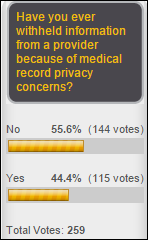

  2. Challenger exploded on lift-off when the O-rings failed. Columbia disintegrated on reentry after one of the heat shield tiles were…

Founding Sponsors


Platinum Sponsors


Gold Sponsors


RSS Webinars

  • An error has occurred, which probably means the feed is down. Try again later.