HIStalk Interviews Bryan Hinch, MD, CMIO, University of Toledo Medical Center

February 17, 2016 Interviews 1 Comment

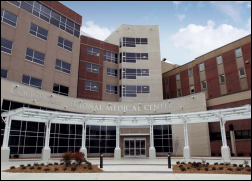
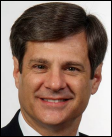
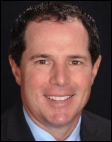
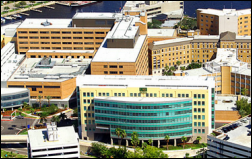
Bryan Hinch, MD is assistant professor of medicine and CMIO of University of Toledo Medical Center of Toledo, OH.

image

Tell me about yourself and your job.

I work clinically in internal medicine. I’m assistant professor of internal medicine and chief medical information officer at the University of Toledo Medical Center, as well as an associate program director for the internal medical residency. I wear a few hats.

On the CMIO tech side, I help coordinate, oversee, and am one of the decision-makers on the inpatient and outpatient EMR front. Most of my time is spent optimizing clinical activity or implementing new products.

I also help guide a skunk works that we’ve developed in house. We have a group of programmers that develop custom applications that fill niches that the bigger systems don’t fill. We’ve developed a number of applications that meet our unique needs. I help give them guidance and oversee what they’re doing and whatnot. That’s been my role lately.

I started here in 2008. I did my medical school training here. I did my residency here. I left for six years, four of which was in Dearborn, Michigan at Oakwood Hospital – a good place to work — my wife was doing her residency there in orthopedics.We went to Cleveland for a while and I worked at Metro Hospital. Then I came back because my wife’s family is from here and joined a group.

When I started, I was hired in in part to help them implement an outpatient EMR, which was Horizon Ambulatory Care, the McKesson system. From there, my responsibilities grew and I took over some of the inpatient stuff. They really didn’t have anybody like me on staff, so I started doing the CMIO position without the formal title. Eventually they formalized it with the title.

What is the medical center doing in the recently announced development project with Athenahealth?

We’re really excited about this. We were primarily — and still are — a McKesson shop, more or less. Horizon, McKesson’s systems, permeate everywhere. There was some dissatisfaction with the outpatient product. The practice plan decided a couple of years ago to begin looking at a replacement. Athena won that contract. 

From the clinical side, at least, we’ve been really happy. In terms of the clinical workflows, the number of complaints that I used to get with the McKesson system was enormous. Every day I’d get complaints from the docs about workflows or whatever. It’s a bit of an exaggeration, but not much.

With Athena, I had conversations with people about that. Are people just not happy with me and they’re not complaining to me any more, or are they happy with the EMR? It seems like they’re happy with the EMR and they’re complaining about other stuff now. They’re not complaining about IT on the outpatient side.

It’s been a relatively smooth transition. We’ve been live on Athena outpatient for just over a year. We went live on January 21. We basically swapped out the entire system, big bang in one day. It was about a five-month project. After contract signing, it took us about five months, which is a bit truncated, and it was a holiday. There was a ton of work in a short period of time, but we got it done.

It was relatively smooth. It was rough at first, but like any of these projects go, it was relatively successful.

There were some rumors going around with McKesson Horizon, but they made it very formal. Right as we were making this transition to Athena on the outpatient side, they told us that Horizon is going to be going away. They gave us a deadline of March 2018.

When we were reviewing our options, looking at budgets, timelines, Meaningful Use, and all of that stuff, we felt that we were somewhat going to be stuck with Paragon. McKesson was going to give us a deal that we were going to swap out what we currently own. There’s going to be a lot of cost reductions there because of swapping one-for-one for some of the stuff that we own. But Athena came along, and when we were doing our go-live on the outpatient side, they approached us with this idea of this partnership to help them work on the inpatient space.

We were relatively impressed with their vision, the corporate culture that they have, and what they’re trying to do with healthcare in general in terms of technology. We took this pretty seriously. We spent quite a bit of time reviewing our options and what it really meant to do an alpha. We understand it’s a ton of work. 

We ultimately decided that they have proven themselves in the outpatient arena of building a really good product. The KLAS rankings is one metric that shows that. Our internal satisfaction with the clinical workflows was another.

We had a kickoff meeting just about a week ago. I’m as impressed now as I was then with their approach. What they’re looking to do is not just build an EMR, because they’ve done that. They’ve got a product that’s in place in a couple of critical access hospitals that they’re using as a test bed. But the approach that they’re taking with us is more than that.

Yes, we’re going to have an EMR at the end, but they’re looking to use us to learn how hospitals — especially hospitals with an academic mission – work and identify what they call the hidden industry of scut work that could be automated or offloaded away from the staff, whether it’s nurses or doctors or whoever, to make them more productive.

It’s exciting. We’re really looking forward to taking this journey with them. We have some expectations of some concrete deliverables later this year, something we can show our board, “Yes, we’re making progress.” We expect to have something in place, like physician documentation or whatever. But so far, we’re pretty excited about this.

How do you draw the box around what you’re building with Athena?

A couple of things. The initial discussions with them were all about the clinical workflows. Lab would stay in place, so we’d keep McKesson. We have Horizon Lab, which I don’t think is getting sunsetted. But basically everything that’s getting sunsetted by McKesson, Athena’s made a promise to us that they’re going to swap out in some way, shape, or form.

That would be our ED system, so HEC, the nursing documentation system, HED, McKesson’s clinical portal, which is not the patient portal, but the physician workflows of looking at results and transcribed documents and that kind of stuff. That would be replaced. Physician workflows, order entry, and documentation, so HEO.

We had never implemented HEN, Horizon Expert Notes, which is the physician progress notes. We were never really satisfied with that product, so we were still paper until our skunk works built an online notes for the docs to use for progress notes if they want. That went live a couple weeks ago, but that was an internal thing. We built that thinking that’ we’ll be on Paragon, because Paragon is basically flip-the-switch two years from now. I wanted something in place for our medical students and residents to use, something electronic to give them that experience.

The pharmacy system is getting swapped out. That’s probably going to be later in 2017. Horizon Surgical Manager … we were under the impression that that would be sunsetted or at least swapped out, but McKesson is indicating that may not be the case, but we likely will swap that out, too.

Revenue cycle …  we approached them and said, if you do a good job with this, what do you guys think about revenue cycle? Star, which is the McKesson product, is our current revenue ADT feed. They said, why not?

If this all goes well, we may consider using them for our registration system, which would be nice because one of the troubles we have on the outpatient side is having the two registration systems. A lot of our clinics are facility-based and registering for both the facility side and the clinic side has been a bear. Getting that down to a single registration system would be ideal. That is contingent upon things going well with the clinical side.

That’s a long list of tasks to accomplish. How many people are Athenahealth and the Medical Center putting on the project?

From our side, because most of our resources on the inpatient side right now are in optimization mode and not implementation mode because we’ve got everything in place except for upgrades, those same resources, we expect, will be used for Athena. We have a core group that we think can handle the amount of work.

From the Athena side, we don’t have specifics yet, but we expect they’re going to be all over this place with folks, learning our culture, learning how the workflows operate in an academic setting, and helping us with all this work.

A big piece, of course, is our interface team. We are in the process of evaluating how much work the interface guys are going to need to do and bulking that group up on our side, but also on their side, making sure that we’ve got a good collaborative relationship with their interface team.

People who have worked with one system often end up building a new one that looks just like the old one because that’s their world view. On the other hand, the vendor needs to have enough knowledge to build a product that can be commercialized instead of just taking what one hospital says and going to market with it. How will you balance those interests?

I’ve given that some thought, as has our CIO. Our CIO, Bill McCreary, is taking on the stewardship of ensuring that what we create is going to be marketable to more than just us. He’s helping Athena negotiate that, thread that needle, so that we get what we need, but it’s also something you could sell tomorrow to another hospital.

We’re very aware that we’re not building just a custom job for us and that the relationship really is one of collaboration. We want this to be successful, and if we’re the only customer, we know that’s not going to be a success. We want it to be successful.

The second issue that you raised is, how do you prevent yourself from rebuilding what you have? The interesting thing is a lot of what we have in the clinical portal is what we built ourselves to meet our needs. It’s not just McKesson’s stuff in front of us. It really is a lot of custom work that we’ve built. We think we’ve got knowledge of how to interface with technology and provide physicians what they need at the time they need it. We want to take that knowledge and use it with Athena.

Athena, on their side, they’re planning on bringing some folks that are experts in human interface with technology. They’ve got some in-house expertise there. They’re going to bring those folks here and talk to us and do time-motion studies. Dive into the workflows and identify what needs to be blown up and what works and should be replicated.

Have you had discussions about the underlying technology?

It’s cloud-based. They’re going to host it. I don’t know their database architecture for this. That’s going to be one of our conversations, especially once we get with the interface team and start talking about this.

In terms of mobile access, to me, it’s a given. They already have a relatively decent mobile platform on the outpatient side. Most of our custom apps that we’ve built in-house, we’ve built with mobility in mind.

For instance, we have this patient hand-off tool that we built a couple of years ago. We’ve redesigned it twice ourselves. The redesign was specifically to make sure that we could scale it to an iPhone or equivalent smart phone. This replaces the traditional paper list that resident teams keep to track their patients. We saw that there was a need there. We just deployed it to the surgery department a couple of weeks ago. But medicine — my department – has been using it for two and a half years, squashing bugs and vetting it.

Mobility is going to be a big part of this. I don’t see nurses, especially, getting tied down to a computer. That’s one of the biggest complaints I have, and docs have, and nurses have, no matter what hospital I work in. I don’t just work at UT. I do teaching rounds at another hospital that uses Epic. The biggest complaint is that they feel like they’re tied to the computer typing all day. Is there a way around that?

The other thing that we implemented, right before Athena got in place, was voice-to-text. We use Nuance Dragon. How do we leverage that kind of technology to help speed up the process of inputting data in some way, shape, or form, and doing it in a way that’s hopefully structured so you can report against it?

There’s a lot of balls in the air, you’re right. How do we coalesce this down into a streamlined, functional workflow for the doc, the nurse, the physical therapist, et cetera? That’s what we’re looking to have these conversations with Athena about.

What happens if you don’t make the 2018 sunset date for the Horizon products?

We are going to be checking our progress. I think Bill McCreary, our CIO, is using Gartner as an external oversight to make sure that we are staying on task. We’re having a third party keep us honest in terms of making sure we hit these deliverables.

Worst case scenario, we would bail and go to Paragon, but I am loath to even consider doing that because the docs here have such an animus against the McKesson products. I think I’d be burned in effigy.

To answer your question, though, absent pulling a ripcord and jumping away from this — which to me, is a nonstarter — I don’t think it’s going to happen. Knowing our culture, at UT, we just get the job done. Historically, any time we ask the staff — the physician staff, the residents, the nursing staff — to step up, whether it’s Joint Commission or the ACGME coming through or Meaningful Use, they get the job done. They have this work ethic that’s phenomenal. 

I get that sense from Athena as well. When I’ve gone out to visit them and seen their folks and interact with them, they are just about getting the job done and doing it really well.

That being said, there’s a couple of possibilities. One is that if we miss the deadline, it’s not like suddenly the system is just shut down at midnight. They continue working. Our IT department has a wealth of knowledge of using these systems. McKesson has made it very clear that if this goes dark, you’re on your own. We understand that.

However, that being said, in terms of the core systems that we require to function on a day-to-day basis, I think we’ve got enough buffer in the timeline. Again, we don’t have a concrete timeline yet, but when we’re talking with Athena, we’ve got enough buffer in here that I feel pretty comfortable that we’re going to have things in place.

I think the other thing I would stress is that Athena’s not starting from scratch on this. They have acquired intellectual property through RazorInsights, their acquisition there, and with their agreement or their relationship with Beth Israel. I feel pretty good about saying this — they’ve got a pretty good bench strength on the pharmacy system and inpatient core systems that we need. I think they’ve got that knowledge, intellectual property, et cetera.

On top of that, you marry that up with our guys, like on our pharmacy team. Many of our custom apps are for the pharmacy and they’ve built them themselves. We’ve got guys in my pharmacy team who are both pharmacists and IT and they build apps. We feel pretty comfortable that whatever Athena can’t deliver on, we will probably be able to, in some way, shape, or form, take care of.

That’s a risk. This is the risk of the relationship. Going down this path with someone who has something that’s on the market. They’re in some critical access hospitals, they’ve deployed in a few places, but nothing like us. Nothing with the complexity of a larger hospital and the complexity of academics.

We understood that risk going into this. We made it very clear to the board and to all the decision makers that  the risk of going with another vendor is that you probably are going to have a lower-quality product for the capital expenditures and whatnot that we have available to us, versus going into a partnership with Athena. The risk is a little bit higher because there is a product that’s not basically on the market right now, but the expectation is that we’re going to have something truly awesome. We felt that that reward was worth the risk. 

We didn’t feel staying with McKesson was a safe choice, either. We really didn’t. They’re a good company and the folks we work with individually are wonderful, but we felt like in terms of the product we would get, we feel with Athena it’s going to be better.

That being said, our Plan B is to go back to McKesson, if this blows up in our face, and see what they can do. We’ll see, but I don’t think that’s going to happen.

Isn’t the medical school’s academic affiliation moving to ProMedica?

That is correct. The medical school is basically a victim of its own success. It has grown tremendously and is outgrowing the footprint of the hospital here. Same with the residency. We’ve grown the residency here as well.

We are busting at the seams with learners. As many medical schools do, they look outside and they look for some affiliations. We will be transitioning learners from this campus to the ProMedica campus. Yes, that is true.

Will you still be an academic medical center and the kind of partner Athenahealth originally envisioned?

That’s a good question. I don’t think all the learners are going to go. I think there’s still going to be learners here. This transition is a five-year plan in terms of transitioning the bulk of the learners over, at least the students, and some of the residents over.

To be honest with you, we had a pretty frank conversation with Athena about this. We tried to be as transparent as possible about this process. From my point of view, if you look at what they’re trying to get out of us, which is institutional knowledge of academics, that’s not going anywhere. I’m part of this process. The staff here all know how to work with residents. When you look at the timelines involved, the bulk of the work is done well before the significant number of learners will be over at ProMedica.

I think they’re going to get what they need out of us in terms of that knowledge and ongoing expertise. We were very upfront and transparent with Athena about that. They felt pretty comfortable understanding that things are changing here, too, in terms of that affiliation, but they still felt really comfortable going forward with us.


News 2/17/16

February 16, 2016 News 5 Comments

Top News

image 

Cerner reports Q4 results: revenue up 27 percent, adjusted EPS $0.61 vs. $0.47, beating expectations for both.  The company adjusted revenue projections slightly downward on lower bookings, with shares dropping 14 percent to below their 52-week low in early after-hours trading Tuesday. CERN shares were already down 21 percent in the past year.


Reader Comments

From Take the Cannoli: “Re: news. Why so little recently? Industry downturn?” We’re in the pre-HIMSS conference quiet period, where companies save their questionably interesting fluff “news” like fall squirrels stashing nuts in their cheeks, misguided into thinking that they’ll get more exposure by expelling their PR flatus during the conference. Nobody will be paying attention as piles of press releases go out all at once on Tuesday and Wednesday, screaming for attention but earning little of it in the self-congratulatory din. Maybe that’s how I could have gotten more sponsor support to expand the HIStalkapalooza invitation list – charge companies for 60 seconds on stage to read their overwrought press releases to the crowd like town criers.

From PointProf: “Re: CHI in Houston. Heard they had 50-hour Epic downtime. Wonder what the root cause was?” I saw some Reddit chatter that said it was a Citrix provisioning problem.

From Scuzi: “Re: ransomware. Breaking news tweeted from [publication name omitted].” They gushed their “story” out as “breaking news” early Tuesday evening, two-plus days after I wrote about it. I linked to the local newspaper that did the actual reporting whereas they didn’t, apparently hoping their readers won’t suspect that they’re just rewording articles from other sites. If you’re not doing actual journalism, at least credit your sources.


HIStalk Announcements and Requests

I’m growing weary of the words “solution,” “platform,” “suite,” and maybe even “system” since those terms don’t really add any value over just “software” except to marketing people trying to tart up their product or salespeople trying to paint a grander image of their zeros and ones. I’m interested in opinions on this.

image

Susan Newbold, PhD, RN of the Nursing Informatics Boot Camp will be the celebrity guest in our Lilliputian booth (#5069) at HIMSS Tuesday from 10 until 11 a.m.

image image

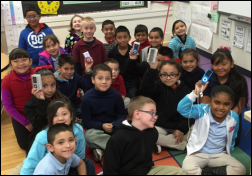
Mrs. Spell’s North Carolina second graders are using the math stations we provided in funding her DonorsChoose grant request for small-group instruction. She added, “During my morning meeting about two weeks ago, my students were so excited to see the big brown box on the carpet knowing the ‘donors’ thought they were awesome again! I told them how much other people believed in them and that they wanted to share new math games and activities with them for their math rotations.”

image

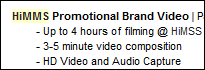
This company obviously has a selectively keen eye for detail, spelling HIMSS wrong but doing the “little-i” thing that HIMSS puts on its logo but nowhere else.

I bet HIMSS is glad that keynoter Peyton Manning quarterbacked the Super Bowl winning team, but not so thrilled that he’s simultaneously being dogged by allegations of HGH use and sexual harassment that threaten to tarnish his carefully created public persona. Maybe he’ll exit the HIMSS stage thanking God and Budweiser again.


Webinars

February 17 (Wednesday) noon ET. “Take Me To Your Leader: Catholic Health Initiatives on Executive Buy-In for Enterprise Analytics.” Sponsored by Premier. Presenters: Jim Reichert, MD, PhD, VP of analytics, Catholic Health Initiatives; Rush Shah, product manager analytics factory, Premier. Catholic Health Initiatives, the nation’s second-largest non-profit health system, knew that in order to build an enterprise analytics strategy, they needed a vision, prioritization, and most importantly buy-in from their executives. Dr. Jim Reichert will walk through their approach.

February 23 (Tuesday) 1:00 ET. “Completing your EMR with a Medical Image Sharing Strategy.” Sponsored by LifeImage. Presenters: Don K. Dennison, consultant; Jim Forrester, director of imaging informatics, UR Medicine. Care coordination can suffer without an effective, cost-efficient way to share images across provider networks. Consolidating image management systems into a single platform such as VNA or PACS doesn’t address the need to exchange images with external organizations. This webinar will address incorporating the right image sharing methods into your health IT strategy.

February 24 (Wednesday) 1:00 ET. “Is Big Data a Big Deal … or Not?” Sponsored by Health Catalyst. Presenter: Dale Sanders, EVP of product development, Health Catalyst. Hadoop is the most powerful and popular technology platform for data analysis in the world, but healthcare adoption has been slow. This webinar will cover why healthcare leaders should care about Hadoop, why big data is a bigger deal outside of healthcare, whether we’re missing the IT boat yet again, and how the cloud reduces adoption barriers by commoditizing the skilled labor impact.


Acquisitions, Funding, Business, and Stock

image

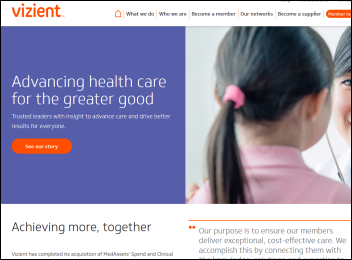
Vizient (the former VHA, UHC, and Novation that were combined in November 2015) completes its acquisition of the MedAssets SCM and Sg2 segments. Pamplona Capital Management announced in November 2015 that it was acquiring MedAssets for $2.7 billion but would keep only its revenue cycle management business, merging it with Pamplona-owned Precyse.

image

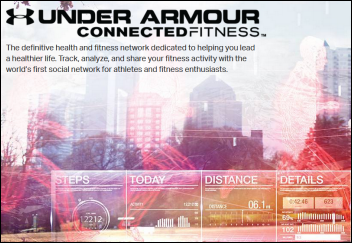
Under Armour says its wearables business brought in $53 million in revenue in 2015, driven by its $560 million acquisitions of fitness apps Endomondo and MyFitness Pal. That company had $4 billion in revenue in 2015, 88 percent of that from clothes and shoe sales and 1.3 percent from Connected Fitness.

Privacy monitoring system vendor Protenus, started in 2014 by two Johns Hopkins medical students, raises $4 million, increasing its total to $5.4 million.

image

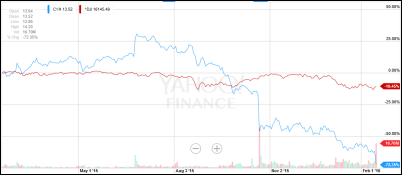
For-profit hospital operator Community Health Systems announces Q4 results: revenue down 2.4 percent, EPS –$0.66 vs. $1.12, sending shares down 22 percent Tuesday. The company blames the results on a weaker flu season in 2015 and lower volume in its former HMA facilities in Florida. Above is the one-year share price chart for CYH (blue, down 72 percent) vs. the Dow (red, down 10 percent).

image

Imprivata reports Q4 results: revenue up 18 percent, adjusted EPS –$0.09 vs. -$0.04.


Sales

image

Saint Anthony Hospital (IL) and Cookeville Regional Medical Center (TN, above) renew their IT services contracts with McKesson.

The Jewish Board of Family and Children’s Services (NY) chooses Netsmart’s CareRecord EHR.


People

image image
T-System promotes Robert Hitchcock, MD to chief strategy officer and Robin Shannon, RN to chief product officer.


Announcements and Implementations

A Black Book survey finds that hospitals using Allscripts, Cerner, and CPSI are the most loyal to their vendors. Black Book is murky about its methodology, saying only that it surveyed “2,077 crowd-sourced, hospital users” of unspecified job titles using unspecified selection methods. The company unconvincingly claims that it needed to create a loyalty index since metrics for customer affinity, repurchase intent, and client recommendations weren’t good enough to “understand the complexities of EHR customer behavior and underlying motivating forces” and that it “helps hospitals and physicians make better decisions based on customer insights,” not mentioning that dreaming up some new poll gives it something new to sell.

image

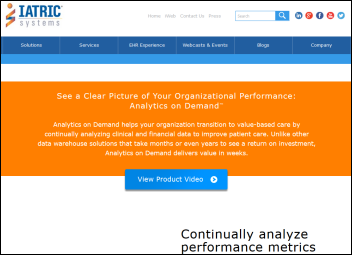
Iatric Systems launches Analytics on Demand, which includes pre-built dashboards for quality measures, Meaningful Use, sepsis, and readmissions that are driven by mapped EHR data.

Wolters Kluwer Health announces the release of Health Language Enterprise Terminology Management Platform that standardizes and normalizes clinical, claims, and administrative data.

HCI Group will provide education and consulting services for organizations that want to improve their HIMSS EMR Adoption Model scores, named as the first EMRAM Global Education provider of HIMSS Analytics.


Government and Politics

A Forbes op-ed piece by Bill Frist and Karen DeSalvo, MD, MPH triggered by the Flint water crisis observes that  the US ranks low in health and well-being despite spending $3 trillion each year on health, calling for Public Health 3.0 in which health professionals take civic leadership roles and business leaders participate in community health. It adds, “Our ZIP codes are a more accurate determinant of health than genetic codes. As a society, we have a collective responsibility to ensure that we are providing the conditions needed to make the healthy choice the easy choice for all members of our communities.”


Privacy and Security

image

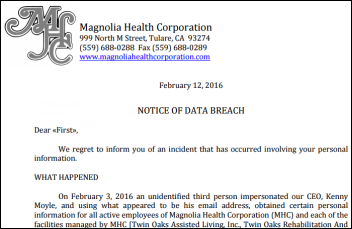
Magnolia Health Corporation (CA) notifies employees that “an unidentified third person impersonated our CEO” in obtaining an Excel worksheet that contained their personal information, including Social Security numbers and salaries.


Other

image

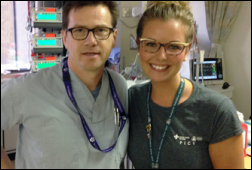
A PICU medical director in Canada spends the day working as an RN in his unit. He summarizes, “As a physician I think we take for granted that we write an order and the work just gets done … After my day as an RN, I am going to suggest that all the residents who train on our unit do the same. I think there is a huge opportunity to learn how each person on a unit contributes to the care of one patient … RNs spend more time with patients than we as physicians do, having an understanding of how they care for a patient and experiencing a completely different view can only make us better physicians.”

image

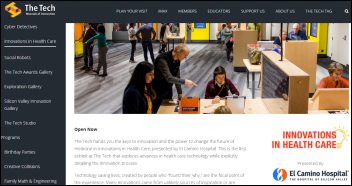
The Tech Museum of Innovation in San Jose, CA opens an exhibit titled “Innovations in Healthcare,” sponsored by El Camino Hospital (CA).

Big companies are mining data about their employees to target health messages, identify those with poor credit scores those who may not take their medications, and even to identify women who may be planning pregnancy by looking at their birth control prescription records or snooping into their search history on employee wellness sites. Prominently mentioned are Castlight Health and Welltok, which aren’t bound by laws that prevent companies from analyzing the personal health information of their employees. Health management company Jiff tailors its wellness programs by employee personality type, deciding which of them will likely require a premium discount to participate in fitness programs. 

Great Lakes Health Connect will provide $250,000 in assistance to connect providers in Flint, MI and Genesee County to its network, earmarking $100,000 to link 40 physician offices, $90,000 for a dedicated implementation consultant, $50,000 for an analytics engine, and $10,000 for training.

Detroit’s Care Bridge care coordination system for patients who are covered by both Medicare and Medicaid isn’t working one year into the program scheduled to run three years, with lack of IT standardization and competitive concerns among its participants blamed as possible roadblocks.

image

Lightning takes out the fire and alarm systems of Australia’s Robina Hospital, which apparently had no redundancy plan for its Ascom system. The hospital says it has moved the server to another site, thereby scorning the “lightning never strikes twice in the same place” fallacy.


Sponsor Updates

  • Besler Consulting publishes the Comprehensive Care for Joint Replacement Special Report.
  • The local paper highlights Clockwise.md’s online check-in app in its coverage of a new Carolinas HealthCare Systems urgent care facility.
  • CoverMyMeds Director Scott Gaines joins the BioOhio Board of Trustees. 
  • Extension Healthcare nominates the winning University of Maryland Medical Center for two Intelligent Health Association awards.
  • The HCI Group releases a video on three things to consider during Cerner go-live planning.
  • Consulting Magazine interviews Huntzinger Management Group CEO and founding partner Robert Kitts.

Blog Posts


Contacts

Mr. H, Lorre, Jennifer, Dr. Jayne, Lt. Dan.
More news: HIStalk Practice, HIStalk Connect.
Get HIStalk updates.
Send news or rumors.
Contact us.

125x125_2nd_Circle

HIStalk Interviews Steve Brewer, CEO, Galen Healthcare

February 16, 2016 Interviews Comments Off on HIStalk Interviews Steve Brewer, CEO, Galen Healthcare

Steve Brewer is CEO of Galen Healthcare Solutions of Grosse Pointe Farms, MI.

image

Tell me about yourself and the company.

I’m CEO of Galen Healthcare, based in our Chicago office. Somehow I guess I’ve turned into one of the old timers in this industry now [laughs]. I was just looking at my schedule and can’t believe I’m about to head off to my 22nd straight HIMSS, which is truly unbelievable. That’s a lot of booth time, a lot of bad carpet.

Galen is essentially a consulting and technology services company. What makes us unique is combining incredible clinical and domain expertise with some of Galen’s proprietary technology platform and tool sets. It’s a combination of those two things, which are a unusual for a firm viewed as a consulting company.

We were just named "Best in KLAS" in both of our core categories. I just arrived here last fall, so I get no credit for that other than really good timing.

Are you seeing results from the KLAS awards or do you expect to?

We are. We’re seeing a lot of inbound activity.

Galen is pretty well known in our core markets. We’ve done hundreds of clinical conversions and EHR optimizations across a bunch of platforms, but we’re a smaller private company, so I wouldn’t say that we’re broadly known throughout the industry. It’s certainly great for name recognition. We’re excited about showing up at HIMSS to leverage some of that, to let people know more about Galen.

What issues keep you busiest these days?

The history of the company is interesting. It was started about 10 years ago by three gentlemen — who I knew back then — who left Allscripts to start a services business. They saw that no matter how good of a job Allscripts did on their side of implementation, most of the clients were going through it for the first time. They hadn’t been through it before and needed assistance. That was the early days of Galen, helping out at some of the largest early EHR implementations in the industry.

What we’re seeing now is a shift. People who have made these huge investments in clinical and financial systems want to leverage those. Our work has shifted a lot up towards conversions, archival, and technical integration of systems, connecting to HIEs and others. There’s been a lot of consolidation and M&A activity in the industry. Having all these systems truly interoperable and moving data in and out of them, or shifting people from one system to another, has become a big part of our work effort.

How are customers using your service that allows them to store and access information from their retired systems?

It’s one of our newer services. We’ve been doing conversions for quite a while and are probably the leader in that space. When one of our large clients acquires a practice or merges with another health system, we for years have done a lot of that  hardcore technical and clinical mapping of the data to get them converted. What we’ve added now, since we have all their data, is the ability to archive and retire those legacy systems.

It varies across the board which systems they are going to. We have been involved in numerous conversions to Epic and Cerner. We have a lot of large Allscripts clients who acquire practices and retire some of the older systems from the practices they’ve just bought. It’s across the board.

What are the most common systems you’re converting from and to?

The largest ones have clearly been to Epic. We’ve had some recent activity with regard to Cerner and Meditech. You’ll see a lot of the ambulatory systems that have been in the market who maybe get caught up in a large Epic conversion, even though they might be very happy with the system they have, and the ambulatory system is going to go away as part of that Epic conversion. Standards or not, that integration and conversion is a pretty significant effort that most of those groups haven’t been through.

Who do you admire in the industry?

I’ve seen a lot in those 22-plus years when I headed off to HIMSS in San Antonio in 1995, so it’s been a few different iterations of companies that have been success stories.

I was involved in a company here in Chicago, Enterprise Systems, that went public, got acquired, and then got acquired again my McKesson. That was interesting. I was there in the early days of Allscripts and the growth and the innovation of leading EHR adoption in the industry was very impressive. It would certainly be hard to ignore what Epic has done over the last five or 10 years, one of the probably great business success stories — even beyond healthcare — in the US over that time period.

How do you approach the HIMSS conference as a vendor?

I’ve always enjoyed it. To me, it’s a great event where a lot of people come out in the industry. It’s certainly a hectic four or five days, but I find it to be a lot of fun.

At Galen, it’s a little different. We’re a small private company. We’ve enjoyed nice steady growth, but world domination or some billion-dollar market cap hasn’t been the strategy. The strategy has been to build a great company and attract super smart people who enjoy being here and who are proud of the work they do for their clients.

From that standpoint, we’re going to be in a 20×30 booth. Hopefully people will know about us and come see us. We know our clients will. We’ll look to continue our reputation and steady growth. You won’t see us in one of those mammoth, block-long, multi-story booths at HIMSS. It’s a little different event for a company like ours, but still exciting.

What should HIMSS attendees ask consulting firms they’re talking to in the exhibit hall?

There’s a lot of different flavors of consulting companies out there. From our standpoint, it’s the combination of the technology we bring to the table as well as the people. A lot of the bigger companies focus on the staffing effort and the professional services, which we certainly do, but we are typically combining that with technical services, integration, and the like.

People should focus on, what’s your history? What do your clients think about you, and specifically, what are they trying to get done? I mentioned our niches earlier around EHR optimization, conversions, implementations, and a lot of the other tool sets we bring to the table.

You see massive efforts in this industry, billion-dollar investments to put these systems in place, and now with HIEs and the like. Where many people are falling down is on the integration piece, on that last mile of connectivity to the practices. Those are the areas we focus on. We coexist well with a lot of the other traditional consulting companies that are out there that typically don’t focus on that.

Population health and information security are hot topics. What are you doing in those areas?

As you’ll see at HIMSS, everybody in some way or another is positioning themselves as a pop health company, or patient engagement, or analytics. They all intersect. Galen’s role in that is making the data that those systems need accessible and relevant to do true pop health and to do true analytics across cohorts and population bases. That’s really what we do.

A lot of this data is stuck in EHRs. It’s stuck in other systems. We’ve worked with a lot of those HIEs and pop health products to get the data in and out so that those systems can do their work.

Security is certainly a big focus of ours as well. Anybody in this industry has to be focused on it. Galen might manage those overall projects, but I wouldn’t position us as a security consulting provider. There are some folks who specialize in that exactly.

You’ve won some awards for being a good place to work, which is probably tough as a consulting company where folks are remote or travel a lot. How do you manage the people side of it?

It’s probably tied to what I mentioned earlier, that the culture’s a little different and our end game is a little different, which makes it a great place to work. We don’t have outside investors. We’re just excited about having a really positive work environment where people learn new skills and enjoy what they do. That’s reflected in the rankings.

You’re right, it’s a heavy travel job and it’s a very intensive job for our consultants, so we very much appreciate their time away from families and the like. We try and balance that load to make sure it’s a sustainable job for them. A big part of what we do on the technical services side can be done from our offices rather than on site at clients, which helps.

Give me three bold predictions for the next five years.

I’m not sure how bold these are, but after years of talk, I think we are finally going to see some very rapid movement in a few areas. 

First, the new payer models will be here for real. That is going to increase the shift in patient services to new settings of care, such as retail, urgent care, and ASCs. This will also speed up the already active consolidation amongst health systems in the market. 

Another area I see acceleration is in the blurring of the lines between payer and provider as these organizations come together to manage risk and control cost. 

Additionally, we will see a shift to the next phase of connected care, where the EHR is no longer the center of the universe, but rather just one of many data collection and feedback tools that need to interact seamlessly with other surrounding systems. 

For Galen, I think these trends will match up well with our focus on optimization of current platforms while our clients also prepare for this changing environment. These new initiatives will require deep integration, conversion, and project management skills to keep pace with the market and patient needs. We’ll look back and see if I got any of this correct, but in any case, we will continue to adapt our business as the priorities of our clients evolve.

And if you’ll allow me to pick a fourth bold prediction, I’ll take the Bears to win the Super Bowl next year.

Curbside Consult with Dr. Jayne 2/15/16

February 15, 2016 Dr. Jayne 2 Comments

Although I do the majority of my work independently, I have other resources that I lean on from time to time. This weekend, I had the rare pleasure of traveling with one of them as we headed to a job. I enjoyed having another person to talk to while we traveled as well as being able to use the time to plan some upcoming work.

Although he’s more of an infrastructure expert, we share a lot of the same battles: dealing with corporate doublespeak, figuring out how to deal with other people’s emergencies, and having to explain to people why we can’t deliver solutions until we know what the business requirements are.

Both of us have recently had some interesting experiences with collaboration. A recent article in The Economist covers some of the ways in which collaboration goes too far.

I’ve experienced the collaboration curse several times. The IT department at my hospital was notorious for embracing collaboration tools at the expense of actually getting work done. We were so busy with Google Hangouts and HipChat and being collaborative that no one bothered to document requirements, decisions, and outcomes. We had a mix of workers at various career stages, some of whom weren’t terribly skilled with collaboration tools.

Our leadership didn’t want us to spend the time getting everyone on the same page. Add to that an inability to manage logins and permissions adequately (it’s hard to collaborate on documents you can’t edit) and it nearly destroyed some of the teams.

My travel partner experienced it on one of his contract assignments, where management responded to a lack of in-person meeting attendance by instituting compulsory collaboration. Teams of largely remote workers were forced to come into the office one day a week, where they sat on conference calls with other teammates that were working from home on those days. After that, management forced everyone to come in on a single day of the week, where many of the workers ended up sitting in cubicles all day and talking to no one.

I don’t disagree that collaboration can be a good thing. There’s no substitute for being able to work as a team and use diverse skill sets to move a project forward. Nor is there a substitute for getting to know one another as more than just a disembodied voice on the phone or a choppy image on a video conference.

But simply putting people in physical proximity isn’t necessarily going to achieve that outcome. Teams have to be able to work together productively and have to be freed to focus their efforts in the right direction in order to be most effective.

I once worked with an IT support team that estimated their non-productive overhead at 40 percent. That seemed high until I took them through the exercise of documenting all the non-value-added work they were performing on a daily basis. Inefficient corporate requirements sucked away valuable time. Just looking at the cost of highly-paid engineers who had to battle inefficient timekeeping and project tracking systems, we could have paid for a part-time administrative assistant and allowed the team to focus on their work.

When I perform consulting engagements where I look at IT team processes, I usually see at least 20 percent of the time spent on non-productive activities – scheduling, timekeeping, logistics, waiting for people to arrive at meetings, and rescheduling due to lack of key participants. That doesn’t take into account the productivity loss when people have constant interruptions due to misused collaboration tools – the productivity cost of instant messenger and email notifications has been significant for many of my clients.

Some of my favorite consulting work is helping clients fix this problem – developing communication plans, helping teams set boundaries, and assisting them in figuring out how to collaborate but still allow time for productive individual work.

I’ve written previously about the challenges of open office design, and have seen a couple of companies that are moving back towards more traditional workplace arrangements. Others are allowing employees to work at home more regularly in order to increase individual productive time.

One of my clients recently hired scheduling assistants to deal with competing meeting requests. The effort is part of a larger initiative to increase meeting productivity and it seems to be working. Rather than having dozens of workers trying to schedule around conflicts, time off, and available rooms, team members have to send a meeting request to the central scheduler. In addition to the participants and desired time frame, the request has to include an agenda with the purpose of the meeting and expected outcomes. They’ve actually seen the number of meetings start to decline.

It’s hard to sort out all the causative factors, but staffers cite fewer meetings where key people are double booked or unavailable, which lets them actually get decisions made the first time so they can move forward. The need to have an agenda and outcomes formulated before requesting the meetings has also reduced the number of meetings that didn’t need to happen in the first place.

It was a difficult transition, though, as people had to give up a little bit of calendar autonomy while adding scheduling discipline. Individuals had to clearly identify which appointments on their calendar could not be moved or modified while trusting the schedulers to make things happen for the greater good.

The concept isn’t that different than that of using centralized scheduling for radiology, diagnostic testing, or medical consultations. The schedulers can see all the available resources as well as the queue of requests and look for creative ways to work through constraints. It’s not something I’ve seen in the corporate environment though more than a handful of times. There has to be a balance between collaboration and focused work time as well as between tasks that have to be done personally vs. those that can be centralized.

How does your employer make the most of collaboration? Email me.

Email Dr. Jayne.

HIStalk Interviews Bob Gregg, CEO, ID Experts

February 15, 2016 Interviews Comments Off on HIStalk Interviews Bob Gregg, CEO, ID Experts

Bob Gregg is CEO of ID Experts of Portland, OR.

image

Tell me about yourself and the company.

This is company number five for me in my career. Six if you count my early days as a CPA. Basically I’m a serial entrepreneur that loves to find companies like this that have huge market opportunities and grow them into significant companies that are making a difference.

I love ID Experts because we’re helping out not only the victims of data breaches that are at serious risk of identity theft, but also the companies themselves that are victims of data breaches of all kinds. We’re helping both sides of the equation. We’re helping the corporate entities that had the breach and we’re helping the individuals, whether it’s their patients, their customers, or who knows who they are. We take very good care of them.

How many breaches has the company managed and what findings have you observed from them?

I couldn’t count them. It’s measured in the upper hundreds at this point, possibly over a thousand. We’ve been doing this since 2006.

I guess the biggest change we’ve seen over the years is that a breach two or three years ago involved stolen laptops, thumb drives, those types of things. Now it’s much more serious. We’re seeing everything from organized crime to state-sponsored hacking with massive data breaches, particularly in the healthcare sector.

In the healthcare sector, one out of every two Americans has been breached in the last year and a half, which is pretty stunning. We just did not see breaches of this size and the number of breaches even two to three years ago. We didn’t see anything like it. Now we’re seeing these massive data breaches.

Unfortunately, in the healthcare arena, it’s pretty clear that healthcare is under attack right now from outside hackers.

What can hospitals do to make post-breach digital forensics easier?

The first thing I tell them is, don’t count on not having a breach. Just expect you’re going to have a breach in the near future. Get in place a master services agreement with somebody who is all prepared to take care of it. When you find the breach, you do not want to be scrambling, deciding who you’re going to hire, and how you’re going to approach it. You need to do all of that ahead of time.

Assuming you’ve done that, as soon as that breach information comes to your desk, you get hold of that group. They can get their forensics people in there quick as possible and they can get to that information. What you don’t want to do is over-notify or under-notify. You’ll want to get exactly who the victims of the breach are, then notify as quickly as possible once you have that information.

How hard is it to sift through the electronic trails to determine how many patients were affected?

Unfortunately, there’s no simple answer to that, because every single breach is a customized situation. I can’t think of any two breaches that are even almost comparable. It depends on the nature of their systems and how buttoned up they are.

Some breaches we can get in there pretty quickly, determine exactly which individuals were involved in the breach, and notify within a few days. Other ones are just very difficult because record-keeping isn’t quite what we would like it to be or the nature of the breach is such that there are multiple vectors of how the systems were penetrated. So, there’s no easy answer to that. Every one is in and of itself going to be different.

We have to be a little sympathetic to the provider when they have a breach. We don’t want to leap to our first conclusion. When we get the forensics people in there, we want to button up that process and know exactly who was breached before we notify. That can take some time in many cases.

What trends are you seeing in the technical nature of how breaches occur?

We do a survey every year for healthcare with the Ponemon Institute. We just last year published our fifth annual benchmark study on privacy and security of healthcare data. The big findings of that study were that, for the first time in the five years that we’ve done this, outside intrusion — criminal hacks — were the reason for the breach. That was never the case in prior years. It was lost data, lost hard drives. All kinds of inadvertent things that happened one way or the other.

Now we’re seeing absolute criminal attacks and hacking being the number one cause., which is a huge development. Because as we coach people, if you lose your laptop on a subway, chances of that laptop being used for nefarious purposes and going after the victim is, in our experience, really very small. If it’s criminally hacked with the purpose of getting that data, the chances that data is going to be used somehow in creating some kind of identity theft or fraud is pretty high. It’s a whole different situation when you get hacked.

What did you think when you heard about the hospital that lost access to its system for weeks due to a ransomware attack?

It’s an emerging threat, no question about it. We’re seeing more and more of it. We always counsel people to immediately get law enforcement involved. Don’t try to manage this yourself, for goodness sake. Get the professionals involved. Make a very thorough evaluation of the risk and the situation that you’re in.

Unfortunately, I have to predict that this isn’t an isolated incident or a few isolated incidents that we’ve seen here. We’re going to see more of these. Again, more and more reasons why you try to button up your systems. But as I said earlier, you have to assume that you’re going to get penetrated or hacked. Some kind of a breach is going to occur and you’d just better be prepared for it when it happens.

Should the average hospital or health system buy cyber insurance? How would that work for them?

I do, but with the caveat that if they do choose to buy insurance, get data breach professionals involved. Companies like ourselves, and there’s many others in the industry. Have one of them involved because every one of these insurance policies that I’ve seen are very custom with all kinds of sub-limits and exclusions.

You could very easily find yourself thinking you’re insured for a particular situation and finding out when you actually read the fine print that this policy excludes that type of situation. Unless you have a lot of experience in the data breach world in how these breaches can occur and what kind of exclusions the insurance companies will put into their policies, you could easily find yourself thinking you’re insured for something that happens, but you’re actually not.

Assuming you do that, I do highly recommend cyber security insurance. You will be hacked or you will lose data and it’s always nice to have some insurance to help pay for that.

Does cyber insurance cover the cost of remediating the breach? Does it cover lawsuits or fines?

There’s different types of policies. You can pretty much get your liability covered up to a certain limits. They’re all going to have limits. That’s classic insurance. It’s a tradeoff of how high you want to make the limits verse how much risk you want to take as an individual entity.

There’s policies available to cover the remediation of the breach, any loses occurred by the breach, even the lawsuit cost, which unfortunately too often happens as a result of these breaches, and the class action lawsuits. We have found that the actual cost of the lawsuits generally far outstrips the remediation, the notification, all those costs. You definitely want to be insured against the legal costs should those occur.

What trends are you seeing with health systems sharing threat information?

What we recommend to people is to watch what’s happening in the financial services world over the last five to 10 years. They follow the track of a lot of what we’re seeing right now in healthcare with criminal hacks and healthcare systems — the actual use of that data for identity theft and fraud and truly having identity victims from these.

These happened a lot in financial services five, six, seven years ago. They did just that. They started coming together and talking to each other. Sharing data on data breaches and the way people got in. They got law enforcement involved. They’ve done a reasonably good job of buttoning up their systems. 

Frankly and unfortunately in the healthcare community, the bad guys turned their guns away from financial services and towards healthcare, thinking they are a lot more vulnerable. They haven’t done all the things necessary to protect the data. It’s a lot easier to get data out of a healthcare provider than it is out of a bank or insurance company today. That’s the unfortunate fact. Our recommendation is pay attention to what financial services is doing and follow their lead.

What healthcare IT security issues will be important in the next handful of years?

It’s got to the board level now. We’ve had enough breaches and they’ve been high profile with enough victims involved that virtually every board of directors of a healthcare payer or provider, when they get together, they are now talking about cyber security and their breach risk. Just a few years ago, that was not the case.

The fact that it’s made it to the board room and people are paying attention … we’re seeing a lot more activity. Healthcare entities want to have that cyber security insurance. They want to a master services agreement with a data breach mediation company on the shelf and completely negotiated and worked out before the breach happens. A lot more systems protection. The CIOs and CISOs at these entities … their whole stature’s being raised up because of the risk that’s involved here. 

Good things are happening. Just like it happened in financial services, once the amount of the attacks and the fraud got to the point where it was intolerable, things started happening to fix it. They’ve come a long way. I think the same thing will happen in healthcare.

Unfortunately, I think it will take a number of years before it gets a whole lot better. In those interim years, we’re going to see a lot of data breaches. A lot more remediation that has to be done. I think we’re headed in the right direction. That’s the good news, but it’s going to take some time.

Do you have any final thoughts?

The whole reason ID Experts is in the data breach business is because we were founded on the premise that we want to fix identity theft victims from bad things happening to them. We have a 100 percent track record of doing that. Because of that, that just launched us into the data breach world and launched us into what we call the MyIDCare product, which is all of the things that we do to help people understand and remediate bad things from a victim’s standpoint.

One of reasons we chose healthcare as a primary market is that healthcare companies care about their customers and their patients. We see that every day. We get excited about that, because when a data breach happens, they step up. Unlike, unfortunately, the credit card companies and the banks sometimes. 

These guys really care about these customers and these patients. They want to do the right thing. We like that, because we obviously want to do the right thing for these individuals as well. We make a pretty good team going forward doing whatever it takes to recover these people from bad things happening as a result of the breach.

Monday Morning Update 2/15/16

February 13, 2016 News 7 Comments

Top News

image

Partners HealthCare (MA) announces that it made $13 million in operating profit on $3 billion in revenue in the most recent quarter and lost $38 million overall including investment losses. The CFO says its Epic implementation will negatively impact profit by $200 million over the next three years. Brigham and Women’s in December said it made $68 million in profit in FY2015 instead of the $121 million it expected, blaming most of the shortfall on unexpected Epic implementation costs. The Boston Globe reported in June 2015 that original cost estimates had been doubled to $1.2 billion.


Reader Comments

From Give Rodney Another Chance: “Re: job hunting tips. You ran something awhile back that I could use for the upcoming conference.”Steer clear of companies with these characteristics:

  • The CEO is a well-traveled hack or private equity hired gun whose historical talent is boosting the short-term bottom line to get the company sold before the wheels come off.
  • The CEO refuses to move to the city where most of the employees work.
  • The position is not located in a primary company office. Out of sight means out of mind, which is great until your ambitious peers conspire to stab your absent back.
  • The company demands that you sign a non-compete agreement that will make it tough to land the next job. My favorite strategy is from Dilbert: scan the non-compete into Acrobat, change the wording in your favor, then print it and sign it. Chances are the always-clueless HR department won’t notice that what you signed isn’t what they handed you.
  • Management isn’t smart enough to fix problems, so they harm the business with company-wide budget and travel freezes.
  • They company has laid people off, meaning executives failed with their hiring choices, strategy, or execution and will almost certainly do so again.
  • Executives with reserved parking spots. I loathe big shots who think they are better than everyone else.
  • Your interviewer is late, distracted, or someone you wouldn’t hang out with after work. You’re seeing them as good as they’re going to get.
  • You get a vague answer when you ask what happened to your predecessor or the company declines to name them for fear you’ll solicit their honest opinion about why they left.
  • Your prospective boss talks about himself or herself instead of you.
  • The executive team you would be joining has two people who are related or sexually involved. You, Sammy Hagar, serve at the pleasure of the brothers Van Halen.

HIStalk Announcements and Requests

image

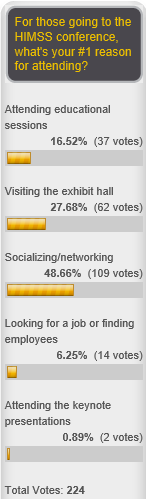
Less than 20 percent of poll respondents are attending the HIMSS conference to attend educational and keynote sessions, with 75 percent of respondents naming networking and the exhibit hall as their primary draw (which explains where you’ll find the crowds). New poll to your right or here: if you had equivalent job offers on the table from the vendors listed, which one would you accept? I asked that poll question back in 2009, so it will be interesting to compare the results.

Northeasterners who are bundling up against wind chills of up to 40 degrees below zero can look forward to better weather in Las Vegas, which so far calls for mid-70s and sun every day.

image image

Mr. R’s Robotics Team 968 from California sent an update on their activities using the laptop we provided in funding their DonorsChoose grant request. The five students been doing technology in-services at the local senior citizen center and are creating their three-hour Saturday “Rookie Training Days” in which students in grades 4-8 will be invited to learn more about STEM and join their team. We also funded a second request from the team for machining tools to help them build their robots, for which they send “a million virtual thanks.” They are working after school and on weekends to finish their robot for an upcoming competition and closed with, “Wish us luck as we will soon embark to Los Angeles for competition, move on to Phoenix, and hopefully compete in the championships in St. Louis.”

image image

Ms. H, a speech-language pathologist in New York, received the USB CD drive we provided. She says, “Thank you so much for your generosity and supporting a low income school. This is a great, especially for these snowy indoor months. You have helped to make a difference in our classroom.”

I donated $100 to DonorsChoose in honor of one of my CIO webinar reviewers, which (with matching funds) provided five voice recorders for Mrs. Hendrickson’s Akron, OH elementary school class. She describes her project as, “They come from the most challenging places, experiencing some of the most heart-wrenching things, and they teach me way more than I teach them. They thrive in love and learn only after they realize someone cares about them. They come unmotivated and leave yearning to learn. They struggle significantly in reading-often 3-4 years below grade level. My students will use the Easi-Speak recorders to analyze their own reading. In order to increase reading skills they need practice figuring out their problem.”

Listening: indie pop from England-based Viola Beach. All four band members and their manager were killed Saturday when their car ran off an open drawbridge after a show in Sweden. 


Last Week’s Most Interesting News

  • CommonWell adds several new members, including HIMSS.
  • The President’s proposed and rejected $4.1 trillion budget would have given ONC an extra $22 million for interoperability work.
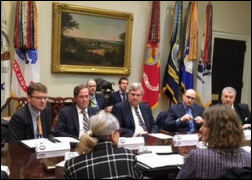
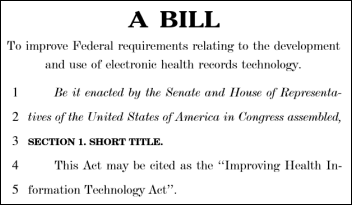
  • The Senate health committee  passes the Improving Health Information Technology Act that follows on the HELP committee’s recommendations.
  • The Department of Defense gives Leidos and Cerner a $51 million DoD EHR hosting contract over the protests of IBM, CSC, Amazon, and General Dynamics, saying the military needs Cerner’s broad data for managing population health and that Cerner wouldn’t allow them to connect to its systems in any other way.
  • Britain’s NHS announces a $6 billion push toward a paperless environment.
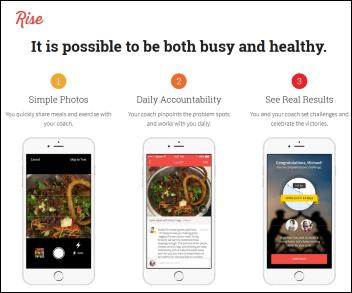
  • Medical practice operator One Medical Group buys the nine-employee company behind the Rise nutrition app for $20 million.

Webinars

February 17 (Wednesday) noon ET. “Take Me To Your Leader: Catholic Health Initiatives on Executive Buy-In for Enterprise Analytics.” Sponsored by Premier. Presenters: Jim Reichert, MD, PhD, VP of analytics, Catholic Health Initiatives; Rush Shah, product manager analytics factory, Premier. Catholic Health Initiatives, the nation’s second-largest non-profit health system, knew that in order to build an enterprise analytics strategy, they needed a vision, prioritization, and most importantly buy-in from their executives. Dr. Jim Reichert will walk through their approach.

February 23 (Tuesday) 1:00 ET. “Completing your EMR with a Medical Image Sharing Strategy.” Sponsored by LifeImage. Presenters: Don K. Dennison, consultant; Jim Forrester, director of imaging informatics, UR Medicine. Care coordination can suffer without an effective, cost-efficient way to share images across provider networks. Consolidating image management systems into a single platform such as VNA or PACS doesn’t address the need to exchange images with external organizations. This webinar will address incorporating the right image sharing methods into your health IT strategy.


Sales

FamilyCare Health (OR) chooses Wellcentive’s population health quality reporting and care management solutions.


People

image

Health management software vendor AssureCare names Yousuf Ahmad, DrPH (Mercy Health) as CEO. He had risen from SVP/CIO of Mercy Health to president and CEO, finishing his career there as SVP of system development.

image

Verge Solutions hires Mark Crockett, MD (Best Doctors) as CEO.


Privacy and Security

image

Another hospital is hit by ransomware as Hollywood Presbyterian Medical Center (CA) is locked out of its systems by hackers demanding $3 million to unlock its files. LAPD and the FBI are involved in the “internal emergency” that has lasted more than a week so far.

image

A security researcher shows a conference group how he hacked into a hospital while sitting outside in his car, challenged by the Moscow hospital to test its cyber defenses. He couldn’t initially get past the hospital’s firewall, so instead he sat outside and cracked its Wi-Fi network, stole a poorly chosen network key, and then accessed medical equipment. He concludes that hospitals should make sure their medical equipment isn’t connected to a public network. 


Technology

image

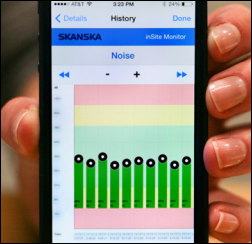
Chris Evert Children’s Hospital (FL) uses technology from its renovations contractor Skanska to send alerts to the construction crew if noise, dust, or vibration reach disruptive levels.


Other

Professional basketball player Dwight Howard gives pediatric patients at Memorial Hermann Health System a Google Cardboard-powered virtual visit to the home of his Houston Rockets, then surprises them by showing up in person.

A London newspaper profiles the making of autobiographical video exploration game “That Dragon, Cancer,” created by the parents of a five-year-old boy who died of cancer.

Here’s a pretty funny Athenahealth commercial called “What Do You Do for a Living?”

image

A retired internist and self-proclaimed “dinosaur” says “the art of doctoring is dying” in a Washington Post op-ed piece. He says he would re-invent himself as a “confidentialist” who would take time to know a patient and “stand down the legions of specialists with their scalpels, catheters, and scopes; the backbone to stand up to bottom-line-toeing administrators and self-serving insurance executives and policy wonks.” He adds,

Physicians are now insulated from knowing too much about their patients. It is all about the technology, the testing, the imaging, the electronic health record, the data — once collected by the doctor, but now so regulated and overwhelming that paramedical professionals have been enlisted to record the so-called minutiae, the often rote information in which may lie important clues. Some of these may remain forever buried, the patient not wanting to share sensitive details with just anyone, especially someone who no longer makes eye contact, whose face remains buried behind a computer screen, who seems uninterested or just unskilled in reading body language — that downward glance, that shift in the chair, that half-swallowed response.

image

A Russian scientist makes 48 million journal articles freely available ok Sci-Hub,  the academic version of Pirate Bay, saying she’s tired of not being able to afford the journal articles she needs for her work. She says, “Payment of $32 is just insane when you need to skim or read tens or hundreds of these papers to do research. I obtained these papers by pirating them. Everyone should have access to knowledge regardless of their income or affiliation. And that’s absolutely legal.” The article notes that she isn’t alone – prestigious universities say they can’t afford expensive journals and 15,000 scientists are boycotting publisher Elsevier, which not surprisingly is suing the researcher who claims Elsevier’s business model is illegal and immoral since it doesn’t pay the authors of articles it publishes.

England’s NHS will monitor Facebook for negative postings about hospitals and will intervene when indicated.

image

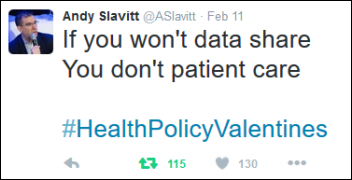
CMS Administrator Andy Slavitt submits a great entry to #HealthPolicyValentines.

image
image
image
image

Here are others I liked.


Sponsor Updates

  • TeleTracking celebrates its 25th anniversary.
  • Valence Health will exhibit at The Center for Healthcare Governance Winter Symposium February 14-17 in Phoenix.
  • Xerox Healthcare will host Regina Holliday at HIMSS16.
  • ZirMed will exhibit at the Healthpac 2016 Users Meeting February 18-20 in Savannah, GA.

Blog Posts


Contacts

Mr. H, Lorre, Jennifer, Dr. Jayne, Lt. Dan.
More news: HIStalk Practice, HIStalk Connect.
Get HIStalk updates.
Send news or rumors.
Contact us.

125x125_2nd_Circle

News 2/12/16

February 11, 2016 News 6 Comments

Top News

image

CommonWell Health Alliance announces new members EClinicalWorks, HIMSS, ImageTrend, LifeImage, Mana Health, MediPortal, and Modernizing Medicine. I’m not clear why HIMSS joined or how some of its own high-paying members who haven’t joined CommonWell (like Epic) will feel about its implicit endorsement.


Reader Comments

image

From Skinny Little B-Word: “Re: Grey Bruce Health Services in Canada. CIO Rob Croft and Manager Peggy Millar are gone.” Unverified. There’s nothing new on their LinkedIn or on Grey Bruce’s executive page.

From Dy-No-Mite: “Re: Mr. H. I don’t understand that name.” I needed an anonymous email address when I first started writing HIStalk in 2003 since my employer at that time was threatening me for writing ill of a vendor who richly deserved it (we were their customer, although I wasn’t writing anything I had learned from that experience). My creativity was limited, as it often is, so I chose mr_histalk@yahoo.com, attaching no particular significance to it. Readers started calling me Mr. HIStalk and that got shortened to Mr. H over the years. I never call myself “Mr.” anything in real life, so the reference was really more like someone who is privately dubbed “Mr. Happy Meal” for frequenting McDonald’s or “Mr. Upbeat” for exuding perpetual grumpiness.

image

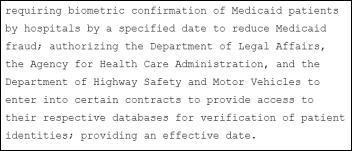
From Identity Thief: “Re: FL Senate bill 1299. It says hospitals must confirm Medicaid patient identities using both biometrics and a positive match with the DMV’s database. Does that mean beneficiaries must have a driver’s license? I also don’t see where funds have been set aside to cover the cost.” The idea probably taps into annoyance taxpayers feel for those who take advantage of Medicaid, a situation that bugs me as well, but medical and insurance fraud isn’t limited to Medicaid patients. Biometrics aren’t perfect and pose security risks of their own (the “stolen electronic fingerprint” scenario) and I don’t get the DMV connection, which must require Medicaid patients who don’t drive to obtain a Florida DMV-issued state ID card. I’m sure this will raise some red-faced debate among people with strong opinions about illegal immigrants and discrimination. It’s a nice idea to positively ID patients for even better reasons (like patient safety) but our lack of political will for something as simple as a national patient identifier makes it unlikely that this bill will withstand the inevitable legal challenges even if it beats the odds of getting that far. 

From Bernie: “Re: Jonathan Bush. It’s ironic that Bush talks down Epic. Try being a vendor that wants to integrate with Athena. They make it very difficult, even when there is customer demand. Bush is no knight in shining armor and their MDP program is a sham.” Unverified.


HIStalk Announcements and Requests

image image

We funded the DonorsChoose grant request from Mrs. Heinrich from California, who asked for headphones, lapboards, privacy petitions, paper, and glue.

image image

Also checking in was Mrs. Sutton from Illinois, who says her fourth grade students had been making their own  fraction strips from paper and colored pencils before receiving the 25 sets of fraction, decimal, and percent tiles we provided. She’s now having the students teach fraction concepts to second graders to “encourage my fourth grade students to be peer leaders as well as master fraction builders.”

Listening: new from Nothing But Thieves, hard-rocking Brit pop that sounds a bit like Muse with guitars instead of keyboards. They’re on a US tour now with upcoming stops in the southern US, including gigs at legendary clubs like Cat’s Cradle, 40 Watt Club, even the Orlando House of Blues where we had HIStalkapalooza not long ago. It’s a refreshing blast of melodic rock surrounded by a sea of formulaic hip-hop, emotive singer-songwriter warblings, and heavily technically augmented songs better suited for dancing than listening.

This week on HIStalk Practice: Some physicians didn’t get the memo about ICD-10. Washington State Medical Association Executive Director and CEO Jennifer Hanscom shares the successes – and frustrations – members have had with health IT. First Stop Health raises $2.1 million. HIEs invest in new patient-matching technology, plus there’s FINALLY a way to summon your Tesla from your Apple Watch. Navicure CEO Jim Denny advises physicians to use ICD-10 momentum to meet 2016 revenue cycle goals. The California Health Care Foundation highlights digital health technologies making a difference in safety net populations. Escape from paperwork and Big Brother become big drivers of direct care.

This week on HIStalk Connect: Concierge provider group One Medical acquires digital health startup Rise for $20 million. Researchers in the UK are  approved to study human embryo genome editing. With a variety of virtual reality devices scheduled to arrive on the market in 2016, VR fitness applications begin to emerge. Withings unveils a new blood pressure tracking feature that it will sell as an in-app purchase to its users. 23andMe partners with fertility startup Celmatix to develop precision medicine fertility treatments and infertility tests.


HIStalkapalooza

image

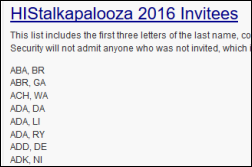
I created this page so you can check to see if you should have received an emailed HIStalkapalooza invitation but didn’t because of spam filters. My interest in doing so is self-serving since I’m getting an absurd number of party-related emails that I really don’t have the time to mess with. Please don’t email me or Lorre if you weren’t invited or you’ve decided you want to bring a guest you didn’t previously register – we aren’t inviting anyone else and there’s no wait list. Every year otherwise smart people express righteous indignation that we didn’t invite them even though they didn’t even bother to sign up, apparently relying on our staff psychic to detect their interest (and email address).

image

Use Twitter hashtag #HIStalkapalooza if you want to get fired up pre-party in the remaining couple of weeks. 


Webinars

February 17 (Wednesday) noon ET. “Take Me To Your Leader: Catholic Health Initiatives on Executive Buy-In for Enterprise Analytics.” Sponsored by Premier. Presenters: Jim Reichert, MD, PhD, VP of analytics, Catholic Health Initiatives; Rush Shah, product manager analytics factory, Premier. Catholic Health Initiatives, the nation’s second-largest non-profit health system, knew that in order to build an enterprise analytics strategy, they needed a vision, prioritization, and most importantly buy-in from their executives. Dr. Jim Reichert will walk through their approach.

February 23 (Tuesday) 1:00 ET. “Completing your EMR with a Medical Image Sharing Strategy.” Sponsored by LifeImage. Presenters: Don K. Dennison, consultant; Jim Forrester, director of imaging informatics, UR Medicine. Care coordination can suffer without an effective, cost-efficient way to share images across provider networks. Consolidating image management systems into a single platform such as VNA or PACS doesn’t address the need to exchange images with external organizations. This webinar will address incorporating the right image sharing methods into your health IT strategy.


Acquisitions, Funding, Business, and Stock

image

Wipro will acquire Tampa-based insurance company BPO and exchange services vendor HealthPlan Services for $460 million in cash.

image

The founder of Pristine, which initially offered a healthcare Google Glass app and then changed business models at some point into visual collaboration for field inspectors, sues an Austin-based venture capital firm for stealing his business. Kyle Samani’s suit claims the real goal of S3 Ventures LLC is “to invest in newly formed companies in order to ultimately take the companies from their founders just as the company becomes successful.” He alleges that Pristine, which raised $6.2 million but has not received funding since September 2014, sold 700,000 of his unvested shares. The real lesson learned might be to avoid creating an enterprise-focused business whose platform is a beta-status consumer gadget.


Sales

Health Partners New England chooses Medsphere’s OpenVista EHR.

Cormac contracts with Premier to provide a cloud-based registry to support CMS’s Oncology Care Model.

The American College of Radiology and the University of Florida choose the Visage 7 Enterprise Imaging Platform as enterprise diagnostic viewer for training diagnostic radiology residents.


Announcements and Implementations

image

McKesson partners with HealthQX, which offers a claims analysis system, to offer software to help payers design and run bundled payment programs.

image

Bottomline Technologies announces that its Healthcare Privacy and Data Security solution learns normal user behavior and reports exceptions.

First Databank releases OrderKnowledge Canada, a pre-built CPOE drug knowledge base.

A tiny study finds that use of Glytec’s Glucommander IV glycemic control system reduced diabetic ketoacidosis admissions by 45 percent.


Government and Politics

image

The President’s $4.1 trillion budget, already rejected by Congress, would have boosted ONC’s budget by $22 million for interoperability work. HHS would have received a mind-boggling $1.14 trillion, up 11 percent since 2015, also increasing its FTE headcount to nearly 80,000.


Privacy and Security

The CPA firm of a Nebraska hospital warns it that a laptop stolen from one of its employees had encryption software installed that wasn’t working, exposing the information of 4,200 of the hospital’s patients.

Magazine publisher Time Inc. buys the faded Internet star MySpace to get data on its 1 billion registered users, with Time’s CEO saying the deal “is all about the marriage of first-party data and premium content.” The seller was Viant, which has gone through three names since it bought Myspace in 2011 for $35 million with Justin Timberlake as a partner, hoping to make it a music hub.

Insurance company Centene says it found the six PHI-containing hard drives it reported losing a few weeks ago. They had been placed in a locked storage box awaiting destruction. It’s puzzling why they wouldn’t have looked there first, or why their employee wouldn’t have logged them as being held for disposal. I would bet at least one person will be fired because of the embarrassment caused and cost expended.


Innovation and Research

An AHRQ-funded study finds that higher levels of hospital EHR usage is associated with a lower rate of adverse events for patients with cardiovascular disease, pneumonia, or conditions requiring surgery.


Other

US News withdraws its Best Children’s Hospitals specialty rankings for two hospitals that had submitted erroneous survey data, adding that it “will implement additional data integrity processes to help identify potentially inaccurate data prior to publication.”

image

University of North Carolina Health Care signs a partnership agreement with Mercy in which Mercy Virtual Care Center will monitor patients in a 28-bed UNCHC ICU.

The Chicago Tribune proudly describes its collaboration with scientists to mine data from the FDA’s adverse event reporting system and Columbia University Medical Center’s EHR to find four new drug-drug interactions that can prolong cardiac QT interval and potentially cause arrhythmias. Thank goodness the actual journal article is concise and factual rather than a crappy Trib attempt at long-form journalism, meaning it’s do long and hammily dramatic that you just want to wring the writer’s neck to make them get to the point. Obviously the study found apparent correlation with one hospital’s information – the real work now begins in proving causation, a challenging project that drug companies aren’t likely to underwrite since the result could reduce sales.

ZDoggMD might be venturing into Weird Al territory with a never-ending barrage of parody videos that threaten overexposure, but here’s his latest that lab people will enjoy, “In Da Lab.”  Watch for the Theranos reference. Pop red tops, homeys.


Sponsor Updates

  • Marketing firm Image.works will offer its healthcare clients CRM capabilities from Influence health.
  • Rep. Bob Dold (R-IL) visits Intelligent Medical Objects to learn about IMO Terminology.
  • The local paper covers LifeImage’s acquisition of Mammosphere.
  • Netsmart will exhibit at the MHCA Winter Conference and Annual Meeting February 16 in Clearwater Beach, FL.
  • EClinicalWorks releases a new podcast, “What’s Ahead for 2016.”
  • Healthfinch co-founder Lyle Berkowitz, MD keynotes the AMA/MGMA Collaborate in Practice Conference March 20-22 in Colorado Springs, CO.
  • Park Place International’s Erick Marshall is named a VMware 2016 Vexpert.

Blog Posts


Contacts

Mr. H, Lorre, Jennifer, Dr. Jayne, Lt. Dan.
More news: HIStalk Practice, HIStalk Connect.
Get HIStalk updates.
Send news or rumors.
Contact us.

125x125_2nd_Circle

EPtalk by Dr. Jayne 2/11/16

February 11, 2016 Dr. Jayne Comments Off on EPtalk by Dr. Jayne 2/11/16

It’s been a great week here. First, my trusty IT guy was able to resurrect my PC and we bartered for its safe return. I got off fairly cheap, but I’m sure he’ll need a supplemental favor down the line. I was also able to catch up with a good friend of mine, although I was sad that he was lounging at Pebble Beach while I was watching the snow fall. And finally, I finished an enormous consulting engagement, so it’s officially time to celebrate with a glass of wine and some invoice generation.

clip_image002

Now that the big project is off my plate, my HIMSS planning is officially in high gear. I looked at the options for focus groups and can validate what Mr. H said previously about the HIMSS websites still displaying HIMSS14 or HIMSS15 labels. Certainly there is an intern who can take care of that for you? I declared my interest in several different options and hope I’ll get to attend at least one of them.

Some of the options were thinly-veiled marketing opportunities, but several looked to be educational as well as a way to share experiences with other CMIOs. Although some focus group sponsors are transparent, others aren’t quite so obvious and it was fun trying to read between the lines and figure out who was paying for breakfast.

clip_image004

I’ve also started receiving an uptick in HIMSS-related mailings. Some are engaging and others are pretty dry. My favorite this week is from PC Connection. They’re mailing playing cards for you to bring to their booth and use to play blackjack. Mine was an ace, so we’ll have to see how it goes.

HIStalk sponsor Imprivata is encouraging attendees to “Get Charged Up for HIMSS” by sending Starbucks gift cards along with an offer to receive an engraved portable charger by scheduling a meeting in the booth. Too bad I’m registered for HIMSS as my real self, because having one that says “Dr. Jayne” would be too funny. One of my dear friends, Bianca Biller, gave me an engraved box for storing my pearls. Fortunately, she warned me to open it under the table at my hospital “send-off” party.

I’m also happy to announce that I’ve selected my first two “Team HIMSS” contestants to play with me on Tuesday at 11 in the Medicomp Quipstar game show. One is a true competitor whose leadership mantra of “get on board or get out of my way” inspired me. If nothing else, she’ll be able to wrangle the rest of the team while I’m donning my disguise. The other won me over by not only supplying me with a brilliant “Top Ten Reasons to Pick Me” list that included a full 37 reasons. Many of them mentioned various HIStalk moments over the last five years, confirming he is a true reader and fan. Some highlights:

  • I have a photo of Jonathan Bush and Judy Faulkner talking to John Glaser at HIStalkapalooza.
  • I won a giant three-foot-tall chocolate bunny from Medicomp, and yes, even though we needed to freeze a majority of it, had an unsuccessful fondue night with some of it, and tried to give it away, we finished the giant bunny.
  • I once conspired to take over an empty HIMSS booth and re-brand the company when their booth sat empty.
  • Matt Holt doesn’t know if I am friend or foe. I like it that way. I think he does, too.

Incidentally, the reader sent me real-time photos of the giant bunny when he decapitated it with a large kitchen knife, so I know he’s a contender.

I’m not sure who we’ll be competing against yet. We still need two more team members. A couple of potential candidates weren’t willing to commit to the time slot (Tuesday at 11), so I’ll have to put them in alternate status. You still have time to send me your top reasons for why you want to be on Team HIStalk.

Several readers have already started sending me pictures of their #HIMSShoes and this will be a great opportunity to show them off. If you can’t make that time slot but want to play Quipstar, you can register for other show times.

clip_image006

In other news, CMS is extending the submission window for 2015 QRDA data submission for the EHR reporting mechanism. Eligible professionals, PQRS group practices, qualified data registries, and data submission vendors now have until March 11, 2016 to submit 2015 EHR data. A complete list of time frames is below and all times end at 8 p.m. ET, so mark your calendars now:

  • EHR Direct or Data Submission Vendor (QRDA I or III) – 1/1/16 – 3/11/16
  • Qualified Clinical Data Registries (QRDA III) – 1/1/16 – 3/11/16
  • Group Practice Reporting Option (GPRO) Web Interface – 1/18/16 – 3/11/16
  • Qualified Registries (Registry XML)  – 1/1/16 – 3/31/16
  • QCDRs (QCDR XML) – 1/1/16 – 3/31/16

clip_image008

ONC launched a new blog series about permitted uses of Health Information under HIPAA. The first one is titled “The Real HIPAA Supports Interoperability” and should be required reading for all the hospitals blocking release of information where it is clearly permitted. The series runs every Thursday through February 25.

Are you getting ready for HIMSS? What are you most looking forward to? Email me.

Email Dr. Jayne.

HIStalk Interviews John Marron, CEO, InMediata

February 10, 2016 Interviews Comments Off on HIStalk Interviews John Marron, CEO, InMediata

John Marron is president and CEO of InMediata of Charlotte, NC.

image

Tell me about yourself and the company.

I’m president and CEO of InMediata. I’m a health IT veteran, for lack of better words. I have 20+ years of experience in what’s called provider connectivity, EDI, some of those similar terms.

I’m very fortunate to have worked both on the payer side — for a large, national healthcare company here on the East Coast — and on the provider side as well. I’ve worked for software and services vendors.

The company has two divisions. One is in Puerto Rico. I won’t talk much about that today, but InMediata’s division there that serves a little bit of everything — clearinghouse, practice management system, and EHR.

For the US business, we’re focused on payments and payment analytics. We’re positioning our company for today’s real-world problems of fee-for-service payments and helping providers who are moving claims and remits electronically who are having a terrible time reconciling payments, having a challenge on patient responsibility, and are trying to understand where their money is.

This is a new business. There’s nobody out there doing exactly what we’re doing. Lot of clearinghouses out there, a lot of practice management systems, probably a lot of EMR vendors. Most of them become partners for us. We think we are one of the innovative companies who are looking at the payment side of it and focusing on how to reconcile payments, remits, and deposits, which are the banking side of the business.

More than anything else, we’re trying to bridge the gap between healthcare payments from payers, healthcare payments from patients, and the banking side of it in bringing deposits to the equation.

Is it unusual for a revenue cycle management services firm to go all the way to the bank?

Most of them go almost all the way to the bank. Revenue cycle is a pretty broad term. Banking is, as the old expression says, the last mile of cable. They’ll deal with the deposit side of it solely. They’ll deal with the insurance company payment side of it solely. But there are not  many people bringing it all together.

You’ll see on our website that there are a lot of large provider groups. That’s our target audience here, groups who look at their back office process and find that they have accountants and CPAs going to banking portals and websites to try to help their organization reconcile where the money is at a certain point in time. I got a check, I got remit from a payer, I have to make sure that the money I was expecting is reconciled in the bank and I’m ready to run my business. 

A lot of companies are going around it, but not a lot are tying it all together. We think that innovation in integration is one of the key points for us.

How much inefficiency is left in provider’s revenue cycle management?

We think it’s largely automated on the front end. By that, I mean things like eligibility verification and claims submission. If you view that piece, and it’s an important part of the revenue cycle, it’s largely automated. A lot of the people who work with us at InMediata have spent their careers chasing that part of the business.

It’s largely manual and inefficient on the back end — payments, reconciliation, and payment analytics. Just truly understanding where the money is. We think there’s a lot of room left in that business.

How is the market changing with high-deductible insurance plans increasing the need to collect patient responsibility upfront?

We’ve heard about that coming for a lot of years. I would say we’re probably about three-fourths of the way down that path as well. More patients that are walking into the doctor’s office have some form of high-deductible plans. MGMA published really astounding numbers about how much money is left on the table if you don’t collect while the patient is in the office.

That tells a part of what we’re trying to to bring to the table. We are looking for reconciling payments from payers and some patients — anything the doctor’s office has to handle. We think those challenges are all workflow related. We’re trying to design our solutions around clicks matter, quick information, quick access to still-multiple disparate systems, and tying it to integration and workflow.

The challenge for a provider is knowing that a patient is likely coming in with a high-deductible plan, but not knowing much more about it. Trying to fit that into the workflow of seeing a patient, getting them through the healthcare system, and dealing with billing on the back end. It’s increasing, it’s problematic, and the things that solve it are workflow and integration.

What are the challenges involved with integrating those disparate systems?

They just don’t talk to each other. We’ve gone a long way of tying front-end processing standards. HIPAA did a great job bringing standards to the transactional flow. But when you get into the back office, you’re dealing with completely different systems that just don’t have the knowledge on how to talk to each other.

A lot of the payment people in the provider’s office are real good about accounts receivable, real good at managing what’s going on within the office. Of course, payers have their own adjudication systems — they can manage what’s going on in their own house. Banking has its own systems.

When that payment is made, that’s when they stop talking to each other. It sounds archaic, but we see situations where back office people are still going across multiple systems, entering data by hand manually in an attempt to reconcile an electronic payment, to an electronic remittance from a large insurance company, to maybe even an electronic payment from a patient site. That’s a lot of good digital information, but at that last end, that that last mile of cable, payment and banking are still not talking to each other.

Banks are heavy technology users. Have they made an effort to offer similar services from their end?

They have. Some banks, with what we’re doing, are becoming partners of ours. Our niche, something that we do really, really well, is that we think this business is about relationships and partners. A lot of what we’re trying to do it partner with the key companies that are involved. We know them. InMediata has had great relationships through the people that are here with us, with the practice management systems and billing companies within healthcare, and with the banks.

The challenge is the banks don’t always know the healthcare processing, and the healthcare software and vendors don’t always know the banking processing. That’s why I talked about that bridge earlier. Someone’s got to sit between the two and make that connection.

Banks are involved. They’re good partners with us. We can’t do anything without the transactions that are moving through the system. We think someone needs to be the conduit between the two and we think — it’s an old expression – that all healthcare is local. I’ll tell you, I’ve take it further and tell you that all healthcare is about relationships, and it’s about building trusted relationships.
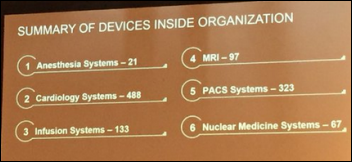
That’s what our team brings. We understand the vendors involved in the healthcare side and now we’re getting an understanding of the banking transaction sets. We serve as that conduit between the two.

What business lessons did you learn in watching Gateway EDI sell itself to TriZetto, which was then acquired by Cognizant for $2.7 billion?

Culture matters. Gateway EDI is where I came from and is part of the equation. It was a company that talked every day about culture, about its people, about treating people well. An old expression says, “Happy employees will create happy customers and create a happy, healthy, and successful business.”

We’ve taken that to InMediata — that culture, believing in people, empowering your people, and creating accountability. Transparency of communication across your environment creates a really strong culture. We’re working on building that as well.

You heard me talk earlier about relationships. We think the culture of the employees that you have transcends to the customers that you’re serving and to the partners that you’re going to bring into the game. We think culture matters. We had a expression when I was there that says, “Culture eats strategy for breakfast, lunch, and dinner.” That’s what Gateway EDI was about. That’s what we helped merge into TriZetto. Of course, as you mentioned, Cognizant came in at the end.

We’re trying to rebuild that same culture at InMediata. We’re doing it people first. Happy employees making happy customers. We’re going to look for the same kind of partners, people that believe in employee-centric organizations, people that believe in innovation, and people that believe in satisfying and delighting the customer.

Where do you see the company in five years?

I’d like to be the Gateway EDI of healthcare payments and revenue cycle. We think we’re at the beginning of something that’s going to take us to an interesting place.

I’d like to see us helping move from fee-for-service to fee-for-value. We think that’s an obvious place the industry’s going. We’re trying to focus on what exists today and help us get to tomorrow. As payment models change, as quality initiatives continue to get pushed, as the payment landscape finally makes that change from fee-for-service to fee-for-value, we’d like to see InMediata right smack in the middle of all that.

For us, today’s challenges and opportunities exist around the fee-for-service model, around using those administrative transactions to help fuel the innovation for payment and payment reconciliation, and take that up to and past the fee-for-value model when quality really takes hold of the payment system and be there to help our customers get through what is, at this point, a rather intimidating change in the coming landscape.

Do you have any final thoughts?

We have a lot of experience in our company. If I had to give you an expression we use a lot, we’d say, "Words matter."

I was thinking about this interview and thinking to myself, "I want to make sure Tim knows about our company and about me and about our people." A series of words I jotted down on paper tells you about our company and our business. It’s people. It’s experience. It’s relationships. It’s innovation. It’s integration. It’s information. Just a set of words that I think are important. If  I had to describe ourselves in just a few key words, that would be them.

We hear about another word called commodity. The old EDI clearinghouse business you mentioned, Gateway EDI — people will talk about how that business has become commoditized. We view it completely differently. We view it as opportunity. We view it as value. We think there’s plenty of areas to help, plenty other places to go. 

InMediata thinks more about, why not? Why can’t we further that industry? Why can’t we find value where people see commodity? Why can’t we find opportunity vs. people see crisis? That all comes from a few words. People, experience, and relationships are key to the culture side, then innovation, integration, and information are the three I’s that we think are key to our business.

Epic’s Remote Hosting Resurgence

February 10, 2016 News Comments Off on Epic’s Remote Hosting Resurgence

Epic gets back to its roots – and attempts to keep up with the competition – with another foray into remote hosting services.
By @JennHIStalk

Rumors began swirling earlier this year when Epic purchased Mayo Clinic’s data center in Rochester, MN. The reportedly $46 million deal will see Mayo, which is scheduled to go live on Epic in 2017, lease back the 62,000 square-foot facility to Epic for at least the next four years. It’s a somewhat unconventional arrangement that signals that the company is ready to take hold of the remote hosting market.

It’s Identical to Self-Hosting

image

Epic Senior Vice President Stirling Martin explains that, “In terms of the capability of the hosted systems, it’s identical to what a self-hosted organization would have. Our mission in hosting is to allow organizations to retain all of the same flexibility and configuration they would have if they were running the systems themselves. They still have a highly open platform for interfacing and integrating with third-party systems that they’re running in their own data centers or in third-party data centers.”

Remote hosting is not a new endeavor for Epic, which started out in that very field back in 1979. “About four years ago,” Martin explains, “we embarked on building a data center both for our own purposes and with an eye towards eventually doing hosting. We made the decision about 18 months ago to move forward and get back into remote hosting. Since that point, we’ve been building up infrastructure and working with early customers to get them onto the platform.”

Understanding the Options

Epic offers two hosting options. Full hosting — which includes the production systems, training, testing, and a disaster recovery copy in a geographically separate data center –  has so far been the most common request.

Standalone disaster recovery is another option. Martin notes that, “This is a great opportunity for organizations that may not have a second data center and yet want to ensure that they have a copy of their system up and running in a data center that’s geographically separate enough to be away from a natural disaster.”

He declined to give specific pricing numbers, though he did stress that pricing ultimately comes down to the size of the organization. “The number of concurrent users is the metric we talk about most,” he explains. “We factor lots of data points into the overall sizing equation – the different products they’re going to be using, if they have one hospital and a very large ambulatory practice or many hospitals and a smaller ambulatory practice.”

Clarifying the Customer Base

In making the initial announcement about its re-entry into remote hosting, the company said it would first offer the service to its medical group and small-hospital clients, potentially opening it up to large-hospital users later.

Martin says that the remote hosting service is open to all “members” of the Epic community. “Our mission in doing this was to provide our members with an additional hosting option,” he says. “We’ve probably got a little over 250,000 end users that will be hosted by Epic as these organizations roll out their systems. We have three healthcare organizations that are live in production with a couple more lined up in the coming months. All of the members that had signed up for Epic hosting are live in a non-production way, in that they’re building up the systems as part of their implementation activities. We’re preparing them for go-lives over the next six to 12 months.”

Martin adds that no customer is too small, at least from an Epic hosting standpoint. “The mission here is to provide a very scalable infrastructure that has both the capability to flex up to the very large organizations that we work with, as well as the ability to flex down to the very smaller organizations that we work with.”

He couldn’t comment as to the number of customers that will ultimately switch to Epic for their hosting services, though he did stress that, “feedback from sites that are live on it today is very positive.”

image

Data Center Details

The data center’s infrastructure includes 100,000 square feet of space, buried under a nondescript hill above the floodplain on Epic’s campus and ready to accommodate added capacity as the need arises. Power generation capabilities are also underground, as is the infrastructure necessary to run critical systems.

The company is currently using a co-location facility as its secondary site until the Mayo data center can be brought up to speed. “With the purchase of that state-of-the-art data center,” says Martin, “we will migrate the existing disaster recovery systems up to the Rochester data center and then start using that as our secondary facility going forward.”

He adds that there is “tremendous redundancy falls in terms of the connectivity in the data centers to the Internet, as well as tremendous redundancy in the connections that we provision from the primary and secondary data centers to an individual health organization. We provision two diverse paths for the connectivity to ensure that there’s redundancy from each of the data centers to the health organization to make sure that no single fiber caught or telecom outage can take out all of the links at once.”

Catching Up with the Competition

Some industry insiders see Epic’s remote hosting resurgence as an attempt to keep up with Cerner, which has offered those services since 1999. Its winning DHMSM bid (with primary contractor Leidos) and the DoD’s $51 million decision to move the project’s hosting to Cerner headquarters makes the notion seem that much more valid.

image

“Both vendors are investing heavily in this capability,” says Impact Advisors Vice President Lydon Neumann, “which will be difficult for other competitors to match in performance and breadth of service offerings. As for Cerner, they will continue to be a strong competitor and Epic’s entry into this market segment validates Cerner’s value proposition for this increasingly attractive hosting option. Epic and Cerner are creating a significant barrier for the other vendors in the market.”

Neumann adds that remote hosting is already bolstering Epic’s long-term prospects. “The market appears to be responding favorably to Epic’s entry into this segment. As a result, more customers and a broader segment of the market are now likely to consider Epic in order to leverage external capabilities and expertise, while gaining access to more technical services to properly maintain and enhance Epic’s enterprise solutions. Customers and prospects will also be increasingly proactive in aggressively reducing costs and will look to remote hosting to solve long-term challenges of managing and sustaining their technology infrastructure.”

The Customer Perspective

image

FirstHealth of the Carolinas Vice President of Information Systems David Dillehunt took a look at Epic’s remote hosting service as part of the health system’s overall evaluation of replacement vendors. (The North Carolina-based health system is scheduled to go live on Epic on July 1, 2017.) “It didn’t impact our decision to leave McKesson. We were forced to make a change when McKesson decided to sunset the Horizon platform. Epic had not yet gone live with their first remote-hosting customer, so we elected to do the traditional on premise implementation. However, I would bet that, like most things Epic chooses to do, it will do this well and be able to deliver a solid, reliable hosting platform,” Dillehunt explains.

“I do think this will be very interesting to many potential new clients, and possibly to some older clients as well,” he adds, “particularly where there may be issues with space, power, off-site backup availability, etc. I for one do not feel that remote hosting is the magic answer, but I do believe it is one of many and should be evaluated just like any other major choice.”

News 2/10/16

February 9, 2016 News 4 Comments

Top News

image

The Navy awards Leidos an additional $50.7 million for Cerner-provided hosting services for the DoD’s EHR as I reported here earlier, overriding the objections of IBM, CSC, Amazon, and General Dynamics. The announcement says the Cerner system can operate regardless of who hosts it, but its functionality would have been limited “to utilizing only DoD data, which greatly impacts the accuracy of analytics given the  much smaller population of data which, in turn, could negatively impact patient outcomes” and that Cerner refused to allow connection to its managed services. The document adds that third-party hosting “could adversely impact Cerner’s financial viability and competitive market advantage.” The DoD says the new award won’t increase the overall contract spending limit of $4.3 billion.


Reader Comments

image

From Ickey Shuffle: “Re: Sandlot Solutions. Massive layoffs and the entire sales team was fired. They barely made payroll. Rumor is that ICW may buy the customer base.” Unverified. I reached out to board chair Rich Helppie but haven’t heard back.


HIStalk Announcements and Requests

image image

We funded Mr. Beeler’s DonorsChoose grant request for 13 environmental and science books for his high school class. He says many of the students at his Texas school go to work immediately after school and don’t get home until their work’s closing time, with only 14 percent of graduates going on to college, so he’s trying to motivate them. Mr. Chen’s class from Massachusetts also checked in to say they’re using the digital drawing tablet we provided to do sketches in Photoshop, then convert their ideas to CAD and then print them using donated 3D printers.

image

Iatric Systems included a question about my HIMSS exhibit hall pet peeve (booth people playing with their phones) in their employee role-playing training for the upcoming conference In return, they donated $500 to my DonorsChoose project, which funded these requests:

  • 3D history and engineering puzzles for the STEM-focused high school class of Ms. Hayes in Charlotte, NC.
  • 26 sets of headphones for the elementary school computer lab of Mrs. Schmidt in Vero Beach, FL.
  • Three Kindle Fires and cases for the elementary school class of Mrs. Jones in Knoxville, TN.
  • Math manipulatives for Ms. VanZanten’s elementary school class in W. Valley City, UT.
  • Light experiment kits for Ms. Feeley’s elementary school class in Flushing, NY.

 image

I have zero interest in sports but had the Super Bowl turned on for background noise. It caught my attention when I heard an ad pitching a prescription drug for treating opioid-induced constipation. We must have one heck of a doped-up population if the constipation of long-term narcotics users justifies running a multi-million dollar 60-second Super Bowl ad. The drug industry estimates that it’s a $2 billion market as Americans seek a second pill to fix the problems caused by the first. The commercial didn’t mention the drug Movantik at all, probably to avoid the FDA’s requirements that it rattle off a long list of side effects (third pill, anyone?) Movantik costs $300 for a month’s supply. I wonder how many patients will seek a prescription for it because they’re having side effects from illegally obtained narcotics? A lot of what you need to know about what’s wrong with American healthcare is contained in this one paragraph.

On the jobs board: clinical software project manager, sales executive, interface engineer.

image

The celebrity guest in our microscopic HIMSS conference booth Tuesday afternoon March 1 will be David Schoolcraft, an attorney with Ogden Murphy Wallace PLLC of Seattle, WA. Our “HIT Lawyer in the House” will be happy to say hello, talk about lawyerly HIT issues, or “just chat about how great HIStalkapalooza was.” Email Lorre if you are unnaturally funny, smart, or famous and want to prove it at our booth — it’s not like we’re drawing for Vespas or running a golf simulator on our $5,000 little patch of carpet, so about all we’ll have is a table to stand behind.


HIStalkapalooza

image

HIStalkapalooza invitation emails have gone out from Eventbrite. That service provides some nice benefits: you’ll be able to check in quickly via a barcode scan, it will send reminders that you signed up, and it will allow those whose plans change to let me know so I can give House of Blues a better estimated headcount. I’ll also know who took up a spot without attending so I can invite someone else in their place next year (the no-show rate is always at least 40 percent).

image

I wasn’t able to invite everyone to attend HIStalkapalooza since we needed one more sponsor to cover the cost for all the 1,700 or so people who wanted to come. I’m sorry if you didn’t receive an invitation. As usual, I invited all providers who expressed interest, then did the best I could with the people left on the list.

I had a mini-brainstorm this afternoon – since Eventbrite supports collecting online payment for tickets, next year I should simply charge the incremental price of attendance instead of just shutting down invitations once I hit the number covered by sponsors. Anyone who didn’t bother to sign up themselves or their guest who desperately wants to attend could buy a ticket for $150 or something like that instead of just being told they can’t come. My constraint is sponsor funding, not capacity, so we could handle a lot more people who are willing to pay their own way. I’ll consider that for next time.

image

Just as a reminder:

  • Each attendee must have an emailed ticket to get through security. Walk-up registration will not be available (that’s a screen shot of my own ticket, which I signed up for just like everyone else).
  • Attendees cannot bring guests. I explained clearly that any guests needed to be signed up individually, just like when you buy any other kind of ticket.
  • I’m not keeping a waitlist since no-show rates were already built into attendance estimates. No additional invitations will be sent.
  • I can’t control your company’s spam filters or do the legwork to tell you while your email system didn’t allow the invitation to pass through. I’ll put up a page shortly that works like an airline’s standby list –  the truncated first and last names of each invitee will appears so you’ll know you were invited even though you won’t be easily identifiable to anyone else.

Like last year, the House of Blues doors will open at 6:30 and we’ll close the check-in table by 8:30. The event costs about $200 for each attendee who passes the House of Blues guy with the people-clicker, so swinging by after someone else’s party for a quick beer can wreck the already-stretched budget. Be there on time and you won’t have to listen to a muffled Party on the Moon from the casino outside the HOB’s walls.

You can follow along with whatever it is that people will tweet about the event using #HIStalkapalooza. I’m surprised that nobody has Twitter-bragged about getting an invitation.

image

Several readers emailed to ask if we’ll have Longo Lemonade at HIStalkapalooza. I hadn’t heard of it, but figured industry long-timer Peter Longo would know (duh) so I asked him. It’s a game where you ask for a Longo Lemonade and then show the bartender how to make it if they’re stumped – apparently word has spread and many will need no further instruction. But for those bartenders who haven’t heard of it, here’s the recipe that will probably result in sugar-sticky bar surfaces all over the House of Blues:

Shake straight vodka with ice and pour into a shot class. Sprinkle a packet of sugar onto a napkin and dip a slice of lemon in the sugar to cover each side. Drink the shot and then eat the lemon slice.


Webinars

February 17 (Wednesday) noon ET. “Take Me To Your Leader: Catholic Health Initiatives on Executive Buy-In for Enterprise Analytics.” Sponsored by Premier. Presenters: Jim Reichert, MD, PhD, VP of analytics, Catholic Health Initiatives; Rush Shah, product manager analytics factory, Premier. Catholic Health Initiatives, the nation’s second-largest non-profit health system, knew that in order to build an enterprise analytics strategy, they needed a vision, prioritization, and most importantly buy-in from their executives. Dr. Jim Reichert will walk through their approach.

February 23 (Tuesday) 1:00 ET. “Completing your EMR with a Medical Image Sharing Strategy.” Sponsored by LifeImage. Presenters: Don K. Dennison, consultant; Jim Forrester, director of imaging informatics, UR Medicine. Care coordination can suffer without an effective, cost-efficient way to share images across provider networks. Consolidating image management systems into a single platform such as VNA or PACS doesn’t address the need to exchange images with external organizations. This webinar will address incorporating the right image sharing methods into your health IT strategy.


Acquisitions, Funding, Business, and Stock

image

Premier reports Q2 results: revenue up 17 percent, adjusted EPS $0.42 vs. $0.36, beating expectations for both but recording a GAAP loss of $54 million for the quarter.

image

Mobile consumer payments vendor SwervePay raises $10 million in funding, increasing its total to $11.6 million. The company focuses on healthcare and auto-related services, which for appointment-setting and payments are not all that different now that I think of it.

image

Cognizant announces Q4 results: revenue up 18 percent, EPS $0.69 vs. $0.59, falling short of revenue expectations but beating on earnings. Shares dropped on lower revenue guidance due to expected reduced technology spending. The company’s healthcare division, its second-largest in contributing 30 percent of total revenue, had a 23 percent revenue increase, still a slowdown from previous quarters. Cognizant acquired TriZetto for $2.7 billion in 2014.

image

Human resources software vendor Zenefits fires founder and CEO Parker Conrad, informing employees that, “Many of our internal processes, controls, and actions around compliance have been inadequate, and some decisions have just been plain wrong.” Forbes estimates the net worth of 35-year-old Conrad at $900 million. The company, valued at $4.5 billion, has been accused of allowing unlicensed salespeople to sell medical insurance. Zenefits hired as its new CEO David Sacks, who co-founded Yammer (purchased by Microsoft for $1.2 billion) and who used the fortune he made as pre-IPO COO of PayPal to produce the movie “Thank You For Smoking.”


Sales

image

Spartanburg Regional Healthcare System selects Strata Decision’s StrataJazz financial system.


People

image

Leidos Health names Chris Freer (SPH Analytics) as sales VP.


Announcements and Implementations

image

Skagit Regional Health (WA) posts 53 new IT positions with up 20 more coming in 2016 as it implements Epic, on which it expects to spend $72 million over the next five years.

image

Phynd CEO Tom White attended a recent White House roundtable on technology jobs in rural America, including Phynd’s “Silicon Prairie” home of Kearney, NE. The session with 10 business leaders was hosted by Secretary of Labor Tom Perez and Secretary of Agriculture Tom Vilsack.


Government and Politics

image

The Senate health committee unanimously passes S.2511, the Improving Health Information Technology Act. Some of what the bill contains:

  • Reduce documentation burdens and allow non-physicians to document on their behalf.
  • Encourage EHR certification for technology used by specialty providers.
  • Create a health IT rating system reflecting security, usability, interoperability, and certification testing results that also incorporates user feedback.
  • Empower HHS OIG to investigate and punish data blocking.
  • Enlist data sharing networks to develop a voluntary model framework and agreement for information exchange.
  • Create a digital provider directory.
  • Require certified software to exchange information with registries that follow standards.
  • Directs the GAO to conduct a patient matching study within one year.
  • Require HHS to defer to standards created by Standards Development Organizations and consensus-based bodies.
  • Require HHS OCR to clarify provider misunderstanding about giving patients access to their own information and to publish best practices for patients to request the information. 

More details: the HELP committee’s revised summary and the Senate’s bill.

The President sends Congress a $4.1 trillion 2017 budget that would raise taxes by $2.6 trillion in the next 10 years. It includes HHS funding for the “cancer moonshot” and programs to address opioid addiction, but the big jump in federal red ink would come from Medicare and Social Security entitlement programs that are being overwhelmed with retiring Baby Boomers. The budget includes $19 billion for improving the cybersecurity of government IT systems. It doesn’t address the economic elephant in the room: that even a tiny increase in increase rates could add $1 trillion in annual costs just to service the cost of the existing massive federal debt.


Privacy and Security

A medical school professor says doctors need to stop complaining about EHRs patients shouldn’t obsess over medical records confidentiality because EHR-created databases will change the way medicine is practiced and lead to new cures. He says that simple data mining can find information “lying in plain sight, no invasive procedures or testing required. We could have found it years earlier if we had had the date.”


Technology

image

Cerner launches the Cerner Open Developer Experience to allow developers to work with Cerner’s sandbox using SMART on FHIR.


Other

The British government will give NHS $6 billion to fund technology projects that will eliminate fax machines and paper, improve cyber security, create a new NHS website, and provide free wi-fi. Patients will gain online tools to schedule appointments, request prescription refills, and communicate electronically with their physicians. NHS hopes to monitor 25 percent of patients with chronic conditions remotely by 2020.

A tiny study finds that pediatricians who remotely evaluate children with fever or respiratory distress using FaceTime on an iPad perform just as well as those who conduct their examination in person.

A well-designed study of discharged heart failure patients finds that telemonitoring combined with health coaching didn’t reduce 180-day readmissions.

image

Athenahealth’s Jonathan Bush, in a short interview, says that his aunt, Barbara Bush, donated $4 million in Athenahealth profits to the Barbara Bush Children’s Hospital at Maine Medical Center. He says:

The irony is the Barbara Bush Hospital just bought Epic with that money and is building a monopoly to capture referrals that they don’t have the volume to do well. A lot of the stuff they do probably should be done somewhere else. I didn’t say all this to Bar. I said, “That’s just great,” pinching my fingernails under the table.

Weird News Andy says, “I expect it to be in ICD-11” after failing to find an ICD-10 code for the claim that a man in India was killed by a meteorite. WNA codes the encounter as, “W20.8XXA Other cause of strike by thrown, projected or falling object, initial encounter.”


Sponsor Updates

  • AdvancedMD makes its patient engagement solution available to users of its AdvancedPM technology.
  • The Nashville Post covers Cumberland Consulting Group’s move into performance improvement and revenue cycle.
  • Bernoulli participated in the IHE North American Connectathon Week in Cleveland.
  • ZeOmega launches a series of whiteboard videos about its population health management software.
  • Vital Images offers a zero-cost data migration service.

Blog Posts


Contacts

Mr. H, Lorre, Jennifer, Dr. Jayne, Lt. Dan.
More news: HIStalk Practice, HIStalk Connect.
Get HIStalk updates.
Send news or rumors.
Contact us.

125x125_2nd_Circle

Curbside Consult with Dr. Jayne 2/8/16

February 8, 2016 Dr. Jayne 3 Comments

Last week I talked about physician understanding of the economics involved with a transition to value-based care. This week I’d like to entertain the idea of opportunity cost, which is the loss of potential benefit from alternatives not selected when a choice is made. In explaining it to my niece, it’s missing out on buying a cool pair of boots in three months because you’re buying too many lattes and not saving anything from your part-time job.

I’ve had a series of events lately that make me think that healthcare leaders don’t understand the concept of opportunity cost. I know I have a penchant for working with organizations that tend to be fairly troubled, but this is a pretty basic concept. Let’s take a look at a few of those scenarios:

Hospital A had a very strong IT analyst who had been working in a physician liaison role, meeting with new hires and personally setting them up with various credentials, their VPN tokens, etc. She would meet them either at their offices or in the physician lounge and do whatever it took to get them activated and make sure they felt supported for the first few months of employment. She was dearly loved by everyone. 

When her husband developed an ongoing medical issue and she asked to reduce her hours, it seemed like a done deal. Instead, the IT department informed her that they had no part-time positions available. She was forced to take early retirement in order to care for her family.

Subsequently, they contracted out the position to a third-party desktop support group, who immediately hired the staffer part time. She earned close to her previous full-time salary as a part-time contractor while the hospital ended up paying more than her full-time salary.

It’s bad enough to not do the right thing for an employee who has been with you for 30 years, which is unheard of in the working world today. To make such a poor business decision on top of it, though, is just mind-boggling. They’re now essentially paying twice as much for her services. Making it even more bittersweet, her husband’s condition turned out to be not as dire as predicted. She’s now back in a full-time position, performing project management services in addition to the desktop support.

Hospital B had been trying to hire a CMIO for some time. They engaged me to help put together the job description and evaluate candidates since they had never had a CMIO and wanted someone to help sort the wheat from the chaff.

We first ran into trouble when they created the job posting and its accompanying salary range, which was less than what most physicians make fresh out of training. Yet they expected to hire a board-certified clinical informaticist who had been working in the field at least five years with their specific platform.

They were surprised that no one was interested in the job. Only a handful of folks who had lost their licenses or had other suspicious gaps in their employment history had applied in several months. None of them were board certified. They changed the salary range, but by then the organization had lost momentum. After engaging an external recruiter, they were able to finally get some good candidates. 

The human resources department processes of running the background checks and making the offer sent the first-choice candidate running for the hills. Why would someone want to work for an organization who can’t even get the hiring process right? I’m not sure, and neither was he, apparently.

As time elapsed, their second-choice candidate had already accepted another position. Their third choice turned them down with inadequate compensation as the reason. They were unwilling to respond to a counter-offer. 

The newly-created position has now been vacant for six months. Had they been able to get themselves in order, how much could a new CMIO have accomplished over the last several months? How many opportunities for improvement were missed? How much money have they lost in recruiting after trying to “save” it on salary?

They’re now back at square one, cobbling the role together with a host of physician champions who are trying to fill in on top of their regular jobs and hiring me to do tasks that are beyond their capacity or skills.

Hospital C had an employed physician group that was preparing to change EHRs. They hired me to shepherd their data migration. After looking at the quality and quantity of the data (which was really pretty appalling), I recommended against trying to extract the data to to seed their new system.

As an example, most of their blood pressure values were unusable since their previous vendor didn’t have adequate control of data fields. Nonsense characters and inappropriate abbreviations filled tables where only numbers should have been.

In looking at the overall poor quality of the data, the specialty mix, the volume of truly “repeat” patients vs. those that were episodic, I recommended they use a third party to abstract and load the data so they could have a clean start. It looked costly on paper, but I thought I made an adequate argument for the return on investment given the risk to patient safety of poor data quality.

The IT team felt my concerns were “ridiculous” despite my experience and decided to go it on their own. They now have spent nearly a quarter of a million dollars trying to get the data to a point where the incoming vendor will accept it. They’re paying their own physicians (who aren’t informatics trained) to work on the data. They have done so much manipulation that now they’re questioning the data integrity themselves.

I was asked if I am willing to come back and help. Of course there is no way I’m touching it at this point. I referred them to the abstraction firm and hope they can take a rush job. Their go-live is in a few weeks and the physicians are at risk of starting on the new system with nothing.

Figuring out the money wasted is easy. But how do you put a value on all the stress that has been generated and the growing negative feelings about the transition?

I have friends that work in all kinds of industries and we always swap war stories. It seems like mine are always the most outrageous as well as being most plentiful. It’s like no one is watching the store. Healthcare organizations hire someone to give them advice, then ignore it, then act surprised when things turn out badly. I’m very much concerned that the move to value-based care will only make a broken system more dysfunctional.

Where do we go from here? Email me.

Email Dr. Jayne.

HIStalk Interviews Kevin Johnson, MD, Chief Informatics Officer, Vanderbilt University Medical Center

February 8, 2016 Interviews 3 Comments

Kevin Johnson, MD is chief informatics officer at Vanderbilt University Medical Center (TN), professor and chair of biomedical informatics and professor of pediatrics at Vanderbilt University, and a filmmaker.

clip_image001

Why is VUMC moving from McKesson Horizon to Epic instead of to McKesson Paragon?

We have enjoyed a long history with Epic as one of their first revenue cycle clients dating back to 1995. We had made a decision to upgrade our revenue cycle and billing system to a more recent Epic version for inpatient and outpatient billing. We also have Cerner’s lab system.

Our decision, therefore, was to migrate our revenue cycle, clinical, and lab environment to Epic/Epic/Cerner or Epic/Cerner/Cerner. Paragon is a system constructed with a different size and complexity health system in mind. Both Cerner and Epic were good choices for us, and after a thorough evaluation, we chose Epic for our clinical system.

What is your Epic implementation timeline?

One of Epic’s strengths is that they provide a timeline and coaching to help our team configure, test, train, and go live. We are following that timeline with a plan to go live with Epic in a big bang fashion in November 2017.

We are fortunate to have a large and talented IT group, of whom about 50 percent are migrating to the Epic project. We think that their knowledge about Vanderbilt systems and infrastructure, coupled with their knowledge about our leadership and their relationships with customers, will help us deliver this system on time.

How will the Epic system help VUMC with its current and future patient care initiatives?

We have big plans for this. I will say right off the bat that Vanderbilt is a lot like other organizations that have constructed a leading IT infrastructure. We have areas with better adoption and areas that still have unmet needs. We have dependencies on individuals, rather than teams, that put some of our best innovations at risk. And we have workflow challenges related to the need to interface, rather than integrate, some of our system components.

Going live with Epic will usher in an era with a more unified patient bill, better access to mobile tools for patients and providers, and point-of-care access to reports and other aggregate data. Epic will be a high-reliability transaction processing and core clinical system for us.

Vanderbilt has always had a distinctive strategy for IT. We are retaining our vendor-neutral operational record, so that we will have three ways to potentially extend our infrastructure.

First, we plan to work with Epic to solve new problems and to innovate when possible. Second, we are capable of adding onto Epic through the use of SMART/FHIR apps and anticipate doing so. For example, to pilot student and trainee projects. Third, we will use our vendor-neutral record, if need be, to bring up specific complex functionality not yet supported by Epic.


Our plan, though, is to use this to free up our most talented developers to innovate on unsolved challenges rather than using their expertise to keep up with regulatory or reporting demands.

Is Vanderbilt still doing work to match genetic and EHR information?

Very much so. We are actively involved with the EMERGE (electronic medical records and genomics) Consortium, as are a number of academic centers around the country. Probably the biggest innovation we’ve been able to demonstrate is how to weave drug-genome interactions into the point of care through a project called PREDICT that was internally funded.

We were incredibly honored to host the second of the Precision Medicine Initiative workshops last spring and to push on the agenda of interoperability while also considering numerous approaches to abstracting EHR information for this program. Through the efforts of Josh Denny, MD, the PheWAS method, where we use NLP on clinical documents — in addition to using structured data in the EHR — to figure out phenotypes and then scan for variants associated these phenotypes we have convincingly demonstrated the power of combining genomic and EHR data.

The world of developing predictive models for disease is literally exploding, as we know, and will continue to evolve as new and more relevant data types, such as images and sensor data, are added to the analytic ecosystem.

What is VUMC doing with population health management?

Like almost everyone, we’re learning how best to do anything in population health management. I think the key point we all must address is how little technology really does to improve population health management. What technology does well, so far, is help with the aggregation and communication of data and knowledge around performance.

What we need to do is move from communication to active decision support at the point of care, better involvement of patients in their health management, and hardwired processes to act on information being distributed that requires manual interventions. The people and process parts of managing health are simply underappreciated.  

What we’re doing at this point is building that infrastructure, in addition to scaling work people have done with diseases like ventilator-associated pneumonia and asthma across the enterprise. We are excited about working with Epic users who have done a lot with that environment and population health, such as the work Geisinger has led for years. We have a few innovative ideas that may or may not pan out.  

I do have to share with you one story. When I got my Apple Watch, the first thing I imagined is how we could push reminders to clinical providers of care, using an in-room beacon to know which patient and which provider were engaged in the encounter. Very cool, until I first looked at my watch in front of a patient, who said, “I’ll only be a minute. Sorry to keep you.” The watch, unfortunately, has a lot of baggage we would have to overcome.

It’s clear that there are some great opportunities afforded by technology, but that in the era of widespread EHR adoption and dissatisfaction, we need to be very careful.

What innovative products or companies have you seen lately that excite you?

Other than my fascination with the Watch? Along the same vein, I have great expectations for the Amazon Echo. It just feels like the right interface to do what I described above  — real-time reminders and query/response decision support — in a way that could be easily integrated into the encounter.

I’m also very intrigued by work being done to demonstrate SMART and FHIR’s potential. There are a ton of startups creating wonderful apps and data visualizations. I hope we can harness some of this energy to impact the provider- and patient-facing health information technology systems.

Another thing that really excites and scares me is the phenomenon of big data. There’s a great little video from the ACLU called “Scary Pizza.” It shows one side of a very interesting issue, which is how simple systems can evolve using data from a number of sources. The goal of the ACLU piece is to scare us into fear about a loss of privacy. That’s one angle.

Another angle is to view it as an informatics challenge. How can we provide this level of decision support in a more acceptable fashion? For example, what if there was a way to use data about a house configuration to decide that the house might be difficult for rehab after a stroke? What if there was a way to know that the home’s electricity had been off on a few occasions, thereby changing the suitability for a home ventilator? I imagine that these types of data will truly transform the patient-provider interaction in the next decade.

What has been the response to your movie "No Matter Where?"

The movie tries to help lay audiences understand the issues surrounding information sharing. It’s been a very successful run so far. We had showings in Ann Arbor, Wisconsin, Tennessee, and San Francisco as a part of the AMIA meeting last fall. We have screenings being planned now in Indiana, Oregon, and Oklahoma. We have sold more than 100 copies of the DVD and are working on getting the film shown on public television. I’ve been pleased by the response so far.  We’ll see how 2016 treats us.
Monday Morning Update 2/8/16

February 7, 2016 News 7 Comments

Top News

image

National medical practice operator One Medical Group pays $20 million to acquire nine-employee Rise, whose app connects users with nutritionists for meal planning and diet advice. The company had raised $4 million. One founder was previously with Groupon while the other worked for Mozilla.

image

San Francisco-based One Medical Group, which has raised $182 million and runs practices in seven cities, was founded by former Epocrates CMO Tom X. Lee, MD.


Reader Comments

image

From Lib B Z: “Re: NYU’s Langone Medical Center. Doctors are unhappy with the new EMR added because the changes are confusing and time wasting. The new system supplied by Optum is supposed to work alongside Epic. Langone is reportedly looking at dismantling the recent additions that were hurriedly bolted on.” Unverified.

From Curly Endive: “Re: Epic hosting. We’re also concerned about scanning with McKesson. There seem to be mixed opinions among us whether Epic really gets what a big problem this is. I understand keeping a competitor’s product off their hardware, but my sense is they got caught with their pants down in anticipating that hosting customers would need a solution. They don’t seem to have a fast solution in the works.” Unverified.

image

From Ex-Epic: “Re: Epic customers in Canada. Children’s Hospital of Eastern Ontario: Beaker (I think), MyChart, Ambulatory and I think inpatient as well.  Women’s College Hospital: scheduling/registration, Ambulatory only. Alberta Health Services: Mychart/Amb and there was rumor when I was at Epic that they were expanding to enterprise (they already have the license). Mackenzie is full enterprise. I think you covered this in the past, but Epic lost out on University Health Network in Toronto, which is the largest hospital network in Canada.”


HIStalk Announcements and Requests

image

More than 80 percent of poll respondents say their reaction to recent CMS statements about Meaningful Use is negative. New poll to your right or here: if you’re going to the HIMSS conference, what is your primary reason for attending?

image

Welcome to new HIStalk Gold Sponsor Carevive Systems. The Philadelphia-based company offers an oncology care planning system that combines electronic patient-reported outcomes with clinical data and evidence-based content authored by thousands of oncologists to generate initial, supportive, and survivorship care patient care plans and to link patients to clinical trials. Its rules engine auto-populates the 13 elements of the IOM care management plan required for the Oncology Care Model. As a client reports, “What I really like about the platform is the patient’s ability to report his or her own symptoms, and then we can generate evidence-based practice data to manage those symptoms. Subsequently, we provide an intensive care plan for them … we’re able to see what patients are truly experiencing and help them manage their symptoms more effectively.” Thanks to Carevive Systems for supporting HIStalk.

image image

Mrs. Brunetti says her rural Arkansas students are able to remember math concepts better by using the books and manipulatives we provided in funding her DonorsChoose grant request.

image image

Also checking in is Mr. Garcia, who needed speakers for the six computer workstations he built himself for students of his inner city Dallas school (he’s an Army veteran and computer engineering graduate). We also provided a weatherproof Bluetooth speaker whose use he describes as, “The portable speaker was a hit. We took it to the hallway for the Sphero robotic ball to draw 2D figures. Every time there was a sound it was deep, loud and catchy — our principal came to see us and was very impressed with my students listening to instructions from Sphero. Teaching coordinates X and Y for ordered pairs was very memorable for them. My plan is now to take Sphero, the tablet, and the portable speaker to the basketball court and teach angles, time to distance ratio, problem solving, and critical thinking.”

image

I’ve been surprised at the number of people who are shocked and indignant at Martin Shkreli’s 50-fold price increase for Daraprim, sputtering that his company should behave “fairly.” That’s the most ridiculous thing I’ve heard lately, that anyone would expect a former hedge fund trader and drug company CEO to take any action that doesn’t best serve him or his shareholders, or for that matter that less-annoying healthcare overlords are working selflessly for the good of their customers in some manner everybody else might consider “fair.” Shkreli is working the system that we all created where we made healthcare a capitalistic, obscenely profitable business, no different than everybody else lapping at the sick people’s trough (McKesson doesn’t pay John Hammergren $150 million per year for being “fair.”) The politicians he refused to answer last week seem to think it’s Shkreli’s job and not their own to fix our healthcare mess. As the New Yorker observes with apparent tongue in cheek,

Nancy Retzlaff, Turing’s chief commercial officer, told the committee about her company’s efforts to get the drug to people who can’t afford it. The arrangement she described sounded like a hodge-podge, an ungainly combination of dizzyingly high prices, mysterious corporate bargaining, and occasional charitable acts—which is to say, it sounded not so much different from the rest of our medical system … True, he has those indictments to worry about. But he is also a self-made celebrity, thanks to a business plan that makes it harder for us to ignore the incoherence and inefficiency of our medical industry. He rolls his eyes at members of Congress, he carries on thoughtful conversations with random Internet commenters, and, unlike most of our public figures, he may never learn the arts of pandering and grovelling. He is the American Dream, a rude reminder of the spirit that makes this country great, or at any rate exceptional.

Meanwhile, a fascinating video interview shows Shkreli casually slurping from a $5,000 bottle of wine while playing chess with the interviewer, describing that he’s a hero among dishonorable drug companies and explaining why hospitals and doctors are healthcare’s real cost problem. We’re still trying to convince him to hang out at our HIMSS booth. I told Lorre to bribe him by offering to buy one full-priced Daraprim tablet.


Last Week’s Most Interesting News

  • Practice Fusion lays off 74 employees as it struggles to reach profitability.
  • The White House asks Congress to fund a $1 billion “cancer moonshot.”
  • Theranos declines to fulfill its promise to allow partner Cleveland Clinic to verify its technology and says it won’t publish FDA testing data until all of its tests are approved.
  • A Surescripts survey finds that few New York doctors have the technology required to send all prescriptions electronically by March 27, 2016 as state law requires.
  • The Hurley Medical Center pediatrician credits her use of EHR-mined data in proving Flint, Michigan’s water crisis to skeptical state officials.
  • A bipartisan Senate bill calls for expanding Medicare coverage of telemedicine.

Webinars

February 23 (Tuesday) 1:00 ET. “Completing your EMR with a Medical Image Sharing Strategy.” Sponsored by LifeImage. Presenters: Don K. Dennison, consultant; Jim Forrester, director of imaging informatics, UR Medicine. Care coordination can suffer without an effective, cost-efficient way to share images across provider networks. Consolidating image management systems into a single platform such as VNA or PACS doesn’t address the need to exchange images with external organizations. This webinar will address incorporating the right image sharing methods into your health IT strategy.


Acquisitions, Funding, Business, and Stock

image

From Friday’s Athenahealth earnings call:

  • The company has 4,600 employees.
  • The recently announced development partnership with University of Toledo Medical center will help the company move from its “sub-50 bed hospitals” to larger facilities that need “chemotherapy or more advanced pharmacy and lab or surgery, pre-op, post-op, more sophisticated discharge planning.”
  • When pressed on University of Toledo’s  timeline to replace its sunsetting systems, Bush said, “There are a very large number of older inpatient systems that are turning into a pumpkin in 2018. And, yes, we would like to be able to gobble up as much of that as possible. The number one feedback that we get in focus groups with health system executives around Athena is, they don’t do inpatient … they think they need that one throat to choke. So, we’ve got to be there with inpatient and outpatient. And it’s true — 2018 is a bellwether year for us if we’re ready.”
  • Jonathan Bush says of practices taking risk, “The awkward truth is that not many doctors, not many lives are truly, truly at risk. They are part of ACOs and other things where the government takes the first two cents and then they spend the year figuring out what the savings might be and then they give you half the savings. Then if you created savings in past years, they rebate you at a later year.”
  • The company is working on mapping all providers and AthenaNet patients individually into master directories in creating an instant-on experience so that new clients can instantly receive information about their patients and referral patterns.
  • Bush describes the company’s horizontal expansion as, “If you just imagine that the doctor is the guy who launches that pinball up into the pinball machine, the most important guy to get is that ball launcher at the bottom … We are loved more than anyone else. We are the only likeable cafeteria food in all of undergraduate education. That ball is the patient. They shoot up and bounce against labs, pharmacies, clinics, hospitals, surgery centers. We’ve been starting with the most frequent bumpers.”
  • Bush says of McKesson Horizon customers who will be forced to make a replacement system decision soon, “We don’t want these beautiful animals to bolt off the cliff in panic and go enter themselves into another 10-year amortization and another nightmare of capital encumberment for their balance sheet and a nightmare of administrative complexity for their IT teams. We want them to believe. Some will bolt, but the partnership with Toledo, the partnership with Beth Israel, the progress through larger and larger hospitals, and the fact that we have a pretty darned good reputation as an entity that delivers in this space, we’re hoping will save some people from unfortunate decisions.”

image

Above is the one-year share price of ATHN ((blue, down 9 percent) vs. the Nasdaq (red, down 7.7 percent). The company is worth nearly $5 billion.

Meanwhile, Bush weighs in on Turing Pharmaceuticals Founder Martin Shkreli, saying he would “fight and die for Shkreli’s right to be a douche,” adding that drug companies should be able to charge whatever they want for drugs that keep people out of expensive hospitals. 

MMRGlobal, the purported personal health record vendor whose real focus is shaking down EHR vendors by filing nuisance patent infringement lawsuits against them in forcing licensing agreements, conducts a reverse stock split. The company’s one billion plus shares were worth less than a fifth of a penny, valuing it at $2.5 million. The company lost $490,000 on sales of $80,000 in the most recent quarter.


Sales

image

In Australia, Bendigo Health chooses InterSystems TrakCare as the EHR for its new hospital that opens next year.


Announcements and Implementations

The Ann Arbor, MI VA hospital goes live on LiveData PeriOp Manager in its operating rooms, where it will synchronize perioperative workflow.


Government and Politics

A Forbes editorial says exchange-sold medical insurance will get worse, evidenced not only by enrollment numbers that are 40 percent less than originally estimated, but also by the “adverse selection” of high plan-switching rates indicating that healthy enrollees are trying to minimize the implicit tax in subsidizing sick enrollees who are seeking out the most comprehensive coverage. It concludes that insurance companies that offer the best coverage will be forced out of the marketplaces as federal subsidies run out for their overly sick risk pool.

A proposed Florida bill would require hospitals to verify the identity of Medicaid recipients using biometrics and a link to the state’s driver’s license database.


Privacy and Security

image

Above is a nice quote from Ministry Health Care CIO Will Weider.

Jackson Memorial Hospital (FL) fires two employees who provided an ESPN reporter with photos of the medical information of NFL player Jason Pierre-Paul, who blew off his right index finger in a July 4 fireworks accident.


Technology

image

Pebble releases its first health-related smartwatch updates, including a Pebble Health watch face. It’s seems to be purely a step counter and sleep tracker so far. The company’s Valentine’s Day special offers two of its Pebble Time Round Black and Silver for $360, much cheaper than the Apple Watch but equally pointless for me personally. 


Other

image

Johns Hopkins University launches the Malone Center for Engineering in Healthcare, which will link engineers with clinicians to focus on data analytics, systems design and analysis, and technology and devices. It is funded by cable TV billionaire John Malone, who earned a MS and PhD from Hopkins.

image

Actress Selma Hayek posts a photo of her posing with the ED doctors who were treating her after an on-set head injury, apologizing for her interesting shirt in saying, “Unfortunately, my wardrobe for the scene was completely inappropriate for the hospital.” She didn’t name the facility, but the doctors appear to work for Northwell Health (the former North Shore-LIJ). I found the Halloween costume shirt she’s wearing for sale here, although I’m torn between that and the company’s mullet wig for my HIMSS attire.

image

The CEO of Union General Hospital (GA) and four members of his family are arrested for distributing narcotics after an investigation finds that a local doctor had written him 15,000 painkiller prescriptions in three years. The CEO’s brother, who is an ED doctor and former hospital board member, was also arrested, as was their sister, a nurse practitioner. The private practice doctor, who is also a board member of the hospital, was arrested and charged with 41 counts of unauthorized distribution of a controlled substance. It’s fascinating that America’s profitable self-doping has reached such epidemic levels that a hospital’s board apparently conspired to cash in on it. That doesn’t even count the cost of locking up our prisoners of war (on drugs) that has long since been lost in trying to limit supply rather than demand and driving up prices, crime, and overdose deaths as a result.

Yet another study finds that high-deductible medical insurance doesn’t encourage Americans to seek better healthcare services deals – it just causes them to skip getting the care they need. I bet there’s a newly occurring “seasonality” in doctor visits during the first half of the year when patients are paying out of their own pockets again, followed by a surge later once they have – expectedly or unexpectedly – met their deductibles that run nearly $7,000 on exchange-sold plans.

image image

A reader dug up a copy of Epic’s comic book from HIMSS 2000 as produced by “editor in chief Judith R. Faulkner.” The page on the right describes the “unsupported hyperbole decoder ring” that has translated the competitor’s sales pitch as, “We will go public, make gazillions, and retire to an island paradise.” Another page references publicly traded health IT vendors with, “You know what people are saying about the whole Internet stock craze.” That was the year the HIMSS conference in Dallas was pushed back to April to give hospital IT people time to fix unexpected Y2K problems, rocketing attendance to a then-lofty 17,000 (it was 43,000 last year).

Weird News Andy calls the story of the doctor convicted of murder for overprescribing drugs “Rx Wrecks,” with his favorite line being that the perp “sometimes made up medical records” of patients that she described as “druggies.”


Sponsor Updates

image

  • Vital Images employees wear red for National Wear Red Day in support of heart health.
  • Reminder and patient engagement service vendor Talksoft announces integration with Greenway Intergy.
  • Versus Technology becomes a founding member of the Electronic Hand Hygiene Compliance Organization.
  • VitalWare publishes a client success interview with Liz Knisel from ProMedica.
  • Huron Consulting Group will exhibit at the Annual AHA Rural Healthcare Leadership Conference February 7-10 in Phoenix.

Blog Posts


Contacts

Mr. H, Lorre, Jennifer, Dr. Jayne, Lt. Dan.
More news: HIStalk Practice, HIStalk Connect.
Get HIStalk updates.
Send news or rumors.
Contact us.

125x125_2nd_Circle

News 2/5/16

February 4, 2016 News Comments Off on News 2/5/16

Top News

image

Free practice EHR vendor Practice Fusion lays off 74 employees – around 25 percent of its workforce – in the face of ongoing losses.


Reader Comments

image

From Bottled Lightning: “Re: Practice Fusion layoffs. Its IPO has been off the table since Ryan Howard left. I’m not sure why the press keeps propagating that fantasy when the company hasn’t been pitching IPO. They’ve been trying to find a buyer with no luck. Now they’re hunkering down and will try to survive with a much smaller team, filling functionality gaps in the product and trying to make it viable in a real market. You get what you pay for, and since most of its customers pay nothing, the product has some pretty deep gaps.” Unverified. Other readers have said the IPO story was floated as an excuse for dismissing founder and CEO Ryan Howard in August 2015. Investors have poured $155 million into the free EHR vendor in the past seven years. Companies yearning to IPO don’t usually fire the CEO, replace him with someone with no CEO experience, and conduct mass layoffs. It’s a tough time to be in the post-Meaningful Use EHR business.
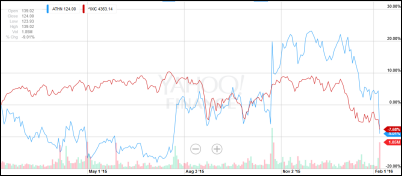
From Boom Goes the Dynamite: “Re: Practice Fusion layoffs. The CEO is nice but unqualified – the board seems to think he can sell the company so they can get their $300 million (or more) back. Steve Filler quit his Oliver Wyman consulting job to become PF’s COO with much internal fanfare in November 2015 and he’s already gone. The CFO was let go and the chief marketing guy from Google didn’t take long to run away. The company’s 2015 revenue was $15 million, all of it from pharma, and its burn rate is $3 million per month. The board just forked over another $30 million to keep the lights on. Tom the new CEO predicts that they will become revenue positive by Q3 2017, but I don’t see a path to the top of that mountain.” Of the 13 executives listed on Practice Fusion’s website a year ago, only six are still there. If that $15 million annual revenue estimate is accurate, then Practice Fusion is a tiny, struggling company in a shrinking market segment in which it’s not among the top 10 companies (based on Meaningful Use attestation numbers). I don’t see even one attribute that would make me want to buy shares if indeed the company survives long enough to do a Hail Mary IPO.

image

From Karen Green: “Re: lack of technology vs. lack of adoption. We have plenty of technologies that have begun to interoperate – DSM and HIE messages from acute care partners to post-acute specialists. MU attestation? Check! Not so on the continuum of care, where we are getting care summaries 1-3 days after discharge, rendering them useless for transitions of care. Why? Because the discharge and admissions planners on the front line are still using phone calls and fax to refer the patient. We have to enable the ‘intoperators’ on the front line and within the clinical practice so they can be informed about their patients in a timely way. Gartner suggests that CIOs have to be ‘digital humanists’ to lead the design of systems and technology to ‘enable people to achieve things they never thought possible.’ We must provide solutions that make it easy to give up proven convention for something that goes beyond the automation of processes.” Karen is CIO at Brooks Rehabilitation (FL).

image

From Brass Ones: “Re: Mackenzie Health in Ontario. Going Epic.” Verified from their job postings. I don’t know of any other hospitals in Canada that run Epic inpatient.

image

From The PACS Designer: “Re: augmented reality in healthcare. There’s a new term that created a buzz at the recent Consumer Electronics Show and that’s augmented reality. AR works differently than virtual reality (VR) in that the viewing device can be worn while doing other activities like walking or at work.” The mock-up above is from Microsoft’s HoloLens, which will start shipping soon. The company offers a $3,000 developer edition.


HIStalk Announcements and Requests

image image

Ms. Johnson from Oklahoma says her students, many of whom begin school speaking only Spanish, are using the five MP3 players we provided via DonorsChoose to listen to the recordings of books she creates. Meanwhile, Ms. Johnson from Pennsylvania reports that her inner-city third graders are using their new Chromebook and accessories to access online reading and math interventions as well as to perform research – they previously had computer access in just one class three times per week.

This week on HIStalk Connect: Doctor on Demand announces that it will offer psychiatry sessions over its telehealth platform, expanding nationwide by mid-year. Pear Therapeutics raises $20 million in funding to roll out its substance abuse recovery support app. The University of Southern California announces eight strategic partners that will support its Virtual Care Clinic initiative.


HIStalkapalooza

HIStalkapalooza Featured Sponsor – NextGen Healthcare

image

Visit NextGen Healthcare at HIMSS16 Booth #4421. See for yourself how we help ambulatory organizations achieve real interoperability, improve population health, and transition to value-based care. By focusing less on IT and more on care, our clients are driving the changes you hear about in healthcare. Of course, we’re not all work and no play! We’ll also be taking professional headshot photos in the booth; not to mention Happy Hour the last hour of each day at our booth, #4421!  Stop by after a long day pounding the convention floor for a pick-me-up.


Webinars

None scheduled soon. Contact Lorre for webinar services. Past webinars are on our HIStalk webinars YouTube channel.


Acquisitions, Funding, Business, and Stock

image

Houston-based Decisio Health raises $2 million as it starts marketing its FDA-approved patient dashboard that uses technology licensed from University of Texas Health Science Center of Houston.

image

Health information vendor IMS Health acquires AlphaImpactRx, which apparently pays doctors to provide feedback about drug salespeople via a mobile app and then sells that information to drug companies. The company also surveys oncologists and pathologists about oncology molecular diagnostic testing, pitching itself to drug companies by, “It’s important to understand how testing is impacting the oncologist’s choice of brand.” I like that doctors want consumer drug advertising to stop, but I also wish they would stop giving or selling their own information to companies like IMS that help drug companies sell drugs that might not be the best option. Drug companies target those doctors using the information they themselves provided.

image

Athenahealth announces Q4 results: revenue up 21 percent, adjusted EPS $0.45 vs. $0.58, missing revenue estimates but beating on earnings. 


People

image

David Crutchfield (Maestro Strategies) joins Conway Medical Center (SC) in the newly created position of VP/CIO.

image

Don Soucy (Orion Health) joins Spok as EVP of global sales.

image

Leidos names Donald Kosiak, Jr., MD, MBA (Avera Health) as chief medical officer. I’m not sure if he’s trying appear edgy or to hide a bald spot with his head-cropping LinkedIn photo, but kudos for his 18 years of service in the Army National Guard with deployments to Iraq.

image

E-MDs names Derek Pickell (Convergent Healthcare) as CEO and board director. He replaces David Winn, who retired with the March 2015 announcement of the company’s acquisition by Marlin Equity Partners.

image

Vocera hires Kathy English, RN (Cisco) as VP of marketing.


Announcements and Implementations

Orchestrate Healthcare launches an information security practice.

KLAS announces members of its Interoperability Measurement Advisory Team. The press release’s headline mentions an inaugural meeting that someone forgot to include in the release itself. 

Philips will use Validic’s technology to integrate consumer health data with its HealthSuite connected health products.

CCSI Distributors, a subsidiary of Clinical Computer Systems, Inc., obtains exclusive US distribution rights to the OB-Tools TrueLabor Maternal Fetal Monitor.

VCU Health (VA) used its Spok communications technology to manage its medical coverage of the nine-day UCI Road World Cycling Championships, which attracted 1,000 cyclists and 640,000 spectators to Richmond, VA.

image

Healthcare Growth Partners publishes its “2015 Year-End Market Review.” HGP’s reports are brilliant and eloquent and I savor every one of them. Even folks who aren’t interested in business or investing will find them to be concise and insightful, with passages like this:

We urge innovators to approach the market pragmatically and not get carried away by idealism during this transitionary time of policy-based innovation. In health IT, disruption seems to come in increments versus all at once. We find that when health IT companies fail to achieve objectives (or founders get significantly diluted), it’s most often because the product or strategy arrives on the scene too early versus too late.


Government and Politics

image

A group of senators and representatives introduces the CONNECT for Health Act, which would promote expanded use of telemedicine in Medicare by removing existing restrictions.

image

image

Pharma bad boy Martin Shkreli pleads the Fifth Amendment in refusing to answer questions posed to him during a House committee hearing on drug pricing.

image

A VA care alert warns that its CPRS system rejected an large number of consult/procedure orders, which it discovered while reviewing the system after the October 1, 2015 ICD-10 switch. Clicking the warning’s OK button cancelled the order. The VA says it fixed the problem in a December 29 patch, adding that a few examples were found to have occurred before October 1.

Federal judges reverse the VA’s demotion of two executives who had schemed to force their subordinates to transfer jobs so they could take those lower-level jobs themselves while keeping their executive pay. The judges ruled that the pair’s bosses knew what they were doing and did nothing to stop them. The same two VA executives are being investigated for being reimbursed $400,000 for questionable moving expenses.

The head of California’s insurance marketplace says UnitedHealth Group is “driving me bonkers” for blaming the Affordable Care Act for its losses from selling individual policies. He says the company’s competitors participated and learned from the beginning while UHG initially stayed on the sidelines, then set its rates higher than everyone else and offered broad networks that attract sicker people to sign up.


Privacy and Security

image

A second former Tampa General Hospital (FL) employee is charged with stealing patient information used to file fraudulent tax forms.


Other

image

Melissa Memorial Hospital (CO) brings self-pay billing back in house and goes back to separate inpatient and ambulatory statements following problems with First Party Receivable Solutions and its “OK, but not stellar” NextGen billing system.

Glassdoor places Epic as #16 on its list of “Top 20 Employee Benefits & Perks,” scoring the company four spots ahead of Google for offering a paid four-week sabbatical after five years.

The Charlotte newspaper notes that Carolinas HealthCare paid its retiring CEO $6.6 million in 2015, with all of the health system’s top 10 executives earning more than $1 million in total compensation. Even the chief HR officer made $1.3 million.

image

I like this graphic, available here. The only problem I see is that it seems to be aimed at providers who probably either won’t see it or will ignore what it says. A patient-focused version would be nice if there was a way to blast it to the masses.

image

OpenNotes sponsor Robert Wood Johnson Foundation lists its three-year goals for the project: (a) expand OpenNotes to 50 million people; (b) conduct pilot projects to see how clinical notes are being used to engage patients and families; and (c) measure the value of sharing notes.


Sponsor Updates

  • PharmaPoint incorporates the Surescripts Medication History for Panel Management solution into Xchange Point 5.0.
  • InterSystems is listed among the top 25 privately held companies in Massachusetts in the 2016 Boston Business Journal Book of Lists.
  • Premier awards Versus Technology a group purchasing agreement for its RTLS/RFID products.
  • Leidos Health will exhibit at McKesson Southeast February 10-11 in Charlotte, NC.
  • Outsourcing Gazette names MedData one of its Top 25 Most Promising Healthcare Services Providers of 2016.
  • Medicomp Systems will host Quipstar at HIMSS16.
  • Orion Health will present with CAL Index on March 1 at HIMSS16.
  • Sunquest announces UPMC, BSA Health Systems, and Carolinas HealthCare as winners of its client innovation awards.
  • PeriGen announces a new online training tool for its Patterns systems.
  • Red Hat releases a now viral employee rap video paying homage to its hometown of Raleigh, NC.
  • RelayHealth shares a video interview with VP Arien Malec.
  • The SSI Group opens registration for its 2016 user group events.
  • Streamline Health will exhibit at the 2016 Florida HFMA Regional – Space Coast event on February 5 in Titusville.

Blog Posts


Contacts

Mr. H, Lorre, Jennifer, Dr. Jayne, Lt. Dan.
More news: HIStalk Practice, HIStalk Connect.
Get HIStalk updates.
Send news or rumors.
Contact us.

125x125_2nd_Circle

EPtalk by Dr. Jayne 2/4/16

February 4, 2016 Dr. Jayne Comments Off on EPtalk by Dr. Jayne 2/4/16

clip_image002 

This week we celebrated the creation of National Women Physicians Day on the birthday of Dr. Elizabeth Blackwell. As the first woman to receive a medical degree in the United States, she helped pave the way for many of our careers.

There has been some backlash about adding another recognition “day” and jokes about whether we’re going to also have National Men Physicians Day. For those of us who trained and continue to work in environments that can range from covertly sexist to outright discriminatory, it’s nice to be recognized. In some areas, girls are still discouraged from pursuing science and technical careers.

I vividly remember my oh-so-Southern college roommate being told by her parents to just “paint your nails and do your hair and find a good husband and let daddy and me worry about the rest.” She was shocked to have been paired with a roommate who actually planned to be “pre-med” and not just use biology 101 to be “pre-wed.”

My medical school class at Prestigious University was the first to be more than half women. We crammed more than 60 women into a locker room designed for 20 as we changed for gross anatomy. The school refused to provide any other accommodation. Some of my gutsier classmates protested by changing in the hallway. You’d have thought they’d seen the admissions trends and made some preparations, but apparently it didn’t occur to the administration.

Despite having trained in the last two decades (when we should have known better), I’ve been sexually harassed more times than I can remember and have had to watch male residents harass a female faculty surgeon without repercussions. The joke was on them, however, because in their refusal to staff her cases they left the door open for the rest of us to actually perform procedures while they were three-deep holding retractors for a male surgeon.

Although we’ve come a long way, subtle sexism still exists. I look forward to the day where our children and grandchildren can choose whatever career suits them without sex- or gender-based comments. I’ve never heard anyone ask a male executive how he balances his family and career, but I hear it asked of women all the time.

It goes both ways, though, and I sympathize with men who have chosen careers that have been historically “female.” No one should ever have to justify their vocation based on chromosomes. If people take issue with that, I have a Marine Corps pastry chef I’d be delighted to introduce.

In other news, this week has been chock-full of things that are almost too ridiculous to put into words. Unfortunately, most of them involved fairly specific situations with vendors and hospital executives that I can’t write about without risking my anonymity.

That’s one of the hardest things about being on the HIStalk team – not being able to share the best stories because they would out us. Often I go ahead and write things up but let them sit for a couple of months until memories fade, but several of these were so over the top I don’t think I’ll ever be able to use them. A couple of them though were general enough to have occurred anywhere, so I’ll offer some pro tips.

If you are creating recorded training materials that are going to be viewed by not only your internal staff but also by your strategic partners, you might want to have some “webinar hygiene” requirements for the staff conducting the sessions. First, address the barking dogs before they bark or figure out how to pause the recording while you do it. I now know the names of your dogs and the fact that they don’t listen to you at all. BTW, the kissing noises were cute.

Second (and I thought this went without saying), use a headset and not your speakerphone. Make sure your microphone gain is adjusted properly. Otherwise, you end up yelling at your audience or being nearly inaudible.

Third, close your Outlook or hide your alerts.

Finally, for the love of all things, please turn off your instant messenger. I saw some things pop up during one session that were completely NSFW. Since it was a recording, they’re preserved for posterity.

Whether you’re recording content or just presenting, it might be a good idea to ask someone to peer-review your slide deck. Typos are embarrassing in front of hundreds of people. Also, when introducing a guest speaker or secondary presenter, make sure you’ve vetted the introduction with them first. I was completely embarrassed when I was recently introduced as “the CMIO of Big Medical Center” when in fact I haven’t been there for months.

I’m not ashamed of being without a title other than “independent consultant” and provided a bio prior to the session that was essentially a three-line introduction suitable for the call and edited for the audience. Apparently the moderator missed it, however.

clip_image004

Adding to the ridiculousness of the week was the arrival of some malware on my laptop. Thank goodness it was my older one that I’m only using for music, movies, and browsing. Its arrival was suspiciously timed with a visit from my nephew who spent quite a bit of time on it, showing off his skills with Scratch and Python. I fought with it for several hours and finally gave up, having tried most of my own tricks and several from friends. I’m taking it tomorrow to my favorite “will trade Jameson for IT support” guy and hopefully we’ll get it back on its feet.

Regardless of his contribution to my stress level, my nephew is a great kid and I’m impressed by his technology skills. In his school district, they offer a program where students can sign up to spend a day at work with alumni in various fields. He was disappointed that they don’t have anyone who writes code for a living, but his eyes lit up when I suggested that I might just know some people who build EHRs every day. Looks like we’ll be cashing in some frequent flyer points for a spring break adventure of the health IT kind.

clip_image006

I spent some time away from the craziness working on my HIMSS schedule. I already have lunch scheduled with one of my favorite start-ups and am eager to hear about what they’ve been doing. We spend some time catching up at Midway after HIMSS last year and have checked in once since then, but I’m sure their product has grown in leaps and bounds. I also tracked down the truth behind the rumor that Medicomp was planning something different for their Quipstar game show this year. Indeed they are!

This year will feature teams (!) competing using their new Quippe Clinical Lens product. I’m pleased to announce that I’ll be captaining “Team HIStalk” on March 1 (Tuesday) at 11 a.m. We need four readers to join me in kicking off the week’s game show play at booth 1354. If you’re interested, email me with your credentials, witty comments, outright bribery, or a photo of your favorite shoes and tell me why you want to play on Team HIStalk. I can’t promise much more than the opportunity to meet me and have some fun, but you never know what you’ll see at their booth.

Last year’s appearance by Jonathan Bush was one for the highlight reel. I’m looking forward to having some team backup to make up for my appearance a few years ago when I blanked on David Brailer’s name even though I could see his picture in my head.

I don’t know who we will be competing against, but I hope it’s someone fun. Could it be Karen DeSalvo? Perennial contestant Jacob Reider? John Halamka? My not-so-secret crush Farzad Mostashari? Or the dashingly hilarious Matthew Holt?

Are you ready to get your game show on? Email me.

Email Dr. Jayne.

Readers Write: Read This Before You Sponsor Another Hackathon

February 3, 2016 Readers Write 6 Comments

Read This Before You Sponsor Another Hackathon
By Niko Skievaski

image

Innovation is undoubtedly a hot topic right now in healthcare. For good reason: it’s said that one-third of spend is waste and payment models are shifting in an attempt to drive efficiency.

Technology is the obvious place to look for efficiency gains and health systems around the country are getting creative with ways to better utilize it. We see rampant partnerships with startup accelerator programs, direct early stage investments, innovation teams, and the advent of the “chief innovation officer” whose primary goals seems to be a gating mechanism for the army of entrepreneurs trying to make an impact.

We’ve directly participated in a dozen flavors of enterprise innovation programs over the past two years. With this experience, I’d like to ask health systems to try a different sort of program: just try our products.

That’s a lot easier said than done. Your organizations weren’t designed to adopt new technology. Over the past decades, data centers were constructed to house your intranet, EHR, ERP, LIS, MIS, and a slew of other acronyms. IT departments were invented to manage the onslaught of hardware and software subsequently installed on their machines. The systems are weaved together in a web of interfaces managed by graying whizzes from their cubicles.

Each new piece of technology requires budget, a new install project to be prioritized, FTE to be allocated, and expertise to be acquired. Why would any IT head want to shake up their delicate game of Jenga with new software? Especially software from an unproven startup. Especially software in the cloud.

This is poles apart from the modern, tech-savvy organization. Other industries felt market pressures and profit motives to become agile and modernize incrementally. Meanwhile, health systems felt little market pressure as costs inched up year over year.

Pressure later came from well-meaning government subsidies to adopt adequate electronic health record software, however exacerbating rather than toppling the Jenga tower. While health systems upgraded their hardware, the rest of the world moved to SaaS-based tools that eliminated the need for designated IT departments to show you where to click.

The mounting inefficiencies observed in everyday healthcare interactions could cause any millennial to quit her job and start a digital health startup attempting to bring a modern Web experience and level of service to an industry worth saving. This is the core of my request. We don’t need help starting more startups. We don’t need accelerators. We don’t need strategic investments. We need feedback.

I’m not referring to conference panels of CIOs or experienced entrepreneurs tearing startups apart. The feedback required to build an effective product comes at the front lines in the real world. It needs to get all the way into the hands of the doctors, nurses, support staff, and patients.

The technology crisis in healthcare is rooted in the lack of adoption of technology, not in the lack of technology. Similarly, your innovation won’t be in the tech you help to create — it will be in your ability to more rapidly adopt the tech that already exists.

Focus enterprise innovation efforts on decentralizing technology adoption. Figure out ways to let departments choose how to manage their work. Decentralize new technology budgets to get that decision-making process as close to the front line as possible.

The vendors will figure out ways to make it cheap enough by eliminating upfront capital and installation projects. IT should invest in infrastructure technology that allows modern technology to work within your facilities: fast Wi-Fi, modern browsers and devices, API layers, make SSO easy, etc.

Don’t partner with accelerators unless you plan allowing them to outsource your technology selection process. The primary reason those companies participate is to sell to you. And don’t invest in digital health companies unless you’ve used the product. Put your money where your mouth is. Otherwise, your investment is not strategic, it’s just money.

This will also force the business development teams to work closely with clinical teams for product validation. You’re all on the same team — align incentives. You don’t need to depend on accelerators and suits with MBAs to help you figure out if a startup’s product will improve care or increase efficiency at your hospital. The front line will tell you in 10 minutes if you let them use the product.

Niko Skievaski is  co-founder of Redox.

Text Ads


RECENT COMMENTS

  1. Re: Deliberately Faked Academic Papers in Nature See, this doesn't surprise me at all. Of course AI quotes these bogus…

  2. Challenger exploded on lift-off when the O-rings failed. Columbia disintegrated on reentry after one of the heat shield tiles were…

Founding Sponsors


Platinum Sponsors


Gold Sponsors


RSS Webinars

  • An error has occurred, which probably means the feed is down. Try again later.