HIStalk Interviews Travis Bond, CEO, CareSync

September 19, 2016 Interviews Comments Off on HIStalk Interviews Travis Bond, CEO, CareSync

Travis Bond is founder and CEO of CareSync of Tampa, FL.

image

Tell me about yourself and the company.

I’m the founder and CEO of CareSync, which is my ninth company. My last company was Bond Technologies, which created one of the very first browser-based EMRs in the world. We had the opportunity to exit to the Eclipsys Corporation back in 2008, I believe.

I put the band back together in 2011 to create CareSync, which is a patient-centered electronic medical record that has a service on the side that basically acts as a record aggregator service. Carbon-based interfaces go out and get records and put them in a usable format that can be later searched, shared, and collaborated on. That all gave way to a business opportunity that CMS created in 2015 for chronic care management. That’s where we are today as one of the industry’s largest providers of chronic care management services under the new code.

Which is the chicken and which is the egg in offering a product that both consumers and their providers use?

It was probably providential in some ways that we cut our teeth on a consumer product. We weren’t bound by Washington, DC regulatory requirements for a product roadmap. What’s really useful for people when they become a clinical patient is they need information and they need resources that help them to shorten the gap between what providers are saying and doing on their behalf and how they can then respond. That product, started in 2013 and known as CareSync Plus, had about a 3 percent conversion rate when we went out and advertised it to people.

It is the CMS product that now gives us the business-to-business product. We act as the vendor on behalf of the provider to offer essentially the same service. The difference — and why we still have a chicken and an egg — is that about 5,000 members a month come onto the CareSync platform as family members. Some of those family members want the same services that CCM provides under CMS for themselves. We really couldn’t sunset a legacy product when there were still people who wanted to be more of an active caregiver or wanted to be more engaged patient.

What is the scope of the CCM business?

CMS has released information only about twice on how many people and how many claims they’ve produced. At last count several months ago, about 300,000-plus have been enrolled in CCM programs since their inception in 2015. From our point of view,  the geography of that number of claims is all 50 states. We have users in 30 states alone. It’s not really because we had any grand master plan, it’s that there is an alignment with many practices that want to try to care for people where they live, work, and play, not just at points or nodes of care.

I think CMS was disappointed that it did not ramp up as quickly because CMS had identified that they were going to pay $10+ billion every year for this program. Theoretically, it created a much bigger total adjustable market per year, $16 billion in 2015 and 2016. That number actually increases to a possible addressable market to $20+ billion because now they’ve given three new codes out to incentivize the market. One is an enrollment code and the other two are to address complex chronic care.

It’s not going away. It was a slow-starting process, but it’s being addressed from many different areas. The inevitability of chronic care management programs throughout healthcare has pretty much been set in stone and will just continue to grow as other new things have been introduced in healthcare over the last several decades, like HMOs and PCMHs and others. This is just another one in the fold that will continue to mature.

If I’m a physician and I think you’re a candidate to participate in CCM, what is your obligation as a patient?

It’s really quite simple. There is the consent process, which CMS wanted to know that there was written confirmation that a patient was elected to participate in something that they were eligible for. In this case, two or more chronic conditions. The chronic conditions, though, were very liberally interpreted by CMS, meaning that they were not going to actually put edits on what a provider thought was a chronically ill condition for the patient. If you look at ICD-9 alone, there are over 4,500 conditions which are marked or flagged chronic in nature.

From a patient’s perspective, it really is how you design the program. Patients need to have access to information, electronically or written, and have access to those that can access that information and are clinically trained or licensed 24/7. It’s more of an access from the vendor or the provider’s perspective. The patient, outside of them consenting to the program, just needs to make themselves available. The program  is designed to give back more time and resources to where patients need it and that’s in the consumption of the treatment plans that various providers are administering to them, a reconciliation of that.

We’ve found that variability of patient engagement is as wide as any that you could imagine. Some just like to be called once a month and talked to. Others will have inbound calls and want to talk extensively about their progress. We have patients that will be a few minutes a month or it could literally be in the several hundred minutes per month. Patient requirements are still low, other than their co-insurance or co-pay responsibilities.

Otherwise, it’s intended to be a service that is aggregating information, creating a comprehensive care plan that the patient can then consume and can be collaborated and administered, and then lastly, creating a health summary that can be provided back to the patient or anyone who is seeing the patient. Overall, patient requirements are still low, but it’s incumbent on the provider to maximize the value to the patient of the program as prescribed under CMS.

How does Medicare verify or monitor that services were provided and not just billed?

In the CMS program, you bill Medicare and they pay based upon whatever edits they can run through a computer system. They don’t verify until they actually audit.

This code is really no different. They’ve said at least initially in the first couple of years that they weren’t going to put edits on their claims, meaning that they weren’t going to necessarily determine whether a chronic condition had met some criteria that Medicare would feel is not chronic enough or chronic in the right way. They’ve left that up to the physicians’ discretion.

What we’ve found is we have hundreds of chronic diseases that are on our lists for the patients who we serve. As you know, there are even several thousand rare diseases that meet the chronic definition. As it stands right now, we’ve not seen any claims denied as it relates to the diagnosis that has been tied to the CPT code 99490.

How did CareSync’s recent $20 million in new funding come about and how has it changed what you do?

We were very fortunate to have a lot of venture capitalists and strategics already having conversations with as it related back to our legacy product, CareSync Plus. Many people felt that there needed to be a connective tissue, if you will, for patients where they’re in the space that we call the dark space, which is where you are when you’re not at an appointment or a hospital setting. This dark space is like trying to navigate between airports without a radar system or air traffic control. The thesis was that surely some entity or some party would benefit if patients were better monitored and/or had the opportunities to help themselves adhere to what was prescribed.

When the code came out, it was the match that lit the fire. We were setting ourselves up with people who thought that there were problems in healthcare that could be solved with a combination of nurses and technology. Having those things in place when the code came about allowed us to execute on closing financing rounds from those players. They have since then recommitted to continuing to fund CaresSync.

We feel that the chronic care management market will continue to grow significantly, especially under the new codes in MACRA. We have 18 months of solid data that shows that providers are getting paid. We’re seeing real tangible benefits for clinical outcomes as well. Nine percent of our patients that come into the system have a severe drug-to-drug interaction that no one knew about. That’s nearly one in 10, which is pretty significant because it’s the severe drug-to-drug interactions that potentially are lethal. Sixty-four percent of our patients avoided a duplicate test because they had the results with them. A provider avoided re-prescribing another test because they felt that they had the results that they needed at the time of care.

There are many things that illustrate the advantages of the program. Those things obviously matriculate back to value when you look at an investment community. The key thing in pairing up investments from the investment community and being an entity in this space is the ability to execute at scale. We have found that it is much easier to have a chronic care management program at 30 nurses than it is 300. There are natural elements of growing and scaling that process and learning a lot of things along the way.

I think that what you’ll see overall in the market is that there will be a continued interest from the investment community in supporting this dark space and the vendors that emerge from this innovation opportunity.

Are you seeing any improvement in the ability and willingness of hospitals to provide patients with their electronic records in whatever form they request?

They’re getting a little bit better, but we’re getting a lot smarter. It’s the combination of the two that has created the net result that we are getting better, faster results from the data.

There has been an implementation of these HIT systems lag, in terms of those professionals who are running these systems even knowing that there are features to share the information. There’s still the HIPAA cloud of death and despair that hangs over all of these institutions. They feel that they need to protect this data, even from those who originated it, like the patient. That becomes primarily an education step. There’s still also a lot of medical-legal sensitivity. Why does a person want their data? Do they think we did something wrong?

That’s still a case-by-case process that we have to go through at CareSync. It’s still far easier for a provider to request information than it is a vendor. A vendor is always suspect. It is slowly changing. I wouldn’t say that we have a marked increase in the amount of freedom of information posture of these institutions that hold large amounts of it, but at least we’re seeing some incremental changes in a direction for the positive.

You were selling EHRs in the heady days. Are you glad you aren’t still in the EHR business?

Yes. [laughs] I am glad that I’m not there. In retrospect, the advent of EMRs bogged down the efficiency of a visit.

Having some medical training acted as the foundation for creating our EMR program and helped me. Technology took away from a lot of the observation skills. A  good portion of medical school training is spent in diagnostics and observations of patients. Those just can’t be done simultaneously while also working through documentation requirements.

Hopefully, programs like chronic care management and other things that try to reintroduce an experience that the patient feels comfortable in talking and sharing information and how that’s captured — I’m hoping that we can blunt some of the negative impacts that EMRs had. But I would say that if I ever had to be reincarnated, I would not go back into building any piece of software for ambulatory healthcare. That was a very painful pioneering pathway to walk.

Do EHR vendors get blamed for too many clicks and too much pointless information collection instead of those parties on the back end who require collecting that information before paying providers?

Yes. I would have to side with the EMR vendors on this one. It’s not their fault. It’s Washington, DC that creates the product road maps for vendors now. It’s not what users want.

Users want a certain amount of clicking so that they can document, recall, and have that information available for the next visit or for other providers. There’s real fundamental and foundational value to EMRs. But the direction they’ve taken in terms of usability, unfortunately, was hijacked by those that were writing the checks for them in the first place. Under ARRA,  the government was paying for them, but as a result of them paying for them, they were able to create what they were going to be under Meaningful Use.

There’s always a balance here. We are better off that we now have EMRs, undeniably. You’re in a far better place in being able to record this information a way that we can learn it more rapidly off the science of healthcare and treating those that have disease.

The disadvantage is that we’ve made the billing system on par with the IRS tax code. We’ve made it so complicated that it’s very difficult to do an effective visit with the necessary amount of documentation in a way that demonstrates what took place such that it could be reimbursed on par for what happened. I’m hoping that we’ll eventually get through this, but I’m worried about the overall physician dissatisfaction with their job as we go through this lonely period of transition.

Are consumers really gaining power, demanding their data, and becoming involved as participants in their own care or are we just wishfully thinking that was the case?

I think it’s slowly happening. The best chance that we have in terms of developing technologies for patients is that patients are becoming more consumer aware. That to me is probably the biggest weapon that we have. The patient is probably the greatest sleeping giant in all of healthcare. When you go through Uber or a good banking scenario or a good restaurant experience, you understand how brands compete for your business, your attention, and the right to serve you. They see that as a privilege. That’s how good businesses become great businesses.

Healthcare has had the patient lag, where they’ve been more passive and they’ve not really felt like they’re in an empowered position. I think a lot of things will start to accumulate to hit a tipping point where the patient will be more in a position of a consumer. When that light bulb goes off, the technology that they’re experiencing healthcare in needs to be more on par with other things that they experience in their lives.

The biggest advantage to the payer, the provider, and the patient is that when you look at where healthcare falls down, it doesn’t fall down in a science problem. It falls down in to an adherence and data-sharing problem. It’s not like we need better cures — we just really need to implement more effectively the ones we’ve already discovered.

Where do you see the company and the industry in the next 5-10 years?

We’ll be making more decisions in real time. Things like IBM Watson and other types of analytics that will be under the hood … we’ll  see like a TurboTax for health. These things have happened, so you need to do these things.

The problem with healthcare that we’re going to finally get our hands around over the next 10 years is, how do I go do those things? If somebody tells me to get an MRI, who’s going to do that for me? Innovation is going to start to fill in this last mile of putting the things that need to get done to actually getting done and being tracked. That will start to figure its way out over the next 10 years, principally because it’s being funded against something that is challenging our economy, where 86 percent of the dollars are being spent out there to manage chronic disease. If we don’t get our hands around it, we will end up breaking both the legs of the US economy.

What will change is that vendors, payers, and providers will figure out how to play nicely with the patient who ultimately is writing a big part of the check, whether in taxes or insurance premiums. They will start to find an experience to where they’re now more engaged. Not in vendor classic term of engaged, but making them a more efficient component of the healthcare equation.

Monday Morning Update 9/19/16

September 18, 2016 News 1 Comment

Top News

image

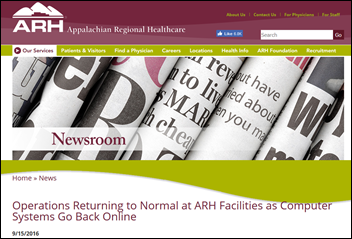
Appalachian Regional Healthcare brings the computer systems of its Kentucky and West Virginia hospitals, pharmacies, and clinics back online after nearly three weeks of downtime caused by an attack of unspecified malware. At least one hospital source says the attack involved ransomware, but the hospital declined to confirm citing an ongoing federal investigation.

image

ARH says its IT department took its systems and network down to stop the spread of the virus, causing downtime it described as causing “some inconvenience for a few weeks.”


Reader Comments

image

From Follow the Money: “Re: Mayers Memorial Hospital District (CA). Their EHR was down for two weeks at a cost of $100,000.” The forwarded board of directors meeting agenda did not indicate the source of the downtime, but says half of the $100,000 was spent on “equipment to mitigate future issues.” I don’t know which system was down, but an earlier board meeting agenda mentions Paragon. It’s fun to read a small hospital’s simply written meeting information, which includes such interesting thoughts as an upcoming chocolate festival fundraiser, the poor attitudes of the ED doctors, a sticky ED door that unintentionally left the department open to the public, and the development of an IT disaster backup solution that might need to be revisited.

From HTCGLOBAL: “Re: CareTech Solutions. Jim Giordano is no longer president and CEO as of this past Friday. Seven top executives have resigned in the past six months. HTC Global continues to offshore work.” Unverified, but the company’s executive page and Giordano’s LinkedIn profile are unchanged. HTC Global Services, which offers IT and BPO services, bought the company in December 2014.

From Ex-PwC Consultant: “Re: PricewaterhouseCoopers Advisory Services. Has been quietly laying off workers all summer, with rumors of 20-25 percent let go.” Unverified.


HIStalk Announcements and Requests

image

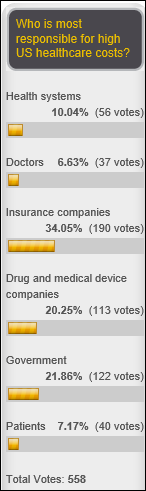
Nearly half of poll respondents think the most important healthcare issue in the presidential election is healthcare costs. New poll to your right or here: who would you vote for if the presidential election were held today?

I’m excited to offer (below) the first of an ongoing series I’m calling Decisions. I’ve been talking with the folks at Definitive Healthcare about getting fresh updates about hospital software decisions and the company graciously offered to share what they learn with HIStalk readers. They didn’t even ask for anything in return, not even a plug, but it’s only fair to credit them as the source.


Last Week’s Most Interesting News

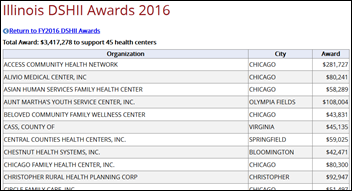
  • HHS awards $87 million in EHR improvement grants to 1,310 safety net health centers.
  • Altos announces that it will acquire Anthelio Healthcare Solutions for $275 million.
  • McKesson withdraws its participation in the independent InSight user group conference after Meditech and Cerner are invited to present alternatives to McKesson Paragon.
  • Russian backers breach the World Anti-Doping Agency’s systems and publish the medical records of Olympic athletes.
  • Apple releases iOS 10, which includes C-CDA support via HealthKit.
  • In England, NHS awards $13 million each to 12 health IT global exemplars to establish best practices.
  • Dartmouth-Hitchcock Medical Center (NH) will lay off 460 employees, blaming its financial losses on billing-related expenses and implementing of new IT systems.

Webinars

September 27 (Tuesday) 1:00 ET. “Put MACRA in your Workflow – CDS and Evolving Payment Models.” Sponsored by Stanson Health. Presenters: Anne Wellington, chief product officer, Stanson Health; Scott Weingarten, MD, MPH, SVP and chief clinical transformation officer, Cedars-Sinai. Reimbursement models are rapidly changing, and as a result, health systems need to influence physicians to align with health system strategy. In this webinar, we will discuss how Stanson’s Clinical Decision Support can run in the background of every patient visit to help physicians execute with MACRA, CJR, et al.

October 13 (Thursday) 2:00 ET. “Glycemic Control During Therapeutic Hypothermia.” Sponsored by Monarch Medical Technologies. Presenter: Tracey Melhuish, RN, MSN, clinical practice specialist, Holy Cross Hospital (FL). Using therapeutic hypothermia (TH) as a method of care can present risks of hyperglycemia, hypoglycemia, and blood glucose variability. Maintaining safe glucose levels during the cooling and rewarming phases of TH reduces the risks of adverse events. Tracey Melhuish, author of “Linking Hypothermia and Hyperglycemia,” will share best practices for optimal glucose control during TH and the success Holy Cross Hospital sees while using a computerized glucose management software.

View previous webinars on our HIStalk webinars YouTube channel.


Acquisitions, Funding, Business, and Stock

image

Money-losing, for-profit hospital operator Community Health Systems is rumored to be exploring the sale of its business, although the company’s massive debt may limit interest. Shares are down 76 percent since June 2015 even after a 16 percent jump Friday when word of the possible sale leaked out. The company operates 158 hospitals.


Sales

image

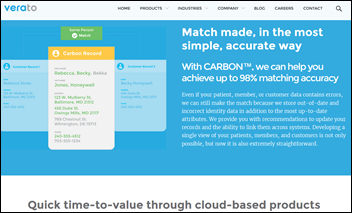
The Healthix HIE (NY) chooses Verato’s identity management technology, which claims to deliver up to 98 percent matching accuracy by comparing known information to that contained in commercially available databases. The VA is another customer. Verato raised $12.5 million in a single funding round in January 2015 under its original name Araxid.


Decisions

  • Blue Mountain Hospital District (OR) will change time and attendance software from Healthland to ADP on October 1, 2016.
  • Valley Hospital (WA) will switch from Meditech to Cerner in 2017.
  • Lakes Regional General Hospital (NH) will move from NextGen to Cerner in December 2016.
  • Saint Clare’s Hospital – Denville (NJ) will replace Cerner with Epic in early 2018.

These provider-reported updates are provided by Definitive Healthcare, which offers powerful intelligence on hospitals, physicians, and healthcare providers.


Announcements and Implementations

image

In England, Cambridge University Hospital NHS Foundation Trust will outsource its IT infrastructure services for an estimated $182 million over seven years. HPE provides those services now via a 10-year agreement signed when the trust chose Epic in 2012. The trust’s growing financial deficit and significant quality problems triggered the resignation of its CEO and finance director in September 2015.


Government and Politics

image

The National Institutes of Health will require drug and medical device companies to post the results of all NIH-funded clinical studies – not just the favorable ones – to ClinicalTrials.gov starting January 18, 2017.

image

Oracle will pay $25 million in cash and provide products worth another $75 million to settle lawsuits over its performance in the failed Cover Oregon insurance exchange, for which Oracle was originally paid $240 million. The state had sought $6 billion in damages, but wasn’t willing to take the case to trial since legal fees alone would have run $1.5 million per month and it had already paid lawyers $20 million in the several lawsuits each party filed against the other.


Privacy and Security

image

Forward Health Group’s security expert Ed Skaife is named Up and Comer Runner-Up in an international security leadership award competition.


Other

image

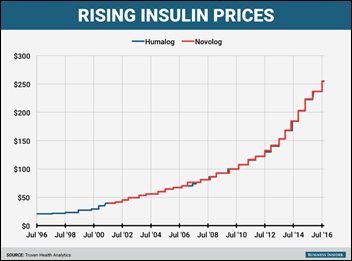
The three big drug companies that manufacture insulin have increased average prices more than tenfold in the past 20 years in lockstep, with all three companies expressing indignation that anyone would look at list prices since insures get big discounts. The chart above shows the price of Humalog and Novolog, but you would notice that only with sharp eyesight since the prices remained identical while rapidly increasing over 20 years.

Vince and Elise offer Part 7 of their “Rating the Ratings” series, this time looking at physician practice EHRs.


Sponsor Updates

  • Experian Health will exhibit at the RBMA Fall Educational Conference September 25-27 in New Orleans.
  • PatientMatters will exhibit at the Minnesota Hospital Association Annual Meeting September 21-23 in Brainerd.
  • Qpid Health, Sagacious Consultants, Versus Technology, and Zynx Health will exhibit at Epic’s UGM September 21-23 in Verona, WI.
  • Red Hat announces plans for new facility in Boston.
  • The SSI Group will exhibit at the AMSURG Connections Café September 28 in Lake Buena Vista, FL.
  • Sunquest Information Systems will exhibit at CAP’16 – The Pathologists Meeting September 25-28 in Las Vegas.
  • Surescripts will exhibit at AAFP’s Family Medicine Experience September 20-24 in Orlando.
  • Audacious Inquiry is sponsoring the SHIEC Annual Conference in Scottsdale, AZ this week.
  • Meditech will attend the 2016 InSight Annual Conference September 27-30 in San Antonio, TX.
  • TeleTracking sponsors The DAISY Award for Extraordinary Nurses.
  • Tierpoint will host Techpalooza September 22 at its facility in Durham, NC.
  • Valence Health will exhibit at the ASHHRA annual conference September 24-27 in Grapevine, TX.
  • Verscend will host its annual conference September 27-30 in Palm Desert, CA.
  • Consulting Magazine includes Huron on its list of 2016 Best Firms to Work For.
  • Healthwise is included in Fortune’s “100 Best Workplaces for Women.”
  • ZeOmega launches the ZeExchange e-newsletter.
  • ZirMed will exhibit at HBMA The Healthcare Revenue Cycle Conference September 21-23 in Atlanta.

Blog Posts


Contacts

Mr. H, Lorre, Jennifer, Dr. Jayne, Lt. Dan.
More news: HIStalk Practice, HIStalk Connect.
Get HIStalk updates. Send news or rumors.
Contact us.

125x125_2nd_Circle

News 9/16/16

September 15, 2016 News 12 Comments

Top News

image

HHS will provide $87 million to 1,310 safety net health centers for purchasing or upgrading EHRs, supported by the ACA’s Community Health Center Fund that was extended under MACRA.

image

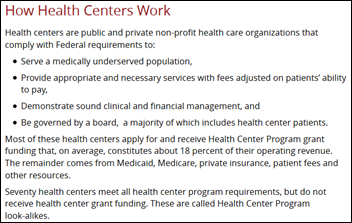
HHS reports that 98 percent of health centers use EHRs. Nearly three-fourths of the patients they serve are insured.


Reader Comments

image

From Lana Retentive: “Re: Charleston Area Medical Center (WV). Goes live this week in the first prominent Soarian to Millennium conversion that was supposed to have been completed in June. The go-live vendor has been asked to bring in SMEs in charging and patient accounting, but no word on whether they’re using a charge validation vendor.” Unverified.

image

From Xander Steel: “Re: startups. You told the would-be CEO that HIStalk readers won’t be interested in companies until they reach either $1 million in funding or $5 million in revenue. I’m not really interested in stories about capital raised when there’s no existing demand. Any chance when you disclose investment funding that you can also mention whether the company has actual revenue? I know it’s easier said than done since the companies aren’t publicly traded.” I don’t know how to get revenue information since those small companies rarely want to disclose it (which tells you that it’s likely minimal) and their numbers would be self-reported and unaudited anyway. My newsworthiness threshold of $1 million in funding is low enough that many companies can raise that much without having any paying customers, which doesn’t necessarily mean you would be wise to become one. Significant funding suggests that investors with access to inside information bought in for good reason, but that might be based on future opportunity rather than present revenue (much less profit).

image

From Doughboy: “Re: Epic. Can you believe that a publication ‘reported’ that the company’s R&D spending exceeds Silicon Valley companies without doing any type of verification?” I believe it. The obviously star-struck publication ran Judy Faulkner’s claim that Epic spends 50 percent of operating expenses on R&D without validating that number, then compared it to the SEC-filed data of Epic’s publicly traded competitors in trying and failing to make a point without letting those companies respond. The goal was obviously to earn clicks, not to provide useful information.


HIStalk Announcements and Requests

image

Welcome to new HIStalk Platinum Sponsor InMediata. The Charlotte, NC-based company‘s InBanking payment reconciliation solution eliminates manual ERA payment and patient payment reconciliation to bank deposits; automates complex billing scenarios by splitting ANSI 835 files into separate billing systems; and converts paper payments to electronic files for posting and reconciliation. CEO and industry long-timer John Marron explained the “banking as the last mile” problem well when I interviewed him a few months ago, pointing out that while front-end RCM functions are mostly automated and clearinghouses have become commoditized, the back-end work (payments, reconciliation, and payment analytics) is mostly inefficiently manual. Thanks to InMediata for supporting HIStalk.

This week on HIStalk Practice: Medical associations weigh in on new MACRA options. The Maine Medical Association endorses DrFirst eRx solutions. AMD Global Telemedicine expands Massachusetts headquarters. Mediware adds PQRS reporting capabilities to its rehab EHR. Lynchburg, VA-area practices join Privia Medical Group. CompuLink gets into telemedicine.

This week on HIStalk Connect: Sanofi and Verily Life Sciences launch diabetes management company. Chrono Therapeutics raises a $47.6 million Series B. Frost & Sullivan recognizes Validic with an innovation leadership award. Samsung-backed smart belt startup raises more than double its Kickstarter goal.

image

I’m beginning to think that a significant percentage of health IT executives sport disfiguring facial injuries or were raised in Amish families considering that their graven image is nowhere to be found on the Internet, including on their LinkedIn profiles. I frankly distrust people whose photos aren’t available online. It’s only slightly better when someone shrinks their LinkedIn photo in failing to understand that the right process is to use a full-sized image and let LinkedIn thumbnail it automatically, which doesn’t seem too far beyond the understanding of technology executives.


Webinars

September 27 (Tuesday) 1:00 ET. “Stanson Clinical Decision Support: Survival Kit for Evolving Payment Models and Other Regulatory Requirements.” Sponsored by Stanson Health. Presenters: Anne Wellington, chief product officer, Stanson Health; Scott Weingarten, MD, MPH, SVP and chief clinical transformation officer, Cedars-Sinai. Reimbursement models are rapidly changing, and as a result, health systems need to influence physicians to align with health system strategy. In this webinar, we will discuss how Stanson’s Clinical Decision Support can run in the background of every patient visit to help physicians execute with MACRA, CJR, et al.

October 13 (Thursday) 2:00 ET. “Glycemic Control During Therapeutic Hypothermia.” Sponsored by Monarch Medical Technologies. Presenter: Tracey Melhuish, RN, MSN, clinical practice specialist, Holy Cross Hospital (FL). Using therapeutic hypothermia (TH) as a method of care can present risks of hyperglycemia, hypoglycemia, and blood glucose variability. Maintaining safe glucose levels during the cooling and rewarming phases of TH reduces the risks of adverse events. Tracey Melhuish, author of “Linking Hypothermia and Hyperglycemia,” will share best practices for optimal glucose control during TH and the success Holy Cross Hospital sees while using a computerized glucose management software.

View previous webinars on our HIStalk webinars YouTube channel.


Acquisitions, Funding, Business, and Stock

image

Huron Consulting Group renames itself to Huron.

Team messaging vendor Klara, which describes itself as “a professional WhatsApp for medicine,” raises $3 million, increasing its total to $5.5 million. The company pivoted from teledermatology software to messaging just a few weeks back. It did not inspire my confidence that the company’s website was down all day Thursday as I tried to learn more.

In Germany, officials reportedly raid the offices of eight drug wholesalers, including McKesson, to determine if they illegally conspired to avoid stealing each other’s customers.

image

A federal judge allows Cave Consulting Group’s antitrust lawsuit against OptumInsight to continue. CCG says OptumInsight, owned by UnitedHealth Group, controls 90 percent of the claims grouper software market only because the company it acquired in 2003, Symmetry Health Data Systems, lied on its patent application. UHG agreed in April 2015 to pay CCG $12 million for infringing on its patents.
image

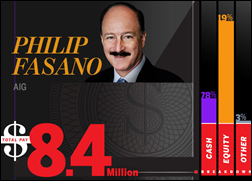
A Network World review of the 500 largest publicly traded companies finds that 25 of them disclose CIO pay. On their list is former Kaiser Permanente CIO Phil Fasano, who joined insurer AIG in the newly created position of EVP/CIO in late 2014 and was paid $8.4 million in 2015 as the #3 top earner. Walgreens Boots Alliance CIO Tim Theriault took the #1 spot with $13.6 million.


Sales

image

Vigilance Health (CA) chooses population health management technology from EQHealth Solutions for chronic care management and care coordination programs in 51 California counties.

Nebraska Medicine chooses and implements Nuance Dragon Medical One for clinical documentation in Epic, with 94 percent of its surveyed doctors saying it helps them practice better medicine, 71 percent reporting that their documentation has improved, and 50 percent saying Nuance saved them at least 30 minutes per day.


People

image

Julie Boughn (Cognasante) joins Audacious Inquiry as senior director.

image image

CTG promotes Angela Rivera and Robert Barras to vice president.


Announcements and Implementations

image

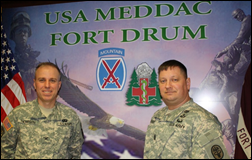
The Department of Defense approves the participation of Fort Drum Medical Department Activity (NY) with the HIE of HealtheConnections, which will combine the military’s medical records of soldiers and families with those contributed by 300 connected civilian facilities to create a single overall view.

image

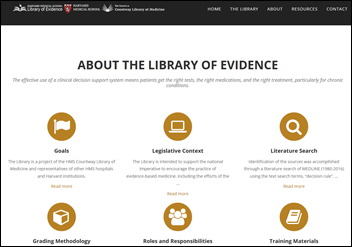
Harvard Medical School launches Library of Evidence, which offers free, evidence-based imaging clinical decision support that can be embedded in EHRs to help clinicians choose the most appropriate imaging tests.

image

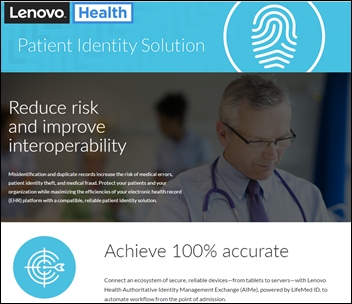
Lenovo Health and LifeMed ID partner to offer an identity management solution that includes a trusted patient ID token that links to medical records. According to Lenovo Health’s website, providers can “achieve 100% accurate.”

image

National Decision Support Company will offer cardiac imaging appropriate use criteria from the American College of Cardiology.


Government and Politics

Eight Republican senators that include HELP committee chair Lamar Alexander (R-TN) introduce emergency, one-year legislation that would eliminate ACA-mandated penalties for those who don’t buy health insurance and would allow consumers who are covered by exchange-issued plans to use their federal government premium subsidies to buy plans elsewhere.


Privacy and Security

From DataBreaches.net:

  • A dental practice whose patient information was exposed to the Internet explains the odd situation: (a) the practice gave live patient data to a vendor whose system it was considering; (b) the practice decided that same year not to buy that system; (c) the vendor took the server offline in 2004; and (d) somehow the server (now unsecured) was brought back online 10 years later for a two-week period in 2014 during which the practice’s patient information was exposed.
  • The Dark Overlord (or other hacker claiming to be him) threatens to publish patient information from St. Francis Health System (OK) unless it pays $15,000 by Sunday.
  • A single ransomware author claims to have made $94 million in profit during the first half of 2016.

SNAGHTML2992e41

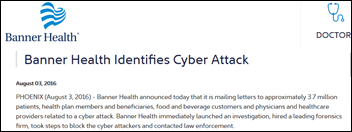
A legal preview of patient and provider class action lawsuits brought against Banner Health (AZ) following a breach of its food service point-of-sale systems that exposed the information of 3.7 million people raises these issues:

  • The plaintiffs don’t know whether hackers actually accessed or used the information, only that they might at some point.
  • The suit does not claim breach of contract, which doesn’t always work in breach lawsuits, and instead argues that Banner made an enforceable promise without consideration (promissory estoppel).
  • The plaintiffs argue that Banner didn’t notify them promptly.
  • The case uses recent FTC enforcement actions to claim that Banner violated the FTC act that says lax cybersecurity constitutes “unfair or deceptive acts.”

Technology

image

Accenture announces a health IT innovation challenge tied to its venture fund.

BSX Athletics launches a Kickstarter campaign to fund its LVL wearable hydration monitor. It has raised $200,000 vs. a goal of $50,000 and is a smart idea that apparently actually works, although Kickstarter projects are notorious for failing and not everybody wants to wear a one-trick wristband 24/7 .


Other

An HHS OIG report finds that for-profit hospices are aggressively recruiting patients who aren’t terminally ill and who may not know that choosing palliative care means they won’t receive other treatment. Medicare paid $15 billion for hospice care in 2013 and is trying to recover $1 billion from for-profit hospices in which one in three patients leave the service without dying, double the rate of non-profit hospices. In Mississippi, 41 percent of hospice patients were discharged alive. 

image

Former New York City Mayor Michael Bloomberg donates another $300 million to the Johns Hopkins Bloomberg School of Public Health, saying the US should lead the world in life expectancy instead of placing 31st. Bloomberg has donated $1.5 billion to Hopkins, of which the School of Public health received $684 million, explaining, “It’s a lot cheaper to prevent than to cure, and it’s certainly a lot more humane.”

A man who had been hospitalized for 22 years with spinal muscular atrophy dies at 54, to the consternation of employees who had grown attached to him. It would be interesting to see the final bill and to know who’s paying it.


Sponsor Updates

  • Impact Advisors and NTT Data make Consulting Magazine’s list of “Best Small Firms to Work For.”
  • InterSystems and Intelligent Medical Objects will exhibit at the Epic UGM September 21-23 in Verona, WI.
  • PDR Network CMO Sal Volpe, MD receives the 2016 Patient-Centered Medical Home Practice Award.
  • Live Process will exhibit at California Hospital Association Disaster Planning 2016 September 19-21 in Sacramento.
  • Nordic is named one of Madison Magazine’s best places to work.
  • Vyne President and CEO Lindy Benton presents at the HERe Conference in Nashville.
  • AlleyWatch spotlights MedCPU in its coverage of New York City startups that have raised the most amount of money.
  • Meditech and Nvoq will exhibit at AAFP’s Family Medicine Experience September 20-24 in Orlando.
  • Navicure will exhibit at Kansas MGMA September 21-23 in Overland Park.
  • Netsmart will exhibit at the Kansas Public Health Association conference September 20 in Wichita.
  • Nordic will host an open house September 19 in Madison, WI.
  • Obix Perinatal Data System will exhibit at the Georgia Perinatal Conference September 21-23 on St. Simon’s Island.
  • Infor Healthcare will exhibit at ASHHRA 2016 September 25 in Grapevine, TX.
  • Clockwise.MD will exhibit at the UCAOA Fall conference in Nashville September 29 – October 1.
  • Christy Kaplan and Susan Tolan of The Chartis Group presented “Transforming Care Coordination: Keys to Operationalizing Your Pop Health Strategy” at the HIMSS Population Health Forum this week.

Blog Posts


Contacts

Mr. H, Lorre, Jennifer, Dr. Jayne, Lt. Dan.
More news: HIStalk Practice, HIStalk Connect.
Get HIStalk updates. Send news or rumors.
Contact us.

125x125_2nd_Circle

EPtalk by Dr. Jayne 9/15/16

September 15, 2016 Dr. Jayne Comments Off on EPtalk by Dr. Jayne 9/15/16

I was reminded today that this year marks the 20th anniversary of the Health Insurance Portability and Accountability Act of 1996, affectionately known as HIPAA (or HIPPA, as the case often is). As much as we lamented its beginning, most of us had no idea how much more regulation we would see in the healthcare space during the subsequent decades. Physicians and other healthcare providers are now more regulated than they have ever been, which has contributed significantly to physician burnout and early retirement in many communities.

Regulations are often nested within other policy and regulatory documents. A recent example of this is a requirement in the proposed 2017 Medicare fee schedule that would require surgeons and other procedural physicians to report a series of G codes during the postoperative period. The codes vary based on place of service, patient complexity, and time. They don’t match cleanly with existing bundled services. The fee schedule also proposes changes to the quality measures used for Accountable Care Organizations, which also met with resistance.

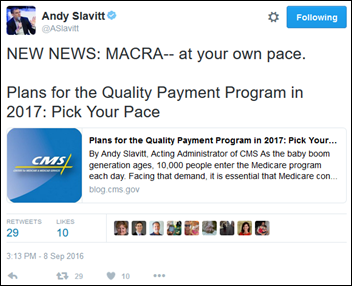
Sometimes CMS announces plans which benefit physicians, which feels like a rarity. The recent announcement of a “pick your pace” approach to MACRA implementation was welcomed due to the apparent flexibility of the approach. There are a few options for MIPS reporting in 2017:

  • Providers can simply test their ability to report data, doing so at least once at some point during the year. Completion of testing allows providers to avoid penalties and ensures that systems are functioning prior to greater participation in subsequent years.
  • Providers can also consider reporting for part of the calendar year. However, they must report performance in all three Composite Performance Score (CPS) categories. This approach could result in a small bonus in 2019.
  • Providers can report the full calendar year (again in all three categories) to achieve what CMS describes as a “modest” bonus in 2019.
  • Providers participating in certain Advanced Alternative Payment Models can qualify for a five percent bonus.

Selecting the third option will depend on the ability of vendors to quickly become compliant with the requirements of the final rule, which is expected to be released by early November. This means that they have very little time to achieve software readiness and upgrade thousands of providers. Depending on vendor resources and how much prep work has been done in anticipation of the release of the final rule, full-year reporting may be little more than a pipe dream.

For those of us who live and breathe this on a daily basis, having some flexibility in reporting seems refreshing. But for the large numbers of physicians and practices who have no idea what MACRA even is, let alone that these regulations are coming, the flexibility won’t be very comforting.

I recently received a blast letter from the Drug Enforcement Administration letting me know I would have to upgrade my browser in order to access DEA resources and renew my registration. That’s insignificant to many physicians, yet the DEA felt it was important enough to mail paper correspondence to every registered physician across the country. MACRA and the associated penalties and incentives are a big deal. Where is the letter to all Medicare providers? CMS is expecting physicians to follow blogs and tweets and webcasts that many physicians don’t even know exist.

I’m not absolving physicians from being responsible for what is going on in the world around them, but merely commenting on the reality of many physicians out there, which has also been reflected in various surveys and articles. Ultimately if a physician is going to contract with a payer, he or she is responsible for knowing the rules, but it certainly could be easier.

What’s also not easy is figuring out how to actually achieve savings under Alternative Payment Models. Recently CMS released performance data for 2015. The numbers show that of 404 Medicare ACOs, only 125 of them qualified for shared savings. Of the 392 Shared Savings Program ACOs, only 119 qualified for shared savings. Participation in Pioneer ACOs continues to shrink, with only 12 remaining.

I don’t think those statistics make Alternative Payment Models look appealing to the average physician. Of course the “appeal” is different for providers employed by hospitals and large health systems who are simply forced to participate. Those that weren’t successful based on the metrics are still doing the extra work required of ACO members but just not getting the shared savings payments at the end.

I do feel that CMS is listening and trying to respond. Recently they changed the rules for the Medicare Chronic Care Management services code to remove a requirement that providers have 24/7 access to patient records. The code allows providers to bill for coordination of care for patients who have chronic conditions. However, I’m not sure what kind of burden the 24/7 rule really was.

The bigger barrier in my experience is the fact that patients have to pay a portion of the charge, and many don’t see the benefit because the services performed on their behalf are often done behind the scenes – phone calls to consultants, review of personal health log data, etc. There’s also a process required to obtain patient consent for participation which adds to challenges in adopting the service. I find it funny that people who will pay for a maintenance/protection program for their phone will balk at paying for something similar to help safeguard their health.

I’m mentoring some medical students and several are out on ambulatory clinical clerkships, working with practicing community physicians. They always have questions about how regulations are going to impact them in practice. Sometimes I have answers and sometimes there are no good answers. What they see, however, is definitely driving them away from primary care, where it seems that providers feel a greater burden. We’re getting thousands of new Medicare beneficiaries each day, so the need for processes and policies is real in order to successfully manage the demands. I think many of us wish that there was just a better way.

What are you doing to celebrate the 20th anniversary of HIPAA? Email me.

Email Dr. Jayne.

Readers Write: The Surgeon General’s Rallying Cry Against the Opioid Epidemic Must Also Be a Call to Arms for Healthcare IT

September 14, 2016 Readers Write 3 Comments

The Surgeon General’s Rallying Cry Against the Opioid Epidemic Must Also Be a Call to Arms for Healthcare IT
By Thomas Sullivan, MD

image

In a rare open letter to the nation’s doctors, US Surgeon General Vivek Murthy, MD, MBA sounded a rallying cry to engage their greater participation in the opioid-abuse crisis afflicting our country. Missing from the USSG’s commendable call to arms, though, was mention of the role technology plays in reducing drug diversion and doctor shopping and providing ready access to services to support patients.

Those of us in healthcare IT know that we are critical to this cause. The USSG is talking to our customers, and we know our customers aren’t adopting as quickly as they could the substance abuse-fighting technologies that are widely available to them. This includes a variety of technology solutions such as:

  • E-prescribing technology, particularly EPCS to support the electronic prescribing of controlled substances, which is key to helping providers more efficiently deploy and monitor prescription medicines being prescribed or over-prescribed across a practice.
  • Medication adherence monitoring technology that lets providers gauge in real time, at the point of encounter, a patient’s level of compliance with drug therapy and provide patients with evidence-based support and services for self-management.
  • Clinical decision support that helps doctors avoid adverse drug events and medication errors.
  • State-run prescription drug monitoring programs (PDMPs) designed to help law enforcement track the use of controlled substances and help prescribers identify doctor shoppers and others seeking illicit access to controlled substances.

Specific to the opioid abuse epidemic, the most important next step is for physicians to be able to check PDMPs within their normal workflow. Simply said, the integration and availability of PDMP data within e-medication management solutions — e-prescribing, medication history services, medication adherence tools and the like — will result in the greatest use of PDMP data and the best one-two tech-assisted punch we have in the opioid battle.

Over the past two years, policymakers have begun to take action in using EPCS to address this crisis. This past March, New York State took a major step toward this goal when it began requiring e-prescriptions for all controlled substances as well as all non-controlled substances, frequently referred to as “legend drugs.” Known as I-STOP, the Internet System for Tracking Over-Prescribing act, originally passed in 2012, New York’s experience now serves as a case study for other states that wish to modernize their prescribing infrastructure and address opioid abuse.

Maine as well now will require opioid medications to be prescribed electronically via Drug Enforcement Agency-certified EPCS solutions beginning in July 2017. Several other states including Massachusetts, Missouri and Maryland are also considering or working to pass mandatory EPCS requirements for prescribers.

Unfortunately, neither New York nor Maine PDMP data is currently accessible to health IT vendors for integration into the prescribing workflow of providers.

E-prescribing – the direct digital transfer of patient prescriptions from provider to pharmacy – is broadly recognized as an important tool in helping promote patient safety, convenience, and overall efficiency for all stakeholders in the prescription process. E-prescribing is well understood to assist prescribers by allowing patients and doctors to better guard against medication errors, such as drug-to-drug interactions, reduce common errors inherent in paper-based prescribing — including illegible handwriting, misinterpreted abbreviations, and unclear dosages, — and provide critical decision support tools.

Despite the fact that, nationwide, more than 70 percent of doctors transmit most prescriptions electronically, the vast majority of these prescriptions are only for legend drugs. In comparison, less than 10 percent are using EPCS solutions to e-prescribe controlled substances. However, in New York, the I-STOP legislation has driven adoption of EPCS to over an estimated 70 percent. As such, all indications are that the laws passed in New York and Maine mandating use of EPCS and PDMPs will almost certainly prove helpful in curbing opioid abuse, fraud, and diversion and help prevent possible addiction down the line.

However, full adoption of PDMPs will likely never be achieved until the PDMP information is accessible in the doctor’s technology workflow. Ultimately, the opioid-abuse battle needs to be fought through states enabling their respective PDMP data to flow through doctors’ own workflows, as opposed to requiring that physicians and clinicians go outside their familiar software tool and interact with a separate portal in order to access their respective state PDMP databases.

In the case of New York State, the Medical Society of the State of New York conducted a survey that found a large percentage of prescribers believed that forcing mandatory compliance was placing an undue burden on their practices. No doubt, physicians feel overburdened with IT mandates. Improving integration between PDMPs and electronic health records will alleviate some of these burdens and allow for better compliance.

States must work more closely with the healthcare community to remove obstacles that will allow as close to 100 percent compliance as possible. Every state has the opportunity to learn from New York to smooth implementation and drive adoption to make a meaningful impact on the growing opioid abuse epidemic. Leadership in healthcare IT companies must be more vocal about our role and responsibilities in enabling doctors on the ground.

With the US Surgeon General weighing in, those of us in the healthcare IT community must rise up to make our voices heard. The importance of integrating e-medication management tools and EPCS solutions with PDMP data cannot be overestimated. It is the best path toward helping our customers — the doctors — make the right decision, at the right time, with the right data, on the right platforms.

Thomas Sullivan, MD is chief strategy and privacy officer of DrFirst of Rockville, MD.

Readers Write: The Electronic Health Record and The Golden Spike

September 14, 2016 Readers Write 1 Comment

The Electronic Health Record and The Golden Spike
By Frank D. Byrne, MD

image

On May 10, 1869, at a ceremony in Utah, Leland Stanford drove the final spike to join the first transcontinental railroad across the US. Considered one of the great technological feats of the 19th century, the railroad would become a revolutionary transportation network that changed the young country.

clip_image002

For the past few years, the healthcare industry and the patients in its care have experienced a similar “Golden Spike Era” through the deployment of the electronic health record (EHR). Others have used this analogy, including author Robert Wachter, MD at a recent excellent presentation at the American College of Healthcare Executives 2016 Congress on Healthcare Leadership.

Why is this comparison relevant? While the Utah ceremony marked the completion of a transcontinental railroad, it did not actually mark the completion of a seamless coast-to-coast rail network. Key gaps remained and a true coast-to-coast rail link was not achieved until more than a year later and required ongoing further improvements.

Similarly, while a recent study indicated that 96 percent of hospitals possessed a certified EHR technology and 84 percent had adopted at least a basic EHR system in 2015, there is still much more needed to achieve optimized deployment of the EHR to make healthcare better, safer, more efficient, and to improve the health of our communities.

Nonetheless, the EHR is one of the major advances in healthcare in my professional lifetime. It is an essential tool in progress toward the Institute for Healthcare Improvement’s “Triple Aim for Healthcare”– better patient experience, lower per-capita cost, and improved population health. We cannot achieve those laudable goals without mining and analyzing the data imbedded in the EHR to generate useful information to guide our actions. Advances in data science are enabling the development of meaningful predictive analytics, clinical decision support, and other tools that will advance quality, safety, and efficiency.

But there is much work to do. Christine Sinsky, MD, vice president of professional satisfaction for the American Medical Association, and others have written with concern about dissatisfied physicians, nurses, and other clinicians who feel the EHR is distracting them from patients care and meaningful interactions with their patients.

“Contemporary medical records are used for purposes that extend beyond supporting patient and caregiver … the primary purpose, i.e. the support of cognition and thoughtful, concise communication, has been crowded out,” Sinsky and co-author Stephen Martin, MD note in a recent article.

Perhaps you’ve also seen the sobering drawing by a seven-year-old girl depicting a doctor focused on the computer screen with his back to her, his patient.

clip_image004

Some of the EHR’s shortcomings may be the result of lack of end user input prior to implementation, possibly due to the implementing organization not incorporating the extensive research gathered by the EHR providers. Further, even if one gets end-user input prior to implementation, there’s always challenges prior to go-live, and it seems to me that optimization after implementation has been under-resourced. And let’s not look at temporary ”fixes” as the best and final answer. I was dismayed recently to see “hiring medical scribes” listed as one of the top 10 best practices in a recent Modern Healthcare poll.

Don’t get me wrong, to have a long game, you must have a successful plan to get through today, and if hiring scribes can mitigate physician dissatisfaction until the systems are improved, so be it. But scribes are a temporary work-around, not a system solution.

As an advisor to an early-stage venture capital fund, I’ve enjoyed listening to many interesting and inspiring pitches for new technology solutions. Initially, my algorithm used to rate these ideas was:

  • Is it a novel idea?
  • Will enough people or organizations pay for it?
  • Do they have the right customer?
  • Do they have the right revenue model?

Thanks to the input of physicians, nurses, therapists, and other clinicians, and the work of Dr. Sinsky and others, I quickly added a fifth, very important vital sign: Will it make the lives of those providing care better? Similarly, author, speaker and investor Dave Chase added a fourth element to the Triple Aim, caregiver experience, making it the Quadruple Aim.

When I was in training, we carried the “Washington Manual” and “Sanford’s Antimicrobial Guide” in the pockets of our white coats as references and thought we had most of the resources we needed to provide exceptional care. Now, caregivers suffer from information overload of both clinical data and academic knowledge. Some query Google right in front of their patients to find answers.

In healthcare today, we work within a community of diverse skills and backgrounds, including clinicians, non-clinicians, computer scientists, EHR providers, administrators, and others. To achieve our goal of improving health and healthcare for individuals and communities, we must work together to organize, structure, mine, and present the massive amounts of data accumulated in the EHR. To me, the concept of population health is meaningless unless you are improving health and outcomes for my family, my friends and me. Just as the placement of “The Golden Spike” was only the beginning of railroad transportation becoming a transformational force in American life, the fact that 96 percent of U.S. hospitals possess a certified EHR is just the beginning.

I have been accused of being a relentless optimist, but I firmly believe we can use the EHR to improve the caregiver and patient experience (I believe patients will and should have access to their entire medical record, for example), and fulfill the other necessary functions that Sinsky and Martin describe as distractions from the medical records’ primary purpose: “quality evaluations, practitioner monitoring, billing justification, audit defense, disability determinations, health insurance risk assessments, legal actions, and research.”

Lastly, there is one more similarity to “The Golden Spike.” In 1904 a new railroad route was built bypassing the Utah track segment that included that historic spot. It shortened the distance traveled by 43 miles and avoided curves and grades, rendering the segment obsolete. Already, many EHR tools, applications and companies have come and gone. Many of the tools we use now remain rudimentary compared with what we really need. We must use what we have to learn and continuously improve, and frankly, we need to pick up the pace. The patients, families and communities depending on us deserve no less.

Frank D. Byrne, MD is the former president of St. Mary’s Hospital and Parkview Hospital and a senior executive advisor to HealthX Ventures.

News 9/14/16

September 13, 2016 News 1 Comment

Top News

image

France-based consulting firm Atos will acquire Anthelio Health Solutions for $275 million. The announcement states that Dallas-based Anthelio’s annual revenue is $200 million and that its owners are a London investment firm as well as McLaren Health Care Corporation (MI), Anthelio’s largest customer.

Anthelio CEO Asif Ahmad will stay on to lead the new company’s US healthcare practice. The former PHNS changed its name to Anthelio in early 2011.

The acquisition was accurately reported here on August 12 via a rumor report from HIT Enthusiast that Anthelio did not acknowledge when I inquired.


Reader Comments

image

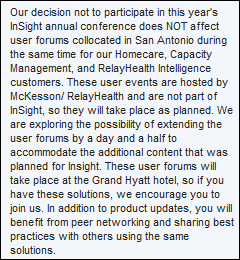
From Tired CIO: “Re: InSight conference. The independent McKesson user group has invited Meditech and Cerner to attend its annual meeting in case someone wants to talk to them about replacing Paragon.” A forwarded email from McKesson says InSight’s board didn’t let the company know until September 7 that it was bringing in Cerner and Meditech as co-sponsors of the user group meeting. The McKesson email adds that having competitors in attendance makes it impossible to share the company’s proprietary information with the group, so it is pulling out of the conference. McKesson adds that it is considering extending its own user forums that run concurrently in San Antonio to include everything it had planned for InSight. It’s also creating its own user group.

image

From Mimsey: “Re: InSight conference. McKesson is expected to make an announcement Wednesday about the disposition of its Enterprise Information Solutions, which includes Paragon. Meanwhile, people aren’t happy that the company won’t be presenting at InSight.” At least one attendee says they may just cancel their non-refundable travel since they spend 90 percent of their InSight time attending McKesson-led sessions and workshops and it’s not worth it since McKesson isn’t coming. That person questions why Cerner and Meditech needed to be invited to the conference since they would happily travel to any prospect’s site to do demos without having to meet them at InSight. I have to agree with that attendee – even though McKesson has burned a lot of healthcare IT bridges and is about to leave its customers in a lurch of unknown dimensions, it’s unreasonable to expect McKesson to attend the meeting with its competitors who were invited specifically to pitch to its customers. Attendees got shafted once by McKesson and now by their user group. The InSight board should admit that it made a bad decision and un-invite Cerner and Meditech in trying to make up with McKesson one last time to salvage their conference. I doubt McKesson is really going to create its own UGM since it will be dumping all of the products into the new company formed with Change Healthcare anyway, so nobody will care about McKesson a year from now. Meanwhile, we’ll see what happens the morning of September 28 at the InSight session titled “EIS Roadmap.”
From Startup CEO: “Re: my startup. I would love to get a mention on HIStalk.” OK, here’s your mention, in the form of a list: (a) a one-person consulting company isn’t a startup since ‘startup’ implies impressive investment, momentum, and a team with ambitious goals; (b) you aren’t a real CEO if you’re the only employee; and (c) HIStalk readers won’t care about your company until it hits either $1 million in funding or $5 million in revenue (and maybe not even then).


HIStalk Announcements and Requests

image

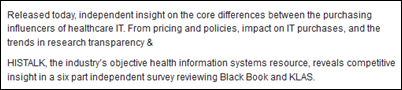
I was surprised to receive an oddly worded bulk email from Black Book that included screen shots from the “Rating the Ratings” series Vince and Elise did. While I’m happy to be called “the industry’s objective health information systems resource,” let the record show that I wasn’t asked for permission, I didn’t actually rate anyone (Vince and Elise did that), and while I’ve run surveys in the past whose methodology and response rate I was proud of, this one wasn’t one of those – it was informal, not validated, and self-selected.

image

Medicity was the first HIStalk sponsor going back to 2004, so when they asked if I would be willing to return the favor and sponsor their Client Summit being held this week by providing pens and pads, I said sure (I just now realize  the irony of giving digital health attendees old-fashioned pens and paper). I’m always scrounging at the HIMSS conference exhibit hall to get a (rare) notepad to go with the (ubiquitous) pens, so hopefully someone found the matching set useful.

image

Welcome to new HIStalk Platinum Sponsor Infor. The New York City-based company delivers industry-leading, healthcare-specific solutions used by 5,000 organizations in 30 countries (including 72 percent of US hospitals larger than 150 beds) to integrate, plan, track, and manage vital assets such as people, supplies, clinical data, relationships, and financial resources. On-premise or cloud-based solutions support human capital management, financial management, patient-centered supply chain management, enterprise performance, relationship management, business intelligence and analytics, and clinical interoperability. Thanks to Infor for supporting HIStalk.

I found this overview of Infor CloudSuite Healthcare on YouTube.

Listening: the impressively remastered  (for the second time) the Beatles “Live at the Hollywood Bowl,” a fascinating audio memento of the band’s 1964 and 1965 concerts there. I’m sure today’s listener can hear the music better than the four lads back then given the insane fan screaming that overcame their primitive audio equipment but is nicely dialed back here. They sound surprisingly talented, warm, and tired but enthusiastic, just the way they should be remembered 50 years after their final August 1966 live performance in San Francisco after conquering the world by their early 20s. Also: new from Madison, WI-based Garbage, whose heavy-with-hooks sound is hard to categorize and equally hard to listen to without desk-drumming.


Webinars

September 27 (Tuesday) 1:00 ET. “Stanson Clinical Decision Support: Survival Kit for Evolving Payment Models and Other Regulatory Requirements.” Sponsored by Stanson Health. Presenters: Anne Wellington, chief product officer, Stanson Health; Scott Weingarten, MD, MPH, SVP and chief clinical transformation officer, Cedars-Sinai. Reimbursement models are rapidly changing, and as a result, health systems need to influence physicians to align with health system strategy. In this webinar, we will discuss how Stanson’s Clinical Decision Support can run in the background of every patient visit to help physicians execute with MACRA, CJR, et al.

View previous webinars on our HIStalk webinars YouTube channel.


Acquisitions, Funding, Business, and Stock

image

Bedside patient engagement technology vendor Lincor Solutions will merge with its Australia-based distributor to form Lincor Limited, which will be listed on the Australian Securities Exchange. Lincor CEO Chris Cashwell will be CEO of the new company.The Hills Health Solutions business generated $23 million for publicly traded parent company Hills Ltd. in the most recent financial year.

image

Surgery workflow management technology vendor ExplORer Surgical raises $1 million in a seed funding round. The company’s “surgical playbook” system was developed by University of Chicago, which is among its investors.

image

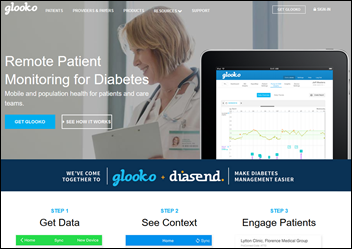
Diabetes management app vendors Glooko and Diasend merge.


Sales

image

Wise Health System (TX) chooses Allscripts Sunrise and CareInMotion.

Medical Center Hospital (TX) will expand its rollout of Spok Care Connect.

image

Graham Health System (IL) chooses electronic patient signature and e-forms from Access.

Nebraska Medicine chooses Epic’s Healthy Planet population health management system.

image

Palmetto Health (SC) will use Glytec’s eGlycemic Management System for the 40 percent of their hospitalized patients who require insulin. The system, which will integrate with Cerner, includes the Glucommander insulin dosing medical device, GlucoSurveillance to flag candidates for insulin therapy, and GlucoMetrics for monitoring key performance indicators.

image

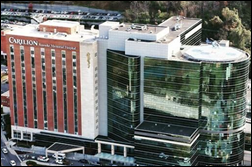
Carilion Clinic (VA) selects PeraHealth’s clinical surveillance solutions.


People

image

Kit Check hires Gary Voydanoff (NextGen) as chief commercial officer.

image image

Oneview Healthcare names Seth Bokser, MD (UCSF) as chief medical officer and Lyle Berkowitz (Northwestern Medicine, Healthfinch) as special advisor on innovation.

image

Imaging decision support vendor HealthMyne names Arvind Subramanian (Wolters Kluwer Health Clinical Solutions) as CEO and board member. He replaces Praveen Sinha, who remains on the board.

image

Ingenious Med hires Joe Marabito (IkaSystems) as CEO. He replaces the retiring S. Hart Williford, who will remain board chair.


Announcements and Implementations

HIMSS offers to match the 12 just-named NHS digital health Global Exemplars with an international provider partner, which is a condition of the $13 million in funding. The announcement suggests that HIMSS wants to sell its EMRAM and CCMM benchmarking services to the newly funded trusts, which have committed to partner with organizations such as Cleveland Clinic and Mayo Clinic to  take advantage of their expertise.

image

Pallav Sharda, MBBS, MMI, MBA publishes “Before Disrupting Healthcare: What Innovators Need to Know.”

Vital Images adds support for Nuance PowerScribe 360 and PenRad PenLung to its lung screening application.


Government and Politics

image

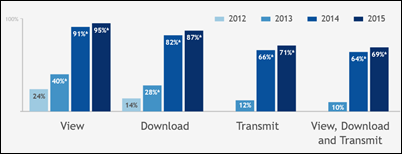
ONC says 95 percent of US hospitals allow patients to view their information electronically, 87 percent allow them to download it, and 69 percent give patients the ability to view, download, and transmit the information. The information is self-reported by hospitals and therefore suspect based on the understanding of whoever filled out the AHA survey. I doubt that two-thirds of hospitals allow patients to transmit data via the Direct protocol or otherwise and I’m confident that very few patients have done so regardless. I say from experience that hospitals hold tightly onto the information they think is theirs, not the patient’s, and the HIM department or release-of-information vendors that are stuck in the 1960s guard those gates enthusiastically knowing that HHS OCR’s enforcement is indifferent.

SNAGHTMLb050c83c

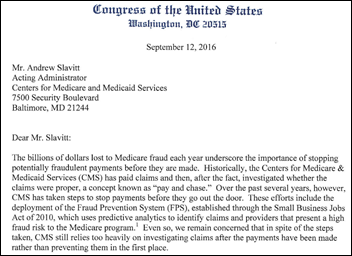
A group of Republican congressional committee chairmen questions CMS’s “pay and chase” practices, asking Acting Administrator Andy Slavitt to provide more information about how CMS’s Fraud Prevention System is being used.


Privacy and Security

From DataBreaches.net:

SNAGHTMLb11e442d

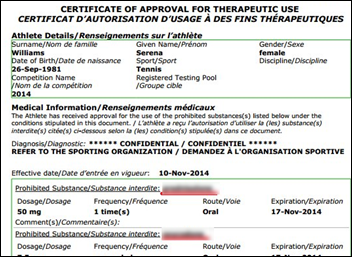
  • Russia-based hackers breach the World Anti-Doping Agency and  publish the prescription information of US Olympic athletes. A group called Fancy Bears says it was shocked by “how Olympic medals are won” and will “start with the US team, which has disgraced its name by tainted victories.” I blurred the drug names on the file of tennis player Serena Williams above, but the hackers didn’t (the drugs were not performance-enhancing or even all that interesting, but I wouldn’t expect a hacker to know that).
  • Yuba-Sutter Medical Clinic (CA) notifies patients that it was hit by a ransomware attack on August 3. They say they regained access to their systems “relatively quickly,” but didn’t specify whether that was from restoring backups or paying off the hacker.
  • California-based occupational health provider US HealthWorks announces that a stolen laptop containing emails with patient information was encrypted, but apparently the employee had attached the password to the device.

Technology

HL7 chooses Bryn Lewis, PhD as the winner of its C-CDA viewer challenge.

image

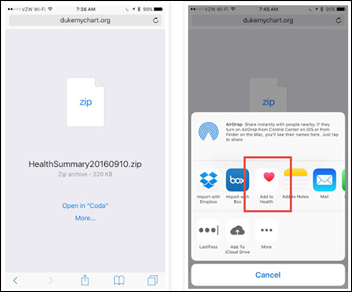
Apple released iOS 10 — which includes C-CDA support via HealthKit — on Tuesday and Duke Health (NC) announces that it will allow patients to download their MyChart portal data into Apple Health, where it can be shared with other apps.


Other

image

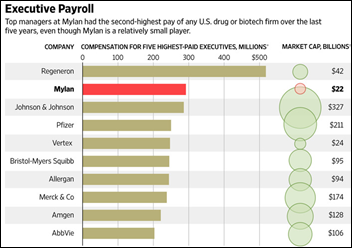
Drug company Mylan, which enraged consumers with its never-ending EpiPen price increases, paid its five top executives $300 million over the past five years, more than competitors several times its size. The company, whose market cap is $22 billion, came in #2 behind Regeneron, which paid its top five executives more than $500 million.

A Health Affairs blog post co-authored by singer Barbra Streisand calls for researchers to include a representative number of women in their studies and to examine their data to see if findings have a gender-specific component. She says as an example that women’s heart disease is different from that of men, yet has not been as well studied or as consistently diagnosed.

BCS, The Chartered Institute for IT interviews Robert Wachter, MD about health IT, particularly that in England.

A reporter for the Tucson newspaper describes his first-hand experience watching Theranos CEO Elizabeth Holmes and the company’s lobbyists schmoozing state officials in convincing them to pass a law that allows consumers to order their own lab tests in Arizona and to allow Theranos to open wellness centers in Phoenix-area Walgreens stores. He summarizes:

This is where Arizona’s leadership fell down on the job: It failed to protect Arizona customers from a company that found the state an easy target in its zeal for deregulation. This wasn’t a company that was seeking tax breaks and incentives, which perhaps made their proposal an easier sale. What they needed was a law that gave them access to Arizona’s people.


Sponsor Updates

  • ComputerWorld profiles GE Healthcare’s move to a new transaction processing engine, and awards the company its Data+ Editors’ Choice Award.
  • HfS Research names Xerox a top business services provider in population health and care management as-a-service.
  • Aprima and Healthfinch will exhibit at AAFP’s Family Medicine Experience September 21-23 in Orlando.
  • Tech Week profiles Madison, WI-based Catalyze as part of its City Snapshot series.
  • LogicStream Health will host a wine tasting with appetizers for Epic UGM attendees on Wednesday, September 21 lakeside at Monona Terrace in Madison.
  • Besler Consulting produces a new podcast, “What to look for in the next generation of hospital finance professionals.”
  • The Tampa Bay Technology Forum includes CareSync in its list of finalists for its Technology Company of the Year Award.
  • CTG, Divurgent, and Healthwise will exhibit at the Epic UGM September 19-21 in Verona, WI.
  • Stella Technology will sponsor the SHIEC Annual Conference in Scottsdale, AZ September 18-21.
  • Healthcare Growth Partners advises Essette on its sale to HMS.
  • Cumberland Consulting Group becomes a sponsor partner of the HealthCare Executive Group and its annual forum being held this week in New York.
  • Healthgrades will present a session on launching startups internally during Denver Startup Week September 19.

Blog Posts


Contacts

Mr. H, Lorre, Jennifer, Dr. Jayne, Lt. Dan.
More news: HIStalk Practice, HIStalk Connect.
Get HIStalk updates. Send news or rumors.
Contact us.

125x125_2nd_Circle

MACRA’s Marketing Problem

September 12, 2016 News Comments Off on MACRA’s Marketing Problem

HIStalk digs into why provider awareness of MACRA is lacking and the likely impact it will have on their ability to stay in business.
By
@JennHIStalk

image

The Medicare Access & CHIP Reauthorization Act has seen its fair share of headlines since it was introduced just before HIMSS15. MACRA’s implications for patients and providers contributed to a lot of the show-floor buzz in Chicago that year, while conversations around its potential for payment reform heated up even more in Las Vegas at HIMSS16. The release of a 962-page proposed MACRA rule in April provided fodder for industry media outlets, and last week’s release of four “pick your pace” options ahead of a final rule have no doubt eased the anxiety of many physicians fretting over the January 1, 2017 start date.

In short, it seems that MACRA has spent more than its fair share of time in the spotlight, leading many in the industry to assume that providers have been keeping up with its developments.

image

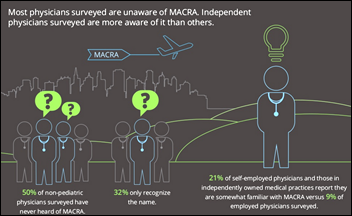
The results of a Deloitte survey of physicians on MACRA awareness and preparedness (conducted before the proposed rule was released) tell a very different story. Of the 600 primary care and specialty physicians surveyed, 50 percent admitted to having never heard of the legislation, while 32 percent knew it only by name. Independent physicians were more aware of it than employed MDs, though not by terribly much at 21 versus 9 percent.

Where does this unawareness stem from? Have providers become so accustomed to regulatory delays that they no longer pay attention until implementation is just weeks away? Has CMS, for lack of a better phrase, shot itself in the foot when it comes to introducing legislation that providers automatically assume is too cumbersome to digest and apt to be postponed numerous times?

Providers who have attempted to keep the lights on through Meaningful Use, ICD-10, and now MACRA surely can’t be blamed for not keeping up with the latest reforms issued from on high. Or can they?

Too Busy to Take Notice

image

“It’s not only physicians who have a lack of awareness,” explains Mitch Morris, MD, vice chair and a US global sector leader at Deloitte. “It really snuck up on the industry in general. Even now when we go in and do a briefing in the executive offices of a health system or payer, they say, ‘Wow, I didn’t realize all of that was in MACRA.’ It’s not very well understood. Unlike in the ACA, which had lots of publicity and everyone was dissecting it from Day 1, MACRA was thoroughly bipartisan and didn’t get a lot of [mainstream] publicity. The medical trade associations, the usual source of news for providers, just haven’t really been pushing this. On the surface, it sounds like a boring topic, but as you peel away the layers, you realize it’s going to be very impactful.”

image

AMA Immediate Past President and emergency department medical director Steven Stack, MD says Deloitte’s findings line up with the association’s own from its physician focus groups. “I think the upcoming changes are difficult for many to absorb while they are fully engaged in the day-to-day work of their practices,” he says. “And, keep in mind that when the legislation was enacted in April 2015, physicians were told the new system would not be implemented until 2019. They had good reason to believe there was no hurry for them to get up to speed.”

“Finally, it is simply not possible for the AMA or anyone else to begin broadly disseminating detailed educational material until the final regulation is issued,” Stack says. “We have been developing resources intended to help physicians get ready, but really all they want to know is what the rules are. We just don’t have all the information yet.”

image

Physicians working in the trenches of day-to-day care echo Stack’s observations. “I think most physicians would agree that the best use of their time and skill would be to simply treat patients and stop worrying about the endless administrative tasks of medical practice,” says Scott Mayer, MD, director of quality control at Today Clinic (OK). “Time to practice the art of medicine sounds so nice, but the reality is that being a physician these days requires so much time be spent outside of patient care that it has become increasingly difficult to keep up with so many changes in healthcare.”

“Patients need treatment now,” he emphasizes, “so unless a policy takes effect immediately, a lot of physicians don’t want to deal with it until it is absolutely necessary. I also suspect that many these days here the word ‘change’ and snort in disdain at the thought of something else that will further complicate their ability to practice medicine.”

University Physicians Group (NY) Medical Director and Aprima Chief Medical Officer Jeffrey Hyman, MD adds that lack of MACRA awareness on the part of employed physicians may stem more from the fact that once a physician is employed, the ‘business’ of running a practice becomes akin to background noise, outranked by patient care. “As an independent,” he adds, “you still have to worry about every issue of the practice of medicine to be successful and so attention is paid to every last detail.”

Today’s Diversions Trump Tomorrow’s Regulations

image

The details diverting the attention of physicians away from MACRA preparation are numerous and probably well known to HIStalk readers. “For physicians in private practice,” says Mayer, “a considerable amount of attention, resources, and stress are focused on just getting paid for the services they provide. Decreasing reimbursement rates, more regulations, more paperwork, and the increasing costs of maintaining a profitable medical practice are sure to distract a lot of us. We are wondering what the future of medicine looks like while doing our best to provide quality care now, find joy in our work, and avoid burnout.”

Hyman puts burnout at the top of his diversion list, too. “It’s a big deal these days,” he emphasizes, “and non-physicians have difficulty with this concept. Treating patients takes a great deal of concentration on details of their histories and physical findings, ordering lab and radiology tests, and then putting all these facts together and coming up with a successful treatment plan. Also, the need to think about formularies, getting pre-authorizations, and dealing with call-backs, admissions, and labs coming in … and don’t forget the EHR and all of its messages coming in at a furious pace. It takes a great deal of attention and MACRA, when read, sounds like a future issue. It just seems distant.”

Hyman’s observations on EHR-related physician burnout, while nothing new, seem to continually be backed up by studies large and small. A prime example is an AMA-sponsored time and motion study released last week that found ambulatory practice physicians spend almost twice as much time working on the EHR or performing other desk tasks as seeing patients. Observed MDs spent only 27 percent of their available time in face-to-face interactions with patients.

The results aren’t surprising to Morris, who notes that for the third year in a row of Deloitte’s research, three out of four physicians will answer that EHRs take too much of their time and cost too much money. “As an industry, we still have a long way to go so that they feel they add value. We’re not where we should be with the vision of EHRs.”

Morris is quick to add that no matter their employed or independent status, the time and attention of physicians are increasingly spent dealing with tremendous reimbursement pressures. “There’s a lot of pressure to move from volume to value-based payment systems,” he explains, “where part of their income is placed at risk. That pressure has many physicians very, very anxious and, to some degree, angry. They’re not always sure who to be angry with, but they’re not happy about the situation that they’re in. Even though the economy has recovered and there’s more discretionary spending, there’s still a lot of screws being turned down on physician incomes.”

Passing the Buck

Morris brings up a good point with regard to the slow boil of physician’s anger at being put in a position that leaves them little time with patients and even less to deal with impending regulations like MACRA. It could be argued that numerous entities should be on the receiving end of that emotion – CMS, payers, trade groups, and vendors – even patients and physicians. Fingers will likely start pointing to these same groups once MACRA hits, no matter the chosen start date, and physicians realize they’re out of time and unprepared.

image

“The industry has the obligation to educate and provide reasonable technology, tools, processes, and training to physicians to assist in the change management of MACRA,” says Kareo CMIO Tom Giannulli, MD, MS. “Those entities that contract with physicians should be very clear as to how their contracts will change. This includes CMS, which unfortunately does not communicate as well with physicians as they could, and based on their historical record, their deadlines are generally not respected. I would like to see them set up a website and online education program that requires each MACRA-participating physician to sign in and complete a half-day course on tech, tools, process, and regulation in order to continue their Medicare billing at full rate. There are a lot of other groups that have and can share a viewpoint, but those they contract with are the right source of information.”

Stack also feels that, while everyone has a role to play, CMS needs to reach out to provide simple tools and procedures to help physicians succeed. “They must strengthen their help lines and educate their staff so they can provide accurate information,” he adds. “CMS should also conduct train-the-trainer sessions and provide much more support to specialty societies to help them answer questions of particular interest to their members. Organizations like the AMA, state medical societies, and national physician groups can be very helpful by tailoring complex material more to the needs of their own members. Specialties, for example, can highlight quality reporting and CPIA activities that are most relevant to their audience, and so greatly simplify the learning process.”

“Employed physicians will likely be spared some of the specific tasks,” he adds, “and the need to be mindful of all the reporting deadlines, but there’s no doubt they will still encounter workflow and documentation issues.”

Hyman looks for MACRA guidance from Northwell’s dedicated group of staff already dealing with these issues and, as one would expect, UPG’s EHR vendor. “Aprima is also coding a great deal of information into their program to assist their doctors in getting this done successfully,” he adds.

Getting Started (but Preparing for Delay)

Hyman and his colleagues have been preparing for MACRA since it was first announced in 2015. “Our group of analysts, the Incentive Team , has begun the teaching process,” he says, “and we will interface between our physicians and the rules so it gets done in the most efficient way for our doctors. We will be ready with our team approach and help from our vendor, but understand that there most likely will be a delay as there was with ICD-10, Meaningful Use, and PQRS.”

Today Clinic staff, on the other hand, are just beginning their MACRA prep. “Our plan is to continue with our quarterly provider and staff meetings where we focus on things like MACRA,” Mayer explains, adding that he too wouldn’t be surprised if the start date was pushed back.

“Honestly, I don’t know how any practice can be prepared by January 1,” Stack says. “That is why the AMA and many others are recommending that the first reporting begin no earlier than July 1. Even compiling truly useful and accurate educational material by January is a heavy lift since we don’t expect to see a final rule until sometime in October and perhaps even as late as November 1. There is nothing in the MACRA statute that sets the start date for reporting, nor is there anything in the statute mandating that the reporting period be set at a full year, so CMS should have flexibility to begin at a later date.”

No matter the start date, Stack believes that, to get off on the right MACRA foot, physicians should first assess how they are performing under current programs since the new MIPS program will be based on those. “They also should begin exploring what qualified clinical data registries are available to them,” he adds, “since this is a new reporting vehicle that could simplify processes for them as well as yield more clinically useful feedback data.”

Morris has similar suggestions, but admits that, “You’d be hard-pressed to get everything in place by January 1 unless your organization already had a lot of this stuff in place and was just tweaking around the edges. I think the analytics capabilities and understanding your costs are difficult things. Even large health systems, which spend a lot of money on those things, struggle. Measuring my quality, having the data necessary to do that, and having the information necessary to understand my costs … I would include all of those as the biggest challenges to getting started with MACRA.”

Gauging the Likelihood of MACRA Success

MACRA’s marketing problem will eventually be a thing of the past. Delayed by choice or not, the program will be here sooner rather than later and physicians will have to make up their minds as to whether participation will be done with enthusiasm, trepidation, or opted out of altogether. MACRA will soon make clear just how painful a process it is for healthcare to move from fee-for-service programs to value-based payment systems.

“Money always talks,” says Mayer, “but to be honest, I am disappointed when the focus of policy changes or the support of policy changes is dependent on the money that will be generated, saved, or lost as a result. While it is very important to consider these things carefully, I worry that we don’t consider as thoroughly the impact such changes have on patients. Despite the intention of programs like MACRA to improve the quality of patient care, it may be hard to convince physicians to participate more for that reason than to avoid fines, decreased reimbursements, or for a promised bonus. Education, support, and follow-ups will be vital, which I think CMS is good at. What I hope to avoid is the need for more support staff to understand, implement, and maintain MACRA.”

Morris puts the move to value, which one could argue started long before MACRA was introduced, in perspective: “These are baby steps. The ACA was a step. Some of the initiatives after were steps. MACRA is another step. In many ways, this is the biggest step we’ve taken so far. I think the devil will be in the details of how well it’s executed. It’s one of those things that looks good on paper. Let’s see how it really works out.”


More on MACRA: Apples, Oranges, and Start-Date Changes

Most industry insiders familiar with MACRA seemed confident that the program’s start date will be delayed. Even CMS Acting Administrator Andy Slavitt hinted at that likelihood, and has since taken steps to ease the pain of participation with start-date options. The industry’s confidence in a delay is easy to understand, given that federal regulatory delays seem to have become the norm rather than the exception. Who can forget the beleaguered roll out of ICD-10? The anticipation of a MACRA delay lends itself to a comparative look at ICD-10.

“They’re definitely in the fruit category together,” says Mitch Morris, when asked if comparing the two is akin to looking at apples or oranges. “ICD-10 was a big change that was, for the most part, not welcome and being driven by the government. That’s definitely something they have in common. As you know, ICD-10 got delayed a couple of times before it was finally implemented, but it did really require some significant changes in office practice. If done well, it shouldn’t have had a negative impact on practice income.”

Morris adds, “With MACRA, also pushed by the government, there’s no formal sign of a delay, but as we learned from ICD-10, that can change with pressure applied to the appropriate places. MACRA has the potential to really change a physician’s income up or down, particularly those in independent practice, and particularly those who have a lot of Medicare patients. It will certainly change the dynamic, especially given the requirements and infrastructure necessary to participate.”

However, Steven Stack sees no similarities whatsoever. “I think this is entirely different,” he says. “ICD-10 in many ways was a simpler issue. It was a replacement for the already existing ICD-9 mandate. The ICD-10 issue focused on the need to be more detailed in documentation providers were already doing, in training their staff, and in lack of confidence that claims would be processed in a timely manner. Physicians were being told to keep enough money in reserves to cover their payroll and office expenses for six months due to anticipated claims payment delays. Physician practices don’t normally have that kind of cash on hand, and it was very alarming.”

“MACRA is largely about modifying an already complicated Medicare physician payment system, and then adding on new requirements for those who participate in advanced payment models,” Stack says. “There are a lot of changes happening at once all across the payment system. Quality reporting and meaningful use of EHR requirements are changing. A whole new method of measuring and comparing resource use has been proposed, new clinical practice improvement activities need to be identified and documented, and so forth. This transition will be far broader and much more complicated than the move to ICD-10.”

Curbside Consult with Dr. Jayne 9/12/16

September 12, 2016 Dr. Jayne 2 Comments

clip_image002 

I wade through scores of emails each day, looking for items of interest for my columns. One recent email mentioned a new piece in the Journal of the American Medical Association titled, “The Ethics of Behavioral Health Information Technology: Frequent Flyer Icons and Implicit Bias.”

It caught my eye in particular because I’ve seen some pretty wacky icons in the dozen or so EHRs I’ve used during my career. One system’s demographic screen identified smokers with a little pack of cigarettes by their name, but this went away with the advent of Meaningful Use when smoking had to be further quantified based on the volume of cigarettes smoked and the number of days per week on which smoking occurred. It also had an American flag icon for veterans, which although I’m sure seemed like a good idea to some requirements writer or developer at the time, was problematic because the US isn’t the only country with a military, nor are American citizens the only individuals who serve in ours.

An EHR system I dearly loved (but which was unfortunately tied to a dysfunctional vendor, leading to de-installation) had an iconized chest x-ray that appeared when radiology results were available, and a smiling germ icon when a patient required isolation or contact precautions. There were many other icons that were not only intuitive, but served as shortcuts for the clinician, but I remember those two the best.

One icon that generated a lot of buzz at my health system when a new EHR was being installed was the one associated with expired patients. When that indicator was check-marked, a stylized angel icon complete with wings and halo appeared on the patient’s chart. Again, I’m sure someone thought it was a cute idea, but it was likely offensive to people from a variety of religious and spiritual traditions.

The JAMA article specifically addresses an EHR with an airplane icon that is used to identify “frequent flyer” patients. Unlike an airline frequent flyer whose high utilization is respected and encouraged, in healthcare jargon it tends to represent someone who seeks care frequently, and often for inappropriate reasons given the setting. Sometimes the term is associated with patients who are non-compliant, drug-seeking, or otherwise require additional clinician thought and creativity during the treatment process.

Although the article mentions that some emergency departments use lists or other methods to identify these patients, they take particular issue with the airplane icon, since “administrators may elect to configure so that clinicians can identify a patient as a high utilizer.” It goes on to explain that the plane may actually be color coded to identify the level of utilization.

Although I agree with the assertion that the icon “reinforces and encourages the use of disrespectful and stigmatizing terminology,” I have mixed feelings about their other reason for asserting that identifying high utilizers is “ethically and clinically inappropriate.” They claim that the icon “may frame the initial clinical interaction in a way that inhibits good diagnostic judgment” and may lead to poor patient outcomes. One of the key forces driving change in healthcare today is the idea that we need to identify and stratify patients who are the highest utilizers of health care and who are responsible for the largest portions of healthcare expenditures. We need to find those people who need extra resources to and supports to help keep them out of expensive care venues, such as the emergency department and the hospital.

Although the article specifically addresses psychiatric patients, physicians in all disciplines are being asked to identify these patients and care for them differently than everyone else. Health systems are investing large amounts of money in systems designed to do just this. Although the airplane icon is tacky, its function is no different than the red/yellow/green scoring that one of my current EHRs does when looking at patient risk for high utilization of services.

I do agree that flagging patients in this fashion creates potential risk for patients to be treated negatively. Although we’d all like to think that clinicians are going to be altruistic and make sure that they pull in a multidisciplinary team of social workers, therapists, behavioral health specialists, transportation services, etc. to handle these patients, the reality is that this population can be extremely difficult to treat and the supports needed are often scarce to non-existent. Especially in a risk-based reimbursement system, it’s often tempting for physicians to avoid these patients, leading to cherry-picking of the most healthy and compliant patients. The fact that they’re marked by an airplane rather than some other kind of icon doesn’t change the fact that these patients often receive different treatment than low utilizers. Sometimes the care may be negative, but identifying those at most risk can be beneficial for population management strategies.

The authors go on to mention the phenomenon of “diagnostic overshadowing,” where patients with mental health issues may be undertreated for medical conditions such as heart disease, diabetes, etc. There is more focus on the psychiatric illness, which may lead to overall poor outcomes and low quality care. This is a real phenomenon, often made worse by lack of resources. I worked at one emergency department where psychiatric patients in crisis were held over in the ED because the local psychiatric facility didn’t have physicians working on weekends so patients couldn’t be admitted. This creates an emotional (and sometimes physical) toll for those caring for these patients, which in itself leads to negative feelings about caring for similar patients in the future.

The authors make a brief foray into discussing social media platforms and patient engagement tools, calling out the need to include thoughtful development strategies that minimize problems like the airplane icon. They go on to state that, “Electronic medical record systems and behavioral health care applications should be built and tested in collaboration with patients, consumers, clinicians, social scientists, and ethicists who are sensitive to the broader ramifications of iconography and language.”

I’d like to point out that their continued use of the term “electronic medical record” throughout the piece may represent bias. It’s been a long time since we started calling them “health records” with a nod to the greater focus on health, wellness, and prevention and not just treating medical illnesses.

Regardless, I am skeptical that any of the current major vendors have social scientists and ethicists on staff, let alone iconographers. If they do leverage these folks, I’d be highly interested to hear about their work.

How does your system identify high utilizers of healthcare? Email me.

Email Dr. Jayne.

Monday Morning Update 9/12/16

September 10, 2016 News 12 Comments

Top News

image

In England, 12 NHS trusts will receive up to $13 million each from the government as “global exemplars” that will lead the way for innovation, while another 20 will be given $6.6 million each as “national exemplars” to improve their own digital technologies. The announcements follow publication of an NHS digitization recommendations report created by an advisory board led by UCSF professor Robert Wachter, MD.

Health Secretary Jeremy Hunt also announces an expansion of NHS’s 111 non-emergency line to include triage service, publication of an NHS guide of approved health apps, re-launching the NHS Choices patient services website as NHS.UK with a new capability for patients to download their own records in a Blue Button-like fashion, and publishing trust performance data for specific health services.


Reader Comments

From Recent Epic: “Re: Epic’s succession plan. It’s for the best that Carl has taken over, although whether he has any desire to stay remains to be seen. Judy’s leadership is becoming increasingly erratic as she advocates finding ways to charge for APIs and web services, has wild swings of opinion on hosting services, makes rash decisions in trying to make international deals, pushes salespeople to start cutting deals on previously principled pricing and contract provisions, and most disturbing for the direction of the company, spends an increasing amount of time on buildings and events.” Unverified.

From Datapref: “Re: HIMSS Analytics. MU attestation made it easy to find out who has installed which products, with higher quality. Their ‘Logic’ rebrand intentionally makes it hard to export mass data and the UI is a mess. They have a long lag time (3-4 months) getting financial data updated after it’s been published by CMS, while Definitive, Billian’s and even AHA are less than one month.” Unverified. HIMSS Analytics still has the massive competitive advantage of being owned by HIMSS and thus being able to dole out to its paying customers HIMSS points that earn better exhibit hall booth locations. Personally, I’m not in favor of well-funded, theoretically non-profit member organizations recruiting corporate members while also selling them services and in some cases competing with them. I would be interested in seeing the latest 990 tax forms from HIMSS to see how much HIMSS Analytics brings in, but I haven’t found its latest filing so far.

image

From Pippi Longstocking: “Re: Bob Wachter’s UK digitization report. His only informatics credential is having written an awful and extraordinarily slanted book, cherry picking information to fill in a predefined narrative. The UK report seems to be mostly written by consulting firms. I find it odd that Ross Koppel speaks to informatics, Christine Sinksy to burnout, Deborah Peel to privacy, Julie Adler-Milstein to safety, and now Bob Wachter to success.” It’s interesting to me that in the “Look Inside” preview of his book on Amazon (since I haven’t bought or read the book), Wachter says that David Brailer, MD, PhD, the first National Coordinator who was appointed in early 2004, hinted that President George W. Bush’s push for EHRs came about only because he was jealous of the billions England’s Tony Blair was spending on the ultimately failed NPfIT program. Wachter also says Brailer wasn’t in favor of creating the very ONC he was later tapped to lead, worried that the federal government’s smothering bureaucracy would stifle innovation. I don’t know about Wachter’s informatics expertise, but he’s a good writer.

image image

From Bunchy Donovan: “Re: iPhone announcements. Removing the headphone jack has healthcare consequences since that’s how some device-attached apps use it as a connector.” The change may well put some minimally successful app vendors out of business, which might be a good thing in a herd-thinning sort of way. Meanwhile, Apple will offer an alternative to those $4 non-Apple earbuds I use at the gym — the wireless and surely easily lost AirPods, which will cost $159 and will make the wearer look as douchebaggy as those people whose Bluetooth headsets are permanently implanted in their ears. I assume the AirPods came from the Beats by Dr. Dre line that Apple (over)paid $3 billion to acquire in mid-2014. Apple has transformed itself from solving problems I didn’t know I had to solving problems that  I actually don’t have at all. Your life is pretty darned good if you can allocate $159 (plus the cost of a new and barely improved iPhone) to solve the crisis of tangled earbud wires.

From Silver Spoon: “Re: hospital administrative residencies. Would you recommend them?” They’re great if you can get chosen for them. The faith-based national system I worked for placed only well-connected graduates of their low-ranked religiously affiliated schools in those jobs even though 99 percent of our patients did not practice that religion and in most cases weren’t even aware of the connection. Not surprisingly, the chosen ones were usually fast-tracked in the “people like us” leadership model. I passed up an early-career option of working a stint in the Middle East after hearing a friend’s report of being culturally insulted and professionally disrespected as though he were a mercenary shoeshine boy there, a situation my hospital system colleagues and I found ourselves in without the long flight.


HIStalk Announcements and Requests

image

Insurance companies offered the poorest customer service experience to respondents to last week’s poll, while lab companies and dentists caused the fewest problems. Hospitals ended up mid-pack, but Beebob shared recent ED visit experience that included lack of wristband checking, nearly being administered morphine despite his or her clearly recorded allergy, employees never washing their hands, and doctors and nurses leaving their EHR sessions active when leaving the room so that anyone could have clicked through patient lists and charts, all of which were reported by letter to their CEO and safety VP with no response.

New poll to your right or here: what should be the key healthcare issue in the presidential election? “Key” means you have to choose the single most important issue instead of yearning for a lazy “all of the above” option that would relieve you of your responsibility make a decision.

I’ve received several emails weekly from investment companies (both in the US and elsewhere) wanting to talk to me about publicly traded health IT companies. I get those all the time, but the volume has picked up, which isn’t a problem for me since I just delete them without responding. They must have a good business model in getting free advice and reselling it as their own insight. Just about everything I know is right here on the HIStalk page for anyone to read anyway. 


Last Week’s Most Interesting News

  • CMS offers providers four “pick your pace” options for 2017 MACRA/Quality Payment program participation in 2017.
  • Device maker St. Jude Medical sues a security firm and an investment research company for manipulating its share price and profiting from short sales via the issuance of questionably accurate security vulnerability reports.
  • In England, a health IT committee issues its digitization recommendation report.
  • Epic asks the US Supreme Court to review a lower court’s ruling that the company can’t force employees into arbitration to block class action lawsuits over employment disputes.
  • UCSF will lay off 17 percent of its IT staff and offshore their jobs to India after its IT expenses doubled from 3 percent of its operating expense total to 6 percent in the past five years.
  • A tiny, AMA-sponsored observational study finds that ambulatory practice doctors spend twice as much time working on the computer and doing desk work than seeing patients.
  • Apple toughens up App Store standards for health-related apps to increase review of those that provide inaccurate data and to limit drug dose calculation apps to approved healthcare entities.

Webinars

September 27 (Tuesday) 1:00 ET. “Stanson Clinical Decision Support: Survival Kit for Evolving Payment Models and Other Regulatory Requirements.” Sponsored by Stanson Health. Presenters: Anne Wellington, chief product officer, Stanson Health; Scott Weingarten, MD, MPH, SVP and chief clinical transformation officer, Cedars-Sinai. Reimbursement models are rapidly changing, and as a result, health systems need to influence physicians to align with health system strategy. In this webinar, we will discuss how Stanson’s Clinical Decision Support can run in the background of every patient visit to help physicians execute with MACRA, CJR, et al.

View previous webinars on our HIStalk webinars YouTube channel.


People

image

Stephen Ondra, MD (Health Care Service Corporation) joins open source data management vendor Amida Technology Solutions as chief strategy officer.


Announcements and Implementations

SNAGHTMLa068ec4c

USC’s family support center and gerontology school provide family caregivers with support resources (care planning, reminders, task management, and self-care content) via an app developed by Los Angeles-based Care3. The three founders have experience that includes working in Aetna’s Healthagen technology businesses.

image

A new Peer60 report compares Epic and ChipSoft in the Dutch EPR market. Interesting factoids: (a) no ChipSoft hospital reported an improvement in financial outlook, while a fair number of Epic respondents did; (b) Epic scored considerably higher in enhancing patient engagement; (c) Epic scored much better in improving user workflow; (d) Epic’s “would recommend” scores are hugely higher; and (e) nearly half of the users of both systems say their projects ran over budget. The report contains a lot more interesting detail. All I know about Amsterdam-based ChipSoft is that they used to give out cool clogs from their booth at the HIMSS conference, but I stopped asking about them years ago because their booth people (who you might expect to be rosy-cheeked and happy if your only cultural reference is a Dutch Boy paint can) were always eye-rollingly surly in insisting that you put them on right there instead of packing them away for later.


Privacy and Security

2016-09-09_14-41-25

This promotional email from Healthcare Informatics seems to miss the obvious fact that if you’re pitching an advertiser’s ransomware material, you should probably not use a gibberish link that the recipient won’t click on if they are even vaguely aware of phishing practices. 

From DataBreaches.net:

image

  • The political team of a British member of Parliament tweets out a photo of the candidate cold-calling supporters that also included in the background a whiteboard containing the telemarketing system’s clearly visible (but since changed) log-in credentials.
  • Appalachian Regional Hospitals, whose systems are apparently still down following a ransomware attack several weeks ago, threatens to sue the local newspaper for asking questions about the situation and for publishing “statements that defame ARH or cast it in a false light.” It’s an interesting by-product of gaining public exposure for cybersecurity weaknesses or breaches that the affected organization often lashes out legally at the messenger (since the perpetrator isn’t handily available) in trying to protect their public image. 
  • The FBI charges two young men with using social engineering to hack the Internet accounts of several senior government officials that include the CIA director and Director of National Intelligence, using the information to harass them and to download sensitive information that they posted on the Internet. They gained access to the master federal law enforcement computer system, listened to the voicemails of senior officials, took control of their TVs, harassed them and their spouses by phone and email, distributed their contact lists, and fooled their spouses into providing their log-in credentials by claiming that their passwords needed to be reset.
  • Researchers warn that it would be easier for hackers to disable the country’s 911 emergency call systems by overloading their limited incoming lines with automated spurious calls from malware-infected mobile phones, estimating that 6,000 infected phones could disable an entire state’s 911 system and 200,000 could take down the entire national system.

Other

Three academic psychiatry authors write in their JAMA editorial that it’s not ethical for EHRs to flag frequent ED flyer with an airplane icon, saying it’s disrespectful and that such labeling may impede good diagnostic decision-making.

image

Dartmouth-Hitchcock Medical Center (NH) will lay off up to 460 employees in the next few months following a $12 million loss in the fiscal year ending June 30. The hospital’s billing-related expenses increased by $115 million as it changed billing and revenue management systems — which caused a $40 million revenue overestimate – and outsourced its RCM activities to Conifer Health Solutions. According to the CEO, “Other great organizations are experiencing similar downturns with the implementation of new systems and rising expenses.” DHMC implemented Epic at a cost of $80 million in 2011, after which its bond ratings agency attributed its weak operating performance to reduced state funding and its Epic costs.

image

Examples abound around the world where a single, dramatic photo engaged a previously indifferent public and turned a magnifying glass onto the society we’ve created. This Ohio police stop photo of two West Virginia adults zonked out in a heroin-induced stupor as the woman’s four-year-old grandson looks on just might do it in forcing us to examine our drugged-out society and the impact of only-in-America drug marketing and pricing decisions (over-marketed and thus overprescribed OxyContin whose high prices moved addicts to cheap but notoriously impure heroin freely entering the country after a failed war on drugs, with overdose victims sometimes revived as they were in this case with overpriced and thus less-available naloxone). Both adults have prior records for DUI, drug possession, resisting arrest, and other offenses. You are wrong if you think the epidemic can’t affect you or your family beyond being robbed by drug-seekers – this guy was driving on public streets seconds before this photo was taken, having just missed rear-ending a stopped school bus as he tried to take the woman to the hospital before being stopped by an off-duty officer from the East Liverpool Police Department.

Vince and Elise review the comments received about Black Book and KLAS from my reader survey in Part 6 of their “Rating the Ratings” series.

Here’s one of the most brilliant and hilarious TV ads you’ll ever see, a new Cigna public service message from the “TV Doctors of America” advocating annual physicals that many of their real-life counterparts don’t feel are medically indicated.


Sponsor Updates

  • T-System will exhibit at ENA Emergency Nursing 2016 September 14-17 in Los Angeles.
  • Crain’s features TeleTracking Technologies in its coverage of New-York Presbyterian’s new mission control center.
  • Valence Health will exhibit at Further 2016 September 14-16 in Chicago.
  • Frost & Sullivan recognizes Validic for the 2015 North America Frost & Sullivan Award for Visionary Innovation Leadership.

Blog Posts


Contacts

Mr. H, Lorre, Jennifer, Dr. Jayne, Lt. Dan.
More news: HIStalk Practice, HIStalk Connect.
Get HIStalk updates. Send news or rumors.
Contact us.

125x125_2nd_Circle

News 9/9/16

September 8, 2016 News 5 Comments

Top News

image

CMS offers providers four “pick your pace” MACRA/Quality Payment Program options for 2017:

  1. Submit test data only, which avoids a negative payment adjustment.
  2. Participate for part of the calendar year, which qualifies for a small positive payment adjustment.
  3. Participate for the full calendar year, which qualifies for a modest positive payment adjustment.
  4. Join an Advanced Alternative Payment Model, which qualifies for up to a 5 percent incentive payment.

The AMA has already issued a statement saying it “strongly applauds” the change.


Reader Comments

image

From Concerned Longtime Customer: “Re: Epic’s succession plan. I don’t see how Carl won’t succeed Judy. He’s who you go to with big problems and he and Judy have similar gravitas in communicating a future direction in an artful way. I had not considered the Sumit possibility, but I see a clear drop-off since he speaks in buzzwords and cliches about how things are going to be ‘cool,’ ‘awesome,’ and I think he even pulled out an ‘insanely great’ one time. He impressed me as someone trying to play the part of Steve Jobs who doesn’t have an authentic vision of his own that reflects our needs. I have concerns about how much longer Carl will last than Judy and hope very much that Epic’s bench is deeper than I’ve seen.”

From Hissing Viper: “Re: a new nurse poll. It finds that 92 percent are dissatisfied with EHRs.” It’s always a good idea to check sources when reading health IT articles written by freelance, newly graduated authors who also craft beauty and fashion pieces.

  • It’s not a new poll. The information is from 2014 and has been amply reported previously.
  • The site you cite (no pun intended) says the survey was performed by Adventist University of Health Sciences. That is incorrect — the school simply turned existing surveys into a dumbed-down infographic as a marketing piece for its RN-to-BSN program. Using an infographic as a news source is just ridiculous.
  • The site takes 18 paragraphs to explain the infographic in failing to note the original survey source, which was Black Book.
  • Black Book still sells the old report (and thus the methodology from which it was derived) for $3,495. The number of respondents is ample, but unstated is how those respondents were selected, the respondent demographics, and the exact wording of the poll (since wording has a huge affect on how respondents answer questions).

HIStalk Announcements and Requests

[Caution: geek alert]. Several readers reported that the main HIStalk page wasn’t displaying my most recent posts due to what appeared to be some sort of caching problem, which started happening all of a sudden even though I hadn’t changed anything. I spent a ton of time trying to figure it out, working with my web host, the virtual firewall company, and an offshore guy I hired for $30. Nobody could determine what was happening, although I could see “Cache-Control:max-age=172800” headers being generated by my server from somewhere. I finally lost patience and brute forced a fix by adding “ExpiresActive Off” to the .htaccess file. I don’t like adding fixes that I don’t fully understand to address a problem that I also don’t fully understand, but at least it seems to be working.

This week on HIStalk Practice: Sahali Health Clinic implements Kannact real-time blood glucose monitoring. Cross Country Healthcare expands Boca Raton headquarters. EyeCrave Optics rolls out virtual eye exams with help from Smart Vision Labs. MMC Anesthesia Group signs on with Zotec Partners. E-MDs joins CommonWell. MarijuanaDoctors.com launches telemedicine portal.


Webinars

September 27 (Tuesday) 1:00 ET. “Stanson Clinical Decision Support: Survival Kit for Evolving Payment Models and Other Regulatory Requirements.” Sponsored by Stanson Health. Presenters: Anne Wellington, chief product officer, Stanson Health; Scott Weingarten, MD, MPH, SVP and chief clinical transformation officer, Cedars-Sinai. Reimbursement models are rapidly changing, and as a result, health systems need to influence physicians to align with health system strategy. In this webinar, we will discuss how Stanson’s Clinical Decision Support can run in the background of every patient visit to help physicians execute with MACRA, CJR, et al.

View previous webinars on our HIStalk webinars YouTube channel.


Acquisitions, Funding, Business, and Stock

image

For-profit hospital operator HCA will acquire Mobile Heartbeat, whose clinical communications technologies it had previously piloted. The company will continue to operate as a wholly owned subsidiary of HCA.

image

Allscripts announces eRecruit, which connects Allscripts-using providers to ePatientFinder’s clinical trial patient recruitment service. 

image

In what surely must be one of the oddest acquisitions by a health IT company, health coaching chat vendor Grow Fit acquires nutritional beverage vendor Drink King (I’m not sure if the pun is intentional). Both companies are in India.

image

Online doctor advice vendor HealthTap expands to Great Britain.

image

Google acquires API vendor Apigee for $625 million in cash. One of the company’s customers is Walgreens, which uses Apigee’s technology for ordering photo prints and managing prescription refills and transfers. Other healthcare users are McKesson, Humana, and Kaiser Permanente.

image

Medical device manufacturer St. Jude Medical sues medical security vulnerability vendor MedSec and investment research firm Muddy Waters for share price manipulation. St. Jude says Muddy Waters conspired with MedSec to short-sell St. Jude’s shares before MedSec’s critical security report was published. St. Jude also says the vulnerability report is wrong because MedSec used poor testing methodology on outdated versions of its software.


Sales

image

In England, North West London Pathology Consortium signs a $19 million contract with Sunquest Europe for a hosted laboratory information system. The pathology operation is a shared service among several NHS trusts.

image

LA County Department of Health Services (CA) chooses Cerner’s HealthIntent for population health management.

image

Inova (VA) selects clinical decision support and analytics from Stanson Health to provide patient- and context-specific evidence-based recommendations at the point of care. 


Announcements and Implementations

Optimum Healthcare IT expands its Epic Community Connect practice and hires two executive directors to run it, Jon Straffon and Kelli Mangino from Cleveland Clinic.

image

Surescripts announces Medication History for Panel Management, which supports population health management by connecting health systems, ACOs, and analytics vendors to the medication data of 14 nationwide pharmacies.

image

Apple announces yet another annual round of marginally improved iPhones that will inexplicably create Apple Store lines of fanboys desperately seeking personal validation via loss of their headphone jack , the addition of waterproofing, and slightly less crappy cameras, none of which are compelling reasons to replace my iPhone 5. The company will also offer Pokemon Go for the Apple Watch, pairing a rapidly fading star with an already-faded one. The company once known for universe-denting innovation is now milking the cash cow via planned obsolescence and piling on pointless features hoping to entice overly loyal fans to ante up yet again in Apple’s form of hardware annual subscription pricing. The iPhone holds only 15 percent of the world smartphone market and these dull announcements aren’t likely to boost that number. Apple announced nothing for the ancient Mac product line. It sounds like the company is perfectly suited for its rumored entry into healthcare.

image

Cerner opens a clinic and health center for the 2,200 employees of its Bangalore, India campus, which technically gives the company its first Millennium client in that country.

Imprivata adds clinical speech recognition from Nuance’s Dragon Medical One to its Cortext secure communications platform.


Government and Politics

image

Blue Cross Blue Shield of Arizona steps in to offer an ACA insurance plan in Pinal County, AZ, saving the federal government the embarrassment of having one US county in which consumers have no Healthcare.gov coverage option. However, the insurer also warns that, as the only company offering plans in 13 of Arizona’s 15 counties, the government needs to stabilize the market. BCBS of Arizona has lost $185 million in the past two years selling ACA plans and isn’t thrilled about coming back to Pinal County. A study predicts that people in 31 percent of US counties will have only on ACA insurer to choose from, while another 31 percent will have only two.

image

The UK’s Department of Health publishes its IT advisory committee’s report on how to spend the $5.6 billion that has been earmarked for NHS digitization that the committee says should be complete by 2023. It attempts to answer the question of whether the UK has the money (especially after recently blowing $15 billion on the overly ambitious and mostly failed NPfIT project) with, “The one thing that NHS cannot afford to do is to remain a largely non-digital system. It is time to get on with IT.” Their report calls for the government to:

  • Stage digitization efforts within trusts that are ready rather than trying to bring them all along at once.
  • Expect the short-term return on investment to be in the form of safety and quality improvements rather than financial.
  • Create and enforce national interoperability standards.
  • Give patients full access to their electronic information, including clinician notes.
  • Create a national chief clinical information officer (CCIO) position that will oversee the project and then appoint a clinician-informatician to serve as CCIO within each trust who will oversee at least five clinicians with advanced informatics training.

The UK’s report was written by UCSF professor, best-selling author, and medical malpractice insurance pitch man Bob Wachter, MD (asked by Secretary of State for Health Jeremy Hunt to chair the group) and his journalist wife. It not only reflects his personal feelings about US healthcare IT efforts, but also manages to promote his own book, “The Digital Doctor: Hope, Hype, and Harm at the Dawn of Medicine’s Computer Age.” His bio doesn’t list any informatics education, training, or job responsibilities, although he’s a paid board member of some health IT vendors. The committee’s participation was in the form of nine, two-hour teleconferences and a two-day meeting.


Privacy and Security

image

From DataBreaches.net:

  • The information of 43,000 patients of Baltimore-based substance abuse treatment provider Man Alive is listed for sale on the Dark Web, stolen by a Russian hacker who sent an employee a phishing email containing a macro-loaded Word document. The hacker reports that he has already sold some of the information following the facility’s refusal to pay him $9,400. Interestingly, DataBreaches.net notified the FBI that the information was listed for sale and they declined to do anything, including letting the facility know.
  • CHI Franciscan Health Highline Medical Center (WA) notifies 18,000 patients that their information was exposed in the same error by R-C Healthcare Management that affected 655,000 patients of Bon Secours Health System (VA). The difference in this case is that R-C Healthcare Management hadn’t performed any work for the hospital since 2014, so the information exposed was old cost-reporting data. R-C Healthcare Management misconfigured its network in April 2016, exposing the files it contained to the Internet.

Technology

An article in Nature reviews pharmacogenetics, the science of using a patient’s genetic profile to choose optimal drugs and doses. The article notes that only a handful of tests are being used and that the real value can be delivered only if patients are tested proactively instead of after they’ve had problems. Evidence from randomized clinical trials is not compelling, but advocates say the genetic tests are being held to an overly high standard.

image

Maritime connectivity vendor Marlink announces a telemedicine solution that includes a central unit, touch screen, HD camera, ECG monitor, blood pressure monitor, pulse oximeter, and several other optional medical sensors. The system provides 24/7 consultations with on-shore doctors and includes a secure web portal for patient medical information. The announcement notes that emergency ship re-routing for a medical emergency costs around $180,000, making the company’s fully managed telemedicine service cost effective. 

image

University of Washington researchers develop a smartphone app that can detect anemia by measuring blood color by shining the phone’s flash through the subject’s finger. Possibly aware that earning FDA approval is likely to be challenging, the researchers say the best use of HemaApp would be for screening before performing more expensive tests in “limited-resource environments,” i.e. not in the US.


Other

image

In England, Google-owned DeepMind Health halts use of its Streams kidney injury detection app pending its approval by the UK’s version of the FDA. That means the company and NHS were using the app on hospitalized patients as an unregistered medical device.

image

Epic petitions the US Supreme Court to weigh in on a lower court’s decision in May that the company cannot require employees to arbitrate employment disputes individually instead of by filing class action lawsuits.

image

UCSF will lay off 17 percent of its IT staff, blaming reduced hospital payments under the Affordable Care Act and the doubling of IT expenses from 3 percent of the operating budget to 6 percent in the past five years (they went live on Epic in June 2012). The laid-off employees will be expected to train their India-based replacements from University of California system contractor HCL.

A study in Health Affairs finds that while hospital charge masters were supposed to become obsolete with the implementation of DRGs in 1985, hospitals are still using them to increase revenue and to force insurance companies to include their facilities in their networks using the threat of high list prices if they don’t. The authors suggest that legislators require more markup transparency to protect patients who have zero negotiation power with hospitals when faced with excessive charges.

A Florida TV station covers the local hospital’s use of Natus Newborn Care’s Nicview, which allows parents of babies who are in the NICU to view streaming webcam video and nurse messages.

A woman bitten by a stray dog while traveling abroad is given the same rabies drug at four locations in three countries and is shocked by the price variation: $125 (Cambodia), $18.50 (Thailand), $5,255 (a US hospital, that required an ED visit), and $427 (a US medical group). Her travel insurance covered the cost, but her husband, a former CFO, said that of the four providers, only the US hospital sent a bill that was not itemized and was impossible to understand. Healthcare economist Uwe Reinhardt offered a comment for the article:

It’s obvious that our system is unlike any other health system. Other systems were set up to care for patients. Ours was set up by the providers — the hospitals and drug companies — for their own benefit.

The New York Times notes that it’s hard for any of us – including presidential candidates — to assemble our medical records from a lifetime of providers (some probably retired or dead) who used their individual paper or electronic systems. The exception was presidential candidate Senator John McCain, who was able to release his 1,000-page medical record only because it had been assembled for a military study in which he participated, but later he was treated at Mayo Clinic and his campaign had to postpone the release of his records because they couldn’t collect all his records from several Mayo doctors. The article puts forth an interesting alternative to assessing health via old records: have each candidate examined by an independent physician panel hired by the federal government.

Voluntary reports from Kentucky hospitals indicate that 15 people overdosed on heroin over the Labor Day weekend, with 12 of them dying. This follows reports of a mid-August weekend in nearby Huntington, WV, population less than 50,000, where 26 heroin overdoses were reported in just four hours, tying up every ambulance in the county.


Sponsor Updates

  • InstaMed Senior Vice President of Product Management Jeff Lin will keynote the NTC Healthcare 2016 Symposium October 19 in Irving, TX.
  • InterSystems will exhibit at the HIMSS-NCA monthly education meeting September 15 in Arlington, VA.
  • LiveProcess will exhibit at Emergency Nursing 2016 September 14-17 in Los Angeles.
  • Ability Network is named as one of the world’s top 100 private cloud companies.
  • Access launches a newly redesigned website.
  • Aprima recaps its first-half 2016 success.
  • MedData will exhibit at the 2016 TAHFA & HFMA South Texas Fall Symposium September 11-13 in San Antonio.
  • EMDs joins the CommonWell Health Alliance.
  • BizTech Magazine features Navicure IT Director Donald Wilkins.
  • Santa Rosa Consulting assists King’s Daughters Medical center (MS) with its migration to Meditech 6.15.
  • Spok partners with Australia-based unified communication solutions integrator Progility Technologies.
  • Meditech’s Catherine Campbell is elected quality measurements vice chair of the HIMSS EHRA.
  • NTT Data Healthcare Technologies will host its annual client conference September 11-14 in Newport Beach, CA.
  • NVoq will exhibit at the AAFP Family Medicine Experience Annual Meeting September 16-24 in Orlando.
  • Obix Perinatal Data System will exhibit at the Summit of the Southeast September 14-15 in Nashville.
  • Meditech posts a case study titled “Valley Hospital Identifies and Prevents Infections with Meditech Surveillance.”
  • Experian Health will exhibit at HFMA Northern California September 15-16 in Concord.
  • PatientMatters will exhibit at the Illinois Hospital Association Leadership Summit September 15-18 in Lombard.
  • PatientPay will present at the 2016 Council for Entrepreneurial Development Tech Venture Conference September 13-14 in Raleigh, NC.
  • The SSI Group will exhibit at the NTT Data Client Conference September 11-14 in Newport Beach, CA.
  • Streamline Health will host its annual client conference September 11-13 in New York City.

Blog Posts

Learn More

image

Frost & Sullivan calls Validic the de facto standard and industry leader in patient-generated health data interoperability. The company’s digital health platform connects providers, pharmaceutical companies, payers, wellness companies, and health IT vendors with data harvested from 300 in-home clinical devices, wearables, and consumer health apps. It reaches 223 million lives in 47 countries and delivers the insight needed to improve health outcomes, population health, care coordination, and patient engagement. Validic helps healthcare companies accelerate their strategic business initiatives. Learn more on the company’s website.


Contacts

Mr. H, Lorre, Jennifer, Dr. Jayne, Lt. Dan.
More news: HIStalk Practice, HIStalk Connect.
Get HIStalk updates. Send news or rumors.
Contact us.

125x125_2nd_Circle

EPtalk by Dr. Jayne 9/8/16

September 8, 2016 Dr. Jayne Comments Off on EPtalk by Dr. Jayne 9/8/16

clip_image002 

I recently received two pieces of paper correspondence from the Drug Enforcement Administration. In following up on them, I was surprised to find that the DEA had become a bit more tech savvy than some of the other federal agencies I interact with.

The first piece of mail addressed a then-upcoming change to its websites, requiring browsers to support a particular level of Transport Layer Security starting August 31. The letter also contained a helpful link to test your browser to see if it was compliant. I was most impressed that the DEA sent the letter more than four months prior to the requirement, which is refreshing considering the number of federal agencies that either don’t give adequate notice or continue changing the requirements down to the wire or after the bell. (MU or MACRA anyone?)

The second piece of correspondence was the renewal notice for my DEA registration, which is required to prescribe controlled substances. The letter stated that most people renewing online are able to complete the renewal within six minutes and print their new certificate immediately. I decided to time myself and am happy to report that as long as you have the required paperwork ready (including state license data and state controlled substance data) that you can definitely do it within six minutes. The only issue was that the receipt didn’t clearly show that I paid my $731, which I’ll need for tax purposes. I’m not about to try to hunt it down with them, so I’ll likely just attach my credit card bill to the sketchy receipt, earning me an eye-roll from my accountant but saving untold time.

clip_image004

Oregon Health & Science University has received a grant from the Office of the National Coordinator for Health IT (ONC) to offer a free course for informatics clinicians and professionals. Update in Health Information Technology: Healthcare Data Analytics will be offered in two-month blocks from October 2016 through May 2017. The course includes 14 modules that will take approximately 18 hours to complete and is offered online. Registration is open and took about a minute to complete. Topics include extracting and working with healthcare data, population health, identifying risk and segmenting populations, big data, interoperability, privacy/security, and natural language processing. It also provides the Maintenance of Certification credits that many of us need to keep our Clinical Informatics certifications.

clip_image006

My virtual inbox contained an update from CMS on their State Innovation Model (SIM). The goal of the SIM initiative, which started in 2013, was to support states in being “catalysts for healthcare transformation and the value of CMS’ collaboration with states.” The strategy is to change healthcare “to have a preponderance of payments to providers from all payers in the state be in value-based purchasing and/or alternative payment models.” States are encouraged to “use their policy and regulatory levers to accelerate” the change from volume to value. It went on to discuss the usual transformation strategies, such as moving primary care practices towards patient-centered models, integrating primary care with behavioral and social programs, community-based population health, and of course “payment reforms.”

I’ve been following many of these projects for years. They all use some combination of bonuses or penalties or regulations to try to drive behavior. They all seem to rely on the practice to figure out how to deliver, despite physicians not traditionally being trained in how to do these things or in how to really run a business. Many are based on payments related to a per-member, per-month calculation that changes as patients enter and leave the practice, which makes it difficult to adjust staffing. This in turn drives physicians to look at third-party firms who provide the services based on a PMPM calculation. Although this shields the physician from risk, it introduces outsiders into patient care, which may not be well-received by patients.

I had my own private practice for several years and wish CMS and other well-meaning organizations would talk more to actual in-the-trenches providers and less to academics and large institutions. Know what would have increased my propensity to perform care coordination? A grant to cover the salary of a care coordinator, not some shifting PMPM payment amount that came long after the fact. Not busy enough to justify a care coordinator for your solo practice? Set up practice-share arrangements between groups to cover the split FTEs. How about a public health nurse that can be embedded in community practices to address the complex psychosocial needs that many physicians don’t have time to address in a six-minute visit?

There has to be an answer other than, a) providers selling out to large medical groups or to hospital systems; b) providers retiring or leaving to do non-patient-facing work; or c) providers opting out of Medicare prior to the biggest boom in its utilization.

The SIM models look at “engaging and supporting providers that have not typically been connected to health IT” through required system implementation/data reporting, interoperability, and analytics. In Round 1 of the program, six states participated – Arkansas, Massachusetts, Maine, Minnesota, Oregon, and Vermont. Findings from Year 2 of the program include:

  • Increase in Medicaid primary care provider participation in patient-centered home models (Arkansas)
  • Alternative Payment Model participation approaching 50 percent of the state’s total population in Minnesota and Vermont
  • Alternative Payment Model participation approaching 80 percent of Medicaid population in Oregon and Vermont

Multi-payer efforts have been used to address payment and delivery system reforms, but I wonder how much of the provider participation has been because providers actually want to participate and feel it’s in the best interests of the patients, or because of de facto coercion by payers and regulators? What do the actual quality numbers show? Is this truly improving care or just changing the cost of care? Do patients have greater access to providers who are adequately addressing their needs or just shuffling them through in order to meet the numbers?

The CMS blog cheerleads its way into saying it is “too early to attribute specific quantitative results directly to the SIM Initiative,” although overall states are reducing emergency department visits and inpatient readmissions through other models that pre-date SIM.

In the reality in which I practice, I still can’t see basic health information for patients who turn up at my urgent care except for pharmacy fill history, which we receive from a pharmacy benefit manager. This of course doesn’t help patients who pay cash for their medications or who are surviving on samples from their doctors’ offices. I practice in a major metropolitan area, for which there is no functional health information exchange and in which several major health system players compete to keep patients in network and have no incentive to share data. None of them are willing to partner with my practice (the largest urgent care provider around by volume) to share data or reduce costs.

Of the last 100 patients I saw, the vast majority of them had concerns that would have been best addressed by a primary care physician. Many patients didn’t have a PCP, and those who do reported access issues. We constantly trim our PCP referral list because physicians are closed to new patients. It drives me crazy that I’m personally contributing to the healthcare mess in my clinical practice while I work to clean it up in my informatics practice.

For the clinical informaticists out there, do you see the same kind of fractured healthcare continuum? Email me.

Email Dr. Jayne.

Startup CEOs and Investors: Bruce Brandes

Why Pokemon Go is More Important to the Future of Healthcare Than Your EMR
By Bruce Brandes (with Charlie Martin)

image image

Over a year ago, I completed an HIStalk blog series entitled “All I Needed to Know to Disrupt Healthcare, I Learned from Seinfeld.” Now we have a new pop culture phenomenon from which our industry has much to learn.

At a recent conference, keynote speaker and legendary healthcare services entrepreneur Charlie Martin made the following proclamation to a ballroom full of healthcare IT leaders: “Pokemon Go has more to do with the future of healthcare than your EMR.” 

image

I’m pleased to collaborate with Charlie through this column to illuminate how a free gaming app will have more of an impact than the billions of dollars spent on an array of electronic medical record systems over the past couple of decades.

Who Cares About Your EMR?

image

When you are at home, do you celebrate your plumbing or electricity? Were the type of pipes or wires used in the house a factor in your decision to buy your house? Certainly being able to have light at the flip of a switch and taking a shower are foundational requirements in any home, expected to always work and not be the cause of problems. 

Similarly, the EMR is not a reason a patient selects a hospital or physician. Patients assume and expect you to give them the right drugs, monitor their lab tests, and perform clinical procedures according to best practices. Please keep your Epic go-live parties (and the disproportionate financial investment you’ve made) in perspective. 

Moreover, not only does a patient not care about which EMR you use, here’s another potentially shocking revelation. Apart from delivering a baby, no person ever really wants to be a patient in a hospital. The healthcare system of the future aligns incentives and engages people to be healthy and avoid the hospital if at all possible. 

That is where Pokemon Go becomes more meaningful than your EMR. As our industry clamors to advance initiatives such as population health, consumer engagement, and virtual care to move from a sick-care system to a health-care system, there is much to learn from the example set by Pokemon Go. 

What Pokemon Go Has Done in 30 Days that EMRs Couldn’t Do in 30 Years

  • Attracts 21 million users and 4-5 million new downloads a day.
  • Users spend an average of 45 minutes per day finding Pokemon (and get exercise by walking or running as a byproduct).
  • Seven of 10 users who download the app return the next day.
  • With a free application, Pokemon Go has generated $1.6 million in revenue per day.

Key Takeaways from Pokemon Go for Healthcare

Gamification and augmented reality drive real “meaningful use.” If Pokemon Go can get people moving worldwide in 30 days, just think about how we can extrapolate the platform from here. We are exponentially expanding the number of people who are exercising without realizing they are exercising. How can this concept be applied to drive healthier eating, medication compliance, and preventative screenings?

  • No boundaries. Virtually every individual carries a powerful computer in their pocket in the form of a smartphone. Pokemon Go meets people where they are — in their home or office, on their schedule, and at their convenience.
  • So simple your kid or your grandma can use it. No friction to drive viral use. No cost (freemium model to revenue). Very obvious to understand how to download and use. No implementation or training required. 
  • Free. In order to get rapid adoption, do not create friction by charging users to engage. In addition to Pokemon Go, few people would have ever used applications such as Facebook, LinkedIn, TripAdvisor, Yelp, etc. had there been a cost to participate. That said, these companies have figured out how to subsequently monetize from third parties that derive benefit from the resulting widespread engagement of millions, without infringing on the value and trust experienced by all those free users.

There is a new wave of healthcare innovations which strive to incorporate the principles above into their new solutions. 

Among them, I’m sure you’ve noticed that Apple has set their sights squarely on impacting the healthcare industry. Healthcare has taken note of Silicon Valley’s track record of creating new businesses which have put many entrenched institutions out of business. Apple clearly appreciates the foundational value of the electronic medical record, but sees it as a commoditized base from which real value will be created. Apple CEO Tim Cook recently commented regarding its healthcare aspirations:

We’ve gotten into the health arena. We started looking at wellness. That took us to pulling a string to thinking about research. Pulling that string a little further took us to some patient care stuff. That pulled a string that’s taking us into some other stuff. When you look at most of the solutions — whether it’s devices or things coming up out of big pharma — first and foremost, they are done to get the reimbursement, not thinking about what helps the patient. If you don’t care about reimbursement, which we have the privilege of doing, that may even make the smartphone market look small.

What might he be referencing regarding thinking about what helps the patient?

Lead an active lifestyle. Eat natural, whole foods. Rest. Care for those in your community. These are many of the basic principles on which people have lived since the beginning to time, at least until recently. Proven choices that lead to health, enhanced and exacted by an explosion of promising digital health solutions, are perhaps our path back to the future of healthcare. 

Established healthcare organizations – providers, vendors and supportive third parties alike — need to think differently, collaborate in new ways, and be a meaningful part of embracing and accelerating innovation. Pokemon Go represents a step (or 10,000 steps per day) in the right direction.

Bruce Brandes is founder and CEO of Lucro. Charlie Martin is chairman of Martin Ventures

HIStalk Interviews Jeff Zucker, CEO, MyDirectives

September 7, 2016 Interviews Comments Off on HIStalk Interviews Jeff Zucker, CEO, MyDirectives

Jeff Zucker is CEO and co-founder of MyDirectives of Richardson, TX.

image

Tell me about yourself and the company.

The company is formally known as ADVault. The AD stands for advance directive. We are singularly focused on the world of digital, emergency critical and advance care planning.

We started in 2007 and stayed in stealth mode for about five and a half years, doing a lot of research, development, and pilot testing inside hospitals and community centers and with off-the-street consumers to zero in on this fundamental challenge that’s existed for over 40 years – the desire for everyone to have an advance care plan when they need them and where doctors can find them.

We often put a lot of pressure on a very tense situation in emergency rooms by trying to get patients to create plans when it’s a little too late. That creates additional stress and strain on the patient, family, and care team that’s trying to serve them. We’re focused on giving consumers confidence that they can digitize their voice and have their advance care plan heard anywhere in the world, at any time.

While the healthcare world talks about patient-centered care, we say consumer-centered care because none of us really know when we’re going to become a patient. We want to live with confidence that, if and when we become a patient, our voice and plan can be found. That the medical teams will have some insight into our preferences, values, and care goals, and that that can contribute to a better medical experience that will value and honor the wishes of the consumer.

Our consumer-facing platform, MyDirectives.com, went live in 2012 and now has users in all 50 states and in over 30 countries just through word of mouth, the social media tree, and the health insurance and hospital ecosystem partners that have jumped on board since we started.

We went live a year ago with MyDirectives mobile, and that’s exclusively with the folks at Apple. We felt confident in the stability and the consistency of the Apple platform, and the fact that Apple let us give consumers confidence that, for example, in a cell phone environment, even if their phone was locked, they have the option to put some key information about their emergency care plan in front of the lock screen on their phone. Paramedics and ER doctors can push a button, communicate with your legal healthcare agents, and get access to your care plan. We have been very pleased with the early reaction from consumers to MyDirectives mobile.

How else have you marketed the service?

Our marketing is broad-based and multi-faceted. There’s no one way to communicate with every consumer, so we have to rely on consumers talking to other consumers. We have to rely on doctors and nurses. We use the hospital administrative ecosystem. We rely on health insurance plans to make it clear that the creation of an emergency critical advance care plan is a great way for the plan to help their beneficiaries’ voices be heard if there’s an emergency. Health plans are usually contacted by hospitals for insurance verification and it’s a great opportunity for the health plan to say, “Hey, Jeff has a plan. We suggest you go find it and use it.”

We have to bring in all the stakeholders in order to make a big change. Our view is that if this were an easy solution, it would have been done already. The problem is a 40-year-old problem. The first living will was created in 1969 and it’s been a social problem ever since. Because it’s been a problem for such a long time, it can’t be solved overnight. Our view is that we need all these stakeholders to spread the word. It’s the payers, the providers, the consumers themselves, and forward-thinking technology companies like Apple that are finding new ways to normalize a concept. We are very excited by the reaction, but recognize we have a long way to go.

How many users do you have?

The easy answer is we don’t have enough. There are 190 million people in America over the age of 18 and we want every one of them to have a plan and, more importantly, live with confidence that they won’t be a stranger if they have an accident sometime, somewhere. None of us know when we might have an accident, or where that accident will occur, and so it’s a very logical concept to say, “Responsible adults plan.” I don’t think when we went live that we expected the social tree to extend around the world as quickly as it did. We’ve tracked it and see friends and family signing up across the globe. The organic growth has been a great way for us to have a real world focus group, if you will.

How has the federal push towards greater patient engagement helped?

It’s an exciting time to be in the digital health space. We’re at the convergence of a consumer-driven digital world and a healthcare public policy world that’s forced into reform and innovation. We’re at the intersection of the two with a very important voice, the voice of the consumer.

Regardless of the administration in power, I think all of our elected leaders and the administration that supports them have realized that the more meaningful the healthcare experience, the better the outcome. The government has created some ways, some of them better than others, to try to encourage a very slow-moving industry to adopt innovative healthcare technology much more swiftly.

The federal government’s been great at pushing that. As with most things, the government responds to advances in the private sector, and then the private sector responds to advances in the legislative world. The combination, the iterative parallel processing of the two, is incredibly important and we’re very excited about what we’re seeing in 2016 and what we hope to see in the next few years. The Meaningful Use rules, specifically, have been very good at focusing attention and opening people’s minds to the fact that there might be a better way to do something.

How have providers reacted?

The providers that we have talked to, as you would expect, fall along a continuum. No one hospital moves in lockstep. They’re made up of great people with varied backgrounds. Some of them adopt innovation faster than others and so every organization has a challenge to move at a pace. The fact is that, because this is the only thing that we do as a company, we are crystal clear and incredibly focused on some very simple concepts. Every consumer deserves to live with confidence they can have their voice heard if they have an emergency, and most people don’t have a problem with that statement.

If you don’t have a problem with that statement, then the question becomes, how do you go about giving every consumer confidence that in your particular hospital, or the 15 million beneficiaries in your particular health insurance plan, or the 300,000 employees at your company that have self-funded insurance, how does your population live with confidence that they can get their voice heard?

We use technology to solve that problem. We don’t go into a room and force technology on people and say take it or leave it. We go into a room and explain that we have this human interest goal to enable people to live with confidence that they won’t be a stranger, to get rid of that fear that somehow they’re going to get sucked into a system and someone else is going to make decisions for them and they’re going to lose control in an emergency. We know that the number of people that are admitted into hospitals that have a degree of impairment in decision-making capabilities is significant. The inability to communicate or understand creates a situation where mistakes can be made, confusion can be had, and people aren’t on the same page. We know that’s not efficient. It’s also just not great outcomes.

How does your technology integrate with EHRs?

We have a variety of different integration protocols that a hospital can use to touch our database to find the digital care plan a person may have created in advance. If the person has created it, we digitally send a secure link that is populated into the EHR for that hospital.

There are a variety of integration paths that conform to global standards that hospitals can choose from. We don’t tell them what to do, obviously. We are ubiquitous. We don’t really care what EHR platform they’re on and we don’t care which integration method they use. We’re very intently focused in making sure that we don’t burden the EHR platforms. They’ve got way too many things to do as it is, so we take on that work for ourselves. We are the only MU-certified advance care planning module certified to be in an EHR.

Our singular goal is that hospitals have access to the plans created by consumers and that they open them, access them, and use them in a way that respects the preferences, values, and care goals of that consumer. If the person doesn’t have an advance care plan, then we offer hospitals the opportunity to use our system to help consumers create them. Instead of the labor-intensive process and the costly process of counseling and advising people on site in a stressful situation, we can email them or text them a link and they can create it at home. One of our advisors, former Senate majority leader Bill Frist, MD — who as a cardiologist has seen lots of trauma around the world — perhaps put it best when he said, “These issues are kitchen table issues more than they’re operating table issues.”

How does your technology stand up against the typical complaint about advance directives; i.e. that nobody in the hospital knows about them and the family doesn’t know where they’re kept?

Those complaints are real. The research on advance directives and the problems with advance directives have been very well documented and they’re multi-faceted. We’re very proud of the fact that the HIS world and the digital technology world has, in the case of emergency critical and advance care planning, allowed us to bring a solution to market that’s not just the digitization of a paper form. So much of the early wave of the Internet was, let’s just cut down the bricks and mortar and do online the stuff that we did and we’ll scale it faster. That wasn’t enough for us. The entire experience needed to be recreated. The entire context in which you asked it needed to be recreated. Our solution has innovation in not just technology, not just the clinical experience, not just in marketing, not just in the family experience, but in all those areas.

We recognize that people in the paper-based world have challenges with paper-based documents. We encourage them to try the digital experience, and if they think their paper-based document is better, keep it. We want everyone to live with confidence that their voice can be heard, so we’re thrilled if you’ve got a paper-based document that you love and can be easily accessed. We’ll even help you. You can attach it to a digital account in our system and we’ll do our best to help get that into the hands of the hospital if they need it.

We encourage you to try to answer our questions and personalize it with some video messages. It will help others know that it’s you that did it, that you were in your right mind and you weren’t under stress. That you were clearly acknowledging that these were your preferences, values, and goals of care, and these are the people that you want to speak for you. The digital world gives us time- and date-stamping opportunities and markers so that there’s no question of when you made your wishes known. It’s a much more clear and convincing process.

What will the next five years hold for the company?

In the near future, our strategy continues to be focused and simple — to make sure the technology we’ve already deployed is safe and secure, meeting or exceeding the expectations we’ve put on our hospital and consumer partners. We’re trying to raise the bar even more and excite the consumer marketplace with even more fun features that will give them the confidence that their emergency critical advance care plan is a thorough and accurate reflection of their preferences, values, and goals.

We work very hard to add hospitals and do that in conjunction with the HIEs, ACOs, and EHR platforms that serve them. We are aggressively working to integrate into the healthcare system so that providers can pull the plan if the consumer can’t push it.

With all of the innovation that’s happened in the last few years in healthcare as a whole, and the phenomenal success that cloud computing has brought to innovation in healthcare, it’s amazing to me to even start to think about what healthcare will look like three to five years from now. The cloud, for example, was around in a lot of industries before it hit healthcare. We’ve been at the forefront of the effort to try to push comfort in healthcare with cloud technology, especially with regard to its safety and security. There’s got to be efficacy around the information and the data that we share, and complete transparency to the consumer so that they know they’re in charge of their plan.

It’s important for us that the cloud continue to succeed and grow, and help normalize behavior in healthcare so that we don’t go through the expensive process of siloing data, replicating in hundreds of places the same information, which creates versioning problems, unnecessary paperwork and regulations, and wastes the time of doctors and nurses. We’re trying to make things easier and if we continue to focus on the fact that what we are doing helps ensure that a consumer’s voice can be heard if they have an emergency, then everything else becomes pretty clear.

Do you have any final thoughts?

We continue to challenge the leaders in healthcare that use the phrase “patient -entered healthcare” to back it up with the rules, regulations, policies, procedures, and workflows that reinforce that. It is fundamentally important that we practice what we preach. If we truly care about the voice of the consumer, then we have to do everything we possibly can to make sure that we’re hearing that voice, that we’re asking people to digitize that voice well in advance, because obviously the most chaotic part of the healthcare continuum is when you’re in an emergency situation where you probably can’t communicate.

Have we done anything in society to make sure that the Terri Schiavo situation can’t happen again? We don’t think society has done enough to make sure that experience doesn’t happen again. We can ensure that experience can’t happen again if we have confidence that every decision-making adult has created a plan, shared it, updated it, and verified it. We trust the medical community to take that information and create the treatment plans and protocols to meet those goals. The Terri Schiavo situation was terrible for everyone involved, but the only person who never had an opinion they could express about it was Terri herself. We’re not so focused on what her outcome was or wasn’t. We’re focused on the fact that she didn’t get her voice heard and it was her life.

Whether you have a car accident and you’re in the hospital for a couple of days and just want to go home sooner, or you’re in a chronic situation, or you’ve been recently diagnosed with something that’s incredibly serious, or you have an accident … we should not live in fear that somehow we’re going to lose control of our care.

News 9/7/16

September 6, 2016 News 12 Comments

Top News

image

A  tiny AMA-sponsored time and motion study finds that ambulatory practice doctors spend almost twice as much time working on the EHR or performing other desk tasks than seeing patients, with the observed physicians spending only 27 percent of their available time in face-to-face contact with patients.

Physicians spent only around half of their exam room time directly interacting with the patients in front of them, with most of the rest consumed with EHR and desk work. The doctors studied also spent another 1-2 hours past their quitting time doing clerical catch-up.

It’s a very small study, both in numbers as well as the breadth of specialties, practice settings, and geographic areas that were observed. It also contains subjective interpretation of what constitutes non-patient time, in that doctors may be discussing health issues with patients or reviewing information on the screen while using the EHR since those activities are not necessarily mutually exclusive. It also doesn’t address the fact that EHR time may not necessarily be wasted depending on the situation, any more than arguing that radiologists spend too much time looking at PACS images or that anesthesiologists should pay more attention to patients and less to their monitors.

The study also does not compare the time doctors spend using paper charts or the benefits of EHRS while obviously trying to make the AMA’s point that EHRs – and not the healthcare system doctors created in voluntarily accepting checks from insurance companies and the federal government and thus being required to meet their documentation requirements – are responsible for their unhappiness and lack of productivity. I don’t like the tax system, but I don’t blame TurboTax.

image

An accompanying Annals of Internal Medicine editorial touts the AMA’s STEPS Forward program and concludes, “Now is the time to go beyond complaining about EHRs and other practice hassles and to make needed changes to the healthcare system that will redirect our focus from the computer screen to our patients and help us rediscover the joy of medicine.”


Reader Comments

image

From Voice of Reason: “Re: Epic’s succession plan. As a former Epic employee, the whispers I heard during my time there was that Sumit Rana was going to take over as the next CEO once Judy steps down. The recent piece on HIStalk on Epic’s board of directors corroborates this – he and Stirling are the only two members other than Judy/Carl that work at Epic. Ultimately, I think Sumit will get the nod over Stirling since Sumit has much more visibility within the company and he is a developer whereas Stirling is a TS – there’s an unwritten rule that people defer to developers within the company.” Sumit went to work for Epic in 1998 immediately after he graduated from Delhi College of Engineering and has worked his way up to SVP. Note: I don’t usually correct reader comments, but as other readers have noted and his LinkedIn profile clearly states, Stirling Martin’s background is as a developer (going back to June 1997) and he has never been a TS.

From Former Epic: “Re: Epic’s succession plan. Unless things have changed since I worked there (about three years ago), Judy is very tight-lipped about how things will work after she’s gone. She addressed it once to my knowledge, and all she said was ‘There’s a plan in place.’ As far as the qualifications of her children to run the company, Judy herself wasn’t necessarily qualified back in 1979, so I don’t see that stopping them. At this point, I think Carl Dvorak is the real brains of the operation.” The challenge might be that while the second generation of family business owners usually are much more trustworthy than the third generation, there’s still the issue of mixing founder offspring and business, especially when company ownership is turned over to a foundation. On the other hand, Judy has shown remarkable talent and focus in taking Epic where it is today, so I’m sure she is not oblivious to the challenges and will make every effort to mitigate any threat to the company’s current state. A success story to be emulated is S.C. Johnson & Son, the cleaning supply company (also based in Wisconsin) that’s in its fifth generation of family ownership and leadership with 12,000 employees and $7.5 billion in sales.

From Super Bill: “Re: Epic. Suing one of its customers. Perhaps they don’t want anyone to know how Epic forces smaller regional hospitals and independent practices to enter into agreements with larger players to help with interoperability issues. See this filing.” Epic attempts to block University of Iowa Hospitals and Clinics from complying with an open records request from an unidentified individual who seeks information about services provided by KLAS. An Epic employee sent the health system a KLAS report covering EpicConnect and included attachments that Epic doesn’t want released. Epic argues that the attachments are not public record and are proprietary. I can say from first-hand experience that Epic fights tooth and nail any attempt to obtain contract records from tax-supported organizations that are required by law to provide them to anyone who asks, apparently requiring in their sales contract that the health system send such requests to Epic’s team of lawyers that will use every available company resource to keep the information private in the ultimate form of information blocking.

From What Would HIPAA Do?: “Re: security. I work for a vendor and one of our practices is being forced our EHR after joining a local healthcare system. The new vendor gave us access to an SFTP site to transfer the practice’s data. When we logged in, we could see the data from another 4-5 practices sitting there in plain view. We reported this to the vendor and they said they aren’t worried since they only give the log-in to people they know. Should we report this or formalize our complaint to the vendor? Are we overthinking this?” I’ll invite readers to respond. Personally, I would let your customer know and let them decide how to proceed since any complaint directly from you as a competitor would look like sour grapes, not to mention that there’s no upside to your involvement. It’s always touchy to report a potential security issue that (a) does not and could not affect you; (b) is purely theoretical; and (c) risks having the insecure (pun intended) vendor file an FTC or other form of complaint claiming that you illegally accessed the information of their clients, hoping to deflect the potential damage to the messenger as has been done in several recent health IT examples.

From Will Eye Am: “Re: the magazine that always features men on the cover. Why would you question their choice of featured subject if it’s mostly men in CIO roles?” Mostly because the magazine is produced by an India-based company, and in my admittedly limited experience, it’s more culturally acceptable there than here to treat women as less than equals. Perhaps I’m jaded by my first hospital job in a rural, for-profit hospital that was a veritable Statue of Liberty for the unskilled medical huddled masses yearning to bill Medicare, where our multicultural medical staff insisted (and hospital policy mandated) that female nurses hug the hallway walls with eyes reverentially downturned as they passed. Companies can do whatever they want, but as such shouldn’t be insulted if I report the percentage of non-white men on the boards or leadership teams or, in this case, note that the magazine can’t seem to find anyone other than white men for its covers.


Webinars

None scheduled soon. Contact Lorre for webinar services. Past webinars are on our HIStalk webinars YouTube channel.


Acquisitions, Funding, Business, and Stock

SNAGHTML8d56cd7c

3M acquires Switzerland-based semantic coding vendor Semfinder.

image

McKesson discloses in an SEC filing that the Department of Justice has requested information about its previously announced divestiture of its IT business to a new entity created in a venture with Change Healthcare. DOJ is reviewing the proposed plan for any antitrust concerns.

image

In Scotland, Craneware reports an 11 percent increase in first-half revenue to $67 million, with pre-tax profit of $19 million.

image

CompuGroup Medical acquires Italy-based pharmacy software vendor Vega Informatica e Farmacia S.r.l.

image

Vanity Fair runs a fascinating summary of the Theranos debacle and CEO Elizabeth Holmes that includes interesting observations:

  • Holmes mimicked Apple to the point of wearing Steve Job-like black turtlenecks, forbidding company teams from communicating with each other about their projects, and emphasizing the company’s “story” instead of its actual technology.
  • The Wall Street Journal reporter who broke the story was surprised that Holmes, who micromanaged every company decision, could not explain how its technology worked.
  • Company insiders urged Holmes to rebut the damaging initial WSJ report by enlisting scientists to endorse the company’s work, but that wasn’t possible because Holmes hadn’t allowed scientists to publish peer-reviewed papers about it.
  • The company’s chief scientist could not make the product work even as Holmes touted it to a widening audience, leading to his 2013 suicide.The company’s response upon being told that he had died was to demand that his widow return the company’s confidential information and later to threaten to sue her for talking to reporters.

The author summarizes the Silicon Valley mentality that created Theranos as:

The venture capitalists (who are mostly white men) don’t really know what they’re doing with any certainty—it’s impossible, after all, to truly predict the next big thing—so they bet a little bit on every company that they can with the hope that one of them hits it big. The entrepreneurs (also mostly white men) often work on a lot of meaningless stuff … [they] generally glorify their efforts by saying that their innovation could change the world, which tends to appease the venture capitalists because they can also pretend they’re not there only to make money. And this also help seduce the tech press (also largely comprised of white men), which is often ready to play a game of access in exchange for a few more page views … In the end, it isn’t in anyone’s interest to call bullshit.


People

image

Culbert Healthcare Solutions hires Nancy Gagliano, MD, MBA (CVS Health) as chief medical officer.


Announcements and Implementations

image

Uniphy Health announces GA of its Sentinel sepsis alerting platform.

image

MedStar Health (MD) delivers patient education delivered using the technology platform of local startup Mytonomy.


Privacy and Security

In Scotland, an environmental activist sues Donald Trump’s Aberdeen golf course, charging its employees with violating the Data Protection Act by using their phones to film her peeing behind a dune on the course. The course admits that it did not register with the data protection regulator despite running at least nine security cameras that were recording guests who weren’t warned that they were being filmed, but says that’s irrelevant because those weren’t the cameras used to record the alfresco urination.


Technology

image

Microsoft, which decided against offering $8 billion for team communications app Slack, is reportedly working on a similar Skype product called Teams, which will offer chat room-like channels, private direct messaging, and Facebook-like threaded conversations.


Other

image

Franciscan Alliance will rename the 13 of its 14 hospitals that are named after saints to new names that reflect “Franciscan Health” plus their city name, effective next week.

Business Insider profiles the CIO of drugmaker Merck, who believes that companies must undertake digital transformation or die. The CIO says it’s a change in operation that doesn’t necessarily increase IT spending. Merck gets its CIO involved with technology VCs to get early access to startups, encourages its IT employees to find interesting startups and work with them on technology, and allows its developers to create software and sometimes helps them turn it into a startup.

image

A study finds that the US has the second-highest maternal mortality ratio among 31 developed countries, with Texas recording alarmingly high numbers of women who die during and after pregnancies mostly due to state government decisions about healthcare funding and access.

image

ED doctors treating an Arizona man‘s small facial cut are shocked to find that it’s the entry wound for a four-inch piece of a broken chopstick lodged deep in his brain. The man reported that he had grabbed his brother from behind in a Chinese restaurant and his brother stabbed him with the chopstick over his shoulder. He’s OK. Googling  turns up other examples of chopstick-related violence, such as a prisoner who killed himself by stabbing himself with a chopstick and a more recent example in which a man confessed to killing his elderly father during an argument by stabbing him in the throat with the wooden utensil. The National Chopstick Association has not yet invoked the “chopsticks don’t kill people” argument.


Sponsor Updates

  • PatientPay will present at the CED Tech Venture Conference next week in Raleigh, NC.
  • Aprima will exhibit at the Arizona State Physicians Association meeting September 15-17 in Scottsdale.
  • Audacious Inquiry Senior Manager King Yip is named a finalist in ONC’s Blockchain in Healthcare Challenge.
  • Bernoulli Health pledges to share its data as part of the Patient Safety Movement.
  • Besler Consulting releases a new podcast, “Live from HFMA Region 3.”
  • Boston Software Systems releases a new podcast, “Improving Clinical Workflow at Patient Discharge.”
  • CoverMyMeds will exhibit at the American Society for Pain Management Nursing Annual Conference September 7-10 in Louisville, KY.
  • Cumberland Consulting Group will exhibit at the Healthcare Executive Group Annual Forum September 12-14 in New York City.
  • Elsevier Clinical Solutions will exhibit at the Emergency Nursing Association annual conference September 14-17 in Los Angeles.
  • EClinicalWorks will exhibit at International Vision Expo West September 15-17 in Las Vegas.

Blog Posts


Contacts

Mr. H, Lorre, Jennifer, Dr. Jayne, Lt. Dan.
More news: HIStalk Practice, HIStalk Connect.
Get HIStalk updates. Send news or rumors.
Contact us.

125x125_2nd_Circle

Monday Morning Update 9/5/16

September 4, 2016 News 4 Comments

Top News

image

Apple cracks down on questionable health app vendors in tightening its App Store Review Guidelines, saying it will increase its scrutiny of apps that provide inaccurate data, will ban marijuana-related apps and sleep apps that require placing the iPhone under a pillow, and will accept drug dose calculation apps only from approved healthcare entities.

Apple also announces that it will start removing outdated and technically obsolete apps from the App Store prior to the rollout of iOS10 this fall.


Reader Comments

image

image image

image

image

From Mayor McCheese: “Re: Healthcare Tech Outlook. That publication in India that misspelled HIPAA last year is at it again. Our company got the same email saying we’ve been shortlisted to be in the Top 10 list and can be included in their publication for $3,000.” The magazine contains CIO-written vanity pieces, fluff articles that confuse health IT and healthcare technology, and vendor pitches that sometimes misspell the paying company’s name (examples above) and mangle the English language in amusing ways. The magazine, along with CIOReview and others, is published by SiliconIndia, an India-based professional networking site. CIOs must be desperate for an ego stroke to have their work featured there. I also note that  the covers of 17 of the previous 18 magazine issues prominently feature a male subject. The one that highlights a female also includes an inset photo of a male who appears to be peering over her shoulder, the only time they’ve used a second photo on the cover.

From Chiari Malformation: “Re: Epic. Anyone know how Epic will be run post-Judy? She funds a lot of charities that seem to be run by her kids that don’t seem to have significant assets or Epic shares yet. How will these foundations control Epic’s stock to keep the company private? If her kids will be the controlling shareholders, are they qualified to lead the largest medical records company in the country? Maybe this is an academic discussion since there’s no evidence that Judy has followed through on her much-ballyhooed pledge to give away 99 percent of her wealth.”

From Zipty Dudah: “Re: ONC High-Impact Pilot grants. We didn’t hear anything by August 29 notice date. Anybody else?” ONC announced in May that it would fund 3-7 interoperability-related High-Impact Pilots and announce the winners August 29.

From The PACS Designer: “Re: ICD-10 on FHIR. With the coming addition of ICD-10 Procedure Codes to daily clinical use, the next major change to be looking for is the Fast Healthcare Interoperability Resources (FHIR) release. With ICD-10 on FHIR (pun intended) being an upgrade for HL7, we’ll have the opportunity to raise the efficiency level of healthcare practices to a much higher level.”


HIStalk Announcements and Requests

image

Insurance companies are the #1 bad guy when it comes to high healthcare costs, according to responses to my poll, with providers and patients earning little of the blame.

  • Ashter calls for cost controls like most other countries have since taxpayers are paying for the majority of care.
  • Cynic says the only answer is a rational single payer system that has no chance of being implemented.
  • Furydelabongo says he’s most responsible because he expects medical miracles to protect him from his irrational behavior.
  • Frank says we’re unwilling to do as other countries have done in answering the question of “what price life?”
  • Observer says only insurance companies have seen little fluctuation in their profits because they keep adding profitable products and abandoning unprofitable ones. He has worked in the insurance business and says companies care only about signing up big employers with zero regard for the members as customers.
  • Lee says insurance companies just pay claims that are driven by an electively unhealthy population while delivering margins much lower than those of drug and device companies.

New poll to your right or here: Which organization provided the poorest customer service in your recent personal experience? Mine is a new PCP who I haven’t even seen yet. It’s a one-doc practice and it took forever to get an appointment; I showed up and filled out a mountain of paperwork only to be told by the front desk people that the doctor was out for the day and they should have let me know before I drove in. I came back a week later to see the NP (the only rescheduled appointment I could get) and they had lost the mountain of completed paperwork and I had to scale it again. Maybe worst of all I found out later that the awful front office people weren’t even relaying my questions or needs to the doctor when I called. The doc said later that her office people – all young, inexperienced, and unmotivated — are terrible and that I should call just after the 5:00 closing time and she would pick up directly, neatly dodging the question of why she hires and keeps employees who she knows are incompetent and thus puts the burden on me to avoid dealing with them.

This is the last day of my Summer Doldrums Webinar Special, for companies interested in doing a webinar. It’s also HIStalk Pledge Week for new sponsors and they get a deal, too. Contact Lorre.

Thanks to the following sponsors, new and renewing, that recently supported HIStalk, HIStalk Practice, and HIStalk Connect. Click a logo for more information.

image
image
image
image
image
image
image
image
image
image
image
image
image
image
image
image
image


Last Week’s Most Interesting News

  • The Department of Defense announces an unspecified delay for its first Cerner go-lives that were scheduled for December 2016.
  • Athenahealth acquires Patient IO.
  • ONC announces 15 white paper winners of its Blockchain Challenge.
  • ProMedica and MD Anderson attribute their poor financial performance to the cost of implementing Epic.
  • Medscape’s physician EHR survey provides good news to Epic and VistA, bad to NextGen and those who think EHRs boost efficiency.

Webinars

None scheduled soon. Contact Lorre for webinar services. Past webinars are on our HIStalk webinars YouTube channel.


Acquisitions, Funding, Business, and Stock

Consulting firm Health Data Specialists buys a stake in IT staffing and consulting firm Realistic Resources.

image

Medical imaging cloud vendor DICOM Grid renames itself to Ambra.


Privacy and Security

In England, Derriford Hospital is hit with ransomware. The local newspaper notes that 28 NHS trusts have seen ransomware infections.

A hospital employee using a pregnancy tracking app receives a company’s congratulatory card and baby formula samples right before her due date even though she had miscarried months earlier. The app vendor had sold her data to a company that apparently did not notice that she had updated her status as “miscarried.”


Innovation and Research

image

IllumiCare wins an Alabama innovation award for its EHR-hovering Smart Ribbon that displays real-time analytics information. It requires no EHR integration and costs $10 per admission for the Pro package that covers observation status, medications, labs, radiation, and cost.


Other

Executives of drugmaker Mylan – which raised the price of EpiPens 15 times over seven years in a 400 percent increase — will earn $77 million in bonuses if they hit share price targets. CEO Heather Bresch, best known before the EpiPen price scandal as the daughter of West Virginia’s then-governor (now senator) who was given an unearned MBA from West Virginia University (later rescinded, after which most of the politically appointed WVU administrators were fired), could see her compensation jump from $13 million to $28 million under the pay-for-performance program that provides ample incentives for robbing patients.

Odd: 40 middle school students are treated and five are hospitalized after eating ghost peppers at lunch on a dare from a classmate who brought them in. “It was really hot. We drank like 10 cartons of milk,” reports one capsaicinized lad, while another had trouble seeing and two vomited up their high-Scoville fruits.

Also odd in an “only in America” sort of way: a man shoots himself in the hand in the dentist’s chair when, under the influence of a nitrous oxide high while getting a filling, he thinks he hears his phone ringing in his pocket but instead whips out his loaded pistol.

Vince and Elise continue their “Rating the Ratings” series with Part 5, which describes the results of my reader survey. I’ll flag their summary with an asterisk in the interests of transparency, however, in noting (as I would hope the ratings firms would do with their surveys) that the sample size was small (74 responses); respondents were self-selected and not validated statistically as being representative; and while I assume the responses were honest, they might not necessarily be correct as evidenced by a couple of comments where the respondent’s memory about specific details might have been fuzzy.


Sponsor Updates

  • TeleTracking partners with The DAISY Foundation to establish The DAISY Award for Extraordinary Nurses in Patient Flow.
  • Valence Health will exhibit at the 2016 Accountable Care & HIT Strategies Summit September 8-9 in Chicago.
  • ZirMed will exhibit at CASA 2016 September 7-9 in Carlsbad, CA.

Blog Posts


Contacts

Mr. H, Lorre, Jennifer, Dr. Jayne, Lt. Dan.
More news: HIStalk Practice, HIStalk Connect.
Get HIStalk updates. Send news or rumors.
Contact us.

125x125_2nd_Circle

News 9/2/16

September 1, 2016 News 5 Comments

Top News

image

The Department of Defense will push back the first go-lives of its MHS Genesis EHR project, according to a reader-forwarded announcement from Thursday. The DHMSM project management office declined to give specific dates, saying only that initial rollouts will be moved back “a few months” and that it will issue a new schedule within 30 days.

DoD had originally announced deployment of the Cerner system to sites in the Pacific Northwest beginning in December 2016. It reiterated that the original schedule was “aggressive, but achievable” in early August 2016 despite a May 31, 2016 DoD OIG report warning that the date “may not be realistic for meeting the required initial operational capability data of December 2016.”

The military is already taking longer and spending more than it expected long before the first go-live. The project awarded Cerner a no-bid, $74 million hosting add-on contract in July, far above DoD’s original self-hosted cost estimate of $50 million over 10 years. DoD said at that time that the extra spending would not raise the project ceiling.

A consortium led by Leidos won the $4.3 billion project bid in July 2015. Leidos and its spinoff SAIC have been paid billions to develop and maintain the DoD’s current EHR, AHLTA. Some experts estimate the total taxpayer cost for AHLTA — which was just voted in a physician survey as the worst available EHR –  could be as much as $20 billion.


Reader Comments

SNAGHTML72cb9c07

From Sturges: “Re: Epic. A big pro for public vs. private companies is transparency. John Touissaint at ThedaCare publishes all the time, but never mentions that he’s on Epic’s board. The boards of both Epic and Meditech will be a big deal in the coming years, particularly in terms of succession planning and how Epic will operate as a foundation once Judy turns it over as a charitable donation.” I edited Epic’s board and director list in the corporate document above to remove addresses since some of them are of private homes (including the shockingly modest residence of Judy Faulkner). John Toussaint is a former CEO of Epic customer ThedaCare (WI) and is CEO of the ThedaCare Center for Healthcare Value. The board members who aren’t Epic employees as far as I can tell from their names alone (which is all that’s on the state filing) are:

  • Roger Hauck. I assume it’s the one who’s on UW Medical Foundation’s board.
  • Leonard Mattioli. There’s an owner of a closed chain of Wisconsin appliance stores with that name.
  • Nicholas Seay, VP/CTO of Cellular Dynamics.
  • Paul Kundert, president and CEO of the UW Credit Union.

image

From MT Hammer: “Re: Nuance Transcription Services. Laying off all its California-based employees as of September 30. The layoffs will apparently include both transcriptionists and supervisory staff. Affected employees were informed via conference call on Wednesday, August 31.” Unverified, but discussion abounds on the MTStars message board, where posters suspect that their jobs are being offshored to India. That shouldn’t be surprising given the company’s announcement in January 2016 that it would hire 3,000 transcriptionists in five cities in India, hoping to achieve a 50 percent transcription growth rate there given the inherent time zone and cost advantages. It may not have helped that California is rapidly increasing its minimum wage to $15 per hour by 2022, which is more than at least some transcriptionists are paid as hourly employees.

From Mr. Porky: “Re: Kaiser Southern California. Its Cerner Millennium lab system was down most of Monday and Tuesday due to a server issue.” Unverified.

From Unfortunately Informed: “Re: [vendor name removed]. Their chief growth officer is about to be booted after a short stint following a mass exodus of the sales team and pending lawsuits of harassment.” Unverified. I’ve omitted the company name for obvious reasons, but we’ll see if an announcement is forthcoming.

image

From Victor Victuals: “Re: the upcoming OCR/NIST HIPAA security conference. Attendees can add lunch and refreshments to their registration fee for $306. The latest GSA for Meals and Incidentals is $69. Wonder what kind of lunch and refreshments they’re providing at that price?” It’s a really bad deal when you look at the registration page to see what’s included – just two continental breakfasts, two buffet lunches, and one afternoon break. The overpriced hotel restaurant (was that redundant?) has a bakery basket or fruit plate for around $10 and lunch items (even steak) for around $20, which would total maybe $60. Perhaps this is a social engineering experiment where NIST wants to see whether attendees will fall for an obvious, phishing-like ruse. I’m trying not to preach about their use of “EST” instead of the correct “EDT.”

From Kitty Has KLAS: “Re: KLAS. Vince is incorrect in saying that KLAS requires vendors to pay. They don’t – they only have to provide a customer list. However, if they want to review the report ahead of time or publicize their rating, they have to pay. KLAS also offers billable consulting services, where they tell vendors where to improve based on the feedback from their customers.”

From Skitch: “Re: KLAS. They’re the Consumer Reports of healthcare IT. Enough said.” No, they aren’t, and they don’t claim to be. Consumer Reports is a publication whose paying customers are readers, not vendors, and trying to assess the quality of a dishwasher is a lot different than rating hospital software based on a few customer reports. Both organizations rate products, but Consumer Reports:

  • Is published by an independent, non-profit consumer advocacy group.
  • Does not accept advertising or any form of payment from vendors.
  • Does not allow vendor involvement in testing products or obtaining customer feedback.
  • Performs product testing in its own labs.
  • Does not sell consulting services, customized reports, or anything else to vendors and investors in keeping arm’s length from them to maintain objectivity and transparency.
  • Does not allow vendors to publicize the rankings they receive.

From Good4U: “Re: patient advocates. Is inviting them to industry meetings the best way to improve the healthcare system?” I don’t think so since there’s no scale or consumer push involved. I would rather invest the time and money to mobilize consumers to understand their rights, instruct them on how to protect themselves or their loved ones as patients, and give them resources to contact when they need help with medical decisions they don’t fully understand. It would be a nice tribute to Jess Jacobs to develop an educational program to help others navigate the indifferent, inefficient, and sometimes life-threatening healthcare quagmire she found herself immersed in since every one of us will face it eventually despite what we know as insiders. We may happily work in hospitals, but deep down we all know that one of the most dangerous places in the world is a hospital bed.

From Spastic Colon: “Re: [publication name omitted]. Check out their top stories.” I get tired of being asked to analyze what other sites run as news since I don’t really care and I don’t read them anyway, so I’ll answer just one last time. The site has 11 “latest news” stories on their home page. None of them contain any actual reporting – they are simply re-worded material they found on other sites (not always credited) in padding out uninteresting items to 10 or more paragraphs. I had already declined to cover nine of their 11 items that I felt weren’t worth the time of HIStalk readers. Of the 11 news items:

  • Six are re-worded press releases, two of which have zero to do with health IT.
  • Two summarize journal articles, while another re-words a TV station’s story.
  • One is a sponsor advertisement.
  • One is a slideshow of old news.

HIStalk Announcements and Requests

Grammar gripe: beginning a sentence with the word “there.” It’s easy to instead word the sentence with the usual subject followed by a verb. Instead of “There are many articles covering population health management,” write, “Many articles cover population health management.” Try to determine the subject and verb of each of those sentences and you’ll see the problem with the former. I also continue to be annoyed by listing a physician as “Dr. John Smith, MD” or simply as “Dr. John Smith.” In my experience, the former is usually written by a third-party person of cluelessness or an arrogant doctor determine to shove his or her title down one’s throat twice, while the latter is often employed by those who are at least slightly and illogically embarrassed that they hold non-MD medically-related practicing doctorates such as DNP, DO, DC, MBBS, DPM, DPT, DAUD, or PharmD.

We run a back-to-school type new sponsor special every Labor Day as the industry picks back up, giving new companies extra months for free. Contact Lorre. We’ve had quite a few sign up lately, wisely avoiding the pre-HIMSS rush period that sometimes stymies procrastinators.

This week on HIStalk Practice: NorthStar Anesthesia deploys Plexus Technology Group’s anesthesia EHR. Pennsylvania goes live with ABC MAP PDMP. AMA adds population health data to its workforce mapping tool. Senator Gary Peters includes a telemedicine stop on his statewide motorcycle tour. HHS announces $53 million in funding to help states combat opioid abuse. Falcon Physician adds charting capabilities to its EHR for nephrologists.

This week on HIStalk Connect: DoseMe, Health2Sync raise new funding rounds. NIMA develops gluten-testing tech. Access announces new partnerships. Elementary school student prints prosthetic hand for teacher. My Health Guide App produces new case-study video.


Webinars

None scheduled soon. Contact Lorre for webinar services. Past webinars are on our HIStalk webinars YouTube channel.


Acquisitions, Funding, Business, and Stock

image

Theranos withdraws its request for fast-track approval of its Zika-virus blood test after the FDA finds that the company’s trials in the Dominican Republic were not overseen by an institutional review board. CEO Elizabeth Holmes used her August 1 stage time at the AACC conference to pitch the test and a new lab analysis machine, neither of which have passed FDA muster to reach the market.


Sales

image

Sharp HealthCare (CA) will implement Cerner PowerChart Ambulatory for one of its two medical groups, integrated with its inpatient Millennium system.


People

image

University of Rochester Medical Center (NY) hires Tom Barnett (NorthShore University HealthSystem) as CIO.


Announcements and Implementations

Philips and Qualcomm will use each other’s technologies to offer personalized connected care solutions involving home medical devices.

image

In England, King’s College Hospital goes live with Allscripts Sunrise.


Government and Politics

image

A McKinsey analysis of proposed ACA-sold insurance plans for 2017 finds that three-fourths of them will be of the higher-profit HMO type with a narrow network (often just a single hospital system and its affiliated doctors), while only one-fourth will be PPO type plans with broader coverage.


Privacy and Security

From DataBreaches.net:

  • Information from ambient light sensors used to adjust smartphone and laptop screen brightness to any website that uses a new API, meaning a website or hacker could use the information to identify a specific user or determine information about their home. I didn’t realize that some retailers adjust their prices based on the user’s device, charging iPhone users more than those shopping with an inexpensive Chromebook.
  • In the UK, healthcare represents by far the greatest number of Q1 data breaches, although most of the incidents involved paper rather than electronic information.
  • Also in the UK, Wythenshawe Hospital launches an internal investigation into the journal report of “bagpiper lung” cited by Weird News Andy. The deceased patient’s daughter wasn’t told why he died – she learned it only because the journal article contained enough details to make it obvious to her who the case study involved.
  • New York State Psychiatric Institute notifies 22,000 patients that its systems were breached this past spring.
  • A potential class action lawsuit against Flowers Hospital (AL) involves a now-imprisoned phlebotomist who used information contained in unsecured daily file folders to file fraudulent tax returns.

A DataBreaches.net analysis of the FTC’s case against LabMD notes the “pretzel logic” of going after theoretically exposed data that was viewed only by a vendor trying to sell security services to LabMD. It calls out the lack of FTC definition of acceptable security standards and the FTC’s subjective interpretation of risks that might reasonably cause consumer harm, which should interest every healthcare provider since FTC is getting more active in healthcare security. It concludes,

If one government agency – HHS – that is the premier agency for protecting patient privacy and data security didn’t even consider this incident a reportable breach under HIPAA back in 2008, then doesn’t it strike anyone else as a bit absurd that the FTC would turn around years later and claim that this incident was not only “likely” to cause substantial harm, but did cause substantial harm – even though they didn’t interview even one person whose data was in the errant file? For the FTC to declare by fiat that consumers experienced substantial harm in this case is just over the top.


Innovation and Research

NIH profiles AiCure, a medication adherence app whose further development was funded by NIH’s National Center for Advancing Translational Sciences. The company’s app uses facial recognition and motion-sensing smartphone sensors to visually verify that a particular med was taken as prescribed, specifically targeting clinical study participants (and obviously hoping to tap into the always-popular and cash-flush drug companies as customers). The New York company has raised $12 million.


Other

image

A Slate article declares that workplace wellness programs are “a waste of time and money, they don’t improve health outcomes, and they’re a front for shifting costs onto employees.” The article adds that such programs promote questionably useful tests, encourage unnecessary doctor visits, and collect health information using sloppy security policies. It cites the 2009 claim of grocery store operator Safeway that its wellness program (optional, but employees had to pay higher insurance premiums if they opted out) helped hold its healthcare costs flat, when in fact only 14 percent of its employees were even eligible to participate and the way Safeway kept costs down was to raise insurance deductibles. The company’s questionable wellness program results led to the so-called Safeway Amendment to the ACA that allows employers to shift more premium costs to employees who fail wellness tests.

image

A smartly written editorial by a surgeon criticizes a Texas district attorney who continues to publicly declare that vaccines cause autism and who appeared in a trailer for the movie “Vaxxed.” He summarizes by comparing the respective burden of proof required by the court system and the FDA:

The video in which he appeared is so much like anti-vaccine videos I’ve deconstructed over the years and suffers from the same confusing of correlation with causation. LaHood himself views the movie like a trial against vaccines and seems quite impressed by the “evidence” it presents. Unfortunately, as tempting as it is for a lawyer and DA to see everything in legal terms, science doesn’t work that way. He goes on and on about how children seemingly regressing after vaccines is “strong circumstantial evidence.” Yes, perhaps, but in science, circumstantial evidence … is what we in the medical biz call anecdotal … the weakest form of evidence.

image

A reporter from the Boston business paper tweets out while visiting Steward-owned New England Sinai Hospital that computers on wheels were jamming up family waiting areas because employees had limited wall sockets available for charging them. Hospital executives responded by saying the carts had been moved, which is good since it means that someone at the hospital follows Twitter, although that doesn’t seem to address the problem of needing to charge them somewhere.

image

Columbus-based Big Lots donates $50 million to Nationwide Children’s Hospital (OH) and will get naming rights to the clinical department and a planned pediatric psychiatric hospital. Even though I’ve bought stuff at Big Lots (while overlooking piles of junky merchandise and the occasionally troubling behaviors of my fellow bargain-seeking shoppers), I don’t know that I’d want to be admitted to a hospital named after a company selling closed-out distress merchandise out of previously abandoned stores in dying strip centers. The NYSE-traded retailer is worth $2.2 billion on $5 billion in revenue, while recent tax forms show that the hospital made $244 million on $1.4 billion in revenue. 


Sponsor Updates

  • Influence Health will exhibit at SHSMD Connections September 11-14 in Chicago.
  • Ingenious Med and Obix Perinatal Data System will exhibit at the Georgia HIMSS annual conference September 7 in Atlanta.
  • Illinois Senator Dick Durbin visits the Intelligent Medical Objects office.
  • Live Process will exhibit at the Nevada Hospital Association Focus on the Future conference September 7-9 in South Lake Tahoe, NV.
  • MedData will exhibit at the Texas Society of Anesthesiologists Annual Meeting September 8-11 in San Antonio.
  • Meditech representatives discuss interoperability at the 2016 KLAS Cornerstone Summit.
  • PatientMatters will exhibit at the Kansas Hospital Association Fall Conference September 8 in Overland Park.
  • PaymentsSource profiles PatientPay’s healthcare “paper fix.”
  • Forbes names Red Hat as one of the world’s most innovative companies.
  • The SSI Group will exhibit at the CASA 2016 annual conference and exhibit September 7-9 in Carlsbad, CA
  • IT Business Edge covers SyTrue’s partnership with IDS.

Blog Posts


Contacts

Mr. H, Lorre, Jennifer, Dr. Jayne, Lt. Dan.
More news: HIStalk Practice, HIStalk Connect.
Get HIStalk updates. Send news or rumors.
Contact us.

125x125_2nd_Circle

Text Ads


RECENT COMMENTS

  1. Challenger exploded on lift-off when the O-rings failed. Columbia disintegrated on reentry after one of the heat shield tiles were…

Founding Sponsors


Platinum Sponsors


Gold Sponsors


RSS Webinars

  • An error has occurred, which probably means the feed is down. Try again later.