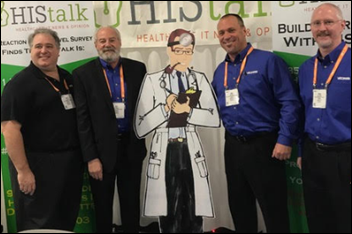
Curbside Consult with Dr. Jayne 3/26/18

March 26, 2018 Dr. Jayne Comments Off on Curbside Consult with Dr. Jayne 3/26/18

I received quite a bit of feedback on last week’s piece that mentioned the concept of moral distress. Someone experiences moral distress when they know there is a “right” thing to do, but are blocked from pursuing it by institutional constraints. It was previously spoken of in clinical circles and can contribute to burnout. We’re seeing more and more people experiencing these symptoms even if they’re in support roles as opposed to being frontline clinicians.

One reader noted:

Spot on. Having been in the vendor side of the house for over 40 years, I’ve seen the challenges of performing daily duties grow exponentially, especially in the clinician environment. Volume over value is one direct contributor to this headache. As long as earnings per share remain king in the mind of the C-suite (indirectly, but this is how the folks on the carpet think if you ever have a meaningful discussion with any of them) and maintaining decent margins is the most important focus, the system will never be people-centric. Empowering mid-level leadership has been the nemesis of success for many, many years. We have a disease management system in that generates $3.7 trillion annually; makes this system the largest employer in the domestic US (outside of the US government); and is trying to transition to a true healthcare system. Until the right entities and people are brought to bear and focused upon, status quo will remain king.

With the push towards analytics and true disease management (capturing the most expensive patients and figuring out how to care for them in a way that is less expensive) we’re starting to see some movement, but not enough. Many primary care practices are caught in the chicken-or-egg situation where you have to have money to buy software and hire care coordinators to manage complex patients to get paid for care coordination. Even the “incentives” available as CMS payments don’t cover the overhead of actually performing the care coordination for many practices, and unless you’re involved in full risk contracting, you’re not likely to see that money returned to your practice as “savings.”

On the software front, I see many vendors pushing slick-looking analytics platforms, but they’re not able to deliver the education needed to help practices actually move the needle. It’s one thing to learn how to identify the patients and document on them, but it’s another thing entirely to learn how to interact with those patients and come up with creative strategies to work around their barriers to care. Most of the care coordinators I know are magicians, pulling from a bag of tricks to fight complex situations involving lack of financial resources, unemployment, neglect, depression, anxiety, abuse, trauma, food insecurity, and more. When the frontline team caring for these patients doesn’t have enough “tricks” in that bag, it really doesn’t matter whether you’re working from the shiniest application or from the much-maligned Excel spreadsheet to track your patients.

Still, people are working hard to try to minimize the problems that care teams face. A reader on the Informatics side of the house had this to say:

We implemented quarterly release cycles. We first defined what we considered support and maintenance (change a price on a fee schedule, update a med on an order set, add a new employee to a work queue, etc.) with specific turnaround times. This was ongoing work that was on a daily o rweekly basis. Everything else, including optimization enhancements and projects, were on a strict quarterly release cycle. Originally, we implemented this as a way to achieve economies of scale with our build, testing, training, updates to policies and procedures, etc. For example, prior to release cycles, we ran the same test script multiple times to test a variety of build items for different projects. With release cycles, we streamlined this so we only had to run the script once that would test the build for those same projects. We found that we gained a significant amount of capacity back to those same teams.

In an employee engagement survey conducted approximately nine months after the implementation of release cycles, we noticed an almost 40 percent improvement in scores related to stress, burnout, and anxiety. It was the best improvement across the entire survey. Because of the significant increase, HR conducted many follow-up surveys and focus groups to try to better understand the increase. One of the major contributing factors was the implementation of the release cycles. When asked why, people (nurses, physicians, IT, etc.) almost universally said that the predictability of the release cycles (we started a new cycle the first Monday of a calendar quarter and would go live on the last Tuesday of the quarter) allowed for better change management and to plan their schedules accordingly. Part of their stress levels was that people felt everything changing constantly on them from a day-to-day basis. The release cycles allowed them to better understand the changes to their workflows and adopt the new change before introducing additional changes. We never thought about release cycles in those terms, but it became a significant factor in its continuing success. In fact, when we had to deviate from our cycles for ICD-10 implementation due to external factors, it created significant pushback from operations. I just wanted to share my experience for a potential strategy that other organizations might find useful.

Well said, and solid concepts. I continue to see organizations (and vendors) who don’t have a well thought out release strategy. Or perhaps it’s well thought out but poorly executed. From an end user standpoint, I see the best adoption when break/fix is separated from enhancements and new features, even though that might mean a bit of overlap in training strategies. It’s tempting to say lump it all together, but that can mean users spending more time on broken platforms while trying to save a buck.

Employees are more resilient than we think as far as being able to compartmentalize different types of change. In my CMIO life, we rolled out “urgent fixes” such as new drugs or charge changes after hours on a relatively real-time basis, with notification to those who had logged the issues. The rest of our fixes were deployed monthly, with communication of the emergency items added to that communication so that we weren’t bombarding general users with all the “urgent” items. The monthly package was always deployed the same night as the physician IT advisory board meeting, so that we could re-communicate the changes (and because the analysts were already staying late, so we could save on the catering by feeding both crews at the same time).

Major upgrades to the application happened twice yearly and we opted to hold some workflow changes until those releases — even though they may have been patched earlier — in the event that we thought more intense training was needed for successful adoption. Those major releases included Web training, in-person training, and 1:1 training where needed, whereas the monthly patches were basically described in newsletter format.

It worked well for us and seemed logical, so I was surprised when I went out into the larger world and saw the mess that some groups make of application change management. One organization just threw patches on the system every Thursday night, regardless of whether the patches addressed issues of record. There was no communication to end users. Another communicated every little thing, whether it was relevant or not, causing the users to miss important issues.

Of course, if you’re on a vendor-hosted platform, you might not have the choice to identify how and when you’ll be updated and upgraded. In my clinical world, I often come in to some surprises regardless of how well the team has tried to communicate them. Usually they’re small, though, and our clinicians are adaptable, so not having that level of control isn’t as major of an issue as one might think. Of course I might feel differently if this was software for the operating room, the ICU, or another high-stakes environment, but for urgent care, it works.

I always appreciate hearing from readers, especially when there is concrete advice involved. How is your organization working to reduce burnout? Leave a comment or email me.

Email Dr. Jayne.

HIStalk Interviews Nancy Ham, CEO, WebPT

March 26, 2018 Interviews Comments Off on HIStalk Interviews Nancy Ham, CEO, WebPT

Nancy Ham is CEO of WebPT of Phoenix, AZ.

image

Tell me about yourself and the company.

I’ve been in healthcare for 25 years now, which is hard to believe. I’ve been fortunate to work my way across the continuum of care, starting with primary care, then specialist, hospital, and now post-acute, with some forays into payer, pharma, and lab along the way. I’ve been fortunate to work in a lot of different kinds of companies, from a startup that became a billion-dollar IPO to VC-backed companies that became part of bigger companies to being in a Fortune 50 division. I’m currently at WebPT, which is the leading EMR for the $30 billion rehab industry.

What are the similarities and differences between software used in an outpatient therapy setting versus that used by hospitals and physician practices?

It’s all about fit for purpose, especially EHR. As the name implies, it is purpose-built for its user base, which in our case is physical therapists, occupational therapists, and speech-language pathologists. You can imagine how different the diagnostics and clinical workflows might be from dermatology to cardiology to physical therapy. That’s why you’re seeing a lot of growth and activity in vertically specialized EHRs, like WebPT, Modernizing Medicine, and others.

Are outpatient therapy clinicians happier with their specialty-specific EHR than EHRs in general?

We were founded by a physical therapist, Dr. Heidi Jannenga. We often hear from our customers that it’s obvious that the product was written by a physical therapist. It supports their clinical workflow and thinks the way they think. We work very hard on that because we want to be as unobtrusive into the patient conversation as possible and be as compliant and efficient as possible to let therapists spend as much time as with their patients and as little time as possible with documentation. That’s a hard task, and something we constantly come back to. How can we improve? How can we make it better? How can we incorporate new, emerging technologies, like voice?

I also think it’s worth noting that there’s a lot of dissatisfaction with EMRs, both general and specialty. In fact, the last survey I saw showed that only one of the eight major general EHRs had a positive Net Promoter Score. We’re very proud to have a strongly positive NPS at 32, which I think is a reflection not only on the software, but on all the other pieces we bring that help our customers achieve their goal and our mission, which is to help therapists achieve greatness in practice. That means clinical greatness, financial greatness, and patient satisfaction greatness and then wrapping all that with stellar service and education.

We often focus a little bit on the product when having this dialogue as an industry. But to me, it’s about the entire ecosystem that you provide to your clients — we call them members — to support them in every aspect of what they’re trying to do.

Is the trend of consolidation at every level of healthcare, from providers to insurers, affecting your customer base?

Very much so. There are about 36,000 to 40,000 outpatient rehab clinics and we’re very privileged to serve 12,000 of them, so about a third of the industry. But as we’ve seen in virtually every other healthcare vertical, bigger companies are now being created. We have customers ranging from a single clinic to our largest customer’s 1,600 clinics. That’s an exciting change for the industry, because as we create more clinic operators of scale, it opens up a broader opportunity to participate in value-based care, for example. You now have some geographic density that matters to an IDN or a payer and you can participate in bundles or an ACO or whatever value-based care arrangement might happen.

We also see larger operators become able to invest more in data-driven clinical outcomes, which is a topic we’re particularly passionate about as a company. They are able to participate more vibrantly in that care continuum. I don’t know if you’ve been to PT, but I myself am PT patient. I spend a lot more time in that clinic than I do in my doctor’s office. We also think there’s an interesting opportunity for physical therapy to have a louder voice in primary care because of the hands-on time they’re spending with their patients. That’s something we want to support.

The opportunity here is that every year, 128 million adult Americans have a musculoskeletal condition that lasts more than three months that would benefit from physical therapy. Only 8 percent of them make it to physical therapy, so the other 92 percent are getting opioids or pain meds. They’re getting imaging, surgery, or perhaps nothing at all and they’re just sitting at home in pain.

As the industry is consolidating and expanding, it affords us a better opportunity to bring more patients to PT and make that 8 percent 10 percent or 15 percent. There’s a growing body of clinical evidence that PT is the best clinical pathway for a number of conditions in terms of cost and quality and in terms of the patient not just getting better, but getting well.

I’ve read that a big problem in physical therapy is that patients don’t complete their treatments, either because of cost or because they feel better. What have you learned about how your provider customers engage with their patients?

I’ll admit that I was initially a PT dropout myself. I quit going after my third visit because I felt better. But I was not well. I’ve since returned, completed my course, and returned to my best health. That’s a common issue. Patients are busy, and if they’re paying out of pocket, it’s expensive, so they tend to quit as soon as they’re seeing some progress.

That’s where we can use technology to help patients understand what their best outcome is. We have a data-driven clinical outcomes product. We can predict how much recovery of function you will gain based on the number of visits. If we can illuminate that to patients — to show them that if they would complete their course of care, their range of motion, for example, might improve another 30 percent — that would be motivational.

We acquired a company last year that allowed us to launch a new digital mobile platform to help patients communicate securely with their clinician to continue their therapy between visits from home exercise programs, or HEPs. HEPs are an important part of the PT story. Also to share their honest feedback on a Net Promoter Score basis.

Patients drop out because they have a bad experience. It could have been parking, the front desk, understanding their bill, or the clinical care. By helping illuminate that in real time to our practices, we’re giving them a real-time chance to intervene with that patient and have that conversation. We’re seeing good data that this combination of tools increases the stickiness of patients with their prescribed therapy. We’re excited about that as a trend for both patients and our clinics.

Is there any movement toward PTs using technology to help patients do their exercises effectively at home, like a video PT visit?

Yes. One of our new products is a robust, video-based mobile platform for patients to understand what they should be doing. To see it, repeat it, and communicate with a therapist how that’s going.

There’s a lot of invention happening in the next wave of virtual rehab, whether it’s using an avatar or using a 3D camera to literally measure your performance. We’re in the early stage of those technologies and maybe a little early stage on the business models to support them, because telemedicine at large has not yet penetrated into the rehab market the way it has in other verticals. There’s a lot of opportunity there for both patients and for sponsors, like employers who want to offer more convenient, more affordable ways for patients to recover from a work injury, perhaps. It’s an area we’re watching very closely.

What are your biggest takeaways from the HIMSS conference?

It was my 25th year attending. I learn less from HIMSS than I used to. It’s more an opportunity to see customers and partners and network with thought leaders in the industry.

I was struck by the amount of virtual assistant technology being shown. This introduction of voice to make technology easier for clinicians to use while they’re in direct patient engagement is encouraging. While perhaps machine learning, artificial intelligence, and big data are being over-hyped, we’re starting to see some real, practical uses of that data. That’s something we’re doing in continually improving our outcomes product — getting more predictive about what’s your best course of care and what is your likely outcome. Blockchain — not Bitcoin, but blockchain — is something that’s very interesting and I’m starting to become more optimistic that we’ll see some real adoption of it in healthcare.

What would you recommend to women who want to move into health IT leadership roles?

I would suggest they watch the amazing HIStalk webinar that Liz Johnson and I did on secrets to success for women in HIT. Thanks to HIStalk for affording us that opportunity.

Things are getting better, but it is incumbent upon women to actively study and learn what they can do to be more effective in their roles, to be more effective in leadership, and to be more effective in managing their careers.

My best advice to everyone is to make networking a part of your everyday life. Healthcare is such a collegial industry. I’ve virtually never been rebuffed when I’ve reached out to someone to say, “I’m interested in learning from you. I’m interested in your career path.” In those connections, you both learn and are inspired by someone else’s story. You make a new friend and maybe come away with a good idea for your project, your company, or your career.

Do you have any final thoughts?

In my 25 years, I’ve been a passionate advocate for interoperability. I started out in the mid-1990s trying to build CHINs — community health information networks — and most recently led Medicity, the large HIE company in our industry, processing billions and billions of real-time clinical transactions a year.

I would like to call upon my fellow EHR and EMR CEOs to continue to open up our platforms to innovators, to data exchange, and to supporting the patient’s journey. It is the patient’s data. We are honored to be entrusted with that data. Our job is not to lock it up, but to digitize it in an appropriate way that helps the patient achieve their best outcome while achieving the Triple Aim. I would love to see my fellow CEOs step up and do more in this regard.

One thing we’ve done here at WebPT since I joined is to create a vibrant partner ecosystem. We are supporting our customers as they find and implement all sorts of innovative, interesting other technologies that help them run their practices and serve their patients.

Monday Morning Update 3/26/18

March 25, 2018 News 1 Comment

Top News

image

Israel will spend $287 million to make the health data of its 9 million citizens available to researchers and private companies for work on preventive medicine and personalized medicine projects, Prime Minister Benjamin Netanyahu announced Sunday.

Most citizens of Israel belong to HMOs, whose EHRs will provide the electronic patient data to the government unless they opt out.

Concerns have already been expressed about patient confidentiality and whether the billions of dollars Israel could charge drug companies for using the data will trigger higher drug prices.


Reader Comments

From Imaginary Lover: “Re: Dr. Jayne’s comments about SteadyMD’s CEO declining to comment on its SEC-reported funding. It’s unusual, but understandable. Funding comes at a cost that includes loss of control and dilution (sometimes massive) of previous shareholders. The co-founder and CEO who declined to comment was probably a major shareholder before this infusion, but maybe not afterwards. New funding may save a company from certain death (bankruptcy) but can be the beginning of another kind of sickness – now the company has to pull a rabbit out of the hat for the new investors in short order to give them a return. If it can’t, investors may pull the plug or fire the CEO. The fellow who invested his time, sweat, money, and lifeblood is taking on risk and losing equity, all in one fell swoop. Trying to act like the belle of the ball in those circumstances must be a challenge. I feel for the guy.” I enjoyed the wit, warmth, and insight of this comment so much that I’ve asked the author to consider making further contributions. Sometimes you just read something that elicits a “I want to hear more from you” response.


HIStalk Announcements and Requests

image

Not only do we have much work to do in delivering a “comprehensive health record,” we can’t even agree on how far along we are. Reader comments note health system data hoarding, the lack of semantic standards needed to make exchanged data useful, and health systems that don’t fully populate what could be a complete medical record.

New poll to your right or here: what online sources have you used in choosing a doctor? I always pair up my insurer’s director with Healthgrades and haven’t used any of the other sources I listed.

Responses to “What I Wish I’d Known Before … Being Admitted to a Hospital or Being Seen in the ED” suggest that while hospitals provide many of us with our living, our experience as patients in them is frustrating and sometimes dangerous. One bizarre example: a hospital insisted on giving a newly-admitted patient the meal that the room’s since-discharged previous occupant had ordered (a fruit cup), so the famished poll respondent ordered a nice dinner on discharge day so the next patient wouldn’t starve.

image

Let’s hear from folks who have retired or downsized their careers – what do you wish you’d known?


Webinars

April 5 (Thursday) 1:00 ET. “Succeeding in Value-Based Care Via a Technology-Driven Approach.” Sponsor: Health Fidelity. Presenters: Adele L. Towers, MD, MPH, senior clinical advisor, UPMC Technology Development Center; Adam Gronsky, director of advisory services, Health Fidelity. Success in value-based care requires a thorough understanding of how risk-based payment models work. To prosper in this data-laden era of care, providers need to manage their patient populations holistically rather than through a collection of individual episodes and be able to accurately identify, document, and report risk scores. Given the stakes, is your provider organization adequately set up to take on and succeed in managing risk? In this webinar, learn how technology-enabled risk capture optimization is helping providers succeed in risk-based payment models.

Previous webinars are on our YouTube channel. Contact Lorre for information.


Acquisitions, Funding, Business, and Stock

Regulators approve the merger of Advocate Health Care and Aurora Health Care that will create the country’s 10th-largest non-profit health system upon closing next week. Advocate Aurora Health will have 27 hospitals, 3,300 employed physicians, 70,000 employees, and annual revenue of $11 billion. The organizations predict that synergy will support the always-promised, never-delivered goal of higher quality and lower cost.

Wolters Kluwer completes its acquisition of 16-employee medical student learning platform vendor Firecracker.


Sales

image

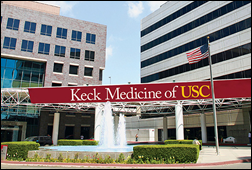
USC’s Keck School of Medicine joins the global health research network of TriNetX.


Decisions

  • MultiCare Deaconess Hospital (WA) will go live with Epic in summer 2018.

These provider-reported updates are supplied by Definitive Healthcare, which offers a free trial of its powerful intelligence on hospitals, physicians, and healthcare providers.


People

image

The analytics-powered insurer that is being created in a joint venture between Sutter Health and Aetna hires Steve Wigginton (Valence Health) as CEO. Evolent Health acquired Valence Health for $219 million in October 2016, after which it replaced Valence’s CEO Andy Eckert with Wigginton, then Evolent’s chief development officer. 

image

Culbert Healthcare Solutions hires Wayne Thompson (Mount Nittany Health) as executive consultant.


Announcements and Implementations

image

Alex Scarlat, MD publishes “Medical Information Extraction & Analysis: From Zero to Hero with a Bit of SQL and a Real-life Database.” It gives clinicians an introduction to SQL using hands-on exercises running against a de-identified ICU patient database from BIDMC. It also helps IT folks understand the data elements that interest clinicians.

image

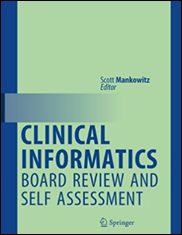
I also noticed when looking up Alex’s book on Amazon that Springer has published a review and self-assessment for the ABPM’s clinical informatics board exam. I can’t vouch for the ultimate outcome of improving test scores in return for your $125, but the material looks solid, the writing is meaty, and the sample test looks darned hard. The other available review book ($129) has just three Amazon reviews, but one titled “Not fit for sale” raises a red flag in noting that “clinical” is misspelled on the book’s spine.


Government and Politics

The federal government’s spending bill leaves ONC’s annual budget unchanged at $60 million – at least through September – instead of being reduced to $38 million as requested by the White House.

In Canada, New Brunswick offers a $2,500 bonus to doctors who start using its provincial EHR, hoping to entice the 400 of its 750 physicians who haven’t transitioned off paper charts to do so. The EHR was implemented in 2012. 

image

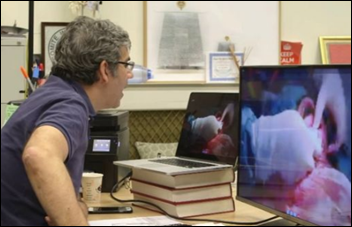
A surgeon in England believes that the Syrian military hacked his laptop to determine which hospital he was helping with video surgery consultations as featured on a BBC program, after which suspected warplanes destroyed the hospital with a bunker-busting bomb. A security expert suggests creating a VPN connection for secure laptops, but the surgeon has since stopped offering video help to doctors in war-torn areas.


Other

SNAGHTML36d713a9

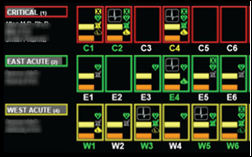
Harvard Business Review describes Mayo Clinic’s effort to reduce ICU clinician overload caused by a never-ending stream of data. They’re using “ambient intelligence” in applying NASA methods to identify clinicians whose workload requires them to filter vital information from data clutter, identifying the 60 data elements that are important for taking quick action. The end result was an EHR-connected, rules-based, color-coded dashboard that saves an ICU clinician an hour each day while improving outcomes and reducing costs. Mayo has licensed the technology to Ambient Clinical Analytics.

image

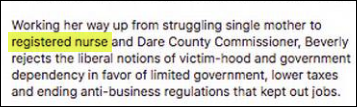
A North Carolina state legislator who used her background as a nurse to sponsor several health-related bills isn’t a nurse after all. The state’s Board of Nursing orders Beverly Boswell – whose only healthcare background is as a phlebotomist – to remove her claims of being a nurse from her website, which Boswell says was due to a campaign volunteer’s error. However, video shows her telling an audience in 2014 that her background includes “providing nursing skills and medical care.” The Republican lawmaker earned more attention last week when she called a school outside her district after believing a fake news report saying that students were being required to walk out to protest gun violence, posting on Facebook afterward, “So the students that were eating Tide Pods last week run your school this week?”

SNAGHTML3709da80

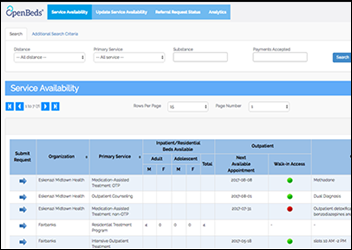
An addiction publication profiles OpenBeds, software developed by Johns Hopkins medical school faculty member Nishi Rawat, MD. Indianapolis social workers are using it to find available space in opioid addiction treatment facilities.

In China, a media company tells a woman applying for a live-streaming job that her appearance is “far from that of an Internet celebrity,” advising her to have cosmetic facial surgery at their expense. An employee went to the hospital with her on the day of surgery and told her she would need to borrow the $6,300 cost from an online loan company and would be reimbursed afterward. She wasn’t, and she was let go because she still didn’t meet appearance standards. She is suing the company. Such financing is called a “face loan” in China, where would-be Internet stars with poor credit histories often find themselves unable to pay the money back.

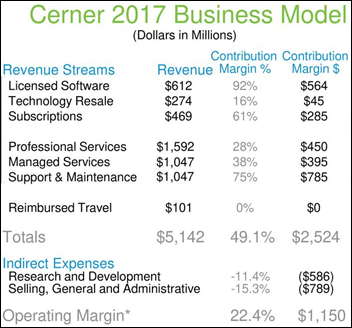
Vince and Elise pored over health IT vendor financial filings to name their Top 10 hospital system vendors by annual revenue. Most are unsurprising and the Top 3 hold a giant chunk of the total, but let’s hear it for those #7-10 companies that get less attention as significant players – Harris Healthcare, Medhost, and Cantata Health. Vince notes that Meditech is back in growth mode after four years of declining revenue and also observes that none of today’s top five vendors were on his 1998 version of the list at all. It’s pretty interesting that it took just 20 years for acquisitions (some of them ill-advised and three involving Allscripts buying its way into today’s Top 5) to decimate all of the 1998 Top 10 other than Meditech and CPSI. 

This is fantastic: a Columbia University surgery resident dryly analyzes the accuracy of ED and OR scenes from several dozen movies and TV shows in a  video that has earned 1.6 million YouTube views in barely more than a week. One of her many quotable lines involves her observation of Dr. House running around the OR in street clothes: “In real life, that guy would have been tackled by about six tiny perioperative nurses far before he got to the operating room.” She compares surgery to her hobby of running marathons: “You have to be a masochistic glutton for punishment with obsessive compulsive tendencies.”

Weird News Andy confidently labels this honey of a story as T63.442A, “toxic effect of venom of bees, intentional self-harm, initial encounter.” A woman dies of an allergic reaction caused by a bee sting intentionally administered in a cosmetic procedure called “apitherapy” that has been lauded by anti-medical Hollywood goofball Gwyneth Paltrow. WNA consulted the primary literature in noting the line, “after getting bee venom therapy from an unlicensed apitherapist in South Korea,”which he takes to mean that South Korea has actual, licensed apitherapists. He extends the nomenclature to counselors for software developers in suggesting that they call themselves “APItherapists.”


Sponsor Updates

  • QuadraMed celebrates Health Information Professionals Week.

Blog Posts


Contacts

Mr. H, Lorre, Jenn, Dr. Jayne.
Get HIStalk updates. Send news or rumors.
Contact us.

125x125_2nd_Circle

What I Wish I’d Known Before … Being Admitted to a Hospital or Being Seen in the ED

How much my ambulance / ED / hospital bill would be for a three-day emergency admission at an academic medical center in Tokyo. Being an American, I spent much of that time stressing about how much it would cost me, assuming I’d be presented with the usual five-digits-or-worse sums we get slammed with in the US. Turns out I didn’t need to stress out so much The ambulance ride was free, courtesy of Japan’s taxpayers. The ED workup, including tons of labs and imaging orders plus the three-day stay, ended up being about $2,000. I expected at least one more digit on that number. The standard of care and facilities was actually better than what I’ve seen at most US hospitals. A good reminder of just how absurdly out of hand healthcare costs in America are by comparison. In related good news, my employer’s surprisingly generous health insurance plan reimbursed the full cost, no questions asked, probably because it was way cheaper than paying for a comparable situation here at home.


1. In the Emergency Department, even though I confirmed with the reception-triage nurse that my physician earlier had called into the ED to discuss my condition and to refer me to the ED and hospital, my medical record, under referring physician, listed SELF-REFERRED.

2. For the next 5 1/2 hours, while I was waiting for a decision to be made about my painful condition and hopeful admission to the hospital, two or three of my “neighbors” in the Emergency Department room were seen and admitted to the hospital. In addition, an Emergency Department staff nurse who complained of flu onset was immediately admitted to the hospital in an available pediatric bed.

3. After another three hours, finally a call was made to the gastroenterologist on call, a Fellow. She never came to see me. I was told by the attending Emergency Department physician 1) that GF did not think I needed to be admitted; 2) that except for requiring a blood transfusion, which would be risky, I was “healthy” and I should be discharged home.

4. Three days later (after the weekend), when I appeared for a rescheduled Clinic appointment, I was immediately admitted to the hospital with intractable diarrhea, failure to thrive, iron deficiency anemia, and a urinary tract infection. I remained in the hospital for TEN days.

5. After discharge, ONLY one day later, the home health nurse, my referring physician, and the on-call hospital physician advised me to return to the ED so I could be readmitted to the hospital.

6. This time in the ED, an NG tube was placed down my throat. From the time I received the NG tube to the time I was finally re-admitted to the hospital, eight and a half hours transpired! I was told that the reason for this intolerable delay was that the Medicine and Surgery Department physicians could not determine what was really wrong with me, and so they argued back and forth about which service should admit me!


Information about your condition and treatment will be verbally communicated to you regardless of your ability to comprehend or retain it due to pain and medication. And your care is overseen by a series of non-employee hospitalists that come and go, leaving nothing but a bill and an 800 number where you can leave a message but never hear back.

Upon discharge, you will be given a paper prescription for three days of medication and instructions to contact your PCP that wont be able to see you for a week.

Within three weeks, the bills for out-of network providers that you don’t remember seeing begin to arrive and will continue to arrive over the next year.

The only coordination of care that exists is what you personally enforce so take notes as best as you can keep copies of what little information is shared with you.


I took my wife to the ED late at night one time. After a thorough examination of her condition (ectopic pregnancy / ruptured fallopian) and in consultation with her OB practice’s on-call physician, the ER team decided to wait for my wife’s personal OB to come in for his morning rounds to see her. So they admitted her, without really consulting us and considering any alternative options, for the few hours until he came in and could get prepped for emergency surgery. She had a private room for all of about four hours, but of course that resulted in a significantly larger bill. I wish we had known more about this plan and had an opportunity to weigh in on the admission decision.


My wife was admitted following a skating fall and a early evening broken wrist. The ED did not tell us that a doctor would not be available to set the break until the morning, when we could have gone to a nearby hospital and had it done right away.


Admitted after about twelve hours in the ER bay (not too much of a complaint, they’re a busy hospital) to a room shared with a women with an altered mental state who rang the nurse call button about once every half hour.

I was brought a hospital gown and trousers, which were left folded on a chair that was past the end of my bed. I was hooked up to an IV on one side, and a heart monitor on the other, so I couldn’t even crawl to the end of my bed to try and reach for them.

The main light in the room was a bright overhead fluorescent light that spanned the width of the room, directly over the head of both patient beds, meaning that every time they checked on her in the middle of the night, they turned on a light that shone through my eyelids.

Eventually they stopped turning it off altogether, so I had to try and sleep with a pillow over my eyes, while hooked up to a drip and a heart monitor.

Similar experience with meals: I was moved to a new room that was “private” (until the next patient moved in) and when dinner came around it was a fruit cup and nothing else.

  • “That’s what you ordered.”
  • “I didn’t order anything, I just got here.”
  • “That’s what the last person in this bed ordered.”
  • “They were discharged, they aren’t here to eat their dinner. I am.”

The nurse felt really bad for me and rustled up something a little more substantial, but the total lack of coordination and apparently awareness that beds turn over was startling. I made sure to order a nice full meal before I was discharged so that whoever came after me got at least something they could eat.

Being provided instructions by the nurse on how to make my own bed with new linens. I don’t know what to make of that. On the one hand, nurses aren’t maids, so it seems weird to be churlish that the nurse wouldn’t be making a bed, but on the other hand it definitely seems weird to ask a patient (who is still hooked up to a heparin drip with a heart monitor in the gown pocket) to do it.


I wish I had known that just because nurses don’t get technology doesn’t mean they can’t give you excellent care. At the time I was doing desktop support at a hospital and went to the ED with a particularly virulent GI bug. Due to a combination of factors, they decided to admit me after six hours in the ED. I went to the floor where I felt the nurses were particularly incompetent based on the interactions I had had with them about their computers. The care I got was wonderful and I was incredibly grateful and humbled.


The difference between being admitted and being observed.


That the hospitalists may not be in my insurance plan and I don’t really get to choose the one that will see me.


That the doctor treating me while at an in-network hospital was actually out of network. Then that HDHP out-of-network charge single-handedly emptied my HSA for co-pay and co-insurance.


Even though the wait at the ED seemed shorter than at urgent care, by the time you add in waiting around for the doctor to get results and then actually share them with you, it ends up equaling out, except from a money perspective. ED is definitely more expensive.


As CIO, I was shocked at how folks taking care of me used the systems we had deployed. In discussion with them, it turned out their training was not adequate or they were told “this is how we do it.” What disappointed me most was that my staff was well aware of it and had done nothing to improve the situation, including giving management a heads up. Turning that around took a long time.


I’m probably not a very good person to answer this one, but I honestly felt very prepared for my inpatient surgery a few years ago. I owe this to a pre-op surgery instruction program I attended which was hosted at the hospital a month or so before the actual day of surgery. My doctor and his staff were also very organized and on top of their processes before the day. I had all my questions answered, fears allayed, and was pretty ready to go on D-Day. In fact, my care while at the hospital was so good, I almost didn’t want to come home. Yep, I know, this sounds like a paid advertisement. But I think it was my own initiative to educate myself and the the doctors’ / hospital’s efforts to plan how to educate patients to be ready.


Weekender 3/23/18

March 23, 2018 Weekender Comments Off on Weekender 3/23/18

weekender


Weekly News Recap

  • A comment made by a member of the House Appropriations Committee suggests that the VA’s cost to implement Cerner will be at least $16 billion, of which Cerner as prime contractor will be paid $10 billion.
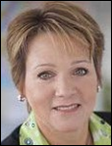
  • RCM outsourcer Constellation Healthcare Technologies files Chapter 11 bankruptcy, accusing former executives of falsifying its financials and blaming the high debt it took on to fund acquisitions.
  • Former Vice-President Joe Biden calls for HHS to cite providers for data blocking if they fail to give patients their information electronically within 24 hours of their request.
  • A New York Times article says the NIH’s $1.4 billion “All of Us” data collection project that hopes to enroll 1 million people is moving slowly, spending a lot of money, mired in the challenge of harvesting information from disparate EHRs, and facing the reality that the US doesn’t have enough DNA sequencing machines to handle the load.
  • The IPO of Siemens Healthineers in Germany raises $5.2 billion.

Best Reader Comments

HIMSS is a necessary evil. From my perspective (i.e. for my role/life) it’s overly focused on “hospitals” and “information technology” (I get that’s a feature, not a bug – this was, after all, the Hospital Management Systems Society). Not every problem in healthcare is going to be solved using software in a hospital. Most of them are probably not. But every year, in rolls HIMSS with big booths from the heavy-iron hospital vendors (Epic, Cerner, Meditech, et al.) looking to meet with CIOs who are focused on incremental improvements to ancient and inadequate systems. All of the “education” sessions at HIMSS are some combination of hopelessly in the weeds and a veiled pitch for a piece of software that I don’t really want to buy. I really don’t need to sit in some nosebleed seats to hear Peyton Manning or Magic Johnson tell me something about healthcare. The best part of HIMSS is the Mos Eisley Cantina that is the basement or adjunct hall where HIStalk usually camps out. In those 10×10 booths are the dreamers and builders who might really be the next big thing. HIMSS has to exist, real work does get done there, but it’s really pretty deep in the machinery of the healthcare system. Will HLTH be different? I don’t know, but I’m willing to give it a shot. (Debtor)

Do we really mean data? Most of what I see in motion, even with interoperability initiatives and FHIR APIs, are records — which is to say, documents and text representing the documentation of care, mostly in a legal medical record sense. As a clinician, I can say that, no doubt, this information has use and value, especially compared with the alternative. Still, it is far from computable. Biden’s interest in data sets shows he is reaching for the latter, and I am beginning to think the lack of distinction is really a problem, expectations-wise. Hopefully, ongoing progress in natural language processing (is the language really that natural?) will save us (by which I mean, me, the clinician) from fixing it, by becoming even more of a data entry worker. (Randy Bak)

Orwellian Aeron chair: If sitting is the new smoking, I’m sure this exercise motivator will have some real health benefits. Perhaps a little electroshock to get us up and about on a regular basis? I’m looking forward to Weird News Andy’s updates covering the exhaust analysis feature: colon cancer screening, dietary recommendations, etc. (Another Dave)

Epic, Athena, Allscripts, NextGen, Cerner, and others are all doing the same thing – they have open APIs, but make it very difficult to get approved to access data. (Annon)

I agree that it’s unfair and irresponsible to lay this [social determinants of health] at the feet of physicians. They certainly aren’t in control of all the economic and social factors that inform the health of this country, but its equally unfair to point the finger at patients themselves as if all the external circumstances that impact them (housing, job, food access, sexism, racism, homophobia, you name it) are 100 percent in their control, as well. (HIT GIrl)

I work in an IT department of a large IDN. The physician salaries and perks are obscene. We talk about all “waste” in health dollars, but I would like to see all these hospital costs out in open and distinguish between the costs borne by the hospital for conducting the tests and costs due to physician salaries / payments. Looking at what goes on in our system, physician compensation is the biggest elephant in the room. (IT Guy)


Watercooler Talk Tidbits

image

Readers funded the DonorsChoose teacher grant request of Ms. C in Utah, who asked for science books for her Friday morning STEAM lessons. She reports, “We have been so excited to open our boxes and find high-interest books for our third graders. Our class is excited to start planning our projects to demonstrate their understanding of a major science standard in third grade: interactions between living and non-living things. We have already started looking through our books. The kids can’t put them down!”

image image

We also funded the request of Ms. A, who asked for an air quality meter for a project her fifth grade class in Pennsylvania is doing. She says, “Students are taking turns taking home the air quality meters every three or four days. They have found enough places in their own home to check air quality from the attic to the bathroom to their stinky brother’s room to the basement. Students are recording their results in science notebooks that they take home with the books, but when they come back to school, they transfer their data to a shared spreadsheet. The kids love looking at the results. I can’t wait until everyone has had a chance to take the meters home. Then we can really explore what the numbers mean, and I can teach the students how to create graphs using Google Sheets.”

Listening: the cover of “Zombie” by otherwise forgettable metal band Bad Wolves, which while missing the seething Irish anger of the original by the Cranberries and its late singer Dolores O’Riordan, offsets it with searing guitars. O’Riordan died the day she was scheduled to perform the vocals with the band on the recording, so they released it her honor instead. Speaking of angry political songs of that era on SNL, there’s the prophetic sneering thrash of 1989’s “Rockin’ in the Free World” by Neil Young. But arguably the most discomforting social protest song ever was Billie Holiday’s 1939 “Strange Fruit.” Switching to something new, there’s a just-released album from hard rock band Dorothy.

Our booth neighbor down in the basement of HIMSS18 was integration platform vendor MuleSoft. Some of their self-absorbed sales guys were kind of rude to Lorre and Brianne, but maybe they knew what was coming —  Salesforce just bought the company for $6.5 billion.

image

ProPublica reports that IBM – panicked by competition from more nimble and often global competitors and its own failure to execute – has intentionally ditched its older, higher-paid workers to replace them with cheaper newbies and offshore workers while breaking US age discrimination laws or using loopholes to avoid them. Techniques include:

  • Laying off older workers in telling them that their skills were outdated, but then hiring them as contractors at a lower rate
  • Encouraging laid off employees to apply for other company jobs, but telling managers not to hire them
  • Requiring laid off employees to pursue age discrimination complaints via private arbitration rather than lawsuits
  • Using employee privacy as an excuse for not publishing legally required layoff lists that would allow those employees to see how many of those laid off were older
  • Labeling layoffs as retirement even when the employee refused to acknowledge it as such
  • Using what IBM called “lift and shift” to lay off US employees and send their work offshore, causing IBM to now have more employees in India than in the US

image

Meanwhile, Bloomberg says that GE sent former CEO Jeff Immelt packing with millions of dollars in parting gifts but has reduced benefits to employees and retirees in an attempt to make its financial numbers look better. Example: the company changed its pay schedule to push the final paycheck of 2016 to a week later, improving its year-end cash flow position; it implemented an “unlimited vacation day” policy that also means it doesn’t have to pay out the unused days as severance; and it replaced merit raises with bonuses tied to unstated objectives. The article notes, “GE has lost more than $100 billion in market value since CEO Jeff Immelt announced his retirement in June, and not because anyone misses him.”

A sharp Vox opinion piece observes that Facebook is like casinos, cigarette manufacturers, and companies that sell alcoholic beverages – it makes most of its massive profit from addicts who feel depressed and lonely and are therefore less healthy after using its product. It concludes that Facebook is “optimized for fakeness” in deliberately turning news consumption into a confirmation bias machine even as it kills off the business model of real news sources.

image

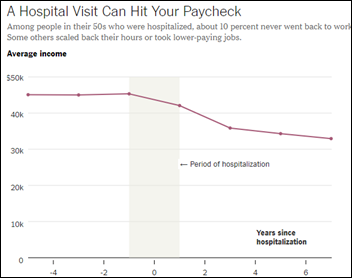
Researchers find that a substantial portion of Americans – even those with health insurance – take a big financial hit after being hospitalized. A significant number of those patients never return to work, are disabled, or require unpaid recovery time. A health economist questions whether health insurance is enough to to protect people from significant income loss, as other countries also offer wage insurance, mandatory paid sick leave, and disability insurance.

Drug companies are merrily jacking up prices even as the White House claims that it will intervene, as 20 drugs had price increases of over 200 percent since January 2017. Leading the pack was skin cream SynerDerm, whose price has increased 1,500 percent. Its main ingredients: water and vegetable oil.


In Case You Missed It


Get Involved


125x125_2nd_Circle

EPtalk by Dr. Jayne 3/22/18

March 22, 2018 Dr. Jayne Comments Off on EPtalk by Dr. Jayne 3/22/18

It’s been a wild week of post-HIMSS email madness, with most of the vendors that I asked to “give me a week to recover before we connect” having complied with my request. It’s a new strategy I tried this year and it seems to have worked, although a couple of companies did call or email the first business day after HIMSS.

You have to give them credit for working their leads, but one company’s contacts have bordered on the obnoxious – every two days with escalating language about our need to connect, and by both phone and email. You can bet that I’m not eager to connect with someone who doesn’t understand that people don’t always respond right away and that getting frantic about it isn’t going to build a potential business relationship.

Over the last two weeks, I’ve visited a couple of long-term clients to check in on their strategic planning for the next year. Organizations vary in how good they are at this process. Some that I’ve worked with do an outstanding job, with a major annual planning retreat each year and then quarterly or monthly follow-ups. They’re a joy to work with since they set their dates a year in advance to ensure everyone can attend and that agendas are productive, since they typically pull key provider stakeholders out of productive clinic time to meet their objectives.

Others are pretty bad at it, with last-minute attempts to pull people together and slapdash agendas. The worst don’t do any strategic planning at all and then wind up in a frenzy as they struggle to meet regulatory or other deadlines.

I was contacted by one of these organizations this week, who is looking for last-minute help with clinical quality measures reporting which is due very, very soon, as in “nine days from now” soon. I have a handful of groups reach out to me every year and all are in the same dire straits. One version of the tale of woe has the person who used to be responsible for it leaving the practice, out on medical leave, or something similar. Another version has someone running the reports regularly, but not telling anyone the numbers are bad until the end of the year and it’s too late to correct workflows. When the physicians find out, they go ballistic and I get the call. The third version has a group who knows their numbers are bad and workflows are problematic, but wants someone to “move” the data because it’s all somewhere in the EHR but just not in the right fields for reporting tools to pick it up.

I’ll help the first group as much as I can, but the rest are on their own for this reporting cycle. I’m happy to contract with the latter two to try to remediate them for next year, but I’m not going to tackle their dumpster fire (which incidentally was added to the Merriam-Webster dictionary) this year.

I enjoy reading posts by the rest of the HIStalk team, especially those that mention startups. I was baffled, however, by this piece sent to me by a reader, where startup SteadyMD refused to comment on $2.5 million in funding. Maybe they’re going for an “International Man of Mystery” vibe, but as an industry follower, it seems unusual.

clip_image004

In the “truth is stranger than fiction” category, I ran across this NPR piece about a reporter who had an interesting experience while working on story featuring Theranos. I’ve heard of people going off the rails during an interview, but the alleged pulling of a fire alarm to force the evacuation of a pharmacy and stop the interview is a new one.

April 16 marked Match Day, where tens of thousands of medical students are herded into auditoriums to learn their fate for the next three to five years in front of classmates and loved ones. It’s a variable experience, with some people whooping for joy and others seeing their dreams crushed. Many of us have mixed feelings about it. My medical school had a keg delivered to the auditorium lobby, so you were either celebratory or partially anesthetized by the time the envelopes were handed out.

This year’s Match set a new record, with over 37,000 applicants participating. The match results are always telling as far as physician workforce and the popularity of specialties among US medical school graduates. Programs filling with more than 90 percent US grads: interventional radiology, orthopedic surgery, integrated plastic surgery, radiation oncology, neurological surgery, and otolaryngology. The three main primary care specialties were in the “programs that filled with less than 45 percent US grads” category: family medicine, internal medicine, and primary pediatrics. The fact that US grads don’t want to go into these specialties should be very telling. Congrats to my neighbor who matched in a highly competitive specialty, even though he will be wading through lots of snow for the next six or seven years.

clip_image008

The highlight of my week was being on a conference line today with the funniest hold music I’ve ever heard. UberConference allows account owners to select their hold music, with one of the options being a song about being stuck on hold on a conference line. I’m sure it might have the potential to become annoying, but today it was just what I needed after having spent hours and hours on the phone yesterday. The worst hold music I’ve experienced was a current events news program that unfortunately was giving updates on a mass casualty situation that didn’t set the stage for a productive call, since participants were still in shock from what they had been hearing. The second-worst was music sounded like it was better placed in an adult film.

Apparently I’m not the only person with an interest in hold music, because a quick Internet search brought up several articles. I had forgotten the quirky Cisco default hold music – if you’re looking for an hour-long recording to jog your memory, you can find it here. I got my hopes up for an article that claimed to have 11 recordings of terrible hold music, but the links were broken so I missed out on that particular hall of shame.

Email Dr. Jayne.

Readers Write: I Am More Than My Specialty: Physician Burnout and Individualism

March 21, 2018 Readers Write Comments Off on Readers Write: I Am More Than My Specialty: Physician Burnout and Individualism

I Am More Than My Specialty: Physician Burnout and Individualism
By Erin Jospe, MD

image

Erin Jospe, MD is chief medical officer of Kyruus of Boston, MA.

While physician burnout is garnering more attention with a steady generation of articles and books both academic and lay, we have yet to see improvements despite our awareness of the problem. We have become facile at recognizing the symptoms of exhaustion, detachment, cynicism, and inefficiency as the hallmarks of burnout, but no better at treating the underlying causes.

Per Medscape, no specialty was spared an increase in self-reported burnout symptoms between 2013 and 2017, [1] and the prevalence is unsettling at almost 60 percent in some fields. [2] While there is no silver bullet for burnout, within their professional work environments, recognizing physicians as individuals and giving them the means to convey their unique areas of expertise to patients, fellow providers, and others within the health system can go a long way in paving a path to higher satisfaction and engagement.

We are equally aware of the downstream ramifications of physician burnout as we are of the symptoms, with repeated studies demonstrating the negative impact on patient safety, quality of care, and the patient experience. With the refocusing of the context of care upon the mission to improve patient lives, in 2007 the “Triple Aim” reminded us of the importance of how individual patients experience care. In the 10 years since, there has been a paradigm shift in respecting the individual patient as having unique needs and values that must be addressed to achieve better health.

Physician burnout directly undermines our ability to deliver on this promise and has worsened in the same 10 years. It was innovative to say we needed to acknowledge the humanity of our patients to deliver better care, to recognize the individual and not view them as interchangeable with every other patient. And yet by creating a delivery system that only recognizes the humanity of those needing care and not of the care providers, we sully the sacredness of that patient-provider relationship and create the same negative environment of disrespect that results in so much dissatisfaction among both providers and their patients.

Though we rightly strive to see and address the individual needs of the patient, there is a widespread sense that physicians themselves are interchangeable. This is no less disrespectful than perceiving patients as such. As a physician, I am far more than my specialty,  as are my colleagues. Yes, I have an expertise, and with it comes an expectation of an established skill set and standards of care. But I have a style, manner, and experience that is my own. I have defined niches of interest and excellence that make me better suited to the needs of some patients.

When given no means, no vocabulary, no voice with which to articulate that which is unique to a physician, we do a disservice to the individual physician and to the community of patients and other providers who would seek them out. Our health systems and networks of physicians are growing exponentially larger, but with it, our awareness of individual contributors diminishes. We no longer have connections with one another as physicians and no insight as to where unique strengths and gifts might exist among us.

In the face of an exploding fund of medical knowledge, we cannot deny the necessity of understanding where unique expertise — and not just specialty — lives. It is hard to enough for physicians to acknowledge the deficiencies in our knowledge base. Providing no means by which to uncover who within our community might help only furthers a tendency toward emotional and mental exhaustion.

Addressing burnout at an individual physician level is often too little, too late. Resiliency is important, but in and of itself, resiliency does not change the environment for which it is necessary, and too often will be insufficient to treat or prevent burnout.

Instead, consider the systemic and holistic organizational contributions to the environment which are causal. Rather than address the individual’s propensity to burnout, address the individual. Allow them to be acknowledged and appreciated as uniquely individual contributors. Give them the means to indicate to their networks what their clinical areas of focus are beyond merely specialty / subspecialty. Provide them with teams aligned in their mission to act in concert as exceptional people in the care of exceptional people. Facilitate their understanding of the excellence that exists within the community of providers.

Failure to do so diminishes the joy and satisfaction of relational patient care by converting those interactions into the merely transactional. Though not a panacea for physician burnout, we need to address the anonymity of our providers if we are to do justice to the promise of prioritizing the patient experience.

[1] Medscape Lifestyle Report 2017

[2] AMA, “Report reveals severity of burnout by specialty,” Jan. 31, 2017.

Readers Write: Continuous Clinical Surveillance: An Idea Whose Time Has Come

March 21, 2018 Readers Write 3 Comments

Continuous Clinical Surveillance: An Idea Whose Time Has Come
By Janet Dillione

image

Janet Dillione is CEO of Bernoulli Health of Milford, CT.

It’s no secret that the general acuity of hospitalized patients is increasing as the overall US population continues to age (hello, Baby Boomers). Many patients who would have been in an ICU in the past are now found in lower-acuity areas of the hospital. We foresee that the hospital of tomorrow, in terms of monitoring and surveillance capabilities, will need to be more like an enterprise-wide ICU.

A significant problem with such a transformation is that hospitals will not be able to staff their entire facility like an ICU. In most hospitals, there is simply no money to add more staff. Even if there were sufficient funds, doctors and nurses are in short supply. Hospitals will have no choice — they will need new technological tools to help clinicians manage these rising levels of acuity.

One type of technology that holds promise in this regard is continuous clinical surveillance. In contrast to electronic monitoring — which includes observation, measurement, and recording of physiological parameters — continuous clinical surveillance is a systematic, goal-directed process that detects physiological changes in patients early, interprets the clinical implications of those changes, and alerts clinicians so they can intervene rapidly. (1)

Just a few years ago, continuous clinical surveillance would have been impossible because there was no way to integrate data from different monitoring devices, apply analytics to that information in real time, and communicate alerts to physicians and nurses beyond the nearest nurse’s station. But today, medical device data can be aggregated and analyzed in a continuous stream, along with other relevant data such as patient data from the EHR. In addition, many clinicians now carry mobile devices that allow them to be alerted wherever they are.

Early Warning System

A continuous clinical surveillance system uses multivariate rules to analyze a variety of data, including real-time physiological data from monitoring devices, ADT data, and retrospective EHR data. When its surveillance analytics identify trends in a patient’s condition that indicate deterioration, the system sends a “tap on the shoulder” to the clinicians caring for the patient.

For example, opioid-induced respiratory depression accounts for more than half of medication-related deaths in care settings. (2) Periodic physical spot checks by clinical staff can leave patients unmonitored up to 96 percent of the time. (3) By connecting bedside capnographs and pulse oximeters to an analytic platform to detect respiratory depression and instantly alert the right clinicians, continuous surveillance can shorten the interval between a clinically significant change and treatment of the patient’s condition.

A recent study found that compared to traditional patient monitoring and spot checks, continuous clinical surveillance reduced the average amount of time it took for a rapid-response team to be deployed by 291 minutes in one clinical example. In addition, the median length of stay for patients who received continuous surveillance was four days less than that of similar patients who were not surveilled. (4)

Another condition that requires early intervention is severe sepsis, which accounts for more than 250,000 deaths a year in the US. (5) The use of continuous clinical surveillance can help predict whether a patient’s condition is going to get worse over time. By aggregating data from monitoring devices and other sources and applying protocol-driven measures for septicemia detection, a multivariate rules-based analytics engine can identify a potentially deteriorating condition and notify the clinical team.

Reduction in Alarm Fatigue

Repeated false alarms from multiple monitoring devices often cause clinicians to disregard these alerts or arbitrarily widen the alarm parameters. Continuous surveillance can significantly reduce the number of alarms that clinicians receive.

An underlying factor that produces alarm fatigue is that the simplistic threshold limits of physiologic devices — like patient monitors, pulse oximeters, and capnographs — are highly susceptible to false alarms. Optimization of the alarm limits on these devices and silencing of non-actionable alarms is not enough to eliminate this risk. The challenge is achieving a balance between communicating essential patient information while minimizing non-actionable events.

Continuous clinical surveillance solutions that analyze real-time patient data can generate smart alarms. Identifying clinically relevant trends, sustained conditions, reoccurrences, and combinatorial indications may indicate a degraded patient condition prior to the violation of any individual parameter. In addition, clinicians can leverage settings and adjustments data from bedside devices to evaluate adherence to or deviation from evidence-based care plans and best-practice protocols.

In a study done in a large eastern US health system, researchers sought to establish that continuous surveillance could alert clinicians about signs of OIRD more effectively than traditional monitoring devices connected to a nurse’s station without compromising patient safety. The results showed that a continuous surveillance analytic reduced the number of alerts sent to the clinical staff by 99 percent compared to traditional monitoring. No adverse clinical events were missed, and while several patents did receive naloxone to counter OIRD, all patients at risk were identified early enough by the analytic to be aroused and avoid the need for any rapid response team deployment. (6)

Clinical Workflow

When CIOs are considering a continuous clinical surveillance solution, they should look for a platform that fits seamlessly with their institution’s clinical workflow. This is especially important outside the ICU, where the staff-to-patient ratio is lower than in critical care. In these care settings, a solution that can be integrated with their mobile communication platform ensures that alerts will be received on a timely basis.

In addition, the continuous surveillance solution should have an open interoperability standards based architecture that integrates with the hospital’s EHR, clinical data repository, and other applications. Especially in these times, it must support strict security protocols as part of an overall cybersecurity strategy.

Clinicians are beginning to recognize that continuous clinical surveillance can help them deliver better, more consistent, more efficient, and safer patient care. In this respect, it reminds me of the timeframe after publication of the famous IOM report that highlighted the dangers of medication errors in the US healthcare system. Companies scrambled to provide a solution, and when automated medication administration was first introduced, the technology was unimaginably clunky. As many of us remember, COWs left the pastures and moved onto hospital floors.

I had the opportunity to watch clinicians who had significant doubts about bar coding and scanning try these new tools. It only took that first patient where the technology helped them avoid dispensing an incorrect medication to turn a skeptic into an evangelist. They quickly realized their patients were safer because of the new technology. Clinicians will discover that continuous clinical surveillance offers the same type of patient safety benefits.

Eventually, hospitals will use continuous surveillance with acutely ill patients in all care settings. The ability of analytics to interpret objective physiological data in real time and enable clinical intervention for deteriorating patient conditions that could otherwise be missed is just too powerful to ignore.

REFERENCES

1. Giuliano, Karen K. “Improving Patient Safety through the Use of Nursing Surveillance.” AAMI Horizons. Spring 2017, pp 34-43.

2. Overdyk FJ, Carter R, Maddox RR, Callura J, Herrin AE, Henriquez C. Continuous Oximetry / Capnometry Monitoring Reveals Frequent Desaturation and Bradypnea During Patient-Controlled Analgesia. Anesth Analg. 2007;105:412-8.

3. Weinger MB and Lee La. No patient shall be harmed by opioid-induced respiratory depression. APSF Newsletter. Fall. 2011. Available at: www.apsf.org/newsletters/html/2011/fall/01_opioid.htm.

4. “Improving Patient Safety through the Use of Nursing Surveillance.”

5. Centers for Disease Control and Prevention, “Data & Reports: Sepsis.” https://www.cdc.gov/sepsis/datareports/index.html

6. Supe D, Baron L, Decker T, Parker K, Venella J, Williams S, Beaton L, Zaleski J. Research: Continuous surveillance of sleep apnea patients in a medical-surgical unit. Biomedical Instrumentation & Technology. May/June 2017; 51(3): 236-251. Available at: http://aami-bit.org/doi/full/10.2345/0899-8205-51.3.236?code=aami-site.

Readers Write: Analytics Optimization: Doing What It Takes

March 21, 2018 Readers Write 2 Comments

Analytics Optimization: Doing What It Takes
By Lee Milligan, MD

image

Lee MIlligan, MD is VP/CIO of Asante of Medford, OR and a director of the governing boards of Asante, Oregon ACO, and Propel Health.

I recently surveyed a number of large and medium-sized integrated healthcare institutions in the Pacific Northwest with a focus on the analytics experience. I sought to answer one question: how do the operational and clinical end users perceive their experience of requesting and receiving information? I talked to CIOs, CMIOs, and directors of analytics.

Although the conversations touched on many concerns, three themes emerged that I now call the “Three Reporting D’s” – delay, distrust, and dissatisfaction. End users are just not getting what they need to do their jobs on time. Despite the adoption of sparkly analytics software products, the problems continue to fester.

We experienced a similar disconnect a few years back, and have, over the course of three years, re-architected our approach. Although we still have room for improvement, I’d like to share a bit about what we learned and how this reboot has led to a more satisfying end user experience.

We started the internal investigation by looking at the entire end-to-end experience from the customer’s perspective. Using a lean management technique known as value stream mapping, we drew out on a white board all of the steps that a typical end user would experience as they requested information from our analytics team. Surprisingly, this took quite a while and we ran out of white board space.

This was telling. Why does this process include so many steps? It reminded me of the 1990s Windows installations where the customer would continuously have to click “next” to move the process forward.

One of the keys of this lean technique is to identify the steps in the process that add value and eliminate the rest. We got stuck on the definition of value. What is valuable to the end user? When we honestly answered that question, a surprising number of steps were removed.

Next we asked, what’s missing? That question required us to walk in the shoes of our customer, like a doctor’s seeing the world through the patient’s lens. I also had the advantage of two additional frames of reference:

  • I personally requested that a report be built for me from scratch using the prior method, and
  • I asked the BI developers to CC me on all email communications between them and the customer.

Both experiences unearthed missing fragments, which ultimately informed our strategic BI architecture. Most of the changes we instituted were budget-neutral, process-related improvements. However, I would like to highlight two changes which cost a few bucks that delivered tremendous ROI.

Customer/BI Developer Partnership and Communication

We recognized fairly quickly that these relationships were in need of optimization. First, the customer rarely knows what they want. That’s not to say they can’t make a request. However, they frequently request what they don’t ultimately need or want.

Second, I discovered through those CC’d emails that they are requesting many additional discrete elements, far beyond the initial scope, usually as they learned more about what the information looks like. In other words, they didn’t fully understand what they were looking for and we were unprepared to fully discover with them what they ultimately need.

To plug that hole, we instituted a new position within our team, the clinical data analyst. Something akin to the business analyst in the corporate world, this role is responsible for working directly with the end user to accomplish two goals: (a) to fully understand the ask to detail this in the agreed-upon scope, and (b) to commit the requestor to actively participate in the data development process.

Also, our team of BI developers desired guidance on how they should communicate with our end users. We had naively taken that piece for granted. They requested clear direction on how to frame conversations, how to respond to specific requests that are outside of agreed-upon scope, and how to ask better questions of the initial ask.

Teaching/Training

We surveyed our customers and discovered something astonishing. Many are not using the reports and data that we have delivered. When pressed, it became clear that many did not fully understand the information produced and even fewer understood how to incorporate this data into their workflow to better inform operational decision-making.

We developed a new role as a principal trainer within ITS-Analytics. The goals of this role are twofold: (a) to work directly with end users to assure a full and practical understanding of the delivered information (i.e., how to read the report, what the symbols mean, how to navigate an analytics dashboard, etc.), and (b) to lead our self-service domain. The self-service aspect has significant potential to meet customer’s needs in a rapid, nimble fashion.

Putting it all together, our take-home lesson has been the criticality of performing regular internal assessments in order to verify that we are meeting our customer’s needs—from their point of view—objectively and subjectively.

CIO Unplugged 3/21/18

March 21, 2018 Ed Marx 11 Comments

The views and opinions expressed are mine personally and are not necessarily representative of current or former employers.

This is my final HIStalk “CIO Unplugged” post.

I began “blogging” 15 years ago as CIO with University Hospitals in Cleveland. It was an internal, interactive SharePoint hosted site. It became an effective tool to engage my team. I shared what was going on with the health system and IT and asked questions to solicit feedback. It worked well, so I adopted the same format at Texas Health.

A member of my team suggested that I share my blog broadly via a national forum. She entered me in a “contest,”submitting samples, Bam! “CIO Unplugged” was born. When the publication folded, Mr. HIStalk picked me up.

It’s a labor of love involving 10 years’ worth of bi-monthly posts on a wide range of topics. I purposely avoided hardcore technology topics since you get plenty of that content already. Harder to find is transparent insight into what at least one CIO thinks about, primarily around life, teamwork, and leadership.

Through the years, I acknowledged many individuals who enabled my professional endeavors. Everyone from parents, siblings, family, friends, managers, teams, and pastors. I will use my final post and give thanks one more time to those who did the real work — my teams, the IT caregivers.

I have the privilege of representing my teams in good and bad, and it is overwhelmingly good. While I received accolades in my journey, it is all about the teams that make things happen. The teams are the individuals who make all the good possible. Saving lives, impacting quality of care, lowering costs, and enabling the fulfillment of organizational goals and missions and visions. Despite attempts to deflect light received onto them, they often remain in the shadows, hidden.

Leaders often forget that without teams, we are nothing. It is all about the teams who work in the trenches. Trenches (cubes, offices, home, etc.) are where real work gets done. Trenches are where sacrifices are made. Trenches are full of unsung heroes. Trenches are where lives are saved.

While we are at conferences, our team is in the trench. While we do interviews, our team is in the trench. While we attend meetings, our team is in the trench. While we write blogs, our team is in the trench. When we vacation, our team is in the trench.

I will end calling out three individuals who serve in the trench. My assistants, who I prefer to refer to as partners.

Carol (2003-2007). My very first partner. Brash and sassy, she had my back. She was strong and never took no for an answer as she opened doors previously closed to enable my success. A pastor’s wife, she prayed for me, and boy, did I need it! Attending her mother’s funeral, Carol surprised all of us with skill and passion playing drums for a 30-minute solo rivaling Neal Peart and John Bonham. Carol helped me become a CIO. Now retired, we connected when I returned to Cleveland and had a good time catching up.

Dedie (2007-2015). I knew the moment we interviewed that Dedie was the one to help me be successful in Texas. A Katrina refugee, Dedie and I hit it off immediately. While she appears much younger, we are both 1980s kids and would easily have been high school buddies. Dedie jumped on a few grenades for me and shielded me. Also a pastor’s wife, she prayed for me daily. I loved visiting her church. I bettered my speaking abilities watching her husband preach. When I divorced, Dedie and Thad walked through the valley with me until I remarried. Our friendship continues today.

Virtual (2015-2017). Having no partner while in NYC reminded me how much I missed having one.

Dara (2017-20XX). It has only been a few months, but I can already tell that we are hand and glove. Dara came from within my organization, so we have a huge head start. She is proactive and stays one step ahead of me. I was overwhelmed recently with presentations and she put together presentation starter sets that cut my creation time in half. Dara creates space in my schedule for reflection and ensures that I take care of myself. We have dined with spouses and have built a firm foundation for many years to come. I hope Dara is my last partner.

To those who served with me in the trenches, thank you. What inspiration, strength, and hope you gave me knowing you were there. You did amazing things. When it all comes down, it is really about you who are serving in the trenches. You are the ones who save lives. You are the ones who make a difference in the lives of caregivers and patients. Silently. Quietly. Hidden. In the trenches.

Thank you, Mr. HIStalk, for having me all these years.

“CIO Unplugged” may continue. Connect with me on LinkedIn to learn more.

edmarx

Ed encourages your interaction by clicking the comments link below. He can be followed on LinkedIn, Facebook, and Twitter.

News 3/21/18

March 20, 2018 News 7 Comments

Top News

image

Houston-based RCM outsourcer Constellation Healthcare Technologies files Chapter 11 bankruptcy and will sell the business due to the servicing costs of the extensive debt it took on to fund its acquisition strategy.

The company says it fired unnamed executives who intentionally misstated its revenue and earnings.

A lawsuit filed in late 2016 claimed that CEO Paul Parmar masterminded a series of fraudulent acquisitions to allow him to falsify revenue numbers while misappropriating cash.

A private investment firm owned by former Blackstone executive Chinh Chu bought the company for $309 million in early 2017.


Reader Comments

image

From Stern Countenance: “Re: Tronc. Mike Ferro is out as chairman following allegations of inappropriate sexual behavior. Justin Dearborn, one of his cronies from his Merge Healthcare days, will replace him. Ferro was already a jillionaire with the sale of Merge Healthcare to IBM plus he was rich before he joined Tronc. Ferro gets a $15 million consulting contract as a farewell gift. Now Justin gets to be a jillionaire, too. These guys are no dummies when it comes to money, including running Merge into the ground by slashing and burning to make numbers that looked good enough to get IBM to buy the company.” There’s another healthcare connection – Tronc (the former Tribune Publishing) is selling the Los Angeles Times to NantHealth’s Patrick Soon-Shiong for $500 million in cash. I interviewed Justin Dearborn in early 2014; IBM bought Merge Healthcare for $1 billion in mid-2015 to expand its Watson offerings.    

image

From Obsidian: “Re: HLTH conference. Between JPMorgan and HIMSS I’ve seen 100+ billboards and ads for this new conference that’s supposed to be the greatest thing since sliced bread. What do you and your readers know about it?” The conference, taglined as “The Future of Healthcare,” will be held in Las Vegas May 6-9. They expect 2,000 attendees and will offer a smallish exhibit hall. The guy in charge is money guy and conference organizer Jon Weiner, who has zero healthcare experience in advocating for “disruptive innovation.” He has raised $5 million in funding to launch the conference. Among HLTH’s handful of sponsors are Change Healthcare, Optum, and UPMC. The massive roster of 250+ presenters includes the CEOs of Allscripts, Geisinger, 23andMe, Optum Health, Change Healthcare, Sharecare, Intermountain Healthcare, and Athenahealth. HIMSS (and its newly acquired Health 2.0) seems to have most of the bases well covered and JPMorgan is where the money guys and CEOs hang out, so I’m not quite sure how HLTH will convince people to spend another $1,850 registration fee and four days away from work to go back to Las Vegas (assuming most of its attendees will have just returned from HIMSS18). However, I shouldn’t underestimate the willingness of healthcare people to spend their employers’ money on conferences with questionable ROI to anyone except the attendee, who gains validation for getting his or her employer to foot the bill. Readers: are you going, and if so, what’s the draw beyond the HIMSS and JPM conferences?


HIStalk Announcements and Requests

I get excited by two Northern Hemisphere calendar days – the winter solstice on December 21 (after which daylight lasts longer every day through the summer solstice on June 21) and the spring solstice equinox (thanks for the correction) Wednesday, which is when spring officially begins. Actually I should add a third celebrated date that I call the HIMSS solstice, the last day of the HIMSS conference in which the crazy-busy health IT period that starts January 2 ends, replaced by a relatively lazy summer that lasts until Labor Day.


Webinars

April 5 (Thursday) 1:00 ET. “Succeeding in Value-Based Care Via a Technology-Driven Approach.” Sponsor: Health Fidelity. Presenters: Adele L. Towers, MD, MPH, senior clinical advisor, UPMC Technology Development Center; Adam Gronsky, director of advisory services, Health Fidelity. Success in value-based care requires a thorough understanding of how risk-based payment models work. To prosper in this data-laden era of care, providers need to manage their patient populations holistically rather than through a collection of individual episodes and be able to accurately identify, document, and report risk scores. Given the stakes, is your provider organization adequately set up to take on and succeed in managing risk? In this webinar, learn how technology-enabled risk capture optimization is helping providers succeed in risk-based payment models.

Previous webinars are on our YouTube channel. Contact Lorre for information.


Acquisitions, Funding, Business, and Stock

SNAGHTML2230713e

Parachute Health, which offers a durable medical equipment ordering system, raises $5.5 million in a seed funding round.


Sales

  • Orlando Health extends its Affinity RCM contract with Harris Healthcare for three years with an additional one-year option.
  • Piedmont Healthcare (GA) expands its use of Glytec’s EGlycemic Management System to all of its acute care facilities.
  • Partners HealthCare expands its use Kyruus ProviderMatch patient access solutions.
  • University of Maryland School of Dentistry will implement DrFirst’s mobility suite to help dentist prescribers meet the state’s July 1, 2018 prescription drug monitoring program mandate.
  • Lawrence General Hospital (MA) will implement Meditech’s Expanse EHR.

People

image

Change Healthcare hires Fredrik Eliasson (CSX) as EVP/CFO.

image

UPMC Chief Innovation Officer Rasu Shrestha, MD, MBA will lead the VA’s API project that was announced at HIMSS18. The VA’s Lighthouse project involves standards-based data exchange via an open API framework. Organizations that have signed its Open API Pledge are UPMC, BIDMC, Partners HealthCare, Mayo Clinic, Cleveland Clinic, Fairview, Geisinger, Intermountain Healthcare, Jefferson, Rush, and VCU Health.

image

Steve Weichhand (Avaap) joins Divurgent as VP of professional services.

image

Charles Tuchinda, MD, MBA is promoted to the newly created role of EVP and deputy group head of Hearst Health and VP of Hearst. He will also continue in his role as president of Hearst-owned First Databank.


Announcements and Implementations

SNAGHTML22274392

Diameter Health gives its clinical data management users the ability to track user-defined patient populations over time, with a sample use case being a health plan that wants to update its patient list with fresh HIE information on a specific schedule.

image

Healthcare sharing ministry Medi-Share will use payment processing systems from Liquid Payments. This is interesting mostly because of the business model of Medi-Share, which is run as a ministry but is effectively an insurer since its 375,000 members agree to share their healthcare bills that are discounted via Medi-Share PPO provider agreements. Faith-based plans, which don’t guarantee that they will cover medical bills and sometimes exclude preexisting conditions, require a pastor’s recommendation and the member’s pledge to avoid using drugs, smoking, and behaving immorally. The plans are not regulated.

Clinical Architecture releases Symedical on FHIR, a RESTful API based on the FHIR Terminology Service standard.


Government and Politics

image

The VA’s Cerner project will cost $16 billion instead of the previously hinted $10 billion, according to comments made in a House Appropriations Committee by Rep. Debbie Wasserman-Schultz (D-FL). Cerner will get $10 billion (which is probably where the earlier figure originated), the VA will spend $4.6 billion on infrastructure improvements, and another $1.2 billion will be budgeted for third-party project management (Booz Allen Hamilton has already been awarded $750 million of that). Another tidbit dropped in a House Committee on Veterans’ Affairs hearing: VA Secretary David Shulkin had planned to announce during his HIMSS keynote that the VA’s contract with Cerner had been finalized, although continuing delays took that topic off the table.

image

Former VP Joe Biden expands on the Seema Verma-Jared Kushner announcements at HIMSS18 in a Fortune opinion piece, recommending that:

  • HHS should cite providers for data blocking if they don’t provide patients with an electronic copy of their EHR information within 24 hours of their request.
  • The Center for Medicare and Medicaid Innovation should create a uniform patient data portal for storing and sharing patient information.
  • HHS should expand its Sync for Science program in which patients can contribute their medical records to research.
  • The National Cancer Institute should create a cancer data trust to hold EHR, diagnostic, genomic, and outcomes data.

image

The New York Times reviews the NIH’s $1.4 billion project to collect genomic, medical records, blood, and wearables information from one million Americans. The “All of Us” research program – still in beta testing — hopes to uncover new diagnostic and treatment insights, but hasn’t made much progress in its first three years even though its 2017 budget alone was $230 million. Geisinger gave back its $50 million participation grant because endless meetings and conference calls weren’t going anywhere, while Kaiser Permanente felt NIH just wanted its data without its insights so it passed, too. Both organizations are creating similar systems and so is the VA, which is making good progress for a budget of just $250 million over seven years. Researchers also say it’s hard because patient information is scattered across multiple provider EHRs and the US doesn’t have enough DNA sequencing machines to handle the load. 


Other

The US News “top medical schools” for research are Harvard, Johns Hopkins, and NYU, while the top three for primary care are UNC-Chapel Hill, UCSF, and University of Washington.

Epidemiologists are being robbed of their ability to track infectious disease activity by the shutdown of US local newspapers, which provide higher-quality information than social media. 


Sponsor Updates

  • Optimum Healthcare IT publishes an infographic titled “The Complex ERP Lifecycle.”
  • Aprima will exhibit at the Association of Independent Medical Software Value Added Resellers Annual Conference March 23-24 in San Antonio.
  • CoverMyMeds will host TechPint March 22 in Cleveland.
  • Nordic publishes a podcast titled “How will transitioning to Nordic’s maintenance and support affect my internal teams? Q&A with Loma Linda University Health.”
  • HCTec publishes a new case study, “Outpatient CDI Model Increases Revenue Opportunities and Positions Health System for Future Success.”
  • Healthwise will exhibit at the 2018 Midwest ACE User Group Conference March 21-23 in Chicago.
  • Image Stream Medical will exhibit at the AORN Global Surgical Conference & Expo March 24-28 in New Orleans.
  • Kyruus will exhibit at the Cleveland Health IT Summit

Blog Posts


Contacts

Mr. H, Lorre, Jenn, Dr. Jayne.
Get HIStalk updates. Send news or rumors.
Contact us.

125x125_2nd_Circle

Weekender 3/16/18

March 16, 2018 Weekender Comments Off on Weekender 3/16/18

weekender 


Weekly News Recap

  • Theranos CEO Elizabeth Holmes settles SEC fraud allegations by agreeing to pay a penalty, give up her company shares, and not serve as an officer or director of a publicly traded company for 10 years.
  • A blog post from UCSF’s Center for Digital Health Innovation says EHRS can never be a “comprehensive health record” since important patient health information is created elsewhere.
  • Epic CEO Judy Faulkner says the company won’t challenge the VA’s no-bid Cerner selection, but estimates the government could have saved at least $3 billion by choosing Epic.
  • Inovalon announces that it will acquire Ability Network for $1.2 billion.
  • Epic confirms that it will integrate Nuance’s AI-powered virtual assistants into its software.
  • Cerner says the VA’s planned go-live will begin in Q4 2019 with pilot sites and will then involve 48 waves that will be completed in 2027.

Best Reader Comments

With respect to Holmes, she DOES still face jail time. The settlement with the SEC covers only civil – not criminal – charges. The SEC has no criminal enforcement capability. The DoJ can pursue criminal charges if they deem it worthwhile. (Debtor)

My opinion / observation is that CommonWell is vaporware and it’s largely due to Cerner’s leadership or lack thereof. Athena went elsewhere to do real exchange. McKesson and Allscripts stopped talking about it. Cerner used it to land the ultimate whale in the DoD and has delivered LESS THAN the Joint Legacy Viewer for interoperability. With the DoD and VA combined, my family of five is in for about $250 to Cerner. For that price, I think I’m entitled to my equivalent of a Yelp review. (Vaporware?)

It’s very much en vogue to simply say API over and over again, but the fact remains – at some magical moment in time, you need as much data as relevant to the situation in order to make the best decision possible. APIs don’t actually accomplish that in general, and in the contrived example where one might try, you’d have the slowest computer system known to man. (UCSF only semi correct)

Agree with the interoperability problems in non-medical systems. It is only because we users demand a high level of accuracy that we complain so bitterly about the difficulties and errors. There are less complex data systems out there that perform much worse than the top tier of EHRs, but lives are not on the line, so we let it ride and only complain under our breath. (Graduated When?)

Thanks for highlighting Dan Linskey’s session. I was huddled out in the Boston suburbs with my kids on those awful days, but last Thursday evening, I felt as if I was standing next to Linskey – heart racing – listening to “Channel 1” in the middle of Boylston street. I cannot recall a more emotionally immersive experience. I will wonder all year how it is that I stumbled upon that talk at 5:30 – bleary-eyed as I left the exhibit floor. (Neil)

KLAS for validation. CIOs I work with generally find KLAS credible because the comments they read reflect the experiences they’ve had. They also conduct their interviews in person, which helps. Maybe not statistically bullet proof, but still credible, IMO. (Ex Epic)

Thank you for including this comment: “I’ve been the recipient of a couple of sexist comments this week – things that people would never, ever say to a male CMIO – so we definitely have a long way to go.” So many of my male colleagues just frankly don’t believe or seem skeptical that this behavior is as widespread as it is, suggesting that it’s only the creeps who make comments like that and that the comments are rare. Nope. (Kallie)

Love or hate KLAS, they have made both the provider buyer community and the vendor seller community pay them for telling them what to do. First, you have to understand the founders of KLAS are all prior leaders of HIS vendors and topnotch salesmen from days gone by. They were very successful in that world and they simply used those skills and tools they honed selling hospitals IT systems to sell them on needing someone to measure the vendor community and the vendor seller community on needing someone to tell them what they clients wanted and what their competitors where doing. It’s the perfect storm of a sales job and all of you bought it. They knew no vendor could pass up the notion of competing against its competitor, as healthcare is such a lead/follow vertical that once any provider stated they used KLAS, then others just followed because no one wants left out. (Real KLAS)


Watercooler Talk Tidbits

image image

Readers funded the DonorsChoose teacher grant request of Ms. C in New Jersey, who asked for take-home science kits for her elementary school class (note that the photos were taken in the homes of students). She reports, “As soon as I received the materials and displayed them in the room, the students went wild! They could not wait to pick a kit and take it home to do some extracurricular learning! What is so great about the kits is that the students will be able to use them year after year. I already have students in the upcoming grade looking forward to science because of the wonderful materials we now have in our room. Thank you so much for keeping our students engaged in learning in and out of the classroom! Your donation will reach many young minds this year and in years to come!”

image image

Also checking in was Mr. M from Wisconsin, whose describes his school’s area as “hardest hit by poverty, lack of jobs, mental illness, childhood trauma, and civil unrest.” We provided STEM games, which he acknowledged with, “Our students are lacking critical math skills, but they find our math book to be too confusing. We are incorporating games like Farkle into our curriculum. It is really effective because the games are fun. There is a huge push away from procedural knowledge to conceptual knowledge. What this means is they want kids to understand why the math works, but they are moving away from actually being able to do the math. I find this to be foolish. So we are working on ways to memorize numbers and how to manipulate them.”

HIStalk traffic always spikes during the HIMSS conference, this year peaking at nearly 12,000 page views and 8,400 unique visits on Wednesday, March 7. That’s not quite a record – July 30, 2015 (DoD announcement day) saw 17,000 views on 12,000 visits, sporadically making my overloaded server (since upgraded) unavailable for some of that afternoon.


I didn’t get many responses to my question about the best and worst parts of the HIMSS conference, so I’ll just list them here:

  • Best: the companies that exhibit are reaching out in more meaningful ways, with panel discussions, lunch and learning events. The worst: getting hit in the head or back by the ubiquitous overloaded backpacks. The carriers don’t seem to be aware that they have heavy luggage on their back.
  • It’s always fun seeing old friends, but my favorite part of this year was having a virtual HealthTap doc stroll up to me while I was Facetiming my kids. We had a nice conversation with the doctor, who was very friendly, and although my kids are still confused about it, we’ve had some fun conversations around the type of work I’m in. Way to stick out, HealthTap!
  • Best: networking opportunities and having a large number of products and vendors all in one place. Worst: not seeing any major new items or topics. I finished the conference thinking either I have reached some type of plateau in my knowledge and exposure to the industry and/or that the industry in general has plateaued. Considering focusing my time outside of HIMSS in the coming years.
  • Was very disappointed in the Women in HIT networking event. I was really looking forward to it and encouraged many women to pay the $45 each to go. But I can’t figure out what the money paid for. Very crowded, cold, and barely food — had to pay for dinner afterward. I truly hope there was money left over for a nice donation somewhere. A speaker or sit-down event where you can hear people talk to each other would have been nice.
  • The smoke was the worst. I enjoyed meeting folks and learning about their different technologies. As a fellow vendor, I think the other vendors were more engaging and just happy to chat. Seems attendees are truly afraid to make eye contact and get roped into conversation. I approached it truly wanting to learn about others’ ideas, needs, and experiences. Wish I had learned more from attendees.
  • Worst part: Las Vegas. Disgusting place. Why have a healthcare conference in one of the unhealthiest cities in the US?
  • While my sentiment likely won’t be popular, I was pleased to see the rise of non-native healthcare companies at the conference. High time for outside influence in what might otherwise be a generally stagnant field. The worst was hearing the perspective of first-time attendees who were disappointed to discover the lack of a patient presence. If anyone out there is ready to host a conference dedicated to patient panels, I’m all in!

I had to re-read this article carefully because it sounds like satire from “The Onion.” Elon Musk considered buying “The Onion” several years ago and has since hired its top two former executives and four other staffers to work on a secret comedy project. Musk’s reply to inquiries was, “It’s pretty obvious that comedy is the next frontier after electric vehicles, space exploration, and brain-computer interfaces. Don’t know how anyone’s not seeing this.”

image

Another “Onion”-worthy story involves startup Nectome, whose tagline is, “What if we told you we could back up your mind?” The company proposes to inject preservatives into the brains of dying people while they’re on life support, in essence killing them in the hopes that the stored memories in their brains can somehow be recreated later despite lack of proof that dead tissue actually stores memories. A neuroscientist critic says, “Burdening future generations with our brain banks is just comically arrogant. Aren’t we leaving them with enough problems?”

image

University of Michigan stirs up controversy by offering its donors concierge medicine services in a program it calls Victors Care that costs $2,700 per year. It promises that customers get “enhanced access and time with their primary care physician.” Its website lists just one participating doctor. Concierge medicine has become increasingly common, but is always offered by private practice doctors rather than public university hospitals.

image

A NEJM article ponders the ethical challenges of using machine learning in healthcare, saying:

  • Machine learning may unintentionally offer recommendations biased against race or genetics because of the data it was trained with
  • Private companies might develop algorithms that will recommend activities that are designed to artificially inflate quality scores or increase the use of profitable products without actually improving outcomes
  • Diagnostic methods and treatment best practices may not be well enough defined to support a machine-generated conclusion
  • Physicians need to understand how the algorithms work rather than treating them as a black box since ethical challenges may result otherwise
  • Physicians are ethically bound to withhold information from the EHR to protect patient confidentiality, but that practice would skew the performance of machine learning that expects to find a complete data set

image image

The physician reader who sent me the article notes that while the authors worry about the perceived authority of AI-powered systems, that’s what medical records technology pioneer Larry Weed, MD proposed 50 years ago – a system in which lower-level providers interview the patient and enter their findings into the EHR, after which the doctor is offered a computer-generated list of possible diagnoses before seeing the patient. Weed wasn’t thinking about AI, though – his idea was “problem-knowledge couplers” in which technology would analyze the available patient data to provide an objective assessment, avoiding the problem in which doctors who are faced with too much data make decisions using instinct instead of relevant facts. The illustration above came from Dr. Weed’s 1983 presentation at the SCAMC conference – he was running self-developed software on a Northstar Advantage computer with 64K of memory.

image

Researchers develop an open source template for a 3D-printed stethoscope, clinically validating that the $3 result works just as well as expensive models while being affordable to clinicians in developing countries. They got the idea after playing with a toy stethoscope and realizing that it actually worked pretty well.


In Case You Missed It


Get Involved


125x125_2nd_Circle

What I Wish I’d Known Before … Taking my First Hospital IT Executive Job

That shifting organizational culture takes time and patience. When you actually succeed and the culture starts to change, your employees who were barriers to change will start to leave the organization.


That budgets are boring and the software in the space doesn’t help. Where’s the digital disruption in the budget planning space?


How political and backstabbing a faith-based healthcare system can be. And how adeptly a CFO can play the game.


Hospitals still may not value the role of IS leadership. Control of budgets can be limited to the point of requiring approval for PC purchases and everyone in the department is viewed as a help desk function. Strategic vision and focus on critical topics such as information security are lacking. In those cases, your role as an IS executive is to prove your department’s worth and role in the organization and drive cultural change. This effort takes many years with seemingly slow progress.


That even as a physician executive, my clinical credentials would be a point of debate among all the physicians with whom I had to interact. They challenged my authority constantly because I didn’t see as many patients as them, didn’t see as sick of patients as them, didn’t see patients in their specialty, etc. They had a host of excuses for why they shouldn’t listen to me and unfortunately our senior leadership wasn’t willing to tell them they were full of bull and needed to just get in line. I had the last laugh though when I led the (successful) initiative with the operations side of the organization to change their contracts to require compliance with EHR use and tied it to their bonuses. Surprisingly, they all got in line after seeing a drop in their bonuses once the new contract was in place.


Not much because I did a consulting project for them before they offered me the position. So I had a pretty good idea what I was up against and how long I would want to work in that type organization. I also made it clear that if they did not agree with the recommendations in my report, they shouldn’t hire me. I’d recommend that approach (if available) to others to minimize unknowns.


That the same projects I rolled out quickly and successfully (1-2 weeks) in the mid-sized physician office where I was the boss would take months to years to complete in a hospital-owned ambulatory setting. Change management is easier when everyone is on the same page, but much harder when duties are dispersed over multiple locations and individuals with varying skill levels. Partnering with a strong operations administrator with experience helps ensure success.


Healthcare IT is messy. Gaining physician cooperation in institutions where they are not employed (which is the majority) ranges from tough to nearly impossible. Healthcare economics are messy.


As a CIO, how much of my job would be pure politics, trying to placate high-production specialties practices and physicians whose productivity (and income) was negatively impacted by EMR implementations. That and the realization to whatever lip-service we received from the rest of the C-suite regarding “innovation” and “investing in technology to improve patient care,” IT was always viewed as a cost center, and when the inevitable cuts came, IT is at the front of the line. Having said all that, given all of the challenges, discovering how rewarding it could be when you accomplished despite the obstacles.


Most hospital CIOs are politicians, and as such, are reluctant to measure the value of their projects, like ROI.

Existing politics and relationships can be your death knell. When you arrive to your first C-suite job, be mindful about these two items. If you are not, it can put you in a very bad position. My advice is to use the two ears-one mouth ratio to listen and observe to figure out what is what. There are many reasons the team you just joined is there. They have most likely figured out how to keep their high-paying, high-perk jobs and they are not about to let the new person on the team mess that up.

Real power does not always lie with the obvious titles. Try to become aware of who is really running the show and who the CEO really relies on. Also, some CEOs promote politics more than perhaps they should. It then becomes high-stakes gaming where you, as the newbie, will lose if not careful. It is a harsh reality of many C suites, but it exists. I have worked in six organizations with various levels of C-suite politics. Four of them were fraught with really messed up, toxic behavior. Two were not.

Even with that said, I would not trade any of those experiences as it has helped prepare me for the job I have today. In my current role, while I have our office and company politics fairly figured out and know when to speak up and when to duck, it is a constant part of the job to help ensure I am not a casualty from an ill-timed or ill-placed remark or taking a stand when I could have just let it go. It is truly an art at this level and takes a lot of practice, observation, willingness to not die on every hill, and of course a bit of luck.


EPtalk by Dr. Jayne 3/15/18

March 15, 2018 Dr. Jayne 4 Comments

image 

Theranos CEO Elizabeth Holmes is charged with fraud and has agreed to a settlement without admitting guilt in the matter. People were eager to believe in the promise of new technology without proof. Various family connections and their endorsements added to the investment frenzy.

I see dozens of startup proposals every year and have a high degree of suspicion for vaporware or vaportech. I’m happy to sign non-disclosure agreements with organizations that legitimately want my opinion, but they have to be willing to show me what they’re doing before I’m going to get on board. I think some folks have lost their ability to perform due diligence given the constant hype around innovation and being the Next Big Thing. I feel sad for the lower-level investors who were caught up with Theranos and its deception.

This article from The Guardian was a hot topic in the physician lounge today. Physicians took immediate exception to the comparison of US physician salaries to those from other nations, noting that in other countries, physicians do not have to incur significant debt to complete medical training as they typically do in the US. No one disagreed with concerns around the cost of prescription drugs or administrative costs.

One member of the hospital administration noted that some of the starting administrators at Big Health System make more than starting physicians, which is a sad state of affairs since starting administrators often have minimal experience beyond their MBA coursework. Similarly, there was no disagreement with the US having worse population-based outcomes.

Every time I have to argue with a patient about unneeded tests, there is typically a comment from the patient along the lines of, “We have the best technology in the world and I deserve this test,” or, “I’m paying a lot for my insurance and it’s covered so I want it.” Patients often don’t see past their individual situations and don’t want to have decisions made based on populations and statistics rather than their own personal feeling about what should happen.

Culturally, we have issues with desiring invasive care, often to our detriment (take a look at some of the childbirth data) and not understanding the need to pursue lifestyle changes rather than medicating everything. We don’t want to wait things out. We want medication now whether we need it or not.

Also culturally, we make it difficult for people to access care. Many of my patients come to urgent care after 6 p.m. because they can’t take off work or have no sick days to seek medical care. Very few primary care offices in my area have evening hours, so the more expensive urgent care begins to fill the primary care void.

Having the worst maternal mortality rates among other “developed” nations is embarrassing and should be avoidable, but we’re not tackling it very well. Infant mortality is also nothing to be proud of. I’m shocked by how many Americans keep up with the Kardashians and a host of other celebrity or social media personalities, but can’t name things they can do to keep themselves healthy. Prevention isn’t sexy, nor is doing the hard work needed to lose weight or stay in shape. Insurance plans often don’t cover preventive treatments or put hoops in place for patients to jump through when they want to pursue non-invasive or non-surgical treatments for some conditions that might improve quality of life.

I had a patient recently who switched insurance plans and her new coverage won’t allow for replacement of her custom shoe inserts, which had broken down over time. The patient had previously been active and now has constant foot pain, which has limited her activities and probably has contributed to her weight gain. She was in to see me about a cortisone injection, and even just looking at the cost of my visit plus the cost of the injection and potentially a follow-up visit, it would have been cheaper to just pay for new orthotics than to treat the foot pain. The patient had lost her job and is working as a restaurant server, which isn’t helping her pain either. She’s diligently trying to save for a new set, but that’s hard to do when you’re living paycheck to paycheck.

HIMSS may be in the rear-view mirror, but the onslaught of emails and cold calls is just beginning. I’ve finally learned to link my HIMSS registration to a dummy email account so that the contacts can be sorted out. I used a burner phone number as well. A couple of the post-HIMSS emails have been personalized greetings from a specific resource thanking me for the interaction at the booth and making note of our conversation. Others follow a formula that doesn’t help me at all: Thank you for your visit to X Vendor, we are hoping to help your organization, we will be reaching out to you directly. A link to the company website or an attached product portfolio PDF might be helpful memory jogs and might be less easily deleted than the form email.

clip_image004

The best outreach I have received so far was from Formstack, with the subject line “Have you worn your green Formstack socks yet?” and asking for a follow-up. It definitely caught my attention, and yes, the socks were perfect for coming back from HIMSS. I’m sending my VMWare socks to my favorite engineer, so I can’t comment on their comfort. I wasn’t lucky enough to score Google Cloud socks. Socks were certainly on the menu this year. I did finally score some #pinksocks this year and they got some looks wearing them around town.

I’m still recovering post-HIMSS, most likely because I landed, unpacked, repacked, and immediately went cold-weather camping, which probably wasn’t in my best interest. From there, it was on to client work and clinical shifts. The 12-hour days are becoming more and more difficult. Maybe the longer daylight hours in the evening will lift my spirits. I don’t mind it being dark in the morning since I can sleep without the birds trying to drag me out of bed.

I’m putting together the list of meetings I want to attend the rest of this year and also planning for 2019, when I get to take my board recertification exam. What’s on your list of can’t-miss meetings? Leave a comment or email me.

Email Dr. Jayne.
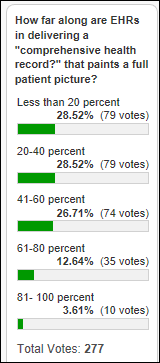
News 3/14/18

March 13, 2018 News 2 Comments

Top News

image

A blog post from UCSF’s Center for Digital Health Innovation takes exception to Epic’s claim that it offers a “comprehensive health record.” The authors say EHR vendors are missing the point that no EHR can be comprehensive since important information is also generated by patients, families, and caregivers; includes genomic information, and is sourced from non-clinical settings. It concludes,

Interoperability is not and must not be defined by being able to pick up and move a giant digital stack of records from one hospital system to another, with the hope that the patient’s various providers will all be able to accumulate everything, like a cartoon snowball rolling downhill … interoperability is a national priority precisely because no single vendor EHR system is comprehensive… Given this, we say “connected health record,” not comprehensive health record, and we are not alone … a chorus of physicians and patients is crying out that EHR systems are already cumbersome and inefficient. Imagine how much worse this might become if EHR systems grow and grow to accommodate new use cases … technological advances have led other industries to adopt an API-based model, in which modules, devices, and software from different vendors can easily connect. That way, each vendor can focus on what it does best, and the user can benefit from an ecosystem of technology and software that work seamlessly together.


Reader Comments

image

From Jorge DiSelva: “Re: Cerner’s revenue mix. Did you notice how far it has swung from license fees to services? Pretty amazing.” It is indeed amazing. Annual revenue has nearly doubled in the past five years and 43 percent of software revenue is now coming from subscriptions. Services revenue is also huge at 72 percent of the $5 billion total, with 62 percent of Cerner’s annual revenue being recurring. Companies have chased the subscription-based revenue model with varying degrees of success to try to smooth out revenue swings due to the timing of contract signings, but Cerner has delivered. Customers could theoretically displace its products more easily under the subscription model, but few will do so given the lack of alternatives and the effort they expended to implement them in the first place. Investors aren’t loving everything about Cerner, though – the health IT market is changing pretty quickly, the company’s margins have slipped a bit, the VA deal hasn’t yet played out as expected, and the new CEO is an unknown factor. CERN shares are up 16 percent in the past year, which sounds great except that just investing that the Nasdaq composite would have yielded nearly double that.

From Math Challenged: “Re: HIMSS conference combo deal. They tweeted that a combo pass for HIMSS19 and Health 2.0 is a ‘2 for 1 Deal … for the price of 1 ticket.’ Not so – the website says the combo for HIMSS members is $1,799.” I don’t understand that claim either. The HIMSS early bird registration rate for members was $795 this year, so that means you’re paying $1,034 for Health 2.0 instead of its early bird price of $1,199, which isn’t much of a deal.

From Old Timer: “Re: open position at BIDMC. Is John Halamka leaving?” The job posting is for CIO of just the physician group from what I can tell.


HIStalk Announcements and Requests

image

Datica Chief Data Officer Mark Olschesky tweeted out a challenge at the HIMSS conference in which he offered to donate $1 to my DonorsChoose project for each attendee at his session on HIPAA and GDPR compliance for developers. His donation (and your attendance, if you were among the 300 there) along with matching funds fully covered these teacher grant requests:

  • 12 sets of headphones, a microphone, and a barcode scanner for Mrs. R’s elementary school class in Tucson, AZ
  • A document camera for Mrs. S’s second grade class in Charlotte, NC
  • Two tablets for programming robots for Ms. C’s middle school class in Fresno, CA
  • Two tablets and cases for robotics programming for Mrs. A’s elementary school class in Theodore, AL
  • Speakers for Mrs. D’s elementary school class in Holyoke, MA
  • Eight LCD writing boards for Ms. C’s elementary school class in Memphis, TN

image

Welcome to new HIStalk Platinum Sponsor Hyland Software. The company combines information management and enterprise medical imaging with business process and case management capabilities to deliver a suite of unparalleled content and image management solutions to address the clinical, financial, and operational needs of healthcare organizations around the world. More than 2,000 healthcare organizations use Hyland Healthcare’s world-class solutions every day to become more agile, efficient, and effective. The product suite – Acuo by Hyland, Brainware by Hyland, NilRead, OnBase by Hyland, PACSgear, Perceptive Content, and ShareBase by Hyland – helps complete patient records, eliminate reimbursement delays, and enhance business processes. Hyland Healthcare is a part of Hyland, a leader in providing software solutions for managing content, processes, and cases for organizations across the globe. Thanks to Hyland Healthcare for supporting HIStalk.


Webinars

April 5 (Thursday) 1:00 ET. “Succeeding in Value-Based Care Via a Technology-Driven Approach.” Sponsor: Health Fidelity. Presenters: Adele L. Towers, MD, MPH, senior clinical advisor, UPMC Technology Development Center; Adam Gronsky, director of advisory services, Health Fidelity. Success in value-based care requires a thorough understanding of how risk-based payment models work. To prosper in this data-laden era of care, providers need to manage their patient populations holistically rather than through a collection of individual episodes and be able to accurately identify, document, and report risk scores. Given the stakes, is your provider organization adequately set up to take on and succeed in managing risk? In this webinar, learn how technology-enabled risk capture optimization is helping providers succeed in risk-based payment models.

Previous webinars are on our YouTube channel. Contact Lorre for information.


Acquisitions, Funding, Business, and Stock

SNAGHTML88f906ca

Cognizant will acquire Louisville, KY-based RCM services vendor Bolder Healthcare Solutions, adding to its previous health IT-related acquisitions TMG Health and TriZetto.  

image

Greenway Health will close its Lake Mary, FL office in late April and lay off 27 employees who work there. The company had previously announced the closure of that office as well as those in Atlanta and Birmingham as it consolidates operations in Tampa, FL.

image

The White House kills Broadcom’s hostile takeover of Qualcomm, meaning that Capsule Tech will remain a Qualcomm subsidiary. Thanks to reader Dr. Trump, who reminded me of the healthcare IT connection. Qualcomm acquired medical device integration vendor Capsule Technologie in September 2015.


Sales

image

Virginia Hospital Center (VA) will implement the Spok Care Connect unified communication platform.


People

image

Former HIMSS President and CEO Steve Lieber joins association software vendor Next Wave Connect as executive advisor.

image image

Advocate Health Care SVP/CIO Bobbie Byrne, MD is named CIO for Advocate Aurora Health once the Advocate-Aurora merger is completed in the next few weeks. Aurora CIO Preston Simons will “retire.” The CEOs of each health system will serve as co-CEOs of the merged organization, which never works even though it gets the deal signed in bypassing egos. I question the focus of a company that doesn’t have enough decisiveness to put one person in charge, although the co-CEO arrangement is usually abandoned fairly quickly anyway.

image image

Intelligent Medical Objects promotes Matt Cardwell, PhD to chief product officer and Jose Maldonado to chief solutions officer.

image

Collective Medical promotes Andrew Reeve to SVP of sales.

image

Influence Health promotes Mike Oakman to COO.


Announcements and Implementations

image

GetWellNetwork adds Healthwise’s patient education video library to its patient experience platform.

image

Medable announces Insight, a blockchain-powered medical data exchange platform for research studies. The company offers tools for building secure data-related applications, analytics, alerts, and data visualization. It claims that researchers can develop a clinical study app in one day.

image

CompuGroup Medical launches a project to create new ambulatory products for several countries, with the US at its center. The core product can be customized to individual markets but will share a code base, tools, and processes.

image

DirectTrust’s board calls for nominations for new board directors and for the CEO position being vacated by David Kibbe, MD, MBA at the end of the year.

image

Datica launches a Kubernetes-enabled version of its security and compliance technology that will allow AWS and Microsoft Azure users to deploy Datica’s platform on their own cloud accounts.


Government and Politics

image

Media reports suggest that President Trump is considering replacing VA Secretary David Shulkin with Energy Secretary Rick Perry, who is a former Texas governor and Air Force captain and pilot. 


Other

image

ECRI focuses on diagnostic errors in its top 10 patient safety issues for 2018, with “incorporating health IT into patient safety programs” being the only pure IT item on the list.

image

FYI: the latest update to the Chrome browser adds the desperately-needed option to permanently mute a site, preventing the heart-stopping racket that some sites create with auto-play video (CNN and local TV station sites are the worst offenders). Right-click a tab and the “mute site” option appears.

image

A JAMA article says out-of-control US healthcare spending is driven by high prices and administrative overhead rather than overutilization. It notes in comparing the US to 10 high-income countries that the US:

  • Spends twice as much on medical care, representing 17.8 percent of GDP vs. the next-highest 12.4 percent
  • Covers 90 percent of residents with health insurance vs. the next-lowest country at 99 percent
  • Has the highest obesity rate, the lowest life expectancy, and the highest rate of infant mortality
  • Has about the same number of doctors, nurses, and hospital beds per 1,000 people , but pays clinicians a lot more
  • Spends 8 percent on healthcare administrative costs vs. the next-highest 3 percent
  • Spends $1,443 per person on prescription drugs vs. the next-highest $939, with drugs here costing up to 10 times what people in other countries pay

Epic’s Judy Faulkner tells Politico that the company won’t challenge the VA’s single-source Cerner contract choice (“we feel it’s the customer’s right to pick whatever they want”), but she estimates that Epic would have charged at least $3 billion less than Cerner and would offer more interoperability with providers who see veterans that seek care outside the VA system.


Sponsor Updates

  • Formativ Health announces a patient engagement solution for Salesforce Health Cloud.
  • Meditech will exhibit at the Texas Organization of Rural & Community Hospitals (TORCH) 2018 Conference in Dallas April 10-12.
  • CareSync publishes a new report on chronic care management for rural health clinics and FQHC practices.
  • Carevive will present and exhibit at the ACCC Annual Meeting and Cancer Center Business Summit March 14-16 in Washington, DC.
  • Software Advice includes ChartLogic in its list of frontrunners in the EHR software market.
  • EClinicalWorks will exhibit at Endo Expo 2018 March 17-20 in Chicago.
  • Ellkay joins the CommonWell Health Alliance.
  • Healthfinch receives an Innovation Award from Athenahealth for its Charlie Practice Automation Platform.
  • Healthwise announces new health educational content partnerships with TeleHealth Services, and Mytonomy.
  • InterSystems and Rhode Island Quality Institute deliver designee alerts for patient empowerment.
  • IMO and Aorn Syntegrity partner to create a consolidated surgical scheduling procedure list.
  • Kyruus integrates IBM Watson Virtual Agent with its ProviderMatch technology to enable AI-assisted patient-provider matching and scheduling
  • Clinical Architecture CEO Charlie Harp discusses interoperability on CommonWell TV.

Blog Posts


Contacts

Mr. H, Lorre, Jenn, Dr. Jayne.
Get HIStalk updates. Send news or rumors.
Contact us.

125x125_2nd_Circle

Curbside Consult with Dr. Jayne 3/12/18

March 12, 2018 Dr. Jayne 3 Comments

Based on some networking accomplished at HIMSS, I’m about to begin work with a new client. The nature of the work requires me to have a medical license in their state, so I jumped right in Friday morning to get the process rolling. The licensure process can vary from state to state and I haven’t completed an application in years, so I wanted to get going quickly.

The first place I visited was the Interstate Medical Licensure Compact website to see if that might be a pathway to speed things along. When the Compact was introduced several years ago, it was touted as a way to increase delivery of care to underserved areas as well as to better enable telemedicine.

Unfortunately, the state where I primarily practice doesn’t participate in the Compact, nor do any of the states where I’m secondarily licensed, so that was a bust. Even if it had panned out, there is a $700 application cost plus the cost of the license in the target state. I have the luxury of being able to pass this on to my client since it’s their requirement, but that fee is far from pocket change.

I then investigated licensure directly with the state and found that they have an online portal. After creating an application, I learned that if I’m licensed in a state with similar requirements, they have an attestation pathway, where it should be easier to credential than if I were applying from scratch. This state borders my own and I have many colleagues that practice across state lines, so I thought it might be fairly easy.

Unlike a paper application, the online application directs the user through a rigid pathway of data-gathering. You can’t even see what the subsequent requirements are until you supply the preliminary data, which wasn’t close at hand. I found an instruction sheet PDF through an online search, but it had an older date on it and I wasn’t sure whether it was still relevant. Although I was sitting with copies of all my board certification information, medical school and college diplomas, and more, I became hung up because I couldn’t supply the date of my high school graduation or the date that enrolled in college.

I pawed through some boxes in my basement for a bit to see if I could come up with the high school diploma, but that wasn’t fruitful. I visited my high school website to see if they had an online request form. They don’t, but I was able to download a paper form to mail or scan back, which allows them to send me an unofficial transcript by email.

In my subterranean digging, I found my final college transcript, but of course it didn’t have the enrollment date on there, so I’ll be requesting that from my undergraduate institution as well. The application also requires my dates of attendance at medical school, but I was able to figure that out from my first tuition bill, which I must have saved as a memento.

I have no idea what kind of information they will want from residency. Probably similar information, and it should be a little easier to find because it’s more recent. Still, it will require either some digging or sleuthing to get it done and I’ll be in a state of curiosity until the rest of the application is revealed to me.

The bottom line though is that this “by attestation” pathway seems about as complicated as trying to apply for a license from scratch, minus having to submit USMLE scores. (For the first-time applicant, they have a nice current instruction sheet that spells out everything you need to apply.)  Fortunately, when I packed up my diplomas and certificates in leaving my corner office at Big Health System, I had scanned all those documents so that information is at least at my fingertips. Hopefully they won’t want anything too unusual.

I will have to travel to the state in question and be fingerprinted by their state police organization. I’m not sure why I can’t be fingerprinted by my own state police and submit that, but I’ll be sure to factor that travel into the contract for my new client.

For a physician who has been in practice the better part of two decades, certified by two different medical boards (one of them multiple times), and possessing multiple unrestricted licenses to practice medicine, this process seems a little cumbersome. I’m not sure why it’s relevant to document what date I began high school in order to be licensed to practice medicine. But it is what it is, and if you want to practice in another state, you have to play their game (and pay their fee, which in this case is more than $700 plus a state controlled substance license, and I haven’t even started that process yet). Once you are granted the license, you have to pay to keep it up even if you’re not sure you’re going to continue to do it because it is such a cumbersome process to be re-licensed.

It seemed like the Interstate Compact was the answer to all of this, but the reality is that only 22 states participate, leaving the rest of us in the cold and completing lots and lots of forms if we want to change where we practice. Several other states have passed legislation and the implementation is delayed and other states have introduced legislation. But it looks like those of us in the other 22 states are stuck with the traditional process. I’d be interested to hear from physicians who practice telemedicine or from those who practice as locum tenens in multiple states – are there any secrets, tips, or tricks to make this easier? Certainly there has to be a better way.

In the meantime, I’ll be watching my email for that high school transcript and my postal mailbox for the college information. At least I can use the Postal Service’s Informed Delivery to see what is headed my way when I’m out traveling. Nothing says road warrior like stalking your postal mail from the other side of the country.

Have secrets for multistate licensure? Leave a comment or email me.

Email Dr. Jayne.

The Smokin’ Doc Celebrates a Successful HIMSS

March 12, 2018 News 6 Comments

The exhibit hall closed Thursday at 4:00 p.m. Lorre and Brianne had already packed up our little bundle of booth furnishings and were saying goodbye to their new friends at booth neighbors Avelead and Valcom.

Setting up and then abandoning a booth is like camping, where you start with an empty patch of woods, turn it into a festive home and have a great few days in it, but are then shocked afterward to see that when you take everything down, it was just a quiet, sad little spot all along. The space was transformed into something else by the people who temporarily inhabited it.

For that reason, we always leave the Smokin’ Doc standee in the booth for the staff to deal with after the exhibit hall closes for good. He can’t be reused, but we can’t bear to just stuff him into a convention center trashcan. We always just walk away, and in our minds, he stands guard forever over our now-forlorn booth space.

image

The  ladies joked with Paul from Valcom that they wanted to get a final photo of the Smokin’ Doc at a slot machine if his folks could help carry him over. Paul said he would do them one better – they would take him out on the town and show him a good time with photos to prove it. Lorre said we didn’t expect them to haul a six-foot cardboard figure around, but Paul assured her that, “If we say we’ll do it, we will.”
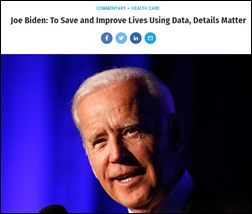
What followed was a weekend of texted Smokin’ Doc photos from all over Las Vegas at all hours. We laughed every time our phones pinged.

Here’s a recap of how the Smokin’ Doc spent his post-HIMSS celebration weekend in Las Vegas, with the text messages that accompanied the photos.

[Just to allay any suspicions of a phony stunt — which is what I would automatically assume if I were reading this — the Valcom folks had never heard of HIStalk until the exhibit hall opened and I’m still not sure they know what we do, so they certainly weren’t looking for exposure. What they did was entirely on their own and we had no idea what was happening back in Las Vegas until the photos started arriving as we were heading home. We asked afterward if it was OK to give them a little plug.]
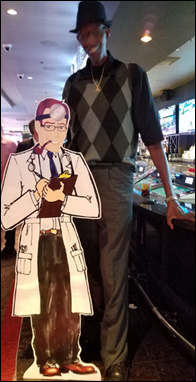

image

image

image


image

image

[Lorre responds that we’ve never named him and that they can choose a name that fits his personality].

image


image

image


image

image


image

image


image

image


image

image


image

image


image

image


image

image

[Robert Bell is a former Harlem Globetrotter and police officer who now devotes his time to anti-bullying]


image

image

image

[Contact Paula Burrier, executive casino host at The D Las Vegas.] 


image

image


image

Paul made us laugh, so here’s a little plug for Valcom in return. Roanoke, VA-based Valcom sells communications solutions to schools, commercial, healthcare, and government that include mass communications, voice paging, outdoor emergency help-summoning call boxes, and an audible sound curtain that prevents hallway and exam room conversations from being overheard as a HIPAA violation. They offer an emergency lockdown system that secures buildings after a threat has been identified. Lorre asked Paul to describe an event he mentioned to her in the booth: “A little over a week ago, one of our higher education clients had to use our IP6000 and eLaunch system to lock down the entire school because of an active shooter. Once this lockdown occurs, it makes it hard for a wrongdoer to stay the course. No lives were lost that day and our system did what it was designed to do. I take pride in working for a company that saves lives when seconds count and is 100 percent American designed, manufactured, and supported.” Paul will offer a site inspection and consultation, including on site and web demos, to readers who contact him at pburton@valcom.com.

Text Ads


RECENT COMMENTS

  1. Challenger exploded on lift-off when the O-rings failed. Columbia disintegrated on reentry after one of the heat shield tiles were…

Founding Sponsors


Platinum Sponsors


Gold Sponsors


RSS Webinars

  • An error has occurred, which probably means the feed is down. Try again later.