Curbside Consult with Dr. Jayne 8/20/18

August 20, 2018 Dr. Jayne 1 Comment

Now that we’re in the bottom half of 2018, CMS has published the 2016 Physician Quality Reporting System (PQRS) Experience Report. The report summaries the reporting experience of eligible professionals and group practices, including historical trending data from 2007 to 2016 covering eligibility, participation, incentives, adjustment, and more. I was curious to get a look at the data because it is broken down both by specialty and by state. Here are some of the highlights:

  • Participation in the program was 69 percent in 2015 and 72 percent in 2016
  • Of the providers eligible in 2016, 31 percent were flagged for a payment adjustment in 2018. This represents over 435,000 providers

Of those receiving a penalty (I’ll call that payment adjustment what it is) almost 85 percent didn’t participate in the program. They literally did not submit any data. That means that 370,000 providers essentially said, “no thank you” and walked away from the program. My practice falls into that cohort, and I don’t think our CEO was that polite in deciding to walk away from PQRS. Other tidbits:

  • Being a provider in a small practice was a marker for receiving the penalty, with 71 percent of “adjustments” being levied on practices with fewer than 25 providers
  • Having a low volume of Medicare patients was associated with the penalty – 69 percent of those providers saw 100 or fewer Medicare patients

Having worked with dozens of practices trying to make sense of the value-based payment scheme, those numbers validate what we already knew, which was that to be successful, you need dedicated resources to help you (which small practices typically don’t) and it’s not worth the effort if the penalty is going to be relatively small due to your patient mix. Of course, 2016 was the last year for PQRS, which transitioned to the Merit-based Incentive Payment System (MIPS) which of course now has transitioned yet again. Since it’s been a couple of years since some of us have handled PQRS data (and many of us have blocked out those painful memories), remember it may use claims data, so it may not match your EHR data if you’re trying to look through the retrospectoscope.

CMS has also put together a document called the Value-Based Payment Modifier Program Experience Report, which looks at program results from 2015 to 2018 and includes the upward, downward, and neutral adjustments. In looking at the section on clinical performance rates, CMS admits that there have been numerous reporting mechanisms over the years and that it created a hierarchy that would be applied if the provider participated through multiple means so that only one performance rate for each provider would appear in the results. It’s a rigid hierarchy, so if a provider performed better through a mechanism that is lower in the list, they would retain the lower performance rate.

The report also notes that there have been numerous changes to the PQRS program over the years, with individual measures being added, removed, and redefined. Additionally, providers who shifted from individual to group reporting may be impacted by data artifact, resulting in the ultimate caveat: “It is unclear the extent to which any observed changes in measure performance were artifacts of the aforementioned changes or trends in provided care.” It goes on in true governmental fashion: “Nonetheless, this section of the report aims to describe clinical performance rates and trends.”

I have to admit, I looked at the report pretty quickly, it’s 96 pages long and there are a lot of tables. I would love to talk to someone knowledgeable to dig into why some of the measures that seem easily attained have declined so much over time. For example, measure 317 is screening for high blood pressure and documented follow-up. It dropped from 91.5 percent in 2013 to 62.9 percent in 2016. There were 4,200 providers reporting that measure across the timeframe, which seems like a reasonable sample. On the other hand, measure 310 for chlamydia screening dropped from 100 percent to 83.3 percent, but only 10 providers were reporting across the timeframe, so a change there could be due to sample size.

On the positive side, cervical cancer screening rose from 41.3 percent to 79.8 percent, but only 103 providers reported that measure. As a primary care provider, I think that’s a sad commentary on the state of preventive care in the US today. The clinical data starts on page 51, if you’re interested in taking a peek.

If you’re not on the clinical or operational side of the house, you may not have seen the decision-making process that practices go through when they try to decide what clinical measures to report. It used to be a little more straightforward, with practices wanting to report the measures where they do the best. Everyone likes to earn an A, so being able to show that you were doing something 95 percent of the time is a feel-good move.

Now that we’ve moved into an “adjustment” phase where there are winners and there are losers and the penalties essentially pay for the bonuses, it’s a different game. Providers are incented to report not on measures where they do the best, but where they do better than the next guy. If you’re doing something 50 percent of the time (which feels like a failing grade) but the rest of the population is only doing it 35 percent of the time, you win! It makes the analysis of measures much more challenging, because providers have to analyze their own performance against the performance of their peers, using a multitude of reports and benchmark data sets.

Smaller organizations may not be savvy enough to figure that out and may end up reporting on the “wrong” measures if they don’t understand how the game is played. I’ve seen a couple of EHR vendors that offer education around this, but the larger vendors seem to think their clients understand it or have enough staff to do that analysis. Even where education is offered, it’s not clear that practices are absorbing the information or that they feel they have the tools needed to make good decisions about quality reporting. Some specialties don’t have options for measures that are truly applicable to them, which puts them in the quandary of choosing measures that don’t make clinical sense just so they can get good numbers.

It might feel easier to just opt out rather than doing something that they know is just “checking the box.” I’ve worked with a couple of clients who have trouble getting the data they need to make good decisions – maybe they don’t have ready access to reporting modules in the EHR, or maybe the reports aren’t run on a frequency that allows the practice to drive change. Usually there is concern about the accuracy of the reports, with organizations having different interpretations of some of the measures than what the EHR might be pulling. That results in an unpleasant back-and-forth with the vendor, where it rarely feels like anyone wins.

I certainly don’t have the answers to this one, but would be interested to hear from readers on how their organizations are coping and whether they’re using any of the recently released data. What do you think of the new CMS reports? Leave a comment or email me.

Email Dr. Jayne.


Monday Morning Update 8/20/18

August 19, 2018 News 2 Comments

Top News

image

Anthem settles its huge 2015 data breach for $115 million, of which it will make $15 million available to reimburse the resulting out-of-pocket expenses of its 19 million customers who were represented in the class group (you can do the per-person math here).

The judge also scolded the plaintiff’s lawyers for excessive billing, awarding them $31 million of the $38 million they billed. The judge previously said she was “deeply disappointed” that the plaintiff’s four leading lawyers brought in an additional 49 law firms and an external review suggested setting their hourly rate at $156 instead of $360, with the judge choosing $240.

Anthem’s breach impacted 78 million people.

image

The agreement also binds the company to implement better security, including data encryption, that will triple its data security costs for the next three years.

The judge also noted that data breach litigation isn’t yet mature and therefore taking the case to court – which would involve a long, expensive trial in which the laws of all 50 states would need to be studied — could have resulted in the class group getting nothing.


Reader Comments

From Inquiring Mimes: “Re: post-discharge contact. We were working with a vendor who said they would contact discharged patients via an automated system to ask a series of yes-no questions that would then notify our care team for prioritizing contact. They achieved almost none of their promises, so we aren’t going live. Do any of your sponsors handle automated calls with patients?” HIStalk sponsors (since the reader specifically asked for my sponsors), please let me know if you can handle this and I’ll pass your contact information along.


HIStalk Announcements and Requests

image

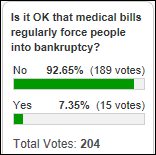
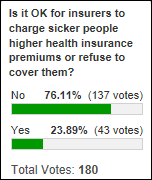
I’m fascinated with responses to my recent polls that looked at health insurance. The great majority of respondents believe that (a) insurance companies shouldn’t use social and lifestyle data to price your policies; (b) people shouldn’t be forced into bankruptcy over medical bills; and (c) from last week’s poll, sicker people shouldn’t pay higher premiums or be denied coverage. Those respondents are apt to be disappointed by the health system we have (or are hurtling toward) since everybody refuses to address the key issue of healthcare costs and instead tries to squeeze their end of the balloon to push the cost problem off onto someone else.

Responses this week included that of Dave, who says enrollees who don’t control their own risks (obesity, smoking, drinking) should pay more. Loss Ratio says insurance can work only if everyone carries it without having their pre-existing conclusions excluded since any of us could be seriously injured or disabled, while Jeremy thinks risk should be priced into premiums like other insurance, no different from homeowners who pay higher premiums to live on the beach. PFS_Guy hopes for Medicare for all with a secondary insurance market to manage out-of-pocket risk, adding that we can choose just two items from the list of price, quality, and service. Inclusive OR also argues for universal coverage since health “insurance” is really not that at all and instead is more of a discount plan. Healthcare Idiot Savant thinks people who make bad health choices should pay more, but worries about the resulting privacy issues, concluding that we need mandatory coverage and to get away from private pay inequities that cause a lot of wasted time and money chasing revenue cycle and other healthcare administrivia.

This week’s poll question: how much impact will result from five big technology companies announcing their support last week for healthcare interoperability? Click the poll’s Comments link after voting to elucidate your thoughts further (beyond just choosing the safe middle option).

image

I considered a different poll question – will medical students really flock to lower-paying specialties just because NYU has eliminated medical school tuition? My experience is that people and companies invariably take whatever action pays them the most, so I’m cynical that altruistic med students will happily pass up surgery, cardiology, and dermatology residencies to become PCPs who are endlessly monitored, benchmarked, and regulated away from developing those patient relationships that drew them to primary care in the first place. I’ve known a few people who took lower-paying jobs just for the service and satisfaction aspects while fresh out of school, but not many.

image

I suppose it’s hiatus time for my “Wish I’d Known Before” series since I can’t seem to cajole people into responding. Check out responses to the final one about taking time off to do something enriching.

HIMSS is tweaking its annual conference dates yet again, I’m reminded when looking something up on the registration site, with HIMSS19 kicking off with pre-conference sessions on Monday, February 11; the opening session will be Tuesday, February 12; and the exhibit hall will be open Tuesday, Wednesday, and Thursday. That’s 1-2 weeks earlier than previous Orlando iterations.

I was thinking that, for the first time, I’m on a version of Windows (10) that gives me nothing to complain about. This is as close to an invisible operating system that I’ve seen, and that includes IOS and Android on mobile devices .


Webinars

None scheduled soon. Previous webinars are on our YouTube channel. Contact Lorre for information.


Acquisitions, Funding, Business, and Stock

image

Here’s a “healthcare is really a business” case study. Hospitals are petitioning Medicare to pay all hospitals to perform the TAVR heart value procedure instead of limiting payment to those hospitals that have high cardiac procedure volumes. Interesting facts:

  • Medicare pays $45,000 for the effective, safe, and quickly recoverable procedure, including the $30,000 that goes to the device’s manufacturer.
  • Hospitals that obtained a TAVR franchise want the policy to remain since it stifles competing hospitals that are anxious to obtain a share of the ancillary revenue and to gain marketing cachet.
  • Hospitals and medical device manufacturers say limiting Medicare payment to specific hospitals discriminates against minorities and rural residents and that Medicare imposes no volume restrictions for other heart procedures.
  • Patient advocacy group Mended Hearts wants access expanded, but that organization gets funding from the device makers.

Announcements and Implementations

image

University of Texas Health Science Center at Houston’s School of Biomedical Informatics will offer the country’s first Doctorate in Health Informatics (DHI) degree for working professionals who have executive-level healthcare experience, with the program focusing on solving real-world problems instead of performing a research dissertation. The 63-credit-hour program requires a master’s in health informatics or equivalent.

image

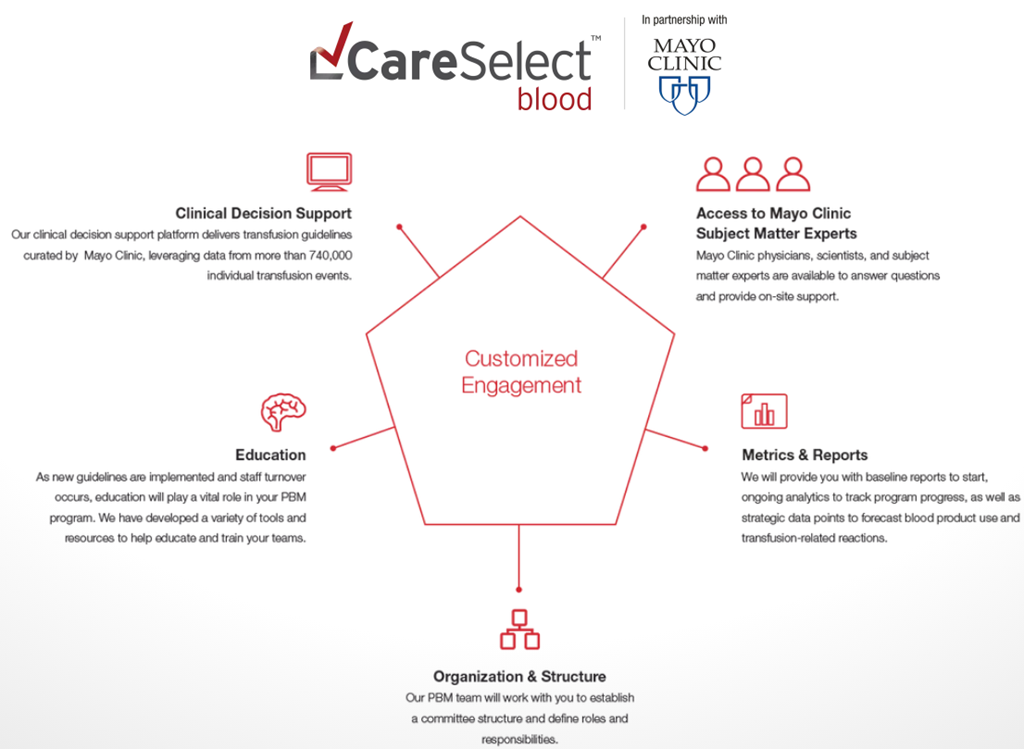
Mayo Clinic and National Decision Support Company develop CareSelect Blood, which offers 100 Mayo-maintained transfusion guidelines integrated into EHR ordering workflow to improve outcomes and cost.

A Cedars-Sinai study finds that failing to use available real-time clinical decision support (Choosing Wisely guidelines presented to clinicians via Stanson Health) was associated with a 7.3 percent increase in encounter cost, a 6.2 percent increase in length of stay, and a higher incidence of readmission and complications.

image

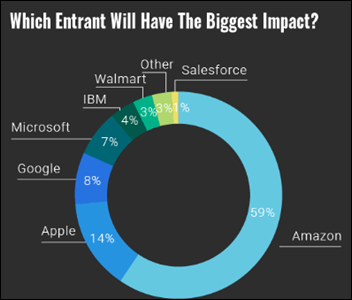
Respondents to a new Reaction Data survey of mostly C-level health system leaders expect the biggest healthcare disruptor to be Amazon, followed by Apple, Google, and Microsoft. Executives asked about emerging technologies say the biggest impact will be caused by telemedicine (mostly for care delivery to rural or remote areas), artificial intelligence, interoperability, and data analytics.

Aprima will integrate Dolbey’s cloud-based speech recognition solution, which includes voice-powered screen navigation and prompting, with its EHR.


Other

image

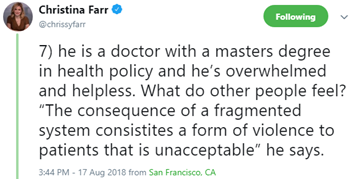
CNBC’s Chrissy Farr catches up with former ED physician Matthew Wetschler, MD, who was profiled as a “holiday miracle” in November 2017 after a surfing accident made him a temporary quadriplegic. He was saved by aggressive, innovative hospital treatment, but the not-so-feelgood part of the story is that he was taken to San Francisco General Hospital, which isn’t in the network of his insurer (Oscar), and he’s on the hook for the portion of the $500K bill that Oscar wouldn’t pay. The hospital turned his bill over to collections, his credit is shot, and he’s getting daily calls demanding that he pay up. His wheelchair was never delivered and he spent months trying to get his rehab approved to start even though he was pre-approved. As Farr says, “his story is the best and worst of the US medical system.”

image

Friday night’s episode of CBS’s “Whistleblower”profiled Brendan Delaney, the former implementation specialist at NYC’s Department of Health and Mental Hygiene who filed a whistleblower lawsuit against EClinicalWorks that the company settled for $155 million in May 2017 (Delaney got $30 million of that).

SNAGHTML12714d42

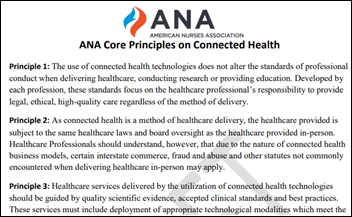
The American Nurses Association seeks public comment by September 10 on its draft “Core Principles of Connected Health.” I don’t have any issues with the content, so I’ll focus proofreading: correct the inconsistent use of commas (especially the Oxford comma); stop saying “utilization” when “usage” is synonymous without being pompous; eliminate the word “current” since it is superfluous; and review incorrect hyphenation (such as “in-person” when not used as an adjective).

image

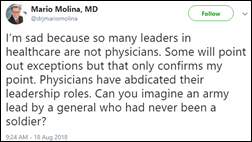
Here’s an interesting tweet from Mario Molina, MD, former CEO of insurer Molina Healthcare.

image

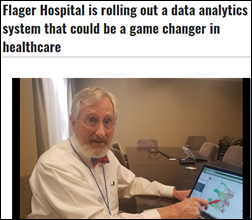
The St. Augustine, FL newspaper interviews Flagler Hospital CMIO Michael Sanders, MD about its pilot project of Ayasdi, which uses AI for clinical variation management (although the paper’s headline writer might need algorithmic assistance to spell “Flagler” correctly). 

image

Mike Funderburk, formerly of Charlotte, NC-based benefits app vendor Novarus Healthcare, writes a Business Insider article covering his experience with the company. He took a 50 percent pay cut to join the small startup team in sales, landed a few customers and potential investors after an initial $750,000 investment, but saw the company shut down after less than a year due to lack of revenue. He says it wasn’t hard to return to a corporate job afterward and still urges people to give their dream a shot. The company’s web page and social media accounts remain active, but frozen in time.

Scientific American covers the planned FDA deregulation and ensuing innovation of hearing aids, noting that they:

  • Haven’t changed since the 1950s
  • Cost $4,700 per set and aren’t covered by most insurance plans
  • Must be obtained through an audiologist or physician
  • Are manufactured by just six companies (who are, predictably, not enthused about new competition)
  • Are used by just 20 percent of people with hearing loss
  • Could be enhanced by big-name tech vendors like Apple or Bose to include a phone interface for reading directions or messages

image

New Zealand’s Minister for Women Anne Genter, an avid cyclist, rides her bike to the hospital to give birth, explaining that there “wasn’t enough room in the car.”


Sponsor Updates

clip_image001

  • Lightbeam Health Solutions employees donate school supplies to the Boys & Girls Clubs of America of Greater Dallas.
  • HCI Group parent company Tech Mahindra will provide the Jacksonville Jaguars football team with next-generation digital technology expertise in areas such as AI and analytics.
  • Medicomp Systems will exhibit at HIMSS AsiaPac18 in Brisbane, Australia November 5-8.
  • Chartis Group posts a white paper titled “Rethinking the Role of IT: The Second Curve of Health IT Value.”
  • Philips Wellcentive publishes a white paper titled “Are You a Data Blocker?”
  • Forrester includes Liaison Technologies in its new report, “Now Tech: iPaaS and Hybrid Integration Platforms, Q3 2018.”
  • MDLive will present at Health:Further August 28 in Nashville, and at the Connected Health Summit August 29 in San Diego.
  • Meditech releases a new video, “How do doctors want to spend their free time?”
  • Netsmart adds MyStrength’s digital, evidence-based content to its EHR.
  • Clinical Computer Systems, developer of the Obix Perinatal Data System, will exhibit at the AWHONN Indiana Section Conference August 24 in Indianapolis.
  • Pivot Point Consulting will exhibit at the NCHFMA Summer Conference August 22-24 in Myrtle Beach, SC.
  • Sunquest will exhibit at the Public Health Informatics Conference August 20-23 in Atlanta.
  • Frost & Sullivan recognizes Surescripts with its 2018 North American New Product Innovation Award.
  • Vocera publishes a new report, “Co-Architecting Healthcare Transformation: How Leading Health Systems Put Patients and Families at the Forefront of Design.”

Blog Posts


Contacts

Mr. H, Lorre, Jenn, Dr. Jayne.

Get HIStalk updates. Send news or rumors.

Contact us.

125x125_2nd_Circle

What I Wish I’d Known Before … Taking Time Off for Doing Something That Turned Out to Be Motivating, Enriching, or Transformative

August 18, 2018 What I Wish I'd Known Before Comments Off on What I Wish I’d Known Before … Taking Time Off for Doing Something That Turned Out to Be Motivating, Enriching, or Transformative

I wish I’d known that it was something I shouldn’t have been afraid to do sooner. I was always worried that it would be an issue with my employer. Even though I had to burn several years worth of accumulated vacation, it was well worth it.


I tripped into an amazing pseudo-volunteer experience in Spain after taking some time off between jobs, and I think your readers would love looking into it if they have even a week to immerse in another world. The organization Diverbo is an English immersion program for Spanish-speaking professionals looking to further their English. “Volunteers” (native English speakers from all over the world) join the participants for a week at a resort where everyone is prohibited from speaking Spanish, and we spend meals and activities conversing, interacting, developing relationships, and learning about each other, all in the spirit of helping the Spaniards advance their language skills in support of career growth. It was a blast and free for volunteers (English speakers), aside from the cost of getting to in Madrid (transport to the resort, lodging, and meals were all covered by the program). Hoping I can go back soon.
https://www.diverbo.com/


Work isn’t everything.


Everyone else that didn’t have the experience didn’t understand. And I didn’t know how to manage the feeling of frustration that they didn’t get how great the experience was when I tried to explain. Reinserting myself into routine took awhile, but the lessons learned were lifelong and I’d do it again.


That taking more than the standard one business week off for a vacation offers much more opportunity and rejuvenation. I was able to spend 6 weeks in Europe (combined all my time off after a large project- thanks to my boss) and spent a minimum of two weeks off for several years. Most coworkers thought they couldn’t or the office couldn’t survive without them. Not true.


Time off – regardless of what you do – is itself motivating, enriching, and transformative. It isn’t so much about what you do rather, about your attitude while doing it. Time away from work is time well spent; for you, your employer, everyone.


To make sure that there is some type of follow-up plan in place to keep a proportion of the positive momentum going forward once you get back to “reality.”


That you have to make time to grasp opportunities and sometimes planning too far in advance limits special trips. About 15 years ago, we planned to go to Yellowstone because Uncle Tom lived in a big house close to the park. Never made it and Uncle Tom has moved so can’t stay at his place but could still visit. Had an opportunity to visit a special place given to me in January. Pushed my family to do this — one daughter in medical school and the other just starting PA school. Glad we did the trip as that person no longer works in the special place and if we had not taken the opportunity it would be gone.


Weekender 8/17/18

August 17, 2018 Weekender Comments Off on Weekender 8/17/18

weekender


Weekly News Recap

  • Best Buy acquires GreatCall, which offers emergency response services and digital health devices for seniors, for $800 million
  • Alphabet invests $375 million in data- and technology-focused insurance startup Oscar, following participation by two Alphabet subsidiaries in a funding round a few months ago that valued the company at over $3 billion
  • Amazon, Google, IBM, Microsoft, Salesforce, and Oracle pledge to support interoperability at Monday’s Blue Button 2.0 Developer Conference
  • The Wall Street Journal posts another critical review of IBM Watson Health for oncology, saying that “the diagnosis is gloomy” for Watson’s ability to improve cancer treatments.

Best Reader Comments

What do Amazon, Google, IBM, Microsoft, Salesforce, and Oracle have in common? No impact in healthcare interoperability despite multiple attempts. (Fourth Hanson Brother)

How does their “support” of interoperability actually translate into something meaningful? Are they going to somehow put the screws to organizations (both vendors and healthcare groups) who are have a greater incentive to protect their own revenues? (RobLS)

The 10% of reality that isn’t perception trumps the 90% at the most inconvenient times. (LFI Masuka)

Watson for Oncology isn’t an AI that fights cancer, it’s an unproven mechanical turk that represents the guesses of a small group of doctors. (Mechanical Turk)


Watercooler Talk Tidbits

image image

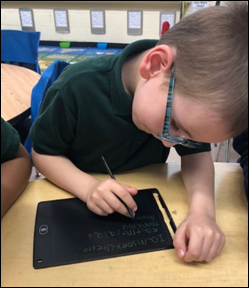
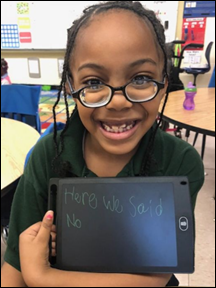
Readers funded the DonorsChoose teacher grant request of Ms. C, who asked for LCD writing boards for her Tennessee kindergarten class. She reports, “We have been using our LCD Writing Tablets every day! My students love to use these boards to practice writing sight words, short vowel CVC words, their names, numbers, and so much more. They have eliminated the mess of dry-erase markers and promote student engagement. They allow me to check my students’ answers and work easily, provide corrections, and allow students to make necessary corrections quickly. These boards are currently one of our favorite things in the classroom. Thanks so much!”

image

In Spain, a woman who is growing tired of her ED wait (does that make her an impatient patient?) torches the place by igniting an oxygen bottle, requiring the hospital’s evacuation.

image

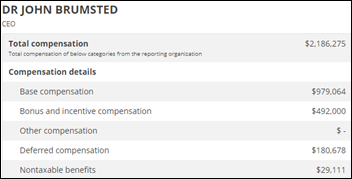
A new University of Vermont Medical Center federal filing is published in the middle of heated negotiations with unionized nurses who are working without a contract, likely to be emboldened by the news that it pays two executives more than $2 million, or 29 times the average RN salary. The health system says what health systems and universities always do when huge salaries are made public – we have to pay competitively compared to other academic medical centers to attract and keep executive talent.

image

New York University will make its medical school tuition-free regardless of financial need, hoping that graduates saddled with reduced debt will consider less-lucrative jobs in primary care and research. Students won’t have to pay the medical school’s $55,000 tuition, but they will still need to cover their estimated $29,000 in living expenses. The announcement was made at the med school’s white coat ceremony, drawing a standing ovation since the change takes effect immediately.

A New York hospital requires visitors to show ID to get an ID badge – which contains their photo and destination — printed with invisible ink that disappears after 24 hours. I’m always surprised that hospitals have few visitor-related incidents other than in the ED since visiting hours have been extended, anyone can wander the halls unmolested (except for the nursery), and security guards rarely wander patient floors. I’ve seen visitors fighting with each other and with employees, family members who tried to kill a patient in their bed, and gang or romantic rivals launching beat-downs at the nursing station. I once talked a newly hospitalized patient out of the gun he was waving around in his room, although I’m still not sure why I thought that was a good idea. It was a small hospital without real security guards and I was the only male on the floor at the time, ill-advisedly succumbing to the impulse to help the frightened the nursing staff and hoping that I had accurately characterized the patient as confused but harmless.


In Case You Missed It


Get Involved


125x125_2nd_Circle

EPtalk by Dr. Jayne 8/16/18

August 16, 2018 Dr. Jayne 1 Comment

CMS has posted a new presentation covering the proposed rule for the 2019 Medicare Physician Fee Schedule. For those who have not yet started to dig in for review, it’s a nice 35,000-foot summary of the E&M coding and virtual care pieces. Plus, it’s only 17 slides long, which might possibly make it the shortest document to come out of CMS in a long time.

My fortune cookie revelations are usually pretty bland and I’ve never had my palm read. However, I wonder if my inbox is trying to predict my future. I had back-to-back emails about the best ways to onboard physicians from MGMA and the top 10 things to think about when you’re thinking of leaving your practice from AAFP’s Family Practice Management journal. It made me laugh, particularly because my current clinical situation is the best one I’ve ever worked in. The support team members are great, the owners are extremely supportive of my life in healthcare IT, and I feel energized and valued at the end of the day even when it’s been a very tough shift. I wish I had found that kind of clinical fulfillment earlier than halfway through my career, but I’m glad I found it when I did. Still, the documents were good advice, so I’ll tuck them into my consulting portfolio for the next client.

From Noteworthy: “Re: news. It’s amazing what passes for a news item in healthcare today. It’s not outcomes data, it’s not a new gamma knife offering, or even mobile mammograms — it’s vinyl flooring.”Actually, it’s both vinyl flooring and new blinds to give the practice greater “curb appeal.” The practice administrator is quoted regarding how important it is to have vinyl flooring in order to provide a clean environment for patients. Does that mean that their previous carpet provided a less than sanitary space before this week’s renovation reveal? Inquiring minds want to know. Perhaps I should pitch a new show to HGTV for renovating disastrously outdated physician offices. I’ve definitely seen more than my share.

Earlier this week, Mr. H mentioned the phenomenon of medical students skipping classes and instead using YouTube videos and other resources to prepare for their licensing exams. There is a great comment posted by reader AndyWiesental, who details the non-content skills that physicians need to learn. The diagnostic process and how to determine the appropriate care for a given patient take time to learn, but despite the push for patient-centered care and individualized medicine, educational and quasi-regulatory bodies are still pushing us towards fact-based testing that quickly becomes obsolete. Board certification exams are a case in point, with questions such as “which of the following drugs is the most effective therapy for XYZ” where the answers are items that are 70, 72, 80, or 85 percent effective. In the world of in-the-trenches medicine, those numbers are not terribly relevant. It’s more complex than lab-based effectiveness; one needs to look at the cost vs. efficacy, tolerability and side effect profile, whether it’s on the insurance formulary, and more. And by the way, there’s a chance that a formerly-effective drug will be recalled, so all the numbers go out the window. It all depends on the patient sitting in front of you, as well as the statistics, and the way we are currently tested doesn’t take that into account.

I recently had a conversation with a physician as I was waiting for a plane, and we were lamenting the idea of recertification exams. His board is taking a more progressive approach and allowing more of an extended open-book format that demonstrates the ability to find knowledge rather than memorize factoids. That’s how we practice now, finding the best evidence through curated sources rather than trying to regurgitate what we learned to pass the exam. Although medical education is progressing, the students I work with tell me it’s not a lot different from when I was in school, just more high-tech. Where we recorded lectures on a cassette tape and had a classmate transcribe them, print them, and stuff them in our student mailboxes, today’s students view recorded videos of the lectures.

I once failed a medical microbiology exam because I actually learned the material and didn’t memorize the old test papers that my classmates circulated. When I sat for the exam, the questions were so poorly written that you often couldn’t tell what the correct answer was, with double negatives, multiple correct answers, typographical errors, and more. Yet, many of the members of the class scored 100 percent where a full third of us failed. The dean actually advised us to spend more time with the old tests and allowed us to retake it. With no studying but time spent memorizing questions, I aced it. Hopefully those days are long gone and we’re testing the ability of students to apply information rather than hoping they know the correct answer to the question about E. coli is D.

In response to Mr. H’s question: “If medical school education is vastly different from the content mastery required to pass Step exams, is either set of knowledge incorrect or are students expected to complete a self-managed, dual-track education?” In my experience the latter is correct. Students have to memorize the minutiae for certain, but it’s also often up to them to identify suitable mentors and clinicians whom they want to emulate, and try to learn how to be “that kind of doctor.” Some professors in academic settings aren’t the kind you want to copy, and it can be challenging to find opportunities to rotate with “regular” physicians in the community. There are similar issues in residency training, with some rotations being irrelevant to the trainee’s chosen career path. Statistically, only 17 percent of family physicians practice obstetrics, yet we’re all required to spend several months on rotation. I’d rather have had that time to take extra behavioral health rotations or emergency rotations since those were areas I was more likely to use in my planned future career.

Other rotations are woefully inadequate. My residency’s family medicine program ran a private practice clinic where we learned to code and bill and how to document, which are key for surviving in medicine today. We received productivity and utilization reports. By the time we were in the second half of the last year of residency, we were running full clinic days seeing a volume of patients equivalent to the faculty attending physicians, mostly in 15-minute visits. The internal medicine program ran a clinic where no one ever had to code or bill and every appointment was 30 or 60 minutes. Which trainees came out better equipped to succeed in practice? It was in those 15 minute slots that we learned how to prioritize patient issues and how to best use limited time and resources for individual patients. Of course, we’d all have preferred at the time to have the half-hour or hour slots that our peers did, but when we made it to the real world we were grateful, and our former classmates were shocked.

I’m coming up on a milestone reunion for medical school and it will be interesting to see where people have landed. Our class was an outlier, with nearly 10 percent of graduates not pursuing residency training. Some went to research, others to the pharmaceutical industry, a few to law school or business school, and a couple left medicine altogether. I’m definitely making a point to connect with some of my former classmates who are in academic settings, to see what they make of all of this.

Are you working at an educational institution? How does your employer support student learning? Leave a comment or email me.

Email Dr. Jayne.
Readers Write: A Person-Centered Approach for Success in Intellectual and Developmental Disability Services

August 15, 2018 Readers Write Comments Off on Readers Write: A Person-Centered Approach for Success in Intellectual and Developmental Disability Services

A Person-Centered Approach for Success in Intellectual and Developmental Disability Services
By Andrew Mersman

Andrew Mersman is senior director at Netsmart Technologies of Overland Park, KS.

image

It’s no secret that limited resources and funding have historically been a challenge for providers of Intellectual or Developmental Disabilities (I/DD) services. That’s why it’s important for healthcare providers to break down information silos and work collaboratively to achieve the best outcomes possible. With the introduction of value-based care payment models, it will be even more important for providers to find effective and efficient ways to manage resources across the healthcare continuum to deliver the right care for every individual’s needs. The continued evolution of Home and Community Based Services (HCBS) waiver plans and emphasis on conflict-free case management also make person-centered care more important than ever before.

To aid organizations in providing the best I/DD services with a person-centered approach, awe’ve narrowed down four key elements to keep at the forefront of managing an individual’s care.

Person-Centered Planning

To deliver the best services possible, it’s important to address it with a holistic, whole-person outlook. Keep the individual at the center of this universe and take in surrounding factors into consideration as you plan and coordinate delivery. Important items to consider in person-centered planning include:

  • Taking direction and considering feedback from the individual receiving services, including from their support system
  • Integrate the person’s strengths, preferences, and desires – example is integrating pictures into the ISP to help an individual be more active in their services
  • Drawing on insight gained from the individual’s relationships within their community
  • Enabling individuals to express satisfaction with service delivery through feedback, allowing for course correction as needed

Care Coordination

Care coordination should focus on the health, social, and personal desires of the individual. When approaching care coordination for a person with a developmental or intellectual disability, it’s important to ensure that a person’s service plans are self-directed by the individual and are aimed toward meeting their personal goals, including day-to-day living and other life factors such as independent living or employment goals. Additionally, modern reimbursement models demand more accountability for care coordination between different services and settings.

Comprehensive Assessment and Planning

Person-centered care requires the ability to plan and provide the right type of services that can result in the best outcome possible. To do that, providers need to assess many aspects of a person’s life when determining the best plan for them. This is essential to determine the kind of services that should be provided along with the method in which they are delivered, and account for any potential obstacles that may prevent the individual from being successful. Factors to be assessed can include things like housing, family support, social skills, personal care, communication, financial stability, nutrition, activity level, and more.

When developing a person’s care plan, it’s critical to ensure that all essential elements of the person-centered plan drive the planning process. This is also the time to determine that tasks based on valued outcomes are specific, measurable, achievable, relevant, and timely to make sure that an individual can progress and be successful. Planning should also emphasize community inclusion and participation, independence, and the use of informal community supports when possible.

Data Collection, Measurement, and Reporting

Creating a care plan alone isn’t enough. It’s essential to prove the effectiveness of the support and services your organization provides. The way to tackle that is through collecting, analyzing, and reporting data to demonstrate outcomes. Your organization should be able to look at results and determine if the plan was successful, not just that the tasks were completed.

An integral part of applied behavioral analysis requires the ability to measure an individual’s growth and development. You can’t report progress without any data, so the first step is to gather and collect it throughout their journey. Once they are accessing and receiving the services outlined in their plan, it’s time to record progress. What has been the outcome of the services they’ve been receiving? Are they improving with the method of delivery your organization is providing?

Your EHR should allow your support staff to easily record and track a person’s progress through streamlined, intuitive workflows. And in an age where services are delivered in a variety of settings, mobile functionality is essential for entering important data on a tablet or other portable device. Going mobile is an effortless way to build staff efficiencies and supports the move away from a paper-based system, allowing data to be accessed and retrieved in real time.

Once the data is collected, it’s time to look at what it collectively means in the bigger picture. Here’s where robust reporting and analytics comes in. The ability to display data in a variety of outputs (i.e. raw data counts, compliance or achievement percentage, or graphical representation) is important with respect to who is viewing the data. Also, the ability to provide real-time analysis is important to provide on demand.

No matter what care setting, keeping an individual and their needs at the center of their care plan is essential. Remembering these factors while establishing, assessing, and achieving an individual’s personal goals, care providers across all settings – not just I/DD – are sure to provide the best services to meet the unique needs of everyone.

Readers Write: Capturing Patient-Reported Outcomes for Population Health Management Yields Dividends

August 15, 2018 Readers Write Comments Off on Readers Write: Capturing Patient-Reported Outcomes for Population Health Management Yields Dividends

Capturing Patient-Reported Outcomes for Population Health Management Yields Dividends
By Gary Hamilton

Gary Hamilton is CEO of InteliChart of Fort Mill, SC.

image

As the industry pushes towards value-based care, a greater emphasis has been placed on listening to patients, particularly regarding how they view their own health status and quality of life. These patient-reported outcomes (PROs) are essential to help identify obstacles to effectively manage chronic conditions. Patient-reported outcome measures (PROMs), of which there are many across numerous specialties, are also increasingly important to payers under value-based care payment models.

Capturing PRO information can occur in the exam room or hospital, but it is often time-consuming and may be sidetracked if the patient has an acute condition they prefer to discuss. Fortunately, the ubiquity of the Internet, smartphones, and the increasing sophistication of data analytics technology is helping healthcare organizations obtain PRO data and analyze associated measures efficiently so they can improve performance.

PROs are defined by the National Quality Forum (NQF) as “any report of the status of a patient’s health condition that comes directly from the patient, without interpretation of the patient’s response by a clinician or anyone else.” These outcomes are, in some cases, more important to the patient than the clinical outcome because it reflects how they are feeling and their ability to pursue daily activities. For example, how many times has a patient told you that they stopped taking a medication due to its perceived side effects and now feel “better than ever?”

Learning about medication side effects and how a patient feels about other elements of their care plan aligns with many value-based care goals. After all, if patients are not achieving their personal health or quality-of-life goals, they may not perceive any value for their care. A treatment then cannot be considered fully effective, even if clinical indicators of health improved along the way.

Listening to patients’ goals is key to designing a care plan that will yield health status improvements or eliminate symptoms, but also improve quality of life. When a patient notices and reports these improvements, they are likely to engage in their care plan or follow through with a recommended procedure recovery regimen.

Capturing PROs can be tedious and not always accurate, especially when the patient is distracted by another condition or other factors, such as being discharged from the hospital. This is where advanced population health management (PHM) technology helps providers save time while improving the patient’s experience.

At discharge, for example, a patient who underwent a procedure may be so concerned about how they will resume their activities at home, they may not be aware a medication prescribed at the hospital is giving them intolerable side effects. After they adjust to the care transition, an automated survey would be sent from the PHM platform to their smartphone to learn about the recovery from the procedure, as well as the new medication. Based on patient preferences, PROs could be captured through an automated interactive voice response (IVR) phone call or a secure electronic message, both initiated through the PHM technology.

Although automated methods are most efficient, a live phone call with a clinician is just as effective at gathering crucial patient information. The PHM technology assists in these situations by automatically reminding the care manager to conduct the interview and offering to create the electronic questionnaire form to be completed. Based on responses from any of the PRO outreach methods, the physician can then decide to adjust the prescribed treatment.

For patients with chronic conditions, here again, a survey can be sent to a mobile device or patient portal periodically to ensure associated care plans are helping them achieve their goals. Electronic surveys or interviews using an IVR or live phone call would include quality-of-life questions concerning physical function, mental health, sleep, or the ability to participate in daily activities. An analytics platform would then flag and compile negative responses for follow-up.

Remote-captured PRO can also support many elderly and rural patients who may have transportation challenges. Instead of these patients coming to the office for routine consultations regarding their chronic conditions, an automated survey, secure portal message, IVR, or live phone call can capture PROs and allow them to avoid unnecessary travel.

The benefit of using a mobile device or a computer to capture PROs is that patients can report their perspective at the right moment, when they have time to reflect away from the distractions of a busy practice, hospital, or workplace. Surveys or automated interviews delivered on a consistent schedule prove to patients the organization is focused on their care, nurturing engagement, and motivating them to improve their outcomes.

For the provider organization, identifying PROM trends among these populations is easier when the PRO module is part of an advanced PHM platform that is integrated with the electronic health record (EHR) system, other information systems, and fed by comprehensive and aggregated data from around the care continuum. When a physician reviews a patient’s chart, they can view PROM trends at a glance to support their decisions.

PRO insight, in conjunction with other data included in the EHR, can help the physician design an effective treatment plan that achieves clinical objectives as well as the patient’s quality-of-life goals. Combined, improving performance on these outcomes can secure greater reimbursement under value-based care payment models while building stronger engagement from patients throughout the year.

News 8/15/18

August 14, 2018 News 7 Comments

Top News

image

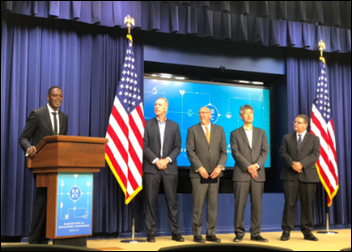
Amazon, Google, IBM, Microsoft, Salesforce, and Oracle pledge to support interoperability at Monday’s Blue Button 2.0 Developer Conference, announcing their support for FHIR open standards, cloud computing, and artificial intelligence.

The event was hosted by the White House’s Jared Kushner-led Office of American Innovation.

image

Integration experts and technologists – should we care about Blue Button 2.0? Will it significantly impact interoperability and patient access to data?


Reader Comments

image

From The World is a Vampire: “Re: Allscripts. Hosted clients are having difficulty connecting to their EHR and other applications due to a data center issue.” I’ve reached out to the company, but haven’t heard back. The Raleigh data center was the site of January’s ransomware attack that left users unable to connect to their Allscripts PM/EHR systems, although the telephones of angry users remained up so they could call their lawyers to join a class action lawsuit over the downtime.

From Ozone Lawyer: “Re: prescriptions. Pharmacies won’t quote a price until my doctor calls or faxes my new prescription, after which the pharmacy will use my insurance to quote co-pay, etc. That puts extra work on my doctor. Is it legit for the pharmacy or just an obstacle?” They might do that to discourage competitive intelligence, but I can see why they would be reluctant to give a price without running it through your insurer’s test claim for pricing your co-pay. That way they have the complete prescription details without being tied up on the phone while you read them your prescription. Cash patients would do best to go online and pricing all local pharmacies (at least the chain ones) on GoodRx. InteliSys Health also offers an EHR-integrated pricing tool that would be super useful, but your doctor would need to use it on your behalf. An integrated solution would get you and your doctor the answer, allow reconsidering your choices, and then having the prescription sent electronically to the right pharmacy the first time.


HIStalk Announcements and Requests

image

Did you ever take work time off to go on a spiritual retreat, attend a university’s resident summer camp for adults, participate in a church mission, delve deeply into a newfound hobby, bond with your grandchildren, join a cult, travel as a punk band’s roadie, or bum around Italy for a month in search of the perfect Montepulciano d’Abruzzo? Perhaps you were understandably enriched and motivated, in which case those of us less fortunate would enjoy living your experience vicariously.

I’m getting flooded with emails and announcements from folks who are still listing times as EST, apparently clueless that we’re on EDT until November 4 (like we have been every summer for 100 years – DST started in the US in 1918). Those who can’t master this simple concept should instead just list times with “ET.” Someone will always proclaim indignantly (as they do for their incorrect grammar or spelling) that “you know what I meant,” suggesting that it’s everybody else’s job to interpret their lazy errors.

Listening: new, outstanding contemporary Christian music from 26-year-old Lauren Daigle, who’s on a very long tour that covers a giant chunk of the US. Also: new from LSD (Labrinth, Sia, and Diplo), which takes a toe-tapping trip into doo-wop and reggae territory. There’s also a new album from St. Paul & The Broken Bones, infectiously giddy, horn-heavy, 1960s-style soul from Birmingham, AL. And in a goosebump-inducing moment, there’s Renaissance doing “Ashes Are Burning” live in 1976. I’ll eat the vocals-enhancing software of any diva singer who can match Annie Haslam  — who wasn’t even in her five-octave top form toward the end of a rigorous, long concert — starting at the 22:00 mark through the end. 


Webinars

August 15 (Wednesday) 1:00 ET. “Raising the Digital Trajectory of Healthcare.” Sponsored by: Health Catalyst. Presenter: Dale Sanders, President of Technology, Health Catalyst. Healthcare ranks lowest in McKinsey’s Digital Quotient (data assets x data skills x data utilization) of all industries except mining and has largely ignored the digitization of patients’ state of health, but that’s changing. This webinar will describe the empathetic components of healthcare digitization strategy; the AI-enabled encounter; why today’s digital approach will never work and instead sucks the life out of clinicians; the role of bio-integrated sensors, genomics, and the “digitician;” and the technology and architecture of a modern digital platform. It’s going to happen, so let’s make it happen the right way.

Previous webinars are on our YouTube channel. Contact Lorre for information.


Acquisitions, Funding, Business, and Stock

image

Digital health-EHR integration platform vendor Sansoro Health raises $8 million in a Series B investment round, increasing its total to $14 million.

image

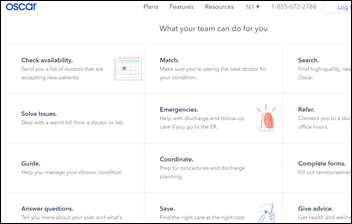
Alphabet invests $375 million in data- and technology-focused insurance startup Oscar, following participation by two Alphabet subsidiaries in a funding round a few months ago that valued the company at over $3 billion. Wired reports that Alphabet owns 10 percent of Oscar, which has expanded into new states, plans to enter the Medicare Advantage market, and is rumored to be interested in bidding with insurers to manage care in risk-based contracts.


Sales

  • Triple-S Salud Blue Cross Blue Shield of Puerto Rico will use HMS’s Essette care management software for its health plan members.
  • New York’s Healthix HIE will implement the cloud-based Verato Universal MPI.

People

image

Integration technology vendor MedicaSoft hires Helen Figge, PharmD, MBA (CareFully) as chief strategy officer.

image

Health IPass promotes Ryan Navratil, MS to VP of product management.

image

Holly Spring (Athenahealth) joins ReviveHealth as SVP and public relations department lead.


Announcements and Implementations

Geisinger and drugmaker Merck launch apps Family Caregiver (patient-caregiver communication) and MedTrue (medication reconciliation and adherence). The apps will use SMART on FHIR to connect to disparate EHRs.

SwedishAmerican goes live on Epic.


Government and Politics

image

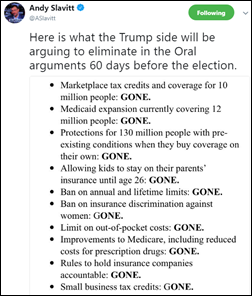
Relevant to a couple of polls I’ve run recently: former CMS Acting Administrator Andy Slavitt lists the items the White House hopes to eliminate from federal insurance law in a September 10 hearing, all of them affecting anyone with health insurance even if they get it through employers instead of the marketplace.

The San Francisco business paper covers huge companies using complex equipment depreciation rules to claim low value for property taxes, with the extreme case being two Apple properties in Cupertino valued at $1.4 billion that the company claims are worth just $400. Maybe the county should add a requirement that any business be forced to sell its property to a willing buyer at the assessed value it accepts. 


Other

image

Adventist Health System will change its name to AdventHealth early next year, also renaming its 45 hospitals that include Florida Hospital Orlando. The health system will also launch the Center for Genomic Health next year.

IBM posts a rare publication rebuttal in disputing The Wall Street Journal’s report that says Watson Health hasn’t accomplished much in oncology. The company cites a few articles from hospitals and oncology groups – including the VA’s contract extension for genomics – in claiming patient benefit as its work “is only getting started.”

image

Florida Today profiles Health First EICU intensivist Mark Pessa, MD.

image

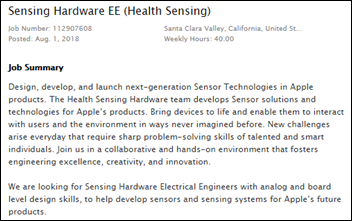
Apple lists an open position that suggests the company is considering developing its own “health, wellness, and fitness sensors.”

image

The local paper says 80 of 300 doctors at Central Maine Healthcare left in the most recent fiscal year, citing conflicts with health system executives, staffing cuts, increased patient loads, and an unwillingness to use its new Cerner system.

image

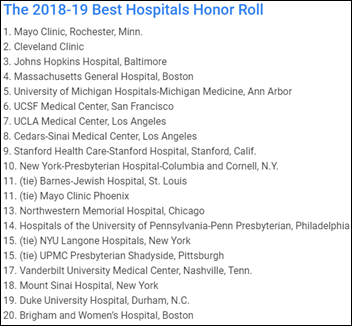
US News & World Report’ “Best Hospitals” list puts Mayo, Cleveland Clinic, Johns Hopkins, Mass General, and University of Michigan Hospitals as its top five. I glanced down the top 20 list and, from my admittedly occasionally unreliable memory, I think every one of them uses Epic (although UPMC is one of perhaps several on the list that also run other systems, Cerner in its case). 

image

Meanwhile, that #1 ranked hospital Mayo is accused of “medical kidnapping” by the family of a high school student who was unhappy with her care during a two-month stay in 2016 for a ruptured aneurysm but was refused a transfer to another hospital. The dispute came when she was transferred to the rehab unit following four surgeries, where her stepfather complained that her doctors wouldn’t order opioids, they missed her bladder infection, and a social worker was overheard discussing financial information about her. The family also demanded that several employees be fired or removed from her care and posted near-hysterical Facebook rants. They finally signed her out against medical advice, triggering a “patient abduction” 911 call from Mayo and the family being trailed by three police agencies. The core issue seems to be whether the adult patient was capable of making her own medical decisions and the reports that a Mayo social worker was trying to appoint either the county or Mayo itself as her guardian. They family ended up at the ED of Sanford Medical Center (SD), which decided she didn’t need to be hospitalized and that she was capable of making her own medical decisions, after which the police ended their hunt.

image

Medical students are skipping classes to the point that 25 percent of second-year students say they almost never attend lectures, relying instead on YouTube videos (like the one above from SketchyMedical) and other outside prep materials to ready themselves for the Step exams. They say those tests cover material glossed over in their med school courses. A student says, “That was the biggest learning curve of med school — it wasn’t so much how do I do well in it, it was, how do I use all these crazy resources that are being marketed to me to best meet my goal of passing Step.” I observed that personally from a relative whose medical school attendance mostly involved listening to recorded lectures at double playback speed. This raises questions:

  • If medical school education is vastly different from the content mastery required to pass Step, is either set of knowledge incorrect or are students expected to complete a self-managed, dual-track education?
  • What’s the level of relevance of physician education to actual medical practice?
  • Medical education involves coursework, endless test-passing, and residency that takes many years and a ton of taxpayer money – is all of that really necessary for knowledge that quickly becomes obsolete?

Sponsor Updates

  • AdvancedMD announces AdvancedCQM, a free module to support MIPS Quality Reporting.
  • Aprima will integrate payment solutions from ClearGage.
  • Florida HIE Services expands its Encounter Notification Service, powered by Audacious Inquiry, to FQHCs.
  • The KLAS Performance Report 2018 identifies Agfa Healthcare as a “strong and guiding partner” for health systems rolling out enterprise imaging.
  • Arcadia CMO Rich Parker, MD and Sales Engineer Stefanie Groner will speak at the CHESS Move to Value Summit August 19 in Winston Salem, NC.
  • AssessURHealth receives Greenway Health’s 2018 Partner Rookie of the Year Award.
  • Practice management vendor Nextech Systems will integrate and co-market Solutionreach’s patient relationship management product suite.
  • Burwood Group names Renee Lawrence (Ingram Micro Cloud) director of product marketing.
  • CarePort Health and Clinical Architecture will exhibit at the SHIEC Annual Conference August 19-22 in Atlanta.
  • The Better Business Bureau awards CompuGroup Medical US BBB Accreditation and an A+ for customer care.
  • The Angel Investor’s Network podcast features Datica CMO Kris Gösser.
  • CoverMyMeds will add its electronic prior authorization app to the Greenway Health Marketplace.
  • Diameter Health will present at the SHIEC Annual Conference August 21 in Atlanta.

Blog Posts


Contacts

Mr. H, Lorre, Jenn, Dr. Jayne.
Get HIStalk updates. Send news or rumors.
Contact us.

125x125_2nd_Circle

Curbside Consult with Dr. Jayne 8/13/18

August 13, 2018 Dr. Jayne 1 Comment

clip_image003 

For many of us in healthcare IT, our primary arenas of work tend to fall within hospitals and health systems, ambulatory organizations, payers, and the vendor space. There are plenty of subdomains within each of those areas, such as tribal health, community health centers, post-acute care hospitals, rehabilitation facilities, and more. I had the chance this week to dig into a segment of healthcare IT that I haven’t done much work in – a university health center. This is the time of year that millions of students are making the leap from college to the university environment, and I was pleasantly surprised to see how digital health is playing out in that space.

At the university in question, students submit their health histories and physicals online via a secure patient portal, including immunization records. Given the volume of international students, the system has to be configured to accept different types of immunizations and offer enough patient-facing help features so that the incoming students understand what they are documenting and can fill out the online forms accurately. Copies of examinations and records can be submitted online, either through scans from the student or via secure email from transferring physicians. I was pleasantly surprised that there were no fax machines to be found at the facility.

Once the initial records come in, a member of the health center staff reviews them with a couple of areas of focus. Immunizations are first, because without them or a notarized waiver document, students can’t attend. Many of the students receive diphtheria and tetanus boosters prior to attending, along with meningitis vaccinations. When I began to think of the size of the entering class, plus the number of transfer students, times the number of doses administered, multiplied further by the cost of the vaccines, it was a large number representing a significant healthcare investment. If the immunizations don’t meet the requirements, a nurse reaches out directly to the student to discuss the issue, eliminating any back-and-forth related to misunderstanding of the questions or errors in documentation. Students are directed to resources to obtain needed vaccines, rather than simply being told they need to get them.

If the student’s documentation passes the immunization requirement, the file is routed electronically to a different part of the clinical team for a general review. Histories are screened for chronic conditions which may require care from the student health team beyond the routine conditions that people typically assume are cared for at a health center. I was impressed by the level of review given to some of the files – given some of the “medical miracles” we’ve seen over the last several decades, students are coming to college with fairly complex histories and specific medical needs. There is a special team to perform second-level review on these files, flagging students with conditions such as congenital heart disease (often following surgical intervention), transplants, cystic fibrosis, and more. Often the students have included their own supporting information that they wanted added to the file, whether it is a transfer of care summary from their pediatrician or a recent referral or consultation letter from a treating physician. It’s a testament to these doctors “back home” as well as to the families of these students that the necessary information is being supplied up front so that the best outcomes can be possible.

Since the patients (students) in this situation are voluntarily attending the institution, and many thousands of dollars are being spent, nearly everyone involved has a vested interest in making sure they stay healthy. Students are made aware of all the services the student health center offers – psychological counseling, preventive services, treatment for sexually transmitted infections, interventions for chemical dependency and eating disorders, screening for depression and intimate partner violence, and more. It reminded me of what many of my community health center clients are trying to do, but on a less-fragmented and better-funded platform. Of course, students are able to find a physician in the community if they choose, but with a team like this, who would want to?

The student health center is more than a walk-in clinic. It staffs a couple of beds where students can stay overnight for observation or delivery of IV fluids for fairly straightforward illness such as gastroenteritis or medications for conditions like acute migraine headaches. The physicians have referral arrangements with a group of hospitalists, which is happy to accept student patients when they have more complicated conditions like influenza, pneumonia, or the occasional appendicitis. They run a women’s health clinic and an orthopedic clinic. Given the presence of an athletic program with a notable football component, I was pleased to see they have a concussion clinic to not only follow up on symptoms and management, but to work with the patients’ academic advisors and professors to address any ongoing cognitive issues.

All of this is being managed in a state-of-the-art electronic health record, hooked up to the state HIE and also to Carequality. They’re routinely sending data to students’ home physicians of record and are electronically managing consents to make sure they can talk to parents when appropriate or to other members of the students’ support systems. The clinic is all about interoperability and coordination because they can be and want to be, not because they have to be. Since they’re not billing Medicare, Medicaid, or commercial payers, they’re not subject to a lot of the regulations and box-checking that the rest of us are. It made me think I was stepping back in time to pre-2009, back when health systems were embracing technology because it was the right thing to do, not because they were being forced to. There was a level of enthusiasm back then and in this practice now that I don’t typically see.

I’ll be working with these folks for a while and am excited about it, not only for the opportunity to see a well-oiled machine and not have to fix very much, but also because of the providers. They are happy and it seems legitimate. Maybe it’s because their systems are optimized, maybe it’s because they don’t have to bill insurance, and maybe it’s because most of their patients are young and healthy with fairly self-limited conditions. Regardless, it’s a good way to experience a different part of the healthcare space and see what pearls of wisdom I can find as I continue on my travels. I’d be interested to hear from student health informaticists – their challenges and opportunities. It’s certainly a bit of a different space for me, but I like it.

What’s your favorite college fight song? Leave a comment or email me.

Email Dr. Jayne.

HIStalk Interviews Rich Berner, CEO, MDLive

August 13, 2018 Interviews Comments Off on HIStalk Interviews Rich Berner, CEO, MDLive

Rich Berner is CEO of MDLive of Sunrise, FL.

image

Tell me about yourself and the company.

I approach this as technologist, having grown up programming computers since fourth grade. I got into healthcare about 15 years ago, working in a variety of roles across a number of the big EMR and population health management companies. While I come at this as a technologist, I spend most of my day with teams and clients, getting them to focus on the outcomes versus technology.

MDLive was founded in 2009 and serves over 27 million members, providing virtual care for urgent care, behavioral health, and dermatology needs. We have over 1,200 clinicians across the country, operating in all 50 states 24/7.

Surveyed Americans love the idea of virtual visits, but the number who have actually experienced them is small. What will drive adoption?

Our greatest challenge is getting the word out there. People who use this service tend to come back about 1.8 times per year after the first visit. Where payers or employers are covering most of not all of the cost of the visit, we can get adoption rates as high as 30, 40, or 45 percent.

Have state-specific virtual visit restrictions mostly been eliminated?

2017 was an inflection point. It felt like the regulatory environment, payer environment, provider environment, and consumer demand came together. We’re seeing significant growth this year. Now you’re seeing CMS continue to talk about the future rules, and now that they are seeing the results, they’re going to be covering more types of visits virtually.

Have health systems mostly decided not to set up their own virtual visit service?

Whenever new technology comes out, people might be a bit threatened by it. But we have seen our hospital and health system clients view us as a partner, where they’re using our platform with their own clinicians, and where appropriate, they’re using our network to complement what they’re doing. We’re both trying to solve the same problem, which is how to improve the access and convenience of healthcare while increasing quality and driving down cost. We enable them to do that in partnership versus competition.

How do you recruit providers and prepare them to practice in a virtual environment?

We have nine years of hard work doing recruiting to bring these folks on board. They get credentialed with our groups. We also give them training, not only on the tools, but also things like webside manner and how you provide care virtually versus physically.

As a large, national medical practice, can you do a better job than small practices in terms of practicing evidence-based medicine and monitoring quality and patient satisfaction?

For our payer, employer, and even our health system clients, when you’re able to manage quality with fewer touch points, you have a better ability to drive quality initiatives. We’re doing it at scale across the nation. We definitely think that’s an advantage for us and our group to improve quality.

What expectations do virtual visit patients have and what do they like or dislike most often?

While many patients have a good relationship with their primary care physician, many don’t have a primary care physician at all. Or even if they do, for certain types of conditions, the most important thing they’re looking for is convenience or privacy. The ability to get the care they want, when they want, where they want. We are working with patients to identify situations when they are less likely to be satisfied. If they think they already know what the answer is and want a certain prescription or antibiotics or they have a condition that may not be appropriate to treat virtually, we do our best to identify that very early on in the process so they don’t get too far into a visit before recognizing that it may not be appropriate for virtual, or the condition they have may be different than they thought.

What patient information is available to the provider before the visit? What information from the visit is shared with the patient’s primary care physician or health system?

For our payer, employer, and hospital and health system clients that feed us data, the provider has access to all of the information that those organizations have. In addition, we have Sophie, our interactive chatbot, that collects a certain amount of data. We’re rolling it out this quarter, where she is automating the triage process so that the provider can get presented with predictive SOAP note. It’s our goal to give the provider as much of the patient’s story as possible before they see the patient, so that when they do, they can focus on the things that they were trained to do — empathize, educate, and make sure they get to that proper diagnosis quickly and develop the plan of care.

What technologies do your doctors use to document and complete the visit?

They choose the device they want to work from. Then we have a lightweight EMR that automates as much of the visit as possible to focus on letting the physician do what they’re trained to do, which is focus on the care they want to provide. We take out as much of the registration, billing, scheduling, and documentation as possible. We’re seeing this have a significant impact on helping solve one of the biggest problems that is out there, which is physician burnout.

What are the characteristics of doctors who most enjoy providing virtual visits and what is their satisfaction level compared to a more traditional setting?

We do surveys regularly and focus on addressing any concerns that are raised. We believe there will a movement for the rise of the virtualist. These will be classic clinicians who, more and more, want to do this full time, similar to the hospitalist movement in the 1990s. We are seeing a broad array of physicians who want to do this, from millennials who want work-life balance to people who are getting near retirement and want to pull back from the shifts but still want to be able to provide care and focus on care rather than a lot of the administrative stuff.

Are providers satisfied with working episodically and not having ongoing involvement with that patient’s overall health?

I’ll answer in two ways. One, our physician satisfaction is higher than most national groups and survey averages that we’ve seen. They get a lot of real-time feedback. Once consumers become aware of this service and use it, they are so thankful for not having been forced to go to the emergency room or urgent care or driving 50 miles. They are getting that real-time feedback. They’re also getting feedback from surveys. For a lot of our clinicians, the patient can select if they want to schedule an appointment with the physician versus see one in real time, so a number of our clinicians see the same patient when they request a visit with the same clinician.

Does the patient choose the doctor or their location before the visit begins? How is a patient matched with a provider?

The clinician they ultimately see has to be licensed to provide care in that state. The consumer has the ability to say, I want to see the first available, or I want to schedule an appointment from a list of clinicians who are licensed to practice in the state.

Are you seeing doctors seeking medical licenses in multiple states just to prepare themselves for offering virtual visits?

Yes. The vast majority of our clinicians have multiple licenses.

What are the benefits of virtual care for people who are seeking counseling or psychiatric services?

As much as 40 percent of the population has behavioral issues. Many of them aren’t getting addressed, either because of access or embarrassment. We’re excited about providing these services virtually, which gives these people the ability to do it in the privacy, comfort, and convenience of their own home.

How will virtual visits change in the next 3-5 years?

We’ve done great work over the past two to three decades in automating the healthcare industry with electronic medical records, population health management systems, and even incorporating genetic information to make sure plans of care are personalized. But we still fundamentally haven’t disrupted the healthcare industry or the way care is provided. Telehealth represents a real opportunity to disrupt healthcare — to put it on the consumer’s terms and to give them care where they want, when they want, and how they want.

Looking out three to five years, we can see a healthcare system where a large portion of primary care is not only provided virtually, but is also automated and optimized through things like artificial intelligence and machine learning and with chatbots like Sophie, to help make that shift to proactive, predictive health management as well as care.

Do you have any final thoughts?

We’re extraordinarily excited about the opportunity in front of us. It’s not often that you can provide a service that’s better for the consumer, better for the clinician, and better for the healthcare system overall. Consumers can access it conveniently, clinicians can focus on providing care, and quality and cost will improve. It’s an exciting time for MDLive and the healthcare system overall.

Monday Morning Update 8/13/18

August 12, 2018 News 4 Comments

Top News

image

The Wall Street Journal posts another critical review of IBM Watson Health for oncology, saying that “the diagnosis is gloomy” for Watson’s ability to improve cancer treatments.


Reader Comments

From Axe the Fax: “Re: fax machines. Finally someone is pushing to get rid of them in healthcare.” We healthcare folks are always embarrassed by technologies that, while understandably outdated in the consumer arena and in other industries, are nearly perfectly suited for our needs. We have a zillion things wrong with the healthcare non-system, and fax machines and pagers — while emblematic of healthcare’s resistance to change – can be swapped out whenever a provider finds a better alternative (and while CMS has jumped on the bandwagon, I bet they still require providers to fax in information to support claims or information requests). Fax machines are the one form of interoperability that data-hoarding and technically incompetent providers can’t suppress, and in that regard, are disruptive in their own way. They require no training, they always work, and incoming faxes are easily noticed and sorted without sitting down with a keyboard. I wish we would save the righteous indignation and smarmy dismissiveness for things that should truly embarrass us, like poor value, self-serving clinical and administrative practices, and treating patients like the widgets of profit. We spent billions of taxpayer dollars on EHRs, and while they allowed health systems to preen about their high-tech wonderfulness, most of those providers didn’t see their cost or quality needle move one iota and neither will dumping fax machines – a better hammer doesn’t necessarily make you a great carpenter.


HIStalk Announcements and Requests

image

Most poll respondents don’t like the idea of someone having to file bankruptcy over medical bills. PFS_Guy says people don’t manage their money well and he doesn’t have good answers on how to help them, hoping that those in need look to charity or hospital financial assistance programs. Greg Park advocates Medicare-for-all because the profit-driven system preys worst on those with little or no insurance. Cosmos says someone has to pay for medical care, and if your short-sighted, invincibility-fueled decision to not buy insurance turns out to be unwise, you should have to take financial responsibility, including filing bankruptcy if needed. He adds a hypothetical example in which someone’s life is saved with a million-dollar hospital bill – is it unreasonable that bankruptcy gives that health system part of your life’s income in the form of a repayment plan? 

New poll to your right or here, continuing with the theme and getting right to the heart of today’s healthcare debate: Is it OK for insurers to charge sicker people higher health insurance premiums or refuse to cover them as was common pre-ACA and is about to become common again? A follow-up question might ask what should then be done when someone quickly runs out of resources and simply signs up for Medicaid so taxpayers foot the bill.

image

Responses to last week’s question are here.

image

We’re in peak vacation season, which raises this week’s question: what have you done with time off that turned out to be especially motivating, enriching, or transformative? Something that changed your life, maybe? Those of us looking for something beyond the usual vacations need some guidance.

Here’s my favorite quote of the moment, which I thought of upon biting my lip as an acquaintance who is dying of cancer explained that she still puts in endless work hours because nobody else can do her job: “Graveyards are full of indispensable men.”


Webinars

August 15 (Wednesday) 1:00 ET. “Raising the Digital Trajectory of Healthcare.” Sponsored by: Health Catalyst. Presenter: Dale Sanders, President of Technology, Health Catalyst. Healthcare ranks lowest in McKinsey’s Digital Quotient (data assets x data skills x data utilization) of all industries except mining and has largely ignored the digitization of patients’ state of health, but that’s changing. This webinar will describe the empathetic components of healthcare digitization strategy; the AI-enabled encounter; why today’s digital approach will never work and instead sucks the life out of clinicians; the role of bio-integrated sensors, genomics, and the “digitician;” and the technology and architecture of a modern digital platform. It’s going to happen, so let’s make it happen the right way.

Previous webinars are on our YouTube channel. Contact Lorre for information.


Acquisitions, Funding, Business, and Stock

image

This should stir up some debate. FDA approves the first “gene-silencing” drug that treats a rare nerve destruction disease. The company spent $2.5 billion to develop Onpattro and will sell it for $450,000 per patient per year, including a money-back guarantee. The chief medical officer of Express Scripts applauds the company for “taking a responsible approach to pricing and patient access in the rare disease space.” About 50,000 people worldwide have the condition, of which 100 percent will want the drug versus the approximately 0.0 percent that can afford to pay for it. What do you do?


Decisions

  • Abington Hospital (PA) went live with Oracle HR software in January 2018.
  • Southeast Georgia Health System (GA) will go live with Kronos HR information system in September 2018.
  • Wake Forest Baptist Health (NC) plans to switch from Oracle HR information system to a new vendor that has not yet been chosen.
  • Sedgwick County Health Center (CO) switched from Azalea Health to MedWorks on February 1, 2018.
  • Parkside Psychiatric Hospital (OK) went live with Paycom HR software in spring 2018

These provider-reported updates are supplied by Definitive Healthcare, which offers a free trial of its powerful intelligence on hospitals, physicians, and healthcare providers.


People

image

Ashish Sant (McKesson) is named SVP/GM of enterprise imaging of Change Healthcare.

image

CancerLinQ, a non-profit data initiative of the American Society of Clinical Oncology, hires Corey Wiegert (IBM Watson Health) as CEO.


Announcements and Implementations

image

Mobile Heartbeat launches CURE Analytics, which allows users of its mobile communications platform to improve communications processes and quality and to add communication data to a data warehouse.

image

LOINC releases its FDA-funded “Guide for Using LOINC Microbiology Terms.”


Other

The government of India develops “e-mortality” software, hoping to improve on the 90 percent of death records that are not medically certified to include ICD-10 codes that indicate the underlying and contributing causes.

Minnesota’s health department finds that an appendectomy can cost as little as $6,600 or as much as $35,500, due not to which hospital is doing the work or how risky a particular patient is, but rather the secret price negotiations between health systems and insurance companies. Hospitals with little competition charged 15 percent more and patients are getting stuck with ever-higher bills because of high insurance deductibles and co-pays. 

In the UK, Alder Hey Children’s NHS Trust wants to use Microsoft HoloLens for a heads-up display for surgeons and Surface Hub for single-screen collaboration in sharing EHR data and medical images.

image

Guess which country isn’t home to this market research firm whose website self-aggrandizes its “well-endowed research teams headed by true curators of talent and strong-headed individuals?”

image

Weird News Andy confides that he heard about this in a tweet. A bronchoscopy reveals that a four-year-old boy’s mysterious, whistling-like cough is being caused, in fact, by an actual toy whistle.


Sponsor Updates

  • Medicomp Systems is exhibiting at Greenway Health’s Engage18 customer conference in National Harbor, MD August 10-13.
  • Iatric Systems posts a case study titled “Prevent Third-Party Breaches, Protect PHI, and Avoid the “Wall of Shame” with Iatric Systems SecureRamp.”
  • Black Book updates its mobile healthcare survey apps.
  • Liaison Technologies achieves record-breaking growth in the first half of 2018.
  • Lightbeam Health Solutions will exhibit at the SHIEC Conference August 19-22 in Atlanta.
  • Vyne President and CEO Lindy Benton joins the Florida State University Alumni Association National Board of Directors.
  • MedData’s Pulse intranet software wins ThoughtFarmer’s annual Best Intranet Awards in the Innovation category.
  • Surescripts will exhibit at the 2018 Aprima User Conference August 17-19 in Grapevine, TX.
  • SymphonyRM and ZappRx achieves AICPA SOC 2 Type 2 compliance.
  • TriNetX releases the agenda for its annual user conference September 25-26 in Boston.

Blog Posts


Contacts

Mr. H, Lorre, Jenn, Dr. Jayne.
Get HIStalk updates. Send news or rumors.
Contact us.

125x125_2nd_Circle

What I Wish I’d Known Before … Turning 40

That perception is nine-tenths of reality.


In the work context, learn how to spot an incompetent and/or malicious boss faster and get out quicker instead of trying to hold on because I liked the company. Job hop sooner, avoid the suffering, and find the good team. Regarding personal spending, committing to a higher level of savings to make retirement possible five years earlier. (Age 60, likely to work past 65)


That I’d be divorced the year I turned 40 because (in part) I traveled too much for my job.


I wish I’d understood more the importance of good body mechanics and specific techniques to maintain optimum physical health. It’s so easy to think you’re going to be able to do everything you do in your 20s and 30s but much of your bad habits won’t ‘tell their tales’ until after your in your 50s and 60s. Moral of the story: Never underestimate the importance of taking your body in for it’s regular maintenance and tune-ups!


I’m playing catch up now and often wonder how much better shape I could be in.


That I wouldn’t feel that much older! And that listening to coworkers moan about turning 25 would be extra hilarious.


Two things: the impact that a career can have on a family. A co-worker helped me with this one when I considered returning to school to get a bachelors degree with kids nine and 10 years old. She said, “Why do you want to go back to school? Because if you think you will get paid more, that may not be the case” AND how important it is to grasp opportunities as the “right” time will never come. An executive took me to lunch at the nicest place in town and offered me a position in management. I declined, stating that I was not ready, but maybe in six months. Well, the six months never came and the executive was one of the most successful in the company. Lesson learned, especially since we were both female.


I wish I had known before I was 40 that as a female salesperson, I didn’t have to, nor should I have to, put up with sexist behavior like having the sales team go out for drinks at a strip club after team meetings. Luckily much of that B.S. has become acknowledged as inappropriate, but before I was 40, I thought I had to blend in. No more blending, boys!


That turning 50 and 60 are a heck of a lot harder. Just a number and not a milestone!


That job hunting is exponentially harder. Despite claims to the contrary, ageism exists.


Life not only gets busier, but goes by quicker. Work to live and don’t live to work.


Trusting yourself that you can start a business and learn to be productive and likely successful long before you turn 40.


That your 40s are awesome if you let them be.


Quality of life makes a BIG impact on your business. Stress can ruin you from the inside out. Do not let your business ruin your health. Incorporating meditation, exercise, and getting adequate rest to reduce stress levels will improve working smarter. And incorporating meditation, exercise, and rest gives you time for a fresh perspective. Sometimes it’s best to not respond immediately!


That before I knew it, I would be 60.


Save, save, save. And all of the little pains.


Weekender 8/10/18

August 10, 2018 Weekender Comments Off on Weekender 8/10/18

weekender


Weekly News Recap

  • CMS releases a draft rule that would overhaul the Medicare Share Savings Program
  • UnitedHealth Group is reportedly the only non-financial company that’s in the running to acquire Athenahealth
  • Northwestern Medicine (IL) lays off 60 IT employees after completing its Epic go-live
  • CVS Health adds MinuteClinic-branded virtual consults from Teladoc to its CVS Pharmacy app
  • Doctor appointment booking service Zocdoc postpones its announced pricing changes after practices complain about being charged $35 to $100 for each booked appointment instead of paying just an annual fee
  • Allscripts announces that it will sell its joint venture stake in behavioral technology vendor Netsmart
  • Henry Ford Health (MI) signs its first direct contract with an employer, touting Epic’s MyChart as a patient perk for GM employees

Best Reader Comments

Auto insurance is required in all 50 states, with two limited exceptions: NH, where you are still personally liable for damage done, and VA, which requires you to pay $500 annually if you don’t want to insure. The premise for these laws actually map quite well to healthcare. Imagine without the legal requirement – one person without insurance crashes, damages a building, injures a bunch of people, and ultimately declares bankruptcy to avoid the expense for liability. Everyone else gets to cover the tab. Requiring insurance puts money into the system to spread some of the risk. (Ummmmm)

CommonWell hooks itself up to the rest of the world! Only three years late and still not generally available. (DoD will be first in line once it’s ready, so as to exhibit “leadership,”right?) This is the great golden spike moment for interoperability – except with the Carequality Railroad traversing the entire continent to connect CommonWell San Francisco trolley network. (Vaporware?)

[Project] branding becomes important at this scale. With departmental or smaller implementations, using the vendor/product as a brand isn’t usually a problem. However once you hit “whole organization” level systems, as you do with an organization-wide EMR/EHR, putting a bit of distance between you and the primary vendor becomes important. (Brian Too)

I worked in an organization that had policy of renaming all vendor systems to a name of the organization’s choosing. Although this might seems confusing, it was actually very useful. Many implementations consisted of more than one licensed product so calling it the name of the dominant product wasn’t accurate. It also reinforced the notion that it was our system running our processes for our patients and members. The name was first coined for the initial implementation and stayed with the system through retirement. Our marketing people were definitely involved because the names were thoughtfully chosen and reflected the purpose of the system and the aspirations of the organization for the benefits it would bring. (A Rose By Any Other Name)


Watercooler Talk Tidbits

image image

Reader donations funded the DonorsChoose teacher grant request of Ms. J in Missouri, who asked for building materials for her classroom of mostly refugee students whose primary language isn’t English. She reports, “This has been an extremely valuable learning tool in the classroom and very motivating for the students. We have done three challenges so far. The one in the pictures was to build a house. It had to have certain components, like a window, a door, some furniture on the inside. When the students finished their creations, they shared about them (first with a partner, then with the whole group). The reason I had them share with a partner first was so they could improve their houses with additional ideas. They really like their remodeling stage. Once we shared out as a whole group, the students wrote about their houses. We have done similar projects with math shapes and animals. The students love it when we get out the Legos. They are excited to hear about the challenge and their discussions of what fits in the expectations and what does not are amazing. Their reasoning is incredible. Thank you for providing these experiences for my students. Their ability to use their language and reasoning to convey their ideas will serve them very will as they move through school. We know that they are learning – even if they just see it as ‘Lego Challenges.’ We are grateful for all you do to support the growth of students — linguistically, socially, and academically.”

image

In Germany, neuroscientist and empathy expert Tania Singe, PhD is accused by current and former colleagues of being overly controlling and prone to bullying. They claim she had little empathy of her own, reserving her harshest behavior for pregnant employees — denying moms-to-be parental leave, calling them slackers who would need to work twice as hard to make up for their absence, and telling one who had miscarried that she would no longer be allowed to keep doctor appointments during work hours.

image

CNBC gets a first look at augmented reality headset Magic Leap, which has been shrouded in secrecy during its seven years of development and $2.3 billion in investment. The $2,300 developer’s edition is now available and the writer’s experience was mixed, saying it’s pretty cool to view a 3-D world being displayed on untethered goggles, but it’s hard to describe what the device does, there’s no way to show real screenshots since the human brain does the processing, it has limitations with ambient brightness and displaying human-like field of vision, and it will probably take years to get the product ready for mass consumption. Potential medical uses include supporting surgeries and offering chats with an AI-powered image of a doctor, but then again those use cases didn’t save Google Glass. 

image

The ambulatory surgery center lobbying group urges members to post positive comments on locally republished copies of a Kaiser Health News article that describes the lax state of ASC regulation. KHN found that state rules vary widely such that oversight of injuries and deaths can be minimal and doctors who have lost their hospital surgical privileges for misconduct are free to open their own surgery centers. One surgery center for colonoscopy had two patients die in the same month during what is normally among the safest of surgical procedures, and in at least 17 states, surgery centers don’t have to report patient deaths. 

image

A Pittsburgh local news site’s guest op-ed piece by healthcare transformation organization Lown Institute says UPMC’s planned $2 billion expansion should not be allowed or the health system should be stripped of its non-profit status, observing that UPMC receives $200 million per year in tax breaks but wants to build three high-profit specialty hospitals (cancer, transplant, and heart care) that don’t address local health needs such as obesity, asthma, binge drinking, and health disparities. UPMC wants to market the hospitals to wealthy patients abroad and wants to build two of them in suburbs where the percentage of insured residents is higher. UPMC CEO Jeffrey Romoff says, “UPMC desires to be the Amazon of healthcare.” Romoff was paid $6.9 million in UPMC’s most recently reported fiscal year, joining 32 UPMC executives who earned more than $1 million.

image

A New York Times opinion piece written by a hospice nurse and book author says more attention should be paid to the gut feelings of nurses, which she says aren’t really feelings but rather the clinical judgment that results from years of personal observations and experiences. Theresa Brown, RN, PhD notes that doctors generally ignore those feelings as documented in the EHR’s nurse notes. She talks up the Rothman Index, which combines EHR data – including that generated by nurses – to provide an early warning system for detecting at-risk patients. I interviewed co-creator Michael Rothman, PhD way back in 2010, but his comments are even more valid today:

We extract the amount of risk which is inherent in the value of each of these measurements and come up with a single score. Now in a sense, that’s what a doctor or nurse does when they go in. They come up with an overall sense of how the patient is and a good doctor does it well, or a good nurse does it well. But the problem is if a doctor is rushed, a nurse is rushed, how completely can they really evaluate all the data that’s there? Even even more importantly, do they really know how that patient was the day before when maybe this is the first time they’ve ever seen the patient? Getting that trend is very difficult to do, even if you’re a doctor and you’re sitting down and studying what’s in the medical record. It’s hard to figure out what the trend is, especially if it’s a gradual deterioration.

There’s one other thing, and that is, doctors tend to look at three things when they’re doing an evaluation. They look at vital signs, they look at lab tests, and they look at the last doctor’s notes. However, there is a source of information that they tend to overlook, and that is the nurse’s assessments. The nurses do what is called “the head to toe assessment” of the patient. It’s something that’s taught at nursing school. They evaluate each physiological system and they record it on the computer. Really, doctors don’t look at it. One of the things that we’ve done is we’ve said, “Hey, this is actually very valuable information about how someone is.” So we used nursing data in the calculation of our score. It gives the doctor access to something that he doesn’t normally look at.

image

Total property values of Madison and Dane County, WI have exceeded that of the city and county of Milwaukee for the first time even though Milwaukee has nearly triple the population of Madison. Dane County’s population grew by 40.7 percent from 1988 to 2017 – largely driven by technology companies such as Epic — while Milwaukee County had just a 1.5 percent increase.

image

Bizarre: doctors coin the term “Snapchat dysmorphia” to describe teens who seek plastic surgery to “look better in their selfies” and to make them look like their Snapchat-filtered selves.The JAMA Facial Plastic Surgery article summarizes,

Social media apps such as Snapchat and Facetune are providing a new reality of beauty for today’s society. These apps allow one to alter his or her appearance in an instant and conform to an unrealistic and often unattainable standard of beauty … it can be argued that these apps are making us lose touch with reality because we expect to look perfectly primped and filtered in real life as well. Filtered selfies especially can have harmful effects on adolescents or those with BDD [body dysmorphic disorder] because these groups may more severely internalize this beauty standard.

image

Of course hacker conference attendees would quickly figure out how to override a hotel’s thermostat and then tweet out instructions so colleagues can try it at their own hotels. The guy above was asked whether it’s a tampering felony to mess with a hotel’s thermostat, which is says isn’t because it’s an intended feature of the thermostat (as long as the hotel doesn’t make guests sign a EULA before using, he says with nerd tongue in cheek).

image

A 2 1/2-year-old toddler leaves Boston Children’s Hospital for the first time, having spent her entire life on a ventilator until she received a double lung transplant in September. It’s a feel-good (no pun intended) story as long as you can suppress your curiosity about what it cost and who paid.


In Case You Missed It


Get Involved


125x125_2nd_Circle

EPtalk by Dr. Jayne 8/9/18

August 9, 2018 Dr. Jayne 3 Comments

clip_image002 

Throughout my medical training, my early days in practice, and during countless go-lives, I’ve experienced some degree of sleep deprivation. I look forward to weekends when I’m not seeing patients and when I can sleep in, trying to (at least psychologically) catch up on all those “lost” hours. Today my hopes were dashed, with news that sleeping too much might be bad for one’s health. Researchers conducted their analysis using combined data from three million patients across numerous studies. They concluded that sleeping more than the recommended 8 hours can be associated with a higher rate of death. The study, published in the Journal of the American Heart Association, also proposes that poor sleep quality can be associated with cardiovascular disease.

Sleeping for 10 hours was linked to a 30 percent higher risk of death, where the nine-hour threshold was linked to a 14 percent higher risk. The National Sleep Foundation’s guidelines recommend 7-9 hours of sleep for most adults under age 65 and 7-8 hours for the retirement set. It’s not just about the number of hours, though – increased sleep can be associated with underlying chronic diseases that cause fatigue or increase sleep including thyroid dysfunction, anemia, depression, and other conditions. Decreased activity levels and unemployment can also negatively impact sleep, as can social, psychological, and environmental factors. The authors note that clinicians should further explore both duration and quality of sleep when assessing patients.

clip_image003

I’ve been doing some work with an organization that is considering enhancements to its clinical decision support capabilities. They’re looking at adding some provider dashboards along with peer data transparency as a way to drive adoption of clinical protocols. A recent study looked at how well physicians adhere to guidelines for prescribing certain cholesterol-lowering drugs. The physicians who had visibility into the prescribing habits of their peers showed a significant increase in prescriptions for statin drugs. The authors designed the study to be outside the EHR in order to better measure its effect and to create an ideal design. They did note, though, that although use of dashboards can increase compliance with guideline-based prescribing activities, the dashboards “may need to be designed to better fit within clinician workflow.” They also surmised that there may be better response to communications from physician and practice leaders rather than from researchers.

More frequent reminders or provision of peer data may also make a difference. I worked with a startup a few years ago that used single sign-on (SSO) technology to make that kind of dashboard data visible for individual patients at the point of care, but they had some challenges with overall adoption of the SSO platform that effectively killed the patient-centric display of data. The authors also noted that their approach allowed for physicians to complete the intervention by prescribing medication outside of an office visit. They note the challenge that “physicians with larger patient panels may face difficulties managing these types of decisions outside of their traditional clinic model when they receive a long list of eligible patients at one time without additional support.” They conclude that there may be benefit in delivering regular feedback over a longer period and leveraging “multiple opportunities to address gaps in care for smaller subsets of patients.”

When I was reading the article, I was having flashbacks to the annual “report cards” that a couple of my insurance plans would send to my practice before the days of EHR. They’d have large lists of patients who were identified as missing services. They were created using only claims data, and since they were only sent out annually, there was a high likelihood that they were outdated. The arrival of the reports would send my staff into a mad scramble of chart-pulling and review, followed by outreach to patients to determine whether they had the services somewhere else, paid cash, or attended a free screening. If not, we’d arrange the services. If they did, we’d have to get copies of the data, update the charts, prepare a response to the payer, and get ready to start the cycle over again once the next payer’s packet arrived. Of course, there was no coordination between the cycle on which I received my reports and when my partner received his, or among payers, so it seemed like we were in a state of constant chart-pulling and review. Thinking back, I have to laugh – we could have completed the exercise in the EHR in a matter of hours rather than days, assuming we hadn’t already identified those gaps in care and acted on them ourselves.

clip_image005

WalletHub released its list of “Best & Worst States for Health Care” this week. The analysis looked at 40 measures of cost, quality, and access across the 50 states and the District of Columbia. Vermont, Massachusetts, New Hampshire, Minnesota, and Hawaii led the list based on aggregate scores; North Carolina, Arkansas, Alaska, Mississippi, and Louisiana round out the bottom. My own state lands somewhere in the middle, which really doesn’t make me feel that much better. There are also lists looking at average monthly insurance premium cost, hospital beds per capita, physicians per capita, and more.

clip_image007

I’m a sucker for healthcare IT-related headlines, even though they may be clickbait. I was drawn in by mention of a CMS call to put an end to physician office fax machines by 2020. CMS Administrator Seema Verma delivered this challenge as part of a push for digital health information, leading up to the Blue Button 2.0 Developer Conference that starts next week. There wasn’t much more meat on the bone here, but I was suckered into reading nevertheless.

I continue to see fax machines in most of the offices I visit, even those that are live on nationwide data-sharing platforms. It’s not just physician practices that are complicit in the continuing need for “faxes” even if they are generated and received electronically. I recently had a change in my pharmacy benefit manager, which requires that either my physician fax a prescription to them or that I mail in a paper document. I specifically asked about electronic prescribing and the phone agent said no – even though I know they accept it – so giving that message to patients is not helpful. I mentioned to the phone agent that when I order new contacts, I can send a photo of my script to the vendor to speed things along – no such luck for drug prescriptions. I guess I’ll wait the advertised 10-12 days until my script comes in.

When is the last time you used a fax machine? Leave a comment or email me.

Email Dr. Jayne.
Readers Write: A Smart Telehealth Strategy Creates Great Value While Meeting Myriad Needs

August 8, 2018 Readers Write Comments Off on Readers Write: A Smart Telehealth Strategy Creates Great Value While Meeting Myriad Needs

A Smart Telehealth Strategy Creates Great Value While Meeting Myriad Needs
By Ray Costantini, MD

Ray Costantini, MD, MBA is co-founder and CEO of Bright.md of Portland, OR.

image

Friction is the enemy of efficiency, whether it’s an automotive engine clogged with grime or an athlete’s muscles slowed by lactic acid. Our healthcare system is stymied by high levels of friction throughout. Fortunately, for hospitals, doctors, and other healthcare providers seeking an edge in today’s highly competitive healthcare environment, a smart telehealth strategy presents an opportunity to slice through much of this friction and create great value in the process.

Telehealth is a broad category. At one end of the spectrum, it involves managing complex, high-risk conditions such as stroke through remote monitoring and consultation. At the other, it entails providing high quality, on-demand convenience care (or virtual care) for a range of acute, episodic, and non-emergent conditions in an effective, rapid, and cost-effective manner. There are many points across this spectrum to create and capture value for health systems and their patients. Telehealth services hold the promise of unlocking that value and now is an excellent time to think about integrating them into practice.

Several converging trends are contributing to this window of opportunity. One is the shortage of primary care physicians. Did you know that a patient in Boston typically has to wait up to 66 days to see a doctor through a traditional in-clinic visit? If you’re lucky, you’ll get sick in San Diego, where the elapsed time from scheduling to care is just seven days.

Another contributing trend is the consumerization of healthcare. Patients today are increasingly savvy. Empowered by technology, they expect on-demand access to care, and if they don’t get it or don’t like what they get, they’re all too ready to take their business elsewhere. This is one reason we’re seeing a proliferation of independent “retail care” locations, which by the way exacerbate the shortage of providers and add to the friction in the system.

What’s a provider to do to seize the telehealth opportunity? First, you’ll need to come up with a telehealth strategy. There’s no “one size fits all” approach here. For example, one system may be struggling with access issues, while another may face the challenge of serving a specific population group or demographic. The right solution with a tuned operational plan behind it can solve either of those issues. Start by taking an inventory of the pain points you want to solve. Also helpful: stop thinking in terms of return on investment or revenue created and instead begin thinking about the value created by your telehealth strategy and virtual care solutions. There are many different ways to create value, but you’ll have to decide on the right mix for your particular needs.

A smart telehealth strategy entails a comprehensive set of solutions, what I call a “ladder of care.” This could include options such as self-triage, nurse advice, and asynchronous virtual care for common ambulatory conditions. For higher-acuity issues, it could include video visits. In-person visits would be reserved for conditions where multiple comorbidities exist (diabetes and flu, for instance), or when a physical procedure is required (a minor procedure such as wart removal).

How does such an approach unlock value? First, it creates access and capacity in the system. Asynchronous virtual care visits can take less than two minutes of provider time and can be delivered from a smartphone with even a 3G connection from wherever the provider happens to be. One full-time equivalent of physician or Advanced Practice Clinician can deliver more than 20,000 of these virtual visits per year. Compare that with just 2,000 20-minute in-person or video visits for an in-clinic provider. This approach also attracts new patients and retains existing ones, which in turn drives downstream revenue and adds to your brand bank, building loyalty and positive word of mouth through innovation and patient-centered service delivery.

A ladder of care approach also ameliorates provider burnout by giving providers time to focus on higher-acuity patients (and generate associated reimbursement) in clinic and top-of-license practice. If the telehealth solution can automatically generate a chart-ready SOAP note, that dramatically cuts down on clerical work.

The value created pays dividends at the system, clinician, and patient levels of the healthcare ecosystem. At the system level, in a FFS (fee-for-service) world, a smart telehealth strategy can unlock downstream revenue through both patient acquisition and retention. In a capitated model, it helps keep the patient population healthy while preventing minor ailments from becoming major ones due to a lack of treatment or access.

A smart telehealth model can help cut your losses on primary care while also shifting fixed costs to variable costs. Instead of building or leasing and outfitting a two-clinician clinic, you would instead spend a fraction of that cost to provide a far more efficient usage basis. Integrating the staffing of your telehealth with existing retail or urgent care efforts would help fill the more than 30 percent of idle provider time that’s all too common in those settings. The list goes on.

For your patients, there are savings in time, money and more. Patients regain the hours it takes to schedule, wait for, and be evaluated by a physician, also avoiding lost wages, childcare costs if they have to visit the doctor, and so on. Telehealth patients report getting healthier sooner, recovering 1.5 days faster. For clinicians, a tele-visit can turn a 20-minute low-acuity visit into a higher-value visit with a patient who really needs it.

Meanwhile, the barriers to telehealth are quickly coming down. According to a 2016 Medscape study, both patients and physicians have improved their attitudes when it comes to embracing telehealth, with nearly two-thirds of patients surveyed expressing comfort in virtual care, diagnoses, and treatment plans. Add to that an increased availability of telehealth services from providers and a growing sense of patient trust versus privacy and security issues. With so many tech companies turning their focus to healthcare, many of the technology challenges associated with telehealth (bandwidth, availability, etc.) are a thing of the past.

Bottom line: this is no time for hospitals and doctors to retreat into traditional, friction-bound approaches to healthcare delivery. Your patients are already moving to a technology-enabled future of on-demand access to timely, convenient care. A smart, well thought out telehealth strategy is your ticket to join them and ride the next wave of patients and value-creation opportunities.

HIStalk Interviews Paul Roma, CEO, Ciox Health

August 8, 2018 Interviews 2 Comments

Paul Roma is CEO of Ciox Health of Alpharetta, GA.

image

Tell me about yourself and the company.

I have been the CEO of Ciox for a little over a year. I came from the professional services world as the global head of analytics for Deloitte & Touche, which constituted 87 countries and all of the analytics work that that global firm does. My background throughout my entire professional services career, outside of running the global analytics business, was healthcare — life sciences, domestic government work, international healthcare work, providers in health insurance.

Consumers complain about the cost of getting copies of their electronic information from their providers and Ciox has sued over the HIPAA limitation on how much providers can charge. What are the current topics around that issue?

Just to be clear, Ciox is not suing over what consumers get charged, so let me reframe that a bit. We are, in particular, very pro-consumer and consumers getting their health records. I want to be 100 percent clear on that. Our lawsuit has nothing to do with the rate in which consumers are charged or whether they’re charged.

Our view is that there is a burden that is put on hospitals and physicians in professional, for-profit situations. The legal profession, the insurance profession, and others are using a consumer angle to create a burden on the doctors to feed them the record at a very low rate. Our lawsuit has to do with that. We believe that the people that are using information for commercial purposes should pay, and that the cost of producing that information in the proper format should not solely rely on the doctor and be a loss item on their balance sheet. They should be reimbursed for it. That is the bulk of our beliefs and our lawsuit.

So a for-profit company using a patient’s medical record for commercial purposes is different than patients getting copies of their own records?

It is, yes. There’s a explicit differentiation between the two.

Say I get a study done. I go to one of my local hospitals and I want to get that record to bring it to my primary care physician. We do literally millions of those, sometimes multiple millions a month, in which we either don’t charge at all, which is the usual case, or we charge very little. We are very pro consumers getting their health information.

We also do tens of millions of doctor requests for information for continuity of care and things like that, for which we don’t charge, of course. If it is for the consumer and for their health, we are very much in favor of that information being dispersed, being liquid, and transacting at a frequency and rate that is conducive to health being improved.

Are you seeing anything on the horizon that would change the way that the ownership and exchange of medical records will work in the US?

Near-term, no. Long-term, in my opinion, it is somewhat inevitable that the benefit of the data flowing in a secure, de-identified, and traceable way and being available for research outstrips all the reasons the walls are built up for us not to share the information. Long-term — whether it’s a change in definition, a change in regulation, or a change in the belief system of how that information moves — I do think we will see change.

What is the interoperability technology marketplace position of the newly announced HealthSource?

HealthSource fits squarely in the enterprise need for clinical information. We service providers, health plans, life insurance companies, and life sciences companies. HealthSource is a cloud-based, HITRUST-certified product that allows for both the interoperability with third parties — because we have hundreds of thousands of digital connections that we build into workflows — and sharing within the enterprise.

At some of our larger clients, we service 100 different use cases that require clinical information. Health insurance examples would be prior authorization, medical management, risk adjustment, and quality. Our HealthSource software integrates to those use cases and provides the information that they need from the medical chart, the EMR, to improve their process with the clinical information instead of relying on, in the health insurance case, claims and other secondary clinical information. We’re using the primary source to improve their use case.

How much technology and labor is involved in providing a complete electronic chart?

It varies. I’ll say two things. One would be that, as both a citizen and someone running a business, I wish it didn’t vary. I wish it was more liquid and that the outcomes were faster. The reality of the situation is that a large integrated health system has, on average, 17 different EMR systems. A vast majority of hospital systems have not even brought their acute systems to a single system, let alone all the specialty, post-acute, ambulatory, and other. Even within one practice area, they haven’t centralized. I would say that’s the norm.

Because of that, to your point on labor, about half of the cost comes from technical integration, formatting, and information and data management. About half the cost is still from manual touches, whether that be on the front end to work with the information or on the back end from a QA perspective.

Our particular business is reliant on, and cautious of, the regulations that are put on it. We are fully compliant to SAMHSA, as an example, which is a federal regulation to redact substance abuse information. There are many other things that we do. We not only get the information and put a longitudinal view together, but we structure the information — both technically as well as from a redaction perspective — so that it is compliant in the situation we’re offering.

One of the major distinctions for us that has cost associated with it is that we are not a generic exchange for clinical information. We are very particular as to what we’re sharing and making sure that it meets the regulations, that the information’s been redacted appropriately, and that the endpoint is receiving the format that it needs. All of those things are unfortunately more costly than just broadcasting information.

We have the possibility of expanded data sets that include genomics data, wearables data, and other data sources that aren’t being widely captured and collected and stored today. How do you plan for that as a company?

Our clients ask us to add a major source almost monthly. Many are the examples that you just gave. For example, genetic information and the translational makeup of information that combines phenotypic and genotypic data together to create a full picture of the person’s health and vitality. That’s been in our system for a long time, so we’re covered off on that. But below that, there are numerous social determinant categories, such as activity-based tracking from wearables and other IoT devices. We have a backlog on a monthly basis for life science companies and health insurance companies that are driving those changes and requests for further integration.

We lean in heavily on the Argonaut system, which is HL7 standards-based FHIR communication. It simplifies those things. The endpoint can communicate with us at that standard and they’re using the CCDA format, which we use. It’s pretty easy. But some of them still require proprietary interfaces. We maintain at this point about 700 different interfaces, so it’s still pretty costly to do all the endpoint integrations.

Are you seeing promising uses of artificial intelligence or machine learning to make sense of that wealth of data that we now have moving around?

This is a whole topic in and of itself. My background is as a data scientist and my formal work is in the technology of artificial intelligence and cognitive computing, so we can go as deep as you want.

Current state is that for us as company, it’s our largest investment — the structuring of data and the intelligent understanding and summarization of that data. Within the HealthSource product, we have a component called Smart Chart that takes all of the unstructured elements — progress notes in the EMR, a pathology report that’s coming out of the prognostic indications or from test results — and structures those and puts them in an analyzable format.

To your point on AI and cognitive technologies, we then come back through in a cognitive match and build a probabilistic model with confidence levels that deciphers the diagnosis codes, the DRG codes, and many of the other prognostic indications and then builds insights from those. Those insights in our generally-available product are generating tons of value.

To get back to the first part of your question, those technologies I just described are already showing literally hundreds of millions of dollars of increased profit for our clients. Hundreds. Not tens, hundreds. That fuels our investment and the industry’s investment. The “man versus machine” shift in terms of capital investment in those things is increasing on a monthly basis. There’s more information that leans in on the limitation of what a human can decipher.

But the information and the correlation of that information is also getting to the point of complication. Even if you or I are reading it, it’s a 1,200-page EMR. You’re deciphering a list of genetic bases from the four billion genetic bases that are written in a progress note that don’t have a paint-by-numbers key next to them. I have an MTHFR gene expression and I happen to know that that’s a methyl pathway issue that could cause drug toxicity. There’s lots of other things. But that’s in the progress note written out, and as the clinician looking at it, there’s four billion of them. How in the world do I decipher that?

I’m using the most acute example, genetic basis, just because of the number. But the complication of this information has exceeded what even the most well-trained doctors can comprehend. That comes back and fuels the investment curve. There’s been so much progress made and it’s starting to pay off.

Do you have any final thoughts?

The US needs a better way of sharing information — with consumers, for seeding research for better therapies, and getting better information to doctors. Ciox is in the middle of helping all three and that’s the mission that we’re on. The HealthSource product is squarely designed to first give better information to doctors, second to facilitate consumers to get that information in a format they can use, and then third to power research and insights at these large organizations — health insurance, life sciences — that are ultimately trying to create better therapies for us. We’re excited to be part of that mission and believe there’s a lot of value in it.

News 8/8/18

August 7, 2018 News 10 Comments

Top News

image

Doctor appointment booking service Zocdoc postpones its announced pricing changes after practices complain about being charged for each booked appointment instead of paying just an annual fee.

A dermatologist says his $3,600 per-doctor annual cost would jump 700 percent and might run afoul of Stark restrictions since the practice would then be paying a per-referral charge.

Zocdoc is valued at $2 billion in having raised $145 million in four funding rounds, with investors that include Amazon’s Jeff Bezos and Salesforce’s Marc Benioff (although the proposed pricing is sort of anti-Amazon Prime in focusing on per-item charges instead of a blanket fee).

The company claims that reducing the annual fee and adding a per-appointment fee of $35 to $100 (depending on specialty) will lower the provider cost of entry and leave most of its practices paying the same or less.


Reader Comments

image

From Generic Competitor: “Re: Crisis Text Line. Heard about it on TED Talks and thought you would be interested.” The non-profit Crisis Text Line offers free, 24×7, text message support from trained volunteers to “help move from a hot moment to a cool moment.” The organization supports its mission via for-profit, software-powered subsidiary Loris.ai, which teaches companies how to communicate with empathy and cultural competency using insights derived from applying data analysis to Crisis Text Line’s dozens of millions of text-based interactions.

From Monetary Exigency: “Re: medical bankruptcy. If we want to live in any sort of insurance system (and they do work in other countries) then there has to be a real imperative to have insurance. Just like car insurance. You have a lot to lose if you don’t have it. My suggestion, though, would be to allow people to be sued into medical bankruptcy, but only at the then-current Medicaid rate for those exact services. Uninsured patients are being charged against a fee schedule that no reasonable payer would ever pay against. Health systems chase the patients down to bankruptcy and still post beautiful ‘charity care’ numbers on their mission page on their website.” I like that idea, although I’m still a fan of forcing providers to charge everybody the same price to eliminate the secret contracts, cost shifting, and the absurd situation where the cash-paying customer pays more than anyone else.


HIStalk Announcements and Requests

Listening: new from the 43-year-old, Canada-born R&B singer-songwriter Tamia. I was only vaguely aware of her and thus learned two interesting factoids: (a) she’s married to former NBA player and Atlanta Hawks co-owner Grant Hill; and (b) she has well-controlled multiple sclerosis. Requiring insulin for this somewhat sugary mix, I injected myself with new music from Sweden-based melodic metalcore band Amaranthe, which to my ear sounds like Adderall-fueled Abba jamming with Nightwish. 


Webinars

August 15 (Wednesday) 1:00 ET. “Raising the Digital Trajectory of Healthcare.” Sponsored by: Health Catalyst. Presenter: Dale Sanders, President of Technology, Health Catalyst. Healthcare ranks lowest in McKinsey’s Digital Quotient (data assets x data skills x data utilization) of all industries except mining and has largely ignored the digitization of patients’ state of health, but that’s changing. This webinar will describe the empathetic components of healthcare digitization strategy; the AI-enabled encounter; why today’s digital approach will never work and instead sucks the life out of clinicians; the role of bio-integrated sensors, genomics, and the “digitician;” and the technology and architecture of a modern digital platform. It’s going to happen, so let’s make it happen the right way.

Previous webinars are on our YouTube channel. Contact Lorre for information.


Acquisitions, Funding, Business, and Stock

image

Prescription discount card vendor GoodRx takes a private equity investment that values the company at $2.8 billion.

image

Family-owned Michigan and Illinois Medicaid benefits provider Meridian Health Plan sells out for $2.5 billion, giving the family of founder and former OB-GYN David Cotton a $2 billion after-tax windfall.

SNAGHTML7b769314

Medication optimization technology vendor Tabula Rasa HealthCare reports Q2 results: revenue up 65 percent, adjusted EPS $0.20 vs. $0.08.


Sales

  • England’s Maidstone and Tunbridge Wells NHS Trust chooses Allscripts Sunrise, adding to its Allscripts patient administration system deployment.
  • Hunt Regional Healthcare (TX) will use pre-bill coding analysis technology from Streamline Health Solutions.

People

image

Holon Solutions hires Renee Broadbent, MBA (UMass Memorial Medical Center) as SVP of population health.

image

Forward Health Group hires Kerra Guffey (WPS Health Insurance) as chief administrative officer.


Announcements and Implementations

image

Epic-focused consulting firm Bluetree Network moves to a 15,000-square-foot office in Madison, WI as it expands headcount to an eventual 450 and annual revenue to $55 million. The company will also add a managed services center to help front-line provider employees.

image

Piedmont Athens Regional Medical Center (GA) goes live on Epic.

image

Dell Medical School creates a Biomedical Data Science Hub and hires quantitative scientist Paul Rathouz, PhD from University of Wisconsin’s medical and public health schools to run it.

Phynd adds expanded health plan participation and network affiliation tracking tools to its provider profile and network management platform.

A CommonWell blog post says it’s on track to release connectivity to Carequality by the end of summer following its testing with customers of Cerner and Greenway Health in which 4,000 documents have been exchanged.

Change Healthcare releases Dual Enrollment Advocate, AI-powered technology that helps health plans identify, engage, and enroll Medicare Advantage members who are also eligible for Medicaid.

image

Electronic dental claims attachment technology vendor NEA Powered by Vyne announces Vyne Connect, a secure practice-patient communication system.


Privacy and Security

SNAGHTML7ba76be7

Interesting: consumers who get a genetic test from companies like Ancestry and 23andMe must disclose that fact when applying for long-term care insurance, and companies can then use the information to decide whether to issue a policy and how much to charge for it. The federal Genetic Information Nondiscrimination Act applies only to health insurers, not those who sell policies for long-term care, life, or disability.

Facebook asks large US banks to share customer information – including their credit card activity and checking account balances – so it can increase user engagement by allowing those users to bank via Facebook Messenger.

Singapore is studying the use of virtual browsers after hackers penetrated SingHealth and compromised the information of 1.5 million patients. A virtual browser, offered by Citrix and other companies, runs remotely, is isolated from the local computer and network, stores no information on the user device, and clears itself when the session is terminated. 


Other

image

Fast Company profiles Savvy, a patient-owned data cooperative which invites patients to contribute their medical information, which is then made available to providers who are interested in performing research surveys, testing, or focus groups. Patients pay $34 to join, then share in the company’s profit from fees charged to practitioners

image

A small study finds that health systems are using skilled nursing facilities to improve post-discharge quality and costs under bundled payment model via two strategies:

  • Reducing referrals to SNFs by using risk stratification to decide which patients can go home instead
  • Integrating with SNFs to gain influence over their quality and costs, such as sharing EHR access and data, hiring care coordination staff, and embedding providers across facilities

The US Preventive Services Task Force finds insufficient evidence to assess the usefulness of screening symptom-free adults over 65 for atrial fibrillation to get them started on stroke-preventing anticoagulant therapy, possibly throwing shade on the remotely monitored app and patch vendors that portray such mass screening as a great medical advance compared to traditional methods.

In Japan, Tokyo Medical University apologizes for modifying its medical school application software to subtract points from the test scores of women, a change it made in 2006 in response to having too many qualified female applicants, which raised its concern that they would leave the workforce and cause a doctor shortage.

SNAGHTML7b93cea9

A woman whose 18-year-old diabetic daughter was turned away from the hospital ED because “our server’s down – IT’s working on it” complains to the local TV station and the board and attorney of South Central Kansas Medical Center (KS) about her resulting three-day ICU stay at another hospital. The daughter says, “I work at the local donut shop, and when we have computers go down, we write everything down and we put it in the computer later. We always have a backup plan for something. The fact that the hospital didn’t have a backup plan is kind of frustrating.”


Sponsor Updates

  • Imat Solutions introduces its C3 framework (clean, comprehensive, and current data) for HIEs, payers, and providers.
  • Aprima announces that KLAS Arch Collaborative Ambassador Mike Davis will keynote its annual user conference, August 17-19 in Grapevine, TX.
  • Audacious Inquiry publishes a new white paper, “Medicaid IT Funding.”
  • AssessURHealth and CoverMyMeds will exhibit at Greenway Health’s Engage conference August 10-13 in National Harbor, MD.
  • Burwood Group achieves Cisco Lifecycle Advisor status.
  • CarePort Health will exhibit at ACMA Florida August 16-17 in Championsgate, FL.
  • Carevive releases a new video, “Patient Engagement in Value-based Care: Real World Case Studies Using Shared Decision-Making and ePROs.”
  • CenTrak will present at the Georgia Biomedical Instrumentation Society annual conference in Atlanta on August 11.
  • CTG will exhibit at the PCMH Congress August 14-16 in San Diego.
  • Divurgent releases a new white paper, “Flying Lessons: Crew Resource Management in Healthcare.”

Blog Posts


Contacts

Mr. H, Lorre, Jenn, Dr. Jayne.
Get HIStalk updates. Send news or rumors.

Contact us.

125x125_2nd_Circle

Text Ads


RECENT COMMENTS

  1. Challenger exploded on lift-off when the O-rings failed. Columbia disintegrated on reentry after one of the heat shield tiles were…

Founding Sponsors


Platinum Sponsors


Gold Sponsors


RSS Webinars

  • An error has occurred, which probably means the feed is down. Try again later.