Monday Morning Update 6/16/25

June 15, 2025 News Comments Off on Monday Morning Update 6/16/25

Top News

image

UCSF professor and University of California Health System chief data scientist Atul Butte, MD, PhD died Friday. He was 55.

Butte held the Priscilla Chan and Mark Zuckerberg Distinguished Professorship of pediatrics, bioengineering and therapeutic sciences, and epidemiology and biostatistics at UCSF. He was director of UCSF’s Bakar Computational Health Sciences Institute and chief data scientist of UC Health.

The above UCTV video is from 2019, when Butte presciently described AI as “what’s old is new again” and discussed its potential in healthcare.


Reader Comments

From Efficient Hospital: “Re: AI. Everyone and their grandmothers have ideas on how to regulate it (CHAI, Joint Commission, AMA, AHA, CMS, FDA). Meanwhile, every AI company is learning that the only way to make money is to become an RCM vendor. All these regulations will end up applying to prior auth, denial management, and RCM workflows because nobody is willing to scale up deployment of clinical AI beyond itsy bitsy pilots.”


HIStalk Announcements and Requests

image

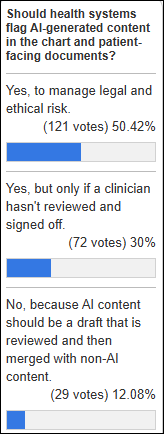
We clearly need to work out how to integrate and label AI-generated (or proposed) content into what clinicians generate manually.

New poll to your right or here: How has your perception of the former Cerner changed since its acquisition by Oracle? We’re now three years in, so comparisons are justified.


Sponsored Events and Resources

Live Webinar: June 18 (Wednesday) noon ET. “Fireside Chat: Closing the Gaps in Medication Adherence.” Sponsor: DrFirst. Presenters: Ben G. Long, MD, director of hospital medicine, Magnolia Regional Health Center; Wes Blakeslee, PhD, vice president of clinical data strategies, DrFirst; Colin Banas, MD, MHA, chief medical officer, DrFirst. Magnolia Regional Health Center will describe how its Nurse Navigator program used real-time prescription fill data from DrFirst to identify therapy gaps and engage patients through timely, personalized outreach. The effort led to a 19% increase in prescription fills and a 6% drop in 30-day readmissions among participating patients. Attendees will learn why prescribing price transparency is key to adherence, how real-time data helps care teams support patients between visits, and how Magnolia aligned its approach with value-based care and population health goals.

Contact Lorre to have your resource listed.


Acquisitions, Funding, Business, and Stock

Amazon restructures its healthcare business after several executive departures. Amazon Health Services will be focused on six groups:

  • One Medical Clinical Care Delivery.
  • One Medical Clinical Operations and Performance
  • AHS Strategic Growth and Network Development.
  • AHS Store, Tech, and Marketing.
  • AHS Compliance.
  • AHS Pharmacy Services.

image

Health data platform vendor Datavant acquires Ontellus, which offers records retrieval technology for self-insured companies and law firms.

image

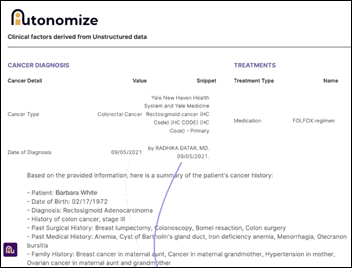
Autonomize AI, which offers AI copilots for healthcare enterprises, raises $28 million in a Series A funding round.

image

Oracle names Mike Sicilia, who oversees the company’s vertical businesses including Oracle Health, as co-president alongside another executive in new SEC filings. Oracle has previously elevated executives to the role of president as part of CEO succession planning.

image

23andMe co-founder and former CEO Anne Wojcicki regains control of the bankrupt company as her newly formed non-profit acquires its assets for $305 million, outbidding Regeneron Pharmaceuticals in a court-ordered final round.

China-based health tech company Ping An Good Doctor relaunches its health services platform with updates for proactive family doctor support, direct access to medical specialists, and full-cycle care coordination. The platform has 400 million registered users who can access 50,000 physicians, 105,000 health service partners, 235,000 pharmacies, and 4,000 hospitals. The company also announced AI tools for chronic disease monitoring, case triage, post-treatment care, and workplace health management.


People

image

Lee Health hires Chris Akeroyd (Children’s Health) as CIO.


Government and Politics

Draft legislation would increase Congressional control over the VA’s Oracle Health project by mandating regular reporting of project status.


Sponsor Updates

  • Black Book Research offers comprehensive managed care industry studies and reports ahead of AHIP 2025, where it will recognize industry leaders.
  • Nordic releases a new episode of its “Designing for Health” podcast featuring Karen Joswick.
  • Optimum Healthcare IT achieves Microsoft’s Azure Virtual Desktop Advanced Specialization distinction.
  • RLDatix will exhibit at the AAMI EXchange June 20-23 in New Orleans.
  • Symplr receives the American Nurses Credentialing Center’s Well-Being Excellence credential, and achieves Gold Tier status credentialing.

Blog Posts


Contacts

Mr. H, Lorre, Jenn, Dr. Jayne.
Get HIStalk updates.
Send news or rumors.
Follow on X, Bluesky, and LinkedIn.
Sponsorship information.
Contact us.

News 6/13/25

June 12, 2025 News 2 Comments

Top News

image

Scotland-based Craneware, which develops hospital revenue integrity software, rejects a $1.4 billion acquisition offer from Bain Equity after concluding that the proposal undervalues the company.


Sponsored Events and Resources

Live Webinar: June 18 (Wednesday) noon ET. “Fireside Chat: Closing the Gaps in Medication Adherence.” Sponsor: DrFirst. Presenters: Ben G. Long, MD, director of hospital medicine, Magnolia Regional Health Center; Wes Blakeslee, PhD, vice president of clinical data strategies, DrFirst; Colin Banas, MD, MHA, chief medical officer, DrFirst. Magnolia Regional Health Center will describe how its Nurse Navigator program used real-time prescription fill data from DrFirst to identify therapy gaps and engage patients through timely, personalized outreach. The effort led to a 19% increase in prescription fills and a 6% drop in 30-day readmissions among participating patients. Attendees will learn why prescribing price transparency is key to adherence, how real-time data helps care teams support patients between visits, and how Magnolia aligned its approach with value-based care and population health goals.

Contact Lorre to have your resource listed.


Acquisitions, Funding, Business, and Stock

image

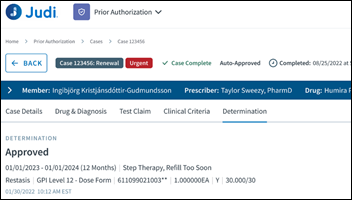
Health benefits solution vendor Capital Rx acquires Amino Health and will add its provider search, appointment scheduling, cost estimates and prescription savings capabilities to its Judi pharmacy benefit operations management platform.

image

Oracle announces Q4 results: revenue up 11%, EPS $0.19 versus $0.11, beating Wall Street expectations for both. The only mention of its health business in the earnings call was that Oracle Health is among the segments that are gaining users from competitors that have struggled with the shift from on-premise to cloud.

image

Clinical data exchange technology vendor MRO acquires Q-Centrix, which offers an enterprise clinical data management platform.

image

Ellipsis Health, which offers AI-powered healthcare voice agents for care management, raises $45 million in a Series A funding round.


Announcements and Implementations

A new AMA policy calls for clinical AI tools to include explainable output and safety and efficacy data to support informed decision-making by clinicians.

A publication in Sweden says that Oracle Health executives have admitted that its Millennium system was classified incorrectly under the EU’s Medical Device Regulation and should have not been brought live. Swedish authorities previously launched an investigation when the $190 million implementation in the Västra Götaland region experienced data handling problems.


Government and Politics

A Florida-based substance use disorder clinic will pay $1.9 million to settle FTC allegations that its CIO and chief marketing officer ran Google ads that impersonated other clinics to generate inbound consumer calls. The FTC says that the company ran at least 68,000 Google search ads that generated 3,500 calls to its call center from people who were attempting to contact competing clinics, which it says violates the FTC Act and the Opioid Addiction Recovery Fraud Prevention Act of 2018.

A GOP-submitted draft House Veterans’ Affairs bill would reintroduce into law several previously removed VA EHR accountability and governance requirements, including standardized reporting, leadership roles, and data protections. The bill’s EHR provisions are nearly identical to those that were submitted by Democrats in May 2024 that were removed “due to lack of political viability.”


Privacy and Security

Central Maine Healthcare continues to work to restore its systems that were taken offline by a cyberattack on June 1.


Sponsor Updates

image

  • Team HCTec wins the inaugural Tennessee HIMSS golf tournament.
  • Capital Rx releases a new episode of “The Astonishing Healthcare Podcast” titled “Poster Presentations: The Utility of ICD Codes, and How Text Messages & Pharmacist Outreach Aids Medication Adherence.”
  • TruBridge will present at the Truist Securities Healthcare Disruptors & Digital Health Conference June 24-25 in New York City.
  • Black Book Research shares 15 top-rated healthcare technology vendors recognized for excellence based on polling of European healthcare leaders.
  • Findhelp welcomes new customers Diverge Health, Florida Health Orange County, and the Town of Brookline, MA.
  • Five9 announces new AI Agents and AI Trust & Governance solutions, powered by its Agentix Experience Engine.
  • Fortified Health Security names Angie Dai business development representative.
  • Health Data Movers hires Alexis Woltermann as account manager.
  • “PSQH: The Podcast” features Inovalon SVP of provider surveillance and safety Hayley Burgess in an episode titled “Transforming Patient Safety with Technology.”
  • KLAS recognizes InterSystems and Healthfirst with its 2025 Points of Light Award for improving continuity of care after acute events.
  • Navina wins a Gold Stevie Award in the AI/Machine Learning Solution – Healthcare category at the American Business Awards.

Blog Posts


Contacts

Mr. H, Lorre, Jenn, Dr. Jayne.
Get HIStalk updates.
Send news or rumors.
Follow on X, Bluesky, and LinkedIn.
Sponsorship information.
Contact us.

EPtalk by Dr. Jayne 6/12/25

June 12, 2025 Dr. Jayne Comments Off on EPtalk by Dr. Jayne 6/12/25

From Boomer Sooner: “Re: Stanford’s EHR summary tool. The Department of Defense also recently launched an AI summary tool to help with the review of applicant records.” I know a thing or two about the process that military applicants go through, especially those who are applying to the military service academies or are going through the selection processes for highly selective fields. The onus of trying to get all the records to the right place is on the applicant, and it can be tricky when a practice doesn’t release records quickly. One of my favorite candidates said that in that process, the applicants who were military dependents had a bit of an advantage because their records were more easily accessible by reviewers.

The new tool, which was developed by the Innovation Facilitation Team at the US Military Entrance Processing Command (USMEPCOM), creates AI-enabled summaries of medical documents, reducing the time required for provider review. The summary can be seen in the MHS Genesis system as an encounter summary.

A flag with a star

AI-generated content may be incorrect.

I was excited to learn about a recently enacted Arizona law that is aimed at protecting physicians and patients from unintended consequences that are related to AI. House Bill 2175 is designed to keep health insurance companies from using AI as the ultimate decision maker as they review claims and deal with medical necessity appeals and denials. It also applies to prior authorization requests and recognizes that cases that require medical judgment should be reviewed by licensed medical professionals with the appropriate training, experience, and ethical responsibility that is needed for clinical decision making. The law was introduced with the support of the Arizona Medical Association and various care delivery organizations and advocacy groups and goes into effect in 2026.

Nebraska is also addressing hot button healthcare issues with the Ensuring Transparency in Prior Authorization Act, which requires insurers to make their prior authorization requirements visible on their websites. Similar to the Arizona law, it prevents AI from being the sole basis for a denial of coverage. It also requires a 60-day notice period before payers can add new requirements. We often think about healthcare IT in terms of provider side organizations, but plenty of tech folks are working on the payer side. It will be interesting to see how much work is done on websites and how quickly it happens. I’m betting that payers drag it out until the last minute, knowing that it doesn’t go into effect until January 2026.

One more state wading into the healthcare fray is Indiana, which recently enacted a bill that requires non-profit hospitals to either lower their prices or lose their tax advantaged status by 2029. Hospitals will be required to submit audited financial statements that show a decrease in their prices to match or be less than the statewide average. Failure to submit the audited statements can result in a $10,000 per day penalty. The bill has other interesting features, namely creating a state directed payment program for hospitals as well as a managed care assessment fee. A provision requires insurers and health maintenance organizations to submit specified data to the all-payer claims database and another one to reduce drug costs for the state employee health plan.

image

I wasn’t aware of Guidehealth until the company announced this week that it had received a $10 million investment from Emory Healthcare. As one would expect, the solution has an AI-enabled component. It advertises “AI-driven intelligence with human-centered care” using medical assistants that are “trained in data science and empathy.” They are branded with the trademarked Healthguides moniker. The company plans to use the additional investment to add AI-powered virtual care navigation to support analysis of patient-reported data and with interventions that target fall risk or depression screenings.

Guidehealth was already working with Emory’s Population Health Collaborative to boost quality scores under a Medicare Advantage contract. I would be interested to understand the medical assistant training and whether unique hiring algorithms are being used to find individuals with a particular level of empathy. In my experience, that’s not only hard to find at times, but difficult to enhance with training.

Speaking of AI, over the last year a couple of articles looked at AI-generated messages to patients and found that those with an AI origin were more empathetic. A new study that looked at medical queries across the US and Australia found the opposite. The AI-enabled responses were more accurate and professional than human responses, but lacked emotional depth and also raised concerns of data bias. I’m sure we’re not done with this one, and many more research efforts will be looking at the phenomenon.

While many organizations are looking at technology solutions to close gaps in care, particularly in preventive services, a recent study showed that for cervical cancer screening, lower tech interventions can still drive the needle. Researchers looked at patients in a safety net care setting and compared rates of cervical cancer screening. Patients who received a mailed self-collection kit along with a telephone reminder had greater participation (41%) than those who received a telephone reminder alone (17%). It just goes to show that nudges aren’t enough. We need to make it easy for patients to get the recommended services rather than just telling them they need to do it.

From Weird Al: “Re: earwax as the newest precision medicine tool I wonder how much these tests will cost?” A BBC article notes that wax could contain biomarkers for cancer, metabolic disorders, and even Alzheimer’s disease. Since ear wax is relatively stable, it might be able to show longer-term trends with various chemicals. There’s a team at Hospital Amaral Carvalho in Sao Paulo that is looking at cerumen for cancer diagnosis and monitoring, and several other institutions are conducting research.

Having spent many long hours in the emergency department and urgent care centers, I feel like worked with more than my share of ear wax. Running tests on it isn’t as cool as diagnosing conditions using a Star Trek-style tricorder, but here’s to the next generation of research and seeing if we can develop tests that are not only less invasive, but cost effective.

What healthcare technology advancements do you feel have really changed how we approach patients or conditions? Are they glamorously high tech or startlingly low key? Leave a comment or email me.

Email Dr. Jayne.

Healthcare AI News 6/11/25

June 11, 2025 Healthcare AI News Comments Off on Healthcare AI News 6/11/25

News

image

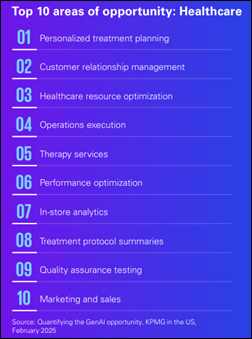
A KPMG survey of 183 health system leaders in eight countries contains these key points about the use of AI in their organizations:

  • Health systems are struggling to operationalize AI use cases beyond the pilot stage.
  • Common hurdles are fragmented implementations, challenges in measuring ROI, and workforce culture issues.
  • Self-development of AI solutions was reported by 85% of respondents.
  • Emerging intelligent AI agents have the potential to increase productivity.
  • Early use cases are ambient documentation, image analysis, virtual health assistants that help manage patient communication, early warning systems for patient deterioration, and claims and billing processing.
  • The top five applications of AI are generative AI, speech recognition, agentic AI, machine learning, and robotics.
  • One-third of respondents report that AI spending represents 10% or more of their technology budget. 

The Joint Commission and the Coalition for Health AI will partner to develop AI playbooks, tools, and a certification program.

OpenAI releases 03-pro, which performs PhD-level math and science tasks. The company also announced that it has dropped the price of o3 by 80%.

image

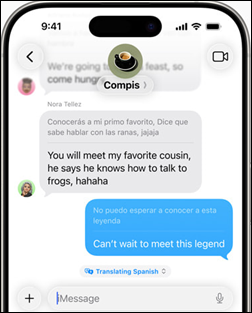
Apple announces Apple Intelligence enhancements to perform on-device live translation for Messages, FaceTime, and Phone and to perform contextual actions that are triggered by what appears on the iPhone’s screen. Apple’s WWDC announcements did not include anything pertaining to adding AI to Siri, which the company started mentioning last year.

The FDA launches an AI tool that it calls Elsa to summarize adverse events, compare product labels, and generate database code for non-clinical use. Rolled out ahead of schedule and under budget, Elsa is expected to be fully deployed by June 30. It is already being used to accelerate clinical protocol reviews and help perform scientific evaluations. A recent news report quoted FDA insiders who said that its AI tools are buggy, don’t connect to internal systems, and cannot access the Internet to retrieve studies.


Business

image

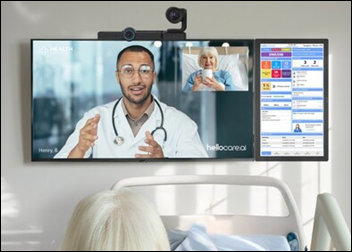
Mayo Clinic will invest in and collaborate with Hellocare.ai to develop ambient clinical intelligence technology. The company’s AI-powered platform passively listens to clinical conversations and detects care-related events that then trigger documentation and workflow actions. CEO Labinot Bytyqi, MS founded the Florida-based company, which was originally named Solaborate, in 2012 after working for several years at SAP.

Boehringer Ingelheim’s animal health unit will embed its canine heart murmur detection algorithms into Eko Health’s digital stethoscopes.

image

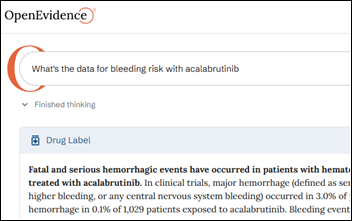
Clinical decision support developer OpenEvidence signs an agreement to incorporate data from 13 journals that are published by JAMA Network.


Research

image

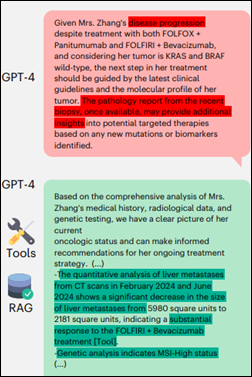
Researchers develop an agentic AI system for choosing treatments for cancer treatments that agreed with the conclusions of experts 91% of the time. The system improved decision-making accuracy over GPT-4 from 30% to 87% and correctly cited recognized oncology guidelines in 75% of its answers.


Other

A ProPublica report says that software engineer Sahil Lavingia, who lacked healthcare or government experience, was tasked with canceling VA contracts using outdated, inexpensive AI models from OpenAI. He was fired two months into his assignment at the Digital Operations Growth Environment (DOGE) program for what he says were statements he made in an interview that fraud and abuse at the VA were “relatively nonexistent” and that he was surprised at “how efficient the government was.”

China-based AI startup DeepSeek is hiring interns to label medical data for applications that involve “advanced auxiliary diagnosis.” China-based researchers recently warned against the rapid adoption of DeepSeek by hospitals, warning that it is prone to hallucination and creates privacy risks.


Contacts

Mr. H, Lorre, Jenn, Dr. Jayne.
Get HIStalk updates.
Send news or rumors.
Follow on X, Bluesky, and LinkedIn.
Sponsorship information.
Contact us.

This Week in Health Tech 6/11/25

June 11, 2025 This Week in Health Tech Comments Off on This Week in Health Tech 6/11/25
LinkedIn weekly 061125 - Copy

Curbside Consult with Dr. Jayne 6/9/25

June 9, 2025 Dr. Jayne 2 Comments

People often ask me about the kinds of things that excite me within healthcare IT. I have to admit that despite the amount of money that has poured into the industry over the last few years, I don’t run across things that I think are cool as often as I would like.

Although I’m enthusiastic about new developments, a lot of companies appear to be trying to jump on a bandwagon. Plenty are hawking solutions in search of a problem, while ignoring the real problems that clinicians face each and every day.

I was glad to see that Stanford Medicine is going after a solution that could be a game changer for clinicians. Their new ChatEHR platform is getting a lot of buzz, and rightfully so. The ability to effectively query the medical record and find information quickly would create a tremendous advantage for clinicians.

Back in the days of paper charts, we thought a hospital stay was complicated if the patient’s visit documentation expanded into a second chart. Sometimes patients who had been there for a while even had a third or fourth chart. I cared for quite a few patients who were long-term residents of the inpatient units. I once dictated a discharge summary for a pediatric patient who had been hospitalized for 18 months. I was extremely grateful to the different residents who had created transition summaries whenever one of them rotated off that particular medical service. It allowed me to draw the overall summary from those interim summaries rather than having to dig through 550+ days of documentation.

It should also be mentioned that good or bad, hospital notes were shorter in those days. Although an admission History and Physical or a Discharge Summary might have been a couple of pages, the average daily note was a couple of inches long on the page and included much less regurgitated information than notes do today. Sometimes they were borderline illegible, which I agree is a patient safety risk, but they cut to the chase.

I always enjoyed the notes of a particular infectious disease consultant who wrote his notes in bullet format and put the truly important items in all caps. Now, even a simple daily progress note can be several pages long. It feels increasingly difficult to find the information that’s important.

EHR vendors have tried to combat this by creating various summary screens, tables, dashboards, and other elements. Although some of them are truly awesome (hip, hip, hooray for graphing and trending of lab values and vital signs data) they don’t do well at capturing narrative information that is still frequently found in providers’ notes. Often it’s the narrative comments that really tell the story of what is going on with the patient. This is where using AI to better harness that information can deliver real value.

When I read the initial description of the Stanford tool, it reminded me of working with a human scribe in the emergency department. Our scribes were phenomenal and did a great job of anticipating the attending physician’s questions and having the answer ready by digging through the different screens while we were talking with the patient. Their ability to multitask was much appreciated, although not every scribe is that proficient. Many physicians don’t have scribes, so their thought processes were fragmented while they’re trying to simultaneously hunt for information and also talk to the patient, their family, and the care team. Stanford leadership called out the importance of having this functionality in the clinician’s workflow.

It should be noted that several EHR vendors have been working on this, but there are some limitations to a vendor-driven approach, at least in my experience.

I’ve worked with more than a dozen EHRs over the years, and many different instances of the same two or three EHRs. Despite the idea of vendor-driven standardization, when you’ve seen one installation of a big EHR, you’ve seen one installation of a big EHR. Unless the vendor is strict about preventing customization, care delivery organizations have been known to customize themselves into a corner in the name of trying to enable their own unique workflows.

With the health system driving the AI search and summary efforts, not only can those local customizations be addressed, but it would also seem easier to incorporate source material from other systems. That could be a different EHR, legacy records, HIE information, or state registry information.

The Stanford team has been working on their solution since 2023, so it’s not something that an organization can just throw together overnight at this point. The model has limited use, with just over 30 clinicians at Stanford Hospital working with it and providing feedback on its performance and usability. Their goal is to roll it out to other clinicians at the facility as well as those at other facilities within the larger organization. It will be interesting to see how that timing looks and how quickly they can have more distributed utilization.

The team is also developing automated tasks within the tool, including one that looks at the records of potential transfer patients to determine whether they can be received and others that could help evaluate patients for hospice placement.

As I was reading about the solution, I assumed that it would have metadata or citations to identify the origin of the data in the summaries. It sounds like that is a feature on the “coming soon” list, but I personally think that’s an essential piece that is needed to gain clinicians’ trust. I know plenty of physicians that don’t trust their support staff to take a patient’s blood pressure properly, which results in the clinician rechecking it on every patient, so doing the change management tasks that are needed to create buy-in from end users will be important.

Seeing expensive solutions in place that clinicians don’t use is one of the most frustrating things I saw regularly as a healthcare IT consultant, but I know that the “AI” label will create a lot of clinician interest right off the bat regardless of how robust the solution might be.

I’d be interested in hearing from other organizations who might be working on similar projects, or from EHR vendors that are also trying to make this happen. What information is the easiest to access, and what ended up being more challenging than you think? How are clinicians receiving the solution, and what kinds of enhancements are they asking for right away? If you’re a clinician, I’d be interested in your thoughts on this kind of tool and what you would need to feel that it was reliable. As always, leave a comment or email me.

Email Dr. Jayne.

Readers Write: The End of “Good Enough”: A Personal Journey to Better Healthcare IT Application Support

June 9, 2025 Readers Write Comments Off on Readers Write: The End of “Good Enough”: A Personal Journey to Better Healthcare IT Application Support

The End of “Good Enough”: A Personal Journey to Better Healthcare IT Application Support
By Jody Buchman

Jody Buchman, MBA is SVP of continuous services at Healthcare IT Leaders.

image

I never imagined that my most powerful lesson in healthcare IT application support would come from a hospital bed.

During my third pregnancy, I was given only a 30% chance of carrying to term. It was a high-risk situation that kept me on bed rest, working remotely for Cerner Corporation from a hospital room while continuing to support clients. For the first time, I was experiencing the healthcare system not just as a professional, but as a patient. And in that moment, I saw the real impact of the Women’s Health Solution we were implementing. Not on a screen, but in the care I was receiving when every decision mattered.

My son Jake was born early, just four pounds. But thanks to an incredible team of clinicians and the systems that empowered them, he went home just three days later. Today, he’s a healthy high school baseball player and a daily reminder of why this work matters so deeply to me.

That experience shaped everything about the way I lead today. Lying in that hospital bed, experiencing the system not as a technologist but as a mother, I came to understand what excellence in healthcare IT truly means. Behind every system alert and resolved ticket is a human story, a moment where things either go right … or don’t.

It’s why I’ve dedicated my career to building support organizations that are more than just reactive help desks. The traditional managed services model — transactional, after-the-fact, and satisfied with “good enough” — simply isn’t good enough. Not when every delay, every overlooked alert, every closed-but-not-solved ticket can directly impact care. I’ve seen the fallout firsthand: burned-out IT teams, clinicians wrestling with tools instead of treating patients, and families caught in the middle.

Healthcare doesn’t stop after hours, and neither can we.

Why the Old Way of Application Support No Longer Works

When you’ve managed global application support at scale, with thousands of clients and millions of incidents a year, you start to notice patterns. For too long, we tolerated a model that measured success by closed tickets, not real solutions.

I’ve seen the consequences: the physician who can’t get help after hours, the nurse who hesitates to open a ticket because it rarely leads to resolution, the IT manager who knows what’s broken but lacks the resources to fix it.

In healthcare, where time, accuracy, and availability are non-negotiable, that model simply doesn’t hold up.

What a Continuous Services Model Looks Like

Healthcare runs around the clock and technology continues to evolve. It’s time our application support models did, too.

What’s needed now is a continuous services approach, one that’s proactive, connected, and designed to prevent problems before they impact care.

Here’s what that means in practice.

First, real-time system monitoring should be the norm. Just as clinicians monitor patient vitals, IT support teams should track system health in real time. Application performance lags, interface errors, error pop-up messages, and failed jobs should be spotted early and addressed before users ever notice.

Second, automation needs to take on more of the routine work. Routine fixes like restarting ops job, failed interface transactions, or real-time data cleansing don’t have to require manual effort or have time constraints. Smart automation can handle these tasks, freeing up IT resources for higher-value work and providing an always-on and available resource around the clock.

Third, the tools and teams supporting the system need to be connected. Too often, monitoring tools don’t talk to ticketing platforms. Analysts don’t have access to context or history. A continuous model links everything together so that support is both faster and more informed.

Fourth, expertise matters. In a continuous services model, clinical and technical support analysts are experts empowered to do more than respond to tickets. They understand clinical workflows, governance and IT business processes to work as an extension of the IT team solving problems at the root.

Finally, the model has to scale. As organizations grow, the support structure should adapt with them. Intelligent automation makes that possible by creating a flexible operations model that evolves as needs change without drastically impacting cost.

What We Gain When Support Gets Smarter

The benefits go well beyond reducing tickets. Internal IT teams finally get room to focus on long-term projects instead of reacting to daily disruptions. Clinicians spend more time on care and less time wrestling with technology. Most importantly, patients receive care backed by systems that are reliable and responsive.

A Final Thought

After a career in healthcare IT support, I’ve learned that service excellence isn’t about heroics, it’s about making a difference. It’s about providing world-class support designed to ensure the technology is no longer a barrier for clinicians to provide quality care.

Status quo isn’t an option when lives are on the line like Jake’s. The real heroes are the nurses and caregivers. Our job is to make sure the systems behind them are just as ready and dependable.

That’s the kind of continuous support healthcare needs now. One that runs quietly in the background, and when it works well, it saves lives. It is entirely within reach.

Readers Write: Access to Care Isn’t Just Technology, It’s Human Connection

June 9, 2025 Readers Write Comments Off on Readers Write: Access to Care Isn’t Just Technology, It’s Human Connection

Access to Care Isn’t Just Technology, It’s Human Connection
By Cheryl Dalton-Norman

Cheryl Dalton-Norman, RN, MBA is president and co-founder of Conduit Health Partners.

image

Every year, a new priority dominates conversations among hospital C-suites. The current buzz phrase is “access to care.” It’s certainly a priority that all stakeholders can rally around. While technology will be front and center as a critical enabler of better access, it must be paired with something just as critical: real human connection.

As healthcare leaders, we don’t just shape patient care, we experience it ourselves. I was reminded of this all too clearly during a recent family medical crisis.

It was a Saturday at 3 p.m. My father-in-law was in pain. His wound looked worse, and a rash had developed. None of these issues were new, but my mother-in-law was exhausted, my husband was worried, and our only option was an emergency room visit, one that would drain my father-in-law even further and send us down an all-too-familiar path. The cycle was grueling: hospital, rehab, ER, hospital, assisted living, ER, hospital, skilled nursing, assisted living, ER. Again and again.

Many healthcare organizations are making significant strides in using technology to improve access. That’s important. But at that moment, what I needed wasn’t just technology. I needed someone to talk to me. Someone who could listen, review my father-in-law’s medical record, understand where we were in the process, and help determine the best next step. That resource wasn’t available, so the cycle of fear, fatigue, and poor outcomes continued.

I’ve spent my entire career in healthcare, from bedside nursing to administrative leadership. Yet even with my experience, my own family struggled to navigate a system that too often leaves patients and caregivers feeling lost.

Access means different things to different people. For me, it’s knowing that when someone reaches out for help, whether at 3 p.m. on a Saturday or 2 a.m. on a Tuesday, they aren’t met with barriers, but with immediate connection.

This is why nurse triage is a vital first touch point for ensuring timely, appropriate patient access. The reality is that all healthcare settings are ripe for after-hours nurse triage services that can be used as a backend and backup clinical resource. These models work by ensuring 24/7 access to a registered nurse who listens, assesses the situation, and provides guidance using best-practice protocols. This way, patients avoid unnecessary ER visits while still ensuring they get the right care. More than that, that human touch point provides peace of mind, continuity, and true access to care.

While some healthcare work is easy to quantify, some is mission driven. It has value for communities, but might be difficult to define in dollars and cents. It’s one thing to do the math on a value proposition for healthcare revenue cycle. For example, “Here’s how much we collect on average. Here’s our rate of point-of-service collections year over year.” 

How do you measure the value of building trust and connection with patients? How do you capture improved access to care for underserved or rural populations from a telephone call after hours? These are new ways of looking at value, and the value proposition of nurse triage to the patient and clinician experience is just as important as the number of avoided ED visits. 

Additionally, the clinician mass exodus from healthcare continues at alarming rates. From nursing teams to ED staff and emergency medical services workers, health care professionals are overburdened and overextended. Alleviating even some of this burden would make a difference, especially when it comes to 24/7, 365-day coverage.

Health systems, FQHCs, medical groups, and payers need solutions, not buzzwords. We must commit to better patient outcomes while supporting caregivers and ensuring no one has to navigate the system alone.

Readers Write: Happy Customers Don’t Just Pay Their Bills!

June 9, 2025 Readers Write Comments Off on Readers Write: Happy Customers Don’t Just Pay Their Bills!

Happy Customers Don’t Just Pay Their Bills!
By Dean Kaufman

Dean Kaufman, MS is founder and CEO of Healthcare Service Consultants of Millburn, NJ.

image

“The purpose of a business is to create a customer who creates customers.” Those are the words of Shiv Singh, chief executive officer at Savvy Matters, a business growth consulting firm, and author of “Savvy: Navigating Fake Companies, Fake Leaders and Fake News in the Post-Trust Era.”

The problem is that many company leaders are short-sighted when it comes to customer relationships and don’t make the most of satisfied customers in the long term. Singh’s sentiments, however, ring especially true in the healthcare IT and health tech markets, where ongoing customer success and relationship building are ultimately critical to long-term business success.

Indeed, this long-game approach is an absolute must-have for continued growth. This rings even more true for cloud-based SaaS companies since turning off the spigot is as easy as turning it on.

As such, healthcare IT company leaders must remember that happy customers can do more than simply pay their bills. They can evolve into strategic assets that fuel business growth in more ways than one might think.

The unfortunate reality, however, is that early stage healthcare IT companies are often pressured to focus on near-term customer acquisition and rapid top line revenue growth. This is often necessary to show investors they can solve a pressing problem and acquire paying customers. Company leaders, however, must look beyond these immediate concerns and realize that enduring success requires a people-first approach that nurtures trust and long-term customer relationships that extend beyond the initial sale and out-of-the-gates technology implementation.

Customer Success as a Product Commercialization Strategy

Concentrating on these relationships is crucial, because healthcare IT buyers at provider organizations typically are risk-averse and make fact-based buying decisions. For this reason, acquiring new customers hinges on the company’s ability to substantiate the accuracy of product claims. The best way to accomplish this is to provide quantified evidence via existing customers. This is why successfully nurturing long-term customer relationships is so incredibly important.

Happy customers are not “just” satisfied when a vendor solves their pressing problem. These customers will often vouch for the benefits their organization has realized by using the company’s products. Optimally, they will eventually see beyond their unique clinical or operational workflows and understand how a technology company’s solution can be applied broadly across the market.

If done well, a delighted customer will not only buy more from the company. They will become sales agents as well. By evangelizing the problems solved and benefits realized by healthcare IT products, happy customers attract others with similar needs. This creates new leads and leapfrogs these new prospects further along the sales process as interest and credibility are already established.

Happy Customers Drive Sales

Unfortunately, most early-stage companies are under pressure to complete an implementation as quickly as possible and move on to the next one so revenue recognition can begin. As a result, when an IT company walks away after implementation, the company is likely to miss a growth opportunity.

Truly successful companies are those that continue to satisfy customers’ needs while seeking new ones. Ensuring existing customers are taken care of by solving their problems as they arise, taking an interest in their ongoing needs, and identifying legitimate opportunities to sell more to them are three successful sales strategies. This ongoing relationship-nurturing process is especially important in healthcare, where continuous customer and technical support is required.

A happy customer is more likely to be willing to:

  • Contribute to case studies, webinars, and other forms of thought leadership content.
  • Provide favorable verbal and written testimonials.
  • Support reference calls, site visits, trade shows and introductions to others.

Such evidence-based product marketing content is invaluable for building confidence and eliminating the fear, uncertainty, and doubt necessary to drive the business forward.

Relationship Building Starts at the Top

The role of company leadership, particularly the CEO, is pivotal in fostering a culture focused on long-term customer success. CEOs who focus too much on technology or near-term revenue generation risk overlooking the importance of long-term personal relationships. After all, people buy from people, even in this day and age. No matter how sexy the technology, trust that another human will do what they say and solve a problem they say they can solve is the foundation for business success, not just in health tech and IT.

When company leadership is people-focused, other teams follow suit and are more likely to build customer trust through meaningful interactions that foster a richer understanding of the client’s business challenges and pain points. This benefits sales and support, leading to better products and a deeper understanding of market needs.

Customer Success as a Strategic Philosophy

Satisfied and engaged customers are a competitive advantage and a prerequisite for long-term business growth. Unfortunately, not every CEO gets the memo. There are plenty of companies that seem to care little about their customers and erroneously believe that “if we build it, they will come.”

When company leaders stay informed about customer journeys and optimize processes that ensure ongoing success, customers are apt to become fantastic allies. Remember, the reverse is also true. Unhappy customers are not always able to stop paying and switch vendors, even if they want to. When this happens, they can expose the soft underbelly of a company or product in unexpected ways, such as around interfacing and workflow issues that may not be a core expertise. They can hurt a technology company’s reputation through direct conversation, social media, and the rumor mill. As such, these customers might be doing just the opposite of what company leaders want them to do: Creating customers for competitors.

Monday Morning Update 6/9/25

June 8, 2025 News 1 Comment

Top News

image

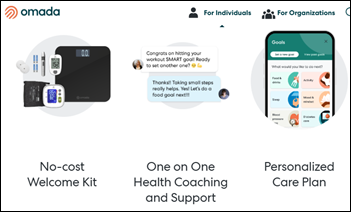
Shares of virtual care and coaching company Omada Health jump to $23 in their Friday IPO debut, up from the $19 offering price.

The early pop faded by the close, however, with shares ending where they opened and the company’s public valuation of $1 billion remaining unchanged since its last private funding round.


Reader Comments

image

From Pedro Borbon: “Re: Emory Healthcare. Parted ways with its chief information and digital officer, its CISO, and its CTO within the past month. It previously dismissed its chief innovation officer and another C-suite executive, basically eliminating its entire technology leadership team without announcing it.” Partially verified since some, but not all, of those who have reportedly departed have updated their LinkedIn with a non-Emory status. That’s understandable since it’s tough to smile from the same face that just took a punch. Emory announced the departure of CIDO Alistair Erskine, MD, MBA in April as it also went back to separate CIDOs for the health system and university.

From Ornery Bugger: “Re: DexCare. Churn in past 12-18 months include the CEO, two CTOs, CPO, chief customer experience officer, chief growth officer, chief commercial officer, three sales VPs, and the head of implementation, also at least 30 director-level people from product or engineering. Only two sales reps out of at least 20 have lasted two years. Some of the execs have no healthcare experience.” Unverified because I wasn’t interested enough to crawl LinkedIn. The exec team page from just over a year ago lists eight execs, of which two are listed on the current version of the page. I’m omitting a lot of other information from the reader since I can’t confirm and I don’t want to pile on the Providence-launched capacity management software company. DexCare has raised somewhere around $200 million, with some of its customers taking a stake.


HIStalk Announcements and Requests

image

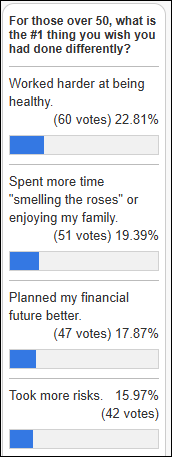
Last week’s poll results will surprise no one.

New poll to your right or here: Should health systems flag AI-generated content in the chart and patient-facing documents? My take: clinicians own the content, whether it comes from their fingers, ambient AI, or EHR auto-wizardry. The review-edit-approve loop goes all the way back to voice orders scribbled by a nurse onto a paper chart and human-transcribed dictation. Some docs will keep rubber-stamping whatever pops up, hoping that a malpractice jury will buy the argument that accountability was someone else’s job. But the real challenge is figuring out who the quarterback is for a given note or data element when multiple systems and clinicians are contributing. Maybe every data element, insight, recommendation, or observation should be tagged with its source, aka metadata as malpractice insulation.

I have been imperceptibly absent for several days on vacation, during which I missed HIStalk’s 22nd birthday on June 3. I was describing the site to a guy while I was away and he provided a perspective that I hadn’t thought of: “You’ve been writing the same technology blog for more than 20 years? How is that even possible with all the tech changes?” I’m the industry’s “Deliverance” banjo guy, sitting here plucking the same tune while bemusedly watching the oblivious paddlers.


Sponsored Events and Resources

Live Webinar: June 18 (Wednesday) noon ET. “Fireside Chat: Closing the Gaps in Medication Adherence.” Sponsor: DrFirst. Presenters: Ben G. Long, MD, director of hospital medicine, Magnolia Regional Health Center; Wes Blakeslee, PhD, vice president of clinical data strategies, DrFirst; Colin Banas, MD, MHA, chief medical officer, DrFirst. Magnolia Regional Health Center will describe how its Nurse Navigator program used real-time prescription fill data from DrFirst to identify therapy gaps and engage patients through timely, personalized outreach. The effort led to a 19% increase in prescription fills and a 6% drop in 30-day readmissions among participating patients. Attendees will learn why prescribing price transparency is key to adherence, how real-time data helps care teams support patients between visits, and how Magnolia aligned its approach with value-based care and population health goals.

Contact Lorre to have your resource listed.


Acquisitions, Funding, Business, and Stock

image

Best Buy reports a $109 million restructuring charge for its health division, citing slower adoption of its hospital-at-home offerings due to financial pressures that its health system partners are facing.

Private equity firm Madison Dearborn Partners acquires an unstated significant ownership position in NextGen Healthcare, which was taken private in 2023 by PE firm Thoma Bravo. Both PE firms will be involved in the company’s management. NextGen also announced that it will replace CEO David Sides with President and COO Sri Velamoor.


Sales

  • Managed Care Advisory Group offers its provider assistance services for the $2.8 billion BCBS provider settlement — which requires claims to be filed by July 29, 2025 — to customers of Altera Digital Health.
  • Emory Healthcare will spend $51 million to implement Epic at its newly acquired Houston Healthcare.

People

image

San Mateo County Health promotes Rich Bailey, MS (MultiCare Health System) to CIO.


Announcements and Implementations

Stanford Medicine is piloting ChatEHR, a homegrown, secure AI chatbot that focuses solely on a specific patient’s EHR data. A few dozen clinicians are testing the tool, which can retrieve allergies, procedures, and lab results on demand without adding its own interpretation or advice. It can also summarize the external records of hospital admissions, which is often a chore due to inconsistent formats and documentation styles.

image

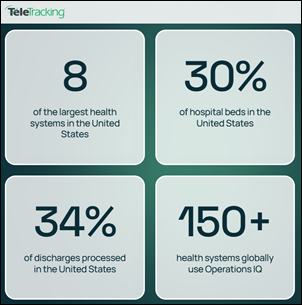
TeleTracking and Palantir partner to offer hospitals AI-powered, real-time predictive insights to address capacity, staffing, patient flow, and financial performance.

Availity and Vim partner to integrate real-time care-gap identification directly into provider EHR workflows, enabling seamless point-of-care notifications and secure submission to improve HEDIS and Stars performance and reduce administrative burden.

KLAS offers “complete looks” at six ambulatory EHR vendors:

  • Athenahealth was graded B- with a score of 79.6, with strengths of product integration, timely upgrades, and user-friendly interfaces, with negatives of challenging implementations, varied support knowledge and responsiveness, and hidden costs.
  • EClinicalWorks earned a C- grade and 70.5 score, with strong suits being low initial licensing cost, web-based stability, scheduling tools, and internal integration, with weaknesses being poor training, nickel and diming, and slow support that is hampered by language barriers.
  • Epic earned an overall B grade and 82.3 score, with strengths in data sharing, innovation, and support and weaknesses in cost, frequent updates that can break workflows, and overly complex billing and reporting.
  • Greenway Health was graded D- with a score of 59.3, with its user friendly interface and telehealth capabilities being offset by slow support, nickel and diming, limited training resources, and cumbersome integration with external systems.
  • NextGen Healthcare was graded C- with a 70.1 score, with strong points being customization, product integration, and analytics capabilities but weaknesses in lack of employee knowledge, an unintuitive user interface, and gaps in implementation and training.
  • Veradigm earned an overall D grade and 63.8 score, with users appreciating its ease of use and integrated clearinghouse functionality, but expressing frustration with support, nickel and diming, and outdated functionality.

Government and Politics

image

CMS Chief Health Informatics Officer Alex Mugge, MPH will reportedly leave to take a health policy job with Oracle Health, where she would rejoin her former boss Seema Verma.


Sponsor Updates

  • Baptist Health (AL) will use managed services from Healthcare IT Leaders to maintain its Oracle Health system.
  • Altera Digital Health partners with Managed Care Advisory Group to bring MCAG’s class action lawsuit recovery services to providers.
  • Frost & Sullivan recognizes Wolters Kluwer Health as a clinical decision support leader in its 2025 Frost Radar report.
  • Elsevier develops an evaluation framework for assessing the performance and safety of generative AI-powered clinical reference tools including its Clinical Key AI.
  • A new Black Book Research analysis finds that providers are facing significant upheaval in their credentialing and privileging technology as major regulatory changes loom in 2026.
  • Waystar celebrates its one-year anniversary as a publicly traded company.

The following HIStalk sponsors will exhibit at the HFMA Annual Conference June 22-25 in Denver:

  • AGS Health
  • Altera Digital Health
  • Arcadia
  • CereCore
  • Clearsense
  • FinThrive
  • Healthcare IT Leaders
  • Infinx
  • Inovalon
  • MRO
  • Netsmart
  • Nordic Consulting
  • Nym Health
  • SmarterDx
  • TruBridge
  • TrustCommerce, a Sphere company
  • VisiQuate
  • WayStar
  • Wolters Kluwer Health

Blog Posts


Contacts

Mr. H, Lorre, Jenn, Dr. Jayne.
Get HIStalk updates.
Send news or rumors.
Follow on X, Bluesky, and LinkedIn.
Sponsorship information.
Contact us.

This Week in Health Tech 6/4/25

June 4, 2025 This Week in Health Tech Comments Off on This Week in Health Tech 6/4/25
LinkedIn weekly 060425 - Copy

This Week in Health Tech 5/28/25

May 28, 2025 This Week in Health Tech Comments Off on This Week in Health Tech 5/28/25
LinkedIn weekly 052825 - Copy

This Week in Health Tech 5/21/25

May 21, 2025 This Week in Health Tech Comments Off on This Week in Health Tech 5/21/25
LinkedIn weekly 052125 - Copy

Monday Morning Update 5/19/25

May 18, 2025 News Comments Off on Monday Morning Update 5/19/25

Top News

image

Shares of Scotland-based Craneware jump on reports that Bain Capital is considering acquiring the company.

Bain Capital confirmed that Bain Capital Funds is assessing a possible offer, but it has not involved Craneware’s board.

The company, which sells health system financial software, reported 800 employees and $189 million in sales last year. Its market capitalization is nearly $1 billion.


Reader Comments

From Japonais: “Re: CureIS versus Epic. What points does Epic need to dispute to prevail?” Unlike Particle Health’s lawsuit against Epic, CureIS makes no claim that Epic created an illegal monopoly, which carries a high burden of proof that is unlikely to prove successful. The CureIS complaint lists these specific items:

  • CureIS alleges that Epic mandates the use of its own inferior products over those of competitors like CureIS. To prove coercion, CureIS will need to produce evidence, such as contractual language or customer testimony, that Epic’s policies forced CureIS customers or prospects to take an action that they wouldn’t have taken otherwise.
  • The complaint references unnamed health systems that were allegedly told by Epic that integration with CureIS was not allowed, which would seem to require at least one of those customers to testify against Epic.
  • CureIS accuses Epic of misappropriating its trade secrets by convincing a shared customer to give Epic a detailed document under the pretense of integration planning. CureIS would need to prove that Epic obtained the material with the intention of developing competing software. It might also need to provide examples where Epic actually used the contents to compete.
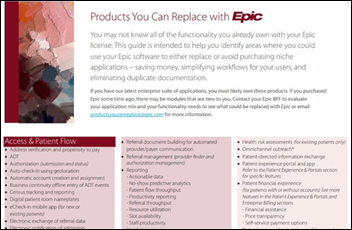
  • CureIS makes a trade libel claim that Epic misrepresented its own product capabilities while disparaging those of CureIS. Trade libel complaints are rarely successful and would require CureIS to show that Epic made and widely distributed objectively false statements that provably harmed CureIS. Epic’s distribution of a document titled “Products You Can Replace with Epic” is not a strong argument.
  • The biggest legal exposure for Epic is the claim that Epic refused to provide data to CureIS even with customer approval, which probably falls under the information blocking provision of the 21st Century Cures Act. CureIS says that Epic falsely used security risk as an excuse. Information blocking falls under ASTP and not a civil court, but possible exposure might pressure Epic to settle (although Epic pretty much never settles).

HIStalk Announcements and Requests

image

Respondents for last week’s poll passed along some advice to those who are planning, or should be planning, their future.

New poll to your right or here: Should Epic and other EHR vendors be required to provide data access to competing applications if their shared customer approves?


Sponsored Events and Resources

Live Webinar: June 18 (Wednesday) noon ET. “Fireside Chat: Closing the Gaps in Medication Adherence.” Sponsor: DrFirst. Presenters: Ben G. Long, MD, director of hospital medicine, Magnolia Regional Health Center; Wes Blakeslee, PhD, vice president of clinical data strategies, DrFirst; Colin Banas, MD, MHA, chief medical officer, DrFirst. Magnolia Regional Health Center will describe how its Nurse Navigator program used real-time prescription fill data from DrFirst to identify therapy gaps and engage patients through timely, personalized outreach. The effort led to a 19% increase in prescription fills and a 6% drop in 30-day readmissions among participating patients. Attendees will learn why prescribing price transparency is key to adherence, how real-time data helps care teams support patients between visits, and how Magnolia aligned its approach with value-based care and population health goals.


Announcements and Implementations

Oracle Health, Cleveland Clinic, and Emirates-based AI company G42 will develop an AI-based healthcare delivery platform that will combine Oracle Health applications, Oracle Cloud Infrastructure, and Oracle AI Data Platform. The system will continually analyze population and public health data and provide real-world data for life sciences to enhance diagnostics, personalize treatments, optimize outcomes, and decrease costs.  


Government and Politics

The VA plans to implement Oracle Health at 13 facilities in 2026, followed by 20 to 25 additional go-lives in 2027. VA Secretary Doug Collins says that the agency will address the lack of standardization that stalled the project.

2025-05-17_14-20-12

The Department of Justice settles a False Claims Act whistleblower lawsuit against Fresno, CA-based Community Regional Medical Center and its for-profit technology subsidiary Physician Network Advantage for $31.5 million. The hospital was accused of bribing doctors with cash, wine, strip club visits, and trips in return for using the hospital’s $75 million Epic EHR to refer their patients to its facilities. Michael Terpening, the whistleblower and former PNA controller, says that CMC provided the Epic system under the Community Connect model at no charge in return for referrals. Details from the lawsuit:

  • The hospital spent $1 million to create HQ2, a wine and cigar lounge in PNA’s headquarters that was used to “build loyalty.” It was stocked with $1 million in wine and liquors that CMC used to recruit practices to join its Epic network.
  • PNA booked appointments for network doctors to use the facility that included table service and free access to wine and food, and then billed the cost back to CMC as a business expense.
  • CMC planned to develop a new club, HQ Ranch, to entertain executives and network doctors with another cigar and wine lounge, a skeet shooting range, and an off-road vehicle course.
  • Terpening discovered the scheme after a fire in PNA’s headquarters revealed a stash of 1,000 bottles of wine, which PNA executives told him were left over from a holiday party.

Sponsor Updates

  • A new Black Book Research study reveals that despite ongoing investments in digital health, Canada’s EHR systems remain fragmented, outdated, and under-optimized.
  • Nordic releases a new episode of its “Designing for Health” podcast featuring Shreya Shah, MD.
  • Redox announces the launch of “Connections,” a new insights series authored by leaders at the company.
  • TruBridge will exhibit at the 2025 NRHA Annual Rural Health Conference May 20-23 in Atlanta.
  • Waystar will exhibit at the 2025 Senior Living Executive Conference May 19-21 in Tampa, FL.
  • Zen Healthcare IT joins the Open Integration Engine Project as part of its long-standing mission to simplify the exchange of healthcare data.

Blog Posts


Contacts

Mr. H, Lorre, Jenn, Dr. Jayne.
Get HIStalk updates.
Send news or rumors.
Follow on X, Bluesky, and LinkedIn.
Sponsorship information.
Contact us.

HIStalk Interviews Blake Walker, CEO, Inbox Health

May 16, 2025 Interviews Comments Off on HIStalk Interviews Blake Walker, CEO, Inbox Health

Blake Walker is co-founder and CEO of Inbox Health.

image 

Tell me about yourself and the company.

Inbox Health is a software platform that fully automates patient billing, payment collection, and patient support for medical practices and billing companies. We try to make bills clear, help them get to patients faster, and make them more convenient and affordable for patients to pay. Alongside that, and an important part of that process, is to make sure that patients get fast and empathetic support via phone, text, and real-time chat to get their questions about their bills answered while we’re doing that.

I started in the healthcare space right out of college. I worked on a patient financing startup and quickly learned how problematic the patient AR problem was becoming for medical practices, especially smaller medical practices. I then spent a couple of years working on another patient billing startup and then ultimately founded Inbox Health 11 years ago. I have been with the company ever since, growing it from zero to where it is today, with about 3,500 medical practices using the platform nationwide.

How does the patient’s payment experience influence their satisfaction with the provider?

It’s a huge factor. It’s so intertwined today, the way the clinical experience then carries over into the billing experience. The patient can leave that visit feeling good about the clinical care, but then have such a bad billing experience that their entire perception of that provider is dragged down. 

If there are mistakes in the way their insurance was billed, the provider may end up getting into an argument with them on the phone after the fact. Or even worse, it’s not even the provider, it’s the provider’s billing service provider. The patient may feel that the clinician provided a worse clinical experience because of how the billing went.

Having a great billing experience is critical to making sure that the entire clinical visit is perceived as positive. So much more frequently than ever, that billing experience is a negative one. Patients owe more money. High-deductible health plans are common now, and patients are surprised by the bills they get and are frustrated by them.

As providers, we owe it to the patients to do everything we possibly can to make sure that the billing is done accurately and clearly and that the experience that they have is convenient. Often it’s paper checks only and poor patient support to answer their questions. That will obviously leave the patient with a bad outcome.

How do practices prevent those awkward financial moments that can start or finish a visit, especially when the practice may not know what services the patient will need ahead of time?

Educating the patient about their coverage at the time of the visit, and how that visit is likely to be billed to the patient, is an important starting point. You don’t necessarily need to have it down to the dollar, just that the patient understands that a bill is likely. If they come in to a nutritionist’s office, their child is sick, and you see that they have a high-deductible plan, give them a sense of expectations, such as that it usually takes about two weeks for us to send bills out. Or after your insurance is adjudicated and we know that you’re on a high-deductible plan, I want to make sure to flag that for you. That’s realistic for most practices with just their standard processes for eligibility checks prior to visit and understanding a little bit about the patient’s insurance. The patient can fill in the rest.

Then, whatever you can do to get the bill to the patient as quickly as possible. You don’t want situations where it’s months and then the patient’s getting a bill 90 or 120 days after they came in to see you. I understand that there’s often trouble getting it through the adjudication process with insurance, but getting that timeline as fast as possible so that the patient is in that same frame of mind as when they came in to see the clinician in the first place. Having that be an easy, convenient digital-native experience as much as possible helps to streamline that whole experience. 

How does the method and timing of presenting the bill to the patient affect getting paid?

Most patients want to have both the digital presentment and also the tactile patient statement in the mailbox to know that it’s legitimate. Sending a text message or an email captures their attention, but it doesn’t feel real to them. Once they get the statement in the mail, then it feels more real and they are more likely to pay from the email or text that follows up after the statement. It’s a combination of demographics and who’s more likely to pay from email or text message than a paper statement. But for most patients, email is the most likely way to drive payment.

No method on its own works particularly well. Everyone pays attention to text messages, but are hesitant to click on them and pay because texts are often used for scams. It has to be a holistic approach, where at least in our case, we’re using artificial intelligence to identify what will probably work best for most patients. It’s all dynamic. It has to be an omni-channel, holistic approach to trying to reach the patient in the way that will work best for them and meeting them where they are at any particular time through a process over several weeks and sometimes months.

How common is it for the patient to need or want to contact someone at the practice once they’ve received a bill?

About a quarter of the bills that go out create a question. That’s obviously a huge factor in terms of how you’re running a practice now. If you’re sending these bills out without anticipating and being prepared to answer those questions, it’s going to pull down your collection rates. It’s going to negatively impact the consumer experience with those bills. Most of us aren’t well prepared to do it, but it’s a high proportion that are coming back to the practice with questions. 

A big factor is the amount of money owed. The average family has a $4,000 deductible and it’s not uncommon to end up with a $500 or $600 bill from a standard medical visit. That’s a huge number for most families. You shouldn’t expect that someone who gets a $500 or $600 bill will just blindly pay it from all of this wording that’s on the bill, and why it was billed that way. It’s unlikely that someone will just pay without asking a question.

What is the outcome of those billing calls to the practice? Are patients looking for reassurance that the number is correct or perhaps wanting more details that could have been provided on the bill initially?

I would say that about half could have been addressed upfront. Better setting expectations, providing better information on the bill itself, is often a root cause of the questions that come through. But a significant number of them are related to how the billing was done. It’s often somehow related to coordination of benefits, meaning what insurance was billed and in what order was it billed, particularly for patients who have multiple insurances like Medicare or Medicare Advantage plans or multiple commercial plans. A lot of those cases have legitimate issues that feed back to it, and ultimately, that could be prevented to some degree upstream just by collecting better information at the front desk.

I’m just isolating the patient billing itself. It’s a little difficult to control what problems land on the lap of your patient support team because something wasn’t done well up front.

How often does the patient get frustrated by trying to coordinate the practice’s billing, the insurance payment, and their own financial responsibility?

It’s frustrating for everyone. The provider obviously wants the procedures to be covered to whatever extent they possibly could be. The patient is stuck in this loop where they’re asking the provider questions, the providers are deferring to the payer, and the payer defers to the provider. All sides don’t have a full picture. 

The patient is the one who’s left holding the bag with a bill that someone is demanding to be paid and the frustration of two parties that aren’t seeing eye to eye. It’s common for the provider’s answer to be “ask your payer” and for the payer’s answer to be “ask your provider.” The patient may finally give up and pay the bill or ignore it and see what happens. Patients are seeking that alternative more and more.

What are some best practices for reducing how long it takes to receive payment for patient responsibility?

Optimizing the number of touch points and the channels that you are able to reach a patient on in that first 15 days is critical. That’s the first thing.

Second is meeting patients, from an affordability perspective, where they are. Understanding where a patient’s threshold is for when they might need payment plan options and making those payment plans available to a patient readily. You don’t want the patient waiting 45 or 60 days, getting three bills from you, and then picking calling you and saying, “I know you keep asking, but I don’t have $1,500. I just don’t.” Then you tell them that you can take $50 a month and that’s fine. You need to be proactive about how you engage the patient, which channels you engage them on, and then offering the payment plans when it’s applicable to that particular patient.

We do predicted payment plan offers, where we’re looking at various data points about a patient, their bill, and their past history with the practice and then determining which ones to offer payment plans to and what kind to offer.

But if you can do those two things well, that will get you the best possible result. Some of this comes back to the more that you do at the front desk to educate the patient and collect cards on the file, the more you can accelerate that back end as well. But if you can’t influence that or change that for whatever reason, then obviously on the back side, that approach makes the most sense.

How are you using AI now and how will you use it in the next year or two?

AI has always played a role in how we manage the outgoing patient billing process. The biggest changes in how we’re using AI, and how AI will be used in the patient experience moving forward as it relates to patient billing, is on patient support. We are investing heavily in making the patient support experience better by training large language models to answer the patient questions that come back, feeding it data from the patient record to be able to help it answer patient questions, and letting it actually take action, such as the patient didn’t get a paper bill and wants one, so AI sends it. Or creating a payment plan.

Over the next two to three years, you will see a transformational change in how patient phone calls are answered and how patient chats are answered relative to where we were a couple of years ago, or a year ago. Or even right now, where most of that is either going to the practice staff in the office or it’s being outsourced to the Philippines or India to lower-cost resources. The quality of AI for patient support is rapidly improving and will play a cool role in improving the patient experience in many ways, but in particular, around patient billing.

What factors will drive the company’s strategy over the next three or four years?

Investing heavily in the role of artificial intelligence in the patient experience is a main focus for us over the next few years. And in general, partnering as closely as we can with the best-in-class EHRs and practice management systems to make the experience as seamless as possible for patients where their providers are using different EHR platforms is really important to us. Those are the areas we’re investing heavily in. We believe there’s a lot of opportunity to improve the front desk experience. That’s another area where we’re focused on trying to build technology to improve how the front desk experience connects back to the patient billing experience post-visit.


News 5/16/25

May 15, 2025 News 1 Comment

Top News

image

Tucson-based CureIS Healthcare files suit against Epic, alleging that the company harmed its business by blocking access to billing data from Epic-using customers and falsely claiming that Epic’s products could replace those of CureIS. The complaint alleges these actions by Epic:

  • Engaged in a “widespread scheme” to disrupt competitors in the managed care data reconciliation space.
  • Enforced an “Epic-first” policy that pressures EHR and RCM customers to adopt Epic’s own software alternatives, which Epic promotes in a brochure titled “Products You Can Replace with Epic.”
  • Coerced shared customers to terminate their CureIS contracts and restricted the access of those customers to their own data.
  • Attempted to obtain CureIS’s proprietary product information under the pretense of integration planning.
  • Committed trade libel by telling customers and prospects that CureIS products create a security risk when integrated with Epic.

An Epic spokesperson provided this response: “Epic believes in free and fair competition, and we also believe our customers are in the best position to choose the right solutions to meet their needs — whether with Epic or by adopting other products and services. We are aware of the complaint filed by CureIS and we look forward to setting the record straight in court.”


Reader Comments

From VTInquirer: “Re: [ambulatory EHR/PM vendor name omitted]. The CEO of a provider organization told me they are exploring alternatives because the vendor can’t certify as a compliant EHR until they release some kind of patch whose ETA is November 2025. Can anyone verify?” I’ve omitted the vendor’s name pending reader confirmation (I’m 100% sure the company won’t do so). Chime in if you know the company and the issue.

image

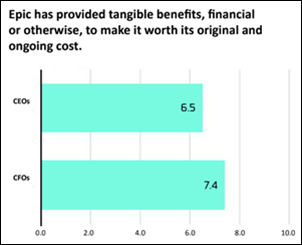
From Gin Diesel: “Re: your Epic report. I ran across this in a Google search and found it fascinating.” Thanks for stirring that memory since I totally forgot about “Epic: The Cold, Hard Facts” that I wrote way back in 2016 using custom research data from Peer60 (now Reaction). We received responses and comments from nearly 100 Epic-using health system CIOs, along with 39 CMOs, 22 CEOs, and dozens of CFOs and CNOs. My intro hinted at the sassiness to come:
Everybody in healthcare IT has a strong opinion about Epic. Most of the people who express those opinions confidently (and sometimes loudly) don’t have any first-hand experience with the company or its products. It’s like asking an armchair quarterback dribbling wing sauce onto his shirt how Peyton Manning should be reading the defense. On the “Epic is great” side are loyal customers who are financially vested in Epic’s success; consultants who make a great living riding on Epic’s coattails; and research firms who sell reports after talking to a few Epic-using hospital employees of unstated job titles. The “Epic is evil” contingent has a significant portion of people whose employer is losing business to Epic; experienced industry specialists who Epic won’t hire since they aren’t new graduates; and those naysayers who just don’t like Epic’s success. Also in the anti-Epic camp are critics of electronic health records who use Epic as an example of how technology has ruined medicine.


HIStalk Announcements and Requests

image

Welcome to new HIStalk Gold Sponsor Zen Healthcare IT. Zen combines a modern API for healthcare with a traditional interface engine platform, providing a single, unified solution for all healthcare interoperability use cases. Zen’s Stargate Gateway provides certified access to the national data exchange networks, including Carequality (Implementer), eHealth Exchange (Validated) and CommonWell Alliance (Service Adopter & Connector). TEFCA is accessible via our certified connections with QHINs such as CommonWell Health Alliance and eHealth Exchange. For direct interface use cases, our Gemini Integration platform combines a robust, secure, and scalable integration foundation with advanced data transformation services, making integrations faster, easier and less costly. Built with a security first mindset, all Zen hosted solutions are HITRUST CSF r2 certified. Whether you want to be “hands on” with an integration engine, or “hands off” with an API, or both, we put the Zen in Interoperability. Thanks to Zen for supporting HIStalk.


Sponsored Events and Resources

None scheduled soon. Contact Lorre to have your resource listed.


Acquisitions, Funding, Business, and Stock

image

Complement 1, which offers virtual lifestyle modification for coaching for cancer patients, raises $16 million in seed funding. India-based founder and CEO Karan Bajaj, MBA has an interesting background – brand manager for P&G, author of several novels, yoga teacher, executive of Discovery Networks, and founder of a company that applies technology to alleviating poverty in India.

image

Behavioral health and substance abuse operations software vendor Dazos raises $25 million in Series A funding.

Health data company Datavant acquires Aetion, which offers a real-world evidence platform for drug companies.

image

Sprinter Health, which offers virtual and in-home preventive care, raises a $55 million Series B round. Co-founder and CEO Max Cohen, MBA came from Google and Facebook.

Cohere Health, which offers prior authorization solutions, raises $90 million in Series C funding. Co-founder and CEO Siva Namasivayam, MS, MBA is an industry veteran who has held leadership roles at Gartner, Perot Systems, MphasiS, and SCIO Health Analytics.

Compensation for executives at Atrium Health, now part of Advocate Health, jumped 41% last year, with EVP/Chief Innovation and Commercial Officer Rasu Shrestha, MD, MBA earning $3.3 million and EVP/Chief Information and Analytics Officer Andy Crowder, MHA making $2.3 million.


Announcements and Implementations

Google-owned Fitbit Labs adds a Gemini-powered lab results summary creator, a symptom checker, and an alert for unusual trends to its app. The enhancements are being released for testing.

Two-thirds of 9,000 nurses who were surveyed by Black Book Research cited poor EHR usability and documentation burden as major sources of their job dissatisfaction. Among nurses under 40, two-thirds say that EHR experience ranks among their top three considerations when evaluating new employers. Just 11% believe that their EHR vendor or IT department takes frontline nurse impact into account when making changes.

AGS Health opens an office in Guadalajara, Mexico and will hire 150 employees to provide clinical administrative services.


Government and Politics

image

The Department of Justice is reportedly conducting a Medicare fraud investigation of UnitedHealth Group’s Medicare Advantage business. Hard-hit UNH shares dropped sharply on the news. They have lost more than 50% in the past month, erasing $250 billion in market capitalization.


Other

More than half of surveyed Swiss physicians say that their EHRs don’t improve patient safety, while two-thirds of hospital doctors cite EHR inefficiency as wasting their time. The authors conclude that IT configuration and support strongly influence user satisfaction related to the same EHR.


Sponsor Updates

  • Redox partners with cognitive and behavioral health assessments software vendor Creyos.
  • Health Data Movers names Mina Banoub integration engineer.
  • Healthcare IT Leaders releases a new episode of its “Leader to Leader” podcast titled “Driving Innovation at Emory Healthcare: Leveraging Cloud and AI for Better Patient Care.”

Blog Posts


Contacts

Mr. H, Lorre, Jenn, Dr. Jayne.
Get HIStalk updates.
Send news or rumors.
Follow on X, Bluesky, and LinkedIn.
Sponsorship information.
Contact us.

EPtalk by Dr. Jayne 5/15/25

May 15, 2025 Dr. Jayne 2 Comments

I was at a neighborhood gathering the other night. One of my neighbors was talking about her health experiences, and in particular, with wearable devices. Just from what I could see, she had an Oura ring, an Apple watch, and a continuous glucose monitor sensor. Someone asked her if they were recommended by her physician, and her response was essentially that she was following various wellness influencers for recommendations.

One of my older and more curmudgeonly neighbors (who is of course my favorite) made a comment about “not wanting all those people spying on me,” which made me smile. He’s the kind of guy who can type up a binding contract in minutes and can explain the appropriate use of a comma at the drop of a hat, so I enjoyed hearing his thoughts on End User Licensing Agreements and how “the young people are just giving their rights away.” The comments shocked the neighbor with the wearables since she had no idea that her health data isn’t covered by HIPAA when using consumer devices.

I did a quick web search later that evening and discovered that only roughly 9% of users actually read the licensing agreement or terms and conditions that come with new devices, services, or subscriptions. That number actually seemed high to me considering the number of agreements we all run into on a given day. I know I haven’t read one in a very long time, and when I do look at them, I tend to only look at specific portions. I avoid wellness apps and services that touch my health data, so that’s one level of privacy defense right there.

Another search brought me a decade-old Atlantic article that said that if people read the agreements they encountered in a year, it would take 76 work days. Still, knowing the risks of having data shared makes you want to think twice before signing up for anything, and three times for anything involving sensitive information.

From Forest Fan: “Re: visit notes summary. What should the patient do when the documentation is not accurate? One of my doctors was doing a lot of copy-paste, not reviewing, etc. He had the meds all wrong. Medicare uses that documentation to decide whether to authorize his recommended treatments, so I started to think that I need to pay attention. An RN who did the Epic implementation for this organization recommended speaking up, but UGHH. How to do this? It doesn’t seem right to correct my physician.”

From the physician perspective, I’ve seen so many inaccurate notes over the years that nothing shocks me. Early in my career, many of them were errors in dictation and transcription. Most of them were when physicians didn’t read their notes after they returned from the transcription service, but instead simply signed them and sent them out the door. Generally they had an accurate physical exam, diagnosis, and plan content, so I could overlook the semantic issues.

As EHRs came onto the scene, we started to see templated physical exams that were entirely fanciful. My favorite was the one from an orthopedic surgeon who claimed to have performed an eye exam that included visualizing the fundus. I’ve never been in an orthopedic office where an ophthalmoscope was present, so either this was some kind of multispecialty clinic and the physician is a serious outlier or it was simply erroneous.

By this point, I was knee-deep in EHR deployments. I recognized it as either laziness or unwillingness for the provider to spend time customizing his exam template or inappropriately restrictive behavior by IT folks unwilling to support personalization due to fears of increasing their maintenance burden. Now, many of the consultation notes I see are so much gibberish that I end up talking more with the patient to understand what actually happened.

From the patient perspective, I can’t stand errors in my chart. It’s one thing if they’re in a narrative or free text box that isn’t discrete data. As the reader noted, these are seen by insurance folks when notes are sent as documentation of the need for a prior authorization or other approval, so they’re certainly problematic. However, when discrete data is wrong, that’s a different kind of problem since it could be used behind the scenes in various algorithms that form care recommendations and no one is aware that they’re incorrect.

Errors aren’t just a nuisance, but can keep you from getting the care you need and can prevent you from receiving recommendations for care you might not even know you needed. Still, because of the traditional power imbalance between physicians and patients, it’s hard to bring it up.

I’ve had to bring it up myself and have used different strategies depending on the level of the error. For minor errors, I’ve sent messages through the patient portal and asked the clinician to update the note. I think it’s important to have that written record. For more serious errors, I’ve addressed them in person at a subsequent visit and somewhat forced the correction or amendment to be done real time.

For major errors, I’ve invoked my rights under HIPAA and sent a formal communication to the physician and asked for them to modify the chart and send me a corrected copy of the documentation. HIPAA requires that patients submit these requests in writing, after which providers have to either make the changes or provide a written denial with explanation. I’ve also specifically requested that they reach out to downstream systems that may have consumed the erroneous data and address it there or notify me where their data is flowing so I can make the appropriate requests.

For the major errors, I’ve also sent letters to the higher-ups making sure that they know what is going on in their practices. At one, a clinician put inaccurate information into my chart three visits in a row, so I cited that as my reason for leaving the practice and removing them from my referral list as a physician. Shockingly, I’ve never received a response from any of those administrative communications, which I think is a reflection on how little people value accuracy or loyalty these days.

Have you had to correct your medical record, and how did you approach it? Leave a comment or email me.

Email Dr. Jayne.

Text Ads


RECENT COMMENTS

  1. Challenger exploded on lift-off when the O-rings failed. Columbia disintegrated on reentry after one of the heat shield tiles were…

Founding Sponsors


Platinum Sponsors


Gold Sponsors


RSS Webinars

  • An error has occurred, which probably means the feed is down. Try again later.