Readers Write: For Better Member Engagement, Talk to a Human

September 22, 2025 Readers Write 3 Comments

For Better Member Engagement, Talk to a Human
By Kevin M. Healy

Kevin M. Healy is CEO of ReferWell.

image

The healthcare industry is experiencing a digital gold rush. AI platforms are everywhere, offering innovative promises to change how we engage with members for the better. From chatbots to automated outreach tools, the future is fast, efficient, and increasingly faceless.

The issue that many people aren’t discussing is that while these tools offer a quick, and seemingly intelligent, alternative to direct outreach, people are not responding to it. 

Despite the excitement around AI and automation, the majority of healthcare appointments are still made over the phone. Not through an app or  chatbot, but a phone call, often with another human being, because healthcare is personal.

Research shows that 84% of healthcare consumers identified communication quality as a crucial factor in their overall patient experience. When someone needs help navigating the system, whether it’s finding a doctor, scheduling a mammogram, or understanding their benefits, they want to talk to someone who listens and knows their needs, not an AI bot that doesn’t truly understand the emotions that can come with complex healthcare decisions.

Digital tools have their place. Text reminders and emails can be helpful for tech-savvy members, and portals are a fantastic tool for direct follow-up questions with your provider or to reference after visit summary notes.

However, when it comes to driving action, such as actually getting people to the doctor, technology alone rarely moves the needle. A generic text cannot reassure someone who is anxious about an upcoming procedure. A portal doesn’t know if your insurance covers the provider you need to see. Instead, a phone call from a trained care navigator who speaks the member’s preferred language, understands their needs, and respects their time can make the difference.

A study conducted at the University of Alabama’s Patient Care Connect program found that 83% of patients were satisfied or very satisfied with assistance provided by care navigators, and an impressive 90% recommended the program to others. These human connections are more than feel-good anecdotes. They are proven strategies for increasing show rates, improving outcomes, and reducing care gaps.

This isn’t just a rejection of technology. It’s a reminder that we’re in the business of human health. AI can support and inform engagement efforts. It can help us identify the right people to reach and the right time to call, but it shouldn’t replace the human voice at the heart of care.

Let’s build smarter systems that elevate empathy, not eliminate it. Let’s use AI to empower human outreach, not sideline it. Let’s stop mistaking automation for connection. Because when it comes to getting someone to take that critical step, to schedule the appointment, show up, ask the hard question, and take control of their health, a conversation still works better than an algorithm.

Monday Morning Update 9/22/25

September 21, 2025 News 2 Comments

Top News

image

The American College of Medical Informatics will present its Morris F. Collen Award of Excellence to Christopher Chute, MD, DrPH at the AMIA annual meeting November 15-19 in Atlanta.

He is an informatics professor and head of biomedical informatics and data science at Johns Hopkins University and professor emeritus of biomedical informatics at Mayo Clinic, a division he founded and chaired for 20 years.


HIStalk Announcements and Requests

image

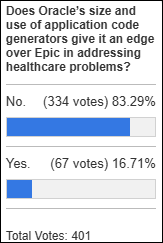
The vast majority of poll respondents don’t agree with Larry Ellison’s belief that Oracle’s size and application development technology gives it a strong competitive advantage over Epic. Reader Jim says this:

I think Epic’s customer focused strategy and market size gives it a strategic advantage. Oracle has significantly underestimated what it takes to win in healthcare. Healthcare requires a long-term view and consistency even when profits are elusive. Mass layoffs, major customer losses, and not mentioning healthcare in their quarterly presentations supports my belief.

New poll to your right or here: Do you expect your personal financial situation to improve in 2026? Leave a poll comment to elaborate further.


image

Welcome to new HIStalk Platinum Sponsor Canopii Collaborative. Canopii is a healthcare IT services firm that specializes in providing consulting services for health plans and health systems. Our primary focus is ensuring that you achieve the maximum value of your Epic software. Leveraging deep domain expertise in the Epic ecosystem, Canopii offers personalized attention to clients and delivers measurable, sustainable results. We are committed to improving healthcare outcomes by optimizing systems, increasing efficiency, and helping clients achieve their strategic goals. Thanks to Canopii for supporting HIStalk.


Sponsored Events and Resources

None scheduled soon. Contact Lorre to have your resource listed.


Acquisitions, Funding, Business, and Stock

Morgan Stanley predicts that AI will generate “trillions of dollars in savings” by 2050, including $600 billion from drug development and $900 billion from hospital costs.

Investigative outlet The Lever reports that Epic’s new MyChart user agreement requires users to accept binding arbitration and a class action waiver, with patients who decline being redirected to a downgraded version of the portal.


People

image

Ganesh Persad, MSBI (Emory Healthcare) joins Cottage Health as VP/CIO.

image

UnitedHealth Group promotes Sandeep Dadlani, MMS, MBA to CEO of Optum Insight, its technology-enabled services business that includes the acquired Change Healthcare.


Announcements and Implementations

image

Evidently launches Ask Evidently, an AI chat tool that embeds in any EHR and lets users query information in the patient’s chart.

image

Joint Commission and the Coalition for Health AI publish “Guidance on Responsible Use of AI in Healthcare,” which provides internal governance for US health systems on implementing AI at scale.

University Hospitals launches its whole-hospital Connected Care Team initiative at UH Lake West, where it provides virtual nursing support to inpatient nursing units.

image

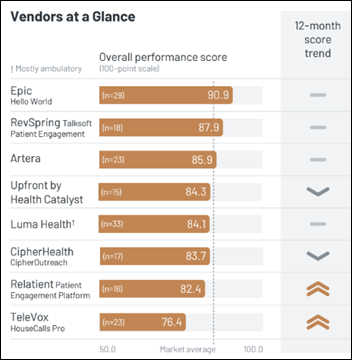
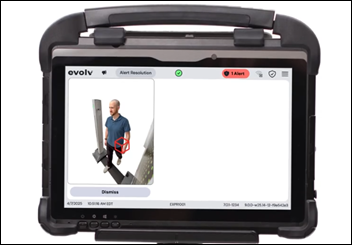
A new KLAS report reviews patient communications.


Other

A new Harris Poll survey finds that half of healthcare workers will seek or take a new job next year, although two-thirds say they would stay if their employers provide tuition support. Half of healthcare employers say that lack of advancement and educational opportunities drive employees to seek jobs elsewhere. Employees cite AI as the top skill they expect to need within five years, although 42% worry that it will take their jobs. 

A therapist accidentally shares his screen during a virtual session, allowing the patient to see that he is pasting their conversation into ChatGPT to suggest responses. In another case, a therapist who is replying via email to a grieving patient forgets to delete the AI prompt header, “Here’s a more human, heartfelt version with a gentle, conversational tone.” Patients not only feel misled, but unhappy when they find out that their private thoughts are being exposed to a tool that offers limited privacy assurances.


Sponsor Updates

  • PerfectServe surpasses $100 million in contracted annual recurring revenue, a testament to the accelerating adoption of its Unite healthcare communication and scheduling platform.
  • Black Book Research announces that Meditech Expanse has been ranked the top EHR for community hospitals under 150 beds.
  • Surescripts publishes a new data brief titled “Care Teams Seek Tools to Improve the Patient Experience.”
  • Meditech announces that customers are now live with the latest workflow advancements to its Traverse Exchange interoperability solution, which now includes consolidated patient summaries.
  • Altera Digital Health, Artera, HealthMark Group, Infinx, Meditech, MRO, Nym, PerfectServe, TruBridge, and Waystar will exhibit at the MGMA Leaders Conference September 28-October 1 in Orlando.
  • Nordic releases a new episode of its “Designing for Health” podcast titled “Interview with Justin Schrager, MD and Nick Sterling, MD, PhD.”

Blog Posts


Contacts

Mr. H, Lorre, Jenn, Dr. Jayne.
Get HIStalk updates.
Send news or rumors.
Follow on X, Bluesky, and LinkedIn.
Sponsorship information.
Contact us.

125x125_2nd_Circle_thumb3

This Week in Health Tech 9/17/25

September 17, 2025 This Week in Health Tech Comments Off on This Week in Health Tech 9/17/25
LinkedIn weekly 091725 - Copy

Curbside Consult with Dr. Jayne 9/15/25

September 15, 2025 Dr. Jayne 5 Comments

I recently got together with some of my longest-standing healthcare IT colleagues. We were reminiscing about “the good old days” when health systems implemented EHRs because it was the right thing for patients.

Our organization took that further. We knew that when we could better demonstrate that we were doing the right thing for patients, we could legitimately claim top-decile quality. 

Our health system was supportive of the effort. It believed that proving better care and lower costs would justify higher contracted rates. We had seen similar moves by organizations that had already ditched paper charts, and we were impressed by their ability to generate quality data without expensive manual audits. We wanted those successes.

A couple of offices had chronic problems with “missing” charts. One file clerk spent most of her day looking for charts that had last been touched by a specific provider. It turns out that he was taking charts home to complete his documentation. Sometimes they would be in the trunk of his car, sometimes at home on his dining room table.

It’s funny that so-called pajama time documentation predated EHRs, but I’m sure fewer people were taking physical charts home. Most likely they just stayed at the office to do the after-hours work that is often required to care for patients.

When we implemented the EHR in his office and couldn’t find charts to scan, we became the bad guys for identifying the problem. Until then, his office manager covered for him, which is amazing in a post-HIPAA world with charts being left on a dining room table where a family member could browse.

We also reminisced about the vendors we had worked with over the years, some in a good light and some with less than positive sentiments. All of us had encountered unscrupulous sales reps, vaporware pitched as real, and systems that didn’t remotely perform as advertised.

Initially, all of the companies we worked with on our EHR project were publicly traded. That gave us visibility into the financial health of the company and whether it was likely to be around to support us in one, three, or five years. This was before health tech unicorns were even a thought.

In retrospect, I’m glad we were doing our project during that time. It was hard enough to deal with the operational challenges and trying to perform clinical workflow transformation magic without worrying that a vendor was spinning nonsense or likely to go out of business mid-implementation. This has become much more difficult during the startup era, as we’ve seen so many companies deliver empty promises that eventually translate to negative financial margins.

We talked about the vendor executives we’ve worked with. The industry has archetypes – the wild dreamer, the steadfast engineer, and everything in between. There are those whose actions stick with you because their way of conducting business was so impossibly bad.

I remember one executive who tried to tell us that as customers, we were at fault for his company’s defective software because “your thinking is constrained by the technology of today.” Unfortunately, that happened at a point in my career where I hadn’t fully honed my poker face and was irritated on behalf of my physicians. I’m told him that it wasn’t about my thinking, but his half-baked tools that made caring for patients harder.  

I remember one vendor exec who used the word “synergy” every few minutes in a way that wanted me to channel my inner “The Princess Bride” with a response of, “You keep using that word. I do not think it means what you think it means.” Among this small circle of healthcare IT friends, I can make them laugh by simply making a hand gesture that one vendor executive made all the time, as if a professional coach told him to do it regardless of whether it was appropriate to the situation.

Some executives went above and beyond to care for customers. They provided daily updates when things weren’t going well and took personal accountability to ensure that solutions were delivered.

We worked with one vendor that had members of their support, product, and development teams camped out at our facilities for weeks following a challenging upgrade. I’m proud to be friends with some of those folks to this day, and I am grateful for a partnership that was deeper than today’s vague use of the word. Sometimes it’s the little things that make a difference, and knowing that someone is trying to make things right is worth its weight in gold.

Ultimately, our conversation landed on the idea of integrity and the vendors that were honest even when it was difficult. It’s sometimes challenging to tell the truth when it puts you or your company in a bad light. Too many people sacrifice the truth to stay liked or to avoid de-installs. 

I’ve also run across a couple of companies that are so morally and ethically focused that it makes you think twice, because consistently taking the high road is something that feels like an exception rather than a rule. I’ve come out of a handful of meetings during my career where I’ve wondered whether I was in some kind of alternate universe, but in a good way. Those situations are rare, but I’m grateful to model them in my own work.

Among my group of friends, we have well over 100 years of healthcare IT experience. We thought of the advice that we would give to the current crop of vendors that are trying to earn our business. The concept that resonated the most was that of honesty, being willing and able to tell the truth even when it is difficult or unflattering to the company. 

Sometimes good people make decisions that hurt others. Simply admitting what happened goes a long way, whether it was personally your fault or not. We respect leaders who say “I am sorry” more than those who make excuses or go silent hoping things blow over.

In a complicated industry, plenty of companies could benefit from adjustments to what they think is business as usual. As a decision-maker I’m glad to steer business to those who do right not only by their customers, but by patients.

What is your most memorable example of vendor integrity? Have you worked with a company that stands head and shoulders above the rest? Leave a comment or email me.

Email Dr. Jayne.

Monday Morning Update 9/15/25

September 14, 2025 News 5 Comments

Top News

image

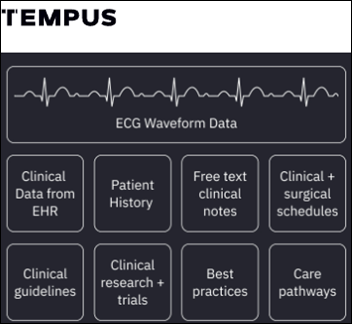
The FDA grants clearance for the upgraded cardiac imaging platform of precision medicine vendor Tempus AI, sending the company’s shares up 14% on Thursday to reach a market cap of $15 billion.

Billionaire Tempus founder and CEO Eric Lefkofsky, JD was a co-founder of Groupon and remains chair. He started Tempus in 2015.


HIStalk Announcements and Requests

image

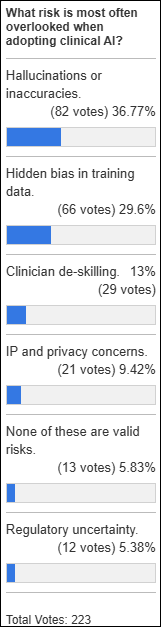
Here’s what last week’s poll respondents see as AI risks. 

New poll to your right or here: Does Oracle’s size and use of application code generators give it an edge over Epic in addressing healthcare problems? Larry Ellison made the claim during the earnings call, as his net worth was rising that day  by $100 billion.

image

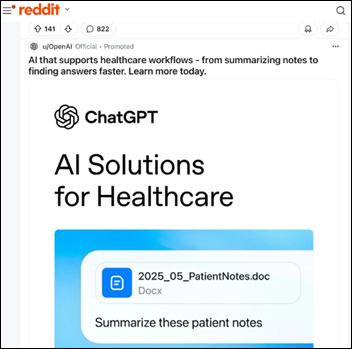
This ad popped up during my morning time-wasting ritual.


Sponsored Events and Resources

Online Event: September 16 (Tuesday) 11:30 a.m. ET. “Waystar Innovation Showcase: Activating Advanced Automation + AI to Transform Healthcare RCM.” Join us for Waystar’s Fall Innovation Showcase  to see the tools and tactics that are transforming healthcare payments and driving real, measurable results, like a 36% boost in workforce efficiency. In just one hour, we’ll reveal major advancements helping teams streamline processes, ensure accuracy, and speed reimbursement with AI + less manual work.

Contact Lorre to have your resource listed.


Acquisitions, Funding, Business, and Stock

Virtual chronic condition care provider Goodpath raises $17 million in a Series A funding round.


Government and Politics

image

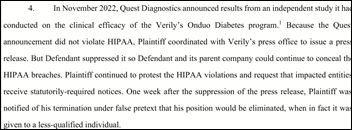
A whistleblower lawsuit accuses Alphabet-owned Verily of misusing patient data, with its former diabetes business chief commercial officer alleging he was fired for reporting HIPAA violations to company leaders.


Other

image

A LinkedIn post by Archbold Medical Center (GA) CIO/CMIO Kendall Wyatt, MD, RN summarizes the just-concluded Oracle Health and Life Sciences Summit:

  • Several clients are using the company’s new EHR.
  • The company is moving beyond “listen and create a patient note” ambient AI capability to creating orders for physician review based on their practice patterns.
  • The Clinical AI agent is being used by nurses and medical assistants at BayCare Health System to chart by voice.
  • Also mentioned: prior authorization approval prediction, automated coding, patient history summaries, and answering questions using the patient history.
  • He predicts that Epic is now like the former Cerner, which lost customers because bolting new capabilities onto an old EHR led to disconnected workflow and design.

Today’s bizarre company news: Medical Care Technologies announces that it is supporting its AI health diagnostics mission by acquiring a collection of sports trading cards and memorabilia.


Sponsor Updates

  • Censinet announces that enrollment is now open for the 2026 Healthcare Cybersecurity Benchmarking Study.
  • AdvancedMD will exhibit at the 2025 Psych Conference September 17-21 in San Diego.
  • Vyne Medical publishes a new guide titled “Machine Learning vs. RPA in Healthcare: Finding the Right Automation for Intelligent Data Processing.”
  • Netsmart will exhibit and present at the 2025 Ohio Council for Home Care & Hospice Annual Conference September 15-17 in Columbus.
  • Meditech releases a new case study titled “Wooster Community Hospital Health System Frees Up Nurses’ Charting Time by Almost 1,600 Hours Annually in Expanse.”
  • Tegria publishes a new case study titled “Accelerating Revenue Cycle Performance for Measurable Financial Gains.”
  • ReferWell names Natalie Dahle manager of people and culture.
  • TrustCommerce, a Sphere company, offers a new white paper titled “Demystifying Healthcare Payments: A Practical Overview.”
  • Bolton NHS Foundation Trust in England extends its rollout of Altera Digital Health’s Sunrise EPR to its community services.
  • TeamBuilder signs a partnership agreement with Workday.
  • Waystar will exhibit at the 2025 Biennial HFMA Tri-State Conference September 17-19 in Florence, IN.

Blog Posts


Contacts

Mr. H, Lorre, Jenn, Dr. Jayne.
Get HIStalk updates.
Send news or rumors.
Follow on X, Bluesky, and LinkedIn.
Sponsorship information.
Contact us.

News 9/12/25

September 11, 2025 News 3 Comments

Top News

image

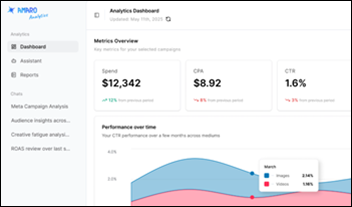
OpenEvidence, which offers ad-supported medical search and AI for clinicians, acquires advertising company Amaro to enable advertising on its site.


Sponsored Events and Resources

Online Event: September 16 (Tuesday) 11:30 a.m. ET. “Waystar Innovation Showcase: Activating Advanced Automation + AI to Transform Healthcare RCM.” Join us for Waystar’s Fall Innovation Showcase  to see the tools and tactics that are transforming healthcare payments and driving real, measurable results, like a 36% boost in workforce efficiency. In just one hour, we’ll reveal major advancements helping teams streamline processes, ensure accuracy, and speed reimbursement with AI + less manual work.

Contact Lorre to have your resource listed.


Acquisitions, Funding, Business, and Stock

image

Penguin Ai raises $30 million in funding. The company offers AI solutions for administrative workflows that include medical coding, prior authorizations, claims adjudication, and medical chart summarization.

image

Ascend Learning acquires Laudio, which sells a workforce management system for frontline leaders in health systems. I interviewed Laudio co-founder and CEO Russ Richmond, MD last year.

image

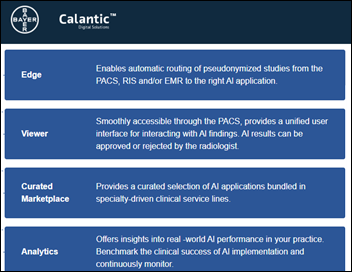
Bayer will shut down its radiology AI businesses, discontinuing Calantic Digital Solutions AI and the service offerings of Blackford Analysis.

image

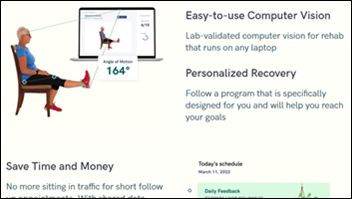
Musculoskeletal care navigation vendor TailorCare acquires Stabl, which offers a computer vision monitoring platform.

image

Humana-owned CenterWell will acquire bankrupt The Villages Health, the North Florida-based healthcare system that serves 55,000 patients in the sprawling retirement community.


People

image

Joel Klein, MD, MA (University of Maryland Medical System)  joins Hackensack Meridian Health as chief digital and information officer.


Announcements and Implementations

image

Oracle CTO Larry Ellison — who briefly became the world’s richest person Wednesday as his ORCL shares rose by $101 billion — fielded a fanboy-style analyst question about enterprise application competitors during the earnings call.

It’s a huge advantage to be on both sides of that equation, both being an application builder and a builder of the application generation technology, the underlying AI application code generators. That’s a huge advantage. Let me give you another advantage, which is often a disadvantage. We’re very large. We no longer sell individual discrete applications. We sell suites of applications. We decided to go into the medical business against Epic, believing that we could solve much more of the problem because we’re much bigger than they are. By the way, we’re much bigger than Workday or ServiceNow, and we’re solving a larger portion of the problem. We’re able to do all of ERP, then we can add all of CRM, but all the pieces are engineered to fit together. That makes it so much easier for customers to consume.

Oracle launches the Oracle AI Center of Excellence for Healthcare, which will provide a dedicated company team, a resource hub, and advice on regulatory requirements.

Oracle will add OpenAI-powered features to its patient portal, including test result explanations, plain-language translations of medical terms, visit preparation, provider message drafting, and follow-up scheduling. General availability is expected in 2026. The company also announced that it will add precision medicine features from DNAnexus to its EHR.

image

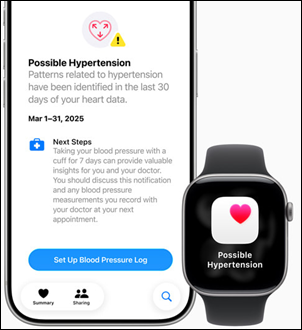
Apple’s new Watch Series 11 offers hypertension notifications and sleep scoring. Prices start at $399.

AMA releases the CPT 2026 code set.


A study in England finds that primary care physicians who use Eko Health’s AI-enabled smart stethoscope increased detection of heart failure by 2.3 times, atrial fibrillation by 3.5 times, and valvular heart disease by 1.9 times.

Homecare Homebase will incorporate Element5’s agentic AI platform in its EHR.

image

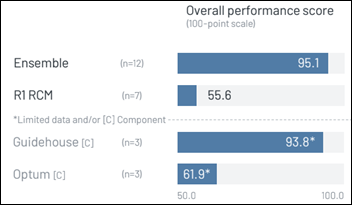
A new KLAS report on end-to-end revenue cycle outsourcing ranks  Ensemble highest, while clients of R1 RCM and Optum report low satisfaction. Most vendors are investing in AI, but clients say it has yet to deliver operational or financial gains.


Government and Politics

The FDA will convene an advisory panel on November 6 to review AI-powered digital mental health tools.

Texas Attorney General Ken Paxton drops the state’s lawsuit against a pediatric endocrinologist who he had accused of falsifying medical records in providing transgender youth care. Paxton’s office said that it found no legal violations after reviewing the doctor’s medical records, but warned that it will continue to pursue cases against “delusional, left-wing medical professionals.”


Privacy and Security

US Senator Ron Wyden (D-OR) asks the FTC to investigate Microsoft over Ascension’s 2024 ransomware attack, which his office says began when a contractor clicked a malicious Bing search result. The incident was enabled by Microsoft’s continued support of the outdated RC4 encryption standard, which the company had pledged to fix in October 2024.


Sponsor Updates

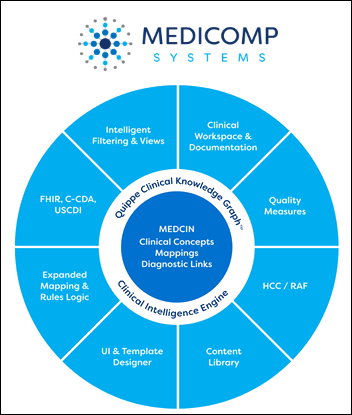
  • Medicomp Systems achieves implementation milestones across Southeast Asia.
  • Vyne Medical publishes an automation guide e-book titled “Machine Learning vs. RPA in Healthcare: Finding the Right Automation for Intelligent Data Processing.”
  • HCTec staff sort and pack 3,420 pounds of food at the Second Harvest Food Bank of Middle Tennessee during the company’s volunteer day.
  • Health Data Movers names Anthony Velazquez integration engineer.
  • A new study using Inovalon data published in the Journal of the American College of Radiology reveals a decline in the number of US radiologists dedicating most of their clinical effort to pediatric imaging.

Blog Posts


Contacts

Mr. H, Lorre, Jenn, Dr. Jayne.
Get HIStalk updates.
Send news or rumors.
Follow on X, Bluesky, and LinkedIn.
Sponsorship information.
Contact us.

EPtalk by Dr. Jayne 9/11/25

September 11, 2025 Dr. Jayne 1 Comment

Most of us have seen images created by AI, whether we realize it or not. Sometimes they’re easy to spot, such as when people don’t have the correct numbers of digits or have atypical facial expressions.

Those who use stock images in their work rather than AI-generated images may have higher quality options, but a recent article in Hypertension looked specifically at the accuracy of images that are used to educate patients on how to monitor their blood pressures outside the medical environment.

The authors visited the websites of 11 major online stock photo providers and analyzed the first 100 images on each after searching for the term “blood pressure check.” They found that only 14% of the images were accurate as far as the patient being correctly positioned and with an appropriate device, but scores ranged from 7% to 28%.

Some of the most common issues were patients whose backs weren’t supported, feet weren’t on the floor, forearms weren’t resting on a surface or level with the heart, and legs were crossed. The authors call for better education, not only for patients, but for media organizations and website developers.

From Patagonia Sweater: “Re: professional attire. Right after I saw your mention about that and the role of white coats last week, my office administrator shared this article about the potential for medical coats to aid in the spread of drug-resistant infections. Nearly everyone in my office wears a monogrammed jacket courtesy of our academic department. Unlike white coats, the heathered appearance makes it much harder to tell if they’ve been cleaned lately so I think there’s a bit of an “ick” factor there.” The study looked specifically at contamination of healthcare personnel gowns (as they are called in the country where the study originated) by gram-negative bacteria and the relationship of that contamination to growing antimicrobial resistance. The observational study looked at 321 hospital workers and found a contamination rate of 61% for the gowns, with medically important bacteria found more often on those worn in operating suites and intensive care units.

The authors concluded that healthcare personnel gowns are a significant reservoir of pathogenic bacteria at the hospital in question. They stated that “It is essential to implement infection control strategies that include improving the cleaning and laundering of gowns and ideally eliminating them from clothing to reduce the risk of transmission of nosocomial infection.”

There’s some irony to this when you consider the origin of the white coat as mentioned in the article that such attire has “been considered a symbol of authority, respect, cleanliness, neatness, commitment to health, and perceived patient safety” and that it dates back to the 1800s when Joseph Lister promoted its use during surgical procedures as an element to combat the presence of germs.

From AI Skeptic: “Re: AI. I’m one of the curmudgeons sitting in the back row and eating popcorn while waiting for the AI bubble to burst. There have been examples of AI creating bogus citations for scholarly articles and legal filings, but I got a kick out of this piece that looked at how an AI tool flagged journals for ‘questionable’ conduct.” The article proposes that making use of the algorithm “could help scientists avoid publishing in shady titles.” The underlying study looked at 15,000 open access journals to identify those that could negatively impact scholarly work by prioritizing profits over scientific integrity. More than 1,000 journals were flagged as potentially problematic. 

The work is receiving praise from organizations that promote quality and transparency in scientific publishing. The article mentions shifts in publishing business models, where authors pay a fee so that their articles are free to read, and notes that such a model has created incentives to publish high volumes of papers fast at the expense of ensuring quality. 

That last sentence really resonated with me. I’ve seen too many examples lately where quality is being devalued in favor of incentivizing other factors, such as patient reviews, facility aesthetics, and speed of treatment. No one wants to spend more time waiting around for healthcare services than they have to, and inefficient processes are maddening to me whether I’m wearing my patient hat or my physician hat. However, I also don’t want to be rushed through the care process by an organization or care team that’s cutting corners because they’re trying to meet an outsized metric.

The article mentioned that the algorithm isn’t as strong as it could be, noting that there were 1,700 false negatives, but also some false positives. Attempts to tune the model weren’t as effective as they hoped. Researchers in the field note the need for ongoing development of the model in order to combat unscrupulous publishers who change their titles or processes in an attempt to avoid being identified. The article notes that such publications will persist as long as research institutions base tenure and promotions on the number of papers published.

I’m always on the lookout for articles about wearable health devices. This one brought up a point that I hadn’t thought of previously. One of the physicians interviewed commented that, “When you become too dependent on what you perceive to be objective data … you lose a certain relationship with your body, such that it becomes hard for you to discern how you feel apart from what a device is telling you.”

We as physicians are always counseled to treat the patient, not the numbers, as a way of reminding us that we need to look at the entire picture of a patient’s history, symptoms, and exam and not just lab values. Maybe we need to incorporate some similar messaging into the conversations we have with patients about the best way to use health trackers in the real world.

image

Speaking of wearables, I’ve written previously about the Oura Ring, but a recent item mentions that the new facility in Forth Worth, TX is needed to support the company’s expanding relationship with the US Department of Defense, which is referred to as the company’s largest enterprise customer. The partnership has been around since 2019 and focuses on stress management, resilience training, fitness optimization, fatigue risk management, and early illness detection. The Texas facility is being purpose-built to fulfill defense orders and will have additional security.

I reached out to some active-duty military personnel, including ones for whom disrupted sleep is the norm. It sounds like the decision to purchase them is handled at the unit level. One officer mentioned that although he has heard about it, he’s never seen one in the wild.

Another mentioned that some human performance staffers showed interest in obtaining them, but it was determined to be a questionable use of funding, noting that “people who work in a SCIF (Sensitive Compartmented Information Facility) are probably most likely to be stressed, but can’t wear one. Nor can those at high risk of fatigue, such as air crew and special operations personnel.”

I would be interested if other military folks would like to weigh in. If you’re an Oura user and you feel that the device is making a difference for your health and well-being, give us a shout.

Do clinicians in your organization recommend fitness trackers or other wearables for patients? Have you used one to help manage your health? Leave a comment or email me.

Email Dr. Jayne.

Healthcare AI News 9/10/25

September 10, 2025 Healthcare AI News Comments Off on Healthcare AI News 9/10/25

News

image

Bayer will shut down its radiology AI businesses, discontinuing Calantic Digital Solutions AI and the service offerings of Blackford Analysis. A market analyst attributed the move to slow adoption, along with reimbursement barriers that have pushed venture funding toward unregulated AI applications such as back-office automation and workflow tools.

image

The VA is implementing an AI-based weapons scanner from a vendor that is being sued by the Federal Trade Commission for false advertising. The FTC says the system costs 25 times more than standard metal detectors, doesn’t actually use AI, and relies only on electromagnetic sensing to detect metal. The company has not published validation studies, while an outside review found that half of museum visitors triggered alarms on a rainy day because of their umbrellas.


Business

University Hospitals will deploy Hippocratic AI’s conversational agents for preventative screening calls, patient education, and appointment scheduling.

image

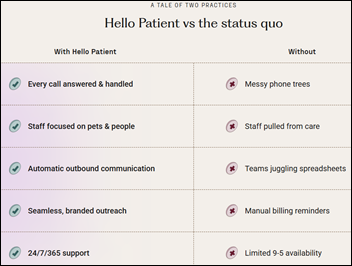
Conversational AI vendor Hello Patient raises $22.5 million in a Series A funding round. The company’s AI assistant manages conversations across voice, text, and chat.


Research

Researchers from Mount Sinai’s medical school develop AEquity, which detects and corrects bias in healthcare datasets before they are used for AI training.


Other

image

Utah-based Revere Health will lay off 177 employees as it outsources claims processing to IKS Health, which will use AI to perform the work.


Contacts

Mr. H, Lorre, Jenn, Dr. Jayne.
Get HIStalk updates.
Send news or rumors.
Follow on X, Bluesky, and LinkedIn.
Sponsorship information.
Contact us.

This Week in Health Tech 9/10/25

September 10, 2025 This Week in Health Tech Comments Off on This Week in Health Tech 9/10/25
LinkedIn weekly 091025 - Copy

Curbside Consult with Dr. Jayne 9/8/25

September 8, 2025 Dr. Jayne 10 Comments

Several readers have reached out about my recent piece that mentioned cell phone bans in schools. One reader shared an article that cites outcomes data from high school that had a previous ban in Texas, which has banned phones for all public and charter school students this year.

That school saw increased student participation and reduced student anxiety, in part due to students not being “afraid of being filmed at any moment and embarrassing themselves.” As a proud member of Generation X, I’m glad that our failures and missteps weren’t captured for wide digital dissemination and that those awkward moments passed fairly through the word-of-mouth rumor mill compared to the permanent records that young people can be stuck with now.

Still, there are concerns about enforcing the bans, especially if not all teachers are on board. It reminds me of the many work environments I’ve been in where personal cell phone use is supposed to be banned, but where compliance is minimal. It creates a different power dynamic asking healthcare workers to police each other versus in a school, where teachers are clearly the authority in the classroom.

Personally, I’d rather see a lot less use of cell phones in most environments, whether it’s having staff in the emergency department who are too engrossed in their phones to respond quickly to rapidly changing situations or whether it’s people who nearly walk into you on the street because they’re heads-down on their phones.

One of the key reasons that parents oppose cell phone bans is their inability to reach their students during the school day. Although I’m tempted to cite my own bias in that millions of us survived not being reachable 24×7 by our parents (and actually enjoyed that freedom), I can see the point that parents are trying to make. One reader shared a savvy way of avoiding the ban by creating a shared Google document with their child, where the parent and child were effectively messaging back and forth all day since the student’s school encourages nearly all work to be done on school-issued Chromebooks.

Another reader shared an article written by a physician-professor who banned cell phones from the classroom. I found it interesting that the author is a professor of medical ethics and health policy, areas where there is usually a lot of deep reflection on whether or not we “should” do various interventions and also on whether certain interventions should be required. Dr. Ezekiel Emanuel teaches a course to undergraduate, MBA, medical, and nursing students and has been doing so for 10 years. Last year was the first with a cell phone ban, however, and Dr. Emanuel notes that course evaluations were better than previous years.

I found it interesting that it wasn’t just cell phones that were banned. Students couldn’t use computers to take notes unless they were using a device where they would write with a stylus. There was an exception for students who might be waiting for a critical phone call, but otherwise, phones had to be out of sight.

Additionally, the classes were recorded, and transcripts were accessible to students in addition to their personal notes. At the beginning of the semester, Dr. Emanuel presents data comparing notes taken by hand to notes taken by computer and how handwriting your notes forces the writer to mentally processing which elements are worth writing down, which improves retention.

As you might expect, this made me think about ways that might parallel what we’re seeing with AI, whether doing the research helps your brain build better patterns for information retention than if you just ask a question and get the answer via AI. (I won’t go into the potential risk of using AI to get a wrong answer and baking that into your mental model.)

There is also discussion of how cell phones can be distracting even if they’re face down. I’ll admit that I wasn’t familiar with that research. I’m not one who typically leaves my phone on the desk, but I can see how it could be distracting, and the literature backs that up by showing that students whose phones were out of sight performed better on memory and attention testing than those who had phones visible. Those who performed best had their phones in a separate room.

Another reason cited with data is the ability of smartphones to negatively affect in-person social interactions even when not in use. I’ve certainly experienced that and dread having to meet with relatives that are constantly on their phones or staring at them on the table.

Dr. Emanuel mentions the bans at the primary and secondary school levels, but found only one college that had an institution-wide phone ban, going on to note that “while most college students are legal adults, neuroscience teachers us that they are not biologically adults. Their prefrontal cortices, the part of the brain that controls planning, executive functioning, and risk taking aren’t fully developed. They sometimes exercise poor judgment, act impulsively and make decisions that damage their social relationships and learning.”

Recent studies have looked at whether “AI is making us dumber.” I would be eager to see one that examines different age bands within the young adult population to see whether certain groups are more negatively impacted.

At the University of Pennsylvania, where Dr. Emanuel teaches, students in the religion class “Living Deliberately: Monks, Saints, and the Contemplative Life” are asked to give up their phones for a month as part of the curriculum. I certainly appreciate the value of being off the grid and do it regularly when I’m hiking or camping, but that would be a pretty significant sacrifice for the average college student.

Having been on the bleeding edge of healthcare IT for more years than I care to count at times, I’m not a Luddite by any stretch of the imagination. Still, as someone who values evidence-based medicine and understands the importance of a well-crafted clinical trial, I can’t help but think that recent increases in technology and social media use are putting us in a position where we’re essentially subjects in a large, uncontrolled trial.

Unfortunately, there’s no institutional review board or other governing bodies looking out for our well-being. Plenty of entities with a lot of funding have a vested interest in trying to make us behave in a certain way. I’d love to be an anthropologist one hundred years in the future to see what they think about humans in the early 21st century.

With the exception of patient-related communication devices, does your employer have a ban on cell phone use in the workplace? Is it something that should be considered? Leave a comment or email me.

Email Dr. Jayne.

HIStalk Interviews Michael Raymer, CEO, Vitalchat

September 8, 2025 Interviews Comments Off on HIStalk Interviews Michael Raymer, CEO, Vitalchat

Michael Raymer is CEO of Vitalchat.

image

Tell me about yourself and the company.

First, I just want to thank you for saving a lot of lives during COVID. Your post about Co-Vents, the not-for-profit that I set up to get refurbished ventilators into the field early in the pandemic, allowed us to connect with the Stryker family, which funded our efforts. We estimate that we saved 20,000 lives, and that all started at HIStalk.

I think you call me the timeless veteran of healthcare. I’ve been involved in large companies driving big innovations, such as GE Healthcare and Microsoft. I spent the early days of my career working on ventilators at Nellcor Puritan Bennett. Since I closed the days of Microsoft, I’ve been focused more on earlier-stage companies. I sold my last business, Pro-ficiency, to a publicly-traded company last summer and joined Vitalchat in October of last year.

Vitalchat is a flexible, AI-driven audio and video platform that enables nurses to practice virtually, and supports procedural telehealth. I joined because video is probably the most underutilized signal in healthcare. We have all sorts of data, more data than we can use. But when you combine video with data, it can enhance the care delivery process.

I’ll also mention that I write a weekly blog post on LinkedIn for those who would like to follow my thoughts about healthcare, strategy, business, and people.

How does a health system use ambient, AI-driven monitoring to enhance nursing capacity?

We have automated nearly 70 workflows. Our implementation teams identify the workflows that are the easiest to implement with the greatest ROI, which may vary by health system. Common uses could be the safety check where you match the IV bag to the patient, which typically involves two nurses being in the room. When you use virtual technology, you can have the nurse at the bedside complemented by the virtual nurse remotely, who is able to zoom in on the IV bag and also the patient ID band to make sure right patient, right medication, right time. That’s just one of 70 workflows that we support with health systems today. 

One of our key accounts is University Hospitals in Cleveland. Their first 150-bed pilot cost them $1 million to implement and they generated a $10 million savings over the first year. Now they’re on the pathway to roll it out across the entire healthcare system. Every day they are encountering a new potential use case for the product. That’s what’s so exciting about bringing in under-penetrated technology and to see all the possibilities for improving care for patients. That’s what it’s all about.

Can the technology bring nurses back into the workforce who left due to physical or geographic limitations or frustrations with floor nursing?

Absolutely. We see that the most successful virtual nurse is one who came from the floor and knows some of the other caregivers on that floor.  But most importantly, they’ve seen almost everything that could happen in the care of patients. They are a steadying hand supporting the nurse on the floor. 

We have heard many stories in our customer base about nurses who likely would have retired or pursued a different career, but took advantage of virtual nursing to continue to provide their unique skill set to health systems. That’s very gratifying. We have a projected shortage of almost a million nurses by the year 2030. If this can help stem the outflow of nurses outside of the hospital, that’s a great thing. We are seeing lower turnover rates and higher nurse satisfaction with having our virtual platform in place.

Do hospitals usually rotate floor staff, or are the virtual nurses people who don’t work regularly in the facility?

I don’t want to generalize, but these are not roles that are being filled by traveling nurses. They are clinicians who have worked in the healthcare system and are well trusted. Some of our sites have a rotation, where they may be three weeks in the virtual care operations center and another week on the floor. That keeps the connection with the clinician on the floor and allows them to understand how they could even be more effective in the virtual command center. That’s a good model for those who are physically able to go back to the floor.

It seems that skilled nursing facilities would be a good use case, although they have limited financial and technological capabilities.

I spent time in my career in the skilled nursing space, which is certainly economically challenged. A variety of use cases can be positive, including medication administration. You typically don’t have an onsite pharmacist, so the ability to have a remote pharmacist interacting with the patient and the physician onsite. You have issues of patients who are worried about falls, such as a movement in the room that might indicate that the patient is trying to get out of bed when they have been deemed a fall risk.

There is significant opportunity in skilled nursing. The issue is the price point. Because we’re agnostic to the hardware platform, we believe there will be an opening for us ultimately in the skilled nursing space, but we’ll probably follow that through the channel of our customers as hospitals. In fact, this week we had a great discussion with one of our customers going out into the home with that subsidiary. We can scale the hardware appropriate to the particular situation, so it could be a great fit.

The Big, Beautiful Bill will allow more money to be funneled into the rural healthcare system, where 25%-plus of the patients in this country are taken care of. The bill allocated $50 billion to technology like Vitalchat provides. Being able to allow that patient to remain in that remote facility supported by a specialist in the tertiary care academic centers was brilliant in the bill. The patient wins. The remote facility wins, because they’re able to keep that patient. The patient’s family wins, because they aren’t having to travel long distances in support of a loved one.

At the same time, the healthcare system can get reimbursed for the specialist care without them physically having to be on site. If necessary, the patient can be transitioned to that academic medical center. Fully implemented, the vision of that is particularly powerful, and you can extend that analogy to skilled nursing.

Is your technology’s footprint light enough to avoid a rip-and-replace of existing technical and physical infrastructure?

One of the technology constraints is bandwidth consumption. We have patents in video compression that allow us to be a very quiet signal on the hospital network. We move the AI to the edge and do not use cloud resources to process that video. Response time is outstanding. We wind up not being traffic on the network that’s going up to the cloud to implement AI or ambient learning from that video signal. Reusing hardware that’s already in the facility.

We recently created a solution for customers of ProConnections, a tele-ICU vendor that closed late last year and left their installed base abandoned. Because our platform is flexible and hardware agnostic, we created a solution where we provide software on their existing hardware platform so their customers can continue to use that product in monitoring patients.

What opportunities does AI offer in analyzing video without requiring human eyes?

The future of care is ambient. You see a lot of announcements in the ambient speech space. It will be more and more assistive over time. We were talking with one of our customers today about a dietary use case. Looking at the plate that’s delivered versus what it looks like when returned, then being able to assist nursing with caloric calculations and the I&O workflow sheets that nurses manually fill out today.

There is such tremendous opportunity to look at workflow as the technology improves. The AI engine, in our case, is easily trainable. I can’t even conceive of all the use cases. Today the dietary one came up and I never even thought of that as a potential use case in the acute care setting. It’s a big time-consumer for nursing. It would give them more time to spend on patient care and not documentation.

Today, it’s 70 use cases. A year from now, it will be double that number that will be proven to add value.

Are the companies working in this area of video analysis specific to healthcare? Also, how do you sort through those many use cases and decide which ones to go after first?

The platform that we built is easily trainable. In fact, we began using NLP as a test case for allowing a clinician to build the kinds of things they want to observe in the room. Our ambient AI engine will process requests by the clinician and provide them immediate feedback.  There’s not a lot of software work that we have to do to enable new workflows. 

A health system has super complex workflows. If you are shifting something from an in-room activity to virtual-based, everyone on the care team needs to understand that. There has to be the appropriate accountability, both for the nurse in the room and the centralized command center.

Most of those workflow challenges are not software issues for us. They are workflow challenges for the health system that are not unlike originally implementing the modern EHR. A tremendous amount of workflow design was done. The beauty of our product is we don’t have to build flowsheets. We don’t have to build order sets. We are insulated from the inherent complexity of an EHR.

We don’t see a lot of big companies in the video space. We see companies much like Vitalchat. A lot of people saw the headlines last year in Stryker’s acquisition of Care.ai and the vision of merging the device company with visual insights. We believe that being Switzerland is a better strategy, not being tied to just one vendor. It allows us to work with Epic, Oracle Cerner and devices in the patient room and in the OR.

The space is interesting. It is not just the AI ambient technology, but also the wrapper around it. The complexity of running video and audio from a patient room is non-trivial. We have been able to bulletproof our platform. I call it a self-healing technology, where our uptime is up from three nines to four nines now for our in-room cameras. If you’re going to rely upon this technology 7×24, it has to have that amazing reliability. That may have been the most difficult challenge technologically, getting the uptime to be there that is necessary to deploy at scale.

We started out talking about COVID and Co-Vents, which brought back unpleasant memories of patients dying in locked-down hospitals with families having their last moments with their loved ones via an IPad. Can technology like yours improve the experience of patients and families and not just that of clinicians?

That is a very personal issue for my wife and me. We lost my mother-in-law during the dark days of COVID. They would not allow my wife to come in the hospital to see her. There was not any kind of technology that allowed us to even have an interaction with her. Fast forward to today, that has softened the landing of this technology in patient rooms, because patients understand video consults now. FaceTiming with family members and similar tools are mainstream. 

I heard a great story two weeks ago where one of our customers was able to have a patient in the hospital be a participant in a wedding. Not just viewing it, but actually having two-way audio communication with family members in the wedding while the patient was in the hospital. We hear story after story where our technology has allowed that patient to connect not just to caregivers in a health system, but also loved ones, and to have loved ones join consults at the bedside from remote across the US or across the world.

What are your plans for the company over the next two or three years?

My primary job as CEO is making sure that the rate we’re growing will allow us to have both the monetary and people capital that are required to support our customers. The good news is that I have a very big Rolodex. When we have a need inside the business, it’s easy for me to reach out to my network and plug individuals in immediately who can make a difference for our customers.

This is an exciting space. A strategist would call the inpatient virtual nursing setting a $2 billion total addressable market. You have less than 5% of the beds in the US that are penetrated with video and audio. That’s a significant opportunity for us to make a difference. It’s exciting to be early and exciting to have unique capabilities in our platform that will allow us to sustain impressive growth over time.


Monday Morning Update 9/8/25

September 7, 2025 News Comments Off on Monday Morning Update 9/8/25

Top News

image

A federal judge partially grants Epic’s motion to dismiss claims that were brought against it in a September 2024 lawsuit by Particle Health (my summary is here). Most monopoly-related claims survived because the judge wasn’t comfortable evaluating the payer market or its players in the limited context of a dismissal motion. The four of nine claims that were not dismissed will proceed to discovery.

Epic claimed that some of Particle’s customers were retrieving medical records for claimed treatment purposes but were actually using them to identify potential plaintiffs for class action lawsuits.

The judge said further proceedings must determine whether a distinct “payer market” exists and whether Epic and Particle actually compete in it.

  • Claim 1: monopolization in violation of the Sherman Antitrust Act (not dismissed).
  • Claim 2: attempted monopolization (not dismissed).
  • Claim 3: monopoly leveraging (not dismissed)
  • Claim 4: violation of Sherman Act (dismissed).
  • Claim 5: violation of New York business law (dismissed).
  • Claim 6: tortious interference with contractual relations (not dismissed).
  • Claim 7: tortious interference with prospective business relations (dismissed).
  • Claim 8: defamation (dismissed).
  • Claim 9: trade libel (dismissed).

My take: winning a monopoly cases is rare, and Particle must prove a specific payer market where Epic and Particle are the only players with no viable substitutes. The judge wasn’t signaling the validity of Particle’s claims by failing to dismiss them, only reinforcing that a dismissal petition review wasn’t the place to judge them. Should Particle’s monopoly claims fall short, Claim #6  — in which Particle claims that Epic encouraged XCures to breach its Particle contract — is the only one that could harm Epic, and the economic value of that claim seems low. Also, the similar Claim #7 was dismissed because “general awareness of a competitor’s success” isn’t enough to prove tortious interference, so Particle will need to prove that Epic pressured XCures to break its contract without justification.


Reader Comments

From Pointy Ears: “Re: Oracle Health. They are learning the lessons that every company learned when trying to dabble in healthcare. It’s not their fault.” Oracle seemed surprised at Cerner’s dated technology and shaky business only after shelling out $28 billion in cash, so due diligence wasn’t their long suit. The old-school read of the acquisition is that they saw healthcare as a big growth market that is dominated by little-known vendors. The modern view is that they wanted to upsell Cerner’s customers, grab patient data, one-up the cloud giants with a sexy story for stock analysts, and indulge Larry Ellison’s vanity project. Outsiders rarely do well in healthcare software, with Microsoft (via Nuance) and Philips the exceptions and Google, GE, Haven, and IBM the train wrecks. Larry’s political ties will likely protect the VA contract unless any system-related veteran harm is widely reported, but three years in, Oracle has mostly lost share to Epic, laid off the people who knew the business, and overpromised an Oracle-branded wrapper on top of the same old Millennium system that was already driving customers away (years-long customer problems with Cerner’s RCM didn’t involve UI). History also shows that the employees and customers who stick around through such turmoil are usually the ones who have the fewest options, i.e. aren’t the ones you would choose. Cerner may be Oracle’s Siebel Systems, and if you’re asking what the heck is Siebel, then that’s the point.  


HIStalk Announcements and Requests

image

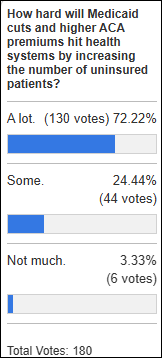
Poll respondents predict that health systems will be significantly hurt by recent federal policy changes.

New poll to your right or here: What risk is most often overlooked when adopting clinical AI?


image

I’m sympathetic to the Oracle Health folks who are being cut loose because of management’s failings rather than their own. Is your company looking people like those who might have been made involuntarily available? I’ll waive my policy and encourage you to comment on this post that you’re hiring and maybe specify the type of roles you have open.


Thanks to the following companies that recently supported HIStalk. Click a logo for more information. Your support helps when it’s time for companies to renew their annual sponsorship because they often want to know the result (ad clicks, comments, buzz, and market awareness).

image
image
image
image
image
image
image
image
image
image
image
image
image
image
image
image
image
image
image
image
image
image
image
image
image
image
image
image
image
image
image
image


Sponsored Events and Resources

Online Event: September 16 (Tuesday) 11:30 a.m. ET. “Waystar Innovation Showcase: Activating Advanced Automation + AI to Transform Healthcare RCM.” Join us for Waystar’s Fall Innovation Showcase  to see the tools and tactics that are transforming healthcare payments and driving real, measurable results, like a 36% boost in workforce efficiency. In just one hour, we’ll reveal major advancements helping teams streamline processes, ensure accuracy, and speed reimbursement with AI + less manual work.

Contact Lorre to have your resource listed.


Acquisitions, Funding, Business, and Stock

image

MediSpend and RLDatix subsidiary RLDatix Life Sciences will merge to offer software, data, and workflow tools for life sciences.


Sales

  • Allina Health selects Five9 as its cloud contact center provider.

People

image

Brian Pruitt (NetApp) joins CloudWave as SVP for enterprise growth.


Privacy and Security

image

Sutter Health fires several urgent care employees who posted “insensitive” TikTok videos of themselves posing with patient bodily fluids. Most surprising is that the former employees didn’t bother obscuring their identities, which wasn’t smart even by TikTok user standards.


Other

image

Scammers are using AI to create videos in which doctors appear to pitch quack products, which a cybersecurity group attributes to a global operation. Eric Topol, MD reports that dozens of AI-generated knockoffs of his new book are being sold on Amazon, some of which were bought by his patients.


Sponsor Updates

image

  • SmartSense by Digi supports the Snoqualmie Indian Tribe Ancestral Lands Movement as a sponsor of its charity golf tournament.
  • Medicomp Systems releases a new episode of its “Tell Me Where IT Hurts” podcast featuring PointClickCare CMO Hamad Husainy, DO.
  • Symplr publishes its fourth annual Compass Survey titled “Progress Stalled: How Crisis Culture is Costing Healthcare.”
  • Nordic releases a new episode of its “Designing for Health” podcast featuring Marina Gerner, PhD.
  • Nym names Lihi Shoham and Dvir Winder software engineers, Shahar Siman Tov and Ido Lindman medical data analysts, Reina Suescun director of strategy and operations, and Niv Eckhaus NLP research engineer.
  • Rhapsody will present at the Civitas Networks for Health Annual Conference September 29 in Anaheim, CA.
  • TeamBuilder will present at The Millenium Alliance’s Transformation Assembly September 9-10 in Dallas.
  • Visage Imaging announces it has been granted an Authority to Operate for the Veterans Affairs Enterprise Cloud by the VA for its Visage 7 CloudPACS.
  • Waystar will exhibit at EClinicalWorks Day September 10 in Houston.
  • WellSky publishes a new report titled “Addressing today’s healthcare workforce challenges: Results from a national study.”

Blog Posts


Contacts

Mr. H, Lorre, Jenn, Dr. Jayne.
Get HIStalk updates.
Send news or rumors.
Follow on X, Bluesky, and LinkedIn.
Sponsorship information.
Contact us.

News 9/5/25

September 4, 2025 News 2 Comments

Top News

image

HHS Secretary Robert F. Kennedy, Jr. says that the agency will increase resources to enforce healthcare information blocking, which the HHS announcement says “was not a priority under the Biden Administration.”

ASTP says it is reviewing reports involving certified health IT developers. ASTP and HHS OIG will “take an active enforcement stance against health care entities that restrict patients’ engagement in their care by blocking the access, exchange, and use of electronic health information.” 


Reader Comments

From Unashamed Cerner: “Re: Oracle Health layoffs. It’s tough being walked out, but remember that what you did here matters, whether it was for Cerner, Oracle Health, or an acquired company. Larry Ellison seems intent to prove that the most effective way to ‘disrupt’ healthcare is to simply fire everyone who knows how it works.” 


Sponsored Events and Resources

Online Event: September 16 (Tuesday) 11:30 a.m. ET. “Waystar Innovation Showcase: Activating Advanced Automation + AI to Transform Healthcare RCM.” Join us for Waystar’s Fall Innovation Showcase  to see the tools and tactics that are transforming healthcare payments and driving real, measurable results, like a 36% boost in workforce efficiency. In just one hour, we’ll reveal major advancements helping teams streamline processes, ensure accuracy, and speed reimbursement with AI + less manual work.

Contact Lorre to have your resource listed.


Acquisitions, Funding, Business, and Stock

image

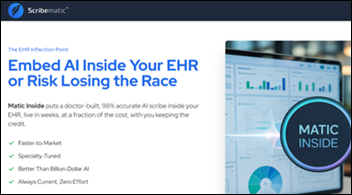
The local press profiles Dallas-based Scribematic, a 15-employee firm that sells a white-labeled ambient documentation system to mid-sized and specialty EHR vendors. Owner and CEO Calvin Carter says Epic’s launch of its own AI scribing tools threatens smaller vendors with customer losses and warns them that building a competing product is risky and difficult.

image

A Kansas City TV station confirms Oracle Health layoffs, adding that the company’s KC headcount has dropped from 11,000 during its Cerner days to 6,000 now. Online discussion was extensive.

image

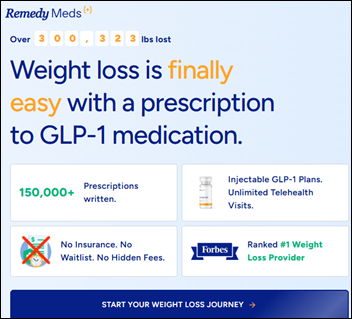
Online weight loss prescription vendor Remedy Meds will acquire Thirty Madison for $500 million in stock. Thirty Madison runs online prescribers Nurx (birth control), Cove (migraine), and Keeps (men’s hair loss). The companies report annual revenue of $450 million for Remedy and $220 million for Thirty Madison.

image

The new private equity owner of Walgreens will split the company into five standalone businesses — Walgreens (US drugstores), The Boots Group (international pharmacies), Shields Health Solutions (specialty pharmacy), CareCentrix (home health), and VillageMD (primary care).

Federal contractor GovCIO acquires SoldierPoint Digital Health, which holds a seven-year, $2 billion VA contract for telehealth and connected care solutions in the Connected Care Integrated Network. 

Digital health vendor HealthLynked will conduct a reverse split on its shares, which at the current price of under $0.03 value the company at $7 million.

WellSpan Health elevates its three-year collaboration with General Catalyst’s HATCo — which combines innovation, investment, and ownership of the Summa Health health system — to become its first Transformation Partner. It will co‑develop AI solutions that it expects to save 400,000 clinical hours annually and boost operational performance over the next five years.


Sales

  • FQHC Primary Health Solutions will deploy call center voice agents from SoundHound AI.
  • Hamilton Health Sciences implements the Philips Capsule Medical Device Integration system to provide Epic with continuous data from ventilators; intra-aortic balloon pumps; cardiac monitors; continuous renal replacement therapy; and ECMO.
  • Comanche County Memorial Hospital (OK) will implement Meditech Expanse.

People

image

Trimedx hires Srilekha Akula (Alto Pharmacy) as chief data and AI officer.

image

Justin Neece, MBA (Azara Healthcare) joins MedeAnalytics as chief growth officer.


Announcements and Implementations

TigerConnect launches an interfacility transfer coordination product.

image

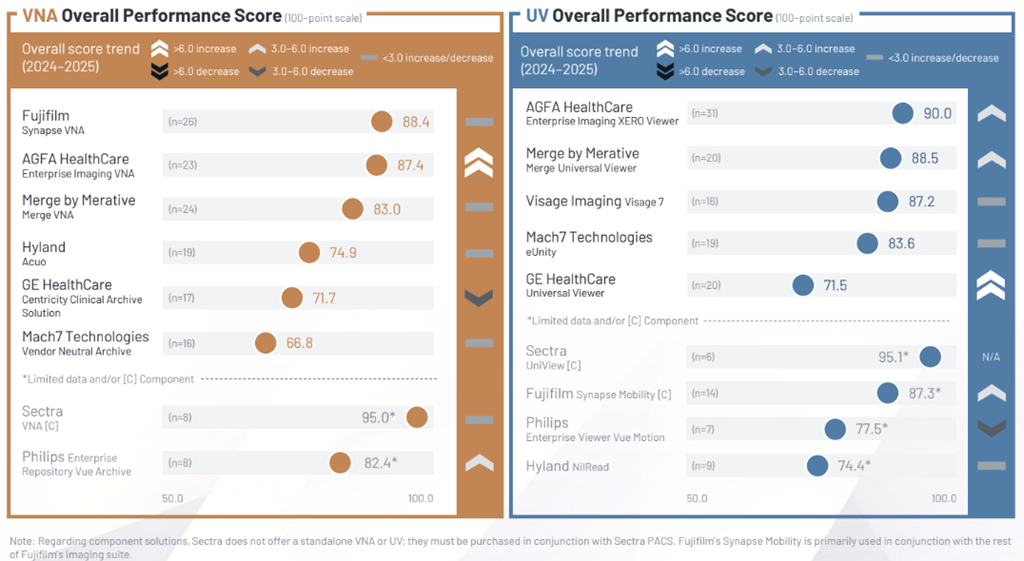
A new KLAS report looks at enterprise imaging, specifically vendor-neutral archive and universal viewer. It notes that radiology and cardiology are the most widely stored and viewed image types, with growth in some areas, but few organizations are storing POCUS (wound care and dermatology images) and little progress has been made in digital pathology usage.


Government and Politics

HHS will restore health and sciences webpages and data it had deleted as settlement terms of a lawsuit that was brought by the Washington State Medical Association. HHS had deleted information on pregnancy risks, opioid-use disorder, and AIDS under the White House’s order to stop using the term “gender.”


Other

New York City hospitals say that FDNY’s new policy that requires ambulance crews to take patients to the computer-chosen closest hospital – regardless of physician privileges, patient preferences, or condition – is endangering patients. FDNY’s commissioner disagrees, saying that “We’re not the Uber business or Lyft business to take people where they want to go” and that the change was needed to reduce 911 response times.


Sponsor Updates

  • CereCore releases a new episode of its podcast titled “The Value of Advocacy in Rural Health: A CFO’s Perspective.”
  • Agfa HealthCare will exhibit at ASE 2025 September 5-7 in Nashville.
  • Artera publishes a new report titled “Trends in Patient Engagement.”
  • AvaSure will integrate Ascom’s Healthcare Platform Suite and Myco devices with its Virtual Care Platform.
  • Consensus Health Solutions will exhibit at the National Tribal Health Conference September 7-12 in Chandler, AZ.
  • DrFirst; TrustCommerce, a Sphere company; and First Databank will sponsor the New England Epic-users Collaborative Fall Summit October 27 in Waltham, MA.

Blog Posts


Contacts

Mr. H, Lorre, Jenn, Dr. Jayne.
Get HIStalk updates.
Send news or rumors.
Follow on X, Bluesky, and LinkedIn.
Sponsorship information.
Contact us.

EPtalk by Dr. Jayne 9/4/25

September 4, 2025 Dr. Jayne 4 Comments

In the spirit of “no good deed goes unpunished,” insurance giant Cigna Healthcare creates a new reimbursement policy that adds additional scrutiny for certain high-level evaluation and management codes, which could lead to those visits being downcoded.

We saw this type of review during the early days of EHR adoption, prior to Meaningful Use. Physicians began using the power of the EHR to more accurately document the work they had been doing, but perhaps not documenting as well as they could have. When practice management systems picked up on that additional documentation to suggest higher billing codes, there was a bit of backlash in some parts of the country. Fortunately, my health system had a detail-oriented coding and compliance department that was willing to go to the mat for our physicians, so we didn’t see much negative impact.

I wonder if this is partly being driven by increasingly detailed documentation that is being generated through ambient documentation systems. I am curious if organizations are changing internal revenue cycle management policies to get ready. Feel free to reach out if you’re doing something different to prepare for this or if you feel targeted.

With recent changes to federal vaccine recommendations, some professional and clinical organizations are coming out with their own guidelines, including the American Academy of Pediatrics, the American Academy of Family Physicians, and the American College of Obstetricians and Gynecologists.

It used to be easy to pick the guidelines that would be used to inform your EHR’s health maintenance and vaccine reminder features, but things just got a little trickier. I’m interested to learn if organizations will be incorporating these varied guidelines or instead will stick with the revised federal guidelines and leave physicians to shoulder the cognitive burden of remembering the other guidelines.

image

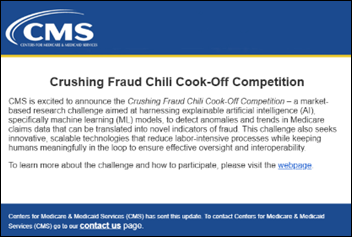
Sometimes I see headlines that don’t make sense. This one from CMS promotes its “Crushing Fraud Chili Cook-Off Competition.” I went to the linked website to see if it helped me make sense of it. I get the cook-off analogy (or bake-off, as some describe it), I don’t know why they doubled down on the “chili” aspect, which is also included in the challenge’s logo.

The competition is designed to identify ways to reduce labor-intensive processes. As someone who has cooked a lot of chili in her life I wouldn’t define it as a particularly challenging dish. I guess “steel cage match” didn’t resonate with the CMS folks, but it would draw more attention than a chili cook-off with no chili.

I’ve been in healthcare a long time, but somehow I missed out on this annual Most Beautiful Hospitals competition. The 2025 winners that were announced this week range from pediatric subspecialty to critical access hospitals. I’m sure people prefer to get their care in places that are aesthetically pleasing or provide a more healing and recuperative environment, but based on my last few care encounters, I would settle for one that has decent wayfinding and communication that go beyond the bare minimum.

From AI Troll: “Re: Taco Bell. It is using AI in its drive-throughs.” The piece details the issues the company has had in trying to implement AI-powered voice ordering. It has been used at 500 locations, and although some implementations have been successful, others have been challenged by people placing wildly inappropriate orders such as 18,000 cups of water.

I used to work at a healthcare facility that was next door to a Taco Bell. I saw many orders being placed by our paramedics and other support staff. The franchise couldn’t even get orders right with humans in the loop on both sides of the order, so I don’t have a lot of confidence that AI would be helpful there. I would personally rather order through an app than argue with interactive AI, but then again, I’m not the demographic that Taco Bell is likely looking for.

From Mascot Wannabe: “Re: health systems and stadium naming rights. Here’s a weird one.” People have spotted stickers around Chattanooga, TN that promote the naming of the new minor league baseball stadium after Erlanger Health. However, the health system denies being behind the stickers, which say, “We bought the best baseball stadium naming rights in Chattanooga” and feature an outdated Erlanger logo.

The health system’s CEO is quoted as saying that it’s “an investment that’s going to have a create return for Erlanger and the community,” but I haven’t seen anyone quantify the ROI of such deals. If you’re in the know, feel free to reach out anonymously.

Turning to a non-tech topic for a change, this BMJ Open article on physician attire caught my attention. The authors did a systematic review of patient perceptions of physician dress to see if it impacts the physician-patient relationship. They identified studies that were published from 2015 to 2025. They found that patient preferences varied based on specialty, clinical context, and physician gender.

Some studies have found that combining casual dress with white coats may signal approachability in primary care and ambulatory settings. Scrubs were favored for emergency and operative environments, where they signaled preparedness and professionalism. Male physicians were perceived as more professional when wearing formal attire with white coats, while female physicians in similar attire were often misidentified as nurses or assistants.

I recall a dustup in a large California-based integrated health system a while back. A new OB/GYN department policy specified that female physicians must wear “hosiery,” but had no similar recommendation for males. Administrators couldn’t justify the change since unspecified hosiery isn’t considered personal protective equipment. If they had a Victorian aversion to bare ankles, it would have made more sense to require coverage with clearer language. Physicians responded by wearing silly socks to prove a point, and the policy quickly vanished.

What do you think defines professional attire? Should physicians consider ditching the white coat or keeping it for historical value? Leave a comment or email me.

Email Dr. Jayne.


Healthcare AI News 9/3/25

September 3, 2025 Healthcare AI News Comments Off on Healthcare AI News 9/3/25

News

image

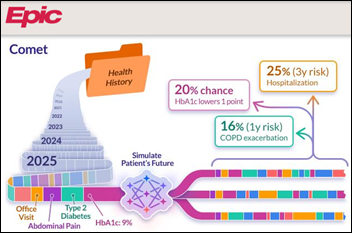
Epic launches Comet, a set of generative AI models that were trained on 100 billion de-identified patient records from a subset of Cosmos data. The models learn how clinical patterns evolve to predict likely outcomes. Research access opens in February 2026.

image

A local TV station reports that Lee Health (FL) has deployed AI for ambient scribing and an orthopedic chatbot, with additional plans for a patient scheduling chatbot and an AI voice system to handle incoming calls.

image

Vanderbilt University Medical Center CMIO Dara Mize, MD, MS says that its 100-physician DAX Copilot pilot has freed up documentation time while improving quality. More than half of participating faculty physicians say that the technology makes them less likely to leave, while one reported easier visits with Spanish-speaking patients thanks to real-time translation.


Business

image

Northeastern University profiles alumni-founded Predictive Healthcare and its MyHealthPal tool, which uses AI to detect surgical site infections earlier.

image

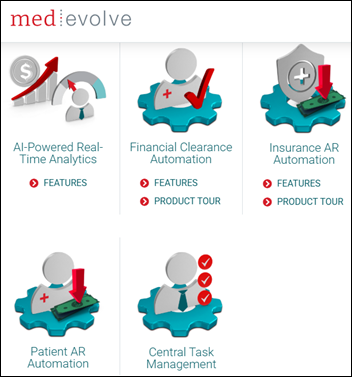
AI-driven revenue cycle and analytics technology vendor MedEvolve sells its RCM services business to Sustainable Medical Billing , which will continue to use MedEvolve’s products. MedEvolve will focus on its Effective Intelligence platform, practice management software, and AI-powered workflow automation and analytics.

image

Healthcare email privacy compliance technology vendor Paubox releases an AI-powered inbox security solution. 


Research

A study finds that 6% of 950 FDA-cleared AI-enabled devices were tied to 182 recall events. Half of the recalls happened within a year of clearance, and products that lacked clinical validation and those sold by publicly traded companies were disproportionately involved. The authors conclude that FDA’s 510(k) process may overlook early AI product failures and that investor pressure may push public companies to launch products prematurely.


Other

CMS’s six-state, AI-based pilot project to require prior authorization for a dozen costly, low-value procedures — such as nerve stimulators and incontinence devices — will pay vendors a cut of denied claims. Critics warn that it imports the least popular feature of Medicare Advantage into traditional Medicare and could set up adversarial battles between providers and government.

image

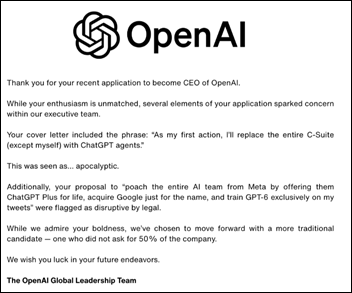
A man claims that he applied to become CEO of OpenAI — promising to replace the entire C-suite with AI agents — and received this clever company response. If it isn’t true, I still want it to be.


Contacts

Mr. H, Lorre, Jenn, Dr. Jayne.
Get HIStalk updates.
Send news or rumors.
Follow on X, Bluesky, and LinkedIn.
Sponsorship information.
Contact us.

This Week in Health Tech 9/3/25

September 3, 2025 This Week in Health Tech Comments Off on This Week in Health Tech 9/3/25
LinkedIn weekly 090325 - Copy

News 8/29/25

August 28, 2025 News 2 Comments

Top News

image

ChatGPT maker OpenAI will reportedly build its own healthcare applications. 

The company has hired former health tech executives from Doximity and the investment community.

Business Insider reports that OpenAI is considering developing both consumer-facing and enterprise tools, including clinical triage, clinical documentation, and patient engagement.


Reader Comments

image

From Alabaster: “Re: Dr. Jayne’s concerns about OpenEvidence. What risks do you see for physician users?” I’m not an attorney, but my cursory review of the company’s Terms of Use and Business Associate Agreement suggests some areas of concern that, to be fair, are true of many clinician-targeted applications and services:

  • The company can sell de-identified data and use records of detailed user interactions to train its models or for commercial purposes. That de-identified data may still contain enough specificity to allow re-identification of patients, especially in rare or unusual cases that are described in user prompts and are more likely when using a tool like this to find information.
  • The BAA does not restrict the use of non-PHI or tracking technologies for ad targeting, which likely aligns with the company’s intent to sell ads to drug companies.
  • The platform is labeled as educational only, leaving physicians fully liable for any clinical decisions it suggests or patient harm that results. The company caps its own liability at $100.
  • Physicians may not be able to reproduce the AI’s previous outputs in a legal defense since the tool doesn’t guarantee version control or output retention.
  • Doctors who submit patient-specific information without a signed institutional BAA could violate employer policy and HIPAA. The Terms of Use prohibit use on behalf of a hospital without legal authorization, and the tool may bypass hospital IT controls that were designed to ensure compliance. Using the product without institutional review and approval puts the risk squarely on the physician, with no guarantee of support in what could be a high-profile case given the trendy AI angle.

Sponsored Events and Resources

None scheduled soon. Contact Lorre to have your resource listed.


Acquisitions, Funding, Business, and Stock

Alphabet’s Verily business shuts down its medical device division and doubles down on “precision health, AI, and data,” according to an internal memo obtained by media.


Sales

  • Cleveland Clinic will implement Dyania Health’s AI-powered clinical trial matching tool.

People

image

Suresh Krishnan (Cone Health) joins Memorial Health (IL) as SVP/CIO.  


Announcements and Implementations

image

Providence evaluates Nuance DAX ambient documentation for family medicine physicians who were identified in Epic as working after hours or taking over a week to close notes. Burnout dropped from 57% to 27%, documentation frustration fell from 89% to 39%, and more doctors reported better patient connection. After-hours “pajama time” decreased from 107 minutes to 81. Note: the study group was tiny.

France-based HeartFocus launches FDA-cleared heart exam software in the US on Butterfly Network’s handheld ultrasound devices. The AI-powered tool enables any clinician to perform heart scans for early detection.

West Virginia University scientists develop AI models that detect signs of heart failure from ECGs rather than less-available echocardiography by incorporating local socioeconomic and environmental factors.

image

Altera Digital Health integrates Medicomp’s Quippe Clinical Intelligence Engine into its new ambient documentation solution for the TouchWorks EHR.

image

Artisight says that its smart hospital platform is the first that can autonomously document OR activity in the EHR using AI and computer vision. The system records patient entry and exit and procedure start and end time. It also prompts staff to complete next steps in their workflow.
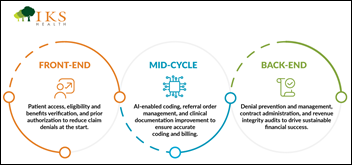

Government and Politics

image

CMS opens a research challenge to identify innovative solutions that can detect Medicare fraud using claims data.

Drug companies launch a lobbyist-sponsored watchdog group whose goal is to limit Medicare drug price negotiations by requiring analysis of CMS data. A spokesperson for one of the lobbying firms says, “The vast majority of our effort is focused on the analytics, and we didn’t see anybody, including CMS, publicly reporting at this level of granularity. This data is hard to work with, so we are investing in this kind of information.”

HHS shifts enforcement of substance use records confidentiality from SAMHSA to the Office for Civil Rights, which also handles HIPAA enforcement. Observers worry that OCR, which was already stretched thin by staffing and budget cuts, won’t be able to complete investigations in a timely manner.


Privacy and Security

Mount Sinai Health System will pay $5.3 million to settle a proposed class action lawsuit that accused it of using pixel tracking tools to send patient portal and website visitor information to Facebook.


Sponsor Updates

image

  • Capital Rx staff volunteer at a back-to-school event with the New York City Football Club and Niño de la Caridad Foundation.
  • The Medicomp Systems “Tell Me Where IT Hurts” podcast releases a new episode titled “The Evolution of FDB” with FDB Executive Chairman Charles Tuchinda, MD.
  • Artera announces that it has been named the named the 2025 Frost & Sullivan Technology Innovation Leader in the patient engagement platforms and solutions industry.
  • Inovalon will work with Google Cloud to develop an AI-powered prior authorization solution for its Inovalon One Platform.
  • Healthcare Growth Partners advises EVideon during its sale to TigerConnect.
  • Health Data Movers releases a new episode of its “Quick HITs” podcast titled “Shaping the Future of Pediatric Healthcare IT, with Dr. Anita Harris-Brown.”
  • Healthcare IT Leaders will exhibit and present at Workday Rising September 15-18 in San Francisco.
  • Infinx releases a new episode of its “Revenue Cycle Optimized” podcast titled “Building a Strong Foundation in Soft Collections & Patient Services.”
  • Navina will present at Hospitalogy’s VBC Retreat September 18 in Austin, TX.

Blog Posts

Sponsor Spotlight

image

This week, healthcare technology company RLDatix announced the launch of Smart Entry, a new AI-enabled feature designed to streamline documentation for safety event reporting. Proven to give time back to frontline staff, RLDatix’s Smart Entry is reducing event reporting time by up to 70%. RLDatix will be exhibiting with an immersive booth experience related to its Safety & Risk Management module, which houses Smart Entry, at the upcoming ASHRM 2025 conference from September 28-30, 2025. (Sponsor Spotlight is free for HIStalk Platinum sponsors).


Contacts

Mr. H, Lorre, Jenn, Dr. Jayne.

Get HIStalk updates.

Send news or rumors.
Follow on X, Bluesky, and LinkedIn.
Sponsorship information.
Contact us.

Text Ads


RECENT COMMENTS

  1. Challenger exploded on lift-off when the O-rings failed. Columbia disintegrated on reentry after one of the heat shield tiles were…

  2. RE the AI GLP1 company, Washington Post has an article today by someone who used one of those compounded products,…

  3. Re: A chief health AI transformation officer (CHAITO) I predict a position evolution along the following lines. "We have too…

Founding Sponsors


Platinum Sponsors


Gold Sponsors


RSS Webinars

  • An error has occurred, which probably means the feed is down. Try again later.