Recent Articles:

Monday Morning Update 3/3/08

March 1, 2008 News 8 Comments

From Gatorbait: "Re: McKesson. McKesson is nothing if not a sales machine. I’m in a system selection and I am impressed with the lengths McKesson will go to in order to win a deal. They are relentless and seem to have no bounds. HIMSS seems to be a fertile ground for them. A friend of mine just named them VOC over QuadraMed. The QuadraMed sales manager is baffled.  He was overheard saying, ‘I just don’t understand.’ QD got outsold."

From Al Beauterol: "Re: reception. You really had every single Wall Street HCIT analyst and banker there." If you’re one of them, I’d be interested in your thoughts about the conference, observations from the reception, etc.(I’ll keep you anonymous). I’m glad they came. Someone e-mailed me to observe how conversations at the reception had a lot more energy and creativity than the usual customer-type events. Not that we CIOs, IT people, and clinicians aren’t smart and resourceful, but it’s a different vibe outside of hospitals, and seeing the intermingling was cool. I hope we’ll do it again and maybe stream it to the web or something for the folks who can’t be there (say, that may be the excuse I needed for one of those streaming video camcorders).

From The PACS Designer: "Re: HIMSS. Wow, what a great job Mr. HIStalk and Inga did on informing all of us on the HIMSS activities. It made TPD feel like actually being there."

From Ken Griffey IV: "Re: your question. In my highly unscientific conversations with folks about HIStalk, pretty much everyone had heard of it but, only half of them knew what it was or read it." Darn. Glass-half-empty guys like me hate to hear that.

From Todd Cozzens: "We would like to congratulate two HISsie winners and Picis clients who have gone beyond simply automating with IT to transforming how care is given to benefit their organizations, patients and staff. Both have shown amazing documented results. They are: MD Anderson (Best provider HIT organization) and Judy Middleton of William Osler Health Centre (Most effective CIO in a healthcare provider organization). My only regret is that I had to miss the festivities in Orlando due to a prior event commitment that evening. By the way, I think HIStalk should get first dibs on the Cerner booth space for next year’s HIMSS in Chicago!" Thanks, Todd, for bringing that up since I meant to, but forgot. Among the athenahealth sweep and the unflattering awards, these two are the "real" ones for providers and we should recognize them for winning. I know some MDA people read, but I’m not sure about Judy. Anyway, congrats to both. It would have been cool if Cerner had just said, "We’re pulling out, so our HIMSS space is all yours," although I wouldn’t have had the money to do anything with it except maybe to invite the HISsies winners and Fake Ingas to hold court there.

S7300014

From Will: "Re: Just an update on your December 19 posting on Tim Thompson leaving Adventist. Well he came back, and now he is leaving again, this time to a site in Texas." Another reader says it’s Methodist he’s going to, but not sure which one. We’ll watch for his bio to be expunged from AHS’s web page.

From Orlando Cepeda: "Re: ICW. I had planned to make the HIStalk reception, but was caught up in the hype at InterComponentWare (ICW). It seems to be well earned. They had Blackford Middleton and Newt Gingrich speaking, along with some other dignitaries from Europe, on their accomplishments globally. They have an open source, interoperability play that connects disparate systems that feed up to an actionable patient as well as professional view. Not only very cool stuff, but this German based company has been doing this for over a decade. They provide the EPR in Germany, Switzerland, Bulgaria, and other places. They are global and building a presence in the good ol’ USA. It is a little confusing in that this German firm uses the acronym ICW — there is another ICW in the USA that makes stands and carts for computer." I will check them out.

From BigTen: "Re: Cerner’s decision to drop out of HIMSS. One of your sponsors, SCI Solutions, also dropped out of the dog-and-pony show a few years ago. I bet they felt their money was better spent elsewhere. Were they there this year?" They were not present this year. Your observation was good, so I asked John Holton, SCI’s CEO, to provide some context. See below. Reading his thoughts reminded me of something I always forget to mention: several of HIStalk’s sponsors do no advertising of any sort other than HIStalk. That makes them special to me, so an extra big thanks to them.

From Peter Venkman: "Eric Schmidt’s address at HIMSS. Perhaps my expectations were too high, but to me, he had nothing much to say beyond a) Google is good at collecting/organizing information, and b) Google should help people collect and organize their health information. The video presentation (which included mostly physicians – what about all of the other people involved in health care?) and the ED physician he trotted out for a demo were uninspiring. If they are trying to help consumers get PHRs, I think their health advisory group should include less ‘experts’ and more patients/consumers/regular folks.and probably not just the young engineers and project managers at the booth who seem unlikely to have any chronic health problems.That said, I certainly hope Google is successful. It seems to me that the Cleveland Clinic should be any easy target, since they already have a PHR." John at Chilmark Research weighs in on Google Health.
From Oohhmm Patience: "Re: HIMSS. The customer dinners seem to get more lavish each year (I wonder what would happen if some of the vendors put as much effort into their products?) but I want to share a commendable event. Sentillion took half of what they would budget for a glitzy event and donated it to Orlando charity Give Kids the World, which brings kids with terminal illnesses and their families to Orlando for a week. Sentillion’s CEO gave a nice (and short) speech about leaving behind footprints wherever we go. I wanted to share the Web site for Give Kids the World." Link.

From HISReader: "Re: Kaiser. I think all hospitals are live on Epic and 10 on everything. The ambulatory rollout was finished this month. It’s easy to talk about big numbers, but HealthConnect is simply a term that all IT budget numbers roll up to. A $4 billion price tag for the last five years needs to be put in perspective because of its size. Truly an impressive accomplishment that deserves at least an honorable mention. Kaiser manages the care for more patients than the populations of entire countries. Would be nice to see a mention about the accomplishment, but maybe that doesn’t create the readership, sponsorship, or lavish parties that your sponsors now afford you and Inga." HealthConnect is a phenomenal accomplishment, no doubt due to that hard work you mention. Nobody questions the ability and effort of Kaiser’s IT people and clinicians – it’s the big brass and their policies (mostly non-IT) that usually raise the criticism. That’s why I wanted to hear what Justen Deal had to say — I was just about the only place talking about how hard the Kaiser IT people were working, how many were leaving, and whether HealthConnect could succeed without giving them more credit.

S7300015

I’d like to write more about the people in the IT trenches, especially since people sometimes forget that I’m among their number. I’ve tried getting regular people to interview and contribute here, but with few results. Everything in HIT is just about a 50-50 split between vendors and providers, but vendor people tend to get more involved. Provider-siders are often less interested in the broad industry and more focused on their own vendors and projects, but my goal for 2008 is to get more of them reading. Tell me how.

I had to smile a little at the comment about the lavish parties I’m involved with. Here’s how the big evening played out for me. I came down at 6:15, waited in line for a beer, and drank it alone outside the reception room. I shook hands on the sly with three or four people who know me. I stood alone outside the room until around 7:15 and realized I hadn’t eaten for many hours, so I slipped in for food, then came back out to eat it alone. I stood in the back alone through the cartoon and presentation. I left when it was over, waving to Inga, trudging back to my car way out behind the convention center, and went back to my hotel and wrote HIStalk for five hours despite being dead tired. Total people spoken to: five or so. After five hours of sleep, it was back to the conference for a very long day. I’m not a party person and I was keeping an even lower-than-usual profile, so that was for readers, not for me. I almost decided to not even attend, but I wanted to quietly observe. Not exactly a rock star existence, is it? Inga’s quite the social butterfly, so she was in her element.

Jobs: Siemens Consultant, Clinical Analyst, Soarian Consultant. Sign up for a short weekly e-mail job summary from the wonderful Gwen, who some of you met at the reception. With all the layoffs going on, it never hurts to watch who’s hiring.

My editorial in this week’s Inside Healthcare Computing, which I wrote from a food court table at HIMSS: Community Physicians and Technology: Think Convenience Store Owner, Not Society-Minded Scientist.

S7300034

Now open for business: Google Sites, the latest of the Google Apps (formerly JotSpot). Easy, cool way to create a department intranet or project page. It wasn’t free when it was JotSpot, but I don’t see anything about pricing now, so it must be now (thanks, Google!) I’m going to find some excuse to use it, being a geek and all.

Now that HIMSS is over, it’s time for the HIStalk Reader Survey. Fifteen questions, doesn’t take long, and helps me figure out what to change or to leave alone. Thanks.

Hankering to hear the HIMSS08 Theme Song, "Now Is Our Time," a few dozen more times? Here’s the video, apparently shot live at the opening session. I take no responsibility for the possibility that the tune could get stuck in your head like a malignancy.

Listening: The Sounds, Swedish dance punk, icy blond singer, ABBA meets Blondie.

Final HIMSS attendance: something over 28,400 attendees and 900 exhibitors, beating previous record San Diego 2006 by nearly 15%. I noticed something unusual about HIMSS09, other than it’s in the unusual Chicago and even more unusual April: the full conference will start Sunday and end Wednesday, moving up a day. I can’t decide if that’s a good thing.

Another record: Bowe Bell & Howell  set the Guinness World Record for the world’s longest continuous scan at the conference Monday with a 3,875 foot long fetal monitoring strip. A Guinness judge traveled from London to certify their place in history. Somewhere in my closet, a Bell & Howell slide projector is smiling. Great PR, right up their with Urinalgate.

I got a note from Heather at eClinicalWorks, who says the company is "working with" the analyst who mentioned implementation backlogs. She says the company’s Q1 growth was up 60% and implementations are not delayed, starting within 24 hours of contract signing. I mentioned how good Girish’s intervew was in 2006 and asked for another one, which I’ll be doing in a few days, so I’ll ask him then.

MedAvant appoints Peter Fleming as interim CEO and Lonnie Hardin as president and COO following the resignation of CEO John Lettko.

A Siemens Medical Solutions lawyer involved in the fake joint venture bidding scam at Stroger Hospital gets a year of house arrest, three years of probation, a $12,500 fine, and 200 hours of community service for lying to FBI agents about the $49 milllion deal. Another Siemens exec gets the same punishment plus a $10,000 fine for perjury. Siemens already pleaded guilty to obstruction of justice and paid $2.5 million, plus they lost the contract because GE Healthcare sued the pants off them for their scumbaggery, one of many cases of bribery worldwide that Siemens hopes everyone forgets.

E-mail me.


John Holton, President and CEO of SCI Solutions, On Not Exhibiting at the HIMSS Annual Conference

I was able to attend your party and it was by far the best event at HIMSS in a long time. I would like to thank you and Inga for everything you have done for the industry. You are a real catalyst for progress and you give us all a little humor in the process.

I agonized over the decision not to exhibit at HIMSS for several years before withdrawing three years ago.  We were spending $250,000+ on our 20×20 booth when all direct costs of attending HIMSS were included (The $100 waste basket rentals and $5 bottles of water add up). We closely monitor our traffic at HIMSS and the ultimate outcome as to whether a sale occurs.

To be honest, in the last year of exhibiting, only three legitimate prospects could be traced back to HIMSS and I was convinced that we would have found them (or they us) even if we didn’t exhibit. So it came down to — was it worth $88,000/lead? I felt we could spend the money in better ways that would benefit us and the access management industry (sponsoring HIStalk, providing educational webinars on access management topics, better web site, and other such venues more directly related to access management). 

I think the decision to not exhibit was positive for our organization. It has freed up a lot of time that went into planning HIMSS and allowed us to focus on providing thought leadership to the access management industry, which I think ultimately is making hospitals more service-oriented towards physicians and patients and improving their financial strength. And while I’m not aware of efforts of competitors to portray our non-presence as a negative, I think in the long run it would be a foolish strategy, because by investing the money saved from HIMSS into the other efforts to improve access management, the people that count in the industry know we are a good solid company with exciting services.

HIMSS is a real challenge for all but the largest vendors.  It is just very hard to compete with the big guys at essentially their own time-tested game; grabbing the attention of prospects with flash and dazzle. I think HIMSS is aware of the issue for small companies, as I saw they had a reception for new vendors and several areas where new vendors could present, but I think it is still an exclusive show for a few large vendors.  

I am not sure I am in a position to give Cerner any advice, but I applaud their statement that HIMSS is a very expensive investment and that maybe there are better ways to help the industry than spending on booths and parties. I don’t think it’s a bad idea to question the value of your marketing efforts from time to time.

News 2/29/08

February 28, 2008 News 2 Comments

From Jay Mason: "Re: HIMSS. Thanks for the great event at HIMSS. I really enjoyed it. I have a question for you. Do you know who the largest ASP ambulatory practice management company is?" You’re welcome – thanks for coming. And, perhaps this is a trick question: the largest company, or the largest number of installed ASP clients? I know eCW has lots of ASP customers. athena’s are all ASP. I really don’t know, but I bet someone does and will tell me.

From HIMSS Road Warrior: "Re: HIMSS. You should probably have some form of HIMSS awards – best booth, worst booth, etc. I thought the McKesson booth was ridiculous. I have to imagine McKesson customers are wondering why they spend millions on a booth but struggle delivering a nice product. I found myself attracted to the smaller, more approachable booths. Picis was nice, knowledgeable people and had some good customer presentations. Epic was non-impressive as well as Oracle. PS – I saw many people with HIStalk stuff." Now that I’ve had a day to think about it, I’ll go with MCK for the worst booth; Cerner for the best big booth but, since they were on a different tangent, an honorable mention to Siemens; and Medicity for best overall for being innovative and well designed without being gaudy, although it’s tough to compare, especially when you know you didn’t see them all (I missed Picis, somehow). Wonder what they do with the retired ones? Sell them cheap to third world HIT vendors? Cannibalize them for parts?  Set them up in a special HIMSS Boat Show Simulation Room to have the glad-handers practice their smiles and small talk and Olympic badge-swiping?

I was happy to see all the HIStalk stuff, though I really couldn’t comprehend it all. As I was watching people at the Mr. HIStalk Shoe Shine in the Red Hat booth, I wanted to have a dialog with the shinees: Do you know what HIStalk is about? Are you disappointed by the real me because I’m not what you expected? Does it seem strange that my name’s on a shoe shine?

From Neal’s Pizza Guy: "Re: UK. Don Trigg to be named Cerner’s General Manager for UK and Ireland." I e-mailed congrats (with a question mark) to Don and he didn’t reply, so either he was heading out of town or your rumor is true and he can’t confirm it yet.

Happy leap year. It’s good to be home, although I’m always kind of depressed after HIMSS for some reason. I always feel like such a loser when seeing other people out there doing cool stuff (especially the young ones).

I put a new poll to your right about Cerner’s decision to drop out of the HIMSS09 exhibits. Good idea or bad? You know where I stand.

Matt, the founder of CME Networks, e-mailed after reading one of our HIMSS posts, so here’s a little plug.

An ASHP survey whose results were released at HIMSS shows that only 11% of pharmacy systems are not integrated or interfaced to other systems. Bedside barcoding was reported in use by 23%, which sounds high based on what other surveys have found.

Smart marketing: Eclipsys announces that two of its Sunrise users have achieved HIMSS Analytics EMR Stage 6, joining fewer than a dozen hospitals: full physician documentation in at least one unit and radiology PACS (and including the lower stages: EMAR/barcoding, CPOE, clinical decision support, etc.)

The Methodist Hospital of Houston picks Picis for periop.

Big-time investment guru Carl Witonsky (who also happens to be a pretty good guy from my limited experience) is named to Dairyland’s board. I hadn’t kept up: last time I checked, he was running CliniComp, but now he’s on Sentillion’s board, too. I envy those big-picture money people, especially when I’m mired in day job minutiae after my "Cinderella at the ball" moment at HIMSS.

Students in India and China can take an online HL7 certification prep course for $100. And probably will.

Philips realigns its entire informatics business, although lost in the numbing flurry of buzzwords is an explanation of what they actually did.

QuadraMed has ported QCPR to Cache’. Like with RelayHealth, we scooped that a little in their HIStech Report.

Lacy Thomas, the former CEO of University Medical Center (NV) is accused of awarding uncontested hospital contracts to unqualified friends, among them former Cook County Hospital CIO Greg Boone. Boone got $50,400 for an 25-minute PowerPoint IT evaluation that caused employees to "chuckle and laugh" because it was recycled information he got from three employee interviews over two days (well, he’s not the only consultant to do that). A UMC IT director complained that Boone was unqualified, but boss CIO Doug Northcutt, sharing a fear of unemployment like many of his peers, told him to pipe down. Prosecutors say taxpayers lost $10 million because of Thomas’s  shenanigans.

Kaiser says 10 hospitals are live on HealthConnect, with 23 to go. They finally admit a cost of $4 billion, although that could well be a low estimate.

Let’s give some more free PR to the urinal marketing people, just to annoy their competitors! Seal Shield announces a $40 dishwasher-safe mouse.I think they should run a HIMSS special and send a free banned urinal screen with every order, maybe framed like a gold record.

Elsevier begins marketing its clinical decision support applications that now include the former CPMRC of Eclipsys.

Medsphere announces an open source partnership with Tolven.

Former Medstat CEO Tim Murnane is named CEO of EVP/COO of NightHawk Radiology.

New York City claims its eClinicalWorks health records network will be the largest in the country, involving 200 doctors and 200,000 patients so far.

Inova Health signs an $8.3 million deal for Centricity EMR.

The analyst who upgraded athenahealth’s stock earlier this week says he’s hearing that eClinicalWorks may have hit the wall on its ability to scale up support and implementation. I looked back on my 2006 interview with Girish Kumar to see if he mentioned it, reminding me of what a good interview he did (check out his predictions and competitor evaluations). I know someone told me that in an interview about their company, so I’ll have to dig further.

E-mail me.


Sponsor Updates and Housekeeping

I’m thinking about shutting down the old HIStalk site at blog-city.com. Anybody have a reason I shouldn’t? I know some folks still read there, but I could send some reminders. It would make maintenance easier. I wouldn’t kill it since it’s got all the older articles, just not post to it.

I checked the HIStalk stats and February will set the record for most visits. Thanks for reading.

RelayHealth announces its Results Distribution Service, which we covered quite well, I think, in an HIStech Report interview. I should have asked Fake Inga to explain how it works.

AT&T will provide RFID asset tracking to Health First (FL).

Sage Software announces Intergy PM/EHR version 4.0.

Premise announces a partnership with Stryker Medical, contributing workflow and communications solutions to Stryker’s iBed project.

SXC Health Solutions will acquire National Medical Health Card Systems. Healthcare Growth Partners was strategic advisor to SXC.

NextGen’s EMR wins an MS-HUG innovation award in disease surveillance for its work with the Medical College of Wisconsin.

Art Vandelay on HealthVault

I took the plunge and played with HealthVault (HV). HV is not a PHR – it is a set of related health web services, schemas, and a storage service. Microsoft stated it is opening the toolkit and service. This follows its recent strategy for many of its other servers and portions of .NET. Codeplex will be the tool for sharing the open code.

The good: initial set of services, growing third party support for connected devices (BP cuffs, HgA1c monitors), cost of the service, and use of HL7’s CCD.

The acceptable: documentation, support forum, granularity of the security model, and basic service and XML schema testing.

The bad: no interactive debugging, error details, terminology services, overlaps in the data schema, and a confusing user interface. A number of issues exist with the Terminology services. This includes the lack of use of HITSP formats, the lack of terminology maps, and a lack of a consumer terminology engine. The confusing UI is less of an issue as Microsoft wants the partners’ developers to shield consumers from this layer of the tool.

The open questions: support responsibilities of Microsoft vs. partners, the number of hack attacks, and the intrusiveness of HV Search. HV Search is Microsoft’s sole revenue model.


Inga’s Update

It’s Wednesday afternoon and I am at the airport sitting at the gate. Don’t know how things will be Thursday but it took forever (more than an hour) to get my bag checked and go through security. It was ugly. Also ugly was my suitcase, which I could barely zip closed because of all the treasures I collected.

As I reflect on the last few days, it all has seemed a bit surreal. For example, walking by the booth for various sponsors and seeing the HIStalk signs prominently displayed – with my signature. And seeing various name tags and knowing that I have e-mailed or chatted with them. It hasn’t been that easy for me to keep my low profile, especially because my true nature is to go hug everyone!

If you are a sponsor, trust me, I stopped by. Michael, Dewey, Tina, Lauren, Don, Lynn and Bill – sorry I didn’t give you a hug. I did hug Tammi with AT&T because she helped me deliver the HIStalk signs to our sponsors.

Readers may not be aware of this, but it was also the first time Mr. H and I had met in person. He is just as funny and smart and warm-hearted as his posts suggest. Better really. He is not as gregarious as me, but I don’t think that surprised either one of us. We had fun sharing really gossip that was so juicy that it isn’t printable. I think he was amused and not surprised that I found attend several great after parties while he went to the hotel and made sure HIStalk got posted so that readers would get their fix.

Anyway, despite (or because) of all the fun and Internet access issues, I feel out of touch with real HIS news, so I look forward to catching up. Let us know your impressions of the meeting and make sure you have checked out the HISsies cartoon. The HIT Transition guys have asked what people have thought, so let us know.

E-mail Inga.

From HIMSS 2/27/08

February 27, 2008 News 2 Comments

I’ll be heading out later today and I was ready for a sitting break, so I thought I’d be one of those ultra-trendy guys and blog right from the event (that fad kind of died out, didn’t it?)

From John: "Re: HIMSS. Great event last night and congrats to Healthia for making it happen. Quite sure they got a lot of good will out of that one. Hats off for stepping up to the plate and Mr. HIStalk, I bet you’ll have more than a couple of your sponsors approach you to do something next year. Google has a surprisingly small 10’x20′ booth where they are doing VERY limited demos (capabilities of solution) to hordes of people. Whenever I went by, crowds were 4-5 people deep. Not surprised by Cerner bowing out in 2009. Seen similar actions taken by other anchor vendors in other industries, but they don’t stay away for long, at least not until this industry consolidates a lot more and penetration in the market is deeper. Still a lot of opportunities in the market. BTW, got a wonderful Polaroid picture with a Miss Inga (she called herself Leah) over at the RelayHealth booth. It will go up on the wall back at the office. Thanks RelayHealth and Inga." That particular Fake Inga’s name really is Leah, actually, so maybe she wanted you!

From PTSD: "Re: HIMSS. Great reception with two free drinks! Tote bags are a nice touch and at least have two handles and could be put over your shoulder (more manly color next year? 85% of vendors use blue in their logo/marketing). Hotter babes at the reception than in the booths! Great finger foods, although anything with conch in it scares me. We did need some extra tables to put empties on and the back of the room could have used a bag check person. Most frequent comment; ‘One man, shooting straight, made all of this happen.’ Then of course Jonathan broke out with his digital balls comment… Urinal Marketing, absolute genius as I had something to talk about to fellow urinal users (not that I normally do that). People (guys) were talking about it in the show room. Google is here, but states they are consumer oriented… trying to get buy in from HIS? Most booths are here for current clients and to get name recognition so that when people bring a vendor to their IS departments attention, hopefully they have at least seen the logo and know that the vendor was at HIMSS. Cool toys, T-Shirt that says ‘Why does my nose run,’ bouncy balls that light up (my two year old will love that) and a tool with Phillips and flat head screw drivers. Also, where do you get the light up lanyards? I’m glad you liked the totes – I may need to print your comments to present to Mrs. HIStalk when she comes after me with the Visa bill wondering why some company she never heard of charged us $1,000 (that gets you 400 of the tote bags, in case you were wondering). I liked the conch fritters, although the crab cakes were amazing (lots of spice and heat, surprisingly, which I like). I saw the light-up lanyard people, but I forget who it was. Urinal marketing: genius, but not so much that I’d strike up a conversation in there (plus, how will they market to the ladies?)

From FOSSer: "Re: FOSS. As I am not attending HIMSS, could you comment on any FOSS type of exhibits at HIMSS and the reception of FOSS solutions within healthcare?" I don’t follow that area much, but it seemed to me it definitely is picking up. Red Hat had good crowds (the Mr. HIStalk shoeshine chick was cute today, by the way) the two commercialized flavors of VistA were there, and Misys had the open source EMR and integration engine in their booth. I’m sure there were more examples in the sessions. If anyone wants to report, feel free.

From Bobby Orr: "Re: Cerner. I’m disappointed in your ability to be swayed by the Cerner marketing machine. I expected better. You let them post this nice HR message when they canned experienced people for more college students. And now the bravo to them for cutting costs by not spending money at HIMSS. As mentioned the other day on your site, I agreed the Cerner Health Conference (CHC) is a great educational event for their clients each year but understand this move is very simple. Stock not doing well equals cut costs and not spend on HIMSS because it’s not winning us extra business. Simple business decisions." I posted their HR response to their layoffs for one reason: it lets you judge for yourself what position you take. It was spin, sure, but at least you could decide for yourself. I would be surprised that their decision to not exhibit was based on money – a 3.5 billion market cap company can afford a nice HIMSS booth. My understanding (reading between the lines a bit) was that they were still prepared to participate in HIMSS in a very financially significant way, but in a different format that was more focused on education. I think they’ve come to the conclusion that the exhibit is formatted for hard selling, but the market is ready to move away from that (and if they save money, that makes it even more attractive.) Some companies exhibit only because they know how quickly the competition will spread rumors if they don’t (like when SMS pulled out years ago). Fear is the wrong reason to spend all that money that could be better used for R&D.

From Watcher: "Re: Cerner. Recall that SMS dropped out the year before they ended up selling. Charlie McCall told me at the time that he envied their ability to do that as he never saw the value of the show. McKesson, otoh, had so much neon I wonder if they’re contemplating spinning out provider technologies." That blue was painful. Everybody else has moved to light woods, soothing shades of green, and rounded edges like Danish furniture and suddenly here’s this monstrosity shouting, "I’M A MASSIVE WALL OF BLUE, DAMMIT, SO GET IN HERE AND BUY STUFF." I might rank it as the worst booth of the conference, especially given its footprint, although Epic’s was sure looking long in the tooth.

From Faith Popov: "Re: HIMSS. The Healthia shindig was great. The cartoon was cool. I went to the RelayHealth booth before the show for an ‘I’m not Inga’ button, but they were all out. I guess they were a hit!I had to laugh about the automatic soap … I noticed that too, and thought it was weird! Tip: There was a vendor in the 7000 area that was giving out free tiny smoothies." I noticed the smoothies this morning. I also sat through the OnBase magician again – that guy’s a riot in a smarmy, smug Mr. HIStalk kind of way. Which makes me think just now how few live performers were in booths: no fake fisherman statue, no Richard Simmons, not many magicians. I think Inga and I should pimp ourselves out as marketing consultants because I bet we could pack ’em in with some fresh booth ideas.

Reception pictures:

Healthia

The dedicated Healthia folks working the reg desk, surrounded by HealthcareITJobs.com syringe pens and HIStalk tote bags. See how happy their people are?

GwenEric

Gwen and Eric. Eric works for Vitalize Consulting Solutions, which recently merged with Lucida. Mary Pat Fralick is still there, so if you’re still at the conference and want to say hi, they’re in Booth #1509.

JonathanBush

Jonathan Bush accepting his HISsies awards. I like to think that a speaker’s gravitas and sincerity is enhanced by setting his beer right down on the podium as he speaks as if he will be quickly returning to it, don’t you agree? He was outstanding. He was on the networks this morning to talk athenahealth’s just-announced deal with Community Health Systems. HIMSS Watcher sent over a link to CNBC’s interview with him this morning and it’s a fun watch.

I saw some companies handing out their HIStech Report interviews. Cruise over and take a look. As a reminder, these are our usual interviews, but with questions written to help companies describe their product and its position in the market. They’re on a separate site because their purpose isn’t to be hard-hitting like the interviews here sometimes are, but rather to put a personal face on a product like you’d get talking to a company executive one on one.

Cool technology I saw #1: Design Clinicals.(Disclaimer: they’re a sponsor, but I cut them no slack for that and this is an area in which I have considerable expertise.) Now I’ll be honest: Dewey and Dasi are lovely and highly educated people, but I figured that, as a fairly new company, I’d have to paste on a phony smile while looking at some amateurish application (doctors sometimes think they’re technical as well as medical gods and do their own terrible design and programming). Their medication reconciliation tool, though, is elegant and system-independent. The design is very clean and easy to understand and their integration with the newest First DataBank tools is spot on. I interrupted them five minutes in and said, "You’re telling the wrong story on your site – you’ve got to get some Flash session demos up there because it’s a thousand times better than it sounds." They were already planning that. From a patient safety, physician, and patient point of view, this is the killer app for med rec as far as I’m concerned. I know how the under-the-covers stuff should work (like using NDC number vs. FDB RMID) and it passes the test. CPOE systems should have a user interface that’s as easy to follow and us as theirs. It ties into RelayHealth, I believe, to create a patient prescription profile from billing data in addition to other interface and manual entry. They just signed their fourth hospital yesterday. Most definitely worth a look if you’re struggling with med rec (which pretty much everyone is).

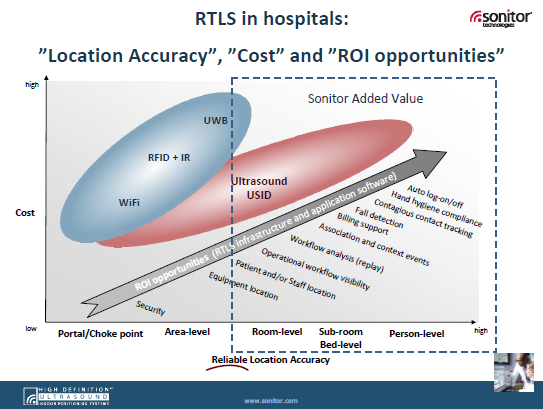
Cool technology I saw #2: Sonitor Technologies. (Disclaimer: they sponsor too, but I don’t care, although I only went through a quick demo). Their deal: ultrasound locators. Remember the story of how Post-Its came about because 3M had some crappy glue that wouldn’t stick well? Sonitor’s stuff works because it has a seeming shortcoming over RFID for locating objects: its signal can’t penetrate walls. What that means: it can locate objects down to the sub-room level. In the demo, they have a fake patient fall that triggers an alarm because the sensor detects movement away from the bed. You can watch in real time on a monitor as the booth people walk around while wearing their wristbands. They’re suggesting many uses: documenting that caregivers really did check on the patient every so often (and to bill for that) was an example. They’ve also got it set up for proximity-based PC security using the PC’s microphone to read the ultrasound from your tagged badge: when you walk up, it logs you on,and when you walk away, it logs you off. Pretty darned cool.

Cool technology I saw #3: Covisint. I stopped by because they announced a health information exchange deal with AT&T that will cover all of Tennessee. It’s a portal application that can be distributed by IPAs, hospitals, or larger groups. I can’t really describe it well, but it can tap into lots of systems (like EMRs and payor systems), has context to synch up separate apps, can plug in all kinds of widgets and let the doctor personalize his or her own screen, offers secure communication and file sharing, and can handle fax-outs and barcoded fax-backs with indexing. I was kind of overwhelmed so I didn’t get it all, but it was a very slick, lightweight application that anybody could use without training. There’s a lot of technology under the covers for authentication and personalization. I asked the guy why a hospital couldn’t use it to tie its affiliated docs into their data, solving the never-ending problem of unshared allergy, eligibility, and demographic information. He said it could be used for that with no problem (I didn’t ask what it cost).
The ever-loyal Inga filed her report below from a HIMSS "Surf the Net" station (does anyone still say "The Net?") because her connectivity hasn’t been working. I’m sure she’ll have more to say later.

E-mail me.

Inga’s Update

I spent a good part of Tuesday walking the exhibits. I talked to vendors at many of the smaller booths (including some HIStalk sponsors such as The White Stone Group, Stratus, Sonitor) and found booth traffic heavy all over the place. I chatted with the eCinicalWorks folks and they told me that their agreement with Wal-Mart precludes them from talking much about the whole thing and they preferred their clients to make those sort of announcements. A comment that made a bit more sense was that they do no outbound marketing (no email, direct mail, advertising, etc.) because they have all the business they can handle via word of mouth. Based on the traffic I saw there, that could very well be true. They also mention they rarely lose customers – maybe only 5% ever leave.

I played with a couple of the small tablet PCs, including Fujitsus, Dells, and Motions. Fujitsu had the smallest device that weighed about 1-1/2 pounds or something unbelievable like that. Dell’s included touch screen capability that was very slick. And Motion’s was a sealed device for infection control and had a built in scanner and biometrics.  So all different enough from another to prevent them from being "just another tablet."

Mr. H and I walked into the Sage Booth. We agreed they had the prettiest color booth. The sales guy was impressed that I knew of Medical Manager and Intergy and Peachtree. I was pleased I didn’t choke and forget the names…

I stopped by the dbMotion booth. Dr. Diamond was one of my first interviews for HIStalk and he was very funny. So I checked him and his crew out. They seemed quite busy showing the product to several big groups of people and Dr. Diamond was much cuter than the picture we had used.

I talked to the Relay Health Miss HIStalk and asked her if people had a clue was. She said many did (which was good). I told her who I was and that she was doing a good job being me, which I think she thought was funny (I don’t know if she believed me.)

E-mail Inga.

From HIMSS 2/26/08

February 26, 2008 News Comments Off on From HIMSS 2/26/08

I’m on convention center wireless, writing from the lobby since my hotel’s connection is dysfunctional. So, I can be verbose again (lucky you, huh?)

From Joe Mayo: "Re: Sunquest. Does the new Sunquest have a booth and what are you hearing about their Radiology Product?" They do have a booth, which I would characterize as small but tasteful. They had a little theater with a good speaker line-up and seemed to be getting a few folks in to hear the talks. I chatted briefly and they seemed to be nice folks. I like their logo. I haven’t heard anything about rad since they announced they’d resurrect it (wisely).

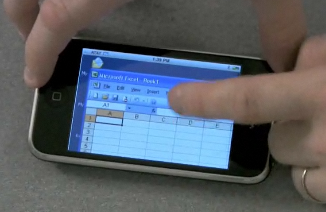
From Lori Loveless: "Re: booths. I thought you were absolutely on target with your comments on the booths. As you said, the Cerner booth was right on with them giving homage to their clients and partners. I too thought Siemens was well done and very open, they even asked me to sit and watch one of their presentations … which I have to say was also nicely done. What about Google?" You know, I didn’t even notice Google’s booth. I think I saw it yesterday and they were along a wall. I heard nothing about it, so the buzz factor might be less than you’d expect. I did finally get into Microsoft’s and wasn’t impressed … the little snot who finally deigned to show me Azyxxi wasn’t very good – it just looked like Excel from what I saw.

From Sal A. Selleck: "Re: your sponsors. Just thought you may want to share with your sponsors that their sponsorship money is well spent. I have been looking for implementation assistance and hadn’t come up with anyone through the usual sources. I Googled for consultants and hit a large dead end. I turned to your web site and have submitted requests to Healthia, MedMatica, and ICG. Don’t know if it will work out, but they have a chance to get in the door at my firm through their sponsorship on your site. I enjoy reading BrevIT and your site when I have the time. BrevIT is excellent." I appreciate that, although now I’m feeling guilty that I couldn’t get a BrevIt done Sunday because of my connectivity problems. Mike’s a big-system CIO, by the way.

From Tony Llama: "Re: urinals. Glad you ran the info about Seal Shield. No good deed goes unpunished, though. Turns out a competitor read about the urinal screens in HIStalk and complained to show management, who made them remove them. I guess no more chuckling in the men’s room . . ." So here’s a shout out to the loser competitor who doesn’t appreciate guerilla marketing: check out Seal Shield’s site, which has videos on their products. They have keyboards, infection control kits, antibacterial mouse pads, and Meditech keyboard overlays. And urinal screens, if you’re in need.

From Michael K. Fox: "Re: party. Party was great. Jonathan Bush was amazing. I stayed till today just to come last night." Jonathan had a great time, too, and lest I be repetitive, it was an honor to have him there (along with all of you, of course). Interesting news today: one of the big-name investment analysts who was at the party last night upgraded ATHN stock this morning, causing it to jump 10% today (I’m not taking credit, just saying). Also, athena just now announced a big deal with 125-hospital Community Health Systems, who will replace its PM systems with athenaCollector.

Scott Shreeve, who I’m sitting here talking to in the lobby as I write this, did a first-person recap of the reception and has some details. I’m hoping we can do something next April in Chicago. I told Shawna from Healthia that the coolest part was how well attendees meshed – it’s not like most vendor events where all you have in common is that you all bought the same stuff, so you end up talking shop all night.

One more time: I have to thank Healthia for putting on the event last night. I’m sure they had lots of other things to do, but they spent a great deal of energy working on the reception. Thanks to the very nice folks from there who worked the registration desk. I came undercover and they made a good impression. I know Healthia might be hiring consultants and I’ve written before how well they seem to treat them, so if you’re looking for a gig, I’d seriously listen to what they have to say and not just because they sponsor.

Just a quick recap of who’s got what HIStalk stuff in the booths. Healthia #4560 may have tote bags left. Ribbons are at DB Technology #4442, IntraNexus, Inc. #1851, Novo Innovations #4128, RSM McGladrey, Inc. #4038, and Stratus Technologies #569. RelayHealth may have some, but I’m not sure there (Miss HIStalk as doing great there today, having Polaroids made with admiring men – those RelayHealth people are fun). You can’t imagine the thrill that the fam will get when you proudly walk through the door and stick a badge ribbon on them, so take 1 or 200. Red Hat has a cool shoe shine stand labeled "Let Mr. HIStalk Shine Your Shoes" or something like that. 

Fred Trotter sent some comments about the open source movement of Misys. He’s actually at least mildly impressed, I think. They’ve got Tolven and OpenMRS in their interoperability demo and are giving exposure to the Mirth project (it’s an open source integration engine). If Fred approves, I do too. I had serious doubts about their intentions, but they may be serious.

I didn’t comment on Monday’s opening events. HIMSS did a really cool movie that wove songs from previous decades into HIT-related events. They had a live band that was pretty good, kind of a white bread "we’re moonlighting from our Disney day jobs" feel. Somebody had written a song called "It’s Our Time" or something like that, which was pretty good for the first couple of verses, uninteresting for the next several, and annoying for the next 50 or whatever it was (if the singer hadn’t been a good-looking female, it would have been as skull-pounding as "It’s a Small World.") Plus, they played again as everyone left, which they did rather quickly given the alternative. I never have a clue what value flag people add, so when all the painted-on gray suited people ran in with nondescript flags and waved them around, I was more puzzled than anything else. Bill Frist was the keynote and did a pretty good job, at least as well as possible given that you’re pitching cutting healthcare costs and helping the poor when your multi-million dollar mother lode came from running for-profit hospitals. I’d give him a B, boosting his score a little because he obviously personalized his talk (some speakers don’t) and did is own sometimes amateurish PowerPoints, which I found endearing. So, overall, is it really our time? That might be a stretch.

The HIT Transition Group guys wrote about the HISsies cartoon and included some back story for the noobs. They had already tripled their server capacity, but the incoming hits choked it, so they had to add a mirror. It was a big hit.

Confirmed: Cerner will not exhibit at HIMSS09. They believe that the future is all about customer experience and outcomes, not the "boat show" atmosphere that Jonathan Bush observed. They expressed interest in changing their participation to provide more education and customer involvement (I’ve been a little bit involved in their planning, for which I’d say kudos to them for asking my opinion as a proxy for all of you). For reasons I was asked not to mention, that won’t happen despite their best efforts. Bravo to them. The industry has matured past the Neon Gulch point of picturing yourself behind the wheel of the latest software wizardry, giving away Hummers, and even my much-beloved booth babes. Here’s a prediction: other vendors will follow Cerner’s lead, either because they support the concept or because they don’t see the value of spending big exhibit bucks and now have a way to save face in following the market leader in opting out. I have fun with Cerner and call them out with they screw up, but they get it. They’ve broken new ground the last few years in how they handled their exhibit and now they’ll make the biggest leap of all by abandoning the concept. Did I already say bravo to them?

Speaking of which, I’ve got some broad conclusions about the industry from what I saw and heard at HIMSS. I’ll write that up when I get time, but the teaser is that I think existing provider backlog, capital constraints, and declining revenues will hurt sales for the foreseeable future (and I’ve got some facts to back that up). I’ve theorized who will win and who will lose in that scenario, which I’ve validated with a few CEOs while I was here, and how the industry change as the rising slope levels off. There’s no killer app coming that I can see, so it’s time to digest what’s been bought. More to come.

Recommended exhibit to visit: the Department of Military Health. If you need a reality check from all the glitz, have a soldier in uniform demo the AHLTA-Mobile and AHLTA-Theater systems for wounded troops, calmly explaining that bullet wounds also usually involve thermal injuries from the friction-induced heat as the bullet pierces your skin.

Booth trend: Wii games as simulators. And: some fruit and water as snacks instead of the usually unhealthy stuff handed out at a health-related convention.

Odd bathroom factoid other than Seal Shield’s strainers: the convention center soap dispense is motion-activated, but the faucet requires pressing. Strange.

Best session of the conference so far: Deborah Peel on privacy. She is just amazingly rational, persuasive, and downright charming and self-effacing. I started out months ago calling her a flake, but I’m now a big fan. She mentioned that her group is starting a privacy certification process, with Microsoft’s HealthVault and eMDs being the first. She’s also lobbying to set privacy standards for e-prescribing. The industry probably doesn’t agree with her on all counts, but I figure it’s like politics: even if they meet in the middle, she’ll have done great work.

A few more booth observations: McKesson was really ugly blue with a disruptive traffic pattern, but it was big. Medsphere was dead. Misys had a cool booth. Abreon had a tiny one set up like a pet adoption center, with stuff animals (dogs) in cages. My favorite geek booth was SupCam or something like that, way over on one end, with a tiny DVD-quality camcorder that can stream over the web for $298. The guy said he was doing big business.

E-mail me.

Inga’s Update

Tuesday a.m. – I got up early and headed to the convention center in hopes of finding an Internet connection that worked. How nice to have free and fast Internet! It is pretty peaceful here at 7:30 a.m. I am enjoying overhearing a vendor at the next table make a pitch to a couple folks. Commerce at work!

I spent Monday afternoon walking the floor. Perhaps I should have taken the advice from my new friend Suzanne with Active Data Services (booth 3787) who advised me to wear my walking shoes rather than the more fashionable high heels.

Here are a few fun booths and people I encountered yesterday.

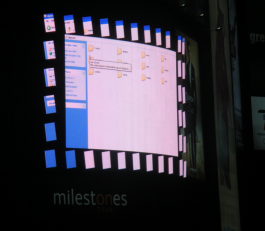
McKesson used their Enterprise Visibility system to display the diagram of their 110×110 foot booth. Cool way to show off their technology. Also walking through the McKesson booth, I saw someone wearing a “I’m Miss HIStalk” ribbon, which made me smile.

Every time I walked by the Motion Computing booth, people were three deep checking out their tablet presentations. Microsoft was the same way – I didn’t even try to get into the booth because it was so crazy busy.

VasTech (booth 1543) offered me a margarita early in the afternoon (I declined) but maybe I will go back today. Drank some good Starbucks at Allscripts (5145) instead followed by a fresh warm cookie from Wayport.

Perot had a fun set-up where people could pick up a paintbrush and brush a few strokes on a painting. Don’t know if there was sort of correlation with their marketing theme, but I liked it.

Red Hat is offering free shoe shines from “Mr. HISTalk.” Maybe I’ll stop by there today. And of course I saw the imposter Inga at Relay Health (who was looking lovely).

I asked both the folks in the Misys booth and Allscripts about the buyout rumor. Either it isn’t true or nobody at that level has a clue.

My favorite trinkets so far were my pig and frog from the White Stone Group, the Magic 8 ball from Modern Healthcare, and the wide variety of thumb drives. I hear that Microsoft has the biggest drives by the way – the 1GB variety.

Also worth a visit is the Compuware booth, where there is a real race car Corvette. If you like, you can take your picture with a beautiful young thing, or, a studly race car driver like I did.

I also managed to figure out what vendors had the softest and most convenient couches (Microsoft and Healthia were at least a couple I tried out).

So, on to the reception. Gosh I had a fun time! Thank you Healthia for throwing a great party!

I enjoyed overhearing various conversations, especially the ones involving speculation on who Mr. H and Inga might be. I was amused how many people thought Inga might be a man! Do they think my shoe fetish isn’t for real? Real men don’t pay too much attention to shoes, do they?

The best dressed guy was Scott Shreeve, who was adorable! He had the coolest shirt (kind of retro) and some very happening shoes (hmm … maybe HE is Inga.) Plus, he is as cute as can be.

Gwen Darling was one of the lovely blondes in the black dresses last night. Definitely on the best dressed list. There was also a younger lady in a white dress with red shoes. I didn’t see her name, but she had it working! She was with a lovely lady in a short black dress with a bow in the back and black shoes – quite a nice ensemble, too.

Of course there was Jonathan Bush, who simply stole my heart. Mr. H had said he was pretty funny and engaging, but I wasn’t prepared for this boyishly handsome ADD-type! He complimented Mr. H on the intelligence and honesty he has brought to the industry and recognized his leadership. Meanwhile he had us laughing with his “boat show” analogy and “digital balls” comments. If athenahealth has a speed boat in their booth next year, note that you read the prediction here first.

So possibly the funniest part of the evening for me was realizing that the gorgeous blond wearing the “Kiss Me I’m Inga” sash was pregnant! I surveyed a few folks and the consensus was that, in spite of her beauty and perfect looking backside, she was a member of the Angelina Jolie baby bump club. Mr. H swears he didn’t notice (men!) but I think he had the whole thing planned and was really trying to play some very funny joke. For the record, this Inga is not in the family way.

I am heading to the other end of the exhibit hall today – those poor guys in the 7000 booths.

E-mail Inga.

Comments Off on From HIMSS 2/26/08

From HIMSS 2/25/08

February 26, 2008 News 3 Comments

From Larry Tate: “Re: the reception. Tim, Inga, Shawna, and the whole Healthia team: Thank you so much for a lovely evening! It was nice to rub elbows with the movers and the shakers. The food and drink choices were outstanding; the conversation was scintillating!” Thanks for coming. It was really cool seeing everybody enjoying each other’s company. I never know who reads, but looking around the room, I sure felt good about it (unless it was just a free drinks crowd, which is still OK).

From Quad Studer: “Re: marketing. Seal Shield in the 4000 aisle had submersible mice and keyboards, around $30. Simple idea given nosocomial infections and MRSA. They had an actual dishwasher in their booth which I thought was a pretty neat gimmick, but just saw something else even better. In the men’s room urinals they have placed blue plastic strainers (or whatever you call those things) that say ‘Your keyboard has 400 times more bacteria than this urinal – Seal Shield.’ Now THAT’s marketing. This came from someone I know, by the way, and not a shill. Ingenious and clever. We like. I think I saw that guy with a keyboard slung over his shoulder like a bandolero’s ammo belt.

From Andy: “Re: Cerner. Wondering if anyone has additional information on the rumor that Cerner is not going to attend the HIMSS conference next year? Looking at the booth strategy for next year, they are not included. That is going to leave a lot of C level executives looking around and wondering why thier vendor is not is attendance. Surely, it cannot simply be money?” I’ll probably get confirmation one way or another, but I doubt seriously it’s about money if they’re really not coming. Someone told me several vendors are considering opting out, and Cerner probably has the best reason in that they run an outstanding conference on their own, now right in KC. I’ll let you know what I hear, but I would like to encourage folks not to assume the worst if a vendor opts out of HIMSS since it may just not be a wise investment of their dollars, so they shouldn’t feel guilty for passing. Nobody signs contracts at HIMSS, nobody hears of a big vendor for the first time there, and not that many decision-makers leave with their minds made up. I’ve always said that exhibiting is more for the current customers than bagging new ones.

From XLT: “Re: offshoring. I was at Epic recently for training and sat next to a woman employed by Accenture who was from India. She was in-country for six months attending classes along with numerous other Indian Accenture employees. It seems that Accenture is creating an offshore capability for clinical system build.”

From Neal’s Pizza Guy: “Re: Cerner. Neal was in London last week and gave another bizarre town hall speech which none of the Cernerites could understand. At one point someone observed he’s started five different sentences and finished none of them.” I know he’s hard to listen to, but at least he’s the guy who started and runs the company. Polished hired guns with a holster full of Ivy League degrees and no soul would be much worse.

Some interesting comments were posted about the University Hospital downtime article in the newspaper. Someone who sounds like they know what happened said it was a connectivity issue outside the hospital’s control.

What a reception! If you came, thank you. If not, sorry you missed it because it was a blast. The room was packed and overflowing into the hall and the adjoining area. Two high-ranking folks who know me took me aside and said, “Do you know that this is the must-see event of the conference?” Another pointed out the line of big-name investment bankers rolling in. The food was outstanding (I’ve been living on Subway the last couple of days, so it was especially great to me, especially the crab cakes and carved turkey) and the beer was cold. But what was just completely gratifying to me was seeing all the conversation, the cards being exchanged, and the relaxation after a long day at HIMSS. My favorite moment: I had written a little recognition to the military members who had RSVPed, but everything beyond the first handful of words was drowned out in a roar of cheering and clapping and whistling for those serving. Thanks for that recognition – I wish more of them were there to hear it.

So, let’s talk HISsies. Those amazing guys at the Healthcare IT Transition Group made it into a cartoon, which is online on their Hitch-TV. They’re geniuses, for two reasons: they’re darned smart, but especially because they’ve figured out how to make a living having a blast working together. Their movie got a lot of laughs and applause in all the right places.

Spoiler: athenahealth and Jonathan Bush won 8 of the 18 awards. Jonathan was out guest speaker and what a guy he is! He showed up early stayed late, worked the room, and had a great time. I only wish I’d remembered to record his speech. My favorite quotes: “Digital Balls” (you had to be there) and “HIStalk is a network — that (the conference) is a boat show.” He hit some great topics in patient safety, the need to re-architect existing HIT platforms, and ribbed the Wall Streeters a little. What an utterly fun guy. The big TV network guys are always hounding him to death to go on national TV and here he spends his evening hanging out at some blogger’s reception. Thanks to him and to John Hallock, who just may be the best PR and strategy guy in the business. They brought some of the athenistas along and they were having fun and the CFO came over to chat, having no clue who I was. I’m proud that they could attend.

More thanks: Healthia for sponsoring the reception, handling tons of details, and staffing the event with Healthia team members (thanks especially to Shawna Schueller for overseeing the whole thing and Mike Tressler for handling the emcee duties). Thanks to Gwen Darling, who not only helped me personally with the event but who even outshone the models in good looks and grace. And, thanks to Miss HIStalk and Kiss Me, I’m Inga. Miss HIStalk will be in RelayHealth’s booth tomorrow, by the way.

AT&T announces that it will create a statewide information exchange in Tennessee.

Misys: nothing further heard on any Allscripts acquisition, so that sounds like a false alarm. Someone did confirm their offshoring of Level 1 support, although it’s going to an existing Misys operation in the Philippines instead of to India.

Link correction: the interview with SCI’s John Holton is here.

Gripe I heard today: the exhibitor badges aren’t blue any more, so salespeople were pitching to other exhibitors for a second until they realized.

Cool giveaway: MRV has a tiny key ring flashlight that’s powered by a hand crank. That will be Mrs. HIStalk’s very special gift when I get back home (that and a flash drive that someone was giving away since she asked me to track one of those down).

Acquisition announcement: Noteworthy Medical Systems will acquire MARS Medical.

Acquisition announcement: Eclipsys acquires budgeting software vendor EPSI.

Acquisition announcement: Medinotes acquires Bond Technologies. News only if you don’t read here since Dumbfounded told us two days ago.

Microsoft announces $3 million in available grants for add-ons to HealthVault.

There were a ton of other announcements, of course, most of them trivial. If one caught your eye as important, let me know since I haven’t had time to scour them carefully.

On with the booth reviews! Random notes about my first impressions follow. Let me know if you want me to look at specific ones.

eClinicalWorks: C. Not so great location, but they really don’t care since they’re selling like wildfire, including to Wal-Mart.

NextGen: didn’t get to see the game show, so since I was there for the girls, I’ll withhold judgment. Seemed pleasant.

Medicity – A. Very cool, chrome, two-story and modern. Had our HIStalk sign out, as did several vendors (we made them little color signs and Inga and I signed them).

Siemens – A. A monster light rack overhead, white and orange, huge, and an amazing theater.

Healthia – A. Few companies uses orange this year, so theirs stood out (most companies were into greens with light birch wood). Nice chairs. The folks were working the crowd well.

HMS – A. Last year’s diner theme with the sassy waitresses, my choice for Best Booth That Wasn’t County-Sized. It’s personal, the waitresses are fun, and it’s just cool.

Epic – C. Same old fireplace and stone.

Allscripts – B. a cool beaded curtain overhead and a coffee bar.

Medseek – B. Set up like a kitchen, kind of cool.

Cerner – A+. Best Booth That Was County Sized. It just said “All Together”, made up on close inspection of client hospital logos. No Cerner. No crowding. Huge expanse, some of it dedicated to simply providing seating for attendees well away from the salespeople. Absolute genius. The bigger and better the company, the less it has to shove its name and branding in your face. All those companies who thought they’d catch up this year by copying Cerner’s “customers doing the presentation” idea just got left sucking wind again.

EnovateIT: Know how I always say I can’t resist pawing their carts when I go buy? I watched passers-by doing it today. That Humanscale cart ought to be in an industrial design museum and their new med cart is an amazing shade of green. They chair they had out was a work of art. If you believe in value of esthestics and ergonomics, this is your Ferrari right here.

Sentillion – A. Had an upstairs, a coffee bar, the birch thing, and that green fish that I like.

TheraDoc: A. Popcorn. I didn’t make any other notes, but I must have liked something else about it since I’m not a big fan of popcorn.

Harris – A. Cool color-changing lights.

IntraNexus: A. Modern furniture, very open (giving them a nice double since I liked their bus wrapper best, too).

Eclipsys: A, but I had to think about it. Huge, pushed the salespeople to the perimeter. Great use of the KLAS CPOE adoption quadrant, although they should have put that on the main aisle and not the side.

3M – B.

Meditech – B. Nice design, good use of green, a little cramped.

Greenway – A. LED lights, excellent use of green (duh).

OnBase – A. Still one of my top two or three. The sports bar motif. Damned funny magician (and I usually hate those guys like clowns and mimes).

GE – B. Massive, all white, stark, cold.

QuadraMed – A. Open, sleek.

Microsoft – I have no idea because of the mob assembled in front of it. Right up there with Cisco in terms of having throngs.

RelayHealth – A, but their Miss HIStalk person scared the bejesus out of me. I was strolling by paying no attention whatsoever when I heard a loud “Are you Mr. HIStalk?” I froze and stammered, but that was just her stock question to get attendees to let her put a badge ribbon on. She was working the crowd very well. Nice booth, although security made me put my camera away when I took her picture.

Sunquest – B. Kind of cool, birch.

Beacon Partners – B+. Tropical, with shutters, plants, and comfy chairs.

Agfa – A, but boy did they and anybody in Aisle 7500 and up get screwed. Lots of non-glitzy displays (IHE, etc.) and clear around a wall full of restrooms. Traffic dropped hugely once you hit that barrier. Hope they got a lower rate because most everyone seemed to be turning back before those last aisles.

Cisco – A. Big crowd at the Unified Communications presentation and a cool InTouch robot around back.

AT&T – A. Cool telehealth camera and cart setup.

E-mail me.

HIMSS Sunday video

February 25, 2008 News Comments Off on HIMSS Sunday video

Comments Off on HIMSS Sunday video

From HIMSS 2/24/08

February 24, 2008 News Comments Off on From HIMSS 2/24/08

Fake Inga

Bus

Lobby

It was a long day at HIMSS, but good. I got to the convention center very early and hung around outside some of the workshops (I’m sure I looked like a psycho lurker, but I wasn’t registered for anything, so I had to peek in). Those I saw had great attendance. The combined session of physicians, nurses, and pharmacists was huge, the venture fair was loaded with people, and I heard the project management workshop was good.

Say what you want about HIMSS, nobody runs a conference any better than those folks, at least that I’ve seen. I can’t imagine the logistics involved, but I can appreciate the result: I felt comfortable, welcome, and relaxed. Signage was excellent, the buses ran well (although it took forever to get to the hotel after the opening reception), and registration and tote bag pickup was lightning-fast.

Orlando’s far from being my favorite convention town, but the Orange County Convention Center is definitely my favorite. Lots of room, extremely well maintained, and helpful folks on hand. If it just had San Diego’s view …

The only negative is that it was darned humid in the convention center until mid-morning, so I’m thinking the AC is programmed to kick on later on Sundays. On the other hand, HIMSS had snacks and drinks out everywhere, even the fancy stuff like chocolate shavings and rock candy sticks for the coffee (I don’t drink coffee, so if I did, I’d want all that after-market stuff dumped in). It wasn’t many years ago that the folks in the Sunday workshops would starve because not only didn’t HIMSS provide food, there wasn’t any to be had because all the kiosks were closed. The situation is much improved. I still feel like a king when I can get a free soda on HIMSS Sunday.

Why healthcare costs keep increasing: a crummy convention center double cheeseburger and fries, which looked like it would taste the same as the paper boat it reposed it, was $10.75. Coffee was $3.52. Ball game food is better and cheaper.

I strolled by the venture capital fair to see what was going on. From the hall, all I could see was two groups: intense, fully suited young guys (at 7:30 a.m.) and casual older fellows who seemed to be having a blast. Guess which group was the guys with money? Hint: when you’re loaded, you can dress however you damn well please. I admire that.

The buses were wrapped in huge ads, of course (pic above). Microsoft had the most with Amalga, but the IntraNexus Sapphire ones were far cooler. While I was looking at the buses, I noticed some of the company reps loading in the usual cases of stuff. The ladies wore clothing ranging from casual to double-take revealing, so there’s a plus (well, in a few cases, anyway).

They were already handing out Monday’s Healthcare IT News, making me feel temporarily psychic again (no stock market or sports page, unfortunately, or I could have retired early). It had the usual lame, pun-filled headlines. I overheard one publications reporter, who looked about 20, explaining her background: “I don’t know anything about healthcare, but I did take biology in college.” Great.

I saw a fair number of people I know and another few that I know only through HIStalk. The only sponsor I saw was a guy in a Novo Innovations shirt.

I swung by the CIO meeting area and they’ve pretty much got the luxury track over there. They got their own tote bags, better lunch, and more goodies (not to mention their own lounge). That room looked packed, too. They get a free iPod if they sit through three focus group sessions. Rank has privileges.

Galvanon had their kiosks set out with maps and session guides. Great marketing idea. I fiddled around with one and they were pretty cool.

I’m still trying to figure out the tote bags. They were designed to be used as a day pack kind if deal, which I refuse to use since it just looks weird on anyone over 25, so I tried to carry it like the usual tote bag. It’s got one handle that’s on one side, which means it always feel like it’s off balance. You also can’t carry it open since the non-handle side just gaps open. I’m not a fan.

I saw a guy with a vendor CEO badge (I won’t mention which company, but it’s one whose commentary here isn’t consistently positive) peering intently at his laptop on a wireless connection. I sidled around behind him to see what was drawing his rapt attention and it was HIStalk.

I’m on a terrible Internet connection, which is driving me nuts. I should have stayed at the convention center to get this written since they had good Wi-Fi from what people were saying. They also have recharge stations for all of one’s gadgets.

Lots of people at my hotel and at the convention center were riding around on Segways, which were apparently a dismal flop everywhere but Orlando. The strangest was a guy cruising around outside by the buses and smoking like a chimney. It always strikes me as both funny and sad to see someone pedaling a bike and smoking, so this was similar.

Outside the speaker ready room: I saw two folks with a Cochise-like string of ribbonry, none of the the unauthorized HIStalk kind. I could decide if they were trying to be funny or really were that full of themselves.

The opening reception was pretty good. I took a little video, which I’ll post if I ever get on a non-hamster powered connection. I really like it when the reception is held outside, like in San Diego, and this one was in a dark ballroom, which felt like somebody’s very large basement rumpus room. The band was OK and celebrity imposters were on hand. RelayHealth’s Fake Inga (pic above) wasn’t getting a lot of attention that I noticed, but I couldn’t keep track of her. The memorable moment was when Real Inga and I approached her, got an “I Might Be Inga” ribbon, and asked her what the Inga thing was all about. Real Inga was tickled because Fake Inga gave some kind of evasive answer, like “It might be a person and it might be electronic, but you’ll have to visit the RelayHealth booth to find out.” She was pretty cute, but Real Inga’s got her beat.

Update: video is here. Not the best quality, but I was on the sly.

And yes, it seemed strange to hear the occasional HIStalk mention. That hasn’t really happened before. Real Inga and I were babbling like children at how strange it is to see Fake Inga and other evidence that we’re not just a figment of each other’s imagination, sitting in front of a keyboard for way too long each day.

Rumor heard: Allscripts will announce its acquisition of the remaining part of the healthcare business of Misys. Unverified and certainly questionable, but the sources were fair to good and there were more than one. Kind of makes sense.

Just one completely unnecessary reminder for those who RSVPed: Monday, 6 to 8 at the Peabody (it’s that giant, sun-blocking building that looms large from every window in the convention center lobby). No hints on the 7:30 guest speaker, but I believe an entourage is involved.

E-mail me.

Comments Off on From HIMSS 2/24/08

From HIMSS 2/23/08

February 23, 2008 News 4 Comments

From Dumbfounded: “Re: Bond Technologies. Heard that Bond was being sold to MediNotes, with an announcement forthcoming.” Unverified.

From The PACS Designer: “Re: Digitally Connected Patient. TPD mentioned a new concept called Digitally Connected Patient or DCP in the HIStalk interview of last year. Now, Philips Research has released information on this subject. Here’s what they have to say ‘Philips Research’s main involvement in the MyHeart project so far has been the development of wearable electronics and body sensors that can unobtrusively detect and measure vital body signs such as heart rate and breathing rate, communicate and analyze the acquired data and provide feedback to users or health providers.’ It will be interesting to hear from actual users on the pluses and minuses of such a concept.” Link.

From Henry Paterno: “Re: MD On-Line. I ran across their site. Any info?” I’ve not heard of them. Anyone?

From Rogue: “Re: offshoring. Can anyone confirm or deny that FCG or other consulting firms offshore clinical system build work? Anyone have experience with such an approach? If your native language is not English, do the nuances of ECG vs EEG vs EMG translate OK?”

From MSC Fan: “Re: OpenVista. I am biased on this topic, BUT your one-line report on Century City Doctors Hospital’s Medsphere go-live doesn’t really do justice to the accomplishment.” Well, at least now you’ve had twice as much of an attaboy with this second line. Hopefully they did it for their own benefit, not to get mentioned in HIStalk.

From Lenny Dykstra: “Re: downtime in Utah. University Hospital’s EMR goes through a nine-hour downtime. They’re a Cerner outfit.” Link.

I’m in Orlando, where it wasn’t too hot (mid-70s) but pouring rain and then very humid. Looks like HIMSS will be in the original west complex of the Orange County Convention Center, not the new expansion on the Peabody side. The signs are already out in the airport and around the convention center. Obvious sales guys are rolling in. Tourists and traffic are everywhere, of course, with lots of kids bouncing off any available walls. The airport security line leaving MCO looked about a mile long, so I’ve got that to look forward to later in the week. If you’re headed down, travel safely.

A correction from Visicu: the Philips acquisition closed and the stock now void, but it remains a corporation with a new shareholder and board under Philips. The people, office, and name haven’t changed.

Scott Shreeve isn’t impressed with PracticeFusion’s announcement of having 100 physician users of its free EMR.

An SVP from Raymond James & Associates asked if I could link to a two-minute survey they’re doing on HIT vendors. I took it and it’s quick and painless.

DSS announces its VistA system called vxVistA.

Speaking of VistA, the VA says it desperately needs updating, getting it off MUMPS and onto the Web.

Tamper resistant prescription pads must be used for Medicare beneficiaries by April 1 after a six-month delay.

Healthvision says it signed 60 projects in Q4, some involving new customers.

Merge Healthcare’s Q4 numbers: revenue flat, EPS -$4.17 vs. -$0.33. The company will continue frantically dropping ballast to try to keep the balloon of the ground, saying it may sell off its non-US businesses.

E-mail me.


Sponsor Updates and Housekeeping

Care Management is the name of the newly launched clinician communication solution from Premise. Care Management is designed to improve patient flow by collecting and displaying data from various clinical systems and includes proactive alert and communication tools.

Design Clinicals announces MedsTracker 2.0, which includes enhancements to the medication reconciliation process.

Novo Innovations will announce Monday enhancements to make physician lab ordering easier.

Inga’s Update

I got a preview of Active Data Services (booth 3787) I’m Not INGA! Buttons and it has led me to wonder: if someone creates a 1500 buttons with your name on it, does it make you an icon? It’s all pretty heady.

GE Healthcare announces an $8.3 million agreement with Inova Health System in Virginia to provide 300 community physicians with Centricity EMR over the next four years.

Oakwood Healthcare in Michigan and Perot Systems announce that their implementation of NextGen’s EMR and EPM is delivering positive results and has increased revenue cycle and operational performance as well as cash collections. Perot is implementing NextGen’s products at Oakwood’s 38 physician practices.

Massachusetts Eye and Ear Infirmary selects McKesson’s Paragon community HIS and plan to implement the clinical, financial, and ancillary applications

E-mail Inga.


News 2/22/08

February 21, 2008 News 6 Comments

From CHOP Person: "Re: CTO. The positioned was already filled with someone who was brought on board several months ago and spent her time lying low while a reorganization of the training/learning organization occurred. End result: Talent and Learning Services headed by CTO. Means IS (EPic) training moved to HR, among other things."

From Chiquita Bonanno: "Re: MaxIT. Heard it was sold. Any truth to the rumor?" I haven’t heard anything.

From Darius Price: "Re: Lakeland Regional Medical Center in Florida. Heard they’re about to sign with Epic."

From H.I.S. Stalker: "Re: eClinicalWorks. Has anyone noticed that eClinicalWorks just got selected by Wal-Mart for their clinics?" Yes … everybody who read HIStalk last Thursday. I must write too much stuff because people are e-mailing me hot stories all the time that I’ve already mentioned. That’s OK — it makes me feel like a futurist.

From Silent Bob: "Re: Neil Pappalardo. Little known fact: he played lacrosse at MIT (defense). He also refused to cram for exams as he felt that last minute study gave an inaccurate reflection of his understanding of the subject." See? He’s the Bill Gates of our industry and needs to go on record (in more ways than one: I did a quick calculation of the value of his Meditech stock and it’s $502 million). He sits in a cube like the other ‘Techies and when I interviewed Howard Messing, he was writing a spell checker. 

From bmoregirl: "Re: Orion Health. Rumor is that Philips will acquire Orion Health in its quest to be the solutions provider birth to grave. Good move on their part if they do!" Unconfirmed, but feel free to chime in if you’ve got the goods.

From Steelers58: "Re: QuadraMed layoffs and offshoring. Funny how folks like Newman look at real-world events as catastrophic. QuadraMed will now be able to compete a little closer to the big guys by getting product to market quicker." Someone sent me an intercepted e-mail document, apparently QuadraMed’s talking points about the layoffs. Summary: outsourcing makes sense because higher demand means delivery has to be faster and cheaper, the offshoring decision has nothing to do with QCPR, and unnamed loudmouth bloggers (say, are my ears burning?) are wrong in stating that QCPR expertise is running low when QuadraMed still has over 40 product people, that Christine Stanfield was one of 12 analysts on the team, and over 30 engineers (15 old-timers) are working on QCPR. Actually I didn’t say that, a reader did, just to nitpick.

Short-term pain aside, there’s nothing wrong with offshoring, although a company has to quickly change its core competency from coding and QA to design and project management of code-to-spec techies who don’t know healthcare and, in some cases, English. Sometimes it works, sometimes not, and the obvious problem is that when it doesn’t, it’s hard to put a team back together stateside without losing years of momentum. I don’t have a strong opinion either way, especially since I bet no major HIT company (Epic, maybe?) hasn’t moved jobs offshore. You get more for your money, but not always better.

Open source business intelligence software vendor Pentaho of Orlando raises $12 million in Series C funding. You have to appreciate the one-paragraph bio of the founder that concludes, "… you can usually find him near an empty Captain Morgan bottle or wandering around in the woods with his GPS receiver." Or both. Pretty hot company, apparently.

Microsoft says it has opened its HealthVault platform to developers: open wrapper libraries, eventual release of the .NET SDK, and publishing of HealthVault’s XML interface protocol specs to allow developers to private label the service (as I understand it, anyway).

Google announces a pilot program with Cleveland Clinic that will allow invited patients to share their Epic MyChart personal health records with Google PHR. The announce suggests that information from other providers will be importable and viewable under the patient’s control. Google also starts a Healthcare Industry Knowledge Center that helps advertisers target healthcare consumers. Coincidence?

So, the two potentially big PHR players fire salvos, each entirely characteristic: Microsoft flashes geek-arousing but proprietary (.NET) techie toys and white papers while Google jumps right to go-live and monetization while hiding the gadgetry under the covers. I’d call it Google 3, Microsoft 1 early in the game. In fact, I’m taking away MSFT’s one point because you can’t sign up for HealthVault without having a Windows Live ID, another example of proprietary .NET crap that has raised more than a few privacy concerns (just the ticket for launching a PHR). 

Another score update: Peter Pronovost and patients 1; well-intentioned fools from HHS Office of Human Protections 0. HHS must have slapped some sense into OHRP because it has decided that since infection checklists are already being used, it’s no longer research (duh). "We do not want to stand in the way of quality improvement activities that pose minimal risks to subjects," its acting director says, backpedaling from its previous interest in doing exactly that until the uproar of reason became deafening. My interview here. Strangely, Peter says he got no feedback whatsoever from the HIStalk interview (people usually get overwhelmed afterward). I thought quality and IT were hand in hand, but maybe I misjudged.

I forgot to mention a vendor dishing up HIStalk swag at HIMSS: Active Data Services will be handing out "I’m Not Inga" buttons from Booth # 3787. Their plan is to have every person at the conference put one on except the ever-honest Inga, who will thus reveal her true identify. I’m glad I’m not the one dragging 26,000 buttons to the hall if so. I’ve never seen any mention of HIStalk at HIMSS other than those ill-fated buttons of two years ago, so it will seem strange to see all the HIStalk and Inga stuff. You have to remember that I’ve only ever even uttered the word HIStalk to maybe 4-5 people in my life outside of the interviews and I’ve have never seen it anywhere except on my computer screen. I’m not real sure what my reaction is going to be, to be honest. Creeped out, I’m guessing. Imagine Inga: she has no idea how anonymously famous she’ll be since this is all new to her.

And for you home-bound non-HIMSS attendees, the HISsies winners will be announced in a very different way, so check back here Monday night. I’ll be writing here every day, of course, with the kind of high-brow analysis that you can’t get elsewhere: who’s booth sucked, which booth babes were hot, how good or bad the opening session was, and whether anyone particularly impressed or annoyed me. That’s if the server can handle the load of readers, that is, since the big boy went to his knees in the crush of HIMSS traffic last year, requiring me to beef it up.

Money guy Julian Allen is named to QuadraMed’s board.

Medsphere brings OpenVista live at Century City Doctors Hospital (CA).

Premise Corporation’s bed management systems earn the endorsement of AHA.

Pick up a wristband and brochure on "A World Free of Medication Errors" at HIMSS and First DataBank will donate $5.00 to two non-profit medication error groups. I hadn’t heard of either group, but I see that Peter Pronovost is affiliated with the Josie King Foundation, started with some of the lawsuit proceeds after an 18-month-old died at Johns Hopkins from a medication error. FDB is in booth 3747, according to the HIMSS exhibitor list.

Charleston Area Medical Center (WV) says it won’t lay off employees or cut back on pay raises despite a $25 million verdict against it, won in a lawsuit by a local surgeon who said the hospital smeared his reputation and revoked his privileges over malpractice insurance. Or lack of it, actually, since he put up $1 million of his own money as a self-insurance fund instead of buying commercial insurance, which CAMC didn’t like. Guess he won’t need to work at all now.

Visicu and its EICU stock ticker are history. The company’s $427 million acquisition by Philips is a done deal.

Emageon’s Q4: revenue down 14.7%, EPS -$0.02 vs. $0.10.

E-mail me. I’m probably too busy to respond, I’m sorry to say, since I’m working absurd hours. But, I always read.


Sponsor Updates and Housekeeping

New interviews on HIStech Report: John Holton of SCI Solutions on access management, Perry Russoniello of McKesson on workforce management, and Jim Klein of QuadraMed on the company’s product line, including QCPR.

Jobs: Cerner Consultant, Microsoft SQL Report Writer, Application Developer.

eScription announces that three of the top four outsourced transcription companies in the KLAS year-end report are members of the eScription MTSO Alliance. eScription, of course, is #1 in its own KLAS category of Transcription and Back-End Speech Recognition.

Sonitor announces a single patient use wristband tag for its ultrasound locating system.


Inga’s Update

A UK hospital has abandoned use of its Cerner Millennium software in its ED, claiming it posed a clinical risk because it couldn’t do simple things like print labels for blood samples quickly.

Now here is something creative and fun to check out at HIMSS. BÖWE BELL + HOWELL will attempt to scan a half-mile long paper document equivalent in length to 2,880 standard, 8.5 x 11-inch sheets laid end to end. If they succeed, they will establish the Guinness World Record for scanning the longest document. So if you want to hang out for a couple hours watching a really long scan process, stop by Booth 4476 Monday afternoon.

Misys announces some recent sales, including an upgrade and EMR sale to 19-provider Lumberton Children’s Clinic, Misys Homecare 4.0 to Angel Home Health and Hospice, Tiger and EMR to nine-provider McAllen Surgeons, and Tiger and EMR to five doctor Central Wyoming Neurosurgery. 

Coincidentally, I just got the following note from Poo Flinging Monkeys: “Not so much a rumor … not sure if they intend to tell the clients, but Misys is moving Level 1 support, which includes simple client requests and scriptable support solutions, to India. No layoffs yet, but moving it all offshore can’t be far behind. Most feel that ole Vern is simply cleaning it up to be sold and will jump ship.”

From Nobody Important: “In regards to Merge Healthcare – refer back to HISTalk on 11/27/06. Some predictions were made." Good call – here is Mr. H’s old posting that Nobody Important is referring to: “I got a few e-mails concerning Ken Rardin, now CEO of Merge Healthcare. His past-company track record: offshoring, job cuts, merciless bottom line boosting, selling off assets in parcels. The first two have proven accurate at Merge. We’ll see on the second two.”

The title of this study makes it clear where the authors’ opinion on PRHs and privacy risks: Personal Health Records: Why Many PRHs Threaten Privacy. Published by The World Privacy Forum, they note a number of possible privacy concerns, including the probability that PHR records could be subpoenaed more easily than a traditional HIPAA-protected record and the risk that identified health information is released to commercial data brokers.

McKesson announces a new strategic relationship with Proventys, a provider of personalized medicine knowledge services. McKesson plans to incorporate Proventys’ predictive modeling features into their clinical decision support solutions.

Deloitte Center for Health Solutions publishes a study that finds American consumers want more from their health care system than they’re getting, including greater online connection to health care providers and medical records, customized insurance coverage, and wider access to emerging innovations, such as retail clinics. Sixty percent said they wanted online access to medical records, test results, and appointment scheduling; 25% would pay more for that service. I also was interested to see that 75% of the consumers want expanded use of in-home monitoring devices and online tools to reduce visits and allow individuals to be more active in their care.

A recent Siemens Healthcare IT Exchange newsletter includes current statistics for Soarian Implementations. They claim to have over 80 Soarian customers live with over 160 active implementations underway. They also provide a breakdown of the number of clients using various modules.

The Los Angeles city attorney files suit against Health Net Inc., charging “a wide range of unlawful, unfair and fraudulent acts and practices,” including secret schemes to drop patients needing expensive treatment.

Lots of loose ends to take care of before heading to Orlando, including making sure I have a big enough suitcase to bring home all those vendor trinkets! Well, and all the extra shoes. I have a feeling this won’t be a carry-on type trip for me. I’m looking forward to prowling around all the booths and striking up conversations with strangers. And if you have RSVP’d for the HIStalk party and are considering bagging it for a better offer, trust me when I say you won’t want to miss it! I will be the one laughing and drinking and thanking my lucky stars for having such a great job!

E-mail Inga.

Despite Your Resolutions, I Know What You’ll Be Doing at HIMSS

February 20, 2008 Editorials 2 Comments

Inside Healthcare Computing has graciously agreed to make previous Mr. HIStalk editorials available from its newsletter as a weekly “Best Of” series for HIStalk. This editorial originally appeared in the newsletter in February 2007. Inside Healthcare Computing subscribers receive a new editorial every week in their Electronic Update.

Punxsutawney Phil aside, you know spring is at hand when it’s time for HIMSS (already?) For those of us who go, it seems like the entire healthcare IT industry is there, most of them angrily checking their watches in the Starbuck’s line or barking self-important cell phone commands to their holding-down-the-fort underlings back home.

If you’re not going, don’t feel bad. It’s a great time to get work done without being interrupted, much like the dead week between Christmas and New Year’s. Or, if your boss will be there and you’re so inclined, to screw off with little fear of detection.

Everyone heads for HIMSS with a firm agenda, pledging this year to get serious work done instead of wasting time like at the previous ten conferences. Demos will be dutifully studied, job-related networking will be pursued, and vendor relationships will be cultivated for the benefit of the employer picking up the tab. You’re here to work. Or, so the rationalizing goes.

All those worthy goals evaporate once the first heady breath of conference air is inhaled deeply, that energizing tang of carpet cleaner, coffee, collateral, and cologne that puts you in conference mode. Like a recovering alcoholic vowing to take just one sip of beer, you’re off the wagon. Before you know it, your agenda looks more like this:

  • Plan shopping, golf, or spa time from the tourist literature left in your hotel room.
  • Find someone before or during the opening reception who might give you a drink ticket they don’t need.
  • Walk the halls trolling for people you know, encouraging a hearty greeting and keen interest about what you’ve been up to, then silently cursing the arrogant jerks when they pass by with a vacant stare.
  • Look soulfully into the eyes of vendor booth people and speak profoundly and positively about whatever they’re selling, hoping they’ll dig deep under the counter to furtively slip you an invitation to a really cool party that’s not open to the masses.
  • Expect profuse chumminess from booth people who pretend to remember you and harbor no ill will from that time you cut their product from the shortlist.
  • Decide just how much honesty everyone else applies when completing their CE forms, figuring that walking outside an auditorium door and catching a couple of words should be worth the full CE credit.
  • Blame the speaker’s boring delivery when you decide to bag their talk 15 minutes in, climbing fearlessly over the entire row of knees, in front of the projector, and against the tide of incomers and door-standers, figuring no one knows you anyway.
  • Check the agenda and decide to sleep in, leave the afternoon sessions early, and maybe sit out in the sun at lunch.
  • Thrust your chest out proudly, knowing that booth people will pretend to be impressed with your title, your employer, and your town, even though they are silently sniggering at all three and looking over your shoulder for a better prospect or an incognito competitor who might hire them.
  • Cruise the perimeter of the larger booths, trying to catch the eye of someone who looks like a doctor, executive, or hot rep, steering a wide berth around low-ranking losers who earned a HIMSS trip for some geeky company accomplishment like programming.
  • Gather lots of vendor material for take-home study, then chuck it all in your room’s trash can before you leave for the airport.
  • Having already planned to skip the Thursday sessions since everyone else does, call the airline on Wednesday afternoon to see if you can get out earlier.
  • Wear your Mardi Gras beads home, bring your kids crappy booth junk, and impress the spouse with fake doubloons and a box of Café Du Monde beignet mix purchased at the airport.

Have a safe trip to New Orleans.

This editorial is copyright-protected by Algonquin Professional Publishing, LLC., publishers of Inside Healthcare Computing. Please do not copy, forward, or reproduce this material without prior permission. To obtain permission or for more information about Inside Healthcare Computing’s reprint policy, please contact the Customer Service Department at 877-690-1871 or go to http://insidehealth.com/ihcwebsite/reprints.html.

Mr. HIStalk’s editorials appear each Thursday morning in the subscribers-only version of Inside Healthcare Computing’s E-News Update. To subscribe, please go to: https://insidehealth.com/ihcwebsite/subscribe.html or call 877-690-1871.


News 2/20/08

February 19, 2008 News Comments Off on News 2/20/08

From Felonious Monk: "Re: Ralph Korpman. He’s developing a PHR under the company name CentriHealth in Nashville. He left HDS/Medaphis/Per-Se to found HealthTrio, but fell out with his partner. His new company is keeping a low profile, delivering the PHR as a subcontractor for Anthem, Ketting (OH), and Florida Medicaid." He’s certainly a pioneer. Personally, I’d like to see him design another clinical system, but he didn’t have a lot of success with the first one, I guess.

From Billie Newman: "Re: CPR. QuadraMed is showing poor judgment laying off folks such as Christine Stanfield. The CPR product is powerful, but complex. Sending development offshore will not work, as the system is too complex and will require folks with in-depth knowledge to maintain/support/advance." 

From Duane Feckless: "Re: sales team. Who do you use to sell your sponsorships? Maybe we could help you out for a percentage." No need. Companies e-mail us – we don’t solicit sponsors, make calls, or follow up after sending a PDF info sheet. Vendors know who we are, so they’re either in or they’re not and our job doesn’t change either way. Inga and I are very happy with the sponsors we have and we’re not hustling for more.

From Animal Price: "Re: Sage. The West Coast VP of sales, a 13-year vet, leaves the company. The remaining four VPs of sales have less than seven years total EMR/PM sales experience and the senior VP is a marketing professional."

From Jay’s Friend: "Re: Jay Parkinson MD. I’ll try to bring my friend Jay to the HIStalk party. How will I know which lovely lass to introduce him to?" I’m sure none of the lovely lasses would object to being introduced, so just start a receiving line and we’ll make an announcement.

From Samantha Sang: "Re: Pronovost interview. This was incredible! If there was a literary award for excellent journalist reporting in a blog, I would nominate this piece." Well, Peter did all the work, but I’ll accept on his behalf. I’ll finally be ready for more interviews after HIMSS, so I’ll be on the hunt. My #1 choice: Neil Pappalardo of Meditech, just because he fascinates me and never does interviews. The industry deserves the chance to know him better.

Palomar Pomerado Health (CA) will unveil its Second Life-based online hospital next Monday at the HIMSS booth of its partner, Cisco, which underwrote half the cost.

Listening: Flyleaf, hard-rocking, chick-led, semi-Christian.

The HIStalk reception at HIMSS is sold out, so we’ve shut down the RSVP page. I was expecting a few dozen signups and secretly hoping for 100, so 400 is pretty darned special indeed. Thanks to Healthia Consulting for footing the bill and making the arrangements. Coming: 46 presidents/CEOs, 64 VPs, 8 CIOs, 3 CMIOs, 4 COOs, 6 CTOs, and lots of other cool folks. A couple of weeks from now, I’ll be scratching my head that Healthia offered to put it together and that so many people, a few of whom I’ve swapped e-mails with, were able to come together. We’ll have a very special Miss HIStalk and Inga, the HISsies announcements, and a big-name speaker at around 7:30. With all those high-powered attendees, I bet some deals will go down. I’ve got a couple of folks who say they’ll snap some pictures, but if you want to bring your camera and help out, that would be cool.

A couple of weeks ago, I offered to make Miss HIStalk available to hold court in vendor booths at HIMSS. I got no takers until now: Miss HIStalk will be in RelayHealth’s booth (#2663) on Tuesday, so if you find yourself missing her attractive company after Monday night (and you will), drop by and get yet another variation on the badge ribbon theme, this one specific to RelayHealth (hey, don’t say I didn’t offer to help you other vendors stand out in the crowd). In fact, RelayHealth was so moved by my clearly ingenious marketing strategies (bring cute girls) that they’ll have a "Miss HIStalk wannabe", as they told me, handing out still more badge ribbons with HIStalk-related phrases at the HIMSS opening reception Sunday evening (they’re sponsoring it). I tried to get a Mr. HIStalk for you ladies, but couldn’t find a source. Now the pressure’s on to come up with something fun for next year in Chicago (HIStalkapalooza?)

Speaking of HIMSS, I know that at least three M&A deals will be announced during the conference. One or two may actually come out this weekend. You may recall that I scooped the McKesson acquisition of Practice Partner before their HIMSS announcement last year (so if you know anything, spill it). In fact, I made another accurate prediction that same day in response to a comment Misys had made about their physician focus over their hospital lines: "Well, they have to dump those businesses now, right? Why else announce to the world (and your existing lab and CPR customers) that those product lines are also-rans? Must be great to be a Misys sales guy trying to beat the odds and move some of those systems, only to have the boss tell your prospects that they really aren’t important."

My editorial in this week’s Inside Healthcare Computing: "Sun Was Right: The Promise of Healthcare Applications Requires a Grid, Not a Data Center Full of Servers." Scott Shreeve gave me the idea.

I was reading somebody’s HIT predictions for 2008 when it occurred to me: HIStalk has more smart readers than anyone I know, so maybe we could harness that brainpower to make better ones. I know the investment guys hang on every word, so it ought to be done right. I’m a provider-sider and don’t have a clue how to do this effectively, so if you’ve got experience, let me know.

Strange: a moonlighting pathologist in Canada develops what he says is innovative software to review Pap tests with better accuracy than tired pathologists. The newspaper discovered his invention while researching his frequent absences and reportedly shoddy work, which has forced Canadian authorities to review 15,000 cancer cases that he may have misdiagnosed while tending to his software project.

CSC, fresh off its acquisition of Covansys and FCG, will double its workforce in India to 32,000.

A Pittsburgh TV station ("Team 4" – precious) gets lathered up over HIPAA after investigating 378 Western PA claims and 80 violations that resulted in zero fines or prosecution. In fact, Team 4’s intrepid sleuths noticed that the list of complaints it got from HHS  included names, leading them to conclude that "the people in charge of enforcing the medical privacy law failed to follow their own rules." HHS politely reminded them that it isn’t covered by HIPAA.

The Ohio Board of Pharmacy is investigating e-prescribing errors.

E-mail me.


Sponsor Updates and Housekeeping

Sonitor Technologies announces the launch of its PC-Detector RTLS technology to be featured at HIMSS Booth #3815.

The Picis folks sent us a note about some of their prestigious clients who are presenting case studies at HIMSS: St. Luke’s Episcopal Health System, Abington Memorial, MD Anderson, William Osler Health, Stormont-Vail Healthcare, and Group Health Cooperative will present at Picis’ booth, #2849.

Stratus Technologies announces a new “medical grade” class of servers proven to be capable of delivering uninterrupted 24/7 access to digital data and information and can support virtualization.

Greenway Medical Technologies is selected by 27-provider group and FQHC PrimaryPlus of Kentucky and Ohio. Though their press release didn’t specifically say this, the suggestion is this may be Greenway’s first FQHC sale and they are trying to pursue more.

AmSurg, who own a majority interest in 170 ambulatory surgery centers across the country, is implementing (warning: PDF) NextGen EMR/EPM. The AmSurg centers focus primarily on gastroenterology, ophthalmology, and orthopedic specialty procedures.

Inga’s Update

A medical device maker in Minneapolis sues a competitor, claiming its business was damaged after the company raided its sales force. Apparently 11 reps moved from one company to the other between May and January of this year.

athenahealth’s latest client is Therapeutic Associates in Portland, OR. The physical therapy and rehab organization, which has over 150 providers and 65 locations in the Pacific Northwest, will use athenahealth’s on-demand practice management and billing services.

Correction to an item last week on PatientKeeper. HCA will be implementing PatientKeeper’s physician portal and not patient portal.

REACT Systems announces a strategic partnership with Santa Clara Valley Medical Center and the Seton Family of Hospitals. REACT provides critical response notification systems.

Would you (or your elderly relative) pay $5 a month to get real time updates on their doctors? Healthgrades is offering (warning: PDF) a new “Watchdog” e-mail alert service that will let patients know if there are any changes in disciplinary actions, malpractice judgments, and updated patient ratings. Maybe I just don’t go to the doctor enough or just don’t care enough about the statistics to pay even $5 a month for that type information.

I’m a fan of green initiatives, so I was pleased to read a Philips announcement of a 33% increase in sales of green products in 2007, including a 35% rise in its healthcare division. The biggest boost came from MRI scanner range plus patient monitors. The Philips MRI scanner Achieva 3.0T X-series has a 32% reduction in its environmental impact and the IntelliVue MMS X2 Patient Monitor consumes 52% less energy.

I’d like to see the results of this survey, so I will probably participate. Beacon Partners will ask HIMSS attendees four questions about which presidential candidate they think will most positively impact the industry.

I am trying to decide what to pack for HIMSS and was reminded how glad I am not to wear some boring company shirt that matches everyone else’s and really designed to look best on a man. Individuality and self-expression in fashion is so invigorating! Which led me to a thought that I should warn the fashion conscious that I plan to be take copious notes on who is wearing hot outfits to the HIStalk party next week, as well as who needs to be turned into the fashion police. If you are one of the unlucky forced to wear the corporate uniform, I promise to be kind, although I will give bonus points to any who are able to spice up and personalize some lame company golf shirt.

E-mail Inga.

Comments Off on News 2/20/08

Monday Morning Update 02/18/08

February 16, 2008 News 2 Comments

From Rorey Wheeler: "Re: HIMMS. To your point about e-mails from companies bragging they’ll be at ‘HIMMS’, as a sometime HIT vendor software executive, it is also terribly motivating <to quickly find a trash can> to receive material touting ‘HIPPA’ compliance." I used to rail on ‘HIPPA’ press releases in HIStalk, but it was so easy to find examples that I lost interest. I wouldn’t do business with those companies on principal alone, even if it is their marketing people screwing up.

From TenaciousD: "Re: CHOP CIO. I hear the CIO leaving may be due to the Epic EMR implementation taking too long and supposedly going to the board for another $25-30 million to finish it. They signed with Epic in 2003 and have very little to show for it." Unverified. TD also says that he’s hearing that Judy Faulkner is spending time in France wooing a potential global client for Epic.

From Steve Stifler: "Re: Microsoft Amalga. Here we go again … Let’s see, in my 30-plus years in HIS, we’ve had only a ‘few’ system vendors try this. NCR, Honeywell, DEC, Oracle, SAP, and, oh yes, IBM (several times, as I recall). Basically the hardware guys (now the op systems guys) come to the conclusion that the apps people do not know how to do it right, so we’ll show ’em. Can Mr Softie succeed where these behemoths of their day could not? In my opinion, not likely. It takes a lot more to succeed than a big wallet and a big name. Maybe they are NOT shooting for the US market, but international, where HIT is far less mature (intractable?)"

From Jim Levenstein: "Re: Eclipsys earnings call. They mentioned Sunrise 5.0 and its integrated revenue cycle. Anybody have feedback on that release?"

Not HIT-related, but something cool I ran across: MightyJack, a tiny box with a USB plug on one end and a standard phone jack on the other. Unlimited calls to the US and Canada using a regular telephone run $20 a year ($40 for the first year including the box itself), including an answering service that works offline, an incoming number, and other goodies. Skype-killer, highly rated from what I saw. I was thinking about setting up one of my old PCs as a "phone server," just running a broadband connection, MightyJack, and a cordless telephone base. You roadies could take it along and save your cell minutes. I use a Skype-powered VoIP phone on my PC and laptop, which works fine, but unlimited calls run $36 a year, an inbound number is extra, and there’s no offline answering capability.

A reader sent over a CPOE study on error reduction in response to my comment that clinical systems don’t ever seem to reduce the cost of healthcare to patients. I don’t doubt the study, but it wasn’t as broad as I wanted. Hospitals always tout their IT, but never do a rigorous study to prove that systems (a) improve care, and by that I mean broad-based outcomes like mortality or quality of life measures, not just task improvement; or (b) truly save money to the point that the hospital passes those savings along to its customers (certainly many factors impact this, but why spend millions if you don’t expect to save at least as much?) Anything else is nice, but secondary. Like those prognosticators who said we’d all be working five hours a week because PCs would make us so efficient, I’m not buying it in many cases (and it’s not the vendors’ fault: it’s up to hospitals to buy the right ones and use them to get the job done). You wouldn’t use a drug or medical device without clear-cut evidence of its effectiveness and benefits, but nobody expects that with IT because hospitals can’t abide reproducible processes (except Licking Memorial Hospital, which earned ISO certification in 2005 – anyone know how that’s worked for them?)

Right as I ranted above, I ran across this article (warning: PDF) that looked at mortality in ESRD patients pre- and post-EMR implementation, finding big reductions in mortality and cost at a dialysis unit affiliated with New York Presbyterian. Their system was Disease Manager Plus from MIQS. I need to study the article a bit more.

I can’t explain who needs to know or why, but if you have a C-level contact for any potential big player PHR vendors, let me know.

E-mail me.


Sponsor Updates and Housekeeping

HIStech Report interviews: Design ClinicalsEnovateIT, Healthia Consulting, McKesson Horizon Enterprise Visibility, PringPierce Executive Search, Sage Software, Stratus Technologies, The White Stone Group. You can download PDFs with full information from each interview. Also, seem my HIMSS page with reception info, giveaway locations, and writeups about companies that support HIStalk (or download a PDF to print and take along).

Jobs: Practice Director – McKesson Practice, Precision 2000 Support Analyst, Senior Consulting Manager, Network Analyst. One of our listing employers said they were inundated with responses to their HealthcareITJobs.com  listing, so we know folks are reading. Thanks.

Welcome to new HIStalk Platinum Sponsor Greenway Medical Technologies of Carrollton, GA, whose PrimeSuite EHR earned Best in KLAS 2007 for ambulatory EMR in 6-25 doc practices. It’s also CCHIT certified through Ambulatory 2007. Other products include PrimePatient (patient portal), PrimeExchange (interoperability), PrimeResearch (clinical research networking), PrimeMobile (mobile desktop), PrimeARM (revenue cycle management), and extensive services and support. They must be doing something right since Q2 sales just announced were up 52% over 2007 and 83% over 2006. I notice they have lots of good Southerners on the management team, so I’d say drop by their HIMSS booth at least for some high-bandwidth conversation about barbeque or college football (Georgia vs. Georgia Tech or Auburn vs. Alabama should raise the intensity level). I love the South, so I may lead the discourse over sampler bowls of grits for you Yankees and Left Coasters. They’re in Booth # 1263. Thanks to Greenway for supporting HIStalk and its readers.

Art Vandelay on "Buy and Develop"

Dale Sanders had post mentioning Northwestern’s "buy and develop" strategy. I agree with this concept. It is a practical means of delivering a full solution when using a broad "big box" system (ex: Cerner, Epic) in a large organization. Any vendor has functional deficits. There are four ways of dealing with deficits – a manual workflow, suck it up and use the system, use a best-of-breed system, or develop a system in-house. For major deficits in an area, using best-of-breed systems is a common approach (for ex: surgery, ED). For minor functional deficits or cross-area workflows, in-house development appears to be on the rebound.

Examples of cross-area workflow issues include the management of clinical pathways or discharges from care settings. An example of a minor functional deficit is information exchange. To resolve these issues or deficits, organizations are turning to vendor’s software development kits or web services. A very recent example of this is UPMC’s Smart Room. UPMC has enabled a unique workflow by using multiple vendors’ services and some custom development.

This type of in-house development has been common outside of health care for some time (for ex: with major ERP systems). The challenge is maintaining the integration as the systems evolve. I am optimistic that organizations will be open-minded about using development to address functional deficits and workflow issues.

Inga’s Update

St. Francis Health Center, part of the Sisters of Charity of Leavenworth Health System, is implementing (warning: PDF) eWebHealth’s EHR.

HCA selects PatientKeeper’s integrated patient portal, which will  integrate with its Meditech systems plus a wide variety of others.

This article suggests that at least one major Mediware shareholder is using the board of directors to put the company up for sale. Apparently Cannell Capital, which owns almost 13% of the company, sent the board a letter illustrating how cheap the company was on both an absolute and relative basis.

Merge Technology announces its “rightsizing” initiative, which is just a fancy way of saying they are laying off about 160 people worldwide and not replacing another 20 who left due to attrition. Forty-five of the affected are in North America with the other 115 are offshore. The final "right size" for the workforce appears to be 440. The changes are expected to save Merge about $12 million this year. Merge is also closing its Burlington, MA office. I checked out the salaries of the top five execs for Merge and was pleased their total pay (at least in 2006) averaged a reasonable $238K. 

E-mail Inga.

CIO Unplugged – 2/15/08

February 15, 2008 Ed Marx Comments Off on CIO Unplugged – 2/15/08

The views and opinions expressed in this blog are mine personally, and are not necessarily representative of Texas Health Resources or its subsidiaries.

CIO reDefined: Chief Interception Officer
By Ed Marx

The roles of a CIO are as varied as the companies and sectors they serve. Even within these roles are multiple combinations and permutations that are expressed according to circumstance. The moniker “CIO” itself is not limited to “Chief Information Officer.” No, to be effective in our calling we must stretch the traditional definition beyond this commonly accepted interpretation. This post continues a series on how the “CIO 2.0” will push the boundaries of conventional thinking surrounding the role. We continue with the “Chief Interception Officer.”

Earlier this week, I had the privilege of attending the annual Davey O’Brien awards dinner, honoring the year’s best college quarterback. For the 2007 season, the honor went to the University of Florida’s Tim Tebow who added this hardware to his Heisman trophy. Highlights of his talents were shown and much of the Gator’s success was attributed to a low interception rate. In football, the interception is often considered a game changer. A momentum killer. One team has the inertia and is headed for a likely score. Victory looks certain. Then an errant block, a pocket that collapses, an ill-advised pass, and the opposing team catches the ball. That catch not only snuffs the scoring drive, it discourages the intercepted team. Keep that concept in mind as you read on.

The Second Law of Thermodynamics states that everything moves from order to disorder. A shrewd CIO can learn to intercept strategies, projects, or activities that perpetuate this law before they take hold. It takes about 10 minutes to identify an organization that lacks a Chief Interception Officer. In fact, you don’t even have to meet this person, just look at their application portfolio and the core technology mix. For further validation, review the number of FTEs per adjusted occupied beds or similar benchmarks. The more complex the environment and the larger the staff on a comparative benchmark basis the more probable the defense is out of sync.

To complement a solid offence, the primary defenses of the Chief Interception Officer are a visible strategic plan and an enforceable IS governance process. A large body of work already exists on IS strategic planning, thus I will simply touch on some of the less reported aspects. While a strategic plan must be aligned with the business objectives of the larger organization, make sure it directly supports all key performance indicators. Ask key stakeholders what drives their personal and departmental incentive plans then call out these specific objectives. Develop the plan in collaboration with key stakeholders without excluding anyone from providing feedback. As a final play, gather stakeholder signatures to signify that they have given adequate input and are endorsing the plan. Let the signature page be your initial slide in your overall plan. I keep a framed copy in our IS lobby as a reminder to those we serve and their commitment back to us.

Though it is a newer concept, a large body of work also exists on IS Governance for your reference. The governance process exercised by most organizations tends to be soft. Executives pitch projects of great promise (ROI, Quality, etc) and obtain funding. Yet no one ever circles back around to measure the actual outcomes. Thus, I will illustrate two notable strategies often overlooked: the need for end-to-end accountability, and the elimination of ambiguity.

To ensure quality progress, I implemented the following governance strategy. One year after a funded project has achieved a go-live status I sent the designing executive back through the governance process to present the outcomes. This discipline reduced the number of project requests by 60%, and those executives that did present had put their project through a rigorous analysis knowing that they would be held accountable to promises made. Projects that passed saw an increase in on time, on-budget performance, and, more importantly, on value realization. Did you notice my purposeful use of “executives” that presented projects? I changed the players from IS to operational sponsorship for all but highly technical projects. Finally, IS Governance must be firm in allowing only two possible outcomes. Funded or Not Funded. Anything apart from this reinforces the Second Law of Thermodynamics.

For an organization to bring about an efficient and effective application of information technology, the Chief Interception Officer must create the proper environment. While primarily on offense in leading an organization, exploit the defensive plays in your handbook. Heroically intercept misguided short passes and long bombs before points are put on the board that are difficult to reverse.


Ed Marx is senior vice president and CIO at Texas Health Resources in Dallas-Fort Worth, TX. Ed encourages your interaction through this blog. (Use the “add a comment” function at the bottom of each post.) You can also connect with him directly through his profile pages on social networking sites LinkedIn and Facebook, and you can follow him via Twitter – User Name “marxists.”

Comments Off on CIO Unplugged – 2/15/08

News 2/15/08

February 14, 2008 News 6 Comments

From B. A. Strothers: “Re: CHOP. CHOP’s CIO announced he is leaving effective April 1 (no joke). The Children’s Hospital of Philadelphia is conducting a national search for CIO and the newly created position of CTO. It’s a terrific opportunity for someone who can take charge and who wants to do something special at a very special institution.”

From Charles Chips: “Re: your PC. You said you Microsoft isn’t important on your PC. Linux bigot!” Nope, no Linux here. Like more people than you realize, I just run very few local apps any more for home use. I’d much rather run Web-based stuff that’s just as good, free or cheap, and that I can access from any PC. I used to hang around the software store and keep current with everything from office suites to photo editing utilities. That seems incredibly primitive now. I want to be on the grid, not bound to a specific PC (especially at upgrade or system crash time). Personal productivity apps installed on a local PC? So 1995. As long as I’ve got a broadband connection, I don’t need much of anything on the desktop. In fact, I could easily run Linux. The network is the computer, don’t you know.

Listening: PJ Harvey.

Microsoft announces that it’s now in the HIS business, renaming Azyxxi (thanks!) to Amalga and making up a new software category for it called Unified Intelligence Systems. Also in the new blended family is Microsoft Amalga HIS and RIS/PACS. I say “blended” because this is the Hospital 2000 software Microsoft bought from Global Care Solutions just three months ago, developed for Bumrungrad Hospital in Thailand.

Apparently Microsoft has studied our industry carefully because it followed all the longstanding rules with Amalga: (1) buy something that some hospital developed for its own use instead of doing your own R&D; (2) roll it out with much fanfare even though it’s got only a handful of live sites; (3) proclaim it to be integrated with the step-siblings; (4) start selling it quickly even though so little time has passed between its acquisition that there’s no way it’s really ready for production use; and (5) “upgrade” the hospital that developed it, at least on paper, so it can serve as a reference site so somebody might actually step forward to be its first paying customer. The whole enterprise had only 71 Thailand-based employees when Microsoft bought it, so one might logically question exactly how they’ll provide support and implementation services (unless one knows Microsoft, which nearly always pre-announces its intentions as a blocking or testing-the-waters move long before really having anything ready to go).

There’s an Amalga web page, by the way, but if you click the the Contact Us button and then choose your inquiry type, nothing happens if you use anything other than Internet Explorer.

The biggest beneficiary of Microsoft’s forced entry into the HIS applications business: Red Hat. You can bet that application vendors now competing with MSFT will be more than happy to steer prospects to non-Microsoft operating systems and databases.

Registration for the HIStalk reception Monday evening at HIMSS will be closing down no later than Wednesday 2/20 at noon or until we hit 400 RSVPs, whichever comes first (we’re at 250 or so now). If you’re waffling because you’re afraid it won’t be A-list, fear not: I counted 32 presidents or CEOs, 33 VPs, and a bunch of other Cs (CIO, CTO, CMIO, COO, etc.) on the list, along with investment people, press, academics, economists, and clinicians. And, not to mention our own Miss HIStalk and Inga and a celebrity speaker. We’ll be in the Florida III room on the convention level of the Peabody. Many thanks to Healthia Consulting for sponsoring this cool event. I remember when they first offered, we agreed we were worried about attendance, but for different reasons: I was picturing 10 lonely people staring at each other in an empty room, while Healthia envisioned hordes. Inga and I are really happy that everybody’s dropping by, especially since she’s obsessing about couture.

For HIMSS goodie-seekers: RSM McGladrey will have some “bonus” HIStalk badge ribbons of a different color/type than those I listed. Reason: the ones I mailed to them never made it, so they went out on their own (and at their own expense) to have new ones made in some different colors and choosing from a list of suggested pithy messages that I provided. All so you wouldn’t walk away crestfallen at their unintentionally bare cupbard. So, if you’re a collector, make sure to stop by Booth 4038 (along with those other companies who are graciously handing out ribbons: DB Technology #4442; IntraNexus #1851; Novo Innovations # 4128, and Stratus Technologies #569). And don’t forget Red Hat’s shoe-shining Inga and the possibility of some stuff at the Healthia booth (no guarantees since it may all be gone Monday night).

Inga mentions the Allscripts earnings announcement below, but in the mean time, investors are spooked by supposed issues getting the new version of TouchWorks installed. Sell volume on MDRX spiked hugely, dropping it from $15.39 to $11.27 and the market cap to $640 million (raising acquisition possibilities, some might speculate).

A province-wide Nova Scotia electronic health records system will use McKesson Horizon Physician Portal, Horizon Care Record, and Initiate Systems.

I don’t know about you, but I’ve received at least five e-mails from companies bragging that they’ll be exhibiting at “HIMMS”. Delete.

Wal-Mart’s co-branding deal with RediClinic for in-store clinics requires them to use PM/EMR software from eClinicalWorks.

Perot Systems is looking for HIT acquisitions in India.

Pick your villain: Prime Healthcare Services, owned by the oft-reviled Prem Reddy, sues Kaiser Permanente for “managing bills rather than managing care.” Reddy’s company, which takes over struggling hospitals, has been accused of cancelling insurance contracts, dropping needed services that don’t contribute enough profit, failing inspections, and turning away patients without insurance. Kaiser — well, you know already.

DiagnosisONE develops a disease surveillance system for use in Pakistan.

BCBS of Massachusetts will require hospitals to use CPOE to get maximum payments starting in 2012, claiming CPOE makes health care more affordable (case studies, please, where hospitals reduced prices after implementing?)

E-mail me.


Sponsor Updates and Housekeeping

I mentioned before the unSUMMIT on bedside barcoding, which has a very strong program. There’s an ad to your right for it. Considering our lukewarm progress on implementing it in hospitals industry-wide, it should be of widespread interest.

Reminders of stuff to your right: signup forms for electronic updates when I write something new and for the Brev+IT newsletter, Google Search to go back through the nearly five years and millions of words of HIStalk, and links to the jobs site, forums, etc.

Inga’s Update

Aetna announces it is the first healthcare organization to require its EDI vendors to be CORE compliant. CORE (the Committee on Operating Rules for Information Exchange) is working to develop more robust eligibility transaction rules. Call me a cynic, but I bet there is some hidden twist in here that will allow Aetna to delay paying claims.

Here is an announcement about a study funded by the CA HealthCare Foundation and conducted by CAQH as part of the CORE initiative. The study found that providers who routinely verify patient insurance eligibility and benefits through electronic or other means experience higher rates of paid accounts (I could have told them that).

The Misys Center for Community Health Leadership invites more healthcare organizations to apply for EHR software and service grants to build connected communities that facilitate clinical data exchange. The program has already awarded grants to New Haven, CT and Tampa, FL since 2006 and plans to ultimately distribute $10 million.

Microsoft Dynamics GP is selected by Holy Infant Hospital in SD to supply enterprise resource planning. Apparently Microsoft beat out Dairlyland, CPSI, and Quickbooks.

I am amazed by the number of (female) readers who have dropped me a note inquiring about the proper attire for the HIMSS cocktail party. Specifically, they want to know if Mr. H has provided a clothing allowance, if I plan to go cocktail attire or just the “convention” look, and especially what shoes I’m wearing. Well, you will all have to wait and see what fits into my suitcase because I haven’t quite figured out all the details. But feel free to continue asking me for fashion tips.

Allscripts announces its Q4 and year-end numbers, which were up from the previous year just about any way you look at it. Net income: up. Total revenue: up (including an 18% increase in software and related services.) Profits: up. However, the revenue numbers were below analyst expectations. Stock price: down 26%. Their 52-week high was exactly a year ago ($29/share) but looks like it will close around $11/share.

Allscripts EHR, by the way, will be installed at the 113-provider Mankato Clinic in Minnesota.

Eclipsys also announces Q4 numbers. Profits were up from $4.7M in 2006 to $24.2M, though excluding one-time costs and benefits, were $15.8M, up from $13.8M. Also excluding the one-timers, profit went from $30M in Q4 2006 to $43M in 2007. Sales grew almost 12%. The street was a bit kinder to them as the stock slip only about 6.5% (on a day the market lost about 1.5% as a whole.) Eclipsys also announces a new VP and GM for their Asia-Pacific operations. David J. van Eck will set up shop in Singapore. van Eck previously worked for Elekta AB and Oracle before that.

NextGen announces that Adventist Health System is expanded its commitment for EMR and PM software. Adventist plans to implement the products in all of its employed physician practices.

Quadramed makes its first sale of CPR since acquiring the product from Misys last year. Sibley Memorial Hospital will be upgrading from QuadraMed’s Affinity to QuadraMed CPR and plans to integrate it with with QuadraMed’s Patient Registration, Revenue Cycle Management and Electronic Document Management applications.

E-mail Inga.

Maybe Hospital IT Should Embrace a Non-Punitive Culture

February 13, 2008 Editorials 2 Comments

Inside Healthcare Computing has graciously agreed to make previous Mr. HIStalk editorials available from its newsletter as a weekly “Best Of” series for HIStalk. This editorial originally appeared in the newsletter in June 2006. Inside Healthcare Computing subscribers receive a new editorial every week in their Electronic Update.

Hospitals realized several years ago that medication errors are rarely the simple screw-up of a single nurse, pharmacist, or physician. They occur because an organizational system of assumptions, processes, and communication fails, the so-called “Swiss cheese effect” whereby a number of usually self-correcting practices sometime line up unfavorably like the holes in Swiss cheese. That alignment of individually unusual circumstances causes errors.

Knowing that’s the case, it doesn’t make sense to fire someone involved in a medication error. The underlying system is still broken. Disciplinary action also discourages others from reporting their own mistakes and near-misses, thereby depriving the organization and industry of the opportunity to learn from them.

Maybe we should think that way in hospital IT. We’re still stuck in the old “fire everyone involved” mindset when projects fail, which is disturbingly often. Software implementation is simply business change with a technology component. Therefore, when a project deviates from expectations, it doesn’t make sense to have a knee-jerk firing of the IT project manager, the CIO, or even the vendor. Supporting cast changes won’t improve the flawed underlying system that allowed them to fail.

A non-punitive IT culture would acknowledge that all executives, not just those in IT, bear responsibility for the success of business changes involving technology. It’s their job to support process change, contribute resources, and participate in project decisions. The kickoff meeting doesn’t happen until they’re on board and they don’t get to go incognito when the project blows up and the CIO lynch party is being formed.

Some of the worst CIO and vendor behavior involves rationalization and ass-covering once projects have failed spectacularly, much like the nurse who kills a patient through a mistake not entirely under his or her control. We’ve built incentives for people to keep quiet, to dodge blame, to avoid risk, and to criticize others. Eventually everyone gets tired of the finger-pointing, so the only remaining task is to ban mention of the project in polite conversation, at least until the same mistakes doom the next one.

When it comes to IT projects, hospitals are more like surgeons than internists. Cutting is the cure: the vendor, employee, or consultant must be removed and publicly blamed to provide closure. Everyone must believe that lessons have been learned and the chances for future success increased. To admit otherwise would require a lot more self-analysis and work, and after all, Men of Action believe in their keen ability to simplify complex problems and fix them with quick, skilled incisions.

We make a lot of mistakes, many of them eminently preventable if we could just learn collectively. Most of them are quietly buried away, often taking a few careers or contracts with them.

Hospitals are mostly non-profit and non-competitive. Maybe we could improve our odds of IT success by sharing our misses and near-misses just like we do for medication errors.

This editorial is copyright-protected by Algonquin Professional Publishing, LLC., publishers of Inside Healthcare Computing. Please do not copy, forward, or reproduce this material without prior permission. To obtain permission or for more information about Inside Healthcare Computing’s reprint policy, please contact the Customer Service Department at 877-690-1871 or go to http://insidehealth.com/ihcwebsite/reprints.html.

Mr. HIStalk’s editorials appear each Thursday morning in the subscribers-only version of Inside Healthcare Computing’s E-News Update. To subscribe, please go to: https://insidehealth.com/ihcwebsite/subscribe.html or call 877-690-1871.

News 2/13/08

February 12, 2008 News Comments Off on News 2/13/08

From The PACS Designer: “Re: PACS Pioneer. TPD was saddened to hear that PACS pioneer Samuel Dwyer, PhD passed away recently. Sam’s early experimenting in creating a PACS and earning the title ‘Father of PACS’ eventually led to the creation of our DICOM standard as we know it today. He also influenced TPD’s early 1990s experimenting with how to come up with a better method of connecting radiology image systems to PACS and also improve teleradiology. TPD sends sincere condolences to the Dwyer family.”

Interested in my HIMSS party? I can’t divulge all the surprises, but we may have a very special guest speaker (a big name). You will also be impressed with two lovely ladies (Inga and Miss HIStalk) who will be chatting up my guests and posing for pictures with those interested. Food, drinks, announcement of the HISsies winners, a prize drawing, and an impressive list of attendees to chat with – it’s up to you, but I’d sign up now (I need to sign up myself, in fact, before Healthia tells me we’re maxed out on attendees). Also, the Red Hat people tell me that they’ll have their own Inga in their booth offering shoe shines (see Inga’s shoe fetish below), so I’m checking that out. Information on goodies and HIStalk-recommended booth stops here (warning: PDF) so you can take it along to the show floor.

A Wisconsin investment guy likes Epic as a company, but since it’s not publicly traded, he’s touting Cerner.

Sad story: a man undergoing bypass surgery has a monitor placed into his heart for monitoring. A known programming error in the monitor causes its catheter tip to heat up to 500 degrees, cooking his heart from the inside and requiring a transplant. The company that makes the monitor knew about the problem, but didn’t recall them. They admit the error. He’s suing. Nobody wins.

Steve Liebel MD, a Stanford oncologist and Varian Medical Systems board member, died last week in Hawaii of a heart attack.

An upcoming medical journal article looks at diabetes self-management software from Colorado software company PHCC.

An Iowa newspaper’s story on the local hospital’s Visicu implementation has a pretty cool picture of the system.

WebMD’s stock is struggling and its acquisition by major owner HLTH Corp. is in jeopardy.

Want to see what was going on with electronic medical records a few decades ago? See below.

E-mail me.


Sponsor Updates and Housekeeping

Welcome aboard to new HIStalk Gold sponsor Innovative Consulting Group of Evansville, IN. The company’s been around since 2002 and has an impressive client roster. Led by CEO Wayne Kinney, the company offers consulting for products from Siemens, McKesson, and Cerner; deployment and project management; integration; and management. Thanks to Innovative Consulting Group for support HIStalk and its readers – we appreciate it.

EnovateIT announces its SmartCart, the intelligent medication cart: compact, supporting multiple computer form factors, smart power management, and individually lockable patient med drawers. They sent over a picture and its very cool: blue and white, rounded edges, big wheels, and a stylish design. I’m definitely giving it a test drive at HIMSS since their stuff is satisfying to the touch.

Ensemble from InterSystems is named the #1 interface engine in the year-end KLAS report.


Inga’s Update

Red Hat announces that Beth Israel Deaconess Medical Center continues to move from HP-UX to Red Hat open source solutions, including Enterprise Linux, Global File System, Cluster Suite, and Network. Beth Israel is the home base for “he seems like a nice guy” John Halamka, who was just appointed to the board of analytical software provider SafeMed.

Healthcare Management Systems apparently beat out some of the bigger players and is selected by 50-bed Homer Memorial Hospital (LA) to provide its clinical and financial software.

Willis-Knight Health System claims it has saved $500K as a result of eliminating dictation and utilizing MEDHOST’s EDIS system across their four hospitals.

eClinicalWorks is selected to provide EMR/PM to more than 160 affiliated providers across 10 locations in San Mateo county in California. This initiative is grant funded, with support coming from sources that include Kaiser, Avon Foundation, Blue Shield, Safety Net Institute, San Mateo Medical Center Foundation, and the Sequoia Healthcare District Foundation.

When at HIMSS, please make time to visit my new BFF Suzanne with Active Data Services (booth 3787). She provided me with some super tips on Successful Show Shoe Management. For example: “A black bag is crucial to success. Contained in the black bag are two replacement pair of shoes. Lower heeled shoes to walk into the building, especially if you’re walking in with men. It’s hard to stay in front (you never want to follow) if you’re worried about a heel getting stuck in a pavement crack. Duck into the ladies room and upgrade to medium heels for walking around. When you are ready to party, putting the 5” heels on is a treat and instantly transforms you from “working girl” to “party girl”! There’s no sexy in comfortable shoes.” Suzanne says she will be handing out “I’m not Inga” pins (for both men and women!) You working girls may also want to ask her for the complete Successful Shoe Management Guide if you, too, are faced with the Great Shoe Dilemma.

Without healthcare, it’s likely that fax machines would have been put completely to pasture years ago. So here’s a product that should help save a few trees. Sfax by SecureCare Technologies is being marketed as a “truly paperless electronic fax management system for health care providers.” The product includes digital signature. While many/most EMRs offer similar functions, this looks like a good alternative for the 70%+ physicians that have yet to go paperless.

ProHEALTH Care of Associates of NY is investing $4.4 million for a bunch of GE Healthcare products, including EMR, EDI, RIS, Billing IT, and PET/CT imaging modality. ProHEALTH has nine sites and 88 physicians.

The AAFP publishes the results of a user satisfaction survey from 422 family physicians. Similar to a study they did two years ago, the physicians were self-selected and the authors note that “it is probably most useful to consider this report as the kind of information you might get if you could ask a few hundred colleagues how they like their EHR systems.” That being said, the colleagues seemed to like e-MDs, Practice Partners, Amazing Charts, and Praxis best. The FPs were least high on Allscripts Touchworks, Misys, and Cerner PowerChart.

E-mail Inga.


Comments Off on News 2/13/08

HIStalk Interviews Peter Pronovost MD PhD, Johns Hopkins University

February 11, 2008 Interviews 6 Comments

Peter Pronovost

I was hopping mad when I read that an obscure HHS group had put an end to Peter Pronovost’s US projects involving using simple checklists like “Wash your hands, wear a mask” to remind physicians to help prevent hospital infections, especially since those projects continued in other countries and absolutely saved lives when used. The project’s data collection, even though it did not involve identifiable patient information, was claimed by the Office of Human Research Protections to violate patient consent requirements (notwithstanding the fact that the project was funded by AHRQ, the government’s reseach and quality agency). A fabulous article in The New Yorker is worth a careful read before proceeding here. Peter is the medical director of the Center for Innovation in Quality Patient Care and a professor in the Department of Anesthesiology/Critical Care Medicine at Johns Hopkins University’s School of Medicine. Thanks to Peter for explaining the project to HIStalk’s readers. This is some of the most exciting work I’ve heard of in the elusive task of getting proven research into practice quickly and inexpensively.

Let’s start out some background about you and your work.

I’m an intensive care physician and anesthesiologist. I did a PhD in clinical research and, because I had free tuition, I did a joint degree in health policy and management, really focusing on quality of care. My emphasis has been on bringing more robust clinical research tools to quality improvement. In other words, the belief in that if you’re going to make inferences that care is better, they have to be accurate and truthful and do that in a very practical way.

I’m trying to find the sweet spot between what’s being scientifically rigorous and what’s practical. That’s sometimes no easy feat. We’ve been looking at very practical ways or applied research ways to improve quality of care. The way we do this is that Hopkins is our learning lab. We package programs that we think can improve quality of care. We implement and measure them at Hopkins. If they work, we make them in a scalable way and share them with the broader healthcare community, in this case, with the State of Michigan.

We packaged a program to reduce catheter-related bloodstream infections. The results were just phenomenal. We nearly eliminated these infections — saved the state over $200 million a year, a tremendous number of lives. So I think the model of doing rigorous quality is key.

One of the things that we’re struck with is that biomedical research in this country needs to be broadened. It’s a bit too myopic in that we view science as understand disease biology or finding effective therapies, but then whether we use those therapies or how to delivery those therapies safely and effectively is “the art of medicine”. We’re not really looking at that. What we’ve been doing is to say, “Let’s apply the same rigor of science to the delivery of care so, at the end of the day, we can say whether care is better or not.”

Obviously, a lot of folks will want to talk about your “list method.” What was your reaction when you heard that HSS Office of Research Protection decided that it was unethical and said that the program had to stop?

Shocked. I had submitted it to our IRB, who reviewed it and said, “This is quality improvement, not human studies research,” because we’re not collecting any patient-identifiable information. When they came back to say, “No, you should have had this”, it was quite chilling. I don’t know if you saw their latest statement where they seemed to say, ‘You can go ahead and do Michigan now, but if you do any of the quality improvement work and you collect data, that’s research”. The implications of that for any kind of management effort are just profound.

Every hospital does some sort of ongoing quality studies, chart reviews, audits …

If you read their statement, it would seem that all of those qualify as research.

Nobody’s ever heard of that office. Is their ruling final or can HHS come in and say, “You’ve overstepped your limits”?

This hasn’t been played out yet, so I think they’re still sorting out what’s going to happen.

Wasn’t it true that your original work was funded by AHRQ?

Correct.

So you’ve got one government agency paying you to do the work and the other one that says it’s got to be stopped.

Exactly right. Go figure. And you have the Secretary of Health and Human Services, who publicly said that he is for value-based healthcare purchasing, efforts to improve quality and reduce cost – exactly what this program did. This program is like the poster child for what he’s advocating for.

It makes you wonder whether the government’s role is really protecting people. If you asked one of those patients, I’m pretty sure they would say, “Yes, please use the list.”

Exactly. It’s Mom and apple pie. So, who knows. I think the field erupted with concern with OHRP. There’s so many e-mails to Secretary Leavitt or Congressman saying, “This is absurd. What are we going to do about this?”

Let’s hope that reason will win. Tell me how you came upon this seemingly simple idea of consolidating information into a list.

I’m a practicing doc and, most evidence summaries in medical care, like these long 100-200 page guidelines that are exquisitely detailed and summarize the evidence, but they present them in what’s called a series of conditional probabilities or if-then statements, like, “If a fever, yes, if white count, OK.”

The problem is nobody uses them. I read a book by Gary Klein called Sources of Power, where he looked at how people in ICUs and firefighters and fighter pilots think under pressure. What he says is that no one thinks in conditional probabilities. They stick their head in the data stream and they see patterns. I reflected on that and I said, no wonder we never use these things. It’s not how our brains work. Our brains can only have one conditional probability at a time.

I was studying the aviation world and safety and how they made their progress with with checklists and said, that’s it, we need a checklist. OK, let’s take this 200-page guideline and summarize it. Given the data from our telephone numbers, the most numbers of things we can remember are five, plus or minus two. That why our telephone numbers are seven digits.

I said, OK, let’s take these guidelines and pull out the five, plus or minus two, strongest interventions for reducing infections that have the lowest barrier to use, and word them as behaviors. Behaviors are easier to fix than wording things in vague statements. We pilot tested at Johns Hopkins. The results were quite dramatic and we packaged it in the program and the result is history. The results are so dramatic.

I’m sure there’s more to it than, “Here’s a piece of paper with some stuff on it”. How do you operationalize the list and can you replicate that into other types of interventions?

Absolutely. Summarizing a list is one thing. Getting people to use it is a whole other. That requires a behavior change. We worked on giving people strategies to say, “OK, now that you have this evidence, how could you make sure every patient gets this evidence in your hospital?”

We gave them strategies, like standardize what you do. Create independent checks for things that are important, and when things go wrong, learn. So we said, “There are about eight different pieces of equipment that you need to comply with these CDC guidelines — caps, gowns, masks , gloves. Go store all the equipment in one place. Eight steps down to one.” And people really loved that.

We then said, as an independent check, docs, when you’re putting in these catheters, nurses are going to check to make sure you do it. So, nurses, we want you to assist docs and make sure that they do all these things. When we first said it, the nurses said, “Hey, my job isn’t to police the doctors, and if I do, I’m gonna get my head bit off.” And docs said, “You can’t have nurses second-guessing me in public. It looks like I don’t know something.” To which I said, “Welcome to the human race. You don’t know things.”

I pulled all the teams together and said, “Is it acceptable that we can harm patients here in this country?” And everyone said, “No.” So I said, “How can you see someone not washing their hands and keep quiet? We can’t afford to do that. In the meantime, you can’t get your head bit off, so docs, be very clear. The nurses are going to second-guess you. If you don’t listen to what they say, nurses page me any time day or night, they’re going to be supported. There’s really no way around this. We have to make sure patients get the evidence.”

When it was presented that way, the conflicts melted away, because issues became not ones of power and politics, who’s right and I’m a doc and you’re a nurse, but one of the patients.

Is it hard to assemble an inarguable body of concise items to create the list initially?

Let me tell you what our vision is. It does take some effort. It takes probably about a year and roughly $300,000 to produce a program. What that means is to go from a concept: “I want to eliminate MRSA”. To summarize the evidence; to develop practical ways to measure that in the real world that are valid and sound; develop the performance measures; to get a data base in place; to do what I call the technical work.

We view it very much like a form of pipeline. We have a process to say, “Let’s go from idea to program. We pilot test it at Hopkins, and then we launch it to the broader community.” It’s a very scripted process now. We’ve become more efficient at doing it, and we absolutely need to be, but we have a very clear program of how to translate evidence into practice. The concerning thing is that there’s no darned funding for this. NIH doesn’t fund this kind of work. AHRQ’s budget is so anemic that it can’t really do anything. So we end up with all these therapies that we know will work, but patients get them about half the time in this country.

So does the work that has to be done only have to be done once and then you can just basically pick it up and drop it in everywhere?

Generally, it’s so inefficient and so ineffective for every hospital to do their own programs; to do what I call the technical work. Now these programs require both technical work and what we call adaptive work, or culture change. The culture change is all local. So we summarize the evidence of the checklist and then we go into a hospital and say, “OK, given your own culture and resources, how do you make sure every patient gets this?” And they modify it a little bit, but the technical pieces, the evidence supporting the checklist, the way to measure if it works or not, so the data collection – are all standardized, as they should be. So those are the science pieces that are true that the central group develops. But once you develop them, there’s virtually, minimal, marginal costs to put it in a thousand or ten thousand hospitals.

Other than grant funding, wouldn’t there be other sources of funding, either private or that one hospital will get so much benefit that they’ll pay for it and share it?

Certainly there’s some philanthropy that people now have become interested this with the New Yorker article, but unfortunately there hasn’t been much federal funding in it. I believe insurers ought to be funding this because they get a windfall from this. There’s no doubt they reap substantial benefits.

This is a non-profit effort that you’re leading right?

I’m an academic doc at Johns Hopkins. Exactly right.

Nobody making money off this? Basically, you’re looking for somebody to cover the costs enough so you can roll this out, in essence, for free?

Exactly right. I’m an academic doc, so any grant I get’s just off my salary. No one’s making money off of this.

Surely you’ve gotten a ton of publicity?

There’s certainly been a lot of people that say, “Hey I’m interested in this.” We’re certainly working on a number of angles. There needs to be more than a vision. There needs to be a strategy for this that’s saying, OK, lets take pediatrics, let’s take emergency medicine, let’s take OB, let’s take surgery. Let’s make sure we develop a model that translates evidence into practice. We just have to find some financial support to make it happen.

I guess the cynic in me always says that healthcare’s pretty distinctly profit-seeking in most areas. If there’s no money to be made in better treatment …

I’ve had people who want to make money off of this hounding me. I’m getting called by everyone who’s saying, “You’re onto a goldmine here. You saved the state $200 million. It costs $500,000. That’s a great ROI. Let’s go make money on it.” I personally think that some of these things … This is a not-for-profit tool. The initial thing’s funded with public dollars, it ought to be public good that we put in broadly.

Most of my readers are information technology people. I know you’ve done other work other than just “‘the list”.

We did this kind of naively. I think there’s huge information technology potential. One is automating the checklist into the work process. We had a very hard time monitoring compliance with it because it was paper-based; people lose the forms. There’s enormous opportunity. I’m not an IT guru. That partnership, I think, we need to make stronger. We need to partner with IT people because this could be an automated checklist in a handheld or a variety of formats that is used at the point of care.

The other thing that’s information technology that’s striking is, when we go into these large hospitals and ask what their rates of infections are, virtually none of them have the data stored in a queryable database. Its pathetic. One of the things that we did in this Michigan project was we built a Web-based data entry. They put in each month the number of infections and the number of catheter days so we can calculate the rates. We made it scalable so you could click and see what the rate was in ICU 1, what the rate was in all of in all of your ICUs, what the rate was in your hospital, or your health system, or the whole state.

So we created some architecture to underly this. It was really simple. And hospitals loved it because, for the first time, they had the data in a real-time time, scalable database. It just shows how rudimentary our clinical information systems for data quality are in hospitals. Even a hospital like mine, University of Michigan, they’re not stored. We haven’t invested in a database infrastructure to do these things in a scalable way.

I’m just speculating, but lets say a big systems vendor came to you and said,’ We’ll underwrite five of your programs in return for the ability to distribute them either exclusively or not”. Do you ever see that happening, where a vendor would maybe fund some of your work?

I have. A couple of the big health IT vendors have come. I think that’s a great support. You can see that these things are easily built in to an information system. It’s crazy not to. Instead of having all these pieces of paper around, you click onto “Central Line” and here’s the central line checklist. I’m doing palliative care, here’s the palliative care checklist. So, absolutely, I think there’s great potential for that,

The data management, it sounds simple, but there’s very few hospitals, or any, frankly … I can tell you large systems that have won awards for reducing infections. When I say,”So what’s your infection rates?” they say, “I don’t know.” or “It’s stored on this piece of paper or Excel file.” We haven’t invested in data management for quality reporting and we desperately need to.

There are two key success factors for this project. One is that it was evidence-based so the interventions are for sound evidence. But two, that we had valid measures, that docs believed that data. This wasn’t marketing like so many quality improvement projects are, where it’s “Come look how great I am,” but the emperor has no clothes, or the data has no credibility because there’s no quality control. It’s seemingly poor quality and the inferences are probably incorrect, the inferences about whether care got better. Docs believe this because they say, “Yes, it’s standard definition. Here’s the data. You can look at how much missing data you have. Here’s the data quality.”

In many senses, we created a monster in Michigan because now there’s a hunger in these hospitals for a pipeline, but we don’t have the infrastructure to deliver the pipeline. The docs are saying they love this approach, “Peter, you’ve transformed the state”. The hospital CEOs love it. You have their docs, nurses engaged in quality. The results are good. They’re all excited. So what’s next? Could we do the same model for VRE or MRSA and for palliative care and sepsis and for emergency medicine and for pediatrics? We certainly could, but we don’t have financial support. We have the model to create this pipeline. We’re working on it. We just launched, funded by MHA, a safe surgery project that has the same model. We’re going be looking at safety in surgery with some checklists and things like that.

How many of these do you think there could be? Are there enough solid facts?

Hundreds. Think about it. Stroke care, headache care, acute MI care, arrythmia care, asthma care. Our brain can’t remember all these things, so the key is the medical community responded to that by making these 200-page eviddence summaries, but nobody thinks that way so they’re not used in practice. The simple checklist approach conforms with how we think. I don’t want to trivialize it because the reality is, to summarize 200 pages of evidence into five checklists that are worded into behaviors that are practical but yet scientifically sound, takes some trial and error.

That sweet spot is a big part of what our key to success is. It’s what our shop does well, is that all of our people are clinicians, but trained in research methods. We know both the biases and the evidence and the clinical realities and we try to hone in on that sweet spot. Inevitably we get it wrong and that’s why we pilot test it and revise. So what you serve up is ultimately very practical, very scientifically sound, and usable in a variety of types of hospitals.

The biggest problem in medicine is probably getting stuff out of journals to the bedside. Even if this was short term, it seems there’s a lot of opportunity to use this a vehicle to push out recent findings.

Exactly right. We could translate evidence into practice quickly. The investment, from what you see, is trivial. You can use it throughout the whole world. We have formed a partnership with the World Health Organization to help put these things out more broadly.

The implication is that if the list works, the doctors were doing it wrong up until they had that tool. So basically, are they acknowledging that they’re just overwhelmed and can’t do as good a job unless they have some reminders?

I think what we say is, sure, they were part of this. What we’ve done with this is created a system. So yes, they’re human. Their brain doesn’t remember everything like mine or yours doesn’t. So what you’re alluding to and what I saw was that our pre-condition for using a checklist is the humbleness to say, “I’m not perfect.”

Healthcare wasn’t there five years ago and perhaps some physicians still aren’t there now. What we’ve shown is, when you accept that, like in anything in your life, when you acknowledge a shortcoming, it’s very liberating. You say, “I could use this aid.” And we changed the system to make it easier.

That chlorhexidine that I told you about reduces infection risk by half. But most of the central line kits didn’t have that soap. The doctors and nurses didn’t know how to change the purchasing to get it. So I sent a memo to the CEOs at the hospitals in Michigan at said, “There is a soap called chlorhexidine that that cuts infections by half. It costs pennies. Please make sure its in all of your central line kits. I’m going to e-mail you back in a month to make sure you did it.”

I have no authority over them, but what I found was that, when we did focus groups with them, they all knew safety was a problem. They were all committed to doing things to improve it, but they didn’t know what to do and most of them were to scared to say so, because you don’t get to be a CEO without having answers, right? I said, “OK, I’ll make it easy for you. I’ll send you a task every month. A really concrete task to have you go do it.” One of the tasks was putting the soap in. Lo and behold, a month later, the whole state has this soap in.

You’re an anesthesiologist as a specialty. I still would argue today that the most dramatic quality of improvement that’s ever been done, in any area of medicine, was when anesthesiologist got together and said, “Look. This risk of general anesthesia in surgery in absurd, We’ve got to make it better”. How did that come about and are the same sorts of roadblocks that the anesthesiologists figured out how to get around going to have to be overcome again with the rest of medicine?

What allowed that discussion was that humbleness to say, “We make mistakes. We’re not perfect.” A big part of our work was getting docs to reclassify harm. Most people put harm in what I call “the inevitable bucket.” Things happen because you’re sick or you’re old or you’ve had a big operation or you’re really young. That “bad things happen” kind of colloquialism. What we did is to say, “No, I think a lot of that is in the preventable bucket. Let’s reclassify it.”

When we did these infections, docs said, “We’re at the national average and these are the people infected and there’s nothing we can do about it.” I said, “I don’t know if we can do something about it, but what I do know is that we’re not using these five central evidence-based things in all patients. Let’s out a system in place where every patient gets it and lets see how well these rates go. I may be wrong and they may stay exactly the same, but my hunch is most are preventable. So can we agree that this evidence is strong and we’re going to create a system where patients always get this evidence because we owe it to them.” Of course, docs agreed on that and the results were breathtaking. It really opened them to say, “Wow. Maybe most of these are preventable.”

You also mentioned the airline industry, where early pilots were free spirits who eventually saw the benefit of having conformance to accepted rules. Does the same psychological way that it took to get pilots to give up what they perceived to be their independence need be applied to equally headstrong physicians?

Exactly right. That’s the tension that we have. How much evidence do I need to give up my autonomy? We’re still uncertain about that. As an industry, healthcare is grossly understandarized, compared to that pilots have to use checklists or they won’t be flying. Healthcare is still very much like the Wild West or like Chuck Yeager in The Right Stuff, where we have this cowboy mentality and we’re just beginning to accept that standardization is a key principal to making care safe. We need to do that. I think we have, especially among the younger generation of physicians, broad acceptance that they need to standardize. What the field of quality has to mature is, “How much evidence do I need before I take away your autonomy or, at least, put some restraints on your autonomy?”

I think you did an article, study, or consultant work involving computerized physician order entry. And there were some sky-rocketing error rates that occurred after implementation. What was your conclusion from that, since I’ve got a lot of technology readers?

What we saw is after the implementation of POE, errors went up dramatically. Though I think that publication surprised healthcare workers, they really shouldn’t. We learned this from aviation and other industries, that any time you change a system, you may defend against some errors, but you will inevitably introduce new ones. This always happens. You’re going to create new risks.

I think healthcare approached POE perhaps naively in that they simply sought to replicate the paper world in doing work electronically. Even the forms are alike. We want to make it look the same way. What that does is, it introduces new errors that weren’t there. So you’re substituted handwriting errors for, what I call, choosing one for many. Most physician order entries have drop-down lists because we have ten different doses of morphine. We haven’t standardized those yet. It’s a huge issue. We need to.

So predictably, some people are going to click the wrong box when they do that. It’s guaranteed. It’s part of human nature. It’s cognitively predictable that they will click the wrong box. Or we’ll have other types of errors, so that you’re substituting new types of errors. We probably hadn’t reflected on how to defend against those enough. We’re focused so much on learning the technology, replicating what the paper workflow looks like, that we didn’t simulate or say, “I’m going to introduce these whole bunch of hazards and how am I going defend against that?”

And, much of the decision support tools that really would’ve benefited from these technologies weren’t part of the initial systems. They’re developed in later. That’s not to say I don’t believe in technology. I think POE is a great tool, and it needs to be done, but we have to do it wisely with eyes wide open. Like, anytime I put something in, I’m going to introduce new errors. Let’s try to proactively identify these so we can defend against them.

The second, the significant mistake, is that we under invest in training and support for these systems. Learning a system takes a lot of ongoing training and support and risk reduction. So, as in real-time I introduce and I see a new hazard, how am I going to fix this and defend against it?

One of the absurdities that I see with POE now is the amazing amount of waste and ineffectiveness of having every hospital home-grown their own decision support tools for these systems. So Hopkins, the main hospital spending thousands upon thousand of person-hours designing their own order sets and decision support tools. Those things take a tremendous amount of time and person-hours. If you add those up across the six thousand hospitals in the US that are doing this, the collective cost is outrageous. It would almost be like each air traffic control developing their own technology and system and not working together.

So somehow, I think, the industry needs to begin to say, we have to work smarter. It’s inefficient and ineffective for everyone to be doing their own thing for these tools because good decision support takes a lot of work. It’s just like the curriculum or good safety programs. We’re going to break the bank if every hospital has to invest hundreds of teams of people developing their own. But perhaps our inability to do that is emblematic of the cowboy mentality, that we can’t get the docs in one institution to agree, let alone talk among hospitals. It says how understandardized we are. You don’t want have every airline or every pilot developing their own checklist to say, “No, my checklist is ABCD. Your is this.” There’s an industry standard.
My audience is mostly executives and informatics people. Is there any message you’d like to leave them with as far as informatics and technology in healthcare and error prevention?

Sure. I think that the most important message is that no one group can do this alone. There needs to be greater partnership between clinicians, information technology, and methodologist or safety experts or measurement people, so that we can put programs together that could help clinicians use evidence in interventions and evaluate the extent to which they actually improved care. That’s going require the collaboration of all three of those groups.

Text Ads


RECENT COMMENTS

  1. RE NEJM piece: He shouldn’t future-conditional with “they can retreat, which might mean abdicating medicine’s broad public role, perhaps in…

  2. The sentence was "most people just go to Epic UGM" - that's people going to Epic's annual user conference and…

  3. Merry Christmas and a Happy New Year to the HIStalk crowd. I wish you the joys of the season!

  4. "most people just go to Epic" that's a problem because then EPIC becomes a monopoly in healthcare, if it isn't…

Founding Sponsors


Platinum Sponsors


Gold Sponsors


RSS Webinars

  • An error has occurred, which probably means the feed is down. Try again later.