Recent Articles:

News 12/2/09

December 1, 2009 News 25 Comments

From Ex-Cerner Guy: “Re: FirstNet. I am loath to come to the defense of my ex-employer, but ED/ER applications feeding an EMR are notoriously difficult to successfully rollout. It’s the nature of the ED physician. He does not care about generating a record for the floor or medical records — he cares about triage / diagnosis / treatment / discharge-or-admit-floor, with those words quickly strung together. It’s about treatment and discharge. And cost does not enter the picture. Ever. We NEVER won a deal with FirstNet as the ‘entry’ product — it was an add-on or check-the-box application. Did they not look at any of the other vendors? There are so many good small shops making great product. $1M for a report writer for about 200 facilities seems like a pretty good deal, so that number might be off a bit.  If they really received Report Writer for all users and facilities for $1M, they need to ease up.”
healthcentral

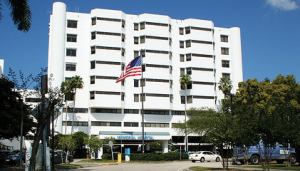
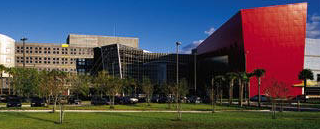
From Clint Gristwood: “Re: HIPAA firings. What do you think the over/under is on HIPAA-related firings or reprimands at Health Central Hospital in Ocoee for unauthorized access to Tiger Woods’ medical records?” I think the odds that employees have already peeked are 100%. The odds they will be caught and/or disciplined is 20%, even though the hospital will be watching. It’s a 141-bed facility and I have slight familiarity with IT there, so I don’t know how sophisticated their systems are with regard to role-based security and access monitoring. The tabloids would pay big bucks for copies. The Florida Highway Patrol was considering asking Health Central for the records, but it sounds like they’ll just write Woods a $164 reckless driving ticket and be done with it (I’m pretty sure he can afford it). Imagine the eBay price for the golf club his wife was supposedly beating him and his car with.

From LE: “Re: Siemens. I applied for a job there six weeks ago and there were many US jobs listed, over 100 I’m sure. Now, mysteriously, there are only nine internships listed.”
maillive

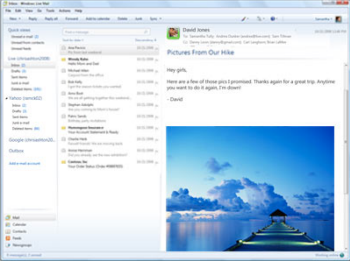
From The PACS Designer: “Re: Windows Live Mail. With the release of Windows 7 comes a new way to access multiple e-mail accounts. Microsoft has announced the availability of Windows Live Mail, which can make you more productive while online.”

From Inside Outsider: “Re: two doors. I agree, but only because this is radiology we’re talking about. Now, if this practice ever gets pushed through to more emergency healthcare — the extreme example being the ER — then I might begin to disagree. Those that come in the common man’s door are not sacrificing their healthcare; they are sacrificing time and amenities. Let’s hope it doesn’t get to the point where Mr. Bigbucks gets priority in the ER and Mr. Littlepennies suffers grave consequences because of it.”

From Certifiable: “Re: stolen identity. Patient at St. Anthony Hospital (IN) had identity stolen. Got bills in the mail for phones shipped overseas, ordered via Sprint. Patient suspected hospital system, hospital would not talk to her until Sprint got involved.”

Thanks to Barbara, a former Sarasota Memorial Hospital employee who set me straight on the Eclipsys announcement that the 50 millionth order had been entered in Sunrise there. It’s true: SMH was not a TDS user and all 50 million orders were entered into Sunrise, which is pretty darned amazing (that’s around 12,500 orders per day for 11 years). I don’t know what made me agree with the reader’s TDS comment since I remember when SMH signed on originally.

HHS Secretary Sebelius and National Coordinator Blumenthal will announce some kind of new grant program (Beacon Community Cooperative Agreement Program) on Wednesday.
elmhurst

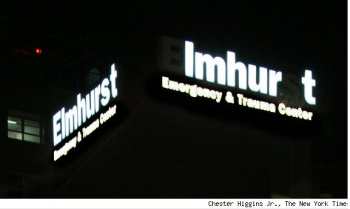
Weird News Andy likes this picture, the result of burned out light bulbs at a New York hospital’s ED. He also noticed this sad ED story, in which a school counselor waiting in a hospital ED’s waiting room was robbed by three homeless addicts there, dying of a heart attack immediately afterward without ever getting to see the triage nurse despite having waited for 80 minutes. Aria Health had no comment, but the whole event was captured on surveillance video. It seems like every horrifically negligent patient care issue in EDs and nursing homes is recorded on security cameras, making you wonder if maybe they shouldn’t pay someone to watch the monitor in real time.

How could this happen? A toddler in South Africa being treated for hand burns has her legs amputated by surgeons in the 1,100-bed academic medical center.

Andrew Watt, MD is named VP at Southern New Hampshire Medical Center. He was already CMIO, CIO, and an ED doctor and formerly worked on ED systems for Meditech.

Reminders: the HIStalk events calendar is here and you can add yours for free. Put your e-mail address in the Subscribe to Updates box at your right to join 4,924 people who have already done so and maybe become the five thousandth subscriber (signing up makes you eligible to vote in the HISsies awards, which I’m doing differently this year). Click the crude Rumor Report box in the right column to send me juicy news anonymously (it even takes attachments). Use the Search HIStalk box to the right to dig through 6.5 years worth of HIStalk (maybe I’ve mentioned you or your employer). That is all.

Wisconsin will spend federal stimulus money to create the an HIE, to be dragged from the womb sporting the obligatory painfully contrived acronym WIRED (Wisconsin Relay of Electronic Data) for Health. The governor is looking for nominations (warning: DOC) for its board and committees.
ontomed

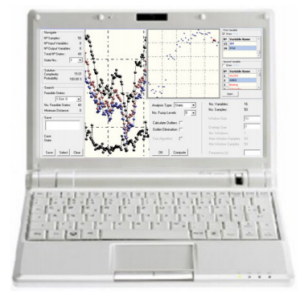
OntoMed, an Ann Arbor, MI startup, is talking to University of Michigan Health System about helping it validate its COSMOS PC-based bedside monitoring and alerting system for the ICU. Their conveniently cutesy product acronym is even lamer than WIRED – COmplexity-based Stability MOnitoring System.

It was fun running pictures of the SMS reunion. In fact, I really like using any pictures that people (rarely) send me: department pictures, data center shots, IT people in their natural habitat, doctors using computers (those are hard to get), and anything related to healthcare IT. Send them my way, please.

Newsweek runs an article extolling Cleveland Clinic’s methods, declaring it “The Hospital That Could Cure Health Care”. Epic is prominently mentioned, although not by name (except for MyChart). CEO Toby Cosgrove is lauded for not hiring smokers to work there and declaring he’d do the same for overweight candidates if federal discrimination laws allowed it. He doesn’t think healthcare reform will do much to reign in costs. Technologies mentioned: clinical decision support, a smart IV system being developed there, MyChart, home monitoring, and powerful data capabilities.

sage

Welcome to Sage, a new Platinum Sponsor of both HIStalk Practice and HIStalk. The Tampa, FL company offers a variety of physician systems, including the Sage Intergy EHR, practice management solutions, Sage Intergy RIS and PACS, community health applications, analytics tools, and EDI services. The Sage Intergy EHR Kit includes ARRA information, access to an online demo of Sage Intergy EHR and Sage Intergy, a presentation covering EHR benefits, and a practice case study. Thanks to Sage for their much-appreciated support of HIStalk Practice and HIStalk.

AMI is looking for a CIO for a 200-bed hospital in Kuwait.

Nuance announces Version 4.0 of its Veriphy critical result management system.

An e-mail about H1N1 claiming to be from the CDC is actually the carrier for a different kind of virus, a PC Trojan. The e-mail urges the recipient to create a profile on the CDC’s Web site, which is actually a phishing site that downloads the Kryptik Trojan.

E-mail me.

HERtalk by Inga

CCHIT certifies four new products under the newest programs announced in October. ABELMed EHR-EMR/PM, Version 11 received certification under the CCHIT 2011 Comprehensive program, while eHealth Made EASY, KIS Track, and Medios earned Preliminary ARRA 2011 certification.

Here’s the difference between the two certifications: the Comprehensive certification program “provides a more rigorous inspection of integrated EHR functionality, interoperability, and security in addition to full compliance with Federal standards.” CCHIT also includes an inspection process in the Comprehensive program that considers successful use at live sites and good usability. Additional certification announcements are pending, per CCHIT. And OK, I admit it — I’ve never heard of any practices using any of these products.
driscoll

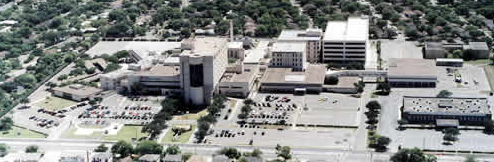
Driscoll Children’s Hospital (TX) selects CAREt System by PatientSafe Solutions (IntelliDOT) for beside medication administration.

KLAS reports there is a “huge gap” in provider satisfaction scores for PACS software. In acute care, GE Centricity PACS-IW scored 23 points higher than the lowest performer, Cerner. Infinitt was the best-performing community PACS vendor and Intelerad led the ambulatory PACS vendors. At the top end of the market, almost nine percent of large hospitals plan to replace their PACS. KLAS predicts the vendors most likely to be replaced include Merge, Siemens, eRAD, and Emageon.

eClinical Works adds a couple of healthcare systems to its client list. Portage Health (MI) is providing the eCW software to its 31 employed physicians and will interface the application with the hospital’s Meditech system. Also, Johnson Memorial Hospital (IN) will offer eCW to its employed physicians and use eCW’s Electronic Health eXchange to allow access for other physicians and hospitals.

In yesterday’s HIStalkPractice, a reader shared that eCW was the “clear-cut winner” in Health Industry Insights’ recent review of the ambulatory EMR market.

MedQuist signs an agreement to license Nuance’s SpeechMagic speech recognition engine and processing software. MedQuist will use SpeechMagic in its SpeechQ for General Medicine, a front-end speech application for all medical specialties. MedQuist, which seems to be churning out press releases in conjunction with the RSNA meeting, also introduces SpeechQ VTB for Radiology, which integrates speech recognition, automated coding technology, and Web-based billing services. MedQuist has also integrated a radiology search tool from Primordial Design into its SpeechQ for Radiology application.

meditech

The architects that designed Meditech’s Fall River facilities win an award for their work. The New England chapter of the American Institute of Architects and the Boston Society of Architects said the building shows “excellent site organization” that capitalizes on “great views”. Now I am curious what exactly the “great views” are from all those windows.

The Chatham County Safety Net Planning Council (GA) picks Orion Health to build the Chatham County HIE pilot, which will serve over 250,000 people.

Meanwhile, the Pennsylvania HIE (PHIX) issues a draft strategic plan for a 30-day public comment period. The plan is the same as everybody else’s – get stimulus money.

Continuum Health Partners is replacing multiple imaging systems with Horizon Medical Imaging.

General Leonard Wood Army Community Hospital implements ClinicComp Essentris inpatient clinical documentation, part of a 36-facility contract with the DoD.

The 18-physician Naugatuck Valley Radiology Associates (CT) claims its use of MedInformatix RIS, along with DR Systems PACS and Nuance PowerScribe voice recognition, has allowed the practice to achieve a 100% paperless environment.

Picis announces that several medical centers have selected Picis ED PulseCheck, including Scottsdale Healthcare, Antelope Valley Hospital, and Bayonne Hospital Center.
caretech1

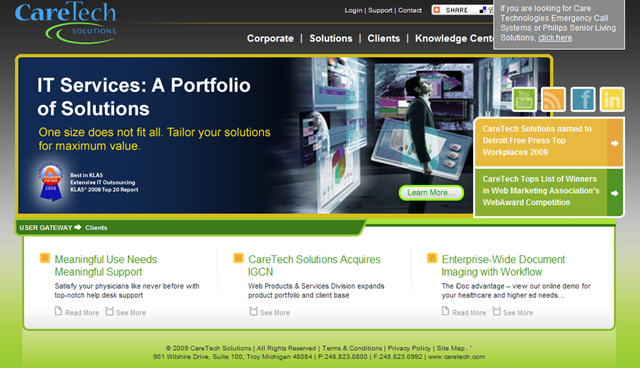
The CareTech Solutions folks informed us of their revamped corporate Web site, built with its CareWorks CMS content management tool. I can’t say I fully understand what makes a particular CMS tool robust or weak, but I can say the new site is easy to navigate, has a clean look with nice graphics, and contains a nice mix of written and multi-media content. I also see they are hiring in Ohio and Michigan, in case you are looking.

e-Prescribing in Delaware is up 150% one year after the state began funding e-rx start-up costs for the top 50 Medicaid providers.
shot

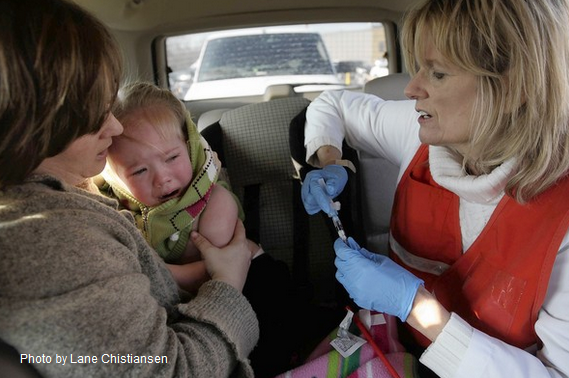
The Champaign-Urbana Public Health District (IL) sets up a drive-through H1N1 vaccine clinic that allows patients to stay in their cars. Wait times averaged 45 minutes and 2,000 people received shots at the first clinic. Not as much fun as a drive-through Starbucks, but pretty handy nonetheless.

Despite Mr. H’s prediction that Twitter is a passing fad, Global Language Monitor proclaims “Twitter” the top word in the English language for 2009. In fact, it beat out Obama, H1N1, stimulus, vampire, and 2.0. Healthcare was ranked ninth.

inga

E-mail Inga.

CIO Unplugged 12/1/09

December 1, 2009 Ed Marx Comments Off on CIO Unplugged 12/1/09

The views and opinions expressed in this blog are mine personally, and are not necessarily representative of Texas Health Resources or its subsidiaries.

Going Mobile
By Ed Marx

“I’m going home, and when I want to go home, I’m going mobile. … Keep me moving…Out in the woods, or in the city, it’s all the same to me. When I am driving free, the world’s my home. When I’m mobile.” Going Mobile, by The Who, 1971 Who’s Next, triple platinum album.

Remember the day you bought your first automobile? Mine was a ’73 green Chevy Vega with a six-cylinder aluminum block—not exactly a dream car, but she kept me moving. The above lyrics speak to the freedom and liberty attached to owning your personal set of wheels. Like a bird released from his cage, I remember cruisin’ town while cranking that song on my cassette deck. Ahh, those were the days….

Today, a similar concept of autonomy manifests in mobile computing. I recall, not too long ago, networking at social gatherings and realizing I needed access to my email, but my computer was all the way back home, plugged into a wall outlet. Thanks to ongoing advancements in technology, a Blackberry Storm now rides on my belt, putting email, internet and other info right at my fingertips, literally.

According to emarketer, 59.5M Americans used their smartphones to access the internet in 2008, and the researchers expect this number to climb to 134.3M in 2013. That’s one in every three people using mobile tools!

Has healthcare fully capitalized on this technological revolution? While the nearsighted would say yes, or worse—who cares?—the visionary battles against the restraints of tradition and skepticism. For the sake of our customers who are demanding access, we’ve got to drive mobile computing in or lose pace with society.

No institution wants to fall behind, especially once we start navigating the new highways and byways constructed by healthcare reform (Medical Home, Accountable Care Organizations, etc). An organization must intentionally merge their mobile computing strategy with the hospital strategic plan. Failure to act will run the risk of getting lost on the backwoods roads and putting their organization at a serious disadvantage.

Mobile computing provides a platform through which we can influence quality care, patient safety, and financial results. We call our mobile computing strategy mHealth. Although I cannot divulge this strategy or share specifics, one well-publicized example has to do with our OB/GYN physicians and the iPhone application AirstripOB. This mobile solution had a notable impact on clinical care and physician satisfaction. You can find other examples from forward-thinking healthcare organizations—sales force automation, intelligent devices, personal health records, patient registration, electronic health records etc. Today, iPhone alone carries thousands of healthcare-oriented apps. Some are trial balloons while others hold promise.

Other related strategies include connected health (cHealth), which I will define in a future post. Health Information Exchange, mHealth, and cHealth are all linked—a trifecta with potent force for the successful healthcare organization of the future. Accessing information anytime, anyplace, anywhere, anyapp, anymedia, anydevice, anyperson. And these are just the beginning.

The sage CIO is already engaged.


Ed Marx is senior vice president and CIO at Texas Health Resources in Dallas-Fort Worth, TX. Ed encourages your interaction through this blog. (Use the “add a comment” function at the bottom of each post.) You can also connect with him directly through his profile pages on social networking sites LinkedIn and Facebook, and you can follow him via Twitter – User Name “marxists.”

Comments Off on CIO Unplugged 12/1/09

Readers Write 12/1/09

November 30, 2009 Readers Write 18 Comments

Submit your article of up to 500 words in length, subject to editing for clarity and brevity (please note: I run only original articles that have not appeared on any Web site or in any publication and I can’t use anything that looks like a commercial pitch). I’ll use a phony name for you unless you tell me otherwise. Thanks for sharing!

Healthcare Solutions
By Dan Field, MD

danf

  1. Tort reform. Cap every state as has been done in California and Texas.
  2. Medical justice panels. A jury by our peers. Medically trained arbitration panels to hear cases.
  3. Eliminate doctors’ malpractice costs for patients who demand free care. If the government insists that ED docs see every patient (through EMTALA), they are de facto government employees for those patients and should receive government indemnification.
  4. Limit advertising again. It was a bad move when they opened it up.
  5. Research, publicize and reward best practices. The worst hospital at Kaiser today has a better record of sepsis prevention than the best Kaiser hospital two years ago. Some have had ZERO sepsis in two years. Sepsis costs $40,000 to $100,000 per patient and frequently adds to the nation’s iatrogenic death load. Replicate this through the major diseases and some of the $500 billion of savings we need to achieve becomes realizable.
  6. Divest physicians of the benefit of profiting from ordering tests. A study shows a doctor who owns a scanner is seven times more likely to refer a patient for a scan.
  7. Generics drugs for everybody, name brands for those who want to pay out of pocket (or from the HSAs).
  8. Revamp medical reimbursement
  9. Create a two-tiered medical system where everyone has catastrophic coverage and HSAs. Allow the rich and others to opt out for value-added service. This might be just enough incentive to keep some innovation moving forward. I seriously doubt most medication advances are necessary — seems to me they just add a molecule so they can extend the patent without any new, real benefit. First tier accepts all, including, pre-existing illness, with no rescission. Everyone pays same rate for basic tier, everyone gets a tax credit. Not sure how to deal with those that don’t work. Incentivize healthy behaviors — non-smokers with low cholesterol and great genetics are an attractive subgroup. Second tier insurance companies will compete for these stars with lower premiums. Veal calves with remotes and cancer sticks will be avoided like the plague and end up in the first tier or paying more.
  10. Accept that disparities will continue but that they will be better and more morally acceptable disparities than before.
  11. Allow true portability.
  12. Give needles to addicts, along with access to treatment.
  13. Strongly consider legalizing and decriminalizing drugs.
  14. Realize that screening doesn’t save money for society.
  15. People should have a right to unlimited end of life care … as long as they can pay for it.
  16. All government officials must utilize the system they insist we follow, especially “the public option”.

Dan Field is a physician with The Permanente Medical Group.

CPOE – One Size Fits All?
By Mark Moffitt

The goal behind Computerized Physician Order Entry (CPOE) is worthy — replace handwritten physician orders using information technology to minimize translation errors and provide conflict checking at the point of entry. There’s only one problem: many physicians are not satisfied with CPOE. The reason I hear often by non-physicians is this: “Older physicians reject technology. The newer generation of physicians is more accepting.”

I admit I have voiced this sentiment in the past. But after working with physicians and having seen them embrace technology that makes them more productive, I’ve changed my view. My view now is that physicians accept technology if it helps them be more productive and they reject technology that makes them less productive — regardless of age. However, I have observed that physicians over 50 are less tolerant and more vocal than physicians under 40 when their workflow is slowed. Maybe because they have more work to do in less amount of time?

Most all in the industry know the issue. CPOE shifts work done by low-cost clerical staff on a hospital payroll to the highest-paid people working in a hospital. Compounding the problem, physicians are not always employed by a hospital. So the work is shifted from a hospital payroll to an individual physician. And time spent in front of a computer is time not spent with patients. And seeing patients equals making money.

Let me qualify my statements above with this: This discussion is restricted to CPOE in an acute care setting and does not apply to all physicians. Some physicians love the current model for CPOE. It works for them. It makes them more productive.

National adoption of CPOE is low. The 2008 KLAS CPOE Digest reports that less than 10 percent of hospitals are “doing some level of CPOE.” In only six percent of hospitals nationwide, physicians enter more than 50 percent of orders directly using the system.

CPOE adoption is affected by many factors. One factor is availability of CPOE. Another factor is ease of entering orders. Another is physician workflow.

Physician workflow is influenced by factors including specialty, size of hospital, employment model, practice size, etc. There is no one model for how physicians do their work. There are many models.

It’s possible that CPOE, once widely available, will be embraced by physicians and the nationwide adoption rate will rise quickly to near 100%. The other possibility is that the current CPOE model does not work for all physicians and CPOE adoption rate climbs slow and stalls at some level, say 50%. What outcome do you think most likely?

Given the money involved, I wonder why more research isn’t being done to find other models that provide the benefits of CPOE that doesn’t require a physician to sit at a computer and enter orders? Why, when many physicians have expressed dissatisfaction with the current model? Why, when the industry is spending BILLIONS, partially underwritten by the federal government, to implement CPOE and other technology in healthcare?

For what it’s worth I’m doing my part by researching a new model for CPOE. I call it CPOE without the “POE.” Not a replacement for CPOE, but an alternative to physicians entering orders on a keyboard. Same benefits, only a different model. I’ll write about this topic in a future article.

Mark Moffitt is CIO at Good Shepherd Medical Center in Longview, TX.


Those Who Believe in The Network Will Go Far
By Carl Byers

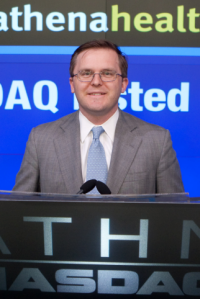
 As one of Mr. H’s and Inga’s biggest fans, I am lucky to have had the chance to meet them in my travels as CFO of athenahealth. It is therefore an honor to submit this post.

I soon will be far from the world of HCIT. As announced in June, in early 2010 I will step down from the job I have treasured for more than twelve years to live abroad with my family. My wife and I have dreamed of immersing ourselves in another culture before our kids (ages 11, 7 and 3) are too cool to hang out with Mom and Dad. We will be in Chile for 18 months, and we look forward to returning with new energy and a fresh perspective on the world and on our role in it.

As a finance guy, I am not a technology innovator or a clinical subject matter expert, so I can’t address the future of technology or patient care. What I can address is a question that I am often asked gingerly and respectfully: “How is athena able to achieve such a high value?” Last week, on a panel discussion in Boston, an audience member’s way of asking was far less discreet: “Everyone thinks you are overvalued. Why is that?”

carlbyersThere are all sorts of fancy answers from capital markets people to explain prices based on total addressable market, long term margin profiles, and Price-to-Growth ratios (in fact, a fellow panelist from Goldman Sachs gave this type of answer to the questioner). I won’t attempt to do that sort of analysis justice here. And, I certainly can’t tell you why stock prices jump around as much as they do, but I do have a clear point of view on athena.

Simply put, I think our company trades where it does because of the scope of our vision and the confidence people have in us actually accomplishing it. It was Warren Buffett who said that, in the short run, the market is a “voting machine” and in the long run it is a “weighing machine.” I have no idea what the votes will say from day to day or even year to year, but I know that the weight of our business will be extremely hefty over time.

How can I be so sure? The reason athena has done well as a public company is the same reason athena has done well in the marketplace — because we offer a better way to solve our industry’s most complex problems and the market is responding. athena is one of very few companies in our sector that is not hopelessly stuck in a software mentality, and the market understands that the days of software as we know it are limited.

From complex reimbursement processes, to clinical coordination, to patient communications, to research, the future of health care (just like the future of the rest of the world!), is not software; it is “The Network.” In 1992, I worked on the Clinton campaign staff in Little Rock. If James Carville were in HCIT, he’d put an even sharper point on it — “It’s the Network, stupid!”

The market understands this because outside of HCIT, The Network has already taken over. This shouldn’t be news. How long has it been since salesforce.com put that big “no smoking” sign on the word “SOFTWARE”?  For how many years has Sun Microsystems declared, “The Network is the Computer”? My boss and friend Jonathan Bush said it even more clearly a couple of years ago: “Software is dead… Dead. Dead. Dead.”

And yet everyone — from pundits in Washington to some of our industry’s best technologists — remains fixated on terms like “versioning,” “implementation,” and “interoperability.” Not only is client-server software fundamentally unable to succeed in this new reality (whether installed locally or hosted from a giant data center), it drives business models with much lower visibility, much weaker alignment of incentives with practitioners, much lower sustainable margins, and much lower lifetime value of a customer than does a software-enabled-service like athenahealth.

What the software mentality misses is that at its core, the problem with health care is one of supply chain coordination. Isolated practitioners typically know next to nothing about what care has occurred in a patient’s life outside of his or her own four walls. Creating software that asks practitioners to type into templates in isolated local databases will not accomplish much of anything given the broader coordination challenge. This is why EMR adoption is so incredibly low today. Only through the emergence of copious networks of information and related process-oriented services will the silos break down and will the coordination (and quality) actually improve.

In every industry (including health care), the only way such networks come about is when there are financial incentives to exchange information. PBMs, pharmacies, and manufacturers of pharmaceuticals seem to have figured out how to build networks, and they didn’t need federal interoperability standards to do it! All they needed was a strong financial incentive to get aligned and remove wasted effort from the supply chain so patients could get their meds without huge inventory write-downs or large commissions for middlemen.

Similarly, athena is focused on building real networks so that the supply chains that extend into and out of the physician office can improve — not just for the coordination of payment information with payers, but also for the coordination of physician order information with labs and pharmacies. athena is also building a network for coordinating schedule, payment, and results communications with patients and referring providers. And to do this, we don’t need to wait for federal transaction and software standards — we just need an opportunity to earn financial rent for having made it happen (and in the process having made physicians, their trading partners, and the industry better). Networks cannot be only about information, they have to relate to real work — and it is through accomplishing the work that revenue, profits, and value flow.

So, as I start a new personal chapter in the New Year, my answer to that persistent question and my message to our industry is this: those who believe in software alone will fall away; those who believe in The Network will go far. Companies that embrace this distinction and produce tangible improvements in the delivery of care as a result will help to bring about the health care vision we all seek.

Thank you for the opportunity to comment here on this very unique network of your own.

Carl Byers is senior vice president and chief financial officer of athenahealth of Watertown, MA.

Monday Morning Update 11/30/09

November 27, 2009 News 15 Comments

From DemoChic: “Re: NextGen. Pat Cline, President of NextGen, has been promoted to president of Quality Systems. His replacement will be Scott Decker, formerly of Healthvision, but in place at NextGen since 2007.” Rumor reporter Boba Fett said in June 2008 that these changes would happen. The announcement is here (warning: PDF). I was impressed with Scott (but not so much Healthvision) when I interviewed him in 2007. Maybe he said the right thing in the interview in naming Pat Cline as the person he who admired in the industry (he was hired by NextGen as SVP nine months later). It’s a strong team there.

From Cousin Carl: “Re: reader contest. Let’s hear ideas to reduce healthcare costs and improve quality with a minimum benefit of $1 billion in 500 words or less. The simpler and easier to implement, the better.” Sounds like fun. Anyone want in?

sarasota

From Junior Mints: “Re: Eclipsys. Eclipsys failed to disclose that the 50 million orders entered at Sarasota Memorial actually go back to the days of the TDS 4000 system, which was later upgraded to TDS 7000, which was replaced with Sunrise. The company has never been forthright on this.” I knew the history, but in their defense, they didn’t specifically say Sunrise and it is true that Sarasota’s 50 millionth order was entered in Sunrise even though the first 30 or 40 million went into TDS. It also didn’t specifically say Eclipsys systems since TDS sifted through a variety of corporate hands before winding up as Eclipsys and Eclipsys bought Sunrise from HealthVISION (the Canadian EMR vendor, not Scott Decker’s previous employer). I think it’s a fair announcement that pays de-identified tribute to TDS, arguably the best system before or since when it comes to innovation, pro-clinician design, and patient impact. If a company wants to compete with the decades-old clinical systems that dominate the market, they need to do it the TDS way — put the development teams on the ground in a forward-thinking hospital to work with clinicians and target a specific customer demographic instead of a one-size-fits-all approach (TDS was aimed at big community hospitals and some academic medical centers with big iron hardware and internal technical expertise).

I hope your Thanksgiving was happy. Now begins the official season of not getting much work done in hospitals, so here’s to a month of fewer meetings, fewer project startups, and days with fewer annoying co-workers around.

sms1 sms2

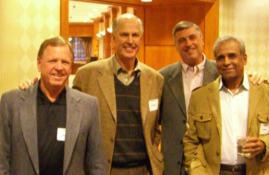
Thanks to Steve Meyer for pictures from the recent SMS reunion. That’s Harvey Wilson and Jim Macaleer in the first picture. The second has Steve, Harvey, Vince Ciotti, and Jim Carter. If you work in the healthcare IT industry, you might give pioneers like these some mental thanks for creating it several decades ago. Steve was telling me how long some of them have been retired, so they must have made some nice money back in the day (or maybe hung onto their SMED shares until Siemens came knocking). I also said I hoped they raised a glass to those who aren’t with us any more, to which he replied that they did, using a phrase that I’m sure I’ll co-opt as my own: “Any day I’m still on the green side of the grass is a good one.”

Give Mediware credit for ambition, albeit unfocused. It acquires Healthcare Automation Inc. (home care software) and Advantage Reimbursement (home infusion reimbursement) from their single owner group for up to $8 million in cash. The company cites the 20% annual growth in home care, but the markets they’re already in (blood banking, medication management, BI) should be growing pretty well, too.

The Johns Hopkins Hospital is recruiting a chief nursing information officer, co-reporting to the CIO and nursing VP.

I mentioned the radiology practice that had two doors and different levels of service for insurance vs. cash-paying patients. I didn’t mention my opinion: I think it’s great. Patients get precisely the same medical care using the same personnel and equipment. Those willing to pay extra for shorter waits, a nicer waiting room, and a more personal experience have that option, no different than those folks willing to pony up for first class airline tickets even though everybody still lands together. Why not let providers make their profit from cash-paying nicety-seekers and let those profits subsidize the medical care of those who can’t or won’t pay the difference?

Christian Scientists are pressuring Congress to include a provision in healthcare reform legislation that would require insurance companies to pay church members who pray for patients from home.

rouge  

The local paper has fixed their headline’s spelling error (is a rouge employee one of those mall cosmetics people?), but the story stands: two pathologists say Wentworth-Douglass Hospital (NH) is ending their contract of 28 years because they that discovered a rogue hospital employee got into the IMPAC PowerPath anatomic pathology system and inappropriately changed the names of doctors on the reports. The employee was fired and the doctors say they were, too. I’m going to hazard a guess that other unmentioned issues are in play.

mikogo

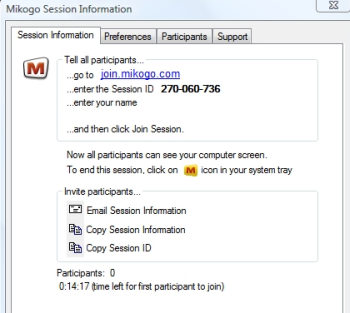
The folks at Mikogo saw my post about the questionable marketing company award given to LogMeIn and pitched their own product as a free alternative. It looks cool: screen sharing over the Web, remote keyboard/mouse control, file transfer, a whiteboard, and session recording and playback. It’s good for Web conferencing, online demos or meetings, or remote support. They even have a native Mac client and free voice conferencing. Best of all, it’s free for both commercial and non-commercial use for up to 10 session participants with unlimited use (there’s no catch other than they offer a paid version for running larger meetings). I love this stuff and have tried several apps, so if this one works as advertised, a bunch of HIT people might find it highly useful. 

divurgent 

Welcome aboard to DIVURGENT Healthcare Advisors, a Platinum Sponsor of HIStalk. The company, which was started by healthcare veterans (I noticed that a pharmacist, PMP, revenue cycle expert, and physician are on the team) who strictly follow standard project management and project quality methodologies. Services offered include strategy, project management, vendor selection, clinician adoption, CDM, benefits realization, training, optimization, medication management, and interim leadership. You can also check out their white papers and blog. Job seekers might want to shoot them a resume since I see they are hiring. Thanks to the folks at DIVURGENT for their support of HIStalk.

bentaub 

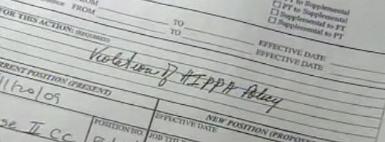
Harris County Hospital District (TX) fires 16 employees for inappropriately accessing patient information and violating HIPPA (sic – see their internal form above), some of them doctors and nurses. Some of the employees got into the records of a first-year female resident who was shot in an attempted robbery in a Kroger’s parking lot. She’s expected to recover.

The controversial report on the Cerner FirstNet rollout in New South Wales by Professor Jon Patrick of the University of Sydney (Australia) is back online (warning: PDF) after would-be censors demanded it be removed. The new version takes a more academic tone and has more details, most of which are not flattering to Cerner’s product and, to a lesser extent, the people involved in choosing and implementing it. Some major points it contains: Cerner paid little attention to its Australian clients because the product is primarily driven by the US market, Cerner left a vital report writer application out of the contract that cost NSW an extra $1 million, and physicians hated nearly everything about FirstNet and its impact on their workflow. Who asked the university to pull the article down? Apparently the CIO of NSW Health, the FirstNet customer, at least as I read between the lines of this story. He claims he contacted the university, but didn’t ask to have it removed, but I’m having trouble believing that (I’d also be somewhere between surprised and shocked if somebody from Cerner wasn’t prodding him, but that’s wild speculation on my part).

Speaking of Jon’s article, a couple of readers said I shouldn’t have criticized the recent report by the Harvard people that found EMRs have had little cost or quality impact. I disagree. That article and Jon Patrick’s above are not rigorous clinical studies backed up by specifically required measurements and analyses, so readers need to look carefully at their data and methods. Both sets of authors are open source advocates and proprietary system critics, so when they rip commercial systems while lauding open source ones, you have to think about the subject they chose to write about, whether their data are optimal or simply conveniently available, and whether their conclusions are supported by their facts. In my opinion (and it’s only that), neither article is bias-free — no different than when readers complain that a vendor VP’s HIStalk guest article is “an advertisement” even when it’s fairly objective. And there’s reader bias, too – those who defended the Harvard article are themselves outspoken EMR critics. Both articles are useful and thought-provoking, but more open to challenge than if their authors had no known strong feelings one way or another. 

poll1127 

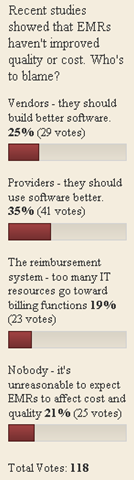
Providers are the main reason that EMRs haven’t met expectations, readers said (although not overwhelmingly). New poll to your right: have information systems improved patient safety nationally?

Ms. Adventure was telling you back in February that Dubai’s economy was in a free-fall, affecting its ambitious healthcare construction projects (“In one short year things have changed so much, from a thriving and booming town to a town that may not have a tomorrow.”) She had e-mailed me that she probably wouldn’t write more, giving me the feeling that she felt she was in some kind of professional or personal danger. In any case, she was right: Dubai is $60 billion in debt and that news is dragging down world markets (which seems quaint considering the free-spending US government is something like $12 trillion in the red and digging the hole deeper every time the bailout-happy Congress meets).

marin

Marin Healthcare District (CA), awaiting the June turnover of Marin General Hospital by Sutter Health, says it will have to spend $1.1 million to convert PACS images because Sutter wouldn’t give them up without first going through court-ordered arbitration. The newly created district also has to replace Sutter’s systems and will pay ACS $55 million to install McKesson Paragon and support it for seven years.

It’s RSNA time, which I always forget until someone sends me announcement. lifeIMAGE will demonstrate its diagnostic imaging sharing platform, in use by Continuum Health Partners (NY) and Montefiore.

An attorney whose accusations of patient abuse in a New York for-profit mental hospital led to $110,000 in fines is suing the hospital, claiming the hospital retaliated by intentionally revealing mental health information about a relative and threatened to do the same to any patients who joined a 2007 class action lawsuit against it.

E-mail me.

An HIT Moment with … Greg Smith

November 25, 2009 Interviews 4 Comments

An HIT Moment with ... is a quick interview with someone we find interesting. Greg Smith is a Certified Product Safety Project Engineer (NCE) and quality assurance manager for the MET SE Headquarters.

Your article, Not Suitable for Medical Use, suggests that special interests pressured OSHA to allow medical devices with unproven electrical safety to be used in the OR. How did that happen?

gsmith There are a combination of reasons that contribute to this, but the main reason is a perception that having this equipment correctly built and tested to national and international safety standards is too expensive. In reality, having a compliant product certified can cost as little as $5,000-$10,000, then between $2,000-$4,000 a year for testing laboratory audits to make sure the manufacturer is still building the units per the certification report and performing electrical safety testing before the equipment leaves the factory.

This cost, when adjusted to the hundreds and thousands of, for example, computers, is not a significant cost factor. The fact is, sometimes it costs more that this because these manufacturers are turning out non-compliant and hazardous equipment. We see this every day in the testing lab and during the unannounced factory inspections during the year. Our records show that if manufacturers were allowed to "get it right" on their own, they will, in most cases, not get it right. Most manufacturers making a product for the first time do not even know what standards apply to their products.

These special interest groups are pressuring OSHA, along with elected officials who know nothing about electrical safety. At the same time, electrical safety experts are constantly reminding OSHA about the reasons why this is a Federal requirement for equipment in the workplace.

There are no US regulations for imported products to be safety certified. Although the "CE" mark is legal in Europe, the EU is considering moving to a new system because they are being flooded with these "CE" self-declared products from Asia and other places. Why would we move to something like the SDoC (Supplier Declaration of Conformity) when this system is showing problems over time in other parts of the world?

Simply put, these groups want to speed up time-to-market at any expense. In this case, it is at the expense of safety for US consumers and workplace owners. Here is a great article on SDoC.

What are some real-life examples in uncertified medical devices cause harm to patients?

Just last year, a baby was burned at a NC hospital by a non-certified incubator. Some of these incidents really stick out, especially whey they make the news. Many incidents of shock are never reported, are only sometimes recorded in the OSHA logs, and not ever reported unless OSHA has a reason to examine these logs. Also, some incidents are prevented through the diligence of our biomedical technicians, who regularly test and repair equipment.

In recent years, incidents have decreased because many hospitals require medical equipment to be certified as a condition of purchase. At some less-vigilant healthcare facilities, patients are likely killed from leakage current, although this is difficult to prove because it is simply called "death from cardiac arrest". The science of electricity and specifically leakage current tells us of the hidden dangers, especially to patients who are vulnerable (e.g. during surgery). The National and International safety standards for medical equipment are in place because of these known hazards.

A skeptic might say that you have a vested interest in raising concerns about uncertified products since you’re in the certification business. What would you say to convince them your concerns are real?

Those of us who are passionate about safety spend many personal hours addressing these problems. Electrical safety experts include electrical contractors, electrical and other government inspectors, power company engineers, design engineers, and electrical equipment manufacturers. For an unbiased view of these issues, ask some of these individuals.

For example, these issues are discussed regularly in associations like the IAEI, the International Association of Electrical Inspectors, where all types of electrical safety experts help develop consensus positions on these subjects. Go to the IAEI Web site and read some articles on product safety and the need for third party safety certifications, . 

An important question here is: if we don’t ask our electrical safety experts, who are we going to ask? Would you consult a mechanic about an internal organ surgery? In a recent NC court case to exempt equipment from safety inspections, the "Code expert" for the plaintiff was a man who developed a way to get cat urine out of carpet. The electrical safety experts were ignored because science and facts are less exciting than rhetoric and hyperbole. Vested interest? There are many types. Some are based on science and a desire to keep others safe and others are based on haste and pure greed. We are in the business of product safety certifications because electricity kills people. 

IT departments are often involved with choosing portable computing equipment that includes batteries and electrical connections. What should they be doing to make sure these devices are safe for use in specific hospital areas?

Purchasing departments should specify that only certified products are to be procured. There are many valid safety certification marks and agencies ("CE" is not a safety certification). In these specifications, it should be mandated that patient area equipment needs to carry a UL60601 designation.

Regular (consumer) computer equipment is designed much differently, and even if it is certified, the standards are much different. The IT Standard, UL60950, allows leakage current levels five times as high as the medicals standard, and for good reasons.

Also, consumer IT equipment is not designed for the medical environment, as with laboratory equipment and consumer TVs and appliances. There are computers and monitors specifically designed and tested for patient area use. Typically, IT departments and administrators do not know the difference. Many facilities use isolation transformers in an attempt  to mitigate risk, but the equipment can be easily unplugged and leave patients and healthcare workers exposed to the risk of electric fire and shock or electrocution.

Should hospitals and practices regularly test computer equipment for safety when it is used in patient care areas?

All equipment for patient care areas should be tested on a regular basis. This equipment undergoes heavy usage and is prone to failure through wear, abuse, and environment. If the protective ground is lost, the risk increases, especially for equipment not designed for use in patient areas.

Biomedical technicians regularly see these conditions, providing safety testing and effecting repairs. These electrical safety specialists are on the front lines of patient and worker safety, and should be allowed to do their important jobs. There are regular attempts to cut this testing from budgets, so much attention needs to be paid to this profession and the unseen hazards they prevent.

News 11/25/09

November 24, 2009 News 12 Comments

accretivelogo

From Dolphins Fan: “Re: Accretive Health. I finally had a chance to read the Accretive SEC filings. Ascension Health is their largest client as well as a major (11% stake) investor. I wonder how Wall Street reacts to a situation where the client supplying the largest share of company revenues is also someone who stands to gain big from the IPO? Take that major investor/client out of the revenue mix and this is really a pretty small company.”

From Chanice Kobolowski: “Re: Epic registry. Hospitals that need Patient Registry functionality should look into Phytel. Epic has a great deal of this functionality embedded in their integrated applications, but the true registry functionality is not present, in my opinion. Several Epic clients use Phytel for this need.”

From Kid Rockette: “Re: vendor installations. Is there a free source that says which hospitals are running which clinical information systems?” None that I know of, but I will defer in case anyone has a source. CHIME used to have something, I think, but I don’t know how current or pervasive it was.

wptouch

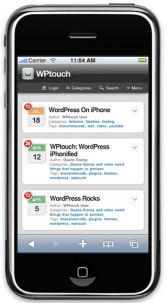
From Goin’ Mobile: “Re: blog format. I often read your blog on my iPhone. Have you ever thought of running a WordPress plug-in like WPtouch iPhone Theme? It nicely formats the blog for mobile devices.” I have WordPress Mobile Edition running, although I need to upgrade it. I looked at the iPhone theme but it scared me since it seems to want to take over the master theme, which would displease the 99% of readers who are reading from a PC screen. Maybe I’ll get some expert to figure it out for me since I like the idea.

From Carol Queen: “Re: Flash ads. We are a sponsor and I vote against the flash ads. Let them use a link to tell their story. Flash is annoying and I actually ignore ANY Flash ads, anywhere.” A reader sent over an recent article whose finds were that most Flash ads are ignored, but text-based ads surprisingly aren’t (since they seem to offer solutions to whatever the reader is looking for). The bottom line was that simple ads work best on Web sites. Some sites ban animated ads, but I’m uncomfortable telling marketing pros which ads will probably work best even though I probably know pretty well from experience and personal preference.

From IT_Nurse: “Re: unions. In the September issue of Registered Nurse (a California nurse’s union magazine), there’s a 20-page tirade about the evils of HIT, including CDSS, CPOE, EBM, EHR, HIE, HIT, RCM, RFID, RTLW among others. Their conclusion: the whole industry is just a management ploy designed to replace RNs and should be resisted at every opportunity.” It’s really hard to take a professional group’s union seriously when they are so quick to lash out at everything that’s employer-related, all while using what they claim are the best interests of patients as a hammer to beat management over the head. They probably have a good point every now and then, but as a former manager in a violently unionized hospital, everything I saw first-hand was highly negative. You haven’t lived until you’ve seen striking union lab techs and nurses destroying hospital lab equipment, blocking ambulances and doctors from getting to the ED, and cursing and taunting the family members of patients trying to check on their loved ones. And, the union’s blocking of my attempt to upgrade some of my para-professional staff so I could pay them more  because it “would cause resentment” — meaning my people were paying mandatory dues to an organization who refused to let me increase their wages. Or, like this current example, where the Steelworkers Union (which represents non-professional hospital workers!) is suing a hospital for banning smoking on campus.

Analytics vendor Quantros licenses University of Michigan-developed technology that creates Patient Safety Indicators from discharge diagnosis codes for follow-up.

What’s driving me up the wall lately: crappy online slide shows that magazines put together for some reason. I get a teaser e-mail for “Top 16 Declining Tech Salaries for 2010” (you know who you are, eWEEK), click the link, and only then find out it’s the cheesiest, slowest, dumbest slide show in the world. Not only do I not need to see stupid clip art with what little story is there, I don’t need to click and click and click (of course, they love that since they are probably selling ads based on clicks). I will not waste 10 minutes watching a slideshow that contains content I could have read in literally 20 seconds had they not been so cutesy about it.

jtmn

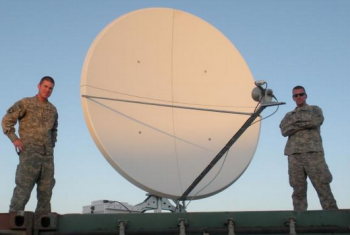
The Army creates the Joint Telemedicine Network for a relatively cheap $10 million, allowing X-rays to be transmitted among its far-flung facilities into the AHLTA EHR. Before it was implemented, soldiers being evacuated from the field often beat their X-rays to Landstuhl AFB, making trauma treatment within the Golden Hour impossible. Kudos to those named in the excellent Nextgov article as key players: now-retired LTC Alfred Hamilton, CMIO; LTC Nanette Patton, deputy CIO; Salvatore Granata, project manager; and MAJ Dan Bridon, director of command, control, and communications for the 30th Theater Medical Command at Bagram AFB, Afghanistan.

I’ve mentioned before that HIStalk’s sponsors, in most cases, aren’t just running ads — they are fans of what we do who read it and want to support it. Submitted for your approval: Quality IT Partners, a new sponsor who did a reverse sponsorship in putting the HIStalk intentionally ironic smokin’ doc on their page along with some nice words.

hospitalos

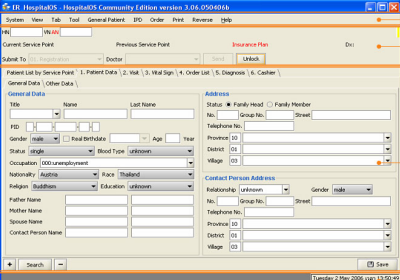
Thailand-based Hospital OS, an award-winning open source hospital systems vendor, is giving hospitals analyzed information back from their data: best practices, clinical guidelines, alerts, and an epidemic alarm system to track disease outbreaks back to their source.

Listening: Supergrass, British alternative that’s been around since the early 1990s. Reader recommended as something I’d like, which it is.

twodoors

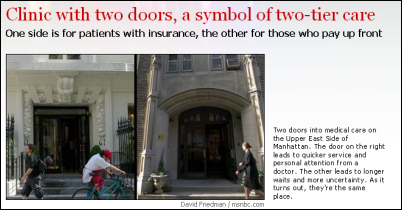
This brilliant MSNBC article speaks volumes: New York medical practices are using separate entrances and providing different levels of service for patients with and without insurance. Example: Lenox Hill Radiology takes insurance, requires 15 days to get an appointment, takes more than a week to give results by mail, and always has 20-30 patients crammed into its waiting room. New York Private Medical Imaging has a four-chair waiting room for its cash-only patients, gives appointments in two days, hands out plush robes instead of flimsy gowns, and doctors read the images immediately and visit personally with the patient immediately after. The separate entrances lead to the same techs, rooms, and equipment because it’s the same company with the same radiologists reading the images. Most interesting is that patients on the boutique side are warned not to tell the insurance patients about “their door” and employees sign a written policy agreeing to do the same.

The EHR of Mater Health Services in Australia holds the records of 1.4 million patients, connects 95 separate clinical systems, and handles 100,000 messages per day, integrated using InterSystems Ensemble.

Michael Nauman is named VP/CIO of Children’s Hospital and Health System (WI). Old news that I missed until now.

I’ve been really busy lately, so I’ve got a backlog of interviews and reader articles ready to go. Soon it will be time for the HISsies voting, additional ideas for the HIMSS event (shaping up nicely, I should add), and maybe some new stuff. It’s been a really good and fun year, even though I occasionally wish I’d done something more than work all the time. The thanks I’m giving, in no particular order: Mrs. HIStalk for putting up with me, Inga for making what we do fun, those in the military for the sacrifices they make, and the people who are in healthcare and healthcare IT for patients and not a bloated paycheck. And of course, every HIStalk reader, sponsor, guest author, and interviewee who makes me anxious to run to the computer as soon as I get home from work every day and stay there for way too long.

The plastics convention people aren’t just taking their show to Orlando after decades in Chicago, they’re running a Crain’s Chicago Business investigative piece on the authority that runs McCormick Place: (a) the CEO got the job after raising money for Rod Blagojevich and lots of its bigwigs are connected to the Daley political machine, including a former bartender given a $130K HR job because of connections; (b) despite extortionate charges, it loses a ton of money; (c) it taxes citizens directly, collecting over $100 million a year and borrowing $2.5 billion using the state’s credit line;  (d) McCormick Place West was a 2007 boondoggle that will fall short of paying itself by $500 million; (e) they’re laying off 500 people despite having added more senior managers; and (f) companies that contributed to political campaigns got contracts to service the facilities despite their markedly higher bids. If you are shocked by any of this, you obviously don’t know much about Chicago (I like to think President Obama is clean, but the fact that he worked his way up there makes me wonder since honest Chicago politicians are unheard of).

GE gets into the Web-based teleradiology business in India, planning to provide software and hosting to emerging markets.

LogMeIn’s remote support solution wins a healthcare IT award from a company that helps vendor sell stuff (“innovative sales and marketing solutions”). I’m sure there is no connection, especially since “hundreds of IT executives” voted for the winners “after previewing and learning about new technologies and services in private boardroom appointments”.

Nuance announces Q4 results: revenue up 3.9%, EPS $0.02 vs. $0.09, beating expectations. 

Strange: Apple says users void their warranty if they smoke around their Macs since the second-hand smoke is a biohazard for its techs. And, the Turkey Genome Sequencing Project gets a $900K grant to find ways to improve the immune system of turkeys, with the timing of the announcement being fortuitous since I assumed the purpose isn’t to enhance the quality of life for Thanksgiving-doomed turkeys, but rather to keep the cost low and the profit high in selling their carcasses.

What the authors of a Christian Science Monitor editorial hate about the Senate’s healthcare bill: mandatory insurance, HIEs, EDI, analysis of data for effectiveness research, and unprotected PHI.

Odd lawsuit: a woman has surgery without fentanyl when a drug-addicted nurse steals it, replacing it with water. She’s suing the nurse and the hospital.

E-mail me.

HERtalk by Inga

Sarasota Memorial Health Systems recently entered its 50 millionth order into Eclipsys Sunrise. I was having trouble grasping how many 50 million is, so I did some simple math. If you input 27,397 orders a day, it would take five years to enter 50 million orders.

cascade

Cascade Healthcare Community (OR) leverages Accenx ExchangeT to integrate its clinical information system to distribute lab results to community clinics and regional hospitals.

The Rochester RHIO says that over 100,000 patients have opted to share their health information with their participating doctors. About 500 physicians are participating in the RHIO, which uses Axolotl’s Elysium Patient Index to manage the patient data.

Iowa’s Medicaid program is the first recipient of a federal matching funds program for EHR. The $1.6 million grant from the CMS will allow Iowa to begin planning the activities necessary to implement EHRs.

The prolific folks at KLAS release a new report examining revenue cycle consultants and whether the returns are worth the investment. Perot Systems was the top performer in the extended business office category.

Meanwhile, KLAS says it’s making its performance evaluations shorter, based on feedback from providers and vendors. KLAS will also begin grouping questions on software into four main categories. The goal of the changes is to eliminate redundancy and focus on questions that best differentiate vendors.

The current poll to the right points out that EMRs have not been shown to improve quality or cost and asks who’s to blame. I think the ever-brilliant Mr. H left out at least one blame category (it’s probably due to all those long hours he has been working). I don’t think the issue is necessarily software nor providers needing to use the software better. Instead, perhaps we should look at implementers (who may be vendors, consultants, or internal staff) who fail to diagnose flaws in work processes and thus promote inefficient workflows. Of course, someone could still say the software doesn’t lend itself to efficient workflow (so blame the vendor) or that providers won’t change (blame hospital management).

health it buzz

Mr. H and I are facing some new competition in the blogosphere with the launch of HHS’s Health IT Buzz. David Blumenthal says he will use the forum to report on the progress of healthcare technology, health information exchange,  and the meaningful use of EHR, plus “create an open dialogue among members of the health IT community.” Kind of like what we do here but probably without Mr. H’s the good / the bad / and the ugly approach. Likely no music or shoe recommendations either.

Speaking of shoes, a special thank you to all our wonderful sponsors who support HIStalk and HIStalk Practice. Without your support, I would be resigned to last season’s shoe fashions, which would certainly make Clinton Kelly cringe.

Zynx Healthcare partners with the Healthcare Solutions division of Keane to integrate Zynx decision support solutions with Keane’s OptimumTM EHR.

The House passes a $10 billion loan program to help doctors and small medical practices purchase EMR and other HIT systems. The bill would allow loans of up to $350,000 per physician and $2.5 million for group practices. The bill has now moved on to the Senate.

blumenthal

Dr. Blumenthal took some time out from blogging to announce HHS’s plans to make $80 million in grants available to help develop and strengthen the HIT workforce. Seventy million dollars will be available for community college training programs and $10 million will used to develop educational materials to support the programs.

The nation’s most stressful job: surgeon. Also making the Top Eight list are general practice physician, physician assistant, and newspaper reporter (no mention of bloggers, though). The least stressful jobs include computer systems analyst and software engineer (i guess when you are creating software you can’t get too stressed about missing release dates or producing buggy software).

In yet another new report, KLAS looks at the anesthesia information (AIS) market, which is deemed “small and immature.”  Of the 100 organizations interviewed, almost all claimed holes in functionality for reporting and integration. However, all products had generally high marks for ease of use. The highest rated products were GE Centricity Perioperative Anesthesia,  Philips CompuRecord, Picis Anesthesia Manager, and Draeger Medical Innovian Anesthesia.

Health Industry Insights releases two separate reports, each assessing the offerings in the ambulatory EMR space. The reports looks at the one-to-20 provider market, as well as the 20+ provider space. Mr. H wasn’t willing to pony up the few thousand bucks required to look at the report details, so we are hoping readers will fill us in. Sage Healthcare reports they did “great, landing firmly in the upper right quadrant on both reports.” eClinicalWorks also says they did “quite well.”

The MGMA sends a letter to David Blumenthal, noting concerns that an inappropriate definition of meaningful use and an ineffective administration of ARRA stimulus funds could result in a failed implementation of ARRA, needless squandering of resources, and significant disruption of the health system. MGMA offered several specific recommendations, including instituting a pilot test prior to the start of the program to ensure that the process of demonstrating meaningful use is achievable and practical. The letter also encourages the National Coordinator’s office to monitor the EHR marketplace for cost-effective and efficient products and to ensure fair business practices. To William Jessee and staff: well-done. MGMA is voicing valid concerns that highlight the many gaps in ARRA legislation, and offers logical recommendations. We absolutely need the meaningful use requirements to be achievable and applicable. And, why not do some testing in advance to make sure that HHS, vendors and providers all agree what meaningful use looks like. I am not sure how necessary it is to have the government provide vendor oversight; I mean, if a vendor doesn’t have a product that works, won’t market forces address that?  Still, MGMA did a good job addressing what are likely major concerns of its members.

I am truly thankful for many things. Near the top of the list are HIStalk/HIStalk Practice and of course Mr. H and our readers. Some days I have to pinch myself to make sure it’s all real, that I really do get to spend my days reading and writing about the fun world of HIT, that people send me notes saying they like my stuff, and that I even make a little bit of money doing it. I’m also thankful for yummy food, good wine, college football, and days off. Happy Thanksgiving!

inga

Holiday greetings or football bets here.

Readers Write 11/23/09

November 23, 2009 Readers Write 9 Comments

Submit your article of up to 500 words in length, subject to editing for clarity and brevity (please note: I run only original articles that have not appeared on any Web site or in any publication and I can’t use anything that looks like a commercial pitch). I’ll use a phony name for you unless you tell me otherwise. Thanks for sharing!

Our Success with EHRs in an Ambulatory Environment
By Stephen L. Badger

Hindsight. It’s the corrective lens which turns progress into a milestone. Imagine that anesthesia, antibiotics, germ theory, and x-rays each once seemed more evolution than revolution. This may be the case, too, with healthcare IT.

A few hundred healthcare institutions are exploring IT — some because the clock is ticking on a federal mandate, and some because their leadership sees value for both practice management and patient care.

The George Washington University Medical Faculty Associates entered the exploration into electronic medical records in 2004. It was a time of tremendous growth in our service capacity. That growth left us drowning in the millions of pieces of paper associated with patient charts. Costs for processing and storing that paper were mounting daily and the records themselves were, at times, unrecoverable. It was an unyielding drag on staff and led to patient dissatisfaction and frustration. For us, electronic healthcare records were like direct pressure on a bleed.

chartroombefore chartroomafter
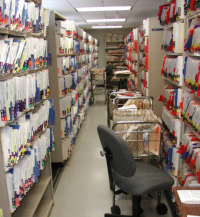
Chart room before and after

remodeled
Chart room remodeled

The remedy began with a document scan which would play out over nine months and capture over four million bits of paper. It ended with elimination of chart pulls, the elimination of more than 30 full-time staff members, and the elimination of paper records storage. Initial net savings was over $1.5 million, but the dividends are still being delivered through improved accuracy in coding and the conversion of office space. Our old record rooms are now used for executive physicals, nuclear cardiology, digital x-ray, and new physician administrative offices.

The impact on patient care is equally positive on a national scale. Because each physician looks at the same central patient history, redundancy in imaging and other diagnostic orders is reduced at a great savings to the patient and the broader health care system. The prospect of prescription error is controlled, too, because the various treating physicians are working from the same record. That means they are less likely to unwittingly order a prescription which may interact adversely with medication ordered for their patient by another treating physician.

Here at the MFA, our patients can renew prescriptions through an encrypted, private network which processes refill requests typically within 60 minutes. That same system allows the MFA to deliver prompt, targeted alerts about news like FDA drug recalls.

Our records are shielded by firewalls, biometric passwords, and routine data audits which show what staffers have entered a record, what they viewed, and how long they lingered on a page.

MFA patients check in for provider visits at electronic kiosks which are much like those at the nation’s airports. Patients scan in using their unique palm print to preserve security and they answer a brief series of questions to confirm basic demographic data and insurance information. As a result, our records are more up to date and complete.

The kiosk registration will evolve as we extract targeted data which helps us improve an individual patient’s care. We envision that this data may pose tremendous advantage in transforming overall patient care, too, ensuring our patients are being treated on a proactive basis.

These data systems also may be helpful in seeking patients who would likely be helped with clinical trials and research. The potential impact for expediting the quantity and pace of research, especially longitudinal study, is exciting and just one more reason we believe we are living through a milestone in medicine.

Healthcare IT is improving patient care, practice profitability, and has considerable potential as a tool in clinical research. It is nothing short of transformational!

Stephen L. Badger is CEO of The George Washington University Medical Faculty Associates, an academic multi-group practice of world-renowned physicians affiliated with The George Washington University. The MFA consists of over 550 physicians deploying the latest advances of technology and technique through more than 41 medical/surgical specialties.

Are You Sure it’s the Software?
By Fourth Hansen Brother

There’s been a lot of focus on HIStalk lately about the customer side of HIS. Having worked on the “bandit” side of things for a few years, then as a consultant, I’d like to add to what’s been said.

There is an enormous amount of variation in the quality and culture of IT departments serving hospitals and clinics. This has a major impact on the design, quality, and implementation of HIS software. Let me explain.

Most folks on the customer side seem to think that the major vendors don’t consult with the people in the front lines of software. The thought that, “Gee, if only a doctor or hospital IT system created their own software, then we’d finally have a decent system” is common.

Folks, I assure you that every major vendor hires doctors, nurses, pharmacists, and other similar professionals to participate in design, often by the hundreds. There’s no shortage of medical folks willing to be tempted out of healthcare by software vendors. In fact, that’s part of the problem. It’s where they come from.

Your software vendors also find design partners out in the healthcare world, either with formal agreements or informal visits and shadowing. Depending on the luck of the draw, that’s either a good thing or a bad thing.

As noted in a survey that Mr. HIStalk linked to recently, most healthcare workplaces have severe problems. Politics reigns supreme and confrontation about minor issues happens frequently. Refinement or modification of workflows becomes impossible in those environments. These problems are often invisible to vendors at first. Vendors can easily choose a design partner that may have a department that’s become a personal fiefdom of a internal political heavy hitter and has done things the same way for thirty years.

The opposite happens as well — a hospital that’s run by a “thought leader” with oddball workflows in place and little sense of practicality. Vendors may not have the perspective to see that the emperors have no clothes. Hitting these problems with a design partner can cause severe problems with early adapter customers, often resulting in years of workarounds and remedial development.

Often, the vendor doesn’t have enough money to have the in-depth relationship with multiple design partners that it takes to put good software together. Healthcare has more than its fair share of egos. And there’s been more than enough research to show that health care professionals don’t keep up in their education or change their ways, at least on the clinical side.

If a vendor chooses the wrong design partner, or selects a good employee from a bad workplace, chances are that it will show up in a major way in the early versions of the product. As the product matures, these problems can get straightened out with the help of good customers and hard work from the customer-facing staff of the vendor. If the vendor is good, then all of the staff are customer-facing, including developers and testers.

The culture of healthcare customers can create some longer term issues. Many customers have major issues with trusting employees. Often certain types of employees want certain other types of employees monitored or their workflows controlled. Management wants all sorts of reporting and controls as well. The mistrust in certain healthcare organizations is pervasive, omnidirectional, and vicious. The mistrust can result in product enhancement that is weighted heavily towards these issues.

If a vendor has a design partner and early adapters with the same cultural issues, the functionality may be there from the start. Otherwise there will be a struggle to keep up. Of course, regulation (can anyone say HIPAA?) can not only force functionality into the system, but require it in a certain timeframe, causing major development schedule disruptions for the vendors.

Quality of HIT departments can severely affect implementations, or course. The early adapter customers are often the higher quality operations. They can handle implementation practices on the vendor side that are still in development, have a good grasp of the workflows in the organization, and have quality folks who can come to agreements on how to proceed in a organized fashion. Then come customers in the next wave, who may not be the bright stars, who need firm implementation processes, vendor help with workflows, etc.

Then comes the average HIT department. They may have an idea on how babies are conceived, but they often don’t know how they’re born or in which departments. Want to have fun? Ask a CIO what happens in the L&D department. Then ask the L&D department! Or ask where in the hospital babies are born. The answer may surprise you.

Vendors eventually develop lists of these customers who need special help when adding new functionality or upgrades — or when the vendor is sending out a new batch of replacement implementers on a project running several years overdue.

Decisions about configuration are either made off the cuff by top executives with little consultation with the subject matter experts in their organizations or worse yet, take months to bring together hundreds of people for a “consensus” decision. Warfare usually exists in the upper levels, with vendors and consultants often getting caught in the crossfire.

Often, a particular piece of software can go through dozens of implementations with quality healthcare organizations, only to run into problems when traversing to the next level of customer. This usually catches both the customer and vendor by surprise. Often, the vendor gets the blame (and often doesn’t dispute blame, since they shouldn’t be saying that the folks that bought their product turn out to be complete idiots).

If you hear of a product having problems at a particular site, ask at what point the vendor is in the introduction cycle and ask what kinds of problems they are having, Investigation might reveal that it’s not the vendor at all.

Concept – Hospitals that Expect People to Rely on Trust
By Healthfreak

Let us think how it would be to go to a hospital where there will no recourse to legal lawsuits, no visits to courtrooms. Patients come in and get treated quickly — no waiting for 5- 8 hours for a small surgery on a finger — and go back HAPPY.

It is possible, provided some mistakes by the hospital, doctor, or staff are considered "human" and patients do not go overboard in demanding legal action.

What can one achieve by all this ? Quite a bit. One, with legal hassles out of the way, the entire staff will be motivated to provide  better and faster service and not resent their jobs. Equipment sold to the hospital  will be economical, since the vendor does not factor legal costs in his pricing. Hospital administrators will offer economical service to the same patients. The overall insurance premium per patient will also come down and drive down healthcare costs as a whole. This is exactly what the US is looking for today.

Yes, there will be a fear that this may allow malpractice to go unchecked, vendors to sell faulty equipment, etc. A small percentage of cases may happen, as in any society. This, however, should not deter the introduction of a concept which will reduce the overall cost of healthcare.

The guru of AoL (Art of Living) has said that " the health of a society is determined by how many empty beds are there in hospitals and how many prison cells are vacant". May be we can add "and how many courtrooms do not have cases relating to hospitals".

Too farfetched? Maybe today. Let us debate this a little more openly and I am sure it will trigger some hospital into leading the way.

Monday Morning Update 11/23/09

November 21, 2009 News 16 Comments

chromiumo

From The PACS Designer: “Re: Google’s Chromium OS. Google has just announced the Chromium OS, an open source project. Since it is a completely Web-based open source development application, it brings with it some interesting possibilities for developers and eventually users. The Chrome OS browser will still be used to access all of the Chromium OS applications that evolve from development efforts, and some of the new features will eliminate the need for a hard drive since solid state memory will take its place. Chromium OS Security is a new approach to address security flaws.” Video overview here. I’m buying the concept because the Chrome browser is shockingly faster than FireFox (and less surprisingly, IE) when it comes to running complex Web apps. I’ve moved to it almost completely, even though it has some annoying deficiencies (no Google toolbar and no drop-down history).

viewprintonly

From Dr. Pepper: “Re: Flash animation in ads. It’s causing me difficulties in scrolling and appreciating the content of your Web site. Can you limit this or allow us to turn it off?” There are many ways, but here’s the easiest one: click the View/Print Text Only link at the bottom of a posting to bring up a nicely formatted, paper-sized Web page with a Print option. Even then, it would be great if you take an occasional look and/or click on the sponsor ads since they make the wheels go ‘round and often have interesting information to share (nearly all the sponsors are big fans of HIStalk beyond just running ads).

From Bernie Tupperman: “Re: Kaiser. US News & World Report named KP Medicare Advantage in Colorado as the best in the country for Medicare, with all the rest of the KP plans except one near the top of their markets.” I don’t have any first-hand experience with Kaiser, but the pitch from George Halvorsen’s  internal e-mail that Bernie forwarded is certainly compelling, not to mention big on IT:

When you are a KP Medicare Advantage member and have coordinated care, fully linked caregivers, prescriptions and tests done onsite in convenient proximity to the rest of our care team and then leave our coverage and have to go out into the wilderness of solo, unconnected, unlinked, uncoordinated doctors — and when your new doctors don’t even know what prescriptions other doctors have written or what tests your other doctors have taken — and when you can’t schedule an appointment electronically or order your refill prescriptions electronically or even send e-mails to your doctor — those patients feel like they have fallen into a time warp into a very primitive world.

From Cam Winston: “Re: Pennsylvania HIE. I’ve heard Medicity has been chosen as the vendor in a $10 million deal.” I’ve seen that mentioned, but not officially. I’m sure Medicity won’t issue a press release until the contract is signed. Obviously that’s a big win for them if so. That led me to think how long it’s been since they started sponsoring HIStalk and I think it was in 2003, the year I started writing it. I don’t know where the time has gone. Including this year — can it really be just three months or so until HIMSS?

I’ve been slightly involved in some software usability projects over the years, so I enjoyed these clips (above) of real-life user frustration with healthcare software. They’re from Healthcare Human Factors, based in University Health Network, Canada’s largest teaching hospital. Thanks to JustAThought for sending over the link.

dhimmelstein

The Harvard people who published the study (warning: PDF) saying EMRs don’t improve quality or save money don’t exactly come across as impartial academics in an interview with HealthLeaders Media. Some quotes: “The idea from this administration that we’re going to pay for health reform out of savings from electronic medical records is baseless propaganda … What kind of an idiot hospital administrator would buy a system that will actually decrease what you can bill to payers? These systems help them extract more money.”

Speaking of those Harvard authors, nobody seems to have noticed that they wrote Bleeding the Patient: The Consequences of Corporate Healthcare and seem to have a socialist bent (“only when the U.S. has a party of labor will we have a national health program … it’s going to take a broad strengthening of the left.”). They also founded Physicians for a National Health Program, which advocates single-payer national health insurance, so they have an agenda that goes beyond IT. They also advocate open source over vendor systems: “We should really think about whether we want to continue to use our public funds to promote private, entrepreneurial HIT systems that have a business orientation, or if we should use those funds for further development of less expensive, open-source HIT systems designed specifically to enhance the quality of patient care, just as the VA health system has done.” Not to quibble, but the VA didn’t get VistA for free — it spent what must have been millions if not billions to develop it, and unlike vendor system development, taxpayers footed the bill. Even though the authors seem to have strong opinions that bled over into what was supposed to be a research article, I can’t say I disagree with most of what they say.

Meanwhile, here’s how the authors did the research for their article. They matched up self-reported levels of hospital automation from HIMSS Analytics with Medicare Cost Reports and Dartmouth Health Atlas data over a four-year period, looking for a correlation between degree of computer use (calculated from the authors’ own formula), cost, and quality. They not only didn’t find any, but even the Most Wired hospitals showed no clear advantage. There are lots of limitations in their method (using Medicare cost data, using the limited quality measures in Dartmouth to extrapolate overall quality, and having incomplete data for some of the years). Do their conclusions hold water? Maybe in aggregate.

Here’s the same observation I always make when the Most Wired people use similar number-crunching to try to convince you that IT improves costs and outcomes — correlation is not causation. Also, the conclusion isn’t that IT isn’t worth it, only that they could not prove that it was from their approach. Still, I’ll go with their general conclusion since I’ve been saying it for years — if there was one rock-solid case study of a hospital that reduced cost or improving quality solely because of IT, that hospital’s competitors would be out of business, their IT vendors would own the market, and we wouldn’t be stuck with the unsatisfying conclusion that it’s not what you buy, but how you use it (actually, Kaiser may be that one rock-solid case study now that I think about it). Still, prospects who think they’ll be a notably positive exception keep the HIMSS exhibit hall full.

poll1120 

HIMSS paying people to watch EMR demos is a bad idea, 79% of you said. New poll to your right: studies are showing that EMRs haven’t done much to improve quality or reduce costs, so who’s to blame for that?

A Mayo Clinical family medicine clinic in Arizona notifies patients that it’s dropping Medicare because it doesn’t pay enough to cover the clinic’s costs. Patients will be fully responsible for a $250 annual administrative fee, office visit fees ranging from $175 to $400 each, and a physical, with the grand total estimated at $1,500 per year.

Some interesting quotes from jurors on Charlie McCall’s trial. Referring to Al Bergonzi: “We just thought he was a thug in a suit”. Of Charlie’s legal dream team: “They were a little more theatrical … It goes to show spending millions of dollars on your defense is not necessarily effective.”

Three Denver area provider groups (Children’s Kaiser, and Exempla) go live on their HIE.

Listening: 30 Seconds to Mars, a reader recommendation. Sounds good – hard progressive with a little grunge DNA in there.

decisions

Shaun Priest, a vendor VP (I’m not sure if I’m supposed to mention the company’s name), has a novel available on Amazon called Decisions that involves an HIT sales guy fighting his demons.

HIMSS isn’t the only big trade show bailing on Chicago because of cost. The CEO of the huge plastic industry trade show, which is leaving Chicago for Orlando after 40 years, blames the work habits of union workers rather their reputation for being nasty. “We heard over and over again that the electricians were nice, but they dragged their tails. Jobs that should take two hours, they dragged out to five or six.” The president of the Chicago Federation of Labor said it was a wake-up call, but the electrician’s union boss wasn’t so humble: “I think HIMSS would have left anyway. They took a parting shot when they pointed at electricians.”

Odd, but possibly effective: a British dancer with epilepsy plans to induce an on-stage epileptic seizure to raise awareness of the condition.

MedAptus announces that its system for capturing professional charges is available for BlackBerry smartphones and coming next year for the iPhone.

Tampa General Hospital, like everybody else, signs with Epic in a $90 million project. It was just announced, but rumor reporter Jerry Seinfeld told you about it here on November 6.

The CSI Companies, the Jacksonville, FL-based staffing company that Grady Hospital (GA) chose for its Epic implementation, says business is up 40% over the past four years to $21 million, mostly because of healthcare IT. It says EMR implementations typically require 20-40 employees for 2-4 years.

Odd lawsuit: a man whose ear was torn off by his son’s dog is transported to the hospital by New York City paramedics who brought the ear along on ice. The hospital said the ear was contaminated, so the paramedics tossed it in the trash. He’s suing the city for being deprived of treatment, so the city is suing the hospital for telling the paramedics to throw it away. And in Florida, a woman who claims her emphysema was caused by smoking is awarded $300 million in her lawsuit against Philip Morrris, claiming the company is responsible for her addiction.

Mr. HIStalk’s 10 Ways to Get Off on the Wrong Foot as a New Hospital IT Executive

  1. Convene endless department meetings under the naive assumption that all problems, from understaffing to poor system architecture, are due to insufficient employee communication.
  2. Insist on extensive cross-training and information-sharing, thereby alienating the experts who deliver most of the results, but who don’t like working in teams.
  3. Mandate the use of overlapping software applications that require employees to record time and write status reports in multiple locations.
  4. Fill leadership positions with people from your previous employer, communicating a clear message of distrust for the department that just hired you.
  5. Spend time behind closed doors working on org charts, having meetings with high-level peers, and plotting strategy, all without ever getting to know the employees who have to actually do the work being planned.
  6. Repeatedly state that you wouldn’t have been brought in from outside if things were going all that well, so obviously past accomplishments were bogus and everything must be immediately changed to the exact structure, policies, and practices of wherever you came from.
  7. Compare the software applications in use with those great ones where you came from, implying that you’ll displace the existing ones at the first opportunity even though you know nothing about them.
  8. Consider group consensus to be equal at best to your own anecdotal experience.
  9. Convince the executives to increase IT funding as part of the job offer, then take personal credit for the resulting technology improvements even though they could have been achieved at any time had the money been freed up.
  10. Repeatedly remind low-level employees that, unlike them, you get a reserved parking spot, a sweet office, and bonuses.

E-mail me.

News 11/20/09

November 19, 2009 News 13 Comments

From Sam Shem: “Re: mammograms. An independent body, after review and analysis of eight clinical trials, comes out with EVIDENCE that mammogram screening in under-40-year-olds has little or no value. What happens? The radiologists are up in arms and the Obama administration, in the person of DHHS Secretary Kathleen Sebelius, tells patients to just keep doing what you did last year. And they want to cut costs by a billion dollars over the next decade to pay for national health insurance? If anyone really believes this country will ever control the costs of health care, they are living in a dream land!” Interesting, too, that nobody’s paying much attention to the study that showed that electronic medical records haven’t improved outcomes or cost so far, even as the government is spending lots of money on those, too. At least EHRs have potential. In an economy where jobs are dying out, politicians don’t have the guts to make serious change since the people unhappy with healthcare don’t have the clout of those who like it just fine. I cited statistics here years ago saying that healthcare was making a staggering economy look robust because of rising costs, profits, and high employment, all unsustainable in a global economy.

lattice

From Fred: “Re: Lattice. Lattice has been threatening to sue KLAS for the past few months. I guess Lattice didn’t like their ratings.” Unverified. I hadn’t really heard of the Wheaton, IL company, which sells point-of-care systems to hospitals. Far more interesting to me is its company history. I’d heard the name in seemingly wildly different contexts, but it’s the same company: they wrote the first C compiler for the IBM PC in 1982, sold the company to SAS in 1987, developed programming systems for the System/36 and AS/400 in the 80s and 90s, then went private again in 1993 and started selling application software. I haven’t seen their scores.

From Interoperator: “Re: SNOMED-CT and ICD-9-CM crosswalk. Here’s a guided tour.”

From J. Lo: “Re: Epic. Do they have or will they soon have patient registry functionality? If so, will it meet NCQA standards for Patient-Centered Medical Home designation? Some say it’s coming in February, others say never.” If you know, please post a comment.

From Nasty Parts: “Re: another Sage resignation. Maureen Peszko, SVP of strategy and business development, resigned last week.” Unverified since I didn’t have time to ask Sage.

Charlie McCall is finally found guilty. I’m flabbergasted that his ultra-expensive legal team couldn’t get him off since that’s usually how it works (although they may wangle a light sentence). To paraphrase the otherwise ineloquent Gerald Ford, our long industry nightmare is over. And now that he’s as officially guilty as everybody unofficially knew he was, I hope he will be as uncomfortable in prison as McKesson’s shareholders were watching the stock drop due to his actions (with the help of inept McKesson management who paid premium dollars for what was obviously a house of cards).

A hospital in India is piloting software that will send retinal images to the iPhones of specialists, allowing quick diagnosis and treatment of retinopathy in newborns. The software was developed by i2iTeleSolutions, a Singapore-based telemedicine software vendor. As the company says, the iPhone is now an EyePhone.

cattails

Ministry Health Care (WI) starts its implementation of Marshfield Clinic’s CattailsMD EHR, a $40 million project.

Ben Rooks didn’t sound too keen on Healthport’s business model, saying it was trying “to convince portfolio managers and buy-side analysts that even though over 85% of revenues are related to release-of-information services, it really is a revenue cycle management company and should be valued as such.” Those efforts apparently failed, as Healthport withdraws its IPO citing poor market conditions, but almost admitting that having never made a profit might have diminished some of the market’s enthusiasm. The always-vigilant Ben, however, floated the possibility that maybe a bidder emerged to buy the company outright, which he called the “dual path” in filing the IPO as “stalking horse.” I love that Gordon Gekko talk. Blue Horseshoe loves HIStalk.

The MyMedicalRecords people announce their partnership with a Chinese technology company to build PHR and document imaging applications for that country. That might make more sense there than here since I’ve read that in China, it’s the responsibility of patients to bring their paper medical records with them when seeking medical services. I don’t know if that’s necessarily worse than our way of having each provider keep their little chunk of a given patient’s medical record, never to be combined.

scriptswitch

The UK division of UnitedHealth acquires ScriptSwitch, a prescribing decision support vendor.

Greenway Medical Technologies starts up a series of Webinars covering HIT Regional Extension Centers.

Odd lawsuit: a hospital surgery tech is suing her former employer after she was fired for complaining about unsanitary OR conditions that included bugs, holes in the walls, rusty surgical instruments, mold, and biological fluids splatter in the rooms. She took pictures. What will become fodder for lame morning zoo radio shows is her claim that a scrub nurse “actually defecated inside her clothes during a surgery and continued to work with fecal matter pouring down her legs and onto the floor.” She didn’t get pictures of that, I guess.

E-mail me.


HERtalk by Inga

geneva 

University Hospitals Geneva Medical Center and University Hospitals Geauga Medical Center (OH) go live on ISirona DeviceConX. The technology delivers patient medical device data to Eclipsys Sunrise EMR.

API Healthcare announces that Version 9.0 of its Navigator payroll and HR system is now in GA. Enhancements include a new user interface designed to facilitate integration with other API Healthcare applications.

HHS awards CSC an IDIQ contract, which has a three-year base period and four, one-year options. CSC will have the opportunity to compete with one other vendor for specific IT tasks defined in the IDIQ.

ACL Laboratories selects Accenx Exchange to provide EMR integration between ACL Labs and its customers. Accenx is a wholly owned subsidiary of Initiate Systems.

The OMB says about 5% of federal spending was paid improperly in 2009, including $54.2 billion for Medicare and Medicaid programs. Those programs actually had improper payment rates of 15.4% and 9.6%. I believe OMB Director Peter Orszag wants Americans to feel encouraged because better detection methods have uncovered more improper payments than in previous years. Orszag cites the example of an invalid doctor signature, which was much more likely to trigger an improper payment in 2009 than 2008. I wonder how much sooner I could retire if Mr. H improperly overpaid me 15% every month.

health net

Yet another health insurer loses financial, health and personal information on patients. Health Net says an unencrypted portable drive went missing and contain data on 1.5 million patients. The company took more than six months to report the breach, leading Connecticut state attorney to chastise it for “incomprehensible foot-dragging.”

Informatics Corporation of America captures "Best of Show" honors across both Provider and Insurance categories at Everything Channel’s 2009 Healthcare IT Summit.

Florida’s online medical records system for the state’s 2.6 million Medicaid recipients is now live. The site, developed with Availity, allows patients and their doctors to access 18 months of Medicaid claims data.

Trinitas Regional Medical Center (NJ) settles with the federal government, agreeing to pay $3 million in a Medicare fraud lawsuit. The hospital admits no wrongdoing. Meanwhile the whistleblower who originally alleged Trinitas illegally inflated charges gets a nice paycheck from taxpayers.

Image Movement of Montana,  a grassroots organization that includes 30 Montana healthcare facilities, plans to implement DR Systems’ eMix, a cloud-based technology for the secure sharing of radiology images and reports.

inga

E-mail Inga.

Former McKesson Chair Charles McCall Found Guilty of Securities Fraud

November 19, 2009 News 6 Comments

A San Francisco jury has found former McKesson chairman Charles McCall guilty of five of six counts of securities fraud. He was acquitted on a single charge of falsifying records.

Federal prosecutors said the former chairman, president, and CEO of HBO & Company covered up that company’s fraudulent activities, allowing it to be acquired by McKesson for $14.5 billion in January 1999. The fraud was discovered three months later, sending McKesson shares into a nosedive.

Former McKesson general counsel Jay Lapine was acquitted on all three charges he faced.

McCall was originally tried on the charges in 2006, but a mistrial was declared. He will be sentenced in March.

Readers Write 11/19/09

November 18, 2009 Readers Write 13 Comments

Submit your article of up to 500 words in length, subject to editing for clarity and brevity (please note: I run only original articles that have not appeared on any Web site or in any publication and I can’t use anything that looks like a commercial pitch). I’ll use a phony name for you unless you tell me otherwise. Thanks for sharing!

Let’s Send Mom On A Cruise – Forever
By Peter Longo

ship

Dear Siblings,

With all this chatter about healthcare, I started to think about Mom. It dawned on me that, at some point, Mom is going to need some sort of nursing home (that or she lives with one of you four). Either option is not cheap or an exciting alternative for her. We all know she wants to keep her independence and maintain her zest for life.

Recently reading one of the confusing healthcare articles, I deciphered that the cost of care for elderly is way up. Now, I thought “up” might mean a higher co-pay or more expensive bingo. No, we are talking big monthly costs. The article pointed out that putting an elder parent into a home in Tennessee costs, on average, $72,000 a year. Can you believe that? What possibly do you get for all that money? From my view of working in the healthcare software world, I have no idea where all that money goes. It sure does not go to buying my software.

I understand the basics you get for some of that money. For instance, it comes with medical care. Apparently there is a doctor who stops by periodically to check medications. Great. Also, there are nightly activities. I assume bingo, Pictionary, and probably crossword challenges. The money also pays for Mom’s food. Jell-O choices, Pasta Night, and caloric smart desserts. Don’t forget the occasional outings or field trips (I bet they go to see Graceland once a year). I did check and the one near me does not provide free Internet.

I love Mom just as much as you guys. She took care of us for years, so we have to take care of her. We have to be there for her and we will have to split this cost no matter how tough it will be. But wait, I found something even better! Right there in the newspaper next to the article I was pondering.

Next to the picture of several Senators claiming victory on some healthcare issue was an ad for a cruise. Think about it — the cruise can be Mom’s floating nursing home. A higher level of quality care at a lower cost. Yep, Brother Peter found the answer — send Mom on a cruise, forever.

The advertisement touted a cruise for as little as $250 a week. It you think about it, that would be $12,000 a year to live on the cruise ship, with food, Vegas-style entertainment, skeet shooting, and even slot machines included.

Yes, Mom will need some healthcare attention, but hey, these boats all have a doctor onboard. A real, live doctor. I hear they give a free trip to the doctor and their family in exchange of services. (Maybe Medicare should consider a program like this. Free trip, they give back free care for a week).

All those medications she is on … she can buy them at the ports of call! No mail order from Canada or another country. Every foreign port the ship docks in, she can refill her meds on the cheap. We all know medication is cheaper in every country other than America. The ship even keeps a supply of certain medications on board. Even surgeries are less expensive at these foreign stops.

But wait, there’s more. Food. Medicare-subsidized food or all-you-can-eat buffet. On the cruise, Mom can have her choice of restaurants each night. For lunch, she can have an outdoor barbecue by the pool or grilled salmon in the formal dining room. Breakfast of eggs the way she wants or maybe a trip to the omelet bar! If she can’t sleep, then how about a stroll pass the midnight buffet? All included in the price. (Tough decision — midnight buffet or choice of Jell-O tonight.) There is even a gym with a trainer to work off the extra calories!

I know nursing homes have magicians and comedians stop by, but think about a live, Vegas-type show. The stages on some of these cruise ships are huge. When is the last time you saw Billy Crystal stop by a nursing home to perform? Every night, Mom can get dressed up and really be entertained. Remember, all for a fraction of the cost of a nursing home.

I known we all live in different parts of the country, making it hard to visit Mom in a nursing home. But if she was on a cruise, we could make a fun trip out of it. We could bring the kids. “Hey kids, you guys want to spend a week at a hotel across from a nursing home or a week on a cruise playing with Grandma?”

This cruise idea saves us money, puts Mom in better care, better food, better entertainment, and a place to interact with friends. Now I see why so many old people are on those cruise ships. This is brilliant.

Let’s try to keep this idea a secret. We would not want the government to find out. They might choose to debate a “cruise” idea in Congress for several months. Then the next thing you know, we will see a picture of some Senators celebrating a victory for “CruiseCare” that only costs $120,000 a year. Money our taxes will pay. Let’s keep this idea low key for now!

Next stop for me; let’s see if the cruise will buy some medical software. Boss, I need to expense a couple of cruise trips …

Peter

News 11/18/09

November 17, 2009 News 14 Comments

cedars

From Xper: “Re: Cedars Sinai. The ED is live, including the docs — yes, CPOE at Cedars! — seems like anything really is possible. Nurses are live on the system now and so is registration and billing. They appear to have more food and PR junk than support calls, probably a good thing. Many Epic folks are on site to make sure this goes well, but it’s kind of cool to see all the leaders here during the 40 hour go-live and sitting in the actual command center. One of the better projects I’ve seen as a consultant.”

From Kate Spayed: “Re: Windows 7. Anyone know which EHRs are compatible?

From Dick Scrushy: “Re: Mark Leavitt of CCHIT. You should interview him.” I asked this week. He said no.

From Industry Watcher: “Re: Cerner. More bad news for Cerner in the US. Saint Peter’s University Hospital in NJ has decided to replace all Cerner Millenium clinicals for two primary reasons: (a) Cerner continually presented work orders for work outside scope and, (b) physicians were starting to admit elsewhere because of issues with Cerner CPOE. McKesson’s Horizon was selected as the vendor to replace Cerner. By my count, that means Cerner has been replace seven times in the last 18 months.” Unverified.

From The PACS Designer: “Re: FDA and iPhone apps. Back in February of this year, there was some discussion about the FDA’s role when it comes to using an iPhone for a clinical procedure. Now that the interest in iPhone apps for healthcare is gaining momentum, it would be a good time for comments to be sent to the FDA on if or how the iPhone apps issue should be handled. It’s hoped that the FDA won’t slow iPhone innovation and only regulate iPhone apps that are part of a system design submission seeking FDA approval.”

From Former Colleague: “Re: death of Frank Canestrari. He passed away suddenly on Sunday, November 15th at his home. He was the president of Newbold/Addressograph Corporation. Frank led the organization for the past two decades.” The online guest book is here and services will be at noon Thursday in Roanoke. 

cambridgesoft

David Brailer’s Health Evolution Partners takes an equity position in CambridgeSoft, which offers a long list of life sciences desktop software and scientific databases.

Keane announces that 13-facility Ernest Health has extended its agreement and will be installing Optimum Patcom at all sites current and planned. University Physician Healthcare (AZ) will also install several Optimum modules, including Patcom, HIM, scheduling, and document management.

The National Library of Medicine releases a draft of a crosswalk between SNOMED CT and ICD-9-CM, inviting users to give it a try and let them know how it goes. The intention is to automate much of the work required to turn clinical terminology into billing information. It was developed by SNOMED Terminology Solutions.

Intellect Resources is running a series of interviews it’s doing called IR Beat, kind of a radio show for HIT. The latest one’s on cloud computing and the one before is about Epic certification.

deecantrell

Dee Cantrell, CIO of Emory Healthcare (GA), is named CIO of the Year by the Georgia CIO Leadership Association.

inronline

A hematologist and his programmer son, both from New Zealand, are named finalists in a healthcare software contest for their warfarin monitoring system for patients at home. Their blood thinner system works like a glucometer, with patients testing a drop of blood in an INR electronic reader and then receiving electronic advice (along with their doctor) of dosing changes needed. I think there are already warfarin point-of-care test kits for home use, but the software is darned cool.

The London newspaper says Summary Care Records will be uploaded to the NHS spine by the end of next year, also warning that everybody’s records will be available except those who specifically opt out. The timing of that announcement wasn’t so great since NHS Hull announced a data breach by a former employee the same day.

surveyor

UPMC will manage 30,000 PCs with Verdiem Surveyor, a centralized system that enforces and monitors PC power policies without disrupting users. UPMC says it will reduce PC power consumption by half and save $1 million per year.

Medversant may be crass in using the Fort Hood shootings in its PR pitch, but it still has an interesting idea — continuous credentialing, where provider licenses are constantly checked against OIG and DEA records, but also against general Web information such as social networking sites, articles, and blogs. Also interesting: its recent study found that 1.9% of practicing medical professionals did not have a license and 18.7% had expired or falsified credentials or malpractice judgments.

E-mail me.

HERtalk by Inga

A new study by the Harvard School of Public Health finds that the use of EMRs has not had any effect on healthcare cost or quality. I’m sure some HIT critics will point to the study as proof that we should stop spending billions on EMRs. I personally side with Masspro’s Dr. Karen Bell, who believes the findings highlight the need to focus on helping physicians, hospitals, and the public health system use technology more effectively.

NYU Langone Medical Center launches the first phase of its EHR implementation, taking live its Trinity Center faculty group in Manhattan. Patients can also now access the practice’s SmartChart portal.

The National Institutes of Health’s Fogarty International Center grants Indiana University and the Regenstrief Institute a $1.3 million award to establish the East African Center of Excellence in Health Informatics. The center will focus on increasing the capacity of EHRs in the region and teaching East Africans to use electronic tools to solve healthcare problems. The center’s director claims that Kenyan clinics using EMRs are able to serve two to four times more patients than those using paper records.

perry

GetWellNetwork appoints Michele Perry COO, tasked with helping to “lead the company to a new level of growth.” She was previously involved in three IPOs, so perhaps that’s the “next level” the company has in mind.

A new KLAS report takes a look at Allscripts a year after its merger with Misys. KLAS surveyed 200 Allscripts clients and found declining customer satisfaction in several key areas. However, Allscripts remains the “most-considered” vendor in outpatient EMR purchases (which sounds about one step better than always being the bridesmaid, never the bride). The release of v.11 created challenges, though clients on versions 11.1.5 or higher are seeing positive results. About 85% of Misys EMR users who plan to replace their EMR say they’’ll go with Allscripts Professional EHR, which is being offered at a relatively low migration price.

Meanwhile, Forbes has a nice write-up on Allscripts iPhone app, Allscripts Remote, which gives physicians real-time access to patient data, fast communication with ERs and the ability to e-prescribe (the article says “e-mail prescriptions,” but I am assuming the author meant e-rx.) Allscripts Remote also made New York Times columnist David Pogue’s listof the top health-related iPhone apps. Right up there with PeriodTracker. Really.

singapore hospital .

Singapore General Hospital actives Eclipsys’ Sunrise Patient Flow solution at its 1,500 bed facility.

Using reporting tools from EDIMS, 22 New York and New Jersey area hospitals are providing their state health departments daily H1N1 influenza data. Details include the number of patients by county with flu-like symptoms and a breakdown of those with respiratory and/or GI symptoms.

Over half a million users are now live on Sentillion’s single sign-on and context management solutions.

Community health organization Neighborhood Healthcare (CA) selects eClinicalWorks’ PM/EMR and Enterprise Business for its 115 providers across 11 locations.

salary

Computerworld releases its annual salary survey of IT professionals. Not surprisingly, the economy has had an impact. Salaries were flat and bonuses and benefits were reduced or eliminated. Nonetheless, IT folks remain satisfied with their career choice, though they may be feeling stress over job security. If you are a CIO, you’ll likely find the best-paying jobs in the mid-Atlantic, with compensation averaging $172,000 a year.

CliniComp contracts with Multi-Services Group to provide training services at military treatment facilities using CliniComp’s inpatient documentation solution.

Cost management company Broadlane acquires Healthcare Performance Partners, which provides Lean Healthcare and Six Sigma consulting services.

Harris Corporation also makes an acquisition, buying Patriot Technologies, a provider of integrated and interoperable HIT solutions for the federal government.

Business associates are largely unprepared to meet HITECH’s data breach-related obligations. One-third of surveyed business associates (billing, accounting and legal services, claim processors, pharmacy chains, and offshore transcription companies) were not aware that HIPAA’s privacy and security regulations applied to them. Comforting.

DigitalPersona says its biometric fingerprint reader, which is incorporated into the Picis ED PulseCheck product, is being used by 150 hospitals.

inga

E-mail Inga.

Healthcare IT from the Investor’s Chair 11/17/09

November 16, 2009 News 4 Comments

Update – The IPO Market Return

Or in the words of Santayana, "Those who cannot remember the past are condemned to repeat it."

As I write this post, the IPO market continues to rock and roll. As some confidence returns, investors look for new places to put money, and perhaps dress their year-end performance results with some nice IPO bounces. Wall Street is, of course, happy to oblige, especially in our own little corner of the economy, healthcare information technology.

Accretive Health’s IPO prospectus continues to wend its way through the bowels of the SEC. Management has no doubt endured the begging of numerous middle market firms trying to catch a few crumbs left after the four big banks received 95% of the available dollars. Given the size of the offering ($200 million), 5% economics is still over $800 thousand in fees left up for grabs, so you can’t blame folks for wanting a piece of it.

First of all, it’s an impressive transaction to be on, and nobody wants to blink. Second, there are a few small bragging rights: “They could have picked anyone, but they chose us”, I’m sure managing directors or partners will tell other prospects. But finally, as I said, even if they put two more banks on for $400K each, it’s high margin and extraordinarily easy business.

Recall our earlier discussion on IPOs with organizational meetings, drafting, etc.? That’s all been done before the new bank shows up. All that remains for the lucky new co-manager(s) to do is hold a few basic diligence calls, draft a memo to their firm’s commitment committee (the inter-departmental group that approves participation in equity transactions), and then take some slapping around by said committee as they ask the bankers the ritual hard question in this situation: “Doesn’t this set a bad precedent, to put our name on the cover for only (or perhaps less than) 5% economics?”

In the end, however, I’m confident Accretive will have its pick of underwriters. A fee’s a fee, especially in this market, and in my experience, the average managing director level banker will spend less than half an hour working once hired, farming it out to VPs, associates, and analysts. (readers who would like a Who’s Who of roles in a bank, please feel free to submit a question).

Meanwhile, HealthPort is concluding its road show this coming week as it works to convince portfolio managers and buy-side analysts that even though over 85% of revenues are related to release-of-information services, it really is a revenue cycle management company and should be valued as such.


Ask the Chair

clip_image002

I really appreciate the comments and questions I’ve received, both posted and e-mailed, so please keep them coming as I aim to inform and educate, not just ruminate. Let’s take a few:

Who coaches the management of publicly traded companies on what they can and can’t say?

It’s actually a combination of people, but last word is given to the lawyers. Part of the role of the board, I believe, is to help mentor first time public company CEOs, helping them strike the right line between promoting their stock (which is, after all, part of their job) and telling only truth. There are also investor relations professionals who do this for a living, though I’ve found their quality varies dramatically. Further, it will come as no surprise that, in both my prior lives as research analyst and investment banker, I’ve always tried to share my views on good Street communication, and I’m sure other bankers and analysts do as well.

At the end of the day, however, given the myriad SEC rules and regulations on stock promotion and our litigious society (and class action lawyers who don’t wait for the phosphors to fade on a negative press release to file a claim), it’s corporate counsel who often has the last word. This has been even truer since the adoption of SEC Regulation FD in 2000. Reg FD (for Fair Disclosure) was adopted to eliminate (really minimize) the phenomenon of selective disclosure that was rife on Wall Street. Companies would often tell their favorite analyst (who usually seemed to have a buy rating on the stock) a material fact before others, allowing him or her to share it with their best clients. Clearly that puts the investing public at a disadvantage, so the SEC adopted FD and lawyers suddenly had a lot more press releases to vet.

Let’s say I’ve been burned by the stock market and would like to invest some money, say $50,000, in a healthcare IT startup. Is that a good idea and how would I go about doing it?

Individuals investing in private, early stage companies are known as “angel investors”. There are pros and cons to making investments like this.

In theory, the readers of this blog, as well as being charming and perceptive, should know more than most anyone about the prospects of a healthcare IT startup. Recall that legendary investor Peter Lynch advised us to invest in what we know. A few things to think about beyond the obvious questions of “is this a good business?” are: “Do I trust and respect the judgment and integrity of the entrepreneur?” “Does this seem like a fair price for the company?” and dozens of other questions.

I think the first question to ask before an individual invests in a private company is, “How much do I care about that $50,000?” If you need it for Junior’s college tuition or your retirement in the next five or ten years, don’t even think it. Venture investing (which is what this is) is extremely high risk, that’s part of why venture investors demand high returns. Further, most startups fail (and HCIT is a tough area for success). VCs protect themselves there by investing in a portfolio of companies to diversify away some of their risk (typically, they expect multiple failures or break-evens for each success).

Also, ask yourself how you’ll get your money back: will the company be sold or go public? How much more money will they need? Angel rounds are usually early in a company’s life cycle, and subsequent money raised could well dilute your investment (lower the percent of the company you own). If you think you have the opportunity to invest in the next Epic Systems or athenahealth and are willing to take a flyer, more power to you, but caveat emptor (and good luck).

And finally, Matthew Holt wrote:

Ben I think you should take Ms. Faulkner on a fake road show, and then write that up.

Judy, if you (or one of your staff) are reading this and you would like the opportunity to hit the road and meet with the high and mighty of Wall Street to share your views of the sector and the publicly traded companies that make it up, I’d be thrilled to accompany you. I am pretty darned confident we could have the trip sponsored by a brokerage firm who’d also make a hefty donation to your favorite charity.

And if you agree, I’ll also go buy five lottery tickets and take a trip to Vegas, because it’s clearly my lucky day 😉

Thanks for reading, have a great Thanksgiving, and keep those posts and e-mails coming.

Ben Rooks
The Chair

Ben Rooks is the founder of ST Advisors, a strategic consultancy offering long-term and project-relationships to companies and financial sponsors. He earned an MBA in healthcare management from The Wharton School of the University of Pennsylvania, has done healthcare IT equity research, and has worked as an investment banker in over 25 successfully closed healthcare and medical technology transactions valued from $40 to $365 million.

CIO Unplugged – 11/15/09

November 15, 2009 Ed Marx 1 Comment

The views and opinions expressed in this blog are mine personally, and are not necessarily representative of Texas Health Resources or its subsidiaries.

Why Healthcare IT Lags
By Ed Marx

Last week, one of our hospitals went live on CPOE. My boss and I were there as part of the ribbon cutting ceremony and to commend IT and the hospital for their hard work. When we met in the entryway, he eyed my attire with surprise. I was wearing scrubs, a violation of the dress code.

“Ed,” he said. “I bet you caused a lot of trouble growing up.”

“Yes, I did.” I liked coloring outside lines then; and I still do today.

But, why do I? Shouldn’t a leader be a good model to his followers?

I attended a national meeting with my healthcare IT (HIT) peers. Had you been a casual observer, however, you would not have pegged us as technology leaders. For all anyone could tell, we were glockenspiel salespersons. Our celebrated keynote, the government czar encouraging the adoption of HIT, was relying upon paper notes—yes, the physician who rightly wants our nation to lose the paper chart in favor of the electronic health record used hardcopy notes. And the audience was copiously taking notes…on paper. Need I say more?

Besides coloring outside the lines, I’m a fierce competitor. I aim to win every race I start. I’ll only accept defeat gracefully if I know I’ve poured my all into the competition. When I cross that finish, my tank had better be empty. In the same way, the lack of HIT progress aggravates the heck out of me.

Why are we so far behind other industries? Look in the mirror. That’s right. Time to come clean. It’s because of you and me. Granted, there are numerous other valid excuses, and I will touch on a few. But at the end of the day, the buck stops with us. When I lose a race, I don’t blame my blister, my clothes, the event management, the weather, the course, the timing chip, my equipment. I lost because of me.

Stop reading and let this sink in. You and I are the reason HIT lags.

But there’s hope. If HIT lags because of us, we can reverse the situation and make IT strategic in our industry and career.

When I asked my Tweeters and Yammers for ideas, here’s what they sent. Thanks to all of you.

Some reasons why we lag:

· Leadership

CIO’s not leading

CIO’s not culturally relevant

CIO’s reporting to CFOs

C-Suite not understanding or acknowledging HIT strategic value

CIO’s fear of failure

Leaders tend to be older and less receptive to technology

Decision makers often have clinical backgrounds, an area that has a bias for rigor, analysis, and is slow to change

· Healthcare Complexity

Burdensome government regulations stifle attention and consume financial resources

Payment systems and processes

Lack of standardization

Piecemeal approach to application deployment

Clinical and legal liability

Fragmentation – hospitals are silos of individual services, often used by independent practioners, all with differing cost and profit structures

Complexity is so great that leaders don’t want to deal with it

Incentives to innovate and minimize inefficiencies, if they exist, are contained to a specific workstream – not the entire ecosystem

Adoption of any new treatment or procedure in medicine has traditionally been slow because of the need for long-term testing and proving of safety and efficacy. This approach has transferred to the adoption of anything “non-medical”, new or different like HIT

· Financial Resources

Lack of margin to focus on innovation

HIT investments are not appropriately correlated to outcomes

Historical under investment

· Healthcare Culture

Healthcare by nature is precise, protocol-driven, and we teach the need to be "in control" at all times. While this is true for clinical care, the same mentality in other areas (IT) hinder change

A corollary to the above- By nature, people with these characteristics self-select into healthcare, making the climb that much more steep

A schism exists between IT and those who provide hands-on caring service to patients

Much like the traditions connected with our clinical training counterparts, HIT leaders are still promoted and recognized for experience and longevity

Social-cultural issues; change resistant

"High touch" aspect of healthcare views HIT as intrusive

HIT must be proven safe before it can be used, where as in other industries, if you test and fail there’s little harm

Waiting for next big thing

Lack of market-driven demand

Knowing and holding information is power and HIT threatens that power by enabling easy sharing of information

CIOs are in a unique and coveted position that allows us to observe and tie together the healthcare ecosystem, first within our own gates, and then beyond. The single biggest change agent to move HIT from laggard to leader is not healthcare reform. It’s you.

Ways to reverse our situation:

· Stop throwing up your hands and blaming the environment

· Take responsibility

· Take calculated risks and color outside the lines

· Take proactive actions internally and externally at the local, state, and national levels

· Challenge the status quo

· Tackle the tough issues and demonstrate HIT investment value realization

· Model innovation and technology use

· Get deeply involved with your clinicians and live their processes

· Be disruptive

· Stop traditional hiring and promotion practices. Instead, favor talent

· Look outside of healthcare for new ideas

By the way, I wore scrubs at the GoLive so no one would mistake me for a chaplain, a lawyer, or a glockenspiel dealer. The color matched the rest of the IT team on the ground and fosters a close working relationship with clinical staff. I was proud to wear it, to show I cared. And because I love to surprise my people.

So…I commission you to help your organization and physicians understand the strategic value of HIT. You hold the salve to heal what ails healthcare today.


Ed Marx is senior vice president and CIO at Texas Health Resources in Dallas-Fort Worth, TX. Ed encourages your interaction through this blog. (Use the “add a comment” function at the bottom of each post.) You can also connect with him directly through his profile pages on social networking sites LinkedIn and Facebook, and you can follow him via Twitter – User Name “marxists.”

Monday Morning Update 11/16/09

November 14, 2009 News 14 Comments

From HITMarqueen: “Re: OR cameras. I’m curious if you have any thoughts on the recent ruling by Rhode Island’s Dept. of Health that requires video cameras be installed in all Rhode Island Hospital operating rooms to monitor patient safety during surgical procedures? This is in addition to a $150K fine for the most recent wrong-site surgery at the hospital.” The state had to do something. Rhode Island Hospital has done five wrong-site surgeries since 2007, most of them really stupid (three wrong-side brain surgeries and the most recent gaffe, operating on the same finger twice instead instead of the two intended fingers — how can you make excuses for that?) Surgeons weren’t marking their sites and time-outs weren’t being done, which sounds like a great reason to revoke their privileges. The state ordered the hospital to assign someone to watch the camera for at least a year, observing every surgery to make sure the marking and time-outing are done (sort of like a football replay official, I guess). They’re darned lucky to be allowed to keep their OR open. Want to bet it’s not just the OR that has problems?

bank

From H. Boc: “Re: Pano Logic devices. HBOC had one of these years ago. Whenever money was nearby, a little hand would come out of the box and snatch it. Then a voice in the box would tell you that the software was going through an upgrade and would be delayed for install.” That must have been a Pathways box. Maybe it handed back a side letter.

From Connie Ripley: “Re: content management. I’m curious to get an idea of how many healthcare or HIT companies are taking Content Management seriously? I see this as an area in dire need of improvement and I can tell you straight from the trenches that it’s not for the faint of heart.”

cpoesign

From Mercy, Mercy Me: “Re: parking garage advertisement. This is what attracts doctors to use CPOE.” UPMC Mercy has the right idea since you only have a few areas in which you can get the attention of doctors: the parking lot, the doctor dining room or lounge, and the chart completion area. Once they get them on CPOE, they can add nag screens for subtle messages of propaganda. Or, send them off to re-education camp

From Peter Gunn: “Re: HIMSS. Dang! I was dying to go to HIMSS last year in Chicago, but I live in Atlanta, and now that HIMSS is here in Atlanta, it sounds like it’s not worth going!” I’ll go out on a limb and say that it’s been years since it was worth going if you consider just the official offerings — the self-congratulatory opening session, lame keynotes, mediocre educational programs carefully limited to ensure vendor access to providers in between, having HIMSS-sponsored and ad-filled publications thrust into your face at every turn, and being herded to the exhibit hall like cattle in a slaughterhouse. The best thing about HIMSS is all the non-HIMSS people and events. They haven’t figured out a way to screw that up yet (although the uber-commercial tone threatens to keep providers home, which would then make the conference pointless). You could get most of the value of the conference by not registering at all, just hanging around the public areas of the convention center and attending non-HIMSS events. That would save you only $640 of the total cost, though. There are many things I don’t like about the conference, but I still go.

From Michelle Flaherty: “Re: EHR vendors. QHR will acquire Clinicare, a KLAS winner (Chartcare). Both companies are in Canada. Also, Noteworthy Medical Systems, acquired early this year by CompuGROUP Holding AG of Germany, is sunsetting its non-ASP product.”

From Just Checkin’: “Re: HIMSS shindig. So admittedly we’re not even to Thanksgiving, but given the need to schedule time off way in advance, I gotta get organized. Will the annual shindig take place at HIMSS? If so, is there a date?” I theorize that the beginning of winter gets people thinking about HIMSS, even though it’s a while away (I’ve booked an ultra-cheap hotel already myself and need to pay my $640 registration fee before it jumps to $740 on December 15). I’m still working on details of the reception with the sponsoring company. It is horrifically expensive to put these on — you could have a swanky evening in the best restaurant in Atlanta and still spend a lot less than it costs per person to offer just  a couple of drink and snacks in a private reception. When we first did it in Orlando, I was naive enough to think that we could just buy out some big restaurant and spend $75 per head for an open bar and dinner, but that brings other challenges: which places are available during HIMSS, how many can they hold, how do people get to and from, is it suitable for mingling and having a speaker or two, and how many slots does the sponsoring company want for their own use. It’s also a tough sell to vendors since many of the attendees will be HIStalk readers who work for other vendors. I’m hoping for the usual Monday night, but it’s still up in the air.

Speaking of which, it will be HISsies voting time soon. To prevent the usual ballot box stuffing, only those on the e-mail blast list will be able to vote this year. If you want in, put your e-mail address in the Subscribe to Updates box.

mobilemd

HIE service provider MobileMD gets $4.75 million in a VC funding round led by Health Enterprise Partners.

Athenahealth is awarded a patent for its athenaNet billing rules engine. Shares rose almost 5% Friday after the announcement, closing near their 52-week high.

sixthsense

An MIT research assistant creates SixthSense, a combined camera and projector worn around the neck that turns any surface into a screen and input device for smartphones, which he says will allow low literacy citizens of India to use software applications as their gestures are translated into commands. The TEDIndia demo video is amazing. If you’ve seen Minority Report, it will look familiar. Manufacturing costs are estimated at $350. The audience went bonkers, especially when he used his hand as a screen in the picture above.

Here’s my response to the announcement that HIMSS won’t be going back to Chicago because it’s too expensive: duh. Everybody who has every been involved in conference planning is well aware that strong unions, expensive hotels, and rife corruption have made Chicago a terrible place to hold a conference (not to mention that it snows in April, as we now know, although that was a plus to HIMSS because it kept people in the exhibit hall instead of doing something fun). If HIMSS was shocked (no pun intended) by the electrical costs of the most recent conference, then it didn’t do its due diligence and the vendors who had to pay those ridiculous costs ought to be mad. I’ll predict now that exhibitors will be griping after the Lost Wages conference that everybody bailed on the exhibits to go to the casinos and shows.

September’s Harvard Meeting on an HIT Platform (the “HIT should work like an iPhone” meeting) was invitation-only, but they’ve posted videos and an executive summary (warning: PDF). It includes Aneesh Chopra and Todd Park talking about turning NHIN into the “Health Internet”, hoping to make a lot of patient data available around which new applications could be built.

poll1114

A non-profit hospital paying its CIO over $500K is not clearly excessive, say 64% of survey respondents. New poll to your right: is it OK that HIMSS offers cash payment to conference attendees who attend vendor demos?

The Madison paper covers the construction of Epic’s second campus, with the four buildings now halfway finished and one occupied. It says the company will add another 200 employees this year for a total of 3,400, including a Netherlands office with 35.

Speaking of Epic, this comment from a David Blumenthal e-mail (that I get, for some reason) seems to be a shot at MyChart and Epic’s other data sharing programs that work only for Epic-using hospitals: “… we cannot support arrangements that restrict the secure, private exchange of information required for patient care across provider or network boundaries.” Glen Tullman was also talking apparently talking about Epic (since he’s made similar comments elsewhere that named them specifically) in my interview with him this week:

“We need an interoperable system no different than the ATM networks that we use, no different than cellular networks. We have many different competitors, but they’re all using — they’re all connected to a network exchanging information; and of course, no different than the Internet. That’s the model that everyone ought to be forced to play in. We have some holdouts who are really not supporting this idea of full interoperability. So if I could change one thing, I would say we’ve got to much more aggressively push on interoperability.”

I had a question I would have asked had we not been running short on time: “Wouldn’t Allscripts do the same thing if it had the same chance as Epic?” Not for unsavory reasons, but because having big market share in an area provides some fast, cheap interoperability opportunities that are great for patients in those areas, even if they don’t tie into whatever regional or national networks that are being considered.

exempla

Exempla Lutheran Medical Center (CO) goes live with its Epic EMR. The three-hospital cost: $85 million, plus another $4 million for its physician practice.

Tampa-based Tech Data forms a healthcare business. Stimulus dollars may not be doing much good for unemployment, but they’re bringing a lot of companies into healthcare that weren’t interested until the taxpayer money chummed the waters. All I’ll say to the prospects they’ll try to convince of their newfound interest: lots of companies got out of healthcare just as fast as they got into it when the expected profits didn’t materialize. It’s not like we’re a new industry.

The ACG Boston 2009 Fall Conference & Private Company Showcase is this week in Boston. Speakers: John Halamka (of course), Todd Cozzens of Picis, and Carl Byers of athenahealth. Cost to attend the 3.5 hour conference – $330.

A doctor in China loses his job and his license after investigators checked computer records and verified that he was playing online computer games at work while a five-month-old baby he was supposed to be monitoring died.

Apple files a patent for its long-rumored tablet PC.

ummc

University of Maryland Medical System will float a $250 million bond sale, with a portion of the proceeds to be spent on clinical systems.

Merge Healthcare will sell $27 million worth of new shares to pay off debt. Shares are worth eight times what they were a year ago, but still barely more than 10% of what they sold for three years ago. It also has expanded its offerings in China.

E-mail me.

CCHIT Chair Mark Leavitt Announces Retirement

November 13, 2009 News 17 Comments

image

The Certification Commission for Health Information Technology announced today that its chair, Mark Leavitt, MD, PhD, will retire from the organization in March. A search firm has been engaged to recruit his replacement.

Steve Lieber, HIMSS president and CEO and chair of the CCHIT Board of Trustees, said the board “accepts Mark’s decision with reluctance” and says the search for his successor will be “open and transparent.”

News 11/13/09

November 12, 2009 News 9 Comments

himss

From Vendor Bribes: “Re: Amazing bribery to EMR buyers via HIMSS.” The HIMSS Takin’ HIT To the Streets campaign (gag, even for Doobie Brothers fans) leaps that last boundary of member organization common sense —  they’re paying people to attend the sales presentations of their vendor members. I’ve been watching the remake of the old miniseries V and I think maybe vendor visitors have taken over Steve Lieber’s body since the previously furtive and tentative vendor-HIMSS gropefest has advanced to a full-on public consummation.

From Dr. Know: “Re: HIMSS. I think that HIMSS needs a shock to the system. We all recognize their priority is to serve the interests of the vendors and not hospital end users. Therefore, I wonder whether an organized boycott of this year’s conference is in order?” I’m not a fan of boycotts. If members and attendees don’t like how they are being represented, they know their options. Without providers as attendees and members, the vendors would bail quickly.

From Ryan: “Re: HIMSS. Not sure why Siemens would pull out of HIMSS 2010 in Atlanta, as they have an office in Alpharetta.” They still would have to buy horrendously expensive exhibit space, pay people to work the show, pay union carpet sweepers and power strip deliverers, and bring in people from places a lot further away than Alpharetta. All to reach the mostly non-decision makers (competitors, consultants, and people who don’t influence hospital IT purchases) who pad out the otherwise impressive attendance numbers. Siemens did it before (as SMS) and this time around, Cerner can’t shame them to prospects since they’re not coming either.

fpm

From Hockey Dad: “Re: EMR ratings. 2,556 primary care physicians (family doctors) rate their EMRs. Results published in Family Practice Management from AAFP.” You have to subscribe to read, but Hockey Dad sent a PDF. The article admitted some unavoidable bias (self-selected respondents, too many vendors to ensure adequate sample sizes for all, and different levels of expectation based on practice size) and accordingly warned about taking the results as anything significant. They didn’t really name overall winners, but the closest thing to it placed the top 10 as (1) e-MDs, (2) MEDENT, (3) Praxis, (4) Amazing Charts, (5) eClinical Works, (6) Epic, (7) Practice Partner, (8) Allscripts Professional, (9) Centricity, and (10) Aprima.

From Demetri Noh: “Re: survey. Got this survey, which appears to be from a rival group of HIMSS.” Or “HIMMS”, if you like their version. It’s not clear who funded the research firm’s survey. It’s a great time to be starting up a HIMSS alternative, if you ask me, although I don’t know if that’s the point of the survey.

From Billy Bong: “Re: radiologist. This can’t be good for the industry.” An Atlanta doctor who runs a radiologist coverage service faces 20 years in jail, charged with letting unlicensed employees write up his interpretation reports for images he didn’t bother to look at.

From Craig Powerplay: “Re: AHA Solutions. They understand their endorsed products only to the extent that they need to believe people will buy it. They only make money if the endorsed product/ service sells. When we negotiated with them, we didn’t see much understanding in what our product was, but they did understand this:  press hard for a high yearly endorsement fee and a high percentage of each sale. We passed — our margin would have been near zero.”

From The PACS Designer: “Re: RSNA iPhone review. With the popularity of the iPhone in healthcare increasing, you may want to check in at the RSNA for a presentation by Presenter Dr. Krishna Juluru, an assistant professor of radiology at Weill Cornell Medical College. Along with others, he will be discussing the use of the various healthcare apps in radiology, and how they can improve the care process.”

Listening: Amorphis, another of those Finnish progressive metal bands that I like.

glentinterview

I interviewed Allscripts CEO Glen Tullman on HIStalk Practice. If you decide to check it out, drop your e-mail address in the Get Instant Updates box on that page and you’ll be the first to know when we run something new there (it’s a separate e-mail list since not everybody who reads HIStalk follows physician practice software).

Cris Assif is named managing partner of consulting firm Entrust Healthcare.

A reader forwarded an e-mail from Duncan James, president and CEO of QuadraMed, welcoming Michael Jarrett as the new VP of client services, coming over from McKesson but also sporting QCPR experience from its previous owners Per-Se and Misys. Linda Baum and Linda Benson were wished well in future endeavors required to take place elsewhere.

I can’t find any updates on Charlie McCall’s trial. If you’re in San Francisco, you could wait outside the court house and snap a picture for me, and maybe thrust a recorder in his direction while asking accusatory questions that might startle him enough to answer.

edims

EDIMS, the Livingston, NJ based vendor of emergency department systems, is supporting HIStalk as a Platinum Sponsor, so thanks to the folks there. Its EDIMS flagship product is live at 39 sites, has documented over 12 million encounters, and is used by EDs that document 100% of their patients compared to a national average of 40%. It offers a quick registration kiosk, nursing documentation, graphical patient tracking, an alert-driven nursing dashboard, CPOE, order sets, charge capture, prescription writer, medication reconciliation, and lots of other features. I appreciate their support.

McKesson announces Horizon Connect, an interoperability product. For home buzzword-counters, the press release included these: solution suite, seamlessly, discrete, actionable, workflow, collaboration, continuity, aligned, continuum, and ubiquity.

Epic Systems is among the financial backers of Porchlight, a Madison prevention and treatment agency for homeless veterans.

cardiacct

Iowa State University researchers develop software that converts CT and MRI scans into 3-D representations that can be navigated by joystick, making them useful for doctors for planning surgeries and for teaching. As one said, “2-D is guessing and 3-D is knowing.” The product has been commercialized as a $4,995 PC package that uses Xbox controllers. The above image is a converted cardiac CT.

pano

St. Vincent’s Catholic Medical Center (NY) replaces its PC desktops with a virtual desktop infrastructure, speeding up their network since the zero client cubes do screen scrapes of VMware server-hosted applications. The 3x3x2 inch Pano Logic devices have USB plugs that connect to a virtualized Windows desktop server in the data center — no moving parts, minimal energy consumption, and minimal footprint.

Medical Mutual of Ohio will roll out Intuit’s Quicken Health Care Expense tracker to its 1.6 million members. A consumer advocate says easy-to-read bills are good, but reminds, “Even if you are armed with this information, it’s not as if you shop for health care directly. You go with your insurance company. It’s unclear that the information really translates into any new buying power.”

templatedesigner

Sam Heard, the doctor who runs Ocean Informatics in Australia, is profiled in a newspaper article. His company developed openEHR, a “shareable EHR” chosen by Sweden as the basis of its national eHealth infrastructure. Its template designer is pictured above.

The nursing school at Case Western Reserve University gets a $1.3 million grant to develop avatar-based software that teaches patients to communicate with their doctors. They envision it running on a kiosk outside the doctor’s office to coach patients on what to ask.

A critical results related lawsuit verdict: the doctor of a hospitalized 18-year-old woman who had just given birth orders blood tests, which showed a serious infection. The hospital lab didn’t get the results to the doctor in time to avoid a complete abdominal hysterectomy. The jury returns a $2.3 million verdict against the hospital.

E-mail me.

HERtalk by Inga

Design Clinicals reports that it’s on track to double its revenue and product sites for FY09. Its MedsTracker medication reconciliation product is now live or in implementation mode at 18 sites. Mr. H interviewed founder Dewey Howell a couple years back when the company was in the midst of its first installation.

Hewlett-Packard agrees to pay $2.7 billion to acquire 3Com. The acquisition strengthens HP’s position as a one-stop shop for corporate customers.

trinity

Trinity Health plans to install seven of Elsevier’s online clinical decision support solutions across several of its facilities.

Picis recognizes winners of the Picis 2009 Customer Recognition Awards, selected based on their use of Picis solutions to improve their financial and clinical operations in the ED, OR, or ICU.

Allscripts contracts with DecisionOne to provide hardware infrastructure support to its clients. Allscripts internal hardware service personnel will integrate with DecisionOne’s field service organization. Sounds like a good move as it allows Allscripts to focus on the software side of the business. Having an internal field service team is less critical in today’s server/PC world than it was in the good old days of proprietary hardware.

weather map

HIMSS announces it will head to Sin City for the 2012 Conference and Exhibition. According to the Chicago paper, HIMSS chose Las Vegas over the Windy City because of the high cost of labor at McCormick Center, with electrical service at this year’s conference costing 4-10 times as much as it did in Orlando the year before. I love Chicago, but like the Vegas choice simply because the average February temperature is about sixteen degrees higher.

Iowa Health System deploys McKesson’s Horizon Medical PACS solution at 34 locations throughout Iowa.

Healthvision calls its third quarter “healthy” based on its closing of 97 transactions, including 13 new customer engagements.

intel reader

Intel’s Digital Health Group introduces a mobile handheld device designed to assist people with dyslexia or vision problems. The Intel Reader uses a camera to capture text and converts it to digital text. The device then reads the text aloud. List price: $1,499.

API Healthcare signs an agreement with Logicalis to offer remote hosting services to API clients.

Premier Purchasing Partners awards Meta Health Technology a 36-month contract to provide Premier members special pricing and terms for Meta’s patient chart abstracting and Electronic Physician query software products.

storrer

Scott A. Storrer takes over as president and CEO at MEDecision. The transition has been in the works since Storrer joined the company in 2008. Founder and current CEO David St. Clair will retire December 31, but stay on the board for one more year.

First Citizens Bank agrees to market mPay Gateway’s patient payment system to its physician practice clients.

Indian police arrest the head of an outsourcing company for allegedly selling the medical records data of patients treated in a British hospital. An undercover investigation revealed Vikas Dhairyashil Bansode had thousands of records that included confidential clinical and financial information. Bansode and his accomplices obtained the records from IT companies contracted to convert the paper records to digital. The group then sold individual records to middlemen for as little as $6 each via Internet chat rooms.

Senator John Kerry introduces legislation to help small medical practices become eligible for SBA loans to cover EMRs and e-prescribing costs. Funds could be used for both hardware and software.

A whopping 94% of healthcare organizations don’t think they are ready to comply with the privacy and security provisions included in the HITECH Act. The new regulations, which go into effect in February, extend existing HIPAA rules including increased enforcement, penalties, and audits. Funding is the biggest barrier.

The University of Colorado Hospital signs a contract for multiple Lawson enterprise applications to enhance HR and overall business operations.

Healthwise, a non-profit provider of consumer health information content, lays off over 10% of it 222 employees. It has traditionally provided printed materials, but the market is shifting to electronic sources. Healthwise is now focused on providing content via EMRs.

inga

E-mail Inga.

Text Ads


RECENT COMMENTS

  1. Challenger exploded on lift-off when the O-rings failed. Columbia disintegrated on reentry after one of the heat shield tiles were…

  2. RE the AI GLP1 company, Washington Post has an article today by someone who used one of those compounded products,…

  3. Re: A chief health AI transformation officer (CHAITO) I predict a position evolution along the following lines. "We have too…

Founding Sponsors


Platinum Sponsors


Gold Sponsors


RSS Webinars

  • An error has occurred, which probably means the feed is down. Try again later.