Recent Articles:

HIStalk Interviews Amy Andres

May 5, 2010 Interviews 3 Comments

amyandres

Amy Andres is chair of the Ohio Health Information Partnership. She was interviewed for HIStalk by Dr. Gregg Alexander.

You have a diverse background. What do you bring to the table for OHIP’s (Ohio Health Information Partnership) Health Information Exchange and Regional Extension Center projects?

I know that a lot of people refer to my background working in the health IT industry, both at Allscripts and for CVS ProCare. I did some work for some software development companies.

Honestly, in this particular project, I think the area where I can be most helpful is my background and experience in the public sector. Bringing people together who may have diverse agendas or may be in a competitive situation, or an adversarial situation, and helping them come together for something that’s for the common good for everybody to cooperate in that environment.

I’ve had some experience with that, both at the Department of Education and also at the Department of Insurance. We have a lot of people with a lot of health IT experience at the table, and although I have it, I think the thing that I bring to the table is helping bring everybody together and see what the long-term good can come out of this particular effort.

OHIP is a public/private partnership. Maybe you could explain that give an elevator pitch on what OHIP does.

The thinking when this project kicked off was that there were the two main funding streams from the ARRA funding. One of those funding streams was intended for states to apply for those funds, and that was to support constructing a health information exchange. The other funding stream was designed for the regional extension centers. 

I think the way the feds thought about it originally was they would have this patchwork throughout the country. Not necessarily within state borders, but just throughout the country, there’d be a support system to help physicians adopt EHRs.

The way we thought about it is two-fold. One, it doesn’t seem like a great idea to have one group working on implementing the support mechanism for the physicians and another group building the system that they’ll be connecting to. It really made sense to bring all of those things together. The federal grant requirements allowed for the states to delegate the authority to apply for the HIE grant if they chose to do so.

What we did in Ohio is said, let’s reach out to the different stakeholder groups that truly are going to be the main participants of not only constructing this, but managing it long-term, and let’s all come together under one organization and do this together. For that reason, the Ohio Hospital Association, the Ohio State Medical Association, the Ohio Osteopathic Association, and the State of Ohio started in talks. BioOhio, who was already a non-profit entity and did some work in the space, also came to the table and offered up help to us get started and help us form such a public/private partnership.

Within a few months’ time, we really pulled that together and had those five entities get started with things. Then, in the fall after we applied for the grants and it became clear that we were going to be receiving some form of funding, we expanded to a full 15-member board that includes payers, behavioral health, federally-qualified health centers … We have consumer advocacy perspective, hospital members, and more, just really trying to bring together a diverse group that could not only give us the perspective for decision-making, but really help pull their communities together along with this process.

Are the other Regional Extension Centers (RECs) across the country working similarly? If not, how do they differ?

We’re not completely unique, but pretty close. I’d say the closest organization to us is a group in New York. Other than that, you mostly have the RECs and the HIE grants being made separately. We have had some feedback from some of the other RECs that that’s already starting to cause them some problems.

We’re one of the largest RECs. In most cases, you didn’t have a whole state form as a group. One thing I will mention about the regional extension center side is OHIP originally applied to cover the entire state of Ohio. So did an organization in the Cincinnati area called HealthBridge. HealthBridge covers the Cincinnati region, also part of Kentucky and a southeastern segment of Indiana. So they took their existing marketplace, both an HIE and they do REC-type services. They applied as well.

So what the feds ended up doing is they ended up reducing our grant slightly and awarding HeatlhBridge as well. For Ohio, it was a good thing because we ended up with substantially more funding, so it requires some level of coordination between OHIP and HealthBridge, which is not a problem. We’ve known those folks for years, have worked with them for years, and on a weekly basis have calls to make sure that we’re staying on the same page.

That’s one aspect that’s a little different, but for the most part, having all of one state covered by a REC is not common. Having it coupled with the HIE, I think there’s only one other circumstance. I guess Wisconsin, I believe is also that way. Other than that, it’s split up.

Is this the uniqueness that you mentioned one of the reasons you think OHIP received such a large chunk of the first-round funds?

I get that question a lot. Lots of people ask, “Who do you know in high places to receive this award?” I have to say this wasn’t a lobbying effort. The effort, really, just stood on its own of the model that we presented.

I do think that it helped that the administration found, and the stakeholders on the physician side came together and agreed to use, some funding that was leftover from a previous program to put up as a state match for the federal dollars in a time of a very tight budget. It was unheard of that entities would come up with that level of money for a match. I think that helps, that we were showing that we were committed to it as well.

I think the real reason that the feds gave us such a strong award is I think they see the merit in the model of having all of the stakeholders’ representation groups sitting on the board, and the level of involvement, not just rhetoric, actually, truly becoming involved. I think the feds recognize this is a model that could actually work and be propagated throughout the country. I think that they made a decision to make an investment in this model to see if it works.

EHR adoption and use timetables are exquisitely fast — very accelerated. Do you think that’s going to increase the odds of making bad decisions or failed implementations as the RECs across the country try to roll this stuff out?

There’s no doubt about it. It’s an extremely aggressive timetable. So aggressive, in fact, that some RECs … There’s definitely been some feedback and folks asking to adjust the timetables.

Here’s what personally I’ve observed in working with folks at the federal level. The interest to adjust timetables is not there. That’s going to stay, but what they have done is absolutely worked with us to try to remove the barriers that are getting in the way of getting there.

Although there was a lot of consternation, especially when everybody recognized at the same while we were in Washington that the timetable for this was really two years, not four years, I have to say that all of our board members — our initial five Board members were there — we didn’t have the same heart attack that some of the other folks had because we know our model. If any model’s going to get us there in this time period, it’s the one that we have.

Concerns over hasty decisions? Yes. When you speed up a project like this, that’s always a concern because you don’t have the time to run down every possibility and mitigate every single risk to meeting a successful project. When you’re in that situation, I think what you have to be open to is making adjustments once you recognize that perhaps a path that you were heading down may not have been the perfect path, and be willing to make adjustments as you go.

I think the other thing that’s key when you’re on this type of time period is to be really open and transparent with everybody about the risks of moving at this speed and establish trust with everybody so that when they see that maybe we made a decision that is not helpful in the process, that we’re willing to admit, yep, a change needs to be made and everybody moves on. I think that when you’re working at this pace, everybody’s got to be open and honest with each other and be willing to make adjustments when we realize they need to be made.

Some have expressed concerns that the RECs are not going to be transparent about how they’re making their decisions for choosing their partners, perhaps leaving some EHR vendors to be shut out. How do you address those concerns?

In our particular REC, our situation, we’re using a competitive process. As a matter of fact, that competitive process is going on right now. We’ve just released an RFP for preferred EHR vendors. We don’t know exactly how many we’re going to select, but we do know it will be more than three and probably less than ten. What we’re trying to get to is allowing for a manageable implementation and pricing that’s attractive for physicians right now.

Probably even most importantly, we’re looking for a commitment from vendors to Ohio. Right now, these EHR vendors, I’m sure, are expressing these concerns. They also have a market of the entire country that they’re trying to grab right now. As a group that has responsibility to make sure that this project doesn’t fall apart, we need to know that they’re not going to overextend themselves in our market, and that they’re going to be here. Once they get started here, they need to finish the job here and really be around to support it long-term.

It’s important for us that we work with vendors that are willing to make a commitment. We’re going to hold up our end of the bargain and do some things to support their efforts as well. There will be, absolutely — and there is already underway — a competitive process and several competent individuals scoring those responses to make our selection. If you’re an EHR vendor and you want to operate in Ohio and you’re not one of the preferreds, you’ll still absolutely be able to operate in this market so long as you meet the ONC certification standards. But we feel it’s important to use a competitive process to select a group of vendors that are willing to make a commitment to Ohio.

Are you saying the selection process is a transparent?

Oh, absolutely. Even though we’re not a state entity, even in the state system — which has probably a very high degree of transparency in the process — while the actual competition is going on, that information’s closed because if that information was released during the actual competitive process, it would give people an unfair competitive advantage. But after the process is completed, all of that information will be made public.

Will there be enough qualified people to help with the implementation, support, and training for all these REC projects? What kind of employees are you going to need with what skill sets and where do you think you’re going to find all these folks?

I have to tell you that that is probably, of everything that is happening within this project, that’s the thing that keeps me awake at night the most. The federal government awards grants to help with that over the long term, and in this project long term means three or four years out. That will be wonderful for long-term sustainability of workforce, but the problem that we have is that the mechanism that they contemplated to implement that through the two-year and four-year colleges does not produce a workforce when we need it, which is during this two-year push. We’re going to need it long term, but we really need some of those individuals right now.

When we were in Washington, it became very clear that the timing of that was going to be a problem. So when we got back to Columbus, the first phone call I made was to the Department of Development and the Board of Regents to see if we couldn’t put together a program for Ohio over the summer to produce, at least, the workforce that’s needed for implementation right now. We met with those folks, as well as a federal program that runs through Job and Family Services called the One-Stops. It’s a retraining program.

We’ve got a full team of people from each of the regional partners, from all of the two-year colleges in the state, the Board of Regents, the Department of Development, and the One-Stops. We’re putting together a very intense summer program to train individuals to do the office assessment and workflow support. Then, those individuals will either be employed by the regional partners — the regional entities that are part of our REC — or, they’ll be employed by the vendors. But, we know we need to create that workforce in Ohio. There’s some of that workforce, but not enough to get this job done and it’s a country-wide problem.

As we’re speaking about this, the other thing that we are contemplating is that we don’t want the EHR vendors coming in here bringing people from where they’re headquartered. We really want the workforce in Ohio to be Ohioans, and be people that stay here and support this long effort as systems are implemented. In part of our EHR process when we’re talking about vendors to partner with, one of those requirements would be that they’re hiring Ohioans to do this work. Our role in this is to make sure that there are competent Ohioans to hire for this process.

Every aspect of this project is truly going to have to be a partnership with everybody holding up their end of the bargain. I do, personally, see a lot of jobs being created out of this project. It’s not really something that’s talked about a lot compared to a lot of the other stimulus programs. What more is talked about is the tight timelines and bringing this up, bringing health information exchange structure and EHR adoption up to speed. But, out of all of this, jobs will absolutely be created. We just want to make sure that those jobs go to Ohioans.

A common theme within OHIP is the discussion of community. Why do you see that as being important, and how is the OHIP model addressing that approach?

I think that the OHIP model itself is the epitome of establishing a community around this.

Yesterday I had a speaking engagement with HIMSS. The discussion ended up turning into an hour of questions and answers, in a good way. People were very engaged. They were very excited.

I was there for another hour afterwards just answering individual questions and talking to folks. One woman said to me, “You know, this reminds me of a movement.” She’s like, “This is like you’ve got people coming out of the woodwork looking to volunteer the time and pitch in.” She said, “This truly has the makings of a movement.” When she said that I was thinking to myself, she’s absolutely right.

This is a situation where a lot of people who have wanted this to happen for quite some time see that if this is going to happen, this is it. This is our chance. People on a macro level across Ohio are coming together. What I think we need to make sure happens from this point is that same level of grassroots movement starts to propagate at the individual, local communities level. I think that that is the key to getting this done in not only an aggressive time period, but with less money than truly is needed to ultimately implement this thing. We have to contemplate a different model than the model that’s been used up to this point that, frankly, hasn’t been able to get us there.

The model that not only I believe, but several individuals who are working within OHIP believe, is getting that community level of involvement — getting physicians within their community working together on this and leaning on each other. The idea of bringing together groups of single practices, bringing those individuals together as a cohort and working through this together, it makes it more cost-effective for us to support that effort in that manner. But even more importantly, it gives them a peer group to work with as they’re working through their own problems. Certainly they can identify with each other going through this at the same time. We absolutely think that’s going to be the key to success in this project.

The next step is really bringing those communities together and helping them not only understand where we’re going with this, but understand that there’s support to help their community.

Are there any other points you’d like to bring up?

I guess just the final point, and perhaps I have spoke about it throughout this discussion, but this is one of those situations where you don’t see something like this very often. Where people who normally either are very strong competitors or have very different positions on how they see the world and how the healthcare system should work, or how health information technology should work — to see all of these individuals come together, not just rhetoric, not just the way that they’re speaking to each other, but truly their actions are showing that this is a partnership.

I’d say in my 20-plus-year career, I have never seen anything like this. It’s quite an honor to be involved and to be participating in this. I think a lot of others feel that way, and I think that’s what’s going to bring us to the dedication that’s needed to get this monumental task done on what is a very aggressive timeline. It’s just a pleasure working with folks on this project.

News 5/5/10

May 4, 2010 News 6 Comments

radianse

From Newsies: “Re: Radianse. The RTLS vendor has filed for Chapter 11 bankruptcy as of April 20.”

cern

From Take the Time: “Re: Neal Patterson. The latest kudos.” Neal makes the Forbes list of best-performing bosses and rightly so: quibbles aside, there aren’t many executives who have transitioned successfully from scrappy startup founder to big-company CEO and kept investors financially happy most of that time. He’s a HISsies pie-in-the-face regular, but if I was investing my money in healthcare IT, he’s the guy I’d trust it with. That’s CERN (blue) vs. the Nasdaq (green) above, just in case you’re a hater.

Eclipsys announces Q1 numbers after Tuesday’s market close: revenue down slightly, EPS $0.09 vs. -$0.02. Shares are up a little in after-hours trading. In other Eclipsys news, E-Health insider reports that the company will take Sunrise Clinical Manager to the UK, offering it to trusts looking for an alternative to NPfIT’s systems.

amicas

Dr. Dalai and anonymous contributors document what they say is the end of AMICAS as Merge Healthcare does its best to screw it up after buying it. I’m linking to his main page since he’s running new pieces, so read back a couple of articles for the whole story. It’s big business as usual: layoffs of all the people that made the acquired company successful, forced relocations resulting in resignations, and apparent mothballing of previously sound products. He summarizes with a plea to Merge executives:

Bottom line is this: your actions are destroying AMICAS. If you don’t reverse what you are doing, you have just flushed $250 million down the toilet. Don’t do it to yourselves, don’t do it to the AMICAS people, and don’t do it to me and the other AMICAS customers.

I see that some new jobs have been posted on the HIStalk Job Board, so feel free to cruise over and see if any of them look interesting. Each job lists the number of times it has been viewed at the bottom of the page, so you can see which ones are hottest. I should mention, since a couple of folks have asked, that while everybody can view available jobs, only sponsors can post them.

Small-practice SaaS EMR vendor ClearPractice names pharmacist and former NotifyMD CEO Gary Ferguson as CEO. The company offers its entire suite for $425 per month, including revenue cycle management, help with stimulus funding paperwork, and CMS approval as a preferred provider for patient registry. I don’t know much about the company, so that’s just me reading the press release to you in an authoritative, yet know-nothing voice like a clueless TV news anchor.

A couple of readers e-mailed me noting quotes from both Steve Lieber of HIMSS and David Blumenthal of ONCHIT in which they discounted EHR safety issue reports. Blumenthal called such reports “fragmented” and “anecdotal”, not surprising given the lack of a central, well-publicized reporting mechanism for such problems. One reader also noted that problem reporters are often seen as troublemaking whistleblowers rather than staunch patient advocates, not to mention that some vendors prohibit such disclosure in their contractual language. My response to one e-mail was that we need this industry’s equivalent of the Institute for Safe Medication Practices to take up the banner of centralizing problem reporting and disseminating those reports out for everyone’s benefit. After all, the FDA’s medication safety track record wasn’t very impressive until ISMP got involved. Plus, you would think vendors would prefer that to FDA oversight.

formfast

Thanks to new Platinum Sponsor FormFast of St. Louis, MO. The company’s healthcare solutions include forms automation, document management, and workflow automation that help eliminate the paper chase. Specific solution examples include RAC tracking and response, admissions, bar coding, positive patient ID, cancer staging, patient self-service portals, e-signature, on-demand document printing, and importing documents into the EMR and saving the cost of preprinted forms, imprinters, embossers, and labels on the way to becoming paperless. The company is offering a free Webinar on May 25 at 11 a.m. Central, a Forrester Research update on Microsoft’s healthcare strategy called SharePoint 2010: What Value Does It Bring to Hospitals? Three attendees will win an iPad, just in case you’re interested. Thanks for FormFast for supporting HIStalk.

Revenue cycle services vendor Accretive Health sets its IPO price at between $14-16 per share for 13.33 million common shares for a market cap of $1.44 billion. The company had $510 million in revenue last year, which you’d never guess given its crude Web site and the fact that you’ve probably never heard of it except maybe when I mentioned their IPO plans back in the fall.

McKesson’s Q4 numbers: revenue up 2%, EPS $1.26 vs. $1.01, but falling short of analysts’ expectations on both revenue and earnings.

athenahealth CEO Jonathan Bush has told me that he started his internal company blog using HIStalk as a model, so now he’s got a customer-facing version as well. Unlike most CEO blogs, it’s actually interesting and sounds like someone other than a marketing department committee talking.

Smartphone application developer Voalté announces seven new hires.

rlee

I’m streaming Netflix like a madman using my new Roku box as a defensive move to Mrs. HIStalk’s usual BBC and dancing shows, so a couple of old movies inspired this week’s guest editorial in Inside Healthcare Computing, an opus I called Healthcare IT Leadership Lessons Learned from R. Lee Ermey. Spoiler: I make a convincing argument that Neal Patterson’s famous “tick, tock” e-mail was cribbed from one of R. Lee’s profanity-laden monologues in Full Metal Jacket. I don’t think a Pulitzer is in my future, but at least I snickered while I was writing it.

All the big hospitals in Madison, WI run systems from next door neighbor Epic, so now they’ve decided to share ED records in a pilot project that runs through July.

brigid

Brigid O’Gorman, a Connecticut College pre-med junior and captain of the women’s hockey team, wins a $10,000 grant from Davis Projects for Peace to implement electronic medical records in Uganda. The money will go towards four computers, solar panels to run them, two printers, software, a laminating machine, and an external hard drive. The college will contribute $3,000 to allow her to spend eight weeks there to set it up and help transfer information from the paper notebooks carried by patients into the computers. I like her spirit: “I’m not a wiz at the computer, but I figured I could get a system and teach myself how to input the data before I go.”

Mississippi Baptist Health Systems says it has saved more than $4 million by switching to Symantec for storage, backup, and archiving of its 130 terabytes of data.

This was probably embarrassing: Canadian EMR vendor Medworxx issues a corrected press release about year-end earnings when it notices that the date was given as December 31, 2010 instead of 2009.

A couple of recent journal articles try to peg CPOE and EMRs to mortality and cost, at least in the minds of the headline writers. As I always caution, just because A and B happened together in no way implies that A caused B or B caused A, even though folks looking for someone to agree with their anecdotal beliefs will always drag those articles out as evidence.

furnace

Surgeons at Children’s Hospital of Pittsburgh are using a video-over-IP system to monitor progress of cardiac transplant procedures from any VPN-connected PC using a zero-footprint software video player. The Haivision Furnace system lets surgeons know when it’s time for them to jump in to do their part.

E-mail me.

HERtalk by Inga

From Sean Fitzpatrick: “Re: Paul Levy’s lapses of judgment. I’m with you on your observation. It’s too easy to write off the little lapses, which typically reveal underlying bigger ones.” I was glad to see a number of readers agreed with me. Apparently the BIDMC board did as well, fining Levy $50,000 for his “poor judgment” and saying it will also consider his “serious lapse” when determining his next pay package (which is over $1 million now). Board member Patrick Ryan is apparently not pleased with the outcome (not harsh, enough I suppose?) and announces his resignation.

From Madrigal: “Re: Meditech. Thought you’d like to know that Howard Messing has been promoted to CEO (his new title is president and CEO). His previous title was president and COO. Neil Pappalardo’s title is now chairman (it was chairman and CEO)” Unverified, though we heard this report from a couple of readers. The company’s Web site still lists Pappalardo as chair and CEO and Messing as president. One in-the-know person suggests the change means little in the short term and is more of a symbolic shift of official responsibilities.

lucile packard

Lucile Packard Children’s Hospital (CA) reports a 20% drop in mortality rates since introducing CPOE, giving it the lowest rate ever observed in a children’s hospital. Until Packard published its findings, no hospital has been able to show reductions in medical errors and mortality from using CPOE. The hospital, which spent $50 million on its EHR project, attributes its success to a careful and well-planned implementation.

Peninsula Regional Medical Center (MD) selects eClinicalWorks EMR for its employed physicians at the Peninsula Regional Medical Group. The Medical Center will also promote eCW adoption with affiliated community physicians and implement eCW’s Electronic Health eXchange as its interoperability tool.

Pantain Holdings Berhad, a 1,500-bed, 10-hospital network in Malaysia, selects Eclipsys Sunrise Enterprise. John T. Mather Memorial Hospital (NY) also plans to add multiple Eclipsys Sunrise products to create a single EHR across multiple venues of care.

washington county

Washington County Hospital (MD) replaces 40 interfaces with Corepoint Integration Engine. The hospital runs Meditech and connects to referring physician offices.

Doctors from Catholic Healthcare West will serve as medical directors for 10 CVS Caremark MinuteClinics in the Phoenix area. The new CVS/Catholic Healthcare West alliance includes plans to eventually integrate EMRs.

The 54 providers at Syracuse Orthopedics Specialists (NY) and New York Spine & Wellness Center choose Allscripts to provide EHR and PM across their 11 locations.

Chatham County Safety Net Planning Council (GA) goes live on its HIE, leveraging technology from Orion Health and Initiate Catalyst Patient Registry.

Mark R. Briggs, the former COO of Carefx, takes over as CEO of HIE vendor VisionShare. He was previously with NaviNet, QuadraMed, and LinkSoft Technologies.

fort healthcare

Fort Healthcare (WI) will partner with Cerner to create a connected health community through the use of Cerner Millennium solutions. The hospital, ambulatory surgery center, and specialty clinics will implement more than 20 Millennium products and use Cerner for IT management services.

Senior Lifestyle Corporation selects the selection and hiring solution of Kronos to manage the end-to-end hiring process.

MedLink partners with iMedicor to integrate iMedicor’s information exchange portal with the MedLink TotalOffice program. The combined solution will facilitate secure messaging and clinical data exchange. TotalOffice users will also have access to iMedicor’s ClearLobby drug and medical device information platform.

gary valasquez

Healthcare analytics vendor Outcomes Health Information Solutions appoints Gary Velasquez CEO. Former Ingenix CIO Jim Egan is also hired to serve as the company’s CIO.

Ingenix and Health Language, Inc. launch Ingenix Global Code Manager to translate between ICD-9 and ICD-10 coding systems.

Mediware releases Q3 numbers: revenue of $12.8 million compared to $10.2 million last year, net income $891,000 vs. $483,000.

inga

E-mail Inga.

Readers Write 5/3/10

Submit your article of up to 500 words in length, subject to editing for clarity and brevity (please note: I run only original articles that have not appeared on any Web site or in any publication and I can’t use anything that looks like a commercial pitch). I’ll use a phony name for you unless you tell me otherwise. Thanks for sharing!

Goodbye Data Warehouse and Cubes, Hello AQL
By Mark Moffitt

markmoffitt

For the last two years, I have been researching systems to replace the data warehouse used for report-writing in our organization. This effort has been driven by the desire to provide better service to other departments that rely heavily on data reporting for day-to-day operations.

The idea is to push data to users so they can perform in-memory analysis and display of large amounts of data, a system that would replace the current process of requesting custom reports and spreadsheets from the information services (IS) department. The current process requires considerable resources in the IS department and requests can take several days if the number of requests for reports in the queue becomes large.

The requirements for a new system are straightforward, but somewhat daunting:

1. Put data into users’ hands so they can perform business intelligence.

2. The cost of the system, including license, hardware, and consulting, must be offset by the direct costs of shutting down existing systems.

At GSMC we operate Meditech Magic and use a data warehouse for analytics and business intelligence. The data warehouse stores about nine years of financial data in about 650 GB. The data in the warehouse is updated nightly. SQL reports have been developed to provide reporting across the organization.

IS at GSMC is bombarded with requests for new reports. These requests come in the form of specialized requests for data that often require modifying an existing SQL query or writing a new query. The process is iterative that starts with gathering requirements for a report, modifying or writing new SQL queries, generating a report and sending it to the customer.

Typical turnaround times are variable and are highly dependent on the number of reports in the queue to be developed. Best case scenario is four hours, typical is two to four days. Often the customer will, upon review of the report, ask to include or exclude specific data. This back-and-forth typically occurs several times until the report meets the customer’s needs.

The IS department at GSMC has several analysts who spend a good part of their time responding to requests for data. It is a never-ending demand.

We researched the use of OLAP (online analytical processing) cubes to provide data to users. The advantages of cubes is well documented and includes the ability to drill down to details and analyze data in ways simply not possible with reports or spreadsheets. The disadvantage to cubes is that data must first be aggregated. If a user needs data not included in the cube, then the cube must be rebuilt. Also, a data warehouse is required. Finally, building and maintaining cubes require personnel with specialized skills.

About seven months ago, I read on HIStalk about a new company named QlikView. I researched the software and it sounded too good to be true. However, I was intrigued that QlikView doubled revenues in 2008, not an especially good year for selling enterprise software as the national economy was in a major recession.

On the surface, QlikView is a business intelligence solution that consists of a data source integration module, analytics engine, and user interface. QlikView is based on AQL and is completely different from other OLAP tools.

Through AQL, QlikView eliminates the need for OLAP cubes and a data warehouse, replacing the cube structure with a Data Cloud. A Data Cloud does not contain any pre-aggregated data but instead builds non-redundant tables and keeps them in memory at all times. Queries are then created on the fly and are run against the Data Cloud’s in-memory data store.

Under AQL, all data is stored only once, and all data associations are stored as pointers, so a Data Cloud database becomes more efficient at retrieving records than do OLAP databases. A Data Cloud database is also much smaller since records are not repeated through aggregation and its structure never has to change. The architecture allows for a flexible end-user experience because it doesn’t require aggregation or pre-canned queries that try to cover every possible analytical scenario a user can create, unlike data cubes that require both. (1)

Data Clouds run in memory and AQL reduces in-memory storage requirements by about 75% as compared to source data. In-memory Data Clouds can be stored as AQL files for archiving. AQL disk files are 90% smaller than source data. Think of an AQL file like an Excel file where data can be added and deleted and the file saved with different names for archiving purposes.

The price point for the software is about $150,000 (one-time fee) for our health system. Hardware costs are about $15,000 for a server with 98 GB of memory. We expect consulting fees to total $150,000 for a SME in hospital financial data with QlikView experience. We worked with RSM McGladrey on a consulting proposal as they have well-qualified personnel in this space.

If you know much about the BI/Analytics space, you may question the low cost of the software and consulting services. This has everything to do with the AQL model. RSM McGladrey quoted a revenue cycle effort at eight weeks and includes:

  • Transfer data from existing systems to QlikView
  • Data validation
  • Census analysis
  • AR analysis
  • Insurance contract analysis
  • Hindsight analysis
  • Train IS staff on data extraction

The revenue cycle statement of work is only one component of the $150,000 quote for consulting services from RSM McGladrey for implementing QlikView at our organization.

The total cost for QlikView at GSMC is $315,000. That will be directly offset by shutting down a data warehouse, savings from using QlikView for analytics versus another system where the cost of consulting services had already been quoted and budgeted, and other savings. We expect additional direct benefits from having deep analytic capabilities with our revenue cycle data.

QlikView has a number or healthcare customers. I believe you will be hearing more about the company in healthcare in the years ahead as they achieve market awareness of QlikView software’s capabilities and price point.

We have not yet purchased the package. If we do, I’ll write a follow-up article on our experience.

1 “Qliktech, IBM Provide New View Of OLAP”, Mario Morejon, Technical writer for ChannelWeb, July 18, 2003, http://www.crn.com/software/18839582

Mark Moffitt is CIO at Good Shepherd Medical Center in Longview, TX.

Humpty Dumpty Leaves Wonderland to Visit Health Information Technology
By Jim Kretz

Suppose I told you that “voting” henceforth would mean you would only be shown a ballot, period. No more selecting your preferred candidate.

Now suppose I told you that your consent to disseminating clinical information did not mean your granting permission, but only your acknowledgement that you saw my information policy — take or leave it. This may remind you of Humpty Dumpty’s scornful assertion, “When I use a word it means just what I choose it to mean — neither more nor less.”

Surprisingly, the insanity of “…use the term ‘Consent’ to mean the acknowledgement of a privacy policy, also known as an information access policy. In this context the privacy policy may include constraints and obligations.” comes from an IHE (Integrating the Healthcare Enterprise) policy paper “IHE IT Infrastructure Supplement 2009” that was taken up  (line 157) by the IT Standards Advisory Committee Privacy Workgroup, April 23, 2010.

The authors of this paper — the American College of Cardiology, the Healthcare Information and Management Systems Society, and the Radiological Society of North America — are not mean-spirited, uninformed, or confused. What could result in their clearly having tumbled into a conceptual rabbit hole?

Jim Kretz is project officer at the Substance Abuse and Mental Health Services Administration of the Department of Health and Human Services. His comments should not be construed to reflect the official position of SAMHSA.

Massachusetts HIT Conference Thoughts
By Bill O’ Toole

I had the pleasure of attending a National Conference hosted by Massachusetts Governor Deval Patrick in Boston last week. The conference was billed as Health Information Technology: Creating Jobs, Reducing Costs and Improving Quality

Keynote addresses were provided by David Blumenthal, MD, National Coordinator for HIT and Vice Admiral Regina M. Benjamin, MD, MBA, Surgeon General of the United States. Health IT Policies and Standards were addressed by a panel that included John Halamka, MD (CIO, CareGroup and Harvard Medical School), Marc Overhage, MD (CEO, Indiana Health Information Exchange), Paul Tang, MD (CMIO, Palo Alto Medical Foundation), Micky Tripathi, Ph.D (CEO Massachusetts eHealth Collaborative) with Tim O’Reilly (President, O’Reilly Communications) moderating.  

Another panel discussion on Health IT, Business Opportunities and Job Creation featured leading Massachusetts vendor executives Girish Kumar Navani (eClinicalWorks), Howard Messing (Meditech), Richard Reese (Iron Mountain), Bradley J. Waugh (NaviNet) moderated by Chris Gabrieli (Bessemer Venture Partners).

I could go on and on, but the list would be too long. I mentioned those above to give readers a sense of magnitude and to perhaps share in this small article the profound comfort I felt that "we" are doing this right. Many other highly qualified participants shared their knowledge on all things HIT- and ARRA-related.

What impressed me most was the overwhelming sense of momentum. The stimulus package and its future incentives have so far done exactly what was intended, serving as the spark that has set this massive project in motion. Remaining at the forefront of it all, though, is the goal of better medical care for all. That theme was never lost and was frequently repeated.

As one who until now has found certain parts of most conferences to be extraneous (ok, boring), I felt obliged to inform the far-flung readership of HIStalk that I was extremely impressed with every minute of this two-day conference. If the energy, knowledge, and sincere interest and enthusiasm expressed by those involved in this conference are carried forward to the project at large, then we are truly in for a remarkable change in our industry.

Congratulations to the Massachusetts Technology Collaborative and its Massachusetts eHealth Institute, the Massachusetts Health Data Consortium, and Governor Patrick for organizing this special event. It should serve as the model and be repeated whenever possible throughout the country.

William O’Toole is the founder of O’Toole Law Group of Duxbury, MA.

Monday Morning Update 5/3/10

May 1, 2010 News 25 Comments

From BestofBreed: “Re: Merge Healthcare. Laid off 80+ people Friday.” I heard that from more than one reader. The Amicas acquisition closed Wednesday, so they obviously didn’t waste any time addressing redundant positions. Steamin’ Pyle says rumor has is it that no years-based severance was offered to the expungees, meaning nobody is supposed to get it in the future.

HIStalk sponsors have posted quite a few jobs on the new Job Board, so you might want to check it out. Healthcare IT hiring is definitely picking up.

Sam Patton is named chief quality and regulatory officer of medical device integrator iSirona.

poll050110

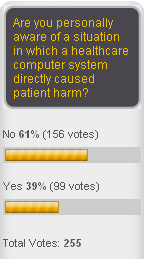
Thirty-nine percent of respondents to my poll said they are personally aware of an incident in which a computer system caused patient harm. New poll to your right for those working in a provider setting: which systems will your organization buy within the next two years?

CHIME sends comments to ONCHIT on EHR certification, expressing concern that certification capacity needs to be adequate to handle the rush of vendors that will be trying to get their products certified at the first opportunity. It also says any program that monitors real-world EHR performance (presumably including any new FDA oversight) should not not be “overly prescriptive”. You’d think CHIME was supporting its 70 big vendor members instead of its 1,400 CIO members with those comments, but that’s the HIMSS model at work.

David Blumenthal, speaking at a Boston conference, says that reports of EMRs causing patient harm have been “anecdotal and fragmented” and should not affect their aggressive rollout.

Sentry Data Systems has an upcoming Webinar on decreasing data center costs by using cloud computing.

rickscott

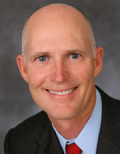
Columbia HCA and Solantic founder Rick Scott announces his candidacy to become governor of Florida. His campaign site says things were great at Columbia/HCA when left, but fails to mention that he was fired after the FBI raided its hospitals and the company was charged with the biggest healthcare fraud scandal in US history, eventually costing Columbia/HCA $1.7 billion in fines. His FAQ makes that travesty sound like a valuable lesson learned under fire that makes him a better candidate for public office:

Since I’m not a career politician or a political insider, I’m going to lay it out for you as simply as I can without spin or fancy words. Let me start by being crystal clear about this… I’ve made mistakes in my life. And mistakes were certainly made at Columbia/HCA. I was the CEO of the company and as CEO I accept responsibility for what happened on my watch. I learned very hard lessons from what happened and those lessons have helped me become a better businessman and leader. Lessons I will bring to the Governorship with your support and vote.

An audit finds that University of Iowa Heart and Vascular Center failed to bill patients for $11 million worth of charges in November. Officials claim it wasn’t their new Epic system that was at fault, but declined to speculate further until an investigation is complete.

The usual housekeeping facts: put your e-mail address in the signup box on each site (HIStalk, HIStalk Practice, and HIStalk Mobile) to receive instant updates when we run something new. The “Search All HIStalk Sites” box to your right lets you search all those sites at once. Check out the industry event calendar, where you can also post your event for free. The hideous green  “Report a Rumor to Mr. HIStalk” button lets you send me anonymous, secure information, including any attachments that you might want to include. Please support HIStalk’s sponsors by checking out their ads to your left and clicking on those of interest – Inga and I appreciate their support. And lastly, I thank you for reading, writing guest articles and comments, and making those 3 million HIStalk visits possible by spreading the word. The incredible support I get from sponsors and readers keeps me going through all those after-work nights and weekends when I’m lashed to the keyboard.

The VA says it has figured out the problem responsible for incorrect data displaying when its employees accessed the DoD’s AHLTA system: an interface server change from a single to multiple processors. The description sounds as though it was a transaction timing issue, but that’s just my guess. VA and DoD are back to fax and e-mail for patient information inquiries until a fix is installed.

Carolinas HealthCare (NC) announces several changes in top management, including bringing on Brent Lambert from Carilion Clinic as VP/CMIO.

tomah

An ED nurse at Tomah Memorial Hospital (WI) is arrested for using patient information to divert narcotics logged out for 600 patients. The hospital has notified the patients that their information was breached but probably not exposed, other than they were charged for drugs they didn’t receive and will be credited (not that patients usually care since they aren’t paying with their own money anyway, so they probably won’t get a refund).

Shares in athenahealth dropped 18% Friday and bounced off a 52-week low after announcing a surprise Q1 earnings shortfall after the market close on Thursday. One analyst said the company missed expectations in nearly all areas, while another termed its Q1 performance as “disastrous”. Market cap is now under $1 billion.

Odd lawsuit: a woman trying to kick her husband as they walk along a Chicago street loses her balance and crashes through the window of a beauty salon. She admits to have been drinking beforehand, but is suing, claiming the business and building owners knew that drunk pedestrians on their way to or from Cubs baseball games could fall through the window. She’s also suing the hospital that treated her, insisting that a radiology tech stole her BlackBerry and $6,000 worth of jewelry while preparing her for an MRI.

E-mail me.

News 4/30/10

April 29, 2010 News 11 Comments

From The PACS Designer: “Re: cloud printing from Chrome. Google has in development a new application that will give Chrome users the ability to send documents to the cloud for printing by a wireless network or cloud-aware printer.”  

From SantaBarbaraLocal: “Re: Santa Barbara Cottage going with Epic. It’s actually Sansum Clinic, which is adjacent to the hospital, that has signed with Epic.” A couple of readers confirmed. That makes more sense than the hospital replacing Eclipsys.

From Brit: “Re: NHS projects in the South. They are being delayed even further because the government bureaucrats are getting cold feet about using Cerner’s Upgrade Center in KC. They have asked BT to build an equivalent center in London, which will push projects out by months and cost the taxpayer tens of millions of dollars more.” Unverified.

nmtc

Nashville Medical Trade Center gets its first anchor tenant — HIMSS, which will make the facility the year-round home for its Interoperability Showcase. The company developing the $250 million facility says it will try to entice vendors who are HIMSS members to lease space by offering them discounts. HIMSS will now literally be even closer to its high-paying constituents.

Q1 numbers for MedAssets: revenue up 18%, EPS $0.09 vs. $0.03, beating estimates.

3mil

Weird News Andy felt bad that I missed the 3 millionth HIStalk visitor, so he “went into my time machine” (which probably means he Photoshopped the above since the next-to-last zero looks a bit clipped) to commemorate the moment.

naham

The National Association of Healthcare Access Management conference starts in Orlando’s Marriott World Center this weekend. The folks from SCI Solutions will offer a Stress Free Zone on Saturday afternoon at 4:30 before the exhibits open, with free drinks and massages.

If you clicked the Like button on the HIStalk Facebook widget to your right, thanks! Inga and I don’t get to know who’s reading all that often, so that’s pretty cool.

Also announced after the market close: athenahealth’s Q1 results: revenue up 33%, EPS $0.01 vs. $0.04. News that spending was up 72% without immediate growth wasn’t taken well by investors, with shares dropping 15% in after-hours trading.

Cerner’s Q2 results, announced Wednesday: revenue up 10%, EPS $0.59 vs. $0.49. Bookings were at an all-time high. Pretty good considering that their hosting services cut into the hardware revenue. New services are mentioned, including running IT departments and revenue cycle services. ProFit finally gets a mention, although not by name, with “great progress” claimed. Oddly, Cerner will resell Pyxis while selling its on RxStation medication dispensing cabinet, also planning to tie into Alaris smart pumps with its medical device hub.

Jobs: Eclipsys Physician Consultant, Soarian Clinicals Consultants, Chief Information Officer.

A flash drive containing information on 25,000 patients turns up missing from Our Lady of Peace, a Kentucky psychiatric hospital. Like everyone else who gets burned, they vow to start encrypting.

The folks from CattailsMD responded to the rumor Alphonso’s rumor from Monday that the project is in trouble and executives have moved on. The leadership changes did occur, with Bob Carlson taking a different role and Paul Olinski retiring, but they say the EMR is now used by more people outside of Marshfield Clinic than within, they just released a dental module for it, and an external customer will implement it using an accelerated go-live process to reach Meaningful Use.

DPS Health, UCLA, and a South African women’s organization announce a study to look at the effectiveness of using text messaging for peer support of people with Type 2 diabetes.

Nuance deploys its eScription computer-aided transcription solution to four NHS trusts in the UK as a pay-per-use SaaS offering.

RTLS vendor Awarepoint announces management changes: the CEO has been replaced, former McKesson executive Ben Sperling is brought in as VP of business development, and former UCSD Medical Center associate administrator and Awarepoint client Thomas Hamelin is hired as SVP of business process improvement.

The CEO of Telus, interviewed on Bloomberg TV, explains the importance of healthcare to the company’s business and why it may pursue telecommunications acquisitions to support it.

vish

Vish Sankaran, manager of the Connect gateway to NHIN for ONCHIT and former Brailer guy at CareScience, resigns. He was program director of the Federal Health Architecture program. His LinkedIn profile says he’s interested in job inquiries, so I’m betting he got one from one of the usual government contractors.

stanbrock

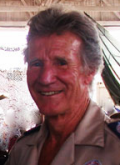
A group offering free clinics staffed by volunteers was founded by Stan Brock, a guy who wrestled animals on TV in Mutual of Omaha’s Wild Kingdom in the 1960s, just in case you were parked in front of the three-channel black and white back then. I like this guy: he decided to leave TV in 1985 “to make people better”. Here’s a snip from a newspaper profile:

Today, Brock has no money, no income, and no bank account. He spends 365 days a year at the charity events, sleeping on a small rolled-up mat on the floor and living on a diet made up entirely of porridge and fresh fruit. In some quarters, he has been described, without too much exaggeration, as a living saint.

The British University in Dubai will host that country’s first national meeting on health informatics on May 5. The one-day program is free.

A Maryland startup will commercialize the Blink lab monitoring software for critical care developed at University of Maryland, Baltimore.

zipnosis

Park Nicollet Health Services will pilot diagnostic software from Zipnosis, a Minneapolis startup run by a co-founder of MinuteClinic. Patients pay $25 online by credit card, take a five-minute automated interview online, a clinician interprets the results, the patient gets an answer back (diagnosis, treatment options, and prescriptions), all within an hour. Park Nicollet will get a cut of the revenue.

E-mail me.

HERtalk by Inga

From NoPollyanna: “Re: mobile healthcare apps. I was searching for information on healthcare systems using mobile marketing — find a doc, directions to office, ED info and wait times. Didn’t come up with much outside of appointment reminders by phone. Is this still just a ‘nice to have’ or is there more happening here?” NoPollyanna is looking for apps that help healthcare systems extend their brands. Suggestions? As for advertised ED wait times, do they have an effect on patients choosing an ED vs. their primary care provider?

From George Stephanopoulos: “Re: EHR implementation blogs. Another to add to your list of ‘EMR journey’ blogs. From the URL, it appears CCMH is implementing the hosted Cerner application suite.” The blog’s author is the CFO at Carroll County Memorial Hospital (MO) and says the hospital is going live in about six months. I had to register on what appears to be on a Cerner-hosted site to request access. I’ve got to hand it to Cerner for figuring out a clever way to get some new leads.

I have been pondering Mr. H’s “so what?" comment in regard to Paul Levy’s "lapses of judgment in a personal relationship.” So, perhaps it does not affect his ability to lead the health system. Then again, what other lapses in judgment might he have had? What future lapses, either his or others, might be brushed under the rug?  Rightly or wrongly, we want our leaders to be role models, at least professionally. An inappropriate work relationship bleeds into the professional world and creates potential for an imbalance (or abuse) of power. I’m not suggesting anyone be fired, but some official reprimand by the board might be appropriate.

sinai

Sinai Medical Group (IL) is implementing NextGen’s EHR and PM products and expects to go live in August. Sinai’s faculty group practice includes almost 200 physicians.

HP announces plans to purchase Palm for approximately $1. 2 billion cash. I read the opinions of a couple of pundits who suggest HP was interested in getting its hands on the Palm webOS to run future tablet products.

Billing service provider Healthcare Billing Consultants (PA) selects Sage’s Intergy practice management and analytic tools for their 80 providers.

irving medical

Medical & Surgical Clinic (TX) commits to Allscripts’ EHR for its 31 physicians.

CareFusion and Cerner announce they will integrate the CareFusion Pyxis systems and Cerner’s CareAware solution. Cerner will also resell the CareFusion Pyxis dispensing technologies to its existing EHR clients,which seems odd since Cerner was offering a competitive product at one time.

Health reform legislation will increase the IT needs for a number of government agencies, including HHS, the IRS, and state and local governments. Job security if you are in IT, I suppose.

GE Healthcare teams up with Ascom Wireless Solutions to launch a wireless, hospital-wide message system that allows clinicians to receive clinical text-messages and alerts throughout their facilities.

Earlier this week I mentioned that we’d like to find a hospital and/or physician office willing to share their EMR selection and implementation journey. I should have explained that a bit better. As opposed to connecting with a entity that has already implemented an EMR, we’d like to find someone just starting the process who would be willing to provide periodic updates. If you have a candidate, let me know.

Ten of the 13 most-considered enterprise business intelligence solutions in healthcare come from industry-agnostic vendors, according to a new KLAS report. Healthcare provider executives ranked Dimensional Insight the top vendor, followed by Information Builders, and McKesson.

st. joseph regional

St. Joseph’s Regional Medical Center (NJ) deploys Infinitt North America’s Enterprise PACS. Infinitt migrated over 30 terabytes of image and patient data in less than five months.

UNC Health Care (NC) engages MEDSEEK to establish a patient portal that will combine EMR and administrative data from UNC’s Siemens system and its other HIS products.

A NYC grand jury indicts two former executives from New York-Presbyterian Hospital and two contractors for participating in a mail and wire fraud scheme. The hospital officials allegedly received payments and gifts in exchange for awarding contracts to certain companies. The questionable contracts totaled more than $42 million.

A former researcher at the UCLA School of Medicine is sentenced to four months in federal prison for snooping in medical records. The research assistant, a licensed cardiothoracic surgeon in China and a US immigrant, claims he did not know it was illegal to look at the confidential medical files of his co-workers or celebrity patients. He’s now sort of a celebrity, too, since he’s the first person to be sentenced to prison for violating HIPAA’s privacy provision.

Chesapeake Regional Information System for Our Patients (CRISP) selects Axolotl to provide the core infrastructure for its statewide HIE.

Thanks to the Brits, we now have a better idea of the risk factors that predict future professional misconduct by physicians. Doctors who are male, from lower socioeconomic groups, or had academic difficulties in medical school are more likely to be misbehaving doctors.  I think someone needs to do a follow-up study to determine the risk factors that predict misbehaving boyfriends or husbands.

ifshoescouldkill

And, thank you Weird News Andy, for referring me to the www.ifshoescouldkill.com website. OMG.

inga

E-mail Inga.

HIStalk Interviews Arien Malec

April 28, 2010 Interviews 2 Comments

Arien Malec is coordinator for the NHIN Direct project of the Office of the National Coordinator.

amalec

Give me a basic overview of NHIN Direct.

NHIN Direct is a project to expand the set of services that are available on the NHIN, but to expand them in a way that is accessible to the majority of providers. Particularly, the majority of the primary care providers practice in practice sizes of five or fewer. The lingua, the interchange, the health information exchange/interchange for those providers currently is fax. The major aims of this project are to create a set of standards that enable those providers to essentially replace the fax with electronic forms of interchange.

There’s really nothing new in the kind of health information exchange that we’re trying to do. We’re not trying to break new ground so much as standardize existing ground. A lot of HIOs get their start in provider-to-provider or lab-to-provider direct communication. Essentially, what we’re trying to do is standardize that and make it easier to plug in EHRs into exchanges and make it easier for HIOs to develop standard services for that kind of direct communication.

I’d also note that level of direct communication aligns very well with the criteria for Meaningful Use; particularly the requirements to exchange information at transitions in care, as well as receive lab data electronically and provide electronic information to the patients.

How would you characterize the differences between NHIN and NHIN Direct in terms of who will use them and for what purpose?

I’m going to carefully separate NHIN, as in the NHIN Exchange, from NHIN, as in the set of standards and services that are available. There’s some confusion about what’s what.

Both define the NHIN Exchange as the network of networks, as the network in the middle with standards that enables large, national health information organizations to exchange data with each other. A great example of where the NHIN Exchange would be useful is in coordination of care between a provider who’s using a state HIO and a patient treated in the VA system or in the DoD system.

All three of those organizations are, essentially, extraordinarily large IDNs. They are nationwide health information organizations because they cross and transcend state boundaries. That’s the core use case for the NHIN Exchange — coordination of care and information discovery across large, nationwide health information organizations. The core standards that are in use are common standards that can also be deployed within an HIO context, so if I wanted to discover where else a patient has been and what information is available about that patient, I would use the core NHIN services. They’re essentially the IHE interoperability stacks, particularly the XDS, XCA; that stack.

The way that I describe it, I’m going to paint two pictures. Picture one says that I’m a provider who is in an exchange that offers both services and I’m referring to a provider who only gets the simpler kinds of services, the direct services. As a provider with access to both services, when a patient presents, I may do a query to find out where that patient has been seen since the last time I saw them, and discover information with the patient’s consent that helps me inform the care of the patient.

Then at the end of that encounter, I might publish the updated physician information into the repository in the sky for future care providers to discover information. Those are great uses of the NHIN specifications and services.

Then, at the conclusion of that encounter, I want to refer the patient over for care. Let’s say it’s for care that isn’t served on the same EHR, where I can’t rely on the EHR’s capabilities to have the chart available. So I want to push a referral transaction over to, let’s say, the cardiologist. Then at the conclusion of the cardiologist’s care, I really want them to push me an update to what happened to the patient.

That transaction, by its very nature, just doesn’t fit the “publish something in the sky and then grab something from the sky” model. I mean, you could do it that way, but the semantics of that transfer are directional. I want to give the referral over to that provider and that provider expects to receive it in his or her inbox. Same thing for a lab. You might publish the lab to a lab repository in the sky so that all people can have access to it, but the ordering provider wants to get that lab result in his or her EHR directly as well. So you’ve got both publish semantics and push-to-provider semantics.

Pretty much all we’re about at the NHIN Direct project is to create the standards, the specifications for that push-to-address case in ways that allow an HIO or lighter weight organization to be able to provide an address for a provider or for a patient, and for the routing of a transaction to go to that address. So, there’s a lot.

Many of the HIEs created their business models around charging for that type of service. Will they use some aspect of NHIN Direct or is this a replacement or a competitor for it?

A lot of HIOs, I think for very good reasons. It drives a lot of business value. You get started with simple direct services. Nothing that NHIN Direct is doing should, or does, conflict with that desire. NHIN Direct will, hopefully, make those services easier to deploy because there will be a set of standards around them, and EHRs, hopefully, will have their standards embedded within the EHR so it will be easier to get services up and running.

Now if your business model is, “Well, this stuff is hard, and so our business model is to do it because nobody else can and we don’t want any competition and anything that makes it easier to do is a threat to our business model,” then sure, it could be a threat to the business model. I don’t believe that. I believe that making it easier, making it more scalable, actually makes it easier to offer those services at a profit for exchange sustainability.

As I said, I think if you look at the example of successful HIOs, they pretty much all solved this problem at the cost of some blood early on, and they’re able to offer these services. NHIN Direct is going to give them a way of scaling that service offering more, but I don’t think they think it’s a threat to their business. I think if you look again, if you look at the example of HIOs that are up and running and doing well, I don’t think any of them are scared by NHIN Direct. In fact, I think they think of this as something that makes their work easier to do.

What about those EHR vendors that have their own exchanges?

A lot of the EHR vendors — and you can go to the NHINDirect.org website and look at the implementation group to look at the current members of the implementation group and you’ll see a number of the leading EHR vendors out there — many of them are participating in this effort. I can’t speak for them, but if you look at the strategic situation, I think many of them would like to offer a set of value-added services on top of their EHRs for simple connectivity.

Many of them are in context where if you look at the state of HIT in the United States, very few providers operate in a service area where it’s all one vendor and where you can mandate and lock down a single vendor model. So, many of these EHR vendors have customers — oftentimes large health systems — who are asking them to enable interoperability within their products, but also across other products.

I think many of these EHR vendors see this as a way to fulfill their customer’s business needs in a way that is standard, and allows them to offer standardized services. I think the EHR vendors, by and large, have looked at this as an opportunity much more than they look at this as a threat.

John Halamka likes the idea of a health URL where individual data can be pushed. Would this support that, or is anybody working on that?

Absolutely. The notion of an address that you can route information to is a core principle of the NHIN Direct project. In fact, John’s recent blog post describes the work of the addressing working group in NHIN Direct. He’s a participant of the implementation group and he references, explicitly, the health URL concept in the context of what we’re trying to do.

What about privacy and security?

I’m going to back up. If you look at the record locator kinds of transactions — where has this patient been, what information is available about this patient — those are the transactions for which specifications and standards currently exist. There is a significant set of policy issues around that because the information holder is receiving a transaction basically requesting information and needs to decide, on the fly, whether that’s an appropriate information request, and whether the PHI disclosure that’s associated with that is proper and legal. Any of those systems that are up and running have put in place consent models and put in place policy models that ensure that data is only provided when it’s legally appropriate to.

In the set of push transactions that NHIN Direct is all about, the information holder and the initiator of that transaction are one in the same person or organization. The best way to think about the NHIN Direct kinds of transactions is that the data are going to flow, regardless. I’m going to send the summary of care to the provider via fax. I’m going to send it via paper. I’d love to be able to send it electronically.

The legal responsibility is pretty clear for this. It’s the information holder’s responsibility to determine whether the disclosure that they’re making is appropriate. Appropriate is defined by any of the HIPAA exemptions, as well as by explicitly getting patient consent to do the transaction.

What we need to make sure of in the transactions and in the policy framework around health information exchange is that if there is a disclosure along the way, that we know exactly where that disclosure originated from, we know who the legal entity responsible for the disclosure was, and also that we protect the health information and make it secure all along the way so it doesn’t inadvertently get exposed. We’ve got a privacy and trust working group that’s focused on those exact issues.

I think John’s post mentioned that it will be the same framework that’s used by the full-scale NHIN, not a lightweight version.

Exactly, so we’re going to be using TLS on both ends. We’re going to be ensuring that all the data are encrypted in transit. We would recommend that HIOs encrypt it at rest as well, and ensure that they’ve got the appropriate security policies.

The other part of this is that we’re just doing the transaction semantics. We’re just doing the specification. Somebody’s got to take those specifications and run them. The organizations that run them need to run those transactions within a policy framework. That policy framework needs to have much more in it than just transaction-level security rights. You absolutely have to encrypt the data in transit, but then you also have to make sure the exchange has the security policies in place; does security audits and remediation, has good quality assurance policies in place; has good operational controls in place to make sure that … you’ve got to secure the entire system and not just the transactions.

There’s a lot of policy work to be done. We’re closely coordinating the technology work that we’re doing with the policy work that’s being done, both at ONC as well as within the NHIN workgroup and the HIT Policy Committee.

Maybe you can expand on that thought because I’m not sure I understand. What you have is a set of policies and practices, but someone has to actually run it.

Exactly. The metaphor that I’ve used is that you’ve got cake? Cake is good stuff. You want to eat cake. Cake adds value.

We’re not making cakes in the NHIN Direct project. Somebody’s got to run a bakery to bake some cake. What we’re doing in the NHIN Direct project is creating a recipe for cake, and we’re making sure that recipe is well-tested and making sure it works across a variety of settings. That you can use a small bakery or a big bakery to make your cake and the cake’s going to taste just as good, regardless of where you bake it.

But, as an organization, our project is to create a recipe. You’re not going to get any cake from the NHIN Direct project. You’ve got to get your cake from a bakery.

Is there any centrally hosted infrastructure or services?

Not so far as we’ve discussed. There has been some belief — which we’re still going to need to explore this — that there are a couple of potential services that the federal government may end up hosting. One might be a central certification body, as well as a certificate authority to make sure that people who operate on the exchange are carrying correct policy frameworks. That’s the one potential role for the federal government.

They are, essentially, assuring trust. That’s a role that the federal government’s already taking on and is actually legally responsible to take on with respect to the NHIN Exchange, to the extent that the NHIN Direct services get incorporated into the NHIN Exchange. The federal government and ONC have a legal responsibility to create a policy framework for that. That’s one role that the federal government could play.

There are potential other roles the federal government could play, particularly around potentially using some of the information that we have around NTI; as well as that CNS is going to have to have a lot of paying providers for Meaningful Use as a way of making directory services that people might offer more valuable. But, we still have yet to explore or decide on those capabilities.

By and large, the NHIN Direct project will exit with a recipe and not so much with infrastructure.

Do you think the EMR products that are out there will be ready to share data once the platform is available?

With everything else in software, there’s a software development life cycle. There’s a set roadmap on capabilities. What I’m encouraged by is that so many of the EHR vendors are participating in the project and have committed to do real-world implementations. Not necessarily full-scale, real-world implementations, but have committed to doing real-world implementations. That encourages me that by 2011 we’ll have exchange capabilities at a broader scale to support.

What this is all about is supporting providers, both in terms of their obligations to get the money for Meaningful Use as well as supporting providers and patients in the quality and efficiency goals that we’ve set out for the HITECH Act. My hope is that given the participation that we’ve got that we’ll get a good amount of support for providers in 2011.

How would you turn all this technology concept into something that patients would understand? What would you say the outcome would be and when will they begin to see it?

As a patient, what we would hope to see is that a patient has interoperable access. Again, I think John Halamka’s posts on the health Internet address called the health URL are as good a place to start in understanding what this is all about. As a patient, I should be able to get a health Internet address. I should be able to give that health Internet address to my provider and say, “Hey, I want my information posted here.” The provider should say, “OK, no problem. I’ve got all the capabilities for doing that.”

As for when that will happen, I expect it will be in essentially limited operations by the end of this year. I would expect us to be in wider-scale operation by the end of next year.The way that I would judge this project being a success would be the number of providers who’ve got an address.

The other side’s the patient experience. That when I get referred over for care, get treated by a specialist, and then go back over to primary care, that the thing that I expect to happen — which is that specialist knows why I’m there and knows my health information necessary for treating me and that my primary care provider knows what happened when I went to the specialist — that all that exchange has happened behind the scenes with my consent, appropriately.

I think those two outcomes would be the way that I would judge the success of this project. My beliefs and hope would be that we’ve got a decent amount of availability to service it by the end of 2011, and then rolling on to wider scalability in 2011-2012.

What also makes me feel good about this is there are a lot of organizations that can do parts of this, and really all we’re doing is taking the best practices that a lot of these organizations are doing, and saying, OK, that’s great. We know how to do it. We know how to do it, even at scale. Well, we don’t know how to do it and do it interoperably so that you can share information between systems, so let’s focus on that.

Any final thoughts?

I think that if you’re asking about the fact that we’re not hosting, we’re not running any services. I think that’s the thing that people get extraordinarily confused by, and understanding that is real useful.

Another common question that comes up is, “What are you doing about content?” The project itself is focused on transport, but we’re sitting and working with all the other work that’s being done around content to make sure that the payloads that people exchange are interoperable payloads; and all the good work that’s in the IFR to help us constrain down to CCR and CCD, but also constrain down to terminology. We’re relying on that work getting better and more stringent over time so that we can share information, but then we can also understand the payloads.

News 4/28/10

April 27, 2010 News 13 Comments

From Harpo: "Re: Halamka’s CEO. Accused of hanky panky with a staff member, but he apologizes and will stay on. Being the most visible and transparent hospital CEO is great, but I didn’t see this on his blog yet." Beth Israel Deaconess CEO Paul Levy admits to "lapses of judgment in a personal relationship" that were first reported to the hospital’s board by anonymous letter. My reaction: so what? He’s human. People sure love to throw those stones.

sbcottage

From Epic Watcher: "Re: Santa Barbara Cottage. Heard from two folks they’re going Epic, although I’m not sure whether inpatient or ambulatory." Maybe someone will report back. I know they’re Eclipsys on the inpatient side and I doubt that’s changing, but you never know. 

From Don Diego: "Re: ADVANCE for Health Information Professionals. Dead." According to the company, they’re shutting it down "due to unfortunate conditions in the market."

From Ex-Cerner Guy: "Re: quick login. Several of my clients experimented with HID Proximity Cards for speed, security, ease of use, and then cost. Speed was instantaneous, security was 100% (they added a fingerprint pad), and ease of use was great. Everyone remembered to bring their ID card and right thumb with them. As soon as the user was more than 10 feet from the workstation, they were logged off. Re-login would bring them to the screen they left. The item that was rated #4 in importance quickly became #1, as the support time and costs became insane due to each non-hospitalist needing a level of customization the facilities were not prepared for. I loved the solution, as did the CIOs and CMOs. CFOs killed it, and probably correctly. Time-and-motion study for typing vs. swiping and pressing did not support the cost model in 2006."

negeorgia

From RedDog: "Re: Northeast Georgia Health System. New CIO and hear the consulting company is leaving as well. A totally fouled up RIS/PACS install in December is the catalyst. Epic is being talked about in the admin suite." Unverified.

From Partial Eclipse: “Re: West Penn-Allegheny. Delaying its go-live of Eclipsys Sunrise because of excessive costs and the shrinkage in CMS payments.” Unverified.

Listening: In This Moment, alt-metal with an angry-sounding female lead who looks like an angelic supermodel.

Texas Health Resources and Children’s Medical Center Dallas will exchange patient information via their common Epic systems. THR also plans to do the same with UT Southwestern and Parkland. 

macquarie

Macquarie University Hospital in Sydney, Australia and the Australian School of Advanced Medicine will implement iMDsoft’s MetaVision (OR, PACU, and ICU) when the new hospital opens in June.

A new Medicity brief called Key Components of a Successful HIE Strategy covers best practices in deploying a "future-proof" HIE.

McKesson says it will adopt its Paragon HIS for the British market, hoping to offer an alternative to its long-in-the-tooth TotalCare and Star systems for hospitals opting out of NHS-offered systems due to implementation delays.

Speaking of McKesson, it announces availability of 12 new templates for chiropractors for its Practice Partner, Medisoft, and Lytec MD physician systems. Back-crackers get a rebate and the templates for free.

fblike

I put a "Find us on Facebook" widget to your right that offers the new "Like" button. Click it and Inga and I will have a tiny bit of our insecurity relieved at least temporarily. You are all so cute in your FB pictures that it makes us proud to have you as readers.

Mike DeSimone joins MedVentive as VP of business development.

The Platinum sponsor-only jobs page is in full swing with 34 jobs posted, so you might want to check those out. Inga will be her usually cheery self in hooking up sponsors to use it as a free benefit of supporting HIStalk.

Neither Inga nor I were home Sunday afternoon to take a screen shot when the HIStalk visit counter rolled over to 3,000,000, darn it. A visitor from Epic was the 3 millionth visitor since June 2003.

GE Healthcare and Ascom Wireless announce plans to tie GE’s patient monitors into Ascom’s VoIP, pager, and DECT handset communication systems.

E-mail me.

HERtalk by Inga

From BowerSocks: “Re: giving back. Just wanted to say I didn’t know about the Cerner Diabetes Initiative. We are always looking for great places to donate and I think both the Diabetes Initiative and the First Hand foundation sound awesome.”

Picis implements 53 new US healthcare facilities using its LYNX E/Point revenue management solution for the ED.

Catholic Healthcare East (PA) selects Zynx Health’s evidence-based order sets and plans of care solutions for 18 of its hospitals.

facilitator

SCI Solutions releases an EMR-enabled version (v6) of its Order Facilitator order management tool. The new version includes the ability to capture H7 order transactions sent from a physician’s EMR to a hospital’s Order Facilitator database.

Oroville Hospital (CA) claims to be the first hospital to implement VistA without the help of outside consultants. The hospital is halfway through the implementation process and is relying on its internal IT group for all customization.

The executive director of the Rochester RHIO says the organization is “no longer an experimental pilot service.” The four year old RHIO now includes participation from 15 hospitals, 866 physicians, and 225,000 patients.

San Juan Regional Medical Center (NM) contracts with Perceptive Software to use the ImageNow document management and workflow system. San Juan will integrate the ImageNow application into its existing Meditech system.

van grisven

The GetWellNetwork folks tell us they are hosting their  Third Annual User Conference later this week in National Harbor, Maryland. Keynote speakers include The Studer Group’s Brian Robinson and Gerard van Grinsven of  Henry Ford West Bloomfield Hospital.

The Electronic Healthcare Network Accreditation Commission appoints four new commissioners to serve through 2012.

The Alaska EHR Alliance selects e-MDs and Greenway Medical as the “best choices” for the state’s healthcare providers. ACS Healthcare Solutions was the managing consultant for the selection process, which lasted eight months and started from a pool of over 250 EHR vendors.

Thomson Reuters will integrate its Micromedex clinical decision support and CareNotes patient education content within the M2 HCIS.

Beacon Partners is named to the Boston Business Journal’s 2010 Pacesetter list, which recognizes the 50 fastest growing private companies in Massachusetts.

thomas jefferson

The first of three Thomas Jefferson University Hospitals (PA) goes live on Wellsoft’s EDIS.

Mercy Hospital of Portland (ME) selects Allscripts EHR for its 58 employed providers. The physicians already use Allscripts PM product.

I came across this blog today, written by the CIO of a hospital that’s in the midst of selecting an EMR. So far they have eliminated Cerner and now they are giving Meditech Magic a good look. The post brought to mind something Mr. H and I have discussed a number of times: finding a hospital and/or physician practice that’s willing to share their EMR selection and implementation journey over a period of time. If you’d care to volunteer your insights on behalf of your organization (fame could be yours!), or if you’d like to share any recommendations, please let us know.

Newly posted on HIStalk Practice: the latest question in our HIT Executive series. Check out what several EMR vendors and consultants had to say about the HITECH Act’s short and long-term effects on innovation. Spoiler alert: the answers range from yes to no to maybe.

Thanks to folks at Vitalize Consulting Solutions (VCS) who shared the the news that HIMSS and Modern Healthcare named recipients of their 2010 CEO IT Achievement Awards. The two winners are Peter Fine, president and CEO of Banner Health (AZ), and, David Bernd, CEO of Sentara Healthcare (VA) — and a VCS board member.

inga

E-mail Inga.

Monday Morning Update 4/26/10

April 24, 2010 News 6 Comments

cattails

From Alphonso: “Re: CattailsMD. The Marshfield Clinic’s CattailsMD project is in serious trouble and may be dead. Senior leadership for the project has been let go or moved to ‘new opportunities’ inside the organization (Bob Carlson and Paul Olinski). Project has gone nowhere for the past few years.” Unverified. I’m not sure why they had a booth at HIMSS or why they would try to commercialize their own product in the first place since that hardly seems core to their mission. Their own use of CattailsMD seemed imperative to them, so I’d be surprised if it’s being allowed to fade.

From Wade Wells: “Re: log on. What’s the fastest, most secure way to log on to PCs in health institutions? We key in our usernames and passwords, but with the rollout of clinical systems and speed being an issue, I’m interested to hear of others’ experiences. Some are suggesting card readers, biometric, etc.” Thoughts?

wellpoint

From Mad Max: “Re: WellPoint cancelling insurance for newly diagnosed breast cancer patients. This ought to be criminal activity. Please keep this story in the public eye and drive those insurance actuary slugs back under the rocks where they belong.” It’s the age-old debate of whether healthcare should be a noble calling or a cutthroat business. It’s in the same vein as to whether Cerner should use its legislative clout to squash competitors – who decides where good business yields to compassionate care? Meanwhile, HHS secretary Kathleen Sebelius asks WellPoint’s $13 million-a-year CEO to voluntarily stop the cancellations, noting that the practice will “soon be illegal” (which obviously reinforces the concept that it’s legal now). The company’s response claims that computer algorithms aren’t used for that purpose, that one patient who complained isn’t a WellPoint member, and that they’ll divulge specifics about her case that proves their side of the argument if she’ll sign a HIPAA waiver.

From The PACS Designer: “Re: iPad review. Another more complete test review of the iPad as a business tool comes to us from InformationWeek’s Fritz Nelson.”

jobs

The sponsors-only job board seems to be working fine, so I’ll consider it open for business. It has quite a few job listings already, thanks to volunteers who helped out by testing. This is a lightweight replacement for the job listing topic in the discussion forum. It’s not as fully featured as Healthcare IT Jobs and, unlike that site, it’s open only to HIStalk Platinum and Founding Sponsors (and is free to them).

I gave the iPad a quick grope yesterday. As you’d expect from Apple, it’s very sleek and has great graphics, with a display size that seems perfect for Web browsing or running apps. On the other hand, I’d worry about dropping it since there’s nothing to grab onto. I wouldn’t pay $499 for it since I could buy a full-feature Wintel laptop for less (with a real keyboard and everything). Travelers with computer needs mostly involving entertainment would probably like it, although they’d need to add on a data plan and even then I’d probably stick with an iPhone. Apple is selling a bunch of them even though they don’t really replace anything, though, so I will defer to public opinion.

Thanks to those who responded to my little survey about what hospitals readers are from. I’ve posted the list of organizations (without the job titles). 

poll042410 

Half or fewer doctor will get the HITECH money they expect, said 78% of readers. Only 9% think most of the doctors will get the full payoff. New poll to your right: are you personally aware of a situation in which a healthcare computer system directly caused patient harm?

ehrtv

EHRtv posts over 40 video interviews from the HIMSS conference.

The FDA will step up its oversight of IV infusion pumps, citing 10,000 complaints, 79 recalls, and at least 710 known patient deaths.

McAfee apologizes for its antivirus fiasco that took down computers all over the world, blaming its poor testing. A hospital reader’s comment you may have missed suggests VIPRE Antivirus from Sunbelt Software as a superior alternative.

brigham

Brigham and Women’s will freeze hiring and cut its operating budget by 3%, but says those actions are unrelated to the decision by Harvard Vanguard Medical Associates to shift its referrals to Beth Israel Deaconess Medical Center instead. BIDMC implies that its shared EMR access was a key factor in that decision.

An MIT mobile health group says open source mobile platforms are important for affordability and accessibility, making its first choice Google Android and eventually Symbian.

MedQuist completes its acquisition of Spheris.

A problem with the patient verification software used by Australia’s Medicare service causes several hundred errors, the significance of which is disputed. The software vendor had urged the agency to notify the 2,700 affected medical practices in February and March when the problem was found, but the agency declined.

This sounds like something Oracle would do: a formerly free Sun plug-in for Microsoft Office that allows saving documents in OpenDocument Format will now cost $9,000 for 100 users plus annual support, now that Oracle owns Sun.

Odd lawsuit: a Connecticut woman is charged with impersonating a nurse and forging prescriptions for narcotics while employed in a physician’s practice as an RN. Prosecutors say she spent $2,000 to make up a “Nurse of the Year” dinner in her honor from the Connecticut Nursing Association, an organization that she also made up. She sent her boss an invitation on fake letterhead to be a guest speaker at the dinner, which he did.

E-mail me.

News 4/23/10

April 22, 2010 News 8 Comments

mcafee

From Reader: “Re: McAfee bug. Multiple hospitals (U of Michigan, Rhode Island Hospital System, Upstate University Hospital in Syracuse) report being affected by buggy McAfee security release. 1000s of computers down, emergency patients diverted and surgeries being postponed.” I know first-hand since it nailed our place, too, with all kinds of disruptions and “everybody get off the network NOW” emergency messages. McAfee wasn’t much help, being slow to post the problem and a tricky solution. It’s a great time to be a competing antivirus vendor.

From LeapFrog: “Re: Allscripts. I am hearing rumors of a joint GE and Allscripts user conference in June. What does that mean?” Inga tried to tracked this rumor down, reaching the conclusion that a joint meeting is unlikely given the short time frame. However: (a) the Allscripts sales meeting is in June; (b) Allscripts might like getting its hands on an inpatient product like the old IDX one that GE has botched, despite lofty Intermountain partnership announcements; (c) a new Allscripts sales director came from the old IDX group; and (d) GE’s IDX failure might make it happy to get rid of that product. All speculation, but not too far out there as rumors go.

meditechipad

From Dr. M: “Re: Meditech. The iPad runs Meditech using the Citrix connector.” Dr. M supplied the photo above. Another reader cautions that just because apps run in Citrix Receiver shouldn’t be construed to mean that vendors have released specific iPad clients or, until they do, that the Citrix versions are fully usable. The reader says some apps look good and navigation is OK, but typing is slow on the on-screen keyboard.

dsouerwine

I’ve confirmed a couple of reader-reported rumors. You’ll Know Who reported yesterday that McKesson Provider Technologies had replaced Sunny Sunyal as president with McKesson Automation’s Dave Souerwine, which was confirmed today on the MPT site. In the Cheap Seats told you on March 29 that Merge Healthcare had acquired anesthesia EMR vendor Docusys, which I’ve finally confirmed through independent sources. Thanks for those reports!

Greenville Hospital System goes live with SabalRx, which routes medication orders to the proper dispensing location and technology based on location. I’ve never heard of Sabal Medical, the press release isn’t very good, and the “About Us” on the company’s Web page doesn’t say who “us” is, so that’s all I know.

Listening: Material Issue, long-defunct Chicago-based power pop.

mcgmc

This sounds like a bad idea: Medical College of Georgia will consolidate management with its hospital and physician group, with the just-hired college president (a doctor and scientist) also serving as CEO of MCG Health. The college’s CFO and CIO may also serve dual roles.

A New York Times article lists the downside of electronic medical records: odd computer placement in the exam room, the need to type instead of listen, an overwhelming amount of information for the doctor to review (like “having a 2-year-old in the exam room”), difficult to use systems that were designed for charging and not treating patients, and the failure of those systems to convey complicated information in an easily understood “story” form.

Another blow to iSoft and NPfIT: northern trusts scheduled to implement iSoft Lorenzo can now opt out and instead run McKesson’s Totalcare instead, courtesy of a new $55 million contract signed last week. Three of the trusts will stick with McKesson Star for some time. Reader UKMaxPaying thinks Cerner may be well positioned to take advantage of the mess and also calls attention to another Lorenzo go-live delay at Morecambe Bay, rumored to have been rescheduled from early May to the end of May.

Sage Healthcare is sponsoring the Texas Health Information Technology Summit, which started Thursday in Dallas. Everything you need to know about the agenda is contained in the prominent explosion-shaped graphic that says, “Learn how to get your $44,000”. I know a handful of the speakers, but not most.

CPSI announces Q1 numbers: revenue up 4.7%, EPS $0.27 vs. $0.37, missing analysts’ expectations and its own estimates.

The Huffington Post Investigative Fund continues its coverage of electronic medical records. In an article on patient harm, it cites 18 voluntary reports to the FDA involving Cerner software, one of which involved a patient death after “an unplanned hospital wide CPOE and electronic record breakdown.” A second article calls attention to a lack of FDA oversight, with its example being a GE Healthcare imaging system that reversed the patient’s image, causing the surgeon to operate on the wrong side. It concludes that a new oversight group might be formed by ONCHIT, with providers held accountable for reporting problems as a condition of receiving stimulus money.

healthrobotics

Italian vendor Health Robotics says it’s now the largest American IV robotics vendor after signing 15 new contracts for i.v.STATION, i.v.SOFT, CytoCare, and i.v.Room of the Future as well as some beta contracts with big-name hospitals like Brigham and Women’s, Cleveland Clinic, Duke, and MD Anderson.  

Jobs: Allscripts Consultant, Integration Engineer, Senior Product Marketing Manager, NextGen Consultants.

The Birmingham paper profiles MedManagement, a 110-employee local company that offers advisory services and software, now offering Medicare admission help to hospitals. I like the poster in the background of the CEO photo, titled “Between a RAC and a Hard Place.”

Harvard-affiliated Massachusetts Eye and Ear Infirmary alerts several thousand patients that a laptop containing their information was stolen from one of its doctors who was lecturing in South Korea. They were able to detect it through its LoJack “phone home” feature and determined that someone installed a new OS without the software needed to read the information. They then sent a LoJack command over the Internet to trash the laptop’s hard drive. That’s pretty cool, although they still should have used encryption.

Strange: a British doctor labeled as a “Jekyll and Hyde” drives 800 patients away from his practice in four years by being rude to them during surgeries and focusing on his computer instead of them during consultations. And in this hardly shocking development: his wife, also his practice manager, was equally rude to his employees.

Reuters reports that WellPoint, the country’s largest health insurance company, uses software to target newly diagnosed breast cancer patients for the purpose of finding excuses to cancel their medical insurance.

ideallife 

Ideal Life, a Toronto company, says its wireless home monitoring devices (blood pressure, scales, blood sugar) are the first that are easy and affordable for remotely managing chronic disease, establishing two-way communication between patients and providers that can include motivational messages or tips. That along might not have earned the company an HIStalk mention, but this did: the CEO’s prior job involved the company that sells Teddy Ruxpin and Funoodles.

The outgoing CEO of Sage will get a $32 million parting gift.

E-mail me.

HERtalk by Inga

From NoPie: “Re: Cerner. I am a Cerner employee. I would like to point out that the McKesson Diabetes Initiative posted on the website yesterday is somewhat old news when compared to what Cerner has been providing for free for many years. There is no place I would rather be able to call home for my career. While others may read this e-mail and consider me just another person drinking from the ‘Cerner Kool-Aid’, we really are devoted to promoting a change in what Neal likes to call ‘the middle’ of healthcare.’ How refreshing to find someone from the vendor world who is willing to stand up and say they are passionate about their employer. I happen to like Kool-Aid every once in awhile, as long as it’s made with real sugar. I see on the Cerner Web site details of their Cerner Diabetes Initiative, which pledges to invest $25 million over 10 years for an online diabetes management tool for diabetic children. And, the Cerner-founded First Hand Foundation is a 15-year-old program that provides assistance to children with health-related needs. To date, the foundation has given $12 million in funds to children across 70 countries. Big kudos.

allina

Allina Hospitals and Clinics (MN) selects Language Access Network to provide video language interpretation services to 11 of its hospitals.

University Hospitals (OH) launches Siemens Soarian Financials at Case Medical Center, completing University’s enterprise-wide deployment.

Edwin Miller, formerly with Artromick and athenahealth, joins Curaspan Health Group as VP of product management, along with three new sales executives.

Quality Systems, the parent company of NextGen, shuffles the roles of several executive leaders. Tim Eggena moves from executive VP of NextGen Practice Solutions to the newly created role of executive VP of R&D for NextGen’s ambulatory products. Monte Sandler takes over as EVP of Practice Solutions after serving as NextGen’s VP of account management. Finally, Donn Neufeld is now EVP of EDI for NextGen and QSI, in addition to SVP and GM of QSI’s Dental unit.

Kentucky Governor Steve Beshear announces the official launch of the Kentucky Health Information Exchange (KHIE), which currently connects six hospitals and one clinic. The Kentucky Department for Medicaid Services will also begin data exchange with the facilities.

Robinson Memorial Hospital (OH) selects Eclipsys Sunrise Enterprise as its integrated EMR solution.

Cullman Regional Medical Center (AL) will deploy MedAssets’ revenue cycle solutions for its 145-bed facility.

discharge

EDIMS will incorporate Callibra Inc’s Discharge 1-2-3 solution into its ED EHR product.

Harris Corp wins a $72 million contract to update the VA’s billing and collection operations.

university health

University Health System (TX) implements InfoLogix’s HealthTrax mobility solution for its hospital and 20 clinics.

Brandeis University starts an online master’s degree program in health/medical informatics.

McLaren Health Care Corporation (MI) contracts for McKesson Paragon. PHNS will implement six more of McLaren’s hospitals, adding to the two already running Paragon.

Researchers from Henry Ford Hospital release details on their use of electronic medical records during last year’s Detroit Free Press Marathon. Using laptops and a Web sites, medical team members were able to coordinate patient care in real time, as well as help family members locate injured runners. Researchers say the solution also provides data to identify injury patterns and thus improve preparations for other large sporting events. There’s got a be a clever pun to tie the Ford/EMR/road race thing together, but it’s just not coming to me.

Franciso Partners expands its HIT holdings, making a significant capital investment in T-Systems. Founders Woodrow “Woody” Gandy, M.D. and Robert Langdon, M.D will remain on the board, with FP operating advisor John Trzeciak taking over as president and CEO. The company also owns QuadraMed, Healthland, AdvancedMD, and API Healthcare.

EMH Regional Healthcare System(OH) selects Allscripts EDIS for its three emergency rooms.

inga

E-mail Inga.

Readers Write 4/22/10

April 22, 2010 Readers Write 2 Comments

Submit your article of up to 500 words in length, subject to editing for clarity and brevity (please note: I run only original articles that have not appeared on any Web site or in any publication and I can’t use anything that looks like a commercial pitch). I’ll use a phony name for you unless you tell me otherwise. Thanks for sharing!

License Rights in Your Software License Agreements
By Robert Doe, JD

Each software license agreement contains a provision which grants specific use rights with regard to the software you are licensing. However, software manufacturers’ standard contract documents may not take into account your organization’s specific use requirements.

As a result, unless your organization has a relatively simple legal structure, you should pay particular attention to this language to ensure the software can be used as you intend it to be used. The extra effort is well worth the time when you consider that without the proper license grant, you may be asked to pay additional, unanticipated fees down the road.

If you don’t alter the standard contract language, typically, the license grant is given only to the legal entity signing the contract. For example, a typical software vendor’s license grant provision might read as follows: “Licensor grants Customer a perpetual, nontransferable, nonexclusive license for the number of concurrent users set forth in Exhibit A to use the computer program listed in Exhibit A (the "Software") at the installation site set forth in Exhibit A for Customer’s internal business purposes.”

In this example, the license grant is given to “Customer,” which is typically defined as the legal entity signing the agreement, which may not encompass all the actual individuals that will use the software. Getting the license rights correct in your contract requires that you know how your organization is structured and who the individuals are that you want to be able to access and use the software, both at the current time and in the future.

If your organization has a parent corporation, or has one or more legal entities that are owned or controlled by your organization or are under common control with your organization, the typical vendor license grant provision will technically not allow any use by the employees of these “affiliate” organizations.

Another example of a situation that is not technically covered in most license agreements is use by contracted providers that are not employees of your organization. In addition, some organizations may have other independent contractors that will need access to the software at various times, such as computer consultants.

With more and more frequency, healthcare organizations are licensing software not only for their own use, but to use on behalf of other smaller healthcare organizations in the community. Similarly, some healthcare organizations are considering re-licensing their systems to smaller organizations at a reduced rate.

In the example license grant language above, use of the software is limited to the “internal business purposes of the Customer.” If the software is to be used, in part, for the benefit of an affiliated or unrelated organization, or re-licensed to such an organization, the license grant will need to be significantly modified to allow for such actions.

When licensing software, it may be worth the extra time to put some thought into how you intend to use the software, both internally within your organization and, if applicable, externally. As part of your analysis, you will need to understand the legal structure of your organization. This information will help you to make sure you have the appropriate license grant in your software license agreements to allow for the use rights you require.

Bob Doe is a founding member of BSSD, an information technology law firm located in Minneapolis, MN.

News 4/21/10

April 20, 2010 News 12 Comments

From You’ll Know Who: “Re: McKesson. Pat Blake (Pam Pure’s replacement) just announced that he has moved Sunny Sunyal to the dreaded position of ‘strategic initiatives’ and will move Dave Souerwine into the MPT President role. Dave is moving from Pittsburgh, where he ran Automation (home of the cabinets and AdminRx).” Unverified. No changes on the Web site yet. Obviously this would be huge news if it’s true. Update 4/21 1:00 PM Eastern: McKesson’s Web site has been updated, verifying the rumor as reported and giving Dave Souerwine’s start date as MPT president as April 10.

abco

From Dmitri: “Re: Advisory Board. Dave Garets and Mike Davis, the band formerly known as Gartner Group’s non-physician Thought Leaders and HIMSS Analytics, are duplicating the Gartner model of research reports, access to analysts, targeted benchmarking services, and targeted consulting services. Interesting move in that they will bring a wider than just IT view to provider-side IT.” ABCO stock has recovered nicely from its March 2009 dip to less than $15, climbing back to $34.30 today for a cap of $530 million.

From amMUSEd: “Re: MUSE. It looks like only 100 or so customers are attending out of Meditech’s 1200ish installed, less than a dismal 10% attending their premiere conference. I wonder if all the confusion around the migration to Focus 6.0 has scared them away or whether the economy is just killing the event? Thoughts?”

From Gary Playa: “Re: recall. Did you see this?” I’m not familiar with the process or the site, but it appears that Picis has recalled its Caresuite version 5.1 modules for anesthesia, PACU, and critical care in Canada (which if I remember correctly, regulates medical software much like the US FDA regulates drugs). I found a long list of health-related recalls of many types on Health Canada’s site, so I’d take this more as an interesting observation of how Canadian medical software regulations work than anything specific to one vendor. I don’t see why we don’t have something like that in the US.

From Certifiable: “Re: Cerner. A rare big-hospital win of Cerner over Epic: Northwestern Memorial in Chicago.” I should mention that well-placed sources suggest that Cerner is not, in fact, at the Yale-New Haven table as a reader reported earlier. The hospital will either find the money for Epic or stick with Eclipsys.

From HIS Junkie: “Re: CMS. Stop the implementations  … just of the presses: ‘Medicare payments to acute-care hospitals for inpatient services will decline by 0.1% or $142 million in fiscal 2011 under a proposed rule issued by the CMS.’ Since the MU penalty is tied to the Medicare adjustment, that means if I don’t meet MU criteria, they will reduce my adjustment by 33%. So as a math major I know 33% * -0.1 = +3.3% increase! Really though, with CMS wanting to cut doc payments by 21% and now hospitals 0.1%, do we really expect there to be MU bonuses at the end of the EMR rainbow?”

calsci

A Calgary radiology professor’s company gets Health Canada approval for its iPhone medical image viewing application, now being tested at some American sites.

Speaking of Apple, its stock is flying after announcing a 90% increase in net income for Q2 with an amazing 8.7 million iPhones sold in the quarter. The three-year-old iPhone revenue contributed 40% of Apple’s total. Apple’s market cap is at $222 billion, not far behind Microsoft’s $275 billion.

Weird News Andy has competition from Bizarro Jim, who notes this story from Ireland in which a surgeon who mistakenly cut off a patient’s testicle instead of just the cyst growing on it was also charged with injecting himself with meds intended for a patient. Not to be outdone, WNA parries and thrusts with this story about a British woman with Foreign Accent Syndrome – following a severe migraine attack, she suddenly starts speaking with a Chinese accent, about which the inquisitive and insensitive WNA queries, “How does she ask for an Advil now?” And this, about which WNA  expresses hope that it isn’t near the food court: a mall celebrates Colorectal Cancer Awareness Month by erecting a 40-foot-long Coco the Colossal Colon that visitors can crawl through.

Apparently everyone wants to be WNA: EHR Geek finds this story about a 10-year-old boy who is nearly struck by a laptop that fell from a medical helicopter leaving the local hospital. EHR Geek wonders if there are HIPAA implications.

citrixvd

Kaweah Delta Health Care District (CA) will roll out 100 iPads within the next few weeks, loading them with e-mail, medical image viewers, and EKG viewers, all running under the Citrix virtual desktop. The hospital also says that 20 docs have already bought their own.

The National Cancer Institute will release a lightweight oncology EHR based on HL7 CDA, giving oncologists a way to push oncology encounter information through a Web interface that could send it to PHRs, to other providers, or directly to consumers. SAIC and Microsoft are providing assistance. NCI says it will meet Meaningful Use requirements, but whether it does or not, it sounds like a fantastic idea to me. Onc records are complex and vital from one visit to the next.

gemms

Indiana-based cardiology EHR vendor GEMMS will expand its headcount of 40 to more than 100 within the next five years, with hiring starting immediately.

The Securities and Exchange Commission launches an investigation into Jackson Health System (FL) to determine whether purchasers of $83 million worth of its A+ rated bonds were defrauded since the hospital announced a surprise $244 million loss right after the sale.

The Leapfrog Group selects Quantros to administer its online Leapfrog Hospital Survey, replacing Thomson Reuters.

A Canadian Medical Association article says lack of national standards is hurting EMR adoption:

Several physicians and academic experts say the political will to implement national standards appears non-existent. EHR vendors are fuming. Health Canada stepped into the fray by introducing new certification and licensing requirements, some of which are fuzzy. Canada Health Infoway, meanwhile, has thrown its hands into the air and says it has no authority to compel provinces to comply with national standards. And federal Auditor General Sheila Fraser will again wade into the murky EHR waters on Tuesday by updating a November 2009 report that concluded Infoway has had little success in removing interprovincial barriers and, therefore, little “assurance that EHR systems will be correctly implemented.”

The CEO of Westchester Medical Center (NY) is fined $3,000 for letting Cardinal Health, which runs the hospital’s pharmacy department, pay for his hotel and limo at a conference.

E-mail me.


HERtalk by Inga

From ImageThis: “Re: voice recognition. Love to awaken every day to read the HIStalk news, very useful and insightful. As a vendor, I was intrigued by the recently mentioned study on PACS and was wondering what sort of voice recognition tools hospitals will be buying for imaging. Appreciate any feedback.” I’m sure that we have readers who can discuss this more authoritatively than me, so I will defer to the voice/imaging gurus.

lourdes

Lourdes Hospital (KY) says that 100 affiliated physicians (80%) have adopted the hospital’s Web-based clinical portal. Two years ago, the hospital contracted with ICA to aggregate electronic healthcare information for physician online access.

Emdeon reports that the electronic medical claims adoption rate is now 85%. Electronic remittance adoption stands at 46%.

Clinics of North Texas select Allscripts EHR and PM for its 35-physician group.

stop diabetes

Like this: McKesson employees from 130 different locations will create 32,000 Stop Diabetes care packages to distribute to fourth- and fifth-grade students. The initiative, which is intended to encourage healthier eating and more active lifestyles, is part of McKesson’s annual Community Days corporate citizenship program.

GE Healthcare says it added 12 new Centricity Perinatal clients in Q1, on top of  its installed base of 1,500 hospitals and health systems. GE also just announced its overall Q1 numbers, which included flat sales for its US Healthcare division. Healthcare as a whole had a “strong quarter” with $3.8 billion in orders, up 5% from the previous year. Overall EPS was $.16 with revenue of $36.6 billion.

eClinicalWorks makes the annual Boston Business Journal Pacesetters list of the 50 fastest growing private companies in Massachusetts. eCW ranked number nine, based on revenue growth.

Radiology services provider Optimal IMX implements MobileMD’s HIE technology to provide HIT connectivity between its client facilities and the physician community.

MediConnect announces 20% growth in first quarter revenues, compared to Q1 2009. The company also recently completed its acquisition of the PassportMD PHI portal.

Physicians working in hospital-owned outpatient facilities will be eligible for stimulus incentive payments, assuming they demonstrate meaningful use of EHRs. Congress passed a new bill which gives more physicians the ability to quality for funds, including an additional 13-17% of family physicians. Physicians working primarily in the ER and in inpatient settings are still excluded. Meanwhile, Congressmen Patrick Kennedy and Tim Murphy introduce legislation allowing behavioral, mental health, and substance abuse treatment provides to qualify for meaningful use of EHRs.

Health Care Systems Inc. (HCS) intends to join the Helios by Eclipsys application development program and integrate HCS’s Medication Reconciliation software.

wn jones

Texas Health Presbyterian Hospital-WJN hires PHNS to provide IT services.

Happy anniversary to HIStalk sponsor Stratus Technologies, which celebrates 30 years in business on May 5th. To mark the milestone, they found the client that has been running its high-availability Stratus server the longest with no unscheduled outages. The winner was a Michigan manufacturing firm that’s had the same server since 1993. In case you don’t recall what you were doing in 1993, note that Clinton was president, Intel shipped its first Pentium chips, and Whitney Houston topped the charts with “I Will Always Love You” (I am sure someone finds this last fact significant). Highmark has also been running a Stratus server for quite a while: the company installed its EDI server 2001 and hasn’t rebooted in four (!) years.

michael ball

Michael Ball, PhD, joins BridgeHead Software’s executive team as SVP, North America. Before Bridgehead, Ball oversaw marketing, product management, and professional services for InfoMedics; he also spent time with Ardais Corporation as VP of sales and marketing.

Royal Philips Electronics releases its Q1 numbers, which included $270.8 million in net income, compared to last year’s $79.5 million loss. The Healthcare division grew equipment orders 20% over last year, though US orders rose only 7%. Most of the growth was driven by sales of clinical and imaging systems.

inga

E-mail Inga.

HIStalk Interviews Pam McNutt

April 19, 2010 Interviews 11 Comments

Pam McNutt is senior vice president and CIO at Methodist Health System of Dallas, TX.

pmcnutt

What would you say are some of the good and bad points in the proposed Meaningful Use criteria?

Well, let’s start with the good. What’s good about this whole HITECH legislation, I think, is that HIEs, or Health Information Exchanges, are going to be planned out at the state or regional level in a little more solid form than they have in the past. I think that’s good. Prior to that, we had HIEs being formed in regions, in cities, and sometimes even multiple HIEs being developed inside a single metropolitan area. Now with the grants, the states will be putting some thought and planning into what their state’s health exchanges will look like. It will bring some order to things.

Now what’s going to be difficult about the regulations that came out, I think there are a few main points there. First is the all-or-nothing approach that was laid out by the Meaningful Use regulations. Both AHA and CHIME have commented pretty strongly on that; that we think it should be more of a building block approach, rather than all-or-nothing. Meaning that if you can achieve so many, and that number could be debatable, of the objectives laid out, then you could be deemed to have achieved Meaningful Use, rather than having to do every single objective and every single quality measure. We’re very hopeful that will be given serious consideration by CMS. We hope.

What changes do you think will be incorporated from all the thousands of comments made?

I think we’ve already seen something occurring. The issue about eligible providers. In many cases, outpatient clinics of hospitals were excluded under the current definition. My understanding is that there’s been legislation that has passed both House and Senate now that fix that problem and should make physicians who practice in outpatient clinics of hospitals eligible for the stimulus funding. So, we’re already seeing that change.

I think we will also see some changes in the quality reporting requirements. Asking providers to be able to install and use systems that electronically calculate all of the quality assurance measures is asking too much. The CMS has been asked to hold off on that requirement until they’re ready to accept it and process it in that fashion. I’m hopeful that we’ll see some relief on that front. I think those are the biggies.

Then the third item that I think everyone’s concerned about is the basic timing compression that’s going on here due to the delay in spelling out the certification process. Since providers must use certified records, that’s kind of your entry point to even be considered for stimulus funding. We’re going to need to have our system certified, potentially, as early as October 2010 for hospitals, January 2011 for providers — eligible professionals, physicians. Yet the certification rules and process will not be finalized until perhaps as late as June of this year.

That’s going to make it very difficult for hospitals and physicians to potentially have to upgrade their systems if their vendor’s requiring that to comply, or to get the certifications from their vendors. This also puts, I think, a lot of pressure on our vendors as well; having to go back and get their products re-certified, if you will, through a process that’s going to be different than the previously required CCHIT certification process. This presents some real challenges in timing.

What are your impressions about the proposed rule for creating the certification bodies through the EHR certification and testing?

I’m working with the CHIME Policy Steering Committee. I’m actually the Chair of the CHIME Policy Steering Committee, as well as serving on the American Hospital Association IT Advisory Committee. In both cases, these committees are concerned with any provision in the certification process that would drive more providers — hospitals or physicians — to have to go and obtain certification for their portfolio of systems on their own, rather than being able to rely on vendor certification.

In particular, there’s language in the NPRM on what constitutes a self-developed system. We are going to be commenting on that and asking that that be more precisely defined, such that a provider’s minor modification or enhancements to a certified system doesn’t throw them into the category of self-developed.

The fact that they’re opening it up to other entities — is that a step in the right direction?

It’s hard to say. There have been criticisms of CCHIT and there’s also been kudos to CCHIT. It’s difficult to say whether, in the long run, introducing more competition into that certification process is a good thing or a bad thing. They are adding, though, more rigor in the permanent certification process that’s being proposed; which is that you go through certification, then you have to go through testing and the introduction of a concept of a certification body needing to do some field surveillance to make sure that the product is actually being used in the field as it was intended. These three components together could make the certification process quite complex in the future.

Given all these questions that are still out there, do you think vendors and providers will be ready?

I would be very surprised to see any provider, hospital or physician, qualifying much sooner than perhaps this time next year. I’d be very surprised.

I hear many of my colleagues say that they will not qualify for Stage One stimulus funds until 2012 or 2013. Kind of towards the tail end of when Stage One is still in effect. I think that’s going to be pretty common.

What seem to be the biggest hang-ups?

I think it just depends on where the provider or the hospital is at right now with their IT implementation plan. Many people are just starting an implementation of a larger integrated solution. Some people have some pieces firmly in place. Like ourselves, we have many pieces of an integrated electronic record system in place, but we have implemented the modules in a different order than the Meaningful Use criteria are dictating.

We’re having to change our strategic IT plan to go, for instance, and elevate CPOE to be something that has to be done within a year; and perhaps, drop some of the other plans we already had to expand nursing or OR documentation into other areas of our operations. We’ve had to switch our priorities because of this. Any time you switch priorities, it takes some time to start up and get that project going. I think that’s what people are challenged by.

Will you be ready in time?

I really believe that in our organization, we will be able to achieve Stage One. Now whether its next year at this time, or whether it’s a little bit later, is not totally clear to me at this point. But I do believe we will obtain it within the next two years.

How do you see healthcare reform and the ARRA legislation? Are they competing with one another, or do they actually complement one another?

We were just talking about that exact topic this morning in a meeting. I think we have three different initiatives out there right now that are on a collision course. Those initiatives are this rush to adopt electronic health records by 2015, the ICD-10 conversion that’s to occur in 2013, and then the IT implications of healthcare reform. Specifically, in regards to the new reimbursement models, such as bundling episodes of care and accountable care organizations. You have all three of those pretty much converging at the same time, and they all have IT implications.

I do believe that some of the things that are being done in the HITECH Act to bring about standardized adoption of electronic health records could help with the new reimbursement model. However, there’s so much more needed to do that than what’s in the HITECH Act. So while they are complementary to some degree, trying to do them all at the same time has me very concerned, especially given that we have heard statistics of a shortage of over 50,000 people across the industry via the healthcare IT industry.

It makes you wonder — where are we going to get the human resources? If money were no object, where would you even get the human resources to do all the work? Plus, we also know that introducing too much change into your HIT applications and infrastructure can cause instability in their operation. That’s concerning — introducing too much change at once, not to mention all the process flow and workflow redesign that need to occur for healthcare IT to be used effectively.

What, in general, do you think Meditech hospitals are going to have to do to get ready for Meaningful Use?

I think, again, it depends on where they are in their software upgrade cycle. For us and for many others that were staying current with the MEDITECH products — I am on the most current release level, which is 5.6 — that will be able to deliver the Meaningful Use criteria from Meditech.

For other hospitals that have not upgraded recently, I think it’s going to be more difficult. It’s not just the Meditech hospitals. Really, you look at any vendor. The queues for people wanting upgrades are very long. We’re hearing 12-18 months just to get a project started. This isn’t just with Meditech. This is with any vendor, because they’re being overwhelmed by upgrade requests.


I think that in the long run, Meditech hospitals will be in good shape; that Meditech is going to see us through these Meaningful Use requirements. But it’s not going to be easy, especially when it comes to the quality metric reporting. This isn’t a technology issue, this is, in some cases, a workflow process issue back at your organization. You can have all the fields in the software that you need to populate to produce a metric, but how are you going to ensure that those data points are collected? How are you going to instill that discipline in your workforce?

What were some of the conclusions that you drew from the HIMSS conference?

As many have probably observed, the conference was largely about Meaningful Use. Some conclusions that I drew personally, was that data analytics are going to be incredibly important over the next 3-4 years.

On top of all these other things we have to do to meet Meaningful Use internally, we are going to have to start, if one hasn’t already, to dive deeply into your clinical data to understand and engage in the creation of dashboards and alerts and other things to keep your progress towards achieving your quality metrics at the forefront of everyone’s attention in your organization. That is going to require, I think, some very sophisticated data analytic tools.

That was probably my big takeaway besides Meaningful Use, Meaningful Use, Meaningful Use.

What are your biggest challenges and most important strategies at this moment?

For Methodist, we decided three things that we’re very actively pursuing. One, no surprise after what I just said, is really looking at our quality data analytics. Two is ramping up to do CPOE with our hospitalist group as our pilot. Of course, that is to meet Meaningful Use. Then the third really important strategy for Methodist is to reach out to our physicians and help them achieve Meaningful Use by offering a hosted electronic record solution to them. We have ramped up in a very big way to be able to offer that to our physicians. We are hosting NextGen for our affiliated physicians in the community and are gearing up to have 100 or more on within a year. We’re growing very rapidly.

I would say those are our three main strategic IT initiatives. Throw on top of that that we are building new hospitals and we are completely integrating one that we acquired last year and converting them to our HIT structure.

I don’t think that’s that unusual. I think a lot of us have all the other challenges. A lot of people have all the challenges we’ve already been talking about, but on top of that, I think many larger organizations across the country are being approached, as Methodist was, by standalone hospitals that are looking and saying, “I can’t navigate through all the complexity that’s coming at me. I need to partner with somebody that can quickly bring me solutions.” I don’t think I’m unique in having that challenge on top of all the other ones.

Monday Morning Update 4/19/10

April 18, 2010 News 17 Comments

From MisterEd: “Re: Yale-New Haven. The bulk of Cerner management is on site with CIO Mark Anderson. Epic’s not a sure thing yet.” Given Cerner’s ongoing dismal sales performance against Epic, plus the fact that YNHH has already been talking up Epic, I’d say Cerner’s chances are minimal, even though they offer the software for free to try for a rare big-hospital win. If I were YNHH, I’d consider Cerner only if I couldn’t find the money for Epic.

rackspace

From The PACS Designer: “Re: iPad productivity apps. The iPad may not be on your list of must-haves, but you might change your mind if you saw some of the productivity apps for the iPad. TPD thinks that IT personnel may like a feature such as server management that Rackspace has designed for the iPad.”

epic_ipad

From Dr. M: “Re: iPad. We found out that the iPad runs Epic! I am going to have to get one! Blanked out the patient and physician names.” Looks good on there, I have to say.

From Gotta Love Neal: “Re: Cerner. Is Cerner planning to manipulate HIT regulation to block small companies and upstarts from entering the market? This Duke distance MBA paper by a Cerner strategist provides a clue.” The PDF has been pulled down, apparently (the paper’s a year old) so the link is to a cached image of it I found. I wouldn’t put too much stock in an MBA paper that isn’t part of company policy, but here’s the part Gotta Love Neal called out, which doesn’t seem far from how it actually played out:

In the current environment, much of the strategy concerning the ARRA stimulus package depends on the details of government regulation. Specifically, the outcome of the definition of “meaningful use of EHR” will greatly impact the strategy that Cerner should adopt. The higher the regulatory burden placed on vendors the greater the advantage is to incumbent vendors. Therefore, it is a critical time to influence the direction of regulatory decision regarding “meaningful use”. In the coming months as Congress and Health and Human Services decide the details of the regulations, Cerner should invest resources to understand the direction of proposed regulations and partner with other incumbent firms to lobby the government to raise the regulatory hurdles as high as possible. Using the Healthcare Information and Management Systems Society (HIMSS) classification scheme for EHR adoption, Cerner should influence policy makers to set the meaningful use bar around stage 4 of 7 stages. This level would encourage even large academic hospitals, which currently average stage 2.5 adoption, to adopt new technologies to qualify for government incentives. It would also erect significant barriers to entry for new firms and encourage small, less technically capable and financially limited firms to exit the market. The message to government officials must not appear to be for the purposes of establishing barriers to entry, rather, it must suggest that meaningful cost savings and quality improvements cannot be achieved without a high standard of “meaningful use.”

Listening: Phoenix, indie pop from France. They’ll be at Bonnaroo and Lollapalooza. I’m not a big pop fan, but I like this OK.

VA renews its agreement to use McKesson’s InterQual evidence-based clinical content application.

I’m looking for a couple of HIStalk sponsors to test a sponsor-only job board that I had built. If you are interested, let me know.

An article in the just-published issue of Lancet looks at diabetes screening criteria using the Archimedes large-scale modeling tool that reviews EMR data such as physiology, disease, and interventions. The authors claim that a randomized clinical trial to generate the same information would have required following one million people for 45 years. It’s the first Lancet article based on a mathematical model rather than a clinical trial.

Thanks to the 191 hospital readers who have completed my three-question survey so far. If you haven’t, would you mind doing a quick, anonymous response for me? All it asks is your job description, employer, and employer’s location. It helps me understand who is reading. Thank you.

Forget my last poll in innovate HIT vendors since unknown pro-Eclipsys parties spammed it. New poll to your right: how many docs who buy EMRs will get all the HITECH money they’re expecting? Note that you can also leave comments on the poll itself, just in case you’re trying to sway someone.

Off topic: I’ve seen the future of TV and it’s not TV. Netflix now offers free, unlimited streaming of a pretty large library of movies and TV shows with any level of its traditional DVD-by-mail subscription. $8.99 per month gets you a free DVD that you swap out by mail as often as you like, but the streaming is the real draw. All you need is an WiFi capable DVD player, a videogame system (Wii, PS3, or XBox 360), or a $100 Roku HD streaming video player and you can watch a ton of video on demand 24×7. It’s fast, reliable, has some nice features like creating your instant queue on the Web, and is pretty high quality. I’m thinking about getting the Roku box since I played around with it this weekend and was instantly hooked. You don’t need cable or dish, you don’t need to buy channels you don’t watch, and you don’t have to watch commercials.

onfocus 

Nashville-based onFocus, which offers performance tracking systems for healthcare management, raises $3 million in Series C funding.

phaseforward

Oracle buys pharma drug development software vendor Phase Forward for $685 million, expanding its health business unit and possibly signaling its interest in other healthcare-related acquisitions.

Interesting: how hacker-resistant are implanted patient technologies such as insulin pumps? In a laboratory experiment, researchers used a computer and radio to access a cardiac defibrillator, killing the simulated patient. Some devices have a 15-foot wireless range with unencrypted signals. They’re talking about tattooing the embedded passwords onto the skin of patients so that caregivers could take control if needed.

We’ve got fresh news and interviews over on HIStalk Mobile for those who care about smart phones, mobile healthcare computing, and similar topics. It has its own e-mail list, so drop your e-mail address in the Subscribe to Updates box at the upper right of that page to jump on.

Doctors in Queensland, Australia are threatening to strike over underpayment caused by implementation of a new payroll system, specifically the Infor WorkBrain workforce management application. Experts from IBM, which managed the implementation, are being brought in from Canada to try to fix the problem.

dmedina

Debra Medina, a libertarian activities, former medical billing company owner, former nurse, and former candidate for the Texas governor’s seat, shows up at a state committee meeting on health information exchange with a camcorder, apparently to call attention to privacy concerns.

Australia’s plan to issue a national healthcare identifier to all citizens starting July 1 is criticized by a senator, who notes that just 10 weeks out, the legislation hasn’t been introduced and vendors haven’t been chosen.

HHS’s open source Connect project that facilitates connecting IT systems to the Nationwide Health Information Network is named a finalist for an award recognizing innovative technologies that improve citizen services.

eClinicalWorks, in need of space for expansion of its headquarters, tentatively plans to stay in Westborough, MA with a move to another in-town site.

E-mail me.

Responses to Reader Question – Will Hospitals Offer Practice-Based Physicians A La Carte Systems or a Standard Enterprise Model of Software and Devices?

Response 1

I believe most will select a "standard" set of systems they feel they can support with their staff and if they have enough influence/control over their staff physicians, they’ll get majority buy-in; especially if they are leasing it at a "reasonable" price. I also think many physicians who admit the majority of their patients at a facility that offers that option will be very tempted because the research is already done and they can blame the facility and it’s system(s) if anything goes wrong and expect the facility’s support staff to resolve the problem without having to beef up their office staff substantially (or sufficiently). That could be a double-edged sword for the facility if they bite off more than they can chew and don’t set proper expectations or possibly don’t write a good contract and SLA. Otherwise, they have standardization and can brag about it. Obviously all this assumes the hospital/facility has done proper due diligence in selecting their vendors and already has good contracts and SLAs. I’ve heard and read of many multi-facility environments that have tried to support multiple systems and almost always talk about trying to migrate to a single set of favored solutions. Right or wrong, most view supporting multiple systems as more costly in the long run and it tends to spread the staff expertise too thinly. Moreover, they want to consolidate their IT operations and usually think they can reduce the headcount through "operational efficiency". It sells well to management but usually doesn’t work out as well as stated.

Response 2

think that the hospitals will offer a standard physician office rollout package, not an a-la-carte selection. After all, if the hospital has to support the physician users, they will want to keep things standardized. Trying to figure out which office uses which applications/features is too difficult.  The hospital’s support staff is probably already stretched too thin to take variability into account. Another consideration is pricing for the services offered. I think hospitals will want to keep this simple as well, so a standard package fits better for the pricing side.

How to Not Suck in an Interview
By Mr. HIStalk

Inside Healthcare Computing has graciously agreed to make this editorial available from its newsletter.

I do a lot of interviews for HIStalk. Like a mother who loves all her children equally, I like to think that they’re all good, but let’s be realistic: I know that some of them have been spectacular duds.

Those clunkers sounded good on paper as I planned them, a no-holds-barred discussion with some vendor executive sporting a big title and enviable credentials. The end result, however, was about as exciting as uncomfortable first date conversation involving the weather. I swear I could hear the crickets chirping while I yawned through yet another boring, pedantic answer to a question that I hadn’t actually asked.

It’s especially hard with HIStalk because I run the transcripts of my interviews verbatim. I don’t edit out endless pontification, question-dodging, or rambling answers that tumble off the page like a jackknifed truck full of bricks. If someone says “sort of” every other sentence (and it seems that’s about half the people I interview these days), those warts are going to be out there for the whole world to see unless I’m so annoyed by the result that I break my own “no editing” rule.

It’s not like I don’t warn my interview subjects. I tell them to keep their answers short but animated, illustrate concepts with stories, fight the urge to constantly brag about the company and its products and instead let their answers do the talking, and to speak like a human and not a brochure.

They don’t always listen. They nearly always regret it afterward. And even if they don’t, I do, because readers usually complain.

My Rule #1 is this: when talking to vendor people, I will almost never interview anyone other than the CEO. Some of the worst interviews I’ve done were with VPs, usually because they were (a) clueless; (b) responsible for only a limited part of the business and therefore not really conversant about the big picture; or (c) so scared of being corporately backstabbed that they wouldn’t say anything that deviated from the marketing-approved talking points.

I don’t like interview subjects who over-prepare, which is why I won’t let them see my questions in advance. I want spontaneous answers and the chance to make up questions on the fly based on previous answers. I know I’m in trouble when I hear papers shuffling on the other end since that always means my subject is frantically digging through a stack of carefully scripted notes to find an answer that absolutely nobody will want to read because it’s … carefully scripted.

Executives also sometimes don’t prep, just getting on the phone at the time the marketing person told them to. Since they don’t have a clue about my audience or my own level of understanding, they sometimes dumb down their answers like I was from the local hippie weekly paper. No, I do not need to see your stick figure drawing of what CPOE is, thanks.

I learned the hard way to never allow a second person to sit in on the interview, even if the company is run by two inseparable and equal partners who can’t bear the thought of not speaking as one. It drives the transcriptionist crazy, they end up constantly enhancing each other’s comments pointlessly in an effort to wrest equal air time, and readers have no clue who’s talking and why it took two people to have so few original thoughts.

I’ve also learned by bad experience to never let the interview subject see the transcription draft before it runs. It’s tempting because they might catch a glaring transcription mistake caused by poor audio (usually because they insist on being interviewed on their cell phones), but their insecurity always moves them to convene an impromptu review panel, always led by a marketing person who insists on sticking trademark symbols on everything and making irrelevant punctuation changes (I always put a comma after the second item in a three-item series and no, I don’t care what reference says otherwise since I can find at least one that says it’s OK).

The answer to the first question sets the tone. I tell the subject that I’m going for about 20 minutes and will ask maybe 6-8 questions. The message is clear – don’t prattle on. Several years ago, in one of the worst interviews I’ve done, the guy hadn’t come up for air 10 minutes after I’d asked my usual “tell me about yourself” icebreaker question, still blabbing endlessly about his wondrous experiences at a bunch of companies. I’m pretty sure readers would rather draw their own conclusions about his abilities instead of listening to him recite them.

So my interview advice is succinct: develop a rapport with the interviewer, talk just enough, and always be fascinating. Heck, if you can do that, you’d make a great first date for someone, too.

This editorial is copyright-protected by Algonquin Professional Publishing, LLC., publishers of Inside Healthcare Computing. Please do not copy, forward, or reproduce this material without prior permission. To obtain permission or for more information about Inside Healthcare Computing’s reprint policy, please contact the Customer Service Department at 877-690-1871. Mr. HIStalk’s editorials appear in the subscribers-only version of Inside Healthcare Computing’s E-News Update.

CIO Unplugged – 4/15/10

April 15, 2010 Ed Marx Comments Off on CIO Unplugged – 4/15/10

The views and opinions expressed in this blog are mine personally, and are not necessarily representative of Texas Health Resources or its subsidiaries.

Do You Have What it Takes?
By Ed Marx

Interestingly, yet not surprisingly, my most popular posts are not on healthcare technology but on leadership. Evidently, industry challenges and solutions are secondary to the primal importance of management execution. In other words, you can have great ideas and vision but if you lack leadership, “Fergeddaboutdid”—as Johnny Depp humorously mimicked Al Pacino in Donnie Brasco.

We’re born questioning our existence, and many of us spend a lifetime searching for answers. Some of us never find them because of our insecurities that skew the process. While wrestling with my own fears, I’ve always asked this one question, which I believe is universal:

“Do I have what it takes?”

Athletes wrestle with the same question, especially right before an event. During my first Escape to Alcatraz, I sensed the vibrant energy flowing from the participants on the boat heading toward Alcatraz. We discussed race strategy, weather conditions, currents, and the great deals we got on our technically-advanced wetsuit. But as race time approached, an eerie silence took over. Some would call it the sound of focus. I’d argue it was the deafening throb of introspection. Do I have what it takes?

Last fall, I completed my first extreme adventure race. 40 miles of technical mountain bike trails, 13 miles of kayaking, 1 mile of river swimming and 20 miles of running, all integrated via traditional map and compass. Before the starter pistol fired, I listened to people sharing battle stories from the adventure race season. As the minutes wore down, I began to grasp the reality of my latest endeavor. Traversing unmarked trails, my three-man team would be on its own, finding the way with no support other than what we could carry. Do I have what it takes?

When I held our first child. When I first spoke in public. When I first led troops. When I took on my first CIO role and faced numerous challenges, I asked myself the question. I’ve tried to live in such a way that I can answer in the affirmative. I realize that having what it takes revolves largely around preparation, which breeds confidence. And, I’ll tell you what. When you’re floating two miles off shore between San Francisco and the frigid, shark-infested waters of the Pacific, you’d better be able to answer the question positively. Otherwise, fergeddaboutdid.

Simply put, we don’t rise to the occasion, we fall to the level of our preparation.

Where the athletic pursuit boasts physical demands, leadership carries the challenges of high stakes, decision-making, and time pressures, to name a few. I’m compelled to do everything within my control to be ready for whatever work throws at me. Some things I can’t prepare for, such as the perpetual supply of surprises, disappointments, crises. Nevertheless, I want to be equipped and confident to answer the ultimate question.

May 2nd of this year, I’m diving back into the frigid San Francisco Bay. I will ask myself the question. And despite my fear, I will put my face in the water and push one palm back after another. Same at work. Between the ACO, meaningful use, and the ever-evolving tech advances, I’m equipping myself.

Are you?

(Otherwise, fergeddaboutdid!)


Ed Marx is senior vice president and CIO at Texas Health Resources in Dallas-Fort Worth, TX. Ed encourages your interaction through this blog. (Use the “add a comment” function at the bottom of each post.) You can also connect with him directly through his profile pages on social networking sites LinkedIn and Facebook, and you can follow him via Twitter – User Name “marxists.”

Comments Off on CIO Unplugged – 4/15/10

News 4/16/10

April 15, 2010 News 11 Comments

 presentations

From The PACS Designer: “Re: Google Documents. In a challenge to Microsoft Office, Google has expanded its online document offerings. TPD has been using the Google spreadsheet application for some time and now will be testing the new features as well as the usability of Google Presentations and Google Drawings.”

From Rysanwss: “Re: Yale-New Haven. An EVP made a formal announcement to the IT staff that Epic is in their future. No signed contract yet, but they are close.”

unpack

From Jobs: “Re: Apple iPad unpacking video. A staple of Star Trek movies is a long, slow tour around the exterior of the ship, showing the exquisite detail of nacelles, the phaser emitters, the gentle curves of the saucer section, etc. This scene is ‘trekkie foreplay’. The iPad video is the Apple version.”

O’Connor Hospital (CA), Orlando Health (FL), St. Vincent’s East (AL), Huntsville Hospital (AL), and UC-Irvine (CA) are recognized for excellence at the annual conference of Surgical Information Systems.

 stevetanaka

Sad news: Steve Tanaka, CIO of Palomar Pomerado Health (CA), drowned last week while on vacation on Costa Rica. He was 50. The hospital has created the Steve Tanaka Award for Excellence to honor his work and memory.

This story doesn’t inspire much confidence in healthcare IT security. Auditors reviewing the security of electronic patient records of Vancouver Coastal Health Authority found so many vulnerabilities in every area that they buried the report for six months, fearful that anyone reading it could start digging through its systems. “No intrusion prevention and detection systems exist to prevent or detect certain types of [online] attacks. Open network connections in common business areas. Dial-in remote access servers that bypass security. Open accounts existing, allowing health care data to be copied even outside the Vancouver Coastal Health Care authority at any time. Almost all users have some access to confidential information about all clients in the database. Many clients’ full health information is accessible to a large number of users.”

cpss

Software developed at Brigham and Women’s Hospital to optimize the schedules of astronauts based on their sleep rhythms may have a role in healthcare, with potential use in creating employee schedules, predicting low-performing times to avoid errors, and using light therapy to  change natural sleep cycles. I found a free beta download here.

From Weird News Andy, who comments on his find as <predictable>The thought of an implantable chip just gets under my skin.</predictable>. PositiveID (formerly VeriChip) strikes a deal with the International Maritime Medical Association to offer its PHR to seafarers. WNA also found this story about the theft of 57 hard drives from BCBS Tennessee, now estimated to include records of 1 million patients.

Jobs: Cerner Build Specialist, Senior Product Marketing Manager, Regional VP Sales – HIT Consulting, Anesthesia Product Specialist.

Epic CEO Judy Faulkner will receive an honorary Doctor of Science degree on May 14 from her alma mater, the University of Wisconsin-Madison.

Sheehan Medical Cork Medical Centre, the first new private hospital to open in Cork, Ireland in 30 years, awards its IT contract to Meditech. The company has several other Irish clients.

Dennis Quaid has produced and narrated a documentary called “Chasing Zero: Winning the War on Healthcare Harm” that will air on the Discovery Channel next Saturday, April 24. It was inspired by the near-fatal heparin overdose given to his infant twins at Cedars-Sinai.

An Army doctor faces court martial after refusing deployment orders to Afghanistan, stating his belief that the orders are illegal because President Obama was not born in the US and therefore cannot serve as his commander-in-chief.

University of South Florida will hire 100 “e-ambassadors” for its stimulus-funded PaperFree Florida electronic medical records initiative.

clehmann

Christoph Lehmann, MD, a Johns Hopkins neonatologist, is chosen as founding medical director of the Child Health Informatics Center, an American Academy of Pediatrics informatics group created in October 2009. That group will design a prototype model electronic pediatric health record.

A former medical records clerk of St. Peter’s Hospital (NY) is arrested for stealing patient information and shopping online using their credit card numbers. He was caught after ordering merchandise and forgetting to change the default shipping address, sending a package to the house of one of his victims, who realized someone else had ordered it using his credit card.

Oppenheimer upgrades shares of open source vendor Red Hat to outperform, while UBS flags the company as a compelling takeover target.

Odd lawsuit: the sister of a man accused of beating his parents to death sues the hospital for negligence in the death of their mother, claiming “wrongful death”.

E-mail me.

HERtalk by Inga

danville polyclinic

Danville Polyclinic (IL) selects Sage Intergy EHR for its 40-provider practice. The clinic already employs Sage Practice Management and Practice Analytics.

Enterprise Software Development changes its name to Enterprise Software Deployment to better reflect the company’s evolved breadth of EHR implementation services. You can check out their good-looking new logo and ad to your left.

mPay Gateway says more than 800 physicians signed up for its patient payment system during the first quarter of 2010.

I don’t think I’d be starting a career in PACS sales any time soon, assuming the results of this CapSite Consulting study are accurate. Currently 96% of hospitals have already own PACS solutions and only 17% of the surveyed hospitals have plans to buy a new or replacement system. The biggest imaging IT spend in coming years will be for image archiving and storage, plus voice recognition tools. Almost half of hospitals with PACS cited functionality as the biggest weakness of their PACS.

caretech

CareTech Solutions doubles its number of Web Products and Services clients in fiscal year 2010, now serving over 150 hospitals.

Cardiology Associates (AL) picks Allscripts’ EHR for its 38 providers.The practice will tie the EHR into its existing Allscripts PM and document management systems.

Complete Women’s Imaging (NY) selects Merge Healthcare to provide a diagnostic imaging workflow solution, including Merge’s Fusion RIS/PACS MX.

Desert Orthopedics (OR) plans to implement SRS hybrid EMR for its 10 physicians.

heart hospital alb

The Heart Hospital of New Mexico chooses TeleHealth Services for interactive patient education services.

IDC Health Insights takes a peek at 14 HIE vendors and provides assessments on their offerings (for $4,500, you can get a copy of the report and fill us in on the details). For the most part, the 14 vendors were the ones I would have expected (Axolotl, dbMotion, Medicity, etc.) One surprise vendor was eClinicalWorks. I knew they had an HIE product, though it’s not heavily promoted. On the other hand, I know other ambulatory vendors like NextGen and Allscripts are trying to establish an HIE presence, yet were not included. A quote:

Typical of nascent markets, the HIE vendor market is volatile with new entrants and market consolidation. We can expect dramatic changes in the next 12 to 18 months as HIE technologies become a commodity and dominant players acquire their way into a crowded market currently made up of many small, privately held vendors.

The California Telehealth Network awards AT&T a $27 million contract to build a telecommunications network to connect hundreds of providers throughout the state.

Spheris wins court approval to sell its assets to fellow medical transcription vendor CBaySystems Holding for $116.3 million, which includes $98 million cash.

Here’s a good tax day story for you. The president of a San Diego medical billing company pleads guilty for failing to pay $2.5 million in employment taxes, even though the taxes had been withheld from employees pay checks. Anthony Vacchi, Jr faces up to five years prison.

inga

E-mail Inga.

HIStalk Interviews Sanjaya Kumar

April 14, 2010 Interviews 5 Comments

Sanjaya Kumar, MD, MPH is president, CEO, and CMO of Quantros.

sanjaya

Can you give me a two-minute summary of hospital-based pay-for-performance programs and how your applications help manage them?

It’s interesting that you say hospital-based pay-for-performance programs because I think the overall industry graduated into pay-for-performance, from the managed care all the way down to the physicians really having to basically be working within those programs. Now, definitely the hospitals are in the fringes of that, but I think, firmly, in my opinion, pay-for-performance now is moving into pay-for-results and pay-for-better-outcomes.

The way that our applications help support those needs for the hospitals that are participating in those programs is that we allow ready capture and aggregation of all of that data, either from secondary data sources, or they can actually input it into the applications for the different metrics that are supposed to be reported for the pay-for-performance programs from either CMS or Joint Commission. Primarily CMS. That data is reported quarterly.

The added benefit for our clients is that they can review all of that data in near real time, as well as compare and benchmark themselves with other hospitals in a blinded fashion, very readily. That’s one of the added values that we provide, so even before they’re able to see their results publicly reported out there for pay-for-performance, they can gauge and see how well they’re doing in comparison with others.

What impact do you think the publicly reported hospital quality and outcomes measures will have on the industry?

In the way that the information currently is made available, I think the impact is relatively slow in terms of its uptake. However, what it is a doing is that it’s increasing the degree of transparency around the reporting of all of these metrics and measures and education to the consumer of healthcare, in terms of their importance and their significance. Really, the metrics aside, I think the overall programs are helping to influence consumers in the way that they seek care, or where they seek care from.

I think it’s going to continue to shape that industry in terms of the transparency that needs to be there. It’s going to drive and motivate more and more hospitals to actually disclose some of all of the results to their local constituents and local marketplaces in order to influence purchasing behavior of either employer groups or health plans, in terms of how they’re contracting with them or in terms of where the consumers are seeking care from.

I think it will have a bigger influence, perhaps five years down the line, as this data begins to get even much more attention and begins to get publicized that much more. Today, the healthcare consumer is still very naïve about some or all of this.

Do you think they know the data’s out there and just don’t have much of a choice of where they go? Or, do you think they’re really unaware that there even is such a thing?

To a large extent, I think the awareness is coming about, but I think it’s slow on the uptake and slow on the marketing of some of all this information. The government could do, perhaps, more, in terms of highlighting the availability and where the data is made available from. More has to be done. I think more people need to get onto the bandwagon, in terms of shaping consumer attention to this.

Several years ago, the MedMARx database was used to generate a report suggesting that CPOE was creating quite a few medication-related errors. What are you seeing now from the database and with the FDA’s apparent interest in overseeing the whole safety issue with electronic health records, how do you see that playing out?

As you perhaps, know from the background, we actually acquired the MedMARx database about two years ago from the USP. We now currently manage that data registry. It’s got over 2 million records on medication errors and adverse drug reactions.

The same patterns that actually used to be there are still pretty much very evident. Meaning, although one of the patterns that has actually emerging and interestingly, we did an analysis for somebody that was actually writing an article in The Wall Street Journal a few months ago  that indicated that errors that basically are implicating CPOE systems definitely do occur, but the more serious type of events are being averted.

I’m meaning that more incidents that actually lead to major fatal harm are actually on the decline with the utilization of CPOE. Although, CPOE is still leading to a number of errors that are basically there within the medication error profiles.

I think that a real interesting conundrum over here is that there are multiple vendors for CPOE systems. I think CPOE systems need to be very carefully evaluated. I know that the Leapfrog Group, for example, has a CPOE evaluation tool that is made available to hospitals. For example, if they’re participating in the Leapfrog survey. I don’t know how much you know about the Leapfrog Group, but they’re all about transparency for safety and quality, in terms of practices that are out there and how safe institutions are. They actually make available a CPOE evaluation tool.

I think the FDA needs to look at tools like that very, very collaboratively, in terms of really encouraging the use of those tools to identify CPOE solutions that are right, that are fit, that are actually ready for use within point-of-care environment. There are a lot of CPOE systems out there that are not necessarily right that actually are leading to a lot of errors, or that are not catching errors, necessarily.

When we implement systems like CPOE, we automatically are almost aligned with clinicians just like a child with a calculator who doesn’t necessarily think through the computation they’re performing, but just believes in the answer that they are getting. That is the biggest problem with automation systems. We’re actually blinding the provider at the point of care with systems like that in order to believe them without having to really think through whether something is right or wrong.

I think utilization of CPOE evaluation type methodologies; critical review of those, the kind of errors that they lead into is very, very important as a go-forward strategy; especially if we are mandating that solutions like this be implemented, which is really pretty much what the ARRA, the HITECH Act, is providing for.

EHR adoption is going to create tons of electronic patient data from all these systems at some point. What do you think the best use is, both at the organizational level, and the population level, for all of that data that we’ll suddenly have available?

I think it will be a blessing for monitoring specific populations of interest. It will be of benefit to actually apply continuous quality improvement methodologies in place. It will be very, very important for organizations to actually utilize some or all of that digitized data to be able to tell more — regarding their own environment, regarding where care is actually being provided, how well care is being provided — from a combination of dimensions of interest: patient safety; quality; compliance with clinical care protocols; and adherence to certain standards of care from the perspective of providers, in terms of their outcomes that are actually occurring; and finances.

I mean, we shouldn’t forget that care should be really provided in a very cost-effective fashion. Today, it’s very, very difficult, for example, for an institution that is actually collecting all of the quality data, to actually even determine what the improved quality-to-cost ratio is. If they’re collecting all of this data to monitor and improve upon care for heart attack patients, if that is actually influencing a decrease in cost or length of stay for the institution, it’s very difficult for them to do that very readily today with the availability of data across all of these different dimensions. For the population-based level, it will become easier and easier to allow for such evaluation to occur.

I know that you have some products that relate to real-time surveillance. What are the results? What are hospitals doing with that?

Real-time surveillance, again, is applicable to only institutions that have good, digitized HL7-formatted data that is regularly available. Naturally, of course, that precludes the utilization of those tools today to perhaps less than 10% of the institutions within the United States. Those kinds of solutions really are easy to use, very readily configurable solutions that allow a clinician to set up rule sets — different rules that are very, very clinically sound, in terms of really what they’re looking for.

For example, a drug-bug mismatch. Based upon the data feed that is coming in from the lab, if a particular microbiology result basically indicated that a patient had a particular bug and was sensitive to a particular medication, it’s now going to look into the pharmacy order entry data set coming into the system to determine whether the right drug was actually being ordered for the patient. If the right drug is not being ordered for the patient, it will raise an alert. It will raise a flag. That flag is brought to the attention of the care provider.

Today, EMR systems do not have that degree of robust decision support rule sets built into them because it’s extremely customized and cumbersome to manage and maintain. The surveillance solutions that we provide take the HL7 data feeds and the clinician configures whatever rule sets that they want and have the alerts go out to the people that really need to be taking care of the patient.

I had one question about one of your products, your Clinical Café. Can you tell me about that?

That’s sort of like a pet project of mine that got conceptualized about three years ago at one of the IHI conferences. Really, the premise behind ClinicalCafe.com was to provide an environment … because Quantros services over 2,000 hospitals, we have a very rich collection of very like-minded people around quality, safety, compliance, operations, CMOs, and the like, that are basically part of the user community.

The idea was — how do we bring all of these people together in an environment where it can provide for them to connect with each other, be able to share best practices or information with each other so that they can collectively learn? Because what is working in one organization will probably benefit another organization. How can they be able to inform each other proactively, by setting up, maybe peer groups and things like that, so that they can collaborate? It’s sort of like creating an environment for utilizing social networking to really provide for a very rich collaboration for learning purposes and improvements in safety and quality. That was really the premise of Clinical Café.

It took about two years to actually gel the idea together. We launched ClincalCafe.com at the last IHI conference in December, the last one that was actually held, in 2009. We launched it over there and now we are integrating it with our applications to invite each and every user into the Clinical Café environment so that they can begin to interact with each other. It’s an open, shared, learning platform. It’s really not a proprietary platform. It’s really for any clinician, any provider, anybody interested in safety and quality, to be able to learn from each other as opposed to, perhaps, going to disparate sort of places.

Normally, learning is amongst each other. We tend to learn from each other much more readily. We share a lot of information with each other. Hopefully, the environment will provide for that. I would encourage you to sign up and become a member.

Anybody can become a member?

Anybody can become a member. The way that I like to introduce it is sort of like a Facebook for professionals within the healthcare community that are interested in improving safety and quality. I think, as of the last count, we had about 1,500 people that had already joined. It keeps on increasing by about 30-40 people every day. Hopefully, we’ll have a critical mass very soon.

This may be a question that you’re not comfortable with answering, but I’ll ask. If a hospital, from your perspective, wanted to make IT investments right now, with patient safety in mind, based on what you know and what you’ve seen and what your data tells you, what kind of technologies do you think would make the most sense?

There are lots of technologies that people are proposing out there for the point-of-care environment that I don’t think are necessarily ready. I think there needs to be a lot more critical evaluation done, in terms of the technologies that are being proposed out there. Very, very few vendors out there have ready technologies that would allow for very effective solutions at the level of point-of-care. A lot of the EMR systems out there are documentation systems. They’re not necessarily aligned for collection of very good, discrete data elements that can be utilized in a very meaningful fashion. We have to still evolve.

We should be very careful because some of these purchases are going to cost millions of dollars and they’re not necessarily that easy to replace because you’re going to embed them within the fabric of your enterprise. A number of people will have to work with them.

The other issue with a lot of point-of-care systems is clinicians are very, very averse to any new technology or change management. I think adoption of these technologies, ready usability if you have some of all of these technologies, is very, very important. I’ll highlight one key important point. For example, if I’m a physician and I’m practicing at three different institutions, and all of those three different institutions are using three different EMR or EHR systems, I now have to learn three different systems to interact with and actual work with. How can that EMR system just basically take my credentials and, perhaps make that into a common user interface for me that is to my liking?

I think technologies like that have to basically be researched, and I think we’re still at the very nascent stages of that evolution.

Over the next five years, what are your plans for the company?

The plan for our company is to continue to confirm our position as an industry leader, in terms of what we provide for furthering patient safety and quality and transparency for some of all of the data that we help our institutions collect and report. Our focus is squarely in terms of how do we bring about more actionable information for key stakeholders within institutions to be able to address patient safety, quality, and their business? The outcomes for improvements related to the implementation of EHRs or EMRs is basically safety and quality. That’s pretty much what everybody is proposing out there.

Our focus is squarely on that, and as a company, we are hoping that we’ll be the majority industry leader, in terms of really providing that very soon, I’m sure that if you follow us you’ll begin to see some of all of that even come about further.

Any other thoughts?

I do want to again highlight the value of environments like Clinical Café. I think in the new day and age of younger people that are actually beginning to interact with learning tools, or collaboration platforms, I think social media has a long way to go with it. I think mobile technology has a long way to go, in terms of furthering some advancements within healthcare that we, perhaps, have not necessarily taken. The work being done by organizations like Cisco in healthcare, with their collaboration platform, is very, very innovative as well as very entertaining to see that come about from a provider of hardware solutions like that.

I think the industry is going to want to see more and more, in terms of solutions like that, because they will provide for the easy, shared learning that needs to be there. We shouldn’t be closeted about certain things that are working within our environment and not really have them readily shared because they will save lives and improve the care that we provide to people. We all need to be able to benefit from all of that very readily.

I think technologies and the adoption that is currently being driven by the ARRA or the HITECH Act, yes, they push it very good. I applaud the push; I applaud the benefits that the government is actually providing for some or all of that. But it could also provide for a very ready environment for very rash decisions that might not necessarily further an organization’s goal because they’re really being pushed to that. Each and every organization doesn’t necessarily have the core capabilities to help address or evaluate each and every solution that they need to be implementing that is being required to meet all of the ARRA or the HITECH Act.

Four years is not necessarily a very long period of time to implement some of all of these solutions. I’m hoping that through your blogs and your talk, you actually are highlighting some of all of that, because it could push the industry in the wrong way as well.

News 4/14/10

April 13, 2010 News 6 Comments

cna

From Dr. Know: “Re: California Nurses Association. We have been rolling out an electronic health record system and have been confronted with growing resistance from the nursing staff, which is heavily unionized. They continue to refer to this document (warning: PDF) published by the California Nurses Association, which says, ‘Don’t Automate.’” The union’s flyer says that healthcare IT is driven by the desire of employers to control workers, that EMRs are used to spy on employees, and that technology is intended to homogenize health professionals and patients like interchangeable machine parts. I don’t disagree with all of it, but it’s pretty over-the-top.

From Minute Man: “Re: Leagcy Health. Dick Gibson MD, senior VP and CIO of Legacy Health System in Portland, OR who spearheaded the purchase of Epic, has been let go. In addition, Carol Edwards, VP of information systems with 20+ years at Legacy Health, was let go at the same time. They both left at the end of March. The Epic implementation has encountered significant costs overruns and delays. The project manager is a consultant who has no prior Epic implementation experience. Interestingly, the same consultant managed the Cerner implementation at Legacy, which is being replaced with Epic.” Unverified.

From The PACS Designer: “Re: iPad first look. If you haven’t purchased and received your iPad yet, you may enjoy the arrival experience by viewing Fritz Nelson’s iPad delivery and first use out of the packaging in his review for InformationWeek. Also, the Apple Insider has a full review of all the features available on the iPad.”

The Methodist Hospital (TX) enhances its online patient experience by launching distributed authorship of content for Web visitors from MEDSEEK.

A hospital in Thailand says it will be among the world’s best after an IT investment of $1.5 million. It will run PeopleSoft financials and HR.

Vanderbilt researchers present a paper describing the privacy method they developed that generalizes genomic data in EMRs to prevent linking patients to their genetic profiles.

I closed out the poll to your right because it was getting spammed hard by respondents (or automated scripts) choosing Eclipsys as the most innovative vendor. The polls usually get around 200 votes and this one was up to 688, with Eclipsys getting 528 of those. You can decide whether you believe that result.

hgp

Healthcare Growth Partners releases its HIT market report for Q1 (warning: PDF).

The Wall Street Journal writes up HIEs, profiling the data sharing of Children’s Denver, Kaiser’s Colorado physician group, and Exempla, all of which use Epic and share information.

A doctor and EMR consulting company vendor criticizes Canada Health Infoway’s multi-billion dollar EHR project, citing low physician adoption. Among his criticisms: the “unconscious patient in the ED” is rare and hard to justify as a necessity; investments have been focused on hospitals instead of doctors’ offices where most care is provided; EMRs don’t help with referrals or consultations, which still require paper; and privacy issues and local legislation prohibits the free flow of information that the system was built around.

Speaking of Infoway, the specially created pension plan of its CEO has accumulated $1 million in benefits after six years on the job, not bad for running an organization with only 200 employees.

It’s not just medical doctors who suffer through EMR implementations – veterinarians have similar concerns. “They really pushed big at the conferences. They knew that they were going to be bought and had to make their numbers look good. I just don’t think they were ready to take on a practice like ours.”

shadyside

The mother of a nationally known activist who died at UPMC Shadyside blames the hospital’s “unreliable and insufficiently tested” computer system, saying its faulty records resulted in his being given soup too soon after surgery, leading to his asphyxiation. She also claims the hospital released his information to a congressman without permission.

If you work for a hospital or health system, please complete my three-question anonymous survey: your job title, the name of your employer, and the location. It’s nice to know who’s reading.

A primary healthcare center and ED launch what they say is the first HIE in Georgia, with the organizations sharing medical records of uninsured patients to streamline delivery and reduce duplication of services.

E-mail me.

HERtalk by Inga

From CowCHIT: “Re: Karen Bell. She was just named Mark Leavitt’s replacement at CCHIT. Don’t know her myself, but … she can’t be any slimier than Leavitt seems.” Sounds like a glowing endorsement. She was most recently SVP of HIT services for Masspro, and before that was director of the Office of HIT Adoption and acting director of ONC. Because of her previous association with ONC, she’ll be unable to lobby for CCHIT in front of federal officials until November 2010.

e-MDs announces it has increased its employee count by 36% over the last year and experienced a 36.5% increase in organic sales since the start of 2010.

CliniComp says that three more US Army and Navy facilities deployed the Essentris EMR during the first quarter of this year.

CynergisTek launches its HIPAA/HITECH Security Compliance review solution for hospitals that qualify for SHIP grants from the Office of Rural Health Policy.

Eclipsys announces the release of Sunrise Enterprise 5.5, which the company says includes significant EHR updates. The new release includes Helios, the new Eclipsys open platform strategy that allows third parties to natively integrate their applications.

getwell town

The Children’s Hospital at Montefiore (NY) will implement GetWellNetwork’s GetWellTown, the pediatric version of its Interactive Patient Care program.

Foundation Radiology Group appoints Tom Skelton CEO. Last month a reader tipped us off that Skelton was leaving MED3000, where he served as president of technology services.

HIE Health Advancement Collaborative of Central New York signs a multi-year agreement with Axolotl for its Elysium Exchange suite.

Thomas Jefferson University and Jefferson University Physicians select Allscripts and dbMotion to provide an integrated and interoperable EHR and population management solution.

Eight thousand Vancouver Coastal Health (BC) employees are now live on workforce management solutions from Kronos, including time and attendance and employee scheduling.

Catholic Health Initiatives chooses RelayHealth RevRunner for patient eligibility verification.

hissie blumenthal

David Blumenthal wins his second big award in just over a month. In early March, Blumenthal won top HISsie honors as HIStalk’s Healthcare IT Industry Figure of the Year. He has now been named the Most Powerful Physician Executive in America by Modern Physician and Modern Healthcare readers. I’m sure the latter award, while not as prestigious as a HISsie, will still be coveted.

Only 7% of US residents use personal health records, but that’s up from 2.7% last year. Younger individuals with more education and higher incomes are more likely to use PHRs. I’m assuming I am just too old / uneducated and/or poor since I don’t have one. Mostly I am PHR-less because it seems like far too much work to maintain. However, just today I was thinking that it would be kind of cool if I had a PHR. I’m trying to buy health insurance and am needing to provide the evil insurance company TEN years’ worth of medical history. As in, every antibiotic for every strep throat or bronchitis attack, every outcome to every dermatologic encounter, and every little medical incident that I have either forgotten about or don’t care to share. Seriously? I have a new theory about why so many Americans are uninsured but that’s all a can of worms I don’t care to open. Suffice it to say that maybe – maybe — I’ll start looking into using a PHR.

A man sues medical device maker Stryker, claiming its artificial hip destroyed his sex life. He alleges that while having an intimate moment with his wife, the act was interrupted because the squeaking made her start laughing (how insensitive). About 750 individuals have also filed lawsuits, including a fellow who put a video of his squeaky hip on YouTube. If you check out the video, let me know if you think this guy is wearing Superman pajamas.

inga

E-mail Inga.

Text Ads


RECENT COMMENTS

  1. Challenger exploded on lift-off when the O-rings failed. Columbia disintegrated on reentry after one of the heat shield tiles were…

  2. RE the AI GLP1 company, Washington Post has an article today by someone who used one of those compounded products,…

  3. Re: A chief health AI transformation officer (CHAITO) I predict a position evolution along the following lines. "We have too…

Founding Sponsors


Platinum Sponsors


Gold Sponsors


RSS Webinars

  • An error has occurred, which probably means the feed is down. Try again later.