Recent Articles:

EPtalk by Dr. Jayne 1/23/15

January 22, 2015 Dr. Jayne 1 Comment

clip_image001 

While everyone is waiting for the Meaningful Use Stage 3 shoe to drop, let’s not forget we are only eight months away from ICD-10. CMS announced that those organizations that participated in their January end-to-end testing event have already been registered for the upcoming testing week in April. If you missed out on the fun, you can volunteer through your Medicare Administrative Contractor. The chosen few will be announced by February 13. Don’t miss out on this exciting pre-Valentine’s Day gift — volunteer today!

CMS has also released an enhanced version of its Open Payments data search tool, allowing users to view summary information about physicians such as total dollar value of all payments and total transactions. I looked up a couple of friends and am wondering exactly what kind of “Informational Meal” one of them enjoyed for $2.68. I’m guessing that the colleague who enjoyed the $168.72 “food and beverage” line item might have had a better time.

I’m behind on email, but wanted to comment on the recent article in JAMA titled “Wearable Devices as Facilitators, Not Drivers, of Health Behavior Change.” I agree with its conclusion that having a device in and of itself isn’t going to change behavior, but putting strategies around use of the device could help reinforce behavior. They mention improving the design of feedback loops as a way to get wearers to continue, specifically lottery-based designs and the concept of “anticipated regret.”

As part of the annual conference this year, HIMSS is promoting the “HIMSS 15 Wellness Challenge.” Registrants can either purchase a Misfit Shine device or use their own. I was initially enthused and registered, but when presented with the fine print, had a case of actual regret. Winners will be announced at the Connected Patient Learning Gallery throughout the conference but must be actually present to win. I’m pretty sure by the end of each day I’m going to just want to put my feet up.

Usually I don’t read JAMA, but this week’s table of contents was a winner. They must be taking their headlines straight from the tabloids. For a moment I thought I was reading The Onion:

  • The Implications of Marijuana Legalization in Colorado
  • Improving Long-term Psychiatric Care: Bring Back the Asylum
  • Navigating the Rise of High-Deductible Health Insurance: Childbirth in the Bronze Age
  • Flamed on the Net

clip_image003

Because nothing says professional like addressing a c-level as “Hey %%FirstName%%”: I’m begging HIMSS to please engage some proofreaders. As many teachers have said over the years, “Hey [sic] is for horses.”

I’ve had a tremendous amount of feedback on Monday’s Curbside Consult. Based on some of the responses, it looks like the industry might be having a collective mid-life crisis. I haven’t had a chance to respond to everyone but appreciate your support. We always love hearing from readers, so keep the comments coming. I’ll share some of them in my next Curbside. Until then, I’ve got a hot date with a cup of cocoa, a handmade afghan, and some Netflix before I head back to the office.

Email Dr. Jayne.

News 1/23/15

January 22, 2015 News 3 Comments

Top News

image

A group of medical associations that curiously includes CHIME but not HIMSS urges ONC to refocus EHR certification on usability, interoperability, and safety and to disconnect EHR certification from the Meaningful Use program. They add concerns that ONC isn’t paying enough attention to how ATCBs certify EHRs for privacy and security, such as not requiring complex passwords or insufficiently logging user privilege changes. Apparently the groups don’t think the free market is working since the implication is that the EHR vendors they keep buying from are ignoring their customers and won’t change without government intervention. Vendor priorities were so much more straightforward before Meaningful Use. 


Reader Comments

From JustAsking: “Re: Allina-Health Catalyst deal. Lots of headlines about a $100 million ‘valuation’ but no mention of additional equity, yet Allina now owns a piece of the company that investors sunk $40 million into last year. Was the customer unhappy? The Allina CEO took pains to say that it’s not an exclusive arrangement.” Unverified. I agree that the highly touted $100 million figure is meaningless since no details were provided about what that number represents, so I think the company overemphasized that just to add some sizzle (although the press seems to have accepted it without question). I don’t get the sense that Allina is unhappy with Health Catalyst at all – they seem to be thrilled with the information they’re getting. Most of Health Catalyst’s board members are from investment firms who would make sure to protect shareholder value, so I’m assuming the deal makes good business sense. The only downside for the company is that whatever impressive results Allina announces won’t be entirely credible given that they’re now a part owner.

From Hawaiian Charlie: “Re: Scripps. I heard Cerner dropped out before demos start next week.” Unverified. The semi-insider I know wasn’t aware of anything new.

From Just a CEO: “Re: our national user conference. I’m looking for a speaker and one name came to mind – Mr. HIStalk! We can give you a mask or burka.” I’ll pass, but I will instead ask readers: have you heard a really good keynote-type speaker lately, especially one with credibility in the ambulatory world? Let me know and I’ll pass it along.

From Pure Power: “Re: fitness trackers. Their allure is fading fast.” As it should. It’s fun for a couple of days to count steps, but the novelty fades fast as most people don’t really want to be reminded to do something they don’t enjoy (and whether fitness trackers change long-term exercise patterns is questionable). Wearables that can make a different in healthcare will need to: (a) measure something medically actionable; (b) contain enough smarts to figure out when data patterns – rather than a single reading – are meaningful, customized down to the individual patient; and (c) communicate those results quickly and perhaps silently to clinicians who are committed to act on them (probably without much hope of getting paid). Infrastructure will also need to be in place for clinicians to monitor what’s coming in, like those people who sit in burglar alarm monitoring centers who decide whether to dispatch police. Wearables won’t do much for healthy people, but with adequate sensors could help with chronic disease management, provided that those sensors aren’t unpleasant to wear. From a business perspective, steer clear of wearables that diagnose new conditions since nobody wants to pay for new medical problems – focus instead on reducing the costs of managing existing, expensive conditions. We diagnose people pretty well – it’s their care management that’s killing us (and them).


HIStalk Announcements and Requests

image

Teach for America teacher Mrs. DiPaula sent over photos of her low-income Idaho first graders using the math games we HIStalk readers bought them a few months back via DonorsChoose.org. She adds, “Thank you from the bottom of our hearts!” I funded a bunch of grant requests using the proceeds from the top-of-page ads that I ran right before the HIMSS conference last year and I’ll do the same this year if companies buy those spots.

This week on HIStalk Practice: Auburn University Medical Clinic rolls out new electronic immunization record-keeping system. Wake Emergency Physicians launches RelyMD telemedicine business. Security divas scrutinize the current state of cyber threats. ARcare selects new pop health tech. Ringly raises a new round. Kaiser makes it official with the NBA.

This week on HIStalk Connect: the FDA issues clarifying guidance on general wellness apps. Stride Health raises $2.4 million to scale up its Healthcare.gov-like insurance shopping app. A team of Harvard and MIT scientists launch InnerAge, a mail-away blood test used to predict lifespan and provide personalized nutritional recommendations to extend life. 

Welcome to new HIStalk Platinum Sponsor Anthelio. The Dallas-based company has been a single-source provider of healthcare-only technology solutions for 15 years, offering a long list of services (outsourcing, application hosting and management, data protection, data warehouse and analytics, service desk, EHR implementation and optimization, HIM outsourcing, revenue cycle optimization, clinical documentation improvement, population health management, legacy system archiving, and ICD-10, among many others). Products include a population health management platform, patient portal, patient-facing mobile app, and a physician coding improvement collaboration tool. You probably know industry long-timers CEO Asif Ahmad (formerly of Duke and McKesson) and SVP Gary Trickett. Thanks to Anthelio for supporting HIStalk.

I always head over to YouTube to look for videos about new sponsors, so here’s an intro to Anthelio I found there.


Acquisitions, Funding, Business, and Stock

image

Quality Systems (NextGen) reports Q3 results: revenue up 13 percent, adjusted EPS $0.16 vs. $0.11, beating estimates for both.

image

Private investment firm Veronis Suhler Stevenson gets FTC approval to sell Strata Decision Technology to Roper Industries, which owns Sunquest. Stratus founders Catherine Kleinmuntz, PhD and Don Kleinmuntz, PhD moved on not long after selling the company to VSS in 2011. Roper also acquired post-acute care analytics vendor Strategic Healthcare Programs in August 2014 and already owned hospital dietary software vendor CBORD, so it’s liking the healthcare software business.

image

Device and wearables Integration technology vendor Human API raises $6.6 million in venture funding.

image

The Advisory Board Company announces a $200 million add-on public offering. Above is the one-year share price of ABCO (blue, down 29 percent) vs. the Nasdaq (red, up 15 percent). The company’s market cap is $1.6 billion.


Sales

image

Sixteen-bed Jerold Phelps Community Hospital (CA) chooses Healthland Centriq for clinical and financial systems.

University of Texas MD Anderson Cancer Center selects Capsule Tech’s SmartLinx to integrate information from 2,000 medical devices with Epic.


Government and Politics

image

Several industry groups request that Meaningful Use and EHR certification require that EHRs be capable of electronically tracking implanted medical devices. They want EHR users to be able to scan the device’s bar code (which contains an FDA-assigned unique identifier) to update the patient’s record for outcomes tracking, adverse event reporting, and recall management. They add that the information could also be used by the EHR to trigger patient-specific device warnings.

image

ONC hires Michael McCoy, MD for the newly created position of chief health information officer. He’ll report to Karen DeSalvo and will lead ONC’s interoperability efforts. He ran a two-person consulting firm (Physician Technology Services) and has spent time as a CMIO and working for vendors such as DigiChart and Allscripts.


Privacy and Security

In England, NHS admits that it has ignored all of the thousands of requests it received from patients who don’t want their records shared, saying that those who opted out may not have understood that they wouldn’t have been notified of preventive services such as cancer screening.

SplashData studies 3.3 million leaked passwords from 2014, with the top 10 most used (and thus the worst ones to choose) being:

  1. 123456
  2. password
  3. 12345
  4. 12345678
  5. qwerty
  6. 124567890
  7. 1234
  8. baseball
  9. dragon
  10. football

Innovation and Research

The Center for Integrated Diagnostics at Massachusetts General Hospital (MA) is performing genomics research using InterSystems HealthShare, using the population information it collects for personalizing treatments.


Technology

Microsoft announces the HoloLens, an eye-worn appliance that blends holograms with vision. If nothing else, it should nudge Facebook to bear down harder on its Oculis Rift virtual reality headset. The company also announced that Windows 10 will be released later this year as a free upgrade for users of Windows 7 or 8 if they upgrade in the first year. I like Windows 8 just fine, but a free upgrade offer means plenty of users don’t.


Other

image

It’s interesting to read Mayo Clinic’s history as it prepares to implement Epic and its “one patient, one record” philosophy. Henry Plummer, MD created the concept of a centralized medical record at Mayo in 1907, replacing ledger books kept by each of its clinics. Mayo built a pneumatic tube system to move records from location to another. It looks a lot like the ones still used by bank drive-through tellers. Most of the hospitals I’ve worked in considered the tube system or dumbwaiter to be their central nervous system – computers work fine for information, but not for objects. I once convinced one of my tiny co-workers to climb into the dumbwaiter so I could send her up to third floor, where she popped out and terrified a nurse who was waiting for something to be sent other than a mischievous, perky blonde.

New York gun rights activists file an injunction to strike down the state’s two-year-old SAFE Act, saying that it gives authorities access to protected health information that is used to confiscate the firearms of people who seek mental health treatment. The tough gun control law was passed a month after the Sandy Hook shootings of December 2012.

Early bird pricing for HIMSS15 ends January 26, so members will save $100 by registering now instead of later (or even more for the real procrastinators who’ll pay $1,145 if they wait until March 17). Attendees also get free online access to the session recordings, which is a nice benefit  — I used to always buy the CDs to review later.

I was reading an interesting legal case that involved an EHR. A patient being treated by a physician practice for insomnia found that his wife was having an affair and then killed her and then himself. The man’s estate sued the practice, claiming that the doctor failed to diagnose his depression and should have referred him to psychiatric help. The doctor testified that he asked the patient about suicide even though the pre-populated EHR checkbox didn’t say so. The plaintiff’s attorney used that discrepancy as an argument that the physician was practicing “point and click medicine” and wasn’t listening to the patient, arguing that the EHR interfered with the physician’s thought process. The jury found the practice liable for $8 million. The interesting aspect is that the jury’s deciding factor was conflicting, auto-generated EHR entries.

Hospitals in Vietnam report that thieves are posing as the family members of patients in order to steal jewelry or money (inpatients usually have cash because hospitals there require upfront payment for each service). In one case, a guy posing as a doctor convinced a woman in the OR waiting room to pay him for her husband’s perioperative blood transfusion, after which he he printed her a receipt from his iPad then took off with her money.

Weird News Andy says he could understand if it were pediatrics, but OB/GYN? Police responding to a hospital’s call about a “young black male who appeared to be a child was dressed as a doctor” find find a fully garbed 17-year-old in an exam room with a doctor and a patient. The teen, who had been hanging around the hospital for weeks, wasn’t charged since his mom says he’s under unspecified medical treatment and refuses to take his meds.


Sponsor Updates

  • The Sandlot Connect clinical interoperability platform from Sandlot Solutions earns ONC-ACB certification.
  • T-System announces the five winners of its client excellence awards and will make a charitable donation on behalf of each.
  • Pat Adamiak of Liaison Technologies writes a new blog on “Making Your Big Data Project Successful.”
  • Influence Health opens registration and speaker abstract applications for its Influence 2015 Client Congress, taking place in St. Louis May 3-6.
  • Impact Advisors post two new blogs: “When an IT Project Isn’t an IT Project” and “Meaningful Use 2014: Lessons Learned and Looking Ahead.”
  • Hayes Management Consulting Director of Informatics Pete Rivera offers insight into “What You Need to Know About Hiring Veterans.”
  • Healthwise wins gold and silver Web Health Awards for its health education videos.
  • HealthMEDX participates in the Georgia Health Care Association 2015 Winter Convention taking place today in Atlanta.
  • Amanda Randall blogs about the “5 Benefits of Working at Healthgrades.”
  • Healthfinch posts a new blog entitled, “A Nod to Nature: Building a Balanced Healthcare Ecosystem.”
  • E-MDs CEO David Winn pens a new article entitled, “Time to Let the Air Out of the Tires on ICD-10.”
  • Healthcare Data Solutions offers a new blog on content-marketing strategy.

Contacts

Mr. H, Lorre, Jennifer, Dr. Jayne, Dr. Gregg, Lt. Dan.

More news: HIStalk Practice, HIStalk Connect.

Get HIStalk updates.
Contact us online.

125x125_2nd_Circle

Morning Headlines 1/22/15

January 21, 2015 Headlines Comments Off on Morning Headlines 1/22/15

Precision Medicine: Improving Health and Treating Disease

The White House releases details on the new precision medicine program President Obama announced during his State of the Union Address. The program will work to individualize treatment plans through advances in genetic research, medical imaging, and health information technology.

Survey finds physicians being forced to switch EHRs

The American Academy of Family Physicians releases survey results from physicians who have recently switched EHRs. The majority reported that the switch was an organizational choice and not their own. 61 percent of those that had a say in which EHR was selected reported being happy with the new system, versus a paltry 19 percent approval rating from new EHR users that were not involved in the selection process.

Doctors Choose the Best Health Apps of 2014

HealthTap, an online Q&A site where doctors respond to anonymous medical questions, publishes a list of the top 100 mHealth apps based on voting by its contributing doctors. The top three were all calorie counter apps, and there were no medication reminder or chronic disease management apps within the top 10.

Cerner Collaborates With VFW to Help Improve Lives of Service Members During and After Their Service

Cerner announces a virtual veterans job fair that it will co-host with the VFW on February 18, and a new conversion tool on its recruitment page that will convert a military job code to an ideal job at Cerner.

Comments Off on Morning Headlines 1/22/15

Health IT from the CIO’s Chair 1/21/15

January 21, 2015 Darren Dworkin 6 Comments

Fine print: the views and opinions expressed in this article are mine personally and are not necessarily representative of current or former employers.

Predictions

January brings the new year and the new year reliably brings two things: resolutions and predictions. I’ve already broken my New Year’s resolutions, so I’m going to try my hand at predictions.

For them to be any fun, I think they need to be as specific as possible and sufficiently bold so they don’t state the obvious. “I predict there will be a lot of change in the healthcare system in the year ahead” is not a prediction – it’s a campaign promise.

Here goes, in no particular order.

  1. Provider healthcare organizations will move into the cloud by adopting Office 365 and moving email off premise at record rates. Hospitals historically wanted grand atriums (often with pianos) and big, shiny data centers. No prediction on the pianos, but not only will the tipping point occur on cloud-based email in 2015, but this will be the start of the shift away from “everything needs to be managed by hospital tech staff” and will pave the way for ERP and EMR to be next (in that order).
  2. While I’m on the topic of Microsoft, I predict that when it comes to Windows, you will hear two things in 2015: (a) “What happened to Windows 9?” and (b) “I hate to say this aloud, but Windows 10 is kind of cool.” Microsoft has a lot of ground to make up to win the hearts and minds of their base, the enterprise user. But Windows 10 will bend the curve back in Microsoft’s favor.
  3. Security will be in the news and will shape everything, period, everything. The focus on cybersecurity — with the help of Apple, who is making fingerprints mainstream — means we will see biometric everywhere. Two-factor authentication will become the norm. Your finger will be your password by the end of 2015.
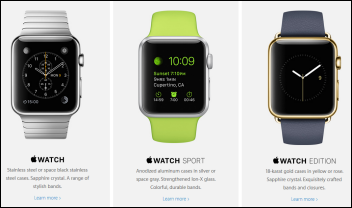
  4. Wearables. We are all growing tired of the huge number, but this spring will bring the iWatch. It will spur the market and create the needed tipping point that has been missing – software and apps to make wearables worth the effort. The iWatch will be huge, no, I mean really big! Apple will not be able to make them fast enough and waits will be measured in weeks. Innovation will abound and the Internet of Things will all start to make sense.
  5. Virtual reality will capture our imagination. Magic Leap will forever change things this year. The “cinematic reality” startup raised over $500 million from names we know. We will all soon understand why. Our imagination will be captured as we think about new ways we never imagined we could interact with a computer.
  6. Big data will stay flat. By the end of 2015, we will have nothing new to report. We will be using the same buzzwords and holding the same optimistic promises. 2015 just won’t be the year we figure it out. I do predict we will stop using the term “data lakes,” but I can’t tell you why.
  7. HIE obsessions will give way to FHIR talk. The HIE interoperability goal was moving the record from Point A to Point B. The yardstick has shifted and will be defined by how we can integrate workflows from site to site. FHIR will gain even more steam and be the talk everywhere.
  8. The VA decision will change everything. It won’t go to Allscripts, Cerner, or Epic (which will be unfortunate), and while the project will be huge and take many years to deliver, in 2015 it will act as an engine to drive standards and data structure conversations as a new open source style system will be born.
  9. 2015 will continue to set records in terms of health IT startup funding. Many major health systems will become more active by investing directly in companies in an attempt to capture the value they believe they help create. At least one health IT software company will IPO in 2015, setting a record. Cerner, McKesson, The Advisory Board, Allscripts, and Athenahealth will all continue to exercise one of the few advantages they have over Epic in the EMR space — they will continue to buy strategic assets to innovate at the fast pace required.
  10. Cerner will seek to divest the Device Works division so that it may become a company that can compete in the whole market, not just in Cerner accounts. The new entity will become a powerhouse and take market share from both Philips and GE.

Think my predictions are wrong or ridiculous? Don’t tell me why. Instead, leave me a comment and give me yours. Remember: be specific and be bold.

1-29-2014 12-54-46 PM

Darren Dworkin is chief information officer at Cedars-Sinai Health System in Los Angeles, CA. You can reach Darren on LinkedIn or follow him on Twitter.

Readers Write: Oh, To Be a Dog in Boulder

January 21, 2015 Readers Write 2 Comments

Oh, To Be a Dog in Boulder
By Bonny Roberts (and Juneau and Lily)

image

I adopted my standard American bulldog, Lily, from the Humane Society of Boulder Valley (HSBV) about two years ago. Due to her excessive and exuberant tail-wagging that resulted in a chronically open wound at the tip of her tail, we decided that, while the burgundy, Jackson Pollock-esque wainscoting that now decorated our home was provocative, we needed to dock Lily’s tail.

HSBV’s veterinary clinic agreed to do the procedure “at cost” since she had so recently been adopted. The bill was $300. Since that experience, I have taken both our dogs to their veterinary clinic for annual checkups and emergent needs. The staff is friendly and responsive and the veterinarian has a strong bedside manner and always calls post-procedure. 

My other dog, a Siberian Husky named Juneau, required two surgeries in 2014 to remove mast cell tumors, the first near her shoulder, the second on her hip. The latter healed poorly based upon its location and required both an after-hours urgent care visit and one additional “observation day” at the clinic. I paid for everything out of pocket – prep, anesthesia, supplies, vet time, OR time, meds, the “Cone of Shame,” recovery time in post-op, urgent care, observation day, suture removal. The total was $875, not to mention the complementary pedicure they had given her while under anesthesia. 

A couple of weeks ago, the HSBV veterinary clinic sent me a link to a Pet Portal. After an easy enrollment process –consisting mainly of creating a login id and password, I instantly had access to both my dogs’ vaccination, visit, and medication history. I also had the option to:

  • Set alerts and reminders for vaccinations and appointments (medical management).
  • Join community groups (social).
  • Read care guidelines on everything from behavior and aging to safety and disease (education).
  • Review diet details, if applicable (education).
  • Create a customize care instruction document, which after investigating in detail, could only be compared to discharge instructions inclusive of a pre-populated med list and exercise routine (care transition).
  • Complete a customer survey (satisfaction and quality improvement).
  • Schedule our next visit based on visit categories, such as vaccinations, sick exam, follow-up, blood work, etc. 

image

I couldn’t help but compare my own lack of portal access with my primary care provider or the fact that my children’s pediatrician used to charge to fax over immunization records. If only I were a dog in Boulder County, my information would be far more accessible. 

Interesting facts about the Humane Society of Boulder Valley, a non-profit facility based in Boulder, Colorado:

  • HSBV is a no-kill, or live release, shelter that also offers behavioral training and medical services to stray and relinquished dogs and cats.
  • On average, dogs are adopted in seven days, cats in 12. In 2013 alone, they facilitated 5,698 adoptions. The relevance to this volume is that according to their annual report, “Medical rehabilitation mends the bodies and spirits of more than 40 percent of the animals in the shelter annually. In concert with our medical care, we are dedicated to the mental health of our animals as well. Techniques and protocols developed at our facility are now being used by shelters to save more lives all across the country.”
  • The HSBV has ~700 volunteers and each dog gets three walks a day, while each cat is played with or stroked four times a day.
  • Fifty percent of the organization’s income comes from investment and trust income and contributions, with 55 percent of that going to healthcare for the sheltered animals

While this study and comparison is apples to oranges on many levels, I do think there is relevance and value to the comparison. What can we learn from organizations serving other verticals with similar missions, much like we do with foreign healthcare systems? In addition, I am convinced that the innovation and technology we have developed and are promoting here in the US has incited progress and more encompassing services to meet the holistic needs of more than just humankind.  Here is to small victories. 

Bonny Roberts is director of sales operations for Aventura of Denver, CO.

Startup CEOs and Investors: Michael Barbouche

Why I’m Happy That I Did Not Go to the JPMorgan Conference (Or, You Can Go Back to College)
By Michael Barbouche

10-9-2013 11-34-07 AM

Now in the sixth year of my entrepreneurial journey with Forward Health Group, one thing is abundantly clear—I don’t watch TV. No, really. I know nothing. “Breaking Bad?” That’s my email inbox. Many things in my world come down to the wire, but not “The Wire” [1]. About the only thing I do try and sneak into the mix is college football. [2] Fall Saturdays are my day. Social media? The only social texting in my life involves my beloved Badgers and occasional jabs at impostors. [3]

Now that the college season has ended, I will miss many things:

  • Tailgating.
  • The University of Wisconsin Marching Band, the best college band, ever, in Intergalactic [4] History.
  • SEC-on-SEC cannibalization.
  • The games that immediately follow Notre Dame’s annual 7-0 start.
  • Dish Network’s kangaroo-imbued commercial (you know, the one with Heath Shuler, the pretty boy from USC, and The Boz!)

I was reminded of Dish’s fluffy kangaroo as I read Marty Felsenthal’s very entertaining (and accurate) post last week. Having attended JPM last year, let me be the first to share the secret with my struggling peers. Yes, you can go back to college! JPM is nothing more than a return to your freshman year—cluelessness, social awkwardness, and the occasional spilled beverage.

Let’s begin.


Cluelessness

The first thing you need to know is that the JPMorgan folks must be pretty powerful because even the Google can’t point you to the conference registration page. Try a search right now. Here’s what no one tells you—JPMorgan is like that blowout fraternity party you didn’t attend during your first week on campus. If you don’t have an invite, well, sorry, you’re not going to the actual party.

And, as a matter of record, freshmen just don’t get invited. Those are the Rules. I spent three days hoofing up and down the hills of San Francisco and never once saw your typical conference nametag. No lanyards were spotted. I would ask people, “Hey, where is the conference — you know, the actual JPMorgan event?” None of the folks I met could give me the answer.

Cunningly, JPM is setup just like your college class schedule. But for the first couple of days, you are the only person that doesn’t know how it works. Soon, however, you begin to understand the cryptic system. Meetings are scheduled on the hour, every hour. The meetings really can’t last more than 40 minutes because you need to sprint to your next meeting. Invariably, you are late to every meeting, and as you the entrepreneur stare at the clock, the fear of outright missing the next appointment overcomes your consciousness. Like the phantom fear of missing a final exam, you begin to sweat for no good reason.


Social Awkwardness

Imagine a square drawn around Union Square—four blocks by four blocks. Think of this as a human dog park. There are people running all over the place with no particular destination in mind (how else to describe the same people running the opposite direction four minutes later?) [5] The entire reason you are in San Francisco is to engage in brief, repeated sniffing sessions. After your fifth pitch session (of the day), you begin to figure out a few of the signals. [6] By Day Two, you have the routine down:

Savvy Investor (in his 43rd pitch meeting of the week): “What were your revenues last year?”

Struggling Entrepreneur: “We had a pretty good year. We did [$x]! We are really excited about this year—we think we can do [$4x], which is really great.”

Savvy Investor: “That is great. Wow. I must say, however, that our minimum investment for this fund is [$15x]. We have invested in companies as low as [$10x], but that’s atypical.”

[two minutes of awkward stumbling and rambling comments by Struggling Entrepreneur …]

Savvy Investor: “We definitely want to stay in contact with you to monitor your progress. Is it OK if we follow up with you later in the spring to see how you’re doing?”

Struggling Entrepreneur: “Sure. And thanks for the bottle of water.”


Occasional Spilled Beverage

On that Tuesday morning of JPM week, you are filled with excitement. The reason you are in San Francisco in the first place is because all of the analysts [7] at VC firms use the exact same Salesforce install with the exact same auto-email template. Beginning in late November, the auto-email template updates to include this sentence:

“Also, wanted to set a time to meet with you at JPM.” [8]

As you scan your full roster for the day, you see that the first discussion lists “2317 HYATT” as the meeting location. You are six blocks away from Union Square and you realize that there is a plurality of hotels named “HYATT” in San Francisco-proper. [9] When you get to the correct Hyatt, your native instinct is to look for the conference rooms. Oddly, when you get off the escalator, the conference rooms are named after landmarks — no numbers. A few minutes of elevated heart rate leads to a discovery—23rd floor! You get off on the 23rd floor, and, again, look for conference rooms. No such luck. You walk down the corridor of hotel rooms. Whoa, room 2317. Could it be? Seriously? You knock. The door opens. There are numerous men dressed [10] in those flat-front, skinny lapel suits that only the “I’m training for an Iron Man right now but I’m doing a half in April” triathlete crowd wears. This is your meeting location.

Think of the scene in the hotel room like the pre-party before the house party hosted by the older brother of your new college roommate’s friend’s cousin. You “know” only one person in the room—the analyst guy who emailed you to setup the meeting. There are not enough chairs. The bed has been moved into the corner to serve as a sectional sofa. The coffee table is in the corner serving as a buffet table /business card holder [11] / collection point for half-emptied water bottles. There are more butts than there are flat surfaces. Someone will be standing the entire meeting.

The hotel room door opens often as new people in skinny suits enter the room and current participants exit gracefully. That is, until one of the bed-sitters has to be excused for another meeting. This is what triggers the coffee or juice or soda spill. Thankfully, the beverage vessel is usually half-empty [12] and your analyst friend quickly jumps in with a bathroom towel to avoid a dry cleaning situation.

Though I did not attend JPM this year, I have few regrets [13]. If you are an entrepreneur and you are contemplating JPM in 2016, make your hotel reservations [14] soon. Your email invitation from that analyst is already in the queue.

Michael Barbouche [15] is founder and CEO of Madison-based Forward Health Group. At the 2014 JPM, Michael had dinner with Marty Felsenthal in the Wednesday evening 7:00 PM-8:00 PM slot.

[1] Note for Millenials–this is a reference to an HBO program that has not aired in years. You should be able to stream from your parent’s HBOGO account.

[2] True confession—I TiVo “College Gameday” to watch Lee Corso put on the headgear.

[3] Yeah, I’m talking to you, Goldy Goopher fans.

[4] Unclear if Epic has exclusive use of this term in the health IT space, so thought it was prudent to footnote. Further research needed on specific citation required.

[5] See below for explanation.

[6] If someone refers to you as “Jugdish, Sidney, or Clayton,” and that is not your name, the investors are likely to be working their iPhones before you have even finished your intros.

[7] The people who email incessantly to set up a call to pump information out of you.

[8] If you want to spend $145, you can verify with your lawyer—this simple inquiry is not the legal equivalent to a court-issued summons.

[9] During JPM, it is not uncommon to hear numerous exclamations that contain the phrase, “F*#@%ing Google Maps!”

[10] Ties are strictly prohibited. Obviously.

[11] At one of my meetings in 2014, there were business cards (face up) from two of my direct competitors.

[12] For the record, I view the vessels as half-full.

[13] I’m overdue in connecting with Ben Rooks and Michelle. Guys, we should chat soon!

[14] www.hotwire.com

[15] When I was in college, adding footnotes to your paper was complete pain in the ass. Now, it is so simple.

Morning Headlines 1/21/15

January 20, 2015 Headlines Comments Off on Morning Headlines 1/21/15

Mayo Clinic Selects Epic as Strategic Partner for Electronic Health Record and Revenue Cycle Management System

Mayo Clinic announces that it has chosen Epic to replace its incumbent Cerner and GE Centricity EHR and revenue cycle systems.

Federal Marketplace: Inadequacies in Contract Planning and Procurement

A report from the HHS Office of the Inspector General finds that CMS failed to oversee Healthcare.gov development work adequately, failed to review past performances of vendors selected for key Healthcare.gov contracts, and structured vendor contracts so that the risk of unanticipated cost increases were absorbed solely by the government, rather than shared among the selected contractors.

Geographic Clusters in Underimmunization and Vaccine Refusal

Kaiser Permanente uses its EHR data to pinpoint areas in California with low rates of childhood vaccination,  finding in one school that 50 percent of the children were unvaccinated due to “personal belief exemption.”

MMRGlobal Proceeds With $30 Million Patent Licensing Case and Files Three New Federal Appeals

MMRGlobal announces that it will appeal decisions made by the California district court to throw out its patent infringement lawsuit against Allscripts and WebMD.

Comments Off on Morning Headlines 1/21/15

News 1/21/15

January 20, 2015 News 6 Comments

Top News

image 

Mayo Clinic chooses Epic, as I mentioned a few days ago from a reader’s rumor report. Cerner gets a double whammy – not only do they lose the Mayo bid, some of their systems will be displaced as they (along with GE Healthcare) are the Mayo incumbent. Actually, there’s one more Cerner insult: former Mayo CEO Denis Cortese, MD sits on Cerner’s board.


Reader Comments

image 

From Banned in Boston: “Re: McKesson Horizon. The attached letter verifies its sunsetting on March 31, 2018. The event has passed with little fanfare since Horizon has become increasingly obsolete.” The letter, signed by McKesson EVP Pat Blake and President Jim Pesce, says the company will issue a Meaningful Use Stage 3 update and thanks Horizon users for their “partnership,” a trite, vendor-created synonym for “sending checks as a customer.”

image

From Jose Francisco: “Re: Scripps Health. Will be moving to Epic. Impact Advisors led the system selection – Cerner never had a real shot. Decision will become public in 30-60 days.” Unverified. Scripps chose GE Healthcare’s Centricity Enterprise in 2007 and Allscripts Enterprise for its outpatient clinics in 2009. Assuming the rumor is true, EMR critic and Scripps cardiologist and author Eric Topol, MD will become an Epic user – it will be interesting to see what he says about it among all of his smartphone infatuation. Update: I reached a non-anonymous source who says that Scripps hasn’t yet made a decision as far as he or she knows.

From Lips Pursed: “Re: HISsies voting. It’s just a popularity contest and the ballot choices are stupid.” Of course it’s a popularity contest, just like the Presidential election – what did you think it was? Readers (few of whom are stupid) make the nominations and vote for their choices as they’ve done since 2008, with the most-nominated entries appearing on the ballot. Having people who didn’t nominate anyone complain now is like moaning about the Presidential candidate chosen by your more responsible peers in that primary election voting you skipped.


HIStalk Announcements and Requests

The results of my reader survey are always interesting and useful. Thanks to those who responded.

Some nice point-counterpoint commentary was generated by CommonWell’s answers to HIStalk reader questions and a reaction article by Brian Weiss of Carebox. The comments are getting interesting as Brian suggests that (a) HIStalk readers vote as consumers on the approaches of the respective organizations, and (b) that the organizations consider developing a prototype for exchanging information securely and under the control of patients, driven only by their email address. They are also discussing patient-controlled health record banks.

Welcome to new HIStalk Platinum Sponsor Oneview Healthcare. The Dublin, Ireland-based company (with US offices in San Francisco and Pittsburgh) offers a Microsoft-powered customizable interactive patient care system that’s accessible by smartphone, tablet, or in-room TV. Patients get education, entertainment, communications services, messaging, scheduling, way-finding, meal ordering, nurse rounding, and remote consultation, while clinicians use it to access electronic medical records and other point-of-care applications. Two big reference clients are the newly built Chris O’Brien Lifehouse in Sydney, Australia (they have a patient experience focus and every patient interacts with the Oneview system) and UCSF Mission Bay (a three-hospital campus opening in a couple of weeks). Maimonides Medical Center (NY) SVP/CIO Walter Fahey says, “The capability that the Oneview solution can deliver is second to none and it will transform the healthcare experience, not only for our patients, but for our healthcare teams and hospital managers.” Thanks to Oneview Healthcare for supporting HIStalk.

I found this overview video of Oneview Healthcare on Vimeo.

Listening: Gary Lewis and the Playboys. Like most of America, I can’t understand how the unattractive, minimally talented son of the annoying Jerry Lewis could have become a 1960s pop star, at least until his career was waylaid when he was drafted and shipped off to Vietnam in 1967. I’ve seen him live a couple of times –he’s good natured (he’s 68 now) and he had some massive songwriting and production firepower behind his records. I have a strong need to hear “This Diamond Ring,” “Palisades Park,” “Everybody Loves a Clown,” “Save Your Heart for Me,” and “Little Miss Go Go “ every few years. Trivia: there were no actual Playboys on the records – it was all Gary and some studio musicians, heavily overdubbed and recorded using the opportunity created by his mom’s money and his dad’s name.


Acquisitions, Funding, Business, and Stock

image

Xconomy profiles nonprofit Wisconsin investor BrightStar, which funnels charitable donations of around $200,000 to complete funding rounds for early-stage companies that are creating state jobs. It quotes Forward Health Group CEO Michael Barbouche, who says working with BrightStar is painless and easy.

image

Patent troll MMRGlobal challenges recent court rulings in which its infringement lawsuits against Allscripts, WebMD, and others were rejected. Above is an illustration from one of its 13 patent applications from its 300 open lawsuits. MMRGlobal’s penny stock shares (literally: its shares are listed at $0.01 on the pink sheets) have dropped 59 percent of their value in the past year. Founder Bob Lorsch and his spokesperson/president wife were featured in a 2012 TV show called “Interior Therapy with Jeff Lewis” in which they are portrayed as emotional hoarders of a crammed houseful of stuff. I interviewed him a couple of year ago and found him charming and his product interesting, although the endless lawsuits overshadow all of that. He made one of his fortunes selling 976 telephone services in the 1980s, including a Santa Claus hotline (he sued a phone sex company for using a number similar to his) and running a children’s 976 phone service as a fundraiser for museums in which he kept $1.75 from each $2 call.

image

The Washington Post profiles hCentive, a software development company started by a guy who in 2009 downloaded a copy of the Obamacare bill the Senate was then debating and saw opportunity. The Affordable Care Act was signed into law nine months later and the three-person company now has 700 employees and $50 million in annual revenue after building four state exchanges and being signed by the federal government to build a small business site after it fired CGI for the failed Healthcare.gov rollout.


Sales

image

Wheaton Franciscan Healthcare (WI) chooses Epic in a $54 million, five-year project.  

image

Southeastern Health (NC) chooses eClinicalWorks Care Coordination Medical Record.

Aetna selects HealthEdge’s rules-powered health management system for payors.


People

image

Randy Carpenter (Omnicare) joins Stoltenberg Consulting as SVP of strategic services.

image

Xerox Government Healthcare names Scott Bennett (Siemens Healthcare) as SVP of sales.


Announcements and Implementations

PeriGen announces a doubling of its customer base in 2014, with 140,000 births to date supported by its PerCALM Tracings electronic fetal monitoring system.

image

St. Maarten Medical Center says it will be the first hospital in the Caribbean to use a fully electronic system when it completes its implementation of CPSI, which replaces a Siemens MedSeries4 system that was “no longer reliable and nearing a system failure.”

GE Healthcare and NextGen earn EHNAC’s first practice management system accreditation.


Government and Politics

image

Computer scientist Kathy Pham, a new employee of the United States Digital Service, attended Tuesday night’s State of the Union address as one of 22 guests invited by the White House. She has been a healthcare informatics researcher, a software engineer for Harris Healthcare Solutions, and a healthcare consultant with IBM. She also serves as a patient advocate for her mother, who has acute lymphoblastic leukemia.

image

A report by HHS’s Office of Inspector General finds that CMS’s work on Healthcare.gov was sloppy, hurried, and poorly overseen, awarding no-bid contracts worth hundreds of millions of dollars without reviewing past company performance or having firm requirements defined. As has been widely reported, CMS hired 33 companies to work on the site, but didn’t name any one of them to be in charge, although they just assumed that CGI Federal was running the project. The agreements also didn’t cap payments and allowed overbilling with minimal documentation, so some companies were paid up to three times their bid amount. CMS originally estimated the value of six key contracts at $464 million, but has paid $824 million so far.


Privacy and Security 

A security company finds that Healthcare.gov connects in the background to dozens of private websites, including Facebook, Google, and Twitter, raising concerns about cybersecurity exposure and whether user information is really private.


Innovation and Research

image

A new research article describes how Kaiser Permanente analyzed its EHR information to identify neighborhoods with a low rate of childhood vaccinations, allowing it to mount outreach efforts to five areas. One private school had a 50 percent rate of “personal belief exemption.”


Technology

in England, the medical director of NHS says wearables will play a vital part in future health in allowing people to be monitored at home for irregularities in heart rhythm, breathing, and edema. He adds that NHS will push a “huge rollout” of those technologies.

image

Bizarre: Airbnb-inspired Airpnp lets app users in need of a bio break rent bathrooms in private homes. The founders were inspired by a New Orleans decision to ban street-located Porta-Potties during Mardi Gras. It’s hard to fathom that sellers would allow a stranger into their homes (and bathrooms) for a dollar or two. It sounds like a spoof to me, but then again it’s sometimes hard to tell if a startup is serious. Perhaps the same skepticism applied early on to Uber, however, which just announced that its San Francisco revenue alone is $500 million per year – nearly four times the entire taxi market there — and is growing 200 percent per year.  

Microsoft patents user-configurable technology that can automatically dim and silence a smartphone when the phone’s GPS detects that the user has entered a theater, when it senses darkness and quiet, or when so instructed by the Wi-Fi system being used.


Other

image

An epidemiologist with New York City Department of Health and Mental Hygiene tells the Health IT Policy Committee that fast outbreak identification and control requires better integration between EHRs and its disease surveillance system. She envisions EHRs sending real-time data for surveillance and then receiving back prompts for additional information, such as patient demographics.

A North Carolina OB-GYN says doctors should use computers and not vice-versa, urging his peers to look at the patient instead of the screen. “The folks who sold us these systems talked about all the wonderful things EMR can do … One might assume the EMR would excise the tumor, lower the blood glucose and stop the hallucinations. The problem is that the EMR really should not ‘do’ anything. Patients tell us their concerns. Practitioners do their best to listen and perform the appropriate evaluation, with or without technology … everything we need to know about our patients is in their face, in their voice, and in their eyes.”

image

Forbes India profiles India-based Narayana Health, whose first non-India hospital opened in the Cayman Islands a year ago in a partnership with Ascension Health. Founder and cardiac surgeon Devi Shetty got the idea for his medical tourism hospital from a friend who mused, “The most profitable hospital in the world is the one which is built on a ship and parked outside US waters because it gets to serve American patients and yet stays away from its jurisdiction.” The hospital has implanted an artificial heart for what Shetty says is less than half of the $1.2 million US hospital price. He’s working with two US-based health systems on new hospital software (I’d be curious to learn more about that) and is talking about starting a Caymans medical school.

image image

Weird News Andy likes the glucose-monitoring temporary tattoo on the left better than the diabetes-hating one on the right, although I’ll add that both might illustrate diabetic monitoring assuming there’s a Diastix right above the word “diabetes.”  


Sponsor Updates

  • Zynx Health VP Guillermo Ramas writes about attaining the impossible in the company’s latest blog.
  • Frank Myeroff of Direct Consulting Associates interviews Denver Health CIO Jeff Pelot.
  • Huron Consulting Group will exhibit at the AHLA 2015 Legal Issues Affecting Academic Medical Centers and Other Teaching Institutions conference in Washington, DC from January 22-23.
  • Voalte Product Manager Anthony Mitchell blogs about the smart use of smartphones in the latest company post.
  • ExitEvent highlights Validic and its relationship with digital health startup Qardio.
  • T-System Clinical Systems Engineer Deon Melton, RN shares “Life Lessons Learned in the ER” in a new blog.
  • Caradigm Director of Product Marketing Scott McLeod pens a new blog, “All Signs Point to Population Health Management.”
  • AtHoc President and CEO Guy Miasnik writes about the role AtHoc technology played in protecting Gritman Medical Center from an active shooter.
  • The local business paper highlights the venture capital funding raised by CareSync in Q4 2014.
  • CareTech will attend the January 28 MCACHE event on “Building a Leadership Team for the Healthcare Organization of the Future.”
  • AirWatch’s Noah Wasmer offers five end-user computing technology predictions for 2015 in a new blog.
  • ADP AdvancedMD offers tips on leveraging practice data to view key performance indicators in a new blog.
  • Besler Consulting offers advice on how to increase Medicare EHR incentive payments.
  • Aventura will exhibit at the IMN Health Impact Conference of the Southeast in Tampa on January 23.
  • CitiusTech achieves the ISO 13485 quality management system standard for medical devices.
  • CoverMyMeds shares a moment with Account Coordinator Josh Campanella in the latest installment of its “Hey, You!” blog series.
  • ABCNews.com lists Clockwise.md amongst other companies making a name for themselves developing online booking software.
  • CommVault launches new endpoint data protection to secure, support, and back up mobile enterprises.
  • Craneware lists its goals for 2015 in a new blog post.

Contacts

Mr. H, Lorre, Jennifer, Dr. Jayne, Dr. Gregg, Lt. Dan.

More news: HIStalk Practice, HIStalk Connect.

Get HIStalk updates.
Contact us online.

125x125_2nd_Circle

Startup CEOs and Investors: Michael Burke

January 20, 2015 Startup CEOs and Investors Comments Off on Startup CEOs and Investors: Michael Burke

Accelerators and Incubators: Have They Jumped the Shark?
By Michael Burke

image

It seems lately that startup incubators and accelerators have become like belly buttons — everybody has one. The number of healthcare-specific platforms has increased dramatically over the past few years. A skeptic might ask if we are in an accelerator / incubator bubble. A more important question might be, “Why should I care?”

If you’re an aspiring startup founder, you may care. The well-known accelerator/incubator platforms like Techstars and Y Combinator can serve the same purpose for a startup founder as a Harvard MBA does for a young executive who wishes to climb the corporate ladder. They open doors and provide a measure of validation.

The jury’s still out on whether the newbie platforms will offer similar cachet. One of my fellow “villagers” at the Atlanta Tech Village, Kyle Porter (Founder/CEO of SalesLoft) mentioned that his experience at Techstars Boulder with Brad Feld immediately prequalified him and his company in the eyes of investors, partners and potential employees. He states:

“Accelerators taught us how to navigate the investor landscape, put together a presentation, and connect with relevant mentors.  And the networking benefits are insane.”

If you are an investor, you definitely care. A friend of mine, Greg Gottesman, is uniquely qualified to comment. Greg is an informal advisor to Clockwise.MD (my startup), and he has a vested interest in the topic. In addition to founding Rover.com and serving as Managing Director of Madrona Venture Group, he also leads Madrona’s recent leap into the incubator world: Madrona Venture Labs. Here’s what he has to say:

“To the extent that accelerators and incubators enable more ideas to be tested quickly, I think they are a good thing. But most of these early concepts won’t and shouldn’t get funded with significant dollars. The best teams and ideas — the ones with customer traction and viable business models — will stand out relatively quickly. I wouldn’t look at the percentage of successes these accelerators and incubators create over time, but rather whether they can produce a small number of meaningful winners.”

Accelerators and incubators can clearly help investors sort the wheat from the chaff early in the life of a startup. David Cummings is a serial entrepreneur, partner in Atlanta Ventures (which has its own accelerator), and creator of the Atlanta Tech Village( a “community of innovation powered by a 103,000-square-foot building”). The Tech Village is a big laboratory of over 100 startups ranging from companies consisting of a single person to upwards of 50. In addition to the ping pong tables, gaming consoles, and free Cokes, there’s also a ton of exciting stuff happening — lots of big successes and big failures, all of which are observable to the community there. It’s not strictly an accelerator, an incubator, or even a co-working space. It sort of combines the best of all those platforms. David states the advantages simply:

“[These platforms] help bring structure to a messy process and increase the likelihood of success.”

That’s fine for an aspiring founder or an investor, but how does that help the purchasers of the innovation these platforms are supposed to generate? What’s in it for health IT customers?

My company has had a number of big customers choose us over larger competitors. These customers know that a startup (i.e., a company whose size makes them more flexible and responsive) can give them a greater measure of control over the process of solving a problem with technology. They assume (correctly) that they’ll have more influence over the final deliverable than they might if they worked with a bigger company. A startup from an accelerator, incubator, or “community of innovation” can – as David Cummings pointed out – increase the likelihood of success and mitigate the risks for the customer.

Donna Hyland is the CEO of Children’s Healthcare of Atlanta (CHOA). CHOA is one of the largest and most recognized health systems in the US dedicated to the care of children. She and her staff have been regular visitors to the Atlanta Tech Village and work with several companies from the village, including Clockwise.MD. Here’s what she has to say:

“Atlanta is very fortunate to have a burgeoning community of technology innovators and entrepreneurs. Children’s Healthcare of Atlanta is continuously looking for ways to better care for and serve our patients and families. We are working with companies from Atlanta Tech Village on great tools to improve care and the patient experience. We are grateful to have so much technology talent in our community.”

Back to the original questions. Are there too many incubators and  accelerators? Do they add value?

I don’t know if there are too many of these platforms, but I suspect that many if not most add value. If we revisit the business school analogy, we see that not everyone can get into Harvard, but most will probably still get a great education at a lesser B-school. I assume the same is true for these innovation platforms. I further assume that accelerators and incubators themselves are subject to the same Darwinian forces that send the majority of startups out of business, and that we’ll see a changing of the guard, if not a thinning of the herd, over the next several years.

Michael Burke is an Atlanta-based healthcare technology entrepreneur. He previously founded Dialog Medical and formed Lightshed Health (which offers Clockwise.MD) in September 2012.

Comments Off on Startup CEOs and Investors: Michael Burke

Morning Headlines 1/20/15

January 19, 2015 Headlines 1 Comment

The Role of Health Information Technology in Care Coordination in the United States

A study evaluating the role that health IT systems play in coordinating care finds that a higher percentage of physicians using HIT received patient information necessary for care coordination than those who did not use HIT

ACOs make progress in using big data to improve care

Modern Healthcare takes a look at the slow progress being made as ACOs work to roll out effective data analytics systems.

2015 Top 10 Hospital C-Suite Watch List

ECRI names 3D printing, Google Glass, telehealth, and alert fatigue to its 2015 hospital c-suite watch list.

Cleveland Clinic joins 5 Ohio health systems to form statewide healthcare collaborative

The Cleveland Clinic, along with five other Ohio health systems, have formed the Midwest Health Collaborative, which will share information in an effort to improve quality and reduce costs within the state.

Curbside Consult with Dr. Jayne 1/19/15

January 19, 2015 Dr. Jayne 7 Comments

Several readers have sent words of encouragement after reading about my last few weeks in the CMIO trenches. I definitely appreciate all of my virtual colleagues, even those who just write to say they understand and to wish me calmer seas. It sounds like many of us are going through the same trials and tribulations even though some of ours may be a little messier than others.

Our hospital is part of a larger health system that has announced its intent to replace all the clinical systems with a single vendor platform. I’m taking a couple of days off this week to really put my thoughts around whether I want to stick around to watch it happen.

I understand the need to consolidate systems. Our IT department is larger than nearly any other except for nursing. The budget for maintaining this “ultimate best-of-breed nightmare” is exorbitant. Many of our systems feel like they’re held together with duct tape, baling wire, and bubble gum. Some of them are just plain old. And several hospitals are on a platform that is being sunset by the vendor, so their systems simply have to go.

Being part of the larger project to turn this new single-platform vision into a reality is potentially exciting. But it also looks a little bit like a bottomless pit of long hours with not enough staff to work at a pace that would allow us to deliver a quality system without burnout. It’s also difficult to know that the health system has plans for how they plan to handle legacy clinical data that will not make our ambulatory physicians very happy.

Those of us that are “in the know” about the strategy have to keep quiet until it’s formally announced. I’m not used to being told what I can and can’t say to the physicians I serve.

It’s also bittersweet to watch systems be torn out when you’ve spent the better part of your professional career building them. We’ve held our users’ hands while they learned them and while they coped with upgrades. We’ve been at the other end of plenty of angry phone calls, but we’ve also heard the appreciation when we started to provide data to help proactively manage complex patients and to identify gaps in care. Of course our new system will also do this, but it was special to see how physicians reacted the first time they realized it was possible. Now those features have become old hat.

In addition to consolidating systems, our leadership also plans some pretty radical consolidation among hospital leadership and medical executives. We’ve always functioned as a federation, but this is taking us much more towards a centralized clinical and financial model and it’s not entirely welcome. A couple of chief medical officers have already moved on and I suspect a couple of hospital-level CMIOs and CNOs are planning to move as well.

On the non-clinical side, however, mid-level administrators seem to be proliferating. The number of buzzwords in an average hour of meetings has skyrocketed. We have four different consulting companies involved and they’re stepping all over each other with contradictory advice.

I’m not sure I want to leave the provider aspect of the CMIO game. There are definitely opportunities out there, but I really don’t want to relocate unless something pops up in Hawaii, in which case all bets are off – the idea of living in a place where the difference between winter and summer is 10 degrees does have a certain appeal. I just started clinical work with a new group that has a lot of promise and an extremely low chaos factor, which is a welcome change. I also spent the fall doing a ton of work on my garden and can’t imagine walking away.

There are some interesting vendor opportunities that don’t require relocation, but I’m not sure about crossing that bridge. My friends in the vendor space seem less stressed than those of us on the provider side (except during Meaningful User certification testing, in which case I recommend either steering clear or providing copious amounts of wine and moral support). It will be interesting to see if any new opportunities arise as we get closer and closer to Meaningful Use Stage 3.

Consulting is also an option, but I’m not sure I can handle being on the road as much as most of the larger firms expect. I’ve also heard the horror stories about being on the billable hours hamster wheel. I’ve dabbled in consulting over the last several years and would consider going out on my own as long as I have some ongoing clinical work as a financial safety net. I’m not enamored of what clinical practice has become in the last decade, however, so going full-time is not an option.

Today was my day to relax and think about nothing work related, but tomorrow is my day to sit down, run the numbers, and see if I can come up with a business plan that might fly. Wednesday I’m getting together with a couple of colleagues in the same boat, where we can trade ideas and see if anyone else has come up with a better plan. Thursday I’ll be back in the office, and it will be interesting to see how that plays since I’ve pledged not to touch my email or answer my phone while I’m out. Appropriate backup resources are in place, but I know my boss isn’t used to being unable to reach me. He’ll just have to get over it.

Here’s to crunching the numbers and hopefully to some new ideas about my next career move.

If you could do anything you wanted, what would it be? Email me.

Email Dr. Jayne.

Startup CEOs and Investors: Brian Weiss

Common CommonWell Thoughts (or, Who is Working on A National Social Being Identifier?)
By Brian Weiss

image

Did you read the CommonWell piece on HIStalk?

Mr H. did us all a great service in providing a platform for directing HIStalk reader questions to the CommonWell alliance from Cerner and company. Yes, I know that only 60 percent of the panel responding to the questions actually works at Cerner, but my articles are too long already without listing the full membership of CommonWell. I hope you’ll forgive me if Brightree isn’t the first vendor that jumps to mind when I think about CommonWell.

Given the fact that CommonWell is not consistently spelled “Commonwell,” we need to be especially appreciative that Mr. H gave them publishing space. I’m only allowed to write this article because I named my company “Carebox” even though I’m still waiting for the first person not related to me to spell it that way rather than “CareBox.”

Now, if you’re reading this article (clearly you are) and you still didn’t read that one (and you’re not related to me), you need to do a better job prioritizing what parts of HIStalk you read. We’ll all wait for you here while you go read that piece.


The Alliance

CommonWell is an “alliance.” I’m pretty sure that was selected over “empire” in the tight balloting in the CommonWell name-calling subcommittee because of the whole “Star Wars” context. For those who slept through the relevant decades, the “Alliance” is what you call the good guys, and if you’re reading this article and never saw “Star Wars” (even if you’re related to me), you really need to work on overall life balance.

By the way, I’m not 100 percent sure they have a formal name-calling subcommittee at CommonWell and, yes, I’m aware that the term “name-calling” has other connotations that have little do with HIT (OK, maybe a little).

From the questions that appeared in that article and the comments building up afterwards, it appears that there’s a bit of debate among some readers of HIStalk as to whether this alliance really gets to wear the orange jumpsuits and fly the Y-wing fighters. I’m not interested in getting into that debate. However, given my recent self-appointment as the voice (representing nobody) of innovative (self-labeled) startup companies that are seeking to leverage consumer healthcare data in various applications and services, duty calls! Give me just a minute here to adjust my cape. OK, ready …


Is a Patient in HIT a Subordinate Clause of Their Provider?

The quote I want to focus on from the CommonWell article is this one:

A single connection to the CommonWell network will enable providers and the patients they serve to access to [sic] their health information at all those various systems and organizations and won’t require peer-to-peer contracting for each provider you need to reach.

I was busy doing my math homework when we were in English grammar class so I don’t know if “and the patients they serve” is actually a subordinate clause or not. I’ve got a sinking feeling, though, that the high-sounding “serving the patient” expression doesn’t change the fact that whoever wrote that sentence views patient access to their own data as “subordinate” to the healthcare IT vendors and their healthcare provider customers. And nobody can mistakenly think that the “you” in “each provider you need to reach” from the quote above, refers to the patient/consumer.


The Missing Patient Service

I went to the CommonWell services page and I couldn’t find the service whereby a patient can request a copy of their healthcare records from everyone on the CommonWell network.

Interestingly, the word “patient” appears seven times on that page. There is talk of how to “link patients across organizations” and “patient identification” and even “patient-authorized.” But as far as I understood, that all seemed to be in the context of how providers exchange information with each other behind the patient’s back.

In both the body of the article and the comments section, there was quite a bit of back-and-forth about payment models and how the revenue pie should be shared among CommonWell members (vendors), the doctors who contribute the data, and McKesson (the company that got picked to provide the service).

There were also some interesting analogies made to financial transactions. Indeed, I believe there is a whole world of “behind the consumers’ backs transactions” that take place across financial institutions and in other EDI contexts. But at the end of the day, as a consumer, I can get a (free) copy of all of my transactions from all of my financial providers. And I can use a service like mint.com to act on my behalf and make it easier and more valuable for me to do that.

I’m not saying that’s the ideal model, is consumer-centric enough, or (conversely) is directly/fully appropriate for healthcare. But it’s interesting to think about how it works relative to how things are intended to work – and not only in CommonWell – when it comes to healthcare networks.

Curiously, I don’t recall that there was a need for Congressional involvement in order to establish a National Banking Identity for everyone. If I want to establish a mechanism to transfer money from my checking account to my mutual fund account, I set that up and provide the authorizations. As far as I know, the mutual fund company and the bank aren’t part of an “alliance” that provides “identification and linking services” to make sure they correctly match my bank account with my mutual fund account so that they can move information about me between them once they get me to sign a consent form I don’t fully understand while I’m at the bank teller.


What’s Your National Photographer ID?

Given how tough it is to do patient matching (I have a little MPI experience and it really is pretty tough), I’m amazed that Instagram has manage to get as far as they have without a National Photographer ID. How come LinkedIn doesn’t need my National Employee ID and Facebook doesn’t need my National Social Being ID (or my National Annoying Communicator ID for WhatsApp?)

It seems that by some miracle, armed with nothing more than an e-mail address, I can securely and reliably authorize any sharing network I want about my most sensitive information. Oh, wait, there is one catch — I have to be a little involved in process.

If my mom and my wife want to share information about me without me being involved (scary thought) then I suppose they would indeed need some kind of ID and matching process to ensure they aren’t sharing information about someone else when they use their “record locator service” to access each other’s database of information about me. But if I have my information stored with each of them in my e-mail-keyed (and easily validated) account that I maintain with each of them (hey, it’s an analogy, relax) and I authorize the sharing, it doesn’t need an act of Congress to get the information flowing.


This is Not Just a CommonWell Issue

Now if it sounds like I was being disingenuous above about not taking sides on CommonWell while adjusting their Darth Vader helmets, that’s a mistake. As far as I can see, CommonWell is mostly providing a more practical and commercially effective model for what the US government said it wanted to do all along in terms of national health networks – with the usual vendor politics and dynamics in play, as is to be expected.

Whether it’s FHIR as per my previous article, CommonWell in this one, Epic openness debates, or evaluation of data interoperability strategic roadmaps, I think one of the litmus-test questions has to be something like this:

How does your (standard, service, alliance, network, system, strategy, roadmap) empower a consumer to exercise their HIPAA-mandated right to get an electronic copy of their healthcare data and share it with (family, caregivers, providers, research groups, pharmacist, clinic, employer, people who will pay them for it, whoever) whenever they want?

CommonWell may have a better answer to this question than most, but it isn’t shining through yet clearly enough for me in their article on HIStalk or on their web site.

Is that a question from the noble, bright, and good part of the Force? Not necessarily. It’s as self-serving as anything in the CommonWell materials or anything else. I have a smaller company than Cerner to try and make successful, so if anything (deliberately using that word a third time in this paragraph – and breaking the flow of the paragraph – again – so I can generate some loyalty from the commenter who critiqued my problematic writing style in my last article), I can afford to be even less altruistic.

In the interest of transparency, I’m working on a draft resolution for my upcoming board meeting to have our name-calling committee allow me to swap out “CEO/Founder” for “Emperor.” I’ll let you know how it goes.

Brian Weiss is founder of Carebox.

HIStalk Interviews Ted Reynolds, SVP, CTG Health Solutions

January 19, 2015 Interviews 3 Comments

Ted Reynolds is senior vice-president of CTG and is responsible for CTG Health Solutions

image

Tell me about yourself and the company. 

I’ve been in healthcare since the 1970s. My first go-round was in June 1979. I started off working for a hospital, the last of which was Stanford, and worked for a couple of vendors. Then I went to the dark side and went to consulting.

CTG is a long-established firm, having been around 48 years. I lead the healthcare division, which includes payers and providers. We’re one of what KLAS used to call Tier 1 firms. We provide a full breadth of services — advisory, planning, implementations, technical services, and application management. People know us a lot for legacy support since we do as much of that as anybody in the country.


CIOs are getting pulled in a lot of directions. What are they focusing on most?

Oh, boy, they’re getting pulled in all directions. A lot of them have been chasing Meaningful Use dollars trying to get EMRs implemented. But in the future, it’s going to be very confusing as people start to transition from volume- to value-based payments, whether you call it an ACO or population health or whatever. Those are going to be very complex. It’s going to change the paradigm to where you’re going to be reimbursed for not doing work. It’s going to be very interesting to see how they evolve. I think it’s going to be difficult for them.


What projects are requiring people to call you for help?

Because we work on the payer side, we help a lot of organizations as they move into the ACO world. We’ve been helping a lot of them set up patient-centered medical homes. We’ve been doing planning for that — getting tied into the physicians, helping them do evaluations of systems they should look at. We’ve worked for some of the payers in looking at what they need to do to help them manage the populations.

This is kind of like HMOs II. In the early 1990s, it didn’t work very well. A lot of them, candidly, really didn’t have the data. Most of them were trying to manage their populations using claims data. That’s like trying to drive a car looking in your rear-view mirror because the data is two months old. Now with EMRs, I think they will have more success.

But there were still some early successes back then. Kaiser and some of the large group models actually succeeded and survived, but a lot of them did fail because they couldn’t manage the risk. I’m hoping that we can see something that will drive the cost down. That’s going to be a lot of the challenges we’re seeing with the groups. 

A lot of the hospitals and large physician groups are looking are mergers and acquisitions. Who do you play with, how big do you need to be to absorb a risk. Because if you start going in some sort of capitated risk arrangement, you’ve got to have a pretty large financial base to survive.


Interoperability isn’t just a technology problem because hospitals don’t have much incentive to share risk with competitors. What are they telling you about their desire to exchange information with other health systems?

You hit the nail right on the head. A lot of them are competitors and they do not want to share their information. I don’t want to make it easier for you to steal my patients from me.

But I think you’re starting to see more and more of that break down as we go forward. If they go with some sort of at risk where they share any risk for a population, they’re going to have to share their information. I think that’s going to break down the barriers. That’s what we’re seeing. It is a technology issue, but also there’s a lot of issues I think socially we’ve got to understand and get over.

For example, in the United States, nobody wants you to know anything about them until they’re unconscious on the ER table. Then they want you to know all the information. Maybe it’s too late then. Whereas you’re seeing in Europe things like national patient identifiers. We’re not willing to step up and do that yet from a political perspective. It’s quite interesting.

I spent a third of last year over in Europe. They have big advantages. Most of them have a single-payer system, socialized medicine. I’m not sure that’s the way we need to go over here. I’m not sure that would be the solution.

But what they’ve done is that everybody has a national health identifier. They have issues with some certain percentage of the population like we do with immigrants, but they’ve addressed that. If you look in some of the northern parts like Denmark, some of them have a national patient identifier. They have national patient portals so they can look at the information. They have a national registry that has all the drugs, all the hospital visits, all the physician visits. They can inquire into those. The technology is not very conducive to use because it’s not one integrated system, but at least they do have access to it.

Some of them legislated that all the primary care had to implement an EMR about six years ago now. Because of that, they have a lot of information. Most of the care both here and there is provided in an ambulatory setting. That’s where you’re missing a lot of the information. Same thing here in the states. Hospital EMR implementation is further along than the physician offices, but it’s getting there very quickly.


Are providers here supporting the idea of empowering patients or are they resisting it?

They are moving to where more and more of them are encouraging it. But if you look at healthcare, it compares to the banking industry. In some ways, we’re back years and years ago when the banking industry started rolling out ATMs.The local banks could not afford to roll out an ATM network, so you started with the regionals buying out the local banks and then the nationals started buying out the regionals. This is very analogous. You wouldn’t go to a bank today where you didn’t have electronic banking or an ATM.

In the future, I think you’re going to see the same thing with what patients are going to expect. You’re going to expect to see your lab results within a day or two by the time you get home. You can schedule your appointments online. You can pay your bills. You can do your medication refills. Why wouldn’t you?

I’ve seen our employees and my previous employees switch which providers and hospitals they’re going to based on who had the patient portals. You’ll see that that’s going to put a lot of pressure. Regardless of what happens with the political situation, patients as consumers are going to expect that, especially the newer population. You have it with banking, which is a lot less complex. Why wouldn’t you have it with your healthcare? We’re starting to see that pressure. Some of the providers aren’t pushing as fast, but in some of the large metropolitan areas, this is already happening, where they have large EMRs already installed.


After the Sony Pictures breach, are you getting a lot of security-related inquiries from hospitals trying to figure out how to make themselves more secure?

Yes, we are. Not as much as I would expect, though.


How do you think cybersecurity fits into all the other things that are on the CIO’s plate today?

It’s a huge risk. The question is, is how much effort and cost do you put into it to prevent it? You see some organizations where it’s getting to become a larger part of their budget to actually try to put all the prevention in. 

A lot of it is just the basics. A lot of it is changing human behavior. Some of the breaches that you see is where people download the information on laptop and it gets stolen. You’ve seen it time and time again and that seems to be a lot. It’s just a matter of continuing education. I think it’s not only a technology issue, but it’s also an educational issue throughout the entire organization.


Health systems aren’t only helping each other with consulting, but also hosting systems such as in the Epic Community Connect model. Is that a threat to your business?

We just finished one of the largest region connects that Epic has done last year. They used us to help them install it because it was an hour and a half. They brought up six hospitals very quickly. I think it was 10 months and ten days from the date they signed the contract.

But it was an hour and a half away from their facilities. It’s hard to ask somebody who’s got a family to drive an hour and a half each way. They didn’t sign up for a travel job. They didn’t sign up for consulting. They want to be home with small kids, participating in their family’s activities at night and things like that.

We helped them what that deployment. Very successful. I think you’ll see more and more of that. However, some of them are starting to get teams who will travel and they’re starting to change expectations of some of their employees, too.


You worked for Epic during some of its biggest ramp-up years. What did you learn there?

That was a lot of fun. What I learned and what I always appreciated is that Epic always seemed to have the client’s interests first and foremost. I got to appreciate the integration that they’ve done between the hospital and the physicians. They’ve done quite well as they deploy that model across the country. 

I had tried to lead a development effort for that back in the 1980s for a company that McKesson now owns. They saw the integration dream. You’re seeing a rise of a lot of the integrated vendors. Cerner’s doing well, Epic’s doing well, and then probably Meditech. A lot of the other ones are struggling as they’re trying to integrate the packages. You’re seeing that in the market today.


What do the best health system CIOs do that the others don’t?

The ones that are the most successful see IT as an enabler and can help the organization drive value from the system. You try to drive it to where it has a true return on investment. It may be clinical quality, it may be patient safety. But also, you have some quality indicators and you involve the operational organization in trying to drive benefits from the system.

I’ve always been a believer that you don’t put in technology just for technology’s sake. You put it in to try to help improve your business operations. Clinically, financially, attract patients to your facility, one of those. The ones that have engaged the operational organization do the best and they take it out of the framework of being a pure technologist.


Do you have any final thoughts?

HIStalk is one publication I read religiously. It’s timely, it’s accurate, and I really enjoy it. It’s to the point. I love Dr. Jayne — she’s got a very pragmatic approach to things.

I think healthcare is going to change a lot. We’re finally getting automation to the degree to where we really can make a difference. With the advent of genomics, we’re going to see a pretty dramatic change in the next five years over personalized medicine to where you can really, truly provide the best, cost-effective care. A lot of the things we treat today don’t provide the highest quality for the least cost. I think we’ll get there, hopefully very quickly, because now we got the information that we didn’t have before.

Morning Headlines 1/19/15

January 18, 2015 Headlines Comments Off on Morning Headlines 1/19/15

Official Who Led Medicare Through Insurance Shakeup Is Resigning

CMS administrator Marilyn Tavenner resigns, telling staffers in an email that February will be her last month. Tavenner joined CMS in February 2010, just before President Obama signed the Affordable Care Act, and went on to oversee the troubled rollout of Healthcare.gov in October 2013.

Electronic Medical Record Provides Dartmouth-Hitchcock Pathologists Powerful Tool to Push Best Practices in Transfusions

A new EHR alert implemented at Dartmouth-Hitchcock Medical Center (NH) has significantly reduced the improper use of two-unit blood transfusions for non-bleeding patients.

ER visits still rising despite ACA

At ERs with traditionally high patient volumes, annual visits have only gone up since the rollout of the Affordable Care Act, with one physician speculating that “More people have insurance, but the cultural norm has been to wait until they’re sick to seek care. As they get educated, ER use will go down over a period of years.”

New Department of Biomedical Informatics

Harvard opens a new Department of Biomedical Informatics that will work to leverage new biomedical data streams to develop new methods for research and clinical care. The new department’s advisory board includes digital health pioneer, and Rock Health founder, Halle Tecco.

Comments Off on Morning Headlines 1/19/15

Monday Morning Update 1/19/15

January 18, 2015 News 5 Comments

Top News

image

CMS Administrator Marilyn Tavenner, most known for her key role in the botched rollout of Healthcare.gov and for miscounting its enrollees to the White House’s embarrassment, resigns. Former Optum executive Andy Slavitt will take the role as interim. Trivia: Tavenner worked her way up from staff nurse at an HCA hospital to president of a 20-hospital HCA division. 


Reader Comments

From VeeDub: “Re: McKesson. Our system uses Horizon Clinicals at several of our hospitals and is just beginning the conversion to a new EMR. McKesson has told us that the last day of support for Horizon Clinicals will be March 31, 2018. I don’t know if this also applies to the rest of the Horizon product line.” Unverified, but McKesson has sent strong signals that sunset is on the Horizon.

SNAGHTML8b38de

From Dollar Short: “Re: CIO salaries. You used to run these. Bring it back!” Since I’m a pleaser, I put together a few for you. I used to calculate the CIO’s salary vs. the non-profit organization’s revenue, but big health systems started gaming that number by setting up management corporations to hide executive salaries and reporting revenue in not very digestible ways. I chose a few big-name CIOs. Who’s up for names and pictures of the million-dollar club? (probably not members of the million-dollar club)

TX: $689,993
MA: $702,153
FL: $616,330
VA: $965,552
FL: $415,676
MA: $812,817
NY: $922,942
NY: $1,206,457
VA: $470,783
TX: $817,753
NC: $674,896
CA: $1,527,838
MA: $415,172
WI: $330,573
AZ: $1,084,140
FL: $1,091,266

From Hold the Mayo: “Re: Mayo Clinic. Will announce its EMR selection (Cerner or Epic) on Tuesday.” Unverified. One of the companies will get a lot of mileage out of that decision, and not long before the Department of Defense is making its choice besides.


HIStalk Announcements and Requests

Thanks to the following sponsors, new and renewing, that recently supported HIStalk, HIStalk Practice, and HIStalk Connect. Click a logo for more information.

image
image
image
image
image
image
image
image
image
image
image
image
image
image
image
image
image
image
image
image

image

My most recent poll  responses can be sliced and diced in a few ways. Forty-six percent of respondents overall will attend HIMSS15, while 22 percent who went to HIMSS14 aren’t coming this year (but those are outnumbered by readers who didn’t go last year but will this year). Based on that I would ordinarily project a slightly higher attendance for HIMSS15, but I’m not so sure the industry isn’t contracting a bit overall and attendance may not get that boost. New poll to your right or here: has technology significantly empowered patients? I would enjoy hearing your comments – click the link after voting and share your thoughts.

Listening: The Subways, a hard-rocking British three-piece band that puts on a hyper-energy live show (the bravest crowd surf ever is at 45:00 in the video). They’ll be touring to support their new album starting in a couple of weeks, but only in Europe. I’m rehearsing now for my US-based desk-drumming and air-guitaring support.


Last Week’s Most Interesting News

  • Google joins the Department of Defense EHR bid team of PwC, General Dynamics, Medsphere, and DSS.
  • A whistleblower lawsuit brought by two former NantHealth executives claims the company is “engaged in a multitude of fraudulent activities.”
  • Athenahealth acquires small hospital EHR vendor RazorInsights.
  • ONC’s numbers show that 77 percent of Meaningful Use Stage 2 eligible hospitals have attested along with 60 percent of eligible practices.

Acquisitions, Funding, Business, and Stock

image

I’m fascinated by the continued share price decline of former high-flyer Castlight Health, which closed on its first day of trading last March at nearly $40, took a sharp slide immediately afterward, and now sits at less than $9, down nearly 80 percent. The company will announce full-year and Q4 results on February 18, which will be interesting.


Sales

In the UK, Sheffield Teaching Hospitals NHS Foundation Trust selects HP Enterprise Services UK to implement Orion Health’s clinical portal with Imprivata’s single sign-on.


People

image

The SSI Group names Jay Colfer (Surgical Information Systems) as EVP of sales.

image

Atul Butte, MD, PhD (Stanford University School of Medicine) will join UCSF to run its new Institute for Computational Health Sciences.


Announcements and Implementations

image

Practice Fusion adds an online check-in module that collects patient information via practice-customizable online forms, then sends it to its EHR.

Wolters Kluwer Health enhances its Sentri7 surveillance system to support creation of antimicrobial stewardship programs.


Government and Politics

image

FDA releases draft guidance for “General Wellness: Policy for Low Risk Devices.” FDA says it isn’t interested in treating low-risk wellness products as medical devices. Apps and devices are fine as long as they (a) address general wellness such as weight management, mental acuity, physical fitness, or sleep management without claiming to treat a specific disease or condition, or (b) use accepted medical knowledge to promote lifestyle management to reduce the risk of specific diseases or conditions.  


Privacy and Security

image

Sensato announces its Hacking Healthcare 2015 cybersecurity conference, March 24-26, 2015 at Ocean Place Spa & Resort in Long Branch, NJ for health systems, payers, technology vendors, and physician practices. It will cover top healthcare security threats (including those involving biomedical devices), dealing with business associates, and developing strategies for addressing current threats. 

A New Jersey goes into effect that requires insurance companies to encrypt patient information on both desktops and laptops.


Innovation and Research

image

Massively overexposed Mark Cuban, mostly known for being irreverently obnoxious before and after he made a ton of money, will emcee the Impact Pediatric Pitch Competition for pediatric digital technologies on March 16 at SXSW Interactive in Austin, TX. The event will be hosted by Boston Children’s, Cincinnati Children’s, Children’s Hospital of Philadelphia, and Texas Children’s.


Technology

image

Fascinating: an astronaut needed a wrench, so NASA emailed up a CAD drawing and he 3D printed the tool on the International Space Station.

Samsung offers software developers and researchers a free prototype and development kit of its Simband wrist-based sensor. A tutorial steps through the writing of a heart rate variability algorithm in C, while the company also offers de-identified vital signs test data it will be collecting from research participants. 

image

Berkeley, CA-based startup Eko Devices announces the $200 Core 1, which clips onto a standard stethoscope to record its sounds to any smartphone or tablet via Bluetooth, allowing doctors to share the sound file in consulting with a remote specialist.

image

Stride Health launches a Healthcare.gov type medical insurance app that targets 1099 workers, claiming its app is easier to use and suggests insurance options that are more tailored to the user. The app is free since the company gets a commission on the insurance users buy. Mayo Clinic is an investor.


Other

image

The Seattle paper covers what it calls the “OpenTable for medical appointments” patient scheduling apps, mentioning ZocDoc for medical appointment scheduling and InQuicker for ED scheduling. It quotes a New York dermatologist who says he couldn’t compete without ZocDoc, which sends him 15 patients per week, which seems unnecessary given the stats I’ve seen on long waits to get a new patient derm appointment, but he knows better than me. An ED patient who used InQuicker reports, “There must have been 50 people there, and they took me in 10 minutes,” which surely delighted those other folks who actually showed up and waited as the happy InQuicker user skipped the line for her “emergency.”

Speaking of EDs, Modern Healthcare reports that annual visits keep rising sharply despite the Affordable Care Act, with one ED doc saying, “We’re seeing a failure of access to care” as primary care practices close or stop accepting Medicare. Others say the newly insured just haven’t gotten used to the idea that they can be seen in places other than the ED.

Dartmouth-Hitchcock (NH) uses an EHR best practice alert to improve its blood transfusion practices, reducing the number of questionable two-unit transfusion orders from 47 percent to 15 percent.

image

Harvard Medical School announces the formation of the Department of Biomedical Informatics, to be led by Isaac Kohane, MD, PhD of Boston Children’s Hospital who co-founded the predecessor organization, HMS Center for Biomedical Informatics. The department will have five core faculty members.

image

Weird News Andy nominates this as his quote of the year: “Being a corpse was the most bizarre experience, but I’m so glad I managed to get out alive.” An Alabama teen with the rare mental illness Cotard’s Syndrome, in which those afflicted believe that they are literally dead, recovers three years later after psychiatric help and watching Disney movies (insert commercial skepticism or promotional opportunities here, especially since she says she and her boyfriend now want to work for Disney World). Those with the condition believe they are dead and/or immortal, that their body parts are missing or decomposed, or that they can relax only in cemeteries.


Sponsor Updates

  • Liaison Technologies CEO Bob Renner dives into five micro trends that will define big data over the coming year.
  • Versus client Dan Chambers, MBA, COE, of Key-Whitman Eye Center writes in the January issue of Ophthalmic Professional magazine about RTLS and how the technology improves patient flow.
  • Healthwise SVP Molly Mettler reflects on the opening of Healthwise 40 years ago in a new blog.
  • The local Fox News affiliate mentions Healthgrades in a story on keeping New Year’s resolutions.
  • Healthfinch makes “Another Case for Strategy, Not Just Tactics” in its latest blog.
  • Harris Corp. will exhibit at the iHT2 conference in San Diego January 20-21.
  • Impact Advisors publishes a white paper, “Optimization: The Next Frontier.”
  • Healthcare Data Solutions lists five things to love about pharmacists in celebration of National Pharmacists Day.
  • Extension Healthcare blogs about channeling change and your inner Florence Nightingale in 2015.
  • Health Care Software Inc. will exhibit at the LeadingAge California meeting in San Diego on January 23.
  • DocuSign shares tips on enhancing employee productivity in its latest blog post.
  • Hayes Management Consulting shares “Everything You’ve Wanted to Know About Keeping Employees Happy During System Implementations But Were Afraid to Ask” in a new blog.
  • SCI Solutions offers a new blog on “Eliminating the Blind Side in Care Coordination.”
  • Sagacious Consultants offers insight into improving sepsis detection using Epic in its latest blog.
  • PMD’s Siavosh Bahrami offers a new blog on “Mediums of Thought and How I Approach Problems.”
  • Phynd CEO Thomas White offers insight into the company’s ROI model in a new blog post.
  • PeriGen doubles its PeriCALM customer based in 2014, bringing total estimated number of births supported to 140,032.
  • The local paper profiles Perceptive Software’s office in a roundup of Johnson County’s coolest offices. (nice pic, too)
  • Nordic releases the third episode in its series on Epic’s Cupid application, covering differentiators and implementation stumbling blocks.
  • NVoq shares the top three providers should know about its SayIt speech-recognition technology.
  • Netsmart releases two new white papers: ”The Recovery Movement” and ”In Transition: How Electronic Data Sharing Enables Improved Health Outcomes and Reduced Costs.”
  • MEA I NEA publishes a new blog entitled, “Connected practices may be hindered by lack of a website; yes, a website.”

Contacts

Mr. H, Lorre, Jennifer, Dr. Jayne, Dr. Gregg, Lt. Dan.

More news: HIStalk Practice, HIStalk Connect.


Get HIStalk updates.
Contact us online.

125x125_2nd_Circle

Reader Survey Results 2015

January 18, 2015 News 5 Comments

Thanks to everyone who completed my reader survey. Congratulations to the three winners of $50 Amazon gift cards I’ve sent (I had fun writing an Excel randomization routine to make sure I wasn’t biased in any way in choosing the winners).

I run the survey once per year. It helps me plan going forward. I always like to share some of the interesting feedback I get from it.

I’ll chime in on a few of the comments and suggestions. I should mention that the most common recommendation was, “Don’t change anything.” I appreciate that.

I have a diverse readership, and while it might seem obvious that I should make a given change, that’s from one person’s viewpoint. People have different motivations for reading HIStalk – some want just the top news boiled down, some are scouring for competitive intelligence, and many want to be entertained along with their news. I don’t want to get in the trap of writing by committee no matter how well intentioned the advice, where I please nobody in trying to please everybody. My audience is self-selecting – you either like what I write or you don’t, and I have to make you want to come back every day. It’s harder than it looks sometimes given all the distraction that’s out there.

Some major points from the survey:

  • Readers mostly work for hardware or software vendors (47 percent); hospitals, health systems, and practices (27 percent), and 68 percent have at least 11 years of experience in healthcare IT and healthcare.
  • The most common job function is IT or vendor staff or management, nine percent are clinicians, and about six percent of readers are CEOs and the same percentage are CIOs.
  • The most-appreciated elements of HIStalk are (in order) news, morning headlines, rumors, humor, and Dr. Jayne. The least-liked element is Readers Write.
  • Eight-five percent of respondents say they have a higher interest in companies when they read about them in HIStalk.
  • The most important survey result is this one: 91 percent of readers said reading HIStalk helped them perform their job better last year.
  • More than a third of readers recommended HIStalk to a peer in the past month.

Here are some of the recommendations.

Separate out Dr. Jayne’s Thursday night contribution into its own post for easier reference.

Good idea. That’s easily done. Long-time readers may remember that when Dr. Jayne started five years ago, I ran her post at the end of Tuesday night’s news. Then I had the brilliant idea (that’s not exactly true – a reader suggested it in the reader survey five years ago) of moving her post to Monday nights on its own. Dr. Jayne is a busy lady, so I’ll have to coordinate with her schedule.

Don’t write so much about startup funding.

More people said I should write more about it. I haven’t changed my threshold for what seems interesting or newsworthy about funding — there’s just more of it to cover these days as investors chum the waters. Clinical readers sometimes yawn at the business news and vice versa, but at least the business section is easily skipped (the idea of breaking out posts with subheadings also came from a long-ago reader survey, in fact).

Stop putting so much emphasis on the HIMSS conference and the events you have there.

I agree, although many readers follow that closely. I’ll try to find more substance at the conference to write about, but it seems to be in short supply.

Don’t be so snarky.

The “be more snarky” camp has you outnumbered in their responses, I’m afraid.

Stop promoting Epic so much.

I’ve analyzed my mentions of Epic and they are balanced. Most of the time I’m reporting something newsworthy or that would interest my Epic-using provider readers (of where there are many), and in those cases where I editorialized, it was a pretty even split between positive and negative. Writing about Epic is a challenge because any time I mention them, people who (a) compete with them; (b) aren’t Epic users; or (c) tried to get a job there and failed scream “favoritism.” I write about Cerner’s new campus and nobody says a word, but I mention Epic’s new campus and smoke starts coming out of the ears of some readers who react to the word “Epic” as a bull does to a matador’s red cape. If you think something I say is biased toward Epic, say so in the comments and see if others agree. I do pay attention.

Stop calling Epic’s Judy Faulkner “Judy.” It’s demeaning because you don’t do that with males.

Sure I do. I write about Neal, Farzad, Vince, Ed, and JB (for Jonathan Bush) using only their first names for the same reason – just about everybody knows who I’m talking about because their names are uncommon, unlike Paul, Robert, or John. When I hear people talking about Judy Faulkner, 90 percent of the time they just say “Judy.” I’ve never heard anyone respond with, “Judy who?”

Expand the contributor group – not everybody seeks the spotlight.

The problem is that many people shun the spotlight. I’d greatly appreciate more contributors with different viewpoints, but the single best lesson I’ve learned in 12 years of writing HIStalk is that everybody likes to read, but almost nobody likes to write. I’m always encouraging different people to write Reader’s Write articles, submit their own series of articles, or be interviewed — what you see on the page is what I get (usually vendor people interested in the exposure, which is why people don’t like Reader’s Write). Non-vendors and lesser-knowns, get in touch if you are willing and able to contribute because I’m up for it.

Start a column with new perspective from a pharmacist, lab director, nurse, and others on the front lines.

See above. I’ve asked before, especially for a nurse who writes well and has interesting points to make, but nobody has volunteered and I can’t force them to do it.

Get the contributions of government contractors since they know what’s going on.

Dim-Sum’s contributions about the Department of Defense EHR have been outstanding. I would be thrilled to run more government-oriented pieces, even anonymously, if someone is willing.

Get the contributions of patients and consumers.

I’ve tried getting people for that too with no luck, but at least I’ll have something from HIMSS since I’m providing several scholarships to patients who will attend and write about their experience on HIStalk (more details to follow).

Offer a column, interview, or other collaboration with HIMSS.

We each tend to do our own thing, but I’m willing if they are, assuming it’s interesting to my readers and not just promoting HIMSS.

Offer a column to incubators like Rock Health.

I’ve started with startup CEOs and investors and an incubator or accelerator column would be fun, limited again by the willingness of someone to actually do it. And the complaints of those HIStalk readers who say they’re tired of hearing about startups.

Put on more non-commercial webinars like the Dim-Sum and Vince ones.

The rate-limiting factor is presenter willingness, not mine. All the presenter needs is a bit of time and expertise – we lead them through the process from abstract to delivery and of course I bear the expense gladly. Dim-Sum’s webinar on the DoD EHR has had 1,531 views on YouTube and Vince’s Siemens-Cerner presentation has been viewed 1,807 times, so demand exists for webinars that are more educational than commercial, which I had in mind from the start. I have the forum and platform if you have something educational to offer readers.
Perform more analysis of informatics literature.

I love doing that myself when I have the time and have the full-text of an interesting article. I’ve asked before for an academic type to be a “literature scout” to find good journal articles and summarize them, but I haven’t had any takers. I’m feeling like a looping recording in saying repeatedly that I don’t get volunteers, but I’m just explaining why it’s not quite like the engaged community anxious to contribute that you might envision.

Stop using blue font for the reader quotes.

I’ll have to think about how to best indicate that I’m quoting a reader.

Improve the search function.

That comes up in every year’s survey, but I don’t have a solution. It’s already a Google search that works well, but what some folks want is to be able to click on a word like “Cerner” or “genomics” and have a perfectly sorted list of articles by date pop up. It just doesn’t work that way with the format I use, which is intended for an easy summary read rather than to support discrete searches. HIStalk, technologically, is just a bunch of web pages with one per post, not a massively indexed database (it’s kind of like a free-text chart entry vs. individual EHR data fields). I’m open to technology suggestions if anyone has some. Lots of  health IT vendors offer tools that convert free-text documentation to structured and searchable, so maybe this is their test case.

Spell Meditech as MEDITECH.

No. There’s just no reason to make it all capital letters. I go by the AP Stylebook, as does the Boston Globe, which spells it Meditech. Companies can go marketing crazy with cute capitalizations and symbols within their names, but that doesn’t mean publications have to buy into it. Hospitals are getting into the act, such as NewYork-Presbyterian (no space) and Partners HealthCare. Apparently spelling a word correctly following civilized rules doesn’t sizzle enough to stand out.

Stop being so picky about grammar.

No. I hate it when people make up their own rules because following society’s rules is inconvenient. Many people worked hard to teach me English, so I feel no shame in using it correctly. Americans are bizarre in passing along to their children their bemused indifference to competence in English and math, so we’ll see where that gets us in a competitive world market.

Some of the interviews feel scripted – mark those that are done live.

I do every interview live by telephone. Also, the subject hasn’t heard the questions until I ask them and doesn’t get to approve the final transcription. Two exceptions: (a) the “HIT Moment With …” where five-question interviews are done by email, and (b) a couple of times over many years, my interview subject did not speak easily understood English and I knew both the subject and I would have to work a lot harder to complete the interview, so I begrudgingly allowed email answers. I’ve done many hundreds of interviews and all but a handful were me talking on the phone asking off-the-cuff questions (I do edit out the many times the subject says, having become accustomed to low-quality reporter interviews, “What a great question …”). It would probably be fun to listen to the actual recording that gets transcribed – I interviewed Premier CEO Susan DeVore while having fajitas and a Tecate in a Mexican restaurant since I was super busy that day. I started off by telling her that she was hearing my private mariachi band serenading me in the background, which she found amusing.
Respond when someone leaves a stupid comment on a post.

I don’t want to talk over a reader who leaves a comment, even one I don’t agree with or that is factually incorrect. I let other readers correct them as they see fit. If they don’t, then I assume the comment is at least somewhat justified even if it stings a bit (my skin’s not as thick as it might seem).

I would like to have a quick way to see quickly the comments left on a post and then jump to them.

I will look into commenting options. I had a good cloud-based tool that seemed perfect, but it didn’t work for reasons I never could figure out in multiple attempts.

Send the email blast in the middle of the night instead of at around 8 p.m. EST. It creates pressure to read and I’d rather have it pop up in the morning with the other news I read.

Readers in Pacific times zones jump on HIStalk as soon as the email goes out, so I would hate to hold it until the next morning, plus some people want to see the news as soon as they can. I remember clearly when Todd Cozzens ask for a show of hands from the stage of HIStalkapalooza in Chicago how many people drop everything when the HIStalk email arrives – a frightening number of them went up.

Develop a mobile app.

I’ve been looking into that, although the existing mobile format works OK. Real-time notifications might be useful, though.

Ed Marx never did write anything about the Ebola debacle. The omission makes me think that maybe HIStalk is not as impartial as it says it is.
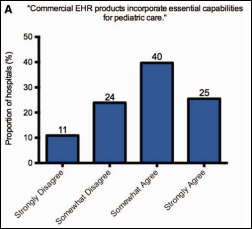
Let’s be realistic: would your employer give you permission to speak off the cuff to a media outlet about an issue of great human, corporate, and legal sensitivity? Or if your spouse died of Ebola, would you want to see the hospital CIO prattling on about that tiny piece of the case that he knows something about? Ed contributes articles, but he’s not free to talk casually about his employer or the patients they see, no different than when nearly got fired by my hospital when I started writing HIStalk and a loser vendor complained to my boss that I was saying bad things about them (leading to my immediate interest in anonymity).

Keep up the music recommendations.

I’m heartened by several such comments since usually someone complains about anything even slightly off topic, always in the form of, “I don’t read HIStalk for …” as though I’m an HIT-posting robot banned from going off script. Sometimes I fantasize about starting a new, unrelated site about some topic I know next to nothing about just to see if I could make it interesting while learning about the topic.

Write shorter posts or write news daily to shorten the individual posts.

Both are tough for me. I only include items I think are interesting and I cover a lot of ground succinctly, so I’d have to cut something I think is worth reading. I used to write news daily, but readers observed that HIStalk wasn’t particularly special any more when it hit their inbox every workday. Lt. Dan posts morning headlines each weekday if you just want a quick skim to see the major news items without the usual commentary and snark.

It sounds like you think you need to change something. Whatever you do, keep the news, juicy gossip, and sly, somewhat jaundiced humor.

I’ve been writing HIStalk for 12 years, so sometimes I get the urge to try something different. Occasionally I see all of the movers and shakers out there doing cool stuff (starting companies, developing products, running think tanks, etc.) and feel a pang of regret that I’m a sideline reporter rather than a full-contact participant in those high-profile or society-benefitting activities. That usually passes quickly, though, and every day when I face that blank screen yet again with excitement and hopefully some creativity, I realize I how lucky I am to be able to something I enjoy in whatever way I want. I’ve learned to be happy with my place in the world.

CommonWell Answers HIStalk Reader Questions

January 16, 2015 News 15 Comments

image image image image image

David McCallie, Jr., MD, SVP of medical informatics for Cerner and co-founder of CommonWell Health Alliance, invited HIStalk readers to submit their questions about CommonWell. He obtained answers from the most appropriate CommonWell resource. These replies were provided by David along with Dan Schipfer (VP/GM of government for Cerner and CommonWell operating committee chair); Nick Knowlton (VP of business development for Brightree and CommonWell membership chair); Bob Robke (VP for Cerner and CommonWell treasurer); and Jitin Asnaani (director for Athenahealth and CommonWell operating committee co-chair).

How do organizations like CommonWell promote interoperable transfer of health information to non-members? If our goal is a national infrastructure for transfer of PHI, don’t these aggregations of health partners create barriers to a national solution?

From a strategic point of view, CommonWell’s founders created the network because they did not believe that any of the existing approaches met the need for national-scale federated query based on robust identity management and record locator services. CommonWell’s founders believe that regional and vendor-proprietary networks won’t meet the demand for universal query connectivity. In contrast, CommonWell membership is open to all HIT suppliers and their customers, nationwide. However, if other networks emerge that cover substantial portions of consumers, CommonWell is open to creation of bridging services that could interconnect with other networks.

More tactically today, we feel that CommonWell has already promoted interoperable transfer of health information by publicly calling out the important issue of the lack of a common patient identifier in US health care. Second, to advance the state of the art, CommonWell members have designed and published specifications that address the problem of the missing patient identifier. These specifications are available for any and all (i.e. members and non-members) to evaluate, improve, implement, and use under common open source licensing. 


Does CommonWell have any plans for taking the initiative outside of the US?

We’re taking it one step at a time. Currently, CommonWell’s focus is to deliver real-world interoperability services across the US.


Why did some folks refer to CommonWell (in its early days) as the "HIE killer" and is that still a valid point? Accordingly, do entities like Aetna (who has invested in Medicity) and Optum (with their Axolotl acquisition) consider CommonWell to be a threat?

It is difficult to speculate on behalf of “some folks,” but CommonWell is not attempting to “kill” any type of exchange. CommonWell is designed to offer a national-scale service because we believe that a patient’s provider should have access to that patient’s information regardless of where the information lives. Through this approach to “universal plumbing,” members can expect an increase in the access to health information for their providers and a decrease in the cost and time for providers and their patients to gain access to their health information.

By addressing shortcomings in existing exchange models (such as imprecise standards that inhibit vendor to vendor connectivity), CommonWell is drastically reducing time and associated expense to achieving health information exchange. Furthermore, in a world driving towards the triple aim, interoperability initiatives such as CommonWell are aligned with goals common to payers, patients, provider networks, and national healthcare delivery objectives.


How does CommonWell relate to the Argonaut project?

There is no formal relationship. The Argonaut Project is an industry-funded initiative to accelerate the development of technical standards (FHIR and OAuth) in conjunction with HL7. On the other hand, CommonWell is a trade association that is deploying a national network. The results of the Argonaut Project should complement CommonWell’s existing use of standards, which are partially based on FHIR, as well as on standard IHE profiles like XCA (for document-based exchange). The standards work stimulated by the Argonaut Project will be important to HIT in general. CommonWell hopes to leverage these new standards to provide enhanced services as they become formalized.


What fees will be collected for using CommonWell’s system, who pays those fees, and where does the money go?

CommonWell is a non-profit trade association that relies on two different fee sources to operate.

One is membership dues, as are common to most not-for-profit trade associations. The dues schedule is based upon an organization’s annual US HIT revenue and provides for the organizational expenses of running the Alliance. A more detailed breakdown of the membership fees is available on our website.

The second fee, a Service Fee, covers the cost of the core services provided by CommonWell to its members to facilitate data exchange and includes the identity management and record locator services. By doing this at the vendor level, CommonWell is able to achieve unprecedented economy of scale gains for streamlining connectivity. Members who provide access to CommonWell to their customers are free to charge (or not charge) for those services as they see fit. As a non-profit trade association, CommonWell has chosen not to mark up these costs to membership.

CommonWell cannot set the fees charged by member companies to their customers. However, our expectation is that those fees will be modest compared to the value of the services delivered and will be assessed in the “commodity service” philosophy espoused in our founding principles. As noted in CommonWell Board Chairman Jeremy Delinsky’s recent blog, athenahealth’s service fee equals about one-tenth of one-percent of their annual revenue.

What’s costly for everyone is the need to build numerous point-to-point interfaces and reinvent the wheel of patient identity management for every exchange scenario. Connecting once to a nationwide network, as the health care industry has done in other instances, has proven to be a better model for widespread data exchange.


Will EHR vendors pay a competitor (McKesson and CommonWell’s IT provider RelayHealth) to exchange information with other systems?

CommonWell Health Alliance delivers the services to the HIT members. RelayHealth is CommonWell’s initial contracted network service provider. As with any service offering that requires hardware and software, the services fees paid by the member to the Alliance help to offset the Alliance’s network service provider investment and compensate them for the costs of providing that service.


I heard it costs $2 million to become a member of CommonWell. What is the ROI for those members?

As noted above, if a vendor chooses to offer CommonWell Services to its clients, the vendor is charged a Service Fee in addition to the Membership dues. The Alliance currently charges an annual Service Fee to cover the cost of the core services. The Service Fee is based upon the Member’s annual HIT revenue. This annual fee allows the Member to onboard an unlimited number of clients onto the CommonWell Network.

CommonWell plans to publically post the Service Fee schedule on our website later this year, but for the vast majority of members, the costs will be far below that amount.


If I’m an Epic shop, what can CommonWell do that I can’t already do through Epic? What are the cost comparisons?

CommonWell provides a national-scale identity management service, nationwide record locator service, and universal connectivity to any vendor that offers the service. A single connection to the CommonWell network will enable providers and the patients they serve to access to their health information at all those various systems and organizations and won’t require peer-to-peer contracting for each provider you need to reach. The identity management and record locator services reduce matching errors and make it seamless for the provider since the patient does not have to remember the places where they have records. We don’t know of any single vendor network that can enable access to a patient’s health data regardless of where they have been seen.


Why would providers want a few publicly traded vendors running a fee-based backbone instead of pushing the government to create freely usable standards available to all vendors?

CommonWell’s founders believed that identity management and record locator services were necessary for effective national-scale query connectivity. Those services have to be organized and paid for by someone and the existing government-related approaches were not committed to delivering those services. Additionally, the founders believed that the vendor community was in the best position to “build in” support for efficient, seamless connectivity. The standards on which CommonWell is based are indeed freely available, but the national scale services that make those standards useful require an organization and appropriate organizational governance.


How are health plans and payers represented in the CommonWell alliance? Medicare’s risk adjustment have always demanded better access to and merging of administrative and clinical data. Now that the ACA demands risk adjustment for commercial population the need for this marriage is even greater. The ability for health plans to better assign risk to their members and the ability for providers to help close care gaps and meet their CMS-mandated obligations for data exchange can be greatly facilitated by providing improved attribution mechanisms for identifying members, providers, and specific encounters. And there should be a common means for plans to provide care gap info.

Right now, CommonWell is made up of 17 health IT vendor organizations, but we encourage membership to any organizations, including payors, that share the association’s values and vision for interoperability. In the early days of the Alliance, we had to remain focused on designing, building, and deploying our core services. These existing services offered by the Alliance are well aligned with offering improved delivery of healthcare for the nation, and that inherently provides benefits for all stakeholders – including patients, providers, and payors.

While this is a great start, we recognize that there are other opportunities to provide value for how healthcare is delivered and CommonWell certainly has an opportunity to build upon the established model to provide additional value. The Alliance welcomes participation from and conversations with payors and other healthcare stakeholders outside of the core EHR community. We have engaged early conversations with several payors that share our vision and understand how crucial interoperability and data liquidity are to improving care.

To complement this, the Alliance has established a process for reviewing member-proposed potential service line extensions and welcomes payors to help determine if the identity management and record locator services offered could add additional value to the patient populations represented by the members in the Alliance, through examples such as care gap closure, without compromising any of our core principles.


What factors convinced Cerner to join the CommonWell and what is Cerner’s play after the three years of free services?

The early days of CommonWell have been focused on getting the network deployed as widely as possible to ensure that meaningful health information is delivered. We understand that the value of the network depends upon how widespread the usage is. Cerner wants to remove as many barriers as possible to help speed deployment. Removing financial barriers to early adoption was a straightforward decision for us. After the initial three years, we expect that the costs associated with the services will be in line with other EDI like transactions and will be considered minimal in comparison to the value a client receives.

Text Ads


RECENT COMMENTS

  1. ... because it's a construction worksite. (It's a bit more evident from the second photo in the linked post.)

  2. I can't get past the helmets and safety vests. On everyone. Including the model patient. What, are they expecting the…

  3. I'm all for a startup mentality, but there really needs to be a net positive return for all that time,…

  4. Re: It would be interesting to compare after-hours use of generative AI solutions by patients who have access to after-hours…

  5. Would be interesting to see what Providence St. Joe's return has been on all their adventures. When I was on…

Founding Sponsors


Platinum Sponsors


Gold Sponsors


RSS Webinars

  • An error has occurred, which probably means the feed is down. Try again later.