UMASS will pay $650,000 to settle a HIPAA violation stemming from a 2013 malware infection that led to the disclosure of 1,670 records. The breach exposed names, addresses, social security numbers, dates of birth, as well as insurance, diagnosis, and procedure data.
In Ireland, Cork University Maternity hospital will go live with Cerner on December 3 as the nation moves forward with plans of consolidating all of its 19 maternity hospitals on one system.
Novartis cancels plans to test the autofocus contact lenses it is co-developing with Google, citing technical issues and declining to comment on when testing would begin.
UMass will pay $650,000 to settle HHS OCR HIPAA charges over a 2013 Trojan malware infection of a single workstation at its Center for Language, Speech, and Hearing that exposed the information of the PHI of 1,670 people.
OCR found that UMass had chosen a “hybrid” status — which requires it to designate in writing which of its components perform HIPAA-covered functions and which do not – but had failed to list the Center and some other components. UMass also failed to implement a firewall at the Center and had not performed a risk analysis at the time of the incident.
HIStalk Announcements and Requests
ST Advisors donated $500 to my DonorsChoose fund as part of their annual charitable giving, which through the magic of matching money funded these classroom projects:
Strategic thinking, economics, and entrepreneurship games for Mrs. D’s middle school gifted class in Springdale, AR.
Robotics programming kits for Mrs. F’s STEM high school class in Lincoln, KS.
A microscope and other science materials for Mrs. M’s third grade class in Newport News, VA.
A document camera for Mrs. R’s second grade English as a second language class in Englewood, NJ.
Math manipulatives for Mrs. O’s second grade class in Kansas City, MO.
A programmable robotics kit for Mrs. R’s third grade class in Brooklyn, NY.
Headphones for Mrs. M’s school library in Bronx, NY.
A Chromebook for Mr. G’s high school class in Bluejacket, OK.
Math manipulatives for Ms. P’s middle school class in New Orleans, LA.
In addition, reader Bill sent a nice note and donation that funded a Kindle Fire and headphones for Ms. W’s kindergarten class in Los Angeles, CA.
I have another donation or two that I’ll apply later this week. Thanks to everyone who supports STEM learning in our schools. Watch this space for photos and teacher reports. I know the teachers are excited because I received emails from all of them within a few of hours of funding their projects, such as this one from Ms. W:
What an awesome way to start the day to know that an important project was funded by an awesome donor! Thank you from the bottom of my heart for your very generous donation! My students will be so excited to hear this news! They are so fired up about protecting the environment. This project will help further ignite that passion! Have an amazing and warm Thanksgiving.
Webinars
December 6 (Tuesday) 1:00 ET. “Get Ready for Blockchain’s Disruption.” Sponsored by PokitDok. Presenter: Theodore Tanner, Jr., co-founder and CTO, PokitDok. EHR-to-EHR data exchange alone can’t support healthcare’s move to value-based care and its increased consumer focus. Blockchain will disrupt the interoperability status quo with its capability to support a seamless healthcare experience by centralizing, securing, and orchestrating disparate information. Attendees of this webinar will be able to confidently describe how blockchain works technically, how it’s being used, and the healthcare opportunities it creates. They will also get a preview of DokChain, the first-ever running implementation of blockchain in healthcare.
December 7 (Wednesday) 1:00 ET. “Charting a Course to Digital Transformation – Start Your Journey with a Map and Compass.” Sponsored by Sutherland Healthcare Solutions. Presenters: Jack Phillips, CEO, International Institute for Analytics; Graham Hughes, MD, CEO, Sutherland Healthcare Solutions. The digital era is disrupting every industry and healthcare is no exception. Emerging technologies will introduce challenges and opportunities to transform operations and raise the bar of consumer experience. Success in this new era requires a new way of thinking, new skills, and new technologies to help your organization embrace digital health. In this webinar, we’ll demonstrate how to measure your organization’s analytics maturity and design a strategy to digital transformation.
Acquisitions, Funding, Business, and Stock
Oracle acquires domain name services provider Dyn, which was the subject of an October 21 distributed denial-of-service attack that rendered major websites unavailable to much of North America and Europe, for a rumored $600 million. Ironically, Dyn serves as the authority on Internet downtime and data blocking by monitoring web traffic and offering companies a rerouting service to make sure their visitors get through.
Symantec will acquire consumer identity protection LifeLock for $2.3 billion. LifeLock has paid more than $100 million in FTC fines for false advertising and reports found that its previous CEO, who was featured in endless ads listing his Social Security number with a challenge to hackers to try to steal his identity, was found to have had that identity stolen at least 13 times. At one point, the company’s main way of trying to prevent fraud was to place a red flag every 90 days on the credit files of its subscribers (who pay from $10 to $30 per month) as though someone might have compromised their accounts, with its reps calling Experian up to 15,000 times per day on their toll-free number and filing the same fraud alert that consumers could have requested on their own at no charge. Experian, which offers a competing service, sued and won.
Sales
Main Line Health (PA) selects Bernoulli for medical device integration as it transitions to Epic.
Spectrum Health (MI) chooses MModal for speech-driven clinical documentation.
In England, Royal Free London NHS Foundation Trust signs a five-year agreement for the Streams acute kidney injury event notification system from Google-owned DeepMind.
People
Canada-based mental health software provider Ehave hires Prateek Dwivedi (University Health Network) as president and CEO.
Announcements and Implementations
HIMSS and CHIME form HMISS-CHIME International, which will work together on their existing programs outside of North America. That raised my curiosity about CHIME’s finances. Its recent financial report shows total revenue of $6.5 million, of which $1.7 million came from conferences and sponsorship, $480,000 from dues, and $4 million from grants from what is labeled “Collegehlth Mgmt Exec Foundation,” which I assume is where the vendor checks are collected. There’s also the for-profit CHIME Technologies, which sells speaker services and provides vendors with advisory groups. CEO Russell Branzell earned $437,000 and his two EVPs made $162,000 each.
In Ireland, Cork University Maternity Hospital will go live on Cerner next week, with all 17 of the country’s hospitals expected to be live on Cerner by the end of 2017. Following that is the rollout of a single national EHR for oncology hospitals and another for acute care hospitals if funds are approved. Cerner is also providing national laboratory information system. Ireland prepared for single health record by implementing a universal patient identifier in August.
A new Peer60 report finds that 81 percent of respondents create patient reports using radiology speech recognition vs. the 12 percent that still send off dictation for transcription, with that number jumping to 96 percent of high-volume sites. Nuance was used by 85 percent of respondents, with the small remainder being divided among MModal, Dolbey, and Agfa. Nearly 75 percent of sites that aren’t already using speech recognition plan to do so, with the only holdouts being smaller sites. Net Promoter Scores are fairly high, making the replacement market unattractive.
The Mount Sinai Hospital (NY) goes live on a clinical research VNA from Vital Images that offers researchers a de-identified view of the fully detailed patient data used by clinicians on the same system.
Hardeep Singh, MD, MPH and the Houston VA Patient Safety Center win the VA’s research impact award for their work on delayed diagnoses, delayed test follow-up, and EHR safety.
Government and Politics
HHS Secretary Sylvia Burwell warns that a “repeal and replace” approach to the Affordable Care Act that would require years to offer a replacement program is really a repeal since it will cause collapse of the exchanges as the remaining insurer participants would pull out in 2018 in the uncertainty about what’s next. It would also leave 20 million people without insurance. Burwell is concerned that signups during open enrollment through December 31 may suffer because people are confused that the program is going away on Inauguration Day. Meanwhile, President-Elect Trump’s YouTube video in which he describes his highest priorities did not include repealing Obamacare, which he previously promised would happen the day he took office.
Technology
Drug maker Novartis says its Alcon eye care division will miss its goal of performing clinical trials on Google-designed smart contact lenses that can correct far-sightedness and measure blood glucose levels.
Other
The Wall Street Journal profiles the “fentanyl billionaire” whose company, Insys Therapeutics, is charged with bribing doctors to overuse its drug. John Kapoor, PhD, who’s worth around $2 billion, made his first fortune by spending $50,000 to buy a drug company selling an old AIDS drug, after which he quadrupled its price and netted $100 million when he sold the company. He then started Insys, which hired salespeople he called PhDs (poor, hungry, and dumb) who were paid little in base salary but who received a cut of every prescription issued by their doctor-clients, encouraging the reps to push high doses and large quantities. Two Alabama doctors are charged with making $40 million in illicit gains by prescribing $4.9 million worth of the drug for their Medicare patients alone in 2013-2014, also earning $271,000 in “speaking fees” from the drug company and millions more by having the prescriptions filled at a pharmacy they owned. One of the company’s reps, who was hired as a kickback to the doctor who confessed “a certain affection” for her, made $700,000 in two years from just the prescriptions written by the two doctors.
Stat ponders why President-Elect Trump recently met with drug billionaire Patrick Soon-Shiong, who is possibly under consideration to privatize Vice-President Biden’s cancer moonshot (which Soon-Shiong co-opted in forming his own Cancer MoonShot 2020 that mostly involves drug companies). Stat notes that not everyone is a Soon-Shiong fan, quoting a geneticist who summarizes, “A hype merchant propping up a lucrative empire with almost no real substance.” NantHealth shares have dropped 36 percent since their June 2016 IPO, while those of NantKwest are down around 75 percent since the company went public in July 2015.
In England, an NHS trust IT director pleads guilty to accepting a bribe to issue an ED software contract to the company of a local man who has also pled guilty.
ED physician Keith Pochick, MD pens a great, poetic opinion piece titled “Handheld electronic devices are the thieves of our meaningful moments,” describing a conference’s challenge to disconnect attendees from their smartphones:
On the second day, he invited us to turn off our handheld devices and put them into a basket at the front of the room. Most of us were able to do it, although quite a few participants needed to peek at their lifelines during breaks to ensure that the world was still spinning. Each of our respective loved ones knew exactly where we were, and would have had no trouble contacting us, yet the thought of “de-vicing” initially brought an incredible amount of angst. As the final two days of the conference developed, it became more and more liberating for me to be free from the chains of my digital master. While the conference wound down, we were each asked to list a few specific changes we’d make to enrich our lives and break behavior patterns which we believed were holding us back. I obviously couldn’t help but consider how many meaningful moments my constant accessibility and connectedness were stealing from me. I had become a slave to email, text messaging, instant Internet and YouTube access, and Facebook.
Cleveland Clinic CEO Toby Cosgrove disputes the many studies showing that hospital consolidation raises prices via their increased market power, saying instead that hospital mergers will prevent struggling facilities from closing by improving their efficiency. He also says that insurance must remain available for the 20 million people who buy theirs via the exchanges to prevent hospitals from having “major economic problems.”
New York-Presbyterian Hospital gave its former $3 million per year president another $6.4 million in severance when in September 2015 he abruptly resigned after having an extramarital affair.
Upworthy profiles “hippie turned doctor” Larry Brilliant, MD, MPH, who was motivated as one of only 60 attendees at a 1962, six-hour Martin Luther King, Jr. speech to later help cure smallpox, create the Seva eye charity that has restored sight to 4 million people, win a TED prize, and fight global pandemics. Brilliant’s just-released book is titled “Sometimes Brilliant: The Impossible Adventure of a Spiritual Seeker and Visionary Physician Who Helped Conquer the Worst Disease in History.” From his 2013 commencement speech to the Harvard School of Public Health:
As for my generation of young radicals, we had prejudged a mostly conservative profession, assuming they couldn’t be good doctors for being out of touch with the great social upheaval of the time, for not understanding the needs of the marginalized, not seeing the patterns and linkages between disease and poverty, the relationship between social justice and life expectancy, and how the battle then as now was about dignity and human rights. And here is the point as you go forward. Somehow, these two sides of our national health debate—one outward looking at social justice and inclusion and one inward looking inward at high quality patient care that is exclusionary—met then and must meet now on sacred ground, sharing the profound obligation and great joy of improving the health of the people …
Imagine that arc of history that Martin Luther King inspired is right here with us. The arc of the universe needs your help to bend it towards justice. It will not happen on its own. The arc of history will not bend towards justice without you bending it. Public health needs you to insure health for all. Seize that history. Bend that arc. I want you to leap up, to jump up and grab that arc of history with both hands, and yank it down, twist it, and bend it. Bend it towards fairness, bend it towards better health for all, bend it towards justice. That’s your noble calling of public health.
Sponsor Updates
Huntzinger Management Group announces a strategic partnership with DCCS Consulting.
GetWellNetwork announces that more than 100 hospitals are using its Marbella data collection tool for rounding and collecting patient and staff feedback, with 20 new customers added since July 2016.
HCI Group posts a podcast titled “EMR Training: What Goes IN to Achieving High Levels of Adoption.”
Sutherland Healthcare Solutions announces its investments in healthcare analytics that include development of its SmartHealthSolutions portfolio, the acquisition by its parent company of big data analytics firm Nuevora, and a partnership with IIA.
Optimum Healthcare IT is named a top 10 RCM provider.
Baptist Health South Florida realizes $45 million in increased appropriate reimbursement following its implementation of Nuance Clinical Documentation Improvement.
Kaiser Family Foundation president and CEO Drew Altman outlines the GOP proposal to repeal and replace ACA and reform the Medicare and Medicaid programs, plans he describes as “the biggest changes in the direction of federal health programs since the passage of Medicaid and Medicare.”
The UAE’s Ministry of Health continues its system-wide implementation Cerner with a contract extension that will add anesthesia management and medication barcode scanning to from Cerner.
The Department of Justice releases voluntary guidance for firearms manufacturers outlining the kinds of “smart gun” safety technology it would like to see in pistols. While adopting the recommendations is optional, DOJ reports that the features will be part of the baseline specifications for law enforcement service pistols.
One of the challenges of running a business is managing your brand. While branding is associated historically with artisans burning their marks onto products and with ranchers applying brands to livestock, modern brand management can be a tricky thing. While we often associate brand management with consumer goods, an increasing number of healthcare organizations aggressively manage their brand identities.
Where many faith-based organizations traditionally named themselves after saints, the last decade has seen those identities give way to more broadly-appealing concept-based names: Memorial, Dignity, Unity, Mercy, Ascension, and more. Corporate initials have become prefixed to the names of even more facilities, a change that is deliberate and belies a deeper strategy. Health systems have gone beyond the traditional mission and vision statements to create marketing taglines that are specifically designed to evoke a certain feeling about the facility and its services. As “patients” have become “consumers,” we’ve seen more and more health organizations that are looking at market share, competitive intelligence, and brand differentiation.
Hospitals often have aggressive marketing campaigns around their emergency department wait times, the luxury of their labor and delivery suites, the availability of hotel-like accommodations, and more. The competition for market share has long trickled down to individual physician practices, where being affiliated with a given health system can generate more business or greater prestige. Although these may have been loose affiliations in the past, they’re becoming more solid as groups of providers shift into Accountable Care Organizations and other risk-sharing arrangements. Organizations that understand their brand and how they are perceived by the community can make stronger plays in the market than those who can’t.
As I work in physician offices across the country, the differences in brand awareness are striking. Many physicians don’t understand how important having a corporate identity can be, or conversely what a disaster it can be if you don’t have one. Does the staff wear uniforms that match and have a practice logo? If there isn’t a uniform, is there a dress code? Or do staff just wear whatever scrubs are at the top of the clean laundry? It amazes me when practice leadership hasn’t given this any thought. Having a uniform appearance (which doesn’t necessarily mean there must be uniforms) can convey to the patient that their experience is going to be organized and predictable.
Even though my practice has a strict dress code, we sometimes struggle with this. Different team leaders have different levels of tolerance for deviation from the dress code, which can result in consequences when the CEO, COO, or a medical director arrives unannounced. The fact that there are penalties associated with failure to adhere to the standard makes a difference, though, and it quickly becomes clear that if leadership isn’t going to tolerate straying from the dress code, they’re not likely to tolerate deviation from our customer service or patient care standards, either.
I see physicians who struggle with their own idea of a dress code – white coats that are filthy at the cuffs and elbows, rumpled clothes, dirty scrubs, and shoe covers with holes worn through them. They may be brilliant in their field, but they’re missing the fact that their personal brand screams “messy” and “disorganized” rather than “capable” and “professional.” This concept of personal branding becomes even more concerning when it extends to a physician’s social media presence. Where some are skilled at keeping personal and professional personas separated, others offer up a confusing mix of messages that may be concerning to patients or potential patients.
Even those physicians who may do a good job managing their own personal branding and social media presence often struggle with managing how their employees present themselves. Do employees use the practice platform to promote their own interests? Does the practice have any say in how physicians and employees present themselves on platforms such as Doximity and LinkedIn? I’m seeing more organizations that are interested in trying to get a handle on these external platforms, making sure their employees help support the professional perception of the organization. Some may require employees that blog to add a statement that the opinions featured in the blog are not those of the employer. Others don’t seem to notice that their employees have social media profiles. Case in point: the marketing director of a local Catholic healthcare organization was wearing a shirt that said “sex, drugs, and rock & roll” in his LinkedIn picture while prominently featuring his employer’s logo on his profile. I’ve also seen plenty of non-clinical people wearing scrubs in their photos, which always baffles me.
Hospitals and healthcare delivery organizations aren’t the only ones in our world that are spending significant resources managing their brands externally. Many healthcare IT companies are actively managing their brands, even though those that may not admit to having a marketing department. Although some efforts can be counterproductive (remember the Siemens Healthineers debacle?), others have had significant success. HIMSS is the big game of healthcare IT marketing and it’s clear to see who brought their A game to the exhibit hall.
In dealing with many vendors in the course of my consulting work, however, I wish more of them would pay attention to internal branding and ensuring employees other than the marketing team can deliver a consistent message. I work with one vendor that often communications information directly to their client base without communicating the same information to their employees, which as you can imagine results in a lot of misunderstandings, particularly when the communications include release dates or break/fix information. Even though they’re a relative start-up, there’s no excuse for not having a communication plan that allows your internal team to be educated before you start sharing information with your customers.
There’s also no excuse for not having consistent, professional website bios for your senior leadership, but I can’t say I didn’t warn them. When nine of 10 execs have professional headshots and the other has a selfie from his most recent fishing trip, that’s probably not the image you want to convey, unless you are a vendor that runs a fleet of charter fishing boats.
Bill Anderson is chairman and CEO of Medhost of Franklin, TN.
Tell me about yourself and the company.
I have been associated with Medhost for about seven years. I’m currently the chairman and CEO. Prior to that, I was involved in a number of different businesses. Going back to 1990s, I was an early participant in writing home banking software.
The company is in two businesses. We’re in inpatient healthcare IT and consumer engagement solutions, including the YourCareEverywhere.com website.
You have a fair number of small and rural hospitals as customers. What does their world look like today?
The world is tough in the community hospital market. We divide the hospital world into three buckets. The large tertiary care hospitals that are building communities of care — it’s largely Cerner and Epic territory up there. There are the small standalone facilities that are probably under 50 beds that are CPSI and Athena territory. We compete in the middle market, which is a full-service hospital, but without the complexities of the tertiary care hospital.
They’re not under as much financial stress as the smaller hospitals, although they clearly have more financial stress than the big tertiary care hospitals, which financially are doing much better. Still, there are a number of suburban rural hospitals that are under stress right now with the decline in inpatient volume, the increased fixed costs for regulation, and the insurance risk that they’re having to take on with readmission penalties and things like that.
Does economy of scale favor the huge health systems to the point it will become impossible for small communities to keep their full-service hospitals?
Clearly there are economies of scale. One would like to think that at some point in time, there would be allowances made for that. I’m not sure that’s literally going to happen.
There’s clearly overcapacity in the industry. I think as many as 40 percent of the total hospitals and 30 percent of the beds will probably be taken out of the system ultimately.
When people question that, I go back to the 1980s, when I was in the financial services industry and banking business. There were about 18,000 banks in the United States. Today, there are about 6,000. A lot of the same things were happening. Technology is changing how people use their hospitals, just like they did with banks. I would ask people, "When was the last time you stood in a teller line?" You had increasing regulation, and with the technology, place became less important.
I think there’s going to be a lot of disruption in the hospital market. Still, there are going to have to be geographically convenient locations. In the middle market, there will be winners and losers, but in general, we’ll continue to have a robust community hospital market.
Hospitals provide community pride and large-scale employment to a different degree than banks. Who’s going to figure out the economic answer to having access in communities that can’t support what they already have?
There are two answers to that. There were economic issues and community pride that were involved in the banks that went away also. Economics tend to override those types of things.
One of the reasons we offer our community engagement solution is that hospitals are going to have to build an affinity with consumers outside their normal community. There’s no reason that a hospital can’t build the same type of relationship with a consumer that’s 50 miles away that they did with people in their local town. You just can’t do it by putting billboards up. You have to be able to move into the modern age, do digital marketing, things like that. Not every community is going to have one, but you’re still going to be able to have a sense of community with your community hospital.
Consumers are going to welcome self-service, just like they have in other parts of the economy. For many things where you’ve had to have hands-on visits with a clinician, due to the shortage of clinicians and due to the inconvenience involved, you’re going to see things like telemedicine starting to take a real position in the marketplace. There are going to be alternative delivery channels, not just stand-alone EDs and urgent care centers, but also, the Minute Clinics and those types of things. You’re going to see a diversification of healthcare delivery that’s going to improve the convenience and hopefully the adherence with patients.
One of the things that I thought was interesting recently, because we have a condition management program, is that the federal government has allowed the YMCAs to get reimbursement for things like chronic conditions like diabetes. You can go on the YMCA sites and see that they run diabetes management programs to try to help pre-diabetics. This would probably not have been something that the healthcare delivery system would have been in favor of years ago, but it’s a consumer-friendly type of initiative. Let’s move these types of preventative programs and maybe even some care programs out into other venues so that consumers have better access to them.
The last time we talked, you identified McKesson Paragon and Meditech as your EHR competitors. How has that changed?
If anything, it is firming up. In the large tertiary care hospitals, the battle is probably over. Cerner and Epic largely own that space. It’s based upon the fact that those particular type of big facilities are building communities of care that do complex types of procedures. They offer robust products.
At the smaller end, in particular in the critical access hospitals, they can’t afford a lot. They have to look at total cost of ownership. Somebody could give them a program, but because of the total cost of ownership with training and these types of things, IT requirements, they need a pretty straightforward solution. We’re in between there. We have pretty robust product. We would have what I would call segment-appropriate features and we’re focused on trying to meet the needs of that segment. The battle lines are pretty much in place.
One issue that should be interesting to people in the industry is that we are currently in a lawsuit with Epic. Epic has an interoperability platform called Care Everywhere that is essentially sold with the full suite of Epic products. They’ve got a trademark on it. The trademark, of course, relates to an interoperability product. We have a product called YourCareEverywhere.com, which is an online health and wellness content site, which the Patent and Trademark Office was getting ready to issue a trademark on. Epic is taking us to federal court to block the PTO from issuing that trademark.
In our opinion, the trademark law doesn’t support that. In our investigation of it, we found some other interesting examples. For example, there’s a primary care physician group in Kentucky called Primary Care Everywhere and Epic is also going after them. There’s a company called Access Technology in Texas that has a product called Powering Care Everywhere that does billing for home health that they went after and Access filed for a declaratory judgment in Texas to keep them from doing that.
This is just another example of Epic’s bad behavior of using their market position to bully people around, or at least in my opinion. What they’re trying to do is to broaden their trademark in the courts as opposed to in the PTO, where they wouldn’t be able to do that. Given that your readership is largely people in the industry, they’re probably reasonably interested in Epic’s continuing bad behavior.
What was your reaction when McKesson announced that it was looking for a buyer for its enterprise business that includes Paragon?
I understand why McKesson did that. The RelayHealth business was a terrific business, and I think the deal they’ve done with Change is, for McKesson shareholders — from somebody who’s not an expert but is looking from the outside — a great deal. What they have left, though, is a collection of assets — it’s not really a company — of which Paragon is one. Paragon has about 198 facilities — not that thought about it very much [laughs] –and on the average, they’re smaller than our facilities. In a world where scale is important, that’s a sub-scaled business.
Probably the most interesting thing to happen lately was that Cerner, Meditech, and Medhost all exhibited at the Insight conference. McKesson, for obvious reasons, withdrew their support. The fact that that actually happened is indicative of where the Paragon product is going.
How are modest-sized health systems addressing population health management and consumerism?
We certainly hope they’re addressing consumerism by working with us, with co-branded sites, marketing services, condition management, and things like that. Population health is a term that means what individuals think it means. There are two aspects of it. One is managing the population. There are hospitals doing that in the analog way out there in our market today. They’re having things like diabetes clinics and clinics to help people with heart disease and COPD. They’re trying to help people and manage the population in the analog world. We’re trying to give them tools to help do that.
The other side of that is, I’m going to take the insurance risk on these. When you hear about population health products from our competitors or other participants in the industry, what they’re really talking about is, how do I analytically manage populations that I have insurance risk on? How can I identify high risk people? How can I reach out to them? How can I see if they make progress? In the middle market, that’s less of a need today than it may be in the future.
If I’m a big urban hospital, chances are at some point in time, I’m going to be part of an ACO, or because I’m big in things like hip replacements and I’m getting bundled payments, so there will be more need to be able to manage these types of bundled payments and things because they do more sophisticated systems. The needs for population health depends on what kind of facility you are operating.
Everybody agrees that managing a population requires data from outside the four walls, and lack of that data can be interpreted either as a reasonably evolving market state or an indication that someone is intentionally blocking data. Does data blocking exist?
I do in fact believe that there is data blocking. Some of it is not with bad intent. Some of it is a natural result of the tort law system we have in the United States. Nurse notes and physician notes could be pretty sensitive in the context of potential litigation. People have legitimate reasons for wanting to manage the information flow.
Having said that, ultimately people are going to have to recognize that this is the patient’s data. The patient is going to get care in a number of different venues. It’s probably not going to be a supportable decision to say, I’m going to block the patient’s access to their information in a convenient way that allows them to pick their venue of care. It may take one of these lawsuits that I’m not particularly fond of to establish that that’s a dangerous thing to do.
For instance, if someone comes into an emergency room and there is information available that is being blocked that would affect the care and something happens to that patient, arguably the person who blocked the information contributed to whatever bad happened. The regulations and the laws support the fact that that’s the patient’s information and this whole Balkanization of data is a bad thing. I don’t think it’s actually been driven home to some of the providers that there is exposure in that.
Can the argument be made that interoperability would create the same universally beneficial outcomes in healthcare as it did in banking?
Yes and no. People are sensitive to banking information, too. Interestingly enough, when I was at H&R Block, I had the first credit card that allowed you to download transactions. There were actually two, the Web card and the CompuServe card. In fact, I have a patent on that, which Block never enforced.
At the time we set that up, people said, "I don’t understand why anybody would want to download transactions. Just geeks would want to do that." The reality was that everybody that ordered through a catalog — nobody was ordering online back then — wanted to know when their stuff was shipped, so they watched their credit card bills. There were economic reasons that the average person wanted to be able to see that transaction.
There are going to be reasons that the average person is going to say, "I have to be able to get access to my medical records." The easiest one is, I go to a new primary care physician or I go to an urgent care center and the first thing I have to do is I have to fill out 20 pages of information about my health history. I should be able to have access to my medical records and my health history so that I don’t have to do that, because I will probably as an individual do not such a great job of that.
There are differences in healthcare, but once the consumer gets involved with managing their own care — which is starting to happen in a big way right now — they’re not going to tolerate this Balkanization of data in healthcare any more than they would have tolerated it in other places.
One of the most bizarre things that you see out there is that a patient may be getting care from the same entity in three or four different places. Let’s say I go to an inpatient facility, I go to a specialist, I go to my primary care physician. They may all work for the same company, but I may have three patient portals. Only in healthcare would you ever see something like that.
The Bill and Melinda Gates Foundation issues blockchain vendor Factom a grant to build a tool to secure electronic medical records with blockchain technology.
A study investigating the relationship between availability of local retail clinics and ED utilization finds no decrease in the use of emergency services for low-acuity conditions.
The Bill & Melinda Gates Foundation awards a grant of unspecified value to blockchain technology vendor Factom to create a secure, transportable medical record using blockchain.
According to the company’s CEO, “Our goal with this new partnership is to demonstrate how global identity and record-keeping as a public utility is possible. We hope to show how individuals can manage important, private records like medical records using very simple tools and a lot of backend cryptography. My belief is that the blockchain will be used more and more over time for these aims. If we all follow these core beliefs, we will get to a very, very good place in this world.”
Reader Comments
From John: “Re: MGMA and HIMSS booth sizes. RSNA’s exhibit hall demonstrates where the real money is made.” RSNA’s exhibit hall floor plan shows that three companies bought space of 20,000+ square feet, or about a half acre: GE Healthcare, Philips, and Siemens Healthineers, with Toshiba and Hitachi not far behind. Providers who order excessive numbers of imaging studies to pay for the machines they bought are also underwriting that kind of excess, as are we taxpayers who are stuck with Medicare and Medicaid bills. In addition, every one of those big-booth vendors are foreign companies, taking the profits from our screwed-up healthcare system back to England, Netherlands, Germany, and Japan. The WHO health system performance ranking of their home countries is not only better than ours (coming in at #18, 17, 25, and 10, respectively, vs. our pitiful #37) but a lot less costly, a fact the starry-eyed RSNA attendees are not likely to appreciate since our ridiculous healthcare costs fund their nice incomes and conference attendance.
HIStalk Announcements and Requests
About 60 percent of poll respondents expect their companies to fare as well or better under a Trump presidency than now. CIO Looking says the ACA cost him his job because his financially stable community hospital was forced to join a larger health system, so he or she at least expects to be employed under a Trump presidency. HITgeek says the real problem is Congress and Trump’s appointments and urges people to take advantage of the Notice of Proposed Rule-Making comment period by adding thoughtful, fact-based responses.
New poll to your right or here: which social media services do you use professionally? “Use” means whatever you want it to mean – maybe you post content on a particular site or maybe you just check it out for business purposes occasionally.
We provided math manipulatives for Mrs. B’s first grade class in Texas by funding her DonorsChoose grant request. She reports, “With these games, we have been able to further our addition and subtraction skills. My students love playing these games and work very well together while playing them. Kids today need hands-on manipulatives that excite and motivate them to learn.”
Meanwhile, a generous vendor has provided significant matching funds to double the impact of donations (actually it’s more like quadruple in some cases since many DonorsChoose projects already include match offers). You can donate as follow:
Send the gift card by the email option to mr_histalk@histalk.com (that’s my DonorsChoose account).
I’ll be notified of your donation and you can print your own receipt for tax purposes.
I’ll pool the money, apply the matching funds, and publicly report here (as I always do) which projects I funded, with an emphasis on STEM-related projects as the matching funds donor prefers.
Last Week’s Most Interesting News
Cerner CEO Neal Patterson makes a surprise appearance at the company’s user conference, saying that his experience as a cancer patient has inspired him to make EHRs faster and safer and to incorporate more patient involvement.
CMS releases an API that gives developers access to information from its Quality Payment Program.
A new ONC report makes recommendations on the safe use of EHR pick lists for selecting patients and medications.
The Social Security Administration connects its disability system with the VA’s medical records to speed up processing time for the applications of veterans.
Webinars
December 6 (Tuesday) 1:00 ET. “Get Ready for Blockchain’s Disruption.” Sponsored by PokitDok. Presenter: Theodore Tanner, Jr., co-founder and CTO, PokitDok. EHR-to-EHR data exchange alone can’t support healthcare’s move to value-based care and its increased consumer focus. Blockchain will disrupt the interoperability status quo with its capability to support a seamless healthcare experience by centralizing, securing, and orchestrating disparate information. Attendees of this webinar will be able to confidently describe how blockchain works technically, how it’s being used, and the healthcare opportunities it creates. They will also get a preview of DokChain, the first-ever running implementation of blockchain in healthcare.
December 7 (Wednesday) 1:00 ET. “Charting a Course to Digital Transformation – Start Your Journey with a Map and Compass.” Sponsored by Sutherland Healthcare Solutions. Presenters: Jack Phillips, CEO, International Institute for Analytics; Graham Hughes, MD, CEO, Sutherland Healthcare Solutions. The digital era is disrupting every industry and healthcare is no exception. Emerging technologies will introduce challenges and opportunities to transform operations and raise the bar of consumer experience. Success in this new era requires a new way of thinking, new skills, and new technologies to help your organization embrace digital health. In this webinar, we’ll demonstrate how to measure your organization’s analytics maturity and design a strategy to digital transformation.
Acquisitions, Funding, Business, and Stock
Salus Telehealth chooses a new board of directors following its merger last month with VideoMedicine.
Decisions
Central Washington Hospital (WA) will switch from Cerner to Epic in 2017.
St Joseph Memorial Hospital (IL) will switch from Meditech to Epic in mid-2017.
Houston Methodist St. Catherine Hospital (TX) will switch from Meditech to Epic in February 2017.
These provider-reported updates are provided by Definitive Healthcare, which offers powerful intelligence on hospitals, physicians, and healthcare providers.
Announcements and Implementations
A study finds that extended, continuous cardiac monitoring using the Zio system of IRhythm Technologies performs better than Holter monitoring in detecting arrhythmias. Patients wear the Zio Patch for 14 days, then mail it in for analysis. Shares in the company have jumped 23 percent since their October 20 IPO, valuing it at $644 million.
The University of Toronto profiles its researchers who tested their lab-on-a-chip measles and rubella screening technology at a refugee camp hospital in a remote part of Kenya. They created their system using 3D-printed components and open source hardware. The 15-member digital microfluidics team, which ranges from undergrads through post-docs, wants to create a rugged, solar-powered system that locals can transport on motorcycles and operate themselves.
The American Medical Association adopts principles regarding mHealth applications, acknowledging the need for clinical evidence to help weed out the unsafe ones. The principles are fairly predictable, including AMA’s insistence that apps maintain the physician-patient relationship and that doctors who provide services through the app be licensed in the state where the patient is located.
Government and Politics
John Halamka, MD weighs in on the impact of a Trump presidency on health IT. He predicts:
Lowered taxes, simplified regulations, and moving Medicaid closer to individual states could spur innovation.
Free market competition could increase.
Health insurance exchanges will probably be an early target, but other parts of the ACA will live on.
FDA scrutiny and enforcement may be dialed back.
Funding for NIH, the Cancer Moonshot, precision medicine, and CMS’s Center for Medicare and Medicaid Innovation may be cut back.
The transition to value-based purchasing and the rollout of the Quality Payment Program will continue.
President Obama describes the country’s technology-assisted employment challenges in an excellent post-election New Yorker article and interview:
But at some point, when the problem is not just Uber but driverless Uber, when radiologists are losing their jobs to A.I., then we’re going to have to figure out how do we maintain a cohesive society and a cohesive democracy in which productivity and wealth generation are not automatically linked to how many hours you put in, where the links between production and distribution are broken, in some sense. Because I can sit in my office, do a bunch of stuff, send it out over the Internet, and suddenly I just made a couple of million bucks, and the person who’s looking after my kid while I’m doing that has no leverage to get paid more than ten bucks an hour.
Live streaming video of patients having sleep studies performed by a California sleep clinic are found to be viewable online due to an improperly secured camera.
A financial counselor at Hennepin County Medical Center (MN) is sentenced to probation for keeping cash co-pays and charging the amount to a different patient’s credit card.
Innovation and Research
Yale startup Spring, which offers a 10-minute machine learning-powered online questionnaire that suggests the best antidepressant for a given patient, wins the Harvard-Yale Pitchoff.
Other
Perhaps this headline’s error was a Freudian slip suggesting either hospital body area specialization or mediocrity.
In England, NHS trusts are running over their maximum allowed annual deficit six months into the fiscal year and despite an $1.1 billion emergency government infusion. The CEO of NHS Confederation blames budget cuts, especially in the areas of social care, mental health, and public health. On the positive side, 142 trusts reported a YTD deficit through Q2 vs. 182 in the same period last year and total expense has been reduced by 2.9 percent.
Drug maker Pfizer sues the Texas Health and Human Services Commission for providing Medicaid rebate data to to state lawmakers, saying the agency compromised the company’s trade secrets and will harm the state’s Medicaid program because Pfizer may stop offering the rebates if other large purchasers demand the same prices.
A study finds that nearby retail clinics don’t reduce the number of unnecessary ED visits for “treat and release” conditions such as flu, respiratory infections, and urinary tract infections. The authors note that their numbers may have been skewed by patients who wouldn’t have sought treatment at all until retail clinics came along, the number of patients seen in a retail clinic whose conditions required an ED visit anyway, and the fact that most of those clinics don’t accept Medicaid.
Sponsor Updates
Xerox Healthcare features PokitDok in the first episode of its Health Future podcast.
Catalyze CEO Travis Good, MD interviews Georgia Tech health informatics professor Mark Braunstein, MD in a podcast titled “Healthcare in the Age of Interoperability.”
Voalte publishes a video of a mother describing her firsthand experience with the benefits of the company’s smartphones during her premature delivery.
Cerner CEO Neal Patterson speaks at the Cerner Health Conference, discussing his ongoing cancer treatment and his new perspective of EHRs as a patient.
The Wall Street Journal’s John Carreyrou tells the story of Tyler Shultz, the inside source that broke the Theranos story to the media and government officials.
Tech-savvy insurance startup Oscar Insurance continues to lose money on public exchanges, its primary business. The startup is now exiting a number of exchange markets in efforts to diversity its revenue stream.
Cerner CEO Neal Patterson makes a surprise appearance at the Cerner Health Conference in Kansas City on Wednesday, telling 15,000 attendees that he is getting stronger after being treated for soft tissue cancer and adding, “I realized God had a sense of humor. He put me in a place undergoing an EHR conversion.”
Patterson expressed his frustration as a patient: “I remember waiting four hours to get lab results. I asked a lady next to me in the waiting room how long she had been waiting, and her reply was seven hours. Seven hours! There’s no caring in that. It’s not like you have one doctor, one surgeon, a radiation oncologist, and a medical oncologist. It’s a team. It’s time for the patient to be part of the team.”
Patterson says he will resume his normal activities in January. He vowed to make Cerner’s EHR faster and safer and to include more patient participation, saying, “I know I was put in this position to make it better.”
Reader Comments
From LeftCoaster: “Re: QuadraMed. Employees say owner Harris laid off another 15 people this week, apparently focusing the cutbacks on the Affinity product that has only a handful of developers left. Harris purchased NextGen’s hospital business last year and sales activity has been dismal.” Unverified.
From MGMA Attendee: “Re: Athenahealth at MGMA. They had a huge amount of trade show real estate with a large number of corporate marketers marching the edges. At one point it was like 30 staff to zero attendees. I’m not sure if the intention was to intimidate the other EHR vendors, but their excess was ridiculous to the point my colleagues and I avoided it.” Unverified. MGMA’s 2016 exhibit hall floor plan shows Athenahealth with a 50×50 booth, more than quadruple the size of the next-largest exhibit. The MGMA 2017 floor plan indicates that the company will downsize to 50×40, still more than double the size of the next-largest spot. They have two booths at HIMSS, one at 4,200 square feet and the other 400, but that’s comparatively modest for HIMSS compared to Epic’s 7,700 square feet, Cerner’s 11,700, and HIStalk’s sprawling 100-square-foot shrine to corporate excess. To put it in perspective, Cerner’s HIMSS booth will cover more than one-fourth of an acre, and unlike their huge campuses, local and state governments aren’t subsidizing that super-expensive space.
From Acceler-8R: ”Re: our new accelerator. We would love to be featured on HIStalk.” Sorry, but I’m decelerating my accelerator coverage. Writing about accelerators and their barely-functional startups led by industry-inexperienced newbies is like holding a baby shower while the post-coital sheets are still wrinkled. I don’t like wasting the time of readers in breathily describing the now-endless number of accelerators and incubators that have exceeded the number of available good companies that have sound business models and proven leadership. I’ll wait to write about the Darwinian winners when they are closer to being ready for enterprise prime time.
From Twitterati: “Re: this rag’s list of HIT people with the most Twitter followers. HIStalk was omitted.” It’s the usual lame, easily compiled list presented in the infuriating slideshow form, requiring endless clicks by the three people in the US who actually care (other than those named). Some of the folks on the list don’t even work in health IT. By the magazine’s stated methodology, I would have come in at around #25 with 12,500 Twitter followers, although in their defense, they probably see me as a competing publication instead of just some guy noodling around on a spare bedroom keyboard.
From David Hasselhoff: “Re: Epic. They’re looking to hire a German translator. Wonder if they have a German client in the works?”
HIStalk Announcements and Requests
I’ve reached my annoyance tipping point with vendors who coyly call their sales to customers “partnerships,” which they clearly are not. From now on, if the words “partner” or “partnership” are included in a press release without saying specifically that the customer bought something from their vendor “partner,” I will exclude that announcement from my “Sales” section since I’m tired of trying to decipher vague press releases to figure out who sold what to whom. If you want to brag on a sale, then call it a sale. Above is my first example.
This week on HIStalk Practice: Greater Oregon Behavioral Health launches statewide telemedicine program. Arizona Connected Care rolls out new care management app. IHealth Innovations launches WRAP to help physicians transition to QPPs. Centerstone Tennessee selects predictive analytics tech from Faros Healthcare. ACO CVCHIP Board Chair Lerla Joseph, MD shares insight into the challenges practices face when it comes to reporting for value-based payment programs. Humana pays out $94 million to physicians for quality improvements. My Client Notes partners with E-Psychiatry to launch TelePastor. Westmed Medical Group Co-Medical Director Richard Morel, MD describes the group’s journey to launching a mobile patient portal.
Webinars
December 6 (Tuesday) 1:00 ET. “Get Ready for Blockchain’s Disruption.” Sponsored by PokitDok. Presenter: Theodore Tanner, Jr., co-founder and CTO, PokitDok. EHR-to-EHR data exchange alone can’t support healthcare’s move to value-based care and its increased consumer focus. Blockchain will disrupt the interoperability status quo with its capability to support a seamless healthcare experience by centralizing, securing, and orchestrating disparate information. Attendees of this webinar will be able to confidently describe how blockchain works technically, how it’s being used, and the healthcare opportunities it creates. They will also get a preview of DokChain, the first-ever running implementation of blockchain in healthcare.
December 7 (Wednesday) 1:00 ET. “Charting a Course to Digital Transformation – Start Your Journey with a Map and Compass.” Sponsored by Sutherland Healthcare Solutions. Presenters: Jack Phillips, CEO, International Institute for Analytics; Graham Hughes, MD, CEO, Sutherland Healthcare Solutions. The digital era is disrupting every industry and healthcare is no exception. Emerging technologies will introduce challenges and opportunities to transform operations and raise the bar of consumer experience. Success in this new era requires a new way of thinking, new skills, and new technologies to help your organization embrace digital health. In this webinar, we’ll demonstrate how to measure your organization’s analytics maturity and design a strategy to digital transformation.
Acquisitions, Funding, Business, and Stock
Healthcare operations AI-driven dashboard vendor AnalyticsMD raises $13 million in a Series A funding round. The company’s website has a cool “Efficiency: how does your hospital rank” function that quickly displays in-depth publicly available information about any US hospital.
The CEO of network security vendor PacketSled resigns by mutual agreement after a unleashing a flurry of obscene and threatening Facebook comments involving President-Elect Trump. The company reported him to the Secret Service after a post in which he said, “I’m going to kill the President-Elect,” followed by another saying, “Bring it, Secret Service.” He gave specific details about his plan to buy a sniper rifle and stalk the White House, but later claimed his comments were just a private joke.
The Wall Street Journal reports that in 2014, 24-year-old Theranos employee Tyler Shultz tipped off authorities and the Wall Street Journal that the company’s technology was a sham. He’s the grandson of then-company director and former Secretary of State George Shultz. Theranos scolded him, at which time he resigned, but was accused by the company’s lawyer at a family event of disclosing trade secrets and violating his confidentiality clause. He says he was followed by Theranos-hired private investigators and was pressured to disclose the Journal’s sources for its series of critical articles. “Fraud is not a trade secret,” he says, even though his disclosure apparently created a family rift in which he speaks to his grandfather only through lawyers.
ContextMedia acquires AccentHealth, uniting two companies whose life’s work (other than leaving out spaces between the halves of their conjoined names) is creating point-of-care demand for budget-busting drugs during the inevitable long wait to see the doctor by pushing sponsored content at waiting room patients. My PCP stuck a tablet-based “educational” application in the exam room that looks like it might have been from ContextMedia, and despite my hour-long, boring wait, I wasn’t tempted to unmute it because I resent being marketed to as a patient in healthcare setting (which is nearly universal these days).
Tech-backed, consumer-friendly insurer Oscar continues to hemorrhage cash as it loses $45 million in Q3 in its New York, Texas, and California markets as high startup costs and medical losses mount even as the company exits some markets. Oscar, which is scrambling to distance itself from the dying ACA marketplace that could be killed off by President-Elect Trump, was ironically co-founded by the brother of Trump’s son-in-law. The Kushner brothers were admitted to Harvard as the university weighed their cons (modest academic records) with their pros (their father, a convicted felon and disbarred lawyer worth $500 million, donated $2.5 million).
China’s Wuzhen Internet Hospital, launched less than a year ago, says it offers services from 260,000 doctors, 300 of them working exclusively for the company that was founded by Shanghai-based We Doctor and is valued at $3 billion. The hospital uses text, phone, and video messaging and will establish 32 branches across China by the end of 2016. It is building a cloud platform to store patient clinical and billing information, eliminating the common requirement in China that patients bring in their own paper records when receiving services. Patients pay $1.50 to $36 for a virtual visit.
Sales
New West Physicians (CO) chooses pMD for HIPAA-compliant messaging.
Island Hospital (WA) will upgrade to Meditech’s Web EHR.
Thresholds, which offers support to people with mental illness in Illinois, chooses FormFast FastFlow for automating its event tracking.
The CRISP HIE chooses Verato for patient matching.
People
Clinical Computer Systems hires Ron Repking (Glen Ellyn Web) as president. Owner and former president Kim Sell remains with the company, which offers the Obix Perinatal Data System, as CEO.
Rob Kill (Cogentyx Medical) joins Investment firm Frazier Healthcare Partners as an operating partner on the Growth Buyout team.
Announcements and Implementations
TransUnion Health integrates its Patient Financial Clearance solutions with Epic’s Prelude registration system for validation of patient demographic and financial data.
Vital Images will launch Vitrea Data Stream and an updated viewer at RSNA, providing a single account point for EHR enablement across multiple PACS.
Wolters Kluwer Health announces that its ProVation Order Sets now features bi-directional integration with Cerner and another unnamed EHR vendor that I would presume is Epic.
Government and Politics
CMS releases an API that will allow developers build applications that retrieve information from CMS’s Quality Payment Program measures.
A review of the seven previously proposed Republican changes to the Affordable Care Act says they range from outright repeal with no replacement to tweaks that retain the marketplace. The author concludes that all of the plans will make it worse for older, sicker people in charging them more to reduce the premiums for younger, healthier people to entice them to sign up. All of the proposed plans would increase the number of uninsured Americans. One idea I like is “continuous coverage,” which provides financial motivation for people to renew their policies each year or to immediately buy their own coverage after losing employer-provided insurance. One of the biggest disappointments of Obamacare is (other than the huge misstep in not addressing provider costs) that healthy people can still get away without buying insurance due to the toothless “individual mandate,” skewing the risk pool and sticking providers with their unexpected medical bills. Maybe the feds should just randomly assign every American to an insurance company to thwart cheaters and spread insurer risk evenly.
The federal government tells the state of Vermont to stop using Medicaid money to fund certain projects, among them the state’s health information technology fund that as a result will see its $2.9 million budget cut in half in 2018 and eliminated in 2019. One of its projects is the Vermont HIE.
Obamacare been berry, berry good to hospitals, whose profit margins reached a 30-year high of an average 7.3 percent in 2014, making it obvious why the AHA was happy to support more widespread insurance coverage that its members could bill.
A Florida man who created fictitious healthcare providers and billed $6 million in false insurance claims recruited patients willing to allow their information to be used in return for cash. He also used a patient eligibility service to enter consecutive member IDs until he hit valid ones, with the verification information then giving him the information he needed to generate fraudulent bills.
In England, security experts find that seven NHS trusts spent nothing on cybersecurity in 2015. Their tests using public searches discovered misconfigured email servers, expired security certificates, and exposed login credentials.
Emblem Health notifies its members that their Social Security numbers were accidentally printed in a mailing it sent.
A marketing company hired by BCBS of New Jersey sends a benefit letter to 170,000 policy that includes the information of other individuals.
This month’s Protenus Breach Barometer finds that 36 healthcare breaches were reported to HHS or the media in October, with 664,000 patient records exposed due to known hacking and ransomware incidents. Several organizations lost patient data permanently after ransomware incidents. Insiders were responsible for 37 percent of October’s breaches, of which five were accidental and eight were intentional.
Innovation and Research
UCSF’s Center for Digital Health Innovation and GE Healthcare will work together to develop clinical diagnosis and management algorithms that will be applied to data from imaging systems and EHRs. It’s called a partnership, so your guess is as good as mine as to who’s making money from the deal.
Technology
Twitter enhances its twit filter to allow muting conversations that contain a specified keyword or hashtag, giving users a welcome method to continue following mostly-useful tweeters while suppressing their passionate but off-topic posts about sports and politics or their endless updates from a seemingly dull conference. Click your profile icon and then Settings to clean up your stream. I vaguely remember a few months ago suggesting this feature, also wishing for Twitter and Facebook enhancements to allow users to categorize their updates (work, politics, mindless cute videos, precious child updates) so I can keep following the parts that interest me without having to suffer through the rest. That’s a cleaner option than hoping they create separate accounts for work vs. everything else, although I’m not opposed to that either.
Fast Company cites sources saying that Apple is researching the possibility of monitoring Parkinson’s disease patients with its iPhone and Watch. However, it would only work for the subset of Parkinson’s patients whose symptoms include tremors and slow movement.
Other
The New York Times summarizes a NEJM article about patients who visit an in-network ED staffed by out-of-network doctors, which the study found happens in 22 percent of ED visits at an average patient cost of $900. The problem varies by area, with McAllen, TX EDs sending 89 percent of their patients surprise bills. The insurance trade group AHIP says it’s the job of hospitals to get their outsourced ED doctors to sign contracts with the same plans the hospital accepts. For once, I agree with the insurance companies.
In Canada, the corporate communications director of Stevenson Memorial Hospital is charged with several counts related to child pornography after police say he looked up the information of a minor female patient on the hospital’s computer system and tried to lure her into a sexual relationship.
The American College of Emergency Physicians parodies Cigna’s “TV Doctors of America” public service video from September 2016, with real-life ED doctors accusing the insurer of unfair coverage policies that exploit the federal EMTALA law that requires EDs to provide care regardless of the patient’s ability to pay. ACEP says Cigna should have spent the $9 million video cost on patients instead of on hiring actors who played TV doctors. Above are both videos for comparing and contrasting.
In India, patients complain that hospitals and pharmacies are refusing to accept 500 and 1,000 rupee bills that have been newly removed from circulation and replaced with a different bill design even though the government specifically allows them to accept the old currency. The government’s demonetization project makes the old, higher-value bills illegal in trying to stem corruption, black market exchange, and terrorism, meaning 500 rupee bills worth just $7.35 can no longer be used, although they can be exchanged until December 30 for the new notes and exceptions were granted for gas stations, hospitals, airlines, and crematoriums. One hospital says its business dropped 50 percent overnight, while another refused to release a patient’s body to the family until they could come up with cash in valid currency.
Several dozen laid-off IT employees of UCSF file discrimination complaints and threaten lawsuits after their jobs are outsourced to India-based companies. Experts note that the legal precedent isn’t favorable since other companies have successfully argued that they didn’t replace the employees individually — they restructured their departments and the outsourcing company hired the offshore workers.
Odd: a study finds that 76 of the known 127 reported “deaths by selfie” from March 2014 to September 2016 happened in India, where people spent their last seconds posing in front of an oncoming train, on a boat that tipped over, on the side of treacherous cliffs and rivers, and on the steps of the Taj Mahal. The US had just eight known deaths by selfie (or “killfie,” as the study authors say).
Sponsor Updates
Iatric Systems proposes a YourTurn session on the help desk at HIMSS17.
Deloitte includes ID Experts in its 2016 Technology Fast 500.
LifeImage releases a new eBook, “CIO Perspectives on Enterprise Imaging.”
IDC recognizes Medecision as a major population health management player.
KLAS recognizes Direct Consulting Associates as a leading business intelligence provider in its Enterprise Healthcare BI 2016 Report.
EClinicalWorks will exhibit at MAHP 2016 Annual Conference November 18 in Boston.
The University of Wisconsin College of Engineering recognizes Healthfinch CEO and co-founder Jonathan Baran with the 2016 Early Career Achievement Award.
November 17, 2016Dr. JayneComments Off on EPtalk by Dr. Jayne 11/17/16
I heard from a couple of clients that CMS has started to notify practices of their selection for the Comprehensive Primary Care Plus initiative. Although the web site says that they updated the Region and Payer lists on November 15, I was unable to find the updated lists on the site. I’m assuming they’ll be putting out a press release shortly, but it would be nice to get the information from the source before clients start calling. The program starts January 1 and there is much work to be done for those selected.
Some of my clients who applied don’t have experience with prospective payments and may need retraining on their practice management and accounting systems to ensure they know what do to with the money and how to manage it. Fortunately my partner has a lot of experience in this regard, but it’s a learning opportunity for me as well. In urgent care, the only prospective payments I deal with are our occupational health contracts and that’s a different kind of accounting altogether.
I’m receiving a lot of requests for support from organizations that are relatively new to value-based care. One in particular has received reports from their ACO and the numbers don’t line up with what they are seeing in data from their EHR vendor. Reconciling competing reports isn’t one of my favorite pursuits, but I’m fortunate to work with a great data analyst who is going to start digging in. I’m suspecting that the ACO data might have issues since there are measures that have the same population and one is showing a zero denominator where the others clearly have denominators. One would think the ACO would have reviewed that and completed some data integrity checking before sending their participating practices into a scramble.
I think we’re going to start to see some buyer’s remorse as practices realize what ACO membership really means for them. I’ve seen quite a few independent practices that felt pressured to join organizations or risk being left out of referral networks. Some independent practices don’t have the most business-savvy people making decisions and may gave gotten more than they bargained for with regard to their responsibilities as part of the ACO. In this particular situation, the ACO agreement didn’t address the idea of what happens when there are data reconciliation issues. Even when we complete the analysis, my client might still be penalized based on the faulty data. These types of issues are going to continue to surface as more organizations move into the value-based care space but might not have the expertise to fully manage what they are trying to do.
I spent several hours this week completing mandatory Maintenance of Certification activities for my primary board certification. It was a depressing activity since many of the questions covered minutiae that is hardly germane to the realities of practicing medicine. The format was an online “knowledge assessment” with provided citations for the information behind each question and answer. Notice I said “citations” and not “links” because finding the references was a manual process, and for some, a Google search failed to locate the materials. Other materials were fee-based and many were more than a decade old. I began to distrust whether I was spending my time wisely trying to find the right answer to pass the assessment vs. knowing that I was reviewing current information.
One of the questions were around the 2008 Physical Activity Guidelines for Americans, put out by the US Department of Health and Human Services. I’m not sure I need to know whether the Guideline officially recommends the frequency for alternating various types of activities in order to be a good physician. What I do know is that most of my patients need to eat less and move more. Splitting hairs with them on whether they prefer moderate-intensity exercise at a weekly minimum of X minutes vs. vigorous activity of Y minutes doesn’t play out in the six-minute office visit. If they’re overweight or have diabetes, hypertension, or metabolic syndrome, I need to focus on telling them that if they’re exercising they’re moving in the right direction and that they should consider doing more.
Maintenance of Certification is particularly difficult for those of us that work in non-traditional capacities or limited practice situations. For example, the modules where I am supposed to do practice improvement activities don’t necessarily apply to me because I don’t follow patients in continuity. Rather than giving me opportunities to do something relevant to my work, I have to do the same activities that traditional physicians do but with simulated data, and the learning value is pretty low. It’s particularly low because I’ve already done the exact activity before, in my last recertification cycle, because there are so few options for non-traditional physicians.
We are forced to maintain our primary board certifications for a couple of reasons. First, to be credentialed by payers, you generally have to be certified. Second, even to practice clinical informatics, we have to maintain a primary board certification. It’s a catch-22 for many of us who might consider dropping clinical practice altogether but want to stay certified in clinical informatics.
Speaking of that certification, the American Board of Medical Specialties approved a five-year extension on the so-called “practice pathway” to clinical informatics certification. Physicians who are currently practicing clinical informatics but who have not completed a fellowship can apply for certification through the 2022 examination cycle. I am grateful to AMIA for keeping everyone informed. The announcement cited continued workforce demand and opportunities for physicians seeking a full-time informatics career as contributing factors. Now we need a pathway for those of us who don’t want to maintain a primary certification to go “all in” for clinical informatics.
I’m way behind on my email due to some back-to-back travel and trying to get my board certification activities done. I was interested to see a request by the Food and Drug Administration for submissions on “Emerging Issues and Cross-Cutting Scientific Advances.” The FDA regulation process takes years, creating a need to assess how to regulate advances that are just now being thought of. The blog piece mentions ideas like intraoperative hibernation and brain-computer interfaces as examples. Submissions to the Emerging Sciences Idea Portal will be public, so I’ll have to make a reminder to follow up.
I’m taking a long weekend to recover from the chaos of the last several weeks. It put a dent in my frequent flyer and hotel points, but it’s exciting to have a trip planned that I’m actually looking forward to.
What’s your favorite long weekend getaway? Email me.
Trump is reportedly considering Representative Tom Price (R-GA) for HHS Secretary. Price was an early Trump supporter and has been a longstanding critic of the ACA.
November 16, 2016Readers WriteComments Off on Readers Write: The Next Phase for Recovery Audits
The Next Phase for Recovery Audits By Nicole Smith
Healthcare providers have reveled in the abatement of audits by recovery auditor contractors that have been silent during the last two years of legal challenges and the procurement process resulting in a tremendous reduction — and in some instances, a pause — of recovery audits. During this down time, the Centers for Medicare and Medicaid (CMS) has been working tirelessly to procure new audit contracts – which they have now done — while dealing with post-award protests and growing concerns from the provider community about the administrative burden audits impose, as well as the methodology in which the contractors had been auditing.
CMS has said multiple times that it is committed to maintaining the integrity of the Medicare program, but its latest priority has been reducing provider burden. With contracts finally awarded to Cotiviti LLC, Performant Recovery, Inc. and HMS Federal Solutions performing post-payment audit reviews for Medicare Part A and Part B, CMS added a new fifth region that will be dedicated to identifying improper payments for durable medical equipment and home health and hospice providers. The fifth region was awarded to Performant Recovery, Inc.
Providers can expect to see some program enhancements that will improve the provider experience once the new contractors resume auditing. Providers should familiarize themselves with the upcoming changes and revise their workflow to efficiently handle Medicare audits.
While recovery audits can impose a tremendous administrative burden on a provider and can have a negative financial impact on a health organization, developing a plan to manage the audit process may prove to be beneficial for providers. For a process that has been largely paper-based up to this point, CMA implemented changes the past two years to streamline the audit submission process after contractors issued more than 2 million requests annually. Thus, CMS recognized the need to develop an electronic process so that providers and health systems could process their responses to audit contractors electronically without paper.
The Electronic Submission of Medical Documentation (esMD) program was developed as part of strategic plan to transform business operations and uphold their commitment to modernize business processes, streamline medical documentation submissions, and sustain enrollment gains in the Medicare program.
Providers have long since felt that the contingency fee basis in which recovery auditors were reimbursed encouraged auditors to target and deny a high volume of high-dollar claims, resulting in false denials and leaving the burden on the provider to appeal the decision – all while the monies paid were recouped. The appeals process can take years and tremendously impacts organizational revenue. CMS revised the way in which auditors will be reimbursed.
Now, recovery auditors will not receive their contingency fee until after the second level of appeal is completed. Additionally, auditors are required to maintain a 95 percent accuracy rate and an overturn rate of less than 10 percent at the first level of appeal. Failure to comply will result in corrective action for the recovery auditor. This is one of the most notable changes that directly addresses concerns of the provider community.
Further testament to CMS’s apparent commitment to minimize provider burden is the ability for providers to electronically file level one and level two appeals through a CMS Certified Health Information Handler (HIH) for esMD. These new esMD use cases alleviate providers from the overwhelming costs of printing, mailing, and tracking of supporting audit documentation while also helping to ensure timely filing, which historically has contributed to denials for providers as well.
Through the updated RAC contract, CMS also will require recovery auditors to provide detailed information about current recovery audit issues. This information is expected to be posted and reviewable on the auditor website for all the see, creating an added level of transparency for the entire process. Providers can proactively prepare for the identified issues by reviewing Medicare billing rules and making sure they are billing in compliance and have all the necessary support documentation in the event of an audit. If providers remain focused on compliance and timely filing recovery, audits should have little impact on the provider – at least that’s the hope.
In addition to the administrative burden of managing Medicare audits, providers have often felt that they had no direct line of communication with CMS regarding the audit process if they encountered an issue related to an audit. Frustration often grew quickly as providers tried in vain to contact someone at CMS while attempting to address any issues they may have had. From my experience with the program, providers often felt bounced around when trying to locate the appropriate person to speak with. To alleviate this problem, CMS created a new position, a provider relations coordinator, designated as the single point of contact for the provider community. The provider relations coordinator is meant to create a streamlined communication outlet for concerns with the recovery audit program.
With the return of the recovery audits on the horizon, providers should use this time to review their internal processes for handling audits and closely monitor regulatory requirements and changes in compliance policies and procedures to develop best practices for their audit program. The program, based on the developments spoken of here, are meant to ensure a more democratic, effective audit process for every party. It is my belief that the program will be less combative, less of a financially-driven attack on health systems by audit contractors, and more of a process designed to right any accidental billing wrongs and return legitimate overpayments to CMS, an equitable approach for all.
Based on the program updates, health systems will have a voice now and will be able to engage CMS directly, if needed, to mitigate any potential overzealousness the previous iteration of the program seemed to create. Perhaps now the audit process will more resemble the image of a negotiating table rather than one where an aggressive takeover seems to be occurring, as was an often-expressed sentiment of those working in the care space.
While program changes may continue, and with all signs indicating that the recovery audit program is here to stay, having a solid plan with proven best practices will minimize the administrative burden. Nevertheless, the news from Washington is good and likely portrays better things to come.
Nicole Smith is VP of operations and government services for Vyne of Dunwoody, GA.
Comments Off on Readers Write: The Next Phase for Recovery Audits
November 16, 2016InterviewsComments Off on HIStalk Interviews Robert Lord, CEO, Protenus
Robert Lord is co-founder and CEO of Protenus of Baltimore, MD.
Tell me about yourself and the company.
My co-founder Nick Culberston and I started Protenus when we were both in medical school. We started in response to a big problem that we saw in healthcare, which was that with the rollout of electronic health records, there has not been an effective attendant rollout of privacy and security measures to protect that data, particularly from an insider threat prospective.
Nick and I had backgrounds before healthcare as well. He was a Special Forces operator for the US Army. I was a quant at a hedge fund. We had seen a very different way of tackling the problem of insider threats, protecting VIPs, co-workers, all of those individuals from abuse of their PHI. We built a platform that could shift the paradigm of how we protect patient privacy.
What insider threats are you seeing and how prevalent are those compared to high-profile cyberhacking incidents such as ransomware and phishing?
From our own tracking and independent research, we see that a pretty consistent 40 percent of incidents are linked to the insider threat versus the external hack. While we think that there’s a lot of good work that’s been done on the external side — you see a lot of development in the space — there’s a lot less thoughtful work that’s been done when it comes to insiders, particularly in a healthcare-focused way. That’s been a big challenge.
Healthcare has a huge number of idiosyncrasies and challenges that are unique to the industry. It requires a deep understanding of the workflows and special challenges that the healthcare providers have, like the need for open access to records, the fact that individuals can have irregular workflows and patterns of activity, and the fact that there are huge amounts of data streaming through all of these systems and often in ways that are difficult to understand how they relate. It takes a different approach, one that can integrate big data techniques and machine learning to get a better handle on this challenge.
Is there a higher likelihood of reputation-damaging behavior from insiders rather than outsiders since the person responsible was given explicit trust as an employee, doctor, or business associate?
Charlie Ornstein of ProPublica did an interesting piece on this. The individual, one-on-one breaches do the most damage because they are more personal, more focused, and more likely to lead to liability and bad blood between the hospital and the affected party.
A big hack from an external actor — whether it’s a foreign government or an individual — or an exposure of a database online can affect a huge number of patients. However, the most acrimonious and reputation-damaging incidents are these insider threats. It’s not just a theoretical exposure, but someone intentionally doing something with patient information, and patients react differently to that. When it’s that close to home, it hurts in a different way.
We know in healthcare that these systems are terrifyingly insecure and vulnerable because of the generally open access architecture, but a lot of patients don’t really appreciate that fact. They’re flabbergasted when they see this type of insider threat from someone in the circle of trust for that hospital.
That’s the big challenge. All of this is a question of trust. If patients start to lose that trust, if we have a crisis of that trust, then what are the implications for the larger system? Hospitals understand that at some level, but we don’t always see the attendant investments and awareness, sometimes at the C-suite level. There’s a lot of reasons for that, but it’s an interesting question that we’re going to have to tackle, both at the individual institution level as well as at the federal government level as they think through mandates of how to improve these systems.
What are some examples of issues your system has detected?
Obviously to protect our clients we can’t go too much into specifics, but the types of things that you see typically in this space include the classic co-worker breach, where individuals look at each other’s records inappropriately. It can be the VIP breach, where you’ve got a big movie star coming into your hospital and suddenly it seems like everyone wants to go check out their face sheet.
Unfortunately, we’re also seeing the rise of criminal actors and criminal networks acting inside electronic health records, whether that’s directly having someone in there who is stealing records and diverting them to the black market or if it’s bribing individuals to divert those records to the black market. That has happened for as a little as $150 per record.
Obviously these are some pretty scary vulnerabilities. We’re seeing more and more of it. Then there’s the whole question of what happens to the records afterwards. They can be used for a terrifying array of threats, whether that’s identity theft, medication fraud, Medicare and Medicaid fraud, medical blackmail, or traditional identity theft types of operations.
Does every industry have the same insider threat problem or is it caused specifically in healthcare by insufficiently granular access?
Healthcare unfortunately suffers from a bit of a double whammy. On one side, the information within healthcare is some of the most valuable information that you have. I’m a member of the Institute for Critical Infrastructure Technology and we just released a report on the incredible value of electronic health records on the Dark Web. While there’s a lot of variability, the bottom line is that there are incentives because these are very valuable records.
On the other side, hospitals are pulled in a lot of directions. Those directions don’t necessarily include privacy and security when it comes time to budget. You got so many competing demands for rolling out new electronic health records and associated systems, different informatics programs, obviously you’ve got the Meaningful Use incentive programs and MACRA. What you’re seeing is hospitals saying, I’ve got to do all of these different things and I’m not really sure where to put privacy and security on the roadmap, But simultaneously, if you don’t put those on the roadmap, in the long run you’re going to degrade the trust that allows those other programs to be successful.
Hospitals are caught in a tough situation right now. Health systems in general are trying to navigate those waters as effectively as they can, but it’s quite difficult. That’s what is leading to these breaches, in addition to those open architectures, the ease at which people can access this data, and the historical lack of technologies in this field to detect and thwart these types of threats.
What kind of normal user behavior does the system learn in being able to identify exceptions?
We take information from the EHR record and from the patient record, then weave it together with access logs, metadata, and a lot of other information that allows us to understand the second-by-second pattern of every single user in the electronic health record. By doing this, we can detect threats that go outside the traditional rule-based paradigms.
It’s never just one thing. It’s usually an entire constellation of things. The types of patients they’re treating, the types of actions they’re taking, the manner in which they’re moving through the medical record, and the amount of time they’re spending in it. Everything from the very simple to the extraordinarily complex.
With a big data platform that uses some of the best in machine learning and artificial intelligence and a lot of the advances that have come out there recently, we’ve built this ensemble anomaly detection system that incorporates a lot of different perspectives. Not just a single type of scenario, but a lot of different ones. We’re able to find everything from the simple types of threats, such as co-workers or family members looking at each other, all the way to extremely complex threats that we wouldn’t really have a name for, but as soon as you see it, you realize this is extraordinarily bad. The type of actor who might during the day have appropriate access to a certain department, but in the evening, on a particular workstation, or when looking up a particular subset of patients, their actions are inappropriate. It’s a subtle difference that won’t be caught by more basic analytics.
What kind of integration is required to put together the package of information that allows you to make that detection?
Our team has a lot of experience in the big data space, data integration, and doing this type of at-scale analysis. We’re investing heavily in our ability to do data integration easily. What we ended up building was a platform that could ingest data from any number of sources and be source agnostic, both in the number of sources as well as type of source. We then can push everything up to a more universal data schema and analyze from that layer. That way we avoid a lot of the laborious integration that often happens with other systems. There have been a lot of advances in technology that have allowed us to look at the data more from a first principle standpoint and then figure out exactly the elements that we need on a dynamic basis, instead of a highly manual and specified basis.
Do you have any final thoughts?
Healthcare is fundamentally facing a crisis in trust in our systems. We’re increasing the amount of data we collect. We’re increasing the analytics that we’re performing. We’re increasing interoperability. We need all these things to deliver the promise of better care, better patient satisfaction, and decreased cost. In no way do we want to stand in the way of all of this great data-sharing.
Simultaneously, if we can’t build that trust in the system, if we can’t establish a new paradigm for how we’re going to protect all this data and make sure people are accessing data appropriately, then we’re going to lose all of these benefits in the long run.
As both privacy and security wonks as well as data scientists, we’re really excited here at Protenus about being able to push forward those advances in data science when it comes to privacy and security, just as they’re being pushed forward in improving patient care. I think that’s a big trend that we’re seeing and something we’re very hopeful about.
While we think that in the immediate future things are probably going to get a little bit worse, in the long run, we’re going to have a much better system. Maybe even better than those in other industries, because healthcare is going to be tackling the hard problems first.
Comments Off on HIStalk Interviews Robert Lord, CEO, Protenus
Citing a high frequency of pick list-related errors, ONC publishes a report on the safe use of medication and patient pick lists in ambulatory EHR with recommendations for vendors, CMIOs, and end users on how to minimize risks.
The American Heart Association announces that it will begin storing data sets from drug companies, research institutes, and universities in the cloud for researchers to analyze in hopes of advancing cardiovascular disease research.
The VA goes live with a new online healthcare application without getting approval from the agencies lawyers because of legal and technical issues that ultimately led to 65 percent of applications being lost.
ONC issues a report on improving the usability of pick lists for choosing patients and medications in an ambulatory care setting that also includes an EHR self-assessment. It recommends that vendors and/or users:
Include a patient photo in their record to make sure the right patient was chosen.
Standardize drug names using the concept of an e-prescribing preferred drug description name.
Use pick list best practices, including display standards and proper validation and decision support checks.
Display a summary screen before accepting a pick list-chosen medication order.
Provide simple retract-and-reorder functionality and monitor its use to identify design problems.
Give patients their own medication lists as a second check.
Perhaps ONC should have edited the report more carefully since “prednisone” is repeatedly listed as “rednisone” in the section advocating standardized drug names. The example drop-down also misspells the trade name “Lamictal” as “Lamicatal” and the generic name “lamivudine” as “lammudine.” Even “aspirin” is misspelled as “asprin” in the sample visit summary.
Reader Comments
From FLPoggio: “Re: consultants. People who need them don’t know how to use them. People who know how to use them probably don’t need them.” That’s probably true – the organizations that hire consultants are often clueless, overworked doing the wrong things, and obsessed with protecting their fiefdoms. The last thing they want is change, which is why I would advocate that the person who hires the consultant be one notch higher than the people who will be most affected by their recommendations. IT strategy consulting should be engaged by whoever the CIO reports to, for example, and that’s the person who should make sure the recommendations happen.
From Killian Red: “Re: AMIA. I see a lot of suits in those tweeted photos!” I can never figure out why people wear suits to conferences, ensuring that they will be less comfortable, indistinguishable lemmings compared to that one enviably free-spirited guy who struts through the exhibit hall wearing shorts, tennis shoes, and a backpack, ignoring the raised sartorial bar and instead limboing happily under it in avoiding the corporate battle uniform. There’s not even anyone there to impress except peers from elsewhere. Some of the dimmest, most self-absorbed, and most dishonest hospital IT people I’ve known wore suits everywhere at work (even walking to the restroom or going out to lunch), which might validate the theory that anyone can get promoted by projecting a fabric-driven aura of marginal competence paired with excessive sycophantism and unchecked ambition. Like most of life, the best person doesn’t always win – often it’s the one who wants it more.
HIStalk Announcements and Requests
The industry is about to lapse into its usual Thanksgiving-to-New-Year’s coma, so before that happens and then we all get overwhelmed after January 1, I’ll make a final pitch to companies interested in sponsoring HIStalkapalooza. We still have prime spots left that will ensure the endless gratitude of attendees who will enjoy a fun evening thanks to your largesse, sort of like sending underprivileged hospital IT people to summer camp. I even agreed to hang out privately for a few minutes with the CEO of one sponsoring company who wants that for some dubious reason, so clearly it’s time to deal so I don’t have nightmares about writing that big check personally. Contact Lorre.
Webinars
None scheduled soon. Contact Lorre for webinar services. View previous webinars on our HIStalk webinars YouTube channel.
Acquisitions, Funding, Business, and Stock
Medical practice EHR/PM vendor CareCloud completes a $31.5 million Series C funding round, increasing its total to $103 million.
Non-ICU monitoring system vendor Stasis Labs, which provides a simple bedside display of six core vital signs and a tablet-based app for clinicians with red or yellow indicators, raises $5 million in a seed funding round. Its hardware is manufactured in India, while its software was designed in conjunction with Cedars-Sinai Medical Center.
Sales
UAB Medicine (AL) chooses KyruusOne and ProviderMatch for Access Centers to match patients with available providers to reduce long appointment wait times even while provider capacity is available.
Bayada Home Health Care will identify seniors in need of intervention using technology from Chicago-based PreparedHealth, which offers the enTouch healthcare social network and DINA digital nursing assistant.
Florida Health Care Coalition will offer its members quality and utilization performance reports from Quantros.
Announcements and Implementations
A new Peer60 report covering ideal imaging configuration finds that 72 percent of respondents have pursued an enterprise imaging approach in which the same company provides PACS, VNA, and viewer, mostly because they believe it offers better customer support. Sectra had the highest net promoter score among the enterprise imaging vendors. Just over one-fourth of enterprise imaging customers say they are considering switching vendors, with McKesson leading their mindshare. Among that minority of best-of-breed participants, nearly half would prefer an enterprise imaging approach instead, mostly to facilitate better integration, but nearly all of them say they get better functionality by choosing individual vendors and only 23 percent are actively pursuing replacing their systems with those from enterprise imaging vendors.
Cerner will integrate American Well’s telehealth solution with its HealtheLife patient portal. Amwell offers a $49 urgent care video visit with its own participating doctors, which appeals mostly to health plans and employers, but also offers health systems and practices the ability to launch their own telehealth practice.
Lexmark Healthcare launches a legacy data archive solution, expands its PACSgear suite to allow EHRs to capture and present DICOM content directly from devices, and releases a new version of its enterprise viewer.
The American Heart Association launches a precision medicine platform using Amazon Web Services that will allow clinicians and researchers to analyze data sets contributed by drug companies, research institutes, and universities.
University of Utah partners with South Korea-based Chung-Ang University to create new digital health innovations, including telehealth, that will be applied at CAU Hospital.
Government and Politics
A Health Affairs blog post says CMS’s hospital star rating system is “confusing at best and misleading at worst,” as some hospitals don’t have enough data for some quality categories and CMS reweights the remaining categories accordingly, often to their advantage.
CMS updates its Medicare drug spending dashboard and adds Medicaid spending as well. Four Medicare-covered drugs jumped more than 200 percent in a single year, with the price of blood sugar drug Glumetza increasing from $8 to $39. Medicaid saw a 1,264 percent hike in the price of anxiety drug Ativan, while taxpayers paid $9 billion for the hepatitis C drug Harvoni. Nine of the 20 drugs that had the biggest Medicaid price jumps are generics.
The VA goes live with a new health enrollment web page without first clearing it with the agency’s lawyers, without training its enrollment specialists on its use, and with technical problems that locked or lost up to 65 percent of the applications filed. It is also not interoperable with the VA’s VistA. The VA turned the application back off and is routing applications manually. Whistleblowers claim the VA intentionally told veteran applicants that they were ineligible for VA care just to reduce the VA’s embarrassing backlog of pending applications.
A woman sues Charleston Area Medical Center for providing the medical information of her child to a pregnant acquaintance who the hospital misidentified as her.
In Canada, Manitoba Health launches an investigation after discovering that a former employee looked up the names, birth dates, and address of patients so she could send them birthday cards.
A Texas medical practice notifies several hundred patients that their records that were being stored for shedding were accidentally placed in the trash by its cleaning service.
Innovation and Research
The CDC awards a $930,000 grant to University of Missouri-Kansas City, Truman Medical Centers, and Children’s Mercy to compare the de-identified information of 47 million patients stored in Cerner HealthFacts with TMC’s own information to identify laboratory-related quality gaps.
Other
Major League Baseball will standardize the player medical information that teams exchange during trade talks following the 30-game suspension of San Diego Padres General Manager A. J. Preller, who traded players with known medical issues that he hid from the receiving team by maintaining two sets of their electronic medical records.
Pediatrician Mona Hanna-Attisha, MD, MPH — who discovered Flint, Michigan’s lead poisoning crisis by mining patient data in Hurley Medical Center’s Epic system — will speak at TEDMED, November 30-December 2, 2016 in Palm Springs, CA. Several other healthcare-focused presenters are on the agenda.
Both sides in a New York Times pro-con discussion of mergers agree that hospital consolidation creates consumer-harming monopolies, citing successful FTC challenges presenting evidence that merged hospital competitors raise prices and lower quality.
Lake Health (OH) blames its $30 million loss on an IT conversion that cost more than expected. I assume it was Cerner Millennium since the health system announced that decision in May 2016, replacing the former Siemens Soarian.
The American Heart Association gives its people’s choice technology award to Twiage, which offers hospitals real-time triage and care coordination with incoming ambulances.
Sponsor Updates
AirWatch VP Blake Brannon looks back at the company’s top innovations of 2016.
Aprima will exhibit at the American College of Rheumatology conference November
Catalyze President and Co-founder Mohan Balachandran speaks on the IBM Cloud Innovation Tour November 15 in San Francisco.
Pater Back, CIO of Meditech customer Humber River Hospital in Toronto, Ontario, is named ITAC’s Canadian CIO of the Year in the public sector category for his work in creating North America’s first fully digital hospital.
Besler Consulting releases a new podcast, “What will happen to the S-10?”
Aprima offers a cloud-based faxing solution for its EHR.
CoverMyMeds will exhibit at Ohio State University’s Wexner Medical Center’s annual Advanced Practice Conference November 18 in Columbus.
Crossings Healthcare Solutions exhibits at the Cerner Healthcare Conference through November 17 in Kansas City, MO.
Consulting Magazine includes Cumberland Consulting Group on its 2016 list of fastest growing firms.
Cerner will integrate telehealth services from American Well into its software, allowing providers working within the Millennium EHR to connect with patients over Cerner’s patient portal.
ONC issues a total of $2.4 million in grants to four state HIEs: Delaware Health Information network, Oregon Health Authority, Rhode Island Quality Institute, and the Utah Health Information Network.
In the wake of Padres GM A.J. Preller being suspended for hiding medical information during trade talks, the MLB has agreed to a new standardized approach to medical data sharing.
Since I’m working both as a consultant and as an employed physician/CMIO, I have the opportunity to interact with quite a few different hospitals, health systems, physician organizations, and vendors. Maybe it’s the Supermoon effect, but it feels like some of the organizations and teams I’ve been working with have lost their rudder. It’s resulting in unpredictable situations that create challenges all the way around.
With one organization, I feel like I’ve been immersed in a spy novel. They’ve been planning to switch EHR vendors for quite some time and are well down the contract negotiation pathway with another vendor. Still, they keep stringing the legacy vendor along, demanding that executives be flown to the client site to address the issues and the relationship so that they can demand discounts and credits for perceived software inadequacies. I say perceived, because I’ve been working with them for well over a year and know firsthand that they haven’t implemented the legacy system correctly and refuse to take my advice or the advice of the other two consulting firms they have on site.
I wish there was some kind of whistleblower hotline to let the legacy vendor know they’re being played, as well as to warn the incoming vendor of the kind of people they’re dealing with. Maybe there is already some level of understanding of the situation, but in working with the earnest and dedicated sales and client management teams, the individual folks working hard to save the client don’t seem to have been clued in and are taking it personally when they figure out the client is lying to them. Client leadership is open about how much they can get out of the legacy vendor on their way out the door and it’s sickening. I’m grateful my contract with them expires at the end of the year because I won’t be offering them a renewal.
Another organization recently engaged me to do some coding education with its providers. In the decreasing world of fee-for-service, they’re eager to get every last dollar out of their problem-oriented encounters. The first thing I did was to look at the coding distribution across their providers, which was fairly close to what I expected. There were two physicians who were significant outliers, but the rest fell nicely along a curve that didn’t vary much by patient mix or payer mix. I figured my task was to first work with the high-end outliers, to find out whether they were over coding and putting the organization at risk. When groups get caught in that situation, the penalty is calculated by extrapolating the overage as if all visits had been handled that way. It’s to an organization’s benefit to rein that in so they don’t have a huge penalty in an audit.
In fact, the group wanted me to address those they perceived as under coding and get them up to the level of their outlier peers. I’m sorry, but if you’re a walk-in primary care clinic that isn’t even addressing complex chronic conditions or significant comorbidities, it’s hard to get a viral upper respiratory infection up to a 99214 E&M code without at least documenting the chronic conditions and how the infection might impact them. Just because you add a prescription medication to the plan or perform a 40-point physical examination doesn’t mean it was medically necessary or that the higher level of coding was justified. I was happy to provide the nuts and bolts coding education. but if they want to encourage up-billing. they’re going to have to use their own physician executives to explain how they want that done.
Another group who engaged me to do a workforce evaluation is being crippled by ineffective management and poor human resources policies. Workers routinely fudge their time cards to make sure they reach 40 hours a week, even though they’re exempt employees who aren’t necessarily required to document 40 hours a week. Unfortunately, they’re damaging their team’s reputation and creating risk for their company. Some of the workers are adding the time to administrative buckets, which negatively impacts the team’s productivity. The worst offenders are padding time on client-facing projects, in effect stealing from their clients six minutes at a time as they increment the billings almost imperceptibly to make up for their own shortages. I recommended that the 40 hours requirement be removed and time be monitored over the next few months to see if there are weeks that people are working more and weeks that people are working less, and to see if they were averaging 40 hours a week as expected. HR cited company policy for the 40 hours requirement, and failed to address the outright dishonesty by their client-facing employees.
I was raised in a world where people should be prepared to face the consequences of their actions, but in these situations, it’s clear that there have been no consequences to date and that those involved don’t even worry about the potential consequences. My business career has been under leadership that expected people to deliver what they said they would deliver, but to do it ethically and in a way that keeps the client at the front of their thoughts and actions. I’ve worked for leaders that were tough but fair, and were honest about the decisions they were making and the potential impact on downstream employees and clients. It’s what I’ve tried to be in my work, but sometimes I feel like the idea of “greed is good” has come back into vogue.
I don’t want to think that so many organizations are spiraling into the muck, and just as I was starting to feel that way, I had a company impress me with its integrity. I helped them with an extremely sensitive project and they made sure that as it unfolded I was in no way compromising my principles or proceeding in a way that didn’t make me comfortable or interfered with my other clients or responsibilities. They didn’t assume that just because I was a consultant and being paid a good amount of money that I was on board for anything they requested. I’ve never worked with a group that was quite that deliberate in how they handled their business relationships, but it was certainly refreshing. It was the kind of engagement that makes a consultant hope that if they eventually want a full-time resource, they’ll keep you on their short list.
I like working with people who say what they mean, mean what they say, and do what they say they are going to do. Are you fortunate enough to have that in your workplace culture? Email me.




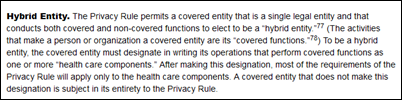






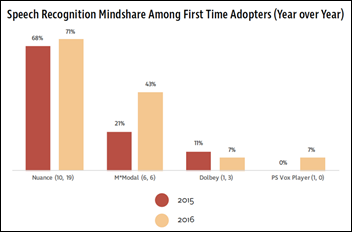




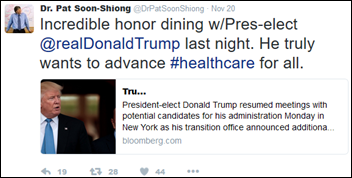

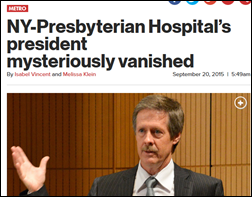




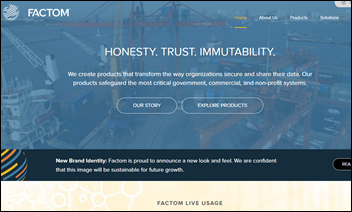
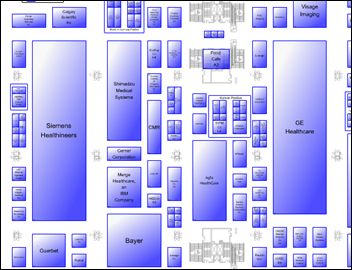
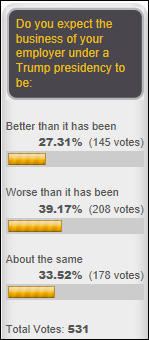






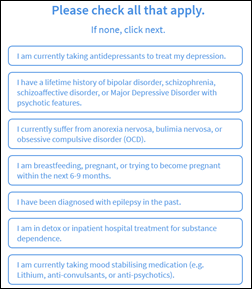
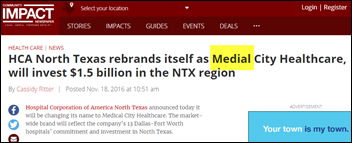




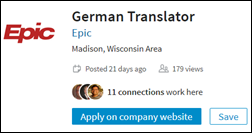
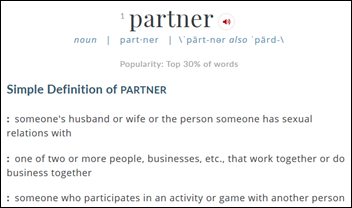

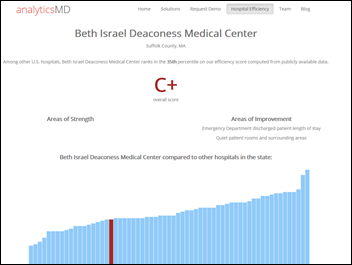
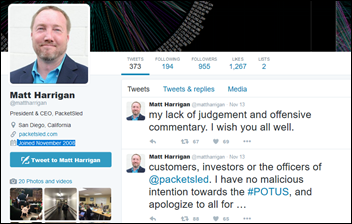

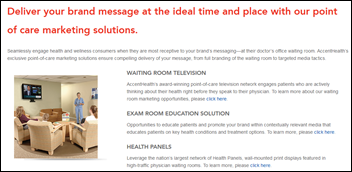


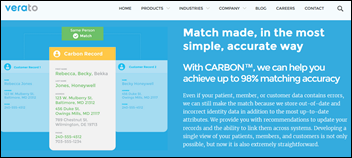

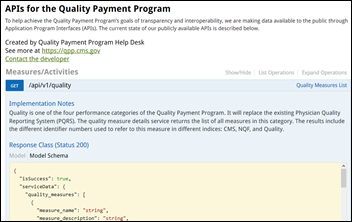

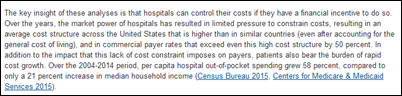



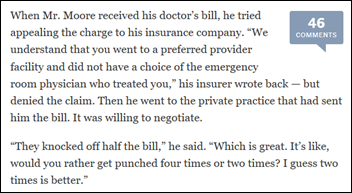




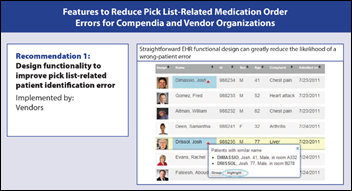
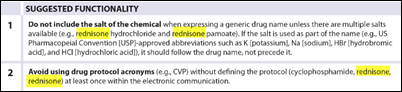
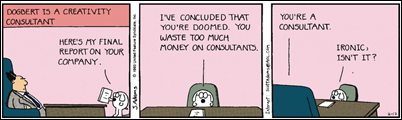


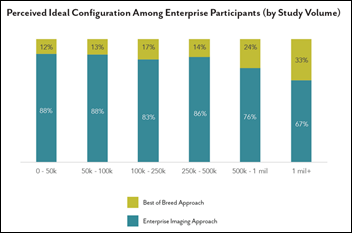

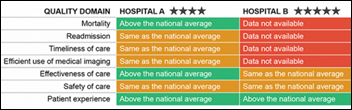
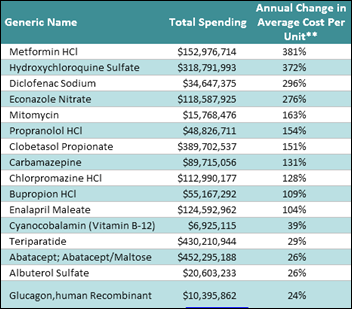



I was born roughly 2 months after the US space program began (Explorer 1), and I've followed it all my…