Recent Articles:

From HIMSS 2/20/17

February 20, 2017 News 6 Comments

Happy Presidents’ Day (or “Not My President’s Day” for protestors in some cities). George Washington has to share his Monday-convenient birthday celebration with those who followed him, but then again he probably doesn’t care since he’s dead.

I’ll have HIStalkapalooza items and the HISsies slides up tomorrow. It’s a bit late to finish up tonight.

I feel like trying to read the educational session descriptions in the The HIMSS Resource Guide is an eye test that I failed. The font size is as tiny as the lengthy disclaimers at the end of a credit card pitch.

Stymied about which companies are doing something interesting? It’s not too late to check out my HIMSS guide of HIStalk sponsors.

image

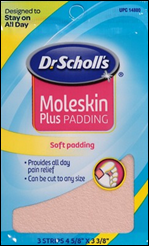
I was skeptical when someone told me that I should apply the Band-Aid-like product called moleskin to the pressure points of my feet to prevent HIMSS-induced blisters and chafing (of special interest to me since I made the tactical error of bringing a new pair of shoes). Darned if it didn’t work like magic – I just cut it to fit a couple of potential trouble areas and today’s endless walking didn’t bother me at all.

image

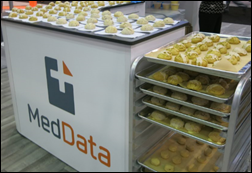
MedData’s scones were outstanding as usual, both the pumpkin and cranberry-orange ones they baked today.

image

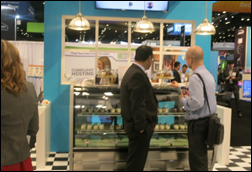
InTouch Health had an actual pastry case filled with stuff, although I didn’t sample any.

image

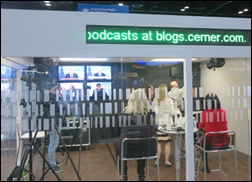
Cerner was doing a podcast with HL7’s Chuck Jaffe when I walked by. The studio was pretty cool, with what looked like live TV news streaming on the monitors (not that we need more of that).

image

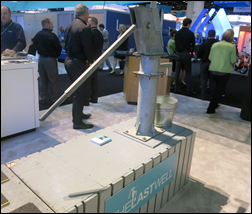
Access brought a huge well to its book to show support for its project to provide drinking water for a Liberian village, which as it notes is a lot more directly life-saving than most of what we do in healthcare iT. Stop by Booth #1778 and you’ll be supporting their cause.

image

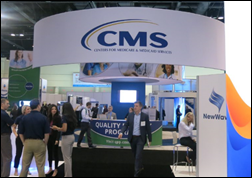
CMS had a big booth.

image

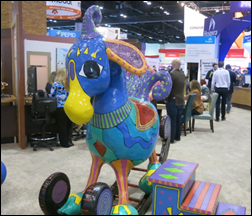
Epic’s art is always whimsical, but this piece had steps that I assume were for photo ops.

image

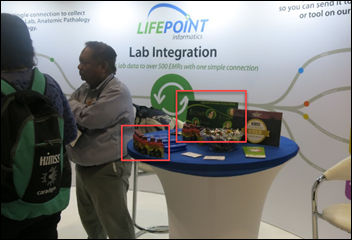
Lifepoint Informatics was giving away energy drinks that were lined up like hyper little soldiers right in front of their HIStalk sign.

image

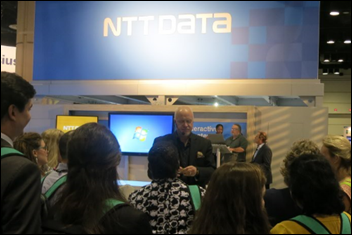
The magnificent psychic, magician, and comic Bob Garner was as entertaining and amazing as always in the NTT Data both. I will definitely see him at least a couple of more times this week. His patter is a bit darker and more daring than that of his contemporaries – I thought the guy beside me was going to bust a gut laughing.

image

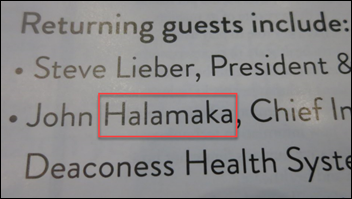
Dear HIMSS-owned publication, John Halamka is one of the most recognizable figures and names in the industry you cover. How did this misspelling not raise an alarm somewhere in the editorial food chain? Yours in news accuracy, Mr. H.

Every year I have to peeve out about this – if you don’t have a clinical degree and an active license, you have no business wearing scrubs in your booth. You’re just annoying people who earned the right to wear them.

I’ve noticed that companies increasing mistakenly refer to “digitize” by saying “digitalize.” While the former is specific to computers (finger jokes aside), the latter’s primary definition involves titrating a person on the heart drug digoxin, another of those things that passes marketing muster while eliciting clinician eye-rolling.

A fun part of the conference is watching the small-booth vendors getting to know their booth neighbors. Provider attendees don’t realize how actively some companies seek out partnerships during the conference. A vendor told me today that they miss the days when the exhibit hall closed for lunch since that’s when a lot of the vendor-vendor networking took place and now it happens in full view of attendees.

Some booth notes. Just to recap my method, I travel the hall alone and casually dressed, with a badge title that does not represent me a decision-maker. I also don’t usually engage booth reps since I want to see how they react when I stand expectantly and make eye contact (since not all prospects are going to make the first move).

  • IBM Watson Health had a huge booth and presence at the conference, including giving IBM’s CEO the opening keynote slot (which I refused to attend on principle – vendor executives, especially those with zero healthcare background, don’t inspire me). It must have caused some panicky huddles when the story broke hours before her keynote that MD Anderson’s ambitious and expensive Watson project is in the toilet, at least temporarily. 
  • I was interested in Best Care, a Korea-based inpatient EHR whose monitors showed a cool-looking product that they are apparently trying to market to US hospitals. I tried to strike up a conversion with the stern guy standing there and he wouldn’t really talk to me. I tried again with another guy and all he said was that company is “from Korea, like K-pop” and then didn’t say anything else. I tried a third time in asking a different person on the other side of the booth if it was OK if a snapped a photo of the screen and they shooed me away. I think the company had best hire some US sales talent if they want to sell here.
  • Cerner had a monster of a booth.
  • I was thinking as I passed the Nuance booth that with all the hype about artificial intelligence, it’s now a given that computers can understand what we say with a high degree of accuracy. Imagine how Dragon would look to someone from the 1970s.
  • A vendor told me that just the light box for their modest-sized booth (the big rectangular sign that hangs above in their air space) costs $20,000. Their three-day exhibit expenses will be $200,000. They estimated that Cerner and the other big-booth vendors must be laying out $3-5 million to exhibit considering all the people they bring.
  • Georgia from Salesforce gave me a quick overview of the physician relationship part of Health Cloud.
  • I pledged to walk away from any vendor whose signs or patter include making a FHIR-related pun.
  • The exhibit hall appears to end in the 6700 block, but it actually keeps going into the 9000 range, with various non-vendor exhibits mixed in. HIMSS is so big that some exhibitors get stuck in no-man’s land where foot traffic is sparse and I’m afraid some of the vendors on that side are feeling left out of the action.
  • Some nice Healthwise folks said it’s different working with clients in Canada because they are more focused on social determinants of health and other factors that impact public health beyond just doctoring people up in the Jiffy Lube model of US healthcare.

image

SPH Analytics hires Amy Amick (nThrive) as CEO.

Morning Headlines 2/21/17

February 20, 2017 Headlines Comments Off on Morning Headlines 2/21/17

Salesforce builds out ecosystem for Health Cloud, adds better patient targeting, risk scoring

Salesforce improves its healthcare-focused CRM product line, adding risk stratification and population segmentation tools.

NantHealth to Showcase New Oncology Solution Suite at HIMSS 2017 Annual Conference

NantHealth reports that it will be demonstrating its suite of oncology, medication adherence, and device connectivity tools at HIMSS.

HIMSS Analytics Launches LOGIC Discover Chrome Extension for Quick Visibility into Technologies Used by Healthcare Organizations

HIMSS introduces a new Chrome extension designed for vendor sales staff that, when viewing a healthcare organizations webpage, presents users with an overview of installed installed vendor products, hospital revenue and bed size, and physical location.

Conservatives See Obamacare Repeal Slipping Away

Efforts to repeal and replace Obamacare are moving slower than some GOP leaders had hoped as replacement bills in the Senate and House struggle to gain a consensus in either chamber.

Comments Off on Morning Headlines 2/21/17

Jenn’s HIMSS Report – Sunday

February 20, 2017 News Comments Off on Jenn’s HIMSS Report – Sunday

My journey to HIMSS started early this morning. I am the type of traveler who likes to arrive at the airport hours in advance so as to avoid the stress of last-minute traffic, parking delays, and check-in and security lines. I also enjoy taking the time to walk through the airport concourses to my gate. I reason that the exercise will do me good before I spend several hours sitting down. I was pleasantly surprised to find the ceiling of one concourse transformed into a rainforest-like canopy. The leafy, backlit branches of green and blue were accompanied by piped in birdsong and patches of ceiling monitors that resembled the sky. I imagine such an environment may have calmed my nerves if I had been nervous about flying.

I was also pleasantly surprised to find this private pod set up for nursing and pumping moms. I’m not sure how many are scattered throughout the airport, but I’m sure it beats trying to perform either task in a crowded public space. I’ll never forget watching a mother try to find an outlet and pump in the bathroom at the St. Thomas airport in the US Virgin Islands. Privacy was nowhere to be found. I’ve heard from more than one female colleague that such spaces should be made available at conferences like HIMSS. I’m not sure if there are any laws regulating this sort of thing, but I’d give big kudos to conference organizers that consider it.

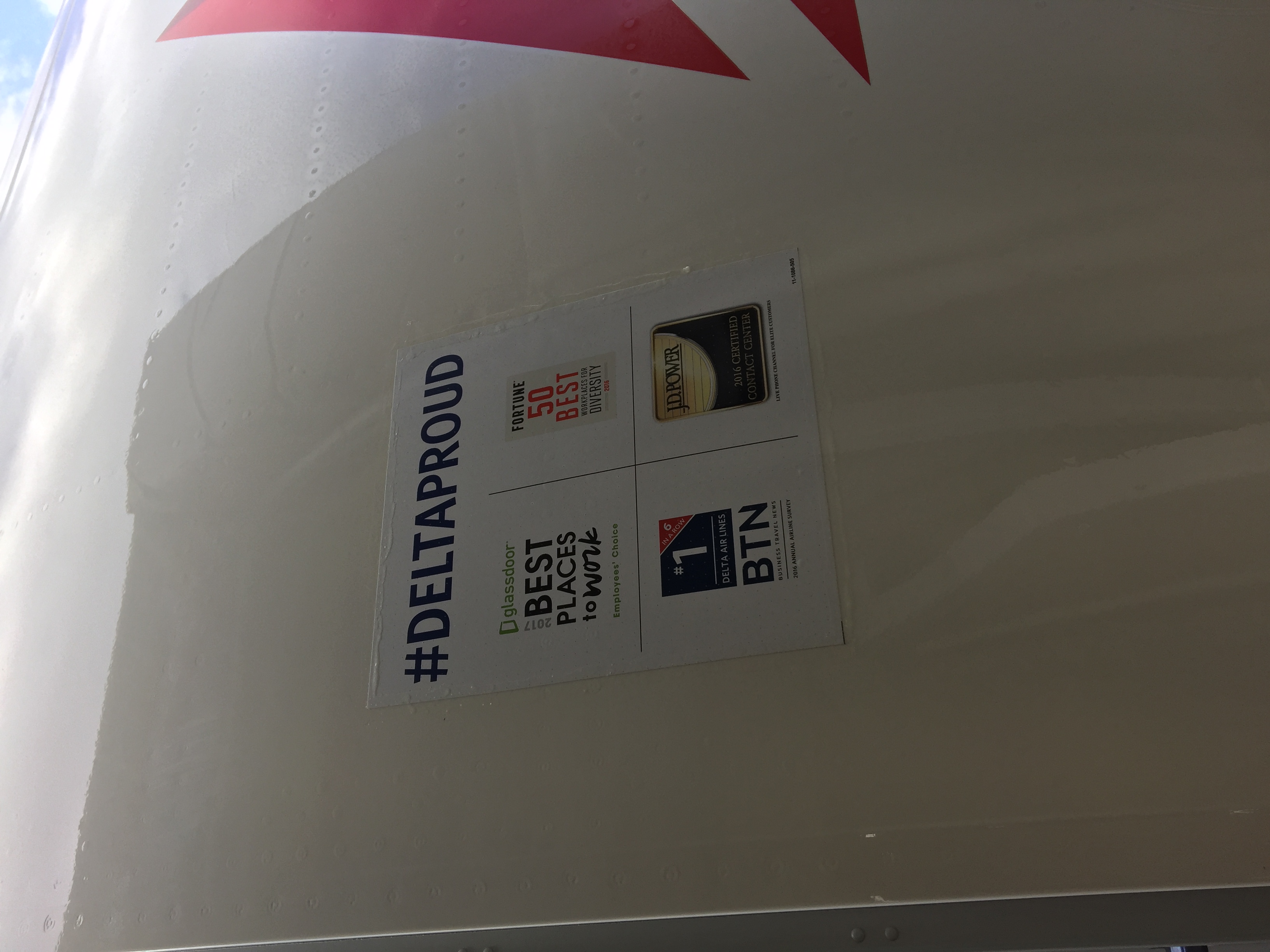
My flight was full, which wasn’t surprising given that most of metro Atlanta’s school systems are out for winter break. As such, many families are making their way to Disney for the week. My flight was surprisingly free of HIMSS vendors, which has been the case in years past. I snapped this pick while boarding; I thought it was interesting that they promote being among the “Best Places to Work.” I wonder if any HIMSS exhibitors will have similar signage. If I were a prospect, that would certainly boost any confidence I might have in the company’s products and corporate culture.

HIMSS signage was everywhere. I was disappointed, though, in the lack of little ones already dressed up as their favorite Disney characters.

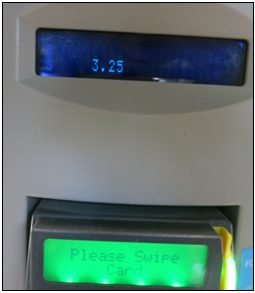
I had a fairly typical wait in the taxi queue, and a delightful ride to my hotel with Viviana of Quick Cab. It seems the taxi drivers are taking a cue from Uber when it comes to customer service. She was quick to offer me refreshments when I got in, and – thank goodness – swiped my card using Square rather than the more traditional card readers that never seem to work.

I’m staying in a modest, family-friendly hotel just a few minutes’ walk from the convention center, and an even shorter distance to the Pointe Orlando nightlife area. It has several dining options, all of which are very affordable, and the staff has so far been eager to please.

Flowers like these haven’t yet bloomed in my neck of the woods. They are certainly a nice contrast to the seedier, concrete and neon jungle that typically greets me when I travel to HIMSS in Las Vegas. Orlando’s weather definitely has me ready for spring!

Like Mr. H mentioned in his Sunday, update, the conference center was fairly quiet. There were a number of pre-conference symposia going on, but it looked as if they had all wrapped up by the time I walked over to pick up my press credentials.

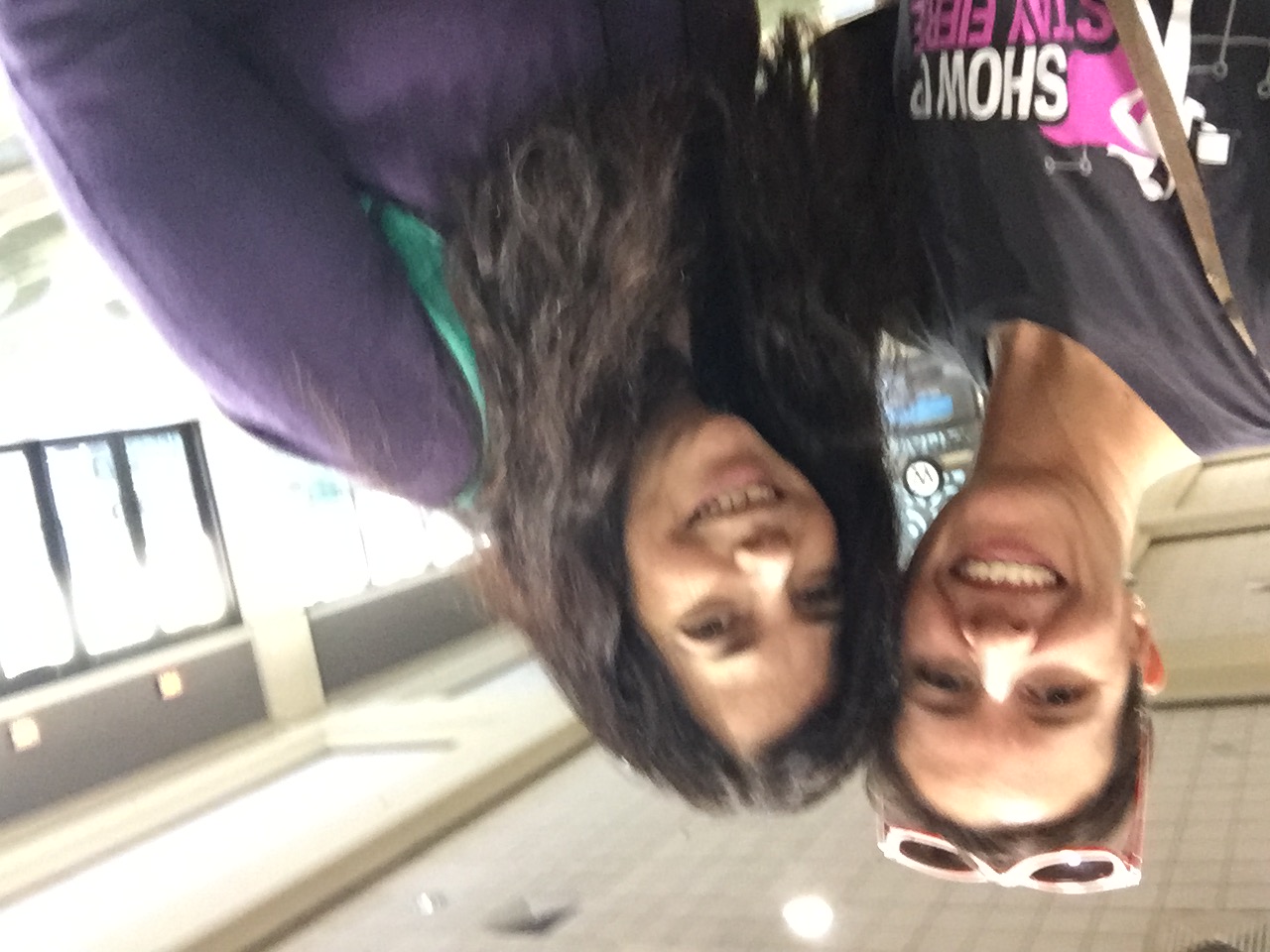
It took me all of five minutes to run into a familiar face. It was great to catch up with Amanda Greene, one of HIStalk’s HIMSS patient advocate scholarship winners from a few years back. She has returned to represent the patient in that oft-used healthcare buzz phrase – “patient-centered healthcare.” I know it’s a growing (but still very much grassroots) movement aided in part by organizations like The Walking Gallery, the Society for Participatory Medicine, and the Personal Connected Health Alliance. Amanda recommended that I check out one such title on the subject, “Participatory Healthcare.” And so I headed over to the HIMSS bookstore …

I don’t know if this was the main bookstore or a smaller, satellite location. As readers of HIStalk Practice already know, I am a big bibliophile.

I came across the recommendation, plus a few others I might have to check out in the near future.

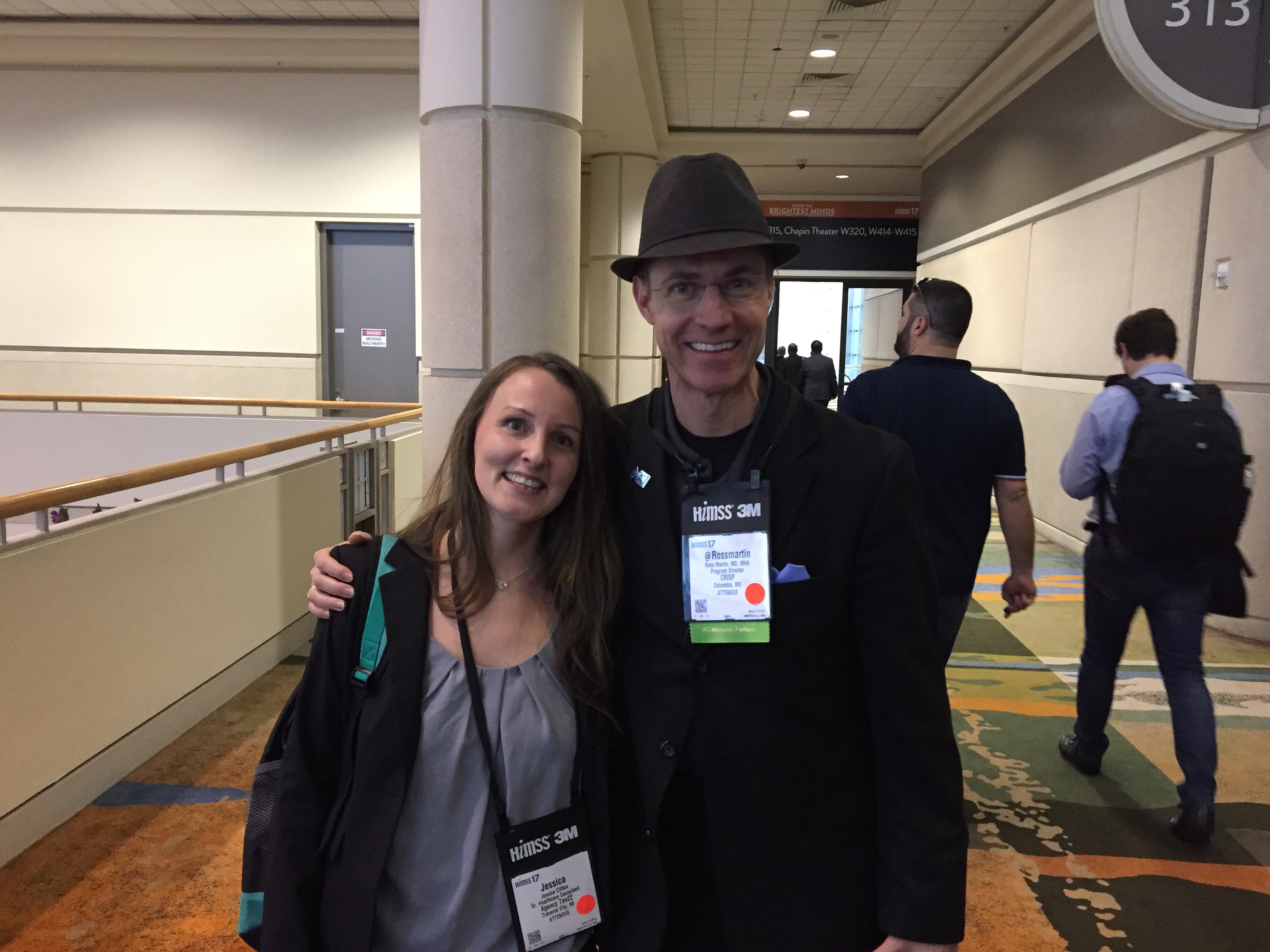
I have always envied Dr. Jayne for her HIMSS routine of checking out the conference with long-time friends and colleagues. It always sounded like such fun to hike around HIMSS with a buddy, and this year, I’m happy to say I got that chance for a few hours with my former college roommate and colleague Jessica Clifton. The day got even better when we ran into Ross Martin, MD a former HIStalkapalooza host who is now a program director at the CRISP (Chesapeake Regional Information System for our Patients) regional HIE in Maryland. He was kind enough to bestow upon Jess an honorary membership to the American College of Medical Informatimusicology.

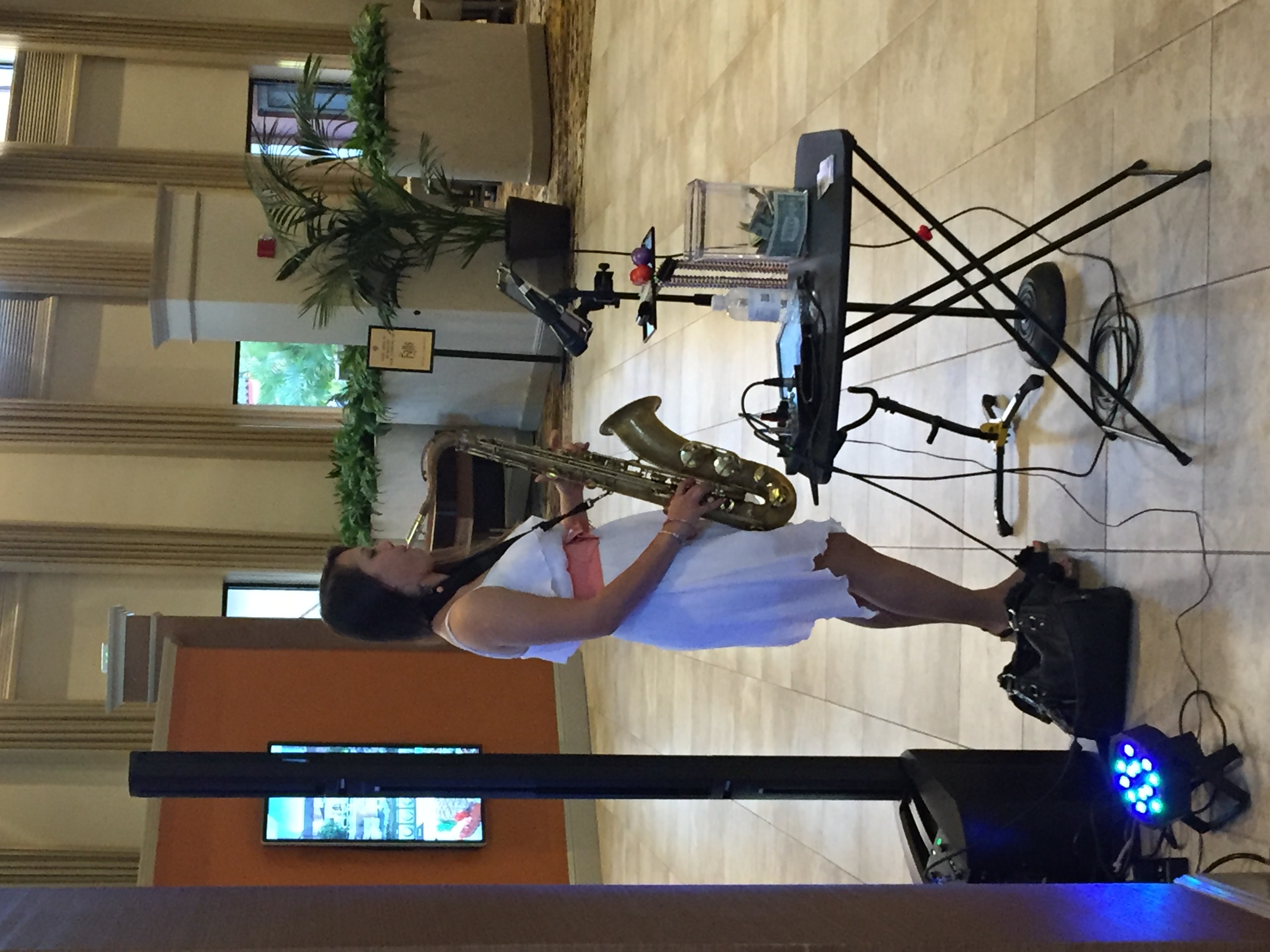
And speaking of music … The night was still young, and so I hopped into a cab and scooted over to the Doyenne Connections meetup at the Caribe Royale. Not only were we serenaded by this female saxophonist, which I assume is a rarity, but we were sent home with Girl Scout Cookies – my new favorite HIMSS giveaway.

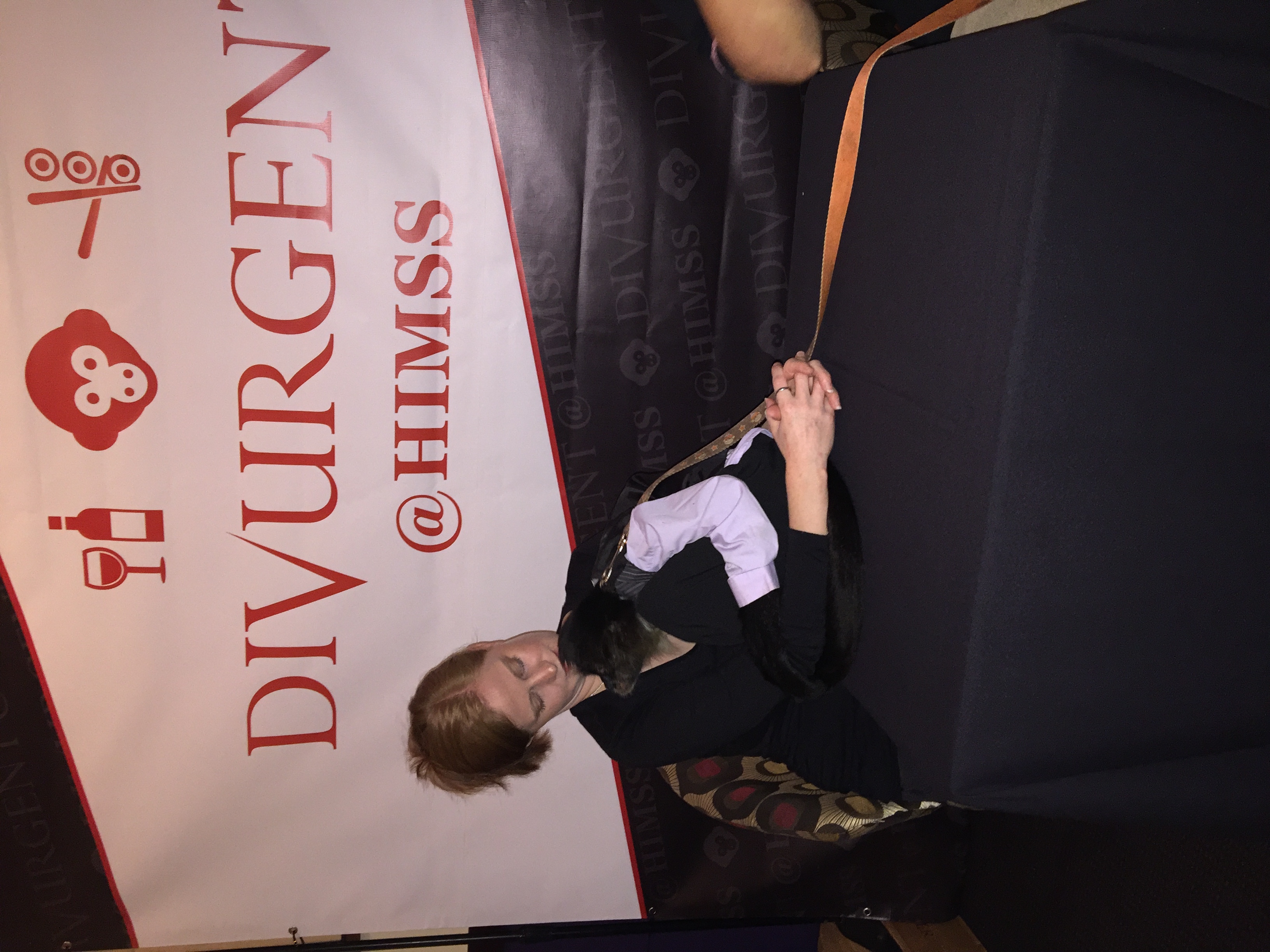
Though not quite as young, the night still had some life in it, and so I made my way back over to the Pointe Orlando area for Divurgent’s networking event at the Funky Monkey.

I’ve been to several Divurgent events over the last several years, and the team knows how to throw a good party. This year was no different, except for the fact that Amos the monkey held court in one corner of the restaurant. Where else but HIMSS?

After chatting with indie HIT consultant, freelance CIO, and HIMSS Social Media Ambassador Drex DeFord and friends, I decided to call the #HIMSSanity a night. (And I couldn’t resist the siren call of HGTV beckoning me back to my hotel room.) Plus, I need to rest up for tomorrow morning’s keynote and, of course, tomorrow night’s HIStalkapalooza festivities.

Comments Off on Jenn’s HIMSS Report – Sunday

Dr. Jayne’s HIMSS Report – Sunday

February 19, 2017 News Comments Off on Dr. Jayne’s HIMSS Report – Sunday

I arrived in Orlando last night, allowing time to get together with some friends for a nice dinner before the craziness of HIMSS begins. We were happy to discover that we can walk back to our hotel from HIStalkapalooza Monday night, no designated driver or surge-priced Uber needed. After a nice walk around the Disney grounds this morning, we headed to the convention center for registration.

image

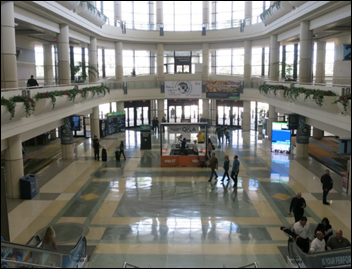
Most people enter the convention center from the International Drive side, which means they miss out on some of the things you can see coming in from the car park in back. The registration lines there were short (although the parking was pricey and hard to find – I hope it’s not a total gong show tomorrow.) In the registration lobby, they have a hydroponic garden growing a variety of lettuce, basil, kale, Swiss chard, and more.

image

From there, it’s up the escalators to the pedestrian bridge, where you can see the massive loading docks that facilitate arrival of the booths and equipment.

image

Parts of the exhibit hall were still wall-to-wall crates, even after 1 p.m. Sunday.

image

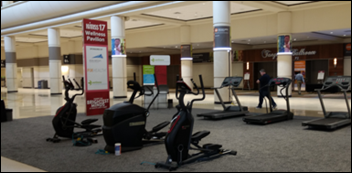
I’m traveling with a friend this year who has never been to a HIMSS in Orlando, so we went walkabout so she could get the overall layout of the convention center. It’s definitely got a more streamlined floor plan compared to Las Vegas with its basement booths. We came across the Wellness Pavilion, which consists of a handful of treadmills and elliptical machines. Because nothing says professional like hopping onto a piece of exercise equipment while you’re business casual with your HIMSS tote bag.

image

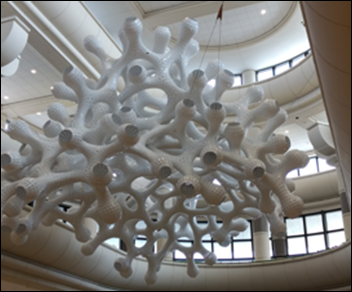
We came across this sculpture outside Hall F, right near the Wellness Pavilion. For those of you with clinical backgrounds, doesn’t it remind you of trabecular bone?

Just about the time I told my friend we’d have to lay bets on how long it would be before I ran into someone I knew, we ran across a friend of mine who built the first clinical data repository at the medical center where I did most of my training. It was good to catch up, but HIMSS is such a busy week that it’s difficult to get more than a couple of minutes with people sometimes.

From there, we headed up I-Drive to grab lunch at the Shake Shack, because sometimes you just need comfort food after you’ve already walked seven miles by mid-day. From there it was a quick swing over to the outlet malls, which were absolutely packed, then back for the HIMSS opening reception.

image

Usually the reception has some themed performers outside to welcome attendees – showgirls in Las Vegas, and last year flappers and gangsters in Chicago. This year there was a performer in the lobby that defies description – or at least defied description until we heard two attendees chatting on the way to the parking garage. One mentioned it was “A woman in a flowy dress on a stick flying through the air.” The other pondered, “Why am I not there?” I don’t know how else to describe it other than what they said, so I’ll let a picture be a thousand words.

The reception seemed to be a step up from previous years, with short drink lines and a good number of food stations. Choices included pad Thai, mini Caesar salads, antipasto cups, paella, and fish tacos. Dessert options included chocolate covered marshmallows and “Dragon’s Breath” popcorn chilled with liquid nitrogen and then served with your choice of toppings. Entertainment included a band with a woman playing some kind of virtual harp instrument that was strung from the stage above the audience, but I couldn’t get a good picture of it.

There were plenty of opportunities to catch up with old friends and meet new ones. The only downsides were the dimness of some parts of the room and there not being enough places to set your drink while you nibbled, but that’s par for the course for events like this. We did work our way into a table of clinical informaticists and met one who works at a hospital in Grand Cayman, so if you’re going to make new friends, that’s the kind of friend to make.

Over the course of the day I walked more than nine miles, so turning in relatively early seemed like a good idea. I definitely need to rest up for HIStalkapalooza.

Comments Off on Dr. Jayne’s HIMSS Report – Sunday

Morning Headlines 2/20/17

February 19, 2017 Headlines 4 Comments

Opening Keynote: The Art of Deception: How Hackers and Con Artists Manipulate You and What You Can Do About It

HIMSS17 kicks off as white coat hacker Kevin Mitnick takes the stage to discuss emerging cybersecurity threats and how to detect and defend against them.

Touted IBM supercomputer project at MD Anderson on hold after audit finds spending issues

Auditors find that MD Anderson Cancer Center’s now stalled effort to employ IBM Watson in the fight against cancer was paid for with funds that were secured by hospital executives that intentionally sidestepped purchasing rules.

$5.5 million HIPAA settlement shines light on the importance of audit controls

Memorial Healthcare Systems (FL) pays $5.5 million to settle HIPAA violations after discovering that a former employee continued to use his login credentials to access more than 80,000 patient records without permission.

Forbes World’s Most Admired Companies

Cerner, CVS Health, St. Jude Medical Abbott Laboratories, and Aetna are named to Forbes Most Admired Companies list.

From HIMSS 2/19/17

February 19, 2017 News 7 Comments

image

It was pretty dead in the convention center today, which I assume means that those who paid for pre-conference sessions were dutifully and (hopefully enjoyably) attending them. Attire ranged from shorts to suits, reminding me that one of these days I’m going to show up wearing a tuxedo, which might be fun since I’ve never worn one (or perhaps the white dinner jacket variety would be cooler). I wasn’t interested enough to head back to the opening reception, so I have nothing to report about that. I’ve always found it to be a waste of time except as a convenient location to try to meet up with people for a dinner outing, which I’ve never done either.

image

There’s free WiFi in the convention center, named OCCC_Free or something like that. I Speedtested it and it was pretty good with low latency and a 5 mbps download speed, although that will likely degrade to a standstill when the place fills up. 

image

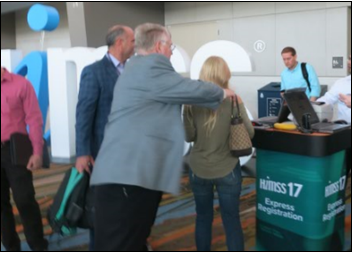
This is Paul, the friendliest and most efficient registration person I’ve seen. I wish Paul could be cloned and assigned to moving people through lines everywhere (like in airports). He greeted me like a long-lost relative and steered me to the kiosk, where a quick barcode scan from my phone’s copy of the registration email triggered printing of my badge. Then all I needed to do was pick up the pre-loaded backpack and it was done – no longer do you have to slide through the line stuffing your new bag with various publications, handouts, and addenda. HIMSS improves the process every year. Paul was the first person I encountered and he made me feel valued and welcome. He was working the entrance by the parking lot.

image

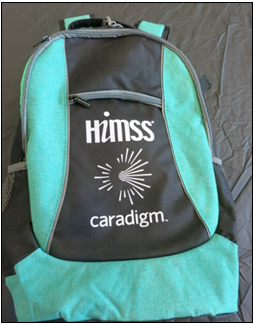
Caradigm always does great backpacks and the one’s the best. I’ll actually take this home for later use instead of stuffing it into a trash can somewhere between leaving the hall for the last time Wednesday afternoon and arriving at the airport. I like everything about it, including the color.

image

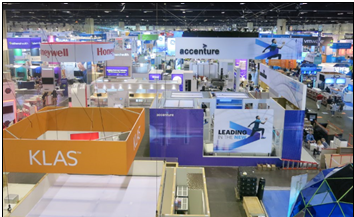
The exhibit hall is shaping up, although it was hot as blazes in there Sunday afternoon when we were setting up our microscopic booth (#4845). Luckily, it took us about five minutes. The HIMSS exhibit person helped us choose a great location even though we don’t have any HIMSS points and we always get the smallest, cheapest available booth. We’re on a corner near some far more impressive neighbors, although I guess it really doesn’t matter since we’re not selling or demonstrating anything.

I see the exhibit hall opens at 10 Monday morning and at 9:30 the next two days. Is it my imagination that it gets earlier every year, not to mention that it now doesn’t close for lunch like it used to? I say HIMSS should just ring the cash registers even harder by running the exhibits 24×7 during conference week – they are almost there already. HIMSS18 would be ideal since it’s in Las Vegas, where the casinos never close so that neon-stupored gamblers irrationally feed the profit engine all night long.

image

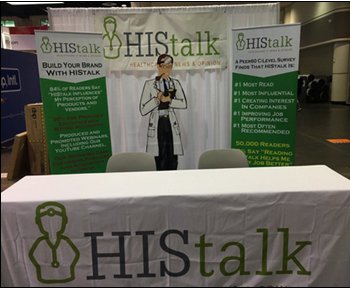
Here is our magnificently furnished HIMSS edifice, a study in cost-effective restraint. The back banner cost $30. The two pull-up signs were $79 each. The table drape was $40. The smokin’ doc standee was $80. Total cost: around $300, and all of it is reusable if I decide it’s worth packing and shipping back home (it all fits into two fairly small and light boxes that we just carry into the exhibit hall). Recall the results of my just-completed reader survey, which found that the most important reason people stop at booths is because of friendly, alert reps. That was a relief since that’s all we really have. Still, it’s fun when executives timidly inquire if it’s OK to take a selfie with the smokin’ doc, then beam proudly with their arm slung over the standee’s shoulder as we snap a picture for them and wonder exactly what they’re going to do with it.

A great thing about our booth location is that we’re just down from NTT Data, which will apparently again feature the amazing magician-psychic Bob. I watched jaws drop, tears flow, and people abruptly walk away in confused disbelief as last year as Bob told attendees things there’s no way he should know, such as, “Your mother died recently and was buried in a purple choir robe.”

image

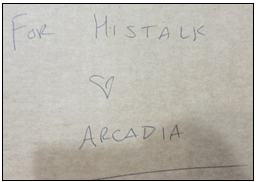
We’re giving away those fantastic conference first aid kits from Arcadia Healthcare Solutions again to help attendees deal with the inevitable aches, blisters, and gastric upset that the conference creates. The box of them was sitting on our little table with this cute note.

image

Thirst-slaking isn’t cheap at the Orange County Convention Center. At least it was a 20-ounce soda and it was ice cold.

image

Remember the old days when badge ribbons were rare and those who had them were envied as movers and shakers? No longer – HIMSS puts out a rack full of them for anyone who wants one and vendors give them away, too. I think HIStalk may have been an innovator since I think I did this in around 2006 with some kind of snarky, long-forgotten saying that I was afraid would get me in trouble. I think it was the same year I was snapping a photo in the exhibit hall and someone from HIMSS scolded me.

image

I’m puzzled by this restroom sign. Are there times when the floor is wet and yet it isn’t slippery?

image

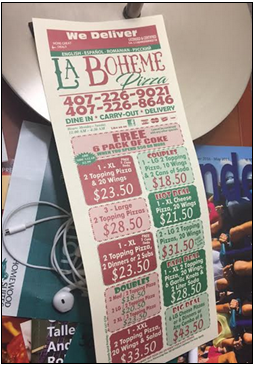
A reader tipped me off to an Orlando tourist area scam that’s been written up in the local papers. You come back to your hotel room and find pizza delivery flyers that have been flung under the door. Hungry and tired, you call in your order, which never arrives. The reason: there’s no such place – it’s just a thief’s phone to which you’ve just provided your credit card number. Google the restaurant name before ordering, like the non-existent La Boheme Pizza above. The second clue is that the number is often a mobile voicemail box that’s full, probably with messages from angry customers demanding to know why their imaginary pizza is taking so long. The reader is staying in a HIMSS hotel and has received two fake ads so far, while I have received one. Perhaps they should have just replicated a Domino’s or Papa John’s flyer and used their own telephone number to suppress suspicion, although maybe those places aren’t as appealing. The flyer also offers dine-in and carry out where the fraud wouldn’t work, but without an address, those are probably seldom chosen by hotel guests with cranky children wearing Disney ears or who are happily shedding their HIMSS badges for the day.

image

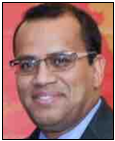
Akron Children’s Hospital (OH) hires Harun Rashid (Children’s Hospital of Pittsburgh) as VP/CIO.

A reader tipped me off that five bidders are in the hunt to supply Nova Scotia with a provincial clinical information system: Allscripts, Evident, Meditech, Cerner, and Harris Healthcare.

image

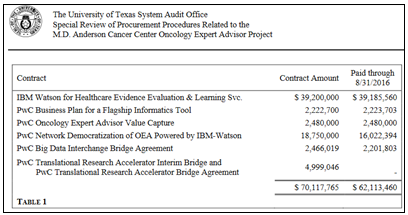
A University of Texas System audit finds spending irregularities in the money-losing MD Anderson Cancer Center’s now-stalled $62 million IBM Watson-powered Expert Oncology Advisor project. The audit found that the system hasn’t even been piloted anywhere and contains outdated drug and clinical trials information, while on the financial side, MDACC  didn’t run a competitive bidding process, paid fees that were set just below the amounts that would have required board-level approval, and spent donated funds before they were received. 

We spent a chunk of time today hauling HIStalkapalooza stuff (banners,signs, etc.) to the House of Blues. It’s looking good for Monday evening. HOB is a pretty cheap Uber ride for those planning to imbibe. Doors open at 6:30, dinner and music start at 7:00, the HISsies will kick off at 7:45, and Party on the Moon will play from around 8:15 or 8:30 until 11:00. We usually don’t open the bar first thing because of the cost when most people are still filing in, but I’m going to bump up against the HOB minimum and figured I might as well start the drinks earlier and fancy up the menu at little. Please take a moment to thank the companies sponsoring the event – it’s pretty generous of them knowing they are funding the attendance of their competitors and non-decision-makers whose only common attribute is that they are fellow HIStalk readers.

Here’s an important note. As usual, we’ll lock the HIStalkapalooza doors no later than 8:30 and nobody (even invitees) will be allowed in afterward. Reason: each person who passes the HOB clicker guy costs me about $200, and I don’t like paying for someone to drop my for a quick drink on the way to somewhere else. I’ll be lucky to break even on the event and latecomers could push me into the red with little benefit to anyone.

I don’t have many Orlando recommendations, but I can say that I’ve been happy with these modestly priced restaurants where I had dinner the last three nights, all a short drive from the convention center: Delmonico’s Italian Steakhouse, Ciao Italia, and Bahama Breeze.

From HIMSS 2/17/17

February 17, 2017 News 1 Comment

image image

Orlando weather is perfect, with lots of 80-degree sunshine and comfortably cool mornings at around 60. I took a long walk today around the North, South, and West parts of the convention center. HIMSS is in the oldest (West) part on the other side of International Drive from the others, opposite the Hyatt (formerly known as the Peabody, where the first HIStalkapalooza was held in 2008). Every HIMSS conference that I’ve attended in Orlando was on the West side except one, which I seem to remember moved across the street for just that one time right after the new part opened.

image

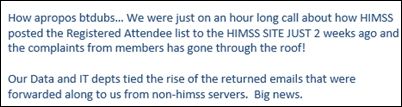
A vendor reader sent me an email that HIMSS unintentionally sent him that apparently acknowledges that the entire HIMSS membership database – not just those who registered for HIMSS17 – is being spammed with conference-related, paid vendor promotional emails (do you see the theme with HIMSS misdirecting emails?) The reader’s concern is that potential prospects might get alienated right before the conference, while mine is that an adult would write the term “btdubs” in referring to the shorter and more obvious (but less cutesy) “BTW.”

image image

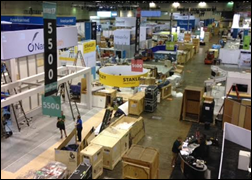
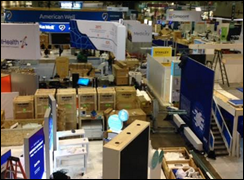
The convention center was close to empty today, with just a few casually dressed boothers eating lunch in the vast open spaces they shared with setup people and equipment operators, the harmony of which for some reason made me happy.

image

You must arrive to the HIMSS conference days early if you want to spot this rare phenomenon – empty chairs and tables. These will soon be coveted by well-dressed IT nerds desperate to sit to gulp down their high-cost, low-quality, precariously-balanced salads or sandwiches, but who find themselves blocked by non-eaters camped out with their laptops, phones, and papers. I was speculating on this and arrived at the conclusion that conferences don’t want you sitting comfortably since that doesn’t pay the bills like forced marches through the exhibit hall.

image

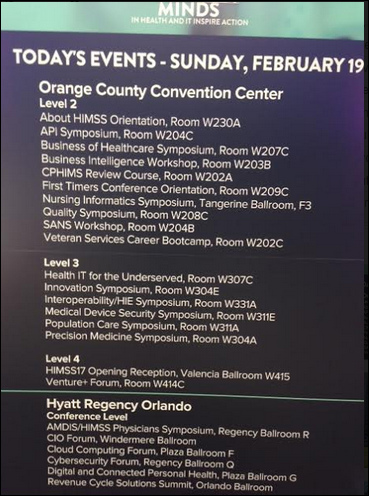
Here’s what’s happening Sunday. The opening reception is right in the convention center this time instead of across the street at the Hyatt, which is nice because people were always getting lost trying to find it.

image

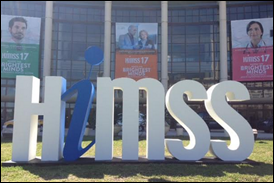
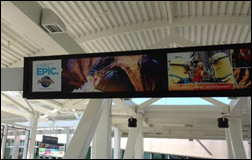
I don’t think the fire-breathing “Epic” on this convention center sign refers to the red-lettered one, but you never know given its penchant for whimsicality.

image

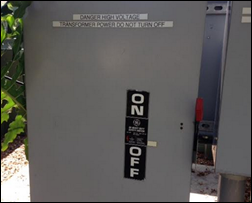
Perhaps it’s a testament to the inherent good-naturedness of humans that this unsecured but apparently important switch is placed right on the I-Drive sidewalk in front of the convention center. I pictured flipping it and watching the entire facility go dark.

image

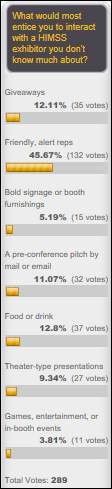
Getting passers-by into your HIMSS booth requires having friendly, alert booth reps, according to the nearly half of poll respondents who said it’s the most important factor. You will see endless examples next week where companies have invested heavily in the low-percentage items, but failed to pay adequate attention to this most important one.

I always wonder what’s going on when I see an empty exhibit hall booth where a company didn’t show up. Did they change their mind, go out of business, get stuck somewhere snowy, or run out of money to send employees? Maybe I’ll keep a list and follow up afterward.

New poll to your right or here: what do you think the VA will do with regard to its EHR?

image

Welcome new HIStalk Platinum Sponsor Ilum Health Solutions. The company, just launched by drug maker Merck, helps hospital improve infectious disease outcomes and antimicrobial stewardship via technology that helps clinicians stay connected to real-time health system patient data. It offers clinical decision support to maintain treatment pathway adherence, a Command Center Dashboard for case browsing and prioritization, and automatic creation of CLSI-standard antibiograms. It reports key measures from cases to cohorts, giving hospital leaders the ability to track performance such as patient outcomes, clinical pathway adherence, prescriber-level resource utilization, clinical outcomes from stewardship programs, rates of disease, antibiotic use trends, and automated NHSN AUR reporting. Hospitals benefit from reduced inappropriate antibiotic use and and variability in care that can lead to sepsis. Thanks to Ilum Health Solutions for supporting HIStalk.  

image

The Wall Street Journal says Theranos was down to $200 million in cash at the end of 2016, having burned through $700 million of investor money. The company had no revenue in 2015 or 2016, has no funds set aside for any lawsuit liability (at least $240 million in suits have been filed against it), and has yet to earn FDA approval to sell its only remaining product, the MiniLab testing machine. Imagine valuing a company with zero revenue at $9 billion before its bubble burst.

image

Connectivity vendor Ellkay acquires the assets of CareEvolve, which include its lab outreach portal and connectivity.

image

image

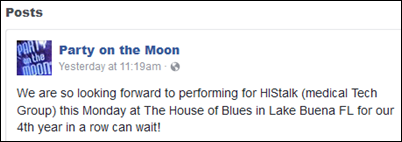
I will assume that Party on the Moon meant “can’t wait” in their Facebook update and are actually happy to see us all again. They’re going to be amazing.

An HIT Moment With … Brandon Palermo, MD

February 17, 2017 Interviews Comments Off on An HIT Moment With … Brandon Palermo, MD

An HIT Moment with … is a quick interview with someone we find interesting. Brandon Palermo, MD, MPH is executive director and chief medical officer, Healthcare Services and Solutions (HSS), Merck & Co. Ilum Health Solutions, which was launched this week, offers a technology-powered program that helps hospitals improve their infectious disease outcomes and supports antimicrobial stewardship programs.

image

What was Merck’s vision in creating Ilum Health Solutions?

Recognizing the critical role digital health can and should play in the fight against infectious diseases and antimicrobial resistance, we saw an opportunity to leverage Merck’s expertise and resources to create an innovative solution that truly addresses the needs of patients and hospital customers. And, we wanted to do it with the same evidence-based approach and rigor that Merck applies to all areas of innovation.

So, we created Ilum Health Solutions, which provides an array of tools and services to help hospitals and health systems improve outcomes for conditions like sepsis and pneumonia, and implement key components of their antimicrobial stewardship initiatives. As quality standards from CMS and The Joint Commission continue to evolve in the area of infectious diseases, Ilum is focused on partnering with health systems to help meet and exceed their quality goals.

Ilum is part of Merck’s Healthcare Services & Solutions group and operates independently from Merck’s pharmaceutical products business.

How important is early recognition and evidence-based treatment of sepsis in hospitals?

Very important. Sepsis results in 750,000 deaths in the United States every year and is a major cost driver in health systems.

We know that following evidence-based pathways for sepsis can save lives, but it’s not that simple. These pathways call for interventions where time is critical, and early recognition of sepsis is a challenge that continues to vex health systems. I can tell you from my own experience as a practicing physician that this can be a huge hurdle.

We’ve already seen where our technology can move the needle. Preliminary results of a pilot study at East Jefferson General Hospital, which we presented last December at the Institute for Healthcare Improvement’s Annual Forum, showed that our CDS product helped clinicians improve sepsis recognition and adherence to evidence-based care, leading to significantly improved outcomes and reduced resource utilization.

What is the best use of technology in supporting the responsible use of antibiotics?

Technology needs to give us antibiotic foresight, not just hindsight. A root cause of antibiotic resistance is the systemic overuse and inappropriate use of antibiotics. While many factors account for this, a key issue is the lack of timely clinical information at the point of care.

Many stewardship programs in hospitals today only provide feedback on antibiotic prescriptions one or more days after the patient has already been started on an antibiotic. But it’s important to use technology to engage and guide clinicians in real time from the beginning when an antibiotic is ordered and to continue tracking pathway adherence as additional microbiology data become available. And it’s important to be able to support this within their existing workflows.

Technology also needs to effectively connect everyone on the stewardship team – doctors, nurses, quality managers, pharmacists, and healthcare executives.

What technologies does the company offer and what integration with existing systems is required?

Hospitals and clinicians need help accessing important data that are often buried within complex EMRs. In addition to the CDS product I mentioned, we also have a Command Center, which is an intuitive data dashboard. Together, these tools help promote early recognition of infectious diseases, adherence to evidence-based clinical pathways and initiation of appropriate interventions. They enable case monitoring and prioritization on both an individual and aggregate level and they provide automated outcomes reporting configured to hospital-specific initiatives to track program performance and impact.

Our collaborations with partner hospitals launch with two parallel tracks — benchmarking and integration. We assist with benchmarking to establish baselines and identify quality goals for improvement. During this time, we integrate to existing data feeds – ADT, lab results, orders, and med admin feeds – which are widely available in most health systems. The addition of our CDS solution can then leverage the integration work already completed, ensuring a simplified upgrade process. So Ilum can help hospitals identify and target areas for quality improvement. For example, antibiotic prescribing variability and C. diff rates, and provide tools to help achieve the desired outcomes.

What will the company’s focus be for the next five years?

Our plan is to build out disease modules for various types of infections using a value- and data-driven approach. We plan to expand to hospitals and health systems across the country and continue to bring key industry players together.

We have to keep generating evidence to show the value of what we’re doing. We can’t just say it works. We have to continue to show it works.

Comments Off on An HIT Moment With … Brandon Palermo, MD

Morning Headlines 2/17/17

February 17, 2017 Headlines 1 Comment

City delays planned $764M record-keeping system at hospitals

NYC Health + Hospitals delays its $764 million Epic rollout after ending the year with a $779 million deficit. A hospital spokesman denies that the decision was financially motivated.

CommonWell Becomes First National Network to Use the Argonaut Project’s FHIR Specifications

CommonWell implements Project Argonaut’s FHIR specifications into its core services, allowing its customers to use FHIR-based outbound query and retrieval capabilities.

NHS Scotland Selects NextGate to Assign and Manage the Community Health Index (CHI) Unique Patient Identifier

NextGate is selected to implement a national master patient index system in Scotland.

Community Health Systems Announces Definitive Agreement to Divest Eight Hospitals

Steward Health Care (MA) acquires eight hospitals from Community Health Systems. The transaction is expected to close in the second quarter of 2017, following regulatory approvals.

News 2/17/17

February 16, 2017 News 7 Comments

Top News

image

Financially struggling NYC Health + Hospitals pushes back its Epic project “a few months” with just two of 11 hospitals live.

A health system spokesperson refused to answer a reporter’s question about its original project deadlines and budget and completion estimates.

NYCHHC’s annual budget deficit is running at $800 million and is expected to swell to a nearly $2 billion annual shortfall by 2020.


Reader Comments
image

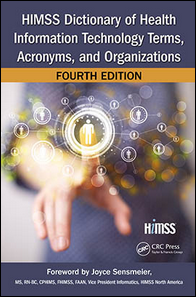
From Sporadic Emission: “Re: HIMSS. Just announced a new health IT dictionary. Perhaps it contains a definition for ‘interoperability,’ but it’s only available as a $43 paperback – not even as a PDF.” I wonder if it provides the definition of “HIMSS?”  

SNAGHTMLbb631b74

From Phinneas: “Re: Aventura. Shut its doors Wednesday with no employee severance.” Not true, the company says, although they did make some changes that  they will describe in more detail later. 

From Caughtinatrap: “Re: Curaspan, now Navihealth. Layoffs in Newton, MA with at least four executives let go.” Unverified. I couldn’t find a cached copy of the executive page to compare.

image

From Six Degrees of Wayne: “Re: Epic. Lars-Oluf Nielsen (who HIStalk had published a couple years ago left Epic to become CEO of iMDsoft) recently returned to Epic without much advance notice to lead the Implementation Division. Tina Perkins is apparently out of that role without much warning. Lots of drama. A quick check of the news seems to show that iMDsoft was acquired by another company not long after Lars started there. Sounds like an interesting dodge, and probably an even more interesting payday for the House of Nielsen.” IMDsoft was acquired by Harris Computer in December 2016, while the LinkedIn of Lars shows he left in November 2016 and rejoined Epic in January 2017 as SVP/chief implementation officer.


HIStalkapalooza Sponsor Profiles

image

Optimum Healthcare IT is a leading healthcare IT staffing and consulting services company based in Jacksonville Beach, FL. Recently named the Best in KLAS Overall IT Services Firm, Optimum Healthcare IT provides world-class consulting services in advisory, implementation, training and activation, Community Connect, analytics, security, and managed services – supporting our client’s needs through the continuum of care. Our excellence in service is driven by a leadership team with more than 100 years of experience in providing expert healthcare staffing and consulting solutions to all types of organizations.

At Optimum Healthcare IT, we are committed to helping our clients improve healthcare delivery. By bringing the most proficient and experienced consultants in the industry together to identify our clients’ issues, we work to explore the right solutions to fit their organization’s goals. Together, we identify and implement the best people, processes, and technology to ensure our client’s success.

By listening, we understand our clients’ unique needs and then select only the most qualified candidates for your organization – and then we constantly follow-up to make sure the consultants remain a perfect fit. Our team brings years of healthcare clinical, operational, and IT knowledge and takes the time to understand the uniqueness of your organization, working collaboratively with your staff to customize solutions that are specific and targeted to your needs. Without sacrificing quality, we are committed to providing world-class consulting services, at a reasonable cost. Our role is to act as trusted advisors to our clients – your success is our success.
image

Since 2005, Philips Wellcentive has driven quality improvement, revenue growth and business transformation for providers, health systems, employers, and payers transitioning to value-based care. Our highly scalable, cloud-based, and value-driven population health management solution provides long-term partnership services to impact clinical, financial, and human outcomes. Recognized as a leader in population health management in reports by IDC Health, KLAS, and Chilmark, Philips Wellcentive helps customers provide care management for more than 30 million patients and achieve more than $500 million annually in value-based revenue. Stop by booth 2105 at HIMSS; visit www.wellcentive.com; and follow us on Twitter, LinkedIn and Facebook.

SNAGHTMLbb1dfafb

Validic provides the industry’s leading digital health platform connecting providers, pharmaceutical companies, payers, wellness companies, and healthcare IT vendors to health data gathered from hundreds of in-home clinical devices, wearables, and consumer healthcare applications. Reaching more than 223 million lives in 47 countries, its scalable, cloud-based solution offers one connection to a continuously-expanding ecosystem of consumer and clinical health data, delivering the standardized and actionable insight needed to drive better health outcomes and power improved population health, care coordination, and patient engagement initiatives. To learn more visit www.validic.com, connect with us on Twitter @Validic, or stop by Booth #7281-33 at HIMSS.

image

Versus not only provides a multi-platform, scalable approach to RTLS, we have the software solutions, expert consulting and implementation services to ensure your project’s success. We are your partner for process improvement. Visit booth 1723 for a live demonstration of how we combine our KLAS-leading location accuracy with your existing Wi-Fi locating for enterprise visibility into your operations. And, see how our analytics drive process improvements that ultimately increase access and enhance the patient experience.

image

Clearsense is a data science company that offers a cloud-based analytics solution that works with any data source and can be rolled out in a fraction of the time required for a traditional data warehouse. Its real-time, cloud-based, subscription-priced, scalable system helps healthcare organizations respond to the pressure to use data to make better and faster decisions. Examples: reducing adverse events, improving patient flow, hitting quality and patient satisfaction targets, driving research, and managing cost and payment.


HIStalk Announcements and Requests

image

I traveled to Orlando today. The airport was mobbed (only one shuttle is running between the terminal and gates as the other is being replaced in a months-long project) and baggage claim was a bit of a mess, but otherwise the weather is good and the condo I rented via VRBO is fabulous, maybe 1,500 square feet overlooking a lake with everything you could possible want (including a pool table) for far less money than a hotel. It’s supposedly within a half-mile or so walk to the convention center, although I got in late and haven’t ventured out yet. No offense to my fellow HIMSS attendees, but I’m happy to be able to escape the maelstrom, pop open a beer from the refrigerator after a long day, and either make an easy dinner or have it delivered without queueing up at the tourist trap restaurants where all the other badge-wearers expensively and loudly graze. Life is too short to start the day waiting in a breakfast or coffee line that’s moving slower than the new LinkedIn user interface.

I haven’t even looked at the conference schedule yet, so I guess that’s on the agenda sometime in the next day or two. I have scheduled no appointments, made no commitments to visit particular booths, or done anything else that would impede my ability to – like a child – wander around stopping to look at whatever catches my eye. On my must-do list, though, is the triumphant return of the world-class scones baked on site by MedData that I noticed in my HIMSS guide, truly the best giveaway I have ever witnessed (and eaten). It’s always a toss-up among their rotating flavors – is passion fruit better than orange? I shall be happy to weigh the evidence and report.
image

With the HIMSS conference, I’ll be skipping the usual news format and will instead tell you what I’m seeing and hearing, ignoring all but the most significant vendor announcements (which is probably 1 percent of them, the remainder just being a pointless PR stake in the ground). You can read or download/print my HIMSS guide, which tells you what my sponsors will be doing, including presentations, swell giveaways, and fun social events.

This week on HIStalk Practice: Metropolitan Center for Mental Health replaces paper with TenEleven Group tech. New York physicians begin to see the benefits of e-prescribing. CareSync prepares to launch new CPC+ protocols. Furhmann Health Center implements InboundMD. Answer Health on Demand joins Great Lakes Health Connect. Mental Health Center of Denver selects RxRevu e-prescribing software. Liberty HealthShare rolls out Salus Telehealth.


Webinars

None scheduled soon. Previous webinars are on our YouTube channel. Contact Lorre for information on webinar services.


Acquisitions, Funding, Business, and Stock

image

Allscripts announces Q4 results: revenue up 23 percent, adjusted EPS $0.14 vs. $0.13, beating revenue expectations but falling short on earnings. Shares dropped slightly in after-hours trading Thursday following the announcement. The company said in the earnings call that it sold one domestic Sunrise account in the quarter and another two in the UK. It has doubled annual bookings since the current executive team joined the company in 2012 even as the market changed from selling regulatory compliance to selling ROI. 
image

Market research firm Peer60 renames itself to Reaction, saying the old name was too confusing. I’ve seen “Peer360” countless times, so I get it. Plus it’s one fewer “small first letter” company to conform to my HIStalk journalistic style sheet that requires a capital first letter (except when I forget). I like Reaction, although Peer60 would provide more fruitful Google searches.

MIT and Harvard’s Broad Institute wins its patent battle over CRISPR genome editing technology, likely the most valuable biotechnology patent ever filed.
image

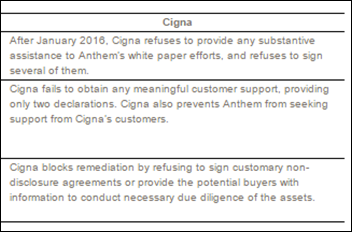
After Cigna terminates its planned merger with Anthem and instead sues Anthem for nearly $15 billion, Anthem responds by filing its own lawsuit seeking a restraining order to prevent Cigna from terminating the merger.


Sales
image

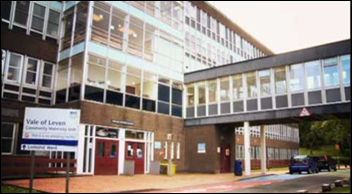
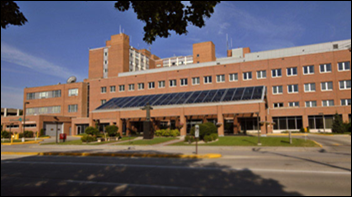
NHS National Services Scotland signs a multi-year contract with NextGate to replace its Community Health Index with a more up-to-date EMPI solution.
image

Hospital Sisters Health System (IL) signs a three-year contract with LogicStream Health for its clinical process measurement tools.

Maine’s HealthInfoNet HIE selects Orion Health’s Amadeus precision medicine and analytics software.


Announcements and Implementations
image

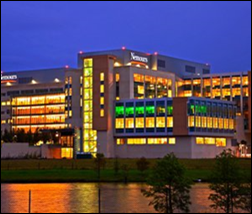
Nemours Children’s Health System (FL) integrates e-prescribing software for controlled substances from HID Global with Epic.
image

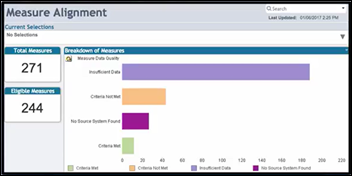
Health Catalyst develops the MACRA Measures & Insights resource application to help providers track and measure MACRA measures across the enterprise.

image

MCG Health will share its care guidelines and analytics with payers and providers via the InterSystems HealthShare data-sharing tool.

Harvard Pilgrim Health Care (MA) rolls out Data Diagnostics analytics software from Quest Diagnostics and Inovalon.

Aprima, EClinicalWorks, and NextGen Healthcare join the Surescripts National Record Locator Service.


Government and Politics

CMS publishes a proposed rule aimed at stabilizing the individual and small group markets that would cut the open enrollment period in half.

Meanwhile, House Republican leaders and new HHS Secretary Tom Price provide some details about their proposed ACA replacement that includes replacing subsidies with tax credits, reducing payments by 50 percent to the 31 states that expanded Medicaid to eliminate an open-ended federal entitlement in favor of a fixed grant, and encouraging insurance sales across state lines. They did not offer a side-by-side comparison, a breakdown of costs, or the number of ACA-insured people they estimate will continue to have coverage. Here is my bellwether – an HSA is not insurance, and neither is any plan whose maximum payout is capped. You buy insurance to prevent catastrophes, so I think by definition any plan that allows or requires someone to file bankruptcy because their insurance has been exhausted after receiving medically necessary care isn’t really insurance – it’s just premium payment assistance.

A federal appeals court strikes down a Florida law that prohibits doctors from asking patients if they own guns. Doctors opposed the law in considering gun safety questions an important part of public health screening. The court preserved one part of the law that bars doctors from discriminating against gun-owning patients.


Technology

image

CloudWave adds managed backup and security services to its OpSus Healthcare Cloud service line.

Epic will add care management technology from XG Health Solutions to its Healthy Planet population health management software later this year.


Other

image

CommonWell wraps up integration of The Argonaut Project’s latest FHIR specifications with its data-exchange services, giving members the ability to use FHIR-based capabilities when accessing data across the network.

image

Japanese tea ceremony aficionado John Halamka will conduct “The Way of Tea” Monday from 3:00 until 4:00 in the Vital Images booth. It’s cool that Vital is honoring the Japanese roots of parent company Toshiba Medical in presenting a ritual that includes “a series of precise hand movements and graceful choreography, in a serene ‘Tatami Room’ within the Vital exhibit on the conference floor.” John will speak about Japanese culture and health IT afterward.
SNAGHTMLbb108c81

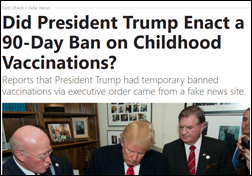
Interesting: 20th Century Fox created fake news sites to promote its new drama about a wellness spa that offers a phony disease cure, creating sites such as the “Indianapolis Gazette,” “NY Morning Post,” and even “HealthCureGov.com” that offered clickbait fake stories such as “Utah Senator Introduces Bill to Jail, Publicly Shame Women Who Receive Abortions” and “BOMBSHELL: Trump and Putin Spotted at Swiss Resort Prior to Election.” Other stories claimed that the new administration had banned MMR vaccine and that the AMA had recognized that a third of the country is suffering from “Trump depression disorder,” intentionally phony and sensationalistic stories that were dutifully repeated on Facebook by clueless dolts and hyper-partisan groups (was that redundant?).


Sponsor Updates

  • Nordic releases a new podcast, “The importance of mentoring in healthcare IT.”
  • The Technology Association of Georgia includes Ingenious Med in its list of the Top 40 Most Innovative Technology Companies in Georgia.
  • LogicStream Health releases version 6.0 of its Clinical Process Measurement platform.
  • LogicWorks releases a new eBook, “Continuous Compliance on AWS.”
  • Orion Health announces that its Rhapsody Integration Engine is now in use at more than 640 healthcare organizations in 36 countries.
  • Gartner includes PerfectServe in its Market Guide for Clinical Communication and Collaboration.
  • Lexmark wins the healthcare market leadership award from Buyers Lab.

Blog Posts


Contacts

Mr. H, Lorre, Jennifer, Dr. Jayne, Lt. Dan.
More news: HIStalk Practice, HIStalk Connect.
Get HIStalk updates. Send news or rumors.
Contact us.

125x125_2nd_Circle

EPtalk by Dr. Jayne 2/16/17

February 16, 2017 Dr. Jayne Comments Off on EPtalk by Dr. Jayne 2/16/17

One of my clients is going through some cultural change efforts and invited me to attend some of their management training sessions earlier this week. The first warning sign that things might not be as effective as anticipated was when I walked into the room and found the instructor arguing with some attendees, accusing them of being late. I thought it was odd because I was 20 minutes early. It turns out the calendar appointment was sent for the wrong time and the instructor was unaware. Once people showed her their calendars, she backed off, but that’s never a good way to start.

We had been told that we were expected to be “fully present” during the training sessions, to wear comfortable loose clothing for team-building exercises, and that we wouldn’t be able to use our laptops during the session, but that we’d be given frequent breaks to check in. What they didn’t tell us was that one of the facilitators would actually confiscate not only our laptops, but also our cell phones. Although I understood what they were trying to do, taking phones from a room full of physicians, some of whom were on call, isn’t a great plan. It also didn’t give a positive message about treating us like adults and trusting that we could avoid non-urgent texts and emails. What they didn’t realize is that half of the class was wearing smart watches, which still worked during the course. That was a good thing for a couple of the physicians, one of whom was called to surgery.

For the rest of us, though, we had to wait nearly three hours for a break, which I’d hardly call “frequent breaks.” Oddly enough, at the break I had a message from the CEO, who had forgotten my plan for the day and had been looking for me. He was extremely displeased at being unable to reach two of us that were in the training session. There must have been a phone call to the corporate training department after I checked in with him, because the “no devices” policy was relaxed after lunch. Guess what? Everyone acted like adults and there weren’t any more interruptions than there had been in the morning. We didn’t get out of our chairs the entire session, so I’m not sure what the request for loose clothing was all about, but I guess we’ll never know.

I’m a keen student of language, so enjoyed this Merriam-Webster announcement about the new words they’ve recently added to the dictionary. Healthcare and technology were well represented with additions such as: net neutrality; abandonware; EpiPen; and urgent care. The dictionary experts also remediated some items that I’d have thought were added long ago: ride shotgun, town hall, ping, and Seussian.

I’ve started getting some HIMSS-related marketing phone calls. Of course, they quickly turn into HIMSS-related voice mails because I don’t answer calls from weird area codes or people I don’t know. A couple of them have had people speaking so quickly I couldn’t figure out what they were saying or who they were working for without listening a couple of times – which is crazy, since I’m from a fast-talking part of the country and can usually keep up. I know exhibitors have access to our profiles, so it might be nice if you remotely coordinated your pitches with the interests of your target as well as making sure your callers can articulate so they are understandable.

The HIMSS-related mailing volume is down significantly this year. I’m sad to say I haven’t received anything truly eye-catching or even worth talking about. No poker chips, no oddly-shaped mailers to get my attention, no Orlando-themed marketing hooks. I suppose Las Vegas is an easier sell, but it would be easy to do a fun-in-the-sun theme. I’ve probably received less than a dozen pieces of mail total, but of course that doesn’t count the mailings that will arrive after I depart. It happens every year and you’d think they’d have figured out how to solve that problem by now.

HIMSS did send me an email with my “Corporate Member Focus Group Confirmation,” which was funny because I didn’t sign up for any focus groups. It just seemed like too much work this year, especially with their new policy around only allowing the first 12 arrivals to attend even though they may have extended more invitations than that. Planning to attend one takes a chunk of time out of your day. Although attendees receive a gift card for their participation, the invites I received weren’t compelling enough to make it worth the hassle.

I’ve also received some downright creepy emails from other HIMSS attendees, looking to build their networks or hawk their services. I don’t know what the exact agreements with HIMSS sharing data are, but one I received felt like an invasion of privacy. The sender must have had access to my mailing address as well as my email address because he made specific references to the part of the city I live in and how he would like to get together in town if I can’t meet with him at HIMSS. You can bet I’ll be paying better attention to any opt-out settings when I sign up for HIMSS next year.

What’s the creepiest marketing effort you’ve seen or experienced? Email me.

Email Dr. Jayne.

Comments Off on EPtalk by Dr. Jayne 2/16/17

Morning Headlines 2/16/17

February 15, 2017 Headlines Comments Off on Morning Headlines 2/16/17

Patient Protection and Affordable Care Act; Market Stabilization

CMS publishes a proposed rule aimed at stabilizing the individual and small group markets that would cut the open enrollment period in half.

Broad Institute wins bitter battle over CRISPR patents

MIT and Harvard’s Broad Institute wins its patent battle over CRISPR genome editing technology, likely the most valuable biotechnology patent ever filed.

Cybersecurity Actions Needed to Strengthen US Capabilities

A GAO report on federal information system cybersecurity readiness singles out EHRs and state insurance marketplaces as needing improvement to protect personally identifiable information from being compromised.

Anthem Files Suit Against Cigna Seeking a Temporary Restraining Order

After Cigna terminates its planned merger with Anthem and instead sues Anthem for nearly $15 billion, Anthem responds by filing its own lawsuit seeking a restraining order to prevent Cigna from terminating the merger.

Why you should donate your data (as well as your organs) when you die

Professors from the Universities of Cologne and Basel call for the development of a global system that would help patients donate their personal health data to research after their death in a way similar to the organ donor program.

Comments Off on Morning Headlines 2/16/17

HIStalk Interviews Patrice Wolfe, CEO, Medicity

February 15, 2017 Interviews 1 Comment

Patrice Wolfe is CEO of Medicity and Health Data & Management Solutions.

image

Tell me about yourself and the company.

I’ve been in healthcare for my whole career, over 25 years at this point. Like many young people, I started my career in consulting, but the bulk of my career has been on the technology side. I’ve worked with government agencies, employers, payers, and mostly providers. I spent a big chunk of my career at McKesson. 

I joined the Healthagen arm of Aetna about 18 months ago as president of HDMS, which is an analytics technology company that mostly works with payers and employers. I became CEO of Medicity in October of last year.

If you had asked me six months ago to describe what Medicity does, I probably would have said that Medicity is an HIE. But now that I know the business a little bit better, I think it’s probably more accurate to describe Medicity as an organization that helps its customers build and grow clinically connected communities.

I think of Medicity’s expertise as aggregating, cleaning, and normalizing clinical data. We do about six billion transactions a year, so we have a lot of experience with that. Those data serve as the foundation for a lot of interesting things that our customers do. But at our heart, we are a data company.

How would you describe the relationship among Medicity, Healthagen, and Aetna and how their respective strategies overlap or compliment each other?

The answer to that has evolved even over the 18 months that I’ve been here. Healthagen was created to become the technology and innovation arm of Aetna. Some of those technology businesses have become integral to the operations of Aetna’s strategy, which is designed towards accountable care, value-based care, and value-based reimbursement.

Some of the pieces of Healthagen are getting more integrated into the operations of Aetna. A few months ago, we announced that we were dissolving the Healthagen name. There’s a lot of work going on at Aetna around branding and that will be a big focus for 2017, but one of the things that I’ve been impressed by is how we are bringing these various technology companies into the operations and the strategy of what’s going on in Aetna’s core businesses.

Do providers have the information they need to do population health management?

It’s a journey. We’re at very baby steps in that process right now. Having access to that information, having access to it in a manner that is complementary to the provider’s workflow, and then having access to it in a manner that makes it easy to act on — those are stages of evolution. Where are we right now? Somewhere at the beginning.

I see a lot of interesting things happening in the industry. But they still seem to neglect the reality that if you don’t try to solve the problem within the existing provider workflow, it’s just not going to happen. The good news is that I see a lot of acknowledgement of that.

We work with some of the joint ventures that Aetna has put together with large health systems to drive value-based care. They’re focused on just this issue. How do we get access to the right information, but in the way in which we provide care, the way we do our business? How can you help us with that so that we can drive towards some of the priorities that we have? If it’s not in the workflow that we use today, it’s just not going to happen.

What’s the state of integration between provider EHR data and the broader information maintained by insurance companies from multiple providers?

I’ll give you a couple of examples of things that we’re working on. There’s value in the EHR data to payers like Aetna to drive more efficiency in certain processes. A great example is standard care management processes that happen inside a payer. How can you automate pre-certification by using secure messaging with the provider? How can you bring in ADT feeds to help care managers and case managers understand early that patients are being admitted or that people are being referred to certain providers? There’s value to the payer to get access to some of that EHR data, no doubt. 

Then the flip side of it is, how can the payer then provide data back to the provider? Leakage is example. We’re working with one of Aetna’s joint venture partners right now to help bring in data from other providers who are outside of their network, but who are in our Medicity network, to show them where their patients are being referred out of network so that they can try to ratchet some of that down. There’s obviously a lack of care coordination if you’re having that happen.

I’d say we’re in pretty much the early stages of figuring out who’s going to get the biggest benefit from which data stream and for what use cases. We’re taking them one at a time. Once we get a couple of clear use cases where there’s benefit to both parties, then there’s an enormous amount of enthusiasm to continue down that path on the rest of them. But you want to have those first pilot use cases to show everybody that this is worth the hard work, because it is hard work.

Does the competition among providers and among insurers impede progress? Do you think intentional data blocking exists?

I think it definitely exists. It’s been fascinating for me being on the payer side. Early in my career, I swore I’d never work for an insurance company, but here I am. [laughs] One of the things I like about it is that I get to watch some of the stuff happen real time. The types of joint ventures that we’re putting together with these large health systems are predicated on trust.

It goes both ways. Aetna pulls out of these markets. It removes its brand and allows all of the insurance to be offered to by the health system. It’s good for us and it’s good for the health system. I think you’ve got to have some of these fundamental pieces to these ACO arrangements that are predicated on trust and on information sharing or they’re not going to work.

We’ve seen first hand what leads to failure. We know that what leads to success is complete data transparency, among other things. Is that going to become the norm in the industry? I don’t think so. It works best with large, enlightened health systems. It’s not going to work with everybody. I think we’ll always have some degree of data blocking and and we will always have to deal with that.

What has been the impact of uncertainty about the future of the Affordable Care Act on Medicity’s business?

What I hear from a lot of providers is they have already made these strategic decisions. They are heading down this path regardless of what the government does. That’s the message we heard when the Supreme Court was ruling on some of the ACA issues last year.There is a pretty firm belief that moving towards value-based care, moving towards things like interoperability, are the right things to do regardless of what the government may do about it.

That said, some of our public HIE customers are very concerned about funding. Are certain grants that they rely heavily on going to go away under this administration? There are lots of concerns around things like that.

I do expect there to be a certain degree of anxiety that leads to retrenching. But I think in general that the direction that we’re heading is going to continue regardless of what the administration does.

The data exchange issues are both financial and technical, as evidenced by the HIE challenges in California and the Carequality vs. CommonWell discussion. What’s the big picture in getting data exchanged and the underlying fabric that either allows or doesn’t allow it to happen?

First of all, I’m excited to see that Carequality and CommonWell are working together. That’s a really great move. There’s never going to be one specific solution for interoperability and data exchange in this country. It’s just not going to happen. We’re not going to have everybody on one or even three EHRs. We still need to cobble together multiple solutions to get to a place where there’s a complete liquidity of clinical information. There’s a place for everyone.

If you look at KLAS’s report that they did in 2016 on interoperability — the one that was focused on EHRs — it showed that the public HIEs are still by far the biggest source of data that providers are taking from external organizations. They complain about the data that comes from the public HIEs, but those remain the number one source of external clinical information.

We’re going to have a patchwork quilt of solutions for many years. The combination of CommonWell and Carequality may give us a really good footprint, but we’re never going to get all of the data from one source. We’re going to need to learn to co-exist in a way that works for the end user, who is the provider. Their use cases are the ones that matter. I don’t think there’s a single solution that’s going to solve things for them.

Is the underlying data exchange solid enough to move on to the next frontier, placing that data into the provider’s EHR so it’s not a separate system or a separate lookup?

I’d like to think that’s the case. We’re certainly spending our time now more on how we can create documents, CCDs, that are integrated, normalized, and offer great value to the provider, Any provider will tell you that going through a CCD is a nightmare. We’ve got to get to the next stage of providing information to folks in the workflow that they’re in, in a way that provides value to them rapidly.

We’ve hit a level of maturity in this industry where now we’re dealing with the nuances. But the nuances are what’s going to make this mission critical to how a provider manages their patients.

Where do you see the company in five years?

Where I see us going is continuing to view ourselves as clinical data experts. We will have more and more ways to use that data to drive different business uses for our customers. I see the variety of data getting more complex, moving away from some of the standard transactions that most interoperability vendors work with today. Moving into maybe more administrative types of data and other kinds of clinical information that come from providers that aren’t normally pulled into this process.

At the base of it, I believe what we do is foundational to a lot of what people today throw into that big category of population health. That foundation has to be there if you’re going to do more sophisticated things. Building that foundation is a journey. We’re never going to be done with it. Medicity is going to be part of that journey for a long time, building out the foundation that we need.

Do you have any final thoughts?

I love having the chance at HIMSS to walk around and see all the shiny new things that are out there. I’m looking forward to getting a feel for what the themes are that we’re going to take away from HIMSS this year. Last year it was like population health 2.0, getting beyond the theory of what population health means and getting into some of the practical applications.

Whatever the industry trends are, we need to constantly bounce them up against whether they support the existing workflow of those organizations that would be able to take advantage of these technologies. That’s a critical question we have to ask. We won’t get adoption if we don’t see that.

Morning Headlines 2/15/17

February 14, 2017 Headlines Comments Off on Morning Headlines 2/15/17

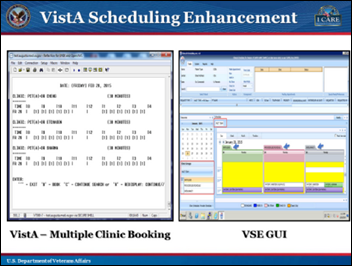
VA moves ahead with homegrown scheduling IT

The VA will move forward with its rollout of its Vista Scheduling Enhancement, an “Outlook-style interface that gives schedulers a dashboard view of appointments.”

Government drops target for ‘paperless NHS’ by 2018

In England, NHS Secretary Jeremy Hunt drops his call for a paperless NHS by 2018, blaming “weak hospital IT systems.”

Great Ormond Street picks Epic in potential £50m deal

Great Ormond Street NHS Foundation trust has selected Epic as its next EHR vendor, making it the fourth Trust in the UK to select Epic.

Senate easily confirms Trump pick of Shulkin as VA secretary

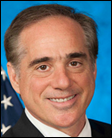
The Senate confirms David Shulkin as the next secretary of Veterans Affairs in a 100-0 vote, making him the first non-veteran to run the organization.

Comments Off on Morning Headlines 2/15/17

News 2/15/17

February 14, 2017 News 9 Comments

Top News

image

The VA will continue its planned tests of a homegrown patient scheduling system, but will hedge its bets by resuming testing of the Epic-developed, $624 million Medical Appointment Scheduling System (MASS) that had been put on hold in April 2016 pending a decision on which system to use.

The VA issued a scheduling system RFP in late 2014 following the wait time scandal that had nothing to do with technology. I wrote in mid-2015 in responding to a reader rumor that the Lockheed/Epic MASS project might be in jeopardy as a bolt-on solution,

The VA neatly sidestepped Congressional demands for firings, reorganization, and funding decreases by simply throwing its scheduling system under the bus and signing up for Epic. I don’t know what it will take to compartmentalize Cadence to run without any other Epic apps and then integrate it with the VA’s systems, but I do know that standalone healthcare scheduling systems have fallen by the wayside given the need for integration. It also seems that $624 million is a lot to spend for automating a single function, but then again both the VA and DoD are used to squandering mountains of taxpayer money on systems that are often failures in every way except as never-ending revenue streams for the chosen contractor.

A 2010 GAO report found that the VA had spent $127 million in trying to develop an outpatient scheduling system but hadn’t implemented anything, with the unnamed contractor that developed the defective system walking away with $65 million.


Reader Comments

From Tyga Choonz: “Re: Epic 2016 release. Being renamed to Epic 2017 after it was  released in late November and no customers upgraded to it. The name change is to help ensure that ‘customers don’t feel behind.’” Unverified, but reported by several readers.

image

From Neon Cowboy: “Re: HIMSS. Will you be looking for booth reps on their phones again?” Of course, with my phone camera at the ready to document their inattentiveness for posterity (the above photo was posed by the Epic people at HIMSS14 as their homage to my never-ending phone rants). It’s moot, however, since past conferences have fulfilled my trifecta: (a) finding reps already staring at their phones within the first few seconds of the exhibit hall’s opening; (b) for booths that have at least three reps working, catching all of them immersed into their imaginary phone worlds simultaneously; and (c) watching a rep ignore someone standing right in front of him or her in favor of screwing around with their phone and then watching the potential prospect walk away in frustration. As I always say, vendors are spending fortunes to staff the world’s most expensive phone booths. Preliminary results in this week’s poll make “friendly, alert reps” easily the #1 draw for HIMSS attendees, with games, fancy booths, and refreshments finishing last in attracting passers-by into booths. Here’s the simple advice I gave to exhibitors back in 2015 to encourage their reps to seek out interaction with those whose appearance suggests at least mild interest:

  • Confiscate the phones of people assigned to booth duty.
  • Make it clear that booth reps shouldn’t be talking to each other unless they are with a booth visitor.

HIStalkapalooza Sponsor Profile

image

CareSync is the leading provider of software and services for chronic disease management, combining technology, data, and 24/7 nursing services to facilitate care coordination among patients, family and caregivers, and all healthcare providers. Founded in 2011, CareSync exceeds Medicare’s requirements for Chronic Care Management (CPT code 99490, 99487, 99489), and also offers care coordination services and technology for Annual Wellness Visits, Transitional Care Management, and CPC+. Additionally, CareSync clients are well positioned for positive payment adjustments with support for measures in all of the performance categories under the Merit-based Incentive Payment System (MIPS), and the CareSync consulting team helps healthcare organizations of all sizes prepare for the shift from fee-for-service to value-based healthcare. CareSync nurses serve as an advocate for the patient to turn doctor’s instructions into action, remove the barriers to care plan adherence, and ensure that information is shared with the right people at the right time. For more information about CareSync, visit www.caresync.com/ccm.


HIStalk Announcements and Requests

image

Here’s an interesting fact about upcoming HIMSS conferences. After HIMSS18 in Las Vegas, it’s then two straight years in Orlando for 2019/2020 since HIMSS pulled the 2019 conference from Chicago in a “two strikes and you’re out” hotel room pricing spat, with Chicago’s loss being Orlando’s gain. The Orlando dates are a bit screwy – February 11-15 in 2019 and March 9-13 in 2020, a full month’s difference.

image image

We funded the DonorsChoose grant request of Ms. K in New York, who asked for SmartBoard replacement bulbs for her seventh grade special education and English language class since her school can no longer afford technology resources. She says the newly reactivated projectors have “awakened her students,” adding that they marveled that her project was chosen among all the others on DonorsChoose.

I have seats left for my CMIO lunch at the HIMSS conference next Tuesday at noon. It’s a no-agenda social get-together (provider CMIOs only). I’m buying a great buffet at a private table and it’s right off the exhibit hall, guaranteeing a return to the hubbub both physically and mentally nourished. Everybody seemed to enjoy it last time. Apparently the term “CMIO lunch” is confusing since vendor VPs keep signing up, but I will clarify by not sending them an invitation.


Webinars

None scheduled soon. Previous webinars are on our YouTube channel. Contact Lorre for information on webinar services.


Acquisitions, Funding, Business, and Stock

image

Aetna decides not to follow through on its vow to appeal a federal judge’s decision that blocked its $34 billion merger with Humana, instead opting to pay Humana the $1 billion breakup fee and move on. Humana also announces that it will exit the ACA insurance marketplace in 2018, the first insurer to pull out after President Trump’s first steps to repeal Obamacare.

image

In a related story, Cigna terminates its planned $54 billion merger with Anthem and sues Anthem for a $1.85 billion termination fee plus $13 billion in damages. Anthem, meanwhile, says Cigna doesn’t have the right to cancel the deal.


Sales

image

Hanover Hospital (PA) chooses QuadraMed’s enterprise master patient index.

image

Hospital for Special Surgery (NY) will implement PerfectServe’s Synchrony care team collaboration platform.

image

In England, Great Ormond Street NHS Foundation Trust chooses Epic, the fourth UK trust to do so.

image

Novant Health selects Voalte Platform for care team collaboration in its 14 hospitals.

image

BJC Healthcare will deploy Oneview Healthcare’s interactive patient care solution at its Barnes-Jewish Hospital Tower and St. Louis Children’s Hospital, committing to 2,000 devices. 


People

image

Chadron Community Hospital (NE) names CIO/COO Anna Turman as interim CEO, where she will transition to permanent CEO in six months.

image

Jennifer Haas (Aventura) joins TriNetX as marketing VP.

image

Skilled nursing facility operator National HealthCare Corporation hires Andy Flatt (Corizon Health) as SVP/CIO.

image

Healthwise Chief Science Officer Michael Barry, MD is appointed to the US Preventive Services Task Force.


Announcements and Implementations

SNAGHTMLae7d311c

First Databank launches its Prizm medical device knowledge platform that helps providers make supply chain and clinical decisions.


Government and Politics

image

The Senate confirms David Shulkin, MD as Veterans Affairs secretary in a rare 100-0 vote and as the first non-veteran to run the agency. Among other accomplishments, he founded DoctorQuality, a safety reporting vendor that was acquired by Quantros in 2004.

Politico reports that Congress originally considered shutting down ONC as part of 21st Century Cures to reduce EHR frustration, but ended up giving the office even more responsibility, although potentially with more focus on coordinating rather than administering.

The US Supreme Court pushes back its review of whether employee class action lawsuits are valid if the employees are covered by arbitration clauses — which includes Epic as one of three cases to be argued — until the fall term that begins in October 2017, presumably when all nine judges will be in place.

image

In England, Health Secretary Jeremy Hunt says his 2013 goal of a paperless NHS by 2018 won’t be achieved, with hospital IT systems being a weak link. He’s now hoping for 2022. He replied to a question about using patient data to drive NHS strategy:

This is an area in which we have been behind but we are hoping to leapfrog the rest of the world due to a very remarkable thing that our GPs did about 10 years ago. They decided to ignore the Government’s plans for a national IT program in the NHS and exercise their right to go their own way. The government program collapsed, but they set up fantastic electronic health records, some of the best primary health records anywhere in the world … they have digitized people’s lifetime records … What we do not do at the moment, but it is starting to happen, is allow those records to flow around the NHS … If you are trying to set up electronic health records in America, you simply do not have that asset to use, because they have very good electronic hospital records, but those are episodic records, not people’s lifetime records … next year we will go a step further and introduce what we are calling the Blue Button scheme.


Privacy and Security

image

The Protenus Breach Barometer lists 31 reported incidents for January, with 58 percent of them attributable to insiders. HHS wasn’t notified until an average of 174 days after the breach, exposing those organizations to heavy fines for missing the 60-day reporting window.


Other

image

A STAT investigation finds that billionaire doctor Patrick Soon-Shiong’s “Cancer Moonshot 2020” has made little scientific progress, proclaiming it to instead be an “elaborate marketing tool” for his money-bleeding publicly traded companies. An independent scientist reviewer described the progress as only “the most miniscule and vague findings,” with some of the claimed success involving old research done elsewhere. The article also quotes MD Anderson’s lawsuit over the “moonshot” name (which it trademarked for its fundraising projects) in which it describes Soon-Shiong as “a greedy, if not shady, billionaire businessman who oversells his ideas and falsely takes credit for other’s work.” HIMSS is giving him stage time, which he will use to pitch NantDaVinci, a medical reasoning engine. A snippet from the STAT article, of which NantHealth and NantKwest investors were apparently either indifferent or unaware based on minimal share price reaction:

Soon-Shiong’s moonshot initiative looks less like a diverse coalition than a roll call of his tangled web of business interests. For starters, it’s not a separate legal entity; it appears to be housed within Soon-Shiong’s cluster of companies. The five biotech companies that are participating in the moonshot are the only ones sponsoring registered QUILT trials. And they are all closely tied to Soon-Shiong: He is either the CEO, a board member, or the controlling owner in each of them. Though Soon-Shiong has talked for a year about bringing major drug companies into the coalition, so far, just two have joined: Amgen and Celgene. He is a shareholder in both. And both are investors in Soon-Shiong’s companies … The moonshot website also touts a “historic alliance” with companies … The role of both appears to be simply that they cover doctors’ use of the GPS Cancer diagnostic for patients on their insurance plans. (Other corporate partners, BlackBerry and Allscripts, have invested in Soon-Shiong’s NantHealth.)

image

Children’s Healthcare of Atlanta will spend more than $1 billion to build a new pediatric hospital at North Druid Hills Road and I-85.

image

Pope Francis says in an address that when healthcare delivery models emphasize money, “there can be a temptation to lose the protections to the right to healthcare” for the poor and elderly. He adds that communities should reach out to those who live alone and not just the tiny fraction of people who are hospital inpatients.

Researchers find that the number of Americans over age 65 who are prescribed at least three psychiatric drugs has tripled in the past 10 years, with nearly half of those patients having no recorded diagnosis of mood, chronic pain, or sleep problems. The paper observes that the jump was highest in rural areas, leading them to speculate that the lack of availability of talk therapy, massage, or relaxation techniques may cause excessive reliance on drugs (they didn’t note that much of rural America is zonked out on narcotics, which might cause an increased demand for other drugs).

image

A fascinating Wall Street Journal story describes Evan Morris, a drug company lobbyist who oversaw a $50 million budget in running a “black ops” program to influence lawmakers. He wined and dined elected officials in convincing the Bush administration to stockpile $1 billion worth of Roche’s Tamiflu to prepare for an bird flu/H5N1 outbreak that never happened. He then launched a grassroots campaign to promote the use of Avastatin — a $90,000-per-patient breast cancer drug whose use the FDA wanted to ban given low effectiveness and significant side effects – planting articles on conservative websites describing women who said it gave them their only chance, with the resulting consumer and political pressure buying the company another year of sales and another $1 billion in revenue before the FDA finally cracked down. He raised money for Hillary Clinton’s presidential campaign in hoping to land an ambassadorship. Upon hearing that his drug company employer was investigating his unusual expenses in suspecting embezzlement, he played a round of golf, ate a steak dinner while buying the whole restaurant a round of drinks, then took a $2,000 bottle of wine into the woods and killed himself.

image

Bizarre: in Ghana, a family reneges on paying an undertaker who had prepared the body of an elderly relative for burial and instead steals the body to bury it themselves. The undertaker crashes the funeral with an assistant, opens up the casket, and starts carrying the decedent away until the family hurriedly pays up. Some attendees ran away in horror, while others whipped out their phones to record video in making their own “Grim Repo Man.”


Sponsor Updates

  • Besler Consulting’s The Hospital Finance Podcast wins a Gold AVA Digital Award.
  • CareSync adds services to support CPC+ practices.
  • Carevive Systems publishes its poster presentation from ASCO’s Cancer Survivorship Symposium: “Survivorship Care Plans: Strategies to Enhance Patient Utility and Value.”
  • Consulting Magazine recognizes The HCI Group as the eleventh fastest-growing consulting form of 2016.
  • HealthCast will exhibit at the 2017 MUSE Executive Institute.

Blog Posts


Contacts

Mr. H, Lorre, Jennifer, Dr. Jayne, Lt. Dan.
More news: HIStalk Practice, HIStalk Connect.
Get HIStalk updates. Send news or rumors.
Contact us.

125x125_2nd_Circle

HIStalk Interviews Kevin Daly, President, Zynx Health

February 14, 2017 Interviews 2 Comments

Kevin Daly is president of Zynx Health of Los Angeles, CA.

image

Tell me about yourself and the company.

I’ve been in healthcare for about 25 years in different segments. I started my career at Blue Cross and Blue Shield of Massachusetts. I spent a number of years at McKesson, both on their payor focus and then their hospital focus in software. I was a partner at Milliman for about 10 years, working on their Milliman Care Guidelines. I joined Hearst about four years ago. In January 2016, I was offered the opportunity to lead the Zynx group, which is one of the foundational companies of Hearst Health.
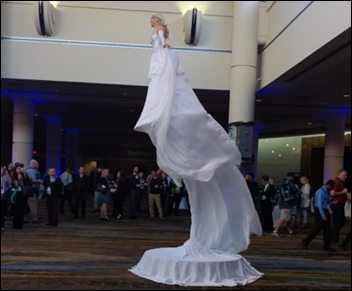
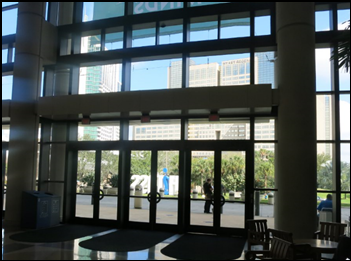
What’s the level of maturity among health systems in using evidence-based order sets and guidance?

I always represent that I’m not a clinician. My joke is I play one at work, but we can’t say that in the media. [laughs] Maybe the adoption is there, but what’s the use? Have hospital systems and post-acute organizations received the full benefit of evidence-based medicine and what it can actually do? I think the data shows that we still have a lot of opportunity to do some work in that area.

The core foundation of how Zynx started X number of year ago out of Cedars-Sinai was standardization and variation of care. That led to that evidence-based medicine and how it can be rolled through systems.

Now that health systems have in most cases implemented EHRs, are they still using ZynxOrder to maintain order sets and assemble external evidence?

ZynxOrder and ZynxCare are the foundational content or product offerings that help manage patients across the continuum. They’re actually still quite relevant. The question becomes, what next? Now that we have this solution, how can we continue to enhance it, build upon it, and then ultimately get to that nirvana of using clinical decision support in the optimal way?

As you think about where Zynx has been, we’ve been tremendously successful in pivoting in different ways around that concept of standardization and variations of care. Those two product offerings, order sets and plans of care, were extremely helpful. They’re still very helpful and relevant, but we’re looking at how can we continue to grow with some other offerings that the market needs.

Companies are taking guidelines from professional societies, like the American College of Radiology, and creating real-time decision support ordering guidelines. Are they competitors to Zynx or will you incorporate that kind of guidance into your products?

As you think about what Zynx does, it’s clinical content at the core. It’s how we look at the evidence and different types of data. We synthesize it and we bring it forward.

Some of that technical functionality that some of these standalone organizations are bringing actually resides within the existing EMRs. Is it as perfect? Is it as strong? Is the graphical user interface as nice? Maybe not, but that functionality still rests within most of the EMR vendors. We’re partnering pretty tightly with them to continue to keep our content in that forefront.

What’s the overlap in products or strategies among Zynx and the other Hearst Health offerings?

Greg Dorn is the president of Hearst Health. He was one of the co-founders of Zynx along with Scott Weingarten. There’s Zynx. There’s First Databank, or FDB. MCG, previously Milliman Care Guidelines, which is the group that I was originally associated with. Most recently, we have Homecare Homebase, which focuses in that post-acute homecare setting. Then MedHOK, which is a platform that focuses around payor interactions.

The umbrella of Hearst Health gives an organization like Zynx an opportunity to leverage a lot of different domain expertise and experience. One of the comments that was on HIStalk was about some of the changes that were going on at Zynx. We have made some changes in some structures and some reorganization within Zynx, but what’s enabled us to continue to grow and innovate is that we have some resources from Hearst Health. Not just our sister companies, but the actual broader Hearst Health.

It’s pretty nice to be able to pick up the phone and speak with Anil Kotoor, the founder of MedHOK, and talk about, what are you seeing as the risk model is moving around within this particular space? It’s actually quite useful.

You’re on the sharp end of technology changes that involve things incorporating pharmacogenomics into decision support, but also changes that involve the structure of how healthcare works, such as continuity of care. How do you incorporate those changes into your products?

I always like to say the folks on the sharp end of that stick are the clinicians and the administrators trying to get it done. I just happen to be the guy who shows up with what I think is the solution that’s best for them.

When you look at all those changes, everybody likes to think that their product or their offering is the total solution. We’re a component of a lot of bigger problems. That’s where being able to leverage, for example, the strengths of FDB is helpful. We do a lot of synergistic work, particularly with our order sets and their pharmacy data. As they’re spending a significant amount of time and effort in this pharmacogenomics area, we’re able to leverage that work as well.

I’m seeing that synergy with our sister company for sure. Care teams, care management, and how our tools or our content support all the changes that are coming as the risk models change. It’s kind of interesting because from a legacy perspective, Zynx was very much focused in the acute hospital setting. We had tremendous success, that’s where all the opportunities were, that’s where a lot of the mechanisms existed to deliver our solution, namely the legacy EHRs.

Now as you think about this post-acute space and some of the opportunities that are happening there, we’re still partnering with the legacy EHRs — the standard-bearers, if you will — but there’s some new, interesting players in this space. Hopefully there will be a press release about somebody we’re working with at HIMSS that will talk about what’s a longitudinal care plan and how can you execute on it utilizing someone’s technological platform and Zynx’s content that spans the continuum. Things like that are what’s exciting to me.

What’s the future look like for Zynx?

In my view of what we need to accomplish as an organization, you have to stick with what your core competency is. Then, not be afraid to stretch and expand. But when you think about standardization and variation of care, Zynx has been extremely successful in supporting and helping the standardization and limiting that variation.

How do we take that concept and continue to apply it, across not just the acute setting, but the post-acute setting? That’s why we are thinking about the different technological mechanisms by which to deliver this content in different places along that continuum. Is that a component of partnering with an organization that’s doing alerting versus us creating a technological platform or buying someone that does alerting? It’s those facets of sticking with what our core competencies are, understanding it, and then expanding it in a way that’s responsible and reflects our continued support of our existing customers.

We have a very significant install base of users who are still looking for what Zynx has always done, which we will continue to do, but we need to make advancements. We were just recognized again by KLAS for our order sets, which is important and valuable, but where are we going in the future? There’s a product called Knowledge Analyzer where we are seeing a significant amount of opportunity to help organizations who are merging, who are trying to understand their variations in their order sets and their plans of care and other documentation, and getting back to standardization and clinical variation. How can we, Zynx, continue to support that?

Do you have any final thoughts?

Zynx products are foundational to managing patients across the continuum. We’re going to continue to support our legacy products, but we’re going to continue to grow and evolve through additional product offerings and technological innovations that the industry needs and continue to support the mission that has mattered for 20-plus years. I thank you and I thank all of our customers and everybody who’s reading HIStalk.

Morning Headlines 2/14/17

February 13, 2017 Headlines Comments Off on Morning Headlines 2/14/17

DirectTrust Issues Recommendations to Significantly Improve Usability of EHRs and Health IT Applications Providing Secure Direct Messaging

DirectTrust issues a white paper containing recommendations to EHR vendors aimed at improving interoperability.

A millionaire’s mission: Stop hospitals from killing their patients by medical error

STAT profiles Joe Kiani, founder and CEO of medical technology company Masimo, focusing on his ongoing efforts to convince other medical technology vendors to make their systems more interoperable in the interest of patient safety.

Surrounding states push for Missouri to create prescription drug monitoring program

Neighboring states are lobbying for Missouri to implement a statewide drug monitoring program because it has become a magnet for “doctor shoppers.”

Ex-drug company CEO Martin Shkreli to speak at Harvard

While out on bail awaiting his federal securities fraud trial, Martin Shkreli will appear at Harvard to speak about healthcare an investing at an event being held by the Harvard Financial Analysts Club.

Comments Off on Morning Headlines 2/14/17

Text Ads


RECENT COMMENTS

  1. Challenger exploded on lift-off when the O-rings failed. Columbia disintegrated on reentry after one of the heat shield tiles were…

  2. RE the AI GLP1 company, Washington Post has an article today by someone who used one of those compounded products,…

  3. Re: A chief health AI transformation officer (CHAITO) I predict a position evolution along the following lines. "We have too…

Founding Sponsors


Platinum Sponsors


Gold Sponsors


RSS Webinars

  • An error has occurred, which probably means the feed is down. Try again later.