Recent Articles:

Morning Headlines 7/3/25

July 2, 2025 Headlines Comments Off on Morning Headlines 7/3/25

Symplr Acquires AMN Healthcare’s Smart Square Scheduling Software, Enhancing AI-Driven Workforce Optimization for Health Systems

Healthcare operations software vendor Symplr acquires AMN Healthcare’s Smart Square workforce scheduling software.

Feeling sick? Use ‘ChatGPT of the NHS’ first, patients to be told

England’s NHS will enhance its patient app with an AI-powered assistant called My Companion that helps users review their health information and explore care options.

Mayo Clinic’s AI tool identifies 9 dementia types, including Alzheimer’s, with one scan

Mayo Clinic researchers develop an AI tool that can identify the brain activity patterns of nine types of dementia, including Alzheimer’s disease, from a single PET scan.

Comments Off on Morning Headlines 7/3/25

Healthcare AI News 7/2/25

July 2, 2025 Healthcare AI News Comments Off on Healthcare AI News 7/2/25

News

image

England’s NHS will enhance its patient app with an AI-powered assistant called My Companion, which it describes as a “ChatGPT for the NHS,” that helps users review their health information and explore care options. A separate feature, My Choices, will let patients compare providers based on wait times, clinical outcomes, and satisfaction scores.

Duke Medicine Chief Health Information Officer Eric Poon, MD, MPH says that ambient scribing is being used in 70% of Duke’s primary care visits. He notes that the technology saves him two hours on his own clinic days and admits that he hadn’t realized how much of his focus had been consumed by acting as a “courtroom transcriptionist.”

image

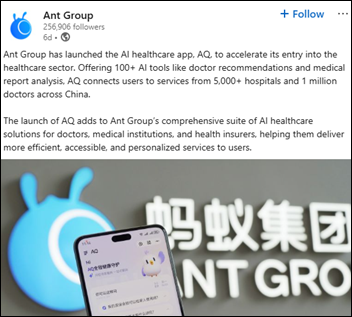
China-based Ant Group launches AQ, an AI app that lets users consult with AI avatars of real physicians before receiving priority access to care scheduling. The company says that AQ stands for “answer your question,” an English-focused name that suggests plans for a wider rollout. Ant, which is affiliated with Alibaba, operates Alipay, one of the country’s two major mobile payment systems. The company is increasingly focused on offering health-related services that it says are used by 800 million people.

CMS announces WISeR, a pilot project that will use technologies such as AI to expedite Medicare prior authorization for services that are vulnerable to fraud, waste, or inappropriate use.


Business

image

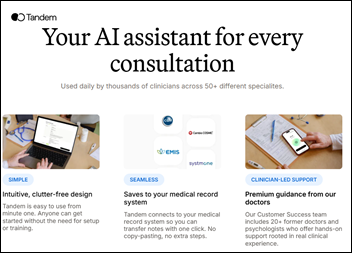
Sweden-based startup Tandem Health raises $50 million in a Series A funding round to further develop its Europe-focused ambient documentation system.

Website protection vendor Cloudflare is testing a pay-per-crawl system that allows content owners to either block AI training web crawlers entirely or charge them a fee for access.


Research

image

AI-powered drug discovery and design advances from theoretical to actual, as an AI-designed drug reaches phase 2a clinical trials. Rentosertib shows safety and efficacy in the treatment of idiopathic pulmonary fibrosis. AI was also used to generate the target before designing the molecule itself.

image

Mayo Clinic researchers develop an AI tool that can identify the brain activity patterns of nine types of dementia, including Alzheimer’s disease, from a single PET scan.


Other

Bioinformatics researchers at Vanderbilt University Medical Center find that rural US medical centers face significant barriers to adopting AI. They conclude that limited data availability, lack of infrastructure, and inadequate staffing could create an AI divide between urban and rural hospitals that can be addressed through research, partnerships, and policies.

image

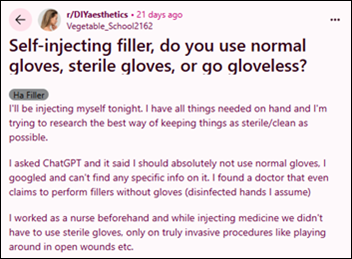
People are seeking advice from ChatGPT on how to inject themselves with facial filler at home to puff up their lips and cheeks.


Contacts

Mr. H, Lorre, Jenn, Dr. Jayne.
Get HIStalk updates.
Send news or rumors.
Follow on X, Bluesky, and LinkedIn.
Sponsorship information.
Contact us.

Comments Off on Healthcare AI News 7/2/25

This Week in Health Tech 7/2/25

July 2, 2025 This Week in Health Tech Comments Off on This Week in Health Tech 7/2/25
LinkedIn weekly 070225 - Copy
Comments Off on This Week in Health Tech 7/2/25

Morning Headlines 7/2/25

July 1, 2025 Headlines Comments Off on Morning Headlines 7/2/25

VisiQuate Acquires Etyon to Supercharge Insight Automation and Denials Management for Healthcare Providers

RCM technology vendor VisiQuate acquires Etyon, whose technology optimizes revenue cycle workflows.

More than 300 employees cut in Sharp HealthCare layoffs

Sharp HealthCare (CA) lays off 315 employees, with several media outlets reporting IT staff among those affected.

Nordic Capital partners with Arcadia to drive data-focused healthcare innovation

Nordic Capital takes a majority stake in health data insights vendor Arcadia.

Comments Off on Morning Headlines 7/2/25

News 7/2/25

July 1, 2025 News 1 Comment

Top News

image

RCM technology vendor VisiQuate acquires Etyon, whose technology optimizes revenue cycle workflows.


Reader Comments

From Dark Daze: “Re: Sharp HealthCare. Cut 315 FTEs yesterday, 150 of them from IT, which is a 25% haircut.” Unverified, although the local TV station reports that IT was one of the departments affected and Redditors claim that IT was the hardest-hit area.

From Isthmus: “Re: Sharp HealthCare. Laid off most of their Epic IT staff with plans to have their Epic system supported by a third party.” Unverified.


Sponsored Events and Resources

None scheduled soon. Contact Lorre to have your resource listed.


Acquisitions, Funding, Business, and Stock

image

Premier acquires IllumiCare, which adds a financial component to clinical decision support, and will market it under its Stanson Health brand.


Sales

  • Valley Health System (NJ) will use technology and services from Inbound Health to launch a hospital-at-home program.
  • Emory Healthcare (GA) selects Aidin’s post-acute care transitions software.

People

image

Ralph Porpora (Grand View Health) joins Deborah Heart and Lung Center (NJ) as VP of IS/CIO.

image

Pager Health names Ken Yamaguchi, MD (Northwestern University’s Feinberg School of Medicine) chief medical officer.

image image

BayCare (FL) names Patrick Brown, MD (Centra Health) VP/CMIO and Philip Karp, MS (NYU Langone Health) VP/CTO.

image

Medical error prevention pioneer Lucian Leape, MD died Monday at 94. He was involved in the Harvard study that resulted in the landmark 1999 report “To Err Is Human: Building a Safer Health System.”


Announcements and Implementations

image

Spartanburg Regional Healthcare System (SC) implements precision medicine technologies from 2bPrecise.

Microsoft’s AI team claims that one of the company’s diagnostic tools can outperform physicians in solving the toughest cases, correctly identifying 85% of 304 real-world cases that had been published weekly in the New England Journal of Medicine, four times the success rate of doctors. This is an interesting test, with these caveats:

  • The research involved published cases, so physicians were barred from using electronic medical records, care guidelines, textbooks, colleagues, and other LLMs that could have accessed the answers.
  • NEJM cases are “pedagogically curated” rather than real-world examples.
  • Nobody knows whether commercial LLMs were trained on the actual published case studies, which would have given them an unfair advantage.
  • The physicians who were involved had a median experience of 12 years, but still diagnosed correctly just 20% of the time, raising questions of the validity of the hypothetical cases.
  • The NEJM cases are created to be interesting, challenging, and pathology-focused. They may contain red herrings and often involve obscure diagnoses. They require the reader to make a diagnosis without having access to the patient’s medical record, without being able to examine the patient or ask them questions, and without the benefit of observational findings.
  • The study is an interesting proof of concept, but should not be taken to mean that doctors can’t diagnose correctly 80% of the time or that AI can do a better job in clinical situations.

Government and Politics

image

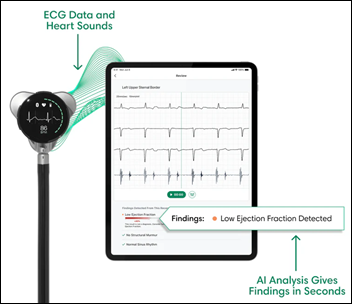
CMS approves Eko Health’s Sensora digital stethoscopes cardiac algorithm for payment under the Hospital Outpatient Prospective Payment system.

The Washington Post provides details from court documents of the federal government’s Operation Gold Rush, a massive fraud takedown where Medicare was billed $10.6 billion for medical devices that were not medically necessary or actually delivered to patients:

  • Prosecutors say the schemers used stolen identities of 1 million Americans to flood Medicare with bogus claims, including 1 billion urinary catheters.
  • The fraud was funneled through 30 Medicare-approved medical supply companies that the perpetrators had quietly acquired.
  • HHS and CMS teams blocked 99% of the attempted Medicare payments, signaling a shift from the traditional “pay and chase” model to one of proactive prevention.
  • Despite that success, the scammers still collected $1 billion from Medicare supplemental insurers.
  • Most of the accused reportedly never set foot in the United States.
  • Medicare received 400,000 complaints from patients questioning why companies like Pretty In Pink Boutique were billing for catheters they neither needed nor received.

Privacy and Security

image

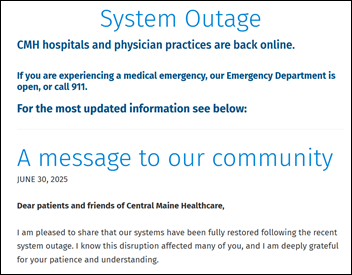
Central Maine Healthcare restores its IT systems and resumes normal operations after a June 1 cyberattack forced it to downtime procedures.


Other

In South Africa, the Gauteng health department denies reports that a hospital morgue was backed up with two weeks’ worth of bodies because it couldn’t print death certificates due to a shortage of printer cartridges.


Sponsor Updates

  • A new analysis from Black Book Research reveals a sharp escalation in state-level legislative actions that are reshaping revenue cycle management frameworks.
  • Nordic releases a new episode of its “Designing for Health” podcast featuring UXonSpec founder and CUO Randolph Bias.
  • CereCore releases a new podcast episode titled “Building Trust: From Expanse Rollout to High Reliability Organization.”
  • Vyne Medical releases a new case study titled, “How Mayo Clinic Reduced Lab Data Entry Time by 50% While Increasing Data Volume.”
  • AdvancedMD adds health insurance contracting and consulting services firm NGA Healthcare to its partner integration marketplace.
  • Agfa HealthCare releases a new guide titled “Purchasing a Cloud-Hosted Enterprise Imaging Solution.”
  • Clinical Architecture releases its “2025 Healthcare Data Quality Report.”

Blog Posts


Contacts

Mr. H, Lorre, Jenn, Dr. Jayne.
Get HIStalk updates.
Send news or rumors.
Follow on X, Bluesky, and LinkedIn.
Sponsorship information.
Contact us.

Morning Headlines 7/1/25

June 30, 2025 Headlines Comments Off on Morning Headlines 7/1/25

Premier, Inc. Expands Clinical Decision Support (CDS) Capabilities with Acquisition of IllumiCare

Premier, Inc. acquires IllumiCare, which adds a financial component to clinical decision support, and will market it under its Stanson Health brand.

NHS will use AI in warning system to catch potential safety scandals early

England’s NHS will deploy an AI-powered early warning system that will analyze near real-time data to look for patterns of problems that will trigger urgent inspections.

Steward Health Plans Litigation to Unwind Transfers to Cerberus, Other Insiders

An investigation by the bankrupt Steward Health Care System finds that its former private equity owner and former executive Ralph de la Torre improperly extracted $1 billion from the hospital chain during its insolvency.

Comments Off on Morning Headlines 7/1/25

Curbside Consult with Dr. Jayne 6/30/25

June 30, 2025 Dr. Jayne 2 Comments

The Journal of Graduate Medical Education published a thought-provoking article this week titled “A Eulogy for the Primary Care Physician.” It reflects on the original purpose of a primary care physician as the trusted physician “who knows their health inside and out, who guides them through the complexities of the medical system, and who fosters relationships not with charts, but with people.”

This is exactly the kind of old-timey family physician that many of my peers and I thought we would become. That’s what we were trained to be during our residency programs. Little did we know that the forces that would actually align against our being able to do that.

First, there were the turf wars. I was trained to perform a variety of procedures during residency, including minor office-based surgeries, biopsies, wound management and repair, and sigmoidoscopy. I was also trained to deliver prenatal care and perform non-operative deliveries in partnership with local OB/GYNs who served as backup.

I quickly found that I wasn’t able to do most of those things in my hospital-sponsored practice. Family physicians weren’t allowed obstetric privileges, full stop, even if we had an OB/GYN who agreed to back us up. One of the hospitals where I was forced to be on staff didn’t even have obstetrics, which somewhat limited my ability to recruit newborns to the practice.

After six months of appeals, I was allowed to seek newborn nursery privileges at a competitor hospital in an attempt to maintain that part of my skillset, although caring for infants became increasingly rare.

Second was the pressure for primary care to support the volumes of all of the other specialties. If there was a procedure to be had, I was expected to send those patients to my proceduralist colleagues so that they would have adequate volumes.

Numerous procedures can be done by appropriately trained primary care physicians in a high-quality and cost effective manner. However, I was told that it was unseemly to hoard those procedures, and I needed to refer them out and show that I was a team player. It didn’t matter that patients would prefer not having to make a second appointment, take off work again, or pay a second co-pay.

The only thing I was able to hang onto were the skin biopsies, because I could do them relatively quickly and they didn’t have a significant supply need or cost therefore they were somewhat “invisible” to the medical group administrators who actually ran the show.

There were a hundred other things that steered my work as a family physician in a different direction from what I thought it would be. When I was offered the opportunity to work with the electronic health record project, I jumped at it. Maybe that would be the answer to regaining autonomy since I would be able to run reports and see data on my work without external support. Previously, I had to rely on the business office to do so via our green-screen practice management system.

Because of my protected time to work with the EHR, I was somewhat buffered by the pressures to constantly see more patients, although I was still juggling dozens of patient messages and requests on the days when I wasn’t in the office. In hindsight, I probably worked 1.25 FTEs during that time, despite being paid as a 1.0 FTE, but I was the only person in my position and I didn’t know how to push back given the pressures that were on the other primary care physicians in my group and which seemed worse at the time.

Although the Eulogy article cites burnout, declining reimbursement, and private equity as significant contributors to the demise of the primary care physician, I would add other elements. The consumerization of healthcare continues to be a major force, as physicians are incentivized around patient satisfaction, sometimes to the detriment of quality of care.

As an example, two areas on which physicians are incentivized are patient satisfaction and avoidance of unnecessary antibiotics. For every patient who calls wanting a Z-Pak for what is undoubtedly a viral illness but who “wants to get ahead of it” or says “I know my body and what I need,” there is only a lose-lose situation. I’ve been roasted via online review sites for refusing to call in antibiotics without seeing a patient. I’ve been threatened with complaints to the state board. I’ve been ripped in Press Ganey surveys.

My quality numbers remained high, but when you get bad reviews (justified or not), your paycheck suffers. Physicians should not be placed in these crosshairs, but we do it every day. I know it’s the proverbial dead horse, but educating patients about the risks of unwarranted antibiotic prescriptions is another public health intervention at which we’re not very good.

When I had the opportunity to expand my informatics work and change to a different environment for patient care, it was bittersweet. Although I missed the regular “continuity” patients with whom I had bonded over five years, I was glad to get out from under all the patient portal messages and communications that didn’t stop while I was out implementing the EHR, training peers who refused to work with non-physician trainers, and trying to figure out our group’s strategy for health information exchange.

I thought that would be the death of my career as a primary care physician, but little did I know that once I started working in the emergency department and urgent care settings, more than half of my work would be primary care anyway, since many of our community used those environments for their primary care services.

The Eulogy states, “The PCP is survived by the independent physician assistant, nurse practitioner, and generative artificial intelligence.” As someone who is starting to have more encounters with the patient side of the healthcare system than I would like, I worry quite seriously about how my generation will be cared for in the future.

Every time I see my own primary care physician, who is a few years older than I am, I don’t leave without asking the question of when he sees himself retiring so that I’m not caught in the lurch. Fortunately, most of my subspecialist physicians are younger than I am, so I’m less worried in those areas.

With regard to generative AI replacing primary care, I think we have many years of it augmenting rather than replacing. I’ve been unimpressed by many of the solutions that I’ve seen. I hope clinicians remain skeptical as developers work through issues with quality.

What do you think about the death of primary care in the US and how healthcare information technology might be able to resurrect it? Leave a comment or email me.

Email Dr. Jayne.

Morning Headlines 6/30/25

June 29, 2025 Headlines Comments Off on Morning Headlines 6/30/25

CMS Launches New Model to Target Wasteful, Inappropriate Services in Original Medicare

CMS announces a six-year pilot in six states to test tech-enabled prior authorization for traditional Medicare, which has traditionally avoided prior authorizations.

CalmWave raises $4.4M for tech that targets non-actionable patient alarms in hospital ICUs

Seattle-based medical device alarm management software startup CalmWave raises $4.4 million in seed funding.

Handspring Raises $12M Series A to Expand High-Quality Mental Health Care for Children and Families

Virtual mental healthcare clinic Handspring announces $12 million in Series A funding.

Comments Off on Morning Headlines 6/30/25

Monday Morning Update 6/30/25

June 29, 2025 News Comments Off on Monday Morning Update 6/30/25

Top News

image

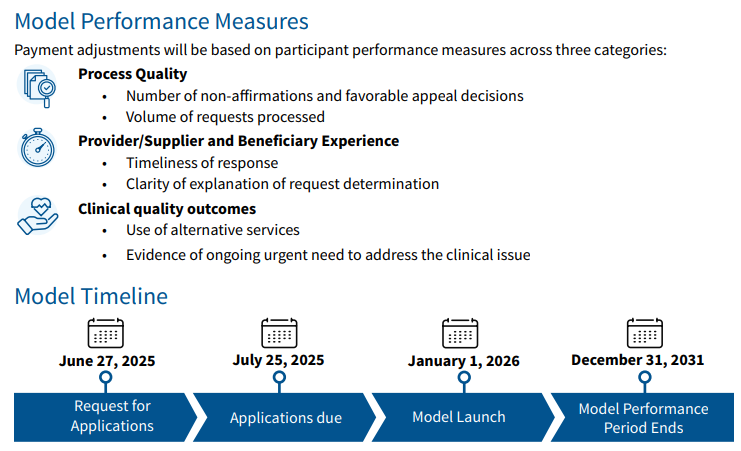
CMS announces a six-year pilot in six states to test tech-enabled prior authorization for traditional Medicare, which has traditionally avoided prior authorizations.

Participating organizations will be paid based on reducing inappropriate utilization. CMS is looking for companies that have implemented AI-powered PA programs for other payers.

CMS says that no new provider documentation will be required, but information must be submitted in advance.

CMS calls the program WISeR, the Wasteful and Inappropriate Service Reduction model.


Reader Comments

image

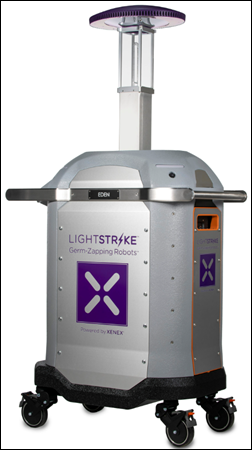
From Lou Lazuli: “Re: hospital sterilization methods. What’s your take on UVC light augmenting other methods for battling MRSA and VRE outbreaks? Is there a market need?” I’m far from an expert, but hospitals seem to be interested in using it to disinfect rooms after normal cleaning, where it reduces the transmission of superbugs. Hospitals are the target market due to the clinical and financial cost of hospital-acquired infections, which include CMS financial penalties. UVC robots like the one developed by Xenex might be an attractive offering if a business case can be made to offset the increased cycle time and capital investment that is required. It would be an easier sell if UVC replaced existing methods instead of augmenting them, but the expensive machines could be selectively deployed for use in vacated isolation rooms, surgery and procedure areas, and critical care units where any HAI could be especially disastrous.

From Chart Thief: “Re: VA scheduling and Oracle Health. It’s a management failure, not a tech problem, if the VA can’t implement the system it bought and instead continues to run legacy ones.”


HIStalk Announcements and Requests

image

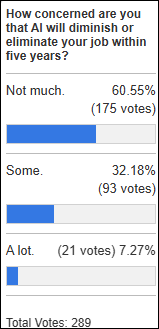
Most poll respondents aren’t too worried about AI encroaching on their employment.

New poll to your right or here: What is the remote patient monitoring takeaway of Best Buy’s divestiture of Current Health?


Sponsored Events and Resources

None scheduled soon. Contact Lorre to have your resource listed.


Sales

  • Trinity Health (ND) will implement Epic, replacing Oracle Health.
  • QHIO SacValley MedShare joins the KONZA Health QHIN.

Announcements and Implementations

Optum launches an AI marketplace of products developed by the company and its third-party partners.

Former grocery store bagger turned self-styled medical entrepreneur and disruptor Ryan Egypt El-Hosseiny asserts that he has resurrected the lab testing firm Theranos after validating the fraudulent claims of former CEO and federal inmate Elizabeth Holmes. He made the announcement at a Miami nightclub, where he was flanked by rappers, fake cops, and a Holmes impersonator wearing an orange jumpsuit. El-Hosseiny, who is pushing RFK Jr.’s Make America Healthy Again platform and lobbying for President Trump to pardon Holmes, calls himself “the Steve Jobs of medical labs” and is among the Grade D actors who appear in his cringeworthy YouTube film titled “Just Blood: The United States vs. Elizabeth Holmes,” where his fake mustache appears to be summiting his external nares and his fellow thespians are repeatedly caught by the camera trying to suppress grins of participatory embarrassment. Records indicate that the Theranos trademark was abandoned when the company dissolved in 2018, so I assume he’s a squatter.

image

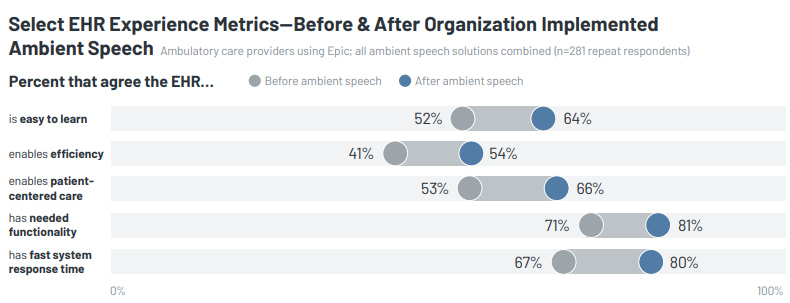
A new KLAS – Arch Collaborative report finds that ambient speech is improving provider EHR satisfaction and allowing more face-to-face interaction with patients. It is also boosting the EHR experience metrics of Epic-using ambulatory care providers. However, most users say that they aren’t willing to squeeze in more patient visits to justify the technology’s cost, preferring instead to improve patient care or their own work-life balance.


Government and Politics

Federal prosecutors indict 11 members of a Russia-based crime ring who allegedly used stolen information from 1 million Americans to bill Medicare $11 billion for medical equipment that was never ordered or delivered, netting $300 million.


Other

SCAN Health Plan President and CEO Sachin Jain, MD, MBA describes what he calls the “value-based delusion”:

Every conference deck, consulting proposal, and startup pitch has claimed to be “bringing value to healthcare.” But let’s be honest: in most cases, very little has actually changed in how care is delivered. Instead of reimagining the patient experience, many organizations have simply reengineered their revenue models. Networks get narrowed. Risk gets shifted. Coding intensity rises. But does care feel more human, more seamless, more dignified for patients? Too often, the answer is no.


Sponsor Updates

  • Black Book Research announces a revamped RCM KPI framework that incorporates critical areas like AI integration, transparency, and automation.
  • Surescripts VP of information security and CISO Judy Molenaar joins the DirectTrust Board of Directors.
  • Nordic announces its ISO 9001 Quality Management Systems certification in Europe.
  • Nym names Aya Weinstein VP of product, Amir Cohen senior software engineer, Alvera Abouseif customer success manager, Michal Attias bookkeeper, and Debra Whitley senior manager of product and coding compliance operations.
  • Redox welcomes Ferry Health to the Redox Connection Network.
  • Rhapsody Health offers a new customer story titled “Qventus achieves 10X performance and reduces customer onboarding time by 50%.”
  • VitalChat announces the availability of a ProConnections Conversion Kit for those providers left with unsupported virtual care infrastructure following the closure of tele-ICU vendor ProConnections.

Blog Posts


Contacts

Mr. H, Lorre, Jenn, Dr. Jayne.
Get HIStalk updates.
Send news or rumors.
Follow on X, Bluesky, and LinkedIn.
Sponsorship information.
Contact us.

Comments Off on Monday Morning Update 6/30/25

Morning Headlines 6/27/25

June 26, 2025 Headlines Comments Off on Morning Headlines 6/27/25

Certify Secures $40M Series B Funding to Continue Building the Healthcare Provider Data Infrastructure of the Future

Provider data management vendor Certify raises $40 million in a Series B funding round.

Arine Raises Series C to Scale AI-Driven Medication Optimization and Power Value-Based Outcomes

Arine, which offers an AI-powered medication optimization platform, raises $30 million in a Series C funding round.

Novo Nordisk says WeightWatchers will sell Wegovy, announces $299 price

Novo Nordisk will make its weight-loss drug Wegovy available to WeightWatchers members through its online prescription service.

Comments Off on Morning Headlines 6/27/25

News 6/27/25

June 26, 2025 News 3 Comments

Top News

image

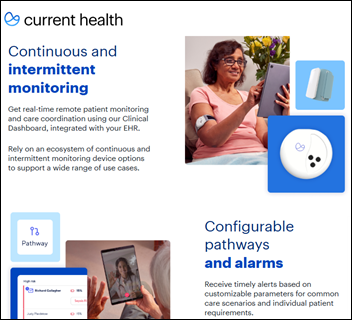
Best Buy sells remote patient monitoring technology company Current Health back to its co-founder and CEO Christopher McGhee (formerly known as Christopher McCann). 

Best Buy acquired the company in October 2021 for $400 million and has struggled with its in-home healthcare business since, including taking two write-downs totaling nearly $600 million this year.

McGhee left Best Buy in March 2024. I interviewed him in April 2022. Several former Current executives will return to the company with him.

Best Buy’s CEO said in its most recent earnings call that hospital-at-home solutions business was advancing more slowly than it had expected.


Reader Comments

From Blew Button: “Re: AI strategy. Everyone is pushing for faster adoption. How are health systems balancing that with validation, integration, and project priorities? We can’t skip the hard parts just because execs and the board are believing the AI hype.”


HIStalk Announcements and Requests

Microsoft’s retirement of Skype pushed me to use Teams instead for my weekly English sessions with my Ukrainian student. Teams has been unreliable, slow, and maddening (why can’t I test my camera and microphone without connecting to a meeting?) Teams repeatedly froze the connection this week, so we tried WhatsApp, which had better quality and reliability for at least those few minutes. I will confirm next week after we try our full-hour session on WhatsApp.


Sponsored Events and Resources

None scheduled soon. Contact Lorre to have your resource listed.


Acquisitions, Funding, Business, and Stock

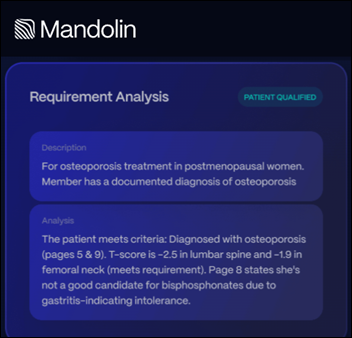
Mandolin, which uses AI agents to manage specialty drug intake, benefits, prior authorizations, and RCM, raises $40 million in seed and Series A funding.

image

Veradigm reaffirms its intention to have its shares relisted in 2026. The company said in its earnings call that it is gaining new provider business in specialty practices, value-based care, and especially in revenue cycle. Revenue is flat as the company expected, however, and it continues to see attrition among larger clients.

image

Provider data management vendor Certify raises $40 million in a Series B funding round. Founder and CEO Anshul Rathi, MS started the company in 2021 after managing network data for Oscar Health.

image

Arine, which offers an AI-powered medication optimization platform, raises $30 million in a Series C funding round. CEO Yoona Kim, PharmD, PhD worked in pharma and at Proteus Digital Health before she co-founded the company in 2017.


People

image

Evidently hires Chris Cowart (Xsolis) as head of growth.

image

Tony Murdoch (Bamboo Health) joins Zus Health as VP of business development and partnerships.


Announcements and Implementations

Altera Digital Health launches Sunrise CarePath, a mobile patient engagement platform that is integrated with its Sunrise EHR. It offers secure messaging, self-scheduling, patient notifications and appointment reminders, and billing integration.

Researchers describe ECGFounder, an ECG foundation model that was trained on 11 million ECGs and their cardiologist notations. They theorize that its expert-level diagnostic performance could provide useful in analyzing ECG data from wearables.

image

KLAS surveys C-level health system executives about their technology vendor expectations. Recommendations to companies:

  • CEO: address big-picture value of the platform; back up claims with real-world metrics from other health systems; be prepared to pitch at a board level.
  • CFO: provide contracting transparency; be flexible in negotiations; show line-item cost implications; partner to perform post-implementation financial impact reviews.
  • CDO: provide integration playbooks; provide change management toolkits; partner in developing data governance frameworks.
  • CIO: address how the solution fits into the broad IT strategy; provide proactive support from implementation through optimization; partner on rationalizing legacy technology and vendor sprawl.
  • CISO: provide risk documentation and real-world threat models; provide easily deployed security tools; include advisory services in the engagement model.
  • COO: provide turnkey dashboards that integrate operations, finance, and quality; provide industry benchmarks and advisory services; provide quick-win use cases and tactical automation.
  • CTO: provide architecture diagrams, threat models, and deployment recipes; include stakeholders in roadmap previews, especially when dependencies or APIs will change; share reference implementations and provide a sandbox to prove extensibility claims.
  • CMO/CMIO: involve them in roadmap development; showcase measured clinical outcomes and provider satisfaction benchmarks; provide tools to help build consensus with clinical leaders.
  • CNO/CNIO: shadow nurses to map workflows; provide real-time, around-the-clock support; get nurses involved in roadmap designs using clinical councils or pilots.

Government and Politics

Digital health companies Whoop, CoachCare, and Epic testify before the House Ways and Means health subcommittee about the benefits of wearables and remote patient monitoring. Their timing was ideal given HHS Secretary Robert F. Kennedy, Jr.’s recent call for every American to wear a device within four years, but less so given lawmakers’ focus on a proposed reconciliation bill that would strip coverage from 16 million people through Medicaid and ACA coverage cuts.


Privacy and Security

King’s College Hospital NHS Foundation Trust tells a patient’s family that a cyberattack contributed to his death. Pathology provider Synnovis was hit by a ransomware attack on June 3, delaying the patient’s critical test result.


Other

Microsoft profiles how 365 Copilot is used by the chief digital officer of a hospital in Brazil. He says it helped him improve his no-nonsense email style to be more polite and “really cute.” He adds that it has reduced his email management time by 70% and allows quicker decision-making by summarizing long email threads.


Sponsor Updates

  • An unnamed Southern health system selects Vyne Medical’s Trace Platform to process inbound orders in its patient access department.
  • Black Book Research poll-takers name the leading EHR-native patient accounting systems for 2025, including HIStalk sponsors Meditech and TruBridge.
  • CereCore earns a five-star rating and “Best Practice” designation as an Infrastructure as a Service provider by Securance Consulting.
  • Findhelp welcomes new customers City of Kansas City, MO; DSR Public Health Foundation; and Careforth.
  • Five9 releases a new customer success book titled “Aeroflow Health Improves Efficiency with Automation.”
  • Healthcare IT Leaders releases a new “Leader to Leader” podcast episode titled “From Technical Debt to Transformation: The Cloud Journey Healthcare Needs.”
  • Meditech releases a new customer success story titled “Sierra View Medical Center Unleashes the Power of Data with Meditech’s Analytics Solution.”

Blog Posts


Contacts

Mr. H, Lorre, Jenn, Dr. Jayne.
Get HIStalk updates.
Send news or rumors.
Follow on X, Bluesky, and LinkedIn.
Sponsorship information.
Contact us.

EPtalk by Dr. Jayne 6/26/25

June 26, 2025 Dr. Jayne 4 Comments

The two hot topics around the virtual physician lounge this week, not surprisingly, involved comments or policies from the new Secretary of Health and Human Services.

Physicians are dreading upcoming changes in vaccine reimbursement, which will likely come if vaccines are no longer recommended by the reconstituted Advisory Committee on Immunization Practices. Commercial payers follow the actions of government payers, which could lead to a fair amount of work for everyone with an EHR and billing system as they reconfigure their systems to follow new rules.

I can also already see the new policies fueling burnout in the organizations that I’m closest to, as physicians again have to defend their practice of evidence-based medicine. It’s not a great time to be a frontline physician, particularly one in primary care.

The other hot topic was around statements that everyone in the US should have a wearable medical device in the next four years. Continuous glucose monitoring devices appear to be the darling of the day, with much skepticism from physicians who have already had to deal with the data provided by current users. There’s not a lot of data that supports the use of the devices unless a person is diabetic, prediabetic, or has one of a handful of other medical conditions.

Just wearing a device doesn’t drive the needle, either. Other services are needed to support patients as they make changes in their health, such as dietitians, nutrition counseling, and behavioral health interventions. Those also have a cost.

It’s great to say that people should take charge of their own health, but for those of us who have been in the public health trenches for decades, we know that patients can’t always control the fact that they live in a food desert. They can’t control their genetics. We live in a nation where health literacy is close to rock bottom.

Kennedy stated, “They can see, as you know, what food is doing to their glucose levels, their heart rates and a number of other metrics as they eat it, and they can begin to make good judgments about their diet, about their physical activity, about the way that they live their lives.” Having cared for thousands of average Americans during my medical career, I would hypothesize that less than a quarter of the patients I’ve seen would be able to take a device out of the package start managing their diet in the way that he describes without some serious intervention.

I don’t disagree that the nation needs a crash course in self-care. I’ve seen it myself as patients come to the emergency department for the common cold without having taken so much as an acetaminophen tablet. We see wounds that haven’t been washed with soap and water and sprains that were never iced, among other things, as the patients come to us and leave with a $1,000 hospital bill.

I would much rather see the country start pouring money into public health interventions that have been proven effective than see us throwing money at technology without all the ancillary services needed to truly drive the needle for patient outcomes. The nation’s many Federally Qualified Health Centers know a thing or two about this, as do the many county, city, and state health departments.

image

Speaking of high tech public health, I continue to be fascinated by the data and analytics around using wastewater for disease monitoring. I first heard of it during the height of the COVID pandemic, when it was being used to model the level of disease in our community, especially when we were having shortages of testing supplies for use in the office.

WastewaterSCAN is a nationwide system that is based at Stanford University in partnership with Emory University. It monitors 11 infectious disease indicators via bottles of wastewater that are shipped from around the country. Viral RNA material is sturdy stuff, and the diseases tracked include COVID, influenza A and B, respiratory syncytial virus (RSV), enterovirus, norovirus, hepatitis A, and many more. CDC also conducts testing, as do many municipalities, and most of the data is publicly available.

The higher-level information that is gleaned from wastewater can help public health agencies and care delivery organizations understand what viruses are surging in their communities and might be useful for creating recommendations on when to start testing for various diseases. It can also be used to inform staffing levels within facilities or to pinpoint increases that might result in an outbreak, such as high levels of a virus at an airport or tourist spot.

The next frontier in wastewater research involves identifying bacteria, although the process poses challenges. You can have two bacterial species that are similar, but only one causes a serious disease, and it can be difficult to differentiate between the two. Here’s to seeing what the next decade of innovation brings in this field, and to knowing that many of us are contributing to scientific advancement with every flush.

image

For some time now, I’ve been trying to clean up my provider data, including my NPI registration that still lists an address where I haven’t worked in a very long time. There are also problems with my CMS data, and the process to try to correct that is even worse.

In a typical employed provider situation, an office manager or administrator usually manages that for the employed physicians. But when you’re a 1099 contractor working for multiple organizations it’s up to the physician to make it work. The governmental data is particularly pesky, because it feels like you have to get a log in to site A that then gives you access to site B but the passwords time out and are a pain to reset. If anyone has a cheat sheet for cutting through all of this, feel free to send it my way. My current clinical situation tells me I’m on my own. Maybe someone could create an AI-powered bot that could take care of it all.

image

I was back on the patient side of the equation this week and was surprised by the speed at which I received a message that I had “new test results” in the chart. Once I made it through some pesky password issues that involved using my laptop instead of my phone, I was disappointed to find that the “result” was simply a message from the lab that said my specimen had been received. It’s been a long time since I’ve done lab interface work, but I would hope that such messages might be filtered to avoid causing extra anxiety for patients.

I was also disappointed by the quality of the visit notes that I could see. I was weighed during my visit, but my height was not measured. However, the note had a documented height but no weight, although a BMI was there. The combination of vitals showing up in the note seemed odd. The note from the first physician that saw me had no fewer than six exam findings that were most certainly not examined. Although one could blame templated documentation, there really is no excuse. If you’re not doing an ear, nose, and throat exam on every patient, it takes about 12 seconds to remove that from your template forever.

When you’re a patient, what’s your biggest frustration with healthcare information technology? Leave a comment or email me.

Email Dr. Jayne.


Morning Headlines 6/26/25

June 25, 2025 Headlines Comments Off on Morning Headlines 6/26/25

$40 Million to Obliterate Specialty Drug Paperwork

Mandolin, which uses AI agents to manage specialty drug intake, benefits, prior authorizations, and RCM, raises $40 million in seed and Series A funding.

Best Buy Sells Current Health Back To Co-Founder, Former CEO

Best Buy divests care-at-home technology company Current Health less than four years after acquiring it for $400 million, selling it back to co-founder and former CEO Christopher McGhee.

BlueBriX Announces $15 Million Investment to Scale Agentic AI Workflow Orchestration for Value-Based Care

Health IT vendor BlueBriX announces $15 million in new funding.

Veradigm Provides 2025 Financial & Business Update

Veradigm expects to bring its SEC filings up to date sometime next year, after which it will seek to relist its stock.

Comments Off on Morning Headlines 6/26/25

Healthcare AI News 6/25/25

June 25, 2025 Healthcare AI News Comments Off on Healthcare AI News 6/25/25

News

image

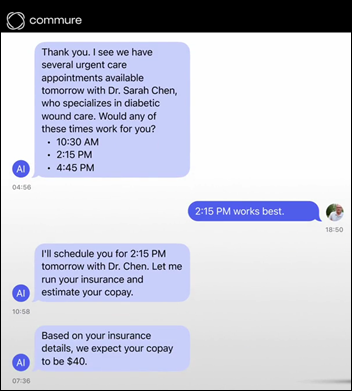
Commure launches EHR-integrated voice and text assistants that use agentic AI to answer calls, schedule appointments, and handle referrals and prior authorizations.


Business

image

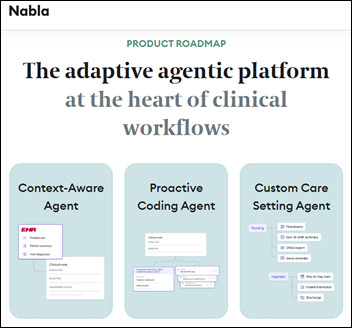
Ambient documentation vendor Nabla raises $70 million in a new Series C funding round, increasing its total to $120 million. The company will deploy agentic AI to expand its documentation offerings to coding, direct EHR interaction, and new capabilities for nurses.

image

Mandolin raises $40 million in seed and Series A funding. The company uses AI agents to manage specialty drug intake, benefits, prior authorizations, and RCM.

UMass’s medical school partners with business incubator Red Cell Partners in a two-year project to test, evaluate, and certify AI healthcare tools using real-world clinical data through the school’s Health AI Assurance Laboratory


Other

Gartner predicts that 40% of agentic AI projects will be scrapped by the end of 2027 due to escalating costs and questionable business value. The company calls out “agent washing,” in which companies falsely claim that their technology uses agentic AI, estimating that only 130 out of thousands of agentic AI vendors are real.

A federal judge rules that Anthropic’s use of copyrighted books for AI training qualifies as fair use, rejecting claims from authors that the company infringed by scanning purchased copies to create searchable digital versions. The court found that Anthropic made no additional copies, created no derivative works, and did not redistribute any content. A separate trial over alleged use of pirated books is scheduled for December.

image

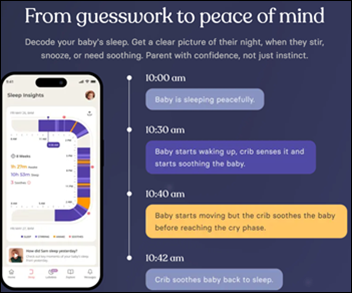
New parents, including OpenAI CEO Sam Altman, are increasingly turning to AI tools like ChatGPT for parenting advice, raising questions about overreliance on technology, information overload, and the loss of human connection in child-rearing. AI is also being used to answer child psychology questions via chatbot, track pregnancy, and to power baby monitors, cribs, and strollers.


Contacts

Mr. H, Lorre, Jenn, Dr. Jayne.

Get HIStalk updates.
Send news or rumors.
Follow on X, Bluesky, and LinkedIn.
Sponsorship information.
Contact us.

Comments Off on Healthcare AI News 6/25/25

This Week in Health Tech 6/25/25

June 25, 2025 This Week in Health Tech Comments Off on This Week in Health Tech 6/25/25
LinkedIn weekly 062525
Comments Off on This Week in Health Tech 6/25/25

Morning Headlines 6/25/25

June 24, 2025 Headlines Comments Off on Morning Headlines 6/25/25

Abridge Secures $300M Series E Led by a16z to Pioneer a New Paradigm of Care Intelligence

The ambient documentation vendor’s valuation reaches $5.3 billion after its latest investment follows a $250 million round just five months ago.

HHS Secretary Kennedy, CMS Administrator Oz Secure Industry Pledge to Fix Broken Prior Authorization System

HHS lists the details of the pledge by insurers to streamline PAs.

RFK Jr. wants a wearable on your wrist

The HHS secretary wants every American to wear a health tracker within four years.

Comments Off on Morning Headlines 6/25/25

News 6/25/25

June 24, 2025 News 9 Comments

Top News

image

Ambient documentation vendor Abridge raises $300 million in a Series E round, boosting its valuation to $5.3 billion.

The company raised a $250 million Series D round just five months ago at a valuation of $850 million.

Abridge’s annual revenue has been reported as $175 million.


Reader Comments

From Justa Bill: “Re: insurers fixing prior authorization. I can’t wait until they’re done so that I can get my medically unreasonable denials in real time.”

From Pinky: “Re: AI taking jobs. It will also enhance or create some healthcare positions.” Probably so, although most of those jobs will be pretty small in number and will require specialized education or experience, such as clinical informaticists, data architects, compliance leads, and cybersecurity experts. Consulting could go either way, where AI might replace some entry-level analysis and document work, but top performers will use it to rise even faster. We’re already seeing this with attorneys, where the junior folks are using AI to analyze documents and mine the firm’s vast data assets to perform higher-level work, and with investment pros who use AI to monitor markets and parse sentiment in real time. Regardless, surveys show that executives in all lines of work expect AI to lower their costs by allowing them to eliminate employees, a self-fulfilling prophecy that will make companies look successful regardless because they have enough fat to work around the dearly and forcibly departed.

image

From Cut Me Mick: “Re: Ascension acquiring AmSurg. How much overlap exists in the markets they each serve?” Not much, based on ChatGPT’s analysis of the maps I sent it. AmSurg locations are in red, Ascension hospitals in blue (note that I showed only the eastern part of the country. The biggest areas of new opportunity are in Central and South Florida, California, New York, New Jersey, and California, areas where AmSurg is strong and Ascension is absent. Indiana, Alabama, and Tennessee show more overlap that would be conducive to vertical integration. But if Ascension wants to compete as a value-based care challenger without trying to build or buy hospitals in the back yards of entrenched competitors, those AmSurg-heavy states offer better upside in high-growth, high-margin markets. I think we can skip over the obligatory “mission” and “compassion” part of the announcement’s verbiage and assume that Ascension saw the chance to buy higher-performing, already-scaled assets to diversify beyond legacy hospitals. Recall also that AmSurg was until recently under the leaky umbrella of hospital physician services outsourcer Envision Healthcare, whose bankruptcy and asset stripping under the leveraged buyout oversight of PE firm KKR ran up $7 billion in debt for Envision and the forced sale of its only real surviving asset to Ascension at about half the typical per-center cost. UPDATE: I’ve updated the graphic above to show more area. And I blame ChatGPT for drawing it to incorrectly look like Wisconsin is west of Austin, TX


HIStalk Announcements and Requests

image

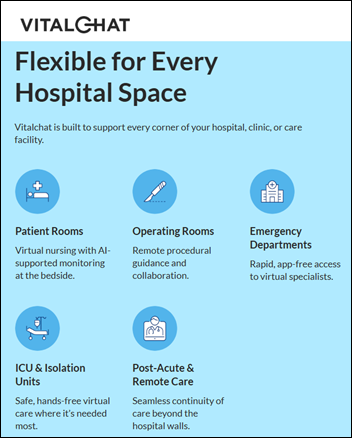
Welcome to new HIStalk Platinum Sponsor VitalChat. Vitalchat offers a flexible audio and video platform for powering virtual nursing and intelligent hospitals — bringing the right presence into the room at the right moment —  without adding complexity to care. Whether it’s a virtual nurse providing reassurance after surgery, monitoring vitals remotely, or coordinating with the bedside team in real time, the platform enables care that feels connected, responsive and organized. With powerful, behind-the-scenes technology and an intuitive, clinician-friendly design, Vitalchat helps hospitals extend their teams, support their patients, and deliver meaningful touchpoints throughout the care journey. Thanks to VitalChat for supporting HIStalk.


Sponsored Events and Resources

None scheduled soon. Contact Lorre to have your resource listed.


Acquisitions, Funding, Business, and Stock

image

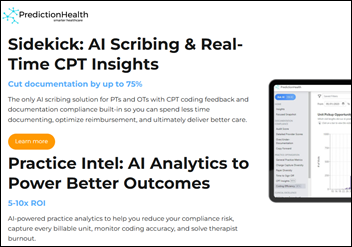
Therapy EHR vendor Prompt Health acquires PredictionHealth, which offers an ambient AI scribe for therapists. PredictionHealth’s co-founders Pedro Teixeira, MD, PhD and Ravi Atreya, MD, PhD met while earning dual MD and biomedical informatics degrees at Vanderbilt.

Remote care company CoachCare acquires MD Revolution, which offers remote care software. Investor-backed CoachCare, which was founded in 2013 by former private equity investors, has made nine recent acquisitions. MD Revolution was formed in 2011 to help providers bill Medicare for monthly chronic care condition management services.

image

SuperDial, which develops AI agents that manage provider phone calls to insurers, raises $15 million in a Series A funding round. Its platform supports benefits verification, prior authorization, claims follow-up, and credentialing.

Population health management technology vendor Jaan Health secures $25 million in funding.

Shares of telehealth provider Hims & Hers drop 35% after Novo Nordisk halts Wegovy sales to the company, which it accuses of illegally selling cheaper compounded versions of its weight loss drug alongside its own branded product. The CEO of Hims & Hers accuses Novo of trying to force it to steer patients toward the branded product.


Sales

  • Inspira Health selects DrFirst’s system migration platform to transition medication data from Oracle Health to Epic.

People

image

Symplr names Theresa Meadows, MS, RN (Cook Children’s Health Care System) as CIO in residence.

image

Leidos hires Andrew Burchett, DO (Meditech) as VP/chief technology and innovation officer.


Announcements and Implementations

FinThrive announces Fusion, an RCM platform, and will deploy agentic AI digital agents to enhance its RCM products.

Virtual care infrastructure company Wheel embeds Amazon Pharmacy’s medication access solution into its white-labeled solutions for digital health companies and health plans.


Government and Politics

A GAO report warns that the VA’s Oracle Health stalled rollout has left its schedulers juggling multiple VistA versions as well as the new system. GAO says that the VA’s May 2024 modernization timeline is “not reliable” by the GAO and has not been updated with a new plan. The VA cancelled its $624 million scheduling contract with Leidos and Epic in 2018 after three years when it chose Cerner.

HHS lists the details of the newly announced pledge of some health insurers to streamline prior authorization:

  • Standardize submissions by using FHIR.
  • Reduce the number of services that require PA.
  • Honor existing authorizations during transitions of care.
  • Enhance transparency of authorization decisions and appeals.
  • Provide real-time responses for most requests by 2027.
  • Have all clinical denials reviewed by a medical professional.

Taiwan accuses China-sponsored “cyber armies” of launching cyberattacks on its hospitals to humiliate the country, which Taiwan says is in preparation for an eventual takeover.

image

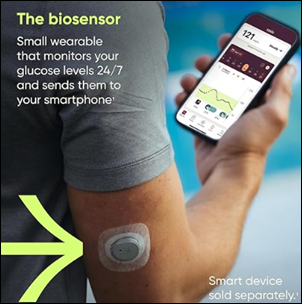
Health Secretary Robert F. Kennedy, Jr. tells House members that he wants every American wearing a health tracker within four years, with HHS planning a massive ad campaign to promote adoption. He cites continuous glucose monitors, which are priced at $100 to $300 per month, as a bargain for weight loss compared to GLP-1 drugs, and hints that federal subsidies may follow. An example I found for non-diabetics is Dexcom’s Stelo, which costs $80 per month for 14-day patches that pair with a smartphone.


Sponsor Updates

image

  • Kyruus Health team members volunteer with Cradles to Crayons Massachusetts during their Community Day.
  • CereCore earns five stars and a “best practice’ designation for its Meditech hosting from the Securance Consulting technology assessment firm.
  • Rhapsody names Shannon Matthews manager of brand and communications.
  • Black Book Research survey-takers rank Waystar as the top end-to-end RCM software vendor for large hospitals and health systems, and academic medical centers with clinics and outreach; and TruBridge the top vendor for small and rural hospitals.
  • Waystar releases the results of a new study titled “AI in Healthcare Payments Software: A Strategic Imperative.”
  • UZ Brussel University Hospital in Belgium selects enterprise imaging from Agfa HealthCare.
  • Artera releases a new study titled “How Vanderbilt University Hospital Tackled Readmission Rates By Leveraging Artera for Post-Discharge Communication.”
  • Clearsense and Nordic will collaborate to offer an end-to-end solution for application portfolio management.
  • The latest episode of Censinet’s “Risk Never Sleeps” podcast features Siskin Hospital CIO and CISO Shane Pilcher.
  • Clinical Architecture releases a new episode of “The Informonster Podcast” titled “Unpacking AI and Interoperability Trends with Joerg Schwarz.”

Blog Posts


Contacts

Mr. H, Lorre, Jenn, Dr. Jayne.

Get HIStalk updates.
Send news or rumors.
Follow on X, Bluesky, and LinkedIn.
Sponsorship information.
Contact us.

Text Ads


RECENT COMMENTS

  1. "A valid concern..." Oh please. Everyone picks the software they like and the origin of that software is an afterthought.…
  2. I don't disagree with you completely, but to take the counterpoint: there is plenty of precedent for saying "this *entire…
  3. Teens will certainly find a way to use their social media apps of choice. I'm not in favor of the…

  4. I've been in this business a long time. Choosing the "right" technology product is fraught, especially when it comes to…

  5. EHRMusing - You make a lot of accurate statements about key factors in the selection process but the comment about…

Founding Sponsors


Platinum Sponsors


Gold Sponsors


RSS Industry Events

  • An error has occurred, which probably means the feed is down. Try again later.

RSS Webinars

  • An error has occurred, which probably means the feed is down. Try again later.