Home » Readers Write » Recent Articles:

Readers Write 9/2/09

September 2, 2009 Readers Write 8 Comments

Submit your article of up to 500 words in length, subject to editing for clarity and brevity (please note: I run only original articles that have not appeared on any Web site or in any publication and I can’t use anything that looks like a commercial pitch). I’ll use a phony name for you unless you tell me otherwise. Thanks for sharing!

Implementing the Continuity of Care Record in PDF Healthcare Format
By Stasia Kahn, MD

 stasia

As an Internal Medicine physician working in a small digital office, I am frequently called upon to share data with other healthcare providers and patients. In 2005, a colleague introduced me to the Continuity of Care Record (CCR) standard. 

I was impressed with the interoperability of the CCR standard that would allow me to exchange healthcare data electronically with my peers, some of whom are working with an electronic medical record and others whose records remain paper-based.

Since the fall of 2006, I have been exchanging healthcare data primarily for referrals of complex patients. Data exchange based on the CCR is richer than the traditional paper medical record that most primary care physicians fax to their consulting providers.

For example, one of the beauties of the CCR is that complex medical terms are presented in a codified manner, such as ICD-9 codes for problems, NDC codes for medications, and LOINC codes for laboratory tests.  In addition, the CCR generator I use to pull the data from my database allows me to be selective and choose the relevant information that is needed to solve a particular medical problem; thereby improving the efficiency of the receiving providers.

The PDF Healthcare Best Practices Guide and Implementation Guide, which were released in 2007, supplied me with the tools to attach diagnostic images and text documents to the summary document. Most tests and procedures are in either image or text format, and by including these in the information exchange, I am able to help reduce healthcare costs.

In addition, the positive feedback I received from my peers who received PDF Healthcare files in place of traditional medical records gave me the confidence to recently begin exporting PDF Healthcare files to my patients for the purpose of populating an untethered personal health record (PHR). I believe that a patient-directed PHR that has been pre-populated with authoritative data from a primary care physicians’ electronic medical record is the quintessential, longitudinal health record that our national leaders believe to be the Holy Grail that can solve the ills of a broken healthcare delivery system.

In closing, my implementation of the CCR in the PDF Healthcare format has helped me to improve the quality of care I deliver to my patients and at the same time reduce the cost of caring for them. The CCR standard used with the PDF Healthcare Best Practices and Implementation Guides allows for the interoperable, electronic sharing of relevant, codified healthcare information at the point of care for specialty referral and into a robust longitudinal health record of interested patients.

Stasia Kahn, MD is an internist with Fox Prairie Medical group of St. Charles, IL.

Healthcare Clearinghouses
By Scott Bayou

Perhaps I am missing a piece of the puzzle, but I really don’t understand clearing-houses like Emdeon and others.

We have X12 transactions that are supposed to level the paying field, yet most hospitals that I speak with are still sending their payment data through a clearinghouse and receiving the remittances back from the clearinghouse.

On the way back is where the real confusion comes into play for me. I know from companies like HDX that there is a per-transaction fee associated with the creation of the transaction. This per-transaction fee is variable (based on your ability to negotiate?) and varies from 15-40 cents per transaction.

Why? What benefit is being purchased? Each hospital has the right to obtain their 835 remittance, and there are various products on the market that allow for conversion to fixed text formats. Buy once and create postings to your HIS while avoiding per-transaction fees.

What am I missing?

Reporting? Most people I speak with get a limited set of reports from their vendor, and have to pay more if they want to customize reports or add new.

Archival? These transactions are not that big and can be held in most hospital’s Imaging or Document Management applications.

Relationship with vendor? Perhaps, many Siemens customers are given options to purchase HDX – or are they a partner?  Not sure of the real relationship, but someone is making a ton of money out of something that should be transparent.

Management of variances? Perhaps, this is a problem that shouldn’t be, but always seems to exist in the X12 transaction processing world.

Managing the minute differences that are expected by various payers? This might be it! Lack of governance in the payer market begs the need for clearinghouses?

Maybe, but I would love to hear what others think about this.

Readers Write 8/19/09

August 19, 2009 Readers Write 10 Comments

Submit your article of up to 500 words in length, subject to editing for clarity and brevity (please note: I run only original articles that have not appeared on any Web site or in any publication and I can’t use anything that looks like a commercial pitch). I’ll use a phony name for you unless you tell me otherwise. Thanks for sharing!

Health 2.0’s Social Networks Get Down to Business!
By Deborah Kohn

deborahkohnForrester predicts that by 2013, social networking will account for nearly half of the $4.6B market it forecasts for all Web 2.0 products (or, as we in healthcare refer to these products, Health 2.0).[1]

Web 2.0 / Health 2.0 products are the suite of online technologies and applications (e.g., blogs, wikis, Really Simple Syndication [RSS], content communities, mashups, podcasts – in addition to social networks) that are used to share information via text, images, audio, video in a participative, communicative environment. They are based on users’ opinions, expertise, insights, interests, or work activities.

Social networks (e.g., Facebook, LinkedIn, Twitter) can be differentiated from the other Web 2.0 / Health 2.0 products because they give users the ability to create individual profiles that foster interaction among many people (“many-to-many” as opposed to “one-to-many”). First made available on the consumer-oriented MySpace site, in general, Web 2.0’s social networks finally are finding a solid niche in the business world, and, in particular, in healthcare. The reasons are that social networks can assist information workers in collaborating and accomplishing work more quickly, productively, and cost-effectively than current collaboration tools.

Information workers spend an inordinate amount of each day collaborating in e-mail. Where e-mail was once considered a “messaging system” — the electronic equivalent of the Post-it note, replacing paper office memos and telephone messages — eMail evolved into a “communication system”, essential for a healthcare organization’s business processes. While soliciting and sharing information via e-mail is effective, relying on an e-mail system for collaboration and compliance is risky. Version tracking becomes nearly impossible, and visibility is limited to those on the “To:” and “cc:” lines. If a worker is hoping to find and re-purpose an e-mail or its content at a future date, it’s not practical. Same for using file shares.

However, Twitter, for example, gives information workers the unprecedented ability to tap into customer-driven feedback loops and turn them into message amplifiers, focus groups, and even goodwill ambassadors! In addition, all workers inside the organization, not just selected groups, can create, edit, and distribute ever-increasing volumes of ad hoc and informal information. Even with limiting posts to 140 characters, many-to-many can still efficiently link to educational podcasts, budget decisions, and quality and safety videos as well as search for the information.

If healthcare organizations have a receptive culture, a clear business strategy, and a clear technology strategy that allow for social networks to be appropriately integrated into established healthcare business processes, I predict that, like e-mail, social networks will become integral to a healthcare organization’s activities and will achieve a level of legitimacy and value that will rate them a secure spot. In other words, instead of sending one-to-many e-mails for certain collaborative activities, the ability to post announcements many-to-many using social networks will become the next generation of e-mail and file shares.

[1] Owyang, JK; The Future of the Social Web, April 27, 2009

Deborah Kohn is the principal of Dak Systems Consulting of San Mateo, CA. 

Survival of the Fittest
By Mark Steele, MD and Jack Callahan

Any highly adaptive species will thrive on its evolutionary journey; any species that is not responsive to its environment will inevitably come to extinction. The EMR and its more adaptive descendent, the hybrid EMR, offer a clear example of this process of natural selection in the digital world.

As the name implies, the hybrid EMR represents a synthesis — in this case, between the traditional EMR and how doctors actually practice medicine in reality. The hybrid EMR is a highly flexible adaptation that has split off from its original species and continued to evolve, while its ancestor, the traditional EMR, still struggles to survive. The incontrovertible success of the hybrid EMR in the marketplace is a perfect illustration of the survival of the fittest.

When the EMR first emerged from the primordial swamp of legacy code, it was poorly adapted to the healthcare IT environment. Its genetic inheritance of hard-to-use, rigid data entry syntax and non-intuitive navigation kept it from thriving, particularly with demanding, high-performance practices. But because it had a few attractive features, along with some colorful-looking plumage and no natural competitors, it did gain a toehold in the market. Still, no matter how many tried to domesticate the primordial EMR, few succeeded.

Later generations of the EMR species made clear the need to regulate its unstable genetics. CCHIT engineering was engaged, with government funding, to control the breed. Yet despite Herculean efforts and even crossbreeding with the PM species to deliver a combined, integrated entity with a single DNA set, maladaptation continued. High-performance practitioners and specialists, who demand a stable, productive, usable species of EMR, were not consulted, and they were not convinced. They did without, waiting for the species to evolve still further.

Finally, it did. The hybrid EMR emerged, with new genetics and usability, and met with huge acceptance and adoption.

This meant that the traditional EMR species had reason to fear for its survival. Its only hope of getting off the endangered species list was a cataclysmic event that might give it a chance to catch up to its competitor. Eventually, the dire state of healthcare led to unprecedented funds being allocated to encourage medical practices to adopt traditional EMRs. This was supposed to benefit the practices, but since EMR genetics remained the same, maladaptation continued, endangering the very practices that adopted them.

The beginning of the end of the traditional EMR species is at hand and the government health IT stimulus program will hasten the demise of the woolly EMR mammoths. As physicians realize that complying with government EMR "meaningful use" protocols requires significant productivity losses, the traditional EMR will be relegated to a minor role for low volume and non-fee-for-service practitioners … or even to extinction.

Natural selection favors species that can evolve and adapt to the demands of a changing environment. Such is the hybrid EMR. Its strength is a fundamentally simple, strong, and very nimble DNA architecture that can accommodate the changing requirements of its users. Unlike traditional EMR systems, which force the user to conform to their structure and syntax, the hybrid EMR thrives because it conforms to the unique needs and productivity requirements of the healthcare provider, even the high-performance healthcare provider. The hybrid EMR is the highest state of EMR evolution; its survival is assured.


The Green Provision to the America’s Affordable Health Choices Act of 2009?
By The Alchemist

In the year 2010, the global economy is on the brink of absolute collapse with overcrowding in the cities, rampant unemployment, and a mandated rationing of healthcare resources because of the increased demand and the sudden swollen health insurance membership. Hospital palaces from around the world are converted to efficient and effective government-run bureaucratic clinics for the delivery of appropriate metered care according to the QARY paradigm.

The United States of North America has implemented a novel solution to scarce healthcare resources by augmentation of the Patient Self Determination Act 1991 (PSDA) within the America’s Affordable Health Choices Act of 2009. The purpose of PSDA is to relieve the burden on the healthcare delivery system by introducing a process that might produce the desired “green” effect by reducing the supply impact to our environment of care.

PSDA is re-crafted and claimed successful within the green movement for scarce resources and has become known as the Solyent Green Movement where tired citizens can “go home” to their favorite government clinic for care. Solyent Green is for people!

Readers Write 8/11/09

August 10, 2009 Readers Write 2 Comments

Submit your article of up to 500 words in length, subject to editing for clarity and brevity (please note: I run only original articles that have not appeared on any Web site or in any publication and I can’t use anything that looks like a commercial pitch). I’ll use a phony name for you unless you tell me otherwise. Thanks for sharing!

Well, it appears that the only readers writing this week are Gregg Alexander (from HIStalk Practice) and me. Technically, we’re readers too, but it would be nice to have some company up here on the good old Internets. Who’d like to contribute? Anyone? Anyone at all?

brevit 

BrevIT Revisited
By Mr. HIStalk

Ah, the late, lamented BrevIT newsletter I used to write every Saturday, giddy and dog tired after many hours of writing HIStalk throughout most of the same day. BrevIT was sometimes insightful, often educational, and usually funny (the headlines, anyway). I’m really proud of having done it from mid-2007 to mid-2008, but it took a lot of time and, like most e-mail newsletters, most recipients weren’t reading it even though it had a loyal core following.

I miss it, and if I ever figure out how to do this full time, I’ll bring it back in some form. Or, maybe I’ll roll it into HIStalk in some fashion (I’m open to ideas).

Here’s the index of issues in case you want to read some old ones (odds being that you probably never read it when I was e-mailing them out). Below are some of the headlines I liked as I read back over the old issues. You can probably guess the stories.

  • Cerner Announces Millennium for Xbox
  • Cerner Slashes Payroll, Stock Price By Dis-Association
  • Study: Government’s HIT Initiatives About as Ineffective as Government In General
  • RHIO Failure News Slow to Reach Maine, Apparently, as HIE Launches
  • Wal-Mart Starts PHR Rollout Quickly After Omnimedix Rollback Special
  • Dumped in Dubuque: McKesson Horizons 79
  • Hydroelectric Power: VA Facilities Close Due to Data Center Flooding
  • Non-World Wide Web: Internet Outage Cuts Off Asia, Middle East
  • QuadraMed Curries Little Employee Favor by Offshoring
  • Revolution Health Brags That It Has More Freeloader Readers Than WebMD
  • Microsoft Bobs in Rough Healthcare Applications Seas
  • Allscripts, Eclipsys, WebMD Shares Trampled in Investor Stampede
  • Wal-Mart Has a Blue Vested Interest in eClinicalWorks
  • HIMSS Fills Orlando with Non-Mouse Ear Wearing Tourists
  • Cerner’s Legacy: Taking Yet Another Epic Beating
  • Is That Your iPhone In Your Pocket Or Are You Just Glad To See Me, Doctor?
  • Looking Up Britney’s Dress Was Free, But 13 Play Dearly for Ogling Her EMR
  • Ohio Dots the I in its Standards for Practice-Friendly EMR Contracts
  • Cerner Looks to Inhaler to Cure Its Heavy Breathing for Earnings Growth
  • Allscripts and Misys Consummate Desperate Lust; Shareholders Hose Them Down
  • Data-Selling EMR Vendor Insists on Privacy – For Itself, Not Patients
  • McKesson Goes to the Head of the Class (Action)
  • Philips Needs Milk of Magnesia After Eating Tomcat
  • Survey: Old People Don’t Want to Pay for Health I.T. or Any Damned Thing Else
  • Admitted John’s Sidekick Makes it Rain for RHIOs
  • UCLA Belatedly Admits Fawcett Leak
  • Tricky Dictaphone: Nuance Announces Plan to Acquire eScription
  • GE: Imagine Our Stock Didn’t Really Just Tank
  • TriZetto Processes Its Biggest Transaction: Selling Itself to Private Equity
  • Article: PHRs Are Great, Except for the Untrustworthy Companies Offering Them
  • Tick, Stock: Cerner Beats Estimates
  • UCSF: So Many Ways to Compromise Patient Privacy, So Little Time
  • Allscripts Proves Analysts Wrong with Unimpressive Profits
  • HTP Improves its Own Revenue Cycle with McKesson’s Money
  • Dollar Menu Choice – One McDonald’s Burger or Three MRGE Shares
  • Can You Cure Me Now? Researchers Turn Cell Phones Into Imaging Systems
  • Vivalog Vegas: McKesson Rolls Dice on Radiology Case-Sharing Site
  • Emageon the Possibilities of a Hostile Board Takeover
  • Rardin’ to Go: Merge Healthcare Dumps Suits, Troops, Loot
  • California: Doctor Shopping is the One Type of Drug Abuse We Won’t Tolerate
  • Leapfrog’s Leaps Not as Giant With One Foot in Mouth
  • Eclipsys Announces Good Numbers, Not Just Improved Excuses
  • Where’s the Strangest Place athenahealth Made Whoopie? That Would Be H.E. Butt, Bob
  • German Re-Engineering: Siemens Corporate Layoffs Whack Hundreds in PA
  • MyWay or the Highway? iMedica Gives Misys the Answer: B
  • Perot Makes Giant Acquisition Sucking Sound


Cash for Clunkers?
By Gregg Alexander

“Cash for Clunkers”? Hot diggity dog! What a great new idea to adapt into the whole new ARRA/HITECH EHR adoption drive!

I mean, think about it…we’re trying to drive users to EHR adoption, right? We’re hoping to encourage “meaningful use” which could sort of be interpreted as improved mileage, yes? We want every new EHR driver using a system which will participate and share safely on the health information sharing multilane highway, no? And, ultimately, we’d like to see all those non-CCHIT-certified, non-government-approved EHR clunkers off the road, eh?

So, if you read or watch any news lately, you know the auto-selling industry has had a landslide success with the government’s “big bucks for your trash trade-in program” formally known as the Car Allowance Rebate System or CARS. (Cute, huh?) Intended to run until November, the billion dollar budget appears to have been blown in only one week. Talk about end user adoption!!!

Such blazing success should not go unimitated. You want an EHR in every provider pot? Let’s take a lesson and forget the whole 44K reimbursement nonsense. Here’s the new deal:

  • First, we pick a catchy name like “Every Human Receives Something” or EHRs
  • Next, we choose a cute-ish informal moniker, say, “Moolah for Medicine”
  • Third, we decide upon a set of high mileage models worthy of reimbursement … of course, CCHIT-certified systems will likely be the de facto choice.
  • Finally, we offer cold, hard, trade-in cabbage to all clunkers out there — those notoriously antiquated non-CCHIT systems and, obviously, anyone still driving the prehistoric pen-and-paper monstrosities.

If $4,500 for a running, drivable, used car inspires sufficient adoption of new, high-mileage models to burn through a billion bucks in one week, I’ll betcha an upfront $44K to turn in old, gas-guzzling EHR junkers or paper-based jalopies for sleek, new, energy efficient health record roadsters will tear through 19 billion greenbacks in two, three days, tops.

Dr. Gregg Alexander is a grunt-in-the-trenches pediatrician and geek. His personal manifesto home page…er..blog…yeh, that’s it, his blog – and he – can be reached through http://madisonpediatric.com or doc@madisonpediatric.com.

Readers Write 8/4/09

August 3, 2009 Readers Write 6 Comments

Submit your article of up to 500 words in length, subject to editing for clarity and brevity (please note: I run only original articles that have not appeared on any Web site or in any publication and I can’t use anything that looks like a commercial pitch). I’ll use a phony name for you unless you tell me otherwise. Thanks for sharing!

HIE: To Be It or To Do It
By Kipp Lassetter, MD

klassetter

Since the start of the ARRA-generated deliberation over the definition of meaningful use, health information exchange (HIE) has become one of the healthcare industry’s hottest buzz terms. Yet ask what this crucial term means and you may have trouble pinning down a consistent response.

HIE has typically been viewed as a synonym for a regional health information organization (RHIO). However, as the industry has evolved, the real-world use of the term has expanded, making HIE a notoriously gray area. Distinguishing between an HIE as an entity and HIE as an action is key to resolving this confusion.

An HIE-as-RHIO — like CalRHIO or the Delaware Health Information Network (DHIN) — is a regional entity run by a third-party, neutral organization with a fixed governance structure. But in its broader sense, HIE is an action and an objective that applies more broadly within the care community to any hospital, health system, and physician practice pursuing health information exchange.

In the realm of this broader definition of HIE-as-an-action, hospitals, health systems and RHIOs share the common goal of exchanging healthcare information with their affiliated physicians, laboratories, member hospitals, payers, other ancillary service providers, and with patients directly.

In fact, hospitals, health systems and RHIOs can use the same technology to ensure the acquisition of data from disparate systems across dispersed care locations and publish that information to data consumers. With a sufficiently robust HIE technology, these data consumers — including providers, payers, hospitals, and patients — can, in turn, publish information to the network, producing a bi-directional exchange of actionable health information.

It is important to pay attention to this distinction between the concepts of HIE as an entity and HIE as an action, i.e. organizations like RHIOs and the act of exchange itself. If HIE is a requirement for demonstrating meaningful use, does the government declaration refer to HIE as an entity (an HIE organization) or does it refer to the action (the exchange of health information)? Though this may appear to be a purely semantic argument, the distinction becomes relevant when selecting a health information exchange solution.

If a vendor promotes its product as an HIE solution, does that mean the solution provides health information exchange only within the four walls of the hospital? Or is it also capable of connecting to broader state, regional, and/or national health information exchange platforms? The latter aligns best with the government’s current explanation of meaningful use.

Per the federal HIT Policy Committee’s revised recommendations for meaningful use, the capability to exchange health information is required where possible in 2011. Also, significantly, participation in a national HIE is required by 2015. This clarification suggests that hospitals and health systems should ensure that their HIE solution delivers two levels of capabilities — providing data exchange within the organization and then seamlessly connecting to broader HIE platforms.

Kipp Lassetter, MD is the CEO of Medicity.

Office of Civil Rights and HIPAA
By Deborah Peel, MD

dpeel 

This could be scary. These are the people who responded to the over 40,000 complaints of privacy violation citizens sent to them by having DOJ investigate and penalize a handful of individuals for identity theft.

On the other hand, most privacy complaints were for disclosures of PHI that do not violate HIPAA because there is nothing much left in it to violate. HIPAA was gutted in 2002 and virtually every player in the healthcare system (all CEs and BAs) was granted the right to use and disclose every American’s PHI without consent for TPO. People are outraged to learn that when others decide to use, disclose, or sell their PHI, it is no longer a privacy violation because the Bush Administration removed the key consumer protection in the HIPAA Privacy Rule.

Once HIPAA was gutted and over 4 million CEs/BAs can decide when to use and disclose our data, there was not much left to protect consumers. Ensuring the security of health databases and software is very critical, but alone, without consumer control over PHI, is not enough to make systems trustworthy.

HIPAA is an exposure rule now; HITECH did not restore the patent’s right of consent at the federal level. But, the right to health privacy still exists in Constitutional and common law, so complaints about privacy violations sent to OCR have to be dealt with via the state and federal court system instead, which is almost impossible for an individual to pursue. HITECH did authorize state AGs to enforce HIPAA, but again, the key enforcement that patients want is the right to control use and disclosures of PHI, which do not violate HIPAA, but do violate medical ethics and Constitutional and common law.

Looks like OCR will now enforce security requirements and will eventually make the rules to ban sales of PHI (they will go through a rulemaking process and propose amendments to HIPAA, so HIPAA will comply with the ban on sales required by HITECH).

Again, OCR has not met the public’s expectation of being the watchdog for their interests.

Deborah Peel, MD is a practicing physician and a board member of Patient Privacy Rights.

The PACS Designer’s Review of Meaningful Use Concepts
By The PACS Designer

With the American Recovery and Reinvestment Act of 2009 (ARRA) allocating funding for Healthcare IT solutions to promote meaningful use of software solutions, TPD thought it would be  good to review how it can be accomplished meaningfully.

We’re all aware of the controversy surrounding CCHIT-certified EMRs  and what they can bring to the adoption of usable software for physicians without significantly impeding their daily work routines. While obtaining the CCHIT certification draws attention for the vendor to their product offerings, it doesn’t guarantee that using their EMR will bring new efficiencies to your practice. The reason is there’s much more to the implementation than the a standalone certified EMR solution.

First, when installing an EMR solution, you need a central database location to store patient data for further clinical use in daily activities. Typically the EMR vendor supplies a data storage location for its software only. This causes another silo to be created with limited functionality ,thus hampering its expansion for other data collection activities (i.e. lab results and other data parameters). If the EMR solution comes with a data port to receive and send data, then some progress is possible for further integration efforts for the practice.

When it comes to measuring meaningful usage, it should be viewed with a broad spectrum of daily activities beyond the clerical function that is present in most EMRs.

One early benefit of an EMR that physicians can utilize is the e-prescribing function. If the EMR software has an export function, you will be able to forward your prescriptions to the appropriate pharmacy, thus eliminating the need for giving the patient a paper copy and/or faxing it for the patient. Also by using electronic forwarding for prescriptions, you are beginning the meaningful use process which should prove that payment for performance is actually happening within the practice.

An example of an e-Prescribing application is "The National ePrescribing Patient Safety Initiative (NEPSI)", which is a joint project of dedicated organizations that each play a unique role in resolving the current crisis in preventable medication errors. Their website, Nationalerx.com, offers physicians a free solution that will help them create an electronic prescription that can be forwarded to a pharmacy. Also, by using such an application, CMS will pay each physician $3K to $5K for proving that meaningful use is taking place within an EMR system.

Some other questions that need answering are:

  • Does the EMR solution permit import of lab results through a data port? If not, it should not be viewed as enhancing further meaningful usage.
  • Does the EMR solution have export capabilities to send data to a remote storage location for redundancy and secure archiving purposes? If not, what other method will you use to protect valuable patient data parameters that could populate a PHR for the patient, or a Continuity of Care Record (CCR) for another provider?

In summation, the most practical solution should interface with a master database to permit easy creation of electronic prescription capabilities, a data import/export feature, and adequate security protection to insure safe meaningful use concepts.

Finally, while it doesn’t affect the primary care marketplace to any great degree, it is important to note that the trend for the future will be migrating data from numerous silos into a federated architecture to enhance the chances for data sharing, and also help in the review of trends to improve the overall quality of health treatment processes.

Readers Write 7/8/09

July 8, 2009 Readers Write 10 Comments

iPhone for Clinical Data – A Different Approach
By Mark Moffitt, MBA, BSEE

mark1 mark2

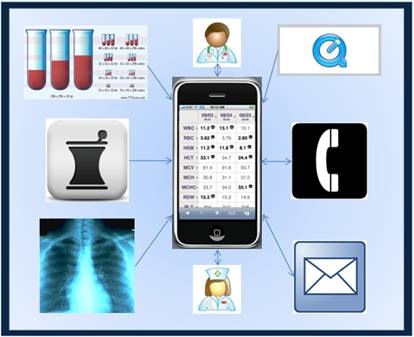
Many hospitals are using the iPhone as a tool for physicians to view clinical data. There are two ways to integrate the iPhone with an EMR:

  • Buy a package from a vendor to display clinical data on the iPhone.
  • Build a Web-based or native iPhone application.

The first option is the most common approach. Benefit: no development costs. Disadvantage: limited ability to customize the application to an organization’s specific needs.

We elected to build a Web app for the iPhone because we wanted to customize the solution to our needs and did not have funds to purchase an application from a vendor. Some of the features in our iPhone web app include:

  • Sign on with four-digit PIN using large numeric virtual keypad (see image) versus entering username and password on the iPhone virtual keyboard.
  • Lab data displayed as three most recent values in a simple table (see image). Lab tests grouped using common categories.
  • Select and play a radiology dictation when viewing a patient’s record.
  • Rounding list defined and built to physician specification. Physicians can add and delete physicians in their group using the iPhone.
  • Length-of-stay information from our Case Management and Bed Tracking application, also written in-house.

It’s the subtle features that make the difference in user acceptance of software. This is especially true in healthcare for reasons too numerous to list here.

For example, physicians don’t like entering their username and password on the iPhone’s virtual keyboard, an approach many vendors use. Using the virtual keyboard takes a certain touch that is difficult for some physicians to master. We built a security feature that ties a specific iPhone to a specific physician to a specific PIN they choose. The PIN is only valid on the physician’s iPhone and is entered using a large, virtual numeric keypad that mimics an ATM. Users need only enter their four-digit PIN to log in.

The ability to ask physicians, “How would you like it to work?” versus “This is how it works” makes the difference between good software and software that physicians accept. This can best be accomplished by building the front end custom to your needs. While building software is harder and more difficult (for IT personnel) than buying vendor software, the ability to build initiative, easy-to-use software makes training, implementation, and support much easier. And the extra effort makes it much easier for the user to incorporate into their work.

It really is that simple. And why “generic” software requires much more training and process redesign than custom software. Another advantage of build versus buy is we can continue to deliver applications without being dependent on available capital dollars.

Future plans include using the iPhone with the Web app to record dictations and use of the iPhone for eMAR.

Mark Moffitt is director of information systems at Good Shepherd Medical Center of Longview, TX, proof that you don’t have to live in a big city to innovate in healthcare IT.


Meaningful Use Criteria Comments
By Arlen Dominek

I thank the members of the Health Information Technology Policy Committee and, in particular, the members of the Meaningful Use Work Group for their time and effort. I would like to provide my own comments upon the draft presentation of Meaningful Use.

I think that it will be very difficult for all ambulatory and acute care provider organizations to implement an EHR by 2011 simply because of ramp-up time and change management considerations. It takes time for an organization not only to put together an implementation team, but to ensure that the appropriate governance structure is in place. The organization must also formulate a clear focus of where it wants to go, a plan for how it’s going to get there, and how it can assess its progress in getting there.

The organization must identity the members of the implementation team. Often, the organization must recruit additional personnel or retain consultants. In addition, there is training to take into consideration. Equipment must be ordered.  Appropriate telecommunications must be in place.  Interfaces must be implemented. In addition, simultaneous implementations of ambulatory and acute applications by a delivery system can be onerous, yet a certain amount of collaboration is necessary to promote maximum utility.

Vendors will have constraints as well. Many vendors are running very lean implementation organizations today; this minimizes the number of implementations that any one vendor can support at a time. It’s no different than any other manufacturing environment;  there are capacity limitations. Moreover, any rapid implementation cycle provided by a vendor should be carefully evaluated to ensure that the needs of various provider and patient populations are being adequately met.

It’s one thing to provide content satisfying a general med/surg model, quite another to meet the needs of a pediatric BMT program. Rapid provider adoption of workflows and clinical documentation applications will be effected if provider needs are considered during the initial build of content and workflows. Workflows should be designed to meet the particular needs of the provider, e.g., a diabetes clinic or a nephrology clinic. Such consideration can minimize costly re-engineering at a later point and contribute to the success of an implementation.

Hence, Meaningful Use criteria should:

  • Be sensitive to the ability of an organization to initiate its EHR implementation and in meeting Meaningful Use criteria, that is, no organization should be penalized because of implementation delays that are out of its control or the population it serves has minimal broadband connectivity;
  • Be cognizant of ramp-up time;
  • Reflect the maturity of any particular implementation, for instance, if evidence-based order sets comes two years after CPOE implementation, then the criterion should reflect the stage of a particular implementation and not simply a calendar year.

CDS at the point-of-care is somewhat ambiguous and restrictive. Are we referring only to those kinds of CDS that present during CPOE or are we also considering alerts which reflect changes in patient conditions and availability of new data to alert a provider and inform a decision? 

Meaningful Use calls for the capture of clinical data that can be queried and trended. I can appreciate the issue of data capture with which the Work Group has contended;  however, I feel that the objectives have minimized the value of these data and other data for data warehousing and analysis as well as for interoperability through such mechanisms as ELINCS. Hence, such data should utilize standard classification systems such as LOINC, SNOMED, and ICD-10CM to support data warehousing and analysis. Such requirements should be clearly called out so that provider organizations and vendors will incorporate this into their project plans.Such classifications are essential and often mandatory for reporting to quality, epidemiological and public health agencies and to various registries.  Meaningful Use should clearly call this out.

Moreover, there is far more information within a patient chart that could be subject to further structure and encoding. The use of standard classification systems or languages should be implemented so there is a consensual, meaningful and useful framework which governments, providers and consumers can use as a common language.Internationally endorsed classifications facilitate the storage, retrieval, analysis, and interpretation of data. They also permit the comparison of data within populations over time and between populations at the same point in time as well as the compilation of nationally consistent data. (http://www.who.int/classifications/en/) It appears to me that CCHIT and vendor organizations have avoided the issue of incorporating standard classifications or the usage of common classification languages.

Our goal should be to maximize the value we obtain by automating CPOE, clinical documentation, and result reporting.

Order sets are often viewed as provider productivity tools and are conducive to provider adoption of CPOE. Considerable effort is entailed in adopting and implementing evidenced-based order sets. The effort to implement an organization’s existing order sets only to be followed within two years by the adoption of evidenced based order sets is considerable.Perhaps such adoption should be moved up in the timetable.Reimbursements and grants should reflect the licensing cost of evidenced-based order sets. Available evidenced-based order sets tend to focus on medications;  however, standard classifications would encourage incorporation of evidenced-based data for other procedures such as radiology and laboratory.

Multi-media support capabilities are existent in many commercially available EHRs. Perhaps this objective could be moved to an earlier year.

The Meaningful Use Matrix calls for the use of bar coding in medication administration, yet it does not call for the bar coding in the administration of blood products or for positive identification of patients on whom procedures are to be performed, e.g., specimen collection. While CCHIT addresses medication administration in its category Decision Support for Medication, Immunization, and Blood Products Administration requirements, there is no mention of similar functionality for blood product administration, etc. It’s important that Meaningful Use expand beyond current CCHIT requirements and vendor offerings.

It’s admittedly difficult to elaborate workflow efficiencies, but there are some examples

  • CDS for administration of immunizations and blood products and positive patient identification as mentioned previously.
  • Use of commercial databases to quickly inform the provider whether a medication or procedure is covered by a patient’s payor, thereby reducing time spent in remediation or in losing revenue.  (And payments should reflect the expenses of these databases.)
  • Reduction of labor costs in collecting specimens and increasing patient satisfaction by reducing needle sticks when a central line is available.
  • Centralized coordination of appointments.
  • Automated patient referrals.
  • Improved patient satisfaction when the provider has the patient’s information at the right time and place.
  • Improved transfer of information between providers.

I apologize if any of my comments have been redundant or because of my failure to notice their having been addressed elsewhere.

Arlen Dominek is practice director at Peer Consulting of Mercer Island, WA.


Subrogation
By William O’Toole, O’Toole Law Group

Regarding the SubroShare(R) press release, Mr. HIStalk was understandably a little off in his assessment; this is not about a policyholder suing the healthcare provider. It is all about personal injury claims.

Subrogation is a legal remedy that enables an insurance company to recover amounts it paid for the care of its customer (the injured patient) in situations where the patient also receives payment covering the same services from a third party (the one that caused the injury to the patient and was sued by the patient).

The key here is the third party. There must be some other party that caused the injury to the patient and from which there is the possibility of payment resulting from a lawsuit (damages) or settlement of that lawsuit.

I will go out on a limb and state that I cannot imagine any health insurance policy not having a subrogation clause. Whether or not attorneys have an obligation to inform the insurance carrier of secondary (duplicate) payments is irrelevant, because where there is a subrogation clause, there is also the obligation for the insured patient to inform the insurance company that the patient’s injuries were caused by a third party, thereby raising the flag for the insurance company.

That said, unfortunately there are those patients that do not, and processes are not always what they should be and some claims "fall through the cracks" and are not identified properly up front. Consequently insurance companies are left to hunt down reimbursement in these situations.

What I believe SubroShare(R) offers is a method to assist insurance companies in identifying situations where they may recover, through subrogation, some payments made on a patient’s behalf.  The trigger seems to be the request for the patient’s records by an attorney, which might mean third party involvement in the patient’s injury, and consequently might mean the possibility of payment to the patient directly for services already paid by the patient’s insurance company.

William O’Toole is founder of O’Toole Law Group, Duxbury, MA.

Provider Profitability
By Dichotomous Dweller

I watched with sardonic amusement as a whopping 19% of readers voted that healthcare providers are sandbagging on IT to keep the public from seeing how profitable healthcare delivery is. Really? 19% of people who read this site think that patient care plays second fiddle to profitability when it comes to EHRs?

Given the way the question was phrased, I’m supprised the number was so high, but then I think the poll question missed the point, so maybe others saw through it as well. Some better questions might have been:

  • Do you believe that profitability (here defined as free market economics) enhances or threatens the quality of healthcare received by the general public?
  • Do you believe that healthcare providers are have a vested interest in keeping the public from seeing how profitable healthcare delivery is?

There are lots of trick questions like these, but the answer is always both ‘yes’ and ‘no’.

The simple truth is that a dying person will usually give their last dime for a shot at one more day. Healthcare in these circumstance is every man for himself. If you are sick or dying, you’re not going to mind that the person in the bed next to you is subsidizing your stay at a rate of $100 per tablet for over the counter drugs or 33% year in income taxes. Profitability can be created by reducing costs as easily as by increasing sales, but in these circumstances, money doesn’t mean much.

Do you really think that there aren’t people profiting in healthcare from deals that they’d rather the public not know about?  (Thank god we have people like Mr H to keep us up to date on the salaries of major ‘non-profit’ executives). But why stop there? What about those doctors with lucrative research deals with pharmaceutical companies, or pharmaceutical companies who perk doctors who use their products? 

Now I have no idea if such profiteers are going to be exposed by EHRs.  Indeed, it seems EHRs can be their own unique breed of profiteering. But let’s be honest, we all know people who profit from healthcare, and no matter what happens next, single payer, socialized medicine, co-ops, EHRs, RHIOs, status quo, bankruptcy of Medicare, etc., there will always be people profiting from healthcare.

The real question is: is it fair? And it is this question, no matter how simply stated, that we can’t possibly come to agreement on. So we’ll let the market decide for us. I bid 10% of my salary. And rising.

Readers Write 7/1/09

July 1, 2009 Readers Write 6 Comments

Submit your article of up to 500 words in length, subject to editing for clarity and brevity (please note: I run only original articles that have not appeared on any Web site or in any publication). I’ll use a phony name for you unless you tell me otherwise. Thanks for sharing!

Hats Off to AMDIS
By Ann Farrell

amdis 

Congratulations to AMDIS for saying what many of us believe and promote, but had feared was falling on deaf ears or been drowned out by politics and ego. It’s not surprising that the “Boston Docs” known MD-centric view of the world (healthcare and IT) produced a largely MD-centric, “CPOE first” meaningful use strategy. Hopefully this attitude was rejected when Version One of MU was sent back to the drawing board the day after the first draft was issued.

Chasing ARRA money already put some hospitals on a dangerous path to drop everything in hurry up mode to “install” CPOE without examining physician workflow, decision making, cultural and change management needs, and foundational applications. Some EMR companies and their advocates encouraged this — some unwittingly, others with an eye on increased or accelerated quarterly revenue recognition, the metric vendors are held to (incented by), particularly public companies.

For CPOE to be more than an automated requisition generator, MDs need to get tangible value, including the ability to make better informed decisions based on more timely data (not meaning the computer is making decisions for them). Since ancillary systems were ground zero for hospital clinical automation, lab and X-ray results are almost always online before or with CPOE. 

What may not be present is assessment data entered by nurses, ideally at the point of care in near real time, e.g. allergies, height/weight, vital signs, I & O, nurse-collected lab values, and an accurate medication record. That is critical data for clinical decision support (CDS) for MDs in ordering. Not having these data available wastes MD time and steps and results in suboptimal or even unsafe ordering decisions. If data is not easily retrievable (preferably “pushed” to MDs in the ordering process at the right time), physicians are forced to look for paper charts, call for information, chase nurses down, or make ordering decisions without important or current information.  

In addition to providing a clear path to CPOE, automating the eMAR/BCMA has greater  potential impact on med error reduction than CPOE. Not killing or harming patients would seem a primary goal to improve quality of care.  MDs and RNs make approximately same number of errors, but pharmacists or RNS catch 50% of MD errors downstream whereas 98% of RN errors reach the patient. And, nurses work for hospitals and are more easily corralled (in theory), thus making clinical and business sense to start with foundation pieces first.

Hopefully Drs. Glaser and Halamka (and Blumenthal) are listening. Some have recommending staging implementations as if it’s a pecking order — doctors first! To be effective, CPOE needs to be part of a bigger strategy –patient-centric, outcomes (not IT) focused, with staged functionality and a 21st century interdisciplinary care team approach that respects all caregivers’ roles and contributions.

For the good of all, we want CPOE to be embraced by MDs, but also for MDs and US healthcare reform to be more inclusive and patient-centric. I speak as clinical consultant, former EMR vendor exec, and RN who worked with first commercial EMR in a hospital with near 100% CPOE in early 1970s. CPOE is hardly a new phenomenon, yet some MDs and vendors act as if it started with them. We’ve known for decades how CPOE can be implemented successfully. Now’s the time to really get this right.

Ann Farrell is a principal at Farrell Associates of San Francisco, CA.


An Alternative Desktop Standard
By Mark Moffitt, MBA, BSEE

mini

We have deployed a unique desktop configuration at our healthcare provider organization. The configuration is a Mac-mini running Windows 7 release candidate (RC) with a 17” wide-screen monitor.

The advantages of this configuration over a conventional PC are:

  1. Smaller footprint
  2. Less expensive
  3. Higher quality hardware
  4. Better cloning capabilities, i.e. ability to clone the windows partition using the OS X operating system
  5. Run Leopard and/or Windows 7

We skipped Vista as a desktop standard. We found W7 RC to be very stable. So, rather than install XP on newly deployed machines, we opted to deploy W7 RC. Once W7 is released, we will install it over W7 RC.

The cost of the Mac-Mini, display, and keyboard and mouse was less than the conventional PC configuration we were considering. Your mileage may vary.

Power users in IS run both Leopard and W7 RC. They are both really good operating systems. Leopard is much better working with multimedia, while W7’s sweet spot is “corporate computing.” I run both on my MacBook Pro.

Mark Moffitt is director of information systems at Good Shepherd Medical Center of Longview, TX.


Physicians Using PCs
By Ben

I think you need additional inspiration!

Seriously, I think you’re confusing the work flow of an office based physician with the work flow of an inpatient physician (i.e., hospitalist or critical care specialists as examples). We (hospital-based physicians) spend much more time sitting down, sifting through and analyzing data (whether in electronic or paper formats) than we do with hands-on patient care. That’s NOT because the data analysis pulls us away from the bedside, but rather it is the bulk of the work: analysis, married with the patient visit and examination, tempered by experience and judgment, aided by decision support as available, leads to action. 

Why do computers in patient rooms fail to attract physicians? We want to work at a desk, adjacent to our colleagues, where we can sit and work without being distracted by what’s going on in the patient’s room. Doesn’t matter whether we’re working from a computer record or a paper record. 

And BTW: the “pecking away at a keyboard” has made me a vastly more efficient and informed physician than when I worked off of paper. Lawyers have the option of turning the work over to “associates”. In the absence of medical students, the patient gets the full attention of the “partner”! Score one for physicians.

Readers Write 6/24/09

June 24, 2009 Readers Write 14 Comments

Submit your article of up to 500 words in length, subject to editing for clarity and brevity (please note: I run only original articles that have not appeared on any Web site or in any publication). I’ll use a phony name for you unless you tell me otherwise. Thanks for sharing!

What Interesting, Light, and Cheap Technologies Are We Using?
By EncoreDiva

cats

We don’t have a single server of our own.  We use hosted solutions for e-mail and SharePoint. 

We have a Web-based accounting system, timekeeping system, and expense reporting application.

We’re experimenting with Yammer to encourage collaboration within a virtual organization (and to cut down on e-mail), we have a page on Facebook, we utilize the status feature on LinkedIn to update our network on what’s new with the company and we utilize Skype for IM and quick calls. 

We use www.freeconference.com for internal conference calls and www.dimdim.com for internal webcasts. We utilize Administaff for our payroll and benefits and they administer (securely) all employee information. Our recruiting system is Web-based and open source (www.catsone.com) and it’s easily accessible from an iPhone. From a desktop perspective, we’re playing with OneNote and so far I’m LOVING it!

Meaningful Use: A Brief History
By Dr. J

13,000 BC: Prehistoric humans decorate their caves with images of herbal remedies used for their medicinal purposes. Unfortunately, these primitive clinical information systems are not CCHIT certified and reimbursement for shamanism drops dramatically. Neanderthals go extinct.

2600 BC: The Egyptian Imhotep describes the diagnosis and treatment of 200 diseases. ICD-10 soon expands this list by nearly three orders of magnitude.

460 BC: Hippocrates, the “father of modern medicine,” writes the first draft of his famous oath. After an extensive public comment period, Hippocrates tones down his commandment to “first, do no harm by taking an extensive medical history, including prior medications, allergies, and surgeries and accounting for the patient’s renal and hepatic function” out of concern that this tough requirement may hamper widespread adoption.

150 AD: Galen of Pergamum, pioneering Roman surgeon, insists on using only papyrus. He refuses to implement parchment in his practice because he finds it so disruptive to his workflow.

1231: Theodoric, Barber of York, proposes standardized terminology for various forms of bloodletting, primarily so he can “upcode” to get increased reimbursement for using leeches.

1427: As the Black Plague sweeps through Europe, self-flagellation is lauded as a pioneering effort for health information exchange. Whole communities get into the act by burning sufferers alive, using the fiery glow as a novel public health reporting tool.

1601: James Lancaster proves that consumption of citrus fruits prevents scurvy in British sailors in the world’s first controlled clinical trial. Unfortunately, in a world without quality metrics for scurvy prevention, Lancaster fails to achieve his pay-for-performance bonus for the year.

1795: After a mere 194 years (and 1 million scurvy deaths), the British navy mandates lemon and lime juice as standard sailor’s rations. Next up, EHR adoption.

1816: Rene Laennec invents the stethoscope, which is subsequently rated “Best in KLAS” over the objections of the Open Source community.

1845: Surgical anesthesia is pioneered at Massachusetts General Hospital. The Federal government sets up “Regional Anesthesia Extension Centers” to assist in anesthesia implementations nationwide.

1854: Florence Nightingale begins a medication bar-coding initiative during the Crimean War, but then realizes it would be preferable to save lives by cleaning the army hospital’s sewage system.

1884: Robert Koch establishes his famous postulates to identify microorganisms responsible for various diseases. Privacy advocates successfully sue Koch, forcing him to go back and de-identify the pathogens.

1889: Sir William Osler creates the medical residency but completely fails to anticipate the headaches his other creation, the co-signature, will cause in 120 years.

1895: X-rays are discovered by Wilhelm Röngten, without the assistance of a PACS. Nevertheless, for years Röngten would claim that his images conform to DICOM standards.

1928: Alexander Fleming extracts penicillin from mold growing on a tablet PC he had forgotten to plug in for several days. He tries to e-prescribe the antibiotic for a patient, but the antibiotic is not in his “favorites” list, so he handwrites the prescription and gets the dosage wrong.

1967: Christiaan Barnard performs the first human heart transplant. No one ever hears about it because Twitter has not yet been invented.

2003: The human genome is completely sequenced. Instead of the expected ACTGs, the genome is apparently filled with strange acronyms like LOINC, CCD, CCR, and HL7.

2008: CCHIT is involuntarily dissolved for the first time.

2009: David Blumenthal, the National Coordinator for Healthcare Information Technology, delivers the government’s definition of “meaningful use” to an immense crowd of jubilant healthcare providers from the steps of the Lincoln Memorial, after an opening concert by U2. Healthcare in the US is saved! The rest of the industrialized world yawns while besting us on nearly every relevant quality measure for the tenth straight year.

The PACS Designer’s Review of Cloud Acronyms
By The PACS Designer

cloud
Illustration: Youseff, UCSB

The number of acronyms applied to cloud computing is growing, and even TPD is confused about what they really mean when it comes to providing users solutions for expanding the computing universe of an institution.

Even IBM has gotten into the marketing hype by calling their cloud offering Computing as a Service with their introduction of their Blue Cloud.

So let us look at what the Wikipedia has to say about the types of service renderings related to cloud computing solutions.

The most common term heard is Software as a Service (SaaS).  The Wikipedia definition is:

"Software as a Service (SaaS, typically pronounced ‘sass’) is a model of software deployment whereby a provider licenses an application to customers for use as a service on demand. SaaS software vendors may host the application on their own web servers or download the application to the consumer device, disabling it after use or after the on-demand contract expires. The on-demand function may be handled internally to share licenses within a firm or by a third-party application service provider (ASP) sharing licenses between firms."

Another cloud computing term is Platform as a Service (PaaS) which is defined as:

"Platform as a service (PaaS) is the delivery of a computing platform and solution stack as a service. It facilitates deployment of applications without the cost and complexity of buying and managing the underlying hardware and software layers(1), providing all of the facilities required to support the complete life cycle of building and delivering web applications and services entirely available from the Internet(2)—with no software downloads or installation for developers, IT managers or end-users. It’s also known as (cloudware).  PaaS offerings include workflow facilities for application design, application development, testing, deployment and hosting as well as application services such as team collaboration, web service integration and marshalling, database integration, security, scalability, storage, persistence, state management, application versioning, application instrumentation and developer community facilitation. These services are provisioned as an integrated solution over the web."

The next cloud computing term is fairly new, and is Infrastructure as a Service (IaaS) and is defined as:

"Infrastructure as a Service (IaaS) is the delivery of computer infrastructure (typically a platform virtualization environment) as a service. These virtual infrastructure stacks(3) are an example of the everything as a service trend and shares many of the common characteristics. Rather than purchasing servers, software, data center space or network equipment, clients instead buy those resources as a fully outsourced service. The service is typically billed on a utility computing basis and amount of resources consumed (and therefore the cost) will typically reflect the level of activity. It is an evolution of web hosting and virtual private server offerings."

Lastly, IBM’s term of Computing as a Service will most likely be used as a marketing tactic only as their already is a CaaS which stands for Communications as a Service!

Hopefully posting all of these terms in this entry will help users understand solution offerings by vendors, and be a guide to everyone contemplating using cloud computing structures as solutions.

(1) Google angles for business users with ‘platform as a service’
(2) Comparing Amazon’s and Google’s Platform-as-a-Service (PaaS) Offerings | Enterprise Web 2.0 | ZDNet.com
(3) IT as a Service is a model ripe for adoption
https://spaces.internet2.edu/download/attachments/8817/ComputingAsAService08.pdf?version=1
http://en.wikipedia.org/wiki/Software_as_a_service
http://en.wikipedia.org/wiki/Platform_as_a_service
http://en.wikipedia.org/wiki/Infrastructure_as_a_Service

Readers Write 6/8/09

June 8, 2009 Readers Write 12 Comments

Submit your article of up to 500 words in length, subject to editing for clarity and brevity (note: I run only original articles that have not appeared on any Web site or in any publication). I’ll use a phony name for you unless you tell me otherwise. Thanks for sharing!

The Problem with Publicly Traded Companies
By Mike Quinto

The problem with publicly traded companies is they serve the spreadsheet, not the customer.

In the last year, I have heard:

  • the VP of implementation of an HIS vendor said that she does not have the personnel to devote to our implementation because she needs to hit a certain metric and this would blow her numbers.
  • a sales VP at a major ambulatory EMR vendor tell me that because of their end of year, they needed me to commit to buying six more licenses (to true up a five-year-old old problem THEY created) within 24 hours or they would “turn us off”.
  • the SVP at a major ERP vendor, admitting that the sales team “made a mistake,” said they can’t fix it because they have to hit a certain profit margin (FYI, your company hitting a certain double-digit growth or profit margin is not a large concern of my non-profit health system struggling to break even — know your audience, people).

Whatever happened to partnerships? It is clear that the ‘partnership’ with the shareholder is far greater than the ‘partnership’ with the client.

I have been fortunate enough to work for privately held software vendors and unfortunate enough to work for publicly traded software vendors. I have worked at a privately held software vendor that was purchased by a publicly traded company. I have seen the difference from both sides. I know that the customer is not at the center of decisions in a publicly traded company; spreadsheets are at the center of decisions.

As a client of both publicly traded and privately held vendors, I am experiencing both sides of the equation. Without question, the privately held vendors make better ‘partners’.

I would not imagine the 14K that caused such a barrier to customer service at a major healthcare ERP vendor is worth the damage it has done to this two million dollar ‘partner’. The 20K that created a competitive environment was not worth putting the client at risk. The confidence lost at the executive level was not worth the implementation team hitting a certain metric for the quarter.

We all have to hit certain metrics. We all have our own challenges. Publicly traded software vendors often keep the short term revenue recognition or expense metric in focus when the big picture should be on customer satisfaction and retention. This quarter’s financial statement will not keep you going in the long run. Your ability to attract and retain happy customers that buy from you again will keep you going.

Mike Quinto is CIO of Appalachian Regional Healthcare System of Boone, NC.


Is Data In Your CDR Accurate? Are You Sure?
By Unfrozen Caveman CIO

I’ve always wondered about the accuracy of the process of duplicating data in ancillary systems, such as a laboratory information system (LIS) or radiology information system (RIS) to a clinical data repository (CDR). The most common process consists of parsing HL-7 messages and storing the data in a CDR. Sounds simple and straightforward. What could go wrong?

It turns out it’s not so simple and things do go wrong:

  1. HL-7 is not simple or straightforward to work with. Parsing data can cause random discrepancies.
  2. Changes, such as revising clinical data, e.g. change a lab value, revising a finalized report, etc., can cause discrepancies.
  3. Software updates in the ancillary system can cause discrepancies between data in the ancillary system and CDR.

My organization is moving away from the CDR-centric framework to a web services framework (aka service-oriented architecture). In this framework, clinical data is not reproduced in a CDR unless absolutely necessary and data is retrieved from ancillary systems using web services when needed. However, for reasons related to response time, we needed to duplicated lab data in a lab data repository outside the LIS.

During this process we discovered that a vendor-supplied CDR and a second, smaller CDR, purchased as a package from a vendor to provide mobile access to clinical data, store lab data that does not match data in the LIS.  These systems are no longer used for clinical operations for reasons unrelated to the discrepancies noted.

As part of our effort to build a lab data store, we also built a program that validates lab data by comparing data in the ancillary system with data in the CDR for a specific date. We are experimenting with the best strategy for running this program. For example, run the program every morning for dates equal to yesterday, last week, and last month.

How significant were the discrepancies? That question misses the point. The question should be what do you do about it? Ignore it and pretend it doesn’t exist? Or have in place a data validation process that identifies, reports, and fixes discrepancies. Did your CDR come with one? If not, what are you going to do about it?

Forget eHealth Ontario
By Justen Deal

Forget eHealth Ontario! Take a look at the federally-sponsored not-for-profit entity, Canada Health Infoway, which actually appears to be accomplishing even less. Plus, because it is not actually part of the federal government, it gets to be much less transparent to boot! 

So far, since 2001, it has received $2.1 billion in funding, including $500 million for 2009 it just got in January.

Their longstanding goal has been to ensure 50% of Canadians are covered by electronic health records by 2010. According to a recent survey by the Commonwealth Fund, only 23% of primary care physicians in Canada are using electronic health records (compared to 28% for the United States). Sounds like they’ve got a long way to go in the next seven months, eh?

That might be why they’re now focusing on a new (and improved!) goal of covering 100% of Canadians by 2016. They estimate more funding will be required…  😉

justendeal

Justen Deal is venture director at QuarrierWade of Charleston, WV.

NAHAM Report
By John Holton

This is a belated update on the NAHAM (National Association of Healthcare Access Managers) convention a week ago. The most exciting aspect of the convention was the formation of the Healthcare Access Management Coalition which is comprised of NAHAM, hospitals, other healthcare providers and industry vendors.

Everyone acknowledges administrative waste in our healthcare system and yet access to care and the arcane reimbursement environment created by the insurance companies is missing from the current debate. The new coalition is focusing on educating policymakers on the importance of efficient and quality management processes from a patient’s point of entry through the continuum of care. Hopefully through this education, new policies streamlining the administrative end of healthcare will result in more dollars being spent on the actual delivery of patient care.

The goals of the coalition are:

  • Improve access to care and reduce healthcare costs through dynamic healthcare management
  • Ensure healthcare reform includes entry point and patient management processes
  • Educate policymakers about technologies that improve service delivery models
  • Support technology solutions that make healthcare more affordable and efficient

Anyone interested in these topics can get more information by contacting John Richardson, NAHAM Director of Government Relations at (202) 367-1175 or jrichardson@smithbucklin.com.

 johnholton

John Holton is president and CEO of SCI Solutions of Los Gatos, CA.

Readers Write 6/1/09

June 1, 2009 Readers Write 4 Comments

Submit your article of up to 500 words in length, subject to editing for clarity and brevity. I’ll use a phony name for you unless you tell me otherwise. Thanks for sharing!

The Psychology of Health Information Technology: What’s Missing?
By Mark Hochhauser

I’m a psychologist whose spouse works in a hospital pharmacy implementing an EMR system. My interest is the missing psychological aspect of the current drive towards electronic medicine.

Behavior change theories

Assumptions about the ability of various electronic health systems to change physician and patient behaviors are not based on an understanding of behavior change principles. Information may help change someone’s knowledge, but changing their attitudes and behaviors is much more difficult.

For example, about 20% of US adults still smoke, down from about 50% in 1964 when the first Surgeon General’s report on smoking was published. That represents about a 60% reduction, but it has taken 45 years to get there. Why does anyone assume that information alone will lead to behavior change when that conclusion not supported by the evidence?

One goal is to give physicians and patients information that will lead to behavior changes by both groups (and healthier patient outcomes), but nowhere have I seen any references to the behavior change literature. For example, relevant behavior change theories such as the 1) Health Belief Model, 2) Stages of Change Model, 3) Consumer Information Processing Model, 4) Theory of Planned Behavior and 5) Implementation Intentions Model are absent from the HIT literature. How can behaviors change when HIT programs are not based on any understanding of behavior change theories? What you’re left with are trial-and-error programs.

Limited patient health literacy

Presumably patients will become more active participants if they get more information via electronic patient records. Missing from that assumption are any insights from health literacy research. The 2006 “Health Literacy of America’s Adults” [http://nces.ed.gov] estimated that 14% of adults had “below basic” health literacy, 22% had “basic” health literacy, 53% had “intermediate” health literacy, and 12% had “proficient” health literacy. What level of health literacy is needed to understand health information and complicated health information tasks such as keeping and updating electronic personal health records? Not everyone is as smart as you.

Lack of an evaluation plan

Years ago, when I reviewed prevention proposals for federal agencies, they recommended that 15% of the budget be spent on program evaluation. Although I’ve read extravagant claims for the future benefits of EHRs, I have yet to see a decent program evaluation plan described in the literature. Unless an appropriate plan has been developed with experimental (EHR, CPOE, etc.) and control groups (no EHR, CPOE, etc.) along with relevant definitions and measurements of physician and patient behavior changes before, during, and after implementation, there will be no way to scientifically determine whether these programs work or do not work. Hype is not an evaluation plan.

Conclusion

Getting physicians and patients to change their behaviors is harder than anyone seems to recognize. The absence of key psychological perspectives in the development and implementation of HIT programs means that they will probably not be very effective. Psychologically, current HIT programs represent the triumph of hope over evidence.

Mark Hochhauser, PhD is a readability consultant in Golden Valley, MN.

Quality and Pricing Transparency in Healthcare
By Colin Konschak

Since consumers rely on quality and cost information in many other segments of their lives, I believe it is the consumer who will soon begin to drive improvements in quality and price transparency in healthcare. Further, the American Recovery and Reinvestment Act of 2009 will result in the industry’s increased adoption of technologies that are critical to creating the environment of transparency that consumers will demand.

As consumers become more and more involved in their care, they are coming to realize that better information about cost and quality will allow them to make better, more informed choices. Just as they can book hotel rooms anywhere around the world—and find data on cost and quality that is readily available—they will begin to expect the same in healthcare. Providers operating in a competitive environment will be forced to improve the quality and cost of care if they are to compete effectively. In addition, transparency will encourage these consumers to reward high quality/low cost care. Over time, consumers will not tolerate a healthcare system without quality and cost transparency.

Hotels and healthcare

Already, today’s consumers feel that the current state of information is inadequate. They rarely have cost and quality details about healthcare services, and even physicians rarely have comparative information on the quality of their own care or of the care of physicians to whom they refer patients[1].

Quite unlike decisions about a hotel stay, the unique characteristics of healthcare decision-making includes a high degree of risk and value–both perceived and real. Healthcare decisions therefore necessitate that consumers maintain a high level of involvement in the decision-making process. Unfortunately today, most consumers overall could spend considerable time and effort to uncover a minimal level of information to make their final purchase decision. Further, even though they have researched the service, sometimes the end-user experience differs greatly from what they expected, since the healthcare delivery processes includes many touch points. This variance in the consistency of services and involvement of diverse processes in the system raises additional issues of cost and quality transparency.

Opportunities and solutions

Cost and quality transparency would help patients to make informed choices about their care, encourage private insurers and public programs to reward quality and efficiency, and compel providers to improve services by benchmarking their performance against others[2]. To develop and implement a national strategy for health care quality measurement and reporting, for example, the National Quality Forum (NQF), a private not-for-profit membership organization, was incorporated in 1999. NQF is also involved in standardizing health care performance measurement and reporting. Some of the selected projects include cancer care quality measures, mammography standards for consumers, cardiac surgery performance measures and nursing care performance measures. Some effective state-driven transparency efforts[3] in the US include various programs such as the Pennsylvania Health Care Cost Containment Council, California health care reform, Florida Compare Care and the Massachusetts Health Care Quality and Cost Council.

The demand for details and quality in the form of report cards and rating systems for hospitals has also provided business opportunities for private companies. Some of these report card providers are:

  • “Consumers’ CHECKBOOK,” which provides “desirability” ratings for hospitals based on surveys of physicians, risk-adjusted mortality figures, and adverse outcome rates for several surgical procedures
  • “Leapfrog Group,” which surveys hospitals on about 30 safety practices and then combines them to provide an overall safety score
  • “HealthGrades,” which rates hospitals by individual procedures and conditions[4].

These report card providers may differ in the methodology of their rating systems, so it’s become important for consumers to have a broad perspective in order simply to evaluate these ratings.

Key conclusions

Going forward, the cost and quality transparency and standardization of services will act as key purchase drivers and contribute to the success of a healthcare system.

Therefore, if stakeholders in the health sector wish to look forward to assured profits from this industry, they have to execute activities such as in-depth planning, deployment, execution, and monitoring of various parameters which can equip them to deal with customer sensitiveness for quality and cost transparency. What might the role of technology play in this arena?

[1] Collins SR and Davis K. Ibid

[2] Collins SR and Davis K. Transparency in Health Care: The Time Has Come, The Commonwealth Fund.2006 Available at:
http://www.commonwealthfund.org/publications/publications_show.htm?doc_id=361215. Accessed February 6, 2009

[3] Health care price transparency: A strategic perspective for state government Leaders, Ibid

[4] Hospital report cards: Making the grade. The Harvard Medical School Family health guide Available at: https://www.health.harvard.edu/fhg/reportcards.shtml . Accessed February 6, 2009.

clip_image002

Colin Konschak is a managing partner at Divurgent.


EMRs are more than Electronic Filing Cabinets with Advanced Health IT – Improving Care and Lowering Costs
By Rich Noffsinger

The act of digitizing patient information won’t lower costs or improve care on its own. Improvements cannot be accomplished without aligning patient, provider and payer interests. Health IT contributes to this alignment by integrating critical patient, clinical and insurance data – enabling stakeholders to leverage multiple sources of information at once to personalize care, improve quality and lower costs.

Similar to how the Internet reformed the investing and travel industries by opening up access to information that was once siloed or guarded, health IT will enable a level of information sharing that simply does not exist today – between doctors and patients, laboratory and other health care providers, health care facilities, insurance companies and providers, etc. It will also allow us to apply computing power throughout the health care supply chain.

Once we unleash these kinds of processing capabilities such as modern analytics, we will see rapid advances in closing gaps in care, revealing wasteful spending, the application of evidence-based treatments, and even broadening medical research. However capitalizing on this data and computing power requires a Herculean level of interoperability and participation.

The value is not simply in digitizing health information; rather, the ROI comes from what you can actually do with the data electronically – through advanced tools and IT strategies like clinical decision support, predictive modeling, comprehensive risk stratification and evidence-based medicine.

By ignoring sophisticated health IT tools and technologies, patients, payers and providers miss opportunities to leverage the volumes of medical guidelines, insurance rules, treatment comparisons and best practices – that can improve health care and lower costs.

richnoffsinger

Rich Noffsinger is CEO of Anvita Health.

Readers Write 5/27/2009

May 27, 2009 Readers Write 16 Comments

Submit your article of up to 500 words in length, subject to editing for clarity and brevity. I’ll use a phony name for you unless you tell me otherwise. Thanks for sharing!

CIOs: Sell Your Board and Executives on the Big Picture
By Ivo Nelson

If you think your IT staff and budget will decline in the next five years, think again. By 2010-2013, hospitals will be in full-scale EMR implementation mode. At the same time, they will be reengineering their revenue cycle processes and systems to accommodate some level of healthcare reform, while preparing for conversion to ICD-10.  

All of this activity will be on the same scale as converting to DRGs (1983) AND converting to Y2K (1999) AND implementing HIPAA (2003) times two (or more). And keep in mind, because these changes are mandated by the government, ALL hospitals and physicians will have to comply at the same time.

If you think your vendor contracts will cover all this, think again. If you think you’re at the top of their priority list, think again. If you think you’re going to get a break when you wind down your EMR implementation, think again.

Why?

I’ve met with over 60 CIOs in the last couple of months,  looking for insights into their strategies, concerns, and challenges.

The ARRA HIT stimulus bill is on everyone’s mind. Most CIOs have done more PowerPoints in the last couple of months than in the last five years due to inquiries from their CEOs and boards who smell money. The focus is the stimulus money and how their hospital is positioned to receive the maximum amount from the government. They allude to an END, when the EMR is implemented and demonstrates “meaningful use”, some minimal level of interoperability all within the boundaries of HIPAA security and privacy regulatory changes.

The ARRA HIT stimulus is just the start. Healthcare reform will change reimbursement to true pay-for-performance, requiring billing systems to be based on outcomes and quality. Additionally, if bundled payment is adopted, it will require unparalleled coordination to bring the hospital, physician charges, and other services into a single rate. Any emphasis on coordination of care requires a level of interoperability that doesn’t exist today. 

On top of all that, the impending ICD-10 coding conversions requires the number of diagnostic codes to swell from 13,500 to 120,000. For inpatient procedures, the number jumps from 4,000 codes to 200,000 codes. The IT implications are huge. The impact on the hospital operations process and analytics will be even greater.

Quality is the new battleground. Once we are required to produce consistent quality reporting as a requirement for incentive payments (and eventually to avoid penalties), the game changes. Quality comparisons among competitors will be posted on the sides of buses, billboards, magazine ads, and on the TV. Quality care will be the first thing patients look for when it comes to the well-being of themselves, their family, and their community.
The usual Press-Ganey patient satisfaction measure will become almost irrelevant. Patients will endure long lines, rude staff, and will sit on the floor if they believe they will receive higher quality of care.

For the CIO, there will be immense pressure to be agile in producing reports to manage and report quality. Many are already coming to the sad reality that, after spending tens of millions of dollars on their EMR, all they have is a transaction system that doesn’t produce information. An entirely new genre of HIT now emerges around healthcare analytics. Remember, reimbursement will likely be tied to this information. Losing revenue because IT can’t produce reports, systems aren’t integrated, or vendors aren’t responsive isn’t going to be a conversation any CIO wants to have with his/her CEO or board.

Interoperability/Community Connectivity? Obama’s view of community connectivity is the sharing of patient information between heathcare organizations regardless of their competitive stance and strategy with each other. Our president greatly underestimates the power of local political will. Connectivity is contemplated, in the short term, only when organizations use it to capture a greater share of referring physicians – damn the community good. Elaborate arguments  will justify the self-serving, digital capture of community (e.g. referring) physicians. There is a good chance ‘connectivity’, in the Obama sense, will eventually be defined in the courts.

Most CIOs are aware of the issues around interoperability. Most are participating on some committee on the state or local level as per their boss’s direction. Most roll their eyes at the naïve, non-healthcare participants who see the healthcare exchanges and interoperability as the holy grail.

Most realize they are being required to respond to some government mandate that doesn’t completely comprehend the data complexities that exist within the walls of most organizations. One organization has  92 different definitions for glucose and another has 16 different ways to define death. And they’re going to talk to each other? It’s a good thing there are some smart people on the ARRA HIT Standards Committee.

Of course, all of this is going on while we’re in a recession and CFOs are ratcheting back on capital and asking CIOs when their staff will downsize post-EMR implementation. It is not just that the CFOs are asking for reductions, it’s that the credit markets have tanked and the money simply isn’t there. It’s one thing for a CFO to say we need to reduce expenses; it’s another thing for a hospital to find out they have no credit because the bond market has tanked.

If I were a CIO, I’d be adding a few slides to my PowerPoint presentation to include ALL of the potential changes coming down the pipe, not just the stimulus incentives. I wouldn’t do a full-scale strategic plan, but I would dig deeper into a staffing analysis and make sure I didn’t prematurely reduce or redeploy staff. I’d create some what-if scenarios on the high and low end of change. I’d also take more advantage of the current access to my board and executives to educate and "sell" them on the bigger picture. Yep, and all this needs to be done while you’re trying to get the printer to format labels for the lab accurately.

The budget cycles are starting now for 2010. Make sure you get all of your cards on the table. I know it’s not all defined yet, legislation isn’t passed, and some changes may be a moving target. Like it or not, this is a government that makes decisions. The stakes are high. Now is not a time to be timid.

In the words of the great Wayne Gretzky, “A good hockey player plays where the puck is. A great hockey player plays where the puck is going to be.” Let’s keep the puck on the ice. Go Red Wings!

Ivo Nelson is chairman of Encore Health Resources, a healthcare IT consulting organization.


From DVR-Challenged to an EHR?
By Gregg Alexander

Bringing real change to healthcare information integration will never happen until the focus is off of the “technology” and onto the training, education, implementation, and ongoing usage support of such complicated tools. Period.

Of course you can force the horse, but he he’ll die of dehydration if he can’t figure out how to drink. Geeks docs get it, but most clinicians are not geeks and couldn’t care less about technology if it doesn’t:

1. Make their lives easier;

2. Strengthen their profit margins;

3. Help them be better doctors, AND;

4. Come with ongoing, easy-to-access, stupid-simple support.

Number 4 is probably the most important, yet most often shortchanged component of these quadrangular conditions. Both the technology and the issues it is trying to support (healthcare issues) are far too complex for the general masses of providers to wrap their brains around all together. Just being a clinician is hard enough. Giant new learning curves for techno-tools which – let’s face it – don’t really hold much fascination for most normal folks are off-putting, even repulsive.

Here’s what I hear: “With pen and paper, I can be a decent doctor (#3), get by financially (#2), and I already, almost innately, know how to use them (#1). Sure, paper has a ton of associated problems, but until there are sufficient helpmates (#4) to hump me over that technological learning curve mountain, I’ll do what I know and spend my extra time trying to get the hang of my DVR. By the way, speaking of computers, what’s this Twitter thing? Is it … (hushed) … sexual?”


Dr. Gregg Alexander is a grunt-in-the-trenches pediatrician and geek. His personal manifesto home page…er..blog…yeh, that’s it, his blog – and he – can be reached through http://madisonpediatric.com or doc@madisonpediatric.com. He writes regularly for HIStalk Practice, but we decided to put him on HIStalk this time just for fun.

Blade Server Review – Main Features and Values
By The PACS Designer

There has been a lot of press lately about blade server architectures, so TPD thought it would be a good idea to highlight some of the main features of this type of architecture.

A blade is a plug-in device that is installed in a chassis. Its Wikipedia description reads, "The name blade server appeared when a card included the processor, memory, I/O and non-volatile program storage (flash memory or small hard disk(s)). This allowed manufacturers to package a complete server, with its operating system and applications, on a single card / board / blade. These blades could then operate independently within a common chassis, doing the work of multiple separate server boxes more efficiently. In addition to the most obvious benefit of this packaging (less space-consumption), additional efficiency benefits have become clear in power, cooling, management, and networking due to the pooling or sharing of common infrastructure to supports the entire chassis, rather than providing each of these on a per server box basis."

Blade servers and storage systems generally consume 50% less energy than traditional servers. They also occupy much less floor space, so valuable real estate can be put to better use. They also require fewer cables, have smaller power needs, and fit into 19" slots in a chassis.

Blade servers won’t replace mainframes any time soon, but they will be deployed for Web solutions and  cloud computing. An effort to move mainframe software to external users through conversion to SOA and REST solutions would typically be good for installation on blade server/storage systems, provided adequate security methods have been installed.

IBM’s partnership with Sentry Data Systems, which serves pharmacies and hospitals in over 20 states, is an example of a cloud solution that was deployed to reduce power consumption and  meet the growing needs for servers in a smaller operating space with less cabling.

Since the genie is out of the bottle, so to speak, for Web 2.0 and cloud computing, we will be seeing more need for blade systems solutions in the years ahead.

Readers Write 4/30/09

April 29, 2009 Readers Write 18 Comments

Submit your article of up to 500 words in length, subject to editing for clarity and brevity. I’ll use a phony name for you unless you tell me otherwise. Thanks for sharing!

Note to the US Healthcare System: Treat Me Like a Dog
By Peter Longo

hamlinI think everyone knows the US healthcare delivery system seems to have more challenges than solutions. From my vantage point, working in healthcare technology,I sometimes wonder if we can ever put all the crazy puzzle pieces together. I never thought that one day, soon after a long overdue physical and a trip to my dog’s vet, I would deem it in so need of repair that I begged to be treated like a dog.

Recently my beloved dog Hamlin’s digestive system grew tired of his “Cowboy Chow” dog food. Without a moment’s notice, my wife quickly went out and purchased him three other kinds to choose from. (I wonder if tonight I complain about dinner, will my wife run out to three different restaurants and find me something I prefer?)

Even the newly purveyed dog food did not settle Hamlin’s stomach. My wife, busy escorting three kids about town, informed me I had to take him to the vet. Since I work for a healthcare technology firm, I assumed going to a doggy doctor would be fun and enlightening; a respite from seeing human hospitals and doctor offices.

Hamlin and I eagerly pranced into the office with me ready for the inevitable “doctor wait”. Interestingly enough, I was greeted at the counter by a smiling receptionist calling out Hamlin’s name. But of course, they were expecting him because he had an appointment! Wow, novel concept here I thought.

Next I had my wallet out, ready to be accosted for money before I could even get a quick question in. Before I could eject my credit card, the side door opened and a smiling “nurse” asked Hamlin to come this way. (I assumed they were smiling because they were going to make a fortune out of me). Guarding my wallet, I followed our escort down the hall. I was still dazed from the fact they were expecting us and recognized Hamlin.

As we entered our exam room, I was perplexed to see a shiny new notebook computer on display. Before I could gasp in shock, the vet walked up behind me, introduced himself to Hamlin (the patient) first, then to me. Casually, he turned toward his shiny new laptop and within two key strokes had Hamlin’s medical record on the screen. My dog’s entire record. Looking like the complete geek that I am, I jumped at the vet asking to see everything on the system.

Eyeing me as though I might be in need of medical help myself, he leaned back to show me Hamlin’s electronic medical record. His life history, his owners, where he was born, any past medications he had, everything. Even his lab results were in there. The polite but guarded vet then showed me three other exam rooms, all equipped with shiny new laptops, all with Hamlin’s record available on them.

After a quick and thorough exam, the vet punched a few more keystrokes. He electronically ordered various lab tests — right then and there! I asked him about the firm that performs the tests and he told me the lab he uses provides great service and is top notch. He said the lab results will be sent back electronically and into Hamlin’s file directly! (In a moment of serendipity, I later discovered it was my company’s software providing the lab with the tools to accomplish this small miracle).

As I left the room and approached the front counter, a nurse had a prescription waiting for me along with three cans of super special dog food. Now I was really confused — is it not the patient’s job to walk the prescription and files to the front counter? Did my paper shuffling job just get outsourced to a computer? Adding to staff’s perception of my total geekiness, I asked how she did that. With a slight chuckle, she showed me the computer screen where the doctor requested it from the exam room. It just angered me to see such efficiency. I know my kids feel Hamlin deserves only the best, but better healthcare service than me? Adding injury to insult, I paid only $55 for the visit.

Hamlin’s enlightening experience really made me think of my own recent medical episode. A few weeks earlier, I went to my annual check-up. I scheduled the appointment and diligently showed up on time. As I checked in to see my doctor, one hand shoved a clipboard in my face, while a second hand went for my wallet. No verbal communication yet. Even though Hamlin theoretically can’t speak, he was treated to verbal communication and a custom greeting. I then proceeded to brush up on pop culture in a six-month-old People Magazine (I did not know Britney had a second baby and broke up with K-Fed?) while waiting 27 minutes for my appointment. If only someone told me how long my wait would be — but hey, that would take the fun out of guessing when I would be home.

I finally entered my exam room to be greeted by a nurse,a sheet of blank paper and a $.25 pen. She took my vitals. Later, my doctor sashayed in with that same high tech paper but a more expensive pen (with a drug company’s name on it) to drill me further. As all checked out fine, he indicated he needed some lab work to complete the exam. Amongst some forms floating on a table (uncomfortably near my half-clothed rear end) he found an order sheet. He checked a few things here and a couple things there then gave me the nod to transport the paper across the hall; then my lab orders and I waited some 18 minutes more.

A couple of weeks after my exam, I received my lab results “in the mail.” Next to each test result, the doc was kind enough to scribble an “OK.” Then a nice hand-written note claiming, “All looks OK, see you next year.” I put that report in a sophisticated manila folder and filed it. Why did I have to have this manual, impersonal, medical experience right before my vet visit?

Dazed and confused after leaving the vet, I wandered back to our house. Upon opening the door, my three kids showered Hamlin with love. They rubbed his back, gave him endless kisses and asked him easy softball questions. “Have you been a good boy?” My wife brought over doggie treats and “king” Hamlin relaxed on his back as the kids indulged him full of treats. My life quickly went to the store to find him “the best food money can buy.”

I was left standing at the door waiting to even be recognized. I sure did not get any kisses, let alone a back rub. I put myself on the couch and wondered if anyone was going to fetch me a treat. I would have been happy if one of my three kids just pushed the remote closer. As I stared at a blank TV screen, it dawned on me … I really need to be treated more like a dog.

Readers Write 4/22/09

April 22, 2009 Readers Write Comments Off on Readers Write 4/22/09

Sense of Reality
By Greg Weinstein

I have been working on clinical systems and integration in an academic medical center for 20 years now and I am watching with growing concern the frenzy of the standards writers. Prior to going to HIMSS, I took the time to read some of the HITSP specs – specifically. the C32 document sections related to medications. Everyone has a problem with sharing medication lists and everyone wants to do it right. But while C32 has over 30 data elements for each medication record (down to the lot# and bottle cap style) the only thing required was the text of the drug name. When I asked people how they could build a data sharing system (NHIN, RHIO, HIE) with only that requirement, they answer that, within each exchange, the “details need to be agreed on”. This sounds a lot like the failure of HL7 v2, though with a lot more baggage.

I visited the IHE Connectathon at HIMSS. What I saw was not encouraging, but entirely predictable. The scenario demonstrated a patient moving through a series of care facilities with CCDs used to transfer the patient’s record. Naturally one site included only the medication names (actually they stuffed long strings with the names, routes, frequencies, dose all together into the name field) and embedded this in their CCD. The next site expected to receive the medication name, route, dose, etc. as separate fields and was unable to import the data. The demonstrator began manually re-entering the data by reading the long multi-element strings and using the data entry form of his own system. This might have allowed entry of the data into his system, but almost certainly lost the data “provenance” (that it arrived via a specific signed CCD). 

After a few minutes, the crowd became restless and he gave up, skipping the last four medications. He then generated his CCD and transferred it to the next system in the scenario, which, amazingly, only saw the medications from the last CCD, where four medications had been omitted. In fact, the contents of the multiple CCDs reflected the system limitations of the various systems more than they did the actual patient state being represented in the scenario.

Against this background of non-success, we see CCHIT certification scenarios of ever-increasing complexity and new HITSP requirements to include every data function ever conceived. And then we see published research stating that no one has proven that any of this actually improves outcomes.

Regarding CCHIT, the entire focus of application certification is wrong. We ought to be asking providers to support certain functions. The CCHIT approach of application certification implies that a single system needs to do everything. Why couldn’t a provider choose to use more than one piece of software so long as their practice did what was needed?

I sincerely hope that someone will be able to calm the waters, make rational decisions on what data is most valuable to share (medications, allergies, problems, labs, images, and “documents”), and how to go about it.  Without some focus and reasonable expectations, we may waste an entire generation of software development activity, kill innovation, and crush smaller companies, all without tangible benefit.


MUMPS to Java … Caveat Emptor
By Richie O’Flaherty

I couldn’t let this pass un-commented, having had some direct experience in language translations many years back in which the organization I was a part of translated a number of applications (mostly in-house developed) from Meditech MIIS and MaxiMUMPS. While most of the pain occurred in the MaxiMUMPS translations due to extensive non-ANSI standard extensions in the language implementation, a common theme (pronounced "fly in the ointment") became apparent in the implementation of the resulting application.

This was the shocking performance impact of the translated code. Differences between how language components are coded in the source and destination languages can have crippling effect on the translated application. A primitive operator in the source language may or may not exist in the target language. If it doesn’t exist, an equivalent piece of code must be written and invoked everywhere it occurs in the source application code. That may involve many instructions or even many lines of instructions as well as overhead to invoke and clean up every time it is used. 

The difference in the number of machine cycles to execute these "equivalent" components can (and did) bring the translated application to its knees, requiring rethinking of hardware configurations as well as targeted application redesign in the resulting language to salvage the very life of the system which was the principal IT solution for a major outpatient clinic.

I am not a Java programmer so I cannot offer perspective on speed and efficiencies that Java may bring to the table, only that this is and was the massive piece of the iceberg in our translation efforts involving MUMPS. It should be noted however, that MUMPS (and MaxiMUMPS) cut their teeth supporting an impressive number of simultaneous users on hardware that had but fractional MIPS ratings. That these outmoded dinosaurs are yet running applications anywhere is a sure sign that the possess a level of efficiency that should be at minimum respected, but more advisedly investigated when seeking to translate them to anything. Iron is certainly cheap(er) these days, but I reiterate — caveat emptor.

Do You Know What’s In Your Medical Record?
By Deborah Kohn, Principal, Dak Systems Consulting

One must go back to ePatient Dave’s main point (albeit difficult to find given all the exchanges and text): "Do you know what’s in your medical record? THAT is the question worth answering."

It doesn’t matter if the data are stored on paper, on analog photographic film, or on a digital storage medium. The only way one will be truly responsible for one’s health is to get copies (analog or digital) of one’s complete, episodic medical record, review the record with one’s provider(s) if necessary, and if errors are are found, correct them. Because one deals with people, processes, and technologies, data inaccuracies occur all the time!

However, since the 1970s, patients have been allowed to access the information contained in their medical records, and since HIPAA "I", patients have been allowed to add addenda to their records. Similar to obtaining and correcting the data contained in one’s credit report, one must ask to do this.

As a health information management professional for over thirty years and long-time member of the American Health Information Management Association (AHIMA) whose banner remains "Quality Information for Quality Healthcare", I never NOT obtain copies of my episodic medical record for review, archive, and information exchange purposes. Hopefully your readership will do same.

For example, as a health information management professional (fortunately or unfortunately) I knew only too well that when I was hospitalized five years ago my clinical records (created and stored in both analog and digital formats) would contain inaccuracies. One operative report contained my correct demographic information in the report header but described me as male (I’m a female) with inoperable colon cancer in the report body. (Either the surgeon or the transcriptionist had mistakenly switched the dictation based on another case that day). Subsequently, these data were coded as such for billing /reimbursement purposes (ICD/CPT) and clinical purposes (SNOMED), making no difference had the data populated a Google or Microsoft or other PHR.

In summary, to answer another question asked in one of the blogs, " Who’s going to validate and correct the data?", the good news is that health information management professionals working in all types of healthcare provider organizations are not only trained but tasked to validate these data. The not-so-good news is that given staffing constraints and other similar issues, it is not and never will be possible to audit 100% of the medical record content in 100% of the cases. Therefore, only YOU, the patient, can and must review and correct the data.

Readers Write 4/1/09

April 1, 2009 Readers Write 12 Comments

Comments on Ricky Roma
By Cliff Dickerson

I’ve spent most of my career on The Dark Side, but I rarely have considered it to be that.  Maybe I’m going to always be naïve, but it’s where I’ve witnessed innovation and achievement.

  • I took pride in seeing the glee on the face of the DP director when transmission of the day’s billing was transferred in less than five minutes after removing the cartridge (yes, cartridge) from the Four Phase HIS and inserting it into the Four Phase front-end of a time shared financial system. It beat a day spent key punching by multiple employees.
  • I was ecstatic when the ER nurse (pre-ED days) most vocally opposed to the new system told me that she loved it.
  • I was pleased to know that in less than six months we had registration and ADT up, something that some major medical centers spent two to three years developing in-house or that the IT staff in the early days in a turnkey operation was a fraction of that where in-house development was occurring.

Trained as a biochemist and working in a hospital clinic lab, I fled early on to an HIT vendor. I knew that my happiness was not to be found being a bench tech. (Retention of medical technologists is a tricky act. The University of Illinois Circle Campus, in fact, eliminated its medical technology program upon realization that its graduates were not going to work for healthcare providers, but rather for biotech and pharma companies.)

The vendor life, while often paying more than on the provider side, has its disadvantages. Living out of a suitcase is not fun. Missing out on activities with friends and families is a real drag. 20+ hours of commuting is not so fun either. (When I first started, I left on Sunday afternoons and got home sometime Friday nights. It’s different now. People just don’t want to do that.) 

Oh, and pay? I’ve seen some delivery organizations pay almost as much for its employees as a vendor does. $10K or $15K just doesn’t make up for long commutes and long days.

Now, I could go down a different road. Healthcare organizations traditionally have not paid IT salaries competitive with other companies. (Nor do they spend the same amount of money on IT traditionally – maybe you do get what you pay for.) And, boy, are they surprised when their clinicians turned informatics specialists say that they won’t work more than 40 hours a week unless they get overtime. But, that’s a whole other discussion about something that’s not necessarily unique to American healthcare delivery systems, but pandemic in our culture. We talk about balance, but don’t play the game.

I don’t discount anyone for wanting to make a profit – even not-for-profit health delivery organizations like to do that – and many of their employees and associates profit very well in doing so. Perhaps I should be more cynical in viewing publicly traded healthcare software vendors, but can I fault them anymore than I could fault Chase or Oracle or Phillips? No, I just can’t. (I do think that the American system has some problems. I do think that our American companies often make decisions that are poor in the long-term. I do think that we need to rethink our executive compensation system.)

Value: if someone is willing to pay $3 for $1 of value, well, I figure that they must be getting $3 of value. Or at least feel that they do. Maybe I’m a bit biased because I spent a lot of time studying pricing while working for vendors.

I’m not sure where the 66% failure rate comes from, but it does point out the need for clearly defined, achievable return on investments before the ink is signed. So many people don’t want to do their homework in advance. Technology in and by itself is no balm. It’s the implementation. How you use it. How you promote it. How you plan to ensure success.

I had a CIO teaching a class at a university ask me for a paper or case study about how poor project management lead to the failure of a project. I couldn’t find one. No one really wants to write about or talk about their failures.

Next Generation Hospital Laboratories Become a Driving Force in the Future of Diagnostic IT
By Richard Atkin, President and CEO, Sunquest Information Systems

RichardAtkin When Sunquest became a private corporation approximately 18 months ago, no one predicted the tumultuous economic conditions and events that would be taking place in the U.S. and worldwide. And we now know how important the healthcare IT industry’s role will be in helping deliver increased access to care, with improved outcomes, at lower overall cost.

Back in October 2007, we saw a great opportunity for best of suite diagnostic IT solutions and publicly stated the strategic goals that we believed would best serve the current and future needs of our customers. We committed our focus and resources towards enhancing the automation capabilities and clinical workflow of Laboratory Information Solutions, improving patient safety, helping hospitals maintain profitability through outreach services, and to becoming a driving force and leader in the exciting area of predictive and personalized medicine. Now, with the dramatic changes over the past year, these same goals are even more relevant and delivering against them remains our top priority.

We must remember at all times that healthcare delivery is largely local and must be very patient centric. The role of the hospital laboratory in the continuum of care and the effectiveness of the Laboratory Information Solutions it uses are playing an increasingly important role in the successful delivery of clinical care inside the hospital and outside in the community. With approximately 70% of clinical decisions based on results generated in the clinical laboratory, the operational efficiency of the laboratory is critical to the effective delivery of safe, timely patient care. Laboratories are becoming information hubs for patient care, business operations, revenue growth, and the successful development of new technologies for predictive and preventative medicine.

The emergence of the hospital laboratory as a strategic, revenue generating service line, central to the goal of cost effective healthcare delivery is a development we are dedicated to supporting.

Automation & Workflow Efficiency
Laboratory services are central to healthcare delivery. Hundreds of care plan and treatment workflows are dependent on decisions that use lab results – admissions, discharges, medication decisions, follow-up testing and dietary orders to name a few. The shorter and more certain the lab result turnaround time, the faster patients and care providers can make diagnostic and care plan decisions, and the more effective those decisions will be.

Laboratory information systems must not only track, route and manage samples, but also interconnect with the overall Health Information Systems and EMRs being used within hospitals and with systems being used by external physicians and laboratories. By doing so, the transition from inpatient care to outpatient and vice versa is eased, vital resources are used more efficiently and the patient experience is enhanced.

Patient Safety
Patient safety is obviously a top priority for healthcare providers. At Sunquest we developed the concept of the Five Rights of Laboratory testing to champion the contributions the lab makes to the safe delivery of care.

Additionally, we have introduced several new products that support our customer’s goals for improving patient safety, including a closed-loop transfusion management solution. Our automated Specimen-Collection Management system integrates with the LIS and blood bank system, and utilizes wireless handheld devices and bar-coding to ensure positive patient ID at the bedside.

Closing the loop on the blood administration process, the Transfusion Manager solution is specifically designed to support patient safety processes at the bedside by automating nursing workflow and reducing preventable errors from occurring during the transfusion process.

These solutions in use at dozens of our customer sites have succeeded in reducing specimen collection errors to virtually zero at every site where deployed.

Expanding the Community Footprint
In challenging economic times, hospitals must leverage their laboratory as a strategic asset to their overall business operation and revenue generation. A single admitting community physician represents an average of $1.5MM in annual revenue to a hospital. An effective outreach program builds physician and patient relationships while enhancing the reputation of the hospital in the community.

The ability to effectively manage these community relationships is an important strategy for hospitals and the reason why we made two strategic acquisitions in Q4 of 2008.

First we acquired Anglia Healthcare in the UK for their complementary product portfolio of web based communications and messaging solutions. As a result, Sunquest now has the market-leading position in the UK with over 60% market share for laboratory orders and resulting solutions and the technologies to address the broader EU market with solutions that meet the region’s protocol standards and language needs.

We also acquired the Outreach Advantage portfolio from PAML, Spokane, WA. These solutions provide a strong complement to our existing offerings, adding courier, logistics, CRM, and business intelligence applications. The Outreach Advantage portfolio, together with our LIS and revenue cycle solution, results in the single most comprehensive outreach business management suite in the industry.

Predictive & Preventative Medicine
Patient diagnosis and treatments through molecular and genomic testing represent an area of explosive growth, great promise, and significant challenges.

Molecular diagnostics is generating more than 30 million tests annually in the U.S., with dozens of new procedures introduced every year. We are strategically committed to providing the solutions that will enable laboratories to be a leading force in the upcoming revolution with predictive and personalized medicine.

Nearly 85% of our customers already perform molecular testing and interface their instruments and systems with our LIS. One leading example of this is Nationwide Children’s Hospital, who has used its expertise in molecular diagnostics testing for infectious diseases to successfully grow its outreach testing services to support an international market.

Emerging technologies in genetic testing, digital analysis and whole slide imaging are creating a new paradigm for diagnostic medicine. Certainly the workflow inside the laboratory will dramatically shift, but even more significant is the impending transformation in healthcare delivery outside of the laboratory. Pathologists and lab professionals must become more active, visible members of the care team. To do so effectively will require collaboration, communication, and results interpretations that comprise actionable information, not just data.

Conclusion
This is both a very challenging and very exciting time to be in the healthcare industry. As vendors, we must develop and implement new solutions, in partnership with care providers, which make the industry more productive while also helping in the transformation of healthcare delivery. Connecting the laboratory to the continuum of care in the community and facilitating the transition to personalized, predictive and preventative medicines have the potential to revolutionalize patient care, improve wellness, reduce the cost of healthcare over lifetimes, and enhance quality of life for all of us. Sunquest understands its role and shared responsibility towards meeting the healthcare industry’s challenges and opportunities. We are dedicated to creating diagnostic information solutions that enable hospitals to fulfill their missions.

Will $20 billion Solve This Problem?
By Frank Poggio, The Kelzon Group

There was a poignant opinion editorial in the Chicago Tribune this Sunday that got my attention, written by Candy Schulman, entitled “There is a human in that bed”. It caught my eye and got my empathy because I lived that same experience about a year ago. There were however, two major differences. First it happened in a different hospital in a different state. Second, since I have worked in the hospital world as an administrator, systems supplier, and consultant for thirty-five years, I had a better understanding of the issues and therefore was able to force a faster resolution. As I read Candy Shulman’s article I kept asking myself, as I did a year ago, what is really wrong with this ‘system’ and what can be done about it? Also, I kept thinking will $20 billion solve this problem? Let me tell you a little about both stories before I give you my assessment and prognosis.

Candy’s Story – Dumped in the Driveway
Candy tells about her frustration in caring for her elderly mother while an inpatient at a local hospital. Two of her biggest problems came in simply getting her mother discharged at a reasonable time, and the lack of coordination with hospice care. The statement I most reacted to was, “After her month long hospitalization and three weeks in rehab, I tried all day to get her discharged, but ran into a hospital quagmire when I could not get anyone to sign the discharge papers. Finally, at 6 p.m., I left, believing I’d repeat the arduous process the next day”.

“Two hours later the rehab facility sent a bedridden, demented old woman home in an ambulance—alone. I wasn’t called to accompany her home, nor was her devoted live-in aide, Nellie (I was taking her out for a bite to eat after a long, tiring day). My poor confused mother was suddenly dumped into an ambulance. In the driveway of her apartment building, the driver seemed surprised that no one was there to take care of her.”

Candy Schulman’s complete article can be found at: http://www.chicagotribune.com/news/chi-oped0329humanmar29,0,552996.story

My Story – Who’s on First?
In February of last year, I lived through a similar experience. My 88-year-old mother, after years of struggling with CHF and COPD, was admitted to a Florida hospital. After a few days of hospitalization, we were told there was nothing that could be done and death was only a month or two away. My family decided the best course was to move her home and get the local hospice involved to supplement the efforts of me and my sister. I had spoken at length with her cardiologist, internist, and case worker and agreed this was the best course.

Needing a day to work things out with a local Hospice program, the hospital agreed she would be discharged in two days. I lined up the Hospice services to come to her home to set up the medical equipment, complete their assessment and explain to her their plan and what would transpire. Although my mother was severely physically impaired, she was of sound mind and fully cognizant of her surroundings to the day she died.

On the agreed-to day of discharge, I went to the facility to get her at 9 a.m., thinking that by 10 or 10:30 a.m. we’d be on our way. The day before, I told the Hospice staff we would be at her house by 12 noon and they then could commence their process.

To make a long story short, I did not leave that hospital until 1:30 p.m. that day, and then it was only because having worked in a hospital earlier in my career I knew how disjointed things can get. I personally tracked down the admitting doctor (not her cardiologist or internist) and brought him to the room to write the discharge orders and sign it. That was at 12:30 p.m. and still a number of other nursing and related tasks had to be completed. All the while I was running around the hospital, and in and out of her room, my mother kept asking, "Don’t these people know what they are doing and when can I go home?” I kept answering, “No they don’t, and if we’re not out by 2 p.m., we will leave AMA!”

What Went Wrong?
Everything involved with communication, coordination, and follow-up. No one knew who was on first, who had main responsibility, or what needed to be done next. As best I can tell, everyone involved was waiting for the next person to do his/her task, when in fact many of the tasks could have been done concurrently. Meanwhile this hospital has been using one of the leading HIS packages in the country for more than a decade.

So let’s spend $20 billion on new HIT/EMR systems like Cerner, or Epic, McKesson, GE, Siemens, or Meditech — whatever flavor you like. It won’t matter. Although they may help a little, in my opinion, none of them can solve this problem. Here’s why.

The problem Candy and I described is not a data storage (EMR) or transactional (HIS) problem. It is a communication, coordination, trans-departmental workflow and management problem. Yes, HIT vendor systems can do communication, but they do very little, if anything, for work flow coordination and communication and almost nothing outside of ancillary medical services. These systems are great at ordering an x-ray and making sure radiology does the prep work, then delivering the results to clinicians and placing an image in the EMR. But what if that patient needs a dietary consult and the dietician comes to the room while the patient is still sitting in x-ray, one hour late for a test that was to be done at 1 p.m.? They almost totally ignore non-medical support services such as social work consults, dietary reviews, transportation needs, patient location or education, timely discharge orders, and more. Such tasks typically fall to nursing to ‘manage’. Inevitably one or more falls through the cracks, and when one fails the whole process collapses and the patient suffers.

Unfortunately, this problem is pervasive across health institutions as identified by a recent report issued by the National Academy of Sciences – Institute of Medicine (IOM) entitled Computational Technology for Effective Health Care: Immediate Steps and Strategic Direction. The report states: “Health care decisions often require reasoning under high degrees of uncertainty about the patient’s medical state and the effectiveness of past and future treatments for the particular patient. In addition, medical workflows are often complex and non-transparent and are characterized by many interruptions, inadequately defined roles and responsibilities, poorly kept and managed schedules, and little documentation of steps, expectations, and outcomes.”

If you still do not believe it is pervasive, then answer these simple questions. Does your facility have a time of discharge policy? If yes, what percentage of the cases hit that time within 15 or 30 minutes? Of course if you can’t answer either, that’s proof enough.

During my years as a hospital CIO /CFO and as a system’s developer I believed that the ever-expanding HIS tools and developing EMRs would someday address this problem. Today, after many years of hands-on experience at all levels, I am convinced they cannot and will not. In a nutshell, I have come to the conclusion this in not an information technology problem. It is a work flow process problem, a communication problem, and lastly, a management problem. It is not a department problem, but an inter-department or enterprise problem. An HIS /EMR can help solve it, but using those tools alone you are doomed to fail.

What is Needed?
The seemingly simple goal of implementing a set discharge time and meeting it has many challenges such as poor inter-department coordination and poor integrated work flow. Inter-department resource coordination founded on solid work flow documentation and monitoring tools is critical to successful patient flow and meeting discharge targets. Fortunately there are many sophisticated work flow tools developed outside of health care that can be used to help achieve better patient flow and control. Private industry has used tools such as optimization, production coordination, queuing analysis, and sophisticated enterprise scheduling for decades. Some of these are finding their way into health care now, but very slowly.

These tools go beyond electronic bed boards and digitized paper forms, both of which are needed but only address the symptoms. Hospitals need to know real time where they stand for any given patient. In effect, a Gantt chart or patient critical path for all activities is needed to meet a specific goal or target discharge time. Remember, a delayed discharge costs the hospital money and it’s the primary reason for ED diversions, which typically lead to large ED capital expenditures.

Proper coordination of all services (ancillary and non-ancillary) can help hospitals get through these tough times. It’s not easy, but by better utilizing your current resources, (staff, equipment and technology), through better work flow coordination, you can significantly improve patient throughput to drive improved productivity, reduced costs, enhanced revenues, and most importantly, increased patient satisfaction.

While in the hospital my mom, and I would believe Candy’s mom, received excellent medical care from some very dedicated and overworked people. But what we remember most clearly was the bungled discharge process that colored their entire stay. Medicare starts this year to measure patient satisfaction, so bungled discharges will soon become a costly mistake.

Readers Write 2/19/09

February 18, 2009 Readers Write 10 Comments

Submit your article of up to 500 words in length, subject to editing for clarity and brevity. I’ll use a phony name for you unless you tell me otherwise. Thanks for sharing!


The Real Problem with CCHIT Certification
By Dewey Howell MD, PhD, Founder, CEO
Design Clinicals, Inc.

deweyhowellI have been reading discussions on the HIT provisions in the new stimulus bill that was signed this week by President Obama. One discussion that caught my attention relates to what it means to be a “certified” product. Throughout the bill, it states that funds are to encourage adoption of “certified” products. While it is not yet completely clear what this means, most folks are assuming it will mean certified by CCHIT.

Thus the debate begins. One camp argues that CCHIT is the only way to go, like the quote from the recent interview with Glen Tullman here on HIStalk: “Every physician who buys ought to be buying a CCHIT system.” The other camp counters that CCHIT hinders innovation. Their argument says that new companies doing innovative work and producing focused products that move the industry forward can’t get certification because of the time and resources required.

While I agree with this to a point (heck, I am the CEO of one of these new companies), it doesn’t get to the real problem with CCHIT certification. Even if I am sitting on a pile of money and have time and people to invest in the certification, I can’t get my products certified. This is because of CCHIT’s definitions and how certification is structured.

Our company’s products are used in ambulatory, inpatient, and emergency settings. Which certification do I choose? The real value of our products and those made by other small innovative companies is our focus on solving specific clinician problems. To be certified, though, the product must manage everything — patient demographics, meds, allergies, labs, order sets, decision support, etc.

If you have the best decision support product on the market, even if it easily integrates with any vendor system and adheres to strict integration and security requirements, it can’t be CCHIT certified. Period. Yet customers of the “certified” systems are still calling and looking for solutions to real problems.

This could stir up the old “integrated system” vs. best-of-breed approach. That debate aside, why not certify based on real hospital problems?

Carve out the enormous set of criteria for inpatient or ambulatory certification and create focused, results-driven certification criteria. Medication reconciliation, decision support, anticoagulation therapy, core measures, patient bed tracking, medication barcode administration, security auditing, medication ordering, order sets, etc. could all have their own certifications while keeping an umbrella certification process for systems that aim to do it all.

This would allow organizations with specific challenges to say, “We need to implement physician order sets because this is an area of risk for us. What are my options for certified products for this?” This focused problem would have a focused validated solution, rather than a certified system that does a plethora of things the organization doesn’t need. How could a hospital pick a certified pharmacy system? A certified nursing documentation system? A certified radiology or lab system? A certification process for these products doesn’t even exist.

Another deficiency of the current certification process is the lack of requirement for certification of results or outcomes. How do we certify and validate that the system actually delivers the outcomes that we are trying to achieve? The current process encourages vendors to throw a button or screen into their application that produces a specific action or display. But, there is no accountability to the patient and quality of care delivered with the tool. It encourages technology for technology’s sake, presuming that outcomes will be “better” just because a product is certified, instead of really validating results. Maybe this is a much tougher nut to crack, but it is considerably more important than things like, “The system shall provide the ability to allow users to search for order sets by name.”

Don’t get me wrong. Requiring certification on elements that promote access to data, usability, and clinician efficiency is a great thing because it improves patient safety, but vendors like me also need to be held accountable for delivering measurable results. This is the only way HIT will deliver on the promise of improving the quality of health care in this country.

Developing the Perfect HIT Conference
By Kurt Loincloth

You mentioned that HIStalk should put together an alternative conference (Un-Conference) that would be fun, less commercialized, and more educational and rewarding to attendees. Here is my thought on "The Open Health Care Conference."

  • Make sessions 45 minutes long, featuring a four-person panel discussing the thorniest issues
  • If there’s an exhibit hall, allow only working systems that can actually do something in an interconnected world
  • Make the conference affordable
  • Make it more modern and more relative to the younger generation

The panel sessions would have a five-minute moderator overview of context and problem – no biographies! Two panelists would be well-known thought leaders, but the other two would be more knowledgeable, lesser known, and more controversial. Each speaks for five minutes, then the rest of the time is audience Q&A.

Vendor demonstrations are not allowed to be done by marketing or sales people. No presentations. Only vendors who can interoperate with the rest of the world are allowed — no standalone products, Flash demos, or anything else that’s not working live (like the IHE area of HIMSS, which are the coolest part of the conference). If you have booths, offer only three sizes, draw randomly for location, and the size booth you get is determined by the number of solutions being demonstrated.

Charge enough to just cover costs. Offer free or cheap Webcasts of all sessions. All speaker materials must be made available at least one day before the session – no exceptions! Keep it compact, 2 or 2.5 days, with an optional field trip on the last day. Hold it in a central town that’s easy and cheap to get to (a Southwest hub), which also keeps the hotel and restaurant costs down.

Pick the topics and find the best people to do them instead of trolling for sponsored gigs. Do not pick your topics 15 months in advance — submissions are due back in 90 days and decisions made within 60 days of the conference. Offer live Webcasts. Field trips to get out of the hall! No sterile, boring locations like the Orlando mega-plex.

Small and medium-size vendors who are doing really good things will use the platform and run with it.

Challenge the HIStalk audience to develop the perfect conference with this planted seed and see what happens.

Readers Write 2/17/09

February 16, 2009 Readers Write 3 Comments

Response to EHR Outcomes Studies Cited by Reader "Pragma"
By Frank Fontana

The author (Pragma) commenting on MD Leader 1/27/09 needs to come clean on their own studies cited before criticizing someone else in such a sarcastic manner.

I followed the links to the "studies" cited. All but one either (a) have nothing to do with studying whether EHRs improve quality or not, or (b) were authored by those in the business of promoting EHRs. The one that does make an attempt to measure quality improvements acknowledges that their work may be skewed towards positive results because of the self-selecting clinics that participated.

I imagine the commenter could also readily cite studies showing that cigarettes weren’t damaging to one’s health, conveniently not mentioning the fact they were funded by tobacco companies.

http://www.bmj.com/cgi/content/full/bmj%3b330/7491/581
This was authored by IT clinical consultants.

http://www.itif.org/files/HealthIT.pdf
This is not a study. The author is an analyst at the Information Technology and Innovation Foundation, which is committed to articulating and advancing a pro-technology public policy agenda.

http://www.pubmedcentral.nih.gov/articlerender.fcgi?artid=2253693
This is not an EMR study. It is a study of an electronic prescribing application, funded by the very same vendor.

http://www.commonwealthfund.org/publications/publications_show.htm?doc_id=685103 
The report “examines the experiences of five provider organizations in developing, testing, and implementing quality-of-care indicators, based on data collected from their electronic health record (EHR) systems." It is not a study of whether EHRs improve quality or not.

http://www.cchit.org/about/casestudies/index.asp
This was a study by the Certification Commission for Healthcare Information Technology, which notes that “Case studies bring CCHIT’s work alive.”

http://www.fhin.net/eprescribe/Benefits/AdvantagesToProviders.shtml
Not an EHR study. Another electronic prescribing study, again funded by a provider of electronic prescribing applications.

http://www.fiercehealthit.com/story/ehrs-boost-quality-raise-costs-at-community-clinics/2007-01-22
Link is to a “leading source of Healthcare IT news with a special focus on … EMR adoption…” The study itself notes that five of the six clinics lost money on their EHRs, though quality improved. Regarding the improvement of quality, the study also notes “this retrospective, qualitative study obtained data from a small, purposeful sample of six CHCs, with additional information from two network ASPs. Study CHC cases likely were more successful than cases that declined to participate.” One of the two authors is a graduate student in Biological and Medical Informatics.

http://www.pubmedcentral.nih.gov/articlerender.fcgi?artid=1479999
Not an EHR study. Not a study at all. Rather its a report by a large group practice of its experience integrating an online communication channel with its already existing EMR.

Point of Diagnostic Service (PODS) – Enterprise Diagnosis Oriented Architecture
By The Alchemist

Parallel processes of manufacturing companies operating disparate systems for producing goods sold in the marketplace correlates to analytic processes driving the medical community exotic and disparate diagnostic testing on human subject typically referred as “patient.”  The extent of the diagnostic testing or physiologic surveillance depends on the complexity of the test entity, POS environment, and the instrumentation employed to product the sub-clinical finding commonly called “tests results” or real-time somatic analytics.

Often more times than necessary, these clinical tests or surveillance systems are performed while the patient takes up temporary residence in a full-service acute care health center with state-of-the-art equipment employing all the modern instrumentation afforded to the hospital in the medical service area. These tests can be diverse as Magnetic Resonance Imaging (MRI) to the simple blood test for Magnesium (Mg) or measurement of body temperature. 

If one were to count up the total testing menu provided by a typical urban hospital charge master, the resulting number of frequently reimbursed test procedures would be over two thousand, continually increasing as technology proliferates in the diagnostic in vivo market. If each and every testing procedure performed by a healthcare entity were available online and accessible to everyone involved in the medical process, then this paper would not be necessary and no new information would be reported.  This sadly, is not the case.

The purpose of this paper to examine the multitude of diagnostic testing being performed by accredited hospitals on their patients to consider an interoperability gateway called Point of Diagnostic Service (PODS). Simply stated, Diagnosis Oriented Architecture (DOA) is the underlying structure, or more appropriately surrogate architecture, to service oriented architecture (SOA) supporting communications between clinical service diagnostics. In this context, a diagnostic is defined as a unit of work to be performed on behalf of some computing entity, such as clinical diagnostic instrumentation or medical devices.

DOA defines how two computing entities, such as programs, interact in such a way as to enable one entity to perform a unit of work on behalf of another entity. Diagnostic interactions are defined using a description language equivalent to service oriented architecture.  Each diagnostic interaction is self-contained and loosely coupled, so that each interaction is independent of any other interaction. If one diagnostic entity is non-functional, the service structure will maintain functionality*.

Enterprise diagnostic process, usually initiated by Computerized Provider Order Entry (CPOE) protocols, can be orchestrated by communications between the Web services and gateway diagnostics talking to other gateway diagnostics executed by the underlying framework that DOA provides as a surrogate function to the Enterprise Service Bus. The patient in this case study is the central focus of all medical activity emanating pathophysiologic signaling functioning as medical broadband for investigation to determine cause and effect of presentational or prodromal symptomatology.

NOTE: The foundation for the “Interoperable Patient” is Point of Diagnostic Service (PODS) unified platform, the first critical inch of HIT considered the ecatheter for diagnosis extraction, transformation, and loading of clinical data into the longitudinal enterprise diagnostic repository or colloquial “The Patient Cloud.”

*Advancing the Adoption of Medical Device “Plug & Play” Interoperability to Improve Patient Safety and Healthcare Efficiency.” Center for Integration of Medicine & Innovative Technology. 2008.  http://mdpnp.org/uploads/MD_PnP_White_Paper_April_2008.pdf

HITECH Problem
By Palo Alto Consumer Advocate

The bulk of the HIT language in the bill is pulled directly out of the HR 6357, which Dingle introduced last summer. I don’t see how  NeHC is going to serve as the Policy Advisory committee since the language requires the Policy Committee to have a dramatically different makeup that will mostly be political appointments. For anyone who has ever run a complex project, there is a huge difference between staying close to your stakeholders and asking them to serve on your board of directors. The NEHC board was the result of a six-month open process and the governance model and board composition was designed to include people with multiple areas of expertise. This bill just destroyed that process.

Membership and Operations

(1) IN GENERAL- The National Coordinator shall provide leadership in the establishment and operations of the HIT Policy Committee.
(2) MEMBERSHIP- The HIT Policy Committee shall be composed of members to be appointed as follows:

(A) One member shall be appointed by the Secretary.
(B) One member shall be appointed by the Secretary of Veterans Affairs who shall represent the Department of Veterans Affairs.
(C) One member shall be appointed by the Secretary of Defense who shall represent the Department of Defense.
(D) One member shall be appointed by the Majority Leader of the Senate.
(E) One member shall be appointed by the Minority Leader of the Senate.
(F) One member shall be appointed by the Speaker of the House of Representatives.
(G) One member shall be appointed by the Minority Leader of the House of Representatives.
(H) Eleven members shall be appointed by the Comptroller General of the United States, of whom–

(i) three members shall represent patients or consumers;
(ii) one member shall represent health care providers;
(iii) one member shall be from a labor organization representing health care workers;
(iv) one member shall have expertise in privacy and security;
(v) one member shall have expertise in improving the health of vulnerable populations;
(vi) one member shall represent health plans or other third party payers;
(vii) one member shall represent information technology vendors;
(viii) one member shall represent purchasers or employers; and
(ix) one member shall have expertise in health care quality measurement and reporting.


Knowing Your Clinical Client
By HIT Project Manager

This is not a direct response to any article or comment made, but just a moment of serendipity this morning as I conducted a walk-through of one of our endoscopy units.

IT work is crucial to the performance of the unit. They are increasingly going digital with their process as endoscopic imaging merges with the rest of the electronic medical record.

Some observations as I walked around:

Doubling unit volume shows up in the “seams”
Each room in the unit has had to deal with added technology requirement as an afterthought. Its like how our homes look after choosing a builder’s model where one of the four bedrooms can be made a home office since you’re only having two kids. Once you’ve had four children instead, the home office is now a storage room, the wiring is outdated, and you will need to switch out the old DSL modem for broadband wireless solution if you ever get a chance to use the room for an office. Meanwhile, your PC sits on a cardboard box because the IKEA desk is in offsite storage to make more room.

Clinicians do not have time to learn technology 
Clinicians truly appreciate when we don’t insult their intelligence and years of clinical training by talking down to them and instead speak to one another as colleagues/peers. I love working with and for clinicians for this reason. They are some of the most gracious people you meet when you give them the same respect and care they give, like the RN supervisor on this unit. It is a true joy to work with her and serve her technology needs.

Technologists cannot afford to be oblivious to clinical workflow
In contrast to my last thought, I don’t think technologists (at least those like me in a project management/clinical analyst role) can afford not to get into the weeds of how and where clinicians work. If you do not spend enough time in the unit you provide technology support for, you will inevitably be the “home builder” that sells the client on a “home office” when you should have more appropriately advised a wireless solution. Only a visit to the clinical unit will permit you to forecast the growth that the clinician tries to communicate in the 10 minutes they have between cases.

The devil is in the details, they say.  Being an eternal optimist with a healthy dose of reality, I see that the optimal technology solution is the one that is completely transparent to its end users. Such a solution should work effortlessly and invisibly since, in the end, it’s the clinician-patient relationship that really matters. We technologists remove the distractions to help foster that relationship. 

The article in the Sacramento newsletter commenting on Kaiser-based clinicians’ struggle between time with technology vs. time with patient is a bit overstated, in my assessment. I can’t think of any physician or nurse I met that I who would say they are less effective because of the technology improvements that have been implemented. At worst, they consider them neutral to their work, and they have come up with creative workarounds where they are not. At best, they consider technology as having freed them from the mundane aspects of healthcare administration so they can spend more time with patients.

Godspeed to our efforts at making technology the best for them.

Readers Write 2/12/09

February 11, 2009 Readers Write 4 Comments

Submit your article of up to 500 words in length, subject to editing for clarity and brevity. I’ll use a phony name for you unless you tell me otherwise. Thanks for sharing!

Note: the first two articles were added as comments to previous articles, but because of the large number of links they included, they were automatically discarded by the blog spam-catcher, so I never saw them. I do not censor comments except in extreme cases (ones I’ve gotten include claims of past criminal records by named individuals, obvious vendor pitches disguised as a reader comment, and personal attacks – those I will either delete or edit). So, if you left a comment and it hasn’t appeared within a day or two, e-mail it directly to me.

Comments on MD Leader 1/27/09, Ministry Health and CattailsMD
By Pragma

Thank you for including links to back up your statements with peer review evidence. A good effort. It’s something we don’t see here often.

“EHRs Do Not Improve Quality” Your link to a study conducted between 2002 in 2004 (released in 2007) about ambulatory-only EMR systems, peer-reviewed, but disputed by many (even at the time). It is worth noting this is not a study referenced by… well anybody, in two years! And in medicine that wouldn’t hold up very well. Is it really that cut and dry? That clear?

http://www.bmj.com/cgi/content/full/bmj%3b330/7491/581
http://www.itif.org/files/HealthIT.pdf
http://www.pubmedcentral.nih.gov/articlerender.fcgi?artid=2253693
http://www.commonwealthfund.org/publications/publications_show.htm?doc_id=685103
http://www.cchit.org/about/casestudies/index.asp
http://www.fhin.net/eprescribe/Benefits/AdvantagesToProviders.shtml
http://www.fiercehealthit.com/story/ehrs-boost-quality-raise-costs-at-community-clinics/2007-01-22
http://www.pubmedcentral.nih.gov/articlerender.fcgi?artid=1479999

There are other studies. Often peer reviewed and indexed. I could go on and on and on … and on. But wouldn’t it be worth people doing the research themselves? This is medicine, the last time I checked it was a science. Let’s do the clinicians the service we expect of them.

Your basic statement is a truism, but it’s an obvious truism (or it should be). It’s not the EMR, it’s how it is used. How it is customized, and how the data is normalized and utilized. We must be cognitive of EMRs allowing the customer flexibility. EHRs do enable this. Paper does not. Paper and EHRs are just tools. And humans are pretty good at using them, when they are not given reason to not use them.

I am sure in Egypt there were many who railed against the failures of papyrus. Who advocated for more use of stone. Well they lost, and we as humans adjust. Cows? Not so much. I happen to think clinicians are better than cows. I have seen this. I have actually seen Doctors say they have seen the benefits and enjoy using an EMR! Wow! Kinda goes against everything people are saying here, right? Sometimes reading this site I think clinicians are cows. Who simply must have workflows duplicate their paper world exactly. So isn’t the question what are these people doing wrong? Because it can be right.

Wouldn’t a more constructive argument from the detractors be, “Which is the best EMR for quality, and why?”, not, “They do not work”, “There is no evidence”, “it’s a waste of money”? You wouldn’t know this from reading HIStalk, but there really is far more, recent, peer-reviewed empirical data to show they do. The truth is…. ahem.. out there?

Anyway, it’s an old and fruitless argument. They will be implemented, it’s just a case of how well. The people who care, and do not have an agenda, will ask questions such as “how do we make them better”, “How do we increase quality with available data”, “Isn’t all this data GREAT! What are we going to do with it!”, “Ok we have an EMR, now let’s try doing something for the Doctors, give a little back for the extra time they spend documenting”, “How can we make a logical thing like a computer, mirror illogical real life workflows?”, “How do we stop decision support annoying clinicians, so the continue to use it and not just click OK?”, “How do we take hospitals from hugely political organizations to ones that’s make decision to a truly best practice?”. The others often show their clear lack of objectivity.


Comments on the Interview with Glen Tullman, CEO of Allscripts
By Al Borges, MD

Dear Mr. Tullman:

Thank you for coming on HIStalk for an interview. This site is read on a daily basis for those of us with an interest in HIT, and having you come to visit is wonderful.

Didn’t President Obama pledge not to surround himself with lobbyists? Aren’t you, your company, and your coworkers the ultimate lobbyist group, showering Obama with donations for the past two years alone? From what little I could find on the Google, you personally gave President Obama at least $144,300.00 in donations in the two years prior to his election (1). Your employees gave $20,662 during the same period (2). Your company, Allscripts/Misys, also gave the possible future HHS Secretary Daschle $12,000 speaking fees on 8/2008 for a lecture (3).

Now this activity seems to have put you into the unusual position where you are the personal advisor of the President of the United States of America on how to channel money to your company, ultimately enriching yourself while the American taxpayer, and especially doctors have to foot the bill. President Obama has put the wolf to guard the hen house!

You can’t believe how much I resent the fact that you, a vendor selling a product, is now in a position of power where you can determine how Medicare pays me, a physician. I’m sure that I’m not the only doctor out there that feels this way. Unlike you, I don’t have the lobbying power to get Obama’s ear. You’ll be able to sign up in the short-term those who already have EMRs, but once you get close to 20% uptake of these incentives, you’ll begin to bump up against the less CCHIT-certified-EHR-hard-core, more knowledgeable physicians like myself who don’t want to buy into a multi-thousand dollar EHR to please the likes of the Medicare pinheads in order to be able to get paid adequately for our work.

What this bill will eventually do is to damage Medicare as physicians refuse to see new Medicare patients or dis-enroll altogether. It also will begin the process of destroying the small solo to group office over the next 10 years, offices where 75% of doctors work in currently. These offices won’t be able to survive under the burden of these unfunded, onerous, unneeded mandates that you are trying to promote to satisfy your agenda. Students will think twice before going into medicine if not only do they now have to pay off their loans but also pay for a $30,000.00 CCHIT-certified EHR, and worse yet, use it.

Lastly, you mention that “[CCHIT-certified EHRs are] a benefit to all of us in terms of quality and also in terms of cost reduction” without there being any real data showing such. In fact, there is data showing the opposite(13). Recently we’ve had alerts about data input errors from both the JACHO and the US Pharmacopeia (4,7-12). You have the National Research Council finding that HIT systems used by several major health providers has fallen short of achieving healthcare delivery goals envisioned by the Institute of Medicine (5). Recently, two HIT experts have penned an open letter to President Obama, warning him against investing too many federal dollars in existing electronic health records systems(6). David Kibbe, MD, a technology adviser to the AAFP, and Brian Klepper, PhD, founder of consulting firm Health 2.0 Advisors, stated that existing EHR systems are:

  • too expensive
  • difficult to implement
  • disruptive to practice workflows
  • not proven to improve patient care, and
  • don’t do a good job of sharing information with each other.

So Mr. Tullman, do the right thing and stop the insanity of using taxpayer money to bail out a portion of the economy that doesn’t need the economic help, at least not in this way. If you can do me a favor — show this letter to the honorable President Obama so that he can get an idea of how the other side feels.

Sincerely,

Dr. Borges

Citations:

1) http://www.campaignmoney.com/political/contributions/glen-tullman.asp?cycle=08
2) http://fundrace.huffingtonpost.com/neighbors.php?type=emp&employer=ALLSCRIPTS
3) http://www.democraticunderground.com/discuss/duboard.php?az=view_all&address=389×4968435
4) http://www.jointcommission.org/NewsRoom/NewsReleases/nr_12_11_08.htm
5) http://www.modernhealthcare.com/apps/pbcs.dll/article?AID=/20090109/REG/301099965/-1/TODAYSNEWS
6) http://medicaleconomics.modernmedicine.com/memag/submitBlogEntry.do#blog_confirmation_anchor
7) http://www.ama-assn.org/amednews/2005/01/24/prsa0124.htm
8) http://www.jamia.org/cgi/reprint/14/3/387.pdf
9) http://www.nytimes.com/2005/03/09/technology/09compute.html?ei=5089&en=402b792e748d99a2&ex=1268110800&adxnnl=1&partner=rssyahoo&adxnnlx=1150474153-xVix1BcYkvTKJpuLyHStrQ
10) http://jama.ama-assn.org/cgi/content/abstract/293/10/1197
11) http://www.jointcommission.org/SentinelEvents/SentinelEventAlert/sea_42.htm
12) http://www.usp.org/products/medMarx/
13) see my 2 slideshows located here (~130 slides full of data)- http://msofficeemrproject.com/Page3.htm

Why Doesn’t Someone Propose a National EMR?
By Winston T. Goode

While I appreciate the commitment to healthcare that "billions a year for x years" represents, I can’t help but think that we’re trying to plug leaky faucets with fistfuls of money. Electronic Health Records are not a goal, Electronic Health Records are a tool, and they will only realize their potential if they are installed in the pursuit of a loftier goal.

The Apollo program was not funded as a $135 billion exercise in building rockets. Knowledge is the most powerful and most capricious tool we can bring to bear on our health. The ethics of healthcare often prevent controlled, double-blind studies, meaning that often useful knowledge can only be attained post hoc and en toto. Sorting through the interactions of multitudinous variables and extracting a modicum of causality to use for the betterment of all is not a challenge that can be met by a single doctor, or often even a single health system.

The barest hints of the potential of EHRs we’ve seen already. How many years did we spend collecting information on tobacco use? How many patients died of Vioxx-related heart failure before we managed to make a
connection? We would have known more, sooner, if we had a nationwide EHR infrastructure.

As the benefits of EHRs are society-wide, so to should be the scale of the tools and projects used to implement them. Providing for the health of a population is not a project that can be funded piecemeal with
earmarks and pork, run through unaccountable cronyism, or bloated bureaucracies. Nor is it a project that can be handled by the private sector, or tax breaks, or ‘small government’ rhetoric. It must be above either party,
and across government agencies. 

We need a national EHR project to realize the benefits of an EHR. Otherwise, EHRs will continue to be yet another false idol of future technology on which we will have squandered our wealth and potential. This should be a grand endeavor, not limited only to healthcare, but spanning industries from agriculture and education, to law enforcement and government. We must exert control on those variables that correlate to our desired outcome,be they chemical,  behavioral or other. This must be a results-focused, not rhetoric-focused enterprise.

Privacy advocates rightfully fear the ways in which this information may be abused. There must be protections and opt-outs put in place, but it should not be a system that people will want to opt out of. No one is forced to use U.S. dollars as a form of currency. No one is forced to open a bank account or use a cell phone despite the obvious privacy risks these present. We should have the healthiest, and longest lived, population in world.  EHR’s can help us with this goal.

I sincerely hope there is someone in Washington with the vision and leadership to harness the vast potential of EHRs to better the health of all. But I’m sure not seeing it at the moment.

Readers Write 2/5/09

February 4, 2009 Readers Write 17 Comments

Submit your article of up to 500 words in length, subject to editing for clarity and brevity. I’ll use a phony name for you unless you tell me otherwise. Thanks for sharing!


Recession Creates Opportunities for Niche Healthcare IT Vendors
By Alan Portela, COO, CliniComp Intl.

Admittedly, I’m typically a “glass half empty” person, but even I have to acknowledge that the economic recession has produced much-needed changes in the power balance between healthcare IT vendors and healthcare providers. With plummeting healthcare IT budgets, providers can now demand that vendors put some “skin in the game” to ensure that tangible performance goals and promised savings are obtained.

The evidence of scalped healthcare IT budgets is widespread. In a November 2008 survey from The College of Healthcare Information Management Executives, National Alliance for Health Information Technology and AHA Solutions, Inc., results indicated that 57 percent of the CFOs are delaying IT purchases. Even existing initiatives have been impacted, with 52 percent of CFOs deferring or extending those project implementation time frames.

Is there any light at the end of the economic doom and gloom tunnel? Yes, with niche technologies. Even as healthcare networks cancel their plans to replace EMRs, they are maintaining their original time frames for automating niche areas, such as high acuity, due to the immense impact that area has on IT budgets, patient safety, and quality care. The irony of our current situation is that we were at this exact point just prior to the Y2K disaster that set the industry back ten years when companies re-installed core systems that lacked strong clinical modules. It appears that the recession has kept us from making the same mistake all over again.

In reaction to the decreasing sales of EMRs, many large HIT vendors are evaluating partnerships with niche vendors rather than investing the time and financial resources to build the niche applications in-house. Thus, the traditional competition between the Samsons and Goliaths of healthcare IT is starting to morph into a mutually beneficial relationship. But the true winners in this battle are healthcare providers, who are now empowered to improve specific areas or functions within their existing infrastructure without having to replace (once again) their main HIT vendors. In essence, the HIT vendor solutions have become the platform that interoperates with new niche technologies in areas such as intensive care, labor and delivery, ED, etc.

Niche vendors will also have to adapt to these turbulent times by improving their ability to integrate seamlessly with HIT vendors, as well as changing their pricing models to reflect a risk-sharing, transaction-based model. This new model ties payment to performance on metrics such as decreased average length of stay, improved staff efficiency and retention, reduced costs, and other clinical improvements.

Aligning stakeholder objectives is a best practice throughout all major industries. It’s about time that healthcare got on the Machiavellian self-interest bandwagon.

Comments on the HIStalk Practice Interview with Garrison Bliss, MD
By RegularDoc

I can understand why Dr. Bliss is pleased with his practice model — he can see less patients and make more money. But please, let’s not sugarcoat this. He is doing a VIP/Concierge model of care that helps him and a few patients, but hurts the healthcare system as a whole.

You are not doing "the right thing." You are doing "the easy thing," and some would say "the greedy thing" — taking advantage of your loyal patients who are being told they can’t see you anymore unless they pay an extra fee. They still need their regular insurance for any test you order, any specialist they see, or if they go to the ER or get admitted. 

With that said, your costs for "easy access to your docs" are a bit less than other VIP services (you charge $600-1500 a year, where the national average is closer often $2000 a year), but it is not cheap for a lot of people. And indeed, part of your plan is to cut the patient volume you have, likely from around 2500 patients to 500 (which would net you almost $500K a year before you even saw a patient!) 

In other words, you will have more time for those 500 patients, but you have screwed those other 2000 patients, who now have to go find another doctor. And guess what — there are not that many around! 

So, in one fell swoop, you have both increased the demand for PCP care and cut the supply. How can you feel good about that? Also, when you start seeing a lot less patients, you will find that your skills are in decline, not exactly what your patients are paying you for.

With that said, I agree there is a reimbursement problem, but we docs have other options. You could have charged just $50 or $100 a year per patient. Even if only half your patients paid that, you still make a nice little profit that can help pay for EMRs and extra services like medical home. You can get an NP or similar to help with patient overload, etc.  But please, figure out a way to take care of ALL your patients, not a way to only take care of the wealthy ones (and don’t pretend that giving discounts to a few makes up for it).

And by the way, the more docs that do this, the more commoditized it will become and the prices will go down. So the VIP docs in your area are likely now nervous that you have already cut the price. The Seattle docs used to charge $2500 to $15,000. You cut price, someone else cuts price, and eventually you are going to be sitting there with 500 patients paying $200 a year and you will be begging your old patients to come back. But, they will have found someone who only charges $50 a year and you will have lost what it means to be a doctor — the trust and respect of your patients.

Sorry to be so tough on you, but I take a macro view of the healthcare system. These VIP practices are simply taking advantage of the system and indeed hurting it at a macro level, so at least be honest about that. No one has shown that they improve care, even for the small number of patients who can afford them. Even if they did, is it worth the cost and failure to the other patients you have abandoned? 

The 10th Anniversary of a Windows PACS
By The PACS Designer

TPD designed a PACS in the mid-90s with input from Hewlett Packard and learned a lot from that experience to move on to designing a next generation PACS. In the late 90s, the need arose for a high speed PACS that could handle 500MB or larger image files, so TPD decided to put some trust in Bill Gates’s Microsoft Windows NT and Michael Dell’s high power workstation offerings to meet this challenge. In 1999, the first Windows-based PACS was introduced to the marketplace.

It was a daunting task to confront the requirement to move 500MB files with minimal to no latency over long distances. First, we had to define the right network topology, and because Ethernet was the predominant network architecture, we decided to stay with that solution since it was deployed everywhere. Also, a major upgrade in the mid-nineties for Ethernet to 100Base-T from 10Base-T was making Ethernet more attractive for high speed communication.

Another widely used standard for external communications is Transport Control Protocol over Internet Protocol (TCP/IP) so we wanted to stick with that method of communications.

After reviewing the various storage solutions, we decided to use Fibre Channel. Two conflicting fiber communications methods had  been combined to remove uncertainty and the American National Standards Institute put out one standard called ANSI X3.230-1994. Fibre Channel could meet the need by the institution for one common communications method for high speed transmission of image files, data strings, and any other information from legacy systems. 

Using Fibre Channel with existing Ethernet networks also would present minimal problems provided that an upgrade to 100Base-T was installed prior to a high speed PACS was being deployed in the institution. The communications to outside facilities was left to the phone system’s SONET ring technology to enhance the ability to send image files the a central archive.

Also of concern to TPD was the different DICOM flavors that existed due to each vendor’s adding private attributes to their product offerings. Since it was going to be a PACS design that would be sold around the world, TPD decided to prevent the addition of private attributes to the new design, thus the design was setup to be "native DICOM" (no private attributes).

As of 2008, there are more than 3,000 of these high speed PACS installed around the world, and TPD is not aware of there ever being a system crash!

So today, if you are contemplating upgrading your current PACS, be aware that systems that make use of Fibre Channel and/or Gigabit Ethernet (1000Base-TX) or better will provide your institution with the most reliable PACS communications and also bring maximum efficiency to the care process.

In conclusion, the Windows PACS wouldn’t have been possible without the help of others, so TPD owes a debt of gratitude to a work colleague, Duke University for help with DICOM configurations, the Cleveland Clinic for supplying their expertise on a suitable storage solution, and Washington Hospital Center for their environmental design work for a PACS equipment room configuration without which TPD wouldn’t be commenting ten years later on a successful PACS design.

Comment on 1/23 Posting – Are Physician Portals Obsolete?
By Bud Leight

In response to the portals discussion, I believe many hospitals are overlooking a golden opportunity to improve operations and save labor costs. To date, most portal efforts have focused on access to hospital EMR data.  While this is a good first step, why not move forward and improve workflow and patient satisfaction by implementing more self-service tools found in every other service industry? 

By this, I mean provide a customer-based model that focuses on choice, improved workflow, and cost reduction. For example, physicians (one category of customer, the other obviously being the patient) should be provided convenient access (i.e. using the Internet) to self-schedule appointments, send orders, and take care of their tasks visa vie the revenue cycle for hospital based services. 

In doing so, portals offer the means to reduce labor costs and minimize office disruptions (i.e. make them more productive) on both sides (for the physician office and the hospital). For example, one 570-bed hospital serving the Virginia tidewater area, using centralized scheduling with a portal for physician offices, was able to double scheduling productivity from 5,000 to 10,000 appointments per FTE per year (since 2000). 

A large part of this success comes from the hospital offering their providers (whether owned or not) the choice to either call and schedule or bypass the phone and go online and book the appointment (which also fulfills the order requirements and completes medical necessity checking). This hospital portal provides EMR (data) access, but also a customer-centric approach that has driven 20% of their appointment bookings to come from the Internet. The patient benefits by avoiding telephone tag regarding appointment times, having the ability to review procedure directions (i.e.NPO) and not having any financial surprises if the procedure doesn’t pass medical necessity. 

Improving workflow through self-service is a big win financially for all concerned and goes a long way toward building brand loyalty with physicians and patients.

Text Ads


RECENT COMMENTS

  1. I dont think anything will change until Dr Jayne and others take my approach of naming names, including how much…

  2. I love the community health center that serves as my medical home, but they regularly ask me to sign forms…

  3. My mom was admitted to the hospital from the ED after she was diagnosed with multiple pelvic fractures. Two different…

  4. Many medical practices have become assembly lines, prioritizing throughput instead of personalized attention. In this case, patients are the widgets…

  5. Typical Big Health System experience. But the fraudulent charting is quite something. The higher-ups would care if they found themselves…

Founding Sponsors


Platinum Sponsors


Gold Sponsors


RSS Webinars

  • An error has occurred, which probably means the feed is down. Try again later.