Monday Morning Update 1/6/14

January 4, 2014 News Comments Off on Monday Morning Update 1/6/14

From The PACS Designer: “Re: Google Apps starter. With the continued growth of mobile devices, Google has exploited this trend with a mobile app landing platform for the iPad, iPhone, Android Tablet, and Android Phone. Now and in the future it will be easier to get apps to play on no matter which mobile device you may have in your possession as Google expands this landing platform with even more mobile solutions.” Google is everywhere these days, but I’m finding their apps less capable and more annoying. They tie everything into your Gmail account even when you don’t want them to, and the initially intriguing minimalist design of all Gmail-related apps is now just as annoying and clunky as a 1980s Invision screen (example: Gmail doesn’t support using the Delete key to delete an email, instead going the proprietary/obscure route by using the E key instead.)

1-4-2014 8-19-56 AM

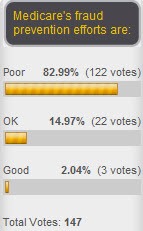
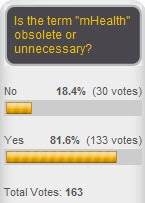
Poll respondents find Medicare’s fraud-sniffing efforts to be unimpressive. New poll to your right: what will be the biggest challenge for hospital CIOs in 2014? The length of the list suggests the challenges inherent in that job.


Upcoming Webinars (Times are Eastern) 

1-4-2014 2-32-14 PM
January 7 (Tuesday), 1:00 p.m. Clinical Analytics for Population Health Management. Sponsored by HIStalk. Presenter: Cora Sharma, principal analyst, Chilmark Research. As providers move from fee-for-service to value-based payment models, they must not only comply with ever-proliferating quality metrics, but also transition from a cost-plus business model to one of cost containment. 

January 9 (Thursday), 2:00 p.m. Beyond the Summits. Sponsored by HIStalk. Presenters: Ed Marx, SVP/CIO, Texas Health Resources, and Elizabeth Ransom, MD, FACS, EVP/clinical leader North Zone, Texas Health Resources. Everyday healthcare executives share leadership and teamwork principles they learned from climbing some of the world’s highest peaks over the last four years. 

January 16 (Thursday), 1:00 p.m. Advanced Efforts to Identify and Eliminate Waste from Healthcare. Sponsored by Health Catalyst. Presenter: David Burton, MD, executive chairman, Health Catalyst. Based on a breakthrough analyses using several large healthcare data sets as representative samples, Dr. Burton and team will present insights designed to help executives struggling to identify, quantify, and extract waste from their systems.

HIStalk-sponsored webinars are non-commercial presentations of broad interest. I appreciate our pro bono presenters, who get a sizeable audience and recognition without the frustrations involved with presenting at a conference. Contact me if you’d like to present.


1-4-2014 9-21-20 AM 1-4-2014 2-33-19 PM

Welcome to new HIStalk Gold Sponsor The Loop Company. The Williston-VT-based research advisory firm helps companies launch new offerings, enter new markets, win more business, and create customer loyalty. They design programs to help companies understand how the market perceives them and can help improve sales, marketing, product development, and operations. It’s a new venture from old HIStalk friend and industry long-timer Gino Johnson, who created the excellent CapSite healthcare IT research and advisory firm that HIMSS acquired and rolled into HIMSS Analytics in October 2012. Thanks to The Loop Company for supporting HIStalk.

HISsies nominations continue, so please submit yours now. It will only take a couple of minutes and you can skip categories you aren’t interested in.  I’m enjoying reading the early nominations for worst vendor, Lifetime Achievement Award, and the always-popular “industry figure with whom you’d most like to have a few beers.” Long-time readers may remember years ago when Jonathan Bush won that category (as he often does) and agreed to let me auction off an evening with him as a charity fundraiser.

Listening: Blue Coupe, made up of hard-rocking 1970s legends Dennis Dunaway (the shamefully underappreciated bass player and principle songwriter for Alice Cooper when it was a real band) and the Bouchard brothers Joe and Albert (key members of Blue Oyster Cult), thus the band’s name as a nod to the respective histories of its members. The band started out playing Alice Cooper covers, but earned Grammy attention for new material in 2011/2012.


Thanks to the following sponsors, new and renewing, that recently supported HIStalk, HIStalk Practice, HIStalk Connect, and HIStalk Webinars. Click a logo for more information.

1-4-2014 8-41-30 AM
1-4-2014 9-01-58 AM
1-4-2014 9-03-30 AM
1-4-2014 9-00-26 AM
1-4-2014 8-56-37 AM
1-4-2014 8-49-29 AM
1-4-2014 8-51-37 AM
1-4-2014 8-50-10 AM
1-4-2014 8-58-08 AM
1-4-2014 9-02-44 AM
1-4-2014 8-55-30 AM
1-4-2014 8-44-14 AM
1-4-2014 8-53-34 AM
1-4-2014 8-45-20 AM
1-4-2014 8-57-27 AM
1-4-2014 8-40-27 AM
1-4-2014 8-48-42 AM
1-4-2014 8-47-32 AM
1-4-2014 8-43-21 AM
1-4-2014 8-52-42 AM
1-4-2014 8-54-32 AM
1-4-2014 8-51-00 AM


In Australia, the ambulance service of New South Wales requires a government bailout after its aborted EMR and billing system project left it with $7.5 million in invoices it couldn’t send out.

North Carolina, which just passed a law requiring hospitals treating Medicaid patients to participate in the state HIE, sends out nearly 50,000 new Medicaid cards to the wrong people.

1-4-2014 10-57-35 AM

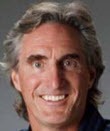
Intelligent InSites names investor and executive board chair Doug Burgum as interim president and CEO, replacing Margaret Laub, who has left the company. Burgum founded accounting software vendor Great Plains and sold to Microsoft in 2000 for $1.1 billion.

Weird News Andy likes the story that he titles “Print a Liver – 2014,” to which he adds a “Silence of the Lambs” pop reference in wondering if they can also print a nice Chianti (although I seem to remember that the book instead said “big Amarone” before Hollywood dumbed down it down for less oenophilic  moviegoers.) A California biotech firm says it will successfully use 3D printing to create a human liver (or more precisely, a working model of a human liver suitable for drug company research) by the end of this year.

“Taking from Peter to Pay Paul” is WNA’s assessment of a survey of doctors in England, in which a third of them want to charge each ED patient $16 to to discourage usage for minor complaints. The patient counterpoint would be that appointments are hard to get and practices are closed nights and weekends. We have similar challenges here, obviously: the ED is always open and free if you can’t or won’t pay, while urgent care isn’t always open and they expect money upfront.

1-4-2014 1-17-29 PM

Strange: a medical student examining a standardized patient (an actor playing the role of a patient) pretending to have an abdominal aortic aneurysm detects the actual condition, alerting the instructing physician to urge the man to see a cardiologist. He does and is found to require stent replacement surgery. According to the patient’s wife, “Jim’s life was saved by a UVA medical student, no doubt about it.”

Vince covers the $14.5 billion acquisition of HBOC by McKesson in this week’s HIS-tory. I think he’s planning to wrap up his HIS-tory series after the next couple of installments. I will miss them since I have enjoyed every one.


Contacts

Mr. H, Inga, Dr. Jayne, Dr. Gregg, Lt. Dan, Dr. Travis, Lorre

More news: HIStalk Practice, HIStalk Connect.

125x125_2nd_Circle

Time Capsule: Notice of Proposed Rulemaking: Everybody Must Watch Jay Leno at 11:35 Eastern

January 3, 2014 Time Capsule Comments Off on Time Capsule: Notice of Proposed Rulemaking: Everybody Must Watch Jay Leno at 11:35 Eastern

I wrote weekly editorials for a boutique industry newsletter for several years, anxious for both audience and income. I learned a lot about coming up with ideas for the weekly grind, trying to be simultaneously opinionated and entertaining in a few hundred words, and not sleeping much because I was working all the time. They’re fun to read as a look back at what was important then (and often still important now).

I wrote this piece in January 2010.

Notice of Proposed Rulemaking: Everybody Must Watch Jay Leno at 11:35 Eastern
By Mr. HIStalk

125x125_2nd_Circle

I’m excited about the government’s encouragement (or mandate, depending on your perspective) that doctors use electronic medical records. Mandatory progress must go on despite the gripes of a few malcontents (i.e., the majority of doctors, patients, and taxpayers).

It is a travesty that more healthcare providers don’t use computers. Software can make healthcare as transparent, efficient, and consumer-driven as other organizations that have spent billions of taxpayer dollars on technology (such as the IRS, the military, and Medicare). The federal government must intervene when minimally educated and technologically illiterate doctors refuse to adopt EMRs voluntarily in their private businesses.

(It worked for TVs. The government decided that Americans should enjoy the benefit of watching cultural programming such as “Judge Judy” and “America’s Next Top Model, in visually stunning high-definition glory. The FCC ordered broadcasters to switch exclusively to HDTV, thus stimulating the economy by selling tons of imported flat panel TVs, enriching lenders as financially strapped citizens let the balance ride on their high-interest credit cards, and increasing landfill employment to bulldoze now-useless tube models.)

In fact, I believe that this “cure all ills” administration needs to take a step further. It’s time to support the most visible employee of the biggest EMR vendor company – Jay Leno.

Jay’s audience, like that of EMRs, has been pathetic in number and more indifferent than loyal. Hype and gimmicks weren’t enough to entice viewers (even the large number of unemployed ones with nothing better to do) to sit through an hour of his cheaply produced and repetitive nightly show.

Jay is a national treasure, too important to be left to the whims of fickle TV viewers. It is therefore essential to mandate, for the economic good and the image of America worldwide, that every one of those new LCD TVs must be tuned to NBC’s “Tonight Show” every night once Jay comes back.

(NBC’s owner GE bought back Jay’s 11:35 slot with $40 million of its own cash. Admirably, it did not ask for a federal Conan bailout.)

To encourage the development of cultural refinement in appreciating Jay’s hilarity and keen interviewing skills, it will be necessary to equip cable and satellite receivers with sensors that will detect households that are not compliant at least four of five consecutive weeknights. Those tuning in will receive a rebate on their bills that non-watchers will forego. After a few years, those non-adapters will have a “Jay support surcharge” included on their bills.

Each viewer must also be a Meaningful Viewer, jotting down Jay’s bon mots for repeating later, paying attention to the commercials, and laughing with significant amplitude at Jay’s latest carefully constructed John Edwards quip (rim shot!) This, too will be monitored electronically.

Jay is an experienced late-nighter, so it would not be prudent to spent taxpayer money on untested hosts such as Conan O’Brien. Therefore, Jay alone has been certified for the 11:35 slot. All other programs, such as the Magic Jack infomercial or “Cake Boss” marathons, are not permitted even when Jay has on dull guests such as Paris Hilton or Larry the Cable Guy.

Lastly, it is imperative that Jay receive feedback about which of his jokes and sketches are working. Technology will be added to the set-top box to solicit constant feedback about the quality of Jay’s humor, which will be de-identified and aggregated quarterly for analysis by the same crack NBC executives who couldn’t make his show work before. With this information, Jay can develop monologue templates that the government will mandate for use by up-and-coming comics, thereby protecting viewers from edgy humor from fresh newcomers.

All of this government spending will actually prove profitable to taxpayers, according to bailout expert Timothy Geithner. While Jay’s show will probably never make money, it will provide an effective advertising platform for the upcoming Chevrolet Volt. What’s good for GM is good for the country, given that the country now owns 61 percent of GM.

Does Jay think this bold, essential plan will work? You bet! His new sidekick Triumph the Insult Comic Dog (merged from a previously retired product line) says you can “bank” on it (rim shot!)

News 1/3/14

January 2, 2014 News 3 Comments

Top News

1-2-2014 7-58-42 PM

President Obama announces that he will nominate Leon Rodriguez, director of the Office for Civil Rights of HHS that enforces HIPAA, for Director of Citizenship and Immigration Services in the Department of Homeland Security.


Reader Comments

1-2-2014 7-45-24 PM
Photo: Brian Snyder/Reuters

From DZA MD: “Re: Baystate Medical Center. Cerner PowerChart crippled with record inpatient census and Nor’easter in full effect. Unable to process timely discharges before brunt of storm arrives.” Unverified. As I write this Thursday evening, Massachusetts is about to get nailed by a winter storm that will bring up to 30 inches of snow in places with wind chill as low as 20 degrees below zero and even colder Friday night.

From Dirk Benedict: “Re NextGen lawsuit. Mountainview Medical Center in Montana sues NextGen, saying it didn’t install its $441,000 EHR system as promised.” The six-bed hospital contends that NextGen was to install a system “which would permit MVMC to demonstrate ‘meaningful use’ of such electronic health records through all stages of applicable federal regulations” and was to complete implementation by October 1, 2013. According to NextGen’s website, NextGen Inpatient Clinicals EHR 2.6 is 2014 Edition certified as a modular EHR, so it’s difficult to determine what the exact issue(s) might be. NextGen provided us with this statement:

We cannot comment on the pending litigation, other than to say that we firmly believe the allegations made by Mountainview Medical Center are without merit and we will defend against them vigorously. We confidently stand behind the quality and performance of our products and offerings.

1-2-2014 6-06-14 PM

From Intractable Vermonting: “Re: Vermont health insurance exchange. The cost overruns have been tremendous and the politicians responsible pass it off as ‘changing project scope costs money.’ 99 percent of all IT leaders in the US would be fired if they managed a project in this fashion. Also, security is the last thing that is built into the technology before it goes live and I am sure there were shortcuts taken with all these exchanges. The hackers know that most sites require Social Security number to register.” The Vermont Health Connect insurance exchange website is the most expensive IT project ever undertaken in the state, running up a tab of $172 million, of which the federal government contributed $48.7 million. One big contractor was the ever-present CGI, which managed to turn its $42 million contract into $84 million worth of billables while missing key deadlines that kept the site from being ready on October 1. CGI was smart: the state says the delays cost $26 million, but CGI’s contract says it can be penalized a maximum of $5 million.


HIStalk Announcements and Requests
1-2-2014 5-48-35 PM

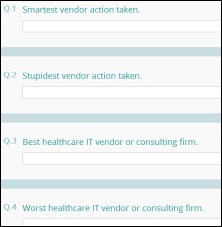
It’s time for the HISsies nominations. What’s your choice for “Stupidest Vendor Action Taken,” “Most Overused Buzzword,” “Industry Figure With Whom You’d Most Like to Have a Few Beers,” and “HIStalk Healthcare IT Industry Figure of the Year?” Enter your nominations, from which the most-nominated choices will go on the final ballot in a week or so. That means no complaining if your choice isn’t on the ballot and you didn’t nominate them.

1-2-2014 6-15-48 PM

HIStalkapalooza registration will open up the week of January 13. Read HIStalk religiously for the link to the signup notice in the next couple of weeks. We fill up really fast every year. Above is a photographic hint of the venue for those wondering. The primary sponsor has a couple of co-sponsors whose support will allow the event to be even bigger and better. If your company is interested in getting exposure as a HIStalkapalooza co-sponsor, let me know and I’ll connect you since they are willing to take on two more.

1-2-2014 6-39-01 PM 1-2-2014 6-48-11 PM

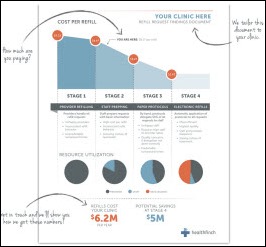
Welcome to new HIStalk Platinum Sponsor healthfinch (they tell me it’s supposed to be all lower case). The company offers RefillWizard, which improves doctor efficiency as a “Team-Based Decision Support System” that improves patient safety while reducing refill turnaround time by up to 95 percent. They begin by preparing a customized savings document like the one above and making recommendations to optimize the refill process. They have found that 62 percent of refills can be selectively and safely delegated to clinical staff, reducing the staff time to 34 seconds (some PCPs spend 1-2 hours per day just managing refills.) RefillWizard, which just won the Allscripts Open App Challenge, works either with paper protocols or integrated with the EMR. HIStalk readers probably know DrLyle (Lyle Berkowitz, MD), the company’s chairman and chief medical officer. Thanks to healthfinch for supporting HIStalk.

I found this healthfinch RefillWizard overview on Vimeo.


Upcoming Webinars (Times are Eastern) 

January 7 (Tuesday), 1:00 p.m. Clinical Analytics for Population Health Management. Sponsored by HIStalk. Presenter: Core Sharma, principal analyst, Chilmark Research. As providers move from fee-for-service to value-based payment models, they must not only comply with ever-proliferating quality metrics, but also transition from a cost-plus business model to one of cost containment. 

January 9 (Thursday), 2:00 p.m. Beyond the Summits. Sponsored by HIStalk. Presenters: Ed Marx, SVP/CIO, Texas Health Resources, and Elizabeth Ransom, MD, FACS, EVP/clinical leader North Zone, Texas Health Resources. Everyday healthcare executives share leadership and teamwork principles they learned from climbing some of the world’s highest peaks over the last four years. 

January 16 (Thursday), 1:00 p.m. Advanced Efforts to Identify and Eliminate Waste from Healthcare. Sponsored by Health Catalyst. Presenter: David Burton, MD, executive chairman, Health Catalyst. Based on a breakthrough analyses using several large healthcare data sets as representative samples, Dr. Burton and team will present insights designed to help executives struggling to identify, quantify and extract waste from their systems


Acquisitions, Funding, Business, and Stock

Healthcare Data Solutions acquires StratCenter, a provider of healthcare provider data.

1-2-2014 9-09-48 PM

Stryker Corporation will acquire surgical sponge counting technology vendor Patient Safety Technologies, Inc. for $2.20 per share. The company’s market cap is $85 million.


Sales

1-2-2014 11-52-35 AM

In the UK, King’s Mill Hospital signs a five-year, $5.9 million EHR contract with Specialist Computer Centres and McKesson.

Medical billing company Medorizon Partners selects InstaMed’s patient payment plan technology.

The Defense Logistics Agency awards TeraRecon a maximum $30 million fixed-price contract for the procurement of radiology systems and services.

Central Georgia Health System will implement Infor’s healthcare business automation applications.


People
1-2-2014 11-54-08 AM

CareTech Solutions hires Daniel Lincoln (Palace Sports & Entertainment) as corporate controller.
1-2-2014 11-55-09 AM

CMS announces the retirement of COO Michelle Snyder, who supervised development of HealthCare.gov. The agency says Snyder had originally planned to retire in 2012 but stayed on at the request of CMS chief Marilyn Tavenner.
1-2-2014 3-47-05 PM 1-2-2014 3-49-03 PM

CareView Communications, which offers patient flow and safety solutions, promotes Steven G. Johnson from president to CEO, taking over for Samuel A. Greco, who is retiring for health reasons. Careview also names Sandra K. McRee (McRree Consulting) COO and appoints Jason T. Thompson to the board, replacing his father, Tommy G. Thompson.    
1-2-2014 7-26-42 PM

Direct Consulting Associates promotes Frank Myeroff to president.


Announcements and Implementations

Baptist Memorial Health Care (TN) goes live on Epic this week at four minor medical centers and at its Baptist Medical Group clinics. Four Memphis-area hospitals are scheduled for a March 11 go-live.


Government and Politics
1-2-2014 8-13-46 PM

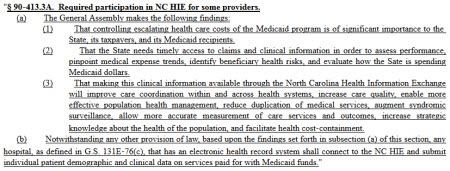
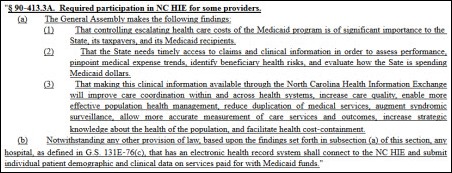
A new North Carolina law requires hospitals with EHRs to connect to the state’s HIE and submit data on services paid for with Medicaid funds.

The Department of Defense issues an RFP to keep AHLTA and CHCS running through the end of 2018 after plans for a joint DoD-VA EMR were scrapped last year when costs were estimated at $28 billion. The value of the new contract is estimated at $250 million to $1 billion. DoD is looking at a commercial replacement for contractor-developed AHLTA, whose estimated cost to taxpayers was up to $5 billion.


Innovation and Research

1-2-2014 8-06-17 PM

A study of 295 smartphone apps that claim to prevent, detect, or manage cancer finds no published studies that prove their usefulness, effectiveness, or safety.


Technology

The FDA extends the Kinsa Smart Thermometer the first-ever 510(k) clearance for a smartphone-connected thermometer.

The US Patent and Trademark Office issues CommVault Systems a patent for efficient data management improvements, such as docking limited-feature data management modules to a full-featured data management system.


Other

Riverside Health System (VA) announces that a now-terminated LPN inappropriately accessed the records of 919 patients over a four-year period.

Cerner completes the purchase of the 237-acre tract for its planned $4.3 billion office development in south Kansas City.
1-2-2014 12-09-10 PM

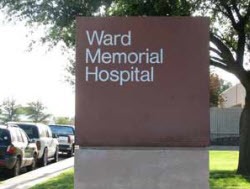
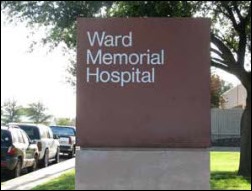
Ward County (TX) officials will give Ward Memorial Hospital an additional $200,000 to cover a budget shortfall that is partially blamed on their recent EHR implementation (Healthland Centriq, I believe.) 

A new study contradicts the Affordable Care Act assumption that putting uninsured Americans on Medicaid will reduce ED visits, instead finding that ED visits in Oregon increased by 40 percent as the newly insured sought ED for issues that could have been handled in physician offices. The primary author, an MIT economist, concludes that, “As I tell my economics students, when something is free, people use more of it.”

The Department of Justice joins the whistleblower lawsuit of two Charlotte, NC contract ED physicians who claim for-profit hospital chain Health Management Associates offered them kickbacks to order unnecessary tests and increase admissions. The doctors say HMA’s Pro-Med software was programmed to automatically order batteries of tests on ED patients based on their complaints before they were seen by a physician. They say HMA required EDs to admit 50 percent of Medicare patients whether they needed it or not, quoting a 2009 email from an HMA executive to ED managers that said, “Big declines in over 65 admissions – you know what to do!”

A Huffington Post reprinted piece by writer and medical resident Brian Secemsky, MD doesn’t have much good to say about the EMR used by the underserved clinic where he works:

After several months of receiving emails full of buzzwords such as improved care coordination and effective closed-loop med administration from the powers that be, I couldn’t help but drink the Kool-Aid and join the anticipated excitement of integrating an innovative source of technology into an over-booked and often overwhelming practice. Where my mind was brimming with images of easy-to-use tabs, high-yield keywords and a system where clinic documentation could effectively reflect patient encounters using minimal time and effort, I was instead bombarded with yet another early ’90s-style template full of odd-sized buttons and novel concepts that were the far from intuitive. The spiked punch quickly wore off the minute I first fumbled through this bulky piece of technology, and I was back to spending hours each night typing away, well after seeing the last of my patients.
1-2-2014 6-34-23 PM

Weird News Andy likes this unlikely innovation and even suggests the above graphic for advertising. A car mechanic in Argentina falls asleep after watching a YouTube video about a machine that extracts corks from wine bottles, then wakes up inspired to invent a device that uses an inflated plastic bag rather than forceps to extract babies stuck in the birth canal. Against all odds, WHO has endorsed his invention and a US device maker has licensed it.
1-2-2014 8-51-31 PM

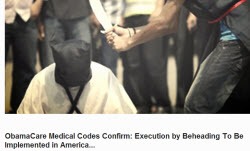
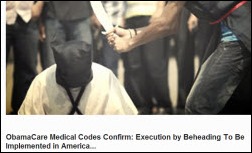
A bizarre article concludes that the government is planning to execute US citizens. It concludes that ICD-9 code E978 (legal execution) is part of a secret plan to create an “International One World Government,” claiming that, “Even more disturbing, is finding out American citizens have been subject to the ICP Medial code for many years. Thus, giving the United Nations our private information through coding.” The article proposes a solution even more dramatic than ICD-10 foot-dragging: the US should pull out of the United Nations.


Sponsor Updates

  • Sunquest releases new versions of Sunquest Laboratory and Sunquest Molecular.
  • The Boston Globe profiles Sumit Nagpa, CEO of Alere Accountable Care Solutions.
  • Jason Fortin, senior advisor for Impact Advisors, discusses the impact of Meaningful Use in 2013.
  • EDCO Health Information Solutions posts a Point of Care Scanning Process video.

EPtalk by Dr. Jayne

I received a lot of feedback about this week’s Curbside Consult. I’ll be posting more responses to the original reader email in the next Curbside Consult, but wanted to share some quick responses in the interim.

One reader asked for more detail about how we’ve tied the physician bonuses to EHR use. I can’t claim credit for the approach since we copied it from another organization, but it has worked well. It only applies to employed physicians using the group’s EHR platform. We have a couple of practices that we have acquired that are on other systems and are not yet converted, so they are exempt for now.

Physician bonus amounts are determined by three factors: patient satisfaction, clinical quality scorecard results, and productivity. A sliding scale is used for each element. For example you might receive 100 percent of your patient satisfaction and productivity bonuses but only 80 percent of your quality bonus.

The EHR plays into that in two ways. Since we’ve been fully adopted on EHR for many years, all of our quality reporting is now derived from EHR data (no more manual chart reviews). If providers are not documenting in the EHR, their scores will be low. We initially did a hybrid approach with both manual chart review and EHR reporting while physicians were adopting, but that has been phased out. Our staffing for compliance reviews has dropped significantly. They used to take three full work days per physician and now they take two to three hours per physician.

The major way that EHR applies to the bonus, however, is simple. All visits must be documented in the EHR and must meet our minimum data standards. These aren’t a lot different than the paper chart. The visit has to be complete within 24 hours of the patient visit and has to include certain critical data elements that essentially align with CMS coding requirements. For example, documentation has to have a chief complaint, history of present illness, review of systems, review of pertinent patient history, physical exam, and an assessment and plan.

We expected this to be present in the paper world and now it’s actually easier since the data is shared across the multispecialty group rather than living in separate paper charts by location. Providers can review histories with one click rather than having to dig for histories that may have been mentioned in various progress notes. Our physicians were not particularly good at keeping the paper problem list and past / family / social history face sheets up to date on paper.

For some practices that were challenging implementations, we actually had to physically visit the practice and make sure they didn’t have shadow charts. One site didn’t have charts, but had “jackets” for each patient. We didn’t just fail them outright but gave them three months to remediate, then audited them again. Over the last few years that the EHR requirements have been attached to the bonus structure, we’ve been fair about doing pre-audits so people know where they stand, then allowing enough time for them to remediate before their final audit.

The reader also asked about the “standards” that I mentioned our physicians have to meet to stay employed. Some are pretty simple – no OSHA or CLIA violations, favorable scores on coding and compliance audits, and getting along with their partners and staff. Some are more rigorous. We have high standards for clinical quality, and physicians are graded on blood pressure control, appropriate use of drugs for coronary artery disease, cholesterol control, influenza vaccination, cancer screening (colorectal, breast, prostate), diabetes management, and a couple of others. Physicians who can’t keep their scores in the desired range are remediated (as are their office staff – many of the metrics can be improved by leveraging staff and using standing orders including vaccination and screenings).

Finally, physicians are expected to be productive – specifically, to be above the 75th percentile based on MGMA data. That’s a lot to ask, but the group makes it clear when physicians join and it’s actually spelled out in the contract. Our compensation parallels this – our physicians consistently earn salaries in the top 20 percent based on MGMA data. If they choose to work less than full time, the productivity expectations are scaled accordingly. Our retention rate has been very good. Most of the providers who leave within five years of joining have a family reason. For example, they may only work with us for a year or two while they wait for their spouse to receive a residency or fellowship appointment that requires relocation.

In addition to their bonuses, our providers also received a hefty chunk of their Meaningful Use payments as a cash bonus. This differs from most organizations I’ve talked to that tend to keep the MU payments at the corporate level. I think the way we shared them is especially surprising given the fact that our providers don’t pay anything for EHR software, training, or maintenance. The only EHR-related charge that the practices incur is for hardware, which averages $8,000 – $10,000 per provider every three to four years.

Another reader asked how we handle the EHR records with a physician who chooses to leave the organization (or is let go) yet wants to keep his or her patients and office location. It’s actually pretty easy. We have a subsidized EHR offering (under the Stark exception) so we already have local private physicians on our EHR database with independent practice data. We simply copy the charts of active patients (those seen by the provider within the last three years) into a new practice in the EHR. Only clinical data is copied, no financial data and no accounts receivable.

If the provider is on staff at one of our hospitals, he or she may be eligible for a subsidy. Otherwise they pay fair market rate and we host it similar to a SaaS model offering. Although the providers can still share data with the employed practice, they have to do it through our private HIE rather than sharing a direct chart within the multispecialty practice. Providers are charged $0.50 per chart for the copy. That’s a holdover from our old contract when we had paper charts and they paid that much for the paper charts. I have no idea where that number came from — it’s been in place for at least 15 years.

If they choose not to stay on our platform, we have a third-party consultant perform an extract based on the new vendor’s specifications. It’s the same very skilled consultant we use when we acquire practices and bring the data into our system. Once the drive goes into the Pelican case and enters the physical transport protocol, though, it’s out of our hands.

I’ve seen two physicians treated poorly by their new vendors. One took several months to move the extracted data onto the new EHR. Another simply turned the data into PDFs and parked it in the new EHR’s scanning system, which is pretty sad considering the level of discrete data we can provide. Providers can also buy a system directly from our vendor and we’ll do the extract in that situation as well.

I’ve shared a lot of fairly specific information this week, so I hope it doesn’t come back at me. Stay tuned for the next Curbside Consult. I’ll be sharing my thoughts on infrastructure and interoperability as well as what happens when you try to drive a Ferrari in a corn field.


Contacts

Mr. H, Inga, Dr. Jayne, Dr. Gregg, Lt. Dan, Dr. Travis, Lorre

More news: HIStalk Practice, HIStalk Connect.

125x125_2nd_Circle

Advisory Panel: Alarm Fatigue

January 1, 2014 Advisory Panel 1 Comment

The HIStalk Advisory Panel is a group of hospital CIOs, hospital CMIOs, practicing physicians, and a few vendor executives who have volunteered to provide their thoughts on topical industry issues. I’ll seek their input every month or so on an important news developments and also ask the non-vendor members about their recent experience with vendors. E-mail me to suggest an issue for their consideration.

If you work for a hospital or practice, you are welcome to join the panel. I am grateful to the HIStalk Advisory Panel members for their help in making HIStalk better.

This question this time: Is your organization using or considering IT solutions to the challenge of alarm fatigue?

Note that while I was thinking specifically of physiologic alarms at the bedside, I didn’t state that explicitly, so some answers reflect clinical alerts in traditional IT systems. Seven responses indicated a “no” answer with no IT solutions being considered.


We struggle to balance harm prevention and user design.  We are biased toward harm prevention.


We haven’t found a good solution yet. We’re looked at things like alarms that start out low and increase in volume if not addressed, but many/most vendors haven’t embraced that idea yet. We’re looking at routing alarms to phones, but that also has challenges. If you find a good solution, let me know.


We are currently considering a few IT solutions to address this, but no decision has been made to move forward.


We are currently investigating tools to consolidate alarm management but we have not yet developed an RFP or even a vision for the future.


We are currently investigating and likely to pilot a solution to integrate nurse call bells into nursing phones to improve the alarm fatigue of the ears. In the EHR environment, we are continually analyzing the alerts that fire for their utility, appropriateness, and actionability and working to reduce those that are more "noise" than "signal".


Alarm fatigue happens when the technology was not supportive of the end user – it should not exist if each vendor really knew the topic and client being served.


We have explored alarm management systems, but I was left with the realization that the devices can alarm on anything and it’s up to each organization to determine what’s important. I am not aware of any national standards.


We learned early on to be very judicious with alarms and try and keep them to a minimum. As we’ve merged in some additional physician groups, the governance of managing alerts will get increasingly interesting however. I’d be curious what type of IT helps with alarm fatigue (i.e. do they make alarms more sensitive/specific somehow?)


I wish !!! Turning off the drug duplicate alerts would be like manna from heaven as they are invariably uninformative and annoying. For example, renewing a drug always gives a duplicate alert even though the system obviously knows that if you click "Renew" it will automatically stop the current order and start the new one. But the current order is still active when the system compares the new order to the med list. Ergo, duplicate alerts gone wild. One of my other favorite alerts tells me that the patient is taking two non-phenothiazine antipsychotics.  If I was really concerned about duplication, I would want to know if they were taking two antipsychotics period. Whether it’s a non-phenothiazine makes no difference whatsoever.


Primarily focused on refining medication alert rules to reduce unnecessary noise.


I assume you are talking about actual alarms, vents and IVs and tube feeding pumps and such, not EMR alerts. Since noise levels can exceed OSHA standards 80 percent of the time in an ICU, we are keenly interested in the twin problems of noise from alerts and the false positive / false negative rates of the alerts. We do not have a good answer, but I would be happy to buy one that worked.


We’re still trying to reliably deliver secondary alerting. Alarm fatigue getting some notice, but no definite intervention as of yet.


Yes, considering FDB AlertSpace to achieve what should be included in their product in the first place (we’re on Epic/FDB).


Readers Write: Ten Steps for Surviving ARRA and ACA Requirements in 2014

January 1, 2014 Readers Write 1 Comment

Ten Steps for Surviving ARRA and ACA Requirements in 2014
By Dick Taylor, MD

1-1-2014 11-25-38 AM

The 2009 American Recovery and Reinvestment Act (ARRA) changed the healthcare IT landscape for providers by offering money in exchange for the adoption and implementation of electronic medical records. One year later, the Affordable Care Act (ACA) upped the ante with new regulations for privacy, accountable care, and insurance coverage. The combination of the two acts has left most providers and provider organizations struggling to see the forest through the trees as we enter 2014, and the deadlines for both acts draw ever closer.

Controversial from the start, the Affordable Care Act (ACA) was landmark legislation three years ago. It remains front and center after being tested by the Supreme Court, a presidential re-election, and most recently, a government shutdown. Like the ARRA, much of it is yet to be written, requiring tens of thousands of pages of regulations to explain the details. Like the ARRA, it is deeply flawed in places and will require many years of refinement.

The ACA tries to supercharge the required transition from a reactive, episodic care based payment system to one that might reward preventive care, wellness, and patient outcomes. Providers generally see the promise, but they almost universally question the ability of the law to achieve its outcomes, particularly in light of modern medicine’s rapidly changing cost factors.

Healthcare is getting more expensive, and the healthcare IT transition mandated by the ARRA has not yet reached the break-even point for expense control for many (if not most) provider organizations. Demand is down in many segments, particularly for inpatient and elective procedures, and margins are under heavy pressure.

To make matters worse, regulatory oversight is rising and is highly unpredictable. As an example, on September 1, 2012, CMS finalized a rule that gave eligible providers until July 1, 2014 to begin attestation for Meaningful Use. Up to that point, providers generally believed that they had 15 months longer. In contrast, the ICD-10 implementation date was arbitrarily delayed a full year in August 2012 from October 1, 2013 to October 1, 2014. Regulatory changes of this nature are difficult to predict and require both flexibility and preparation from providers.

As we enter 2014, the final sprint toward ARRA and ACA’s deadlines, surviving this environment will require providers to focus on achieving the following goals over the course of the coming year.

  1. Reduce expenses, both per-patient and fixed overhead. Admittedly, this is easier said than done.
  2. Where practical, grow larger through acquisition or affiliation. This spreads fixed overhead over a larger patient volume and allows much more efficient team-based and whole-patient care. Growth must however, be calculated and managed to capture these savings. Rapidly growing organizations must be especially watchful to avoid operational and cultural traps.
  3. Achieve Meaningful Use and avoid ARRA Medicare penalties. Providers who have missed Meaningful Use to date are now looking at reduced awards and penalties (amounting to small but significant percentages of CMS billing) beginning in just over a year.
  4. Achieve ICD-10 compliance on time (by 10/1/14) without destroying the organization. While ICD-10 is critical (not billing with ICD-10 is simply not survivable for most providers), this has become the Y2K for healthcare. Caution, particularly around involving physicians and mid-level providers in the minutiae of coding, is strongly advised.
  5. Pursue transparency for quality outcomes and cost. Payors, employers, and patients are all watching these very carefully, and organizations who are not forthcoming will become less favored over time.
  6. Pursue transformation in long-term healthcare, including population health, chronic disease management, and wellness. Fee-for-service is likely to become far less sustainable as a primary business model over time.
  7. Reduce clinical variation, both by pursuing good evidence (where available) and by achieving agreement on leading practices among providers. Much of the variability in clinical care is not associated with improved outcomes and some of it is actively harmful, both in cost and patient outcomes.
  8. Recognize and honor the risk you own. Health systems have always owned the risk for charity and self-pay patients. The ones who recognize and accept this are much more likely to provide good care and keep costs under control.
  9. Look for whole-patient (“accountable”) care opportunities within your own orbit. While the ACA set out the framework for Accountable Care Organizations, the reality is that these are still embryonic. Organizations that begin at home will be ready for risk-sharing moving forward.
  10. Treat your IT expenditures as long-term investments, not expenses. Organizations should expect to spend an increasing percentage of capital dollars building technology assets. Acquire standards-based IT assets that will stand the test of time. Expect, plan, and capture the hard- and soft-dollar returns from them. Organizations that view IT simply as an expense will forego future profits in the pursuit of short-term efficiency.

Dick Taylor is managing director and chief medical officer of MedSys Group of Plano, TX.

Readers Write: 2014 Resolutions

January 1, 2014 Readers Write Comments Off on Readers Write: 2014 Resolutions

2014 Resolutions
By Vince Ciotti

I’m getting ready to wrap up the HIS-tory series with the final episodes on McKesson, so it’s apropos to take a break and look at the future a bit with these 2014 New Year’s resolutions for today’s leading HIS vendors (in order of their 2012 annual revenue).

McKesson

They’re doing so well with Paragon that they made a resolution to rename their other legacy systems:

  • Horizon = Parazon
  • Series = Seriegon
  • Star = Staragon
  • Practice Partner = Practice Partagon
  • RelayHealth = ParlayHealth
  • Homecare = Homecaragon
  • InterQual Online = InterQual Paragonline
  • Capacity Planner = Capacity Paranagon
  • Performance Analytics = Performagonalytics
  • Patient Folder = Patient-Paper-Folder-Gone
  • (you get the idea…)

On another front, McKesson announced plans to open Paragon’s first international office in either Aragon or Patagonia, depending on negotiations with their governments about minor changes to the spelling of their names.

Cerner

Will make an epic move of their HQ from Kansas City to Salt Lake City and re-name Millennium HNA as Millennium IHCNA.

Siemens

After cutting 15,000 jobs worldwide over the past two years, Siemens will announce several openings in its HR recruiting department for 2014.

Allscripts

Will join Cerner, McKesson, athenahealth, Greenway, and RelayHealth in the CommonWell Health Alliance to promote EHR interoperability in 2014 in 49 states (excluding Wisconsin).

Epic

Will be recognized as the KLAS act in 2014 by becoming the only HIMSS Stage 8 vendor in Gartner’s Magic Quadrant.

GE

Will announce a program in 2014 whereby any hospital buying Centricity will receive a free refrigerator for every nurse station.

Meditech

Will announce the 2014 version of Release 6.0, which will be called Focus, er, MAT, I mean, 6.0.1, that is 6.1, or maybe 6.0.A…

NextGen

Will announce the 2014 re-packaging of Opus, Sphere, and IntraNexus as “ThisGen.”

CPSI

Will sets the goal of having 500 of their clients attest for MU by the end of 2014, a total of over 1,000 beds.

Harris

A subsidiary of Constellation Software Inc. (from Canada) announces a project for 2014 of using the other Harris (from Melbourne, FL) CareFX interoperability workflow solutions to differentiate their company names.

NTT Data

ヴィンスがこれらの不快な言語の策略を用いるのを止めてください。

HMS

After being re-named Medhost, company executives will announce a joint effort with the AHA to launch a campaign in 2014 that re-defines all US hospitals as ancillary departments of their emergency rooms. 

Healthland

Will resolve to combine its two corporate offices in Minnesota (Glenwood and Minneapolis) once the roads are plowed in August 2014.

Vince Ciotti is a principal with H.I.S. Professionals LLC.

Curbside Consult with Dr. Jayne 12/30/13

December 30, 2013 Dr. Jayne 10 Comments

One of my favorite readers shared last week’s EP Talk with one of her struggling physicians. He made a lot of good points and they’re similar to those expressed by many physicians out there, so I thought I’d take a stab at responding to some of them. If you work directly with physicians and end users, they should resonate.

Dr. Jayne makes using the EHR seem like a piece of cake. I would like to see how it is working in her organization.

Actually, lots of people have seen how it works for us. We’re a reference site for several vendors (ambulatory, hospital, hardware) so we have sales prospects come on site to see how our physicians work with the system. We’ve also served as a reference site for existing clients who want a “do over” after failed implementations.

Our model has worked well for us and has been cloned by other clients and even by some who didn’t end up buying from our vendor. Keep in mind, though, that we’re seven years into our EHR journey, but I’d say most of the major kinks were worked out in the first 18 months while we were implementing. Key things that have made us successful compared to our peers:

  • Heavy use of piloting for everything we do, whether it was the initial rollout, adding a module, adopting PCMH workflow, etc. You name it, we pilot it first. Would-be pilots have to apply – it’s not a political giveaway and they have to understand what piloting means. It’s not a cakewalk. We use them to break the product and re-engineer the workflows to make it better before mass rollout. Sometimes it’s not pretty. Sometimes they never ask to pilot again, and that’s OK. It’s supposed to be shared learning.
  • We heavily incent our physicians to do the desired workflows and gather specific discrete data. We initially hoped for compliance through altruism or desire for quality, but what made the difference was cash. It’s remarkable what tying an annual bonus to EHR use can do to a physician’s attitude. We phased the requirements in over three years for legacy physicians, but new hires are expected to be immediately compliant.
  • Strong governance. We’re not afraid to terminate disruptive physicians or to encourage those who can’t meet our standards to leave the organization. Our non-compete is written so that providers can purchase their practices and keep their panels and stay in the same location as long as they don’t go to work for a corporate competitor. This lets those who are not a good fit depart without losing their livelihood. This is rare, but it’s one element of our success.

The quality of EHR progress notes is much worse than it was on paper. You get consults back with 5-6 pages of fluff but lacking the important information. This is only because the truly useful medical data is limited by the data entry speed.

I agree. Some of the notes that I receive are unmitigated garbage. Documentation quality is part of our peer review process as well as our coding review process. We’ve heavily modified the “stock” vendor notes for formatting, font, layout, and overall readability. Chart notes are in the APSO format with Assessment and Plan first rather than traditional SOAP format where the important information is at the bottom. We permit providers to dictate assessment and plan so that it’s readable and data entry speed is not a concern.

We assume wrongly that the doctors can be taught fast typing. The young doctors who learned at a young age will be proficient. And voice recognition sucks at this time, even for physicians without accent.

From experience, I disagree. Many of our more seasoned physicians are proficient with touch typing and with the EHR in general. One of them often reminds me how well he does with his favorite statement: “Young lady, I have been waiting for an electronic medical record since before you were born. I’d go up against any of you young pups with it.” He’s not kidding, either. For those who can’t type, they’re allowed to dictate through voice recognition.

Incidentally our voice recognition also does navigation and complex macros within the EHR templates. It’s truly amazing. I wasn’t specific about this in the EPtalk piece last week. A couple of readers reached out to me about similar systems in their organization and I agree they’re extremely valuable and very helpful for physicians who are challenged by EHR.

The training phase for voice recognition can’t be short cut. Our vendor has worked one-on-one with physicians who are having difficulty. We didn’t struggle so much with accents as we did with what I’ll call “surgical mumblers” who are used to hospital-based transcriptionists who slow down the dictation to listen at molasses speed so they can make out the words. When they complained about the system, I went and shadowed them. Frankly, I couldn’t tell what they were saying, so I wasn’t surprised that the system had problems with it.

Patients aren’t happy that we don’t give them undivided attention during the visit. Some physicians can multitask but others can’t, but the impression on patients is the same.

Again from experience (and also from data), I disagree. We actually surveyed the patients (during pilot phase of rollout) about EHR use by the staff and used it to reshape workflow during the rollout. Before they’re ready to go live, physicians have one-to-one coaching sessions and mock patient visits where they are critiqued on how they use the EHR. I’ve personally taken a Sawzall to office cabinetry when maintenance was taking too long and the exam room layout was a barrier.

If physicians still struggle, we’ll bring them to our residency program practice (which has cameras in the exam rooms) and work with them both in person and with mock patients. It’s not cheap and I don’t know any other organization that does this to the degree that we do, but it has saved a couple of physicians from leaving when they truly wanted to be successful.

Those physicians who did multitask before (such as performing physical exam while talking to the patient) do well on EHR. Those who didn’t multitask before don’t do so well with it. No surprises there.

What we do, though, is help those who don’t multitask by identifying what tasks must absolutely be done in the room (meds, allergies, orders, and patient plan is our policy) and the rest they can do immediately after the patient visit. We don’t force everyone into a cookie cutter workflow. We also include questions about EHR and the visit on our patient satisfaction surveys. Those results factor into physician bonus payments as well.

Looking at patient satisfaction scores before and after EHR, we noted no substantial differences on a per-provider basis. Those who struggled with patient satisfaction continued to do so after EHR, and some worsened. Those who were doing OK continued to do well. A fair number even improved, although most patients indicated patient portal and decreased wait times due to better scheduling as causative reasons rather than bedside manner.

Our product doesn’t work properly in Windows 7, only Windows XP, which is an issue. A good EHR should be multi-platform, should work on Apple computers, Linux, and other operating systems as well.

I absolutely agree with you here. Many vendors have struggled with this issue. I ran across one the other day whose product only runs on Google Chrome. I actually like Chrome, but it’s not exactly the most widely used, and is especially problematic considering that the limitation also applies to their patient portal. Chrome isn’t as popular among the Social Security set who seem wedded to Internet Explorer. I think they’re going to regret that narrow niche and I do wonder what exactly is going on with the programming that it won’t even run correctly on Firefox.

For client-server apps, the popularity of Citrix has helped systems feel more agnostic to end users, although Citrix itself can be a complicating factor in support and maintenance.

There were quite a few more comments, but I’m going to save them for the next EPtalk. What do you think about these issues? Leave a comment or email me.

Print

Email Dr. Jayne.

Advisory Panel: Telehealth Projects

December 30, 2013 Advisory Panel Comments Off on Advisory Panel: Telehealth Projects

The HIStalk Advisory Panel is a group of hospital CIOs, hospital CMIOs, practicing physicians, and a few vendor executives who have volunteered to provide their thoughts on topical industry issues. I’ll seek their input every month or so on an important news developments and also ask the non-vendor members about their recent experience with vendors. E-mail me to suggest an issue for their consideration.

If you work for a hospital or practice, you are welcome to join the panel. I am grateful to the HIStalk Advisory Panel members for their help in making HIStalk better.

This question this time: Is your organization running or planning telehealth projects?


Assuming the term telehealth includes scope of technologies included in the HRSA definition, we run remote ICU monitoring across our WAN. In addition, we continue to expand the use of mobile clinics that roam around our geography. These clinics include videoconferencing between clinic providers, patients, and remote specialists. We are planning additional work with a national telehealth provider.


No, my organization is still struggling to implement CPOE, keep the beds full, reduce readmissions, etc., etc., and we have not got that far yet.


This shows up in our annual strategic plan every year and it’s there this year too. But I haven’t been able to generate much interest among my medical staff, even the members who travel hundreds of miles for outreach clinics. We run a telemedicine epilepsy clinic and we have the usual teleconferences, but that’s about it. So I’ve retained some consultants to explore options like e-visits, home monitoring, and video visits using webcams with the med staff.


We have a few telehealth services we consume for a couple of specialties. For example, we have a small pediatric hospital and will perform remote echoes with specialists at a leading children’s facility for special patient cases. We do not have any plans to provide any additional telehealth services within our organization or service areas at this time.  


Multiple coordinated efforts related to telehealth as we are approaching from a number of perspectives. More traditional eICU, using remote monitoring of multiple ICUs from a centralized location where critical care physicians and other clinicians are monitoring beds across multiple hospitals. Tele-psych consults in our emergency departments. Developing newer capabilities for virtual ambulatory visits, more acute or urgent care conditions where audio/video is effective in connecting a patient and a provider. Our EMR is really helping with efficiency in this service area and also with tele-psych and ICU areas. The key being that tele-X software, hardware can help best facilitate the patient encounter but it’s important to realize our EMR is needed for order entry, documentation, communication with the local hospital pharmacy, etc.


We currently have a monitoring station set up in our ICU for pediatrics so that our patients can be “seen” by a specialist at a large teaching hospital in the state.  We are currently proposing to provide healthcare services to our local detention centers. If accepted, we’ll go the telehealth route.


ANGELS – Antenatal & Neonatal Guidelines, Education, and Learning System – consists of 23 hospitals and clinics who receive clinical services from us, as well as 18 hospitals who participate in a tele-nursery with us as the hub. Neonatal mortality rates for Medicaid declined from 4.5 per thousand to 3.3 per thousand. ANGEL EYE – one-way video from NICU to authorized family members. AR SAVES – Stroke Assistance Through Virtual Emergency Support – consists of emergency support for 42 hospitals across the state. Increase delivery of TPA from <1 percent to 29 percent in participating hospitals. Other telemedicine services – psychiatry, pediatrics, geriatrics, rehab medicine, cardiology, internal medicine, burn, trauma, genetic counseling.


We’re doing projects with telehealth, telepsych, home health monitoring, remote hospitalist consulting, and have others we’re thinking about. While telemedicine has been around for decades now, it seems to be really heating up lately.


[from a vendor member] We are working with several organizations who are planning telehealth projects. However, it is like NLP at this point – all talk, no action.


We are on the receiving end in that we use a telehealth service (neurology consults) in our ED. It works well, although the service and support has proved problematic. The cart contains all the video components, but when there was a problem, they had no local service techs. This left it to our staff to troubleshoot – if we were a smaller very rural hospital we may not have had the expertise to troubleshoot their equipment on our end. Overall the service has been a benefit to the hospital in that we have a shortage of these specialists to take call.


We actually do a lot of telemedicine, both inside our health system and with external partners and that program is continually expanding. Our main service lines at this point are Neuro, Pediatrics, and Psychiatry. The primary locations served tend to be emergency departments in order to deliver otherwise unavailable specialty care to patients.


Yes, for various disease states and ethnically diverse populations.


A year and a half ago, we agreed to work with a vendor on a case study to determine if telehealth would positively impact outcomes. Telehealth was new to them and they struggled to develop a website for data collection and patient interaction. For the research study we needed IRB approval and a contract with us. Once the attorneys got involved, everything came to screeching halt. A year later, we have a contract and pending IRB approval. Perhaps in the near future we can begin the study with our diabetes and CHF patients.


We have long offered telehealth via phone and web visits for mild, acute problems (e.g. URI, UTI), and we charge a separate fee for those. We are also now looking at using telehealth technology to do remote care at corporate clients.


Vague talk only about telepsychiatry to local ERs and jails.


Telehealth in use for burn, stroke, and psych consults. All working very well with different technology solutions including iPad and a mobile robot looking device.


To meet requirements for Level 1 nursery, we have neonatology sub-specialists on tap, credentialed and available. This is a great solution to consultations that would otherwise require transfers. It is another question entirely whether early transfers are in the baby’s best interest; it may be that telehealth consultations get an actual consultation in the odd hours, where if the baby were in the actual institution providing the consultants, there would be more of the "I’ll see them in the morning" mentality. Of course, in that setting, the consultant is probably more comfortable with the nursing and ancillary staff, so it may be about the same outcome. Still, it feels good to have an actual clinician to clinician discussion about a specific case.


We’re doing a lot of tele-stroke work. A real smart stroke neurologist with an interest in the technology. He’s serving other organizations and when not on site, he starts care using his tablet and the stroke robot in the ED supported by a stroke nurse-practitioner or neurosurgery PA.


Virtual visits are part of our future plans, none running yet.


We are rolling out telemedicine to support our network of six rural health clinics. This will be essentially to push the access to our specialists. Rollout is over next three months.


Radiology uses NightHawk services from the other side of the globe for night preliminary reads, but that’s it.


Monday Morning Update 12/30/13

December 29, 2013 News 6 Comments

12-29-2013 9-01-12 AM

From Informatics Doc: “Re: PCORI. Announces who they will fund to build clinical data research networks and patient-powered research networks, which has a fairly ambitious national goal. MU-compliant EHRs will be a key component to several networks.” The Patient-Centered Outcomes Research Institute, a non-profit created as part of PPACA/Obamacare,  approves $93.5 million to fund 29 clinical research data networks that will form PCORnet, a national network that will study clinical outcomes. Of the 29 participating organizations, 11 are hospitals, plans, and health networks that will provide real-time patient encounter information, while the other 18 are patient-operated, condition-focused groups. Quite a bit of technology is involved, including interoperability and data collection from EHRs such as Cerner and Epic, data standardization, patient-facing applications, and population health management tools. Harvard Pilgrim Health Care Institute won a $9 million contract in September to run the program, naming as directors Richard Platt, MD, MS from Harvard Medical School along with Robert Califf, MD from Duke University Medical Center. I think it’s a great idea, although the politics and special interests involved in translational research make it hard to predict whether it will be successful in turning new medical data into health-improving and cost-saving principles. 

12-29-2013 2-11-27 PM

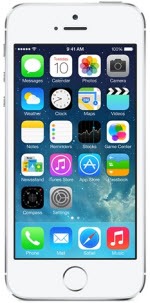
From The PACS Designer: “Re: iPhone 5S. With the gifting completed for the holiday, TPD thought it would be useful to post instructions for the HIStalkers who may have received the iPhone 5S. Since it can be daunting getting started with the 5S,  providing detailed instructions will get you going sooner.”
12-29-2013 7-20-01 AM

Barely more than half of poll respondents think Karen DeSalvo was a good choice to be Farzad’s replacement as National Coordinator, although none of those who voted added a comment to explain their position. The suck-up organizations (which is pretty much all of them) can’t say enough good things about her even though most of their flattery is either superficial or irrelevant, so to you naysayers, what don’t you like about her? Leave a comment on this post if you like. New poll to your right: how would you grade Medicare’s fraud prevention efforts?

12-29-2013 8-16-29 AM

The Associated Press Oregon names Cover Oregon’s botched insurance exchange website as the state’s top news story for 2013, summarizing:

Once considered a national health care leader, Oregon produced the worst rollout in the nation of the new national health insurance program. While the crippled federal website eventually got up and walked, Oregon’s remained comatose, unable to enroll a single person online. The state had to resort to hiring 400 people to process paper applications. Officials lay much of the blame on the primary information technology contractor, Oracle Corp., and withheld some $20 million in payments. But state officials’ own actions played a role, too. In the face of disaster, they insisted on doing things The Oregon Way, clinging to a grandiose vision of creating a grand health IT system that would not only enroll new people in the national health insurance program, but also provide other vital services. In the midst of the finger-pointing, executive director Rocky King went on indefinite medical leave, and chief information officer Carolyn Lawson resigned.

12-29-2013 10-31-27 AM 

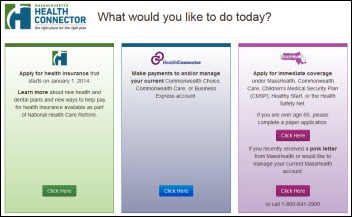
Massachusetts, whose healthcare programs inspired Obamacare, has paid $11 million of a $69 million contract for creating its health insurance exchange website, which has enrolled only 2,800 people due to technical problems. The state says the system, built by Healthcare.gov lead contractor CGI, is slow, displays random error messages, and times out. It requires applicants to submit their information online, then wait for a mailed letter before signing up for insurance. Both Massachusetts and Vermont have halted payments to CGI for their insurance exchange sites, saying the company isn’t meeting its obligations.

12-29-2013 9-30-52 AM

Canada-based CGI, whose Healthcare.gov contract is worth around $300 million of that site’s $700 million cost so far, has a market cap of $10.6 billion. It’s one-year share price chart is above, with GIB in blue and the Dow in red. Vanity Fair’s profile of CGI is unflattering, citing previous unhappy customers and creative acquisition-related accounting practices (the company is made up of 70 acquired entities.) Industry long-timers will remember its 2004 acquisition of American Management Systems (AMS), from which quite a few hospitals bought medical records scanning and workflow applications. Including my hospital at the time, which earned AMS/CGI strong consideration for my “worst vendor” list. The article summarizes:

The story of how the Obama administration and the Centers for Medicare and Medicaid Services (CMS), the agencies tasked with implementing the Affordable Care Act got it so wrong is still unfolding. Much of the blame has to fall on an insular White House that didn’t want to hear about problems, and another chunk has to land on CMS, which instead of hiring a systems integrator, whose job it would have been to ensure that all the processes feeding into healthcare.gov worked together, kept that role for itself. As anyone who has worked with the federal government on such projects knows, it is utterly inept when it comes to technology.

Palomar Health’s Glassomics incubator for Google Glass releases a demo video of potential medical applications, including real-time integration with patient monitors and the EHR.

12-29-2013 2-13-01 PM

Hawaii Governor Neil Abercrombie releases $21.7 million in state capital funds for healthcare projects, of which Hawaii Health will receive $14.3 million for EHR-related projects.

Venture Beat predicts the hot tech buzzwords for 2014: “growth hacker” (data-driven marketing people); “nth screen” (sharing across devices); “design thinking” (human-focused innovation); “ephemeral sharing” (Snapchat-like shared data that disappears); and “hyperdata” (cooler than the now-unhip term “big data,” but meaning about the same thing).

In England, NHS and Department of Health create The Walk, an exercise app that combines a pedometer with a mystery story that unfolds as more steps are accumulated toward 500 miles of walking. It was developed by the creators of Zombies, Run!, which similarly combines a mystery story with running.

Hope Phones collects unwanted cell phones, allowing individuals and companies to outfit global health workers with the erased and furbished devices. Donation couldn’t be simpler: just print a postage-paid label from their site and put your phone in the mail. It’s part of Medic Mobile, a San Franciso-based public charity that uses mobile technology to improve health.

A Hero’s Welcome to Health IT, a government-funded program, will introduce military veterans to careers in health IT at the HIMSS conference. It offers mentoring and entry-level certification.

12-29-2013 2-46-21 PM

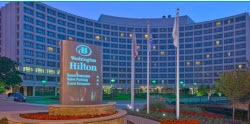
ONC’s annual meeting will be held January 23-24 at the Washington Hilton in DC, with 1,200 attendees expected.  It will probably be the first public appearance of new National Coordinator Karen DeSalvo, MD, who will start at ONC on January 13. 

The txt4health mobile personalized messaging program for diabetes management launched by three ONC-designated Beacon Communities reached a good many participants in Michigan, Ohio, and Louisiana, but more than half of them dropped out of the 14-week program, many of them apparently just ignored the messages, and only 3 percent of active participants tracked their weight. The article generously concludes that “this type of approach may not be appropriate for all.”

12-29-2013 1-55-14 PM

The board chair of a children’s hospital in Greece is arrested for demanding a $34,000 bribe from an advertising company that had been awarded a $262,000 contract to develop an anti-obesity campaign for children. He was also fired from his full-time position with the National Bank of Greece. The bribe was paid by an informant wearing a wire, which recorded the man’s stated rationale: “What kind of an idiot would I be to have made a 190,000-euro deal and not kept a cent for myself?”

12-29-2013 2-02-55 PM

Strange: parents of a newborn sue a Pittsburgh rabbi, claiming he severed their son’s penis while circumsizing him. Surgeons reattached it during an eight-hour microsurgery that involved six blood transfusions, two months in the hospital, and leech therapy. According to the rabbi’s website, “A doctor’s medical circumcision, usually performed in the hospital on the second or third day after birth, does not fulfill the requirements of a Bris Milah and is not considered valid according to Jewish law.”


Sponsor Updates

12-29-2013 9-09-57 AM

The annual holiday fundraiser held by Surgical Information Systems raised $15,000 from employees to support Cookies for Kids Cancer, Donor’s Choose, Toys for Tots, USO Wishbook, and The Weekes House.

12-29-2013 9-13-09 AM

Employees of ESD donated toys for Lucas County Family Services, which supports abused and neglected children.

The Lab Executive War College and CHUG (Centricity Healthcare User Group) donate hundreds of extra conference backpacks annually to Coffee Creek Backpacks project, run by Frog Pond Church in Wilsonville OR, which provides women newly released from the local correctional institute with essentials to help them return to society.


Contacts

Mr. H, Dr. Jayne, Dr. Gregg, Lt. Dan, Dr. Travis, Lorre.

More news: HIStalk Practice, HIStalk Connect.

125x125_2nd_Circle

News 12/27/13

December 26, 2013 News 11 Comments

Top News

12-26-2013 7-01-06 AM

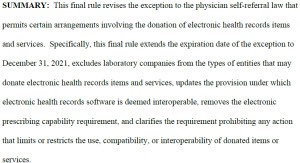
CMS adopts final rules that extend the Stark exception sunset date from December 31, 2013 to December 31, 2021. The amendment allows healthcare entities to continue subsidizing physician purchases of EHRs and includes additional rule modifications, including:

  • The exclusion of lab companies from donating EHR items and services
  • The elimination of the e-prescribing capability requirement
  • Updates to the interoperable provision
  • Clarification of the requirement prohibiting any action that limits or restricts the use, compatibility, or interoperability of donated items or services.

HIStalk Announcements and Requests

inga thumb   Mr. H whisked away Mrs. H for a little holiday this week, but he should be back this weekend. We’re about to be in the midst of the pre-HIMSS fury so I am glad he took time for R&R with Mrs. H before the craziness begins.

inga thumb  News was slow on HIStalk Practice this week but you’ll want to check out the letter Dr. Gregg sent to Digital Santa before St. Nick jumped on his sled.  Thanks for reading.


Acquisitions, Funding, Business, and Stock

The HIMSS Foundation and the National eHealth Collaborative merge their organizations and announce plans to create the HIMSS Center for Patient- and Family-Centered Care and to integrate NeHC’s educational and HIE programs with existing HIMSS resources.

PM and RCM service provider Medical Transcription Billing files a registration statement for a proposed IPO.

12-26-2013 12-51-39 PM

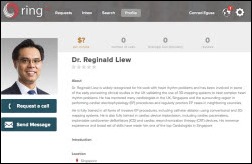
The Singapore government invests $500,000 in Ring.MD, a telehealth startup focused on improving access to high-quality physicians in Asia. The company was founded by Justin Fulcher, a 21-year-old entrepreneur who has been coding since he was seven and started his first business as a preteen.


Sales

12-26-2013 2-40-26 PM

Big Bend Hospice (FL) selects Allscripts Homecare software.

12-26-2013 2-42-49 PM

CareTech Solutions will provide consulting services to Medicine Bow Technologies (WY), which is developing a disaster recovery plan for services impacting Invinson for Memorial Hospital.


People

12-26-2013 2-46-03 PM

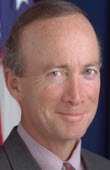
Cerner names former Indiana governor/current Purdue University president Mitch Daniels to its board of directors.

12-26-2013 12-42-09 PM

Family Health West (CO) hires Pam Foyster (Quality Health Network) as clinical informatics director.


Announcements and Implementations

Jamaica’s minister of health says his country will being implementation of an $50 million EMR system for hospitals and primary care clinics during the first quarter of 2014.

12-26-2013 2-47-16 PM

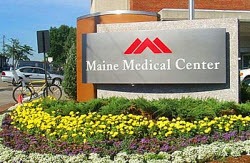
Maine Medical Center will increase its Epic EMR investment from $145 million to $200 million and dedicate about two-thirds of the funds for additional employee training. Health system officials admit they originally underestimated the resources required for training and may have made a mistake by starting the implementation at its 6,000-employee Maine Medical Center, rather than a smaller pilot facility. Earlier this year the hospital’s CEO said the Epic rollout and incorrect billing issues contributed to a $13.4 million loss in the first half of its 2013 fiscal year.

12-26-2013 2-48-59 PM

Weems Memorial Hospital (FL) goes live on its $450,000 EMR from CSS.

Sagacious Consultants launches Sagacious Analytics to help hospitals improve reporting and make better use of EMR data for performance measurement.

Vermont Information Technology Leaders makes radiology and transcribed reports from Fletcher Allen Health Care available to providers via the state’s Medicity-powered HIE.


Government and Politics

CMS announces the formation of 123 new accountable care organizations, bringing the total number of established ACOs to more than 360.


Innovation and Research

A new influenza forecasting method developed by Columbia University’s Mailman School of Public Health is proving almost twice as reliable as traditional approaches that rely on historical data. The system combines real-time estimates from Google Flu trends and CDC surveillance programs.


Technology

12-26-2013 2-55-33 PM

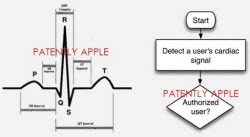
Apple secures a patent for an embedded heart rate monitor for smartphones.


Other

A USA Today article looks at how the adoption of HIT and preventative care are improving healthcare and lowering costs. David Blumenthal, MD highlights areas requiring more work, including moving from fee-for-service payment models to risk-sharing or team-pay systems; improving care coordination through the use of IT; educating consumers on how to choose better care based on quality and lower costs; and, increasing the use of standards to lower administrative costs.

Mount Sinai Hospital (NY) reports a 40 percent decline in its sepsis mortality rate since implementing an early warning system within its EMR. The system triggers an alert whenever staff enter vital signs that match the criteria for early sepsis.

12-26-2013 10-25-15 AM

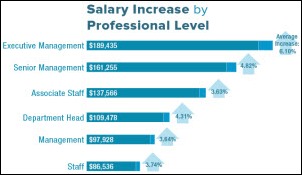
Over two-thirds of HIT professionals participating in a HIMSS compensation survey report receiving a salary increase in 2013; the average reported salary was $110,269.  Almost half of the 1,126 survey participants also received bonuses with the median bonus equal to three to four percent of annual salaries.


Sponsor Updates

  • NextGen posts its January webinar schedule.
  • Optum opens an on-demand health and wellness clinic in  Overland Park, KS.
  • Imprivata hosts its second user conference HealthCon 2014 May 4-6 in Boston.
  • Forbes profiles Ping Identity founder and CEO Andre Durand.
  • As the industry shifts to P4P and ACOs, API Healthcare VP of nursing Karlene Kerfoot predicts a shift in healthcare jobs from hospitals to home care agencies, outpatient surgery centers, and urgent care clinics.
  • Info-Tech Research Group names Informatica a Champion in its Data Integration Tools Vendor Landscape.
  • EDCO posts a video highlighting its point of care scanning process for clinical staff.

EP by Dr. Jayne

It’s a very slow week here since a good portion of our department took vacation days around the Christmas holiday. I’ve enjoyed the relative quiet and am glad to see that people are staying off of email. CMS shared some holiday cheer by emailing providers to remind them that if they didn’t e-prescribe in 2012 or 2013 they will receive their penalty in 2014. I don’t know why they insist on calling it a “payment adjustment” rather than a penalty. Penalties related to Meaningful Use will begin on January 1, 2015 so if you’re going to avoid them you need a solid strategy now.

I’m keeping my eye out for exciting opportunities in the New Year and was interested to see a couple of CMIO postings pop up at organizations that haven’t had a CMIO previously. Although it may be exciting to be the first CMIO and to be able to define the role, I don’t envy anyone taking a job at an organization that is just now figuring out they need one. A couple of the job descriptions were nebulous to the point where I’m wondering if the hospital even understands what they are looking for.

Medical Economics recently did a piece on the survival of the doctor-patient relationship. Physicians cite administrative burdens as the highest threat (41.9 percent) followed by EHR at 25.8 percent. I’m glad the article makes the point that some of the tasks could be assigned to other office staff members. I still struggle with physicians who insist on doing work that could be done by support staff including printing lab requisitions, tracking down test results, processing refill requests, and dealing with insurance paperwork.

The article addresses the EHR challenge more specifically – citing anecdotal stories of physicians who spend 10 minutes of a 15 minute appointment typing. I’m continually surprised by the number of my peers who refuse to learn to type. If you’re going to use free-text rather than structured documentation, typing skills are essential. I remind our physicians that if they mastered biochemistry and tying surgical knots they can learn to touch type but they still resist. I’ve even tried a games-based approach to try to harness their competitive natures, but haven’t had a lot of success.

Another physician states he spends “eight to 10 minutes per chart entering information not directly related to patient care, mainly tied to quality metrics.” Based on conversations with some of our providers I’d have to challenge that statement. We have a large employed provider base and it’s always a shock when someone thinks that a particular clinical quality element is “not my problem” especially in the ACO environment. We’re fortunate to have an EHR where the quality metrics are baked into the documentation – there’s not a lot of extra work to do. I know many sites don’t have this advantage but for us there’s no excuse.

I recently went a couple of rounds with a surgeon who said the patient’s morbid obesity was “not my problem.” I countered that if he plans to do any procedures on her, it certainly is his problem because of the risk of complications directly related to the obesity, not to mention the need to find out if there is diabetes related to the obesity because that alone can complicate wound healing. The same thing applies to our orthopedic surgeons who don’t want to check blood pressures. Fortunately our organization has made measurement of vital signs part of the required elements for physicians to receive bonus payments, so it makes it easier for me to push back at them.

I know there are a lot of EHRs out there where the documentation isn’t so simple and having used a couple of them I’d encourage physicians to look for alternate strategies to make it easier. I did a stint as a locum tenens where the physicians dictate using voice recognition and then staff post-loads the discrete data elements that the system doesn’t recognize. It worked well and the physicians had a high level of satisfaction. Essentially the extra two patients a day they could see by using voice recognition allowed them to pay for the extra staff needed to load the data. It was revenue neutral but the physicians felt better not clicking as much as they used to.

I think the key to managing quality indicators is having a plan on when they are going to be addressed. I see a lot of physicians struggling to try to address every indicator at every visit and it’s just not necessary. My EHR allows me to filter and only see those items that are due in the next three months, six months, etc. so that helps somewhat. Our group also has policies about when the indicators are to be addressed. For example, patients in for an annual preventive visit should have all preventive services due during the next 18 months addressed. This covers them for the next year and a little bit extra should their return appointment be delayed.

The article also cites the amount of time needed to have a conversation with the patient about screening services as a barrier. We provide extensive training to our medical assistants (no nurses in our world) on how to address preventive services with patients during the intake and rooming process so that the patient knows it will be a topic of discussion. The staff can provide educational materials for the patient to read before the physician enters the room, which can make some of those conversations easier and faster. Additionally, providers are not expected to address all preventive services on acute visits. We rely on our automated outreach mechanisms to catch those patients who don’t come in for preventive visits or who have lapses in care. This has been a major physician satisfier because the acute visits remain fairly quick and they don’t have to spend time worrying about patients falling through the cracks.

Having policies on when to address what kinds of services doesn’t have anything to do with the EHR – we actually had these policies in place in the paper world – but they’ve made a great deal of difference. We also provide training for support staff on completing pre-authorizations and pre-certifications so that work can be handed off even in a small office that doesn’t have dedicated referral staff. Looking at the operational workflow and staff training has helped physician satisfaction and hopefully will be one of the things bolstering the patient-physician relationship in our organization. Does your organization have any secret recipes for success? Email me.


Contacts

Mr. H, Dr. Jayne, Dr. Gregg, Lt. Dan, Dr. Travis, Lorre

More news: HIStalk Practice, HIStalk Connect.

smoking doc

Readers Write: ‘Twas the Night Before ICD-10

December 24, 2013 Readers Write 1 Comment

‘Twas the Night Before ICD-10
By Luke O’Cyte

‘Twas the night before ICD-10, when all through the payer
Not a claims engine was stirring, not even a benefits layer;
The mappings were hung in the systems with care,
In hopes that St. Remediolas soon would be there.

The coders were nestled all snug in their beds,
While visions of F30.2’s danced in their heads;
And the CTO in her ‘kerchief, and I in my cap,
Had just settled down for a long winter’s nap,
When out in the data warehouse there arose such a clatter,
I sprang from the bed to see what was the matter.

Away to the office I flew like a fiend,
Tore open the laptop and threw up the screen.
The moon on the breast of the new-fallen snow
Gave the lustre of mid-day to my screensaver though,
When, what to my wondering H54.2’s should touch base,
But a miniature claim, and eight tiny 278s,

With a little old coder, so lively and fast,
I knew in a moment it must be St. Remediolas.
More rapid than eagles his W55.39XA’s they came,
And he whistled, and shouted, and called them by name;

“Now, Procedure! Now, Diag! Now, Surgical and Provider!
On, Vendor! On Member! On, EPM and Auditor!
To the top of the pend list! to the top of the queue!
Now adjudicate! adjudicate! adjudicate do!”

As invalid claims that before the wild eligibility fly,
When they meet with a benefit rule, mount to the sky,
So up to the mainframe the W55.39XA’s they flew,
With the sleigh full of ICD-10 codes, and St. Remediolas too.

And then, in a twinkling, I heard on the servers
The prancing and pawing of each little W55.32XS.
As I threw down my mouse, and was turning around,
Down the office hall St. Remediolas came with a bound.
He was dressed all in fur, from his S00.93 to his T69.02,
And his clothes were tarnished with rejects and errors too;
A bundle of claims he had flung on his back,
And he looked like a payer just opening his pack.

His eyes — how they twinkled! his dimples how merry!
His cheeks were like 284.81, his nose like a cherry!
His droll little mouth was drawn up like a bow,
And the beard of his chin was as white as the snow;
The stump of a pipe he held tight in his teeth,
And the E869.4 it encircled his head like a T59.81;
He had a broad face and a little round belly,
That shook, when he laughed like a bowlful of jelly.
He was 278.00 and E66.3, a right jolly old elf,
And I laughed when I saw him, in spite of myself;
A wink of his eye and a W50.2 of his head,
Soon gave me to know I had nothing to dread;

He spoke not a word, but went straight to remediation,
And ICD-10 coded all claims; then turned with attention,
And laying his finger aside of his nose,
And giving a nod, up the elevator he rose;
He sprang to his claims, to his team gave a 271,
And away they all flew like a mainframe batch run.
But I heard him exclaim, ere he migrated from sight,

“Happy Remediation to all, and to all a good-night.”

….with apologies to Clement Clarke Moore

Curbside Consult with Dr. Jayne 12/24/13

December 23, 2013 Dr. Jayne 1 Comment

12-23-2013 8-53-02 AM

I’ve seen this graphic about the interpretation of scientific jargon multiple times. It seems to turn up on Facebook or in an email every now and then. I read a fair amount of scientific literature and thinking of the alternate meanings always makes me smile. You could use it to play a kind of Mad Libs substitution game to liven up whatever article you’re reading.

As a medical informaticist (Now improved! With Board Certification!) I read the literature with a pretty critical eye. That probably goes back to my medical school training when I learned the importance of understanding whether the patient population in a clinical study was similar to the patient in front of me before deciding whether to use its data to alter my treatment plan. I’ve also read far too many studies that lack statistical validity or pursue therapies that although clearly proven are just irrelevant in real-world medicine. I’ve spent most of my medical career in the community rather than in the academic space and know that they can be vastly different environments.

As part of my preparation for taking the American Board of Preventive Medicine Clinical Informatics certification exam, I attended the AMIA Clinical Informatics Board Review Course. Although it was great to actually sit down and discuss informatics with others in the field, it was a little surreal at times. I’m used to working in a bit of a vacuum – most of the time I’m the only clinical informatics professional in any given meeting – so being surrounded by scores of my peers was a bit overwhelming. The fact that several people in the room were the authors of the texts I had been reading to prepare added to the intellectual climate.

By listening to some of the questions asked during the class, one could tell that some of the attendees were significantly more academic than others. I ended up spending most of the breaks off to the side with several attendees who were more community/clinical-based like I am. After the course, AMIA launched a listserv for attendees and being a silent participant has been entertaining. Watching highly-intelligent physicians interact over minute details of one thing or another can either be educational or mind-numbing depending on the topic and the people involved. Since we’re in a fairly new field, the group is very good about bouncing ideas off one another and one recent series of posts revolved around the idea of the environmental scan.

In a nutshell, an environmental scan is a review of the political, environmental, social/cultural, and technical factors around a business, industry, or market. Organizations benefit from doing an environmental scan periodically to understand the factors influencing their business and the challenges they may face now and in the future. One member was looking for evidence demonstrating a clear return on the efforts of doing such a systematic review. Her employer wanted it proven before they agreed to conduct one. Respondents quickly piped up with examples of business practices that may not be evidence-based but are good ideas, such as paying bills on time (which is pretty funny in and of itself) but one response had me laughing so hard I had to physically get up and walk around after reading it.

This particular scholarly work was published in the British Medical Journal and is titled “Parachute use to prevent death and major trauma related to gravitational challenge: systematic review of randomized controlled trials.” Although it’s subscription-only, the abstract is available. The authors set out on a systematic review of randomized controlled trials “to determine whether parachutes are effective in preventing major trauma related to gravitational challenge.” Essentially they did searches of Medline, Embase, the Cochrane Library, and other sources to try to find literature proving parachute use is a good idea. Not surprisingly, they could not find any randomized controlled trials of “parachute intervention.” The conclusions are what pushed me over the edge (somehow the more formal-appearing British spellings make it even more humorous):

As with many interventions intended to prevent ill health, the effectiveness of parachutes has not been subjected to rigorous evaluation by using randomised controlled trials. Advocates of evidence based medicine have criticised the adoption of interventions evaluated by using only observational data. We think that everyone might benefit if the most radical protagonists of evidence based medicine organised and participated in a double blind, randomised, placebo controlled, crossover trial of the parachute.

It just goes to show that even those among us who are most academic can still have a sense of humor. It also reminds me (along with the original “show me the money” question about the environmental scan) that there are a lot of administrators and other people out there who still don’t understand what we do or what we can bring to the table as part of this new discipline. I’ve got a couple of people in mind that I’d like to enroll for that parachute trial. Perhaps you know a few candidates?  Email me.

drjayne

Email Dr. Jayne.

Monday Morning Update 12/23/13

December 20, 2013 News Comments Off on Monday Morning Update 12/23/13

12-20-2013 2-24-22 PM

From Kris Crinkle: “Re: Epic. The bells rang for a new contract signing. Southcoast Health System (MA). Replacing Meditech Magic, eClinicalWorks, athenahealth, and Cerner homecare. I’m an avid reader and love the format, especially Dr. Jayne.”

From JG: “Re: musical stocking stuffers, best of 2013. The Growlers, Dean Wareham, The Men. Thank you for everything you do!” I listened to all three bands and liked all three.

12-20-2013 1-23-27 PM

From The PACS Designer: “Re: all-digital solutions. A truly remarkable event took place at this year’s RSNA. Philips Healthcare introduced the world’s first all-digital diagnostic treatment solution in the form of a CT/PET Scanner. This event should be of great interest to Doctor Dalai as he’s been contemplating the purchase of such a system for quite some time.”

12-20-2013 10-09-07 AM

The vast majority of poll respondents think it’s time to retire the word “mHealth.” New poll to your right: is Karen DeSalvo a good choice for National Coordinator? Feel free to click the poll’s Comments after you’ve voted to explain why you think she is or isn’t.
12-20-2013 10-24-43 AM
Welcome to new HIStalk Platinum Sponsor DataMotion. The Morristown, NJ-based company offers easy-to-use solutions for email encryption, secure file transfer, and Direct-based secure messaging, allowing customers to cut costs and meet compliance and Meaningful Use requirements. DataMotion Direct makes secure messaging via Direct easy to implement and use, and the DataMotion Direct Developers Program provides vendors a quick, capital-free way to implement Direct messaging in their applications (EHRs, HIE, patient portal, interface engine) and to meet MU Stage 2 secure data exchange requirements. Give SecureMail a free trial, request access to their Sandbox,  or view the recorded Webinar, “HIPAA, Business Associate Agreements, and What You Need to Know.” Thanks to DataMotion for supporting HIStalk.
Here’s a DataMotion introductory video I found on YouTube.Here’s the complete list (not just AMIA members like the list I ran earlier) of the new diplomates in the Clinical Informatics subspecialty area.
 
Athenahealth will move its Bay Area office from a 20,000 square foot space in San Mateo to a 60,000 square-foot building in San Francisco.
 
Archbold Memorial Hospital (GA), San Francisco General Hospital and Trauma Center (CA), Virginia Hospital Center, and Western Connecticut Health Network select Perioperative Management from Surgical Information Systems.
 
An internal Marine memo reveals current inefficiencies in the transfer of medical records from the Navy to the VA. Currently the Navy prints service treatment records and mails them to the VA. At the same time the VA is in the process of scanning all paper files, which are saved electronically as PDFs. Depending on a the service member’s length of service and documented medical conditions, a single record can run thousand of pages.
 
Pharmacy benefit manager Prime Therapeutics contracts with CoverMyMeds.com for electronic prior authorization services.
 

A ProPublica investigation uses the federal government’s own Medicare databases to find evidence of rampant Medicare drug plan fraud, with organized groups either stealing the identity of doctors or bribing them to write prescriptions. Medicare’s process is so poorly managed that they rarely catch anyone. Example: Medicare paid $3.8 million in one year to fill the prescriptions of a psychiatrist, most of them for drugs unrelated to his specialty, when someone stole his identity. Pharmacies and insurers say they’re reporting suspicious behavior to Medicare but are being ignored. The series of articles concludes that newspaper reporters can easily detect fraud from Medicare’s databases, but the agency itself isn’t doing it.

Fraud rings use an ever-evolving variety of schemes to plunder the program. In one of the most popular, elderly, broke, disgraced or foreign-trained doctors are recruited for jobs at small clinics. Their provider IDs are used to write thousands of Medicare prescriptions for patients whose identities also may have been bought or stolen. Once dispensed, the drugs are then resold, sometimes with new labels, to pharmacies or drug wholesalers. In other schemes, investigators say, pharmacies are active participants, billing Medicare multiple times for prescriptions they never fill. Doctors can readily disavow the prescriptions as forged, investigators say. And because the schemes don’t always involve painkillers, a law enforcement focus, they can escape notice.


Weird News Andy delivers this story, which he titles “Yes C-Section, No C-Baby.” Doctors in Brazil perform an emergency C-section delivery after failing to hear the baby’s heartbeat, only to find that their patient wasn’t pregnant. The woman showed up with proof of her prenatal care and a protruding abdomen, but she was having a false pregnancy, her second of the year. The hospital suggested she seek mental care instead.


Contacts

Mr. H, Inga, Dr. Jayne, Dr. Gregg, Lt. Dan, Dr. Travis, Lorre

More news: HIStalk Practice, HIStalk Connect.

125x125_2nd_Circle

News 12/20/13

December 19, 2013 News 7 Comments

Top News

HHS names Karen DeSalvo, MD, MPH, MsC National Coordinator for Health Information Technology. DeSalvo, health commissioner for the City of New Orleans, will start on January 13, succeeding Farzad Mostashari, MD, MsC. According to an internal email from HHS Secretary Kathleen Sebelius, “Throughout her career, Dr. DeSalvo has advocated increasing the use of health information technology (HIT) to improve access to care, the quality of care, and overall population health outcomes –including efforts post-Katrina to redesign of the health system with HIT as a foundational element.”


Reader Comments

12-19-2013 5-44-16 PM

From MC Scanner: “Re: Apple commercial. The video for ‘Misunderstood’ that will air on TV next week brought tears to my eyes. It’s amazingly powerful – even better than their ‘1984’ ad.” Maybe I’m just being a Scrooge, but it seemed to me like a lame, Microsoft-style attempt to make people believe that their lives are incomplete unless they experience it using consumer technology. This commercial features a kid who chooses not to participate in family holiday activities with everybody else, instead messing around with his phone and recording everything for the big reveal when he shows the edited video to the family on the big screen TV. The message appears apt for the self-obsessed Facebookers of the world who can’t turn their smartphones off long enough to participate in the world instead of documenting it in Kodak moments for public display. I was creeped out when the family stopped doing everything warm and loving about the holidays and instead stared at themselves on TV, suddenly overcome with affection for the kid who couldn’t relate to them otherwise (probably because he never stops staring into his phone). Here’s my alternative, non-Apple approved holiday message: put down your electronic pacifiers, spend time with people you love, forget the always-beckoning fantasy world of your phone for just one day, and live like a human instead of an online avatar.

From Unnamed: “Re: [company name removed]. Laying off US employees right before Christmas, moving jobs to India, cutting budgets by 25 percent, and disregarding outstanding financial commitments. Sounds like a HISsies ‘Stupidest Vendor Move’ category.” We had some financial problems with that company, too.

From Jack: “Re: Orion Health’s list of best healthcare reporters and blogs. I saw this and figured either your actual name was on here (gasp) or whomever wrote this doesn’t actually read HIStalk. But how in the world do you get left out of that list?” HIStalk gets left off quite a few of the “best HIT sites” lists for several reasons: (a) it competes with the interests of whoever created the list; (b) it’s based on an Internet metric like Alexa or Klout scores; (c) they can’t figure out whether to consider HIStalk a blog or something else; or (d) they think other sites are better, which is perfectly fine and maybe they’re right. I never look at those lists and I often haven’t heard of the sites they proclaim as the busiest or best, but all I know is that Orion Health sponsors HIStalk, which seems to indicate they think it’s OK even though it’s not on their “Five Healthcare IT Reporters You Need to Follow” or “Health IT Thought Leaders” list.


HIStalk Announcements and Requests

inga_small From HIStalk Practice in the last week: a few moonlighting suggestions for physicians. CMS offers informal reviews for EPs and group practices who will be subject to the 2014 eRx payment adjustment. CMS confirms that providers who assign their reimbursement and billing to a CAH under Method II are now eligible to participate in the MU program as EPs. A solo physician does a commendable job addressing a data breach. Salaried GPs in the UK face declines in compensation. My favorite gift, regardless of the holiday, is having new readers, so please take a moment and stop by. Thanks for reading.

Listening: The Honorary Title, a Brooklyn-based indie rock band that flamed out in 2009 without a lot of success. I’ve been obsessed with Nada Surf lately and they sound a good bit like them.

12-19-2013 6-15-33 PM 12-19-2013 6-21-15 PM

Welcome to new HIStalk Gold Sponsor (and HIStalk Connect Platinum Sponsor) CareSync. The Florida-based company offers a family health record and the mobile-based Visit Manager that provides access to a family’s medical records, organizes questions for providers, and stores to-do lists and notes, all to get family members organized before, during, and after their medical appointments. Information can be selectively shared with providers and family and friends who are helping with health needs. It allows tracking of health goals, prescriptions, emergency contacts, and providers. The company’s team of medical records specialists will even help assemble and organize the health information. It is reasonably priced and could make a nice Christmas gift for a family member. You probably know some of the industry long-timers who are involved – Travis Bond (Bond Technologies) and Amy Gleason, RN (Allscripts), to name two. Thanks to CareSync for supporting HIStalk.

I found this CareSync video on YouTube that explains it much better than I just did.


Sales

Mercy Health Physicians (OH) will implement PatientPoint’s patient engagement solutions.

Queen Elizabeth Hospital King’s Lynn (UK) selects iMDsoft’s MetaVision for its ICU.

Children’s Medical Center (TX) engages PCCI to build predictive analytical models to identify children at-risk for asthma crises and to develop an information exchange between pediatric and social services providers.


People

12-19-2013 12-42-34 PM

ClearDATA names Scott Whyte (Dignity Health) SVP for growth and innovation.

12-19-2013 8-39-01 AM

Ryan Donovan (Visa) joins Practice Fusion as VP of corporate communications.

12-19-2013 8-45-05 AM

CareInSync hires Cheryl Cruver (The Advisory Board Company) as SVP of provider solutions.

12-19-2013 9-13-32 PM

Rainu Kaushal, MD, who holds a number of roles including informatics at Weill Cornell Medical College and New York-Presbyterian Hospital, is named chair of the college’s Department of Healthcare Policy and Research.


Announcements and Implementations

Arch Health Partners, a medical foundation affiliated with Palomar Health (CA), deploys Phytel’s population health management platform.

Kansas HIE and the Lewis and Clark Information Exchange connect their networks.

University of Colorado Health migrates 17,000 mailboxes from three disparate healthcare organizations on multiple legacy email platforms into one single consolidated Microsoft Office 365 environment. The consolidation is expected to save the organization $13.9 million over 11 years.

Landesklinikum Amstetten (Austria), AZ Sint Lucas (Belgium), Hospital La Pitie-Salpetriere and Centre Hospitalier Regional De Metz-Thionville (France), and Medway Maritime Hospital (UK) go live with the iMDsoft MetaVision platform.

Wesley Medical Center, Cypress Surgery Center, and Surgery Center of Kansas go live on Anesthesia Touch from Plexus Information Systems.

Lehigh Valley Health Network (PA) implements Salar’s TeamNotes, which sits on top of GE Centricity EMR to facilitate ICD-10 compliant documentation.


Government and Politics

A report by the Senate Commerce Committee highlights minimally regulated data brokers that buy and sell patient data, including disease-specific patient lists and in one case, lists of rape and domestic violence victims.

The VA’s ongoing cybersecurity problems are the subject of a Federal News Radio series, which points out the material weaknesses listed in its financial statements. Among them: failing to revoke network access of terminated employees, failing to keep unauthorized software off the network, and improperly securing Web-based applications. An unnamed government official says the VA CIO’s office has developed a siege mentality against Congressional inquiries, concluding,

“I find it disingenuous in how they are responding to this and the degree of contempt they have in how they are approaching this. They feel it’s a witch hunt. There is a marked lack of respect for the committee by the IT leadership. How they are managing the process is indicative of the lack of respect for Congress and particularly the Veterans Affairs Committee. They think it’s a game so they will evade, obfuscate and they will basically come back with just the bare minimum so as not to be out of compliance.”

12-19-2013 10-20-31 PM

The Oregon government official in charge of the state’s trouble-prone health insurance exchange website resigns. The state had bragged that its marketplace would be one of the most advanced when it opened October 1, but it still can’t handle electronic applications and required hiring 400 workers to process paper forms. Carolyn Lawson, CIO of the Oregon Health Authority and Department of Human Services, stepped down Thursday for “personal reasons.”

12-19-2013 9-29-02 PM 12-19-2013 9-30-58 PM

Representatives Doris Matsui (D-CA) and Bill Johnson (R-OH) introduce the Telehealth Modernization Act of 2013, which would create a federal definition of telehealth based on an earlier California definition with the hopes of standardizing inconsistent state-level policies. It addresses patient-provider relationships, informed care,  provider documentation, sending documentation to other providers, and prescribing requirements.


Technology

Scripps Health launches a pilot of the Sotera Wireless ViSi Mobile vital signs wrist monitor, which measures ECG, heart rate, pulse,  oxygenation, and temperature.

MMRGlobal is awarded another patent, this time for just about everything a person can do to access health information on a mobile device.


Other

The healthcare industry is making slow progress on preparing for ICD-10, according to a WEDI readiness survey. About 20 percent of vendors claim they are halfway or less complete with product development, while about half of providers have yet not completed an impact assessment. Meanwhile, about one-third of health plans have not initiated internal testing; two-thirds have not started external testing.

12-19-2013 5-12-32 PM

The Orlando newspaper profiles Automated Clinical Guidelines, which offers some kind of clinical pathway guidance product whose company-provided description is obfuscated by a writhing nest of unintelligible HIT-related cliches that marketing people dream about when you naively ask what a particular product does and 20 minutes you still have no idea:

ACG has developed an innovative healthcare ecosystem that is patient-centered, operates in real-time, is language-independent, and serves up evidence-based medicine for application on a worldwide basis. The ACG expert system represents a breakthrough in processing structured clinical information utilizing automated clinical guidelines. ACG software is a patented, smart, internet-based, and platform independent solution to the medical crisis in a demographically aging world faced with a severe shortage of physicians. ACG is NOT an EMR or an EHR product and in fact operates in a product space that is totally EMR/EHR independent. ACG revenue streams come from annual renewable institutional contracts, physician patient visits on a per click basis, and by medical products advertising. The ACG ecosystem is an elegant design that requires little or no training and guides the user by use of Symbolic and Boolean logic clinically correlated algorithms, as opposed to current attempts to use database centered templates and report writers.

12-19-2013 5-36-03 PM

The Houston newspaper writes up Decisio, which formats information from patient monitors into an electronic triage system. Says CEO Bryan Haardt, who was COO of Prognosis Health Information Systems until June 2013, “Today’s thermostats have more intelligence than most medical monitors.”

12-19-2013 7-36-34 PM

Cottage Health System (CA) discloses that the information of 32,500 patients was exposed when a vendor inadvertently opened up one of its servers to the Internet. As is nearly always the case, the problem was discovered by someone who found the information while Googling names. Surely there must be a monitoring service that can ping a supposedly secure server from outside the firewall and raise an alert if it gets in.

AMIA runs a list of its members who passed the first clinical informatics subspecialist exam in October.

12-19-2013 10-38-05 AM

inga_small A 66-year-old man files a lawsuit against Advocate Condell Medical Center (IL), claiming that hospital security guards threatened him, beat him, and bit him as he attempted to discharge himself from the ER. The main waited six hours for treatment of his TIA before trying to depart for another hospital, at which time he says seven security guards verbally and physically attacked him. Following the altercation, he claims he was injected with narcotics, strapped to a gurney, and kept in the hospital for six days.

12-19-2013 6-08-37 PM

Weird News Andy offers a list of items “for all the HIStalk techies in your life” from this article, cynically saying of an anesthesiologist robot, “What could go wrong?”

WNA will be sorry he didn’t see this first. A Chicago ED doc says he deals with sex-related accidents twice per week, enough to make him the star of a stupid new reality show (was that redundant?) called “Sex Sent Me to the ER.” Some of the cases he’ll cover involve people who fell on penetrating foreign objects (right), broken penises, and a 440-pound male virgin so focused on his first sexual experience that he pushed his girlfriend’s head through a wall. It looks stupid, sensationalistic, and poorly made, which of course means it will be an instant hit.


Sponsor Updates

12-19-2013 5-18-19 PM

  • Visage Imaging lists the top five trends it observed about enterprise imaging at RSNA 2013.
  • QPID releases some funny, holiday-themed training videos for its customers (1, 2, 3).
  • The MarketsandMarkets research firm ranks Perceptive Software’s Acuo VNA platform the world market share leader among all independent and PACS-affiliated VNA solution providers.
  • ICSA Labs awards CliniComp’s Essentris v213.01 software 2014 Edition Inpatient Modular EHR ONC Health IT Certification.
  • Deloitte includes Kareo on its Technology Fast 500 list of fastest growing technology, media, telecommunications, life sciences, and clean technology companies in North America based on its 797 percent growth over the last five years.
  • Gartner positions Informatica as a leader in its 2013 Magic Quadrant for Data Masking Technology report.
  • University College London (UCL) and Elsevier will establish the UCL Big Data Institute to explore innovative ways to serve the needs of researchers by providing analytical data for scientific content.
  • The Drummond Group certifies Alere Analytics Clinical Quality Measures Services version 2.1 and Public Health Electronic Laboratory Reporting and Communication Portal version 3.2 for ONC-ACB MU as Modular Inpatient and Modular Ambulatory solutions respectively.
  • T-System offers free T-Sheets flu documentation templates to hospitals and healthcare providers.
  • Greenway Medical Technologies wins the 2013 Intel Innovation Award for its PrimeMOBILE app for Windows 8.
  • Besler Consulting releases a review of the Hospital Outpatient Prospective Payment System 2014 final rule.
  • Experian integrates its identity proofing and risk-based authentication platform Precise ID for health care portals with Epic’s MyChart patient portal.
  • Impact Advisors principal Laura Kreofsky discusses HIT in 2014.
  • E-MDs Cloud Solutions v. Cirrus achieves ONC-ACB certification for MU Stage 1 and 2 and is compliant as a Complete EHR 2014.
  • Huntzinger Staffing Solutions expands its offerings to include Cerner staffing and sourcing services.
  • Carolyn Brzezicki, senior clinical specialist for Healthwise, challenges readers to behave as if they have Type 2 diabetes for one day.
  • Billian’s HealthDATA hosts a January 16 #HITchicks Tweet Chat.
  • HIStalk sponsors winning Fierce Innovation Awards include Health Catalyst for Best Problem Solver and Data Analytics; Patientco for RCM; QPID for Best Cost-Saver and Clinical Information Management; and CoverMyMeds in the HIE category and an overall award in Best in Show: Best New Product/Service.
  • Australia’s Adelaide Research and Innovation names Wolters Kluwer Health an Innovation Champion based on its ongoing partnership with Joanna Briggs Institute to bring evidence-based practice resources to healthcare institutions globally.

EPtalk by Dr. Jayne

I keep my eye on Twitter for interesting health IT items. A mention of “24 Outstanding Statistics on How Social Media has Impacted Health Care” caught my eye, mostly because of the use of the number 24. Usually articles will feature a top 10, top 20, maybe a top 25 but I thought going with 24 was an interesting choice. The statistics are drawn from some interesting sources from advertising and media firms to Mashable.

The first two numbers weren’t surprising: 40 percent of consumers say social media impacts how they deal with their health, 18-24 year olds are more likely than 45-54 year olds to use social media, and so on. The third did surprise me: 90 percent of those 18-24 said they’d trust medical information shared by others on their social media networks. This little tidbit doesn’t give me a lot of hope for humanity since my “official” practice persona is Facebook friends with a number of our patients in that age bracket. Let’s just say that most of the posts from that demographic are not exactly systematic literature reviews.

I wonder if they also buy into links for “one simple way to lose belly fat” or “avoid this one food to lose weight?” Behind the closed door of the exam room, I’ve heard a lot of things that 18-24 year olds say about health issues and can confidently attest that most of them have been bogus. Typically those conversations have been in the realm of reproductive health, which probably adds to the mystery of some of their statements, but I’m not sure I’d trust most of the advice these teens have been given by their peers.

Back when the Internet was all we had, I used to counsel patients that the Internet is like the world’s largest bathroom wall. There are a lot of things written on it and some of them are certainly true, but it’s hard to figure out which. The number and volume of sites, apps, and sources available now makes keeping track of the truth even more challenging.

Only 31 percent of healthcare organizations have written guidelines for social media, which I think is low, especially if the respondents were organizations of any size. A good friend of mine is a plaintiff’s attorney and regularly licks his chops at the prospect of litigating cases where medical advice was inappropriately given via social media or where patient-specific information was inadvertently released. Another statistic later in the piece states that 26 percent of hospitals participate in social media, so perhaps the relatively low rate of those online makes the guidelines percentage look a little better.

I liked the statistic that 54 percent of patients are “very comfortable” with their providers using online communities to aid in treatment. It’s validating for me personally since I was once yelled at by a hospital VP after being quoted in a newspaper interview about using the Internet to search for information while seeing patients. He told me it was “unseemly” to admit that you didn’t know everything the patient needed you to know and would undermine confidence. I’ve always found patients appreciated the fact that I admit I don’t know everything and am willing to make sure I have the correct approach before I apply it to their situation.

Although 41 percent of people claim social media would impact their choice of a physician or hospital, I’d like to see the numbers if we asked which was more influential: social media or insurance coverage. I’m pretty sure reimbursement trumps reputation and quality much more often than most of us would like. Among resources used to health information, Wikipedia was at 31 percent. Since I personally use Wikipedia to validate information fairly often, that felt low to me.

I was heartened to learn that 60 percent of people trust physicians’ social media posts over any other group. In real-life clinical practice, it felt like I was often competing against Aunt Betsy or the neighbor up the street, so six out of 10 isn’t bad. Given this number in light of the statistic about the 18-24 year olds being so trusting of items seen on social media, I should probably start posting “safe sex” advice on my professional Facebook page. I’m sure my grandmother would be scandalized, but I can say I’m doing it in the name of science.

The final statistic mentioned is that Facebook is the most popular for hospitals that have an online presence. I must admit, my professional self no longer follows my hospital’s Facebook presence because I simply couldn’t take it any more. Rather than being a good source of health information and patient advocacy, it had become little more than a marketing vehicle. If I read one more congratulatory back-pat for earning some bogus “Top Whatever Hospital Center of Excellence Patient Choice Satisfaction” award, I was going to need anti-nausea medication.

What would Mark Twain think of the information age and its lies, damned lies, and statistics? Email me.


Contacts

Mr. H, Inga, Dr. Jayne, Dr. Gregg, Lt. Dan, Dr. Travis, Lorre

More news: HIStalk Practice, HIStalk Connect.

125x125_2nd_Circle

DeSalvo Named National Coordinator

December 19, 2013 News 1 Comment

12-19-2013 1-12-47 PM

Karen DeSalvo, MD, MPH, MsC has been named by HHS as National Coordinator for Health Information Technology. DeSalvo, health commissioner for the City of New Orleans, will start on January 13.

According to an internal email from HHS Secretary Kathleen Sebelius, “Throughout her career, Dr. DeSalvo has advocated increasing the use of health information technology (HIT) to improve access to care, the quality of care, and overall population health outcomes –including efforts post-Katrina to redesign of the health system with HIT as a foundational element. ”

CIO Unplugged 12/18/13

December 18, 2013 Ed Marx 7 Comments
The views and opinions expressed in this blog are mine personally and are not necessarily representative of current or former employers.

Leadership and Identity—I Look Better than You! (Part 2 of 4)

Part 2 was slated to just go to commentators of Part 1. But given the collective interest from the original post gathered via comments, LinkedIn, email, Facebook, and Twitter, I decided to expand into a public, four-part series. Here it goes….

You might argue with where the identity journey has taken me, but the fact is, all of us have been a counterfeit to one degree or another.

Does how you see me agree with reality? Do I even know who I am? Really?

Janis Ian nailed me with At Seventeen. Thank goodness I had a supportive family and a slight awareness of the love of our scandalous Creator, because when I first moved to the US as a pre-teen, I dressed unusually. Kids made fun of my German attire. As I came of age, acne invaded my complexion, giving classmates another reason to pick on me. I never got the girls I crushed on. I was ostracized and spinning downward in self-hatred.

Rather than surrendering to a super low self-esteem funk that could jail me for life, I fought for validation and identity via sports. Continual reinforcement from adults and peers convinced me that success on the playing field signified acceptance and popularity. Where a lack of clear-skinned attractiveness stole my self confidence, I made up for it through tennis and soccer. Sheer determination compensated for skill deficiencies.

12-18-2013 10-46-18 AM

My idolized letterman jacket became like pure gold and epitomized my counterfeit identity.

Sports accolades helped establish an achievement-based identity. Extreme achievements gave me a sugar-like high that would in time fuel my adult lifestyle. This placebo-based identity would affect my relationships, both personal and professional.

As I passed through college and into my career, the focus on looks became less important than champion skills. But the deceptive ugly bug still had a grip. I compared myself to other men. I poured significant energy and resource into making myself look better. Excessive exercise, extreme diet, fine clothing, braces—anything to bury the insecurity.

My teeth! I had this Michael Strahan-sized gap between my front teeth, so I put myself through adult mini-hell—braces. The gap’s gone. But then they weren’t white enough. So I got them whitened, and lo and behold, I spotted someone with whiter teeth than mine. Ugh! A close friend complained that I was too hairy. What did I do? Yep, and after that painful process, the same friend said I was too white. Thankfully, I tumbled off the merry-go-round before the first tan session. What the hell was I doing?

Insanity! I’ve even contributed to this appearance ruse! I recall the day some fool cut me off in traffic and almost got us in an accident. Cursing, I pulled up to the person to flip the bird. When I saw she was gorgeous, I just waved. I’m embarrassed to admit that, but I know I’m not alone. When people are given a choice between two candidates, most tend to choose the prettier person.

I’ll never forget my final interview for a Fortune 50 management trainee program. I had made it to the final eight, of which they would select four for this prestigious position. The COO invited me into his office and dismissed the resume and questioning as he said, “At this level, all candidates have the same background . . . a graduate degree, high aptitude and strong skills. So I just want to look at you.” I was thinking, shit, this interview is over. Yep, I no longer “qualified” for the job.

I’s healthy to maintain yourself, look your best, and especially to remain attractive to your partner. But when we nail our identity to our frame and features, we have a major problem. Major! We all know people who are preoccupied with their mirrored reflection. Undoubtedly, as you age, you’ll be displaced by others more attractive.

Neither time nor gravity is on your side. If you try to compete, the number of hours and dollars you spend on your looks will only increase. In the end, guess what? Someone else will always be better looking. You’ll never be satisfied. Or rewarded. Grab some tissue and check out this video on the latest fashion trend.

I’ve awakened from the Hollywood delusion.

As I approach 50, here’s what I’m learning. I need to get out of the false identity trap that says my appearance is so grossly important. I do what I can to take care of myself, but I will no longer be excessive.

Here are a couple of self-tests. If a flare-up of acne determines whether you have a good or bad day, take a time out. If you’re more concerned about people liking your new hairstyle and less concerned about your derogatory comments to others, you have an issue.

The good news is that we can overcome. I am learning to accept myself as I’ve been created. I was meant to be 5’8,” so I embrace that height. If my genes say I’m balding, I’ll stop the ridiculous comb-over. If I am hairy, then . . . well, OK, I have to draw the line somewhere.

Here’s the deal. Allowing shallow people and a fluctuating society to determine my identity creates a lose-lose situation. My identity stems from what’s inside. Character triumphs over a perfect nose job. This cultural issue is nothing new. Two thousand years ago, wise men said:

“What matters is not your outer appearance—the styling of your hair, the jewelry you wear, the cut of your clothes—but your inner disposition.”

“We should be concerned most with the transformation of the inner man, not outward appearances…”

Traits that are skin deep are not worth obsessing over or bragging about. If you’re so vain you think this post is about you, it’s not. It me spilling my guts. But if you’re honest enough to admit to feeling pain while reading this, we might share a common struggle. Our value reaches much deeper.

As a leader on the slippery slope, where are you investing your time, money, and effort? In what’s skin-deep, or in the real you?

Stay tuned for part 3.

Ed Marx is a CIO currently working for a large integrated health system. Ed encourages your interaction through this blog. Add a comment by clicking the link at the bottom of this post. You can also connect with him directly through his profile pages on social networking sites LinkedIn and Facebook and you can follow him via Twitter — user name marxists.

Advisory Panel: HIMSS Booth Reps

December 18, 2013 Advisory Panel 6 Comments

The HIStalk Advisory Panel is a group of hospital CIOs, hospital CMIOs, practicing physicians, and a few vendor executives who have volunteered to provide their thoughts on topical industry issues. I’ll seek their input every month or so on an important news developments and also ask the non-vendor members about their recent experience with vendors. E-mail me to suggest an issue for their consideration.

If you work for a hospital or practice, you are welcome to join the panel. I am grateful to the HIStalk Advisory Panel members for their help in making HIStalk better.

This question this time: When you are approached by a rep at a vendor’s booth at the HIMSS conference, what factors (their mannerisms, appearance, actions, handouts, etc.) make you most likely to pay attention?


He or she needs to be very outgoing and engage me. I’m generally exhausted and numb from all the activity on that floor. I have trouble sorting the wheat from the chaff.


It’s important that the booth signage and setup communicate something about the products or services the company offers. Weird, techy names and generic descriptions like, "Biodynametric. We enhance interoperability and efficiency across the continuum," and I pass on by. Second, the guy who lunges at me from the booth is another non-starter. Professional dress and demeanor combined with a pleasant introductory line usually works. "Are you having a good show?" Or, "Good afternoon. Are you interested in learning about our new line mobile device integration software?" Something like that.


A drug rep once told me, when I asked her to not waste my time and to tell me something that I did not know already, that in sales training they are told that it takes a doctor eight times to hear a message before they start registering and remembering to write their drug. Needless to say she never set foot in my office again, but later I learned  that Big Pharma  calls this "the rule of seven touches.” It is indeed believed that it takes that long to build a relationship based on trust. Having said that, I like to see a vendor who does not ask for my email after we just got introduced, only to bombard me with their white papers. Who does not act as if they would rather be somewhere else, but who also makes me want to see or speak to again. Who understands that I will not sign a contract at their booth and that I will not be impressed by the size of their booth or the amount of useless goodies but by their humility and knowledge. Also, since the number of doctors walking the hallways at HIMSS is dwindling and the decision and buying power is being stripped away from them, if the vendor sees an MD who is still practicing and  took the time to be there, maybe he or she should listen to him before throwing a sales pitch as it may teach a thing or two about how doctors think and operate. It is ultimately the doctor who is the end user of IT and unless we talk about patients treating themselves( there seems to be no shortage of solutions for "do it yourself" under the disguise of "patient engagement") we cannot take our eyes off that ball or soon the HIT vendors will sell to …each other. And in my exam room it is getting pretty crowded.


A non-salesy and personally engaging approach works well for me, particularly ones that don’t make me feel like I’m trying to be picked up in a bar. Don’t glance at my badge before you look me in the eyes. And I particularly dislike the sales pickup lines like, “Do you have any concerns or issues about or around [fill in your self-serving topic]…” They are quite the turn-off and I will say no even if I do. Engage me and let the conversation go where it may. If there is an opportunity for a fit, things will take care of themselves.


To be honest, I generally avoid the stalkers. I put on my “don’t talk to me” face and it’s been pretty successful to date. Also, I don’t generally use HIMSS to research new products. I use it as an opportunity for face time with my current vendors.


If it actually starts with a conversation rather than a sales pitch. (How are you enjoying the show? What have you found interesting so far?)


Personally, I rarely react well to being approached by a vendor rep. My preference is to walk through their booth to get a feel for what I’m seeing on their screens or promotional details, and if I find something I find interesting, I’ll ask a rep to explain it to me then. And when they do, my preference is that they skip all the BS and just hit me with the major points, key facts, concepts etc. of their solutions. I don’t need to spend time hearing how we all understand XYZ (e.g, reimbursement, big data, ACOs, HIEs, whatever). I don’t want to spend any time chatting or building a relationship with them. Suggestion to vendor reps:  think "speed dating," but focusing on your solution, not each other. You don’t really need to know what issues and challenges we’re facing — we’re all facing the same ones. I have 1,000 vendors to see today — make your few minutes count and maybe I’ll come back for more.


I know it sounds superficial, but the first impression is very important. If the person looks dirty or sloppy, I will not take time to talk to them. I feel that if they cannot put their best foot forward when representing the company, then they will not put their best foot forward with me as a customer. I also want someone who is friendly and makes eye contact. My biggest complaint at HIMSS or any show is that a lot of booth reps act like they don’t want to be there or want to be bothered talking to anyone. Friendly, energetic, and knowledgeable wins every time in my book.


Unfortunately, appearance matters. The best sales pitch is lost if  you don’t look like you represent a vendor with its stuff together. I seldom visit booths at which I have not made an appointment, but taking that walk around and getting inundated with pitch after pitch can be fun sometimes. When I do,  I first look to someone who appears like a professional (neat in whatever booth attire they have chosen – but I prefer business attire to the casual polo shirt.) Second, they have to be able to give me the “what we sell” pitch in two minutes or less. If they can accomplish this, the chance of me stepping into the booth to look at the product is greatly increased.


I tend to be uninterested in or entirely put off by being approached at all. The most annoying vendor hall experience I had was a vendor rep that caught sight of my badge and followed me for a while and then approached me by name as if he were another attendee. Very off-putting. I go to the vendors that I want to talk to on my own — don’t approach me. I do my homework ahead of time to determine who will have something I want to learn more about or a possible solution to a problem we have, but I will also skip them and mark them off the list of potential partners if I cannot quickly get a friendly and informed representative to pay attention.


I avoid anyone in stilettos or sexy outfits. I’m not there for sex – I’m there to learn. Someone who looks genuine and actually has a pedigree is someone I walk towards. Sex does not sell in HIT, only when trying to sell Viagra or something. Get rid of the sexy pots at HIMSS booths.


If I don’t know anything about the vendor, I need to hear a compelling elevator speech about what they do. During that speech, if they are articulate and passionate, I may stay longer. If I do, then appearance and mannerisms help keep my attention. If all they know is the elevator speech, I move on. A stunning blonde with nice legs overrides all these professional considerations. If I do know something about the vendor, I would probably just move on.


This falls into two categories. (1) I already know I want to see the vendor, in which case I will look for someone who is experience and can give me the real details. Or said another way, I avoid the young kids who look like it’s their first conference as well as the high-level VPs who can only give me high-level answers. (2) An unexpected surprise… maybe it’s a vendor I had heard about somewhere, or maybe they have a slogan that is intriguing or better some stats that stand out (e.g. "We save our practice 10 percent of costs a year!") Usually these are the smaller booths and there are only 2-3 people there, and they are always very helpful and grateful and give a good talk.  


I’ve never been to HIMSS but I’ve been to plenty of other professional conferences where pharmaceutical reps were trying to lure me into their booths and I’ve been to the user conference of my hospital’s EHR software vendor which has their own reps and those for affiliated products lying in wait. Thus, I’m fairly confident that HIMSS would be similar. In general, I walk up the middle of the aisle slowly, feigning disinterest to get a sense of whether I have any interest at all in the products being offered. Part of my reconnaissance involves watching the interactions of the booth reps with unsuspecting passersby. Then I go back up the aisle and stop at key booths of interest. If the reps do not look professional or are cloying or annoyingly pushy, their product is crossed off my list of stops unless it’s REALLY amazing. When I stop at a booth of interest, I’ll glance at their materials if they’re with someone else (and sometimes move on if it’s not of interest). If they’re available, I’ll ask them to tell me a bit about their product. If they are straightforward, answer questions reasonably, and let their product sell itself, that’s a big plus. If they come on too strong with buzzwords and marketing hype or start asking too many "friendly" personal details (e.g., "Oh, I see from your badge you’re from Badger Falls — my Aunt Bessie’s ex-husband grew up there") I’ll say that I just wanted to get their materials and that I’m not in the market right now. Then I hightail it off to the next booth. This dramatically improves my efficiency and lets me spend quality time at the booths that are of greatest help. Even if I’m really interested in a product, it’s not efficient to deal with a rep who’s not knowledgeable or just trying to sell me a bill of goods (sometimes I’ll go back to such a booth later when a different rep is there.) When I do get a handout, if it’s pure marketing pablum, it goes straight to the circular file. I want to see details that will help me make a decision. With software-related products, a key to try to product for 10 days or a sample CD to get an actual feel for the program gives multiple bonus points in my eyes. Again, the booth is confident enough in its product that it knows it can sell itself.
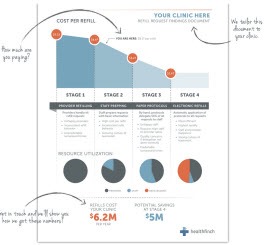

I try to ignore all sales people as much as possible while waking the halls.


I am rarely approached by vendors, and when I am, I feel I am being treated like the the last girl in the bar at closing time. When I seek out a vendor (I do my homework) or I am attracted by a display, I want the elevator pitch, some literature, and contact information. I pick the person that seems most likely to give me what I am looking for without being clingy. Mannerisms? Professional. OMG, no flirting. Appearance? Sorry, but the middle-aged white guys or the person that the other boothies defer to  is the person with the most efficient pitch. If it helps, it is harder to pick out who is in charge than it used to be.


When I’m asked a question. “Are you interested in learning more about _____ ?” Not a brand name, but rather a function or feature –I can see the brand name since I’m right at the booth. Pitch your product with a question, and I don’t mean of the form, “What are you currently using for _____?” In short, don’t sell—teach.


Mannerisms, appearance, first sentence.


I have found that the art of navigating the HIMSS hall is to have a plan. Know what you are looking for, perhaps even the vendors you are interested in, and so forth. I have found the hall to be more beneficial if you add intentionality to your visits. I do not like gimmicks, but a free beer, water, snack, or other food item helps. I also like vendors that provide trash bags (oh, I mean, brochure bags,)  I do not like vendors that “attack” a passerby.


If I’m in their booth because I haven’t heard of their product or don’t know much about it, then I’m focused on how quickly and clearly they can explain their product’s practical application and how it can provide value to my organization. If I’m there because I have decent knowledge of their product, then my goal is most likely to get specific questions about how their product works answered. In this case, the last thing I want to hear is them talk about the practical application and value proposition of their product. I’m focused on the knowledge of the person I’m speaking to. If they quickly say that they cannot answer my question, kudos. I’ll give you a second chance. If they blow smoke, then I may blackball them when I get home. In either case, if the sales person talks about a partnership or attempts to get to know my personal interests, then they immediately lose points in my book. Their job is to take as much of my health system’s money as they can while ensuring that they provide good enough service for us to perpetually pay upgrade and maintenance fees, not buy me tickets to the World Cup (which would be the right way to bribe me). My advice to the sales folks — open our conversation by asking me why I’m there, what I know about their product, and if I have any specific questions for them. As I answer those questions, ask clarifying questions about my business situation (facility size, location, etc.), and then tackle the problem at hand. It will work way better than the gibberish your marketing person wrote.

A mild manner is preferable (Jimmy Stewart over John Wayne). A working demo of their product and the knowledge to use it – amazing how often this is not available (Alfred Turing over Don Knotts). I am a fan of understanding the challenges of a community hospital and not quoting how they solved a problem at Johns Hopkins or UCLA (i.e. Fred MacMurray over Roseanne Barr).


Appearance and mannerisms. Down to earth “real” people versus salesy used car salesman type folks make me want to stop and talk. The booth babe costumes really turn me off. Because there are so many booths at HIMSS, the signage is also one of the things that gets me to stop for a look.


Text Ads


RECENT COMMENTS

  1. Re: Deliberately Faked Academic Papers in Nature See, this doesn't surprise me at all. Of course AI quotes these bogus…

  2. Challenger exploded on lift-off when the O-rings failed. Columbia disintegrated on reentry after one of the heat shield tiles were…

Founding Sponsors


Platinum Sponsors


Gold Sponsors


RSS Webinars

  • An error has occurred, which probably means the feed is down. Try again later.