News 1/17/14

January 16, 2014 News 7 Comments

Top News

1-16-2014 7-51-54 PM

Streamline Health will acquire St. Louis-based patient scheduling and surgery systems vendor Unibased Systems Architecture.


Reader Comments

From Salient Point: “Re: vendor layoffs. I’ve never had so many colleagues (most of them older), including high-performing salespeople, being let go. Seems like more than the usual Q4 pruning. Are you seeing this?” I will defer to readers. It does seems as though companies are cutting back, maybe because the HITECH boom is pretty much over unless you are Epic, Cerner, or a consulting company.  The EMR dance partners have largely been chosen, other than the likely ambulatory rip-and-replace caused by unmet expectations and acquisitions.

From Eclipsys Gal: “Re: Chad Eckes, chief strategy officer at Cancer Treatment Centers of America. Replacing Sheila Sanders as CIO at Wake Forest Baptist University Medial Center (NC).” Unverified. Sanders resigned after four years at WFBUMC in May 2013 following a disastrous Epic rollout, although the hospital said her departure was unrelated.


HIStalk Announcements and Requests

A few highlights from HIStalk Practice over the last week include: CareCloud reports the addition of 520 new clients in 2013, including the 20-provider Urology Austin (TX). The PCMH model leads to lower cost, better access to care, higher patient satisfaction, and fewer avoidable or unnecessary services. Practice Fusion achieves 2014 Complete EHR certification in time to beat its December 31 “guarantee” deadline. More than half of providers say they have not yet estimated the impact of ICD-10 on their cash flow. Doximity claims it has more physician members (250,000) than the AMA. SureScripts adds almost two dozen vendors to its clinical network for secure HIE. A dozen HIT vendors share opinions on the biggest challenges facing physicians and physicians practices in 2014 in part one of a three-part series. Thanks for reading.

1-16-2014 4-26-31 PM

Welcome to new HIStalk Platinum Sponsor MBA HealthGroup of South Burlington, VT. The company’s consulting services include Epic, Allscripts, ICD-10, EHR optimization, Meaningful Use, and RCM. They’ve trained and supported more than 5,000 physicians on Allscripts EHR, trained 3,000 users on Epic 2012, and provided RCM services to 400 physicians in 38 states. Fletcher Allen CIO Chuck Podesta mentioned using the company’s Epic 2012 upgrade services when I interviewed him earlier this week (the case study is here.) I noticed a new company blog post on the benefits and pitfalls of personalizing Epic that contains good nuts-and-bolts advice. Thanks to MBA HealthGroup for supporting HIStalk.

Listening: The Neighbourhood, a new California-based five-piece that skillfully blends alternative music with R&B. The singer is 22, which must be the coolest thing ever.


HIStalkapalooza and HIMSS
1-16-2014 3-16-49 PM

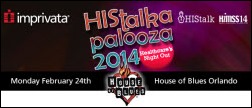
HIStalkapalooza registration will continue for several days. Everybody who wants an invitation has to register individually (that includes Inga and me, so don’t expect sympathy after the fact if you didn’t bother). We would love to invite everyone, but that’s not possible given that we had more than 750 requests in the first few hours, so watch your inbox for invitations on February 4 or so and follow #HIStalkapalooza14 on Twitter. Imprivata is doing an amazing job to make it the best event possible, as you’ll see if you score an invitation. It’s hard to comprehend that this will be the seventh version, going all the way back to Orlando in 2008 when it was 200 or so people in a Peabody Hotel conference room. I was thrilled because I was secretly hoping for 100 but expecting 25.

HIStalk sponsors: let Lorre know if you’ll be attending our sponsor-only networking reception on Sunday evening, February 23 at the HIMSS conference. It’s going to be pretty cool and a nice way to finish to the pre-conference weekend. Contact Inga if you haven’t sent your information for our HIMSS guide.


Acquisitions, Funding, Business, and Stock
1-16-2014 3-38-29 PM

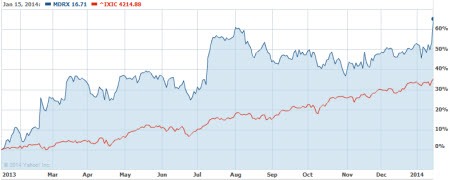
The price of Allscripts shares climbed nine percent Wednesday following the company’s prediction of five to eight percent adjusted revenue growth per year from 2014 to 2016. Analysts were expecting five percent growth in 2014. Above is the one-year chart with MDRX in blue and the Nasdaq in red, with shares rising 60 percent.

1-16-2014 3-40-14 PM

Valence Health reports revenue growth of 35 percent for 2013 and a 65 percent increase in bookings.

1-16-2014 3-41-01 PM

Craneware says its first half earnings are expected to be up five percent over last year.
1-16-2014 6-11-24 PM

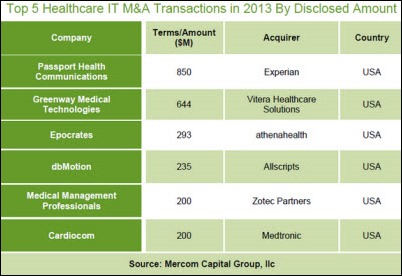
Mercom Capital Group issues its healthcare mergers and acquisitions report for 2013, reporting $2.2 billion and 571 deals in 2013 vs. $1.2 billion and 163 deals in 2012. The top five VC-funded companies for the year were Evolent Health ($100 million), Practice Fusion ($85 million), Fitbit ($73 million), MedSynergies ($65 million), and Proteus Digital Health ($45 million). Above are the largest M&A transactions of the year. The full report costs $599.


Sales

Center for Diagnostic Imaging (MN) extends its use of Merge Healthcare solutions to include the iConnect Network interoperability platform.

Long-term care provider Grace Healthcare (TN) selects the Daylight IQ disease management system from COMS Interactive.

1-16-2014 3-55-06 PM

NorthBay Healthcare (CA) selects Health Catalyst’s Late-Binding Data Warehouse and Analytics platform.
1-16-2014 3-56-44 PM

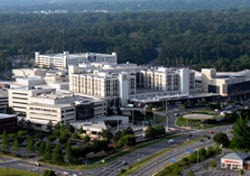
WakeMed Health & Hospitals (NC) will implement population health and final risk management solutions from Evolent Health.

Kaiser Permanente (CA) renews a multi-year agreement with MedAssets for strategic sourcing and spend analytics solutions and to serve as Kaiser’s exclusive GPO for its nationwide facilities.


People

1-16-2014 4-21-50 PM

ISalus Healthcare hires Jason McDonald (Kareo) as chief sales officer.

1-16-2014 4-22-51 PM

HIMSS names its former board chair Willa Fields (San Diego State University) the winner of the 2013 HIMSS Nursing Informatics Leadership Award.
1-16-2014 4-23-41 PM

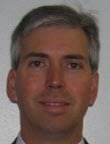
Rick Roycroft (MedAssets) joins Huron Consulting Group as managing director of the company’s healthcare practice.

Cureatr names Vik Shah (Medidata Solutions) as EVP of client services and operations.


Announcements and Implementations

Johns Hopkins HealthCare (MD) and BlueRush Media Group will co-develop an online portal that provides information for employers and their employees who are undergoing or have gone through cancer treatment.
1-16-2014 8-30-37 PM

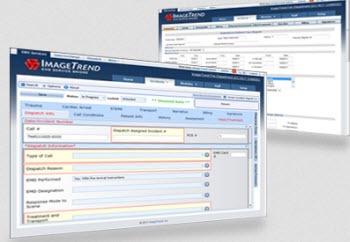
The City of New Orleans EMS integrates its EMS Service Bridge electronic patient care reporting system from ImageTrend with the Greater New Orleans HIE.

In Canada, Cerner completes deployments of its ambulatory EMR  at three Ontario ambulatory clinics, supported by Canada Health Infoway.
1-16-2014 4-55-49 PM

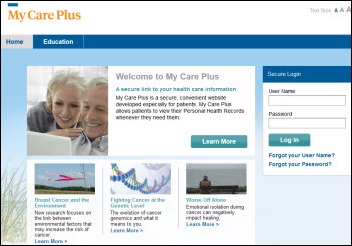
Compass Oncology (OR) pilots My Care Plus, a patient portal designed specifically for cancer patients by McKesson Specialty Health.
1-16-2014 8-33-42 PM

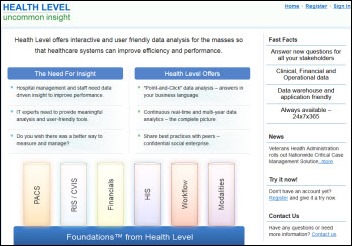
The VA deploys Health Level’s critical case management platform for all its VA National Teleradiology Program medical centers.

The Ministry of Health of the Kingdom of Saudi Arabia launches nationwide open access to Wolters Kluwer Health’s UpToDate for the country’s 80,000 physicians and nurses.

1-16-2014 4-53-06 PM

Lincoln Hospital (WA) and Community Wellness (WA) use the INHS TeleHealth system to offer diabetes and pre-diabetes education to rural communities in northern Idaho and eastern Washington.


Government and Politics
1-16-2014 5-00-05 PM

1-16-2014 5-03-31 PM 1-16-2014 5-04-40 PM 1-16-2014 5-06-52 PM

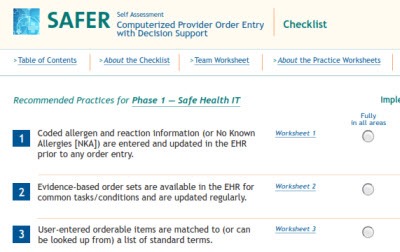
ONC releases the Safety Assurance Factors for EHR Resilience (SAFER) Guides, which include checklists and recommended practices to help providers assess and optimize the safety and safe use of EHRs. The set of nine guides are High Priority Practice, Organizational Responsibilities, Contingency Planning, System Configuration, System Interfaces, Patient Identification, CPOE with Decision Support, Test Results Report and Follow-Up, and Clinician Communication. Each starts with a checklist of recommended practices for optimizing EHR safety. The guides were developed by Joan Ash, PhD (OHSU), Hardeep Singh, MD (Houston VA, Baylor), and Dean Sitting, PhD (UT Health Science Center). This is some really good work.

ONC announces the beginning of a 30-day period for organizations to submit requests for ONC-Approved Accreditor status, which is valid for up to three years. This the organization that accredits EHR certification organizations, with ANSI as the incumbent since the role was first defined in 2011.

CMS and ONC select McKesson and Meditech as its first designated “Test EHRs.” In order to meet the transition of care objective in Stage 2, EPs, EHs, and CAHs must successfully exchange an electronic summary of care document with a CMS-designated test EHR or with an EHR technology different that the provider’s EHR technology.
1-16-2014 8-39-31 PM

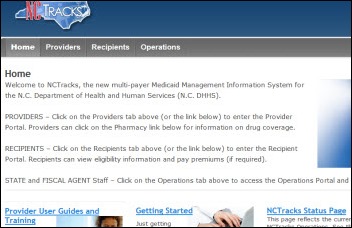
Several North Carolina doctors file a class action lawsuit against the state for delayed Medicaid payments, claiming that the the state’s Department of Health and Human Services and its contractors — CSC, Maximus Consulting, and SLI Gobal Solutions — were negligent in their rollout of the state’s $484 million NCTracks payment system.

Brian Ahier provided this audio of Karen DeSalvo’s introduction of herself to the HIT Policy Committee earlier this week. She sounds kind of fun, but for some reason her voice goes up in tone at the end of some sentences like she’s asking a question when she isn’t.


Other

1-16-2014 3-43-21 PM

A HIMSS Analytics report predicts accelerated growth for patient portals, clinical data warehousing and data mining, and radiology barcoding applications. The number of patient portal vendors rose from 28 in 2009 to 62 today.

CTG will add 300 jobs in its home city of Buffalo, NY in a medical informatics partnership with University of Buffalo’s Center for Computational Research in a genomics and big data initiative. The company helped create UB’s Institute for Healthcare Informatics in 2010 and contributed funds for Roswell Park Cancer Institute’s Center for Personalized Medicine.
1-16-2014 3-12-00 PM

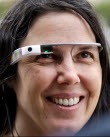
A California highway patrol officer stops a California software developer for speeding, also citing her for wearing Google Glass. He considered the device to be covered under the same laws that prohibit playing video in the driver’s field of vision.

Texas and the city of Austin offer athenahealth $5.7 million in incentives to open an R&D center that would create 607 jobs with a capital investment of $13 million. The company is also considering locations in California, Massachusetts, and Georgia, the latter two of which have previously provided athenahealth with similar incentives.  

1-16-2014 9-21-33 PM

BIDMC CIO John Halamka says he has written two books, one a reflection on his blog writings and other a fictional thriller. He’ll be signing the former at HIMSS. He really is a Renaissance man now that he’s turned into a gentleman farmer (I’m hooked on his “Building Unity Farm” series.) I just can’t understand how he finds the time to get so involved in so much, maybe because I’m lazy.

The governor of Guam signs a bill approving a $25 million loan to Guam Memorial Hospital to help it repay its previous bailout loan and to pay the support fees of NTT Data, which threatened to cut the hospital off from software support.
1-16-2014 7-35-53 PM

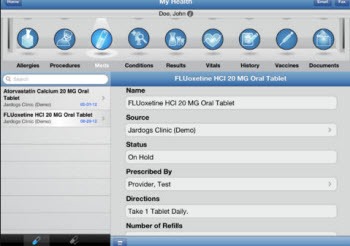
Michael Gilbert, MD, a family medicine physician with St. Joseph Health (CA), writes a good ONC post for practices called “How to Use a Patient Portal.” As an Allscripts Enterprise user, he says the company pushed him to use Jardogs FollowMyHealth after they bought that company, resulting in a 40 percent drop in registrants from their previous portal (presumably Intuit Health). Current problems include the large number of pending registrations that never become active (which throws off the MU Stage 2 denominator), the requirement for users to install the Microsoft Silverlight graphics browser plugin (which hangs up my browser regularly, so I can understand that), and  the need for providers to motivate patients to participate. Interestingly, the practice bought a software development company and will build its own portal and HIE (!!!), but in the meantime seems fairly happy with the Allscripts product:

[providers] participate in secure online clinical communication, schedule appointments, refill medications, and answer routine questions with and for patients. The new portal automatically uploads all results within minutes of being verified by the provider and patients can directly schedule into providers schedules, ask for medication renewals and pay bills. The portal also offers a computer, iPad and iPhone application with all of the above functionality to patients. We have over 30,000 patients registered, and have achieved 10 percent penetration of all registered patients across both medical groups. Some providers have almost half of their patients registered. Our physicians encourage their patients to message them via the portal.

Weird News Andy appropriately finds this story sad. An ambulance takes 18 minutes to arrive at the scene of a shooting in a mall parking deck, unable to enter the facility because of the low ceilings. The crew had to roll the gurney up the ramp to get to the male victim, who had refused to hand over his keys to four carjacking assailants, who then shot him as his wife sat beside him in the car. He died.

An Iowa state prison psychiatric hospital employee is fired for downloading patient photos from the hospital’s computer, Photoshopping them, and emailing them to co-workers, who often responded with additional requests (some of those folks were also fired, apparently.) One of his works involved patient faces superimposed on a “Star Wars” poster whose title he changed to “Tard Wars.” He was also found to have used work PCs to visit adult site including “Heavy Hotties.” The man said his job mostly involved playing cards or Wii with patients, which enabled him to “Photoshop at the same time I am changing lives. It’s called multi-tasking.”


Sponsor Updates

  • The coreANALYTICS health system performance improvement system from Encore Health Resources earn ONC 2014 certification as an EHR module. Catholic Health Initiatives is using it.
  • Allscripts announces that its KLAS scores are on the rise, with Allscripts Enterprise EHR up 11 percent for the 12-month period ending December 2013 and Sunrise Clinical Manager up four percent.
  • Coastal Healthcare Consulting introduces Convergence, a patient identity management solution that uses NextGate’s Enterprise MPI.
  • NextGen will map its EHR directly to the IRIS eye disease registry.
  • Josh Byrd, Patientco’s director of marketing, shares his perspective on why the patient experience matters.
  • Joseph Petro, SVP of healthcare R&D for Nuance, explains how clinical language understanding is critical for helping providers drive productivity while remaining focused on patient care. 
  • TriZetto’s Provider Solutions Business unit introduces the Top Codes Report, which allows providers to chart their most frequently billed procedure and diagnosis code pairs in preparation for ICD-10.

EPtalk by Dr. Jayne

clip_image001

ONC releases SAFER Guides to aid providers in safe use of health information technology. The Safety Assurance Factors for EHR Resilience Guides contain best practices for EHR use and include checklists for practice assessment. ONC Chief Medical Officer Jacob Reider discusses the nine guides on his “Health IT Buzz” blog.

There was a lot of discussion in the physicians’ lounge this morning regarding the suggestion that medical school could be reduced to three years. Certainly the idea of saving a year’s worth of tuition and living expenses might be attractive to those who already know what residency they want to pursue. Several of the programs currently in place reduce electives and require summer classes in order to meet required educational standards.

My medical school’s fourth year curriculum was all elective, and in hindsight, I’m glad I had it. Being at an urban academic medical center allowed me to see things I wouldn’t have been exposed to in residency and also allowed me to practice my clinical skills with less focus on competing against my peers. Coupling reduced medical school experiences with resident work hour limits could create a rocky start for some physicians entering practice.

The other hot topic in the lounge has been the recent New York Times article on scribes. After reading the article, several of my colleagues now think scribes are the be-all, end-all answer to their EHR problems. I enjoy moonlighting at a local emergency department that uses scribes, but physicians need to understand the limitations of the scribe model. Although they’re very popular for episodic care (emergency, urgent care) there are challenges in office-based medicine. One of the major issues is that using a scribe doesn’t relieve the physician of the need to learn the EHR. He or she will need to be able to access the system to view data and to handle after-hours patient contacts such as hospital admissions, phone calls, cross-coverage, etc.

Scribes hired from third-party agencies are expensive – up to $28 per hour in my market. It’s hard for physicians to cover that expense in primary care. The alternative chosen by many physicians is to train a medical assistant to scribe. That approach can be effective as long as the medical assistant is relieved of their other daily responsibilities. It is extremely difficult to try to play both roles in a busy primary care practice. The article says physicians using scribes can see up to four extra patients per day. That’s not been the experience of physicians in our community, who are lucky to see one or two extra patients per day. Scribes may not be as helpful with telephone messages, provider-to-provider communication, and other administrative burdens that impact physicians.

Physicians also need to spend time reviewing the scribe’s notes for accuracy. At my site, there is a pool of scribes and we may work with three or four during a single shift. Although the overall quality of their work is acceptable, the work of some is much stronger than others. Their work requires careful review, especially when they are new. Scribe training programs may be only a few weeks long. If you get lucky and have one who is a pre-med student or a nursing student, it can be a lot of fun since you can do some teaching along the way and they are generally very motivated to do a good job in the hopes they will be able to ask for a recommendation. If you get unlucky and have a scribe who has been up late the night before cramming for exams, it can be a challenge.

Speaking of challenges, today HIMSS invited me to attend a focus group. How could I resist their opening line: “Are you a CIO with a bed size of 150-400 or an IT Director/Manager with a bed size above 300 and not a practicing physician?” Why do they keep demographic files on members if they aren’t going to use them? Between that and the overall lack of HIMSS social invites, I’m starting to wonder whether this meeting is going to be more work than play. I’m confident, however, that with Inga’s vast social network, things will turn around. What are your HIMSS social plans? Email me.


Contacts

Mr. H, Inga. Dr. Jayne, Dr. Gregg, Dr. Travis, Lt. Dan, Lorre.

More news: HIStalk Practice, HIStalk Connect.

125x125_2nd_Circle

Advisory Panel: Top 2014 Priorities and Concerns

January 16, 2014 Advisory Panel 2 Comments

The HIStalk Advisory Panel is a group of hospital CIOs, hospital CMIOs, practicing physicians, and a few vendor executives who have volunteered to provide their thoughts on topical industry issues. I’ll seek their input every month or so on an important news developments and also ask the non-vendor members about their recent experience with vendors. E-mail me to suggest an issue for their consideration.

If you work for a hospital or practice, you are welcome to join the panel. I am grateful to the HIStalk Advisory Panel members for their help in making HIStalk better.

This question this time: What are your organization’s top three IT priorities for 2014 and the concerns you have about executing them?


(1) ICD-10.
(2) Data center relocation to a CoLo.
(3) Complete enterprise EHR rollout.

The only one I’m really concerned about is ICD-10. There are just so many uncertainties around how the providers and the payers will make the transition.


Our top three IT priorities for 2014 all revolve around our Epic platform.

(1) We need to finish our enterprise-wide Epic implementation.
(2) Once we survive our go-live, we will enter into an extended period of optimization of the system, which I anticipate will take at least three to four months.
(3) Subsequent to that, we will begin to develop the capabilities within IT to begin to extend our Epic platform to other entities across our state.

My biggest concern for all of these is the ability to maintain my current resource levels as well as adding new resources in order to address the organizational strategic outreach initiatives.


(1) We are determining whether to stay on our current EMR platform or to switch.
(2) ICD-10 is looming.
(3) We are also focused on getting our remaining hospitals to Stage 7.


(1) ICD-10. Significant work needs to be completed on all facets of this mandate. Vendor testing and validation, staff education (HIM, physicians, and billing), reporting requirements, and many more. Payors are not ready, IS vendors are not ready, and our staffs are stretched thin, so it remains my greatest concern in 2014.
(2) MU Stage 2. So much is still not known. How will we meet the patient engagement goals (absurd for a community hospital with independent medical staff that also must meet the portal goal)? What will the CQMs require for new data collection? How will the medical staff deal with electronic medication reconciliation and the requirements of the Transitions in Care electronic documentation at the hospital while also dealing with a different system and set of requirements in their office? These questions remain and the vendors will not be ready until the last quarter leaving no room for error.
(3) Pending affiliation. During all of this, we are entering into an affiliation that will dramatically change our organization and will, at some point in the near future, require a conversion to a new ERP system and EHR.


After the massive expense of our EHR and in the face of ongoing financial financial struggles (real or perceived), there will be great pressure to hold down costs, perhaps even to find a revenue-generating activity for IT. The concern is that needed education and training will be shortchanged and clinician workflows that should be corrected promptly will be allowed to calcify, requiring even more resources in the future. Many of these workarounds reflect inadequate technical support (I never knew it could do that!) or training (I never knew it could do that!)


(1) Ensuring readiness for regulatory items like ICD-10 and Stage 2 Meaningful Use).
(2) Continuing to optimize our EMR investment via new high-value clinical decision support projects. 
(3) Implementing new enterprise-wide revenue cycle solution.


(1) ICD-10. 
(2) Operational cost reductions (both IT and non-IT).
(3) Growth through acquisition.


(1) ICD-10.
(2) MU Stage 2.
(3) Financial resource management (conservation).

The three are not compatible. I’ll need resources for both of the first two while being asked to use less at the same time. 


(1) Our top IT priority is moving from Cerner to Epic, with the obvious concerns about data migration and workflow changes slowing us down initially.
(2) Appropriately using analytics (from identifying high-risk patients for outreach, to looking for otherwise hard to find adverse events), with the dual concerns of (a) not having enough report writers, and (b) not having enough people to execute on what we find. 
(3) Figuring out telehealth at our organization, with the concerns of (a) finding a technical model that works efficiently, and (2) finding a business model that makes sense (who will pay for it!)


(1) Epic optimization. Hiring and retaining qualified Epic analysts is becoming very challenging in our region. Standard now is  work from home and significant yearly salary increases due to the local competition from institutions out of build phase so analysts are free to jump ship.
(2) Windows XP support (lack thereof). The March 2014 move to Windows 7 has us very nervous – Epic and scores of integrated applications cannot be tested enough to quell the unease.
(3) ICD-10. Ouch… how am I going to get providers that don’t document well to do an even better job next October? We discovered quite quickly that Epic support is still just nudging up their own learning curve.


(1) MU Stage 2. 
(2) ICD-10. 
(3) Integrated financial and clinical systems.


(1) ICD-10. Since ICD-10 success is based on physician documentation, it’s a wildcard as to how well you will do regardless of the education effort. 
(2) MU Stage 2. MU Stage 2 criteria related to transitions of care will be particularly difficult since there are three components (i.e. 50 percent of discharges, 10 percent using CDA format, and a transaction to a different EHR.) Items 1 and 3 are easily achievable but 10 percent using CDA format could be difficult depending on where your patients transition (both inpatients and ambulatory). Many post-acute settings, for example, do not have an EHR capable of receiving this format.
(3) Privacy and security. Privacy and security is just a matter of keeping up with the regulations. Competing for resources is difficult since this area doesn’t  get enough attention until you have a problem. With the final Omnibus rule in place, fines have increased, as will audits. Business associates will be particularly vulnerable, as well they should be. There are a considerable amount of other priorities for 2014 (e.g. ACO IT, EHR optimization) but these may have to wait.


(1) Government regulations compliance.
(2) M&A integration.
(3) Growth initiatives.

My main concern is having too many top priorities competing for finite resources, both in IT and operations.


I’d be very surprised if anybody answers anything but:

(1) MU2.
(2) ICD-10.
(3) Keeping the place running.


(1) MU Stage 2. Vendor delays, expectation of patient engagement.
(2) ICD-10. Inability of vendors to deliver on time; excessive fees (CAC).
(3) Volume to value mandates (reporting, data exchange, etc.), a market mess.


(1) Meaningful Use Stage 2 and 3. Concern about areas where we don’t have full control.
(2) Expanding use of mobile and connected care connecting our enterprise and our community through mobile devices.
(3) Maintaining security in a rapidly changing environment. Expecting more and more security breaches.


HIStalkapalooza 2014, Sponsored by Imprivata

January 15, 2014 News 4 Comments

1-15-2014 3-10-46 PM

HIStalkalooza 2014, sponsored by Imprivata, will be held Monday, February 24, 2014 from 7 p.m. until 11 p.m. at the House of Blues Orlando (Downtown Disney) during the HIMSS Annual Conference & Expo.

Clay Ritchey, Imprivata’s chief marketing officer, said in a company announcement, “HIStalkapalooza is perhaps the most high-profile, premier social event in healthcare IT, and Imprivata is proud to be this year’s sponsor. We plan to uphold the annual traditions that attendees expect at HIStalkaplaooza as well as add some new, exciting surprises that will make this one of the most memorable events yet.”

1-15-2014 3-03-19 PM

Attendance is by invitation only since the facility capacity is limited and demand is always high. Those interested in attending complete an online form. Invitees will receive an emailed invitation around February 4. 

1-15-2014 3-08-06 PM

The seventh annual HIStalkapalooza, dubbed “Healthcare’s Night Out,” will include the usual events such as the “Inga Loves My Shoes” contest, crowning of the HIStalk King and Queen, and presentation of the annual HISsies awards. Other activities include:

  • A live band
  • Cartoon artist, magician, and other fun activities and entertainment
  • Great food and an open bar

Transportation between the Orange County Convention Center and the House of Blues will be provided.

1-15-2014 3-43-51 PM

HIStalk and Imprivata will provide more details as the event draws closer. Keep up on Twitter using #HIStalkapalooza14.


1-15-2014 3-39-50 PM

About Imprivata

Imprivata is a leading provider of authentication and access management solutions for the healthcare industry that enable fast, secure and more efficient access to healthcare information technology systems to address multiple security and productivity challenges. For more information, please visit www.imprivata.com.

Readers Write: Next Steps at ONC

January 15, 2014 Readers Write 5 Comments

Next Steps at ONC
By Helen Figge

The new leader, Karen DeSalvo, MD, has been appointed at ONC. It is anticipated that ONC is set to continue  the creation of an interoperable, private, and secure nationwide health information system  with the ultimate goal of supporting widespread distribution of data. More importantly, widespread implementation of Meaningful Use of healthcare technology.  

Many, however, still struggle to gauge what ultimately will be developed to facilitate the electronic exchange of health information. How will we launch the system, maintaining high quality along with security so that patient records are impenetrable to tampering?

The nirvana of the ONC program was to improve healthcare delivery alongside reducing healthcare costs.  But with uncertainty of where Obamacare eventually will land, and with all the other moving pieces like ICD-10, additional worries play into the overall scheme of just what the final healthcare landscape will look like. Not only to the healthcare providers, but to the consumer of healthcare, like you and me.

Besides the obvious conversations that we all hear centered around Meaningful Use, ONC has many opportunities to improve healthcare globally, most notably stressing and promoting early detection, prevention, and management of chronic diseases, which account for most of the healthcare expenditures we see today.

As we continue to see ONC evolve, let’s hope that the emphasis will not only zero in on Meaningful Use,  but also be energized for promoting such things as staying well through good health habits – wellness – in the various stages of our life cycles. Regardless of the technologies in play or the governmental regulations already set in motion, the key to the healthcare game is for consumers to stay healthier longer and be rewarded for maintaining a healthy state versus dealing with the aftermath of illness. 

This plays well into the ONC mission of eliminating health disparities among different populations and ensuring best practices regardless of geographic confines as well. There is a lot on the ONC table to continue to execute. Hopefully ONC will also affirm the need to have promotional campaigns for promoting early detection and prevention more effectively in the marketplace. This seems still to be void or at least not very noticeable from some vantage points.

Let’s not forget the ONC charge of establishing a governance for the Nationwide Health Information Network (now coined the eHealth Exchange), which when successfully executed, would be a Web-services based series of specifications designed to securely exchange healthcare related data.  

Independent of the leaders named at ONC, the arduous task of moving healthcare to the next level of quality will be at the forefront. A big sigh and a long pause will be needed to start the conversations with enthusiasm for sure, but in the end it will be just another day in the life of a CIO and the technology teams along with all of the healthcare providers in this era of Obamacare.

Helen Figge, CPHIMS, FHIMSS is is VP of clinical integration for Alere ACS.

Readers Write: Alerts versus Alarms – Not Just Semantics

January 15, 2014 Readers Write 1 Comment

Alerts versus Alarms – Not Just Semantics
By Brian McAlpine

1-15-2014 2-33-51 PM

We often hear references to “alerts” in the context of clinicians experiencing overload or becoming fatigued. For example, alert fatigue is a well-known problem whereby clinicians are constantly bombarded with multiple types of alerts, each designed to get their attention.

Alerts can come from many different sources, including the EMR/EHR, lab systems, CPOE, medication administration software, imaging systems, nurse call systems, and many other sources. Almost any system in the clinical environment can generate an alert.

For the purposes of limiting the scope of this discussion, let’s limit the definition of “alerts” to the patient care environment and direct patient care. Using this working definition, I would also say that a nurse’s phone that receives alerts or can process text messages can also generate alerts (i.e. via a beep or vibrate) that let the nurse know when a new message has arrived.

Recently there has been increasing industry discussion and focus on “alarms” and the problem of alarm fatigue. The Joint Commission’s NPSG06.01.01 has raised the awareness of this problem and now hospitals must start to pay close attention to which medical devices and corresponding alarms are contributors to alarm fatigue. 

Both alerts and alarms interrupt the clinician and can be a source of distraction that leads to critical errors, so what’s the difference? There is a big difference, especially when provider organizations attempt to get their arms around these problems.

This is really a problem where healthcare as an industry needs to focus and prioritize what is most critical. When you look at the key differences between alerts and alarms, you can further appreciate why the Joint Commission has taken action for the second time in the last 10 years, the first time being here with the National Patient Safety goal for managing audible alarms.

Alarms are typically derived from medical devices and often communicate an immediate life-threatening patient condition. Think a v-fib or asystole alarm from a patient monitor. Alarms are always more time sensitive and a delay of a few seconds may matter to the safety of the patient. Another key characteristic of alarms is that they are almost always intended for nurses or respiratory therapists (i.e. non-physicians). Physicians do not deal with alarm response – that is for nursing to handle. Finally, alarms are always regulated by the FDA from both the medical device side (alarm generation) and from the perspective of an alarm management middleware. The FDA regulates the alarm management middleware vendors through the 510k process. As a result, only a few vendors can offer an alarm notification capability because of strict FDA 510k regulations.

But what about alerts and vendors that integrate alerts? Shouldn’t these be regulated just like alarms? The answer lies in the definition of alerts and the key differences as compared to alarms. Alerts are usually not associated with medical devices and are not immediately life threatening, but could be very serious. A big difference is that alerts are not always immediately time sensitive — a delay of 30 seconds or even several minutes often does not matter like it does with a patient monitoring alarm. In terms of who typically receives alerts, these can be intended for any clinician, and often physicians receive alerts generated by systems such as the EMR. Another major difference is that alerts are generally not regulated by the FDA like medical device alarms are.

Because of these differences, many vendors can (and do) offer an “alerting” capability. The barriers to developing an alerting or alert notification feature are simply a lot lower when compared to developing alarm management middleware. But what does this mean in practical terms to a hospital looking at the diverse set of vendors that blend alarms and alerts all together into one confusing message about what their solution is really capable of? One key way to cut through all the hype is to follow the Joint Commission’s lead and focus on medical device alarms as a key starting point.

The Joint Commission just recently released its R3 Rationale report in response to its NPSG.06.01.01 for alarm system safety. A key statement in this report outlines clinical alarms as being more critical and a higher threat to patient safety as compared to “alerts”. In fact, the report explicitly states that the NPSG does not address “items such as nurse call systems, alerts from computerized provider order entry (CPOE), or other information technology (IT) systems.” It is obvious that the Joint Commission thinks the best starting point is with an evaluation of medical device alarms.

This is clearly only the starting point because we have to go back to the bigger problem as stated at the beginning of this post . Alerts and alarms interrupt the nurse and increase potential for errors in the care environment. You have to start somewhere, and by starting with alarms, you can get a handle on addressing a very key issue. This will lead to a foundation and framework that will enable you to more effectively address the alerting problem in the future.

What do you think? Are alarms the right place to start?

Brian McAlpine is VP of product management and marketing at Extension Healthcare.

HIStalk Interviews Laurie McGraw, CEO, Shareable Ink

January 15, 2014 Interviews 2 Comments

Laurie McGraw is president and CEO of Shareable Ink of Nashville, TN.

1-14-2014 12-27-26 PM

Tell me about yourself and the company.

I’ve been in healthcare for 20 years. I started way back when at IDX in Burlington, Vermont. In the late ‘90s, they broke off a subsidiary called Channel Health. I was running development at the time. That got bought by Allscripts. I was part of the Allscripts team from 2000 up until the time that I left in January of last year. 

When I started at Allscripts, we had five customers doing the EMR. It was called EMR back then. When I left, it was a $1.5 billion company that was pretty large. Those 12 years were a blast, just an absolute blast for me. 

This past summer, I joined Shareable Ink. I am the CEO of Shareable Ink today. It is a young and vibrant company that was founded by a brilliant innovator named Steve Hau who took a common sense approach to doing clinical documentation.

Shareable Ink does clinical documentation and we do it really, really fast. We take existing paper forms, tag them, digitize them, and preserve workflows for physicians to document, Again, very efficiently, very fast. We have these analytic tools where people can get great insights from the data that they’ve put in and drive financial outcomes and quality improvements.


Part of the appeal of the digital ink option for data input was that CPOE adoption was pathetic and electronic physician documentation wasn’t common two or three years ago. Usage of those has improved. Is there still a need for an alternative form of input?

I think so. I’ve worked with physicians all these 20-plus years. I’ve been in front of hundreds of physicians, physician audiences from physician groups to hospitals to whatever. What I know is, physicians don’t hate technology. They don’t. They love technology.

But what they hate is they hate being slow. Everyone appreciates getting quality data at the point of care. They want all that information. They just hate being slow. 

With Shareable Ink, we can extend the investment that’s already been made in electronic health records, or we can just simply replace paper that still exists in lots of different places in the healthcare system. Just making that physician fast, it’s very valuable. People have already made significant investments in clinical technology, but when physicians are slow, there are a lot of things that need to be done to improve that for them.


Part of your value proposition is the concept of clinically rich documentation. Does the typical electronic medical record product support that?

Fundamentally, the answer is yes. Electronic health records — and I’ve worked on them for all 20 years — are good products. Whether it was ones that I had worked on previously or other companies who are putting out electronic health records, they’re fundamentally good products.

Where the electronic health record falls short for physicians, in terms of what I’ve seen, is where they start to slow the physician down. It doesn’t mirror workflows that previously worked, either in the paper world or in the newly adopted electronic world. That’s where I see the need to either augment or go back to workflows that were previously really fast.

I know I keep saying fast, fast, fast as a theme here. I say that because all of the benefits of electronic health records, everybody still wants them. Many, many organizations are achieving them. But they’re still falling short. Everything in healthcare is driving towards more need for data at the point of care. That’s where we’re focused.


Is it common for hospitals that have successfully implemented CPOE and clinical documentation for physicians to add a product like Shareable Ink or do they usually use it before they are ready to adopt those EMR tools?

It’s pretty rare that an organization is completely on paper. Usually Shareable Ink is in a place that is supplementing some already automated clinical workflows. We’re either extending an EHR investment that’s already been made by some specific workflows in a particular specialty or we’re replacing some existing paper forms that are still being used because those particular paper forms capture all the data in a really efficient manner for the clinician. 

For example, we do a lot of work in the area of anesthesia, where a lot of paper still exists. We’re replacing the paper. But in many other places, we are replacing paper where clinical technology already exists.


I made the observation when I interviewed Steve Hau four years ago that the higher you go up the specialization chain of physicians, the more reliant they are on very specific forms rather than the general documentation that an internist might us. What areas of the hospital are most reliant on those specialized forms that don’t translate well to an EMR?

A couple of years ago, I would have said specifically areas like cardiology or orthopedics or something of that nature. The discussions that I’m having today, it’s back to areas — surprisingly to me — like primary care, where, quite frankly, there’s a lot of documentation needs, but organizations are still needing to supplement what their primary care physicians are doing because the speed at which they need to document in the electronic health record isn’t fast enough because of the tools that they’re using. They’re going back to things like paper to supplement it and scanning it in, or they’re looking at hiring scribes to help those physicians meet their productivity objectives. 

The premise of “the more specialized you are, the more likely that there are paper forms to supplement that” … it’s not that that is not true, it’s just that there are more general areas like primary care where there still is a lot of paper because of the productivity needs of those clinicians.


Hospitals put in systems, find them to be a burden to productivity, and then come to you for an alternative?

Absolutely. There’s opportunity to extend that electronic health record. The investment has been made and everybody is driving their quality programs based on what they can get out of their electronic health records, but they have to also meet certain productivity objectives within their organization because the volumes for these physicians and clinicians are increasing. 

Shareable Ink can help expand an electronic health record in those areas where you hear of physician dissatisfaction with their electronic health records. That’s a pretty common complaint. The reason is rarely because they don’t believe in the electronic health record. It’s always because of the speed issues and the productivity issues or how they’re encumbered because of using the technology. They just feel it slows them down. I’ve heard this directly for such a long period of time.


Most of the new hospital EMR sales are by either Cerner or Epic. What are some examples of integrating the Shareable Ink offering into those products?

We can integrate through interfaces so we can provide data into those systems, whether they’re Cerner or Epic, in the hospital. We have partnerships with vendors like Allscripts, like Greenway, where we use their open APIs to send discrete data into the electronic health record. 

Those are ways that we can extend the electronic health record investments organizations have made with those vendors. We’ll be looking to do more extensions like that in the coming year.


For a company like Epic that hasn’t offered too many hooks into their application, what would be a functional view of an Epic hospital implementing Shareable Ink?

We’re exploring those workflows now. Shareable Ink is a young company, but where we’ve implemented today is in specific areas where we’re replacing paper forms that already exist. They go into a McKesson system, a Cerner system, through a document viewer within that other system. Shareable Ink preserves the view of the form that has been filled out as well as all of the discrete data that is under the covers of that paper form.


There’s a lot of richness involved with what you can write on a piece of paper, even including the way you write it, where you write it, or what you draw as a picture. Are people realizing that that sterility of a set of fields that are extracted into an electronic medical record may lose some of the patient context?

I think that is a problem. I think that is an issue. I believe Shareable Ink can help solve some of that by bringing some of that richness back.

I’ve seen the discussions and been in the discussions with physicians who feel like they’re looking at a SOAP note or a clinician note that may be complete, but it’s so sterile they’ve blocked all the nuances of the care that was provided to the patient. Can Shareable Ink help in that regard? Sure, it can help — but not necessarily in the same ways as speech – through different pictures or notations or things of that nature. But I don’t want to pretend for a second that getting to that specific discrete data is still incredibly important for all of the quality metrics and everything else that an organization’s trying to drive toward.


Can you hand forms that have been turned into Shareable Ink to someone with no training and turn them loose?

You can. It is a stretch to say no training. There is some training required, but it is simple training. 

With Shareable Ink, when clinicians adopt it, they are not clearing their schedules. They’re not reducing their patient volumes to then adopt this additional clinical technology. What they’re doing is taking some additional time. The paper metaphor or what they’re used to with a form — that’s the workflow that’s preserved. 

It’s already a workflow that they’re familiar with. Now they’re just doing it on an iPad, or that same form on an iPad, or they’re doing it with a digital pen.


How is Meaningful Use affecting your business?

I’m hoping that it will increase the need for tools from Shareable Ink because Meaningful Use means a whole lot of additional data is required at the point of care. Just simply voice recognition into blobs of text is not going to be enough in terms of all the data that’s required for Meaningful Use. 

Shareable Ink can provide that additional rich data at the point of care while still keeping that clinician very, very fast. I’m expecting Shareable Ink to again be a great addition in complement to the EHRs that are out there.


Do you have any final thoughts?

I’ve spent 20 years in healthcare. While it has been awesome in terms of paving the clinical information highway, today what I see is that we spend a lot of time on all of the challenges that are out there: adoption, physicians being slow, needing better data, the challenges of Meaningful Use and ICD 10. What all that points to is really the need for better data at the point of care. 

I am optimistic that what we’re doing at Shareable Ink in terms of providing that rich data at the point of care and by doing clinical documentation in a way that is fast and efficient for the physician that we’ll be able to deliver on the promise of data-driven healthcare.

News 1/15/14

January 14, 2014 News 11 Comments

Top News

1-14-2014 7-43-05 PM

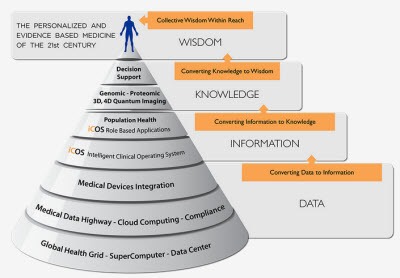
Healthcare billionaire Patrick Soon-Shiong launches health IT company NantHealth at the JPMorgan Healthcare Conference, which will offer the “intelligent Clinical Operating System” (iCOS) that will integrate information from molecular science, computer science, and big data to deliver solutions for population health management, cancer care coordination, transition management, and wellness. The company also announced a partnership with the Clinton Foundation to implement iCOS in two areas of the country. The company says iCOS is running in the country’s largest oncology group that covers 150 practices, 22 EMRs, and real-time data feeds moving 50GB per day; its Cancer Decision Support Engine is used by over 50 percent of oncology practices; and its EMR is running in 12,700 facilities in 13 countries. It talks about DeviceConX device connectivity, which is the iSirona’s product it gained when it acquired the company effective January 1, 2014.  Most of the other offerings are also previous NantHealth acqusitions, including the GlowCaps medication reminder system, home monitoring devices from Boston Life Labs, and Ziosoft medical imaging. Soon-Shiong spent $800 million on 60 companies and research projects that make up iCOS, which he says can be purchased right now. I’m never quite sure whether to take Soon-Shiong seriously, but having $7 billion gives him at least some instant credibility.


Reader Comments

1-14-2014 5-00-38 PM

From Holly S: “Re: Jonathan Bush’s leave. He’s going on an extended vacation from February to April. He’ll be spending time with friends and family, both travelling and hunkering down. His agenda is to play and experience some things he’s always wanted to do. He has never been so energized about the business, its ability to effect change in health care, the marketplace’s receptivity to change. He’s all-in on what’s ahead.” Thanks to athena for providing this update in respond to a reader’s inquiry. JB told me he hates to miss “the boat show” (the HIMSS conference) and especially his MC duties at HIStalkapalooza, but as he also confided, “I am honored to have been your MC these past few years and hope dearly that whoever replaces me in 2014 will be a bomb so that you will have me back in 2015.”


HIStalk Announcements and Requests

1-14-2014 4-59-23 PM

Thanks to Greenway Medical for sending this note in response to recent rumors of employee layoffs:

We’d prefer to not comment on rumors. We have, in fact, been working through a very thorough review of our organization since completing the merger of Greenway Medical Technologies and Vitera Healthcare Solutions, which includes Vitera’s SuccessEHS. That process includes aligning our resources to most effectively serve our customers, which we’re accomplishing by delivering our innovative7 industry-leading solutions, delivering data liquidity through our powerful interoperability engine, and leading our customers through what will be an awesome change from production medicine to outcomes-based medicine through our clinically driven revenue cycle management solutions. Our mission at Greenway remains the same.  We believe healthcare will continue to electronify, the consumer will become more engaged and demand change, and we will improve population health by delivering smarter solutions.  We’re privileged to serve such a large provider base, clinical professionals who provide care to millions and millions of patients. 

Voting for the HISsies awards is underway, as follows:

  • I pleaded for nominations on HIStalk over several days and, as happens every year, didn’t get many nominations even though anyone can nominate. If you don’t like the choices on the ballot, blame those few hardy readers who actually submitted nomination since everyone who has complained so far didn’t.
  • The most-nominated entries made it onto the final ballot, which was emailed directly to the addresses in the HIStalk update list (which prevents ballot box stuffing since the voting is tied to the email address.)
  • So far, 765 of the 10,000 email recipients have voted.
  • The results will be revealed at HIStalkapalooza and on HIStalk.

On the Jobs Page: NextGen Activation Consultant, Epic Activation Consultant, Epic Certified Builder.

Listening: new (released today, in fact) from Sharon Jones & the Dap-Kings, brilliant and amazing 1960s-style revivalist pop soul with lots of horns recorded on good old analog. Treatments for Sharon’s pancreatic cancer (diagnosed June 2013) left her bald but unbowed in the video.

1-14-2014 5-42-48 PM

Welcome to new HIStalk Gold Sponsor Accreon. The company is a leader in system optimization, information integration, and software solution development. They worked on Canada’s clinical information highway and have built tools for US-based vendors for population health management, remote patient monitoring, and workflow optimization. Services for providers include strategic planning, project management, implementation, integration, analytics strategy and optimization, and HIE architecture and sustainability. They can also help vendors with near-shore solutions, software development, integration, and analytics projects and they also do work for payors, pharma, and government. Eric Demers is the Boston-based president of Accuron USA and not only is an industry long-timer who you may know, he even has a MHSA degree, which always clearly signifies that “I’m a healthcare person” since just about everybody else gets a general MBA instead. Thanks to Accreon for supporting HIStalk.


Upcoming Webinars

January 16 (Thursday), 1:00 p.m. Advanced Efforts to Identify and Eliminate Waste from Healthcare. Sponsored by Health Catalyst. Presenter: David Burton, MD, executive chairman, Health Catalyst. Based on a breakthrough analyses using several large healthcare data sets as representative samples, Dr. Burton and team will present insights designed to help executives struggling to identify, quantify, and extract waste from their systems.

Webinar questions? Contact Lorre.


HIStalkapalooza

1-14-2014 4-37-23 PM

I’ll post a separate HIStalk article Wednesday afternoon with the link to the registration page, so watch for the email update. There’s no need to rush – we’ll leave the registration page up for several days and then invitations will go out February 4. Above is a bit of a hint about the sponsor and location. Meanwhile, I’ll say just once more that I think the primary sponsor has one co-sponsor slot open, so email me if you want more information.


Acquisitions, Funding, Business, and Stock

1-14-2014 6-04-48 PM

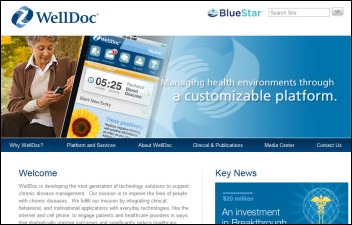
WellDoc, provider of a Type 2 diabetes mobile device management program, raises $20 million from Merck Global Health Innovation Fund and Windham Venture Partners.

1-14-2014 6-24-15 PM

Surgical Information Systems acquires ambulatory surgery EMR and management software vendor AmkaiSolutions.

1-14-2014 6-10-53 PM

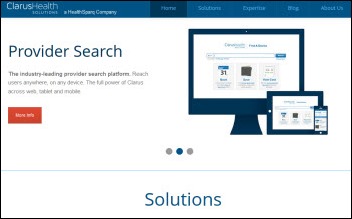
Online employee health shopping systems vendor HealthSparq acquires ClarusHealth Solutions, which offers a provider search function for consumers. HealthSparq’s president is Scott Decker, formerly of NextGen and Healthvision.

1-14-2014 7-00-46 PM

Transcription and speech recognition vendor MModal, acquired by a JPMorgan private equity arm in a leveraged buyout worth $1.1 billion in August 2012, hires a restructuring firm, according to sources cited by The Wall Street Journal. Sales are dropping and  the company is paying high interest charges on its debt of $750 million, which has tripled since the acquisition.

Post-acute care software provider Brightree acquires Strategic AR, a provider of private-pay billing and collection services.


Sales

1-14-2014 6-29-53 PM

Rush Health (IL) contracts with Caradigm for healthcare analytics and population health software to support its private HIE. Rush Health’s CEO says the HIE is the largest investment the organization has ever made, adding, “We want to use this infrastructure to connect and exchange real-time information so we can do a better job coordinating care.” Rush Health will also offer to cover the first-year of EHR expenses the 10 percent of its doctors who are still using paper, moving them to Epic, eClinicalWorks, or athenahealth.

1-14-2014 8-41-02 PM

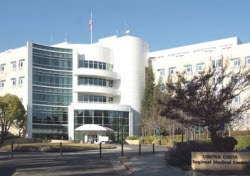
Contra Costa County Health Services (CA) engages Vonlay to support its Epic 2012 upgrade.

The 22-hospital St. Vincent Health (IN) will pilot Acupera’s population health analytics and clinical workflow management platform in one of its physician offices.

1-14-2014 6-32-14 PM

Catholic Health Partners (OH) will implement Epic’s MyChart Bedside at all of its hospitals following a successful pilot at its St. Rita’s Medical Center (OH) location. Patients and family members access their health information, labs, caregiver team member information, and educational materials on a hospital-issued tablet.

Geisinger Health System (PA) selects Besler Consulting to identify Transfer DRG underpayments.

CMS awards Optum/QSSI a contract to serve as a senior advisor on the HealthCare.gov website following its interim engagement as general contractor after the site’s October 1 meltdown. The company’s press release, oddly enough, includes testimonials from HHS Secretary Kathleen Sebelius and CMS Administrator Marilyn Tavenner.


People

1-14-2014 5-17-16 PM

CHIME names HIStalk’s own “CIO Unplugged” Ed Marx (Texas Health Resources) as its 2013 John E. Gall Jr. CIO of the year.

1-14-2014 5-18-47 PM 1-14-2014 5-19-39 PM

Arcadia Healthcare Solutions names Sam Adams (Accretive Health – above left) SVP of sales,  Jonathan Rider (Jetstream Consulting) SVP of technology and engineering, and Sandi Molettieri (UTC Aerospace Systems – above right) director of HR.

1-14-2014 5-23-05 PM

NavigatorMD appoints Alexander Poston, Jr. (Entrada) CIO.

1-14-2014 5-25-27 PM

Artemis Health Group names John Doulis, MD (MedCare) president and CEO, replacing Phillip Suiter, who resigned.

1-14-2014 5-36-28 PM

Andrew Baker (Intuit Health) joins Culbert Healthcare Solutions as VP of business development.

1-14-2014 5-38-38 PM

Mike “The PACSMan” Cannavo (McKesson) returns to his PACS consulting business.

Kim Bahrami joins government contractor Acentia as VP of business development over the company’s expansion into DoD and VA healthcare.

CMS appoints Acting CIO Dave Nelson as the agency’s permanent CIO.


Announcements and Implementations

CECity and athenahealth will offer a health data exchange integration and reporting service to automate information flow from athenaClinicals to national clinical registries using CECity’s clinical quality data gateway.

1-14-2014 12-10-33 PM

Dubai’s Mediclinic City Hospital and Mediclinic Welcare Hospital will install Oneview Healthcare’s patient engagement software.

Varian Medical Systems will expand its existing Salt Lake City facilities in anticipation of creating 1,000 full-time jobs over the next 15 years.

1-14-2014 9-41-47 PM

Heart Imaging Technologies provides Merge Healthcare access to its portfolio of healthcare information patents, including zero footprint technologies to provide access to diagnostic-quality images in a standard web browser. The agreement also settles litigation initiated by Heart IT against Merge for patent infringement related to internet-based image viewing.

MedHOK, which just closed $77.5 million in funding, will increase its 100-person staff by about 35 percent over the next year. 


Government and Politics

1-14-2014 1-55-54 PM

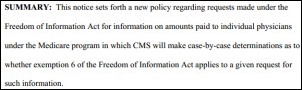
CMS announces it will consider on a case-by-case basis requests made under the Freedom of Information Act for information to find out much Medicare pays individual physicians.

VA CIO Stephen Warren says that for 2014 his agency will be focusing on improving its system baseline practices and procedures, configuration management, patch management, and elevated privilege review.

1-14-2014 1-46-25 PM

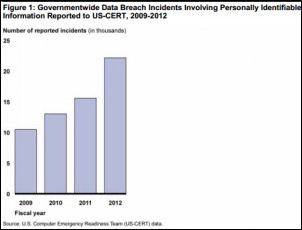
A GAO report criticizes CMS, the VA, and six other agencies for their inconsistent implementation, policies, and procedures for responding to data breaches involving personally identifiable information.


Innovation and Research

A report finds that ACOs are competent in offering e-prescribing, a single database containing medical and prescribing information, and formulary options that encourage the use of generic drugs, but lack tools that notify physicians when prescriptions are filled, prevent duplicate drug therapy, measure quality, and demonstrate the value of appropriate medication use.


Technology

1-14-2014 8-20-28 AM

Alere Connect receives FDA 510(k) market clearance for its Alere HomeLink platform, which also earned CE Mark certification which will allow it to be marketed in Europe.


Other

Cerner Middle East expands its office in Riyadh (Saudi Arabia) in support the company’s growth plans.

1-14-2014 1-23-01 PM

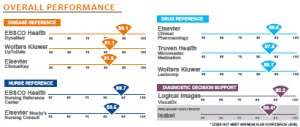
Products from EBSCO, Elsevier, Wolters Kluwer, Truven Health Analytics, Isabel, and Logical Images earn the highest rankings in a KLAS report on clinical decision support resources, including tools for disease reference, drug reference, nursing reference, and diagnostic decision support.

An ICD-10 readiness survey by Navicure and Porter Research reveals that 74 percent of physician practices have not yet started implementing their ICD-10 transition plan, though most don’t anticipate any disruptions from their EHR, PM, or clearinghouse vendors. A couple of alarming stats: 27 percent of survey practices are unsure how or where to start preparing for the transition, while 22 percent claim they don’t have the staff or resources to begin preparing.

The former CEO of two-hospital, 350-bed Cape Cod Healthcare (MA) who resigned abruptly in 2010 remained the organization’s highest-paid employee for the next two years, earning over $1 million in each year, and was still being paid in 2013. The hospital’s board chair said, “A lot of executives have post-employment benefits,” while a business ethics expert says it’s no wonder that US healthcare is so expensive. The CEO is also a physician and was disciplined by the state medical board after he left the hospital for inappropriately writing prescriptions for family members.

Weird News Andy notes, “Hipsters, beware” about this story in which a man in China stretches and yawns so hard that he collapses his own lung. WNA provides his targeted warning because the at-risk group is “tall, slim young men.”

WNA also likes a story that he titles “Clean Booze,” in which a man steals 12 bottles of hand sanitizer from a hospital by hiding it in his arm sling and then goes back twice more for additional bottles. He told the police who finally nabbed him that he makes a cocktail by mixing the alcohol-containing cleaner with orange juice.


Sponsor Updates

  • HealthMEDX announces that it will be the first long-term and post-acute care EMR vendor to participate in the Interoperability Showcase at HIMSS14.
  • McKesson’s MED3OOO division expands its Dayton, OH office space from 10,000 to 12,000 square feet and will increase its local employee head count from 110 to 122.
  • Allscripts will incorporate the Adheris DirectStart medication adherence communication program into its EHR.
  • Gartner positions InterSystems as a Challenger in its Magic Quadrant for Operational Database Management Systems.
  • Clinovations consultant Matt Lambert, MD publishes a book that includes his reflections on healthcare and the push for change in the midst of healthcare reform.
  • Wolters Kluwer Health expands use of Lippincott’s Nursing Procedures and Skills to include hospital-based clinicians and renames the product Lippincott Procedures.
  • Doctors Community Hospital (MD) shares how its use of GetWellNetwork improved patient education and entertainment while generating revenue.
  • The Rochester Business Journal names eHealth Technologies to its Rochester Top 100 list based on dollar and percentage revenue increases over the past three years.
  • Loran Cook, product evangelist for Billian’s HealthDATA, considers the future of partnerships, payers, and a loophole in the ACA.
  • Rock Health names Health Catalyst CEO Dan Burton to its list of Top 50 Digital Health Entrepreneurs.
  • RelayHealth releases the second generation of RelayAnalytics Pulse for comparative analytics.
  • Emdeon achieves CAQH CORE Phase III Certification, which certifies the company accurately and efficiently exchanges healthcare electronic funds transfer and electronic remittance advise information.
  • ICSA Labs certifies InteHealth’s patient and physician portals with 2014 Edition Modular EHR Inpatient and Ambulatory ONC HIT Certification.
  • Cornerstone Advisors founder and president Keith Ryan advises Bartlett Regional Hospital’s (AK) planning committee on its EHR options. 

Contacts

Mr. H, Inga, Dr. Jayne, Dr. Gregg, Lt. Dan, Dr. Travis, Lorre.

More news: HIStalk Practice, HIStalk Connect.

125x125_2nd_Circle

Curbside Consult with Dr. Jayne 1/13/14

January 13, 2014 Dr. Jayne 1 Comment

This is the last of a three-part response to a reader’s comments on EHRs (Part 1, Part 2.)


What is meaningful for the government is not meaningful for the patient. We sacrifice good care so the government can collect statistical data for free.

I’ve written on this topic before. It’s easy to play armchair quarterback and to dissect things through the retrospectoscope. Surely parts of the program might be different if the creators had it to do over again. I personally don’t like to be penalized for poor outcomes. It doesn’t matter how motivationally I interview, how well I design care plans, how well my team works with the patient, etc. – sometimes patients simply don’t want to do the right things for their health. Sometimes they are genetically doomed regardless of what we do. Sometimes they can’t afford to do the things we recommend, or choose to prioritize other needs or wants.

Most physicians are genuinely motivated to help people live longer, healthier lives (sometimes to the detriment of quality of life, but that’s another topic for another day) and are personally burdened when we can’t make someone better. Adding financial penalties for things which are not entirely under our control is offensive to those of us who work our tails off trying to do the right thing.

You want to ding me for failing to put someone with proteinuria on an ACE inhibitor or an angiotensin receptor blocker? Fine, I deserve it. You want me paid less because I write bad prescriptions that no one can read? Great. But don’t penalize me because Uncle Sal won’t get a colonoscopy despite a decade of counseling, discussion, debate, and downright begging. I’ve done all I can do.

As far as the “free” factor, technically we’re being compensated for our data through the various quality reporting initiatives, as well as through MU, so saying we’re giving it away for free may not be entirely accurate. Most of the clinical quality metrics revolve around good care, so it’s hard to argue that quality is sacrificed. But I respect the comment.


I’m generally not a fan of the conspiracy theories, but I wonder if the government wants to slow us down so they pay for less visits and care? We’ll never know the truth, but what better way to slow us down than Meaningful Use?

I admit I’ve had this thought before. Nationally, many physicians are refusing to accept Medicare, refusing new patients, or limiting their panel sizes, but it depends on your market. We have a lot of people that limit Medicare in our region because other insurers pay better and there’s plenty of demand, but that’s not the case everywhere. There are plenty of markets where Medicare is the top payer and physicians can’t afford to stop participating. The same applies to Medicaid. Several of my blogger friends hypothesize that it’s a ploy to get rid of primary care physicians and replace us with midlevel providers who are cheaper.

On the other hand, in our organization (and many others) we’ve figured out ways to comply with Meaningful Use and not slow down. This involves some extra clinical staff (funded by increased office visits and clinical quality payments as well as crafty negotiations with payers to embed care managers in our group) and a ton of additional training, but we’re generally still seeing the same number of office visits as we have. There have been fluctuations due to the recession when you look at our five-year vs. 10-year data, but most providers still have capacity to expand and we’re still hiring physicians.


I love computers and believe in the EHR concept, but it has to be done right. I’ve yet to see a good EHR. Computers are not smart machines. They are very fast and very loyal to the programmer. The main problem with EHR design sits in the knowledge and experience of the designers, who are:

a) Programmers without medical knowledge

b) Physicians without programming knowledge

c) Reputable professors with lots of published papers without ward clinical experience

d) Physicians who have graduated medical informatics programs but without clinical knowledge

e) Physicians who have clinical experience and some programming knowledge

f) Good physicians with good programming knowledge, which is ideal, but I don’t know if there are any involved in EHR design at this time

I saved this comment for last because it’s my favorite and the most near and dear to me. Although the gulf is closing, there are still significant gaps between clinical needs and programmers. It’s a challenge for vendors to hire people who can translate a physician business case into something the programmers can address, and to translate the limitations of the product into something to which users can respond.

Although there are some good physicians out there who have formal informatics training but minimal clinical experience, I’m always leery of them. When I meet one who didn’t complete an internship and never had a license, that’s a red flag for me. Whether justified or not, I feel that completing an internship and having had an actual medical license at least once in your career is essential. It’s even more essential when you’re going to be in a role where you tell other physicians how to behave.

Having been board certified at least once is nice too. You don’t have to keep your license forever and I don’t care if you maintain your board certification, but I want you to have gone through what the rest of us have gone through just as a point of understanding.

I’d also add another element – product management teams that respond to sales feedback preferentially over the feedback of existing users. Those who haven’t purchased an EHR don’t know what they don’t know, where current users definitely know what bites them on the posterior every day. I’ve seen good products decline when prospects demand functionality that although sexy isn’t built for the long haul.

As a farm girl, I think about it like I think about buying a truck. Although the quad cab with heated and air conditioned leather seats and a bus-load of chrome looks really good to someone who’s not a farmer, it’s kind of silly when you think about the fact that you’re going to be climbing into it with mud on your jeans and manure on your boots. When the motor on the power window dies, I’m going to be wishing I had a crank because I’ll be roasting to death driving while the younger cousins throw hay bales on the trailer.

Regarding the lack of good physicians with programming knowledge being involved in EHR design – as recently as three to five years ago I would have said the same thing. It’s still true at some vendors, but thank goodness ours have seen the light. Both our ambulatory and acute vendors have significant physician participation in design with both employees and clients involved. The staff physicians have substantial clinical experience and programming knowledge and work to translate user needs to the developers and to make sure what is coded actually works. Existing customers are becoming more savvy and vendors have to respond. It’s embarrassing to have physician users who know the product better than the vendor does, but I’ve seen it. A smart vendor will hire those physicians to be on their development teams if they can lure them away from practice, but it’s rare.

I’ve seen more vendors doing formal usability work throughout the design process, but it’s still not enough. What I’d really love to see is a vendor create a “model practice” that it can use for its development test bed. It should be a medium-sized multi-specialty practice. 

For starters, they could learn what practices have to go through even before they think about EHR including licensing, credentialing, professional liability, OSHA, CLIA, and the rest of the alphabet soup it takes to get the doors open. They can fully understand the staff dynamics of a medical practice (which seem different from many other industries) and what it’s like to be responsible for people’s lives and livelihoods. They can feel what happens when payers are slow and see how well their system does managing all the insane scenarios we deal with on a daily basis. And only when those physicians sign off on the content and usability should it ever be allowed to proceed to even a beta installation at a paying client.

I’ve not heard of a vendor doing this but if you have please, let me know. I’d love to get a dialogue going with my vendor about why that makes sense. I might even be crazy enough to volunteer for it. And if you’re a vendor, I’d enjoy hearing from you about how you use physicians in development. It would make a great topic for a future Curbside Consult. I’ll run your comments openly or anonymously if needed. Got docs? Email me.

Email Dr. Jayne.

HIStalk Interviews Chuck Podesta, SVP/CIO, Fletcher Allen Health Care

January 13, 2014 Interviews Comments Off on HIStalk Interviews Chuck Podesta, SVP/CIO, Fletcher Allen Health Care

Chuck Podesta is SVP/CIO of Fletcher Allen Health Care of Burlington, VT.

1-13-2014 12-11-55 PM

What lessons did you learn as your single hospital expanded into a health system?

I’ve worked with systems in the past, so I was prepared from a due diligence standpoint to understand what we were getting into. The interesting thing has been is being at the beginning of a system being born as opposed to going to work at an organization that already had created the system. That part has been really, really exciting.

From a learning standpoint — and I’ll just speak from an IT perspective right now — it’s how you merge the cultures of the different organizations, both from a leadership perspective and staff perspective. We haven’t merged all four hospitals’ IT under IS from a cost center perspective, but I am the system CIO over those organizations. 

I work very hard to get our leadership within IS to work with their leadership in their organizations and staff-to-staff communication as well. We’re geographically disparate from each other, so it makes it a little bit more difficult. That part has gone really well. That’s been the biggest thing that we’ve done.

We created an IT council that’s a high-level group of the high-level IT folks. Then we did a sub-group that’s made up of low-level managers but also some staff that are working together across the system and looking at things like linking email and some of the nuts and bolts things that need to be done behind the scenes. 

That’s brought these teams together, working on the same projects. What we’re finding is that the more and more that you do that, it’s going to make it easier as we get to the more difficult projects of implementing different types of technologies in these organizations.

Every hospital has the challenge of trying to look at new tools to support risk-sharing arrangements and population health management, but you’re also faced with trying to combined the financials to give a view that makes sense and to understand the physician relationships.

Absolutely. If you look at the last time we talked in July 2009, we were Fletcher Allen Health Care academic medical center, Burlington, Vermont. Now we’re a four-hospital system. We also are 50 percent owner of OneCare, which is a Medicare Shared Savings Program with Dartmouth-Hitchcock. There’s 14 hospitals involved in basically the entire state of Vermont, about 50,000 covered lives that are under that right now. A very large Medicare Shared Savings.

We’ve got the issues around exactly what you mentioned — the data analytics, advanced population analytics that we’re implementing. We’ve got some unique stuff going on there, along with working with two health information exchanges, because we are not only in Vermont, we’re also in northern New York. We work closely with VITL in Vermont and Hixny in northern New York. They’re working together to link their two HIEs together to benefit us as well.

On the advanced population analytics side, we’ve joined a group called Northern New England Accountable Care Collaborative. That’s made of Eastern Maine, Maine, Dartmouth-Hitchcock, and now ourselves. It’s a unique opportunity. They take our CMS claims data in and using VITL, we move our EHR data into that data warehouse. We can also have access to the de-identified data of the other organizations. Instead of just looking at populations of 300,000 or 600,000, now we can look at populations that are in the millions. The bigger the denominator, the better off you’re going to be.


People claim that healthcare is behind technologically, but we have business models that seem to change every five years, government involvement and reporting, and insurance company requirements. Everybody wants something different on the back end and yet you’re trying to keep the front end running. Is that sustainable? I can’t think of any other industry where there’s so much change that isn’t to support the business, but to meet new minimum external requirements.

I think over the next year we’re going to find out whether this is sustainable or not. If you look at the priorities that we have right now, we have ICD-10 coming. We’ve got Meaningful Use Stage 2, then Stage 3. Privacy and security is huge with the passage of the final Omnibus Rule and we’ve got to spend a lot of time there. We’ve got our system IT priorities that we need to put in place, and then also our OneCare ACO IT priorities that need to be put in place.

You add all those up and just look at the care and feeding of an Epic EHR and the priorities that go into that, it’s daunting. I joke a little with my senior leader that in the past, we were able to do a business planning session, have the IT strategy follow the business plan, and do a three- to five-year IT strategic plan. That’s no longer the case. I can’t even do a six-month strategic plan. 

What I’m trying to get my organization to do is to talk a lot about how do you survive, how do you manage, how do you lead in an organization that every single priority is a high priority? In the past, you could make a list and start at one and go to 10. You might have four or five projects that are twos. But in this particular case, they’re all ones. The federal government deadlines on a lot of these things are all coming to a head. 

How do you get your organization to work in that type of environment? That’s been amazing from a cultural standpoint. What you’re going to see across the country is some organizations will be nimble enough to do that and then others won’t.


Given the low likelihood of success and the fact that CIOs aren’t typically given extra resources, will it be harder for CIOs to keep their jobs?

Absolutely. If they don’t set the expectations with their senior leader colleagues …  even though I mentioned earlier that I make a joke about not being able to do a six-month strategic plan, I’m actually pretty serious about that. If my senior leader colleagues — my boss, my CEO, the board – are expecting a three-year plan and I’m not clear on what our priorities are, even over the next couple of months, and to get them to understand, then I’m setting myself up for failure. I know that has happened to other CIOs across the country. 

This coming year, year and a half, I think there’s a lot of CEOs out there that expect all this stuff to get done. If the CIO is not clear with the individual that they report to, that based on the resources that they have, these are the things that we can get done and these are the things that we can’t get done. We’re also in a situation where you can’t add any more resources. I can’t go to my boss and say, give me 10 more FTEs and I can do 10 more things. It’s just unsustainable from that standpoint. 

It will be interesting. I think there will be a lot of turnover in the next year to 18 months or so as the Medicare penalties kick in as well in 2015. There will be a lot of CIO turnover, I believe.


In the past, that type of environment is where health systems start thinking about outsourcing their IT departments because consulting firms claim they can do more with the same resources and still make a profit. Do you think the environment is going to swing back what seemed to be a diminishing trend of health systems looking outside to have their IT run by someone else?

Yes. What you’re going to see first, though, is just from the healthcare industry in general, the mergers and acquisitions that are happening. I firmly believe that within the next five years, there’s probably going to be 100 to 200 health systems in the United States. They will be regionally focused. Bigger is going to be better in this new world of population health management. That’s happening all over the United States. 

What you’ll see first is merging the IT shops. How that all shakes out will take a little bit of time and outsourcing may play a role in that. But I see those IS organizations working hard to come together first. They may look at outsourcing, but I just don’t think that’s going to be as high a priority as merging these various organizations.


What types of health IT-related businesses do you think will benefit from that consolidation scenario and which ones do you think will suffer from it?

The call center can be outsourced and consolidated probably fairly easily. We’re doing that now across our system. That’s probably one of the easier ones. If you look at field service, network, server management, and data centers, for example, there’s a lot of savings there. Looking at how you merge your data centers and cut some costs there. That’s the easy part.

The harder part is on the application side. If you’ve got more than one Epic organization coming together … you’ve seen one Epic organization, you’ve seen one Epic organization. They all have their different nuances. But most of the systems are coming together. You have an Epic organization and the other one might be a Cerner, and you’ve got to go through a process of, are you going to keep them that way, or are you going to put Cerner in the other organization, or are you going to choose Epic? 

That is going to be much more difficult to do. The application people that support those applications, the retraining associated with that, is just going to be really, really difficult to do and very costly. For these large organizations coming together, you’re talking hundreds of millions of dollars. You’re seeing it now — some of the bigger organizations are doing implementations and mergers and acquisitions at the same time.


There was a lot of buzz recently about your health system announcing plans that it expected to lose a lot of money but also that it would be doing a lot of hiring to support Epic. Internally, is Epic providing the expected benefits and return on investment, or are executives privately questioning whether the cost was worth it?


If you had asked that question a year ago … to be honest with you, I was questioning it. A lot of that was self-inflicted. It didn’t have to do with Epic. We had implemented Epic. We had gone live. We spent a lot of time on the ambulatory side and really got that humming. 

Then we didn’t take care of the inpatient side of things. The inpatient side got very stale. It got very customized. I think we had 70 different flowsheets across the organization. Data wasn’t landing in the database where it should be to get reports out. We ran into that with Meaningful Use. It was very difficult for us.

About a year and a half ago, I hired a CMIO. He came in and one of the ideas he had was that we needed to go to 2012 upgrade. He said, why don’t we just take all 7,000 enhancements and go back to model as close as we can? Originally when we thought about that, we were like, what are you, crazy? Typically when you do an Epic upgrade, you look at 50, maybe 100 enhancements. You never get to all the enhancements from an Epic upgrade typically. 

This was a radical change from that. When we approached Epic, they were really noncommittal on whether we should do that. But the more we talked about it, they gave us the green light. Last spring, we started that process. We went live in October. It completely changed. It was a non-event over a weekend. The training wasn’t too difficult. It became a better system.

Now we’re relying on Epic to do the R&D instead of us building things that Epic’s already building in future releases. We found ourselves doing that when we looked at 2012. We were building things in 2010 that already existed in 2012. It just didn’t make any sense at all.

We got creative on the how we used consultants during that period. We needed some help and we used some firms come in and help us from a resource perspective, because you imagine a whole change going from an 80-20 customized system to more of an 80-20 in the opposite direction model versus a custom system. The changes that we needed to make were huge. 

We worked with a national company, but their local headquarters are here in Vermont. It’s a perfect marriage. They were Allscripts at the time. Their name is MBA HealthGroup. They were nervous based on where Allscripts was going and we needed help, so they came forward. We started talking about us sponsoring them with Epic so that they could create an Epic practice. In return, they would send people, get them certified, and bring them on site at a very reduced rate, about a 50 percent reduction in what you normally would pay. 

After a six-month period, we would have the right to hire, which we thought was great. We view that as a creative win-win situation with them. They’re offering it across the country now to certain organizations. We used them for our training in the Epic space. We hired two of the individuals at the end of the project. We were able to pick the best and brightest out of the group and hire them. That was a win all the way around.

We’re also reaching out to the local colleges and universities here and getting lists of engineering, math, and science majors with 3.5 and above and encouraging them to apply for open positions. We’ve hired a couple of kids right out of college. They have been amazing. The productivity is just … they learn so fast. What we’ve found is you can’t give them a deadline, because if you do, they’ll wait up until the last minute and then get it done. They can do it a lot faster than the deadline that you give them. Just give them the work and don’t give them a deadline and you’ll get much more out of them. That’s been fantastic and we’re continuing that type of program as well.


What are your biggest challenges and opportunities over the next one to two years?

Looking at the next year,we’ve got ICD-10. We’ve got Meaningful Use Stage 2. Privacy and security, which is constant vigilance on that.

Every time you turn around, you see another breach. Everybody’s going to have a breach at some point. At some point, somebody’s going to do something stupid and it won’t be malicious and you’re going to have a breach. But the ones that I see that could be avoided, those are the ones that really get me going. The non-encryption of a mobile device. It makes no sense to me as to why people haven’t done that.

The breaches that are happening, those are the only ones we know about. There’s so many out there that we don’t know about. It’s going to be more and more difficult because OCR is certainly going to ramp up the audits and the fines are going to start coming out. That’s a big one. 

Then the accountable care IT infrastructure that we’re building with the health information exchange and population analytics. Then trying to look at synergies across our system from an IT perspective and where we can save some money and increase services across the four hospitals. My expectation is that the next time we talk, we’ll be larger than a four-hospital system. 

All that stuff has to get done in the next 12 months. Otherwise we’ll be behind the curve on what we need to get done. A lot of other organizations are in the same situation whether they realize it or not. They have these same priorities, especially if they have an ACO or are part of an ACO. Whether they realize it or not, all that stuff is coming to a head over the next 12 months.


Do you have any final thoughts?

I can’t say enough about the privacy and security side of it. A lot of the technology that we use today enables physicians and nurses and clinicians to take care of patients. These systems are helping to give us higher quality, eliminate errors, and impact patient safety. That’s been great and it’s been worthwhile.

But we have a mission — we should have a mission — to protect the privacy of the information within these electronic health records. I can’t go to a bedside and take care of a patient directly, but I can certainly involve myself directly in the privacy and security programs of this organization. I think more and more CIOs that do that and get directly involved in the privacy and security, understand it, make sure you have a chief information security officer, get the tools that you need, figure out a way to justify those, and get those in. For our patients, that’s the one thing that a CIO can directly impact.

Vocera Acquires mVisum

January 13, 2014 News Comments Off on Vocera Acquires mVisum

1-13-2014 11-20-26 AM

Vocera announced this morning that it has acquired mVisum, which sells hospital patient alarm management software, for $3.5 million in cash.

According to Vocera President and CEO Brent Lang,

”The acquisition of mVisum is another step in our strategic roadmap to solve one of healthcare’s biggest challenges: communication. Communication breakdowns caused by alarm fatigue have become a top patient safety concern and a regulatory priority. mVisum’s alarm management technology instantly delivers data to clinical decision makers and complements our secure, mobile communication solutions to help improve patient care, safety and satisfaction."

mVisum’s closed loop Alert Alarm Management System has earned FDA’s 510(k) clearance. The company settled a patent lawsuit brought against it by AirStrip in April 2013 by agreeing not to stream or display real-time patient physiologic information on mobile devices.

Monday Morning Update 1/13/14

January 11, 2014 News 1 Comment

1-11-2014 2-49-45 PM

From Yogic Flyer: “Re: Merge. How could a sales rep hide being paid for non-existent contracts unless there are absolutely zero controls in place in that company?” Merge announced last week that a former sales rep created phony contracts worth $15 million to meet his or her sales quota, earning the rep more than $250,000 in sales commissions. The rep worked in the eClinical OS business, which sells clinical trials software to drug companies. It’s hard to believe that some level of collusion (individual or corporate) wasn’t required for a sales rep to just make up contracts that were used not only to pay commissions, but also to be rolled into the corporate orders backlog of a publicly traded company. It’s also interesting that customers weren’t billed for the amounts specified in the contracts, so Merge’s internal processes must be majorly disjointed. MRGE shares dropped more than 10 percent on the news, decreasing the company’s market capitalization to just over $200 million. The share price is down nearly 70 percent from February 2013. Chicago-based vendors Merge and Allscripts seemed likely at one time to cause a worldwide shortage of feet to shoot themselves in.

From It’s a Sledgehammer: “Re: Allscripts. [sales exec name omitted], another former IBMer hired by Glen Tullman, has been terminated. Paul Black’s master plan of putting the Cerner band together takes one more step.” Unverified.

1-11-2014 2-47-59 PM

From Willing Participant: “Re: HIStalkapalooza. I enjoyed last year’s event and read that invitations will be sent next Wednesday. Do I need to do anything to be eligible?” The registration page will go live Wednesday, January 15 (CGI isn’t building it, so hopefully we won’t have problems.) Sign up  then if you want to come. We will email invitations on around February 1 to those we can accommodate since we always have a lot more demand than supply. The most important thing to remember is that you have to register if you want to attend. Every year I get emails from people ranging from pleading to angry who didn’t register and who apparently expected the Official HIStalk Psychic to divine their attendance intentions and send them an unsolicited invitation. It doesn’t matter if you are a swaggering CEO, a sponsor executive, or a self-identified industry celebrity – you have to register (just like I do) to be considered for an invitation. Please don’t embarrass both of us by claiming I didn’t mention it on HIStalk since I clearly do multiple times, and once the spots are assigned, it’s too late. I can say this so far having had several conversations with the sponsor: HIStalkapalooza (#HIStalkapalooza14 on Twitter) is going to be amazing.


Upcoming Webinars

January 16 (Thursday), 1:00 p.m. Advanced Efforts to Identify and Eliminate Waste from Healthcare. Sponsored by Health Catalyst. Presenter: David Burton, MD, executive chairman, Health Catalyst. Based on a breakthrough analyses using several large healthcare data sets as representative samples, Dr. Burton and team will present insights designed to help executives struggling to identify, quantify, and extract waste from their systems.

Webinar questions? Contact Lorre.


1-11-2014 8-15-37 AM

Respondents think ICD-10 will challenge hospital CIOs more than other high-profile issues in 2014. New poll to your right: how much impact will IBM’s Watson computer have on healthcare?

1-11-2014 3-48-30 PM

1-11-2014 4-27-21 PM

Speaking of Watson, IBM announces plans to spend $1 billion to improve Watson’s slow sales progress, with most of the money earmarked to bring in more salespeople and consultants and to create an app store program. The smothering hype after Watson’s “Jeopardy” performance obviously set unreasonable expectations, so there’s a little bit of desperation as it slides in the Trough of Disillusionment. At least it’s being used: Elsevier will employ the technology to enhance the online search capabilities of its medical journals and textbooks, allowing users to search by natural language questions rather than a list of keywords.

1-11-2014 9-21-29 AM

Welcome to new HIStalk and HIStalk Connect Platinum sponsor Voalte (that’s pronounced “volt,” in case you were wondering.) The Sarasota, FL-based company provides caregiver-connecting mobile technology that includes Voalte One (all-in-one smartphone communication including VoIP calling, alarm notification, and text messaging), Voalte Me (secure texting that can be used securely on personal smartphones), and Voalte Connect (mobile device management, powered by AirWatch). Available case studies include Cedars-Sinai, Texas Children’s, and Sarasota Memorial. I interviewed Trey Lauderdale, president of the company, in September and we talked a lot about pagers, medical device alarms, and BYOD. Thanks to Voalte for supporting HIStalk.

Here’s a demo of Voalte One that I found on YouTube.

Stuff you can do to support HIStalk: (a) sign up for email updates, thereby entering an exclusive club of 11,194 well-informed and slightly offbeat healthcare IT experts; (b) connect with us on Facebook, Twitter, and LinkedIn so that Inga, Dr. Jayne, Lorre, and I can pretend we are socially active despite the reality of spending most of our time alone in front of a computer; (c) join the HIStalk Fan Club that reader Dann started in 2008, which now has 3,349 members who are all above average and cute besides; (d) send me news and rumors so I don’t miss something important; and (e) peruse a few ads of sponsors and their listings in the Resource Center, confident that despite your differences with their role as vendors and yours as a prospect, you all show your innate coolness by reading HIStalk for sophomoric humor and scandalous rumors.

Listening: Ozma, serving up Pasadena-based power pop since 1995 and best known as being Weezer’s tour mates (not to mention sounding a good deal like them). They are better than you might expect.

1-11-2014 2-43-08 PM

Quality Systems announces that it will review certain assets in its NextGen Hospital Solutions division and record a charge against those assets in Q3. The announcement mentions the division’s poor performance and implementation backlog. The company also announces that its Q3 results will fall short of expectations due to poor Hospital Solutions Division results, a reduction in capitalized software development expense, and higher expense amortization related to new versions of NextGen Ambulatory. The hospital division is made up of the acquired Opus Healthcare Solutions and The Poseidon Group.

1-11-2014 8-50-37 AM

The White House fires Canada-based CGI Federal from the Healthcare.gov project, handing Accenture a one-year, $90 million, no-bid contract. The outcome of that should be interesting.

I’m getting a little bit annoyed by carefully cloaked Twitter bragging disguised as humility, i.e. “Thanks to all my great co-presenters at XXX conference” or “I’m honored that XXX Magazine has chosen to run my article.” We get it, you are wonderful and way better than the rest of us. 

1-11-2014 4-07-12 PM

Andrew Ury, MD, who founded Practice Partner and sold it to McKesson in 2007, raises $1.9 million in funding for his new venture, ActX. The Seattle startup is working on technology to incorporate patient genomic information into medical practice.

1-11-2014 10-04-46 AM

Five University of California medical centers test the use of game-based clinician education sent to their smartphones in small sections over a three-month period. It’s delivered by Harvard-based Qstream, whose primary offering supports sales rep coaching. 

Harvard Business Review finds that the impact of potentially disruptive retail clinics has been disappointing, with slow growth, little expansion to underserved areas, and an unclear impact on healthcare spending. Reasons: (a) poor people would rather go to the ED for free than pay even low retail clinic prices; (b) the clinics are usually staffed by nurse practitioners , whose reimbursement is less than that of physicians; and (c) Medicaid doesn’t want to pay for services delivered by retail clinics. In other words, hospitals are so unwilling or unable to make ED abusers pay that the market can introduce no acceptable alternative. It’s tough to compete with “free.”

1-11-2014 10-28-16 AM

ONC is looking for someone to lead its EHR certification team.

In Australia, an anesthesiologist says he’s being harassed by his hospital employer after complaining that a study of blood transfusion patients failed to de-identify them properly, allowing him to easily determine their names via an Internet search.

Bill Gurley, a partner in Benchmark Capital (Uber, Zillow, OpenTable, and Yelp) is looking for  “orthogonal/disruptive” approaches that don’t “partner closely with current players.”

Phoebe Putney Memorial Hospital (GA) fires two employees over two PHI-containing laptops that were stolen from one of its clinics in November, hinting that the terminated employees violated the hospital’s policies.

1-11-2014 10-48-13 AM

@Farzad_MD tweeted this table from an Annals of Internal Medicine “study of studies” article showing good historical outcomes for healthcare IT, leading me to accept his broadly issued challenge of, “I bet the next negative study of some bad health IT implementation gets more ink.” I pondered this and concluded that negative articles are more popular because:

  • With the money and effort involved with implementing systems, it shouldn’t be newsworthy that they work and provide ROI and patient value. It should instead be newsworthy when they don’t.
  • It’s still hard to convincingly prove that healthcare IT saves money or improves outcomes, and experience is still inconsistent because of not only lack of standardization, but even the lack of consensus that standardization is a good thing.
  • Successful implementations often don’t have any conveniently easy lessons to learn since they often involved big organizational commitment and slow, steady progress. The closest thing to a magic bullet is not what to do, but what to avoid doing, and the negative articles call out those potential potholes.
  • Technology is incorrectly viewed by technologists as the solution rather than a way to enhance the effectiveness or ineffectiveness of a given organization. Amazon doesn’t make you smarter – it just makes it easier to buy the kind of books you already read.
  • The industry is small and there’s always animosity toward a given vendor or provider organization based on personal or organizational history.
  • People feel superior when someone else fails in ways they are convinced they themselves would never be guilty of doing.
  • Organizational HIT success often is accompanied by selective user discontent, so it’s common for a physician to write emotional editorials against the intrusion of technology (as well as government, health systems, and insurers) into the practice of medicine while their employer can demonstrate positive improvements from that very same technology. The “organizational good” story gets buried if it’s written at all, while the “public good” story gets even less exposure.
  • Most of the people writing don’t have any direct experience with healthcare IT or reading peer-reviewed journals and find it easier to make names for themselves with sensationalistic or negative headlines pulled from questionably newsworthy source stories. 
  • Organizations with successful HIT outcomes don’t get any benefit from telling the world about their experiences, while those that fail are usually mad at someone they blame instead of themselves and are happy to talk about it.

HIMSS exhibitors, take note of “Confessions of a Former Booth Babe,” written by a “brand representative” assigned to the huge CES in Las Vegas. Her summary: (a) at $25-$50 per hour, it pays better and was at least less demeaning than being a shot girl or go-go-dancer; (b) it’s the hiring company and not the attendees that sets the level of lewdness; and (c) you know what you’re being hired to do if the application requires full-body photos rather than sales experience. Another expresses discomfort with photo-seeking male attendees who are far right on the horndog-pervert continuum: “You kind of wonder where your picture’s going to end up. I had someone ask to take a picture just of my feet. One guy asked to take a picture of me while I was wearing nude fishnets. Then, after he took the photo, he wanted to talk to me about his pantyhose fetish.”

Weird News Andy titles this story “Right Bullet, Wrong Gun.” A couple finds via DNA testing that their daughter, born by artificial insemination in 1992, was fathered by a fertility clinic employee rather than the husband who provided sperm. Testing suggests that the part-time employee may have swapped out his own sperm sample for that of hundreds of prospective fathers. The couple is urging former clinic patients to have the DNA of their children tested.

1-11-2014 3-54-51 PM

WNA says he can’t put his finger on what’s wrong with this story, which he names “Proctally Perfect in Every Way.” Researchers develop an artificial robotic butt for teaching medical students to perform prostate exams. It warns them not only if they press too hard, but also if they don’t make enough eye contact beforehand. I can think of far more lucrative consumer applications.

Vince is wrapping up his HIS-tory series after a several year run on HIStalk, which leaves me disappointed since I enjoy the heck out of them. His next-to-last one tries to untangle the remaining hairball of McKesson’s acquisitions that turned into 200 products.


Contacts

Mr. H, Inga, Dr. Jayne, Dr. Gregg, Lt. Dan, Dr. Travis, Lorre.

More news: HIStalk Practice, HIStalk Connect.
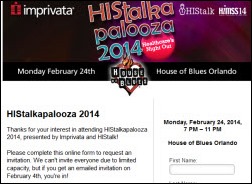
125x125_2nd_Circle

Time Capsule: Meaningful Use in the ED: Get Outta My Emergency Room

January 11, 2014 Time Capsule 1 Comment

I wrote weekly editorials for a boutique industry newsletter for several years, anxious for both audience and income. I learned a lot about coming up with ideas for the weekly grind, trying to be simultaneously opinionated and entertaining in a few hundred words, and not sleeping much because I was working all the time. They’re fun to read as a look back at what was important then (and often still important now).

I wrote this piece in February 2010.

Meaningful Use in the ED: Get Outta My Emergency Room
By Mr. HIStalk

125x125_2nd_Circle

At my hospital, we worry a lot about ED satisfaction scores. No matter how well we do in areas such as OB or surgery, the ED scores always drag everybody else down. It always seems that the best and the worst aspects of our hospital’s care happen there.

We can only do so much to raise those scores. It’s not a democracy in ED, even though patients think it should be. You might have arrived first, but if the guy sitting across from you has a butcher knife sticking out of his neck, your abscessed tooth is just going to have to wait.

The ED is aptly named since it exists to serve patients with emergent medical issues. If you aren’t one, feel free to enjoy that second half-hour of “The Price is Right” on the “please don’t change the channel” TV because, as Samuel Shem said in The House of God, you are a GOMER – get outta my emergency room.

I’m not really sure why we want our ED satisfaction scores to be high, anyway. We tell everybody how much money we lose there. We use it to park patients who need beds that we don’t have. It doesn’t seem like a good idea to make patients so happy about their ED experience that they keep using our services and recommend them to others. The last thing we need is for them to return with their next ingrown toenail.

I also wonder about the fad of plastering emergency department wait times on highway billboards. It would seem that we are encouraging patients who might be tempted to drop by on a whim. I would interpret thusly: if you aren’t sure if you are sick enough to be willing to wait an hour, come on over because, at this moment, we can see you in 15 minutes.

I’m as much of a hard-driving entrepreneur as anybody who has always worked as a non-profit hospital wage slave. That’s why I’m sure my latest idea is a winner:  modifying ED software to show wait times that are multiples of the real number.

Here’s what my company will offer. We will erect huge, blinding electric wait time signs over the ED entrance, out on the street, and right beside your blue hospital sign on the highway. We inflate the actual ED wait time ridiculously (in fact, we can probably just use a randomization routine instead of measuring anything since we’re just making it up anyway). Our artificially enhanced wait times will discourage people to stay the heck out of our ED unless they are truly sick enough to not mind the wait.

This should be an easy sell to the ED doctors, who didn’t take an emergency residency to perform primary care. The really ill patients will appreciate not having to grimace in pain while the seemingly healthy extended family in the next row over settles in for a loud, impromptu gin rummy game and sends out for fast food.

Best of all, hospital executives could tout their high number widely, eliciting sympathy and support from taxpayers who otherwise resent their million-dollar salaries. Who would feel sorry for a hospital that manages to see ED patients in 20 minutes?

For a slight additional fee, I would modify the garish signs to proudly display an inflated number of patients who have left against medical advice. Those are the kinds of patients who need to be gently pushed back into less-expensive medical venues – the ones who found it inconvenient to wait their turn. This is not a metric of inefficiency, but rather a measure of triage success.

I have another flavor of my business model that I think will be quite attractive. I will hack the billboard system of the other hospital in town in what I’m calling my patient flow maximization solution. If your ED gets backed up, you push a secret button that drops the wait times on the other guy’s billboard to five minutes. I am naming that enhancement the Elective Diversion Module.

News 1/10/14

January 9, 2014 News 3 Comments

Top News

1-9-2014 10-34-30 PM

inga thumb Merge Healthcare discovers in an internal review that a former sales employee falsified the existence or amount of certain customer contracts. Merge had not invoiced any of the customers or recognized revenues, meaning previously reported results are not affected. However, the company reduced its non-GAAP subscription backlog totals over 25 percent from prior statements. The sales rep, who had been paid about $250,000 in commissions on the invalid contracts, has admitted to falsifying the orders and has offered to pay restitution. Merge has referred the matter to the US Attorney’s Office. While the rep’s actions are reprehensible, I am sure that plenty of sales veterans (me included) in HIT and other industries are aware of other instances of  “creative accounting” in order to hit quotas.


Reader Comments

1-9-2014 10-35-38 PM

From Politico: “Re: Greenway. Major layoffs this week.” Unverified, but reported by several readers, one of whom gave a number of 80 affected employees.

From Nasty Parts: “Re: Carrollton is cratered. Rumor is 150 people downsized at Greenway’s former HQ, including the VP of HR. This comes on top of an exodus of sales executives, including two VP. Approximately 10 of the top reps have left, many because they did not want to sign the feared Vista non-compete. Also, word is that the HQ of SuccessEHS, another Vista acquisition, was also cleaned out today.” Unverified, but Nasty Parts has been right several times in the past. We didn’t receive a response to our inquiry.

From Xflo-Bee: “Re: Cerner. I’m hearing a lot of buzz on the wire about Cerner being the focus of a big lawsuit over a state reporting SNAFU. Can anyone verify?”

From Bob A. Booey: “Re: MU attestation. We’re having an awful time trying to attest for 2013 MU on the CMS website. Here is the response from CMS. ‘We have been notified that the Registration and Attestation Application is experiencing technical difficulties. This is currently being investigated. At this time, we do not have an estimated time for resolution. Please try again later. We apologize for any inconvenience this may cause.’”

1-9-2014 10-15-33 PM

From MT Hammer: “Emdat. A new banner on Emdat’s website points to another Nuance acquisition.”


HIStalk Announcements and Requests

inga thumb Here’s some HIStalk Practice highlights from the first week of 2014: doctors who Google patients. CMS wants to ban abusive prescribers from government programs. Free app Figure1 allows physicians to share de-identified photos of medical conditions. Patients from practices affiliated with University Hospital (GA) embrace the health system’s Epic portal. Montana requires insurers to reimburse telehealth visits at the same rate as in-person visits. Brightree and athenahealth will share patient referral data. Dr. Gregg provides insight on why some physicians choose to remain independent. While you are stopping by, sign up for the email updates so you don’t miss a post. Thanks for reading.

inga thumb We sent our sponsors an email earlier this week about our activities at the HIMSS conference, so if you should have seen this and didn’t, email me

1-9-2014 12-56-29 PM

inga thumb Speaking of HIMSS, I ran across this infographic depicting the importance of social media during HIMSS14. Mr. H, Dr. Jayne, and I will be providing occasional updates on Twitter, but you’ll also want to make sure you are following Lorre (@Lorre_HIStalk). She’ll be manning our HIStalk booth (#1995) and passing along our impressions of the exhibit hall’s best and worst booths, as well as tips for finding the coolest swag, free cocktails, and good coffee.

Last chance: HISsies nominations will close shortly, so nominate your choice for Best Vendor, Best CIO, etc. ASAP.

HIStalkapalooza details and registration will be available next Wednesday, January 15. We’re getting a bunch of emails every day asking about it, so please save us some time by hanging in there until next week. Our primary sponsor still has spots for two more co-sponsors who will be recognized in a variety of ways, so email me if your company is interested.

1-9-2014 9-34-01 PM

Welcome to new HIStalk Gold Sponsor Wide River Consulting. The Lincoln, NE-based company offers healthcare IT consulting services with an emphasis on serving hospitals in rural and underserved communities. Wide River has helped 50 Critical Access and Rural Hospitals that were struggling to keep up under the weight of ICD-10, MU, EHR upgrades, and PQRS reporting, often with vendors that find it challenging to send people to their locations. The company offers a wide range of technical and engineering services through a partnership with Sterling. Executive Director Todd Searls tells me that with the REC grants ending, PPCPs and CAHs need a low-cost way to keep forging ahead with Meaningful Use and Wide River can help. The company’s ICD-10 services are a big hit as well. CAHs can get a one-year subscription to Wide River’s Meaningful Use Help Desk for $175 per month and providers can sign up for $60 per month, gaining access to experts who can help with MU-related questions ranging from patient portals to exclusions. The company’s goal is to help teach small and rural hospitals to succeed with the resources they have, even helping them form mini-HIT co-ops. Thanks to Wide River Consulting for supporting HIStalk.


Upcoming Webinars

January 16 (Thursday), 1:00 p.m. Advanced Efforts to Identify and Eliminate Waste from Healthcare. Sponsored by Health Catalyst. Presenter: David Burton, MD, executive chairman, Health Catalyst. Based on a breakthrough analyses using several large healthcare data sets as representative samples, Dr. Burton and team will present insights designed to help executives struggling to identify, quantify, and extract waste from their systems.


Acquisitions, Funding, Business, and Stock

Shareholders of Health Management Associates approve the previously announced $3.9 billion sale of the hospital chain to Community Health Associates.

Endo Health Solutions will sell its HealthTronics business to Altaris Capital Partners for total consideration of up to $130 million, including $85 million in cash upfront. HealthTronics is a provider of urological products and services, including the UroChart EHR and meridianEMR systems.

1-9-2014 10-42-01 PM

Lumiata, formerly known as MEDgle and the developer of a predictive analytics platform for healthcare, closes a $4 million Series A round led by Khosla Ventures.


Sales

1-9-2014 10-47-00 AM

Dameron Hospital Association (CA) selects Allscripts Sunrise clinical products suite.

1-9-2014 12-22-08 PM

Presbyterian Senior Living (PA) will implement AOD Software’s long-term care EHR across its 23 locations.


People

1-9-2014 11-23-59 AM

VMware promotes Ben Fathi from SVP to CTO.

1-9-2014 11-23-15 AM

Telehealth solution provider AMC Health names John Larus (Clinipace) SVP of solutions development for the clinical trials division.

1-9-2014 11-21-57 AM

RCM provider Encoda names Michael Kallish (RemitDATA) CEO, replacing co-founder William Cox, who will assume the role of president and CTO.

1-9-2014 11-53-23 AM

Impact Advisors appoints Steven Schlossberg, MD (Yale School of Medicine) VP/CMO.

1-9-2014 12-15-42 PM

Surescripts announces that CEO Harry Totonis will step down effective March 2014 and that it has hired an executive search firm to find his successor.

AHIMA members elect Angela Kennedy (Louisiana Tech University) as president/chair of the board of directors, a role she has held since June following the death of Kathleen A. Frawley. Members also elected Cassi Birnbaum (Peak Health Solutions) president/chair elect; Jennifer McManis (Crowley Fleck Attorneys) speaker of the house; and Zenethia Clemmons (HHS OCR), Virginia Evans (Emory Healthcare), and Colleen Goethals (Midwest Medical Records Association) directors.

Southcoast Health System (MA) hires Greg Robinson (AltaMed Health Services) as executive director of enterprise informatics.


Announcements and Implementations

ICUcare and IEEE will collaborate to develop a universal industry standard/specification and a free web-based middleware API to help healthcare providers map data from medical devices to EHRs and other health information systems.

1-9-2014 12-04-06 PM

Advocate Eureka Hospital (IL) implements electronic patient and e-forms technology from Access.


Other

1-9-2014 11-05-23 AM

The Institute of Medicine proposes a standard framework to help providers identify and quantify the costs and benefits of EHR implementations.

Non-profit hospitals paid their CEOs a mean compensation of $594,781 in 2009, according to a JAMA Internal Medicine-published report. Hospitals with high levels of advanced technologic capabilities compensated their CEOs $135,862 more than hospitals with low levels of technology.

A Reuters article says that drug companies, with newly limited access to doctors per PPACA requirements, are moving their sales efforts to EHRs. It mentions Practice Fusion, which sells EHR pop-up ads, and EHRs that email refill and vaccine reminders that don’t clearly state if the message is sponsored by a drug company.

Weird News Andy says the appropriate ICD-10 code is “X59.9 or X12 or combination thereof.” At least 50 people are scalded from emulating TV weather people who tossed boiling water into cold Midwestern air to watch it freeze.


Sponsor Updates

  • AirWatch wins three 2014 Compass Intelligence Awards in the enterprise mobility category, while AT&T was named the best service provider in the health and wellness category, as well as a winner in multiple non-healthcare related categories.
  • Lexmark’s Perceptive Software launches Perceptive Media Connector, which enables the cloud-based capture, management, and access of video content with the Perceptive Content client interface.
  • Ping Identity opens registration for Cloud Identity Summit 2014, scheduled for July 19-22 in Monterey, CA.
  • KLAS extends a high early-performance score to Health Catalyst for its healthcare-specific analytics platform.
  • ChartWise Medical Systems and TrustHCS partner to offer ChartWise’s CDI software with TrustHCS’s coding services and ICD-10 education.
  • Ellis Medicine (NY) cut overtime costs by $721,000 during the first six months after deploying API Healthcare’s workforce management technology.

EPtalk by Dr. Jayne

clip_image002

After several extremely slow news weeks, I’m glad to see things are starting to heat up. I’ve heard a lot of buzz about the Consumer Electronics Show, which is taking place this week in Las Vegas. Several readers have sent me blurbs about wearable tech. I’m not nearly as much of a fashionista as Inga, but I do like to keep an eye on the trends, especially when they’re related to health IT.

The first product I looked at was the wearable ambulatory blood pressure monitor from iHealth. It’s both USB- and Bluetooth-enabled and allows for blood pressure readings at intervals of 15-120 minutes. Most home blood pressure monitoring units are bulky and patients are not as compliant as they might be. It is compatible with both iOS and Android and can store up to 200 measurements. It reminds me a bit of a futuristic version of the shoulder holsters worn by 1980s television cops, but with a touch of neoprene.

clip_image004

The company also has a wireless ambulatory ECG device that looks pretty cool. Instead of having multiple sticky leads attached to the patient, it has a single unit that is worn under clothing. In keeping with the throwback 80s vibe, it reminds me of the handset of a vintage rotary phone, although it doesn’t appear to come in avocado green or harvest gold. Bluetooth connectivity to iOS allows for real-time transmission of readings. Both it and the blood pressure monitor are still awaiting FDA clearance and pricing isn’t yet available, so put your credit cards away.

Another reader sent me an article about the need to design tech wearables for women. I was excited to read about Ringly, which is creating jewelry and accessories that receive notifications from the wearer’s mobile phone. Being alerted by jewelry would be much nicer than the incessant phone checking I see. After recently working in an office where the front desk staff notified the back office of patient readiness using an extremely loud intercom (“patient for Dr. Jayne!”) I wonder if we could tie it to the EHR patient tracker. Ringly’s goal is to create jewelry that looks like jewelry rather than gadgets and also to allow users to leverage its app to prioritize the alerts they receive.

Don’t get me wrong, gadgets can be cool. I wear a Garmin when I run that screams, “Hey, I’m a GPS! No way you’re mistaking me for a watch!” I’m not crazy about how it looks, but its function makes it tolerable. On the flip side, there’s Everpurse, which can charge a cell phone on the go and looks nice as well. Although they’re sold out of virtually everything except the persimmon leather clutch, I might have to keep an eye on the site for new offerings.

Looking back at some of the promotions from the Consumer Electronics Show, Intel has launched its Make it Wearable contest to help identify the next generation of accessories. Maybe someone will develop a white lab coat with a sensor to track the level of dirt on the cuffs or the time since it was last laundered. I can think of a couple of physicians who would benefit from that functionality.

How about a patient hospital gown that alerts you when your backside is flapping in the breeze or one that self-adjusts to prevent unintended exposure? The video clip on the Intel website showed a dress that appeared to be zipping itself, so it might just be in the realm of possibility. Maybe next year Inga and I should include the Consumer Electronics Show in our meeting and convention plans. Have a connection that can help us register? Email me.


Contacts

Mr. H, Inga, Dr. Jayne, Dr. Gregg, Lt. Dan, Dr. Travis, Lorre

More news: HIStalk Practice, HIStalk Connect.
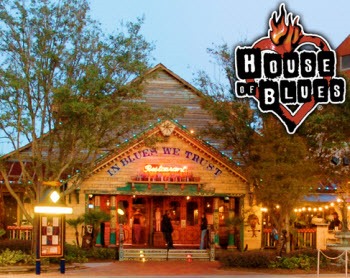
125x125_2nd_Circle

CIO Unplugged 1/8/14

January 8, 2014 Ed Marx 5 Comments

The views and opinions expressed in this blog are mine personally and are not necessarily representative of current or former employers

Leadership and Identity—It’s All About the Title! (Part 3 of 4)

1-8-2014 8-15-18 PM

In our office lobby display case, the theme of the month was “pets.” David had a picture of his beautiful hunting dog, but what caught my eye was the castle ruin in the background. “Oh, that’s Bective Abbey, right across the street from my parents’ home in Meath. The remaining cloisters were used in scenes from ‘Braveheart.’” Jokingly I said, “Beautiful. Let’s go.”

Four weeks later, David and I were standing in the actual spot, walking the castle ruins. Although “Braveheart” was about Scotland, many of the movie shots took place in Ireland, in David’s backyard. To prepare ourselves, we watched the movie three or four times.

“Braveheart” is full of leadership lessons, but the following interchange between Robert the Bruce and William Wallace stuck with me. Here is the script and the video (3:30).

Robert the Bruce: “I’m not a coward. I want what you want, but we need the nobles.”
William Wallace: “We need them?”
Robert the Bruce: “Aye.”
William Wallace: “Nobles. Now tell me, what does that mean to be noble? Your title gives you claim to the throne of our country, but men don’t follow titles, they follow courage. Now our people know you. Noble, and common, they respect you. And if you would just lead them to freedom, they’d follow you. And so would I.”

1-8-2014 8-16-38 PM

The same is true in life. Screw the title, focus on leadership. Title holds significance when it’s earned through performance.

People want to follow leaders, not titles.

Look at the 2013 Time Man of the Year, Pope Francis. Did Francis suddenly transform into the unique leader because he became Pope? No! If you know his history as a Cardinal and Arch Bishop, nothing he does as Pope should surprise you. Did he become Pope because he sought title? Oft called “the reluctant Pope” tells us that seeking title was not on his goal sheet. Serving people had always taken precedence. In fact, look at his warning against careerism.

I am not naïve to suggest this is always the case. We know plenty of people who gained titles by stepping on others, a Machiavellian winning-at-all-costs approach. But I can tell you the most successful leaders never sought titles, they sought to humbly serve. The former are easy to spot and get little respect.

One of my directors — I’ll call her Tracy — was a damn good analyst. She didn’t seek a title. She just pursued her role and responsibility with vigor. She accomplished great things and we gave her more. We saw the results and potential so we promoted her to a director. She is awesome.

In another instance, I was struggling to fill our chief security officer role. One day, I asked this recently retired Marine what his defining moment was. He described how, as a staff sergeant, he stood down a full bird colonel. You see, he cared about doing the right thing despite anyone’s title. That’s moxie. It’s leadership. I hired him on the spot. You think he will stand down from an executive or his manager if our security posture is compromised? Never! Title is secondary to effective leaders.

Do you possess your title or does it possess you?

A good test: Do you ever use your title to get things done or get your way? I rarely refer to myself as senior vice president or CIO. When I am in meetings, I tell people I serve as a leader in leveraging technology to enable superior business and clinical outcomes. I do what I can to not to let title get to my head. Humility is the key. Watch for the slippery slope. It will take your title and life if you are not careful. I know.

Much of what I’m writing is logical and intuitive, but not often practiced. We are driven and ambitious and we seek instant gratification. We toiled well for a few months, so we think we deserve that next promotion. But I tell you the truth, gaining titles before you are prepared is very dangerous to both you and your organization. Stop the pursuit. Focus on being the best at whatever you do. The rest will follow.

Some of you are thinking, “Ed, I do all that. I don’t seek crowns. I seek to serve and the title never comes. In fact, I see others being promoted over me that offer half the value I do.”

I get it. It happens. The world is not fair. Continue to work your ass off and double down on your efforts. Find other ways to increase your value to the organization. Expand. Ask for more responsibilities. Volunteer. But if at some point, over multiple years, you’re doing all these things consistently and still nothing? Yep, time to bail.

Again, I’m a work in progress. Some of the things I write are aspirational for me. I struggle with the same things as you. Pride, arrogance, achievement orientation, instant gratification, etc. But I am slowly catching on to this identity thing. Taken me all of about 50 years. Hopefully it will stick for the next 50.

Damn, this is easy to write but hard to internalize, yet it is truth.

For me, identity is not rooted in title, looks, or what I do. It is who I am and what I stand for, believe in, and practice. I am trying hard to forge my identity in my faith in God. I like the sound of CEO, but His title is what I desire. “I am free. I am new. I am a saint. I am alive. I am all He says I am. I am His own.”

My detractors are right in the sense I fall short of the above list. However, only One’s opinion about me counts—and they’re not the One.

I will wrap up the Leadership and Identity series with, “Identity & Recognition” in my next post. I will specifically identify the keys to identity that resonates with who I am becoming.

Ed Marx is a CIO currently working for a large integrated health system. Ed encourages your interaction through this blog. Add a comment by clicking the link at the bottom of this post. You can also connect with him directly through his profile pages on social networking sites LinkedIn and Facebook and you can follow him via Twitter — user name marxists.

News 1/8/14

January 7, 2014 News 1 Comment

Top News

1-8-2014 6-34-26 AM

Two healthcare-focused private equity firms will invest $77.5 million to take minority positions in MedHOK, which offers care, quality, and compliance software.


HIStalk Announcements and Requests

1-8-2014 5-29-05 AM

Welcome to new HIStalk Gold Sponsor Coastal Healthcare Consulting. The Mountlake Terrace, WA-based company has completed 850 engagements and won numerous KLAS clinical implementation awards since its founding in 1995. Most of its consultants have been with the company for at least 10 years. Offerings include Catalyst (SWAT team project crisis response), Convergence (reducing denied claims), Fusion (linking technology to clinical processes), and Wave (application support, workflow analysis, system build, and activation). Product expertise includes Allscripts, Cerner, Epic, GE Healthcare, and Meditech. Industry long-timer Amy Noel, RN is CEO of the company. Thanks to Coastal Healthcare Consulting for supporting HIStalk.


Upcoming Webinars

January 9 (Thursday), 2:00 p.m. Beyond the Summits. Sponsored by HIStalk. Presenters: Ed Marx, SVP/CIO, Texas Health Resources, and Elizabeth Ransom, MD, FACS, EVP/clinical leader North Zone, Texas Health Resources. Everyday healthcare executives share leadership and teamwork principles they learned from climbing some of the world’s highest peaks over the last four years.

January 16 (Thursday), 1:00 p.m. Advanced Efforts to Identify and Eliminate Waste from Healthcare. Sponsored by Health Catalyst. Presenter: David Burton, MD, executive chairman, Health Catalyst. Based on a breakthrough analyses using several large healthcare data sets as representative samples, Dr. Burton and team will present insights designed to help executives struggling to identify, quantify, and extract waste from their systems.


Acquisitions, Funding, Business, and Stock

1-7-2014 11-51-07 AM

Press Ganey acquires On The Spot Systems, developer of a real-time data capture system for patient feedback, and launches Point of Care, a solution that allows providers to capture patient feedback via tablets and mobile devices.


Sales

Mount Sinai Health System (NY) selects MU Assistant from SA Ignite to automate its MU attestation process.

The Guam Regional Medical City hospital will deploy Allscripts Sunrise EHR and Financial Manager platforms when it opens in late 2014.

The Department of Defense awards Carestream Health a  one-year, $70.2 million contract for medical imaging technology.


People

1-7-2014 7-32-21 PM

McKesson Specialty Health and the US Oncology Network appoint Jeffrey Kao (Coventry Health Care) CIO/SVP of information and technology services.

1-7-2014 7-33-36 PM 1-7-2014 7-34-26 PM

T-System promotes Mark Horner from VP of client services to SVP/GM of RevCycle+ and  expands CFO Steve Armond’s duties to include leading the company’s documentation solutions.

1-7-2014 8-07-10 AM

Jacob Nguyen (Craneware) joins VitalWare as EVP of business development and operations.

1-7-2014 7-35-30 PM 1-7-2014 7-36-55 PM

Vocera names Rhonda Collins (Fresenius Kabi, USA) chief nursing officer and promotes Steve Jackson from COO of its ExperiaHealth division to chief strategy officer.

1-8-2014 7-34-58 AM

David Cerino (Zynx Health) is named CEO of WiserCare.


Announcements and Implementations

1-8-2014 7-02-06 AM

Fairfield Medical Center (OH) goes live this month with a fingerprint ID system from CrossChx.

Harrison Medical Center (WA), which affiliated with Franciscan Health System last year, will switch to Epic this summer.

Riverside Medical Center (IL) implements the DebMed electronic hand hygiene compliance monitoring system.

Wesley Medical Center (KS), Cypress Surgery Center (KS), and Surgery Center of Kansas go live on Anesthesia Touch from Plexus Information Systems.

inga thumb McKesson announces the general availability of its Paragon Ambulatory Care Practice Management solution, which is an extension of its single database HIS for inpatient facilities and designed for hospital-owned practices. I understand the PM module was developed internally, as opposed to a bolt-on of one of McKesson’s acquired products, and that an EHR module is also in the works. Sounds like McKesson is positioning itself to compete with Epic and Cerner in the IDN market.


Government and Politics

The Office for Civil Rights proposes an amendment to the HIPAA privacy rule to allow certain entities to disclose the identities of individuals with mental health “prohibitor” status to the gun background check system. The change would apply to individuals who have been involuntarily committed to a mental institution; found incompetent to stand trial or not guilty by reason of insanity; or otherwise deemed by a lawful authority to be in danger of themselves.

CMS reports that more than 30,000 hospitals, physicians, and medical equipment providers are using its online esMD documentation system instead of mail or faxes for auditor medical record requests and prior authorizations requests for power mobility devices.

1-8-2014 6-01-46 AM

A new OIG report says CMS and its contractors haven’t done enough to address Medicare fraud related to EHRs. It recommends that CMS provide guidance to its contractors on detecting fraud and suggests they review provider EHR audit logs. The report identifies inappropriate EHR copy-pasting and creating of false documentation to support higher charges as key fraud issues. CMS responded by saying it will develop copy-paste guidance and identify best practices for its contractors to detect fraud associated with EHRs.


Innovation and Research

South Dakota philanthropist T. Denny Sanford donates $125 million to Sanford Health (SD) to support the incorporation of genomics into the health system’s primary care programs, including added genetic testing information to the EHR to allow clinicians to personalize drug therapies. Sanford has donated $1 billion to the health system that bears his name.


Other

1-7-2014 9-42-35 AM

QlikTech’s QlikView earns the top spot among business intelligence products in a KLAS report on the healthcare analytics market.

125x125_2nd_Circle

inga thumb According to a JAMA-published study, not too many physicians are joining Mr. H’s smoking doc for smoke breaks. Only about two percent of physicians admit to smoking, compared to 16 percent of the general population and 25 percent of licensed practical nurses.

1-7-2014 8-31-06 PM

A local paper profiles Whidbey General Hospital (WA), which experienced critical cash flow issues during its transition to Meditech. The hospital claims its billing process was abnormally slow after the system went live in May and caused A/R levels to climb and cash on hand to decline. The hospital, which expects to spend $7.5 million on its Meditech installation, is recovering. The paper incorrectly blames the ACA rather than than HITECH for requiring the use of EMR to avoid financial penalties.

A federal judge dismisses a patient’s lawsuit that charged a healthcare provider violated HIPAA laws when an employee’s laptop was stolen. The judge ruled that only HHS can enforce HIPAA and individuals do not have the right to bring lawsuits for its enforcement.

1-7-2014 8-50-30 PM

The Pittsburgh paper profiles hospital pharmacy automation vendor Aesynt, the former McKesson Automation / Automated Healthcare that was sold to Francisco Partners in November. It says the company has developed new hospital drug management software being tested by UPMC and Intermountain. President and CEO Kraig McEwen says the company has introduced more products in the past 12 months than in the past five years. He also says the company is looking for acquisitions  that will help it expand its offerings for reducing hospital drug costs.  

IBM’s “Jeopardy”-winning Watson computer is falling far short on the company’s revenue targets. Healthcare is its most promising market, but a $15 million M.D Anderson cancer genomics project is “in a ditch” according to the IBM executive in charge. A Watson oncology regimen project at Memorial-Sloan Kettering could go live later this year. IBM’s business plan calls for Watson to contribute $1 billion in annual revenue by 2018, but it has only generated $100 million in its three-year existence. The main problem is the effort required for engineers to program Watson for each business case so that it can learn from available information.

1-8-2014 6-53-33 AM

Massachusetts will launch the second phase of the Mass HIway HIE Wednesday at Beth Israel Deaconess Medical Center. The HIE  has received $55 million in federal funding.

E-Health Ontario, the provincial agency tasked with creating EHRs for all Ontarians, will share $2.3 million in performance bonuses across its 704 staff members. The payout follows a court settlement that restored payouts that were cancelled in 2011 as part of a controversial wage freeze.

John Lynn of EMR and HIPAA is producing an April 7-8 Las Vegas conference covering healthcare IT marketing and PR.

James Parks, former COO/CIO of Box Butte General Hospital (NE), is indicted on seven counts of child pornography after the hospital reports finding explicit content on his computer.

The governor of Minnesota blames IBM for problems with its state-run health insurance exchange that launched October 1. Minnesota Governor Mark Dayton sent a highly critical letter to CEO Ginny Rometty last month that blamed the company for a laundry list of items:

Your product has not delivered promised functionality and has seriously hindered Minnesotans’ abilities to purchase health insurance or apply for public health care programs through MNsure…. your product has significant defects, which have seriously harmed Minnesota consumers.


Sponsor Updates

  • CCHIT certifies that the Arcadia Analytics Meaningful Use Calculation Engine v1.0 is compliant with the ONC 2014 Edition criteria as an EHR module.
  • PeriGen recognizes Barbara LaBranche, senior director of clinical informatics design and usability, for being named an EHR Game Changer.
  • Muhammad Chebli, interoperability product manager for NextGen Healthcare, discusses the importance of interoperability in achieving MU2 objectives, particularly summary of care.
  • Liaison Technologies reveals its top predictions for 2014, including the dramatic growth of data integration complexity and the normalization of mass customization.
  • Nuance Communications demonstrates wearable devices with Dragon Mobile Assistant and Swype keyboard for smartwatches at this week’s CES 2014 in Las Vegas.
  • Prominence Advisors is named one of the 50 top Chicago employers of Generation Y employees (those aged under 33).
  • Visage Imaging releases a demo video shot at RSNA of its Visage 7 Enterprise Imaging Platform.

Contacts

Mr. H, Inga, Dr. Jayne, Dr. Gregg, Lt. Dan, Dr. Travis, Lorre

More news: HIStalk Practice, HIStalk Connect.


125x125_2nd_Circle

HIStalk Interviews Joseph Mayer, MD, CEO, Cureatr

January 6, 2014 Interviews 2 Comments

Joseph Mayer, MD is founder and CEO of Cureatr.

1-4-2014 6-41-02 PM

Tell me about yourself and the company.

I started Cureatr when I was a resident at Mount Sinai here in New York City. Prior to that and during my residency, I’ve always been a clinical research guy. I did med school at Columbia and focused on clinical operational workflow research. How you optimize consults, communication between the floors and pharmacy, and even looked at inter-organizational workflows like PCP into the hospital, etc. This is an area I’ve been passionate about since I started my training. 

I started Cureatr with a guy that I had gone Stanford undergrad with, Alex Khomenko, about two weeks before I started my residency. I had formed this idea during the last couple of years of medical school and worked closely with Bob Sideli at Columbia. I got together with Alex who, at that time was director of engineering at 23andMe on the West Coast, flew out and met with him, and said, “I’ve got this idea. I’m starting my residency in a couple of weeks, but let’s work on this together. I’ll be in a great environment to get feedback to understand what our users need, also what the administrators need.”

One thing led to another. We built out Cureatr  during the first year of my clinical training. Our first real launch was in the medicine department at Mount Sinai in January 2012. 

It’s been really a whirlwind since then. We were part of this New York Digital Health Accelerator program, with 20 leading payor-provider orgs in the state which works closely with companies like ours to make sure there’s a product fit for what their needs are. We just closed our Series A financing with Cardinal Partners and Milestone Venture Partners. It was a $5.7 million around in October of this year.


Many companies are suddenly offering secure messaging for clinicians. Who are your biggest competitors and how is your product different?

We’re running into the guys you would expect, the TigerTexts of the world on the lightweight messaging side of things and on the nurse-first device side of things, Voalte and the legacy guys like Vocera and Avaya.

When I started Cureatr, I was interested in messaging as a part of some of these workflow problems. If you look at what a workflow consists of, you’ve got the communication piece. That’s a huge part of it, probably about a third of your time. You’ve got the documentation piece and CPOE documentation — that’s probably another third of your time.The last third is management, getting access to actual data. Obviously, unfortunately, you probably spend less time on implementation than you do in a lot of other areas of the care process. When I started Cureatr, I was interested in how do we build a tool for the whole part of this. 

Let’s start with messaging. There probably are a lot of messaging companies, but the penetration of these types of modern communication and workflow tools is incredibly low in this market. There’s no clear leader. It’s still a very green market.

We’re trying to differentiate ourselves by coming at this from the angle of, let’s find a couple of specific use cases or workflows that are highly repeated in your organization or for your patient population. Let’s deploy this combination of communication plus some task management plus some basic integration with other systems. Routing and care team mapping is a big part of that. That’s our differentiator. That’s the way we’re looking at helping our customers. 

The other big thing is more and more of our customers are interested in inter-organizational use cases. They need to think about what goes on beyond the four walls of the hospital, because from their perspective, the care episode no longer ends with discharge. We’ve gotten some early customers, like the DaVitas of the world, who are thinking a little bit ahead of the curve on cross-continuum care management and want to apply our tools to those areas. We are focusing on customers who are interested in that today because we think that’s going to be a growing need in the future where we can build some expertise.


Is the model that an enterprise would pay for the system, but there’s an individual app that people can download for free?

We are very hands on around implementation, very hands on around working closely with the enterprise and finding these specific use cases. But we get contacted all the time by folks like my father, a small private practice who want to use it. We obviously see value in letting them, but above value to them, the value to the bigger hospital customers we work with making the onboarding experience for the smaller organizations very easy, very lightweight. But our customers are mostly large enterprise guys like Sinai.


It’s same product that could be downloaded for free, just with more enterprise-type services bundled?

It’s modular. We have our core messaging piece. Then we have something we call structured messaging, which is a feature that the enterprise needs to create a step-by-step workflow for a specific use case. There’s a core, very lightweight messaging piece that’s very easy to download and get up and running within a couple of seconds, but if you want to get those other modules, if you want to get single sign-on, if you want to get documentation or tie in to your ADT or EMR or lab system, that’s what our enterprise customers will get.


What kind of numbers do you have using just the standalone free version versus those that are using it via enterprise?

It’s almost all enterprise customers. We wanted to get the product right. We wanted to build the infrastructure of a company before we started doing a lot of marketing. We haven’t done a lot of this “are your docs texting?” replacement-type marketing. We’ve mostly focused on talking to thought leaders and rolling it out to larger enterprises. I would say 90 percent of our customers are through an enterprise customer, any organization that’s purchased 500-plus licenses.


How many organizations do you have as customers?

We have about 10 large enterprise customers and then some large primary care groups, some larger multi-site practice groups. But in terms of large paying enterprise customers, we have about 10.


You offer read receipts and the ability to attached a photo securely. Is that unusual?

That stuff’s great and useful, but it’s what our customers expect. I would think anybody who is a serious company in the states does have that type of functionality.

The things that are really different between us and the product are, first of all, we built this from the ground up in a hospital and a health system. Our products have been optimized for clinical users. We have status and presence, which is a big thing in a clinical space.

The way I look at the world, and I think the way most providers do, is that there are only probably four or five pieces of information at any given time that are actionable and valuable to the care team. We are trying to create a shared view of the patient around this in real time as much as possible for the care team. It’s tying into those other systems and understanding how to smartly separate the signal from the noise around very actionable information is what we’re trying to optimize the product. But also maintaining a very good, solid, secure messaging user experience. 
That’s why things like read receipts, directory integration, scheduling integration, photo sharing, document sharing …  we have the wound care company that’s piloting our product, and it’s revolutionary for them because all of a sudden they can, instead of having to fax the face sheet from the patient when they’re discharged where they’re going to follow up with wound care or with vascular, they can send the PDF or even send a photo of the face sheet and have a very real-time, two-way back and forth to make sure that that patient is getting the right follow-up care. We’re starting from almost ground zero in healthcare, so things like that can have a very large, positive impact on workflow, on efficiency, on provider and patient experience, and satisfaction and experience.


You have data from Mount Sinai that was self-reported from a survey. Do you have any more specific analyses of either outcomes or anything more than just what the users report?

We’ve got a study that just came out that I can share with anybody who’s interested in following up privately, but we don’t have permission yet from this large academic health center to share that data because it’s literally fresh off their presenting at a conference. But we have some very exciting data around time saved, efficiency linked to earlier time of discharge, i.e. length of stay reduction and HCAP impact. We do not have randomized, evidence-based clinical trial data at this point. Very few companies in healthcare IT do.
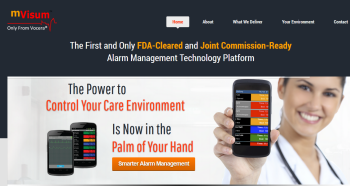

We have two customers we’re partnering with to run some 12-month longitudinal studies looking at outcomes on specific clinical hospital performance metrics, both on the inpatient and outpatient side.


How did working with an accelerator help the company?

I am very grateful to the NYeC because we got unique exposure to the best hospitals in New York. Even more than that, everybody who was doing this program was very invested in trying to create a new ecosystem around where … Hospitals are just not used to working with startups. As a startup, time is your most valuable resource. Hospitals don’t move quickly. The thing that we got from the accelerator — more than the money and more than the PR — was literally a very accelerated access and  feedback to the C-suite and users.

The big challenge for anybody in healthcare IT today is, how do you think through the ROI story and how to measure the ROI for your product? There are a lot of companies right now in this healthcare IT space sprouting up. The death of many them will be not thinking about that piece, not having access to the right folks in the big health systems and the healthcare world in general to think through that piece.
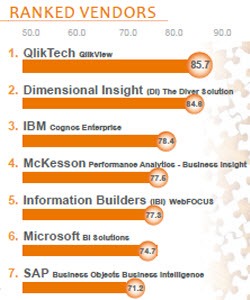
That’s what we got out of this accelerator much more quickly than we would have from one customer or from going and talking to your friend’s dad who’s some executive at a hospital. We had invested folks giving us that kind of feedback through this program. I would recommend that program for anybody and I would do it again.


Where do you see the company going in the next few years?

There’s real value in secure texting or replacement pager stuff, but we’ve come up with what I think is the most effective, repeatable process for deploying secure messaging leveraging mining of the data for optimizing secure messaging in these larger enterprise customers. The next 12 months is really about what’s coming after messaging. Optimizing the care team mapping side of things, i.e. routing of messages to the right person at the right time, or routing information at the right time beyond messaging, task management.

These are the workflow tools. That’s what customers are telling us that they want. When you look at the most successful implementations of technology in healthcare IT and most successful companies, they’re very much focused on a couple of specific use cases or clinical use cases or workflows where they’re doing that better than anybody else. Our goal is, let’s find those use cases, let’s deploy messaging and these other tools around it, then let’s actually measure an ROI and let’s actually make it very clear for our customers how to achieve that ROI in future implementations. 

Building the product and the implementation and services side of the business to support that is the most critical thing right now, because from a sales side, there’s great demand for this right now. It’s almost a function of keeping up with that demand and making sure that our product is truly adding value to our customers.

Curbside Consult with Dr. Jayne 1/6/14

January 6, 2014 Dr. Jayne 2 Comments

clip_image002.

I wrote in Monday’s Curbside Consult about a reader’s comments to my recent EPtalk piece. His comments were similar to those shared by many physicians I meet, so I’m responding to some of them. As background, my organization is seven years into its ambulatory EHR journey (many more on the hospital side) so we’re definitely not new to this game.

There is no infrastructure for EHR outside of big groups. CMS subsidized us to buy Ferraris and then we have to drive them in a corn field. A bike would be much faster in a corn field. Meaningful Use should have required EHR vendors to provide infrastructure to connect all the computers involved in a patient’s care. Our EHR doesn’t talk to our hospital and the vendor wants $100,000 to write an interface for a single clinic. Who can afford this?

It’s great that MU requires interoperability, but the infrastructure is still a challenge for many, especially independent groups. We’ve been struggling with this for years as we’ve watched RHIOs go bankrupt, competing HIEs squabble within the same state, and more. My own state was one of the last to have an immunization registry.

Other competing factions make interoperability more difficult even if the infrastructure is in place. Our health system gave away access to our HIE and we still struggled with physicians reluctant to participate due to privacy concerns. Patients are eager to participate, but don’t get me started on the complexity of the whole patient identity problem and data integrity. I’m pretty sure it has taken years off my life.

Some of our rural clinics are still regularly taken down by well-meaning guys with backhoes. A cut T1 line doesn’t help patient care at all, and that’s assuming you can even get a line there in the first place. One site took nearly six months to get an appropriate line installed.
Trying to get all the vendors to work together is an adventure. More money earmarked specifically for physician connectivity would be helpful. I think there were a lot of physicians out there that thought $44,000 in MU money would actually pay for their EHRs. The true cost of doing an EHR (and doing it right) is far more than that, and considering maintenance, the expanding burden of Meaningful Use requirements, and other costs, I don’t see a long-term ROI over paper. Depending on how much you leverage the system you purchased and how much potential it has, you might be neutral at best.

I like your “bike in a corn field” analogy, especially being a farm girl. I may have a good story involving a broken leg and trying to take a motorbike across a corn field, but it will cost you a martini to hear it. Providers were lured into purchasing EHRs with more bells and whistles than they can understand, let alone use.

The late adopters are at a huge disadvantage because vendors now have thousands of customers to get ready for MU Stage 2. There’s not enough time to do phased implementations like we used to do. Everyone is rushing towards October 1.

As for that charge for an interface (knowing the vendors in question, although keeping their names out of it since I can’t confirm it) that’s exorbitant. Look outside the box for other strategies, like exchanging CCDs or doing a daily extract. You could hire contractors to double-key the information in both systems for several years and still be revenue neutral.

Our EHR is ranked near the top, so I wonder what kind of disasters the rest of the EHRs are? When I read about people who use them and say how good they are, I wonder what is behind their enthusiasm? Is it bribes or just pure ignorance and/or ego of the ones who refuse to see the truth?

There are plenty of disasters out there from all vendors, and plenty of good installations as well. I’m a user of five vendors at the moment (on staff at three different hospitals plus one system I use in the office and one ER I work at makes me use two different systems.) Two of the hospitals use the same system and one works well, yet the other drives me batty. Those kind of situations make it hard for me to understand tarring and feathering any vendor based on anecdotal reports.

As far as enthusiasm, I can understand where a lot of groups are coming from. When you have a good system and it’s running well, it can make a tremendous on patient care, especially where population health is concerned. On the other hand, I’ve been a user of one of those “disasters,” and when it happens to you, it’s not pretty. My previous EHR vaporized parts of nearly six months’ of chart notes because it wasn’t set up properly and there were some database issues that kept the problem from being detected.

Before someone asks how many people might have been harmed from faulty charts, I’ll say it’s far less than the number who might have been harmed had I lost all my paper charts in a fire, flood, or tornado. I’m grateful for EHR because unless it’s a cataclysm that takes out our two data centers 35 miles apart plus the offsite backup vault in South Dakota, we’re OK.

I lived through a year of hell after that while we went through the entire purchase process again. I’m convinced that clinical conversion and reconstructing parts of all those charts took years off my life. I use those experiences to motivate me as I help other users and provide feedback to vendors in the hopes that no client will ever have to go through something like that again. I’m pretty much my vendor’s QA nightmare. If it’s broken I’ll find it. They actually include some of my real-life patient scenarios in their testing process now. It’s much easier than having me yell at them if I find defects later.

As for the results, however, we’re not delusional. We’ve had great clinical outcomes (data proven) but we’ve worked really hard to get there and it hasn’t been easy. For us the key has been emphasizing people and process much more than the technology, which needs to be seen as the tool that it is. Too many groups view the technology as the be-all, end-all and that can be detrimental to their success. Vendors don’t help this perception and need to be spending more time helping customers work through policy / procedure and workflow issues before they implement rather than dealing with train wrecks after.

As to your last comment. there certainly are some egos out there. Our ambulatory vendor once brought a client with a failed implementation to visit our organization. We went through our standard site visit presentation, basically gave away thousands of dollars in free consulting on how to be a success, gave them our implementation plan, etc. and showed them how we did it.

Their CMIO was one of the most arrogant people I’ve ever met. His response was, “I’m sure that worked for you, but we have our own plan.” I wanted to jump across the table and ask him why he was even there. Why did his team of ten fly hundreds of miles and take up three days of my team’s time? If he was so successful with his own plan, why was he starting his implementation over? I had over 150 live docs at full productivity at the time. He had 10 docs who tried to go live and who were only seeing 60 percent of their desired volume and his vendor was paying other customers to try to help his team save their implementation.

I’ve got one more set of questions I’ll answer next time. Tune in to hear my thoughts on Meaningful Use vs. meaningful patient care. Wouldn’t you like to see that in a steel cage match? We’ll also talk about conspiracy theories and whether real live physicians have anything to do with EHR design.

Email Dr. Jayne.

Text Ads


RECENT COMMENTS

  1. Re: Deliberately Faked Academic Papers in Nature See, this doesn't surprise me at all. Of course AI quotes these bogus…

  2. Challenger exploded on lift-off when the O-rings failed. Columbia disintegrated on reentry after one of the heat shield tiles were…

Founding Sponsors


Platinum Sponsors


Gold Sponsors


RSS Webinars

  • An error has occurred, which probably means the feed is down. Try again later.