Monday Morning Update 2/23/15

February 21, 2015 News 5 Comments

Top News

image

In Canada, an IBM/Deloitte-led, $670 million British Columbia Cerner EHR project is delayed with no new timelines announced. Reports say arbitration over a software dispute is a possibility.


Reader Comments

image

From Jude Lawless: “Re: 23andMe. They’re excited to receive FDA approval to publish ONE new genetic health report. At this pace, I’m not sure what they’re hoping to accomplish for individuals. For researchers, I’m sure that all their genetic information plus all of their surveys are accomplishing a great deal.” The FDA has loosened its rules covering direct-to-consumer carrier screening tests, allowing 23andMe to market its test for Bloom syndrome. It’s a rare condition, but the company makes money based on (a) the number of people who want to find out if they carry it, and (b) the value of selling the genetic data of its opt-in purchasers to drug companies.


HIStalk Announcements and Requests
image

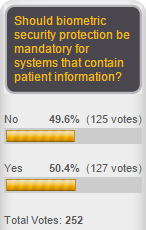
Poll respondents are evenly split on whether biometric security should be mandatory for protecting PHI. Glen commented that biometric consensus standards are inconsistent, while Clark added that infection control solutions make smart cards and RFID better solutions in clinical areas. New poll to your right or here: why is Epic creating an App Exchange? Click the “Comments” link after voting to explain yourself.
image

HIStalkapalooza registration has closed and I’ll send out invitations shortly. Every year I get dozens of complaints about the event long before it happens, with these being the most common (and all of which I’ve already heard for 2015):

  • “I read HIStalk religiously and didn’t see the signup notice.” I ran the large graphic and notice several times starting January 29 and ending February 18, so anyone who reads HIStalk even casually couldn’t possibly have missed it.
  • “My boss is an industry big shot and you can’t turn him away if he shows up uninvited.” I can, and in fact, I will. It’s not that hard for even completely self-absorbed executives to put their name on the list or order some flunky to do it for them. Attendance is nobody’s entitlement.
  • “We’re an HIStalk sponsor and didn’t think we had to register our people individually to attend.” I made it clear that every person who wants to attend needs to sign up. The names and emails of the chosen folks populate an Excel worksheet row that is then turned into a badge (and hopefully a door-checked barcodes if I can work that out). I’m still explaining eight years after the first event that this isn’t just a come-one, come-all party – sponsors foot the bill for around $200 per attendee and we can’t just throw open the doors like it’s a fraternity kegger.
  • “I’m bringing a guest.” Answer: that’s great if you signed them up and you each receive an invitation.
  • “We’re sponsoring the event and will be sending you our attendee list.” This actually isn’t a negative comment – it’s how the sponsorships work. Each company gets a specific number of invitations and they manage those, sending me their worksheets once they’re finished.

Speaking of the HIMSS conference, it was fun having celebrity guests in our microscopic 10×10 booth last year. Contact Lorre if you are famous, notorious, or fun and want to hold court there for an hour.


Last Week’s Most Interesting News

  • Shares of Castlight Health dove 31 percent Thursday after an analyst’s downgrade, but rallied almost 10 percent Friday.
  • Epic confirms its plans to open an App Exchange for customers and third-party developers.
  • Rumors say Apple Watch will be missing several planned monitoring capabilities because they weren’t reliable or would have triggered FDA interest.
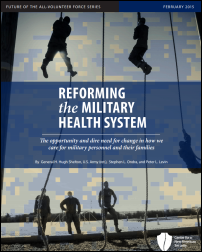
  • A think tank’s report says the Department of Defense shouldn’t lock itself into a long-term agreement with a commercial EHR vendor, although it also noted the DoD’s hugely expensive and marginally successful efforts at having big contractors develop its current AHLTA system.

Webinars

March 5 (Thursday) 2:00 ET. “Care Team Coordination: How People, Process, and Technology Impact Patient Transitions.” Sponsored by Zynx Health. Presenters: Grant Campbell, MSN, RN, senior director of nursing strategy and informatics, Zynx Health; Siva Subramanian, PhD, senior VP of mobile products, Zynx Health. This webinar will explore the ways in which people, process, and technology influence patient care and how organizations can optimize these areas to enhance communication, increase operational efficiency, and improve care coordination across the continuum.


Acquisitions, Funding, Business, and Stock
image

CompuGroup Medical acquires South Africa-based practice management vendor Medical EDI Services.

Credit information provider TransUnion plans an $800 million IPO.

image

Community Health Systems announces Q4 results: revenue up 54.1 percent, adjusted EPS $0.87 vs. $0.30, missing expectations slightly on revenue and meeting on earnings. The for-profit hospital operator’s massive August 2014 data breach wasn’t mentioned in the earnings call.


Sales
image

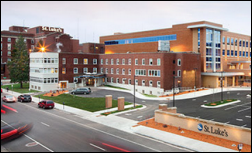
St. Luke’s Hospital (MN) chooses perioperative and anesthesia systems from Surgical information Systems.


People
11-2-2011 7-38-46 PM

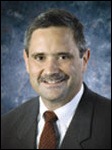
Patrick Hampson (HM3 Partners) joins the board of Canada-based Logibec Group.

image

MGMA names Halee Fischer-Wright, MD (St. Anthony North Medical Center) as president and CEO. You might think that MGMA would know better than put “Dr.” in front of her name and “MD” after, but you’d be wrong.

Huron Consulting Group names Joe Mauro (Siemens Medical) as managing director in its healthcare practice.


Announcements and Implementations

Black Book modifies its EHR survey methods after finding that some hospitals that provide EHRs to physicians and other hospitals were also completing surveys posing as system users. The company says nearly half of the 800 survey responses it audited from community practices and hospitals of under 100 beds were actually scored by their large-hospital partners, which the company likened to “soliciting a salesman to rate his own merchandise” to boost sales.

In Australia, cancer facility Chris O’Brien Lifehouse goes live with Oneview’s patient engagement solution.

Two Oregon organizations — a behavioral services provider and a health center — exchange patient CCDs via their respective Netsmart and Epic systems.
image

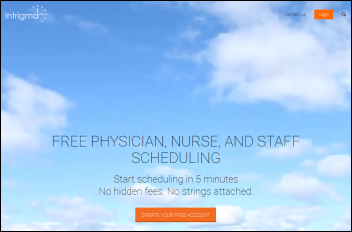
Employee scheduling software vendor Intrigma launches a free version of its product.


Government and Politics
image

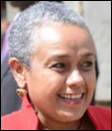
Kenya’s first lady opens a medical conference by urging medical professions to use IT to solve the continent’s high maternal mortality rate.


Innovation and Research

University of Pittsburgh and UPMC sign a non-exclusive collaboration agreement that will speed up commercialization of medical technologies.


Technology

image

It’s always annoying to buy a new PC and finding it loaded with bloatware that hardware vendors are paid to install, but Lenovo takes it to another level by pre-installing the hack-prone Superfish adware that not only hijacks search results, but supports a man-in-the-middle attack that can expose all browser-based information to hackers. Lenovo’s CTO starts off with a refreshingly blunt apology (“we messed up badly”) but then ruins it with a bald-faced lie in claiming that the company’s only purpose in pre-installing adware was “to supplement the shopping experience” rather than Lenovo’s income. You can test your laptop here and Lenovo and antivirus makers are providing removal programs. The many forms of crapware that the California-based Superfish is responsible for has earned it $20 million in VC investments. It’s sad when the first thing you have to do after buying a new PC is to reformat the hard drive and reinstall everything to make it usable.
image

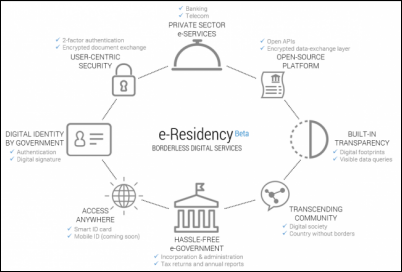
An interesting article on technology in 1.3 million-citizen Estonia brings up interesting points:

  • The country’s president is a technology geek, tweeting regularly after honing his skills at expressing himself concisely by writing one sonnet per day.
  • Half of Skype’s employees work in the capital of Tallinn.
  • The country offers an electronic identity program that citizens use to participate in 3,000 public and private services and to vote in elections, saving an estimated two weeks per citizen each year. It is available to e-residents, in which non-residents can obtain a state-issued, microchip-powered digital identity for digital document signing and transacting business with Estonian firms, or as the government says, “to make life easier by using secure e-services that have been accessible to Estonians for years already … we are moving towards the idea of a country without borders.”
  • Estonians sign 50 million documents electronically each year.
  • The government has developed a contingency plan to upload its entire digital infrastructure to the cloud if Russia were to invade the country.
  • The country created a “maximum coverage, maximum use” 4G broadband policy in giving the winning bidder for the frequency spectrum 21 days to provide country-wide 4G coverage, with the next goal being 300 Mbps LTE-Advanced coverage. 

Other

Federal prosecutors charge a Texas medical technology company owner with impersonating a Cerner employee in selling a $1.3 million MRI machine to Dallas Medical Center (TX) claiming he was representing Cerner. The man was also charged with perjury related to a previous legal case in which he allegedly falsified documents claiming a relationship with Cerner in winning a $25 million judgment against another company for breach of contract, theft of trade secrets, and several other charges. 

image

Montreal’s Jewish General Hospital urges patients to stay away after a power surge takes its computer systems down.

Healthcare IT Leaders posts a pretty funny “5 Apps We Want to see in the New Epic App Store.” Here are mine:

  1. A personalized countdown timer that shows Epic employees how long it will be before they’re old enough to rent a car.
  2. A Verona-optimized weather app for Epic educational attendees that in September through May adds 30 degrees to the predicted daytime high.
  3. A “Buy Epic Now” button for the health systems that haven’t already implemented Epic, which is all that’s needed since the company doesn’t negotiate prices or contract terms anyway.
  4. A real-time map of patient records being exchanged between Epic and non-Epic systems so we can settle this “is Epic interoperable or not?” thing one way or another.
  5. A real-time National Debt Clock-type display of how many billions Judy Faulkner is worth.

Sponsor Updates

  • Black Book Research names Medicity a top-ranking “Core Private Enterprise HIE Solutions Vendor.”
  • Five Versus clients will present on RTLS at HIMSS15.
  • Jim Morrow, MD shares his experience with Shareable Ink’s Patient Xpress Solution.
  • SRSsoft’s Scott Ciccarelli writes about “Dreams vs. Reality.”
  • T-System’s Molly Golson, RN shares “How I Got into Healthcare.”
  • Valence Health is featured in a Trustee Magazine article on the role of the attribution process in population health.
  • Verisk Health’s Lee Stephenson describes “How Population Health Management Becomes Self-Management.”
  • Voalte client Boulder Community Health’s transition to smartphones is featured in the local paper.
  • WeiserMazars employees raise over $5,500 for the American Heart Association’s “Go Red for Women” campaign.
  • ZeOmega’s Ron Wozny writes about “The Key to Delivering Healthier Babies.”
  • Sentry Data Systems outlines seven basic steps to annual 340B FQHC recertification.
  • Qpid Health will exhibit at HealthIMPACT East February 27 in New York City.
  • PMD’s David Cote advises readers, “Don’t Buy a Porsche if You Want an iPhone.”
  • PeriGen will exhibit at the AWHONN California Section Conference February 27-28 in Napa.
  • Quest Diagnostics makes Fortune magazine’s list of “Most Admired Companies.”
  • Tony Kanaan will pilot the No. 10 NTT Data Chevrolet in this year’s Verizon IndyCar Series.
  • Nordic’s Scott Gierman offers advice on how to “Prepare for a Successful Season with EHR Spring Training.”
  • The New York eHealth Collaborative will exhibit at the ePharma Summit February 24-26 in New York City.
  • Navicure Founder and CEO Jim Denny will speak at a panel during National Health IT Day at the Georgia State Capitol.
  • MEA / NEA launches a free website facelift contest for physician practices.
  • MedData’s Sean Biehle introduces patient engagement to billing in a new company blog.
  • McKesson releases a new case study on “Evidenced-based Care Management across the Continuum.”

Contacts

Mr. H, Lorre, Jennifer, Dr. Jayne, Dr. Gregg, Lt. Dan.

More news: HIStalk Practice, HIStalk Connect.

Get HIStalk updates.
Contact us online.

125x125_2nd_Circle

Readers Write: Big Data / Shmig Data

February 20, 2015 Readers Write 4 Comments

Big Data / Shmig Data: Thoughtflow 2015 and the Coming Age of Incessant Data
By Samuel R. Bierstock, MD, BSEE

image

In the years following the Institute of Medicine’s “Crossing the Quality Chasm,” there was widespread acknowledgement that we could do a better job in caring for our patients and a shared belief that the path to accomplishing that task lay in the adoption of clinical information systems. That idea was great, but actual attainment of the goal was hindered by the failure of vendors and designers of electronic clinical information systems to fully understand the full vantage point of their target end users. Clinicians simply resisted the structured workflows that designers assumed would make for acceptance. There followed more than a decade of physician resistance, dismal adoption rates, and billions of dollars spent in implementation efforts to encourage clinician utilization of EHRs.

It was not the long anticipation of the attrition of aging computer-resistant retiring physicians, nor was it their replacement by tech-savvy young doctors that caused the uptick in the number of clinicians using electronic health records (EHRs). It took the good-old US government and the mandates of Meaningful Use to do that.

Unfortunately, neither can the increased adoption of EHRs by physicians be attributed to a better job in the design of clinical workflow processes by vendors. In fact, if anything, the financial pressures on hospitals fearing loss of Meaningful Use dollars and associated penalties resulted in pressure being exerted on physicians to use whatever hospital EHR systems were in place in spite of negative impact on clinical efficiencies and the ability of physicians to get their work done. As a result, we embarked upon and remain in a period of administrative / medical staff friction wherein hospital administrators need their medical staffs to be using their EHRs while many physicians feel impeded in simply getting their work done and view hospital pressure as purely financially motivated.

In 2003, I first described what I felt was the missing essential ingredient to physician adoption of EHRs. The widely heralded and sought-after workflow support was not the answer. Workflow is a mechanical approach to a goal or task – “do this, then do that” and “click here, then click there.” It seemed clear to me that what needed to be supported was not workflow, but Thoughtflow, a concept I defined as the process by which a clinician identifies, accesses, prioritizes, and acts upon data and information.

In 2006, my article entitled “Thoughtflow — The Essential Ingredient for Physician Adoption of Implemented Technologies: Why Clinicians Have Still Not Adopted Clinical Technology and Where Vendors and Clinical Leadership have had it All Wrong” received a very widespread and supportive response. While a great many changes in EHR design could have helped support Thoughtflow, they were slow in coming and for the most part inadequately based on a true understanding of what it is like to practice medicine. A decade later, they remain essentially missing.

Are more physicians using EHRs today? Yes. Do they find that EHRs make their lives easier or their professional work more efficient? Clearly, no.

Emergency rooms represent the ultimate environment for needed efficiencies in the delivery of care. Emergency rooms with EHRs in use have an average of 35 to 40 percent drop in physician efficiency and up to 40 percent increase in the number of patients who leave without being seen due to long waiting room times.

The 2013 KLAS report showed that the largest EHR hospital vendor is consistently rated in last place on virtually all parameters of clinical efficiency by physician users.

While I think it can be said that vendors have failed to recognize the need to support Thoughtflow and to build in creative feature functionality to truly support the way clinicians think and act, in fairness it must be pointed out that technologies essential to success in this regard have simply not been available. Today however, they are.

  • Voice recognition software has steadily improved with respect to both accuracy and reliability.
  • Language processing tied to vocabulary standards and ICD-9 / 10 coding and increasingly accurate optical character recognition allow for ever-improving accurate extraction of structured data from unstructured data in a variety of formats (dictated notes, PDF documents, etc.)
  • Increasingly maturing clinical decision support systems that are integrated into clinical documentation systems can be linked directly to order sets and treatment protocols – effectively presenting clinicians with what they need to choose from, refine, and work from.

In short, the technology exists to anticipate the needs of the clinician quite literally from the spoken word to suggested action. Coupled with innovative and creative designs, capabilities such as these can minimize the age-old pariahs of EHRs — the number of required clicks and the amount of multiple-screen navigation required to accomplish both simple and complex tasks.

Aside from these issues regarding EHRs, it is obvious that the healthcare industry is about to be revolutionized by wearable, implantable, and digestible devices resultant from the exponentially explosive micro and nanotechnology world. Literally, devices appear every six months that were inconceivable only six months previously. Examples are too numerous to list, but consider Intelligent pill bottles that report if medication has been taken, watches that can produce a full six-lead EKG from one point of contact with the skin, shirts and vests that measure and report the amount of fluid in the lungs, cell phone apps that create and display ultrasound images and even X-rays, necklaces and bracelets that report sleep and ambulatory patterns, vital signs, falls, position — and on and on. The vast majority of these are applicable to ambulatory people, the elderly requiring remote monitoring for hypertension, cardiovascular disease, and diabetes.

Hospitals need this data to mitigate against the risk of readmission. HIE, ACOs, and population management entities need this data for trend analysis, quality of care assessment, and predictive analytics. Clinicians need this data to track their patients’ progress and intervene as required.

The concept of big data is about to appear minuscule compared to the barrage of data we are about to be capable of capturing. We are not talking about big data. We are talking about incessant data.

The data must be delivered in a way that enhances care by those responsible. The last thing an internist wants is 24-7 data pouring in with the blood sugar levels of all of his or her diabetic patients. The data is going to have be in standardized format and integrated with the EHR in use in a fashion that it is properly absorbed into the patient record, run through appropriate knowledge engine algorithms, and delivered in a useful fashion only if caregiver awareness is of essential importance or an action is required. It must support Thoughtflow so that it can be efficiently applied to and enhance workflow patterns — not congest them and thereby diminish efficiencies and make clinicians’ lives harder in getting their work done.

There is also to consider the additional data that is going to hit servers as we get better and better at extracting structured data from unstructured data (PDF documents, dictated documents, free text documentation, and eventually handwritten notes).

And let’s not forget the data coming from the increasingly popular use of micro- and nano-technological wearable devices used by the healthy and sports-minded population. Most or all of this data is on the servers of the companies selling heart monitoring watches, intelligent sneakers, devices that count steps, report posture, and record sleep and wake patterns. Eventually I believe this data will be important to population managers in retrospect, in real time and for predictive analytics, and also available to clinicians in the same manner and with the same challenges accompanying data related to active disease and health problems.

All of this data has to be delivered in a way that enhances Thoughtflow or it will become a barrage of information to be sorted through and further compromise the efficiencies of caregivers, care delivery entities, quality assessors, payers, and analytic models.

As monolithic, stagnant EHRs that dominate the healthcare market remain encased in mechanical workflows, innovative EHRs will have to maximally utilize evolving technologies to support clinical Thoughtflow if we are going to be able to derive maximal benefit from the coming exponentially explosive amount of incessant data.

Sam Bierstock, MD, BSEE is the founder of Champions in Healthcare. The term “Thoughtflow” as applied in healthcare is a registered trademark with all rights for commercial use reserved by the owner.

HIStalk Interviews Mike Jefferies, VP/IS, Longmont United Hospital

February 20, 2015 Interviews 1 Comment

Michael Jefferies is vice president of information systems at Longmont United Hospital of Longmont, CO.

image

Tell me about yourself and the hospital.

I started off as an intern way back when with McKesson. I started with their support center, answering the phones and doing support tickets. That grew into doing technical administration work. I had my roots in technical work and then grew into business leadership and started doing some outsourcing and consulting work with ACS Xerox. From there, I felt strongly that I’d like to get closer to the delivery of care.

T hat’s how I found myself at Longmont United Hospital. The hospital is a 201-bed facility. It’s a community, not-for-profit hospital Longmont, Colorado, which is in Boulder County.


As someone who previously worked for McKesson and is now a Horizon customer, how has the company handled the Horizon product and trying to get its users to migrate to Paragon?

I have a lot of respect for McKesson as an organization. I got my start there and they have some wonderful people working there. The Horizon product got its start as a startup in Boulder. It was a great product to start. It grew organically in some great ways.

As McKesson rushed to be first to market with a comprehensive, integrated solution, they used an acquisition strategy, which led to not achieving that goal of having an integrated product. While they were first to market, they came to the conclusion with their Better Health 2020 announcement that the acquisition strategy created technical, geographic, and personnel challenges. Making an integrated product through an acquisition strategy was not a feasible way to go about it. That was unfortunate because it was a product that early on had great promise.

I would agree with their decision that they’ve made in Better Health 2020. It was no longer an integrated solution. They were right to shift their strategy towards an integrated solution.

I’ve had the fortune of being a product manager and leading the implementation of the Paragon solution, It was a KLAS market leader for smaller community hospitals. They had good satisfaction. For a lot of customers, it was their first EMR.

The idea of trying to get folks that were Horizon customers with higher expectations to move to the Paragon product was premature. It was something that most of the customers did not see as a feasible solution or alternative. That’s what you’ve seen. The vast majority of Horizon customers have gone elsewhere.

The other thing working against Paragon is that the healthcare market, due to other forces, needs economy of scale. You’ve seen a huge consolidation in healthcare. That consolidation has favored EMRs that can handle a large scale, which in our market means Cerner and Epic. When a larger organization consolidates smaller hospitals and organizations, they certainly aren’t going to uptake that smaller community EMR. They’re going to continue to deploy Cerner and Epic. That has contributed to their market dominance.


Do Paragon and Meditech have significant problems that would prevent them from being successful in large academic medical centers?

Yes. Paragon right now doesn’t have an ambulatory solution, so people that are making the jump to Paragon right now are putting faith into that product developing into a comprehensive solution. Their ED product is brand new and their ambulatory product does not exist yet. That’s a major limitation for Paragon right there.

With Meditech, they’ve made some great changes in strategy recently. They’re very strong in the market. But a colleague accurately described Meditech as, “The EMR that your materials management department would choose.” It hits all the checkboxes on everything you need, but when it comes to the end user experience, there’s something wanting there. They’re a great organization, they fill a market niche that is needed, and they are moving in the right direction with listening to their customers. They have a lot of great really satisfied customers as well.


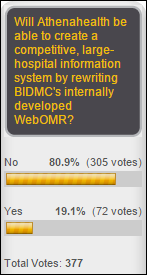
Will Athenahealth be able to compete with Cerner and Epic via its RazorInsights and BIDMC WebOMR acquisitions?

I would love to see that. Athenahealth’s approach to the private practice or ambulatory market has been that customers want to be health providers, not IT organizations. We’re not in the IT business, we’re in the healthcare business, and I think Athenahealth supports that. Their fundamental makeup gives them the chance to make a run for it. Now if they’re actually going to be successful — that’s yet to be seen. I would love to see a different competitor come in because we know that while Cerner and Epic are dominating the market, they each have their own blights as well.


What are the most important initiatives that you see happening in your hospital over the next several years?

One thing that’s come to the forefront has been IT security. This is one that I’m pleased to see has gotten traction, but all of us in healthcare IT have very suddenly gotten large targets drawn on our backs and we need to move quickly. When I see the percentage of organizations out there that don’t have liability insurance for IT, that’s concerning. 

It’s also concerning that a lot of the security incidents that have been reported are around theft or loss. It’s really under-reported because a lot of people don’t know that their systems have been breached. There’s an ignorance factor there as well. As we ramp up that, that’s going to be a major IT initiative — protecting our borders and raising our awareness around protecting our information. I was pleased to see that appear in the State of the Union address.

My other personal belief is that IT security — not just in healthcare, but in all industries — needs to start being addressed as a governmental issue. We have national security protecting our borders. We have a lot of protections out there. Our local municipalities have firemen and policemen. Yet hospitals essentially have to put guards at their doors and bars on their windows when it comes to IT security. We’re on our own to defend ourselves. Something that’s as critical to the US infrastructure as healthcare, financial, and other industries needs to be a larger governmental conversation.

Other than security, we’re looking at the desktop experience for our users. Having a greater awareness and a better experience for those users, especially the clinical users, to be able to roam from PC to PC and carry their session. We were an early adopter of something called Symantec Workspace Corporate and we’re now moving to an Imprivata and VMware combination solution. We’re going to be focusing on improving that end user experience with regards to speed, with regards to single sign-on, and maintaining security while making it easy for the user to carry their session throughout the hospital and for that delivery to be seamless. That also comes into location awareness and the other technologies that can be ahead.

The other item that we’re doing is working with Hill-Rom, which also comes into location awareness with our nurses. For tracking what they’re doing, but also giving them greater communication tools and greater meaningful alerts with some of the smart beds. That’s been an important strategy for us as well.


Integration between nurse call systems and IT systems for clinical alert management, communications, bed status reporting, and patient education has been a quiet change. How will that play out as bed manufacturers move into IT and the IT side of the house has the technology they need?

It’s fascinating that the bed management people are trying to figure it out. I had the pleasure of being in a focus group at the last CHIME conference with Hill-Rom. What I understood from them is they’re trying to figure out where there’s going to be overlap and not overextend their business where they’re not going to be welcome or where they’re not going to be able to make progress. 

Longmont United Hospital has been a market leader in throughput and bed management and visibility solutions. We use what I’d call a command center in our shift manager office that has a view of every unit of the hospital. At a glance, you can see the occupancy of every single one of those beds. Over the next year, that will tie into our smart beds that will be connected. You’ll be able to know whether or not the patient is in the room.

It’s also tied into our CPOE system. When new orders are placed on the units, monitors show a map of the unit and there will be an alert showing that there’s new orders on the patient. Or perhaps it would show an alert that this patient is a fall risk or some other identifier for that patient without violating their privacy.

This has been an amazing success for us. It has reached every corner of the hospital. Our environmental services team is using this system where the beds get marked as no longer occupied to quickly identify that the beds are in need of cleaning. During busy periods of time, we can then quickly get patients from the ED into beds. We’re seeing an increased throughput and increased patient satisfaction. It integrates into our EMR. That visibility system has displays on all the units that our environmental services team looks at. if someone in a room has C. Diff, there will be a flag for the environmental services team so they know to use special cleaning precautions for that room. Through that simple alert, we’ve eradicated C. Diff as a hospital-acquired condition here at LUH.

With the smart beds, when a rail drops and a patient is a fall risk, you can have an alert that’s appropriate go to the nurse. We’re seeing a lot of opportunity. We’re also seeing a lot of overlap.

It will be interesting to see where the EMR vendors end and where those bed manufacturers like Hill-Rom and Stryker end. The bed manufacturers are trying to figure that out themselves because they have a lot of great technology that can be helpful, but I think they also know that they might not be welcomed into some markets that the EMR vendors own.


Tell me about your palm vein scanning project.

We were looking at how to improve the patient check-in experience. We started exploring kiosks similar to the airline check-in. From there, it evolved into how we would identify the patients as they checked in.

We started exploring the ability to use palm vein scanning technology as a biometric to identify patients. It uses near infrared light to looks at the vein pattern within your palm, which is 100 times more unique to an individual than a fingerprint. It also doesn’t have that criminology sort of connotation that some people associate with fingerprinting, so it has a higher patient adoption rate.

That palm vein pattern is developed in the womb and it’s even unique between twins. It’s a really unique and useful biometric that has high adoption rates among patients where you might not get it because a retina scan is pretty uncomfortable and fingerprinting has the criminology connotation. With palm vein scanning, you can get better adoption.

We’ve rolled that out where the patients need to initially enroll in the program. They go through the normal registration process, provide a form of identification, and then place their palm down onto the scanner. It’s a very simple process. That biometric is saved, so from then on when they put their palm down, we know who they are.

We no longer need to ask them sensitive information. The next time they come in, they have a better experience, because by just simply placing their palm down, they can avoid having to share sensitive information that can be within the earshot of someone else. They don’t have to show their ID every time.

The other places I’ve seen this technology used has been in test-taking, like the GMAT and the SAT, so that when people leave to go the restroom and come back, that they’re not switching for someone else to take their test. It’s also used in some other countries in banking. But I think the use in healthcare has extremely great promise. 

Now that we have people enrolled, we’ll be able to use that as the identifier in the kiosks. In the next few months, we’re going to be installing these kiosks so that when patients come to check in at our hospital, they can simply put down their palm on the kiosk and then immediately be identified. It will ask them for some of their information to verify that it is accurate. If there are updates, they can correct that with the registrar. It will also know if they have a payment due — they can quickly swipe their credit card and we can accept payment there, which makes that more convenient for the patient as well. The purpose here is around improving the patient experience.

The other benefit is something that plagues hospitals and health systems nationally — duplicated and overlaid medical records. We spend a lot of time merging records because of minor differences when they come in. In large metropolitan areas, it is quite common that you have people with the same name and the same birthday whose medical records might be accidentally shared. That can be extremely dangerous since you have clinicians that are making medical decisions for those patients potentially based on someone else’s medical history.

EPtalk by Dr. Jayne 2/19/15

February 19, 2015 Dr. Jayne Comments Off on EPtalk by Dr. Jayne 2/19/15

clip_image002 

We always love hearing about ways that vendors are contributing to the greater good. I was excited to receive a Valentine’s Day card from our sponsor Medicomp Systems, who offered to donate $10 to Doctors Without Borders for each person who views a brief demo of Quippe. It was supposed to end this week, but the executive team generously agreed to extend it a few more days for HIStalk readers. They’re willing to donate up to $5,000, so stop by to do your part for Doctors Without Borders. You’ll also be able to pre-register to compete in their Quipstar game show during HIMSS. I was a celebrity contestant in 2013, so I can attest that it’s a lot of fun.

The Texas Regional HIMSS Conference is taking place this week in Austin. Thursday’s keynote was Ed Marx, speaking on, “Extraordinary Tales From A Rather Ordinary Guy.” Other topics included screening for emerging diseases, interoperability, population health management, health literacy, and of course Meaningful Use. Texas has a reputation for hospitality, but one of my readers was not impressed when another attendee made snarky comments about the fact that she was taking notes during the meeting, asking, “Did you get all your work done?”

Wednesday was National Drink Wine Day, which reminds me of an EHR story a friend shared with me. During a trip to the emergency department, she was asked about her alcohol intake. Do you drink alcohol? Yes. How often – once a day or socially? Yes. She was told she had to pick one or the other. As a clinician, I always wondered what documenting “socially” really tells me about a patient. Does that mean they have drinks once a year at the company Christmas party or twice a week in the stands at their kids’ baseball games? Are they socializing at the bar every night after work? It just goes to illustrate that data collected for the sake of collecting data (and without valid clinical intent) is not only a poor use of scarce time, but meaningless.

There are plenty of phishing scams riding the coattails of the recent Anthem breach, but they’re a drop in the bucket compared to the daily deluge of random emails trying to grab our attention. I am always amused by people trying to get content on HIStalk when they clearly don’t read it. One of yesterday’s offerings tried to convince us that we need guest bloggers to keep up a constant flow of content so that we can relax. There were also a handful of emails that were barely coherent and those are just the ones that made it through the spam filter. I recently read “The 4-Hour Workweek” and the idea of having someone to pre-screen my email is more appealing every day.

Speaking of email, my EHR vendor sent a nice one this week about the recent CMS approval for lung cancer screening using low-dose CT scanning. What would have been even nicer would have been instructions on the best way to identify and track impacted patients since they have to be in a certain age group, have smoked a certain amount, and must be either current smokers or have quit within the last 15 years.

clip_image004

Even as a member of the HIStalk team, I can’t possibly keep up with all the health IT news out there. HIStalk Practice mentioned a study at Michigan State University. It looks at using children’s fingerprints to track immunization records. Comments on the article immediately seized on it as a way for the government to force individuals to provide their fingerprints. The article reminded me of VeriChip, which was similar to the computer chips many of us use to permanently identify our pets. Reading the article about its FDA approval in 2004 was a blast from the past as it referenced then-President Bush’s EHR initiative. It also mentioned the disparities in animal vs. human medicine, noting that implantation for a pet would have been $50 but for a person it would have been $150 to $200.

Jenn also told me about a review on physician dress done by a team at University of Michigan Health System. The team performed a comprehensive review of studies on physician dress, looking at 30 studies involving more than 11,000 patients in 14 countries. They confirmed what many of us suspected: that older patients prefer their physicians to be more formally dressed, where members of Generation X and Y were more accepting of casual attire. There were some differences in preference depending on physician specialty. The team plans to conduct their own study, “Targeting Attire to Improve Likelihood of Rapport” or TAILOR. Hospitals in three countries have already agreed to participate. My new clinical posting involves monogrammed scrubs, so I might just spring for a new pair of clogs to match.

clip_image006

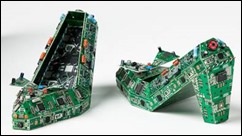
With this winter’s seemingly-perpetual cold and abundant snow, I’ve been tending to warm, non-skid footwear. But with the promise of spring around the corner, a reader shared these smart little shoes. “There’s No Data Like Home” by artist Steven Rodrig definitely lifts my spirits, appealing to both my fashion sense and techie tendencies.

What warms your heart with thoughts of spring? Email me.

Email Dr. Jayne. clip_image003

News 2/20/15

February 19, 2015 News 9 Comments

Top News

image

Epic will launch App Exchange, which will publish Epic-compatible software developed by both customers and vendors, in the next few weeks.


Reader Comments

image

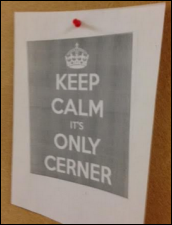
From Pima Pundit: “Re: Cerner. Saw this on the wall of a Carondelet Health Network office. They’re moving from Greenway Intergy to Cerner.”

From CC Ryder: “Re: Skycare. We implemented their EHR in 2014 to meet Meaningful Use requirements but found out today that the company has ceased operations. They told us that all employees were let go Friday and no further support is available. I’m the EHR champion at our small family practice and could use help understanding how to switch EHRs and any advice on what will happen for our 2015 attestation year.” I will forward information from anyone who can help.


HIStalk Announcements and Requests

This week on HIStalk Practice: Walmart mulls over mobile and telehealth. Laguna Beach Community Clinic and Village Family Practice implement new HIT. A new study finds that the cost of ICD-10 conversion for a small practice is just over $8,000. EHR company adds some robotic sizzle to its 5K. SHIN-NY’s connection costs hamper physician participation. University of Miami Pediatric Mobile Clinic implements new telemedicine IT. Dr. Gregg shares this year’s collection of “Top 10 Dubious HIT Bumper Stickers.” Thanks for reading.

This week on HIStalk Connect: A systematic review of patient portal studies finds few correlations with improved outcomes. Walgreens partners with PatientsLikeMe to embed crowdsourced feedback on medication side effects on its health app. Breakout Labs welcomes its next three startups, all focused on healthcare research. HIStalk Connect interviews Aterica CEO Alex Leyn, founder of a digital health startup building smartphone-connected EpiPen cases.

@JennHIStalk joined Eric Topol, MD and Geeta Nayyar, MD, MBA in a Xerox-sponsored Google Hangout covering patient engagement.

I was helping a friend find a primary care provider for her new UnitedHealth insurance obtained via Healthcare gov. My suggestions, based on having worked in hospitals for nearly forever, was to look for a doctor with these criteria: (a) educated at a decent US-based medical school and reasonably good residency; (b) board certified in internal or family medicine; (c) graduated from medical school no more than 25 years ago since studies seem to show that mortality rates increase with each year after a doctor’s graduation. Extra points for good Healthgrades reviews and an affiliation with a good hospital. We called one doctor and group after another and the answer was always the same – not a single physician who met these criteria is accepting new patients. Nearly every available doctor graduated from a foreign medical school, while some were old enough to make you realize how hard it is to retire from primary care (one graduated from medical school in 1961, which must put him in his late 70s). UnitedHealth’s online provider directory incorrectly listed many doctors as accepting new patients when in fact they aren’t, making for a frustrating couple of hours of calls and web searches figuring out how to make undesirable compromises despite having a top-of-the-line medical plan. I’m beginning to realize that while it’s challenging to find and afford medical insurance, the battle isn’t won once you do.


Webinars

March 5 (Thursday) 2:00 ET. “Care Team Coordination: How People, Process, and Technology Impact Patient Transitions.” Sponsored by Zynx Health. Presenters: Grant Campbell, MSN, RN, senior director of nursing strategy and informatics, Zynx Health; Siva Subramanian, PhD, senior VP of mobile products, Zynx Health. This webinar will explore the ways in which people, process, and technology influence patient care and how organizations can optimize these areas to enhance communication, increase operational efficiency, and improve care coordination across the continuum.


Acquisitions, Funding, Business, and Stock

image

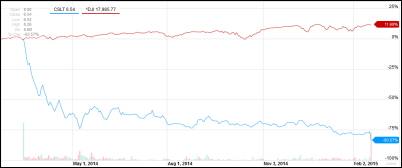
Castlight Health reports Q4 results: revenue up 182 percent, adjusted EPS –$0.17 vs. –$1.79, beating estimates for both. Shares dropped 31 percent Thursday following an analyst’s downgrade, dropping the company’s market capitalization to $591 million. Above is the share price chart of CSLT since its March 2014 IPO (blue, down 84 percent) vs. the Dow (red, up 12 percent).

image

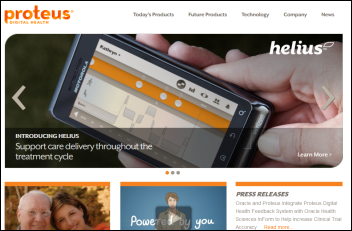
The Wall Street Journal names as one of its 73 startups valued at more than $1 billion Proteus Digital, whose smart prescription pills report back to doctors and drug companies when patients take their medicine. 

image

Fortune places Cerner among its “World’s Most Admired Companies 2015.”


Sales

image

Mission Health (NC) chooses Qlik for enterprise-wide visual analytics.


People

image

Park Place International names Bob Green (EMC) as VP.

image

Anthony Lancia (TriZetto) joins ClaimRemedi as VP of sales.


Announcements and Implementations

image

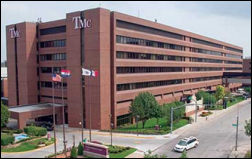
University of Missouri-Kansas City’s Center for Health Insights and Truman Medical Center (MO) will conduct research using de-identified patient data provided by Cerner. The company’s Health Facts Reporting extracts and de-identifies information from its customer databases that sells to drug companies as “the industry’s only data source offering a comprehensive clinical record, with pharmacy, laboratory, admission, and billing data from all patient care locations time-stamped and sequenced.”

ZeOmega launches a maternity management offering for its Jiva population health management solution.


Government and Politics

Oregon sues Oracle and seeks to permanently bar the company from doing business with the state, claiming Oracle reneged on its promise to continue running the state’s Medicaid enrollment system and instead plans to shut the system down at the end of February. Oracle says it made no such promise and the state should have developed a contingency plan, adding that Oregon defamed the company in saying its system isn’t working, then claiming that same system is essential. The state previously sued Oracle over its failed health insurance exchange.


Privacy and Security

image

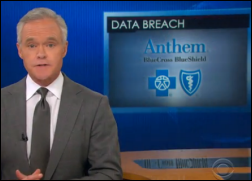
A “CBS Evening News” segment quotes a security expert who says, “Digitized health records are jet fuel for medical identity theft. The healthcare system built a digital record system without building the corresponding privacy-security safeguards.” It points out that HHS has audited only 115 of 700,000 healthcare providers.

NPR’s “All Things Considered” finds Medicare IDs being openly sold on the Internet, with a set of 10 costing $4,700. An expert says healthcare providers have grown to the point they often don’t even know how large their networks are, much less that those networks are secure. A comments says it’s surprising that many providers don’t realize that a Medicare number is just a Social Security number with the letter “A” at the end, while another says she opted out of her physician’s patient portal because the consent form said the company running it isn’t responsible for hacking or even if its own employees steal patient information.

image

I Googled how Medicare numbers are created and the comment above is correct: CMS came up with the idea of placing SSNs on cards that 50 million people carry in their pockets, claiming that it would cost nearly a billion dollars to reprogram its systems to use a different ID. GAO wasn’t buying CMS’s excuses, saying it should have considered options to print only the last four SSN digits on the cards or to switch to barcodes or magnetic stripes.


Technology

Automated Assembly Corporation will market its InfoSkin near field communication (NFC) skin stickers to the healthcare industry. NFC allows a smartphone app to communicate with an inexpensive RFID-like tag over distances of a few inches, most commonly to make payments but with potential for identifying patients and communicating with implanted medical devices.


Other

image

Chuck Feeney donates another $100 million to UCSF — part of the money earmarked for hospital construction and aging research — raising his total donations to the school to nearly $400 million. The 83-year-old billionaire philanthropist made his money running duty-free shops. Reports say he’s frugal: he doesn’t own a house, uses public transportation instead of owning a car, flies coach, and wears a $15 watch. His motto: “If you want to give it away, think about giving it away while you are alive because you’ll get a lot more satisfaction than if you wait until you’re dead. Besides, it’s a lot more fun.”

Rice University and the Baylor College of Medicine offer a free, four-week online course called “Medicine in the Digital Age” that begins on May 5.

A Forbes article about chief innovation officers says they have 16 months to shake things up radically or risk being fired, providing as an example an unnamed health system CINO who lasted less than three years because he played it safe by choosing board-pleasing, low-impact projects.


Sponsor Updates

  • Greenway Health signs a strategic referral agreement with Orion Health.
  • Park Place International launches a Meditech disk defragmentation solution.
  • NextGen releases the results of its practice revenue cycle management survey, which finds that practices are faring poorly at managing denials and that 35 percent of incoming patient calls involve billing issues.
  • Caradigm announces a solution package to support DSRIP participation.
  • PatientSafe Solutions President and CEO Joe Condurso posts “Reimbursement Continues to Drive Strategy.”
  • Iatric systems integrates its Security Audit Manager with incident response software from ID Experts.
  • Orion Health is ranked as the top “Government Payer and Commercial Insurer HIE” vendor and is a second-place finisher in “Core HIE Systems Enterprise Centric Solutions” in a Black Book Rankings report.
  • Logicworks points out that “Healthcare’s New ‘Anthem’ is Encryption, but Not Everyone Sings from the Same Hymnal.”
  • Intelligent Medical Objects will exhibit at Hack Illinois February 27-March 1 in Urbana, IL.
  • InterSystems talks with Dave deBronkart (“e-Patient Dave”) in its latest blog, “Seeding the Growth of Patient Engagement Through Innovative Interoperability.”
  • InstaMed will present at the World Health Care Congress on February 26 in Orlando.
  • Annie Meurer of Impact Advisors focuses on telehealth in the second part of the company’s blog series on unified communications.
  • Extension Healthcare and Holon Solutions are exhibiting this week at the 2015 Texas Regional HIMSS Conference in Austin. 
  • Healthwise will exhibit at Preventive Medicine 2015 on February 25 in Atlanta.
  • Hayes Management Consulting’s Paul Fox offers “4 Ways to Improve Your End User Systems Testing.”
  • Max Stroud of Galen Healthcare Solutions asks “Are Electronic Notes a Pain Point for Your Physicians?”
  • DocuSign focuses on the Internet of Things in its latest blog.
  • The HCI Group offers “Best Practices to Achieving HIMSS Stage 7.”

Contacts

Mr. H, Lorre, Jennifer, Dr. Jayne, Dr. Gregg, Lt. Dan.

More news: HIStalk Practice, HIStalk Connect.

Get HIStalk updates.
Contact us online.

125x125_2nd_Circle

News 2/18/15

February 17, 2015 News 7 Comments

Top News

image

A Wall Street Journal editorial by Phoenix surgeon Jeffrey Singer, MD — mostly known for his ongoing anti-Obamacare rants via the libertarian Cato Institute — says doctors like himself were forced to implement EHRs, adding that he’s an “unwilling participant” (meaning he would rather ruin his practice by using an EHR than take a 1 percent Medicare pay cut, which sounds to me like a voluntary business decision rather than conscription). He blames EHRs for lowering the quality of care and increasing costs, the former because he has to look away from the patient to see the screen. He misfires in urging that the Republican Party end the EHR program started by Democrats, possibly forgetting that it was Republican President George W. Bush who in 2004 said that every American should have an electronic medical record within 10 years and who created ONC to make it happen. President Obama had been in office only a few days when he signed ARRA in February 2009 and the Affordable Care Act had nothing to do with EHRs.


HIStalk Announcements and Requests

image

It’s your last chance to tell me “I want to come” to HIStalkapalooza. Frontline providers get priority and I’d like to see a lot of them at the event. Meanwhile, I appreciate the support of the HIStalkapalooza sponsors who are cool enough to be willing to pay for a fun evening for non-prospects (and in fact, even the employees of competitors) in accepting the cross-section of HIStalk readership that attends.

Platinum Sponsors

image
image

Gold Sponsors

image
image

Silver Sponsors

image
image
image
image
image
image
image
image


Webinars

March 5 (Thursday) 2:00 ET. “Care Team Coordination: How People, Process, and Technology Impact Patient Transitions.” Sponsored by Zynx Health. Presenters: Grant Campbell, MSN, RN, senior director of nursing strategy and informatics, Zynx Health; Siva Subramanian, PhD, senior VP of mobile products, Zynx Health. This webinar will explore the ways in which people, process, and technology influence patient care and how organizations can optimize these areas to enhance communication, increase operational efficiency, and improve care coordination across the continuum.

The recording of John Gomez’s well-attended webinar, “Inside Anthem: Dissecting the Breach” is available above or here. I received quite a few emails from attendees who enjoyed his presentation even though it’s obviously not the cheeriest topic on the IT agenda.


Acquisitions, Funding, Business, and Stock

image

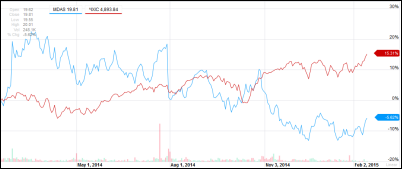
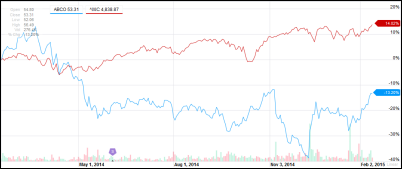
MedAssets announces Q4 results: revenue up 16 percent, adjusted EPS $0.39 vs. $0.30. The company wrote off $52.5 million worth of goodwill in its revenue cycle services business due to growth that mostly came from low-margin business. Above is the one-year share price chart of MDAS (blue, down 5.6 percent) vs. the Nasdaq (red, up 15.3 percent).

image image

MedAssets announces that board member Halsey Wise (Lime Barrel Advisors, left)) will replace John Bardis as chairman and CEO, effective immediately. Wise joined the board less than a year ago.


Sales

Greenway Health chooses Orion Health’s Rhapsody Integration Engine for financial transaction processing.


People

image

Bradley Cordes (Accretive Health) joins T-System as VP/GM of the company’s charge capture and coding business.

image

McKesson hires Bansi Nagji (Deloitte) as EVP of corporate strategy and business development.


Announcements and Implementations

HCS adds barcode charge capture to Interactant Charge Management.

Imprivata announces that its new Confirm ID product has been integrated with Symantec’s security offerings to meet the DEA’s identity-proofing requirements for electronic prescribing of controlled substances.

Surescripts creates a step-by-step video guide and tools to help health systems and practices meet New York’s I-STOP mandatory e-prescribing law.


Technology

image

Several health-related features didn’t make the cut for the initial Apple Watch  release because they didn’t work, were too complex, or would have triggered FDA’s interest. The watch won’t be able to run an EKG, measure blood pressure, or capture blood oxygen.

image

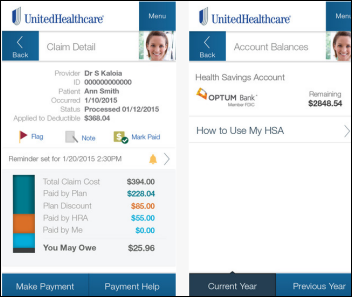
UnitedHealthcare enhances its mobile patient app to allow members to pay their medical bills online, track their Fitbit activity, and stream the company’s video channel.

image

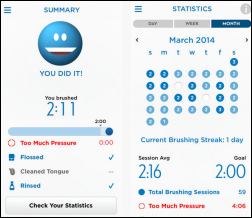
New to the Internet of Pointless Things: a Bluetooth-connected electric toothbrush that not only eliminates the tedious back-and-forth arm movement that almost involves actual exercise, but also gives “real-time information about brushing modes, times, and areas.” One can only imagine what personal health and hygiene devices the “solution looking for a problem” techies will connect to next. I fear toothbrush terrorism in which devious hackers breach Oral-B’s site and send thousands of Bluetooth-connected toothbrushes into enamel-damaging hyperdrive. Or that dental insurance companies will buy toothbrushing Big Data to cancel policies for infrequent brushers and flossers.

Sony one-ups Google Glass by developing an even dorkier-looking, puck-powered virtual reality headset called SmartEyeglass, now available in a developer’s edition with a planned March GA. It will allow users to use Facebook and Twitter, the need for that functionality in itself being quite disturbing.


Other

image

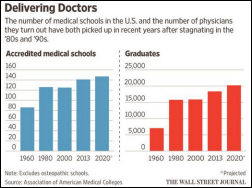
The Wall Street Journal describes changes being made to the outdated curricula of US medical schools. One school starts new students by putting them through an eight-week emergency medical technician program, while another requires the first-years to work as patient navigators. A required New York University School of Medicine course assigns students to analyze a database of hospital encounters to discuss the wide variation in cost. Mayo’s new Arizona medical school will offer lectures in electronic form so that class time can be dedicated to discussion and case studies and will offer a course called Checkbook in which students track all services performed on their assigned patients to identify possible waste. Mayo students also shadow non-physician employees and manage panels of patients as care coordinators. That’s interesting, but it would also be relevant to review how residencies are managed as hospitals get CMS-paid cheap medical labor that adds several more years to their education and forms nearly all of the habits (good and bad) that will persist through each physician’s medical career.

image

Computers at Australia’s Fiona Stanley Hospital go down for 14 hours when lightning strikes a Fujitsu-owned data center.

image

St. Joseph’s Hospital Health Center (NY), which lost nearly $22 million in 2014 mostly due to one-time Epic implementation costs, will join an unnamed health system (most likely Trinity Health).

A study of inpatient satisfaction following construction of an expensive new hospital wing at Johns Hopkins featuring healing gardens, soaring lobbies, extensive artwork, and patient rooms equipped with an interactive TV system and “quiet” features finds that while patients understandably scored the new facilities higher, those amenities didn’t raise the physician evaluation component of HCAHPS. In other words, the doctors didn’t enjoy the halo effect of practicing in fancier surroundings.

A former Duke University football lineman co-founds Logistical Athletic Solutions, which allows athletes and staff to exchange messages, manage schedules, and track medical records. A Duke study found that the system saved the university $244,000 in six months by reducing material costs and data entry hours.

An attorney-authored Medscape article suggesting that doctors allow their patients to make audio or video recordings of their encounters is met with a host of negative comments from physicians, some suggesting that patients don’t need anything more than the EHR-generated visit summary and those patients wanting to record their visits are likely to sue. The author says, however, that only a handful of states require both parties to consent that their conversation be recorded – no matter how the recording is made, it’s a legal record.

image

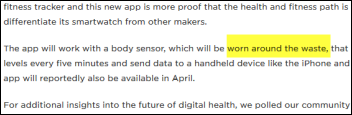
I’m not sure I want these guys writing about medical apps – their attention to detail is pretty much a waist.

Hospitals in St. Louis are using their EHR information to remind parents that their children should be given measles vaccine.

A doctor in Canada sets a five-minute timer at the beginning of a patient visit with the encouragement of a militant doctor’s advocacy group. He doesn’t stop the conversation at five minutes, but points out to each patient when it rings that Ontario’s government pays him for only that time. He declined to explain how he came up with the five-minute number except to say represents an hourly rate similar to that of dentists and lawyers.

An article in The Atlantic says that tweeting is a waste of time for companies and online publications whose goal is to send traffic to their websites. Instead, short attention span readers skim Twitter’s frothy observations (sometimes tweeted by people who barely read the original article themselves) as standalone material, generating revenue and traffic only for Twitter. As Bill Murray (aka Nick Ocean) says, “Twitter is basically just you having a conversation with yourself hoping that someone else will join in.”


Sponsor Updates

  • The Advisory Board Company adds Zynx Health’s heart failure intervention checklist to its online heart failure toolkit.
  • ZeOmega posts “The Key to Delivering Healthier Babies.”
  • Life Monitor Pty Ltd. will sell AirStrip’s solutions in Australia and New Zealand.
  • Rockdale Medical Center (GA) replaces pre-printed forms with electronic versions from Access.
  • Impact Advisors publishes a white paper titled ONC Nationwide Interoperability Roadmap: Driver’s Handbook.”
  • Practice Fusion integrates medication electronic prior authorization from CoverMyMeds with its EHR.
  • PerfectServe President and CEO Terry Edwards posts “The Consumerization of Healthcare: Can Providers Keep Pace?”
  • Navicure ended 2014 with $74 million in revenue,, a 96 percent customer retention rate, and a top three clearinghouse ranking by KLAS.
  • TeleTracking Technologies joins the NPSF Patient Safety Coalition.
  • Anthelio, Certify Data Systems, and Aventura will exhibit at the Texas Regional HIMSS Conference February 18-20 in Austin.
  • Caradigm writes about “The Population Health Marathon.”
  • ClinicalArchitecture offers the fourth installment of its blog series on “The Road to Precision Medicine.”
  • CareTech will exhibit at the Center for Healthcare Governance Winter Symposium February 22-25 in Michigan.
  • ADP AdvancedMD offers a guide to “The Top 5 Technologies in Healthcare for 2015 and Beyond.”
  • Besler Consulting publishes an e-book focused on readmission reduction strategies.

Contacts

Mr. H, Lorre, Jennifer, Dr. Jayne, Dr. Gregg, Lt. Dan.

More news: HIStalk Practice, HIStalk Connect.

Get HIStalk updates.
Contact us online.
125x125_2nd_Circle

Startup CEOs and Investors: Bruce Brandes

Startup CEOs and investors with strong writing and teaching skills are welcome to post their ongoing stories and lessons learned. Contact me if interested.

All I Needed to Know to Disrupt Healthcare I Learned from “Seinfeld”: Part II – And YOU Want To Be My Latex Salesman 
By Bruce Brandes

image

Upon being granted an interview with IBM while in business school for a chance at my first real job, my initial enthusiasm was slightly curbed by the fact that the position was to become a sales rep. With an undergraduate degree in finance and an MBA, I had imagined a career on Wall Street. 

A sales rep? The vivid composite in my head was of some guy in a shiny suit, with a pinky ring and remarkable hair, trying to sell me something that I really did not need. Just like George Costanza’s dream of pretending to be an architect or a marine biologist before compromising to a desperate hope of an imaginary job as Jerry’s latex salesman, I would have to reconcile the dream with reality.

My IBM sales school training quickly helped reorient my mindset with my new responsibilities as a marketing representative (I was relieved to hear that the dirty word “sales” was not in the official title). One of my first and most enduring lessons came at a meeting of the executive leadership team of a large hospital in New Orleans, my IBM regional executives, and me. As the conversation turned to a mention of a product I had just learned about in training, I enthusiastically interjected with the sales pitch I had recently memorized. The hospital COO interrupted me with the rebuke, “You don’t know what you don’t know. Please be quiet.” Ouch. 

After the meeting, I expected my manager to explain IBM’s termination process. Instead, he suggested if the instinct popped into my head to blurt out a verbal sales catalog, to bite the tip of my tongue behind my lips as a reminder to keep listening and ask another question or two before speaking.

image

I soon appreciated that if I first focused on understanding the opportunity or challenge my prospective customer sought to address and then honestly assessed the likelihood that the solutions I represented could help, “selling” did not have to command the same disdain as Newman entering Jerry’s apartment. In fact, it is quite satisfying to help address a customer or market need better than anyone else. That has to be your goal, not earning a commission. A commission check should be the result of your achieving that goal, not the goal itself.

I have also grown to appreciate that “sales” does not have to be a four-letter word. Few businesses can afford to make payroll without having paying customers who are sold on what they do. Each person in the company — from the receptionist to accounts payable to the housekeeping staff — play a role in what ultimately contributes to an organization’s market success. In fact, in some way, everyone is selling something.  Doctors are selling their medical care. The server in a restaurant is selling a dining experience. J. Peterman is selling the urban sombrero.

From a sales perspective, today’s healthcare landscape (as discussed in part 1 of this series) is the opposite of what it was 25, 10 or even five years ago. Historically in the US, our 5,000+ hospitals enjoyed individual freedom in their buying processes. Within each hospital were many managers with decision-making and budget authority for certain products and services. In parallel, independent physicians had broad flexibility in how vendors could earn their influence. 

The role of the sales rep for a vendor was important to lead the navigation of an over-extended procurement processes which included cold calls, demonstrations, requests for information, dinners and dancing, requests for proposal, reference calls, golf, site visits, etc. A handful of dominant vendors led with a sales strategy of FUD –fear, uncertainty, and doubt. No one ever got fired for buying IBM … until they did.

Given rapid consolidation, many hospitals are now are under more centralized control of larger regional and national health systems. Financial challenges have restricted purchasing authority to a limited number of actual decision-makers. A new regulatory environment and group purchasing contracts limit sales reps influence over doctors’ buying decisions. Industry pressures demand that procurement processes and implementations accelerate for solutions with meaningful promise.

At the same time the market has many fewer buyers with greater urgency, there has been an exponential explosion of the number of vendors trying to sell to these poor, overextended, confused people. Most new vendors are hiring the same salespeople who were historically successful (programmed and rewarded) under the old model that is less likely to be effective now. Hiring sales reps without healthcare experience creates a different set of issues. The net of the story is that traditional sales strategies and tactics (and the simple math) of how buyers and sellers engage no longer work for healthcare.  

image

Healthcare executives are overwhelmed with a universe of shiny things, trying to differentiate the sales messages from companies that seem as fictitious as Vandelay and Kramerica Industries. We need innovative companies with collaborative sales approaches that are "real and spectacular”, enabling healthcare organizations to address current challenges and seize new opportunities. How many of you Seinfeld fans think you could win that sales “contest?”

Bruce Brandes is managing director at Martin Ventures, serves on the board of advisors at AirStrip and Valence Health, and is entrepreneur in residence at the University of Florida’s Warrington College of Business.

Curbside Consult with Dr. Jayne 2/16/15

February 16, 2015 Dr. Jayne 1 Comment

clip_image002

A reader with a keen eye sent me this warning sign, saying it reminded him of the modern workplace. The beach is lovely… except for the sharks, hippos, and crocodiles. It arrived while I was preparing some thoughts on what the workplace has become. The recent Wall Street Journal piece “Everything is Awesome! Why You Can’t Tell Employees They’re Doing a Bad Job” is making the rounds at our hospital. If the pay wall won’t let you read it, I recommend a search using key words from the title – that’s how I got the full text.

I have to admit that I was drawn in by the opening paragraph: “Fearing they’ll crush employees’ confidence and erode performance, employers are asking managers to ease up on harsh feedback.” I’m a firm believer in public praise and private criticism. However, the article seems to advocate swinging the pendulum pretty far to avoid any negative feedback for employees. Suggested employee review phrases include “we haven’t done this” rather than “we can’t do this,” which tells me something about the companies advocating this approach: they are probably not in healthcare. What might work at VMware Inc. or the Boston Consulting Group isn’t going to work in a Joint Commission-accredited, CMS-regulated, state-licensed facility where we’re forced to say “we can’t do this” every single day.

For those of us on the clinical side, as young nurses or physicians in training, we didn’t get to pick our assignments. We did what we were told and we did it as well as we could possibly do it, with the hope that our next assignment would be more educational or at least less odious. At the end of medical school, physicians almost get raffled off (National Residency Matching Program, anyone?) to hospitals for an additional three to seven years of on-the-job training. The vast majority of us work really hard, in part to make sure we continue to be at the top of our games, but also because we realize that people’s lives are on the line every day when we go to work.

In my organization, we’re seeing that as Baby Boomers retire and are replaced by Millennials, we’re being asked more and more to consider employees’ feelings as we assign work to them. I’m not a Baby Boomer, but as someone who has worked in a top-down, mission-critical environment for most of her career, I share a lot of the psychology. For those of us used to doing what needs to be done regardless of how we feel about it, worrying about employees’ feelings is not the first thing one thinks of when something goes terribly wrong. Hospital work places an incredible amount of pressure on everyone to have a zero-error workplace; we need to be able to deliver constructive criticism or even corrective action when it is required. When the Code Blue is over and the patient has either survived or died, we debrief. We talk about the team, how things went, and sometimes the emotional side of it. But that’s well after the fact.

When an employee has a lot of issues or requires more remediation than makes sense for their skills and role, the ability to provide clear feedback is essential. Feedback needs to be ongoing — no one should ever be surprised by what they hear in a performance review. Additionally, we’ve seen employees (and former employees) become more litigious over the last few years. Having appropriate documentation of non-performance and resulting interventions is essential to managing those situations. It’s more difficult for someone to come back at you for wrongful termination when you have a well-organized history of events.

The article cites experts who agree that “tough feedback sometimes motivates people better than praise,” but it was well below the fold. Tough feedback certainly doesn’t mean yelling at staff or belittling them, but it may mean making clear statements of events and their consequences that workers are not ready to hear.

I recently asked a lab analyst to review some normalization work that his co-worker did as a peer review. The reviewer “corrected” the work, adding new values that were clearly incorrect. I marked up the review, provided specific explanations of why each element was incorrect, and met with the analyst to review it. I thought he was going to have a breakdown. Unfortunately, he was less concerned by the fact that his work might have caused a serious patient safety issue and more concerned that I was “going after him.” If he thinks a private meeting where we discuss the facts around why one cannot round lab values or change their units inappropriately is “going after” someone, then he probably doesn’t need to be in healthcare. He also probably doesn’t belong at Netflix, either, which the article cites as “devoted to toughness.”

Reading through the 130+ comments on the piece, I’m not the only one with second thoughts about some of the approaches recommended. One had a great point about the concept of work teams: “Playing on a team is based on performance, perform well = get to play, if I don’t, I remain on bench or I am removed. Regular coaching includes what an employee does well and recommendations on what will allow them to reach the next level of performance.” Another asked, “If we equate a company department or division to an orchestra, how long would the conductor let bad musicians ruin the entire performance?

One comment gave a lot of food for thought: “Under-performers do not hurt their managers nearly as much as they hurt their peers, who daily must compensate for their failures and sometimes watch them reap rewards for inadequate work. Any organization of any real size can compensate for a few under-performers, mostly because their peers pick up their slack, usually with no recognition or reward. However, I have repeatedly observed that when left unchecked, these situations quickly tank morale and end with the departure of those who can afford to leave, usually with no statement of why they are leaving, because they don’t want trouble.”

I’ve seen that situation first hand, when more than half of a manager’s subordinates applied for transfers over a 12-month period. The underlying issue was his inability to deal with two members of the team who were not performing. They were perceived as favorites and the others were afraid to speak out, so they left. I’ve also seen the dark side of ignoring poor performance, when the team members who were tired of picking up the slack went on the offensive. They ultimately took down not only the underperformers, but also the manager.

Every workplace is different. Although some management strategies involve clear expectations and performance goals, others can be quite murky. There may be hidden (or blatantly advertised) agendas and infighting. In other words, the beach may be lovely… but watch out for the wildlife.

How does your organization find the right balance between praise and correction? What did you think about the WSJ article? Email me.

Email Dr. Jayne. clip_image003

HIStalk Interviews Doug Fridsma, CEO, AMIA

February 16, 2015 Interviews Comments Off on HIStalk Interviews Doug Fridsma, CEO, AMIA

Douglas Fridsma, MD, PhD is president and CEO of the American Medical Informatics Association.

image

What are AMIA’s big issues and where will the organization go in the future?

I’ve been AMIA for approximately three months. It’s been my professional home for nearly 20 years. One of the things that attracted me to moving to AMIA is that as there’s been tremendous change that’s happened with electronic health records and a move from a paper-based economy in healthcare to one that’s about electronic data capture, analytics, and things like that, the informatics professionals that have been doing this for many, many years have an opportunity to have a significant impact on the kinds of decisions that are made around the leadership of various organizations, as well providing expertise as we try to figure out how best to use this new technology.

Part of the attraction in coming to AMIA was we have 5,200 members that stand ready to serve in a capacity that will help advance research on the best ways to use information technology, the best ways to look at the data and do the analytics, how to connect the bioinformatics and the precision medicine initiatives through clinical research and into the clinical care space. This is a group that has provided tremendous value to the community and to the researchers and things like that.

Our role now is to not just think about the value that we can provide, but the impact that we can make in the kinds of decisions that are being made and the kinds of technologies that are being deployed. My hope is that as we move into these new payment models and as we think about the way in which healthcare is being transformed, it isn’t going to be the case where you need a good accountant to get paid. But what needs to happen is if you’ve got a risk-based payment system in which clinical care organizations assume a certain amount of risk for the patients that they care for in those settings, it’s going to be your ability to do good analytics, identify those patients that are high risk, and target your interventions in a cost-effective way that is going to make the difference between those in clinical care organizations and medical homes that can be self-sustaining versus those that are going to be struggling. The difference with that is going to be to have the informatics expertise to come forward. That was what drew me to AMIA.

The other thing we have to recognize is that although AMIA has oftentimes been associated primarily with research and with scientific investigation, we are far more than just that. We have probably one of the broadest representations across the health fields in the association. We have physicians, nurses, physical therapists, pharmacists, and public health experts. We represent the whole scope of care and care delivery that occurs. Very few other organizations have that breadth of expertise within their organization.

We have to also realize that when it comes to informatics, it isn’t really defined by what we know. Although we certainly have a number of experts in our organization that know a lot and are experts both nationally and internationally, we have to recognize that informatics is more than just what we know — it’s what we do. We think about engaging those people that may not consider themselves an officially trained informatics representative, but they are doing the kinds of things that an informatician would do in a health system or within a research environment. Those people also have a home here with AMIA. 

Getting basic science researchers that are doing high-quality research in academic environments connected to the practitioners in the field benefits both communities. It both provides areas that are right for investigation to the researchers because they understand the problems better, but it also provides the latest techniques and the latest technology that then the practitioners can apply to the care that they provide. 

To me, particularly as we look at the federal activities around the interoperability road map and the strategies for getting health information technology across the country, AMIA is well positioned to be a strong contributor and a leader in the ways in which this information can be analyzed and delivered.


Is it important that AMIA makes informatics and informatics education more user-friendly more than it has been in the past?

One of the strengths that we have with AMIA is our educational focus and the high quality of education that is being provided. For example, we have our annual meeting, which is driven by scientific submissions from folks and case studies of practical implementations. At our last annual meeting, we had high school students presenting some of the projects that they had worked on. We have increasingly educational focus on creating high-quality accredited master’s and other programs that are recognized and accredited as being significant in their quality and the way in which they teach.

Engaging that practitioner is increasingly important as well. We have a meeting that we hold every year — we’re in our second year — called iHealth. IHealth is geared towards those practitioners who are out there in the field struggling to implement electronic health record systems, trying to figure out how to optimize them in their environments to make sure that they’ve got the right work flow and work flow integration and usability. How to look ahead to the next phase — what is the innovation that is coming around the horizon?

This notion of implement, optimize, and innovate is where we can make a contribution. That’s going to be a focus on practical applications of activities. Fundamentally, if we want to have the impact out there, we have to make the educational programs more accessible and address the current day-to-day issues that many of the people that are the practitioners out there in the field struggle with. Many folks go through our 10×10 program, which provides a basic understanding and basic introduction to informatics. But we need to make sure that we also address some of the targeted areas that many of the leaders — the CMIOs and the folks that are out there supporting the CIOs in informatics — also have the tools that they need.


HHS says it will move quickly toward value-based payment and ONC is retooling from an EHR implementation focus to more on interoperability. Will things continue to change as quickly as they have in the last few weeks?

I would add to not only the CMS changes around how they want to move very, very quickly to value-based purchasing and get people away from fee for service — they call that category 1 — into category 3 and category 4, which is about ACOs and shared risk models. It’s an aggressive timeline, but it’s those kind of things that are going to drive more and more people to think about sharing data and providing a new format that will allow them to do the deep analytics necessary to make those models work.

The interoperability road map was also issued and it signals an increasing responsibility, if you will, for that private sector to be able to step forward and to answer some of these questions. Of the many recommendations that are put forward, the majority of those recommendations are targeted to the private sector, that is, outside of the federal government. It includes some of the state agencies, the vendors, the physicians, and patients, all of whom have responsibilities for getting to this kind of interoperability that we would like to see.

I think there has always been the plan to take a look at Meaningful Use and to begin to think beyond just the electronic health record and see the ecosystem that’s developed. Certainly within AMIA, we don’t think about things just in terms of the electronic health record. We think about it in terms of the learning health system.

One of the diagrams that is in the interoperability road map was one that I contributed while I was there at ONC. It tried to take a look the forward scale with which we need to engage the community. We need to be able to have patients, the electronic records that are in a physician’s practice … we need to think about this from a population and public health perspective. But we also have to think about it from the clinical research that is intended to benefit the population or the public at large.

All of those things are going to be important. The EHR is only one aspect of that larger learning healthcare system. Organizations like AMIA can provide some leadership there to get the ways in which all of those different systems are going to be needing to interact.

In addition to those two announcements, there were two other announcements that are going to be equally important in terms of the kinds of conversations that need to happen. The first was the 21st Century Cures draft collection of legislation. It runs 393 pages, but it includes a whole host of different areas focused at modernizing the healthcare ecosystem all the way from FDA and the approval of devices and drugs all the way through to how we might be able to get more interoperable systems that are able to share data between the various systems.

The fourth was the President’s announcement around precision medicine. This is an ambitious goal, to begin using this all this data that’s available electronically, to combine that with genetic information and other kinds of information to be able to target the therapies we use for patients more precisely. 

When I think about precision medicine, it’s really not just about understanding a patient’s genome and using that as a way of targeting therapies, although that’s an important aspect of this. Precision medicine is about using all the data that’s out there to be able to better target the therapies that we prescribe and that we deliver to our patients. That may mean that if we have information from a patient that is related to their Fitbit and tells us about their activity cycles, we might be able to use that to more effectively monitor and manage their diabetes and the cycles they might have with their insulin. Knowing something about what they eat and their social circumstance, or maybe geographically that they’re living in a food desert that doesn’t have a lot of fresh fruits and vegetables. All of those things can play into how we can target our therapies to help provide new ways of treating diabetes, obesity, cancer, and all the other things that are out there.

So there’s been really four announcements: 21st Century Cures, precision medicine, the interoperability road map, and CMS. The challenge that we’re going to have is to try to integrate all those activities together. That’s the place where informatics can help. How do we make sure that how we collect data for precision medicine and how we collect data within the EHR can be complementary or that they can support each other? How do we make sure that the incentives that are aligned to try to do value-based purchasing also drive us towards a place in which we have more granular data access that allows for different systems to communicate with one another as well? 

Those are the kinds of challenges that are ahead. I’m excited that being at AMIA, we have a whole host of folks with tremendous expertise that can help add to the conversation that’s sure to happen over the course of the next couple of months.


We’re asking health systems to be even more competitive than they’ve been, but we’re also asking them to share data about their customers with each other. That doesn’t happen in any other industry. Do providers have enough incentive to be interested in interoperability barring the technical challenges?

I certainly think that there are going to be important parts of interoperability that transcend a lot of those business cases. What’s different about healthcare is that the person left out of the equation in terms of incentives is often the patient. From a perspective of competitiveness and taking care of our patients and things like that, one of the things that’s really challenging is that if I’m a patient and I’m seeing a doctor who uses System A, and then my insurance changes or I get a new doctor and I decide to change plans and now I’ve got a doctor who uses System B, that information currently can’t flow from System A to System B. My information is locked away. It’s never able to be moved.

It’s as if financial systems said that once you deposit your money into our accounts, you’re going to have to empty your account because we have no way of transferring the money to another bank account if you decide to change. Or if you buy a car, you’re locked in because your garage and everything else only fits that particular car, so you can’t move to a different automobile.

One of the things we have to realize is that the patient is why all of this industry exists, in that we need to make sure that what we do, the decisions that we make, are focused on the things that can help benefit the patient. There’s a good chance that people will have to move up the value chain. It isn’t that the patients are captured and we have their data and we’re not going to share it — it’s how can we best provide services in that we can compete on things other than our ability to interoperate with other systems. 

That’s really where we need to get to, the situation in which patients have free access to their information. They can move it wherever they want. The way you maintain patients in your practice or in your health plan is by providing higher quality services because you have that openness and can integrate all the various systems that are there.


Is trying to use data from wearables to empower patients an informatics project? Do we need to focus on the intelligence to take those never-ending streams of data and take action without requiring the practitioner to visually examine it to figure out what’s going on?

The way you characterize the problem makes it an informatics issue. The whole notion of how do you summarize complex data in ways that can be easily presented to physicians is really important. As we think of precision medicine and other things like that, we’re going to get a lot more different kinds of data. Precision medicine isn’t going to be just about health data. It’s going to be about wearables. It’s going to be about the kinds of foods that you buy and how much exercise you have and where you live and whether it’s walkable, those sorts of things. 

I really believe that as patients have more and more tools, we shouldn’t be afraid that a patient is going to have a Fitbit and they’re going to have all this other information. We should embrace that because that helps engage patients in their own care. That will be transformational.


Do you have any final thoughts?

We talked a lot about kind of how we can get to patient engagement and the power of informatics with all of this. What’s really important from my perspective is that by engaging the patient and creating a means for us to take informatics expertise and getting it out there for providers and for patients to be able to leverage, that’s when we’re going to see the real value. 

At the turn of the century, there was a tremendous amount of activity and discussion in the Journal of the American Medical Association around a new technology that had just come out. It was all about the physician’s automobile. Between 1906 and 1912, there was a whole series of articles geared towards the physician about how they might best use this transportation revolution that was occurring to create better return on investment. They would be able to see patients more quickly. They would be able to increase the number of patients in their practice and see more patients more rapidly.

There was a lot of discussion about the technology, whether you should have hard tires or soft tires, whether the engine should be gas or electric. Statistics about the Philadelphia Stanley Steamer as an early ambulances. All of that was a very, very an active part of the discussion that occurred. But by 1912, most of that conversation had gone away, and in large part, no one was talking about the physician’s automobile any longer because Henry Ford developed the Model T. This was a technology that simplified things and made it accessible to patients.

There were six Duesenbergs that were produced. They were brilliant engineering feats, but six Duesenbergs weren’t going to change the way in which the transportation industry worked. The way we’re going to transform healthcare is not through creating six Duesenbergs or focusing on the physician’s automobile. It’s about engaging the patient and providing them the tools and resources that allow them to be first-order participants in the care that they receive. 

I’m very hopeful that as we get more and more technology that’s out there, people are going to start to expect that just like they can order airline tickets and they can have their boarding passes on their smartphones and they can pay for their food and transactions using their phone, that increasingly they’re going to see the healthcare environment as something that they’re empowered to be able to manage, whether that’s through a website or through an iPad or an iPhone. That’s when we’re going to get real transformation. 

To get there is going to require us to do all the things that we’ve done in the transportation industry and what we’ve done in electronics — to break down the barriers for sharing information and for getting things from one place to another. Once that begins to happen, we’re going to see a tremendous increase in engagement with the patients. That is going to benefit everybody. It’s going to benefit the patients, the providers, the health plans, and — I hope as we think of precision medicine — the public as we figure out new ways to be able to take care of patients and to deliver their care more effectively.

Monday Morning Update 2/16/15

February 14, 2015 News 6 Comments

Top News

image

A national security think tank’s report on military health system reform — written by former government officials General Hugh Shelton, Stephen Ondra, and Peter Levin, all of whom now work for corporations — says the DoD’s $4 billion AHLTA system has a “tortured history” of poor design and lack of interoperability with the VA, and despite President Obama’s specific instructions in 2009 for the departments to develop a joint EHR, “DoD has spent billions of dollars and still not fielded any newly integrated clinician-facing software.” The report adds that the DoD will spend more billions to buy a commercial system that may not serve it well, explaining:

Given the fast pace of technology changes, we hope that DoD will not repeat the mistaken multi-billion dollar decision that will hold it captive to the innovations of any single company or the services of a solitary vendor …DoD is about to procure another major electronic (health records) system that may not be able to stay current with – or even lead – the state-of-the-art, or work well with parallel systems in the public or private sector. We are concerned that a process that chooses a single commercial “winner,” closed and proprietary, will inevitably lead to vendor lock and health data isolation.

Hugh Shelton was formerly chairman of the Joint Chiefs of Staff and is now chairman of Red Hat. Stephen Ondra, MD was a White House health information advisor and is now SVP/chief medical officer of insurance company Health Care Service Corporation. Peter Levin was CTO at the VA and now is CEO of Amida Technology Solutions, which offers applications built around Blue Button.


Reader Comments

From Camino Real: “Re: OpenNotes. Cerner will also be using it as the default.” I’m still interested to learn more about the technology changes required by EHR vendors and how the patient interacts with the EHR.

image

From Back to School: “Re: master’s in health informatics. I’m considering the online programs of UCF and USF, but neither is CAHIIM accredited and therefore I can’t sit for the RHIT exams. I’m not sure if that’s a necessary certification when pursuing a career. I would be interested to hear from someone who graduated from an online program.”


HIStalk Announcements and Requests

image

Eighty-one percent of poll respondents are skeptical that Athenahealth can turn BIDMC’s homegrown WebOMR into a competitive commercial product. Ann commented that it’s hard to commercialize a system that was built for a specific organization and wonders how much effort Athenahealth will spend on requirements, design, and testing. Reluctant Epic User says the value to Athenahealth will be in using BIDMC’s intellectual property to turn its RazorInsights acquisition into a more capable offering, adding that the big winner is BIDMC, who gets cash for an asset they weren’t willing to monetize and a free 20-year license to whatever Athenahealth develops if they like it. New poll to your right or here: should biometric security protection be mandatory for systems that contain patient information? I would also be interested in hearing from biometric security experts – how reliable is it and why isn’t it more widely used for IT systems in general?

image

HIStalk “I want to come” registration will close soon, so it’s your last chance to avoid non-buyer’s remorse in a few weeks.


Last Week’s Most Interesting News

  • The IPO of analytics vendor Inovalon values the company at more than $3 billion.
  • A private equity vendor acquires marketing company BrightWhistle and will merge it with Influence Health.
  • Legislators agreed in a congressional hearing that ICD-10 implementation should not be delayed again and a GAO report finds no major issues with CMS’s readiness for it.
  • Premier announces strong quarterly results and hints at further acquisitions.

Webinars

February 17 (Tuesday) 1:00 ET. Cloud Computing – Cyber-Security Considerations. Sponsored by Sensato. Presenter: John Gomez, CEO, Sensato. This webinar will examine the security challenges involved when healthcare organizations implement cloud-based services.


Acquisitions, Funding, Business, and Stock

image

HealthStream will acquire San Diego-based credentialing software vendor HealthLine Systems for $88 million in cash, announcing plans to combine its business with that of Sy.Med Development, a credentialing systems vendor that HealthStream acquired in 2012 for $7 million.

“Fortune” profiles eClinicalWorks , which has grown without venture capital and is run by co-founders who placed their ownership in trusts so that none of them can cash in their shares or try to take the company public. CEO Girish Navani told the reporter, “I don’t need to be the richest man in Massachusetts,” adding that employees like profit-sharing cash even more than stock options since “they can buy stock in Apple.”


Government and Politics

image

A McClatchyDC article calls attention to the fact that emails older than six months are fair game for warrant-free US government snooping because the 29-year-old Electronic Communications Privacy Act categorizes anything older than 180 days as “abandoned.” Several bills have been proposed to change the law, one of them by Rep. Kevin Yoder (R-KS), who explains, “The government is essentially using an arcane loophole to breach the privacy rights of Americans. They couldn’t kick down your door and seize the documents on your desk, but they could send a request to Google and ask for all the documents that are in your Gmail account.”

A same-sex married Indiana couple sues the county health department for refusing to list both their names on their child’s birth certificate. The couple changed the “Father” field on the submission form to “Mother No. 2,” but hospital’s software couldn’t handle the change, so the resulting birth certificate listed only one of the women. The county’s health administrator says his department sympathizes, but state law is clear that birth certificates are intended to list only biological parents.

image

The title of a Medscape article “House Hearing Dampens Hope of ICD-10-Delay” obviously sees the other side of the ICD-10 argument. It quotes the one negative testimony from the hearing, which came from an Alabama urologist representing the American Urological Association. He said, "Physicians have to have a guarantee that we’re going to get paid if we don’t code right. You’re not going to pay me because I code it wrong? Some doctors won’t be able to do it. Do they deserve the death sentence and be put out of business?” He says doctors have been too busy with Medicare cutbacks and Meaningful use to deal with “another expensive distraction with little demonstrated value to improving direct patient care.”He suggests another delay or a dual reporting option that allows doctors nearing retirement or having hardships to keep using ICD-9.


Privacy and Security

Re/code’s Kara Swisher (the separated wife of White House CTO Megan Smith) interviews President Obama, who says that state-sponsored cyberhacking is too sophisticated for the private sector to defend against without government help, adding that companies within a given sector need to work together to share information since any one of them could be the weak link that exposes the others. Asked how the US government can condemn state-sponsored hacking when it is guilty of the same thing, the President said that international standards should be developed, adding that industrial espionage should never be allowed. Silicon Valley companies that passed on attending the White House’s cybersecurity summit in protest of the National Security Agency’s heavy-handed citizen spying included Google, Facebook, Microsoft, and Yahoo. The President added that he’s looking at wearable fitness trackers and is leaning toward an Apple Watch as his first.

image

In England, a 16-year-old hacker publishes a list of vulnerabilities in NHS sites that includes SQL injection flaws, cross-scripting bugs, and administrative logins. The same hacker live-streamed some of his recent attacks, inviting people to watch as he broke into the sites of a travel insurance company and an Illinois university.

A Texas judge dismisses a patient’s lawsuit against a hospital whose systems were hacked early this year, saying that she suffered no injury as a result since her credit card didn’t bill her for the resulting fraudulent charges and use of her Yahoo Mail account to send spam stopped once she changed her password.


Other

image

A Florida jury finds that concierge medicine firm MDVIP falsely identified its doctors as superior in the 2008 case of a now-deceased patient whose leg had to be amputated after poor care coordination, awarding her husband $8.5 million. The jury found that the patient’s MDVIP-provided primary care doctor misdiagnosed her circulatory condition and referred her to an orthopedist without providing her medical records. The industry-dominating, 700-physician MDVIP was purchased by Proctor & Gamble in 2009 and sold again in 2014 to a private equity firm that also holds positions in Wellcentive, Modernizing Medicine, Infor, and Meditech. The company does not hire physicians, but instead charges them a franchise fee. MDVIP’s chairman and CEO is also chairman of work site health provider Crossover Health, whose CEO is former Medsphere co-founder Scott Shreeve, MD.

Novant (NC) connects its EHR to the federal health information exchange, allowing it to exchange records with the VA if the patient approves.

“Father of the Internet” Vint Cerf says the loss of medical records in a recent Brooklyn warehouse fire could happen again if priceless original documents are stored only in electronic forms. He worries that the digitized versions of photos or documents are of inferior quality compared to the originals and that software companies may stop supporting those file types, creating “a forgotten generation” of material that can’t be viewed. I immediately thought of all the family memories from the 1990s that are sitting in closets around the world on now-obsolete and decomposing videotape.

image

The Toronto Star finally admits it was wrong in running an anecdote-filled, science-light article titled “a wonder drug’s dark side” in implying that HPV vaccine is dangerous and then insulting the scientists who pointed out the article’s many flaws. The publisher now concedes that the headline was misleading, the front-page hysterics were inappropriate, and the story’s emphasis on emotional stories rather than the medical literature was wrong.


Sponsor Updates

  • Medicity puts together “A Year in Review” that offers a snapshot of its 2014 accomplishments.
  • TransUnion Healthcare President Gerry McCarthy writes about “Revenue Cycle Management Solutions: A Shift to Value-based Care.”
  • The SSI Group and T-System will exhibit at the HFMA Dixie Institute February 17-20 in Charleston, SC. ZirMed will present there.
  • Stella Technology launches a company e-letter.
  • VisionWare updates its Resource Library.
  • Verisk Health’s Matt Siegel is profiled in this month’s edition of “Predictive Modeling News.”
  • Voalte CNO Candace Smith, RN writes about her work as co-chair of the 2015 Manasota March for Babies in Florida.
  • Surgical Information Systems will exhibit at the OR Business Management conference February 16-18 in Orlando.
  • Zynx Health’s Siva Subramanian writes in the company blog that, “To Achieve My Vision for Improving Healthcare, We Have to Focus.”
  • Xerox Healthcare will host a February 17 Google + Hangout on patient engagement with Eric Topol, MD, Geeta Nayyar, and Jennifer Dennard.
  • Lynn Schep asks in the SRS “EMR Straight Talk” blog if the MU prayers of providers will be answered thanks to a potentially shortened reporting period.
  • April Truelove of Sagacious Consultants writes about her experience at the ONC Annual Meeting.
  • Perceptive Software’s “In Context” blog features a piece on “Hybrid Cloud: Concept vs. Market.”
  • PDS will exhibit at the February 20 IT United CIO Forum in Milwaukee.
  • Patientco client Grinnell Regional Medical Center’s AVP of Finance, Kyle Wilcox, pens an article on “How compassionate payment collection boosted Grinnell Regional.”
  • PatientSafe Solutions offers a sneak peek at its plans for HIMSS15.
  • Passport Health and RazorInsights will exhibit February 17-20 at the HFMA Dixie Institute in Charleston, SC.
  • Boston-based Jennifer Crowley writes about her “love” of snow and expecting the unexpected in healthcare in the latest MedAptus blog.
  • Navicure VP of Product Management Jeff Wood is featured in an article on “7 Ways to Manage High Medical Bills.”
  • MBA HealthGroup offers “4 Tips to Get Through the New MU Reporting Period.”
  • Nordic’s Abby Polich offers tips on “Extending Your EHR: Preparing for Success.”
  • Netsmart’s Matthew Arnheiter is featured in an article on giving voices to people with speech impairments.
  • Orion Health’s Harish Panchal writes about “Investing in Integration Engines.”
  • PMD’s Clayton Hoeffer offers insight into “Dog-Driven Development.”

Contacts

Mr. H, Lorre, Jennifer, Dr. Jayne, Dr. Gregg, Lt. Dan.

More news: HIStalk Practice, HIStalk Connect.

Get HIStalk updates.
Contact us online.

125x125_2nd_Circle

Readers Write: Becoming an Influencer in the HIT Industry

February 13, 2015 Readers Write 3 Comments

Becoming an Influencer in the HIT Industry
By Frank Myeroff

image

With all the noise out there, you have to call attention to yourself and be known for something if you want to stand out. In other words, you need to brand yourself within the healthcare IT industry to become known as an “influencer”.

An influencer is an individual who has above-average impact on a specific niche process. An Influencer is a person who is well connected and who is regarded as influential and in-the-know; someone who can give advice, direction, knowledge, and opinions about that niche.

Here’s how to get started:

  1. Find a specific niche. Focus on a specific topic within healthcare IT and be perceived as the “go-to person” for that topic. Also, try to go deeper within a niche. Can you specialize even more? Conquer one area completely and you will find that your audience will come to you. For example, you can become well known for the ability to disseminate government HIT initiatives or even international HIT news stories.
  2. Invest 10,000 hours. In his book “Outliers”, Malcolm Gladwell says that you need 10,000 hours to get good at anything. Has healthcare IT engrossed you over the last decade to the point that you’ve invested 10,000 hours in becoming better?
  3. Get in front with social media. In today’s world, social media is dominating, so it’s a good idea to use your name as a brand and promote it well. To be successful, you must build your brand using Twitter, Facebook, and LinkedIn.
  4. Create a LinkedIn Group. This is a great way to engage like-minded professionals and attract new members and connections. LinkedIn Group discussions should be topical and timely as well as find answers to burning questions.
  5. Start blogging. Write blogs that people find different, useful, and informational. As part of blogging, make a video or record a podcast. Also, think about how to be a guest blogger on other relevant blog sites. Be creative. Your goal is to provide meaningful content that will resonate with your specific audience.
  6. Accept speaking engagements. If you’re comfortable in front of an audience and have the ability to be an interesting presenter, hit the speaker circuit. Trade shows such as HIMSS or other HIT business forums and summits usually have a call for speakers about a year in advance of the event. Make sure you provide a unique, timely, and interesting topic to be considered. In addition, offer to be interviewed by hospitals and healthcare IT publications. These can be of benefit by showing your credibility when vying for a speaking engagement.
  7. Send press releases. Sending good content in a press release format can be powerful and will give you high visibility especially if sent through a distribution service such as PR Web. A PR Web press release can help you get reach and publicity on the Web and across social media. As a result, your press will be seen by a large number of journalists with HIT publications as well as provide SEO for your website or blog.
  8. Create and run a seminar or webinar. Recently our marketing department attended a luncheon and seminar hosted by a trade show display house. The presentation was all about the hottest trends in the trade show industry. They did not try to sell us anything. Instead, they positioned themselves as the go-to people or thought leaders for the trade show industry. As a result, we trusted their knowledge and purchased a pop-up banner for our upcoming HIT shows, events, and summits.
  9. Help others succeed. For each action, take a look for ways to partner and co-brand with other experts. There’s power in numbers. Also, when you gain the respect of other experts, you get the benefit of being referred to their contacts. For example, we know of an RN who is considered an influencer because he spends time helping other RNs to understand health policy, procedures, and technology. The information he provides is tried and true. The RNs trust his information, and in turn, they give him a louder and stronger voice. In other words, they became his brand advocates.
  10. Be available. The more you get yourself out there, you increase your chances of being recognized and asked for your expert opinion. Make sure you’re easy to find. Always give publications, journalists, and prospective customers your contact information and let them know that you will make yourself available to them at their convenience.

Building your own personal brand and becoming an Influencer takes time and dedication. But if you establish yourself strongly in the HIT industry, in time you will be a sought-after resource and derive the visibility and long-lasting relationships you desire.

Frank Myeroff is president of Direct Consulting Associates of Cleveland, OH.

Readers Write: A Healthcare Tale of Two Continents

February 13, 2015 Readers Write Comments Off on Readers Write: A Healthcare Tale of Two Continents

A Healthcare Tale of Two Continents
By Ted Reynolds

image

An interesting byproduct of growing up American is that we tend to view everything from one perspective – our own. That’s not surprising given our standing in the world and the influence our culture seemingly has.

Over the last year, I had the unique opportunity to work on a significant electronic medical record (EMR) implementation in Europe that forced me to look beyond my singular, American view. What a revelation! During my time working on this engagement, I learned to view healthcare differently and gained knowledge that has proven invaluable to my ongoing work stateside.

While there are some similarities, there are also striking differences in how the US and Europeans approach and deliver healthcare. I thought it might be interesting to compare and contrast these approaches so you can benefit as well from my journey across the pond.

Let’s start with the similarities. My main observation is that change is certain and swift in both the US and Europe. The status quo on both sides is giving way to new ways of thinking, partly driven by technology.

We have greater access to larger amounts of data today, and as a result, the unprecedented opportunity to improve care and outcomes while reducing costs. With healthcare costs continuing to climb in the US and economic recovery slow worldwide, we simply cannot afford to continue with the old models of care delivery.

My experience working in Europe gave me a unique “outside looking in” perspective on American healthcare.

For instance, the big US EMR wave has passed. According to the December 2014 HIMSS Level 7 survey, nearly two-thirds of hospitals now have computerized provider order entry (CPOE) and an EMR implemented. In this area, the US is well ahead of our European counterparts, so we have more patient data than ever before.

However, many organizations have yet to recognize the promised results out of these systems despite significant investment. The focus for US healthcare today has turned towards reducing costs, improving quality through performance improvement and optimization efforts, and making better use of the available data through analytics.

Another US trend is increased merger, acquisition, and affiliation activity among providers. I believe this will most probably affect the one-third of organizations that have not yet implemented new EMR technology. They will likely seek to join with (or at least establish an extended EMR relationship with) stable organizations in order to remain competitive and control costs. IT issues surrounding these new arrangements are enormous. Among the top concerns we’ve seen in these arrangements are the initial loss of control and resulting service levels from the hosting organization.

Finally, call it what you will — accountable care, population health, value-based care, pay-for-performance, etc. — rising healthcare premiums and deductibles will continue to drive the migration from fee-for-volume to fee-for-value. This change will have substantial IT implications – some known, others yet to be seen. Some of the most visible are:

  • Health information exchanges (HIEs) or other forms of data interchange between disparate systems will no longer be a “nice to have.” The downside of our EMR implementation wave is that we now realize the problems associated with absence of real data interchange. This issue must be addressed if we are to recognize the full potential of electronic data.
  • Data analytics become essential. The healthcare industry must unravel the data to information to knowledge to real action transformation in order to demonstrate value. Data analytics will help hospitals and health systems better understand and apply best practices to enable care standardization among providers – a key step necessary to thrive in a landscape heavy on bundled payments and other shared risk plans.
  • Revenue cycle technology replacement and optimization will become an increasing priority as many were originally implemented in reaction to Y2K. These outdated systems cannot adapt to the variations and requirements that new risk-based contracts bring and must be upgraded to new, more flexible systems.

Conversely, the EMR wave in Europe has just begun.

Several large American integrated vendors are starting to work their way across the pond and into new markets. It will be interesting to see if they take some of the lessons learned in the US market (especially around interoperability) and apply them there.

Some of these transitions may be eased in a socialized medicine environment, which has one reimbursement model for an entire country – as opposed to the large variety of complex reimbursement models in the US. A single reimbursement model has the opportunity to significantly streamline billing.

Although the revenue cycle and financial applications in Europe vary greatly from those here in the US, the clinical workflows are very similar. On one of the large EMR implementations I worked on in Europe, the hospital used 90 percent of the American vendor’s clinical model workflows as-is.

On the other hand, Europe’s procurement cycle is extremely long, similar to that of US federal and state organizations. Given the rapid pace of change in healthcare today, I would expect to see Europeans accelerate that process over time.

Many European countries are ahead of the US in establishing national health identifiers and national provider registries. This puts them in a much better position to share data about patients across providers. They are also doing a better job of delivering high quality outcomes at lower costs.

Finally, due to the size of the various national markets, you do not see the proliferation of large, homegrown software vendors as observed in the US. This has made these countries targets for established American EMR vendors such as Cerner and Epic.

My takeaway from my time working in the European healthcare market and the opportunity to attain an “outside looking in” perspective on the US market is quiet simple. We both have much to learn and can learn a lot from each other.

Ted Reynolds is senior vice-president of CTG and is responsible for CTG Health Solutions

HIStalk Interviews Tim Elliott, CEO, Access

February 13, 2015 Interviews Comments Off on HIStalk Interviews Tim Elliott, CEO, Access

Tim Elliott is CEO of Access of Sulphur Springs, TX.

image

Tell me about yourself and the company.

We started the company about 15 years ago based on some needs that a customer had. It was with another one of our companies at that time. It grew into what it is today. We deal with enterprise forms management.

I grew up in a family that was in the multifunctional hardware business. The need for forms came out of that.


What’s going on with electronic forms in healthcare?

It has changed a lot. When we first started, everyone needed the ability to get rid of pre-printed forms. So we first started, it was all about output of forms — current forms, forms with barcodes, and that sort of thing. That’s been the legacy piece that we’ve been dealing with for probably the last 10 or 12 years.

About five years ago, we bought another company called Formatta out of Virginia and it changed what we’re able to do. So many of our customers were wanting to go completely paperless. Everything we do now is dealing with paperless, web-based forms.


What are some creative things customers have done outside their core EHR functionality?

We’re gap fillers. A facility buys Epic, Cerner, Siemens or Meditech. Every facility has most of the same needs, but they all have different workflows and processes. The big EMRs are good at addressing all the big stuff. We go in and help deal with the little stuff.

Some systems don’t have great procurement systems. We have the ability to have automated purchasing systems, where you’re signing off on POs and requisitions. We have a customer in Kansas City who runs a lot of their HR — their customer-facing or their employee-facing stuff — directly off our solutions. They’re using some pretty big EMRs and some pretty big HR systems.

Every customer does something a little bit different. Our customers have driven some interesting solutions that we never thought of. A lot of things that we market came from our customers. They didn’t necessarily come from our minds.

That’s really what’s fun about what we do. We go into every healthcare facility with some specific things we know that are issues, but we get a lot of, “Wow, that’s really neat, but wouldn’t it be cool if we could do this?” or, “We’ve been trying to solve this problem for five years and this might do that.” We began discussions around that and the light bulb goes off. They start seeing how something like this could fix some of those things. We fix it electronically instead of with paper or additional processes.

We’ve worked over the three to four years on integration. It’s one thing to have a paperless front end, but what happens to the data? What happens to the forms at the end? We’ve gotten really good at the integration — where do these things reside, where do they go, where do they attach, what records do they go into?


When you’re talking to CIOs, what seems to be worrying them most these days?

Cost. Dollars. Most of them have spent so much on investing in IT solutions or trying to get some of the money coming in. It’s not as much about the solutions that fulfill the daily needs, but how can we get by and how can we get everything in place in order to meet the regulations? 

The people who are working out in the departments are aware of that and that’s important to them as well. But they’re really concerned with, how do I keep this from being a three-day process? How can we make this a one-day process or a one-hour process?

Someone pays many millions for Epic, Cerner, Siemens, Meditech or whatever it may be. About two to three years down the road, they start addressing some of those things. They all think it’s going to be paperless and everything’s going to be great with the world and it’s going to solve all their problems. Then the paper starts seeping through the concrete a little bit to the top. They’re starting to see those gaps and we’re able to address those.


Once your system is installed, do super users create the applications or does IT have to do it?

It depends on the facility. Usually we’ll go in and implement based on a need. They have a particular need or problem they’re trying to fix. We’ll go in and help and implement around that. Our professional services people will help them solve that. But then we’ll train a super user on how to replicate that, or how to fix the problem. 

We have different types of customers. We have some that have incredible admins that are doing an incredible job of understanding what it does. We’ll call them in three months and they will have fixed four other things that we weren’t even aware of when we first started with their work flows. Then we have some users that need our help and we push them a little bit here and there. Then we have some that just say, come in every six months, look what we’ve got, find our gaps, and help us fill those. But most of our clients do a lot of it themselves.


Are you using newer technologies such as web-based forms and smartphone form entry?

We’re doing a lot. In the last year and a half, we’ve done a lot of development on the app side where we can use iPads and iPhones. It’s a question of which is the best platform to do certain things on. How do you do it on the iPad screen or a Surface screen or an iPhone screen or a Samsung Galaxy screen? All those are different. How can you make that experience right for all of them? That’s what we’ve worked on the last two years. 

We’re getting there and we have customers using it now. We have a couple of international customers that are going to do some incredible stuff with it with the iPad. Patient-facing forms, patient-facing stuff on the web or on an iPad or a Surface there in the facility.


As a gap filler, do you worry that other companies will widen their reach and step on your turf?

They do. We’re partners with a couple of EMR vendors. Their goal is to try to fill all the needs of their clients. The reality is that, at the beginning, they can’t. As they build a new version, they push that out to their clients. Those clients see holes and they ask for those to be filled. They can’t fill all those immediately. I takes four, five, or six years before they can meet all of those. That’s where we fill those gaps until their vendors can fill those. By that time, there’s other gaps that we fill.

We’ve been doing that for 15 years. We don’t try to take the place of their EMR. All we try to do is fill those gaps until they can be served by that vendor. We’re usually finding other things around it. Once our customers install our solutions, they keep them there a long time. It’s just not always the same solution at the end that it was at the beginning.


Where do you take the company from here?

We’re looking at a lot of interesting things. We’ve had more change in our customer base in the last two years than we’ve had in the last 15 and that’s good. We’re focusing on is the integration part, integration directly inside of some of the EMRs. With a lot of our web-based solutions, we’ve found some really nice niches. I’m sure that everyone will hear more about this in the next year or two. But really doing some neat things around trying to make the experience better not only for the patients in the facility, but also all the team members inside of the facility, giving them an ability to do things easier, faster, better, and paperless.
What you’re going to see from us in the next year or two is a lot of integration directly with the EMRs, a lot of integration with the data back into multiple places so that it can be analyzed, used, played with, understood, all those things. That’s where our focus has been the last two years and what you’re going to see from us the next two.


Do you have any final thoughts?

Access is a development company. We do a lot of fun things, but our favorite thing is listening to what our customers are saying and filling those gaps they have. They’re the ones that make us better. This healthcare thing that we’re all in is really about users and customers and what they want. We’ve been very, very blessed to be able to have team members on our side who listen well and develop around that. We’re excited to see what the next two or three years have for us.

EPtalk by Dr. Jayne 2/12/15

February 12, 2015 Dr. Jayne Comments Off on EPtalk by Dr. Jayne 2/12/15

clip_image002 

AMIA announces its Third Annual Student Design Challenge. Teams of graduate students are invited to submit “novel and original ways to facilitate engagement between humans and computing data-analytic systems.” Eight finalists will be invited to present posters at the AMIA Annual Symposium, with the top four teams delivering formal presentations. Proposals are due by June 1.

My wish list of things that would immediately better my own human-computer interaction: high-quality real-time voice recognition that could immediately map to discrete data fields in my EHR to facilitate interoperability and E&M coding support; a reporting platform that would let me do clinical queries based on concept associations rather than painstaking identification of specific data fields; and ways to manage constantly-changing clinical recommendations that don’t require a fleet of IT staffers.

This week has been a whirlwind. We’re delivering the first burst of training for ICD-10. Our corporate decision-makers wanted to maximize physician time out of the office, so they have bundled education on readmissions, length of stay, and preventable harms together as well. Although it may have saved providers from making multiple trips to the hospital for training, I’m pretty sure most of their brains stopped absorbing about 45 minutes into the session. Our team was batting cleanup with the ICD-10 content, so we’ll be planning repeat sessions both online and in-person.

I’ve also been busy preparing a lecture for Grand Rounds. It used to be that Grand Rounds was about presenting interesting clinical cases or new advances in treating diseases, but now we spend a lot of time talking about Meaningful Use and other regulatory concerns. I’ve been tapped to talk about the Security Risk Assessment needed for successful Meaningful Use attestation. It’s probably a reasonable topic since it’s been part of the HIPAA requirements for nearly a decade, yet many physicians act as if they haven’t heard of it.

Not only can providers be asked to pay back incentive money, but they can risk other penalties from the Office for Civil Rights. It’s a complex topic because it’s not once-and-done like “implement a certified EHR” or “turn on drug/allergy checking.” It requires physicians to create the assessment and maintain it as a living document, reassessing risk as they purchase new technology or change their information strategies. Given all the recent breaches, I’d think there would be more interest in security and risk. I’m looking forward to it since I do enjoy helping community providers learn how to navigate some of the thorny issues that employed physicians don’t necessarily have to deal with.

There are a lot of free resources available to providers and they’ll be taking home a tool kit to keep them headed in the right direction, whether they decide to try to perform the risk analysis on their own or hire an outside professional to complete it. I’ll also ask them to suggest topics for the next “administrative” Grand Rounds. Reading the comments and suggestions on their evaluation forms is usually good for a laugh or two.

clip_image003

The New Year always brings new vendor contracts. In addition to a new benefits manager for our flexible spending accounts, we also have a new purchasing agreement for office supplies. My assistant ran across this informational popup today. I’m going to have to seriously indulge my office supply habit if I’m going to hit that minimum.

Are you hoping your Valentine brings you a fragrant bouquet of Mr. Sketch markers? Email me.

Email Dr. Jayne. clip_image003

News 2/13/15

February 12, 2015 News 3 Comments

Top News

image

Shares of analytics vendor Inovalon (renamed from MedAssurant in 2012) started trading on the Nasdaq Thursday with a first-day price increase of just under 10 percent. The Bowie, MD-based company’s market capitalization is $3.3 billion. Chairman and CEO Keith Dunleavy, MD, who founded the company, holds 44 percent of the shares, valuing his stake at nearly $1.5 billion.


Reader Comments

image

From Rude Boy: “Re: Epic. They are adding OpenNotes capability to their system.” Verified. Epic will not only add OpenNotes capability to its base product and to MyChart, it will turn the capability on by default. Providers can still choose which notes the patient can see. I’m interested in what other EHR vendors are doing to support OpenNotes since I hear a lot about the concept, but not much about how vendors are retooling their products to support it.

image

From Chill Wills: “Re: Deloitte. MedCity News blew this story.” Indeed they did, and all they had to do was reword the press release to look like real reporting (i.e., practice normal healthcare IT journalism). Not only did they misinterpret a routine Deloitte announcement about a new EHR consulting package in thinking that the company built and released an actual EHR, they also misspelled “Deloitte” in the article body as well the name of Deloitte’s Mitch Morris. MedCity just sold out to another company, so maybe they were over-celebrating.

From Chiaprism: “Re: HIPAA violations. A hospital nurse claimed I couldn’t stay overnight in my inpatient boyfriend’s room because that would be a HIPAA violation.” It is surprising at how often HIPAA is invoked incorrectly in an attempt to bolster an losing argument. A friend recently tried to make a doctor’s appointment for her 90s-age grandmother and was told by the barely-legal receptionist that it’s a HIPAA violation for someone to make an appointment who doesn’t have the patient’s power of attorney, which is clearly ridiculous. They wanted a faxed copy of the document sent to their fax number, which turned out to be disconnected, so my friend just called up pretending to be her grandmother and the receptionist violated HIPAA herself in providing patient details such as her conditions and medications.

From Matthew Holt: “Re: HIStalkapalooza. I was the one who requested you bring the band from Orlando and am ecstatic they’re back. My first and last time influencing anything on HIStalk! Now I just have to hope I get a  party invite!” I was skeptical when Imprivata chose the band as sponsors of last year’s event since I don’t usually like pop cover bands, but Party on the Moon was a big hit and filled the dance floor.  I probably would have misguidedly chosen a Finnish death metal band whose lead singer would have crashed hard to the floor as mosh-averse IT-type audience members scattered away from his stage dive landing zone instead of catching him.


HIStalk Announcements and Requests

image

Signups are still open to attend HIStalkapalooza on Monday evening of the HIMSS conference. Submit your information if you want to attend – even if you’re a sponsor, long-time supporter, or VIP, I still can’t invite you if I don’t know you want to come. The priority order for invitations is providers in hospitals or physician practices (I generally invite every hospital employee who signs up) and then Platinum-level HIStalk sponsors (they’re guaranteed two tickets each). That still leaves the majority of invitations for other folks who sign up, and if I have enough capacity to invite everyone on the list, I will.

This week on HIStalk Connect: Blueprint Health unveils its newest class of startups. VisualDx rolls out a global emerging diseases tool designed to help doctors diagnose infectious conditions. Noom partners with Viridian Health to advance diabetes care.

This week on HIStalk Practice: DigiSight Technologies raises a new round for ophthalmology. Frontier Behavioral Health goes with CoCentrix EHR. Vermont governor takes VITL to task for its Super Bowl ad. Michigan’s REC achieves MU goals. Azalea Health and Imprivata launch new services. Burgeoning physician social networks highlight healthcare’s fascinating "ick" factor. KiddoEMR CEO Joe Cohen, MD shares frustrations, challenges of private-practice HIT. Brad Boyd offers insight into gauging patient access performance. Thanks for reading.

image

Welcome to new HIStalk Platinum Sponsor Cureatr. The New York City-based company, founded by a group of physicians, offers the nation’s leading mobile care coordination solution. It provides real-time care transition notifications (including group messaging and photo sharing), cross-platform secure messaging, and clinical workflow tools (including best practice checklists) to eliminate interruptions in care, saving time and money in the process. Providers use an organizational directory to check team member availability and to send urgent messages. One hundred percent of clients report faster response time and improved coordination, with physicians saving an average of 90 minutes per day and nurses saving 60 minutes. Hospitals use it to expedite clinical decision-making and streamline care delivery, specialty care providers benefit from connecting with referring providers and extending their services, and physician groups use it to navigate patient care and influence care decisions. I interviewed founder and CEO Joseph Mayer, MD a year ago, when he said, “The next 12 months is really about what’s coming after messaging. Optimizing the care team mapping side of things, i.e. routing of messages to the right person at the right time, or routing information at the right time beyond messaging, task management.” Thanks to Cureatr for supporting HIStalk.


Webinars

February 13 (Friday) 2:00 ET. Inside Anthem: Dissecting the Breach. Sponsored by HIStalk. Presenter: John Gomez, CEO, Sensato. The latest intelligence about the Anthem breach will be reviewed to provide a deep understanding of the methods used, what healthcare organizations can learn from it, and how to determine if a given organization has come under similar attacks. Attendees will be able to ask questions and put forth their own thoughts. 

February 17 (Tuesday) 1:00 ET. Cloud Computing – Cyber-Security Considerations. Sponsored by Sensato. Presenter: John Gomez, CEO, Sensato. This webinar will examine the security challenges involved when healthcare organizations implement cloud-based services.


Acquisitions, Funding, Business, and Stock

image

image

The Advisory Board Company reports Q3 results: revenue up 15 percent, adjusted EPS $0.26 vs. $0.26, beating expectations on earnings and meeting on revenue. Above is the one-year ABCO share price chart (blue, down 13 percent) vs. the Nasdaq (red, up 14 percent). The company’s market capitalization is $2.2 billion.

image

Advisory Board Chairmen and CEO Robert Musslewhite announces in the company’s earnings call that it has acquired clinically-focused advisory firm Clinovations.  

image

image

Vocera reports Q4 results: revenue down 14 percent, adjusted EPS –$0.10 vs. $0.03. Above is the one-year VCRA share price chart (blue, down 46 percent) vs. the Dow (red, up 11 percent). The company’s market capitalization is $234 million.

image

From the Cerner earnings call:

  • Bookings for the quarter hit a record $1.16 billion, with 28 percent coming from outside the Millennium customer base.
  • Expenses involved with the $1.37 billion Siemens Health Services acquisition will reduce margins by a few percentage points until 2017.
  • The company says early purchasers of niche population health solutions are already kicking those products out just 18-24 months later as they look for tools that can aggregate data from multiple systems and insert real-time information into clinician workflow.
  • The company’s Siemens-related work will be focused this year on (a) migrating those customers who want to move to Cerner products, and (b) selling the former Siemens customers services such as process optimization and performance improvement.
  • Cerner will continue to sell Soarian Financials as a standalone product, saying surprising demand exists for standalone patient accounting applications.
  • Cerner plans to go live with some of its Intermountain work in Q1.


image

Private equity firm Silver Lake acquires Atlanta-based healthcare marketing technology vendor BrightWhistle, which it will merge with its existing portfolio company Influence Health (the former Medseek).


Sales

Ocean Health Initiatives (NJ) chooses Forward Health Group’s PopulationManager and The Guideline Advantage.

image

Hospital CIMA San Jose (Costa Rica) chooses Allscripts Sunrise for its 62 beds.


Announcements and Implementations

image

Epic announces on Open.epic.com that its FHIR testing sandbox is live, with formal FHIR production support planned for a June release.

PerfectServe signed 29 new client contracts and had 260 go-lives in 2014, with 45,000 clinicians using its communications platform.  

Saint Francis Medical Center (MO) begins its Epic implementation, with an expected go-live in July 2016.

image

Stanford Health Care releases its self-developed iOS 8 mobile app that connects with Epic and Apple’s HealthKit.


Government and Politics

Legislators and providers agreed in a congressional hearing Wednesday that ICD-10 implementation should not be delayed further. Video of the meeting is here. Chairman Fred Upton (R-MI) commented, “The United States is one of the few countries that has yet to adopt this most modern coding system. Australia was the first country to adopt ICD-10 in 1998. Since then, Canada, China, France, Germany, Korea, South Africa, and Thailand – just to name a few – have all also implemented ICD-10. In the United States, Congress, through one vehicle or another, has prevented the adoption of ICD-10 for nearly a decade.”

GAO is accepting nominations through February 27 for openings on the HIT Policy Committee in the areas of consumers, providers, health plans, and quality reporting.

The VA says its Janus viewer, which visually merges a patient’s VA and DoD EHR records on the screen, will be made available to third-party care providers in about a year. The VA will send a service member’s doctor a link rather than attaching full records to an email.


Privacy and Security

A 60-year-old man sends a phony recruiter $4,300, scammed into thinking he was being offered a job with Cerner by email, not finding it unusual that the recruiter demanded that he send money to pay for his company PC before starting work.


Innovation and Research

image

AHRQ-funded researchers at UCSD roll out a “lab in a box” that uses a camera, microphone, keystroke monitor, and Microsoft Kinect sensors to measure how EHR use affects patient encounters, such as analyzing how much time doctors spend looking at the screen instead of the patient. The researchers plan to compare distraction levels across practice settings, provide data to help EHR vendors write less disruptive software, and possibly even warn doctors in real time that they aren’t paying enough attention to their patient.


Technology

image

Techcrunch profiles CliniCloud, which has launched a Bluetooth-connected stethoscope and non-contact thermometer kit. Its app is integrated with Doctor On Demand, which provides video chats with doctors to discuss the results. The device will ship in July and can be pre-ordered for $109.

In Chicago, the MedEx ambulance service rolls out 10 ambulances equipped with Google Glass to allow paramedics to live-stream hands-free audio and video to hospitals.


Other

Two Epic technical writers file lawsuits against the company that claim they should have been paid overtime, with both suits seeking class action status. The technical writers say they should have been categorized as hourly rather than salaried employees since their jobs don’t require advanced knowledge or computer expertise. Epic has offered to settle a previous similar suit brought by its quality assurance employees for $5.4 million.

A market research firm says that health IT jobs are harder to fill in New York than anywhere else in the country.

A South Florida “doctor and entrepreneur” launches ClickAClinic, which he says is the state’s only telemedicine services provider that’s licensed as a clinic. I suspected from the use of the title “Dr.” without further explanation that the “doctor” wasn’t an MD, which turned out to be true – he’s a chiropractor. I would never engage any service from someone who uses the title “Dr.” in front of their own name instead of their actual degree since they’re either egotistical or trying to hide something. A lot of MDs (and particularly the wives of male MDs) introduce themselves in purely social situations as “Dr. John Smith” as though the guy at Home Depot or the neighbor down the street really cares.

Facebook rolls out an option that will allow a user to name a “legacy contact” who can explain to breathless followers that the stream of cute videos, quiz results, and click bait “likes” has been sadly interrupted by their faithful curator’s demise.


Sponsor Updates

  • Nuance’s Clintegrity 360 Facility Coding topped the “Best in KLAS Awards” in the Medical Coding category that had been dominated by another vendor since 2008. Clintegrity 360 Quality Management Solutions also was named a category leader.
  • PatientSafe Solutions President and CEO writes “Prepare for Post-EHR Era with Actionable Data Delivered in Clinical Context.”
  • Stella Technology offers “HIE Implementation Tips & Tricks.”
  • Healthwise wins international awards for two of its health videos. 
  • Lifepoint Informatics opens up registration for its User Conference March 18-19 in San Diego.
  • LifeImage’s Mike Murphy writes about “Medical Image Exchange for Cancer Care: More Collaboration and a Better Patient Experience” in the latest company blog.
  • Kathleen Aller of InterSystems explains that “You CAN Get There from Here: Navigating Interoperability.”
  • Intellect Resources President and CEO Tiffany Crenshaw explains in the latest company blog that “Hiring Top Tech Talent Requires an Investment in People.”
  • InstaMed asks healthcare payers to participate in its Healthcare Payments Annual Report survey.
  • IngeniousMed’s Brian Vice is featured in a “CBS Evening News” segment on job growth.
  • Impact Advisors Principal Robert Faix shares insight into how hospitals are getting hacked.
  • Healthgrades sponsors the inaugural Special Olympics dual slalom race at the Winter X Games in Aspen, CO.
  • Healthcare Growth Partners advises Keais Records Service on its recapitalization by CapStreet.
  • HCS will participate in the February 19 HFMA event – “Emerging Management Challenges in the Physician and Hospital Arena” – in Philadelphia
  • The HCI Group is named to the University of Florida’s inaugural 2015 Gator 100.
  • Clara Hocker of Hayes Management Consulting offers tips on “Building a Better Billing Office: What You Need to Know” in the latest company blog.
  • DocuSign offers digital best practices for digital business success. 
  • Erin Michaud asks, “Why is a Project Manager Important to Your Clinical Data Conversion?” in the latest Galen Healthcare Solutions blog.
  • Extension Healthcare will exhibit at the Texas Regional HIMSS Conference February 19-20 in Austin.
  • Greythorn Managing Director Richard Fischer shares insight into the shortage of “right skills” in IT.

Contacts

Mr. H, Lorre, Jennifer, Dr. Jayne, Dr. Gregg, Lt. Dan.

More news: HIStalk Practice, HIStalk Connect.

Get HIStalk updates.
Contact us online.
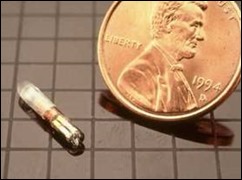
125x125_2nd_Circle

Readers Write: Patient Discipline, Or is it Simply Willpower?

February 11, 2015 Readers Write 6 Comments

Patient Discipline, Or is it Simply Willpower?
By Helen Figge

image

The dust seems to be settling a bit these days, with overwhelming sighs of relief about the redefining of MU2, ICD-10 continuing the saga onward but slower, and the unending chatter about the patient portal and how we need to get patients to use it in order to reap the benefits of the various regulations and mandates in place forcing doctor’s and caregivers alike to make us all healthier. Couple that to our worries that once we have the collected data, we then are able to analyze the data in a way that actually benefits the end user – you and me – the healthcare consumer. Just as worrisome is the safety of the data and its security.

The quandary to all of this at times is that we are still a very sickly society. More than one-third of US adults are obese. Obesity-related conditions include heart disease, stroke, type 2 diabetes, and certain types of cancer, which are some of the leading causes of preventable death. The estimated annual medical cost of obesity in 2008 was $147 billion, while the medical costs for people who are obese is about $1,429 higher than those of normal weight.

Surely we have many of the technologies in place to help counteract these serious statistics — various forms of health information technology solutions that actually can assist clinicians to take better care of their patients. The technology is in place, now we need to best utilize it, right?

One term continues to be said and that is patient engagement — engaging the patient to care, which is deemed as one of the cornerstones for healthcare success in making us healthier than ever before. The baseline theme common to many in the patient engagement framework is managing information and making it available to both the patient and care team in a manner that supports care decisions, improves bi-directional communication, and optimizes outcomes. This is the nirvana we strive to accomplish in healthcare, and we appear to be doing so as we move forward in time.

We are seeing more and more patient engagement opportunities available to the healthcare consumer. These are in the forms of weight loss programs, reminders to eat and exercise, Facebook clubs, and many other forms of enticing the patient to care.

Despite the benefits of patient engagement solutions and the investments currently being made, convincing the patient to care might be the more difficult aspect to all of this and will require innovation. Lack of health literacy in a large portion of the population, fragmented end-user market, poor access to healthcare, and security of patient data again stated are still hindering growth of this market to convince the patient.

These efforts boil down to one common thread: self-motivation or self-discipline by the healthcare consumer. Without the engaged patient, the various interventions prescribed by their caregivers will go unnoticed and fall short of the clinicians’ effort to effectively prescribe. But how do you self-motivate or educate a person on self-discipline and have it, not withstanding lifelong tendencies, become a normal part of one’s life?

I take myself as an example. I don’t know how many times on a cold, dreary day I rather would have laid in bed than get my running shoes on and take a quick two-mile run up and down the road before any of the neighbors saw me, thinking to themselves, “What is she doing out in the dark with a flashlight in this hour?” It’s because I work for a living and I had to fit my run in before work and before life started.

But in the end, I did it, and do so faithfully. I disciplined myself knowing it was good for me. The alternatives are less than appealing. Forget that the doctor that says it is good for your blood pressure and weight and bones or the envy or guilt often times put on us by our peers because they do it. I do it for me and the motivation comes from within, not someone reminding me it is good for me. That is the discipline we need in healthcare as consumers if all of these tactics to entice us to take care of ourselves takes hold.

In order for patient engagement to work and before entities heavily invest in programs and concepts to “educate” the consumer about their health, we need to get to the root cause of self-discipline. Someone needs to understand how we discipline ourselves to take care of our health. That is where sustainable healthcare lies for us now and in future generations — teaching us the discipline, and in turn, the next generation.
Eventually we will not have the ability to be reminded to take care of ourselves by an outside party. Funding may run out, people may tire of the phone call to eat right that day or sustain from a cigarette else you will end up on oxygen and die a slow and painful death. We will need to learn from these efforts via patient engagement tactics, and in turn, use those pieces of information to further our own reasoning of, “Why do I need to do it?”

Whether it is home glucose monitoring, INR readings, blood pressure readings, or any of the other mobile device readings, what we do with the data to infuse the practices into everyday life will determine the long-term outcomes of healthcare success. Determining the outcomes of all of the healthcare reforms, reimbursements, and penalties really come down to one simple fact: will the healthcare consumer heed their doctor’s advice, listen to directions, and follow the protocol to keep them alive, make them well, or to keep them well?

It boils down to discipline. Are you disciplined enough not to be reminded to take care of yourself, or are you like most Americans who need to be cajoled, bribed, and threatened in order to take control of your own health destiny? Only your self-discipline can answer that question.
Helen Figge is SVP of global strategic development for Lumira.

Readers Write: What is a Health Information Handler?

February 11, 2015 Readers Write Comments Off on Readers Write: What is a Health Information Handler?

What is a Health Information Handler?
By Lindy Benton

image

Recently I received a query from a healthcare professional wondering about the definition of a “health information handler” and their benefits. I’ve long desired to do a presentation on the subject so as to discuss their reason for being, their importance. and how they tangibly serve health systems. Given the lack of awareness surrounding the topic, perhaps it’s an appropriate time for a refresher on the subject.
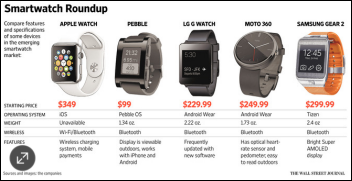
First, a little history. The Center for Medicare & Medicaid Services (CMS) manages the health information handler program. CMS defines a health information handler as “any organization that handles health information on behalf of a provider.”

Providers and hospitals usually engage relationships with health information handlers (as third-party vendors) so they — the providers — are able to electronically submit claims data and health record attachments to payers and Medicare contractors in support of claims adjudication.

These health information handlers also are often called claim clearinghouses, release of information vendors, and health information exchanges. Most also offer electronic submission of medical documentation (esMD) gateway services.

EsMD is still a work in progress, an ongoing experiment spearheaded by CMS to support electronic exchange of information between health systems and Medicare audit contractors. Prior to esMD, providers had just two ways in which to respond to documentation requests from Medicare review audit contractors – mail or fax. EsMD fixed that problem. 

The program has been in effective for more than three years – Phase One went into effect on September 15, 2011. Phase Two will allow providers the ability to receive electronic documentation requests when their claims are selected for review. CMS has yet to launch Phase Two.

To date, tens of thousands of medical records and other health information have been submitted through esMD in response to audit requests. More specifically, though, according to AHIMA, the esMD program directly impacts health information manager professionals. For these folks — who typically pull and send medical records in response to CMS audits — the process can be slow, frustrating, and costly. The esMD program and the health information handler entities that facilitate the record exchange are working to simplify that process, AHIMA states.

The esMD gateway is not set up like a typical website, though. Not everyone who wants to submit information via the gateway can simply jump on, upload files, and press the “send” button. To interact with CMS through esMD, organizations need access to the portal. The gateways are costly to develop and maintain, so hospitals and providers turn to health information handlers to facilitate the exchange process.

Health information handlers build and service an esMD gateway for multiple provider participants and submit electronic documentation on a provider’s behalf. As more providers use health information handlers to simplify their audit processes, electronic health information exchange also will increase in usability.

Documentation requests from Medicare’s audit contractors are the primary requests received by health information professionals. Auditors request additional claims information from hospitals to verify or “ensure” that coding and claims are submitted properly. If claims are coded incorrectly, hospitals must return funds to Medicare. The program was designed to reduce incorrect Medicare payments and to recollect overpayment, identify underpayments by hospitals, and prevent future issues with payments. EsMD supports this effort and enables health information handlers to support the flow of information.

Overall, the recovery program has been a success from the perspective of CMS. Medicare’s recovery auditors returned more than $3 billion to the program in 2013. Providers may disagree, but in the very least they are able to more easily satisfy exchange of crucial information to support their billing practices with Medicare.

From a business and enterprise perspective, the move by CMS to launch the program has meant the growth of a number of health information handler firms that offer a variety of services and skill sets. In addition to providing exchange capabilities, some allow for capture of information, scanning, storage, and transmission in a secure manner. The health information handlers also track data sent and acknowledge and verify that it has been received by auditor through the gateway. Health information handlers are considered business associates of the organizations they serve and are required by CMS to follow HIPAA rules.

According to a Government Health IT piece earlier this year, overall the esMD program is still not streamlined, but there is traction here and despite ongoing setbacks more and more providers are using the program. CMS even reported that more than 500,000 records were sent through esMD in 2013 and more than 30,000 hospitals, physicians, and medical equipment providers use esMD for auditor medical record requests.

Because of the advent of esMD and health information handlers, hospitals and health systems are gaining speed in the processing of their audit documents as well as allow for the exchange of secure information between health system and Medicare auditors. The time saved in responding to the information requests is a huge benefit. There’s also the ability to address sensitive audits rather than sending information through mail or unreliable fax servers. This alone typically cuts down the time required to submit the documents for review and reduce potential penalties.

An example of this can be found at Boca Raton Regional Hospital in Florida. Established in 1967, just five years ago it faced a variety of Medicare audits and penalties. Now the not-for-profit 400-bed hospital is seeing a complete turnaround. 

One significant change is how the hospital now manages responses to Medicare audits. According to hospital officials there, the previous process had been cumbersome and meant printing, sorting, packaging, and mailing documents to Medicare to support claims and to adjudicate their bills. Since one patient record can fill a box or more, hospitals are left paying for all materials, labor, and shipping involved, enormous financial considerations for every organization.

The Medicare audit process has drastically improved because of Boca Raton Regional Hospital being able to submit documents electronically and denials related to untimely submission of records has disappeared entirely. For example, Medicare allows 45 days from the date of request for hospitals to respond, but Medicare still sends documentation requests by paper. Typically, by time the request gets to the proper department in the hospital, more than 10 days has elapsed. Managing the entire process requires a very strict time requirement and hospitals often fail to return records to Medicare on time, which means hospitals can no longer appeal. By automating the process and securely depositing electronic attachments to Medicare’s official information portal, Boca Raton Regional Hospital has prevented the loss of at least $350,000.

There are hurdles to widespread implementation, though, as hospitals resist using the solutions because they’re overwhelmed with current technology. They’re already so invested in other projects that many are unable to see the benefits of bringing on additional solutions and being able to exchange information with CMS. A prevailing thought is that those managing hospital IT departments simply are overwhelmed and growing ever more nonchalant about the idea that technology is going to save them or their employers any more than already has been promised.

In fact, recent reports have begun to surface claiming that CIOs at struggling health systems have little faith that new technologies, on top of recently implemented systems like EHRs, will do much good for them since these other solutions – the EHRs – had such little positive effect on their organizations’ bottom lines. Simply put, they’re sensing a bit of personal doom and are growing tired of all the hype. It’s unfortunate.

Also, for payers, despite the obvious benefits of encouraging health information handler relationships with physicians, esMD and electronic exchange are not a top priority considering all the issues they are managing, not the least of which is the current federal insurance overhaul. Perhaps time will change this, but for the foreseeable future, esMD is likely not going to gain the traction is needs to become an industry standard.

What is fortunate, though, is that service providers like health information handlers are having a positive impact on the healthcare environment and are bringing down some pretty mighty horses while also helping bring about better workflows, improved efficiencies, and increased profitability. Despite the lack of awareness surrounding these healthcare partners and their impact across the sector, many are still unaware of the health information handler’s purpose and the very term by which they are defined.

Lindy Benton is CEO of MEA|NEA.

Text Ads


RECENT COMMENTS

  1. Re: Deliberately Faked Academic Papers in Nature See, this doesn't surprise me at all. Of course AI quotes these bogus…

  2. Challenger exploded on lift-off when the O-rings failed. Columbia disintegrated on reentry after one of the heat shield tiles were…

Founding Sponsors


Platinum Sponsors


Gold Sponsors


RSS Webinars

  • An error has occurred, which probably means the feed is down. Try again later.