EPtalk by Dr Jayne 7/23/15

July 23, 2015 Dr. Jayne Comments Off on EPtalk by Dr Jayne 7/23/15

clip_image002

This week has been chaotic. It’s amazing how being out of the swing of things even for a couple of weeks can interfere with our habits and processes. I thought I had this week’s EPtalk nearly written and saved it out to the cloud, only to now be unable to find it (along with another presentation I was working on). A keyword search wasn’t helpful nor were some of the other tricks I tried, so those thoughts will have to wait until they turn up which will hopefully be before next week.

Luckily the presentation is for something several weeks out, so I have time to rebuild it if I can’t find it. I’m also traveling and my laptop’s wireless has been on the fritz, which might have played a role in the mystery of the missing documents. At one point today I was working at a blazing fast 512 kbps, which I haven’t seen in a long time. There’s nothing quite like cloud storage gone wrong.

I’ve also been tunneling through more than a thousand emails that came in while I was away. Many are related to social media and things like LinkedIn, so shame on me for not having adequate filters set up to prevent it my inbox from being an overwhelming mess. I’m grateful for the legitimate mail from readers that keeps me soldiering on.

From Commanding Officer: “You wrote about an ICD-10 code for the psychotic reaction you were going to have when kids were playing games on your flight without headphones. My recommendations are:

  • R45.4 Irritability and anger
  • F63.81 Explosive disorder, intermittent; Aggressive episodes frequently result in physical or verbal assaults or property destruction (for example, road rage). The individual may report feeling tension prior to the episode, immediately followed by relief.”

I agree with the reader’s suggestion of leaning towards the road rage code. Although we occasionally hear about airline passengers behaving badly, the more I fly the more I continue to be amazed that there are not even more incidents occurring.

clip_image004

From Jimmy the Greek: “With the number of conference calls I’m sure you’ve been on in your career, I thought you’d get a kick out of this quote of the day. A coworker actually said, ‘That’s impossible for us to do, because we’ve never done it before.’ I resisted the urge to ask how she managed to get out of her cave.” Hearing stories like that always makes me feel better about the places I’ve worked. No matter how bad you think it is, the grass isn’t always greener elsewhere. The fact that this comment is from a technology professional at a company known for communications solutions makes it all the funnier.

As for summer adventures, several readers have written to share theirs: hiking, camping, and a safari were included on the list. At least three readers plan to spend time at scout camps with their children. One reader noted that although it was great to unplug, it was not so great to have to spend two whole days reading emails after returning to work. Another travels every year to a working ranch in Montana that I have to say looks pretty incredible.

From High Adventure: “I’ve enjoyed several treks to places with minimal cell phone coverage and what was there, was enough to get the occasional text message or phone call out to family to let them know we’re safe. Not enough to download email or anything like that. As an IT professional who deals with the daily deluge of electronic communications, I find these trips refreshing. But, I’ll confess, you need to learn how to unplug and let go of the work. It’s not easy but you have to trust your team and co-workers to do the right thing. As a leader, if you can’t trust them to do that, you’ve failed in one of your key jobs.” I remember reading a blog piece attributed to Jonathan Bush where he talked about taking a month off for summer vacation with his family. He cited the need to let his team have the experience of managing without him as one of the reasons for taking an extended vacation. That’s great when leaders have seasoned teams below them, but as a consultant, I see a fair number of dysfunctional teams where that would never be an option.

Speaking of vacation, several readers responded to my piece about vacations in modern business culture. One mentioned that his company, Lexmark, went to an unlimited vacation policy in 2013.  One reader suggested SCUBA as a great vacation since cell phones don’t function well underwater. Another offered tips for vacationing as a corporation of one:

I also have my own solo business as does my twin sister in the legal field. When one of us is going to be seriously out of touch, we cover each other’s voice and emails just scanning for “must do now” things and sending reassuring messages to those who can wait until the owner gets back. We also have a deal that the person vacationing knows that the other will contact them if something comes up but that they are supposed to relax and not check since they have a proxy on duty who is filtering. You do have to trust the person you partner with (and I know it is harder to get closer than an identical twin) but perhaps something like this would be helpful to you.

That’s a great story. My brother is also an independent business person, but given his entrepreneurial tendencies, he’d probably charge me for the coverage. Luckily right now my file of consulting clients is small enough that I was able to tell everyone my plans in advance and most know me well enough that even if anything urgent came up I’d be able to turn it pretty quickly on my return. I’m sure it won’t be that way forever and I appreciate the idea.

Email Dr. Jayne.

Curbside Consult with Dr. Jayne 7/20/15

July 21, 2015 Dr. Jayne 3 Comments

Mr. H mentioned that I was away last week. I had the pleasure of spending it on a wilderness adventure and was able to seriously unplug for the first time in a long while. Being forced to make do with what you remembered to pack and what your companions are carrying definitely casts a different light on the idea of accomplishments. I wasn’t away very long before I had some experiences that made me question how important some of the things we all worry about on a daily basis really are in the grand scheme of things.

My active clients and my practice knew I was going to be away and to not expect any responses to email until today. Although our group had a solar charger with us, most of us were pretty serious about putting our technology away on day one. Being able to wake up without the blinking light on my phone was priceless. I went from a world of worrying about hundreds of minute details to a world where the key worries were having enough water, making fire, having adequate food, and staying dry were the real priorities (and not always necessarily in that order).

Teamwork has an entirely new meaning when you are depending on each other to share the load (literally) and look out for each other. Being in the backwoods means getting creative with solutions when you don’t have ready access to everything you wish you had. I administered some fairly primitive medical treatments – fortunately the standard of care doesn’t apply when you’re many miles from nowhere. Everyone made it home with all their limbs and most of their senses of humor, so I guess my wilderness first aid skills were OK. It was certainly nice to be in a world where I didn’t have to worry about documentation, although I did have to have my companions do a “sanity check” on my plan of care since my mind was trying to operate in a Level I trauma center while my patient was sitting on the ground in the dirt.

The best thing was being away from federal (and other) mandates. When your main directives are “Leave No Trace” and to not do anything stupid or that might get you dead, it’s a lot more simple. None of my fellow hikers were in healthcare and only one was in IT, so we didn’t get sucked into beef sessions about work or coworkers. I’ve spent the last decade and a half using the better part of my waking hours to deal with unhappy physicians, poorly functioning technology, and whether my employers were sane. It was nice to just worry instead about how far I could push myself mentally and physically and whether my feet were staying dry and happy.

I learned that I’d rather deal with venomous spiders and reptiles any day than with RAC audits and PQRS calculations. I also learned that having the right kind of supplies turn up at the right time makes all the difference (and indeed what I would do for a Klondike Bar, when presented with one that had been delivered in dry ice following three days with the heat index well over 100F). I shared my tent with a fascinating spider – do you know how long it takes her to eat a fly? I do. I also shared my path with a flock of wild turkeys (not the liquid kind), mosquitoes the size of hang gliders, and what one of my trail mates insists was a chupacabra (personally I think it was a raccoon).

I think the best part of the experience was being mostly without the need to keep track of time. You wake up when the sun comes up and go to bed when you feel like it. There are no double-booked meetings or back-to-back conference calls. You rest when you’re tired and pick up again when you’re ready. You have the luxury of watching spiders build webs because you don’t have anything else pressing to do.

Coming back to civilization was initially a rude awakening. The first person I encountered at the airport was a twenty-something man using voice-to-text for messaging his best friend about why the friend’s girlfriend was bad news. I got to hear all the gory details and doubt he even thought that everyone around could hear. (By the way friend – it’s going to backfire. Your friend needs to figure it out on his own.)

Civilization did redeem itself, however, when I discovered I was sharing my flight home with the BYU Ballroom Dance Company. They were extremely courteous travelers as well as being classily dressed. I almost thought I had fallen into a 1960s air travel dream with the men in crested navy blazers and the women in matching tangerine travel dresses. I found it amusing that although the ladies’ jewelry matched, they all had their own choice of shoes.

clip_image004

Nearly 70 miles of hiking later, I’m back in the saddle with quite a few emails and a couple of conference calls. It’s hard to be back, but I’m interested to see how my new perspective influences my day-to-day work. I’m exhausted but invigorated. I’ve already started planning next summer’s wilderness adventure and it’s great to have something to look forward to.

What’s your next adventure? Email me.

Email Dr. Jayne.

Monday Morning Update 7/20/15

July 18, 2015 News 7 Comments

Top News

image

UCLA Health announces that its systems have been breached in a criminal cyberattack, exposing the information of 4.5 million patients. UCLA contacted the FBI in October 2014 when it noticed suspicious activity, but didn’t realize the hackers had gained access to patient information until May 2015. UCLA has hired additional IT security companies and expanded its internal security team in response to the breach.

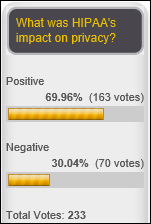
The many recent healthcare breaches suggest that basically everybody who has ever been a patient or bought medical insurance should just accept the fact that their information could be exposed, causing nothing more than embarrassment other than in the case of identity theft. That makes me wonder which data elements are required to steal someone’s identity and whether providers should be storing those elements given their substandard security. Or if we’re really paranoid about someone finding out about our blood pressure or hemorrhoids (does anyone really care?), whether pre-Internet HIPAA laws should be extended beyond just providers to everybody.


Reader Comments

From Publius: “Re: DoD EHR bid. Will announce Friday 7/17 their selection of Epic/IBM for the DHMSM project. IBM is meeting with consulting firms on Monday 7/20 to deliver Statements of Work (SOWs). Seattle/Tacoma area is the first deployment, Washington DC, Europe, then Asia. Consultant pay rates are expected to be below market initially.” Unverified. My insider says Friday at 4:00 p.m. Eastern was the deadline for the DoD folks to turn in their scoring for tabulation following a two-day extension. Unless DoD ignores their stated methodology, nobody knows the winner yet. Maybe next week, although the week after seems more likely. Another source says the announcement date will be August 14. Gossiping about the outcome is fun and I’ve heard a bunch of wild, unverified rumors, such as one of the three bidders failing to make the final cut due to licensing and offshoring issues. I’m trying to picture the reaction in the three camps when the winner is named. Maybe the winner will become so distracted by DoD’s demands that the other two will gain non-governmental market share. Remember NPfIT, where every successful and initially giddy bidder nearly went out of business after failing to meet milestones tied to payments.

From Truven Watcher: “Re: Truven. Rumors are that TriZetto is in talks with Veritas Capital to buy it.” Unverified. TriZetto was acquired last fall for $2.7 billion by Cognizant, which has expressed interest in more acquisitions.

image

From Mr. Black: “Re: NantHealth acquisition of Harris Healthcare. The best part of the NantHealth purchase is Allscripts gave them $200 million, which they in turn gave them $100 million, but since Allscripts essentially gave them their money back (and then some), they went and purchased a competitor. It’s just laughable.”

image

From Wintry Mix: “Re: Allscripts. Trying to convince me that they have a truly integrated, single database, single code set acute and ambulatory offering along the same lines as Cerner, Epic, and Meditech. No interfaces, one patient/one record, etc. It wasn’t long ago that Allscripts included zero dollar interfaces between the Touchworks PM and EMR components in their ambulatory contracts since they hadn’t fully integrated the A4 PM system, let alone folding in Eclipsys. Can anyone validate their claim?”

image

From ThePope: “Re: Ascension Health. The largest Catholic Health System in the world is making a coercive offer to buy one of its vendors at a 50 percent discount to market value, an unprecedented move for a faith-based, not-for-profit system.” Ascension Health makes a lowball offer of half the stock market value of revenue cycle vendor Accretive Health after announcing that it won’t renew the company’s contract, which accounts for half of Accretive’s total revenue. Accretive Health rejected the offer, but its shares tanked that same 50 percent on Friday, wiping out more than $250 million in equity. The company is “seeking strategic alternatives” as shares have dropped 71 percent in the past year. Former McKesson executive Emad Rizk, MD, who took the Accretive CEO job a year ago, saw his net worth plunge $3 million between Friday’s breakfast and dinner as the stock went down in flames following Ascension’s offer/threat.


HIStalk Announcements and Requests

image

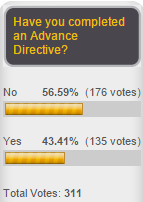
I was surprised that more than half of poll respondents haven’t completed an Advance Directive, meaning that if they’re lying brain-dead on a ventilator in a hospital bed (after an accident or stroke or whatever tragedy can happen at any time and at any age), they’re sticking someone else with the decision of whether to pull the plug or let them lie in expensive vegetative limbo indefinitely. Take charge before it’s too late – it’s easy to create an Advance Directive and Healthcare Power of Attorney that makes your wishes clear and legally binding. New poll to your right or here, in recognition of summer vacations: how many paid days away from work will you take in 2015? 

image

Thanks to TeraMedica, now part of Fujifilm, which has upgraded its HIStalk sponsorship to Platinum.

A small “my medical records saga” update: I thought I would be clever in sending my CareSync records to my Carebox account using Direct messaging, but CareSync didn’t recognize my Carebox Direct address as valid for some reason even though it allows a Direct address as a “send to” option. I’ve let them know it didn’t work. I also requested to have my PCP’s records added, which is a one-button CareSync click followed by a quick provider database lookup.


Last Week’s Most Interesting News

  • NantHealth acquires Harris Healthcare Solutions.
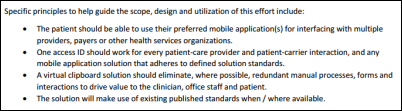
  • A group that includes HIMSS and MGMA publish initial documents for their Virtual Clipboard project that will allow patient-entered demographic and insurance information to be collected electronically at registration.
  • ProPublica publishes a Surgeon Scorecard of complication rates derived from Medicare claims data.
  • AHA objects to the information blocking provisions of the 21st Century Cures Act that has cleared the House and now rests with the Senate, urging Congress to target non-cooperative vendors whose systems and fees make it impractical for providers to share data conveniently.

Webinars

July 22 (Wednesday) 1:00 ET. “Achieve Your Quality Objectives Before 2018.” Sponsored by CitiusTech. Presenters: Jeffrey Springer, VP of product management, CitiusTech; Dennis Swarup, VP of corporate development, CitiusTech. The presenters will address best practices for building and managing CQMs and reports, especially as their complexity increases over time. They will also cover quality improvement initiatives that can help healthcare systems simplify their journey to value-based care. The webinar will conclude with an overview of how CitiusTech’s hosted BI-Clinical analytics platform, which supports over 600 regulatory and disease-specific CQMs, supports clients in their CQM strategies.

July 29 (Wednesday) 11:30 ET. “Earning Medicare’s New Chronic Care Management Payments: Five Steps to Take Now.” Sponsored by West Healthcare Practice. Presenters: Robert J. Dudzinski, PharmD, EVP, West Healthcare Practice; Colin Roberts, senior director of healthcare product integration, West Healthcare Practice. Medicare’s new monthly payments for Chronic Care Management (CCM) can improve not only patient outcomes and satisfaction, but provider financial viability and competitiveness as well. Attendees will learn how to estimate their potential CCM revenue, how to use technology and clinical resources to scale up CCM to reach more patients, and how to start delivering CCM benefits to patients and providers by taking five specific steps. Don’t be caught on the sidelines as others put their CCM programs in place.

July 30 (Thursday) 3:00 ET. “De-Silo Your Disparate IT Systems Around the Patient with VNA.” Sponsored by Lexmark. Presenters: Steven W. Campbell, manager of diagnostic applications and interfaces, Piedmont Healthcare; Larry Sitka, VNA evangelist, Lexmark. The entire patient record, including both DICOM and non-DICOM data, should be available at the point of need. Disparate, aging systems that hide data inside departmental silos won’t cut it, nor will IT systems that can’t integrate medical images meaningfully. Learn how Piedmont Healthcare used a vendor-neutral archive to quickly and easily migrate its images and refocus its systems around its patients.

Previous webinars are on the YouTube channel. Contact Lorre for webinar services including discounts for signing up by Labor Day.


Acquisitions, Funding, Business, and Stock

image

Xerox takes a $145 million charge as it decides to cut back its Medicaid systems business within its Government Healthcare Solutions division.

image

Mayo Clinic licenses its stress level software for physicians, residents, and medical students to Corporate Web Services, which developed the interactive versions of the tools and will market the products through its Med+Ed Web Solutions business.

image

Consumer engagement platform vendor Accolade raises $22.5 million.

image

Allscripts reports preliminary Q2 estimates that beat analyst expectations for both revenue and earnings, sending shares up 9 percent on Friday. Above is the one-year MDRX share price chart (blue, down 11 percent) vs. the Nasdaq (red, up 18 percent).


People

image image

Steve Wasserman (AppNeta) and Joy Schroeder (PatientKeeper) join Aventura as CFO and VP of business development, respectively.


Government and Politics

image

image

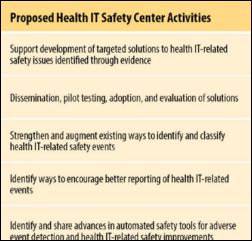
ONC releases its consultant-developed roadmap for a Health IT Safety Center, estimating the cost of operating the public-private partnership at $20 million over five years. The safety center wouldn’t seem to do much actual work for that investment since the proposal says it won’t oversee or investigate anything, won’t collect data, and won’t serve as a Patient Safety Organization. It would mostly just try to get stakeholders together and share information within its core functions of convening, researching, and disseminating. The report suggests that initial funding could come from ONC or AHRQ (assuming the government doesn’t dissolve AHRQ, after which this report seems to suggest that the Safety Center be modeled) and the center would have to figure out how to fund itself by Year 5. It calls for at least 10 FTEs along with IT and travel costs. It’s way too touchy-feely to raise my level of interest and fails to address any pressing issues, such as the need for centralized data collection, incident investigation, and provider safety awareness. It seems like a waste of taxpayer money in the proposed form as it tries to avoid offending anyone, including those who need offending, and how it will eventually fund itself raises interesting questions. I don’t think this will help ONC’s case in trying to convince Congress to underwrite its search for post-Meaningful Use relevance.


Privacy and Security

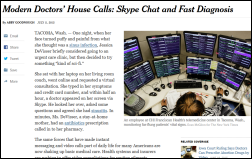
A New York Times article notes the ongoing use of HIPAA as a healthcare provider “code of silence” in misinterpreting the law by either ignorance or indifference, such as when a woman called the ED to provide the medical history of her 85-year-old mother and was told they couldn’t take her information because of HIPAA, which led to the doctor ordering a drug to which the patient was allergic. A church stopped listing the names of ill members in its bulletin, with the minister claiming it had to stop because of HIPAA. The article also notes that patients can give consent verbally to allow their information to be shared even though hospitals often require them to sign a form.


Technology

image

A rural Virginia field hospital set up by Remote Area Medical becomes the first US recipient of a package delivered by FAA-approved drone as medical supplies are flown in as a test that also involves NASA. The 10-pound drones were provided by Flirtey, which calls itself “the world’s first autonomous aerial delivery company” in offering last-mile logistics.


Other

A KQED analysis finds that the Bay area has the lowest rate of graduating medical students who continue on to residency in “Dropout Docs: Bay Area Doctors Quit Medicine to Work for Digital Health Startups.” A third of Stanford’s medical graduates effectively end their medical careers by not even applying to residency programs. The article notes that biotech and digital health companies offer opportunities that appeal to new graduates worried about excessive patient loads and lack of provider satisfaction, with one physician adding, “I loved working with patients, but I looked around me and realized that I didn’t want the jobs of anybody who had ‘succeeded’ as a clinician. Tech culture is very appealing when juxtaposed against the hierarchy and myriad hoops to be jumped through in clinical medicine.”

image

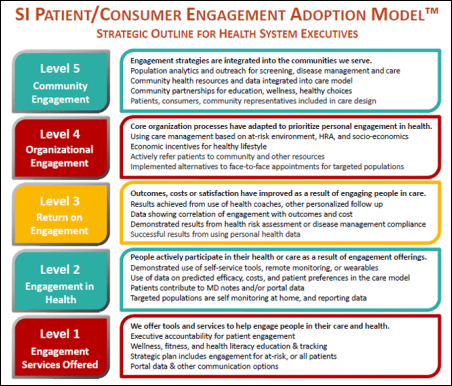
Scottsdale Institute announces its Patient/Consumer Engagement Adoption Model that includes a self-administered assessment. It’s free to all US health systems and clinics.

image

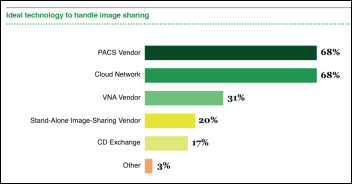
A new, free Peer60 report finds that two-thirds of providers consider image-sharing to be critical, with most of them a lot more interested in receiving images from outside facilities rather than sending them (obviously that’s a problem). Nuance’s PowerShare Network (the acquired Accelerad and SeeMyRadiology.com) had the top market share and market awareness.

Weird News Andy says this story is Finger Kissing Good, in which the CDC quite unnecessarily advises him to avoid kissing pet chickens due to potential salmonella infections. WNA adds some trivia in noting that Peach Melba and Melba Toast were both named in honor of Australian soprano Nellie Melba, which inspired him to christen his seafood creation in honor of his favorite singer Ella Fitzgerald as Salmon Ella.


Sponsor Updates

  • North Valley Hospital (MT) uses Summit Express Connect to consolidate 45 interfaces in its migration from Meditech to McKesson Paragon.
  • MedData offers “The Wait is Over: Welcome to ‘The Impatient Patient.’”
  • NTT Data Americas is named “Best IT Company of the Year in Services” in the 10th Annual 2015 IT World Awards sponsored by Network Products Guide.
  • NVoq offers “Your iPhone has Good Dictation. Why Doesn’t your Enterprise Application?”
  • Oneview Healthcare offers “Six Steps to Superior Patient Satisfaction.”
  • Patientco posts “Is the Location of Your ‘Pay My Bill’ Button Costing You Money? You May Be Surprised.”
  • VisionWare will exhibit at the MDM & Data Governance Summit July 22-23 in San Francisco.
  • PatientKeeper offers “Providers: Assess Your Charge Capture Needs.”
  • Paragon Development Systems (PDS) reports record monthly revenue in June 2015.
  • PerfectServe offers “Care Transitions – Tips for Bridging the Gaps.”
  • PeriGen supports the Association of Women’s Health, Obstetric and Neonatal Nurses with a $2,500 donation to the Every Woman, Every Baby program.
  • Phynd offers “Inaccuracies move the industry toward a Unified Provider Management Platform.”
  • PMD offers “Patient Satisfaction is Physician Satisfaction.”
  • Sandlot Solutions will exhibit at the Louisiana Hospital Association Annual Meeting and Summer Conference July 20-21 in Orange Beach, AL.
  • The SSI Group will exhibit at the Adventist Health System Revenue Cycle Conference July 21-22 in Altamonte, FL.
  • Sunquest Information Systems will exhibit at AACC 2015 July 28-30 in Atlanta.
  • The Dallas Business Journal features T-System CTO Hank Hikspoors.
  • Huron Consulting and Valence Health will exhibit at the AHA Leadership Summit July 23-25 in San Francisco.
  • Verisk Health offers “VHC is Back and Better Than Ever Before.”
  • Voalte CEO Trey Lauderdale is profiled in the Florida Business Observer.
  • ZirMed offers “CMS’ new ICD-10 transition plan and newly proposed reimbursement model.”

Contacts

Mr. H, Lorre, Jennifer, Dr. Jayne, Dr. Gregg, Lt. Dan.

More news: HIStalk Practice, HIStalk Connect.

Get HIStalk updates.
Contact us or send news tips online.


125x125_2nd_Circle

News 7/17/15

July 16, 2015 News 1 Comment

Top News

image

NantHealth acquires Harris Corporation’s healthcare business, which had been rumored to be up for grabs earlier this year as Harris focuses on its defense business. Harris’s FusionFX product line (HIE, patient and provider portals, secure messaging, single sign-on) and its analytics and middleware products came from its $155 million acquisition of Carefx in 2011. A reader tipped me off before the announcement with this comment: “Nant has been working with Allscripts/dbMotion for awhile, and with this purchase, they are essentially buying a competitor with an inferior product.”


Reader Comments

From Juris Nurse: “Re: South Australia’s ESMI imaging system that is causing problems there. I looked it up and it’s not a specific product, but a $19 million project that involves enterprise RIS, PACS, and voice recognition provided by Carestream.” I mentioned that rollout of the system caused two-week imaging delays and a radiologist’s claim that non-clinical administrators were entering orders and deleting his critical comments about the system. Kodak sold its healthcare business to Canada-based Onex for $2.5 billion in early 2007, with Onex trying unsuccessfully to unload the renamed Carestream Health for $3.5 billion in 2013.

image

From Ron Mexico: “Re: Glens Fall Hospital as Epic’s first de-install, This happened last year within DaVita HealthCare Partners, which replaced the Epic system of acquired Talbert Medical Group with its standard Allscripts TouchWorks. Needless to say, things didn’t go too well. There has been a lot of turnover in leadership and clinical informatics since.” The reader’s original rumor report referenced Epic’s assertion that it has never been replaced except when a customer was acquired, although I don’t know if that comment refers only to inpatient systems. Glens Falls Hospital CIO John Kelleher saw my post and graciously reached out to say that the hospital, which I believe was using Cerner inpatient and Epic outpatient, will replace Epic ambulatory with Cerner. A key factor was Cerner’s ITWorks system management services, which might give Epic motivation to speed up its client hosting rollout. If Epic’s claim was that it has never been voluntarily de-installed in either hospital inpatient or outpatient settings, then that streak has been broken. Epic will probably also be replaced by Cerner at the former University of Arizona Health Network, acquired by Cerner client Banner Health, but that won’t count against the streak if it happens.


HIStalk Announcements and Requests

It’s prime vacation season and Jenn, Lorre, Dr. Jayne, and I are unchaining ourselves from the keyboard on and off over the next few days even though we’ll still keep up with important news and emails.

image

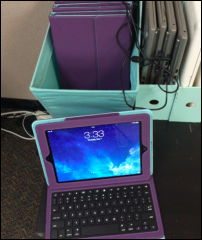
Mrs. S sent photos of the iPad keyboard cases provided by the HIStalk DonorsChoose project, saying her Colorado fourth graders love them for doing research work since the class has only six laptops that 12 groups have to share. She cleverly reworked six class iPads into laptops via our $264 keyboard case donation and now everybody gets their projects done during Genius Hour, a day she sets aside each week to help students research topics they’re passionate about.

This week on HIStalk Connect: Novartis explores partnerships with remote patient monitoring providers to help insurers control costs as it prepares to launch a groundbreaking, but expensive, new heart failure medication. Renowned genetics scientist and entrepreneur Lee Hood raises a $36 million Series B round for his genetics-based personal medicine startup. GlaxoSmithKline reports that it will begin using Apple’s ResearchKit platform to support its clinical trials. A Harvard Medical School study evaluates the accuracy of online symptom checkers, finding that the correct diagnosis is only returned within the first three results 51 percent of the time.

This week on HIStalk Practice: Rhode Island Quality Institute CEO Laura Adams comes to CurrentCare’s defense. Primary care docs may be healthcare’s next hot commodity. Medfusion launches new patient payment tools. The Alliance of Specialty Medicine takes over Capitol Hill. Fitness nuts can share their wearables data for the greater good. Primary care docs bare all in their frustrations with EHR administrative tasks. UNM plans to invest heavily in EHR support for primary care practices across New Mexico. Greenway Health CEO Tee Green provides insight into the new brand.


My Records Request Saga Continues

image

image

SNAGHTML47a4174b

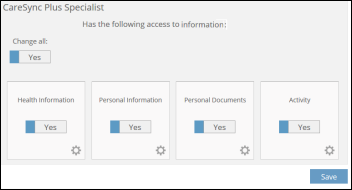
Amy Gleason of CareSync offered an end-run to my “give me my medical records electronically” saga involving a EMRAM Stage 7, MU Stage 2-attesting medical center. CareSync provides a personalized service in which their Health Assistants do all the ugly work behind the scenes. I signed up for the service (full disclosure: Amy gave me a coupon code for free access) and it was a great experience. The user interface was easy to follow, the CareSync Health Assistant called to introduce herself and see how she could help, and I completed a very short online form that CareSync converted into a faxed hospital information request in the background. Shortly after, I received an emailed transaction report indicating that CareSync had added the individually transcribed visit-related data elements to my record along with scans of the hospital’s reports. My total time investment: maybe five minutes. I can’t think of anything negative to say about the experience (OK, one tiny thing – signing the request form with a mouse wasn’t much fun for a trackball user like me).

CareSync would be great for the average patient and/or family members since it’s a turnkey service, you get to work with a real human, and its health maintenance tools appear excellent even though I haven’t actually used them yet. Requesting electronic records is one thing, but then what do you do with them? CareSync loads everything into a very nice online record, complete with the scanned original documents, and then layers on tools you use to manage the records, add additional information, and selectively share the information with providers (down to the individual data element). The Concierge service is $199 per year and seems easily worth it since they obtain and load all of your medical records, you have unlimited access to your Health Assistant to schedule your appointments and coordinate your care, it turns dry information into actionable items (reminders, notifications, dashboards), and you can share your record with family and friends for free.

I’m generally scornful of PHRs because few people will bother to enter their information manually, leading to what I assume is a high abandonment rate. With CareSync, I did basically nothing other than request information from a single 18-hour hospital visit, but I still ended up with a perfectly usable baseline record that makes me want to go back to add my PCP’s records, especially since that involves zero effort and cost on my part since CareSync handles it as part of the yearly subscription.

Digging into the user psychology, it feels as though CareSync is the logical home for my records rather than provider portals. I feel empowered since I’m controlling my information from all sources and can share it with providers who can’t or won’t access other provider systems electronically. It’s also nice to have a real person to contact for help or requests.

I wasn’t surprised that the records CareSync obtained for me had numerous significant errors made by the hospital. The hospital flagged me as having several conditions that I don’t have, including asthma, diabetes, and myocardial infarction. They also incorrectly marked me as a smoker even though my history clearly says I’m not. Most importantly, they still haven’t given me an electronic copy of my information – CareSync did all the work in dealing with fax machines and manual transcriptions. Otherwise, I still haven’t heard back from my Office for Civil Rights complaint, the filing of which I should add was also simple and quick.


Webinars

July 22 (Wednesday) 1:00 ET. “Achieve Your Quality Objectives Before 2018.” Sponsored by CitiusTech. Presenters: Jeffrey Springer, VP of product management, CitiusTech; Dennis Swarup, VP of corporate development, CitiusTech. The presenters will address best practices for building and managing CQMs and reports, especially as their complexity increases over time. They will also cover quality improvement initiatives that can help healthcare systems simplify their journey to value-based care. The webinar will conclude with an overview of how CitiusTech’s hosted BI-Clinical analytics platform, which supports over 600 regulatory and disease-specific CQMs, supports clients in their CQM strategies.

July 29 (Wednesday) 11:30 ET. “Earning Medicare’s New Chronic Care Management Payments: Five Steps to Take Now.” Sponsored by West Healthcare Practice. Presenters: Robert J. Dudzinski, PharmD, EVP, West Healthcare Practice; Colin Roberts, senior director of healthcare product integration, West Healthcare Practice. Medicare’s new monthly payments for Chronic Care Management (CCM) can improve not only patient outcomes and satisfaction, but provider financial viability and competitiveness as well. Attendees will learn how to estimate their potential CCM revenue, how to use technology and clinical resources to scale up CCM to reach more patients, and how to start delivering CCM benefits to patients and providers by taking five specific steps. Don’t be caught on the sidelines as others put their CCM programs in place.

July 30 (Thursday) 3:00 ET. “De-Silo Your Disparate IT Systems Around the Patient with VNA.” Sponsored by Lexmark. Presenters: Steven W. Campbell, manager of diagnostic applications and interfaces, Piedmont Healthcare; Larry Sitka, VNA evangelist, Lexmark. The entire patient record, including both DICOM and non-DICOM data, should be available at the point of need. Disparate, aging systems that hide data inside departmental silos won’t cut it, nor will IT systems that can’t integrate medical images meaningfully. Learn how Piedmont Healthcare used a vendor-neutral archive to quickly and easily migrate its images and refocus its systems around its patients.

Previous webinars are on the YouTube channel. Contact Lorre for webinar services including discounts for signing up by Labor Day.


Acquisitions, Funding, Business, and Stock

image

Robotics manufacturer Vecna Technologies acquires telepresence robotics vendor VGo. Both companies operate primarily in healthcare.


Sales

Kettering Health Network (OH) choose Phynd to manage the information of 30,000 referring and credentialed physicians in its eight hospitals.

Austria’s AUVA insurance organization chooses Cerner for its seven emergency hospitals and four rehabilitation centers that focus on occupational health and treatment.


People

image

Huntzinger Management Group names Craig Kasper (The Comfort Company) as VP of marketing.


Announcements and Implementations

image

A group that includes the HIMSS, WEDI, MGMA, and the Sullivan Institute releases design standards for Virtual Clipboard, which would allow providers to collect patient-entered demographic and insurance information to speed up registration.


Government and Politics

image

This is what makes citizens cynical about government officials: former CMS Administrator Marilyn Tavenner is named president and CEO of America’s Health Insurance Plans (AHIP), meaning she will serve as an insurance industry lobbyist. AHIP (and former CEO Karen Ignagni) had a key role in protecting insurance company profits and influence as the Affordable Care Act Congressional sausage-making was done, while Tavenner was in charge during the ensuing Healthcare.gov debacle.


Privacy and Security

Researchers warn that new crytpographic methods allow hackers to break into wireless networks secured by WPA-TKIP as well as sites secured by HTTPS sessions.

image

All Blue Cross Blue Shield companies will provide free identity protection services to their customers by the end of the year, including credit monitoring, fraud detection, and fraud resolution support.


Other

image

Lawrence + Memorial Hospital (CT) will join Yale New Haven Health System and implement its Epic system.


Sponsor Updates

  • ADP AdvancedMD adds Safari and Chrome browser support to its EHR.
  • Healthgrades offers a white paper that evaluates gender-related differences, complications, and risks of obesity and bariatric surgery.
  • Chartis Group publishes a white paper titled “Healthcare Providers as Information Management Companies.”
  • National Billing Center partners with SyTrue in adding translation of unstructured clinical data to its hospital billing solutions.
  • Holon Solutions offers “Healthcare: It’s All About Communication.”
  • EClinicalWorks is named a Leader in the IDC Health Insights MarketScape Report on the HIE market.
  • Galen Healthcare offers “#HIPAA: When our worlds collided.”
  • Greenway Health offers “Serve. Connect. Care. The Journey of the Future of Healthcare.”
  • Hayes Management Consulting provides “The Other Side of the Implementation Coin: Decommissioning Legacy Systems."
  • Healthcare Data Solutions offers “Content Marketing Roundup: Video, Images & Metrics.”
  • Healthwise offers “Riga, Latvia: Lessons from the Baltic.”
  • Iatric Systems will exhibit at the THT Healthcare Governance Conference July 30-August 1 in Austin, TX.
  • Impact Advisors offers “The Good, the Bad and the Ugly of Meaningful Use Stage 3: Objective 6 – Coordination of Care through Patient Engagement.”
  • Influence Health offers “Patient Engagement – Less Studies, More Action.”
  • InterSystems is recognized by SD Times as one of the software industry’s top 100 innovators.
  • Intelligent Medical Objects will exhibit at the 2015 Summer Institute in Nursing Informatics July 22-24 in Baltimore.
  • Leidos Health will exhibit at the NextGen Midwest User Group July 24-25 in Grand Rapids, MI.

Contacts

Mr. H, Lorre, Jennifer, Dr. Jayne, Dr. Gregg, Lt. Dan.

More news: HIStalk Practice, HIStalk Connect.

Get HIStalk updates.
Contact us or send news tips online.

125x125_2nd_Circle

Readers Write: WikiLeaks for Healthcare

July 16, 2015 Readers Write 11 Comments

WikiLeaks for Healthcare
By Todd D. Johnson

image

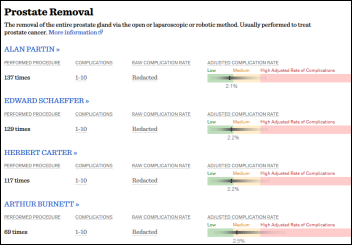
Did you feel the earthquake that hit healthcare this week? If not, you weren’t paying attention. On Monday, ProPublica, an independent, non-profit newsroom, published Medicare data about complication rates for surgeons and hospitals across the country. For the first time ever, the complication rates are reported all the way down to the individual surgeon.

This is big, sort of a WikiLeaks for healthcare. ProPublica has also used the stage to call out some of historically best-regarded healthcare institutions in the world on their outcomes.

Let’s agree that the train of transparency and value based healthcare has already left the station. If you didn’t believe it last Wednesday — when the Secretary of HHS, Sylvia Burwell, sent a strong market signal accelerating the movement requiring physicians to provide a “warranty” for their services — believe it today. Now any individual (patient or referring physician) can (and should) look up complication rates by surgeon and by hospital as they are shopping for doctors.

Furthermore, any payer, medical malpractice carrier, and any physician-employing entity can use the same data to negotiate reimbursement, premiums, and employment terms, respectively. This changes everything.

Arguably, #SurgeonScorecard is simultaneously both the best thing and the worst thing that could have happened for our healthcare system right now. Any physician or hospital that somehow thinks that the market economics aren’t going to shift needs to wake up. They can neither ignore nor hide from these data. Even if payors aren’t going to mandate change, patients ultimately will, and both patients and payors now have the tools at their disposal to do so. Furthermore, this data is public, and physicians and/or hospitals no longer have the only key to the safe containing physician-level outcomes.

Like every empire, the days of Fortress Medicine are now numbered. Those provider organizations that can find and use new tools to help them learn, improve, adapt, and evolve will survive, and those that don’t will succumb to market forces. Ultimately, this is the best thing that could have happened because it will lead to greater patient safety and improved outcomes.

It also might be the worst thing that could have happened to healthcare today. Change is difficult for many of us, including physicians, and therefore it’s hard to adapt and improve. Really hard. Physicians have lost control of their practices and their data. Just ask them. The data held in EMRs and claims data sets are not at the fingertips of the very practitioners who need them.

Furthermore, the retrospective data are being used by third parties to tell physicians about their performance and about how much or little they may be entitled to for reimbursement. This is to say that the data are often used to hold the providers hostage.

Physicians need new tools to empower themselves by using their own data. These tools must enable them to proactively treat patients in more high performance ways at lower costs. Just like ProPublica uses big data to learn about populations, physicians need to use their own data to gain more insight, work more efficiently, get better outcomes and measure them. But their data is are either sitting behind the walls of Fortress Payor or sitting in EMRs (otherwise called “wait-a-bases.”)

Just ask a doctor how easy it is to get data from his or her IT department these days. Most physicians haven’t the slightest idea how to access their own data. This is an unacceptable situation.

How can we ask providers to improve when they are flying blind? You may ask, “But didn’t we just spend $40B of taxpayer money to subsidize the purchase of fancy EMR systems to help providers improve performance?” Sadly, the flaw is that those EMRs can’t tell them which patient is sitting at home three days after surgery with a fever and early signs of an infection. That EMR isn’t telling them that their patients aren’t performing their daily at-home exercises to reduce their risks of blood clots. That EMR isn’t telling them that the patient isn’t understanding their treatment plans and adhering to them. At best, that EMR is only telling them that the patient was admitted to the emergency room after developing an infection.

As its title indicates, the EMR is merely a “record,” of that which has already happened rather than a live stream of what is happening, or a forward-looking tool for what is likely to happen. But more than that, EMRs only “know” the events that occur within the system in which they record.

Research out of the University of California San Francisco, reported last month in the Annals of Internal Medicine showed us that within three days of an emergency room visit, one-third of all return visits happened at another institution. This is worth repeating. One-third of all patients returning to an emergency room within three days of an initial visit occur at a the emergency room of a different hospital.

This means that there is tremendous, costly leakage outside of the walls of the index institution, and the events (and associated costs) around that leakage are unknown to the physician until the claims data (with reduced reimbursement) appear at the door. Just as patients are gaining increasing access to their own data, so too is there a need among providers and provider organizations for self-directed visibility into their own data.

Now is the time that physicians need to challenge themselves and their organizations to embrace value-based agreements. They should advocate for transparency; not hide from it. Some providers and provider organizations will undoubtedly feel victimized by these new and very transparent scorecard data. But those who see the opportunity will realize that with the right tools in place, these data can be extraordinarily empowering.

Use of digital engagement platforms with real-time patient reporting that is built right into the physician workflow can empower healthcare organizations and providers to discover and glean insights like never before about their patients. Furthermore, healthcare organizations needn’t wait to be told by payers what their complications are (and correspondingly what their value-based reduction in reimbursement may be) when they can glean from other digital sources exactly what their complication rates are in real-time.

The Surgeon Scorecard is a wake up call for providers to empower themselves to control their own data and not be victims of it. This is the time that they should critically evaluate and invest in new ways to deliver care that leverages the latest digital health tools, remote monitoring, and data analytics.

Years from now, we may well find ourselves referring to the new era after this pivotal moment in healthcare as “Life after the Surgeon Scorecard.” Really, the surgeon scorecard is just the beginning. Next, we will see similar reports extending beyond the eight elective surgeries covered in the ProPublica article. After that, we will see similar data reported for physicians in non-surgical specialties.

Just as it was the consumer market that has been dragging Fortress Medicine into the digital health era, so too is consumer demand for transparency about physician performance dragging data such as those reported today into full view. But physicians themselves are the ones at risk of being left behind. They must become proactive rather than reactive consumers of their own data, adopting and utilizing any number of the emerging workflow-friendly digital health platforms that put the data right into their hands.

Todd D. Johnson is chief executive officer of HealthLoop, Inc.

News 7/15/15

July 14, 2015 News 7 Comments

Top News

image

ProPublica publishes its Surgeon Scorecard of Medicare complication rates for eight elective procedures. It suggests that choosing the right surgeon is more important than choosing the right hospital, adding that hospitals are lax in monitoring surgeon performance. Low-performing surgeons gave the expected counter-arguments: (a) using only Medicare data is not statistically valid; (b) readmissions don’t necessarily indicate complications; (c) Medicare gets a lot of incorrect and therefore unreliable information from providers; and (d) doctors who take on high-risk patients or treat patients aggressively are overly penalized.

However, a surgeon with one of the lowest complication rates in the country – who had to shut down his practice because producing better results required too much of his time to make a living – concludes, “My results were very good. Other orthopedists in the Twin Cities had horse shit results and made more money. The general public never knew what the results were.”


Reader Comments
image

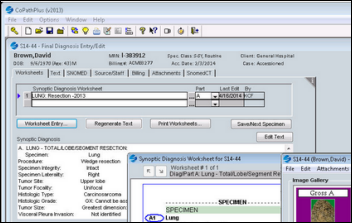
From Gene Gene: “Re: CoPath. Sunquest sells CoPath and PowerPath, each created outside of Sunquest and each with its own build and guts. Cerner also sells two anatomic pathology systems, CoPathPlus and a product called Millennium that they had before swallowing CoPath from DHTI. Both are sold and supported today.”

image

From DrLyle: “Re: startup advice. I saw your comments, and by weird coincidence, I had posted my thoughts early on the same topic (after reading yet another blog post earlier).” DrLyle’s “Advice to Healthcare Startups” is a succinct, meaty list that includes strong endorsement of Lean Startup methods, which intrigued me enough that I bought the Kindle version of the book describing them. I’ll report back if it looks interesting.

From Sonny Bunz: “Re: HIStalk sponsors. You list the new and renewing ones, and in the interest of transparency, you should also list those who do not renew their annual sponsorship. People should know if their vendor is not continuing their participation for whatever reason and it would be nice to thank them for their previous support.” I’m somewhat uncomfortable with this since I’m not sure the average reader should even care, but the non-anonymous reader (someone you would likely know) convinced me in a telephone call that it would be a nice gesture to say goodbye to companies that have supported me while also being fully transparent about who is sponsoring. Priorities and budgets change, companies refocus or get acquired, my primary contact moves on and we get handed off to a marketing associate who has never heard of HIStalk, or they’re unhappy that I wrote something negative or declined to fawn over a fluffy press release – it happens. Regardless, I appreciate their support, especially those who had sponsored for several years. These go back to the beginning of 2015.

3M
AT&T
AtHoc
CommVault
Connance
Cornerstone Advisors
Deloitte
DocuSign
EnovateIT
Harris Corporation
Infor
Intelligent InSites
Juniper Networks
Levi, Ray & Shoup
Lincor
Logicworks
McKesson
MedAssets
Medfusion
MediQuant
NextGen
Optum
Predixion
Quantros
RelayHealth
SCI Solutions
ScImage
Sentry Data Systems
Shareable Ink
SRSsoft
Symantec Healthcare
TrainingWheel Learning Solutions
Truven Health Analytics

From Blue Coupe: “Re: Anthem breach. I got a letter today that it doesn’t involve only Anthem plan holders, but also people who worked at companies who contracted with Anthem even if that person didn’t choose Anthem’s coverage.” I don’t know why companies would give Anthem the records of employees who didn’t buy its insurance, but I suspect it will get those companies and maybe justifiably so.

From Capisco: “Re: PHR use agreements. MedStar’s says the user is responsible if malware uses my credentials to get into their system. I would have to trust their forensics that blamed the breach on me since I couldn’t validate that. It also says the patient is responsible for all attorney fees. The agreement doesn’t list a MedStar contact for questions and the folks I reached there don’t seem to know or care.”

From Banished from Topeka: “Re: readmissions. Humana’s chief medical officer said in a conference this morning that the most relevant predictor of a hip replacement readmission for an older woman is whether she has food in the refrigerator.” I don’t doubt it a bit – the more we try to understand and manage healthcare costs, the more we have to delve into how social services are delivered as well since the two can’t be separated. Poor nutrition, loneliness, sanitation problems, physical inactivity, educational deficiencies, and lack of reproductive knowledge are all health problems that eventually cause an immense expense, but don’t get much attention or funding in this country for a variety of reasons. Health systems who go at risk will have no choice but to get off their high horse and coordinate with social services agencies.

From Captain Phasma: “Re: Sheltering Arms Rehab Hospital. Looks like they’ve gone with Cerner. Curious who competed.” The announcement doesn’t say.

image

From HITrainer: “Re: Glens Falls Hospital, NY. Heard from someone who works there that they are uninstalling Epic, which would be a first for Epic. Can you verify? This would be huge.” Unverified since I couldn’t locate an email address for CIO John Kelleher, but maybe someone will step up.


HIStalk Announcements and Requests

image

It’s hard to believe that the HIMSS conference is just seven months away. We are already planning HIStalkapalooza and have signed contracts for the facility and band. Companies interested in sponsoring can contact Lorre, which would be comforting to me since I’m on a very large financial hook in providing a free party for close to 1,000 people. We have several levels of sponsorship available, but I’ve dubbed the biggest one “Rock Star CEO,” which includes:

  • 100 invitations.
  • A private lounge (capacity 100) with its own bar and food plus two VIP boxes for entertaining prospects, partners, and company executives.
  • The company CEO introduces the band, gets four all-access passes, and enjoys a meet-and-greet with the band back stage after their performance.
  • An on-stage banner.
  • Special recognition from the stage.

Webinars

July 14 (Tuesday) noon ET. “What Health Care Can Learn from Silicon Valley.” Sponsored by Athenahealth. Presenter: Ed Park, EVP/COO, Athenahealth. Ed will discuss how an open business structure and strong customer focus have helped fuel success among the most prominent tech companies and what health care can learn from their strategies.

July 22 (Wednesday) 1:00 ET. “Achieve Your Quality Objectives Before 2018.” Sponsored by CitiusTech. Presenters: Jeffrey Springer, VP of product management, CitiusTech; Dennis Swarup, VP of corporate development, CitiusTech. The presenters will address best practices for building and managing CQMs and reports, especially as their complexity increases over time. They will also cover quality improvement initiatives that can help healthcare systems simplify their journey to value-based care. The webinar will conclude with an overview of how CitiusTech’s hosted BI-Clinical analytics platform, which supports over 600 regulatory and disease-specific CQMs, supports clients in their CQM strategies.

July 29 (Wednesday) 11:30 ET. “Earning Medicare’s New Chronic Care Management Payments: Five Steps to Take Now.” Sponsored by West Healthcare Practice. Presenters: Robert J. Dudzinski, PharmD, EVP, West Healthcare Practice; Colin Roberts, senior director of healthcare product integration, West Healthcare Practice. Medicare’s new monthly payments for Chronic Care Management (CCM) can improve not only patient outcomes and satisfaction, but provider financial viability and competitiveness as well. Attendees will learn how to estimate their potential CCM revenue, how to use technology and clinical resources to scale up CCM to reach more patients, and how to start delivering CCM benefits to patients and providers by taking five specific steps. Don’t be caught on the sidelines as others put their CCM programs in place.

July 30 (Thursday) 3:00 ET. “De-Silo Your Disparate IT Systems Around the Patient with VNA.” Sponsored by Lexmark. Presenters: Steven W. Campbell, manager of diagnostic applications and interfaces, Piedmont Healthcare; Larry Sitka, VNA evangelist, Lexmark. The entire patient record, including both DICOM and non-DICOM data, should be available at the point of need. Disparate, aging systems that hide data inside departmental silos won’t cut it, nor will IT systems that can’t integrate medical images meaningfully. Learn how Piedmont Healthcare used a vendor-neutral archive to quickly and easily migrate its images and refocus its systems around its patients.

Previous webinars are on the YouTube channel. Contact Lorre for webinar services including discounts for signing up by July 31.


Acquisitions, Funding, Business, and Stock

image

Nineteen-employee, Seattle-based Arivale, which will offer genetic analysis and coaching, raises $36 million. The company’s co-founder and CEO says that its personal coaches are “our secret sauce. They take this very complex data set with the support of a physician and scientists, come up with three or four actionable recommendations, and then help you succeed in achieving those recommendations.”

image

MedCPU raises $8 million in funding to expand its clinical decision support business.
image

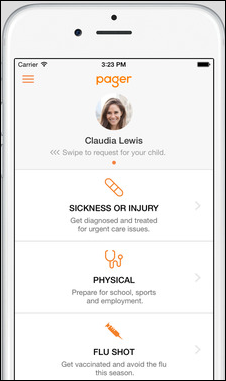
New York-based doctor house call provider Pager, founded in 2014 by Uber’s CTO,  raises $14 million and announces plans to expand to San Francisco. The company, which has 40 doctors, has added insurance acceptance and EHR data sharing. One of the investors says connecting to the EHRs of health systems will be hard, but he’s encouraged that some of those organizations are willing to work with the company.

The Teamsters try again to convince McKesson shareholders to limit executive payouts that would be triggered by a change in control, a proposal that earned 44 percent approval at last year’s annual meeting. Five McKesson executives would automatically collect $283 million if the company changes hands, $142 million of that due CEO John Hammergren alone.

Medtronic will acquire RF Surgical Systems, which offers RF-powered surgical sponge counting, for $235 million.

image

In New Jersey, Barnabas Health and Robert Wood Johnson Health System will merge to create RWJ Barnabas Health, the state’s largest health system with $4.5 billion in revenue and 30,000 employees.


Sales
image

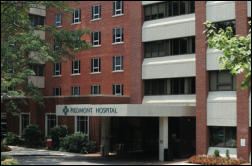
Piedmont Healthcare (GA) chooses Health Catalyst’s data warehouse and analytics.

The Indiana HIE selects Clinical Architecture’s Symedical terminology management software suite for interoperability.

Express Medical Billing will implement CompuGroup Medical US’s CGM DAQbilling practice management solution.


People

image

Ivo Nelson (Next Wave Health) joins the board of revenue cycle vendor Global Healthcare Alliance.


Announcements and Implementations

image

The cancer center at Dartmouth-Hitchcock Medical Center (NH) goes live on RTLS patient status tracking from Versus Technology.

Mike “PACSMan” Cannavo, whose occasional HIStalk service has included writing guest articles and manning my HIMSS booth, is offering PACS arbitration services and PACS replacement cost assessment.

image

Sunquest Information Systems will partner with TriCore Reference Laboratories to develop diagnostic laboratory software to support population health, precision health, and integration pathology.

image

PerfectServe announces that its unified clinical communications and collaboration system reaches 50,000 physician users, a 51 percent increase in 18 months.

image

Adena Health System (OH) will go live August 1 on its $15 million Meditech 6.15 conversion.


Government and Politics
image

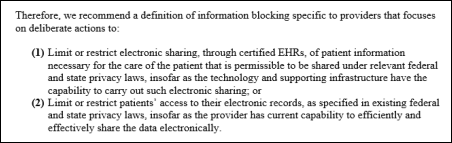
The American Hospital Association objects to the information blocking provisions of the 21 Century Cures Act that was just approved by the House and has moved on to the Senate, saying its definition is too broad and the OIG has an incentive to levy fines since it gets to keep the money (that’s an interesting conclusion). AHA says the government should make EHR vendors prove that their products don’t block information sharing, while providers should be required to share patient information only if they are capable of doing so. AHA specifically says providers should not be held liable for information blocking because of technical limitations or “high costs or fees imposed by certified EHR technology vendors for such electronic sharing or access,” or in other words, provider inconvenience is a valid excuse. AHA also objects to the bill’s elimination of the Health IT Standards Committee.

In India, the state of Haryana will connect 75 hospitals and three medical colleges via a statewide network, also announcing plans to issue a unique patient identifier to allow accurate record sharing.


Privacy and Security
image

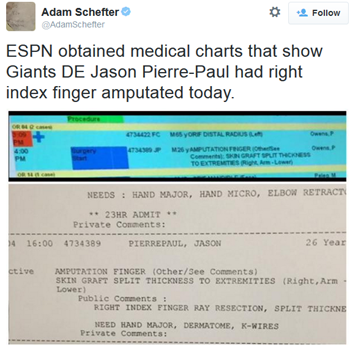
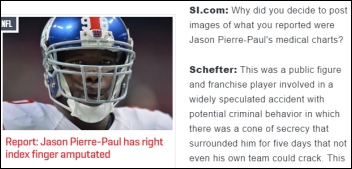
The ESPN reporter who tweeted a photo of an NFL player’s medical record says he could have done more (he didn’t explain what “more” means) due to the sensitivity of the situation, adding, “It didn’t look to me as if there was anything else in there that could be considered sensitive. NFL reporters report on all kinds of medical information on a daily basis. That’s part of the job. The only difference here was that there was a photo.” The reporter says the photo (which also included the information of a second patient) was sent to him unsolicited, which may mean it came from someone who knows the reporter rather than from a hospital employee, which Jackson Memorial Hospital is desperately hoping is true. The reporter also said that his high journalistic standards required the “ultimate supporting proof,” a claim that NBC Sports brilliantly dismisses as, “The ‘ultimate supporting proof’ wouldn’t have been a medical record containing sensitive and private information about Pierre-Paul and another patient, but the fact that Pierre-Paul eventually would have been seen in public with four fingers on his right hand.” 


Innovation and Research

NIH awards a $3.1 million grant to Children’s Hospitals and Clinics of Minnesota and HealthPartners Institute for Education and Research to developed web-based clinical decision support system for assessing acute abdominal pain in children, hoping to improve the diagnosis of acute appendicitis without the use of CT scans. A pilot study reduced CT usage by 25 percent.

A study finds that the caregivers want access to the medical information of their elderly patients to make it easier for them to coordinate care, but the patients themselves don’t want to give unlimited access because they don’t want to worry their loved ones or give up control.

image

A study finds that hospital placeholders for unnamed newborns (such as Babygirl Smith) cause wrong-patient ordering errors, suggesting as an alternative using the mother’s first name in the form of Judysgirl Smith, which reduced errors by 36 percent.


Technology

A Washington Post article says it’s obvious that OR personnel shouldn’t be checking Facebook or email during a case, but adds that most hospitals don’t prohibit smartphone use during surgery since that would preclude the use of clinical apps as well.

A Delaware newspaper profiles the use of iPad-powered telemedicine in the Nemours Care Connect program, in which doctors in 40 regional EDs can collaborate via video with Nemours specialists. Nemours is also testing Google Glass for live streaming video from critical care transport nurses back to the hospital, although they’ve struggled with reliability and say that patients “look at me like I have three heads.”


Other

In Australia, SA Health is investigating the deletion of a radiologist’s comments from a patient’s electronic medical record. An ED doctor ordered a CT scan that a radiologist argued was not needed. The radiologist later found that a non-clinician hospital executive had entered the computer system as a superuser and ordered the scan against the stern warnings of the radiology manager. The angry radiologist recorded a patient note that criticized the executive “who stuck her nose in” and criticized the imaging system whose rollout had caused a two-week imaging backlog, which he speculated may have caused the death of another patient. The radiologist later found that his comments had been deleted, which he calls “very dangerous and very sinister.”
image

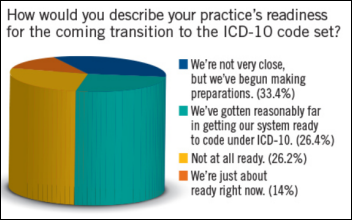
I don’t like surveys that don’t state their methodology, especially if the survey questions appear to be poorly designed, but I’ll pull out a few slightly interesting findings from this new Kareo-sponsored survey of physician practices.

  • Two-thirds believe that EHR use improved patient documentation.
  • Two-thirds say the EHR hasn’t paid for itself.
  • One-third see fewer patients because of the EHR.
  • Just over half of respondents are satisfied with their EHR vendor (although the question confused “vendor” and “product.”)
  • Less than 10 percent will accept the Medicare penalty instead of trying to achieve Meaningful Use Stage 2.
  • Just over half offer a patient portal. 
  • Sixty percent say they aren’t ready for ICD-10, while 40 percent of respondents haven’t even asked their software vendors if they’ll be ready. 
  • Only 12 percent offer virtual visits.

KQED highlights the perinatal depression detection app of Ginger.io, which captures a baseline profile of user activity and notifies the provider of significant changes. It’s being piloted at Novant, Penn, and an unnamed California health system. The article’s headline says the app “harnesses big data” when that hardly seems the case, and while some experts say the app can help compensate for overly busy OB-GYNs who forget to ask about emotional status, the downside is that OB-GYNs might not participate and the patient might not feel comfortable disclosing the information.
image

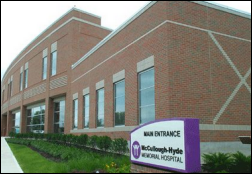
TriHealth spent $9.5 million to implement Epic at its new affiliate, 45-bed McCullough-Hyde Memorial Hospital (OH), which went live in a July 1 conversion. 
image

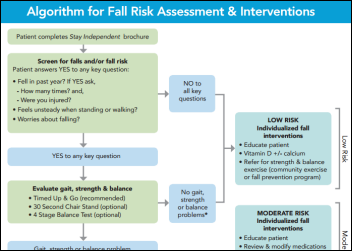
A White House fact sheet from its Conference on Aging notes that Epic will release a patient falls assessment tool based on CDC’s STEADI guidelines by the end of 2015.

Weird News Andy titles this “Smooth Operator.” A man walks into Morton Plant Hospital (FL), rolls a $48,000 surgery table to the loading dock in broad daylight, and hauls it off in his van. The suspect, who was captured on video and arrested, is a medical device technician with a few prior arrests.


Sponsor Updates

  • HealthLoop posts “CMS is asking doctors to put a warranty on their services.”
  • First Databank will participate in Athenahealth’s “More Disruption Please” hackathon July 24-26 in Austin, TX, providing attendees with access to its FDB Cloud Connector web API.
  • Nuance joins Athenahealth’s “More Disruption Please” program, adding its Dragon Medical 360 to the Athenahealth Marketplace.
  • ZeOmega Chief Strategy Officer Nandini Rangaswamy is named to the Dallas Business Journal’s “Who’s Who in Healthcare.” 
  • ADP Advanced MD offers “New ICD-10 transition period, a little breathing room.”
  • Aventura will exhibit at the Healthcare Finance Institute July 26-28 in Chicago.
  • Awarepoint announces updates to its awareAssets asset tracking and workflow optimization tool.
  • Caradigm offers “Moving Healthcare Analytics from Measurement to Management.”
  • PatientSafe Solutions posts “Achieving Mobile Care Orchestration: How One Hospital Uses Smartphones.”
  • CareSync COO Amy Gleason offers “Remember the ME in Medicine” at the White House blog.
  • CareTech Solutions will exhibit at the AHA and Health Forum Leadership Summit July 23-25 in Troy, MI.
  • CompuGroup Medical will exhibit at the AACC 2015 Annual Meeting July 28-30 in Atlanta.
  • Practice Unite offers “Changing Chronic Care Management Services Reimbursement.”


Sponsors on the 2015 HCI 100

Allscripts
Anthelio Healthcare Solutions
Beacon Partners/KPMG
Burwood Group
Capsule Tech
Caradigm
CareTech Solutions
CTG
EClinicalWorks
Elsevier
Encore Health Resources
Evolent Health
Experian/Passport Health
GE Healthcare
Greenway Health
Imprivata
InterSystems
Leidos Health
Lexmark Healthcare
Medecision
Medhost
Merge Healthcare
MModal
Navicure
Netsmart
Nordic
NTT Data
Nuance
Orion Health
Premier
Sunquest Information Systems
Surgical Information Systems
T-System
TeleTracking Technologies
The Advisory Board Company
The HCI Group
The SSI Group
Verisk Analytics
Wolters Kluwer Health
Xerox
ZirMed
Zynx Health


Contacts

Mr. H, Lorre, Jennifer, Dr. Jayne, Dr. Gregg, Lt. Dan.

More news: HIStalk Practice, HIStalk Connect.

Get HIStalk updates.
Contact us online.

125x125_2nd_Circle

Monday Morning Update 7/13/15

July 12, 2015 News 5 Comments

Top News

image

St. Elizabeth’s Medical Center (MA) will pay $218,400 to settle federal charges that it violated HIPAA when employees stored patient information in an unnamed Internet file-sharing application.


Reader Comments

From Dirk Diggler: “Re: startups. I wondered what your number one piece of advice for them would be.” I could make a long list of the potholes that have consumed a bunch of companies, but I think my top item would be to understand that you can start a business without hanging the limiting “startup” label on yourself. Startups refer to companies that accept a bunch of investor money (or would like to) and therefore are wed to the concept of growing fast and big by solving a big problem before their corporate clock runs out, which requires many simultaneous talents. The risks are extensive and the chances for success are small, sort of like swinging wildly for the fences with every at bat hoping for a miracle. You can create a perfectly nice and solid business with less risk and potentially better return by just finding your niche and working it well, avoiding the temptation of giving away equity (and thus control) to investors who see things differently and who just might fire you down the road. Small business skills are very different than startup-to-IPO skills and people aren’t always good at judging which (if either) they possess. Companies should stop using the “startup” label once the initial inflated optimism has been tempered by the passage of time or the lack of traction that suggests it’s just a business, not really a startup. It’s also true that while a few companies have made it big because they had a fresh idea, it’s mostly solid execution and perseverance that trumps brilliance.


HIStalk Announcements and Requests

image

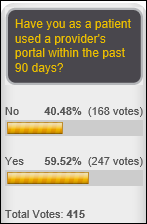
Sixty percent of poll respondents say they’ve user a provider’s portal in the past 90 days. HIS Junkie added comment, “And it was in error and was virtually useless.” New poll to your right or here: have you completed an Advance Directive?

Grammar and usage gripe: people who pronounce “chipotle” as “chipolte” even when seeing it in writing.

image

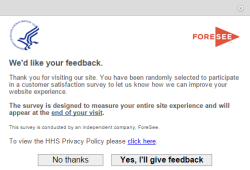
A note to sites that shove annoying survey pop-ups in the faces of people who might otherwise have been interested in what the site offers: my feedback is that I leave the site immediately. It’s like entering a business and being intercepted by a survey-taker even before you can get in the door to see what they’re selling. Girl Scouts know you sell cookies to people leaving the store, not those going in.


A reader asked me to describe the steps I took in trying (unsuccessfully, as it turned out) to get an electronic copy of my medical record from a hospital that should be able to provide it (EMRAM Stage 7, Epic, MU Stage 2). Here you go.

Day 1

The records request page on the hospital’s website offers two options: dropping by personally to the hospital’s HIM department (which was clearly their preference) or downloading, completing, and faxing a form (which could have been easily converted to an online form to eliminate the ridiculous faxing step). The form was complicated since it was primarily designed for patients who want to give someone else access to their records, such as for a workers compensation claim – they really should create separate forms to avoid awkward references to “the patient” when it’s the patient making the request. It also asked for the medical record number, which hospitals frustratingly expect patients to learn and remember. The form also didn’t give an option for paper vs. electronic records. It mentioned that unstated fees would be charged (hospitals are always terrible at price transparency) and that the hospital uses an outside release of information vendor that would be following up. It didn’t ask how I would like to be contacted.

Day 11

I called HIM since I had heard nothing about my request. They said they hadn’t done anything because I hadn’t provided dates of service for my one and only encounter with the health system (since I couldn’t remember the date). They looked it up and said they would mail the records. I told them I wanted them in electronic form. The HIM person said they don’t provide electronic information to patients, only to physicians. I said they were obligated to do so and she said she would get back with me after talking to her supervisor.

I called the hospital’s Epic MyChart support to see if I could download my records. They created an account for me, but it did not show any hospital admissions even though the labs from my very short stay were listed. A couple of issues might have caused the average patient to stumble – the support page wasn’t consistent in terminology (“activation code” vs. “access code”) and MyChart was fragmented between inpatient and outpatient visits with links to jump from one to the other (“visit” versus “inpatient admission.” The login page also didn’t render correctly in Firefox.

I entered a MyChart system message asking the hospital to check on why my admission wasn’t visible. It promised a response within two business days. I still haven’t received one.

Day 13

I called the hospital’s MyChart support number again. The tech was clearly not even seeing the same screens I was since she tried to walk me through finding my admission. None of the tabs or menu options she asked me to click were present. She mentioned a link she was seeing called “MyChart Administration” and I asked if perhaps she wasn’t logged in correctly since that didn’t seem like an option a patient would see. She was confused and could not understand why her screens didn’t match mine. We gave up at that point and she offered no alternative.

I hadn’t heard back from HIM, so I called them again. The supervisor repeated that they are not obligated to give patients electronic copies of their records and would provide only mailed paper copies. I repeated that they are obligated to do so and she got kind of snotty in telling me I was wrong. I filed a complaint with the Office for Civil Rights.

Day 17

I haven’t heard anything from the health system or OCR. I’m glad I didn’t need the records urgently.

My conclusions so far:

  • Hospitals are not good at consumer-facing interactions. HIM people speak their own language and the records request process was developed for their convenience, not that of the patient. It’s inconceivable that hospitals expect patients to drive to their location, find a parking spot and pay for it, navigate their way through the inevitable wayfinding maze to find the HIM department, fill out a form in person, and then leave having accomplished nothing more than dropping off a paper form since the records have to be mailed later anyway.
  • Hospitals seem really puzzled that the average patient doesn’t have a fax machine since they have them everywhere (hospitals are the last holdout for antique technologies such as numeric pagers and tube TVs).
  • MyChart is really cool. I had another health system’s version of it and this one had a lot more functionality and was very slick. That wasn’t much help since my admission wasn’t listed and the hospital support people didn’t respond to my MyChart message.
  • It was odd to me that as I was demanding electronic copies of my records, the HIM person didn’t mention MyChart at all. The hospital’s HIM and IT people should get together and make sure patients know their options either way – why wouldn’t the poorly designed HIM web page and request form tell patients that MyChart access might be all they need instead of paying for paper copies and waiting for them to be delivered?
  • The HIM people don’t know much about the health system’s obligations to provide electronic copies, having rather smugly told me I was incorrect in believing they are required to do so.
  • Perhaps other providers could get copies of my records quickly in an emergency, but I wouldn’t count on it. I’m not even sure they would bother trying because they know what a pain it is – they would simply carry out their treatment without any knowledge about me that exists elsewhere. During that very short admission, which included a couple of hours in the ED, I mentioned that my records were in my out-of-state hospital’s Epic system and as far as I know they didn’t try to get them.

Last Week’s Most Interesting News

  • CMS announces that its latest round of testing produced zero ICD-10 errors from test claims submitted by volunteers, concluding that it will be ready for the October 1 switchover.
  • An investigation of CMS’s National Provider Identifier finds many errors, some of them suggesting that providers with a checkered medical past intentionally used the NPIs of other providers to avoid being exposed on consumer doctor rating sites.
  • CMS agrees to the AMA’s demand for a year-long ICD-10 transition period for physician practices in which it will accept less-specific ICD-10 codes and provide advance payments its systems malfunction.
  • Aetna announces that it will acquire Humana for $34.1 billion pending FTC approval, a deal that carries technology implications since both companies have health IT offerings.

Webinars

July 14 (Tuesday) noon ET. “What Health Care Can Learn from Silicon Valley.” Sponsored by Athenahealth. Presenter: Ed Park, EVP/COO, Athenahealth. Ed will discuss how an open business structure and strong customer focus have helped fuel success among the most prominent tech companies and what health care can learn from their strategies.

July 22 (Wednesday) 1:00 ET. “Achieve Your Quality Objectives Before 2018.” Sponsored by CitiusTech. Presenters: Jeffrey Springer, VP of product management, CitiusTech; Dennis Swarup, VP of corporate development, CitiusTech. The presenters will address best practices for building and managing CQMs and reports, especially as their complexity increases over time. They will also cover quality improvement initiatives that can help healthcare systems simplify their journey to value-based care. The webinar will conclude with an overview of how CitiusTech’s hosted BI-Clinical analytics platform, which supports over 600 regulatory and disease-specific CQMs, supports clients in their CQM strategies.

Previous webinars are on the YouTube channel. Contact Lorre for webinar services including discounts for signing up by July 31.


People

image

Patrick Swindle, manager of IT systems support at East Texas Medical Center, is promoted to administrator of ETMC Quitman.


Innovation and Research

image

The Seattle business paper profiles University of Washington spinoff C-SATS (which stands for crowd-sourced assessment of technical skills), which evaluates surgeons by having videos of their procedures reviewed by experts. Some of the executive team members came from Classmates.com. The company just raised $2.5 million. 


Technology

A site claiming to have inside information about the next version of Google Glass – marketed to enterprises, not consumers – says it will include a larger prism, more processing power, better battery life, and support for 5 GHz band video streaming. The move to enterprise is smart since Glass was never going to be socially acceptable in public, but that shouldn’t be a problem where the role of its user is known, such as a patient seeing a doctor wearing Glass. It will still be geeky, but at least less creepy.


Other

Cerner responded to my question about the DoD’s CoPathPlus award that was announced last week. It was a new procurement outside of the DHMSM award, which was obvious, but more importantly it was not a renewal of DoD’s previous CoPath contract or an upgrade to that product. It still seems odd that both Cerner and Sunquest sell CoPathPlus and that Sunquest sells two anatomic pathology products.

image

A Caribbean newspaper profiles Modernizing Medicine software consultant Chantel Kelly, who was so moved by pleas for supplies in Jamaica’s hospitals that she personally bought bed linen for all of Kingston Public Hospital. Surgeons say they’re operating wearing plastic bags instead of surgical aprons because it’s all they have, so Kelly says she will buy them surgical and patient gowns next.

image

A front-page New York Times article reviews virtual visits and the increasing number of insurers willing to pay for them, noting that they cost a lot less than in-person visits but adding that they may drive up overall healthcare costs since the patients might just have stayed home untreated with self-limiting conditions otherwise (an excellent point). A first-time virtual visit patient with a toothache reports her experience as, “I was in so much pain, I didn’t care that it was weird. He got right to the point, which was what I wanted. He prescribed antibiotics and called them into an all-night pharmacy about 20 minutes away.” The article uses the term “virtualist” to describe physicians who provide video visits.

In England, NHS warns ambulance trusts to keep their GPS map software updated after two patients died when drivers couldn’t find their home addresses, with at least nine reports of patient safety issues related to outdated map files.

Non-profit investigative journalism organization ProPublica announces that it will release a “Surgeon Scorecard” next week based in its analysis of Medicare complication rates.

The Detroit oncologist who admitted giving chemotherapy to more than 500 cancer-free patients to defraud Medicare and insurance companies of dozens of millions of dollars is sentenced to 45 years in prison.

Lee Memorial Health System (FL), whose certificate of need request to build a new hospital was turned down by the state after a competitor’s complaint, will instead spend up to $140 million to build a hospital without beds. The campus will include a freestanding ED, outpatient surgery center, an imaging center, lab, and medical office space, all tied together by its Epic system and centralized scheduling.


Sponsor Updates

  • Sunquest Information Systems will hold its Executive Summit and UGM July 13-17 in Scottsdale, AZ.
  • TeleTracking offers “Patient Discharges – a Stumbling Block to Patient Access.”
  • Zynx Health posts “Improving Quality and Reducing Disparities in Care Coordination.”
  • Surescripts offers “FHIR: A SMART Solution for Interoperability?”
  • Surgical Information Systems offers “Why Should you GO to GO!2015? The NEW SIS User Meeting.”
  • T-System posts “Leading with Passion: Hope is Not a Strategy.”
  • Verisk Health publishes “Calculating Risk Scores for Dual Eligibles Under the Medicare Risk Adjustment Model.”
  • Versus Tech client EMMC Cancer Care wins an ACCC Innovator Award for its use of RTLS technology.
  • VisionWare will exhibit at the Healthcare Analytics Symposium July 13-15 in Chicago.
  • Xerox Healthcare will host a Google+ Hangout on population health management July 16.
  • ZirMed offers “An ICD-10 Code List Just for You, America.”clip_image002

Contacts

Mr. H, Lorre, Jennifer, Dr. Jayne, Dr. Gregg, Lt. Dan.

More news: HIStalk Practice, HIStalk Connect.

Get HIStalk updates.
Contact us online.

125x125_2nd_Circle

News 7/10/15

July 9, 2015 News 5 Comments

Top News

image

CMS reports zero ICD-10-related errors in its latest round of testing that was conducted June 1-5 using claims from volunteer submitters. The 10 percent of rejected ICD-10 claims had unrelated errors that wouldn’t have made it even with ICD-9, such as missing or invalid provider information. CMS concludes that it will be fully prepared for the October 1, 2015 switchover, 12 weeks from now. However, they said the same thing about Healthcare.gov’s go-live.


Reader Comments

image

From Jo Momma: “Re: ESPN. Tweeted an image of Giants DE Jason Pierre-Paul’s OR schedule, which shows his medical info.” The tweet – which elicited a barrage of “breaching his privacy isn’t cool” Twitter responses – is still up, so ESPN must feel that it is legally safe, although it should be wondering why its jock journalist couldn’t just cite the usual “sources say” without putting up a screen shot. ESPN isn’t covered by HIPAA, but they could be sued by the patient, but probably has First Amendment protection. Pierre-Paul’s injury came from shooting off a U-Haul full of illegal fireworks in Florida on July 4, the second NFL’er who blew off  a finger with fireworks over the weekend, setting off panic among fans, coaches, and bookies whose identity hinges on the health of 20-somethings who play games while they watch from afar. Jackson Memorial Hospital, whose surgery schedule photo was featured, is likely to earn a HIPAA fine, probably because the reporter convinced a gullible employee or star-struck doctor to give him a quick peek. The hospital CEO has launched an investigation. 


HIStalk Announcements and Requests

My attempts to get an electronic copy of my medical record finally failed (maybe I should ask ESPN for help). The hospital’s HIM supervisor repeated that they aren’t required to give patients electronic copies. I filed a complaint with the Office for Civil Rights. I then talked to the hospital’s Epic MyChart support tech to see why my visit isn’t listed and she couldn’t figure it out. A reader asked me to provide a chronology, so I’ll do that in this weekend’s post. Government and hospitals tend to be equally bureaucratic, so I’m not holding my breath for a quick or satisfying response from either.

image

Welcome to new HIStalk Gold Sponsor Point-of-Care Partners. The Coral Springs, FL management consulting firm helps healthcare organizations (life sciences, payers, health IT vendors, accountable care, HIEs) evaluate, develop, and implement health information strategies, specializing in e-prescribing and electronic prior authorization. Clients include the AMA, AHRQ, the Department of Defense, Merck, Athenahealth, and Cigna. The company produces a nicely polished newsletter edited by CEO Tony Schueth, who I interviewed last month. Thanks to Point-of-Care Partners for supporting HIStalk.

image

The software I used to love that I now hate: WinZip, which I’ve used since it was just a graphical front end for the DOS-based PK-Zip. It has turned from polished little utility into a cumbersome piece of upgrade-bugging nagware. It always had a ton of free competitors, but it must be a tough business now that cheap disk and fast broadband makes zipping files mostly unnecessary and Windows has built-in unzip support anyway. WinZip is owned by Corel, where mediocre me-too products (WordPerfect, CorelDRAW) go to die slowly.

image

Also bugging me: barely literate celebrities and athletes who say or do something stupid, then issue a self-serving apology statement clearly written by a paid hack, as though nobody would notice the jarring difference in eloquence.

image

I love reading John Halamka’s farming blog posts as guilty escapism, including his latest agrarian strategic plan. Only a MD/engineer/CIO would refer to household pets in the form of, “Recognizing that their lifespan may not exceed 10 years, we’ll have to plan for replacement/possible overlap of young/old but will only keep two dogs at steady state.”

Listening: Close to the Edge, honoring Yes co-founder, bassist, singer, songwriter, and now Starship Trooper Chris Squire, who died last week of leukemia at 67. His thundering Rickenbacker made him the lead instrumentalist even among the stellar talents that were his Yes bandmates.

This week on HIStalk Practice: AOA Chief Public Health Officer Michael Dueñas, OD outlines the benefits of the new MORE registry for optometrists. EVisit wins the Arizona Innovation Challenge. Fajardo Imaging selects new healthcare IT from IDS. Renal Ventures Management implements remote patient monitoring tech from Authentidate. Agapé Physical Therapy implements Clinicient technology. The Medical Memory raises $2.1 million. MeMD CEO John Shufeldt, MD details the telemedicine company’s plans to advance care in Indiana.

This week on HIStalk Connect: digital health startup funding tops $2.1 billion during the first half of the year. Silicon Valley-based lab test vendor Theranos receives FDA approval of its specimen collection and analysis process. Representative Mike Thompson introduces the Medicare Telehealth Parity Act of 2015, legislation aimed at expanding access to telehealth and remote patient monitoring services for Medicare patients. Direct-to-consumer genetics testing vendor 23andMe raises $79 million of a planned $150 million funding round, its first since 2012.


Webinars

July 14 (Tuesday) noon ET. “What Health Care Can Learn from Silicon Valley.” Sponsored by Athenahealth. Presenter: Ed Park, EVP/COO, Athenahealth. Ed will discuss how an open business structure and strong customer focus have helped fuel success among the most prominent tech companies and what health care can learn from their strategies.

July 22 (Wednesday) 1:00 ET. “Achieve Your Quality Objectives Before 2018.” Sponsored by CitiusTech. Presenters: Jeffrey Springer, VP of product management, CitiusTech; Dennis Swarup, VP of corporate development, CitiusTech. The presenters will address best practices for building and managing CQMs and reports, especially as their complexity increases over time. They will also cover quality improvement initiatives that can help healthcare systems simplify their journey to value-based care. The webinar will conclude with an overview of how CitiusTech’s hosted BI-Clinical analytics platform, which supports over 600 regulatory and disease-specific CQMs, supports clients in their CQM strategies.

Previous webinars are on the YouTube channel. Contact Lorre for webinar services including discounts for signing up by July 31.


Sales

Catholic Health Initiatives chooses the One by Ingenious Med patient encounter platform (care plan sharing, identifying and tracking high-risk patients, charge capture, and analytics).

image

Lenoir Memorial Hospital (NC) will use Access for integrating electronic patient signature into Meditech.

image

Summa Health (OH) chooses Merge Healthcare’s cardiology and hemodynamic solutions.

image

Carilion Clinic (VA) selects Sectra PACS.

image

UNC Health Care (NC) chooses the Infor Cloverleaf Integration Suite.

image

The Defense Health Agency chooses Cerner CoPathPlus over an unnamed single competitor for anatomic pathology in a $16 million deal, which I think is an upgrade since DoD has been using Cerner CoPath for 20 years (CoPath, as I reported recently, has a messy family tree, having changed hands via acquisition from CoMed to Dynamic Healthcare Technologies to Cerner while being sold simultaneously by Sunquest). I doubt this is an early indication that Cerner is the DoD EHR front-runner since DoD’s motivation is probably that it’s already using Cerner Millennium PathNet, although that 10-year deal was signed in 2005 and the LIS may be rolled into the EHR bid (I’m trying to find out). Epic developed its own LIS and AP systems (Beaker), while the other DoD candidate Allscripts does not offer either product.


People

image

The local paper profiles the retiring William Davis, MD, family medicine practitioner and CMIO of Winona Health (MN), who was presented with the Lifetime Achievement Award at the Cerner Physician Conference a few weeks ago.

image

Leidos Health hires Michele Behme, RN (Clinovations) as managing director of its Epic practice.

image

T-System promotes Hank Hikspoors to CTO.

image image

West Health CEO Nick Valeriani will retire in September, to be replaced by the promoted Shelley Lyford. I haven’t seen the well-funded organization do a whole lot despite its occasional projects in aging, home monitoring, and price transparency.


Announcements and Implementations

InterSystems will resell Capsule Technologie’s SmartLinx Medical Device Information System.

image

Capital BlueCross of Pennsylvania will roll out low-cost laboratory services from Silicon Valley vendor Theranos. Theranos offers great pricing, but its billions of dollars of valuation presumes it can climb the steep scalability hill while stepping over LabCorp and Quest Diagnostics, which are huge companies with a presence, contracts, and influence everywhere. Theranos needs to grow quickly beyond California and Arizona and its best bet is probably chain drugstores, which have no particular loyalty to either of the big lab dogs.

Park Place International’s OpSusLive – a cloud-based Infrastructure-as-a-Service for Meditech and enterprise applications — earns a “Best Practice” five-start rating.

image

Akron General Hospital (OH) will implement Epic as part of its recent affiliation with Cleveland Clinic.

image

FDA gives 510(k) Class II marketing approval to Lexmark’s NilRead zero-footprint diagnostic viewer, which the company acquired along with Claron Technology in January 2015.


Government and Politics

CMS proposes to pay providers for talking to Medicare patients about end-of-life care, reviving a 2009 proposal that became the centerpiece of anti-Obamacare “death panel” political mudslinging. It’s probably a big money-saver since a huge portion of Medicare spending happens in the last few weeks of life when patients and family are confused and default to the “do everything humanly possible” option that often doesn’t change the quality-of-life outcome positively.

The draft of Spain’s healthcare strategic plan calls for doctors throughout the country to be able to view a given patient’s medical history regardless of their treatment location.

An analysis by Jamie Stockton of Wells Fargo Securities finds that only 27 percent of EPs who needed to achieve MU Stage 2 in 2014 actually did so, with Athenahealth and Epic leading the pack in overall percentage. Or as their conclusion states, “If you take out Athena, Epic, and eCW, the rest of the market was in the ballpark of a 10 percent success rate (including vendors like Allscripts, Cerner, and Quality Systems).”


Technology

Startups are offering technology that provides smartphone-controlled puffs of scent, such as issuing the smell of a particular perfume when an email arrives. I was disappointed since I thought they might have the capability to analyze a scent on one smartphone, then re-create it on the recipient’s end, as in, “Smell this oyster bar on the wharf.” I suppose the technology is lacking, especially since smells aren’t as simple as mixing a few basic colors to create an exact match of a given shade.


Other

image

I griped last time that CoverMyMeds blew a great PR opportunity by not including a photo of the huge “A Better Cup of Coffee”  banner that its press release touted as the Columbus, OH company recruits web developers willing to learn Ruby on Rails. They sent this one over.

Industry long-timer Justin Barnes explains to Metro Atlanta CEO why the city is known as the “Healthcare Capital of America.”

image

Gary Fingerhut, executive director of Cleveland Clinic Innovations, quits after the FBI implicates him in financial irregularities involving one of Cleveland Clinic’s spinoffs.

A London newspaper points out that striking subway drivers, who make up $76,000 per year for a 36-hour work week and get 43 paid days off, earn much more than many doctors.


Sponsor Updates

  • ESD offers a free demo of its automated testing solution and testing script services.
  • Anthelio Healthcare Solutions will provide coders to MModal and use its products for customer documentation needs. 
  • GE Healthcare partners with the NBA to promote orthopedic and sports medicine research.
  • Medicomp Systems offers “Addiction vs. Innovation.”
  • Navicure VP of Product Marketing Jim Wharton is recognized as a Product Launch Champion during the 2015 TAG Product Management Awards.
  • The New York eHealth Collaborative offers “Streamlined Access Among Benefits of New SHIN-NY Network.”
  • Nordic offers the latest episode of its “Making the Cut” video series on Epic conversion planning.
  • PatientSafe Solutions offers “4 Ways Clinical Mobility Protects Patients at Your Hospital.”
  • Hayes Management Consulting posts “Understanding Referral Leakage: Identifying Preventable versus Expected.”
  • PatientKeeper offers “ICD-10 ‘Floaties’.”
  • PDS IT posts “Components of Software-Defined Data Center: Compute Virtualization.”
  • PMD offers an “ICD-10 Preparation Countdown.”
  • Qpid Health publishes “Are quality reporting requirements turning clinicians into clerks?”
  • Sagacious Consultants previews its events at the Epic UGM August 30-31 in Madison, WI.

Contacts

Mr. H, Lorre, Jennifer, Dr. Jayne, Dr. Gregg, Lt. Dan.

More news: HIStalk Practice, HIStalk Connect.

Get HIStalk updates.
Contact us online.

125x125_2nd_Circle

EPtalk by Dr. Jayne 7/9/15

July 9, 2015 Dr. Jayne 2 Comments

Lots of chatter about the NYSE crash in both the IT and physician spheres today. Despite assurances by the US Department of Homeland Security that hacking was not a factor, conspiracy theories are running rampant. Couple the apparent technology failure with the financial crisis in Greece and a stock market slide in China and people are feeling unsettled. Physicians are starting to fear hackers as much as they fear inquiries by Medicare Recovery Audit Contractors.

I’m closely following the #DataIndependenceDay movement and Mr. H’s efforts to get his health records. I wrote in May about a friend who had knee surgery. She has requested her records to no avail, although she did get a refund check from the hospital. A call to the patient accounting department failed to yield an explanation. Since the amount she paid upfront for the surgery was actually less than what her insurance carrier identified as the patient responsibility amount, the refund doesn’t make much sense.

We’ve been having a good time reviewing the various “explanation of benefits” notices during our biweekly girls’ night in (kind of like girls’ night out, but without the need for one of us to be the designated driver). If the accuracy of her medical records is anything like the accuracy of the billing documentation, she’s in real trouble. She’s been overbilled twice, both from the initial injury. The first time was for an upfront physical therapy co-pay when the provider was contracted to deliver services with no patient responsibility. The second time was for radiology services through the emergency department. When she called to protest the bill, they claimed they had no knowledge of her insurance information even though both the hospital and the contracted emergency physicians seemed to be able to figure out how to bill her insurance carrier.

The most surprising part of the billing situation is that some of her providers have failed to submit bills at all despite it being some time since services were provided. I guess they’ve either never heard of a timely filing deadline or they really don’t need the money. In addition to being unable to get her medical records, she has also found it impossible to get itemized bills from any of the providers. Although her insurance statements list line item charges and adjustments, there are no CPT codes or descriptions to use in trying to figure out exactly what procedures were performed.

So far the winner of the billing game is the physical therapy provider, who submits bills every other week and then immediately bills the patient after receiving their electronic remittance advice. Usually she receives the bill for the patient portion within a day or two of receiving her insurance explanation of benefits. The bill has detailed explanations of the services provided. They offer online bill payment with a no-nonsense interface that gets the job done in seconds. It’s clear that they have their revenue cycle under tight control. Then again, I’d have it under control too if I was only being paid 10-15 percent of the amount I was billing.

Back to the data independence movement. The initiative is not just about patients having access to their data, but for families to be able to participate and collaborate where needed. Another way that families really need to participate and collaborate is advance care planning. Medicare recently announced plans to make such counseling a covered service starting January 1. Whether it’s billable or not, physician counseling on end-of-life issues can be helpful, especially in the context of a long-term physician-patient relationship. Often physicians are too rushed to include the discussion in routine office visits.

There is a large amount of data on the tremendous cost of end-of-life care. Often procedures are done that not only fail to prolong life, but may actually increase suffering. There have been multiple articles on how physicians die compared to the general public. I created my own advance directive at the end of my intern year after watching bad things happen to otherwise healthy young people.

I’d like to encourage everyone to consider talking to their family members about how they would want to receive care in the event of a catastrophic injury or a terminal illness. After the discussion, it’s important to get those wishes documented and provide copies to the appropriate people.

Do you have an advance directive or health care power of attorney? Email me.

Email Dr. Jayne.

Readers Write: How Healthcare Providers Can Get Paid in the Mobile Age

July 8, 2015 Readers Write 3 Comments

How Healthcare Providers Can Get Paid in the Mobile Age
By Tom Furr

image

Two-thirds of all Americans aged 18 to 29 and nearly 60 percent of those between 30 and 49 years of age use a smartphone, according to a recent study by the Pew Research Center. In addition, the study found about 30 percent of Americans perform banking tasks – like paying bills – via their smartphones.

What does that have to do with your medical practice, you may ask? How well you understand the dynamics of mobile technology and its use in our society has a bearing on your practice’s survival. The management consultancy Deloitte noted that “overall preferences are trending toward mobile use” as it relates to getting information, buying, and paying for things. We can add paying for healthcare.

If there has ever been a reason to finally abandon that creaky old paper-based billing system, it is the ubiquitousness of mobile devices: smartphones, tablets, and even basic mobile phones. Most sources cite 90+ percent of Americans own a cell phone.

Americans prefer to get their bills online and are far more likely to pay them quickly, if not immediately. If you’re sending statements out in paper form, the third time is truly the charm. The Medical Group Management Association calculated that doctors’ offices must send out more than three statements before receiving any payment for services provided.

It’s high time you stopped licking stamps and start to bill electronically with email alerts sent to your patients. If you’re already using some kind of online bill pay method, understand your patients are moving away from the desktop to mobile devices. Adestra, an online marketing firm, found 48 percent of email opens occurred on mobile, 36 percent on desktop, and 19 percent in a webmail client.

Litmus, an email testing and analytics company, reported earlier this year that more email is read on mobile than desktop email clients. It, too indicated about half of all emails are opened on a mobile device. Of the 900 million Gmail users worldwide, 75 percent use their accounts on mobile devices

Campaign Monitor, another email specialist, noted that mobile email opens have grown 180 percent in three years, going from 15 percent in Q1 2011 to 42 percent in Q1 2014.

The changes that have occurred to this country’s healthcare ecosystem in just the last three years have had — and continue to have — profound impact on every person touched by the industry.

The increase in patient responsibility – or should I say liability – as it regards debt has created unprecedented revenue pressure on doctors, clinics, and hospitals. Oddly enough, this intense pressure has not prompted a swift change in most healthcare providers’ mode of operating. A study by JP Morgan noted healthcare providers have been late to turn their focus from clinical applications to their revenue cycle, collections, and payment processing modules. What’s more, this research determined healthcare providers “need to interact with patients in a more direct collections relationship” but “are not providing the level or sophistication of payments services that consumers expect.” This study also observed “the healthcare industry, as a whole still transacts with high volumes of paper.”

Six years ago, a McKinsey survey of retail healthcare consumers showed that 52 percent of respondents would pay from $200 to $500 or more by credit or debit card when they visit a physician if an estimate was provided at the point of care. It appears consumers are not so much unwilling to pay as they are unwilling to pay blindly.

Your patients are telling you what to do. Make payments more convenient and less confusing. Start by moving from paper to electronic and on to mobile

Whether you go the route of email to a secure website or a mobile application, recognize you’re not dealing with a screen more than a couple of inches wide and maybe three or four inches long. More than being “mobile friendly,” your efforts here need to show you’re mobile savvy.

Everything you do for the mobile environment must be simple and with a clear purpose. Simple because there are some technical limitations the wireless infrastructure forces us to handle. Clear because the viewing area is not very big. Intuitiveness is a must. One reason e-retailers are seeing a bump in abandoned shopping carts is their sites and apps aren’t developed with mobile in mind first.

Get the right message presented in the right way to your patients and they will see it on their phones and take action right then. After all, in this mobile age, people check their phone about 150 times a day. It’s how they operate.

Tom Furr is founder and CEO of PatientPay of Durham, NC.

CIO Unplugged 7/8/15

July 8, 2015 Ed Marx 6 Comments

The views and opinions expressed in this blog are mine personally and are not necessarily representative of current or former employers.

The Opportunity and Danger of Influence

Following my farewell speech, several of my team approached me to say personal goodbyes. Waiting in the back, and the last person to step forward, was a manager. He confided that while not active in terms of volunteering at or attending social events I’d hosted, he was deeply impacted by my leadership. Since this was the first time he expressed such feelings, I looked him straight in the eye and asked him, “How?”

He stated that because of my personal emphasis on upholding responsibility for my well being and my active modeling, he’d decided to lose weight. In fact, over the last two years he had lost 185 pounds! Standing before me was a svelte man. I shared how proud I was of him. He went on to say that he observed how I shared and lived my faith and decided he wanted the same as well. A year prior, he’d found faith as a Christian.

My point is this: I never once spoke to him personally about well being or Christianity. But he watched, adopted, and changed. Transformed.

Last week, I attended a funeral and visitation for a former employee. He was not a vice-president, director, manager, or lead, but I knew him just the same. After seven years at the same company, I’d made it my priority to know everyone. I was no longer his leader, but refused to miss this visitation.

That day, I met his wife for the first time and introduced myself. She responded, “Oh, I know who you are. Eric spoke about you all the time.” “What, he spoke about me?” I thought to myself. “What for? What about?”

Eric loved to laugh, so I took a chance and made a subtle joke. His widow and I broke out laughing, then hugging, and then crying—as if we’d known each other as long as I had known Eric. People go home and tell stories—good or bad—about their leaders.

Yesterday, via LinkedIn, I had a message from an operations manager at one of my former hospitals. She shared how impressed she was by the training that one of my staff received through our internal IT program. She ended up taking the course herself and it changed her personal and professional life. She was so impacted that she switched careers and became an instructor for the course.

Your influence has repercussions beyond the immediate.

I could tell you more stories, but you get it. As leaders we wield significant influence. This influence can be for harm as well as good. We must be very careful and aware. It does not matter what you say, it is what you do. Our actions speak louder than words and they have the power for good or evil. Scary.

Choose life.

Ed encourages your interaction by clicking the comments link below. You can also connect with Ed directly on LinkedIn and Facebook and follow him on Twitter.

News 7/8/15

July 7, 2015 News 7 Comments

Top News

image

CMS caves to the AMA’s withering and never-ending criticism of ICD-10 by agreeing, in a joint announcement, to create a year-long transition period in which CMS will: (a) pay claims even when their ICD-10 codes aren’t specific enough; (b) allow non-specific ICD-10 codes to be used for PQRS reporting; (c) provide advance payments to physicians if CMS has ICD-10-related problems that cause a claims backlog; and (d) assign an ICD-10 ombudsman and communication center for triaging physician-reported ICD-10 problems. Hospitals should take note: it was AMA rather than AHA pulling CMS’s strings, so hospitals (rather surprisingly) get nothing from the new uneasy detente. That also means that ICD-10 information will be of marginal value for the first year given that full specificity is optional (I assume that was done to allow ICD-9 to ICD-10 crosswalks). On the bright side, AMA is now on board with the ICD-10 transition that takes effect October 1 and hopefully most EHR vendors won’t need to resort to a crude compliance crosswalk anyway. It’s not really a full grace period as some sites have suggested – submitted claims must still use valid ICD-10 codes starting October 1.


Reader Comments

image

From HIT Wannabe: “Re: getting electronic copies of your medical records. Isn’t this required by Meaningful Use as a core objective? Let me get this straight. The former leader of ONC, who personally oversaw payments to providers when he knew they weren’t in compliance, now asks the public to bring their non-compliance to light. If a hospital can’t provide electronic copes, they should be audited immediately and taxpayer funding should be returned with a penalty.” MU is by attestation, not investigation. It also doesn’t take into account how hard it is to actually get records regardless of the MU technology. Farzad’s idea is that we all become mystery shoppers to see what it’s like for a non-IT savvy patient, which is really the only way to do it since you can’t request record copies from providers you haven’t actually seen. The remaining question is, assuming the process is a disaster for a given provider (which is nearly certain), who do the mystery shoppers report to? Maybe ONC should have an anonymous MU compliance line or online form.


HIStalk Announcements and Requests

image

Welcome to new HIStalk Platinum Sponsor Evolent Health. The 750-employee, Arlington, VA-based value based care services company — co-founded by UPMC Health Plan and The Advisory Board Company — works with health systems and physician organizations in 25 markets to implement tailored clinical programs, patient engagement tools, specialized care teams, network optimization, back-office infrastructure and analytics, organizational governance, and EHR optimization. Its Identifi solution coordinates and measures value-based care in providing data integration, clinical and business content, EHR optimization, and specific end user applications. It offers a free population health technology requirements checklist gleaned from its experience working with providers across the country as well as a Medicare ACO Cheat Sheet. CEO of the newly IPO’ed company is Frank Williams, previously chairman and CEO of The Advisory Board Company. Thanks to Evolent Health for supporting HIStalk.

I found this Evolent Health testimonial by James Porter, MD, SVP/chief medical officer of Deaconess Health System, on YouTube.

My saga to obtain an electronic copy of my records from a Stage 7, MU2-attesting medical center continues 10 days after my initial (mandatorily faxed) request. It’s the usual hospital lack of follow-through and understanding of policy, as the HIM person I called after not hearing back said the hospital sends only paper records to patients – only physician practices can get an electronic copy. I politely mentioned that the hospital happily took Meaningful Use money and therefore should be able to send me an electronic version, so I’ve been escalated to her supervisor who will supposedly be in touch. Meanwhile, I realized that since they’re an Epic-using facility, I should be able to create a MyChart account and download the records myself, but for some reason my visit isn’t showing up even though the labs and charges from it are there. I sent a MyChart secure message that the hospital claims will elicit their reply within two business days, of which one has gone by without a peep. I’ve worked in health systems most of my life and this experience confirms my overall insider assessment of that experience: most everybody in big hospitals and practices is polite, but often uninformed, hampered by the invisible bureaucracy, or incompetent.

Health IT investments seem to be tapering off, which is perfectly logical given that some pretty lame companies nobody’s heard of took in a bunch of questionable investor money. It’s kind of a shame that the sites and groups got so pee-your-pants excited over the big money rolling in and used that as a success metric rather than actual company accomplishments or patient benefit. However, I am a devout disciple of the Gartner Hype Cycle and we’re probably entering the Trough of Disillusionment overall as we bottom out on the slope of Peak of Inflated Expectations, I’m ready to start seeing the success (the Slope of Enlightenment) that some small percentage of them will have in moving the healthcare needle somewhere down the road.


Webinars

July 14 (Tuesday) noon ET. “What Health Care Can Learn from Silicon Valley.” Sponsored by Athenahealth. Presenter: Ed Park, EVP/COO, Athenahealth. Ed will discuss how an open business structure and strong customer focus have helped fuel success among the most prominent tech companies and what health care can learn from their strategies.

July 22 (Wednesday) 1:00 ET. “Achieve Your Quality Objectives Before 2018.” Sponsored by CitiusTech. Presenters: Jeffrey Springer, VP of product management, CitiusTech; Dennis Swarup, VP of corporate development, CitiusTech. The presenters will address best practices for building and managing CQMs and reports, especially as their complexity increases over time. They will also cover quality improvement initiatives that can help healthcare systems simplify their journey to value-based care. The webinar will conclude with an overview of how CitiusTech’s hosted BI-Clinical analytics platform, which supports over 600 regulatory and disease-specific CQMs, supports clients in their CQM strategies.

Previous webinars are on the YouTube channel. Contact Lorre for webinar services including discounts for signing up by July 31.


Acquisitions, Funding, Business, and Stock

image

Emdeon will acquire health plan payment analytics vendor Altegra Health for $910 million. It was one of several health IT companies being rumored a few weeks ago as seeking buyers, along with Precyse Solutions, Mediware, Edifecs, and Caradigm.

image

Accretive Health CEO Emad Rizk had $20.5 million in compensation for his first year on the job, nearly all of it in the form of stock and options. The CFO of the struggling and NYSE-delisted company made $3.1 million, while the COO was paid $6.1 million. The company lost $80 million in 2014 after Minnesota’s attorney general went after it for predatory patient collection practices that included sending people into ED treatment rooms to get credit card swipes and interrupting surgeries to pester patients for payment.

image

PipelineRX raises $9.1 milliion in funding to expand its telepharmacy services, where its employee pharmacists remotely process medication orders for hospitals that need coverage or help reducing medication turnaround time.


Sales

OCHIN chooses CareAccord, the state of Oregon’s HIE and HISP, for Direct messaging.

The Indiana State Department of Health selects LiveProcess as its emergency management platform for 144 hospitals.


People

image

Arcadia Healthcare Solutions names Richard Parker (Beth Israel Deaconess Care Organization) as chief medical officer.

image

The White House recognizes patient advocate and CareSync COO Amy Gleason, RN as one of nine “Champions of Change” for precision medicine in a Wednesday ceremony.


Announcements and Implementations

image

Cerner and University of Missouri extend their healthcare collaboration, which includes the Tiger Institute for Health Innovation, for another 10 years. They will add the Tiger Institute Leadership Academy to host industry peers and place new emphasis on mobile healthcare and population health.

image

Cleveland Clinic’s Lutheran Hospital (OH) pilots Uniphy Health’s physician engagement and secure communication platform.

CoverMyMeds launches a paid training program for 20 .NET and Java web developers who want to learn the Ruby on Rails programming language in taking jobs at its Columbus, OH location. The company commissioned a 9,000 square foot, 160-foot tall roadside display inviting Java developers to “find a better cup of coffee,” of which I could unfortunately find no photo (a big PR opportunity missed for the company that would have required only a snapshot).

DataMotion launches API access to its Direct Secure Messaging and SecureMail services for third-party developers.


Government and Politics

ONC posts an invitation for developers and vendors to submit health IT certification testing procedures, tools, and data that ONC will consider as alternatives to existing certification criteria.

image

The Cincinnati newspaper finds that CMS’s National Provider Identifier (NPI) database of physicians — and the many third-party systems that use it — is a mess, with tens of thousands of keystroke errors, and more alarmingly, an abundance of apparently intentional changes that hide the checkered past of some of the physician registrants since doctors can change any of their information CMS has on file. The paper reported the problems it found to CMS, who blew it off by telling them to contact individual physicians to correct any errors they noticed (of which there are 35,000 for New York alone). Mistakes are important because consumer information sites like Healthgrades and Vitals.com use the number to display information about a given physician. The paper found that of 100 mismatched NPIs in Florida, 30 percent belonged to doctors who had been disciplined or criminally convicted, with their incorrect license numbers conveniently pointing in every case to a blemish-free doctor.

Rep. Steve King (R-IA) proposes an amendment to the 21st Century Cures bill that would delay Meaningful Use penalties and rebate EPs for any penalties already levied.


Privacy and Security

image

A Italy-based security software company that counts the FBI among the customers of its snooping software tells users to stop using its product after its own systems are hacked, with all of the company’s files leaked to the Internet. The hacker tweeted, “I’ll write up how Hacking Team got hacked once they’ve had some time to fail at figuring out what happened and go out of business.” Experts suspect that the company’s system administrators used weak passwords, some of them variants of the word “password.” The leaked files, which were not encrypted, revealed that the company’s software has an undocumented “back door” that would let it enter customer systems and, most interestingly, the published information shows who uses its software and exactly who they’re using it to spy on.


Innovation and Research

A California Healthline report highlights Way to Wellville,  a year-old health technology project run by technology investor Esther Dyson that will try to address the public health problems in a rural California county and four other US locations. They’re using IBM Watson to target more Medicaid signups and hope to use iPhone collaboration and Fitbit monitoring. The county’s public health officer seems skeptical in how Silicon Valley types can parachute in and change the county’s culture.


Technology

image

BBC News covers hospital-focused mobile apps Medxnote (secure messaging), Imprivata Cortext (secure messaging), Sensium Healthcare (wireless patient monitoring patches), Gauss Surgical Triton (estimates blood loss from photos of surgical swabs), and a Sarasota Memorial Hospital beacon-based wayfinding app.

Microsoft will award five, $100,000 grants to university and non-profit researchers to develop uses for its HoloLens mixed reality computer. Submissions are due September 5, 2015.

A tiny study by direct-to-consumer genetics testing company 23andMe finds that patients whose genetic tests suggest a possibility of Parkinson’s disease who also report symptoms of the disease can be accurately diagnosed via a video visit with a neurologist, also noting that all of the 50 patients were correct in their self-diagnosis of having the condition. The company also announced $79 million in new funding (of $150 million sought) as it moves toward drug development.


Other

I updated Monday’s post with a response from Cerner about a reader question about Meaningful Use support for the former Siemens legacy products, but here it is again for those who didn’t happen to re-read the original:

Before the acquisition, Siemens Health Services communicated to its clients in person that they would continue to support MedSeries4 and Invision for clinicals and financials, as well as Eagle, but wouldn’t support the clinical components of Invision or MedSeries4 for Meaningful Use 3. Cerner affirms that communication. Additionally, we are providing new regulatory enhancements and other operational excellence improvements for MedSeries4, Invision and Eagle financials, and we have existing client support commitments on all three solutions that extend into the next decade that we will continue to honor.

image

The PBX of the Grand Junction, CO VA hospital goes down for several days, losing voice mail messages and leading the hospital to suggest that patients use myHealtheVet secure messaging instead.

A Bloomberg report finds that the Cystic Fibrosis Foundation charity, which funded a drug company’s research in return for royalties the drug generated, eventually earned $3.3 billion by selling the drug’s rights to an investment company, providing the charity with more research money than the American Cancer Society, American Heart Association and American Diabetes Association combined. Now the issue is whether patients can actually afford the two drugs it funded given that each costs around $300,000 per year. The foundation’s CEO says the drugs are overpriced, but he doesn’t think drug companies would be developing comparable drugs if they generated only $10,000 per patient per year.

A report commissioned by the World Health Organization finds that the organization lacks the capacity and culture to deal with global health emergencies such as Ebola, where it failed to raise awareness until nine months after initial reports. The report also suggests that WHO members pitch in to create a $100 million disease outbreak fund.

image

Here’s the best deal of any conference I’ve seen lately: Valence Health will hold its Further 2015 value-based care conference (for its clients and providers in general) in Chicago, September 30 – October 2. Attendees get two nights at the Loews Chicago downtown (the Expedia price for those nights is $389 per), meals, the conference, and entertainment. I enjoyed Chicago enough during HIMSS to think that sounds like a pretty good trip with an easily added weekend for those looking for an early fall break.

image

CVS Health, which stopped selling tobacco products in its stores last year, resigns from the US Chamber of Commerce after reports surface indicating that the organization was trying to squelch anti-smoking laws all over the world. The Chamber responded by saying it doesn’t support singling out individual industries even though it does not support smoking.

image

Weird News Andy hopes that an especially hot corner of hell is reserved for Detroit-area oncologist Farid Fata, MD, who admits that he intentionally treated several hundred patients for cancer they didn’t really have so he could bill Medicare for $34 million in unneeded treatments. The doctors, whose practice was the state’s largest cancer practice with offices in seven cities, faces up to 175 years in prison during sentencing hearings this week


Sponsor Updates

  • ADP AdvancedMD offers “Become much more productive and profitable with AdvancedInsight” and recognizes winners of its AdvancedBiller awards.
  • AirStrip wins San Diego’s MetroConnect Prize, a program that helps businesses pursue foreign markets.
  • Aprima will exhibit at the Michigan MGMA Summer Conference July 16 in Boyne Falls.
  • Besler Consulting offers a “Bringing Clinical & Finance Together” podcast.
  • HCI Group posts “Healthcare 2025: Improving Care by Embracing Risk and Accepting Change.”
  • Clockwise.MD graduates from the Atlanta Tech Village.
  • CoverMyMeds offers “Maryland Prescribers: What You Need to Know About the Electronic Prior Authorization Mandate.” 
  • Galen Healthcare offers “Interface Engine Migration Success Story: JCAPS to Orion Rhapsody.”
  • The HCI Group asks “Are you ‘Ready’ to Go-Live? 5 Key questions to ask prior to Go-Live.”
  • Healthfinch offers “Adherence to Care Plans Remains Challenge for Practices.”
  • Impact Advisors offers “The Good, the Bad and the Ugly of Meaningful Use Stage 3: Objective 5 – Patient Electronic Access to Health Information.”
  • InterSystems publishes “Urban Rabbits: Why Context Matters in Analytics.”
  • Lifepoint Informatics will exhibit at the Sunquest User Group Meeting July 13-17 in Scottsdale, AZ.

Contacts

Mr. H, Lorre, Jennifer, Dr. Jayne, Dr. Gregg, Lt. Dan.

More news: HIStalk Practice, HIStalk Connect.

Get HIStalk updates.
Contact us online.

125x125_2nd_Circle

Curbside Consult with Dr. Jayne 7/6/15

July 6, 2015 Dr. Jayne 1 Comment

During my travels, I’ve been catching up on my journals. Given my current clinical work, I read both primary care and emergency medicine journals, and then there are the informatics articles that appear across a number of specialties.

I was amused by an editorial about cystic fibrosis in the June 15 edition of American Family Physician. It states, “The continuity and closeness that a family physician has with these patients has the potential to be a stabilizing and encouraging force in assisting with compliance and disease prevention, enabling patients with CF to maximize their quality and quantity of life.”

One of the main complaints I hear from primary care physicians across the country is an increasing lack of continuity. Patients are forced to change insurance when their company decides to update plans, or their providers may be dropped from insurance panels due to cost or quality profiling. Generally speaking, most primary care physicians I know entered the field because they wanted to have longstanding relationships with patients and wanted to help those patients live longer, healthier lives. Considering the average physician compensation across specialties, they certainly didn’t get into it for the money.

Because of my IT work, I’ve spent the last several years practicing in non-continuity settings such as urgent care or the emergency department. Although I occasionally work as a locum tenens in primary care practices, in those situations I usually see acute visits or overflow patients that can’t be accommodated by the other physicians in the practice. Not every practice has the luxury of bring in a locum when a physician is on vacation or leave, however. Many of them end up referring patients to local urgent care centers or walk-in clinics in order to address their needs.

Capacity isn’t just a problem when providers are out. In many of the practices I encounter, the physicians are carrying patient panels that are much larger than they should be to deliver quality care. This results in patients being directed to urgent care centers more often than they should, as well as patients electively choosing the urgent care route due to access and convenience issues. This in turn can drive up the cost of care and lead to increasing fragmentation. Physicians are carrying larger panels not only due to decreases in the primary care workforce, but also in attempts to tweak their payer mix to ultimately bring in more revenue.

Although we can celebrate interoperability and the portability of our health information as a way to smooth this fragmented care, that’s only part of the answer. There is a certain element of quality provided by being able to see a physician who knows you well over time. Merely having more pieces of information doesn’t always give physicians the information they need to provide the best care for their patients.

As the population ages and the burden of chronic disease increases, patients become more complicated. With the technology boom, we’ve seen an increase in the options available to manage patients and this also drives up the complexity of care. Complicated patients with complicated problems require more time and thought to manage. I can’t imagine how personalized medicine is going to play into the mix. We can throw layers and layers of technology at the problem, but that approach seems to frequently create additional problems.

In some situations, new therapies lead to the need for increasingly personal conversations with patients about whether a treatment is right for them and what the various costs and benefits might be. Additionally, we don’t have long-term studies on some of these treatments, so we’re trying to predict risk with our patients without adequate data.

In one of my journals, there was a write-up about a new diabetes medication that has a unique mechanism of action. This may be perceived by many patients as new and improved, but there is no long-term data on the morbidity or mortality benefits of the drug. In one study, it was shown to be equally effective as traditional therapies. My translation of “equally effective” is “no better than,” but there’s quite a different emotional response depending on which words you use.

Although the medication is newly approved and heavily marketed, it comes at a cost. A one-month course of treatment costs $335 compared to the “equally effective” older drug which costs $4 per month. It also is associated with higher risk of urinary tract infections and bladder cancer. Having that conversation with a patient you know well and who trusts your advice is very different than with a patient with whom you don’t have an established relationship. It’s hard to provide culturally competent care (one of the new markers of quality) when there’s not adequate time to develop rapport or resources to form an assistive care team.

The newer models of care delivery include Patient-Centered Medical Homes and other structures designed to deliver care in our increasingly value-based models. We’re offering physicians reimbursement for care coordination and increased payments for higher quality. However, it creates a chicken-or-egg cycle where you have to have more staff to form and train a care team to get more money, which you need in order to have more staff, etc. It’s easy for those of us in the IT and policy trenches to think that physicians should just cut their pay to hire staff. Although that might work in a physician-owned practice, it certainly doesn’t work in employed situations.

Regardless of employment status, new medical school graduates are coming out with record debt – another reason not to choose primary care. Most of the new physicians in my community are entering practice with over $300,000 in student loans. Even at a 30-year repayment it’s like having an extra mortgage payment (or two). Many of those new grads opt for employed positions because they can’t take the financial risks required to open their own practices (assuming someone would even loan them the money to do so with that kind of debt). They wind up in a different kind of bind where their hospitals or employing health systems control staffing and expenditures and often create barriers to developing effective care structures.

I know by this point some readers are wondering what this has to do with healthcare IT and why it’s in HIStalk. In the field, I see many practices where work is being shifted up to providers rather than down to support staff due to increasingly complex systems. A recent engagement involving multiple EHRs revealed clinical reconciliation processes that were so confusing that physicians were reluctant to have anyone else perform the task. Even as an advocate for work redistribution, I agreed with them. I saw two different patient portals in use, both of which had serious usability issues and one that had some potential patient safety issues. Although they may have performed well in some kind of laboratory testing event, they were not meeting the needs in the complex realities of the average office.

Vendors need to have clinicians on staff as well as a network of client and non-client physicians to test new products and proposed changes to products. This also goes to other types of users – clinical, financial, etc. We need to see technology vetted in more real-world environments if we expect to be able to revolutionize how care is delivered. We need vendors to be more nimble and use best practices to translate emerging federal and payer requirements to viable code. We need processes and procedures (both vendor and governmental) that allow product delivery in enough time for practices to implement upgrades and features without the rush and chaos we currently see.

Having better systems, processes, and workflows will help mitigate what sometimes feels like an assault on our nation’s caregivers. It might even convince some physicians who might otherwise be motivated to leave or curtail their practices to consider staying. Ultimately, it might even result in better care.

What are your thoughts about the future of medicine? Email me.

Email Dr. Jayne.

Monday Morning Update 7/6/15

July 4, 2015 News 8 Comments

Top News

image

Lab testing upstart Theranos earns FDA approval for its herpes simplex test, the importance of which isn’t the test itself, but rather the fact that the company sought and earned FDA’s stamp of approval for its overall technology that had been labeled by some scientists as secretive and clinically suspect.


Reader Comments

image

From Pithy Mood: “Re: Quality Systems, Inc. The company just issued a proud announcement that its management team and CEO won a bunch of awards, including CEO of the Year. Why are there rumors that he was pushed out?” It’s not as though some prestigious, metrics-driven, non-profit organization of executive peers chose the just-retired, 63-year-old Steven Plochocki as the best CEO in the country given that QSII shares sell today for the same price now that they did when he took the job in 2008. The “CEO World Awards” are run by a public relations firm – companies pay to apply to a seemingly endless list of categories, with the winners then earning the opportunity to buy advertising, banquet tickets, memorabilia books, trophies, and other vanity junk. The troubling aspect is that a company would even bother to apply knowing how little any resulting award would mean. Plochocki was one of 13 “CEO of the Year” winners. Even his admin got in on the act by being the only announced winner in the “Admin Assistant to the CEO” category. Maybe she’ll replace him.

image

From X-Industry Consultant: “Re: Leah Binder’s WJS column. I’m tired of the ‘health system CIOs are idiots – why can’t you be like other industries?’ narratives. How many IT implementations from other industries has she studied? I’ve worked on dozens and huge failures abound – the FBI abandoned a $170 million system, Pfizer a $100 million clinical trials system. Give me an industry or government agency and I’ll give you a failure that dwarfs anything in health systems. The industry difference is that health system CIOs manage dozens of business models and hundreds of applications. Not many industry or government CIOs have the political, workflow, technology, and public policy skills to manage IT in a large IDN or AMC. I applaud Leapfrog’s constant pushing for better IT, but this column isn’t helpful.” The opinion piece titled “The Fatal Cost of Hospitals’ IT Ignorance” is naive about how healthcare IT works, where “ignorance” isn’t the cause of many or most problems. Binder says few IT leaders can make technology work culturally, conveniently absolving the non-IT operational leadership of responsibility in hanging the “responsibility without authority” albatross around the CIO’s neck. Mostly she’s griping that not every hospital chooses to run Leapfrog’s medication warning system checks, which as useful as it might be, is hardly the best measure of IT competence. Many hospitals are averse to standardization, transparency, and practicing evidence-based medicine, so it’s no wonder plugging in a new IT system (even successfully) doesn’t change anything. While I’m amazed and awed at how Amazon’s site works, I don’t necessarily assume they could do a better job of developing hospital systems than the vendors and provider IT leadership we already have. We’ve built an illogical, consumer-indifferent, paternalistic, billing-intensive, and political healthcare system that defies efforts to make it better that involve simply automating the underlying mess.

From Pickleballer: “Re: Cerner’s support of the former Siemens applications. Zane Burke originally said Cerner would support Invision, MedSeries4, and Eagle for 3-5 years, but a CIO friend says contract language obligates Cerner to provide updates for bug fixes and HIPAA only, not Meaningful Use Stages 2 and 3. If true, that’s a nasty clause that could hospitals many millions of HITECH dollars when had Cerner just said so upfront clients could have planned ahead.” I have an inquiry in with Cerner and will let you know if they respond. UPDATE: Cerner provided the following response:

Before the acquisition, Siemens Health Services communicated to its clients in person that they would continue to support MedSeries4 and Invision for clinicals and financials, as well as Eagle, but wouldn’t support the clinical components of Invision or MedSeries4 for Meaningful Use 3. Cerner affirms that communication. Additionally, we are providing new regulatory enhancements and other operational excellence improvements for MedSeries4, Invision and Eagle financials, and we have existing client support commitments on all three solutions that extend into the next decade that we will continue to honor.

image

From Bella: “Re: bachelor’s degree in HIM through UIC online. I’m interested but don’t know how hard it will be. Has anyone completed it? I could do a post-baccalaureate certificate or the degree to earn RHIA certification – which route is better?”

From Blue Canoe: “Re: VA suicide risk EHR algorithm. I read that Cerner presented the same concept on the Hill earlier this year. Do you think something like this would be a factor in the DoD’s decision?” I doubt it will be a primary consideration, especially since the concept hasn’t been fully proven at scale and both Allscripts and Epic collect the same patient information and could run the same algorithm against it. The idea probably impresses IT-naive politicians, so it really depends on how much they influence the DoD’s decision.

From Pure Shortening: “Re: McKesson Connected Care & Analytics. Reorganized, including subsidiary RelayHealth.” Unverified. I’m not really sure what’s going on there if anything, other than McKesson sold its care management business out of that division a few weeks ago. RelayHealth, which always seemed to be the darling of McKesson CEO John Hammergren, hasn’t put out many press releases lately and the folks I knew there are gone. That whole product area would seem to be the most promising to McKesson, which is slowly backing away from some of its other health IT businesses such as the decision to retire Horizon, which gave competitors some nice new sales. RelayHealth still seems like the company jewel to me.


HIStalk Announcements and Requests

image

Seventy percent of poll respondents think that HIPAA has had a positive impact on privacy. Reader Michael says small practices don’t understand it and doubt that HHS actually enforces it, while Mak likes the concept of snooping penalties and ensuring that patients can get their own records but he’s not a fan of the Washington “forever” jobs it created or penalties for looking at information that is widely available everywhere, including in the government’s own insecure systems. New poll to your right or here:  have you as a patient used a provider’s portal within the past 90 days?

image

Welcome to new HIStalk Gold Sponsor LiveProcess. The Burlington, MA-based company offers HealthCORe, a team communication and collaboration solution that is used for emergency incident response, coordinating severe weather events, managing staff callouts, monitoring ED capacity and mobilizing staff as needed, coordinating hospital-to-hospital patient transfers, and managing care transitions. They have a lot of industry long-timers involved, including Sentillion co-founder Rob Seliger as executive chairman, Terry Zysk (MedVentive) as CEO, and Kelly Flood (Perceptive Informatics) as VP of client services. Thanks to LiveProcess for supporting HIStalk.

I found this LiveProcess HealthCORe overview on YouTube.

I still have matching money available for DonorsChoose donations. A company’s $1,000 will not only magically turn into $2,000 worth of funded teacher projects, it will also earn the donating company a mention right here on HIStalk for helping kids who need it.

Thanks to the following sponsors, new and renewing, that recently supported HIStalk, HIStalk Practice, or HIStalk Connect. Click a logo for more information.

image
image
image
image
image
image
image
image
image
image
image
image
image
image
image
image
image

My grammar (and related) gripes for this week include use of overly casual contractions (such as “it’ll” and “it’d) when writing; calling any sort of lame and usually obvious tips “hacks” to make them sound more edgy; writing “would of” instead of “would have;” incorrectly saying “literally” for emphasis when “figuratively” is obviously correct; redundantly writing a currency figure in the form of “$1 billion dollars;” and the name of a restaurant chain I just noticed, LYFE Kitchen, in which LYFE stands for “Love Your Food Everyday,” whose misspelling suggests food that is mundane rather than enjoyed frequently unless they correctly change their name to the admittedly less-clever LYFED. I’ll also bring up an Independence Day special in differentiating between “grilling” (cooking over high heat) and “barbequing” (smoking over low heat), with the large number of folks who proclaim they’re doing the latter actually doing the former. 


Last Week’s Most Interesting News

  • Allscripts spends $200 million to buy 10 percent of NantHealth, whose chairman Patrick Soon-Shiong invested $100 million of personal funds in Allscripts as his company prepares for an IPO.
  • An AHRQ-funded study finds that use of patient portals and secure messaging create problems for both patients and providers, concluding that they don’t affect outcomes unless rolled out as part of a comprehensive program.
  • A CVS study of chronic disease patients finds that patients prefer using online portals to communicate with their physicians, slightly more than those who like email or mobile apps.
  • A federal grand jury indicted a citizen of an unnamed country outside the US for using information stolen in a UPMC breach to file fraudulent tax returns.

Webinars

July 14 (Tuesday) noon ET. “What Health Care Can Learn from Silicon Valley.” Sponsored by Athenahealth. Presenter: Ed Park, EVP/COO, Athenahealth. Ed will discuss how an open business structure and strong customer focus have helped fuel success among the most prominent tech companies and what health care can learn from their strategies.

Previous webinars are on the YouTube channel. Contact Lorre for webinar services including discounts for signing up by July 31.


Acquisitions, Funding, Business, and Stock

image

Elsevier acquires London-based clinical decision support vendor InferMed.

image

Aetna will buy Humana for $34 billion, paying a share price premium of 23 percent. I can’t imagine the FTC will find the idea of bigger, fewer insurance companies to be good for consumers, but Aetna seems to be confident they’ll get approval to close the deal. The Affordable Care Act has been very good for insurance company shares.

image

Shares of video visit provider Teladoc began trading Wednesday, with shares jumping 50 percent on IPO day in raising $270 million for the company, which lost $17 million on $43 million in revenue for 2014.


Sales

Encompass Home Health & Hospice chooses HealthMEDX Vision as the EMR for its private duty pediatric services.


People

image

Medical second opinion vendor 2nd.MD names Patrick McGinnis, MD, MS, MBA (Memorial Hermann Healthcare System) as chief medical officer. He’s also a flight surgeon in the US Air Force Reserve.

Consumer engagement platform vendor Datu Health hires Jeff Johnson (Intermountain Healthcare) as SVP of strategy.


Announcements and Implementations

image

ADP AdvancedMD announces its Patient Relationship Management suite that includes patient forms, a check-in kiosk, and a patient portal.


Government and Politics

image

An interesting requirement of the Affordable Care Act is that insurers pay for obesity screening, which has for-profit diet clinics (including some run by hospitals) salivating at the prospect of earning up to $3,000 per patient per year for overseeing questionably effective weight loss programs.


Privacy and Security

A USA Today article urges people who drive rental cars to clear their personal data from the Bluetooth-paired entertainment system, which stores their phone number, contacts, and call logs for the next renter to find. It also points out that navigation systems retain addresses and the rental company’s black box tracks a lot of undisclosed information.

image

The Guardian profiles Deanna Fei, one of two AOL employees whose premature babies cost the company $1 million, causing the company’s $12 million salary CEO to publicly blame Obamacare and the cost of “two distressed babies” as the reason he cut the company’s 401(k) plan for everyone. Deborah Peel of Patient Privacy Rights told Fei that CEO Tim Armstrong had violated HIPAA in referring to her daughter in a way that made it obvious who he was talking about. Peel says, “I saw her story when the idiot CEO of AOL was stupid enough to take action with the 5,000 employees and tell them he was changing their 401(k) benefits because of $2m premature babies. You’d think that somebody who runs a technology company would understand privacy, but no.” I’m not sure the CEO really violated HIPAA since he’s not a health plan, provider, or clearinghouse, but I’ll agree on the “idiot” part – he also fired the company’s creative director in front of 1,000 co-workers for shooting video during an internal conference call about layoffs and reorganizations.


Other

image

The management of South Australia’s Royal Adelaide Hospital is struggling to get its new clinical system ready for the January 17, 2016 opening of its replacement hospital after confusion over the go-live date, which the hospital’s management thought was mid-April 2016 until early last year. The auditor’s report also notes that South Australia Health had “lodged a formal claim” against Allscripts to recoup project delays after Allscripts failed to deliver critical parts of the billing system, with Allscripts agreeing to pay $10 million in November 2014. SA Health named Allscripts as vendor of choice for the 80-hospital, $225 million project in November 2010 and signed the contract a year later, with the last cost update coming in at $317 million over 10 years, which SA Health expecting that “the approved EPAS rollout would result in an overall favourable position of $11 million over 10 years to 2020-21.” The government had to put the stalled rollout on hold last year following physician complaints about poor usability and claims that it was causing medication errors.

image

HealthStream co-founder and CEO Bobby Frist gives $1.5 million worth of his personal company shares to 600 non-management employees, which he announced in a video phone message to each employee by saying, “This stock grant is being personally funded from me, so this is from me to you. Thank you again and enjoy being an owner of the company.” He holds shares worth $154 million and lives in a pretty grand Nashville estate judging from photos I found by Googling.

Several readers sent a link to ZDoggMD’s R. Kelly remix of “Ignition” called “Readmission.” ZDoggMD, who is actually Zubin Damania, MD, founded Las Vegas primary care clinic Turntable Health. He says his “medical humor & dope rhymes” are “slightly funnier than placebo.”

Weird News Andy ponders, “What’s a Grecian Urn?” and concludes that it’s a lot more in Germany than in Greece, whose self-created and ever-worsening financial mess has caused a brain drain that includes 5,000 emigrated doctors since 2010, 3,500 of which have relocated to Germany, Greece’s largest lender.


Sponsor Updates

  • Orion Health is named to “2015 Careerbuilder Top Companies to Work For in Arizona.”
  • Hayes Management Consulting posts “System Implementation: 4 Stumbling Blocks to Avoid.”
  • Paula Gwyn of CareTech Solutions is appointed to the HIMSS Innovation Committee.
  • Extension Healthcare offers “Caregiver Alarm Crisis – What is Your Story?”
  • Galen Healthcare Solutions posts “For the Users, By the Users: ERUG 2015.”
  • Greenway Health offers “Improving medication adherence through education, communication.”
  • Madison Regional Economic Development visits Healthfinch on its Innovation Location tour.
  • Holon Solutions offers “Incentives are Good, but Tobacco Cessation App Can Improve Patient Success.”
  • Impact Advisors offers “LEADing Your LEADers!”
  • Influence Health offers “Why Mobile Should be a Top Priority in Your Online Marketing Strategy, Part II.”

Contacts

Mr. H, Lorre, Jennifer, Dr. Jayne, Dr. Gregg, Lt. Dan.

More news: HIStalk Practice, HIStalk Connect.

Get HIStalk updates.
Contact us online.

125x125_2nd_Circle

Readers Write: Building Pillars of Success on a Foundation of Failures

July 1, 2015 Readers Write 9 Comments

Building Pillars of Success on a Foundation of Failures
By Randall N. Spratt

image

As the days fly by toward my retirement later this year, I’ve spent some time reflecting on my 40-year career in information technology. It feels like just yesterday I was receiving my diploma from the University of Utah, eager to jump into my career and make my mark. As college grads begin to enter the workforce, I hope that sharing my path and insights may help them build the foundation of their own leadership aspirations.

I started my technology career as a junior Fortran 77 programmer. I was good — I mean really good. I could write 10,000 lines of code without ever writing down an idea. I could produce a bug-free, error-free compile the first time. I was so good that I was quickly promoted to manager. However, it turned out that being a good programmer did not mean that I was a good manager.

On the brink of retirement, when I look back at my career, I realize that I built pillars of success on a foundation of failures. In my first management position, as a programmer, I would tell everybody how to program. When they failed, I would just do it for them.

I found myself working harder and being less effective because I wasn’t managing — I was doing. Somewhere along those first few management jobs, I had my first ah-ha moment: it was my job to deploy resources to help people do their jobs, not to tell or simply do.

Strong leaders know when to let go. They are effective in sharing a common vision with others and they make conscious — and sometimes difficult — decisions about what they do with their time.

As a programmer, I had 100 percent control over what I did at work. Every single line of code came out of my hand. No one else had anything to do with whether or not the program worked. Now, as a CIO and CTO, I have absolutely no control over anything. It has been a steady process of learning to relinquish control and replace it with influence and coaching while providing opportunities to collaborate as a team. 

It took me some time to realize this, but as soon as I did, it immediately strengthened my management skills and things got a lot easier. Eventually, I began to spend more of my time traveling to our customers’ locations to install laboratory information systems. While on site, I gained a better understanding of the customer’s needs. I realized that what I was installing wasn’t necessarily what our customers wanted. To help solve this problem, I wrote more code. I felt that I knew what the end users wanted better than anyone else in my own company.

Once again, I began to fail because I took my eye off of the job of management. I was now a manager of managers. My job was to make sure that our customers were well served and that their voice was heard. The answer wasn’t to write more code — the answer was to relay information gleaned from the customer to the groups I managed so that we shared a common vision, a common set of goals, and a common understanding about what we were trying to accomplish for the customer.

It was very time consuming. The more responsibility I got, the more work there was to do, the more people there were to talk to, the more relationships there were to build, the more details there were to cover, the more people there were to appraise, the more raises there were to give.  Everything took more and more time.

This led to my second ah-ha moment: work is part of life but, for some people, work is life. My career and leadership path would depend on how well I knew myself and how I decided to spend my time.

No matter where we are in our careers, we all have one thing in common — we have only 24 hours in every day. No more, no less. After choosing to spend some number of those hours asleep, our paths diverge. We choose when we wake up and we decide what to do once we’re awake. Some of us wake up earlier and choose to go running, while others start later and sit with the paper and coffee. Some fire up email, some talk to a spouse or a friend. But each one of us makes choices about how to use our time.

At that point in my career, I discovered I would never understand the term work-life balance. It is not about balance, it’s about choices, decisions, and how you choose where to spend your 24 hours. Sooner or later you are going to be faced with tradeoffs and decisions. You can’t be a top developer or a CIO of a company and think that you’re still going to service every hobby, every person, and every relationship in your life in the same way. 

I created the time to be a leader in my field and I often had to give things up. Throughout the years, I gave up sports and many hobbies. As I began to have children, I chose to spend more time with my family and gave up time with friends. These choices were made consciously, with a deep knowledge of myself and a realization that although I was letting go of some things, I was gaining others.

As I look back at my career, I can recall many choices — some lucky, some wise, some painful, and some necessary. Writing code was easy — just me and the keyboard. The results spoke for themselves. Cultivating the skills to become a leader was much more subtle and nuanced, but in many respects, far more rewarding.

Randy Spratt is CIO and CTO of  McKesson Corporation.

News 7/1/15

June 30, 2015 News Comments Off on News 7/1/15

Top News

image

image

Allscripts takes a 10 percent equity position in NantHealth for $200 million in cash, while NanthHealth billionaire founder Patrick Soon-Shiong personally invests $100 million in Allscripts. Co-development plans include product integration and work on personalized medicine. NantHealth is rumored to be mulling IPO plans, while Allscripts shares have dropped 16 percent in the past year.


Reader Comments

From Dr. N: “Re: EHRs. EHRs were developed out of coding and billing frameworks. This does not relate to MDs and patients. SOAP still remains the most efficient and meaningful format. However, click boxes, no doubt, would be helpful for meta data, also important. Software has the ability to pull down from the SOAP narrative format data to the click boxes. Minimal new language may need to be used by the MD in the narrative. I personally retired rather than using the completely useless EHR formats available. The current EHRs are subtly and obtusely changing MD thinking processes and predominately to the negative.”

image

image

From Libby Litigator: “Re: Blue Shield of California. You mentioned that a former executive claims he was fired for trying to reduce the company’s outsourcing payments to Cognizant. BSCA’s former CTO also filed a lawsuit claiming he was fired for pointing out issues with Cognizant. His new employer CEO also worked for Blue Shield as a policy guy and got tired of trying to defend its non-profit status after he saw how it operated. Has anyone ever done that on the hospital side?” That is indeed a fascinating story, as former BSCA CTO Aaron Kaufman says his CIO boss fired him the day before he was due his $450K bonus for 2014 after Kaufman questioned selection of a particular vendor. BSCA countersued Kaufman in claiming that he charged $100,000 in personal expenses to his company credit card. Some of those charges involved a bowling party night out Kaufman spent with his girlfriend, “Sharknado” and “American Pie” actress Tara Reid, which made BSCA doubly unhappy because “inappropriate” photos like the one above made their way into the public eye. Kaufman said he had to use his company credit card because the wife he was divorcing had locked up his accounts. Most interesting (other than a healthcare CTO successfully wooing a Hollywood actress, even a minor and fading one like Reid) is how a supposedly non-profit insurer can justify paying a CTO an annual bonus of $450K. Kaufman is now EVP/chief product officer of SocialWellth, which earns top buzzword scores in unintelligibly describing its app certification business that it bought from the defunct Happtique as, “a digital health company that enables payers, providers, and employers to prescribe curated digital health assets and services to their end consumers at relevant touch points in their health journey, and in turn, receive actionable data to deliver value based care. Our profile-driven mobile computing platform integrates and aggregates mobile health apps, devices, and content while leveraging activation currency and social engagement to deliver personalized well-being experiences for consumers.”


HIStalk Announcements and Requests

It’s been four days since I faxed a form requesting my electronic records from a hospital and they haven’t responded. The only other method of contact listed is to call the HIM department, so I’ll do that next. I’m feeling the presence of an increasingly non-electronic bureaucratic wall.


Webinars

July 14 (Tuesday) noon ET. “What Health Care Can Learn from Silicon Valley.” Sponsored by Athenahealth. Presenter: Ed Park, EVP/COO, Athenahealth. Ed will discuss how an open business structure and strong customer focus have helped fuel success among the most prominent tech companies and what health care can learn from their strategies.

Previous webinars are on the YouTube channel. Contact Lorre for webinar services including discounts for signing up by July 31.


Sales

PremierMD (FL) chooses the eClinicalWorks EHR and population health management suite.

image

UC Irvine Health (CA) chooses Epic.

image

UAB Medicine (AL) selects Athenahealth’s AthenaCoordinator Enterprise for patient access, referrals, and care transitions.


People

image

Verisk Health hires Sean Creighton (CMS) as VP of risk adjustment solutions.

image

A North Carolina newspaper’s review of 2014 CEO compensation of the state’s largest companies places Premier CEO Susan DeVore highest at $24.9 million, the first time a woman has topped the list. PINC share price is up 32 percent in the past year, valuing the company at $1.4 billion, of which DeVore holds around $8 million worth.

image image

Alternate site billing systems vendor Brightree hires Lori Jones (AirStrip) and Shaw Rietkerk (MModal) as EVPs.


Announcements and Implementations

image

Wellcentive awards a $5,000 Medical Scholarship for Veterans to former Marine Captain Anthony DeSantis, a fourth-year medical student and Tillman Military Scholar at University of South Florida who was deployed to Fallujah, Iraq in 2007-2008.


Innovation and Research

image

A seventh-grade student in Vietnam creates Health for Everyone, prize-winning software that contains clinical information, treatment plans, a drug-drug interaction checker, and a weekly medical quiz. The local hospital’s internal medicine department is using it,  proclaiming it to be “a wondrous, time-saving device which also updates doctors’ and nurses’ medical knowledge and expertise.”


Other

image

A Wall Street Journal article called “How to Take Charge of Your Medical Records” urges patients to serve as their own data hub instead of relying on providers and their incompatible systems to send information back and forth. The reporter got a bit confused in thinking that the Blue Button website contains actual Medicare and VA patient information and the article takes a puzzling turn into the privacy of wearable device data, but it was otherwise a pretty good consumer-focused overview. I was interested that the ICEBlueButton app from Humetrix displays a QR code on a smartphone’s lock screen that paramedics can scan to display emergency medical information, with a $20 per year option to also immediately alert their emergency contacts.

image

image

image

image

An AHRQ-funded study finds that providers like the convenience of allowing patients to upload information via their patient portal, but patients themselves struggle with usability issues and rarely upload anything. Secure messaging was accepted by both groups but sometimes caused provider workflow and workload problems. The study concludes that health IT improves outcomes only if used as part of more comprehensive programs and poor application usability impedes workflow.

Analysts from Goldman Sachs estimate that digital technology (in the form of the Internet of Things) will save $300 billion in annual US healthcare costs and generate $32 billion in revenue. My cynical experience is that the latter is much more likely to be realized than the former. One person’s excess costs is another person’s income and that other person often hires lobbyists, lawyers, and trade groups to keep the excess costs flowing into their pockets. 

image

Eaze, the California company whose fast-track marijuana delivery service is known as “the Uber of pot,” jumps into telemedicine with with EazeMD, which consumers can use to obtain a medical marijuana card following a $25 video visit with a physician.

Tuesday night (June 30) is Leap Second, where the world’s clocks adjust for the slowing in the Earth’s rotation by adding an extra second to the day. Amazon had problems the last time it happened (in 2012) but has since changed its systems to add a tiny bit of time to each day rather than all at once.

A New Zealand doctor whose patient died after he unknowingly prescribed an inappropriate drug says he will no longer rely on his EHR’s automatic warnings and will instead review the records himself. The doctor says he doesn’t remember receiving a computer warning. The local hospital was also blamed for failing to integrate its systems after acquiring another practice.

image

A decently designed survey of CVS pharmacy customers with at least one chronic condition finds that 37 percent have communicated with their physician by email. Around half are interested in tracking health, refilling prescriptions, and looking up information, with their preferred method being via online portals, which finished slightly ahead of email or mobile apps. Oddly, the study commentary opines that patients prefer email and Facebook to physician portals even though its results indicate otherwise. Nearly 20 percent of respondents said they have contacted their physicians on Facebook, which will surely alarm hospital risk managers everywhere. The study is disappointing only in that it took two years for it to wind its way through the bowels of journal publishing – the survey was performed in May and June of 2013, a decade ago in social media time.

image

Unrelated but bizarre: two airline pilots from Argentina are fired for posting a YouTube video in which they turn over the controls of their plane during takeoff to a model who has been featured in Playboy. The passengers are filing suit against the airline, while the model says she will sue the pilot and co-pilot for sexual harassment in claiming they fondled her while fastening her seat belt.

Weird News Andy titles this story “Child to Be Raised By Wolves” in expressing relief that mom and baby Romulus are fine. A pregnant woman gets lost in a national forest while driving to her parents’ house and is stranded for three days when she runs out of gas and her cell phone battery dies. She gives birth and is finally rescued by Forest Service rangers responding to the forest fire she accidentally started.


Sponsor Updates

  • John Moore, managing partner of Chilmark Research, will deliver the keynote address at Galen Healthcare’s Galen Partner Advisory Council in Boston August 3-4.
  • ADP AdvancedMD offers “Flag these ICD-10 codes for the Fourth of July.”
  • Team AirStrip wins the San Diego International Triathlon Mixed Relay.
  • AirWatch offers “IDC confirms: AirWatch by VMware holds largest EMM market share.”
  • Besler Consulting posts “Making the Case for Dedicated Observation Units.”
  • CapsuleTech offers “AMIA Task Force Calls for Simplification and Speed in EHR Use.”
  • Caradigm offers “Super Clinically Integrated Networks will Lead the Way to Population Health.”
  • CareSync publishes “Project Manager Field Research.”
  • CitiusTech celebrates its 10th anniversary.
  • CoverMyMeds offers “CoverMyMeds – As Secure as Ever.”
  • CTG participates in the 20th annual Ride for Roswell to raise funds for the Roswell Park Cancer Institute.

Contacts

Mr. H, Lorre, Jennifer, Dr. Jayne, Dr. Gregg, Lt. Dan.

More news: HIStalk Practice, HIStalk Connect.

Get HIStalk updates.
Contact us online.

125x125_2nd_Circle

Curbside Consult with Dr. Jayne 6/29/15

June 29, 2015 Dr. Jayne Comments Off on Curbside Consult with Dr. Jayne 6/29/15

clip_image002 

I agree with Mr. H that this is a slow time of year for healthcare IT news. Not only is it a slow time for news, but it seems to be a slow time for overall productivity as well.

I’m working with a client right now that is having a hard time getting anything done. Their teams are extremely lean and most staff operate without a backup, so vacations have a significant impact. Additionally, it feels like when we have the right people in place from the client side, there is a good likelihood that someone will be out from the vendor side.


I did some work a couple of years ago that involved a Swedish vendor. We were up against an extremely tight timeline because we had been warned that the entire company (literally) would be on vacation for four weeks during the summer. I remember thinking they must be terribly progressive, some kind of Scandinavian high-tech outlier going to extremes to keep their staff happy. After a little digging, we determined it wasn’t that unusual at all – since the late 1970s, Sweden has mandated five weeks of vacation for their workers. Many take the majority of them in the summer.

There are a variety of reasons that approach wouldn’t get very far in the United States. In addition to the political and economic factors opposing it, think about the planning needed to pull it off. Even for a small company, it would involve a great deal of strategic planning to ensure that the time off is factored into all projects. It would also require that projects are actually executed on time so that there are no last-minute pushes into the vacation.

In digging into the economic factors, though, I wonder if the return on investment for something like that might be real. If you look at the lost productivity encountered at a hospital like my current client, it’s significant. Workers are continually coming to the office late or leaving early for a variety of issues: traffic patterns are different with children out of school; childcare situations may be less predictable during the summer months; and tourism picks up in the city, resulting in parking and other logistical issues. We’re also seeing more people working from home to keep an eye on their children, resulting in a greater percentage of online meetings with barking dogs, background noise, and the occasional yelling dad who forgets to use the mute button.

I was looking for information on countries with more liberal vacation policies and came across this great Washington Post summary. It discusses the work of Swedish environmental psychologist Terry Hartig, who notes that those returning from a relaxing vacation tend to return to the office relaxed. I see more and more people “vacationing” with their smartphones, laptops, and piles of documents. Not only are they not enjoying their time away, but I’ve also seen feelings of guilt for those back in the office who feel bad for having to contact them. For those staffers who manage to avoid calling in for meetings, there are productivity-sapping discussions when their colleagues discuss the Facebook posts of those who are soaking up the sun.

Hartig’s research looked at prescriptions for anti-depressant drugs in Sweden over more than a decade. When people vacationed simultaneously, there were fewer prescriptions. The article (from 2014) lists the annual cost of depression at $23 billion a year in the US, so we can add that into the ROI calculation. Hartig also notes that Europeans spend less on healthcare and live longer than Americans – and have 20 to 30 vacation days a year. US companies seem to be cutting back on vacation unless it’s contractually mandated.

A couple of years ago, my health system did a “realignment” of vacation and sick time policies. They essentially declared that ours were too generous and out of line with other employers in our metropolitan area. We had previously been allotted seven corporate holidays and two personal holidays. The personal holidays were originally intended to allow employees to have time off for those holidays that were not corporately-declared, such as Christmas Eve, New Year’s Eve, Columbus Day, Presidents Day, Martin Luther King Day, Veterans Day, etc. if they were important to the employee. The HR people found out that no one else offered anything like that, so the personal days were cut.

That began a race to the bottom that ended with not only the elimination of the personal holidays, but all personal days in general. They also reduced the ability to carry over vacation days from year to year and eliminated the existing vacation buy-back program. They announced the new carry over rules during the last two months of the year. Many departments were getting ready for a major system migration after the first of the year and vacations weren’t being approved, resulting in many more employees who had to lose it rather than use it. Managers were given virtually no flexibility to accommodate their employees. The end result felt a lot like theft.

The Washington Post piece also notes that “the US is the only advanced economy with no national vacation policy (unless you count Suriname, Nepal, and Guyana).” Nearly 25 percent of workers have no paid vacation at all with those who do have vacation averaging 10-14 days a year. When I left my CMIO role, the vacation policies were a total patchwork. Employed physicians in direct patient care were allotted 15 vacation days and five continuing medical education (CME) days for a total of 20 days plus the corporate holidays. Administrative physicians had the same number of vacation days and holidays, but were allocated no CME days. I suppose that means that once you are an administrator you either lack the capacity to learn or the organization assumes you already know everything.

Anyone less than a manager title only got 10 vacation days, regardless of seniority. Even the sick-time policy was confusing. Hourly employees could take their time in one-hour increments but salaried employees had to take it in four-hour blocks. Although they told us that as salaried employees we had the ability to take an hour off here and there without formally requesting it, there was a lot of pressure to make up any time out of the office. The net result was that very few salaried employees were actually able to take advantage of their sick time unless they were seriously ill.

Losing vacation and sick days is fairly common, with the article mentioning an estimated 577 million unused days each year which equates to “$67 billion in lost travel spending and 1.2 million jobs.” Adding that to the ROI, I’m starting to wonder if we can afford to NOT take more vacation. It also mentions some interesting political facts:

  • In 1910, William Howard Taft proposed giving American workers two to three months of paid vacation each year.
  • John Muir recommended compulsory vacationing as better for the country than compulsory schooling.
  • The 1938 Congress proposed the 40-hour work week, a minimum wage, and two weeks paid vacation.

I’m taking several vacations this summer, mostly to make up for the lack of them during the last several years. I also have the luxury of being my own boss right now, so it’s much easier than before to schedule a vacation. It’s a bit harder to execute, though, since I’m a corporation of one. Even when clients are understanding and know I will be out of the office, it takes a conscious effort to disconnect. Checking my phone is tempting but it usually results in at least half an hour of work, so I try not to do it at all.

I’m staging all my projects for the next couple of weeks in preparation for some wilderness adventures. I can’t wait to be not only out of the office but in a place that literally has no cell towers or electricity. It also has no running water, but I’m not exactly looking forward to that. I’m sure some of my fellow travelers will be bringing solar chargers or Biolite stoves, but I’m not even taking anything with a USB port.

What’s your strategy for disconnecting when you’re out of the office? Email me.

Email Dr. Jayne.

Text Ads


RECENT COMMENTS

  1. Re: Deliberately Faked Academic Papers in Nature See, this doesn't surprise me at all. Of course AI quotes these bogus…

  2. Challenger exploded on lift-off when the O-rings failed. Columbia disintegrated on reentry after one of the heat shield tiles were…

Founding Sponsors


Platinum Sponsors


Gold Sponsors


RSS Webinars

  • An error has occurred, which probably means the feed is down. Try again later.