Recent Articles:

Morning Headlines 10/20/25

October 19, 2025 Headlines Comments Off on Morning Headlines 10/20/25

Verily Launches a New Consumer Health App, Verily Me, at HLTH USA 2025

Verily launches a free consumer health app that lets users receive provider recommendations from their medical records from multiple sources, ask an AI companion questions about their records, analyze meal photos for nutrition, and join research studies.

Sage Care Emerges From Stealth with $20M in Funding for an AI-Powered Care Navigation System

Sage Care, which offers call triage, patient-provider matching, and scheduling tools, announces its launch and $20 million in funding.

Fourier Health Announces $8.4M Funding Round to Modernize Clinical Care Intake and Unstructured Data Processing with AI

AI clinical summary startup Fourier Health raises $8.4 million in seed funding.

Comments Off on Morning Headlines 10/20/25

Monday Morning Update 10/20/25

October 18, 2025 News Comments Off on Monday Morning Update 10/20/25

Top News

Alphabet-owned Verily launches Verily Me, a free consumer health app.

Verily Me lets users receive provider recommendations from their medical records from multiple sources, ask an AI companion questions about their records, analyze meal photos for nutrition, and join research studies.


A Reader’s Notes from the Georgia HIMSS Annual Meeting

Opening remarks by Hal Wolf, president and CEO, HIMSS

  • Eight years ago, HIMSS had 77,000 members (75,000 in North America). Now there are 135,000 members (80,000 in North America), with 54 North American chapters.
  • Anticipating a global shortage of healthcare workers of 10 million by 2030.
  • He argues that advancements in healthcare and research, as well as the sheer volume of new information coming out (thousands of peer-reviewed articles per year), makes AI-powered clinical decision support a necessity.
  • He sees leveraging AI and shifting scope of practice as solutions to the challenges of healthcare capacity (i.e., shift more work from physicians to other clinicians).
  • New Technology + Old Organization = Costly Old Organization. Technology won’t solve everything on its own.

Session on tech initiatives at Emory

Guru Patel, associate chief of clinical informatics, Emory Digital

  • Pilot of transition to Apple devices started at one unit in one hospital and ran for 6-12 months. Their biggest challenges were “tap to authenticate” and scanning integrations.
  • Next phase was converting Hillandale Hospital by rolling out ~2,000 Apple devices (workstations, tablets, smartphones, etc.). The rollout was challenging because it occurred during the time of the highest hospital census.
  • Separately, Emory worked on an initiative to leverage Epic Welcome kiosks for check-in and MyChart Bedside in hospital rooms.
  • Only 10% of hospital patients are using the kiosks, and of those, nearly half can’t complete the check-in process independently. Biggest points of abandonment were for questionnaires and guarantor / insurance info.
  • Emergency and OP rehab patients could check in on their own 80-90% of the time, whereas surgery patients could only 3% of the time.
  • In the rooms, only 7% of patients were requesting meals through Bedside. Emory has found that the steps needed for patients to make requests in Bedside (e.g., request ice chips) are too numerous and is working with Epic to try to cut that down.

Session on building resiliency for IT disasters

Stoddard Manikin, CISO, Children’s Healthcare of Atlanta

  • Old way doesn’t work anymore: downtime procedures have often been designed for short periods of downtime, but the reality of ransomware attacks and recovery is that downtimes can be extensive. He cited Change Healthcare, Ascension, and Lurie Children’s as examples.
  • Can’t assume you’ll have access to any electronic systems (including email, SharePoint, or the organization’s website) in the event of an incident. Have backup paper copies of downtime procedures and contact info for each of your vendors.
  • You need to educate staff on what to use and what not to use during a downtime, otherwise they will go to whatever they can get to work, even if it isn’t the best or most secure option. Ensure they know to avoid texting, personal email, or social media. Ensure there are alternate, secure systems for communication. Ensure clinicians can (and know how to) access imaging directly on modalities.

David Kotz, VP of Technology Services, Children’s Healthcare of Atlanta

  • Scanning and hardening Active Directory is a valuable preventative step for building resiliency.

Derek Spransy, CISO, Emory Hospital and University

  • Emory is moving their Epic production instance to Azure at the end of the month.
  • Resiliency is essential; Emory built redundant connections to the Azure data centers, yet at one point within an hour, they had a backhoe cut one fiber connection in Georgia and a squirrel chew through another connection in Pennsylvania. Had to scramble to shift to a third option.
  • They’re also looking into an isolated recovery environment for Epic to provide greater resiliency for extended downtimes.

Session on Grady Health’s adoption of AI

Wilhelmina Prinssen, Medical Director of Ambulatory Informatics

  • The biggest challenge of implementing AI is provider adoption. Grady has seen stronger adoption among younger/digitally savvier providers.
  • However, those physicians also show signs of relying on AI too much and not always thinking critically on their own.
  • She says you should introduce AI from the beginning with students, but you have to change how you assess competency. Don’t just take correct answers from students; ask them why the AI-generated solution was the best one.

Kerem Eroglu, Director of Partner Success, Abridge

  • There are numerous opportunities to leverage AI to enhance virtual care. A key use case is making telehealth visits easier by allowing the provider to focus on the patient and look into the camera, rather than having their head down typing a note.
  • They see receptiveness to AI among providers to be less of a function of age and more a function of personality and openness to change.

CIO Panel focused on AI

Geoff Brown, Piedmont (recently retired)

  • They kept AI governance separate from “typical” IS governance to allow for a laser focus and greater speed of AI adoption. In the beginning, their main concern with adoption was how to secure the systems and the data.
  • He feels AI has helped on the clinical side but has been even more impactful for revenue cycle, citing claims adjudication as an example.

Chris Paravate, Northeast Georgia Health System

  • Their C-suite is their IS governance team due to the sheer number of potential projects and their potential impact on the health system.
  • They have chosen to focus on AI solutions from their established vendors and partners, rather than new ones.
  • Completed an AI pilot with Epic that led to a 46% increase in coding efficiency.
  • On average, each provider who adopts ambient listening sees 1.3 more patients per week, so the solution pays for itself. Physicians have said it’s a life-changer.

Jeff Buda, Atrium Health Floyd

  • They have an AI council for governance. They start cautiously with any new AI solution and see if it passes the sniff test, then they move more aggressively to roll it out once it’s proven.

HIStalk Announcements and Requests

image

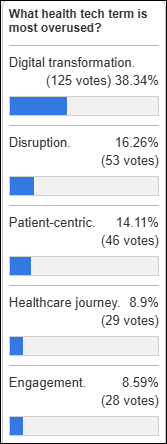
Poll respondents say that technology investments are mostly driven, not shockingly, by the bottom line.

New poll to your right or here: Which social media platforms do you use regularly?


Become an HIStalk Sponsor for All Treats, No Tricks

image

I’m offering a few sponsorship perks to help push interested companies across the finish line before December 31. Contact Lorre if you’re curious (or read this to see why you should be).

  • New sponsors: Get the rest of 2025 free plus a free ad in a HIStalk email update, earning a full year of exposure for less than you’d spend on zero-ROI conference booth carpet.
  • Startups: You qualify for the new HIStalk Startup Scholarship package (which, to be honest, I just invented).
  • Former sponsors: Come back and I’ll throw in a few extras.
  • All sponsors: Renewals are locked in at current rates through the end of 2026.
  • Webinar promotions: Take 50% off of one or more (some companies bank a package of them for future use). Sign up before November 15 and Lorre will enter you to win a free webinar promotion.
  • All sponsors: in a “who’s paying attention” prize, email Lorre by end of day Tuesday, October 22 and she’ll give you a free email ad just for asking.

Sponsored Events and Resources

None scheduled soon. Contact Lorre to have your resource listed.


Acquisitions, Funding, Business, and Stock

image

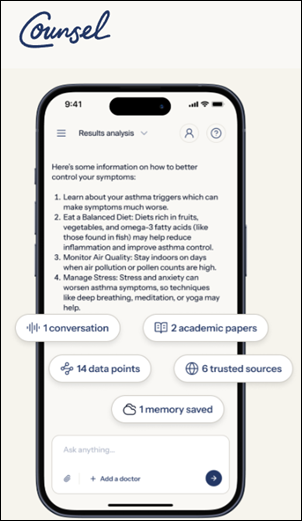
Virtual care operator Counsel Health raises a $25 million Series A funding round. The company offers an AI chatbot that answers health questions, then escalates the conversation as needed to a physician within its 50-state network. Bringing a doctor into the conversation costs $29 per use or a $199 annual fee that includes unlimited physician involvement.

Sage Care, which offers call triage, patient-provider matching, and scheduling tools, announces its launch and $20 million in funding.

Women’s health virtual and in-person clinic operator Tia lays off 72 employees, or 23% of its workforce, citing investor pressure to reach profitability.

Health smart ring company Oura raises $900 million, valuing its business at $11 billion.


People

image

Froedtert ThedaCare Health promotes Brian Sterns, MBA to SVP/CIO.


Announcements and Implementations

First Databank announces a Model Context Protocol servicer that connects AI systems and agents to its medication knowledge assets. The company is testing a prescription automation agent that can pre-populate medication orders by analyzing  the ambient listening output from encounters.

Star Valley Health (WY) sues Change Healthcare, claiming that it failed to submit insurance claims on time after Change rolled out Epic’s billing software in mid-2023 without sufficient staffing.


Other

image

Oracle co-CEO Mike Sicilia and healthcare and life sciences GM Seema Verma say in a shareholder call that the CEOs of Epic-using Mayo Clinic and Cleveland expressed  “a lot of enthusiasm for what we’re building” at Oracle’s recent healthcare conference. They say that the customers of competitors “are starting to understand the power, the value of AI” in being able to build and buy AI agents. Sicilia also said:

We’ve got dozens of AI agents live across our health ecosystem today, with many more planned. We’re looking at chart review care navigation, clinical decision support, patient risk predictions, preventative care, and many more. In fact, our next-generation AI EHR is now generally available … we’ve got a lot of competition in that market, but … the one question I ask our competitors is, see how many fuel cell power plants are you building on site right now? Because if you’re not doing that, then you probably are not going to have as good of a chance to be closely provisioned to a large language model and apply reasoning models and all the things you actually need to work to make this work at scale to automate an entire hospital.

Epic’s latest “Hey Judy” column explains why everyone pays Epic’s list price: she once felt sorry for an early customer who had “such nice people, and they didn’t know how to negotiate.”

A tongue-in-cheek essay suggests that belief in AI “magic” isn’t due to impressive capabilities of these “giant calculators,” but rather the user’s “Edge of Stupidity,” where their limited understanding prevents them from explaining it rationally. The author extends the Dunning-Kruger effect (which says that people are ignorant of their own ignorance), arguing that smart people are especially prone because they assume that their intellect allows them to detect “authoritative-sounding bullshit” in fields they barely understand.


Sponsor Updates

  • Netsmart celebrates client impact and the AI-driven transformation of its CareFabric platform at its recent Connections2025 conference.
  • Surescripts offers its new First-Fill Abandonment solution to Arcadia’s customers.
  • Nordic releases a new “Designing for Health” podcast featuring Greg Aukerman.
  • Redox releases a new episode of its “Shut the backdoor” podcast titled “An Intelligence Infiltration – Hacking AI Agents from Silicon Valley’s Hottest Startups with guest Rene Brandel.”
  • RLDatix will exhibit at the CIHQ Accreditation & Regulatory Summit October 21-25 in San Antonio.
  • TrustCommerce, a Sphere company, releases a new e-book titled “TrustCommerce Community Connect Program.”
  • TeamBuilder will present at the KLAS Healthcare Operations Summit November 4 in Salt Lake City.
  • Ellkay and Inbox Health will sponsor Greenway Health’s Engage 2025 conference November 5-7 in Tampa.
  • WellSky will exhibit at the 2025 AABB Annual Meeting October 25–27 in San Diego.

Blog Posts


Contacts

Mr. H, Lorre, Jenn, Dr. Jayne.
Get HIStalk updates.
Send news or rumors.
Follow on X, Bluesky, and LinkedIn.
Sponsorship information.
Contact us.

Comments Off on Monday Morning Update 10/20/25

Morning Headlines 10/17/25

October 16, 2025 Headlines Comments Off on Morning Headlines 10/17/25

Microsoft extends AI advancements in Dragon Copilot to nurses and partners to enhance patient care

Microsoft extends its Dragon Copilot AI clinical assistant to nurses and adds an ecosystem for third-party extensions.

Brook.ai Secures $28 Million in Series B Funding, Led by UMass Memorial Health and Morningside, to Accelerate Next Phase of Growth and Innovation in Remote Care

Remote care company Brook.ai raises $28 million in Series B funding.

Counsel Health Raises $25M to Launch Physician-Supervised AI Front Door for Healthcare

Counsel Health, an AI-powered virtual medical group, announces $25 million in Series A funding and the launch of its latest AI-based platform.

Avia acquires Panda Health

Digital health marketplace operator Avia acquires Panda Health, which offers digital health peer input and market intelligence services.

Comments Off on Morning Headlines 10/17/25

News 10/17/25

October 16, 2025 News 3 Comments

Top News

image

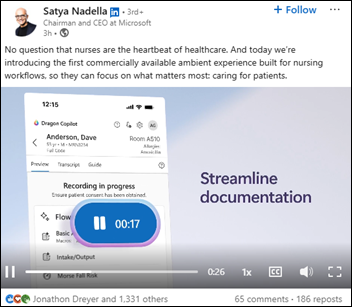
Microsoft extends its Dragon Copilot AI clinical assistant to nurses and adds an ecosystem for third-party extensions.

The nurse capabilities include ambient documentation, access to trusted medical content, and automating routine tasks.


Reader Comments

image

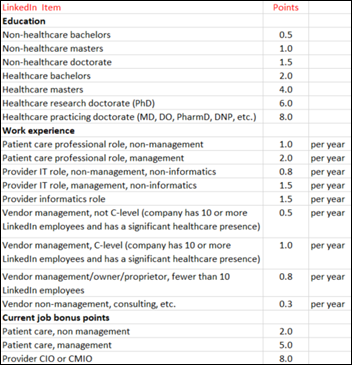
From Boysenberry: “Re: self-proclaimed industry experts. You proposed a scoring framework years ago that took into account clinical and IT experience from someone’s LinkedIn profile. Where is that?” I remember it, but I can’t find it despite many searches via Google and ChatGPT. I do recall that some of the folks who were dispensing unsolicited health tech advice scored low, having little actual experience other than in pontification. UPDATE: found it from 2017! See scoring grid above. I didn’t do much with it, and the low-scoring folks are still out there pontificating, so the effect was minimal. In fact, the vastly lowered barrier to entry for podcasts has probably given a whole new batch of industry lightweights a place to hear themselves talk.

From New Threads: “Re: corporate rebranding. Why do companies think anyone cares about why they chose a particular logo or website design?” I assume these “our redesigned website shows how we’ve evolved” posts exist mostly so the marketing folks who justified the project can get their ceremonial pat on the head. There’s always a tortured back story that someone has wasted time inventing about how the lowercase typeface represents empathy and the color gradient evokes innovation, when in reality, nobody outside the company cares. Announcing it just makes everyone else uncomfortable, like bragging about how great you look in your new suit while everyone’s politely trying not to roll their eyes because they are perfectly capable of forming an opinion without an announcement or editorializing. They also know that appearances aside, it’s still the same person underneath.


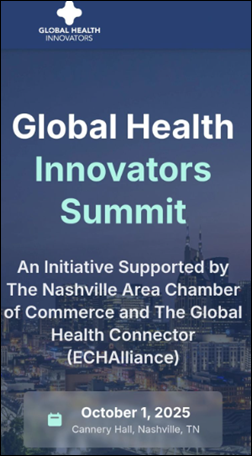
A Reader’s Notes from Global Health Innovators Summit, Nashville

image

Investment panel

Vic Gatto, Jumpstart Health Investors

  • He says AI will cause a four orders of magnitude (10,000x) change to what we can deliver in healthcare.
  • Current AI investments focus on workforce; he thinks we’ll need just as many people in healthcare despite AI.
  • He sees a barbell of success for healthcare investing. On one end are solutions that cater to wealthy individuals, like biometrics and whole-body scans. On the other end are solutions that touch the low-income side of the market (e.g., Medicaid) and squeeze out efficiency gains and cost savings.

Tania Grant, Partner, Claritas Capital

  • AI valuations are overhyped and expectations will have to come back down to earth at some point.

Fireside chat with Chris McGhee, CEO and Co-Founder, Current Health

  • He thinks it’s a very difficult time to build a digital health company, partly because of inflated capital raises and inflated valuations that many companies can’t keep up with.
  • The hardest part of the acquisition by Best Buy was the culture change and the difficulties integrating into a totally different culture. Incentives and pace of change are radically different at a big public company.
  • When he reacquired Current, it had three times the number of employees as when he sold it. Had to let go about 100 people from the get-go, and he noticed that the culture had lost the customer focus and urgency.
  • They’re focused on CAR-T therapy and moving that to the outpatient setting.

Panel on data utilities, policy, and regulation

Brenton Hill, Head of Operations and General Counsel​, Coalition for Health AI

  • CHAI views transparency as table stakes and has been placing a greater emphasis on transparency.
  • A key thing to figure out is who is responsible for an AI solution over the course of its life cycle. Is it the developer or the health system/payer who has deployed it?
  • The current regulatory framework for healthcare data is not built for AI. AI moves at the pace of governance, not government. He says we should look at governance not as an inhibitor but as what will allow AI to scale.

Brett Meeks, Vice President of Government Affairs for Health Technology and AI, Kimbell & Associates

  • Government is struggling to regulate technology, given the fast pace of change.
  • He expects the current administration to follow through on enforcing info blocking regulations.
  • He floated the idea of states using the $50 billion rural health fund from the OBBB Act to incentivize EHR adoption in behavioral health.

Peter Embi, Department of Biomedical Informatics, Vanderbilt University Medical Center

  • VUMC has built a tool that monitors the 200+ AI systems they are using throughout the health system. The tool checks for algorithm drift and impact on health equity.

Panel on innovation in cancer care

Lauren Connor, breast reconstructive surgeon, Vanderbilt University Medical Center

  • A key advancement in treatment and reconstruction in breast cancer care has been minimally invasive procedures, and those have been made possible by robotics.

Jillian Wright, CEO, Onsite Women’s Health

  • They’ve seen screening mammogram compliance rates go from 50% to 85% when the mammograms are offered in-clinic by primary care providers.

Abbey Vandersall, Chief Clinical Officer, AMSURG

  • Any solution that boosts compliance is a value-add. Only 50% of patients who use Cologuard and get a positive result actually follow through with the necessary confirmatory colonoscopy.

Sponsored Events and Resources

None scheduled soon. Contact Lorre to have your resource listed.


Acquisitions, Funding, Business, and Stock

MD Integrations, which offers a white labeled telehealth service to digital health companies, raises a $77 million investment.

image

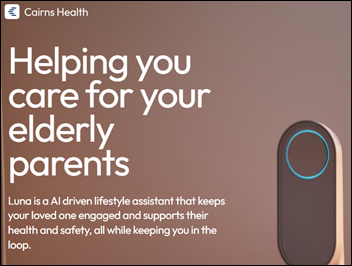
Senior platform vendor Cairns Health acquires Together by Renee, which offers a personal healthcare assistant.

image

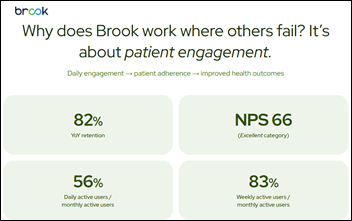
Remote care company Brook.ai raises $28 million in Series B funding.


Sales

  • UPMC will extend its deployment of the ambient documentation solution of Abridge, in which it is an investor and founding site, to all of its locations.

People

image

Harmony Healthcare IT hires Sharon Cook (Inovalon) as chief revenue officer.


Announcements and Implementations

Redox and Kno2 partner to offer unified integration, data translation, and nationwide TEFCA connectivity.

Mount Sinai researchers develop InfEHR, which scours a patient’s EHR lab results, medications, and vital signs over time to create a personalized network that discovers hidden associations with disease state.

Altera Digital Health announces GA of Sunrise Axon, which was built in partnership with Health Gorilla to bring real-time clinical data into Sunrise EHR.

Wolters Kluwer Health releases UpToDate Connect, which offers developers API access to its evidence-based clinical content.

Surescripts introduces First-Fill Abandonment, which alerts care managers when patients fail to have a first-time prescription filled.

image

Lapsi Health launches Keikku 2.0, a $375 FDA-cleared digital stethoscope that uses AI to generate clinical notes that are integrated into the EHR.  

Digital health marketplace operator Avia acquires Panda Health, which offers digital health peer input and market intelligence services.


Government and Politics

image

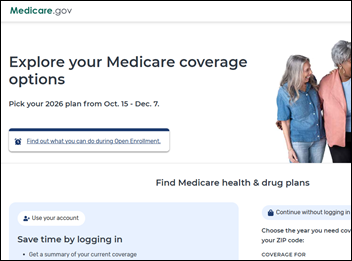
HHS’s new Medicare Plan Finder provider directory, which was built by a vendor under the administration’s “Make Health Tech Great Again” program, is generating conflicting or inaccurate listings about whether providers are in-network for Medicare Advantage plans. The tool also limits searches to providers within 50 miles and excludes hospitals and skilled nursing facilities. Errors in the temporary open enrollment site, which was intended as a first step toward a national provider directory, could mislead seniors into choosing plans that their doctors don’t accept. A previous CMS announcement suggests that the directory’s developer is SunFire Matrix, a private equity-owned services platform vendor that sells similar tools to insurance brokers.


Privacy and Security

Integris Health pays $30 million to settle a class action lawsuit related to a 2023 data breach that impacted 2 million people.


Other

In England, NHS administrator Sir Jim Mackey requires NHS England’s transformation directorate to personally sign off on readiness before electronic medical records are brought live during the busy winter period.

image

Keep scrolling if health tech history isn’t your thing (or if it is, go deep with Vince Ciotti’s magnificient HIS-tory). Industry veterans will appreciate John Gomez’s insider recap of what onetime frontrunner Eclipsys got wrong during his time as CTO (spoiler: dismissing Epic as being too small to threaten Sunrise Clinical Manager). He generously avoids blaming the unremarkable Eclipsys CEOs who followed founder and industry legend Harvey Wilson through the early 2000s, namely Paul Ruflin and Andy Eckert, neither of whom had recent relevant experience (they must have learned hard lessons since they’ve done fine since in other health tech leadership positions). Then came Phil Pead, who had the savvy to sell publicly traded Eclipsys to Allscripts for $1.2 billion in 2010, only to be fired in 2012 in a power struggle with Glen Tullman. Allscripts was a slow motion car crash under Tullman, but maybe it wasn’t his fault (ever-stumbling Misys was its majority owner) since after the company fired him, he became health tech investing’s golden boy by launching 7wireVentures and unloading Livongo on Teladoc for $18.5 billion in 2020.


Sponsor Updates

  • Altera Digital Health publishes a new client story titled “On the way to the peak: Scaling technology at Wyckoff Heights Medical Center.”
  • Judi Health releases a new episode of “The Astonishing Healthcare Podcast” titled “Addressing Barriers to Drug Access & Affordability, with Valeris’ Andy Glade.”
  • Agfa HealthCare powers enterprise imaging modernization across North America.
  • Wolters Kluwer Health and Vanderbilt University’s Heard Libraries collaborate on a transformative medical research agreement.
  • Ellkay will exhibit at NextGen Healthcare’s User Group Meeting November 2-5 in Nashville.
  • Fortified Health Security announces that it has been named the winner of the “Managed Security Innovation of the Year” award in the CyberSecurity Breakthrough Awards.
  • Healthcare Growth Partners publishes “Observations – October 2025.”
  • Black Book Research founder and CEO Doug Brown will deliver the keynote address at OpenEHR’s EHRCON25 conference.
  • Health Data Movers names Joshua Arkin account manager.
  • Impact Advisors publishes an analysis of the One Big Beautiful Bill Act and the economic effects it may have on providers.
  • Inbox Health exhibits at the American Medical Billing Association National Medical Billing and Coding Conference through October 17 in Las Vegas.
  • Aspen Medical will implement Meditech Expanse at its two hospitals in Fiji.

Blog Posts

Sponsor Spotlight

image

Findhelp is powering a more connected and efficient social safety net. They’re replacing fragmented systems with a modern, digital infrastructure that streamlines social care delivery from start to finish, from identifying needs and authorizing services to tracking data and ensuring better outcomes. Findhelp’s solutions support the entire care journey, including state benefit eligibility workflows to drive successful redetermination and post-acute care and behavioral health networks to provide whole-person care. They now work with 157 payers, 217 hospitals and health systems, and 88 health centers (and growing). Connect with Findhelp on LinkedIn to stay up to date on their work. (Sponsor Spotlight is free for HIStalk Platinum sponsors).


Contacts

Mr. H, Lorre, Jenn, Dr. Jayne.
Get HIStalk updates.
Send news or rumors.
Follow on X, Bluesky, and LinkedIn.
Sponsorship information.
Contact us.

EPtalk by Dr. Jayne 10/16/25

October 16, 2025 Dr. Jayne Comments Off on EPtalk by Dr. Jayne 10/16/25

As the US federal government shutdown continues, I’m encountering military members who are having difficulty filling prescriptions for long-term medications. I’m certainly not an expert in how federal appropriations work, but most people on the clinical side of healthcare policy would agree that having a system where people might have to skip important medications through no fault of their own is problematic.

Based on social media posts from several military installations, pharmacies are only dispensing 30-day supplies for prescriptions even if the prescriber had approved 90-day supplies. Reasons cited include “to best serve the maximum number of beneficiaries for what could be an extended period of time,” which suggests that pharmacies are unable to replenish their stocks. Some bases are redirecting members to Express Scripts or to retail pharmacies where others have messaging that isn’t more helpful than “thank you for your understanding.”

Plenty of evidence demonstrates the benefits of 90-day prescriptions, including improved patient adherence to the medication regimen, better clinical outcomes, and reduced complications. From a non-clinical perspective, it also saves money and time for both patients and pharmacies. I feel for those pharmacy technicians who are going to have to fill many more prescriptions than planned, most likely without additional staffing, because they can only dispense a 30-day supply at a time.

Shifting to non-military pharmacies isn’t necessarily the best answer either. Those pharmacies also are not likely able to increase staffing on short notice as they start receiving increased requests. Back-and-forth conversations sometimes need to happen between prescriber and pharmacy when prescriptions are transferred, and that particular game of phone tag is never fun.

The answer is having comprehensive health policy that is funded so that patients aren’t penalized every time Congress reaches an impasse. Once Congress gets its act together, ensuring continuity of care for our military patients and their families should be a priority.

From Telehealth Scramble: “Re: Medicare telehealth. Our place is trying to get people to switch to an in-person visit right away, but they are specifically saying that patient care has to come first if they can’t. For the telehealth visits that would be unpaid, they are holding off on submitting the charges hoping that this will end soon and the re-upping of telehealth will be retroactive. It’s been a particular challenge for mental health because about 80% of our patients are still telehealth. We have many providers who do telehealth from home several days a week, and some are contracted as full-time telehealth from home, so we don’t have offices for them and they live a significant distance away. We also have a reasonable number of patients who are in the state but a far drive away, including college students or patients who are older and don’t really want to drive an hour on the freeway. Fortunately the insurers that we contract with have specifically said they will continue telehealth coverage unchanged, so we just have to reschedule the patients with straight Medicare. Also, our mental health providers are having to check insurance status and reschedule appointments with patients themselves because we don’t have enough clerical support.” I suspect that many organizations are taking this kind of pragmatic approach. Still, I wonder how many members of Congress would be able to articulate these issues that are happening in their states or districts or would be able to provide advice to their constituents on how to navigate the healthcare system?

image

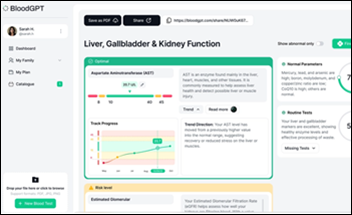
From Vampire Gal: “Re: BloodGPT. The name caught my attention as I perused my inbox, wading through all the spam emails that have resulted from my HLTH conference registration.” The headline on the website is, “Smarter blood test interpretation for everyone. ”it offers several sentence fragments indicating that it’s intended to address lab tests of varying complexity with a target audience of “individuals, doctors, and healthcare providers.”

Scrolling further, it offers patient-facing offerings for blood test interpretation, diet plans, and personalized recommendations. Clinicians can use the solution to deliver branded interpretation reports for patients. It also promises tracking for lab trends and “AI-powered chat for instant patient insights.” The company promises “medical-grade accuracy and zero hallucinations” even though it is powered by multiple LLMs. Having done a fair amount of AI work, I’m surprised at the claim of zero hallucinations, especially since none of the contributing LLMs (Claude, Gemini, OpenAI) report much higher hallucination rates when they’re talking about them.

I was considering digging deeper by downloading their sample report package until a clickbait type item caught my eye: “Always tired? These 3 Blood Markers Could Explain Everything.” Attention-grabbing statements like that always raise the hair on the back of my neck. When seeing patients, the number one reason most patients are tired is lack of sleep or lack of quality sleep, not lab values that you need to tinker with (after unnecessary spending to order the tests). This simple eye-catcher on the website makes me think that this vendor doesn’t appreciate the concept of evidence-based medicine.

The blog post that addresses this claim, which appears to be AI-written, cites other websites like the Cleveland Clinic and MedlinePlus, making it rather generic. After scrolling through a couple of pages of content, it closes out with, “Focus on evidence-based changes, balanced nutrition, regular sleep, stress management, and appropriate medical follow-up. With patience and proper guidance, your energy levels can improve and the fog of chronic tiredness may finally lift.” Unfortunately, that’s too little too late for my evidence-based medicine heart. My parting impression of this company is negative.

After some email correspondence, Vampire Gal shared some of the other companies that have been reaching out. One name that caught my attention was Eggmed, which is apparently an EHR/PM system designed for private practices. The website was a little vague in saying it was about “helping wellness professionals focus on their clients,” which makes me think it’s more for therapists and coaches and less for physicians. I also didn’t see anything about EHR certification, interoperability, or data sharing, which are becoming increasingly important for delivering comprehensive and coordinated care.

Kaiser Permanente workers began striking earlier this week, making the case for improved working conditions and greater pay. The healthcare giant has been negotiating with unions for several months and claims it has plans to continue operations without interruption. I reached out to a few colleagues in the field who confirmed reduced office hours, staffing challenges, and pharmacy closures. I guess the definition of “interruption” might be different for administrators than for patients or frontline physicians.

image

I spent more of the last few days than I wanted to performing Windows upgrades, moving multiple devices from the workhorse that is Windows 10 and onto Windows 11 now that the former has reached its end-of-support date. The latter is less awful than it was when it first came out, but it still lacks some of the niceties of its predecessor, such as the start menu.

The internet is full of articles that try to help users navigate the change. It also offers several third-party applications that allow bypassing the offending start menu. Those of us that feel Windows 11 is a bit of a backwards maneuver are just shaking our heads.

I have multiple laptops as well as a desktop PC. The laptops were easy, but the custom-built desktop posed a few challenges. I did get some laughs out of the process, though, because every time a Windows article told me to “consult your manufacturer’s documentation,” I fired off a text to the college kid who built it and asked where my documentation might be. I was offered an operating system with a tuxedo-wearing penguin in response, so I told him he was off the hook for documentation.

What’s the best operating system for a mid-career clinical informaticist living in a largely Windows world? Should I contemplate a switch? Leave a comment or email me.

Email Dr. Jayne.

Comments Off on EPtalk by Dr. Jayne 10/16/25

Morning Headlines 10/16/25

October 15, 2025 Headlines Comments Off on Morning Headlines 10/16/25

MD Integrations Raises $77 Million From Updata Partners and Denali Growth Partners to Accelerate Innovation in Telehealth; Appoints President & COO

White label telehealth platform vendor MD Integrations announces $77 million in new funding.

Imprivata Acquires Verosint to Add AI-Powered Risk Signaling to its Leading Enterprise Access Management Platform

Imprivata acquires identity threat detection and response company Verosint.

AI, Health, and Health Care Today and Tomorrow: The JAMA Summit Report on Artificial Intelligence

A JAMA summit report says that healthcare AI needs coordinated frameworks for testing, monitoring, and incentivizing safe, effective use across clinical and operational settings.

Comments Off on Morning Headlines 10/16/25

This Week in Health Tech 10/15/25

October 15, 2025 This Week in Health Tech Comments Off on This Week in Health Tech 10/15/25
LinkedIn weekly 101525 - Copy
Comments Off on This Week in Health Tech 10/15/25

Healthcare AI News 10/15/25

October 15, 2025 Healthcare AI News Comments Off on Healthcare AI News 10/15/25

News

image

Google backtracks on an internal health policy that required employees to allow a third-party AI tool from startup Nayya review their personal data when enrolling in health benefits. Nayya’s tool asks health and lifestyle questions to recommend benefit options. The company says, “Our intent was not reflected in the language on our HR site.”


Business

OpenAI will enhance ChatGPT to allow Walmart customers to complete Instant Checkout purchases directly from the app. The partnership threatens traditional search engines by delivering predictive, contextual results from chats such as meal planning.

image

Duos, which offers an AI-driven platform that helps Medicare Advantage members manage social determinants of aging, raises $130 million in a strategic growth equity round. The system guides members through their plan benefits and services to ensure that they complete high-value actions that improve health plan revenue and member retention.


Research

A JAMA summit report says that AI is rapidly spreading across healthcare but lacks consistent evaluation, oversight, and real-world outcome data. It calls for coordinated frameworks for testing, monitoring, and incentivizing safe, effective AI use across clinical and operational settings. The report also flags legal uncertainty, noting that failure to use AI could be seen as a breach of standard of care, yet malpractice liability may be difficult to assign among clinicians, health systems, and AI developers.

Researchers propose a framework of “confidence calibration and transparency” to improve clinician trust in AI by scoring its recommendations. Clinician override of AI recommendations dropped from 33% to less than 2% when the AI scored itself on its level of confidence, transparency, and semantic similarity to a clinician-verified diagnosis.

image

Researchers introduce an AI system that presents Grand Rounds-type medical case information and the logic its used to reach a diagnosis. The authors posted the AI’s output, which is generated in both written and narrated slide-based presentation form, alongside an expert clinician’s version. The AI-created video is startlingly insightful.


Other

image

An AI engineer who probes AI tools for undocumented features finds references  to a “clinician mode” within ChatGPT’s web app code.


Contacts

Mr. H, Lorre, Jenn, Dr. Jayne.
Get HIStalk updates.
Send news or rumors.
Follow on X, Bluesky, and LinkedIn.
Sponsorship information.
Contact us.

Comments Off on Healthcare AI News 10/15/25

HIStalk Interviews David Bates, CEO, Linus Health

October 15, 2025 Interviews Comments Off on HIStalk Interviews David Bates, CEO, Linus Health

David Bates, PhD is co-founder and CEO of Linus Health.

image

Tell me about yourself and the company.

I’m a scientist, engineer, and entrepreneur. I spent 16 years in venture capital. I’ve also started a few companies along the way. I’m passionate about brain health, its importance in the world, and how much suffering can be alleviated by preventative, proactive care, equipping people with agency over their brain health.

That speaks to the introduction of Linus Health. We have a brain health enablement and dementia prevention platform that spans the care continuum. It is clinically integrated, but it’s not just in the clinic. We want to care for people all the way through their life journey to optimize their brain health and prevent disability.

How does the diagnostic process differentiate between occasional forgetfulness versus true cognitive impairment?

The approach we take is unique, novel, and well validated. We mimic what specialists have done for decades by analyzing the process by which a person carries out a task. We leverage multiple sensors in a tablet, smartphone, or laptop to analyze the characteristics of their behavior. 

Behavior is the primary observable output of the brain. We deconstruct that behavior to understand any kind of emergent brain dysfunction. There are many kinds of brain dysfunction, not just a catch-all memory. There is executive function, language, visuo spatial, and of course memory. For each of those, it’s important to understand the type of impairment and what is likely giving rise.

The treatment, the intervention, can then be specific to work on that particular aspect of brain function, and as much as possible, improve health, improve function in their daily life, and equip them with the tools and capabilities to compensate for whatever disability is emerging.

That’s really important. It’s not just a binary thing, impaired or not impaired. We need to understand what is actually going on with this individual and how we can help them optimize their daily life and promote health in their brain.

What is the trigger for performing the test? Is it a one-time diagnosis event, or does regular screening have value?

I’m a big believer in preventative health. We should not wait for disease. We should be proactive in our brain health. It’s important to have a baseline. Everyone should be their own metric of how they’re doing, especially when it comes to brain health, so you can catch things early.

I believe in doing a brain health screen wherever healthcare is delivered. Wherever you would check blood pressure, you should check brain health. It’s important because with these new tools, you can catch things years before they would show up as symptoms. When you catch it early like that, you can intervene early.

It’s akin to oncology. You don’t want to wait until you have a tumor bulging out of your neck or they’re all over your body. You want to find, as early as possible, any kind of emergent illness and then intervene during that window of intervention to preserve function and health. With the brain, it’s incredibly important, because neurons that are lost are not recoverable.

To your point of should we screen? Absolutely. We need to change the way that we think about brain health. We need to understand that there is something that can be done. There is incredible hope for people. Many of them don’t have to get dementia. Up to 45% or more of cases can be prevented through lifestyle modification. Treatments are coming to market and getting approved by the FDA, so the earlier the right people can get started on them, the better the prognosis.

I’ve talked to people with Alzheimer’s disease who are living, in their words, their best life. They have known they’ve had it for a number of years. They are on one of these disease-modifying therapies and are still living their life, traveling, doing things with their kids.

Alzheimer’s disease is not dementia. It can result in dementia, but it can also be slowed down. Not every person with Alzheimer’s disease will get dementia. It’s important that we have this education and understanding in the market so there’s not a fatalistic view.

People are proactive in assessing their brain health and proactive in doing the lifestyle modifications. Those who need it will seek treatment to preserve brain function. With dementia, every single person can benefit from brain health assessment, especially with good platforms, even if they have dementia. Equipping care partners with knowledge and resources, equipping the individual. It’s a dyad, the two together that the patient and the care partner know how to optimize health and quality of life. Not only the life of the afflicted person, the patient, but the life of the care partner. If they’re not equipped, informed, and supported, their health suffers tremendously in the majority of cases.

That’s on the dementia side. Back to Alzheimer’s, detecting it early, even so-called pre-symptomatic. Platforms like Linus Health can find them before symptoms are apparent. Intervening and preserving function is incredibly important. People can live a much higher quality life than if there’s not intervention.

Intervention is not just “take this medication.” It’s holistic, and they need to be engaged in many ways, including for some the disease-modifying therapies. For everyone, it’s a discussion among themselves, their doctor and the family, and figuring out what is the best treatment course for this individual. It stands and it is irrefutable that the sooner you engage, the better the outcomes, and the better the quality of life for the individual and for the family.

Can that diagnosis and management be scaled by using non-specialist clinicians instead of less-available specialists?

With the right tooling, primary care can handle the majority of cases. They’re rightly positioned to. It is similar to how they now manage diabetes when it used to be an endocrinologist. Managing hypertension used to be a cardiologist. Those specialties are still needed and are used on the more difficult cases as their training warrants.

It’s using the right resources for the right people. The majority can be managed in primary care. Platforms like ours provide those primary care physicians with the capabilities to diagnose and the decision support to triage, to guide them to care for those individuals right there in the primary care setting. Especially addressing their modifiable risks, addressing reversible causes. That can all be done in primary care.

For cases that need specialist care, they should be referred right away. This helps streamline referrals, reduce wait times, and get people to the right resource as expeditiously as possible. That optimizes healthcare.

What is the role of biomarkers, which are in essence a blood test for dementia? How does that fit with cognitive testing and could they be applied to a population?

The approval of Fujirebio’s blood test, Lumipulse, back in May was a huge step forward in Alzheimer’s care. You need to first establish a cognitive impairment. Some of the key opinion leaders in the field have shown that with these blood biomarkers, they need the establishment of some kind of functional impairment to make their predictive accuracy appropriate and meaningful.

It’s a great addition to what I would call the emerging service line for brain healthcare, especially cognitive care. The blood biomarker helps, once you’ve established that there’s a concern with memory or thinking, what is the likely etiology? What is causing that impairment? If the p-tau blood biomarker is positive, it is very likely that the individual has Alzheimer’s disease. They should be triaged, if appropriate, to disease-modifying therapy or one of the many drugs and intervention methods that are coming out that can deal with that etiology. 

It’s equally important to know that it’s not Alzheimer’s disease, because you want to work on other contributed factors to find out what is giving rise. That could be a co-morbid condition like unmanaged hypertension, unmanaged diabetes, undiagnosed sleep apnea, and the many other things it could be. Get those things treated and then retest. For those who are appropriate, getting them to a neurospecialist since it could be Parkinson’s, Lewy bodies, or a variety of things.

That blood biomarker is incredibly important to know how to triage people following a cognitive assessment.

How do payers approach cognitive conditions?

Unfortunately, we’re seeing a number of payers that are not, in my opinion, assigning appropriate value to brain health. I don’t know if it’s broadly appreciated yet how important the brain is and how important it is to the quality of life and health of the individual. The brain is that organ that you can’t transplant. It’s important to who we are. I don’t know if the health system and the willingness of payers fully reflects the value of brain health and function. 

Members should demand more brain health focused resources to preserve their quality of life. Dementia is the number one health fear of middle-aged and older people, yet it’s not standard to assess cognition to try to prevent dementia. CMS does reimburse. There are CPT codes for the digital cognitive assessment. There are CPT codes for brain health visits. There’s a reimbursable pathway. 

With value-based care, CMS has done a great job, especially Medicare Advantage. They have risk adjustment factors. They have certain HEDIS exclusions. They have the incentives aligned with identifying and caring for cognitive issues and dementia care.

That’s at the CMS level. Different insurers take different stances on cognitive assessment. Maybe they don’t want to pay for the expensive disease-modifying therapies, so they don’t want to screen.They don’t see that the patient will be a member that long. Some of them don’t take an active role to support brain health care, and that’s really a shame. We need to do better than that.

You could say, “That’s because you have a company that is associated with finding emergent illness with the brain.” No, it’s because I’m a human being. I care a lot about brain health and I hate to see people suffering from it. If your primary goal is to insure people for health, you need to make sure that the things that are most important to their health are being looked after. If you do the right thing, everyone will win. It will pay off in the long run. The total cost of care will go down. People’s quality of life will go up, and there will be a lot less suffering.

Have studies looked at the age of onset and the insurer at the time of initial diagnosis? I’m wondering how much of that happens before people reach Medicare age.

The studies are emerging. It’s early days. There is the empirical evidence, which we need more of and I’m sure is underway. We are tracking people and we want to make sure that we have those cases.

There is precedent in all other chronic conditions that early intervention, early management, leads to reduce total cost of care. The best thing that we could do, and we need our system aligned, is to incentivize prevention. But our system is aligned to treat sickness, and so all of the incentives are around treating sickness. This is a policy matter, but how do we incentivize prevention? How do we enable people to take action over their brain health and reduce significantly the disease burden?

Neurological disorders are the number one disease burden in the world. Neurology in psychiatry is still an emerging area, especially with new tools and capabilities. But there’s a real opportunity here. Most health stems from the brain, and every other function is to support the brain. It’s good to start on first principles. How do we optimize brain health, and from that comes total health.

To your point on the insurers, I do appreciate that they have a business to run, and you can’t paint with broad brushes. Some of insurers are proactive in promoting brain health, even some of the largest ones. Some have taken a stance, while others have decided to put their head in the sand. That has never been a good strategy. You’re saving some dollars on the front end, but you’re causing irreparable harm to so many families.

How has last year’s acquisition of Together Senior Health changed your capabilities?

It has given us another step forward to enabling people to have a higher quality of life, even those who are living with disease, and their care partner. We’ve taken the RADAR tool (Risk of Alzheimer’s and Dementia Algorithm) to a validated capability that is now in production. We can risk stratify entire populations for the risk of undiagnosed disease. That enables insurers and health systems to know who is likely to be suffering from illness, the presence of emerging illness, and the risk of it. That’s where we should focus our care resources to minimize disease impact as much as possible.

You take it all the way through our platform and through the clinic. Then, back at home, how do we care for those individuals and optimize their brain health trajectory? The acquisition of Together Senior Health was a big step on those bookends, risk stratification on the front end and the engagement and care on the back end. That has helped complete our platform to span the continuum of care, all the way from identification, diagnosis, treatment planning, post-clinic engagement, and health coaching and monitoring.

How do you expect the company’s business to change over the next few years?

We are seeing the engagement of health systems across the country. They are leaning in increasingly. So I expect to see in the next two years that the standard of care will be set, and the service line will emerge for cognitive care. It will be such a good thing for the world, for the population. I see it spreading into Europe, the UK, throughout North America, Asia, and beyond. Get to Africa, get everywhere, and promote brain health.

We need to work on the stigma that is associated with dementia. We should not have a stigma. People should realize that it is a new day. There is incredible hope. The drugs that exist today on the market, and especially the ones that are coming, are tremendous. They are showing such benefit, and it’s still early. Everyone needs to know that there’s tremendous hope for the future.

We need to treasure the senior population. They are pillars of the community. They have so much life experience. We need to honor them by caring for their brain health and getting them the attention and resources that are needed to prevent dementia. That is super important.

Comments Off on HIStalk Interviews David Bates, CEO, Linus Health

Morning Headlines 10/15/25

October 14, 2025 Headlines Comments Off on Morning Headlines 10/15/25

OutcomesAI Secures $10M Seed Financing Led by Santé Ventures to Scale AI-Enabled Nursing Care

OutcomesAI, which has developed software that combines AI voice agents with licensed nurses to handle nursing workflows, announces $10 million in seed funding.

R1 to Acquire Phare Health, a Leading AI Platform for Automating Inpatient Coding and Pre-Bill Clinical Documentation Improvement

RCM vendor R1 will acquire Phare Health, which offers AI solutions for inpatient coding and clinical documentation improvement.

WellTheory Raises $14M to Build the Category Leader in Autoimmune Care

WellTheory, which offers virtual care management services for autoimmune conditions, raises $14 million in Series A funding.

Pear Suite Secures $7.6M in Series A Funding to Power Community Health Workers Nationwide

Health and social care navigation software vendor Pear Suite secures $7.6 million in Series A funding.

Comments Off on Morning Headlines 10/15/25

News 10/15/25

October 14, 2025 News Comments Off on News 10/15/25

Top News

image

OutcomesAI announces $10 million in seed funding.

The company’s Glia software combines AI voice agents with licensed nurses to handle nursing workflows.

Founder and CEO Kuldeep Singh Rajput, PhD was founder and CEO of Biofourmis, which was merged with CopilotIQ in October 2024.


Reader Comments

image

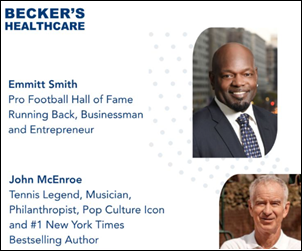
From Spigot: “Re: healthcare conference. Interesting keynotes, eh?” The best part is always the brochure straining to justify why the speakers have anything to do with healthcare, beyond being has-been celebrities whose agents offered an affordable glad-hander. They are inevitably described as visionary entrepreneurs, resilient leaders, and universal storytellers whose wisdom will somehow inspire the healthcare community. Maybe McEnroe will share his insights from narrating “Never Have I Ever,” which like McEnroe himself has no healthcare relevance but was wickedly funny (as was this collection of Emmitt Smith’s oratorical fumbles). Here’s the one relevant similarity: as in healthcare, people and organizations are most motivated to do whatever benefits them most, so Becker’s must have flashed cash and perks.


A Reader’s Notes from Nashville Healthcare Sessions

image

Panel on the investing landscape in healthcare

Julie Yoo, General Partner, a16z

  • Diagnostics has been a challenging area to invest and be successful in, but there are opportunities, especially with companies taking a platform approach.
  • She’s bullish on robotics as an investment opportunity.
  • She said even in challenging sectors, there are investment opportunities. For example, the OBBB Act will significantly impact Medicaid eligibility, and that creates opportunities for companies who make it easier to navigate Medicaid eligibility and redeterminations.
  • Every company in their portfolio is using an AI-based software development solution.
  • She commented on the changes in the investing environment since the pandemic. Seven companies since 2020 have reached $100 million ARR in five years or less, whereas none did that before 2020. She says the current environment pushes companies to broaden their targets to multiple verticals (providers, payers, and employers).

Vijay Patel, Managing Partner, CVS Health Ventures

  • Also taking a hard look at robotics.
  • He’s thinking about investments not just in terms of health tech but also tech that enables healthcare delivery. An example is an AI company CVS Health just invested in that assists call center agents; they are also seeing value in tech investments on behind-the-scenes aspects of healthcare delivery, like supply chain.

Conversation on employer-based healthcare

Mercedes Ikard, Senior Director, US Benefits Operations, The Walt Disney Company

  • Disney spends $1 billion annually on healthcare benefits and wellness programs in the US. They have 80,000 primary care visits a year and provide care for families, not just employees.
  • They have disease management programs that provide care managers and coaches to navigate healthier living. They do things like offer culinary classes to employees to promote healthier eating.
  • Pharmacists are an integral part of the care team for their employees and coordinate with physicians, nutritionists, etc.

Panel on the shift to ambulatory care

Jeff Snodgrass, President & CEO, AMSURG

  • Taking procedures off the inpatient-only list and moving more of them to ASCs has knock-on effects of moving other procedures to the ambulatory setting. Seeing this trend in orthopedics and cardiology especially.
  • Example: when total shoulder replacements are inpatient-only but partial replacements are not, providers are incentivized to schedule partial replacements at the hospital because they don’t want the inconvenience of operating at two places in a day. Bringing total shoulders to the ASC brings partials with them.

Eric Evans, CEO, Surgery Partners

  • Bringing 500 new surgeons into their ASCs each year. The surgeons are attracted to lower bureaucracy and better control over their schedules.

Renee Buckingham, President, Primary Care Organization, Humana CenterWell

  • Rural settings are seeing significant strains on healthcare labor, not just for physicians but also medical assistants and nurses.

Miscellaneous tidbits

  • Tom Hale, CEO, ŌURA: the biggest change they see with ŌURA users is that they drink less alcohol.
  • Eduardo Conrado, President, Ascension. Health system has $25 billion in revenue, 95 hospitals, 26 joint ventures. Focusing on growing its ambulatory presence (e.g., AMSURG acquisition). Serves 2.5 million commercial lives, 1.5 million Medicare lives, and 1.15 million Medicaid or uninsured lives.
  • David Dill, Chairman & CEO, Lifepoint Health. 60 acute hospitals, 50 rehab hospitals, 30 behavioral health facilities 350,000 surgeries and 1 million ED visits annually

Sponsored Events and Resources

None scheduled soon. Contact Lorre to have your resource listed.


Acquisitions, Funding, Business, and Stock

RCM vendor R1 will acquire Phare Health, which offers AI solutions for inpatient coding and clinical documentation improvement. R1 will fold the startup into its R37 AI lab, which it launched earlier this year with Palantir.

image

A Miami publication profiles Gameday Men’s Health, which operates 400 testosterone and erectile dysfunction clinics nationwide. The company, which doesn’t accept insurance and therefore requires no billing capabilities, built its own EHR using Lobbie software that offers no-show prediction, outcomes tracking, workflow reminders, and an upcoming mobile app for patient scheduling and messaging.

WellTheory, which offers virtual care management services for autoimmune conditions, raises $14 million in Series A funding.


Sales

  • Advocate Health’s Atrium Health Medical Group (NC) selects WellBeam’s post-acute care coordination software.
  • Northwell Health (NY) will implement Abridge’s ambient AI technology across its 28 hospitals.

People

image

Adria Jackson, PhD, MBA, RN (Flourish & Thrive Labs) joins the Veterans Health Administration’s Eastern Oklahoma VA Health Care System as chief health informatics officer.

image

Counterpart Health names Blaine Lindsey (AnsibleHealth) VP of enterprise growth and partnerships.

image

Ascertain hires Molly O’Neill, MS (Aegis Ventures) as chief commercial officer.


Announcements and Implementations

Jennie Stuart Health (KY) goes live on Epic after merging with Deaconess Health (IN).

image

AGS Health launches AI-powered RCM workforce solutions for tasks related to insurance eligibility verification, prior authorizations, denials management, and appeals.

image

Infinx makes a strategic investment in Voxology AI and adds the company’s AI scheduling agents to its contact center software.

Inovalon adds DoseMe’s precision dosing software to its VigiLanz Pharmacy Surveillance application.

Teladoc Health adds a hospital workplace safety tool to its monitoring solution that analyzes audio and video to identify hostile facial expressions, threatening gestures, aggressive language, and entry into restricted areas.

LiveData launches an analytics tool that provides visibility into OR performance such as room usage, case booking efficiency, and identification of bottlenecks.


Other

image

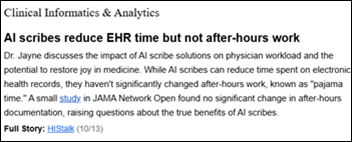
Thanks to AMIA for citing Dr. Jayne’s HIStalk piece in its Informatics Smart Brief on the potential of AI scribes to restore joy in medicine. My key takeaways from Dr. Jayne:

  • Some studies have found that use of AI scribes doesn’t always reduce after-hours “pajama time.”
  • Some employers are reclaiming any AI-created time savings by assigning doctors additional after-hours work.
  • Pajama time measurements may be unreliable. They may track only documentation hours rather than all activities, may not detect when an EHR application is open but idle, or may fail to distinguish specific tasks.

Sponsor Updates

  • Altera Digital Health announces that Maidstone and Tunbridge Wells NHS Trust achieved significant time savings across its wards by introducing automated vital signs integration into its Sunrise EHR.
  • A Black Book Research survey names Verisma the top provider of release-of-information services.
  • Modern Healthcare ranks Cardamom #6 in its Best Places to Work in Healthcare 2025.
  • CereCore publishes a new case study titled “Cybersecurity Advisors Bring New Hope to Orgs Without Security Officials.”

Blog Posts


Contacts

Mr. H, Lorre, Jenn, Dr. Jayne.
Get HIStalk updates.
Send news or rumors.
Follow on X, Bluesky, and LinkedIn.
Sponsorship information.
Contact us.

125x125_2nd_Circle_thumb3

Comments Off on News 10/15/25

HIStalk’s Guide to HLTH 2025

October 14, 2025 Uncategorized Comments Off on HIStalk’s Guide to HLTH 2025

Clinical Architecture

image

Contact Jaime Lira to arrange a meeting.

Contact: Jaime Lira, VP of marketing
jaime_lira@clinicalarchitecture.com

Clinical Architecture data quality solutions have delivered real ROI to health systems, payer organizations, life sciences enterprises, government, and others. Our terminology solutions are designed to improve healthcare data quality, provide a platform to enable the aggregation of clinical data, automate semantic normalization and interoperability, and enrich your data to make it meaningful and actionable. Our newest product, PIQXL Gateway, is our commercial implementation of the PIQI framework designed to objectively assess and score data quality and highlight the root cause of data quality issues so the data can be improved.    

You are invited to attend “Better Data, Better Care: Enhancing Quality and Usability of Patient Data,” Sunday, October 19, from 1:45–2:25pm in Murano 3301A. Speakers will include Clinical Architecture CEO Charlie Harp, AHIMA VP of Policy and Government Affairs Lauren Riplinger, and HL7 International Chief Standards Implementation Officer Viet Nguyen, MD. Healthcare IT Today CMO and Editor Colin Hung will moderate.


CliniComp

image

Meeting Space 6455

Contact: Kem Graham, VP of growth and strategy
kem.graham@clinicomp.com

CliniComp is an innovative technology pioneer serving customers globally for over 40 years with continual advancement in delivering cutting-edge, comprehensive healthcare IT solutions. Its New Era EHR Solution Suite provides an end-to-end platform with Intrinsic AITM and fully integrated ancillary solutions covering the entire continuum of care. CliniComp uniquely offers a System-as-a-Service (SYaaS) model, eliminating the exorbitant cost of ownership with deployment of all system components in months not years, with hardware, software, and 24/7 all-inclusive support, as a complete package of services for the life of the customer.

The company was selected in 2024 as winner of the “Best Electronic Health Record Service” in the MedTech Breakthrough Awards program, recognizing the breakthrough technology innovation of CliniComp’s unique and superior SYaaS model. MedTech Breakthrough Awards again recognized it in 2025, this time earning the “EHR Innovation Award.” CliniComp has also been recognized as the sole EHR provider in the Top 100 Healthcare Technology Companies; and in 2025 was awarded the Platinum Pinnacle Award for Trailblazer in Healthcare Technology, and named a Business Intelligence Group Finalist for the 2025 Excellence in Customer Service Award.   

The CliniComp solution is an integrated, web-based EHR with an architectural framework conquering ever-evolving interoperability, scalability, adaptability, and real-time performance data challenges, providing a longitudinal patient record. Designed by clinicians for clinicians, CliniComp’s EHR delivers a comprehensive (inpatient, ambulatory, ancillary, and revenue cycle) Solution Suite with an intuitive, seamless user interface and has earned an unrivaled record of performance and reliability with no planned downtime for decades in the most complex high-acuity hospital environments. For more information, please visit clinicomp.com and follow us on LinkedIn and X.


DrFirst

image

Contact Erin Lease-Hall to arrange a meeting.

Contact: Erin Lease-Hall, director of event strategy and experience
eleasehall@drfirst.com

For 25 years, healthcare IT pioneer DrFirst has empowered providers and patients to achieve better health through intelligent medication management. We improve healthcare workflows and help patients start and stay on therapy with end-to-end solutions that enhance prescription access, affordability, and adherence. Our solutions help 100 million patients a year and are used by more than 450,000 prescribers, 71,000 pharmacies, 270 EHRs and health information systems, and over 2,000 hospitals in the US. To learn more, visit DrFirst.com and follow @DrFirst.


Ellkay

image

Click here to arrange a meeting.

Contact: Morgan Hassell, marketing director
morgan.hassell@ellkay.com

Healthcare organizations face growing challenges with siloed data, complex integrations, and the need for trusted, high-quality information to power innovation, compliance, and AI. With over 20 years of experience, Ellkay helps break down those barriers by simplifying interoperability, accelerating access to critical data, and ensuring accuracy and integrity at every step. Meet with us at HLTH 2025 to explore how we can help you future-proof your data strategy and unlock new opportunities across the healthcare ecosystem.


Get-to-Market Health

image

Contact Steve Shihadeh to arrange a meeting.

Contact: Steve Shihadeh, CEO
steve@gettomarkethealth.net

The healthcare industry is transforming at an unprecedented pace, placing intense pressure on technology companies to adapt and deliver measurable value. Get-to-Market Health (GTMH) was created to help meet this challenge. We partner with healthcare technology leaders to accelerate growth, strengthen go-to-market execution, and build lasting customer relationships. Whether navigating post-investment expansion or launching new solutions, GTMH helps companies market, sell, and scale in ways that drive sustainable success.


Inbox Health

image

Booth 1760-31
Click
here to arrange a meeting.

Contact: James Kanka, SVP of marketing
james.kanka@inboxhealth.com

Inbox Health directly addresses the challenge of patient A/R, one of the fastest-growing problems in healthcare. The solution automates patient billing and payments and modernizes the healthcare support experience, leading to increased revenue, improved efficiency, and higher patient satisfaction.

Inbox Health improves patient engagement by providing clear medical bills immediately after service; choice of payment methods and communication channels; and fast, AI-powered support through email, text, live chat, and phone call. This experience results in an increase in profitability, cash flow, and collection speeds. Users report a 60% increase in collection speeds in the first 60 days.

Inbox Health currently serves over 3,500 healthcare practices and over 2.8 million patients. Visit Inbox Health at booth 1760-31 in the Digital Health Hub Foundation Pavilion + Start Up Pavilion.


Linus Health

image

Contact Karen Jimenez (kjimenez@linus.health) to arrange a meeting.

Contact: Curt Thornton, chief commercial officer
cthornton@linus.health

Linus Health is proud to be a part of HLTH 2025, one of the premier gatherings shaping the future of health innovation. It will have a kiosk in the Digital Health Hub Pavilion. As a leader in proactive brain health, Linus Health continues to demonstrate how early detection and digital solutions can redefine care and longevity. Linus Health was presented the Best in Class in the Longevity Category last year — a recognition that underscores our impact in advancing brain health and longevity. At HLTH 2025, Linus Health will showcase its AI-driven brain health platform, featuring our latest remote assessment solution designed to help healthcare organizations detect cognitive decline earlier and at scale. By empowering clinicians and individuals with actionable insights, Linus Health continues to drive the movement toward proactive, preventive brain health. Visit Linus Health in the Digital Health Hub Pavilion (1760), kiosk #2.


Speaking Session: “Agents of Change – AI-Powered Personalization” 
Presenters: Linus Health CEO David Bates and League CEO Mike Serbinis
Monday, October 20 from 1:35–1:55pm 
AI Zone – Showroom Floor   
In this 20-minute session, Linus Health and League will explore how today’s AI technologies are already transforming patient experiences and operational efficiency — while also offering a glimpse into the future of agentic AI. The discussion will highlight what these new capabilities will enable for healthcare organizations and consumers alike, particularly in creating more personalized, proactive, and accessible care journeys.   

Speaking Session:
Presenter: Linus Health COO John Showalter, MD
Tuesday, October 21 at 9:00am 
Digital Health Hub Pavilion 

Join us to hear how Linus Health is bringing proactive brain health into everyday care workflows, including our newest capabilities for remote assessment and early detection.


Praia Health

image

Click here to arrange a meeting.

Contact: Conrad Swanson, VP of sales
conrad@praiahealth.com

Praia Health is the patient experience orchestration platform for health systems. We help health systems attract, engage, and retain patients by supercharging their portals and digital tools with seamless, personalized journeys in one platform. The result is higher retention, lower costs, and measurable ROI. Praia Health will be conducting demos of its patient experience orchestration platform in the Microsoft booth (#3860).



ReferWell

image

Contact Rich Forristall to arrange a meeting.

Contact: Rich Forristall, VP of marketing
rich.forristall@referwell.com

ReferWell is a healthcare tech company focused on scheduling patients and health plan members with its proprietary Referral Management Solution as a single point of opportunity to close gaps in care, improve health outcomes, maintain network integrity outcomes, and reduce healthcare costs.


Surescripts

image

Booth 2318

Contact: Kate Giaquinto, PR manager
kate.giaquinto@surescripts.com

Surescripts Chief Data and Analytics Officer Lynne Nowak, MD will be at HLTH and is ready to share more about how we’re collaborating across healthcare, bringing innovative technology to care providers, delivering real-time insights, and automating administrative tasks to help keep patient care on track.

Comments Off on HIStalk’s Guide to HLTH 2025

Morning Headlines 10/14/25

October 13, 2025 Headlines Comments Off on Morning Headlines 10/14/25

OSF HealthCare offers another layer of monitoring for moms and babies

OSF HealthCare (IL) launches virtual monitoring in its labor and delivery units using PeriWatch Vigilance software from PeriGen.

Ouma Health Acquires Sunny Day MFM and Boston MFM, Expands Maternal-Fetal Medicine Model with Hybrid Care

Maternal health telemedicine company Ouma Health acquires Sunny Day Maternal Fetal Medicine and select assets of Boston MFM.

AGS Health Introduces Agentic Digital Workforce Solutions to Tackle Rising Claim Denials and Margin Pressures

AGS Health launches AI-powered RCM workforce solutions for tasks related to insurance eligibility verification, prior authorizations, denials management, and appeals.

Comments Off on Morning Headlines 10/14/25

Curbside Consult with Dr. Jayne 10/13/25

October 13, 2025 Dr. Jayne Comments Off on Curbside Consult with Dr. Jayne 10/13/25

Nearly every physician I meet wants to talk about AI scribe solutions, and whether I think they will truly help put the joy back in medicine.

The first thing I think about when confronted with those kinds of questions is how we define joy in medicine. For some of the older physicians I know, that would be represented by the years prior to 1992, when the Evaluation & Management codes came into being. Before that time, medical coding was much vaguer than it is now, using phrases such as “brief, limited, and extended” to describe how physicians should code a visit. That level of detail evolved later in the 1990s, when physicians had to start using rules that felt more like a mathematical exercise in choosing various numbers of elements from different categories than actually caring for patients.

For those who entered practice later, such coding exercises were the norm until the widespread implementation of electronic health records (EHRs), which were in part designed to help free us from those coding burdens. Instead, they brought other burdens, many of which individually might serve to extinguish joy, but that in aggregate, became downright soul-sucking.

Organizations initially implemented EHRs because they thought it was the right thing to do. Along the way, they had to build consensus and achieve buy-in. I think those clinicians had more joy than those who implemented EHRs later, when it was a mandate and there were fewer focused efforts to ensure that systems worked well, or to ensure that users understood what their implementation was supposed to accomplish.

Moving beyond coding concerns, many of us feel that the rise of consumerism in medicine is also somewhat responsible for sending the joy of medicine on the run. I’m not talking about patient engagement and patient empowerment, which are good things. I’m talking about a focus on consumption and an attitude that the customer is always right.

When looking at excessive consumption as a factor, we saw it increase with the rise of insurance premiums, and also with the rise of high-tech medical interventions. I started to hear comments like, “I’m paying a lot for my insurance and I want an MRI to know for sure” even when an MRI was the most expensive test with the least likelihood of actually improving a patient’s outcome. Economic factors aside, there was a point where technology seemed to become a proxy for good care, and where clinicians’ skills, especially those in the realm of physical diagnosis, started waning to some degree.

Patients didn’t want to have their heart murmurs diagnosed by a physician listening to and interpreting a pattern of sounds, which had been the way prior to the invention of ultrasound. Instead, they wanted an echocardiogram so they could know for sure. Parents who previously would have been content with their child’s physician telling them a murmur was “innocent” and would not cause issues instead wanted tests that in turn drove up the cost of care. Clinicians began to over order certain kinds of studies, which resulted in the creation of clinical decision support rules to help them know when tests were indicated and when they weren’t.

A great example is the Ottawa Ankle Rule, which helps rule out clinically significant foot and ankle fractures and avoids unnecessary X-ray studies. Even after explaining it, however, patients still demand films, even though the risk of those films telling me something that I don’t already know is low. And if you are an employed clinician and don’t order the study, you’re likely to generate a patient complaint, which is going to be a problem. You get in the habit of ordering the study “just to be sure” which is not only clinically questionable, but drives up the cost of care.

These things have taken the joy out of medicine, and they are are unlikely to be impacted by AI scribes. I don’t disagree that spending hours documenting makes your job more difficult, and that people don’t like it. But in speaking with physicians who are using AI scribes, I am hearing more stories of late where they’re replacing that documentation time with other clinical tasks rather than truly taking their day back.

One of my colleagues told me last week that he’s still working from home in the evenings, but now he’s using that time to prep charts for the next day and to begin the documentation process for those visits. He wasn’t sure whether that time was showing up in organizational metrics about time spent in the system outside of work since he might not be actively documenting while doing that work. It’s an important point for CMIOs, physician wellness leaders, and other quality folks to look at as they look at how they are reporting on physician behavior before and after implementation of new documentation technologies.

A recent study in JAMA Network Open looked at EHR documentation and improved efficiency for AI scribe users. It found that although there were “reductions in the time spent in the EHR system and time in notes (per appointment),” there were no changes in “after-hours time spent documenting per appointment, mean time to close encounter, mean appointment length, or monthly number of completed office visits.” The study was relatively small and was conducted at a single site over a three-month period in 2024, so it would be interesting to see how it plays out across diverse sites of care or over a longer period following implementation of an AI scribe solution.

We also need a deeper dive into the factors that didn’t change, such as the after-hours work and the time needed to close encounters. Many physicians complain about so-called pajama time when they’re documenting at home in the evening, but if after- hours work didn’t change, do the physicians still perceive that pajama time improved? I would be interested to see some qualitative research overlaid on the quantitative elements to see how those correlate. Are clinicians really satisfied with working the same number of hours from home, or does it just seem different because they’re doing activities other than writing notes?

The authors did note that some subjects “may exhibit an ‘early adopter’ phenotype,” which may have differed from the control group. They also found that measurements of work in the EHR could not differentiate between active work and times when the EHR was open but unused. They also didn’t account for patient-level factors that can influence documentation burden and noted that the study was done at an institution that already had voice-to-text documentation that might have had an influence. I would be interested to hear from others doing similar work if trends show where and how the work shifts when AI scribes enter the room.

Do you think AI scribes are living up to the hype, and will they will truly help put the joy back in medicine? Or are they just the shiniest thing in the room with us now? Leave a comment or email me.

Email Dr. Jayne.

Comments Off on Curbside Consult with Dr. Jayne 10/13/25

HIStalk Interviews Kevin Healy, CEO, ReferWell

October 13, 2025 Interviews Comments Off on HIStalk Interviews Kevin Healy, CEO, ReferWell

Kevin Healy is CEO of ReferWell.

image

Tell me about yourself and the company.

I started in the CEO position at ReferWell in April of this year. Before that, I worked with a private equity group called Chicago Pacific Founders, where I was an operating partner and CEO for one of the portfolio companies that I helped build and get moving. Prior to that, I was with Optum for 12 years, where I led the sales and growth teams in Optum Insight at one point, Optum Health at one point, and Optum Rx at one point. I had the pleasure of sitting within all three pillars of Optum. Before that, I had several startups, build-ups that led to successful exits.

It has been a whirlwind of healthcare over the last 25 years. Before that, I was in the golf business, so it was an transformation, obviously, from golf to healthcare [laughs]. It has been a wonderful experience.

I love this business. I love ReferWell. What attracted me to ReferWell and pulled me out of retirement was the product itself, which was incredible. But just as important were the people in the company. The team was amazing, dedicated, smart, young, ambitious, and ready to go conquer the world and fix the healthcare system. I loved the energy and the product itself.

ReferWell is a simple company. We do one thing, and we do one thing very, very well. That is, we get people to the doctor. Companies, health plans, and hospitals spend thousands if not millions of dollars to find out who they need to outreach to. Then they spend lots of money to find out what happened to those patients after the outreach. But very little, if any, is spent on actually getting them to the doctor.

I liken us to a light bulb. The light bulb is big and bright, but without the filament in between, it doesn’t work very well. ReferWell is the filament that connects the two entities. Who do we have to reach out to and engage, and what has happened with those individuals? The big part is about what happens to them when they get to the doctor. We do that better than anybody else.

What are the patient barriers to making and keeping appointments and following through on referrals?

It’s an overwhelming issue. Close to 40% of all appointments go missed. Sometimes when an individual is at the doctor, the doctor says, “Mrs. Jones, you need to go to see a cardiologist” and hands her a list of cardiologists to call. Or you have to go see multiple doctors, so you get a list of multiple doctors to call. Sometimes they happen, but 40% of the time, they don’t happen. That’s a barrier of understanding who to call, not being able to reach them, not being able to find an appointment, or not having transportation to get there. Also, not really understanding why they need to go.

Part of our unique positioning in the marketplace is not only about technology, but about people. We believe that people, our care navigators, are an integral part of this process. It’s not just using an AI or an AI agent. We have real people talking to real people about real problems and real issues. That’s extremely important. We can never take that human touch out of health care, and we never want to. But we can support it with advanced technology.

Our proprietary scheduling platform allows us to schedule with our care navigators, or for a provider or a payer to schedule, at the time of communication, or at the touch point with the patient or the member of the health plan to be able to set an appointment at the time of engagement. It sounds so simple, and the amazing part is that it is a simple idea that is hard to execute. That’s where ReferWell comes in.

How can patients be helped to choose a specialist from that list that their doctor has provided?

The unique factor is that the federal government has been kind enough to rate health plans, and health plans have been kind enough to rate physicians and practices for quality of service and quality of outcome. It’s kind of a cost-quality equation that health plans, for example, apply to doctors. They a four- or five-star rating, just like health plans have a five-star rating. 

It allows us to filter based upon location, so the closest to the office of the physician that they’re visiting or closest to their home or their place of work. Then also by quality. The highest-quality cardiologist within a mile from my house, or two miles from my house, and these are the doctors that have available appointments in the next week or two weeks. Quality and location filtering has to be taken into account.

We have multiple sources of information that we absorb, so we can triangulate that information into who would be the best for this individual to go to. It gives them options.

We’re not making the clinical decisions. We’re letting the patient, the doctor’s office, or the health plan help them with those clinical decisions. We’re just offering up the information and telling them what’s available in terms of spots, schedule appointments, etc.

Provider directories have always been a challenge to maintain, so the patient calls down the list and finds doctors whose practice information and insurance acceptance isn’t current. Can that be automated, or does it always end up with someone making a phone call?

The answer is not as simple as one might think, but the progress has been significant. The feds have been all over provider data management, the information that is available to members of health plans of all types, Medicare Advantage, Medicaid, commercial, ACA lives, etc. Several organizations are out there that maintain correct information, and we contract with three of them.

We then have to decide which of the information is most accurate, and sometimes our team needs to make an outreach to find out which is correct if we have conflicting information. But that’s our job. That’s what we offer. Then we update the systems so that everybody has the correct information.

Provider data management has come a long way. It’s not perfect, but on the health plan side, there are fines for not having your provider data management up to date. We use some of the same companies that they use to inform our decision-making process.

It’s impossible, really. Doctors work in several offices, different times of day, different days of the week, different days of the month, across multiple communities, and all of that changes. It’s hard to have it 100% correct, but technology is helping more with that. The groups that we partner with are very, very good at keeping up their data, and that helps inform our decision-making as well.

Aligned incentives would occur if providers benefitted from keeping their schedules full, but if they are employed, they may not see the value of being busier, or maybe their schedule’s already full so they don’t really care. How do practices view the idea of having the schedule availability their providers visible outside?

We look at it in a way that may be a bit hopeful, but I think that most physicians want to give great service to the people that they can provide service to. There is a sense of control with having their own schedules and opening it up seems like a little bit of a loss of control. But they also know that they have the opportunity to serve and work with more individuals. It always behooves them to keep their schedules full, even on the employed side, because they are incentivized to do so and they intuitively want to.

Getting access to schedules for providers has been a difficult process. One of the reasons is that we have so many different electronic health records out there. We have to integrate with them so that we can see what’s open and what schedules are available.

It’s difficult to get doctors to agree to allow people to see their schedules. But as more and more groups start to look at accountable care organizations and are going at risk for the care, care management, and the health and wellbeing of their patients, they are incentivized through financial rewards if they provide good service and have great quality outcomes. They are raising their star levels and want to get that word out there that they are a high-quality care center and can be counted on to have access and will provide quality care. 

It is an opportunity and a change of a mindset for providers as much as anything else, a little bit of relinquishing control. But for example, UnitedHealthcare has a gold card program that stack ranks people by quality of outcomes, and with that comes rewards. As part of that, I can imagine a day when they have ReferWell as their scheduler, and tell providers that we have to have access to your schedules to get the gold card program, either complete access or partial access via a ReferWell platform. Other health plans have the same type of program as well.

Our North Star at ReferWell, that Holy Grail for us, is having organizations recognize that engaging the providers and rewarding the providers for good behavior and good outcomes means that they will have a great partner. It changes the healthcare structure from fragmented to more of a synthesized, hospitality-like structure.

That’s where we’ve lost faith in our healthcare system. It’s fragmented. They don’t talk to each other. All of a sudden we can start talking to each other. Providers, payers, and hospitals are all talking to each other via scheduling mechanism.

It seems like a benign way to do this, but it’s amazing what it would mean in terms of how easy it would be to synthesize all three entities into a much more cohesive care management journey for an individual who has just left the hospital. How do I make my next appointment? Who do I make my next appointment with? Does my health plan know that I have my next appointment with them? That’s the dynamic that has to change. 

Is it more common that the clinician who makes the referral knows that the visit actually happened, or wants to know, or what its result was?

It is becoming more common for them to want to know. But it’s also more common that the patient understands that their primary care physician knows that they had an appointment at another facility or doctor, and maybe even what the outcome was of that particular appointment. It has always seemed odd to me that if something would happen to me and I end up in the hospital, my primary care physician, who has been looking over me for many, many years, has no idea that I’m in the hospital, because I’m not able to talk to them. Connectivity is needed that has not existed in the past. 

That becomes a comforting factor for a patient to understand that their doctor knows that these things have happened. They know what meds I’m on, no matter what doctor I go to. They know what services I’ve had. It makes it feel like the whole system is talking with each other. They can schedule the appointments and have the data from that appointment in their electronic medical record. They can talk to me about what transpired and how I feel since then. Or get in a better understanding about my overall health and wellbeing.

The patient is going to drive this. The patient is going to want their providers to have this information, and they will have a better overall experience when they do. Imagine if you called Marriott’s hotel reservation line to ask if they have a hotel in New York City. They say, “Yes we do, thanks for calling” and they hang up. Wait a minute, I’d like to make a reservation. That’s how healthcare is. You need to make the appointment and get scheduled. It has been barrier after barrier to do so. It’s a less cohesive an experience when they don’t have the information at the provider level. That just needs to end.

We aren’t saying that we are curing all the issues with healthcare, only that an integral part that has never existed is this connection point of getting people to the doctor, finding out what happened while they were there, and then providing the referring doctor with the information about what took place at the visit. It doesn’t seem like that big of a deal, but it is a meaningful and impactful overall consumer experience that is going to change.

How do you expect your business to be affected by changes in federal policy or in federal payment policies?

The government is doing a very good job in several areas. I know that’s not a popular statement to make. But when it comes to healthcare, the government is trying to drive hospitals and doctors towards this accountable care model. The accountable care model is all about payments, all about follow the money. But what they’re trying to do is follow the money, but also follow the outcomes. For us, that changes the dynamic of what’s required. The federal government is forcing our healthcare system to go in that direction. It has been tried and tried and tried. For provider practices with the ACO model, hospitals are getting in with the CMS TEAM model — Transforming Episode Accountability Model — under five different categories of care. 

It’s hard to say that the government has a heart sometimes [laughs], but they have a heart, it’s in the right place, and their heads are in the right place. We just have to put it in action, and I think we’re on the right path.

My six months at ReferWell has not disappointed. It’s such a wonderful little organization and been around for 10 years. It is finding its feet right now and I’m excited to be part of it.

Comments Off on HIStalk Interviews Kevin Healy, CEO, ReferWell

Morning Headlines 10/13/25

October 12, 2025 Headlines Comments Off on Morning Headlines 10/13/25

AirStrip Secures $50 Million Growth Credit Commitment and Additional Equity Investment from OrbiMed to Accelerate Innovation and Expansion

AirStrip secures a $50 million growth credit facility from OrbiMed plus an additional equity investment, which it will use to expand its clinical surveillance, decision support, and remote monitoring solutions across health systems.

Infinx Invests in Voxology AI to Bring Conversational AI Agents to Patient Scheduling

Patient access and RCM vendor Infinx adds Voxology’s AI scheduling agents to its contact center software and invests in the company.

Attor­ney Gen­er­al Ken Pax­ton Secures Land­mark Agree­ment with Cen­tral Texas Med­ical Provider to Pro­tect Parental Access to Children’s Elec­tron­ic Health Records

Austin Diagnostic Clinic (TX) restores parental access to children’s medical records under a settlement with Attorney General Ken Paxton, whose office found that the clinic’s EHR was automatically revoking parental access when patients turned 12.

Comments Off on Morning Headlines 10/13/25

Monday Morning Update 10/13/25

October 12, 2025 News 1 Comment

Top News

image

Pharmacy operations software vendor Foundation Health raises a $20 million Series A round.

Founder, CEO, and pharmacist Umar Afridi, MPharm was co-founder and CEO of Truepill, a B2B digital pharmacy company that was acquired by Ireland-based LetsGetChecked in August 2024 for $525 million.


Reader Comments

From Dagger: “Re: last week’s news. The center of gravity is shifting. Microsoft’s deal with Harvard for medical content signals a shift toward clinically credible AI. The Qualtrics acquisition of Press Ganey consolidates patient-experience data under enterprise analytics. Policymakers are questioning who sets AI guardrails. The real competition now isn’t between EHRs, but between ecosystems that own both the data and the trust.” I’m most interested in HHS’s disdain for CHAI and other private efforts to lead or regulate some aspect of healthcare. HHS’s CMS itself supports (directly or otherwise) groups such as The Joint Commission and other accreditors, NCQA, URAC, NQF, CAP (proficiency testing), HL7, and IHE/HIMSS. Inside HHS, one might question ASTP/ONC’s EHR certification program role now that Meaningful Use money is long gone, market requirements exceed the certification ones, and vendors who sell non-certified EHRs may have competitive advantage due to lower costs and lack of developer exposure to ASTP/ONC information blocking requirements (although the customers of those vendors remain liable for information blocking as providers, which might influence their EHR choices). Slightly related, that might be another of many arguments for physicians to switch the the Direct Primary Care model where patients pay a monthly membership fee – if you don’t submit claims, check eligibility, or make referrals electronically, HIPAA doesn’t apply to you because it’s an outdated administrative privacy law, not a privacy law, even though most consumers don’t realize that. Ditto consumer wearables and data held by employers and life insurance companies – HIPAA doesn’t apply.


HIStalk Announcements and Requests

image

Poll respondents gave “digital transformation” the top spot in overused health tech terms. However, it’s a great descriptor for a nail salon. 

New poll to your right or here: Which health system goal carries the most weight when making technology investments?


Sponsored Events and Resources

None scheduled soon. Contact Lorre to have your resource listed.


Acquisitions, Funding, Business, and Stock

AirStrip secures a $50 million growth credit facility from OrbiMed plus an additional equity investment, which it will use to expand its clinical surveillance, decision support, and remote monitoring solutions across health systems.


Government and Politics

image

HHS Secretary Robert F. Kennedy, Jr. uses a post on X to directly criticize CHAI and any non-governmental efforts to regulate the use of healthcare AI.

image

Senators press Deloitte and three other companies over widespread errors in Medicaid eligibility systems, raising concerns that beneficiaries will lose coverage when work requirements are implemented.

Austin Diagnostic Clinic (TX) restores parental access to children’s medical records under a settlement with Attorney General Ken Paxton, whose office found that the clinic’s EHR was automatically revoking parental access when patients turned 12.

Senators consider a bill that would require healthcare facilities and plans to include a “human override” option in AI-driven clinical decision tools, ensuring that clinicians can reject AI recommendations without penalty. Covered entities would also be required to accept clinician feedback on AI-powered clinical decision support and would be prohibited from sharing data about clinician overrides that would identify a particular practitioner.


Other

image

A Pulitzer-winning climate publication covers Epic’s geothermal network, which it says is one of the largest geothermal heating and cooling networks in the world. The system includes 6,100 boreholes, and drilling started last month on another 2,400. Epic’s buildings use one-fourth of the amount of energy of typical office buildings from a combination of the geothermal system, high-efficiency lighting, and extra insulation and weatherization.


Sponsor Updates

image

  • RLDatix staff raise $1,500 for SickKids Hospital at the Heatwave Volleyball Tournament.
  • Ellkay, Navina, and Artera will exhibit at the Athenahealth Thrive Summit November 3-5 in Nashville.
  • ReferWell appoints Charles Steller to its Board of Directors.
  • Waystar will sponsor the CORE Combined Conference October 15-17 in New Orleans.

Blog Posts

Sponsor Spotlight

image

A better patient payment experience starts with a smarter Epic integration. TrustCommerce brings over 15 years of experience helping Epic clients implement secure payment solutions that streamline workflows and improve financial outcomes. Our team ensures smooth onboarding, reliable support, and best-practice implementation. When it comes to payments, the right partner delivers more than technology, it delivers trust, efficiency, and lasting value across the entire care journey. Learn more. (Sponsor Spotlight is free for HIStalk Platinum sponsors).


Contacts

Mr. H, Lorre, Jenn, Dr. Jayne.
Get HIStalk updates.
Send news or rumors.
Follow on X, Bluesky, and LinkedIn.
Sponsorship information.
Contact us.

125x125_2nd_Circle_thumb3

Text Ads


RECENT COMMENTS

  1. The CEO sentenced to jail for massive healthcare fraud will get pardoned in a week.

  2. The comments are true above. HIMSS is facing serious leadership and governance concerns, particularly involving the CEO and head of…

  3. "A valid concern..." Oh please. Everyone picks the software they like and the origin of that software is an afterthought.…

  4. I don't disagree with you completely, but to take the counterpoint: there is plenty of precedent for saying "this *entire…

Founding Sponsors


Platinum Sponsors


Gold Sponsors


RSS Webinars

  • An error has occurred, which probably means the feed is down. Try again later.