Recent Articles:

News 1/9/08

January 8, 2008 News 10 Comments

From James Ballard: “Re: checklists. HHS’s ruling on the checklist issue is a perfect example of the loss of common sense caused by excessive regulation. If we call the documentation of the checklist a ‘Nursing Intervention’ and we then call the study a ‘Chart Review’, the Joint Commission would be singing our praises for an effective quality improvement initiative. I can’t help but wonder if I was breaking the law during most of the chart reviews I was asked to take part in.”

From Mac MacGuff: “Re: checklists. Check the credentials of the person the Bush Administration put in charge of the Office for HUMAN research protection (Acting Director). You’ll find he is a veterinarian. Apparently human protection has gone to the dogs. It appears there’s a new acting director now, but I don’t know his background.” Bet he’s driving improvement guru Peter Provonost through the woof. Sorry.

From Sam: “Re: Greenway. I was contact by Greenway Medical about a position. Do you know anyone who worked there or anything about the company?” I’ll need some reader help here since I know next to nothing.

I heard from Mike Quinto and others with clarifications about a reader’s comment involving Mike’s new CIO job at Applachian Regional Healthcare System. Mike says he’s not the only one who sold Affinity deals during his time there, although he was the big gun (he didn’t say it like that, but I spiced up the wording since I always picture sales guys as swaggering former jocks who talk that way). He also mentions that this particular ARH is not the one I was thinking of in KY and  WV — it’s a three-hospital group in Boone, NC (I gave him a barbeque joint tip since that’s one of my core competencies, but he’d just been there the night before).

From The Shelton Shadow: “Re: PACS in NPfIT. Word has come that the PACS installation in the UK has reached conclusion. The positive responses from users are starting to roll in, with many reporting faster processing of patients and quicker access to image files, thus saving money. Another key decision was made by Philips Medical to exit the installing of any further PACS for radiology in the UK, leaving the potential future business for Sectra and others to pursue.”

Mark your HIMSS calendar for Monday evening, February 25, from 6:00 to 8:00 at the Peabody Orlando, right at the convention center. It’s the first ever HIStalk get-together, unbelievably sponsored by the cool folks at Healthia Consulting. This will be first class in every respect — food, drinks, and who knows what else. I just about fell out of my chair when Shawna from Healthia sent me the menus, which just happened to include costs (I’m parsimonious), but they graciously volunteered to make the arrangements and spend the bucks to support HIStalk’s readers. Details to follow (including an online RSVP page so we can reserve those $7 Peabody shrimp, which is about what I pay for one of those barbeque dinners I mentioned). If you’re an outgoing sort, I may need some “ambassadors” to mingle on HIStalk’s behalf (I’m considering hiring cheery booth babes and boys, which even Inga thinks would be fun, although I’d be too embarrassed to have Healthia pay for them).

Speaking of booth candy: I put up a new poll to your right, playing off Inga’s earlier question. What would draw you into a vendor’s booth if you otherwise had no particular interest? I se that “attractive representatives” is doing well, so it’s not just me.

Houskeeping stuff: check the Healthcare IT Stocks page, which displays current (well, delayed 15 minutes, anyway) stock prices of some bit HIT vendors. Also, the Best Practices question is still open, with good feedback from readers about their choice of project tracking and communications tools. There are new text ads to your right — thanks to Dragon Medical, CodeMap, and Patient Placement Systems for supporting HIStalk. And, time is slipping away to get your HISsies nominations submitted, joining 137 of your colleagues so far in deciding who will be on the ballot shortly. I was thinking of unveiling the HISies winners at our Orlando soiree, although that may take more organizational skills than I can muster. Wouldn’t it be cool to have The Pie winner show up to accept? Unlikely.

Nearly 200 jobs are listed on HealthcareITJobs.com, including listings from QuadraMed, Partners Healthcare System, Intellect Resources, and DocuSys. Employers can post jobs at no charge for a few more days.

Listening: Chevelle.

My editorial in tomorrow’s Inside Healthcare Computing electronic update: “RHIOs 2.0 Dying Uglier Deaths than 1.0,  but Hardy Survivors Guarantee Another Round.” I might surprise you with my tiny, guarded RHIO optimism, including this comment about my previous posture: “I was a real buzz-kill, raining rational thinking onto the frenetic, obedient parade of RHIO trough-lappers.” I notice today that Marc Overhage has an editorial in the Indianapolis paper, although he isn’t unbiased like I am since he runs a RHIO.

American Radiology Services Inc. will be sold by its buyout owners for $151 million to CML HealthCare Income Fund. Johns Hopkins owns a big chunk.

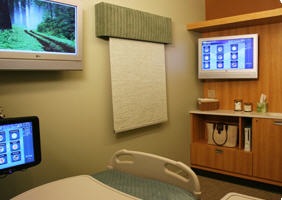
Cerner, Microsoft, and Spectrum Health (MI) will partner to develop the Cerner Care Console, one of those combination clinical/entertainment systems that companies keep trying to sell. Cerner’s version will include an Xbox 360, patient-physician communication, patient schedules, surveys, and hospital propaganda.

McKesson signs a big deal with Community Health Systems (TN) that includes its physician portal, EMR, and clinical systems in over 40 hospitals. There’s one happy salesperson out there somewhere who will eventually pocket a fat commission check (How much, since I’m an incentive-free provider sider? A million?)

Provena Health signs up for Misys EMR, Tiger, and Homecare.

Lonnie Johnson joins Zotec Partners as COO.

Goldman Sachs puts money into portable clinical information vendor Epocrates.

The DoD wastes so much money that another $4 million and over 100 employees for a “Military Interoperable Digital Hospital Testbed” doesn’t register, even when it’s in that high-tech haven of Johnstown, PA and paid out to Northrop Grumman. Still, you have to guess this announcement is a lot more about federal pork than technology.

Former Amicore president Richard Noffsinger is named CEO of SafeMed. I couldn’t figure out what they sell from the lofty-sounding press release, but it’s something to do with health analysis and it brims with buzzwords: actionable, empower, architect, etc. According to my trustworthy Bullfighter software, “Diagnosis: You like to hear yourself write. Despairing of the thought of bringing a sentence to a close with something as demeaningly ordinary as a simple period, you shower readers with gratuitous, interminable and often weighty if not impossibly labyrinthine prose. Meaning lingers, albeit awash in a thick tide of metaphor and exposition that threatens to drown the writer’s message. Seek help.” I didn’t think it was that bad, but I don’t question BF.

Sage Software announces go-lives of its Intergy Practice Portal for patient-physician communication.

CalRHIO announces that Cisco will join Medicity, Perot, and HP in developing its information exchange.

InterSystems announces that partner Oleen will provide its Cache’-powered SurgiDat system to the VA.

E-mail me. Inga’s working on some HIStech Report stuff tonight, trying to catch up for HIMSS, so it’s just me.


Monday Morning Update 1/7/08

January 6, 2008 News 6 Comments

From Christine Slater: “Re: HIMSS legislative success. HIMSS sponsored 92 healthcare IT bills. Zero passed. Anything wrong? Nah.” And in more bad news for EMRs, fading presidential candidate Hillary Clinton says she’s all for them.

From Is CCHIT Irrelevant?: “Re: CCHIT. The CCHIT home page lists Epic as the only vendor with a certified ambulatory EHR and inpatient EHR system. Is the baseline functionality that CCHIT requires really missing from other enterprise vendors, or have vendors just stopped caring about CCHIT certification and the advantages that it is supposed to bring their customers?”

From
Patrick Ayephbee: “Re: new vendors. I’m seeing more get rich schemes and dirty tactics from the usual greedy vendors plus companies new to HIT. Greed, inexperience, and arrogance – great combo. Most of the IT world seems to think that poor industry performance can be explained because we’re in the pioneering stages. No, THEY are in the pioneering stages. The industry is 40 years old and they have not stopped to learn one damn thing. In fact, they don’t even ask. If you heard some of what the [vendor name removed] folks are saying, it would bring a tear to your eye.”

From Gail Pileggi: “Re: real time location systems. The area of RTLS is suddenly the ‘next new thing’. We fail with overhyped CPOE, so turn to nursing documentation and BCMA. Oops, that’s not easy either, so let’s focus on supplies since they can’t gripe. Not a bad thing, just another detour and hype cycle to deal with.”

From The PACS Designer: “Re: 2008 outlook. The outlook for 2008 is rosy for some new software applications. We will be hearing about successes and failures of PHR efforts and implementations of thin client applications Another innovation that will begin to find a home is the ASTM International Continuity of Care Record (CCR). Since TPD was a participant in its creation, it would be gratifying for me to hear that it’s in use and working to improve the information flow of healthcare!”

From Stratto Cumulus: “Re: cloud computing. Reminds me of the late, unlamented ASP model, where clients wanted to outsource everything, lay off staff, and make huge profits. In real life, the vendors were running cloud servers with vanilla COTS applications that they would not modify, which killed the business since enterprise apps always need customization and interfacing. Questions to ask: who’s handling authentication and security? Will the cloud vendor tell you if someone snoops in George Clooney’s records, or if you suspect someone is, how fast will they look into it? How will COTS licensing be handled, or will only open source stuff be in the clouds? Will the cloud be a data repository with local data marts or will local systems collect the data and batch it up to the cloud? Will it be transaction driven and Web-based, and if so, how many critical clinical apps are really Web-enabled? How will APIs and web services be handled? Are you sure you have the bandwidth? Clouds could be great for research repositories, provided authentication and architecture is adequate to handle the multiple query services. It would be great if we could integrate research findings across multiple studies to increase statistical power or see relationships across organizations, genes, etc.”

My editorial in last week’s Inside Healthcare Computing: “How the Layoff Grinch Stole Christmas: Clueless Management 101.” I gave myself some love (is that immoral?) for this line about how suits pick layoff targets: “Extra points are assigned if the victim doesn’t seem like the sort to argue, sue for discrimination, or return with armament (the worst part of being laid off is realizing that management put you in the same league as those losers who got axed with you.)” I’m not claiming it’s Tolstoy, but it sounds like me.

Heard: Lucida Healthcare IT has been acquired by Vitalize Consulting Solutions. Lucida’s execs have taken key roles (CEO, CFO, and CIO) in the new entity, which has the financial backing of some big players that include Bank of America and SV Life Sciences. Vitalize’s Mary Pat Fralick will stay on as COO.

Jobs: Manager of Clinical Informatics, LIS Director, HRIS experts, Sunquest lab consultant. Employers can list jobs free for a couple of more weeks.

Make your HISsies nominations now. Surely you have thoughts on the best and worst HIT vendors, the smartest and stupidest vendor strategic move of 2007, and the HIStalk Industry Figure of the Year. There’s about 100 nomination votes so far and the top nominees will go on the ballot. Maybe the obvious choices haven’t been named, so why take the chance?

I’ve got a few giveaway items for the HIMSS conference and need vendors to make them available to attendees. If you want a little extra booth traffic, drop me a line. These are small items, so they won’t be hard to handle in the convention center. Unlike those damned “I Am Mr. HIStalk” buttons from two years ago, which I can’t believe I found a forgotten sackful of while cleaning out my computer closet this weekend. Maybe they’re reproducing like Tribbles. Unless someone saved theirs, I could wear one myself and have an exclusive (plus they say “I Am Mr. HIStalk”, so I’d be telling the truth).

Former QuadraMed sales guy and HIStalk reader Mike Quinto has joined Appalachian Regional Health System in Boone County, NC as CIO. Fun fact somebody told me: he sold the only Affinity deal made in the last three years and his customer was … Appalachian Regional Health System. He must be persuasive.

Kelly Barland, formerly of GE Healthcare, has joined InfoLogix as senior director of professional services.

Somebody sent me a Medicity Christmas letter of sorts (I always appreciate forwarding!) Revenue doubled again for the third year in a row (notable considering the obvious floundering of their interoperability competitors). They also signed a big deal with HSHS. I always harp on idiotic RHIO business models and Medicity’s customers seem to be a lot smarter about theirs (including CalRHIO, which is hush-hush about their arrangement but promises to spill it someday).

Remember that glowing article about Peter Provonost’s reminder checklists that were saving tons of lives and money, just like a pilot’s pre-flight checklist? They were cheap, easy, and set to roll out in the US and in other countries. Well, make that just “other countries” now because the geniuses at HHS’s Office for Human Research Protections, apparently in need of a moment of bureaucratic limelight, have declared the use of such lists unethical and have shut the program down. They decided that using a safety checklist and tracking the results violates IRB requirements, claiming that using a list is no different than injecting a patient with an experimental drug (huh?) Knowing that patients will die otherwise, that seems like a puzzling decision (who wouldn’t want their caregivers to use a list that could save their lives?) I’m not one to advocate storming the castle with pitchforks, but you could e-mail acting director Ivor Pritchard (ivor.pritchard@hhs.gov) your courteous, well-informed opinion if you agree with me that this seems ludicrous. Peter Provonost (of Johns Hopkins) agreed earlier to be interviewed here once we work out details, so I’m sure he’ll have plenty to say.

Former Navy hospital CIO David Yovanno has been named COO of Internet advertising firm ValueClick.

UK researches think Google’s PageRank technology can be used to identify MRSA hotspots in hospitals.

California’s data breach law, which previously covered only financial information, now requires patients to be notified if their medical information has been exposed.

ONCHIT’s 2008 budget will be the same as 2007’s, about half of what President Bush wanted. Rob Kolodner says they’re on track to meet Bush’s goal of EHRs for every American in the next six years. If Vegas gives odds, go the other way.

KLAS has announced its year-end Best in KLAS report. Since vendors aren’t shy in telling you when they’re #1, I like to focus on those products that are dead last in their respective categories: GE Centricity CDR, Siemens Invision ADT, Cerner FirstNet ED, Cerner Scheduling Management, GE Centricity LIS, Siemens SIENET PACS, Cerner PharmNet Pharmacy, Sunquest RIS, and GE Centricity Perioperative.

Bizarre medical lawsuit: a strip club owner whose penis is tattooed with the words “Hot Rod” is suing Mayo Clinic’s chief surgery resident, who admits taking a photo of it while catheterizing the man and showing it to other doctors.

E-mail me.


Inga’s Update

An Arkansas neurosurgeon pleads guilty to soliciting and accepting kickbacks from a surgical device company. The doctor has agreed to pay $1.5 million, of which $1.1 million will go to the state and to the whistleblower (who happened to work for a competitor.)

Overheard: two Misys operational superstars with over 30 years of combined tenure say goodbye to Misys to work for former Misys VP’s Marc Winchester and Scott Sanner at Digital Healthcare, a retinal risk assessment company. Their resignations come on the heels of at least a couple of senior sales superstars over the last month or so. Guess they’re all choosing the highway over Misys MyWay.

Mr. H and I have had a few conversations about what attracts people to booths at big shows like HIMSS. Let’s say you are only mildly interested in the company’s offering, or perhaps have no clue what the company does. Does a free latte or margarita get you to step into the booth? (my favorite). A beautiful young female with a bit of exposed skin? (Mr. H’s favorite). Pictures of Mr. H and me? (that was what our friends at The White Stone Group want to give away). Or, various trinkets and chances to win some exciting prize? Let me know.

Apparently the bean counters at PricewaterhouseCoopers will begin performing a new type of audit: PwC has been hired by CMS to perform 10 to 20 HIPAA “compliance reviews” of organizations facing complaints.

After an “independent strategic reviews,” MedcomSoft announces an overhaul to its board of directors. They are also looking for a new US-based CEO, if anyone is interested.

Barnes-Jewish Hospital in St. Louis is partnering with iMDsoft to implement MetaVision anesthesia information management system.

Reminder: our new “Best Practices” section of the Forum is up and running with this week’s question: what software or forms do you use to track an active project … tasks, percent complete, assignments, due dates, etc.? Add to your list of New Year’s resolutions to post a message or two to share your wisdom.

At the top of my personal resolutions is regular exercise, especially since I don’t seem to be too good at skipping cocktails or carbs. Happy New Year, by the way!

E-mail Inga.


News 1/3/08

January 2, 2008 News 1 Comment

From Lazlo Hollyfield: “Re: AHRQ. It amuses me how some of the health news outlets are highlighting the AHRQ focus groups on how consumers perceive health IT. Besides an area that several market research companies already cover, this is a complete non-story at best and lazy journalism at its worst. NIH budgets have dwindled/been flat and so has AHRQ’s budget. Most of the bureaucracy is leaving before the end of this presidential term and decisions to award money have gone astray. This is probably a case officer at AHRQ who basically had some extra money to throw around. Nothing more. I would be shocked if something truly interesting gets published from it. Probably just verifies existing customer data out there from the various market research firms.”

From The PACS Designer: “Re: Cloudy 2008. TPD took a well-deserved vacation and a break from HIStalk, but is now back in the groove as we approach 2008. Speaking of ‘Cloudy 2008’, it’s not weather or financial predictions, but refers to the emergence of more ‘Cloud’ offerings in the healthcare space, with Clouds being bundled software services which include  automatic upgrades from time to time which will remove the burden and worry from institutions. Since hospital budgets are tight due to reduced Medicare expenditures, you can expect more C-level execs to consider outsourcing many of the more laborious tasks to vendors who offer their services as ‘Clouds,’ which will expand the size and number of clouds employed to get the jobs done in 2008 and beyond. Short term, it will mean lower software revenues for vendors, but longer term will provide stable monthly/yearly business revenue volumes for companies offering this option. Happy 2008 from TPD to all HIStalk readers!”

From
Nasty Parts: “Re: rumor. I can confirm your rumor of a British EMR company’s SVP of sales leaving. He came from outside of healthcare, a decision I never understood. Morale is high with his departure.”

From Marge N. Alperformer: “Re: HIMSS. Do you know of any inexpensive way to to attend?” Registration’s going to set you back $740 if you get it in by the 28th and there’s not much way to avoid that unless you: (a) “share” a badge with someone else and split your time; (b) find a vendor to comp you, which isn’t likely; (c) do something for HIMSS that will get you a free reg, but it’s probably too late for that; (d) skip the educational sessions (or assume credentials won’t be checked closely) and buy just an exhibit hall badge for $175. You can save on flight and lodging by using Priceline (I’ve done that), especially since rental cars are cheap in Orlando so you can stay further out and off the shuttle line. Anybody else have ideas?

From Kiera Whitlock: “Re: MGMA. They are very visible in the Medical Group Practice world; their founding fathers practically invented the large multi-specialty group practice. Most of the big groups are members, but MGMA is catering more and more to the smaller practices. Their sectional and national conferences are big, though not as big as HIMSS; but also don’t have HIMSS’ price tag, for vendors or for members. If you don’t know much about medical groups (or even if you do),their training and publications are a good value. If you want to hang around exclusively with the bigger (50+ MDs) groups, you’ll probably want to check out AMGA; their conference is smaller, but the biggest groups and the best vendors are there. AMGA does not (as far as I know) have individual memberships; so if you’re looking for a personal (as opposed to organizational) membership, MGMA is the place to go.”

From Techman: “Re: HL7. I work for a software vendor and I am interested in the way HL7 is used in practice by healthcare providers, like which parts of the HL7 messages are used. Anyone have suggestions for information sources?”

From Grizzled Veteran: “Re: Alteer. The California-based EMR/PM company is being acquired by VisionaryMED, a Florida EMR/PM company.” I saw nothing in the news or on either company’s site, but I’m not doubting you.

From Porchean Cantrall: “Re: HISsies. athena’s insane IPO and ongoing industry buzz around their disruptive SaaS model have got to make it for biggest industry event. Loved Beers with Bush last year in any event – thought that was pretty cool.” Beers with Bush was fun, especially since athenahealth brought out the good stuff right on the exhibit hall floor for HIStalk readers who dropped by. We need another fundraiser for a worthy cause, if anyone has ideas.

And speaking of HISsies, it’s that time again: your nominations for “The Brutally Honest Healthcare Information Systems Awards” in 18 categories are now welcome. Among them: who’s the worst vendor, what’s the biggest HIT news story of the year, who is the HIS industry figure in whose face you’d most like to throw a pie, and who gets the biggest award: the “HIStalk HIT Industry Figure of the Year.” Nominations will run until the end of next week, then voting begins. Don’t discount the importance of voting now: only the top handful of nomination vote-getters appear on the final ballot. If you’re new, don’t think this is a joke just because the categories are cheeky: it draws 1,000 or more voters each time, some vendor always tries to rig the voting by urging employees to vote for them as Best Vendor, and the number of people who read the results announcement is off the scale.

Cardinal Health recalls another 200,000 of its Alaris Medley smart IV pumps. Springs inside the pump were assembled incorrectly, leading to the potential for overinfusion.

Pennsylvania get its usual abundance of federal pork barrel money, including $86,000 each for clinical IT projects at Mercy Hospital Scranton, Moses Taylor Hospital, and Mid Valley Hospital.

Inga mentions her Christmas presents below. Mine: the rest of the Gilmore Girls DVDs (so femme, I know, but I’m addicted); Call of Duty 4; a couple of books, including How Doctors Think; and some Boy Scout popcorn from Mrs. HIStalk’s batty but adorable 90-something aunt.

Let’s get this Best Practices thing going! What software or forms do you use to track an active project … tasks, percent complete, assignments, due dates, etc.? An HIStalk reader has asked, so share your thoughts in this new HIStalk Forum topic. Register to post if you haven’t already.

If you found the Rose Bowl coverage annoying (nearly assured since Brent Musburger was involved), you’ll find this funny.

CPSI signs a deal with NeoTool to use its NeoIntegrate interface engine.

Listening: Blonde Redhead.

Merge Healthcare did some restating and reporting, but I just can’t get interested in their ongoing troubles any more.

Sumter Regional Hospital wins the Siemens MRI with over 260,000 votes, 101,000 more than the second-place finisher. The official announcement will come in a couple of weeks. Congratulations to them and thanks to the HIStalk readers who voted for them.

A Malaysian hospital has developed its own information system using free Oracle software. It includes ADT, ED, surgery, HIM, case mix, and patient accounting, with CPOE and HL7/DICOM integration planned for 2009. Says it costs millions of ringgits to implement (a ringgit is around 30 cents US) and that distributors are interested in selling it.

A former GE Healthcare bigwig, soon to be CEO of a small medical data analysis company, says he wants to sell clinical-genetic information systems to vendors like Cerner and GE.

Jobs: Pharmacy Application Specialist, Epic Trainers, Director of Global Training & Education.

A doctor creates a video e-mail for each patient to explain their lab results.

Allscripts acquires discharge referral system vendor Extended Care Information Network for $90 million in cash.

E-mail me. It’s time to get back in the swing of things.


Inga’s Update

I am back from a week in the land of no Internet access. I loved my time with the extended family, but truly, how does one survive in a world with no Wall Street Journal, one FM radio station, and 20 miles from the nearest manicurist? The highlight was driving into “town” one day and seeing a plethora of beefy country boys in their nice-fitting jeans. They all looked like they spent a lot of time hauling things around all day, though I bet none knew anything about healthcare IT. Next year I am voting for a Four Seasons somewhere (I love their towel boys.)

My best Christmas present is my 320GB external disk drive that I haven’t hooked up yet. Probably next was the 1000-page “World Without End” by Ken Follett. No healthcare IT references at all, though it is Oprah-approved.

I was pretty amused by the number of posts related to Meditech and their technology. To be fair, I should note that I am the one who introduced the MUMPS technology issue when asking if Meditech had difficulty finding employees with expertise in MUMPS (to which he pointed out that the current technology was not MUMPS.) I was a bit surprised by the passion my Meditech friend still had for his company. Whether or not you agree with his opinions on Meditech and its technology, my impression was he honestly believed in the company and their products. On one hand that is commendable, and certainly understandable. How could you stand by your company and its products and people for so long if you didn’t believe in them? On the other hand, it’s easy to get blinders on after a period of time. I know little about Meditech’s management but I hope they take time listening to the market (and not just their clients) since it appears the world views things differently than the Meditech folks.


CIO Unplugged – 1/1/08

January 1, 2008 Ed Marx Comments Off on CIO Unplugged – 1/1/08

The views and opinions expressed in this blog are mine personally, and are not necessarily representative of Texas Health Resources or its subsidiaries.

CIO reDefined: Chief Ironman Officer
By Ed Marx

The roles of a CIO are as varied as the companies and sectors they serve. Even within these roles are multiple combinations and permutations that are expressed according to circumstance. The moniker “CIO” itself is not limited to “Chief Information Officer.” No, to be effective in our calling we must stretch the traditional definition beyond this commonly accepted interpretation. This post begins a series on how the “CIO 2.0” will push the boundaries of conventional thinking surrounding the role. We begin with the “Chief Ironman Officer.”

The photo that serves as my avatar melds two of my passions: delivering technology innovations to improve the patient experience, and triathlon. In the foreground is my laptop. In the background is my tri-bike with associated gear. My dress is a mix of business and triathlon attire. Needless to say, the typical business picture idea bored me.

The avatar picture’s conception is rooted in my Army Basic Training at Ft. Dix, N.J., 1982. Despite my varsity high school accomplishments and the recruiter’s assurance, I failed the Army Physical Fitness Test. I lacked the strength to perform the requisite push-ups, sit-ups, and run. Humiliated, I promised myself that I would pass the final test. I decided right then to never let anything I had complete control over compromise my ability to influence.

In the end, I passed. From that point forward, I consistently ranked with the top 1 percent of American soldiers in fitness for the rest of my military career.

Because of my avid enjoyment of sports, not to mention my early Army failure, I pushed my son too hard to “be like dad.” As a result, he not only rebelled but maneuvered down the fast track to obesity. As an overweight middle schooler, he found team sports unpalatable — too much mocking and ostracizing. Thus, we toyed with multi-sports. Triathlons, biathlons and duathlons. A short time later he would become a routine podium finisher and eventually he ranked No. 4 in the country in duathlons. Our entire family had gotten involved, winning numerous races. My son and I in particular were hooked and have completed over 50 multiple sport events since then, including 2 half-Ironman events in 2007.

A full Ironman had not initially made it on my list of objectives. When a friend of mine was suddenly diagnosed with cancer early last year, I elected to battle the cause with her in my own way. All current training is carried out in honor and support of her fight. My time logged in preparation is sprinkled liberally with prayer for her and for the clinicians and researchers, that a cure might be found. In grooming for the Ironman (April 2008), I completed my first marathon in December (3 hours and 43 minutes). That’s a lot of prayer sprinkles.

While I am not advocating that all CIO’s should become an Ironman, I want to illuminate the profound lessons that apply to our profession:

  • Training. Many CIO’s believe no further training is necessary once they have reached the top. To the contrary, the requirements only increase with elevation. Continually equip yourself or you’ll end up being removed from the race for taking up precious space. Like riding a bike, you can coast for a little bit but if you stop peddling, you will fall over.
  • Shape. To the extent it is medically possible, stay in shape. The people you lead take their cues from you. Leaders bear the burden of visibility. Would you go to a pulmonologist who smokes? Or an orthodontist with crooked teeth? Studies have proven a correlation between physical and mental fitness. CIOs work long hours, which requires great stamina. You don’t have to be an Ironman, but I encourage you to, at a minimum, follow the fitness recommendations of the American Heart Association.
  • Embrace change. During triathlons, a racer faces many unforeseen circumstances. A strong wind. High tide. Or worse, a flat tire. No one is exempt from these trials. Do you accept the change and make the most of it, or do you spend energy fighting the elements you cannot control? Adapt to the curveballs thrown your way, and then thrive.
  • Guts. It’s not merely the most fit who wins Ironman. It’s those who are fit and who want it. Crave it. I have surpassed colleagues in my career who were much brighter than I, but they had neither the fortitude nor the focus to push through all the challenges. Painful things happen that will tempt you to quit. Develop and harness the power of passion, for passion will create guts and drive your success.
  • Boundaries expanded. Early on, a 10K seemed like the ultimate race, an Olympic challenge. I never imagined attempting a marathon. Today, a 10K is a walk in the park. Ironman is busting the boundaries I originally believed invincible. As a CIO, you must continuously bust boundaries lest your organization becomes complacent and your vision dimmed and potentially lost.
  • Planning. No one simply wakes up and decides to do Ironman that morning. It takes advanced planning and years of transformational steps to see grand visions achieved. You must plan similarly for your career and your organization, analyzing both from short-term and long-term points of view. No greater sensation will seize you than when you see a plan fully executed and realized. It will fuel you to carry the journey into the future.
  • Rest and refueling. There is a science to Ironman which includes rest and refueling. Continuous activity leads to burnout. If you do not take the time for nourishment you will run out of energy, perhaps even collapse. Constant action is not synonymous with effective action any more than eating junk food is nourishing. Build in time for rest and refueling.

Some may scoff at how, and why, I have portrayed the Chief Ironman Officer. Others will complain about the limitations, physical or otherwise, and to why this post is irrelevant. Yet thinking back, I recall events in which the blind, the aged, the amputee, even the quadriplegic passed me along a course and encouraged me to keep going. I never thought I would say it, but I am thankful for my experiences as a 17 year-old basic trainee and for Drill Sergeant Moultrie screaming at me to eek out yet another push-up and run another lap. It is not so much about the physical act that inspired me but the leadership insights I internalized. Little did he realize the impact he would have on my life and career.

Or did he? Thank you, Sergeant Moultrie. Now, get out there and race!


Ed Marx is senior vice president and CIO at Texas Health Resources in Dallas-Fort Worth, TX. Ed encourages your interaction through this blog. (Use the “add a comment” function at the bottom of each post.) You can also connect with him directly through his profile pages on social networking sites LinkedIn and Facebook, and you can follow him via Twitter – User Name “marxists.”

Comments Off on CIO Unplugged – 1/1/08

HIStalk Interviews Shaun O’Hanlon MD, UK Physician

January 1, 2008 Interviews 5 Comments

Shaun

Hi, this is Inga. Shaun O’Hanlon, MD works for EMIS, the largest supplier of EHR products to primary care docs in the UK. Mr. H and I were intrigued by his note: “I really enjoy reading your website. There are stunning similarities and differences between the EHR functionality in the US and that in the UK. There is undoubtedly room to learn as, underneath it all, we are all caring for patients.”

Thanks, Shaun, for providing some great insights. “Whilst” I had a bit of a struggle understanding the accent and the British-isms, it was a fun conversation that got me thinking about what we could learn from the UK model and what aspects we independent-minded Yanks would never embrace.

Give me some background information about you. 

I am a physician by background. I qualified from Cambridge in 1986 and I pursued a career in hospital medicine in cardiology. Then I decided to be a General Practitioner (GP), which is the UK equivalent of family practice. I spent 13 years being a GP in Guildford, just south of London, which I loved. My interest in healthcare informatics products started after working on a smart card project in 2000. Since then, I have been working for EMIS in healthcare informatics.

The company I work with today provides the GP EMR for 60% of patients in the UK, so it is a fairly prevalent system. Largely, it will do everything for EMR, management recall, appointment scheduling, and orders, all done through a single application. Billing is included, but in the UK it’s not that important. The economy is such that the government pays for healthcare through the National Health Service (NHS) and there is very little pay for services aside from some hospital ones. 99% of it is free. Well, not free – it’s paid for by taxes. [laughs] There is a secondary insurance market, used mostly for second opinions.

There is little competition for patients in General Practice because there is a match between doctors available and the number of patients. The government is generally reluctant to set up new practices. Since 1947, GPs have set up partnerships of five to 10 clinicians. That practice has a contract with the government to provide all General Practice services to their patients.

Can you give me UK Healthcare 101?

The practices are largely where they have been for many, many years. GPs have a geographic catchment area for patients. Although there may be several practices in one area, the competition is not widespread, as the government tries to match the number of doctors available to the number of patients. To set up a new practice, you have to have a pretty strong case and show local need. It is therefore fairly uncommon. The number of GP physicians is fairly stagnant.

We are now seeing some attempts to try to bring in private providers to improve patient access to healthcare. The number of doctors is relatively low and you have some big companies trying to provide an alternative model of providing care. Some of the bigger healthcare providers are trying to set up private clinics, as there is a perception that the GPs are stuck in their ways and innovation is needed.

Most GPs offer office hours from 8 to 6. Outside those normal office hours, service is provided predominantly by “out of hours” or emergency facilities. This is a problem for patients who are in employment, especially those who commute, and need to see their doctor early or late in the day. This has triggered a desire to find more innovative ways to provide care.

Patients are registered at a particular practice, which usually contains five to 10 physicians, equating to 6,000 to 12,000 patients per practice. Everyone who lives in the UK has one GP. The practice will provide all their primary care, including managing all their prescriptions, tests, and referrals. If you are on holiday, you can see someone temporarily, but your records will remain with your GP where you live.

So if I live in the country and commute to the city and need to see a doctor, I can’t see one in the city?

Right. Not very easily. A bit rubbish, isn’t it? They are considering creating a concept of dual registration to enable commuters to have a city doctor. The model now is one of a monolithic cradle-to-grave record. That has many advantages for continuity of care, cost containment, and quality care delivery. You begin to worry if you fragment a patient’s record, then you fragment care and may have dual care, redundant tests, and increased cost. In order to offer dual registration, you have to be able to share records around as well.

What is overall state of technology?

If you are a GP, every practice will have an electronic record on one of three or four available systems. That information will be held in a largely codified, structured manner. It will include a full medical history and all consults. It will include problems or diagnoses, all results, tests, prescriptions, and letters, resulting in a full, rich record that is fairly advanced in its structure.

The information is now transferable electronically between GPs in a structured format. If you move to a different location, then your record will follow you. What happens at the moment is that the record is held in a server in a practice or an enterprise with central service. When you move, your record transfers. There is a national standard that allows you to transfer the record around. We have a national messaging service that relays the messages from the practice database service to the receiving service. You request the records and you receive them the next day. A copy is extracted to the new practice. The patient’s complete medical record is sent and then imported in a coded format.

You indicated that there are stunning similarities and differences between EMR functionality in the US and UK.

A lot of my experience from that side of the pond comes from Canada. I find it quite difficult to talk about specifics because I haven’t been on the hospital side in US. But there are a lot of similarities around the need to share information. There is this conception that the GP performs one role and the hospital performs another role. The result is that information silos exist with pieces of paper — referral letters, outpatient letters, etc. — connecting them.

The other similarity, very macro, is that we are seeing increased focus on what patients want to know about themselves. Up until recently, this has been resticted due to technical issues. There also exists a kind of a high-handed attitude that patients can’t have their records by some clinicians.

We have brought the patient into the loop and now offer them access to their records, appointments, and electronic ordering of prescriptions. We have hundreds of thousands of patients using EMIS Access for just this every month. Projects like Healthvault will further enable this citizen involvement across the globe.

Suppliers are realizing that the real benefit of their data is sharing with other providers. People are sharing data between different systems. You need your applications to work together. Now that there is increased requirement to look at the lab system and radiology, interoperability has been become the core business that companies are beginning to focus on. We work hardest at determining how to share data and what data should look like. By sharing information everything works better. Everyone’s data is much richer when it is shared. Interoperability is the key to future EMRs.

To interoperate, you have to have standards. Unless you come up with agreed standards, you can’t have interoperability. Standards for coding data, messaging data, and viewing data.

EMIS has adopted SNOMED-CT as it does appear to be becoming the universal standard for record coding. We are working quite hard to understand SNOMED-CT because, whilst it is very advanced and offers granularity and breadth not found elsewhere, it is not a straightforward taxonomy, either for data entry or for reporting. So, new and innovative ways of entering data will need to be designed.

Message standards are now generally focused around HL-7. In the UK, we have adopted V3 XML, but our Canadian teams are now using V2 as well

Data display standards are equally important. Microsoft has been working with NHS and some suppliers like EMIS in defining a Common User Interface for healthcare applications. Their approach is to help establish a set of evidence-based standards for display and entry of healthcare data which is platform and location independent. The program is in its early days, but they are beginning to look at some of the challenges that SNOMED-CT and citizen records have on the healthcare user interface

Is the UK ahead of the US in terms of technology?

In certain areas, we appear to be in a luxurious position of having a national approach of how medical record and information should be used in the National Health Service and in Connecting for Health. We are mandating the use of HL-7 and are required to adopt these technologies and standard so we can share information between systems. It is putting us in good stead in some respects, but central control can be slow and laborious and does not always follow business drivers. If you don’t have an economy with that central control, the supplier sets standards based on business drivers, which can be more adaptive to the changing market.

Anyone would be well to learn from the issues that the UK has in providing a national EMR solution. There are a lot of lessons learned about standards and where they do and don’t work and how to go about implementing them

What is the state of adoption for EMRs in the UK?

Hospitals primarily use PAS, patient administration systems, PACS, and order systems. All have back-end billing systems to make sure they get paid by NHS. A lot of them rely on paper records for the medical record piece, although some use components of EMRs.

It’s a very mixed bag in terms of hospital adoption of EMR. Cerner is a big player and being employed, though it is going slower than they would have hoped due to implementation issues. Localizing the product has taken time and effort, as the requirements in a UK hospital are different than an American hospital. They are also going into sites with mixed technology and systems. That isn’t my area of specialty, so I can’t really comment further. iSoft also has a product called Lorenzo which is a single system for GP and hospital, but the full release has been delayed for several years.

How are EMRs funded?

It is all paid for by the government. In General Practice, they are provided through an NHS agency. The clinicians have a choice of systems, which was assured after a lot of pressure from the clinicians as the government didn’t want initially to offer that. The current situation is that the GP can pick the EMR solution they wish, so long as it fulfills a set of basic and interoperability requirements.

There is a also a big move to central hosting and enhanced data sharing across regions, if you like, so you can share between hospitals and physicians. What you call RHIOs — it is exactly like that, driven by the government. Some physicians think it’s a good idea, whilst some are concerned with losing control of their data. Others might argue it’s the patient’s data and that it is up to them who sees what information. The legal status is somewhere in between, that the doctors are the guardian of patient data.

Personally, I think the citizens have different expectations about their records. Most patients would be startled if they knew the hospitals couldn’t see the information that GP has, that historically it couldn’t be shared for technical and non-technical reasons. The non-technical reasons revolve around clinicians and administrators not wanting to mobilize data, sometimes for legitimate security reasons, whilst at other times, they are scared of someone seeing “their” data.

Some concerns are rational and some not rational. There is a need for putting solutions in place to encourage the sharing of data on terms they feel acceptable with. A patient can say, “I don’t want this one piece of information shared” and control who can see what. At the end of the day, the patient has to be able to see that. If you put in technology controls, then the clinician is the guardian and the patient controls who has the access. That has to be the way going forward. We need more control with the citizen and less with the clinicians whilst respecting that the clinician needs some controls because he is a stakeholder in the information, too.

Are physicians receptive to technology?

How you get clinicians to adopt EMR is a really interesting question. Before I went on the industry, side I tried to evangelize GPs about importance of coding data. I suspect 25 to 30% understood that and took it as a trigger for change. It has to be easy to do and have a business case behind it for it to be a success.

Prescriptions and repeat medications – the computer is very good for that. Appointment scheduling – no doubt that the computer helps. But what the government did over here was put part of the remuneration for the doctors based on how they are providing for the patients. Twenty percent of GP income is now around achieving targets for quality of care. For example, patients with heart disease have a certain level of cholesterol and blood pressure that the clinician should achieve to trigger the quality care payments.

The key is that if you see 10,000 patients, then there is no way you can collect the information required by the government on an ongoing basis without an effective EMR. All GPs now know it will pay to use an EMR package and, at the end of the day, it helps with quality of care. Once they realize how easy it is to enter data for disease management, they use it more.

The emphasis on chronic disease management was the big driver for adoption. Now that we are beginning to share the records, that will become the next business driver, I am sure. Some doctors complain it is check box medicine, but most recognize the improvements in care and data quality that have resulted. One very positive effect has been that there is now much more quality data on EMRs, something we gave been able to take advantage of and have used this data for some very high quality research. That has been an incredible falling out from all this.

Are citizens interested in having access to their medical history?

Very much so. I was recently looking at some stats. We have had 250,000 hits on our patient-facing service that is based on the EMR. Sending messages to doctors and ordering prescriptions online is now very popular. There are some issues that we have overcome around that, including privacy, but it is beginning to take off here in the UK. Our health portal is restricted to one part of the UK. You can log in and see your records provided you and your doctor are happy for that to happen.

How did you come across HIStalk?

[Laugh]s I got an e-mail from a person in our Canadian install. I read and found it an interesting mix of suppliers and users essentially talking to each other. In the UK, there isn’t a forum like HIStalk where you have senior suppliers and physicians sharing their knowledge. I think I learn a lot reading the e-mail that comes through. I don’t feel I can contribute much because I come from a different space.

Do you have anything else to share?

Our problems are complex and some need addressing on a national or international level. We have to have something to shoot for. The approach we’ve had involves citizen and doctor groups, as we have found there are a lot of concerns. Frequently they are unfounded, but we don’t realize they are unfounded until we analyze them in detail. If you told me 10 years ago I could log into my bank account online, I would have been horrified, but now I do it all the time. Suppliers and clinicians need a citizen view as well as a self-interest view.

News 12/28/07

December 27, 2007 News 5 Comments

From Bruce Teeler: “Re: MGMA. Does anyone have any feedback on this organisation? They claim 21k members, which doesn’t seem like a lot to me.” MGMA is the defacto member organization for physician practice management. 21,000 members sounds like a lot to me (I don’t recall how many HIMSS has, but I bet MGMA is nearly as large.) If anyone has first-hand experience with MGMA or its conference, feel free to provide an opinion and I’ll run it here.

From Neal’s Pizza Guy: “Re: Cerner. Rumours abound that Fujitsu is pulling out of the NHS contract, leaving Cerner in a prime contractor role for the Southern Cluster of England. Townsend has been spending a lot of time in the UK to negotiate, along with Neal, who presented how they would take on a cluster direct. Get the pizza ready!!!!” Speaking of pies and Neal, I’ll be opening up the HISsies nominations very shortly. If you’re new here, you can check out the writeups for 2005, 2006, and 2007. Neal’s a three-peater for The Pie, of course, the most recognized subset (and least desirable) of the HISsies awards. So if you’ve been anxious for this year’s round, I’ll say just this: tick-tock. Billy “Biff” Jutjaw is getting fitted for a new tux for the ceremony since he’s put on a few pounds since the last one, so I hear.

From EX-Xtenity: “Re: layoffs. It seems that one of the only certain things in this industry is that there will be layoffs. My heartfelt condolences to those who were recently laid off during this time of year. You might want to consider pulling together as a group for the purpose of networking. Best of luck to you all from someone who has been there a few times.” Agreed. It’s not much consolation while the wound is still fresh, but I’ve known a bunch of people who were laid off and nearly all of them ended up better off because of it. The companies doing the deed don’t usually fare so well (how talented are executives who can’t plan far enough ahead to dump payroll expense sometime other than November or after December knowing how bad that makes them look?) It’s a good reminder that, despite feel-good HR talk about being a “valued associate,” we’re all expendable horseflesh. I’m not against that concept at all since it’s a two-way street in our capitalist society, but sometimes companies say one thing and behave entirely differently and I’ve got a problem with that. I’ve laid off a bunch of people in my time and didn’t like it one bit (like a death camp guard, the clueless commandants didn’t exactly give me a choice). One thing I’ve learned: a company that’s laid people off more than once is entirely likely to do it again, meaning think twice before taking a job there no matter how superior you believe your skills are. Those laid off aren’t necessarily the least-capable employees, just the easiest targets because of their assignments or lack of political connections. There but for the grace of God go you.

From Matchless: “Re: St. Joe’s. I don’t think you published this, but St. Joe’s in Atlanta has to pay the government $26m for overbilling Medicare. Case workers of the world unite!” Link. The most interesting part of the story: a nurse whistleblower gets $5 million for documenting that the hospital billed outpatient and observation services as inpatients. Sweet.

From TheCoolerKing: “Re: [British EMR vendor]. Fired their SVP of Sales last week. It took over two years to find him and he is gone in less than a year. 50% of plan will do that to you.” I expunged the company’s name because that would single out a guy who’s out of work (if the rumor is true, anyway). Those who care will easily figure it out. Hint: it’s not Misys.

From Malvern: “Re: selling patient data. The desire to keep patient data confidential is understandable, but we tend to forget what is known about each of us who uses a credit card, takes out a loan, or swipes the grocery store tag to get the store discounts. When you ask the credit report companies what they know about most of us, there is not a whole lot that escapes the electronic eye.” True, although they need to know lots of stuff to gauge your credit risk and there’s no morally acceptable equivalent in the healthcare insurance business. Maybe that in itself is illogical: other insurances are priced by risk (living in a flood zone, driving like a maniac, skydiving, etc.) but health insurance is supposed to be blind to higher-risk purchasers with no cost adjustment for risk factors. If we were designing the concept from scratch, I don’t think we’d come up with today’s system of voluntary participation and employer-based signup.

From Billie Jean Queen: “Re: mining EMR data. Issues include: disparate standards across specialties and vendors; HIPAA and patient consent information, which requires metadata; control of the repository and how it will be secured, since search engine technology is so good that re-identification of patients is frighteningly easy; and getting enough data to make it useful for research (how BP was collected, for example: sitting, standing, etc. and most EHRs don’t capture that). The most useful thing that could be done would be to get device vendors to output all the information about how a signal was collected, such as device name, parameters for the study, methods used, software version, patient ID, etc. and automatically put that in the EHR in a standard form.”

A Washington Post article describes the software-driven ED turnaround at Inova Fair Oaks, with sophisticated applications forming the cornerstone of Inova’s plan to integrate its six Washington-area hospital EDs and several more freestanding emergency centers. GWU Hospital is also mentioned. The software isn’t mentioned by name, but a little Googling turns up that it’s Picis ED PulseCheck at both places.

Housekeeping reminders: you can sign up to your right for electronic updates when I write something new or for the Brev+IT weekly newsletter. New interviews are coming soon to HIStech Report, whose interviews delve deeper into vendors and their products (it will swell right before HIMSS). HIStalk Forum gives you a place to start discussions or participate in them — we’re planning to open up a Best Practices section there with an assigned focus area every couple of weeks for tip-sharing (grateful kudos for Noteworthy Medical Systems for sponsoring HIStalk Forum). There’s a site-specific Google Search box to your right, the first place I look when someone asks a question about a company or person since it covers 4 1/2 years of HIStalk. Lastly, please take minute to read and click those sponsor ads to your left and text ads to your right since they make HIStalk possible (and free).

A group of Paris hospitals withdraws its $110 million contract for patient systems development, awarded to GE and other companies, because the companies struggled to define their proposal. The tender has been reopened and a local paper says Capgemini and McKesson will probably jump back into the bidding.

Jobs: Medical Knowledge Engineer, Clinical Content Production Manager, Corporate Manager of Clinical Applications, Project Manager.

Barring last-minute voter fraud or eBay-type sniping, it looks like Sumter Regional Hospital will win an MRI machine from Siemens. The hospital has accumulated 244,000 votes, far ahead of #2 Grant Regional Health Center with 151,000.

Odd story: the Fiju hospital trust is running its own IT system after its vendor failed to meet its needs. The vendor’s owner is a businessman wanted for questioning over an alleged assassination plot.

Varian Medical Systems completes its acquisition of a radiology equipment distributor in China. Maybe I should study the Chinese HIT market since everybody seems to be looking there for growth unattainable elsewhere.

Idiotic hospital lawsuit: Wisconsin’s governor takes $200 million from the state’s medical malpractice fund to balance the budget. A patient is suing St. Luke’s Hospital for a medication error that occurred before state pain and suffering caps were enacted, with a potentially huge payoff on the line. The state’s medical society has filed a counter claim against the hospital to make them pay their own damages, claiming the hospital’s employee training is inadequate. The state’s hospital association, as you might expect, begs to differ, saying St. Luke’s should be covered by the malpractice fund because that’s why it was created in the first place. Now the medical society is suing the governor. An epidemic of lawyer paper cuts and 30-hour billing days is next.

Healthcare spending in California’s prison system has doubled in two years. Prisoner count is up 8% since 2003, but the budget increased 79% to $8.5 billion and expected to exceed $10 billion next year. The state faces a $14 billion budget shortfall, which surprises no one in the 49 other states who find it hard to suppress a guffaw. Surely The Terminator will blow away the deficit and save El Lay.

Interesting: an electronic stethoscope under development will use onboard Linux despite perceptions that it will make FDA approval difficult.

athenahealth’s IPO was the ninth best of 2007, one of 10 that doubled their IPO price. Implantable RFID chip maker VeriChip was the worst IPO of the year, down nearly 62% from $6.50 to $2.49.

I hope you’re enjoying the holiday. Shockingly, it’s just nine weeks or so until HIMSS. Save the early evening of Monday, February 25th if you’re headed to Orlando. That’s all I’m saying for now.

E-mail me.


Can EMRs Moonlighting as Research Databases Sweeten Their ROI?

December 26, 2007 Editorials 4 Comments

Inside Healthcare Computing has graciously agreed to make previous Mr. HIStalk editorials available from its newsletter as a weekly “Best Of” series for HIStalk. This editorial originally appeared in the newsletter in December 2006. Inside Healthcare Computing subscribers receive a new editorial every week in their Electronic Update.

I’d never heard of the Clinical Data Interchange Standards Consortium (CDISC) until last week. That’s when that group announced the kickoff of a new interoperability project, this one involving linking EMR systems to the information systems of clinical investigators who are performing drug or disease research. The audience might be researchers, the Centers for Disease Control and Prevention, or registries for patients or disease. The IHE is involved in the testing and will demonstrate the results at the HIMSS conference.

I’m not usually interested in this sort of project. I’ve seen first-hand what an insurmountable effort it can be just to get hospital systems to swap clinical data across the hall, much less with national third parties. Still, this is an exciting indicator of how quickly the now-common idea of interoperability has taken hold. If nothing else, RHIOs have made hospitals think about the value of their patient information and how to exchange it in a standard electronic format.

Getting and keeping drugs and devices on the market is expensive and information-intensive. Several small, highly profitable companies have sprung up to help enlist patients in studies, to do the rigorous paperwork required, and to design research methodologies. Their key commodity is information.

Hospitals have patient information that’s available nowhere else, the kind that arouses researchers and manufacturers with far deeper pockets. Repurposing that existing information by making it available to those willing third-party customers, even when motivated purely by mission-supporting cash, is at least more beneficial to society than running a McDonald’s or building medical office buildings.

Let’s say your hospital implements a well-integrated, information-rich EMR system that can easily tie together everything about patients from medical history to demographics to procedure history. Suppose you add genomic data to the mix, storing information about family history, lifestyle, and a longitudinal history of disease, treatment, and outcomes. All of that could be used to the advantage of your own patients and institutions, but it has an equally high value to those third parties trying to assemble or execute big research projects.

Drug companies and device manufacturers need the data that lives in your clinical systems. How else will they be available to target research to a very narrow range of patient types, maybe even those with a specific genomic profile? It could help them identify appropriate research subjects, design post-marketing surveillance, study population-based outcomes, and catalog adverse events. The information you provide could either be de-identified or made available only if individual patients opt in. The benefit to patients is access to a wider variety of treatments and protocols, most likely free to them if tied to a research project.

You wouldn’t just give that information away, of course. Hospital information is far deeper and more detailed than what’s available from any other source, with a wide scale to match. All you need is sophisticated EMR functionality and a relentless push to get every scrap of clinical information codified, categorized, and cross-referenced.

In the movie Wall Street, Gordon Gekko says, “The most valuable commodity I know of is information.” That is true of clinical data, especially when those who value it can afford to pay. Just don’t sign away too cheaply the rights to your treasure trove of data, even if the interested customer is a RHIO or third party data vendor.

This editorial is copyright-protected by Algonquin Professional Publishing, LLC., publishers of Inside Healthcare Computing. Please do not copy, forward, or reproduce this material without prior permission. To obtain permission or for more information about Inside Healthcare Computing’s reprint policy, please contact the Customer Service Department at 877-690-1871 or go to http://insidehealth.com/ihcwebsite/reprints.html.

Mr. HIStalk’s editorials appear each Thursday morning in the subscribers-only version of Inside Healthcare Computing’s E-News Update. To subscribe, please go to: https://insidehealth.com/ihcwebsite/subscribe.html or call 877-690-1871.

Monday Morning Update 12/24/07

December 22, 2007 News 41 Comments

From Orthopod666: “Re: selling patient data. This is from an interview with the CEO of the AMGA regarding the AMGA/Anceta National Collaborative Data Warehouse, which provides groups with access to comparative healthcare data. ‘The revenue for the company (Anceta) will come from making the totally identified, HIPAA-compliant data available to third parties.’ If this is true, how can they possibly be HIPAA compliant?” Link. Other references to Anceta indicate that the data in the Collaborative Data Warehouse is de-identified, so I assume the reporter misquoted her source (her freelance articles elsewhere cover everything from beauty academies to LCD projectors to real estate, so she may have been in over her head, but surely the editor should have caught that goof).

From Former Medseek Employee: “Re: Medseek layoffs. Yes, it’s true. I was one of the chosen few who got the boot a week before Christmas. I believe there were 30+ employees shown the door. Cash flow was stated as the problem. Mike Drake is out too. The rumor mill has it that egineering folks are not happy in Jackson with losing their leader. Many are are ready to leave, which will only put Medseek in more dire straits.” Maybe you’ll get separation counseling from Chief Strategy Office Gale Wilson-Steele in the form of a free pass to her upcoming lecture called “Promote the Best, Improve the Rest: The Power of Positive Reinforcement.” Feeling better now?

From MedSlease: “Re: Medseek. Mr. HIStalk, you are a good judge of character and hit the nail on the head. Do you remember? Mr. Grehalva has been shaking the clients’ hands and working his free hand to pass out pink slips yesterday, five days before Christmas. There have been some very talented, seasoned people let go, including an older employee on medical leave whose wife is in intensive care with a brain hemorrhage. Merry Christmas, Medseek, and a Happy Lay Off. May 2008 bring you all that you deserve.” The reader is referring to this mention. Layoffs are part of corporate culture, unfortunately, and not entirely unsavory provided that: (1) companies don’t overhire and then correct their own excesses by downsizing; (2) the decision of who gets let go is made fairly; (3) executives share the pain by reducing their own compensation or benefits; (4) volunteers are first solicited to leave before axing those who don’t want to go; (5) separated employees are treated fairly and professionally without the usual security guard escort BS; (6) executives realize that layoffs are their failing, not those of the employees involved, and take appropriate actions to either improve their own skills or find better managers to replace them; (7) layoff decisions are a rare exception and not a routine management tool; (8) management is open about why the actions were taken and what they plan to do to avoid it in the future; (9) management doesn’t expect the shell-shocked survivors to cheerfully work extra hard to make up for the loss of downsized employees; and (10) employees aren’t singled out just because the company has at some point in the past decided to pay them higher salaries.

From Dr. Elias Kuando: “Re: Medseek. First Healthvision, now Medseek. It would seem that a lot of these size HIT vendors keep getting it wrong. Healthvision was expected. They lacked focus. But Medseek? This one surprised me. In my contacts with them as both a partner and a customer using their product, I always had the impression they had it right. That the CEO has left either by design or request speaks volumes about the company’s stability or instability. We have had discussions with Geonetric, but felt they were too small to be considered a serious player. The impression we got from their demo and functionality was that they aspired to be Medseek someday. Given this recent news, I would rethink that position.”

The SEC creates a Web-based tool that allows comparing executive compensation at 500 big companies, although the only healthcare IT one I could find was GE.

I decided not to send a Brev+IT today since not much is going on. Next week.

Listening: Catatonia, witty Welsh (and disbanded) chick singin’ alternative rock. Also: new Nightwish, icy, cinematic, and operatic Finn prog metal.

James Pennington, former CIO at Blue Ridge Healthcare (NC), joins JPS Health Network (TX) in the same role.

University of Miami’s heart clinic will use Active Ink‘s electronic forms software for patient check-in on tablet PCs.

Your federal tax dollars at work: bankrupt Bayonne Medical Center (NJ), soon to be sold off to a for-profit company, gets $487,000 for an EMR upgrade.

Philips hasn’t run out of acquisition money yet. The company announced Friday that it will buy sleep therapy products manufacturer Respironics for $5.1 billion in cash.

Merry Christmas (or its equivalent for whatever holiday you may be celebrating).

E-mail me.


Art Vandelay on Vendor Project Management

Many days, I feel like a boxing trainer looking at all kinds of boxers but not finding any with a solid one-two punch – a solid product with strong professional services. More and more, I have been focusing on the strength of the second punch – the vendor’s ability to provide technical assistance and manage a project. You have a real contender when you find one who can help with integration into our diverse environments.

The vendor’s ability to provide technical assistance includes application config., getting their product to work in our hardware environments and delivery of standard interfaces. As virtualization and monitoring ( e.g., response time, SNMP) become more prevalent, the vendors need to develop these skills. The challenges in the hardware environment are the lack of standards and number of varied products we all own. We now include information about these topics in our RFPs to set expectations with vendors.

Managing a project includes a flexible project plan and managing scope, issues and risks. Vendors need to leave appropriate “stubs” in the project plan where we can insert our tasks so that we have an integrated plan. This is always expected from our vendors answering RFPs.

Integration into our diverse environments involves more than just technology.  It is about people, processes and other vendors’ technology as well in order to drive real workflow changes. As the number of broad independent consulting firms dwindle, the opportunity for vendors to step into this space will grow. I have yet to see the “heavyweight” vendors really grab this concept and run with it, directly, or through channel partnerships with others. Right now, we operate as our own integrator as the vendors really aren’t looking outside the domain of their products.

Inga Talks to a Former Meditech Director

I had the opportunity to talk to a former Meditech director recently. He had some interesting commentary about the company, its culture, technology, and people. Here are a few interesting tidbits.

Product development

I would say that a very wise move made six or seven years ago was to consolidate all development efforts throughout the company into one organization. Prior to that development had sprouted up and was going on in all different parts of the company. But when the product efforts were consolidated under Bob Gale, the process of developing products matured to the extent that now there are some really good processes in place that have much less in the way of redundancy and reinventing the wheel many times over and also for more rapidly deploying resources to customers.

Orienting new employees to Meditech

The new employee orientation process is either two or three days and consolidates together a large group of people who all start at the same time. Everyone starts at the same time, and there is a certain bond that people have with that group that they started with. They get to know each other and I think that that method of bringing people on board is a good one in terms of not having to individually deal with so many people on common issues such as enrolling in health plans and understanding benefits and just general corporate culture pieces such as how you page people in buildings and so forth. And without that sort of centralized dissemination of the information you’d have all sorts of crazy things going on that would seem small but would make kind of a funny footprint over the whole organization.

Neil Pappalardo and whether he has a hands on or a delegating leadership style

Both – there are certain things he doesn’t get involved with day to day. He is very closely involved with the broad vision of where the company is going and the broad vision of the company’s financial direction but he is not one who would want to see every single detail of what is going on. He just wants to see if the broad vision is heading the way he has asked it to go. He has a very small number of people that report directly to him who would sort of fill him in whether or not we are moving in the direction he has asked for. He doesn’t have an office and sits out in the open in a workstation with other people. He goes right down in the cafeteria with everybody and just grabs his lunch. If you didn’t know who he was you wouldn’t know who he was (laughs) if you know what I mean. If someone didn’t point out that guy over there at that workstation is Neil, you would be likely to think that guy has been here awhile and looks a little older than everybody else. He has always made time for me.

Technology

The products are now developed in a much newer technology than MUMPS. The latest version of their products 6.0 client/server is written in a brand new technology developed by Meditech. Meditch develops the technology that is used to develop the applications and that has always been the case. MUMPS has not been used – I am not sure it was ever used to develop any Meditech products. A close cousin of that is named MIIS was the first language that any product developed by Meditch was written in. Over the years, that evolved into Magic, and Magic evolved into a Magic-based C/S. This newest technology is a brand new development environment that runs in Windows NT and but it also has ability to run in other environments as well because it relies minimally on the server side. They have applications that are used internally for administrative purposes that are running on Linux instead of NT just to give it a test and see how platform independent the technology can be. That is a newer product that is more of a staff scheduling kind of model that’s issued internally.

Why Meditech has been able to achieve such long-term success

Simply the fact the products do work. That is the key thing. It sounds almost like – why wouldn’t they work. You buy a car and expect to drive off the lot, not that they will have to tow it to your house and hopefully in a couple of months you can drive. I think because the products have been written to work together has been is a key to the success of their stability. They have never acquired other companies’ products and tried to put a portal or some kind of other face on top of that product and interface it behind the scenes. It’s true integration. The products were developed with the same technology under the same leadership and that really gives them true integration and not just the appearance of integration.

Meditech’s biggest challenges and opportunities going forward

I think continuing to retain good talent is going to be a critical piece for them. That is really what the company is built on. It’s human capital. You can be financially solid in many ways, but you have to be able to have the people who can carry out that vision and that plan. Another thing that will be a big challenge is getting customers moving forward on new technology. Magic is very solid and I know for a fact there is no plan to scale back or sunset Magic at all. Magic has been moving forward because there are so many clients on it. It would be very difficult from a logistical standpoint envision trying to get more than 1500 customers over to a brand new platform in a short amount of time. It would take a decade or more.

Whether Meditech will lose clients in the migration to newer technologies

I think the cost factor will be far too compelling to leave. And that people would benefit with staying with Meditech because it is only going to be a fraction of the cost to implement a newer technology then it would be to go out and license brand new software from a brand new vendor and do all the conversion. And who knows how much of the data would go with you and now more than ever be able to keep and maintain that data. Staying with Meditech would allow you to keep your historical data. They have migration plans in place that would allow customers a way to do that with minimal effort and maximum retention of historical data. That is an important thing I think to customers.

The biggest misconception about Meditech

That Meditech systems aren’t open. That is a long time fallacy that people have somewhere grasped onto. I think it is because it is not written in a language that they know, the assumption is it’s a closed system. The newer version, the 6.0 version of c/s, is even more open, even with data repository as one of the standard products that Meditech sells, which is a relational copy of their entire data set. That is about as open as you can get by today’s standards. And, even if you think about it, if the technology is different to write or to develop the product, it can be done in such a way that it will allow you to get at data you want to get at if you know the way to do it, and at the same time it can help protect your data from hackers and viruses and other malware that you want to keep away from the software. If you are running an application that is written in a technology that millions of people are familiar with, then millions of people would potentially know how to write something that would do harm, whereas with a Meditech environment you are not going to find that.

News 12/21/07

December 20, 2007 News 4 Comments

From Ralph Hinckley: “Re: outage. Any truth that Penrose St. Francis in Denver/Colorado Springs had a four-day Meditech outage? The story I hear is the Colorado Springs location had just gone live and the entire system went down for four days.” I hadn’t heard that, but perhaps someone will elucidate.

From Quilmes Boy: “Re: Medseek. Medseek reduced its workforce by approximately 20% on 12/19/07. From a company with about 140 employees, this is a significant cut which went wide and deep. The reason cited? Cash flow issues – plenty of AR but no cash coming in yet. Note that Mike Drake, CEO, resigned on the same day.” I saw no announcement, although another reader reported the same thing and Drake’s bio is gone from the exec page. If it’s true, giving employees the boot less than a week before Christmas definitely embodies suckitude (and implies desperation to get them off the books by year-end). Condolences to those alleged to have been affected (careful wording, you’ll note, since it’s just a rumor so far).

From HIT Insider: “Re: Eclipsys. Looks like the new Eclipsys management continues to move the company in the right direction with the sale of the CPM Resource Center. Smart move to keep the company’s focus on software and the integration of content and leave publishing headaches to someone else.” CPMRC was Bonnie Wesorick’s clinical content group out of Michigan, now dealt off to Elsevier for $25 million in cash. Eclipsys paid $5 million in 2004 plus up to $12.5 million more based on performance. ECLP will have to pay Elsevier for the content it distributes with Sunrise, but assuming that licensing cost isn’t too high, it sounds like the right move to sell it off and take the cash.

From Holiday Season: “Re: McKesson. Unless I missed it in one of your reports, I heard McKesson (IT business unit) let hundreds of people go. Does anyone know what is happening? Sales down? Revenue down? Competitors pinching in on the cherished customer base? Overburdened org structure finally catching up with them?” I reported a rumor from Keyser Size in November that up to 250 people had been let go, but I’ve seen no announcement.

From Dr. KillDare: “Re: Epic. There is some unverified noise rolling around that Epic is actually laying off some staff, apparently in Web development. Interesting, since the last noise heard about FTE levels there was about adding ‘200 employees a week’ and ‘the new campus is full’. I don’t believe in spreading wild rumors, but the source was reasonably solid. Any way to solidify or shoot this in the head?” The only one I know is if someone tells me, “Hey, I was one of them” and I haven’t heard that. What’s up with all the layoff rumors?

InBusiness runs a story on Epic called Epic’s workplace culture: IB Investigates the mystique. Epic doesn’t hire you without a 3.5 GPA or better, no matter how long you’ve been out of school, and the company believes in “hiring slow and firing fast.” Judy is “enigmatic” and the company is intensely private, stiffing the reporter’s request for assistance like it does nearly all of them (even Epic’s PR person doesn’t give quotes). Former employees complained about the flat management structure (huh?) and overly intrusive management style (free juice, but no free soda because the company has decided it isn’t good for you, and one guy claims the Internet is shut down during certain times of day). Hours are long and everybody’s supposed to follow Judy’s lack of work/life balance (a former employee says she resents sleep because she could be working). A former employee said employees would be snickering if the article concluded that working conditions are great, but another replied, “It’s because, for a lot of employees, this is their first job out of college. Why don’t you get a sucky job and find out what that’s like? Then there won’t be as much snickering … Epic is still kicking the competitors’ butts. They hire the right people and they know what they’re doing.”

Funny timing: Motley Fool adds Visicu to its list of cheap growth stocks on Wednesday, the day after Philips announced that it would acquire the company. They would have looked really smart if the piece had run closer to when it was written, presumably before the announcement.

TeraMedica announces a reseller deal with Dell.

Jobs: CIO (NC), Nursing Informatics Specialist (CA), Radiology Informatics (VA), Senior Network Engineer (CA), EMR/PM Sales Specialist (AZ). List your jobs free.

Save the date — January 16 — If you have strong feelings about the formal definition of five common HIT terms (EHR, EMR, PHR, HIE, and RHIO). NAHIT and BearingPoint will convene a three-hour forum in DC to gather public comments in what sounds like a wild melee of grammarian one-upmanship. Perhaps it’s a bad sign that NAHIT’s press release gave the last term as “Regional Health Information Network,” so maybe it’s forming a subcommittee to talk up RHINs (the love child of RHIOs and CHINs?) Or, maybe they’re slyly illustrating the point that definitions vary, justifying paying BearingPoint taxpayer dollars to settle the apparently contentious terminology issue, which ONCHIT says is the problem that’s causing all five initiatives to flounder (“Our hospital would be tickled to pay to join your unfunded and paralyzed data sharing project that mostly involves our hated competitors, if you’ll first be so kind as to Fedex over a definition of RHIO — or is it RHIN?”)

British government agencies take heat for security breaches, threatening the Department of Health with prosecution for future breaches like the one that exposed the personal information of those applying for medical residencies on a public website. The most heated information exposed seems to be sexual orientation and religious beliefs, begging the question: why were those applying asked about those topics in the first place?

A London hospital that offers a 40-minute 4D ultrasound for expectant mothers makes another option available: a high definition video download to a cell phone or iPod.

A NEJM study says that hospitalists don’t get patients out of the hospital any faster or cheaper than family doctors.

E-mail me.

Today’s First-Generation Decision Support Systems: Not Yet Able to Turn Doctors Into Sheep

December 20, 2007 Editorials 4 Comments

Inside Healthcare Computing has graciously agreed to make previous Mr. HIStalk editorials available from its newsletter as a weekly “Best Of” series for HIStalk. This editorial originally appeared in the newsletter in July 2006. Inside Healthcare Computing subscribers receive a new editorial every week in their Electronic Update.

My colleague Ross Koppel, a sociologist and Penn professor, wrote an editorial in The American Journal of Managed Care (released today) titled “Defending Computerized Physician Order Entry From Its Supporters.” In it, he stresses that CPOE and clinical decision support systems (DSS) are separate systems, despite popular perception. Their implementation is often divergent and their benefits and shortcomings confused (or intentionally misrepresented).

Ross is right, and his sociologist’s view is important to our little world of geeks and IT-friendly doctors. We’re expecting a lot from immature CPOE and DSS systems that most hospital executives can’t define, even when they’re plunking down hard-earned capital dollars for them.

I should mention that Ross wrote another article awhile back that riled up vendors, consultants, and HIMSS, in which he described one hospital’s increased error rate with CPOE implementation, finding that his one, small discouraging word was met with choruses of indignation from the “CPOE is Nirvana” crowd.)

CPOE is a smart typewriter that, standing alone, has little ability to improve patient outcomes. It prevents transcription errors, although those seldom harm patients because they’re caught anyway. CPOE makes it easy to choose common order defaults instead of “winging it.” Beyond that, the benefits (both clinical and financial) come from DSS, not CPOE, even though the hospital executives signing a multi-million CPOE deal as their cornerstone of patient safety automation probably missed that point completely.

DSS systems are, unfortunately, mostly frightfully immature, even more so than CPOE. Early adopters share war stories of sky-is-falling alerting, inflexible third-party rules, the inability to customize and personalize, and performance-sapping rules engines incapable of delivering alerts of any more sophistication than the old hard-coded screen edits.

Still, the real problem is right down Ross’s alley. Hospitals usually buy CPOE and DSS because they’ve failed to control physician behavior otherwise, often euphemised as “reducing practice variation” or “practicing evidence-based medicine.” They want software to do the dirty work that they can’t or won’t: telling physicians that they’re wrong and forcing them to change. When docs don’t follow the new cookbook medicine rules any better than the old ones, CPOE and DSS get the blame and everyone involved in the project pretends to have been somewhere else when the vote was taken to buy it.

I’ve been involved in two CPOE/DSS implementations, both involving large IDNs and well-known vendors. In both cases, hospital administration ill-advisedly shot their patient safety technology wad on CPOE, confident that it would improve patient care better than any other investment. Physician adoption was universal in one, minimal in the other, but one element was common to both: 90% of the expected DSS benefit never materialized. The carefully but naively drawn up list of post-implementation metrics was hidden away once everyone realized that we hadn’t really changed anything of importance for our multi-million dollar investment. We had bought ourselves a smart typewriter.

No software contains a switch that turns resistant physicians into docile, rule-following sheep who make better decisions under the watchful eye of Big Brother’s can’t-miss medical guidelines. But if your hospital has already spent a few million on CPOE and DSS thinking that was the case, you’ve learned that already.

Maybe the next generation of systems will offer value that physicians recognize. After all, they want the best outcomes for their patients, too. Where they disagree is that we have the answer right now with these first-generation CPOE and DSS applications.

This editorial is copyright-protected by Algonquin Professional Publishing, LLC., publishers of Inside Healthcare Computing. Please do not copy, forward, or reproduce this material without prior permission. To obtain permission or for more information about Inside Healthcare Computing’s reprint policy, please contact the Customer Service Department at 877-690-1871 or go to http://insidehealth.com/ihcwebsite/reprints.html.

Mr. HIStalk’s editorials appear each Thursday morning in the subscribers-only version of Inside Healthcare Computing’s E-News Update. To subscribe, please go to: https://insidehealth.com/ihcwebsite/subscribe.html or call 877-690-1871.

HIStalk Interviews Jim Stalder, SVP/CIO, Mercy Health Services

December 19, 2007 Interviews 2 Comments


Photo: Zenoss

A reader suggested I interview Jim Stalder, CIO of Mercy Health Services, Baltimore, MD.  I like interviewing CIOs because it’s a great way to find out what’s really happening in hospitals out there. Jim’s got a lot of technology interests, so some of our chat involves tools, which I think is interesting (he even provided links so I wouldn’t have to look them up). Anyway, thanks to Jim for spending time with HIStalk. I enjoyed it.

Tell me about your background and about your job.

I’ve been the CIO at Mercy Health Services for the past five years. I consider myself a midwesterner, even though I live outside of Annapolis right now. I was born and raised in Ohio, Minnesota, and Illinois. I went to Duke University and majored in electrical engineering.

I’ve always been interested in computers. I started tinkering with Apple II+ computers when I was a kid and got interested in electronic bulletin board services like FidoNet World back then and never really looked back. After Duke, I found myself at Anderson Consulting, or Accenture now. I was there for a number of years, doing a lot of large-scale database design and development work for telecom clients. Like a lot of the Anderson folks, there’s only so many 24 hour, seven days a week workdays that you can tolerate. The burnout rate is pretty high, so I looked for something different.

A buddy of mine had left Anderson and went over to a company called Digex, which was an up-and-coming web hosting and early ASP business that had some venture funding. I jumped ship completely from the large, 100,000+ person organization to the small Internet startup. I did that for a couple of years. Went through the fundraising aspect of things; went through an IPO; went though a couple of subsequent sales to some telecom firms; and ended up at a similar company called USinterNetworking, which one of the first true application service providers. We managed people’s salesforce automation tools and procurement tools, HR systems, and our data center in Annapolis and on the west coast. The subscription revenue based model. We didn’t produce our own software, but we hosted other people’s software and managed the systems for our clients. Did the same rocket ride there: fundraising, IPO, went through a bankruptcy …

That’s kind of the whole era in a nutshell, isn’t it?

Yes. That whole dot-com ride, I was right in the middle of, so it was a fun, interesting time. But then, after the bankruptcy, it was time for something different. I wanted to really get on the user side of things. I’d been a provider of technology for essentially my whole career, until about 5½ years ago. I really wanted to take what I knew about technology and how it could be provided and get on the other side and be a buyer and a user of it.

So it was kind of the right time, right place to get a job at Mercy, even though I had zero healthcare experience. The only time I had set foot in a hospital was when my children were born. I have three kids. Other than that, I came in cold turkey. It’s been an interesting ride for the last five years here at Mercy.

Tell me about your responsibilities there.

Mercy is a diverse organization, an independent, non-profit healthcare provider. We’re in Baltimore and we have a traditional community hospital downtown. We also have a long-term care facility named Stella Maris that’s about 30 miles north of the city. We have probably about 35 physician practices in and around Baltimore. I sometimes say we’ve got one of everything. We’ve got a hospital, physician practices, and long-term care. So here at Mercy, the IT function is pretty much consolidated into the shop here. We provide network, telecom, and application services to those three different entities.

What surprised you about healthcare when you came in as a CIO from the outside?

I think what was surprising about it initially was the complexity. Clearly the complexity in healthcare is unlike any other organization, as I’ve come to realize. In fact, someone asked me the other day what was my learning curve coming here to Mercy. I said, “It’s been about 5½ years and I’m still learning every day.” It’s a ridiculously complex environment.

So that was the biggest surprise. I really underestimated the diversity of applications, the diversity of functions of the various departments. I’ve come to appreciate the uniqueness that everyone requires to do their job in each of the different areas here. One of the things that surprised me was the state of the applications as a whole. The software vendors as a industry in healthcare, I think, traditionally are a few years behind that of other areas. They’ve rapidly been catching up, but when I came on board five years ago, Web-based apps were nowhere to be found, where it was fully becoming the standard elsewhere.

What talents did you have to develop to become an effective CIO and how did you go about doing that?

When I was at Digex and USinternetworking, my roles were product management, strategic development, some business development, and some M&A activities. I’d always had a technology background and a technology bent to what I was working on. So the aspect of trying to come in and understand what was unique about the technology here was relatively straightforward, but a lot of the culture and the dynamics of how different groups interact was definitely one of the more challenging things I had to learn.

Anderson was huge, but you really worked on a project basis, so there might be a couple of hundred people on a project. Digex and USI were at the early stages, just a few people, but they peaked at maybe 1,000 employees or, in one case, 1,500. Coming in to Mercy was a whole different dynamic. We’ve got 3,500 employees all performing significantly different functions, so getting up to speed with what everyone was doing was definitely one of the more challenging aspect of things.

You’re a Meditech customer. A lot of CIOs seem to enjoy the complexity of running, not only complex healthcare applications, but ones that are best of breed, because that usually means you get a bigger budget and bigger staff. Are you happy where the organization is with Meditech?

Well, in general, yeah. We’ve been a Meditech Magic user for coming on 13 years now, I believe. Meditech is a very stable, reliable application for us. I say it’s the jack of all trades, master of none. Actually it’s the master of some, but it doesn’t do everything that we want do from an end-user perspective. Our users often try to look for something different.

We’ve got this hybrid model going on here now where Meditech is still our core, but we’ve got a lot of bolt-on applications around it. For labor and delivery, we’re using GE’s Centricity product that we’ve bolted on and interfaced onto Meditech. We’ve just chosen Picis for a new perioperative system that we’re beginning the implementation of. We’ve got Allscripts for an ambulatory EMR system that we’re rolling out and we’ll interface some components, probably lab and radiology results, back into Meditech. That rollout has been going particularly well.

When you came into healthcare, you said there were things that surprised you. I would think looking at an application using healthcare-focused technologies like Cache’ and MUMPS and sold by a privately held company, you might think, “‘What the heck? Somebody explain this to me.”

When I came into the organization, the changes that were being made weren’t widely advertised. So, my first day was being introduced to the rest of the IT team. As a result, I also got introduced to some of the applications. One of the guys sat me down in front of Meditech which, as you know, Magic was a character-based application, similar to a VT-100 mainframe app. I remember thinking, ‘What have I gotten myself into?’ because where I had come from, I was used to the newer, Web-based applications, whether we were hosting them for clients or whether we were implementing them for clients. Everything was about the Internet or Web-based. And fat client was some of the things we’d done, but certainly not day-to-day. So, I felt like I was thrown back in time for a little bit. That was quite surprising. The other surprising thing was that the IT offices were, as they are traditionally are in hospitals as I’ve since come to learn, in the basement next to the morgue.

So I’m thinking to myself, “What am I doing?”’, but it all quickly came that I learned to really enjoy it. These past five years have been the most fulfilling, career-wise, than any other previous roles that I’ve had.

You mentioned your Allscripts ambulatory EMR. What kind advice would you give to others who were undertaking that sort of project? 

Mercy is a little unique, I think, compared to some other organizations. Mercy employs a large number of our physicians, and so our rollout model has really been to our employed physician base. Frankly, it makes things a little bit easier. They’re all part of the same Mercy family and they’re already greatly interested in sharing information with each other, so Allscripts makes it all that bit easier for folks.

But the advice I have for the ambulatory side is, what we’ve done is basically gone practice-by-practice, versus the big bang approach. We’ve probably got about 25-30 practices under our belt, and probably have about 10-15 more to go before we consider ourselves complete for our employed physician base. What we’ve really done is put folks on-site in the practice for the first two weeks of the rollout to do some hand-holding with the staff, do some hand-holding with the physicians, and get then comfortable and have someone right there, immediately available for questions. Sometimes some of our staff may even actually go into the exam room with the physician to help answer questions and consulting, getting things done.

So that phased-in rollout, that’s been very smooth for us. We’ve spent a lot of time training the staff in the traditional training environment. We do so with the physicians when we can, but obviously that’s a little more challenging. But the nice thing about Allscripts in particular is that most of our users have found it to be very intuitive. I’ve been very impressed with them. Its one of the more intuitive applications from a healthcare standpoint that I’ve come across.

Are you on Touchworks?

Yes. Version 10, and right now, in the process of converting to Version 11.

You’ve done some work with application virtualization.

We’re past the experiment stage, but we’re still doing some trials with it. We’ve got a few folks on our team here who have used Altiris in the past. Altiris was recently purchased by Symantec. It’s fantastic. We use it for our trouble ticketing system, for our application distribution system, our PC and server imaging. We’ve got our whole biomedical medical preventative maintenance ticketing system in there, so our clinical engineers get alerts when preventative maintenances for equipment are up and coming and they use that to document what they’ve one.

One of the nice features about Altiris is that it has a software virtualization piece. There’s a lot of talk about server virtualization with things like the VMware, which another thing that we’re doing, but this client-side virtualization is particularly interesting. So, we can run applications that may have conflicts with another application, but on the same PC, in this virtualized layer.

A couple of our applications at our long-term care facility don’t play nicely with another app on the PC, and so what we’ve been able to do is virtualize it isolate this application to run in its own memory space and avoid conflicts with the other tools. It’s as simple as clicking on an icon to launch it and then, when you’re done, it disappears from memory and the PC goes on with its normal activities and its previous configuration and the other app that conflicted with that other app can run with no problem. So, one example is, just as a test, we’ve been able to run Office 2003, Office XP, and Office 2007, as an example, all on the same PC and all at the same time. That’s the power of this thing.

You license this by the desktop and basically you just install it? There’s  not a lot of configuration that has to be done?

You can download the Altiris software. I think I have this correct – individuals who want to experiment with it for their own personal use, all the tools are up on the Altiris Web site that you can  download for free and trial it. Basically, what you do is you get your machine set up in the pristine state that you want it to be, and then you run a tool that looks at how the application that you want to virtualize installs itself. It remembers all the registry changes, all the files that are installed, and creates a separate executable, a separate layer that you can turn on and off with a very small client that runs on your desktop.

Sounds pretty cool.

It’s pretty straightforward to use and it’s pretty powerful. It doesn’t work with everything, but we’ve been able to work with a lot of different applications.

What we hope to able to do is create an application self-service environment. So, ignoring licensing issues for a minute, if a person needed Microsoft Visio today, they have to call the help desk, log a ticket, and then one of the technicians will push out, through Altiris, a Visio package that we’ve done and install itself on the person’s desktop and they’re good to go. That works pretty well, but, in an ideal world, the user will be able to go to a self-service software portal and install the layer that runs Visio and really end up not installing anything on the PC. Essentially, they just download this layer and, when they need it, they activate it; and when they’re done, it turns itself off.

And so, you can imagine from an IT standpoint, we’d no longer have to deal with software installation issues. We’re really dealing with flipping a layer on and off and keeping the desktop pretty static. We’re not there yet, but that’s where we hope to get. And the nice thing is that, then let’s say somebody’s PC blows up. All we really have to do is get them a new PC with a base image on it and there’s no additional installation of software required, in theory. They can really just have these application layers on that client and turn them on and turn them off as they need them. The whole process of installing all the software is gone. We’re not going to get there for a while, but for some key application that people need quick access to, this is a fast, easy way to get it done.

Tell me what kind of IT issues you’re seeing or what kind of successes you’ve had in general.

We’ve been doing a lot over the past six months to revamp our governance process. Like everybody else, we’ve got too much going on. We’ve got a lot of demand for new applications and luckily Mercy has been, financially, doing quite well to be able to afford those applications. But as a result, there’s obviously only so much talent, time and expertise for that. The team has to get all these things done. Juggling the priorities has been a big challenge for us.

About six months ago, we bought a product that then was called E-Project, but now is called Daptive. It’s part project management and it’s part portfolio management for projects. We chose one that will do both because we’ve got some of our project managers who are really deep in Microsoft Project and use that extensively, but we wanted to keep that compatibility and we wanted to have a way to keep track of projects at a detail level.

We didn’t have a great way of doing things at the portfolio level, so we wanted some tools that we could expose to our executive sponsors to say, “Here are the ten things that we’re working on now for you, and there’s the twenty things we’ve got queued up. They’re on your wish list.” We spent a lot of time the past few months getting all of our projects and all the attributes about these projects, whether they’re ongoing, or ones that are funded but not started yet, or ones that are wish list items and someday may be items that we’ll do in to this application, now we’ve got about probably 500 different projects in there, 75 or 80 that are going on right now; and the other ones on hold or on the wish list queue, depending on funding.

We hope to get all this stuff and the rest of the attributes about these products cleaned up, and then in the New Year, begin to expose this Web-based portal out to all these executive sponsors and use that as a vehicle to better communicate with them, “Here’s what we know that you want. Here’s what we’ve got teed up and that we’ve all agreed to as the timeframes for project XYZ. Let’s make sure we communicate with each other about. Is this data accurate? Does it meet your expectations? Or is there something else that you though you wanted to do or have that’s not on this list?”

What are the most important projects?

Clearly the ambulatory EMR project with Allscripts is a big one. It’s one of our corporate priorities. Our perioperative system with Picis will be a two-year project, certainly in earnest over the next year. We’re in the process of finishing up an electronic medication administration point-of-care system with CareFusion, purchased by Cardinal recently. That’s where our nurses are at the bedside, barcoding the unit dose medication, barcoding the patient’s wristband, making sure it’s the right med and the right time. That’s in the process of finishing up. That’s been a very important patient safety initiative we undertook about a year ago.

What’s the department’s staffing and budget?

We’re about 75 people, just over 2% of our operating revenues go to IT. From the networking side, we’ve got the network team that’s also responsible for data center and telecom. We’ve got a help desk, a traditional service center. We’ve obviously got folks managing our data centre and our servers. They’re our engineering team.

Clinical engineering is part of IT here at Mercy. We integrated those guys probably about 2½ years ago. We found that IT was involved in all the bio-med projects and vice versa. Essentially, all the clinical equipment is coming out on the network now.

We’ve got a small project management office of about six folks. Now I say small, but it’s kind of funny. I was in a meeting with several other CIOs  from various hospitals in Maryland and I mentioned that fact, and I think people were very curious how I was able to get six project managers approved. I can’t imagine not having a team of dedicated PMs that can go out and herd the cats for all the complex projects we’ve got going on. And then, of course, we’ve got a team that’s the traditional business systems analysts and clinical analysts.

A big help for IT and how we relate with the clinical folks, is we actually have four nurses on the team who are part of the clinical analyst team. They’re nurses with a deep technology twist to them, and they able to not only talk technology with the rest of the team and with the vendors, but they’re able to talk to the clinical staff quite well.

If you look at the concerns you have, either for your department specifically or for the hospital, if you’re looking out, say, three years, what worries you the most?

A couple of things. One, we’re in the process of building a new patient tower, so we have an 18-story building today, it’s about fifty years old, that’s pretty much at its end of life. We just broke ground a couple of months ago on a new facility just one block to the north. So, trying to figure out how to plan and budget for 2-3 years in advance for all the technology they want to put in place in this new tower is challenging. Everybody’s got a different idea of what they want to have done. We’re not fork-lifting all the operations from the current tower to the new one. We’re going to have some clinical functions on both towers. And as a result, its going to be hard to revamp all the processes, but clearly some process re-engineering is going to be part of this move and trying to layer in some new technologies that people want to implement as part of this move are certainly things we think about quite a bit.

While we have Meditech as our core, the fact that we have added on these other systems is certainly challenging. Obviously as we add more disparate applications into the environment, how we manage those, how we attach them, how we support them, how we interface them, how vendors get access to them, how we monitor them – that just gets more and more complex. Best-of-breed is a great approach for folks who have mastered change management as an organization, but we’re not 100% there yet. So, I think if we continue to go down this best-of-breed approach, we have to get a lot better internally at managing the change that comes with all the different applications.

I saw that you’re an advisor for an open source software company. What areas within healthcare IT will be influenced by open source how long will it take?

That’s a good question. The open source software company you referred to is Zenoss. We use Zenoss for our enterprise systems management here. All of our servers and our network equipment is managed through Zenoss in a nice common dashboard front-end. Wey hope they extend that to a lot of our bio-med equipment and other areas over time.

I think open source has applicability in most areas of healthcare. Some people think of open source as, “Hey great. I’ve got the source code, I can make any modification I want to it” and other people think open source is, “Just another piece of software out there that I can hire somebody else out there to support and manage for me”. So I don’t really look at open source as fundamentally different than most of the other software that is out there. It really just depends on how deep your shop is at being able to customize the environment, customize that particular application.

We don’t have a lot of developers here at Mercy. We’re more integrating off-the-shelf stuff, but I think if there was some open source software application that could meet our needs in a particular area, we’d be certainly ready, willing and able to take a look at that. Support of that open source app, we’d have to figure out, do we hire a third party to do it, or do we staff up internally and train folks on how to do it.

You’re one of few CIOs who has a Facebook page, so I know you like cool applications. What kind of stuff have you run across that my readers should check out?

Grand Central is a great tool that I’m slowly rolling out as my main number. Once you get into the details of Grand Central, its really amazing – all the customization you can do. Most people, in this day and age, will have a home phone, a cell phone, an office phone, and sometimes a pager. You can do some interesting things with Grand Central. For instance, if I’m going on vacation somewhere, the primary way people will get a hold of me is to my cell phone, but I may have coverage problems or I may not have it with me. So with Grand Central, in about 10 seconds, I can say, any calls coming into my Grand Central number forward to the vacation house’s number. Now that phone will ring anytime someone calls me. That’s just one of many tools you can leverage Grand Central for, so it’s a great way to let people to get a hold of you when they need to.

Another tool I don’t know what I would do without is Jott. Basically, I’ve got it speed dialed on my cell phone, so when I’m driving home at night and have an idea or a thought or something I want to track … in the previous days on my Treo, I’d sit there while I’m driving and try to type in on my notes page my thought, or something might call their voice mail and leave themselves a voice mail message. With Jott, you call up a number and it recognizes your caller ID from your cell phone, so it goes to your account, and you leave yourself a message; it gets transcribed, essentially in real time, and sent back to you in the form of an e-mail. So when I get back to my desk, I’ve got my thought, my note sitting there waiting for me. I’m a great fan of David Alllen and the GTD methodology, if you’re familiar with that. One of the things about getting things done is that you need to get things off your mind, off your conscience, get it down where you know you’re going to look. So Jott drops it right in my e-mail, which is something I’m in every day, and allows me to keep myself organized.

The other big thing I don’t know what I would do without is Mind Manager from Mindjet. It’s a mind-mapping tool. So, I use that for basically everything. Outlining any kind of documentation that I’m working on or strategic planning or meetings I’m going to have with folks all get outlined in there. Also, on top of Mindjet’s Mind Manager is a tool from a company called Gyronix called Results Manager that sits on top of Mind Manager and allows you manage your to-do list, for lack of a better term. So I might have 20 or 30 different maps of all these different ideas of all these things that I want to do, whether its personal or work-related. Results Manager will comb through them all and present them to me through a simple dashboard all those things that I’ve told myself that are a priority or important that I want to get done. Mind Manager helps keep me organized, and then Results Manager really helps me get the things accomplished that I want to get done. Frankly, I used to just use Microsoft Outlook tasks for everything, but there’s only so far that takes you, because you really can’t nest things and do hierarchies. You have to have one level of items and maybe apply different categories and notes, but if you really want to organize things and move them around and reposition them, Mind Manager’s the way to go.

What kind of hobbies interest you when you’re not at work?

My wife says I’m on the computer all the time when I’m at home, which is probably true. I’ve got three kids, all in elementary school, so I help out coaching their sports teams. They’re playing basketball right, now so that’s definitely an interest. It’s more than a hobby, but something that takes a large part of my time. I used to be wannabe chef. I considered actually going to cooking school for a long time and changing careers, but IT was much more interesting to me. I don’t cook or bake as much as I used to, but I still enjoy doing it when I find the time.

I’m a big fan of music. I’ve got music playing all the time. Whether it’s at work or at home. I’m a big fan of Rhapsody, which allows me to, for one price, play an unlimited set of music, look at different styles and different artists, and pick up some new tunes. You had a post where you were talking about Love, so I listen to them. I’d not heard them before and I was like, “Wow. This is fantastic.” So, that’s a band I’m listening to now. I really enjoy the ’80s tunes for the most part. I’ve been a big fan of collecting a lot of obscure acoustic eighties music. If you need any acoustic Duran Duran or Def Leppard, I’m your guy. [laughs]

Interesting Information from Jim

Department staffing

Business/Clinical Analysts (20)
Project Management (7)
Clinical Engineering (9)
Server Engineering (8)
Logistics (4)
Service Center (17)
Telecom/Data (5)
Information Architecture (3)
Process Manager (1)
No outsourcing of any function currently.

Average tenure is 6.7 years. Half of the team has a healthcare background.

Other Projects Requiring IT Involvement

Security:  IP enabled video cameras are the new standard at Mercy. Obviously, now another device on the network that requires management and storage (a lot of storage!) Check out www.vidsys.com for an interesting vendor merging IT and security.

Point of Care Testing:  More and more POC devices are network enabled (wired and wireless). These devices need to managed, patched, secured, and replaced (frequently).

Wayfinding/Signage: Signage is moving digital. Check out http://www.cisco.com/web/solutions/dms/index.html for some interesting tools we are starting to look at as we consider signage and wayfinding for our new patient tower. Cisco’s DMS is a network-based, set-top box solution with centralized content management.

Patient Entertainment: We haven’t pursued this yet, but will probably be looking to implement hotel-like amenities in our new patient room. Movies on demand, Internet access, meal selections online, etc. are all coming to a hospital near you.

Smart Beds: The day is coming (has come for some) where even the patient bed is a device on the network. I can see a Patient Command Center running Zenoss, where bed rail up/down status, 30 degree bed elevation in the ICU status, patient location, late medication alert, etc. all monitored via a central control center. We use Zenoss for server and systems monitoring today, but why not extend it to patient centric functions – particularly since it is an open source product!

Links to tools Jim mentioned

Jott
Grand Central
Mind Manager
Gyronix
Zenoss
Daptiv
Altiris

News 12/19/07

December 18, 2007 News 3 Comments

From Saas Man: “Re: athenahealth. Here is a link to a recent CNBC interview with athenahealth’s Bush on other companies doing what they do – all about execution. As someone who follows the SaaS industry, I can say comfortably that athenahealth is light years ahead of any HIT vendor and I would put them up with other SaaS superstars like Salesforce.com. They understand it has so little to do with software except that it needs to be one app and centrally hosted that is how they inject their acquired knowledge into their clients’ workflow to get the results they are known for in the industry and on Wall Street. In my opinion, you will see them connecting to more and more payers and labs etc and then building out their network in ways that traditional HIT software vendors can not with just hosting an app  – it has to all be integrated and centralized. I doubt HIT vendors will jeopardize their software margins to do the heavy lifting.” Link. “Healthcare’s got to get onto a network,” Jonathan Bush says. Good interview, although mostly a quick sound byte sampling since they obviously were in a short segment. On real-time adjudication: “Can you imagine if the Gap had to wait 30 days to decide what to charge you for the jeans?” On traditional competitors: “They can’t keep the knowledge in that software current every day.”

From Art Vandelay: “Re: VISICU. Philips makes another bold move by acquiring VISICU. Both Emergin and VISICU are covered in their press release. Philips is serious about integration and the services they offer. VISICU has a pioneering remote monitoring outsourcing service. Their product has solid data capture and real-time decision support functionality. They lack a broad critical care system providing robust flowsheets, charting, task coordination and orders. Philips has a critical care system in the CareVue product it acquired from HP. Combining the two could position them to extend into new areas ( i.e., NICU, Clinical Decision Units). Too bad the Epic partnership didn’t pan-out. Epic and the Philips applications and devices with the integration could have been a killer offering. SpaceLabs Medical is a common partner of Emergin and VISICU – new acquisition? Another move that could put the competition on-notice would be to buy-out Globestar (similar to Emergin) or Capsule Technologie. Perhaps these are their next steps?”

Stiill need convincing that real-world medical device connectivity is the next battleground (as Laurent Rotival strongly suggested)? Cerner brings 32 medical device to KC to get briefed on its CareAware connectivity kit.

The White Stone Group’s OptiVox communications handoff product is featured in a customer’s presentation at the IHI forum just ended in Orlando, describing their 75% reduction in admission time for ED patients.

Listening: Jessica Prouty Band. Hard-rocking and tight pop-metal, a la Evanescence, Lacuna Coil, or Nightwish. Funny thing is that everybody in the band is aged 12 to 14, but they don’t sound like it. Mom’s an HIStalk reader (she’s in the the HIT industry). Amazon has the MP3 single, coming soon to iTunes. I listen to music like this quite a bit and it’s very good.

New ads to your right: Dragon Medical’s on sale and a discharge referral product is ready for your perusal. Check it out.

Six London trusts finish their rollout of surgery systems from Picis.

Now here’s a fascinating story (unverified for now, but the source is solid and I’m trying to get the technical party involved to go on record with me). A few years ago, Vendor A was selling de-identified patient data to Vendor B. Vendor A found that Vendor B had figured out a way to re-identify the patient data and was selling in that form (!) Vendor A cut them off, claiming they were breaking state privacy laws. Vendor B countersued for breach of contract. Supposedly a security expert who had been called to testify took Vendor A’s file and, using nothing more than a desktop PC and a voter registration database purchased over the Web by credit card, was able to re-identify somewhere between half and 3/4 of the records, instantly destroying the illusion that de-identified data is permanently anonymous.

Another privacy story, coming from another credible source (not Deb Peel, even though it’s about her). Peel was giving a presentation and mentioned a huge insurance company’s plan to sell de-identified patient data to employers without consent. She was interrupted loudly in mid-sentence by someone from that company who tried to argue, saying the data was to be used for all kinds of noble purposes. Trouble is, she’d talked to someone at the insurance company already and was told the sole purpose of the database was to save money for employers (and make money for the insurance company, obviously). Doh! You know those guys have heavy duty data miners looking for fun projects.

I hear that SCI Solutions has moved up to #6 in KLAS’s list of top vendors, a big jump up from #11.

MedMatica Consulting Associates is named to the INC.’s list of 5,000 fastest-growing private companies.

AHRQ gives KP a $600,000 grant to study the role of EMRs (HealthConnect, in their case) in heart disease prevention (do they really need taxpayer money?) The Kaiser guy brags on how HealthConnect lowers medical costs, so expect those premium reductions any day now.

The local newspaper profiles the doc and programmer who developed ChartConnect, a Web-based community patient records system that they say connects 80% of the providers in their area. They’ve already received (and declined) a buyout offer from McKesson (apparently a handful of big companies will own the entire industry in a few years).

Congress is considering a $2 billion IT budget for the VA, creating the hope of an early Christmas present for the usual technology trough-lappers.

Australia will create an integration testing and accreditation lab to verify vendor claims of interoperability.

I know some folks will be taking off early for a Christmas break. I’ll be here as usual, but in case you don’t check back in, have a wonderful holiday.

E-mail me.

Inga’s Update

Former Cerner VP of worldwide sales and business development Michael Mickens is named VP of sales and client services for etrials. Chuck Piccirillo, who previously worked at Hill-Rom, Kodak, and Carestream Health was named VP of product development.

Surescripts President and CEO Kevin Hutchinson is leaving the company at the end of January. The press release doesn’t indicate where he’s going or why, but does have plenty of quotes from board members singing his praises. Rick Ratliff, SureScripts COO, will serve as acting CEO.

McKesson CEO John Hammergren sells a few company shares and nets $3.5MM. I wouldn’t mind being on his Christmas list.

Misys announces that, in addition to selling its MyWay solution as a hosted service, practices can now buy the solution for on-site installation.

Sunquest earns an impressive fourth straight year as Best in KLAS for its Sunquest LIS. Good for them for still being able to deliver strong support, even in the face of the turmoil of an ownership change.

Other notable KLAS honors: eScription earns top honors for transcription and back-end speech recognition, Hayes Management is named overall leader in the Professional Services segment with #1 rankings in Planning and Assessment and Technical Consulting.

Another VC company makes its debut. Santé Ventures has $100 million in committed capital to invest in seed and early-stage companies developing new medical technologies and healthcare services. The managing directors include former Ascension Health president and CEO Douglas French and a former Ascension hospital CMIO Joe Cunningham.

Quadramed’s board of directors authorizes the repurchase of up to $5 million of common stock.

A new report predicts healthcare IT spending over the next couple of years will be greater than investments in service or building expansions or acquisitions. Three out of four of the 464 hospital executives participating in the survey indicated they will acquire or upgrade new equipment worth more than $500,000 over the next two years and 65% will be making major IS investments. If you are selling, the best place to be is in the Northeast, where 96% of the hospitals are investing in new technologies and 89% in IS.

Since my post last week about the Mac O/S, a couple of amusing things have happened. First, all these Mac people have come out of the woodwork to advise me on all things Mac, including its reliability and all the cool features (fortunately I already knew you guys were fanatics). The second (and really not amusing) thing is my latest Microsoft update is giving me fits with Internet Explorer (lock ups, can’t reach sites, etc.) No, I am not ready to dump my nice laptop, but do wonder which one of you secret Mac fans is sabotaged my system.

The Madison, WI paper has an article on the tasty cuisine at the Epic cafeteria. The best perk seems to be the ability to raid the fridge if you work past 7 p.m.

E-mail Inga.

Philips To Acquire Visicu for $430 Million

December 18, 2007 News Comments Off on Philips To Acquire Visicu for $430 Million

Royal Philips Electronics NV announced this morning in Europe that it intends to acquire ICU monitoring systems vendor Visicu for $430 million in cash, strengthening Philips’ position in patient monitoring. The company’s offer of $12 per share represents a 35% premium to yesterday’s closing price.

Baltimore-based Visicu earned $9 million on sales of $36 million over the past year. In the 20 months since its IPO, Visicu shares have dropped from nearly $25 to below $9. Its board has approved the acquisition and recommends that its shareholders approve it.

From the CEO of Philips Healthcare: “Today’s deal builds on Philips’ announcement two weeks ago that we’re acquiring another clinical IT company, Emergin. Philips is a market leader in patient monitoring systems in the hospital, so we know the challenges our customers face – rising patient numbers, staff shortages and concerns about patient safety. By investing in clinical IT solutions like those offered by Visicu and Emergin, we believe we can offer customers more attractive patient monitoring solutions that improve hospital productivity as well as patient outcomes. So making these investments we believe will drive further growth in our patient monitoring business.”

Comments Off on Philips To Acquire Visicu for $430 Million

HIStalk Interviews Laurent Rotival, SVP/GM of Enterprise Solutions, GE Healthcare

December 17, 2007 Interviews 6 Comments

Regardless of how you feel about how multi-national conglomerates have changed healthcare IT, you must at least acknowledge GE Healthcare’s size and influence. GE Healthcare, formed in 2000 and headquartered in the United Kingdom, replaced the old GE Medical Systems Information Technology (GEMS-IT) and brought medical imaging, patient monitoring, and drug research into the fold to form a $17 billion business unit (over ten times Cerner’s size, to put that into perspective). The company’s IT profile was raised with its 2005 acquisition of IDX for $1.2 billion.

I don’t hear all that much about the company’s plans, so I was pleased to have Laurent Rotival volunteer to be interviewed (or, more precisely, to have one of his executives suggest it with his subsequent approval). To have a top leader of the industry’s largest vendor agree to be interviewed by an anonymous blogger … well, I was surprised and delighted to take him up on the opportunity. Thanks to the folks at GE Healthcare who made the arrangements.

Tell me a little bit about your background and your responsibilities at GE.

I’ve been with GE for about twelve years. I’ve just joined this role. I’m senior vice president and general manager of what we call the Enterprise Solutions business that includes five product lines. The most notable one is Centricity Enterprise, with the Carecast line or LastWord. We have Centricity Perinatal, Centricity Perioperative, Centricity Anesthesia, Centricity Laboratory, and Centricity Pharmacy. So, it’s basically the clinicals.

Vishal Wanchoo, who’s the CEO of GE Healthcare IT, has two other business units. One of them is called Imaging Solutions, which is run by Don Woodlock. That’s our RIS/PACS solutions, and with the recent acquisition of Dynamic Imaging, it includes that product as well. And then the third business is called the Clinical Business Solutions. Actually, that’s the integration of two businesses. They were separated before. One is called Practice Solutions that was focused on selling EMR solutions for physician practices, smaller physician practices and distributive physician practices. And then the business side is what used to be Flowcast or the revenue cycle management solution, again for physician practices and standalone hospitals. That’s run by Jim Corrigan. That’s the total entity, so I’m one of three business leaders under the GE Healthcare IT umbrella.

I’ve been here one year. Before that, I was the CIO of GE Energy Services, which is the service arm of the GE Energy business, which is based out of Atlanta. It’s about a $9 billion service business that basically takes care of all the support services that follow the sale of the turbine from installation all the way to its life cycle management.

Prior to that, I was the CIO of NBC in New York. And prior to that, I was the CIO of GE Oil and Gas based out of Florence, Italy, which was also an acquisition, a state-owned Italian business that GE had bought that went through tremendous growth. From what I recall, from a $900 million business to a $5 billion business while I was there. I think they’re reaching to $10 billion now, so that’s quite a neat story.

What about your personal background?

I went to Brown University. I have a bachelor’s and a master’s degree in Material Science and Solid Mechanics. Loved that. Prior to that, I’m what you might call a United Nations brat. I was born in Kinshasa, Zaire, now called the Democratic Republic of the Congo. I spent thirteen years in Africa and lived in Chad, Malawi, Niger, Ivory Coast, and Congo of course. I also lived in France, Switzerland, Italy, and Romania prior to graduating from high school.

I used to have lots of hobbies. [laughs] Not too sure anymore what my hobbies are, but I do have three young kids, married, living in Seattle and absolutely thrilled to be in the Pacific Northwest. I sort of accepted this job sight unseen, but I was not disappointed by this region. It’s a very beautiful place and I’m getting into all kinds of outdoor sports kind of things, like hiking and skiing and those types of things, which seems quite natural around here.

GE moves executives around a lot around their vertical markets. You’re a healthcare outsider. What’s your assessment, being fairly new to it and seeing it as a CIO who’s been in other industries?

You know, its fascinating and daunting at the same time. What’s fascinating from a technology standpoint is that healthcare is going through a lot of the same struggles and transformations that other industries have been part of.

What is not the same is the extraordinary impact technology can have in a positive and a negative way on the processes and workflows that we impact. And I think that’s quite a thrill, but also very intimidating in my position, because clearly not having the clinical background, ramping up as quickly as I can, of course, with the help of our clinical leaders here at GE Healthcare IT, not to mention the CMOs and our customers.

But I have to say, I guess it’s a bit of a dichotomy. You have this tremendous opportunity to upgrade the technology, to bring in new solutions that have the potential of significantly improving the quality and cost of the operation. The flip side is the risk associated to those conversions are probably greater that I’ve seen in any industry I’ve been part of, and so it’s something to be taken very seriously. That’s probably what makes this job one of the most exciting jobs I’ve had in my career — because of the impact you can have.

Also, when you work in gas turbines or in broadcasting or oil and gas pipelines or automotive plastics – you know you’re part of something important, but its all about money and cycle time and inventory turns and things of that sort. Where here, it’s neat to be able to go home and know that you have a real personal impact in everything you do every day. It adds a personal and maybe even an emotional dimension that is probably wasn’t as strong in other roles that I’ve had. I find that’s actually an extremely positive thing.

GE buys most of its applications instead of building them. Do you think that’s a good strategy as far as the customer is concerned?

That’s a good question. Actually, what’s interesting is what we’re doing with this business is a bit of a shift on what you’ve just stated.

There’s no doubt that the GE Healthcare business has been built by acquisitions. So, the GE was not in the space. I mean, they had some nominal departmental applications that were extensions of the diagnostic equipment that is the bread and butter of GE Healthcare, but very small activities in software. You could argue even that GE, especially under Jack Welch, never thought of software as necessarily a core competency.

What has changed over the last fifteen years, however, is that there is practically no technology that we have in our portfolio, whether it’s in healthcare or outside of healthcare, which is not differentiated by the software products and the software technology that we associate to those products. So I think in the healthcare space, we’ve made a number of acquisitions.

We’ve created a business that in 2000 was just under $400 million and we’re closing in on $1.7 billion this year. A lot of this was through acquisition, but a great deal of it actually was organic growth and, of course, on almost all the platforms that we’ve acquired or inherited, we’ve followed an evolutionary path to enhancing them, rather than re-writing them from scratch.

What we’re doing in the Centricity Enterprise space is actually taking Carecast to that next generation, which we call Centricity Enterprise 6, which we just launched a few months ago. Actually, it was one of the first major releases of the new product in this business in at least three years as far as I can tell. What we’re doing is grounding ourselves and reinforcing the very strong position that this business has been able to build over at least 25 years. And then what we’re doing in parallel to that is starting to build a state-of-art tech stack for the Intermountain partnership. A set of applications that will extend the Centricity Enterprise 6 platform, and then ultimately over a long period of time, overtake it.

We’re very sensitive to the risk our customers are facing as we re-write a platform. I think it’s dangerous, sometimes. On the one hand, you’d love to write from a clean sheet of paper because you have no constraints and you can usually develop a new application faster. But then when you look at the risks associated for one of your existing customers to actually convert from what becomes a legacy platform to the new platform, you find yourselves getting into some significant risks.

So the approach we’re taking, that might take a little bit longer, is to reinforce the foundation that our customers depend on every day for the same values and benefits and risks that I mentioned earlier. Then, incrementally add on some cutting-edge components, which ultimately will add up to a completely new footprint. We believe that that’s a path that presents less risk for our customers, protects their total costs of ownership, and ultimately takes them from a legacy architecture to a state-of-the-art architecture.

GE’s healthcare IT acquisitions were mostly middle of the pack, not the best or those with the biggest market share. Is that contrary to the overall GE strategy?

I think GE has multiple strategies. I’m not sure there is a single strategy for acquisitions, but then again, I won’t speak on behalf of all my colleagues across the company.

You know, the #1 and #2 thing was very much something we were aligned to in the Jack Welch days. But as you want to grow as a business, you can’t afford to just go for #1 and #2 because then, by definition, you don’t have that much growth left.

So the approach we’re taking now is to try to position yourself, not always necessarily with the absolute best technology, with the absolute best customers and partners. And one of the things we found that was extremely valuable, and is proving itself out every day and every week that we work here, is the customers that we have in the Carecast installed base, organizations like UCSF and Wake Forest and University of Virginia and so on, are really exceptional. And as you look at developing that next generation platform, what’s more important is not to have the best technology today, but to have the organizations that are the most distinguished in practicing care so that they can influence us as we build this next generation software.

So we actually think that we have a ton of room to grow and, because to some degree, you could argue this is the silver lining in not having the absolute best dominant technology, is that we’re not quite as anxious about leaving some of it behind.

Someone once said, “No company has ever benefited from being acquired by GE.” Your reaction to that?

Well, in my personal experience, I mentioned the oil and gas business. So this is a state-owned organization, somewhere around the $900 million range; a strong supplier of a certain type of technology but without a dominant position. Today, they’re probably a $6 billion or $7 billion business. Not only the company and the employees have benefited. The city of Florence, Italy has benefited because it has only depended on tourism and now they’ve got a global giant right there in their back door. Which, by the way, is not a pure American brainwashed entity, it’s actually a very Tuscan Italian company that’s part of the GE company. I think that was a fantastic story.

Now you know sometimes, if companies are too small, they can kind of get steamrolled. That happens. I won’t say we haven’t had our fits and starts. But in my experience, companies have done pretty well. I mean, NBC, the RCA acquisition in the eighties — NBC Universal is certainly an impressive outfit today.

There’s no doubt there’s complexities. When you look at GE Healthcare IT, there are a number of entities. It’s well published and reported that we have become part of this business. Sometimes change takes time. Coming up with technical solutions to integrate everything in a seamless fashion is not easy when most of the products weren’t meant to work together to start with. But, we’re making good progress there. You start with the culture; you line it up with the financial and the common set of metrics, and then you start attacking the more complex parts, which is bringing all the products together and delivering on the promise of the very rich portfolio of technologies and products we have.

Healthcare IT has two camps, the conglomerates like Siemens and GE and McKesson on one side and the “we built everything” group on the other side like Cerner and Epic. How do you think that will play out?

I won’t comment on our peers’ strategies, but what I can certainly say about ourselves is that we feel very confident that there is not only value in the individual components of our organization, whether it’s Centricity EMR or the Centricity Enterprise business from the Carecast side, but we truly believe that these solutions have got to work together.

I think there are two dimensions. There are solutions that should be fully integrated, ideally intrinsically,like the clinicals. We believe there are tremendous benefits from a patient safety standpoint, from a workflow efficiency standpoint, to have the clinicals integrated. But then at the same time, for solutions like imaging integrated with Centricity Enterprise, we believe that it is our responsibility to provide a seamless integration of those solutions, but they don’t need to be intrinsically sharing the same database or the same back-end data storage or data management solutions. It become more of a connectivity play. We have not made these acquisitions or invested in these programs to pretend that they are integrated or to put some lipstick on them and hope that nobody notices.

I think GE culturally has a tradition of being very transparent, which of course a lot of people can use against us because we’ll tell you pretty much what it is, and whether it works or doesn’t work. But we are committed, and if you look at the resources we’re dedicating to integrating the portfolio, we believe that integration is critical. Now compared to some of our colleagues who have built their own applications, I think they’re doing a fabulous jobs and it’s simpler to integrate. By definition, they’re built to be integrated.

The flip-side is that I don’t think its going to be as easy for them to integrate the complete continuum of care from not only the software standpoint, the data management standpoint, the clinical decision support standpoint, but especially all the device connectivity and the integration from a total workflow standpoint in the space and the environment the physician or the clinician themselves is surrounded by. Not just a software company, not just a hardware company, but actually working through the total space in which the clinicians are working. That’s where GE Healthcare is trying to position itself.

How close do you think we are to that picture where the traditional lines of demarcation like being FDA approved or having sensors that actually touch patients, or whatever it is, separate IT companies from bio-medical equipment companies?

I don’t have the answer to that. But I can tell you that is a big question. It has very significant implications for all of us, especially in the IT industry.

The key to success, and this is certainly what we’re pursuing, is rather than trying to demonstrated absolute integration on a seamless basis across all these technologies and all these disciplines, we want to create an environment where we have a technology stack and a technology framework that makes it easy to integrate all the things that you know today, and also to integrate all those things that you don’t know you require in the future, but you will acquire and that it will make it significantly easier than it is today.

So all the investments we’re making today are based on open architecture and open tech stacks, so that as you invest in our products, whether you start at the departmental end or you come to the enterprise end, as you continue investing in them, it will not only be easier to integrate GE technologies, but it will be easier to integrate any technology. Where the regulatory impact to all this is — I unfortunately don’t have the answer to that, but I’m sure we’ll all experience that over the next 10 or 15 years.

Do you strive to be #1 or #2 in the inpatient and the ambulatory EMR product segment?

That’s certainly what we strive for, but we want to do this correctly. We don’t look to growing at breakneck speed without having the quality and the support and the services. I had a business leader I admire who used to say, ‘You have to earn your right to grow’. And you can’t just grow because you have a lot of money or you have a lot of capacity or you have a lot of engineers.

We recognize that we have some work to do to improve the quality of our products and our services. We’re making very significant investments as we speak — to the service, the engineering, and the support side — to ensure that we are ready to grow. We’re GE and we have every intention to grow and we have every intention to be market leaders. That said, we don’t want to do it at the expense of delivering high quality products that serve our customers as we promised they should.

How is the $1.2 billion GE paid for IDX being realized?

The IDX portfolio was a very rich portfolio of products and customers. I described to you the three major business units we have. All those business units are doing very well and the business is growing. Certainly from a financial standpoint, the performance is very positive.

What’s particularly valuable about the realization of the IDX acquisition is that GE Healthcare needed a very strong information technology backbone to integrate all the various products and solutions that it offers. And what IDX had been able to bring was not only strong ambulatory products, but particularly the Centricity Enterprise side, is the platform we’re going to use to provide that core centerpiece of information management for the hospitals and the large IDNs. So we recognize we’ve got some gaps, but we’re making some significant investments jointly with Intermountain and a number of our other development partners.

The continuum of care is vital. There’s not a single healthcare organization that I meet with – certainly in our customer base, and even potential prospects – who doesn’t stress the essential importance of having a fully integrated IT backbone to run your operations, not only on a day-to-day workflow basis, but also on a retroactive advanced decision support capability, to be able to analyze how to improve care and how to tighten up the tolerances on how care is being delivered across different physicians, operations, hospitals, etc.

So I think that’s where the real return on investment is going to come, where we’re going to be able to not just deliver and implement a Centricity Enterprise inpatient or outpatient solution, but when that solution will actually allow our customers to fully integrate all their diagnostic equipment, all their labs, all their practices, and do it in a seamless way. So that’s the bed we’re in. When we reach that point, the $1 billion plus will be a small cost in the context of the rewards we’ll be able to get not only as a company, but for our customers.

When does the work at Intermountain come out from under the covers?

It started 18 or 19 months ago or so. There was a ramp-up of resources prior to the IDX acquisition in 2006. And as we acquired IDX and started integrating the business after the first quarter of 2006, we were at about 100 resources. We’ve been fully staffed for about three or four months. We’re a little over 310 or 320 resources, not only at Salt Lake City, but also in a couple of other GE sites.

We’re going to be releasing the first major parts soon. Not releasing to the market, but implementing them within Intermountain, the first major phase of the program, which will be focused on the emergency department. So we’re very excited about that. We’re targeting that for the end of the first quarter or beginning of the second quarter next year.

So the team is heads-down working on that, and we’re designing and developing the specs for the next two generations of the product and we’re very excited about it. So, it’s going very well. I think there was a little bit of silence for awhile because the team was really getting its sea legs. We had acquired IDX, and we bought in the Carecast business. As we were looking at the exceptional partnership we had with Intermountain, we also recognized that there were some luminary customers within the installed base that IDX brought in. We wanted to make sure they could participate and help enhance what is designed to become a transformational, next generation platform.

We talked about the acquisition integration, getting the cultures aligned, understanding what’s in conflict and what’s not in conflict. So that perhaps delayed us a little bit, but the result is that we’ve never been in a better place when it comes to our partnership. Our customers are excited about it. And, we’re having a pretty impressive set of collaboration across half a dozen large, very respected healthcare organizations, with Intermountain, of course, at the core. So it’s very exciting. We’ll have some cool things to show at the beginning of next year.

Do you think the end result will be targeted at large organizations like those ones you just referred to, or will it be something that the average community hospital can use?

It’s targeted for the average community hospital. We’re architecting it so it can be run completely on commodity hardware. So, it’ll be completely available to scale up to the Intermountains and the UCSFs of this world, but it also has the capability of running off Linux boxes and a fully open tech stack. Pretty much a state-of-art technology stack, which will provide not only a very low cost point and a low TCO, but also provide tremendous opportunity for integration, not only our products, but also third party products.

As we all know, and I certainly know from my 10+ years as a CIO, there is no such thing as a homogenous portfolio of applications in any organization. So I think that’s the other element we’re trying to address here. You’ve got to have something that can work easily with other technologies. I think that will be a differentiator as well.

When do you think you’ll have the first fully commercial sale of the end result?

We’re not looking for a big bang, “Here’s the GE-Intermountain EMR, ready for sale with a nice ribbon.” We’re basing everything on the Centricity Enterprise 6 platform, which we released earlier this year. And the way we’re looking at it is to implement it on a modular basis. So what we’re recommending is that you implement Centricity Enterprise 6, and then we are building all the engineering integration requirements so that, as modules come out, whether it’s for ED, whether it’s for a flow sheet, whether it’s for a PDA, whether it’s for other types of services that we’ll be releasing over time.

Basically, every year we’ll be releasing different components. You’ll be able to enhance the Centricity Enterprise 6 platform with those components. And over time, and it all depends on the appetite and the rate at which an organization wants to consume these things, you will find yourself having the center of gravity of your application will be increasingly the new tech stack rather than the old tech stack. But it really will be up to the client organization to decide at what rate they want to absorb them. So we’ll start releasing some things next year.

You will be marketing it to new customers, correct?

Absolutely. But in 2008 and 2009, the output of the GE-Intermountain partnership is not going to be a full, complete, 360 EMR solution. I mean, we’re building this, we’re very focused on starting with ED. We’re going after ambulatory. We’re going after certain infrastructure components. We’re going to sequence it that way.

This is sort of the internal debates we’re having these days. What are we focused on first? What will we focus on afterwards? Where are we strong? And so, to a degree, we think we have the best of both worlds. We have a very strong orders and CPOE solution with Carecast. We recognize that there’s some areas of improvement, but we also have departmental products that compliment it well.

I thought one of the braver, more honest things I’ve seen a vendor do was when GE responded to the KLAS nursing adoption study and pretty much said, ‘Look, we admit it. We and our competitors haven’t really done a good job of giving nurses the systems they need.” What actions resulted from that?

It was a hard decision, but we certainly didn’t want be rewarded by trying to sugar-coat it. GE has a strong culture of transparency.

We’re trying to get our customers upgraded to the latest release of our product. There are a number of features in the latest release of our product that actually mitigate some of the issues that were identified in that report. But we’re also putting a very strong focus on nursing workflow. We’re taking advantage of a lot of the best practice methodologies and the operational rigor that GE can bring here to ensure that we not only interact with our nursing client communities in a productive way, but we also translate their requirements and their requests into actionable product requirements that will be built out and integrated into our future releases.

It’s a tough situation to be in, because clearly nurses are among the largest population of our users, probably without any competition. And at the same time, we would obviously prefer to have better solutions for them. But I feel good considering the resources we’ve invested in this business. Just to maybe give you a sense of the kind of resources we have in development today compared to the resources this business had in the IDX days, the Centricity Enterprise business or the Carecast had about 250 engineers when we acquired them. We’re now in the range of about 620 or 630 engineers dedicated to this one product.

So the exciting part is that if you combine the clinical expertise, the software expertise, the domain expertise that the IDX team has, and you combine that with the rigor and the operational excellence and the focus on execution that GE brings, and you add on top of that the significant resources to actually walk the talk, it’s not just a question of gathering the requirements, but its doing something with them. I think the prospects are very positive and optimistic.

What we’ve also done from an organizational standpoint is a CxO kind of client forum called the Physician Advisory Group, then the CIO group. We’ve added a Chief Nursing Officer Advisory Group. That was one of the things we did early last year. We have a chief nursing officer internally. We’ve been hiring more experienced professional nurses into our organization. So I think there’s a very strong culture so our nursing users have very strong advocates internally and we’re including them now in what was already a good communications process with the CIO and the CMOs or CMIOs. Now we also have the CNOs included in that. It’s making a huge difference in helping us understand how to continuously improve our products.

If you look at the broad spectrum of healthcare IT, which areas would you say are most popular right now?

One is a tremendous focus on clinical workflow. The software industry has had a tendency to always think in modules or components of modules and has always focused on the connectivity side and the automation side and the paperless aspect. Everybody has been talking about paperless and eliminating the paper artifact. I think a lot of organizations have taken care of that and are less focused on paperless and more focused on ‘How do I really optimize and maximize the efficiency and the quality of my workflows?’, which of course doesn’t always work naturally with the way IT solutions are architected.

I think the other aspect is driving evidence-based medicine; making sure the data is available, so it’s not just gathered after the fact through some kind of manual reporting, but that every transaction, every encounter with the patient captures data on a standardized basis. And as you look at the work we’re doing with Intermountain, literally leveraging knowledge terminology, management, setting up standard databases, and setting up clinical data models, ensuring that the data is captured at the moment of the transaction or the encounter with the patient, which then allows you obtain a very, very rich database that then can be mined for analysis and for discovery of how to improve care.

The other thing that we’re doing, of course, is including in the workflows best practice care. So I think that is something else that we’re hearing more and more about. How do we keep our physicians and our clinicians fully up to date on the latest developments in healthcare? How do we help them as individuals who have a tremendous amount of pressure both transitionally and from a responsibility standpoint to be aware of the latest developments, the latest adverse interactions, the latest discoveries on how to practice care and how to address certain types of concerns?

Through the software we’re developing, we believe we have a unique opportunity, not just as GE, but as a partnership with other organizations like Intermountain healthcare; organizations like UCSF and others, to take the best practices that they’ve developed and make them available, not only to large institutions, but particularly to community health hospitals and others. And so that’s what we’re targeting going forward.

CIO Unplugged – 12/15/07

December 15, 2007 Ed Marx Comments Off on CIO Unplugged – 12/15/07

The views and opinions expressed in this blog are mine personally, and are not necessarily representative of Texas Health Resources or its subsidiaries.

Taking Control of Your Destiny
By Ed Marx

The capstone of holiday seasons past has been the Plunge — leaping into the icy waters of Lake Erie, wearing nothing but swim trunks. Each New Year’s Day, we triathlon club members gingerly — if not insanely — worked our way across the snow and ice then charged into the lake. Once we reached waist-high water, we crowned our feat with a head first dive. Like an arctic baptism, the Plunge magically washed away the old and welcomed the new.

Another holiday tradition my family has practiced for many years is a strategic planning retreat. From the oldest to the youngest, we’d evaluate and polish our personal plans. I first learned about the power of planning while studying business in graduate school. Later, in my first few jobs, I observed how leadership teams carved out time yearly to develop and hone mission and vision statements, which included values and objectives. These teams jetted off to exotic locations offering sunshine and sand or posh mountain lodges. Liberated from work distractions, they rated their company’s performance against these plans and made adjustments for the following year.

Literature searches provided ample evidence that businesses with a solid planning process significantly outperformed their non-planning peers. I soon asked myself, “Could these planning principles be applied to my life? My marriage. My family?”

The Marx family’s strategic planning adventure started modestly. Short, inexpensive, trips away from home reduced distraction and stimulated creativity. These trips eventually morphed into more elaborate excursions, but the focus always remained on strategic planning.

Since beginning this process, we have experienced dramatic increases in the quality of our careers, relationships and life. Even as preteens, our children possessed a solid knowledge of who they were, where they were going and what they needed to accomplish in order to fulfill their calling. We signed our plans and lived by them.

I could share numerous examples, but I’ll share the one that had the most memorable impact. My son, age eight at the time, took a ruler and pointed to the values section of our “family strategic plan,” which hung prominently in our family room. “Dad”, he asked, “was that honoring mom when you yelled?” Seven months prior, while deciding which six values needed improvement that year, he contributed the word “honor.” He was now calling me on it.

We were living what Rick Warren calls “The Purpose Driven Life.” Decisions on how to spend our time, energy and resources were based on those planning retreats, which are documented and kept in binders. I could go back through 15 years of documentation and show you at least one significant event that happened each year in my career, marriage and family.

Could you?

I’m astonished at the number of organizations, divisions and individuals not guided by a written plan. What is the standard by which they measure success? What foundations and principles are ensuring their sound investments and decision-making? What is the vision that brings out their passion and gives them sense of purpose? Do they know the end game? Which values are serving as beacons to ensure integrity?

Earth-moving ideas existing only in a leader’s head are not enough. He/she must write them out. Teach them. Actualize them. Moreover, there is nothing worse than going through planning exercises merely to have the plan collect dust. He/she must create a living vision!

Plunging into end-of-year processes and preparations for the upcoming year, my encouragement to you is to spend thoughtful time planning. If you don’t have a strategic information systems plan, or one that is embedded in the overall business plan, then get out your calendar today. Block out time to work with your staff and key stakeholders and initiate this critical process. You cannot effectively lead your organization without one. The old must go so the new can thrive.

On the personal side, pack up your family, get out of town, and spend time in a setting where beauty can inspire you. Arctic baptism not required! Just a place free of distraction. Design a mission and vision together. Let the kids submit values by which all can live. Help them develop lifelong strategies and objectives, as opposed to New Year’s resolutions that have the shelf life of unrefrigerated eggs. Envision your gang. Commission them. Then watch them rock not only your world but also the world around them.


Ed Marx is senior vice president and CIO at Texas Health Resources in Dallas-Fort Worth, TX. Ed encourages your interaction through this blog. (Use the “add a comment” function at the bottom of each post.) You can also connect with him directly through his profile pages on social networking sites LinkedIn and Facebook, and you can follow him via Twitter – User Name “marxists.”

Comments Off on CIO Unplugged – 12/15/07

Monday Morning Update 12/17/07

December 15, 2007 News 1 Comment

From Sterling Moss: “Re: cranky doctors. Docs may be cranky because they are smart and don’t make as much money as the salesmen who push drugs at them (or the lawyers in BMWs, or the venture capitalists, or …). However, cranky or not, just because doctors are ‘smart’ doesn’t mean they are adept at business or money making. In fact, the opposite is just as likely. From my own personal experience as a doctor involved in starting my own manufacturing company and participating in someone else’s startup and working as a sales consultant for yet a third company, I can attest I and my medical colleagues are not very adept at the skills necessary in making money in the non-clinical world. Maybe this is just the best we can be.”

From Grant Beesknees: “Re: physician incomes. I’m a physician and I think Ian Morrison is a little off. Anyone can get earning statistics for the US Bureau of Labor Statistics. On average, physicians out-earn any other career group. Additionally, physicians out-earn their peers practicing in almost any other country you can think of. So, I don’t think there is much for most doctors to be angry about in terms of their total income. Now, if top doctors want to compare themselves only to graduates of the top business schools or top law schools, then they might find that they don’t compare as favorably. However, many in the business or legal world spend years working their way up the ladder until they take responsibility for multi-million or multi-billion dollar organizations, along the way, out-earning physicians. I don’t know for sure, but I think that most physicians’ practices are substantially smaller enterprises. Even so, physicians can reach the higher earning levels of their profession rapidly even if they don’t provide a particularly high standard of care or produce results. In other industries, that is somewhat less likely. In my opinion, in America, doctors earn a good living without too much risk and generally deserve what they earn.”

From Julius L’Orange: “Re: NextGen business services. I think the little announcement you made about NextGen business services deserves some more attention. Did athenahealth think that the ‘standard’ ambulatory EMR vendors were just going to sit and watch them? You can bet Allscripts, GE, and eCW are all gearing up to offer some sort of RCM service via their PM systems in the coming months, thus making sure their current customers don’t feel the pull to AH, but more importantly, capturing other customers who like the SaaS model for RCM, but want a more mature EMR than AH currently has.”

From Art Vandelay: “Re: nurse barcoding. I believe nurses are defensive about the comparison to a grocery store clerk because nothing substantial is being done to change their situation. At least the grocery store clerk’s technology tool belt has grown to increase precision and efficiency. Nurses are working with outdated processes and supported by outdated models of staff roles, training, and technology. We analyze one small area at a time, followed by a rush to introduce technology. Examples include the continued proliferation of individual-use devices and singularly focused decision-support tools in support of metrics. The most promising work I have seen is from the American Academy of Nursing through a Robert Wood Johnson grant. Maybe the momentum from this work can be parlayed into a win for nurses, staff, and patients.”

From DrCool: “Re: selling patient data. In July 2007, Paul Tang said that ‘some electronic health record and personal health record vendors have placed in their contracts stipulations that would obligate healthcare providers to violate privacy rules.’ He further said that he has personally seen the contract language, but declined to identify the vendors or how he came to see the offending contract provisions. ‘That wouldn’t be fair,’ Tang said. ‘It’s just those things are in there.’ I’m sorry – Tang is acting as a patient privacy expert, and is saying that he knows of potential illegal activity, but it would not be fair TO THE VENDORS to reveal who is doing this? The arguments would be more powerful if they were specific. And it seems much more likely these days that the main privacy problems we have are people leaving unprotected laptops full of data in their back seats. Have we ever really had a story where an EMR vendor or any other business entity actually sold identified patient data since HIPAA was passed? Finally, as a minuscule investor in IMS, and even as a physician, I have to admit that it does not surprise me, nor even bother me, that the pharma companies know what I prescribe. It is not like they have access to specific patient data (apparently, they used to, but that has changed). I’m a capitalist by nature and every other business gets to use data intelligence to figure out how to do things better. I have no problems letting the pharma people do the same. If it bothers a doc too much, they can ban pharma reps from their office. No one is making them see the Pfizer barbies.”

Speaking of selling data, guess what companies are among those trying to block a Maine law that would let physicians decide individually whether to allow data-miners to sell their prescribing information to drug companies? McKesson, Wolters Kluwer Health, SureScripts, Cardinal Health, NAHIT, and the eHealth Initiative. Money certainly drives the first four, but why are non-profits and supposed industry advocates NAHIT and eHI weighing in on a practice that shouldn’t concern them? Ditto, probably: some of their members are data-sellers and buyers who profit from the practice by pushing high-margin but not necessarily optimal drugs. Too bad patients themselves aren’t profitable – they might have more advocates if they were.

Sumter Regional is looking good to win the MRI machine, but give them some votes just to make sure. They’ll know in a couple of weeks.

EnovateIT moves to its new headquarters in Ferndale, MI.

Misys says its healthcare division showed slight growth in the six months ending November 30.

CDC is developing technical standards for sending healthcare-associated infection data to its National Healthcare Safety Network.

IBM is running several healthcare IT projects in India: data sharing, wireless hospital access, medication sensors, and drug supply chain tracking.

athenahealth kicks co-founder Todd Park upstairs, creating a Chief Athenista position and giving him a board seat, but removing him from the management team.

E-mail me.


News 12/14/07

December 13, 2007 News 4 Comments

From Diablo Cody: “Re: HITSP. Does anyone expect interoperability in that real world on which HITSP touches down infrequently? In a recent presentation, there was a massive number of acronyms, 250 organizations involved without any real accountability, conflicting agendas, and success that depends on volunteerism. They must have got their advice from HIMSS, who has a lock on the well-paid generals and a volunteer army.”

From TheInsider: “Re: Azyxxi. I believe Azyxxi is playing ‘hard to get’ for a good reason. I hear Azyxxi is only a work in progress that’s not ready for delivery. If you offered to pay the full price for having it delivered tomorrow, Microsoft would probably not be able to deliver. The announcements about new ‘clients’ are basically development partners which are not paying for the product (and might even be getting something in return for their participation in Redmond’s productization efforts). BTW, this is not a new approach for MS. In other industries that they entered as an ISV, they usually created premature hype to slow down the market (put it into a kind of holding pattern) as a strategy to hamper their potential competitors’ efforts before they actually have a product to deliver.”

From Betty Grissom: “Re: Meditech with another vendor’s clinicals. This idea floated for a decade, with vendors starry-eyed about 25% of market share in the US and 40%+ in Canada. At least three vendors tried. Eclipsys had a dedicated team for several years, working with Osler and SHAMS group. They branded the solution ECA (Eclipsys Clinical Advantage) and gave it a big marketing campaign and sales blitz. They didn’t get a single sale. Plus, the price points couldn’t work. 90%+ of the Meditech base bought integration (not interfaces), low cost, and simplicity and would have lost all three. Clinicians may be frustrated with Meditech’s ‘good enough’ approach to clinicals in a CFO-driven selection, but ECA was actually the worst of both worlds, losing most of Meditech’s good points with the work and cost of a bolt-on.”

From The Shadow Chancellor: “Re: Linux. Looks like McKesson is planning on jumping off the Microsoft bandwagon and on to Linux for its users as well as for its backend applications.” Link. McKesson VP Michael Simpson says hospitals will be ready to run Linux on the desktop in 3-4 years, following good success with McKesson’s Red Hat Linux server option for most of its apps.

From Fish n’ Chips: “Re: Sutter. Sutter nurses on strike again. Management’s solution? Free food (breakfast, lunch, dinner)for those who don’t strike.” The two-day strike started today, but some hospitals will lock nurses out for three more days afterward. Interesting: full-time nurses at Marin General earn $104K a year, but 96% of the nurses aren’t full-timers. Part of their beef seems to be a health questionnaire, which the union claimed could be sent to the employees’ insurance carrier without consent.

From Rhio D. Dollaro: “Re: tanking RHIOs. HIMSS disbanded its RHIO committee and turned it over to eHI, which has completely different goals, to wither. The techies were running the asylum. When asked about business case, all they could come up with was, ‘it’s good for all’.

From Art Vandelay: “Re: RHIO failures. I attended a set of meetings for our local health information exchanges (HIE). The first stumbling blocks were the politics and the leveling of the data competitive advantage a few organizations experienced. These issues weren’t resolved before the lack of a sustainable business model and funds for initial investment seem to have really impacted the project. We never really got around to the privacy concerns. Without a government mandate or a realignment of incentives, this just isn’t going to happen soon. I see this concept coming-back in about 5-10 years, once the vast majority of the country has baseline clinical data repositories installed and functioning and the standards committees have had time to meet and align. Very localized initiatives where hospitals exchange data with their affiliated physicians’ computerized medical records are likely to start springing-up in the place of HIEs. This scope can be managed. Vendors to watch include Novo Innovations, Medicity, MedSeek and dBMotion. The technologies and services of these vendors seem to set them apart from others in the pack.”

From LW: “Re: selling patient data. One of your readers posted that Paul Tang keeps talking about vendors doing this, but there is no actual evidence. There actually is. At the August 2-3 meeting of the NCVHS Ad Hoc Workgroup on Secondary Data Uses, a testifier (Dr.Jeff Goldwein, from an oncology software vendor) said, ‘We also have external commercial partners that take the scrubbed de-identified data and sell to, and these are consulting and health care research firms that have significantinterest in real time patterns of care and the management of cancer patients. And our program members are cognizant of this, and they fully participate in this partnership. Since Dr. Tang sits on that committee, it may be exactly this that he apparently keeps referring to.” Link. I’m beginning to worry less about sellers of de-identified data. All that’s lost there is a chance to share profit with those selling it, but I expect that’s minimal since, as a reader commented, standalone data of uncertain quality isn’t worth much. I’m not really appalled by the practice, although I’d still insist on careful contractual wording. Since no one has mentioned selling identifiable data, I’m assuming that’s not happening. Maybe we should be most upset that physician prescribing data is sold to drug companies with doctor information intact, allowing target marketing by Pfizer Barbies for questionably cost effective drugs.

From Pat Watusi: “Re: barcoding. The new 2D imagers can parse through the mishmash of data held within the bar code. Given a little effort, the new readers can parse and display the desired information. Additionally, by implementing a bar code solution in association with the existing pharmacy or CIS application, adverse drug events can be reduced to zero.”

From Dingus McGee: “Re: barcode editorial. Your recent entry made me think of the attached article from Paul Harvey.” Interesting! I couldn’t find any reference to it on the web, so I copied the clip below that Dingus sent in. No copyright infringement intended in running it because I can’t even verify that it’s real. I didn’t see it before I wrote my editorial, but we make similar points.

Clip

Listening: Crash Kelly, new, 70s-sounding arena rock.

A reader sent a link to a good editorial by Ian Morrison called The Doctor Conundrum, which deals with unhappy physicians. “Let’s start at home. Consultants and futurists are paid four to five times what they would be in other countries; hospital CEOs, three to four times; administrators of all types, two to three times; and so on. CEOs of health plans who rack up $100 million-plus in compensation over the course of a career are well ahead of the cumulative earnings of all the ministers of health in the developed world. And then there are the sales men and women of America. I want my son to be a salesman because America rewards sales more than almost any other profession. There are armies of sales people in American health care, many of whom are making much higher incomes than the doctors they are calling on. These are just estimates: I urge someone with access to all these numbers (such as the compensation consultants) to publish them. Just wait and see how angry the doctors will be then.” Say, sounds like something a muckraker like me would enjoy running.

A couple of readers also sent a link to this piece, The Checklist, from The New Yorker. Peter Pronovost of Johns Hopkins created a simple checklist for preventing line infections, containing the same stuff everybody knows already, with miraculous results. “Within the first three months of the project, the infection rate in Michigan’s I.C.U.s decreased by sixty-six per cent. The typical I.C.U.—including the ones at Sinai-Grace Hospital—cut its quarterly infection rate to zero. Michigan’s infection rates fell so low that its average I.C.U. outperformed ninety per cent of I.C.U.s nationwide. In the Keystone Initiative’s first eighteen months, the hospitals saved an estimated hundred and seventy-five million dollars in costs and more than fifteen hundred lives. The successes have been sustained for almost four years—all because of a stupid little checklist … I asked him how much it would cost for him to do for the whole country what he did for Michigan. About two million dollars, he said, maybe three, mostly for the technical work of signing up hospitals to participate state by state and coordinating a database to track the results. He’s already devised a plan to do it in all of Spain for less. ‘We could get I.C.U. checklists in use throughout the United States within two years, if the country wanted it,’ he said. So far, it seems, we don’t. The United States could have been the first to adopt medical checklists nationwide, but, instead, Spain will beat us. ‘I at least hope we’re not the last,’ Pronovost said.” This is a great article. Those of use who believe that the greatest value of CPOE is simply getting doctors to agree on order sets and common doses before arriving at the point of decision will be thrilled at the power of simply making and using checklists, the kind we IT types use all the time (anybody ever think of doing formal change management for patient care? I just made it up, but why not?) The list idea isn’t anti-IT, either. Why couldn’t systems link to Web pages on which lists (with visuals) are maintained to provide just-in-time advice and reminders? There’s an HIStalk interview slot waiting on Peter if he’s interested.

Add to the list of Computerworld’s 100 Premier 100 IT Leaders for 2008 Phil Chuang, CIO of Telecare Corporation. I missed him on the first pass because the company name didn’t register as being healthcare-related, but the company does behavioral healthcare. Congratulations.

Serial entrepreneur and visionary Scott Shreeve, now serving as CMO of MyMedLab, asked me to try the company’s services and report back. Now I’m not going to trundle off to get phlebotomized for just anyone, but in the interests of participative journalism and since Scott is a darned nice guy, I signed up on the site to have a General Health Screen done. It was slick: you choose the tests you want from a list of what’s offered, check out and pay online by credit card ($54, in this case, but Scott comped me), and then print out the lab requisition, instructions, and directions to the draw station. Off you go to Labcorp to get stuck, which in my case involved a short drive and exactly 19 minutes from leaving the car to getting back into it. The next day, your test results are online in a PHR-type application. Minuses: you don’t get an e-mail notice when your results are ready and the PHR application is pretty basic. Pluses: you don’t need a doctor’s order, it works just like you’re used to, Labcorp is everywhere, and the results display has some very good info on what your results mean. I don’t know how large the market is for people who want (or should have) a serum creatinine or drug level without a doctor’s involvement, but the price and convenience should make self-payers pay attention. Verdict: it was easier than I expected and with no drawbacks, with the added benefit of getting your own results and explanation for online access at any time.

Delano Regional Medical Center (CA) goes live with Sentillion’s Vergence Clinical Workstation.

NextGen announces its business service division, which will offer revenue cycle management services to physician practices via web-delivered software.

Catholic Health Initiatives chooses PatientKeeper’s physician system.

MedAssets raises $213 million in its IPO, selling at the top of the announced $14-16 range and popping up another 30% in today’s first day of trading.

Osler Health Centre installs Swisslog’s PillPick drug management system.

Medsphere finishes its OpenVista implementation at two state hospitals in West Virginia.

Some of the 119 jobs on HealthcareITJobs.com: Director of Clinical IT (MA), VP of Research Services (NC or PA), VP of Informatics and Reporting (FL), CDR Manager (CA), Pharmacy Clinical Support Manager (CA). Employers can post listings free through January.

ABC News does a story on the VA’s IT systems. “This hi-tech care isn’t just a godsend for patients; nobody loves it more than doctors. So why do VA hospitals, even with all their challenges, do this and private hospitals don’t? The difference is the VA’s life-long relationship with patients. It gives them a strong financial incentive to invest in technology that aids preventive medicine.” It says that only 5% of hospitals have electronic medical records, which is surely a mistake (sounds more like the CPOE or ambulatory EMR percentage).

Odd story: Easton Hospital was going to lay off its chaplain, but decided not to.

A Florida State University study says that IT-using community hospitals have better patient outcomes.

Ron Latta is named IT director at Rockingham Memorial Hospital (VA).

E-mail me. Where do you think all those cool reader comments above came from?


Inga’s Update

I loved Mr. H’s “Want To Anger a Nurse?” piece. I agree with Anonymous that the issue is less about how much more difficult it is to be a nurse than a grocery clerk, but how little hospitals and technology have done to make their jobs easier. Never having worked in a hospital, I learned a bit about some of the minutiae nurses must deal with. I bet they don’t teach a lot of that in nursing school to the wide-eyed youngsters who think nursing is all about saving lives. No wonder nurses get burned out so easily and we have a shortage.

Henry Ford Health System will use eHealth Global Technologies to digitize medical records and images from referring providers.

The VA places a $21.8 million order with QuadraMed to renew its Encoder Product Suite license plus training services.

The New Mexico VA Health Care System selects Picis perioperative automation. Picis president and CEO Todd Cozzens says the company is “quickly becoming the de facto standard for automating high-acuity areas of Veterans Affairs hospitals.”

From JimMac: “Quick thought on the Mac mystique you mention in your HIStalk posting today. If you’ve never used a Mac – especially Mac OS X – you can’t really be expected to understand it. It is kind of like walking around town in a bad pair of shoes with a pebble in one. Sure, it’s uncomfortable, but you don’t know any better. You figure that everyone has that discomfort. That’s Windows! Now, suddenly someone gives you a pair of shoes that are as comfortable as slippers, perform like the best running shoes, and look as good as a pair of Pradas. That’s the Mac.” You had me at Pradas.

E-mail Inga.

Text Ads


RECENT COMMENTS

  1. "...says Epic that is trying.." should read "....says that Epic is trying..."

  2. That startup mentality can be very positive or very negative based on the person. If they're someone who is great…

  3. I want it to triage incoming communication from multiple channels (works and personal email, SMS, Teams). If the message didn't…

Founding Sponsors


Platinum Sponsors


Gold Sponsors


RSS Webinars

  • An error has occurred, which probably means the feed is down. Try again later.