Recent Articles:

News 5/28/08

May 27, 2008 News 3 Comments

From drNurse: "Re: new site. Thanks for the best blog in the world! Fabulous news! HIStalk makes my day. Have you seen this? (It showed up on the AMIA OpenSource working group list…)  Pretty funny, and, sadly true. One of our faculty just wrote to ask if they have an academic advisory board. They need one, don’t you think?!" Link, and also its sister site. Somebody mocked up a pretty fun parody of CCHIT and EMR vendors. Given the carefully hidden registration information, the elaborate site design, and the flurry of blog mentions that surely aren’t coincidental, I’m betting it’s a viral marketing project of a vendor. I got quite a few e-mails about both sites. I think they do need an advisory board and you and I should be on it (for an appropriate stipend and travel to exotic meeting locales, of course). Thanks for your ultra-nice comments, by the way.

From Charles Bronson: "Re: RHG. They laid off their entire Employer Group business unit on Thursday, 21 people representing most of the seasoned health care people." Unverified, but I’ll ask Inga to check it out.

From HIS_Grue: "Re: Philips selling MedQuist. MedQuist is the world’s largest medical transcription company and would be larger if the Cbay/MedQuist merger goes through. The new MedQuist transcription platform has speech recognition technology from Philips firmly embedded in it and MedQuist resells products from Philips. The plan mostly worked, other than the litigation issues that caused selling for a loss and taking away near-term revenue gains."

From Rogue: "Re: retail clinics. In the 80s and 90s, it was all about walk-in clinics or, as they were so horribly monikered, ‘Doc in the Boxes’. Having consulted to 20 or so of them, they were very different from today’s retail clinics. They were staffed by physicians and the well-done ones partnered with the local medical staff for PCP and specialist referrals. However, the best revenue models relied on 1/3 of patients being repeat customers, so there was inherent conflict in trying to hook everyone up with local medical staff for an ongoing relationship. Hospital-sponsored clinics had to wrestle with economic viability vs. peace with the medical staff. Today’s clinics can learn from the walk-ins. Those I saw never had an electronic record and it was a cash/credit card business – here’s your superbill, you go hassle the insurance company."

I got a response from Dossia’s PR firm about the reader’s speculation that they would part ways with Indivo, which the CHIP people denied last week. "Dossia has no plans to change from using Indivo as its core technology and is working closely with the Children’s Hospital team to deliver the next release of Dossia; to that end we are even moving into the same office space in Cambridge." Sounds like that rumor has been put to rest.

That RAND study that Cerner paid for and quotes widely (claiming HIT will save $77 billion a year) is hogwash (warning: PDF), according to the Congressional Budget Office. Criticisms: (a) it estimated potential impact, not likely impact; (b) it excluded studies that didn’t show positive HIT effects; and (c) it used 2004 adoption trends. The benefits, it says, will mostly accrue to integrated delivery systems, which are, not coincidentally, the only constituency installing them in significant numbers. CBO was equally critical of a similar study by the Center for Information Technology Leadership, declaring its assumptions to be "overly optimistic." The conclusion is exactly what you’d expect: it’s not the systems, it’s what providers do with them that might provide benefits, and they are more likely to improve quality than save money. And you know what? Improved quality is reason enough.

Listening: new from The BellRays, fierce soul from California, like Tina Turner backed by the best indie band you’ve ever heard. Check the second video if you’re sick of lip-synching posers. My highest rating.

Consumer Health World gives (warning: PDF) the Order Facilitator product of SCI Solutions an award for "Best Web Tool for Promoting Community."

Inga and I are getting more user-submitted material (which we like), so we’ve decided to give those writings their own issue of HIStalk once a week or so (on a day we don’t usually write). Send in your editorial or other commentary (under 500 words and subject to editing) and maybe we’ll feature them on Reader Day. Informative, amusing, sarcastic … it’s up to you.

Final results of the CIO education poll: 57% say no Master’s degree is needed, 43% think it is (if you don’t have one, hope your future boss is in the slight majority). New poll to your right: will NAHIT’s freshly minted abbreviations increase HIT adoption? Not to show my cards, but my guest editorial in the newsletter tomorrow is entitled Hello, NAHIT? Wanna Buy My Dictionary for $29 Billion? Here’s a snip: "Note: it is law that every healthcare IT article written by dull reporters or unimaginative academics must start with one of two opening lines, either, (a) ‘In 2004, President George Bush called for every American to have electronic health records by 2014’ or, (b) ‘In its landmark 1999 report To Err is Human, the Institute of Medicine said that medical errors kill 98,000 Americans each year.’ Spoiler: this one goes with (a)."

A CIO told me a curious story about a new computer virus he’s seen that isn’t in McAfee’s definition files. Microsoft says they’ve seen it only in healthcare. If you’ve had a similar experience, let me know and maybe we can figure out if there’s a common software exploit or geographic area.

Robertson Research Institute (MI) releases a new version of its medical diagnosis software NxOpinion, which is marketed primarily outside the US.

Best wishes and thanks to James Liska, 42, a biomedical equipment manager at Lawrence & Memorial Hospital of New London, CT and sergeant in the Connecticut National Guard, shipping out for the Middle East next month with his unit. Hospital CIO Kim Kalajainen took time to attend an employer appreciation event Friday at Fort Dix, leading to the article I ran across.

Cerner announces a Millennium go-live at a 468-bed Johns Hopkins-affiliated hospital in United Arab Emirates.

Medsphere is offering a June 4 webinar on Midland Memorial Hospital’s reaching Stage 6 of the HIMSS Analytics EMR Adoption Model.

McKesson’s CERME makes this hospital software coordinator’s Bad, Bad Software list. "During this debacle, the tech guy informed me that the database name ‘Care_Enhance_Review_Manager’ was unacceptable. (It’s a frickin database name. It’s frickin acceptable) How do I know it’s frickin acceptable? Because it was THEIR previous tech person who frickin named it that and it worked for years that way. So anyway, this guy insists on creating a new database with the proper name ‘cerme’. Hmm… why not just rename the old one? BECAUSE HE DIDN’T KNOW HOW TO FIX IT." It’s amusing and honest, which means someone will probably demand it be taken down.

And speaking of McKesson, this is odd: the company reimburses CEO John Hammergren for his lawyer’s time in convincing them to boost Hammergren’s pay.

MedAvant will sell its lab results reporting business to focus on EDI.

Thailand-based medical tourism hospital Bumrungrad International will rent laptops to patients, hinting that it may eventually use conferencing applications to connect patients to caregivers.

Two employees of Maimonides Medical Center (NY) are arrested for patient identity theft and using a doctor’s PC to set up an account at Neiman Marcus.

Former GEMS IT CFO Brian Gladden is named CFO of Dell.

Odd: a British hospital RN loses her license for offering sexual services via a web site, then meeting with an undercover reporter posing as a john while wearing her hospital uniform (complete with badge) and using her real name.

New appointees to the HHS’s National Committee on Vital Health Statistics: Harry Reynolds, BCBS of NC; Mark Hornbrook, Kaiser Permanente; Blackford Middleton, Center for Information Technology Leadership; Walter Suarez, Institute for HIPAA/HIT Education and Research; and Sallie Hunt Milam, chief privacy officer for WV and executive director of the WV Health Information Network. NCVHS advises HHS on health data, statistics, and national health information policy.

I hope you had a nice holiday (and flew your flag). I did nothing work-related for two whole days, a personal best that left me bored but rested.

E-mail me.

Inga’s Update

We can land an aircraft on Mars, but we can’t get rid of the ants in NASA’s computers. Ants are infiltrating computer systems in NASA’s Texas area and knocking systems offline. Sounds like a movie waiting to be made.

Neal Patterson is bullish about Cerner and healthcare IT companies in generally, predicting continued growth in the industry. The comments were made at Cerner’s annual shareholder’s meeting last week.

A British newspaper publishes a few of the top medical errors at Norfolk and Norwich University Hospital. Most were the result of human error and were medication incidents (sound familiar?) However, the accidental gluing of a patient’s eyelid sounds pretty unusual.

Meanwhile in the UK, the NHS has announced full deployment of their new EHR system has been delayed an additional four years, until 2014-15.

CCHIT announces the 2008 Ambulatory EHR certification requirements. The new criteria include additional interoperability requirements. Also new are optional certifications in pediatrics and cardiovascular medicine. Look for announcements on the inpatient requirements sometime in June.

The Advisory Board Company purchases Crimson, a provider of data, analytics and business intelligence software to hospitals, health systems, and physician clinics.

Imprivata releases results from its Identity Management Trends in Healthcare 2008 survey of 171 healthcare IT decision makers. On the rise: tools for accessing applications and networks regardless of location in and out of an organization’s facility. Password management and application security are productivity obstacles.

NextGen announces (warning: PDF) that Health Management Associates will utilize its revenue cycle management services. Healthcare Management already uses NetGen’s PM and EPM solutions.

Dutch scientists claim they have completed the first sequencing of an individual woman’s DNA. Since 2001, the DNA of four men has been sequenced, lending proof to the theory that women are harder to figure out.

E-mail Inga.

News 5/23/08

May 22, 2008 News 8 Comments

From Garrnut: "Re: TEPR. TEPR was a bust. Not very well managed. Badges were hard to read (titles were bigger than company  names – who cares about them when you can’t tell where someone is from?) Exhibits were few and small and staffed by 10-year-olds. Sessions were repetitive and some were downright boring. I read somewhere that they’re trying to shake the boring stuff and broaden it like a poor man’s HIMSS for 2009. The one and only time I went years ago, it was horrible, fraught with logistical problems and bad speakers who would have emptied a HIMSS local chapter meeting room in about 60 seconds (no lie: one poorly credentialed speaker was so badly prepared that within 10 minutes, an irritated audience member had hijacked his session and turned it into a freeform discussion group while the presenter watched helplessly from the podium). I’m not entirely convinced that the vendor awards (you must be present to win) and gimmicky product shootouts really require a whole separate conference. They had a few good speakers this year, but the vast majority of presenters were vendor people. I’ve never known anyone who has attended, but someone must go (HIM people trying to get into IT, maybe?)

From Intel_Inside: "Re: Dossia. Dossia has fired Indivo/Children’s Hospital and is now working with a third partner." Not true, according to the two CHIP sources we contacted. I tried Dossia and haven’t heard back, but unless the scoop is so hot that the CHIP folks haven’t been told, this looks to be wrong. Confirmation welcome, however.

From DRPend: "Re: soup story. I could be mistaken, but I think that pretty much any meat-based soup contains body fluids, albeit not human. Seems strange though, I have done coliform counts on restaurant food, but never a fluid analysis." Reminds me of an old story about Adolf Hitler. Right as people started sipping bouillon at dinner, he’d squick them out by referring to it as "corpse tea." What a funster.

From The PACS Designer: "Re: PACS/RIS integration. TPD has done numerous posts on the various aspects of integrating PACS and RIS. As we are seeing more installations of PACS, it would be a good time to mention how important an integrated system PACS/RIS is for improving radiology efficiency and workflow processes. Since more modalities are now tied to the PACS/RIS, it would be best for a fully integrated system from the same manufacturer, which in turn will eliminate the need for custom application interfaces to the older systems."

From Alex Handris: "Re: retail clinics. Back in the 90s, consultants suggested that hospitals sponsor retail clinics to serve the community and bring in new patients. There was a HUGE pushback from their attendings, who saw it as a threat to their office practices. No one seems to be mentioning this, but I bet it’s still an issue."

If you’re thinking about presenting as HIMSS09, your proposal is due May 30. They could use better presentations, so jump right in. Maybe I’ll submit a scientific topic and then get up there and instead pitch HIStalk shamelessly for the entire session, flanked by Fake Ingas.

Speaking of HIMSS, its new Organizational Affiliate offering looks like a strategy to rope in lots of new members with dues even less than the usual token $140 a year. Example: a "healthcare provider" of any size (at least it appears) can have unlimited individual members for $2,975 a year, which also includes conference discounts, two complimentary annual conference registrations and some e-learning stuff. So, your 10,000-employee IDN can register everybody down to the janitors for 30 cents a year each. I guess this is an acknowledgment that individual members are profitable even if they don’t pay a penny in dues. It’s like bars that offer free drinks to the ladies (providers) because what they really like are men (vendors) who pay full price while checking out the ladies drinking free. Hospitals will save money, which is nice, and HIMSS will report a gazillion new members and tempt some of them to attend the conference to keep it growing as well. Smart, although it’s tough enough already for vendors to find a real decision-maker in the throngs and it’s about to get tougher.

An interesting article on Internet-attached sensors that provide "situational awareness." Example: apartment complex washers and dryers that show their status online and e-mail people when their laundry is finished. The UW professor notes that RFID and GPS sensors are cheap, but organizations need to retool to take advantage of the possibilities. Smart.

If you hit HIStalk last night or early this morning, you were greeted by a serenade that got old fast. The graphics person for new Platinum Sponsor Loftware got overly creative with their ad, adding a sound effect that looped endlessly (I should have caught it, but my adserver software doesn’t play sound in preview). Here’s their mea culpa: "While we certainly meant to ‘make a little noise’ in the HCIT market with our HIStalk ad sponsorship, we didn’t intend to toot our own horn too loudly. In the future, we’ll have to let the value of our products speak for themselves." Some of you cynics might think it was a stunt, but I’m pretty sure they were shocked when I forwarded over some of the blistering comments and told them I had to pull the ad or risk losing all my readers in one day. Let’s not hold it against them, OK? Their comeback was pretty cool.

Speaking of ads, in case I haven’t mentioned it (I don’t remember), I’m having some redesign done that will make the ads smaller and better-positioned. A few folks (sponsors and readers alike) said the ads are too big, which is a nice problem to have since I wasn’t getting many complaints when I had just Medicity as a sponsor, brave souls going it alone with me and my ten readers several years ago (OK, admit it: has anyone been reading all the way back to June 2003 when I started HIStalk?). Anyway, I hear you and the sponsors have responded positively to the changes, so look for them in a few weeks. And, needless to say, thank you for supporting the sponsors who support HIStalk.

A former endoscopy tech from a Connecticut hospital is arrested for stealing the names and social security numbers of six patients.

William Young, CIO of Ellis Hospital in Schenectady, NY, is appointed to the board of the Healthcare Information Exchange of New York.

Medsphere announces the open source release of the OpenVista clinical system beta, which can be downloaded from its site. There’s lots of open source licensing terminology that would probably turn a CIO off rather than on, but I suppose this is good news even if I don’t understand most of it (like, haven’t they been saying all along that it was open source?) Hopefully they won’t sue anyone this time.

Looks like Microsoft is beefing up the imaging capabilities of Amalga (aka Azyxxi) in a new release. 

I do this rarely and only when I hear about layoffs (so please don’t ask): if you’re an experienced implementer of physician systems and have recently become unemployed, an implementation VP wants to talk to you.

Cerner’s Care Console sounds pretty popular with patients at Spectrum Health (MI).

Wisconsin’s Department of Commerce is taking shots for not including any high-tech businesses in its promotions, but defends itself by saying it tried to get Epic’s Judy Faulkner, who passed. Says a spokesperson: "Her staff told us she is a private person and wasn’t looking for any publicity."

A big German insurance company require doctors to to go online, but the mandatory software is sold by just one company, a joint venture of some doctors and an IT firm.

A University of Florida medical professor is fired when it was discovered that a PC he gave to friends contained the medical information of 1,900 patients. University policy requires PHI storage only on university servers, so he’s history.

The Massachusetts Medical Society doesn’t like having it doctors ranked for cost and quality, to it’s suing the state agency that runs the program.

Philips finally unloads its albatross MedQuist stake to CBay for $285 million. Philips paid way over a billion dollars before the MedQuist lawsuits started flying, so I’m sure nobody dares utter the word in polite Dutch company.

Aetna’s CEO pooh-poohs Google Health and HealthVault, declaring that Aetna’s own system is better since those other companies don’t have "an interest in improving the system or looking for gaps in care."

Here’s some outstanding Verichip snark: "And on people who’ll be walking around for the next decades with slivers of dead glass injected in ’em. Kinda hope they don’t grow tumors, as there may be nobody left to sue."

WebMD plans to outdo real science with ad-support crapware, as evidenced by the 10 most popular articles being sought by its dimwitted audience (note the preponderance of headlines that promise pictures or lists for those who need to rest their lips before forging ahead): 10 Surprising Health Benefits of Sex, The Flat Belly Diet, Pictures of Adult Skin Problems, 6 Serious Medical Symptoms, Sex Myths vs. the Facts, Learn How to Spot Bedbugs, 12 Embarrassing Body Problems, 7 Causes of Fatigue, Personal Questions from Women, View Common Childhood Skin Problems. And these are the people who are supposed to maintain their own medical records online?

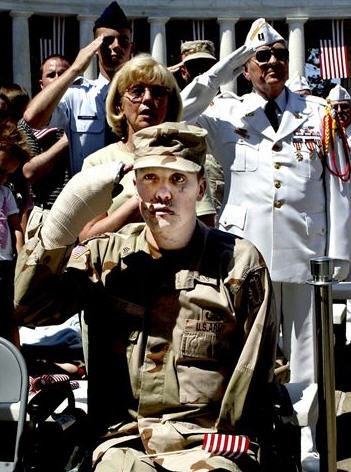
Have fun this weekend and don’t forget those who lost a lifetime of weekends on your behalf. You may not agree with the jobs they’re ordered to perform, but respect the soldiers and sailors who do it for their country, allowing the rest of us to remain blissfully unaware of the horrors of war and of being maimed or killed on hostile, distant soil. Fly the flag, thank a veteran and their family, and remember the fallen this Memorial Day, even if for only a minute, OK?

memday 
Photo: Charles Dharapak/AP

E-mail me.

Inga’s Update

CDW selects EnovateIT for its Sapphire Partner Program. Sapphire partners typically provide in industries that represent emerging trends in the technology marketplace.

From Wompa1: “I appreciate your defense of Dr. Peel. Why is it that privacy advocates and civil libertarians are always lumped in with the tin-foil hat crowd? Thanks for your rebuttal to the bleating of the sheep that don’t ever concern themselves with corporate or government entities accessing their private information. I understand that practitioners have a ‘work product’ that becomes the health record. However, the individual is paying for that work, either directly or through an insurance company. Should that individual have no say in how it is used? No one wants an employer having access to their health records, but this is a direct result of allowing the employer to provide your medical coverage. Would we rather have the government (at any level) providing that coverage and accessing the information? Dr. Peel is contributing to the discussion in positive ways, her detractors’ whining notwithstanding.” Wompa1 shares some additional thoughts on Dr. Peel, Matthew Holt, insurance, and discrimination on the Forum.

From Computer Nurse: “As a female and a nurse informaticist, I am concerned that this survey is billed as an ‘HIT’ survey, when in fact the survey population consisted of 633 readers of Health Imaging & IT and subscribers of Health Imaging News. The results are in no way representative of the vast variety of specialties involved in HIT, especially those in other clinical areas outside of radiology/imaging. The survey should be renamed ‘The Imaging in HIT Salary Survey’.”

EMR vendor Pulse Systems is a new reseller for Stratus Technologies and their 99.999 % uptime ftServer fault-tolerant servers.

Constellation Software increases its stake in Mediware to almost 14%, making it one of the company’s largest shareholders.

Troubled Merge Healthcare enters into a private financing deal with with Merrick RIS, netting Merge $16 million to be used to settle a class action securities lawsuit. Merrick RIS gets to replace five Merge board members with its own people.

The official definition of electronic medical record: "an electronic record of health-related information on an individual that can be created, gathered, managed, and consulted by authorized clinicians and staff within one health care organization." For more official definitions, check out the National Alliance for HIT’s report, “Defining Key Health Information Technology Terms.” Thanks to the OHC, who funded this multi-month project, no one should ever again be confused by the terms EMR, EHR, PHR, HIE, and RHIO.

Private equity firm Lindsay Goldberg is investing $75 million in Ambulatory Services of America for future expansion. Nashville-based ASA provides alternate-site health care services.

The federal government is spending about $2 million of our money on full-page newspaper ads to inform consumers of hospital satisfaction rates for more than 2,500 hospitals. The ads note patient ratings on two measures of quality of care, including the percentage of patients who always got help when they needed it and the percentage of patients who got antibiotics one hour before surgery. The rankings don’t include hundreds of hospitals who didn’t release patient satisfaction scores.

In case I get carried away sipping adult beverages on the beach this weekend and forget to send Mr. H an update, hope everyone has a happy and safe Memorial Day. And take a moment to memorialize those who have sacrificed to give the rest of us the freedom to play in the surf and enjoy our good lives.

E-mail Inga.

HIStalk Interviews Michael Blackman MD, CMIO, Berkshire Health Systems

May 21, 2008 Interviews 1 Comment

Blackman 
Photo: Berkshire Health System

I read several articles about Berkshire Health Systems, Pittsfield, MA and their work with CPOE and other clinical systems. Michael Blackman is the CMIO there and is frequently quoted about clinical systems implementation and the value of CPOE. He agreed to be interviewed for HIStalk, which I appreciate.

Tell me about yourself and your job.

I’m an internist and med-peds trained. I’ve been at Berkshire pushing seven years at this point and have been CMIO for one. It was a new job for this organization.Berkshire Health Systems is two hospitals. The larger one is just over 300 beds and a teaching hospital. We have a few small residencies in medicine, surgery, pathology, and soon to be psychiatry, starting in the summer. Those are all UMass-affiliated programs. The smaller hospital is a critical care access hospital with 27 beds, 25 or 30 miles south of us. We also have 15 owned physician practices and  2,000 long term care beds in Massachusetts and some in Pennsylvania and Ohio.

We’re putting in a completely integrated record across that entire enterprise.

Did that project lead Berkshire to create the CMIO position?

We were doing so much in the space is that we needed more physician time than we had before. We needed a physician champion with a focus on getting the last pieces done.

What systems are you using and what projects are underway?

For projects, we have CPOE up and about 75% of our orders go through it. The goal is to push that to 100%. What we don’t have is eMAR, the electronic meds Kardex. It’s been a holdup for us getting CPOE pushed the rest of the way. We bought the systems up in a strange order, frankly, in part because of what was available at the time. We’ve had CPOE up in one form or another for almost four years.

Other big projects are getting the ED on CPOE and getting all of our outpatient practices up on the electronic record so they fully integrate with the hospital. Those are the biggest things at the moment. Also BMV – closed loop verification. How did I forget that one? It goes with the eMAR.

You’re all MEDITECH, right?

We are all MEDITECH.

How would you evaluate your success with it?

It works. I happen to like MEDITECH as a system. The pieces actually all really do talk to each other. The integration, certainly for an organization this size, is their problem, not ours. They make it work. We don’t worry about an upgrade and making sure that the orders from CPOE are still going to pharmacy the right way. We know that’s going to work and that makes a very big difference.

Most of your doctors are community-based, I assume?

Most are, but the hospital employs probably 80 to 90 physicians. That includes ED, outpatient, and hospitalists.

Is the majority of the 75% CPOE ordering coming from those employed physicians?

At the moment, it’s really the house staff and employees of the hospital. The reason is that we haven’t pushed it to anyone else. We’ve being waiting until we do eMAR. We definitely have some private physicians who use CPOE, but it’s them coming to us and saying, “We seen this and we really want to do it.” It hasn’t been me going out and saying, “OK, now you’ve got to get on.” We want to be sure they can go to one place and get everything they need before we do that. We want to get eMAR up and then we’ll take that step.

What is it they like well enough about CPOE to want to volunteer?

Some of them look at the hospitalists and say, “Wait a minute. They have these nice order sets they can just click through them and get their stuff in,” especially for specialties where the orders are fairly routine and standard. Orthopedics, for example, or OB. Admitting a pregnant woman for routine delivery is essentially the same every time you do it, so people that were really using order sets or felt they could … those are the groups that have stepped forward to say they want to do it. It will get trickier at the margins.  

The biggest challenge is always ED, ICU, and surgery. Will they like MEDITECH?

I think so. As is true with any system, none of them do everything you want them to do. The upgrade is always hopefully better than what you had. Even then, you find features, so, “Now that it can this, I want this as well.” While we’ve done rather well with the CPOE we have, there have been moments when we said, “We really need what’s in the next version.”

Our next upgrade will help us a lot in that regard, most notably in our ability to convey more context to people as they go through order sets. You think about order sets on paper – we use them a lot for teaching … “Here are the criteria for this.” It’s hard in our current system to present that information in conjunction with the order sets. The next version makes it quite possible to do that.

Is there enough CPOE value other than efficiency with order sets?

Order sets are faster than paper, but they’re still attractive for decision support, even if just allergy and drug-drug interaction and formulary compliance issues and cutting down on the calls from nursing and pharmacy to clarify orders. We don’t try to sell it because it to people as, “You should use this because it will make you more efficient” because we’re going to be wrong. It doesn’t always make you faster. It may make it safer or better, but not always faster. I think a large number of the vendors have done all of us a disservice by touting the fact that they think this thing is faster and it isn’t, always.What clinical decision support capabilities do you have turned on compared to when you first brought up CPOE? Most hospitals dial it back.

If you look at what we did originally, we said, “We have CPOE now and we should turn on all the decision support we have available.” Boy, was that a mistake. [laughs] We turned most of it off rather quickly. At this point in time, we have drug interaction checking, allergy checking at both the generic and ingredient level, and adverse drug reactions by class. We have a variety of rules around lab utilization, formulary compliance issues, and some financial rules.

We found that we were losing revenue from visits we could not bill for because there was no admit order on the chart. Somehow it got overlooked. They came up from the ER with holding orders and a continuation of those orders, but there was actually no order on the chart that said, “Admit to blank.” Without that, the payors were denying the bills. One of our rules for an inpatient is that you have to have an admit order before you can order medications or labs.

What devices are the physicians using?

People either use tablets or desktops. One of the issues we ran into as we rolled out tablets to the employed physicians is the lack of flat space to put them down on the units. People had a tendency to put them in front of their existing computer, which wasn’t the point. We were trying to free up computers for the nursing staff.

Did you encourage broad order sets but not personal order sets to avoid future maintenance and to reduce variation?

The process was really trying to keep them as evidence-based as possible using our existing structure of department-level order sets. We do currently allow people to save favorite sets. We don’t teach them how to do that, but a few have figured it out on their own. We’re looking at changing that as we move forward because the maintenance around personal order sets is an absolute nightmare.

On top of that, if you have evidence-based sets and you need to make a change in the drugs for some reason because of a change in the evidence or change in availability, we want to be able to push that out without worrying that some sets missed it. Depending on how people save their favorites, whether they built them on existing ones, that might or might not happen.

Have you done any metrics to determine what has changed since CPOE?

The good news is that our medication error rate has decreased. We’ve seen a definite drop in the med error rate every time we bring another group of users on CPOE. We’re looking at those errors and anxiously looking forward to how that changes when we get to eMAR and BMV. We think that will eliminate a good chunk of the remaining ones, with the goal of zero.

The incidental thing is that we saw an increase in the number of duplicate orders that had to be canceled by the lab. One of the things we didn’t pay enough attention to was, “What were we taking out of the system?” We took out the unit secretary from entering the lab orders and that human intervention of saying, “There’s already an order out for this” and how the lab functions. I’m not sure we weren’t writing as many duplicate orders, but they were just getting through to the lab. We put some rules in place to try to cut back on that and we’re about to re-study that.

I assume your biggest impact will be when you get BMV online. What challenges do you see with that?

We’re doing the eMAR and BMV together. We felt the workflow for nurses wasn’t appreciably different bringing them up together since we were training all of them at once and some of the efficiency came from BMV.We have a barcode packager, so everything has to go up to the floors in unit dose. We’ll have to repackage anything that doesn’t come in unit dose. We’re doing our best to keep the formulary as standard as possible. The other piece is the workflow one – making sure we check once a day or once a shift to make sure people are actually using the scanners and that they’re scanning the patient’s wristband and not some list on the wall.

Are checkguards against that built in?

We’re probably going to put a check digit on the wristbands or some of the labels so you won’t be able to interchange them.

Do you have informatics folks working with nurses?

We have a variety of people working with nursing, but it’s still me, going back and talking about some of these things. On our IT staff, we have several nurses who function as both analysts and liaisons to nursing. Plus, we tend to pull people in for these various projects from the respective departments and then backfill on the units.

What’s the plan for EMRs for the practices?

We’re going to use LSS, which is the MEDITECH-affiliated outpatient product, so we can get the real value of the seamless integration between the offices and the hospital. We have all of them up on billing and scheduling and it’s been that way for a couple of years. Now we’re ready to move forward in pursuing the clinical pieces so that if we make a change to the meds list in the office, we see it in the hospital and vice versa.

What’s the level of integration for allergies and updated information?

The answer is that it’s 100%. It’s the same allergy list, the same outpatient med list, the same problem list.

Does it handle medication reconciliation?

That’s something they’re still working on. We’ve done some things for med rec on the hospital side, mostly building reports that compare an electronically entered home medication list against the admission orders. We still drop the paper and the computers are lined up what’s a match and what’s not and someone reviews that to see what they want to continue and that the changes are correct. We have a physician and nurse review and sign it.But the biggest piece is that they look at that piece of paper and say, “This isn’t what I meant to do.” They don’t make the changes on paper, they go back and make the changes in the system and then reprint the report. We hope to eventually do all that electronically, but it’s not quite there yet.

Are you doing any interoperability projects?

I don’t know if you’re familiar with the eHealth Collaborative in Massachusetts, which was three pilot sites to do interoperability in the community. North Adams is 20 minutes north of us and they’ve done some things there and we’ve had discussion, but it’s not there yet what we can do to integrate the county. We haven’t done it, but we’ve definitely talked about it.

There’s a lot of MEDITECH in your part of the world, which should make it easier to share data.

Massachusetts is MEDITECH central. I think they have 70% of the market in Massachusetts or something like that.How well would you say that today’s systems align with contemporary medical practice?

One of the biggest struggles and the last piece for most people is physician documentation online. We haven’t done that yet, either.If you listen to the vendors and listen to the industry, there’s a big push to get as much stuff in structured data fields as possible. That’s great for reporting information, but it’s not how physicians tend to think. It also doesn’t lead to notes that really tell you what you want them to tell you.

If you take the structured notes at one end of the spectrum and the complete, dictated, full-text note at the other end of the spectrum … the other good piece about the structured ones is that they’re better for billing, but the free-text ones really tell you more about what’s going on the with the patient. I think the right answer is probably somewhere in between in making a note that gives you a good combination of structure where it’s appropriate and where you really need it for reporting, and allowing the free text to give you the full flavor of what the patient looked like so someone subsequently reading it can tell what happened. Often it’s fully templated and you can’t tell that.

The article that just came out in NEJM said that the urge to get information into a template hasn’t done the patient any favors because there’s no context.

The other piece about the NEJM article is that they said that people were committing clinical plagiarism, cutting and pasting large sections of notes that aren’t theirs without really reading them. This is a tool like anything else. You want to be able to pull certain things forward, but equally you want people to use the information effectively.

The best example I can give isn’t mine originally. You can pull enough information from the system that can create a template that starts with, “A 23-year-old female presents with left ankle pain.” You’ve got the age, the sex, the chief complaint, but there’s not a template in the world that changes that to, “A 23-year-old female Olympic figure skater presents with left ankle pain.” Those three words have dramatically changed the flavor of the patient and what you’re going to need to do and what the patient’s rehab course will look like. That little bit will make a tremendous difference to how people get their work done.

The other piece in this part of the world and the West Coast as well is pay-for-performance, PQRI, and a variety of other things that require capturing information in a way that’s reportable unless you have an army of people doing nothing but chart extraction.

Do you see any technologies coming up that could be useful?

It’s nothing in particular, but it’s mostly the things that focus on workflow. One of the things that a good chunk of systems today is that the workflow of how people get things done and think about things is sometimes missed. I’m not trying to suggest that you should simply take the current paper process and make it electronic, but there’s a thought process that goes about how you approach a patient and gather information together.

Perhaps looking at that better at work flows through screens … I actually had an IT physician we were talking about trying to reproduce a three-page, tri-fold flow sheet in the ICU. After we had a long discussion, he looked at me and said, “You know, perhaps now that we have all this information electronically, we don’t need the flow sheet in the same way we did before.”

I think that could be one of the changes – how do you look at the information differently and how do you best to reduce far more information out there than you can possible review? When everything was on paper and you had to get the five volumes of old medical records sent up, there was no expectation on anybody’s part that you actually read all five volumes. You may have peeked through to try to find what you were looking for, but nobody really expected you to look at it all.

Now that it’s all electronic and easy to get to, there is some weird belief that you’ve actually looked at it all, which you haven’t. So, how do we bring things that are important to people’s attention, the very complex decision like what do you put on the first screen to make sure people see? How do you alert them that there’s something in the system they should know about buried in that fifth volume of old charts that they never would have found before?

The other thing that will make a big difference is the electronic prescribing, especially on the outpatient basis. The lack of ability to electronic prescribe controlled substances is enormous. It has to happen. The question is what is the DEA going to require to make that happen? We’re working on a project around that now, so hopefully we’ll have some good news about that in the upcoming months.

What led you to leave medical practice and get into informatics?

I haven’t fully left the practice of medicine. I’m not doing as much clinical work as I would like, but I’m still seeing patients with the house staff and things like that. For me, it was an opportunity to make a bigger impact on how medicine is practiced as a whole and how we take care of patients as opposed to doing it one at a time. prior to medical school, I was a management consultant and a lot of that was information systems, so for me it’s turned full circle.

News 5/21/08

May 20, 2008 News 8 Comments

From Mr. Green Jeans: "Re: retail clinics. They are partnering with local health systems, like Wal-Mart with Memorial Hermann and Bon Secour. I believe CVS is doing the same in some markets. The slower uptake is due to the challenge they face in becoming profitable and having secure operational infrastructure in place to handle self-pay and the commercial carriers, which many are now accepting. This is why, in my opinion, you saw CVS/MinuteClinic (which has over 50% of the retail clinic market) select athenahealth to handle PM and billing a few weeks ago. Getting paid and not have billing nightmares for patients is key. The EMR play here is small, as they only conduct a finite number of procedures. The billing and back-office operations are critical to shorten the time between opening a clinic and it becoming viable. The big boys (WM and CVS) are figuring this out."

From K.K. Kallenbach: "Re: comments. Where do the comments in HIStalk come from?" Since this is your comment, now you know! Readers e-mail me or use the Rumor Report (to your right) to send news, rumors, comments, documents, pictures, etc. If they’re good, I run them here (anonymized, of course). Some folks click the Comment link at the end of an article and post their own comments (click the same Comments link at the end of an entry to show them). A very few messages are posted in HIStalk Discussion (usually idiot foreign spammers selling electronics whose messages I have to delete), but we always wish more folks would post there since reading and replying are easier.

From Dr. BeanTown: "Re: Google Health. Dr. Halamka has moved BIDMC live. Curious what your thoughts are." If PHRs have a chance of succeeding, it will be because hospitals allow patients to populate PHRs with their reliable data without it being burdensome (patient-entered data is not worth much in most cases). I like BIDMC’s willingness to lead the pack and I would trust Halamka more than almost anyone to be the patient’s advocate and to be honest in assessing how well it works. It’s slightly odd to use a patient-controlled technology as an intermediary between sophisticated practitioner IT systems (i.e., the patient as the interface engine), but maybe that will serve as a good privacy tollbooth (and Halamka seems thoughtful about privacy as well). With a few big places jumping on board, PHRs will either sink or swim quickly, I would think. If patients aren’t interested, expect the former, so part of BIDMC’s job, I’m guessing, is promoting it. It’s an Internet technology, so a quick market share grab is the main strategy.

From CareGuy: "Re: RHIO. Vermont’s only RHIO failing?" Link. State government wants Vermont Information Technology Leaders to reduce the size of its 21-member board, hire a CEO, and speed up its work. The state tacked on a medical claims fee that will give the private VITL $27 million over seven years, so they’re getting more involved. Doesn’t sound like they’re failing, though.

From Poo Flinging Monkeys: "Re: Misys. Layoffs Monday, almost a dozen folks in implementation, most with a least 10 years." Unverified, but reported by at least four readers.

From Madrigal: "Re: MEDITECH. Their new Southcoast office opened Tuesday in Fall River, MA. Picture attached." Thanks for the pic – nice building!

meditech

Listening: Under the Flood, hard-rocking newcomers from Charlottesville, VA.

Say hello to new HIStalk Platinum Sponsor Loftware of Portsmouth, NH. Its products include technologies to manage label printing, barcodes, RFID labels, and retail labels. They have a nice case study from Johns Hopkins on their site involving a lab management system for tracking research samples. Their VP of marketing has a strong healthcare IT background, including as a Health Language, Inc. co-founder and member of HIMSS, AMIA, and AMA. The company is the world’s second largest employer of RFID-certified staff. Welcome to Loftware and thanks for supporting HIStalk and its readers.

loftware

Tanya Townsend has been named shared services CIO at St. Mary’s Hospital Medical Center and St. Vincent Hospital (WI). She was at St. Clare’s when I interviewed her in November. Maybe HIStalk made her famous!

Shafiq Rab is named VP/CIO of Orange Regional Medical Center (NY).

Jobs: EMR Developer (FL), Clinical Applications Analyst Lab (WA), Senior Web Developer (DC), Pharmaceutical Informaticist (TX). You can sign up for a weekly e-mail since there’s too many jobs to list here.

San Francisco’s city attorney and a local health plan for low-income residents file suit against McKesson, alleging price fixing. It’s related the Massachusetts suit from 2005 involving average wholesale price of prescription drugs.

Wireless asset tracking vendor InfoLogix acquires Aware Interweave, a provider of mobile information applications for SAP users.

Quality Systems Inc. (NextGen) will acquire revenue management company Healthcare Strategic Initiatives of St. Louis, MO to augment its NextGen Practice Solutions revenue cycle management services business.

VISICU (aka Philips) announces the results of a 156-hospital remote ICU monitoring study: the mortality rate was 9.6% vs. 13.5% nationally, supposedly representing over 7,000 saved lives in the sample.

An Erlanger Hospital (TN) board member and former Tennessee senator walks out of a meeting of the board’s finance committee over an outsourcing proposal from PHNS. The CIO says IT employees favor the move (I’d be surprised if so) but another board member says the contract doesn’t adequately address their future. Says the hospital’s data center will be shifted to the one PHNS runs, which sounds great until the hospital decides to end the outsourcing arrangement (which nearly always happens) and they don’t have a data center or the capital to build one. Perot was also a contender for the business.

An e-mail making the rounds in Kansas City claims "a friend" became sick on soup from a local restaurant, which was analyzed (by a hospital … riiiiight) and found to contain body fluids. It’s surely an urban legend, of course, since hospitals don’t test soup for diseases. What’s interesting, though, is that the newspaper’s original version of the story (cached on Google) included this snip: "The e-mail chain lists smiles@cerner as one of the originators, but a spokeswoman for North Kansas City-based Cerner Corp. said it was not a valid Cerner e-mail address and the name of the e-mailer was not a Cerner employee," but the story was changed afterward – the current version is missing that sentence. That e-mail address may not be valid at this moment (or at all, actually, since it was missing the .com at the end) but the brochure (warning: PDF) for Cerner’s 2008 user conference lists that e-mail address (with the .com) and the employee’s name it belonged to — it was the contact person for canceling exhibit space. None of this matters one iota except I thought the changed story seemed sinister.

The Shared Health statewide information exchange in Tennessee will use software agent technology from Novo Innovations for integration.

Sentillion announces new Q1 customers that include Baptist Birmingham, Hawaii Pacific, UNC Health System, and University of Chicago.

Hey, thanks a lot for reading, e-mailing me, and recommending HIStalk to others. It means a lot to me. Without you, I’d just be downstairs pretending to be interested in watching Kristi Yamaguchi dance.

E-mail me.

Inga’s Update

I have been reading the comments bashing privacy advocate Dr. Deborah Peel and decided it was time to weigh in. I have talked to Dr. Peel a couple of times and was actually surprised she was not the crazy zealot I expected. Instead, she is passionate, well-spoken, and makes some good arguments. She is not against PHRs or using data for medical and genetic studies. She believes that health data belongs to the patient and they should decide who gets it. In other words, it is my decision whether or not everyone may look at all my information, or, whether no one can access my mental health records. Peel is a psychiatrist and became an advocate after having many patients pay for services in cash because they didn’t want their employers to know they were under psychiatric care. Peel also advocates a “break the glass” option should you end up in the ED. I understand that if patients must provide approval before anyone accesses their information (de-identified or not) then it complicates many things, but I can’t say I disagree that I should own my own medical information. I also agree with Matthew Holt and his suggestion that we should also be looking harder at banning discrimination based on health information—especially with regard to insurance coverage.

Speaking of privacy, I played with the new Google Health site and it seems quite friendly and easy to use. However, when you sign up you must agree to give Google “a license to use and distribute (your information) in connection with Google Health and other Google services.” The disclosure also reminds users that HIPAA rules don’t apply to them. I decided I need more warm fuzzies than that before sharing all my medical secrets.

I’ve been amused by how many readers have mentioned they share my shoe passion and have gotten some great tips for places to buy shoes! For example, Saturday morning I got this note from Marlo Thomas: “I thought about you on Friday afternoon. I was the new DSW at Cascade Station, down the street from the Portland airport. Other great DSW stores: San Fran, the store just off Union Square, and Cincinnati, the Rookwood location. Both these are multi-story facilities with ‘better than average’ brands and selection.” I must confess the e-mail sent me into deep shoe envy and I had to go to my nearby DSW to purchase this very sexy pair of black strappy sandals. I was going to take a picture of them to post but I decided Mr. H wouldn’t go for it since he is a sensible shoe kind of guy.

The Detroit News reports that Wayne State University Physician Group is cutting 80 clerical positions following its outsourcing agreement with athenahealth.

eClinicalworks announces a sale to Georgia’s second-largest GI group.

Collaborative Software Initiative (CSI) announces it has released the first open source, web-based infectious disease reporting and management system. The State of Utah Department of Health is piloting.

A federal appeals court upholds a previous ruling that a North Texas IPA engaged in unlawful price-fixing in its negotiations with various health insurers.

Compuware announces its Q4 and fiscal year earnings (ending March 31.) For the year, revenues were flat and income was down 15%. The better news was a 38% increase in software license revenues for Q4 and the overall better than projected Q4 numbers.

Tennessee Medicaid contracts with ACS for a five-year, $156 million deal to manage its data and ongoing systems operations.

Several people have indicated TEPR is on its last leg, but nonetheless, it has announced its 2008 Outstanding HealthIT solutions. Winners include CapMed (Best PHR), MediNotes Clinician Supply Chain Manager (Hot Products), and Doctations and eMedicalFiles (tie – EMR Systems Best Meeting Medicolegal Requirements). Does anyone select an EMR product because it best meets medicolegal requirements?

Valley Baptist Medical Center in Brownsville claims its cardiology and radiology departments are saving $28,000 a month since replacing film with digitized images on EMC systems.

UPMC CEO Jeffrey Romoff was paid $3.95 million in 2007, which is 20% higher than the year before. Not-for-profit UPMC actually paid 11 people more than $1 million last year. All I can say is that these numbers are staggering. Mothers, the time has passed for urging your daughter to find a nice doctor to marry – the real money is in administration.

On a not-totally-unrelated note, check out the results from Health Imaging’s 2008 HIT salary survey. Not surprisingly, CIOs earn the most ($180-200K) and system administrators the least ($40-50K). Interesting statistic: you could hire 100 system administrators or one Jeffrey Romoff for the same money!

E-mail Inga.

Monday Morning Update 5/19/08

May 17, 2008 News 6 Comments

From Save Us Blue: "Re: Emageon. Bloody proxy fight coming between EMAG and OPP in June." Link. Oliver Press Partners, which owns almost 17% of Emageon’s shares, files an SEC notice that it’s going after shareholder proxy votes to replace three directors whose terms are expiring, proposing its own people as replacements. Shares are 78% off their 52-week high and the market cap is $49 million.

From Tom Servo: "Re: MedcomSoft. The ambulatory EMR vendor’s Q3 results were ugly and contained this statement – ‘As at March 31, 2008, the Company had working capital of $257,613 and a shareholders’ equity of $517,976, which is not sufficient to sustain operations over the next 12 months.’ Its product is Best in KLAS 2007 for 1-5 physician groups." Link. I like the idea of an EMR built around Medcin coding, but maybe the company’s results indicate that it’s not a big hit in small practices (i.e., like pretty much all EMRs, it doesn’t increase your productivity or profit, so buyers aren’t lining up). It sounds like an excellent product, though, and its KLAS scores and client comments are outstanding. At the current Toronto Stock Exchange share price, you could buy the whole company for around $8 million, a fraction of what it would cost to build the product, so maybe someone will.

Listening: Black Rebel Motorcycle Club, garage rock from a band with the usual problems (addiction, creative differences, inconsistency). Reader-recommend, sounds pretty good. Trivia: the singer’s father was the leader of 80s rockers The Call.

Former McKesson CIO Cheryl Smith is now CEO of utility.net, a California startup that offers broadband access over power lines.

Misys qualifies for the Ohio State Medical Association’s Standards of Excellence program of user-friendly contract terms for purchasers of physician EMRs.

An analyst says that the Allscripts-Misys merger will provide an $850 million opportunity for Allscripts because of the 110,000 physicians who use Misys. That values each doc at around $7,000 to the new company. I don’t buy it. Same products, same companies that doctors already either want or don’t, plus customers of Misys have shown little propensity to want to buy anything else from the company. Both companies know how hard it is to sell EMRs, especially ones that aren’t cheap or easy to use.

Did I miss this when it was announced three weeks ago? Intel’s SOA Expressway for Healthcare is a "codeless" integration solution that allows data sharing across its network, like for RHIOs or hospital networks. Partners include Oracle and Red Hat.

Researchers develop a chip that will accurately diagnose a heart attack by having the patient spit into a tube.

Canadian EMR vendor Healthscreen Solutions gets $4.25 million in financing. From the CEO’s LinkedIn profile, he appears to be 27 or so.

MedAvant files an extension on its 10-Q, which isn’t usually a good sign.

Baxter, the company that supplies half the US supply of the vitally important blood thinner heparin, is rumored to be considering getting out of that business after taking a hit due to contaminated product from China and lawsuits like that of Dennis Quaid. Product shortages are now a concern, as are potential mistakes due to unfamiliar packages turned loose on nurses as hospitals scramble to find other sources. Somebody will probably sue Baxter for that too.

State auditors in Washington hire auditors to review the purchase of Empire Health Services by the for-profit Community Health Systems, Inc. Part of the concern is the value placed on Empire’s stake in Inland Northwest Health Services, which includes a $45 million EMR business called Information Management Resources. Empire pays $5.2 million a year for computer services from INHS, which is $3-5 million under market price, and CHSI would keep that discount based on the original valuation.

MediNotes will demonstrate its new inventory application at TEPR this week. I assume it’s a module for the recently acquired Bond Clinician EMR.

Talyst, which just got a new interim CEO and $20 million in investor money, confirms that it has cut 11 of its 154 positions after missing sales numbers. Sounds like the new investors are intent on getting their money back.

An unspecified clinical system finally goes live in Prince Edward Island, Canada hospitals at 140% over budget. I’m willing to take a fact-finding trip since I’ve always wanted to see Anne of Green Gables country and a friend who did said it was great. In summer, that is.

Virginia Commonwealth will use InnerWireless Horizon wireless technology and PatientKeeper physician applications in its new $192 million Critical Care Hospital (rendering below from VCUMC).

vcu

A Long Beach newspaper article covers Long Beach Memorial Medical Center’s $62 million EMR implementation. The vendor isn’t named, but I think it’s Epic.

NPfIT is running at least four years behind schedule, the National Audit Office says. iSoft’s Lorenzo (now owned by IBA Health)  is implied to be the main culprit. Total cost is now estimated at $25 billion US.

Humility of Mary Health Partners (OH) will be a test site for billing software developed by another Youngstown firm,  ERIS Medical Technologies. That company apparently is coy about who’s running it, given that the "Who We Are" page doesn’t, in fact, say who they are. You could check the News page, but there’s no news there.

Nuance announces a web-based BI tool called RadCube that uses natural language processing to parse dictation. 

I read every e-mail you send. I really do. If it’s gushy and suck-uppy, I respond in kind if I have time. If it’s nasty, I delete it. And if it’s juicy or opinionated, I used it right here on HIStalk.

E-mail me.

Art Vandelay on The Surprising State of Retail Clinics

For all the hype and attention around retail clinics, myself included, I find their slow uptake surprising. I believe this is due to five factors.

1. There has been little branding. With such a drastic change, consumers require education to know the what, who, where, why, and how much for the service.

2. The clinics are poorly placed, away from the pharmacy and the front of the store. They are competing for prime sales shelf real estate. The retailers know that products on prime shelves will sell, but clinics have no such guarantee. This is especially true of grocery store clinics, which are barely distinguishable from the optical store, "kidz" cuts, and bank storefronts that were already there.

3. The lemmings came out. Rather than look at the market drivers and develop a plan, the copycat competitors immediately made their decisions to get in the business. Not everyone needs to be a first mover, but the lack of original thought caused overbuilding and now closures, taking away money that could have been used for branding.

4. Clinics aren’t partnering with local health systems, which could offer low-cost brand association and visibility and possibly a staffing safety net. Referrals to a more capable health system would create at least the illusion of value and continuity of the care experience.

5. High-deductible health plans, which were supposed to drive retail clinic usage, have had minimal uptake, accounting for only 5% of health plan enrollment.

The PACS Designer’s Open Source Software Review

Xchart is a project created by the Open Healthcare Group to create an electronic medical record that is easier to use than paper. XChart can be viewed with a web browser and requires minimal training. It supports open standards.

XChart uses an XML repository because:

1. It is becoming ubiquitous and easy to use.
2. It is portable across operating systems and languages.
3. XML can be transformed via XSLT into many presentation formats, including HTML for rendering within browsers and WML for wireless devices. Using XML, a portable and ubiquitous information system can be created.

Xchart appears to have resources on the web that are quite detailed, so an experienced XML user should be employed to download and install the Xchart files. One puzzling aspect of this open software application is the absence of any history of bug fixes. The last activity anywhere to be found for Xchart was 2005. Also the "XML and Healthcare" link and some other links are not working on the site. If you plan on going forward with this application install, try to find a current user for hand-holding purposes.

TPD Usefulness Rating:  5.

Links:
http://www.openhealth.org/XChart/
http://www.openhealth.org/index.htm

News 5/16/08

May 15, 2008 News 3 Comments

From The Alchemist: "Re: innovative care models. A new RWJ grant-funded site focuses on them. I wish them success and hope to see more models. Innovative HIT models could quell my progressive cynicism." Link. Example: the "12-Bed Hospital," where a RN serves as "clinical CEO" in a hospital unit. Here’s a progressive IT model that I’ve thought about: what if the IT department was stripped down to just infrastructure and technical services, with everything else residing in and managed by user departments? Should IT really be its own department when just about every aspect of it, including all the benefit realization, requires committed user resources and strategic alignment?

From Dave Stallworth: "Re: your own fan club. I started an HIStalk Fan Club group in LinkedIn." I never thought I’d have a fan club. I can’t wait to tell Mrs. HIStalk (I’ll leave out the "one member so far" part to make sure she’s suitably impressed). Just so Inga doesn’t pout, she’s part of the package, I assume. Thanks for doing it. I assume anyone interested can find it (I’m a LinkedIn noob, so I have no idea). Should we send dues?

From Nasty Parts: "Re: GE. GE is enforcing non-compete agreements. Of course, most companies out there nowadays make you sign one, but rarely are they enforced. Apparently GE has started sending letters to former employees."

From Ann Farrell: "Re: Microsoft. I sent them this: ‘While I appreciate Microsoft’s desire to be a visionary in healthcare IT, it would be great if they’d touch base with the Planet Earth now and then. The need, value, and practical application for printer-generated medications is something I can only assume the techies at MS dreamed up and prioritized to hype in some ‘visioning’ session. If they’d just make their core OS (Vista) stable enough for patient care environment and solve real problems – some present for decades through many iterations of ‘new technology’ – then you’ll get our attention."    

From The PACS Designer: "Re: cloud computing. TPD was surprised to find that Amazon sells web services through its Elastic Compute Cloud (EC2).  Also was surprised to find Red Hat is one of its partners, especially after the HIStalk interview with Dave Nesvisky. Anyway, surfing over to the Red Hat site highlighted a posting about cloud computing. Since it also covers the basics, thought it would be useful reading for HIStalkers." Links:  Red Hat, Amazon.

Listening: The Kooks, Brit power pop.

Some folks from Cottage Hospital will present a free May 28 webinar on teleradiology in critical access hospitals. Click Virtual Radiologic’s sponsor ad to your left to sign up.

Former Eclipsys VP John Adams is named COO/EVP of a marketing company.

St. Barnabas (NY) goes with Eclipsys for ED, pharmacy, and KBA.

Proventys, which sells software that tailors chemotherapy doses using EMR information, raises $5.65 million in VC money, hires a CEO, and announces that McKesson will use its technologies.

McKesson CEO John Hammergren endorses a healthcare reform plan under the Healthcare Leadership Council banner. Who’s in that group: giant companies making big money off the GDP-sucking system we have now (drug companies, big hospital systems that don’t pay taxes, purchasing groups, and supply companies.) The "reform" seems mostly to get Uncle Sam to pay for more insurance to keep the gravy train rolling along. I assume (but don’t know for sure) that it’s the same group listed here as shuttling members of Congress all over the place for "fact-finding" and spending millions (warning: PDF) on lobbyists. Other startlingly fresh ideas from the group: everybody should buy more IT and the government should reduce manufacturer liability. HLC linked up with other organizations to form a "Confidentiality Coalition" that, despite the name, tried to weaken it by petitioning HHS to drop the accounting of disclosures provision of HIPAA, declaring it "extremely burdensome and costly" (apparently it’s too much trouble to track who’s snooping around medical records, even using that fancy technology that everybody needs more of to save healthcare).

Celebrity-fawning politicians call on Dennis Quaid to educate them about medication errors. More specifically, his interest in getting around federal restrictions on suing drug companies at the state level over FDA-approved products. He believes the heparin label his twins’ nurse didn’t bother to read wasn’t big enough, so Baxter needs to write him a check (not the nurse or hospital). Guess even his millions won’t win him an HLC invitation after that.

The big headline says nurses "acknowledge" fatigue leading to mistakes in a "new study," but it should have been past tense: the just-released study came from a survey of 2004 incidents. Does it really take four years to tabulate a survey and write it up?

Microsoft bought a hospital system from Thailand, so now they need engineers to work on it. Interesting comments about HealthVault: "… while attitudes to sharing information varied, although in the US he said he believed that Microsoft had overcome resistance to sharing health information. The real question was the business model, and who would pay for the service?"

Pharmacy automation vendor Talyst gets $20 million in financing commitments. The CEO just left, leading to speculation that his resignation was a condition of getting the money. Surely Cardinal Health would like to buy them at some point.

More complaints about the New Zealand surgery system that’s being reviewed after patient safety complaints. A sore point: IT people are running the system instead of real users. "She claims patients are now being prepped for the wrong procedures. One was allegedly told by IT staff without a doctor’s say so to stop taking medication. Another needing a knee operation was given a letter for a dental procedure." I’ve known plenty of nurses and other clinicians who’ve been out of patient care for 10 years or more who still insist on providing medical advice and services from the IT department, with varying levels of quality, so I’m not entirely shocked.

Two BIDMC doctors, a husband-and-wife, warn that EMRs often contain meaningless cut-and-pasted and templated text instead of anything insightful and focused, leading physicians to skimp on diagnosis and history-taking.

I keep hearing that TEPR is on its last legs, so maybe this is the confirmation. A vendor doctor will give five different presentations there. I noticed that HIMSS, too, loaded up its agenda with vendor people last time, often as co-presenters, but sometimes speaking alone (which was highly unusual a few years back). I’m sure they know their stuff, but I skip those sessions every time since I don’t want to spend the whole time watching for bias, avoidable or otherwise.

A West Virginia doctor who won several awards and started an EMR company gets canned from his job as medical director of a community health center.

A controversy in Saudi Arabia, as pictures of a hospital’s celebration are posted online that appear to show "gender mixing." An inquiry found that males and females were seated together in the same hall, which is illegal, but the hospital director was let off with a warning instead of being removed as had been threatened.

Jobs: Quality Assurance Engineer (GA), Wireless Networking Consultant (PA), Revenue Cycle Consultant (FL).

Odd lawsuit: a patient being treated in the ED after an on-the-job accident alerts doctors of his HIV status. He claims he overheard one of them tell his boss, which the doctor denied at first, but  later admitted, saying she mistook his boss for a neurologist. The man claims he was left with crippling anxiety, which got him fired after a seven-month work absence. He’s suing the hospital, but not the former employer.

Odder: a 25-year-old female student gets off with probation after nearly killing her boyfriend during drunken sex. He asked her to carve a heart-shaped symbol onto his chest since they were regular practitioners of "body modification," but she pushed the knife too deep, piercing his heart. He lived, leaving the happy couple free to reproduce.

E-mail me.

Inga’s Update

Cerner is one of 52 employers nationally to receive the Best Employers for Healthy Lifestyles award from the National Business Group on Health. With its on-site healthcare clinic, fitness center, and various wellness and conditioning programs, Cerner appears quite committed to promoting healthy lifestyles (no pizza jokes, please).

Another workplace focused on improving employee health is Opus Healthcare. I hear that 20-odd participants have collectively lost almost 800 pounds on a company-wide weight-loss initiative.

The 32-provider Clopton Clinic (AR) replaces a legacy EMR/PM for Allscripts’ products. Happy conversion!

Exempla Lutheran Medical Center and St. Joseph Hospital go live on Picis ED PulseCheck.

If you are interested in learning more about your prescription drugs, check out the latest service from HealthGrades. You can find out what meds are most prescribed within a particular class and what drugs are in and out of fashion. I actually was curious to check out my various psychotherapeutic drugs, but it looks like it is not quite operational.

Emageon loses $4.6 million ($0.21 a share) in the last quarter. This compares to a $1.8 million loss the same period last year. Revenue was also down almost 30% from the previous year. The CEO blames market conditions.

Grady Health System is installing MedAssets’ supply chain management solutions.

The San Antonio Metropolitan Health District is partnering with Vermedx for a diabetic intervention pilot program that will create a city-wide registry and map patient conditions. The project involves at least 50,000 diabetic patients

Using a computer can help drug abusers abstain longer, according to a Yale study. Those receiving computer-assisted cognitive behavioral therapy training plus traditional counseling had significantly fewer positive drug tests than those receiving counseling alone.

Eclipsys names John T. Casey and Craig Macnab to its board. Casey is chairman of Medcath and Macnab’s CEO for National Retail Properties and a former Per-Se board member.

HHS’ Office for Civil Rights has produced a pretty chart detailing enforcement results from April 14, 2003 through the end of 2007. Of the 32,594 complaints over the years, only two resulted in criminal convictions.

clip_image002

E-mail Inga.

CIO Unplugged – 5/15/08

May 15, 2008 News Comments Off on CIO Unplugged – 5/15/08

The views and opinions expressed in this blog are mine personally, and are not necessarily representative of Texas Health Resources or its subsidiaries.

Memorial Day. What is our Legacy?
By Ed Marx

As the son of a Holocaust survivor, I was raised under unique circumstances. A couple of years following my father’s escape from a concentration camp, the Red Cross reconnected him with family in the United States. Soon after his trans-Atlantic journey through New York harbor past Lady Liberty, he was drafted in the US Army and granted citizenship. Given his fluency in German and French, he was stationed in Germany where he met my mother. Mom had survived frequent bombings and lost her father on the Russian front. Although raising us predominantly as Germans, my parents instilled in me and my siblings a high value for freedom and democracy—the kind of blessed lifestyle men had sacrificed for before my time.

It was no surprise that many of us kids later joined the armed forces, in part to give back to the country that gave our family opportunity and hope since our arrival in the mid 70’s. I vividly recall the shock of my introduction to military life at age 17. Less than 24 hours following high school graduation, my long locks had been shaved, I was doing push-ups in Ft. Dix, and some guy in a funny hat was yelling at me.

I survived. And my love for country and my respect for those who had given their lives for the good of our nation had been richly deepened. In the subsequent 15 years of service as a Reservist, I never had the opportunity to lead troops into combat; something for which I am both thankful and disappointed. Those of you who have been there understand the sentiment.

In April 2007, I had the most unexpected honor. I was in Washington DC on business and spent some time sightseeing with fellow/former Army officers. One gentleman was the recently retired commanding officer of the Army battalion charged with guarding Arlington Cemetery, including the Tomb of the Unknown Soldier. He had prearranged for a couple of us to lay the flowered wreath at the Tomb during the evening changing of the guard. I still get the chills as I recollect that moment: escorted between sober, armed soldiers; laying a measly garland of flowers before a solemn tomb; silently saying “thank you” for the millionth time to men of sacrifice with no identity, lost but never forgotten. (I’m one of those citizens who still tears up at the sight of our flag and the anthem of our great country, so this was as good as it gets.)

The Memorial Day Service my family and I attended this weekend reminded me of the brevity and sanctity of life. Was not life meant to be lived with relevance and significance? Are we living in such a way that benefactors will take time to reflect on our contributions? For some that will mean laying down life in battle, defending our freedoms. For others, service and sacrifice will have a different flavor. Whatever we are called to do, let us impact people positively and serve the forthcoming generations.

I later began to personalize these thoughts in terms of my career. Will fellow employees, customers, and patients remember Edward Marx, 5, 10, or even 50 years from now? Not necessarily the name, but what about the long-term impact? Oh, may it be! Let my employer be a better place for teaching, healing, and discovering as a result of my leadership. Let the decisions I preside over have lasting beneficial effect. May I treat others in such a way that their children and their children’s children will benefit. May I always keep the long-term in mind to avoid compromise or complacency. Let me leave my employer a better place than when I arrived. Yes, my time here will have mattered!

If no one remembered my name, would they place a metaphoric wreath at my tomb in honor of the legacy I left behind?

What about you? What will your legacy be?


Ed Marx is senior vice president and CIO at Texas Health Resources in Dallas-Fort Worth, TX. Ed encourages your interaction through this blog. (Use the “add a comment” function at the bottom of each post.) You can also connect with him directly through his profile pages on social networking sites LinkedIn and Facebook, and you can follow him via Twitter – User Name “marxists.”

Comments Off on CIO Unplugged – 5/15/08

McKesson Acquires Vivalog LLC

May 14, 2008 News Comments Off on McKesson Acquires Vivalog LLC

McKesson announced this afternoon that it has acquired Vivalog Technologies, a Seattle-based provider of Web-based knowledge management applications for imaging that includes the MyPACS.net reference site for case sharing. That site is visited by 70,000 imaging professionals monthly, according to the announcement.

From the press release: "With the addition of these solutions, McKesson’s information technology-based enterprise imaging offering continues to lead the industry in enabling healthcare facilities to provide better, safer care. McKesson’s enterprise imaging solutions offer unprecedented data sharing, connecting the entire care team and speeding the diagnostic process – from ordering a procedure to distributing reports and diagnoses. McKesson intends to continue to leverage the excellent standards-based connectivity of the Vivalog product set in order to allow the widest possible benefit to healthcare institutions."

Comments Off on McKesson Acquires Vivalog LLC

News 5/14/08

May 13, 2008 News 5 Comments

From IsItTrue: "Re: Hersher. It appears Betsy Hersher is selling off to Furst Group. A look at the Hersher website shows very few searches and virtually no staff." I e-mailed for confirmation, but got no reply. You are right – they have only four IT executive position listings and the home page says, "We are actively moving into career coaching and organizational coaching and consulting."

From Mick Ronson: "Re: QuadraMed. Look out for news from one of their biggest clients that will affect the future of QCPR."

From Doc Image: "Re: 1500s. To help Samantha Sang brainstorm ways to fax 1500s, I would suggest looking at fax server software. I work for a document imaging company, and while I have
never seen an organization go from EMR to fax server, I know many of our customers will configure a third party fax server as a printer, and then ‘print’ documents stored by our software to fax. I would assume that you could do the same with an EMR or billing system, but you know what they say about assumptions …"

From Deloitte’s Tush: "Re: CCS Summit. I saw a story about a panel on secondary use (or ‘reuse’) of healthcare information from this conference. Reading the agenda, it looks like a good one. I was wondering if the HISTalk community has any experience with / reviews of it?" Link. Sometime I’ve got to get out of my routine and actually attend conferences, although it’s tough to get time off from work. I only go to HIMSS, so I miss stuff (including some cool blogging opportunities).

From Alyssa: "Re: your marital status. It doesn’t bother me – let’s get together." Thanks for the thought and the pic (nice), but I’m pretty sure Mrs. HIStalk wouldn’t be up for it.

From Cesar Geronimo: "Re: Labcorp. They are likely to buy the outreach labs from Stanford and Carilion."

From Hannah: "Re: TeraMedica. I’m new to the site from Australia and looking for assistance. Anyone used Evercore?"

For those who left pithy comments on their LinkedIn contact requests, I just now realized that I could have replied (I should have read the manual). No slight intended. Anyway, here’s a fun one left just now: "I’ve begun to read HIStalk religiously (or at least a couple times a week) since I figured out that you guys knew things I didn’t know about the company I work for, weeks before I knew it. The wisdom of the crowds indeed. Me love you long time."

Misys shares continue to rise on more speculation that competitors (banking software, not healthcare, of course) will make a play for them. The company seems anxious to get its Allscripts merger done, but an acquisition or even the possibility of one could complicate it. If Misys were to be acquired, you would have to expect the healthcare division (merged or not) to go on the block since it’s not their core business (for Misys either, but that’s another story).

Listening: The Last Shadow Puppets, new, 60’s-sounding Brit pop, like Gerry and the Pacemakers with an orchestra. Cheery. Like it lots.

Philips keeps finding monitoring companies to buy, this time one in Brazil. Philips announces it will acquire Dixtal Biomedica e Tecnologia, which makes hospital monitoring equipment.

Healthcare IT Transition Group releases a report about implementation of the National Provider Identifier. Marty summarizes: "Things look bad, of course, as they always do for nationwide HIT implementation. But this time we’ve got worse news — adding more time to the project is probably the worst thing we could do (though it is the most predictable course of action by CMS)." He’s offering a BOSO – buy one and they’ll send one free to a trading partner of your choice.

Eclipsys opens an office in Pune, India, its second in that country.

Jobs: Revenue Cycle Consultant (FL), Eclipsys Clinical Consultants (national), Technical Healthcare Consultant (CO).

OSF Homecare (IL) buys McKesson Horizon Homecare.

HP will acquire Electronic Data Systems (started by Ross Perot in 1962) for $13.2 billion in cash, apparently fulfilling a desire to get into the data center and custom software development business as an IBM competitor. Bad news if you work for EDS since HP says it will lay off bunches of people to try to make the deal work, adding on to the 15,000 HP already ditched since HP’s CEO came on board to replace Carly Fiorina in 2005.

Unions and other groups rally against New Jersey’s proposed healthcare program cuts. Everybody’s concerned (mostly about their own self-interest) but nobody seems to want to pay in the form of personally lower wages or higher taxes. In other words, they’re in favor of somebody else picking up the tab, which describes healthcare in a nutshell.

A New Zealand hospital will be investigated after the head of anesthesia complains its new surgery system is unsafe.

A Microsoft guy says printers could be like mini-pharmacies, mixing custom drugs from their cartridges.

Unrelated: is there a razor blade cartel? A pack of razor blades costs more than an MP3 player, is now stored under lock and key in the grocery store, and the last ones I got were in one of those plastic clamshells that require scissors to crack into. Surely they cost a tiny fraction of their price to manufacture, so why doesn’t someone undercut? I’m thinking about finding an overseas supplier and selling them over the web.

A Libertarian group doesn’t think much of Hillary Clinton and EMRs, apparently: "Clinton plans to pay for the remaining $50 billion by eliminating waste and inefficiency. Her ideas include all the latest fads–electronic medical records systems (designed in Washington, DC of course), pay-for-performance (bureaucrats telling doctors how to practice medicine), and evidence-based medicine (more bureaucrats telling doctors how to practice medicine). Have ideas like these saved money anywhere before? Not that anyone can verify."

A Med Flight helicopter crash kills a surgeon, nurse, and pilot from the University of Wisconsin Hospital. The 37-year-old doctor leaves his ED physician wife and toddlers aged 3 and 5. Sad.

Emageon’s Q1 numbers: revenue down 30%, EPS -$0.21 vs. -$0.09. Imaging business is sucko, obviously.

Stuff you can do here: use the Google box to your right to search through HIStalk going back to 2003 (has it been that long?) Drop your name in either or both signup boxes for e-mail updates or the Brev+IT newsletter. You can send me new or rumors anonymously, of course. Make some sponsors happy and click the ads to your left to see what cool stuff they’re doing. And lastly, pat yourself on the back for reading HIStalk – Inga and I appreciate it a lot. We love you long time.

E-mail me.

Inga’s Update

When Mr. H indicated that he and I needed additional LinkedIn contacts for self-validation, what he really meant was he was tired of always having to come up with creative ways to praise me since I am so neurotic and insecure. So, he figured that if I had more contacts, I would feel more loved. Well, let me tell you, the love is now flowing! I’m not sure how many new contacts I’ve gotten in the last week, but it seems like perhaps 30. I am now connected to 70 people!! I was feeling pretty heady and perhaps even validated until I happened to notice that Mr. H now has 87 connections. Fortunately LinkedIn has this cool feature that lets you see what connections another person has that you don’t so, at least I now know who is snubbing me. (Big sigh … life as the undercard).

Sage Healthcare is a new reseller of the NCR MediKiosk product. The MediKiosk and Intergy EHR will be integrated later this year to allow patients to complete their own office visit check-ins and demographic updates, as well as electronically sign consent forms.

Tawam Hospital in UAE has successfully implemented multiple Cerner Millennium solutions, with more hospitals and clinics to follow over the next year.

The Wisconsin Pharmacy Quality Collaborative launches its Pharmacy Quality Collaborative and is using McKesson’s newly developed Medication Therapy Management (MTM) software to connect pharmacies, physicians, and payors.

CHIME names Sharon F. Canner as director of advocacy programs to lead CHIME’s government affairs activities. She comes from HIMSS, where she was director for corporate relations and the EHR Vendors Association. I noticed in a certain publication that she “declined to provide her age.” I personally wouldn’t have considered her age if I hadn’t read that, but now I am left wondering if she is really, really young or really, really old. Would a man ever decline to give his age?

The Chicago Tribune runs an interesting article that looks at the struggles of for-profit hospitals in the Chicago market in light of the recent announcement that MSMC Investors and Transition Healthcare are planning to purchase St. Francis Hospital.

CDW Healthcare announces it is collaborating with Beth Israel Deaconess Medical to provide more than 300 affiliated physician practices access to the hospital’s EHR/PM software.

Memorial Hermann Healthcare System is partnering with AirStrip Technologies to provide OBs with real-time waveform data from L&Ds onto PDAs and Smartphones. I am all for technology, but if I were in labor I am pretty sure I would just as soon have a nurse call the doctor to say, “Get over here now!”

Completed: the first data exchange between LSU Health Science Center and Delhi Hospital. Using Dairyland Healthcare technology, the exchange is a milestone in a state-wide Louisiana Rural Hospital Coalition project to provide EHR and telemedicine services to rural communities.

Dr. Deb Peel dropped us a note saying that 25 members of the Coalition for Patient Privacy are urging Congress not to pass e-Rx unless the data mining and sale of Americans’ prescriptions to insurers and employers is stopped. “Prescriptions should be used for the single purpose of obtaining medicines — nothing else without informed consent.” Dr. Peel indicates the current legislation is hidden into another “must-pass” bill. She’s supposed to be on Dan Rather’s show tonight.

Ardent Health Services selects Surgical Information Systems’ perioperative system for its 10 hospitals across New Mexico and Oklahoma.

IPA Monarch Healthcare in California chooses NextGen’s PM/EMR suite for its 2,200 independent physicians across Orange County.

The LA Times reports that 14 more UCLA Medical Center staffers have been implicated for snooping, including four physicians. I wonder if the physicians will get any more than a hand slap this time.

Finally, I was very distressed to read that, in addition to having to pay ever-increasing amounts to fill up my car, the price of shoes is anticipated to rise 10-15% over the next year. What’s next – chocolate?

E-mail Inga.

HIStalk Interviews Dave Nesvisky, VP, Red Hat Healthcare

May 12, 2008 Interviews 2 Comments

The Red Hat folks e-mailed right before HIMSS, saying they are big HIStalk fans and asking to run a "Mr. HIStalk Shoe Shine Booth" from their booth. Darned if they didn’t, too, with real professionals buffing and polishing the shoes of attendees who sat high up in an old-fashioned chair right there in their booth. I didn’t know much about the company, so an interview seemed like a good idea. I talked to VP Dave Nesvisky, who’s been in healthcare IT for many years.

Tell me a little bit about you and what you do.

I’m fairly recent with Red Hat. I was brought on in September of ’07. The intent was to have my past experiences brought to bear Red Hat to lead a vertical team. To be able to go deeper into lines of businesses is to actually have people that understand those businesses. I’ve been in healthcare IT, sales, and sales management for about the past eleven years. Prior to that, I was working in the public sector sales and sales management for fifteen years. 

I’m an old dog. I’ve been around 25 years in technology. I always joke with the young bucks in inside sales about selling 200 meg disk drives for $10,000 and mini-computers with a meg of RAM the size of a washer-dryer. They look at me like I’m talking about propeller aircraft and buggies and stuff like that. 

Now I’m in infrastructure. I’ve been in databases and middleware applications. So I’ve seen quite a few things; had some good experiences and some good relationships. I thought I could help out Red Hat and they obviously thought the same thing.

Summarize the offerings are that are available for healthcare.

Most people, when they think of Red Hat, they think of Linux. Actually, we have a tremendous range of offerings for healthcare.

Our MetaMatrix technology can extract data from clinical systems to provide a single, real-time view of patient data. This is a horizontal product designed to federate disparate data models. Whether the data is stored in flat files, relational models, other types of data stores, the data models can be pulled to this central point in MetaMatrix and you can create new data models using the existing data models. You can synthesize data and repurpose it for new applications.

We think the opportunity in healthcare in unbelievable when you think about all these disparate applications, all these ancillary systems and so forth; and the opportunity to pull these things together to give more complete and comprehensive information at the point of care. It has tremendous opportunity affecting patient safety and accuracy. What’s interesting about it is it is not a data warehouse, so it’s not storing the information in the second place. You don’t have the synchronization of data issues between the  source system and the second source. It really literally creates a virtual database and presents it to an application, but you can cache the information. If one of your source systems drops out for some reason, you have a contingency plan to get to it.

MetaMatrix is the crown jewel in our SOA platform, which also includes all the JBoss components, pieces of middleware, rules, web servers, portal development, and things like that. Dropping down below that is Red Hat Enterprise Linux, which has a lot of capabilities: virtualization, I-O management, and clustering, and also IPA, which is security to help with control and auditing for who has access to what systems and so forth. We’ve also added a  high performance messaging component that was co-developed with a lot of partners called AMQP, which is a high performance messaging standard which can be easily adapted to handle HL7 messages. It’s a big stack.

So how do you go about selling this to a hospital?

Obviously the dynamic of healthcare is most of the applications that are run by IDNs and hospitals are purchased ISV applications. There are hundreds and hundreds of vendors that provide the technology to healthcare, so a lot of our focus is around working with ISV partners. You’ve probably read about the things we’ve been doing with McKesson, GE, CPSI, and Sentillion. There are literally dozens of companies that are adopting our technology to their work.

When you start talking about MetaMatrix, it gets interesting. It represents a tremendous opportunity for ISVs to take advantage of the technology and pre-integrate some of their products and repurpose some of their existing applications to offer their customers this new, synthesized clinical view. It’s also an opportunity for health systems themselves to take MetaMatrix and, if they have a robust enough IT staff, to take advantage of this technology on their own.

Most of what I’ve heard about Red Hat in healthcare has been because of McKesson. What’s the scope of that relationship and how interested is the McKesson client base in using Red Hat products?

McKesson has adopted what we’re referring to as the Red Hat Enterprise Healthcare platform, which is Red Hat Enterprise, Linux, the JBoss SOA middleware, and the Red Hat Network Management. So it’s the complete stack of Red Hat open source infrastructure. It’s now the standard platform for McKesson Horizon Clinicals solution suite and certified for all scales of their delivery. So, it’s not just for small hospitals — it’s certified for use up and down the line for them.

What are the benefits to McKesson customers?

They probably used some proprietary Unix boxes by the vendors that you typically see. There’s a tremendous cost advantage moving to Red Hat Enterprise, Linux, and JBoss in a suite like this. If you think about it, all these capabilities that we’ve packed in — it’s all open source software. There isn’t a license fee associated with any of the software.

We charge an annual subscription that covers maintenance and updates, much like other software vendors charge annual support. The difference is proprietary vendors charge an upfront license fee, so it’s a big capital expense.

Our software is designed to run on commodity X86 and AMD hardware, so you can shop for the most bang for the buck from a hardware perspective. Because all of our various components are integrated, like the virtualization and the clustering and so forth, we can offer a one-stop shop for training to get administrators and other users trained on the system at one place, at one time, whereas they would have to have hopefully one person, sometimes multiple people, being sent to different training classes by different vendors for all these different components.

On top of that, because of the possibilities in virtualization, they can cut down on their server count tremendously. The cost of the servers goes down because you use fewer of them. People are thinking green these days. It decreases power consumption; it decreases cooling requirements; it decreases requirements around floor space.

You’re getting a tremendous capital expense advantage moving to Red Hat because you’re not having to spend as much on the hardware and the infrastructure software. You’re gaining even more over time in operating expense savings because of training and because of all the power, cooling, and space requirements that you’ve reduced.

The beauty of it is that people aren’t sacrificing anything in the way of reliability and security. In fact, most of the articles that have come out, and most of the studies that have been done, have shown that, from the security perspective, open source software is usually more secure than proprietary software The reason is everybody can see the code bugs; they’re detected early; they’re fixed early; the ramp time between a problem and vulnerability being detected and being closed out in open source is dramatically faster than a proprietary system. And from a reliability perspective, people are consistently impressed with the uptime they are getting with the systems.

There was a study done by Florida Hospital. You can see they’ve had tremendous experience with the reliability of Linux. They are drawn in by the cost savings, but gained high reliability and availability.

What about relationships with other vendors?

We have a number of Epic shared clients. We have a very good relationship with InterSystems. We frequently do information sharing and joint engineering work with InterSystems to optimize Cache’ on a Red Hat platform. We have a number of clients that are running Epic in their shops on top of a Red Hat platform very successfully.

We talked about McKesson, but GE PACS has actually been on Red Hat even longer. In fact, if you look at a survey of the PACS vendors out there, most of them run or at least offer the ability to run Red Hat Enterprise Linux.

Has anyone run the numbers to know how much money clients are saving?

Some of the numbers are staggering. I’m almost reticent to talk about them because they almost seem ridiculous, but I think we can very comfortably say people will have life-cycle savings in the order of anywhere from 35-40% upwards of 50% on infrastructure by going to a Red Hat platform over a proprietary platform. I think that’s a very comfortable number.

I see 40% time and time again. That’s a lot of money. The beauty of it is that it’s good for everybody. Obviously it’s good for Red Hat because they are using our technology, but it’s great for the client because if they’ve budgeted 40% more, lets say, that 40% can certainly be applied to other projects. It returns an investment pool of the client that they can then use on projects that they want to use it on.

It’s great for the ISV, Independent Software Vendor, because a lot of times they are trying to fit into a budget. By offering an infrastructure that costs that much less, rather than them having to discount their software aggressively to meet the budget of the client, they can roll in with an infrastructure that’s every bit as secure and reliable as what they had before. They can discount, not their product that they make their money on, but something that’s basically just a cost item for them. You know, the hardware and infrastructure. And if in fact it’s returning an investment pool to the client, that vendor actually has a better opportunity to sell them maybe an additional application or two with their investment. So it works out to everybody’s advantage.

Hospitals have always been capital-constrained, so if you can move costs into the operational bucket, that should be popular.

That’s the big thing. It’s an operating expensive because it’s an annual subscription for support of the software.

Is the retirement of the DEC/HP Alpha, which was big in healthcare, going to provide opportunities?

Yes. That’s a great opportunity for us. Those were tried and true, very reliable hardware, but it’s cycling out. That’s where our opportunity come up. They lease their hardware and when their leases are up, they look at, "OK, what’s the latest and greatest? What’s faster and cheaper?" And where they are making that look, we have a great at opportunity to introduce them to what we’re doing and save them shocking amounts of money.

It is sometimes a chicken-and-egg sort of thing with a lot of the vendors because the client isn’t looking for Red Hat because their vendor doesn’t support it yet. On the flip side, the vendor isn’t interested in adding another platform because their customers aren’t asking for it. So we’re working on bringing both sides together. 

A lot of our job right now is in education and explaining to people. Because they’ve come out of a very reliable environment with the Alphas and the HPs and so forth, they can’t afford to sacrifice reliability and security, so a lot of our job is explaining about open source and about Red Hat and giving them some proof points about reliability to get everybody comfortable with it.

How much technical training is needed?

It’s a very straightforward transition from Unix to Linux for the ISV applications. They make their migration in a very straightforward way.

Red Hat was #1 in value among CIOs in a recent survey, even beating Google. How do you use that to get people’s attention?

That’s exactly one of the points. Folks in healthcare want to know that it’s been done before. You talk about mission-critical applications; healthcare is the most mission-critical app. Hospitals don’t close. Things happen around the clock. They can’t afford to take a risk and I absolutely respect that. Demonstrating value and reliability that’s proven in other industries and within healthcare is really important. Having that CIO survey show that, four years running, we’re the most valued technology company, that says a lot. That resonates with them. They respect that.

Beth Israel Deaconess has gone with Red Hat. What’s their experience been?

Things are going every well for them. Dr. Halamka is a pretty vocal advocate of Red Hat Enterprise Linux. He’s got a great quote about finding an operating system without the virus of the month, without patches, without downtime created because of so much feature creep, and so forth. He was able to find that answer in Red Hat Enterprise Linux. He comes right out and says he’s getting the security, reliability, and cost reduction that he’s looking for. He’s going to be a speaker at an upcoming user conference that we’re having June 18-20 in Boston.

If a reader is interested in learning more about Red Hat, would the conference be appropriate, or is it geared to existing users?

I think it’s definitely a place for folks who are just starting to dip their toes into using open source in their environment. It’s definitely the place where you want to start. It’s where you can get all the information you need to have that happen and to really get some basic information abut open source, showing the reliability, showing that it’s a proven technology and not as risky as you might think.

It’s a good fit for both the business representative of a healthcare system as well as a technical person. Clearly a technical person would love it because they get exposure to some cutting edge technologies. We always trot out some new things there for people to look at. From the business side, it gives people the opportunity to ask the hard questions about, "How are you really using this?"

I always get a lot of questions about what’s going on in financial services because they have such high throughput and large-scale systems. We always have people representing these other industries that you can talk and share thoughts with.

What’s you sense about open source healthcare applications?

People are running open source and don’t even realize it, like Apache or Tomcat. They’re in everything. People are using open source all the time never thinking about it. It’s very reliable. Then when we raise the visibility of it up and say, "OK, these systems are going to run on Red Hat Linux" and they run them for awhile and they run great. All of a sudden, that opens the door to say, "We’ve had challenges with interoperability and other things. What else is out there?" 

They’re willing to take a look at projects like WorldVistA. Open Health Tools is doing some great stuff. I would like to think that Red Hat has a position of thought leadership in open source; that our opinion is valued in the community. When we go out and tell folks, "It’s ready for prime time," we can help guide people and take advantage of their open source applications.

You mentioned the SOA in healthcare. Everybody talks about it. Do you think that’s going to make a significant difference?

Yes. If you asked ten people, "What is SOA?" you’d get ten definitions, anything from web services all the way up to full-blown architecture. 

Every system in healthcare has some common elements that repeat from system to system. Whether it’s the core clinicals or what have you, there are always some components of it that repeat. The ability to take those repeating components or services and build new systems using them makes common sense.

The software we use is not a new concept. Its been around a long time. The difference now is, when you can take advantage of open source tools and look at the source code, you’ve got much better visibility into what you’ve actually built and the ability to share it. Before, people would build software, but it would be proprietary and enclosed. To be able to reuse that package, you had to guess what was in there.

With open source, you can look at it and understand exactly what it is, how you can repurpose it, and what pieces you need to change to take advantage of it. It gets you a huge head start on building new applications. It’s a terrific opportunity. Open source and open standards make the timing right for SOA to be a legitimate strategy for healthcare IT.

Most open source organizations don’t have the resources that Red Hat has to get that message out. Do you feel that Red Hat should advocate for them?

We do, because we believe in the open source model. There’s opportunities for the typical core ISVs that you see out there to take advantage of bits and pieces and embed it in their own applications. Just in the same way that McKesson is taking advantage of our technologies to build their applications.

I can foresee where some of these open source projects will move up the stack and take advantage of some of those components as they build the next generation of their product. I’m not speaking from absolute knowledge about McKesson’s strategy is, but in general, I see ISVs certainly taking a look at what’s out there. If it can accelerate their development cycle and allow them to deliver more software more economically, of course they’re going to do it.

The whole idea about open source is you’ve got lots and lots of contributors. You’ve got more people pouring their work into code than any individual company could possibly hire. You could big the biggest software company in the world and they don’t have as many developers as the open source world does. The whole idea is for large communities to come together and take  advantage of what’s been built.

How would you say the culture is different at Red Hat from the healthcare vendors you’ve worked for?

One thing that’s pretty funny. We have an internal e-mail address called Memo List. Basically it’s just freeform. In any other company, there’s such a tight control around sending e-mails, their legal this and that. This memo list — people are asking questions about recipes and where to travel. It’s like a freeform forum inside the company that goes on.

There’s a tremendous amount of commitment and passion around open source. This place — you eat it, breathe it, sleep it. That’s everything here — the community involvement. Open source -– very, very passionate about it. In fact, we run all open source products internally. Stupid me, I had a Mobile 5 phone. I came in here and I said, "Can I get push e-mail for this?" They looked at it like it was some kind of Satan or something. They wouldn’t support that Microsoft phone. They were going to perform an exorcism on it, I think.

There’s just this unbelievable, single-minded purpose around advocating open source. So when you get back to your question about other open source projects and open source products out there, I’m just speaking from my perception of the company, we feel this obligation to help anybody that believes in open source to help them be successful. Red Hat has got 80% of the paid Linux market. With that kind of market share and brand visibility, we think we can help these companies become influential.

How many employees does Red Hat have?

I think we have about 2,500.

As far as healthcare then, what’s your structure going to look like to operationalize this vertical market strategy?

I’m working hard to hand select sales reps that have been in healthcare. That’s always the first question when you go into sell something in healthcare: "How long have you been in healthcare?" and "What do you know about healthcare?" Customers play stump-the-band with you to make sure you’re legit, because I guess they’ve seen companies come in and out of healthcare before. They want to make sure you’re serious.

I’ve selected some people for the team that have deep roots in selling in healthcare. They’ve been in the business north of 20 years in healthcare IT. They know what they’re doing.

On the product management side, we’ve got a mix of folks. Some folks that have deep healthcare subject matter expertise and other folks that obviously have deep Linux and middleware and product-specific expertise. We’re cross-training each other. We’re trying to build both strength and knowledge in healthcare inside the company, and at the same time, cross-training these healthcare veterans with a depth of understanding of open source and the Red Hat product line so we can hopefully present the  best of both worlds to our clients.

Our solution architects, which are our technical folks, are typically doing the deep dives on technology with the clients. Explaining it, demonstrating it, and so forth. They all understand the technology very well. We’ve been spending a lot of time working with them; talking to them about healthcare and the unique requirements in healthcare IT; getting them in front of a lot of prospects and customers; letting them do a lot of listening to be able to a more relevant technology recommendation to them. The more they understand about healthcare, the better off they’re going to be and the better off everybody’s going to be.

Is there anything else that we should talk about or that you would like to mention?

I gave you the shout out that we’re HIStalk fans over here.

I appreciate that.

Hopefully you got a shoe shine at HIMSS?

I just had to walk by and talk it all in. It was kind of strange to see even my phony name up on a shoe shine stand.

Our Fake Inga was equally popular. People liked taking that five-minute break and getting a shine. It was great.

Anything else?

We’re delighted by the enthusiasm we’re receiving in healthcare. Frankly, the reason that pulled me into Red Hat is it just seemed like an absolute perfect fit. Here you’ve got this very reliable and secure and scalable environment that you can offer to an industry that’s always so cost-constrained at such a much more reasonable cost than what they’ve been used to paying. It just seemed like natural fit. And now, as we work with these ISVs, there’s obviously advantages to the as well.

The other thing that we didn’t really talk about, but that we’re very involved in, is working with standard bodies and groups that are working towards things. We are lending a point of view to that and encouraging those projects as well.

Monday Morning Update 5/12/08

May 10, 2008 News 22 Comments

From Irwin M. Fletcher: "Re: degrees. Inga hit the nail on the head: if you could get HONEST responses from people, those with advanced degrees would say it was required (self-validating) and those without degrees would say the school of hard knocks is the best alma mater. An advanced degree isn’t as much about what you learn, but the personal and/or professional commitment you are demonstrating."

From Befuddled: "Re: Secretary Leavitt. Interesting that he is finally getting it and  looking beyond EMR industry rhetoric. ‘I think it’s important to remember that the goal here isn’t [EHRs]. The goal is to transform the sector of health care into a system of health care, a system that provides consumers with information about the quality and cost of their care." Link. I take it as more of an endorsement of EMRs, but as a tool toward an end that doesn’t stop with checking off the "we’ve implemented one" box. His closing comment says so: "Health information technology is an enabler of better quality, lower costs, fewer mistakes and more convenience … The goal is the value that the records produce, not just the existence of the records."

From Concerned Customer: "
Re: Merge Healthcare. Any news or rumors as to what will happen? They are our PACS vendor and things are not looking too rosy." The company’s market cap is less than $12 million, its auditors expressed doubt last month that it can continue without a cash influx, the low share price triggered a Nasdaq de-listing notice, and management has said they will consider "all strategic options" as they try to stop the bleeding with layoffs. A new report says that cash is down to $8.5 million on March 31 and the company has no credit to finance what it said was its only hope, a new teleradiology business. Also in Friday’s report is a statement that the company may be forced into bankruptcy on June 30 (headlines like those don’t exactly enthuse prospects). Shares dropped another 10% to $0.35 Friday. I would expect you’ll see worse support and development because of the job cuts, which nearly always drive off the best workers who have other options. Then, it’s wait and see as to whether they’ll limp into bankruptcy (which could last years), sell out to another vendor or to private equity, or start a long recovery. I’d like to say something reassuring, but these particular tea leaves are ugly. If you’re already a customer, though, I’d sit tight since you don’t have a lot of options anyway.

From Luvvin It: "Re: maybe it won’t be Allscripts-Misys. From the Telegraph: Software group Misys firmed 9¼ to 174¼p amid rumours of a possible bid in the range of 210p-220p per share."

From Samantha Sang:
"Re: 1500s. Has anyone heard of  any medical billing services or EMR/billing software able to fax all of the their 1500s? Seems like a cool and obvious idea, but I’d never thought of it until recently."

From Blogreader:
"Re: advance degree. See this post." Link. Scot Silverstein doesn’t usually have good things to say about CIOs and IT departments, so if you don’t want to start your Monday morning sputtering and flinging your coffee at your monitor, don’t click the link. He often makes harsh observations from the context of "the IT people didn’t hire me, so they must be insular fools who hate doctors" angle, but he does make an occasional point.

I knew I was about to be embarrassed when the e-mail subject read, "A bit late, but thanks – Steph from Johns Hopkins." I had made a silly comment the other day about her HISsies CIO of the Year win awhile back, joking about not hearing from her (and having no reason to expect to since readers voted her in). She reads HIStalk, as I now know. Doh! She sent a gracious, fun, and appreciative e-mail that made me feel like a real doofus for shooting off my mouth. She says HIStalk is "superb," which makes me regret some of my more sophomoric writings (or maybe she was referring to those?) Anyway, my new BFF (as Inga says) Steph was ultra-cool about it, even signing off with "Listening: Memory Almost Full, Paul McCartney." She gave me a Listening! It made my day.

Speaking of HISsies winners, the 2006 Industry Figure of the Year writes about the 2007 winner: Justen Deal comments on athenahealth.

Idiotic lawsuit: a man drives his car through a chain link fence and into a river, trapping his 75-year-old mother-in-law underwater for 30 minutes before police and firefighters can get her out. The town honors her rescuers as heroes in a formal awards ceremony, but the woman and her family sue the town, a selectman, her rescuers, the police chief, an architect, an engineer, and her son-in-law, complaining that the area needed concrete barriers and the city should have had its own team of divers so she could have been rescued more quickly. She was quoted as saying family members commonly sue each other after accidents to collect insurance. She just settled for $870,000.

EHR Scope’s spring issue is now available, with articles on security, evidence-based medicine, and the usual comprehensive list of EMRs.

Inga and I have approved a bunch of LinkedIn requests, which we find fun (it’s like counting how many yearbook signatures you got compared to everybody else, although I suppose today’s high schoolers probably just text each other instead of actually placing pen to paper). One request had this comment, which says it all for me: "I totally dig your blog! I give it to my staff as assigned reading. Please connect with me so we can both pretend Linked In is meaningful in some way:)" I’m admiring my 72 high-powered connections and feeling pretty full of myself right about now.

Maryland’s Health Care Commission endorses two health information exchange proposals, one of them from Erickson Retirement Communities and Baltimore’s three largest hospital systems that would involve Microsoft, GE Healthcare, and HealthUnity.

The Tampa paper runs an article on the use of PatientKeeper’s Mobile Clinical Results on smartphones at Oak Hill Hospital via the company’s deal with HCA.

The mesmeric Gwen at HealthcareITJobs gets a lot of e-mail questions, one of which she told me about: "Is Mr. HIStalk happily married?" I was preening like a peacock for about ten seconds as I pictured a longing female aroused by my manly journalistic bicep-flexing. Re-reading, however,  led me to a more likely interpretation: can that jackass’s wife really have tolerated him for all those years? I know — amazing, right? I’m shocked every morning when I reach over to Mrs. HIStalk’s side of the bed and find her instead of a note.

QuadraMed’s Q1 numbers: revenue up 21%, EPS -$0.02 vs. $0.03. I didn’t hear the conference call, but the message boards are reporting that QCPR is the focus and they’ll be selling off their pharmacy system (the old PharmPro, if I recall, which earned a mystifying #1 in KLAS at one point despite being one of the more primitive ones I’ve seen). They’re planning a reverse stock split.

The Irish Blood Transfusion service is ripped by auditors for buying the Progresa system that ran four years late and over budget before it was abandoned.

Friday wasn’t a good day for Central DuPage Hospital (IL). Backhoe operators took out an underground power line, leaving the hospital on generator for four hours. During that time, an electrical surge caused a computer monitor in an hospital office building to overheat, leading to an evacuation.

A reader suggested running a survey to see which hospitals have folks reading HIStalk. Those listed on the responses are here. What an impressive group you are!

E-mail me.

Art Vandelay on TCO (Total Cost of Onerous-Ship)

Kaiser’s announcement about its annual maintenance costs is déjà vu. I often feel it is the "total cost of onerous-ship" in my organization. Kaiser’s maintenance for HealthConnect is right in the middle of the range we see for TCO, which ranges from 20 to 36% of the cost of installation. (Before you fall off your chairs, I am very detailed in the costs I include, right down to power and cooling, percentage of time operations staff spend on monitoring, usage of tapes, and partial FTEs of support staff).

The wide variation in our TCO is driven mostly by the maintenance contract we negotiate with the vendor. The next largest driver is the human resources we need to maintain the application and supporting hardware. For example, clustered databases, redundant servers, and those with bi-directional interfaces typically require the most support. The rest of the costs are relatively minimal.

Two observations. Kaiser’s costs are not out of range by my calculation, but I would have expected more efficiency from their scale. Maybe their geographic distribution eats into their efficiencies. I would bet they will begin to look at more offshore support if their financial prospects don’t improve. They will likely also be eagerly awaiting Epic’s web browser client transition. That would hopefully move them away from one of the world’s largest Citrix farms.

Second, if users are looking for a real return on investment, the TCO can be a large hurdle to jump. In Kaiser’s case, the investment in the system has to cover the 25% maintenance (forever) and then be large enough to pay back a $4B investment in a reasonable amount of time. That can be a daunting proposition. By my calculations, a 50% annual ROI would break-even in 10 years when considering depreciation in the mix. A 50% annual ROI without depreciation would break-even in 7 years.

The PACS Designer’s Open Source Software Review

FileZilla is file transfer software for those who do frequent transfers. It uses File Transfer Protocol (FTP), which can be slow for large files over 10GB, so if you are transferring large files frequently, you would be better off with a Network File System software package. Setup can be tricky depending on your particular system’s configuration. Support from users appears to be good and recent posts of problems have been answered rather quickly. FileZilla is a software platform in the SourceForge.net community.

Features of FileZilla include:

Ease of use
Supports FTP, FTP over SSL/TLS (FTPS), and SSH File Transfer Protocol (SFTP)
Cross-platform. Runs on Windows, Linux, *BSD, OSX and more
Available in many languages
Supports resume and transfer of large files >4GB
Powerful Site Manager and transfer queue
Drag & drop support
Configurable Speed limits
Filename filters
Network configuration wizard
Remote file editing
Keep-alive
FTP-Proxy support

File sharing is becoming more popular in recent years, so saving time is important. It would be best to try FileZilla with a select number of users before deployment to a larger group.

TPD Usefulness Rating:  7.

http://wiki.filezilla-project.org/Main_Page
http://sourceforge.net/projects/filezilla

News 5/9/08

May 8, 2008 News 3 Comments

From Beantown Johnny: "Re: Nuance. Any truth to the rumor that there’s been a sales shake-up?" Not that I’ve heard, but I’m not well connected there. I always figure it’s safe to speculate on a sales shake-up since just about every vendor tinkers with that function now and then. That’s part of being in business and of being in sales. Life goes on.

From The PACS Designer: "Re: Oracle’s new offering. Oracle has released a large number of SOA solutions recently and now just announced another called Oracle Data Integration Suite. It offers a open, standards-based integration platform that connects heterogeneous data sources and applications." Link. TPD sure likes that Oracle stuff even though he’s an open source guy.

From Dr. CIO: "Re: advance degree. I don’t know why you are so hung up about advanced degrees. Personally, I would rather hire based upon experience and emotional intelligence rather than sheepskin. Example of no degree (undergrad) superstars: Gates, Ellison, Dell, Jobs … I rest my case." Well, that case you rested wasn’t made too well — nobody hired any of the folks you listed. We’d all agree that it makes little difference for entrepreneurs who start a company, but we might disagree on mid-level executives. Wanna bet that Microsoft, Oracle, etc. require advanced degrees for some jobs, rightly or wrongly, even though those founders don’t have them? And if your boss has one and you want to move up someday — think about it. I’m the poster child for educated but unmotivated, by the way, so I hear you. It shouldn’t matter, but then again, neither should good looks or connections.

From Brian Boyfanno: "Re: HIMSS. Can I sign up for your 2009 event now?" Jeez, didn’t we just have that? Nothing’s decided yet since it takes a sponsor, location, and all kinds of stuff. If there is an event, I’ll move you to the head of the line. I’m happy it’s already on your mind, though.

Johns Hopkins CIO Stephanie Reel is named as one of Maryland’s Top 100 women. I’m sure that’s a trivial honor compared to winning her HISsies CIO of the Year award a few years back. I expect she’ll e-mail her appreciation for that nearly any day now.

Listening: Awesome Color, Stooges-type (Iggy, not Three) psychedelic rock.

Did I maybe just forget that HIMSS has a CIO? Says it does here. I don’t know a lot of their folks.

Speaking of HIMSS, when did they get into the hard-selling, vendor-specific Webinar business? This one’s about PC FTP software, which seems like an odd thing for HIMSS to shill. Personally, I use FileZilla, which is free and works fine (my shillin’ is free).

I wasn’t interested enough to type the long organization names, but some group names a McKesson guy and a Wal-Mart guy as co-chairs of another big-named group. The press release is like a densely constructed stone wall that defies ocular penetration, but it’s got something to do with HIEs.

If you’re a LinkedIn user desperate for contacts, Inga and I approve all requests because we’re desperate for approval, too. Search on HIStalk and up we’ll come.

If you aren’t getting e-mail updates when I write something new, just plop your name and e-mail address in the Subscribe to Updates box to your right. You’ll impress your colleagues with your mastery of current HIT events.

Memorial Hermann will use OB waveform monitoring software AirStrip OB.

McKesson donates PracticePartner to Father Joe’s Villages, a non-profit supporting the homeless.

I’m really excited that just about all the healthcare IT vendors are turning in good numbers. It’s a tough market and apt to get tougher, but they’re looking good for now.

Former QuadraMed HR VP Donna Klein takes the same role at biologics company BioReliance.

Jobs: Technical Support Analyst (CA), Clinical Informatics and Physician Liaison (OK), Project Manager – Healthcare (GA). Weekly job alert signup.

IBM and Siemens will help hospitals reduce energy consumption, but only if they use MedSeries4, which should narrow the list down quite a bit.

I know it’s nerd heresy, but Microsoft and Yahoo don’t interest me much, individually or collectively. I’ve never used the search engine of either one, haven’t bought anything from either company in years (except for my $20 upgraded Yahoo e-mail account), and I could name a ton of much more interesting companies than those two wrinkling dowagers and their desperate, fumbling attempts to mate. At least that never-ending story is an alternative to the daily "gas hits a new high" headline.

Donal Quinn is named head of the diagnostics division of Siemens.

A UC Berkeley engineer moves most of the technology of medical imaging into a central server, allowing creation of a cheap, portable scanner that plugs into a cell phone. The scanner will be $1,000 and the whole setup around $70,000, making it viable in poor countries and rural areas.

The secret to running a health information exchange, according to two executive directors, is hitting up the state for money. The one from Maine says they’ll never be self-sustaining.

Bizarre lawsuit: a nurse brought in to fix Howard University Hospital’s ED after a reporter’s death there led to charges of mismanagement is suing the hospital for $4 million, claiming sexual harassment. She says the new doctor in charge of the ED referred to himself as "a pimp" and used unspecified derogatory terms for the ED nurses (that doesn’t take much imagination to figure out). She says he sent her flowers for a job well done, but signed the card BD, short for "Big Daddy," the name he insisted on being called by nurses.

And another: a patient hospitalized after her fourth suicide attempt is suing Medical Mercy Center-Clinton (IA) for worsening her depression. A nurse helping her to the bathroom allegedly told her, "You need to use a more lethal method. I’m sorry, I just hate it when people are a drain on society." The nurse apologized by letter, throwing water on the theory that doing so stops lawsuits.

E-mail me.

Inga’s Update

From Sparky: "Re: ASU WOW-mobile. It was wonderful to see my alma mater mentioned on HIStalk! I’ll take the opportunity to plug the ASU School of Computing and Informatics, which matriculated its first class of graduate students in biomedical informatics this past fall. The new program has recruited world-class faculty and is affiliated with the recently-opened Phoenix campus of the University of Arizona College of Medicine, the Translational Genomics Research Institute (TGen), and the Mayo Clinic in Scottsdale. Look for great research and great people coming out of this program in the near future.”

CSC opens First Consulting Group Viet Nam.

Sage Software’s profits beat analysts’ forecasts, up 9%, which matches its revenue increase. The company points out that the healthcare division that didn’t perform too well: revenues were down 11%, gross profit down 8%, and EBITA down 46%. Management says the numbers disguise a lot of the behind-the-scenes actions to turn things around. They have lots of physician users because of acquisitions, so it’s a big footprint.

Stratus Technologies names JJWild  its Partner of the Year for the Americas sales region. JJWild has quadrupled their sales of Stratus’ ftServers to Meditech clients over the last year.

I voted for Mr. H as one of the “100 Most Powerful” in healthcare and hope you take a second to do so as well. He works hard and all he asks in return is that you read his blog. It would amuse him to potentially upset Modern Healthcare’s apple cart with a nomination.

HHS hands out an additional $600,000 to six new participants in the trial NHIN implementations. The new folks all represent good-size communities and include the Cleveland Clinic, Kaiser, HealthLink, Health RHIO, and Health LINC, and Community Health Information Collaborative

Picis announces the European launch of its Total Perioperative Automation solutions The Institut Mutualiste Montsouris has been working with Picis to customize the software for the French market.

I’m guessing that all those passionate Mac users out there will be happy to hear this news. EMR vendor Spring Medical Systems announces a new HL7 compliant interface with MacPractice MD PM’s system.

After reading about all the swanky new amenities at Henry Ford’s new West Bloomfield hospital, I am trying to narrow down what body-enhancing procedure I might have so that I can score a couple of nights’ stay. New rooms will have flat screen TVs, refrigerators, laptop computer tables, security safes, and a feng shui design to make patients feel connected to nature. Oh, and high-quality dining options, including 24-hour room service! Beats the Hampton Inn, for sure!

Eclipsys beat Wall Street’s expectation despite a Q1 net income that fell from a year ago. Due to some extraordinary costs, income was only $.01 a share versus $.04 last year. However, revenue was up 10%, and non-GAAP net income grew 25%.

There is a survey on the right asking if it is important that a hospital CIO have a Master’s degree in some field of study. I think we should have also asked if the responder had a Master’s – it would be interesting to see how that affected votes. I don’t know about CIOs in particular, but generally I believe having an advanced degree can’t hurt you. I think it can open doors (rightly or wrongly) and can be an indication of tenacity and ambition. It’s not a guarantee that a person is smarter or works harder than the next person, but if all other things are equal it, can’t hurt you. (And yes, I have an advanced degree and the greatest job ever… so there you go!)

E-mail Inga.

Getting Spanked by Car Maker CEOs: Even Detroit Thinks Healthcare’s Innovation and Productivity are Bad

May 7, 2008 News 4 Comments

Inside Healthcare Computing has graciously agreed to make previous Mr. HIStalk editorials available from its newsletter as a weekly "Best Of" series for HIStalk. This editorial originally appeared in the newsletter in October 2006. Inside Healthcare Computing subscribers receive a new editorial every week in their Electronic Update.

Big-company CEOs have healthcare on their mind. I know that because they keep insulting us in the national media. We’re too expensive and we underutilize technology, they’re telling the world. It’s our fault that jobs are moving offshore, not their own corporate greed or inefficiency.

My first reaction: who do they think they are? We’re getting lectures on innovation, productivity, and cost control from GM? If I wanted that kind of advice, I’d go to Toyota.

Unfortunately, they’re right. The healthcare price increase merry-go-round has to stop eventually. Most of the job growth since 2001 was in healthcare, and that’s not something to be proud of. We’re leaving an expensive mess for our children to clean up just as Baby Boomers suck the system dry with their healthcare demands. If GM doesn’t like it today, they’ll hate it tomorrow, unless they’re watching the show from China or India by then.

Businesses want to force computers on us, dragging us kicking and screaming out of the dark ages. Unfortunately, software doesn’t automatically bring increased productivity and lower cost. If it did, all of those hospital dollars spent on Microsoft Office and Windows would have made us stunningly more effective instead of just giving employees something to screw around with as a pleasant productivity alternative.

I’d like to think that computerization can really reduce costs, but I haven’t seen it happen anywhere yet. I keep hearing about all of those showcase sites buying the latest and greatest, but the correlation to bottom line and quality outcomes is murky at best. Where’s the average 100-300 bed hospital that has seen its overall costs drop 30% because of software? You’d know them because every other hospital in town would be out of business.

Hospitals can cut expenses in three ways, all of them at their local level. They can manage labor, which is by far their largest expense. They can go after the utilization and cost of drugs and supplies. They can control physician practice variation. I’m glad I said “can” instead of “do” because, for various reasons, these things don’t happen. Software can’t fix them because they’re management problems, although given desperate enough circumstances, they could be fixed.

I’m glad much of our recent IT investment relates to patient safety and outcomes. I hope electronic medical records really do become a standard, with all the information sharing that the RHIO people keep yapping about. But when it comes to drastic cost reductions driven solely by buying and implementing software, I’d say that’s wishful thinking. There’s a lot of work to be done fixing the system and its underlying misaligned incentives before we even try to automate it. No business became a world-beater just by installing SAP, even if they were lucky enough to not be one of those that went bankrupt trying.

I do see a ray of hope in being called out by big-company CEOs. As hard as it is to have change forced on you, I think that time is here. I work in a hospital, but I’m also the occasional patient and medical bill-payer. When wearing those hats, I’m just as mad and frustrated with the system as those CEOs and I bet you are, too. Healthcare is too expensive, too bureaucratic, and too unimpressive in benefits delivered. As a software guy, I’m pretty sure that fix will take more than just people like me.

Mr. HIStalk’s editorials appear each Thursday morning in the subscribers-only version of Inside Healthcare Computing’s E-News Update.  To subscribe, please go to:  https://insidehealth.com/ihcwebsite/subscribe.html or call 877-690-1871.

News 5/7/08

May 6, 2008 News 5 Comments

From Devin Valencia: "Re: athenahealth. Not only did athena blow out numbers, they announced on the call they signed a national account with CVS/MinuteClinic." Q1: revenue up 36%, EPS $0.05 vs. -$0.55. 

From Katrina Leskanich: "Re: TEPR. TEPR sent out an e-mail recently offering 2-for-1 registration and a free registration to anyone who previously purchased a ticket. Is there any question that they are having trouble drawing crowds? Attendance has been down for several years running and they look to be on their last legs."

From Moondogg: "Re: HIStech Report. It seems to be paid advertising." You’re partially correct. Vendors pay us to develop and conduct an interview with an executive about a specific product. I put it over there to make that clear. Still, we ask whatever we want and we conduct them just like our normal interviews, so vendors aren’t supplying the content. I think the result is a good read.

From Destiny St. Claire: "Re: Sage. I hear former Misys VP Jim Skladany is joining Sage as new West Coast VP of Sales."

From Visitor 211: "Re: layout. I noticed the banner ads go far down the page, beyond the article." We’re doing a little bit of redesign to improve the layout, so stay tuned. It’s definitely a (good) problem to have that many sponsors.

From Bradley Beeswax: "Re: Fletcher Allen. They’ve picked their man to run their $57 million Epic implementation." Link. Chuck Podesta, from Caritas Christi, is named CIO of Fletcher Allen Health Care (VT). He doesn’t have an advanced degree, I noticed, since that’s the hot topic here (and the subject of a new poll to your right).

My opinion: CIOs should have advanced degrees, not because the coursework will be used every day, but because it’s so easy to earn accredited MBAs and other degrees nontraditionally and inexpensively that I’m suspicious why a highly paid senior executive can’t be bothered to do it. A bachelor’s degree is like a high school diploma was 20 years ago and MBA studies have real-world relevance. Education is a standard bio entry and thus it drives first impressions. Heck, half the IT worker bees have advanced degrees these days. Still, I know exactly who’ll say what: CIOs without advanced degrees will say that nobody remembers their courses anyway, that hard knocks is the best teacher, and that they’re a shining example of why a bachelor’s degree is OK. Those with the degree will tell you how useful it is, why there’s no excuse not to get one, and how few hospital people make VP without a Master’s. Both will provide examples of great people without degrees and bad ones who have them. And in every case, whatever credential that person holds is exactly the minimum they would recommend for the job.

In Australia, Victoria’s Department of Human Services gets a bailout of $100 million US for its HealthSmart project, which is two years behind schedule and way over budget. Much of the core technology is Cerner Millennium, not that there’s anything wrong with that.

Jobs: HIT – Senior Internal Consultant (TN), Application Analyst II (VA), Soarian Clinicals Consultant.

Kaiser says its HealthConnect outpatient rollout is finished, with all 8.7 million enrollees having access, but inpatient is installed in only 13 of 36 hospitals. They admit to its $4 billion cost, which I believe was angrily denied when that number was first estimated by outsiders. Maintenance is $1 billion (!!). The hospitals and health plan announce a 64% net income drop in Q1 because of investment losses. Still, a $250 million quarterly profit for a "non-profit" in one quarter isn’t too shabby (imagine if they weren’t spending $1 billion on HealthConnect maintenance).

TriZetto’s CFO Bob Barbieri quits for "personal reasons" (probably because Apax had another "person" in mind to take his chair). I’ve never seen the "personal reasons" excuse laid on so strong as to put it in a press release headline, so naturally I’m skeptical. Maybe publicly traded company bean counters are too conservative for privately held companies.

McKesson’s Q4 numbers: revenue up 9%, EPS $1.05 vs. $0.85, beating expectations of $1.00. Technology revenue was up 19% to $806 million. Shares were up nearly 8% today. Nice.

A hospital information system company in India wins an IBM public sector award.

Say, wouldn’t it be a hoot if some anonymous blowhard was named one of the 100 Most Powerful People in Healthcare? You can nominate me here (by Friday). I’m sure the magazine people will squelch it, but what the heck. I’ll even helpfully show you what to fill in so the votes can be tabulated before being discarded scornfully – click the pic. I’m thinking I shouldn’t reserve the tux quite yet.

Most_powerful

CMS is piloting PHRs in South Carolina.

Mobile systems vendor InfoLogix acquires Delta Health Systems, a cost containment consultant with an executive information system.

Strange: a woman Twitters her labor status in real time from a hospital.

E-mail me.

Inga’s Update

Members of the Connecticut State Medical Society can now receive discounted pricing for athenahealth’s PM service. Interesting to me is that the discount does not extend to athenahealth’s EMR.

VHA, Inc. claims to have provided member health organizations more than $1.3 billion in savings in 2007, which is more than any of its competitors. Revenues and operating income were up 7.5% and 8.3% respectively.

The 46-doctor Greensboro Radiology group will implement InterSystems Ensemble for its enterprise-wide integration platform.

The latest products earning CCHIT Ambulatory 2007 certification include Allscripts Touchworks 11.1; Cerner Millennium PowerChart/PowerWorks EMR V. 2007; Eclipsys Sunrise Ambulatory v. 4.5C (pre-market conditional certification); Healthport EMR v.9.0; and ChartMaker V. 3.0.5. Looking over the list of certified vendors, a couple of major players I’m not seeing include GE’s Centricity and athenahealth.

Privately held Greenway Medical Technologies announces a 52% increase in sales bookings for their fiscal quarter ending March 31st compared to 2007.

Concord Hospital in NH will use Juniper Networks for its network infrastructure. The network will include the connection of 11 total sites, including various healthcare centers, clinics, and physician offices.

CMS announces the six vendors participating in its physician quality reporting initiative. Allscripts, Anceta, Cerner, DocSite, eClinicalWorks, and NextGen are providing data pulled from EHRs to measure quality data reporting capabilities.

Intermountain Healthcare signs a multi-year agreement with Novo Innovations to enhance information exchanges between Intermountain’s hospital systems and physician practices without EMRs. Novo’s software is already being used to connect several affiliated practices with existing EMRs.

Japanese hospitals and clinics are not adopting medical records as fast as the government would like, with only about 10% of each automated as of February 2007. Thirty-one percent of the 400+ bed hospitals had an EMR, far less than the government’s 60% goal for that group. The primary barrier: cost.

Mediware reports more dismal financial numbers. Profits are down 62% from the same quarter last year and sales were down 52%. About the only thing upbeat was the CEO’s comment that the company was “executing plans to build a strong foundation for future growth.”

An Australian doctor recommends that the government pay up to $47,000 for kidney donations to resolve organ shortages. The rationale is that in the long run, thousands of lives and billions of dollars in care would be saved. Guess it would pay for a pretty nice vacation if anyone over here is interested.

clip_image001

I like the new health care van belonging to ASU’s College of Nursing & Healthcare Innovation. A $700,000 UnitedHealthcare grant paid for the WOW-mobile (stands for Wellness on Wheels) that will bring primary care services to underserved Arizona communities. The rest of the grant money, by the way, will be used for pediatric obesity and child-teen mental health programs.

E-mail Inga.

HIStalk Interviews Don Holmquest, MD, JD, PhD, President and CEO, CalRHIO

May 5, 2008 Interviews 4 Comments

dh 
Photo: SF Business Times

I couldn’t wait to tell Mrs. HIStalk that I had just spoken to a doctor, a lawyer, a PhD in physiology and endocrinology, and astronaut. Then, to casually mention that it wasn’t a conference call, it was just one man – Don Holmquest, president and CEO of the California Regional Health Information Organization. The timing of our conversation was fortuitous since CalRHIO just announced an agreement with California’s association of retired public employees (CalPERS) to endorse CalRHIO for its members. CalRHIO is not your typical RHIO – it’s statewide, well supported, and cautious about seeking a business model that will keep it operating once the grant money is gone. Thanks to Don for making himself available for the readers of HIStalk.

Tell me about CalRHIO.

We started out in 2005 with the intent of becoming a state-level health information exchange. That’s a term used in a study that we’re a part of that AHIMA is doing, so it’s a comfortable term to us. 

In California, we had the Santa Barbara local RHIO. There’s one down in Santa Cruz. Santa Barbara did a little bit of exchange. Santa Cruz has been doing for some time a push model of results and e-prescribing and other stuff. Those were clearly regional efforts. There was a sense that, for us to really get California involved in health information exchange, you needed a state-level organization.

We raised some grant money; spent most of it, frankly, doing base level consensus-building and education; and held multiple summits around the state and involved something like 60 organizations and about 1,000 people who participated in meeting and work groups. The end result of that was the creation of a non-profit California corporation and a board of directors of key executives from the various stakeholders. That entity is charged with going forward and creating this healthy information network. To my knowledge, nobody else is attempting that on a state level.

Is the work of CalRHIO mutually exclusive with the work of the local exchanges?

Absolutely not. Our position from the start is that we wanted to provide whatever we could to make life easier for local activities to develop and mature.

As we looked at it very carefully, we did a lot of interviewing of experts in the field, leaders, and vendors. I think it became obvious that the hardest thing is to pick the right technology platform and the financing.

That’s why we use the metaphor of a utility. If you try to take an undeveloped world and country and bring it into modern times, it would be nice if there was electricity out there for people to use. We are taking the problem of creating a good health information platform with all the right appliances and applications and privacy and security so that any region that wants to can use that as one of their building blocks.

There’s still plenty of work for the regions to do getting the local data providers to agree on data sharing, governance, developing the provider network, and so forth. We want to make it as easy as possible for these RHIOs to develop because, thus far in California, we’ve not had a lot of success in these regional efforts in getting to the point of achieving data exchange.

How many employees does CalRHIO have and what do they do?

We’re a pretty small shop. We’ve got about six people working on the core activity of building the platform that will do whatever we want it to do.

We do have one grant from Blue Shield to try and support some health exchange efforts in the safety net community. We have taken the money from Blue Shield and turned it around and made grants to three small safety net organizations.

For the most part, we have been working on trying to get the technology vendors selected and get the kind of endorsements it will take to make the business model work. That’s why you saw the CalPERS release recently. It took us quite a few months to get those guys on board. Once they finally understood what it was about, they did what they should do and what all purchasers should do, which is tell their health plans, “We want this for our employees.”

Describe what the CalPERS endorsement means.

What it really does is, from the most important perspective of all — the organization that has employees they value whose care they care about and whose cost they pay — it achieves that purchaser saying, "We want this capability for our members, we’re willing to pay for it, and we want you as our agent to support this and enable it." They are basically telling their health plans to sit down with CalRHIO and work out a deal.

Our health plans are not by any means the only payors we will look to for support. Anybody that makes use of our network and receives financial benefit will be expected to pay some appropriate share of the cost. If you look at an environment where you have hospitals using our network to distribute laboratory results or radiology results or whatever, then we would expect those hospitals to pay for that service. I can promise you it will be cheaper than what they’re doing now using faxes and printers and couriers.

Santa Cruz is doing push. In Delaware’s DHIN, they started with Medicity and Perot on the push part of it and will be moving to the information portal fairly soon. We decided to go the other way and start on the information portal and deliver that information to emergency rooms as a start. In that environment, the entity that benefits, in terms of better patient care and cost savings, is the purchaser, so that’s either a health plan or self-insured plan. If it’s an uninsured patient, then it’s between the hospital and patient who pays. If it’s a capitated medical group that has risk for emergency room services, they may be the entity that’s appropriate to pay for the information package that was delivered.

Some people would argue that the pay-for-use model discourages use and the philanthropic model makes more sense for a public good like an information exchange.

I wish it were possible. I don’t believe it is. We’ve not found a good example of where that’s worked. If you can show me anywhere in healthcare where a substantial body of services is being paid for by philanthropy indefinitely over the long term, I’d love to hear about it.

Frankly, I don’t see many states out there that have money to spend on this. Certainly the federal government has taken a position, for the most part, that health information technology is like plumbing and air conditioning – it’s part of the cost of doing business and, if you’re a medical group or hospital, you’ve got to pay for it.

I’d love to see that, but we don’t think it’s possible. We’ve got a state here with 37 million people and the eighth largest economy in the world and there’s nobody stepping up to do that. We had some early philanthropic support, and when you talk to them about doing something longer term, the position we’ve heard most often is that, “We’ve really enjoyed giving you seed money and it’s great what you’re doing, but you can’t keep coming back to us.”

The original projection was that CalRHIO would need $300 million to build the network. That cost is upfront before you can start collecting usage fees. Where will you get that upfront money in a tough credit market?

You’ve got to show a very robust business model. You’ve got to show that you have organizations that have contractually committed to paying for the information you deliver and you monetize that.

There are very smart people out there who know how to raise money for a good project. Lot of interest in things that are infrastructure in character, lot of interest in healthcare … it’s probably one of the few growing parts of our economy and, as you know, it’s going to grow for a lot of decades.

Everybody is interested in something that saves money. There are few strategies out there than you can go to, other than a health information exchange, that’s a pretty solid likelihood that you’re going to save money. I’ve seen PET scanners and MRIs and all sorts of procedures that folks have hypothesized are going to save money, and the feds will tell you that none ever do. But if you look at putting more information in front of a doctor when he needs it, there are some pretty solid studies that say you’re going to save money.

The Smart Health board member said those savings estimates for health information exchanges are overestimated, even though he wasn’t against the concept. Do you agree?

No. I know the man. I’ve been to some of their meetings. You’ve got to remember that this is a set of interviews occurring at the time of shutdown of one of the early regional RHIO efforts and I’m sure they’re all very disappointed about it. They tried hard to get people to see the benefit.

I think what that tells you is that it’s harder to show demonstrable benefit when you’re starting on a small scale, one project at a time. They’re trying to get one small region, maybe three or four hospitals and some other groups, exchanging data. It’s a lot harder to demonstrate savings and improve quality than doing it over 338 hospitals and 98,000 physicians.

So I think in that context is probably why that particular individual was making that comment. He’s a CEO, a very smart guy, and on the board of a big system here. If you read further in the article that quoted him, he still says it should be done. You can’t take just part of it out of context.

Back to the previous question, what kind of organizations would be interested in financing CalRHIO’s upfront costs?

This sounded a lot easier six months ago, nine months ago, but hedge funds, private equity groups … right now, there’s not a lot of deals on the street. There’s a lot of money out there that needs a place to go. If you offer a rather new opportunity with a solid business model and a solid need, I can tell you the advisors we’re talking to is that it’s easier to get more money than less.

We’re not looking for huge quantities. We’ve actually had conversations with people with that kind of money. Some are very interested in doing well by doing good, so those are the people we’re predominantly looking to. I’ve not found anybody yet who’s said that they couldn’t find that money. It’s probably a question of the cost.

Given David Brailer’s former and current job, I would think he’d be interested.

We know David pretty well. His office is about a mile and half away. He’s a good friend of many of our stakeholders. My sense is he’s largely focused on for-profit companies, particularly those that are moving toward a liquidity event of some sort, or are early stage and need that extra round of capital to go to the next level. Investing in a non-profit where your only return is interest – I just don’t know. If I were David, after all he’s been through, he might be very careful.

So you’re talking about servicing the debt, not offering equity?

Right. Let’s be real clear about what we’ve said about the $300 million. That is the pool of capital that will be needed, according to our very detailed planning, to get us to the point where revenues exceed expenses. So we’re looking at borrowing that high-risk, high-interest capital initially to kick things off. We start building on our Phase I delivery to emergency departments.

But at some point where we now have assets and revenues that meet minimum requirements, we will, as quickly as possible, turn to tax-exempt bond financing. We’ve had conversations with the financial advisors to those issuing authorities. They like to issue bonds for the right reasons. As soon as we can, we would move to that — pay off the high debt we got started on, then we would be run on tax-exempt bonds. Burning through, if you will, something less than $300 million, our projections are at that point that we will be self sustaining and will continue to pay that debt back. At some point we will be debt free and we will be sustainable.

How does CalRHIO snap into place with national efforts?

The national effort is laudable and it will be great when someone is seen in an emergency room in California and they’re from Missouri. It will be great if we can get their information from Missouri.

I would predict that the flow of information inbound or outbound across state lines is going to be a small percentage of the critical information that passes among communities in the state. California doesn’t have very many border cities where the community spans a state line – maybe Reno. So we think the first problem we want to solve is the needs of Californians who find themselves someplace they didn’t expect to be or sick when they didn’t expect to be and their information is available. If they happen to end up in New York and somebody there pings the national network and we can supply the feed for that, that would be great.

We see that as quite a bit further down the line. You’ve got to get California connected first. Youv’e got to stimulate the creation of regional communities if that’s how it ends up going. Quite honestly, I’m not sure every region will spontaneously create its own RHIO. It may be a task we have to take on. We have fairly substantial cities here in California that have no RHIO effort underway at all. We will probably have to go into that community and build the equivalent of a regional RHIO to get information up and running. If we can get the state connected, then we will clearly be delighted to push that information over the national network and pull in information.

It would seem that you have an advantage since local RHIOs are usually led by at least two strong competitors that don’t trust each other.

Absolutely, absolutely. If you take a multi-hospital system — and we’ve got some here in the state that have 30-plus hospitals, some with more than that — for them, if they can get into an information exchange environment that spans multiple communities, then that distributes the risks from various competitors because the benefits far outweigh any one competitor that might be out there. We think that’s a strong benefit.

At some point, presumably, with the Sutter system, Catholic Healthcare West, Tenet, Kaiser – those entities are competitors, but my belief is that ultimately these institutions will do what’s right for the patient. I know there are competitive issues out there, but at some point, the sheer good outcome from this will outweigh those competitive interests and at some point, hopefully, the public becomes educated about how important this is and simply is not going to tolerate those kinds of self-focused concerns.

Should information exchanges be a back-end utility without consumer involvement, especially with regard to privacy?

We sort of favor the consensus approach. We have a board that includes a little bit of everybody, including the most recent president of AARP. We have a lawyer on our board from a privacy advocacy organization. We have union representatives, hospitals, medical groups, IPAs, multiple hospitals, hospital associations, and health plans.

We think everybody that’s got a stake in this needs to be listened to, have an opportunity for influence. We will operate the fundamental utility, but it has to be governed by the appropriate policies. That’s the first thing we’ve done is that high level stakeholder governance body. The second step is to build the tool that you’ll need to get where you want to go.

Can data sharing projects succeed without an overhaul of state and federal privacy regulations?

It certainly would be easier if we had a more uniform approach to privacy. We’re prepared to live with what we’ve got right now. Standards aren’t perfect and privacy laws are imperfect and often inconsistent and that makes it difficult. We don’t think you can wait until all that is resolved.

Frankly, I think it will be easier to resolve when people can see why it’s important. Right now, patients find their paper records that were buried in paper silos are now buried in electronic silos. They’re worried about privacy and privacy is a huge problem with paper medical records.

When people can see that the health information exchange can protect their privacy, probably better than what they experience today, but at the same time, give them access to their medical records whenever they need them, wherever they’re scattered … I think it’s a question of time, this incremental process back and forth, back and forth – it’s iterative. One small baby step at a time, get smarter, get better.

We take an approach that we are not going to be a standards-setting organization. We’re not even going to be a strong enforcement organization. In order to connect to an important data source and have to deal with interfaces that are non-standard, with HL7 versions that are far from up to date — we will do it. We will encourage people to be as up to date as possible and use the current standards, but our job is to get that information and move it into the appropriate format and get it flowing to where it should be. Over time, I think we will move to some consistency.

To your original question on privacy, we are going to take as conservative approach as we possibly can. We don’t want to foul even the most conservative of requirements. We can talk about opt-in, opt-out, and the advantages and disadvantages of each. We are going to be using basically an opt-in on an event-by-event basis so that every time that a patient is seen and there’s an interest or need in getting their information, the providers will not even be able to search for it until they have the consent of the patient to search for it.

Once a list of what their information is and where it’s located is obtained, we will again get their consent before we pull information from each of the sources. They could say "this is fine, this is fine, but don’t get my information from this facility – it’s not relevant or I’d prefer to keep it private." That lets you get started while the whole country comes to some sort of equilibrium about what’s the balance between access and privacy.

I assume there’s break-the-glass capability for emergencies.

Assuming that’s what the law permits, and of course HIPAA does, absolutely. You can’t function in an emergency environment if you can’t get past the patient who’s comatose or unconscious or irrational or whatever. Yes, absolutely — we’ll have the break-the-glass option.

One shaky information exchange could have a breach that would cause headaches for all of them. Is there a need to have them become covered entities or to be overseen by some third party to ensure standards?

The simple answer is yes. We would be comfortable with that.

We’ve been using the metaphor of being a utility, but frankly, one of the characteristics of a utility that we’re comfortable with is oversight, accountability, and regulation. We’re going to be moving data around and getting it from other RHIOs. It would be great if we had high confidence that they have met the appropriate level of performance and reliability.

We kind of think that health information exchanges do need to measure up. That having been said, if you look at AHIC or HITSP or CCHIT that’s talking about certifying exchanges. We’re comfortable with that, although I certainly hope we don’t do something that makes it less likely that we’ll get viable exchanges going. It’s hard enough the way it is.

Frankly, for me personally, I really think that we win when we get state level RHIOs getting information flowing in their states without any extra burdens on them. The national exchange is going to be great benefit, icing on the cake, really wonderful — but it won’t happen until we get a lot of state level RHIOs out there up and running.

How important was your choice of technology partners to the overall strategy?

Somewhere between very important and critical, obviously. If you pick the wrong technology platform or company or strategic partner, you’re asking for trouble.

We looked long and hard and we did something that was pretty unusual when we did our RFP. We asked for various vendors to give us three things: give us the technology – that’s what everybody is used to doing. #2 was, "Tell us what the business model is that, with your technology, would lead to a sustainable endeavor." And #3, "Where do you get the money to get it started?"

So you had to have technology, you had to have a business model, and you had to have a financing model. Frankly, that was very hard to pull out of vendors. It’s expensive for them to develop that kind of proposal. Many of them don’t have the resources or the experience and many of them said “We’ll bring you this wonderful technology and all you have to do is write a check for it.” That’s a little too simplistic for us.

We think,"If you’re so smart, come to us with a way that your model that actually will lead to the people of California having an exchange that’s very successful." We found Medicity and Perot and they believed they could do it, and so far, they’ve been doing it.

What interaction will you have with personal health records?

I think that remains to be seen. First we’ve got to figure out what a personal health record is. There’s lots of ideas about that. They sound wonderful. I would love to have one. Every time I try to create one for myself, I run out of time and interest.

We don’t think they will be practical until somebody other than the patient is putting the information into that record in a reliable way. Of course you have to permit the patient to interact with it – add stuff, comment on stuff, and correct stuff. It will be challenging to figure out what that is.

I think the interesting thing is that the health plans are very interested in these as competitive features, competitive benefits for the plan. We think we will be interacting with these personal health records — first, probably, in the context of one or more health plans who have that as one of the features they offer. So, we will all learn together how to do this. But again, you get back to the same problem. It’s a health information exchange, you have to identify the patient, you have to find the information, you have to move it to where it’s supposed to be.

What have we learned from RHIOs that failed without ever exchanging a single byte of information?

The number one lesson is that it’s not easy, that it’s not sustainable from philanthropy or even government grants. That will help you get started, but what we believe is the right way is to focus first on the business model.

Getting something up quickly that’s exchanging information is a lot of fun. You can show it to people and people get very excited about it, but that’s not necessarily scalable. We think it makes you lose focus what the real issue is – the reason we’ve had so many RHIOs fail is that the business model is very difficult to build, implement, and perfect. That’s where your focus has to be.

To get to that business model, you still have to have that stakeholder consensus, stakeholder support. You’ve got to have the right message. You’ve got to get everybody you’re going to depend on on your side. That’s why we went to the third largest purchaser in the United States, CalPERS, and said, “Let us tell you what we’re proposing to do and see if we can get you to endorse it and, in fact, support it with your own dollars.”

From your vantage point, what’s the state of healthcare and healthcare IT?

[Laughs] Have you got a couple of hours? I remember when Uwe Reinhardt gave a talk some years ago and said, "If you look at the United States in terms of healthcare, we’re really two countries. We’re a very wealthy country with the best healthcare in the world, but at the same time, we’re a Third World country where a huge number of people get far worse care than they’d get in Cuba and maybe even Nigeria."

It’s our own Secretary Leavitt who says, “We don’t have a healthcare system, we have a healthcare industry.” It’s a mosaic of the best in the world and the absolute absence of good care. In that environment, what you’ve got is really good healthcare information technology and very old healthcare information technology and, in the case of many, many physicians, you’ve got zero health information technology.

One of the things that’s so important about a health information exchange is that, in our opinion, the electronic medical record in the average physician practice will be greatly enhanced when you can enhance the information flowing into it. The most valuable information in a physician office electronic medical record is the stuff that comes in from the outside. Otherwise, it’s just your own reflections and the stuff you put in there to remind you the next time you see the patient. I think once that kind of information is available, it will be far more attractive to physicians to go ahead and move into the modern world and get some electronic information technology.

I think we’re probably still seeing overkill in what we see going into physicians’ offices. Not that all that decision support and so forth isn’t useful, but it’s too expensive for the average doctor. We have a huge, hospital-owned practice here in Silicon Valley. Their CIO tells me that not only did their electronic medical record cost an average of $50,000 per doctor, but that’s about what they spend every year just to keep it upgraded and to operate it. That’s not going to work for your average doctor. 

As the CEO of the healthcare foundation here in California said in one talk, people are out there trying to get doctors in their offices to use convection ovens when what they really need is a toaster. We need something simple and inexpensive. It needs to be supported in an ASP model, automatic upgrades, doctors need to not have servers in their offices, not have to deal with IT issues. It’s hard enough to practice medicine and get your bills out and pay the staff. The health information exchange will make that a much more valuable tool for doctors.


Monday Morning Update 5/5/08

May 3, 2008 News 13 Comments

From Frazier Thomas: "Re: Misys. I read the the Misys press release about Daughters of Charity. Vern makes a reference, twice in fact, to Daughter’s Of Charity ‘Hospital’. I wonder if he even knows there is no such Daughters Of Charity HOSPITAL? It’s a whole health system, Vern. I guess I should cut him a break. He’s probably got a whole lot on his mind wondering what kind of employee he’ll be for Glen."

From Labrat: "Re: Baylor. The shake-up is true and relates to a conflict of interest issue. The BHCS rumor mill suggests that criminal charges could be pending."

From Up to You: "Re: NAHIT. More info on NAHIT and its stasis following Scott Wallace’s departure at the end of March. Includes some info on the organization’s financials, too." Link (although Modern Healthcare, despite carpet bombing the industry with free paper copies, inexplicably locks its online version behind registration, so you may not be able to read it).

From I-Wish: "Re: paper. Today I visited a new doctor. I downloaded my CCR-compliant medical history from my PHR to an encrypted memory stick. I arrived 10 minutes before my appointment time and handed the memory stick to the receptionist, who uploaded my medical history into the office EMR. I was immediately taken back to the exam room to see the doctor. Then I woke up!! In reality, I arrived 30 minutes before my appointment, filled out 20 pages of  information that required me to put my name, SSN, DOB and insurance number on every page. I then waited an additional 40 minutes to get into the exam room and spent nine minutes with the doctor and was out the door and done! I have been working in Healthcare IT for 15 years now and nothing seems to have changed in the average doctor’s office for the $ billions spent. My dream is to have one doctor visit in my lifetime that does not require a piece of paper! I am a baby-boomer and it doesn’t look good. Maybe for my grandchildren?"

From Terminal Stare: "Re: CIO credentials. Have you noticed how many new CIOs don’t even have a graduate degree these days? No clinical credentials and minimal education – remind me again why they’re paid more than doctors?"

Thanks to HISJunkie, whose HTP/RelayHealth tip gave HIStalk readers the news at least 12 hours ahead of everyone else. Transaction processor HTP and its 65 employees will stay in Columbus under the RelayHealth name.

McKesson will pay $13 million in civil penalties for failing to report suspicious pharmacy sales of controlled substances to the DEA.

University of Michigan Health System finishes its online order entry project, claiming a 29% reduction in medication errors and a 40% drop in turnaround time for urgent meds. None of the press releases mentioned who their vendor is and the intrepid reporters didn’t ask that painfully obvious question, but I believe it’s Eclipsys Sunrise Clinical Manager.

McGill University develops an automated anesthesia system it calls McSleepy that continuously monitors and adjusts anesthesia doses in response to patient conditions. Pretty darned cool.

This ought to get Deb Peel stirred up: UCSF not only inadvertently opens up patient information over the Internet, it does so while sharing patient data with a for-profit company that targets potential hospital donors. UCSF admits turning over information on 31,000 patients over several years to Target America. It paid that company $12,000 a year to match patient names against lists of known donors, board members, and community service supporters (as well as street addresses) so the rich ones could be hit up for donations (what the marketing types call "receiving our messages and ongoing communication"). Information about 6,000 patients was open to Google searches for three months. UCSF didn’t announce its problem until six months after it found out. Too bad Britney wasn’t on their list – they could have scored a nice privacy gaffe trifecta.

Former Deloitte manager Maria Russo will join Jewish Hospital & St. Mary’s HealthCare (KY) as CIO.

Wal-Mart will make some kind of big healthcare announcement Monday morning at 8:30 Eastern. It must be about prescription pricing since the company’s $4 generic guy is on the agenda.

NovaRad signs a RIS/PACS deal with a 1,500-bed hospital in India.

LMS Medical, the Canadian vendor of the CALM patient safety software for OB, will delist its shares from AMEX, but continue trading them on TSX.

Highly annoying: you get a teaser e-mail headline about some "10 Biggest Career Suicide Moves" or "5 Most Important Technologies You’ve Never Heard Of," so you get suckered into clicking the link. When you get there, it’s some idiotic vanity cartoon presentation that you have to click through one page at a time. I don’t have the time or interest in sitting through some crappy video, podcast, or slideshow. I like to skim, not be held captive, even though web guys keep trying to turn the Internet into TV (which I don’t watch for the same reason). There’s no video or audio on HIStalk for a carefully thought out reason: those are for people whose lips move when they read. You’d need at least 60 minutes to get what you could read on HIStalk in five. That extra 55 minutes is my gift to you.

St. Jude Medical signs a deal with Microsoft to work on integrating data from implantable devices with HealthVault.

Strange: a 56-year-old musician in a Steely Dan cover band dies of liver failure after being turned down for a transplant because of marijuana use. His use of it, ironically, was medically approved for his hepatitis pain.

Fresenius Medical Care (Germany) earns CCHIT ambulatory EHR approval of its Acumen EMR software for nephrologists.

Senior citizens are apparently doddering fools who require a SeniorPC, a dumbed down offering from Microsoft. "Think of it as a simplified way to do it all: e-mailing, word processing, plus managing prescriptions, finances, travel planning and photos. There are even word games and number games for keeping the puzzle skills sharp." Yep, Grandpa can just sit back in his drool-covered Barcalounger in his Sansabelt pants and Velcro tennis shoes and punch the optional oversized keys to order prescription refills, do crossword puzzles, and look at pictures of dead relatives, pretty much life’s rich bounty for those in God’s waiting room, at least as Microsoft apparently sees it. Maybe there’s a large print option for games, porn, and celebritard gossip for the more tuned-in geezers. Getting old sucks, but you don’t have to go down without a fight.

Six more organizations get ONCHIT money for NHIN demonstration projects, including the financially strapped Cleveland Clinic and Kaiser Permanente.

E-mail me.

CalRHIO
By Kipp Lassetter MD, Chairman and CEO of Medicity

Regarding the reader comment about CalRHIO, I’d like to set the record straight for HIStalk’s readers. Having won the CalRHIO selection process, I can say that Medicity has never been asked to “pay” CalRHIO anything. What we did offer CalRHIO as part of our RFP response was assistance in building a sustainable model and with network development activities with the expectation that we would be paid back with the success of the network. Their has been ZERO financial exchange between CalRHIO and Medicity or between any of our anticipated subcontractors (Perot, HP, etc.).

We do understand that while we were willing to go “at risk” for our services, other vendors were proposing large fees to cover these activities with no guarantee that the activities would be productive or successful. We feel we prevailed because we were the most qualified to partner with CalRHIO. CalPERS recently has performed extensive due diligence on the CalRHIO business model and value proposition. For those readers that are not familiar with CalPERS, they are the third largest purchaser of health care services in the nation and currently have around $250 billion under management for the benefit of their members.

Both the national healthcare consulting firms of Watson Wyatt, and Mercer were involved in evaluation effort on behalf of CalPERS. The fact that CalPERS came to the decision to “DIRECT” their health plans to participate is far more than CalRHIO “hype”. There is an old country saying that summarizes the comments very well: “the dogs bark, but the caravan moves on".

Bar-Coded Medication Verification
By Laureen O’Brien, CIO, Providence Health & Health Services, Oregon Region

I recently read the Brev-IT commentary about bar-coded medication verification (BMV) systems that claimed they are "generally primitive, hellishly difficult to implement, and badly designed from a nurse workflow perspective".  I can agree with only one of these claims — they are hellishly difficult to implement.

These systems are anything but "primitive," as they integrate information from multiple systems (ADT, pharmacy, nursing) to allow the use of technology (barcode readers) to quickly validate the "5 rights" of medication safety (right patient, drug, dose, route and time) to prevent medication administration errors.

And what is required to gain this safety after BMV is implemented? The nurse must sign on to the system or scan his/her ID badge, scan the patient’s wrist band, and scan the barcode on the medication. Within seconds, the nurse knows the "5 rights" have been verified or knows there is a problem.

When fully implemented and fully utilized, these systems are proven to enhance patient safety and reduce the risk of medication errors. Granted, implementing a new task into the nurse’s work flow adds time to their already busy schedule. But in healthcare, since when is taking more time to do a task safely considered an unacceptable workflow? I would think that doing something unsafe would require workflow adjustments to correct the unsafe practices. 

Try to find a patient who will argue in favor of the nurse not practicing safe medication administration so the nurse had a better "workflow". I’ve scanned the literature and have yet to find that argument. There are lots of articles that speak to nurses getting around the BMV systems and the safety they impart. Why are these discussions so often referenced? We know that use of a BMV system can and does prevent medication errors.

It is 2008. These systems have been available since the late 1980s. There are really no good excuses for not implementing them.

If your hospital is not doing BMV and not planning on doing BMV, shame on you. Your long-term financial status may be in jeopardy, as informed patients start looking to facilities that do use safe medication practices. You know that BMV systems provide enhanced safety, your board knows it, and the public is becoming more educated daily.

Hellishly difficult to implement? You bet, but no more so than implementing any clinical IT system. It is implementing change. Change is difficult. It is also the right thing to do.

CIO Unplugged – 5/1/08

May 1, 2008 Ed Marx Comments Off on CIO Unplugged – 5/1/08

The views and opinions expressed in this blog are mine personally, and are not necessarily representative of Texas Health Resources or its subsidiaries.

Talent Rules!
By Ed Marx

Unlike Hillary, I landed in Kosovo under relative calm. We flew in an unmarked military aircraft that was appointed more as corporate jet than government transport. While there were only Army soldiers awaiting us on the tarmac, we had no fear of danger. Coming off the plane we were greeted by a chiseled young soldier, Army Sergeant Jeff Masters. “Welcome to Kosovo Ma’am/Sir”, which he than punctuated with a crisp salute.

It was near Christmas 2004 and the Army asked me to join a handful of generals, politicians and business leaders to encourage our activated Reservists and Guardsmen stationed in Kosovo. I was honored to be selected. The bonus was that I would be able to visit with my Deputy CIO who had been voluntarily activated to Kosovo a few months earlier for this tour of duty. Most memorable was the don’t ask for permission lights out, fly by terrain Blackhawk excursion we took late one night. What a rush. It felt as if my Deputy pushed the allowable flight envelopes trying to get me sick but surprisingly I did not require my sickness bag. My CFO who accompanied me… well that is another story.

Sgt Masters was assigned as our purser if you will, our guide to make sure we got from point A to point B without getting lost or killed, He went out of his way to make sure our party was comfortable, answered all our questions and pointed us to the mess hall and latrine. He was polished, confident and the passion for service was self evident. In fact, the first evening we sat in on award ceremony where Sgt Masters was being decorated for superior performance. Generals sang his praises. I turned to my CFO and at the same time we said “lets hire this guy”!

Sure enough, Sgt Masters had no technical experience. He was an Army Reserve Combat Medic and was a carpenters apprentice when not on duty for his country. We did not care. He could learn all that but he had one thing that is near impossible to learn, service passion and leadership talent. We observed him closely the entire week and our convictions grew stronger. Once discharged from his activation, we had to bring him to our organization.

I have never been big on resumes. I suspect this was in part because I struggled to land my first “professional” job where recruiters cited either my lack of experience or targeted education. I knew I could do the job but I would never get the chance. I was armed with a Master’s degree, modest experience but moreover, passion to move mountains and a work ethic that was built on huge chore lists growing up and by working my own way through college.

As I finally did enter the workforce, I found little correlation between experience, education and actual performance. Certainly the ideal is to find a high performer with requisite degrees and experience, but by no means is the robust resume a guarantee for success. Time taught me that it was more about talent, the natural reoccurring behaviors and patterns of thought. In fact, while I was slow to land my first professional position, I owe much of my career acceleration to leaders who embraced this philosophy. Each took what traditional managers might have perceived as great risk in offering me opportunities for which I had the talent for, but not necessarily requisite experience and education. I am forever grateful to you Mary, Mike, Jim and Kevin. My own journey brought great clarity and success to my own recruiting and hiring decisions as my career progressed.

Jeff Masters joined us 9 months later. We assigned him to manage a challenging project that was frought with disorganization and poor leadership. A year later the project successfully wrapped up and yielded promised benefits. He worked very closely with our technical division and was learning field engineering skills along the way and took a leadership role. One more year and he moved into the clinical application realm and supported our CPOE system. While there he brought a new level of enthusiasm to the team which was languishing on this legacy application. Jeff brought organization all the while learning the complicated world of supporting clinicians using CPOE. It was such a joy to see him flourish because he was given the opportunity to fully utilize his talents. Today he is a manager coordinating the technology that will be leveraged in a Greenfield hospital at my former employer. I have every expectation that this apprentice carpenter and combat medic will continue his growth and achieve great things for those whom he serves. He has since completed his Bachelors and is now working on his Masters. But that is just window dressing on what already is a talented and highly competent professional who was given the chance to blossom, just like me.

Note. Unlike what is portrayed in the media, the American military is largely embraced by those they are deployed to help. We went on patrols through local villages and little boys and girls would see the soldiers and run to them and hug them. Their parents were warm and welcoming. I never have seen pictures or clips of this in the news.

We stopped in Ireland at 2am to refuel on our way home. We waited in the gate area when another plane pulled in. The soldiers who disembarked were amongst the first rotation of troops returning from Iraq. Once we realized what was transpiring, all of our generals and colonels and accompanied politicians formed a troop line welcoming the soldiers for a job well done. There was not a dry eye. One of my proudest moments as an American.


Ed Marx is senior vice president and CIO at Texas Health Resources in Dallas-Fort Worth, TX. Ed encourages your interaction through this blog. (Use the “add a comment” function at the bottom of each post.) You can also connect with him directly through his profile pages on social networking sites LinkedIn and Facebook, and you can follow him via Twitter – User Name “marxists.”

Comments Off on CIO Unplugged – 5/1/08

Text Ads


RECENT COMMENTS

  1. It doesn't look like much more than a computer facing a wall!!

  2. Really interesting perspective — especially around the EHR market. What I’m seeing lines up with this: Epic keeps consolidating, Oracle/Cerner…

  3. Why does the displayed "exam room of the future" still have the classic "clinician has their back to the patient"…

Founding Sponsors


Platinum Sponsors


Gold Sponsors


RSS Webinars

  • An error has occurred, which probably means the feed is down. Try again later.