Recent Articles:

Time Capsule: Your Co-Workers Are Your Biggest IT Security Problem

July 22, 2011 Time Capsule Comments Off on Time Capsule: Your Co-Workers Are Your Biggest IT Security Problem

I wrote weekly editorials for a boutique industry newsletter for several years, anxious for both audience and income. I learned a lot about coming up with ideas for the weekly grind, trying to be simultaneously opinionated and entertaining in a few hundred words, and not sleeping much because I was working all the time. They’re fun to read as a look back at what was important then (and often still important now).

I wrote this piece in June 2006.

Your Co-Workers Are Your Biggest IT Security Problem
By Mr. HIStalk

I’ll bet that every hospital in the country has had sensitive information fall into unauthorized hands at least once. The VA, big banks, and universities have skilled security teams to prevent employees from exposing data, accidentally or otherwise. If those large organizations can’t control breaches, the average hospital doesn’t have a chance.

Health care organizations have spent years and hard-won dollars trying to catch up to the IT standards of other industries, where nearly all employees have enjoyed easy access to PCs, e-mail, and both wired and wireless networks. However, once the green-screen terminals went away, so did the last chance to keep confidential data secure. Data convenience is both a blessing and a curse.

CIOs and network engineers spend hours trying to out-think shadowy foreign Internet hackers when the real problem involves the co-workers they pass in the halls each day.

Employee security policies provide a false sense of security. The headlines scream that information on 26 million veterans has been breached, not that the VA had a great policy broken by a rogue employee who took data home without authorization, only to have it stolen.

Employees may drag laptops or USB drives home because their employer doesn’t have a good remote access solution to let them work from home. Perhaps backups are unreliable, leading cautious staff to create their own. Maybe software policies or budgets are so limited that common productivity tools aren’t available, making it tempting to load data onto the family PC. Whatever the reason, employees are breaking the rules.

Accidental data loss is bad enough, but one study found that 70 percent of employees have stolen electronic data from their employer, most often in the form of e-mail lists, databases, and documents. The most common reason: to help them get a new job. Three-fourths of those surveyed didn’t see anything wrong with that, especially if the employee helped create the information in the first place.

Security technology can help, but it requires tough decisions. Most hospitals don’t have the budget or organizational willpower to disable USB ports, remove CD-RW drives and floppies, buy encryption software, and install physical locks on laptops. Even if they did, web controls are inadequate to prevent using Hotmail accounts or online file storage that provides a non-hardware method of moving data to unauthorized locations. For that matter, there’s that old security hole called a “printer.”

Maybe the best security policy is to avoid storing anything that would be useful to someone else. People get paranoid about their medical information, but it has little monetary value (unless you’re a celebrity or political candidate). A hospital’s internal documents and policies probably aren’t all that interesting to competitors, but you might reconsider storing Social Security and credit card numbers.

The good news is that the recent health care-related breaches have been accidental, where well-meaning employees screwed up. For that reason, I’d put my IT security money into employee education, awareness, auditing, and protection tools for laptop users instead of obsessing over Boris and his hacking team. That’s the best hope of staying out of the headlines.

Even then, I’d develop a damage control plan for a breach. There’s a good chance it will get used.

Comments Off on Time Capsule: Your Co-Workers Are Your Biggest IT Security Problem

News 7/22/11

July 21, 2011 News 4 Comments

Top News

7-21-2011 7-09-48 PM

image Athenahealth will acquire Proxsys, a Birmingham, AL-based vendor of front-end revenue cycle tools that include medical necessity checking, insurance verification, pre-certification, referrals, and facility scheduling. The all-cash deal is worth up to $36 million. Athenahealth says it will use Proxsys technology in its newly announced athenaCoordinator service, which will move patient and insurance information between hospitals and their affiliated physician practices in return for a per-transaction fee. ATHN shares are up almost 10% Thursday in after-hours trading following the release of positive Q2 numbers and news of the acquisition. Share price has nearly doubled in the past year, giving the company a $1.69 billion market cap.


Reader Comments

image From Scrambled CIO: “Re: software conversions. We are in the middle of a lot of system replacements and consolidation. I am amazed at the estimates and fees associated with a flat file conversion from SCC Soft Computer. Three hundred hours for a pathology conversion.” I assume you’re converting “from” rather than “to” SCC, in which case they have little incentive to give you a deal knowing you don’t have an option and your wounded former-customer indignation won’t matter anyway. It’s funny that I was describing exactly that scenario to someone at work today, where you’ve told your vendor that you’re dumping them down the road and they stop returning your calls and price everything at list-plus-larceny. It’s like an ugly divorce – if you had known how cold and vindictive your spouse could be, you’d have insisted on a pre-nup or maybe married someone else. But I don’t know the particulars in this case, so in fairness to SCC, I’ll just say “unverified” and assume there was a rationale for the price quoted.

image From Crabby: “Re: ARRA’s legacy. it will not be widespread adoption of EHRs. but rather the technical standards that ONC has laid out. They will do more for our industry, patient safety, and adoption than any sexy interface or legislation could ever do. Access to complete patient data across the continuum of care will be enough of a reward for a provider to login. Once logged in, we must make it easier for him/her to click the buttons than to bark at the nurse.” No one expected ARRA to be a panacea and fix all of HIT’s flaws, but incorporating standards should reap some benefits. Yep, there is still more work to do.

image From Jamie: “Re: Berk Smith. The Dell Healthcare VP/GM resigned Wednesday after 22 years at Perot Systems and Dell. He’s leaving for a startup.” Unverified. I e-mailed a Dell press contact, but haven’t heard back.

image From Emily: “Re: 3M Health Information Systems. Another round of layoffs last week following another poor quarter of sales.” Unverified.


HIStalk Announcements and Requests

7-18-2011 1-24-55 PM

image Highlights from HIStalk Practice this week: the ever-witty and irreverent Dr. Joel Diamond reflects on technology over the past decade. Highlights from AAFP’s 2011 EHR User Satisfaction Survey. digiChart’s new CEO suggests the company is prepping itself to be acquired some day. Patients feel disrespected by their doctors.  Canadian docs express familiar-sounding complaints about EMRs. Almost 70% of practices are looking to become a PCMH. In honor of Oscar de la Renta’s 79th birthday (or just because), feel free to sign up for the e-mail updates while you are checking out the hottest ambulatory HIT news.

7-21-2011 9-38-38 PM

image I am now on Google+, though I haven’t figured out what it’s going to give me that I don’t already have with Twitter, Facebook, and LinkedIn. However, if you feel the need to be in my circle, send me an invite.

image Unrelated except to music fans: an influential but seldom-acknowledged musician of the 60s and 70s died this week. Grass Roots lead singer Rob Grill was 67. I actually saw them live well past their heyday in a bar holding maybe 25 fans and chatted with them while getting a beer. They still sounded good playing I’d Wait a Million Years, Temptation Eyes, Sooner or Later, and Midnight Confessions.

image On the sponsor-only job board: Senior Enterprise Hospital Sales Executive, Senior C#/.NET Developer, Configuration Architect. On Healthcare IT Jobs: Informatics Analyst, Senior Systems Engineer – Windows Server Technology, Senior Director of Applied Clinical Informatics, Vice President of Client Services.


Acquisitions, Funding, Business, and Stock

7-21-2011 9-39-48 PM

athenahealth reports Q2 revenues of $77.9 million, up 33% from 2010. Non-GAAP adjusted net income was $7.9 million ($.22/share), compared to 2011’s $4.1 million. The company beat analysts’ estimates of $.18/share and revenues of $75.08 million.

image The provider of MyMedicalRecord PHR announces an agreement that gives a Chinese venture partner warrants to purchase up to four million shares of its stock. Sounds impressive until you notice the share price is $0.04, valuing the big international deal at $160,000.

7-21-2011 7-35-46 PM

Private investment firm Veronis Suhler Stevenson acquires hospital financial analytics software vendor Strata Decision Technology, which claims 800 hospital customers that include Allina, Catholic Healthcare West, and Cleveland Clinic.

Express Scripts will acquire its prescription drug benefits competitor Medco in a $29.1 billion deal. The companies, whose combined revenue is $110 billion, say they’ll be able to lower costs and improve health with their combined drug purchasing power.

Microsoft’s Q4 numbers: revenue up 8%, EPS $0.69 vs. $0.51. beating consensus earnings estimates of $0.59. Windows revenue slipped for the third straight quarter, while Office revenue was up 8%.


Sales

7-21-2011 9-19-54 AM‘s

Parkview Health (IN) signs an agreement with Streamline Health Solutions to upgrade six of its hospitals to accessANYware v1.9.

Northrop Grumman will partner with Verizon and Wellpoint subsidiary National Government Services to develop predictive modeling technology for CMS’s National Fraud Protection Program. CMS announced last month that it had awarded Northrop Grumman the $77 million fraud detection contract.


People

Clinical integration and search technology provider Apixio names Steve Roberts its VP of sales and Jenny Field its director of product marketing. Roberts is a former VP of sales for NextGen; Field was director of ambulatory medical informatics for Salinas Valley Healthcare System.

7-21-2011 6-23-33 PM

Former Healthland president and CEO James Burgess takes over as CEO for Advanced Health Media.

7-21-2011 6-19-49 PM

HFMA president and CEO Richard L. Clarke will retire on July 31, 2012.

7-21-2011 8-18-07 PM

Jason Bray is named CIO of Oklahoma State University Medical Center. He was previously CMIO of the OSU Center for Health Sciences.


Announcements and Implementation

7-21-2011 9-41-11 PM

Summa Health System (OH) deploys BIO-key’s fingerprint biometrics for authentication with Allscripts Sunrise Clinical Manager platform.

PHR vendor Dossia announces its Health Manager health management system, which it says will improve the health behaviors of its users through personalization involving games, social dynamics, incentives, and messaging. Dossia chair Craig Barrett says it represents the next generation of PHRs.


Government and Politics

image CHIME chimes in on proposed changes to HIPAA, saying the standards would be difficult for providers to meet and should be scaled back. CHIME claims the rules rely too much on technical capabilities that are not widely available and fail to acknowledge the amount of human intervention necessary to achieve compliance. Of particular concern is the proposed requirement for providers to create a consolidated report that documents all incidents of PHI access within a designated record set.

7-21-2011 8-40-04 PM

image The VA and Department of Defense were charged with developing overall integration between their organizations at a Chicago demonstration project for the first Federal Health Care Center, with some EHR integration due October 1, 2010 (single sign-on for clinical staff, single patient registration, and orders portability). A GAO report says they missed the date for the first two items but those are live now, but they’re struggling with lab orders. Pharmacy order integration has been “indefinitely delayed” and five pharmacists were hired to manually verify orders between the two systems and to check for drug-drug interactions. The GAO says they’re struggling because of the same old problems that always come up: “lack of an integrated and comprehensive project plan from VA and DoD.”


Other

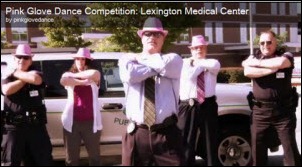
image The Women’s Health ABU at Cerner breaks out into a dancing flash mob during lunch at Cerner headquarters. Diners included Cerner associates, about 100 new hires, and over 40 clients. All I have to say is I want to be part of a dancing flash mob one day.

image Core Health is running its annual HL7 Interface Technology Survey for CIOs/CTOs, IT managers, and HL7 professionals. They did a nice job last year. Respondents are entered in a drawing for a ThinkPad tablet.

image Weird News Andy is on the tail of this story, which he summarizes as, “His butt, her end as a CNA.” A nursing assistant is fired from her job at a transitional care facility and faces voyeurism charges after taking pictures of a male patient’s buttocks, which she described to a co-worker as “too funny,” and posting them on her Facebook.

image WNA also fell for this story from England: a disabled man who falls out of his wheelchair in a hospital’s parking garage just 100 yards from its ED has to wait 25 minutes for paramedics to be sent from the other side of London. A bystander claims hospital nurses refused to help and said they aren’t allowed to treat patients outside their areas, although a hospital spokesperson says no such rules exist and nurses have responded to garage emergencies previously. 

image Data integration software vendor Informatica and the IT division of Hospital Corporation of America are embroiled in a legal squabble over software license fees, with Informatica claiming HCA owes it $6.3 million following a license audit. HCA interprets the scope of its license differently and disputes the claim.

7-21-2011 8-13-23 PM

image Cayman Islands Health Services Authority CIO Dale Sanders tells me that they’re re-competing their Cerner contract, with the core vendor tender here. If it were me, I’d plan the install for January and watch the resumes flood in from cold-haters more than willing to spend the winter there at discounted rates.

image A 34-year-old Australian woman who died immediately after visiting a physician for an ear infection is found by coroners to have experienced an allergic reaction to the antibiotic Ceclor, prescribed for her by an 85-year-old “computer illiterate” doctor who did not notice her documented allergy on the screen. The doctor has since given up his license and sought psychological counseling. 

image An indicted New Jersey couple who sold medical students and licensed physicians a $5,000 medical licensing exam test prep course that included stolen questions remains on the run, while their student-customers, most of them foreign medical school graduates, are being asked to defend their scores by re-test. Several have already failed and may lose their medical licenses. The National Board of Medical Examiners got suspicious when the wife took the USMLE exams several times and scored low, with a surveillance camera review showing her taking pictures of the computer monitor.

Researchers in Brazil find that tweets containing the word “dengue” correlate to local outbreaks of dengue fever, the disease that kills hundreds of people each year there, allowing authorities to identify geographic areas of outbreak and respond more quickly.

7-21-2011 9-25-02 PM

A 27-year-old hospital nurse in England is arrested after insulin was injected into IV bags in a storeroom, killing five patients.


Sponsor Updates

7-21-2011 9-08-37 AM

  • Sunquest Information Systems hosted a “Build a Bike” team-building event at its user group meeting last week. Fifteen bikes were donated to local Tucson charities.
  • United Regional Health Care System (TX) signs an enterprise license agreement for iSirona’s device connectivity solution.
  • TELUS expands its Canadian EHR ecosystem with the connection of Optimed Software Corporation’s AccuroEMR to TELUS Health Space.
  • CareTech Solutions announces that 14 of its clients were named Most Wired 2011 Hospitals. Five more were named Most Improved.
  • Billian’s HealthDATA interviews Gail Donovan, EVP/COO of Continuum Health Partners about the economic challenge of providing high quality care and outcomes.
  • Besler Consulting’s George Porette offers analysis on Medicare DSH and uncompensated care reimbursement in The Besler Beacon, the company’s quarterly newsletter.
  • Awarepoint’s Q2 bookings beat 2010’s numbers, increasing its hospital client count to 153.
  • Medicity’s Novo Grid is ranked the #1 private HIE solution by KLAS, the position it has held since the category was first reported last year.
  • Porter Hospital (IN) will install the iConnect image operability solution from Merge Healthcare.
  • Tulsa Spine and Specialty Hospital (OK) selects ProVation MD for physician point-of-care documentation.
  • Jennifer  Lyle, CEO of Software Testing Solutions, will serve as a Meaningful Use panel presenter at the iHT2 Health IT Summit in Denver next week.
  • Southwest Mississippi Regional Medical Center chooses Wellsoft’s EDIS for its two hospitals.
  • Thomson Reuters and CareEvolution expand their partnership to deliver the Thomson Reuter’s HIE Advantage solution, which leverages CareEvolution’s secure interoperability solutions and Thomson Reuters’ analytics expertise.
  • The 40-provider Philadelphia Hand Center contracts for the SRS EHR.

EPtalk by Dr. Jayne

I was intrigued by the item in Monday’s Sponsor Updates regarding the Surescripts White Coat of Quality program. I have to admit not being familiar with it, but was able to find its Web site. Frankly, I’m surprised to see that only four vendors were given this recognition for 2010. To quote directly (including grammatical and spelling errors) from the Surescripts website:

The criteria for earning a White Coat in 2010 was, by design, very straight forward:

  1. Provide a signed commitment from company leadership affirming their organization’s commitment to quality.
  2. Measure quality metrics as specified in the published industry guidelines and report those metrics each month to Surescripts.
  3. Implement changes to software that address issues identified in quality reporting. Take steps to eliminate any issues measured in #2 above.
  4. Raise prescriber awareness through training.

As a provider, this seems like a slam-dunk. I’m not sure why more vendors aren’t on the list, especially some of the larger ones.

clip_image001

I was flipping through Health Data Management while watching HIPAA training and a McKesson ad aimed at independent physicians caught my eye. It grabs the reader with “I didn’t survive my residency to be an I.T. Manager” and says solutions are “arriving fall 2011.” The ad features an older gent with some pronounced hair loss.

To me, this ad seems aimed at either (a) physicians who are the last-ditch holdouts for putting off EHR implementation, or (b) those that hoped they could retire before someone forced them to bite the bullet and go electronic. Nothing new on the Web site, so I suspect this is just marketing rather than something truly transformational. Maybe it’s a discount for AARP members.

Speaking of independent spirits, a colleague cornered me in the doctor’s lounge waving an article on usability from American Medical News, reminding me how much he reveres his paper charts.

(I still don’t quite understand what the AMA is doing with this publication. They offer it in both print and digital versions, but the same article has different publication dates. I understand the Web version is going to come out before the snail mail version, but can’t we at least use the same dates, hmmm? This was dated June 20 online and July 11 in print for those of you who are playing along with the home game.)

Anyway, the article doesn’t tell us anything we don’t already know regarding usability. Guess what? Vendors are trying to reduce click counts, de-clutter screens, and save us from alert fatigue among other not-so-small feats like being certified for Meaningful Use, transitioning to 5010 and ICD-10, and so on.

The piece mentions CCHIT’s five-star usability rating as a tool some vendors use to differentiate themselves. Wondering if this is anything like the above-mentioned White Coat of Quality, I wanted more information. (I’ve been deployed on stable systems for some time and have a low tolerance for boastful sales practices, so it’s been a while since I’ve played the system / vendor selection game looking at it through the eyes of the average user.)

The CCHIT Web site seems clunky and vendors are not in alphabetical (or any other seemingly rational) order. I never did find a list of those products that had received the five-star usability rating, although a Google search brought up lots of individual vendor listings, many of products I wasn’t familiar with. Maybe my search skills are deteriorating or maybe it was the effects of too much fruit of the vine while watching what might be the saddest web-based HIPAA training I’ve ever seen in my life as I apply for staff privileges at a new hospital. Still looking for the list – can anyone help a girl out? E-mail me.


Contacts

Mr. H, Inga, Dr. Jayne, Dr. Gregg.

CIO Unplugged 7/20/11

July 20, 2011 Ed Marx 10 Comments

The views and opinions expressed in this blog are mine personally and are not necessarily representative of current or former employers.

PoléPolé (Slow Slow)

7-20-2011 8-30-21 PM

3:21 a.m.

Zero degrees and our Camelbacks turn to ice 2,000 feet below Kilimanjaro’s summit. Five days of steady marching behind us. Almost home, but struggling.

Team chatter is eerily silent. Heads hung low and lamps dim, distraught climbers from other groups turn around short. Fear and doubt slither through our minds. Can I make it to the top? Will I be the one who fails?

“Angels We Have Heard on High” pierces the silence. Sensing our internal turmoil, the guides sing a familiar melody that shatters our foreboding. The crescendo of “Gloria” generates a second wind. Spirits lifted, we proceed with renewed vigor towards the prize.

7-20-2011 8-29-02 PM

Panting with joy, we crest Stella Point at sunrise. We pause on the volcanic rim, a mere 750 feet from the peak. We will make it. All of us. After a brief round of hugs, we persevere towards the summit.

Without a word, the four founders quickly move out and up the line of march. We conquer the final stretch together. Kilimanjaro was our collective idea, our blood bond, thus important and symbolic to finish together. After more hugs, high fives, and requisite pictures at the peak, I cry, hard.

Thirty-six hours later, we shower and settle in at the Arusha Hotel bar to celebrate. Debriefing over beers, we relive the climb, tell stories, and share leadership lessons learned. I gladly share them with you:


Fortitude
. Mental toughness is only honed via trial and refined by fire. No amount of mental gymnastics can prepare you like reality can. Don’t throw in the towel in tough circumstances. Put one leg in front of the other and move forward.

Training. A person rises to his level of training, not to his expectation. No exceptions. If you don’t make the time to train, you don’t make the team – period. Over the year, most climbed smaller peaks in preparation.

Gear. Reaching the top requires the right gear. No amount of training or exhortation can close the distance between success and failure when you are ill equipped. Invest in yourself and the team. A lack of gear equals climbing failure.

Vulnerability. We threw out titles before taking the first step. Administrators, presidents, physicians, and teens were now peers. Spending 24×7 with strangers requires a rapid adoption of transparency. The first day, we peed from a distance and behind some trees. Come day two, we’d grown beyond these formalities.

Encouragement. Maximum performance is nearly impossible without a pat on the back from a friend. Kind words work like salve on a wound.

Nutrition. You can fake your way and run on adrenaline for a day or two. But without sustained energy, you will collapse. Leaders must replenish themselves routinely.

Attitude. Zig Ziglar’s adage proved true: “Attitude, not aptitude, determines altitude.” No one benefits from listening to naysayers. Good leaders present good attitudes, even when they feel like vomiting.

Teamwork. Individuals caring for individuals, together. Shared hardships hasten lasting bonds.

Planning. Although the journey took only seven days, we organized over seven months. Anything worthwhile requires diligent strategic and tactical planning.

Support Team. We had an incredible support team comprised of friends and family. On the mountain, we had guides and porters.

Two lessons I’m still trying to internalize:

Climb High, Sleep Low. Reaching new heights requires giving up some ground. We spent a couple days where we gave back more elevation than we conquered. Although ‘straight up’ seemed the shortest distance, a sheer, vertical route would lead to breakdown. Every mountain has its peaks and valleys. Embrace these.

PoléPolé. To reach the highest summits, take time to acclimate at various heights and simultaneously build endurance. If you rush, the odds of success diminish exponentially. Sometimes you must go slow to go fast. Be in the moment. A leader must shrink the gap between frontrunner and laggard without losing sight of the ultimate objective or compromising passion.

7-20-2011 8-32-36 PM

We unveiled our corporate flag in front of the summit sign. This band of ruffians brought together 11 individuals and over the course of planning and execution built a team. The Kilimanjaro success rate is 60-70%, but we achieved 100%. Success demanded leadership and followership.

That rock taught us a lot. Changed us. Did someone say Everest?

Ed Marx is a CIO currently working for a large integrated health system. Ed encourages your interaction through this blog. Add a comment by clicking the link at the bottom of this post. You can also connect with him directly through his profile pages on social networking sites LinkedIn and Facebook and you can follow him via Twitter — user name marxists.

SAIC To Acquire Vitalize Consulting Solutions

July 20, 2011 News 10 Comments

image

Vitalize Consulting Solutions has signed a definitive merger agreement that will make the company an independent, wholly owned business unit of Science Applications International Corporation (SAIC), the McLean, Virginia-based government contracting firm. Terms will not be disclosed in the announcement, to be issued later this week.

Vitalize CEO Bruce Cerullo told HIStalk that SAIC pursued the acquisition to support its strong position in government healthcare IT. The Department of Veterans Affairs is considering commercial healthcare IT products, while the Coast Guard has already contracted for software from Epic Systems. Vitalize, with 600 consultants and annual revenue of over $100 million, runs one of the country’s largest independent Epic practices, Cerullo said.

”Meaningful Use will normalize, but will follow with ICD-10, HIPAA 5010, and Accountable Care Organizations. We want to play hard in that arena,” Cerullo said. “SAIC has great tools and methodologies they want to bring into the commercial world and we want to move into government.”

Cerullo said Vitalize’s leadership team and organizational structure will not change. Its headquarters will stay in Reading, MA with offices in Kennett Square, PA and Santa Ana, CA.

“We’re committed to bringing together the best of Vitalize with the best of SAIC,” Cerullo said. “We’re going to go slow. SAIC is growing at 8-10%, while we’re growing 100% year over year. They know what we’re doing is working.”

He added, “Vitalize has been part organic growth, part acquisition, and I suspect we will do more of both. We’re swapping private equity owners for a strategic owner. Our organizational structure, benefits, compensation, sales, and practice-oriented structure will remain.”

Completion of the transaction is expected in August.

News 7/20/11

July 19, 2011 News 15 Comments

Top News

7-19-2011 9-03-57 PM

image The FDA releases draft guidance on the oversight of mobile medical applications. The two categories of apps that would qualify for oversight include those that serve as an accessory to an FDA-regulated device (for example, one that connects with a PACS) and those that turn a mobile platform into a mobile device (the smart phone is used as an EKG device.) In some cases, software developers would have to demonstrate that their mobile apps work comparably to their non-mobile versions.


Reader Comments

image From Vince Ciotti: “Re: Epic’s 75 wins in 200+ bed hospitals. All of Epic’s clients are multi-hospital IDNs since ‘normal’ community hospitals simply can’t afford their epic fees. Judy won’t even condescend to bid to single facilities under 200 beds. If the typical multi has 5-10 hospitals, that represents about 10 wins for Epic. Still, at their incredibly high prices, this was enough to drive Epic to over $800M in revenue last year. Add in the hundreds of millions in hardware fees even bigger implementation ‘consulting’ fees they generate and Epic alone may represent our long-lost economic recovery!”


HIStalk Announcements and Requests

image Thanks to Inga for capably holding down the fort while I was away. It was good to be gone and almost as good to be back. I’m behind, but that’s not unusual – the only change is that I’m determined to stop feeling guilty about it since it’s too many jobs, not sloth or lack of time management skills, that’s responsible. I’d go part time at the hospital if that was feasible.

image Listening: the first new Yes album in 10 years. I’ve been a fan for much of my life and I saw them live not long ago, so I like it even as I acknowledge that prog rock isn’t everyone’s cup of tea. Reading: Life by Rolling Stone Keith Richards (excellent, either he and/or his hired gun co-author is a genius), so I may need to crank some B-side Stones.


Acquisitions, Funding, Business, and Stock

image Healthcare Growth Partners releases its quarterly HIT market report, with merger and acquisition activity recovering well from low activity a couple of years ago. Here’s a quote:

Generally, sub $100 million companies have three valuation inflection points: proof-of-concept, initial scalability, and expansion scalability.  Proof-of-concept is value created when a company shows that its product can be successfully sold and deployed in a commercial setting.  This inflection point is generally of more value to venture investors than it is to acquirors, as companies at this stage tend to be too early to realize significant value through a sale.  Initial scalability occurs when an earlier stage company begins to show strong profitability at high levels of growth,  although the organization is still small and lean. Expansion scalability takes place after a company has matured to a level where it takes on real infrastructure, and the company begins to show strong profitability after building out a mature corporate organization. 

Although the size of a company at each inflection point can vary significantly based on a company’s product or services and sector, the general rule of thumb in HIT is that proof of concept occurs at revenue of less than $1 million, expansion scalability in the $5 to $10 million revenue range, and mature scalability in the $20 million revenue range.

7-19-2011 8-45-26 PM

Philips reports Q2 numbers: revenue down 2.6% and a loss of $1.9 billion, with the CEO announcing cost reductions and share buybacks. Its healthcare business fared better than the company overall, with an 8% sales increase.

7-19-2011 8-47-00 PM

Apple announces Q3 numbers: revenue up 82%, EPS $7.79 vs. $3.51, wildly beating analyst expectations of $5.82. The company sold more than 20 million iPhones and 9.25 million iPads in the quarter.

7-19-2011 9-06-47 PM

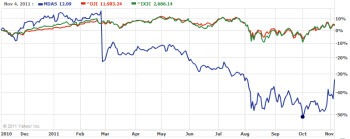
image Shares in WebMD Health recovered a bit on Tuesday following Monday’s drop of more than 30%, which was triggered by the company’s announcement of lowered revenue expectations. The one-year share price graph looks merely unimpressive until you notice that the straight vertical line to the right is not the margin of the graph.

7-19-2011 8-47-54 PM

Lawson Software, whose $2 billion acquisition by Golden Gate Capital and Infor was completed last week, has begun restructuring and employee layoffs.

Australia’s federal court approves CSC’s acquisition of iSoft for $202 million after 97% of shareholder votes were cast in favor of the proposal.

image A major player in HIT consulting will announce its acquisition later this week. I’m holding back specifics until the announcement comes out. It’s going to be a pretty big deal (no pun intended).


Sales

ADVANTAGE Health Solutions signs an agreement with IGIHealth for its ORBIT Clinical Exchange and portal to support ADVANTAGE’s ACO infrastructure.

7-19-2011 12-58-39 PM

Children’s Medical Center Dallas selects the Enterprise Data Warehouse business intelligence tool from Health Care DataWorks .

Final Support chooses EMR-Link from Ignis Systems to provide lab-EMR integration for its GE Centricity customers.


People

7-19-2011 10-52-29 AM

The board of Franciscan Hospital for Children (MA) fires CEO Paul J. DellaRocco, citing financial irregularities that include the inappropriate submission of expenses.

7-19-2011 6-57-49 PM

Former Allscripts COO Eileen Martinson is named CEO of Sparta Systems, a provider of quality and compliance management software.

7-19-2011 6-56-57 PM

RTLS vendor Versus promotes Susan Pouzar to VP of sales.

7-19-2011 7-00-05 PM

Practice Fusion hires Zachariah Gursky as its first VP of ad sales. He was previously with Coupons Inc.

7-19-2011 7-12-00 PM

Todd Cozzens is promoted to CEO of Accountable Care Solutions, a new business unit of Optum. He was previously with the company’s OptumInsight business, the former Ingenix that bought Picis, of which Cozzens was CEO. He mentions his new job and some thoughts on “virtual Kaisers” and their data needs in his latest blog posting.


Announcements and Implementations

The Georgia Health Information Technology REC selects Halfpenny Technologies to develop a lab hub demonstration project for the exchange of clinical data.

image Banner Health (AZ) completes its pilot of MyHealthDirect and will be implementing the service across all its facilities. This news clip explains how Banner is using MyHealthDirect to book appointments at low-cost clinics and thus reduce unnecessary ER visits and wait times.

7-19-2011 6-43-20 AM

Middle Park Medical Center in Kremmling (CO) begins implementation of Healthland’s EHR and anticipates a go-live by the end of the year. The 19-bed hospital expects to qualify for up to $250,000 in EHR incentives.

7-19-2011 8-53-35 PM

Johns Hopkins Medicine begins recruiting for over 60 people to implement Epic. Positions for the initial ambulatory rollout will focus on clinical documentation, analytics and research, and scheduling and registration.

LodgeNet Interactive restructures LodgeNetHealthcare into an independent but wholly-owned subsidiary. Gary Kolbeck, who was previously GM of LodgeNet Healthcare, will serve as president.

7-19-2011 1-21-04 PM

image Microsoft establishes a Web page for Google Health users interested in transferring their data to Microsoft’s HealthVault record. The site includes step-by-step instructions on how to move the data.


Government and Politics

image HHS’s Office of Inspector General finds that 12 of 13 states do not plan to verify all the eligibility requirements for paying Medicaid EHR incentives to doctors and hospitals . The reason: most states lack the data necessary for complete verification because data collection requires too much effort and too many resources.

image The federal government files a complaint against a Kentucky nursing home for fraud, but also alleges that five residents died from “worthless care.” Nurses were accused of failing to administer diabetes meds, diapering patients who had normal bladder function, ignoring physician orders, and not showing up at all for one 2.5 day period in which the nursing home had no RN coverage at all.


Innovation and Research

7-19-2011 6-53-37 PM

The Industrial Designers Society of America awards Silver recognition to Seattle-based Artefact for its design work on the prototype of the Seattle Children’s Patient Information System.

image Use of a real-time alerting system for patient deterioration reduced LOS 9.7 to 6.9 days and increased clinician response from 29% to 78% in a UK study. The $1.5 million Patientrack system was developed by an intensivist in Tasmania, but no Australian hospitals were interested in trying it. The weak link seems to be that it requires the nurse to manually enter the vital sign values.

7-19-2011 8-57-47 PM

image The VA offers a $50,000 prize to a developer who implements Internet-based technology similar to the government’s Blue Button program, which allows patients to download a summary of their health records. The competition started Monday and ends when a winner is chosen or on October 18, whichever comes first.


Other

7-19-2011 3-52-28 PM

image According to the local paper, independent physicians wanting to tie into Lee Memorial Health System’s Epic EHR would have to pay $15,000-$16,000 for the software license plus $25,000 to $80,000 per practice to cover implementation fees. Annual maintenance is an additional $4,500 per provider. Depending on the size of the practice, that could be a hard sale. Independent physicians in the area control about 84% of outpatient care.

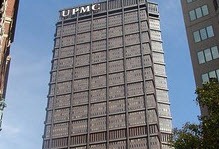
UPMC removes 29 of its 51 directors following a consultant’s recommendation for improving the board’s effectiveness. Its membership had swelled over the years as representatives were added from acquired hospitals.

image Memorial Health System (CO), the hospital whose electronic patient records were breached by a city-employed nurse and part-time psychic, says it has fired 22 employees in the past three years for privacy issues. One of them was caught looking up the records of friends so she could create a birthday database.

image Odd: a woman sues a Pennsylvania hospital and the county child protection agency when her newborn baby is turned over to foster care after testing positive for opium, which the mother blames on her own ingestion of poppy seed-containing salad dressing. Both organizations had been sued by another mother a few months ago for exactly the same thing, except that particular mom blamed a poppy seed bagel.


Sponsor Updates

  • MEDSEEK announces its fifth consecutive year on the HCI 100 list, based on its 2010 revenue performance.
  • Sentry Data Systems CMO William Kirsh DO, MPH participated as a writer and editor for a HIMSS Revenue Cycle Task Force white paper.
  • Surescripts recognizes  Allscripts as one of seven vendors to achieve Gold Solution Provider Status for e-Prescribing. Surescripts also awards e-MDs its White Coat of Quality.
  • AdvancedMD announces the release of its ONC ATCB-certified EHR 2011 solution that includes an enhanced patient portal, new Meaningful Use reporting tools, and utilities for submitting immunization and health surveillance data.
  • API Healthcare is offering a variety of sessions on creating more effective workforce management at its annual user group meeting this week in Milwaukee.
  • Orion Health’s Rhapsody Integration Engine and Rhapsody Connect earn ONC-ATCB EHR module certification .
  • Providence Health & Services selects Elsevier / CPM Resource Center as its vendor of choice for evidence-based clinical content.
  • Concerro releases a series of white papers collectively called the Workforce Management Wellness Series.
  • Kony hires Peter Buscemi to lead the company’s global marketing efforts.

Contacts

Mr. H, Inga, Dr. Jayne, Dr. Gregg.

HITlaw 7/18/11

July 18, 2011 News 2 Comments

Who’s On First?

Recent O’Toole Law Group engagements have raised a critical issue that’s worth passing on to HIStalk readership.

When providers contract with vendors, they expect certain products and services. This much is obvious. The issue presented here arises as a result of all the distributing, bundling, packaging and rebadging of products.

Vendor A may offer Vendor B’s product alongside its own products. In this case, Vendor A is a distributor (and usually a reseller) of Vendor B’s product. Typically this type of collaboration exists when the two products perform related tasks for the provider. Like ice and your favorite drink, each is good, but together they are great!

Vendor X may offer a product called “TurboEMR” that also has some type of label like, “powered by HISware” or something to that effect. This probably means Vendor X has HISware’s software embedded in its product, and the “powered by” refers to this fact. In this case, Vendor X is sublicensing technology developed by HISware.

In each situation, the provider gets the package deal and the functionality it is seeking, which would not be possible with only Vendor A or Vendor B in the first instance or with only Vendor X in the second.

So everyone wins, right? Hopefully, but maybe not.

When things go well and you have a great prime vendor that really steps up and fills that role, life is good. The provider gets precisely what they signed up for. They have a single point of contact for resolution of problems with any of the products involved.

But what happens when things go wrong? Are the responsibilities and procedures clearly set out? Key contract components that must be addressed fully by all vendors involved include support obligations, copyright / patent protection, indemnification, and liability provisions, to name a few.

How does the provider determine exactly what they are getting and precisely whom they are dealing with?

One simple way to determine the “who” part is to look for the warranty of ownership. Something like, “Vendor warrants that it owns the software.” Once you find that section, really analyze it. It is probably not more than a sentence or two, three tops.

If the vendor warrants that it is the developer and sole owner of the technology being licensed, then you are dealing with a single vendor and its products. This is the cleanest, most simple scenario.

(Quick sidebar here: it must be a warranty, not a representation. Warranties have certain protections and remedies that representations do not.)

If the vendor warrants that it is the owner of the technology OR that it has the right to license it, that is your red flag duct taped to a flashing light. This is not bad, but it means the product contains or is packaged with third-party software. You need to be aware of this and you must obtain certain crucial contract terms for your protection.

The best-case scenario (keeping in mind that there is another vendor involved that is not a party to your agreement, which is the reason behind this article) is a warranty from the vendor that you are contracting with that it has warranties of ownership, operation, and error correction (for example) from the other vendor. This is critical because it can then be used to back up the same warranties from your selected vendor to you.

The biggest warning flag you could ever encounter is where there is a disconnect in the protection(s) offered. If the vendor warrants that “all software is great and works fine and they will fix everything, but this warranty does not apply to a certain line item or product,” then you have a problem. What happens if there is a failure with the excluded software?

If you have no answer while reviewing contract language, just imagine the discomfort you will feel if your system is down and all indications point to the excluded product.

OK, stay with me here. All the legal stuff aside, what those in IT really want to know is what happens if there is a problem with the products.

As stated before, with a solid prime vendor you are in good shape. But what about those unfortunate situations where fingers get worn out from all the pointing?

To try and avoid heartburn later, fix the contract up front. Try this simple exercise. Remember connect the dots, those partially finished pictures in coloring books with numbered dots? Connect them in numerical order and complete the picture! Give it a try with your software agreement.

If you have more than one vendor involved, just imagine a system crash, and then try to connect the dots to all the vendors, especially the vendor behind the scenes. Do you have adequate warranty protection? Do procedures exist for escalating a software problem to the correct level at the vendor? Can you get to the vendor at all??

Make clear for each product included, or component thereof, which vendor is responsible for support, updates, fixes, etc.

Make certain that you have contract pathways to obtain that service. Assume vendor A is first point of contact. When the problem ultimately is identified as residing in Vendor B’s product, then what? It may be that the responsibility remains with Vendor A, but it also may be that Vendor A is only responsible for “Level 1 Support” and then you go to Vendor B for the difficult stuff. Ideally Vendor A stays involved and shepherds the issue through to resolution, sort of like a new car warranty. Inga’s Cadillac dealership did not build the car, but when the car breaks down, you take it back to Inga’s to get it fixed. Inga’s then takes care of the work required and is backed up by the manufacturer.

Taking the car analogy a little further, in terms of your contracted vendors, while you may know who is in the driver’s seat, you may not know who else is along for the ride. It could be an awesome two-seat Tesla roadster with two great vendors, or it could be the mud-covered SUV with a bunch of buddies all saying they work together just fine (and the driver is wearing really dark shades.) Due diligence in contracting pays off, and lack of diligence can really sting you later.

Vendors, please make it clear. You know best what is going on. Put it right out there.

After 20+ years doing this, I still remember a situation where an executive at a monster hospital chain felt something had been “snuck in.” In reality it was not, but the impression stuck hard and fast in this executive’s mind and we had to face extra scrutiny for several years to follow. Kind of like a dog that gets whacked by something at one of those birthday parties where twenty kids are running around screaming and things get zany and someone hands a whiffleball bat to the kids for the piñata. Anyway, the dog gets whacked (accidentally, of course) and never forgets the kid that did it. Don’t be the kid with the bat!

Tangential issue: get a warranty that states no other software is required, from your prime vendor or any other vendor, for operation of the software products being licensed. If other software is required but not included, require a listing in the agreement of all such products. Failure of your prime vendor to include something on this list should mean the vendor has to pony up and pay for it. That will bring all the fine details right to the top.

Finally, once you get everything above all set, make sure that all your hard work does not blow away in the wind because a vendor subcontracts work or assigns the agreement to another vendor. Include provisions prohibiting assignment or subcontracting without the customer’s agreement. That way you know what you are getting, from whom you are getting it, and that things will stay that way unless you agree otherwise.

Please take care in your interpretation of this article. I have been involved in countless good situations involving multiple vendors and very happy customers. When the provider does get a good prime vendor that truly takes on its role, you win. No question it works well in the right situations. My point is to be diligent and try to avoid bad situations by at least having good contract language on your side. The combination of a poorly performing vendor and weak or lousy contractual support will really ruin your day.

Big takeaways:

  • Contract language, warranties, and obligations should be consistent as applied to all products and vendors involved, even if designated to a prime vendor. Watch for disconnects in supporting language.
  • The contract should map out clearly the support chain and obligations of the vendors involved, again, even if designated to a prime vendor.
  • Require listing all software required for operation of the products being licensed and obligation for the vendor to provide whatever they failed to list.
  • Prohibit assignment and subcontracting by the vendors without your consent.

This article is intended to provide general advice and is not by any means exhaustive on the issues or language required and must not be taken as specific legal advice. Hopefully HIStalk readers enjoy the presentation and take away a valuable lesson or two.

William O’Toole is the founder of O’Toole Law Group of Duxbury, MA.

Curbside Consult with Dr. Jayne 7/18/11

July 18, 2011 Dr. Jayne Comments Off on Curbside Consult with Dr. Jayne 7/18/11

I’m finally back in my normal routine with the usual rounds of meetings, committees, working groups, conference calls, and Meaningful Use activities that make up the fun-filled CMIO lifestyle. Lots of reader response this week, and that has kept me going through it all. Every time I take vacation, I forget how much one gets punished the week after, so thanks to all of you for keeping me going. Your e-mails have been a true bright spot in an otherwise harried week.

Last week’s piece on physician rating web sites generated several comments. Most of them agreed that the sites don’t have a tremendous amount of worth compared to word of mouth or physician recommendations. Tammi sent her thoughts:

Too bad there isn’t a truly reliable source I would trust. Having been down the roads I have been down, my choice would still be to do my homework and ask around and ask the right folks. And then ask again. It is about more than the physician, too. Who supports them and what is their experience?

Entirely true. There may be a lead physician performing a procedure, or a primary care physician quarterbacking the care, but there’s a whole world of nurses, consulting providers, patient care technicians, case coordinators, therapists, and a host of others involved. Having seen it from both the physician and patient sides, it pays to do your homework.

In response to my comments on physicians and social media, Chris reminds us that it goes both ways:

A lawyer friend of mine passed this along the other day about a judge allowing Facebook posts as evidence in a personal injury case. I wonder how long until we see this same thing in a medically related case?

Based on some of the antics of my employees on Facebook, it’s apparent that people don’t care who is reading or what they are writing. And no, I’m not stalking them. Most of them actually friended me, so it’s not as if they don’t know that I might be reading. I worry for their livers and their brain cells, that’s all I’m saying.

Tremendous feedback on my quest for appropriate cocktail pairings to go with mandatory online training. I can officially confirm that Personal Protective Equipment is much more enjoyable with a drink and some nibbles. Judy encouraged me to not forget Compliance as a potential topic. My recommended pairing for either Compliance or Risk Management training:

clip_image001

Over the next few weeks, I’ll be working on some online modules that are required for specialty board recertification. For those, I have chosen some picks from Caduceus Cellars.  (For those music lovers who like Mr. H’s notes on what he’s listening to, you may be interested to know that Caduceus is project involving Maynard James Keenan, legendary front man for Tool and A Perfect Circle.)

clip_image002

Rock star HIStalkapalooza correspondent Evan Frankel mentions:

I have fallen back in favor of Portugal’s very unique and refreshing green wine ‘vinho verde’ with scholarly research. With an iced glass as its chalice, [it] really does induce people to sit outside, enjoy a sunset and get into really meaningful and enjoyable conversation about the future of healthcare in America.

Evan, do you wear your fabulous jacket when you drink it?

clip_image003

Matthew noted:

One cannot go wrong with Orin Swift’s excellent The Prisoner. Not only is this blend of mostly Zinfandel, Cabernet Sauvignon, and Syrah pleasing to the palate, the label itself perfectly sums up how one feels while attending mandatory training offerings.

Oh yes, I will be using this one. Perhaps some bottles as attendance prizes for Meaningful Use upgrade training? Or for myself, when I’m forced to attend said upgrade training, which although I wrote and approved, I have to attend to verify credit in the online system?

Speaking of verification of attendance, a letter to the editor in American Medical News caught my eye this week. Massachusetts surgeon Jeffrey Kaufman writes about his experience of being required to punch a time clock. Although I’ve not had to actually clock in and out, my employment agreement and pay stubs reflect an “hourly wage” for being a physician. I don’t remember the last time I worked a straight 40-hour week. When I asked about it, I was told that the personnel resource management system (aka software) can’t handle a salaried employee. I’ve been known to mentally divide my salary by actual hours worked. As a Chief Resident, I could have done better on the night shift at Taco Bell.

clip_image005

Last but not least, the perfect wine pairing for a discussion of Meaningful Use. I will definitely be looking for this one the next time I shop for the fruit of the vine. I’ll have to make a point to have some in house prior to the final decisions on Stage 2. Have any other cocktail suggestions? E-mail me.

E-mail Dr. Jayne.

Comments Off on Curbside Consult with Dr. Jayne 7/18/11

Monday Morning Update 7/18/11

July 17, 2011 News 7 Comments

From Brass Tacks: “Re: Danbury Hospital. They fired the CFO over this.” Former Danbury CFO William Roe is sentenced to 33 months in federal prison for embezzling $200,000 from Danbury Hospital (CT) and former employee St. Rita’s Medical Center (OH) by approving invoice payments to a fake software consulting company he had set up. Roe, who made $594K in 2009, blamed poor judgment and begged for a light sentence. The judge, unimpressed by his two court order violations, said, “Your primary concern is for yourself and your family, who have already benefited from the funds you’ve stolen.”

A New York Times article on usability of clinical systems highlights the usual arguments: usability experts say there’s no question that today’s systems are measurably poorly designed to the detriment of clinician users and patients, while vendors strongly resist the imposition of usability standards or mandatory usability testing.

7-17-2011 12-52-47 PM

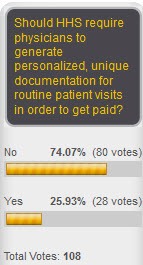
Most poll respondents say the person running the company that employs them is honest and honorable. New poll to your right: should the federal government measure and report the usability of clinical systems?

Essentia Health (ND) goes live on Epic’s EHR July 31th.

Gartner positions mobile application development platform provider Kony in the “Visionaries” quadrant of the Magic Quadrant for mobile consumer application platforms.

David Roberts, HIMSS’s VP of government relations, says it is unlikely that Congress would vote to eliminate future funding for EHR Meaningful Use incentives, despite the current current stalemate in federal budget negotiations. To eliminate the incentives, Congress would need to specifically vote to narrow the scope of the program or eliminate the program entirely. Roberts believes that legislation lacks adequate support to be passed in either houses of Congress.

The weekly e-mails of Kaiser Chairman and CEO George Halvorson are often HIT-related, with this week’s no different. Kaiser researchers have published autism-related studies made possible by its extensive patient data warehouse. They found that pregnant woman who used certain drugs greatly increased the odds of having an autistic baby, but vaccines were not among those drugs. They also found that children are dying of whooping cough because they aren’t being given pertussis vaccine.

Here’s the latest installment of HIStory from Vince Ciotti, this time covering vendors of minicomputer systems.

Greenway Medical Technologies files registration to raise up to $100 million in an IPO. Underwriters include Morgan Securities, Morgan Stanley, William Blair, Piper Jaffray, and Raymond James.

7-17-2011 3-20-52 PM

Caristix is offering a free beta program for software that helps hospital integration analysts identify and document custom HL7 interface segments and values.

7-17-2011 1-28-26 PM

Indian River Medical Center (FL) hires as its first CIO Bill Neil, formerly IT director at Presbyterian Healthcare Services (NM).

Scripps Health (CA) chooses Meddius to provide Integration as a Service, replacing its Sybase integration engine.

7-17-2011 2-51-25 PM

Yale New Haven licenses the Rothman Index, which uses real-time clinical systems information to generate a patient score that helps clinicians identify patients whose condition is deteriorating.

UPMC’s living donor kidney transplant program was shut down in May because up to six transplant team members failed to notice a Cerner EMR lab result alert indicating that a donor had undiagnosed hepatitis C. Her kidney was transplanted into a patient who did not have the disease, resulting in the temporary shutdown of the program. The surgeon who did most of the procedures was removed from his position, joining his equally high profile colleague who was fired in an earlier UPMC transplant scandal. A highly regarded transplant nurse was suspended for two weeks. Outside experts blamed generally poor EMR design, saying that UPMC administrators had a “knee-jerk reaction” in removing the surgeon, who had been under pressure to increase procedure volume, instead of examining the system that allowed the error to occur.

7-17-2011 2-46-41 PM

Seven former nurses from Valley Regional Medical Center (TX) sue the hospital, alleging they were fired in retaliation for making good faith reports of unsafe patient conditions. The nurses were terminated for "insubordination" after opposing assignments they claimed endangered critically ill patients. One nurse explained the situation as follows:

"It’s about standing up for your patient. We got into this profession to advocate for our patients… Patients who can’t speak up for themselves… And that’s what we’re trying to do here."

EHRs provide more comprehensive information on health services received than do Medicaid, according to a study published in the Annals of Family Medicine.

Mayo Clinic announces it is close to completing the development of tools that can identify and sort digital health information from any EMR, regardless of file format and data organization. Mayo’s project is funded by the HHS through its $60 million Strategic Health IT Advanced Research Projects (SHARP) program.

Next month CMS will roll out a pilot program for the electronic transmission of documents to support claims. Designated “health care handles” will serve as intermediaries between CMS and providers.

Strange: a city-employed nurse is fired for inappropriately accessing the electronic medical records of hospital patients. She says the real issue is her part-time job as a psychic, where she told patients they were about to experience heart attacks and claimed to be speaking to deceased co-workers from beyond the grave.

Contacts

Mr. H, Inga, Dr. Jayne, Dr. Gregg.

News 7/15/11

July 14, 2011 News 14 Comments

Top News

7-14-2011 4-54-17 PM

Nuance Communications acquires transcription services provider Webmedx. Both companies offer outsourced transcription services with speech recognition capabilities and offer NLP technology to extract information and convert it into discrete data. It’s been a busy week for the transcription services and speech technology segment: earlier this week, MedQuist announced plans to acquire M*Modal for $130 million.

7-14-2011 4-12-37 PM 7-14-2011 4-36-10 PM 7-14-2011 4-37-06 PM 7-14-2011 4-38-30 PM

Allscripts adds four senior execs to its leadership team including Cliff Meltzer as EVP of solutions development, Steve Shute as EVP of sales, Jackie Studer as SVP and general counsel, and John Guevara as CIO. Meltzer is an Apple, Cisco, IBM, and CA Technologies veteran and replaces the now retired John Gomez. Long-time IBM-er Shute replaces Jeff Surges, the current CEO of Merge Healthcare. Studer (GE Healthcare) takes over for Kent Alexander, and Guevara (Microsoft, Intermec, Siemens) is Allscripts’ first CIO.  Allscripts also announced the department of COO Eileen McPartland, who is leaving to become CEO of a private company outside of the healthcare industry.


Reader Comments

From Charlie Brown “Re: Worried. Hey Inga. No push e-mail this AM for HIStalk and no new postings since yesterday. Did HIStalk break?” Thanks for your concern, Chuck, but nothing is broken (well, nothing that I know about, anyway.) Alas, Mr. H didn’t set up anything in advance for posting Wednesday, so we went a rare mid-week day with no Readers’ Write or interview. Mr. H promised me he’d eventually return from vacation, so look for an in-box full of HIStalk blasts next week.

7-14-2011 4-02-06 PM

From Boozers “Re: 2010 market share. Wow. Look at how Epic is hurting McKesson.” This table from KLAS shows Epic won 75 deals last year in the 200+ bed hospital market and had no legacy losses. The next best performer was Cerner, with 14 wins and six legacy losses. At the bottom: McKesson Horizon with four wins and 24 legacy losses. Ouch.

7-14-2011 4-26-05 PM 7-14-2011 4-28-05 PM

From Court Jester “Re: From the floor at AMDIS. Lots of interesting discussions and speakers and talk around the evolution of technology adoption by physicians. The hottest topics center around  CPOE and clinical documentation and the need for good workflow and ease of use.” AMDIS’s 20th Annual Physician-Computer Connection Symposium is wrapping up Friday in Ojai, CA. I must admit that if I were Court Jester I would be hanging by the Ojai Resort’s gorgeous pool rather than in the back of one of a meeting room.


HIStalk Announcements and Requests

This week on HIStalk Practice: Dr. Gregg dialogs with Stupid Simple and S&M. Sermo intros Sermo Mobile and iConsult. A whopping 76% of physicians with smart devices utilize iPhones. Physicians increased their ability to generate registries after implementing EHRs. Telepsychiatry is not catching on as fast as other telemedicine services. If you sign up for the HIStalk Practice e-mail updates, the budget crisis might be resolved and the US women might crush Japan. With stakes like that, how can you not sign up? And thanks for reading.


Acquisitions, Funding, Business, and Stock

7-14-2011 4-32-33 PM

drchrono closes $675,000 in its first round of institutional financing. Investors include several VC firms, plus Gmail creator and FriendFeed cofounder Paul Buchheit and Google’s principal engineer Matt Cutts. drchono offers a free EHR for the iPad.


Sales

Nevada Rural Hospital Partners, a 14-hospital alliance, partners with Anthelio (formerly PHNS) to provide business office solutions and coding services to member hospitals.


People

7-14-2011 3-02-52 PM

Progress Software appoints Philip M. Pead to its board of directors. Pead is the current chairman of the board for Allscripts and the former president and CEO of Eclipsys.

7-14-2011 4-07-53 PM

Dominick Bizzarro, the CEO of the Healthcare Information Xchange of New York, resigns to join InterSystems as business manager for the HealthShare HIE platform.


Announcements and Implementations

Nevada-based HealthInsight launches its HIE using Axolotl’s platform. Providers will begin sharing patient information in September.

7-14-2011 8-32-06 AM

Cheboygan Memorial Hospital (MI) outsources its IT operations to Phoenix Health Systems, who will implement Meditech’s EHR and provide IT leadership and service desk support.


Government and Politics

A bipartisan group of Congressmen introduces a bill that would amend the EHR incentive program to benefit multi-campus hospitals. The legislation would give each hospital campus the opportunity to earn Meaningful Use incentives.


Innovation and Research

The US Patent and Trademark Office awards Epic Systems a patent for “a system and method for providing decision support to appointment schedulers in the healthcare setting.”


Other

Directors of the Kingsport, TN-based RHIO CareSpark vote to cease operations this fall, citing an unsuccessful effort “to transition from a grant and contract based nonprofit organization to a user subscription and revenue sustained entity.” CareSpark was formed in 2005 after receiving $600,000 in funding from the Foundation for eHealth Initiatives and local partners.


Sponsor Updates

7-14-2011 2-00-40 PM

  • Greenway Medical and PGA Tour Golf Pro Jason Dufner debut their new partnership at the British Open. Note the Greenway logo on Dufner’s jacket.
  • The Drummond Group awards SRS EHR ONC-ATCB certification as a complete EHR.
  • GE Healthcare releases a new white paper discussing the annual cost of healthcare-associated infections in terms of dollars and lives. GE Healthcare also announces the formation of MIND, a coalition to help physicians detect, diagnose, and manage neurodegenerative diseases.
  • The Entrepreneurs EDGE awards Lexicomp, a Wolters Kluwer Health subsidiary, its fourth Crain’s Leading EDGE award for creating economic value in Northeast Ohio.
  • Blanton Godfrey, Ph.D. and board chairman of the Institute for Healthcare Improvement will be the featured speaker at TeleTracking Technologies annual client conference in San Diego in October.
  • Sage awards Peter Christensen Health Center (WI) its Healthcare Best Practices award at the Sage Summit conference in Washington DC.
  • Practice Fusion announces Practice Fusion Connect 2011, a free EMR event for its 100,000+ clients, November 11th in San Francisco.
  • AirStrip Technologies expands its leadership team, promoting Bruce Brandes from chief sales officer to EVP and chief strategy officer. Also, AirStrip was named InformationWeek magazine’s Most Transformative Healthcare Application at this week’s Healthcare Leadership Forum in NYC.
  • Emmi Solutions selects Health Language, Inc. to enhance the usability of its patient engagement programs.
  • North Highland announces an expansion into Japan through a partnership with GENEX.
  • Iatric Systems earns ONC-ATCB certification for three more products. Iatric is also hosting a slew of free Webinars over the next three months, covering a variety of clinical and technical topics.
  • Precyse hires Kristen Saponaro as VP of marketing. Saponaro was the principal of Saponaro Communications, LLC, the consulting firm that supported Precyse in its recent rebranding efforts. Precyse was also recently awarded a medical transcription services contract with Community Medical Center (PA).
  • Anson General Hospital (TX) leverages its ChartAccess EHR from Prognosis to successfully attest for Meaningful Use.
  • NextGen execs Charles Jarvis and Tony Landauer are scheduled panelists at next month’s CompTIA Breakaway 2011 in Washington, DC.
  • Allscripts provides its preliminary Q2 financial numbers, which include expected bookings of about $240 million and profits and revenue above analysts’ expectations.

EPtalk by Dr. Jayne

It’s been difficult to get back to the routine with me returning from the beach and Mr. H vacationing, but the lovely Inga has been doing a fantastic job holding down the HIStalk fort. Although I’m still somewhat achy from the gut-busting laughter that accompanied Dr. Gregg’s recent comments on the EHR selection process, I didn’t want to miss the opportunity to share some newsy tidbits and random thoughts.

HHS releases a proposal to revise HIPAA and harmonize it with HITECH provisions. The AMA states: “The proposed rule seemingly goes beyond what is required by laws and would pose significant burdens on physicians if finalized.” The comment period ends on August 1, so let your voice be heard.

The Sage Summit is being held this week at the Gaylord National Hotel and Convention Center in Washington DC. Partner Days are July 10-15 and Customer Days are July 12-15. I understand the Wednesday evening event was “Night at the Museum” at Smithsonian Air and Space. Anyone attending? Let us know what you are seeing and hearing.

A recent survey shows consumers have a higher opinion of facilities using the word “Hospital” as opposed to those who have gone to the ritzier-sounding “Medical Center.” Respondents felt Hospitals provided better care and were more cutting edge. What’s in a name? It reminds me of when a previous employer named their brand new facility the “Cancer Center of Excellence.” Not only was it just tacky, but as far as Centers of Excellence go, it was a new service line that hadn’t gone anywhere near proving itself through outcomes or peer recognition. Personally, I’d like to see a survey on “Information Technology” vs. “Information Services” vs. “Information Systems” departments. A rose by any other name…

For those of you who have been eagerly awaiting implementation of new DEA rules for e-prescribing controlled substances, you’ll probably have to wait on your medical marijuana scripts. The DEA has stated that cannabis “has no accepted medical use and should remain classified as a highly dangerous drug.” Advocates can now appeal to federal courts after a nine year delay. DEA Administrator Michele Leonhart states that “the known risks of marijuana use have not been shown to be outweighed by specific benefits in well-controlled trials that scientifically evaluate safety and efficacy.” How hard do you think it would be to enroll patients in THAT study?

Thanks to Mustang Sally, who sent an article on physicians who use Twitter anonymously. It has some interesting examples, but closes with a mention of the American Medical Association’s ethics policy on social media, which warns that “actions online and content posted… can undermine public trust in the medical profession.” I don’t agree with physicians griping about patients on Facebook or Twitter, but you can imagine that I do see a benefit in anonymity. The full text of the Policy, approved in 2010, can be found here.

Interesting piece from the Kaiser Family Foundation: “Why It’s Okay that EHR Adoption Will Fall Behind 2011 Goals.” The authors cite “cleaning house” as a cause, meaning “older, costly, and difficult-to-implement legacy EHRs will be replaced by less expensive, more agile systems that have been developed specifically for meaningful use and are deliverable in the cloud as Software-as-a-Service.”

clip_image002

I’m off to sample my employer’s mandatory online training offerings, which apparently I must complete or I won’t get paid. After a week of fuzzy umbrella drinks, I’ve decided that Workplace Harassment, Personal Protective Equipment, and Privacy 101 go best with a nice Cab from Joseph Phelps. Have any other suggestions for excellent educational wine pairings? E-mail me.

drjayne


Contacts

Mr. H, Inga, Dr. Jayne, Dr. Gregg.

News 7/13/11

July 12, 2011 News 2 Comments

Top News

The Government Accountability Office reports that the federal government’s systems for analyzing Medicare and Medicaid data for possible fraud are inadequate and underuse, making it difficult to detect the $60 to $90 billion in fraudulent claims paid out each year. The GAO also notes that:

  • CMS spent $150 million on new systems that went live in 2009, yet crucial pieces are missing.
  • The current systems don’t include Medicaid data and CMS’s plans to share Medicare and Medicaid data with states and implement new software have been delayed.
  • Of the 639 analysts who are suppose to use the system, only 41 have been trained so far.

CMS’s top anti-fraud administrator was scheduled to testify for a Senate subcommittee Tuesday to discuss the findings.


Reader Comments

image

From Bamma Bubba “Re: UCLA HIPAA violation settlement. Hospital snoops will never stop – it’s a people problem, not an IT problem. Could be a way to increase federal revenue, but then hospitals just pass the costs on to patient and insurers.” Yep, even though our mothers told us to mind our own beeswax, humans are generally just plain nosy. And at HIStalk we also like to make fun of people that can’t spell HIPAA.


HIStalk Announcements and Requests

Mr. H is still vacationing for a few more days. Either Mrs. H has banned him from the computer or he is in the Land of Bad Internet (I’m betting the latter) because I’ve hardly heard a peep from him in two days. Until his return, feel free to send any hot news my way. Or, if you don’t have hot news, just drop me an e-mail for the heck of it.


Sales

7-12-2011 5-15-54 PM

When Sidra Medical and Research Center (Qatar) opens in 2012, it  plans to run the Cerner Millennium platform and be the first fully digitized medical facility in the country.


People

Mediware hires Michael Anania as VP and GM of the company’s Blood Center Technologies product group. Anania’s previous employers include Roche Diagnostics and Baxter Healthcare.

7-11-2011 2-40-38 PM

MGMA names Susan Turney, MD its president and CEO, succeeding the retiring William F. Jessee, MD. Turney, who is an internist, has served as CEO of the Wisconsin Medical Society since 2004 and founded and chaired the Wisconsin Statewide HIE.

Apollo Health Street beefs up its sales force with the addition of four regional VPs: Ken Bartlett (SSI, McKesson), Dan Contilli (Healthation, SunGard), Troy McCormick (Invikktus, Emdeon) and David Richards (Dell Services, EPBS-Internedix.)

7-12-2011 4-13-40 PM

PointClear Solutions, a provider of HIT product development services, names Rodney Hamilton, MD, CMIO and managing director of its product strategy practice. Hamilton most recently was chief strategy officer for Vanguard Health Systems; he also spent time as a physician liaison with McKesson.


Announcements and Implementations

Predixion Software collaborates with the development team of Clinical Looking Glass to create a predictive model for reducing patient re-admissions. Clinical Looking Glass is a decision support tool that was developed at Montefiore Medical Center (NY).

7-12-2011 5-35-43 PM

Chelsea Community Hospital (MI) goes live next weekend on its $12 million EMR system. Chelsea is part of Trinity Health so I am assuming it’s a Cerner implementation.

7-12-2011 5-23-15 PM

The Indiana HIE reports that 70 distinct hospitals, long-term health facilities, and health systems were connected to the exchange as of the end of 2010. For the full year, IHIE delivered 3.3 billion pieces of clinical information, which is about 1.1 billion more than 2009’s totals.


Government and Politics

Arizona, Connecticut, Rhode Island, and West Virginia have now launched their Medicaid EHR incentive programs, bringing the total number of live state programs to 21. Only 14 of those states states have issued incentive checks.


Other

7-12-2011 4-55-15 PM

Cerner is sponsoring a 10-week weight-loss competition aimed at helping Kansas City residents drop a combined 100,000 pounds. The KC Slimdown Challenge is expected to involve about 20,000 people. For the calculator-challenged, that’s about five pounds a person.

Corepoint Health is the top-rated vendor in KLAS’s just-released interface engine report. Corepoint has the largest presence of any vendor in smaller healthcare facilities but very few clients in facilities over 500 beds. InterSystems was ranked a close second, though almost all InterSystems Ensemble customers are in 500+ bed facilities.


Sponsor Updates

7-12-2011 6-23-25 PM

  • Cumberland Consulting Groups promotes Erik Howell to principal. Howell has managed multiple HIT projects for Cumberland since joining the company in 2004.
  • Surgical Information Systems is hosting a July 13th webinar on how social media affects healthcare.
  • PatientKeeper’s 2011 User Group Conference is scheduled for September 18-21 in Denver.
  • Lori Prestesater, RelayHealth’s VP of strategy and business development, will be discussing ACOs and Meaningful Use as a panelist at the Institute for HIT’s summit July 26-27 in Denver.  Also at the summit: Software Testing Service CEO Jennifer Lyle, who will join a panel discussion on strategies to achieve Meaningful Use.
  • URAC awards accreditation to MEDecision’s Alineo health utilization management platform.
  • Cancer Treatment of America  selects CareTech Solutions’ Service Desk to provide 24x7x365 IT support for its national network of  centers.
  • Concerro is offering a July 23rd webcast on nursing documentation and reimbursements. Coding expert Glenn Krauss will lead the discussion.
  • Karen Knect of Encore Health Resources will overview e-Measures during a online session July 13th.
  • The Los Angeles County Department of Health will implement Wellsoft Emergency Department Information Systems at its Los Angeles County and USC Medical Center hospitals.
  • Vocera Communications names John McMullen to its board of directors. McMullen is a SVP and treasurer at HP and will serve as chairman of the audit committee.
  • GE Healthcare launches its fully integrated EMR/PM system, Centricity Practice Solution 10.
  • CynergisTek CEO Mac McMillan will be a panelist for the launch of Clearwater Compliance’s HIPAA-HITECH Blue Ribbon panel July 14th.

Contacts

Mr. H, Inga, Dr. Jayne, Dr. Gregg.

MedQuist Holdings to Acquire M*Modal for $130 Million

July 12, 2011 News Comments Off on MedQuist Holdings to Acquire M*Modal for $130 Million

7-12-2011 6-01-04 AM

MedQuist Holdings announced the signing of a definitive agreement to acquire M*Modal and its Speech Understanding technology for total consideration of $130 million, which includes $77.2 million in cash and 4.1 million shares of common stock.

Former Misys CEO Vern Davenport was appointed chairman and CEO of the new entity. He will replace Peter Masanotti as CEO and Bob Aquilina as chairman. Aquilina will continue to serve on MedQuist’s board. and Masanotti will remain a consultant to MedQuist through the end of September.

MedQuist has already been using M*Modal’s technology for its medical transcription business. The company intends to enhance further the integration of M*Modal’s front-end speech recognition technology with MedQuist’s clinical documentation platform.

M*Modal has a current annualized revenue run rate of $24 million, about $7 million of which came from MedQuist.

Comments Off on MedQuist Holdings to Acquire M*Modal for $130 Million

Curbside Consult with Dr. Jayne 7/11/11

July 11, 2011 Dr. Jayne 4 Comments

I talked a little last week about the perils of new resident physicians starting at teaching hospitals. Not only do new residents relocate in the summer, but a lot of families do as well to take advantage of the gap between school years. Knowing I’m a physician, a new neighbor surveyed me about choosing a primary care doc for the family. Unless you have a doc next door, most people consult relatives, co-workers, neighbors, and friends for recommendations. One hot button area that doesn’t get much coverage in Health IT circles though are online rating services such as HealthGrades, RateMDs.comAngie’s List,  and others.

Remembering my experience with the Medicare Physician Compare website, I decided to find out what I look like on some of the other sites as well as what it would be like to correct errors, should I find them. I started with HealthGrades, which listed me at the correct address at least, but I had no ratings. Although that doesn’t help new patients at all if they are looking for a physician, one thing it does say is that at least I haven’t made anyone sufficiently mad enough that they logged on and gave me a thumbs-down.

Kind of surprising since I make at least one patient a day angry by refusing to prescribe antibiotics when they’re not necessary or by refusing to order unneeded imaging tests. HealthGrades does have a physician portal where providers can update their information or post a response to ratings. I searched two of my friends, just for additional sample size. One who works for a large HMO had no ratings; another who is part of a small private practice had nine. No individual patient comments were posted.

RateMDs.com had me listed at a location where I haven’t practiced in half a decade. I didn’t have any patient ratings, nor did my HMO colleague. My private practice buddy had eight ratings this time, seven of which were extremely positive and one which could not have been lower. Individual patient comments were posted, and the site also had the ability for logged in users to respond to other users’ posts.

Not being a member of Angie’s List, I couldn’t see what we look like there. They do offer the ability for “businesses” to register and see their own profiles but I’m trying to have a bit of a vacation and was tired of fighting the molasses-like hotel internet so I took a pass on registering. Regardless, I’m not sure what I think about being rated as a degreed healthcare provider in the same vein as auto mechanics and tree trimmers. Patients are not SUVs or oak trees. A website that had the potential to be inflammatory was WrongDiagnosis.com, which seemed to just be a redirect to HealthGrades information as opposed to anything sensational.

I talked to my two colleagues to see what they thought about these sites. My HMO connection didn’t think much about it at all – she said it has never really come up with any of her patients and if they have issues with her care, it goes through an internal ombudsman process, which she theorizes is responsible for how quiet her profile was, as well as other docs in her organization that she pulled up. Virtually no one she works with had any ratings either. (We were having a good time searching people we know while we chatted, kind of reminded me of going through the Freshman Annual at college trying to figure out what info we could gather on classmates in the pre-Facebook era.)

On the other hand, maybe for my small-practice colleague, patients felt they didn’t have any other feedback mechanism than the websites. She revealed that she’s had issues with a particular patient in the past, who was terminated from the practice for disruptive behavior. The patient then went on multiple rating sites posting information about my colleague which was found by the state medical board to be unsubstantiated. She and her staff spent what she believes to be hundreds of hours having all the comments from that patient removed.

Determining whether a bad outcome was the result of mistakes by the healthcare team, issues with patient compliance, underlying comorbid conditions or other factors is extremely difficult. In the case of my colleague, from the ratio of glowing reviews to poor ones, it’s pretty obvious that either something dramatically different from all the other visits happened, or that the physician and patient didn’t click. From my limited sample, it’s not clear whether the rest of us are just boring physicians that no one cares to write about, or whether this technology hasn’t really taken off with patients.

If you have an experience with physician rating sites, whether as a provider or as a patient, I’d be interested to hear about it. Until then, I’m headed back to the beach with some Inga-inspired reading material:

7-11-2011 6-39-42 AM

drjayne

E-mail Dr. Jayne.

Monday Morning Update 7/11/11

July 10, 2011 News 19 Comments

From 4merMCK: “Re: McKesson. USA Today reported that MCK’s Hammergren made $150m in 2010, a sizable increase. The gap in salary alone for MCK-IT employees is approximately 375x, and merit increases in the former HBO were 2.5%, or around $2,000. Under Hammergren’s leadership, MCK shares have risen around 20%. At the end of the day, it is shareholder value that drives CEO compensation. Whether that’s worth his increase, only shareholders can answer. Rumor in Alpharetta is that the HIT business was shopped around, but based on the asking price and a declining base, there were no offers. Now they are trying to determine what a ‘growth’ strategy would look like.” Unverified.  

From The PACS Designer: “Re: Internet2 and healthcare. Rural healthcare facilitated through the use of telemedicine solutions is a trend that is gaining more attention. One new area that can accelerate the adoption of telemedicine applications is Internet2, which offers higher speed communications tools. The FCC’s Rural Health Care Pilot Programs (RHCPPs) have been in the past a funding source for employment a rural EHR and telemedicine experiments. State-by-state license requirements for physicians has been one of the roadblocks to further expansion of the concept.”

From Mr. HIStalk: “Re: holiday woes. Funny that I’m reading this on a plane to vacation.” The referenced article includes suggestions for prepping the office in advance of taking R & R to avoid “vacation interruptus.”  Coincidentally, Mr. H just skipped town for some well-deserved time off, leaving me (Inga) as the designated second-in-command. The same article notes that 30% of workers are like Mr. H and intend to contact work while on vacation. Mr. H barely opened his first beer before checking in (and contributing to this post), but Mrs. H and I are hoping he’ll get into the chillin’ mode soon.

7-10-2011 9-13-00 AM

Technology vendors and the healthcare system are most responsible for disconnected patient information, readers say. New poll to your right, just to change it up a little: is your company’s CEO honest and honorable?

7-10-2011 12-41-30 PM

The Tennessee Comptroller of the Treasury releases an audit reporting finding that Community Health Network (CHN) lost or misused $1.26 million between 2007 and 2009. CHN is a non-profit organization that provides medical technology to rural communities, often through grants. Auditors claim the company’s former CEO, Keith Williams, improperly received more than $80,000 by paying himself unapproved bonuses, making personal purchases with CHN’s credit card, and claiming reimbursement for meal purchases that were paid for with CHN’s credit card. Former CFO Paul Monroe was found to paid over $10,000 in unauthorized pay. Auditors also say that Williams and Monroe falsified grant invoices and grant reports and misused proceeds from a state grant to purchase almost $600,000 in unauthorized software. The software vendor later hired Williams as a consultant while he was still employed at CHN.

7-10-2011 11-17-18 AM

Georgia Governor Nathan Deal will speak Monday morning from the Alpharetta headquarters of McKesson Provider Technologies, pitching the state’s campaign to lure technology jobs. It will be streamed live at 8:30 a.m Eastern.

More from Vince on minicomputers, this time focusing on the companies that wrote software for them, one of the biggest of which was started in the proverbial garage.

The VA reveals plans to allow clinicians to use  Android devices, iPhones, and iPads, in addition to the currently supported BlackBerries.

This week’s Time Capsule editorial from 2006: USB Drives Would Help Consumers Quickly Access McClinics. Its conclusion: “This system of having patients walking around with their own information ready to plug into a provider’s system seems like the best solution for now.”

7-10-2011 7-36-44 AM

Morris Hospital & Healthcare Centers (IL) names Cassie Brown manager of health information management. I like that Brown worked at Morris Hospital as a medical records file clerk while in high school school and college and before learning the ropes at a couple of other medical facilities.

Healthcare jobs grew by 13,500 in June, though the hospital sector declined 0.1%. Ambulatory healthcare added 16,500 jobs, including 5,000 in physician offices.

7-10-2011 11-51-07 AM

HIStalk Practice’s own Dr. Gregg gets a shout out in the Columbus (OH) business journal for being the state’s first doctor to get an EHR stimulus check from Ohio Medicaid.

7-10-2011 11-59-42 AM

Broadlawns Medical Center (IA) becomes the first medical center in the state to use PatientSecure’s biometric patient ID system.

7-10-2011 12-10-22 PM

British Columbia’s former deputy minister of health Ron Danderfer pleads guilty of fraud in relation to benefits he received between 2004 and 2007. Danderfer, who oversaw the creation of the province’s $222 million EHR system, admits he accepted the use of a vacation condominium and a job for his wife.

7-10-2011 1-55-38 PM

Surescripts and the authors of JAMIA-published article, “Errors associated with outpatient computerized prescribing systems,” issue a joint statement to clarify the study’s use of the term “e-prescribing.” The authors point out that their use of the term “e-prescribing” does not reflect the way the term is used today, nor does it match the federal government’s definition. The study examined what was considered e-prescribing back in in the old days (2008); that is, prescriptions generated by a computer, faxed to a pharmacy, and then printed. You’ve got to admit that “E-Prescribing Doesn’t Make The Grade” is a far more compelling headline than one that says, “The Way Things Were Done Three Years Ago Wasn’t All That Great.”

Contacts

Mr. H, Inga, Dr. Jayne, Dr. Gregg.

Time Capsule: USB Drives Would Help Consumers Quickly Access McClinics

July 8, 2011 Time Capsule 1 Comment

I wrote weekly editorials for a boutique industry newsletter for several years, anxious for both audience and income. I learned a lot about coming up with ideas for the weekly grind, trying to be simultaneously opinionated and entertaining in a few hundred words, and not sleeping much because I was working all the time. They’re fun to read as a look back at what was important then (and often still important now).

I wrote this piece in May 2006.

USB Drives Would Help Consumers Quickly Access McClinics
By Mr. HIStalk

You’ve seen the flurry of recent news. Your local Wal-Mart, Target, or chain pharmacy will soon offer basic medical care through in-store clinics.

It’s a low-friction process. If you wake up with strep throat, you just head over to your local store and quickly see a nurse practitioner or physician assistant. Maybe $60 and 20 minutes later, you walk out with a prescription, having avoided the tedium of sitting in a cheap chair and stealing glances over your 2004 Newsweek to guess what’s wrong with everyone else in the room.

Most of us don’t have a firm relationship with a primary care physician, so drive-through McMedicine will suit us just fine. Just gimme the prescription, please, and let me get on with life.

Since these casual liaisons will take mere minutes, handling the dreaded “new patient” forms will be the biggest waste of time for both patient and clinic. You laboriously write everything down so they can re-enter it into their systems, even though you may never cross their door again (hopefully, each brand of clinic will at least share their EMR data nationally among themselves, like the drug chains do for prescriptions).

Here’s an alternative that I think has great possibilities. You enter everything in advance on your PC, saving it to a USB memory drive. Bring that along when you impulsively drop by the McClinic and hand it over to the receptionist. You’ve saved everyone time and reduced the chance of error. Maybe you even get to jump ahead of the guy hunched over the clipboard.

What the clinic needs is an interface to my gadget. They shouldn’t have to print and re-enter everything that I’ve already given them in electronic form. They should be able to plug in the device and press an import key in their EMR. Why not? A universal standard for exchanging basic personal health record information should be a slam dunk compared to all the other interoperability challenges ahead. You create and maintain your own information in one place — just bring it along.

Since electronic information saves the clinic time, it could encourage customers by providing free data entry software, and maybe throwing in a cheap USB key-ring drive with security features. That encourages brand loyalty, much like grocery store member cards. They could even update your device as you leave with encounter information, including instructions and information links.

This model has more opportunities to new consumer health care players like Intuit and Microsoft than the usual clipboards and copy machines. It also places consumers in control.

We’re moving toward a provider system that looks more like that of chain pharmacies, with a variety of interchangeable providers competing for customers. The big boys want to play in our sandbox — companies that value customer convenience, low cost, and competitive advantage a lot more than the current players.

Universal EMR interoperability at a national level isn’t coming anytime soon. Consumers are scared of the Internet when it comes to health care privacy. This system of having patients walking around with their own information ready to plug into a provider’s system seems like the best solution for now. If I were running a chain of these clinics, I’d jump all over it to beat my competitors.

News 7/8/11

July 7, 2011 News 6 Comments

Top News

7-7-2011 9-58-22 PM

The start of Stage 2 Meaningful Use will likely be pushed back a year, now that ONC head Farzad Mostashari, MD agrees the current timeline is too aggressive. Stage 2 requirements won’t be finalized for another year, so the growing consensus is that a January 1, 2013 start date would not give EPs, hospitals, and vendors adequate time to prepare.


Reader Comments

image From WildCat Well: “Re: Comcast. Considering offering an EMR system at no cost to physicians who subscribe to Comcast Metro Ethernet services. Physicians have their choice of six-plus EMR preferred providers.” Unverified, although readers have been suggesting that a deal of this type has been in the works for some time.

7-7-2011 9-06-43 AM

image From Man in the White Suit: “Re: Shoe Beacon. You should really be more discrete about where you live.” There’s nothing better than good yard art to express one’s obsessions.


HIStalk Announcements and Requests

7-7-2011 8-35-09 AM

image Check out the new HIStalk Resource Center. Our new reader-requested tool gives you an easy way to search for products and services in over 100 HIT-related categories. Fifty-two HIStalk sponsors have provided details of their offerings and quick links to request more information. To get there: (a) click on the link at the top of this page; (b) click the small banner below the Founder sponsor banners to your left; or (c) click the link on the Related Sites listing to your right. We will continually update the Resource Center, so check it out regularly and let us know what you think.

image Ever find yourself wondering what the heck is going on in the ambulatory HIT world? If so, make sure you are a HIStalk Practice e-mail subscriber. Here are some highlights from this week’s posts: Rob Culbert offers tips for documenting operational and functional workflows to boost customer satisfaction and cash flows. MGMA reveals the top challenges for practice managers. NextGen parent company Quality Systems brings homes three Stevies. AHRQ offers a toolkit to analyze workflow before, during, and after and HIT implementation. Thanks for stopping by.

image Listening: angry 1970s punk from Cleveland’s Dead Boys. Arguably better than the Ramones.


Sales

Aria Health (PA), Norton Healthcare (KY), and St. Luke’s Health System (ID) contract with Hyland Software for its OnBase enterprise content management software.

Aria also selects Allscripts Community Record, powered by dbMotion, to enable data sharing between the hospital’s Allscripts Sunrise, the employed physicians’ Allscripts Ambulatory EHR, and third-party EHRs used by other regional providers.

7-7-2011 8-49-31 PM

The State of New Jersey posts an RFI for the New Jersey Health Information Network, requesting “a single, complete solution” and suggestions of how it can sustain itself financially.


People

7-7-2011 10-16-35 AM

SmartBusiness profiles EnovateIT’s Fred Calero, who leads his company “by treating others as they would like to be treated.” He notes that many of EnovateIT’s employees started on the company’s assembly lines building medical carts.

NCO Group promotes Michael Albrecht to lead its Healthcare Services sales team.

7-7-2011 2-55-10 PM

UnitedHealth Group names Larry Renfro as CEO of its Optum business unit. He replaces Mike Mikan, who is leaving to run a private equity fund. Renfro was CEO of the company’s Ovations group.

7-7-2011 8-34-33 PM

Richard Noffsinger joins Aetna subsidiary ActiveHealth as president and CEO. He was previously with Anvita Health, Amicore, and Microsoft. He replaces Gregory Steinberg, who will head up clinical innovation for Aetna.

7-7-2011 9-19-45 PM

Bob Zollars, chairman and CEO of Vocera since 2007, is profiled in Smart Business of Northern California. He was previously with Wound Care Solutions, Neoforma, and Cardinal Health.


Announcements and Implementations

7-7-2011 2-08-44 PM

University Physicians Hospital (AZ) goes live with EmergisoftED.

image CareCore National announces that its TouchMED prior authorization application for physicians is available on the Cisco Cius tablet. You might expect that this announcement and product information would be available on the company’s Web site since they went to the trouble of issuing a press release, but you would be wrong.

Cerner’s uCern customer collaboration platform wins an award from Jive, the company whose technology powers it.

7-7-2011 10-02-40 PM

University Medical Center (NV) says it has $25 million to spend for system upgrades needed to qualify for HITECH money, but needs $60 million. Its county owners say they don’t plan to make up the shortfall. The hospital is negotiating with McKesson.


Government and Politics

7-7-2011 10-05-51 PM

UCLA Health System settles with HHS for $865,500 for alleged HIPAA privacy and security violations. Two celebrities accused hospital employees of peeking in their charts.

CMS says it won’t be ready to electronically receive quality outcome data for Meaningful Use in 2012 as originally planned. That means that in 2012, EPs and hospitals can report outcome data via attestation and data calculations, just like they’ve done for the 2011 payment year.

The president of the Ontario Medical Association says political party leaders should forget about the scandal-ridden and expensive eHealth Ontario and include electronic medical record programs in their platforms anyway.


Innovation and Research

A JAMA-published study finds that critical access hospitals lag other hospitals in survival rates for heart attack, heart failure, and pneumonia. The author suggests telemedicine as a possible solution.


Technology

image A Florida doctor who came up with the idea for his iMobile Health Record in 2001 is finally getting it to market. Users key in their medical history and med and get a health score in return. It will sell for 99 cents. If it’s the guy I’m thinking, though, he is loaded with credentials: orthopedic surgeon, president of the hospital medical staff, CMIO for a clinical guidelines vendor, researcher, and entrepreneur. I was prepared to make fun of the idea, but he’s got enough credibility to keep me quiet.


Other

image A fired medical data technician sues University Medical Center (NV) for failing to accommodate her claustrophobia by forcing her to work in a cubicle. She has medical documentation backing her claustrophobia claims, so the hospital settled for $150,000.

Physician-run hospitals score 25% higher in quality measures than those where the CEO is a business school type, although the study can’t explain why other than perhaps physicians are truer to the core business of health.

KLAS reports that the number of live HIEs has more than doubled since last year, with private HIEs increasing more rapidly than public HIEs. The lack of traction of public HIEs is attributed to more complicated governance and concerns over long-term funding. Among HIE vendors, Medicity, RelayHealth, and Cerner ranked highest for private HIEs.

image Weird News Andy is atwitter at this news, which he tags as “researching in 140 characters or fewer”: Hopkins researchers run two billion public tweets through software to extract those related to health, then analyze patterns related to allergies, flu, obesity, cancer, and other conditions. They believe tweets can help uncover public health information, but they recognize that users don’t get into much detail, they are usually younger and US-centric, and they probably won’t tweet about some health issues.

7-7-2011 10-08-12 PM

7-7-2011 8-44-35 PM

image A federal appeals court upholds the 2009 conviction and 10-year prison sentence of former McKesson chairman Charlie McCall. His lawyers claimed he signed public filings and auditor letters without knowing that his acquired HBO & Company (McKesson paid $14 billion for it) was inflating revenue figures by improperly recognizing software revenue, but the appeals court ruled 3-0 that he knew exactly what was going on. MCK shares dropped almost by half the day the company announced its findings and still have not regained their pre-Charlie price more than 12 years later.

image Somehow I missed this: Dennis Quaid keynoted at the 2009 HIMSS conference, talking about the heparin overdoses that nearly killed his newborn twins, but merged his Quaid Foundation with the non-profit Texas Medical Institute of Technology a year later.


Sponsor Updates

  • Kansas City Business Magazine recognizes Perceptive Software as one of the city’s top 10 companies for global growth. Selection was based on company culture, community involvement, plans for growth, and commitment to employees. The company has grown its employee count by 40% in the last year.
  • Aventura Hospital and Medical Center (FL) selects ProVation, a division of Wolters Kluwer Health, for gastroenterology and procedure documentation and coding.
  • Sunquest is hosting its 2011 User Group conference July 11-15 in Tucson. New to this year’s meeting: an executive two-day conference, a session by the College of American Pathologists,  and a discussion of the lab’s role in ACOs.
  • MD-IT is searching for a VP of sales and marketing.
  • West Virginia Regional Health Information Technology Extension Center selects Greenway Medical’s PrimeSUITE as a prequalified EHR. 
  • GetWellNetwork adds Jeff Fallon as VP of business development and national accounts.
  • Capsule  is exhibiting at the 2011 HMS Regional Training and Exposition July 12-13 in Austin, TX.
  • Holon Solutions appoints Worth Roberts to VP of sales for its eastern region.
  • OptumInsight partners with RemitDATA to offer Remit Advice Professional, a Web-based analytics service for physician offices that analyzes health plan remittance notices and provides coding and reference tools.
  • Symantec and Allscripts partner to offer an online privacy and risk assessment tool for identifying potential gaps in HIPAA and HITECH compliance.
  • Wayne Memorial Hospital (NC) selects the Access Enterprise Forms Management suite to integrate electronic patient forms with its Meditech system.
  • Webinar alert: a clinical analyst from Jefferson Regional Medical Center will share how his hospital used iSirona’s device integration solution to connect more than 40 devices to Sunrise Clinical Manager. It’s on July 20 at 1:00 PM EDT.
  • The use of the AirStrip OB smartphone monitoring system by Rowan Regional Medical Center (NC) is profiled on a Charlotte TV station, with one OB-GYN predicting that its use could become a nationwide standard of care. AirStrip Cardiology goes live at Cedars Sinai and Texas Health Resources.

EPtalk by Dr. Jayne

7-7-2011 7-45-44 PM

I received a lot of feedback about Monday’s Revolutionary-themed Curbside Consult, including some historical corrections and the hilarious photo of Colonial Kermit. HIStalk readers are the best!

Dr. Jayne,

I am an avid reader of HIStalk and am a great fan of yours. I just loved your July 4 article and I have been a Molly Pitcher fan for quite some time. So it is with trepidation that I have to say that I was also severely disappointed. The Declaration of Independence was approved by the Continental Congress on July 2, 1776 and read in public on July 4. The signing began a week or so later and was not fully completed until the end of the summer. In a letter to his wife, John Adams indicated he expected July 2 to become a national holiday as that was the meaningful date when the Continental Congress declared its independence from Great Britain. Thanks for HIStalk – we all just love it.

Terry

Duly noted. My reference used the word “adopted” to describe what the Continental Congress did on July 4. A handwritten draft was signed by John Hancock and Charles Thomson that day and was sent to be printed for distribution. As for the final product, the National Archives says that most signed on August 2, 1776. The Archives also notes that t “one of the most widely held misconceptions about the Declaration” is that everyone signed it on July 4, so I guess I’m not alone.

I’m glad to encounter another Molly Pitcher fan. I shamelessly admit that I dressed as her once for a patriotic event. Everyone thought I was Martha Washington, though. Maybe I should have put a cannonball wound in my skirt.


Dr. Jayne,

The first incidences of biological weapons as you describe in your recent Independence Day post that I have been able to find was back in the middle ages (mid-14th century) when plague victims were flung into walled cities via catapult by those who we besieging the settlement.

Weird News Andy

Andy always delivers and provided multiple links for my reading pleasure, which I will of course share. I remember this fact from World History and probably a Monty Python movie, but being in Colonial Mode must have suppressed it.

Emergency Medicine covers plague
EyeWitness to History and The Black Death
Attacking a Castle – also includes excellent coverage of fire, battering rams, and other mayhem

7-7-2011 7-55-53 PM

Several readers responded to my recipe solicitation. Here are a few submissions mixed with my personal favorites. And thanks to Janice – I took your advice,but instead of vodka/cranberry on ice with a blue umbrella (apparently my cocktail accessories are lacking),I threw in some blueberries.

Fourth of July Cocktails
Patriotic Cocktails
Twenty Red, White & Blue Cocktails
Five Red, White and Blue Cocktails (including the one pictured above)

No one seemed eager to share a potato salad recipe (what does the proportion of cocktail recipes to side dish recipes say about the average health IT reader, I wonder?) but one reader did share this link — and who doesn’t love a Web site called Killer Salad anyway?

7-7-2011 7-59-49 PM

Now, back to our regularly scheduled HIStalk feature …

It is the month of July, and the usual articles about avoiding medical mistakes and the perils of new interns starting rotations at academic medical centers (the “July Effect”) have started to show up. Prevention leads with  14 Worst Hospital Mistakes to Avoid, noting that most mistakes are medication-related.

MSN jumps right in with Don’t Get Surgery in July…, citing a 10% spike in fatalities in teaching hospitals during the month “confirmed by a new Journal of General Internal Medicine study,” but then saying the spike isn’t due to surgery anyway. It’s basically a hack of the Prevention article, so don’t bother going there. The article is actually from 2010 and the original source is available in PDF here.

Internship was bad enough when all you had to do was write your orders on paper, I can’t imagine walking in with CPOE on top of it. I’d love to interview a PGY-1 to get his/her impressions on healthcare IT but obviously can’t do it with one of my own housestaff. Anyone with friends just starting internship or are you a faculty member willing to serve up an intern? E-mail me.


Contacts

Mr. H, Inga, Dr. Jayne, Dr. Gregg.

Readers Write 7/6/11

July 6, 2011 Readers Write 1 Comment
Submit your article of up to 500 words in length, subject to editing for clarity and brevity (please note: I run only original articles that have not appeared on any Web site or in any publication and I can’t use anything that looks like a commercial pitch). I’ll use a phony name for you unless you tell me otherwise. Thanks for sharing!

Navigating Uncompensated Care
By Jay Mason

7-6-2011 6-39-43 PM

Despite decades of efforts around improved revenue cycle management, hospitals across the US are still struggling with levels of uncompensated care that threaten their viability and vitality. Much of that low-hanging fruit has been harvested. Hospital executives looking to further reduce uncompensated care will have to look toward solutions that enable innovation and leverage technology.

The chorus in the healthcare industry has been to treat patients with the right care, in the right setting, at the right time. If we’re serious about that mantra, there needs to be renewed focus upon the most basic yet overlooked part of the patient experience: scheduling. More specifically, that focus needs to be on scheduling connectivity, or getting patients through to the next step in the continuum of care.

Having an effective strategy around scheduling connectivity — both inside and outside of the hospital — is essential to capturing revenue and reducing the costs of uncompensated care. Simple referrals, most would agree, are not enough. Appointments can and should be made instead. It’s possible to achieve this goal realistically, through a combination of better communication, greater awareness of available physicians, and adjustments to staff workflows.

Hospitals are still relying on patients to schedule important follow-up appointments on their own. Sometimes patients will, but often they won’t. Hospitals that are looking to keep patients within their system need to confirm follow-up appointments with their physicians before patients leave their walls, or they may not get a second chance.

From a cost perspective, uncompensated care is driven largely by uninsured patients who continue to use the emergency department for walk-in care because they are not effectively connected to community-based providers, such as FQHCs (Federally Qualified Health Centers). As for inpatient care, hospitals are facing new pressures to ensure patients are getting the right follow-up care, as penalties for hospitals readmissions will become the norm.

To address these issues, hospitals need to embrace the goal of scheduling connectivity. Effective scheduling connectivity starts with ensuring that physician offices are willing to allow trusted partners to access their available appointment slots. This must be done with great sensitivity to the needs and preferences of those providers. Physician offices won’t open up their schedules for others to access if they feel as though they are losing control of their calendars. Rather, scheduling connectivity should strive to ensure that physician offices are given the tools to better manage their calendar.

Effective scheduling connectivity also means that patients obtain a confirmed appointment before they leave the hospital. In other words, submitting a request for an appointment or making a referral isn’t enough. The loop must be closed, or the risk is great the referral will never result in an actual appointment.

What do hospitals need to do in order to achieve the goal of scheduling connectivity? The solutions involve creating effective electronic links between provider schedule solutions. But technology alone is not enough. Hospitals will also need consultation to understand the unique and dynamic nuances that match needs and preferences of both the physicians and patients.

Jay Mason is CEO of MyHealthDIRECT of Brookfield, WI.


Drive Angry
By Jack James Dio

Redbox recently e-mailed me to tell me about a hot new release called Drive Angry on DVD and Blu-Ray. It’s a Nicolas Cage movie I somehow missed, but check out this summary:

An undead felon breaks out of hell to avenge his murdered daughter and rescue her kidnapped baby from a band of cult-worshipping savages. Joined by tough-as-nails Piper, the two set off on a rampage of redemption, all while being pursued by an enigmatic killer who has been sent by the Devil to retrieve Milton and deliver him back to hell.

This is one of the most ludicrous premises I’ve ever read. Naturally, I can’t wait to see this movie. I know going in it’s going to be horrible, but I can rent it for a dollar. The dollar is the deciding factor. 

But I love the fact that someone funded this idea. It pleases me that capitalism is at work.

Someone went into what I imagine are highly fancy offices of movie makers and said something to the effect of, “Hey, this one’s got Nicolas Cage as an undead felon who breaks out of hell. Of course, he’ll be pursued by an enigmatic undead killer.” And in response, a guy smoking a cigar and wearing a pinky ring and shiny black shoes yanked out his checkbook and replied, “Let’s get started! I’ve always wanted to make a flick about a rampage of redemption.” 

If someone’s going to hand over money to people with ideas — good or bad — then the people with ideas will take it. People take the money and they always will. 

This is where we are now in healthcare technology. If you’re in the mood to read a 32-page document on that, see PwC’s recent paper called The New Gold Rush.

Everybody wants in. This by definition means there will be a higher percentage of bad ideas making the rounds. More bad ideas are here, and there are more coming. Very few will pass the elusive acid test of being able to answer a simple question: do I really need this?

How long, for example, until there’s an iPhone application to let you take a picture of a funny-looking mole on your arm and tell you if it needs to be seen by a specialist? Will the fear in your heart from an erroneous “uh oh” message back from that iPhone app be worth it when you could’ve already been to the dermatologist? Or to your patient medical home, which I like to call an internist? (Incidentally, if there’s already an application for this, please don’t hold it against an undead felon like me.) 

I’m not prophetic, but a lot of bad ideas are coming soon to a facility near you.

The current healthcare IT landscape reminds me of LinkedIn and its ever-present recommendations. Everything is recommended and spoken highly of. There’s little objectivity, and few are willing to say, “Wait a minute — this product stinks.” Or, “Sorry, but this cat cannot do that job!”

Where’s the balance? Where’s someone to say plainly, “We don’t need that?”

Probably 12 years ago as part of a VC gathering, I heard the Gomez in Gomez Advisors present the company’s rankings of Internet stockbrokers, banks, mortgage lenders, and credit card issuers. I don’t remember the criteria, only that it seemed oddly biased. 

After some audience questions, it turned out that Gomez also consulted with more than a few of the companies he was ranking, which smelled funny to a room full of CTOs and CIOs. 

When he finally sat down, he looked over at a table near where I was sitting, loosened his tie, and said, “Man, tough crowd.” He didn’t like the hot seat he found himself on, but he also didn’t change anything in his approach because it made money. (Full disclosure – Gomez Advisors was bought by Compuware in 2009 and it has an array of products for Web and mobile application management, including an EHR tool.)

Who’s going to help make this tidal wave of interesting but unnecessary HIT products and services manageable? Who has time? And does anybody really care? 

After all, some things simply don’t change, like the inescapable fact that Nicolas Cage makes plenty of awful movies and will continue to do so. The difference, it seems, is in the price of admission.

News 7/6/11

July 5, 2011 News 13 Comments

Top News

7-5-2011 5-37-48 PM

image Management consulting firm Beacon Partners will announce Wednesday that it has acquired Healthcare Innovative Solutions (HIS), which offers consulting services related to clinical system implementation and workflow redesign. The ten-year-old HIS gives Beacon additional Siemens capabilities, adds to its CPOE expertise, and boosts its revenue and headcount by 15%. I did an HIT Moment With interview with HIS CEO Daniela Mahoney RN a few weeks ago. Congratulations to HIS as the latest in a long list of HIStalk sponsors to be successfully acquired.


Reader Comments

image From NAFTA Doesn’t Work: “Re: Ontario. Healthcare informatics is at an all-time low here, with contracts based on who you know. I applied for a NAFTA-defined TN-Visa for professionals after being hired for a US contracting gig. No problem if you are a US citizen coming into Canada for EMR work, but if you try to go into the US, you are in for a chop-busting. Bring your degrees, transcripts, licensure, immunization records, and first-born child. An immigration officer berated me for being an RN and computer science graduate, saying ‘Seems like an odd combination, doesn’t it? Who would hire you anyway? Why are you trying to take jobs from Americans?’ Like it’s my fault your country can’t find enough people qualified to implement clinical systems based on the $19 billion ARRA commitment. Nothing like being stuck between a rock and a hard place.” We’re not very visitor-friendly here, that’s for sure, but that’s a 9/11 thing. We have a massive Homeland Security bureaucracy, along with a close-the-borders mentality that has caused quite a drain in technology expertise. I know from limited travels out of the country how unwelcome even US citizens are made to feel at immigration after short-term travel, so I can only imagine being a non-citizen trying to relocate here. I felt more welcome and respected in Russia than Newark.

image From Mr F: “Re: The PACS Designer’s WebGL blurb. Key point left out: Microsoft won’t be implementing it in IE because they think it is inherently insecure.”

image From Dakota Dan: “Re: Henry Ford Health System SVP/CIO Arthur Gross. No longer on their Web page.” His bio page has been removed, but that’s all I could turn up since I don’t have contacts there that I recall.

7-5-2011 7-54-30 PM

image From Collard Greens: “Re: KLAS. To consolidate their ambulatory EMR categories, also looking to consolidate/drop research for other ‘non-profitable’ research segments.” I contacted Adam Gale, president of KLAS, who says you are partly right. KLAS is planning to reconfigure their ambulatory EMR categories to better map how those solutions are actually sold to the market. Something like, let’s say, small practices (1-10 docs), medium (11-50), and large (51+). Adam says the other half of your statement isn’t true, though: market need rather than profitability drives the research segments KLAS covers and they’re planning to continue rating mostly the same categories ongoing. It almost seems the opposite to me: they keep adding interesting categories.


HIStalk Announcements and Requests

image Someone asked me at work today about the Stage 1 Meaningful Use rule for hospital clinical decision support. Since I had to look it up anyway to make sure I hadn’t forgotten something, here’s the summary. You have to implement at least one real-time alert and it can’t involve drug-drug interactions or drug-allergy contraindications. It must use information from the meds list, allergy list, demographics, or lab results. The rule must address something that’s of high clinical priority to the hospital and you have to be able to track compliance with the rule. If the rule is of the “don’t enter this order under any circumstances” variety, then the numerator could be calculated as: (number of times the rule fired minus the number of orders entered anyway) divided by the number of times the rule fired. Otherwise, you would need to electronically ask the provider if they changed their intentions based on the rule’s recommendation since you can’t assess compliance or rule effectiveness otherwise, unless you’re comfortable looking at overall ordering patterns for changes (and I wouldn’t be).

7-5-2011 7-24-53 PM

Thanks to new HIStalk Platinum Sponsor McKesson Paragon HIS. If you follow the industry, you know that Paragon is pretty hot stuff, named for five straight years as Best in KLAS in the Community HIS category. It’s certified, runs on a single database, is fully integrated (including clinical and financials), has low hardware costs, is intuitive and easy to use, and runs on pure Microsoft technologies (including SQL). Clinical modules include clinical assessment, CPOE, care plans, order management, meds, and results reporting. On the financial side, there’s patient management, AP/GL/MM/FA, payroll, resource scheduling, HIM, transcription, utilization review, and release of information.  Ancillary apps include pharmacy, OR, ED, rehab, radiology, lab, mobile phlebotomy, and micro. If you are a Meditech customer or prospect, McKesson would be happy to send you a white paper describing the benefits of Paragon for your consideration. I’ll throw in an observation that even though KLAS ranks it under the Community Hospitals category, I’ve heard from users first hand that it scales well to facilities up to at least 400 or 500 beds even though you don’t need a lot of IT people to run it, so don’t let that label scare you off. Thanks to the McKesson folks involved with Paragon HIS for their support of HIStalk.


Acquisitions, Funding, Business, and Stock

image Cerner shares hit an all-time high Tuesday (at least it looks like it as I’m eyeballing the share price graph), closing at $63.00 and pushing the company’s market cap to $10.6 billion.

Chicago area- based Resurrection Health Care and Provena Health will merge their twelve hospitals.


Sales

7-5-2011 10-00-13 AM

University Hospitals Case Medical Center (OH) will deploy athenaCollector for its 1,000 providers. Its MSO is already an athenaCollector client.
7-5-2011 4-13-02 PM

Presbyterian Intercommunity Hospital (CA) signs a services contract with Zotec Partners to manage its radiology department’s revenue cycle.


People

7-5-2011 5-22-54 PM

Blount Memorial Hospital (TN) names Clay Puckett CIO and assistant administrator. He was previously senior director of IS for Carolinas HealthCare System.

7-5-2011 7-09-27 PM

image Mathematician Robert Morris dies at 78, leaving a biography that should be made into a movie. He helped develop Unix, was a master cryptographer for the National Security Agency, led a 1991 cyberattack against Iraq before the first Gulf War, developed Unix security protocols in the 1970s that are used on Apple devices today, developed software that tracked enemy submarines and astronomical bodies, and warned Congress in 1983 that computer viruses were a risk but not likely to be created by children. He was proven wrong in that last assessment five years later when his own son’s worm program spread out of control and took down 6,000 Department of Defense computers (the lad is now an MIT computer science professor).


Announcements and Implementations

7-5-2011 10-02-18 AM

Legacy Salmon Creek Medical Center (WA) will go live on its $110 million Epic EMR by the end of September.


Government and Politics

CMS issues its proposed fiscal 2012 Medicare payment rules and suggests minor increases for most facilities and a whopping 29.5% decrease for physicians. Outpatient payments would increase 1.5%, ACS’s 0.9%, and dialysis facilities 1.8%.



Technology

Radiology site AuntMinnie runs an article on biometric ID,  mentioning palm vein scanning (PatientSecure), physician mobility (Imprivata), fingerprint ID (Digital Persona), and proximity biometrics (Proxense).


Other

Here’s Vince’s latest, this time on minicomputers and complete with names you haven’t heard in quite some time, like Burroughs, DEC, and Four Phase.

image Epic ranks #1 in new HIT contracts for hospitals of greater than 200 beds. KLAS calls Epic’s track record of successful implementations “unmatched” despite lagging technology and a large price tag. Cerner was #2, with many of its new contracts involving new facilities for existing customers. The report finds hospital consolidation is increasing the interest in system integration.

image Johns Hopkins Hospital (MD) will eliminate 160 clerical positions by the end of the year as the hospitals switches to electronic medical records. The hospital will try to reassign the workers, who had been responsible for order transcription and creation and maintenance of paper charts. A reader sent a note last week saying Johns Hopkins was moving to Epic for its ambulatory clinics; Mr. H predicts the move to Epic will be system-wide.

7-5-2011 4-10-26 PM

USA Today profiles Banner Health’s (AZ) five year-old eICU network, which relies on remote critical care specialists to provide guidance to onsite providers. Banner has invested $11.3 million in equipment for the telehealth system and estimates that over the last four years, the program has helped prevent 600 deaths, reduced days in critical care by 26,000, and cut hospital stays by 100,000.

image AMA will draft model legislation for HIEs that will spell out who owns clinical information and who can view it. They seem concerned about insurance company ownership of HIE technology vendors (Aetna and UnitedHealth Group, which own directly or indirectly Medicity and Axolotl, respectively).

7-5-2011 6-43-04 PM

image Would you trust your HIPAA compliance education to this company?

image I thought of Dr. Jayne’s observations about the unhealthy lifestyle choices her patients often make when I read this article. A motorcyclist flips his Harley and dies of a head injury during an organized ride protesting mandatory helmet laws. Experts said the helmet he was illegally not wearing would have saved him. The event organizers, the state chapter of American Bikers Aimed Towards Education, announced that the rider “risked his all for freedom.”


Sponsor Updates

  • Aaron Kaufman, GM and VP of Kony Healthcare, will speak at World Health Congress (MA) July 28-29.
  • Clairvia leads the market segment in Staff/Nurse Scheduling according to KLAS 2011 Mid-Term Performance Review.
  • CareTech Solutions launches its Zero Worries campaign to promote the company’s hospital IT help desk services.

Contacts

Mr. H, Inga, Dr. Jayne, Dr. Gregg.

Text Ads


RECENT COMMENTS

  1. "...says Epic that is trying.." should read "....says that Epic is trying..."

  2. That startup mentality can be very positive or very negative based on the person. If they're someone who is great…

  3. I want it to triage incoming communication from multiple channels (works and personal email, SMS, Teams). If the message didn't…

Founding Sponsors


Platinum Sponsors


Gold Sponsors


RSS Webinars

  • An error has occurred, which probably means the feed is down. Try again later.