Recent Articles:

HIStalk Interviews Brian Sherin, President, Besler Consulting

February 3, 2012 Interviews Comments Off on HIStalk Interviews Brian Sherin, President, Besler Consulting

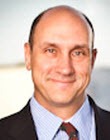
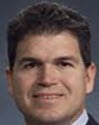
Brian Sherin is president of Besler Consulting of Princeton, NJ.

2-3-2012 4-01-02 PM

Tell me about yourself and about the company.

I got started in healthcare accidentally. I was doing an internship while I was in college, in an accounting department of a hospital. I can still see the face of the controller who I worked for at the time when I walked in, that look of, “I’m going to deal with this kid all summer?” But we got along well and I did that for two summers. I got involved in a lot of aspects of accounting, although my major was finance, not accounting per se. 

When I came out of grad school, I ended up in a very a bad economy, pretty similar to now, and I didn’t have a job. One of the guys I worked with in the accounting staff there called me and said, “Are you interested?” and I said, “Well, sure.” So I did that, and then about eight months later the controller asked me if I wanted to take the business office manager position. I lost a lot of respect for them at that point [laughs] –I thought he had better judgment than that since after, all I had virtually no experience. But he told me he had confidence in me and I could do it, so away we went.

Over the next 11 years, I moved from patient accounting to managing the overall revenue cycle, worked closely with HIM and other clinical departments. I eventually I took over on more administrative responsibilities. To this day, I’m really grateful for the guy having confidence in me at the time. He gave me an opportunity to learn so much and to set me on my career path.

As you can tell by now, I’m not an IT expert in any way, but I think from the business perspective I am very much an advocate of using technology to every advantage possible. I guess I could stretch it and say that I’m an IT user expert, or maybe advocate is a better way to put it. As I look back at my career, some of the more positive and exciting experiences I had were overseeing several HIS system implementations for the hospital. I just found them really very rewarding once completed. I’d like to do some more of that, but I haven’t been involved with those for a while. 

While still at the hospital, I talked to Phil Besler one day. He had founded the firm back in 1986 — this was probably the early ‘90s. I joined him. It was really a reimbursement firm back then. That’s all we did except some charge master work. We began to expand that and we moved into doing hospital revenue cycle consulting in the mid ‘90s. Those areas grew pretty quickly. Finally we established a coding accreditation compliance service line, which rounded out our service offerings.

Now I would define us as a financial and operational consulting firm. We have about 200 customers in 20 states and roughly 50 employees. Most of our clients are hospitals, though we count physician groups as well as other types of providers as clients. A majority of our business has been traditional consulting. 

In 2002, we did a former company called Innovative Healthcare Solutions, which we began by taking the charge master review software we had developed in-house — which I believe was in FoxPro at the time — and we developed a Web-based tool that we marketed. It was pretty exciting. We’d never done anything like that. Eventually we developed other decision support products. IHS was eventually sold to Accuro in 2005, then Accuro became part of MedAssets, I believe in 2008. 

In the last two years, we began to focus on software again. We launched our BVerified line of solutions last year. Our latest two products were launched early in January. The idea behind getting back into software and creating these solutions is that we want to be able to provide our customers these software products that allow them to receive the benefits of our expertise we’ve developed over the years, while at the same time creating the potential to drive additional benefits for our client through that software.


Between your consulting opportunities and now you’re more productized offerings, what revenue opportunities do you typically find that even pretty good hospitals and even your competitors might miss?

Most of what we’ve been doing is on the consulting basis with regard to some of our revenue recovery opportunities. We do the majority of our work as the primary vendor. However, we have found pretty significant opportunities going in either behind just solely internal processes on the part of hospitals or after other vendors. Depending on the particular issue, whether it’s on the DRG transfer rule or IME, very often we find up to 30% or so of additional revenue.

I think a lot of that has to do with just our approach. We’ve refined it very much over the years. We’ve identified some areas that we think are often overlooked either through internal processes or by other vendors. But at the same time, we’ve focused very, very heavily on the compliance aspects of it. We also have seen some processes that are not very compliant. We had a lot of input from our clients that they wanted something that they could be assured was entirely in compliance with all the rules and regs. We put a lot of effort and resource into that.

Is there a lot of concern out there about the RAC audits and all the other audits that the CMS is talking about doing?

I think there is, but my sense is it depends on what part of the country you’re in. Here in the Northeast, we haven’t seen a lot of RAC activity, but it’s almost like everyone’s waiting for the other shoe to drop. They know it’s coming — they just don’t know when. With their hands full with what they already have — with all the organizations out there doing audits and all the other demands they have on them, especially from the IT perspective — they’re very concerned, yes.

Do you think it will be like the IRS, where they will take a small sampling and make a high-profile example of any problems they find?

I don’t think that’s the way it’s necessarily going to go. Even on the RAC side, they’re still finding their way as well. I think some of it will come to that, where they’re going to realize that it’s so labor intensive to get through some of this. If you look at the recent demonstration project that CMS put out where if you want to join on, you’re essentially giving up your right to appeal short stays that are denied as inpatients, but they will allow you to bill them as outpatients. My guess is that one the reasons they’re going forward with that demonstration project is just because of the volume of appeals they’re experiencing. 

I think it’s going to take some time for everything to settle out. Eventually, you may find more of the old style initial teaching hospital audits from way back in the ‘80s, when they looked at 30 claims or 100 claims and decided that they were due $18 million. I don’t think it’s going to be quite that bad, but I think there’ll be more of that practice as we go forward.

Describe the problem with hospital readmissions and what clients are asking you to do to prepare them for that.

CMS is going to begin looking at data with regards to readmissions. They’re going to essentially identify the top quartile in hospitals in terms of unnecessary readmits or related readmits. It’s going to reduce your overall Medicare-based payment. A lot of hospitals are looking at that. It’s fairly easy to look at the Medicare data that’s out there to determine where you fall yourself within the three categories of diagnosis they’re going to be looking at. It doesn’t really necessarily tell you where you fall in relation to what quartile you’re in.

It seems to us from talking to a lot of hospitals, those who have a problem know they have a problem. In a lot of ways, they feel like they’re in a situation where there’s not a whole lot they can do to effectuate any real change in those patterns quickly. Another factor is that a lot of people don’t realize is that the readmissions include if you discharge a patient and they get readmitted to another facility. You don’t even know that, but that counts towards your readmission number. And that data is not generally available to everybody.

I think it’s something that everyone is trying to do a better job of coordinating care. Once patients leave the hospital, they’re trying to do a better job of communicating with patients, making sure patients are following through on physician orders and seeing their physician within a specified timeframe and so on. But there’s limited resources to be able to do that, and there’s limited ability to really change people’s behavior in that way.

With the emphasis on making clinical care delivery less episodic, the billing stayed episodic and only now is moving toward billing for non-piecemeal work. Are hospitals going to be able to adjust quickly with the emphasis on ACOs?

I think that’s a real problem. Physicians have had that issue over the years too, where in some situations, they’re expected to manage care well beyond when they see the patient. It’s difficult. There’s really no reimbursement for that aspect of it. I think that ultimately hospitals understand that that’s the way it’s going. Whether you believe in ACOs or feel that they’re going to be the panacea some people think they’re going to be, nonetheless, that is the way things are going.

I don’t think anyone will argue the fact that a better process to manage patients once they leave the hospital — make sure they are following certain care plans, make sure they are seeing the right types of providers in the proper timeframe — is going to reduce readmissions, it’s going to reduce inappropriate admissions, it’s going to cut down on emergency room visits, and it’s going to overall have the great potential to lower the cost of healthcare. But we’re asking a lot of providers out there that are not going to be reimbursed in any way for a lot of those activities to take that on. I think that the funding for that is going to become a really critical issue.


There’s probably not much appetite to pay more for care, and not much ability since the government’s such a large payer. I guess it’s the equivalent of telling a steakhouse, “As of next week, you’re going to offer the same menu except as a one-price buffet.”

I agree. I don’t think there’s going to be much appetite at all for the government to put out any more money for this kind of thing. I think they feel that through some of these programs such as ACOs, with some of the incentives and whatnot, that’s going to effectuate some of this. And it may, for those who decide to become ACOs or maybe are positioned to do that.

The fact is that most providers are not really positioned to become ACOs and the incentives that are there for them. Even some of the premier facilities in the country have indicated that they don’t see the advantages to going to that ACO model and getting involved in that whole program. If they don’t see the value, it’s hard to believe that any inner city hospital is going to have the funds or the abilities to be able to put any kind of model like that in place unless they’re somehow funded for it.

Hospitals are imitative. If one does it, everybody does it. If a consultant starts recommending it or it shows up in a magazine, everybody jumps in line to do it. Do you think they’ll experiment with the ACO and either back out quickly or lose their shirts before they realize maybe it wasn’t as good as it sounded?

I don’t know. I’ve done some speaking engagements and have been in a number of meetings where someone would ask, “Who here from a provider side is going to plan for being an ACO?” Almost everyone raised their hands. I think that was just because it was early on — the rules weren’t defined.

As more and more comes out with regard to what’s expected from ACOs and what the cost is going to be and the type of infrastructure you had to have in place to effectively manage an ACO, I think you’re seeing more and more back away from it. My guess is there’s not going to be a whole lot of organizations that actually go all the way through and become an ACO and actively participate in that project. So we’ll see. My guess is that as providers dig through it, they’re going to realize that there’s really not a whole lot of advantage to them.

Do you have real-world examples of what you’ve found with your BVerified process?

The very first client we had for the screening verification tool, which was really the first BVerified product we put out there, we immediately found something which looked … I won’t get into the details, but it looked very questionable. We immediately called them and it was something that they were aware of. They were actually pretty impressed that we came up with it so quickly.

Everyone’s had some kind of finding. Sometimes as you go through those, you identify that there are things that were corrected or maybe it was incorrect information that was submitted to do the verification and whatnot. But our clients have been very happy with it thus far. To them, it’s a one-stop shop. They don’t have to have multiple screening tools in place. They’ve been happy with the product and the results they’re getting out of it.

It’s to check the HHS’s database for excluded parties, correct?

Yes. It goes through and checks both federal and state databases. We can adjust that, because with regard to some state databases, there are timeframes and “how often” rules in terms of how often you have to check. We built all of that into it. Essentially it’s looking for excluded individuals. It also has some additional functionality — it allows you to verify licensure and things like that as well.

You’ve done services related to point-of-service collections. Money is being left on the table by letting patients walk away without, but consumers are pushing back about being asked for a credit card before they’re seen. How do the hospital know that they’re ready to initiate that planning for point-of-service collections and what’s involved with transitioning to that?

The time is well past when those programs should be in place. In talking to our clients, I’ve always maintained – and this goes back quite a ways – you need to start this now, because it’s not like you just put someone with a cash register at the door. It doesn’t work that way. Most hospitals serve a pretty much a specified community, and it’s a matter of changing that community’s understanding of how you function. There’s a lot of communication that has to go on with both the patient population as well as the referring physician population. They need to understand what you’re doing and why you’re doing it.

Physicians have been doing this very effectively for a long, long time. Maybe it’s not some of the same dollars that are involved in terms of physicians who are merely collecting co-pays, but I defy you to find anyone who’s covered by any kind of a managed care or a PPO plan who’s gone to their physician who’s gotten to see that doc without paying their co-insurance first. They’ve done an effective job of that, so physicians understand the need for it. 

The dollars are significantly more on the hospital side, but that can be worked through in terms of an arrangement with the patient. It takes a long time. It’s an educational process, it’s a community educational process. It’s not something you just turn the switch on overnight. What I’ve seen mostly is that hospitals have implemented it in maybe a few different areas within the hospital, but not universally. They do get pushback.

There has to be a commitment all the way up the management string, right up to the CEO and the board, that this is what we’re doing and this is how we’re going to do it. They’ve got to resist those calls that come in and say, “I was there the other day and I’ve been coming there for 30 years and now you’re asking for payment up front.” Everyone has to be on board, because as soon as you start making exceptions, it quickly loses its effectiveness.

What do you see as major areas of concern in the next five years and what should hospitals be doing now?

We’re addressing a lot of things on our end. With some of the other software tools we’ve developed, we’re trying to come up with ways that hospitals can take our expertise and our experience with a lot of things. We put them into a software tool so that the hospital can internalize them and gain greater control over some of those functions. Instead of doing it on a consulting basis, they have the ability to do it on their own. That works for some, doesn’t work for others. 

We understand that a software solution isn’t automatically the solution for everybody. We’re trying to do that because what we’re hearing from some of our clients is that they need to bring some things internally and they want to reduce their costs a little bit. That’s why we’ve done those things with the transfer DRG tool and the Medicare advantage IME tool and our revenue integrity auditor.

At a higher level, my feeling is that over the next five years, hospitals have to begin to fully integrate their clinical and their financial operations. There’s still a separation there to a large degree with a lot of hospitals. While everyone’s moving in that direction, I think it needs to be looked at more as a business. There has to be a way to bring together those two aspects of the operation in one cohesive whole.

While obviously patient care is the business you’re in and you want the highest possible quality you can get, there needs to be some control over that, in terms of how you best do that. I think that’s the whole ACO concept, which is good. I’m not convinced on the ACO model, but I think the ACO concept is good in that it makes you bring it all together, operate more cost-efficiently, and coordinate care across the whole spectrum of the services the patient’s going to receive in their inpatient, outpatient, physician, physical therapy, specialists, whatever it may be.

The most important thing over the next five years is to start looking at healthcare delivery – and I don’t mean this in any kind of impersonal way — as a business, bringing together the financial delivery of care and the clinical delivery of care so that you’re getting the most sufficient product you can.

Any concluding thoughts?

We’re experiencing the most interesting and fast-paced changes we’ve ever seen in this industry. More so than ever, the changes we’re seeing now will dramatically alter the way healthcare is delivered and managed from this point onward. Everyone’s got to be ready for it, because I don’t think there’s any turning back. There may be some stumbling along the way, but everything that’s been started now is going to move forward. As Bob Dylan said, “You better start swimming or you’ll sink like a stone, because the times they are a-changing.”

We’re changing our approach and trying to meet the changing needs of our clients. We continue to focus on trying to find all the revenue we can for our clients. We won’t stop that. That’s the reason for developing some of these software tools — to give something to our clients that has a demonstrable, compelling ROI.

It’s pretty exciting times, but they’re also very challenging times. I think the pace is only going to pick up. We’re going to see incredible rate of change over the next few years.
Comments Off on HIStalk Interviews Brian Sherin, President, Besler Consulting

News 2/3/12

February 2, 2012 News 6 Comments

Top News

Shares of EHR vendor Greenway Medical Technologies rise 30% on its Thursday IPO, making GWAY the day’s biggest gainer on the New York Stock Exchange. Shares closed at $13, valuing the company at $358 million on revenue of $90 million. The company had revised its IPO price downward from $13 to $10 at the last minute, obviously leaving money on the table in hindsight.


Reader Comments

2-2-2012 8-03-14 AM

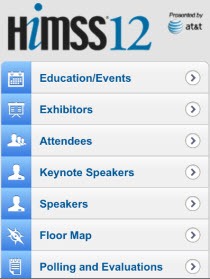
inga_small From Mr. Hospitality: “Re: HIMSS schedule. Do you know if there is a way to drop the HIMSS schedule into Outlook? Didn’t there used to be a way to do that?” I don’t use Outlook, but I couldn’t figure out an easy way to create a schedule in general from the HIMSS website. However, the HIMSS folks say an app is coming next week. I actually found it here, though it looks like it’s not quite complete since some sessions still lack specific details. The HIMSS12 Mobile Guide does allow you to select favorites and thus create a personalized schedule, though it’s not integrated with Outlook or other calendars.

2-2-2012 6-41-44 PM

mrh_small From IT Guy: “Re: Reliance Software Systems. RelWare. the company that was developing the EMR for Henry Ford Health System, is no more. HFHS announced that it would implement Epic and sunset RelWare’s EXR product, leaving the company with no clients other than Ford. They have closed their doors and let their staff go.” Unverified. I e-mailed the company and received no response. Henry Ford went live less than a year ago on EXR.

mrh_small From Randy Lugano: “Re: EMR character limit on assessments. Is this a common feature in popular EMRs?” A physician’s article in The New York Times in December bemoans her EMR’s 1,000-character limit as she tries to compose a usable assessment of a complicated patient.

I nip and tuck my descriptions of his diabetes, his hypertension, his aortic valve stenosis, trying to placate the demands of our nit-picky computer system. Nevertheless, I am still unable to fit a complete assessment into the box. In desperation, I call the help desk and voice my concerns. “Well, we can’t have the doctors rambling on forever,” the tech replies … Nobody, for example, leafs through a chart anymore, strolling back in time to see what has happened to the patient over many years. In the computer, all visits look the same from the outside, so it is impossible to tell which were thorough visits with extensive evaluation and which were only brief visits for medication refills. In practice, most doctors end up opening only the last two or three visits; everything before that is effectively consigned to the electronic dust heap. Most importantly, the electronic medical record affects how we think. The system encourages fragmented documentation, with different aspects of a patient’s condition secreted in unconnected fields, so it’s much harder to keep a global synthesis of the patient in mind. Now I’ve learned that file-size restrictions will limit the extent and depth of analysis. What will happen to the tradition of thorough clinical reasoning?

mrh_small From CDMer: “Re: HIT testing. Another can of worms along the path of standardization.” NIST solicits bids for a Health Information Technology Testing Infrastructure that will “harmonize the efforts of healthcare standards test development and delivery to meet the demands for conformance and interoperability within the healthcare domain.”

mrh_small From NYizMee: “Re: McKesson’s huge profits. I can’t understand how this company keeps making money. They do nearly everything so badly.” Healthcare has been very good to the company and its customers chose it willingly, so they must be doing something right.

2-2-2012 7-23-37 PM

mrh_small From David Chou: “Re: Cleveland Clinic Abu Dhabi. Would love to share a Forbes piece on what we are doing.” David is the senior director of IT operations there. The 2.3 million square foot, 364-bed facility will open at the end of this year.

mrh_small From Looking Out for the Little Man: “Re: CPSI. The little guy down in Mobile seems to be helping smaller hospitals meet MU, right behind Epic in the number of hospitals to attest.” The company’s fact sheet says 134 of its hospital clients have attested, giving it 22% of all attested hospitals, second only to Epic’s 164 hospitals.


HIStalk Announcements and Requests

2-1-2012 12-21-16 PM

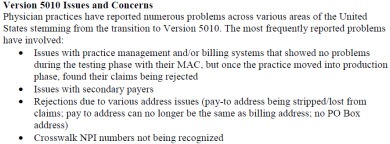
inga_small Here’s a few things you might already know if you are a faithful HIStalk Practice reader: first-fill medication adherence improves when physicians e-prescribe. Doctors still prefer desktop PCs over other devices for accessing patient data in the office or at home. Some common problems causing 5010 rejections. CareCloud CEO Albert Santalo gives the low-down on his company in our interview. Dr. Gregg shares the inside scoop on the startup Health Care DataWorks. If you haven’t been a faithful HIStalk Practice reader, it’s not too late to change your ways and see the light of the ambulatory HIT work. Thanks for stopping by.

mrh_small Listening: reader-recommended Rodrigo y Gabriela, a duo of former itinerant street musicians who play amazing guitar that includes everything from classics to heavy metal (one YouTube commenter called it “thrash metal flamenco.”) Check out Gabriela using her acoustic guitar like a drum kit.


Acquisitions, Funding, Business, and Stock


2-2-2012 5-39-13 PM

Clinical communications vendor PerfectServe closes on $10.9 million in Series C financing, led by PJC Capital.

2-2-2012 5-40-27 PM

Staff scheduling systems vendor OnShift closes on $3 million in Series B financing led by a client of West Capital Advisors.

2-2-2012 5-42-30 PM

TELUS Health Solutions announces the acquisition of Wolf Medical Systems, Canada’s largest cloud-based EMR vendor, and the creation of a new business line, TELUS Physician Solutions.

Trademark filings suggest that a possible name of the GE Healthcare-Microsoft joint venture is Caradigm. That trademark was held by Santa Barbara Regional Health Authority, but appears to have expired.

Canon Europe acquires Netherlands-based PACS vendor Delft Diagnostic Imaging, saying it plans to focus on medical imaging for future growth.

Medical payment processor MediSwipe acquires the assets of ReachMeDaily.com, a private social media platform that connects senior citizens in residential centers with their families.

2-2-2012 8-12-58 PM

California startup TigerText, which offers HIPAA-compliant text messaging for hospitals, raises $8.2 million in a second round of funding.

2-2-2012 8-23-35 PM

Telehealth vendor InTouch Health, which claims 400 hospital customers of its FDA-approved remote presence devices, gets a $6 million investment from iRobot Corp., best known for its Roomba vacuum cleaner.

2-2-2012 8-40-11 PM

The Advisory Board Company reports Q3 results: revenue up 33%, EPS $0.46 vs. $0.24.


Sales

2-2-2012 8-41-59 PM

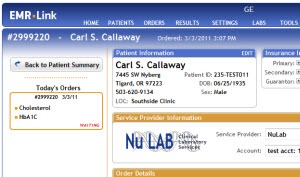
MedLabs Diagnostics (NJ) chooses the Ignis Systems EMR-Link lab outreach solution to provide area practices with lab ordering and reporting capabilities.

The Danish health system selects InterSystems to develop and support its national HIE.

Upper Chesapeake Health (MD) picks Forerun’s FlexChart physician documentation software for its emergency departments.

2-2-2012 5-45-41 PM

Rush-Copley Medical Center (IL) selects Medicity’s HIE technology to facilitate affiliated physicians’ access to clinical results and reports.

NorthCrest Medical Center (TN) chooses Allscripts Sunrise Clinical Manager, adding to its previous deployments of the company’s ED and ambulatory EHR solutions.

Merge Healthcare signs 10 new Merge RIS customers, raising to 30 the number of radiology practices using it as a Complete EHR.

2-2-2012 6-13-40 PM

Scripps Health (CA) selects MEDSEEK’s enterprise software suite.

St. Mark’s Medical Center (TX) selects McKesson Horizon Medical Imaging for use with its Paragon HIS.

2-2-2012 6-12-34 PM

The Nebraska Medical Center expands its use of products from Streamline Health Solutions, adding its Epic integration suite to the content management and HIM workflow solutions it was already using.


People

2-2-2012 5-50-13 PM

Greater Houston HIE changes its name to Greater Houston Healthconnect and names James Langabeer PhD, formerly of the University of Texas Health Science Center, as president and CEO. He replaces Kay Carr, who became CEO last March.

2-2-2012 5-51-57 PM

API Healthcare appoints Peter Goepfrich (Vital Images, PwC) as CFO.

2-2-2012 6-06-28 PM

Brad Swenson rejoins technology financing company Winthrop Resources Corporation as SVP, chief product strategy and business development officer. He was previously with Surescripts. We interviewed him in May 2011.


Announcements and Implementations

Awarepoint signs 191 contracts for its aware360Suite in 2011, increasing its client base to 123 healthcare systems and 186 hospital sites.

Telehealth and remote monitoring solution provider Cardiocom and Delta Health Technologies, a provider of IT systems for homecare and hospice agencies, announce completion of a bi-directional telehealth interface between their systems.

2-2-2012 8-49-29 PM

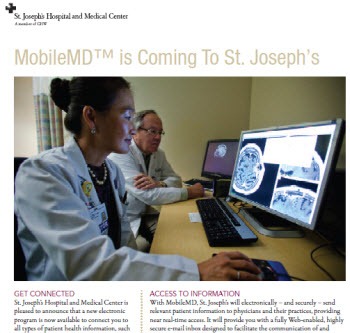
St. Joseph’s Hospital and Medical Center (AZ) announces its deployment of MobileMD for the exchange and communication of clinical information.


Government and Politics

2-2-2012 2-49-22 PM

MGMA sends a letter to HHS Secretary Kathleen Sebelius outlining problems that practices are having with the 5010 transition and urging an additional delay in enforcing the change. MGMA warns that unless the government takes the necessary steps to resolve issues, many practices will face significant cash flow disruptions for practices and operational difficulties, a reduced ability to treat patients, staff layoffs, and even practice closure.


Other

Anthelio partners with Healthland to provide migration and implementation services for Healthland clients migrating to Healthland Centriq EHR.

2-2-2012 8-50-43 PM

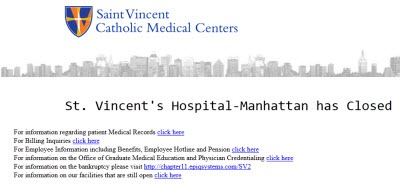
The defunct St. Vincent’s Hospital – Manhattan (NY), obligated by state law to maintain medical records for six years after discharge, petitions the bankruptcy court to force Allscripts to help the hospital transfer its data from its own servers to a less-expensive system. The former hospital says Sunrise Clinical Manager is costing it $17K per month and another company offered to extract its store it for $1,200 per month, but Allscripts won’t help unless the hospital keeps paying the monthly tab.

UMass Memorial Healthcare announces plans to lay off 700 to 900 employees, under the gun to trim $50 million from its budget to avoid a loss for the year.


Sponsor Updates

  • Billian’s HealthDATA reports that 35-45% of doctors are affiliated with hospitals in 10 states, with internal medicine ranked as the top specialty.
  • CapSite’s SVP and GM Gino Johnson will present an overview of the HIE market at this month’s ZirMed’s Thrive User Conference.
  • T-System announces that 42 hospitals have attested to Stage 1 MU using its T SystemEV emergency department information system.
  • GE Healthcare introduces the latest version of its Centricity Patient Online portal.

EPtalk by Dr. Jayne

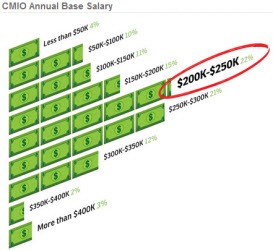
CMIO magazine publishes its 2012 Compensation Survey. No surprise: 87% of CMIOs are men, although women are increasing in the field – up from 8% to 13% this year. Apparently I fall into their target demographic since the majority of those surveyed work at multi-hospital organizations in the south.

2-2-2012 6-24-47 PM

For those of you who may be just a teensy bit behind in your ICD-10 implementations, my favorite Geek Doctor John Halamka offers the request for consulting assistance that his organization used. Also included is a letter to stakeholders to identify which applications use ICD-9 and need to use ICD-10. He promises to share as much as he can as their project plans and timelines unfold, so stay tuned.

I wonder if ICD-10 has a code for this? Physicians report an increase in cyberchondria. Patients reading online information are increasingly displaying unfounded anxiety about their health. To combat the increased worry, physicians report spending more time in office visits to discuss why patients think they have particular diseases and convincing them that it may be unlikely.

2-2-2012 6-25-50 PM

Some websites have recently caught my eye. AdverseEvents has gathered information from the FDA’s database. Users can search over 4,500 medication records. Clarimed is similar, but has information on medical devices as well as drugs and procedures. I’m sure the cyberchondriacs found them long before I did.

I just have to laugh. Earlier this month, the Department of Health and Human Services published new standards for electronic funds transfers (EFT) in healthcare as required by the Affordable Care Act. This is supposed to result in billions of dollars of administrative savings for physicians, hospitals, insurers, and states over the next decade. HHS Secretary Kathleen Sibelius is quoted as saying, “Thanks to the Affordable Care Act, healthcare professionals will spend less time filling out paperwork and more time focusing on delivering the best care for patients.” Unfortunately, the recent federal initiatives have actually increased burdensome busywork for me, as I am forced to review mind-bogglingly annoying reports about how many times I’m checking or not checking a particular box required for Meaningful Use calculations. Additionally, any reduction in paperwork due to EFT changes will likely be offset with increased mounds of insurer paperwork trying to deny care for sick patients.

A new study reports that “the majority of U.S. physicians are moderately to severely stressed or burned out on an average day.” That’s not good news for the people caring for you and your loved ones. Only 15% of physicians feel their organizations are helping them deal with the situation. Burnout has been shown to increase the risk of medical errors. Physicians cite their top stressors as the economy, healthcare reform, Medicare/Medicaid policies, and unemployed and uninsured patients. No surprises there. Executives, take note: show your docs some love and get those severely impacted staffers some help before it’s too late.

2-2-2012 6-26-51 PM

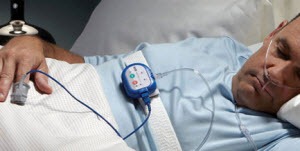
Medical Economics publishes its must-have gadget guide. One of my favorites is the MobiUS SP1 hand-held ultrasound unit which can transmit images via cell phone or Wi-Fi. Another favorite is the SleepView Monitor, which allows home testing for sleep apnea. If I would have had one in my little black doctor bag during a recent trip, I’d have slapped it on the gentleman near me on the plane. I seriously thought I was going to have to resuscitate him.

Hints on the Microsoft/GE venture’s name from Weird News Andy: “So, a portal-like product that allows information to flow between logical entities. Drawbridge is a little too intimidating. Hatch is too nautical. Aperture is too esoteric. Gates. That’s the ticket.”

clip_image002

Speaking of little black doctor bags, I’m still looking for the perfect little black dress to go with mine (and with the shoes!) for HIStalkapalooza. I thought I had my date squared away, but in a surprise last-minute showing, one of my secret crushes has agreed to attend (sorry, Farzad, I waited as long as I could – but if you decide to attend, I’m sure we’d be accommodating.)

Have a question about home monitoring devices, Las Vegas bail bondsmen, or why the soles of Christian Louboutin shoes are red? E-mail me.

Print


Contacts

Mr. H, Inga, Dr. Jayne, Dr. Gregg.

More news: HIStalk Practice, HIStalk Mobile.

CIO Unplugged 2/1/12

February 1, 2012 Ed Marx 17 Comments

The views and opinions expressed in this blog are mine personally and are not necessarily representative of current or former employers.

The Bad Boss

New town. New job. I was stoked over what was essentially a startup within an enterprise. As a visual learner and teacher, I asked the office manager for a whiteboard.

No go. The president wanted to keep corporate operating costs low. No worries. I went to Staples, and for the cost of a Starbucks Grande Red Eye, I bought myself a whiteboard.

Before I had a chance to hang my would-be art piece, my boss stopped in and frowned. “What’s this?” After I explained my reasoning, he said, “Take it out.” He wanted all the offices to have the same minimalist look and feel.

Well, my kids loved it. That whiteboard became central to their homeschool activities. I’ve used it over the years for meetings at home.

Little did I know, the rejected whiteboard was only an omen of the legalistic reign under which I was now employed. I was tempted to pack up and head back south. After all, I had a 90-day “get-out-of-jail-free” card from my former employer who would graciously welcome me back. Our old home had not yet sold.

Tempted as I was to escape, I knew running away was wrong. If I quit now, I would never learn perseverance. I had made a commitment and I would keep it, no matter how aggravating. I knew I would use this challenging experience to prepare for the future. Angry and disillusioned, I stuck it out.

Most of us have had a manager who’s aggravated the heck out of us. National employee engagement scores from Gallup suggest that many are presently in such situations. Web sites such as Really Bad Boss are extremely popular. Numerous best-sellers have been written on the subject. And did you ever ask yourself why The Office and Dilbert are such big hits? Because we can all relate on some level to bad bosses. I suspect all of us will have the opportunity to encounter one along the way. This was mine.

I make an effort to understand these concerns because I don’t want to be a bad boss. And I’m very aware of my potential to become what I hate. We’re all susceptible.

That said, I’ve been blessed to work with predominantly good bosses. So here is what I learned to make the best out of bad-boss situations:

  • Honor leadership. Part of my career plan is based on the premise of honoring those in authority over me. This can be tough. Clearly, you should never turn a blind eye to unethical behaviors or abuse. I am solely referencing a difficult and disagreeable boss. Actively give honor to them. It may not change them, but it will change you.
  • Make your boss famous. Another toughie. Why would you make a bad boss famous? Because if you can make them better, there’s a chance your situation will improve. Don’t talk up how wonderful your division outcomes are, but give the glory for good things to your boss and take your lumps when things are not so good. Leadership demands humility. “There’s no limit to the amount of good one can do as long has he doesn’t care who gets the credit.” Author unknown
  • Take the good. Most bosses are bosses because they have done something good and have the capacity for more. Seek out the good and apply it to your career. My anti-whiteboard boss taught me the importance of having a “kitchen cabinet,” developing key informal relationships that serve as a sounding board and advisory committee. Life is too short to not learn from all circumstances.
  • Check the mirror. Take inventory of the bad and look for signs of these traits in yourself. If you find one, pull it out. Guard against bad-boss behaviors creeping into your own style. If your boss is inclined to knee-jerk reactions, don’t start flailing your arms every time you are faced with a challenge. Recognize bad-boss behavior and never replicate.
  • Leading up. This might seem impossible, but keep faith that you can influence a change in your boss. Lead by example. Although your voice may not be heard, your actions will be noticed, subconsciously or otherwise.
  • Think long term. Look ahead and remind yourself that today’s actions dictate tomorrow’s decisions. If you quit when things are tough, you will become a quitter. Stick things out. Don’t tap out too quickly.
  • Speak no ill will. Avoid the trap of complaining about bad boss to other people. This will only exasperate the situation and make it worse than it is. Speak blessing instead.
  • Seek first to understand. Figure out the drivers for bad boss behavior. They are likely stress induced. Most bad bosses are well-intentioned leaders who’ve lost their way because of personal and/or professional pressures. Identify the sources of stress and you might help reduce or eliminate it. At the very least, you will sympathize and realize the behavior is not a vendetta against you, albeit it feels like it.
  • Avoid a bad boss. Forbes shares five tips to spot a bad boss in an interview. Gather your own references. Call the person who most recently held the position. Call on the other direct reports. If you are well networked, get the internal buzz on your potential boss. Many a bad-boss situation could be avoided if you research diligently and listen to what you hear. Don’t believe things will change because you believe you are better than your references. They won’t.
  • Joy in suffering. This is the toughest one for me, but the most important. “Suffering produces perseverance; perseverance builds character; and character produces hope.” It’s an upward, spiraling cycle throughout life.

2-1-2012 6-06-56 PM

So if you have a bad boss, you have a choice. Life is too short to be in a bad boss situation, but you owe it to yourself, your people, your boss, and your organization to make it work.

I persevered with the anti-whiteboard boss. I established a “kitchen cabinet” as I’d learned from him. I was promoted out of that division and into corporate, where I became CIO. Hope never disappointed me.

And then I purchased the biggest damned whiteboard ever made.

Ed Marx is a CIO currently working for a large integrated health system. Ed encourages your interaction through this blog. Add a comment by clicking the link at the bottom of this post. You can also connect with him directly through his profile pages on social networking sites LinkedIn and Facebook and you can follow him via Twitter — user name marxists.

News 2/1/12

January 31, 2012 News 6 Comments

Top News

1-31-2012 8-21-04 PM

mrh_small McKesson reports Q3 numbers: revenue up 9% to $31 billion, EPS $1.20 vs. $0.60, beating estimates. The company announced that it will buy back an additional $650 million worth of its stock. Shares rose 4% on Tuesday, making MCK the third-best performing S&P 500 stock of the day. Technology Solutions revenue was up 4% with an operating profit of $69 million, although the company took a $42 million pre-tax charge against the termination of development on Horizon Enterprise Revenue Management and the move to Paragon as its go-forward platform. From the conference call:

  • The company reiterated that it has no plans to sunset Horizon Clinicals, but also made it clear that customers will probably either choose to move to Paragon at some point or switch vendors.
  • McKesson paid $6 million in severance related to the shutdown of HERM.
  • The company talked up its payer and transaction businesses (like RelayHealth) in a manner that suggests it likes the steady, predictable revenue they generate compared to the sales-driven revenue swings of the software business.
  • The company admitted that “as you know, we’ve had some challenges with the Horizon Clinical implementations.”
  • My overall impression is that the company is being fairly open in describing its challenges with HERM and Horizon Clinicals, although in the last couple of quarterly calls they were quite upbeat about both. Publicly traded companies aren’t very good about warning investors of potential bumps in the road.

Reader Comments

1-31-2012 6-45-48 PM

1-31-2012 8-34-15 PM

mrh_small From Baystatehockey: “Re: Mark Gorrell, VP/CIO of Baystate Health. Gone and replaced by Heather Nelson as interim CIO.” I think I can safely call this rumor verified based on Mark’s exuberant and obviously recently updated LinkedIn job title, which is darned cool. Here’s his blog with sailing photos and some really interesting thoughts about pursuing something he and his family always wanted to do, even though he says he’s risk-averse and prone to motion sickness.

mrh_small From Duxelles: “Re: IBM. To acquire [publicly traded vendor name omitted] – any truth to this?” I haven’t heard anything and it doesn’t seem likely. Then again, neither did the rumor at HIMSS time awhile back about this company that turned out to be true, which made me glad that I at least mentioned so I didn’t look clueless. It is likely that quite a few big announcements of various flavors are being embargoed by several companies until the HIMSS conference, so I’m sure we’ll have lots to talk about in three weeks.

mrh_small From Amish Boy: “Re: Epic’s support teams. At my previous hospital, I got to know our application’s assigned support person very well. I’ve worked with Cerner for years and they don’t have the same personal attachment. We used to joke that Cerner’s Immediate Response Center number was busy because the middle school bus hadn’t dropped the IRC employees off at Cerner HQ yet.”

From Bill Rieger: “Re: Flagler Hospital, St. Augustine, FL. Kicked off its Meditech to Allscripts SCM transition at a well-attended campus event. The IS department broke out in flash mob just before the CIO spoke about how hard it would be to tear down the walls of poor processes that have been built up over the years. We are engaged and involved and want to be dancing when we go live in June 2013.” Bill  is CIO at Flagler Hospital. Nice video.

1-31-2012 9-18-10 PM

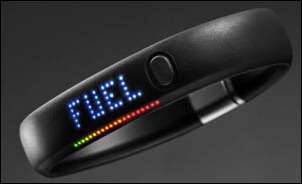
From The PACS Designer: “Re: FuelBand. A new mobile application from Nike that is worn on the wrist and can track your daily activity with an accelerometer. It tracks calories expended, steps taken, and the time of day, as well as your NikeFuel score viewable on an LED display. Your score is based on an algorithm that assigns points to various movements.”

From BuffaloWings: “Re: Sandlot and Santa Rosa Consulting. To merge?” Santa Rosa already was a partial owner of the HIE technology vendor Sandlot (the other owner is a Texas physician group). I haven’t heard if they are taking that relationship further.


HIStalk Announcements and Requests

1-31-2012 12-40-59 PM

inga_small Mr. H and I were commiserating last night about our pre-HIMSS overwhelmed-ness. The last few days I have been working on the HIStalk Guide to HIMSS12, which includes an overview of what our sponsors will be featuring this year. We are also including contact information for at least a dozen sponsors who are not exhibiting, but that are available for one-on-one meetings with attendees. Look for the Guide to be published the week before HIMSS. Sponsors, make sure to send your information.

inga_small If you are attending HIMSS, you only have about 20 more days to prep. It’s not too soon to go through your old shoes (including your kids’ old shoes) to bring for our Soles4Souls shoe drive. We will have drop-off boxes on the exhibit floor at the DrFirst booth (5456) and possibly one other location. We’ll also accept donations at HIStalkapalooza for those who received invitations (with a free IngaTini for every pair you donate.)

1-31-2012 7-09-34 PM

mrh_small We like highlighting cool vendor events at HIMSS since readers are always looking for fun stuff to do there. Here’s one: CSI Healthcare IT is offering cocktails and dinner at the Canaletto Ristorante at the Venetian on Wednesday evening (February 22) from 6:30 until 9:30. It’s invitation-only and you can RSVP by e-mail.

mrh_small Speaking of HIMSS events, ours is full. We have a lot of friends and loyal readers, and if we had endless space and money, we would happily invite every one of them to the ESD-powered HIStalkpalooza. Since we don’t, we have no choice but to turn down requests, even for invitees who want to bring a guest (I’d estimate that we have close to 1,000 people who want to come that we don’t have room for.) Maybe next time I should also run a secondary event that’s cheaper to produce so that lots and lots of folks could come as a backup event, like renting some big New Orleans field, hiring a band, setting out pallets full of beer and wine, and passing out hot dogs and marshmallows to roast over a bonfire. That’s my kind of networking event.

mrh_small Your honey-do list from Inga: (a) search our sponsors in the Resource Center; (b) take five minutes to get your consulting RFI request in front of several companies at once with the RFI Blaster; (c) click on some sponsor ads just to see where you end up; and (d) send us rumors and cool stuff. And while Inga, Dr. Jayne, and I don’t want you to feel like a number, you are, in a good way that we appreciate: one of almost 5 million HIStalk visitors since 2003 and over 110,000 this month; one of 7,861 subscribers to our e-mail updates; one of the 2,165 members of the HIStalk Fan Club that Dann started; or one of our LinkedIn connections or Facebook friends. Unlike HIStalkapalooza, those numbers can scale infinitely, so feel free to increase them. Sometimes we screw up in running an erroneous rumor or being slow in responding to e-mails, but one thing we never do is take readers and sponsors for granted, so thank you for being part of what we do.

mrh_small On the sponsor-only Job Board: NextGen Training Coordinator, Epic Go-Live Support, Cerner Go-Live Support. On Healthcare IT Jobs: Senior Technical Advisory Consultant, Epic Certified Clinical Analysts, Epic Hospital Billing.

1-31-2012 8-40-23 PM

mrh_small Welcome to new HIStalk Platinum Sponsor Lifepoint Informatics, which offers vendor-neutral data integration solutions, with an emphasis on lab outreach. Its EMRHub  provides fast, easy LIS-to-EMR connectivity (Web-based middleware with only one LIS interface required) for hospitals and any type of labs interested in strengthening physician relationships, developing new revenue streams, and earning Meaningful Use incentives. Its LPI CPOE ensures clean, valid CPOE lab/rad orders that meet medical necessity and ABN requirements. Its LPI Web Provider Portal is a cost-effective way to deliver a complete patient picture to providers, providing a unified clinical inbox, flowcharts, and reports using information from systems such as clinical labs, pathology, micro, AP, cyto, and cardiology via any Web browser, helping hospitals, labs, and groups meet the IT needs of their clients. The company just landed a big deal in providing Sparrow Laboratories, one of the country’s top outreach labs with 15 labs in Michigan, with solutions to extend its reach to current and potential customers. Other customers include Indiana University Health, Continuum Health Partners, Memorial Hermann, and New York-Presbyterian. Drop by Booth 153 at HIMSS for two reasons: (a) to see their tools in action, and (b) to get one step closer to bringing home an iPad 2 in the soon-to-be-announced HIStalk Booth Crawl, of which the company is a sponsor. Thanks to Lifepoint Informatics for supporting HIStalk.


Acquisitions, Funding, Business, and Stock

1-31-2012 6-26-00 PM

IT professional services firm NTT DATA Americas announces that its Keane, Intelligroup, MISI Company, The Revere Group, Vertex, and Agile Net organizations will start doing business under the NTT DATA brand.

1-31-2012 6-43-10 PM

ADP acquires small-practice revenue cycle management company PhyLogic Healthcare of Springfield, MA and will offer its outsourced billing services to its ADP AdvancedMD customers.

Greenway Medical goes public Thursday, with its $80 million IPO providing a market cap of $330 million.


Sales

BCBS of Kansas City selects InterComponentWare to implement a master patient index to address demands for aggregated patient data in the HIE environment.

1-31-2012 12-43-04 PM

Shriners Hospitals for Children selects the MedeAnalytics Clinical Performance Manager solution.

1-31-2012 10-28-25 PM

Oswego Hospital (NY) contracts for Wolters Kluwer Health’s ProVation Order Sets.

Acadia Healthcare (TN) selects Healthcare Management Systems Inc.’s (HMS) financial applications for its 25+ facilities.

Banner Health contracts with MEDSEEK solution to deploy its patient, physician, consumer, and employee engagement platform.

Riverside Medical Group (VA) licenses Streamline Health’s physician workflow management solution to manage A/R and denials.


People

1-31-2012 6-18-48 PM

PwC US hires Andrew Kemmeling, formerly with Phoenix Health Systems, as a partner in its enterprise resource planning and business transformation practice.

Providence Health & Services, Southern California promotes Elizabeth Petrich-Kennedy to chief nursing informatics officer.

1-31-2012 6-22-54 PM

Former CSC and First Consulting CMO David Classen joins patient safety solutions vendor Pascal Metrics as CMIO. Former TheraDoc CEO Stanley Pestotnik also joins the company as a senior advisor.

1-31-2012 6-25-06 PM

PerfectServe hires former Krames Healthcare sales executive Michelle Piel as a VP of sales.

1-31-2012 6-57-02 PM

iSirona promotes Mary Carr, RN, BSN, CPN to Chief Nursing Officer.

Quantros promotes Gerard Livaudais MD, MPH to chief medical officer and SVP of content and product management.

1-31-2012 10-00-10 PM

Alerting vendor Extension hires Tom Berger RN as chief nursing officer. He was previously with Vocera.


Announcements and Implementations

Resource Anesthesia deploys the Shareable Ink Anesthesia Suite across multiple states and facilities.

1-31-2012 6-55-56 PM

KishHealth System (IL) implements the Pharmacy Xpert clinical surveillance and intervention solution from Thomson Reuters.

CynergisTek releases Surveyor for Business Associates, a risk management solution for demonstrating HIPAA/HITECH compliance.

The US Patent and Trademark office awards Medicity a patent for locating, indexing, matching, and sharing patient records among healthcare organizations. It’s the company’s third patent issued in two years.

1-31-2012 6-53-02 PM

Macadamian will launch its Usability Maturity self-assessment checklist at the HIMSS conference, building on previous work that found that easier-to-use EHRs increase productivity, decrease errors, and provide cognitive support to users.

1-31-2012 7-18-32 PM

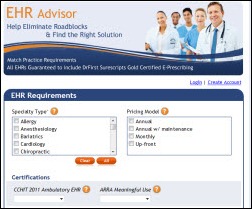
DrFirst launches its EHR Advisor online tool to help physicians find a solution from those offered by the company’s partners.

HealthStream and Laerdal Medical, through their SimVentures collaboration, offer SimManager, a SaaS-based system for managing simulation-based healthcare training.


Government and Politics

In a Congressional subcommittee hearing, a VA official says its new paperless claims processing system will help reduce the department’s claims backlog and take out months of processing. The current number of pending VA claims is over 854,000, which is 100,000 more than a year ago and 500,000 more than three years ago.

1-31-2012 11-07-26 AM

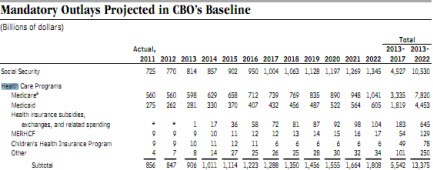
A Congressional Budget Office report predicts that the cost of government healthcare programs will more than double over the next 10 years to $1.8 trillion, or about 7% of the nation’s economy. It predicts that Medicare spending will increase by 90%.

The COO of the West Virginia Health Network is named by a legislative auditor as being one of several retired public employees who are exploiting a loophole that allows them to collect both a pension and  paycheck at the same time.

Conservative group Judicial Watch calls on Newt Gingrich to release the full client list of his Center for Health Transformation.


Innovation and Research

1-31-2012 10-06-07 PM

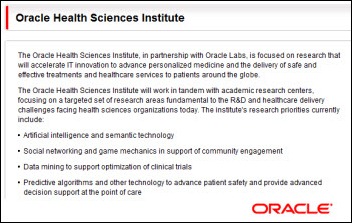
Oracle Health Sciences Institute announces its first group of research projects, including a Brigham and Women’s/Harvard study that will use EMR and claims data to analyze treatment alternatives and a University of Maryland project to visualize longitudinal EMR and claims data to detect adverse events.


Other

The Robert H. Smith School of Business at the University of Maryland announces the “Innovate 4 Healthcare Challenge,” a nationwide contest for college students to develop HIT tools to improve patient engagement with healthcare providers. The challenge is supported by ONC and includes $30,000 in prize money.

inga_small I was amused to read that people  lie more when texting than when communicating by other methods, including video chat. I wonder if that carries over to clinical interactions, since I’ve only had one text conversation with a physician and I think we were both pretty honest. However, I’m now wondering  about the text from an old boyfriend who said he couldn’t meet for dinner because he was moving to South America.

1-31-2012 1-57-57 PM

The 2012 CMIO Compensation survey finds that the typical CMIO is male, works at a multi-hospital organization, earns between $200,000 and $250,000, and spends only 24% of his time on CMIO duties.

1-31-2012 9-31-14 PM

mrh_small Eric Van De Graaf MD, a cardiologist who wrote an EMR critique on the official blog of Alegent Health awhile back, follows it up with An Open Letter About Electronic Medical Records, in which he is even more critical in a tongue-in-cheek way. It leads off with, “Dear computer programmers and EMR developers. Your product stinks. The whole world of medical communication took a great big nosedive the moment you and your binary code inserted yourself into the business of medicine.” That was just an attention-getter, I suspect. He says the purpose of doctors’ notes (electronic or paper) is not to get paid or to comply with regulations, but to communicate, and EMRs diminish that capability by inserting boilerplate text and other junk needed for non-communication purposes (billing, malpractice avoidance, and government requirements, which is really more of an indictment of today’s medical practice than the tools that support it). He has a big finish:

Someday there will be a Steve Jobs of the EMR world who will come along and produce a system that listens in on my office visit with the patient, uses voice recognition and AI to produce an extremely accurate summary of the discussion, and schedules all necessary tests and medications based on what I explain to the patient—all without me having to even interact with a computer keyboard.  The note will be instantly dispersed to the patient and all other caregivers.  The program will suggest any useful therapies that I may have missed and provide educational resources to the patient based on the subjects discussed.  And, of course, it’ll hit all the high points needed by the coders and Medicare overlords. When this happens it’ll put every other EMR out of business; because, finally, we’ll have a system that actually helps us rather than hampers us.

mrh_small A California hospital is fined $100K after a nurse in its long-term care unit replaces a comatose woman’s breathing tube, but forgets to remove the cap, suffocating the 81-year-old woman.

mrh_small Six employees of the Food and Drug Administration who tipped off Congress about what they claim was the agency’s corrupt push to approve unsafe medical devices file a complaint against their employer, saying that FDA violated whistleblower protections by intercepting their personal e-mails and installing spyware on their PCs.


Sponsor Updates

  • Kareo announces the opening of its Indianapolis office and its plans to add 50 new sales and customer service positions.
  • Practice Fusion hires Jonathan Malek as SVP of technology and John Hluboky as VP of technical operations.
  • OptumInsight announces that its HIE and computer-assisted coding solutions achieved the highest industry standards for interoperability at the IHE North American Connectathon.
  • T-System launches Care Continuity, a Web-based patient referrals tool.
  • The 37-provider Mendelson/Kornblum Orthopedic and Spine Surgeons (MI) selects the SRS EHR.
  • Concerro hosts a webinar on disaster preparedness and emergency management.
  • Hayes Management Consulting offers an EMR optimization webinar.
  • A PatientKeeper survey finds that preparation for the ICD-10 transition is the highest priority of finance professionals in healthcare provider organizations.
  • Allscripts facilitates a meeting with Surgeon General Regina Benjamin MD and 20 North Carolina business leaders.
  • Altoona Regional Health System (PA) selects Access Intelligent Forms Suite for its three locations.
  • Merge Healthcare adds six practices to its Merge OrthoEMR client base. 

Contacts

Mr. H, Inga, Dr. Jayne, Dr. Gregg.

More news: HIStalk Practice, HIStalk Mobile.

Curbside Consult with Dr. Jayne 1/30/12

January 30, 2012 Dr. Jayne 4 Comments

Don’t Take Me Out of Context

Depending on the size of the communities they live in, CMIOs can sometimes feel isolated. Some may work in cities with multiple hospitals and health systems and have easy access to peers (and getting together over drinks is certainly fun!) but many work in towns with only one hospital. For the latter, finding and collaborating with peers can be a challenge.

I belong to a virtual community of CMIOs that contains a mix of big-city and small-town CMIOs. There are a couple of former CMIOs and a couple of young pups just starting out in informatics thrown into the mix as well. It’s been a great resource for idea sharing over the last several years and has helped me preserve my sanity on numerous occasions.

We recently got into a discussion about single sign-on options. Even those hospitals with single-database systems often have legacy systems with which clinicians need to interact. They also need to access a variety of homegrown and interfaced applications in order to care for patients and manage clinical data. Many hospitals have tackled this with single sign-on, proximity badges, or other strategies to reduce the need for clinicians to manage multiple passwords.

I’ve used several of these solutions and they are undoubtedly cool. However, they lack the ability for clinicians to rapidly access a single patient across multiple systems. Providers end up searching for the patient in multiple applications while they try to mentally create a unified view of the patient. This is less than ideal. One of the young pups in the group mentioned that he was looking at context-sharing solutions in an effort to remediate this problem. Luckily we have a few CCOW aficionados in our group. For best-of-breed shops, this can be essential to efficient access by clinicians.

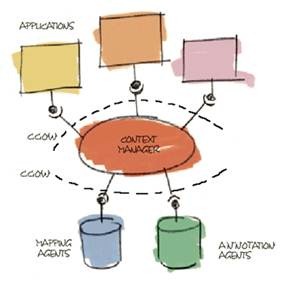
For those of you who don’t know where I’m going with this, let me introduce you to CCOW. CCOW stands for Clinical Context Object Workgroup, which is an HL7 standard that allows clinical applications to share information. Through this standard, applications can participate in both user context sharing and patient context sharing.

From a practical standpoint, this means that when the clinician accesses a patient chart, all other applications that the provider is accessing synchronize to that patient. When user context is also included, it may also facilitate reduced sign-on into applications which are subsequently accessed. CCOW can go deeper than just user and patient context – encounter context can also be included.

clip_image002

CCOW (thanks to Health Level Seven, Inc. for the graphic) is often misunderstood by clinical and IT people alike. Although many vendors create their applications to be CCOW compliant, this does not mean that just installing two of them will “automagically” link them together. Context management is required. When the systems lack a shared master patient index or a common patient identifier, an intermediary mapping agent may also be necessary. Dedicated context management software may also need to be installed locally or on servers to help synchronize client-server and Web-based applications.

CCOW also doesn’t magically move data from one application to another. It simply allows users to access information on a single patient across disparate applications with a minimum of fuss and bother. Depending on the setup of the environment, CCOW may not work the same for users accessing from home or from non-network devices.

The use of CCOW also creates additional testing requirements during application upgrades in order to ensure that functionality remains unchanged. I know of at least one major vendor whose CCOW functionality has been negatively impacted by an upgrade, causing much consternation to the numerous hospitals live on its product.

There are multiple context managers out there, including Microsoft’s Vergence product (formerly of Sentillion) and Carefx Fusionfx. The fate of the Vergence solution is one reason that the recent Microsoft / GE Healthcare joint venture (first reported by Mr. HIStalk back in December) makes a lot of people nervous. Customers were already twitchy after Microsoft acquired Vergence from Sentillion in 2009, with reports of a decline in customer service and support.

Quite a few significant players in the hospital industry are customers, so hopefully that will be incentive enough for the as-yet-unnamed entity to resist making a mess of it. (Any idea on that name? I’ve been keeping my eye out, but haven’t seen anything, and there’s nothing on the Microsoft Health Web page yet, either.)

Most of the big vendors are CCOW compliant, but there are still some who don’t understand the value proposition to clients. Far from a gimmick or a “nice to have” feature, for organizations such as Mayo Clinic, Johns Hopkins, and many more, it’s essential. Once again, I was grateful to my CMIO coffee klatsch for a good discussion and plenty of humorous anecdotes. I’m looking forward to catching up with y’all at HIMSS12 in just a few short weeks!

Have a question about virtual networking, best-of-breed systems, or what the new Microsoft/GE entity should be called? E-mail me.

Print

E-mail Dr. Jayne.

HIStalk Interviews Joe DeLuca, Knowledge Architect, Fulcrum Methods

January 30, 2012 Interviews 2 Comments

Joe DeLuca is knowledge architect with Fulcrum Methods of Oakland, CA.

1-30-2012 5-53-14 PM

Give me some brief background about yourself and about the company.

I have been in the healthcare informatics and information technology industry for about 30 years. I started back in Wisconsin, primarily doing research work on effectiveness, the use of information technology to achieve what we would call the early ‘80s critical effectiveness, and better efficiency and efficacy. That started my career in wanting to help improve the healthcare through both consulting and the development of measurement tools. That culminated in the development of Fulcrum Methods.

At Fulcrum Methods, we provide methodologies, templates, and standard tools that help organizations go through the information technology planning, vendor selection, design, implementation, PMO processes – all focused on outcomes. The theme in my career has been aligning the specifics of a clinical improvement process or business improvement process with the use of technology. I feel very fortunate and privileged to have been part of this evolution over the last 30 years as it continues on.

You co-wrote the book, The CEO’s Guide to Healthcare Information Systems. What mistakes do you see hospital CEOs making with regard to IT strategy and their relationship with their CIO?

I think I would break that into a couple of components, if you’ll allow me to.

I think there’s been a tremendous shift in the awareness of the role of information technology and responsibilities of the CIO over the decades that I’ve been doing this. I think today the CEO-CIO relationship, whether it’s a direct report or not, is much more respectful than it was in the past. Progressive, if you will.

The mistakes that are made today have to do with incomplete involvement of the CIO in the strategic visioning process for the organization, and in the assessment of how information systems can progress, accelerate, and differentiate the organization. I think it’s better than it used to be, but it still requires some improvement.

For example, we have many technologies … I’ll pick on one because it was just recently noted in part of HIStalk … NCR’s healthcare kiosk was sold to QuadraMed. There was a time when the whole kiosk self-serve technology was foreign to the healthcare industry, and many regards it still is, depending on the adoption rates.  But there were some leading CIOs who came forward and said, “You know, we really need to look at this. This improves our patient convenience. It improves our satisfaction scores. It gives us better access to information, increases productivity, and so forth.”

That kind of thinking — bringing that forward — is something CIOs need to do more. That’s just a small example of that versus waiting for the CEO or the executive team to dictate more of what should be done based off of someone else’s doing it.


Because of Meaningful Use, people are making huge investments in clinical systems. Some of those decisions are being made fairly quickly and without a lot of publicly obvious analysis. Do you think those decisions are adequately involving the CIO?

I’m going to say yes to that. I think they are, because I think that the investment dollars and the potential for the stimulus dollars in inventive payments and then eventually, the Medicare disincentive payments and penalties are ironically forcing the CIO, because of that financial perspective, into a larger role with more credibility and more involvement on these decisions.

I think the patient safety initiatives that started to launch 5-7 years ago had a similar effect, though I think that bubbled off a little bit with the implementation of the systems and the increasing roles of the CMOs and CMIOs in the organization. So I would say there is adequate involvement, or an increased perspective.

I’d also say that today, with the emphasis on what’s going on at Meaningful Use, the CEOs have a better conviction, are more aware of and are focusing on the quality of the implementations that are occurring. At least in my consulting work, I see CEOs and CFOs actively sit back and go, “This is not just about getting the money. This is about doing it correctly. This is about doing it so that we permanently change our processes. In order to do that, we have to have a team of medical management, CMIOs, CIO, and other elements of the organization to achieve that.”


I’m sure some places consider the HITECH money they’re going to get as the initial return on investment. The CIO gets a pat on the back for achieving that. What pushes the next set of steps?

For the first point, in some organizations, I’ve seen the CIO and the team involved share some incentive bonuses relative to achieving Meaningful Use. Not large ones, but it’s certainly happening.

When the program was put in place and the set of Stage 1-2-3 distinctions were put onto the timeline, it was really quite an intelligent process out of Washington, DC. The emphasis on Stage 2 … some of it is just increasing the numerators on number of medication orders that are processed through the system electronically, but many of them, especially the physician requirements, the eligible professional requirements, really do focus on increasing the patient involvement, the patient interaction with care, transferring some data along the continuum of care in a consistent way that can be used and interpreted by the providers along the continuum. That clearly is the movement towards whether we want to call it accountable care or value-based compensation or pay for performance or population management – good things to do for healthcare, things that have been needed for a long time.

I think the impetus to continue will be the business value that’s now achieved from certified electronic health records as it moves towards managing a population, both for quality and for economic gain. At the end of the day, the health systems and eligible professionals are still going to look at what’s the financial benefit associated with Stage 2 and clearly Stage 3, with an emphasis on population health improvement, are the incentives to continue to move along to the end road further.

If a CIO realizes that most of their responsibilities and the expectations placed on them involve keeping systems up and running, having the help desk be responsive, and keeping cost under control, what are some strategies they can use with this opportunity that HITECH and the potential of Accountable Care Organizations have put in front of them to earn a more strategic role?

I think the first realization that CIOs have to come to grips with is that they can no longer think information technology, infrastructure, and application systems. Many have progressed beyond that. The CIO today, in order to advance and survive two, three, or five years from now, has to be thinking informatics. I use that term very precisely.

They have to be thinking about how the information that is managed through the information technology assets are actually used to achieve that business benefit for the organization, that clinical benefit for the organization. It’s really quite beyond just efficiency. Efficiency is certainly one element of it. Could I move my transactions along faster? But it’s really the informatics component. How do all of these different aggregations of data get transformed to clinical information that then improves both our care position with our population and our financial position?

The key survival element is to get very deep into this learning curve, if they’re not already there. Get in front of the questions that are being asked.  If someone today says, “I’m going to build an Accountable Care Organization. I’m going to need to have some quality improvement metrics.” Great. That’s certainly a starting point. The CIO needs to be saying, “How are we going to actually improve care? What’s the next step in those quality metrics? How does that integrate in with a patient-centered medical home? How much do I understand that, so that instead of waiting to be informed by the physician community, by payer community about this, I can actually inform my executive team about those needs two or three years from now?”


What structure and expertise does a CIO in a medium to large hospital or hospital network need that they didn’t need two or three years ago? What do they need to operationalize that change in philosophy about what IT is all about?

There are many demands on the CIO, operational as well as strategic. They need to have a strategic thinking department that may not actually reside within the IT department per se. That could be aligned very, very tightly with the strategic planning group ,with the CMO of the organization, and also since most medium or larger organizations today will have some form of a medical foundation or medical group affiliation, really aligning closely and understanding their needs and their vision going forward.

They also need to have a very strong data modeling capability within the organization. That’s not necessarily to build a custom clinical data warehouse or clinical performance reporting system, but to really be able to understand as all of a sudden, “Gee we have to plug into a patient-centered medical home that’s using remote management technology for congestive heart failure patients.” The minute we say something like that, we have a superficial vision of the clinical flow of information that moves along in order to achieve that. You need someone in the organization who can sit back and model that at a meta level, and inform all of the other elements, both within the IT department of the data characteristics, the patient transactions that need to occur along the way. It’s not really from a technical perspective, but it’s understanding of what’s behind the data and understanding what’s needed to make that data harmonious across all the different ownership patterns of the data.

I will also say that with the explosion of mobile technologies, the CIO really needs to have a good handle on mobile technologies and what that means.


Are IT departments going to be funded to do that? Are CEOs aware of these multiple priorities, everything from customer service to Meaningful Use to analytics to integrating with physicians and other partners, and giving CIOs being given the budget and the responsibility to carry those things out?

I think it’s a split vote right now. One of the concerns I have about Meaningful Use is that it’s forcing this huge investment up front in electronic health records. There may be a hangover effect similar to what happened with Y2K, where all of a sudden, “OK, you had your share. Now we will only fund and continue this progression in very select areas or in a marginal way.”

I’m actually seeing in the consulting practice about half of the organizations constraining IT growth rather than expanding IT growth. That’s resulting in extending the Meaningful Use deployment schedule. We won’t try to get all the money up front that we could, or we won’t try to get any this fiscal year, but we’ll string the investment out or two or three years and slide in right under the wire relative to the reporting attestation guidelines. I’m also seeing pulling back dollars that might otherwise be used for – I’ll call them experimental programs, but that’s not the right term – but for exploratory efforts that might be going on, like piloting that kiosk.

I think it’s going to get worse. I think as the cost pressures come in, we will see further emphasis on containing IT costs to some industry standard metrics that may be underfunding the environment.

I think we’ll also see – talking out of the other side of my mouth on this – a greater emphasis on system impact. If we can prove that it will speed things up, make things better, quicker, faster, improve patient safety, or support some form of a new reimbursement model … those will get funded differentially.

New systems always cost more than the ones they replace, and once the Meaningful Use money has been spent and forgotten, hospitals will be locked into high-cost maintenance. The hospital has a low margin and no real potential for it to get higher, but the IT budget has to grow because all of the systems that were optimistically brought. How will hospitals reconcile their original appetite for IT versus the ongoing cost to keep it?

I agree with those trends. Just as a footnote. I recently completed a total cost and ownership budget for an EHR purchase, working on a graph with percentage hardware, software, and implementation costs, and maintenance and support over time. I went back to a similar study that I did 10-15 years ago just to see what’s actually somewhat happening. As you would expect, hardware cost has gone down pretty significantly as a proportion. Software dollars were about the same as the total proportion, a little bit higher. Implementation costs and ongoing software support were almost twice what they were as the percentage of budget.  

I see that as a problem. The reaction from any organization will be, “These are fixed costs. We know we have to have the software vendor invoices paid, so we will cut end user support. We will trim down our help desk functions. Instead of using an N minus 1 release program,  we’ll go to N minus 2 or N minus 3.” I think that it’s a very real issue. There will be a constant tension in that environment.

I think the other thing that happens is the competition for resources between things like information technology and clinical services, when you have a revenue cycle and top-line revenue is flat or margin is under further pressure. Those contentions, those issues between those buckets of money, become even greater.

Give me some predictions or some unconventional thinking about what you see as the future of healthcare IT.

I think we will see, unfortunately, a major security breach that will damage the view of what we can do in information technology that will potentially hurt the long-term evolution of sharing of data amongst providers. We’re all somewhat very concerned about this. We have information in our silos. We know how to exchange it selectively. We’re now opening this up further with health information exchanges and so forth. I think that’s all very good, but I think we will have a breach that will somewhat shock us.
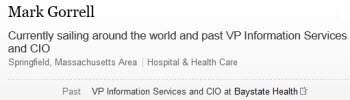
I think the role of the medical home will rapidly change to not only its physician-supported view, but we will have a new class of care attendants in the home environment. This could be, for example, myself taking care of a chronic asthmatic child or an insulin-dependent parent, where the technology that we will use will be much broader than what we perceive now as the PHR — Personal Health Record, and some monitoring that might be attached to it – that will really be into assisted diagnoses, some replacement of what we would consider to be normally a physician- or clinician-supported process. I see that coming fairly quickly within three to five years, especially as the health insurance exchanges come into play and we move a huge population of uninsured people into the insured population without an adequate supply of provider resources under the current physician labor model.

Last but not least, I think that the aggregation of some of the clinical information into our data warehouses and into our clinical performance reporting systems will support and provide breakthrough benefits for new disease management models. Once we really get some of this information consistently applied, we’ll be able to  overlay pattern analysis and other considerations that we don’t use today, which will help us improve population care.

Any concluding thoughts?

I would make a couple of observations. First, I appreciate the opportunity to do this. 

I have one other concern in the industry. Where’s our next generation of informatics leadership coming from? I am concerned about the CIO for now, concerned about incentives for CMIOs and CIOs to come into the industry and stay in the industry and to fight through the challenges and barriers that are out there. 

One of my closing comments would be, keep this dialogue going, keep people reading things such as HIStalk. Hopefully, that will provide the community that will support the evolution of us in the industry very different than 30 years ago.

Monday Morning Update 1/30/12

January 28, 2012 News 13 Comments

1-27-2012 7-57-44 PM

From You Know Who: “Re: RelayHealth. Jim Bodenbender out, announced abruptly on phone call. Jeff Felton, who ran the RelayHealth Pharmacy group and was a transplant from McKesson San Francisco, is taking over the entire division.” That appears to be true from the company’s management team page, on which Jeff Felton (above) is now listed as president.

1-28-2012 8-36-46 AM

From RAC Frustration: “Re: electronic RAC responses. I see that Medical Electronic Attachment (MEA) has become the latest company to be certified by CMS. I am curious how many HIStalk readers will use the esMD (electronic submission of medical documentation) for RAC and MAC responses?” MEA’s progam uses an NHIN gateway to send electronic responses to CMS’s post-payment audit requests of several flavors (RAC, MAC, CERT, PERM, and ZPIC.) I’m interested in how much transaction volume the average hospital will experience to keep CMS happy once esMD Phase 2 goes live in October and all documentation requests will be sent electronically. Comments welcome.

Surely the calendar is playing a cruel joke: it can’t be just three weeks until the HIMSS conference, can it?

My Time Capsule editorial this week from five years ago: Want Physicians to Use Systems? Standardize Screens Like You Do Back-End Databases. A free sample: “Hospitals never seem to get how illogical it is to physicians that every hospital buys a different system, but expects community-based doctors who cruise in for an hour a day to master all of them without burning up more hours of their self-employed day. They seem puzzled when doctors jeer at their zealous requests to bone up on Cerner when he or she is fuming at Eclipsys across town and McKesson at the university hospital.”

Listening: reader-recommend James, which I would characterize as jangly Britpop with strong vocals. They (it’s a band,  not a guy) remind me of the Smiths. They aren’t totally obscure, having sold 25 million albums in their 30 years. They probably would sell more if they had a more search engine friendly name, although come to think of it, that’s another similarity between them and the Smiths. 
1-27-2012 4-50-23 PM

A lot of money and effort is spent putting on the exhibit and educational tracks of HIMSS, but that’s just to provide the backdrop for the real reason people attend: to connect with folks for business and pleasure, two-thirds of respondents said. New poll to your right, as suggested by a reader: what reaction do you have when you hear that a vendor uses offshore programming resources?

1-27-2012 7-23-04 PM

Thanks to CSI Healthcare IT, supporting HIStalk as a Platinum Sponsor. The company is a leading national provider of IT and training professionals, both contract and permanent. The company’s team of 75 recruiters can often find local qualified resources, minimizing billable travel expenses to the client. Its pricing model has saved health system customers such as Sutter, Baylor, Texas Health, Clarian, and Sentara up to 60%. The company is vendor neutral, providing resources for projects involving McKesson, GE Healthcare, Allscripts, Epic, Cerner, Meditech, NextGen, and others. It can handle work ranging from providing a single resource to managing the projects of large health systems, also offering a specific package called Epic Community Connect that helps health systems provide Epic’s ambulatory systems to community practices (marketing, contracting, readiness assessments, implementation, and support.) Thanks to CSI Healthcare IT for supporting HIStalk.

Federal CTO Aneesh Chopra resigns and is expected to run for lieutenant governor of Virginia. You aren’t surprised if you read HIStalk on January 13, when my non-anonymous, well-placed informant chose the fantastic phony name of DeepThrowIT to tell us that Chopra was heading out. I think that might have been my first non-healthcare IT big scoop rumor.

1-27-2012 6-12-04 PM

I recently quoted some Epic facts provided by Chief Administration Officer Steve Dickmann in a recent talk he gave to a Madison group. The full video is here, from which I pulled a few more:

  • The company started in a basement in 1979 doing UW psych department work.
  • Epic went from 2.5 employees in 1979 to 30-40 employees in 1994, but then changed direction to focus on the electronic medical record.
  • The product was changed from text-based to a graphical GUI in 1994, the same year when the database was scaled up for large enterprises.
  • Epic Web came out in 1997; MyChart in 2000.
  • The company gained competitive advantage from Y2K because it had minimal remediation to accomplish while its competitors had to redirect resources to work on that problem.
  • Epic also gained competitive advantage from being in Wisconsin, which was an early adopter of large integrated delivery systems.
  • Epic does not subcontract or acquire software; everything was developed in Wisconsin.
  • The original motto was “Do good, have fun.” The “make money” part was added later.
  • Epic focuses on large hospitals and clinics, children’s hospitals, and academic hospitals and turns away other prospects. The only exception they will make is for hospitals located in Wisconsin.
  • Epic doesn’t do acquisitions because they would have to rewrite the code anyway to keep a truly integrated product.
  • Competitors have 20-30% of their employees doing sales and marketing, while Epic has 1%.
  • Epic’s culinary team has 70 employees and it also staffs its own horticultural team. It does not contract those functions out.
  • All of Epic’s implementers fly out Monday afternoon, which ties up a good bit of the Madison airport’s capacity with 600-700 people all leaving at about the same time.
  • Each customer has an assigned tech support team that knows the customer’s people and systems. The team is available 24×7.
  • 91% of the HIMSS EMRAM Stage 7 hospitals use Epic.

1-27-2012 8-19-04 PM

Supporting HIStalk as a Platinum Sponsor is Versus, which offers real-time location systems for patients, staff, and equipment. Hospitals use that information to automate workflow, improve efficiency, increase patient safety, boost patient satisfaction, and increase revenue. The company provides interesting examples: (a) advancing patients to the next level of care based on events, such as completed labs or EKGs; (b) locating telemetry patients in distress wherever they are; (c) alerting the physician when patients are ready to be seen; (d) reminding staff to wash hands; and (e) alerting housekeeping to clean the room when the patient’s badge is dropped into the discharge bin. The Traverse City, MI company has been around for over 20 years, with its combined infrared/radio frequency system being endorsed by the American Hospital Association. Hospital customers have documented improvements such as cutting equipment losses from $1.5 million to $40,000 year, eliminating the need for clinic waiting rooms, reducing telephone calls by 75%, and increasing bed capacity by 25% with no construction. Interesting stats: the company has over 600 facilities using 500,000 of its components to track more than 1 million patients per year. The big announcement a few weeks back was that The Johns Hopkins Hospital chose Versus to manage staff and assets in real time for some locations after a three-year pilot of several RTLS systems, with additional deployments scheduled. Thanks to Versus for supporting HIStalk.

The Peace Corps has an RFI out for an EMR product, just in case you’d like to sell them one. They’re actually looking to have OpenEMR customized, along with Microsoft Dynamics 2011 and BizTalk for reporting.

In England, Homerton University Hospital allows its original NPfIT contract for Cerner and BT expire and signs its own seven-year extension directly with Cerner, declining to open the opportunity to other vendors because of its working relationship with the company.

1-27-2012 9-04-08 PM

The Bipartisan Policy Center releases its recommendations for using healthcare IT to improve care and reduce costs. Quite a few industry names served on the task force and provided their input. Some of its observations and recommendations:

  • Even with new delivery models, the healthcare system continues to financially reward procedure and patient volume rather than better care. Recommendations: purchasers and plans should reward care that is higher quality and lower cost, incorporate those models into Medicare physician payments, expand pilots of new care models, and share lessons learned with private sector pilot projects.
  • Despite a lot of HIE activity, not much patient information is actually being exchanged. Recommendations: improve the HIE business case by adding more stringent information exchange requirements to Stage 2/3 of Meaningful Use, develop long-term standards that make sense for healthcare delivery, assess the level of information exchange that is occurring, do more work related to two-way data exchange, and clarify the role of health information exchange in the several programs funded by HITECH.
  • Consumer engagement with electronic tools is minimal. Recommendations: raise public awareness, help providers engage their patients to use technology, improve the usability of consumer tools and provide easy data import/export for consumer-facing applications, launch an awards program for consumer tools outcomes, share lessons learned, ramp up Meaningful Use requirements to include more consumer tools, and offer incentives to chronic disease patients to use electronic tools to manage their health.
  • EHR and Meaningful use adoption is still low. Recommendations: raise awareness of incentive programs and expand RECs and similar programs, clarify Meaningful Use requirements, roll out lessons learned form federal programs to the whole industry and not just government contractors, encourage sharing of best practices, and improve EHR usability.
  • Consumers are worried about privacy and security. Recommendations: require all entities that use PHI to comply with policies at least as stringent as HIPAA, clarify government guidance across agencies, development a national strategy for patient identification (a national ID was not specifically mentioned), and issue common sense security practices to providers.

1-28-2012 8-34-29 AM

I’ve previously mentioned the MIAA EHR mobile viewer app developed by a three-person Palomar Pomerado Health development team for its own use with its Cerner systems. A preview at a Toronto mobile healthcare conference generates interest, with the app going to pilot in March. The hospital hopes to commercialize it. Said a Canadian hospital IT director at the conference, “We need to look seriously at how a publicly-funded hospital in the States has been able to advance their technology like this when we seem to stumble on things like policy and rules.”

The Pennsylvania Health Department finds that nurses at St. Luke’s Hospital overdosed three patients in the past two years by incorrectly programming their PCA pumps. Hospital employees said the hospital did not require training on the devices.

An article covering successful businesses that did not use outside financing provides an example in eClinicalWorks CEO and co-founder Girish Kumar Navani, quoting him:

I don’t foresee leaving the company for at least 10 years. I would like to leave it a private company with no external investors and absolutely no thoughts whatsoever about Wall Street. I am having fun and take great pride in my freedom. There is no reason I would give that up. We are a cash flow positive company. We have recurring revenues and no debt. We have a large customer base that is growing exponentially.

1-28-2012 8-15-21 AM

Compuware says it will take its Covisint subsidiary public in its next fiscal year, which starts in April. Covisint, which has $74 million in annual revenue, offers an exchange platform that connects hospitals and practices, including services for identity management, collaboration, master patient index, and record location.

Vince’s latest HIS-tory: Part 2 of Health Micro Data Systems.

A column in The Atlantic revisits a 1995 article it published about Newt Gingrich, saying that some of his goofy, overly dramatic “we are at a crossroads” ideas (like colonizing the moon) prove that he can’t separate something that sounds cool if given little thought from pushing the government into spending huge amounts of money just to find out how cool it is or isn’t, even though the free market is better equipped to make that call. Healthcare technology was mentioned in that 1995 article:

Gingrich also thinks health care technology is cool. Serious students of this subject worry that insurance insulates patients from the cost of technology, thus yielding lots of high-cost, low-benefit use and in turn steering too much of society’s resources to the further development of such machinery. But Gingrich wants more. In 1984 he wanted more cat-scan machines, and he wanted the government to provide a $100 million incentive for the development of user-friendly dialysis machines–even though "there are already companies and researchers interested in this problem." The point here isn’t that Gingrich will now waste tons on technology. The current political climate will restrain this tendency. The point is that–in case you hadn’t noticed–there is little careful thought underpinning his enthusiasms, nothing solid beneath his unshakable self-assurance and his intense disdain for disagreement.

E-mail Mr. H.

More news: HIStalk Practice, HIStalk Mobile.

Readers Write 1/27/12

January 27, 2012 Readers Write 5 Comments

Submit your article of up to 500 words in length, subject to editing for clarity and brevity (please note: I run only original articles that have not appeared on any Web site or in any publication and I can’t use anything that looks like a commercial pitch). I’ll use a phony name for you unless you tell me otherwise. Thanks for sharing!

The Top 10 Mistakes Salespeople Make at the HIMSS Conference
By Beth Friedman

1-27-2012 5-09-35 PM

A vendor’s sales staff is one of the company’s most important assets. While marketing, PR, and events management put it all together, the sales staff determines whether or not the HIMSS conference is a success.

Is your sales team engaged, interacting with prospects, and busy with pre-scheduled appointments? Or are they sitting around the booth, eating dinner together, and looking like Las Vegas wallflowers?

Here’s a Top 10 list of sales staff mistakes at HIMSS derived from our 30+ years of combined experience. Avoid them and you’re golden. Make them and you’re history. It’s that simple!


Mistake #1: Sitting Around the Booth

Your booth is crowded with salespeople, but no prospects. This is the most common mistake at any trade show.

Prospects must be enticed to enter your booth. They won’t come into it willingly. It is the job of your sales team to get them in. Yes, that means standing at the edge of the carpet and greeting attendees. A simple “hello” and smile works wonders. Multiply your smiles and see how many you get back. Hey, these guys and gals are competitive – have a contest!

Secondly, ask attendees easy, friendly, open-ended questions as they pass by. Get them engaged in a friendly conversation to start. Before you know it, you’ll be giving a demo! For example:

  • How are you enjoying the show so far?
  • What did you think of the keynote this morning?
  • How are you finding the educational sessions this year?
  • Did you go to HIStalkapalooza?


Mistake #2: Smart Phone Syndrome

All year you’ve made cold calls, left messages, and begged for appointments. Guess what? The same folks you’ve been trying to reach for six months via phone are here at HIMSS, live and in person. Dump the cell phone and talk to everyone in real time.

Avoid e-mail or any other electronic-based interpersonal avoidance. This includes time spent in the booth, between exhibit hall and hotel, in the elevators, during lunch breaks, and at the roulette table. Attendees are everywhere. Be “on” and smile at all times.

Mistake #3: Selling Too Much

Keep the sales pitch in the booth. If you meet attendees at events, poolside, or at the casino, keep conversation fun, personable, and low pressure. People are people. Everyone likes to meet someone personally first, professionally second. Overselling is one sure way to drive people away.

Mistake #4: Having Dinner Alone

Even if your company is small, make the most of having all your customers and prospects in one place. Arrange a dinner. Invite customers for cocktails. Host a small reception, focus group, or breakfast.

Breaking bread with fellow employees only is an opportunity lost. Make sure every meal includes a customer or prospect. You’ll be glad you did!

Mistake #5: Assuming One Size Fits All

Sales staff often uses a “one size fits all” approach to HIMSS attendees. Take a moment to ask questions and better understand your audience. See what problems they are trying to solve. If your company can solve it, great! If you company can’t solve it, don’t waste their time. Refer them to a company that can, and remember that smile!

Mistake #6: Avoiding Sessions

HIMSS offers a huge educational opportunity. Hundreds of sessions are offered and your prospects are sitting in each one!

Take the time to attend sessions. Sit next to someone interesting. Introduce yourself. Attending educational sessions is the best investment sales teams can make at HIMSS. Plus, it might make you smarter.

Mistake #7: Negative Selling

Talk your company up, not others down. Negative selling never works. And it especially doesn’t work at HIMSS. Enough said.

Mistake #8: Keeping Your Company’s Presence a Secret

You’ve invested time, money, and effort into HIMSS. Why not shell out a few more bucks to let everyone know? Direct mail is back. E-mail campaigns and promotions help. Unless attendees know you’re there, you’ll get lost in the noise.

And remember to attach promotion to your HIMSS efforts, and some emotion to your promotion. Give attendees a reason to visit your booth. And have some fun!

Mistake #9: Confusing Signage

OK, this mistake is usually made by the marketing folks and not sales. But confusing signage is a nuisance to everyone. Your company has less than three seconds to tell HIMSS attendees what you do. Make those three seconds count! Keep signage brief and communicate in familiar industry terms.

Mistake #10: Not Making Appointments

Failing to make one-on-one appointments with customers and prospects at HIMSS is inexcusable. Even if your company doesn’t have access to the pre-show attendee list, just call them! See if they are going. If your direct contact is not going, chances are that someone from their organization is. Call and introduce yourself. Schedule a cup of coffee or have a drink.

Reach out and touch someone before the conference. Because once everyone is in Vegas, it is too late.

Good luck. Have fun. Make the most of HIMSS. It only happens once a year!

Beth Friedman, RHIT is president of The Friedman Marketing Group of Atlanta, GA.

EHR Systems Can Be “Genius” to Use
By Seth Henry

1-27-2012 5-26-35 PM

In proper accordance to government regulations, approximately 50% of doctors’ offices nationwide have implemented some form of electronic health record (EHR) system. However, of these, only 25% have adopted the technology to serve in a meaningful and useful way. Most managers understand the mandatory changes that are underway, and in many cases, have begun the critical transition to these systems. Even if users have implemented the proper technology, they may be unsure of how to effectively incorporate it into their daily protocol or how to operate them with maximum benefits.

Compounding the financial investments required to implement an EHR system, there is an average of 1,000 hours of data entry required within the first year of adoption. Doctors and their staff are already pressed for time and money and do not have the proper resources to accomplish this tedious but crucial task. Moreover, they need to be focused on their real job – providing quality healthcare to patients.

The good news is that EHR systems can become user-friendly with the addition of proper infrastructure. Comparable to personal technologies, EHRs originate as a generic platform, with the responsibility of the owner to engage with the product to create a usable, tailored system.

Compare your iPod to that of your friends. No two are exactly alike after you each have the opportunity to personalize and import desired features and applications. Electronic health record systems are similar. They start with standard capabilities and can be uniquely personalized and adapted to meet individual facility requirements. The EHR technology requires applications to make them accommodate the needs for users to engage with the system on a daily basis to further benefit patients.

The most formidable part of any technical change is the actual use of the product and gaining consensus amongst the staff to implement it accurately and consistently. EHR professionals are constantly looking for better ways to educate, counsel, and instruct their client facilities on the technology as together they identify the most meaningful way to apply the tailored applications.

Taking a bite out of Apple’s famously coined “Genius Bar,” functional, hands-on training and support is the cornerstone to the successful use and implementation of any new product integration. The “Genius Bar” adapts the concept found at global Apple retail stores: in-person assistance for product-related education. Technology providers are retaining onsite, dedicated experts equipped with the skills, solutions, and passion for information sharing to guide facility staff through the program until they are 100%autonomous.

A single-style teaching approach is not an acceptable resolution to ensuring total integration of these technical upgrades. Thoroughly educating users in a personalized method, void of time constraints, will enable them to be properly trained to engage with the systems. Not everyone responsible for use will learn in the same manner or adapt as quickly as others. Therefore, the “Genius Bar” solution allows hands-on training and a continuous resource for resolving practical issues encountered as they implement the systems.

When the facility staff and doctors are comfortable with using the products, they are more inclined to incorporate the processes into their daily routines. In-person, ongoing support from their “Genius Bar” representative will help facilitate a smooth transition and implementation process.

The real benefit of an EHR system lies in generating, analyzing, and, ultimately using patient information to directly improve overall patient care. Tailored applications that enhance the EHR technology allow facilities and users to employ the appropriate features and accommodate their needs without the high cost of in-house IT infrastructure and staffing.

With the value of applying customizable, intuitive features, internal office support, and the help of the “Genius Bar” staff, facilities can succeed in long-term implementation and meaningful use of electronic health records.

Seth Henry is founder and president of Arcadia Solutions of Burlington, MA.

Time Capsule: Want Physicians to Use Systems? Standardize Screens Like You Do Back-End Interfaces

January 27, 2012 Time Capsule Comments Off on Time Capsule: Want Physicians to Use Systems? Standardize Screens Like You Do Back-End Interfaces

I wrote weekly editorials for a boutique industry newsletter for several years, anxious for both audience and income. I learned a lot about coming up with ideas for the weekly grind, trying to be simultaneously opinionated and entertaining in a few hundred words, and not sleeping much because I was working all the time. They’re fun to read as a look back at what was important then (and often still important now).

I wrote this piece in January 2007.

Want Physicians to Use Systems? Standardize Screens Like You Do Back-End Interfaces
By Mr. HIStalk

mrhmedium

The premise of RHIOs and physician portals is that, given the lack of industry coordination, everybody’s computer system stores data differently. It’s up to you (vendor or provider) to match their standard layout. How hard that is for you to do isn’t their problem. If vendors don’t have uniformity on the front end, at least they will on the back end.

It’s an important concept in standardization. The RHIO makes the rules. That’s a political reality, not a technical one. Not surprisingly, providers and their vendors can standardize when they have to. The problem is lack of incentive.

Not long ago, hospitals and doctors were paranoid about sharing patient information. The vital secrets of John Smith’s CBC result or mole removal notes were far too incendiary to let a competitor sneak a peek. Coldly formal hospitals weren’t about to stoop so low as to let the other guy see their data, even though it might improve care for a given patient.

That seems pretty silly looking back. For nonprofits to be arguing over information that could help patients seems incredibly provincial and self-serving (“We’re not telling you what she’s allergic to because you may steal our market share …”). The patient didn’t get to vote, but luckily, common sense prevailed anyway.

With that battle mostly won, let’s move on to doctors. They see patients in two or more hospitals in the same service area, both of which are determined to push their CPOE agenda forward because they spent a lot of money and effort on implementing that system. Doctor, we’d like to make you a data entry clerk.

Hospitals never seem to get how illogical it is to physicians that every hospital buys a different system, but expects community-based doctors who cruise in for an hour a day to master all of them without burning up more hours of their self-employed day. They seem puzzled when doctors jeer at their zealous requests to bone up on Cerner when he or she is fuming at Eclipsys across town and McKesson at the university hospital. Are those systems really different enough that everybody has to buy a different one?

Given the mediocre at best state of clinical systems and CPOE, mastering even one of them as a community-based doc is a stretch goal. Mastering two or more? It will never happen.

When I drive a car, I expect the instruments to work basically the same. If I pick up a TV remote, I don’t want to attend training or read a poorly developed manual. I don’t care how creative your engineers are, I still want the buttons on a telephone to be arranged the same.

Vendors who don’t want to follow standards won’t get my business. A car rental company that decides to creatively swap the brake and gas pedals would fail quickly. Nobody has to pass a law to prevent that; vendors aren’t that stupid. Standardizing the user interface is a market expander that benefits everyone.

In HIT, vendors claim product superiority, but systems have been commoditized to the point where they accept pretty much the same information. There are only so many ways you can order meds, labs, and rads. Still, each vendor manages to design their physician user interface with enough quirks to ensure distinction from competitor offerings. If you’ve seen one system, you’ve seen one system. There’s no such thing as best practices.

Maybe it’s time to develop the equivalent of a portal or RHIO for physician ordering, decision support, and communication. Standardize the user input just like the RHIO’s accepted data format. Why should every doc have to learn every system?

Vendors would hate that, but they weren’t fans of RHIOs either because the importance of their link in the chain was diminished. Data coming from a Cerner system is no better or worse than that coming from a Meditech or McKesson system, so nobody on the other end cares which one you use.

Knowing the HIT vendors aren’t about to support that level of standardization, perhaps some third-party scraping-and-scripting tool vendor could make Meditech look exactly like Cerner for doctors. Think that wouldn’t sell in towns where both are used by hospitals with medical staff crossover?

Comments Off on Time Capsule: Want Physicians to Use Systems? Standardize Screens Like You Do Back-End Interfaces

News 1/27/12

January 26, 2012 News 2 Comments

Top News

1-26-2012 8-31-24 PM

CPSI announces Q4 numbers: revenue down 2%, EPS $0.59 vs. $0.61, raising questions about the state of the hospital clinical systems market.


Reader Comments

mrh_small From Vegas Question: “Re: HIStalkapalooza invitations. Will the e-mail come from your usual address or a new one? My spam folder is pretty large and I don’t want to miss it.” Invitations and regrets will be sent from histalkapalooza@contactESD.com this week. The walk-up plan will be described for those we couldn’t invite because of capacity. Check at the registration table at 8:00 and if we have room due to no-shows, we’ll let more folks in.

1-26-2012 8-30-03 PM

1-26-2012 7-54-34 PM

mrh_small From Rick: “Re: GE Healthcare. Restructuring of its IT division continued Tuesday with an announcement that it will terminate the Centricity Advance hosted EMR/PM solution immediately. Customers will have to make arrangements to move their data out of the cloud before the system is taken offline. All development in its Hospital and Large Practice division has been halted and products placed in maintenance-only mode, including Centricity Business revenue cycle solution. The Centricity EMR product will be sunset with no Version 10 release, replaced by the Centricity Practice Solutions combined EMR/PM system.” I asked GE Healthcare for a response Tuesday evening and agreed not to run the rumor then since the spokesperson indicated that it contained inaccuracies. Here are the main points from GE Healthcare:

  • The company will shut down its hosted PM/EMR solution Centricity Advance (the former MedPlexus product that GE Healthcare acquired in March 2010) on June 30, 2012.
  • The decision was made because of market overlap between the Centricity Advance product and Centricity Practice Solution.
  • Customers can retrieve their data in read-only form until December 31, 2012.
  • Customers will be offered an upgrade to the Centricity Practice Solution PM/EMR, with data migration, training, and implementation costs covered by GE.
  • The company will eliminate an unspecified number of jobs related to the announcement.
  • The Centricity Business revenue cycle product is unaffected by the announcement.

mrh_small From Expat Consultant: “Re: Dubai Health Authority embezzlement. These people own the company representing Epic in the current bid for DHA business.” Two men are charged with embezzling $250K from a company providing services to the DHA.

mrh_small From Rebecca: “Re: HIMSS presenters. Have you thought about listing sessions that will be presented by HIStalk’s loyal followers and contributors? You have so many followers attending and it would be nice to encourage them to attend educational sessions.” I’m a sucker for doing good deeds even though I’m already overwhelmed, so if you’re speaking at a session that’s on the regular HIMSS educational track (not in the exhibitor’s theater, on the show floor, etc.) you can enter your information here and I’ll try to put out a list.

mrh_small From Ileus: “Re: links to HIStalk Practice and HIStalk Mobile. I can never find them. Why not put them at the top of the page?” That’s a good idea that we’ll take one step further by placing tiny links at the bottom of each news post, starting today. That way, readers using mobile devices and RSS feeds can click them. I hadn’t thought about the ease of finding the links, to be honest.


HIStalk Announcements and Requests

inga_small Highlights from this week’s HIStalk Practice: eClinicalWorks CEO Girish Navani highlights his company’s 2011 achievements and 2012 goals. SBA loans to doctors have surged in the last 10 years. Seven states have still not initiated Medicaid EHR incentive programs.  Julie McGovern of Practice Wise discusses New Year’s resolutions, vendor relationships, and setting realistic and appropriate expectations.  The ever-irreverent Dr. Joel Diamond explains the history of ICD-10 (it’s a must read.) Actually, I think everything on HIStalk Practice is a must read, so make sure you are signed up for e-mail updates.

On the Jobs Board: Senior Product Manager of Healthcare Solutions, SCM Go-Live Support, Epic Credentialed Trainers. On Healthcare IT Jobs: Director of Technical Operations, Allscripts Application Analyst, IT Director and IT Leader.

mrh_small Inga, Dr. Jayne, and I do our HIStalk work in a bubble of lonely anonymity, so we always enjoy connecting with readers, even if only by electronic means. We enjoy seeing the names of the 2,128 folks who have signed up for Dann’s LinkedIn-based HIStalk Fan Club, which is almost four years old now (hello to the new folks there from Citizens Memorial Healthcare, American College of Cardiology, McKesson, Cornerstone Advisors, Vitera Healthcare, DrFirst, Medibis, Medicity, GE Healthcare, and Lehigh University). We accept all friend/connection requests from Facebook and LinkedIn, connecting you to a pretty big web of people that might come in handy someday. We like it when you send us news and rumors, subscribe to the e-mail list, click the ads of our sponsors, and use the Resource Guide and Consulting RFI Blaster. And of course thanks for reading, and thank goodness you do since we would be wasting our time here otherwise.

mrh_small I forgot to give a proper introduction and welcome to Dr. Rick, whose first EHR Design Talk has earned a great response from the Twitterverse and from reader comments. He chose where to start his series, but you get to decide where it goes from there through your interaction with him. You will no doubt appreciate his active (and sometimes almost immediate) response to your comments, indicating his keen interest in usability and your thoughts on what it means to EHR users. It takes a lot of effort to research and write posts like his, so thanks to Dr. Rick for sharing his time and expertise with us.


Acquisitions, Funding, Business, and Stock

1-26-2012 9-53-39 PM

drchrono closes a $2.8 million funding round. The company says 15,000 users have registered.

EHR and PM provider Image MD (formerly eHealth Made EASY) announces it has increased its invested capital from $15 million to $25 million over the last year.

1-26-2012 8-32-30 PM

Quality Systems, the parent company of NextGen, reports Q3 earnings: revenue up 23% to $112.8 million; net income up 20% to $21.1 million. The company’s $0.36 EPS missed analysts’ estimates by $0.02.


Sales

Masonicare (CT) selects the Summit Express Connect interface engine to provide interface integration between Masonicare’s MEDITECH HIS and ancillary systems.


People

Former Clinecta President Jeffrey A. Pfund joins JEMS Technology as COO.|

1-26-2012 9-00-06 PM

Brian Mitchell, formerly of GE Healthcare, joins ClearDATA Networks as vice president of sales.

1-26-2012 5-51-04 PM

M*Modal (MedQuist) promotes Michael Clark to EVP of global sales.

1-26-2012 2-21-33 PM

University of Chicago Medical Center promotes Sameer Badlani, MD from associate CMIO to CMIO.

1-26-2012 5-55-15 PM

Healthcare data analytics and consulting firm Sg2 appoints Eric Louie MD, MBA as chief medical officer.

1-26-2012 6-05-26 PM

Former Microsoft Health Solutions Group VP Peter Neupert joins venture capital firm Health Evolution Partners as an operating partner, joining former ONC head David Brailer MD.

Healthcare Data Solutions, a provider of healthcare databases and intelligence services, names Scott Thompson (InfoGroup) its CTO.

1-26-2012 6-12-44 PM

Drexel DeFord, VP/CIO of Seattle Children’s Hospital, will serve as 2012 chair of CHIME’s board of trustees.

1-26-2012 6-02-14 PM

Rick Schooler, VP/CIO of Orlando Health (FL) is named CHIME-HIMSS John E. Gall Jr. CIO of the Year.

1-26-2012 6-04-05 PM

Leigh Ann Myers RN joins PerfectServe as VP and chief clinical officer. She was previously with PatientSafe Solutions.


Announcements and Implementations

1-26-2012 3-05-59 PM

Virtua (NJ) goes live with the first phase of its enterprise-wide device infrastructure using Nuvon’s VEGA System to connect to its Picis perioperative solution.

1-26-2012 3-53-24 PM

Upstate University Hospital (NY) introduces Upstate MyChart, giving patients online access to their medical records. The hospital is part of SUNY Upstate Medical University, which is in the midst of $40 million Epic implementation.

API Healthcare announces that 20 hospitals have recently gone live with its workforce management solutions.

M*Modal Inc and Merge Healthcare partner to integrate M*Modal’s speech and natural language understanding technology into Merge solutions.

1-26-2012 7-36-08 PM 1-26-2012 7-36-50 PM

Siemens HSB CEO John Glaser and Texas Health Resources SVP/CIO Ed Marx are among the presenters of a January 31 webinar, Can Healthcare Providers Afford to Ignore Social Media?

MedAssets announces general availability of its Access Integrity suite for front-end RCM processes.

1-26-2012 10-00-43 PM

Greenville Hospital System University Medical Center (SC) goes live on Holon’s CPOE Medication Order Management solution at all of its facilities.


Government and Politics

1-26-2012 3-11-52 PM

ONC head Farzad Mostahari MD predicts that at least 100,000 providers will receive EHR incentive payments by the end of 2012. In a blog posting that discusses his forecast for HIT in the coming year, he says:

I see 2012 as the year in which health IT truly comes of age. While much work still needs to be done, the groundwork is firmly in place for what promises to be a breakthrough year in the adoption and widespread use of health IT in ways that improve care for individuals, improve health outcomes for populations, and increase the value we get from our health care dollars.

mrh_small A just-published article in The Center for Public Integrity’s iWatch News covers the special interest advocacy activities (or political influence peddling, according to rival Mitt Romney) of Newt Gingrich’s for-profit Center for Health Transformation. It lists some examples of Gingrich pitching his clients in various government hearings for projects requiring major government expenditures, among them GE Healthcare, Siemens, Allscripts, and HealthTrio. The center’s project director is mentioned as testifying that the Department of Labor should require healthcare providers to use electronic medical records, which it implies morphed into HITECH. Gingrich also appeared at a press conference in the Senate Office Building to promote a bill requiring e-prescribing, in which at least 20 of his paying clients had a financial interest.

The government says that an upgrade to Symantec’s Veritas Storage Foundation caused the significant downtime experienced by the Military Health System’s AHLTA clinical system last week.

ONC’s Office of the Chief Privacy Officer announces a project to identify best practices for mobile device privacy and security. They will convene a public roundtable in the spring.


Other

1-26-2012 9-48-37 PM

Affiliated Computer Services (ACS) officially adopts the Xerox name, two years after its acquisition by that company.

Server problems at a clinic in Canada cause month-long issues, including the inability to access patient records and the complete shutdown of the telephone system for a day.

1-26-2012 7-19-51 PM

mrh_small Healthcare Growth Partners releases its latest healthcare IT industry review, covering Q4 and reviewing 2011’s activities. It’s a very well done review of macroeconomic and healthcare IT industry factors that will affect merger and acquisition activities and share performance of publicly traded companies. I really liked the chart above that describes why some companies command high revenue multiples when acquired, while others don’t. What it’s showing is that recent acquisitions aren’t following the typical trend, with more premium-priced acquisitions than usual. I would attribute to the fifth factor listed in the rightmost section – deep-pockets outsider companies are making it rain to snap up available players so they can scratch their itch to get into healthcare quickly, even if irresponsibly. Whether they’ll stay in is another question (most don’t.)

1-26-2012 7-02-04 PM

mrh_small Weird News Andy declares that bacon is the new duct tape, noting a report from Michigan doctors who stopped a four-year-old girl’s platelet-related nosebleed by shoving raw bacon up her nose. One of the doctors said he got the idea from his military days, when pork was recommended as an antihemorrhagic. WNA postulates that the story was sponsored by the ThinkGeek product above.

mrh_small An Oklahoma hospital that took a $500K donation from country singer Garth Brooks to build a women’s center to be named after his mother but then used the money for other projects is ordered to give Brooks his money back plus another $500K as punitive damages. The hospital argued that the gift from Brooks was originally made anonymously and without restrictions and that he was fuzzy on details about the meeting when asked later.


Sponsor Updates

  • Fulcrum Methods launches its ICD-10 assessment, remediation, and program management tools.
  • T-System’s T SystemEV EDIS successfully completes the highest level of interoperability tests at IHE’s Connectathon.
  • Sunrise Health System (NV) becomes the first health system in Nevada to use AirStrip CARDIOLOGY.
  • MEDecision’s January 31 Webinar will feature a discussion on the use of coordination solutions and EHRs to lower costs and improve care. 
  • Concerro announces the keynote speakers for its April 2012 Concerro Client Conference.
  • Southeast Alabama Medical Center selects PatientKeeper Mobile CPOE to compliment its McKesson HIS.
  • MedAptus announces that its Professional Intelligent Charge Capture solution was named Mobile Data Systems Category Leader in KLAS’s annual report.
  • Medicity validates its interoperability capabilities at the IHE North American Connectathon 2012.

EPtalk by Dr. Jayne

The media have been all over reports about physicians distracted by their electronic devices. I laughed out loud at this headline, though: Paperwork causes unintended distractions for physicians and nurses. This quick little piece on KevinMD.com is worth the read. I think sometimes we’re so aggravated by our technology that we forget what it was like before.

As a physician, I’m annoyed by lawmakers’ attempts to control how I practice or how patients care for self-limited illnesses. The recent spike in state and municipal laws that restrict purchasing of over-the-counter cold remedies is an example. Communities typically decide (often in patchwork fashion) that these will now be available only by prescription. This drives me crazy, because although I can purchase it over the counter without a prescription, if I prescribe it for a patient it is considered a controlled substance and requires the use of my DEA number and the use of special prescription paper as it cannot be electronically prescribed (at least not now in the state where I practice.)

In turn, this causes patients to spend a co-pay to come see me, plus the insurance company to fund the rest of the cost for an office visit, all so that the patient can purchase a drug that should have cost $4.99 at the local discount store. An article I recently ran across  lets us know that not only have the meth makers outsmarted the restrictions on pseudoephedrine purchase, they’re also driving up healthcare costs in unintended ways. Users have turned to small-batch techniques (the “one pot” or “shake and bake” approach) to make their own meth rather than relying on the large batches typically produced by dealers. This has caused a spike in burn patients when the experiment literally blows up in the user’s face. An Associated Press survey reports that up to a third of burn patients were injured making meth. These patients are often uninsured and their care is more costly than that of other burn patients. The ultimate cost could be in the hundreds of millions of dollars. Definitely something to think about.

Insurers are moving into the mobile health game. Aetna, WellPoint, and UnitedHealth Group are among payers who have jumped into the fray in a big way. I enjoy following HIStalk Mobile and am supportive of things that help patients get more in tune with their health care and personal wellness. I’m a bit skeptical, though, about in-car health. I’d rather encourage people to get out of their cars instead of convincing them that time sitting in them is terribly worthwhile.|

Speaking of personal fitness: for some, obesity continues to cause issues even in death. Due to the potential for decreased learning when working with obese cadavers as well as the difficulties in preparing and storing them, some medical schools are rejecting donations based on size. Scientific donation of a body is a true gift and I am grateful to those individuals and families who choose this route. I’m sad for those who want to make this gift but are unable to do so.

One of my closest friends is gridlocked with his employer over the use of the CMIO title. He’s been doing the job for years but they refuse to recognize him. It may be just a name, but to bolster his spirits I want to share some unusual executive titles. Hang in there, and remember that in your head, you can have whatever title you want. Personally, I think I’ll choose Imperatrix. Now I just need to figure out something equally important-sounding for Inga.

clip_image002

I’ve been trying to get into Twitter, but it seems to be conspiring against me. Since I haven’t been wasting any time tweeting, I’ve been able to continue my pre-HIMSS shoe shopping. Although I’m not eligible for the “Inga Loves My Shoes” contest, I don’t want her to think I’m a slouch, so I’ve been texting her with my finds. So far I seem to be meeting her standards, but I’m not convinced I have the perfect pair just yet.

In response to Monday’s Curbside Consult, readers are continuing to send some great suggestions. I’m looking forward to hitting some of them soon. Please keep them coming!

Print


Contacts

Mr. H, Inga, Dr. Jayne, Dr. Gregg.

More news: HIStalk Practice, HIStalk Mobile.

CIO Unplugged 1/25/12

January 25, 2012 Ed Marx 3 Comments

The views and opinions expressed in this blog are mine personally and are not necessarily representative of current or former employers.

The Annual Review

They say people fear giving a speech more than death. I say people fear performance reviews more than speech and death combined.

Despite having had some excellent managers over the years, I can’t say that I ever had a review I enjoyed or gained much from. And frankly, I am not sure how many helpful reviews I deal out. Reviews are not a strength for most. They should be.

Admit it. You appreciate the person who lets you know the tag is sticking out on the back of your shirt. Or that you have oatmeal stuck in your braces. If I’m going on a date with my wife, I often ask my teenage daughter, “Do I look hip in this outfit?” Her enthusiastic nod—or more often, her grimace of embarrassment—tells me the truth. She helps me improve.

We want to know these details about ourselves, trivial as they may be. So why does our attitude change in the work setting? Nothing trivial there. In fact, our efforts—and non-effort—can have a serious affect on the department, if not the entire organization. My performance is never self-contained. My conduct, attitude, and effectiveness cascade through the ranks. My subordinates frequently do what I do … and what I do NOT do. Not surprisingly, their people follow their example.

Does your annual review reflect the real you? Do your assessments accurately reveal your staff?

How easy it is to cave in to temptation and give overly optimistic reviews to avoid discomfort. I’ve done it; you’ve done it. We’re all guilty. At the end of the day, I kick myself because I’ve shortchanged everyone. In fact, I’ve undermined my employee and my organization. Worse yet, if I’m not modeling appropriate and accountable reviews, my subordinates will follow my poor example. (Ouch. I feel the pain as I write.)

This post is as much of a kick-in-the-rear encouragement to me as it is to you. Since it’s that time of year again, we the leaders are going to invest the time and energy to make the review honest and meaningful. You with me?

Here are four tips:

  1. Spandex. Brutally, honest friend. If you want to know where you stand with weight management, pull on a pair. Someone can tell me I’m fit, but when I see the rolls of fat hanging over the spandex … as Clapton might sing: ♫ “It don’t lie, it don’t lie, it don’t lie … Spandex!” ♫. This sort of accountability keeps me on the right path. We need Spandex feedback in our careers to ensure that our performance remains in check. Give honest feedback even when it’s uncomfortable. Your employee deserves to know the truth no matter how brutal. Nobody likes flab.
  2. Satiate the hunger. Deep down, most of us long to improve. If I can give my subordinates one tangible thing to work on, most will clutch it like a pit bull clenching a bone. Imagine if your boss gave you one strength to focus on every year to help you move to the next level and you really did something with it. You might become CEO. That annual performance review might become something to look forward to.
  3. Break it down. Several years ago, I switched to doing performance reviews quarterly with several of my directs. This helped make the annual review less dreadful with those who chose this format. When you’re tracking progress, evaluating, and encouraging throughout the year, there are no surprises to contend with. The annual review almost becomes a formality.
  4. Abundance of counselors. If I don’t get a bone to chew or my Spandex feels loose, I move on to other senior leaders that I trust. Some of the best feedback for improvement I ever received did not come out of my manager’s review, but rather from the next office over. I encourage my directs to seek the same. The combination of both leads to spectacular outcomes.

For Christmas, I received the latest in athletic gear, compression shorts. Compression shorts are medical grade – Spandex on steroids. While I track my pulse, pressure, Vo2, weight, blood chemistry, and speed, few things let me know where I stand health-wise better than my new shorts. They offer a whole new level of accountability and transparency.

Honest feedback to stimulate improvement is what our people and organizations need the most. That and Spandex.

Ed Marx is a CIO currently working for a large integrated health system. Ed encourages your interaction through this blog. Add a comment by clicking the link at the bottom of this post. You can also connect with him directly through his profile pages on social networking sites LinkedIn and Facebook and you can follow him via Twitter — user name marxists.

News 1/25/12

January 24, 2012 News 4 Comments

Top News

1-24-2012 2-55-29 PM

MedQuist Holdings changes its name to M*Modal, which is the business MedQuist acquired last year for $130 million in cash. CEO Vern Davenport rang the Nasdaq opening bell to commemorate the company’s rebranding and new MODL trading symbol. The company also confirms that most of its executives will work from an office to be opened in Raleigh, NC while company headquarters will remain in Franklin, TN.


Reader Comments

inga_small From Lourde: “Re: Party attire. I finally found my shoes for the party last night. Super excited that that is off my plate!! Choosing the perfect shoe – so ‘stressful.’” I feel your pain. I will admit to no one how many pairs of shoes I have bought in the last month because I keep finding what I think are the “perfect” pair. Since we are talking shoes, it’s a good time to mention that this year’s Inga Loves My Shoes contest during HIStalkapalooza will include special shoe categories. Our judges (Lindsay Miller of RelayHealth and Timur Tugberk of DrFirst) have not yet revealed the categories, but I promise to share more soon. Meanwhile, if you are seeking fame in the overall best dressed contest, keep in mind you’ll have an opportunity to be crowned HIStalk King and HIStalk Queen, as well as Best Elvis Impersonator and Best Attire Left in Vegas. Ladies and gentleman, start your shopping.

1-24-2012 11-37-35 AM

inga_small From Party Central: “Re: invite from DIVURGENT. We are hosting our Kingpin Bowling Social event Monday night during HIMSS. It’s at 8:00 pm at the Palms Casino and Resort Kingpin Suite and we’d love HIStalk readers to join us.” Sounds fun and gives me an excuse to wear my bowling shoes! Here’s the invite and RSVP information.

inga_small From Number Cruncher: “Re: Practice Fusion. Their latest press release indicates 130,000 users. Are those all doctors?” The Practice Fusion folks tell me that about 40% (about 52,000) are physicians. I asked for clarification to understand if the 52,000 physicians were all considered “active” users, but not yet received a reply. Regardless, assuming the US has 600,000 office-based physicians, the 52,000 figure would give Practice Fusion about 8.5% of the market.

1-24-2012 9-11-07 PM

mrh_small From GilaMonster: “Re: Awarepoint. Has laid off 10% of its workforce.” We asked the company, with this response from Merrie Wallace, EVP of product solutions and marketing:

Awarepoint has seen a record-setting year for sales contracts and hospital implementations in 2011. Along with its steady growth last year, Awarepoint strategically acquired Patient Care Technology Systems (PCTS) in order to become the only complete RTLS solution optimizing healthcare workflow. After the acquisition, an analysis of the workforce revealed duplicate positions and a decision was made to restructure the workforce. Around 10 positions have been consolidated, though Awarepoint continues to hire strategic positions to support growth and customer support.


1-24-2012 6-33-58 PM

mrh_small From RS: “Re: Catholic Healthcare West. Just changed their name to Dignity Health.” The 40-hospital CHW also drops its Catholic Church affiliation and opens up its governing board to non-Catholics, although its 25 Catholic hospitals will retain the sponsorship of local congregations. The press release mentions the $1.8 billion it is investing in electronic health records. The organization announced plans to triple its revenue, so the change allows it to acquire and partner with hospitals without running afoul of church policies.


HIStalk Announcements and Requests

mrh_small Our own Travis Good MD of HIStalk Mobile will serve as a guest speaker of a January 31 Kony Solutions webinar, Mobile Strategy for Pharma – Opportunities and Challenges.


Acquisitions, Funding, Business, and Stock

The Advisory Board expects to realize a $3.5 million gain on its recent sale of its OptiLink business to Kronos. Also, Texas Governor Rick Perry announces that his state will invest $500,000 in The Advisory Board, which plans to create more than 200 jobs and invest $8.1 million to expand its Texas operations.


Sales

1-24-2012 3-45-10 PM

Rockingham Memorial Hospital (VA) selects Amcom Software’s messaging and communications solutions.

The VA contracts with Decision Simulation’s virtual patient platform for its simulated training and education program for healthcare providers and educators.

1-24-2012 9-01-17 PM

Montrose Memorial Hospital (CO) selects PatientKeeper’s application suite.

Unity Health System (NY) chooses dbMotion’s interoperability platform for its 70 locations.

CentraCare Health System (MN) picks iSirona’s device connectivity technology to deliver patient data from its ventilators into its Epic EMR.

Cooley Dickinson Physician Hospital Organization (MA) signs a contract for MedVentive Risk Manager, which it will use to manage its new Alternative Quality Contract with BCBS.

Intermountain Healthcare chooses the mobile application development platform from Kony Solutions to develop its own apps.

The State of New York chooses First Databank and Ernst & Young to survey drug average acquisition costs, a Medicaid reimbursement benchmark authorized by the legislature in 2011.


People

1-24-2012 3-48-49 PM

GE Healthcare IT appoints Michael Jackman VP and GM of its specialty solutions business. He was previously with iSoft, Carestream Health, and Kodak.

1-24-2012 6-01-03 PM

The Huntzinger Management Group names William C. Reed VP of business development. He’s the former president and CEO of AllOne Health and CIO of Geisinger Health System and Thomas Jefferson University Hospital.

1-24-2012 12-25-54 PM

Rubbermaid Medical Solutions names Cheryl D. Parker, PhD, RN-BC, FHIMSS as its chief nursing informatics officer. She was previously with Motion Computing.

1-24-2012 6-59-10 PM

Noel Williams, CIO of HCA, announces her retirement, effective at the end of May.

1-24-2012 7-24-26 PM

M*Modal names Amy Amick as COO. She was previously GM of worldwide services for Microsoft’s Health Solutions Group.

Mediware promotes VP and Controller Robert W. Watkins to CFO.


Announcements and Implementations

1-24-2012 6-53-14 PM

Kaiser Permanente announces that its 9 million patients can access their medical information on a new, free Android app, with an iPhone version to follow in a few months. It offers appointments, secure e-mail, lab results, refills, and a facility locator, all available to both patients and their families acting on their behalf.

UPMC moves all its electronic transactions with suppliers to Toreion’s EDI exchange solution.

Isabel Healthcare and BMJ Group partner to offer Best Practice, which combines Isabel’s diagnostic tools with BMJ’s clinical content. BMJ publishes the British Medical Journal and is a wholly owned subsidiary of the British Medical Association.

Cerner chooses TrustHCS to provide its clients with ICD-10 education.


Innovation and Research

mrh_small Children’s Hospital Boston offers a $25,000 prize to the researcher who develops the winning best practices for communicating the information found in a patient’s genome to physicians and patients to improve outcomes. The prize carries one of the most contrived and awkward names ever – CLARITY, which they explain stands for “Children’s Leadership Award for the Reliable Interpretation and appropriate Transmission of Your genomic information.” One of the three project leaders is Isaac Kohane MD, PhD of the Children’s Hospital Informatics program. Applications are due March 12.


Technology

mrh_small Tanking BlackBerry maker Research in Motion continues its unbroken streak of questionable decisions, naming one of its two low-visibility COOs (the one in charge of the RIM’s Playbook tablet, whose sales were so bad even at $99 fire sale prices that the company had to write down $485 million) to replace its two recently department co-CEOs. The new boss says he will mostly follow the path set by his predecessors, except he will hire a chief marketing officer. Shares have dropped 80% from their February 2011 price and took another 4% hit on the CEO announcement.

mrh_small Apple’s Q1 numbers: revenue up 73%, EPS $13.87 vs. $6.43, crushing estimates with the its highest-ever revenue and profit. In the quarter, the company sold 37 million iPhones (up 128%), 16 million iPads (up 111%), 5.2 million Macs (up 26%), and in the only negative news, 15.4 million iPods (down 21%). The company has $98 billion of cash in the bank. Your $10,000 investment three years ago would be worth more than $50,000 today.


Other

Medical records scanning and document management company EDCO Group will increase the number of employees in its Sioux Falls, SD facility from 40 to 70, helped out with development money from the state’s workforce commission.

mrh_small Weird News Andy says this isn’t weird, just cool, even though he’ll pass on a spot on the camera recovery team. Researchers in Israel take the “pill cam” intestinal camera system to the next level by developing a version that can be steered by the magnet of an MRI machine.

mrh_small In a rare public appearance by an Epic executive, COO Steve Dickman provides some company facts to a local technology group:

  • 2011 sales exceeded $1.2 billion, up 45% from 2010
  • The company expects to add 30 large customers this year
  • Construction continues on a new 11,000 seat on-campus auditorium
  • 38% of US patients are covered by an Epic product
  • The company hires 1,500 new employees a year from 150,000 submitted resumes
  • Only five employees work in sales, while 55% do implementation and support
  • The average employee age is 29
  • The company says it has no interest in buying competitors or being acquired itself

mrh_small The Wall Street Journal runs a point-counterpoint article on whether the US should implement a national patient identifier. Arguing for: Michael Collins MD, chancellor of the University of Massachusetts Medical School. Arguing against: Deborah Peel MD, psychiatrist and founder of Patient Privacy Rights. Reader votes are running 59% no, 41% yes.

mrh_small An Ohio hospital’s transparency policy regarding medical errors blows up in its face when the chief medical officer tells the family of a deceased knee surgery patient that his death was caused by malfunctioning lab equipment, which delayed reporting of the high serum potassium level that contributed to his heart attack. Unbeknownst to the hospital, the family had smuggled a tape recorder into the meeting and used the chief medical officer’s recorded admission as evidence in its wrongful death lawsuit against the hospital.

mrh_small A Florida jury finds that an HCA-owned hospital allowed an uncredentialed surgeon to perform gastric bypass surgery on a patient who suffered brain damage. They award the patient $178 million.

inga_small Stanford University researchers find that women report feeling about 20% more pain than men for unknown reasons. Previous studies found that women are more likely to tell doctors about their pain and to delay seeking treatment for it. Here is my theory: men like to be perceived as macho, especially if they happen to be under the care of a cute nurse of the opposite sex. Meanwhile, women feel more cumulative pain between the experience of childbirth and the subsequent carrying of infants, toddlers, kids, and 40-pound bags of dog food. All that, of course, while wearing four-inch heels.


Sponsor Updates

  • Humedica and West Health Policy Center announce their collaboration to identify healthcare cost drivers that can be lowered through the use of technology.
  • Premier Healthcare Alliance Inc announces a group purchasing agreement with UltraLinq Healthcare Solutions.
  • Ingenious Med extends its mobile offerings to Android mobile devices.
  • Sparrow Laboratories uses EMRHub from Lifepoint Informatics to send lab results to provider EMRs.
  • MEDecision achieves full pass certification for its interoperability tests at the 2012 IHE Connectathon.
  • NextGate announces its successful testing of MatchMetrix EMPI at the IHE Connectathon 2012.
  • Commonwealth Orthopaedics (VA) selects SRS for its 91 providers.
  • McKesson announces an ICD-10 transition service.
  • Aspen Advisors publishes a case study on its ICD-10 readiness assessment for East Jefferson General Hospital (LA).
  • Jon Phillips of Healthcare Growth Partners discusses his firm’s trade show strategy for HIMSS.
  • CHRISTUS Health (TX) selects Compuware’s Gomez Platform to optimize the performance and availability of its EHR.
  • AT&T announces communication and infrastructure tools to allow providers to use tablets and messaging more securely.
  • Over 10,000 New York State healthcare providers had enrolled in either the NYC Health Department’s NYC REACH program or the NY eHealth Collaborative by the end of 2011.
  • Intelligent InSites offers a January 25 Webinar on applying RTLS visibility and lean production principles to healthcare.
  • MEDSEEK announces support for the ONC’s “Putting the I in HealthIT” program, which seeks to empower patients to become partners in their own health.
  • DrFirst releases a Healthcare Hero video, also offering a HIMSS conference night on the town (limo, dinner, and show) as a prize to one selected person who leaves a comment on the video’s YouTube page.

Contacts

Mr. H, Inga, Dr. Jayne, Dr. Gregg.

EHR Design Talk with Dr. Rick 1/23/12

January 23, 2012 Rick Weinhaus 33 Comments

Computer-Centered versus User-Centered Design

Within the next few years, most physicians in this country will have converted from paper-based charting to electronic health record (EHR) technology. This is an unprecedented technological change in healthcare delivery. Whether this technological transformation succeeds will in large part depend on the design of the EHR software itself.

As a physician in clinical practice, my day-to-day care of patients depends in large part on how easy or difficult it is to interact with my EHR. Like many of my colleagues, I find that while my EHR provides all the necessary functionality, using it requires too much cognitive effort. In other words, the EHR design is computer-centered instead of being user-centered.

What’s the difference between computer-centered and user-centered design? Let me give an example.

Imagine that you and your very young son have recently started playing tic-tac-toe against each other on two networked computers. Your son thinks he should be winning more games, so he proposes a change, not in the rules, but in your screen view, in order to make the odds more even.

While his screen view of the tic-tac-toe grid will remain the same, your screen view will no longer be the standard three-by-three grid, but rather will be a single row of nine boxes.

He enlists his older sister, who is great with computers, to program your new user interface. Each of you can only see your own screen.

1-23-2012 8-12-11 PM

The first three boxes in your row correspond to the three boxes in the top row in his grid, the next three boxes in your row correspond to the three boxes in the middle row of his grid, and the last three boxes in your row correspond to the three boxes in the bottom row of his grid.

So, for a particular game, your respective screen views would be as follows:

1-23-2012 8-13-43 PM

1-23-2012 8-15-02 PM

All of the sudden, you find that you’re working pretty hard just to play tic-tac-toe. You’re working hard because you can no longer ‘see’ the problem.

First you have to mentally reconstruct the normal three-by-three tic-tac-toe grid, then mentally segment your row of nine boxes into three groups of three, and then transpose each segment back onto the appropriate part of the tic-tac-toe grid that you are keeping in your head. (Alternatively, you might decide to solve the problem using a different strategy, but that would still require cognitive effort on your part.)

With a lot of effort, you’re able to stay pretty even with your son, but then your daughter introduces a second challenge — a two-second time limit for each move. At this point, your son starts winning a lot more games than you, restoring family harmony.

What is interesting about this example is that, from a logical perspective, the two screen views contain exactly the same amount of information. And, in fact, if a computer program were using an algebraic algorithm to play tic-tac-toe against you, the screen view would be immaterial.

But for humans, it is clear that the grid view works better. It works because we can literally ‘see’ the solution.

If we see a tic-tac-toe grid, we can visually superimpose horizontal, vertical, or diagonal lines at will. If we are faced with the game position below, we don’t have to compute the slope of the line passing through the two Xs or solve an equation to know whether that line would also pass through the square on the bottom right.

1-23-2012 8-16-52 PM

In other words, the human brain is an extremely powerful computer, but one that evolved to help us survive in the physical world by making sense of our spatial environment. Our brain is almost always better at solving problems visually than by using formal logical or mathematical operations.

Donald Norman, a cognitive scientist and pioneer in applying human cognition to design, has written extensively on this topic. In Things that Make Us Smart, he devotes a chapter to why certain design variants are easier for humans than others, even if the variants are formally identical. He includes one diabolical example which turns tic-tac-toe into a variant of Sudoku.

Humans enjoy solving mental games and puzzles for fun, which is why we invent things like Sudoku, but we don’t enjoy them at all when they interfere with complex tasks. Physicians need to be able to devote their full cognitive attention to patients in order to help solve their very real health puzzles.

As physicians, we need user-centered EHR designs that take advantage of our innate visual and spatial perceptual abilities and stay in the background, instead of competing with patients for our finite cognitive resources. Far too many EHR designs force us to play linear tic-tac-toe.

Next post:

Why T-Sheets Work

1-23-2012 8-09-09 PM

Rick Weinhaus MD practices clinical ophthalmology in the Boston area. He trained at Harvard Medical School, The Massachusetts Eye and Ear Infirmary, and the Neuroscience Unit of the Schepens Eye Research Institute. He writes on how to design simple, powerful, elegant user interfaces for electronic health records (EHRs) by applying our understanding of human perception and cognition. He welcomes your comments and thoughts on this post and on EHR usability issues.

Curbside Consult with Dr. Jayne 1/23/12

January 23, 2012 Dr. Jayne 5 Comments

I was inspired by Ed Marx’s post last month, Transformation Through the Written Word. He talks about doing book studies with his direct reports, which then expanded throughout the workplace. The thing that most fascinated me about Ed’s piece was his book list. Having been the victim of a boss who tortured his team with 17 Irrefutable Laws of Teamwork, I was surprised (and quite pleased) to find books on his list which didn’t scream “teamwork!” or “leadership!” or “business!”

I’m a voracious reader, although lately I’ve been reading some fairly insubstantial fluff in an attempt to reduce stress and achieve relaxation. One of my best friends keeps recommending things like The Mathematics of Life or The Omega Theory,  but I just can’t seem to get into the mode for deep thinking.

I liked the fact that Ed’s list is eclectic – it includes James and the Giant Peach and Disney psychology along with the classic management and leadership-themed works. One of my personal favorites is The Checklist Manifesto: How to Get Things Right  by Atul Gawande. This book should be required reading for everyone who does anything which remotely impacts patients or other living things. I’ve liked Atul Gawande since reading his first book, Complications: A Surgeon’s Notes on an Imperfect Science, years ago. It helped to make sense of the things I encountered during training and in understanding the psychological complexity of events physicians are exposed to.

Speaking of psychological complexity, I’m already tired of the run-up to the November elections. One of the hot topics is healthcare reform. I’m not convinced that any of the candidates is qualified to actually speak to the issues. The general public gets pulled into the rhetoric as well. I end up discussing healthcare politics with a patient at least a couple of times a day. I recently ran across a book that should be required reading for anyone who thinks they are educated regarding the delivery of healthcare in the United States.

clip_image002

I don’t want to turn into Oprah, but I’m throwing it out there as the first “Dr. Jayne’s Book Club Challenge.” Some talking points from my friend Doug Farrago (of Placebo Journal fame) really sum it up:

  • Our society has warped our perception of true risk. We are taught to fear vaccinations, mold, shark attacks, airplanes, and breast implants when we really should worry about smoking, drug abuse, obesity, cars, and lack of basic hygiene.
  • Somehow we have developed an expectation that our health should always be perfect.  We demand unnecessary diagnostic testing, antibiotics for our viruses, and narcotics for bruises and sprains. And due to time constraints on physicians, fear of lawsuits and the pressure to keep patients satisfied, we usually get them.
  • The bottom line is that most conditions are self-limited. “Our best medicines are Tincture of Time and Elixir of Neglect.”
  • There is tremendous financial pressure on physicians to keep patients happy. But unlike business, in medicine the customer isn’t always right. Sometimes a doctor needs to show tough love and deny patients the quick fix. A good physician needs to have the guts to stand up to people and tell them that their babies gets ear infections because they smoke cigarettes. That it’s time to admit they are alcoholics. That they need to suck it up and deal with discomfort because narcotics will just make everything worse. That what’s really wrong with them is that they are just too damned fat.  Unfortunately, this type of advice rarely leads to high patient satisfaction scores.

It’s available now from Amazon, although not yet in Kindle format, which I know will make some of you sad. If you’ve read it, let me know what you think. And if you know anyone in politics, feel free to leave copies on their desks.

Print

E-mail Dr. Jayne.

Monday Morning Update 1/23/12

January 21, 2012 News 8 Comments

1-21-2012 9-08-49 AM 

1-21-2012 10-21-53 AM

From KC HIT BootsOnGround: “Re: Missouri’s statewide health information network. A rumor no more … Cerner will not serve as the technical service provider. Statement attached.” Above are last April’s announcement that negotiations had commenced and Thursday’s announcement that they have ended.

1-21-2012 10-23-01 AM

From Al Faretta: “Re: Baptist Montgomery. Just wanted to let you know that our clinical system is not McKesson – it’s Cerner. Thanks for all you do – I start my morning with you!” Thanks. That eliminates McKesson’s sole entry in the Thomson Reuters Top 15 Hospitals list and boost’s Cerner’s presence there.

1-21-2012 9-04-41 AM

From Karen Thomas: “Re: Main Line Health. I wanted to clarify the systems used at Jefferson Health System, JHS. JHS is comprised of Main Line Health and Thomas Jefferson University Hospital. TJUH uses GE as their EMR. The Main Line Health System uses Siemens Soarian in four of our hospitals and Cerner in one of our hospitals. I understand that this does not change the point of the author, George, but I thought I should point out that GE is not the EMR for JHS. Also, all the Main Line Health hospitals have recently achieved HIMSS analytics Stage 6 designation.” Thanks for the clarification. Karen is VP/CIO of Main Line Health.

From PharmGuy: “Re: Prognosis Health Information Systems. The CTO, who was the brains behind the company and a co-founder, is gone.” I asked Prognosis President and CEO Ramsey Evans about Isaac Shi. He responded as follows:

Isaac is a co-founder of Prognosis and remains a significant shareholder. He has the gift to see the “big picture” and introduce innovative solutions to the marketplace. His leadership of our ChartAccess EHR has been the foundation of our rapidly growing company. As you realize, our marketplace demands a fully integrated clinical and financial solution. As a result, we’ve broadened our focus and Isaac’s responsibilities changed as our strategy has evolved. With the 2006 vision now becoming a reality and confidence in our path forward, Isaac made a decision to look at some other opportunities to expand on his vision. He remains in good standing with Prognosis and is very supportive of our company’s direction.

1-21-2012 8-42-07 PM

From Alzado: “Re: separated at birth? Being an HIT guy and a music connoisseur, I figured you would recognize the resemblance.” I do, but I’ll leave it up to readers to figure out how those categories fit this photo. Hint: two first names, both starting with J.

From Pippy: “Re: HIStalkapalooza. Have the invitations gone out yet?” Everybody who signed up will get a response by the end of the week, hopefully – either an invitation or an apology that we couldn’t invite everyone (it’s about 50-50 since we had over 1,000 requests). As much as I like hearing from readers, I respectfully request (based on experience from previous years) that folks don’t e-mail Inga or me to ask (a) what happened to their e-mail, since we can’t control your spam filters, or (b) if we can slip them an invitation even though they didn’t get one or didn’t register in the first place. I’m already overwhelmed. But here’s some good news – next year’s HIStalkapalooza in New Orleans is already somewhat underway, with a sponsor and venue secured. I’m really lucky that companies volunteer to underwrite not only the cost of putting on the event, but to manage the surprisingly complex logistics required to do it right for readers.

From The PACS Designer: “Re: Blue Button initiative. TPD was first introduced to healthcare blogging by Shahid Shah, a fellow blogger, who started HITSphere to power this whole healthcare phenomenon by highlighting HIStalk and other websites. Now, he has blogged about the VA’s Blue Button Initiative and what he sees as its key benefits. Since it is on the NHIN Watch website, you’ll have to create an account there to read his seven key positives of the project. ”

1-21-2012 6-58-36 AM

The level of HITECH payouts is about what most readers expected, although a significant minority thought it would be more. New poll to your right: what do you like best about the HIMSS conference?

My Time Capsule editorial from 2007: Crossing the Cliché Chasm: Banished HIT Words for 2007. It obviously wasn’t effective since most of 2007’s overused words are still being repeated endlessly. A snip: “Thought leaders – people smarter than you and me, at least in their own minds. Companies often present their high-ranking employees as thought leaders when they want to sell you something. Thought leaders don’t have real jobs –they just think and cling to HIMSS podia. Picture that Rodin statue wearing a suit or black turtleneck and bringing Dilbert-laced PowerPoints.”

I just noticed that with increasing readership, we’ll be close to hitting the 5 millionth HIStalk visit right around when the HIMSS conference starts. That’s since I started it, way back in June 2003. I sometimes question whether it’s worth the effort, but I still have a blast doing it every single day, as much or more than I did 8.5 years ago.

Listening: I got several outstanding recommendations from reader Cody, including one I posted here way back in 2007 that deserves a revisit: The Hives, a hard-working Swedish garage rock band that doesn’t take itself too seriously (they wear matching but ever-changing black and white costumes and use old-school corded instruments) playing real, raw rock music with a stage presence and energy that makes them probably the best live band in the world. Proof: the live versions of Tick Tick Boom or Hate to Say I Told You So, which is like a 40-years-ago Mick Jagger without the scowling. They’re playing Coachella in April and my MP3 player starting today. When it comes to music, it’s not about their look, their audience demographic, or their age – it’s about how their music makes you feel. If you can sit immobile while The Hives are playing, then we differ.

Vince’s HIS-tory this week pays tribute to Bill Corum, who passed away earlier this month. Vince will have some fun stuff upcoming – I got an e-mail from Elaine Heusing, whose enjoyed seeing a cover of the magazine her father produced, Healthcare Computing and Communications, on one of Vince’s slides. I suggested to Vince that he cover some of those publications of yesteryear and the people who put them out. Back in the day, you waited anxiously for your mail copy of the magazines (even thought most of them were 70% ads, with mostly harmless and vendor-friendly prose intended to not threaten that ratio) and even faxed copies of newsletters like H.I.S. Insider. The folks who published those magazines and newsletters were highly respected, many of them with healthcare IT experience that went above just writing about it.

1-21-2012 7-26-50 AM

Welcome to new HIStalk Platinum Sponsor First Databank. The company requires minimal introduction since its electronic drug databases power a great number of the clinical IT systems out there, but here’s a recap. The San Francisco-based FDB’s team of pharmacists, physicians, and technologists, working with its system developer customers, turn drug information into tools that reduce medication errors by empowering clinicians as they make medication-related decisions: drug information, drug selection, clinical decision support, clinical alerts, and patient education. FDB has developed the first physician-friendly CPOE drug database, the OrderView Med Knowledge Base, that gets clinicians quickly (two clicks, in many cases) to the desired medication without bogging them down with needless details related to dispensing or billing (making prescribers choose a warfarin 5 mg and a warfarin 2 mg to get the desired dose of 7 mg is lame – that’s a dispensing decision that prescribers shouldn’t have to worry about.) The company offers case studies of how developer customers have used its products: Design Clinicals (medication reconciliation), athenahealth (meet Meaningful Use requirements), DMD America (drug pricing analysis), and Personal Caregiver (consumer drug information for mobile devices). FDB, whose vision is “A World Free of Medication Errors,” has been delivering drug knowledge solutions for over 30 years and it was recently ranked #1 among drug database vendors in nearly all key indicators in the just-published KLAS report on clinical decision support. Thanks to First Databank for supporting HIStalk.

The Virgin Islands Health Department conducts an EMR and HIE town meeting with mixed results. An interventional cardiologist talks up how much he likes the EMR, but loses his computer connection while demoing it, leading another doctor in the audience to comment that lost connections are typical in her practice and that the infrastructure may not be up to the challenge. Another doc said computerization slowed them down so much that patients were waiting 2-3 hours to see a doctor and she was thinking about finding a different career purely because of the EMR.

Robert Schwab MD, chief quality officer at a couple of Texas Health hospitals, warbles The Ballad of Go-Live in recounting their Epic go-live week by week.

In England, reliably anti-NPfIT MP Richard Bacon calls for the Cerner Millennium patient scheduling system to be shut down after problems are reported by two NHS trusts. Surgeons complained that their surgery schedules listed incorrect procedures and cases that were not within their specialties. Another trust had so many problems with long call wait times and delayed appointments that they had to stop charging patients for parking.

The VA, fulfilling its data center consolidation plan, will move VistA hosting to Defense Information Systems Agency facilities operated by Verizon subsidiary Terremark Worldwide. In a related story that I missed while taking a break last weekend, the military’s AHLTA system goes down for 10 hours after an upgrade-related problem with its commercial data storage software. An unidentified source says the outage highlights the lack of Military Health System contingency plans for AHLTA, such as a failover data center.

Kronos acquires the OptiLink acuity-based staffing solution from The Advisory Board Company. Kronos will use the system to enhance its healthcare workforce management solutions, saying it will support collaborative cost management efforts between hospital finance and nursing departments.

I like this week’s e-mail from Kaiser’s George Halvorson. He’s throwing down the gauntlet on HIV treatment next week and the CMS Health Care Innovation Summit, challenging organizations to meet KP’s HIV death rate that’s less than half the national average and even 20% better than the VA. KP will also share its tools and strategies. Most interestingly, KP has eliminated HIV treatment disparities, with no outcome differences by race, with a goal of eliminating race-related differences in 16 NCQA HEDIS categories. Well done.

A belated holiday-related charity update: HEI Consulting offered a matching donation challenge to benefit Community Services League, raising $15,000 for the Jackson County, Missouri self-sufficiency organization.

Paul Beckwith, former assistant controller of clinical intelligence vendor TheraDoc (acquired by Hospira in December 2009 for $63 million,) is sentenced to 18 months in federal prison for moving $1.3 million of the company’s money to his stock trading accounts. He initially profited from trading and moved the money back monthly, but like many gamblers and speculators, started losing and got desperate to recoup his losses by betting even more. The company got almost all of its money back.

The Secretary of State of Massachusetts goes public with his spat with Meditech over a proposed construction site, saying of Founder and CEO Neil Pappalardo, “Mr. Pappalardo wants the right to do whatever he wants and not be responsible for anything — including the rights to dispose of skeletal remains if they find them.” A public hearing is scheduled for Tuesday on the construction project, which pits jobs against archaeology.

GE reports Q4 numbers: revenue down 8%, EPS $0.35 vs. $0.42. GE Healthcare reported a revenue increase of 1% to $5.16 billion, but operating income dropped by 5% to $953 million.

GE Healthcare lays off an undisclosed number of employees (“less than 50”) at its South Burlington, VT office, citing “changing market demand and technology needs” in healthcare IT.

Police in Russia investigate whether frequent power outages were responsible for the deaths of eight newborns in 10 days, all of whom were on respirators that apparently had no back-up power source.

1-21-2012 10-01-59 AM

Clinical documentation vendor MD-IT names Bard Betz as CEO, replacing former President and CEO Tom Carson. Kevin Shaughnessy is promoted to president.

A baby born 16 weeks prematurely at 9.5 ounces (considerably less than a can of soda) is discharged after a five-month stay at LA County-USC Medical Center. The hospital declined to state who is paying the estimated $500-700K cost.They’re still not sure if the baby, now at 4 pounds 11 ounces, has permanent neurological damage.

1-21-2012 8-50-07 PM

Reader James thought maybe Weird News Andy preempted him on this story, but he nailed it. A man building a shed thinks he cut himself with his nail gun, at least until he has X-rays, when doctors told him he had actually shot a nail into his brain. His response: “Did you get that out of the doctor’s joke file?” The response: “No, man, that’s in your head.” While being transported by ambulance to another hospital for surgery, he cheerfully posts his X-ray on Facebook. After surgeons successfully removed the nail and replaced a chunk of the man’s skull with titanium mesh, he said, “We need to get the Discovery Channel up here to tape this. I’m one of those medical miracles.”

E-mail Mr. H.

Time Capsule: Crossing the Cliché Chasm: Banished HIT Words for 2007

January 20, 2012 Time Capsule 1 Comment

I wrote weekly editorials for a boutique industry newsletter for several years, anxious for both audience and income. I learned a lot about coming up with ideas for the weekly grind, trying to be simultaneously opinionated and entertaining in a few hundred words, and not sleeping much because I was working all the time. They’re fun to read as a look back at what was important then (and often still important now).

I wrote this piece in January 2007.

Crossing the Cliché Chasm: Banished HIT Words for 2007
By Mr. HIStalk

mrhmedium

In its tremendous continuing service to humanity, Lake Superior State University has issued its 2007 list of words and phrases that should be banished from the English language (or American, anyway.) It exposes those overused and misused language extensions that might have been cute for about five minutes, but are just plain annoying now. Think mullet haircuts once hicks started wearing them (and, in some cases, never stopped.) Or, those oft-repeated but outdated bon mots like “Makin’ copies” or “Party on, Garth.”

Some examples from their list are “Gitmo”, “truthiness”, “we’re pregnant”, and “awesome.” I’m trying not to form my hands into a choking pattern just picturing someone using them in my presence or on TV.

As my contribution to the literature, here’s my list for healthcare IT.

Actionable – “information” wasn’t good enough, now it has to be “actionable,” a legal term turned into sales babble.

Applauds – vendors attempting to steal a free ride from someone else’s publicity have hijacked this word. If the President or anyone other than a competitor says anything that might sell more of their product, out comes the “we applaud” press release consisting of one sentence of praise, then a page full of hard-sell hype of why that news is so pleasing to them.

Chasm – blame IOM and their “Crossing the Quality Chasm” for turning a geographical term into a synonym for any tough problem. People writing articles and giving cliché-filled speeches often latch on to this overused word.

Clinical transformation – into what? Hasn’t anyone been transformed yet? Shouldn’t the transformational consultants stop invoicing? Are they just transforming your hospital’s money into theirs?

Closed loop – this is an engineering and biology term gone bad at the hands of HIT vendors. Any two systems they sell are now “closed loop,” even though customers have found many areas in which the loop is quite obviously gaping.

Collaboration – a positive term for everything involving two or more people: a meeting, a loud argument, or a knock-down catfight.

Continuum – healthcare doesn’t start or end in a hospital, which is apparently news to people who keep throwing out “continuum” like it’s a new concept.

Electronic Health Record – “clinical systems” became “electronic medical records” and then “electronic health records,” all without programming changes. You don’t have an EHR unless you are importing information from retail pharmacies, dentists, chiropractors, and home health services. Since no one does, please call vendors out when you hear them throw EHR around in an attempt to put lipstick on their pig.

Integrated – no vendor has ever called their products “disintegrated,” even when they bought them one day before from a defiant competitor. Poor definition and blatant misuse have rendered the word useless. It often displaces the correct but degrading word “interfaced.”

Partnership – a vendor selling a product to a customer. Any resemblance to a real partnership is unintentional, since any partnership base on one partner writing checks to the other would quickly dissolve.

Reimbursement – a cute euphemism for when hospitals or doctors making millions get a check, often for far more than any cost they expended and therefore a far cry from being “reimbursed.”

Robust – possibly the most clichéd of all HIT adjectives. Any application with more than one screen is “robust.” The word is never defined, just repeated as if describing a religious experience.

Solutions – slick salespeople have been calling software “solutions” for years, trying to inflate its value by making it sound more all-encompassing and thoughtful. It forces readers of their brochures and press releases to guess at what the hell they’re talking about.

Space – a sorry dot-com relic pressed into service as a synonym for “market.” Example: “we’re in the business intelligence space.” Fortunately, its use is mostly now limited to those who have it between their ears.

Streamline – every product or service claims to streamline something. It rarely happens, but the appealing image of putting a mess in order is intended to incite demand.

Suite – even tiny vendors repackage their harmless little applications into individually named products to make themselves look bigger, allowing them to claim a “suite” as the result. My eyes roll every time I hear it.

Thought leaders – people smarter than you and me, at least in their own minds. Companies often present their high-ranking employees as thought leaders when they want to sell you something. Thought leaders don’t have real jobs, they just think and cling to HIMSS podia. Picture that Rodin statue wearing a suit or black turtleneck and bringing Dilbert-laced PowerPoints.

Tipping point – usually claimed by someone who would benefit if it really is. It usually isn’t.

HIStalk Interviews Dan Paoletti, CEO, Ohio Health Information Partnership

January 20, 2012 Interviews 1 Comment

Dan Paoletti is CEO of Ohio Health Information Partnership of Hilliard, OH.

1-20-2012 4-07-20 PM

Tell me about yourself and about OHIP.

I’ll start with the Partnership since that’s really what it’s about. The Partnership is a non-profit created about 2 1/2 half years ago by the Ohio Hospital Association, the Ohio Medical Association, the Osteopathic Association, the State of Ohio, as well as another non-profits. It was designed to apply for the federal ARRA grant dollars that had just been issued. We were awarded the state-designated entity for health information exchange in Ohio by the governor at that time and were awarded those federal dollars as well as we were awarded about $28.5 million of Regional Extension Center monies to help providers adopt electronic medical records.

My background is very simple. I was vice president with the Ohio Hospital Association. Previous to that, I worked for Johnson & Johnson. I’m kind of a data geek. I am really here just to facilitate the grassroots effort of the Partnership.

Ohio is progressive when it comes to healthcare technology, even down to Board of Pharmacy regulations that are both admired and feared. Compared to how other states or organizations have set up their HIEs and RECs, how is your structure different or better?

It’s hard to compare if we’re actually better, but I think we are different. We decided very early on that we were going to use the resources and the expertise that existed already in the communities throughout Ohio. There was no reason to layer on another complex organization on top of all that. We are really a facilitating body to gather together the resources that exist in the state, like connecting the dots and get everybody working in the same direction.

Most of the work is being done at the community level, the grassroots level. It took us a while to get started. We started off pretty slow, but right now I believe we have more doctors than anybody signed up in the country. We just passed 6,000 primary care providers that are using our Regional Extension Center services. That grassroots effort is really the key. That’s what makes the difference.

Early on, groups thought their problems were going to be technical, so they were quick to go through a rigorous process of selecting technology vendors and looking at infrastructure. What blew up in their faces was issues related to bringing competitors together at the table or privacy issues that were a lot different than they expected. When you look at your long term strategy, the question always is, “Well, what’s your business model once the grant money runs out?”

Great question. You did hit the nail on the head with that. It’s really not a technology issue, it’s a trust issue. 

It goes back to our roots. Our board consists of stakeholders from throughout Ohio that have a lot vested in this and building the trust among each community. We’re targeting not Ohio necessarily as a state, but community by community, and using the community leadership to really get people to the table. That’s the key. It’s not about the partnership. It’s not about the health information exchange, it’s about assisting and solving problems in those local communities. That’s really what’s generated the success model to date.

Privacy is a huge issue. We’ve decided with CliniSync , which is what our health information exchange is called, it’s an opt-in model. We have developed a policy that users of the program will assist and educate the patients that are going into the exchange, what that means. It’s not a law, it’s not a state-level policy, but it’s users of the CliniSync program. We’ve tried to address those very carefully. It’s taken us a long time, but we’ve gotten buy-in from most of the major players and small providers in the state. We’re ready to move forward, and we are.

You must have a good message to get that number of providers on board since they typically understand that there’s patient benefit, but it requires extra work and potentially money from them, plus having to work with competitors that they’re not especially fond of. What selling points make them want to hook up to the HIE?

The core message is it’s about the patient. This is about what’s best for the patients in Ohio and the folks that are receiving care in Ohio. The providers in the state understand that. That’s really what’s most important.

We’re not competing about data. It’s not about competing on that. It’s about competing on service and quality. All of this can have a great effect on that as well as bring efficiencies to the table. Once you sit down and look at specific issues around what the electronic medical records and what the exchange can do for that community-based model and really take it down to that level, people understand. It’s keeping the focus on the patient. That really has had a tremendous affect.

Like all statewide organizations, you’ve got some high-profile, big-ego organizations involved. You also have some that are using systems like Epic, which touts its own private HIE capabilities among Epic users. Has that been a problem when you’re working with groups like Cleveland Clinic?

It’s not a problem. It’s one of those issues that you have to really get down to the patient level and figure out what’s best for the community. I’m not sure about this statement, but I think by the end of this coming year in 2012, we’ll probably have more Epic installs than state in the country. 

It’s a unique challenge, but when you look at specific community models, not everybody in every community is using the same systems. You have to be able to communicate with home health agency. You have to be able to communicate with the skilled nursing facility and the competitor down the street. If that patient is moving in and out of all of those, there’s no way that one system solves all that problem.

What we’ve tried to do is position this product as very community-focused, a neutral third party that is a gateway. We’re not storing data. We’re not a data repository. It just allows people to communicate with each other. The focus on the patient has been the key to getting people to work together.

In your experience connecting these different clinical systems that are out there both in the practices and the hospitals, have you found that you had to blaze new ground with vendors who weren’t comfortable with either the technology or the concept of sharing information?

That’s an interesting question. I don’t think technology is quite at the point where we thought it was to allow for the free flow of information. But we’ve worked very closely with most of the vendors, especially the ones that have the bulk of the market, and for the most part they have really been great to work with. They are looking for some standardized process to make all this happen. They really do want this to happen now that this is real, because it is happening and this transformation of healthcare is real. 

It has been a challenge. We’re finding a few that are ahead of the others, but we’re using them to blaze that new ground in sharing that information with the others. Even among the vendor community, what we’ve found is they really do work well together as long as you’re not taking sides. That neutrality is key. But it is blazing new ground, without a doubt.

You had an announcement within the last couple of weeks about using the Direct system to communicate with another state, which sounded good on paper, but somebody might say, “Well, it’s not really that relevant. Most care is local.” Why was that event important?

It really did not affect any patient care. This was really a test of whether we could accomplish it.

If you look at what ONC has tried to do – and I would like to just say that this is all happening, this transformation in healthcare around electronic medical records and exchange, is really a result of this stimulus act, and it’s a result of a lot of the great work that ONC has done — Direct is something that they thought was a way to quickly allow people to exchange information. We want to help them be successful. It was really a communication between two clinics. We really didn’t have a whole lot to do with it except to help them facilitate that process. They wanted to see if it could happen, so it was really instigated by the providers themselves.

The important piece was that you had providers that were trying to exchange information across state boundaries. It wasn’t the fact that we could do it, it was their interest, and we were help in enabling that. But what is important about that is there is information that without sophisticated health information exchange in using this Direct Project, these Direct protocols, it can really help the patients.

Let me give you an example. You have a mental health patient that shows up in the ER. That sensitive type of information is very difficult to exchange in a health information exchange, especially with the laws in Ohio. We see the Direct protocols as a way to exchange some information, with the patient’s permission, explicitly to another provider that they might be going to for a follow-up care. We think there are some definite use cases that that can help. It’s an easy way for doctors to do that. Was it going to change the world? No. But it’s a start.  The exciting part is that it was between the providers. That’s what we want to emphasize.

According to the announcement, that was the first time Direct had exchanged data across state lines. I would have thought it was further along than that. Is there a technical reason that it hasn’t been done or was it just that nobody felt the need to do it?

I think it has a lot to do with everybody ramping up. The Direct protocols are fairly new. People are ramping up trying to create those protocols and create the secure e-mail systems. There’s nothing new about secure e-mail, but getting the providers provisioned with an address and making sure that everything adheres to HIPAA compliance and all of that — it’s complicated for a lot of folks to get that up on a large scale; especially with a lot of folks that received these state-designated entities. We’re getting close. We just happen to be a little bit out in front, but I think you will see a huge charge of other states and other entities doing this now. We just happen to be a little in front.

What does the big picture look like when there are HIEs springing up from two places that are a mile apart to crossing multiple states, you’ve got the Direct protocol out there for folks to use, and maybe private HIEs that vendors have set up. How will the average medical practice be interoperating?

I’d like to speak for Ohio if I could. The picture here is really community based. The reason that’s important is that the majority of care occurs inside a community. That community could be a single town, it could be a county, it could be multiple counties. But there is some geography where the bulk of care occurs. Ensuring that that information can be exchanged, whether there’s two regional health information exchanges that exist within that community or whether it’s a community without any ability to exchange. The vision that the partnership board and the grassroots stakeholders in the state that are part of OHIP see is that the partnership can be that gateway to facilitate that.

Again, it’s not about us. It’s not about our ability to store and retrieve data. It’s about our ability to allow others to communicate with each other. And for a while – I don’t know whether it will be five years, 10 years, 20 years — there’s still going to be some middleware required to allow that type of exchange to occur. I think that was the vision of ONC — to facilitate this.

In Ohio, our model is just a little bit different, but we’re pleased because we have a lot of folks that have already expressed interest and commitment to make that happen regardless of where they stand technology-wise. That’s our vision, it will be interesting to see what happens though in the next five or 10 years.

The jury seems to somewhat be out on whether Regional Extension Centers are really increasing EHR adoption and whether they’re helping technology improve outcomes and reduce costs. Do you get the sense that they’re accomplishing what they were supposed to?

Our process is a little bit different. It all starts with electronic medical record adoption. It’s hard to accomplish all that without widespread adoption, so that’s where we spent the last two years, really working with our community leaders to adopt the electronic medical records. The next stage is working with the community stakeholders to begin to exchange that information and get a solid base of exchange going so we can start to work as a community on the outcomes and improving quality.

It’s connecting the dots. It’s been a phased approach. I think it will be difficult to accomplish the vision that many people have set without that kind of phased approach. We think we can, because we are accelerating things here in this state. Adoption is the key.

There was huge interest in HITECH money early on, but it’s starting to look like some folks gave up or decided it wasn’t worth doing. Are you seeing people who thought they might be going with electronic health records who saw the wall in front of them and decided to stick to where they are?

In the beginning, there was a lot of doubt and a lot of concern. I do think we did have some people drop off. But what we did here in the state is develop that grassroots support mechanism, so the physician and the practices and the small hospitals weren’t out there by themselves. They had a support structure in place. Because of that support structure, I think you will see an incredible acceleration of Meaningful Use attestation in 2012.

Ohio, I believe, ranks third as far as Medicaid payments for Meaningful Use and we also are at the top as far as Medicare attestation. Our goal for next year is to help 10,000 providers attest to Meaningful Use, not just primary care providers, but all providers. It’s pretty lofty, but because of that support structure, we’re trying to accelerate and keep things moving forward, because without that, we’re not going to see the benefit. That’s our number one priority. The key is that support structure — they have to have somebody to fall back on.

Is there resistance to the check-off for Meaningful Use that it isn’t really directly related to patient care?

That’s a very difficult thing to answer, especially where we are right now. Is the Meaningful Use criteria going to directly affect patient care? I think it will, in the sense that as providers have to work towards meeting that, it’s going to naturally bring along more and more of the practices as far as how it’s going to affect that patient outcomes. It was a great starting point, but what people have to realize is there’s only so much at the federal level that they can make happen. It really comes down back to that community level in putting the support structure in place to help people meet Meaningful Use. 

Then make the next step to help them exchange that information, then get these projects together that will help providers learn from each other and really make the impact on patient care in the outcomes and the efficiencies — because we have to have the efficiencies as well. It will happen. It’s just coordinating all that together, which is a monumental task. 

Every transformation is hard. It’s about having that support structure in place at the grassroots level to help facilitate that. It will happen. We spent a lot of time looking at the return on investment of electronic medical records, return on the outcomes of care of electronic medical records. I think there’s enough documentation out there now to prove that yes, it does have an affect. We want to be able to prove it has a significant effect. We think in a couple of years that we’ll be able to do that.

If you look down the road, let’s say five years, how will you know that you’ve done the job you hoped to do?

I can tell you the goals we have in place. Our board and our stakeholders make sure that we’re very goal-oriented.

To document success is the number of providers that have adopted; the number of providers that have attested to Meaningful Use; the number of providers and institutions that are sharing information; and then ultimately getting the entire community — the payer community, the employer community, the patient-consumer community, as well as the provider community — to get enough data to document that we have had an impact on the outcomes and the cost of care. And getting everybody involved in that process.

Can I give the exact metrics that we’ll need to prove that? No. But we have enough momentum now that I believe in five years, at least in Ohio, we’ll be able to prove what kind of success that this whole thing has caused. We’re pretty excited about that.

Any concluding thoughts?

This is really an exciting time for Ohio. ONC has enabled us to jump on board with this and provided the funds we’ve needed to help create transformation here in the state. It’s not about our organization. It’s really about the folks out in the community doing the work. We’re here to help them, and we hope to be one of those models of success that people can point to and say, “Look, if you can do it like this, you’ll be successful.”

Text Ads


RECENT COMMENTS

  1. ... because it's a construction worksite. (It's a bit more evident from the second photo in the linked post.)

  2. I can't get past the helmets and safety vests. On everyone. Including the model patient. What, are they expecting the…

  3. I'm all for a startup mentality, but there really needs to be a net positive return for all that time,…

  4. Re: It would be interesting to compare after-hours use of generative AI solutions by patients who have access to after-hours…

  5. Would be interesting to see what Providence St. Joe's return has been on all their adventures. When I was on…

Founding Sponsors


Platinum Sponsors


Gold Sponsors


RSS Webinars

  • An error has occurred, which probably means the feed is down. Try again later.