Recent Articles:

Morning Headlines 7/19/13

July 18, 2013 Headlines 1 Comment

Athenahealth Slips To Loss In Q2; Backs FY13 Outlook

Athenahealth reports a $12.4 million net loss, or -$0.34 per share in its Q2 results. Despite the poor performance, the company stands by its year end-forecast.

Data show electronic health records empower patients and equip doctors

CMS releases a report touting standout metrics of the EHR incentive program. It says EHRs have sent 190 million prescriptions and 13 million patient reminders electronically.

Bill sets timeline for health records sharing

Sen. Bill Nelson (D-FL) proposes a bill that would set concrete milestones and a firm timeline for the VA/DoD EHR project.

Hospital Denied Access to Its Own Records

Milwaukee Health Service is suing Atlanta-based Business Computer Applications, demanding that the company restore access to its electronic medical records. Milwaukee Health scrapped BCA’s Pearl EMR and migrated to GE Centricity, but BCA says it has not been fully paid.

News 7/19/13

July 18, 2013 News 3 Comments

Top News

7-18-2013 10-15-10 PM

Athenahealth reports Q2 results: revenue up 44 percent, non-GAAP EPS -$.08 vs. $0.24, beating revenue estimates but missing consensus earnings expectations of $0.22. The company says it stands by previous FY13 guidance.


Reader Comments

7-18-2013 7-39-15 PM

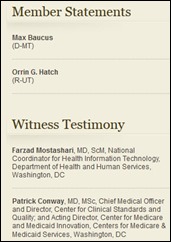
From Keen Observer:“Re: Senate Finance Committee on Health IT hearing Wednesday. Here are my notes.” Thanks. Video is here and the transcript of Farzad’s testimony is here. I’m including your notes below.

Farzad and Patrick Conway from CMS fielded a lot of questions about the Meaningful Use program’s benefits and the adoption rate, especially among rural providers. Farzad’s bow tie also took a number of shots, including one from Sen. Pat Roberts advising him not to wear it in Dodge City, KS. Both Senators Baucus and Roberts urged Farzad to get out into rural America and see what the conditions are like before assuming that all rural hospitals and providers should be held accountable to the same IT standards as their urban counterparts.

They asked Farzad about his thoughts on a delay to Stage 2 and he said he didn’t think it would be beneficial to slow the momentum. Senator Thune asked about what Stage 3 will look like and if there will be more stages beyond that. Both witnesses ignored the second part of that question. They also talked a lot about interoperability and evolving standards. Some asked if the bar was too low for interoperability. Senator Enzi really hammered Dr. Conway about the physician drop out rate that was reported for docs who achieved Stage 1 MU.

Next week the Finance Committee will hold another hearing with with Janet Marchibroda from the Bipartisan Policy Center, John Glaser from Siemens Healthcare, Marty Fattig from Nemaha County Hospital which is a critical access hospital and Colin Banas from Virginia Commonwealth University Medical Center.


HIStalk Announcements and Requests

inga_small This week on HIStalk Practice: CareCloud introduces an update to its Charts EHR that I believe includes Medicomp Quippe functionality. TransforMED selects 90 primary care practices for a three-year patient-centered medical neighborhood pilot project. CMS highlights key 2014 deadlines for the EHR incentive and other eHealth programs. Physicians in larger states, ER specialists, and pathologist historically experience higher levels of PQRS success. Dr. Gregg shares a scary tale of EMR demos, UXs, and UIs. Join the fun, take a read, and check out the offerings of a few HIStalk Practice sponsors. Thanks for reading.


Acquisitions, Funding, Business, and Stock

7-18-2013 10-20-34 PM

Quality Systems reaches an agreement with Clifton Group, an investor that had called for the replacement of the company’s board. Quality Systems will add three Clifton Group nominees to its board.

7-18-2013 10-21-08 PM

UnitedHealth Group reports Q2 results: revenue up 12 percent, EPS $1.40 vs. $1.27, falling short on revenue expectations but beating handily on earnings. The company’s Optum segment turned in revenue of $8.8 billion with earnings from operations of $536 million, which contributed significantly to the bottom line. The insurer’s quarterly profit was $1.44 billion.


Sales

Care New England Health System selects Infor Healthcare’s business process automation solutions.

Jefferson Radiology (CT) contracts with McKesson Business Performance Services for revenue cycle management.

7-18-2013 10-22-14 PM

St. Joseph’s Hospital Health Center (NY) selects ProVation Care Plans from Wolters Kluwer Health.

Pilgrim Hospital (UK) chooses MetaVision from iMDsoft for its ICU.


People

7-18-2013 6-28-30 PM 7-18-2013 6-29-06 PM

Extension names Brian McAlpine (Emergin) VP of product management and marketing and Johnathan Salyer (Capsule) director of strategic accounts.

7-18-2013 6-27-36 PM

CompuGroup Medical promotes Norbert Fischl to CEO of CGM USA.

7-18-2013 7-07-08 PM

HealthAlliance (MA) names Chris Walden, RN, BSN (Flagler Hospital) as CIO.

7-18-2013 7-35-50 PM

Former Florida Governor Jeb Bush joins the board of Alpharetta, GA-based healthcare staffing company Jackson Healthcare LLC.

7-18-2013 7-54-31 PM

Cleveland-based analytics vendor Socrates Analytics names Jim Evans (McKesson) as CEO.

7-18-2013 8-56-49 PM

Industry long-timer Jim Klein, who worked for CompuCare, QuadraMed, InterSystems, Advisory Board, and Gartner, died of prostate cancer Wednesday, July 17 at his home in Great Falls, VA. He was 65.


Announcements and Implementations

7-18-2013 10-24-02 PM

ProHealth Care (WI) implements Omnicell’s G4 Unity medication management platform.

The Ottawa Hospital launches Wolters Kluwer Health’s UpToDate Anywhere.

Southeast Hospital (MO) implements Access e-forms barcoding to manage registration packets, order sets, and home health documents.

Navicure reports that it increased revenues 27 percent in the second quarter and added 316 medical practices.


Government and Politics

CMS releases information suggesting that EHR use is helping providers manage patient care and provide more information securely. CMS notes that since 2011, providers have used EHRs to send more than 190 million prescriptions electronically, send 4.6 million patients an electronic copy of their health information, forward more than 13 million patient reminders, check drug and medication interactions over 40 million times, and share more than 4.3 million care summaries with other providers.

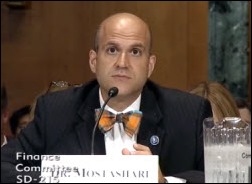
inga_small During a Senate Finance Committee hearing, ONC head Farzad Mostashari, MD says that pausing the MU program to evaluate whether the bar has been set too low would “stall the progress that has been hard fought (and) take momentum away from progress.”  Incidentally, even senators aren’t immune to Mostashari’s dapper bowties: Sen. Orrin Hatch apparently took a moment to call Mostashari’s cravat “a beauty.”

7-18-2013 8-00-54 PM

Sen. Bill Nelson (D-FL) introduces a bill that would impose specific deadlines for the Department of Defense and the VA to exchange electronic health information. The Service Members’ Electronic Health Records Act would require the DoD and VA to use standardized forms within six months of enactment; to exchange real-time information and use a common UI within a year; and to offer service members with electronic copies of their information by June 30, 2015. According to the Senator, “For 15 years, we have tried to fix this problem. In the past five years, the departments have spent around $1 billion, but we are not there yet.”


Innovation and Research

7-18-2013 7-19-14 PM

Seamless Medical Systems is awarded a $50,000 grant from the Venture Acceleration Fund of Los Alamos National Security, LLC. The company will use the money to further develop its SNAP Practice patient engagement platform.


Technology

Connexin Software will use Health Language applications from Wolters Kluwer Health to normalize data into standard terminologies within its pediatric EHR solutions.

Tech writers are stalking executives of Apple, hoping to see visual evidence of the wearable body sensors or related devices that the company is rumored to be studying.

Children’s Hospital Foundation (DC) passes on Microsoft SharePoint for its Intranet because of complexity and staffing requirements, instead choosing Igloo.

7-18-2013 10-07-24 PM

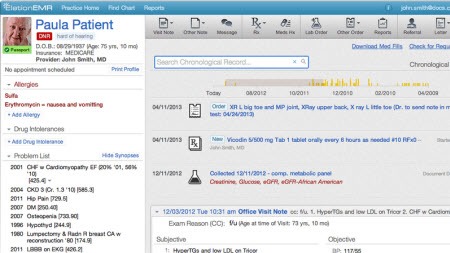
Tech Crunch profiles ElationEMR, a San Francisco-based startup founded by a Stanford economics professor who says she and her brother “had no prior experience building anything of the sort. And my brother happened to have a knack for design and I kind of had a bit of a knack for engineering and learning quickly to pull things together.” The EMR costs $149 per month, which includes support, e-prescribing, lab interfaces, training, and a patient portal. An ElationEMR user can see all the practices that have seen their patient. Signup for a test account is free.


Other

inga_small A majority of surveyed EHR consultants expects the majority of EHR vendors to involved in merger, acquisition, or closure within five years, most often due to delaying usability problems in favor of meeting MU requirements. Do we blame the fallout on opportunistic vendors taking advantage of a hot market, or the government and MU for managing their development priorities? Probably a bit of both. The study concludes that well-funded smaller vendors serving niche sectors may do better than some larger vendors who have failed to resolve “fundamental flaws caused by being all things to all physicians.”

The National Football League says it’s on track to roll out an iPad-based sideline concussion assessment tool next season. The results will be printed and placed in a paper chart, but eight teams will be piloting a program to send the information directly to the patient’s electronic medical record.  The league’s 2011 collective bargaining agreement called for deploying a full EMR this year that would allow medical records to follow a traded player. Safeguards are being put in place to prevent viewing of the records by competing teams, the league itself, and teams for which the player is trying out but is not yet signed. The NFL signed a 10-year agreement with eClinicalWorks in November 2012 to provide its EMR.

7-18-2013 9-48-52 PM

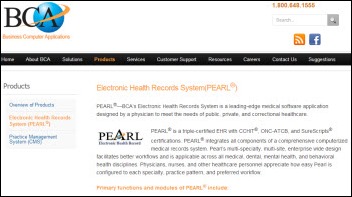
Milwaukee Health Services, a Federally Qualified Health Center,  says Atlanta-based Business Computer Applications is endangering 40,000 people by remotely locking the organization out of its own data servers in a billing dispute. Milwaukee Health Services has done business with BCA for 24 years, but says it paid the vendor $3 million to develop an EMR called Pearl EMR that still doesn’t work and isn’t HIPAA compliant. The hospital moved to GE Centricity, claiming BCA promised to give it a copy of its database, but later reneged. It’s suing under the Computer Fraud and Abuse Act. BCA claims to be the largest minority-owned software company in the world and claims it developed the first EMR in the US outside of the Department of Defense. It still sells Pearl EMR, which is certified by CCHIT as a Complete EHR for ambulatory.

Weird News Andy says if you have to be shot, there’s no better place. A patient is superficially wounded by a bullet shot through the window of her room in Crozer-Chester Medical Center (PA).

7-18-2013 8-29-37 PM

WNA says this woman doesn’t have a leg to stand on. A Utah woman who says she has wanted to be disabled since she was four years old seeks a doctor who will cut her perfectly healthy sciatic and femoral nerves to paralyze her legs. She suffers from Body Integrity Disorder, which causes her to believe her legs aren’t her own. The woman has tried to paralyze herself by intentionally causing accidents and now hopes that aggressive skiing might do the trick since she can’t afford to pay a doctor to cripple her.


Sponsor Updates

  • Allscripts will offer its ambulatory clients LDM Group’s ScriptGuide patient education solutions.
  • Sandlot Solutions offers an August 14 Webinar, “Real-time, Clinical & Claims Data at the Point of Care: Reshaping the Way You Deliver Healthcare.”
  • Aprima reports that over 1,000 Allscripts MyWay customers have switched to Aprima PRM since October, when Allscripts announced that it would not provide MU or ICD-10 enhancements to MyWay.
  • The TrustHCS Academy graduates its class of coding students.
  • Ecfirst validates Imprivata Cortext as HIPAA compliant and will perform ongoing audits.
  • GetWellNetwork will add patient-education content from ASCO’s Cancer.net patient Website.
  • An API Healthcare-sponsored study finds that hospital and health system executives are prioritizing workforce management-related issues to achieve long term fiscal sustainability.
  • A Beacon Partners-CHIME survey of  healthcare CIOs examines Meaningful Use progress and challenges.
  • Ingenious Med announces impower Mobile 2.0.
  • HealthMEDX forms a physician medical advisory board.
  • Carl Fleming, principal advisor with Impact Advisors, discusses the evolution of tablets and how they are helping physicians.
  • Wellcentive introduces a Network Maturity Model to evaluate the maturity of healthcare organizations.
  • Clinical Architecture is recognized as a 2013 Indiana Company to Watch award.
  • Sandlot Solutions Director Rosalind Bell discusses information as healthcare’s ultimate business partner.
  • Intellect Resources publishes an infographic depicting the use of social media in healthcare.
  • ICSA Labs’ Jack Walsh discusses the vulnerability of Android devices.
  • Chicago Crain’s Business profiles Care Team Connect Founder and CEO Ben Albert.
  • Ping Identity CEO Andre Durand discusses the setting of reachable goals in a New York Times interview.

EPtalk by Dr. Jayne

clip_image002

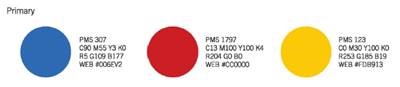
ONC releases a new “ONC Certified HIT Certification and Design Mark” along with a nine-page guide on how it is (and is not) to be used. I’d show it to you, but that in itself would be a violation of the terms of use, so you’ll just have to check it out for yourself. I did provide a hint above. I’m less worried about the Pantone graphics people coming after me than a hit squad from ONC.

A reader sent me this slide show from a Medscape physician lifestyle report. I’m sad to see that both my primary and secondary specialties are in the top three for burnout. Check out Slide 8, which lists physicians’ favorite pastimes. Non-medical writing ranks at the bottom, but I’d personally put it at the top. Some weeks it seems like being part of the HIStalk crew is the only thing keeping me sane.

From Checklist Diva: “Re: checklists. I was reading your post about checklists and it warmed my heart. Personally, I love checklists. I write things on my lists just so I can cross them off, items like ‘eat lunch.’” I put a block on my calendar every day not only to remind myself to eat lunch, but also in the hopes that someone will show a little humanity and not schedule a lunch meeting. It works a good part of the time, probably because I put humorous titles on the appointments to make it look like I have important meetings. My admin occasionally gets into the spirit and changes the locations or adds ridiculous attachments that make me laugh. He provides support to several of us and I’m pretty sure I’m his favorite because I have a sense of humor.

clip_image004

Speaking of humor, I might not have much left after next week. It’s our regularly scheduled “All Provider” meeting, which usually turns into a freeform complaint session because the (very young) president of the medical group has a hard time moderating his more senior peers. Some of the physicians get pretty far out of control and the audience gets completely restless with audible sighs, vigorous paper shuffling, slamming chairs around, and the occasional demonstrative hand gesture. For years EHR has been the designated punching bag, but we seem to have been elbowed aside by Accountable Care as the villain of the day. Some meetings though I feel like we should be dressed for roller derby instead of the board room.


Contacts

Mr. H, Inga, Dr. Jayne, Dr. Gregg, Lt. Dan, Dr. Travis.

More news: HIStalk Practice, HIStalk Connect.

125x125_2nd_Circle

Morning Headlines 7/18/13

July 18, 2013 Headlines 1 Comment

Quality Systems to Nominate New Directors to Board

Quality Systems, Inc. parent company of NextGen, has announced that it will add three new directors to its board to avoid a proxy fight initiated by activist investor Clifton Group. The deal will send Clifton Group nominees James C. Malone, Peter M. Neupert, and Morris Panner to the board. In exchange, the Clifton Group will withdraw both its call for the current board to be replaced as well as its series of bylaw proposals that would have been up for vote at the next shareholder meeting on August 15.

EHR Industry Insiders Predict the Demise of Hundreds of Competitors in Black Book Replacement Market Survey

An EHR replacement trends report predicts a 50 percent reduction in the crowded field of EHR vendors by 2017 or the implementation Meaningful Use Stage 3. The study polled 880 EHR consultants, analysts, managers, and support team members on the state of affairs in what it calls the "Year of the Great EHR Switch."

Sen. Hatch calls for pausing meaningful use program

In a finance oversight meeting with Farzad Mostashari, MD, Senator Orrin Hatch proposed a pause to the Meaningful Use program to evaluate whether the program may have "set the bar too low." He says the program should be judged not by how much incentive money has been spent, but on demonstrable improvements in patient care.

PeaceHealth making cuts to close $130 million budget gap

Vancouver, WA-based PeaceHealth is targeting $130 million in spending cuts to account for reduced reimbursement rates and a planned $350 million EHR implementation that will take place across its health system over the next few years. Cost-saving strategies will include voluntary furloughs, early retirement, reduced travel, leaving vacant positions unfilled, and consolidating the number of contractors.

HIStalk Interviews Andrew Farquharson, Managing Director, VentureHealth

July 17, 2013 Interviews 4 Comments

Andrew Farquharson is managing director and co-founder of VentureHealth.

7-17-2013 8-06-39 PM 

Tell me about yourself and VentureHealth.

I’m a venture capital investor and entrepreneur focused on healthcare investing and company building. I began my career in life science when I graduated with a BA from UC Berkeley, and went right into the research side of Genentech. After Genentech, I went to Harvard Business School and founded my first company there. I returned invested capital back to investors. I didn’t make a killing, but learned a lot.

After that, a friend and I took over a company called Operon that makes synthetic DNA and built it up into the world’s number one provider of DNA. At Operon, I ended up running the entire demand side of the business: sales, marketing, customer support. My friend Nathan Hamilton ran operations, R&D, and reinvented the way they make DNA. We ended up selling that company for a $150 million in June 2000 without taking any venture money.

After that, I became an angel. As an angel, I realized that one of the challenges is getting access to the very best deals; getting access to venture-quality deals. I joined a small venture fund and then I met my current partner Mir Imran. Mir is one of these rock star innovators in the biomedical space. He’s founded about 24 companies and has returned billions to investors. He invented the implantable defibrillator, among many other things, which has generated over $200 billion in revenues. Not bad. Mir is one of these guys where 80 percent of the things that he does return money for investors. He’s very good at what he does.

VentureHealth was not an idea that came out of nowhere. When we were raising our second venture firm, a number of folks wanted to co-invest with us because of our previous successes. Mir had lots of success. There are many healthcare professionals who would like to get involved in healthcare startups, but don’t know how to do it. Those are the folks who initially began reaching out to us.

Our initial response was really kind of uncertain. Investing is very risky, and we didn’t want to encourage people to partake in investments they didn’t understand. But as we kept chatting with high net worth individuals, we realized that there’s a large pool of financially sophisticated folks who want access to venture capital deal quality deals in healthcare, but who don’t know how to do it and don’t have a time to figure it out. We help them get access to venture quality deals in ways that were consistent with SEC guidelines.

Then the JOBS act came along. The future is going to become very interesting. The future is going to allow groups like ours to expand our investor base and publicly disclose when we’re raising capital. We can’t do that yet. The SEC is being thoughtful and measured in how it goes about regulating the JOBS Act. 

For right now, everything we’re doing is within the confines of the current law and the current regulations, which is why we’re doing what we’re doing with accredited investors we personally vet who really understand the risk. But if and when the SEC begins to actually implement the JOBS Act, we’re watching that carefully and we plan to respond appropriately once the doors are wider open.


Could you provide a quick summary of the JOBS Act and what it means for angels, accredited investors, and the general public?

The JOBS act will allow potentially hundreds or thousands of investors to invest, a true crowd of individuals who have much less money to write much smaller checks and get involved in a venture capital deal or any kind of startup deal.

But we’re not there yet. The SEC is still ironing out the details. It’s something that the SEC wants to move slowly towards that because they really want to make sure folks who invest know about what companies are doing and they understand the risks of investing capital. The SEC particularly wants to protect individuals against fraud, which we agree with.

For VentureHealth, we see the JOBS Act having an immediate impact on high net worth individuals as soon as  the next 12 or 18 months. We’re going to be thoughtful about how we begin to open up to a true crowd.


Right now, VentureHealth is only focused on accredited investors?

Exactly. Healthcare equity crowd-funding is very new. There are companies mushrooming up trying to make equity crowd-funding platforms real. One of the most successful that’s focused on the consumer space is called CircleUp. If you’re an entrepreneur raising money yourself, you should probably have a look at CircleUp’s model just to understand what they’re doing. They’re venture backed. They’re doing deals every month. Like us, they’re focused on accredited investors for now, but are trying to open up to the general public when it becomes legal.


You’re not taking any cash from the startup.

That’s right. The VentureHealth portal takes no cash from startups. That approach may be attractive for entrepreneurs, but does not necessarily make sense from an investor’s perspective.

This can be counterintuitive until you think through the incentives. We’re compensated along with the investors like any venture firm. In the case of VentureHealth, the individual investors make the decisions. The money flows from them. They’re the ones who own the equity through a fund structure. If the company returns cash to investors, we participate as members of the general partner. 

In contrast, if you’re a broker-dealer, you make money every time cash flows into a startup, so your incentive is to drive as many transactions as you can regardless of quality. Whereas for us, the incentive is to only take deals if we’re going to ultimately make money for investors. We’re aligning with the investors to try to find companies that are going to have successful outcomes as opposed to just driving a whole bunch of deals.


What separates VentureHealth from AngelList?

AngelList is a successful, creative approach to crowd-funding at high volume. AngelList has allowed lots of startups to put their wares up on the website and allowed lots of individual investors to look at those deals. It enables connection between the investors and startups. AngelList does not have a model, as far as I know, where it makes money by charging the startups or the investors.

I think they’re providing a really valuable service to everyone. As an angel myself, I appreciate what they do. I think they’re a great company and they’re well off. But what we do is very different. We curate our deals and only select investment opportunities that meet our criteria. As our exits this year reflect, our approach seems relatively robust. We curate our deals and will post far fewer than AngelList.

Conversely, AngelList does not try to protect investors from bad deals, just like Kickstarter doesn’t either. It’s really up to the investor. Investor beware, which is the case with many robust marketplaces. In the case of healthcare investing, however, investors often don’t have the clinical, regulatory, and business perspectives to bring an opportunity into the proper focus. 

I think that there’s a lot of value in their model, but the model does require a lot of understanding on the part of the investors. That does not always translate well into healthcare.

Our model is simple. We do our best to protect our investors, unlike AngelList and Kickstarter and most of the other equity crowd-funding platforms. Another way of saying this is we try to find the most attractive opportunities run by the best entrepreneurs. Our assumption is that, over time, this will prove successful for everyone.


What stops you from taking all of the best deals for yourself?

We manage about $72 million right now, which is really small money in the big picture of things. Our fund is not going to be able to fund all healthcare innovation. Far from it. We sit back a little bit and think about what’s happening in healthcare.

A lot of life sciences venture funds have been failing. The supply of venture capital dollars for life sciences innovation is, shall we say, challenged and at the same time there’s a strong demand from accredited investors who are not traditional angels and don’t know how to source or invest in these deals.


You’ve mentioned life sciences explicitly a few times. Is VentureHealth only focused on life sciences such as pharmaceutical and biotech or are you also looking at software, hardware, services, wellness, PRM, and medical devices?

For us it all begins with clinical outcomes. If we can see a way to really dramatically impact clinical outcomes, then we begin to get excited. That said, our history has been medical devices, and we have recently been moving assertively into biopharmaceuticals.


How big is the team curating deals?

The answer is a little complicated. There are three of us who are co-founders of the portal — Mir Imran, Talat, and me. We all had a lot of experience making and curating deals. But there are another 30-plus people inside InCube Labs — who are great friends of ours  — who actively work in forming companies and doing research. In a sense, we get a free ride from a much larger group of people, primarily PhDs. They’re from pharmacology, engineering, protein science, material science, implantable sensors, Wi-Fi technology, and even guys in social media and web development.

Morning Headlines 7/17/13

July 16, 2013 Headlines Comments Off on Morning Headlines 7/17/13

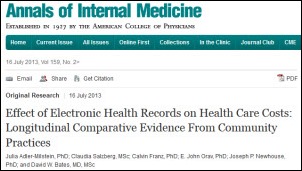
Effect of Electronic Health Records on Health Care Costs: Longitudinal Comparative Evidence From Community Practices

A study funded by the Massachusetts eHealth Collaborative and published in the Annals of Internal Medicine finds that EHR adoption does not lead to cost savings. However, using ambulatory EHRs in community practices did modestly slow cost growth.

Pioneer Accountable Care Organizations succeed in improving care, lowering costs

CMS has released quality and cost performance data on the Pioneer ACO program which, it says saw quality improvements across the board and cost reductions at a majority of participating organizations. Still, seven organizations have announced that they will switch to the Medicare Shared Savings ACO program and an additional two sites have confirmed that they will leave the ACO model altogether.

U.S. News names its ‘Best Hospitals’ list

Johns Hopkins Hospital reclaims the top spot on the Best Hospitals list after its 21-year streak at number one was broken last year by Massachusetts General Hospital.

Electronic Medical Records: Friend or Foe?

A union nurse working at McLaren Macomb Hospital (MI) criticizes the usability of EHRs, McKesson’s Paragon in particular. She says the value of EHR systems is clear to the union, but hospital administration has a responsibility to provide an EHR sophisticated enough to handle both the legal compliance needs and the needs of the clinicians and patients.

Comments Off on Morning Headlines 7/17/13

News 7/17/13

July 16, 2013 News 10 Comments

Top News

7-16-2013 8-47-36 PM

A Massachusetts eHealth Collaborative-sponsored study finds that EHR adoption by doctors in three communities generated no statistically significant per-member, per-month cost savings, although EHR usage appeared to be associated with less-rapid cost increases. Participating communities were chosen as having the highest likelihood of EHR success by MAeHC, which also paid most of their system and implementation costs. The most commonly used systems were from Allscripts, GE Healthcare, eClinicalWorks, and NextGen. Insurance cost information from 2005-2009 was used.


Reader Comments

From Jessica: “Re: speakers. I love HIStalk and am an avid reader. Can you recommend speakers that you’ve seen and liked?” I haven’t heard many lately, so I will defer to readers. Who stood out?


HIStalk Announcements and Requests

7-16-2013 6-45-28 PM

HIStalk’s seven millionth visit was logged Tuesday morning. Thanks for contributing to that number.

7-16-2013 7-29-37 PM

7-16-2013 7-43-36 PM

Welcome to new HIStalk Platinum Sponsor CareWire. The Excelsior, MN-based company’s mobile solution improves outcomes and loyalty by engaging patients in timely communication that is tailored, thoughtful, and relevant. It sends mobile messages that are encounter-specific, personalized, and perfectly timed: patient instructions, arrival information, and links to services or provider-specific content. The result for providers is a reduction in the cost of no-shows, fewer manual interventions, and improved outcomes and reduced risk. According to the executive director of an outpatient surgery center, “CareWire is like air traffic control for my patients.” The SaaS-based solution requires minimal interfacing – just send it a daily flat file and it’s happy. CareWire’s proprietary rules engine identifies the patients and their mobile numbers, determines the appropriate messages to send, and allows authorized users to send their own messages directly to patients. Templates are provided for appointments, procedures, and case-based episodes that span visits and procedures. Thanks to CareWire for supporting HIStalk.

7-16-2013 7-54-16 PM 7-16-2013 7-58-45 PM

I’m really enjoying Pepperland, a fun novel about music, anarchy, computers and sexual freedom in the 1970s. The Amazon reviews include a quick one I wrote that compares its detail, in-jokes, and pop culture to something Stephen King would have written without his bloated excess and often ridiculous supernatural themes. The author is the amazing Barry Wightman, writer, musician, voiceover guy, and VP of marketing for Forward Health Group. I hardly ever read fiction because it usually annoys me and I have a microscopic attention span, but Pepperland is a blast.

7-16-2013 8-06-31 PM

I usually notice when a company is proud enough of sponsoring HIStalk that they say so on their Web page. The iHT2 folks do and I appreciate it. I keep thinking I’ll attend one of their Summits since readers have told me good things about them.


Acquisitions, Funding, Business, and Stock

7-16-2013 8-50-26 PM

Healthcare analytics provider ArborMetrix closes $7 million in Series B financing.

Ping Identity closes a $44 million investment round.

Caremerge, a developer of communication and care coordination apps for seniors, raises $2.1 million in Series A funding.

7-16-2013 6-34-49 PM

Reed Elsevier Group will move  Elsevier/MEDai to its LexisNexis Risk Solutions business unit, where it will join the acquired EDIWatch as a fraud and abuse solution.

NPR profiles Cerner in an EHR series it’s running, pointing out its HITECH-fueled employment boom in which 3,000 employees were hired in the past two years.


Sales

7-16-2013 8-54-14 PM

Winthrop-University Hospital (NY) chooses PeriGen’s PeriCALM Plus charting and fetal monitoring system.

Celebration Orthopaedic & Sports Medicine Institute (FL) selects simplifyMD’s EHR/PM system for its 10 providers.

7-16-2013 8-52-52 PM

Pacific Alliance Medical Center (CA) will implement Summit Healthcare’s Express Connect interface engine.

Wishard-Eskenazi Health (IN) selects eClinicalWorks PM for 385 providers across eight locations.

Harris Corporation will use Symedical Server from Clinical Architecture to enhance terminology management, interoperability, and data normalization in its HIE and clinical integration solutions.

The Scarborough Hospital (Ontario) selects SIS.

Canada’s Fortius Sport & Health will implement EMR and PHR technologies from Telus.

7-16-2013 8-57-23 PM

Georgia Regents Health System (GA) signs a 15-year, $300 million contract with Philips Healthcare for consulting services, medical technologies, and operational performance, planning, and maintenance services.


People

7-16-2013 5-26-59 PM

Anthelio appoints Asif Ahmad (McKesson Specialty Health, Duke University Health System) CEO, replacing co-founder Rick Kneipper, who will remain as chief strategy and innovation officer and chair of the company’s healthcare innovation council.

7-16-2013 6-05-08 PM

Bruce Brandes (AirStrip) joins Valence Health as EVP for growth and innovation. David Kirshner (Boston Children’s Hospital) also joins the company as VP of corporate and business development.

7-16-2013 7-20-05 PM

PathCentral, which offers a online information exchange and digital consultation forum for pathologists, names David Frishberg, MD chief medical advisor. He will continue in his pathology roles with Cedars-Sinai Medical Center.


Announcements and Implementations

Michigan Health Connect becomes the state’s first HIE to transfer infectious disease lab reports from hospitals to the state health department.

7-16-2013 12-54-25 PM

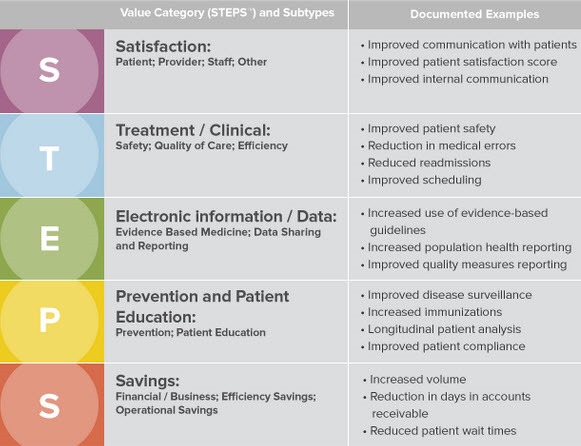
HIMSS introduces the HIMSS Health IT Value Suite, a knowledge repository that classifies, quantifies, and articulates the clinical, financial, and business impact of HIT investments. In reading the press release and details on the HIMSS Website, it appears that HIMSS is positioning it as an industry resource as opposed to a product or service available for purchase.

MModal rebrands its Philippines-based medical transcription provider MxSecure to MModal Global Services.

Southern Health NHS Foundation Trust deploys SEIM and content security technology from Trustwave.

Open Door Center for Change (WI) installs Forward Health Group’s PopulationManager.

NCH Healthcare System (FL) completes its implementation of Cerner this week.

7-16-2013 7-27-42 PM

Deep Domain releases Version 3.0 of its EHR reporting software. It charges $78 per provider per month for a reports subscription.

AHIMA and CHIME announce plans to join forces in conducting HIM/HIT research, presenting sponsored Webinars, co-presenting sessions at CHIME’s Fall CIO Forum, and working together on advocacy issues.


Government and Politics

Only 18 of the 32 first-year Pioneer ACOs reduced Medicare costs in their first year, though all improved their quality measures. Seven of those that did not produce savings say they will switch to the Medicare Shared Savings Program, while two others will leave the program entirely. While the Pioneer program rewards providers for shared savings, the majority of a provider’s patients are likely still covered by traditional fee-for-service contracts.

National Coordinator Farzad Mostashari, MD, interviewed by NPR: “Paper works just fine if you want to deliver healthcare the way you sell shoes. If you want to wait in your office for the door to open and say, jingle, jingle, and you say, can I help you, and pull a chart and deliver care, and then when you close that chart, that information is dead, paper works just fine. If you want to coordinate care with other providers, if you want to share information with the patient and engage them as partners in their own care, paper doesn’t work just fine.”


Innovation and Research

7-16-2013 6-54-47 PM

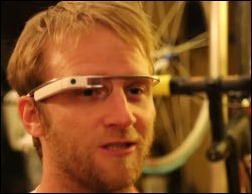
A video by Vonlay’s Steve Knurr, Google Glass Explorer, records cycle racing using the device. He plans to help develop a heads-up cycling display that will include bike telemetry, biometrics, and race information.

It’s not all Google Glass in the computing eyewear field. Italy-based GlassUp, running its launch campaign on Indiegogo, will offer a camera-free and more stylish alternative that will cost only $399 ($299 as a Indiegogo donation, or $1,500 for 10 pairs right off the first production run.) They will also offer a prescription version for those who already wear glasses.


Other

7-16-2013 2-46-56 PM

A Wolters Kluwer Health survey finds that changing reimbursement, financial challenges, and finding time to spend with patients are the top challenges facing doctors.

The healthcare business intelligence market lacks a clearly perceived leader, according to a KLAS report. Large BI vendors such as IBM, SAP, Microsoft, and Oracle command the largest mindshare, but the lack of sufficient healthcare focus leaves most providers with unmet needs.

7-16-2013 8-59-00 PM

US News & World Report releases its annual hospital rankings. Johns Hopkins (above) reclaimed the top spot, followed by Mass General, Mayo Clinic, Cleveland Clinic, UCLA Medical Center, Northwestern, New York-Presbyterian, UCSF, Brigham and Women’s, UPMC, HUP, Duke, Cedars-Sinai, NYU, Barnes-Jewish, IU Health, Thomas Jefferson, and University Hospitals Case Medical Center.

7-16-2013 6-24-34 PM

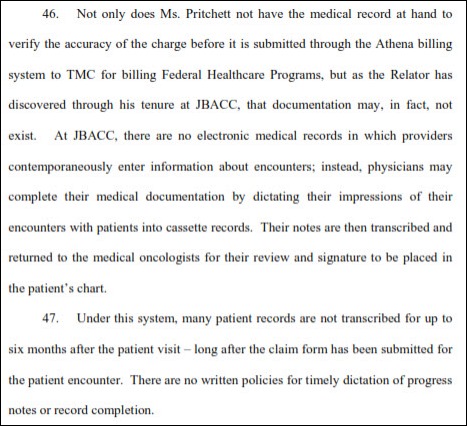
The top administrator of a Georgia cancer treatment center files a whistleblower lawsuit claiming its health system owner overcharged the government by upcoding claims. It also charges that Columbus Regional Healthcare System essentially pre-paid a referral kickback by intentionally overpaying for a local cancer center it bought for $10.5 million; that its medical director modified the medical record to justify higher charges because he was upset at a potential income loss caused by regulatory changes; and an insurance company executive who sat on the hospital’s board threatened to withdraw his financial donations to the hospital if the medical director were to leave in a contract dispute.

A Wall Street Journal article covers hospitals that use big data, specifically The Advisory Board Company’s Crimson platform, to encourage higher-quality, lower-cost physician behavior by showing doctors how they compare to their peers. 

7-16-2013 7-09-31 PM

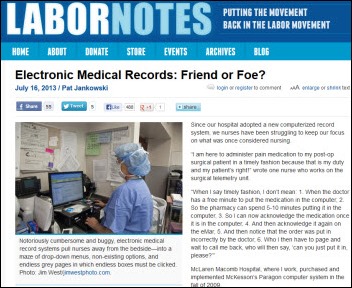
A labor publication editorial written by a union-represented RN complains that EMRs “are getting in the way of the fundamental work nurses do.” She says that the union understands benefits of EMRs, but doesn’t want nurses “to become lost in the land of acronyms, drop-down menus, non-existing options, and endless grey pages in which endless boxes must be clicked.” She concludes that her employer needs to replace McKesson Paragon with a system that “fulfills both the legal compliance needs and the needs of the patients who are hospitalized for competent, attentive, and effective nursing care” The author has previously argued that nurses should work for independent agencies rather than directly for hospitals.

7-16-2013 6-29-32 PM

The Judy Maple Foundation will hold a charity golf tournament on July 27 in East Springfield, OH hoping to raise money for the Charity Hospice of Wintersville to replace outdated computers for use with its EMR.


Sponsor Updates

  • Aventura is named as one of 10 Denver startups with cool offices, complete with pinball machines, a gym, and healthy food. 
  • Beacon Partners hosts a July 26 Webinar on optimizing clinical systems.
  • IHE USA and ICSA Labs certify eight HIT products under its pilot certification program to test security and interoperability in the IHE Patient Care Device or IHE IT infrastructure domains.
  • InstaMed announces the availability of its InstaMed Network, which allows providers to accept electronic payer and patient payments.
  • Levi, Ray & Shoup finalizes its purchase of Capella Technologies.
  • Kareo outlines five ways it can help users prevent denials.
  • Emdeon will integrate the Simplicity Settlement Services by ECHO into the Emdeon Payment Network. The company also introduces Virtual Card Services, an electronic payment option to reduce payment distribution costs and payment processes.
  • KLAS Research adds MModal Fluency Direct to its customer rankings.
  • BayCare Health System CIO Tim Thompson shares his organization’s experience implementing Medicity’s HIE platform.
  • The Nashville Business Journal profiles Shareable Ink CEO Laurie McGraw.

Contacts

Mr. H, Inga, Dr. Jayne, Dr. Gregg, Lt. Dan, Dr. Travis.

More news: HIStalk Practice, HIStalk Connect.

125x125_2nd_Circle

Morning Headlines 7/16/13

July 15, 2013 Headlines Comments Off on Morning Headlines 7/16/13

Personal health record vendor MyMedicalRecord announces that it is on the verge of securing a patent for what is essentially e-prescribing technology. The patent describes "providing a user with the ability to access and manage prescriptions online by providing features that include sending prescriptions to a pharmacy, accessing prescriptions from a pharmacy, scheduling prescription refills, sending reminders regarding prescription refills including by text or email, and identifying adverse drug interactions by analyzing prescription medications."

Comments Off on Morning Headlines 7/16/13

Readers Write: The Enterprise Content Management Adoption Model

July 15, 2013 Readers Write 4 Comments

The Enterprise Content Management Adoption Model
By Eric Merchant

7-15-2013 6-21-31 PM

There have been numerous publications recently about the amount of unstructured content that exists (80 percent of all content) in a non-discrete format outside of the electronic medical record. This unstructured content exists as digital photos, scanned documents, clinical images, and faxes and e-mails.

The challenge of capturing this information as close to the source as possible — managing it effectively and ultimately delivering it to the necessary physician, nurse, or other provider in a timely manner at the point of need — is a continuous uphill battle. There are varying degrees of being able to manage unstructured content and make it available to decision makers in a meaningful way to improve patient care, drive operational efficiencies, and improve financial performance in the healthcare market.

In developing a content strategy, the challenge is greater than simply buying a software suite and thinking your problems are over. As content grows in volume and complexity, the strategic plan needs to be flexible to be able to grow and adapt accordingly.

To do this, a reference is needed to determine where we were, where we are now and where we want to be. I began creating an Enterprise Content Management (ECM) adoption model as an internal point of reference, but also as a strategic guide for the industry. In practice, it would function similarly to the seven stages of the EMR adoption created by HIMSS Analytics.

ECM Adoption Model

Stage 10

Vendor Neutral Archive (VNA) Integration: Ability to seamlessly integrate with VNA.

Stage 9

Federated Search: Ability to search content across the enterprise.

Stage 8

Information Exchange: Ability to share/publish content with external entities, social media, etc.

Stage 7

Analytics: Meaningful use of content.

Stage 6

Image Lifecycle Management (ILM): Ability to purge and archive.

Stage 5

Capture, Manage and Render Digital Content: Ability to capture photos, videos, audio, etc.

Stage 4

Intelligent Capture: Ability to use OCR and other techniques to extract/use data.

Stage 3

Integration: Ability to render content inside ERP, EMR, etc.

Stage 2

Workflow: Ability to use automated workflow to streamline processes.

Stage 1

Capture and Render Documents: Ability to scan/upload and retrieve documents.

Stage 0

All Paper: No document management system (DMS).

This adoption model can serve the healthcare industry well by allowing us to keep focused on the outcomes we want to achieve and the systems that would provide them. The adoption model also intertwines patient care initiatives (capture content and deliver within the EMR), operational efficiencies we need to achieve (federated search and analytics) and outcomes that will directly benefit healthcare organizations’ financial performance (intelligent capture, VNA and Image Lifecycle management).

In addition, this strategy also delivers on the commitment to support Meaningful Use and IHE data-sharing initiatives with the ability to share and publish unstructured content to information exchanges.

EMR systems have received the bulk of the attention the past few years due to the value they bring and the public policy and reimbursement implications of getting them successfully implemented. However, as the healthcare market becomes more electronically mature, we cannot lose focus on the larger picture and the bigger challenge and ultimately the patient. This picture is incomplete without bringing together both the unstructured content created outside the EMR and the discrete information within the EMR.

To do this, the ECM adoption model, in conjunction with the EMR adoption model, must both be used as a roadmap to reach that goal. ECM vendors must take the same approach that EMR vendors have taken and work hand in hand with healthcare organizations to provide the solutions to achieve Stage 10 of the ECM adoption model and ultimately move closer to a complete patient record, which subsequently creates better health outcomes delivered efficiently and in a financially solvent manner.

Eric Merchant is director of application services, health information technology, for NorthShore University HealthSystem of Skokie, IL.

Readers Write: Requirements Versus User Experience: The MU Design Impact on Today’s EHR Applications

July 15, 2013 Readers Write 3 Comments

Requirements Versus User Experience: The MU Design Impact on Today’s EHR Applications
By Tom Giannulli, MD, MS

7-15-2013 6-03-46 PM

Since the first electronic health record (EHR) applications, the federal government has been looking for ways to leverage EHR technology to improve the quality and cost of healthcare delivery. A decade ago, President George W. Bush declared that every American should have an electronic health record within 10 years. While we’ve come a long way, almost half of all medical providers are currently searching for an EHR, installing one now, or looking to switch out the one they have in place.

This is an eye-opening situation given the investment of billions of dollars in EHR technology by healthcare providers, technology suppliers, and the government via incentive programs. Why is this? One contributing factor is that the government incentive programs have excessively focused on features over user experience and outcomes.

When the current EHR incentive programs emerged in 2009, EHR suppliers with existing products were faced with the challenge of meeting Meaningful Use (MU) requirements. It’s not easy to retrofit new functional requirements into an existing product, and it’s commonly understood many suppliers had to focus on achieving functionality requirements however possible given the potential impact of government incentives. The time-bound goal was simply to get X feature programmed in Y weeks so that version update or hot fix could be applied to meet customer certification timelines.

Function ruled over form, often resulting in degraded user experience and sub-optimized workflows. In hindsight, it may have been better to have fewer incentive program requirements with broader definitions and simpler tests to validate compliance.

For example, assume a general requirement for physicians to be able to share standardized clinical documents with basic tests of compliance. With this more general goal, technology suppliers would have greater freedom around how to solve the requirement resulting in a greater range of solutions—some of which likely would have superior usability. The market would then reward the company that best met both the requirement and the associated usability and user satisfaction.

The overall goals of MU are sound; it’s simply that in practice the extent and specificity of the requirements often overemphasize feature content and prescribed usage at the expense of user experience and the innovation that comes with flexibility. A doctor on HIStalk a few weeks ago highlighted this reality:

“When you’re used to using very clean designs—a MacBook, an iPhone, Twitter, Facebook—and you sit down on an EMR (electronic medical record system), it’s like stepping back in time 15 or 20 years.”

I had the opportunity to build an EHR after MU Stage 1 had been established. This allowed us to take a more comprehensive approach in terms of meeting our overall design goals, including usability, as well as MU requirements. We wanted to make it possible for the physician to use the application to chart patient visits and the required data and reporting were generated as an by-product of normal use.

Now, we are facing changes for MU Stage 2, integrating those into an existing product, tying them to user needs in a way that makes sense. We have developed a process that uses a lot of user feedback and testing and we try to iterate quickly with releases at least monthly.

But the fact is that the specificity of MU and the rigorous testing don’t provide for the best user experience. Ironically, these really specific requirements—a number of which dictate the user experience to a large degree—are supposed to be creating improved usability when in fact they are detracting from user-friendless and improved workflow.

I believe that without MU, many EHR features would be similar, but there would be notable differences resulting from the focus on user feedback versus government direction. As a physician and an EHR designer, I would still want to track health maintenance and have tools to manage people’s care. The big change would be the ability to focus on some market-driven elements that we haven’t been able to spend as much time on because they aren’t MU requirements.

We would be spending more time looking at how we could use the practice data to highlight workflow problems or areas where the practice isn’t using best practices. By leveraging our large pool of operational and clinical data, we could generate more recommendations for practice optimization and patient care. These are very high level concepts that we are exploring, but are at a lower priority given the resources required to implement MU2 in a way that is well integrated and results in a positive user experience.

In a perfect world, current MU2 requirements would be replaced with just few high-impact goals related to interoperation and communication. Current MU2 requirements have added little new incremental value while creating a significant burden for vendors and end users. This situation is even more challenging in that the requirements are becoming more specific and dictate user interaction in some cases. The structure is in place to capture discrete data, measure quality, and communicate standardized data.

At this point, I believe the market should drive the process of advancing features and expand-on the valued features outlined by the MU requirements.

Tom Giannulli, MD, MS is chief medical information officer at Kareo.

Curbside Consult with Dr. Jayne 7/15/13

July 15, 2013 Dr. Jayne 3 Comments

A Tale of Two Lists

clip_image002

I’ve been a big fan of making lists even before people like Atul Gawande raised the collective consciousness with The Checklist Manifesto. One of my former co-workers used to make fun of those of us who were “list-makers” and said that we lacked spontaneity and a certain sense of fun due to our fondness for lists. Personally, making lists has kept me sane.

There’s too much going on in most of the working world today and especially in healthcare. Everyone is trying to do much more (remember Meaningful Use?) with the same level of staffing or even less. People are overworked, under-inspired, and fatigued. These are factors that allow near-misses (or actual misses) for patients. Making lists helps one ensure nothing is forgotten and that every precaution was taken to ensure care was delivered as intended.

Checklists aren’t just for the front lines of patient care. I use one when I’m wearing my IT hat as well. They can be simple – I have a checklist I use before presentations to make sure I have e-mail, instant messenger, and other applications shut down so they’re not distracting. I make sure my desktop background is neutral and my screen resolution is adjusted.

They can be complex and multi-faceted. We use checklists extensively in our EHR implementation framework. They ensure that every user in every specialty and every practice setting receives consistent training. Signing the completed checklists after training documents the users’ receipt of training and has reduced the incidence of “nobody every showed me that” complaints to near zero.

I had a chance to revisit our training checklists today when one of our implementation specialists went out on family leave earlier than expected. With it in front of me, I was able to deliver solid training to a couple of specialists even though it’s been several months since I’ve covered their particular discipline. After the session, I made sure to compliment the implementation manager on ensuring that the lists are kept current and used consistently by everyone on her team.

She joked back at me that the training lists are the only ones that seem to be working for her right now. She’s in a bad cycle of making lists for implementation projects that continually get put on hold by the leadership. Once providers figure out that their pet projects are on hold, they raise a political ruckus and the projects are reactivated. She pulls up the lists and updates project plans, only to be put on hold again when the projects are not funded.

It’s a vicious cycle and to the point where she’s not even updating them anymore, just changing the date in the header. I don’t blame her. The best list in the world can’t be successful if no one is able to activate it and carry it through to completion. I think the leadership needs a better checklist to ensure projects are funded before trying to get them up and running. Or maybe they need a checklist for when they try to put them on hold, making sure they are not political hot potatoes before they are placed on hold.

How does your organization view checklists? E-mail me.

Print

E-mail Dr. Jayne.

Morning Headlines 7/15/13

July 14, 2013 Headlines Comments Off on Morning Headlines 7/15/13

Practice Fusion raising $60M, sources say

Ambulatory EHR freeware vendor Practice Fusion is rumored to be within days of announcing $60 million in new funding from an undisclosed New York-based investment firm.

Sutter’s New Electronic System Causes Serious Disruptions to Safe Patient Care at E. Bay Hospitals

Nurses with the California Nurses Association working at Alta Bates Summit Medical Center (CA) have gone on strike, citing patient safety concerns with the hospital’s newly implemented Epic system. Alta Bates, a Sutter Health facility, becomes the third health system to fall victim to an EHR-related nursing strike in the past few months after Affinity’s nurses hit the pavement in June over what they called a "hurried" Cerner implementation and Martin General Hospital (CA) nurses went on strike in May to delay a upcoming McKesson implementation. Sutter Health is reportedly spending $1 billion on a system-wide Epic implementation.

Athenahealth soars on Ascension deal

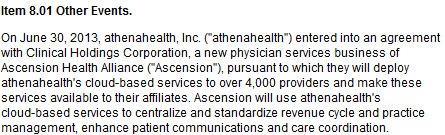
Athenahealth stock rose 20 percent Friday after the company announced a deal with Ascension Health Network worth as much as $42 million. Athena will implement its practice management solution to more than 4,000 Ascension providers.

Do Clinical Trials Work?

An op-ed in the New York Times questions the validity of clinical trials for new medications.The use of Avastin to slow the development of aggressive brain tumors is discussed. Researchers have not been able to link Avastin to improved survival rates through clinical trials despite growing anecdotal evidence that suggests a relationship does exist.

Comments Off on Morning Headlines 7/15/13

Monday Morning Update 7/15/13

July 14, 2013 News 7 Comments

7-14-2013 7-04-39 AM

From Flyswatter: “Re: Practice Fusion. Running out of money, expanding, or both?” Free, ad-supported EMR vendor (are you a vendor if your product doesn’t cost anything?) Practice Fusion is rumored to be raising another $60 million after a $34 million round held less than a year ago.

7-13-2013 6-38-03 AM

Three-quarters of respondents say healthcare organizations should continue with their plans to buy software in preparation for Affordable Care Act-related changes even though the future of the ACA is uncertain. New poll to your right: how has the DoD/VA discussion about a shared EHR changed your perception of those organizations?

7-14-2013 7-06-53 AM

I mentioned last week that it would be fun to hear from folks who have been reading HIStalk since the beginning 10 years ago. Some replies:

  • ”I know I’ve been reading your stuff since the beginning for sure. I think a friend of mine referred the site to me, but I can’t remember who and/or exactly when… all I know is that now you can’t get rid of me.”
  • “I count you as one of my celebrity acquaintances.” [this tongue-in-cheek comment came from someone who knows me]
  • “I found HIStalk while searching for a primary source of unbiased information about the healthcare IT world. I found HIStalk to be one of the few outlets at the time willing to publish all things healthcare IT (good, bad and the ugly) and provide value to sponsors and readers alike. It’s been wonderful watching HIStalk grow with the healthcare IT industry. Congratulations!”
  • “In 2003 I worked for Eclipsys, and one of our sales reps asked if I read HIStalk. He said it was the best blog about the industry he had ever read, and that if I wanted to be in the know and feel hip at the same time, I should check it out.  And so I did. And stayed. Congratulations!”

HIStalk Webinar Monday, July 29

7-14-2013 9-05-04 PM

Jonathan Teich MD, PhD of Elsevier will present “Clinical Decision Support: The Promise, Pitfalls, and Practicalities” on Monday, July 29 from 2:00 to 2:45 p.m. Eastern. He will provide practical insights into the key success factors for selection, design, management and rollout of CDS interventions and will describe 10 types of CDS and how to apply them. My CIO reviewers who provided feedback on the rehearsal gave this Webinar rave reviews, with one of them saying he was so engrossed by the CDS examples that he wished it had lasted 30-45 minutes longer (when’s the last time you heard that about a Webinar?) I thought it was really well done myself. You can register here.

Also upcoming: “Five Steps to an Enterprise Imaging Strategy,” presented by Merge Healthcare, on Wednesday, July 24 from 3:00 to 3:45 p.m. Eastern.

These Webinars meet HIStalk’s standards for quality, clarity, and attendee value. They have been critiqued by experts and are moderated by folks who work with me.


7-14-2013 8-17-14 AM

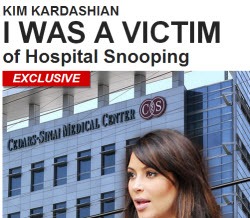
Six people lose their jobs for inappropriately viewing electronic patient records at Cedars-Sinai Medical Center, possibly those of Kim Kardashian. Four employees of community physician practices were found to have been using the login credentials of their physician employer and were dismissed, along with a medical assistant and an unpaid student research assistant. The journalistically rigorous TMZ decided that a phony quote and Photoshopped picture were the perfect way to illustrate its uncredited rumor, which was repeated by traditionally privacy-indifferent press anxious to jump on the celebrity gossip bandwagon without appearing to be pandering to intellectual lightweights.

7-13-2013 8-55-36 PM

Another nurse union uses an EMR implementation to publicly criticize a health system. The California Nurses Association cites 100 reports from RNs claiming Sutter Health’s $1 billion implementation endangers patients of Alta Bates Summit Medical Center. The nurses say the system requires too much nursing time, delays care, and isn’t clinician friendly. The union wasn’t nearly as concerned about patient safety eight weeks ago when it ordered its nurses to walk off the job for seven days in those same Sutter East Bay facilities to protest a reduction in their health benefits.

Intermountain Healthcare says it has developed an EHR module that allows state death certificates to be completed automatically.

7-14-2013 8-49-45 AM

A Silicon Valley business newspaper profiles former professional quarterback Steve Young, now a private equity deal-maker for HGGC (formerly Huntsman Gay Global Capitalist). The article says he was involved in that private equity firm’s investment in Sunquest, which it later sold to Roper Industries.  

A dozen employees from the Raleigh, NC offices of Allscripts volunteered to help clean up tornado damage in Moore, OK and presented the local hospital with a check for $50,000. Allscripts covered all of their expenses and paid their full salaries.

7-14-2013 8-55-20 PM

Ivo Nelson’s Next Wave Health advisory and investment firm will announce Monday that former Steward Health Care CIO Drexel DeFord has joined the company as a principal advisor.

7-14-2013 8-50-48 AM

Shares of athenahealth jumped 20 percent on Friday after the company filed SEC documents disclosing a June 30 deal with Ascension Health Network’s physician segment, which will deploy the company’s system to its 4,000 providers and affiliates. Athenahealth’s market cap is now $4 billion, with Jonathan Bush holding shares worth $33 million. A $10,000 investment in ATHN shares on this day three years ago would be worth $48,000 today.

Also earning a spot on the Nasdaq’s top percentage gainers for Friday were WebMD (up 25 percent on its sales outlook) and Quality Systems (up 12 percent on an analyst’s upgrade).

7-14-2013 7-08-48 AM

Showing his HIStalk colors at the top of Mt. Bachelor in Oregon is Dean Sitting, PhD, professor of biomedical informatics at UT Health Science Center in Houston.

Maybe it’s just me: every time I get an e-mail survey from HIMSS, I dutifully start completing it, but then bail out in annoyance just a few questions in. Every HIMSS survey is way too long, has endless answer choices but often not the one I need, and uses a stiff and authoritarian tone that makes me feel like I’m dealing with IRS instead of an organization to which I voluntarily pay dues out of my own pocket.

Blue Cross Blue Shield of North Carolina is called out for sending out live patient data to software developer DST Systems for testing its systems. Cigna went on record saying it would never do that, while Aetna said it shares data in similar situations.

Brown University researchers create software that can analyze the cries of an infant, hoping that the 80 auditory parameters can detect developmental problems.

An interesting New York Times opinion piece questions whether clinical drug trials work, wondering if disease and response is so individualized that mass testing creates more frustration than usable knowledge. It says drug companies are just playing the lottery in testing drugs they don’t expect to be effective, hoping for a statistical miracle. It also says that nearly every study is biased from the outset because drug companies pay for them, turning them into a “straw-man comparator” of drug vs. placebo instead of a real quest for finding the best treatments. The healthcare IT connection: genomics, which could effectively match patients with drugs likely to benefit them.

Vince starts his history of Siemens in this week’s HIS-tory. He is trying to find the lost history of the IBM SHAS (Shared Hospital Accounting System), so if you know more than what’s on Vince’s slides, he would enjoy hearing from you. Vince loves this stuff and his enthusiasm and fun memories come through loud and clear in his HIS-tories.


Sponsor Updates

  • Intelligent InSites will host a July 25 Webinar, “The Hospitality Environment” – Improving the Patient Experience with Innovative Technology.”
  • O’Reilly’s Strata Rx Conference, “Data Makes a Difference,” offers HIStalk readers a 20 percent discount on registration through August 15. It will be in Boston September 25-27 and feature speakers from athenahealth, Valence Health, HHS, and Humedica.

Contacts

Mr. H, Inga, Dr. Jayne, Dr. Gregg, Lt. Dan, Dr. Travis.

More news: HIStalk Practice, HIStalk Connect.

125x125_2nd_Circle

Time Capsule: Healthcare Transparency 2.0: Using RHIOs to Rate, Criticize, and Publicly Rat Out Idiot Patients Wasting Everybody Else’s Healthcare Money

July 12, 2013 Time Capsule 3 Comments

I wrote weekly editorials for a boutique industry newsletter for several years, anxious for both audience and income. I learned a lot about coming up with ideas for the weekly grind, trying to be simultaneously opinionated and entertaining in a few hundred words, and not sleeping much because I was working all the time. They’re fun to read as a look back at what was important then (and often still important now).

I wrote this piece in February 2009.

Healthcare Transparency 2.0: Using RHIOs to Rate, Criticize, and Publicly Rat Out Idiot Patients Wasting Everybody Else’s Healthcare Money
By Mr. HIStalk

125x125_2nd_Circle

I’ve always made fun of those “Get a Free Medical (wink, wink) Scooter” commercials that run during the fake judge TV shows that are watched religiously by homebound, unemployed, and intentionally deadbeat people while the rest of us are at work. I see them occasionally while getting my oil changed, waiting to have labs drawn, or getting a haircut. I feel like I’m peering into a sociology experiment gone horribly wrong.

The scooters don’t really look all that fun, but apparently “free” makes them a blast, at least to that latter category of people (since so many of us are joining the “unemployed” category involuntarily, I’ll focus on the intentional deadbeats). “When did you realize your mobility was impaired, Mr. Jones?” “Why, when I saw that sweet scooter model that looked like an ATV with a beer can holder and a ‘Free with Medicare’ sign on it, sir.”) I suspect it’s the same people who borrow someone else’s handicapped sticker to get the best parking place.

Apparently that “intentionally deadbeat” demographic is a rich vein to be mined by semi-scrupulous companies who know that “Jerry Springer” moves some medical iron while “Meet the Press” doesn’t. Now comes mesothelioma time, valiant ambulance chasers channeling Robin Hood by taking money away from anyone who has it and redistributing it (minus the 90 percent legal fees) to the daytime TV audience not quite up to the subtle nuances of General Hospital.

My solution is either simply brilliant or brilliantly simple (I can’t decide). Use RHIOs to turn healthcare professionals into a constantly communicating network of fraud- and sleaze-sniffers and pay them for turning people in (the government is terrible at detecting Medicare fraud, yet is puzzlingly world class at snooping on citizens). Everybody wants transparency, so let’s make it work both ways. Patients ought to have some skin in the game.

Anybody can rate doctors and hospitals anonymously, even to the point of adding vicious, unsubstantiated comments. If Mr. Smith rips Dr. Jones on a public doctor rating site, Dr. Jones should be able to, as on eBay, add a blistering response, such as, “This lard-butt patient smokes, ignores my advice, has sued three doctors so far, and has never paid a dime of what he owes me.”

RHIOs could be the interoperability platform for exchanging information about those crackpots who ruin the system. Doctors, nurses, pharmacists, and dentists could flag patients who stiff them on co-pays even though they drive Jags, who use someone else’s insurance card, or who are just plain nasty. Let the doctor check their credit report, criminal record, IQ, and work history while they’re at it. They’re the ones who will be facing them naked (the patient, not the doctor) in an exam room, so it shouldn’t be Mystery Date in there. Like the stockbrokers say, “Know your customer.”

Patients who have filed more than one malpractice suit would get tagged so other doctors can avoid them. It would be like the NFL: patients get one medical challenge with no hard feelings, but frequent malpractice flyers get marked as trouble, as do drug-seekers and scooter-wanters.

Forget evidence-based medicine. If you really want to save healthcare dollars, give doctors the tools to identify and avoid those who seek to use them dishonestly and irresponsibly. That fruit is abundant and low-hanging. Plus, it’s not like the RHIOs are really doing anything anyway.

Post the information publicly and let’s put some shame back into dishonesty, criminal behavior, and irresponsibility. It could even be made cost-neutral by charging the public to peek at the postings. I bet people who make “Cops” or “Dog the Bounty Hunter” could figure out how to monetize it.

Now if you’ll excuse me, I think I’m coming down with a touch of mesothelioma, so I’ve got a scooter to order while they’re still free.

HIStalk Interviews Joe Casper, CEO, Sandlot Solutions

July 12, 2013 Interviews 1 Comment

Joseph Casper is CEO of Sandlot Solutions of Fort Worth, TX.
7-10-2013 6-44-54 PM

Tell me about yourself and the company.

The Sandlot organization has been around for six or seven years, tied to an organization out of Dallas-Fort Worth, North Texas Specialty Physicians, building a health information exchange solution, managing patient risk, and driving connectivity among the physicians.

I became the CEO because I have 12 years of experience in building health information exchange systems. I’m the co-inventor of the first gateway solution that was initially deployed at Swedish Medical Center, two or three of the sites up in New York including Manhattan, the District of Columbia, the state of New Mexico, a couple of million people in Los Angeles, and the province of British Columbia. Needless to say, I got a fair amount of experience.

I’m somewhat of an entrepreneur. This is the fourth company that I’ve been involved in where we build technology or software that I’d either led as CEO or run as president of the company.


You have a somewhat unusual advantage of working directly with North Texas Specialty Physicians. What are the main lessons you’ve learned from that organization?

When you can come at this from the angle of physicians connecting physicians together, the majority of the health information exchanges that were originally deployed connected hospitals to hospitals. They had a flavor that looked very different then when the problem you’re trying to solve is your independent physician organization with tight hospital relationships. You deploy electronic medical records, you try to connect primary care physicians on one platform to specialty physicians on another platform where everyone is bearing risk, you quickly realize that you need to have solution in place that can connect them.

NTSP invested in Sandlot to solve that problem. As they started to solve that problem, they started to solve other problems, primarily increasing their risk business and then understanding the kind of analytics tools that’s required to do that, the sort of information you need to have at your fingertips from claims data merged together with clinical data so that you have a very rich set of data to run analytics against to look for gaps in care and to push on to physicians in a seamless way.


The company has been described as offering a fourth-generation solution. What does that mean?

Having participated in these things since 2001 when I first touched health information exchange, we were off initially just connecting hospitals. The fourth-generation health information exchange starts from the physician end. It creates the connectivity required from hospitals to physicians in a bi-directional way. If you go back to, say, the second generation, they were pushing information out, so discharge notes were being pushed out to the physicians. But you weren’t able to capture that information and ingest it back in.

The fourth-generation product first connects the physicians together in a way that the clinical dataset is not only brought into a repository — where you can run analytics against it, look for gaps in care, report so you can manage frequent flyers, look at your top admissions — but you can then bundle that Continuity of Care Document back up and push it back out into the physicians. When the patient shows up from primary care to a specialist or secondary care, that aggregated CCD is there ingesting data from the hospital visit, from national labs, and from others. This continuum moves us further up the pipeline to say it’s aggregated along the way. What was documents has been broken down now into discrete data.

Where we would immediately differentiate ourselves from many of the folks who are moving documents around, CCDs around, is that they keep that data in that format. You can’t run analytics and gaps in care against documents. You have to break that down. You have to organize that. You have to normalize that.

As you push it back into the hospitals, or as you start to build communities out of that, you have the advantage of a system that was built from the ground up knowing that as you add data to it, you take it, put in discrete data, you merge that together with claims data. When it comes time to run an analytics view, it’s not only the valuable clinical data you’re doing that with, but you’ll also have the ability to look at the claims, where we identify that specific tests have or have not been done as well outside of the system because we see or we don’t see a claim for that.


Most technology vendors offer systems that were designed for statewide and regional exchanges, and sometimes they and their customers are still struggling to make that work. Will those products become obsolete, or is there room both for what Sandlot does and what they do?

That market will break itself up based upon how well the specific states did. There are some states, some of the smaller ones, who have been very successful in this. Very large hospital entities who have a very large market share, they came on board early, and in some cases they were innovators in what they did. Those have stabilized, and many of them have found a sustainable business model, which the HIEs have lacked forever.

Then there are systems that are being deployed right now, dollars being spent, and unfortunately those systems will never make it, because they don’t have that planned for that sustainable business model. We’re seeing private organizations saying, I need to do this. I have to do it for Meaningful Use. I need to do it to run my business. I’m taking on risk and I can’t take on risk if I can’t see both the clinical and the claims data for that patient. I can’t trust the state to get it done, so I’m going to go do it myself.

As a result of that, where we see the folks who really want to drive to make that happen, we’re seeing hospital associations stepping in and saying, “I’ll take that lead. I’ll run that,” or a lead hospital and the community saying, “I’ll take lead, I’ll do that.” We’re seeing that from two sides, where there clearly is plenty of room for us to coexist with the state systems that are out there, and in fact, connect to them as needed.


Insurance companies have jumped on the HIE technology business. Why do you think they were interested, and does that affect your business?

It certainly affects it, but maybe in some cases in a positive way. I’ll try to be kind here and not necessarily name names.

There is one of those entities who spent a fair amount of money — in the hundreds of millions of dollars — for one of those solutions. Unfortunately, the solution platform was near its end of life. As a result of that, many of their clients and many of those systems are really troubled. They’re ready to skip on to the next opportunity here with a richer set of analytics, with a richer set of things that one, aren’t going to cost as much; two, are far more creative with their capabilities; and three, can be turned up in timeframes measured in weeks, not in months, and the larger complex pieces measured in 100 days. I just made a commitment to do something that I will turn up 30 hospitals in 100 days. As a result of that, I think far more agile in that mode.

They are powerful when you find an area where they happen to be the carrier of choice. If you cross one of those paths … the other one on top there that is certainly quite sizeable has very good footprint, and when you look at that footprint and there is a relationship with them as the largest payer in the market and they rear their head. They’re capable, but as I heard, they’re quoting 15 weeks to do something that I can do in a week. The new generation of this drives down the cost significantly. I think they are opportunities for us. We are pursuing those entities knowing that they are quite vulnerable right now, and we’re getting traction.


Is there still an interest in acquiring companies like yours, and do you see that changing?

There is interest. Now we’re seeing others who have interest that see this market is quite rich in many ways. As soon as we start to see the risk markets stratify, there are entities who want to provide product that manages risk, they want to provide product that looks at analytics. Some more of an IT bent than those of a classical insurer, but I’m not having any discussions with any insurers right now.


Do companies try to cobble together a solution using something that’s strictly connectivity and then drop the analytics on the back end?

Of course. You can look at that as one of the insurers that you mentioned came from the other direction. They had those pieces and they tried to cobble on top of it an analytics tool and tried to bolt those pieces together to build something. You can get it to work. You don’t have the efficiency of it if you look at how those pieces are integrated.

If you build it from the ground up, you are smart enough to say that if I have this piece of data and I want to offer a care manager … so one of the things we offer is care manager suite, it’s integrated right into the core foundation platform. If I’m looking at a patient that I’m managing under a care manager, one click and I get to see exactly what the reports would be on that patient. One more click and I can see exactly the medications that patient is on.

It is all pretty seamless, so when you look at it, has a nice look and feel to it. It’s pretty intuitive. It isn’t cobbled together so that somebody working with it has to say OK, this is obviously a different system, and this is obviously a different system. But I think over time, people will recognize they need to build those pieces out and they’ll come back with the products that are similar.

It would seem that the most oversold concept right now is analytics. Everybody says they’ve got it. Nobody really even knows what it means, much less what they’re trying to buy, or in some cases buying without even knowing what they’re going to do with it. What are the most useful or most commonly used analytics parts of your system?

NTSP as an organization was a pioneer. Took a second batch of pioneer, run a book of business through their own health plan, Care N’ Care, and operate a Secure Horizons book of business. By the time they’re done, there are about 80,000 at-risk patients sitting inside there. To climb the stars ranking, they started at three and a half stars. Over the last year, they climbed to four and a half stars. They did it by taking our analytics. The base piece of these are I ingest data such as A1C tests from a primary care physician or directly from a laboratory or from a specialist or from a bill that I’ve paid.

When it comes time to look at, am I compliant with my diabetics, am I compliant with hypertension, am I compliant with the various measurements required for five-star, I take that data, and at the time that the physician or anyone who’s caring for that patient, our analytic set metrics together with the product called Dimensions scans across that patient in milliseconds, identifying the presence of or the absence of whatever that patient needs — based on whether their particular age, whether their particular disease state — and within seconds identifies that these are the appropriate gaps for this patient that need to be dealt with. Then we have a proprietary capability that we’re patenting that allows us to push that message into the EHR platform without regard to who that EHR platform is. It’s something we call the digital envelope.


What are your thoughts on CommonWell?

I think the CommonWell organization is a good idea. We all know why they banded together. There is certainly a particular vendor out there who’d love to see all these things connected together in their own schema. The schema among how the hospitals can connect together when they’re on the same platform works quite well. When they’re on various platforms, a diverse platform doesn’t work at all.

There is defined need there. CommonWell saw that as an opportunity to say, if we pull together, I think we can do this. I think in the end, it’s a good idea. The more we get people out there who are opening these gates up, opening up APIs, making this data available on standards and moving it around, the better healthcare United States will be. I’m all in favor of that piece.

But as we look at it and say, where are the EHR vendors headed, it certainly seems that another round has occurred. I know three or four organizations that started the path with one EHR platform, cut their teeth on it, and now recognize it’s not going to be able to do what they want to do, and so they’re switching. As they switch, that churn seems to give them an uplift to organizations who recognize things that need to be in the next generation of EHR platforms. Some of these folks are seeing their market share go downhill and they’re chomping to see, can they do something in CommonWell that might help that.

At the same time, there are EHR vendors out there who are right on the cutting edge of what they need to with EHR systems to meet Meaningful Use, to be compliant in this area, to push CCDs and CCDAs around so that the information that people want to manage risk can be done without a lot of cost and without a lot of pain.

Some will suffer in this process and some will prosper, but I think the ones that I’m dealing with that I see … I mean, we’re talking large groups, not a doc here and a doc there. This is 116 docs here and 200 docs here, and they’re making those changes. All of that seems to help foster that as we connect to them, they’re ready for that next step. They’re ready to ingest the data that we pull together. They’re ready to have that be part of their system. They can compile whatever they do and send it back to me so I can do the same thing again and again.


Where do you see the company and the market being in five years?

I’m embargoed for about two weeks from the best example that I could give. We’re seeing these entities who had been put together in patchwork in the past and have tried to make that work recognize it can’t work. Consequently, these entities have stepped up. Hospital associations looking to say, I can solve this problem. Larger community rollups that say, I can solve this problem if I put a common umbrella or a common platform around it.

We have grasped this because it’s right in our sweet spot. We have the ability to take the output of another HIE platform — any of those insurance companies or the ones you spoke of or any of the other ones out there — and sit on top of them. As long as they are compliant with the latest standards, our ability to do HIE-to-HIE connectivity exists.

Certainly the ability to go out and connect the physicians where hospitals are really struggling so that they can’t buy physicians any more. They know they need this physician affiliation strategy. They’re going at risk in the community. They need the information to go at risk in the community. They’ve tried to hook up to the state systems, but they’re not cutting it. They see the timeframe that is going to take them, they are not cutting it.

A cloud solution like ours, our base product that can come in and fill it up pretty quickly, is pretty attractive. We’re doubling our sales force in the last month. We’re doubling our capacity. That should give you an idea of the kind of interest that we have in what we’re doing.

We’re doing some very innovative things in Medicaid space. We won a contract to demonstrate that you can manage Medicaid patients in the same way that CMS was trying to manage Medicare patients. The ACO models that drive down cost and improve quality for Medicare are applicable for Medicaid. We’re going to be demonstrating that. We won a contract to do that. There’s great hope in the sorts of things we can do with states that are struggling with lack of budgets largely due to healthcare costs in a Medicaid population. We’re right on the cutting edge of that and excited to be there, too.


Morning Headlines 7/12/13

July 11, 2013 Headlines Comments Off on Morning Headlines 7/12/13

Defense and VA to Congress on Health Records: It’s The Data, Not The Software

Defense Undersecretary Frank Kendall reports to a House Armed Services and Veterans’ Affairs Committee hearing that the DoD and VA will create a new shared platform that will allow the two departments to pass key clinical information from separate EHRs. The new plan replaces the original iEHR plan that promised a single, integrated EHR for approximately 200 VA and DoD hospitals nationwide. The iEHR program was originally expected to cost between $4 billion and $6 billion but the budget soon ballooned to $28 billion, which is more than CMS is projected to spend on the entire Meaningful Use program.

Allscripts jumps on better 2Q contract booking

Allscripts shares rise more than 16 percent this week when the company reports an increase in contract bookings for the second quarter. The recently announced five-year managed IT contract extension with North Shore-LIJ Health System helped boost the numbers.

Fort Worth hospital reports huge data breach

A Fort Worth, TX hospital is notifying hundreds of thousands of patients cared for during the 1980s that their personal health information may have been exposed after microfiche pages containing names, addresses, birth dates, health information, and in some cases Social Security numbers are found in a local park.

HIMSS Workforce Survey, July 2013

HIMSS publishes the results of its first annual healthcare IT workforce survey, which finds that 85 percent of surveyed organizations had done at least some hiring this year compared to just 13 percent that had experienced layoffs. The most common positions being filled are for clinical application support staff and help desk staff. Seventy-nine percent of respondents say they will add staff next year.

Comments Off on Morning Headlines 7/12/13

News 7/12/13

July 11, 2013 News 7 Comments

Top News

7-11-2013 8-30-30 PM

DoD and VA officials tell the House Armed Services and Veteran Affairs Committees that they will focus on creating a system that will display standardized information from both organizations instead of pursuing an integrated health record now estimated to cost $28 billion. DoD also announces that it will tender bids for replacement of its AHLTA, CliniComp Essentris, SAIC CHCS, and TMDS systems. Video of the hearing is here, although a lot of it involves the famous claims backlog. The DoD people are grilled at around 45:00 as to why they are ignoring the President’s mandate for an integrated record and are instead off shopping commercial software for themselves. The answer is not nearly as direct as the question, although in an interesting moment, DoD Undersecretary Frank Kendall disputes a quote about his department’s intentions and criticizes the source as “entirely incorrect,” only to be told that the quote came from the Secretary of Defense.


Reader Comments

7-11-2013 8-21-30 PM

From Lance Boyles: “Re: HCA. Just consolidated its IT staffing vendor list to just Zycron, Robert Half Technology, and Insight Global. TEKsystems, shockingly, did not make the cut even with its long-term, high-value corporate relationship.” Unverified.

7-11-2013 6-23-28 PM

From Punditry: “Re: Senate Finance Committee. Has called Farzad Mostashari, MD from ONC and Patrick Conway, MD from Center for Clinical Standards and Quality to testify at a July 17 hearing called Health Information Technology: A Building Block to Quality Care.”

From Fresh: “Re: CIOs fired during or after an Epic install. I was curious on your take.” CIOs do indeed get fired during or after their installs of Epic … and Cerner, Allscripts, Meditech, and every other system out there. My take:

  • You hear about the Epic ones because, by definition, they are the highest-profile hospitals and CIOs, and the high cost of their implementation projects increases the risk of being made a sacrificial lamb when things don’t go smoothly.
  • Epic takes quite a bit of time to install because it’s usually replacing most major systems, and with CIO turnover being what it is, there’s a good chance that some CIOs will leave in those years purely by chance.
  • Some hospitals want an Epic-experienced CIO knowing the many millions of dollars that are at risk and — either at their own initiative or because Epic identifies potential problems — decide to make a change.
  • I would hope that hospitals don’t put the CIO in charge of the project since that’s a big mistake, but I would also hope that the CIO and IT department don’t let the Epic train roll over them by being anything but ecstatic over a project that has already been embraced with possibly irrational exuberance by operational leadership.
  • When you read about high-profile Epic failures, I would bet you any amount of money that the risks were spelled out well in advance in the extremely detailed (and blunt) executive status reports that Epic provides regularly, which means the facility probably either ignored its recommendations or wasn’t functional enough to fix the noted problems. If those chips fall on the CIO, hilarity will not ensue.

From Deep Thoughts: “Re: EHR usability. It’s one piece of a complex puzzle. I’ve worked with EHRs that are loved by physicians, but lack basic capabilities, like allergy checking if a medication name is spelled wrong. Per this quote about the stethoscope from 1834, there is resistance to change, and the key is channeling it into systemic improvements.” The 1834 stethoscope quote: “It will never come into general use, not withstanding its value; it is extremely doubtful because its beneficial application requires too much time and gives a good bit of trouble both to the patient and the physician because its character is foreign and opposed to all of our habits and associations.”


HIStalk Announcements and Requests

inga_small Recent highlights from HIStalk Practice include: a reader wonders how EMR requirements differ between small and large practices. The American Academy of Ophthalmology will implement an eye disease patient database. A third of physician executives think healthcare costs rise when hospitals buy physician practices. CMS proposes paying providers for non-face-to-face care of patients with multiple chronic conditions if the provider uses a certified EHR. ONC’s Farzad Mostashari, MD predicts an uptick in full EHR adoption in 2014 just before providers risk penalties for not meeting MU standards. Federal financial incentive programs have spurred e-prescribing adoption. Brad Boyd of Culbert Healthcare Solutions offers recommendations to avoid impacting cash flows when prepping for ICD-10. Reading HIStalk Practice may not be a cure for the summertime blues, but it is a cool way to catch up on the latest ambulatory HIT news. Thanks for reading. 

7-11-2013 6-27-29 PM

Earn HIStalk Karma Points by: (a) signing up for spam-free e-mail updates; (b) searching or navigating your way to finding the offerings of HIStalk sponsors in the Resource Center; (c) finding a consulting firm painlessly by blasting your quickly-entered RFI to the companies of your choosing – including all of them as an option – via the Consulting RFI Blaster;  (d) connecting with us on Facebook, Twitter, and LinkedIn, including the HIStalk Fan Club that reader Dann set up in 2008 (happy five years, Dann!) that now has 3,200 members; and (e) sharing my amazement at the impressive roster of industry-leading companies that support HIStalk by perusing and occasionally clicking their ad to your right and telling them in person that you saw them on HIStalk. Thank you for reading, with extra gratitude to that handful of readers who were there with me when I started writing HIStalk in June 2003.

Actually, there may be more than a handful of 10-year readers out there, so if you’re one and would like to tell me how you found HIStalk in 2003 and why you’ve kept reading, that would be fun.

On the Jobs Board: Health Analytics Data Analyst, Senior Healthcare Policy Analyst, Marketing Specialist, Systems Administrator.

7-11-2013 6-41-58 PM

HIStalk Connect’s Dr. Travis and Kyle were at the Converge conference in Philadelphia this week, with Kyle on the right sporting Google Glass and Travis jealously wishing his plain old optical glasses were half as cool. A report from Travis is here.


Acquisitions, Funding, Business, and Stock

7-11-2013 8-18-42 PM

Allscripts announces that it expects Q2 bookings and contract backlog to increase 3 percent and 13 percent, respectively. That includes the just-announced $400 million services extension by North-Shore-LIJ Health System, which provided important validation that the company can meet the needs of a large health system.

7-11-2013 8-17-32 PM

In the same SEC filing, Allscripts announces that EVP of Sales Steve Shute, who joined the company in July 2011, will resign effective August 8, 2013 and will receive as severance his expected one-year compensation of $880,000.


Sales

Kindred Healthcare (KY) selects dbMotion create a single patient record.

Medical Center Hospital (TX) chooses Convergent Revenue Cycle Management.

7-11-2013 8-11-55 PM

Gundersen Health System (WI) will implement iSirona’s device connectivity solution.

The Specialty IPA of Kansas retains Wellcentive to facilitate clinical integration, manage P4P programs, and support its integrated network of primary care physicians.


People

7-11-2013 5-25-40 PM

Health Catalyst names Scott Holbrook (Medicity/KLAS) as a strategic advisor.

7-11-2013 12-13-59 PM

Bill Korn (Antenna Software) joins MTBC as CFO.

7-11-2013 2-54-14 PM

Scripps Health names Steven Steinhubl, MD director of its Digital Medicine program, tasked with leading the scientific evaluation of mobile health devices through the Scripps Translational Science Institute.

7-11-2013 5-29-27 PM

Systems Made Simple elects CFO Christopher Roberts to its board.

Acusis appoints Robert Parsons (Cerner) VP of strategic business solutions.


Announcements and Implementations

Nuance announces that 750 developers have joined its healthcare developer community.

The health IT program at the University of Texas at Austin and Jericho Systems will participate in an ONC-approved national pilot to explore advanced patient control over shared medical records and how patients can better control the release of their PHI when requested electronically from their providers.


Government and Politics

7-11-2013 1-43-11 PM

ONC issues an ONC Certified HIT mark for EHR technology that has 2014 edition certification requirements.

The HIT Policy Committee’s Information Exchange Workgroup issues preliminary recommendations on patient record queries and provider directions for Stage 3 MU.


Innovation and Research

Healthbox partners with BlueCross BlueShield of Tennessee to launch a new health IT accelerator in Nashville, joining its locations in Chicago, Boston, and London. The first class will start in September at the Nashville Entrepreneur Center.


Technology

Pixie Scientific develops a diaper that works with a smartphone app to detect possible UTIs, kidney dysfunction, and dehydration, transmitting its findings to a physician. The developers say the diaper also has potential as a consumer product and would likely cost about 30 percent more than regular diapers.

inga_small In contrast to the simple genius of this diaper, I was reminded yesterday just how far behind healthcare is. My new insurance carrier offers online access to an electronic image of the insurance card. I thought it was semi-brilliant of me to take a photo of the online image with my iPhone instead of printing it. It was easy to hand the pharmacy tech my phone so she could enter the numbers into their system. The doctor’s office, however, requires the actual card so they can scan it into their system. I would have been pleased two years ago to have my card scanned for a computer system instead of photocopied for a paper chart. Today I am annoyed because the doctor’s office was unable to think outside the box  and accept my electronic copy.


Other

7-11-2013 2-13-04 PM

A HIMSS Analytics survey finds that network/architecture support and security are the jobs that most often require industry certification.

7-11-2013 6-33-59 PM

Indiana University School of Medicine and Regenstrief Institute endow a chair to honor informatics pioneer and LOINC inventor Clem McDonald, MD (left in the photo above). The first Clem McDonald Professor of Biomedical Informatics is Titus Schleyer, DMD, PhD, MBA, director of the Regenstrief Institute (right in the photo above).

HHS fines insurer WellPoint $1.7 million for exposing the medical information of 600,000 people in 2009-2010 due to Internet server security issues.

7-11-2013 7-47-52 PM

Texas Health Harris Methodist Hospital Fort Worth notifies several hundred thousand former patients that their medical information from the 1980s has been exposed when several microfiche pages are found in a park. The hospital says its disposal contractor, Shred-it, didn’t.

Friends of industry long-timer Milton Antonakos, who died along with his family in a plane crash in Alaska earlier this week, are welcome at a remembrance get-together at the Columbia, SC offices of Allscripts on Friday, July 12 (today) at 3 p.m. Inga will provide the RSVP information and location details if you e-mail her.

Citizens of a small town in Canada whose only doctor will be away on his honeymoon for six weeks are offered telemedicine services in the interim by the province to mixed reaction. According to one resident, “I did the doctor camera thing. Basically I diagnosed myself and he gave me a prescription. It was pretty impersonal.”

7-11-2013 7-36-15 PM

PCWorld, the only remaining print edition consumer computer magazine, publishes its last paper issue to focus on its online and digital editions.

7-11-2013 7-06-06 PM

Healthcare isn’t behind in technology, we’re just on the leading edge of security. The Kremlin, panicked by the release of electronic secrets by WikiLeaks and Edward Snowden, issues an RFP for electric typewriters of the specific German model above. Retro-secure fax machines and pagers can’t be far behind.


Sponsor Updates

  • Covisint expands its partnership program to enable organizations to resell, refer, or white-label Covisint Identity Services.
  • Beacon Partners will provide consulting expertise to help organizations using Information Builders’ BI and analytics solution.
  • Marshfield Clinic Information Services subscribes to the Capsite Database to assist with health technology procurement and purchasing.
  • CIC Advisory launches a blog entitled, “Think.Learn.Care.” or TLC, which profiles hospital leaders who are effectively using technology to improve the efficiency and effectiveness of patient care.
  • Emmi Solutions selects Truven Health Analytics as its preferred partner provider of patient discharge instructions.
  • Quest Diagnostics provides access to de-identified hepatitis C test results from its Health Trends national clinical laboratory database to the CDC for public health analysis.
  • T-System publishes an infographic depicting the MU history of its EV product.
  • University of Florida Health and Florida Hospital securely exchange PHI with the Florida HIE Patient Look-Up Service developed by Harris Corporation.
  • O’Reilly Strata RX Conference posts the schedule for its September 25-27 conference.
  • Surgical Information Systems discusses the role of IT in quality reporting. 
  • Billian’s HealthDATA Jennifer Dennard takes on Google and inaccurate hospital data. 
  • TeleTracking Technologies looks at patient care satisfaction and its impact on an organization. 
  • SpeechCheck’s Ken Schafer discusses the importance of accurately recording narrative data within the EHR.
  • Advanced Medical Imaging (CO) discusses how it increased point-of-care patient collections by 315 percent within a year of implementing ZirMed’s Patient Estimation solution.
  • Verisk Health announces details of its annual conference September 18-20 in Orlando.
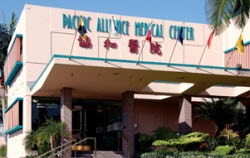
  • Optum’s CMO Miles Snowden, MD discusses how to navigate the journey from providing care to managing health.
  • HMC HealthWorks will integrate the Healthwise Care Management solution into ProGuide, the HMC care management platform.

EPtalk by Dr. Jayne

7-11-2013 6-16-23 PM

Alberta Children’s Hospital has deployed a robot named MEDi to aid children receiving flu shots. Those who engaged with the robot reported less pain and distress than those who didn’t. The study involved 57 children with moderate to severe fear of needles. In addition to distracting patients, the robot also provides instructions for relaxation and deep breathing.

Nearly a third of “Pioneer” ACOs may opt out, with some joining the Medicare Shared Shavings Program instead. Some have been threatening to do so since a dispute over measures in March. Although CMS did make some changes, it may not have been enough. Pioneer ACOs have until next Monday to notify CMS of their plans to leave that model and until July 31 to apply for the Shared Savings Program.

Health Affairs looks at the reasons poor patients prefer hospitals over office-based care. Researchers from the University of Pennsylvania documented patterns where patients using less preventive care were more likely to become acutely ill and/or require hospital care, costing over $30 billion each year. Reasons cited by patients included hospitals being less costly and more convenient with better quality care. That’s a sad commentary on our clinic and safety net ambulatory systems.

7-11-2013 6-20-04 PM

Congratulations to HIStalk contributor Ed Marx, who reached the summit of Mt. Elbrus in Russia earlier this week.

Thanks to everyone who sent good wishes for my laboratory orders go-live this week. It went fairly well and the phone lines were pretty quiet. We rarely receive compliments, but sometimes not hearing complaints is enough to know we did the job right. It’s been a tiring week, nevertheless, so I’m keeping tonight’s piece short and going to bed early.


Contacts

Mr. H, Inga, Dr. Jayne, Dr. Gregg, Lt. Dan, Dr. Travis.

More news: HIStalk Practice, HIStalk Connect.


125x125_2nd_Circle

Morning Headlines 7/11/13

July 10, 2013 Headlines Comments Off on Morning Headlines 7/11/13

The University of Texas at Austin and Jericho Systems Launch National Pilot to Advance Patient Control Over Shared Medical Records 

An ONC-approved pilot program at the University of Texas at Austin will explore advanced patient control over shared medical records via a simulated exchange using eHealth Exchange specifications. The pilot’s goal is to add transparency to the PHI exchange process by allowing patients to review requests to view their PHI.

North Shore-LIJ Extends Allscripts Outsourcing Agreement Through 2020

Sixteen-hospital network North Shore-LIJ extends its managed IT contract with Allscripts through 2020, a deal that will result in $400 million in revenue for Allscripts over the life of the contract.

Mount Sinai honored for electronic records system

Mount Sinai Hospital was named a HIMSS Stage 6 hospital last week, just three months after its $120 million Epic go-live.

Comments Off on Morning Headlines 7/11/13

Text Ads


RECENT COMMENTS

  1. That startup mentality can be very positive or very negative based on the person. If they're someone who is great…

  2. I want it to triage incoming communication from multiple channels (works and personal email, SMS, Teams). If the message didn't…

Founding Sponsors


Platinum Sponsors


Gold Sponsors


RSS Webinars

  • An error has occurred, which probably means the feed is down. Try again later.