
Recent Articles:

Readers Write: Seven Safety Checks Before Diving into the Big Data Ocean

November 20, 2013 Readers Write Comments Off on Readers Write: Seven Safety Checks Before Diving into the Big Data Ocean

Seven Safety Checks Before Diving into the Big Data Ocean
By Frank Poggio
When I last visited the topic of big data (BD) and analytics, I proposed that big data could easily become a wasteland for health providers and the next EHR boondoggle that could generate wads of cash for system vendors. I noted a large investment in big data could easily go for naught if we do not pay attention to at least two key issues. They were employing bad data as a foundation and blindly accepting analytics or mathematical models that do not correctly represent your world.

I received several responses to that piece, some stating that I was opposed to big data and analytics. Not true. As a one-time practitioner of analytics, back when it was called operations research in commercial industry, I saw firsthand the value of BD but also the very large expense and pitfalls. At the close of my first writing, I promised to follow up with a list of safety checks you should employ to avoid drowning in the big data ocean. Here they are.

Bad data. Big data and bad data do not mix. Before you jump in, you should get clear answers to these questions. Do you thoroughly understand what is in your data? How old is it? Where and how it was originally generated? What coding structures were used? How has the coding structures changed over time? How many system conversions and mutations has the data gone through? What is the consistency and integrity of your data?

Scrubbing your data, particularly if it goes back several years and/or transcends different information systems, is critical. A recent HIStalk piece written by Dan Raskin, MD covered this topic well. If you can’t answer these questions before you apply analytics, then all the conclusions you draw from your sophisticated analytics will be on a foundation of quicksand. And be aware, scrubbing historical data can be very time consuming and costly, which leads us to the next safety check.

Focus. Keep your focus as narrow as possible. When you jump in the BD ocean, keep your eyes on that floating life preserver. If you do not, you’ll get overwhelmed and sink fast. Most big data projects will fail because you tried to do too much or you were too broad in our goals, which led to loss of control, missed target dates, and over budget situations.

It’s very easy to fall into this riptide. For example, with a sea of data at our disposal, we surely should be able to predict census or institution-wide patient volumes for the next five or 10 years. The complexity of such an analytical model could easily overwhelm. As an alternative, try something more restricted and focused. For example, maybe just trying to predict volumes of a narrow specialty practice or identifying the three primary causes of re-admits. With a narrow focus, the probability of your model being useful will be far greater, which takes us to our next safety check.

Validate your model. Run simulations against past time periods with known outcomes. Did you get the answer you expected? If not revise, or replace the algorithm(s). Smaller models are easier to validate. Apply basic common sense against any prediction. Remember the end user, usually an executive or physician group, must buy in to the model logic and have full trust in the data before they can accept any predictions. If they do not understand it, they will not trust the forecasts and it the model will never be used. Once smaller models are validated, you can link multiple ones together to create larger organizational-wide models.

Change can sink your analytics. One of the primary reasons to apply models to big data is to predict change, then use that new knowledge to deal with the change before it becomes a problem. Unfortunately, there are some changes that your historical big data can’t predict. You need to understand them and factor them into any decisions you make. For example, can your model anticipate changes within the practice of medicine? Medical protocols change almost every month due to new research and new technologies. Hardly a week goes by without reading about a new protocol for medications, diagnostic testing, and chronic disease management. Your ocean of big data cannot predict these changes, and yet if you are planning a new medical service, you need to somehow factor in these elements.

Another unpredictable element is government regulations. A good deal of industry change will be driven by what party wins each election. Today it’s MU, ACOs, P4P, value-based purchasing, and many other regulations that did not exist five years ago. Tomorrow it will be something else. If you can predict those changes, you probably would do better in another profession. The analytics and models you build will only reflect past practices and governmental policies, and like they say on Wall Street, past performance may not be indicative of future results. In modeling building, these are known as ad hoc or exogenous variables. You take the model’s output then make a one-time swag adjustment to reflect your best guess for exogenous factors.

Pick the low-hanging fruit first. There are two major kinds of analytics: strategic models and operational models. Strategic analytics try to predict enterprise-wide outcomes and volumes five to 10 years out. They focus on questions such as: What are the population trends in our market? What patient programs should we be moving towards? Can they be financially viable? Where should they be located? What are the competitive factors?

Operational models deal with more immediate issues, such as: How can we handle higher patient volumes using less resources? What can we do to reduce re-admits? What is the ROI on a large capital investment? They are by nature near term and usually address efficiency questions.

Due to their complexity and time horizon, strategic analytics are tough to measure in terms of efficacy. Operational models are far easier to measure, while strategic models are sexier and costlier to build. Until you have had repeated good results with operational models, you should stay away from strategic models. The low-hanging fruit are in operational analytics. Moreover, there are a myriad of them that could quickly generate real ROI and may only require “little data.”

Paralysis by analysis. You could spend a long time drifting in the big data ocean and paralysis by analysis could easily set in. Remember, there will always be flaws in your historical data, and no model can be perfect, so do not let perfection become the enemy of good. This is not an academic exercise and you do not have an unlimited budget. All analytics need to be improved, so do it incrementally. Lastly, after many iterations and revisions and based on your real-life experiences, if the model still does not make sense to you, toss it out and move on.

Educate and understand. What problems are you really trying to solve? Many organizations waste time and money building models for problems they really do not have or understand. Due to hype, department managers come to believe the model will fix operational problems. Department managers need to be trained in how to use and interpret these powerful tools. Understand what the tool can and can’t do and what the real limitations of the model are. This step must come first or analytics projects can easily run amok

If you use outside resources, make sure they understand the healthcare industry and your particular venue. Being expert in quantitative tools is not enough. Having a sound footing in the complex relationships that drive the delivery of patient care is critical to the success of employing analytical tools.

Conclusion

The annual budget is an excellent example of an operational model. Before you jump into BD, take this test. How effective is your organization at budgeting? How close do you routinely come to hitting budget targets? Have you used variable budgeting successfully?

If you can’t answer these questions positively, you are not ready to swim in the BD ocean. Big data and analytics can be powerful tools when used with foresight and care. Applying BD without clearly identifying your objectives, being familiar with the weaknesses of your data, and not understanding the limits of mathematical modeling or analytical tools will be a costly and fruitless exercise.

Frank Poggio is president of The Kelzon Group.
Comments Off on Readers Write: Seven Safety Checks Before Diving into the Big Data Ocean

Readers Write: The Three Most Important EHR Decisions (hint, it’s not whether to choose Epic or Cerner)

November 20, 2013 Readers Write 1 Comment

The Three Most Important EHR Decisions (hint, it’s not whether to choose Epic or Cerner)
By Chuck Garrity

11-20-2013 8-36-34 PM

As hospitals and physicians groups replace their current EHRs (and 17 percent of them did last year – either due to merger/acquisition or replacement of a “second tier” system), they traditionally focus on two things. First, which EHR platform to choose, and shortly after, who is going to implement the new EHR.

These are critical decisions on which technology and medical leadership teams rightly spend lots of money and time. And increasingly, they are choosing among a smaller and smaller number of solid partners that have established themselves as the smartest choice – as evidenced by third party rankings and success stories in publications such as this. Beyond these two, however, there are three other key decisions which must be made that have just as much impact on the ultimate success of an EHR switch.

Who goes first? Second? Last?

As we enter 2014 and beyond, practices who are still on paper will be subject to Meaningful Use reimbursement penalties, so they are a natural choice to put onto a replacement EHR first. After them, however, who should be next in line for the new system? Ideally it should be based on quantitative, thoughtful data, not just on the physician or office manager who raises their hand first.

Establishing a baseline of practice health – leadership, EHR usage, workflow, and technology — to stratifying a diverse network is critical. Using this baseline in conjunction with ongoing measurement at go-live to identify challenges, best practices, and areas requiring additional support is critical to a successful program.

How do you manage your legacy systems?

It’s generally a given that systems do not have the capacity or budget to move everyone over at the same time, that old systems will need to be maintained, and their data made accessible for some period of time. Can your support team focus on implementing and supporting the new EHR while keeping the lights on for legacy EHRs? Not by themselves – the core team must focus on the future, and practices can’t be left in the cold.

Practices on legacy EHRs generally need even more responsive technical and customer support in period of change, especially considering enterprise implementations could take 1-2 years, and the pressing regulatory deadlines of ICD-10, shared savings programs, and PQRS penalties are within that timeframe. This will lead to significant challenges while you’re training a support team on a brand new system while trying to maintain your legacy environment.

Where does the data go?

When implementing a new EHR, there is always the question of whether to migrate data or not. The natural answer is “of course” until you find the proverbial devil in the details. The legacy system may not meet discrete data standards, but rather might rely on custom fields or free text entry. There is rarely the ability to do a true 1:1 mapping and practices either convert a subset of the key data according to important quality and operational measures or the legacy data is migrated to an ambulatory data warehouse.

In either case, however, practices often miss an opportunity to examine and remediate quality of data issues. Using this migration as an opportunity to ensure apples-to-apples measurement based on consistent, dense, and correct data that reflects the quality of care being delivered is one that should not be wasted. Understand that under the future population health model, the quality of how the data is captured in the EHR that will directly drive revenue based on key quality measures. As such, data governance should be a primary consideration in your replacement strategy.

In the coming years, the majority of physician practices will likely move to a new EHR because they are not happy with their current vendor or are forced to adopt a new one due to a merger or acquisition. Multiple implementations are a major grind for physicians and their staff. Implementations should consider readiness and overall practice health.

While the choice of the EHR platform itself and the team that will implement it are the first and most critical decisions to be made, those organizations that focus on a data-based migration strategy from a holistic perspective — one that supports not only the new system but also the old while using the transition as an opportunity to strengthen their core data asset — will ensure they don’t yet another migration in the near future.

Chuck Garrity is regional vice president with Arcadia Healthcare Solutions.

Morning Headlines 11/20/13

November 19, 2013 Headlines Comments Off on Morning Headlines 11/20/13

The Anatomy of Health Care in the United States

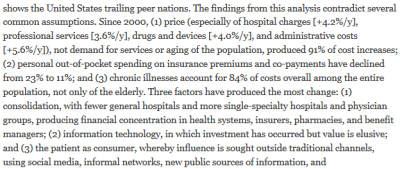
Researchers at Johns Hopkins publish a study in JAMA that evaluates the economic mechanisms contributing to the rise of healthcare costs in the US. The study finds that costs are increasing for a number of reasons: 1) hospital and practice consolidation is weakening the purchasing power of healthcare consumers 2)  drug and medical device costs are increasing 3) expensive investments in health IT have not resulted in a significant savings.

eClinicalWorks Makes Additional $50 Million Investment in Patient Engagement & Population Health

Westborough, MA-based eClinicalWorks will spend $50 million bolstering its patient engagement business unit, adding 100 employees over the next year to enhance the company’s patient portal mobile app.

Icahn says would ‘never’ push Apple to buy Nuance

Active Investor Carl Icahn, who has a 16.9 percent stake in Nuance and a significant stake in Apple, says that he will not pressure Apple to buy Nuance.

Healthsherpa Helps Thousands Get Insurance Quotes

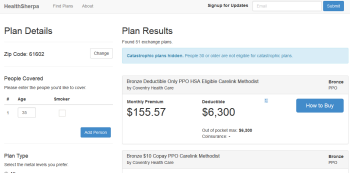
Three entrepreneurs from Silicon Valley code a healthcare.gov competitor, called TheHealthSherpa.com, in just three days. The site is able to generate insurance quotes based off zip code, age, and smoking status, and estimates federal subsidies based on annual income. It stops short of actually enrolling consumers in new plans, but does serve as a research tool for consumers, not to mention proof of how quickly and efficiently projects can be rolled out if the right people are involved.

Comments Off on Morning Headlines 11/20/13

News 11/20/13

November 19, 2013 News 2 Comments

Top News

image

A Johns Hopkins-led study published in JAMA concludes that the major factors driving healthcare costs up are consolidation of hospitals and practices that increase pricing power, high drug and medical device costs, and heavy IT investment with questionable value. It notes that costs are not visible to doctors or patients, which prevents healthcare from functioning as an efficient market.


Reader Comments

From Flash: “Re: AMIA. Perhaps the biggest news at AMIA so far is the non-news that CMS probably won’t delay Stage 2 MU. That’s essentially what the ONC’s Jodi Daniel said during a session Monday.” At this stage in the game, it would be more surprising if CMS did consider changes or delays.


Upcoming Webinars

DocuSign will present “Paperless Practices: Harnessing EHR Value by Improving Workflows with Electronic Data” on Tuesday, December 10 at 1:00 p.m. Eastern. “Audit Readiness: Three Simple Steps to Protect Patient Privacy”, presented by Iatric Systems, will be presented on Wednesday, December 11 at 2:00 Eastern. More information on both programs is on the Webinar page.


Acquisitions, Funding, Business, and Stock

CareFusion will acquire respiratory care and anesthesiology medicine manufacturer Vital Signs from GE Healthcare for $500 million.

11-19-2013 10-15-57 AM

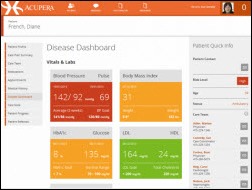
Acupera, developers of population healthcare and coordination workflow management technology, secures $2 million in bridge financing.

MDS Medical, Greenway Medical’s top-producing channel partner, acquires the assets of EHRsolutions, Greenway’s second largest reseller.

Carl Icahn, who owns 4.7 million shares of Apple and a 16.9 percent stake in Nuance Communications, tells participants at an investment summit that he will not push Apple to buy Nuance.

Truven Health Analytics provided this comment related to its recently released 10-Q forms that a reader commented about in the Monday Morning Update:

Truven Health Analytics has performed well in 2012 and through the first three quarters  of 2013, with steady increases in revenue and robust margins for adjusted EBITDA.  Reported losses are due to accounting changes stemming from our divesture from Thomson Reuters and one-time costs associated with the migration of our data center from Thomson Reuters onto a standalone platform, neither of which affects ongoing operating performance.


Sales

The 25-bed Van Buren County Hospital (IA) selects McKesson Radiology and McKesson Study Share.

MModal adds new customers for its MModal Fluency for Imaging product including Coastal Radiology (NC), Coosa Valley Medical Center (AL), Greensboro Radiology (NC), Maricopa Integrated Health System (AZ), and Radiology Associates (OR).

Avera Health selects Craneware InSight Medical Necessity for 28 of their 33 hospital organizations.

11-19-2013 9-37-37 AM

King Khaled Eye Specialist Hospital in Saudi Arabia will implement InterSystems TrakCare. The hospital, by the way, is part of a compound that includes six five-story apartment buildings, 22 villas, a community center, tennis courts, playgrounds, a cinema, a supermarket, and a mosque.

Ophthalmology Associates (WI) selects SRS EHR for its six providers.

Avera Health (SD) chooses Craneware’s InSight Medical Necessity. 


People

11-19-2013 3-15-47 PM

The Georgia HIN names eHealth Services Group CEO Denise Hines executive director.

11-19-2013 3-19-47 PM

Recondo Technology appoints Lori Prestesater (McKesson Provider Technologies) chief growth officer.

11-19-2013 3-22-30 PM

Verisk Health promotes Nadine Hays from EVP of sales, marketing, and strategic partnerships to president, replacing Joel Portice who is leaving to pursue other interests.

Nuance extends the existing employment agreement with its CEO Paul Ricci through November 11, 2015 and agrees to pay him a base salary of $800,000 plus annual performance bonuses of up to $1.2 million.

MediTract, a provider of automated contract management solutions, names David F. “Buddy” Bacon (Meridian Surgical Partners) CEO.


Announcements and Implementations

eClinicalWorks will invest an additional $50 million over the next 12 months in addition to the $25 million it had already committed to enhance and expand population health solutions and patient engagement tools under its Health & Online Wellness business unit. Part of the funding will be used to hire an additional 100 software developers.

Southeaster Overread Services (NC) implements eRAD PACS with integrated speech recognition technology from MModal.

11-19-2013 10-47-26 AM

Parrish Medical Center (FL) expands its use of products from Strata Decision Technology with the implementation of  StrataJazz Decision Support.

11-19-2013 11-14-47 AM

Florida Governor Rick Scott joins iSirona employees to announce the company’s plan to create 300 new jobs over the next three years at its Panama City headquarters.

HIMSS Analytics and The International Institute for Analytics announce the launch of a service that will allow hospitals to assess the maturity of their analytics capabilities and benchmark against peers.

The Boston Globe names Meditech as one of the Top Places to Work in Massachusetts.

iMDsoft integrates the Electronic Whiteboard from  Intelligent Business Solutions into its MetaVision AIMS solution.


Government and Politics

House lawmakers introduce legislation that would create and expand physician reimbursement of telehealth services to active-duty service members, their dependents, retirees, and veterans.

Sen. Rob Portman (R-OH) proposes a bill that would extend MU incentive payments to behavioral health providers, including psychiatric hospitals, substance abuse facilities, and psychologists. The legislation would also address EHR-related adverse drug reporting to patient safety organizations, clarify that EHRs are not subject to the Food, Drug and Cosmetics Act, and limit electronic discovery in EHRs.

Medicare will cut reimbursements by as much as 1.25 percent to 1,451 hospitals next year as a result of their performance in CMS’s value-based purchasing program. An additional 1,231 hospitals will see payments increase by as much as 1.25 percent based on their performance across quality indicators.


Other

The American Academy of Ophthalmology unveils the IRIS Registry, the nation’s first eye disease and condition patient database. The registry is designed to interface with any EMR system and will handle data on more than 18 million patients by 2016.

11-19-2013 8-22-44 PM

Three young programmers create HealthSherpa.com, which one-ups Healthcare.gov by allowing consumers to quickly get insurance prices by entering only their ZIP code. It took them only three days to develop and test the site. I tried it and had insurance prices and details in less than five seconds.

Weird News Andy finds this story to be strange but true. Researchers find that patients with a wide range of red blood cell sizes are more likely to have depression.


Sponsor Updates

  • Greenway Medical releases Intergy v9.00, which includes a dashboard to track the progress of a practice’s transition to ICD-10 or MU attestation.
  • The Drummond Group certifies Allscripts dbMotion 5.0  as an ONC-ACB 2014 compliant EHR Module.
  • Lifepoint Informatics announces the details of its March 13, 2014 user conference in Orlando.
  • National Decision Support Company, Montage Healthcare Solutions, and Nuance Communications collaborate to bring Imaging 3.0 tools to radiologists.
  • Medical Staffing Network (FL) completes their companywide implementation of API Healthcare’s solution suite.
  • Aspen Advisors raises $2,300 for Florida’s Health First health system during the company’s annual retreat in Ft. Lauderdale.
  • The Detroit Free Press names CareTech Solutions the top workplace in the large-company category based on employee satisfaction.
  • Surveys from Porter Research and Imprivata indicate that healthcare is beginning to trust cloud technology for the storage of PHI.
  • Emdeon discusses the challenges and opportunities of CPOE under Stage 2.
  • Sagacious Consultants launches Sagacious Connect to support hospitals extending their EMR software to independent practices and hospitals.
  • T-System’s Tonda Terrell offers seven considerations for payer contracting in the healthcare reform-era. The company’s Elizabeth Morgenroth also provides communication tips for a successful ICD-10 implementation and conversion.
  • Imprivata earns a spot on the Boston Globe’s Top Places to Work 2013 in the medium company category.

Contacts

Mr. H, Inga, Dr. Jayne, Dr. Gregg, Lt. Dan, Dr. Travis, Lorre.

More news: HIStalk Practice, HIStalk Connect.

Morning Headlines 11/19/13

November 19, 2013 Headlines Comments Off on Morning Headlines 11/19/13

Use of Analytics Produces Better Patient Outcomes

Informaticists at UNC Health Care in Chapel Hill, NC are using natural language processing analytics tools to comb through text-based mammogram reports to help ensure that all patients who need follow up appointments are seen. Researchers with the study report that 25 percent of adverse affects occurring in the outpatient setting are a result of inadequate follow up of abnormal test results. The NLP-based analytics tool was able to read through 500 reports and accurately identify which ones needed follow up appointments with a 100 percent accuracy.

Here’s What Your Operation Will Really Cost

Intermountain Healthcare announces that it will begin tracking the cost of all consumables, equipment, and time spent delivering care across the network to get a more accurate picture of the total cost of care for different conditions. The hope is to create a "cost master" that could then be embedded in Intermountain’s EHR and used to help drive fiscally responsible care planning.

CareFusion plans to acquire GE Healthcare’s Vital Signs

CareFusion announces that it will acquire GE Healthcare’s Vital Signs business unit for $500 million. Vital Signs makes a variety of single-use products that support respiratory care, anesthesiology, and patient monitoring.

Comments Off on Morning Headlines 11/19/13

Curbside Consult with Dr. Jayne 11/18/13

November 18, 2013 Dr. Jayne 1 Comment

clip_image002

Lots of buzz this week around San Francisco’s “Batkid” fighting crime with the help of the Make-A-Wish Foundation. The real heroes there were the people behind the scenes, coordinating to make this leukemia patient’s wish happen as he celebrated completion of three years of treatment. I’m fortunate to work with superheroes every day, although most of them are the unsung variety. I’d like to introduce you to a few of them.

The Desktop Support Agent. One of my favorite people in our health system’s IT universe, he lives in another time zone, but you’d never know it. It’s almost like he never sleeps. No matter what time of day I open my ticket, he always responds with a virtual smile. He relocated away from our city to be closer to family and is a great example of how remote employees can be an asset to the organization. I’ve had to call with some pretty ridiculous questions, including problems with my calendar appointments spontaneously mutating (a.k.a. user error) and my entire inbox vanishing. He’s very nonjudgmental when you call for newbie-type problems (or maybe he’s just good at hiding it). Without him our jobs would be a lot harder and I know many users take him for granted, so I always make sure he knows how much I appreciate him.

The Documentation Supervisor. This unsung hero works for our vendor and was instrumental in helping a small, rabid group of clients convince the legal team that it would be OK to give clients copies of the training manuals in editable format. For many years, they were afraid of this and would only provide PDF copies, which was silly since we ended up reproducing all their content anyway so that we could create end user training manuals. She manages an extremely diverse team and ensures that what the technical writers produce is in a truly human readable format. She encourages clients to provide feedback on the materials and actually incorporates the changes. I have to laugh because every once in a while she will slip in something that is a reference to one of the rabid clients – it might be a patient name on a screenshot or a practice address, but it’s always funny.

The Account Executive. Our hospital uses CCOW technology, which was originally provided by Sentillion, which was gobbled up by Microsoft. Although we had multiple systems live and sharing context, we ran into some roadblocks bringing up a new application. Microsoft played the “we don’t support that Software Development Kit anymore” card and our vendor was at the end of its rope as far as what it could do to try to bridge the gap. The Account Exec worked tirelessly on our behalf, calling in multiple favors and arranging calls with the actual developers who helped us code around the problem. It would certainly have been easier to just say no and go along with the party line, but I will be forever in his debt for helping us out.

The Hospital Volunteers. Ours used to be called “Pink Ladies,” but now they’re co-ed. Some of the veterans still wear pink smocks and that definitely puts a smile on my face since it reminds me of my days as a candy striper. They always greet you with a smile and even if you’re having a terrible, horrible, no good, very bad day you can’t help but be engaged by them. They will go out of their way to find things to make our oncology patients have a more comfortable stay, even tracking down unusual reading material. I could say I once saw one bring in a bottle of Scotch for a patient, but that would probably violate their circle of trust, so I wouldn’t dare.

The Citrix Guy. This is my absolute favorite superhero. When our IT department was a little less mature and a little less competent (did I just say that out loud?) he saved us. We had just deployed dozens of offices not only over Citrix, but using wireless at a time when it was a relatively new technology. Our team just wasn’t very good at it and we had all kinds of issues with dropped sessions, random application hangs, and misbehaving CCOW. He swooped in (I swear it was like he had a cape) and helped us fix our own dysfunction, yet never made our team feel less than capable even though they were. He travels 48 weeks out of the year and is in a different city nearly every week yet never seems tired or worn out. I don’t know how he does it.

There are many other unsung heroes we encounter every day. Who are yours? Email me.

Email Dr. Jayne.

Morning Headlines 11/18/13

November 17, 2013 Headlines Comments Off on Morning Headlines 11/18/13

Health IT helping to fight the prescription drug abuse epidemic

ONC announces a new interoperability project that will help establish common technical standards and a standard vocabulary that will allow EHRs and HIEs to integrate data from state-run prescription drug abuse databases.

Cover Oregon: Health exchange board puts director Rocky King on notice over stalled website

The board of Oregon’s health insurance exchange program has places its executive director, Rocky King, on notice over technical issues that have plagued the exchange’s website, and prevented anyone from buying health insurance on it, since its October 1 launch.

AMIA 2013 Annual Symposium

The American Medical Informatics Association (AMIA) kicks off its week-long annual conference in Washington DC this week.

Steve Larking Joins ESD as Regional Vice President

Former MaxIT VP Steve Larking joins health IT consulting firm ESD. MaxIT was acquired by SAIC last year, and then rolled into a new company after SAIC split itself into two businesses. Ray Murray, another maxIT VP, also left for ESD at the beginning of November.

Comments Off on Morning Headlines 11/18/13

Monday Morning Update 11/18/13

November 17, 2013 News 8 Comments

11-17-2013 11-13-49 AM

From Concerned: “Re: Truven Health Analytics. Its Q3 2013 SEC 10-Q says 2012 was an earnings disaster, and so far this year the company has lost $26 million and is increasing debt to pay bills.” I took a quick glance over the form, but I’m not an accountant and most of it glazed me over. Revenue took a big jump year over year and the net loss dropped as expenses were held fairly steady through the acquisition of the Thomson Reuters healthcare business in June 2012. As of September 30, the company appeared to be running a monthly loss of around $3 million and had $8 million in cash. The long document full of numbers is confusing because of the acquisition, but it appears that the company lost $8.4 million in the quarter vs. $20 million a year ago, so the situation may be improving. I found it depressing that Truven has 225 pending lawsuits against it filed by people who claim they were harmed by the drug Reglan and are suing the company because its patient education materials didn’t warn them of that possibility.

UPDATE: Truven provided this clarification: “Truven Health Analytics has performed well in 2012 and through the first three quarters  of 2013, with steady increases in revenue and robust margins for adjusted EBITDA.  Reported losses are due to accounting changes stemming from our divesture from Thomson Reuters and one-time costs associated with the migration of our data center from Thomson Reuters onto a standalone platform, neither of which affects ongoing operating performance.”

11-17-2013 11-14-48 AM

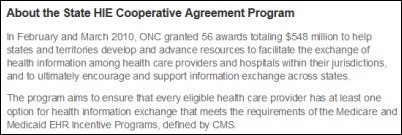
From FormerHHSIntern: “Re: HIE. Secondary consequences of poor Healthcare.gov rollout. Impending implosion over failed $600 million HHS/ONC Health Information Exchange grant program. At least one senior ONC leader will leave in next two weeks.” Unverified.

From Ken Dahl: “Re: paper vs. EMR for physician data entry. There’s a big difference on that score for inpatient vs. outpatient. For inpatient care, EHR is much better – for purposes of rounding, orders, med rec, and keeping track of care plans. Outpatient clinics are a bit more difficult because of the amount of charting required on EHR is overwhelming, and leads to a lot of MDs typing while talking which sets up an uncomfortable dynamic for the ‘therapeutic’ interaction. But there’s  always a tradeoff – either you chart with the patient or you chart at the end of the day and you lose an hour or two of time with your family that night. That is a reason MDs are becoming less interested in having a clinic practice.” General practice and some specialist physicians are, for the most part, vastly overtrained for seeing office patients. They are wasting most of their day looking at the same old problems that an extender could handle, playing EMR stenographer, and chatting with patients whose chronic disease requires no new diagnosis or treatment. Doctors (and healthcare in general) could learn from my dentist. Usually there’s just one dentist on duty, but a stable of hygienists and techs keeps several rooms full of patients undergoing everything from cleanings to denture repairs to crown and cavity work. He flits between rooms to oversee everything, speaks to every patient to hear any concerns, and shows up just in time to perform procedures on the fully prepped patients. He does not touch the practice’s fully electronic dental record and imaging system that I’ve ever seen, complete billing documentation, or handle referral or absent-from-work forms. We need to separate out the tasks that truly require a physician’s extensive education and experience and turf everything else off to cheaper and more readily available positions. One might argue, however, that physicians created the current state because they, until recently, were happy to collect big paychecks in return for underusing their skills.

11-16-2013 9-33-53 AM

From The PACS Designer: “Re: Apple’s curved screen iPad. As Apple continues to innovate in the PC space, they will be offering an edge to edge curved screen with the iPad 6 in 2014. Other rumored improvements are the replacement of the current screen material called Gorilla Glass with the indestructible sapphire material which is currently in the camera and fingerprint button.” The curved glass (image above from TechCrunch) would be mostly a cosmetic enhancement, but Apple is supposedly working on technology that will allow its mobile devices to detect the amount of pressure of a fingerprint touch and react accordingly. The current iPhone touch accuracy has been tested and found to be dramatically inferior to that of the Samsung Galaxy S3, so it’s time for the House That Two Steves Built to get on the ball.

11-16-2013 7-46-42 AM

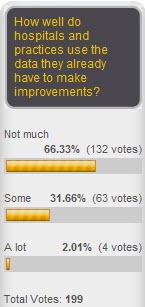
Hospitals should stop fantasizing about big data and instead use the data they already have (and often ignore) to make improvements, the clear majority of poll respondents say. New poll to your right: do you use any mobile apps to monitor or improve your health? You can interpret what that means to you – apps for exercise, diet, medically related reminders, or health tracking.

11-17-2013 2-53-52 PM

Welcome to new HIStalk Platinum sponsor Connance. The Waltham, MA-based company was founded in 2007 to offer cloud-based predictive analytics and rule-driven workflow technologies that improve the financial performance of healthcare providers. Programs include self-pay maximization, commercial revenue optimization, performance benchmarking, charity and outreach, A/R valuation, revenue leakage detection, managed care contract enhancement, preventable readmission management, and consumer engagement. St. Joseph’s Hospital of Atlanta reported a 13:1 ROI, Florida Hospital saw a 20 percent increase in cash collections, and Children’s Hospital and Medical Center saw a 45 percent increase in charity dollars and a 40 percent decrease in bad debt expense (more case studies are here). I interviewed CEO Steve Levin in October 2013 and we covered some interesting topics: the changing nature of self-pay patients, the hit hospitals take on their patient satisfaction scores that are due to lack of financial service excellence, and ACA-triggered changes in charity classification. Some fun facts from its site: 40 percent of self-pay accounts generate 90 percent of the cash; 30 percent of accounts assigned to bad debt should be charity; and 20 percent of denials cost more to pursue than they will generate in cash. Thanks to Connance for supporting HIStalk.

11-16-2013 9-50-34 AM

Travis from HIStalk Connect and I will be reporting live from the HIMSS-produced mHealth Summit in the Washington, DC area on December 8-11. They’re offering a $75 registration discount to HIStalk readers (use code HISTalk). We’ll have a tiny HIStalk booth in the exhibit hall, staffed by my newest team member and the non-anonymous face of HIStalk, Lorre. I think she’s bringing some little giveaway items, hoping to distract from the fact that our booth will have all the charm of a rental storage unit because the furnishings were out of our price range (I may begrudgingly get her a chair to sit on, but I’m thinking about bringing one of those $10 folding camp chairs from the local Walmart). Lorre is getting a crash course in all things HIStalk without having met any actual readers or sponsors, so stop by and say hello so she doesn’t think I made it all up. You can email her to say hello if you like.

The AMIA 2013 Annual Symposium started Saturday in Washington, DC. I’ve never been to one (I’m not a member, although I once was, and I had a conflict this week) but I like the topics – it’s like a more academic and less commercial HIMSS conference from what I can tell. I decided to run tweets from the conference in the right column just in case you want to see what’s going on there.

11-17-2013 10-46-40 AM

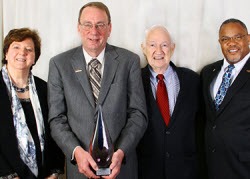
AMIA announces at the leadership dinner of its conference the Stead Award for Thought Leadership, which will be awarded to recipients whose vision influences the use of informatics to improve healthcare. It honors Bill Stead, MD, associate vice chancellor for health affairs and chief strategy and information officer at Vanderbilt University Medical Center. Above are Stead with the members who recommended creation of the award: Nancy Lorenzi, PhD (VUMC); Bill Stead; Ed Hammond, PhD (Duke Center for Health Informatics); and Kevin Johnson, MD, MS (VUMC). The award’s colors will be Duke blue (where Stead was a student under Hammond), Vanderbilt gold, and AMIA crimson. I was amused that AMIA, like others regularly do, confused in the announcement its own journal’s name (JAMIA) with that of JAMA, saying that Bill was the first editor of the Journal of the American Medical Association, which if so means his informatics research has turned up the Fountain of Youth since JAMA’s first issue rolled off the presses in 1883.

ONC announces that it will develop interoperability standards that will allow EHRs to exchange information with state-run prescription drug abuse databases, updating pharmacy records in near real-time and helping prescribers identify potential abusers directly from order entry. An HHS task work group created the plan in 2011, final recommendations were issued in August 2012, and pilots were completed this year.

The Metro Atlanta Chamber names patient payments platform vendor Patientco its 2013 Healthcare IT Startup Company of the Year. I interviewed CEO Bird Blitch a month ago, including a question about Georgia healthcare IT companies.

11-17-2013 11-24-37 AM

Knowledge management solutions vendor Streamline Health announces a secondary stock offering to finance the acquisition of two small, unnamed software vendors. Company A offers patient scheduling and access solutions, has 29 clients, and will be acquired for $6.5 million in cash. Company B offers financial and operational analytics to its 35 clients and will be acquired for $13.75 million in cash and stock. I interviewed CEO Bob Watson in August 2013. I observed then that STRM shares had jumped from $1.50 in early 2012 to $7 at that time; they’re at $7.60 now.

Eleven Canada-based startup healthcare IT vendors will demonstrate their products in Philadelphia on Tuesday as part of a collaboration program between the city and a Canada-based health IT accelerator. On hand will be Caristix (HL7 integration), Hospitalis (clinical pathways and interventions), Infonaut (infection control surveillance), Memotext (patient adherence), Pulse InfoFrame (analytics), Sensory Technologies (homecare management), HandyMetrics (hand hygiene auditing), Impetus Healthcare (online communities), Interfaceware (HL7 integration), MetricAid (ED efficiency), and Phemi Health Systems (analytics).

11-16-2013 8-13-44 AM

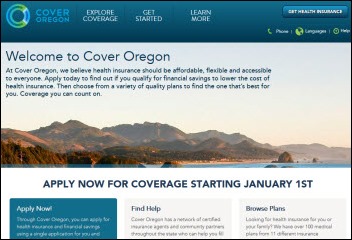
The board of Cover Oregon, the state’s health insurance exchange, places its executive director on notice because of website problems that have resulted in zero enrollments for coverage that begins January 1. The board expressed displeasure with Oracle, which it says missed deadlines and provided marginally skilled employees. The exchange has asked the federal government to loan it seven people to help.

11-17-2013 11-34-00 AM

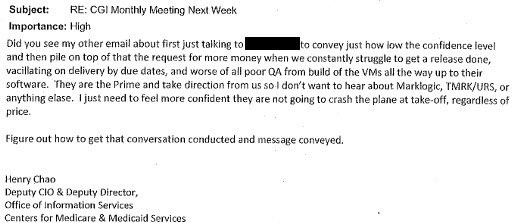
CMS Deputy CIO Henry Chao did his best to rally the troops this summer to get Healthcare.gov ready, but his patience for missed deadline excuses and demands for more money (especially from contractor CGI) was obviously wearing thin by mid-July. According to a July 12 email, “they [CGI] need about $38 million more to get them through Feb. 2014 … the $38 million does not include the approximate $40 million we have in the budget for this contract.”

11-16-2013 8-19-59 AM

Steve Larkin (maxIT Healthcare) joins ESD as regional VP.

11-16-2013 9-19-46 AM

Marc Winchester (Intuit Health) takes a sales and marketing role with supply chain systems vendor Aperek, previously known as Mediclick.

11-16-2013 7-54-35 PM

Robert Marcus, MD (NextGen) joins TrustHCS as a physician consultant.

11-16-2013 8-05-57 PM

Richard Tunnell (UMDNJ) is named CIO of University Hospital (NJ).

11-16-2013 8-17-15 AM

Fargo-ND-based Intelligent InSites employees wore tee shirts Friday to support United Way. The hats are from the company’s user group meeting held this summer, and since they invited me but I couldn’t attend, they’ve got one with my name on it.

If your HIS-torical memory includes names such as McAuto, SAINT, IBAX, and Amex, then you’ll enjoy Vince’s chapter this week in his continuing analysis of the confusing and sometimes incestuous McKesson HIT family tree.


Contacts

Mr. H, Inga, Dr. Jayne, Dr. Gregg, Lt. Dan, Dr. Travis, Lorre.

More news: HIStalk Practice, HIStalk Connect.

125x125_2nd_Circle

Readers Write: Help Us, Atul Gawande, You’re Our Only Hope

November 15, 2013 Readers Write 7 Comments

Help Us, Atul Gawande, You’re Our Only Hope
By John Gobron

11-15-2013 7-32-39 PM

I recently had the pleasure of reading Atul Gawande’s essay, "Slow Ideas," published in The New Yorker. In it, Gawande discusses two innovations from healthcare’s past that profoundly and forever improved the delivery of patient care: anesthesia and antiseptics. Both advances provided obvious and impactful benefits to patients. One (anesthesia) was immediately and universally adopted, while the other (antiseptics) took a generation to become commonplace.

Why did the use of ether to numb pain "spread like a contagion?" Gawande argues it was because, while the patient was clearly better off in not suffering the agony of the surgeon’s knife, the surgeon himself benefited as well. After all, cutting someone open to practice painful, invasive surgery back then was, in fact, a risky business. Compare that to infection control. Back in 1875, antiseptic efforts were practiced by spraying everything and everybody with carbolic acid.  As the gentle reader might imagine, this wasn’t exactly a welcome or pleasurable experience for physicians.

As I read on, I kept waiting for what seemed to me to be the inevitable extension of the essay to address healthcare IT, where the adoption of the electronic health record promises to forever improve the entire healthcare ecosystem. After completing the article, I asked myself the sad question, "Are EMRs the carbolic acid of our generation?"

It is difficult to argue against the current and future benefit of the electronic medical record. Fourteen years ago, the Institute of Medicine estimated that as many as 98,000 patients per year die as a result of preventable medical errors, many of which were rooted in problems related to paper-based documentation and communications. Four years ago, the US government established a "pay then punish" wealth redistribution system for funding the adoption and actual use of EMRs. Outside of our healthcare biosphere, other industries accomplished similar computerization initiatives years ago. Yet despite the benefits, incentives, and examples, EMR adoption is mired in the 50 percent range. Why?

This really is the $23 billion dollar question, isn’t it? If there is a simple answer, it is that the physician does not benefit enough. Does this make them bad actors? Yes in the case of Travis Stork, but no for most everyone else. No other industry asks its highest-level knowledge workers to document the transactional activity found in most EMR data entry fields. CEOs don’t take minutes at board meetings, CFOs don’t tally balance sheets, lawyers don’t do stenography, and Congressmen don’t … well, I’ll leave this one alone, but hopefully you get the point.

Much has been written, especially here on HIStalk, about usability and design and other factors that go in to the actual EMR technologies. But the simple fact remains that for most physicians who practiced medicine in the paper age, paper was and remains better than anything that appears on a glass screen – for them, that is. Physically writing information down in a paper chart or even on a 3×5 card is much faster and more intimate than using a clunky PC or even a sexy tablet. Faster yet, is just telling someone else what to write down or enter into said computer or Appley gadget.

Let’s face it: physicians become physicians to treat patients and to participate in the miraculous science of medicine. Under that paradigm, paper is really good for the physician workflow and computers are really good for research. A physician can physically maintain her focus on the patient infinitely better when writing than when looking back and forth at a keyboard and screen.

In his summary thoughts on adoption, Gawande notes, "To create new norms, you have to understand people’s existing norms and barriers to change. You have to understand what’s getting in their way." What is getting in the physician’s way? Time, first and foremost. With today’s clinical computing workflow, it simply takes too much time and proves too distracting to document within the requirements and constraints set out by IOM, Joint Commission, HITECH, HIPAA, Meaningful Use, etc.

Much like adopting the use of sterile instruments and working conditions, adopting the use of an electronic health record adds burden to the physicians. As Gawande notes, “although both [anesthesia and antiseptics] made life better for patients, only one made life better for doctors.” Today, for some reason we are asking these same doctors to do what amounts to data entry. Therein I think is our lesson for anyone engaged in the mission of better adoption of EMRs — make life better for doctors. It’s not really as complicated a task when you look at it that way.

Think about all of the unlucky people who died from infection between 1875-1905 while healthcare waited a full generation to adopt an enormously beneficial change. Are we to see the similar fate of 98,000 people per year for the next 30 years to achieve the same outcome? Can the dead teach the living, and 138 years later, make it better this time around?

As I see it, we have three choices:

  1. Send a holographic message to Atul Gawande asking him to figure this out for us (Inga has volunteered to send this message, btw).
  2. Sit back and wait a generation until our digital native teenagers mature to replace today’s clinical computing-averse physicians.
  3. Redesign and bind the disparate processes of clinical workflow, clinical computing, and reimbursement together so that the benefits of healthcare as an electronic medium align with the efforts needed to achieve clinical computing adoption.

Healthcare delivery organizations, if you want to finally realize the benefits of improved outcomes, patient engagement, and ultimately preventative care, make the required workflow and infrastructure easy and economically advantageous for physicians to use-without needing to be bribed by the government.

I believe today’s healthcare executives are in the enviable position of being able to write their names in the history books as the alchemists who transformed their foaming beakers of physician-burning carbolic acid into the clinical computing manifestation of nitrous oxide. In addition to smiling, your doctors, your health system, your nation’s economy, and your patients will thank you when you pull this off.

I close with Atul Gawande’s simple instructions. “Use the force, Luke”, (sorry, I couldn’t resist)  What Dr. Gawande actually said was, "We yearn for frictionless, technological solutions. But people talking to people is still the way that norms and standards change."

John Gobron is president and CEO of AventuraHQ.

Readers Write: Managing the Complexities of Enterprise Platforms

November 15, 2013 Readers Write Comments Off on Readers Write: Managing the Complexities of Enterprise Platforms

Managing the Complexities of Enterprise Platforms
By Deborah Kohn

During August 2013, a Mr. HIStalk post reported the storing of patient (protected) health information (PHI) using consumer-grade services (a.k.a., enterprise platforms) that are cloud-based rather than on-premise-based. Disturbed by the post’s report, Mr. HIStalk replied with several rhetorical questions, such as,“What system deficiencies created the need to store [patient] information on consumer-grade services in the first place?” Later that month, Mr. HIStalk asked his CIO Advisory Panel to comment on policies or technologies used to prevent clinicians and employees from storing patient information on cloud-based consumer applications, such as Google Docs or Dropbox. Of the 19 replies, 60 percent block access to such services and / or have policies with random audits or other forms of monitoring.

Consumer-grade service and enterprise platform vendors include Google, Microsoft (MS), Accellion, Box, Dropbox, and others. The services (or applications or tools) provided by these vendors on their platforms include but are not limited to file storage / sharing and synchronization (FSS), mobile content management, document management, and, perhaps, most importantly, project and team collaboration.

For example, Google’s comprehensive suite of cloud-based services, Google Drive (FSS), includes but is not limited to Google Docs (collaborative office and productivity apps, now housed in Google Drive), Google Mail and Calendar, and Google Sites (sharing information on secure intranets for project and team collaboration). Box’s suite of cloud-based services includes but is not limited to mobile content management, project collaboration, a virtual data room, document management, and integration with Google Docs.

Historically, Microsoft SharePoint had been associated with on-premise document management and intranet content management. Over the years, broader, on-premise web applications were added to provide intranets, extranets, portals, and public-facing web sites as well as technologies, which provided team workflow automation and collaboration, sharing, and document editing services. SharePoint 2013 offers services in the cloud (and on-premise) and it includes but is not limited to Office 365 (the famous office and productivity apps, which now can be rented rather than purchased), Outlook (calendar), Exchange (mail), records management, e-discovery, and search.

I have worked with most of the above services and platforms in healthcare organizations. Since today’s digital experience is all about connecting and collaborating with others, I strongly believe the above services and platforms are important and useful for provider organizations, primarily because most of the services (or applications or tools) are not present in provider organization line-of-business systems. For example, with Google Drive, a resident can create a patient location spreadsheet in a cloud application, such as Google Docs, share it with colleagues, edit it on a tablet device, and push revisions to a collaboration site. Blocking access to these services penalizes employees by not allowing them to use robust collaboration tools.

In addition, I strongly believe the internal organizational policies and procedures that are developed for such services are sub-optimal at best. Unfortunately, most FSS services do not encrypt content, possibly exposing content to interception in violation of regulatory obligations, such as HIPAA. Yet organizational policies that manage encryption, backup, and archiving for content sent through email or FTP systems typically are not applied to the content sent through FSS services.

If provider organizations were to deploy formal information governance (IG) principles (e.g., electronic records management principles) with many of these enterprise services and platforms, onerous access blocking could be eliminated and policies and procedures could be improved. Unfortunately, like most services (or applications or tools), deploying IG principles for enterprise services is complex. In addition, deployment requires resources with knowledge of and experience in the information governance principles. However, the trade-off is that provider organizations can meet other legal, regulatory, and compliance requirements, such as e-discovery, without additional resources or effort.

As such, below is a step-by-step, basic, electronic records management guide to help protect what needs to be protected while allowing access to what needs to be shared and to gain value from cloud-based services and platforms while addressing compliance and governance standards.

  1. Clearly define as "documents" all content generated in (for example) GoogleDocs, SharePoint 2013, or Dropbox. A document is any analog or digital, formatted, and preserved "container" of structured or unstructured data or information. A document can be word processed or it can be a spreadsheet, a presentation, a form, a diagnostic image, a video clip, an audio clip, or a template of structured data.
  2. For legal and compliance purposes, declare as “records” those “documents” in GoogleDocs, SharePoint 2013 or Dropbox that 1) follow a life-cycle (i.e., the “documents” are created or received, maintained, used, and require security, preservation and final disposition, such as destruction); 2) must be assigned a retention schedule; and, 3) the content must be locked once the “document” is declared a “record”. Records are different from documents. All documents are potential records but not vice versa.
  3. Again for legal and compliance purposes, designate all the records as either “official” or “unofficial.” Official records include those documents that were generated or received in GoogleDocs, SharePoint 2013 or Dropbox and subsequently declared as records according to the above records characteristics. In addition, official records are created or received as evidence of organizational transactions or events that reflect the business objectives of the organization (e.g., receiving reimbursement for services provided, providing patient care); and qualify as exercises of legal and / or regulatory obligations and rights (i.e., have evidentiary and / or regulatory value). Unofficial records include those documents that were generated or received in GoogleDocs, SharePoint 2013 or Dropbox and subsequently declared as records according to the above records characteristics. However, unofficial records will not further organizational business, legal, or regulatory needs if the records are retained. Typically, unofficial records are retained only for the period of time in which they are active and useful to a particular person or department. Often organizational retention policies allow unofficial records to be retained for x number of years after last modification, but typically no longer than official records. Examples of unofficial records are (what are typically but erroneously called) working “documents”, draft “documents”, reference “documents”, personal copies of documents or records, and copies of official records for convenience purposes.
  4. Retain all the documents and official / unofficial records in GoogleDocs, SharePoint 2013 or Dropbox in separate, physically, but logically-linked electronic repositories. For example, “documents” can be stored on individuals’ hard drives. Once documents are declared “records”, the official records (e.g., patient records [including patient-related text messages / email messages /social media entries], employee records, patient spreadsheets, etc.) must be parsed and placed into a secured electronic repository, similar to the organization’s line-of-business system or systems-of-record repositories; e.g., EHR, Vendor Neutral Archive, financial system — with audit trails, access controls, etc. The unofficial records (e.g., working documents, reference records, etc.) can be stored on organizational shared drives.

Currently, many of the service and platform configurations and capabilities are not intended for long-term electronic record retention and security purposes and should not be used as healthcare organizations’ electronic repositories of official records. For example, no comprehensive, electronic records management, document management, or content management functionality exists on Google Drive. Once the record owners leave the organization and fail to reassign ownership, the official records could be subject to automatic deletion after x number of years. However, Google is introducing new Google Drive tools that might assist in better management of official records.

On the other hand, cloud providers are increasingly supporting content segregation, security, privacy, and data sovereignty requirements to attract regulated industries and are offering service level agreements and HIPAA business associate agreements (BAAs) designed to reduce risks. In September, Google announced a HIPAA BAA for the following Google App services: Gmail, Google Calendar, Google Drive, and Google Apps Vault. Alternatively, Accellion has extended its reach beyond data stored in its application by integrating with enterprise content management (ECM) systems, allowing users to connect right from their mobile devices to secured back end, typically on-premise repositories, such as SharePoint.

Deborah Kohn, MPH, RHIA, FACHE, CPHIMS, CIP is a principal with Dak Systems Consulting.

Comments Off on Readers Write: Managing the Complexities of Enterprise Platforms

Readers Write: ACA versus ICD-10: US Media Failure and Why I Really Can’t Sleep At Night

November 15, 2013 Readers Write Comments Off on Readers Write: ACA versus ICD-10: US Media Failure and Why I Really Can’t Sleep At Night

ACA versus ICD-10: US Media Failure and Why I Really Can’t Sleep At Night
By Rebecca Wiedmeyer

11-15-2013 7-17-57 PM

Thanks to the ever-pervasive, sound bite-driven American media outlets, many citizens have predisposed notions surrounding the Affordable Care Act (a.k.a Obamacare) and the “mishandling” of Healthcare.gov (for anyone out of the loop, there has been a struggle for individuals to log on and apply for the payer program offered by the ACA.) The  US mass media, along with the American government, has made this a key election issue and a prequel to the political debates  ahead of us in 2016. If the ACA is keeping you awake at night, I challenge you to consider the opinion of an insider in the field.

In its infancy, the ACA was a platform that immediately drew attention from political parties, physicians, and many in the healthcare field (myself included.) Subsequent to its introduction, this bill has morphed into a 2,700+  page, over-earmarked staple of Congress that, while admirably striving for change in healthcare, is not quite what either side of party lines was aiming to achieve. Meanwhile, there are initiatives and deadlines that loom ominously. Foremost, at least in my mind, is ICD-10 compliance.

Less than a year away, the ICD-10 movement is set to completely disrupt the current workflows, reimbursement  models, and documentation practices within healthcare IT. As a nation, we are set to transition between the current system of ICD-9 (~18,000 codes) to the WHO-approved (as of 20 years ago) system of coding, which utilizes around 146,000 codes. As anyone in HIT can imagine, this will have trickle-down effects that are unfathomable. Revenue will almost certainly be lost, practices will bankrupt, vendors will go out of business, and, the most incomprehensible part to me, this issue seems to be low on the list of agenda items for the American public, but also our field.

Not that there are a lack of exceptions. Many EHR vendors I have collaborated with, for instance, have a firm grasp of the gravity of ICD-10. Even more encouraging, there are vendors specializing in the education of physicians and directors, as well as billing offices and coders, with regards to compliance. However, with less than a year to go, the clock is ticking.

I have spoken candidly with industry executives who admitted building into budget up to a 70 percent revenue loss upon the introduction to ICD-10. Physicians deserve better than that and patients deserve better than that, not to mention the vendors that are at the mercy of government policy and its whim (not to mention client demands.) Agenda-setting has gone too far.

For any sleepless nights regarding the ACA, I am the first to concede it is far from perfect, so perhaps your anxiety is not unfounded. However, a lack of understanding of what is ahead looms as a far more dangerous challenge than a lackluster website performance of the moment.

Rebecca Wiedmeyer is chief communications officer of EHR Scope.

Comments Off on Readers Write: ACA versus ICD-10: US Media Failure and Why I Really Can’t Sleep At Night

Time Capsule: Let the Government Giveth to Healthcare by Takething it Away from Healthcare Profiteers

November 15, 2013 Time Capsule 1 Comment

I wrote weekly editorials for a boutique industry newsletter for several years, anxious for both audience and income. I learned a lot about coming up with ideas for the weekly grind, trying to be simultaneously opinionated and entertaining in a few hundred words, and not sleeping much because I was working all the time. They’re fun to read as a look back at what was important then (and often still important now).

I wrote this piece in December 2009.

Let the Government Giveth to Healthcare by Takething it Away from Healthcare Profiteers
By Mr. HIStalk

125x125_2nd_Circle

It’s increasingly clear that nobody wants to pay for healthcare, especially those who receive lots of healthcare services. The lobbyists of every patient or provider group have the same recommendation: let someone else foot the bill because we can’t afford it.

Everybody is convinced that everyone else is profiting obscenely from healthcare. When healthcare reform is being debated (which sounds more civil than the “debate” really is), it looks like that old Clint Eastwood spaghetti western, where Clint and Lee van Cleef and some other guy are listening to a musical pocket watch playing down, grimacing and jaw-flexing and finger-twitching, ready to blast each other into oblivion once the last note plays.

(I never really believed that scene, even if there really were musical stopwatches that played that loud in the 1870s. Given that at least one gunplay participant is always a black hat-wearing oaf of a bad guy, you know in real life that guy’s not waiting until the other gunslinger draws his hogleg – he’s going to start shooting up the place before Clint even lights up his stogie).

Anyway, I have invented a healthcare financing model that is fair to all, requires minimal administrative cost, and is transparent. Here it is:

Heavily tax the personal incomes of individuals who make big bucks from delivering healthcare products and services.

Corporate finance is too complex for me. Money-losing companies seem to thrive, even when showing a paper loss. And don’t even get me started trying to cogitate the difference between “making a profit” and “having a positive cash flow” because I just can’t grasp it.
I do know this, however: at some point, organizations have to pay out profits to living, breathing individuals who file that income on an IRS tax form. That’s where my plan kicks in: when that person makes excessive healthcare income, I want them taxed heavily.

(How do I define “excessive healthcare income”? Easy: it’s anyone who makes more than me.)

Uncle Sam then takes the proceeds and plows them back into covering healthcare costs. That neatly closes the loop so that those profiting heavily from healthcare have to help pay for it. I’m fuzzy on my MBA economics, but I think there’s some kind of economic multiplier effect in there, too, and God knows we could use that right about now.

Scumbag drug company shareholders, shady device manufacturer executives, glad-handing EMR vendor sales directors, wildly overpriced nurse staffing agency owners, million-dollar hospital VPs, and gazillion-dollar plastic surgeons from El Lay: it doesn’t matter. Uncle Sam knows how much of your income comes from healthcare-related salary, dividends, capital gains, and business income. Sorry pal, you’re getting socked with a 50% tax rate on that money.

You know that Joe Sixpack will love the idea of sticking it to million-dollar non-profit hospital executives or Ferrari-driving doctors. There aren’t enough of those caviar-eaters to outvote the masses no matter how much whining comes from AHA or AMA.

This confiscatory tax plan sends a message: it’s OK to make a nice living off the backs of sick people, but you don’t get to make more than a year than the average patient makes in a lifetime. Sorry, John Hammergren and Neal Patterson, we aren’t paying you to become multi-centimillionaires just because you sell supplies and equipment that sick people need.

Other countries use the Value Added Tax. It’s easy to collect, it’s consistent, and it’s hard for cheaters to avoid. Therefore, I advocate the Healthcare Unjustifiably Rich Tax. Don’t just tax the healthcare rich, HURT ‘em.

HIStalk Interviews Bruce Springer, CEO, OneHealth Solutions

November 15, 2013 Interviews Comments Off on HIStalk Interviews Bruce Springer, CEO, OneHealth Solutions

Bruce Springer is president and CEO of OneHealth Solutions of Solana Beach, CA.

11-15-2013 7-34-10 AM

Tell me about yourself and the company.

I’ve been in the healthcare software industry for about 20 years. One of the early companies I started and co-founded was WebMD in 1996 in Atlanta. Since then, I’ve served as a CEO and board member for numerous healthcare technology and startup companies. After serving as a board member for OneHealth last year, I was asked to join as CEO of the company.

The company is a social health platform company that works with health plans, employers, providers, and patients. Typically working with them to help improve health outcomes and lower costs utilizing social media, clinical tools, and gaming to better manage chronic patient populations.


Why is patient engagement such a hot topic all of a sudden?

Partly it’s due to government regulations. You look at Meaningful Use and you look at many of the different QA programs. Patient self-management, self-engagement is becoming a critical component of any one of those programs. As the risk is starting to shift from the insurance company to the employer and now down to the provider, they’re realizing that they can’t manage that care in these high-cost centers in the physician office, the clinics, and then the hospitals. They need a new way to get the patient engaged into reducing their own cost and managing their own conditions. That will greatly improve the outcomes for the whole industry.

But engagement is only a piece of it. In the past, engagement was a call from a nurse in the call center once a month to check in on you, or a direct mail piece to your mailbox. But is that really engagement? If you don’t get them to consistently or persistently engage and create better habits, you’re not going to change behavior. And if you don’t change behavior, you’re not going to really reduce the cost of the system.


There’s a theory that patient engagement increases the involvement of people who are already motivated, but doesn’t do a whole lot for that vast majority who rack up most of the expense. Do you agree with that?

I very much agree with that. One of the approaches that we’ve had at OneHealth is to engage them anonymously. They can join into communities where they don’t feel threatened, or maybe they have a shame-based behavioral mental health condition that they don’t want to share with others. The ability to do that where they’re not known and there’s no fear of retribution, no concern for confidentiality, where they can get in and work on the things that matter most to them, that their employer, their doctor may not even know about. 

We’ve integrated behavioral and mental health-related capabilities with medical conditions to help patients be able to engage where they want to engage, versus many disease management programs where you start at Step 1 and you go through Step 10. Why not engage somebody where they want to engage on the thing that’s most meaningful for them that they want to change? Then if you help them there, you’re going to make a radical difference on their overall health. 

We always look at things like diabetes. Our diabetes community is driven by weight management, depression, other things. It’s not because I’m a diabetic, but 50 percent of diabetics are also depressed. If you don’t deal with those depression-related issues, it’s going to be very hard for you to get somebody to take their meds, adhere to their care plan, lose the weight, and do the work that they need to manage their diabetes. You have to look at the underlying issue and help them support that issue. That’s why you don’t get meaningful engagement across broader populations.


I tried the site this morning and it was really easy and encouraged people to register anonymously if they prefer. I like that users can click their current mood, find cohorts to interact with, and set behavioral goals. What are users finding most valuable of the site’s functions?

Everybody’s different. It depends on where they’re willing to begin their journey. The emotional indexing that you talked about is something we present every time you check in. That is a scale of one to five, how you’re emotionally doing, will potentially create a bad behavior. Then we measure that scale against the communities that you’ve joined to determine the concern or the level of intervention needed to help that member avoid that emotional feeling driving to a bad decision.

For instance, this company was started with alcoholism, managing chronic conditions around substance abuse. Somebody’s craving at that point in time. If you don’t intervene, they’re going to probably drink. It’s allowed the platform to have a 24/7 intervention. When you check in craving, your network, our coaches — we have our own OneHealth coaches — will now engage you at that point, at the very instant where you’re having that emotional feeling, before you actually create a bad behavior that corresponds to it. We get 97 percent utilization of the emotional check-in on a daily basis for those members that check in.

We have challenges that are highly popular. Right now we’re running a nutrition challenge where people are taking pictures of their plates of food at dinner. Our nutritionist will review them and say, here’s things you could have done better, here’s a way to better manage and balance that meal. Then we create teams and they support each other and have a good time.

We just had a stress challenge where you were picking something in your life that causes stress and creating an anchor around it and an intention to solve it. Then every day, we had chat rooms and meditation rooms for folks to come in and just relax for five to 10 minutes during their busy day. Our coaches would give them tips every day, different tip on things that they could be doing in their life to reduce their stress. 

The challenge communities have become a very active component of the program as well as our expert discussions. For each of our communities, we have a physician or psychologist who’s an expert in that field. Weekly, they’re getting on and doing live video chats about new things, content, things that they should be looking for that particular disease or community that they’re in, or the co-morbid things that they’re dealing with. We record every one of those expert discussions and we put them back on a podcast, so if you miss it live, you have the opportunity to come back. As well as our group chats. We have video chat capability for up to 50 individuals at any one time. People participate in our chats and our group programs on a daily basis. 

Just connecting with others, supporting others, finding others in need, and engaging them and helping them through their journey online. That’s the most powerful part of the social community. Are you more willing to talk about your disease or your issue with somebody at your work or somebody in your home who may be a trigger for the reasons why you have those particular issues, or are you more willing to work with somebody who has the exact same issue, has been through the exact same program that you have, and is trying and working towards their own journey for curing or managing that condition, or better yet, a peer who has already achieved it and is helping another peer, help them achieve their own goals? That’s probably the most powerful piece — the social network and the interconnectivity of like users.


Do people interact differently a Facebook-like setting than they would either in a small group meeting or on the phone with a provider?

Very much so. It’s funny because our members say to us, Facebook is the place I go when I want people to believe what I want them to believe. OneHealth is a place I go where I am who I am. I’m not going to put up my mental health, my depression, my stress anxiety disorders on Facebook and let people know that I have it. But on OneHealth is the place I go where I am who I really am and I really am trying to get help for it. 

If you look at most social networks, 98 percent of users on social networks are lurkers. They’re not really the folks that are engaging and driving content. They’re consuming content, reading other people’s stories, reading other people’s pictures. There’s benefit from that in a healthcare setting, because now they’re reading about people who are dealing with the conditions they are. They’re getting educated about it. They may not personally engage.

But once we get them engaged — whether it is getting them to an expert discussion, getting them into a meeting, connecting to one of our health coaches, connecting to their peers — once they start making relationships, our little nudge to get them into the program is they have the ability to empathically respond. On Facebook, you can “like” something. On our site, you can like it, you can understand it, you can say, “I felt like that, too. I’ve been there before.” You can relate to the person just by pulling down and clicking a button, opening somebody up to the discourse with the other members. 

Once they do that, they start getting integrated into the platform. They start getting social. Once they start getting social, then we’ve got the opportunity to create consistent engagement to drive results.


I assume it’s insurance companies and employers that foot the bill. Does providing that peer support pay off for the folks who are paying for it?

It does. We’ve done studies. We did a pilot program with Aetna around acute substance abuse addicts that were high cost, high acuity to their system. We ran a pilot study where we took a cohort and then they took a cohort through their traditional care management process. They attributed us with reducing readmissions by 58 percent and gave us $9,000 in medical savings in the first year. We did a claim run on every one of the members. 

One of the interesting things in that cohort, folks with substance abuse, was we didn’t stop people from relapsing. People still relapsed. These were highly acute substance abuse members. When they did relapse, they came back to OneHealth for support versus going to a clinic, going to a high-cost center. Most of the folks we did keep sustained in their sobriety, but those that did fall off, they came back and used the social support of OneHealth to mitigate the cost of the health system. We have numerous studies like that across different entities.

But to your point, yes, we started with health plans because they have a large population of members that we could provide this out to to be able to get the data so we can provide clinical evidence about our efficacy, our return on investment, which we believe is both medical savings, reduction in medical loss ratios, as well as operational savings. Can we manage a broader percent of the population at a lower cost than using a call center or a direct mail piece? People use us for multiple ways to save dollars, both medical and/or operational savings. 

Once we expanded the platform to include integrated behavioral and medical conditions, we then started working with self-insured, large employers. We started working with Carlson, Safeway, Tyco and others on a direct basis. 

We also have over 30 providers now that are working with us, either because they’re taking risk towards an ACO model and they’re looking at ways to manage populations outside of the acute care setting and integrating behavioral, where they’re traditionally a condition based on a medical condition, integrating the behavioral management component into that process. Those are folks like Memorial Hermann in Texas and Boston Medical Center that are working with us on lots of different programs and lots of different types. We will start putting up some white papers on the results with them fairly shortly.


Do you have any concluding thoughts?

The industry of population health management is obviously growing and it’s got lots of different components. To truly manage these populations that are at risk, we believe the social media component has got a place in that world, especially when you’re looking at it from a peer support model.

You can really drive highly effective engagement. You get people who otherwise wouldn’t engage with the industry to engage. You have the opportunity to do a lot of unique things that are hard to do through a call center or a phone-based service. It has the opportunity to play a significant importance in behavior change, reducing costs, and driving value to the health system.

Comments Off on HIStalk Interviews Bruce Springer, CEO, OneHealth Solutions

Morning Headlines 11/15/13

November 15, 2013 News 1 Comment

Credit-rating agency downgrades Cone Health

Standard & Poor’s has changed its outlook on Greensboro, NC-based Cone Health from stable to negative based on poor financial performance. Despite more than 300 layoffs during 2013, Cone reported a Q3 operating loss of $17 million on $806 million in patient revenue. The S&P has affirmed Cone’s AA credit rating, saying that the financial problems of 2012 and 2013 were are based largely on one-time costs. Cone spent $90 million to implement Epic and $40 million in additional Epic operating expenses over three fiscal years, as well as adding 90 full-time employees to help with maintenance and operation of Epic.

Vendors Rushing to Mark Territory in Population Health Management Land Grab

KLAS releases a report evaluating the emerging population health software market, finding that no single vendor is leading but that a handful of vendors are beginning to emerge as early segment leaders.

IBM to open up Watson to third-party developers

IBM has launched an API that will allow developers to build applications that make use of the Watson Supercomputers ‘cognitive computing’ power. One developer that has already announced intentions of developing an app is Hippocrates, from MD Buyline, that will help clinical users make real time decisions.

DOD Seeks Value, Quality in Modernizing Health Records System

In a press release issued by the Department of Defense, DoD and VA Interagency Program Office director Christopher Miller outlined what has been happening with the DoD/VA integrated EHR project as of late. Miller wears two hats within the DoD, one heading up the DoD’s EHR vendor search and the other overseeing the VA/DoD interagency department responsible for successfully planning and completing the iEHR project. Miller’s letter highlights a focus on interoperability a need to pursue meaningful data exchanges so that the DoD can coordinate not only with the VA, but also with civilian healthcare systems that often provide referral services for active duty service members.

News 11/15/13

November 14, 2013 News 7 Comments

Top News

11-14-2013 11-32-20 PM

Moses Cone Memorial Hospital (NC) sees its credit rating downgraded from stable to negative after spending $90 million to implement Epic, with plans to spend another $40 million and to add another 90 employees to support it over the next three years.


Reader Comments

From Head Scratcher: “That Allscripts announcement about implementing Sunrise at two newly acquired Montefiore hospitals comes just days after Montefiore announces the signing with Epic. Interestingly, Jack Wolf is not leading the Epic install.” Unverified.


HIStalk Announcements and Requests

inga_small Are you current with all the latest HIStalk Practice news? Some highlights from the last week include: “better-performing” practices use patient-satisfaction surveys to evaluate and improve practice operations. Doctors blame EMRs for slowing them down and reducing productive face-time with patients. Emdeon reports a Q3 loss of $16.2 million and a nine percent increase in revenues. Practices charge for online access to patient portals. Dr. Jayne’s personal physician shares impressions from NextGen’s User Group Meeting, including a review of the NextGen Patient Portal solution. Thanks for reading.

On the Jobs Page: Director of Business Development, Solution Sales Executive, Sales Excellence Manager.


Acquisitions, Funding, Business, and Stock

RightCare Solutions, a provider of decision support and transition of care technology developed by a University of Pennsylvania Nursing professor, raises $5 million in a Series B funding round.

11-14-2013 10-45-11 AM

Healthcare messaging company docBeat secures $1.1 million in a pre-Series A round.


Sales

Signal Health (WA) selects HealthUnity’s HIE, analytics, and PHR platform.

11-14-2013 11-36-12 PM

Albert Einstein Medical Center (PA) will integrate MedCurrent’s OrderRight radiology decision support system Cerner Millennium.

Wentworth-Douglass Hospital (NH) selects PatientKeeper Charge Capture and PatientKeeper Sign-Out solutions for its hospitalists and intensivists.


People

11-14-2013 4-04-26 PM

The Care Continuum Alliance appoints ICA CEO Gary Zegiestowsky to its board.

11-14-2013 10-47-47 PM

An internal McKesson email indicates that Kevin Torgersen, president of Imaging & Workflow Solutions, resigned this week for personal reasons. IWS will be reorganized under the acute care product line and several personnel changes were announced to employees.

11-14-2013 10-52-53 PM

Kevin Brown (athenahealth) is named VP of West Coast sales for CareCloud.


Announcements and Implementations

Accenture and The Phoenix Partnership deliver the first phase of an EHR across nine NHS systems in Southern England.

11-14-2013 11-26-55 AM

Virtual Radiology releases its free Radiology Patient Care benchmarking metrics.

Orion Health launches Rhapsody 5.5.

pMD announces ICD-10 Converter, which automates ICD-9 to ICD-10 conversion.


Government and Politics

11-14-2013 12-44-49 PM

CMS releases the Virtual Research Data Center, a data sharing tool that provides researchers access to Medicare and Medicaid data from their own workstations for performance analysis and data manipulation.

The Obama administration won’t require insurance companies to upgrade existing individual plans to meet ACA requirements for 2014 as long as the insurers notify consumers what ACA protections their plans don’t include and of the additional options available through insurance exchanges. The announcement comes a day after CMS revealed that 106,185 individuals had selected plans in the first period of open enrollment, only 26,794 of them through the federal exchange.


Technology

11-14-2013 1-00-29 PM

inga_small Even if I talked on the phone more I don’t think I would be an early adopter of this technology. Google files a patent for an electronic skin tattoo that sticks to your neck and serves as a hands-free microphone for your cellphone. The tattoo could also carry a lie detector that would detect skin response caused by nervousness. To be clear, I was a “no” before the lie detector part was mentioned.


Other

In Oregon, a university-based pediatric intensivist remotely diagnoses a baby’s life-threatening bacterial infection using a telemedicine workstation controlling a robot-like device. The mother says the telemedicine technology “is the greatest thing ever invented” and does not think her daughter would be alive without it.

11-14-2013 10-39-54 AM

A KLAS report finds that no single vendor leads in the population health management tools market, though early leaders are emerging based on their portfolio breadth, experience, and ability to deliver. Those vendors include The Advisory Board Company, Conifer Health, Explorys, Healthagen, Optum:Humedica, i2i Systems, McKesson, Optum: Care Suite & Impact, Phytel, Premier, and Wellcentive.

Three US organizations win the 2013 Malcolm Baldrige National Quality Award, including Baylor Regional Medical Center at Plano (TX) and Sutter Davis Hospital (CA).

Steven Brady, SVP for administration at SUNY Upstate Medical University, resigns after the university discovers that he received outside income without permission from its affiliate MedBest Medical Management, which has a $22 million contract with the university to implement a PM/EMR system.


Sponsor Updates

  • Gartner positions CommVault in the leaders quadrant of its Magic Quadrant for Enterprise Information Archiving.
  • Kareo launches Kareo Marketplace, a solution center to help private practices identify cloud-based applications and services to optimize their operations.
  • VMware announces it will provide HIPAA business associate agreements to its customers.
  • Visage Imaging will demonstrate new features for its Visage 7 Enterprise Imaging platform at RSNA December 1-5 in Chicago.
  • The ICA-powered Kansas HIN reaches the connectivity milestone of providing access to more than one million patients.
  • Great River Health Systems (IA) shares how Encore Health Resources provided contract review and pre-implementation assistance while transitioning to Cerner.
  • EDCO Health Information Solutions recommends three point-of-care record scanning articles.
  • ICSA Labs offers five tips for keeping enterprises safe from mobile app threats.
  • Wolters Kluwer Health is providing a free emergency resources portal to Philippine hospitals and healthcare institutions in support of typhoon disaster relief efforts.
  • HIStalk sponsors named to Deloitte’s Technology Fast 500 list for 2013  include AirWatch, Awarepoint, Kareo, InstaMed, Etransmedia Technology, Allscripts, Liaison Technologies, SRSsoft, Greenway Healthcare, Halfpenny Technologies, Imprivata, Valence Health, Vocera Communications, and VMware.
  • Impact Advisors principal Laura Kreofsky discusses MU audits at next week’s Oregon & SW Washington Healthcare, Privacy & Security Forum.
  • Elsevier launches Elsevier Adaptive Learning study solution for improved learning and memory retention for healthcare professionals.

EPtalk by Dr. Jayne

I’ve been digging through provider quality reports this week and it’s so tiresome. I have to know which physicians are in jeopardy of missing their bonus targets so that when they call screaming at me that the reports are wrong, I can be prepared. It’s surprising how badly some of them are doing. They receive a package of reports monthly so that they can see where they are, and our chief medical officer works with those that are underperforming to institute changes in the practice to try to increase their success. There’s only one month left in the year, however, and unless providers are only under their targets by a fraction of a percent (or see small numbers of patients), it’s not likely that they can turn things around now.

What kills me is that some of the measures they fail to hit seem to be no-brainers. Our EHR has tons of prompts to make sure that certain services are done – both passive alerts (icons, exclamation points) and “in your face” type modal window popups that they cannot get past without acknowledging. We have standing orders available that providers can print, sign, and institute in their offices (and in the EHR) so that their clinical staff can administer vaccines without individual patient orders. We have signage available reminding diabetic patients to remove their shoes and socks so the providers can examine their feet. Inevitably, though, providers miss the mark.

Sometimes I really wish I had gotten a psychology degree instead of a chemistry one – it would have been much more useful in figuring out what makes my colleagues tick. Why wouldn’t you want certain services to be on autopilot? Why would you want to have to give individual verbal orders (or heaven forbid ,enter them into the EHR yourself) for flu shots or tetanus shots? And what makes some providers very eager to get on board with these kinds of clinical protocols when others dig in their heels? If I could crack this code I could retire early.

Maybe it’s being afraid of “cookbook medicine” or just not wanting to be told what to do by others. In some cases, it’s being in denial of the clinical evidence that shows that standing orders prevent disease and disability. Maybe it’s just feeling beaten down by what the healthcare system has become. Another one of my friends just made the decision to leave clinical medicine – she finished her MBA and is off to work for one of the major health IT vendors.

I’m looking forward to 2014 as a chance to reset. Those providers that missed the mark can start over. We only have to attest for 90 days instead of the full year, so that will reduce some stress, although our impending EHR upgrade and some other payer initiatives are adding to the overall tension. I suspect that CMIOs at other hospitals and health systems are feeling the same kind of pressure, but there is not a lot we can do about it since the forces are largely external.

For me, it’s back to the quality reports. But first, another NextGen User Group special report from our roving reporter. Inga shared comments from my personal physician about the NextGen User Group this week in Las Vegas. Here’s her second installment:

NextGen UGM Update

The customer appreciation parties thrown by vendors on Monday were a lot of fun. My favorite was IMO’s elegant cocktail party held in a suite with a balcony overlooking the strip. They had Monday Night Football showing on the balcony’s big screen TV (that’s the way to live!) and an excellent wine assortment, although rumor was the MGM wouldn’t let them serve reds due to the all-white décor of the suite. The buzz on the street was that Navicure’s party was best and had nearly 1,000 attendee at the Hard Rock. I’m just a little PCP, though, so didn’t score an invite.

clip_image001

I noticed this display appear on Day 2, near the escalators where you enter the conference center. Only in Las Vegas can you get walk-in IV hydration and a B12 shot. It’s a cash practice with no insurance billed, so of course they can do whatever they want. One young IT guy I overheard in a session said he took advantage of it after a night of too much fun. He mentioned that the nurse who administered his IV normally works in a pediatric ER and loves working the “spa” because the patients have big veins.

There were many good educational sessions on ICD-10, Meaningful Use Stage 2, and how to improve revenue cycle and clinical documentation. A fair amount of continuing medical education credit was offered as well. The MGM did a great job with logistics for 5,000 people. This was my first User Group and the build-up to the Tuesday client event was huge. They always keep the entertainment a secret and past musical acts have included Sammy Hagar, Styx, Foreigner, Huey Lewis and some other well-known groups. The first act turned out to be the Brian Setzer Orchestra, which would have been good if the acoustics weren’t so distorted. The second was Big and Rich, which provoked a mass exodus. I was among the scattering crowd so I can’t report after that. Wednesday was a little more low-key with only two education sessions and I suspect many people left early to avoid the chaos that is the Las Vegas airport.

clip_image003

I forgot to send this picture earlier in the week, you have to love an airport with a liquor store in baggage claim. I relaxed on the plane on the way home reading the Twitter feed for the event and some of my favorite tweets were:

  • Either I’m in ICD-10 hell or they have the heat on in room 309

Followed by:

  • Do you know the ICD-10 code for burning up like you are Lucifer’s step sister?

And then:

  • Depends on whether burning is via a coal- or wood-fired oven, nuclear meltdown, etc. Please consult CMS GEM mappings.

You have to make fun of ICD-10 or you’d cry, so I found it particularly funny.

All in all it was a successful meeting. I got some CME, heard some great speakers, and learned some things that should make my EHR documentation quicker and easier. I’ll definitely be back next year!

I’m glad she got to go and I was able to live vicariously through her – I’ve only been to my own vendor’s meeting. I’d love to see how the grass looks on the other side of the fence. Maybe that’s an idea – we could auction off a chance to have Dr. Jayne attend and review your user group meeting (under an assumed name, of course). Proceeds could go to charity. What do you think? Email me.


Contacts

Mr. H, Inga, Dr. Jayne, Dr. Gregg, Lt. Dan, Dr. Travis.

More news: HIStalk Practice, HIStalk Connect.

125x125_2nd_Circle

Morning Headlines 11/14/13

November 13, 2013 Headlines Comments Off on Morning Headlines 11/14/13

Blue Cross and Blue Shield of Texas and Tenet Healthcare Corporation Collaborate on Statewide ACO to Improve Quality and Efficiency of Care

Blue Cross and Blue Shield of Texas will launch a state-wide ACO with Tenet Healthcare’s 10 Texas-based facilities in January 2015.

MIT’s shapeshifting display lets you reach out and touch someone

Researchers at MIT have created a prototype of a 3D monitor that it hopes will have implications in medical imaging by providing 3D visualizations of CT scans.

US, UK open public health cloud

The US and UK will begin consolidating de-identified patient data from CMS, the FDA, and the NHS in England. The data will be stored in a UK-hosted health data cloud, where it will be made available to researchers all over the world.

JAMA Delves Deep Into What’s Ailing American Healthcare

The November issue of JAMA delves into some of the critical issues within the US healthcare system and proposals to fix them. Topics included healthcare costs and outcomes, industry consolidation, and the tension between population health and individual healthcare. Ezekiel J. Emanuel, MD, PhD, chair of the Department of Medical Ethics and Health Policy at the University of Pennsylvania, contributed a piece challenging the healthcare industry to shrink US per capita health care cost growth to no more than GDP + zero percent by 2020. He calls for, among many things, an increase in EHR adoption and remote patient monitoring as a means to this end.

Comments Off on Morning Headlines 11/14/13

CIO Unplugged 11/13/13

November 13, 2013 Ed Marx 16 Comments

The views and opinions expressed in this blog are mine personally and are not necessarily representative of current or former employers.

Grilled Cheese Sandwich, Please

As a new CIO, I spent the first five years volunteering after hours for our health system. They assigned me to the greatest volunteer opportunity available. Each Wednesday afternoon, I went room to room delivering $10 gift shop vouchers to all the winners of our closed circuit TV bingo game. Bingo was the highlight of the week for hundreds of patients and their families. The game normally finished around 4 p.m. I’d pick up the certificates at  5 p.m. and hand-deliver them to the winners.

While striving to take our IT shop from bad to good, I was not always Mr. Popular with my customers. Thus, volunteering became the highlight of my week. It got me out of the office and into our hospitals. Everyone wanted to see me. Everyone welcomed me. Wednesday evenings became a salubrious respite from the work grind I faced the rest of the week.

Observing joy in the recipients’ faces brought my heart pleasure. Think about it. These citizens were stuck in a hospital. Receiving a voucher for a $10 credit at the gift shop meant everything. And their responses had an impact on me. I stopped taking life for granted and started embracing the simple things.

Volunteering routinely also broke my heart, especially those dreaded deliveries to the fifth floor of our children’s hospital. As I scrubbed in before entering the floor, I took twice as long to wash in an attempt to delay the inevitable. I was about come face-to-face with kids the same age as mine, except these children were dying.

I’d knock gently on the door and they would be looking right at me. Expectant. Picturing my own two children in their situation, I’d swallow hard and muster up a smile. But then the joy in these young patients’ faces made the grief worthwhile. Before leaving the floor, I’d stop in the restroom and let my smile fade to a cry.

I learned the value of listening. When I delivered vouchers to the elderly, they always wanted to chat. They cared more about having company and far less about the vouchers. Oh, the loneliness I witnessed! As much as I wanted to hurry the interaction and get on to the next winner, I envisioned my own parents and thought how I would love for someone to spend time with them if I could not be there.

I met many interesting characters. The love I saw between seasoned married couples encouraged me in my marriage. I recall one man holding the hand of his sickly wife. The lines in their faces proved a beautiful testimony of a life well lived and a true commitment through health and sickness.

I’ll never forget the mom who met me in the pediatric ICU waiting room. Before I could reach her child’s room, she said, “Can I use the voucher in the cafeteria?” Although the vouchers were strictly for the gift shop, I took her down there to see what we could negotiate. She went to the grill and asked for a grilled cheese sandwich. “We don’t serve grilled cheese sandwiches,” the cook said. The exasperated mother all but begged. “My daughter just woke up from months in a coma, and her first words were, ‘Mommy I’m hungry, I want a grilled cheese sandwich.’” Tissue, please. The cook made the off-menu grilled cheese sandwich while the woman wept.

Ask anyone who knows me, and they’ll tell you — often with a shudder — that I’m a Type A personality. My wife tells me I’m an extremist, all or nothing. I am wired to compete and win. I can’t climb just any mountain, I have to summit the highest peaks, all of them. Army combat training taught me to kill with my hands, and my kids say when I’m overly focused on a project, I look ticked off at the world (I’m not really, and I’m working on smiling more). But volunteering became my counterbalance. Interacting with the sick, feeble, and dying helped shave the edge off my hardcore design.

What keeps you balanced? When you see a bed of roses, do you stop to enjoy their scent? Or does just the thought of pausing to take in the “life” happening around you ruffle your nerves?

I miss bingo. I miss weekly interactions with patients. The memories still stick with me. The emotions still live vividly. And I’m ready to jump back in and refresh the experience.

Grilled cheese, anyone?

Ed Marx is a CIO currently working for a large integrated health system. Ed encourages your interaction through this blog. Add a comment by clicking the link at the bottom of this post. You can also connect with him directly through his profile pages on social networking sites LinkedIn and Facebook and you can follow him via Twitter — user name marxists.

Text Ads


RECENT COMMENTS

  1. Anything related to defense will need to go to Genesis.

  2. That, or we see if Judy will announce Epic's new Aviation module (probably called Kitty Hawk) that has integrated Cruise…

  3. The $50 billion Rural Health payout is welcome. In context, it's less than the total cost of the F22 raptor…

  4. RE NEJM piece: He shouldn’t future-conditional with “they can retreat, which might mean abdicating medicine’s broad public role, perhaps in…

Founding Sponsors


Platinum Sponsors


Gold Sponsors


RSS Webinars

  • An error has occurred, which probably means the feed is down. Try again later.