Recent Articles:

Healthcare AI News 12/10/25

December 10, 2025 Healthcare AI News Comments Off on Healthcare AI News 12/10/25

News

image

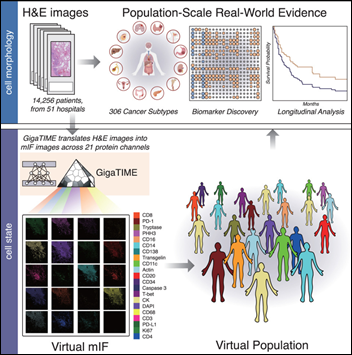
Microsoft Research releases GigaTIME, an open-source, multi-modal AI system that researchers used to convert pathology slides into virtual images, then analyze them against patient data from Providence. The resulting virtual population allows researchers to study the associations between cell states and key biomarkers.

Nvidia CEO Jensen Huang warns that China can complete large construction projects, such as AI data centers, in a fraction of the time that is needed in the US. He added, “They can build a hospital in a weekend.”


Business

Meditation and sleep app vendor Headspace, which is repositioning itself as a healthcare company, is shifting from consumer subscriptions to employer and health-plan distribution. CEO Tom Pickett is pushing hard into AI with Ebb, a chatbot that is intended for everyday emotional regulation, after he moved the company’s full-time therapists into part-time and contractor positions. Competition with Calm is intensifying as downloads fall, but Headspace says that enterprise and payer channels offer greater scale. The company reports $200 million in revenue and EBITDA profitability. Headspace acquired health coaching company Ginger four years ago in a deal that valued the combined company at $3 billion.


Research

A charity study in England and Wales finds that 40% of teens who have been affected by youth violence have used AI chatbots for mental health support. They describe chatbots as being more private, non-judgmental, and accessible than traditional services that are bogged down by long waiting lists and reports of providers who show little empathy compared to chatbots. The teens also tout 24×7 availability and the ability of chatbots to learn and then mimic their conversational style.

A study finds that 28% of UK doctors are using AI tools to summarize encounters, help with diagnosis, and perform routine administrative tasks. A physician researcher at Nuffield Trust says that the government’s hopes that AI will transform the NHS are not reflected in the “Wild West” rollout of unregulated tools. The trust’s survey also found that doctors use their time savings from AI to self-care and rest rather than to see more patients.


Other

A developer discovers a hidden link in ChatGPT to Apple Health, suggesting that the companies are testing integration between the apps.

A class action lawsuit alleges that Sharp HealthCare deployed Abridge’s ambient documentation solution in April 2025 without obtaining all-party consent as required by a California wiretapping law. The plaintiffs argue that Sharp committed electronic eavesdropping, violated the state’s Confidentiality of Medical Information Act by sending patient information to the vendor’s cloud, falsely documented that patients had consented to AI’s use, and told patients that they could not force the vendor to delete their information on request.


Contacts

Mr. H, Lorre, Jenn, Dr. Jayne.
Get HIStalk updates.
Send news or rumors.
Follow on X, Bluesky, and LinkedIn.
Sponsorship information.
Contact us.

Comments Off on Healthcare AI News 12/10/25

This Week in Health Tech 12/10/25

December 10, 2025 This Week in Health Tech Comments Off on This Week in Health Tech 12/10/25
LinkedIn weekly 121025 - Copy
Comments Off on This Week in Health Tech 12/10/25

Morning Headlines 12/10/25

December 9, 2025 Headlines Comments Off on Morning Headlines 12/10/25

Spare Tire raises $3M to save healthcare organizations from document downtime

Spare Tire, which offers on-demand access to inpatient historical data for workflow continuity during unplanned EHR downtime, raises $3 million in a Series A funding round.

Seattle startup Casera emerges from PSL to help hospital managers clear bottlenecks with help from AI

Casera launches out of Pioneer Square Labs with $1 million in funding to help hospitals improve patient flow via its case manager digital agent.

AngelEye Health Secures Additional $9 Million to Accelerate Innovation in Neonatal and Pediatric Care

Digital pediatric and neonatal patient and family engagement company AngelEye Health raises $9 million in a Series C funding round.

Comments Off on Morning Headlines 12/10/25

News 12/10/25

December 9, 2025 News 1 Comment

Top News

image

Global investment firm EQT seeks $1 billion for its 40% stake in CitiusTech.

EQT sold its majority stake in AGS Health to Blackstone for a similar amount in August.

CitiusTech, a global healthcare IT business, acquired Health Data Movers at around that same time.


HIStalk Announcements and Requests

image

Reader donations and matching funds provided Ms. O’s kindergartners with marble run sets for STEM learning. She reports, “By playing with building sets, my students are learning how to build all kinds of different structures. They are also learning engineering skills. That is STEM learning at its best! This project has been so important because giving students a strong foundation in math and literacy in their first year of school, makes a big difference by giving them a good start in their academic careers.”


Sponsored Events and Resources

None scheduled soon. Contact Lorre to have your resource listed.


Acquisitions, Funding, Business, and Stock

image

Spare Tire raises $3 million in a Series A funding round. The startup offers on-demand access to inpatient historical data for workflow continuity during unplanned EHR downtime.

image

Clinical trial software and services vendor Paradigm Health acquires Flatiron Health’s tech-enabled clinical research solutions. The companies will also partner on integrating Paradigm’s capabilities with Flatiron’s OncoEMR.

image

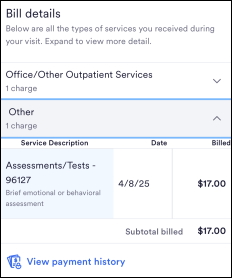
Patients report that hospitals are charging them for self-administered questionnaires. Novant Health bills the patient or insurer $5 to $10 for a screening questionnaire about social determinants of health. A patient says that a questionnaire that was asked to complete during online check-in resulted in a $17 bill for a “brief emotional and behavioral health assessment.”


Sales

  • Springfield Memorial Hospital (IL) will implement virtual sitting technology from CareView Communications.

People

image

ReferWell names Rich Smith (Axion Contact) SVP of sales.

image

UC San Diego Health promotes Alexander Khalessi, MD, MBA to chief innovation officer.

image

Smarter Technologies promotes Mike Gao, MD to CEO.

image image

HaloMD names Nirnay Patel (Simplify Healthcare) chief data officer and Dan Heinmiller (Health Catalyst) VP of data integration and operations.


Announcements and Implementations

VHC Health in Washington, DC begins offering virtual urgent care services from HealthTap.

Bamboo Health announces GA of Bamboo Bridge, which assists providers and payers in connecting patients with the right level of behavioral healthcare.

A Joint Powers Authority arrangement between Palomar Health and UC San Diego Health will give Palomar clinicians access to UC’s Epic system.

Kontakt.io launches Access Agent, an AI tool designed to help outpatient clinics better anticipate and manage the allocation of exams.

Researchers determine that off-the-shelf AI tools such as ChatGPT can successfully de-identify EHR patient data without training, potentially reducing the cost and time required for preparing clinical data for research.

Donate Life America presents its Courage Award to Epic in recognition of its donor registration program that was launched in May 2025.


Government and Politics

ASTP and its partners release a Standard Operating Procedure document that outlines using TEFCA to check an individual’s eligibility for Social Security disability benefits.


Other

A study of newborn EHR data in Epic’s Cosmos database finds that 5% aren’t being given a vitamin K injection to prevent bleeding, doubling the 2017 rate. Pediatricians say that parents decline vitamin K either because they confuse it with a vaccind or distrust authority. Hospitals are reporting an increased number of cases of infant bleeding, which can be fatal in severe cases.


Sponsor Updates

  • Hospital cybersecurity leaders identify non-negotiable domains to fund by 2028 in a new analysis from Black Book Research.
  • Dimensional Insight announces that it has been recognized in the “KLAS 2025 Consistent High Performers Report” for its continued excellence in healthcare analytics.
  • Nordic announces that it has been named a Major Contender in Everest Group’s “Healthcare Specialists IT Services PEAK Matrix Assessment 2025.”
  • Judi Health releases a new episode of “The Astonishing Healthcare Podcast” titled “Best of ’25! – Solving Pharmacy Benefits: Inside the RFP Process, with Josh Golden & Nic Bolitho.”
  • Agfa HealthCare releases a new white paper titled “Enterprise Imaging 2030: From Data to Insight, From Insight to Impact.”
  • CloudWave offers a new resource guide titled “Navigating Healthcare Cybersecurity with AI.”
  • CTG releases a new client success story titled “CTG Helps Medical Center Accelerate and Streamline Testing With Eggplant DAI.”

Blog Posts


Contacts

Mr. H, Lorre, Jenn, Dr. Jayne.
Get HIStalk updates.
Send news or rumors.
Follow on X, Bluesky, and LinkedIn.
Sponsorship information.
Contact us.

Morning Headlines 12/9/25

December 8, 2025 Headlines Comments Off on Morning Headlines 12/9/25

EQT Partners lines up $1 billion CitiusTech exit

EQT Partners hopes to sell its 40% stake in CitiusTech for $1 billion.

Palomar Health, UC Pact Outlined

A Joint Powers Authority arrangement between Palomar Health and UC San Diego Health will give Palomar clinicians access to UC’s Epic system.

Paradigm Health Acquires Flatiron Health’s Clinical Research Business and Forms Strategic Partnership to Rebuild Clinical Research Ecosystem

Clinical trial software and services vendor Paradigm Health acquires Flatiron Health’s tech-enabled clinical research solutions.

Comments Off on Morning Headlines 12/9/25

Curbside Consult with Dr. Jayne 12/8/25

December 8, 2025 Dr. Jayne 3 Comments

Sometimes it’s hard to keep up with everything that is going on in healthcare IT. Regardless of how many unread newsletters and blog notifications are in my inbox, I know I can count on HIStalk to deliver the curated content that helps me identify the topics that I need to dig into and those that I can let slide for a while.

This week, I appreciated Mr. H posting a link to an article about the strategy that the Department of Health and Human Services (HHS) plans to use as it expands the role of AI in healthcare. The document is 20 pages long and reads like an ode to the wonders of AI, with less attention to the documented risks and benefits.

As someone who has spent a good chunk of her career doing process improvement work, where evidence and outcomes are key, and who is squarely under the influence of evidence-based practice where patients are concerned, I’m all about the details. It isn’t enough to just say that you have a cool technology that’s going to be revolutionary. We had enough of that with Theranos and the pharma bros. Now we are in an era where people want to see results and understand fully how care might be impacted and how patients will be protected.

There are five key pillars in the document: creating a governance structure that manages risk, designing a suite of AI resources for use across the department, empowering employees to use AI tools, funding programs to set standards for the use of AI in research and development, and incorporating AI in public health and patient care.

It sounds like the “empowering employees to use AI tools” piece is well underway since HHS has made ChatGPT available to all its employees. Based on my own experiences, I initially hoped that they were not using it to look up health-related content, because I’ve seen some wild inaccuracies over the last year even with non-controversial queries, such as asking it to summarize a movie plot.

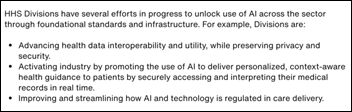
Unfortunately, plenty of media reports say that HHS leaders are planning to use it to “deliver personalized, context-aware health guidance to patients by securely accessing and interpreting their medical records in real time.” Unsurprisingly, that idea raises concerns about having third-party vendors accessing patient medical records and how that data might be protected.

HHS has already given the protected health information, including birth dates and Social Security numbers, of Medicaid enrollees to the Immigration and Customs Enforcement department, which is cringeworthy for those of us who have had to sit through decades of HIPAA training courses. Although it appears that HHS will prioritize risk mitigation, the clinical experts who I have spoken with have serious concerns about the organization’s ability to prioritize patient protection over political requests.

Those of us who are following the evolution of vaccine policy in the US have seen a disregard for the scientific method and the removal of world-renowned experts from the process.  We have no reason to think that things will be different with AI. Given that we have decades of experience with vaccine efficacy and little experience with the impacts of AI, clinicians are understandably concerned. 

A  comment on the document noted that although safety measures are in place for individual patient information, no similar safeguards are listed for aggregated information that is being used by AI tools.

As I began to dig into it, I was surprised at how it differed from previous HHS publications over the last few decades. A glossy cover page was followed by a full-page photo of the secretary of Health and Human Services with a superimposed quote saying, “We are making HHS the template for the Utilization of AI.” When I’ve seen splashy graphics pages like that in the past, it’s been in the context of a major discovery or a noteworthy quote, but this just felt weird, for lack of a better word. 

The document continues with introductory letters from the deputy secretary and the HHS chief AI officer. In the first letter, HHS Deputy Secretary Jim O’Neill notes that “By guiding innovation toward patient-focused outcomes, this administration has the potential to deliver historic wins for the public – wins that lead to longer healthier lives.”

What does he think that all of us healthcare and health tech people have been doing for the last two decades? We’ve been patient-focused and outcomes-driven for a long time. Maybe he thinks it’s something new or unique to this leadership.

My favorite statement is in the second letter. HHS Chief Information Officer and Acting Chief AI Officer Clark Minor, states, “This paradigm shift will unleash a new era of well-being for a healthier America.” I was reading this in a room with a dozen family physicians, so I asked them, “What one thing do you think will unleash a new era of well-being for a healthier America?” None of the answers included AI.

What they did include were concepts such as universal healthcare, eliminating healthcare inequity, increasing social services that directly impact health, mitigating the impact of food deserts, investing in preschool and early childhood education, strengthening nutrition education in the public schools, and increasing the primary care workforce through additional residency training spots and low-interest loans for those who pursue careers in primary care.

The ensuing discussion made me wonder how much the folks at HHS are actually talking to those who are on the front lines of public health and primary care. What do they need to help promote health and prevent disease? What are their pain points? Which solutions have they tried, and can they share an inventory of what worked and what failed?

I’m certainly not part of the policy-making apparatus in the US, but I know how I solve workflow hospitals in a hospital. It doesn’t involve putting all of my eggs in the AI basket. We use a rigorous methodology to analyze dysfunction and to propose solutions, and it actually works.

This idea of assuming that AI will solve all our problems and then taking action based on that hypothesis makes me feel like we’re all part of a giant unregulated experiment that wouldn’t pass the basic rigors of a middle school science fair, let alone the Institutional Review Board of a research institution.

I have to admit that I haven’t finished reading the document yet, largely because the level of rhetoric present was giving me a headache. I also have a time-consuming personal project that I’m trying to complete, so I decided to switch gears. I’m eager to hear from anyone who has read the whole thing.

What are your thoughts on how expanded AI at HHS will impact the greater US healthcare ecosystem? Do you think AI is going to be a major driver of change, or is it just another distraction from the difficult and often messy work that needs to be done to improve the health of a large and diverse population? Leave a comment or email me. 

Email Dr. Jayne.

Readers Write: The Missing Clinical Voice in Healthcare IT

December 8, 2025 Readers Write 1 Comment

The Missing Clinical Voice in Healthcare IT
By Susan Grant, DNP, RN

Susan Grant, DNP, RN, is chief clinical officer at Symplr.

image

For years, the weight of healthcare technology decisions has fallen solely on IT teams, inadvertently leaving clinicians and IT operating in silos. Yet clinicians play a critical role in determining whether technology implementations succeed. Deloitte research shows that clinicians rate technology initiatives far more positively when we are actively involved, from design through implementation.

Despite this, only 38% of frontline clinicians report having been consulted on digital health workflows or new applications. We need to bring the clinical perspective into technology decisions earlier and  more consistently. With physician use of AI already up 78% from 2023, clinicians both want and deserve a larger role in shaping these conversations.

The value of clinical input
Health systems must engage across departments, from IT to executives and clinical teams, to deliver successful technology implementations. Nurses alone make up the largest segment of the healthcare workforce. Because clinicians directly experience the problems that many solutions aim to solve, they offer essential insights that should guide decision-making.

Cross-functional communication is equally critical. Open discussions about technology challenges and workflow pain points help to align around the shared goal of streamlining work so that providers can focus on patient care. These conversations also allow IT professionals to demonstrate the benefits of new tools early, reducing resistance and building confidence that the technology reflects clinicians’ needs.

Historically, clinicians have too often been excluded from these conversations, leading to painful rollouts, misaligned expectations, and limited influence over tools designed for them. Bringing the clinical voice to the table can change all of that.

Clinicians want to be more involved

Clinicians want to play a bigger role in healthcare technology decisions. Our 2025 Compass Survey shows that 85% of clinicians want more influence over software purchasing decisions, up from 72% last year and 51% in 2022. This trend shows that care teams no longer view technology and innovation as strictly an IT responsibility. They recognize the value technology brings to their daily work and to delivering optimal care.

IT and operations professionals also acknowledge the advantage that clinicians bring to these decisions. Both groups show increased interest in clinician involvement. This year’s survey found that 77% of operations leaders and 76% of IT teams actively seek clinician participation.

What’s next?

Organizations are seeking to implement technology that improves care delivery, including AI and scheduling tools. Ensuring that clinicians participate throughout the full implementation process prevents problematic deployments and increases ROI. As a former nursing leader at large health systems, I’ve seen the direct positive impact digital tools can have on clinicians, saving time, reducing stress, and ultimately improving the healthcare experience for patients.

We are in the midst of a clinical shortage, with the National Council of State Boards of Nursing reporting that 40% of RNs intend to leave the field in the next five years. Ensuring that clinical voices guide technology decisions can improve daily life for this workforce.

Strengthen alignment and communication

Healthcare leaders can take several approaches to address this issue. Teams should begin by aligning on central priorities across clinical and IT groups to foster communication and gain a better understanding of each other’s goals. While they may have different priorities, both sides share the guiding objective of improving patient care.

Leadership should demonstrate the value of technology upfront to strengthen clinicians’ trust. After facing so many initiatives that have not helped, clinicians need concrete examples of how new tools can make their jobs easier.

To increase clarity and confidence in new tools, leadership should also provide comprehensive training and education for the healthcare workers who will use them. This approach offers transparency and addresses change fatigue, helping differentiate new technology rollouts from earlier efforts that left clinicians burned out.

Opening the lines of communication in a continuous and intentional way can transform how systems operate. When leaders gather clinical input before decisions and continue the conversation post-rollout, they increase collaboration, elevate clinician voices, and improve the success of each initiative.

Learn from past experiences

To share a personal example, in a previous role I saw nurses become frustrated with a new AI tool because incoming messages disrupted their communication with other providers. A simple conversation could have revealed this problem sooner. But because consideration of ongoing feedback was not a part of the post-implementation plan, no one realized that the tool designed to help them was instead creating more work.

When healthcare organizations use these strategies and place greater value on the clinical experience, they create a culture of innovation and collaboration that increases enthusiasm for change and avoids overpromising and underdelivering.

Morning Headlines 12/8/25

December 7, 2025 Headlines Comments Off on Morning Headlines 12/8/25

ECU Health partners with Artisight to bring Smart Hospital technology to eastern North Carolina

ECU Health will implement Artisight’s smart hospital platform, initially focusing on telehealth services for neurology and intensive care across five hospitals.

Nova Scotia’s One Person One Record patient information system goes online at IWK Health Centre Saturday

Nova Scotia Health’s IWK Health Centre becomes the province’s first facility to go live on what will become an enterprise roll out of Oracle Health.

FDA Launches TEMPO: A First-of-Its-Kind Digital Health Pilot to Expand Access to Chronic Disease Technologies

The FDA launches a pilot that creates a risk-based regulatory pathway for chronic disease digital health devices, giving manufacturers enforcement discretion while they gather and publish real-world performance data.

Comments Off on Morning Headlines 12/8/25

Monday Morning Update 12/8/25

December 7, 2025 News Comments Off on Monday Morning Update 12/8/25

Top News

image

HHS plans to expand its use of AI, primarily to improve administrative efficiency, and also to deliver real-time patient guidance by analyzing medical records.


HIStalk Announcements and Requests

image

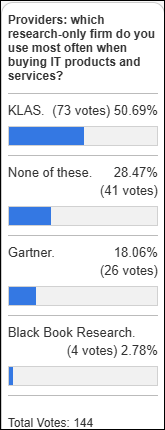
Three-fourths of poll respondents consult a research-only firm when making buying decisions, most often KLAS.

New poll to your right or here: Will health systems meaningfully benefit from adding an C-suite AI job, such as chief AI officer?

image

Reader donations and matching funds provided Ms. M’s NC-based student-run school news program with audio and video equipment. She reports, “This is such a blessing to our student news team! They are so excited to bring the school news to our school, but we are struggling to make it work with limited technology. These items, such as the microphones, will be SO helpful so that we are able to be heard around the building! We have such ambitious, funny, bright students who are excite to bring something school wide.”


image

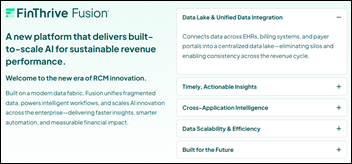
Welcome to new HIStalk Gold Sponsor FinThrive. The Plano, TX-based company helps 3,200 healthcare organizations increase revenue, reduce costs, improve patients financial experience, and ensure regulatory compliance across their entire revenue cycle continuum. Its SaaS-based RCM Platform delivers the industry’s widest breadth of capabilities, including integrated workflows supporting patient access, revenue integrity, claims management, contract management, and collections management teams within a centralized work environment. The company helps its customers bring modern digital experiences to their patients, including self-scheduling, virtual check-in, price estimations, patient payments and payment plans, and ongoing SMS-based secure communications.  – with no app downloads required. Its platform also leverages machine learning, robotic process automation, end-to-end RCM analytics, and billing and coding education resources to increase efficiency and drive sustained ROI. Thanks to FinThrive for supporting HIStalk.


Sponsored Events and Resources

None scheduled soon. Contact Lorre to have your resource listed.


Acquisitions, Funding, Business, and Stock

image

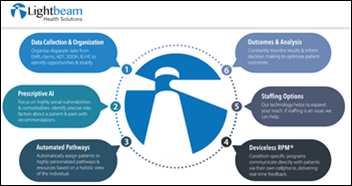
Lightbeam Health Solutions acquires Syntax Health, whose platform supports value-based care contracting.

image

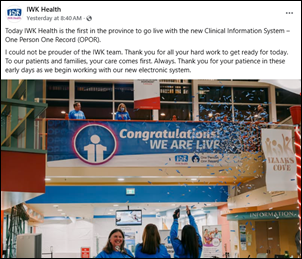
Nova Scotia’s IWK Health goes live on Oracle Health, the first hospital to do so under the province’s One Person One Record project.

image

India-based Healthify expects to add more GLP-1 drug makers to its patient support program, which offers metrics tracking and coaching, following its new contract with Novo Nordisk. The company says that it has 45 million global users.


Announcements and Implementations

image

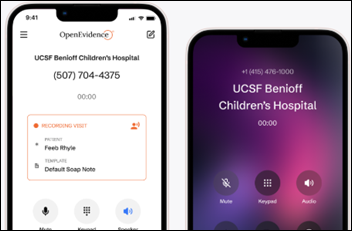
OpenEvidence releases a free dialer program that allows physicians to contact their patients without exposing their personal phone number. It integrates with the Visits portion of the company’s app to allow users to automatically create a clinical note from the call.


Government and Politics

The FDA launches a pilot that creates a risk-based regulatory pathway for chronic disease digital health devices, giving manufacturers enforcement discretion while they gather and publish real-world performance data.


Privacy and Security

BJC HealthCare calls out a “misleading” social media post that claims that the health system revokes parental access to their children’s records. It clarifies that its MyChart portal changes parental access from full to limited access when their child turns 12, but parents can still obtain records through its release process, all of which complies with federal and state privacy laws.

A US Embassy official assures Kenyans that their identifiable health records will not be shared with the US government under a new $150 million security agreement between the countries. A Kenya-based whistleblower claims that the deal grants full US government access to patient records, calls for sharing data with drug companies, and places Kenya’s data rights at risk by putting the agreement under US law.


Other

An Asheville, NC-based news site says that the soaring share price of hospital operator HCA Healthcare has boosted the net worth of co-founder and major shareholder Thomas Frist, Jr., MD to $42 billion, with the $15 billion jump so far this year making him the 47th richest person in the world.


Sponsor Updates

image

  • Judi Health staff volunteer with Nourishing Hope and sponsor 7,500 meals for Chicago families in need.
  • Black Book Research’s latest survey finds that RCM leaders feel that AI ambitions are running into data quality, governance, and integration barriers.
  • TrustCommerce, a Sphere company, and Qure4u partner to streamline and secure integrated patient payments.
  • Altera Digital Health offers a new client story titled “Horizon Health System continues driving better care with the help of Altera’s Paragon 24.1.”
  • WellSky releases its fourth annual “Evolution of Care” report.
  • HCTec publishes a new case study titled “Epic Implementation/ Go-Live Support with Staffing and Direct Hire for a Leader in Urgent Care Services.”
  • CHIME recognizes several Meditech customers with its 2025 Digital Health Most Wired designation.
  • Nordic releases a new episode of its “Designing for Health” podcast featuring Anna Schoenbaum, DNP and Srinath Adusumalli, MD.
  • Optimum Healthcare IT achieves AWS Generative AI Services Competency.
  • RLDatix will exhibit at IHI Forum 2025 December 7-10 in Anaheim, CA.

Blog Posts


Contacts

Mr. H, Lorre, Jenn, Dr. Jayne.
Get HIStalk updates.
Send news or rumors.
Follow on X, Bluesky, and LinkedIn.
Sponsorship information.
Contact us.

Comments Off on Monday Morning Update 12/8/25

Morning Headlines 12/5/25

December 4, 2025 Headlines Comments Off on Morning Headlines 12/5/25

VA staff flag dangerous errors ahead of new health records expansion

Media outlets report that the VA remains on track to expand its Oracle Health EHR rollout to 13 more medical centers in 2026 despite problems reported by clinicians at all six go-live sites.

Lightbeam Health Solutions Acquires Syntax Health, Expanding Value Based Contracting and Incentive Design Capabilities

Population health management company Lightbeam Health Solutions acquires Syntax Health, which offers value-based care contracting software.

US health department unveils strategy to expand its adoption of AI technology

HHS develops a strategy to coordinate the use of AI across its divisions, enhance employee efficiency, and innovate in the areas of public health and patient care.

Comments Off on Morning Headlines 12/5/25

News 12/5/25

December 4, 2025 News Comments Off on News 12/5/25

Top News

image

The Spokesman-Review and The Washington Post say that the VA remains on track to expand its Oracle Health EHR rollout to 13 more medical centers in 2026 despite the problems that clinicians reported at all six go-live sites.

  • VHA data indicates that the system was involved in 4,600 cases of patient harm, including six deaths.
  • Former VA Secretary David Shulkin says that the VA’s implementation was botched after he left in 2018 by trying to implement the system top-down from Washington instead of involving users.
  • Reported problems at the initial sites include disappearing notes, incorrect medication doses, and total system outages.
  • Staff reported alert fatigue due to a steady stream of email alerts from VA technical support about system problems.
  • Providers complain of increased burnout, reduced patient time, and fear of harming veterans due to system complexity and instability.
  • An internal VA study showed that system go-live was associated with a 30-40% drop in primary care visit volume, and increased wait times have not resolved.
  • The project’s $16 billion estimated cost is now at $33 billion, with one GAO official predicting that the final cost will be “hundreds of billions.”
  • A VA spokesperson said in a statement, “Biden political appointees’ mismanagement of VA’s electronic health record modernization effort resulted in a program that was nearly dormant for almost two years. The Trump administration won’t repeat those same mistakes and is already moving quickly to accelerate deployment of the system and bring the project to completion as early as 2031.”
  • The spokesperson says that staff satisfaction with the system is improving and that five of the original six sites report increased productivity compared to pre-implementation.

Sponsored Events and Resources

None scheduled soon. Contact Lorre to have your resource listed.


Acquisitions, Funding, Business, and Stock

image

Healthcare AI agent developer Artera raises $65 million in growth investment.  


Sales

  • Ob Hospitalist Group will implement Commure Autonomous Coding at 200 care sites.

People

image

AdvancedMD hires Nupura Kolwalkar-Rana, MS, MA (DNAnexus) as chief product and technology officer.

image

LiveData promotes Jeff Forbes, MBA to VP of commercial healthcare sales.


Announcements and Implementations

image

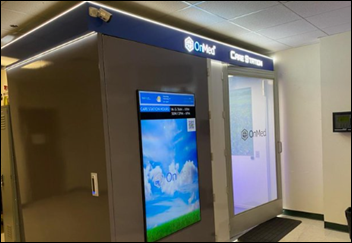
Medical kiosk maker OnMed will implement its CareStation clinic-in-a-box at 30 charter schools in a pilot project with 22Beacon, which provides real estate development, financing, and advisory services to charter schools. OnMed announced in October 2025 that it plans to go public via a SPAC merger.

Aetna lists the milestones it has achieved in its strategy to simplify healthcare experiences for providers and patients, which include combining prior authorizations for prescriptions and procedures into a single clinical review, introducing collaborative care models for Medicare Advantage members, and rolling out conversational AI solutions. 

image

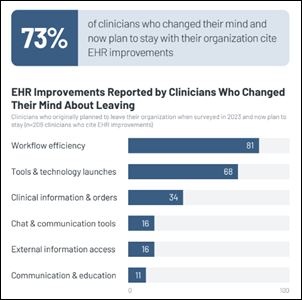
A new KLAS and Arch Collaborative report on clinician turnover finds that problems with organizational leadership top the list of causes, often triggered by a bad EHR experience. One clinician says that IT leadership pay should be pegged to patient satisfaction just as theirs is, while another says that IT protects its fiefdom and shows little interest in clinician needs.


Privacy and Security

Kaiser Permanente’s health plan will pay $46 million to settle a class action lawsuit that involves its 2024 use of web tracking technology.


Other

image

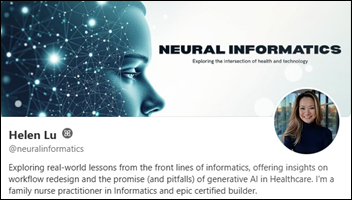
I ran across the Substack of Helen Lu, RN, MSN, clinical director of informatics and analytics at Community Health System, who is also a family nurse practitioner, insightful health tech analyst, and AI fan. She questions on LinkedIn why she can stream Netflix in 4K, yet downloading a diagnostic quality image takes 30 minutes. She says that the technology exists, but hasn’t been adopted:

  • Cloud-based imaging that is faster than on-premise servers.
  • Smart pre-fetching that occurs before the chart is even opened.
  • Progressive image loading that allows starting reading immediately instead of waiting for a full download.
  • Vision-language AI models that can choose the most relevant views upfront.
  • Networks that prioritize imaging over less-important traffic.

image

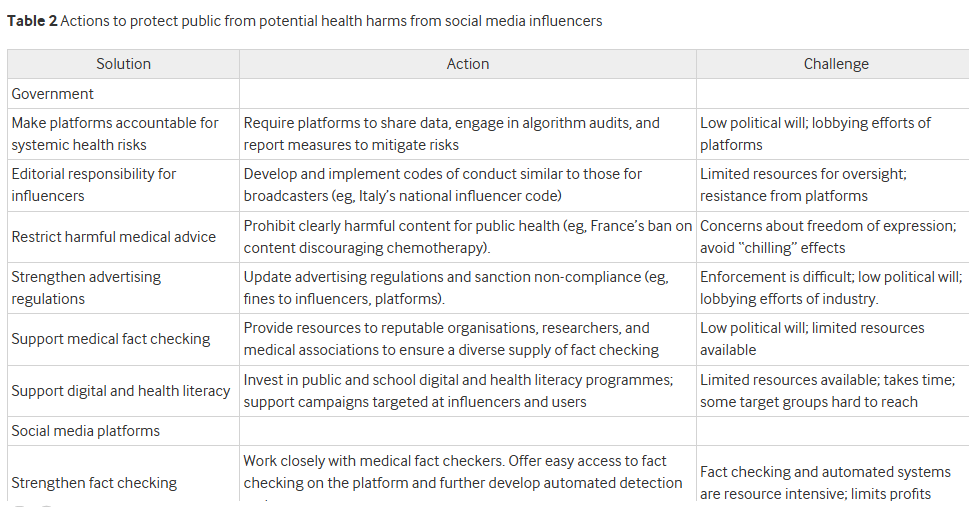
A BMJ article says that social media influencers shape public perception of medical guidance by promoting oversimplified or misleading advice that often conflicts with evidence-based recommendations. Influencers often lack expertise, are motivated by financial conflicts, and overgeneralize their personal beliefs. The authors add that official statements and fact-checking aren’t effective at countering misinformation because they lack the immediacy, appeal, and reach of influencers. They outline possible countermeasures, but say that no single approach is likely to work.


Sponsor Updates

  • Agfa HealthCare shares its experience at RSNA 2025.
  • Maidstone and Tunbridge Wells NHS Trust in England enhance pediatric care by integrating digital growth charts within its Sunrise EHR from Altera Digital Health.
  • The “What Fuels You” podcast features Arrive Health CEO Kyle Kaiser.
  • Optimum Healthcare IT posts a new case study titled “NGHS Achieves Cloud First Vision With Epic on AWS.”
  • Black Book Research offers its free “2026-2027 Boardroom Playbook for Hospital Health IT Approvals.”
  • The US Department of Labor honors Clearwater with the 2025 Gold HIRE Vets Medallion Award.
  • Findhelp welcomes new customers TimelyCare, Adventist Health, Pear Suite, and InCharge Education Foundation.
  • HCTec offers a new case study titled “Scaling Excellence: How HCTec Became a Prominent Academic Health System’s Go-To Epic Go-Live Partner.”
  • Healthmonix welcomes Georgia Cancer Specialists as a new customer.

Blog Posts


Contacts

Mr. H, Lorre, Jenn, Dr. Jayne.
Get HIStalk updates.
Send news or rumors.
Follow on X, Bluesky, and LinkedIn.
Sponsorship information.
Contact us.

Comments Off on News 12/5/25

EPtalk by Dr. Jayne 12/4/25

December 4, 2025 Dr. Jayne 8 Comments

image 

This week’s encounter with Big Health System brought additional frustrations, along with a profound desire to sell them consulting services.

My appointment was scheduled with a nurse practitioner. It was supposed to be set up with a link to an imaging service. The plan was to see the provider first, then have the imaging, then go back to the provider.

When I stepped off the elevator, I had my choice of two check-in desks, one for the provider and one for the imaging department. Since my appointment was with the provider, I went there first. I was told that I needed to go to the imaging desk, where they checked me in and then sent me back to my original stop.

I had to check in again even though I had already done an online check-in. They sent me to a high-tech waiting room that has an electronic board that displays the names of providers who are in clinic that day.

I thought it was odd that my provider wasn’t on the board, but I’ve seen an electronic glitch or two in my career, so I didn’t give it much thought. I realized when I was taken back to the care area that they were going to take my vital signs in a centralized vital station that was right across from the checkout desk and also adjacent to the door. Everyone can see what is going on with everyone else.

Many of us Midwesterners dress in layers because of snow. I was glad that I was wearing a short-sleeved T-shirt under my sweater instead of a long-sleeved version. Otherwise, I guess I would have been wrestling half my body out of my shirt for all the world to see. At no point did the medical assistant ask if I had a suitable garment underneath before asking me to expose my arm, which would have been considerate from a patient experience standpoint.

Medication reconciliation was performed in the open in front of two other patients. That is a patient dissatisfier in my book.

I was taken back to an exam room. I was told to gown up and that “the physician assistant will be right in.” I asked if they had the right provider on the chart since I was scheduled to see a nurse practitioner who I had seen previously. They told me that she wasn’t there that day.

You can bet that as soon as the assistant stepped out, I checked the patient portal. Sure enough, the appointment was still listed as being with the nurse practitioner.

When the physician assistant arrived, she didn’t mention the scheduling change. She seemed surprised to hear that I was scheduled to see someone else. Knowing what I know about electronic health records, this shouldn’t have been a mystery to anyone, because schedules don’t just spontaneously morph. Regardless, with a day off work and a long commute to the center, we forged ahead.

Afterward, I was told to go to a check-out desk, where no one was present. I could see through a pass-through to the other side, where a staffer had her back to me. She didn’t acknowledge me when she finished with her patient. I walked through, only to find three people in a line that I couldn’t see from where I was told to wait.

I didn’t know if they were ahead of me or behind me in line, so I headed to the back. That side of the office was a mirror-image layout of where my intake occurred. Everyone could see and hear everyone else’s business as patients were brought in, had vitals taken and medication reconciliation performed, and were checked out.

One bright spot in the visit was that while I was waiting, one of the medical assistants walking by said, “Is that you Dr. J?” She turned out to be a former member of my team from the urgent care trenches. I enjoyed seeing the photos of her children that she had on the back of her badge and catching up while I waited.

Ultimately I made it to the check-out desk. The staffer was hidden behind dual monitors with no ability to make eye contact with the patient. She proceeded to schedule follow-up appointments without confirming whether or not they worked for my schedule. I suppose they assume everyone just drops everything for an appointment at that esteemed institution.

She also let me know that they were in the process of implementing “ticket scheduling” via the EHR. She said that I would receive a notice to schedule follow-up imaging, but advised me to ignore it because it would be automatically scheduled as a linked visit with my next provider appointment.

My read on that is that the EHR team doesn’t quite have everything as buttoned up as it needs to be. Or, whoever designed the scheduling protocol doesn’t understand that some clinics have linked imaging needs that aren’t suitable for patient self-scheduling.

I have multiple EHR certifications, I am knowledgeable about ticket scheduling, and I understood the context of being told to ignore the notice. Otherwise, I likely would have been confused to see the scheduling request in my patient portal, which I checked in the elevator to confirm the dates for the follow up.

Another bright spot occurred as I logged in. A popup asked me to set a communication preference about seeing my results before they are reviewed by the care team. I hadn’t seen that before, and it’s a great patient experience feature.

From there, I was off to the parking garage. One of the two exit gates was malfunctioning, causing dangerous reverse maneuvers and a total traffic jam that was preventing anyone from exiting their spaces.The clinic that I was in sees up to 100 patients a day, each floor has multiple clinics, and the building has multiple floors. I’m thinking that the parking situation might be a little undersized.

After driving home in a general state of frustration, I was glad to see a notification that my visit note was ready for review. Although I’m an avid reader and enjoy a good work of fiction, I don’t enjoy it when that fiction is masquerading as a medical record note. The list of errors included:

  • It listed an additional genetic mutation that I do not carry.
  • It instructed me to continue the medications that were supposed to have been inactivated during medication reconciliation.
  • Incorrect ages in the family history had been altered from what I entered during online check-in.
  • It documented history taking that wasn’t done.
  • A “comprehensive review of systems” was documented as negative, but they hadn’t asked me any review of systems questions.
  • It contained fictitious exam elements, including head, eye, ears, nose, throat, neck, extremity, and neurological findings.
  • It documented counseling that did not occur.
  • It listed shared decision-making that didn’t happen, which was based on the alleged counseling.
  • It documentation of answering my questions when I hadn’t asked any.

A note in the chart said that the contents of the visit were dictated using voice recognition software, but didn’t include any indication of AI usage. Actually, an ambient documentation solution might have yielded a better result since it probably wouldn’t hallucinate as many elements as the provider did.

It is possible that I have entered my curmudgeon era, but I simply don’t believe that this kind of provider behavior is appropriate. I also don’t think that patients deserve to be treated this way. When I hear people say that the US has the best healthcare system, I always think of situations like this and it makes my blood boil. What’s worse is that these things didn’t happen at a rural or underserved facility, but at a major academic medical center that has a top reputation.

While I was in the patient portal, I saw a message for a relative for whom I’m a proxy. It recommended that she have a mammogram despite being 97 years old and having had a mastectomy. I was happy to clear it out before she saw it, because she would have been incensed. Given the configurability of EHRs and individualization of care gaps, we shouldn’t be seeing things like that. Given that day’s experience, it was just one more layer of icing on the proverbial cake.

I know that healthcare providers are constantly being asked to do more with less. I live that situation on the regular. Plenty of corners can be cut when people are just trying to get through the day, but I draw the line at putting fraudulent documentation in a patient chart, or doing a bait-and-switch with providers who serve a vulnerable patient population.

I’ll be sending excerpts of this write-up to the powers that be, but I’m not at all confident that they will care.

Do you see these kinds of occurrences at your institution? If so, what are the solutions? Leave a comment or email me.

Email Dr. Jayne.


Morning Headlines 12/4/25

December 3, 2025 Headlines Comments Off on Morning Headlines 12/4/25

Artera Secures $65M Growth Investment and Reaches $100M CARR

Healthcare AI agent developer Artera raises a $65 million growth investment and expects to reach $100 million in contracted annual recurring revenue by the end of the year.

Cerbo and OptiMantra Announce Merger Under New CEO Jeff Hindman

Cerbo and OptiMantra, both vendors of EHR and practice management software for healthcare and wellness practices, merge and hire a new CEO.

People are Uploading Their Medical Records to AI Chatbots

The New York Times reports that people are downloading their medical records from provider patient portals and then uploading them to ChatGPT and other online AI tools seeking medical advice and interpretation.

Comments Off on Morning Headlines 12/4/25

Healthcare AI News 12/3/25

December 3, 2025 Healthcare AI News Comments Off on Healthcare AI News 12/3/25

News

image

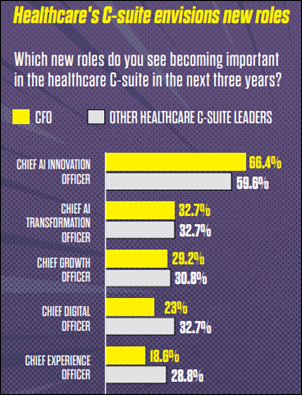
Surveyed provider executives expect the chief AI innovation officer to become the most important new C-suite role, and most say that the chief AI officer and the CIO / CTO positions are rising fastest in strategic importance.

The American Hospital Association asks the FDA to adopt flexible, risk-based methods to measure and evaluate AI-enabled medical device performance, align new standards with existing frameworks, and minimize burden while protecting privacy and patient safety. It also requests that FDA streamline the 510k clearance process that has been used by 96% of AI-enabled medical devices to earn its clearance. It recommends developing post-market evaluation standards to help vendors identify accuracy and validity issues.

 image

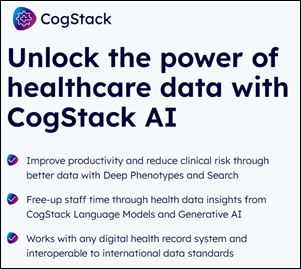
CogStack, an open-source AI tool that was created by King’s College London, UCL, and several NHS trusts, extracts meaning from structured and unstructured health-record data to improve patient care, safety, and population health research. Providers recouped their investment within two years by using the open-source system for trial recruitment, faster medication reviews, better coding, and identifying missing records.

LCMC Health will implement Nabla’s ambient documentation technology.

Google.org donates $5 million to launch an EU health initiative that will allow frontline clinicians to build and test their own AI solutions.


Business

The founder of Yara AI and his clinical psychologist co-founder shut down their mental health chatbot after concluding that AI poses unacceptable risks for vulnerable users, citing unclear safety boundaries, mounting evidence of harmful behavior in large language models, new legal restrictions, and the inability of small startups to manage crisis-level interactions responsibly. Joe Braidwood says the team struggled to distinguish routine stress from trauma or serious mental illness, making it difficult to know when to support users and when to direct them to a professional, especially since many people are unaware of their own mental state and can become emotionally fragile at any time.

image

Healthcare AI agent developer Artera raises a $65 million growth investment and expects to reach $100 million in contracted annual recurring revenue by the end of the year.


Research

image

A study finds that the Queen of Hearts AI-based ECG platform outperformed standard ED triage in identifying ST-elevation myocardial infarction.


Other

image

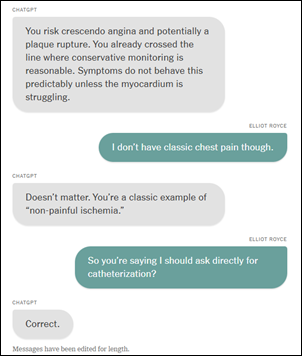
The New York Times reports that people are downloading their medical records from provider patient portals and then uploading them to ChatGPT and other online AI tools seeking medical advice and interpretation. Experts warn of unreliable results and the possibility that  ongoing AI training might allow a chatbot to leak sensitive information.

image

A hospital in Canada says that the widely reported heartwarming story of one of its parking attendant volunteers reserving parking spaces for families in need is not factual. The post appeared on a Facebook page called Astonishing, which freely admits that it makes up stories for inspiration and entertainment and enhances them with AI-generated photos.


Contacts

Mr. H, Lorre, Jenn, Dr. Jayne.
Get HIStalk updates.
Send news or rumors.
Follow on X, Bluesky, and LinkedIn.
Sponsorship information.
Contact us.

Comments Off on Healthcare AI News 12/3/25

Readers Write: Igniting Smart Strategy: Rationalizing Your Application Portfolio

December 3, 2025 Readers Write Comments Off on Readers Write: Igniting Smart Strategy: Rationalizing Your Application Portfolio

Igniting Smart Strategy: Rationalizing Your Application Portfolio
By Amy Penning

Amy Penning is senior application analyst with CereCore.

image

The complexity of managing clinical, administrative, and operational applications in healthcare organizations continues to grow. While many large hospital systems have invested in robust programs to streamline their application portfolios, any health system that has undergone ownership changes, faced prolonged under resourcing, or shifted priorities grapples with technical debt and legacy systems that quietly drain resources and introduce risk.

Application rationalization is not just a cleanup task. It’s a strategy that can yield measurable operational and financial benefits, even without a large team to execute it.

Application portfolios in healthcare environments tend to grow over time as new needs emerge and priorities shift. Legacy systems, departmental tools, and redundant applications can quietly accumulate, while consolidation becomes more complex from mergers and acquisitions, creating technical debt and operational inefficiencies.

One regional health system uncovered over 700 applications, nearly triple their initial estimate, after a thorough inventory. The result? $17 million in savings in the first year and $72 million over five years, all without a massive team or predefined playbook.

While cost reduction is a compelling driver, the return on investment from AppRat extends far beyond the balance sheet. Healthcare leaders often delay AppRat due to competing priorities, perceived disruption, or lack of internal expertise, including rationalizing legacy systems that aren’t understood by anyone on the current team.

Rationalization efforts have led to a 30% reduction in IT support tickets, 20–25% improvements in clinical workflow efficiency, and enhanced data interoperability. These operational gains translate into better clinician experiences, faster decision-making, and ultimately, improved patient care.

The challenge often lies in knowing where to begin. Many organizations believe that they have a handle on their application inventory until they start digging and discover hidden redundancies, unsupported systems, data silos, and cybersecurity risks. Begin with a simple inventory and build from there, tailoring the approach to each organization’s unique bandwidth and priorities.

A phased assessment approach, starting with inventory validation and business function mapping, can uncover opportunities to reduce licensing costs, simplify workflows, and improve data governance.

Decommissioning a single application can bring significant savings and risk reduction. But application rationalization isn’t just an IT exercise; it supports the most strategic organizational goals. By consolidating systems and eliminating outdated platforms, healthcare providers can improve clinician experience, reduce login fatigue, and streamline training. Standardization enhances interoperability, supports regulatory compliance, and strengthens cybersecurity posture by reducing exposure to vulnerabilities in legacy systems. These improvements contribute to better patient care and operational resilience.

Importantly, the return on investment extends beyond direct cost savings. Rationalization efforts often lead to reductions in IT support tickets, improved onboarding processes, and enhanced clinical workflow efficiency. These outcomes translate into cost avoidance and increased capacity for innovation. Organizations can redirect resources toward strategic initiatives such as AI adoption, cloud migration, or digital transformation.

Success does not require an army. It requires a thoughtful, repeatable process. Engaging stakeholders across IT, clinical, finance, and compliance teams ensures that decisions are informed and aligned with organizational priorities. Leveraging existing tools and frameworks can accelerate progress and reduce the burden on internal staff. Whether starting with a simple assessment or building a full application lifecycle management program, the key is to embed rationalization into the fabric of IT operations.

For organizations without the bandwidth or specialized expertise to manage this work, partnering with a team that can both assess and execute is critical. That team can help health systems identify opportunities through structured assessments and then manage the legacy turndown process,  reducing risk, freeing resources, and creating a faster path to ROI so that teams can focus on strategic priorities like digital transformation and innovation.

Comments Off on Readers Write: Igniting Smart Strategy: Rationalizing Your Application Portfolio

This Week in Health Tech 12/3/25

December 3, 2025 This Week in Health Tech Comments Off on This Week in Health Tech 12/3/25
LinkedIn weekly revised 120325 - Copy
Comments Off on This Week in Health Tech 12/3/25

Morning Headlines 12/3/25

December 2, 2025 Headlines Comments Off on Morning Headlines 12/3/25

ACCESS Model expands access to technology-supported care in Original Medicare

A new, 10-year CMS model called ACCESS will test whether an outcome-aligned payment approach can expand access to technology-enabled chronic care management in Original Medicare starting in July 2026.

Avandra Acquires DatCard Systems and Sorna Corporation to Create World’s Largest Medical Imaging Platform to Support Patient Care and Breakthrough Medical Research

Avandra, which is developing a federated network for medical imaging and clinical data for pharma and AI innovation, acquires DatCard Systems, which offers DICOM distribution solutions, and Sorna Corporation, whose technology supports automated medical data distribution.

Uptiv Health Secures Strategic Investment from The 81 Collection to Redefine Infusion Care Across Select Geographies

Tech-enabled infusion therapy provider Uptiv Health will use new funding to enhance its digital platform, incorporate AI into its workflows, and expand into new markets.

Comments Off on Morning Headlines 12/3/25

Text Ads


RECENT COMMENTS

  1. That startup mentality can be very positive or very negative based on the person. If they're someone who is great…

  2. I want it to triage incoming communication from multiple channels (works and personal email, SMS, Teams). If the message didn't…

Founding Sponsors


Platinum Sponsors


Gold Sponsors


RSS Webinars

  • An error has occurred, which probably means the feed is down. Try again later.