Recent Articles:

Curbside Consult with Dr. Jayne 1/5/26

January 5, 2026 Dr. Jayne 1 Comment

image

People embrace many traditions to ring in the New Year. My extended family enjoys Hoppin’ John, but my personal ritual is to skip straight to dessert.

I started at midnight by toasting 2026 with an assortment of delightful tarts. I then kept my energy up on New Year’s Day with Fluffy Frosted Orange Rolls, a delightful alternative to cinnamon rolls. Fortunately, the sugar boost helped because I was working clinically later that day.

Nearly every patient I treated had influenza. If the “flu-pocalypse” has not made it to your area yet, chances are it is on the way. If you are at high risk for influenza complications or simply want to avoid forced downtime, I recommend masking up in crowded places.

I had the opportunity over the weekend to chat with several physician executive colleagues. Each shared ideas about what to expect in the coming year.

  • Hospitals will focus on cost control, especially those that have high numbers of Medicaid and uninsured patients. For organizations that have not outsourced functions such as food service or human resources, doing so may look more attractive. One local hospital has dramatically cut non-patient food service, making it difficult for night-shift workers to get a hot meal. Overnight options are limited to self-service, with only a couple of microwaves available in the cafeteria. Since the hospital is already outsourcing, may I suggest a third-party food truck? Staff would love it, although the food service vendor might not.
  • Hospitals will continue to scrutinize pricing for everything from software to patient care supplies to landscape maintenance. Organizations that are not already doing this need to start. One health system is trying to trim several million dollars from its technology budget and is taking steps it would normally avoid, such as asking vendors for discounts mid-contract. Its EHR teams have not attended conferences or user group meetings for the past three years due to budget constraints, and they do not expect that to change. As an interesting side note, leadership teams are also skipping these events, so at least they are showing solidarity.
  • Primary care physicians are extremely worried about patients who have let their insurance coverage lapse due to rising costs. A major concern is that those patients, along with those who still have insurance but now face high deductibles, will avoid seeking care. That avoidance could lead to poorer outcomes and higher costs overall. The old adage about an ounce of prevention being worth a pound of cure does not resonate with people who cannot afford preventive services. A gastroenterologist in the group noted that a cash-pay colonoscopy costs $2,200 at her surgery center, which limits demand. Some patients instead choose cheaper screening tests that may not be appropriate for their individual risk profiles.
  • Many suspect that mergers and acquisitions will increase as organizations try to scale for contracting leverage with vendors and payers. Smaller community hospitals will face greater challenges, particularly if they lack natural partners. The group universally agreed that more practices will sell to private equity firms.
  • Medicare Advantage plans will continue their efforts to grow market share. One group I know is expanding into new markets that are not traditional retiree destinations, such as Wisconsin and Missouri. Physicians are intrigued by promises of employment and robust care team models, but they should perform due diligence. Speaking with former colleagues who had poor experiences could be particularly informative.
  • Organizations will keep adopting AI solutions, especially for ambient documentation and revenue cycle management. Leaders still express concern about AI use in research and treatment planning, which is driving tougher questions about hallucination risk and patient safety. One leader whose organization has gone all-in on AI-based revenue cycle tools said the results are no better than human performance, but the tools are far cheaper than even offshore labor.
  • Regarding the EHR market, the group agreed that Oracle Health / Cerner will continue to struggle and will lose customers to Epic. Sentiment was cautiously optimistic that smaller platforms, such as Meditech and Altera, will hold their ground. Informatics leaders wonder when consolidation will begin in the ambient documentation space, given that a few clear leaders have emerged.
  • One leader is especially excited about 2026. He oversees a relatively new primary care residency program that has been approved to expand its class size in the next match cycle. The program is based at a community hospital rather than a major academic center, and competition for the July start slots was intense. He expects applications to rise further as the program builds a reputation for training strong community-based generalists rather than subspecialists. Kudos to him and his team. I look forward to seeing how the next year unfolds.

During the discussion, I learned a new term: job hugging. It describes people who dislike their current roles but stay put because they fear that moving elsewhere could be worse. At least two participants admitted to this mindset. They worry that other environments may be just as toxic, if not more so, and that mid-career physician leadership roles are increasingly vulnerable to downsizing.

One person noted, “If I’m at risk for a layoff, I would rather stay where I have been for 15 years so I might receive a severance. If I start somewhere new and similar cuts occur, recent hires will not get anything.” Another said he would consider consulting but is too concerned about the cost of health insurance to make the leap.

How did you ring in the New Year, and what are your predictions for 2026? Leave a comment or email me.

Email Dr. Jayne.

Readers Write: 2026 Predictions: The Great Data Quality Reckoning in Healthcare IT

January 5, 2026 Readers Write 2 Comments

2026 Predictions: The Great Data Quality Reckoning in Healthcare IT
By Jodi Amendola

Jodi Amendola is executive advisor for the Supreme Group.

image

The healthcare IT industry has been playing the “Let’s Improve Interoperability!” game for what feels like decades.

Today, it’s CMS Aligned Networks, TEFCA, and information-blocking-rule enforcement. Yesterday, it was “Meaningful Use” and the HITECH Act. Before that, it was Regional Health Information Organizations and HL7.

While these efforts to improve interoperability have certainly been laudable, they’ve obviously been lacking, because we’re still talking about the problem. A recent report from KLAS Research on the state of EHR interoperability today offers some helpful context:

  • While patient records are more available than ever, clinician satisfaction with external integration remains poor.
  • Clinicians continue to grapple with issues like duplicative records, inconsistent formats, and poor data mapping, which limit the clinical value of shared data.
  • Participation in data-sharing networks by EHR vendors has increased, but data usability has not.

The last point is critical, as all the hope about AI in healthcare will go unrealized without a foundation of accurate, comprehensive patient data for AI to base its decisions and recommendations on.

In the coming year, the healthcare industry will continue to grudgingly come to terms with a difficult truth: Interoperability means very little without connectivity. Issues highlighted in the KLAS report, like duplicative patient records and fragmented medical histories, undermine cost and quality improvement efforts and lead to suboptimal patient outcomes.

As a result, when it comes to communicating with the clients and prospects, health IT vendors will need to not only emphasize their role in delivering better interoperability, but also in improving the accuracy and usability of patient data.

It will also mean preparing for greater scrutiny, harder questions from media and industry analysts, and the need to demonstrate real value rather than aspirational promises.

To get ready, it’s important to ensure that PR and marketing do the following:

  • Elevate proof over promises. With key influencers and decision-makers growing more skeptical about lofty promises, every claim needs to be backed with facts and statistics. Punchy copy is great, but hard data, case studies, and third-party research carry more weight.
  • Highlight how data quality delivers clinical value. It’s not enough to merely talk about how your organization enhances interoperability. Instead, how does it bolster data integrity, eliminate duplicative records, improve outcomes, or build clinician trust? Offer clear, measurable examples of your technology’s clinical impact.
  • Focus messaging on responsible AI enablement. Solid data is the difference between “quality in, quality out” and “garbage in, garbage out” when it comes to AI. Accordingly, health tech marketing should strive to position your organization as an industry champion of the accurate, complete, transparent data that is needed to drive responsible and reliable AI insights.

In 2026, it’s less about expanding the pipes of healthcare data, and more about increasing the quality of the information that flows through them. As expectations and scrutiny around data quality grow, organizations that ground their communications in evidence, clarity, and responsible innovation will stand out.

Morning Headlines 1/5/26

January 4, 2026 Headlines No Comments

DEA Extends Telemedicine Flexibilities to Ensure Continued Access to Care

The Drug Enforcement Administration extends telehealth flexibility in the prescribing of controlled substances through December 31, 2026.

California-Based Health Tech Company Files Chapter 7 Bankruptcy

Population health technology vendor Clint shuts down and files Chapter 7 bankruptcy, citing insufficient cash to make payroll and pay creditors.

Federal judge allows HHS to share Medicaid data with ICE

A federal judge in California rules that HHS can share Medicaid data with ICE, with limits remaining in place on what can be shared and used.

Monday Morning Update 1/5/26

January 4, 2026 News No Comments

Top News

image

The Drug Enforcement Administration extends telehealth flexibility in the prescribing of controlled substances through December 31, 2026.

This fourth extension came during the last hours of December 31 and took effect the next day.

The flexibilities allow practitioners to remotely prescribe scheduled drugs without first conducting an in-person visit. They may also manage maintenance and withdrawal treatments for opioid use disorder.


Reader Comments

From Boyd Beaver: “Re: HTI-5. Washington keeps writing rules as if health IT were competitive, while the market keeps behaving like it isn’t.” In health tech, some companies are innovative and some are imitative, but the rules assume equal market power and equal buyer choice. Companies don’t grow unless they are selling something customers actually want over competitive alternatives. It’s not clear that EHRs are in such demand in the post-Meaningful Use era that vendors are staying out of the market primarily because certification costs are too high. It’s also worth noting that EHR certification was created under a Republican administration and announced days into the Obama presidency as the string attached to federal stimulus money, a move that pushed out smaller vendors and permanently shaped the product roadmaps of the survivors. Today’s EHR market was deliberately created by federal certification.

From AI Drop: “Re: AI. Health systems aren’t adopting AI because it is transformational. They are using it because it’s cheaper than people. Nobody should be surprised that workflow messes persist and disruption is limited to financials.”

From UHG Whiz: “Re: the January 1 mess of US health insurance. Premiums have skyrocketed, deductibles are up to the point of making all policies catastrophic coverage only, and the resetting of those deductibles causes people to defer care that they can’t afford. Just try to get through to insurer to ask about new formulary changes or another round of prior authorizations. This isn’t cost control so much as cost shifting, with patients left to absorb the risk and the consequences.”


HIStalk Announcements and Requests

image

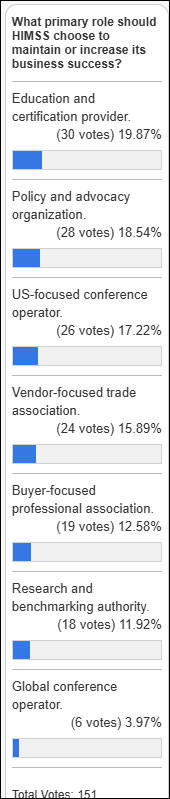
HIStalk readers want HIMSS to pick a lane, but can’t decide on which one, which is probably the same challenge that faces Hal Wolf. The #1 choice could be a moneymaker but only at modest scale, #2 doesn’t generate much revenue, and #3 is history because they’ve sold the annual conference exhibit. Respondents are looking for HIMSS to provide industry relevance while HIMSS itself is trying to stop its post-2020 free fall. Respondents skew heavily US, so the global conference answer might be underrepresented. Maybe the takeaway that both sides is that expertise beats booths, plus its pre-COVID ambitions involved selling consulting services around its now-multiple adoption models. Another good poll question would be – would you pay out of your own pocket for HIMSS membership?

New poll to your right or here: What is your reaction to ASTP/ONC’s proposed cutback of EHR certification requirements? Is it a free pass for vendors, a catalyst for innovation, or are those effectively the same thing?


Thanks to these companies for recently supporting HIStalk. Click a logo for more information.

image
image
image
image
image
image
image
image
image
image
image
image
image
image
image
image
image
image
image
image
image
image
image


Sponsored Events and Resources

None scheduled soon. Contact Lorre to have your resource listed.


Acquisitions, Funding, Business, and Stock

image

Population health technology vendor Clint shuts down and files Chapter 7 bankruptcy, citing insufficient cash to make payroll and pay creditors.


People

image

Rich Rogers, MBA, SVP/CIO at Prisma Health, retires.


Announcements and Implementations

image

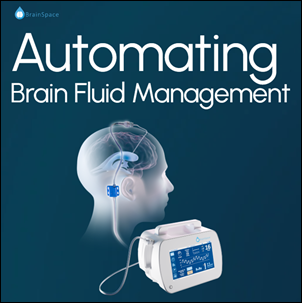
The FDA grants 510(k) clearance for BrainSpace’s Intellidrop autonomous brain fluid pressure management system for ICUs. Brain Fluid Interface (BFI) products monitor cerebrospinal fluid, interstitial fluid, and cerebral blood and create training data for Physical AI models.


Other

image

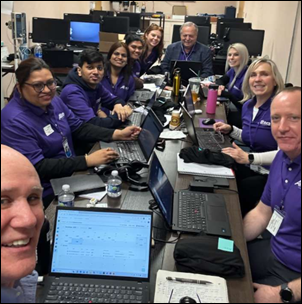
I enjoyed this LinkedIn photo taken by Altera Digital Health during San Gorgonia Memorial Hospital’s (CA) upgrade to Sunrise 25.1. Go-live teams of both vendor and hospital people, united by their immediately recognizable team support shirts, usually get squeezed into temporarily and lightly repurposed conference rooms (hint: tape cables down, make sure computer-controlled HVAC doesn’t automatically take off for the night, wheel in a whiteboard, and source an unreasonable amount of coffee). Go-live warriors will be taken back olfactorily to long nights in the war room — overheated laptops and printers, panic sweat, and the stench of around-the-clock leftover junk food like pizza and everything bagels. Regards to those who know the smell and have thus earned the shirt.


Contacts

Mr. H, Lorre, Jenn, Dr. Jayne.
Get HIStalk updates.
Send news or rumors.
Follow on X, Bluesky, and LinkedIn.
Sponsorship information.
Contact us.

Morning Headlines 12/31/25

December 30, 2025 Headlines Comments Off on Morning Headlines 12/31/25

Mayor Adams, NYC Health + Hospitals President and CEO Dr. Katz Announce Merger Between NYC Health + Hospitals and Maimonides Health Moves Forward

NYC Health + Hospitals will take over the struggling Maimonides Health and implement Epic there.

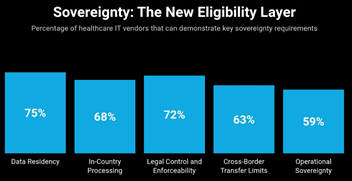
Health Ministries Worldwide Are Quietly Tightening the Rules on Health IT Vendors

Black Book Research reports that non-US markets are increasingly making data residency, in-country processing, and legal control a pass-fail requirement for choosing systems.

Healthcare AI Update 2025: What Use Cases Are Adopted the Most?

KLAS finds that 79% of health systems are using AI, ambient documentation is the leading use case, and just one of 3,000 respondents say their organization is using agentic AI.

HTI 5 Proposed Rule Info Session

HHS ASTP/ONC posts an information session on its proposed plan to streamline EHR certification requirements and update information blocking regulations.

Comments Off on Morning Headlines 12/31/25

News 12/31/25

December 30, 2025 News 7 Comments

Top News

image

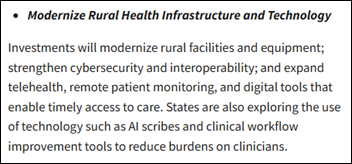
CMS will award all 50 states an average of $200 million each under the $50 billion Rural Health Transformation Program, which states are expected to use to modernize rural health infrastructure and technology.


Reader Comments

From Blaspheme: “Re: HIMSS board. It doesn’t have many C-level executives from non-profits.” Excluding Hal Wolf, five of the 12 board members work for non-profits, two of them hospitals. Seven of the 12 are based outside the US. None work for a US-based non-profit health system, although that perspective is represented by recently retired Hal Baker, MD, former SVP/CDO/CIO of WellSpan Health.


Sponsored Events and Resources

None scheduled soon. Contact Lorre to have your resource listed.


Acquisitions, Funding, Business, and Stock

image

Struggling Maimonides Health will be taken over by NYC Health + Hospitals in a move that is backed by $2.2 billion in New York state funding to protect Brooklyn’s safety-net healthcare. The city cites as a benefit that Maimonides will be able to implement Epic, replacing applications from its best-of-breed portfolio that include several systems that it acquired from the former Eclipsys and Allscripts.


People

image

University of Utah Health promotes Donna Roach, MS to system CDIO.


Announcements and Implementations

image

The US Navy will extend the pilot of its new medical operations system for at-sea care after completing testing earlier this month.

image

Epic is working with Penn Medicine to improve patient and clinician experience by deploying technology at the point of care. The organizations previewed a model exam room for the Montgomeryville multispecialty clinic that will open in late 2027.

image

Black Book Research reports that 80% of international health tech buyers are using digital sovereignty as a first-cut, pass-fail test in eliminating companies that store and host data outside the buyer’s own country. The shift is due to pressure from tariffs, export controls, geopolitical risk, and mandates to use in-country hosting.

image

A new KLAS report on health system AI use finds that ambient documentation leads by far, with 79% of participating organizations using it. Microsoft, Abridge, Epic, and Oracle Health are considered most often. Two-thirds of organizations use some form of AI, primarily for productivity. Microsoft, Epic, OpenAI, and Abridge most often considered. Agentic AI remains mostly a buzzword, with just one of 3,000 respondents reporting live use. Planned AI use cases focus on revenue cycle management, patient engagement, and clinical workflows.


Government and Politics

image

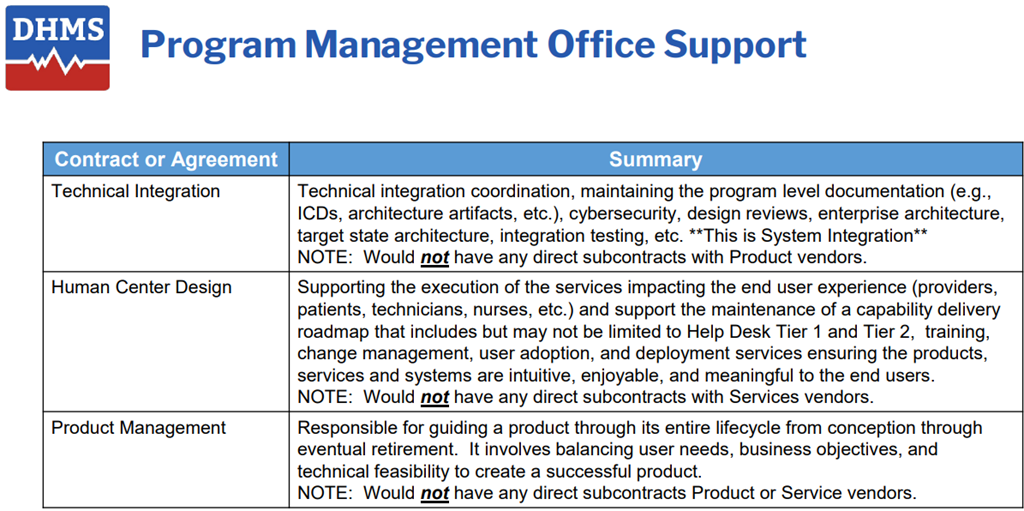
The Defense Health Agency issues an RFI to solicit industry feedback on its draft contract strategy for a follow-on to MHS Genesis. It proposes a program office structure that would separate technical integration, human-centered design, and product management.


HHS ASTP posts a recorded  information session on the just-published HTI-5 Proposed Rule. The 60-day public comment period closes on February 27, 2026.


Contacts

Mr. H, Lorre, Jenn, Dr. Jayne.
Get HIStalk updates.
Send news or rumors.
Follow on X, Bluesky, and LinkedIn.
Sponsorship information.
Contact us.

Morning Headlines 12/30/25

December 29, 2025 Headlines Comments Off on Morning Headlines 12/30/25

Defense Health Agency Seeking Industry Feedback on MHS GENESIS EHR Draft Contract Strategy

The Defense Health Agency issues an RFI to solicit industry feedback on its draft contract strategy for a follow-on to MHS Genesis and a proposed program office structure that would separate technical integration, human-centered design, and product management.

CMS Announces $50 Billion in Awards to Strengthen Rural Health in All 50 States

CMS announces that states will receive awards averaging $200 million under the $50 billion Rural Health Transformation Program, which they are expected to use to fund initiatives that include modernizing rural health infrastructure and technology.

Hospitals Score Win to Halt New HHS Drug Discount Rebate Pilot

A federal judge issues a preliminary injunction against HHS in a lawsuit brought by the American Hospital Association and others that would prevent HHS from implementing the 340B Rebate Model Pilot Program, where providers would buy drugs at full price and then seek rebates from drug companies.

Comments Off on Morning Headlines 12/30/25

Curbside Consult with Dr. Jayne 12/29/25

December 29, 2025 Dr. Jayne Comments Off on Curbside Consult with Dr. Jayne 12/29/25

image 

As we approach the end of the year, many of us are reflecting on our accomplishments for the year. Maybe we’re proud of the work that we’ve done, or perhaps we are forced to reflect because of end-of-year performance reviews. I enjoy thinking through how I spent my time and how it might have impacted patients.

I asked some of my CMIO colleagues what they are most proud of this year. Many of the projects were predictable, but at least one was surprising.

The first CMIO who weighed in was a little embarrassed about his accomplishment. Apparently his organization never got the memo about the benefits of having proximity cards or other non-password technology to help reduce the burden of multiple logins for its clinicians. Mandatory EHR upgrades or replacing a solution that was about to be sunset always took precedence. A couple of recent cybersecurity events had also consumed a good chunk of the budget and pushed other needs and wants aside. I certainly understand having to spend money on that.

Regardless, the clinicians are happier not having log in while going back and forth to the workstations in patient rooms, so that’s a win for the year.

The next physician leader was passionate about expanding virtual physician services in the emergency department. His organization’s busiest hospitals put a physician assistant in the triage bay. They worked closely with nursing staff to perform workups on patients who were still in the waiting room. The PA examined the patient and entered orders. 

When wait times were at their worst due to bed shortages elsewhere in the hospital, some patients were actually discharged from the waiting room without ever making it to a regular emergency department bed.

The twist this year was using virtual technology to expand that to hospitals that didn’t have the volumes to support the provider-in-triage concept. He felt that it was a win all around. Patients were happier to get their care started more quickly, emergency department staff members were happier because they had fewer patient complaints, and emergency providers were happier because they could opt in to the remote shifts for a break from the ED’s physical grind.

This is a great strategy. I am surprised to see so few facilities creating programs like this. It improves key metrics like the door-to-doctor time, addresses bed turnover issues, improves satisfaction, and provides options to keep physicians in the game when they might be ready to retire. The physician workforce crisis isn’t going away anytime soon, and anything that we can do to maintain those folks and their expertise is good.

I know of another system that has implemented this paradigm. Remote shifts are staffed by people who might otherwise be on medical leave due to orthopedic issues or pregnancy complications, or who need to travel to another part of the country to support family members.

It’s inexpensive since the major investment is a workstation and cameras. Even if you have to do a little rearranging to accommodate a gurney in the triage area, it’s cheaper than building more emergency beds. Another significant factor is probably that hospitals can make a lot of money billing the provider portion of the visit rather than having patients leave without being seen.

Multiple CMIOs said that ambient documentation was the best solution that they implemented all year. Most of them had pilot cohorts that tested the technology first, and at least a couple of them went through a bake-off process where they trialed solutions from different vendors before making their final selection.

One CMIO said, “This is one of two things that I’ve ever implemented that my physicians thanked me for.” Most of them are implementing the technology in ambulatory environments. Only one who I spoke with had a significant project for inpatient wards, and that is in a facility that has 100% private rooms for its patients.

I loved the idea that one correspondent shared about how her facility trained the ambient documentation tools. They created a curriculum called “Caring Out Loud” that addressed how physicians needed to change their history-taking and examination skills for the best outcomes with the technology. Some physicians felt like “talking to themselves” made them seem less professional, but only two of them chose to go back to traditional documentation.

Virtual nursing was also a big win for one CMIO who responded. In a plot twist, this CMIO is a nurse practitioner. Although I’ve seen people in similar roles elsewhere in the industry, she’s the first non-physician CMIO who I’ve gotten to know personally.

Her facility has been able to move approximately half of the steps involved in the nursing admissions process into a virtual workflow, which has been helpful as they continue to have staffing challenges. At their facility, all nurses work at least one virtual shift per month so that everyone is cross-trained. All of the virtual nursing work happens on site, which is different than other models where virtual nursing is used to retain staff that otherwise might be ready to leave bedside nursing.

One respondent’s biggest project was a deterioration prevention system that identifies patients who might be heading towards a crisis. I was surprised to learn that one of the major challenges in that effort was the change management piece. It was not designed to bypass human intervention, but people felt that its use might discourage them from raising an alarm if they suspected that patients were having issues.

The hospital held listening sessions so that staff understood what the system was designed to do, and what it was not. They were made aware that they needed to still rely on their internal “Spidey sense” if they felt that a patient was at risk.

I was surprised that AI projects, other than ambient documentation, were far down the list for many of the people I spoke with. That could be an artifact of budgeting processes, where priorities for 2025 may have been set in the summer of 2024. Or, perhaps skepticism remains around AI and how it should fit into the bigger picture of patient care.

I also think that many facilities are playing catch-up around operational and quality debt and therefore have less time to spend on shiny new things. I’m glad to see those institutions focusing on the basics, because if you don’t have a good foundation, everything else is just window dressing.

What are you most proud about in your work during 2025? Do you have a focus you’re excited about for 2026? Leave a comment or email me.

Email Dr. Jayne.

Comments Off on Curbside Consult with Dr. Jayne 12/29/25

Morning Headlines 12/29/25

December 28, 2025 Headlines Comments Off on Morning Headlines 12/29/25

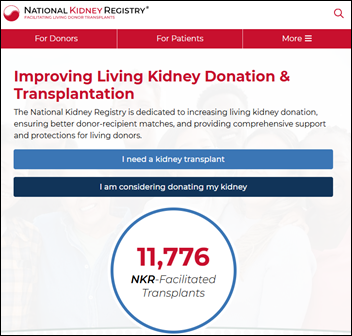
How One Father Created an Organ Empire

The National Kidney Registry, which matches donors to recipients, pays millions to its technologist founder’s companies.

Medicare’s prior authorization has doctors on edge

Providers express uncertainty about how to submit prior authorization requests under traditional Medicare’s AI-powered treatment reviews, which launch as a six-state pilot project on January 1 for 17 treatments.

NHS England tech provider reveals data breach – DXS International hit by ransomware

A ransomware hacker claims to have stolen 300 GB of company data from NHS technology supplier DXS International.

Comments Off on Morning Headlines 12/29/25

Monday Morning Update 12/29/25

December 28, 2025 News 1 Comment

Top News

image

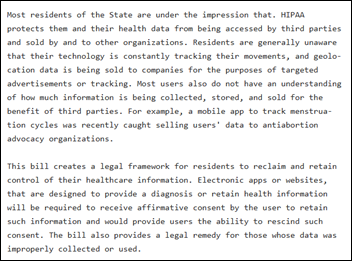
New York Governor Kathy Hochul vetoes the New York Health Information Privacy Act, which would have required companies that handle health-related information to obtain user consent before storing or selling that data.

The bill defined Regulated Health Information to include data from apps, wearables, telehealth, and employer-provided health information.

Critics said that the definition was so broad that it could encompass non-health data, impose complex and costly compliance requirements, threaten innovation, and create unnecessary burdens for health systems.


HIStalk Announcements and Requests

image

Most provider poll respondents say that remote patient monitoring payment changes won’t really affect them.

New poll to your right or here: What primary role should HIMSS choose to maintain or increase its business success? This question addresses big-picture strategy, but leave a poll comment after voting to suggest the #1 thing HIMSS should do within the next year to position itself for the future.

image

HIStalk supporters and vendor marketing folks: Current HIStalk sponsors get free spotlights and text ads, while prospective ones can talk to Lorre about the benefits of full-year exposure. Startups and former sponsors might even get a lagniappe. Lorre also has a single Top Spot banner for companies that are seeking maximal exposure (10,000 clicks in the past year) and the satisfaction of always seeing their ad atop those of competitors. Sponsors get zero influence over news and opinion, but that’s to their advantage since decision-makers will bail quickly on thinly veiled pay-for-play and inexpert babbling.


image

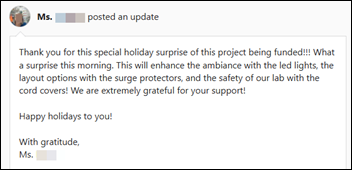
News is understandably slow, so let’s enjoy the results of reader donations to Donors Choose. Dr. K says that her Florida first graders started using their new STEM materials immediately after she explained, “I told them that they were donated to our classroom by people who wanted to help them learn.”

Meanwhile, new reader donations, matched with third-party donations and funds from my Anonymous Vendor Executive, fully funded these Donors Choose teacher grant requests:

  • Visual learning tools for Ms. W’s Honors Algebra and Geometry middle school classes in Oklahoma City, OK.
  • STEAM manipulatives for Ms. W’s elementary school class in Oklahoma City, OK.
  • Headphones for Ms. S’s elementary school class in Burlington, NC.
  • Math manipulatives for Ms. M’s disability needs middle school math class in Charlestown, MA.
  • STEM toys for Ms. N’s elementary school class in Brighton, MA.
  • A laptop to support robotics coding and 3D printing in Mr. G’s high school class in Bloomfield, NM.
  • A math classroom (learning tools, organizers, sensory tools, and supplies) for Ms. K’s elementary school class in Dorchester, MA.

Sponsored Events and Resources

None scheduled soon. Contact Lorre to have your resource listed.


Announcements and Implementations

image

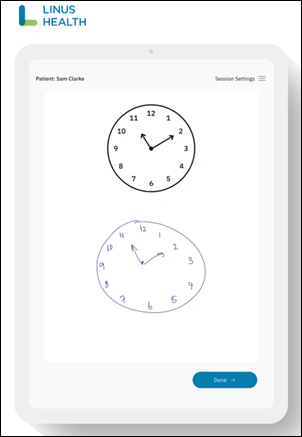
Peer-reviewed studies find that Linus Health’s AI-based digital cognitive assessments can detect subtle behavioral signals that are associated with Alzheimer’s pathology years before symptoms appear, allowing early identification of people who should be tested for blood-based biomarkers.

Black Book Research posts its annual report on the standards it uses to rank health tech products and services. The company does not sell consulting, advisory, or improvement services to vendors, does not offer paid placements, does not pay survey participants, and offers no pay-to-play options such as offering score improvement services and related recognition. This statement caught my eye:

Black Book’s annual refresh cycle is informed by a widely recognized measurement principle often referred to as Goodhart’s Law: once a measure becomes a target, it can become less effective as a measure. In vendor rankings, stable rubrics can unintentionally encourage optimization for what performs well in the scoring system rather than what consistently delivers implementation success, operational reliability, service responsiveness, and realized value after contract signature. Over time, a ranking can drift toward measuring “ability to rank” instead of “ability to deliver.”


Government and Politics

image

A federal grand jury indicts the physician owner of a clinic for allegedly billing Medicare $45 million for Botox injections that were medically unnecessary and, in many cases, never provided. Violetta Mailyan, DO is also charged with obstructing a criminal investigation by allegedly submitting falsified medical records in response to a grand jury subpoena. Prosecutors say the clinic billed for services on dates when it was closed, when Mailyan was traveling outside the country, and on at least one date when the Medicare patient was incarcerated in federal prison.


Other

image

The New York Times profiles the kidney transplant-matching National Kidney Registry, which transfers much of its millions of dollars in annual income – collected mostly via hospital fees – to for-profit technology and holding companies that were formed by Founder and CEO Garet Hil, who developed the software that matches donors to recipients. NKR had $69 million in annual revenue in 2023 and paid Hil’s technology company $8.2 million when it sold the commercial operations portion to Hil for $2.6 million.

image

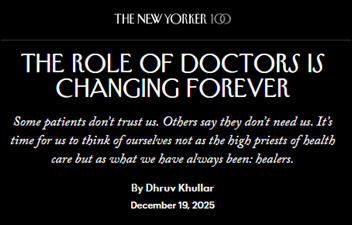
I was fascinated by a New Yorker article titled “The Role of Doctors is Changing Forever,” written by Weill Cornell hospitalist Dhruv Khullar, MD, MPP. He says that doctors are losing their cultural authority as patients seek “unbundled” medical advice and services outside of traditional practice. Doctors once reigned as the gatekeeper to everything that relates to health, but now people are obtaining and trusting information from attention-optimizing TikTok docs, direct-to-consumer companies, the MAHA movement, and AI, causing people to trust doctors less or to avoid them entirely. He writes this, although glossing over how doctors might actually earn a living in this new role:

When a hegemon loses status, it can take a few paths. It can aim for restoration — bringing back the empire — which in this case would probably focus on gatekeeping. It can retreat, which might mean abdicating medicine’s broad public role, perhaps in favor of a narrow focus on earnings and technical skills. The last — and, in my view, the best — path is reinvention. Doctors can remake their profession by embracing the multi-polar medical landscape they now inhabit, and by acting as a kind of system stabilizer: working with other powers to help shape rules, norms, and relationships.


Contacts

Mr. H, Lorre, Jenn, Dr. Jayne.
Get HIStalk updates.
Send news or rumors.
Follow on X, Bluesky, and LinkedIn.
Sponsorship information.
Contact us.

Morning Headlines 12/24/25

December 23, 2025 Headlines 1 Comment

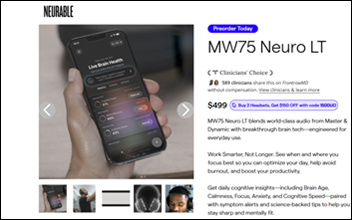
Neurable Raises $35 Million Series A to Accelerate Deployment of Everyday Brain-Computer Interface Technology

Neurable will use new funding to commercialize its brain-computer interface technology that allows wearables to track mental fatigue, cognitive recovery, and focus state detection.

Saint Peter’s Healthcare System, Epic to launch centralized electronic health record system

Saint Peter’s Healthcare System (NJ), whose planned merger with Atlantic Health was cancelled in October 2025, will implement Epic.

New York Governor Vetoes Restrictive Health Privacy Law

New York Governor Kathy Hochul vetoes the New York Health Information Privacy Act, a broad health data privacy bill that would have expanded protections for health information beyond federal HIPAA standards

News 12/24/25

December 23, 2025 News 3 Comments

Top News

image

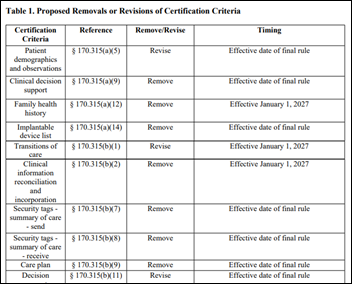
ASTP/ONC releases HTI-5, a proposed rule that streamlines its Health IT Certification Program, updates information blocking regulations, and establishes a foundation of FHIR-based APIs to support AI-enabled interoperability.

HTI-5 would remove 34 of the 60 certification criteria and revise seven to reduce developer cost.

The proposal would also eliminate a Biden administration requirement that health tech vendors provide “model cards” that explain how their AI models work and how they should be used, similar to food nutrition labels.


Reader Comments

image

From Lippy: “Re: Donors Choose. Remind me again how to donate.” I will first explain that I do not strong-arm readers into donating to Donors Choose through me. However, it is one of few organizations that I trust and whose mission I believe in. Donating as described below allows me to choose projects, apply matching funds from third parties and my Anonymous Vendor Executive, and then list the projects that were funded (a cranky reader once accused me of “virtue signaling” by listing the projects here, but it’s fun to celebrate them collectively). The same process works for company donations. Instructions:

  1. Purchase a Donors Choose gift card in the amount you’d like to donate.
  2. Choose the option to send the gift card by the email to mr_histalk@histalk.com (that’s my Donors Choose account).
  3. Print your own Donors Choose receipt for tax purposes.
  4. I’ll pool the money, apply the matching funds, and publicly report here the projects that I funded.

image

image

A generous donation from long-time HIStalk supporters Ben and Michelle at ST Advisors, boosted by matching funds, fully funded these Donors Choose teacher grant requests:

  • Headphones for Ms. C’s middle school class in Houston, TX.
  • Headphones for the technology classes of Ms. S’s middle school science academy class in Austintown. OH.
  • A laptop extended for Ms. A’s elementary school class in Houston, TX.
  • STEM computer lab supplies for Ms. B’s middle school class in Port Saint Lucie, FL.
  • A rolling white board for Ms. B’s middle school class in Newark, DE.
  • Math and science activity stations for Ms. D’s middle school class in Aston, PA.
  • Science lab supplies and materials for Mr. B’s middle school class in Yuma, AZ.
  • STEM lab supplies for Ms. K’s elementary school class in Knightdale, NC.
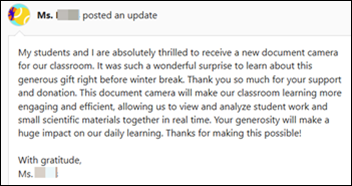
  • A document camera for Ms. D’s elementary school class in Randolph, MA.
  • Magnets and microscopes for Ms. W’s elementary school class in Oilton, OK.
  • Chemistry lab supplies for Mr. S’s high school class in Greenwood, DE.
  • Classroom library shelves for Ms. T’s high school early college high school class in Louisburg, NC.

Sponsored Events and Resources

None scheduled soon. Contact Lorre to have your resource listed.


Acquisitions, Funding, Business, and Stock

image

Neurable raises a $35 million Series A round to accelerate commercialization of its brain-computer interface technology that allows wearables to track mental fatigue, cognitive recovery, and focus state detection. The company says that an immediate application will be to integrate brain insights into electronic gaming.


Sales

  • Saint Peter’s Healthcare System (NJ), whose planned merger with Atlantic Health was cancelled in October 2025, will implement Epic.

Government and Politics

The former CEO of Power Mobility Doctor Rx is sentenced to 15 years in prison and ordered to pay $452 million in restitution for running a telemarketing, telemedicine, and kickback scheme that defrauded Medicare and insurers of $1 billion. The company’s software platform connected DME suppliers and pharmacies with telemedicine companies that accepted kickbacks and bribes to issue fraudulent prescriptions. The company targeted Medicare beneficiaries who agreed to provide their personal information and accept the medically unnecessary medical equipment and supplies when contacted via offshore call centers and mass mailings.  


Contacts

Mr. H, Lorre, Jenn, Dr. Jayne.
Get HIStalk updates.
Send news or rumors.
Follow on X, Bluesky, and LinkedIn.
Sponsorship information.
Contact us.

Morning Headlines 12/23/25

December 22, 2025 Headlines Comments Off on Morning Headlines 12/23/25

HHS Proposes HTI-5 Rule to Streamline Certification Program, Further Protect Patients from Information Blocking, and Foster an Artificial Intelligence-enabled Future

HHS proposes the HTI-5 rule to streamline the ONC Health IT Certification Program, strengthen enforcement against information blocking, and establish a foundation of modern FHIR-based APIs to support AI-enabled interoperability while reducing regulatory burden and saving billions in compliance costs.

CEO of Health Care Software Company Sentenced for $1B Fraud Conspiracy

An Arizona man is sentenced to 15 years in prison and ordered to pay over $452 million in restitution for operating a software platform that generated more than $1 billion in fraudulent Medicare and insurer claims by using false doctors’ orders and illegal kickbacks to bill medically unnecessary durable medical equipment and other items.

Can the Montana State Hospital regain federal standing without electronic health records?

State officials are seeking to restore federal certification for Montana State Hospital even though the adult psychiatry facility continues to use paper-based medical records.

AMA CEO: AI is not medicine’s future—“this is happening now.”

American Medical Association CEO John Whyte, MD, MPH says artificial intelligence is not a distant future for medicine, it is already reshaping clinical care and digital health, and physicians must take a leadership role in its creation and use.

Comments Off on Morning Headlines 12/23/25

Curbside Consult with Dr. Jayne 12/22/25

December 22, 2025 Dr. Jayne 1 Comment

I’ve been on LinkedIn almost since its creation. When I joined, it seemed like a great way to keep track of people I met in the course of my work.

Over the past couple of years, I feel like it has lost its usefulness. My main feed seems to be full of vendor ads, punctuated by individual posts that are annoyingly self-promoting and contain way too many emoji. I feel like I have to weed through all of that to find things that are genuine or feel like something more than just an attention grab. When I look at the messages features, it seems that most of the people reaching out are trying to sell me something.

Looking through the last couple of months of messages (which I rarely check, ignoring the notifications that come into my inbox as well) I saw a half dozen solicitations from financial advisors. Based on the content of those messages, they are clearly targeting physicians. In particular, those who are on the downhill slope towards retirement.

A couple were looking for people to invest in various new ventures. At least for me, if you have something like “turning income into legacy” as your headline, your message is guaranteed to go straight to the trash. You’re also going to be ignored if your outreach looks like multilevel marketing.

I also tend to get quite a few messages from people trying to sell services to physician offices. Things like revenue cycle management, bad debt management, collections, phone services, call centers, and the like. If they read my profile for more than two seconds, they would see that I haven’t been in traditional practice in a long time and don’t need any of their services. Their messages are also routed to the discard zone. 

You’re also likely to wind up in that place if you include a personalized message that’s addressed to someone other than me, as the person did this week who started his message with “Dear Correen, It was great to meet you last week.”

Then there are the entrepreneurs who are trying to connect with “like-minded individuals” and who are “interested to hear your opinions” or something similar. One said he was “having conversations with several of my colleagues and would love to hear how you’re navigating the current landscape.”

Based on reading this person’s profile, I can’t even begin to figure out what specific landscape he might be thinking about, let alone how I might contribute. In the past, when I’ve seen messages like this, they have felt like someone who is just trying to get some free consulting.

I got an entertaining spam message this week for a free brow waxing session at a business that plans to open in 2026. It is trying to generate Instagram likes by contacting random people on LinkedIn and requesting that they follow him and/or his business on that platform. The message was from someone listed as a “verified recruiter” with a corporate license. For entertainment, I clicked on his profile, and found that in addition to owning the waxing business, he also owns a burrito restaurant, a carpet cleaning company, and a hair salon. Needless to say, that was a quick delete as well. 

I also get a kick out of seeing the reports of how many people viewed my profile. Quite a few recruiters made the list. Normally if a recruiter reaches out and asks to connect, I will accept the request just to see if they have interesting roles available. Not that I’m looking, but I have plenty of friends and colleagues who are, and I’m happy to help them out if I see something that’s a good fit.

Most of the time, there is some brief back and forth. I let them know that I’ll be sharing their opportunities with others, and then that’s the end of it. This week, however, I had a plot twist with a recruiter that I hadn’t seen before.

I accepted the recruiter’s connection request, so they could see my email information. They apparently used that, as well as the information in my profile, to enter me into their organization’s “Talent Community” as if I were job hunting. They also created referral links for several specific jobs and invited me to apply, as if we had discussed those jobs and I had voiced interest.

I know from my own experiences in large organizations that usually if you’re trying to score a bonus by referring someone, you have to at least attest to the fact that they were aware you’re referring them and agreed to it, so it felt a little odd. Maybe this particular organization plays fast and loose with their referral process.

The roles for which they created referral links were highly specific. It was clear that they had read my profile in detail and were targeting particular skills and certifications that I list.

I know that this particular organization is going through an EHR change. Several of the roles were related to that project, although one role was for a position with a title that was identical to my current role.

This is certainly the first time I’ve experienced this kind of recruiting flow. I’m wondering if it is unusual, or if this is a new way that organizations are trying to source people. Since it’s the end of the year, maybe it’s just someone trying to hit a quota, but who knows. If you’re in the human resources or recruiting realms, I’d be interested to hear what you think of this approach and if it’s common or more of an outlier.

image

I’m glad Mr. H mentioned celebrating Yalda, which marks the passing of the longest night of the year and the return of light as days gradually grow longer. For the last couple of years, I’ve noticed that the shortening days have played havoc on my sleep schedule, to the point where I’ve tried to spend as much time in more southern latitudes as my work allows, and it’s been helpful.

This year, I was invited to a celebration. Although I wasn’t able to stay until dawn, I really enjoyed the opportunity. Although I do like a good New Year’s Eve party, Yalda Night was more cozy than blingy and felt like a better way to reset in preparation for the new year.

This year has been a tough one for me personally so I’m all about celebrating hope and renewal as we head towards 2026. Given the way the US health system works, however, I’m not looking forward to the resetting of my health insurance deductible, but there’s not much I can do about that.

What is your favorite way to mark the passing of the years? Leave a comment or email me.

Email Dr. Jayne.

Readers Write: Application Portfolio Management: The Hidden Key to Healthcare Cybersecurity Resilience

December 22, 2025 Readers Write Comments Off on Readers Write: Application Portfolio Management: The Hidden Key to Healthcare Cybersecurity Resilience

Application Portfolio Management: The Hidden Key to Healthcare Cybersecurity Resilience
By Kevin Erdal

Kevin Erdal is president of advisory services at Nordic.

image

Healthcare leaders are navigating a tough reality: protecting margins while making operations more resilient. Financial pressures, workforce shortages, and regulatory complexity mean every investment must deliver real, measurable impact.

At the same time, cyber threats are amplifying these pressures. A single breach can wipe out hard-won savings, derail transformation projects, and compromise patient safety.

In this environment, application portfolio management (APM) is a strategic necessity.

Think of APM as a smarter way to manage your technology stack. By taking inventory, trimming what you don’t need, and securing what you keep, you can cut waste, reduce risk, and lay the groundwork for streamlined, patient-centered operations without adding complexity.

What are the risks of ignoring application portfolio management?

Healthcare is the most expensive sector for cyberattacks, with the average breach costing $11 million, three times the global average. Ransomware is the most prevalent threat, accounting for approximately 70% of healthcare cyberattacks. In 2024 alone, 118 confirmed ransomware attacks accessed more than 15 million patient records.

The operational impact across our industry is staggering:

  • 17 days of average downtime per ransomware incident, costing $1.9 million per day.
  • 92% of healthcare organizations targeted by cyberattacks in 2024.
  • $21.9 billion in downtime losses over six years.

Most importantly, the risk to patient safety can’t be overstated. When systems fail, care delivery is disrupted, treatments are delayed, and lives are at risk.

Why traditional cybersecurity isn’t enough

Most healthcare organizations rely on perimeter defenses like firewalls, VPNs, and intrusion detection systems, but attackers often exploit internal vulnerabilities, especially through unmonitored legacy applications and shadow IT.

If you don’t know what’s running in your environment, you can’t protect it. And you may be paying for apps you don’t even use.

What is application portfolio management (APM)?

Application portfolio management is the structured process of managing applications based on value, cost, risk, and performance. It includes:

  • Inventory and classification of all your applications.
  • Risk and value assessment to understand security posture and business impact.
  • Lifecycle and rationalization planning to retire redundant or high-risk apps

Done right, APM is a strategic enabler for efficiency, modernization, and cost control.

How does APM deliver real ROI?

APM allows you to clean up your tech stack and create significant wins across your organization.

  • Visibility = control. You can’t secure what you don’t know exists.
  • Risk prioritization. Spot high-risk apps before they become breach entry points.
  • Legacy exposure mitigation. Retire unsupported apps before attackers exploit them.
  • Cost savings. Rationalization reduces licensing, maintenance, and support costs.
  • Compliance confidence. Stay ahead of HIPAA and other regulatory requirements.
  • Foundation for innovation. Simplify before you modernize.

APM delivers value across the enterprise by aligning technology decisions with business, financial, and clinical priorities:

  • Chief information officers gain alignment between IT investments and strategic goals, paving the way for digital transformation.
  • Chief information security officers strengthen risk management and improve threat response.
  • Chief financial officers see hard ROI through cost savings and breach avoidance.
  • Chief medical information officers benefit from streamlined clinical workflows and better data integrity.

How to get started with application portfolio management

Here’s a practical roadmap for healthcare leaders:

  1. Start with an inventory. Capture every app across clinical and business functions.
  2. Map applications to workflows. Understand their role in care delivery and operations.
  3. Assess risk and compliance. Evaluate vendor security posture, data sensitivity, and HIPAA alignment.
  4. Rationalize and retire redundant or risky apps. Reduce attack surface and technical debt.
  5. Integrate APM insights into governance programs. Embed findings into cybersecurity strategy and IT planning.

How the right partner accelerates APM success

Finding redundant apps is just the start. The real challenge is managing governance, staying compliant, and retiring systems without disrupting care or losing critical data. That’s where the right partner can help. Experienced healthcare IT advisors bring proven, scalable frameworks and tools to make the application portfolio management process faster and safer.

Partnering gives you the structure and support to reduce risk, achieve measurable ROI, and build a solid foundation for future innovation.

Bottom line: APM is foundational to cybersecurity resilience

Cyber threats and digital complexity aren’t slowing down, and neither can you. Application portfolio management is one of the most practical, high-impact steps you can take to strengthen cybersecurity, protect margins, and build a foundation for future-ready operations.

The cost of doing nothing? Higher risk, wasted resources, and missed opportunities. The upside of acting now? You simplify your environment, reduce vulnerabilities, and free up capacity to deliver patient-centered care that’s safer and more efficient.

APM is a strategic lever for margin resilience, operational efficiency, and innovation. Start today and position your organization to do more with less while safeguarding your mission and the people you serve.

Comments Off on Readers Write: Application Portfolio Management: The Hidden Key to Healthcare Cybersecurity Resilience

HIStalk Interviews Theresa Meadows, RN, CIO in Residence, Symplr

December 22, 2025 Interviews Comments Off on HIStalk Interviews Theresa Meadows, RN, CIO in Residence, Symplr

Theresa Meadows, RN, MS is CIO in residence at Symplr.

image

Tell me about yourself and the company.

I have been in healthcare my entire career. I started as a nurse in cardiac transplant and interventional cardiology and ended up in IT by accident. Over the years, I’ve done various roles in consulting companies and software companies. Before Symplr, I was the chief information and digital officer at pediatric institution for 15 years, and with Ascension Health prior to that.

At Symplr, I’m excited because I get to do a unique new role as the CIO in residence. That means that I get to bring insider baseball to Symplr, meaning how healthcare CIOs think and the needs that healthcare institutions have. I get to help them with customers, building relationships, and doing the fun part of the CIO job, which is collaboration, building relationships and trust, and forming strategic directions. I’m excited about being here.

How do you define success in your job?

For me, it’s of course always having happy customers, meaning customers who are satisfied with the services and the software that we provide. That is how I would measure success. Hopefully being seen as a leader in the industry. Looking at our NPS scores and other ways to understand customer satisfaction, getting feedback, and making sure that we are listening. These are all ways that I evaluate how I’m helping the organization as the CIO.

How have you seen the CIO job change in the past few years, including the creation of new C-level roles that have a technology focus such as chief digital or chief transformation officer?

There has been tons of evolution. I can remember early on that the role was technology focused. We would spend a lot of time talking about product, functionality, uptime and downtime, and those types of things. 

With the transformation of going to the electronic health record and COVID even, we moved into more of an operational role. I saw my role become more about operations, understanding how hospital systems work, and providing solutions to challenging problems, versus being the technical leader. It has evolved over time to be a strategic position.

All those new C-level roles are important. How we partner with those roles is important. I don’t want to minimize the fact that a CIO can also be transformative. But having additional people who support a technology vision that can drive strategy and the technology that supports that strategy, the more people you have on board with that, the easier the CIO job becomes. We can have partners who are helping transform the organization.

Some clinicians in big health systems would argue that their level of burnout increased with EHR adoption because it was used as a corporate control mechanism rather than to improve their capabilities or patient outcomes. Will the rollout of AI empower clinicians or just be another way to enforce administrative rules and boost margins?

We have learned from our mistakes or sins of the past, if you might say, of how we collaborate with clinicians. With artificial intelligence, that collaboration is going to be critical. Only clinicians know if the AI is doing the right thing clinically. As we get into more and more clinical use cases, having those partners of nurses, physicians, and the whole clinical team to weigh in on how we know that the AI that we are using is safe, effective, and creating the outcomes that we need.

We learned a lot during COVID about burnout and how to start addressing it. Adding more to-do’s to clinicians’ plates is not going to be how we get there. We have to find ways to remove things from their plates and get them back to doing the things that they love, which is patient care, interacting with people, and creating good outcomes. I hope that AI will allow us to do that.

How will the tension be addressed between using these new tools to make the physician’s day better versus increasing patient loads, which would increase margin while shortening appointment lead times?

Ultimately, if we do the right things, productivity, revenue, and those types of things follow. If we can find ways to make our clinicians happier in what they’re doing and revamp the tasks that they are doing, I think we will see revenue improvements. We will see patient experience improvements, because people are happier in the roles that they’re doing versus thinking about it the other way, which is that we have to see more people. 

Most clinicians appreciate that the ability to get into health systems is difficult today. The average wait time is long. How can we see more patients and make our patients happier? If technology can support that, that would be ideal, but I don’t think that we can go into the conversation with the goal of seeing more patients. Our goal should be how to make the process more efficient, better for our patients, and better for the clinicians. The revenue returns will follow.

A recent KLAS report found that EHR issues, particularly duplicate and unnecessary documentation, influence nurse burnout. Could the flow sheet process be improved?

I agree with that. At my previous organization, we did the nursing collaborative through KLAS, and we saw exactly that. We have created the note bloat scenario in nursing. If we need to capture data for a quality project, we add more documentation. But we never take documentation away.

As we start adding things to the EHR, we need to be thoughtful about the purpose of that documentation and how will it be used. We spent a lot of time in my previous organization looking at and optimizing nursing documentation. A lot of duplicate documentation exists in flow sheets, and we overuse flow sheets to capture data that could be captured in other ways.

Health systems are rolling out AI without a strategy, governance, or regulatory guidance. Will they get burned or is this just the natural cycle of a new technology?

I think it’s probably the natural cycle of a new technology. We get excited about things that we hope will improve outcomes for our patients and our caregivers. We go at it hard initially because we think it’s going to change something. Then we realize that with every good technology, you have to consider the people in the process. AI is no different. 

The challenging thing with artificial intelligence is that we haven’t spent a lot of time looking at our data, our data structures, and what data will be used to generate those AI models. Healthcare has been notorious for collecting lots of data, but that doesn’t mean that it’s quality or good data.

The challenge that we as a healthcare industry have to figure out is how to get the right data into these tools so that we can see the appropriate outcomes. That’s where people start getting nervous about diving too deep into AI, because they know that the data that they are using may or may not be the most structured or clean data that they could be using to make decisions. You see most organizations focusing on that. How am I going to get the right data so that the model works the way it’s intended to work? 

How are health systems evaluating the use of AI? Are they emphasizing output rather than outcomes by focusing on revenue cycle and productivity that generates ROI?

I would love to say that the answer to that question is yes. We would love to see productivity benefits and ROI. But right now, we are still in that learning phase of what we are trying to improve. 

A lot of process improvement goes hand in hand with deploying AI, so a lot of learning is happening. Sometimes when we think we’ll see ROI, what we really learn is that the process that is driving the data is broken. To get a good outcome, save money, or do whatever we think the right thing is, we have to go back and reevaluate that workflow that we were doing as part of the process. 

AI helps us get us to that solution faster than in previous worlds, where we weren’t sure if it was workflow, the data, or the tool itself. AI helps us get to that decision-making process a lot faster, and then we can address those issues quicker.

Early technology such as EHR focused on technology that supported doctors since they are making the decisions that impact the bottom line. Will we see the emphasize refocus on the less-penetrated area of technology that supports nurses?

It is super exciting that we are now talking about the nursing profession and how to help nurses be more efficient and effective. The nurse is the center of all things when it comes to the patient interactions. Anything that can help automate nursing tasks through AI and assist with prioritization will be a win for nursing. 

Ambient listening for nursing will eventually be a huge win. The challenge with nurses is that we don’t typically talk about our assessments out loud with a patient, and we don’t talk about them in a way that would generate documentation. A lot of change management has to occur when we go to ambient listening for nursing. But once we figure some of those key words and phrases, nurses will adopt that quickly.

Nurses are resilient. If it’s a good process or a good product, they will adopt it. They adopt really crappy products sometimes and make them work. They are very resilient in that way.

We have an opportunity to look at nursing tasks, how we automate them, and how to give the tasks to the right person on the clinical team. Sometimes we give tasks to nurses that could be done by a nursing assistant, an MA, a unit secretary, or a unit clerk. There are ways to do that. AI can help with some of those workflow processes and getting the right task to the right mailbox.

A lot of opportunity still exists in the space between the EHR and the ERP. Hundreds of applications haven’t been optimized or looked at, and those are all falling in the operations space. There is also an opportunity to improve those processes where we haven’t spent a lot of time yet. There’s a whole vast array of applications, workflows, and processes that the EHR or the ERP doesn’t touch. There’s plenty of opportunity in those areas for the future as well.

Will nurses need to vocalize or dictate what they’re doing to support ambient listening, unlike physicians who can mostly carry on normal patient conversations and let AI do the work?

For physicians, it’s natural. They dictate it all the time through their whole career. That’s been their process. 

For nurses, when we talk to patients, we are trying to do the education piece and less the documentation piece. It’s going to be training a nurse on how to say some of the key findings that they ordinarily would just document or check a box and then educate a patient, building that into the education. Talking to the nurses and figuring out that style. 

The change management pieces are going to be something different for nursing because we focus a lot on education and making sure the family or the patient knows what the next right step is, versus talking about the assessment out loud.

How will virtual nursing programs affect nurse shortages?

Virtual nursing is a huge win. I am a huge proponent for virtual nursing for a number of reasons. The first is that we can capitalize on nurses who may be ready to retire later in their career, where the physical part of nursing is hard, but the intellectual process is still intact for them. Virtual nursing allows us to have some of our more seasoned nurses be able to help some of the newer nurses by being there virtually for them as a resource, to watch things on the unit, and to see how things are going and give input. 

It is also a good tool for addressing burnout, because you can create schedules to have people rotate through virtual nursing so that they aren’t at the bedside every day. They can rotate through those different scenarios and learn a different skill set. 

It’s better overall for patient care, because you have people who are observing what’s going on in each patient room, and you don’t have that today. Some of the safety events that have occurred can be mitigated through a virtual nursing process. There’s lots of opportunity to reduce handoffs and reduce the need to have two nurses in a room for certain processes.

There’s a lot we can still learn from that process since people are pretty early on in their deployments of virtual nursing. We probably haven’t seen all the benefits that can be accomplished through those programs just yet, but we will.

Medicaid cutbacks, the elimination of subsidies for exchange-sold health insurance, and the possibility of having more unemployed people who lose access to employer-provided insurance will likely raise the number of uninsured people. Are health systems planning for that, and do technology implications exist?

Health systems are absolutely planning for that. By nature, we are conservative beasts. If we start to see where there will  be a challenge around funding, insurance, or people’s capacity to pay for medical care, we get more conservative. 

Our choices around technology will be to look for items that will improve revenue capture, make our length of stay shorter so the cost is cheaper, and look at ways to be more cost effective and see more patients. We are going to be looking for those types of things, but we’re also going to be looking for ways that we might lessen the burden with more virtual care, remote care, where you’re not spending the large dollars on an inpatient stay. If we can take care of people remotely or hospital at home, organizations will look at those avenues, because the cost inevitably is cheaper in those scenarios. 

How we maximize the resources that we have to deliver to the care at the lowest cost point is going to continue to be a focus for all organizations going forward, especially if we have a lot of cutbacks in insurance capabilities.

How do  you expect healthcare and health technology to change over the next few years?

We will see people focus on ways to automate the workforce and automate having the right people on shift at the right time for the lowest cost. You will continue to see a lot of focus there.

We will also start to look at ways to augment our workforce. We will always need nurses, doctors, clinicians, and people, but how do we make them more efficient so we can do more with less? Automation should help us in those areas.

We will continue to see how we can educate the next set of providers, nurses, and other clinicians so they come out of school much more efficient using tools better. 

There’s just a lot that we can do, and we will see this evolve. I get excited, because having done this for the last 25 years, the technology has finally caught up with the workflow things that we need. We will start to see advances more rapidly than we’ve ever seen.  I’m excited about the things that we will be able to do in the future with where technology is today.

Comments Off on HIStalk Interviews Theresa Meadows, RN, CIO in Residence, Symplr

Morning Headlines 12/22/25

December 21, 2025 Headlines Comments Off on Morning Headlines 12/22/25

Holt exits New Mountain to create $30 billion health‑tech venture

New Mountain Capital private equity president Matt Holt leaves the firm after nearly 25 years to combine five of New Mountain’s healthcare portfolio companies into Thoreau, which will use AI to reduce medical costs.

HHS Announces Request for Information to Harness Artificial Intelligence to Deflate Health Care Costs and Make America Healthy Again

HHS publishes an RFI seeking feedback on how it can use its regulatory, payment, and R&D activities to increase healthcare AI adoption.

Hospital Completes EMR Investigation; System Cleared and Returning to Network

Cuero Regional Hospital (TX) brings its EHR back online after identifying anomalies within its network and reverting to downtime procedures for several days.

Comments Off on Morning Headlines 12/22/25

Text Ads


RECENT COMMENTS

  1. That startup mentality can be very positive or very negative based on the person. If they're someone who is great…

  2. I want it to triage incoming communication from multiple channels (works and personal email, SMS, Teams). If the message didn't…

Founding Sponsors


Platinum Sponsors


Gold Sponsors


RSS Webinars

  • An error has occurred, which probably means the feed is down. Try again later.