Recent Articles:

HIStalk Interviews Gerry McCarthy, President, TransUnion Healthcare

December 14, 2015 Interviews 1 Comment

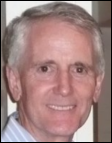
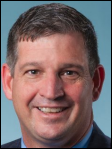
Gerry McCarthy is president of TransUnion Healthcare of Chicago, IL.

image

I’ve been in healthcare IT since 1991. I landed a job at HBOC right out of college, working as an installer on the Star system. HBO was eventually acquired by McKesson, where I spent the majority of my career with roles in services, sales, product management, and operations.

I left twice in the 1990s to join startup organizations, Automated Healthcare and Abaton, both of which were sold back to McKesson. McKesson has been very good to me and my family over the years. After I left McKesson, I was the chief strategy officer for HealthMEDX, a long-term, post-acute care EMR vendor. I then joined TransUnion two years ago as the president of healthcare.

Most people know TransUnion as a credit bureau, but that’s really only one aspect of the company. We have three key divisions representing consumer, financial services, and healthcare. In healthcare, TransUnion focuses on the patient access and reimbursement area of revenue cycle management. Our main solutions are eligibility, ID, propensity to pay, charity care determination, payment plan recommendation, and insurance coverage discovery.

What kind of financial pressure are consumers feeling as the health insurance model changes?

From the Affordable Care Act, there’s been a lot of unintended consequences associated with underinsured. Now that more people have access — which is a great thing — we’re starting to see that people are struggling with being able to pay their bills and understanding what they need to pay and when. From a consumerism perspective, people struggle with how they make clinical and financial decisions based on the care that needs to be provided.

Medical bankruptcy makes up a significant percentage of personal bankruptcies. How do you see that changing over the next few years?

We see it increasing, back to that under-insured component. People think about the indigent and lower income. If you look at even the Baby Boomer generation, there was this perception that Medicare is free. All of these plans, whether it’s Medicare or these high-deductible insurance plans, are causing a significant churn within the marketplace.

Because we are TransUnion, we understand the credit bureaus. For example, the average household income is roughly $60,000. Some of these high-deductible plans are reaching $5,000 for a family. If something happens in January or February, people are immediately under water from a payment perspective against their current income.

This has been a struggle for people. We’re going to continue to see a rise in medical bankruptcy.

Not only are networks getting narrower, but some insurers have quietly eliminated out-of-network coverage completely. What will the impact be?

We see more and more movement towards consumerism in healthcare in general. It has a significant impact on our business and is an opportunity. If you look at what patients are demanding, they’re demanding not only the access to care, but they want to know what it’s going to cost before services are rendered. 

Whether it’s value-based care, where there’s potentially a flat rate on a risk-based model, more and more organizations are saying, "There has to be some level of estimation and transparency up front so the patients are educated." That’s a key component of what we do.

If you look at the transparency component, what we’re seeing more and more is it’s not just the hospitals providing this information. You’re starting to see payers provide the information with both clinical and financial data to their membership so they can make the best clinical decision with the best financial outcome based on their individual plan. That’s really the goal — to get that transparency in front of the patient so they can make those decisions.

You can ask someone at the point of service what you owe and they can’t tell you – they don’t know how the encounter will be coded and everybody pays a different price based on the insurance contract. How can that transparency logjam be broken?

You’ve hit the nail on the head. You have to be able to model the actual plan information and the contract that will impact that individual. It costs more money and it’s more time-consuming to implement and do those types of solutions and services, but that’s the first piece.

The second piece is that as the patient enters the system, things change. It’s not always straightforward that this is the DRG from start to finish and this is how we’re going to code that claim. There has to be financial counseling throughout. You have to make sure that you are being transparent with that patient. As they are going through the system and the solution, financial counseling is becoming a key component of what’s happening in the care delivery model during the care as well.

Both sides want something new to happen at the point of care. The patient wants to know what they owe and the provider wants to be paid before the patient leaves. Can those interests be reconciled?

I don’t think it’s ever going to be 100 percent accurate just because of the nature of how healthcare is delivered, but based on certain procedures or certain disease states, we can get much closer. When you think about heart and ortho and standard visits are happening within the physician practice, there’s no reason why we can’t get to that level up front, where everybody can understand and ensure that you have the right patient, we’ve checked for fraud, ID, we understand the credit history of that patient, the clinical history of that patient, and we can put forth a payment plan recommendation so everybody understands that entire process all the way through.

It’s not just an eligibility check any more. It’s the ability to take all of those things into account and then also look for 501(r) charity determination. These are things that our customers in the marketplaces are talking about right now.

It’s less likely that the patient will pay once they’ve left the provider’s premises. What are providers doing to increase point-of-service collections as patient responsibility increases while also knowing that people don’t make paying medical bills a priority?

That’s key right there, to make sure that up front you’re actually providing some level of cost estimation so they clearly understand exactly what is going to happen, the care that’s going to be provided, and the potential cost associated with it.

Studies show that the patient is seven times more likely to pay the total bill on time if you receive at least $1 at the point of patient access. That whole entire step of financial counseling up front with that transparency and estimation is what drives the patient behavior.

So if a patient pays anything at all up front, they feel engaged enough to be more likely to pay the remainder?

That’s correct.

You also make a very good point that patients look at healthcare bills differently than they do everything else in their lives. Being TransUnion with our financial background and history as a company, it’s interesting to see how people pay mortgage versus cell phone versus any other prioritized account. The number one reason of whether or not people will pay their healthcare bill is if they’ve paid a bill in the past.

In the ranking of what a consumer actually will pay for, surprisingly, the cell phone ranks higher than the mortgage.

Will consumer satisfaction with providers decrease as their insurance pays less for services, leaving the patient to personally pay the provider more?

Yes. We’re starting to see for the first time within our customer base and within the market that patients are starting to shop. That does influence. They will leave a provider and go to a new provider if they’re not offering tools. For example, the ability to pay online.

The point that you’re hitting on is very valid. Patients who are dissatisfied because they’re receiving a bill that they didn’t expect to get are more likely to search out a new provider in the future for medical care.

A broader concern for me is those patients who are looking at that bill and then putting off care. It’s not even the fact that they go search for another provider. They feel that they can’t afford it, which leads us to a longer-term problem that it will be more expensive to treat that patient down the road, especially if they have some level of chronic illness.

Are some of your revenue cycle customers finding the process changing so much that they will consider selling out or, in the case of small practices, closing?

What we’re seeing right now is a trend that’s growing substantially at a 20 percent CAGR is the outsourcing of revenue cycle management services, both in physician practices as well as in the hospital setting. Many organizations are stepping back and saying, is this really core to our mission and who we are, which is truly providing the best care for the community and the health of that community? Many organizations are looking to vendors like TransUnion and others, partners of ours like Conifer and MedeAnalytics, that are growing their customer base by outsourcing their core competency of revenue cycle management.

Thinking back to the case of Accretive Health, do outsourced revenue cycle vendors have to be careful to avoid embarrassing their provider customers by using overly aggressive collections practices even as collecting the money owed becomes harder?

It is a fine line for hospitals to turn around and walk when it comes to collections. That’s why it really begins on the front end of patient access.

There’s two things that hospitals can be doing. Number one, working with your collections team at the patient access level up front and using transparency to make sure that the patient understands fully what the costs are and beginning that financial charity and propensity to pay education immediately. That’s the first step.

The second step is, before it even goes to some level of collections, we’re seeing more and more organizations … if you look at uncompensated care, one of the key components of uncompensated care is that almost 5 percent of accounts that go to bad debt have some level of insurance that neither the hospital nor the patient is aware of. Our eScan solution goes and finds all of that data and information and allows hospitals to bill that back. I was just at a hospital last week where a CFO thanked us for finding $4 million in billable claims that they were going to write off to a collection agency to go find. Our goal is to make sure that that happens before it ever becomes a collection issue where you have to involve the patient.

Will a lot of hospitals run afoul of the 501(r) charity regulations that will become a condition of their non-profit status?

We just did a seminar that you helped us put on last week. We had over 250 organizations represented on that webinar. We’ve been surprised at how much hospitals have embraced and wanted to be educated on 501(r).

We do believe that they’re extremely nervous about their tax-exempt status and making sure that they’re following up on everything to follow that law to keep that tax exempt. There’s been a couple of cases recently where hospitals had to write large checks back to counties or states or even the federal government. 501(r) is here to stay and we believe hospitals are paying attention to it.

The company offers data breach-related services. What trends are you seeing?

You can’t have a conversation with anyone in healthcare today without talking about data breach services. First and foremost, we get the first phone call when it’s almost too late, when people are calling and saying that we need to provide credit protection services that TransUnion offers to the affected population. It’s more important, obviously, to have those controls up front to manage that data and lock that down.

You’re seeing a significant spend that’s happening within healthcare being shifted away from EMR and even revenue cycle opportunities as people are investing in their data centers and their policies and controls to make sure that you do not lose access to that data.

Is is sustainable to use HIPAA to fine breached providers even when they followed reasonable standards and the type of breach they experienced could have happened to anyone?

HIPAA is actually a very solid approach, we believe, to make sure that you can maintain patients’ data rights and integrity of that information that we’re supposed to be great stewards of. When you look at, though, some of the impact of HIPAA, this information of going to — whether it’s quality indicators from a clinical perspective or getting after the right financial information — some of these are onerous and put us in a position where we know we could solve some of the problems within healthcare, but some of the regulatory components are actually holding us back from being able to do it because we can’t share and utilize the data in the way we want.

I think finding the right balance between how we manage and maintain that data for information for good versus some of the bad things that are happening out there from the hacker perspective needs to be taken into account.

How do you see the short-term future playing out?

Consumerism is going to continue to grow and influence how care is delivered and paid for. Consumers really must go through the exchanges. They’re struggling with the decision on which plan to choose with little insight as to what the plan will cost them in reality. This is similar to how hospitals are making decisions on risk-based contracting models. They’re shifting that all the way down to the patients. Payers and providers are pushing that cost out.

Patients struggle with the high-deductible plans. The reality that Medicare and ACA aren’t free is setting in. More and more we’re going to start seeing the consumerism play, where patients will want to be educated on outcomes both clinical and financial. When you look at these new “payviders,’’ when you look at health systems that are offering insurance plans, and you look at the large commercial payers, everyone’s trying to get back directly to the patient.

I think there’s going to be a huge shift towards consumerism, where we start providing more and more data and information to them from a clinical and financial perspective so they can make the decisions. Because they are the persons who are ultimately going to be responsible for their healthcare spend.

Do you have any final thoughts?

I’m very thankful for the opportunity to be with TransUnion Healthcare with its great employees and focus. We have very quietly become a leader in the RCM space. We look forward to seeing how this continues to unfold and how we can support it.

Morning Headlines 12/14/15

December 13, 2015 Headlines 1 Comment

Johnson & Johnson Announces Formation Of Verb Surgical Inc., In Collaboration With Verily

Google’s newly renamed life sciences division, Verily, partners with Johnson & Johnson to build a new, independent robotic surgical solutions company.

Connect for Care

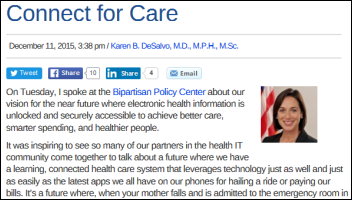
In an ONC blog post, National Coordinator Karen DeSalvo, MD, MPH calls on health IT stakeholders to back her vision for a connected health information ecosystem by focusing on consumer access, information blocking, and adopting national interoperability standards.

The Health of Obamacare

The Wall Street Journal dissects the impact ACA has had on the cost of care in the US and its resulting benefit to patients. The article highlights a reduction in the overall number of uninsured citizens but also points out that the ACA establishes a financial system that looks “more like welfare for the medical-industrial complex than support for the needy.”

Introducing OpenAI

A group of Silicon Valley entrepreneurs donates $1 billion to establish OpenAI, a non-profit artificial intelligence research company that will work on projects that are “most likely to benefit humanity as a whole, unconstrained by a need to generate financial return.”

Monday Morning Update 12/14/15

December 12, 2015 News 9 Comments

Top News

image

Alphabet’s Verily – the just-renamed Google Life Sciences – launches Verb Surgical, which will develop surgical robots in conjunction with Johnson & Johnson.


Reader Comments

image

From Dickey Ascot: “Re: CareTech Solutions. COO Pat Milostan resigned last week. He follows the resignations of CFO Rob Johnson and Controller Dan Lincoln. Karl Graham, formerly in charge of its service desk, has been reassigned. Since the company was acquired by HCT Global Services of Chennai, india, six executives have resigned as its operation focus has been cost cutting and relocating customer services offshore.” Unverified. The company’s executive page still lists Milostan, Johnson, and Graham in the same roles, as do their individual LinkedIn profiles.

From Bill Duck: “Re: occupations. What would you have been if not a hospital IT person?” I wish I had the skill and personality to be a band manager like Shep Gordon, but since I don’t (and besides, I don’t tolerate prima donnas well), I would probably fall back on some solo endeavor that involves creativity, working mostly alone, a lack of convention, and not working for people or causes I don’t respect. My early days as a clinical analyst hit all of those except the last one, which was a partial match. Actually I guess I have that with HIStalk, which is maybe why I’ve stuck with it for so long. I would probably be a pretty good book editor, especially for non-fiction books.

From All R. Base: “Re: mHealth News. HIMSS Media is shutting it down in favor of recently acquired MobiHealthNews.” I don’t have a reaction since I don’t read either site. As far as I can tell, none of the folks involved have any healthcare or technology background, which is fine when they’re just rewording press releases to sound like expert reporting, but not so fine when they forget that they’re just watching the actual athletes perform as nacho-eating fans.

image

From Schmarbitration: “Re: arbitration clauses. There was a great series of articles several weeks ago in the NY Times diving into arbitration agreements. The main reason companies do this is to make class actions go away and that has been upheld in pretty much all courts. Sounds like Cerner did this in response to associates being classified as exempt. Epic did the same a few years ago, but with no carrot and a very large stick. People mock frivolous class action suits, but ultimately, they are one of the only tools to keep companies in line when a small amount of damage is spread over large numbers of people.” The article says big companies are eliminating their lawsuit risk by adding a one-sentence arbitration clause (so-called “get out of jail free” cards for corporations) to their agreements, with examples being cable companies, cell phone providers, and online stores. Their customers are unlikely to have the money to pursue arbitration individually rather than signing up with an existing class, so the company gets its way, just like the Wall Street-led credit card companies and retailers intended when they masterminded their protective loophole. A federal judge concludes, “Ominously, business has a good chance of opting out of the legal system altogether and misbehaving without reproach.” An example is Cerner’s Kansas City neighbor Sprint, which charged $20 roaming fees to customers who never left home, but pocketed the millions because each customer would have been required to hire an expert witness at up to $1 million just to get back their $20. The Supreme Court upheld arbitration clauses starting in 2011, led by Chief Justice John Roberts, who as a private attorney for Discover Bank had been involved in creating them in the first place.


HIStalk Announcements and Requests

image

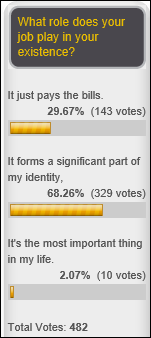
It was just about a 70-30 poll respondent split as to whether their job is a significant part of their identity vs. just a way to pay the bills. Two percent said the most important part of their life is their employment. Furydelabongo would love to become a patient advocate but keeps working as a “disruptive innovator” after realizing that his/her employers in care delivery and healthcare IT don’t keep patient interests foremost. Mobile Man says his need to support the most important thing in his life – his family – has overemphasized his work as part of his self identity. Cassie admits that she associates the majority of her personal value with her work, but wishes she could stop and move into the “it just pays the bills” group.

image

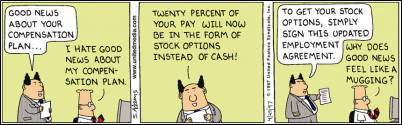
New poll to your right or here: What is your reaction to Cerner employees becoming ineligible for future pay raises if they refuse to sign an arbitration agreement? Answer and then click the poll’s Comments link to explain, especially if your employer already has such an employment clause in effect. Tick, tock.

image

Ms. Catoire sent photos from her urban Virginia high school earth sciences class, for which we provided a Chromebook and printer supplies via her DonorsChoose grant request. Her school can’t earn accreditation because it lacks supplies for interactive and hands-on learning, with our donation allowing her to improve individual learning by supporting individual learning styles. She adds, “Just a few of the activities that I use in my class include having the students create animated presentations, movies, mock assessments, and virtual labs, all which have been made possible by your donation … it is because of your generosity that both the students and myself find the teaching and learning process to be so exciting and fulfilling.”

I was thinking about the ridiculous situation where a patient’s in-network hospital has all kinds of out-of-network people running around sending them bills their insurance doesn’t cover. Instead of those “not this one” markings surgeons make to ensure that they don’t amputate the wrong leg, patients need to write in Sharpie on their foreheads, “no out-of-network providers.” Or, perhaps bring their own single form (vs. the mountain of them the hospital requires them to sign) in which the hospital agrees to provide no out-of-network services without prior authorization. It’s pathetic that hospitals take no responsibility for using providers who bill separately without accepting the same insurance. It’s like paying for a pricey restaurant meal and later finding your credit hard hit for charges from the chef, florist, and exterminator.


The Meaningful Love Program

image

I hereby propose that the federal government turn over responsibility for managing the IRS’s “married filing jointly” tax break. Couples can expect these changes.

  • Couples who want to file jointly will be required to participate in the Meaningful Love program, in which they will document the quality of their relationship using  government-certified software called Electronic Marital Records (EMRs).
  • Conversations and other intimate encounters must be documented via a series of EMR checkboxes and predefined text strings as entered on ever-present computers positioned between them at all times, with the administrative burden estimated at eight distracted minutes of the average 12-minute encounter.
  • Heartfelt handwritten cards and murmuring phone calls will be eliminated in favor of email templates (CPOE, or Computerized Partner Outlook Entry) composed by choosing from a series of government-approved drop-down phrases to improve legibility and standardization.
  • Marital decision support will be used to provide evidence-based recommendations such as anniversary reminders, suggested behavioral changes based on menstrual cycle tracking, and time-since-last-sex alerts.
  • Each couple must maintain a marital problem list that they reconcile during each encounter.
  • EMR records must be sent electronically upon request to anyone with whom either partner might wish to arrange an outside dalliance or in the case of divorce where the new partner would benefit from having the old partner’s EMR data. This will improve the urgent “unconscious person in my bed – what do I do without a history?” scenario as long as all US couples participate despite a lack of incentive for doing so. Future program enhancements will provide the other partner a real-time alert when the tryst has been scheduled.
  • The amount of the tax break will be pro-rated based on mutual attestation that the relationship is loving, the surveyed satisfaction of both people, and their romantic performance as benchmarked against other couples.
  • The Eligible Pair (EP) must submit their EMR-generated marriage quality data to the appropriate state and federal agencies and for the benefit of unmarried researchers who are trying to understand how relationships work.

These requirements are being protested by the American Marital Association and the EMR vendor-sponsored social media campaign #LetLoversBeLovers, but in the mean time, couples who are unwilling to share their marital bed with Uncle Sam just to avoid a few dollars in penalties can opt out by filing individual tax returns.


Last Week’s Most Interesting News

  • Cerner tells employees to sign away their right to sue the company or else they will never be given pay increases.
  • Ascension Health buys almost half of Accretive Health and signs a 10-year revenue cycle agreement with the company.
  • UL acquires IT accreditor InfoGard, which certifies EHR and EPCS systems.
  • National Coordinator Karen DeSalvo, MD tells a group that public health receives only 3 percent of federal health expenditures vs. 97 percent paid to deliver medical services even though 80 percent of health doesn’t involve doctors and hospitals.

Webinars

December 15 (Tuesday) 1:00 ET. “CPSI’s Takeover of Healthland.” Sponsored by HIStalk. Presenters: Frank Poggio, CEO, The Kelzon Group; Vince Ciotti, principal, H.I.S. Professionals. Frank and Vince are back with their brutally honest (and often humorous) opinions about the acquisition. They will review industry precedents (such as Cerner-Siemens), the possible fate of each Healthland product, the available alternatives, and steps Healthland customers should take now. Their previous webinar that covered Cerner’s takeover of Siemens has drawn nearly 7,000 views and this one promises to be equally informative and entertaining.

December 16 (Wednesday) 1:00 ET. “Need for Integrated Data Enhancement and Analytics – Unifying Management of Healthcare Business Processes.” Sponsored by CitiusTech. Presenters: Jeffrey Springer, VP of product management, CitiusTech; John Gonsalves, VP of healthcare provider market, CitiusTech. Providers are driving consumer-centric care with guided analytic solutions that answer specific questions, but each new tool adds complexity. It’s also important to tap real-time data from sources such as social platforms, mobile apps, and wearables to support delivery of personalized and proactive care. This webinar will discuss key use cases that drive patient outcomes, the need for consolidated analytics to realize value-based care, scenarios to maximize efficiency, and an overview of CitiusTech’s integrated healthcare data enhancement and analytics platform.

December 16 (Wednesday) 2:00 ET. “A Sepsis Solution: Reducing Mortality by 50 Percent Using Advanced Decision Support.” Sponsored by Wolters Kluwer Health. Presenters: Rick Corn, VP/CIO, Huntsville Hospital; Stephen Claypool, MD, medical director of the innovation lab, Wolters Kluwer Health. Sepsis claims 258,000 lives and costs $20 billion annually in the US, but early identification and treatment remains elusive, emphasizing the need for intelligent, prompt, and patient-specific clinical decision support. Huntsville Hospital reduced sepsis mortality by 53 percent and related readmissions by 30 percent using real-time surveillance of EHR data and evidence-based decision support to generate highly sensitive and specific alerts.

Contact Lorre for webinar services. Past webinars are on our HIStalk webinars YouTube channel.


Sales

image

Kaleida Health (NY) chooses Ascend Software for accounts payable document imaging.


People

image

Baptist Memorial Healthcare (TN) adds CIO to responsibilities of Beverly Jordan, RN, its VP/chief clinical transformation officer.


Announcements and Implementations

Versus Technology announces a new Wi-Fi locating platform and asset tags.


Government and Politics

image

National Coordinator Karen DeSalvo, MD, MPH calls for health IT stakeholders to commit to providing consumer access, avoiding information blocking, and following standards to support her vision of a connected health system that includes an app store of FHIR-based consumer tools.

An essay in the Wall Street Journal says the Affordable Care Act is “neither the triumph trumpeted by its proponents nor the disaster suggested by its critics.” ACA’s positives include reducing the number of uninsured patients, its possible effect on slowing healthcare spending growth, the upcoming Cadillac tax that encourages employers to control low-value spending, and the creation of a more cost-conscious market than existed with employer-provided insurance. Its negatives are rising numbers of insured thanks to Medicaid expansion that is “more like welfare for the medical-industrial complex than support for the needy” and being promoted as budget-neutral when it isn’t. The article concludes, “Both sides also need to recognize that the changes in incentives necessary to bend the cost curve will be highly unwelcome to many Americans. Markets for health care are the perfect example of the old saying that ‘every dollar of waste is someone’s income.’”


Technology

image

Several high-profile Silicon Valley technology entrepreneurs, including Tesla’s Elon Musk, donate $1 billion to launch non-profit OpenAI, which will develop artificial intelligence technologies that benefit humanity without worrying about profit. They might be surprised to find that healthcare’s use of AI and other technologies always has profit first and foremost, with benefit to patients coincidental.

The Chicago Tribune observes EHR-caused doctor burnout, focusing on doctors turned into data entry clerks and patient visits that emphasize clicks and drop-downs rather than paying attention to what patients tell them.


Other

image

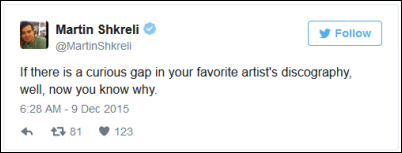
Turing Pharmaceuticals CEO Martin Shkreli is getting the publicity exposure of his life and not just for raising Daraprim prices 5,000 percent and buying $2 million rap albums. Shares in the failing biotech company he bought a few weeks ago for $1.50 are now trading at $28 as investors express confidence that newly named CEO Shkreli will figure out a way to rape the system. Apparently he has – the company has exclusively licensed a drug not available in the US that is used to treat an uncommon parasitic disease. The drug sells for $50 per course of therapy and Shkreli says he’ll raise the price to the $60,000 to $100,000 range. About 300,000 people in the US have the disease, almost all of them Latin American immigrants who entered the country with it, and Shkreli estimates that 3,000 to 7,000 of them will need treatment each year. Even if the market doesn’t pan out, Shkreli has another path to quick profits – he is petitioning the FDA to grant him a fast-track research voucher that he can resell to another drug company for up to $350 million, which benefitted Shkreli’s previous drug company that sold one of the free FDA vouchers for $245 million. I admit that I would invest in his companies since his entire focus is on enriching himself and his investors without letting altruistic emotions interfere with his lust for profit.

A new Missouri law addresses the physician shortage by eliminating residency requirements, allowing newly graduated medical students to start practicing immediately. Medical associations don’t like the law, saying medical schools aren’t set up to prepare their graduates to start practice immediately, perhaps forgetting that residencies were neither mandatory or common for non-specialists outside of urban areas in the early 1980s. So far no new graduates have taken advantage of the change, however, probably realizing that it’s a career gamble that won’t pay off if other states don’t follow suit.

A former part-time employee of New York cardiologist Hussain Khawaja, MD sues him, claiming he fired her looking up her computerized hospital records to determine that she was pregnant. She says the doctor told her while recruiting for other positions that he doesn’t hire applicants with children.

image

New York’s tax department notifies 1,900 taxpayers who worked for Erie County Medical Center in 2012 that they owe the state money because miscoded hospital W2 forms gave them a pension deduction to which they weren’t entitled. The hospital found a bug in its payroll system and says it will pay the interest, fees, and penalties for those affected and will even provide up to $200 to those who hire a tax preparer to amend their 2012 tax forms.

image

Medical helicopters seem to crash a lot given their small numbers, with 78 deaths in the past decade. In a new example, a patient and three rescue personnel die when a SkyLife air ambulance goes down in fog and rain in California. I’ve known folks on hospital helicopter teams and it’s a funny business, with such high cost for so few deployments that ROI (other than for dramatic hospital photos) is tough to justify. I would guess in the vast majority of countries where healthcare is a service rather than a private industry the number of such helicopters is low. As was eloquently stated in “The Right Stuff” even though it wasn’t talking about insurance companies or taxpayer subsidies, “no bucks, no Buck Rogers.”

image

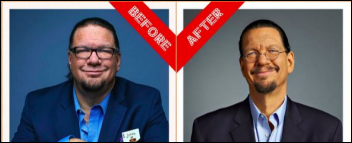
Magician Penn Jillette turns into a pitchman for Withings after using the company’s smart scale and blood pressure monitor to lose 120 pounds in switching to a plant-based diet.  He explains, “It’s just making it automatic and instant. It doesn’t allow a guy like me to spin information — something I’m normally very good at. A little tool, a little bit of a nudge, can make a huge difference.” Penn will be all set if Withings invents a scale to monitor his still-overweight obnoxiousness.


Sponsor Updates

  • TransUnion Healthcare identifies more than $1 billion in insurance payments for hospitals.
  • Versus joins the Cisco solution partner program.
  • Freakonomics author Stephen Dubner will keynote Zynx Health’s Care Guidance 2016 event May 23-26, 2016 in New Orleans.

Blog Posts


Contacts

Mr. H, Lorre, Jennifer, Dr. Jayne, Dr. Gregg, Lt. Dan.

More news: HIStalk Practice, HIStalk Connect.

Get HIStalk updates.
Contact us or send news tips online.

125x125_2nd_Circle

Morning Headlines 12/11/15

December 10, 2015 Headlines 6 Comments

Maryland fires firm upgrading Medicaid technology, may seek money back

Maryland fires and then sues CSC for unacceptable performance during a $300 million Medicaid computer system upgrade contract.

Cerner Corporation offers US employees tough choice: Agree to arbitration or give up merit raises

Cerner is asking employees to sign an arbitration agreement that bars them from filing lawsuits against the company for any reason. Those that refuse are being told they will give up merit-based raises, while those that comply are being given $500 in stock options.

LabMD Loses Sanctions Bid Against Tiversa Over Info Leak

A judge denies LabMD’s request for sanctions against Tiversa, the cybersecurity firm that illegally breached its network and then reported the breach to the FTC.

Patient data compromised after cyberattack hits MaineGeneral Health

The FBI notifies MaineGeneral Health that an undisclosed number of patient records has turned up online after a cyberattack on its network last month.

News 12/11/15

December 10, 2015 News 2 Comments

Top News

image

Maryland fires Computer Sciences Corp. from a $300 million Medicaid computer contract for unacceptable performance and may sue the company to recoup some of the $30 million it has already spent. It had suspended the contract in February. The state’s track record for health IT projects isn’t so good: it also threatened to sue Noridian Healthcare Solutions, the contractor of its health insurance exchange that failed within minutes of its October 1, 2013 go-live, but instead settled for $45 million in July 2015. Most of the wasted money for both Maryland projects, more than $200 million, came from federal taxpayers, although Maryland’s tally is less impressive than Oregon’s squandering of more than $300 million of federal money for an insurance exchange that never even went live. CSC’s record isn’t great, with state Medicaid system problems in North Carolina and a key role in the massive failure of NPfIT in England.


Reader Comments

image

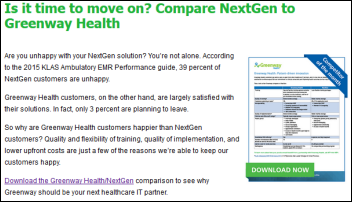
From Rude Boy: “Re: Greenway. Taking direct aim at NextGen in this mailing sent to customers.”

image

From Clam Chowdah: “Re: Brigham and Women’s. Apart from cost overruns, the main operational issues have been because of radiology and one of their legacy systems. Overall, Epic has performed well.”

From Memphis Hank: “Re: executives of big software companies who not only studied, but also taught software engineering or computer science. Along with Epic, there’s also Adobe, SAS, and ESRI. An interesting follow-up analysis would be: what happens to products and customers when geek founders are replaced by private equity and other finance-centric executives?” Big companies run by technologists are about as rare as big health systems run by clinicians.

From Hot Tub Club: “Re: funny video. Remember this one you wrote up years ago?” I remember the dry-humored, four-part video from 2009 in which a slick but clueless salesperson (“I’m not really familiar with what our software things do”) meets with an annoyed and sometimes profane CIO. I was trying to recall the animation tool used and finally remembered that it was Xtranormal, which shut down in 2013.


HIStalk Announcements and Requests

I took my car in for an oil change and got a rare look at daytime TV with a laugh-inducing sight: Dr. Oz wearing scrubs on a talk show as though he might be called upon to perform an impromptu, on-screen surgery on one of the incessantly chatty hosts.

Watching: Jane the Virgin, a witty, fast-paced, and non-profane comedy that has Season 1 on Netflix. I had to give up on American Horror Story because of its overreliance on profanity and graphic violence in Season 2, but that’s OK since I rarely watch TV anyway.

image

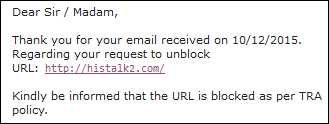
Nick van Terheyden followed up on his observation that HIStalk is blocked by the government in United Arab Emirates, which I thought might be a technical issue instead since several of my Dubai readers say they can read it just fine.  Dr. Nick asked the Emirates Integrated Telecommunications Company to unblock it, but they said it’s intentional per Telecommunications Regulatory Authority. Beats me why.

Last chance to nominate your choices for the HISsies awards. I’ll be emailing ballots to the people who have signed up for HIStalk updates in the next few days. It’s easy to spot the company-encouraged employee responses because the respondents skip most of the categories except Best Vendor and Best Leader and enter their company and CEO names there.

This week on HIStalk Practice: Physicians in rural West Virginia feel the effects of high-speed broadband connections. Hattiesburg Clinic and HealthNet receive HIMSS accolades for their use of health IT. Performance Physical Therapy CEO Michelle Collie outlines the health IT challenges faced by PT practices. Allscripts breaks ground on a new office tower. MediKey partners with Teladoc and EDocAmerica. WebPT expands into new Phoenix digs. Brazilian physicians lead the way in communicating with patients via WhatsApp. Everseat CEO Jeff Peres details the impact of unfilled practice seats.


Webinars

December 15 (Tuesday) 1:00 ET. “CPSI’s Takeover of Healthland.” Sponsored by HIStalk. Presenters: Frank Poggio, CEO, The Kelzon Group; Vince Ciotti, principal, H.I.S. Professionals. Frank and Vince are back with their brutally honest (and often humorous) opinions about the acquisition. They will review industry precedents (such as Cerner-Siemens), the possible fate of each Healthland product, the available alternatives, and steps Healthland customers should take now. Their previous webinar that covered Cerner’s takeover of Siemens has drawn nearly 7,000 views and this one promises to be equally informative and entertaining.

December 16 (Wednesday) 1:00 ET. “Need for Integrated Data Enhancement and Analytics – Unifying Management of Healthcare Business Processes.” Sponsored by CitiusTech. Presenters: Jeffrey Springer, VP of product management, CitiusTech; John Gonsalves, VP of healthcare provider market, CitiusTech. Providers are driving consumer-centric care with guided analytic solutions that answer specific questions, but each new tool adds complexity. It’s also important to tap real-time data from sources such as social platforms, mobile apps, and wearables to support delivery of personalized and proactive care. This webinar will discuss key use cases that drive patient outcomes, the need for consolidated analytics to realize value-based care, scenarios to maximize efficiency, and an overview of CitiusTech’s integrated healthcare data enhancement and analytics platform.

December 16 (Wednesday) 2:00 ET. “A Sepsis Solution: Reducing Mortality by 50 Percent Using Advanced Decision Support.” Sponsored by Wolters Kluwer Health. Presenters: Rick Corn, VP/CIO, Huntsville Hospital; Stephen Claypool, MD, medical director of the innovation lab, Wolters Kluwer Health. Sepsis claims 258,000 lives and costs $20 billion annually in the US, but early identification and treatment remains elusive, emphasizing the need for intelligent, prompt, and patient-specific clinical decision support. Huntsville Hospital reduced sepsis mortality by 53 percent and related readmissions by 30 percent using real-time surveillance of EHR data and evidence-based decision support to generate highly sensitive and specific alerts.

Contact Lorre for webinar services. Past webinars are on our HIStalk webinars YouTube channel.


Acquisitions, Funding, Business, and Stock

image

Express Scripts will invest $25 million in revenue-generating health IT companies related to drug adherence and personalized care. Actually the announcement says the investments will focus on “prescription drug adherence,” so I assume those who are addicted to street drugs are already adhering just fine on their own.

image

India-based Tata Consultancy Services will join Vanderbilt University Medical Center’s CTTC commercialization group to develop products related to bioinformatics, care management, and analytics.

image

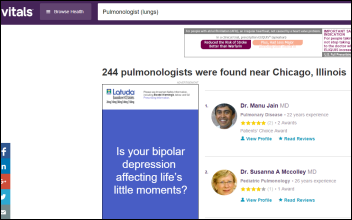
Goldman Sachs and other investors provide $41 million in funding for doctor search site Vitals, raising its total to $86 million.


Sales

image

Adventist Health System chooses Athenahealth’s EHR, PM, and patient engagement services for its 1,600 employed physicians.

image

Ascension Health signs an exclusive, 10-year revenue cycle agreement with Accretive Health and will invest $200 million in the company. That’s an interesting development given that Ascension tried to buy Accretive this past June, was turned down by Accretive, and then announced that it would not renew its contract with Accretive that was to expire in 2017, forcing Accretive to “undertake a review of strategic alternatives” at the prospect of losing a customer that represented 50 percent of its business. Accretive shares jumped around 50 percent following the latest announcement, but are trading at 90 percent less than their mid-2011 price and at about half the share price at the time Ascension offered to buy the company. Accretive’s market cap is $300 million, so a $200 million investment must represent at least a 50 percent stake.


People

image

LogicStream Health names Jack Hauser (Ability Network) as CFO.

image

Scripps Health (CA) names Andy Crowder (MaineHealth)  as SVP/CIO.

image

Gurpreet Singh (MD Revolution) joins CareSync as VP of interoperability. The company says it has hired 60 employees since it announced $18 million in Series D funding in October.

image

HIMSS and CHIME name Craig Richardville, SVP/CIO of Carolinas HealthCare System, as John E. Gall, Jr. CIO of the Year.


Announcements and Implementations

image

SCL Health (CO) offers $40 physician video visits via Doctor On Demand.

image

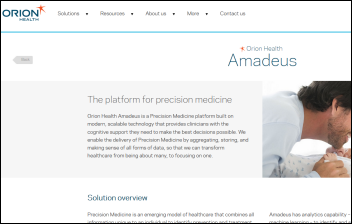
Orion Health launches Amadeus, a data platform that offers predictive modeling and machine learning to support precision medicine. It also features open APIs for developers to create additional services.

Idaho HIE goes live on a clinical portal from Orion Health.


Government and Politics

CMS says that 2.8 million people have signed up for insurance via Healthcare.gov, one million of them first-timers. Healthcare.gov CEO Kevin Counihan say 80 percent of consumers can find coverage for less than $75 per month after government subsidies.

image

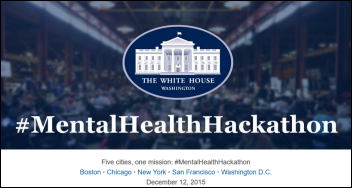
The White House announces mental health hackathons and data sprints on Saturday, December 12 in Boston, Chicago, New York, San Francisco, and Washington, DC.


Privacy and Security

image

A federal judge denies LabMD’s request for sanctions against security vendor Tiversa, which LabMD said intentionally breached its systems and then threatened to report the company to the government if it didn’t buy Tiversa’s security services, resulting in LabMD’s eventual shutdown after a long Federal Trade Commission fight. Meanwhile, Tivera’s CEO, stung by accusations of extortionate sales practices in LabMD’s case, writes a Wall Street Journal letter titled, “Tiversa Was a Good Samaritan, Not a Bully” in which he states that the company sent LabMD a services proposal at the company’s own request without any threat that it would otherwise tell the FTC about the exposed information. He blames a former Tiversa employee turned whistleblower who has “a history of not telling the truth.” He says Tiversa is suing LabMD and its former employee for defamation. 

image

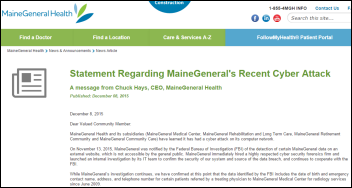
The FBI finds patient information from MaineGeneral Health online and alerts the health system, which says radiology patient information is at highest risk. Employee and prospective donor information was also taken.

A hospital employee and his wife are charged with stealing the information of 80 patients to take over their credit card accounts and fraudulently charge $300,000 worth of upscale fashions and accessories.


Technology

image

A study finds that two-thirds of doctors in Italy and nearly 90 percent in Brazil communicate with their patients via the WhatsApp messenger app.

image

Shriners Hospital for Children (UT) tests its new telemedicine system by offering children video chats with Santa Claus.


Other

image

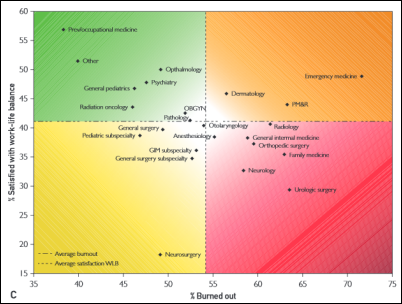
A Mayo Clinic Proceedings article looks at physician burnout, which it unsurprisingly concludes is getting worse. It should have added a third axis of average income by specialty, which would have shown that internal medicine and family medicine have high burnout paired with lower incomes compared to their equally burned out but higher-earning peers in orthopedic surgery and radiology.

image

A Kansas City TV station reports that Cerner is requiring its employees to sign an arbitration agreement that prevents them from suing the company for any reason, offering them $500 in stock options if they signed by December 8 but denying them future merit pay increases if they didn’t. Employees had previously filed two class action lawsuits claiming they were incorrectly classified as salaried employees and thus were denied overtime pay. The arbitration clause would eliminate the possibility of such lawsuits. An anonymous Cerner employs speculates on Reddit (not entirely convincingly) that Cerner is trying to work around terms of its Siemens HS acquisition that require it to use Siemens service years to calculate severance pays in the case of Malvern layoffs.

image

Regina Holliday is running a GoFundMe campaign in hopes of raising $10,000 toward her expenses in creating The Walking Gallery jackets. I should also mention her excellent book, “The Writing on the Wall,” that came out earlier this year. I see it’s now available for Kindle as well as softcover. I thought it was superb and I strongly recommend it.

image

The mystery buyer of the one-of-a-kind Wu-Tang Clan rap album — the most expensive in history at $2 million for the only copy that will ever be sold — is revealed to be the most-hated man on the Internet, Turing Pharmaceuticals CEO, pharma bad boy, and aspiring rap producer Martin Shkreli. Shkreli says be bought it hoping he can hang out with celebrities who want to hear the album (he’s hoping for Taylor Swift), but when asked if will stream it free for Wu-Tang fans, he replied with the same logic that’s behind his 5,000 percent price hike for Daraprim, “Why would I pay millions of dollars just to let everyone listen to it for free?” He says he may commission more bands to make albums for his ears only just because he can.

image

Weird News Andy predicts “Sold Out in Chicago,” as FDA approves commercial sale of a former military-only device that injects sponges into a bullet wound to stop bleeding in 20 seconds. The sponges are tagged with radiopaque markers so they can be detected and removed later.


Sponsor Updates

  • PerfectServe adds Robert Rinek of Paper Jaffray and Brant Heise of Memorial Care Innovation Fund to its board.
  • Health Catalyst is named a “best place to work” on three lists, two national and one regional.
  • PeriGen’s Emily Hamilton is published in the American Journal of Obstetrics & Gynecology.
  • Streamline Health Solutions signs a reseller agreement with outsourcing solutions provider Himagine Solutions.
  • InterSystems receives the HIMSS Middle East Integrated Health Innovations Award 2015 – mHealth category.
  • MedCPU will host four US-based hospital CIOs December 14 in Israel as part of a CHIME/Israel Export & International Cooperative Institute event.

Blog Posts


Contacts

Mr. H, Lorre, Jennifer, Dr. Jayne, Dr. Gregg, Lt. Dan.

More news: HIStalk Practice, HIStalk Connect.

Get HIStalk updates.
Contact us or send news tips online.


125x125_2nd_Circle

EPtalk by Dr. Jayne 12/10/15

December 10, 2015 Dr. Jayne 2 Comments

A couple of reader comments on my piece about employer wellness programs caught my attention. I have to thank Al Lewis, who provided my laugh of the day when he asserted that, “There is no adult supervision in this field, so vendors can do things that doctors would get sued for doing.” He goes on to call out a vendor who provides carotid artery disease screening even though the US Preventive Services Task Force (USPSTF) specifically recommends against screening the general adult population. I didn’t know this was creeping its way into employee wellness programs, so thanks for the warning.

I have, however, seen mass carotid artery disease screening in a promotional offering for senior citizens that I can only describe as predatory. For an upfront cash fee, it touts the benefits of multiple “screening” tests that aren’t recommended. In addition to the carotid artery test, it also offers abdominal ultrasound screening (only recommended for men aged 65 to 75 who have ever smoked, and selectively recommended for men in this age group who have never been smokers). It also offers screening for peripheral arterial disease via an ankle brachial index (insufficient evidence to assess) as well as multiple blood tests that aren’t necessarily recommended for average-risk individuals.

When looking at the flyer and the number of tests offered, it may be easy for some to come to the conclusion that it’s a good deal based on the sheer volume of diseases they talk about. However, no test is without risk and just getting them because they’re cheap and available is a bad idea. Although we did tend to “shotgun” batteries of tests on our hospitalized patients when I was in medical school, by the time I reached residency training, the focus had shifted to doing fewer tests and only those that were evidence-based. That was good, because I can’t even count how many wild goose chases we went on due to abnormal labs that should never have been ordered in the first place.

The worst wild goose chase of my career still haunts me and I wonder if a different attitude (and better interoperability) would have prevented it. The patient was a delightful lady with significant and complex medical problems who had been my patient for three years during my residency. When I decided to stay in town and open a practice, she asked if she could follow me. Although I said yes, I cautioned her that there would be a two-week period between when I graduated from the training program and when I hung out my shingle when I would have no malpractice insurance and could not be her doctor. I advised her to remain with the residency clinic for continuity until my doors were open.
Unfortunately, one week into the gap (while I was cramming for my board exam) I received a call from the emergency department of my “new” hospital where the patient’s caretaker had taken her, not realizing I could not yet care for her. She was admitted and placed in the care of a hospitalist and three specialists who were working up her problems, unaware that they had been worked up thoroughly in the past. Because the patient was non-verbal, her ability to consent to the evaluation was limited. She had abdominal pain and her exam was challenging due to her other conditions, so someone ordered a cancer antigen test, which was positive. They didn’t realize it had been positive for some time with a completely negative workup and a previous informed consent decision to stop pursuing it.


I attempted to reason with one of the house doctors, begging them to request the chart from the residency program so they could provide good care. Unfortunately the goose chase persisted and the patient remained hospitalized, developing a life-threatening problem with her platelet function. This was in part due to the blood thinner injections she was given in the hospital to prevent blood clots due to her immobility. Oddly enough, the patient has been immobile for the better part of 50 years and survived without blood thinners, but the doctors were just following the hospital protocol for giving heparin to immobile patients.

The cancer workup was completely repeated, including several invasive procedures. By the time I assumed care of her barely a week later, she had suffered multiple complications, including a heart attack, and was being considered for bypass surgery.

Thank goodness I was able to corral things before that happened because the patient and I had previously discussed her surgical prospects and she had clearly indicated that she didn’t want anything like that done. I realized that for most of the hospitalization, she had been without the computer she uses to communicate with people (she has mobility of one hand and creates computer-generated speech using it) and probably hadn’t consented to most of what she had been through.

At that point, my goal was just to get her out of the ICU, and then out of the step-down, and then to the regular floors, and then home – one day at a time. Eventually we accomplished all of those and she did well despite the “care” she received. Even years later, just thinking about this scenario wants to make me track down whoever ordered that initial (inappropriate) blood test and give them a good talking-to. Whenever one of my students or supervisees orders an unnecessary test, they hear this story. I hope it sinks in.

Another comment was from John Lynn, who asks that if a patient showed up in my office and said they were healthy and wanted to stay healthy, what would I do? I agree with him that some doctors would offer a physical and try to find something wrong. However, many physicians (especially those trained in family medicine and other primary care specialties in the last two decades) would know exactly what to do. We’re well trained in health promotion and disease prevention, but many of us don’t get to use those skills often enough. My personal recipe includes the following:

  • Find out if the patient has any concerns about their health, even if they think they’re generally healthy. Those concerns should be addressed through additional history and a targeted exam and a specific workup if warranted.
  • Take a detailed family history to review the patient’s risk factors and discuss ways to mitigate those risks or avoid developing additional risk factors.
  • Discuss general health behaviors (diet, exercise, tobacco, alcohol, caffeine, sexual behaviors, seat belt use, etc.) and advise accordingly in line with current evidence. Refer to appropriate resources as needed (nutritionist, smoking cessation, psychology, social work, etc.)
  • Assess psychosocial and other determinants of health as needed (social supports, financial ability to get care if needed, etc.)
  • Targeted physical exam as recommended for evidence-based screenings and to establish a baseline rather than “looking for” something.
  • Recommendation for additional screening tests and preventive services as appropriate based on evidence-based recommendations. This may include in-office services such as vaccines or external testing such as mammograms, colonoscopies, etc.

There are more things involved, but you get the idea. It’s about the doctor and the patient sitting down and talking about things. Which in our system doesn’t get you paid very well, and because of that, we don’t have anywhere near the time we need to do it right.

Add in the fact that patients often have to change doctors every year or two due to insurance changes and it’s hard to develop the rapport needed to work together on some of the more challenging situations that come up when you actually talk to people and get to know them. I’d love to be able to have a solid hour with patients to do a wellness visit and to leverage proven techniques such as motivational interviewing, but that’s just not how it works.

In my ideal world, I’d not only have the time to do it right, but the resources – access to other clinical professionals as needed (psychologist, social work, nutritionist, health coach, etc.) at times that work for the patient so they don’t have to take off work. I’d also like to see these preventive services fully covered by insurance. Although the Affordable Care Act mandates coverage for preventive services recommended by the USPSTF, patients on so-called “grandfathered” plans may still not have coverage. Until recently, I was on one of these plans so know exactly what is involved.

I’d love to see all preventive services fully covered. Not only because it’s the right thing to do, but also because they have been proven to be cost effective. I remember the first time I realized that Medicare wouldn’t pay for blood sugar monitoring supplies for certain diabetic patients but they would pay for amputations. I was appalled.

If that ideal world existed, I’d likely still be a primary care physician rather than a mercenary CMIO and part-time emergency doc and blogger. It’s something for the politicians and pundits to think about when they talk about the shortage of primary care physicians and wanting to bend the cost curve. But unfortunately, I don’t think it’s anything I’m going to see in my lifetime.

What’s your ideal care paradigm? Email me.

Email Dr. Jayne.

Morning Headlines 12/10/15

December 10, 2015 Headlines 1 Comment

Athenahealth Reaffirms Fiscal Year 2015 Guidance and Initiates Guidance for Fiscal Year 2016

Athenahealth forecasts a FY16 EPS of between $1.65 and $1.85 on $1.13 billion in revenue, topping analyst estimates on earnings but forecasting a lower than expected revenue. In a statement ahead of its investor day, the company explained that it planned to scale its operations to increase revenue and improve margins.

ACA Update: Effects On Ability To Pay Medical Bills And Labor Supply; Enrollment Snapshot; And More

Health Affairs recaps a number of ACA-related reports, one from the CDC finding that the percent of adults struggling to pay medical bills is steadily declining, another from the CBO forecasts a 1.7 percent decline in labor supply caused by ACA coverage expansions, and a third from CMS announcing that one million new Healthcare.gov users have selected plans this year.

Tufts Medical Center Is Bringing Virtual Reality to Patient Care

In an effort to alleviate pre-surgical anxiety and improve patient education, Tufts Medical Center (MA) will begin using virtual reality headsets to help prepare patients for surgery, giving them a 360-degree tour of the facility and introductions to the staff.

Changes in Burnout and Satisfaction With Work-Life Balance in Physicians and the General US Working Population Between

A report on physician job satisfaction between 2011 and 2014 finds that burnout is increasing across the board, but at rates that vary heavily between specialties. Burnout rates in the general population have remained flat over the same period.

EHR Design Talk with Dr. Rick 12/9/15

December 9, 2015 Rick Weinhaus 9 Comments

Designing a New EHR User Interface: Telling a Story on a Timeline

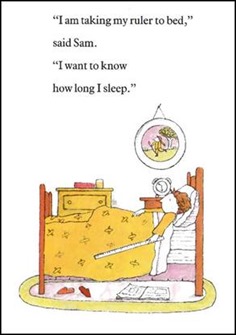
In January of this year, my wife Karen — who is an artist and illustrator — and I came across an illustration from a children’s book for early readers which she had illustrated back in 1980.

The book tells the adventures of the very nice Brown family (Mr. and Mrs. Brown, Sam, Jane, and Grandpa) who somehow manage to accomplish and thoroughly enjoy their daily activities despite the fact that, or perhaps because, they are incapable of abstract reasoning.

In the chapter about bedtime, Sam explains his plan for the night:

clip_image002

About the same time we came across this illustration, I had been thinking about how to display EHR events visually on a timeline (see my posts from 11/09/2015 and 11/25/2015 for a description of the EHR TimeBar design). I was struck by how both Sam and I wanted to use length in order to measure time.

I started doing some reading in the cognitive psychology literature. It turns out that it’s not just Sam, but all of us (including the MIT undergraduates who were the subjects of some of the experiments and whose capacity for abstract reasoning is presumably better than that of the Browns) who use length and other spatial metaphors to think about time.

When we use expressions like “a long time ago,” “a short time later,” “back in time,” “the distant past,” “spring is far away,“ and so forth, they come to us so naturally that we don’t realize we are using our concepts of space to describe time.

To what extent we have to rely on spatial metaphors when we think about time turns out to be a hotly debated topic in cognitive psychology. According to the “strong version” of one theory, the human brain just can’t intuitively grasp the concept of time. This theory holds that the human brain, like the brains of all other animals, evolved to help us perceive and interact with the physical world.

When humans subsequently acquired the capacity for abstract reasoning, we had to use our existing sensory and motor systems – the ones we use for seeing, hearing and touching things and moving around in the real world – in the service of understanding abstract concepts. In other words, according to this theory, we are mentally incapable of understanding the concept of time without thinking of it in concrete terms. For instance, by visualizing it as a physical path.

If this theory (or even a weaker version of it) is true, it has profound implications for designing EHR user interfaces. If we can present a sequence of clinical events as points in space along a visual timeline, we should be able to grasp this time-based data with little cognitive effort.

In other words, we can “co-opt” the parts of our brain — including our high-bandwidth visual processing system — that have been finely honed by millions of years of evolution to intuitively grasp the physical world in the service of grasping abstract concepts. In doing so, we spare our finite cognitive resources for patient care issues.

Consider two alternate ways of representing the sequence of clinical events (documents) in my data set for the months of March and April, 2014. Note that for clarity, in both views only the time-based (temporal) information about the documents is represented; the subject matter of the documents has, for now, been omitted.

Chronological List of Events – Numeric Format

clip_image003

Timeline View of Same Events – Graphical Format

clip_image005

We can then begin to ask which view better supports the following tasks:

Accurately shows the precise date of each event

Here, the numeric chronological list does better. In the timeline view, an interactive gesture such as a mouse hover would be required to cause the precise date to display. On the other hand, if the precise date is not important, the numeric list of precise dates can cause visual clutter.

Shows the events in the correct temporal order

Both views show the events in the correct temporal order.

Makes it easy to see how events are clustered

Here the timeline view does better. We can intuitively see how events are clustered and the time intervals between them. In contrast, with the chronological list, it takes cognitive effort to get this same information.

Makes it easy to see how many events occurred on the same day

Again, the timeline view does better. To get the same information using the chronological list requires cognitive effort.

Makes it easy to see how events relate in time to the present

In one sense, the present – that is, “today” – is always the most important point in time when taking care of a patient. The timeline view incorporates a symbol for today. In this example, it is as if we are viewing the timeline on April 30. Of course, today could just as easily be inserted into a numeric chronological list, but most EHRs do not support this option.

It’s important to remember that this comparison makes a huge presupposition. It assumes that your EHR is, in fact, capable of providing you with a single chronological list of all clinically relevant documents (notes, labs, reports, imaging, procedures, and so forth) regardless of their category.

As I discussed in my last post, many major EHRs, both ambulatory and inpatient — at least as they are usually configured — do not provide this option. Without such a view, some of the tasks above become nearly impossible cognitive challenges (see my very first post, Human-Centered versus Computer-Centered Design).

In summary, both the chronological list of events and the timeline view have advantages and disadvantages. We are so used to working with chronological lists of EHR events in numeric format that the advantages of timeline-based views remain largely unexplored.

Note: I would like to thank Stephen Few, whose article, Data Visualization for Human Perception, published in the Encyclopedia of The Interaction Design Foundation, inspired the comparative format of this post.

Rick Weinhaus, MD practices clinical ophthalmology in the Boston area. He trained at Harvard Medical School, The Massachusetts Eye and Ear Infirmary, and the Neuroscience Unit of the Schepens Eye Research Institute. He writes on how to design simple, powerful, elegant user interfaces for electronic health records (EHRs) by applying our understanding of human perception and cognition. He welcomes your comments and thoughts on this post and on EHR usability issues. E-mail Dr. Rick.

Morning Headlines 12/9/15

December 9, 2015 Headlines 1 Comment

Public health gets least money, but does most

Karen DeSalvo, MD and acting assistant secretary of health discusses the need for increased public health funding, noting that 97 percent of funds are spent on care delivery, while 80 percent of people’s health needs are influenced by what happens outside of the doctor’s office.

Debunking common myths about healthcare consumerism

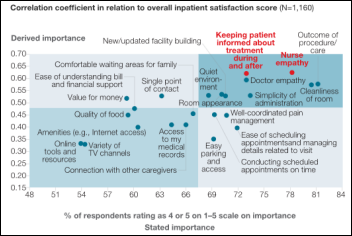
A review of McKinsey studies focused on healthcare consumerism finds that patient satisfaction is most influenced by nurse empathy and keeping patients informed about their treatments.

Hospitals Face Budget Woes With Switch To Electronic Records

Brigham and Women’s Hospital falls $53 million short of its projected 2015 surplus, blaming in part its Epic implementation, which was expected to cost $47 million but ultimately ran $27 million over budget due to lower patient volumes and coding issues.

Startups ZocDoc, Oscar to Help Obama Advertise Obamacare

ZocDoc and Oscar Health have both been contracted to begin running Healthcare.gov ads in hopes of bolstering sign ups as the final weeks of open enrollment wind down.

News 12/9/15

December 8, 2015 News 4 Comments

Top News

image

Acting Assistant Secretary for Health and National Coordinator Karen DeSalvo, MD, MPH tells a group that US public health is “marginalized and under-funded” as 97 percent of available federal money is spent on delivery of medical services even though 80 percent of health factors don’t involve hospitals and doctors’ offices. She adds, “The notion of population health doesn’t end with a geographic boundary … it’s everybody in the community,” giving the example that parts of Baltimore have worse health than North Korea.


Reader Comments

image image

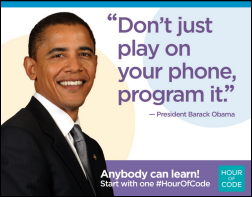
From The Freshman Whisperer: “Re: Hour of Code. I was at a ninth-grade career fair last week telling students the story of technology and how the healthcare industry needs help. As a part our booth, we had students try Hour of Code. I was happy to hear that many students had tried coding before (lots even enjoyed it) and were considering a career in computer science. I wasn’t offered any coding classes in high school. Thumbs up for teachers teaching young coders. My company can’t hire enough of them!”

From Health Dataphile: “Re: HCA’s inpatient and outpatient facilities in the Southeast. Meditech went down over the weekend and, as far as I know, is still down as of Monday morning.” Unverified. Usually an outage of that magnitude would be related to data center communications or some type of network failure, which HCA might be prone to since it deploys Meditech and other systems regionally. That might be a lesson for everyone anxious to get out of the operations business and move to a cloud provider – cloud systems are probably better architected, but they can still go down or you can lose access to them if something happens to your real-world connectivity. A reader in an HCA hospital in Florida says the ICU nurses didn’t know the downtime protocol they were supposed to be following, but on the bright side, doctors fell back to writing and dictating orders instead of entering them into the computer, allowing them to leave for home earlier than ever. The nurses were worried about medication reconciliation between the MARs and Pyxis machines.

image

From This Is Just Silly: “Re: Judy Faulkner’s letter on exhibit at the Smithsonian. I would have rather seen the letter or email she sent to George Halvorson at Kaiser Permanente when she turned down KP’s interest in buying Epic.” The National Museum of American History’s just-opened “Giving in America” exhibit includes the letter Faulkner wrote in pledging that she will donate 99 percent of her $3 billion fortune to charity. I was just thinking that Epic must be one of very few hugely valued companies where both top executives studied computer science.

From Unscheduled: “Re: McKesson’s scheduling software. I’m hearing it is ending support. Do you know if that’s true?” I don’t, but anyone who does is welcome to comment.

From Ground Pounder: “Re: salary survey. Cute infographic hides terrible methodology.” It’s puzzling why reasonably smart people will believe a dumbed-down graphic instead of paying attention to what it’s based on, although far less puzzling why crappy “news” sites run the graphic as clickbait. The members-only report is based on a survey of only 700 people who were apparently self-selected, meaning any conclusions it attempts to draw are not believable, especially when it tries to segment the responses into subcategories. Here are some headlines the self-promoting report drew by sites that simply reworded the press release, with extra points for the first entry (which turned it into a “listicle” like you’d see on celebrity gossip sites) and the last entry (which seems to attempt a Donna Summer song pun):

  • Health IT professionals think they’re underpaid: This and 9 more findings on IT salaries
  • Average healthcare IT salary tops $87,000, job tracker survey finds
  • Average Health IT Salary Down, but Job Satisfaction Up, Report Finds
  • Health IT Professionals Report High Salaries, Job Satisfaction
  • Survey: HIT workers get lower salaries than desired
  • Infographic: Health IT workforce paid well, but perhaps not enough
  • Health IT Pros See High Salaries Due to Increased HIT Needs
  • Working Hard for the Money

HIStalk Announcements and Requests

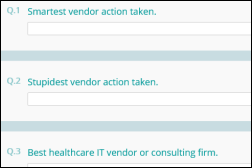
HISsies nominations will remain open for a few more days. The best nomination I’ve received so far is in the “smartest vendor action taken” category, where someone offered, “Hiring hookers to seduce my COO.” Athenahealth has obviously put the word out to employees as indicated by both boilerplate nominations in several categories and repeated IP addresses that are dominating the responses, but that’s OK since the final ballot will be delivered by the unstuffable ballot box of direct email.

image

Ms. Lam from California says she assigned her first graders, most of whom are from immigrant families in which English is their second language, to work with fourth-grade partners using the hands-on Make Wonder programming and robotics kit we provided by funding her DonorsChoose grant.


I wrote earlier this week about a friend who keeps working for her vendor employer even while fighting the cancer that will almost surely kill her because she’s worried she isn’t replaceable at work. It resonated with a reader who sent me an internal executive email exchange from a few years ago. An employee of a large health IT vendor was determined to keep working despite having cancer (of which she died shortly after) so that her retirement plan could vest for her surviving family. I’m paraphrasing the exchange below:

[Executive to CFO]: The employee thinks she needs to push through and keep working even though it will be one of the last things she will do on this Earth. Without being too nosy, can we vest the retirement even though the dates haven’t arrived?

[CFO] I want to make this happen and will approve the change under my board-delegated authority. Consider this as my approval. This is the only time I have ever approved such an action, but it seemed appropriate. A great example of why it feels great to work at [vendor name omitted].

[CEO] I am in complete agreement. Today is a gift – that is why they call it the present. 


Webinars

December 9 (Wednesday) 12 noon ET. “Population Health in 2016: Know How to Move Forward.” Sponsored by Athenahealth. Presenter: Michael Maus, VP of enterprise solutions, Athenahealth. ACOs need a population health solution that helps them manage costs, improve outcomes, and elevate the care experience. Athenahealth’s in-house expert will explain why relying on software along isn’t enough, how to tap into data from multiple vendors, and how providers can manage patient populations.

December 9 (Wednesday) 1:00 ET. “The Health Care Payment Evolution: Maximizing Value Through Technology.” Sponsored by Medicity. Presenter: Charles D. Kennedy, MD, chief population health officer, Healthagen. This presentation will provide a brief history of the ACO Pioneer and MSSP programs and will discuss current market trends and drivers and the federal government’s response to them. Learn what’s coming in the next generation of programs such as the Merit-Based Incentive Payment System (MIPS) and the role technology plays in driving the evolution of a new healthcare marketplace.

December 15 (Tuesday) 1:00 ET. “CPSI’s Takeover of Healthland.” Sponsored by HIStalk. Presenters: Frank Poggio, CEO, The Kelzon Group; Vince Ciotti, principal, H.I.S. Professionals. Frank and Vince are back with their brutally honest (and often humorous) opinions about the acquisition. They will review industry precedents (such as Cerner-Siemens), the possible fate of each Healthland product, the available alternatives, and steps Healthland customers should take now. Their previous webinar that covered Cerner’s takeover of Siemens has drawn nearly 7,000 views and this one promises to be equally informative and entertaining.

December 16 (Wednesday) 1:00 ET. “A Sepsis Solution: Reducing Mortality by 50 Percent Using Advanced Decision Support.” Sponsored by Wolters Kluwer Health. Presenters: Rick Corn, VP/CIO, Huntsville Hospital; Stephen Claypool, MD, medical director of the innovation lab, Wolters Kluwer Health. Sepsis claims 258,000 lives and costs $20 billion annually in the US, but early identification and treatment remains elusive, emphasizing the need for intelligent, prompt, and patient-specific clinical decision support. Huntsville Hospital reduced sepsis mortality by 53 percent and related readmissions by 30 percent using real-time surveillance of EHR data and evidence-based decision support to generate highly sensitive and specific alerts.

December 16 (Wednesday) 1:00 ET. “Need for Integrated Data Enhancement and Analytics – Unifying Management of Healthcare Business Processes.” Sponsored by CitiusTech. Presenters: Jeffrey Springer, VP of product management, CitiusTech; John Gonsalves, VP of healthcare provider market, CitiusTech. Providers are driving consumer-centric care with guided analytic solutions that answer specific questions, but each new tool adds complexity. It’s also important to tap real-time data from sources such as social platforms, mobile apps, and wearables to support delivery of personalized and proactive care. This webinar will discuss key use cases that drive patient outcomes, the need for consolidated analytics to realize value-based care, scenarios to maximize efficiency, and an overview of CitiusTech’s integrated healthcare data enhancement and analytics platform.

Contact Lorre for webinar services. Past webinars are on our HIStalk webinars YouTube channel.


Acquisitions, Funding, Business, and Stock

image

San Diego-based MD Revolution raises $23 million. It offers a patient engagement platform that allows providers to bill Medicare for delivering chronic care management services.

image

UL acquires InfoGard, an IT accreditor whose offerings include certification of EHRs and electronic prescribing of controlled substances systems.

image

EClinicalWorks will spend $30 million in India to build a data center and increase its 1,000-employee headcount there by at least 300 in the next three months. The company will offer consumers in India an app to view lab results, find doctors, maintain personal health records, and schedule appointments. The company has already signed 40 hospitals and 20 practices in India.

image

The Wall Street Journal summarizes the strategy behind the turnaround of Valeant Pharmaceuticals that has brought criticism as well as a 4,000 percent share price increase that gave its CEO $2 billion in holdings:

  • Cut research and development expense.
  • Take over dozens of drug companies.
  • Buy undervalued drugs and raise their prices.
  • Focus on skin treatments, mostly just redesigning old ones rather than researching new ones, knowing that dermatologists are responsive to drug salespeople and prescribe by habit.
  • Sell its dermatology products through a now-closed mail order pharmacy that used aggressive sales tactics.

image image

Twine Health, which offers health coaching software developed at MIT, raises $6.75 million.

image

San Francisco-based concierge medicine provider One Medical Group raises $65 million to expand its service area and to further develop its enterprise and mobile technology solutions, increasing its total to $182 million.

image

Google has renamed many of its business and does the same with Google Life Sciences medical device group, now known as Verily. Meanwhile, GV (formerly known as Google Ventures) says it is less interested in seed-stage investing and will instead pursue more mature companies, with an ongoing emphasis on healthcare and life sciences firms.

image

Harris Computer Systems relocates its QuadraMed EMPI Solutions business to a high security office in Plano, TX that can house up to 100 employees.


Sales

image

Weirton Medical Center (WV) chooses Besler Consulting’s Transfer DRG Revenue Recovery Service.

image

Scripps Health (CA) chooses the Health Gorilla Clinical Network to provide patients with access to imaging and lab information.


Announcements and Implementations

image

Intelligent Medical Objects announces GA of its 2.0 release that includes silent terminology updates, support for natural language processing, quarterly refreshes of major dictionaries, and a CQM dashboard.

PatientPay announces that customer Greenwood Pediatrics (CO) reduced its billing costs by 47 percent by switching from paper to the company’s online bill review and payment.

Cloud hosting provider Infinitely Virtual announces that it has passed the HIPAA audit that allows it to offer health IT hosting plans, including a $10 per month option for full-disk encryption for each virtual machine.

Telemedicine services company Virtual Radiologic announces that it has applied artificial intelligence to data from the 90,000 head CTs it performs monthly to create a real-time warning to its teleradiologists that a patient might be experiencing intracranial hemorrhage.

image

A Finland-based software vendor licenses a web-based geriatric assessment system developed by the University of Queensland in Australia. The software records and monitors the progress of elderly patients before, during, and after hospital stays and can be used to deliver telehealth services. The CeGa Online system is already offered by Queensland Health. The same researchers have also developed a residential care version.

image

SAP announces software for medical data analysis and clinical trials recruitment.


Government and Politics

The White House enlists ZocDoc and Oscar Health Insurance Corp. to provide free advertising that will urge uninsured people to buy insurance via Healthcare.gov in the final week of open enrollment. ZocDoc will target customers who have paid cash for the appointments they booked through its scheduling service, while Oscar chas reated an explainer video that it will distribute in the handful of states where it sells plans.


Privacy and Security

A physician-written editorial in the Journal of American Physicians and Surgeons says that patient privacy is an illusion because of electronic medical records that make data available without patient consent for oversight and research. The psychiatrist, Susan Israel, MD, wants EHRs redesigned to give patients control of their information via consent requirements “regardless of cost and complexities involved.” 


Innovation and Research

image

Google patents a needle-free blood draw system that uses compressed gas to pierce skin and then draw the resulting blood into a collection chamber. The patient covers two possible devices, one for diabetic finger-sticks and the other worn as a wristband. Companies seem to be enchanted with the idea that patients need an alternative to needles and the collection volume of standard blood draws, but for me, that’s far less important than avoiding the inhospitable long waits at LabCorp and Quest drawing centers full of people whose NPO stomachs growl as they watch awful TV shows that working people rarely see.


Technology

image

Carequality releases its interoperability framework (legal terms policies, technical specifications, and governance processes) that allows organizations to quickly establish data sharing agreements with partners.


Other

Brigham and Women’s Hospital misses its budget surplus target for FY2015 by $53 million, which it blames on weather, employee retirement costs, and the cost of transitioning to Epic. The hospital had budgeted $47 million for its Epic conversion, but instead spent $74 million. Revenue also fell short by $13.5 million as employees didn’t code cases correctly on Epic.

image

A summary of McKinsey’s previous healthcare consumerism studies concludes that while patients say their outcome is the most important factor in their satisfaction with providers, it’s actually clinician empathy (especially from nurses) and the information they are given before and after treatment that is most closely correlated to satisfaction. Access to medical records wasn’t all that important and neither was the perception of value received. A study also found that while 40-50 percent of patients aged 18-34 want to use technology to speak to their provider by phone, schedule appointments, and check health status, the percentage drops sharply for those aged 35-55. Respondents are also willing to share health monitoring data capture with their PCPs, but not very many would do so with friends, family, insurance companies, and employers.

Researchers mine EHR databases at two hospitals to detect a previously unknown correlation between the use of androgen deprivation therapy and later development of Alzheimer’s disease. The study used text-based data mining methods developed by one of the authors that were patented by Stanford University. The hidden value of a study like this is that researchers can look at the entire patient population of a health system rather than just individual patients who opt in for a study that was designed to test a particular theory.

A study in England proves that patients are as clueless about antibiotics as doctors keep saying. Two-thirds of them expect to get an antibiotic prescription for a cold or flu, one-third think they should stop taking antibiotics once they feel better, and three-quarters believe it’s the human body rather than bacteria that grow resistant to the drugs. Doctors who apply sound science to writing antibiotic prescriptions are seeing their patient satisfaction ratings fall, with a 3- to 6-percentile drop for every 25 percent reduction in prescriptions. The other GPs just keep cranking them out to keep patients happy, with half of those patients receiving an inappropriate antibiotic prescription. 

image

A Florida woman is jailed for hit and run when her car’s crash-triggered electronic monitoring system automatically calls 911. The operator, suspicious of the woman’s insistence that nothing had happened when the device clearly showed that it had, dispatched police, who found her car damaged with the airbag deployed.


Sponsor Updates

  • Forrester Research ranks AirWatch as an enterprise mobile management leader.
  • TransUnion Healthcare announces that its eScan product has found patient insurance coverage worth $1 billion in hospital payments that would have otherwise been written off to bad debt and charity care.
  • Sixteen Influence Health clients receive eHealth Leadership Awards.
  • LiveProcess exhibits at the National Healthcare Coalition Preparedness Conference through December 4 in San Diego.
  • Oneview Healthcare launches an internship competition.

Blog Posts


Contacts

Mr. H, Lorre, Jennifer, Dr. Jayne, Dr. Gregg, Lt. Dan.

More news: HIStalk Practice, HIStalk Connect.

Get HIStalk updates.
Contact us or send news tips online.

125x125_2nd_Circle

Health IT from the CIO’s Chair 12/8/15

December 8, 2015 Darren Dworkin 1 Comment

The views and opinions expressed in this article are mine personally and are not necessarily representative of current or former employers.

My 2016 HISsies Nominations Recommendations

I live in Los Angeles. Folks around here think the big awards are the Oscars, Golden Globes, Emmys, or Grammys. But in HIT, the nomination ballots have been released for the coveted HISsies, so I thought I would fill mine out publicly. Here it goes.

Smartest vendor action taken

CVS and Walgreens, for partnering with Epic to obtain a leading EMR for their retail clinics and enabling them the ability to partner with a large array of leading health systems.

Stupidest vendor action taken

IBM’s acquisition of Phytel. I think IBM is a great company that is undervalued in the market. They have a history of acquiring some great organizations. Among the best they have picked up in healthcare is probably Initiate. But in a yet-to-be-established population health IT market, any company is destined to get lost in the portfolio of a giant like IBM.

Best healthcare IT vendor or consulting firm

I’m admittedly biased. Epic. The scope and scale of what they have accomplished continues to be amazing.

Worst healthcare IT vendor or consulting firm

I’ll interpret worst as most underachieving. I’ll award this to GE and Philips for their lack of ability to leverage their market share in medical devices into something meaningful in the health IT space.

Best leader of healthcare IT vendor or consulting firm

One word : Judy.

Best provider use of healthcare IT (hospital, practice, etc.)

I admire the hard-working folks from my organization, so I’ll name Cedars-Sinai. But I’ll call out a few others Kaiser, Ochsner, Mercy, and Memorial Hermann.

Most promising new technology (in general – not a specific vendor product)

I’ll name three: the field of non-invasive diagnostics, biosensors (not wearables for well people, but technology that can monitor the chronic and acute), and actionable clinical decision support that can leverage the historic investments we have made in EMRs and data warehouses.

Most overrated technology

EMRs. Don’t get me wrong — they are essential and are the foundational agile technology base on which most of our health technology aspirations will ride. But the potential of the EMR alone has been overrated and over demonized.

Most overused buzzword

Pilot. A software pilot is supposed to be feasibility study, but instead has become a phrase to represent the first phase of a project that has already been decided and is seeking to start slowly in hopes of gaining engagement.

Most influential person in healthcare IT, i.e. “When ______ talks, people listen.”

As the late Tip O’Neill said, “All politics are local.” The most influential person in health IT is the CEO, so get him or her on board with any important initiative.

Most effective healthcare IT executive in a provider organization

I’m privileged to get to work with some great peers from all over the country, so I’ll name a few to offer some choices. Stephanie Reel, CIO at Johns Hopkins, is widely regarded among the best around and for good reason. Her list of accomplishments is long and admired by many (myself included). Scott Joslyn, CIO at Memorial Care in Orange County, CA installed Epic before it was the obvious choice and helped pioneer much of what we all take for granted today. It is worth noting he also led his system to be the first in the country to go live with Care Everywhere. It was available to all customers at the time, but he had the vision to see the benefits that now seem obvious to the rest of us. Daniel Barchi, new CIO at New York Presbyterian, knows how to get things done. He has accomplished great things at not one complex system, but two large systems, Carilion and Yale. it is clear NYP is now destined for great things ahead under his leadership.

Most effective clinical informatics professional in a provider organization

I’ll again name three. All are triple threats — they are effective clinical informatics professionals, effective healthcare IT executives (CIOs), and super smart. Pravene Nath, MD, CIO at Stanford; Mike Pfeffer, MD, CIO at UCLA; and Jeff Ferranti, MD, CIO at Duke.

Industry figure you’d most like to see on stage at HIStalkapalooza

Jonathan Bush, to hear what he might say. I love the irony that he is playing the Donald Trump role in the EMR debates.

Industry figure with whom you’d most like to have a few beers

Carl Dvorak.

Industry figure in whose face you’d most like to throw a pie

I’m with Judy – I don’t like to waste good pie.

HIStalk Healthcare IT Lifetime Achievement Award (recognizing a life-long body of industry work.)

Ivo Nelson. If you need an expert in healthcare, a mentor, a connector, or just some great advice, Ivo is your guy.

HIStalk Healthcare IT Industry Figure of the year

I’ll go with a controversial pick: Elizabeth Holmes.

Make your nominations here and subscribe to the HIStalk email for your chance to vote.

1-29-2014 12-54-46 PM

Darren Dworkin is chief information officer at Cedars-Sinai Health System in Los Angeles, CA. You can reach Darren on LinkedIn or follow him on Twitter.

Morning Headlines 12/8/15

December 7, 2015 Headlines Comments Off on Morning Headlines 12/8/15

1 in 4 Doctors Aren’t Coordinating Care Despite Obamacare Demands

A Commonwealth Fund study comparing care coordination across ten developed nations finds that only about 30 percent of family providers in the US are “always notified” when a patient is seen in the ED or discharged from the hospital. The report concludes that US physicians are “among the least prepared to manage conditions associated with aging outside of hospital or nursing home settings.”

Announcing the winners of the Top 50 in Digital Health

Rock Health announces the winners of its Top 50 in Digital Health, a summary of the most influential people and businesses working in the health IT startup space.

2015 Healthcare Information Technology Salary Report

A small HealthITJobs survey finds that the average healthcare IT professional earns $87,000 a year in the US, a drop from 2014’s $89,000 average. Respondents were largely dissatisfied with their earnings and more than 50 percent reported that they would change jobs within a year.

As Aging Population Grows, So Do Robotic Health Aides

The New York Times covers the role drones may one day play in supporting elder care.

Comments Off on Morning Headlines 12/8/15

Curbside Consult with Dr. Jayne 12/7/15

December 7, 2015 Dr. Jayne Comments Off on Curbside Consult with Dr. Jayne 12/7/15

clip_image001 

A Tale of Two Articles

I subscribe to quite a few news digests, including some from the AMA and other professional organizations. The headlines are always attention-grabbing, so “Framework evaluates 20 top EHRs – and they don’t quite measure up” definitely caught my attention. It links to a usability analysis done by the AMA and MedStar Health’s National Center for Human Factors.

Using an EHR User-Centered Evaluation Framework, they looked at data that 20 vendors (15 ambulatory and five inpatient) provided to meet ONC certification requirements. The Framework goes “beyond the ONC’s criteria… to encourage the ONC to raise the bar for usability certification.”

Being a good clinical informaticists means being a critical reader and making sure that one understands the information being presented before coming to conclusions. That approach has served me well when providers would storm into my office with “conclusive evidence” that our EHR was bad, waving copies of articles in my face such as a reader survey that had a grand total of 13 respondents using our product from a nationwide sampling.

In reading the introductory information carefully, one can see that they’re somewhat comparing apples to oranges. They looked at what vendors submitted for certification, not the totality of what a given vendor did or did not do with regards to user-centered design.

I have several friends who work for vendors and have heard that providing more than what is required for certification is the equivalent of being on the witness stand and offering more than a single-word answer to a yes or no question. The “just the facts, ma’am” approach seems to be preferred.

You can’t blame them. Vendors don’t want to get tangled up in showing something not required that might lead to questions. The certification process is already onerous enough.

The AMA blurb goes on to conclude that, “Out of those 20 products evaluated, only three met each of the basic capabilities measured.” I’m not surprised by this since they were measuring information from a data set that was designed for a different purpose than that for which they decided to use it.

I fully understand that they’re trying to make the point that they think the ONC certification process for usability best practices isn’t robust enough. Unfortunately, it seems to tar and feather some of the vendors despite the process they’re actually doing (but didn’t include in the ONC documentation because it wasn’t required).

The AMA blurb also didn’t include clear language that was included in the actual MedStar Health documentation on the User-Centered Design Evaluation Framework. It clearly says it is not designed to look at actual usability by clinicians, but to look at vendor practices as reported to ONC on the eight required patient safety capabilities.

I’ve personally used many of their top-scoring systems and found them to have major usability issues. Casual readers aren’t going to dig into the details. This piece is likely to be misleading.

I found the whole thing even more interesting when I opened this month’s JAMIA to find an article by the same lead author, Raj Ratwani. This time the researchers actually visited 11 EHR vendors to look at their user-centered design processes. I found this data much more interesting (not to mention peer-reviewed).

Six of the vendors visited have more than $100 million in revenue, with the top three being over $1 billion, so you can guess who they are. Interestingly enough, four of the six were found to have “well-developed UCD” processes and another was found to have “misconceptions of UCD.” I actually laughed when I read this, likening it to delusions of grandeur somewhere in the back of my mind.

The specifics of what the researchers define as misconceptions include that, “vendors do not have any UCD processes in place although they believe they do.” This also includes vendors who cite being responsive to user complaints and feature requests as evidence of UCD.

The overall distribution of the vendors was four with well-developed UCD, four with basic UCD, and three with misconceptions of UCD. The authors go on to cite the fact that even the “misconception” group is certified by ONC, illustrating why certification requirements may need an adjustment. They do at least mention the challenge of creating requirements that lead to improvement for the poor performers but don’t hamper those that are already doing well.

My favorite quote of the article is one vendor who stated, “Our product is used by thousands of people every day. So if it was that bad, it would already be out of the market.”

I certainly prefer the scholarly approach of the latter article, although I’m sure it didn’t get anywhere near as much press as the first one. I was trying to figure out what category my EHR vendor fell into. It turns out they weren’t one of the participants.

How does your vendor perform on UCD and what do you think about it? Email me.

Email Dr. Jayne.

Comments Off on Curbside Consult with Dr. Jayne 12/7/15

HIStalk Interviews Kim Sell, President, Clinical Computer Systems, Inc.

December 7, 2015 Interviews Comments Off on HIStalk Interviews Kim Sell, President, Clinical Computer Systems, Inc.

Kim Sell is president of Clinical Computer Systems, Inc. of Elgin, IL.

image

Tell me about yourself and the company.

I started working in healthcare in 1992 for our predecessor company, Peritronics. I left that company in 1997 and started a service company, Clinical Computer Systems. In 2001, we acquired Peritronics and have grown it since then. Today we are a 100 percent employee-owned company that is focused on OB data systems. We have about 100 employees and plan to grow that another 10 percent this year.

How does an employee-owned company work and how does that impact the company’s philosophy and strategy?

We can focus on the things that we think are important to our company culture, to our customers, and to our employees. We don’t have outside shareholders or an exit strategy that we have to worry about with a three- to five-year horizon. We can do what we feel is right for customers and employees at different times without the constraints of outside capital. I don’t think outside capital is wrong — we have evaluated outside capital at different times for ourselves — it just has to be done at the right time for the right reasons.

Obix is FDA approved as a medical device. How does that change how your developers work?

I don’t know that it’s a massive change, but it definitely does introduce a different level of internal review and consideration of what we’re doing for the patient, for the customer. It also helps to define the market a little bit more, where it is a market that has some risk that sometimes a larger company or a different type of company wouldn’t want to enter this space. There are some differences that it does create and it’s risk. You have a government entity that could basically walk in at their choosing and shut down or challenge the company’s premise at any time.

I think we have a more stringent review process and a more stringent testing process that goes out. Also, it gives our customers another voice. If they’re not happy with how we perform, we also have to be aware that there’s a government regulatory body that they can go to to complain about us, challenge how we do things and how we’re satisfying them. Risk review and risk evaluation.

What are the clinical and legal issues faced by your perinatal technology users that are different from the rest of the hospital?

It’s one of the few, if not the only, area of healthcare where it’s really not an illness. Having a baby, having a pregnancy in and of itself is not something that is not a defined illness. A patient goes into a hospital in that condition and exits usually even happier.

The risks that go with that, though, are that it’s also one of the most litigious or most expensive areas of the hospital. The last stat I I saw behind anesthesiology is that it’s the most litigious part of the hospital in terms of settlements and risk management. It’s an area where they have to make sure they’re covering their bases and making sure that they’re doing the right things not to create exposure for the hospital. We help with that, making sure the care protocols are right, that they’re following the right care paths, and are evaluating the patients appropriately.

Do most L&D areas use software to assist them in the perinatal process or do some still use paper?

It’s a replacement market for us. I would say probably ninety percent of hospitals that have a labor and delivery department have a central monitoring system. We maybe run into one or two a year that do not.

Where does Obix go from here?

Our history has been focusing on services and integration with enterprises. The last few years with ACA and Meaningful Use, we’ve been focusing on trying to create a product that’s fully integrated, where you almost can’t tell the difference between our product and what is … everybody’s driving towards a single source of truth type of product and trying to support that strategy and make that useful for the users.

The enterprise products, many times, aren’t developed for the work flows and some of the unique situations for certain critical care areas of the hospital, L&D being one of those. We try to tailor our product to help support the user, support that big investment that the hospital has made in the EMR.

How do you convince a hospital that it’s a good idea to go with Obix rather than a product from their EHR vendor?

Other than Cerner, the other primary vendors really don’t have an OB product. Our competition at that level isn’t the EMR, but other perinatal specialty companies or companies that have perinatal products.

We work at messaging what the strength of our product is in terms of uptime and in terms of service and support. Service and services are a big part of what the company was founded on, has evolved with, and will always work to stay with in the future to make sure that it’s not just about dropping a product in place and saying, “There you have it” and walking away, or, “Issue a purchase order for more services.” We have a very integrated solution where it’s purchase the product, issue a support agreement, and we provide all the services around that. That’s really all a hospital has to provide.

Who makes the decision to buy your product?

That’s a trend that has changed a lot over the time I’ve been in the industry. When I first started, it was a lot of the doctors. Then it went to the nurses, nursing staff, went to IT. Now, honestly, we’re mostly in administrative decisions because of the purchasing cycles that things are bought in. We are starting to see physicians to have a larger voice again, but that’s a more recent trend.

You mentioned malpractice. Do you have plans to integrate a video record of what happens in the delivery room?

Not for us. I would suggest that’s another specialty area. When you get into recording the actions of what happens in the room, there’s a whole different set of issues that a hospital’s concerned about that I think are best dealt with a different specialty company and product if that’s a direction a hospital would decide to go into.

Is remote access important?

Oh, very important. I don’t know that we even think about it as remote access any more. It’s just access to information. The access to the information has to be the same in the patient room as it is for a doctor that’s at home at three o’clock in the morning trying to access the information.

Our biggest challenge around that is keeping customers up to date with our most current releases that have the better functionality around that. We have a number of customers that implemented software 10 years ago and really struggle to encourage them to keep upgrading the software and keep it current.

Obix has won the KLAS rankings quite a few times in a row. How do you use the feedback from users that KLAS provides?

It’s a big part of the sales process. It’s a big part of our business process, though, too.

We take a look at the KLAS comments. It’s not just the comments about us., it’s the comments of our competitors. We try to learn from everybody ourselves and our competitors and see what the industry is saying because it is a good way to get an unvarnished set of information and feedback from customers. To pay a market research group to do your own research sometimes gets some biases involved with it, where you’re looking for some specific things. I don’t always agree with some of the things that KLAS comes out with, but it does give us some good feedback to change how we operate as a business and to try to provide the services and functions that our customers are looking for.

Where do you take the company from here? Do you just keep working to gain market share or start thinking about developing other products?

We’ve considered a number of different avenues down that path. We have decided to stick with being a niche vendor in the obstetrical space. We are looking at other products and functions down this line, but I don’t see us growing out and trying to become another multi-disciplinary, multi-area vendor. I think it’s important for us to try to hold on to our specialty and focus on creating a best product and best services in that area.

Do you have any final thoughts?

I’m very thankful for the people that we have in the company. Of all the things that we deal with — with people, industry, and customers — finding and recruiting good and talented people within the company is one of the most challenging things we do. We work at improving that every day.

I see a lot of challenges coming forth, though, for our hospitals and healthcare organizations that we support. You’re seeing consolidation or trading of organizations in enterprises to consolidate market share. That’s going to create some new and different challenges both for the hospitals and the vendors that support them. Some of it’s good, some of it’s bad in terms of what that concentration does to different companies. We are making changes in our organization to support that. We’re trying to make our product lighter, faster, and easier to implement.

We just brought a new feature online called Obix University, which is an LMS platform that allows us to change our education process to be a continuous education process that’s online all the time, or it will be shortly. It’s something that helps reduce the implementation cost as well. There’s a number of other services that we’re looking at to do that. Again, trying to support that enterprise view, because part of it is about getting new customers, but part of it is also about retaining the customer base that we have and making that upgrade path a lot easier for them.

Comments Off on HIStalk Interviews Kim Sell, President, Clinical Computer Systems, Inc.

Morning Headlines 12/7/15

December 6, 2015 Headlines Comments Off on Morning Headlines 12/7/15

Seattle-Based Group Health To Be Acquired By The Larger Kaiser Permanente

Kaiser Permanente will acquire Seattle-based insurer and provider Group Health Cooperative for $1.8 billion upfront, plus an additional $1 billion paid out over the next several years.

Fit as fiddles

The Economist reports on the US health insurance industry in the post-ACA marketplace, noting that all five major insurers have seen triple-digit stock price growth since the law was passed.

California Attorney General grants conditional approval for Daughters of Charity hospital deal

BlueMountain Capital Management, a New York City-based hedge fund, gets approval to invest in nonprofit Daughters of Charity Health System.

Indegene Further Strengthens Presence in U.S. Healthcare Analytics Market Acquiring SmartCare Population Health Analytics Platform

India-based Indegene Lifesystems acquires population health analytics platform SmartCare from Vantage Point. Financial terms of the deal were not disclosed.

Comments Off on Morning Headlines 12/7/15

Monday Morning Update 12/7/15

December 5, 2015 News 11 Comments

Top News

image

Kaiser Permanente will acquire Group Health Cooperative, a Seattle-based provider and insurer with 600,000 members and annual revenues of $3.5 billion. Kaiser will pay $1.8 billion upfront and says it will spend another $1 billion over the next several years in creating its Washington Region. The 70-year-old Group Health offers innovative member technologies, but has struggled with budget cuts and layoffs for several years.


Reader Comments

image

From Billy Gladstone: “Re: HIMSS. You pulled their self description from their latest press release. What happened to it being a “mission-driven not-for-profit?” This announcement contained more ambitious wording that aggressively pitches its data services. The latest Form 990 I could find for HIMSS was for FY2013, in which it reported a loss of $2.6 million on revenue of $82 million, of which $30 million came from the annual conference, $16 million from publishing and conferences, and $10 million from membership dues. It paid some big salaries for an organization of that size, many multiples of what a tiny hospital with $82 million in revenue would pay its executives.

image

HIMSS paid consultant Jack Beaudoin, formerly of HIMSS Media: $567,000. It also paid $1.4 million to Armin Scheuer Consulting, which I assume is related to its 2011 acquisition of his former company, Berlin-based So2say Communications. It reported $250,000 in lobbying expenses. HIMSS finished its acquisition of MedTech Publishing in 2013 and made it a disregarded entity to protect its own tax-exempt status, with the renamed HIMSS Media bringing in $14.4 million.

From Not From Me: “Re: Charles Sorenson, CEO of Intermountain Healthcare. Will step down as CEO effective fall 2016.” Unverified.

image

From RegularReader: “Re: Daughters of Charity in California. Gets AG approval to sell itself to a for-profit company.” A hedge fund will be allowed to invest in the struggling non-profit health system with the option to buy it outright after three years in the largest non-profit hospital transaction in California history. The hedge fund names its management company Integrity Healthcare without apparent intentional irony (although the “charity” part of the name would be equally ironic under its involvement). Looking on the bright side, yet another example of unapologetic, bare-knuckles profit-seeking on the backs of sick people just might — as in the case of Martin Shkreli’s Turing Pharmaceuticals — force the country to realize what a mess it made of its healthcare system starting in the mid-1960s and where that’s left us 50 years later.

image

From Sunquester: “Re: new Sunquest offices. I’m really looking forward to the new office. During the dark days of being private equity owned, little was done for employees.” I agree – other than an extended commute for some employees, it’s nice to get a fresh workspace with a view. Google Earth shows the new building in the foothills of some 8,000-foot Tucson mountains near many plush resorts and restaurants, which should upgrade the lunch options quite a bit. I’ve inhabited everything from a windowless hospital basement to a private office with a beautiful lake view, and while you quickly lose awareness of your surroundings through familiarity, it does indeed give you a sense of your value to your employer and their priorities. My one non-hospital job was working for a vendor whose ever-deepening financial distress was caused by ever-deepening management incompetence. Maintenance to our beat-up old office building was always being deferred until future good times that never came. Our salvage yard-quality cubicles were constantly being reconfigured to support the latest executive emissions that dribbled down from their top-floor, mahogany-walled bunker. The director of my area decided that we would all become energized by staying after work on our own time (it was mandatory) to paint the interior walls of our floor, complete with the jaunty stripes that he envisioned as being reflective of our newfound swagger and inevitable success. The company provided the paint and a terrible fried chicken dinner that — not surprisingly given our executive track record of cluelessness and questionable allocation of resources — was ordered in insufficient quantity to feed the people who gave up hours of their free time to perform menial labor, suffer through faux camaraderie, and elbow each other aside in a vulture-like attempt to snag a chunk of poultry carcass before it ran out (which was probably an apt metaphor for what it was like working there – those in the back of the line who found the chicken bowls empty heatedly accused those who preceded them of taking extra pieces). One week later, the company conducted its next round of layoffs and reorganizations, leading one of the managers who was fired and forcibly marched out of the building to declare bitterly afterward, “The worst part is that I wish I hadn’t painted those damned walls.”


HIStalk Announcements and Requests

image

Ninety percent of poll respondents will get their medical insurance through their job or via family coverage, with just five percent buying it directly from insurance companies or Healthcare.gov. Mak says he had to postpone retirement for a year because individual health insurance is now so expensive, adding, “Like all massive government programs, the cost is astronomical when compared to the number of individuals benefitting.” Lgro’s employer doesn’t offer a group plan, so he’s paying $14,000 for family insurance whose coverage doesn’t kick in until he has spent $8,000, doubling what he paid in his previous job that offered insurance. Jeff says Obamacare isn’t perfect but at least he can get family insurance from Healthcare.gov until a better option becomes available.

New poll to your right or here: what role does your job play in your existence? Vote and then click the poll’s Comments link to explain since I’m really interested in how people view their work as part of their overall lives.

image

Speaking of work and life, a friend who has barely survived repeated, horrific bouts of cancer was telling me that she plans to keep working at her health IT vendor employer because she’s worried that the large company can’t replace her even though her remaining lifetime will probably be short. That’s the saddest thing I’ve heard lately — expressing unconditional employer devotion under the misguided belief that such fealty is mutual and not recognizing that “irreplaceable employee” is an oxymoron regardless of your org chart altitude. You might be surprised at how quickly you are forgotten and how little difference your absence makes if strategies change, money gets tight, or you run afoul of someone who outranks you. I’ve never mistaken a paid job for a loving, supportive relationship and I hope others don’t – life is too short to place your entire identity and sense of well-being in the hands of a company (for-profit or otherwise) that is by definition incapable of returning the favor. Tombstones don’t contain job titles and hearses don’t pull U-Hauls full of meaningless company awards and unspent retirement funds. I recall the answer Ivo Nelson gave me in a 2009 interview when I asked him why he was starting another company (Encore Health Resources) when he was already immeasurably wealthy from selling Healthlink to IBM:

This is nothing more than me doing what I love to do. If it leaves a legacy, I think that’s OK, but I’m not sure what you really get out of that. When I’m hopefully up in my 80s or 90s and I pass away, the people that are going to come to my funeral are going to be my family. It’s not going to be clients. It’s going to be people that are close to me personally in my personal life, my kids and my sisters and a handful of friends probably that I have. That’s a legacy. You say, "What kind of legacy would I want to leave?" and it would be a legacy that’s more related to being a good father to my children and being a good husband to my wife. That kind of stuff. Not anything I do professionally.

image

I’m thinking about hiring someone part time to critically review journal articles related to health IT. Ideally it would be an informatics grad student with a clinical background, access to an online medical library, and the ability to critique research methods and conclusions for a general audience. Email me.


HIStalkapalooza

image

People are already emailing me about the February 29 event. Here’s what is happening.

  • “I want to come” signups will start very soon for HIStalk sponsors, then for everyone in early January.
  • We won’t be able to accept new event sponsors after next week because we need to move our focus to planning.
  • I am still looking for a single “rock star CEO” sponsor who wants a significant HIStalkapalooza presence and involvement with private space, bar, and food to entertain 100 people or so.

image

Have you ever dreamed of playing your music on a big music hall stage in front of a bunch of cheering people screaming “Free Bird?” We’re exploring the idea of starting HIStalkapalooza early with music provided by volunteer health IT people who also have a significant musical history. Send Lorre a link to your video or audio and tell me what you would play on stage if chosen. You’ll have to bring any instruments you need unless we can work something out with HOB or the band. I remember years ago at HIMSS when the opening session started with a really good band that turned out to be Dave Garets, Jonathan Teich, and some other industry folks who had at one time paid the bills as musicians.

image

One last item: HISsies nominations are open. Nominate your choices and I’ll put the most-nominated ones on the final ballot that will be emailed to HIStalk subscribers in a couple of weeks. It’s like the presidential primary: vote now or don’t complain about the choices made by more responsible voters. I’ve added a new item just for fun, “Industry figure you’d most like to see on stage at HIStalkapalooza,” figuring maybe I can get someone famous if they know readers want to see them there.


Last Week’s Most Interesting News

  • Welltok acquires Silverlink to expand its patient engagement capabilities.
  • Private equity investor and former Vitalize Consulting Solutions Chairman and CEO Bruce Cerullo joins Nordic Consulting as chairman and CEO.
  • MIT Hacking Medicine announces that it will publish reviews of digital health tools.
  • The Health IT Policy Committee’s API Security Task Force holds its first meeting.
  • NantHealth postpones its planned IPO because of unfavorable market conditions.

Webinars

December 9 (Wednesday) 12 noon ET. “Population Health in 2016: Know How to Move Forward.” Sponsored by Athenahealth. Presenter: Michael Maus, VP of enterprise solutions, Athenahealth. ACOs need a population health solution that helps them manage costs, improve outcomes, and elevate the care experience. Athenahealth’s in-house expert will explain why relying on software along isn’t enough, how to tap into data from multiple vendors, and how providers can manage patient populations.

December 9 (Wednesday) 1:00 ET. “The Health Care Payment Evolution: Maximizing Value Through Technology.” Sponsored by Medicity. Presenter: Charles D. Kennedy, MD, chief population health officer, Healthagen. This presentation will provide a brief history of the ACO Pioneer and MSSP programs and will discuss current market trends and drivers and the federal government’s response to them. Learn what’s coming in the next generation of programs such as the Merit-Based Incentive Payment System (MIPS) and the role technology plays in driving the evolution of a new healthcare marketplace.

December 15 (Tuesday) 1:00 ET. “CPSI’s Takeover of Healthland.” Sponsored by HIStalk. Presenters: Frank Poggio, CEO, The Kelzon Group; Vince Ciotti, principal, H.I.S. Professionals. Frank and Vince are back with their brutally honest (and often humorous) opinions about the acquisition. They will review industry precedents (such as Cerner-Siemens), the possible fate of each Healthland product, the available alternatives, and steps Healthland customers should take now. Their previous webinar that covered Cerner’s takeover of Siemens has drawn nearly 7,000 views and this one promises to be equally informative and entertaining.

December 16 (Wednesday) 1:00 ET. “A Sepsis Solution: Reducing Mortality by 50 Percent Using Advanced Decision Support.” Sponsored by Wolters Kluwer Health. Presenters: Rick Corn, VP/CIO, Huntsville Hospital; Stephen Claypool, MD, medical director of innovation lab and VP of clinical development and informatics for clinical software solutions, Wolters Kluwer Health. Sepsis claims 258,000 lives and costs $20 billion annually in the US, but early identification and treatment remains elusive, emphasizing the need for intelligent, prompt, and patient-specific clinical decision support. Huntsville Hospital reduced sepsis mortality by 53 percent and related readmissions by 30 percent using real-time surveillance of EHR data and evidence-based decision support to generate highly sensitive and specific alerts.

December 16 (Wednesday) 1:00 ET. “Need for Integrated Data Enhancement and Analytics – Unifying Management of Healthcare Business Processes.” Sponsored by CitiusTech. Presenters: Jeffrey Springer, VP of product management, CitiusTech; John Gonsalves, VP of healthcare provider market, CitiusTech. Providers are driving consumer-centric care with guided analytic solutions that answer specific questions, but each new tool adds complexity. It’s also important to tap real-time data from sources such as social platforms, mobile apps, and wearables to support delivery of personalized and proactive care. This webinar will discuss key use cases that drive patient outcomes, the need for consolidated analytics to realize value-based care, scenarios to maximize efficiency, and an overview of CitiusTech’s integrated healthcare data enhancement and analytics platform.

Contact Lorre for webinar services. Past webinars are on our HIStalk webinars YouTube channel.


Acquisitions, Funding, Business, and Stock

image

India-based Indegene Lifesystems announces the acquisition that I mentioned was imminent last week, the SmartCare population health analytics platform from Vantage Point.

image

The Economist observes that despite the competition that the Affordable Care Act was supposed to create, America’s five biggest health insurers have seen their share prices triple in the past five years and all are making huge profits that are still trending upward after ACA’s implementation. They’re being helped by the federal government, which is handing off Medicare and Medicaid healthcare to insurance companies. The article concludes, “The vast expense and unintelligible complexity of American healthcare may be a national disgrace, but they are a huge opportunity for firms that can navigate the system and minimize costs.” I graphed the five-year share performance of Cigna (blue, up 273 percent), Humana (red, up 202 percent), Aetna (teal, up 244 percent), Anthem (pink, up 130 percent), and UnitedHealth Group (purple, up 221 percent) vs. the S&P 500 (blue, up 68 percent). Don’t bet against statistical experts.

image

Lee Equity Partners sells PDR Network to Genstar Capital. PDR Network was formed from Physician’s Desk Reference, Healthcare Notification Network, and LDM Group in moving the print-based publication to a digital business.


People

image

Premier, Inc. names David Vorhoff (Deloitte Corporate Finance) as SVP of corporate development and strategy.

image

Ingenious Med names David Lamm (United Allergy Services) as CFO.

image

Southeastern Health (NC) names consultant Steve Milston as CIO.


Announcements and Implementations

The American College of Cardiology, Geisinger Health System, and xG Health Solutions will develop software based on ACC’s guidelines and Geisinger’s methodology.

Allscripts and TeleTracking will integrate their products and sell each other’s offerings.


Privacy and Security

image

@CandidCIO found a fascinating security breach buried in the SEC filings of wireless networking vendor Ubiquiti Networks. The company discovered a phishing attack in June 2015 in which $47 million of its money had been transferred to the overseas accounts of scammers. Its ever-vigilant auditors concluded after the fact that, “the Company’s internal control over financial reporting is ineffective due to one or more material weaknesses.”

image

University of Rochester Medical Center will pay $15,000 to settle HIPAA charges after it gave one of its nurse practitioners a worksheet containing the names, address, and diagnoses of the 3,400 patients she had treated there. She gave the worksheet to Greater Rochester Neurology, at which she had accepted a new job, who mailed the patients letters announcing that the NP was joining them. URMC received patient complaints about the letters and fired the nurse practitioner.


Technology

image

I use Bitdefender and received an email pitching its Bitdefender Box, a router-attached, smartphone-controlled security appliance that protects every device that’s connected to a home network in what the company calls the “Security of Things.” It costs $199 upfront and then $99 per year for updates, which is a pretty good deal since it theoretically replaces a houseful of individual antivirus and firewall subscriptions. It works on Windows, Apple, and Android devices and also provides a personal VPN service to extend its security to wherever a mobile device is being used. I won’t buy it just yet until they get the bugs worked out, but I think this is the future of malware protection. It might be something hospitals make available to employees or doctors that work offsite or on personal mobile devices since they are often the network’s weak link. 


Other

Cerner and several Kansas City groups are sponsoring programming events for 400 female students this week, hoping to change their perceptions of technology careers. Two of the six locations are Cerner campuses. I hadn’t heard of the non-profit Hour of Code, but it’s pretty cool: anyone can organize an event and 150 million students worldwide have participated as the organization strives to improve diversity in computer science.

image

A Wells Fargo Securities report titled “Does Epic Own the Future?” finds that while the average physician EHR user is 49 years old, Epic’s user base is a little bit younger (by a year or so) and Practice Fusion has the highest average age of 51.7. The report theorizes that recent graduates are increasingly going to work for big, Epic-using health systems, while Practice Fusion’s free EHR attracts older doctors who don’t want to spend money or effort on an EHR close to their retirement. I don’t disagree with the theories, but the age spread isn’t enough to get too excited about, I doubt it signals anything important, and it doesn’t distinguish between inpatient and ambulatory use or physicians who are forced to use multiple systems. Slightly interesting is the statement that Epic has more than a 25 percent market share among new graduates vs. all of its competitors that are bunched up at between two and 10 percent.

The EDs of Cleveland’s hospitals will phase out ambulance diversions, which should be interesting presuming they occasionally had valid reasons for not taking new ambulance patients in the first place.

image

Flooding in the technology hub of Chennai, India causes its premiere, 1,000-bed hospital to lose power and life support systems, killing at least 18 inpatients in a Hurricane Katrina-type situation. Caregivers kept some patients alive by ambu bagging them for up to 48 hours. All communications were down and roads to the hospital were submerged under six feet of water.

image

This is fun: world traveler and Dell CMO Nick van Terheyden, MD tweets from Dubai that the United Arab Emirates government has blocked Internet access to HIStalk.

A Harvard Business Review article by Frederick Cerise, MD, MPH, CEO of Parkland Health and Hospital Systems (TX) says large, publicly supported safety net health systems like Parkland have an advantage because they are driven by community needs and give clinicians a greater voice in decision-making. He says Parkland has been operating like an ACO since 1989, receives 36 percent of its budget as a county allocation rather than for billing more services, and can resist the financial temptation to offer high-paying but questionably beneficial services. He mentions that the hospital’s tele-dermatology service loses money since half of its patients are uninsured, but it still offers an efficient way to deliver services.


Sponsor Updates

  • HealthLoop publishes “5 Things You Need to Know About CMS’s First-Ever Mandatory Bundled Payment Program.”
  • TierPoint will host an open house December 10 in Marlborough, MA.
  • Visage Imaging debuts several products and enhancements at RSNA 2015.
  • VitalHealth Software and Zynx Health will exhibit at the IHI National Forum on Quality in Healthcare December 6-9 in Orlando.
  • Voalte releases a new case study, “How Avera McKennan Achieved Efficient Caregiver Communication with Voalte Platform.”

Blog Posts


Contacts

Mr. H, Lorre, Jennifer, Dr. Jayne, Dr. Gregg, Lt. Dan.

More news: HIStalk Practice, HIStalk Connect.

Get HIStalk updates.
Contact us or send news tips online.

125x125_2nd_Circle

Morning Headlines 12/4/15

December 4, 2015 Headlines Comments Off on Morning Headlines 12/4/15

Welltok Acquires Silverlink to Enable Multi-Channel, Targeted Engagement

Welltok raises a $45 million funding round and acquires Siverlink, a consumer engagement vendor.

UK Ministry of Defence selects CGI to provide integrated electronic health record information service

In England, the Ministry of Defence contracts with CGI to implement the EMIS EHR across its 400 medical facilities.

The Growing Gap in Electronic Medical Record Satisfaction Between Clinicians and Information Technology Professionals

The Journal of Bone & Joint Surgery presents survey data highlighting the gap in EHR satisfaction scores between clinicians and hospital IT professionals.

Community Health Systems and American Well Collaborate on Telemedicine Initiative

Community Health Systems contracts with American Well to begin offering telehealth visits to residents served by its 198-hospital, 29-state area of operations.

Comments Off on Morning Headlines 12/4/15

Text Ads


RECENT COMMENTS

  1. Challenger exploded on lift-off when the O-rings failed. Columbia disintegrated on reentry after one of the heat shield tiles were…

  2. RE the AI GLP1 company, Washington Post has an article today by someone who used one of those compounded products,…

  3. Re: A chief health AI transformation officer (CHAITO) I predict a position evolution along the following lines. "We have too…

Founding Sponsors


Platinum Sponsors


Gold Sponsors


RSS Webinars

  • An error has occurred, which probably means the feed is down. Try again later.