

Monday Morning Update 9/28/15
Top News
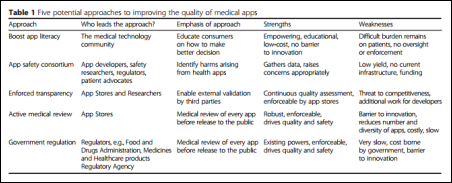
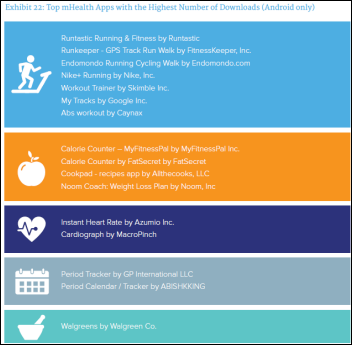
A study in England finds that NHS-endorsed medical apps often implement security and privacy poorly, give users bad advice, and have no track record of improving outcomes. Nine of 10 dose calculators don’t check the information entered by users, 70 percent don’t state their formulas, and half of the developers didn’t respond to questions about how their systems performed their calculations. The authors of a BMC Medicine article recommend educating consumers about how to evaluate apps. They also urge developers to be more transparent by providing documentation covering their design and testing methods, privacy policies, and business model. All of that, they say, is better than government regulation of apps as medical devices. It concludes,
The potential for benefit remains vast and the degree of innovation is inspiring, but it turns out we are much earlier in the maturation phase of medical apps than many of us would like to have believe. To build the future we want, in which patients can trust their medical apps, we need to verify that they function as intended.
Reader Comments
From Huskydoc: “Re: Epic. For many years, I’ve been practicing in Epic-based organizations. I’m now in a system that doesn’t. I was anticipating some minor, primarily aesthetic differences in the functionality between Epic and my new EMR… actually looking forward to the experience. But I must say that I was stunned by the inadequacies of my new EMR – a recognized brand name EMR that’s not Cerner. And I’m talking simple stuff, people. I now understand that Epic’s competitors’ boasts of interoperability are really just cries for help.”
HIStalk Announcements and Requests
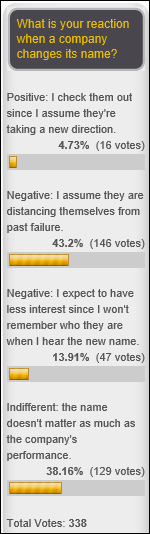
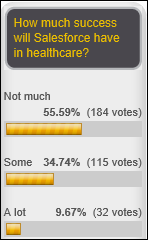
Only five percent of poll respondents view a company name change as a positive event, with more than 40 percent assuming that the company replaced its old name to distance it from past failures. Unrequited Marketer offered some great thoughts: (a) companies that have grown by acquisition often want their product lines to seem cohesive via consistent naming; (b) research has shown that there’s not much brand equity in B2B product names anyway; (c) many or most people keep using the old product name even after it’s been changed; and (d) he or she doesn’t know of any cases where a company changed a company or product name because of past failures and asks readers for examples. New poll to your right or here as the first in a series of polls I’ll call “Hero or Villain” – is Blue Cross Blue Shield a hero or villain? You can click the Comments link after voting to explain why you think so.

Dennis Lee donated $100 to my DonorsChoose project, which along with matching funds from my anonymous vendor executive and the NEA foundation bought 15 flash drives and six sets of headphones for Mrs. Winger’s fourth grade class in Seattle, WA and math learning tools (plan sets, Base 10 starter sets, and GeoBoards) for Ms. Fulford’s elementary school class in Santa Ana, CA. Meanwhile, it took only five days for Ms. Thomas’s Georgia elementary school class to receive their iPad and bean bag chair to create their Math Exploration Station, leading her to email to say, “It takes one moment to make an incredible impact on a child and you are responsible for this ‘one’ moment! I am so excited to see how this project will support my students in acquiring the independence needed to be successful! Your dedication to children and providing educational opportunities like this one is unmatched!”

Also checking in was Mrs. Wilson from Wisconsin, who sent photos of her students using the listening center we provided.
I’m just full of grammar and usage peeves being a “you kids get off my lawn” kind of curmudgeon in training, but here’s another one: people who spell “desert” when they mean “dessert.” It’s probably because the words are pronounced the same when “desert” is used as a verb, but that’s not a great excuse. If you ate desert, expect an undesirable consequence like sands through the hourglass. One more: the phrase “the Internet is buzzing” in a news story means two things: (a) they should give numbers to back up that conclusion; and (b) it’s probably not a real news story if its main attribute is that a large number of Facebook and YouTube zombies have mindlessly clicked on it.
A friend is taking care of a relative in hospice care, which involves three kinds of caregivers (nurse, aide, and social worker.) Each of them called to schedule their first visits with the usual over-explaining and chattiness that is well intentioned but a bit grating in a hospice situation. All three had the same conversation with my friend:
- Caregiver: I’ll need turn-by-turn directions to get to your house. Can you give them to me now?
- Friend: It’s quite a few miles with several turns. Can’t you use the GPS that came on your phone? I’m standing in line at Walmart buying medical items.
- Caregiver: (without answering the GPS question) We need printed directions for the folder.
- Friend: OK, then I’ll get on MapQuest myself, copy and paste the instructions from wherever you’ll be starting, and email them to you when I get back home.
- Caregiver: Well, if you don’t have time to give me exact directions, I can figure it out.
It’s been years since someone asked me for directions to my house, and to be honest, I might be inclined not to hire them if they can’t figure out how to use free phone GPS apps instead of bugging every customer to spell out streets, distances, and turn directions that the free app would do much better (not to mention preventing them from crashing their car while trying to read and drive at the same time). The folks above make their living going to the homes of patients, so you would think they could fast-forward to the current decade where personal directions, AAA TripTiks, and gas station maps are all enjoying their much-deserved retirement.
Last Week’s Most Interesting News
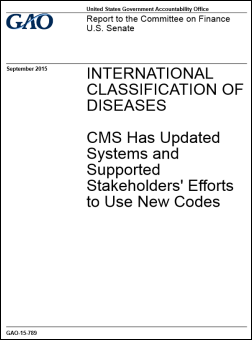
- The GAO says CMS seems to have prepared well for the ICD-10 switch, but cautions that all software projects carry risks that can’t be identified until after go-live.
- Accenture acquires Epic-focused Sagacious Consultants.
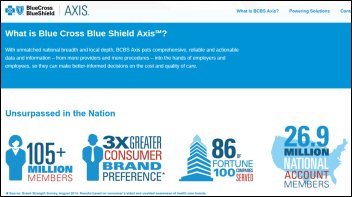
- Blue Cross Blue Shield announces its Axis claims and quality database, to which all 36 BCBS companies will submit data.
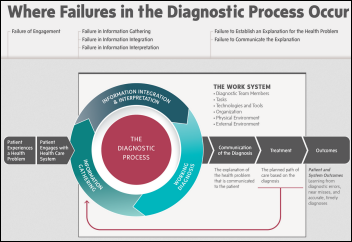
- An IOM report on diagnosis recommends that ONC require health IT systems to support information flow across care settings.
- The medical information of millions of people is found to be publicly available on Amazon Web Services, apparently from unsecured SQL backups stored there by claims management vendor Systema Software.
- An updated report from Robert Wood Johnson Foundation finds that ONC made mistakes in managing its siloed grant programs and that EHR adoption digitized information only within “corporate islands” that were created by ever-expanding health systems as a way to improve their competitive position.
Webinars
October 7 (Wednesday) 1:00 ET. “Develop Your Analysts and They’ll Pay for Themselves.” Sponsored by Health Catalyst. Presenters: Peter Monaco, senior business intelligence developer, Health Catalyst; Russ Stahli, VP, Health Catalyst. It takes years for analysts to develop the skills they need to build reports and dashboards that turn data into valuable insights. This webinar will describe how to cultivate those analytical skills, including technical prowess and adaptive leadership. Leaders will learn how to develop a culture that fosters improvement, how to encourage analysts to develop the right skills, and ways to remove the barriers that stand in their way.
Contact Lorre for webinar services.
Acquisitions, Funding, Business, and Stock
Medical image exchange platform vendor LifeImage receives a $5 million investment from the investment arm of BCBS Massachusetts, raising its total to $62 million.
Announcements and Implementations
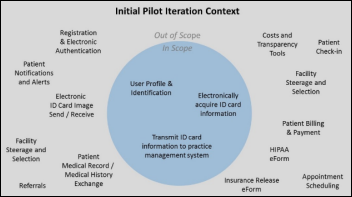
WEDI (Workgroup for Electronic Data Interchange) and NATE (National Association for Trusted Exchange) will work together on the next phase of Virtual Clipboard, a mobile app that would speed up patient check-in by transferring their demographic, insurance, and clinical summary information to the provider’s system.
Government and Politics
Three Alaska healthcare providers sue a Xerox subsidiary for causing delayed payments from the state’s new Medicaid system, claiming that Xerox lied about the system’s readiness for its October 1, 2013 go-live.
Other

We should all be grateful to hedge fund manager turned pharma bro Martin Shkreli of Turing Pharmaceuticals for exhibiting an astounding amount of greed, arrogance, and patient indifference by buying an old but vital single-source drug and jacking up its price by 5,000 percent. He’s a cartoonish bad boy who helped everybody finally realize how drug companies have been given capitalistic free rein in charging whatever they want while hiding the research costs they blame for their high prices, all while the pharma lobby successfully deleted planned price controls from the Affordable Care Act and US citizens pay dozens or hundreds of times the price the rest of the world enjoys as a result of our drug development subsidy. The soothing suits from the big drug companies have been coached to feign patient concern and a willingness to participate constructively in healthcare system dialog while Shkreli just told everyone unapologetically that he fully intends to make a lot of money and too bad if they didn’t like it. He’s exactly what we needed to bring the drug pricing issue to light in a way that even dim-witted citizens can get mad about. Healthcare is full of companies and people who try to make everybody forget that they’re in it for the cash and it’s refreshing for someone to finally say so, leaving the rest of us to decide what if anything we do about the system we built that allows it.
Eastern Iowa hospitals say a state-run database for locating available mental health beds isn’t useful because the psychiatric hospitals aren’t updating it with their available bed count.
Informatics and health policy expert Hardeep Singh, MD, MPH says common medical conditions such as UTI and CHF that are most often misdiagnosed, with the most common cause being the provider’s lack of time to conduct a thorough patient interview and then perform critical thinking. Doctors with a poor diagnostic track record are overconfident in failing to consult external resources. He shows modest hope for electronic diagnosis tools, saying they require complete patient data and doctors don’t use them for situations they think are routine. He says that nobody follows up on eight percent of abnormal lab tests, suggesting that electronic escalation could help and patients could take more responsibility in checking their own results on patient portals.
Sponsor Updates
- Divurgent will host a cybersecurity dinner discussion during the AEHiX conference in Orlando on October 8, with guest speaker Sensato CEO John Gomez.
- The SSI Group will exhibit at the 2015 SurgCenter Development Annual Conference September 27-28 in Clearwater Beach, FL.
- Sunquest Information Systems is featured in a JAMA article on connecting healthcare data.
- Nordic posts video highlights from its open house during Epic’s user group meeting. It was brilliant – they worked with a local brewery to create a custom beer, distributed it to 14 bars and restaurants, and donated $1 for every pint poured to The Road Home Program for veterans. I was trying to figure out ways to shamelessly steal their idea for the HIMSS conference.
- Surescripts will exhibit at the AAFP Family Medicine Experience October 1-3 in Denver.
- TeleTracking’s annual users conference will feature a record number of health system presenters and innovative new products.
- Valence Health will exhibit at the NASHCO Annual Conference 2015 September 27-29 in Denver.
- Verisk Health will host the VHC2015 client conference September 30-October 2 in Orlando.
- VitalHealth Software will exhibit at Transform, hosted by the Mayo Clinic Center for Innovation, September 30-October 2 in Rochester, MN.
- Huron Consulting will exhibit at the Rural Health Clinic and Critical Access Hospital Conferences September 29-30 in Kansas City, MO.
- Wellsoft Corp. will exhibit at Emergency Nursing 2015 September 28-October 3 in Orlando.
- Zynx Health will exhibit at the Meditech on the Road Event September 30 in Toronto.
- XG Health Solutions Chairman Glenn D. Steele Jr. takes part in the opening of Geisinger’s new laboratory medicine building.
Blog Posts
- Look Who’s Coming to VUE15! (Voalte)
- 5 Ways to Lessen the Impact of ICD-10 (Streamline Health)
- AHIMA 2015 Convention: T-System’s Jeannie Ruch leads two sessions you won’t want to miss! (T-System)
- Your Peers Think You Should Go the VUE – Here’s Why (Versus Technology)
- Think the New Medical Codes Don’t Impact You? Think Again (Xerox)
- Top 5 Tips as Providers Transition to ICD-10 (ZirMed)
Contacts
Mr. H, Lorre, Jennifer, Dr. Jayne, Dr. Gregg, Lt. Dan.
More news: HIStalk Practice, HIStalk Connect.
Get HIStalk updates.
Contact us or send news tips online.











































I can't get past the helmets and safety vests. On everyone. Including the model patient. What, are they expecting the…