The partnership between Google’s artificial intelligence unit, DeepMind, and the Royal Free London NHS Foundation Trust does not have ethical or regulatory approval from the NHS, according to an investigative report from New Scientist.
Speaking at a conference on cybercrime, Paul Syverson, co-creator of the anonymous web browser Tor, predicts that “Medical identity theft is poised to take over as the primary form of identity theft.”
A study evaluating the clinical quality of teledermatology services finds significant issues, including incorrect diagnoses, treatment recommendations that contradict guidelines, and prescriptions that were issued without a discussion about possible side effects.
John Halamka revisits his criticism of the proposed MACRA requirements, specifically suggesting that HHS focus on rewarding three specialty-specific outcomes at a time, allowing each specialty to choose those three outcomes and giving doctors free rein to use whatever technology they need to achieve them.
Halamka also suggests limiting EHR certification to basic care coordination interoperability functions:
Sending a summary of care to a recipient listed in a national provider directory.
Querying a record locator service and retrieving a common data set.
Sending a care summary to a patient-provided address.
Populating a relevant registry.
Interacting with a prescription drug monitoring program.
Reader Comments
From Mister F: “Re: MD Anderson / Encore’s $50 million contract. Trace the relationships of current MDACC leadership > Encore leadership > Healthlink. It’s fraternity-based procurement behavior. If someone had the time to create the map of Healthlink alums in provider leadership roles, those in services (vendor) roles, and the subsequent contract awards, it would look pretty interesting.”
From Mark: “Re: Qardio’s real-time blood pressure and scale monitor that was just launched. Do MDs really want this ‘continuous’ information? Is this a billable service? How will MDs replace lost income with fewer patient visits?” Technology companies anxious to get a foothold in the lucrative healthcare market often confuse their limited sensor and analytics capabilities with what will work in real life to improve oucomes. Doctors don’t have the time or interest to monitor a patient’s self-measured vital signs, which have minimal diagnostic or therapeutic value (ask any nurse how often they ignore inpatient vital signs monitors without clinical consequence). It’s a situation similar to companies convinced that the biggest problem in medicine is lack of accurate diagnosis and offer technology to assist where assistance usually isn’t needed, not to mention that diagnosing from data alone ignores that art of medicine. It’s rarely healthcare professionals that come up with these ideas, and when it is, they’re usually ignoring the practical practice of medicine hoping nobody will notice and buy their product anyway.
HIStalk Announcements and Requests
Poll respondents say it’s the federal government and doctors themselves who are most responsible for physician dissatisfaction. Some respondent thoughts:
Ann Farrell says MACRA is crazily complex, but adds that doctors have been self-centered for decades in denying their quality statistics and failing to lead the charge on patient safety. She welcomes income-focused doctors to the world in which RNs and other employed professionals live — KPI games, stagnant wages, job loss, unrealistic productivity goals, and dwindling respect.
Frank Poggio says doctors have been their own worse enemy since the start of Medicare, first fighting the concept but then jumping on the bandwagon when Part B was introduced, making many specialty doctors millionaires but not helping PCP who found that, “When you go to the bed with the devil, you wake up in hell.” He adds that doctors have an image problem both with patients and with payers because of the way they practice.
Meltoots (who is a doctor) says the profession may be seen as whiny, but physicians are being beaten senseless with constantly changing regulations, fighting with insurance companies, patients who can’t pay their large deductibles, board certification headaches, and RAC audits. He says everybody should be paying attention if it’s so bad that John Halamka is on the ropes. He or she adds, “It takes 14 years of training just to make a fresh new me and another 17 of practice experience that is truly invaluable to my abilities as a surgeon. With my low costs and my quality numbers, CMS and ONC should be begging me to stay on board and not be penalizing me 2 percent because I cannot do MU. And with MACRA, it looks like they want to ratchet me down 9 percent. Look at my costs per patient, co-morbidities, and readmit rate and tell me I’m a bad deal for CMS. No chance.”
New poll to your right or here: would you recommend the hospital or medical practice where you had your most recent medical experience as a patient? Overachievers are welcome to click the Comments link on the poll after voting to explain.
I’m annoyed that Yelp, Tripadvisor, and LinkedIn are forcing website readers on mobile devices to open their proprietary app to continue reading. Not only do I resent being forced into their walled gardens, they often launch the App Store instead of handing off smoothly to their app that I’ve already installed.
Ms. Hardy and her Pennsylvania class of 18 elementary school students are “incredibly grateful” for the document camera, dry erase lapboards, and computer speakers we provided in funding her DonorsChoose grant request. She has students show their math answers on the whiteboard so she can easily see which ones need extra help. She reports that the document camera makes the students more eager to share their work and allows the visual learners to see lessons and materials modeled for them in their preferred learning style.
Last Week’s Most Interesting News
Theranos shuffles its board and its president steps down.
MD Anderson attributes its $160 million year-over-year drop in net income to its Epic implementation.
NantHealth files for an initial public offering.
McKesson loses a Horizon hospital to Cerner and a 14-hospital Star and Horizon group to Epic.
HHS Secretary Burwell acknowledges to the ACP that Meaningful Use has been “burdensome” and “inflexible” for doctors and reinforces HHS’s interoperability agenda.
ProPublic’s online narcotics prescribing database that was intended to call out questionable prescribers has the unintended consequence of being used to identify those prescribers by drug-seekers.
Webinars
None scheduled soon. Contact Lorre for webinar services. Past webinars are on our HIStalk webinars YouTube channel.
Sales
Doctors Community Hospital (MD) chooses the Summit Express Connect interface engine to manage all EHR connections.
Lincoln Surgical Hospital (NE) selects Access Passport for Web-based electronic forms integrated with Meditech.
Announcements and Implementations
ZeOmega releases Clinical Assessment Protocols for its Jiva population health management platform.
Penn State Health (PA) signs up for virtual ICU monitoring from Mercy Virtual.
Privacy and Security
The creator of the Tor anonymous Web browser (which powers the “dark Web” hacker haven) warns that medical identity theft is fast becoming the primary form of identity theft. He mentions that an unnamed healthcare organization is developing anonymous online drug tests, health services, health chat, and research questionnaires. He defends anonymous browsing as being similar to encryption in initially being used by people trying to hide something, but eventually becoming mandatory for secure, Web-powered commerce.
Children’s National Health System (DC) warns that its outsourced transcription provider, Ascend Healthcare Systems, misconfigured a server and thus allowed access by FTP to the information of 4,000 patients over a one-week period in February 2016. The health system stopped doing business with Ascend in mid-2014 and notes that Ascend failed to meet its contractual obligation to delete its data.
New Scientist magazine, which exposed England’s NHS data sharing agreement with Google two weeks ago, finds that neither Google nor the Royal Free London NHS Foundation Trust have requested ethical approval. It also notes that Google’s recently acquired DeepMind app has not been registered as a medical device. Royal Free defends sending Google the fully identifiable information of 1.6 million patients each year, saying that patients give their implied consent when their information is used by IT companies related to direct patient care.
Technology
Entrepreneur profiles India-based ICliniq, which offers an online doctor consultation app that uses a bot running on the WhatsApp-like messaging program Telegram. The company also offers a standard Android version.
A LinkedIn article by Cyrus Maaghul describes out-of-hospital use cases for blockchain technology that include tracking drug development, clinical credentialing, population heath data analysis, insurance risk pooling, telemedicine, and remote device monitoring. He’s head of product and technology for Phoenix-based PointNurse, which offers virtual visits with nurses for patient navigation, referral, consultations, disease management, and remote monitoring.
A Memphis man’s LifeVest wearable heart monitor and defibrillator saves his life when his heart stops beating in his sleep. The device has a 98 percent first-shock success rate for patients at risk for sudden cardiac arrest. The device first earned FDA approval in 2001, although I don’t recall hearing about it until now.
Other
Scripps Health’s Q2 financial report shows that its Epic project will cost $309 million in capital and $361 million in 10-year operating cost, although it expects to save $211 million of that by retiring applications that Epic will replace.
The New York Times notes that people who buy medical insurance via Healthcare.gov or state exchanges are often treated as second-class citizens even though their policies are issued by the same big insurers as employer-provided plans. Many providers don’t accept exchange-issued policies, provider networks are narrower and geographically limited, and some policies offer no out-of-network coverage at any price. The article notes that exchange-issued policies often omit high-priced providers that have local clout to set high prices, such as Memorial Sloan Kettering being left out of every exchange-sold plan even though New York employers would not find that acceptable for their employees. The article also observes that many of the doctors listed in insurance company directories aren’t accepting new patients even though federal law requires insurance companies to keep their provider directories current.
Direct-to-consumer teledermatology websites made a lot of mistakes when diagnosing and treating fake patients. In 62 encounters with 16 websites:
None of the doctors asked for the patient’s ID.
Two-thirds of the sites assigned a doctor without giving the patient a choice, mostly without disclosing the doctor’s licensure status. Some of them used offshore doctors who aren’t licensed in California where the study was performed.
Only one-fourth of the doctors asked who the patient’s PCP was, and only 10 percent offered to send them records.
Patients were rarely offered warnings about the risks of the drugs prescribed during the encounter.
Clinicians diagnosed correctly most of the time when shown a photo in which the condition was obvious, but failed to ask good questions otherwise.
The doctors missed significant diagnoses such as secondary syphilis and gram-negative folliculitis.
The treatments ordered didn’t always follow guidelines.
The study’s authors note, however, that those same doctors might have performed equally poorly during in-person sessions, so maybe it’s not teledermatology itself that’s the problem. They suggest that while direct-to-consumer medicine can be be effective, the clinicians should be part of the practice or health system the patient already uses rather than randomly selected contractors of third-party sites.
UPMC reports that it paid six of its executives at least $2 million in its most recent fiscal year, including $6.43 million to President and CEO Jeffrey Romoff. CIO Dan Drawbaugh made $1.57 million.
TV consumer reporter John Stossel complained about poor customer service while he was hospitalized for lung cancer, but now he offers his solution: high-deductible insurance that forces consumers to shop carefully. Maybe he missed the recent research that found that what actually happens is that people just skip getting care rather than shopping more carefully for it. He also takes a logical leap in assuming that people paying more out of their own pockets will create an environment he describes as: “When patients shop, doctors strive to please patients rather than distant bureaucrats. More doctors give out their email addresses and cellphone numbers, and shorten waiting times. Their bills are easier to read because the providers want customers to pay them!” A lot of Americans now have high-deductible plans, so he as an investigative reporter should be able to fund examples where his idea has actually worked.
Sixteen VPs/SVPs of Wheaton Franciscan Healthcare will lose their jobs in its merger with Ascension Health, among them SVP/CIO Greg Smith.
The family of comedian Joan Rivers settles the medical malpractice lawsuit they brought against the New York city clinic where she died during a routine endoscopy. The suit claimed that the gastroenterologist performed a laryngoscopy despite the concerns of the anesthesiologist, while a CMS investigation found that the clinic failed to keep proper medication records, didn’t record the patient’s weight, failed to obtain informed consent, and allowed staff to take selfies with Rivers before she died.
Vince and Susan move along with their 2016 vendor review, covering small vendors in Part 4.
Weird News Andy says this man’s heart’s in the right place, even if it’s the wrong place. A patient’s complaint of right-side chest pain radiating to his right shoulder is found to have situs inversus, a rare condition in which all of the major visceral organs are on the opposite side of normal.
Sponsor Updates
Huron Consulting Group employees lead nearly 100 events during its annual day of service.
ESD offers a discount on automated testing solutions to CHIME members.
T-System will exhibit at the MIHIMA 2016 Annual Meeting May 18-20 Bay City, MI.
Talksoft is chosen as Greenway’s Intergy Partner of the Month.
Visage Imaging will exhibit at ACR 2016 May 16-17 in Washington, DC.
Zynx Health announces the winners of its 2016 Clinical Improvement Through Evidence Award.
Experian Health and PatientMatters will exhibit at the HFMA Florida Spring Conference May 15-18 in St. Petersburg, FL.
Red Hat announces the agenda and keynote speakers for Red Hat Summit 2016, June 27-30 in San Francisco.
The SSI Group will exhibit at the Rural Hospital Alliance of Mississippi meeting May 18-20 in Orange Beach, AL.
Streamline Health will exhibit at the 2016 Michigan HIMA Annual Meeting May 18-20 in Bay City, MI.
Doctors in England are being asked to reconsider statin prescriptions for thousands of patients after experts discover that the widely-used SystemOne EHR had been miscalculating cardiovascular risk for the last seven years.
ProPublica notices that drug seekers have been using its Prescriber Checkup tool, a national database containing the prescribing habits of doctors, to find providers most likely to prescribe narcotics.
Bond ratings of the city of Gulfport, MS issued on behalf of Memorial Hospital at Gulfport has been downgraded due to a sharp decline in liquidity and an EHR implementation (Cerner) that lead to “an unfavorable increase to accounts receivable.”
Theranos President and COO Sunny Balwani will retire, which Theranos says is part of a broader reorganization that involves creating three new positions – chief medical officer, head of research, and COO. The company has also added three board members, two of whom were already on the board until Theranos replaced them in a hasty October 2015 reaction to media coverage questioning its technology claims and a CMS investigation of its clinical practices.
Balwani was a technology executive with no medical or science experience when he was put in charge of the company’s California lab in 2009, which CMS later cited as posing “immediate jeopardy” to patients.
Reader Comments
From Frank Poggio: “Re: HHS challenge to design a simpler patient bill. This is the height of hypocrisy. Does CMS think providers on their own created the insane billing requirements and processes? It started with Medicare Part A, then B, then D. Co-payments, deductibles, out of network, referral approvals, contractual allowances, UC charges, and on and on. Next, billing systems will have to deal with VBP, P4P, bundled payments, MACRs, and more. Providers never asked or suggested any of these — they just have to figure out how to carve up charges /costs and services and put it all on a one-page bill. A 1995 analysis found that the Federal Register contains 11,000 pages dealing with an IRS 1040 submission, but hospital billing required 55,000 pages to describe. If CMS really wants to simplify the patient bill, they need to go to a single-payer system. Until they do that (not likely), the patient bill will continue to be the mess it has been for the last 50 years. Who do I call to collect my $5k?” I had the same reaction. Not only is billing too complicated for even providers and payers (much less patients) to understand, the bill is constantly amended over months as the parties involved negotiate who will pay what. It’s absurd to think that patients will assume financial responsibility when nobody can tell them what they owe at the time they owe it, not even accounting for the fact that bills are full of errors and questionable practices that patients aren’t equipped to analyze and report no matter how well presented the information might be. In comparison, IRS forms and tax policies are a consumer-friendly delight.
From Wonky Warrior: “Re: George Washington Medical. Appears to be switching back to Allscripts from Epic at six of their sites.” Unverified, although a recruiter’s email sent my way says that six recently acquired sites (four urgent care centers and two OB/GYN practices) were on different EHRs, they moved to Epic, and now they’re going back to Allscripts EMR, which is what the medical faculty plan uses.
From Jenson: “Re: MD Anderson. Encore did indeed run the selection process. It’s a great business model – Encore runs the procurement, chooses the vendor that requires the most third-party integration support (Epic), and then gets nearly $50 million to support the Epic project. I would pick Epic every time.” The internal document is here. The same regent’s meeting agenda from late 2013 also included a nearly $5 million contract with Cognizant for ICD-10 implementation services.
From Pithy Patti: “Re: MACRA. HHS is out of touch if it expects providers to understand 962 pages of legislation.” Here’s an important point that a lot of self-proclaimed experts are missing: nobody expects providers to individually read and understand those 962 pages. We all follow a lot of laws and rules that are mired in endless pages of legalese somewhere in the government, but that doesn’t mean we’re expected to read and interpret those documents on our own. The government’s job is to pass laws that pass legal muster and convey legislative intent, not to create breezy, easily digested summaries of what they mean so that laypeople can use the Congressional Record as their personal policy manual. That’s a job for non-government experts (consultants and associations, for example) who turn those dense documents into rules their constituencies can follow, just like they do for payment rules that providers follow. The Affordable Care Act had a couple of thousand pages that nobody read (including the politicians who voted for or against it), but it has spawned dozens of thousands of pages of regulations that spell out the specifics.
From Kellan Ashby: “Re: Siemens Healthineers video on YouTube. It’s been pulled. Siemens Embarrassedineers?” Fear not – someone reposted a copy of the corporate atrocity-filled video. Sing and air-guitar with me, “Oho, oho …” Just in case it accidentally gets removed from YouTube again, I’ve downloaded a copy.
HIStalk Announcements and Requests
Ms. Mills from Texas says the electric circuit kits we provided in funding her DonorsChoose grant request have had a great impact on her fifth graders, who have gained confidence in progressing from the easy projects to those that required all the kit’s parts.
I had an appointment with a new doctor this week, having taken the first available slot (mid-May) when I made the appointment (early January). I was encouraged when the practice sent me a link to its Practice Fusion portal to provide basic information. I arrived 30 minutes early to complete the inevitable pile of paperwork, which was just as I expected (entering my name and date of birth maybe a dozen times on a clipboard full of forms for medical history, insurance, notice of privacy practices, release of information, and so on). I returned the forms and waited for 15 minutes before I was called to the desk, only to be told that the doctor was out sick for the day (which they didn’t mention when I checked in) and that I should have received a call the previous to reschedule (they had transposed the digits of my phone number). The next available appointment was three more weeks out. I’m not sure which worries me more, the inefficiency of the staff or the fact that they use a free EHR and lots of paper to run the practice. We’ll see how it turns out.
This Week on HIStalk Practice: St. Thomas East End Medical Center goes live on Greenway. ReGroup Therapy raises $1.8 million for virtual mental health consults. Pediatric Medical Associates makes the leap to electronic records. British researchers take the first steps in developing a diagnostic video game. Retailers rate their top challenges when it comes to jumping into healthcare. Healthix President and CEO Tom Check offers insight into the challenges of bringing physician practices into the HIE fold.
Webinars
None scheduled soon. Contact Lorre for webinar services. Past webinars are on our HIStalk webinars YouTube channel.
Acquisitions, Funding, Business, and Stock
Teladoc reports Q1 results: revenue up 63 percent, EPS –$0.40 vs. –$5.87, meeting revenue expectations but falling short on earnings. The company reported big increases in telemedicine visits and membership and touted high satisfaction rates, with President and CEO Jason Gorevic saying in the earnings call that telehealth has a higher barrier to entry than many people believe and that its competitors are stumbling in trying to achieve scale. The company spent an unbudgeted $1 million in legal expenses, including $700,000 in its fight with the Texas Medical Board, and will spend another $4 million in legal fees in the remainder of 2016. Teladoc expects to lose around $42 million in the fiscal year. TDOC shares are down 40 percent since their June 2015 IPO, valuing the company at $440 million.
The 14-year-old CEO of a company that sells first-aid vending machines claims he turned down a $30 million acquisition offer from an unnamed healthcare company. He started the company last year after winning a business plan contest in his high school’s entrepreneurship class. The Six Flags theme park has ordered 100 of the machines, which dispense kits of Band-Aids and other supplies for up to $20. One of the four revenue sources he offers is “selling opt-out data.” The machine also requires the purchaser to acknowledge a form that releases the organization that installs it from liability. I’m not sure I’m really buying the success story since the alleged acquisition offer and product sales are hearsay and since then he has raised his unsubstantiated asking price to $50 million, but I’ll try to suppress my cynicism that the world doesn’t really need a Redbox stuffed with overpriced Band-Aids.
Sales
Freeman Health System (MO) chooses the Empower patient portal from Influence Health.
British Columbia’s Interior Health Authority chooses FormFast for enterprise forms standardization and automation in its 22 facilities, integrating with Meditech.
Hospital for Special Surgery (NY) chooses Strata Decision’s StrataJazz for cost accounting and continuous improvement.
People
The NIH names Patti Brennan, RN, PhD (University of Wisconsin – Madison) as director of the National Library of Medicine.
Lee Horner (CareCloud) is named president of telemedicine at remote interpretation services vendor Stratus Video.
Announcements and Implementations
Health Catalyst eliminates its non-compete agreements, no longer restricting for whom employees can work after leaving the company.
ZocDoc will integrate its appointment-finding and patient self-scheduling marketplace with Epic using APIs.
CMS, responding to small medical practice concerns about MACRA, publishes a fact sheet and reminds that it will accept comments about the proposed legislation through June 27. I’m not sure that “flexibilities” is an actual word (sort of like “implementations”), but it does seem that CMS is listening and they (along with ONC) have been pretty good about soliciting and using stakeholder feedback.
A federal judge rules that the US government can’t subsidize the cost of health insurance for lower-income Americans by reimbursing insurance companies for income-based premium reduction, saying that the administration overstepped its bounds since Congress did not approve that expense. Insurers were reimbursed for more than half of the exchange-issued policies, and if appeals fail and the payments are stopped, insurance companies will be stuck with paying several billion dollars per year themselves, giving them strong incentive to stop selling policies on the exchanges. It’s a complex issue that is beyond my understanding, but Tim Jost at Health Affairs provides expert opinion.
Privacy and Security
Allen Hospital (IA) notifies 1,600 patients that their information was accessed by a former employee whose EHR login credentials had not been deactivated despite having apparently left the organization seven years ago.
Ponemon Institutes’s annual healthcare privacy and security study, sponsored by ID Experts, finds that 90 percent of the 91 covered entities have had a breach in the past two years, although most involved fewer than 500 records. It calculates the cost of a provider breach as $2.2 million. Half of the reported breaches involved criminal activity, with an additional 13 percent caused by a malicious insider. Providers continue to worry most about careless employees, but a significant number also worry about cyberattacks and the use of unsecured mobile devices. One-third of providers say they’ve bought cybersecurity insurance.
Technology
@drnic1 tweeted about Luxe, an Uber-like service that will meet you wherever you are, park your car securely, and return it to wherever you want for $5 per hour or a flat rate of around $15 per day (the price varies by city, but that includes both the parking car and the service). They’ll even wash your car or fill it up with gas for a bit extra. It’s available now in San Francisco, LA, Chicago, Seattle, Austin, and New York. That would be cool when you’re driving into the city for meeting, heading off to the airport, or attending an event that might charge $20 or more to park in an uncovered and unsecured lot. I would enjoy not only the cost savings, but the lack of stress and time required to find a spot and then hunt down the car afterward.
Other
Doctors in England are told to review patients for whom they had prescribed statins after experts find a seven-year-old error in the QRISK calculator provided in the SystmOne EHR sold by UK-based TPP. QRISK is a short questionnaire that determines the disk of cardiovascular disease.
ProPublica notices from Web traffic to its 2013 Prescriber Checkup — a database that shows heavy opioid prescribers based on Medicare Part D data – that drug seekers are apparently using it to find doctors who are most likely to write them narcotics prescriptions.
Minnesota’s health department cites a nursing home operator for two deaths involving mistakes in transcribing medication orders, one involving a blood thinner transcribed to the wrong resident’s chart and the second due to a 10-fold morphine dose transcription error.
US Army Sgt. Elizabeth Marks, the combat medic who won four swimming events this week at the Invictus Games — for injured military personnel and veterans — and received her medals from the competition’s organizer Prince Harry asks him to instead take her medal to the medical team at England’s Papworth Hospital that saved her life from respiratory distress in 2014. The 25-year-old Arizona swimmer joined the Army at 17 and suffered a serious hip injury while deployed to Iraq in 2010 that left her with no sensation in her left leg.
The ratings agency of Gulfport, MS downgrades the city’s bonds issued on behalf of Memorial Hospital at Gulfport, noting a sharp decline in liquidity that the agency partially attributes to an increase in AR days following the hospital’s Cerner implementation.
This is a great graphic making the social media rounds, although like most graphics, it’s nearly impossible to determine the source.
A Washington Post reporter touring a hospital in North Korea with government handlers is ushered out for asking too many questions in the staged situations that tried to put the country in a positive light. She apparently insulted her hosts in noting ancient diagnostic equipment, staff who aren’t allowed to access the Internet, supposedly frequently used PCs for which nobody knew the password, and a photo op with a perfectly made up patient who strangely had no personal effects or chart in her room. I assume “The Interview” wasn’t available on the patient entertainment system.
Weird News Andy has Hollywood gold in mind with his script for “Snakes in the Ceiling,” inspired by the story of a live python falling from the ceiling at Tacoma General Hospital (WA). WNA wonders if the reptile subsisted on hospital food during its stay. A visitor brought the snake into the hospital a month ago in a cat carrier filled with stuffed animals (any one of those elements might suggest a need for mandatory psychiatric observation), then called the hospital to report that he had lost his slithery friend. The hospital, to its credit, called him back so he could take his wayward pet back home to do whatever it is that people do with pet reptiles in the privacy of their homes. I’ll stand by my long-held assertion that hospitals are the one place where you see a random and often disturbing cross-section of the citizenry that you would ordinarily avoid.
Sponsor Updates
Medicity CEO Nancy Ham is named one of the most powerful women in healthcare IT. Also named is Vyne President and CEO Lindy Benton.
Bernoulli will present a poster on alarm reduction during the 18th Annual NPSF Patient Safety Congress, May 23-26 in Scottsdale, AZ.
ID Experts sponsors the Fifth Annual Benchmark Study on Privacy & Security of Healthcare Data.
Influence Health announces the 2016 eHealth Excellence Award Winners.
Orion Health announces that its software manages 102 million patient health records globally.
AdvancedMD launches patient-centric solutions for independent OB/GYN practices with a limited-time promotion at the ACOG conference.
GetWellNetwork will host its user conference May 23-25 in Philadelphia.
InterSystems will exhibit at VA Healthcare 2016 May 16-18 in Arlington, VA.
Early bird registration for Health Catalyst’s September 6-8 HAS16 ends May 27.
Nordic releases a white paper titled “Value-based care: How’d we get here and how do we go forward?”
I spend a lot of time hearing physician complaints about EHR usability. It’s certainly sensitized me to the issue of usability in general.
Let’s face it – there is some pretty poor software out there, in all spaces. There are some websites I visit that just want to make me scream, especially ones that use technology reminiscent of Geocities circa 1990-something. No matter what industry one works in, if you have to use something day-in and day-out that makes your life harder, you’re not going to be happy.
I was grateful today that I only have to renew my state controlled substance number once every couple of years. It’s bad enough that I have to register with both the federal Drug Enforcement Agency and also with my state, but their website put me over the edge.
I knew it was going to be a pain when the login screen told you to make sure you had enough time to finish the renewal because the system might time out on you. Then, it told me to turn off my pop-up blocker, but not until I had been through multiple screens that had to be resubmitted when I arrived at the pop-up step. They also introduced new fields that had to be completed for each practice location — fields detailing the number of hours per week spent in various activities such as patient care, ambulatory administration, inpatient administration, research, etc. Since I work a varied schedule at more than a dozen sites, this meant pulling numbers out of the air to populate more than 72 fields.
Additionally, when you save each location, it fires a popup that tells you that you need to complete the fax number for the location if it has one, despite it not being a required field. That was another 12 clicks and 12 screen refreshes that I didn’t need to do.
The final usability flaw was when I arrived at the credit card payment screen. Although it leaves the card number and CVV fields blank, it pre-populates the expiration date. If you’re like me and either multitasking or simply get distracted, you look back and the expiration field has numbers in it, so you move on. Unfortunately it then pops up that your card is expired, and sends you back three screens for you to re-key the information.
It felt like an exercise in futility, but what’s a girl to do? Complaining to the board that regulates your ability to prescribe certain drugs feels like you’re just asking for an audit. There’s no competition and no choice, so you just have to pay your fee (which feels like a cash grab, since we’re already regulated by the DEA) and be happy about it. Or if not happy, at least resigned.
On the opposite side of the usability chasm, there are plenty of vendors who are actually getting it done. One of the things I enjoy most about HIMSS is checking out emerging solutions and looking at vendors that are trying to break into the market with something novel. It doesn’t always have to be a “gee whiz” product. but it might be just someone who is doing things better or slightly different than the people who are already in the market.
I recently had a chance to look at iScribeHealth and learn about their journey to market. Their mobile app solution is an adjunct for EHR documentation. It allows providers to enter key data elements such as medications, problem list updates, histories, and more without using the EHR. It also supports dictation and charge entry.
They recently took their first batch of clients live. It’s quite different moving from the development phase to the real world and I’ll be interested to see how things go over the coming months. They’ve got some good hooks in their marketing material – encouraging users to “free yourself from late nights spent updating patient charts and wishing you had chosen a different career path.”
They’re also pushing the patient engagement aspect, allowing physicians to focus on the patient at the point of care and not on the technology. They also have automated reminders and surveys to connect with patients outside of the visit. Personally, they had me with their martini glass icon. Who doesn’t like a cosmopolitan in their daily workflow?
Just when you thought you had recovered from HIMSS16, it’s time to start planning your submissions for HIMSS17. The call for proposals opened last week and runs through June 13. They’re also looking for reviewers to take a look at all the content submissions during the summer months. I’ll let you do the math on how many months it is from the time the submissions are due until the actual presentation and determine for yourself whether it’s easy to keep things fresh with that kind of lead time.
I’ve previously been somewhat down on the American Academy of Family Physicians and other organizations for enabling some of the negative forces impacting physicians today. They have posted some introductory modules covering MACRA and the shift to value-based care. I appreciate their taking it down to the basic level that many physicians need to try to understand what’s about to happen to them.
In people news, today the National Institutes of Health announced the appointment of Patricia Flatley Brennan, RN, PhD as the new director of the National Library of Medicine. She has a long history in the informatics community. I find it most interesting that her doctorate is in industrial engineering and she has worked to leverage that knowledge in health care. The best implementation director I ever worked with was a ceramics engineer by training, so I appreciate what that background and mindset can bring to the table.
Theranos President and COO Sunny Balwani resigns as the SEC continues its investigation into whether the company misled investors about its technology and operations.
Giving Patients Access to Prior Mammograms: For Me, It’s Personal By Kathryn Pearson Peyton, MD, Chair of the Women’s Health Advisory Board, LifeImage
I never imagined that I would be a radiologist advocating for patients in the healthcare tech world. The life pursuit of throwing open access to prior mammograms for women wasn’t on my career to-do list when I consulted my high school guidance counselor to narrow my college choices.
In due time, however, the career found me. Here’s my story.
I grew up in Northern California, in an area where breast cancer risk is doubled simply by virtue of being born there. Breast cancer had a strong history in my family. My great-grandmother died of it. In those days they didn’t screen. By the time they found her breast cancer, it was metastatic to the brain.
My grandmother had a mastectomy in her 40s. Her twin daughters had breast cancer, one in her 40s and the other developing three pathologically distinct breast cancers. Another aunt was diagnosed when she was 38 and passed away leaving two-year-old twins. My mom had breast cancer.
Breast cancer ravaged my family emotionally, starting with my grandmother, who was psychologically crippled from her surgery, which in those days was deforming. My aunts were terrified and anxious. By the time I came along, it was painfully obvious there was a genetic predisposition toward breast cancer in my family, and I wouldn’t be far behind.
Breast cancer found me, too
While I was in early medical training at the University of California, San Francisco in my mid-20s, I went through genetic counseling for breast cancer. A counselor looked at my family history and determined I had an 85 percent lifetime risk of developing breast cancer. They advised me not to get tested for the gene since, by law in California, that would assign me a pre-existing condition that would preclude me from qualifying for health insurance.
I followed their advice and did not get tested. What I did, however, was learn everything I possibly could about breast cancer. I became a radiologist, followed by a fellowship in breast imaging with Ed Sickles, MD, one of the fathers of mammography. I monitored myself, starting screening mammography at age 30.
During those years, I practiced high-volume breast imaging in San Francisco and Jacksonville, Florida, for 15 years. Every time I diagnosed a patient’s breast cancer, I thought, “This could be me … this will be me.”
Finally in my mid-40s, it was me. The signs of early bilateral breast cancer appeared on my own MRI screening: 6 cm of abnormal ductal enhancement in one breast and an entire lower inner quadrant in the other. A negative biopsy would not have reassured me, and the uncertain future of my extremely dense breast tissue was a ticking time bomb. The decision was easy. I don’t mind surgery. I do mind chemotherapy.
Without hesitation, I underwent a nipple-sparing bilateral mastectomy, which was unusual at the time – before Angelina Jolie’s raising awareness of the decision process that some women choose for preventive medicine.
That whole experience gave me a wake-up call. I was burning myself out practicing radiology 10 hours a day during the week and three to four weekend days a month. I stopped practicing.
Fixing mammography, one scan at a time
While I had stopped seeing patients, I still had a strong interest in helping women and I certainly knew a lot about medicine and breast cancer in general. It was clear to me this was an area in which we could improve medicine. Research shows that, with increased availability of prior exams, the quality of patient care and outcomes are improved. Breast cancer can be detected earlier, therefore resulting in less-traumatic and less-costly treatments.
In a study at UCSF, the risk of unnecessary additional examinations is increased 260 percent when prior mammograms are not available for comparison. These high recall rates account for the majority of imaging costs related to breast cancer screening.
Because breast tissue is unique to each individual, archived images provide a benchmark for evaluating changes in tissue composition and assist in the early detection of cancer. When there is a perceived abnormality, the patient is called back for additional imaging of a screening finding. In a grand majority of the time, it is not cancer, and therefore a false-positive result is discovered. This average callback rate for mammography screening in the United States is approximately 10 percent, according to peer-reviewed studies that have examined the data.
Yet it is technically difficult to keep patients connected to their prior mammograms. Patients move between locales, health systems, or both. Some hospitals willingly share mammograms with patients. Others are hesitant, for fear of losing them.
I found the lack of accessibility to priors a barrier for patients and launched Mammosphere to help solve this problem. The concept is a mammogram-sharing cloud that provides hospitals, imaging centers, and patients with electronic access to prior mammograms. It is most active in the Jacksonville, Florida where Mammosphere was formed. Now we’ve joined forces with LifeImage, and in the coming months, the reach of the network will open mammogram access to millions more women.
For patients, the health IT interoperability argument is real
Among the bits, bytes, and bottom lines of technological and financial considerations involved with health IT initiatives, we must never lose sight of the patients and their stories. They need to be at the center of all technology initiatives to improve care.
Physicians who are informaticists can lead the way in accomplishing care improvements. They comprehend not only the technology, but its usefulness in care paths, as well as the specific clinical justifications for using technology to overcome challenges that today create financial waste as well as angst, inconvenience, and sometimes pain for patients.
While it would have been impossible for me to foresee this career path, I now find myself in the health IT realm as a patient advocate. Like many others, I’m hoping to positively influence care quality while helping reduce costs for patients, providers, and payers. By using technology as the tool to achieve it, I believe it’s possible, and that breakthroughs on a national scale are right around the corner.
The top federal health IT leaders came to HIMSS16 pushing health data interoperability. It might sound geeky, but it’s not. It is foundational to helping 60 million women who undergo regular mammograms in the United States, 39 million of whom screen annually. They need access to prior mammograms in a central cloud repository, and they need to maintain freedom of choice to see healthcare practitioners best suited to their needs and personal circumstances.
How do I know all of this is true? Because I am that person. A radiologist who sees the potential power of health IT to fix broken care paths and take on breast cancer – which found me through my family tree. I will not rest until we stop this disease.
Kathryn Pearson Peyton, MD is chair of the Women’s Health Advisory Board of LifeImage.
May 11, 2016InterviewsComments Off on HIStalk Interviews Cliff Bleustein, MD, CEO, Computer Task Group
Cliff Bleustein, MD, MBA is president and CEO of Computer Task Group of Buffalo, NY.
Tell me about yourself and the company.
I’ve been very fortunate to have broad-based experience in business, across healthcare IT, consulting, and international. In the clinical realm, I’m board-certified in urology. I have a license to practice medicine. I saw patients in private practice. Academically, I’m an adjunct professor in healthcare economics at NYU Stern School of Business. Prior to that, I was a clinical assistant professor in urology. I also have a research experience, with more than 20 peer-reviewed publications, a couple of patents, and several awards.
With respect to CTG, we’re excited that we’re celebrating our 50th anniversary of providing industry-specific IT services and solutions that address business needs and challenges of our clients in high-growth areas in North America and Western Europe. One of our largest industries is healthcare, and next year will be our 30th year in healthcare.
In North America, we provide offerings that span needs for improved IT and data analytics. We deploy and optimize electronic health records. We work for cost-effective IT operation support. We also have CTG North America, our strategic staffing services for technology companies and large corporations.
CTG’s share price has dropped 40 percent or so in the past year since the company hired you for your first CEO position following the death of your predecessor. What pressure do you feel from that and what steps are needed to get the company back on track?
I’ve been very fortunate in my career to have had several opportunities to lead large teams of global scale. CTG is another team of very capable individuals that span a broad base of capabilities.
Certainly being at a public company offers new challenges in terms of managing investors, managing a board, and managing analysts. Any time a company has any transition, there are always challenges in managing through that.
Having said that, yes, our stock price has been down, but we are already beginning to see some encouraging signs that the market is accepting a lot of the changes that we’ve done over the last year or so. We’re excited about the initiatives that we have in place. We’ve invested in doubling our healthcare sales force. We’ve added four delivery leaders. We added Al Hamilton, who leads our healthcare group, last year. We’re well on track to selling our services and offerings to the marketplace.
Where do you see the consulting and staffing business going now that we’re on the downward slope of EHR implementation work?
Nothing helps industry like a federal mandate which is followed up with funding. I agree that everyone had anticipated a significant upswing.
What you’re seeing in the industry now is a movement back to what are going to be normal levels of spending across organizations as they prioritize what their legacy applications and systems are and the new and emerging systems that they need to be competitive into the future. This year has been more of a normalization of spending from one-off IT initiatives that were inspired by the Affordable Care Act.
How are contingent work forces being put in place?
When you look at the staffing industry as a whole, it is very clear from other consultancies, such as staffing industry analysts, that as organizations get bigger — meaning moving from less that 10,00 employees to middle-market, which is 10,000 to 50,000 ,and larger companies, which is more than 50,000 employees — that the likelihood of organizations putting in a vendor manager system or a managed service provider goes up, from roughly 50 percent to greater than 80 percent for the larger organizations.
If you look at healthcare in general — across payer, provider, life sciences, and even in physician groups — they are merging to get scale at a very rapid pace. The likelihood of these organizations, as they become much larger, for them to put in some form of manage service provider or vendor manager goes up dramatically. With the implementation of those, the likelihood that these organizations are going to be contracting with their vendors through a staffing model goes up dramatically. The number of vendors who eventually are able to service these larger industries goes down, as most vendor managers try and consolidate the number of approved vendors.
We’re expecting the number of organizations to implement these forms of contracting vehicles to go up and the amount of contingent hire, staffing hire to go up as well. Most people who are purchasers of services right now in the industry are predicting that they are going to increase the number of contingent hire workers as well who don’t have to sit on their balance sheets and who overall are easier to add on, or when projects are done, let them go on to their next project.
What kind of help are health systems asking for?
A lot of what we’re seeing has to do with the mergers that are occurring in the industry. One of the major trends we’re seeing is the need for legacy application support. Organizations are constantly challenged with trying to provide all of the resources that their lines of business leaders need. That means a constant balance between managing systems that they currently have and adding new capabilities that they need to start managing populations, managing business intelligence and analytics, and managing some other trends that we’re seeing.
In order to effectively use them, they’re transitioning their people to a lot of the newer tools, newer skill sets, and newer capabilities while having vendors such as us manage the legacy architecture. You’re also seeing a movement, now that the electronic health records are in place, to try and optimize those systems within each of the hospital systems. You’re seeing a movement to improve their revenue cycle and the workflows associated with that. You’re seeing a trend toward the movement of these systems towards individual physician practices.
Vendors seem to be flocking to population health management in looking for their next big opportunity. Where do we stand in that regard?
We’re still in the early stages. Right now, more of the industry is focused on some of the beginning aspects of collecting data around populations of individuals and are trying to start navigating the balance between living in a fee-for-service world and moving towards one where they’re being reimbursed for value, and trying to understand how you can manage a population of individuals for which you are responsible, but may not be fully integrated within your health system.
Now that data has been digitized, and now that systems have the data and are collecting more of it every day, they’re just starting the beginning stages of understanding how these patients behave and help them manage the care that they need to stay healthy and avoid getting into the system in the first place.
Are providers struggling to understand that episodes of care for which they don’t necessarily have data are still important in managing that person’s health?
I don’t know if it’s a question that they’re not understanding the need for it. I think it’s more a question of, how do they get to all the different data elements?
A lot of it also has to do with many of the other what are often called “non-traditional health providers” that are becoming healthcare companies and are managing these patients. You have many companies that have traditionally sold retail goods through big box stores that are now adding healthcare services. They’re looking at data differently than most healthcare systems would look at that data.
They look at transactional data that they get through credit cards. They look at purchasing behavior that they have related to all of the goods within their organization. They’re looking at histories of social media interactions that they have with these individuals and access to their social media accounts. They’re marrying all of that data to get a much better picture of how people interact and move throughout their systems and their lives.
The data feeds that we get on individuals are getting increasingly more complex and broad based. When you think about populations, it’s much more than just the interactions that any one health system could potentially have with the person. I don’t think it’s as easy as just integration and interoperability of an individual throughout the healthcare cycle, just within the walls of a physician’s office, a hospital, their payer, or any form of pharmacy or life sciences data that they have. It’s much bigger than that.
Will doctors leave the profession because of MACRA and other government programs?
I’ve had a lot of sobering conversations with physicians over the past several months. The challenge that physicians are facing is that the complexity of the regulatory environment that we have today is so challenging for most of them to manage that it’s hard for them to focus on the practice of medicine. The practice of medicine is difficult enough as it is.
That, coupled with the vastly changing reimbursement landscape, is forcing many physicians to adjust their practices in order to maintain their current income and the income of their practices to remain viable. You’re seeing a significant change in how physicians are thinking about the practice of medicine. Many of my peers who were fellowship trained in doing certain types of diagnostic tests are completely abandoning things that they were trained for and are moving towards other areas that are needed in order to support their practices.
At the same time, you hear from primary care physicians who are frustrated that they can’t maintain their current practices. They can’t stay in private practice. They’re being forced to either merge groups or join hospital systems, things that they never contemplated when they first went to medical school.
It’s a really hard time to be a doctor today, with a lot of uncertainty, a lot of regulation, a lot of change, reimbursement changes. It doesn’t look like that’s changing any time in the near future.
Would consolidation of small hospitals and small practices be a bad thing?
To some extent, we’re going to see changes in the systems as the whole system is forced to consolidate. There are some aspects of mergers, integrations, and consolidations that are good, in the sense that it is more likely, if done well, to force individuals to hospitals that do whatever the operation or procedure that they need the best. Many things such as transplants, open heart surgery, and so forth, over time, as people do a lot of those cases, they get better. They’re more cost effective with better outcomes. That’s a good thing.
In other aspects, the loss of some of these hospitals — certainly for many of the things that don’t require such intense levels of resources – would not be a good thing. We just have to be careful in terms in how we’re setting up the new systems that we make sure that people have access to care regardless of where they are.
Do you have any final thoughts?
We’re living in an amazing period of time where the rate and pace of change is unprecedented. The healthcare market is ripe for disruption. A lot of technologies that are coming down the pike have the potential to radically change the way we do healthcare and think about the way we do things on a day-to-day basis, whether it’s artificial intelligence, 3D printing, robotics, nanotechnology, or the use of an on-demand workforce. Many of these things have the potential to disrupt healthcare markets in ways that Uber has disrupted the transportation industries and the way Facebook is changing the way we interact. It’s an exciting time.
Comments Off on HIStalk Interviews Cliff Bleustein, MD, CEO, Computer Task Group
Malpractice insurers and medical groups are mining aggregate data from lawsuits that have been closed in the last few years to identify common reasons that doctors are sued and any underlying issues that threaten patient safety.
MD Anderson reports a $160 million drop in year-over-year income, blaming “an increase in expenses combined with a decrease in patient revenues as a result of the implementation of the new Epic Electronic Health Record system.”
NantHealth announces plans to launch the IPO it postponed in November 2015 when it cited poor market conditions, hoping to raise $92 million. The company lost $72 million on $58 million in revenue last year, at the end of which Patrick Soon-Shiong, MD announced a $200 million investment by Allscripts that valued the company at $2 billion.
Soon-Shiong, worth around $10 billion, earned $150 million in compensation when his NantKwest cancer research firm went public last year.
Reader Comments
From Ricardo: “Re: MD Anderson. Reported a $160.5 million adjusted decrease in income due to Epic. Not surprising given that there were 1,000+ contracted for go-live support. Encore made a killing on this project, although I can’t recall if they ran the selection process, too. I’m surprised this hasn’t received more widespread coverage.” Internal UT documents from a meeting being held later this week indicate that MD Anderson blames Epic-related costs and revenue reduction for its nearly 60 percent year-over-year income decrease, but adds that it had assumed some degree of impact to both from the beginning.
From Doozy: “Re: trying to get electronic copies of your hospital medical records. Reminds me of this clip from ‘Seinfield’ that aired in October 1996, just after HIPAA was enacted.”
HIStalk Announcements and Requests
Welcome to new HIStalk Platinum Sponsor HBI Solutions. The Palo Alto, CA-based company offers predictive analytics and performance analysis solutions to providers, payers, HIEs, and technology vendors. Its Spotlight Data Solution uses real-time (not historical) clinical, billing, and claims data to provide risk models, dashboards, reports, and scorecards to support population health management, risk management, readmission management, and quality improvement. Its work has been vetted both in peer-reviewed research articles and by providers in the field. The system fits into any BI, EDW, EHR, or interoperability environment, using HL7 and 837 feeds, CCLF files from ACOs, EMPI, and natural language processing to extract data from non-discrete data types such as care summaries. According to customer Todd Rogow, SVP/CIO of the New York’s Healthix HIE, “HBI’s comprehensive suite of predictive analytics solutions enable Healthix to be responsive to the needs of doctors and nurses in an environment of shifting models of care. Real-time patient risk stratification and population and event based predictions will give healthcare organizations real-time, actionable information to help them deliver preventive, proactive care and reduce unnecessary utilization.” You probably know some of the company’s executives from their experience with Stanford and Eclipsys: Bruce Ling, Eric Widen, Frank Stearns, and Karl Sylvester, MD. Thanks to HBI Solutions for supporting HIStalk.
Here’s a just-published video I found on YouTube in which St. Joseph Healthcare (ME) talks about its use of real-time population health alerts from HBI Solutions.
Ms. H from New Jersey says the two iPad Minis and accessories we provided in funding her DonorsChoose grant request have been valuable not just for research, but also because students are getting to work with technology they’ve seen that their families can’t afford. She also adds that her inner city male students are more likely to be kinesthetic leaners and she can meet their needs by assigning them hands-on iPad exercises.
Webinars
May 11 (Wednesday) noon ET. “Measuring the Impact of ACA on Providers.” Sponsored by Athenahealth. Presenters: Dan Haley, general counsel, Athenahealth; Josh Gray, VP, AthenaResearch. Athenahealth will share the findings of real-time analysis of its provider network. The presenters will describe how patient financial obligations have changed, how physician reimbursement is trending, the patterns created by increased ACA coverage, and the effect of the latest ACA trends on physician practices.
Contact Lorre for webinar services. Past webinars are on our HIStalk webinars YouTube channel.
Acquisitions, Funding, Business, and Stock
Humana makes an unspecified investment in Glen Tullman’s chronic disease management technology company Livongo Health, closing its Series C round at $49.5 million and increasing its total to $82.5 million.
Patient satisfaction technology vendor Lumin Medical acquires patient feedback technology from Implementing Technologies, which it will add to its PatientTrak patient experience solution. The system steers patients to sites where they are urged to leave four- and five-star reviews.
Sales
Southeast Health (MO) and Missouri Delta Medical Center (MO) choose Cerner Millennium, replacing Siemens Soarian at both. Searching the HIStalk archive turns up a March 2015 mention that Southeast Health was getting hammered by high costs and erratic billing from Soarian and planned to move to Cerner. I also wrote in 2012 that these two competing organizations were sharing the data center and Siemens licensing costs in forming a new company called Servir. Sometimes I forget how valuable the information in old HIStalk posts can be.
Boca Raton Regional Hospital (FL) selects Cerner Millennium. I believe it was a McKesson Horizon shop.
For-profit Ardent Health chooses Epic for its 14 hospitals in Texas, Oklahoma, and New Mexico (including Lovelace Health System), replacing McKesson Star and Horizon.
UCHealth (CO) chooses LeanTaaS for predictive analytics to improve OR utilization.
Greater Oregon Behavioral Health (OR) will use data aggregation and analytics technology from Arcadia Healthcare Solutions.
People
UTHealth’s School of Biomedical Informatics names Ivo Nelson as the first recipient of its John P. Glaser Health Informatics Innovator Award.
Announcements and Implementations
Walgreens collaborates with Mental Health America to add mental health resources to its website, offer access to MDLive’s behavior telehealth solution, and provide mental health training programs to its pharmacists, nurse practitioners, and physician assistants.
The IT department of Children’s Hospital of Philadelphia (PA) wins a local award for developing an app that tracks patients and employees to reduce wait times, alerts staff when a patient hasn’t been seen for a long period, and identifies occupied treatment rooms.
Government and Politics
ONC offers $1.5 million in interoperability standards grants.
HHS calls for entries for a challenge to simplify patient bills, with $5,000 prizes for the winners.
The government of China orders search engine company Baidu to change its search results presentation following the death of a student who used it to seek questionable cancer treatment from a paid hospital advertisement. The government’s Internet regulator has given the search engine three weeks to display results based on credibility, to limit the size of the ads it presents, and to filter unauthorized providers from the search results. Baidu says it will comply and claims it has already removed 126 million ads from its site. The hospital is being investigated separately for illegally outsourcing its services and for running false advertisements. The Chinese government blocks access to Google via its so-called “Great Firewall,” but the student asked a US friend to do a Google search for him right before he died, only to find out that the treatment he had received had fallen out of favor years ago due to poor results in clinical trials.
CMS Acting Administrator Andy Slavitt says in his remarks to his final Health Datapalooza conference (his job, along with many in HHS, is a political appointment) that, “Physicians are baffled by what feels like the physician data paradox. They are overloaded on data entry and yet rampantly under-informed. Physicians don’t understand why their computer at work doesn’t allow them to track what happens when they refer a patient to a specialist when their computer at home connects them everywhere.” He observes that people got distracted by the Healthcare.gov debacle and missed the successful implementation of real-time insurance sign-up, a marketplace that has reduced insurance prices, and matching consumers to health plans that meet their needs. He cites HHS’s user-centered policies as:
Releasing of CMS databases.
Changing provider payment incentives to emphasize quality and care coordination.
Rolling out a single set of core quality measures.
Requiring open APIs and exposing data blocking practices.
Proposing the replacement of Meaningful Use with quality measures that “put the needs of the users – clinicians and patients – back in the center.”
Other comments from Slavitt:
Physicians don’t need to get pushed into using technology with incentives to show they’re clicking. They are pulled in because they need collaboration tools. The purpose of new payment models is to give care providers the freedom to do what they think is right. Your opportunity is to allow it to happen. Go find them and talk to them– design for them … If you want to lead the way with innovations that help consumers, great. If you want to follow by using established standards for data and measurement and technology, also great. If you have a business model which relies on siloing data, not using standards, or not allowing data to follow the needs of patients, pick a new business model or pick a new business. What Vice President Biden said should stick with us– as taxpayers, we did not spend $35 billion so companies could build their own silos.
Slavitt specifically listed practices that everyone should follow:
Eliminate contract language that prevents systems from being plug and play.
Put machine-readable data on edge servers so it can be used to answer questions.
Give physicians real-time data inside their work flows, not through a vendor’s portal.
Use APIs.
Privacy and Security
Mental health provider Bay Area Children’s Association (CA) reports that hackers loaded malware onto its EHR via credential theft and acquired an unknown number of patient records. BACA uses the PrognoCIS EHR from Bizmatics, which announced a breach of its systems last month, so I assume BACA is just one more Bizmatics customer that was affected.
The UK information commissioner fines an NHS trust $260,000 after its HIV clinic sends its 800-patient email newsletter using CC: instead of BCC:, thereby disclosing the identities of the recipients to each other.
The Atlantic says ransomware was first distributed in 1989, when a biology researcher sent 20,000 copies of an AIDS survey to researchers around the world whose computers would be seized the 90th time they were booted afterward. The ransomware demanded that a cashier’s check for $189 be sent to a PO box in Panama. The biologist was arrested and charged with blackmail, but claimed he was planning to donate the money to AIDS research (despite speculation that he was upset about being passed over for a job with the World Health Organization). The UK jury found him mentally unfit to stand trial and instead deported him to the US, where he died nearly 20 years later after creating a New York butterfly conservatory and naming it after himself.
Technology
The team that developed Siri demonstrates Viv, which adds artificial intelligence to speech recognition in discerning the user’s intent and in integrating with apps via an open ecosystem. The demonstration involved placing a complicated pizza delivery order by voice alone, without scripting. Experts note that mobile device users have lost their enthusiasm for apps that use up cell plan data, require logon credential maintenance, and send useless notifications, with most of them settling on just a handful that they use regularly.
Other
A Time article says Apple created the Apple Watch because Steve Jobs, who was dying of pancreatic cancer, wanted to empower patients and improve the healthcare system. It’s not especially convincing speculation, but it’s a convenient excuse to reflect fondly on Steve Jobs.
Insurers are sharing information gleaned from past medical malpractice cases to help providers develop new protocols and strategies, such as requiring doctors to examine every wound treated in the ED to make sure no foreign bodies or tendon injuries are present.
I’m surprised at the poorly worded, error-filled writing I see on the websites of newspapers all over the country that should know better, although maybe they’re losing so much money they can’t afford decent writers. For example, you might expect the Richmond paper’s headline writer to have noticed the 10 correct spellings of “Novant” in the article he or she was summarizing that were not in concordance with his or her version.
Weird News Andy notes that the Panama Papers have a medical connection, naming New York University School of Medicine and at least one of its doctors (neurosurgery professor Patrick Kelly, MD) as having offshore accounts. I found a searchable database of the information online, which lists several US doctors as well as some medical companies suspiciously headquartered in the Caribbean.
Sponsor Updates
Clockwise.MD will exhibit at the NAHAM patient experience conference from May 24-27 in New Orleans.
AirStrip releases a video on how it helped an academic medical center improve early detection of potential hemodynamic instability.
Aprima will exhibit at the American College of Obstetricians & Gynecologists Annual Meeting May 15-16 in Washington, DC.
Advanced Data Systems will offer its EHR customers Chronic Care Management technology and services from CareSync.
Besler Consulting releases a new podcast, “Common Mistakes Associated with Physician Documentation.”
Boston Software Systems launches a Podcast Resource Center.
CoverMyMeds will exhibit at the American Psychiatric Association Annual Meeting May 14-18 in Atlanta.
Healthcare billionaire Patrick Soon-Shiong, MD files IPO paperwork ahead of plans to take his healthcare business, NantHealth, public. The company delayed earlier IPO plans, citing adverse market conditions, and continues to operate in the red.
Speaking at the Center for Long-Term Cybersecurity at UC Berkeley, FBI Cyber Division Assistant Director James Trainor says that businesses should not pay the ransom if they are the victim of a ransomware attack, and reiterates that while the attacks will continue to be a threat for years, “Ransomware is about backups, more so than anything else.”
Farzad Mostashari, MD, Bob Kocher, MD, and Mark McClellan, MD, PhD co-author an opinion piece on the implications the recently announced Comprehensive Primary Care Plus model will have on ACO participation, calling for consideration of a CPC+ACO pilot program.
During the Health Datapalooza conference, HHS Secretary Sylvia Burwell announces an innovation challenge soliciting designs for medical bills that are easier for patients to understand.
May 9, 2016InterviewsComments Off on HIStalk Interviews Drew Schiller, CTO, Validic
Drew Schiller is CTO and co-founder of Validic of Durham, NC.
Tell me about yourself and the company.
I’m the co-founder and chief technology officer at Validic, the leading platform for directing patient-generated health data from digital health apps, wearables, and in-home medical devices into the healthcare system.
What is the level of interesting in integrating patient-generated information with enterprise systems?
The level of interest is really strong. In fact, it has been growing quite substantially over the last 12 to 18 months. There has been, in general,, a lot of questions around the usability of the data. Now we’re starting to see a lot of great use cases and examples, which is driving further interest in the market.
Is collecting the data a given and now it’s more of a matter of deciding what the business rules should be to use it?
That’s exactly correct. Getting the data from all the disparate sources is a known quantity. There are places like Validic where you can go and access data from many different sources. Now the question is, how do I get the right data at the right time in order to inform the right action to take for better patient care?
We’ve been very fortunate from a timing perspective. We started with a lot of traction in the wellness space, more the preventative health space. Now we’ve been moving in to more of the traditional healthcare system, along with patient care, remote patient monitoring programs. Also into the clinical trials space and the pharmaceutical market.
Capturing fitness tracking information hasn’t been valuable, but is the next level of maturity patient engagement and chronic disease management, to capture a more complete picture of someone’s health?
That’s exactly right. Fitness trackers are still interesting. They will become more and more relevant as the device manufacturers start to incorporate new kinds of data. For example, most of them now contain heart rate information. I know a lot of them in the future are looking toward other types of data they can collect that are more clinical in nature. But Validic also connects with blood pressure monitors, glucose meters, pulse oximeters, weight scales, a lot of other devices that can be used for chronic disease management as well.
Would the company have an interest in integrating information that doesn’t necessarily originate on a phone app, such as critical patient monitoring?
I look at the phone as a gateway or a hub. You can connect devices through that portal in a variety of ways. Through a Bluetooth connection, you can connect devices like blood pressure monitors.
We also have a product called VitalSnap that works with legacy medical devices. These are devices that people traditionally use in the home to monitor conditions like type 2 diabetes and hypertension. One of the problems that we found was that when physicians want to measure and monitor patients with these chronic conditions is that a lot of the devices that the patients were using are not connected. That’s why I call them legacy devices.
VitalSnap enables us to grab — using the camera on the phone — a digital image of the reading from the device, turn that into a digital asset, and deliver that through our system to the healthcare provider. That enables real-time data transfer for even these legacy devices.
Where I see the industry going in general is very much toward a patient-driven, remote patient monitoring, disease management future where you’re only going into the hospital to see the provider for regularly scheduled appointments or for acute management of conditions.
What are the secrets to motivating consumers to take measurements like weight and blood pressure and then report them back?
Consumer engagement is going to continue to be a real struggle. One of the more interesting things is that we have big players from the consumer electronics space entering the health market. We have Apple, Google, Samsung, and Microsoft all entering the health market in a very real way.
What these companies excel at is consumer engagement. There’s a real opportunity for us in healthcare to leverage the engagement that these consumer electronic companies know how to create with their consumers. We can create a more engaged healthcare consumer by leveraging the fact that maybe these consumer companies are able to engage the patients in a way we’ve never been able to before. That’s a really interesting trajectory that I see the market taking.
What do you think about Nokia acquiring Withings?
I think it’s phenomenal. It’s a sign of the maturation of the industry. Nokia was sitting there trying to understand how they could get into healthcare. Withings is a very solid, stable player in the market. They’re going to be able to do even better things with the power of Nokia behind them.
The only brands I recognize in the consumer area are Withings, Omron, and Philips. Will the big players look at what Nokia did and worry that all the good consumer digital health assets are are being grabbed?
There’s still a number of good assets out there. IHealth is a great company that does work in that space. There’s a company out of France called BewellConnect that we work with that’s really good. There are a number of newer device companies that are coming out that are OEMing blood pressure monitors and weight scales and blood glucose monitors as well. The connected health ecosystem is expanding daily. It’s certainly not consolidating.
For consumers using multiple Validic-integrated devices, would you aggregate the information or package it up in some way?
If the patient connects multiple devices for the same healthcare organization, we can certainly package those three data streams up and provide as much context around that as we can. Really we view our job as, first and foremost, being the data conduit. But then additionally, providing the ability to understand and contextualize the readings that are made available. We don’t make the decisions on the data, but we want to make the data more actionable.
What are drug companies doing with patient-generated data?
Pharmaceutical companies are really interested in collecting more data during the drug development process in order to prove efficacy of the drug. It gives them one more feather in their cap to show that the drug had a certain effect.
Another thing that’s very interesting is that there are current things going on in healthcare, such as remote patient monitoring, that can provide drug companies with new avenues for research. For example, if you have a number of hypertensive patients going through a remote patient monitoring program, it’s very possible that a new drug to treat hypertension can then be used for a certain percent of that population. You have a built-in control. You can start to see if this new drug is effective or not for these people. There are number of opportunities in the clinical trials space for digital health.
What about continuous monitoring of patients?
Patients are very willing to do things that are unobtrusive to their lives. If all the patient had to do was put something on their wrist and wear it, or put on a patch and wear it, they could go about their lives normally otherwise. They would be very interested in doing that. One of the biggest challenges that we see with consumer engagement is that we’re asking consumers to modify their behavior outside of something they typically do. That’s where we see challenges with engagement.
What are you hearing about ResearchKit and CareKit? Will those products affect your business?
It’s not having any effect on our business. In fact, it has jump-started a number of conversations. I think it’s fascinating. First and foremost, by having the world’s largest consumer electronics company in the healthcare space, and continuing year after year now for the last three years to double down, is a huge asset to everybody who’s trying to improve patient care. It’s driving better consumer awareness, which is awesome.
In terms of ResearchKit, it’s a phenomenal jump-start kit for getting informed consent into an iOS app for a research trial. CareKit is another really interesting tool. If you are building an app for remote patient monitoring, it’s a very, very good framework for jump-starting that process on iOS.
Do you have any final thoughts?
I see Validic as fundamentally being the fabric through which digital health data flows. What we’re trying to do is become the network to act as the future of digital health.
Where I see this industry going is that it’s not enough to just have the data. We also need to be able to provide context and be able to show the right information to providers at the right times to take the right actions. The future of our company is going to be built on is being able to provide that context.
Comments Off on HIStalk Interviews Drew Schiller, CTO, Validic
John Halamka’s discussion of the MACRA NPRM was the topic of conversation at the client I was visiting last week. I’m working with them on a strategic planning engagement and am primarily in contact with senior clinical and operational leaders. People kept referencing it throughout our meetings on Friday and I saw the email link go around at least three times. You can always tell who works their email from oldest to newest and who works the other way by how they forward things that many others have already commented on.
In non-written discussion, it was interesting to see how the content of the blog morphed as it was passed from person to person. By the end of the day, Halamka was alleged to have made a call for physicians to boycott Medicare or quit practicing altogether. He didn’t exactly say this, although he did say, “There are probably only two rational choices for clinicians going forward – become a salaried employee delivering clinical care or become a hospital-based clinician exempted from the madness.”
Having been a salaried employee trying to run a primary care practice within the health system’s model, I’m not sure the former choice is entirely rational. Being employed isn’t always the answer. I have worked with physicians at health systems whose conservative and risk-averse nature caused them to significantly over-interpret the requirements of Meaningful Use to the point where practices were collecting completely unneeded information that no one ever looked at. Physicians in employed models often have little control over things like staffing ratios and productivity expectations, which frequently leads to physicians doing busy work because they are either inadequately staffed or have the perception of inadequate staffing.
As someone with experience in the DIY realm, I appreciated his analogy that, “Sometimes when you remodel a house, there is a point when additional improvements are impossible and you need to start again with a new structure.” That analogy should extend past MACRA and MIPS, however, to our entire healthcare delivery system. I do think we’re reaching the point where we’re spending such a high proportion of our resources on a system that isn’t delivering for our patients. Taking a 20-pound sledgehammer to it might not be such a bad idea.
Although Halamka wasn’t making a wholesale call for people to quit practicing medicine, he did say that, “As a practicing clinician for 30 years, I can honestly say that it’s time to leave the profession if we stay on the current trajectory.” I agree with him that it will be nearly impossible for organizations, whether small or large, to implement the rule as written on the timeline that is proposed. Having a final rule come out in November for implementation the following January with a full-year reporting period is absurd. How long did we give merchants to make the switch to chip-enabled credit cards? How long did we give states to implement the provisions of Real ID?
I’m eager to see the comments that are submitted regarding the proposed rule. Many physicians are finally feeling like it’s time to start fighting back, but others are selling their practices or just leaving. I spent most of my family’s Mother’s Day gathering hearing from relatives that aren’t happy that their physicians have retired, with one commenting that a successor physician “doesn’t have the knowledge in his whole hand that Dr. X had in his thumb.” Another lamented that her physician had joined a practice doing some “double billing,” which turned out to be provider-based billing because the physician’s office is considered an outpatient department of the hospital.
I also heard yet again about poor quality care being delivered because a physician is treating statistics rather than treating the patient. I’d love to call my grandmother’s physician and ask him exactly why he thinks tight glucose control with multiple meds is the right thing to do for a nearly 90-year-old patient who recently developed diabetes. Rather than sending her to the specialist to work up a possible inner ear cause of her dizziness, maybe he should have listened to her history of low blood sugars as a potential cause.
I’ve offered multiple times to go with her to her appointments, but she refuses, partly because she doesn’t want to inconvenience me, but partly because she’s of a generation that doesn’t dare question the doctor. Knowing the group he’s a member of, I can bet that the fact that his bonus rides on patient lab values might be playing a role in his decisions with her. Of course, he could exclude her from the calculations, but again knowing the group and their EHR, that would probably take too many clicks if he even knows how to do it.
It’s a fairly depressing time to be in medicine. I enjoy seeing patients and am lucky to work for a great group, but overall, morale is at an all-time low. More than half of the physicians that were in my residency class have left primary care. Most of those that have remained have changed employers at least a couple of times. Everyone seems to be looking for something better, but they don’t seem to be finding it.
There is one little ray of sunshine in the proposed rule, but I didn’t really process it until I read Dr. Halamka’s summary. That’s the change in wording from Eligible Professional to Eligible Clinician. At least someone, somewhere, remembered that those of us that are actually caring for patients are clinicians rather than just nebulous “professionals.” I like it. It also identifies the broadened scope of professionals covered by MIPS, although it’s not catchy enough for me to change my Friday post from EPtalk to ECtalk. Whenever I hear “EC” together, I think of the E-C clamp technique that you use when you’re using a bag-mask to ventilate a patient. That’s just another sign of how doctor brains work – only one of us would think of something like that.
What caught your eye in the proposed rule? Email me.
Faced with increasing pressures related to government mandates, decreasing reimbursement, workforce shortages, and keeping up with the technology Joneses, primary care and family medicine physicians look for relief in new business models. By @JennHIStalk
It’s a tough time to be in primary care. PCPs and their family medicine counterparts are faced with a barrage of competing interests that, at first glance, would seem to leave little time for face-to-face patient care. Meaningful Use, MACRA, MIPS, ACOs, PCMHs … the list of acronyms and the public and private payer programs they stem from seem to get longer by the day.
As Dr. Jayne mentioned in a recent post, “In the provider space, there is a tremendous amount of chatter about [the proposed rule for MACRA] being the last straw for small or independent practices. The requirements are daunting, especially for practices that haven’t been at the forefront of payment reform efforts. Just trying to read and understand all the rules and keep track of all the FAQs we’ll undoubtedly see could be a full-time job.”
Even Beth Israel Deaconess Medical Center CIO John Halamka, MD, in his analysis of the proposed rule, seems to have finally thrown in his usually optimistic towel, concluding that physicians at this point really have only two choices – take a hospital job or become employed. “As a practicing clinician for 30 years,” he adds, “I can honestly say it’s time to leave the profession if we stay on the current trajectory.”
It’s a trajectory that, while filled with good governmental intent, has become bloated with oversized expectations and expense related to technology and resources. While Halamka’s list of options is certainly short, it leaves off one route that has become increasingly attractive to fiercely independent physicians – direct primary care.
Understanding Direct Primary Care
The DPC model, though still in its infancy, has grown exponentially in popularity over the last several years as PCPs and family medicine practitioners look for creative ways to stay in business without being shackled to fee-for-service care models and third-party administrative burdens. As the Direct Primary Care Coalition stresses, DPC is “an innovative alternative payment model in primary care …. In DPC, unwanted fee-for-service incentives are replaced with a simple flat monthly fee. This empowers the doctor-patient relationship and is the key to achieving superior health outcomes, lower costs, and an enhanced patient experience.”
“DPC is very popular among a small percentage of our members who practice it, less than two percent, although many want to learn more,” says American Academy of Family Physicians President Wanda Filer, MD, a family physician in York, PA. “Those who are in it love it and are very enthusiastic. They cite not being torn away from patient care to do non value-added tasks such as checking boxes, answering prior authorizations, or other administrivia. They are able to get off the hamster wheel driven by fee-for-service and inadequate payment from payers. They have more time to spend with patients and morale across the office staff seems to be very high, as well as quality metrics.”
Jack Forbush, DO, who practices DPC at the Osteopathic Center for Family Medicine in Hampden, ME, believes the interest in DPC is the result of the de-specialization of family medicine. “Until recently, family medicine was the end-all and be-all of medicine,” he says. “It encompassed obstetrics, pediatrics, internal medicine, gynecology, and hospital medicine. Family medicine physicians aren’t even called physicians any more, but rather providers or practitioners. Do you have heart issue? Go see a cardiologist. Do you have a concerning mole? Go see a dermatologist. National organizations have dropped the ball at maintaining the identity of family medicine. Those physicians in practice have allowed it to happen.”
Forbush also attributes the identity crisis to attempts by non-medical entities like public health officials, administrators, and policy makers to formalize and quantify medicine through programs like Meaningful Use and patient-centered medical homes. “Family medicine has always done what PCMH programs now demand practices do, but now they have to do it and prove it through metrics,” he explains. “Meaningful Use has been a colossal failure and cost practices millions of dollars. One such example is a colleague of mine who, despite complying with the MU mandates, has been fined $18,000. Payment is, of course, expected immediately. MU bonuses were potential bonuses issued after a year of doing the work. What other industry would tolerate this? Decreasing reimbursement rates for primary care in addition to the increasing financial demands placed upon family physicians via technology mandates and MU mandates continue to squeeze the lifeblood out of primary care.”
Maribel Aviles, MD faced similar frustrations in July 2014 when she decided to leave the Medicare HMO clinic where she was working to open Orlando’s first DPC practice. “When I entered medical school back in 1985, I did it with the mission of being a team member in the patient-doctor relationship,” she explains. “Little did I expect that 20-plus years later I would be subjected to heavy administrative and regulatory burdens. Now we are called providers instead of doctors. These days, family docs can be replaced by almost any PA to decrease medical costs. To top it all off, we’re expected to address the needs of our patients within an allotted time and at a set fee, which we’re often not immediately privy to as it varies by insurance. In a nutshell, I have seen my profession as a family medicine physician shift towards this new image of a servant to government regulations and insurance administrators instead of to our patients. I’ve even been compared to Dr. Google.”
Staying in Control
In moving to a DPC model, Aviles and Forbush have attempted to retain their identities as physicians and seem to be enjoying a renewed sense of independence. “Without a doubt, models like DPC definitely help physicians retain their sense of identity and control,” Forbush says. “The more popular model of being a network physician for an insurance company is essentially allowing yourself to be a slave to someone else’s ever-changing rules, regulations, and expectations. The DPC model frees the physician from unnecessary administrative burdens and decreases the financial expenditures associated with running a practice. For example, you save perhaps eight percent by getting rid of the billing company and your RCM timeframe becomes much closer. Rather than waiting 30, 60, or 90 days to be paid for a service provided today, patients in a DPC model either pay you the day of or via a membership model.”
Aviles expresses similar administrative sentiments, adding that she enjoys no longer having to wrangle with third-party administrators over what tests to order for her patients. “I also don’t have to hire additional personnel to deal with extra administrative burdens, and as a result, can pass along those savings to my patients. I have a renewed sense of control over the treatment of my patients. I feel I am a doctor again, able to contribute significantly to someone’s life and to the system in general.”
“I want to see my colleagues enjoying their profession again,” she adds. “We must continue looking for ways to accomplish this goal. Happier doctors will definitely make happier patients.”
The Other Side of the Coin
While Filer and the AAFP recognize the value DPC models have, especially when it comes to relieving physician burnout, she is focused on helping those physicians who have decided to stick with Medicare and Medicaid programs. “I really do not see an identity crisis. Quite the opposite,” she says. “Family medicine has been asking for some time to be recognized for the cognitive work that we do. We know that the work that we do has immense value that is currently under-recognized and dramatically undervalued. Worldwide and in the US, locations with a higher percentage of healthcare dollars spent on primary care have significantly better patient outcomes at a lower total spend. The reverse is not true for specialty care. Policymakers have finally come to recognize this. The shift to value-based care is aiming to strengthen primary care at last.”
“For the first time in my 25-plus year career,” Filer adds, “I think we have a shot at getting US healthcare where it needs to be – meeting the Triple Aim of lower healthcare costs, improved population health outcomes, and better patient experiences. Stronger primary care is the only proven path. We are working to invert the current pyramid of healthcare spend. Many PCPs are caught in the midst of this immense, chaotic change, but understand that the previous system was unsustainable. It will be critical to give family physicians new resources very quickly. They need time with patients, staff to delegate tasks to and to support patient needs, and better EHRs.”
The Effect of MACRA
Filer believes MACRA to be a step in the right direction, albeit one that will require additional resources (a notion seemingly at odds with the love Aviles and Forbush have for the DPC model, which requires fewer resources). “We are launching a large campaign for members called MACRA Ready to get their questions answered and to position them for success in the new value-based payment models,” she says. “Interestingly, one member survey suggests that 40 percent are already doing some value-based contracting.”
Filer doesn’t shy away from the fact that physicians who move to value-based contracting are appropriately cynical about new government programs like MACRA and the Comprehensive Primary Care Plus program. Given their cynicism and Halamka’s gloomy analysis of attempts to replace Meaningful Use, one has to ask if physicians aren’t simply trading one hamster wheel for another.
“Meaningful Use in its old iteration was destructive to morale, patient-physician face-to-face time, and trust that government could get it right,” Filer says. “Under MACRA, it is my understanding that MU will be retained as the name, but that many programs will be streamlined into one set of requirements. Done correctly, the new MU should use the Core Collaborative Measures that CMS, AAFP, AHIP, and others worked diligently to define for primary care. This is a much shorter set of measures. They are focused on patient care and evidence-based. They can be culled from the EHR and, over the next couple of years, can be adopted by most if not all payers in the US, thereby letting everyone compare apples to apples. These streamlined measures should help family physicians feel more like physicians who care for people rather than box-checkers.”
Optimism Despite Shifting Identity
No matter the label physicians give themselves, Filer believes joy can be put back into the practice of primary care and family medicine. “It is my belief that eliminating administrivia, substantially improving payment, getting them off the hamster wheel of volume, and giving them more time and resources to spend on patient needs can make family medicine the first choice of at least 40 percent of students, which is what the US requires for a patient-centered, efficient healthcare system.”
“I think the future of primary care/family medicine is incredibly bright,” she adds, “but fundamental US system changes and graduate medical education reform are critical. Frankly, this country can no longer afford to do business as usual. We are long overdue for this shakeup.”
In a speech given at the 2016 ACP Internal Medicine Meeting, HHS Secretary Sylvia Burwell assures providers that Meaningful Use complaints are being taken seriously and that the department is “working to address things like burdensome reporting and inflexible requirements.”
During its Q1 earnings call, Cerner President Zane Burke reports that the company has reached an all time win rate against competitors, primarily Epic, driven by software improvements, lower cost of ownership, and open platform capabilities.
During its Q1 earnings call, CEO Paul Black notes that the company is building a precision medicine hub, “bringing together clinical, genomic, and consumer-based information to a centralized database.”
HHS Secretary Sylvia Burwell tells the American College of Physicians that not only do some EHRs lack interoperability, but health systems sometimes don’t want to share information and providers aren’t paid in a way that rewards information sharing. She acknowledges that Meaningful Use has been hard on doctors with its “burdensome reporting and inflexible requirements.”
Burwell says HHS will set common interoperability standards, chane the culture in hospitals and practices regarding the right of patients to access their own information, and make sure its rules and regulations support the smooth movement of healthcare data.
Reader Comments
From Frank Poggio: “Re: MACRA. Dr. Halamka’s assessment isn’t surprising. The federal government’s objective is to control healthcare costs even though most of the escalation is due to societal failings like obesity and smoking. The provider is stuck in the middle and the middle gets squeezed every time. Providers play ball with payers and government trying to keep impending regulations from going off the track, and when the changes don’t meet the cost savings goal the feds sold to Congress, the bureaucrats have no choice but to go off track, blaming it on providers and promulgating even more onerous rules (remember that HITECH was supposed to pay back $800 billion over 10 years). This bureaucratic insanity will continue as the government continues to ignore the basic issues that drive healthcare costs. Unfortunately, that guarantees there will be many versions of the good Dr. Halamka over succeeding decades.”
From Skitch Henderson: “Re: medical error deaths. How many of those were IT-related, I wonder?” We in healthcare unfortunately kill some patients with the best of intentions but the worst of execution, but nobody really knows how many, much less how those deaths break out by individual cause. Keep in mind that the widely-quoted recent study (with obligatory clickbait headlines, including that of the Washington Post above that inserts the incorrect “now” in falsely suggesting a fresh trend) doesn’t represent new information or signify a rising trend – the authors merely used a different calculation method to create a new estimate from old data using massive extrapolation. Even the authors seem embarrassed that their results have been so overblown in trying to put a new number on an old problem using questionably useful methods. We simply don’t know when medical treatment causes a patient’s death – you can bet that a lot of death certificates say “heart attack” only because nobody knows for sure.
HIStalk Announcements and Requests
Two-thirds of poll respondents think MACRA’s Advancing Care Information is better than Meaningful Use. Meltoots says it’s just more of the same for physicians who are already burned out, adding new measures that haven’t been proven to improve care, cost, efficiency, safety, or interoperability. New poll to your right or here: who is most responsible for physician dissatisfaction? Like those dissatisfied physicians, I am interested in your personal narrative and not just your check-the-box answer, so click the poll’s Comments link after voting to document your story.
It occurs to me that the acronym-obsessed healthcare industry hasn’t yet abbreviated the new program, so I hereby dub it MACI (MACRA Advancing Care Information). You are welcome.
Mrs. R from Ohio says her third graders ask every day if it’s a tablet day, referring to the iPad Mini and case we provided in funding her DonorsChoose grant request. Her students are using it to practice their math skills, perform research, and teach each other to use the iPad.
Also checking in is Mr. Willet from North Carolina, who says the faces of his elementary school students light up with pure joy when he brings out the programmable robot kit for his digital lab program, which he says enhances not only their math skills, but their communication and critical thinking. A surprising 15 percent of the students in his school are homeless, so the only technology access many of them have is at school, and quite a few students go home on Friday with donations from the local food bank in their backpacks. It’s interesting that schools are better than hospitals at identifying social determinants of health and connecting those in need with resources.
Thanks to the following sponsors, new and renewing, that recently supported HIStalk, HIStalk Practice, and HIStalk Connect. Click a logo for more information.
Last Week’s Most Interesting News
BIDMC CIO John Halamka criticizes proposed MACRA rules, saying that nobody can understand them and that it’s time for physicians to consider leaving their profession if the government’s trajectory doesn’t change.
Siemens Healthcare renames itself to Siemens Healthineers.
IMS Health and Quintiles announce plans to merge in creating a pharma services business with $7 billion in annual revenue.
Joint Commission reverses its 2011 decision that prohibits sending orders by text messaging, provided that the messaging platform meets specific technical requirements.
Webinars
May 11 (Wednesday) noon ET. “Measuring the Impact of ACA on Providers.” Sponsored by Athenahealth. Presenters: Dan Haley, general counsel, Athenahealth; Josh Gray, VP, AthenaResearch. Athenahealth will share the findings of real-time analysis of its provider network. The presenters will describe how patient financial obligations have changed, how physician reimbursement is trending, the patterns created by increased ACA coverage, and the effect of the latest ACA trends on physician practices.
Contact Lorre for webinar services. Past webinars are on our HIStalk webinars YouTube channel.
Here’s the recording of a recent Webinar, “Provider-Led Care Management: Trends and Opportunities in a Growing Market.” Our presenter had audio problems during the live Webinar, so we recorded a new version.
President Richard Poulton says the Netsmart transaction will allow patients to be managed across acute and chronic illness to health maintenance.
CEO Paul Black says the company is building a precision medicine knowledge hub.
Allscripts offers 135 certified solutions in its application store and developers are using its APIs to work on 1,550 applications.
Black quoted a recent study that found that 87 percent of financially challenged hospitals regret changing IT systems, 90 percent of nurses say EHRs impede their ability to deliver care, 63 percent of executives say their jobs or those of their peers were threatened by an EHR replacement, and 78 of physicians say replacement EHRs didn’t deliver the expected clinical buy-in.
Responding to an analyst’s question about rumored loss of market share in the independent physician segment, Black said that every vendor has churn but that of Allscripts is within expectations.
Black expects MACRA to cause some of the nearly 500 certified EHR vendors to leave the market, creating replacement opportunity.
Asked about the NantHealth partnership, Black says that two or three Sunrise customers will be going live on integrated Eviti protocols soon and that he expects to gain EHR business from the partnership.
Black says the physician complaints in South Australia got more press than either the client or Allscripts wanted, but haven’t damaged the relationship.
The company says its win rate against Epic is at an all-time high, which it attributes to product improvements, predictable delivery, lower cost of ownership, population health capabilities, and an open platform.
Cerner says the number of hospitals moving from the former Siemens products to Millennium is ahead of expectations, while the overall financial and operational objectives of the acquisition are on track.
The company says its HealthIntent population health management product is a differentiator when competing for new EHR business, with most new customers choosing it.
Cerner’s go-forward product for patient accounting remains Millennium, but the company will continue to offer the Soarian product to the 25 percent of the market that wants a standalone patient accounting product.
I checked the five-day share price performance of a few companies that recently announced earnings: Cerner (down 4.5 percent), Allscripts (down 1.7 percent), Athenahealth (down 2.8 percent), McKesson (up 0.2 percent), CPSI (down 12.4 percent), and Imprivata (up 0.4 percent).
I’m enjoying the savagely clever commentary about Siemens changing the name of Siemens Healthcare to Siemens Healthineers, as the company apparently intends to spin it off (Siemens says the “eers” part refers to “pioneers” rather than “engineers” like you might expect). Much of the scorn involves an employee-posted video (with 450,000 YouTube views) of the obviously expensive yet hilariously awful employee kickoff event that Siemens held in its home town in Germany, which to many typifies everything that’s wrong with big companies — cluelessness, mandatory employee attendance at morale-boosting events that actually kill morale, spending money on frivolity while laying people off, and inadvertently emphasizing the multi-faceted chasm between the richly compensated executives and the trudging masses who do the actual work. Some of my favorite comments from a Reddit topic titled “Siemens embarrasses 44,000 employees with new ‘Healthineer’ mandatory dance concert”:
Can confirm – this killed all productivity at our newly-christened Healthineers office today. It was hard to get any work done in between the fits of laughter and moments of dumbfounded shock that anyone, anywhere, thought this was going to be a step in the right direction.
Siemens made ovens at Auschwitz. I think they will regret this more.
Hawaiian Shirt Friday.
Siemens: we’ll lay off 12,000 employees to keep profits up. Now show us how much you love your job! Dance, puppets, dance!
First, do no harmineering.
This event was probably a huge success. Nothing brings people together quite like hating something together.
Look at all those people watching this " concert" in dead silence. That pretty much tells they were forced to attend this s&^%. Besides, this reeks of brainwashing and reminiscent of propaganda videos that dictators release un-ironically.
When the camera pans across the crowd … wow. It’s like a bunch of KISS fans who accidentally showed up at a gospel festival, or vice-versa.
After this presentation, Hermann von Siemens was exhumed and charged with war crimes for a second time.
The balding, middle-aged engineers in the audience seem to be as horrified and bewildered as we are, so we can at least have some faith that the people who do the actual work at Siemens have their s&^% together despite upper management’s cluelessness.
I was waiting for one of the blue morph suit guys to tear their mask off, revealing a Michael Scott glowing with so much pride it hurt to look at.
It really pains me to know that this is what our healthcare dollars are being spent on.
I think the world is finally getting over giggling at the pronunciation of our company’s name. We need to up the ante with something else embarrassing.
This is great marketing material … for GE and Phillips. How can a company be taken seriously if they are so out of touch to think this was a good idea?
I feel like there must be some elderly Germans left around who would be more than willing to tell you that this is, in fact, a very clear sign of things about to go very, very wrong.
It is cringingly awesome how they have the lyrics highlighted as if they thought everyone would want to sing along.
Suffering through that pap is one thing, but having to tell people who ask that you work for Siemens Healthineers? That’s torture.
Sales
Grace Health System (TX) selects Patientco for its patient-focused payments solution.
People
Imprivata hires Aaron Miri (Walnut Hill Medical Center) as CIO and VP of government relations.
Allscripts hires Tess Coody-Anders (Resolute Health) as SVP/GM of consumer health.
Announcements and Implementations
Centura Health (CO) went live on Epic at five hospitals and their clinics on May 1.
Privacy and Security
A hacker steals the W2s of all 2,800 employees of Saint Agnes Medical Center (CA) when one of them falls for a phishing email.
Other
The Irish government gives initial approval to a nine-year, $1 billion plan to provide all patients with a digital health record. The one-year product selection will start at the end of 2016. The first go-live will be the new National Children’s Hospital in Dublin.
Allegheny Health Network (PA) blames an unexpected operating loss on the one-time costs of implementing Epic.
The local paper notes that St. Charles Health System (OR) will implement Epic, creating 100 jobs in reversing their late-2014 decision to stick with McKesson Paragon. This will be the health system’s fourth EHR, having previously chosen to move from McKesson Horizon to Paragon.
Kaiser Family Foundation tweets out a timely graphic showing the primary role mothers have in keeping their children healthy.
This interesting video shows how Cedars-Sinai is using virtual reality to reduce the boredom of hospitalized patients. I would be happy just to get fast WiFi since my one and only night in a hospital for observation was like spending a night in jail – I didn’t get dinner because they didn’t find me a bed in time and all they had was fruit juice, there was no WiFi, my bed was missing the TV remote/call button combo, and I was in the dreaded “semi-private” room (meaning separated by only a paper-thin curtain that allowed every sound, smell, and silhouetted image to pass freely) with a guy who was a lot worse off than me. I was also awakened frequently by the nurse charged with writing down what the gadgets around me displayed, which must have required a lot of her focus because she didn’t notice that my IV ran dry and didn’t give me the meds that were ordered. This was the hospital that refused to give me an electronic copy of my medical records with the excuse that “we only do that for doctors.”
Here’s Part 3 of Vince and Susan’s vendor review. It’s fact-filled and entertaining as always.
Sponsor Updates
TeleTracking will host an executive forum on transforming patient access May 10 in Long Island.
Midmark closes its acquisition of Versus Technology.
WeiserMazars #BestAdvice campaign wins the Association for Accounting Marketing’s National Social Media Campaign of the Year.
Optimum Healthcare IT is ranked among the top two Epic consulting vendors for overall broad performance by KLAS.
ZirMed will exhibit at the Zoll Data Summit May 17-20 in Denver.
Experian Health will exhibit at the HFMA/MO Joint Conference May 11-13 in St. Louis.
PeriGen offers a National (OB!) Nurses Week Appreciation Toolkit.
Streamline Health will exhibit at the 2016 National Rural Health Association Innovation Summit May 10-13 in Minneapolis.
Cerner reports Q1 results: revenue grew 14 percent to $1.14 billion vs. $996 million during the same quarter last year, adjusted EPS $0.53 vs. $0.45, missing revenue projections. Share prices fell four percent in after hours trading.




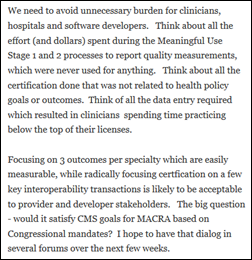

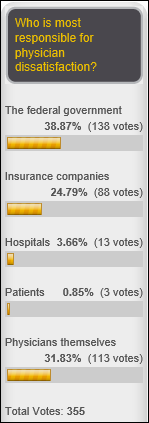


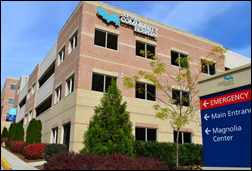



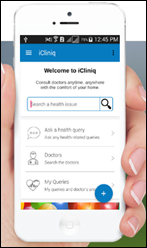

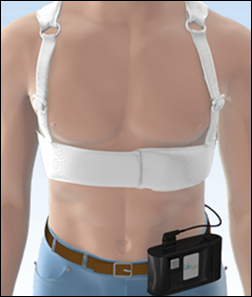
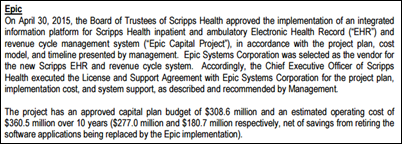



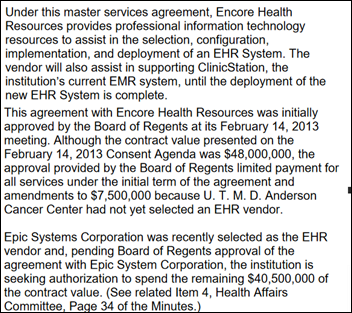









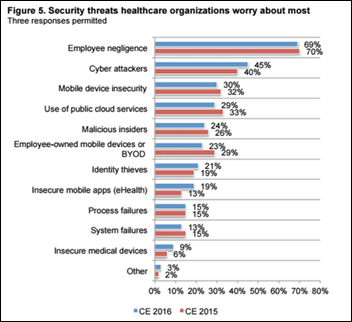



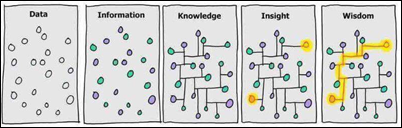






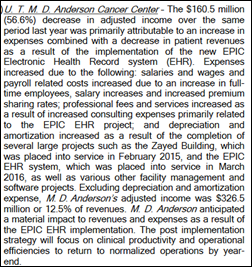


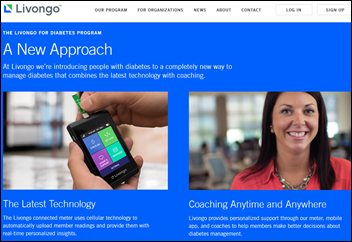


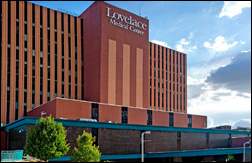




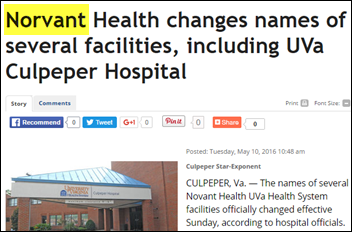







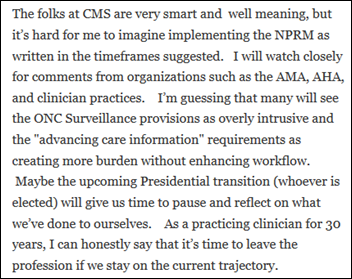
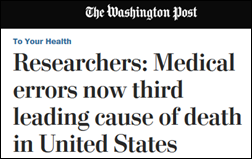
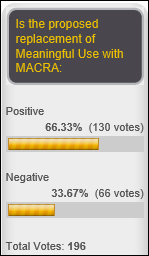

























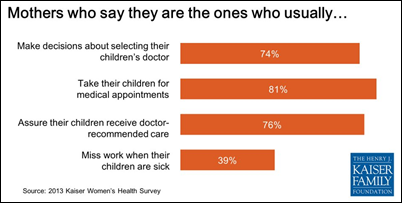

I can't get past the helmets and safety vests. On everyone. Including the model patient. What, are they expecting the…