It’s another beautiful morning in West Virginia and I was able to see the calm before the storm at the aquatics area.
A fresh team from Cerner has arrived to support us through the end of the Jamboree. Working with physicians and nurses from across the country and around the world has been a great experience. The Cerner team has really gotten into the scouting spirit, with custom Cerner badges and pins to trade with the medical teams.
Since we’re partway through the Jamboree, some of the other EHR realities have come into play, including reports that show that some providers aren’t completing their notes as timely as everyone would like. In that regard, it’s not a lot different from a traditional practice. We also had some new providers arrive to help us finish out the week, and I got to spend some time as a super-user helping a subspecialist through his first shift.
It’s been great interacting with providers from around the world. During a cold snap, we learned about manual massage techniques used in Europe to warm hypothermic patients. We also learned about their method for performing CPR vs. how it’s done in the US. We’ve had some good discussions about single payer and government-based healthcare and how rationing does or does not occur in other countries.
The international providers were fascinated by some of our discussions around Meaningful Use and MIPS, when we were talking about the government requirements for providing printed visit summaries. Fortunately, here the only reason we need to provide written summaries is so that the patients know what to do in follow up. I’m glad the EHR offers instructions in multiple languages as well as easy-to-read versions given the fact that we are dealing with teenagers. It’s good since we are treating patients whose parents aren’t here and who are from other countries. I also learned a little more about how our system interoperates with the local hospital when we have to do transfers for patients who need a higher level of care.
Friends at home have asked me what the biggest challenges are with treating an international population. There are some obvious things like spoken language and medications having slightly different names on the world market. One less-obvious thing is how the EHR handles special characters used in many patients’ names. Attendees completed health history forms when they registered for the Jamboree and much of that information has been imported into our EHR. However, many of those characters have been replaced by placeholder characters, which can make it tricky to search for patients if they’re not wearing their ID badge with their registration number.
For the most part, the data that has been flowing into the EHR has been accurate. I understand from talking to one of the back-end IT personnel that it was a big challenge to merge it in from its native data source, but that they were committed to getting it done right.
AT&T has done a phenomenal job with the WiFi capabilities at The Summit, and we’ve had good coverage not only in the medical areas, but also while we roam thousands of acres of program areas. The Scouts are using a variety of social medial platforms, including a game called Novus that allows them to connect with other attendees using a wristband and then see contact information in their Jamboree app. Participants can get prizes for connecting with attendees from different countries and also for visiting various program areas and clicking their Novus devices.
The highlight of the week was Thursday, when all of the program activities — including the zip lines, scuba pools, paddle boarding, and swimming areas — were closed. Participants were encouraged to cook their traditional foods and wear traditional dress, and walking through the camp was like taking a trip around the world. I sampled spicy chicken from Trinidad and Tobago, fizzies from South Africa, Inca Cola from Peru, a German sausage stew, and some delightful sugared pancakes from The Netherlands (they reminded me a lot of beignets in New Orleans, proving again that that world is perhaps a bit smaller than we think).
We were able to partake of traditional Peruvian dance, a sauna from Finland, salted licorice from Sweden, tea and steamed pudding UK-style, and both Marmite and Vegemite. Then it was back to work to see patients who had a bit too much sun and perhaps more variety of foods than they were used to.
I only have a handful of shifts left before I head home. I have to say it’s been quite an experience. There have been challenges in delivering care in a rugged environment and also in standing up multiple health centers that are only going to run for a couple of weeks. The EHR has performed like a champ, but I suspect I might be a little more tolerant than some of the other users I hear grumbling from time to time. You’d hear that at any healthcare facility, however.
Tomorrow I have a rare day off and am going to spend it whitewater rafting in the New River Gorge. Rumor has it that the trip we’re going on has a couple of Class 4 and Class 5 rapids. I’m a little nervous about that since I’m used to water that’s a little more flat and navigated in a canoe, but I’m open to the adventure.
If you could visit any country in the world, where would you go and why? Leave a comment or email me.
The Sydney newspaper notes that Queensland’s public health system lost $25 million last year, with the health minister naming as a key factor the cost of its over-budget Cerner EHR implementation.
The American Telemedicine Association elects Joe Kvedar, MD as its next president. Kvedar — who has previously served as ATA president and board member — is vice president of connected health at Partners HealthCare.
HIStalk Announcements and Requests
Last week’s poll results should encourage companies that offer virtual visits. The main reasons that respondents didn’t use their services for recent minor conditions can be overcome via education and marketing – habit, uncertainty about how to obtain a virtual visit, and not being sure whether their issue required an in-person visit. Only around 20% of respondents have an ingrained preference for in-person visits or just don’t trust virtual visits and thus will probably never be convinced.
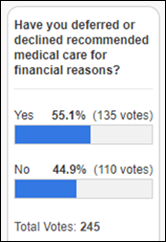
New poll to your right or here: which should be required before health IT vendors sell the de-identified data of patients who were treated by their provider clients? I’m fascinated that a key element of Cerner’s Wall Street-pandering “new operating model” involves selling patient data stored in its systems to drug companies or other potential buyers, announcement of which was nearly concurrent with publication of a study that found that nearly all de-identified data can be re-identified. The patient, as usual, is the pawn in having their information profitably change hands without their knowledge, much less their permission or benefit, even as they struggle to pay high doctor’s office, hospital, prescription, and insurance premium bills. The “whose data is it, anyway?” question remains unanswered even as the deals get signed.
HIStalk has been drawing 4,000-5,000 page views each weekday even in this slow summer new period, which I mention only to encourage potential sponsors to ask Lorre if she has any “Summer Doldrums” sponsorship and webinar deals left. Companies need to work to get and/or keep their names out there, and if your competitor is already doing that via their HIStalk sponsorship, maybe that’s their not-so-secret weapon for smiting you like a picnic mosquito.
Webinars
July 31 (Wednesday) 1:00 ET. “Modern Imaging Technology for the Enterprise: Mercy’s Approach That Improved Imaging Cost, Speed, Capacity, and Care Quality.” Sponsor: Mercy Technology Services. Presenter: Jim Best, executive health IT consultant, Mercy Technology Services. Enterprise imaging has become as critical as EHRs for transforming patient care, but many health systems are struggling with the limitations and costs of dated, disconnected PACS even as imaging volumes grow and radiologists report increasing levels of burnout. Radiologists at Mercy were frustrated by its nine disparate PACS, which required them to toggle between workstations, deal with slowdowns and poor reliability, and work around the inability to see the complete set of a patient’s prior images, even as demands for quick turnaround increased. In this webinar, MTS — the technical backbone of Mercy — will describe the lessons they learned in moving to a new best-of-breed PACS platform that increased radiology efficiency by 30%, with the next phase being to take advantage of new capabilities by eliminating third-party reading services and distributing workload across radiology departments to improve efficiency, capacity, and timely patient care.
Vocera announces Q2 results: revenue up 5%, adjusted EPS $0.07 vs. $0.09, beating analyst expectations for both. Share price slid 8% on the news, however, and are down 14% in the past year vs. the Dow’s 7% gain.
ResMed announces Q4 results: revenue up 15%, adjusted EPS $0.95 vs. $0.95, beating consensus estimates for both.
Sales
Raleigh Neurology Associates joins the TriNetX global health research network.
People
Dann Lemerand joins Welltok as senior director of product management. He started the 3,700-member LinkedIn HIStalk Fan Club forever ago.
Other
NBC News runs a breezy article whose headline promises to describe how “hospitals are using AI to save their sickest patients.” It falls short, however, with just these questionable examples that beg the question, exactly how do these systems learn on their own?:
Mayo’s ICU work turning EHR information into a simplified clinician display of only the most important information, which has since been commercialized as a rules-based rather than AI-powered system.
Sepsis detectors, journal articles about which do not make it clear how machine language is used even though the term is referenced several times.
Use of machine learning-powered algorithms that decrease the number of unhelpful patient alarms, which in the original research publication suggests that the system is actually a rules package that was created after analyzing real-life data.
In Australia, the Sydney newspaper notes that Queensland’s public health system lost $25 million last year, with the health minister naming as a key factor the cost of its over-budget Cerner EHR implementation and the associated planned temporary reduction in capacity.
Industry long-timer Ross Martin, MD, MHA creates “Miss Isabella Rainsong and Her Traveling Companion: A One-Guitar Show,” with a release party and live performance scheduled for August 2-3 in Baltimore.
Baylor MD-PhD candidate Julia Wang notes that a lack of consistency in lab test names can cause ordering errors.
The New Yorker looks at the dangers of using AI/ML without understanding what it’s doing under the covers, likening it to the many new drugs that earn FDA’s approval because they seem to work even though nobody knows why. The author warns that the “intellectual debt” this creates opens those systems to bias, mistakes, or misuse:
As machines make discovery faster, people may come to see theoreticians as extraneous, superfluous, and hopelessly behind the times. Knowledge about a particular area will be less treasured than expertise in the creation of machine-learning models that produce answers on that subject. Financial debt shifts control—from borrower to lender, and from future to past. Mounting intellectual debt may shift control, too. A world of knowledge without understanding becomes a world without discernible cause and effect, in which we grow dependent on our digital concierges to tell us what to do and when.
Sponsor Updates
Lightbeam Health Solutions staff pack 10,000 meals for Feeding Children Everywhere.
Meditech releases a new video, “The future of care delivery.”
Netsmart will exhibit at HomeCareCon July 29-August 1 in Orlando.
Relatient publishes a new case study, “How US Dermatology Partners Solved the Patient Intake Bottleneck with Mobile Registration.”
Vocera will exhibit at the DHITS Conference July 31-August 1 in Orlando.
Zen Healthcare IT welcomes Redcom Dispatch to its Interoperability Community.
NextGate will exhibit at the DFWHC 12th Annual Patient Safety Summit August 1 in Hurst, TX.
First DataBank will present “Medical Device Data Your Clinicians Need at the Point of Care” covering Unique Device Identifiers at AHRMM19 in San Diego this week.
Shares of Health Catalyst, Livongo, and Phreesia begin trading with significant first-day price jumps.
Cerner announces plans to create a “monetized distribution model” of selling patient data to drug companies and insurers.
Tenet announces that it will spin off its Conifer revenue cycle management and population health business into a publicly traded company and that Conifer CEO Stephen Mooney has resigned.
Cerner’s Q2 earnings meet Wall Street expectations as revenue fell short.
Essence, parent company of Lumeris, faces CMS review for using Lumeris software to identify patients who could be billed as “enhanced encounters.”
AHIMA and CHIME urge the Senate to pass a House bill that would allow HHS to participate in the rollout of a national patient identifier.
Amazon threatens to sue Surescripts over the potential loss of access to patient prescription data for its PillPack mail order pharmacy subsidiary.
Tennessee creates a committee to study state EHR use for efficiency and potential fraud.
Best Reader Comments
Cerner CommunityWorks is a multi-tenant domain for critical access hospitals and community hospitals under 200 beds. I believe that Cerner is now moving this type of model to larger medium-sized hospitals but will have less per domain (CommWx can have 20+ per domain) whereas this model for say a 300-500 bed hospital may have only 3-4 customers in a domain. Also, its not technically already configured. Similar to Epic, its call the Model Experiencer where about 80% of the domain is standard / stock content and then each customer has the ability to customize about 20% of it (some rules, reports, documentation format, etc.) Implementation for CommWx is currently scheduled at 10-12 months. However, it still essentially sits on standard architecture. Now if Cerner would really commit to either AWS/Azure or true cloud, then I think that would be move the needle. (Associate CIO)
Rural broadband (broadband in general) needs to be treated as a public utility. This country should handle this the way we handled electricity in the rural South in the 1950s, take it on a a public works project, and wire everyone up. It has become a fundamental tool in communication and commerce, there is no reason (other than paying some C-level executives millions in salary and stock) why we as a country should not ensure that all of our citizens can participate in civic life. (HIT Girl)
There is no such thing as an “Epic API” whereby third-party developers can craft solutions that developers can go market to Epic clients and generate some form of income along the way. In the Epic space you have two options – share your solution with Epic as a submission for the community sharing site (whereby you explicitly grant Epic rights to ALL of your IP embedded in that solution, even if it is never added to the community site) or craft some sort of app for submission to the App Orchard whereby your application / solution is sending transactions into Epic via some very narrowly defined messages (think HL7 here). There are absolutely, hands down, 100% zero options for what (uninformed and snobby) folks may traditionally consider an API for an application whereby complementary, third-party apps can in some fashion manage or change the behavior of the parent application in the Epic space. (Code Jockey)
In all of the time and locations I’ve done pre-implementation build, I’ve never encountered an Epic resource that fully understood the impact of the build decisions that they were leading their clients to implement. No Epic resources know / realize / are trained on the downstream impacts of their area of build or the upstream build areas that will impact their area of responsibility. Those lessons are learned and that knowledge developed only after go live, as the site implementation matures and are long after Epic has left the site. (Code Jockey)
Do you really think that Epic doesn’t share best practices with organizations during implementation? The Foundation System is more or less a best practice soup. Every organization believes they are different and special so there is no reason to believe that Providence would have any more success convincing implementing customers to change their workflows and adopt best practices. Despite staff turnover, no customer organization has more experience implementing Epic’s software than Epic itself. (But we’re special)
Outsourcing some of the business office and IT makes sense. Yes, I know that it mentions [at John Muir Health] about 500+ people badge flipping, but being someone that has worked on deals like this previously, many of those people don’t make it long term. They are re-evaluated and many are given early departure packages, keeping the cream of the crop and then backfilling virtually with people that living in lower cost of living areas. Usually look at a 30% or more reduction in staff. These resources that are kept also get leveraged across other clients as well, so that needs to be kept in mind too. Sharing resources isn’t the worst thing, its just that you need to be tight with cost, SLA’s (service levels), and customer satisfaction. Plus, by outsourcing, the burden is now on the vendor to produce, they are now the throat to choke. I have seen this model be successful but I have also seen in flop and the hospital takes things back over. Again, its a case by case basis. (Associate CIO)
Watercooler Talk Tidbits
Readers funded the DonorsChoose teacher grant request of Ms. R in Florida, who requested three Chromebooks for her high school class. She reports, “Having computers accessible in a science classroom is a real game changer. The students are digital natives, and being able to translate what they are learning into a language they are familiar with using is awesome! They are able to collaborate, engage in digital simulations, conduct research , create presentations, and more! These are useful to every level I teach. From my freshman physical science students, in my Pre AICE chemistry class, to my Chem 2 honors and AP chemistry class. It is applicable in each one. I also teach theater and then I can use them for the students to do CAD design without having to sign up to go to a computer lab or wait for a computer cart to be available. Thank you!”
Nanowear launches a study of using its sensor-powered underwear that is connected to a closed-loop machine learning system for early detection of heart failure. It monitors cardiac output, heart rate, respiratory rate, thoracic impedance, activity, and posture.
AHA and other hospital groups ask CMS to change its HCAHPS patient survey, suggesting that it reduce the number of questions from the current 27, create a digital version to improve response rates, expand it to cover transitions in care rather than just discharges, and allow patients to enter comments.
Guild members hold a garage sale to help cover the $1 million in uncompensated care provided by Seattle Children’s Hospital, whose most recent tax filings show a profit of $165 million on revenue of $1.5 billion. The hospital is running a $1 billion donation campaign.
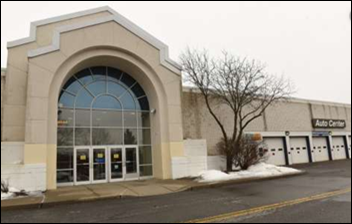
Malls that are desperate to fill vacant storefronts are leasing space to medical clinics, hoping against reality that someone who comes in for a flu shot or eye exam will do a bit of shopping and that clinic employees will hit Sbarro or Cinnabon for lunch.
Police arrest a Charleston, SC pulmonologist for voyeurism after an 18-year-old tenant of one of his beach rental properties caught the doctor peering through a hole in the bathroom wall from an adjacent unfinished room. The boy and his father chased the fleeing doctor down the beach, who told them he was just the pest control guy. Investigating officers found bathroom peep holes in both of the doctor’s rental houses. He previously lost but regained his medical license after three complaints that he exposed himself to drive-through restaurant employees.
A new GAO report on expected VistA maintenance costs during the VA’s 10-year transition to Cerner leaves lawmakers uneasy about the true cost of the conversion project.
Health Catalyst and Livongo become the first digital health companies to IPO since 2016.
Health Catalyst (HCAT) shares, initially priced at $26, surged 45% during mid-day Nasdaq trading to end at $39 by the close of market. The company raised $180 million.
Livongo (LVGO) experienced a similar debut, with shares initially priced at $28 climbing to $40 at the start of trading and ending at $38. The company raised over $350 million.
Reader Comments
From Socalgrunt: “Re: Jacobus Consulting closure. As follow up to the Jacobus Consulting talk a few weeks ago, I received the following from my Meditech rep: ‘Jacobus is no longer active in the consulting space for MEDITECH,’ which was used to prompt a discussion around their professional services.”
From Miami@Vice.com: “Re: Executive exodus at Nicklaus Children’s Health System in Miami. From inside … both CEO Narendra Kini, MD and CIO Ed Martinez, plus the head of HR, have been escorted out of the building.” The Miami Herald reports that CEO Narendra Kini, MD has stepped down “to pursue opportunities in innovation.” Board members say his departure has nothing to do with financial troubles that led to mass layoffs earlier this year. Tax filings show that Kini took home $1.5 million in 2017. SVP and CFO Matthew Love has been named interim CEO.
Webinars
July 31 (Wednesday) 1:00 ET. “Modern Imaging Technology for the Enterprise: Mercy’s Approach That Improved Imaging Cost, Speed, Capacity, and Care Quality.” Sponsor: Mercy Technology Services. Presenter: Jim Best, executive health IT consultant, Mercy Technology Services. Enterprise imaging has become as critical as EHRs for transforming patient care, but many health systems are struggling with the limitations and costs of dated, disconnected PACS even as imaging volumes grow and radiologists report increasing levels of burnout. Radiologists at Mercy were frustrated by its nine disparate PACS, which required them to toggle between workstations, deal with slowdowns and poor reliability, and work around the inability to see the complete set of a patient’s prior images, even as demands for quick turnaround increased. In this webinar, MTS — the technical backbone of Mercy — will describe the lessons they learned in moving to a new best-of-breed PACS platform that increased radiology efficiency by 30%, with the next phase being to take advantage of new capabilities by eliminating third-party reading services and distributing workload across radiology departments to improve efficiency, capacity, and timely patient care.
An EY consultant says the data on 55 million patients held by the UK’s NHS could be worth $12 billion if sold to commercial interests, but could also be mined by NHS itself to generate $6 billion per year through operational savings and improved patient outcomes.
Cerner reports Q2 results: revenue up 5%, adjusted EPS $0.66 vs. $0.62, beating earnings expectations but falling short on revenue. From the earnings call:
Chairman and CEO Brent Shafer says the company’s future lies in helping clients deliver benefits from the systems the company has sold them.
The company will offer Millennium via a SaaS platform.
Cerner will develop a “monetized distribution model” of selling patient data to drug companies and insurers as a “curated data services asset.” Part of that is its HealtheHistory business, which sells records retrieval services to insurance companies and law firms.
The company has created a transformation management office of four people, two of whom are from turnaround consulting firm AlixPartners.
Cerner will move MyStation patient engagement product users to a similar product product from new partner GetWellNetwork.
Cerner expects to reduce costs by up to $200 million to achieve its announced margin targets.
Call9 co-founder and CEO Tim Peck, MD says the shuttered nursing home telemedicine company will re-open as Call9 Medical. The company, which embedded paramedics and EMTs at customer sites in New York, closed last month after struggling to stay true to its value-based business model and issues with lead investor Redmile. The new iteration may involve a merger or acquisition, will start off with a larger network of nursing homes, and utilize primary care physicians.
Records release vendor Ciox Health raises $30 million in a funding round led by Merck Global Health Innovation Fund and New Mountain Capital.
Revenue down 1%, adjusted EPS $0.16 vs. $0.19, missing expectations for revenue slightly and for earnings significantly.
The company says one of its new, large clients has run into financial problems and won’t contribute the expected $4 million per year in recurring revenue, potentially affecting NextGen’s top line.
The company’s legacy retention rate was 89% for the year, but it expects further volatility there.
NextGen will expand its offshore work in India and has restructured around headcount reduction in the US, driven by a need to increase capacity rather than to save money.
The Bill & Melinda Gates Foundation invests in Halodoc, Indonesia’s largest telemedicine vendor. The financing, which wraps up the company’s $100 million Series B round, is the foundation’s first digital health investment.
People
AliveCor names former Amazon Alexa lead Priya Abani CEO.
Trisha Swift, DNP, MSN, RN (JPS Health Network) joins ZeOmega as VP for clinical transformation.
Oncology Analytics hires David Fusari (TriNetX) as CTO.
Lafayette General Health (LA) promotes Fallon McManus, MD to CMIO.
Sales
Bayhealth (DE) selects Pivot Point Consulting’s new On-Demand consulting service to support its Epic systems.
Announcements and Implementations
UCI Health (CA) adds MediNav wayfinding technology from Connexient to its Epic-integrated app for patients.
Hardtner Medical Center, a 35-bed hospital in rural Louisiana, uses MobileSmith Health’s Blueprints software to develop its first patient app.
Government and Politics
In Australia, Queensland government officials press pause on allocating $150 million needed for the continued roll out of Cerner Millenium software across Queensland Health facilities. Initially budgeted at $600 million, the software has gone live at 14 out of 20 hospitals. It has ballooned past its budget, and suffered from leadership scandals and numerous end-user reports of patient safety errors.
A Government Accountability Office report on VistA maintenance costs during the VA’s 10-year transition to Cerner shows that the agency can’t provide a reliable estimate because it hasn’t been able to define what the 30 year-old, homegrown system is. The findings have, in turn, left lawmakers on the House Veterans Affairs Subcommittee on Technology Modernization doubtful of overall project costs, which have already risen to $10 billion. Subcommittee Chair Rep. Susie Lee (D-NV) pointed out that, “Money does not grow on trees. At what point do we lay out exactly what the costs are? There are many unknowns in this transition. The fact that this plan is still being formulated is concerning.”
Other
University of Colorado Health CMIO CT Lin, MD publishes “My Failure Resume” to encourage younger colleagues and highlight that success is not as clear-cut as typical resumes would have us believe. A few excerpts:
1999: Working in Informatics at 0.2 FTE, I trained docs to use the EHR (3M Clinical Workstation). Asked orthopedists to use the EHR to view result, notes, and print prescriptions. I thought: who wouldn’t want more readable data instead of paper charts? I was politely asked to go away: they were busy being doctors. Hospital leaders response? “Go ask other clinicians who might be friendlier to you.”
2007: Introducing APSO notes (inverted SOAP notes) for improved readability of EHR notes. I thought it was a great idea. Convinced 80 interested colleagues to try it. APSO use rate during “opt-in” phase? 16% (almost no one). Years later, I was able to gain leadership acceptance and make it near-mandatory: “You want to use our new Epic EHR? It only comes with APSO notes. Sorry.” APSO use in Epic? 90%.
2017: Eastern European hackers attacked and disabled national Transcription Service computers. Hundreds of surgeons lost a week of dictated Operative Notes. It was 3 weeks before transcription service restored. Vicious Rumor: “I’m pretty sure CT Lin did this, to force us all to type in his … EHR.” Somehow kept my job.
Sponsor Updates
WebPT CEO Nancy Ham joins Blue Cross Blue Shield of Arizona’s Board of Directors.
EClinicalWorks will exhibit at the CHCAMS 32nd Annual Conference July 30-August 2 in Biloxi, MS.
Ensocare names Stephen Wood senior software engineer.
Hayes Management Consulting names Joseph Plouffe (Emerson Hospital) client success manager and Jaenna Babajane (Athenahealth) director of implementation.
Hyland and InterSystems will exhibit at the 2019 Defense Health Information Technology Symposium July 30-August 1 in Orlando.
Imprivata and Security Innovation award 15 Def Con scholarships to women.
Kyruus publishes a new report, “Provider Perspectives on Digital Access.”
NextGen adds OptimizeRx’s point-of-care digital prescription savings software to its Enterprise EHR.
The Chartis Group publishes a new white paper, “Getting Beyond the Hype with Apps and Making it a Reality.”
First announced in April, Jim Costanzo succeeds Bruce Cerullo as Nordic CEO.
FDB SVP Patrick Lupinetti will co-present a session entitled “Medical Device Data Your Clinicians Need at the Point of Care” on July 29 at the AHRMM19 Conference in San Diego.
Ellkay partners with Canadian digital healthcare management company Chronometriq to help expand its services in the US.
The Federal Communications Commission (FCC) approved a proposal creating a $100 million fund for telehealth, targeted to reach low-income and rural Americans. The so-called Connected Care Pilot Program would help providers offset the costs of broadband service to help low-income patients and veterans access telehealth services. The fund is designed to cover a percentage of internet connectivity costs for organizations agreeing to participate in the pilot. The FCC is receiving public comments on the proposal, which is specifically designed to increase use of remote patient monitoring services and virtual care.
Earlier this month, National Public Radio did a story on the role of telehealth in rural communities. Profiled services include California Medicaid’s video counseling sessions, which can dramatically reduce the backlog for behavioral health services. A recent NPR poll showed that 25% of rural Americans have used some kind of telehealth services in the last few years. Although some rural telehealth models include patients visiting a local clinic to confer with a subspecialist hundreds of miles away, others rely on the patient having broadband connectivity at home, which is a limiting factor for up to 20% of rural residents. The piece also illustrates the often undocumented costs of rural patients having to drive hours for care – missed work, hotel stays, and childcare. Payment for certain telehealth services continues to be an issue, so we’ll have to see if the funding can keep up with the demand.
I was disappointed to see that a US judge struck down a recent rule requiring pharmaceutical manufacturers to disclose drug pricing in their TV advertisements. The rule would have required wholesale pricing data to be included for consumers to better understand the relative costs of therapies being promoted. Not surprisingly, drugmakers Merck, Eli Lilly, and Amgen were behind the challenge. Although I agree with the ruling that the Department of Health and Human Services doesn’t have the authority to force manufacturers to disclose pricing, I’d love to see Congress make this a reality. Some of the most commonly advertised medications have prices from $500 to $17,000 per month, which shocks patients when they come in and we have to explain why we’re not going to prescribe them.
After spending time in the hospital with a relative, I was glad to see this article on alarm fatigue in hospitals. Clinicians, psychologists, musicians, and designers are working to make alarms that are less jarring and more helpful. Alarms have been linked to patient confusion and staff anxiety as it is difficult to know whether alarms are legitimate or false alarms. I was surprised by the statistic that from 2005 to 2008, more than 500 US patients had adverse outcomes (including death) from alarms that were ignored, silenced, or otherwise mismanaged. A working group aims to develop an alarm standard with more pleasant alerts than those currently in place from the International Electrotechnical Commission.
Random statistics of the week:
The global EHR market hit $31 billion in 2018.
Growth was up 6% from a market of $29.7 billion the previous year.
First-year medical residents spend 43% of their time interacting with EHRs
There are over 700 companies in the EHR market
EHR mergers and acquisitions have increased 15% over the past year
Allscripts and Microsoft have agreed to team up to promote EHR data sharing. Users of Microsoft HealthVault will be able to use the Allscripts FollowMyHealth patient portal to move EHR data to family and home care teams. HealthVault will be retired on November 20, 2019 and users can move their data any time before then. The FollowMyHealth app is available for both IOS and Android.
If you haven’t completed the transition to the new Medicare Beneficiary Identifier, you’re running out of time. After January 1, 2020, claims with old patient identifiers will be rejected. As of the week ending July 5, providers submitted 76% of all fee-for-service claims with the new MBI.
Since I’m spending the rest of this month with the young people of the world, I was interested to see these statistics on worldwide vaccination rates. The World Health Organization notes that more than one in 10 children – or 20 million worldwide – missed out last year on vaccines against life-threatening but preventable diseases such as measles, tetanus, and diphtheria. Vaccination rates are slowing in poor countries or those with ongoing conflict, resulting in a loss of the herd immunity effect where high vaccination rates provide protection for those who might not be vaccinated. Measles is booming in the US due to under-vaccination and worldwide cases topped 350,000 last year.
For those of you interested about my medical volunteer adventures, there have been some ups and downs with the deployment of the EHR. They broke out a ton of laptops, a forest of extension cords (fire marshal beware), and some clinical scenarios, but 20+ care teams were using the same scenarios and test patients, so we were documenting all over each other. Kudos for drawing those scenarios from real patients at the last National Scout Jamboree in 2017, but they weren’t delivered to us in a facility-specific, way but rather to all the medical people together. My team spent a long time figuring out how to order x-rays only, to be told later in the day by our chief medical officer that we would not be ordering x-rays since only the downstream facilities did that — we just needed to put it in our discharge instructions. In defense of the Cerner team, they were also working with a multicultural, multinational team that hadn’t yet been assigned to care teams, so in some ways we were a little off kilter ourselves.
Still, we made it through, and Cerner was kind enough to come to our facility and offer some refresher training to make sure we are ready for when the world arrived. I am having a great time getting to know my team – nurses from Sweden, Austria, and the Netherlands along with nursing students from West Virginia University. They’ve been teaching me about healthcare in their countries and we’ve all been teaching the student nurses (and the Cerner trainers) about the scouting movement. The latter were especially impressed at our ability to quiet a room full of contentious physicians simply by raising three fingers into the air. I doubt they’ll be able to use that on their next training audience.
Some of the Cerner team members are serious scouters and I had the chance to talk in depth with one of them today. She’s staffed several prior Jamborees and knows how they work and how to talk physicians off the edge, which apparently has happened a couple of times this week. As much as the Scout motto is “Be Prepared,” some of the physicians didn’t do their advance training and are a little behind the eight ball. The trainers are staying in tents and hoofing it to work every day just like we are, so we’re starting to build a bit more camaraderie.
It was impressive to see what had to be more than 1,000 charter busses pour into the Jamboree over a 36-hour period and watching open fields turn into seas of tents. Our patient panel includes more than 7,700 youth from 75 countries. I worked my first night shift last night after the opening ceremony, which brought a sea of 50,000 people scattering back into six basecamps. I rendered some postoperative care to a patient whose visit to the US involved the removal of his appendix on the way to the Jamboree, which although within my scope of practice, was not something I expected to see. We also had a brush with hypothermia this morning as overnight temps dipped into the 40s F. I learned that the M997A3 Tactical Humvee Ambulance is not only rugged but warm and the National Guard was a godsend for my patient at 5:30 a.m.
After my post-call nap, I hit a couple of continuing education sessions on orthopedic trauma and wilderness first aid / evacuation.
Today marks my 900th post for HIStalk and I appreciate all of your support over the years. Thank you for sharing my adventures both inside and outside of the hospital.
Health Catalyst revises its IPO filings to increase both the number of shares and the planned share price range, now valuing the company at just under $1 billion.
Former Sutter Health IT Chief Operations Officer Stuart James sues the health system, claiming it wrongfully terminated him after a May 2018 system-wide computer failure and then defamed him by naming him as being let go because of the downtime.
Health Catalyst revises its IPO filings to increase both the number of shares and the planned share price range, now valuing the company at just under $1 billion.
Some of the significant shareholders, with shares priced at the upper end of the price range:
CEO Dan Burton ($22 million)
EVP and Co-Founder Steven Barlow ($71 million)
President and Co-Founder Tom Burton ($67 million)
CTO Dale Sanders ($15 million)
Investor Todd Cozzens ($54 million)
UPMC also owns shares potentially worth $89 million.
Health Catalyst reported a 2018 loss of $62 million on revenue of $113 million, with an EPS of –$11.88.
An interesting footnote discloses that the company paid just $2.3 million to acquire money-losing Medicity and its 60 customers from Aetna in June 2018, which Aetna had acquired for $500 million in early 2011.
Reader Comments
From Reeking Havoc: “Re: salespeople. I posit that it’s all about the hair.” I won’t rise to your generalization bait, but I acknowledge that salespeople often have remarkable hair and teeth. I think I could pick senior salespeople out of a lineup nearly 100% of the time. I don’t know whether great-looking people are more likely to succeed at sales (which I suspect) or whether they just pay more attention to their appearance than we IT and clinical geeks who don’t have to (and usually don’t) make an immediately positive first impression to avoid employment Darwinism.
HIStalk Announcements and Requests
Health Catalyst’s Health Analytics Summit is coming up in September in Salt Lake City, which reminded me that I attended several years ago. It had great speakers, a fantastic hotel at a shockingly low room rate, and an Apple-like cool kids tech vibe. On the agenda this year are some names I know: Lyle Berkowitz, MD; John Halamka, MD; Jefferson Health CEO Stephen Klasko, MD; and former Epic CFO and now-software CEO Anita Pramoda. Also speaking is data democratization company founder Justin Aronson, who is a high school sophomore. This isn’t a paid plug or anything (which should be obvious since I don’t do that), but I was just having fond memories of seeing the surprisingly healthcare-relevant “Moneyball” baseball manager Billy Beane speak there back in 2014, still my favorite presentation from any conference I have attended.
Webinars
July 25 (Thursday) 2:00 ET. “Meeting patient needs across the continuum of care.” Sponsor: Philips Population Health Management. Presenters: Cindy Gaines, chief nursing officer, Philips Population Health Management; Cynthia Burghard, research director of value-based healthcare IT transformation strategies, IDC. Traditional care management approaches are not sufficient to deliver value-based healthcare. Supplementing EHRs with advanced PHM technology and a scalable care management approach gives health systems proactive and longitudinal insights that optimize scarce resources in meeting the needs of multiple types of patients. This webinar will address the key characteristics of a digital platform for value-based care management, cover the planning and deployment of a scalable care management strategy, and review patient experience scenarios for CHF and diabetes.
July 31 (Wednesday) 1:00 ET. “Modern Imaging Technology for the Enterprise: Mercy’s Approach That Improved Imaging Cost, Speed, Capacity, and Care Quality.” Sponsor: Mercy Technology Services. Presenter: Jim Best, executive health IT consultant, Mercy Technology Services. Enterprise imaging has become as critical as EHRs for transforming patient care, but many health systems are struggling with the limitations and costs of dated, disconnected PACS even as imaging volumes grow and radiologists report increasing levels of burnout. Radiologists at Mercy were frustrated by its nine disparate PACS, which required them to toggle between workstations, deal with slowdowns and poor reliability, and work around the inability to see the complete set of a patient’s prior images, even as demands for quick turnaround increased. In this webinar, MTS — the technical backbone of Mercy — will describe the lessons they learned in moving to a new best-of-breed PACS platform that increased radiology efficiency by 30%, with the next phase being to take advantage of new capabilities by eliminating third-party reading services and distributing workload across radiology departments to improve efficiency, capacity, and timely patient care.
Medicare Advantage insurer Essence faces a whistleblower lawsuit and CMS review after an HHS audit finds that the company and its local provider partners inflated patient risk scores – and thus their Medicare payments – by using data mining software provided by Essence-owned Lumeris to identify patients who could be billed higher “enhanced encounter” rates. HHS found instances where patients with old strokes were falsely documented as having had recent ones and patients whose minor depressive episodes were labeled as major. The partner hospital that was involved told the doctor who complained in the document above that many insurers – not the hospital itself – are identifying care gaps and paying providers to close them, placing “millions of dollars at stake based on on our performance across a range of quality metrics.” Lumeris recently signed a 10-year, $266 million deal with Cerner to launch Maestro Advantage, a technology and services package that targets the Medicare Advantage and provider-sponsored health plans market.
India-based startup CureFit, which hit $100 million in annual revenue within its first three years, says it will be a billion-dollar business by 2022, will expand to other countries, and will then go public. The company offers app-supported delivered meals (the murgh khurchan with rotis, which I like a lot, looks especially good) , group exercise programs, yoga classes, and medical and lifestyle consultations. The company, which will expand to 800 centers in 50 centers by next year, is happy with its subscription model and thinks it can increase annual per-customer spending from $350 to $1,000. It will soon offer energy bars, wellness, skin and dental services, its own line of shoes, and wearables such as watches and heart rate monitors.
Sales
Mount Sinai Health System will use Phunware’s cloud-based consumer mobile app development solution that includes interactive directories, location-triggered content, wayfinding and mapping services, and kiosks.
People
Apixio promotes Tom McNamara to chief growth officer.
Announcements and Implementations
PMD offers HIPAA-compliant patient-provider communication in its free PMD Secure Messaging platform, allowing providers to communicate with patients and colleagues via texting or video.
Medical device maker Medtronic will distribute AI-powered stroke detection imaging analysis software from Viz.ai. The CT-connected software quickly identifies large vessel occlusion and sends images to the smartphones of stroke specialists to reduce door-to-needle time. Viz.ai was founded in 2016 and has raised $31 million in funding, most recently in its Series A round a year ago.
Meditech offers its customers a one-year free membership in CHIME.
PatientPoint launches a location-based mobile patient engagement program to target patients sitting in a waiting room with local news, weather, and games along with patient education.
Rhapsody releases the first version of its flagship interoperability product since the business was divested by Orion and merged with its private equity acquirer’s competing vendor Corepoint Health.
Government and Politics
AHIMA and CHIME co-hosted a congressional briefing Monday that urged the Senate to support a House resolution that would repeal the longstanding ban on using federal money to adopt a national patient identifier. Repeal of the ban would allow HHS to work with the private sector in creating a unique identifier. CHIME offers a form letter for members to use in contacting their Senator to voice their support.
ONC opens its annual review period for the Interoperability Standards Advisory for interoperability specifications and standards. Recently added components address interoperability needs for electronic prescribing, tobacco use, pediatrics, and opioids along with a list of interoperability efforts by state and local public health agencies.
Other
The Baltimore business paper describes LifeBridge Health’s newly launched virtual hospital, led by ED doctor and CMIO Jonathan Thierman, MD, PhD. The center handled 1,000 cases per month in its pilot. It’s being used it to connect with paramedics responding to calls, patients in their homes, and patients in affiliated facilities. The virtual hospital routes routine calls for questions, follow-up, and prescription refills to call centers in Israel and the Philippines that employ Maryland-licensed nurses. Thierman is impeccably credentialed – he has a Harvard BS and MD, an MIT PhD in engineering, and has invented several medical devices.
Researchers find that 99.98% of the people whose information is stored in a de-identified dataset can be re-identified using 15 demographic attributes, calling into question GDPR requirements and the legal adequacy of the “release and forget” model of de-identification. In other words, just about anyone with modest skill who has access to databases stored by governments and corporations can re-identify nearly every patient in a de-identified database.
A newly published study finds that doctors aren’t much better than anyone else in getting only high-value care, taking their medications as prescribed, and receiving recommended vaccinations. The authors therefore suggest that patient awareness and education campaigns aren’t likely to improve quality or reduce cost.
Former Sutter Health IT Chief Operations Officer Stuart James sues the health system, claiming it wrongfully terminated him after a May 2018 system-wide computer failure and then defamed him by naming him — along with SVP/CIO Jon Manis and IT Director Randy Davis — as being let go because of the downtime. James, who says he can’t find a comparable job after being fired, claims he was targeted because he told an investigator after the incident that management should have followed his recommendation to install an EHR backup system. Sutter said the downtime was caused by an unintentionally activated fire suppression system that shut down its data center for 24 hours.
American technologist Carl Malamud and his India-based team are working to free scientific knowledge that lives behind for-profit journal publisher paywalls. They have built a database of 73 million journal articles without the permission of those publishers, hoping to get around copyright issues by not allowing people to read or download the articles directly, but instead displaying their key insights as extracted by software. The group’s servers are in India, whose law allows such activity for non-profit research purposes.
Critics question whether it’s ethical for drug companies to use the genetic information of paying customers of 23andMe to discover new drugs, noting that consumers probably aren’t aware that their data is being used in for-profit collaborations and they won’t get a discount when new drugs hit the market as a result. Drug maker Glaxo, which took a $300 million stake in 23andMe last year, says drugs based on genetic information are twice as likely to succeed in clinical trials. It also plans to use the platform to recruit clinical trials subjects.
Kaiser Health News describes the innovative hospital operated by the Eastern Band of Cherokee Indians in North Carolina, which used its casino profits to opt out of the drastically underfunded Indian Health Service and instead create an integrated health model that serves as “a medical home for our people.” It follows the patient-centered, Baldrige-winning Nuka System of Care. Being outside IHS, the hospital can also bill Medicare and Medicaid.
Former LSU EVP Frank Opelka, MD says his former employer is falsely blaming him for a failed and potentially improper business deal in which LSU-developed CLIQ – population health analytics software created by the IT group of LSU’s hospital division – was licensed directly to a private company LSU had created. LSU was worried that state government would use the expected proceeds elsewhere, so Opelka was tasked with figuring out how to keep the money within the university. He says LSU’s administrators and lawyers, not he, came up with the public-private partnership structure without the approval of LSU’s Board of Supervisors, but LSU’s president blames Opelka as a rogue operator who exposed the university to conflicts of interest. State auditors also noted that the CEO of LSU’s healthcare division, Wayne Wilbright, MD – who in his previous role as CMIO led the team that created CLIQ – was involved in transactions that supported its commercialization despite the potential that he would received royalties as a result.
Healthcare in America: the Tampa newspaper chronicles the bankruptcy of the 500-employee, now-closed Laser Spine Institute, which was formed by two doctors who had left a similar minimally invasive spinal surgery company and then paired up with an investment firm to open LSI, whose revenues rocketed as the business expanded to four states. Their original partner sued LSI, claiming that the new company stole his business plan and his entire surgical team. The two doctors appealed the first jury’s award of $1.6 million, the award was then raised to $6.85 million on appeal, and then they made a big mistake in appealing yet again, resulting in a $260 million award to their former partner nine years after the first trial. LSI borrowed $150 million in 2015 despite its annual revenue of $268 million, with the former partner’s lawsuit alleging that executives simply pocketed $110 million of it for themselves and shareholders.
Systems at Springhill Medical Center (AL) remain down after what an anonymous employee claims is a ransomware attack. The hospital’s website is down, they haven’t updated their Facebook page, and they aren’t responding to media inquiries.
A brilliant analysis by John Arnold, a billionaire who ran hedge funds and traded natural gas for Enron, describes what is wrong with a published research article that claims AbbVie’s Humira patient support program reduces healthcare costs:
The researchers were being paid under AbbVie grants.
The research team included AbbVie employees.
AbbVie designed and conducted the study and helped interpret the data.
The study used retrospective company data.
AbbVie paid a professional company to write the article.
AbbVie reserved the right to kill the study if it wasn’t positive.
Sega Europe and Two Point Studios announce the gaming console version of Two Point Hospital, where players assume the role of “the hospital administrator” in “demonstrating your ability to build, cure, and improve in the hardest and strangest circumstances,” such as having the ED overrun with Freddie Mercury impersonators (note to HIMSS20 exhibitors – this might make a fun giveaway).
Sponsor Updates
Specialist insurer Beazley will offer its clients PeriGen Vigilance, an early warning system for labor and delivery that also offers telemedicine tools for “safety net” monitoring across a network of hospitals.
Impact Advisors publishes results from a survey of CHIME members in a report titled “Approaches to Digital Health in a Rapidly Evolving Market: A Survey of CIOs.”
Optimum Healthcare IT posts an infographic titled “”Q2 2019 Healthcare Data Breaches.”
Medhost partners with Trinisys to offer customers access to PHI that is stored in legacy systems.
Crossings Healthcare Solutions debuts Table of Contents (TOC) 2.0.
Atlantic.Net celebrates 25 years of innovative services and customer growth.
Arcadia staff donate time and money to Laundry Love Rockford, which provides clean clothes to those in need.
Babson College profiles alumna and Artifact Health founder Marisa MacClary.
Clinical Architecture will exhibit at the 2019 Defense Health Information Technology Symposium July 30-August 1 in Orlando.
CoverMyMeds publishes a new case study, “Improving Prescription Decision Support with RxBenefit Clarity.”
Dimensional Insight will host DIUC19 August 5-8 in Boston.
LabCorp expands its Pixel service to give consumers the ability to purchase tests online, drop off their specimens at an approved service site, and receive results via a secure portal.
Starr Investment Holdings invests $700 million in Radiology Partners, a physician-led practice with locations in 21 states that also offers consulting, IT, and RCM services.
July 22, 2019Readers WriteComments Off on Readers Write: The One About Moon Landings and AI in Healthcare
The One About Moon Landings and AI in Healthcare By Vikas Chowdhry
Vikas Chowdhry is chief analytics and information officer at Parkland Center for Clinical Innovations of Dallas, TX. The views expressed in this article are my personal views and not the official views of my employer.
Saturday, July 20, 2019 was the 50th anniversary of the Apollo 11 moon landing. Hopefully, like me, some of you were able to watch the amazing Apollo 11 movie created from archival footage (a lot of it previously unreleased) and directed by Todd Douglas Miller. I saw it in IMAX a few months ago and was astonished by the combination of teamwork, sense of purpose, relentless commitment, hustle, and technology that allowed the Apollo mission team to make this a success within a decade of their being asked to execute on this vision by President John F. Kennedy.
This weekend, I also saw a lot of tweets related to Apollo 11 fly by my Twitter feed, but the one that really caught my eye and brought together a lot of themes that I have been thinking about was this one by the NYU economist Bill Easterly.
I am a healthcare strategist and a technologist. What Bill said validated for me the concerns I have around the hype regarding how technology (and specially AI/ML-related technology) will magically solve healthcare’s problems.
It is naive and misleading for some of the proponents of AI/ML to say that just because we have made incredible progress in being able to better fit functions to data (when you take away all the hype, that’s really what deep learning is), all of a sudden this will make healthcare more empathetic, create a patient-centric environment, solve access problems and reduce physician burnout.
More sophisticated computing did not magically enable us to land human beings on Mars or allow us to create colonies on the moon since Apollo 11. As Peter Thiel so eloquently stated several years ago, “We wanted flying cars, instead we got 140 characters.”
The reason for that was not lack of technology, but a lack of purpose, mission, and sense of urgency. Nobody after JFK really made the next step a national priority, and after the Cold War, nobody really felt that sense of urgency in the absence of paranoia (the good kind) of Soviets breathing down America’s collective necks.
Similarly, without a realignment of incentives (and not just experimental or proof-of-concept value-based programs with minimal downward risk), without a national urgency to focus on health instead of medical care, and without scalable patient person-centered reforms, no technology will make a meaningful impact, especially in a hybrid public goods area like health.
I am not making the contention that AI/ML holds no promise for healthcare. Far from it. In fact, AI/ML has the potential to fundamentally transform healthcare across the spectrum. From finding ways to proactively detect signs of deterioration to being able to detect drug effectiveness and causality from observational data in areas where randomized controlled trials are not always practical (pediatric care) or too expensive (across various demographics and social conditions), there’s immense promise.
However, none of those promises can be realized without the right incentives. This has been known for a long time by health economists and health policy geeks, but is not stated enough by others in the position of influence. That is why it is important for those of us who sit at the intersection of technology and healthcare to repeat this fact often so that we don’t end up in a situation of only being able to create the equivalent of cat videos for healthcare when we know that we are capable of moon landings.
Comments Off on Readers Write: The One About Moon Landings and AI in Healthcare
July 22, 2019Readers WriteComments Off on Readers Write: ASCs Have a Chance to Get Ahead of Physician Burnout
ASCs Have a Chance to Get Ahead of Physician Burnout By David Howerton
David Howerton is CEO of Simplify ASC of Brentwood, TN.
Not long ago, two retired physicians gathered to reflect on their careers (an OB/GYN and an internist) from roughly 1965 to 2010. Both were in private practices they owned and later sold for a healthy profit. Their careers saw all the benefits of new, lifesaving drugs and medical procedures. The largely hierarchical workplaces they inhabited supported the “buck stops here” identity of the physician as having the final say in patient care. Paperwork was practically nonexistent. A prescription pad, a few notes in a patient’s file, and they were on their way to the next patient.
Both doctors agreed their retirement came at just the right time. While this golden era had its flaws — most notably high rates of medical error and social and racial disparities — the physician felt valued and supported. Today, the healthcare landscape is dramatically different. The headlines proclaim it, from trade media to news magazines, and from research university to family medical clinic: physician burnout is a thing. Harvard’s School of Public Health calls it a public health crisis.
According to Medscape’s 2018 report on “Physician Burnout and Depression,” more than half of the report’s 15,543 respondents, or 56%, cited “too many bureaucratic tasks (e.g. charting, paperwork)” as contributing to physician burnout.
The Annals of Family Medicine found that physicians spent more time working in the EMR than they did spending face-to-face time with patients. An emergency room doctor notes the average ER physician will make 4,000 mouse clicks in the course of a single shift.
To cope with all these stresses, half will exercise, 46% will talk with family members or close friends, and 42% will try to get some sleep, according to the Medscape survey. The Harvard School of Public Health report recognized the positive impacts of these wellness-driven solutions, as well as recommending improved physician access to mental health treatment. Others advocate for the appointment of a chief wellness officer to focus C-suite attention on the remedy.
But the research clearly points to the elephant in the room. Charting and other bureaucratic tasks remain the biggest driver of physician burnout.
Adding to the tension: over 30% of physicians are older than 60 years and began practicing medicine well before computers elbowed their way into healthcare. The story is the same for perioperative nurses: 66% are over 50 years old and 20% of that group are over 60. These digital immigrants, while conversant in digital “language,” aren’t always fluent, and the transition raises stress levels.
While no one is advocating a return to a paper-based system, current technology needs a serious overhaul. Rather than conform to way they practice medicine, clunky, off-the-shelf software leaves physicians at the mercy of the way the software wants them to treat patients.
While ASCs have, for now, been spared from the same burdensome EMR certification requirements as hospitals and health systems, they haven’t been spared from digital tools that leave the average user wishing for something more relevant to their ASC experience in the OR, supply closet or at the front desk.
Now is the time to develop digital tools that respect the time and talents of every clinician and work the way they do. As ASC volumes increase and compliance standards climb, those who work to help ASCs navigate technology transformation have a chance to get it right. But they should be mindful of the words from self-described tech humanist Kate O’Neill: “The meaningful design of experiences in physical space now regularly overlaps with the meaningful design of experiences in digital space.”
Comments Off on Readers Write: ASCs Have a Chance to Get Ahead of Physician Burnout
This week, I embarked upon the adventure of a lifetime, as I had the opportunity to serve on the medical staff at the 24th World Scout Jamboree.
With somewhere upwards of 43,000 Scouts and leaders from around the world converging on West Virginia, there is a definite need for medical staff. I applied to serve way back in November 2017 and was selected in January 2018, so the anticipation has been building. Although the event is being held on a Boy Scouts of America property, the US is co-hosting with scout organizations from Canada and Mexico. The last time a World Scout Jamboree was held in the US was in 1967, so it’s truly a once-in a lifetime opportunity.
There are scouts from over 150 countries attending, so it will be a patient base like I’ve never cared for. Talk about not knowing what might walk through the door! In addition to caring for illness and injury that occurs as a result of the Jamboree itself (heat exhaustion, sunburn, blisters, insect bites, sprains, strains, cuts, dehydration, and more) there’s the need to provide care for all manner of chronic conditions in both young people and their adult leaders as well as the thousands of staffers that are there to support them.
I’ve never practiced in a tent before. And speaking of tents, I’ll be spending the next two and a half weeks living in one. Everything I need had to be packed in a single duffel, which was an adventure in itself.
There are 500 volunteers assigned to the Jamboree Medical Services team, including physicians, nurses, paramedics, EMTs, behavioral health personnel, dentists, optometrists, and more. A full-service Jamboree Health Center has diagnostics including x-ray, but I will be embedded with the participants in one of the “base camp” medical centers that runs 24 hours a day.
Because the World Jamboree is being held at the site of the two most recent US National Scout Jamborees, the State of West Virginia had the licensure and credentialing process down to a fine science. It was just like completing a hospital credentialing process (minus the letters of recommendation) and each of us receives a temporary “Summit Health Services Permit” allowing us to practice only at the Summit Bechtel Family National Scout Reserve and only during the specified Jamboree Dates.
The health services team isn’t just made of US volunteers. On my bus from the Charlotte airport, I met up with several international medical volunteers as well as those from other disciplines that are more “scouty” than healthcare – shooting sports, aquatics, aerial sports, climbing, and mountain biking. There is also an entire logistics team, including food service (thank goodness they’re already on site, ready to feed a horde of hungry scouters) including registration, transportation (routine and emergency), security, communications, and pretty much any other services you can think of for a small city. In fact, for 12 days, we’ll be the second largest city in West Virginia.
In addition to preparing for somewhere in the vicinity of 10 miles of walking each day, not to mention heat and humidity, the health services team has also been preparing for the challenges of delivering thousands of “new patient” visits each day. Other than a brief health history that may or not be available electronically, we’ll be starting most of our visits from scratch.
The EHR is from Cerner, and many of us have been through training (including super user training in Kansas City) as well as running drills in a sandbox environment prior to arrival. We are on site for several days prior to the arrival of the participants, completing training, setting up the medical facilities, and conducting drills. West Virginia is very concerned about the potential for a measles outbreak in this environment, with volunteers assigned to measles response plans based on their personal immunity status.
As clinicians, our EHR training focused entirely around the actual patient care piece. However, my clinical informatics brain had numerous questions about the potential for interoperability, sending records back to participants’ home care teams, caring for an international population, and more. I reached out to Cerner for an interview a couple of months ago, but they declined to make anyone available. There will be Cerner employees on site, so if you’re one of them and want to talk anonymously off the record, drop me an email. They say The Summit is going to be the most wired camp in the world for the next couple of weeks, so I won’t have to be off the grid. And to Cerner proper – if you change your mind, I’m still interested in chatting.
I’m actually looking forward to the EHR experience. Not only does the Cerner version we are using have content embedded from Intelligent Medical Objects (IMO), we’re not worried about coding or billing, so we can actually focus on taking care of patients. Although patient privacy will be upheld consistent with the dictates of professionalism, there are no covered entities involved, so no HIPAA.
I’m also looking forward to the clinical experience. Since most of the patients are Scouts or their leaders, we might be able to assume that some level of personal first aid or home care has been applied prior to their arrival on our tent’s doorstep. I’m sure the folks staffing the “Thrasher Mountain” program area might see a little different case mix than I’ll see at the base camp, but you never know.
I’m excited to work with health professionals from different countries and different models of care, and of course to meet young movers and shakers from around the world. This is a time for people to learn that they are more alike than they are different, and to come together as citizens of the world rather than of their own nations. We’ll be living under the principles of Scouting as established more than 100 years ago and hopefully returning home with a renewed desire to make the world a better place.
I’ll be filling our readers in on the challenges of practicing in this unique environment as well as my experiences with healthcare IT in the field. And if you happen to be here, I’ll be the blonde in the khaki shirt.
Have you been on a medical volunteer trip? Was it high or low tech? Leave a comment or email me.
Amazon threatens to sue Surescripts, which is partially owned by Amazon competitors CVS and Express Scripts, over threats to revoke its mail-order pharmacy’s access to patient medication lists.
Phreesia shares rose as much as 53% from their opening price of $18 on their first day of trading on the NYSE Thursday, closing at $26.75.
PHR shares closed Friday at $24, valuing the patient intake software company at $844 million.
CEO Chaim Indig holds shares worth $70 million.
HIStalk Announcements and Requests
Most of the 280 respondents to last week’s poll saw at least some aspects of their lives improve compared to five years ago, most commonly wealth (around 60% of the total respondents), happiness, and level of relaxation. Few of them, however, are healthier or more optimistic.
New poll to your right or here: for those who’ve had an in-person visit for a minor condition within a year, what’s the #1 reason you didn’t use telehealth instead? I’ve never had a virtual visit, partly because I haven’t needed one, but also because I can call or text the cell number of my $70 per month concierge MD at any time. I’ve called a couple of times for issues other than prescriptions (which he sells at his low cost) – once for a sudden allergic reaction to something and another for a one-and-done toe swelling, both of which were managed well with a short course of prednisone after I texted him a photo.
I added bookmarks to Vince’s HIS-tory series, allowing the reader to click on each chapter’s title to jump directly there. That gives three ways to use the PDF document – page through it like a book, use the bookmarks as a clickable table of contents, or perform a full-text search of the entire 1,438-page file (it works best to download the file, then open in a PDF reader rather than working directly in your browser). I also appended the history of HIMSS as created by the HIMSS Legacy Workgroup in 2012 and not updated since, just to make sure that document isn’t lost forever. I haven’t used a PDF writer tool for a long time, so I was happy to find PDF Architect, which worked flawlessly for this little project with zero learning curve. It contains many options I didn’t need (direct PDF editing, document conversion, inserting images and links, rearranging pages, etc.) but it’s still a good deal — I paid $36 for a one-year personal subscription versus the $156 per year for Adobe’s product.
Welcome to new HIStalk Platinum Sponsor Get-To-Market Health. The Malvern, PA-based consulting firm helps health technology businesses accelerate their sales and drive their revenue growth by coaching them through this market’s rapidly changing complexity and unique buying patterns. The company’s experts have redesigned sales organizations, developed market entry plans for big companies, created partner channel strategies, and coached and supported chief commercial officers. They will also help potential investors perform due diligence and craft plans for rapidly growing the business. The principals are industry long-timers Steve Shihadeh, M.P. Brock Zimmerman, and Paul Mattes. They bring deep connections in health systems and vendor organizations when specialized expertise is needed. I read through some of the company’s excellent blog posts and call to your attention this information-packed and highly relevant one: “Surviving and Thriving in an Epic and Cerner-Dominated Health Information Technology World.” Thanks to Get-To-Market Health for supporting HIStalk.
Webinars
July 25 (Thursday) 2:00 ET. “Meeting patient needs across the continuum of care.” Sponsor: Philips Population Health Management. Presenters: Cindy Gaines, chief nursing officer, Philips Population Health Management; Cynthia Burghard, research director of value-based healthcare IT transformation strategies, IDC. Traditional care management approaches are not sufficient to deliver value-based healthcare. Supplementing EHRs with advanced PHM technology and a scalable care management approach gives health systems proactive and longitudinal insights that optimize scarce resources in meeting the needs of multiple types of patients. This webinar will address the key characteristics of a digital platform for value-based care management, cover the planning and deployment of a scalable care management strategy, and review patient experience scenarios for CHF and diabetes.
July 31 (Wednesday) 1:00 ET. “Modern Imaging Technology for the Enterprise: Mercy’s Approach That Improved Imaging Cost, Speed, Capacity, and Care Quality.” Sponsor: Mercy Technology Services. Presenter: Jim Best, executive health IT consultant, Mercy Technology Services. Enterprise imaging has become as critical as EHRs for transforming patient care, but many health systems are struggling with the limitations and costs of dated, disconnected PACS even as imaging volumes grow and radiologists report increasing levels of burnout. Radiologists at Mercy were frustrated by its nine disparate PACS, which required them to toggle between workstations, deal with slowdowns and poor reliability, and work around the inability to see the complete set of a patient’s prior images, even as demands for quick turnaround increased. In this webinar, MTS — the technical backbone of Mercy — will describe the lessons they learned in moving to a new best-of-breed PACS platform that increased radiology efficiency by 30%, with the next phase being to take advantage of new capabilities by eliminating third-party reading services and distributing workload across radiology departments to improve efficiency, capacity, and timely patient care.
Amazon threatens to sue Surescripts over threats to revoke its mail-order pharmacy’s access to patient medication lists. Prescription integration automation vendor ReMy Health – which provides API access to modified Surescripts data – says it will no longer work with Amazon-owned PillPack. Surescripts, which is partially owned by Amazon competitors CVS and Express Scripts, says it has no signed patient privacy agreement with PillPack. Without access to Surescripts data, PillPack’s pharmacists would have to call each patient to ask about conditions and medications before dispensing their medications. The management team of ReMy Health, which was founded in 2013, is made up mostly of former Allscripts executives.
Decisions
Kennedy Krieger Institute (MD) went live on Epic on July 1.
Regional Mental Health Strawhun Center for Mental Center (IN) replaced Netsmart with Harris Healthcare in June.
Gibson General Hospital (IN) will replace Evident (A CPSI Company) with Epic this year.
Ferrell Hospital (IL) will go live on Epic in August.
These provider-reported updates are supplied by Definitive Healthcare, which offers a free trial of its powerful intelligence on hospitals, physicians, and healthcare providers.
Announcements and Implementations
The Patterson Health Center – mostly funded by a $35 million donation by The Patterson Family Foundation – opens (Monday) in Harper County, KS, the birthplace of the late Cerner co-founder and CEO Neal Patterson. The 62,000-square-foot hospital sits midway between two small towns whose struggling hospitals were consolidated into the new one. The facility includes a 16-bed critical access hospital, a clinic, a physical therapy and rehab center, and a wellness center. Technologies include electronic registration, digital patient tracking, telemedicine for remote specialist consultations, automated medication dispensing cabinets, and modern imaging systems. Health Center Chairwoman Martha Hadsell says, “Neal gave us a voice, and when you’re in rural America, sometimes you don’t have a voice. He gave us a facility to really experiment and try out new ways to deliver healthcare in rural America.”


Government and Politics
A Tennessee Senate task force will review EHR use in the state, with its new chair promising to find ways that hospitals can use them more effectively in contrast with the false promises that were made when they “were first introduced by the Obama Administration 10 years ago.” Sen. Todd Gardenhire – a 71-year-old wealth manager who, like all five task state Senate force members, is a Republican – says he will study hospital EHR vendor contracts and determine whether EHRs enable Medicaid fraud.

Other
A US psychiatry resident writes in Scientific American that China’s overloaded psychiatric services may provide the incentive for virtual reality-powered psychiatry to leapfrog into mainstream acceptance, citing as an example VR applications that could take people through fear-inducing situations to condition them. China has too few mental health professionals and the people who seek them out are sometimes subject to humiliation or even treatment as criminals.
Athenahealth and Epic are named as being among the companies who had information from their systems found to have been exposed by spyware that is contained in several browser extensions. Experts found that companies that rely on unpublished URLs to hide sensitive data are vulnerable to Dataspii, which developer Nacho Analytics calls “God mode for the Internet.” The original researcher found home security system videos, Intuit-hosted tax returns, vehicle buying information, patient information from DrChrono and other health IT vendors, itineraries on travel sites, and Facebook Messenger attachments and Facebook photos. I would be surprised if any health IT vendor relies purely on a complex URL to hide patient information, so I’m interested in learning more.
ProPublica finds that the federal government doesn’t check applications for National Provider Identifier (NPI) numbers for accuracy, making it easy for just about anyone to obtain one and then file false non-Medicare claims with insurance companies. A personal trainer called “Dr. Dave” flooded insurers with out-of-network claims for personal training sessions labeled as medical services under the assumption that the companies would blindly pay some of them and he was right – he billed $25 million and pocketed $4 million in cash, much of that after he had been caught multiple times. Experts use the phrase “pigs get fat, hogs get slaughtered” in recognizing that insurers don’t really care about most fraud since they simply pass those costs along to employers and policyholders, going after only the most obvious claims data outliers.
Court documents spell out what FBI agents found in their 2014 raid of an Arizona body donation business — piles of unlabeled body parts, a large torso with a smaller head “sewn together in a Frankenstein manner,” and a bucket filled with male genitalia. The state doesn’t license donation centers, although the high-school educated owner (whose last name is, remarkably, Gore) says he should have told families that while their donation provided free body transportation and cremation, the deceased person’s body would not be used for educational purposes but would instead be broken down into parts that would be sold to anyone willing to pay prices ranging from $375 for a knee to $2,900 for a headless body. The civil lawsuit that has been brought by 33 plaintiffs against the former owner Mr. Gore, who walked away with probation in his criminal case, kicks off in October.
Sponsor Updates
Lightbeam Health Solutions publishes a new patient impact story featuring Mohawk Industries, “Breast Cancer Early Detection: Improving Quality Outcomes with Population Health Technology.”
Meditech publishes a new case study, “Meditech’s Expanse Point of Care Mobilizes Nurses at KDMC.”
Waystar publishes a case study featuring Bayada Home Healthcare.
Netsmart and Vocera will exhibit at the LeadingAge Florida Annual Convention and Exposition July 22-24 in Orlando.
Clinical Computer Systems, developer of the Obix Perinatal Data System, will exhibit at the AWHONN Florida Section Conference July 25-26 in Lake Buena Vista, FL.
MedStar Health (MD) renews its contract for TransformativeMed’s Core Workflow Suite and becomes an innovation partner with the company.
Concordia University alumnus profiles T-System CTO Hank Hikspoors.
TriNetX announces the agenda for its third annual user conference September 24-25 in Boston.
John Muir Health outsources IT-related functions to Optum and transfers 540 employees to the company.
A study finds that follow-up is often not performed for patients with poor kidney function, with EHR configuration changes recommended to close care gaps.
Livongo Health’s updated IPO filing values the company at up to $2.4 billion.
SPH Analytics acquires SA Ignite.
Baring Private Equity Asia is reported to have edged out other bidders to acquire CitiusTech for $1 billion.
PeaceHealth lays off 50 IT employees as it centralizes tech support.
Best Reader Comments
John Muir outsources its IT and analytical functions while Providence bought an entire consulting company to go deeper into that area. Just goes to prove that nobody knows anything! People are just throwing stuff on the wall to see what will stick. (Nobody Knows Anything)
John Mui, is looking for operational efficiencies (again in theory), so outsourcing IT and business process can make sense for them. Providence, on the other hand, is looking to increase revenue, so they bought those consulting firms to accomplish a couple of goals. For starters, they are doing custom Epic development, so once they make certain changes in the system, they will then market those changes and sell them to other customers through this new acquisition (similar to what UHS did with Crossings Health Solutions via Cerner mPages). Providence also has an innovation team that is thinking up new healthcare technologies and then will most likely uses these new firms to sell/push those to other systems. This is something we are seeing more and more with the larger IDN’s like Providence, Ascension, UHS, etc. building their own business lines and are selling those solutions to the masses. (Associate CIO)
I hope the outsource deals works out for John Muir and goes better than most outsourcing. Typically the client never REALLY gets improved operations. Keeping in mind the outsource company is for profit and has to do the same and more with less people and it typically ends up being less than desired results. You sure can’t keep people on the payroll making 500K plus. (Robert Smith)
The accuracy published of 75% is only slightly better than guessing. “Metastatic carcinoma is present in 36 whole slides”…” The dataset consists of 130 de-identified WSIs of axillary lymph node specimens.” Thus, 36/130 = 27% has carcinoma, and 73% no carcinoma. Without AI, I could guess all slides are “no carcinoma” and I’ll have an accuracy of 73%. Always perform a sanity check of the baseline accuracy of “no AI.” (AI lover)
[Virtual visit versus office visit] is more comparing Netflix to going to a theater release. You won’t experience professional sights, sounds, and touch, on the other hand, you won’t have screaming kids, catch something from someone coughing on top of you, or get your feet sticky walking through the place. (AC)
Watercooler Talk Tidbits
Readers funded the DonorsChoose teacher grant request of Ms. W in South Carolina, whose asked for art supplies for her high school classroom that closed for several weeks after flooding from two hurricanes. She reports, “It has been an unbelievable challenge recovering from the devastation due to the hurricanes and floods. Students were so excited when we received the materials, it was as if they were opening presents on Christmas morning. They have really taken an interest in demonstrating their learning through hands-on, creative projects and the materials have allowed us to easily differentiate learning and assessments. Furthermore, decorating the classroom and hallways with students’ work gives a sense of ownership and comfort to the space.”
The New York Times covers hospitals hiring “secret shoppers,” consultants who pose as patients in reporting vague symptoms to see how well employees follow procedures and practice empathy. The shoppers even have blood drawn and have some tests performed, but are trained to leave for a claimed family emergency if treatment would put them at risk. One shopper who went to the ED wearing old clothes and claimed to have no insurance found that employees didn’t introduce themselves, make eye contact, or apologize or even acknowledge issues such as blood on her arm following a draw. She returned professionally dressed and presented an insurance card and received better treatment.
A Pennsylvania hospital locks down its ED when two rival groups continue their earlier all-day fighting in what the hospital called a “riot” at 4:30 in the afternoon. Apparently those involved were not otherwise occupied with gainful employment or academic pursuits.
Drexel University will lay off 40% of its physician group because of the impending shutdown of Hahnemann Hospital. Politics aside, presidential candidate Bernie Sanders summarized it well: “It’s insane. If you look at this thing objectively and you say that in the midst of a healthcare crisis, a hospital is being converted into a real estate opportunity in order to make some wealthy guy even more money, ignoring the healthcare needs of thousands of people, that is pretty crazy.” Although I’ll offer a more realistic assessment — the investor is just doing what investors are highly paid to do, and relying on his moral rather than his legal obligations is naive. Repeat with me in observing the obvious: people and companies do exactly whatever benefits them the most.
A man breaks his leg minutes after renting a Bird electronic scooter, racking up a $100,000 bill from Tampa General Hospital, which says it has treated 50 such injuries in the past two months. The guy’s hipster beard was probably more appropriate for the e-scooter than his brand new walker.
Huntsville Hospital brings in Asteroid, a certified service dog that can accompany patients to their procedures and comfort families in bereavement. My first thought was whether the hospital has figured out a canine billing code.
I can't get past the helmets and safety vests. On everyone. Including the model patient. What, are they expecting the…