Recent Articles:

News 11/18/20

November 17, 2020 News 4 Comments

Top News

image

image

Amazon launches an online pharmacy, giving customers the ability to order prescriptions, compare prices, and consult with pharmacists. The service will be available in 45 states starting this week.

image

Prime members will receive free, unlimited two-day shipping and discounts on certain drugs.

Somewhat hidden in Amazon Pharmacy’s webpages is a GoodRx-like Prime prescription savings card that is accepted by most major pharmacy and grocery chains.

Amazon jumped into the pharmacy space in 2018 when it acquired prescription delivery service PillPack for $753 million. PillPack — which offers prescriptions on 30-day schedules to typically older, sicker patients — will remain a standalone service, though its infrastructure was used in Amazon Pharmacy’s underpinnings.

Shares of CVS, Walgreens, Rite Aid, and GoodRx dropped between 7.5% and 18% on news of the launch.


Reader Comments

From Musical Box: “Re: classic rock. I take it you aren’t a fan from your recent comments.” I dislike country music because “country” artist dues-paying should involve a modest rural upbringing, grounded lifestyle, and non-pop expression of musical tradition that goes beyond having a record company provided an always-handy cowboy hat, but I would still rather listen to faux country than an algorithm-driven “classic rock” radio station that sounds like a nursing home playlist in ignoring anything that came on this side of Ronald Reagan’s presidency. I’m pretty sure that the 20-something musical geniuses in Pink Floyd were hoping with “Money” to enlighten rather than entertain car-bound cubicle commuters, who have since rescheduled the band’s creative output from late-night mental space travel to morning Muzak.


HIStalk Announcements and Requests

image

Thanks to Diameter Health for upgrading its HIStalk sponsorship to Platinum. The company sets the standard for clinical data optimization with automated, scalable, auditable technology that provides greater value to organizations that depend on multi-source data streams, such as health plans, HIEs, HIT, insurers, and health systems. Thanks to Diameter Health for supporting HIStalk. 

A benefit and a challenge of being a grammar Nazi — so labeled by folks who roll their eyes at the concept that we can all communicate more effectively by honoring basic rules of the road — is that while someone else’s wording and spelling choices are often amusing, they sometimes make me think way too much. Case in point: my laptop updated Windows this morning and gave a message, “Don’t turn off your computer,” leading me to mentally debate whether a better choice would have been, “Don’t turn your computer off.”


Webinars

November 18 (Wednesday) 1 ET. “Do You Really Have a Telehealth Program, Or Just Videoconferencing?” Sponsor: Mend Family. Presenters: J. D. McFarland, solutions architect, Mend Family; Nick Neral, national account executive, Mend Family.  Healthcare’s new competitive advantage is telehealth, of which a videoconferencing platform is just a small part. This presentation will describe a comprehensive patient journey in which an organization can acquire new patients, reduce check-in time, reduce no-shows, and increase patient satisfaction, all using virtual care. Health systems did a good job in quickly standing up virtual visits in response to COVID, but telehealth and the digital front door are here to stay and now is a good time to re-evaluate tools and processes that support patient scheduling, digital forms, telehealth, and patient engagement as part of a competitive strategy.

November 18 (Wednesday) 2 ET. “Leveraging a Clinical Intelligence Engine to Solve the EHR Usability Crisis.” Sponsor: Medicomp Systems. Presenter: Jay Anders, MD, MS, chief medical officer, Medicomp; David Lareau, CEO, Medicomp. Healthcare is long overdue for a data makeover. Clinician burnout is fueled by inaccurate, inconsistent, and incomplete clinical data, but that can be improved without scrapping existing systems. The presenters will describe the use of tools that work seamlessly with EHR workflows to deliver actionable data, improve interoperability; support the clinician’s thought process; and improve usability for better decision-making and accurate coding.
December 3 (Thursday) noon ET. “Why Patient-Centered Billing: How University Physicians’ Association Increased Revenue and Reduced Days to Pay.” Sponsor: Relatient. Presenter: Christy Bailey, VP, University Physicians’ Association. Financial recovery calls for a better patient financial experience as providers drive revenue, engage patients, and reduce costs and bad debt. The presenter will talk about patients as payers and how delivering a financial experience that meets their expectations can improve the financial outcomes of providers, hospitals, and health systems.

Previous webinars are on our YouTube channel. Contact Lorre to present your own.

The recording of this week’s webinar, “COVID-19 and Beyond: A CISO’s Perspective for Staying Ahead of Threats” by Everbridge VP/CISO Sonia E. Arista is live on YouTube.


Acquisitions, Funding, Business, and Stock

image

Healthcare access and orchestration solution vendor Central Logic acquires Ensocare, which automates the referral of hospital patients to post-acute care.

image

AliveCor will use a $65 million Series E funding round to further develop its remote cardiology technology with expanded telemedicine capabilities, and the addition of detection and condition management services. The company gained FDA clearance last year for the first consumer-grade product to monitor heart activity on six different leads.

image

SOC Telemed reports an 11% dip in Q3 revenue, attributable to a decrease in hospital utilization during the pandemic. Company shares on the Nasdaq have dipped slightly since its debut last month through a merger with SPAC Healthcare Merger Corp.

image

Patient self-scheduling app vendor Solv raises $28 million in additional funding, increasing its total to $51 million. The company says that online appointment scheduling in its network has increased from 22% to 60% of the total, app usage has increased sixfold in the past year, and users have booked 700,000 virtual visits since March 2020 versus 9,000 in all of 2019. The founders came from real estate site Trulia.

image

Communication and patient engagement platform vendor Upfront Healthcare raises $11.5 million in a Series B funding round, increasing its total to $21.5 million. Co-founders Ben Albert and Carrie Kozlowski started the company in early 2016 after working with The Advisory Board Company’s Crimson Care Management system.


Sales

  • Northern Health in Melbourne, Australia, will implement Cerner towards the end of 2022.
  • Leidos awards 3M Health Information Systems a contract to deploy its computer-assisted coding technology to DoD treatment facilities as part of the DHMSM initiative.

People

image

Allan Kyburz (PeriGen) joins OnShift as RVP of field sales.

image

Augmedix names Saurav Chatterjee (Lumiata) as CTO.

image

Janet Dillione (Action Medical Technologies) joins health monitoring solutions vendor Connect America as CEO.

image

Behavioral health IT vendor Tridiuum hires Philip Vecchiolli (Optum) as chief growth and strategy officer.

Announcements and Implementations

SNAGHTML1525661

ECRI will shut down its Partnership for Health IT Patient Safety collaborative on December 31 after seven years, with the emailed announcement lauding its accomplishments without explaining its demise. The physician reader who forwarded ECRI’s email says that it’s a shame to be shutting down one of few national efforts that focuses on health IT safety, while also noting that providers haven’t demanded such a project or offered much support. That reader concludes, “I want to shout out to my fellow clinicians and their professional organizations (loudly enough that they listen) that assuming someone else will take care of safety will eventually lead to more federal intervention, particularly in the new administration. ”

image

Change Healthcare develops social determinants of health-focused analytics using de-identified claims data, enabling providers to identify determinants that impact patient visits across population segments and care settings.

A Black Book survey names Fortinet as the top-rated vendor of end-to-end enterprise cybersecurity suite software and services.

image

A new KLAS report on health system financial improvement consulting finds that PwC and Accenture are reliably high performers, while several Huron clients reported issues with their assigned consultants and Optum performs poorly in engagement execution.


COVID-19

A record 73,000 people were COVID-19 hospital inpatients in the US as of Monday. Eight states, all of them in the Midwest, are exceeding 400 hospitalizations per million residents. Cleveland is overwhelmed to the point that the city could not assemble case counts Sunday or Monday.

Sweden bans gatherings of more than eight people as it abandons its model of allowing coronavirus to run its course in hopes of developing herd immunity instead of implementing population safeguards. The prime minister urges citizens to “don’t go to gyms, don’t go to libraries, don’t host dinners. Cancel.”

Switzerland reports that every one of the country’s ICU beds is occupied, with zero capacity for COVID and non-COVID patients.


Other

image

Delaware public health officials disclose that a now-former employee mistakenly emailed the COVID-19 test results of 10,000 people to an unauthorized user.

Zocdoc founder and CEO Oliver Kharraz, MD says in a TechCrunch column that legacy telehealth services like Teladoc were built in an Uber-like “randomized triage care” model to connect people with whatever doctor is available to address their rash or cold instead of developing an ongoing, trusted relationship with a provider who can take a more holistic health approach. He says, “Patients are far better stewards of their own health than a random doctor generator” and observes that 90% of surveyed telehealth patients would rather choose their provider instead of being assigned one randomly. Most patients also favor selecting a nearby doctor so they can continue the conversation in person if needed.


Sponsor Updates

  • The Chartis Group’s Center for Rural Health partners with the Nebraska Office of Rural Health to announce the winners of the 2020 Rural Provider Excellence in Quality Award.
  • InterSystems has enabled Greater Houston Healthconnect to manage the flow of clinical data during the COVID-19 pandemic.
  • Wolters Kluwer enhances its Sentri7 clinical program for opioid stewardship with artificial intelligence.
  • The Women Talk Tech Podcast features CarePort Health founder and CEO Lissy Hu, MD.
  • Cerner associates will provide Thanksgiving meal baskets to the families of Veterans Community Project in Kansas City.
  • The American College of Healthcare Executives interviews Change Healthcare President and CEO Neil de Crescenzo.
  • Clinical Architecture CEO Charlie Harp will present during the AMIA 2020 Virtual Annual Symposium on November 16.
  • CI Security announces a strategic partnership with Synnex to deliver managed detection response and professional cybersecurity services.
  • Diameter Health will host the virtual Diameter Forum 2020 December 3-4.
  • Engage shares a video featuring San Luis Valley Health IT Director Brian Heersink sharing the hospital’s experience working with Engage on its implementation of Meditech Expanse.
  • Ellkay highlights Chief Innovation & Product Officer Shreya Patel as part of its Women in Health IT series.
  • Pivot Point Consulting, a Vaco company, offers complimentary guidance to providers interested in applying for the FCC’s Connected Care Pilot Program.
  • Wolters Kluwer Health adds Emmi Care Plan, a new Alexa skill for post-discharged patients, to its EmmiTransition solution.

Blog Posts


Contacts

Mr. H, Lorre, Jenn, Dr. Jayne.
Get HIStalk updates.
Send news or rumors.
Contact us.

125x125_2nd_Circle

Morning Headlines 11/17/20

November 16, 2020 Headlines Comments Off on Morning Headlines 11/17/20

Centauri Health Solutions Adds Referral Management and Analytics Capabilities with Acquisition of Ivy Ventures, LLC

Centauri Health Solutions bolsters its physician referral services with the acquisition of Ivy Ventures, developer of referral services using proprietary scheduling, analytics, and outreach software.

AliveCor Closes $65 Million Financing to Accelerate Growth of Its Remote Cardiology Platform For Consumers, Employers, and Providers

AliveCor will use a $65 million Series E funding round to further develop its remote cardiology technology with the addition of telemedicine and detection and condition management services.

Heads Up Health Closes $1.35M Seed Round Led by Innosphere Ventures

Health data tracking, aggregation, and analytics software startup Heads Up Health raises $1.35 million in a seed round led by Innosphere Ventures.

Comments Off on Morning Headlines 11/17/20

Curbside Consult with Dr. Jayne 11/16/20

November 16, 2020 Dr. Jayne Comments Off on Curbside Consult with Dr. Jayne 11/16/20

We’ve officially crossed into COVID hell in my part of the country.

The largest health system just announced the rescheduling of elective surgeries at all 15 of their hospitals, starting Monday and extending for the next eight weeks. Employed physicians have been instructed not to travel and must be ready to return to the hospital within 24 hours when summoned. Operating room capacity for scheduled cases is being reduced by upwards of 30% to allow for redeployment of staff to other areas. Another system has redeployed their operating room nurses to the medical/surgical floors and has brought in travel nurses to staff the ORs, but not everyone can find enough travel nurses even if they can afford them.

I imagine this is what it felt like to be in New York City in the spring. It doesn’t feel like we learned anything from their suffering because we’re now officially in the same boat.

Our urgent cares have tried to reduce volumes by limiting the number of COVID tests we do for patients who are asymptomatic, but it’s not much help since we’re in a phase where nearly every patient has symptoms. Schools are moving from in-person and hybrid models back to fully virtual, and parts of the state are headed back towards stay-at-home and safer-at-home orders.

My staff is working harder than ever, but they are most definitely at the breaking point. Sometimes I feel guilty about being only part-time for in-person care, and then I remember the work that I’m trying to do with my clients to better manage patients without the need for in-person encounters and their associated exposures.

Here are my free consulting tips for practices trying to figure out how to manage patients in the outpatient space more efficiently, since we’re all trying to do more with less. These are things that I have been recommending to practices for years, but for some reason, they still are trying to do things the hard way:

Refill management

If your system has technology to help with refill management, use it. If you don’t, consider a solution like Healthfinch to help tame the beast. If you don’t have technology, consider creating a policy that allows delegates to manage refills on behalf of physicians.

I still work with a lot of physicians who can’t let go of the idea that only they can manage refills, and their inboxes are flooded with refill requests. These are usually the same people who aren’t giving refills to their patients to last through the next scheduled visit, let alone to last through the year. I recommend that physicians who struggle with this idea start with one or two health conditions where medication refills are the lowest risk, and let their staff dig in. Make a list of the criteria for refills – this may include a visit within the last 365 days and no overdue labs – and start letting your support staff support you.

Inbox management

I’m a big fan of the “touch it only once” mantra. Use your technology to help you sort your inbox and then work it deliberately by section. If you only have a minute or two, select a lab result to manage or a refill request to manage, not a patient phone call. Don’t go through your inbox looking at things and trying to re-prioritize it over and over. You’ll waste a ton of time along the way.

Set up dedicated time during the day to manage the inbox, or plan to work it before or after seeing patients. Even if you’re used to calling your patients with results, consider leveraging the patient portal or secure texting if patients have opted in for these services. They’re much more convenient for patients and will save you time.

Invest in technology that can free your staff

Practices are still using humans to call patients and ask them COVID screening questions. If your organization has the ability to screen patients through a portal or other tools, use it. If not, there are many cool technologies out there such as Asparia that not only manage appointment reminders, but can help provide a safe arrival experience and triage patients who may need to avoid coming into the office.

You should also maximize the use of digital check-in or other workflows that might be available in your patient portal. For my most recent new patient visit, I uploaded copies of my insurance card and photo ID on my phone before even walking in the door, resulting in a contactless visit. When you save those minutes for your staff, it adds up, and those resources can be redeployed for use with patients who need real-time or face-to-face contact, or to better support you as you embrace telehealth visits.

Don’t be afraid of telehealth visits

With everyone being concerned about COVID and the availability of inexpensive devices for home biometric assessments, you would be surprised how many patients can provide a full suite of vital signs for a telehealth visit. Blood pressure cuffs and thermometers are plentiful, and pulse oximeters are becoming a regular part of the home first aid kit for many families courtesy of Amazon, Target, and other major retailers. Of course, this may vary depending on the patient population served, but I think physicians might be pleasantly surprised if they ask about access to these devices. If the patient doesn’t have one, they might have a neighbor or family member who does.

I’ve been practicing telemedicine for a while now and I’ve found it useful for picking up factors that I might not pick up at an office-based visit, such as fall risks in the home. I’ve also seen full ashtrays on the coffee tables of patients who claim to have stopped smoking, so you never know what you might find. Learn the rules for telehealth billing for your specialty – many specialty societies have published cheat sheets for their members.

Leverage your staff for telehealth visits

Staff can meet with the patient prior to the visit and update histories, document vital signs, flag medications for refill, etc. All too often I see the physician trying to do all these tasks even though they would have allowed support staff to do them in the in-person world. Sometimes the technology doesn’t make this easy, but there are ways to work around it to maximize the physician’s time.

Many of these elements go back to something that is so hard for some physicians to learn, and that is that they need to run their practices with everyone working to the top level of their licensure. If you’re lucky enough to have a registered nurse in the office, make sure you’re truly using them to deliver nursing services and not to do things that could be done by a medical assistant, patient care tech, or receptionist. I’ve been hearing the same arguments from subsets of physicians for decades, and if there’s one thing 2020 has taught us, it’s the need to break existing paradigms because “business as usual” is effectively over.

How has your organization tried to streamline the ambulatory paradigm in 2020? Leave a comment or email me.

Email Dr. Jayne.

Comments Off on Curbside Consult with Dr. Jayne 11/16/20

Morning Headlines 11/16/20

November 15, 2020 Headlines Comments Off on Morning Headlines 11/16/20

Student Medical Records at UC San Diego Make Epic Change and a California First

UC San Diego Health reports the benefits of moving UC San Diego’s student health service to Epic, including instant access to medical records from 262 US health systems for its 39,000 students.

Inclusion of patient headshots in electronic health records decreases order errors

Researchers find that including a patient’s headshot in the EHR significantly reduced ED wrong-patient order entry errors without creating provider burden.

Oklahoma to Launch Health Information Exchange

The Oklahoma Health Care Authority will launch a statewide HIE in the fall of 2021, initially focusing on connecting Medicaid providers.

Comments Off on Morning Headlines 11/16/20

Monday Morning Update 11/16/20

November 15, 2020 News 2 Comments

Top News

image

UC San Diego Health reports the benefits of moving UC San Diego’s student health service to Epic in August 2019.

The university says the Epic go-live gave it instant access to the medical records of 262 US health systems for its 39,000 students. Clinicians accessed 250,000 documents in the first six months from hospitals and CVS drugstores in several states.

image

Student Health was able to quickly convert to virtual visits for mental health when the pandemic struck. It then used Epic to power its Return to Learn initiative by allowing 1,480 students to self-test for COVID-19 and then to have diagnostic testing automatically ordered if indicated.

Challenges that were addressed included identifying student health records in external EHRs, limiting access to PHI based on medical necessity, and integrating immunization records. The university also had to obtain student permission to use their Social Security numbers to identify their records and to share their records with other institutions.


HIStalk Announcements and Requests

image

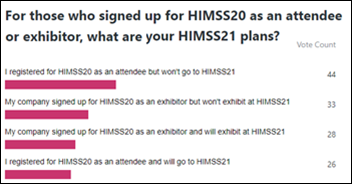
A significant number of poll respondents will spend Thanksgiving among people with whom they don’t live without employing mitigation measures. Not to be a downer, but small gatherings are top spreader events and winter holidays will be especially risky with record infection levels, family members flying in, and extended close contact that is moved indoors because of weather. I, too cling to the “they are careful and so are we, so I’m sure we’ll be fine” hope that unfortunately hasn’t proven to be broadly accurate given pre-symptomatic spread. We misspent our limited supply of public health goodwill in the spring by implementing draconian lockdowns that were supposed to buy us time to muster our national resolve to prepare hospitals, develop testing capacity, stockpile PPE, create contact tracing programs, and educate the public, but we basically just delayed the inevitable by flattening the curve while doing nothing that might have reduced the area under it. The world’s first COVID Christmas is going to be challenging.

New poll to your right or here: Where do you expect to be working a year from now?


Webinars

November 16 (Monday) 1 ET. “COVID-19 and Beyond: A CISO’s Perspective for Staying Ahead of Threats.” Sponsor: Everbridge. Presenter: Sonia Arista, VP and global chief information security officer, Everbridge. While hospitals worldwide work to resume elective care amid COVID-19, they’re quickly adapting and responding to a variety of emerging risks that have tested their resilience, including a surge in cybersecurity and ransomware attacks. This webinar will highlight emerging IT vulnerabilities and best practices designed to help hospitals anticipate and quickly mitigate cybersecurity risks. A former hospital CISO will share her expertise in responding to high-impact IT incidents and mitigating risks during critical events given the “new normal” that COVID-19 has created.

November 18 (Wednesday) 1 ET. “Do You Really Have a Telehealth Program, Or Just Videoconferencing?” Sponsor: Mend Family. Presenters: J. D. McFarland, solutions architect, Mend Family; Nick Neral, national account executive, Mend Family.  Healthcare’s new competitive advantage is telehealth, of which a videoconferencing platform is just a small part. This presentation will describe a comprehensive patient journey in which an organization can acquire new patients, reduce check-in time, reduce no-shows, and increase patient satisfaction, all using virtual care. Health systems did a good job in quickly standing up virtual visits in response to COVID, but telehealth and the digital front door are here to stay and now is a good time to re-evaluate tools and processes that support patient scheduling, digital forms, telehealth, and patient engagement as part of a competitive strategy.

November 18 (Wednesday) 2 ET. “Leveraging a Clinical Intelligence Engine to Solve the EHR Usability Crisis.” Sponsor: Medicomp Systems. Presenter: Jay Anders, MD, MS, chief medical officer, Medicomp; David Lareau, CEO, Medicomp. Healthcare is long overdue for a data makeover. Clinician burnout is fueled by inaccurate, inconsistent, and incomplete clinical data, but that can be improved without scrapping existing systems. The presenters will describe the use of tools that work seamlessly with EHR workflows to deliver actionable data, improve interoperability; support the clinician’s thought process; and improve usability for better decision-making and accurate coding.

Previous webinars are on our YouTube channel. Contact Lorre to present your own.


Acquisitions, Funding, Business, and Stock

Harris acquires UK-based Genial Genetics and Genial Compliance Systems, which sells genetics-related laboratory information systems


People

image

Bay Area Hospital (OR) hires primary care physician William Moriarty, MD as CMIO.

image

Industry long-timer Peter Siavelis, MHI, MBA  (Waystar) joins Cardinal Health as SVP/GM of acute care distribution and services.

image

Sensyne Health hires Derek Baird, MBA (Avia) as president, North America.

image

Walter Kerschl, MD, MMM (Cerner) joins WVU Medicine Camden Clark Medical Center as VP/chief medical officer.


Announcements and Implementations

image

A KLAS study of health system connectivity to post-acute care organizations finds that only Epic and Meditech provide solutions in all areas, as Cerner offers long-term and behavioral health modules but resells home health and hospice technology from strong performer MatrixCare. Netsmart has significant market share in standalone organizations that aren’t connected to health systems, having acquired solutions from Allscripts, Change Healthcare, DeVero, and HealthMedx, but customer satisfaction has dropped following post-acquisition lapses in support, development, and integration. PointClickCare is the strongest performer in long-term care, but no vendor consistently meets behavioral health needs. Records-sharing with acute care organizations from which referrals are sent is inconsistent, with Cerner and Epic having a high percentage of customers connected to CommonWell or Carequality, Meditech and Allscripts having low interoperability adoption, and the majority of users of all four systems reporting faxing as the most common method of exchanging information.


COVID-19

image

The US reported a record 1.7 million COVID-19 tests, 170,000 new cases, and 68,500 hospitalized patients on Friday, as deaths moved up 30% from their seven-day average to 1,300.

image

Former FDA Commissioner Scott Gottlieb, MD notes that mobility drives infection spread, and while hard-hit states such as SD, ND, UT, and WI are showing modestly reduced mobility, coronavirus isn’t broadly keeping people from their shopping and recreation.

A 38-hospital study of 1,250 COVID-19 patients who were discharged from March 16 to July 1 finds that within 60 days, 7% of them had died, 15% were rehospitalized, 13% were still experiencing persistent symptoms, and 15% were unable to return to normal activity. Forty percent of those who had been employed were unable to return to work — mostly because of poor health, but also because their jobs had been lost – and of those who did go back to work, 25% were assigned reduced hours or modified duties. The study dispels any notion that hospitalized COVID-19 patients return unscathed to their prior states of health and financial security.

image

Illinois officials won’t reopen the 2,250-bed emergency COVID-19 hospital that was built inside McCormick Place at a cost of $81 million – most of that paid by federal taxpayers — and closed three weeks after opening after having seen only 38 patients. IT costs totaled nearly $4 million, including $400,000 paid to Rush University Medical Center to install and support Epic.

image

A 55-attendee wedding reception in rural Maine creates a COVID-19 outbreak of 177 cases in the local community, a long-term care facility, and a prison. Guests did not comply with mask-wearing and distancing requirements and the facility didn’t enforce those rules or collect contact information from the guests. They did conduct temperature checks, but all were normal. The index patient had no symptoms the day of the reception, but came down with fever, runny nose, cough, and fatigue the day after. Half of the guests tested positive within two weeks, as did a venue staff member, a vendor, and a guest who was not part of the reception. One attendee attended a school meeting later the same day they started coughing, after which two school employees tested positive and the school’s opening was delayed by two weeks. Six residents of a long-term care facility died after the infection was spread by a guest who had a close interaction with one of its employees. None of the wedding reception guests themselves died.

An Ohio court orders the state health department to release information about COVID-related hospital bed capacity, medical supplies, and staffing to an investigative reporting outlet. The health department had argued that its Surgenet resource tracking system is a security record that could be used in terrorism response, but the court said that the computer system is just a repository for the requested data and the department would need to prove that the records themselves prevent or mitigate terrorist acts.

States and cities warn that that the logistical challenges of distributing a COVID-19 vaccine may be hard to overcome, among them promoting its availability, convincing people to get the vaccine despite its quick development, delivering supplies securely, hiring or recruiting volunteers to administer it, and recording and tracking the two-dose protocol. A new federal government system called Immunization Gateway was developed to connect state vaccine registries for people like snowbirds who get the two doses in different states, but most states aren’t connected. The CEO of the National Association of County and City Health Officials, says, “A month before the vaccine is about to become available is not the time to think about making systems across 3,000 health departments in 50 states interoperable.” CDC also wants to track real-time demographic information to identify low-vaccination populations and regions, but must convince states to turn over the personal data of their residents. CDC is also considering rollout of a phone-based tool to ask recipients if they’ve had any problems.


Other

image

Researchers find that including a patient’s headshot in the EHR significantly reduced ED wrong-patient order entry errors without creating provider burden.

UCHealth CMIO CT Lin, MD records a ukelele-powered “It is a Telehealth World.” Careful examination of his backdrop reveals COVID-related ephemera, such as Clorox wipes and what appears to be a Fauci bobblehead.


Sponsor Updates

  • Forbes includes OpenText on its list of World’s Best Employers for 2020.
  • OptimizeRx hires Antonio Bogdanovic and Iva Lozancic as project managers.
  • Pure Storage receives the Flash Memory Summit 2020 Best of Show Award for Most Innovative Flash Memory Technology.
  • Spok publishes a new infographic, “Which communication solution is best for your healthcare organization?”
  • Waystar publishes a new trend analysis, “Price Transparency + Healthcare Consumerism.”
  • Well Health launches a Use Case Library to offer best practices and product use cases.

Blog Posts

Sponsor Spotlight

image

Visage Imaging (“Visage”) just went live today with our new corporate website and our latest corporate video. Visage will be virtually exhibiting at the upcoming Radiological Society of North America (RSNA) 2020, November 29 – December 5, 2020.

(Sponsor Spotlight is free for HIStalk Platinum sponsors).


Contacts

Mr. H, Lorre, Jenn, Dr. Jayne.
Get HIStalk updates.
Send news or rumors.
Contact us.

125x125_2nd_Circle

Katie the Intern 11/13/20

November 13, 2020 Katie the Intern 1 Comment

My learning this week consisted of interviews with readers of HIStalk. These readers also work in healthcare IT and either use HIStalk to some capacity for their job or rely on HIStalk updates to stay in-the-know for work updates. I’ll be summarizing one of those interviews and some of what I have learned about healthcare IT from it as well. 

This interview was with a gentleman I’ll call Steven since he prefers to remain anonymous. Steven works at a hospital as an Epic data architect. As he described to me, his job revolves around how to best make use of the reporting software that is in the hospital’s contract with Epic. Steven says that the hospital’s contract is structured under a strict fee, so the more the hospital uses it, the more benefit the hospital receives. Value is maximized when benefit is increased without a cost increase. All right!

When Steven started at his position, his hospital was just beginning to implement Epic. He had gained experience with Epic from his previous job with a pharma-related company. That is where he was introduced to HIStalk, as he started on the vendor side and moved to the provider side, where he has been for more than five years. 

“That was kind of like a dream of mine, to switch out of the vendor and onto the provider side,” Steven says. “Now I work on the provider side, and it’s kind of a glorious, wonderful thing. It was super meaningful even before the virus hit, and then the virus hit. All of a sudden my job changed dramatically and took on even more meaning.” 

Steven uses HIStalk to understand the general direction of where to take Epic at the hospital. HIStalk helps him understand the direction of the healthcare IT industry in general, allowing his team to make decisions about when to invest in additional effort in Epic or consider using another vendor. 

Before going too much into the interview, I wanted to write about what I learned about Epic and other EHRs (electronic health records, point for me) vendors. I’m sure HIStalk readers understand Epic and EHRs, but for me, this interview revealed a lot about how some of Epic’s programs are used by architects and applied to patients, staff, and hospital data. 

Epic has a software package called Cogito, an analytical database that allows the analysis of patient data as a whole rather than one patient’s data. Steven touched on Epic’s systems known as OLTP (Online Transaction Processing) and OLAP (Online Analytical Processing) and their different uses inside of Epic. The OLTP is useful for looking at one single point for data references, such as a single patient or a provider’s schedule. The OLAP makes it easy to search across an entire population, Steven says. These processes are the analytical tools that he uses to increase the value that his hospital gets from using Epic. 

Steven’s job revolves around understanding certain sets of data to ensure the hospital is able to get the information they need. He uses that information to answer the hospital’s questions, such as which doctor has the most expenses, how financials are doing, or how efficiently the hospital has vaccinated patients.

“I lead a team of 12 and I call the technical shots on how we are going to meet the businesses needs in being able to understand the data across the whole environment,” Steven says. 

This is where HIStalk comes back into play for Steven. He often uses HIStalk to guide his arguments for or against the renewal or discontinuation of programs for his hospital. Understanding the healthcare IT ecosystem allows Steven to see if the products his hospital is using are continuing to meet the needs of providers and patients there. 

“Being aware of what startups are doing or who is buying what helps me make arguments for or against whatever approach people are wanting to talk about in the data space,” Steven says. “Knowing what is happening outside of that, what their competitors are doing, helps me understand, ‘Is this person’s desire for this thing, is that what is best for us?’”

It is this understanding of desire and needs that recently drove Steven to argue for the discontinuation of a software program that many hospitals use. He argued to not renew a contract with a vendor program made by SAP Business Objects, business intelligence software that is not meeting his hospital’s needs. Though it is a partner’s software that Epic recommended, the hospital will be one of the first to turn it off. 

Much of this interview with Steven brought me to a deeper understanding of the crosshairs of analytics, vendors, and running a hospital’s data systems to maximize value. Researching EHRs, talking with Steven, and learning more about the main players in the EHR industry has been eye-opening for me as someone new to the field. I really learned just how important it is to stay connected to the industry, as it helps healthcare IT workers better apply system tools to patients and providers alike.

I do hope this column helped readers gain at least a deeper understanding of the role of a data architect in hospitals. I know that I learned a great deal about Epic, computer software, data analysis, and understanding the importance of keeping up with the industry.

In next week’s column, I’ll be breaking down another interview with another reader who uses HIStalk to stay connected. He is a younger professional in the field and also gave interesting tips on how to learn about the industry as a whole.  

I also plan to begin researching COVID-19 deaths and how hospitals decipher who died strictly from COVID-19 versus from complications it caused. I am hoping to share some interesting information from that research in the coming weeks! 

Thank you for reading. I am enjoying the healthcare IT industry and learning new stuff every day. 

Katie The Intern 

TLDR, as a reader requested – Katie The Intern conducted an interview with an Epic data architect and learned about EHRs, data evaluation, and how an architect makes decisions at work with the help of HIStalk’s industry summary.

Katie

Email me or connect with me on Twitter.

Weekender 11/13/20

November 13, 2020 Weekender Comments Off on Weekender 11/13/20

weekender 


Weekly News Recap

  • Health Catalyst announces Q3 results that beat Wall Street expectations for revenue and earnings.
  • Providence will implement Nuance’s Dragon Ambient Experience for EHR documentation and will co-develop solutions covering other areas.
  • Australia’s SA Health is given another $146 million to complete its years-overdue implementation of Allscripts Sunrise.
  • Ambulatory surgery center software vendors HST Pathways and Casetabs announce plans to merge.
  • Managed care company Centene will acquire AI-powered healthcare analytics vendor Apixio.
  • HHS OIG imposes additional Corporate Integrity Agreement terms on EClinicalWorks, including requiring the company to notify customers that its EHR creates a material risk of patient harm.
  • Sky Lakes Medical Center says that its October 27 ransomware attack, recovery from which is continuing, will hit its bottom line hard and will require replacing 2,000 computers.
  • University of Vermont Health Network, whose systems remain offline from an October malware incident, has regained access to a week’s worth of patient schedules.
  • The VA’s 16,000-employee Office of Information and Technology publishes its fiscal year report, which primarily addresses the COVID-related challenges it met.

Best Reader Comments

I am a Livongo customer and I don’t think it has revolutionized anything. It has some nice features. You get as many strips as you want, which is good so you have extra test strips when sick. The meter keeps track of how many strips you have left and one click on your meter will order more for you. Maybe a new diabetic would find the coaches helpful. All that doesn’t look like a revolution to me. (Kathy)

Re: Bridge Connector. Stunning news. I was traveling last week and woke up to the news this morning. This has got to be one of the more epic startup failures since CareSync went bust a couple of years ago. Good luck to all those affected. (D.L. Miller)

Provider organizations should support sustained efforts to continuously pare down the EHR interaction time required by clinicians. This is not a one-time exercise. It requires highly knowledgeable and skilled individuals, though, ones with operational, clinical informatics, and IT wisdom. I would venture to say that CIOs should now track measures such as reduction of interaction time as badges of honor / performance metrics, just like in years past organizations tracked EMRAM levels. The Less is More Awards? (Azmat Ahmad)


Watercooler Talk Tidbits

image

Readers funded the Donors Choose teacher grant request of Ms. G in California, who asked for STEM kits for her first-grade class. She reported in January, “Thank you so much for your generous donation! My students are going to benefit greatly from your thoughtfulness and have an enriched learning opportunity thanks to your contribution to our project. My students and I can’t wait to get this project started. They are excited to explore the STEM bins and get into engineering mode! These Stem bins are going to put their problem solving skills and creativity into high gear while learning in a fun way using fun materials. I truly appreciate your dedication to education as you are going to greatly impact my students’ learning.”

A Mississippi pharmacist who is among several defendants who are accused of defrauding insurers of $510 million in a compounding pharmacy pain cream scheme says that he gave a local doctor – who is also charged — $127,000 to buy himself a new Jaguar. The pharmacist says he wanted to keep the doctor happy to keep the prescriptions coming for cream that was billed at up to $13,000. The pharmacist said a Rush Health Systems employee scoured its patient database to find those whose insurance was likely to pay.

Utah Valley Hospitals has stopped five conspiracy theorists who have tried to bluff their way into the ICU to prove that it isn’t full as claimed. The hospital’s telephone operators are also being bothered people calling every day demanding to know if the ICU is full.

image

A 63-year-old man who had spent weeks in a Jacksonville, FL hospital’s ICU recovering from COVID-19 marries his long-time fiancée the day before his discharge because they wanted hospital staff “to share the life they gave us back.”

image

Hollyanne Milley, a cardiac nurse who is married to the Chairman of the Joint Chiefs of Staff General Mark Milley, saves a veteran who collapsed during a Veterans Day ceremony at Arlington National Cemetery by performing CPR. She said afterward that it was even more unusual a few years ago when she was attending an Army Ball and performed CPR in her evening gown.


In Case You Missed It


Get Involved


125x125_2nd_Circle

Comments Off on Weekender 11/13/20

Morning Headlines 11/13/20

November 12, 2020 Headlines Comments Off on Morning Headlines 11/13/20

Health Catalyst Reports Third Quarter 2020 Results

Health Catalyst reports Q3 results: revenue up 20%, adjusted EPS –$0.21 versus –$0.27, beating Wall Street expectations for both.

Amazon Alexa Care Hub update will make it easier to help aging family members

Amazon introduces Care Hub, a free Alexa app feature that allows people to connect to a loved one’s Echo device from an app to view their Alexa activity, set alerts, or answer their call for assistance.

Solv Health raises $27 million as health care providers move online

Web-based urgent care appointment booking and telemedicine startup Solv Health raises $27 million in a funding round led by Acrew Capital.

Jarrard Phillips Cate & Hancock Joins The Chartis Group

The Chartis Group acquires strategic healthcare communications and change management firm Jarrard Phillips Cate & Hancock.

Comments Off on Morning Headlines 11/13/20

News 11/13/20

November 12, 2020 News Comments Off on News 11/13/20

Top News

image

Health Catalyst reports Q3 results: revenue up 20%, adjusted EPS –$0.21 versus –$0.27, beating Wall Street expectations for both.

HCAT shares are up 3% in the past year versus the Nasdaq’s 39% gain, valuing the company at $1.5 billion.

Health Catalyst shares began public trading in late July 2019, with a first-day close of $39.17. They are now at $35.55.

image image image image

The company also announces several promotions: Patrick Nelli to president; Bryan Hunt to CFO; Jason Alger, MS to chief accounting officer; and Adam Brown to SVP of investor relations and financial planning and analysis.


Webinars

November 16 (Monday) 1 ET. “COVID-19 and Beyond: A CISO’s Perspective for Staying Ahead of Threats.” Sponsor: Everbridge. Presenter: Sonia Arista, VP and global chief information security officer, Everbridge. While hospitals worldwide work to resume elective care amid COVID-19, they’re quickly adapting and responding to a variety of emerging risks that have tested their resilience, including a surge in cybersecurity and ransomware attacks. This webinar will highlight emerging IT vulnerabilities and best practices designed to help hospitals anticipate and quickly mitigate cybersecurity risks. A former hospital CISO will share her expertise in responding to high-impact IT incidents and mitigating risks during critical events given the “new normal” that COVID-19 has created.

November 18 (Wednesday) 1 ET. “Do You Really Have a Telehealth Program, Or Just Videoconferencing?” Sponsor: Mend Family. Presenters: J. D. McFarland, solutions architect, Mend Family; Nick Neral, national account executive, Mend Family.  Healthcare’s new competitive advantage is telehealth, of which a videoconferencing platform is just a small part. This presentation will describe a comprehensive patient journey in which an organization can acquire new patients, reduce check-in time, reduce no-shows, and increase patient satisfaction, all using virtual care. Health systems did a good job in quickly standing up virtual visits in response to COVID, but telehealth and the digital front door are here to stay and now is a good time to re-evaluate tools and processes that support patient scheduling, digital forms, telehealth, and patient engagement as part of a competitive strategy.

November 18 (Wednesday) 2 ET. “Leveraging a Clinical Intelligence Engine to Solve the EHR Usability Crisis.” Sponsor: Medicomp Systems. Presenter: Jay Anders, MD, MS, chief medical officer, Medicomp; David Lareau, CEO, Medicomp. Healthcare is long overdue for a data makeover. Clinician burnout is fueled by inaccurate, inconsistent, and incomplete clinical data, but that can be improved without scrapping existing systems. The presenters will describe the use of tools that work seamlessly with EHR workflows to deliver actionable data, improve interoperability; support the clinician’s thought process; and improve usability for better decision-making and accurate coding.

Previous webinars are on our YouTube channel. Contact Lorre to present your own.

Here’s the recording of this week’s webinar titled “Beyond the Firewall: Securing Patients, Staff, and the Healthcare Internet of Things,” sponsored by Alcatel-Lucent Enterprise.


Sales

  • UAE’s Mediclinic Middle East joins TriNetX’s global health research network.

People

image

Angelo Campano (Ogilvy Health) joins OptimizeRx in the newly created position of SVP and principal of agency channels.

image

Kevin Brubaker (MiHIN) joins Glooko as RVP of enterprise health systems.

image

Atlantic Health hires Sunil Dadlani, MBA, MS (NYS Department of Health) as VP/CIO.

image

Rick Howard, MBA (Ascension Technologies) joins Apervita as chief product officer.


Announcements and Implementations

image

Cerner incorporates Well Health’s app-free clinician-patient interaction capabilities into its HealtheLife patient portal, which will allow provider organizations to deliver health information, reminders, and virtual visit scheduling.

image

Amazon introduces Care Hub, a free Alexa app feature that allows people to connect to a loved one’s Echo device from an app to view their Alexa activity, set alerts, or answer their call for assistance.

Providence will implement Nuance’s Dragon Ambient Experience for EHR documentation and will co-develop clinical intelligence and revenue cycle solutions.

image

Amwell announces a fast-track video visit option, IPad software, and a new telemedicine cart.

image

A new KLAS report finds that connection of post-acute and behavioral health providers to CommonWell and Carequality is in its early phases, but 88% of the early adopters find the connection valuable. Netsmart has connected up to 35% of its MyUnity and MyAvatar customers, who can pull outside information such as medication lists into its EHR and use tools to search incoming CCDs for relevant lab results and progress notes. Users appreciate the time savings in not needing to chase down encounter data, with the next step being to make the process seamless and improve usability with automated queries, patient matching, and inserting external data into the patient record. The early adopters say their vendors made connection easy, but most of those vendors charge setup or licensing fees.

image

Meanwhile, KLAS updates its previous report on acute and ambulatory interoperability via CommonWell and Carequality, concluding that NextGen Healthcare is the only ambulatory-specific EHR vendor that provides a strong usability experience for all interoperability workflows, including the especially challenging reconciliation of duplicate medication data. Cerner has doubled the number of customers that are connected to CommonWell, while Athenahealth and Epic lead overall adoption in having connected nearly all their customers. Meditech has slow uptake, while CommonWell founding member Allscripts shifted to Carequality and connected its first customer in the second half of this year using DbMotion, which will be required for Sunrise and TouchWorks to connect going forward. Epic’s Happy Together is strong at integrating outside lab data and is working on automatic ingestion of progress notes and lab data, while Cerner has strong capabilities for incorporating outside data into its patient record.


COVID-19

image

New cases (144,270) and hospitalized patients (65,368) hit new single-day records Wednesday, as another 1,421 Americans died of COVID-19. The Midwest is especially impacted.

Doctors Without Borders sends international aid workers to the US to help with uncontrolled coronavirus spread.

CDC’s updated guidance says that masks protect both the wearer and people around them from coronavirus. It notes that multiple layers of denser cloth work best, also adding that increasing mask use by 15% could help prevent lockdowns and their associated $1 trillion economic loss.

Provider-employed informaticians: has your organization planned for how it will document the administration of coronavirus vaccine doses and send reminders to those who start a two-dose regimen to complete it?

image

Former FDA Commissioner Scott Gottlieb, MD warns that unlike New York’s peak pandemic weeks in the spring, hospitals won’t be able to bring in temporary workers from less-ravaged areas now to address their COVID surge because demand is national rather than regional.

HHS announces that several chain pharmacies – representing 60% of US drugstores – will provide coronavirus vaccine at no cost to patients, among them CVS, Walgreens, Walmart, Costco, Albertsons, Kroger, and Publix. The announcement says that HHS expects one or more vaccines to be approved by December 31.


Other

Australia’s SA Health obtains another $145 million to complete its years-overdue rollout of Allscripts Sunrise, a project that was reset in 2018 after an independent review found that SA health failed to get outside help (including from Allscripts), failed to implement a sound governance model, and struggled to make the Allscripts product meet Australian billing needs.

image

VTDigger says no end is in sight for the malware-induced mayhem at University of Vermont Medical Center, whose two-week computer downtime has left employees working without patient schedules, recording patient information in manila folders, administering medications from hand-transcribed notes with no barcode checks, turning away imaging patients, and using walkie-talkies and fax machines since the phone and email systems are down. The hospital president warns that exhausted employees will need to enter the mass of manually-recorded information in Epic once that system becomes available.

An independent consumer survey commissioned by DocASAP finds:

  • 84% of those surveyed plan to get a coronavirus vaccine when it becomes available.
  • The doctor’s office is perceived as the safest place to get the vaccine compared to hospitals and pharmacies.
  • 44% would prefer to receive medical care via a combination of in-person and telehealth visits.
  • People will switch providers to get an earlier appointment or more convenient location.
  • Online scheduling was preferred by 48% versus 39% by phone.
  • Text messaging is the preferred method of receiving appointment reminders.
  • The top healthcare issues all involve cost – loss of insurance, reduced costs, and protecting pre-existing conditions. Access to mental health services was the top issue for 21% of respondents.

Sponsor Updates

clip_image001

  • Jvion team members pack food boxes as Emergency Food Aid Volunteers for Urban Recipe.
  • Cerner works with state and local officials to help secure $6 million in federal funding to create 5,300 new tech industry apprenticeships.
  • Innovaccer leverages the Surescripts nationwide information network, including its Medication History for Populations tool, to help close care gaps and alert users to medication non-adherence.
  • The Sales People Podcast features Goliath Technologies CEO Thomas Charlton.
  • Halo Health updates its Halo Clinical Collaboration Platform with Halo Link to better enable providers to collaborate across health systems.
  • Hayes wins Silver in the Team of the Year During COVID-19 category, and Bronze in the Company Innovation of the Year category in the annual Gold Bridge Business and Innovation Awards.
  • Healthwise wins two ClearMark Awards from the Center for Plain Language for its patient education content.

Blog Posts


Contacts

Mr. H, Lorre, Jenn, Dr. Jayne.
Get HIStalk updates.
Send news or rumors.
Contact us.

125x125_2nd_Circle

Comments Off on News 11/13/20

EPtalk by Dr. Jayne 11/12/20

November 12, 2020 Dr. Jayne Comments Off on EPtalk by Dr. Jayne 11/12/20

My inbox has been bountiful this week, with so many good stories that link to healthcare IT that I just kept flagging items to come back and read later, only to find my entire screen full of flagged emails.

My urgent care is swamped with patients wanting COVID testing, and although there are enough supplies to go around, there simply isn’t enough staff. Since most of our payer contracts require patients to see a physician to document medical necessity for testing, and there’s only one of us at a site, it’s just an endless parade of testing visits. That is, until something acute comes in, and then there is an adjustment as we remember how to see “traditional” urgent care patients again.

clip_image002

I was excited to see this article in Nature Medicine looking at how fitness trackers might be useful to detect biometric changes associated with COVID-19. I know patients will always want testing “to know for sure” as well as to make sure they can take advantage of workplace policies that require a positive test for paid time off, but it would be nice to have other tools that patients could use to help risk stratify themselves. That way they could figure out if they really need to stand in line for hours for a test at an urgent care center or if they could do a video visit with their primary physician and arrange testing at the health system’s drive through tent in a day or two.

The study Digital Engagement and Tracking for Early Control and Treatment (DETECT) study looked at data from more than 30,000 individuals from all 50 US states. They found that adding sensor data to symptom-based models improved their accuracy. Regional health officials in my area are lamenting the inability for temperature- and symptom-based screeners to identify infected patients, so at this point anything would help. Our schools just went back in person, and within 24 hours, were sending people home to quarantine due to exposure. The idea is that using device data could help identify clusters before infection spreads. That would have been useful in the aftermath of a recent parent-approved Halloween party thrown by some local teens, where over 200 high-schoolers attended.

A recent article in JAMIA looked at the advantages of human scribes compared to other options, particularly looking at patient safety aspects. They used a multidimensional sociotechnical framework to look at how different health systems use scribes. The dimensions were technical, environmental, personal, and organizational; 81 individuals were interviewed, including scribes and clinicians. They were asked about why they chose to use scribes as well as the background and training of scribes, along with pros and cons of their implementations.

One interesting finding was that since many health systems rely on college students for scribing, that geography is a factor in whether a practice can find a good scribe or not. That would definitely underscore why virtual scribe solutions are popular, since not every town has college students, let alone highly-motivated pre-medical or nursing students who would make good candidates.

Respondents did note a preference for real-time scribes versus using voice recognition software after the fact. The turnover in good scribes is an issue that was also validated in the research, and I experience that every year when medical school and physician assistant school acceptances are issued.

Fortunately, our scribe program staffs ahead of those transitions but it’s always a challenge to have the new scribes ramped up prior to flu season. You can bet that with COVID they’ve definitely earned every bit of experience they claim. I’m still waiting to hear from any readers (or friends of readers – come on, help a girl out here) who might be using one of the Ambient Clinical Intelligence solutions offered by Nuance or one of the other voice recognition vendors. There was a great deal of interest in the system at HIMSS a couple of years ago, but I have yet to encounter anyone actually using it in the wild.

The Journal of the American Medical Association tackled a weighty topic recently with its piece on “Science Denial and COVID Conspiracy Theories: Potential Neurological Mechanisms and Possible Responses.” Although this was a “Viewpoint” article rather than a research article, it has some interesting points. The first is the relationship between neurodegenerative disorders such as dementia with the adherence of an individual to false beliefs. Other psychiatric disorders include similar manifestations, such as delusions of grandeur and paranoia. The author proposes that false beliefs form due to faulty sensory information and impairment of brain systems designed to evaluate thoughts and beliefs.

Until reading the article, I had forgotten about Capgras syndrome, where certain dementia patients believe that a loved one has been replaced by an impostor. He explains the mechanisms by which that occurs as well as other delusions associated with dementia. He goes further to discuss the role of social media in amplifying conspiracy theories and other misinformation.

Based on what we know about dopamine and the addictive nature of social media, I can concur with his assertions. Mix in some low science literacy and we wind up where we are, with patients who legitimately believe that COVID is being spread by 5G cellular towers. He calls on the medical community to “mount systematic efforts around science education beginning in childhood and across the lifetime.” It’s a nice idea, but right now many of us are simply too exhausted from treating COVID patients.

From the Hall of Shame: Several towns along the east coast trusted a private physician to set up COVID testing clinics, but he proceeded to over test while billing exorbitant rates. Some patients were charged upwards of $1,900 and he was also recommending daily telehealth visits for a separate fee. Of course, his game wasn’t discovered until the bills started hitting, which typically takes at least 30 days for most patients with health insurance. Towns were effectively duped, with promises of a speedier economic recovery through greater testing. They in turn promoted the services, and then the physician took advantage.

Seems like a pretty clear ethics violation and I hope the relevant licensing boards take note. The physician is clearly delusional, stating that he tested for all kinds of other respiratory viruses because “just testing for coronavirus is one of the most dangerous things you could do… it is crystal clear that mentality is bad for public health.” I’d argue that unnecessary testing is also bad for public health, as is medical bankruptcy. People like him are the reason patients don’t trust the medical establishment. It takes far too many good experiences to undo the damage caused by a bad apple like this one.

Have you received a balance billing statement for COVID testing or related services? Leave a comment or email me.

Email Dr. Jayne.

Comments Off on EPtalk by Dr. Jayne 11/12/20

Morning Headlines 11/12/20

November 11, 2020 Headlines Comments Off on Morning Headlines 11/12/20

RxVantage Acquires onPoint Oncology

App-based life sciences resource company RxVantage acquires OnPoint Oncology, which offers oncologists reimbursement data and analytics related to cancer care.

SA Health scores $200m to complete ehealth records system rollout

In Australia, SA Health will spend $146 million to finish its stalled roll out of Allscripts Sunrise EHR and patient administration system over the next three years.

Hendrick Health System shuts down IT networks because of ‘security threat’

Hendrick Health System (TX) shuts down IT systems at its main campus and several clinics after becoming aware of a network security threat.

Comments Off on Morning Headlines 11/12/20

Book Report: “UnHealthcare: A Manifesto for Health Assurance”

November 11, 2020 Book Review 3 Comments

image 

Spoiler alert: a technologist turned billionaire investor opines that healthcare can be saved only by technologists and billionaire investors.

Non-healthcare people who sell books or companies are always predicting the suddenly imminent rise of consumerism that will upend the deeply entrenched healthcare establishment. They say (and sometimes even believe) that our smart phones will empower us consumers to Uberize an industry of insurers, drug and device manufacturers, doctors, health systems, and politicians. Our discretionary healthcare spending and technology assets will force them to cower to our demands to be treated as individuals and choice-empowered customers.

Do you feel more empowered in your dealing with hospitals, doctors, pharmacies, and your insurance company? Has your phone disrupted the status quo and created a choice-laden healthcare environment of competition and price transparency? Has your armada of consumer technology made you healthier? You probably won’t like this book if not, because it is re-promising a brave new healthcare world in arguing that the old one can’t survive despite the fact that the entrenched players keep getting bigger, richer, and more influential.  

Hemant Taneja started and sold Livongo and other companies, making him a billionaire. Steve Klasko, MD, MBA runs Thomas Jefferson University and Jefferson Health, and while I guess he’s not quite in the billionaire category, he has augmented his generous Jefferson millions with lucrative board seats and participation in a freshly planned IPO of Teneja and other Livongo alumni. The world view of the authors isn’t necessarily yours or mine, either as industry participants or patients.

Both authors think that Livongo’s diabetes management technology was a game-changer, although last time I looked, we still have a few dozen million diabetics in the US, many of whom can’t afford insulin, much less Livongo. Livongo certainly did a good job in convincing employers to pay for its service and also convincing Teladoc Health to buy it for $18.5 billion so it could offer something that is synergistically sexier than selling plain old telehealth visits, but I’m not smart enough to determine whether it measurably improves the health of its users or the medical costs they incur, much less that it has revolutionized American healthcare as a whole.

The authors believe in the concept of “health assurance,” where people keep themselves healthy by being constantly wired up to sensors that pump out a continuous stream of real-time data that is dutifully and invisibly overseen by artificial intelligence. This, they predict, will “help us mostly forget about doctors, pills, hospitals, and insurance companies.” It will be consumer centric, data driven, cloud based, and built using open technology standard and empathetic user design (Taneja’s technologist identity comes out pretty strong here in focusing on the geek factor).

The key to reinventing healthcare, the authors insist, is bringing in tech startups, rewarding them with billion-dollar valuations, and then standing back while they disrupt everything in sight. I’m not opposed to that idea, but the track record of eager, naive outsiders hasn’t been pretty. Nobody knew healthcare could be so complicated.

Healthcare wasn’t built to be consumer friendly, the authors argue convincingly. It was built on the concept of mass production to address the scarcity of doctors, hospital beds, medical devices, and drugs that doesn’t really exist today. Baby boomer demographic changes, along with employer-provided health insurance, marginalized patients as a mostly powerless widget that was milked profitably by various healthcare fiefdoms who always blame everybody else for high cost and low quality. All of this is true.

Klasko explains that Jefferson Health paradoxically had to scale up (via acquiring competitors and starting new businesses) to allow it to eventually unscale sometime down the road. He claims Jefferson will then emerge butterfly-like as a wellness brand with no physical address, freed of the incentive to crank out profitable procedure volumes. Sounds great, but I haven’t seen many examples where the health system that was scaling up voluntarily took a less-profitable but more consumer-centric path down the other side. Expecting people or companies to do something that doesn’t pay them the most is usually cause for disappointment.

I can’t decide whether Klasko’s business dealings make him a better or worse advocate for a new business model for non-profit healthcare systems, but “non-profit” is more about accounting than mission for many health systems these days anyway. Still, both authors stand to make even larger fortunes if their tech company healthcare bets pay off, so maybe a bit of skepticism is warranted when their tech hammer is on the lookout for nails to pound.

Back to the healthcare assurance concept. You don’t need to have physicals or see your doctor until AI – which will be provided by a health system as part of a pre-primary care subscription — flags your data as unusual. Then you will complete a chatbot questionnaire and then see a doctor – probably virtually – and if something seems amiss, booking your appointment online, being updated with SMS messaging that eliminates the need for a waiting room, and spending time actually talking to the doctor since they don’t waste visit time taking measurements that the sensors have already sent them. That makes good sense, depending on the accuracy and completeness of the available sensor inventory (which is minimal at present).

I’m not sure I agree with the authors that the next logical step is that pricing will become transparent and insurance will return to its original form as being a hedge against risk, not a way to pay for routine services that are otherwise unaffordable. You would need more than 134 pages to explain how that could happen. UnitedHealth Group has more money that even Hemant Taneja and seems disinclined to make less of it.

Taneja is an investor in Ro and he loves their model of cranking out telehealth visits to sell ED and insomnia prescriptions online. Whether that is a consumer-friendly innovation or a lapse of professional responsibility by its doctors is beyond the scope of this discussion. The psychology of men who are embarrassed to tell their in-person doctor about their receding hairlines is probably different from someone who is facing a life-threatening condition that will never go away.

The authors also like the tech-heavy healthcare membership system of Forward, which uses biometrics, blood tests, genetic analysis as a baseline to then offer monitoring and unlimited visits for $149 per month, with no insurance accepted. They think that services like this could be targeted to subgroups such as those over 70, pregnant women, or young athletes as a form of unscaling. This seems perfectly logical and immediately achievable to me, although I’m sensitive to the fact that while many of us can afford these cash-only services, most Americans can’t and will still be staring at “The View” while being coughed on by the fellow occupants of whatever waiting rooms are left.

Health assurance would require fewer people in administration, but more in customer service, marketing, and technology. High-income proceduralists (dermatology, radiology, orthopedics) would become less valuable and thus paid less than family doctors and pediatricians. Medical schools would need to place less value on memorization skills and instead look for incoming students who exhibit empathy, creativity, and communication since they will need to treat the entire patient (sleep, diet, exercise, etc.) Hospitals will become the post office in the age of email, and insurers will be hurt most as the need for their middleman services is greatly reduced. If you want to disrupt those huge, highly profitable entities that will spend whatever it takes to keep the goose laying golden eggs, you’re going to need a bigger boat.

The authors posit that we’re at a tipping point (aren’t we always, according to authors?) because of the weaknesses COVID has exposed and the high premiums and deductibles of health insurance, which will turn most people cash payers against their will and encourage them to seek good experiences at good value.

From the regulatory point of view, the book calls for a single national medical license (agreed) and to redefine FDA’s role in safety and efficacy in regulating only the former and letting the market judge the latter (they say Livongo was held back by FDA’s efficacy requirements, wah).

As a curmudgeonly skeptic (or experienced realist, perhaps) I agree with some points of the book, but I would not predict a mass overhaul of a system that regularly lines lawmaker pockets to retain the status quo, especially if companies expect cash-strapped Americans to cough their own money to pay for gadgetry and services that mostly interest the worried well who are striving for data-powered immortality. In that regard, I would say this book’s emphasis on highly valued startups and profitable disruption makes it more of a business read than a balanced review of meeting society’s healthcare needs equitably and funding it as a public good. As a non-profit hospital lifer, I’m already uncomfortable with the idea of having a hospice owned by a private equity firm.

I’m also not convinced that today’s sensors and the invasive nature of wearing them can provide enough data to function like a car’s gauges and warning lights for a remote observer. The connection between DNA and health, or even medical treatments, has barely been touched, and has little impact on medical decisions. We haven’t asked doctors what information they would need to replace the traditional exam, assessed whether today’s sensors can provide that data, or proven that streams of patient data makes them healthier or avoids cost (and in fact, whether we should also ask them how they feel or have concerns that sensors can’t measure). Do you want your doctor to be a trusted life ally or a savvy mechanic, and what are you willing and able to pay for your vision of healthcare?

My review of “The Patient Will See You Now,” I realize, is similar to this one, although that review was funnier and snarkier. That book came out nearly six years ago – are we disrupted yet?

HIStalk Interviews William Febbo, CEO, OptimizeRx

November 11, 2020 Interviews Comments Off on HIStalk Interviews William Febbo, CEO, OptimizeRx

William J. “Will” Febbo is CEO of OptimizeRx of Rochester, MI.

image

Tell me about yourself and the company.

I’ve been the CEO and director of OptimizeRx for the last five years. I have 20 years experience in health technology. More specifically, I always find myself drawn to the challenge of connecting the life science industry with healthcare providers like doctors, both clinically and commercially. I focus on technology, data, and compliance as the key drivers.

OptimizeRx is a digital health platform that focuses on bringing adherence and affordability solutions to healthcare providers, patients, and the life science industry. We are publicly listed on the Nasdaq.

What are the ethical considerations involved with presenting sponsored product information to physicians within their EHR workflows?

We are highly focused on that. Our goal is to help drive positive patient outcomes by supporting patient affordability and overall adherence to doctor-recommended treatment plans. The doctor is driving the bus here, and anything we do is going to be triggered by activity the doctor is doing.

The market is fragmented. Doctors use electronic health records from many companies and spend hours a day on them. The last things we would want to do is add more clicks and distraction that would slow down their day and or bring content that’s just not relevant to that point-of-care experience.

We have a strong filter. Our partners have a strong filter. When you are trying to help patients and doctors with affordability and adherence, it’s really about connecting at the right time with the right people. There are certainly rules that apply. Compliance is a big piece for me when you’re trying to help in this arena. We understand that incredibly well, as do our EHRs who manage all the data. We have several filters layered in there, plus laws, and we respect them all greatly. We are helping the doctor prescribe what they want, then helping the patient afford that based on the insurance they have.

The other piece of the equation is that once people have their medication, how do you help them stay on it? We’re a big believer in SMS text as a way to stay connected to the patient once they have double opted in on that. We see compelling results when they make that choice. They are always given the flexibility to not engage or to stop being engaged.

How do you decide the best opportunities to pursue now that you have created the network and are engaging participants in it?

We have a team that has a lot of depth in terms of the life science industry, as well as the technology around networks. We focus on is the patient journey, the care journey, that we’ve all experienced personally. It sounds like industry talk, but you feel something, you go to the doctor in various settings, you’re then in the system through diagnosis and prescription, and then you pick up medication or have it delivered. We focus on the pain points for our clients, the doctors, and the patients along that journey. If we don’t meet those three criteria, we just don’t do it. 

This is not a pure advertising model. This is a model where the life science industry can bring messages — mostly clinical in nature, mostly unbranded — and give the doctor some information at a time when they’re thinking about a particular disease or therapeutic area. Then as the patient is leaving that setting, we want to be able to stay with them and help them understand and afford the medication treatment and to have the support be there. It’s through a mobile device and chatbot, which sounds like it isn’t real, but it’s better than being alone and often that additional support is what keeps people on the therapy the doctor has selected.

How do you connect your innovation lab to the folks who assess market need?

The innovation lab is really exciting. We partner with our channel partners, which can be an EHR, someone at point of dispense and retail pharmacy, or someone who does digital appointment scheduling. We focus in on those pain points. 

What has been exciting over the last few years for all of us — not just OptimizeRx, but other people in this space — is that we have both sides of the equation, the clients who can finance it and the users, providers and patients who are engaged and open to using these new methods of connectivity.

When I came in about five years ago, this company had one solution, which was focused on basically digitizing the co-pay and getting that to the doctor so they could enable it for a prescription after selection and help the patient. When we looked at all that, and we looked at our partners, we saw that there were just so many other solutions that we could bring that could address a pain point for the client, the physician, the patient, or all three. We focus on those at the innovation lab. 

We have in the recent past rolled out a hub-enrollment forms, which is in-workflow digitized, which is a pain point for physicians, anyone in the administrative side within a physician’s office, and the patient. It simplifies the paperwork process and the signatures required to process hub enrollment for a specialty medication.

We’ve also rolled out something called TelaRep. This came out of the disruption that the life science industry saw with their sales reps. Physicians can, within the workflow of the EHR, reach out to a sales representative with a question. They can do that by text or email, saying give me a call or they can do it actually through a telehealth type of video type interaction. We are really proud of that one because it, first of all, we had the technology, so we went to the innovative lab partners and said, look what we can do. Pharma had a real challenge with reps being at home, but doctors still have questions. If you look at the number of questions doctors had that went through the MyViva program and others, it’s exponentially higher. It showed that reps answer a lot of questions for doctors, around dosage, mostly. 

Those are two examples of solutions that came out of the innovation lab, where we’re close to the partners. We could talk to the clients and we could launch them all within six months, which we are very proud of.

What motivates EHR vendors to give you access to their workflows?

They are focused on their members. Helping doctors deliver care. Having the right tools to do that, to effectively try to spend less time on the EHR and more time with the patient. When we bring solutions like TelaRep and hub enrollment, it’s clear that that’s a tool for the doctor. That’s a pain point.

The other things that doctors have highlighted to the EHR partners is financial burden and any way you can bring those costs down. Patient education is another one. Prior authorization is another pain point that companies like CoverMyMeds address. We focus in on those pain points, and our partners know those pain points even more than we do because they hear from their members, the physicians. It’s a good filter test to not bring things that wouldn’t work for the doctor.

How has the pandemic changed the use of your product?

The life science industry has billions of dollars set aside for co-pay programs. We saw an increase in demand and awareness for that given the disruption in the economy for people. We also focus on specialty medications more than the gen meds, and while gen med certainly dropped because office visits dropped, you can’t go off specialty medications. You really have to stay on them. 

We saw our partners who didn’t have telehealth solutions immediately adopt it any way they could just so that they could keep a sidecar to the EHR, keep that connectivity going. We were impressed with how that was handled by everybody, because that’s a behavioral shift. Adoption rates were relatively low around telehealth and they went immediately high because they had to. The good news for everybody — patients, doctors, industry, and our EHR partners – since it is an efficiency all around. It should save time and money and keep care going through times of disruption.

Are you receiving inquiries about how your platform could help with distribution of a potential coronavirus vaccine?

When this pandemic hit in February for all of us here in the States, we as a team obviously immediately went to no travel and stay at home, like everybody. But we said, let’s make our technology available for doctors and patients for CDC alerts. Let’s just do that. Let’s not charge anything, let’s just do it for free. That’s our way of helping in a small way and it felt really good.

We immediately put those CDC alerts into the workflow for our partners. Doctors were able to see them. We allowed patients to set up an SMS text program for free, which is still active. I view the short term in a similar format. We have an opportunity to help our clients get to those targeted populations of patients that are going to be needing to take the vaccine first.

This is not going to be a rollout for everyone to take it. The CDC will segment the market, find those in need, and go to there first. We think we have a great position to help our clients through that network and we stand ready to do it. Some of those conversations are starting. Obviously we all were thrilled to see the news from Pfizer this week. I think we’ll see others, but there’s still a lot of logistics between today and when they would need to communicate to the HCPs.

This week’s earnings call had a lot of enthusiasm and momentum that struck me as being more genuine that I sometimes hear. You’ve made a couple of key acquisitions, are using your innovation lab, and your product is doing well. Where do you want to take the company in the next several years?

We are small enough to be incredibly sincere. As you get bigger, it does get a little harder, but culture is big and we’re all in it to help outcomes and build a business.

We cited a McKinsey study that found that nearly 70% of US consumers use an online channel to manage health and wellness. Over 50% of US healthcare providers are digital omnivores who use three or more connected device professionally. I think of the network that we have already created and how we are expanding into retail and devices connected to medical professionals and patients. 

I see us as becoming a preferred digital communication platform for life sciences, principally patients and doctors, while being focused on affordability, adherence, and a little bit of care management. We are very fired up to get this kind of behavioral shift, which a lot of marketing dollars can’t even buy. Something has to push the shift.

I’ve been in the industry for 20 years and pharma is incredibly innovative clinically, but cautious commercially. We are at a stage where a lot of the digital solutions combine data-driven insights, compliance, and transparency, and those are matching nicely with the devices we all carry and use and our expectations for them. We do our banking. We do our shopping. Why wouldn’t we manage our health there? It makes for an exciting next three to five years as we try to reach more physicians, reach more patients, and help our clients drive outcomes.

Comments Off on HIStalk Interviews William Febbo, CEO, OptimizeRx

Morning Headlines 11/11/20

November 10, 2020 Headlines Comments Off on Morning Headlines 11/11/20

HST Pathways and Casetabs Merge and Secure Majority Investment Led by Bain Capital Tech Opportunities

Ambulatory surgery center software vendors HST Pathways and Casetabs will merge with the support of investments from Bain Capital Tech Opportunities and Nexxus Holdings.

Carbon Health Secures $100M in Series C Funding to Become Leading National Healthcare Provider

Tech-enabled primary care company Carbon Health raises $100 million in a Series C funding round, bringing its total raised to $172.5 million.

eClinicalWorks, LLC – Corporate Integrity Agreement

HHS OIG imposes additional Corporate Integrity Agreement terms on EClinicalWorks, which paid $155 million in 2017 to settle false claims act charges.

Cigna Ventures, Humana, and Optum Ventures Among Investor Set Re-Upping in Buoy Health Series C Financing

AI-powered symptom checker and provider search startup Buoy Health raises $37.5 million in a Series C investment round led by Humana and Cigna Ventures.

OptimizeRx Third Quarter 2020 Revenue Up 110% to Record $10.5 Million, Driving Non-GAAP Net Income of $1.1 million or $0.07 Per Share

OptimizeRx announces Q3 results: revenue up 110%, adjusted EPS $0.07 versus –$0.07, with shares jumping 10% to give the company a valuation of $350 million.

Comments Off on Morning Headlines 11/11/20

News 11/11/20

November 10, 2020 News 15 Comments

Top News

image

Managed care company Centene will acquire AI-powered healthcare analytics vendor Apixio for an undisclosed amount.

The acquisition comes at a time of strong growth for Apixio, which expects its annual revenue to increase by 50% and its staff to expand by 25% by year’s end.


Reader Comments

From UpAndComer: “Re: HIStalk. I look at it quickly each day or two, but it’s too long to read.” Some folks have short attention spans, where any block of text longer than a tweet creates an eye-rolling “TL; DR” that suggests writer incompetence. Spend 5-10 minutes per day reading the HIStalk headlines and scanning the news posts and you’ll be keeping up with the industry that employs you. About 90% of readers say reading here helps them do their job better, and not to be conveniently negative, their doing a better job might involve taking someone else’s because they are willing to put more effort into it.


HIStalk Announcements and Requests

Wednesday, November 11 is Veterans Day, where we celebrate the service of those American men and women who have – living or dead, in war or peace, and in assignments domestic or foreign – put on a uniform for our common good. Around the world, Commonwealth nations will honor their war dead Wednesday on Remembrance Day, which is more like our Memorial Day.


Webinars

November 11 (Wednesday) 1 ET. “Beyond the Firewall: Securing Patients, Staff, and the Healthcare Internet of Things.” Sponsor: Alcatel-Lucent Enterprise. Presenter: Daniel Faurlin, head of network solutions for healthcare, Alcatel-Lucent Enterprise. The biggest cybersecurity risk for healthcare IoT isn’t the objects themselves, but rather the “network door” they can open. This network infrastructure-oriented webinar will address overcoming the challenges of architecting a network to provide security, management, and monitoring for IoT, devices, and users using ALE’s Digital Age Networking blueprint, a single service platform for hospital networks. Digital Age Networking includes an autonomous network, onboarding and managing IoT, and creating business innovation with automated workflows. Specific use cases will describe enabling COVID-19 quarantine management, contact tracing, locating equipment and people, and ensuring the security of patients and more.

November 12 (Thursday) 5 ET: “Getting Surgical Documentation Right: A Fireside Chat.” Sponsor: Intelligent Medical Objects. Presenters: Alex Dawson, product manager, IMO; Janice Kelly, MS, RN, president, AORN Syntegrity; Julie Glasgow, MD, clinical terminologist, IMO; Lou Ann Montgomery, RN, BSN, nurse informaticist, IMO; Whitney Mannion, RN, clinical terminologist, IMO. The presenters will discuss using checklists, templates, the EHR, and third-party solutions to improve documentation without overburdening clinicians. They will explore the importance of surgical documentation in perioperative patient management, the guidelines and requirements for surgical documentation and operative notes, how refining practices and tools can improve accuracy and efficiency, and the risks and implications of incomplete, inconsistent, and non-compliant documentation.

November 16 (Monday) 1 ET. “COVID-19 and Beyond: A CISO’s Perspective for Staying Ahead of Threats.” Sponsor: Everbridge. Presenter: Sonia Arista, VP and global chief information security officer, Everbridge. While hospitals worldwide work to resume elective care amid COVID-19, they’re quickly adapting and responding to a variety of emerging risks that have tested their resilience, including a surge in cybersecurity and ransomware attacks. This webinar will highlight emerging IT vulnerabilities and best practices designed to help hospitals anticipate and quickly mitigate cybersecurity risks. A former hospital CISO will share her expertise in responding to high-impact IT incidents and mitigating risks during critical events given the “new normal” that COVID-19 has created.

November 18 (Wednesday) 1 ET. “Do You Really Have a Telehealth Program, Or Just Videoconferencing?” Sponsor: Mend Family. Presenters: J. D. McFarland, solutions architect, Mend Family; Nick Neral, national account executive, Mend Family.  Healthcare’s new competitive advantage is telehealth, of which a videoconferencing platform is just a small part. This presentation will describe a comprehensive patient journey in which an organization can acquire new patients, reduce check-in time, reduce no-shows, and increase patient satisfaction, all using virtual care. Health systems did a good job in quickly standing up virtual visits in response to COVID, but telehealth and the digital front door are here to stay and now is a good time to re-evaluate tools and processes that support patient scheduling, digital forms, telehealth, and patient engagement as part of a competitive strategy.

November 18 (Wednesday) 2 ET. “Leveraging a Clinical Intelligence Engine to Solve the EHR Usability Crisis.” Sponsor: Medicomp Systems. Presenter: Jay Anders, MD, MS, chief medical officer, Medicomp; David Lareau, CEO, Medicomp. Healthcare is long overdue for a data makeover. Clinician burnout is fueled by inaccurate, inconsistent, and incomplete clinical data, but that can be improved without scrapping existing systems. The presenters will describe the use of tools that work seamlessly with EHR workflows to deliver actionable data, improve interoperability; support the clinician’s thought process; and improve usability for better decision-making and accurate coding.

Previous webinars are on our YouTube channel. Contact Lorre to present your own.


Acquisitions, Funding, Business, and Stock

image

Digital health company Eko will use a $65 million Series C funding round to launch a remote-monitoring program for cardiopulmonary patients and expand clinical use of its devices and algorithms for disease screening.

Ambulatory surgery center software vendors HST Pathways and Casetabs will merge with the support of investments from Bain Capital Tech Opportunities and Nexxus Holdings.

image

OptimizeRx announces Q3 results: revenue up 110%, adjusted EPS $0.07 versus –$0.07. Shares jumped 10% on Tuesday, valuing the company at $350 million. OPRX share price is up 130% in the past year versus the Nasdaq’s 36% gain.


Sales

  • BrightStar Care joins Dina’s home care coordination network.
  • Townsen Memorial Hospital (TX) will implement CPSI’s Evident cloud-based EHR and TruBridge RCM software.
  • Allegheny Health Network (PA) will install Omnicell’s automated medication dispensing systems at its 13 hospitals.

People

image

Colleen Woods, MITM, MPA, MA (CMH Consulting Group) joins Integrity Health as CIO.

image

Rachel Feinman (Florida-Israel Business Accelerator) will join Tampa General Hospital (FL) in the new role of VP for innovation, which will include oversight of the hospital’s new InnoVentures fund, accelerator, and lab.

image

Mark McArdle (ESentire) joins Imprivata as SVP of product and design.

SNAGHTML71faefdc

Impact Advisors promotes Kim Reitter, MBA to VP.

image

Cheryl Cruver, MPA (Sonifi Health) joins AGS Health as chief revenue officer.


Announcements and Implementations

image

The 673d Medical Group in Alaska, including the Eielson Air Force Base and Joint Base Elmendorf-Richardson, goes live on Cerner as part of the DoD’s MHS Genesis program.

PatientPing connects to the MedAllies National Provider Directory to better enable providers to send patient care transition notifications via Direct messaging.

image

A new KLAS report on ambulatory patient intake management finds that top player Phreesia has improved its patient check-in tools with at-home forms and questionnaire completion that includes COVID-19 screening, while customers of Epic and Athenahealth-only Epion Health say they are receiving near daily, free COVID-19 self-service updates covering check-in and payment. AdvancedMD has stopped marketing its high-performing, EHR-agnostic solution outside its own EHR user base. Top rated for increasing office efficiency are Epion Health, Phreesia, and OTech Group. The report issues a marketing warning about CareCloud Breeze, which it says “consistently and significantly underperforms” with poor support and customer upselling under new owner MTBC, which acquired CareCloud for $36 million in January 2020.


Government and Politics

SNAGHTML71bfca23

HHS OIG imposes additional Corporate Integrity Agreement terms on EClinicalWorks, which paid $155 million in 2017 to settle false claims act charges. OIG will require the company to:

  • Send a Patient Safety Issue Advisory to each customer’s patient safety contact, notifying them that ECW’s EHR creates a material risk of patient harm from reported incidents of data loss, prescription errors, and having the information of different patients display in the record of a single patient.
  • Enhance its Patient Safety Notifications to include a plain-language problem description and how customers can mitigate or correct the issue, also flagging those issues that place patient safety at risk.
  • Submit a monthly progress report describing the company’s progress on fixing known issues such as: (a) problems handling special characters, assigning incorrect data types, and truncating data; (b) displaying data from multiple patients on a single screen; and (c) failing to code allergens to they can be used to perform automated drug-allergy checks.

COVID-19

image

Pfizer announces that its coronavirus vaccine is showing 90% effectiveness so far in clinical trials, exceeding the expected 50% to 60% effectiveness level and potentially clearing the way for a mid-December emergency use authorization from FDA. The company has not published its data yet and cautions that it does not know how long the vaccine’s protection will last or whether new safety concerns will emerge as the study continues. Manufacturing and distribution challenges must be overcome, as do those involving consumer reluctance. The vaccine was not developed as part of the US government’s Operation Warp Speed — Pfizer decided to spend its own money instead of that of taxpayers to free its scientists from external involvement.

FDA gives emergency use authorization to Lilly’s antibody treatment for COVID-19, allowing its use for non-hospitalized patients as soon as possible after a positive test. Obese people over age 65 appear to benefit most from the treatment. Lilly says it can manufacturer enough doses to treat one million people by the end of the year, although the US is running 110,000 new infections each day.

A cell phone tracking study finds that a small number of “super-spreader” geographic points of interest account for most coronavirus infections, and limiting occupancy at those locations is more effective than broad lockdowns to prevent spread. The study of hourly cell phone movement of 98 million people also finds that the higher rate of infection among disadvantaged groups is associated with their inability to reduce mobility and their more frequent visits to crowded locations.

Tulsa health officials say that no ICU beds are available in the city. Meanwhile, El Paso is almost out of ICU beds, one in five coronavirus tests are coming back positive, and a single funeral home has 220 bodies waiting for burial or cremation, most of them due to COVID-19.

Patient safety organization ECRI finds that more than 50% of disposable isolation gowns it tested failed to meet even the lowest level of protection against pathogens that include coronavirus. They warn that gowns that are manufactured outside the US or obtained from non-traditional suppliers may not be safe and effective despite their appearance, labeling, or packaging. ECRI recently found that 70% of China-manufactured KN95 respiratory masks failed US standards.

Cleveland Clinic makes its COVID-19 risk prediction model available to any patient with access to Epic’s MyChart patient portal. Patient risk scores are then automatically shared with their providers.

AMA announces coronavirus vaccine-specific CPT codes to allow tracking, reporting, and analyzing use of the two likely products.


Other

image

Sky Lakes Medical Center (OR) says that an October 27 recent ransomware attack from which it is still recovering will hit the 176-bed hospital’s bottom line hard even with business interruption insurance, as it has had to cut back on elective and outpatient services and will need to replace 2,000 computers.

Wired magazine notes that CMS will soon start paying for existing AI-powered diagnostic tools for retinopathy and for detecting strokes from CT scans, a milestone in having Medicare pay for software analysis rather than provider time alone. Providers say that CMS’s proposed payments may not be sufficient to encourage screening using the AI tools.

image

A Bloomberg Businessweek analysis ponders whether Hims – which offers telehealth-prescribed erectile dysfunction and hair loss drugs at prices much higher than those of local pharmacies – is misusing its “shiny veneer, wellness lingo, and ability to prescribe over the Internet” to make prescription medications too easy for people to obtain. The article notes that each Hims doctor cranks through hundreds of online patients per week, they often prescribe drugs for uses that FDA has not approved, and the company treats doctors like salespeople who are “leasing your license for $100 per hour” instead of clinicians who are looking out for the best interest of patients and adhering to medical ethics. The doctors say they are pushed to approve nearly every prescription and are lied to by patients who misrepresent their medical history just to get the drugs they want. State-level telemedicine restrictions have been mostly lifted, so telehealth companies are moving into other areas, such as psychology, in extending their business model of selling more drugs. Hims will go public by the end of the year with an expected valuation of $1.6 billion.


Sponsor Updates

image

  • HCTec supports Operation Stand Down in Nashville, helping the group prepare for its Veterans Day Heroes Breakfast by assembling medical and dental hygiene kits.
  • CoverMyMeds and Cosi Science Museum distribute 500 Learning Lunchboxes at a local elementary school in Franklinton, OH.
  • Forbes recognizes Cerner as among the world’s best employers.
  • CereCore will present during the virtual NCHIMSS Fall Conference November 17.
  • Forbes includes Cerner on its 2020 list of World’s Best Employers.
  • Change Healthcare releases a new podcast, “CommonWell’s Paul Wilder on Interoperability, Healthcare Policy, and the Pandemic.”
  • CI Security will exhibit at the virtual Dallas Cybersecurity Summit November 11-12.
  • CareSignal will participate in a virtual showcase of remote patient monitoring solutions for safety-net populations on November 18 as part of the Remote Patient Monitoring Innovation Challenge.

Blog Posts


Contacts

Mr. H, Lorre, Jenn, Dr. Jayne.
Get HIStalk updates.
Send news or rumors.
Contact us.

125x125_2nd_Circle

Morning Headlines 11/10/20

November 9, 2020 News Comments Off on Morning Headlines 11/10/20

Centene Signs Definitive Agreement to Acquire Apixio

Managed care company Centene will acquire AI-powered healthcare analytics vendor Apixio for an undisclosed amount.

Eko Raises $65 Million in Series C Funding to Close the Gap Between Virtual and In-Person Heart and Lung Care

Digital health company Eko will use a $65 million Series C funding round to launch a remote-monitoring program for cardiopulmonary patients, and expand clinical use of its devices and algorithms for disease screening.

WELL Health to Acquire 100% of INSIG Corporation, a Leader in Telehealth Services in Canada

Canadian clinic operator and EHR vendor Well Health Technologies acquires virtual care and charting automation company INSIG.

Comments Off on Morning Headlines 11/10/20

HIStalk Interviews Carm Huntress, CEO, RxRevu

November 9, 2020 Interviews Comments Off on HIStalk Interviews Carm Huntress, CEO, RxRevu

Carm Huntress is CEO of RxRevu of Denver, CO.

image

Tell me about yourself and the company.

I started RxRevu about eight years ago. I have about 20 years of early-stage startup experience. RxRevu is my first endeavor into the healthcare or digital healthcare space. 

The company has been focused mainly on drug cost transparency to providers for most of its history. It’s an exciting space and a lot is happening, both with our customers and even at a regulatory level.

What outcomes can result when a patient arrives at the pharmacy where their prescription was sent electronically and they’re told it will cost $200 instead of the $15 they expected?

When you look at the data, it’s pretty interesting. About one-third to two-thirds of prescription abandonment, depending on the studies that you look at, is due to cost. That’s only getting worse now with consumer-driven healthcare.

When you think about adherence, when you think about getting the patients on the medications and keeping them on the medications that are so important in terms of driving positive outcomes, cost is the biggest thing. A lot of the work we do is focused on preventing that sticker shock at the pharmacy, which leads to abandonment and the patient not taking their medication.

It’s harder to be a savvy consumer with electronic prescribing since you have to choose the pharmacy upfront without knowing the prescription’s cost, then extra work is required to send it to a different pharmacy that perhaps has a better deal. How does your system improve that situation?

We identify that as a major issue today. If the prescription is already gone to the pharmacy, the consumer really doesn’t have much choice. What we realized is there’s this point of shared decision-making at the point of care between the provider and the patient before the script is sent to the pharmacy. That’s a really important point as they are making that decision.

RxRevu works directly with the payers, pharmacy benefit managers, and insurance companies to bring real-time cost transparency to that point of prescription, that point of shared decision-making between the provider and the patient. As the provider is prescribing, we’ll show the cost of that drug at the preferred pharmacy of the patient. We will show lower-cost therapeutic alternatives.

We will also show drugs that have less administrative overhead, both for the provider and the patient, in terms of time to therapy, such as a drug that requires prior authorization that will take time, but there’s a preferred therapy from the patient’s insurance company or PBM that does not require a prior auth. The provider can simply select that and route the prescription to the patient’s pharmacy.

The last thing we do is show alternative pharmacies. Maybe it’s mail order, or there’s a better opportunity for the patient to save money just by going to a different pharmacy in their network. We will show that as well. 

Our goal is to bring that individual patient cost transparency around their drugs to the provider at the point of care, so both the provider and the patient can make the most informed prescription decision.

Does it benefit the prescriber as well since they can not only prescribe the most cost-effective therapy, but also avoid the extra work of issuing a second prescription or sending the original one to a different pharmacy at the patient’s request?

We are, so far, one of the rare tool that providers really like. Out of all the surveying we do, we get very high marks on, “This is really valuable information that I’ve been looking for.” There’s been a lot of distrust, when this information was static and not real time, and now we can provide it real time on a patient individual basis. The number one reason coming back from providers is that while it takes maybe a few more seconds to look at the cost information and make a better-informed decision, reducing the headache of pharmacy callbacks and patient friction in getting them on therapy and keep them on therapy is a huge benefit to providers.

That saved time means a lot for them and their clinical staff. Statistics show that it costs about $15,000 per year for a doctor or their clinical staff to manage prescription administration, such as prior auths, pharmacy callbacks, and those types of things. It’s a pretty costly administrative thing. We are trying to cut that off by getting this information front of the doctor upfront so that all these issues that we’ve talked about have been sorted out prior to the patient getting to the pharmacy to pick up the script.

What were the integration challenges involved with collecting real-time information from insurance companies and pharmacies and then inserting it into the EHR workflow so that it is actionable?

It’s a challenging two-sided market, and very hard to set up. On one side, you have to set up the direct connectivity between us and the PBMs, the pharmacy benefit managers, to bring real-time cost transparency into our network. There’s many of those that we have to connect to. We’ve connected so far to about 150 million insured Americans and our network continues to grow. Our hope is that eventually we’ll have complete coverage in the US, and there’s some good things coming, from a regulatory standpoint, that will help us achieve that.

On the flip side, once you aggregate all that data, you have normalize it and standardize it so you can provide it to the electronic health records. Today we are partnered with Epic, Cerner, and Athenahealth, which arguably are the biggest ambulatory providers in the US. It’s integrated directly into the electronic health record and the prescribing workflows. That’s a big challenge in terms of making sure that the integration is done well and is part of the workflow.

We have focused heavily on the prescriber experience and making sure that it’s really in line with what they are doing today. If the doctor has to go out to a portal or another service, they don’t use it. They won’t take the time. We wanted to ensure that this is part of their workflow, so that as they are ordering the prescription, they can see this cost transparency information.

It’s occasionally cheaper for the patient to pay cash instead of using insurance, especially if they have a discount coupon. Can you detect those situations where they will pay less by not using their insurance?

We look at all sorts of discount cards, things like GoodRx. What we found in our research is those discount cards are only beneficial about 5% of the time compared to a patient’s co-pay. There are certain situations where the drug is not covered, or other situations where a discount card may be beneficial, but the truth is that while insurance is getting more expensive and co-pays are going up, it’s most beneficial to get on whatever their insurance is. Where there are cost-saving opportunities, there’s usually a therapeutic alternative or lower-cost preferred drug in the same class that would be significant in terms of savings to the patient. They’re just unaware of that, and so is the provider, and that is the information we are providing. That can lead to significant savings to the patient.

Who pays for your service?

Whoever the risk-bearing entity is that covers the pharmaceutical costs. In this case, most of the PBMs and payers we work with cover the cost. We offer this free to providers across our entire footprint. A provider using Epic, Cerner, or Athenahealth doesn’t  get charged for this and it’s part of their workflow. We want to save money for the patient and the insurance company.

How does a physician or group connect?

A small practice might be running Athenahealth, which is a cloud-based EHR, so we are automatically turned on. The providers don’t have to do anything,. We are enterprise deployed across the entire Athena footprint.

In the case of where the health system is running an on-prem instance of the EHR, which has happened a lot more in Epic, we have to come in and do about 10 hours of work to install our network into the electronic health record. It’s not too much overhead and is pretty easy to do compared to the value you get from turning us on.

What role do you see for the federal government in prescription pricing and transparency?

There is now a 2021 Part D mandate to require cost transparency for payers and PBMs that support that market. That has been huge in growing our network as more PBMs provide this as a service. We think those mandates will expand and potentially lead to provider mandates, where they will be required to have this information available to them in the EHR over the next few years.

Our hope is that this will drive a bigger discussion about cost transparency across all services, so that just like any other shopping experience that we have in our life where we know the price upfront, we can get that for prescriptions, but all services. We are one of the leading indicators of the value of this because our payer and PBM partners are seeing significant ROI in terms of cost savings to both them and their members, as well as reduction in administrative overhead in terms of prior auth and other administrative things they face with prescription drugs.

Why did so many large health systems invest in your Series A funding round?

I think there’s a couple of reasons. The first is their identification of the administrative burden and time that their providers spend managing prescriptions and the benefit they saw in having cost transparency at the point of care.

Secondly, this is helping them move into value. If you think about the push in healthcare towards value-based arrangements –ACO, fully capitated, or shared savings — prescriptions are a critical part of that success. If they have to take prescription drug risk, this type of service, in terms of having cost transparency, is critical.

Also, because cost and adherence are so tied, they want to make sure they get the patient on a drug they can afford, because that is the biggest thing that drives outcomes and prevent things like readmissions.

That was a lot of the driving force behind health system interest in working with us and having this type of technology embedded in their health systems as they move to risk and to better manage their labor costs.

Where do you see the prescription transparency movement as well as your company moving in the next few years?

We will see a pretty broad expansion of cost transparency services across all payers. I think it’s obvious that we can’t really measure value unless we know what things cost. We have proved, at least in the prescription drug space, that having this information leads to better-informed decision-making by providers and saves significant money to the payers and PBMs. The cost transparency movement is here, it’s here to stay, and it is only going to expand.

We are focused on helping providers make the most clinically effective decision that is both cost-effective and convenient for the patient. We are going to help providers, as well as patients, get that most cost-effective drug. We will support health systems as they move into value more aggressively and take on risk to optimize costs, especially around prescription drugs. Our fundamental belief is that the whole prescription drug value chain should be based on value and the outcomes that these drugs deliver to the patients who take them.

Comments Off on HIStalk Interviews Carm Huntress, CEO, RxRevu

Text Ads


RECENT COMMENTS

  1. The orthopedic and PT strain is 100% accurate. Had a knee injury in the family and the doc had to…

  2. I don't think the Paradigm transaction includes OncoEMR....just plans to collaborate on it. Looks like the only bought the clinical…

  3. You know what will radically improve patient lives? Universal healthcare, access to housing, paid childcare, better public transport. Improve a…

  4. History strongly suggests that AI applications in health care will be more often than not focused on reimbursement, cost containment…

Founding Sponsors


Platinum Sponsors


Gold Sponsors


RSS Industry Events

  • An error has occurred, which probably means the feed is down. Try again later.

RSS Webinars

  • An error has occurred, which probably means the feed is down. Try again later.