Senior connected care vendor ConnectAmerica, whose brands include Lifeline following its acquisition from Philips last month, will acquire 100Plus, which offers remote monitoring technology for seniors.
NextGen Healthcare board members Sheldon “Shelly” Razin – who also founded the company — and Lance Rosenzweig nominate their own slate of four new director candidates, blaming “Chairman Jeffrey Margolis and his allies” for impeding shareholder value by “effectively assuming control of the Board.”
Razin stepped down from his president and CEO position in 2000 in a power struggle with activist former shareholder Ahmed Hussein and retired as board chair in 2015 after 41 years. Both Razin and Hussein have been involved in other company lawsuits and proxy fights. Razin owns nearly 10 million NXGN shares worth $150 million.
Margolis assumed the board chair role in November 2015. Share price has increased 8% in that time versus the Nasdaq’s 191% gain.
NextGen President and CEO Rusty Frantz left the company by mutual agreement in June 2021. A search for his replacement is underway.
Reader Comments
From Changemaker; “Re: HIMSS. Why didn’t they share financials at the business meeting? How did they fund Accelerate, from money kept from exhibitors in 2020? Where is the 990 form that was released in July? Members should question Hal Wolf about how is leading, from a lack of transparency to a lack of diverse leadership. All Friends of Hal at the top.” Your comment reminded me to ask HIMSS for its 990 form, which they graciously sent quickly for my summarization. It covers through June 2020, so a lot of interesting information won’t surface until the next filing, which might not be soon since HIMSS is changing its fiscal year to end December 31 instead of June 30. HIMSS pays its executives extraordinarily well (Hal: $1.4 million) and six of nine of its executives are white males.
From EpicCustomer: “Re: UGM. Judy as the tooth fairy. Her outfits get more bizarre every year.” I like that she lets her wacky flag fly instead of being an empty suit who can’t say “good morning” unless reading from a teleprompter for fear of spooking shareholders with spontaneity. Customers understand Epic’s culture and have bought into it (literally).
Webinars
September 16 (Thursday) 1 ET. “Patient Acquisition and Retention: The Future of Omnichannel Virtual Assistants.” Sponsor: Orbita. Presenters: Harris Hunt, SVP growth product, Cancer Treatment Centers of America; Patty Riskind, MBA, CEO, Orbita; Nathan Treloar, MSc, co-founder and COO, Orbita. Consumers want the same digital healthcare experience from healthcare that they get in online shopping, banking, and booking reservations, and the pandemic has ramped up the patient and provider need for frictionless access to healthcare resources and services. Health systems can improve patient acquisition and retention with the help of omnichannel virtual assistants that engage and delight. Discover how to open and enhance healthcare’s digital front door to offer care that goes beyond expectations.
Previous webinars are on our YouTube channel. Contact Lorre to present your own.
Acquisitions, Funding, Business, and Stock
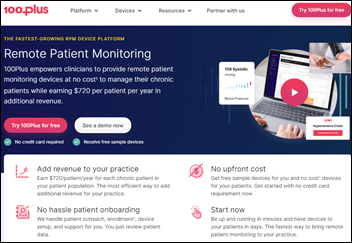
Senior connected care vendor ConnectAmerica, whose brands include Lifeline following its acquisition from Philips last month, will acquire 100Plus, which offers remote monitoring technology for seniors. Terms were not disclosed, but 100Plus had raised $40 million in funding. ConnectAmerica’s CEO is former Siemens Healthcare and Nuance executive Janet Dillione, while the founder and CEO of 100Plus is Ryan Howard, formerly chairman and CEO of Practice Fusion.
Acute care telehealth and teleICU service provider Equum Medical raises $20 million in growth equity.
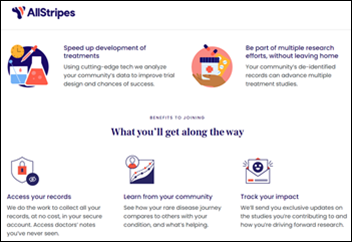
AllStripes, which offers real-world and patient data to support rare disease research, raises $50 million in a Series B funding round.
Dina hires Maryann Lauletta, MD (Inspira Health Network) as chief medical officer, Bob Maluso, RPh, MBA (Woundtech) as chief growth officer, and Ross Lipenta (Health Catalyst) as VP of platform architecture.
Dina promotions include Brett Poirier, MBA as VP of operations, Jay Riggins as VP of engineering, and Travis Woyner, MBA as VP of product.
Todd Johnson (Avia) joins SomaLogic as EVP of business development and strategy.
Fertility EHR vendor EIVF hires Nimesh Shah, MPA (Ingenious Med) as CEO.
Announcements and Implementations
WebMD adds Symplr’s provider search and scheduling to its online health information.
Adventist Health Bakersfield (CA) goes live on IPro Healthcare’s ambulatory order management system.
Government and Politics
Former VA CIO Roger Baker says in a FCW opinion piece that VA should not take risks in trying to hurry its Cerner replacement of the homegrown Vista. He notes:
Cerner should replace Vista only when its use is associated with improved care quality metrics.
The VA needs to consider that Vista investment has been frozen several times since 2000 as the VA attempted to replace it, but it will remain in use for at least seven more years, meaning that the last facility to go live on Cerner will have been running Vista without any enhancements for 10 years.
Cerner is missing about one-third of Vista’s capabilities, including registries, support for government-specific reimbursement and billing requirements, and medical equipment supply and maintenance schedules. Those functions will need to be supported even beyond the 10-year Cerner timeframe.
Vista is the only backup plan for veteran care if the Cerner project fails, which is concerning as schedules are slipping and given the government’s poor track record of big modernization projects.
VA and its contractors are losing the expertise needed to maintain and upgrade Vista.
COVID-19
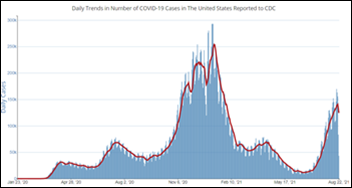
New COVID-19 cases as a seven-day average are trending down slightly, as are deaths. The growth in overall number of COVID-19 hospital inpatients is rising, but a bit less sharply. Unfortunately, all are flattening at high levels. Florida and Georgia hospitals report that more than 25% of their inpatient beds are occupied by COVID-19 patients
Brown University public health school dean Ashish Jha, MD, MPH says that four factors are important in bringing kids back to full-time school: (1) all eligible faculty, staff and students should be vaccinated; (2) testing should be offered weekly to anyone who asks and rapid antigen tests should be offered to those with possible symptoms in a “test and stay” program; (3) masks should be required universally indoors, and (4) ventilation upgrades should be considered. He says distancing isn’t as important and masks alone are only modestly helpful.
FDA issues full approval to the Pfizer-BioNTech COVID-19 vaccine for people 16 and older, triggering some companies to require their employees to be vaccinated now that the product is no longer approved for emergency use only.
A Kaiser Permanente study of its EHR records finds that while the Pfizer vaccine’s efficacy at preventing COVID-19 infection with the delta variant drops off to 53% after four months, its protection against hospitalization remains at around 93%. This suggests that while prevention wanes, the delta variant is not escaping vaccine protection.
A new CDC study finds that unvaccinated people are 29 times more likely to be hospitalized with COVID-19 and five times more likely to become infected.
Anthony Fauci, MD says that full approval of Pfizer’s COVID-19 vaccine could increase vaccination rates, which would make it possible to “start to get some good control in the spring of 2022,” signaling his expectation of another bleak COVID-19 winter.
Israel, whose high vaccination rates nearly eliminated new COVID-19 cases and allowed all restrictions to be lifted, is back to near-record new cases, heavy deaths, and hospitals that can’t take new COVID-19 patients. Possible explanations include travelers returning from foreign vacations when restrictive measures were eased, rise in the delta variant, and vaccine efficacy drop-off. The country will aggressively roll out booster doses. Israel has 80% of those over 12 vaccinated versus 60% in the US.
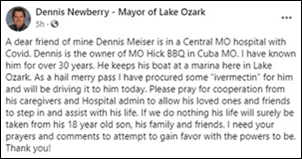
The mayor of Lake Ozark, MO asks his Facebook followers to pray that he is successful in smuggling the livestock de-wormer ivermectin into a hospital for treating a friend who is admitted with COVID-19.
Other
A Tennessee woman and her son sue the University of Tennessee Medical Center and two of its contractors, claiming that leaky sewer pipes overhead in the ICU burst, showering her and her son – who was an ICU patient on a ventilator – with hundreds of gallons of wastewater in a “downpour of human waste.”
Sponsor Updates
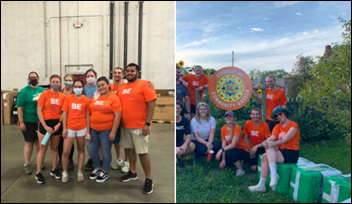
CoverMyMeds employees volunteer during the company’s month-long CoverMyCommunity effort.
Ascom Director of Product Management Jeff McCormick shares his advice on facilitating relationships with health IT leaders.
Azara Healthcare publishes a new case study, “Lower Lights Christian Health Center Streamlines Population Health and Care Management with Azara Healthcare.”
Experian Health publishes a new white paper, “State of Patient Access 2.0: The Pandemic is changing everything from scheduling to collections.”
CHIME releases a new Digital Health Leaders Podcast, “A Conversation with Craig Richardville, CHCIO, SVP, and Chief Information and Digital Officer, SCL Health.
In a new report, KLAS rates Clearwater a top-performing security and privacy consulting firm.
Clinical Architecture releases a new episode of The Informonster Podcast, “Lab Data Interoperability.”
Divurgent VP of Technology Emily Carlson appears on the first Women Making Innovation Happen in Technology! Podcast.
Engage publishes a new case study, “From Chaos to Control: How Exeter Hospital Addressed Their Disaster Recovery Challenges.”
NextGen Healthcare founder and Director Sheldon Razin and Director Lance Rosenzweig announce that they intend to nominate new directors in an effort to combat Chairman Jeffrey Margolis and his “imperial boardroom culture.”
After being acquired by Varsity Healthcare Partners nearly two years ago, RCM and practice management companies DuvaSawko, Abeo Management, and Gottlieb combine to form Ventra Health.
This information is from the 2019 Form 990 of HIMSS, which covers the tax year ending June 30, 2020, as compared to last year’s filing for 2018. HIMSS has changed its fiscal year-end to December 31, effective 12/31/20. My analysis of the 2018 form is here.
Income and Expense
Total revenue: $28.7 million (down 74%) Total expenses: $82.6 million (down 9%) Revenue less expenses: –$53.9 million (versus a $21.2 million surplus) Net assets: -$24.4 million (versus $33.3 million)
Program Service Revenue
Conferences: $1.9 million (down 96%) Corporate sponsorships: $1.6 million (down 88%) Membership: $12.1 million (down 6%) Advertising and media: $10.4 million (up 4%) Analytics and maturity models: $1.9 million (down 37%)
Revenue from Related Organizations
HIMSS Media: $10.9 million HIMSS Analytics: $1.9 million Personal Connected Health Alliance: $1.2 million HIMSS Europe: $1.3 million
HIMSS also reported taxable partnerships through its Healthbox consulting firm.
Major Expenses
Conferences: $11.9 million IT: $7.5 million Occupancy: $2.4 million Travel: $3.0 million
Highest Compensated Employees
Harold Wolf, III, President and CEO: $1,381,794 Carla Smith, EVP: $671,788 (through February 2019): $1,295,912 Bruce Steinberg, managing director, international: $667,400 Stephen Wretling, chief technology and innovation officer: $662,149 Mitch Icenhower, chief relationship officer: $542,307 Blain Newton, EVP, HIMSS Analytics (through October 2019): $503,663 Ilene Moore, SVP, general counsel, and government relations: $497,851 John Whelan, EVP, HIMSS Media (through October 2019): $453,275
Total salaries and wages: $35.7 million for 225 employees, plus $5.2 million in pension plans and other employee benefits. HIMSS had 133 employees who received more than $100,000 of reportable compensation.
Part of the fun of being a consulting CMIO is working with a variety of clients that have needs across the clinical informatics spectrum. Sometimes I work with smaller organizations that need informatics leadership but don’t have the funding for a full-time position or qualified physicians willing to fill the role even in a part-time capacity. Other times I might be augmenting a large health system going through a transition, supporting a specific element of their informatics needs such as absorbing legacy systems they acquired through practice purchases or consolidating ancillary systems. There are always challenges and sometimes I run into areas where I’m not fully expert in the subject matter, but a big piece of being a good consultant is knowing when (and where) to get help when you need it.
Less fun in the arena of the consulting CMIO is when a client hires you for your expertise, and then proceeds to either ignore it, or worse yet, acts like you don’t know what you’re talking about. I was going round and round with a client last month who insists that the information blocking rule of the 21st Century Cures Act (which some of the analysts continue to refer to as the “Cares Act” despite corrections) does not apply to them. There are a number of outstanding resources that help organizations understand the requirements and how to implement them, and I’ve provided checklists, infographics, and even the relevant pages of the Federal Register in an attempt to get them on board.
In short, Open Notes requires that healthcare providers offer patients access to much of the health information in the electronic medical record without delay. Failure to provide the required access constitutes information blocking.
I had a meeting with one of the newly hired operations VPs a while back, when I again tried to talk the client into accepting their need to comply. The conversation I had was fairly comical:
Me: We need to talk about Open Notes again. You’re not in compliance, and this places the organization at risk. Additionally, it’s not good for patient satisfaction, as your competitors are all releasing their documents. We really need to figure out how to move this forward.
VP: My interpretation is that it only applies to health systems and we’re just a physician group.
Me: Actually, this applies to all healthcare providers. Since the organization is a physician group, it needs to comply.
VP: We think our patient will be harmed by this. Isn’t there an exception for harms?
Me: There are specific criteria for a “preventing harm” exception, but given the fact that the majority of visits performed in the organization are routine medical visits, it would be impossible to claim that across the board. [slides copy of FAQ document from a reputable organization across the table]
VP: This list of documents doesn’t apply to us. We don’t generate any of these documents.
Me: Let’s see – consultation notes, history and physical, lab reports, procedure notes, progress notes – there aren’t any of those in the EHR?
VP: No, we have encounter notes.
Me: It doesn’t matter what you call them, basically all of your encounter notes are consultation notes, history and physical notes, procedure notes, or progress notes.
VP: Our EHR isn’t certified, so we don’t have to do it.
Me: Actually, that doesn’t matter. The ONC FAQ page specifically says that it applies to healthcare providers “regardless of whether any of the health IT the provider uses is certified under the ONC Health IT Certification Program” or not. And we really should talk about that EHR …
This went on for a good 20 minutes, as the VP — who is half my age and has less than two years’ experience on the provider side of healthcare — tried to convince me that I didn’t know what I was talking about. The organization has been through several such VPs in the short time that I’ve been working with them.
As all the VPs do, he said he would “have to take it to legal,” who always refuses to do anything. It’s the ultimate brush off since “legal” really means “our outside counsel since we can’t keep anyone on staff” and no one ever takes responsibility for a decision. The physician CEO of the group perceives himself to be too busy running the group and dealing with disgruntled physicians to get involved in escalating this with the legal team, dumping it back to me “because this is why we hired you.”
It’s disheartening to have to work with people like this when you’ve been hired to do a job that you’re good at and have a proven track record of helping other organizations achieve what you’re trying to accomplish. Not to mention, as a patient who has uncovered some pretty significant misses in my own medical record through the magic of patient-facing notes, I’m a believer in the power of the tool regardless of the regulatory requirements around it.
This particular VP is the same one who tried to convince me that certain data elements in the patient chart — including blood pressure records that the patient brought to the office and the physician signed, dated, and had scanned into the chart — aren’t technically part of the legal medical record, despite the fact that the physician used them to support the Medical Decision-Making component of an office visit and referred to them in his dictation.
Fortunately, I use a standard contract that lets me terminate clients like this with relatively short notice, so I opened the escape hatch a couple of weeks ago. I’m wrapping up some final transition items this weekend and am looking forward to moving on. I’m not fond of putting my professional credibility on the line for organizations like this.
I find the CEO’s attitude particularly unsettling and I understand why he might be dealing a number of disgruntled physicians if they are having to interact with people like the operations VP. I’ve built some good relationships with several of the physicians and I’m sure they’ll keep me posted on what happens with this over time.
Is your organization on board with Open Notes, or are you holding out? Leave a comment or email me.
I’m the director of product solutions at Holy Name Medical Center. The hospital is located in Teaneck, New Jersey, with about 360 beds. It’s a regional health system serving the patients in the Teaneck community and surrounding communities in northern New Jersey and also folks in New York.
My role at the hospital is to manage the product offerings for software products that are deployed throughout the hospital and the health system itself. Mainly for the last two and a half years, I have been leading the development of a new in-house EHR that we just recently deployed in May in the hospital’s emergency department.
What led the hospital to decide to self-develop an EHR?
The hospital has always had an interest in technology. Close to 30 years ago, the hospital developed its own EHR, long before EHRs were prevalent and certainly long before they were mandated in the industry. The hospital, up until about two and a half years ago, was still running on that same system. It was certainly time to make a decision – do we buy, or do we build?
The hospital and the health system believe in a good mixture of both, but the leadership felt like the needs that Holy Name has were not going to be met by any EHR in the market today. The focus of Holy Name is an enterprise solution and a person-centric solution. Often systems claim to be interoperable and they are, but they certainly don’t fit the needs of an enterprise with multiple physician practices, health centers, and hospitals in the network. So the decision was made to build, and that’s what we did.
What was the makeup of the development team and how much effort was involved?
With this decision came a new leader, a new chief information officer, at the hospital. He started about three years ago and the team that he had was zero, so he had to form a team. He brought me in to manage the product side and my colleague to manage the development and architecture side. We formed a team from there. Three years ago, we had no one in place to manage this type of technology. The folks that were in place are still managing the existing legacy software.
We started with a team of basically three of us and now the team is greater than 50 folks. We have a mixture of onsite and offshore developers, QA engineers, and product managers. We are a nimble team. That’s where we’ve gotten our success and the ability to go from a concept to a minimum viable product, MVP, in just a little over two years. We are hands-on, close with our team, and we work pretty much around the clock to get the job done. We can remain agile and nimble and give the hospital what they need, but also some of the newer features and technology that they might not have even thought of without us bringing that to the table.
What does the tech stack look like?
The existing software was very legacy, as I mentioned. It was a technology that I was not even aware existed until I came on board. It was time for something new. It’s a web-based platform developed mainly on a Microsoft stack. We pride ourselves in the UI. We would love to share it with anyone that’s interested, but we brought some of the latest and greatest techniques for the UI and certainly for the behind-the-scenes architecture. We felt like it was time to modernize. A couple of other new features that we brought were facial identification for person management and person recognition when folks are coming in to be registered.
The software itself is modernized, but has some new technologies there as well. We feel like instead of looking at this as just a replica of existing EHRs, we wanted to bring technology that is not as often used in healthcare and bring it into that space. What technology is available at airports? What about banking software and technology that we can bring to healthcare and make the workflows of the hospital much more efficient?
What features were you seeking that commercial EHRs don’t have?
One of the hurdles that we had to achieve while we were developing for our own peers and our own colleagues at the hospital was that we were asking a lot of them to completely change from what they had been used to using for so many years to something from scratch. We knew that this was an MVP product, meaning the first deployed product is not going to be the most robust that can be. We are releasing new versions constantly.
Part of that advantage that you asked is to get a little buy-in from our peers. We wanted to provide them some neat, exciting kind of new-age tools that they could be excited to use. But more importantly than that, we feel like there’s a lot of advantages that we can improve the workflows that exist in the hospital today by using these technologies that aren’t traditionally in place. Our goals have been to get buy-in and interest from our colleagues, but make sure that that software is usable and that we’re not only meeting their needs, but we’re exceeding them. So far, we’ve gotten some really nice feedback.
How did your approach of using Medicomp’s Quippe differ from that of a vendor that doesn’t use it?
I will say that we are the first hospital EHR that has engaged with Medicomp to use their Quippe solution in the EHR. I really can’t imagine our charting feature without Quippe. When faced with the decision of how to manage physician, nurse, and clinician documentation, we knew that we had to have a competitive advantage there because physicians are counting seconds and counting clicks. They have high expectations that their documentation not only be complete and satisfy regulatory requirements, but that it is also readable and provides the narrative of that patient story.
The decision was to build our own database of clinical findings, or maybe integrate with another system that has just a simple database of findings, or to engage with someone like Medicomp, which provides not only that dataset, but the relationship between the findings and the ability to thread those together to tell a nice story of the patient, but also provide all of the data that’s necessary for reporting and quality measures. We feel like our chart is one of our most special features in the system and we’re really most proud of it.
Is a demo video available that would make it obvious how your product differs from commercial EHRs?
We don’t have one as of yet. Our main focus has been to ensure that Holy Name is well taken care of. Migrating to a brand new EHR is difficult. In my past, I worked on the physician practice side, and common practice was to reduce the schedule by about 30, 40, or 50% to make sure that the volume was low and everyone could ease into the new implementation. Certainly you can’t do that with the ER. So our focus has been on them and making sure that their needs are satisfied.
But we certainly would love to do that and to share. I will say our colleagues and friends at Medicomp, every time they see a demo of the software, they’re so excited and they feel like it’s something unlike anything that’s out there in the market today. We are very excited to share it with other hospitals when that time is right.
Will you commercialize the system on your own or partner with a vendor to acquire or license it?
The plan is commercialization. The route that we take, we are still navigating. But yes, I think our leadership at the hospital realizes that technology can enable hospitals to achieve much more than they currently are. I think a lot of hospitals feel like technology slows them down, and we feel like there is a need for this type of solution that is usable and easy to implement. We feel like that need is there in other regional hospitals like ourselves.
The plan certainly is commercialization. Our roadmap also involves expanding into other areas of the health system beyond the ED. I think maybe next year, when hopefully HIMSS is in a little bit of a better place, we will be excited to share what we’ve been doing.
What other technologies are you looking at or considering or developing?
We’ve been working closely with a couple of departments. One is our facilities management department. When the COVID crisis hit , our area of the country in northern New Jersey and New York was one of the hardest hit. We have worked hand in hand with our facilities management group to provide state-of-the-art exam rooms and hospital rooms that not only protect the patient, but protect the nurses as well.
Another technology that we have just implemented with our ICU — we renovated and completely built a new ICU right after COVID – is smart screens in each of the rooms that identify the clinician via facial recognition. There’s no need for tapping on the screen to access the patient’s record. There are tablet devices on the outside of every ICU room that provide indicators for the patient. They provide access into the room.
We are continuing to dive down the software development path with our roadmap to expand, but we’re also engaging with our biomed and our facilities department to enhance the experience, the patient experience, at our hospital too. That’s been something really fun and interesting.
What advice would you give a nurse who wants to become more involved with technology?
Dive right in. Nursing is one of the best fields that anyone can enter because it is so diverse. I realized after a couple of years that bedside nursing wasn’t quite for me, and I just happened onto technology about 12 to maybe 15 years ago now. Now, I would never look back. My advice would be to work hard in nursing and make sure that you learn everything you can about patient care, but then take it further.
This industry needs nurses that have the knowledge of clinical needs and background, but who also know the workflows of the day-in and day-out of taking care of patients. That’s something that a lot of tech companies are missing these days. We need to take a step back and make sure that we understand the needs of the folks serving on the front lines of the hospital. Sometimes it’s a little more simple than we think, and so having more nurses in technology to convey that will only make us better over time.
Comments Off on HIStalk Interviews Jessica Cox, RN, Director of Product Solutions, Holy Name Medical Center
Apollo Hospital Group has logged 10 million subscribers to its online health service after the Indian government’s implementation of a national patient ID and a digital voucher system for patient payments.
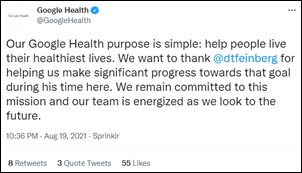
Business Insider reports that Google Health will shut down after three years and will reassign its 570 employees across Google.
The group’s most noteworthy remaining employee was Chief Health Officer Karen DeSalvo, MD, MPH, MSc, who will be reassigned to report to Google’s chief legal officer. Google Health VP David Feinberg, MD, MBA was announced as Cerner’s new president and CEO on Thursday.
This is the second time Google has created and then quickly killed off a Google Health organization, the first being in 2011 when its personal health record failed to attract user interest.
Google says its health work will continue within individual teams.
Reader Comments
From Go Knowles: “Re: David Feinberg. How would you grade Cerner’s CEO choice?” C at best, but even that is a better grade than I would assign to Cerner’s board. He has no experience as a for-profit or publicly traded company CEO; his medical background in psychiatry is not all that relevant to the vast majority of physicians or technologists; he acknowledged upon his hiring by Google that the company’s healthcare efforts had fizzled but he nevertheless left them shortly afterward with even less healthcare accomplishment; and he stated then that his goal was to use now-dissolved Google Health’s scale to help billions of people but then left to run a company without anywhere near that kind of influence. I don’t understand why Cerner’s board keeps hiring people without big-company CEO experience, fails to groom internal candidates in its succession plan, and can’t decide whether it wants to be a software vendor or would rather chase a new dream of selling patient data to drug companies. A career spent mostly running non-profit health systems is not the usual background found in publicly traded companies with 28,000 employees and a $25 billion market value. He is already guaranteed making a fortune and will make even more if the company’s shares perform well or if the company is acquired. I don’t know if Google Health dissolved because he was leaving or if he was lucky to find a gold-plated life raft at the perfect time.
HIStalk Announcements and Requests
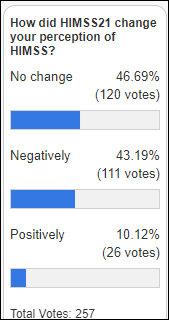
Few respondents said that HIMSS21 improved their perception of HIMSS, but at least “no change” outdrew “negatively.” One of the negatives was that people who paid registration fees for HIMSS20 but were concerned about attending HIMSS21 in person were not given the option to hold their credit until HIMSS22, forcing them into the digital version where they don’t gain access to the in-person session recordings.
New poll to your right or here: What was your reaction to Cerner’s hiring of Google Health’s David Feinberg as president and CEO? Tell us more by clicking the poll’s “Comments” link.
HIMSS21 Survey Results
I won’t over-analyze the responses since I received only around 50 of them, but here are some high points:
In-Person HIMSS21, Paid Attendees
Respondents gave it a B-minus grade.
All but one said their perceived COVID-19 risk was the same or lower than expected.
They liked the increased seating space, the higher-quality conversations that were possible since people weren’t rushed, and catching up with friends.
They didn’t like having the event spread over multiple venues, the quality of the CIO Summit compared to the previous CHIME event, and the empty spaces in the exhibit hall.
Interesting topics or vendors were few, but one respondent liked the nursing innovation “Shark Tank” event.
Twice as many attendees say they are more likely to attend HIMSS22 now than those who say they are less likely.
Exhibitor staff graded the conference lower, but enjoyed more-engaged participants. Negatives include convening a conference in a venue that allows indoor smoking, the lack of exhibitor value, lack of mask-wearing enforcement, the lack of qualified prospects, and using the Caesars building when the Sands complex had ample space. One questioned the diversity of presenters, especially among the HIMSS staff – anyone care to comment since I didn’t attend any presenter events?
Virtual HIMSS21 Attendees
Respondents gave it a D grade.
Comments: the conference was bland, the Accelerate app was poor but HIMSS was pitching it endlessly, not all sessions were available virtually, the forced banter and enthusiasm of the TV-style anchors with zero healthcare knowledge was annoying (this was a common theme), and company officials including those of HIMSS engaged in pontification of platitudes.
Webinars
None scheduled soon. Previous webinars are on our YouTube channel. Contact Lorre to present your own.
Acquisitions, Funding, Business, and Stock
Cerner SEC filings outline the compensation package that its board is giving incoming President and CEO David Feinberg, MD, MBA, which adds up to nearly $35 million in his first 15 months:
$900,000 base salary.
Target cash bonus of $1.35 million.
$13.5 million in restricted shares for 2022.
$3.375 million in shares for Q4.
A one-time cash bonus of $375K.
A new hire award of $15 million in restricted shares to offset his equity loss with Google.
Use of Cerner’s jet.
Generous severance terms, such as change of control — two years salary, bonus, health insurance, and equity vesting.
In addition, outgoing CEO Brent Shafer gets his existing salary, bonus, and $2.5 million restricted shares for helping out during the one-year transition.
Sales
University of Colorado Medicine implements the RCxRules Revenue Cycle Engine at its 100 locations with 3,000 providers.
Government and Politics
In India, an executive of Apollo Hospital Group says that it has logged 10 million subscribers to its online health service after the government’s implementation of a national patient ID and a digital voucher system for patient payments. The company expects online pharmacy and telemedicine sales to increase significantly because of the digital healthcare strategy that was developed by Apollo and the government 10 years ago.
COVID-19
FDA will likely issue full approval to the Pfizer-BioNTech COVID-19 vaccine on Monday. Approval could help support company-required vaccination and possibly sway some unvaccinated people into getting the shot.
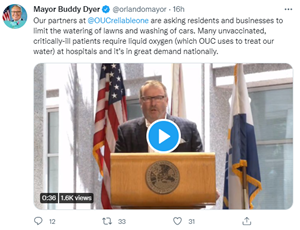
Orlando’s mayor urges residents to stop watering their lawns and washing their cars to preserve supplies of liquid oxygen, which is used by the city’s utility provider to purify drinking water water, because it is desperately needed for COVID-19 hospital inpatients. The city faces a boil water advisory within a week if residents don’t comply.
Alabama reports a negative supply of ICU beds, Louisiana says that 28% of new COVID-19 cases involve children, and six of the biggest hospitals in Kansas are at 100% ICU capacity as unvaccinated COVID-19 patients fill beds.
Alabama’s UAB Medicine says that a record 39 unvaccinated pregnant women have been admitted to its ICU this month, nearly all of them undergoing forced early delivery due to COVID-19 damage. Two pregnant women died and nine lost their babies as doctors were forced to perform C-sections in the ICU on women who were on a ventilator or ECMO. None of the pregnant ICU patients are vaccinated.
Mississippi’s poison control center is seeing an increase in calls and at least one hospitalization related to ivermectin exposure. The state is asking people to stop buying the veterinary worm medicine from feed stores to self-treat COVID-19.
Abbott Laboratory ordered workers in its Maine factory to destroy existing inventories of its BinaxNOW rapid COVID-19 test in June and July, then laid off employees, cancelled supplier contracts, and closed the only other plant that makes the tests and laid off its 2,000 employees, all because sales were down. Abbott, which didn’t foresee the increased demand that is driven by the delta variant, now says it can’t provide enough tests. Abbott issued a statement saying that it did not destroy any finished product and that demand dropped because CDC advised people to avoid testing unless they had symptoms.
Other
Weird News Andy (WNA) is proud to announce the winners of the inaugural AHA! (Acronyms in Healthcare Awards) competition. His impartiality allows him to unashamedly choose himself as the winner, for which he says he’ll take himself out for a post-work ice cream cone.
Third place goes to Brian Too for HIM.
Second pace goes to RobertLS for CCHIT.
First place goes to WNA for HAPI.
Sponsor Updates
OptimizeRx names Kristen Mignon (Orbita) VP of account management.
DirectTrust names PatientPing VP Jitin Asnaani an Interoperability Hero as part of its inaugural awards program.
Vocera CMO Bridget Duffy, MD will present at the Ending Physician Burnout Global Summit August 24.
Well Health achieves four ISO certifications for ISMS and PIMS.
Cerner announces that Google Health VP David Feinberg, MD, MBA will be its next president and CEO.
Verily announces that it will acquire SignalPath.
CDC announces creation of the Center for Forecasting and Outbreak Analytics.
Inovalon announces that it will be taken private by an equity group at a valuation of $7.3 billion.
Commure acquires PatientKeeper.
QGenda acquires CredentialGenie.
Unite Us acquires Carrot Health.
Streamline Health Solutions acquires Avelead.
A report says a health system shut down a diabetes management app in which it had invested $12 million because its success would have threatened the hospital’s fee-for-service revenue.
Optum offers virtual care and prescriptions direct to consumers, offerings that will compete with investor-funded storefronts like Ro and Hims.
Labcorp acquires Ovia Health.
CMS announces that hospitals will be required to self-attest their compliance with the SAFER Guides for EHR safety starting next year.
Best Reader Comments
As a customer of Cerner, this appointment [of David Feinberg as president and CEO] is massively disappointing. (Justa CIO)
As for Feinberg, he made this move for the compensation. Shafer was at Cerner for a little under three years and made more than $30M in total compensation. He got the company right-sized for the financial folks. Feinberg is 59 and this is his chance to create dynastic wealth for his family. I’d bet his compensation will be even more lucrative than Shafer’s because Cerner will be sold during Feinberg’s tenure which should drive the stock option he gets higher as well as the executive parachute he’ll get as a part of any M&A. Work 3-5 years and bank $30-$50M. (Lazlo Hollyfeld)
Today Google Health head left and Apple scaled back its app. A few months back Amazon’s joint venture imploded. The only reason we are discussing such failures is because certain reporters hype tech’s every step in healthcare. (Chinmay A. Singh)
I think Feinberg has decided that getting anything done at Google is impossible and that if he gets out now he can combine the Geisinger & Google pixie dust / reality distortion field, and parlay that into a public company CEO job. Who knows, Cerner may hit an upswing, and if not, I don’t think anyone is expecting too much. (Matthew Holt)
A bit strange that Kareo sold its managed billing service a year ago and now acquired a startup that promises to … manage its customers’ billing? (IANAL)
Watercooler Talk Tidbits
Readers funded the Donors Choose teacher grant request of Ms. S in Texas, who asked for math materials for her bilingual pre-K classroom. She reported in December, “Our class is made up of in-person as well as remote learners, but we have gone through one class quarantine and three full class remote learning weeks. Every single time we are learning from home, all our students have been able to use their materials for counting, making sets, creating patterns, and sorting colors and sizes. Thank you for making sure every student in my class has access to hands on materials.”
A Chicago pharmacist who worked for a COVID-19 vaccine distributor is arrested for selling 125 authentic CDC vaccination cards for $10 each on EBay. He has been charged with 12 counts of theft of government property and faces 10 years in prison for each count.
Sandro Platzgummer, a 24-year-old student of a medical school in Austria who never played college football and is trying to earn a running back spot with the New York Giants, breaks out an explosive 48-yard run from his own one-yard line against the Jets.
An obese patient who has been hospitalized at Wentworth-Douglass Hospital (NH) since May hopes to lose enough weight to be discharged in September. The hospital is suing to try to get him to free up his bed, where he was admitted despite needing no acute care because EMS wouldn’t allow him to try to get back to his second-floor apartment and he refuses to live elsewhere. He wants to stay until he loses enough weight to undergo bariatric surgery. Jack Bocchino hasn’t walked for four years and still weighs 450 pounds after losing 114 pounds. He will not accept the hospital’s offer to find him a first-floor apartment or one with an elevator.
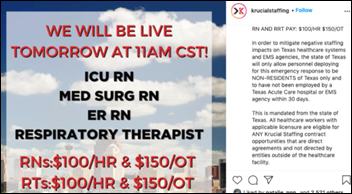
Texas bans in-state nurses and travel nurses who were recently assigned to a state hospital from taking in-state jobs with federally funded COVID-19 disaster management programs. Texas is hoping to fill 6,500 positions with out-of-state or retired in-state nurses. In a related item, Arizona reports nursing shortages as in-state nurses take travel jobs paying four times their hospital salary plus housing and food.
A 37-year-old Boston NICU nurse leaves her job at a hospital that ordered her to stop posting racy photos on pay sites such as OnlyFans. Her co-workers bought a subscription, then sent screenshots to her boss, who demanded that she close her online accounts. She says she doesn’t need nurse money anyway since she’s making $200,000 per month from OnlyFans. She’s also a Navy veteran, gets help with her online work from her husband, and has the support of their children, aged 12, 17, and 18.
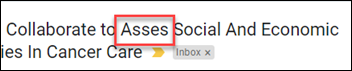
This press person’s email subject misspelling at least got my attention.
TikTok videos of a former New Jersey gang member turned hospital phlebotomist singing for ICU patients go viral. Enrique Rodriguez started in housekeeping at Robert Wood Johnson University Hospital in 2012 and taught himself to play guitar and piano by practicing with patients.
CDC announces creation of the Center for Forecasting and Outbreak Analytics, which will analyze and communicate data for public health decision-making to mitigate threats such as social and economic disruption.
Cerner hires David Feinberg, MD, MBA as president and CEO, effective October 1, 2021.
He has been VP of Google Health since January 2019. Before that, he was president and CEO of Geisinger from 2015 to 2019.
Cerner also announces that President Donald Trigg will leave the company.
Cerner’s board has separated the roles of chair and CEO with the hire. William Zollars will become independent board chair on October 1, while Feinberg will become a board member.
Reader Comments
From Inanimate Object: “Re: HIMSS. What does it mean that they said only three attendees tested positive? There was no contact tracing, random post-event testing, and no mass email asking people to let them know if they had symptoms or tested positive.” A HIMSS broadcast email says that three HIMSS21 participants have tested positive, one during the conference and two afterward. It was not a self-congratulatory email, so kudos for that, but perhaps naive in thinking that anyone would bother to notify HIMSS upon becoming symptomatic and/or testing positive. Some have observed that HIMSS, as a health technology cheerleader, should have encouraged use of a contact tracing app. I would add that some post-conference voluntary surveillance would be nice in considering upcoming in-person conferences, including HIMSS22, to determine how effective the HIMSS21 policies were in avoiding spread since it was one of the first big in-person healthcare gatherings since the spring of 2020. Of course for HIMSS, three is a good number that could only be spoiled by further review.
HIStalk Announcements and Requests
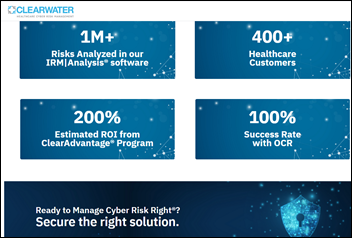
Welcome to new HIStalk Platinum Sponsor Clearwater. Clearwater is the leading provider of cybersecurity, risk management, and HIPAA compliance software, consulting, and managed services for the healthcare industry. Its solutions enable organizations to avoid preventable breaches, protect patients and their data, meet regulatory requirements, and optimize cybersecurity investments. More than 400 healthcare organizations, including 70 of the nation’s largest health systems and a large universe of physician groups and digital health companies, trust Clearwater to meet their cybersecurity and compliance needs. For health IT and digital health companies, the company offers the ClearAdvantage managed services program that transforms the burden of cybersecurity and HIPAA compliance from a liability into a competitive advantage. Led and executed by expert healthcare privacy and security professionals leveraging our award-winning SaaS-based software platform IRM Pro, the company provides organizations with the benefits of an integrated and efficiently executed, best-in-class cybersecurity and HIPAA compliance program at 25% to 50% of the cost of traditional approaches.ClearAdvantage was designed not only to protect your organization and its data and meet HIPAA compliance requirements, but also to do so in a way that meets three important business objectives – better, easier, and less expensive. Thanks to Clearwater for supporting HIStalk.
I’ll wrap up my “HIMSS21 Attendee Feedback” survey soon, so spend a couple of minutes answering 10 questions and you’ll be part of the summary that will appear here soon.
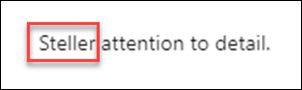
This is from the self-laudatory “About” section of the LinkedIn profile of a guy I ran across. I can’t decide if the misspelling is more attention-grabbing than the the no-subject, third-party writing that brags about his generic attributes (“motivates and influences others to achieve.”)
Listening: drummer Aric Improta, recommended by Alex Scarlat, MD as “the best drummer still alive.” I’m not a big fan of drum solos since they often involve a lot of frenzied but musically pointless thrashing, but this guy is amazing. He plays for the wildly energetic Fever 333 as well as Night Verses. This reminds me of the Who’s Pete Townshend complaining that his live playing was limited to being an efficient rhythm guitarist because Keith Moon was drumming all over the place instead of keeping time and John Entwistle played “every harmonic in the sky” by treating his bass guitar as a lead instrument, making the deceased former members “f***ing difficult to play with.”
Webinars
None scheduled soon. Previous webinars are on our YouTube channel. Contact Lorre to present your own.
Acquisitions, Funding, Business, and Stock
Healthcare analytics platform vendor Inovalon will be acquired by an equity consortium at a valuation of $7.3 billion, a premium of 24% over the average share price through July 26 when media speculation surfaced the rumor. Founder and CEO Keith Dunleavy, MD will remain a shareholder, board member, and CEO after the take-private transaction. The transaction is expected to close in late 2021 or early 2022.
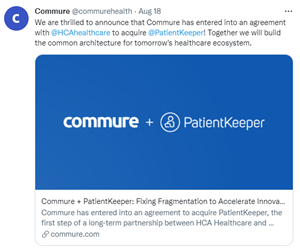
Healthcare connectivity platform vendor Commure will acquire mobile provider technology developer PatientKeeper from HCA Healthcare, which will make an investment in Commure. Commure will migrate PatientKeeper’s platform to its cloud infrastructure and will license it to continued customer HCA, which will participate in its further development. Commure is a portfolio company of General Catalyst. Commure founder and executive chairman is billionaire investor Hemant Taneja, a managing partner of General Catalyst who was the lead investor in Livongo when it was sold to Teladoc for $18.5 billion last October.
Verily acquires Raleigh, NC-based SignalPath, which offers a clinical trials management system. Co-founder and CEO Brad Hirsch, MD, MBA is an oncologist who formerly worked as a Duke informatics director and senior medical director of Flatiron Health. Verily president of clinical studies platform Amy Abernethy, MD, PhD – who until recently was FDA’s principle deputy commissioner of food and drugs and acting CIO – also is an oncologist who held leadership roles at Duke and Flatiron.
Workforce management systems vendor QGenda acquires CredentialGenie, which offers a provider credentialing system.
Apple is reportedly scaling back its HealthHabit app that allows its employees to track fitness goals, talk to health coaches, and manage hypertension, with the 50 Apple Health employees who are assigned to the project facing reassignment or layoff. A Wall Street Journal review from a few weeks ago found that the app’s employee users weren’t engaged and didn’t trust the health data from Apple’s clinics that was used to develop the product.
Sales
Sentara Healthcare will contribute de-identified patient data to England-based Sensyne Health for AI life sciences research. Sentara will become a partner and shareholder in Sensyne Health, joining 11 NHS trusts, St. Luke’s University Health Network, and University of Colorado Health.
People
Hospital operational management software vendor Hospital IQ hires Nate Kelly, MBA (Cerner) as chief commercial officer and promotes Jason Harber to COO and chief strategy officer.
Announcements and Implementations
Harvard Medical School and Israel’s Clalit Research Institute establish a joint precision medicine effort, with the US arm being led by Isaac Kohane, MD, PhD, chair of HMS’s Department of Biomedical Informatics.
Medical scales vendor Seca will deploy user authentication from Imprivata.
Healthcare Triangle announces a ready-to-deploy healthcare block chain network called Blockedge, which can operate on any public cloud.
Ellkay releases LKAggregate, a data aggregation solution, to Epic App Orchard. It sends data to Epic Healthy Planet from disparate EHRs.
Government and Politics
WEDI asks HHS to issue expedited guidance on how providers can submit a good faith estimate of their charges to health plans under the No Surprises Act. WEDI also asks for clarification on the compliance date, which transactions will be used to exchange advanced determination requests and responses, and how HHS will handle cases where multiple providers are involved.
Indiana’s health department notifies 750,000 residents that their COVID-19 contact tracing information was exposed in a security company’s “unauthorized access,” which the company says actually means that the state was storing the data unsecured on the Internet and took it offline when the company gave it a heads up.
COVID-19
CDC announces creation of the Center for Forecasting and Outbreak Analytics, which will analyze and communicate data for public health decision-making to mitigate threats such as social and economic disruption. Experts have recently said that CDC is not equipped to provide the type of real-time data analysis that is needed to to make quick decisions in a fast-changing pandemic, so this is a significant change for CDC.
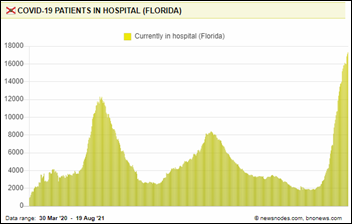
Florida’s COVID-19 hospitalization continues to climb far above previous pandemic peaks, as deaths also surpass previous highs and rolling seven-day test positivity is at 37%.
Seventy-three Mississippi hospitals ask the state for 1,450 healthcare workers to offset staff shortages, saying they could open another 1,000 beds if they had enough people. Mississippi has issued an order that allows EMTs to perform some in-hospital services. The state has the highest number of hospitalizations since the pandemic began and Neshoba County has the highest per-capita case count in the country at 263 per 100,000, which officials says is because the recent county fair had thousands of mostly mask-free people packed into events, some of them political, while the county has just 22% of its residents fully vaccinated. Mississippi hospitals had six ICU beds available Wednesday morning with a 46-patient waitlist.
The Texas Education Agency tells school districts that they don’t need to perform contact tracing or broadly notify parents when a student comes down with COVID-19. TEA says data shows that students don’t spread COVID-19 to other students at a significant level, although the public health data that was used to make that assessment predated emergence of the delta variant. Schools are allowed to conduct rapid tests of staff and can also test students if their parents have provided written permission.
A survey of US nurses finds that 75% trust COVID-19 vaccines as safe and effective, but many have questions about duration of protection, whether boosters are needed, and long-term effects. While 88% say they are or will be vaccinated, the biggest questions among those who won’t involve long-term vaccine effects, lack of safety information, and mistrust about their development and approval process. Not many unvaccinated nurses say that FDA approval would change their mind.
Samsung and the Commons Project Foundation add SMART Health Cards that display COVID-19 vaccination status to Samsung Pay.
Washington state hospitals are reaching near maximum capacity, partly because many patients have no family members to care for them at discharge and understaffed nursing homes won’t accept transfers.
Other
AI expert Alex Scarlat, MD ingeniously applies an AI model to a Medicare claims database that he ran across that shows outlier claims or beneficiaries that suggest fraud. This is pretty brilliant – our “pay and chase” model results in the occasional high-profile arrest for something that should have been caught and stopped almost immediately, like a general practitioner who is mass producing prescriptions for expensive compounded scar cream or upcoding all visits to the most complex.
I’ve seen no photos from HIMSS21 sessions, so here’s one from LinkedIn user Les Jordan, chief product and strategy officer for MobileSmith Health. I would enjoy this open space since my biggest reason for not attending HIMSS educational sessions is getting trapped between seemingly miles of knees in a presentation that screams “dud” five minutes in. I’m guessing this photo isn’t representative of education sessions in general, but since I didn’t attend any, feel free to describe your experience. It will be interesting to see attendance numbers from the HLTH conference in Boston in October, especially since CHIME has shifted its HIMSS conference participation to the new ViVE conference with HLTH March 6-9 in Miami Beach, a week before HIMSS22 in Orlando. It’s a terrible time to be in the conference business.
UPDATE: HLTH and CHIME just opened their call for ViVE presenters, saying that the March conference will gather 5,000 attendees, 450 sponsors, and 300 speakers in Miami Beach. Some of the sponsors and supporters listed so far include Allscripts, Athenahealth, CereCore, Cerner, Clearsense, Divurgent, Ellkay, Fortified Health Security, Healthcare Triangle, Impact Advisors, Imprivata, InterSystems, KLAS, Lumeon, Meditech, Nordic, Optimum Healthcare IT, Pivot Point Consulting, Quil, and The HCI Group.
Sponsor Updates
Vizient will offer its hospital members the remote patient monitoring and virtual care platform of VitalTech.
KLAS Research’s First Look Report reveals that Redox’s EHR integration drives fast outcomes for its digital health customers.
Lumeon wins two Bronze Stevie Awards in the 2021 International Business Awards.
HIMSS sent out its HIMSS Digital survey this week in an attempt to gather attendee feedback. The questions were predictable around whether the conference met expectations, whether the content was unique or valuable, if it was thought-provoking, and whether attendees can use what they learned in their organizations. Some of the areas they asked about I hadn’t heard of or seen promoted on any of the Digital communications, so I hope someone got something out of them.
I also received the “Important HIMSS21 Health & Safety” Update email, notifying attendees of several attendees who tested positive either on the way out of town or upon arriving home. If there really were only three cases that would be outstanding, but I suspect there might be quite a few mildly symptomatic or asymptomatic people out there. Judging from the people I’m seeing for testing (thanks to a touring musical act who shall remain nameless but did require testing or vaccination to attend the show) there are quite a few asymptomatic positives out there. My community’s transmission rate is rather high at the moment, so I’m not at all suspicious that they are false-positive results.
Desk jockeys, take heart: a new study in the American Journal of Physiology Endocrinology and Metabolism looks at the concept of “interrupted sitting” as a way to help mitigate negative impacts of sedentary work. Although the study was small with only 16 adults, it showed promising results. For 10 hours daily, participants were prompted to get up every 30 minutes. The active group had fewer extreme blood sugar values, suggesting that even small amounts of intermittent activity can be beneficial. I’ve been working on a big EHR build lately and often feel like I’m strapped to my desk, so I’m making it a point to try to get up regularly even if it’s just to walk to the kitchen to put more ice in my water glass or to drop a journal in my recycle bin.
I have to say that I’m really enjoying working on the build project. It’s different from what I usually do, and I am working with an outstanding team who gets it as far as understanding what clinicians want and need from their EHR. Several of them have clinical roots, so it’s not surprising that they know what needs to get done. Unfortunately, it’s a short-term gig and all good things will eventually come to an end, but it will have been fun while it lasted.
On the flip side, I established a micro practice earlier this year after leaving my urgent care job. It’s a way to have a place to hang my shingle so I don’t run afoul of the regulatory and licensure folks in my state. It’s also a way to experiment with new technologies and see how they play out in actual patient care. I’m test driving an EHR right now that can only be described as atrocious. It reminds me of some of the first systems I used in the late 90s, which were a cross between FileMaker Pro and an electronic prescription pad. For what I’m doing, I don’t need a certified system, but I certainly miss things like CPOE and clinical decision support that I think the majority of clinicians take for granted.
Two journal articles caught my eye this week. The first, in the Journal of the American Board of Family Medicine, reinforced the idea that perhaps breakfast is the most important meal of the day after all. Researchers analyzed existing mortality data from the NHANES 1999-2002 data sets, looking at overall mortality, cardiovascular mortality, and fiber intake. Nearly 83% were identified as breakfast eaters, and on the whole, they were older, had lower body mass index, and ate more calories and fiber daily than non-breakfast eaters. The study certainly doesn’t show causation, but the association of breakfast eating (especially when individuals consume more than 25g of fiber daily) with lower mortality rates seems solid.
The second article, also found in the Journal of the American Board of Family Medicine, looked at the practice of incorporating patient narratives in the medical record. It caught my eye because it took place in the Netherlands. One of my outdoorsy gal pals hails from that part of the world and is always sharing stories about how life is different in her home country. According to the article, the Netherlands is the home of the world’s oldest practice-based research network and contains over 300,000 patient-years of data gathered from 2.2 million encounters documented between 2005 and 2019. During the registration process, the practices gathered contextual information such as country of birth, level of education, family history, and trauma history and added it to the EHR.
Looking at data from early in the COVID-19 pandemic, they analyzed patient-reported reasons for encounters and found that episodes of pneumonia most often started with a complaint of cough. When documentation showed both cough and fever, the incidence of pneumonia was even higher. Cough with concomitant pulmonary disease was also a strong predictor of pneumonia, as was low socioeconomic status. Throughout my journey in the EHR world, people frequently minimize the need to have structured data in chief complaint and history of present illness fields. This just goes to show that maybe that data might be usefully mined after all.
I’m pool-sitting this week and have definitely enjoyed some quality time in a lounge chair in between long stretches of conference calls. I haven’t yet been bold enough to take a call from the pool deck, but looking at what’s on the agenda for the rest of the week, I just might. Any noises that might make it onto calls can’t be worse than what I’ve been hearing lately, as my remote colleagues seem to have become increasingly more casual. One co-worker has had a toddler on almost every call for the last few months, which makes me wonder how much work he’s getting done unless he’s cramming it all in while his son is asleep.
Do you think remote workers have become more casual during the pandemic? Leave a comment or email me.
Tech-enabled women’s and family healthcare company Maven Clinic raises $110 million in a Series D funding round led by Dragoneer Investment Group and Lux Capital.
Streamline Health Solutions, developer of pre-bill coding audit technology, acquires RCM software and consulting firm Avelead for $20 million.
Avelead President and CEO Jawad Shaikh will remain in those roles, reporting to his Streamline counterpart Tee Green, co-founder and former head of Greenway
Reader Comments
From Borlander: “Re: HIMSS21. A vendor rep I was supposed to meet with after HIMSS just tested positive for COVID. Who could have predicted that?” I was relieved that my antigen test was negative while simultaneously wondering if other attendees are getting less-cheery news.
HIStalk Announcements and Requests
HIMSS tells me that total HIMSS21 in-person attendance was 19,000, a lot more than it seemed on the ground.
Webinars
None scheduled soon. Previous webinars are on our YouTube channel. Contact Lorre to present your own.
Acquisitions, Funding, Business, and Stock
ClosedLoop.ai raises $34 million in a Series B funding round, bringing its total raised to $45 million. The startup, which has developed AI-powered predictive data modeling software, won the CMS AI Health Outcomes Challenge earlier this year.
Care coordination and social services referral company Unite Us acquires analytics vendor Carrot Health.
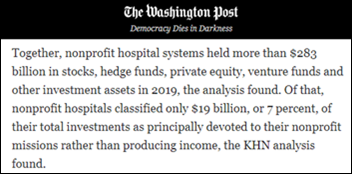
The Washington Post describes what can happen when non-profit hospitals “experiment as venture capitalists” via technology investment, describing the $12 million spent by Cone Health (NC) to successfully develop diabetes management app Wellsmith. The health system shut the startup company down because its product wasn’t competitive and its success at keeping people healthy would have jeopardized the health system’s predominantly fee-for-service revenue. Former Wellsmith CEO Jeanne Teshler lists problems with having a health system as its key investor:
Cone was not willing to be a customer of Wellsmith because only a minority of its patients were covered by value-based care such as Medicare Advantage and ACOs and thus Cone could not bill insurers for the service.
Patients had to purchase home devices that weren’t covered by insurance.
Wellsmith released a software update that was a “dismal failure.”
Cone was considering an ultimately failed merger and its financial commitment to Wellsmith was uncertain.
Health systems that have venture funds won’t buy products that are funded by other health systems.
Sales
UnityPoint Health (IA) will implement Premier’s PINC AI technology, supply chain services, and service line analytics, and will join its GPO.
Ellis Medicine (NY) offers patients access to virtual mental healthcare using technology from AptiHealth.
ChristianaCare (DE) joins Premier’s supply chain service network.
In the UAE, Medcare Hospitals & Medical Centres will implement InterSystems TrakCare as a Service in its four hospitals and 16 medical centers. Its first hospital is already live in Sharjah.
People
Cerner hires Lisa Collins, MBA (Accenture) as SVP of global services and Nithya Narasimhan (ADP) as SVP of client relationships in the East region.
L. Hayley Burgess, PharmD, MBA (HCA Healthcare) joins clinical surveillance company VigiLanz as chief clinical officer.
Robert Millette, MBA (Lee Health) joins Integrated Care Solutions as VP of delivery innovation.
Cantata Health Solutions names Scott Anderson, MBA (Netsmart) SVP and GM of managed services and Adam Feldman (Qualifacts) SVP of sales.
Symplr hires Kristin Russel, MBA, MPA as chief marketing officer.
Announcements and Implementations
Qardio launches QardioDirect, a remote patient monitoring and telemedicine service for patients with chronic conditions.
Ciitizen announces GA of its Cures Gateway, software designed to help HIEs comply with medical records requests initiated by patients.
Children’s National Hospital (DC) earns URAC’s first pediatric hospital telehealth accreditation.
UnitedHealth’s Optum subsidiary revamps its Optum Store to add direct-to-consumer services such as virtual care and prescriptions for people without insurance, including offerings that will compete with investor-funded storefronts such as Ro and Hims.
Government and Politics
CMS has sent warning letters to 165 hospitals that haven’t posted their negotiated prices, although it has not issued fines. A patient advocacy group’s study found that 94% of hospitals haven’t complied and are theoretically liable for a fine of $300 per day, although CMS has suggested that the penalty isn’t enough and wants to increase it to $10 per bed per day for larger hospitals.
COVID-19
CDC numbers suggest that the predicted plateau in new COVID-19 cases has likely occurred and cases are beginning to trend down, although hospitalizations and deaths lag by weeks.
Texas orders five refrigerated mortuary trailers that will be staged from San Antonio. The state has 12,000 COVID-19 patients in hospitals which also contain the most pediatric COVID-19 patients of any state at 239.
A public health study in Canada finds that while teens are more likely than babies and toddlers to carry coronavirus into their homes, it’s the younger children who are more likely to spread it to other household members, probably because those children require more hands-on attention and cannot be isolated when they exhibit symptoms.
Hillsborough County, FL reports that 5,600 students and 300 employees were in isolation or quarantine as of Monday morning after just four days of school.
Other
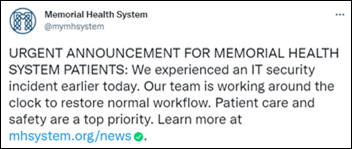
Memorial Health System works to recover from a ransomware attack early Sunday morning that caused it to shut down its IT systems, divert emergency patients, and cancel surgeries and radiology exams at its facilities in Ohio and West Virginia.
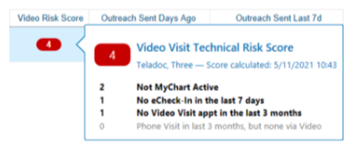
Johns Hopkins Medicine clinicians and IT staffers develop a Video Visit Technical Risk Score in Epic to determine which patients might be in need of technical support ahead of their virtual care appointments. The score, automatically calculated using EHR data, can be displayed as part of a user’s schedule view.
Weird News Andy challenges readers to come up with the most inappropriate healthcare acronyms and will judge submissions to select a winner. He kicks it off with HAPI (hospital-acquired pressure injury).
Sponsor Updates
Elsevier adds new features to its ClinicalKey medical resource search engine, including a new user interface, improved search functionality, and significant point-of-care content.
AdvancedMD publishes the 2021 edition of its “MACRAnyms” e-book.
The Empowered Patient Podcast features Capsule’s head of clinical informatics, John Zaleski.
Cerner releases a new podcast, “Supporting digital innovation in children’s healthcare.”
OptimizeRx partners with Demandbase to expand its direct-to-physician, account-based digital touchpoints for life sciences.
CHIME’s latest podcast features CHIME board member, boot camp faculty member, and healthcare leader George “Buddy” Hickman.
Dina will exhibit at the Rise West Medical Advantage Senior Leadership Conference August 30-September 2 in Colorado Springs.
EClinicalWorks releases a series of podcasts focused on “How Health Centers Nationwide are Improving Access to Care.”
Ellkay will exhibit at Epic UGM August 23-25 in Verona, WI.
The Network for Regional Healthcare Improvement and the Strategic Health Information Exchange Collaborative will merge to form a new HIE organization called Civitas Networks for Health.
Earlier this week, a friend shared a Health Affairs blog piece looking at the future of innovation at the Centers for Medicare and Medicaid Services. The blog is co-authored by Chiquita Brooks-LaSure, MPP, incoming administrator of the Centers for Medicare and Medicaid Services.
It starts by explaining the creation of the Center for Medicare and Medicaid Innovation, also known as the Innovation Center, as part of the 2010 Affordable Care Act. The primary role of the Center is to create movement towards a healthcare system in the US that revolves around value-based care, the core of which is reducing spending while delivering high quality care. The forces behind the creation of the Center tell a hard truth – that healthcare in the US is expensive and doesn’t always deliver high quality outcomes.
I enjoyed the summary of what has happened over the last several years. For some of us who live this day to day, you kind of lose the forest for the trees. I didn’t realize that there have been more than 50 alternative payment models launched. I can probably only think of a couple off the top of my head, so it would have been interesting to see a list of all of them. The authors describe having “taken stock of lessons learned” as they begin to map out value-based care plans for the next decade.
Looking at the past so we don’t continue to repeat our mistakes is already a good thing. I hope they looked beyond clinical and cost outcomes to also see what the impacts (positive or negative) have been on clinicians. It’s important to understand whether programs that achieve the stated goals promote a stable physician workforce or whether they become just another factor that drives good people to reduce their schedules or to leave medicine altogether.
They note that six models have created a statistically significant savings for Medicare and US taxpayers:
ACO Investment Model
Home Health Value-Based Purchasing Model
Medicare Care Choices Model
Maryland All-Payer Model
Pioneer ACO Model
Repetitive, Prior Authorization of Repetitive, Scheduled Non-Emergent Ambulance Transport Model
I had only heard of two of these and only had more than a passing familiarity with one, so am interested to learn about the rest of them.
The authors “explicitly acknowledge health equity as a central goal for this vision.” We’ve known about the challenges for medically underserved populations and areas for many decades now and I’m eager to hear how they plan to improve care delivery in those communities. They note six key takeaways from the lessons of history:
“The Innovation Center should make equity a centerpiece of every model.” This means going beyond Medicare and those organizations that have had the resources to participate and drawing in Medicaid, rural, and safety net providers.
“Offering too many models is overly complex, particularly when models overlap.” Apparently, there are 28 models running concurrently, which can create conflicting incentives as well as making it difficult for participants to figure out drivers and outcomes. They will focus on offering fewer models going forward.
“The Innovation Center needs to re-evaluate how it designs financial incentives in its models to ensure meaningful provider participation.” For most of the Meaningful Use period, my practice simply opted out. The burden to providers was far more than the penalty, so we took the penalty and moved forward. The authors admit that there have been challenges in testing some of the models because providers don’t join or opt out when they think they will lose money.
“Providers find it challenging to accept downside risk if they do not have the tools to enable and empower changes in care delivery.” One future goal is to have manageable levels of risk for providers as well as providing supports needed to help providers take on more risk.
“Challenges in setting financial benchmarks have undermined our models’ effectiveness.” They are looking at ways to modify the current risk adjustment methodology and to make sure that models aren’t leading to overpayment. I know that my colleagues will likely be excited about the former, but not so much the latter.
“Innovation Center models can define success as encouraging lasting transformation and a broader array of quality investments, rather than focusing solely on each individual model’s cost and quality improvements.” They plan to scale practices that work in models by adding them to other models, to Medicare, and to Medicaid.
They go on to say that “in order to deliver on the promise of putting people at the center of their care, we need a health system that meets people where they are, keeps people healthy and independent, and coordinates care seamlessly and holistically across settings.” That statement sounded suspiciously like everything I was taught in my family medicine residency training, and I remembered how enthusiastic and idealistic I was when I graduated. Those feelings were quickly beaten out of me as I grappled with the world of prior authorizations, difficulty getting my employer to allow me to spend what I needed to hire high-quality office staff, and the crush of trying to coordinate it all while seeing 30 patients a day.
I paused for a few minutes to reflect on that before I read the rest of the blog because I wanted to see what the Innovation Center was going to propose to counter the forces that drove me out of traditional primary care.
They have identified five strategic objectives:
“Drive Accountable Care.” They hope to reduce fragmentation by rewarding coordinated and team-based care the delivers high-quality outcomes. Accountable Care Organizations are a central part of this plan.
”Advance Health Equity.” Elimination of health disparities is a key goal, with one action being the active engagement of providers who have not historically participated in value-based care incentive programs. Another action is ensuring that application processes and eligibility criteria include organizations that care for disadvantaged populations. Partnership with Medicaid will be a key activity.
“Support Innovation.” They propose delivering tools that help close care gaps, including addressing mental health and social determinants of health. These tools may include access to real-time data to support providers, flexibility in rules, and looking at targeted approaches to impact specific populations.
“Address Affordability.” The goal is to not only lower spending for Medicare and Medicaid, but also to lower patients’ out of pocket costs. This may mean waiving cost-sharing for certain services, controlling drug prices, or reducing low-value care that is wasteful.
“Partner to Achieve System Transformation.” I love me some clinical transformation, but know that the devil will be in the details for this one. CMS knows that it needs partnership with not only Medicare and Medicaid but with patients, providers, payers, and community-based organizations. The people problem is often one of the most difficult to solve, so I wish them well.
It will certainly be interesting to see what the next decade brings, especially with the ongoing challenges from a global pandemic that shows no signs of stopping, a completely burned-out clinical workforce, and tip of the spear care delivery organizations that are stressed to the max. Many healthcare organizations are not ready to take on one more thing, especially when it puts more strain on the system. I’d be interested to see if readers have any insight or thoughts to offer.
Who’s ready for the next evolution of value-based care? Leave a comment or email me.























![image[3]_thumb](https://histalk2.com/wp-content/uploads/2021/08/image3_thumb.png "image[3]_thumb")



![image[7]_thumb](https://histalk2.com/wp-content/uploads/2021/08/image7_thumb.png "image[7]_thumb")
![image[33]_thumb](https://histalk2.com/wp-content/uploads/2021/08/image33_thumb.png "image[33]_thumb")





Great, thanks for getting "we are, we are, oh hoh, oh hoh" stuck in my head again: https://www.youtube.com/watch?v=K5LiUrezV6k