Recent Articles:

Morning Headlines 8/11/22

August 10, 2022 Headlines Comments Off on Morning Headlines 8/11/22

Biofourmis Raises Additional Funding from Intel Capital in Series D Extension and Names Top Healthcare Leaders to its Board

Intel Capital invests $20 million in analytics-powered virtual care company Biofourmis, extending its Series D round to a final $320 million.

Kansas City Medical Information Technology Company Agrees to Pay $1.8M to Resolve Racial Discrimination Alleged by US Department of Labor

Cerner will pay $1.86 million to 1,870 job applicants to resolve federal allegations that it discriminated in hiring black and Asian applicants between 2015 and 2019.

VHA Launches New Playbook Outlining Digital Health Care Needs For Patients

The Veterans Health Administration publishes a Digital Healthcare Playbook to help the private sector better understand what the VA wants in future healthcare technology systems and devices, and to serve as an internal review of its current software utilization.

Comments Off on Morning Headlines 8/11/22

Morning Headlines 8/10/22

August 9, 2022 Headlines Comments Off on Morning Headlines 8/10/22

Availity to Acquire Diameter Health, A Leader in Clinical Data Interoperability

Health information network management company Availity will acquire Diameter Health, which specializes in data optimization and interoperability, marking its second acquisition of the year.

CPSI Announces Second Quarter 2022 Results

CPSI announces Q2 results: revenue up 21%, EPS $0.21 versus $0.42, with shares down 15% in the past 12 months.

Tens of thousands of tablets VA distributed for telehealth appointments go unused

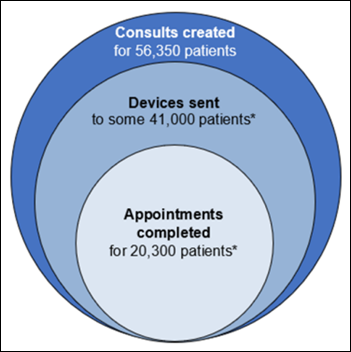
An audit of the Veterans Health Administration’s video connect program – budgeted at $14.5 million – finds that 51% of the 41,000 patients who were loaned tablets for telehealth appointments in 2021 never used them for that purpose.

Comments Off on Morning Headlines 8/10/22

News 8/10/22

August 9, 2022 News Comments Off on News 8/10/22

Top News

image

Health information network management company Availity will acquire Diameter Health, which specializes in data optimization and interoperability, marking its second acquisition of the year.

I interviewed Availity CEO Russ Thomas in January, and Diameter Health CEO Eric Rosow shortly thereafter.


Reader Comments

From Prime Mover: “Re: API fees. Here’s what I have seen in the industry.” Thanks for sending me this list in response to a previous reader’s comment:

  • EHR vendors. API fees are common, pricing models vary, and per-transaction fees are often assessed. Some vendors take a cut of revenue for publishing apps on their marketplace and this is usually on top of an annual membership fee. Vendors are more likely to make USCDI-compliant APIs available at little or no charge so as to not invite scrutiny over information blocking, but these come with a limited support.
  • Integration platforms, such as Redox, Ellkay, and self-service options like Jitterbit and MuleSoft. Their business model is exchanging data on behalf of a customer, so they charge for this, most often a fixed amount per connection (pulling demographics and appointment data from System A to System B is two connections). Per-user pricing is uncommon and volume-based pricing is quite rare. Some charge upfront platform fees.
  • Health data exchanges, such as Datavant, Moxe Health, and 1upHealth. Companies use APIs to digitize and automate manual workflows, with much of the focus on provider-to-payer connections such as Medicare risk adjustment and release of information. Usually the interoperability piece is included in the overall service provided.

HIStalk Announcements and Requests

HIMSS pulled out of Chicago years ago over customer-indifferent McCormick Place union members strong-arming exhibitors who dared plug in their own power strips or empty their own trash cans. I guess it got so bad that the convention center now provides a list of what exhibitors can do themselves, at least by full-time employees who have been on the job for six months (exhibiting company newbies and contractors apparently can’t be trusted). Exhibitor employees are allowed to set up and tear down booths, install signs and decorative items on the booth’s drapery and exhibitor table skirting, and to plug in and turn on AV equipment. HIMSS-specific exhibit hall rules include the usual prohibition on clowns, strolling through the hall wearing a sandwich board, and working a booth naked.


Webinars

None scheduled in the coming weeks. Previous webinars are on our YouTube channel. Contact Lorre to present your own.


Acquisitions, Funding, Business, and Stock

image

Netsmart acquires Zimmet Healthcare’s Core claims data analytics offering for skilled nursing facilities. Netsmart will add Core to its CareFabric platform for post-acute care providers looking to improve their value-based care performance.

CPSI announces Q2 results: revenue up 21%, EPS $0.21 versus $0.42. Shares are down 15% in the past 12 months versus the Nasdaq’s 16% drop, valuing the company at $447 million.


People

image

Erik Johnson (Verato) joins PatientIQ as VP of marketing.

image

Lehigh Valley Health Network (PA) names Maulik Purohit, MD (University Hospitals) chief health information officer.

image

Arcadia hires Chris D’Arcy (Liaison International) as chief human resources officer.

image image

Advata promotes Corinne Stroum to SVP / head of product and Jamie Snell to chief customer success officer.

image image

Health Catalyst names Melissa Welch, MD (InnovAge) chief medical officer and Edward Sheen, MD (Lumeris) SVP/ chief population health officer.

image

Randy Fusco (TEKsystems) joins Clearsense as CTO.


Sales

  • Magnolia Regional Health Center (MS) selects AMC Health’s remote patient monitoring and virtual care technology and services for its RPM program focused on congestive heart failure patients.

Announcements and Implementations

Adventist HealthCare (MD) implements Innovaccer’s cloud-based population health management technology.

image

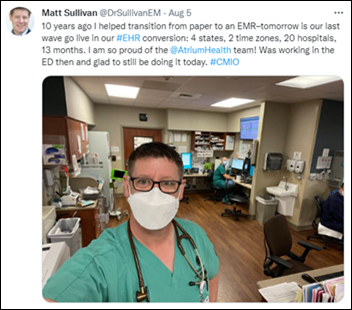
Atrium Health (NC) wraps up its system-wide conversion from Cerner to Epic.

image

MarinHealth (CA) goes live on Epic through a partnership with University of California, San Francisco Health.


Government and Politics

image

An audit of the Veterans Health Administration’s video connect program finds that 51% of the 41,000 patients who were loaned tablets for telehealth appointments in 2021 never used them for that purpose. VHA staff failed to collect 11,000 devices from patients who never scheduled a virtual appointment despite a requirement that devices be given back if appointments weren’t scheduled within 90 days of receipt. Auditors concluded that the program’s $14.5 million budget could have been used more effectively through better device monitoring, collection controls, and oversight.


Sponsor Updates

image

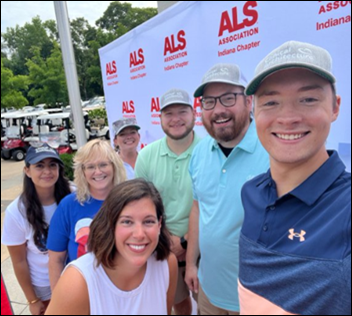
  • Clinical Architecture supports the ALS Association Indiana at the 10th Annual Bob Kravitz Golf Outing to Defeat ALS.
  • EClinicalWorks releases a new customer success story, “Transforming Care for Two Practices with Healow Insights.”
  • Wolters Kluwer Health and the American Journal of Nursing welcome Carl Kirton, DNP, RN as incoming editor-in-chief.
  • Sonifi Health will integrate Vitalchat’s telehealth software with its bedside patient engagement smart TV technology at a new pediatric hospital being built in Texas.
  • Ascom Americas expands its channel partner network in Canada with Canem Systems – National Technology and Services Group.
  • Azara Healthcare publishes a new customer success story, “MPCA Drives Clinical Quality Improvement Through DRVS Mapping & Data Validation Project.”
  • CarePort partners with The Hospital and Health system Association of Pennsylvania’s HAPevolve subsidiary to offer members access to its care coordination technology.
  • CHIME releases a new podcast, “CHIME 30th Anniversary Podcast: Change with Bill Spooner, 2006 Board Chair.”
  • Clearwater names Henry Gyambiby (KP Global IT Consulting) a consultant on its cybersecurity and risk consulting team.
  • Experity names Amy Amick (SPH Analytics) to its Board of Directors.
  • Wolters Kluwer Health publishes a new handbook, “Navigating the ICU: A Guide for Patients and Families.”

Blog Posts


Contacts

Mr. H, Lorre, Jenn, Dr. Jayne.
Get HIStalk updates.
Send news or rumors.
Contact us.

125x125_2nd_Circle

Comments Off on News 8/10/22

Morning Headlines 8/9/22

August 8, 2022 Headlines Comments Off on Morning Headlines 8/9/22

Netsmart Announces the Skilled Nursing Industry’s Only Data Analytics Solution with a Complete View of Claims, MDS, and Staffing

Netsmart acquires Zimmet Healthcare’s Core Analytics offering for skilled nursing facilities.

HHS Awards Nearly $90 Million to Community Health Centers to Advance Health Equity through Better Data

HHS awards nearly $90 million to 1,400 health centers across the country to help them improve data collection and reporting.

EirSystems Announces Close of Seed Financing Round to Advance Software for Preventing Prescription Abuse

Tennessee-based e-prescribing startup EirSystems secures seed funding in a round led by Solas BioVentures.

Comments Off on Morning Headlines 8/9/22

Curbside Consult with Dr. Jayne 8/8/22

August 8, 2022 Dr. Jayne 6 Comments

In my work with large health systems, some of the projects I most enjoy are those that involve patient-facing technology. In sophisticated organizations, this includes actually bringing patients and caregivers into the product management and development work so that you can ensure that you are developing a solution that meets their needs. A lot of great ideas don’t necessarily resonate in the real world and it’s important to find those disconnects earlier in the process so that the solution can be refined. Otherwise, there is a risk that it will flop when it’s released into the wild. I’ve certainly seen plenty of initiatives go that route.

Healthcare delivery organizations have been in a state of transition for several years as they try to move more care out of the hospital and into the home or other care delivery facilities. Many of these efforts make sense. Getting patients out of the hospital quicker reduces the risk of hospital-acquired infections as well as costs. Patients may recover better in familiar surroundings than they might in an institutional setting. There are numerous other factors and these approaches have been successful for many same-day procedures such as orthopedic surgeries. However, when thinking about these types of programs there is a presumption that patients have family who are not only available to assist but who have adequate health literacy, appropriate physical capabilities (strength, dexterity, etc.) but also the emotional fortitude to assist in caring for a loved one at home.

A friend sent over this piece that was published on LinkedIn, with which I have a love/hate relationship as far as content creation and dissemination. It’s great to be able to share information, but there are a lot of people out there who interpret what they see on social media as being authoritative without fully understanding the background of a given issue. There’s a danger in drawing conclusions from narrow write-ups without fully understanding them or their downstream impacts. I saw this behavior often when working with large health systems that would pounce on an idea that they saw float by regardless of whether it applied to their situation or not. Significant resources were spent researching, evaluating, and assessing before the executive who thought it was a great idea could be convinced otherwise.

The LinkedIn piece is from The Health Management Academy and talks about five barriers to scaling the hospital-at-home concept. It draws in readers by leading with the phrase “digitally-enabled home-based care models” and quickly connects interest in the topic to both the COVID pandemic and to CMS reimbursement allowances. It notes that programs are often small, which makes them somewhat unsustainable, and questions whether programs will be able to continue beyond the pandemic. Below are the barriers the article cites, as well as my comments:

  • Low patient enrollment. No surprises here, as patients have to be appropriately referred to the program, which requires time, effort, and coordination. Some organizations only allow patients who are in the emergency department to be referred, and others restrict patients to those who are already in an inpatient unit. This prevents other referrals which might be useful, for example, as an urgent care physician I would love to have referred patients with blood clots to such a program if they weren’t quite candidates to just manage it on their own yet didn’t really need a hospital admission to get started on blood thinners.
  • Staffing challenges. This is the universal challenge of all industries right now, from fast food to construction to healthcare. In addition to having healthcare skills appropriate to inpatient care, frontline workers in hospital-at-home programs need other skills, such as managing remote technology and being able to self-support. In talking with several inpatient nurses, they’d be reluctant to give up their current level of predictability for increased volatility and personal risk.
  • Provider support. Hospital-at-home workers have to be comfortable going into patients’ home environments, which sometimes have unfriendly living conditions, pets, and people. The article refers to this as “an uncontrolled setting,” and anyone who has ever done home care or rode along with EMS or the fire department knows what we’re talking about. This can be an extremely scary situation and there’s not a good way for those referring a patient for a program to know that Cousin Doug with severe uncontrolled mental illness also lives in the house, or that Aunt Julie has a handgun that she likes to leave on the end table.
  • Coordination of services. The article sums this up as transporting providers and equipment along with care coordination. Given the fact that hospital-at-home is often related to a relatively acute situation such as an Emergency Department visit or an inpatient hospitalization, quick and efficient coordination is needed. Having shared the patient experience when a close friend couldn’t get the appropriate durable medical equipment delivered to her home when her surgery had a three-month lead time, I’m not convinced of some organizations’ ability to handle this rapidly. It’s not just equipment, but other medical supplies and services like imaging, phlebotomy, pharmacy, and the care itself that all have to be coordinated effectively.
  • Reimbursement uncertainty. To me, this is the largest area of concern. Healthcare delivery organizations aren’t going to invest the resources to build the infrastructure to do all the things listed above if they aren’t convinced that they will be paid for their efforts in the future. Given the state of healthcare spending in the US and the fact that many of these programs are operating under a CMS waiver that provides payment equivalent to inpatient care, it’s unclear how much programs are willing to invest to keep the lights on let alone expand.

The piece the article missed, of course, is the patient piece. Do patients really want this service, or do they feel it’s just another way to get pushed out of the hospital before they are ready? Do they find value in the offering, or do they find it stressful? How do they feel about having outsiders in the home when there are stories every day of scams, theft, and abuse of patients by unscrupulous caretakers? Is the family ready to start delivering nursing and other care? Any health system administrator who is considering this needs to have firsthand exposure to what it’s like to help care for family at home, including assisting with feeding, mobility, toileting, managing surgical drains, and more. Unless a program is going to provide 24×7 support, these tasks will fall to family and friends, and some of them are not for the faint of heart.

What is your organization doing as far as hospital-at-home? How do you feel about it as a patient, and as a family member? Leave a comment or email me.

Email Dr. Jayne.

Morning Headlines 8/8/22

August 7, 2022 News 5 Comments

CVS Plans to Bid for Signify Health

CVS Health will reportedly make a bid to acquire value-based home care provider Signify Health, which has been exploring strategic alternatives.

Definitive Healthcare Reports Financial Results for Second Quarter Fiscal Year 2022

Healthcare commercial intelligence vendor Definitive Healthcare reports Q2 results: revenue up 37%, EPS –$0.05, beating expectations for both.

ScanSTAT Technologies expands health information management services with acquisition of Georgia-based ResolveROI

Health information management vendor ScanSTAT acquires release-of-information company Resolve ROI for an undisclosed amount.

VA Cerner EHR system goes down for over 4 hours due to patient database corruption issue

The VA’s Cerner system goes down for several hours due to database corruption.

Monday Morning Update 8/8/22

August 7, 2022 News 1 Comment

Top News

image

From the Allscripts earnings call:

  • CEO Richard Poulton says the company’s potential acquisitions will be chosen to avoid past accusations of the company being “Frankenstein, because things didn’t really work together very well.”
  • Acquisitions will focus more on payer and life sciences than providers, but Allscripts is interested in revenue cycle and getting providers paid faster.
  • Asked by an analyst about a publicly traded competitor that is predicting a higher growth rate in the provider space, Poulton responded that “talk is cheap” and it’s laughable when someone predicts that their margins will double.
  • Asked about existing clients whose contracts cover products that were sold to Constellation as well as some that stayed with Allscripts, Poulton says overlap exists FollowMyHealth and with practice management systems used by large physician practices. He says that the contracts stayed with whichever business owns the products, and where a contract covers multiple solutions that were split between the companies, they will be served by both companies until the contract expires. He added that FollowMyHealth “is not a big piece of the provider business at all.”

Reader Comments

From Jimbo: “Re: API fees. People used to talk a lot about how vendors who send or receive data on behalf of clients would charge for that service. I’m wondering from your readers which ones do?” That was a big deal early on, as some vendors were using a “how much can we make from it” approach to interoperability. Anyone care to weigh in on API-related charges?


HIStalk Announcements and Requests

image

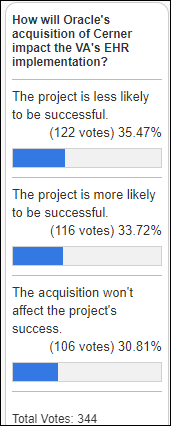
Inconclusiveness is evident among poll respondents who weighed in on how Oracle’s acquisition of Cerner will impact the VA’s implementation.

New poll to your right or here, repeating a poll question I asked three years ago:  For those over 50, what is the #1 thing you wish you had done differently?

I’m interested in the dynamic of being laid off via a Zoom call from your home office. I think I would rather accept the corporate coup de grace remotely and in private versus being marched out of the office under the shocked but relieved gaze of co-workers. Those affected are surely stunned by the impersonal, scripted process regardless of its service location, but in my experience from being on both sides of layoffs, it’s best to get it done quickly and consistently and then send the person home so they can react in their own way elsewhere. I recall asking hospital security to be unobtrusively nearby when we were telling a bunch of our IT folks that their services were no longer needed, which seemed kind of slimy when it involves people you’ve known for years, but you never know how people will react. Then comes the classic Kubler-Ross stages of grief: (a) it surely was a mistake that will be fixed or customers and co-workers will rise in protest to override my dismissal; (b) management is clueless in failing to value my contribution to this train wreck of a company; (c) maybe I should have seen it coming, changed teams, or changed behavior less-valuable people got to keep their jobs; (d) realizing that the “please come back” call isn’t coming and the team and/or company is running fine; and finally (e) accepting what happened as unchangeable and figuring out how to move on. It’s dangerous deriving so much of your identity from a job that someone else can end with an Excel formula.


Thanks to the following companies that recently supported HIStalk. Click a logo for more information.

image
image
image
image
image
image
image
image
image
image
image
image
image


Webinars

August 10 (Wednesday) 12:30 ET. “Navigating healthcare’s data quality challenge: An actionable discussion.” Sponsor: Intelligent Medical Objects. Presenters: Alastair Allen, CTO, Better; Dale Sanders, chief strategy officer, IMO. Achieving a consolidated patient record is challenging in an environment of hospital M&A, where EHR rip-and-replace projects are expensive and HIEs and FHIR connectivity haven’t significantly accelerated progress. The underlying problem is that systems don’t speak the same language due to a lack of comprehensive, persistent clinical terminology and data standards adoption. UK-based Better offers a unique, FHIR-based approach to integrating disparate EHR data. The presenters will explore how to improve clinical data quality and how interoperable information can be used to support patient safety, reimbursement, and population health management.

Previous webinars are on our YouTube channel. Contact Lorre to present your own.


Acquisitions, Funding, Business, and Stock

image

The Wall Street Journal reports that value-based home care provider Signify Health, which has been exploring strategic alternatives, will likely receive an acquisition bid from CVS Health. The company’s NYSE share price values it at $4.7 billion.

image

Healthcare commercial intelligence vendor Definitive Healthcare reports Q2 results: revenue up 37%, EPS –$0.05, beating expectations for both. The company says it will continue to make acquisitions, expecting to close one or two per year. DH shares dropped 16% Friday following the announcement. They jumped 40% on their first day of trading in September 2021, but have since lost 43% of their value versus the Nasdaq’s 16% loss, valuing the company at $2.4 billion.


People

image image

Spok promotes Mike Wallace to president / COO and Calvin Rice, CPA to CFO.


Government and Politics

image

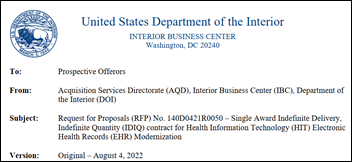
The federal government posts an earlier-than-expected RFP for implementation of an EHR for the Indian Health Service.

The VA’s Cerner system goes down for several hours due to database corruption. The outage reportedly also affected DoD and Coast Guard sites.


Privacy and Security

The UK’s NHS 111 non-emergency call line is affected by a cyberattack on its systems, causing delays in dispatching ambulances, booking appointments, obtaining referrals, and having emergency prescriptions filled. The affected patient management, electronic patient record, and care management are operated by vendor Advanced.


Other

image

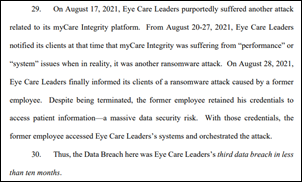
Customers of NC-based eye care practice EHR/PM vendor Eye Care Leaders accuse the company of concealing its ransomware attacks in 2021 that included a week-long outage, claiming that the vendor ignored IT requests, threatened them legally, was unable to restore current practice data because it backed its systems up only weekly, and may have failed to file the required breach notice with OCR. They also claim that the company didn’t reduce their next month’s subscription fee despite failing to meet their uptime service level agreement. Several practices have signed on to a proposed class action lawsuit to break their contracts, get their data, and seek payment for damages. CEO Roni Amiel’s experience includes stints as CIO / CISO of NYC Department of Health and Mental Hygiene and Blythedale Children’s Hospital.


Sponsor Updates

clip_image001

  • West Monroe staff volunteer with Boys Hope Girls Hope of Colorado to offer students career pathways insight, interview tips, and college internships.
  • EClinicalWorks releases a new podcast, “Improving Patient Safety by Avoiding Medical Abbreviations.”
  • Pivot Point Consulting promotes Kelly Robinson to senior operations specialist.
  • Relatient releases a new Dash Talk Podcast, “Activating Patients Through Targeted Messaging and Segmentation: A One Pediatrics Case Study.”
  • Surescripts releases a new podcast, “There’s a Better Way: Smart Talk on Healthcare and Technology, “The Nightmare & Silver Lining: Walgreens’ Tasha Polster on the Impact of COVID-19.”
  • Talkdesk CEO Tiago Paiva is recognized as the UC Leader of the Year during the UC Awards presented by UC Today.
  • Zynx Health partners with clinical data and intelligence company LogicStream Health to deliver advanced performance improvement capabilities to health systems.

Blog Posts


Contacts

Mr. H, Lorre, Jenn, Dr. Jayne.
Get HIStalk updates.
Send news or rumors.
Contact us.

125x125_2nd_Circle

Morning Headlines 8/5/22

August 4, 2022 Headlines Comments Off on Morning Headlines 8/5/22

WVU Medicine’s partnership with DHS is ending

Davis Health System (WV) and WVU Health will end their partnership due to Davis Health’s decision to implement Cerner, rather than adopt WVU Health’s cost-prohibitive Epic system.

Allscripts Announces Second Quarter of 2022 Results

Allscripts announces Q2 results: revenue up 7%, adjusted EPS $0.18 versus $0.18, beat revenue expectations, but falling short on earnings.

Atropos Health Announces $14M Series A, Taps Co-founder as CEO

Atropos Health, which offers a digital consultation service for providers, raises $14 million in a Series A funding round.

Veritas completes merger of RCM firms Coronis and MiraMed

Veritas Capital merges recently acquired RCM vendors Coronis and MiraMed Global Services to offer providers end-to-end RCM software and services.

Comments Off on Morning Headlines 8/5/22

News 8/5/22

August 4, 2022 News Comments Off on News 8/5/22

Top News

image

Davis Health System (WV) and WVU Health will end their partnership due to a planned change in EHR vendors.

DHS announced in February 2022 that it will implement Cerner under the CommunityWorks model, saying that while Epic and Cerner have similar functionality, Epic is unaffordable even when provided through WVU.

DHS says WVU notified it immediately after it announced its EHR decision that it was ending the clinical affiliation due to lack of an integrated system.

A DHS VP says, “It was a substantial difference of millions of dollars … we made the decision to go with Cerner, which will still speak to doctors at WVU or anywhere else in the state, it may just take an extra click … We went back to them and told them we would consider canceling our contract with Cerner if they could give us a new price that was more acceptable to our administration and the board. They said no.”


Reader Comments

From Allaboutlabs: “Re: Epic. Are they searching for a lab ordering partner? There has been some recent activity on genetic testing and EMR integration (Epic and Myriad, Meditech).”

From Bonhomme Richard: “Re: Senior Helpers. I ran across this wild podcast from the spring.” The CEO of home care franchise operator Senior Helpers, which was acquired last year by Advocate Aurora Enterprises, says that home care and personal care companies aren’t data driven because they aren’t paid by Medicare and therefore don’t have outcomes or claims information, placing them at a disadvantage now that Medicare Advantage insurers are starting to pay for such services. The company has developed an “autonomy score” that predicts readmissions and ED visits and is developing ways to prove the cost savings that they provide in preventing falls, encouraging medication adherence, and preventing hospital encounters.


HIStalk Announcements and Requests

Carequality Executive Director Alan Swenson clarified some points from my Monday news of updates to its Carequality Connected Agreement that will allow federal agencies to participate: (a) the updated language was in its general CCA, not anything specific to EHealth Exchange; (b) Carequality has “implementers” rather than “members”; and (c) Carequality is an independent non-profit organization that operates under a management services agreement with The Sequoia Project, which created the initiative but is no longer its parent.

My LinkedIn is awash in “I’ve been laid off and need a job” posts, but what’s interesting is how many of those users publicly thank their former employer for the opportunity they provided (until they didn’t). I understand the need to avoid communicating bitterness or despair while trying to land a new job, but that could be done equally graciously by not referencing the former employer at all, especially since it’s plain to see on the job history. I would find it hard to thank my corporate executioner unless they dispatched me with atypical grace or empathy, but I’ll side with the job-seekers who would gain little from publicly torching a company they didn’t leave until forced.


Webinars

August 10 (Wednesday) 12:30 ET. “Navigating healthcare’s data quality challenge: An actionable discussion.” Sponsor: Intelligent Medical Objects. Presenters: Alastair Allen, CTO, Better; Dale Sanders, chief strategy officer, IMO. Achieving a consolidated patient record is challenging in an environment of hospital M&A, where EHR rip-and-replace projects are expensive and HIEs and FHIR connectivity haven’t significantly accelerated progress. The underlying problem is that systems don’t speak the same language due to a lack of comprehensive, persistent clinical terminology and data standards adoption. UK-based Better offers a unique, FHIR-based approach to integrating disparate EHR data. The presenters will explore how to improve clinical data quality and how interoperable information can be used to support patient safety, reimbursement, and population health management.

Previous webinars are on our YouTube channel. Contact Lorre to present your own.


Acquisitions, Funding, Business, and Stock

image

Allscripts announces Q2 results: revenue up 7%, adjusted EPS $0.18 versus $0.18, nearly all of those numbers attributed to its Veradigm business since it has sold everything else. Revenue beat Wall Street expectations, but earnings fell short.

CVS Health says in its earnings call that it will expand its services in primary, care, provider enablement, and home health, adding that it is already the country’s largest provider of retail health services with its MinuteClinics. CVS adds that “we can’t be in primary care without M&A” that will involve companies with a strong management team, strong technology, and the ability to scale, with a deal expected by the end of the year. It will emphasize value and consumer experience in offering virtual care and using its MinuteClinics and pharmacists as local access points. CVS passed on the chance to acquire primary care chain One Medical, which then accepted a $3.9 billion offer from Amazon. CVS has previously told investors that it hopes to own or manage up to 350 primary care clinics by the end of 2024, with a preference for practices that have experience in value-based care.
image

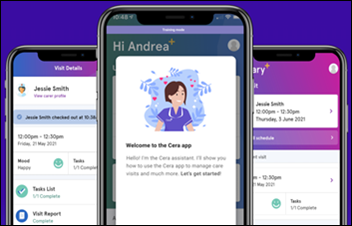
London-based Cera – which offers remote patient monitoring, homecare visits, and telehealth — raises a $320 million funding round.

image

Atropos Health, which offers a digital consultation service for providers, raises $14 million in a Series A funding round and names Brigham Hyde, PhD as CEO. The company says it solves the “evidence gap” via a publication-grade, just-in-time summary of real-world evidence that is extracted from millions of de-identified patient encounters.


Sales

  • Stanford Medicine will study COVID-19 health outcomes using Komodo Health’s Sentinel application, AI analytics, and de-identified patient data.
  • The Iowa Board of Pharmacy uses Bamboo Health’s PMP Gateway solution to integrated the state’s prescription monitoring program with provider EHRs.

People
image

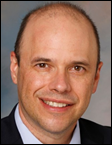
The VA names David Massaro, MD, MBA, MS as the functional champion of its Oracle Cerner implementation, on detail from the VHA’s Office of Health Informatics.

image

Therapy Brands hires Jeff Shoreman (Magnitude Software) as CEO.

image

Bravado Health promotes Mallory Taylor to CEO.

image image image image

Edifecs hires Raymond Bonnett, MBA (NextGen Healthcare) as VP of professional services, Mark Filiault (Diagnostic Robotics) as VP of payer sales, Chip Acton (Zipari) as VP of solution consulting, and Brian Hanley, MPAff (Nava) as VP of public sector sales.
image

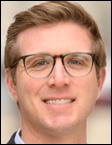
Kyle Swarts (Curation Health) joins AiHealth as SVP of growth and marketing.

image

Megan Schmidt (Monarch Medical Technologies) joins Ellkay as VP of product management.


Announcements and Implementations

The Q3 trends report by Pivot Point Consulting, a Vaco Company finds that venture funding is down 40% so far this year versus last year; no digital health IPOs have occurred; and easing of virtual care red tape such as interstate provider credentialing is scheduled to end in February.


Sponsor Updates

  • Bluestream Health announces that its technology powers New York State’s COVID-19 “Test to Treat” program.
  • ChartSpan announces a partnership with group purchasing organization Health Resource Services.
  • Experity publishes a new e-book, “Learn How Successful Urgent Cares Make Business Decisions.”
  • Donations from FDB help fund National Council for Prescription Drug Programs Foundation grants of $295,000, which help to fund research dedicated to enhancing patient safety, expanding patient access to care, and expanding the role and value of the pharmacist.
  • Wolters Kluwer Health donates clinical decision support tools including UpToDate, Lexicomp, and Lippincott Procedures to Mercy Ships, a humanitarian organization that operates two floating hospitals for underprivileged populations.
  • HCTec supports Aspirus Health as a sponsor of its 2022 Golf Classic.
  • Loyal earns SOC 2 Type II certification.
  • Healthcare IT Leaders is ranked among the largest staffing firms in the US, according to Staffing Industry Analysts.
  • Intrado names Tyler Remund (Sanford Health) senior product manager.

Blog Posts

Resources: Consulting Engagement Request for Information, Sponsor Guide.


Contacts

Mr. H, Lorre, Jenn, Dr. Jayne.
Get HIStalk updates.
Send news or rumors.
Contact us.

125x125_2nd_Circle

Comments Off on News 8/5/22
EPtalk by Dr. Jayne 8/4/22
August 4, 2022 Dr. Jayne 1 Comment
clip_image002 

Some days are more challenging than others when it comes to finding healthcare IT topics worthy of blogging about, but this week brought plenty of interesting and/or entertaining content to my door. In the category of “hospitals behaving badly,” we have Nebraska’s Bryan, which recently updated its dress code policy. The purpose of the policy change was to remove restrictions on hair colors, but it was delivered with additional commentary regarding “messy buns,” including pictures of rogue hairstyles. Social media is now alive with the hashtag #showmeyourbuns along with plenty of comments about hospitals worrying about the wrong things while they’re struggling to retain staff members. I share my own messy bun pic in solidarity. And yes, those are cocktail picks holding it together.

clip_image004

Also on my list is HLTH, otherwise known as spammiest conference ever. I thought HIMSS was bad with the volume of email it generates, but since I registered for HLTH, it feels like I have something from them every day. Do I really care who the first 200 sponsors to register are, or how great HLTH thinks its hosted buyer program is? Why is every other email focused on topics related to women? What about other groups that are inequitably served by our healthcare delivery systems, such as minorities, children, or the elderly? To be honest, it feels like pandering, and I’ve started keeping track. I haven’t attended previously, but I’m already tired of the conference hyping itself. You already have my money (and a fair amount of it, at that), so dial it down, already.

CMS is looking for public input on improving Medicare Advantage programs. The organization wants to understand how programs are working for Medicare beneficiaries as well as to understand whether the programs are improving outcomes and decreasing costs. For those not familiar with the programs, Medicare Advantage is also sometimes referred to as “Medicare Part C” and involves contracting with private insurance providers that typically offer not only the traditional Medicare benefits, but also coverage such as vision or dental. Most of them also offer prescription drug coverage (Medicare Part D). In general, they function similar to HMO programs with narrow networks in an effort to better control costs. Comments are encouraged from insurance plans, providers, beneficiaries, patient advocates, states, employers, unions, and others who are stakeholders.

I ran across several articles about telehealth services for mental health, and nearly all of them mentioned the shortage of behavioral health therapists, counselors, social workers, and case managers. One article had a profound headline: “Want to Keep People Working in Mental Health? Pay Them More $$, Experts Say.” One expert cited in the piece stated it would take a $13 increase in hourly wages to keep people from leaving the field. She notes the challenges of the new 988 national suicide prevention hotline in that states have to figure out how to fund it. She’s been able to hire less than half the staff she needs and comments that her crisis center is competing with retail and entertainment employers for available workers who often gravitate to lower-stress, higher-paid positions.

The article notes the wide disparity in access to psychiatrists as an example of the workforce challenges, with New York state having 612 psychiatrists per 100,000 people where Idaho might have one psychiatrist for the same population. Other factors causing workforce challenges include greater awareness of the need for mental health services as well as increased numbers of referrals for care. One of my colleagues recently referred an adolescent to the emergency department for suicidal thoughts, and after 16 hours, the patient still hadn’t received a psychiatric assessment. Ultimately the family left the emergency department without being seen after their primary care physician crowdsourced a same-day psychiatric referral on Facebook. It shouldn’t be that way, but it is, and most people are unaware how poorly our systems are running.

There’s also the matter of escalating abuse and violence against hospital staff. The death of a South Carolina hospital mental health technician was recently ruled a homicide as the technician had been kicked by a patient while staff was trying to restrain her. The staffer, Kevin Robinson, had worked at the facility for 11 years and was only 40 years old. Incidents like this are truly tragic and when young people hear about them, it’s no surprise they’re not gravitating towards jobs in the field.

Last but not least, I spent some time with my parents this week and received a crash course in “patient experience with the local Veterans Affairs health care clinic.” Due to flooding in the area, my dad called the clinic to make sure that the staff was able to make it in. The reply he received was “oh, we’re here, come on in, baby,” which made both him and my mom laugh. The staff at his local clinic is outstanding and the veterans are treated with the care they deserve. The information systems they work with are challenging at times, though, and apparently between his last visit and this one he somehow underwent a religious conversion in the EHR without requesting an update. He was surprised at how much time the staff spent with him going through a variety of screening instruments and taking a detailed history, a much longer duration than the staff at his non-VA primary care office has ever spent with him. I reassured him that it was a good thing they’re doing things like screening for suicide risk and fall risk.

They made sure he had instructions for accessing the patient portal and encouraged him to sign up. He’s proficient with MyChart and other online services, so was surprised that it ended up taking several hours to get signed up for the VA’s portal. Part of that was due to authentication and identify proofing. It was interesting to hear a non-informaticist’s explanation of the process. When he was finally able to access the system, he immediately pulled up his visit note, which was a whopping 49 pages. He thought the view / download capabilities were cool and it was nice to see how a patient perceives something like View / Download / Transmit that most clinical informaticists take for granted. His VA has not yet implemented Cerner, so I’ll have to keep an eye out for when that transition occurs so I can see how it goes from the patient perspective.

What topics in healthcare or healthcare IT caught your eye this week? How do you feel about messy buns in the workplace? Leave a comment or email me.

Email Dr. Jayne.

Morning Headlines 8/4/22

August 3, 2022 Headlines Comments Off on Morning Headlines 8/4/22

Homeward Secures $50 Million in Series B Funding to Improve Access to High-Quality Healthcare in Rural Communities

Rural hybrid care company Homeward raises $50 million in a Series B funding round, bringing its total raised to $70 million.

CareTrack Health Secures $2.5 Million Investment from Hybrid Capital Partners

Patient adherence software vendor CareTrack secures $2.5 million from Hybrid Capital Partners.

Athenahealth Implements DrFirst’s Digital Engagement Solution to Encourage Patients to Follow Prescribed Treatment Plans

Athenahealth integrates DrFirst’s RxInform patient medication notification software with its EHR to improve medication adherence.

Comments Off on Morning Headlines 8/4/22

Morning Headlines 8/3/22

August 2, 2022 Headlines Comments Off on Morning Headlines 8/3/22

Lyniate Merges with CareCom, Further Extending Capabilities of Interoperability Leader

Lyniate acquires Denmark-based clinical terminology management vendor CareCom.

Hawley Calls for FTC Review of Amazon’s One Medical Acquisition

Sen. Josh Hawley (R-MO) asks the FTC to review Amazon’s planned acquisition of One Medical, which he says gives Amazon too much power to push non-prescription blood pressure medications at Whole Foods that are based on One Medical patient data.

VA names functional champion for electronic health record modernization program

The VA tasks David Massaro, MD – formerly an executive within the VHA’s Office of Health Informatics – with coordinating the development and implementation of the agency’s EHR modernization program across its offices.

Comments Off on Morning Headlines 8/3/22

News 8/3/22

August 2, 2022 News 5 Comments

Top News

image

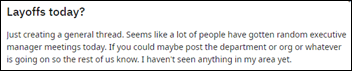
Oracle lays off staff in its marketing and customer experience divisions. Some Oracle Cerner employees also appear to be affected, according to this Reddit thread sent over by a reader, which includes rumors of the departure of several former high-level Cerner executives.

Oracle is pursing $1 billion in annual compensation savings, which probably means the loss of 5,000 to 10,000 jobs of its 140,000.


Webinars

August 10 (Wednesday) 12:30 ET. “Navigating healthcare’s data quality challenge: An actionable discussion.” Sponsor: Intelligent Medical Objects. Presenters: Alastair Allen, CTO, Better; Dale Sanders, chief strategy officer, IMO. Achieving a consolidated patient record is challenging in an environment of hospital M&A, where EHR rip-and-replace projects are expensive and HIEs and FHIR connectivity haven’t significantly accelerated progress. The underlying problem is that systems don’t speak the same language due to a lack of comprehensive, persistent clinical terminology and data standards adoption. UK-based Better offers a unique, FHIR-based approach to integrating disparate EHR data. The presenters will explore how to improve clinical data quality and how interoperable information can be used to support patient safety, reimbursement, and population health management.

Previous webinars are on our YouTube channel. Contact Lorre to present your own.


Acquisitions, Funding, Business, and Stock

image

Lyniate acquires Denmark-based clinical terminology management vendor CareCom. It’s the health data integration company’s second acquisition of the year, having purchased patient identity management company NextGate in March.

Business Insider describes how weight loss startup Calibrate uses technology not only to scale its business growth, but also to scale its business cutbacks, but without the empathy and support it claims to offer customers. The company laid off 150 employees, some of whom had just started their jobs the same week, via a two-minute webinar for which they were given 30 minutes notice. Calbrate’s subscribers pay $138 per month to get a prescription for GLP-1 weight loss drugs such as semaglutide along with virtual coaching, then they or their insurance pay hundreds of dollars each month for the drug itself.

image

Dandelion Health launches a platform by which health systems can sell de-identified patient data to life sciences companies to train their AI systems, with its first two members being Sharp HealthCare and Sanford Health.


Sales

  • Gaylord Specialty Healthcare (CT) selects Meditech Expanse.
  • Valley Health (VA) will implement Epic in its own instance instead of through Inova Health System in a 16-month, $50 million project.

People

image

Scott Raymond, MHA, RN (NetApp) is named chief information and innovation officer of Nebraska Medicine.

image

Northwell promotes Sophy Lu to SVP/CIO.

image

Brady Thomas (Specialized Bicycle Components) returns to Divurgent as chief of staff.

image

Iodine Software hires Priti Shah, MBA (Finvi) as chief product officer.

image

Cardinal Health promotes Michelle Greene, MS to CIO.

image

Steven Hendrick (Huron) rejoins Healthlink Advisors as VP.

image

Michael Ruffino, MBA (Hillrom) joins About as VP of health system partnerships.

image

Industry long-timer Simon Hawken, who led US and European sales for Merative (formerly IBM Watson Health), died July 25.


Announcements and Implementations

A study of 2,000 Ascension employees finds that adherence to organizational COVID-19 policies improved by 4.9% in the two-week study period when they were texted a reserved date for vaccination using the Relatient system, although no difference was observed from the control group once the vaccination deadline was reached.


Government and Politics

image

Carequality expands its interoperability framework to federal agencies via an update to its Carequality Connected Agreement that will allow those organizations to opt in to EHealth Exchange’s Carequality Bridge.

image

The 42nd Medical Group (AL) at Maxwell Air Force Base and 1st Special Operations Medical Group (FL) at Hurlburt Field will transition to Oracle Cerner-based MHS Genesis next month.

Sen. Josh Hawley (R-MO) asks the Federal Trade Commission to perform a high-priority review of Amazon’s planned acquisition of One Medical, which he says gives Amazon too much power to push non-prescription blood pressure medications at Whole Foods that are based on One Medical patient data (note to the Senator – I agree to some extent with your concerns, even though blood pressure medications are not sold without a prescription at Whole Foods or anywhere else in the US).


Other

The Washington Post obtains a confidential government review of a January 2021 report by the White House’s US Digital Service, which says the country’s organ transplant matching system — operated by the United Network for Organ Sharing, or UNOS — is outdated, unreliable, dependent on manual data entry, and of unknown security status. The report concludes that the non-profit UNOS, which developed the system 36 years ago, is a monopoly that should be broken up in separating its role as a system vendor from that of a transplant policy organization. The federal government pays $6.5 million annually to UNOS under an agreement that requires it to buy the system for $55 million if it switches vendors.

image

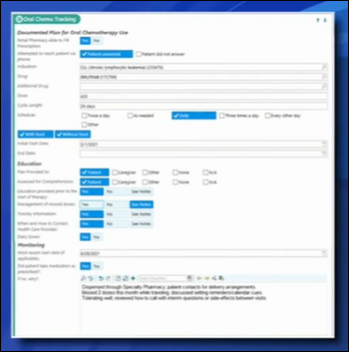
Fox Chase Cancer Center (PA) nurses Maria Market, RN and Allison Ward, RN, MSN create the Oral Chemo Tracker, an EHR-compatible smart form that helps clinicians better monitor oral chemotherapy. The pair developed the digital form last year after a review found that just 33% of oral chemotherapy patients had a documented plan, only 7% were assessed for adherence, and none had record of steps taken to address non-adherence.


Sponsor Updates

  • Wolters Kluwer Health makes Monkeypox content free to clinicians worldwide in response to the WHO-declared global health emergency.
  • Ascom expands its channel partner network in Canada to better serve acute care customers in the areas surrounding Montreal.
  • Bamboo Health names Amber Rogers proposal manager, Meredith Dougherty customer success manager, Whitney Minard implementation specialist, and Ibrahim Alabi associate product manager.
  • Oracle Cerner publishes a new client achievement, “Allies in opioid stewardship: Fort HealthCare implements high-risk alerts to combat epidemic.”
  • Loyal reaffirms its commitment to health data privacy and security with SOC 2 Type II certification.
  • Divurgent publishes a new client success story, “On-Demand Staffing.”
  • Ellkay earns Validated Data Stream Designation via the new NCQA Data Aggregator Validation program.
  • Well Health promotes Tyler Ledbetter to manager of enterprise sales development.

Blog Posts


Contacts

Mr. H, Lorre, Jenn, Dr. Jayne.
Get HIStalk updates.
Send news or rumors.
Contact us.

125x125_2nd_Circle

Morning Headlines 8/2/22

August 1, 2022 Headlines 1 Comment

Carequality Interoperability Framework Expands To Allow Federal Participation

Carequality expands its interoperability framework to allow the participation of federal agencies, courtesy of updated agreements with existing member EHealth Exchange.

PE-backed Zelis buys Spectrum’s Payer Compass

Healthcare payment company Zelis Healthcare acquires healthcare pricing solutions business Payer Compass, which gears its services toward employers and payers, for $180 million.

Oracle Cuts Workers in US Customer Experience Unit

Confirming earlier reports, Oracle lays off staff in its marketing and customer experience divisions as it buckles down on revitalizing Cerner’s work with the VA.

Curbside Consult with Dr. Jayne 8/1/22

August 1, 2022 Dr. Jayne 1 Comment

I’m always excited to read about technology that makes a difference at the point of care or improves the patient experience in a significant way. Two articles with solutions that fit the bill popped into my inbox this weekend.

The first discussed a smartphone app that can help identify skin cancer in older patients. Researchers from Stanford Medicine used an app called SkinIO after seeing that the COVID-19 pandemic had created barriers to patients accessing dermatology services. They noted that for older patients, a 37% decrease in visit volume correlated with a 23% decrease in skin cancer diagnoses.

The SkinIO app helps patients capture photos of concerning skin lesions and routes them to dermatologists. The app doesn’t try to make a diagnosis, but rather highlights lesions that meet certain criteria and lets the physicians know that additional review is advised. The study was small, occurring between November 2020 and July 2021. There were 27 patients enrolled, all of whom resided in senior living communities in the San Francisco area. Researchers visited the sites in person to collect skin images, using a dermatoscope to further evaluate high-risk lesions. The SkinIO app flagged 63% of the lesions as needing further attention, although researchers ruled out cancer in the majority of those submissions. However, three of the lesions were determined to be cancer, leading researchers to conclude that the app can be a helpful resource, although it’s not 100% accurate.

For the average patient who might be able to make a dermatology appointment, the app might not be as useful. But for a patient with mobility impairment or someone in a skilled nursing facility who might require additional services to support an in-person visit, it could be a useful adjunct. It could also be helpful for patients that have numerous moles and would benefit from additional evaluation beyond the traditional full-body skin exam they might receive once a year.

I checked out the SkinIO website to see how they were positioning the solution. I expected it to be marketed to dermatologists, and it is, with additional features such as automated mole-mapping and tracking of changes over time as key points. They’re also positioning it for health systems, perhaps to be integrated into primary care settings to allow greater referral of high-risk lesions to dermatologists within a given integrated delivery network. The angle I didn’t expect was marketing towards employers. At first glance, it might be a good employee wellness offering for industries where the conditions that contribute to skin cancer are present. Examples of workers who might benefit include those in the utility, landscaping, forestry, hospitality, entertainment, parks and recreation, and maritime industries. I’ve added the company to my watch list. It will be interesting to see how they do over the next couple of years.

The second article covered one of the industry’s buzzword topics: precision medicine. There are plenty of people excited about the topic. Being able to figure out the perfect therapy for a patient based on their genetic makeup or other measurable factors is exciting. Who wouldn’t want a treatment that was perfectly tailored for them? It sounds great, but actually making it a reality in our increasingly broken healthcare system is a challenge. For example, I recently implemented a new EHR that has some pretty exciting pharmacogenomic content. Unfortunately, the health system implementing it has not made the decision to store the results of pharmacogenomic testing as discrete data, rendering the content useless. The article talks about such patient-level data as the “fuel” that is needed to power the advanced analytics “engine” that drives precision medicine.

Once the organization makes the decision to incorporate discrete data, other factors need to be addressed, such as ensuring that clinicians know what changes to make based alerts that might appear, and that they trust the system to a level where they’re willing to take action. Clinicians will also need support using the tool, especially if incorporating it makes visits take longer due to the need for additional counseling and education for the patient. A physician who is already trying to cram a 30-minute visit into a 20-minute time slot is more likely to fall into old and familiar patterns rather than trying something new. If they need to research a proposed therapy or read deeper to understand what an alert is trying to tell them, then tailoring a treatment is likely to be a no-go.

The article notes this, and additional mentions that the complexity of our health care system is also a factor. Tailored treatments will also need to take into account patient factors such as symptoms, history, and preferences as well as societal factors such as access to care and impacts from social determinants of health. I’d go further to suggest that insurance coverage, treatment cost, and financial resources are likely to trump all other factors for the majority of patients in the US.

The article uses diabetes care as an example, where additional factors need to be added to precision medicine algorithms that are used for older adults — lived experience, support networks, current living situation, and more. For patients with cognitive impairment, limited social support, or other resource constraints, the situation is even more complex. In my experience, adding culture and personal / family values to the list of considerations is key.

I’ve seen patients flatly reject cost-effective treatments that are standard of care because they are perceived as being at odds with cultural practices or beliefs. I remember one family where the mother wouldn’t consent to a necessary surgery for her child because of a perception that the child would have to live with “mutilation.” Those are the elements that it will be challenging to add to an algorithm, because they’re not readily quantified and often only come to light in a crisis or through a longstanding physician-patient relationship, which is all to frequently the exception rather than the norm.

The authors propose that we need to go beyond the traditional thought of precision medicine as “the right treatment for the right patient at the right time” to incorporate the element of “each patient’s unique context.” I wholeheartedly agree and look forward to additional work as we continue to quantify those contextual factors in ways that allow us to take action at the point of care.

How is your organization approaching precision medicine? Leave a comment or email me.

Email Dr. Jayne.

Morning Headlines 8/1/22

July 31, 2022 Headlines 2 Comments

Sentry deal doubles Craneware revenue

Scotland-based charge master software vendor Craneware attributes its jump in revenue and earnings to its July 2021 acquisition of US-based pharmacy systems vendor Sentry Data Systems.

Spok Reports Second Quarter 2022 Results

Spok announces Q2 results: revenue down 6%, EPS $0.10 versus –$0.04.

Pediatric Medical Centers Improve the Efficiency of Investigator-Initiated, Multi-Site, Collaborative Research with TriNetX

TriNetX announces members of its Pediatric Collaboratory Network – Children’s National Hospital, WVU Medicine Children’s, Children’s Health, and Johns Hopkins All Children’s Hospital.

Monday Morning Update 8/1/22

July 31, 2022 News 2 Comments

Top News

image

Scotland-based charge master software vendor Craneware reports that revenue for the year to the end of June was up 119%. Earnings increased 85% to $50 million.

Much of the jump was attributed to the company’s July 2021 acquisition of US-based pharmacy systems vendor Sentry Data Systems for $345 million at current exchange rates.

Craneware’s entire customer base is in the US, where 40% of all hospitals are its customers.


Reader Comments

From Premature Oraculation: “Re: Oracle rewriting Cerner Millennium. Six to nine months, even to reach a vague beta stage as the Oracle exec says, is not doable.” Agreed. Pharmacy systems are complex, deeply interconnected, and likely to create patient harm if designed or tested poorly. Oracle has the technical expertise to rewrite Cerner pharmacy in less than a year, but they are promising a complete functional redesign of the VA’s version of it. That doesn’t sound like enough time to even convene a VA working group to represent its 171 medical centers, develop basic specifications, and create an approval and signoff structure in both organizations. Even a technical replatforming to modern architecture would be a major undertaking given the testing that would be required, and some argue that expending all that effort just to improve the performance of existing functionality would be a missed opportunity. Still,  give Oracle credit for boldly placing a stake in the ground even though I suspect the company is naively underestimating the complexity of hospital IT systems, especially one that touches patient care directly and that has so many integration points to other modules. Also, whether it makes sense to develop a VA-only custom system and how that would work with customer-facing development tools such as MPages and CCL. I don’t understand why a pharmacy rewrite is important since I haven’t seen publicized VA problems that it would resolve, unless Oracle is talking the ambulatory pharmacy module, which has had some integration issues reported. It’s also true that throwing armies of technologists at a huge development project, especially one that requires endless stakeholder input, doesn’t guarantee a faster or better result.


HIStalk Announcements and Requests

image

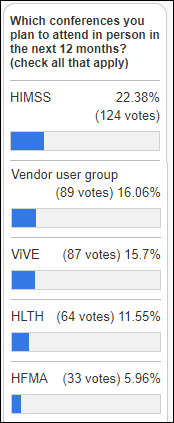
Poll respondents who plan to attend conferences in the next year are most likely to be found at HIMSS23, a vendor’s user group meeting, or ViVE.

New poll to your right or here: How will Oracle’s acquisition of Cerner impact the VA’s EHR implementation? I’m leaning toward “more likely to be successful” since the project’s challenges – excluding those of the VA itself — are mostly technical and Oracle brings a lot of engineering talent to the table.

Even so, it has been jarring to see how readily Oracle has thrown Cerner under the bus, blaming its lack of technical expertise and its dated architecture after spending $28 billion to buy the company. Maybe Oracle was caught off guard by catching so much congressional heat just weeks after the Cerner keys were handed over. Meanwhile, DoD’s Cerner project hasn’t had many publicized issues or hiccups, which could mean that (a) Leidos as the prime contractor is better than Cerner at keeping federal clients happy or at least quiet; (b) members of Congress aren’t as involved in DoD project oversight or using it to grandstand for their constituents; or (c) the VA’s needs are more complex and heavier on integration with 400,000 employees, care settings ranging from hospitals to private medical practices, and the need to convert data from VistA and other legacy systems going back decades. Project resets are a tough call, as the time spent trying to achieve perfection means losing momentum and enthusiasm. Health system implementations of Cerner, Epic, or anything else are hard enough without politicians dispatching VA OIG to find problems.

I’m pondering the lack of smart edits to date entry everywhere on the web, where the IT shame of Y2K elicited an overreaction of dumbing the computer down to accept only MMDDYYYY dates even when they will always be current or immediate future (like due date, ship date, appointment date, etc.) and it’s pretty obvious that entering “22” means “2022” and not “1922” or “2122.” It’s a contest of whether that wastes more time than clicking “accept cookies”


Webinars

August 10 (Wednesday) 12:30 ET. “Navigating healthcare’s data quality challenge: An actionable discussion.” Sponsor: Intelligent Medical Objects. Presenters: Alastair Allen, CTO, Better; Dale Sanders, chief strategy officer, IMO. Achieving a consolidated patient record is challenging in an environment of hospital M&A, where EHR rip-and-replace projects are expensive and HIEs and FHIR connectivity haven’t significantly accelerated progress. The underlying problem is that systems don’t speak the same language due to a lack of comprehensive, persistent clinical terminology and data standards adoption. UK-based Better offers a unique, FHIR-based approach to integrating disparate EHR data. The presenters will explore how to improve clinical data quality and how interoperable information can be used to support patient safety, reimbursement, and population health management.

Previous webinars are on our YouTube channel. Contact Lorre to present your own.


Acquisitions, Funding, Business, and Stock

Spok announces Q2 results: revenue down 6%, EPS $0.10 versus –$0.04.

A KHN report notes that two-thirds of hospices are now run as for-profit companies, often by private equity firms. They are paid a fixed daily rate  with little government quality oversight, encouraging them to cut spending and to seek patients who will live longer, such as those with dementia.


Sales

  • LifePoint Health will implement data and analytics solutions from Health Catalyst in its 93 hospitals.

People

image

Department of Veterans Affairs promotes Jonathan Nebeker, MD, MS to national CMIO and executive director of clinical informatics.


Announcements and Implementations

TriNetX announces members of its Pediatric Collaboratory Network – Children’s National Hospital, WVU Medicine Children’s, Children’s Health, and Johns Hopkins All Children’s Hospital.


Other

image

Bizarre: in Punjab, India, the health minister performs a surprise inspection of a medical college hospital, and finding a lack of cleanliness, orders the health sciences vice-chancellor to lie on a patient’s dirty bed. The 72-year-old hospital executive, who is a spinal surgeon and member of India’s medical regulatory body, resigned over the incident afterward, saying that obtaining a replacement mattress under the government’s laborious purchasing process takes nine months. Critics called the event “cheap theatrics” that will demoralize employees. I’m fascinated by the cultural dynamics that prevented the executive from refusing the demand of the health minister, a farmer who did not attend college and who has no healthcare experience.


Sponsor Updates

  • Optimum Healthcare IT names Krista Bramlage (Cross Country Healthcare) managed services business development executive.
  • Diameter Health releases a new infographic, “How Payers Can Get More ROI on Investments in Clinical Data.”
  • Surescripts releases a new episode of There’s a Better Way: Smart Talk on Healthcare and Technology Podcast, “How COVID-19 Has Upended Assumptions About Care.”
  • G2 names Symplr a leader in clinical communications and collaboration, and HIPAA-compliant messaging.

Blog Posts


Contacts

Mr. H, Lorre, Jenn, Dr. Jayne.
Get HIStalk updates.
Send news or rumors.
Contact us.

125x125_2nd_Circle

Text Ads


RECENT COMMENTS

  1. Merry Christmas and a Happy New Year to the HIStalk crowd. I wish you the joys of the season!

  2. "most people just go to Epic" that's a problem because then EPIC becomes a monopoly in healthcare, if it isn't…

  3. Only if CEO can post 'bail' which nowadays stands at 1B$ paid directly to the orange president or his family…

  4. I enjoy reading about the donations to Donor's Choice by HIStalk members. I also believe in the worthiness of Donor's…

Founding Sponsors


Platinum Sponsors


Gold Sponsors


RSS Webinars

  • An error has occurred, which probably means the feed is down. Try again later.