From HIMSS 4/6/09

April 7, 2009 News 9 Comments

006 Thanks to everyone who attended the reception tonight. Thanks, too, to our speakers and presenters (especially Jonathan Bush), our sash wearers, and the Ingenix folks who ran an efficient check-in process. Thanks also Ingenix and Ingenix Consulting for sponsoring the event. I hope you enjoyed it. It was an honor to have you. I’ll get the HISsies winners up soon.

It was a nice day today, actually, with very little snow and some welcome sunshine. Much better than I expected.

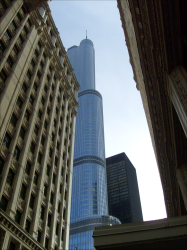
No expensive burger for dinner this time. I had a $5 combo from the McDonalds right by the Trump. I bet I’m the only person patronizing them back to back.

I was ruminating (always dangerous) on the shuttle bus today about all the newfound interest in HIT, but minimally focused on the patient compared to the profit. My conclusion: right or wrong, healthcare is set up under the business model, where allegedly nonprofit hospitals have to earn their keep by cranking out the bills and making shrewd business decisions (as someone told me the other day, some of the meanest executives they’ve known were in nonprofit healthcare management). So, vendors are clearly for-profit, no different than defense contractors. Looking back, one might conclude that the charity/compassion model might have made more sense, but that’s not what we have.

Here’s an interoperability idea: after hearing the cell phones of supposedly tech-savvy IT people constantly going off in the HIMSS education sessions, someone needs to invent a door sensor that automatically turns all phones to mute.
002 Best session of the day (and of the conference so far): Pat Skarulis of Memorial Sloan-Kettering, on developing an oncology order entry system for what I assume is Eclipsys Sunrise. It was quite cool and the way they handle study protocols, sequential orders, and lab alerts is sophisticated. I can see a lot of interest in how they did it since oncology OE is a tough nut to crack and MSKCC is pretty much an authority. Unlike all the other sessions I’ve been to, nobody left, even during the questions (however, the audience members asked atypically knowledgable and concise questions, so kudos to them).

Speaking of Eclipsys, they had a quite effective back-cover ad in HIMSS Daily Insider today, showing their CPOE penetration. A minor quibble is that both dimensions of the quadrant measured pretty much the same thing (number of hospitals and percent of hospitals) and didn’t show percent of orders or doctors, but it still got the message across.

I’m sure it’s just me, but people walking around with those blue-blinking Bluetooth cell phone earphones look like self-important douchebags.

Our new best friend Dennis Quaid gets some nice USA Today press, saying his new GI Joe: The Rise of the Cobra could be the next Independence Day.

Our rumor reporters had the right idea, but the wrong scope: Dell and Perot announce a partnership involving EMRs and hardware. That’s Dell’s second recent announcement: the eClinicalWorks offering through Sam’s Club was the first.

Noticed during the education sessions: nearly no one pronounces HIMSS Analytics correctly. Also, an increasingly large number of presenters use "sort of" as the modern equivalent of "um", such as "We built sort of a data warehouse, with sort of an essential item being real-time extraction."

More booth reviews:

  • RelayHealth’s was nice and cheery, also putting out their HIStalk sign.
  • Microsoft had throngs of people again for some reason (the coffee table thingie?)
  • Nextgen had what might be the largest and coolest booth (forgot to mention it yesterday). It was like the Hollywood Bowl.
  • QuadraMed had interesting stations for each product they were demonstrating.
  • Emdeon had cool arcs that spanned their booth, although the three booth mimes seemed to be causing passers-by to steer clear (people really dislike mimes and clowns who try to engage them in some kind of hijinks).
  • I made Inga push the Enovate-IT carts to show here how smooth and sexy they feel.
  • ONCHIT had a booth, believe it or not, staffed by some rather nice civil servants. They have a handout on how to start on the ARRA grants, which is their main reason for being on the show floor. They said Blumenthal won’t be starting until the end of the month. They also speculated that Rob Kolodner will retire instead of going back to the VA.
  • Eclipsys had a quite dramatic and open booth. I forgot to mention it yesterday.
  • A trend: I saw no two-level booths, so everybody went from traditional to ranch style.
  • It was nice to have the sun streaming in floor-to-ceiling windows over in the 3900 aisle.
  • BlackBerry had a cool booth (I think my AT&T Bold was drawn to it).
  • AT&T had the telemedicine setup that I always like running.
  • IBM’s booth wasn’t very big. Maybe they don’t have enough people left in this country to need a larger one.
  • Allscripts still had people packing the booth and spilling out into the aisle.
  • Greenway was demonstrating Prime Research.
  • Cumberland Consulting Group had a nice wood-floored booth and some friendly people who were starting up conversations with passers-by (an art that every vendor needs to perfect if you’re going to spend big money on a booth).
  • The folks at Legacy Data Access e-mailed pictures of their vintage, old-school Pong video game, kind of an early 80s version of the Wii or Xbox for all you youthful types I see all over the convention center.

Industry long-timer Scott MacKenzie (RelayHealth, Cerner) is named CEO of revenue cycle systems vendor Passport Health.

LMS Medical Systems of Canada sells McKesson its CALM OB suite. The company’s been in big trouble for some time, so it was a good move and McKesson gets what I think is probably a pretty good specialty system.

Medicity announces its Q1 business wins, raising its total HIE customer base to an astounding 700. Thirteen new Q1 customers are named, some of them very large. Someone asked me about them today and I was explaining how well they were doing, but I clearly didn’t know the half of it.

Sentillion-VergenceWizard

Sentillion is giving these little guys away in the booth, USB drives loaded with Advanced Authentication Solution for Direct Access to Cerner, Eclipsys, Epic, Mckesson and MEDITECH Applications. The company also announced a do-it-yourself tool for SSO and CCOW. I think I read somewhere that SSO was one of the top priorities of hospital CIOs trying to get clinical applications used, so I imagine these new announcements are timely.

Also announced: Allscripts Prenatal, a SaaS specialized EHR.

Dewey Howell of Design Clinicals gave me a demo of some new software the company is finishing up involving anticoagulant monitoring for physicians (adding to its medication reconciliation functions). I said last year that the med rec stuff was very cool – highly intuitive, functional, and taking full advantage of third-party drug databases. This is at least as cool. I’ve seen big-vendor applications sold for physician use (often meaning that some bean counters and programmers got together in 1985 to figure out how to capture charges without having to hire keypunch people) and this is how it should be done (and would be if it weren’t for the legacy baggage the big boys have to drag around).

From Blinded by the Snow Storm: "Re: Allscripts. Allscripts might need to do a bit more due diligence. dbMotion only has 2 clients in North America that have initiated a real project: 1) The Bronx RHIO, which currently has an RFP on the street to replace their core functionality, and 2) UPMC, which has an equity investment in dbMotion but has yet to announce any significant tangible benefit despite a multi-year relationship. Not exactly the type of track record that proves true interoperability." I think dbMotion’s long suit is having a ton of users, like entire countries in Europe, and a better product than the ones Misys and Allscripts brought to the table. I don’t think Allscripts will regret it.

From Glad I’m In Sunny CA: "Re: Voalte. Interesting product, but how many nurses do you know that carry iPhones?" Not many – yet. However, that’s because there has been little justification for them. Connect a nurse to a real-time alerting and communicating system using them and they suddenly look like a good deal given corporate rates and ease of use (not to mention their use as a recruiting tool).

From Ex-Broadlane: "Re: layoffs. Broadlane, the third largest GPO in the US, laid off 33 employees today, the majority being in the IT department. Ironically, the cuts come just when they are beginning to reinvent themselves as a ‘Technology enabled Service Company’ which is code for ‘we cannot scale as is and need technology’, hence the irony."

So HIMSS finally admits that both registrations and exhibitors were down. I wouldn’t say they necessarily were dishonest in bragging on the registration rate a few weeks ago, but it’s clear that they put the best spin on what they had to know was going to be the first drop in both critical categories in many years (maybe ever), most likely to stave off a last-minute bandwagon effect that would have made it worse. It would have been a complete disaster without the last-minute stimulus interest.

Speaking of positive spin, McKesson’s clinical systems are "gaining momentum," at least according to its PR people. The proof: five hospitals, some pretty obscure, bought products in 2007 (!) You would think McKesson had developed a lot of new, cutting edge clinical apps instead of continuing to sell the old, multi-heritage software bought years ago from Vanderbilt, HCS, etc. from the flowery wording. Nobody’s asking me, but here’s my advice: build something from scratch and finally get the "buyers, not builders" monkey off the corporate back and catch Cerner while they aren’t selling much either.

Susan Hagerty is named CEO and chairman of Noteworthy Medical Systems. She comes from CompuGROUP, the majority owner of Noteworthy. Larry Dolin stays on the board.

Nuance makes a series of HIMSS announcements: 25 new healthcare customers, a Dragon EHR certification program, and a preview of Enterprise Workstation Version 8.

E-mail me.


HERtalk by Inga

It’s Monday afternoon and still snowing in Chicago. So far today I have had a chance to sit in a few sessions, including one featuring the Ambulatory Care Davies winners. Three different groups were represented, including a solo physician practice, a five-doctor group, and an 85-doctor practice. If I were to come up with a common theme, it would be that ROI is not just about the tangible things, but about soft costs as well (reassigned workflow, paper elimination, faster chart access, etc.) Also, that getting up and running is the hardest part: once you have been live for awhile, it gets better.

I have had assorted conversations with folks about what the "buzz" is this year. Aside from ARRA and how everyone has a solution, a oft-mentioned word is interoperability. Of course, given that the government is making interoperability a requirement to obtain stimulus money, vendors seem to be discussing what and how they are working to make their products interoperable with the world. Seems like we have heard that word before and we still see lots of silos, so we will see if times really have changed.

Another issue mentioned is how providers will be able to fund the up front EHR costs before they are able to receive their Medicare carrots. Many hospitals are claiming they can’t afford to help physicians despite relaxed Stark laws. Not hearing any great answers to this issue yet.

boots

As I was walking I saw some great looking boots. I was pretty proud of my ability to walk and take a photo at the same time.

Overheard: "I am not sure how we will be able to be interoperable with our community when we can even interoperate within our hospital walls."

A few people mentioned that Microsoft’s booth looked quite busy, so I will go see what the buzz there is all about.

I took a guided tour of the interoperability booth (there is that word again) and saw a patient’s history flow from her PHR to the physician to the hospital and to another physician. Looks cool, but the cynical Mr. H pointed out that everything on the floor "looks" cool. One day it will happen, right? I have to say the piece that might be the hardest to implement is the PHR. How many people are really going to spend the time to keep their data current? And how many doctors are really going to trust the data?

From the look of the artwork on display in their booth, I would say Epic is making some money. I enjoyed viewing the various non-traditional paintings and statues situated around the booth. In case you were wondering, the fireplace is still there.

A reader shared details of a Perot-hosted party last night at the Hancock building observatory. "Unfortunately with the snow you could not see much from the 96th floor. Perot could have saved some money and had the same party in the basement. Party was still fun, though."

Yesterday, Mr. H and I walked by the Tech Lab (near HIMSS Central) and peeked in on the blogger round table. Mr. H was actually a bit miffed that he was not invited since he sees himself as one of the original HIT bloggers. Probably didn’t help matters that I was invited, though I declined participation in order to maintain my low profile. If the session were in a bigger room that allowed you to stand unobtrusively and listen in, we probably would have stayed, but the room was a bit too cozy for us.

Official HIMSS attendance numbers as of Sunday: 25,672, which is down 5% from last year. That number is fairly evenly split between professional attendees and exhibitors, which is consistent with previous years.The number of vendors (905) is down 15 from last year. HIMSS folks seem happy.

Someone claiming to be "in the know" says that McKesson did not lay off all their ambulatory sales staff, though a few folks were let go.

I saw the famous Matt Holt from afar today. Also Grizzled Veteran, one of HIStalk’s regular posters. Heading back to the exhibits later this afternoon, then primping for the HIStalk soiree!
E-mail Inga.

From HIMSS 4/5/09

April 6, 2009 News 4 Comments

It poured the rain all afternoon and now it’s snowing and blowing like crazy. I have to admit it seemed to draw everyone a little closer at the conference – there was nothing else to do but hang around the exhibit hall. That was OK until 6:00 when the hall closed, triggering a mass exodus to the opening reception. Inga and I took one look at the mass of humanity and left since it would have taken forever to get food or drinks. The band was probably good, but you couldn’t tell because the "room" was like a 747 hangar with a cement floor and high ceilings. The heavy rain or snow or sleet or whatever it was sent everyone to the coat check stations, the taxi stand, and the shuttle buses, so there were long lines at all of those, putting a not-so-great end to the day.

I started this morning by tripping over the giant bag of ads piled at my hotel room’s front door. There was a fake TV show on the shuttle’s TVs, complete with HIT commercials, of course. At the convention center, I thought the girls from Healthcare IT News were going to put someone’s eye out the way they were thrusting issues in everyone’s faces at every escalator and hall intersection (with most of the intended recipients using violent body English to avoid having to take one).

Since the "opening" keynote wasn’t until 12:30, I went to three morning educational sessions. Two were OK and one was horrible. Since I was bored, I noticed how many times in the conference guides that EHR came out HER. Someone needs to help those HIMSS folks customize their Word dictionary.

Lots of people showed up for the 12:30 session. HIMSS had a really good jazz band playing live (Skinny Williams Group). Last year’s official theme, "Now Is Our Time," was apparently taken off life support. Good idea. It was the usual multimedia extravaganza, with some violinists in there. They sounded good, but didn’t get to play much. The most ironic moment of the self-congratulatory HIMSS video was a shot of a wall breaking down with the label "Break down proprietary walls," with the irony being that the names of big companies were plastered everywhere and the repeated reference to the exhibit hall made it clear that proprietary has been berry, berry good to HIMSS (perhaps they meant that even more proprietary vendors should be congratulated for working on interoperability of proprietary systems).

HIMSS board chair Chuck Christian had shaved off his beard, so nobody recognized him. He read of a long list of HIMSS accomplishments, pretty much every one of them related to lobbying the government for taxpayer dollars so that organizations who didn’t want software bad enough to pay for it with their own money could buy it with someone else’s. And if you were there for management systems, forget it — there was no effort at all to even mention the MS part of HIMSS (maybe they should just call themselves HIS). They did mention something called HIMSS Plug In that was said to be a consumer technology social network or something, but I wasn’t clear on what it was or how it’s accessed. No figures were given for conference attendance, but someone said they heard 27,000 which would beat last year (if you believe the number).

Since HIMSS wants to break down proprietary walls, who better than to introduce the keynote than an executive from Siemens, the company paying for that session (and whose executives pleaded guilty of fraud for bid-rigging a PACS deal at Stroger Hospital right here in this very same Chicago not long ago). After a longish video with a deep-throat announcer proudly reading some classic Dennis Quaid cinema titles such as The Parent Trap and Innerspace, out came our keynoter.

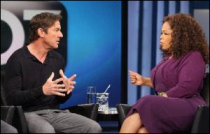
I’m going to try to be nice here. Dennis seemed likable, happy to be at the conference, and genuinely complimentary of the HIT work done by people in the audience. He was considerably more wrinkled and hoarse than you see on the movies, but that ear-to-ear grin still lights up even a big room. Applause was polite. I didn’t find him all that charismatic like I expected. He read most of his talk from the TelePrompter (stumbling a surprising number of times – I guess he’s used to getting multiple takes). He flashed pictures of his twins and of the heparin vials he said were "deadly similar" (maybe to a layperson, but they were about as clearly labeled as they could be even in the picture, with one saying Hep-Lock and the other labeled Heparin 10,000 units/ml with slightly different colored labels and completely different colored pop tops – the only similarity was that they were both in the standard 1 ml vial). He proudly announced that his family’s incident had motivated Cedars to spend $100 million on HIT, although you’d have to wonder what other pressing projects got shelved to free up the capital. One thing I agreed with: bar codes need to be universal and interoperable (thank a weak FDA for why that’s not the case today). He said bar code technology needs to be affordable for small hospitals, but didn’t elaborate how that’s going to happen. He pitched smart card medical records and inpatient access to charts by TV or cell phone. He barely mentioned his foundation, to which HIMSS gave him a check for $10,000 at the end. I can’t imagine that anyone in the room wasn’t aware of medical errors beforehand, so I have to question why HIMSS thought this would be a compelling opening keynote (a great number of people rushed for the doors when he started taking the couple of scripted questions HIMSS had put together). But, I saw him in my hotel lobby afterward and he was just hanging out, looking good, and being a regular guy. So, I would say Dennis was just fine, but he probably shouldn’t have been put up there.

Then came exhibit time. The hall didn’t seem busy at all, but maybe it was bigger or perhaps because it was Sunday, things still weren’t in full swing. The energy level seemed low, but everybody was relaxed as a result. Some quick perceptions:

  • Booths seemed generally smaller and less elaborate. You could count the booth babes on one hand. There were a couple of magicians, a trick pool shot guy, and some mimes (seriously), but otherwise the in-booth entertainment was dialed back.
  • McKesson still had some of that wildly electric blue, but it was toned down a lot.
  • I still think Medicity’s spaceship-like booth is the coolest, but that’s just me.
  • The HMS waitresses are as sassy as ever, at least when you get the ones who are paid actors and not the HMS employees rounding out their number.
  • Kudos to OnBase with their usual sports bar theme, who served up soft drinks until 5:00, then rolled out the hard stuff. I was prowling for beer and was told EMC had some, but they had run out. Sentillion filled the bill admirably even though I clearly wasn’t a prospect.
  • If I could pick one company and booth to see that’s clearly got new ideas and strong prospects, I would choose Voalte. They were wearing Pepto-Bismol colored bell bottoms, but demoing a very cool iPhone-based communication and alerting application. CEO Rob Campbell, with a long history of developing technology (PowerPoint and Filemaker) is fun. Booth 1481 is worth a visit.
  • The busiest booth was Allscripts, which was mobbed from the time the doors opened until after the lights were dimmed. I don’t know what kind of audience they were getting or what products interested them, but it was packed. Second busiest (but in a relatively small booth) was dbMotion, whose people seemed pretty cool.
  • Epic’s booth hasn’t changed and neither has Judy. She never left the time we were there, talked to pretty much anyone who wanted to chat, and displayed nothing to indicate her net worth or place in the HIT universe.
  • The aforementioned Siemens had a nice, airy booth that I Iiked probably best of those from the big boys.
  • Inga and I liked the Risarc people in 7215, who were manning their tiki hut, wearing Hawaiian shirts and sultry tropical dresses, and pouring rum punch. They did a nice job making it fun.
  • I liked Sunquest’s booth a lot, very open and attractive in the green color (although the top looked like a big round trampoline to me). Their "Sunquest – we deliver" totes were the best ones I saw, well made in that bright green with black trim, so I’m taking one of those home.
  • Most of our sponsors displayed the "We Power HIStalk" sign we made for them prominently, but Virtelligence gets the nod for putting it front and center.
  • Somebody gave Inga and me those little chocolate bottles containing rum. Those were just about the best thing I’ve eaten lately. I wish I remember who had them since they deserve kudos – they can’t be cheap. I would like to have had about five of them since I would have simultaneously gotten both a sugar and and alcohol buzz on.

After all that, I rode the shuttle home in the snow, ate a $15 hotel hamburger alone (funny how Inga reports the same thing below), and hit the laptop for what you’re reading now.

Chipsoft

We decided we should feature a smaller, lower key booth with people we liked. Introducing Chipsoft (that’s Paulette above, looking like an unseen giant is about to scoop her up), an HIS vendor from the Netherlands in Booth 6560 (not selling to the US, but interested in European attendees). Those yellow things on the floor are the coolest slippers, shaped like wooden shoes. People everywhere were descending on those people carrying them (like Inga), demanding to know where they got them. Chipsoft will put more of them out Monday, they said.

A reader sent this: "One of the pre-Quaid speakers referred to the American Recovery and Disability Act. Does that make it the AR-DUH?" I don’t know if the TelePrompter was acting up or what, but everybody on the stage muffed their speeches several times.

RSM McGladrey has "Official HISTALK Cynic" and "INGA FAN CLUB" badge ribbons at Booth 8039. As far as I know, that’s the only giveaway or goodie (unlike last year’s Fake Ingas, shoeshines, and other badge ribbons).

We’re supposed to get 1-3" of snow tonight with winds tomorrow of 20-30 mph. Thanks, HIMSS. My hotel TV ran an ad for conventions in sunny San Diego, apparently rubbing it in.

The Sun-IBM deal is off, apparently.

vw bus pictures 023 

The Medsphere folks sent this picture over. "These photos about sum up the difference between Open Source and non interoperable, expensive proprietary models." That’s a cool PR move that must have required a lot of planning to pull off.

We already ran the rumor, but Allscripts announces its iPhone application. Allscripts also announces a joint solutions deal with dbMotion (maybe that explains the booth crowds), apparently replacing the products that both Allscripts and Misys offered previously.

iMedica announces a new PM/EHR system called Transition. We may need to swing by for a look.

That’s about all I have the energy to write today. There were some announcements today (Allscripts, for example), but I expect most of the big ones will be held for Monday when the news is full-on and the stock markets are open.

HERtalk by Inga

Let me start out by saying: My. Feet. Are. Killing. Me. And I even wore the comfy shoes. Right now I am in my lobby bar drinking an adult beverage, having had a couple of Advils to try to make the feet throbbing stop. And, I probably look like a total nerd typing away on my laptop, but who cares. I’m sitting next to a window and watching some huge snowflakes come down and waiting for my $15 hamburger to be served.

First thing this morning, I attended a CCHIT Town Hall meeting led by Mark Leavitt and Alisa Ray. I was struck by the fact that CCHIT clearly sees themselves as the entity that has established "the" standards, though they acknowledge that the standards committee will tweak the final standards required for ARRA funding. In any case, vendors are sending in their certification applications at an unprecedented rate – something like 45 new applications in the last month, with 39% being never-before-certified vendors.

I also went to the opening session to see Dennis Quaid. Cool live music and video started things off, followed by a rather lengthy intro by Chuck Christian of HIMSS. Christian shared all the great things HIMSS has done over the last year – and one might think they were personally responsible for including HIT in the recent ARRA legislation. So, I think Mr. H was a bit cynical about having Dennis Quaid as the keynote, but I personally thought it was an effective reminder that ultimately this whole HIT stuff is about the patient. Quaid admitted he is not an expert on technology or healthcare. Instead, he is a father, husband, and now an advocate. As I was walking out I overheard this comment: "There’s nothing like a human story to motivate IT. Especially when it involves babies"

Mr. H and I also spent time walking the exhibit hall (see note above about aching feet). The good news is that everyone has a way to help you take advantage of ARRA money. Random thoughts:

Allscripts was amazingly busy every time we walked by. Other booths that appeared to be getting good traffic included Google (why?), dbMotion, athenahealth, and McKesson. Not so busy: most of the other vendors in the ambulatory EMR space and all those small vendors are the outermost aisles. Far and away the best giveaway were the slippers from a Dutch company that looked like wooden shoes (I’d be wearing them if I weren’t in the lobby.) Booth babes are for the most part either eliminated due to budget constraints or simply too 20th century (in either case, I am ok with the demise of booth babes). Mr. H and I were so happy every time we saw a sponsor prominently display one of our signs (anyone see them?) Mr. H and I personally autographed each display, so thanks to all who put them out. By the end of the afternoon, Mr. H and I were getting thirsty for cocktails, so thanks to the folks at Sentillion were able to provide both Mr. H and me our beverages of choice.

I took a few photos and will get those posted soon.I have managed to snap a few nice-looking pairs of shoes and was able to educate Mr. H and what shoes were and were not practical for walking the exhibit hall. Also got caught in the Olympic committee 2016 presentation this a.m., so I took a few shots of wrestlers in their cute outfits.

In the Ribbon Race, i.e., the contest to see who can attach the most ribbons to his badge, I have so far seen two individuals tied for first place. Each had five ribbons. One is the CIO for a large health system in Texas and the other is a consultant, also from Texas. (Everything is bigger in Texas, I guess?) Surely there are some New Yorkers or Californians who can come up with six ribbons to take the lead.

Early night for me before some early morning sessions. Can’t wait for the big HIStalk/Ingenix party Monday night!

From HIMSS 4/4/09

April 4, 2009 News 5 Comments

008 It’s a pretty nice day in Chicawgah, with brilliant sunshine and tolerably cool temps. The locals are out jogging and playing shirtless volleyball like they were Canadians. HIMSS is looking pretty smart in choosing its own city for the conference, but I doubt anyone will be saying that as they slog through the snow the storm will bring Monday. If you see someone smiling, it will be a vendor chop-licking at the certain booth traffic that will result since there’s no golf or other outdoor activity as an alternative (coincidence, I’m sure). Good for them, bad for those of us who enjoy the traditionally warmer conference locales. I even heard one of the HIMSS people saying it was convenient, but not as nice as going somewhere less wintry. Look at it this way: because of the schedule-juggling needed to jam Chicago into the mix, it’s only 11 months until the Atlanta conference.

Why is healthcare so expensive? I can’t figure it out as I sit in a $250 hotel room using a $20-per-day Internet connection and ponder the $26 hamburger (including mandatory gratuity and delivery charges) that the hotel’s room service would like to sell me. (Actually, I pay my own way, so I’m not contributing to healthcare inflation). One of the sessions today was full and someone headed out to get more chairs – don’t do that, they were told, only union members can pick up convention center chairs.

That same $250 hotel just about sweated me out last night. My room must have been 85 degrees and the heat was blasting. No AC, naturally, being a historic hotel full of character (meaning: tiny closets, weird bathrooms, and a maze of halls to find each room). I figure there was some forgotten old guy down in the bowels of the basement shoveling coal into the furnace like he’d been doing since the Truman administration. Solution: I opened the window, which was surprisingly not bolted shut (the hotel must not have a legal staff). Other than the racket each time an El train lumbers by, it’s OK (as long as I don’t think how much nicer a $69 Microtel would be if I’d been smarted enough to book once, spend a little on cabs each way, and still save a bundle).

It looked like the Marines stockpiling supplies before a siege at the conference center. Vendors hauling in their exhibit stuff, food and drink people making sure not to run out of wildly overpriced inventory, and AV people setting up an endless number of rooms. The conference center is actually pretty easy to get around and, as is always the case with HIMSS, is well marked. Some sessions are across the land bridge on the west side, most seem to be on the south side, and the opening reception will be on the east side overlooking Lake Michigan (which attracted me to stroll out to the patio for a look, immediately finding myself locked out of the convention center until a maintenance guy reopened the door).

h1 It was pretty dead at the conference center today, at least in the common areas. I walked by the venture fair and it was overflowing, so I assume ARRA has attracted some people newly interested in healthcare but having no clue about the patient widgets with which we deal outside their financial realm.

The schedule still seems odd. You would think that the opening reception would be today (Saturday) since everything moved up a day, but it’s still Sunday. There’s no morning keynote tomorrow – Dennis Quaid isn’t on until 12:30. One thing is like always: the education tomorrow runs only 8:30 until noon, followed by Dennis, followed by the ceremonial herding of the attendees into the exhibit hall like cattle up an abattoir ramp. Nothing conflicts with the exhibit hall hours, of course, since that’s the entire point of the conference (a smattering of time-conflicting educational offerings notwithstanding). Sunday’s education (not counting Dennis): 3.5 hours. Exhibits: 4 hours.

Rumor heard: McKesson’s board had lost confidence in Pam Pure, believing she was in over her head. She fired all of the company’s ambulatory salespeople right before she herself was defenestrated, supposedly. A WSJ article mentions concerns about the technology division. It says John Hammergren is speaking at HIMSS, but I’m not sure where.

An anonymous reader says that Radianse chairman and CEO Manuel Lowenhaupt has left after less than a year. Steve Schiefen is now listed as CEO on the company’s Web page. The reader speculates the RFID asset/patient tracking company will be sold to Hill Rom.

A reader sent a copy of an e-mail that George Halverson of KP sent out company-wide, bragging that 12 of the 15 hospitals that will be recognized as EMRAM Stage 7 at the conference are Kaiser facilities.

HCS president Tom Fahey e-mailed news of a new Interactant sale: the five-hospital Encore Healthcare LLC (MD). They’re in Booth 7834 if you want to extend personal congrats or just say hi (Tom didn’t ask for the plug, but I figured I’d look it up in the HIMSS guide since it’s right in front of me).

I passed former HIMSS CEO John Page in the hall today. Looking good, running a CEO and entrepreneur support organization.

HIMSS is having some kind of blogger session at the conference. I was not invited. I’m insulted even though I wouldn’t have gone anyway.

TeraMedica announces Smartstore-Ultrastream, a storage optimization protocol that improves the efficiency of image storage and routing for its vendor-independent imaging and information system.

h2 GAO names 13 members of the Health Information Technology Policy Committee, the advisory group that will make policy recommendations for a national HIT infrastructure. Some are familiar names: Marc Probst of Intermountain, Paul Tang of PAMF, and Judy Faulkner, who has done more for HIT adoption than any of them because she’s selling the heck out of Epic to big hospital systems (quick: name any big-name hospital that has bought anything other than Epic in the last year or two. Need more time?)

People keep e-mailing me that Perot will be acquired by Dell shortly. Sounds farfetched, but I said the same about Misys and Allscripts right before HIMSS last year (and ran the rumor for the same reason: multiple reports). Purely speculation, but there you go.

Nine Texas patients, most of them homeless, drug abusers, or mentally ill, made 2,700 ED trips in the past six years, racking up $3 million in taxpayer cost. I bet your first reaction was: irresponsible losers screwing up the system. Maybe your second would be: perhaps the healthcare system gave them no alternative, making a business case for using the avoidable cost to fund options for them.

GE Healthcare, whose name is prominently plastered on the quite nice tote bag being handed out to HIMSS registrants, lays off more employees in Wisconsin.

Taking pictures at HIMSS? Send them my way (or maybe I should start an online album). People seem to like them.

A reader is working with a boutique RIS/PACS vendor that is looking for quality resellers. Not my sweet spot, so if you have suggestions, e-mail me and I’ll pass it along.

h3 A study in contrasts (not the same as a contrast study): a NEJM report says that only 1.5% of hospitals have comprehensive clinical systems, but HIMSS Analytics trots out its own stats saying that, hey, they’re pretty close, missing only a couple of key applications to be there. Count on it: any time anybody publishes a high-profile article (even a research one) that seems to indicate less than rosy industry use of technology (or especially that the technology itself may not be up to snuff), HIMSS will circle the wagons with a rebuttal.

Allscripts cuts revenue estimates, blaming a purchaser preference for subscription-based pricing. Overheard today: nobody’s financing companies that drop ship software like in the old days (say, before last year). True partners make money only when their customer makes money and that’s all that’s selling these days. Welcome to the recession.

My guest editorial in this week’s Inside Healthcare Computing e-mail update: Here’s President Obama’s Mandatory EMR Feature List: Firing GM’s CEO Makes it Clear That Federal Money Has Strings Attached. A key sentence: "The CEO of every company right now, right or wrong, is the former junior senator from Illinois who has never had a real job (I don’t count being a professor or lawyer) or run a business."

If you’re at the conference, welcome to Chicago. I’ll be doing some kind of daily report and I expect (and hope) that people will e-mail the good stuff they hear out and about since that’s the fun of being here.

E-mail me.

CIO Unplugged – 4/1/09

April 1, 2009 Ed Marx Comments Off on CIO Unplugged – 4/1/09

The views and opinions expressed in this blog are mine personally, and are not necessarily representative of Texas Health Resources or its subsidiaries.

Welcome, Welkommen, Bienvenu, Bem-vindo, Bienvenido, Vítaný
By Ed Marx

My family will host our 6th foreign exchange student this Fall. Anne will join us from Germany and stay through the academic year. Our “extended” family has expanded over the years, and these former students are now doctors, teachers, and actors. We keep in touch with several of the girls and have even visited a couple here and abroad. The experience of a single exchange—the families, students, cultures—has enriched our world.

I serve on the global healthcare CIO council for a fortune 50 company. Each year a dozen of us gather from around the world to help drive corporate strategy. We get a glimpse into the future and where the industry is headed as it relates to technologies on the horizon. We share challenges and solutions. We commiserate. We learn. We advance the corporation, our employers, and ourselves. It is rich.

Around the table this past week, I sat with CIOs from Brazil, Japan, USA, Singapore, Greece, UAE, Taiwan, Bulgaria, Mexico, Canada, Australia, and England. (How fitting that the International Olympic Committee shared the conference facility with us in Chicago.) Although we contributed and advanced the mission of the council, the biggest benefit came from the transparent sharing amongst CIOs. I’m not able to share council specific outcomes or where my organization is headed strategically, but I can offer these key takeaways:

· Innovative ideas to remove culture as obstacles to transformation

· Creative organization hierarchies that enable velocity

· Leading from the center

· Progressive management of vendors

· The world is flat and we have more in common than you think

· Negotiating the C-Suite more effectively

· Leveraging specific technologies to enhance mobility

· Expanded vision

I gained more from this intimate exchange than I could have attending a week long mega-conference or reading a year’s worth of subscriptions. I established relationships with 11 peers who I can call on as needed. We forged budding bonds through time spent together and found that we have a common burden and shared passion. Their diverse backgrounds opened my eyes to fresh thoughts and strategies. Some of us have already exchanged additional ideas and materials to further our organization’s success.

The council sponsor benefitted and they will develop enhanced products and services to meet our future needs. Our employers will benefit from this investment as we bring back executable ideas for both strategic and operational advancements. And I, like my peers, have personally benefited through this mutual exchange of ideas, cultures, and personalities. May sound trite, but I believe the world is a better place now.

Seek opportunities on different levels to share in global exchanges. I’m looking forward to what we’ll learn from Anne this forthcoming school year.


Ed Marx is senior vice president and CIO at Texas Health Resources in Dallas-Fort Worth, TX. Ed encourages your interaction through this blog. (Use the “add a comment” function at the bottom of each post.) You can also connect with him directly through his profile pages on social networking sites LinkedIn and Facebook, and you can follow him via Twitter – User Name “marxists.”

Readers Write 4/1/09

April 1, 2009 Readers Write 12 Comments

Comments on Ricky Roma
By Cliff Dickerson

I’ve spent most of my career on The Dark Side, but I rarely have considered it to be that.  Maybe I’m going to always be naïve, but it’s where I’ve witnessed innovation and achievement.

  • I took pride in seeing the glee on the face of the DP director when transmission of the day’s billing was transferred in less than five minutes after removing the cartridge (yes, cartridge) from the Four Phase HIS and inserting it into the Four Phase front-end of a time shared financial system. It beat a day spent key punching by multiple employees.
  • I was ecstatic when the ER nurse (pre-ED days) most vocally opposed to the new system told me that she loved it.
  • I was pleased to know that in less than six months we had registration and ADT up, something that some major medical centers spent two to three years developing in-house or that the IT staff in the early days in a turnkey operation was a fraction of that where in-house development was occurring.

Trained as a biochemist and working in a hospital clinic lab, I fled early on to an HIT vendor. I knew that my happiness was not to be found being a bench tech. (Retention of medical technologists is a tricky act. The University of Illinois Circle Campus, in fact, eliminated its medical technology program upon realization that its graduates were not going to work for healthcare providers, but rather for biotech and pharma companies.)

The vendor life, while often paying more than on the provider side, has its disadvantages. Living out of a suitcase is not fun. Missing out on activities with friends and families is a real drag. 20+ hours of commuting is not so fun either. (When I first started, I left on Sunday afternoons and got home sometime Friday nights. It’s different now. People just don’t want to do that.) 

Oh, and pay? I’ve seen some delivery organizations pay almost as much for its employees as a vendor does. $10K or $15K just doesn’t make up for long commutes and long days.

Now, I could go down a different road. Healthcare organizations traditionally have not paid IT salaries competitive with other companies. (Nor do they spend the same amount of money on IT traditionally – maybe you do get what you pay for.) And, boy, are they surprised when their clinicians turned informatics specialists say that they won’t work more than 40 hours a week unless they get overtime. But, that’s a whole other discussion about something that’s not necessarily unique to American healthcare delivery systems, but pandemic in our culture. We talk about balance, but don’t play the game.

I don’t discount anyone for wanting to make a profit – even not-for-profit health delivery organizations like to do that – and many of their employees and associates profit very well in doing so. Perhaps I should be more cynical in viewing publicly traded healthcare software vendors, but can I fault them anymore than I could fault Chase or Oracle or Phillips? No, I just can’t. (I do think that the American system has some problems. I do think that our American companies often make decisions that are poor in the long-term. I do think that we need to rethink our executive compensation system.)

Value: if someone is willing to pay $3 for $1 of value, well, I figure that they must be getting $3 of value. Or at least feel that they do. Maybe I’m a bit biased because I spent a lot of time studying pricing while working for vendors.

I’m not sure where the 66% failure rate comes from, but it does point out the need for clearly defined, achievable return on investments before the ink is signed. So many people don’t want to do their homework in advance. Technology in and by itself is no balm. It’s the implementation. How you use it. How you promote it. How you plan to ensure success.

I had a CIO teaching a class at a university ask me for a paper or case study about how poor project management lead to the failure of a project. I couldn’t find one. No one really wants to write about or talk about their failures.

Next Generation Hospital Laboratories Become a Driving Force in the Future of Diagnostic IT
By Richard Atkin, President and CEO, Sunquest Information Systems

RichardAtkin When Sunquest became a private corporation approximately 18 months ago, no one predicted the tumultuous economic conditions and events that would be taking place in the U.S. and worldwide. And we now know how important the healthcare IT industry’s role will be in helping deliver increased access to care, with improved outcomes, at lower overall cost.

Back in October 2007, we saw a great opportunity for best of suite diagnostic IT solutions and publicly stated the strategic goals that we believed would best serve the current and future needs of our customers. We committed our focus and resources towards enhancing the automation capabilities and clinical workflow of Laboratory Information Solutions, improving patient safety, helping hospitals maintain profitability through outreach services, and to becoming a driving force and leader in the exciting area of predictive and personalized medicine. Now, with the dramatic changes over the past year, these same goals are even more relevant and delivering against them remains our top priority.

We must remember at all times that healthcare delivery is largely local and must be very patient centric. The role of the hospital laboratory in the continuum of care and the effectiveness of the Laboratory Information Solutions it uses are playing an increasingly important role in the successful delivery of clinical care inside the hospital and outside in the community. With approximately 70% of clinical decisions based on results generated in the clinical laboratory, the operational efficiency of the laboratory is critical to the effective delivery of safe, timely patient care. Laboratories are becoming information hubs for patient care, business operations, revenue growth, and the successful development of new technologies for predictive and preventative medicine.

The emergence of the hospital laboratory as a strategic, revenue generating service line, central to the goal of cost effective healthcare delivery is a development we are dedicated to supporting.

Automation & Workflow Efficiency
Laboratory services are central to healthcare delivery. Hundreds of care plan and treatment workflows are dependent on decisions that use lab results – admissions, discharges, medication decisions, follow-up testing and dietary orders to name a few. The shorter and more certain the lab result turnaround time, the faster patients and care providers can make diagnostic and care plan decisions, and the more effective those decisions will be.

Laboratory information systems must not only track, route and manage samples, but also interconnect with the overall Health Information Systems and EMRs being used within hospitals and with systems being used by external physicians and laboratories. By doing so, the transition from inpatient care to outpatient and vice versa is eased, vital resources are used more efficiently and the patient experience is enhanced.

Patient Safety
Patient safety is obviously a top priority for healthcare providers. At Sunquest we developed the concept of the Five Rights of Laboratory testing to champion the contributions the lab makes to the safe delivery of care.

Additionally, we have introduced several new products that support our customer’s goals for improving patient safety, including a closed-loop transfusion management solution. Our automated Specimen-Collection Management system integrates with the LIS and blood bank system, and utilizes wireless handheld devices and bar-coding to ensure positive patient ID at the bedside.

Closing the loop on the blood administration process, the Transfusion Manager solution is specifically designed to support patient safety processes at the bedside by automating nursing workflow and reducing preventable errors from occurring during the transfusion process.

These solutions in use at dozens of our customer sites have succeeded in reducing specimen collection errors to virtually zero at every site where deployed.

Expanding the Community Footprint
In challenging economic times, hospitals must leverage their laboratory as a strategic asset to their overall business operation and revenue generation. A single admitting community physician represents an average of $1.5MM in annual revenue to a hospital. An effective outreach program builds physician and patient relationships while enhancing the reputation of the hospital in the community.

The ability to effectively manage these community relationships is an important strategy for hospitals and the reason why we made two strategic acquisitions in Q4 of 2008.

First we acquired Anglia Healthcare in the UK for their complementary product portfolio of web based communications and messaging solutions. As a result, Sunquest now has the market-leading position in the UK with over 60% market share for laboratory orders and resulting solutions and the technologies to address the broader EU market with solutions that meet the region’s protocol standards and language needs.

We also acquired the Outreach Advantage portfolio from PAML, Spokane, WA. These solutions provide a strong complement to our existing offerings, adding courier, logistics, CRM, and business intelligence applications. The Outreach Advantage portfolio, together with our LIS and revenue cycle solution, results in the single most comprehensive outreach business management suite in the industry.

Predictive & Preventative Medicine
Patient diagnosis and treatments through molecular and genomic testing represent an area of explosive growth, great promise, and significant challenges.

Molecular diagnostics is generating more than 30 million tests annually in the U.S., with dozens of new procedures introduced every year. We are strategically committed to providing the solutions that will enable laboratories to be a leading force in the upcoming revolution with predictive and personalized medicine.

Nearly 85% of our customers already perform molecular testing and interface their instruments and systems with our LIS. One leading example of this is Nationwide Children’s Hospital, who has used its expertise in molecular diagnostics testing for infectious diseases to successfully grow its outreach testing services to support an international market.

Emerging technologies in genetic testing, digital analysis and whole slide imaging are creating a new paradigm for diagnostic medicine. Certainly the workflow inside the laboratory will dramatically shift, but even more significant is the impending transformation in healthcare delivery outside of the laboratory. Pathologists and lab professionals must become more active, visible members of the care team. To do so effectively will require collaboration, communication, and results interpretations that comprise actionable information, not just data.

Conclusion
This is both a very challenging and very exciting time to be in the healthcare industry. As vendors, we must develop and implement new solutions, in partnership with care providers, which make the industry more productive while also helping in the transformation of healthcare delivery. Connecting the laboratory to the continuum of care in the community and facilitating the transition to personalized, predictive and preventative medicines have the potential to revolutionalize patient care, improve wellness, reduce the cost of healthcare over lifetimes, and enhance quality of life for all of us. Sunquest understands its role and shared responsibility towards meeting the healthcare industry’s challenges and opportunities. We are dedicated to creating diagnostic information solutions that enable hospitals to fulfill their missions.

Will $20 billion Solve This Problem?
By Frank Poggio, The Kelzon Group

There was a poignant opinion editorial in the Chicago Tribune this Sunday that got my attention, written by Candy Schulman, entitled “There is a human in that bed”. It caught my eye and got my empathy because I lived that same experience about a year ago. There were however, two major differences. First it happened in a different hospital in a different state. Second, since I have worked in the hospital world as an administrator, systems supplier, and consultant for thirty-five years, I had a better understanding of the issues and therefore was able to force a faster resolution. As I read Candy Shulman’s article I kept asking myself, as I did a year ago, what is really wrong with this ‘system’ and what can be done about it? Also, I kept thinking will $20 billion solve this problem? Let me tell you a little about both stories before I give you my assessment and prognosis.

Candy’s Story – Dumped in the Driveway
Candy tells about her frustration in caring for her elderly mother while an inpatient at a local hospital. Two of her biggest problems came in simply getting her mother discharged at a reasonable time, and the lack of coordination with hospice care. The statement I most reacted to was, “After her month long hospitalization and three weeks in rehab, I tried all day to get her discharged, but ran into a hospital quagmire when I could not get anyone to sign the discharge papers. Finally, at 6 p.m., I left, believing I’d repeat the arduous process the next day”.

“Two hours later the rehab facility sent a bedridden, demented old woman home in an ambulance—alone. I wasn’t called to accompany her home, nor was her devoted live-in aide, Nellie (I was taking her out for a bite to eat after a long, tiring day). My poor confused mother was suddenly dumped into an ambulance. In the driveway of her apartment building, the driver seemed surprised that no one was there to take care of her.”

Candy Schulman’s complete article can be found at: http://www.chicagotribune.com/news/chi-oped0329humanmar29,0,552996.story

My Story – Who’s on First?
In February of last year, I lived through a similar experience. My 88-year-old mother, after years of struggling with CHF and COPD, was admitted to a Florida hospital. After a few days of hospitalization, we were told there was nothing that could be done and death was only a month or two away. My family decided the best course was to move her home and get the local hospice involved to supplement the efforts of me and my sister. I had spoken at length with her cardiologist, internist, and case worker and agreed this was the best course.

Needing a day to work things out with a local Hospice program, the hospital agreed she would be discharged in two days. I lined up the Hospice services to come to her home to set up the medical equipment, complete their assessment and explain to her their plan and what would transpire. Although my mother was severely physically impaired, she was of sound mind and fully cognizant of her surroundings to the day she died.

On the agreed-to day of discharge, I went to the facility to get her at 9 a.m., thinking that by 10 or 10:30 a.m. we’d be on our way. The day before, I told the Hospice staff we would be at her house by 12 noon and they then could commence their process.

To make a long story short, I did not leave that hospital until 1:30 p.m. that day, and then it was only because having worked in a hospital earlier in my career I knew how disjointed things can get. I personally tracked down the admitting doctor (not her cardiologist or internist) and brought him to the room to write the discharge orders and sign it. That was at 12:30 p.m. and still a number of other nursing and related tasks had to be completed. All the while I was running around the hospital, and in and out of her room, my mother kept asking, "Don’t these people know what they are doing and when can I go home?” I kept answering, “No they don’t, and if we’re not out by 2 p.m., we will leave AMA!”

What Went Wrong?
Everything involved with communication, coordination, and follow-up. No one knew who was on first, who had main responsibility, or what needed to be done next. As best I can tell, everyone involved was waiting for the next person to do his/her task, when in fact many of the tasks could have been done concurrently. Meanwhile this hospital has been using one of the leading HIS packages in the country for more than a decade.

So let’s spend $20 billion on new HIT/EMR systems like Cerner, or Epic, McKesson, GE, Siemens, or Meditech — whatever flavor you like. It won’t matter. Although they may help a little, in my opinion, none of them can solve this problem. Here’s why.

The problem Candy and I described is not a data storage (EMR) or transactional (HIS) problem. It is a communication, coordination, trans-departmental workflow and management problem. Yes, HIT vendor systems can do communication, but they do very little, if anything, for work flow coordination and communication and almost nothing outside of ancillary medical services. These systems are great at ordering an x-ray and making sure radiology does the prep work, then delivering the results to clinicians and placing an image in the EMR. But what if that patient needs a dietary consult and the dietician comes to the room while the patient is still sitting in x-ray, one hour late for a test that was to be done at 1 p.m.? They almost totally ignore non-medical support services such as social work consults, dietary reviews, transportation needs, patient location or education, timely discharge orders, and more. Such tasks typically fall to nursing to ‘manage’. Inevitably one or more falls through the cracks, and when one fails the whole process collapses and the patient suffers.

Unfortunately, this problem is pervasive across health institutions as identified by a recent report issued by the National Academy of Sciences – Institute of Medicine (IOM) entitled Computational Technology for Effective Health Care: Immediate Steps and Strategic Direction. The report states: “Health care decisions often require reasoning under high degrees of uncertainty about the patient’s medical state and the effectiveness of past and future treatments for the particular patient. In addition, medical workflows are often complex and non-transparent and are characterized by many interruptions, inadequately defined roles and responsibilities, poorly kept and managed schedules, and little documentation of steps, expectations, and outcomes.”

If you still do not believe it is pervasive, then answer these simple questions. Does your facility have a time of discharge policy? If yes, what percentage of the cases hit that time within 15 or 30 minutes? Of course if you can’t answer either, that’s proof enough.

During my years as a hospital CIO /CFO and as a system’s developer I believed that the ever-expanding HIS tools and developing EMRs would someday address this problem. Today, after many years of hands-on experience at all levels, I am convinced they cannot and will not. In a nutshell, I have come to the conclusion this in not an information technology problem. It is a work flow process problem, a communication problem, and lastly, a management problem. It is not a department problem, but an inter-department or enterprise problem. An HIS /EMR can help solve it, but using those tools alone you are doomed to fail.

What is Needed?
The seemingly simple goal of implementing a set discharge time and meeting it has many challenges such as poor inter-department coordination and poor integrated work flow. Inter-department resource coordination founded on solid work flow documentation and monitoring tools is critical to successful patient flow and meeting discharge targets. Fortunately there are many sophisticated work flow tools developed outside of health care that can be used to help achieve better patient flow and control. Private industry has used tools such as optimization, production coordination, queuing analysis, and sophisticated enterprise scheduling for decades. Some of these are finding their way into health care now, but very slowly.

These tools go beyond electronic bed boards and digitized paper forms, both of which are needed but only address the symptoms. Hospitals need to know real time where they stand for any given patient. In effect, a Gantt chart or patient critical path for all activities is needed to meet a specific goal or target discharge time. Remember, a delayed discharge costs the hospital money and it’s the primary reason for ED diversions, which typically lead to large ED capital expenditures.

Proper coordination of all services (ancillary and non-ancillary) can help hospitals get through these tough times. It’s not easy, but by better utilizing your current resources, (staff, equipment and technology), through better work flow coordination, you can significantly improve patient throughput to drive improved productivity, reduced costs, enhanced revenues, and most importantly, increased patient satisfaction.

While in the hospital my mom, and I would believe Candy’s mom, received excellent medical care from some very dedicated and overworked people. But what we remember most clearly was the bungled discharge process that colored their entire stay. Medicare starts this year to measure patient satisfaction, so bungled discharges will soon become a costly mistake.

Pam Pure Leaves McKesson

March 31, 2009 News 87 Comments

McKesson announced this morning that Pamela J. Pure, executive vice president and president of McKesson Technology Solutions, has left the company as of yesterday. No reason was given for her departure and no replacement was named.

Monday Morning Update 3/30/09

March 28, 2009 News 17 Comments

mptFrom Anon: "Re: McKesson. Layoffs Friday, specifically in Provider Technologies. About 120 employees." I heard that from a couple of people, one of whom put the number at 400-500, but saw no announcement.

From SpeedD: "Re: Meditech. I have heard a rumor that Meditech is allowing employees to buy stock this year." I e-mailed the press contact for confirmation, but haven’t received a response.

From The PACS Designer: "Re: Windows 7. InformationWeek has an excellent video on the key features of the upcoming release of Windows 7, which is expected to happen in late September. TPD likes the DirectAccess, AppLocker, and the  Branch Caching feature in this new enterprise software application. Another nice feature is when you are on the Internet, you are automatically connected to the enterprise server, so you have the same application look that you would have at your employer’s headquarters." Link.

From Bobby Orr: "Re: APACHE. Cerner did buy that and Project Impact and tried to combine them into a Web-based tool called Critical Outcomes (or something along those lines). Don’t know of anyone using the new tool but it seems like everyone still running some version of APACHE."

From Gene D’Machine: "Re: IBM’s healthcare practice. Half of them laid off, I hear." I heard that, too. IBM certainly seems to be doing all it can to alienate providers right as it tries to get business from them.

Chicago weather: 1-2 inches of snow Sunday (I’m writing this Saturday) and a high of 50 this weekend for HIMSS. Not exactly San Diego, is it? The coat check girls will make a fortune.

deparle

Speaking of Chicago, the Tribune covers the business affairs of new White House healthcare czar Nancy-Ann DeParle: she made at least $3.5 million over two years from fees and stock gains, the White House won’t allow her to be interviewed and wouldn’t answer questions about her business history, and neither she nor the White House have released any financial disclosures.

I’ve been to busy to make any kind of HIMSS plan, so I figured I would try the MyHIMSS09 Calendar. The idea is pretty cool: each session has a link to click to add it to your calendar. What I didn’t like: the calendar itself takes up a ton of Web page and there’s no print function, so it will be a bulky set of Web page prints (not a real calendar, just a list of sessions). You can send individual sessions to Outlook, but not the whole set (and not to Gmail). And, every time I tried to remove a session, it locked up my PC with a monstrous CPU utilization from Firefox Javascript, so I’ve got stuff on there to cross off. The session search/browse was also a bit clunky, not allowing searching by session number, by CEU offered, or by presenter (that I could find, anyway). I’m sure I will end up marking on the little pocket version that I hope they haven’t eliminated.

theory

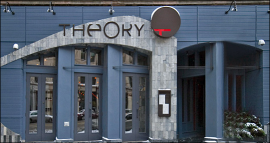
Trey Lauderdale of Voalte, Inc. has arranged an informal NCAA viewing party after the HIStalk HIMSS event Monday evening at Theory sports bar, 9 W. Hubbard St. (a couple of blocks from the Trump). If you’re still hungry, they serve upscale barbeque and Mexican and they’ve got $5 burgers on Monday, which beats the heck out of Sysco prisoner food at the convention center or the usual room service blandwiches that leave you stuffed but unsatisfied. I think Trey is buying the beer. If Theory fills up, he’s got some backup bars next door.

EHR Scope has a new spring edition ready for download. It has several articles on EHR selection and implementation.

ccg 

Thanks much to new HIStalk Platinum Sponsor Cumberland Consulting Group of Brentwood, TN, which has grown to over 50 employees in its six-year existence. It’s a 2008 Music City Future 50 winner and a Consulting Magazine 2008 Best Small Firm to Work For winner. I like this statement: "Reflecting on their Big 4 consulting background, Cumberland’s founding partners were struck by the waste of talent that occurred because of competing priorities and big company bureaucracy." What they do: IT planning, systems selection, implementation, PM, and IT improvement, and just about everything EMR related. I checked the HIMSS directory and it looks like managing partner Jim Lewis will be holding down the fort at Booth 4475, so please let stop by and them you that you appreciate their support of HIStalk like I do.

Speaking of HIMSS, our annual guide to what HIStalk’s sponsors are doing there will be ready for your online reading and downloading shortly. Please show those folks a little booth-visiting love in your exhibit hall travels. Their support of HIStalk and its readers is entirely voluntary and self-initiated: they e-mail for information, I e-mail it to them, and sometimes they e-mail back that they’re in (and many times, don’t). Inga and I don’t advertise, solicit, take calls, provide fancy statistics, reveal our identities or location, or otherwise hand-hold prospective sponsors (I just don’t have the time, working full time in a hospital, and I figure it’s pretty clear what we do here). You can see how cool they are by keeping an eye out for "We Power HIStalk" signs in the HIMSS exhibit hall and stopping by for a howdy. I’ll be doing that myself (incognito, of course).

Everybody likes to speculate who Oracle will buy next, apparently unfazed by the historical 99% rate of being wildly wrong. With a Red Hat rumor in the air, one research firm takes some swags that include Allscripts and Cerner in healthcare. At least the addition of Allscripts is new.

Olympus Medical Center (WA) gets approval for a $2 million GE Centricity practice EMR purchase. This board member must know hospital IT: "There are going to be changes. I just feel them. And I think all of them are going to cost money."

Hospital layoffs: Regional Medical Center at Memphis (TN), 86; Immanuel St. Joseph’s (MN), 100; Jackson Hughston memorial Hospital (AL), 70-80; Barton Healthcare(CA), 43.

Jobs: NextMD Template Designer/Developer, VP of Human Resources, Cerner CPOE Activation Support, Regional Sales Director.

The Orange County Business Journal profiles Sheldon Razin, founder and chairman of Quality Systems Inc. (the NextGen people), saying he took $2,000 of his own money and created a company now worth $1.4 billion. I should have bought shares: they’re up 2,000% since 2000 and even up 10% so far this year.

New on HIStech Report: our interview with Gary Zegiestowsky, CEO of Informatics Corporation of America, which has commercialized Vanderbilt-developed clinical technology that, in Gary’s words, "leverages data across clinical settings and aids decision-making and improved patient outcomes."

Interesting: WSJ covers "brain gyms," where members "work out" with mental fitness software. Scientific evidence is lacking, but previous research found that the brain can rewire itself with new neural connections in response to mental activity, such as cognitive training. Sounds like a good business to get in on early.

Emageon announces that the company has settled what it says is a meritless lawsuit against its acquisition by AMICAS. It also reports that revenue was down 34% in 2008, with net losses of over $42 million.

vantagepoint

I saw Dennis Quaid in a very confusing and awful movie called Vantage Point last week. He had a strange expression throughout, looking crinkle-nosed like he had just gotten a whiff of some foul odor (I think that was his effort to convey discipline and focus). Not even close to his excellent Right Stuff performance. Perhaps he’ll show clips at HIMSS.

Odd lawsuit: a teenager having her tonsils removed in 2006 falls as nurses tried to help her sit up on the OR table. She claims headaches and files suit (three years later) for $8,000 in medical expenses and $992,000 for suffering, future medical expenses, and disability. Who wants to be a millionaire?

E-mail me.

Being John Glaser 3/26/09

March 25, 2009 News 6 Comments

What Enables an IT Organization to be Agile?

Years ago, healthcare organizations would develop five-year strategies and have reasonable assurance that those strategies would be viable over that period of time. The pace of change makes such long term strategies less tenable (and possibly delusional). The pace of change does not eliminate the need for strategies, but it does place a premium on agility.

An agile IT organization has means to sense changes in the environment, triage important from spurious signals, alter strategies to respond to new opportunities, and redirect resources to carry out its new plans.

There are six major steps that can be taken to improve agility.

Application selection
The choice of new applications often centers on features and functions. However, those who are selecting a new application should pay equal attention to the capabilities the application has for desired changes. Is it easy to interface or integrate with other applications? Are there robust approaches that allow the organization to develop custom software that extends the application?

Project phases
Rather than waiting 18 months for the organization to see the first fruits of its application implementation labors, efforts should be made to deliver a sequence of smaller implementations. Pilots, staged rollouts, or the implementation of a portion of the application are not always doable. However they enable the organization to shift resources after a specific, smaller implementation phase rather than waiting until a lengthy implementation has been completed.

Staged release of capital and new IT positions
The capital and operating budget process can result in a form of “carved in stone” commitment of resources to specific projects. In contrast, the organization can make an overall IT budget commitment based on an expected set of initiatives. However, the leadership can release that commitment quarterly following an assessment of any needed changes in direction. In effect, there is an annual authorization of the budget, but a quarterly appropriation of the capital and operating budgets.

Cross trained IT staff
Some IT staff positions require deep expertise and it is not realistic to expect that those staff are interchangeable with other expertise-based IT staff. However, there are several IT positions that have characteristics that enable some degree of interchangeability. For example, good project managers can handle financial systems and clinical systems projects. These staff can be cross-trained or cross-exposed to different applications. This cross training can enable these staff to be applied to a reasonable range of projects.

Technology standards
On one hand, standards would appear to constrain agility. They narrow the field of choices for an organization. On the other hand, standards improve agility. In the absence of standards, organizations often make significant investments in attempting to integrate technologies that were never designed to be integrated. The result can be an increase in IT costs (which reduces agility since the financial resources available for other initiatives are smaller) and make applications and infrastructure difficult to change (which hinders agility) because of integration complexity.

IT alignment
IT agility requires that the IT leadership and organization understand the organization’s strategies, challenges, and priorities. With this understanding, the IT organization is in a position to effectively engage in discussions of IT alternatives and approaches.

Related to alignment are the processes the organization uses to make decisions. Governance structures that are fuzzy, opaque, and unsupported hinder agility. Decisions can take forever and run an unacceptable risk of being poorly embraced.

Achieving agility will require tradeoffs with other organizational properties and goals. It’s hard to be agile and efficient. However, agility may be more important than other properties such as efficiency, customer service oriented, or brilliance at project execution.

John Glaser is vice president and CIO at Partners HealthCare System. He describes himself as an "irregular regular contributor" to HIStalk.

Being Ricky Roma, or Tales from the Dark Side, Episode V – The Empire Strikes Gold

March 23, 2009 News 19 Comments

Today’s posting is all about gold. After my last note, someone had posted a suggestion that all negotiations should follow The Golden Rule. I agree that “doing unto others” serves all people well, both professionally and personally. Yet this note will be about the other golden rule, the one which brings order to the Dark Side: he who has the gold makes the rules.

In our HIS universe, The Dark Side’s source of power is actually derived from HIS executives who control the allocation of countless bags of gold. As a hospital IS exec who has this gold, you bear a fiduciary duty to your organization to impose your rules when setting out on a process that ends with dispersing cash to deserving (or undeserving) vendors. After my last post, another reader astutely noted that this duty is shirked in “three out of every four projects,” lending much cred to my assertion that “you (collectively) don’t know the power of the Dark Side”. 

Most research on this topic concludes that today’s software project failure rate is around 66%. We on the Dark Side know this. We earn BILLIONS of dollars selling you $3 worth of software or services to deliver $1 worth of value. This 3:1 cycle powers the Dark Side. 

We pay good sales people hundreds of thousands of dollars. We employ armies of storm troopers who are better paid, better trained, and often better looking than their opposite number at the hospital in order to keep this so. We build illusionary demos that touch upon your deepest desires. We learn which ones of you can be taught, fought, or bought. Right before HIMSS, we do things like send Mephisto shoes to all the Ingas in our sales forecast. And occasionally, when we sense that one of your best staff have enough midichlorians, we purchase their soul and lure them away to join us. 

As compensation for all these efforts, you continue to pay us $3 for every $1 of delivered value. We sell you software that doesn’t work and you keep coming back for more. This is power!

Can you just image Jacques Cousteau narrating a documentary on this unique ecosystem? “‘ere we see zee energetic ZIO, bizily darting in en out among zee magnifizent coralz near zee ocean floor, building and rebuilding two of heez three nests, over and over again; blissfully unzaweare of zee predators stealing heez eggs right in front of heem… What vill become of zis endearing creature?”

In real life, you need look no further than the musings of this HIStalk post over the past several weeks for some outstanding examples of where HIS vendors are putting the golden rule into solid practice. HIStalk readers were more than a little upset to learn that Allscripts CEO Glen Tullman was whispering in the ear of our new president to “help” to determine where the billions of dollars of federal stimulus funds ought to be deposited (I wonder if he mentioned the 3:1 ratio? “um, Barack, Mr. President, Sir … we’re actually going to need more like $6B for this thing. $4B will be for projects that we already know aren’t going to work out…”).

Our new Healthcare Czar, Kathleen Sebelius, is/was on the Board of the very architects of the Death Star itself. And now, right after the passing of the stimulus bill and just before HIMSS, there is indignation that Wal-Mart is entering the EMR market with eClinicalWorks (did anyone really think Girish was sitting idly by while Glen had his feet up on the table in the Roosevelt Room?) I, for one, am anxiously awaiting Jonathan Bush’s raise in this particular hand!

As an industry, you have become adept at giving away your power. The gold starts with you, but you are not using it to make the rules. 

Don’t agree? A month from now, you are going to let an actor, Dennis Quaid, who recently suffered through the scare of all scares, tell you how to do a better job in delivering safer healthcare. I recall being at Mardi Gras one year when Mr. Quaid was King of the Bacchus Krewe, throwing beads to half-naked women. That seemed at the time to be a position of pretty high authority. He does have quite a lot of gold as well. These credentials obviously give him the power to start making some healthcare rules. I hope he says to buy more software …

What is the answer? Just like it was for the fictional Luke Skywalker, it is to look within. "Do, or do not; there is no try," Luke was told. Your Board, CEO, VP, and general public should be asking the same thing of you. Why is it acceptable to you that two out of every three of your projects fail?  Why is it OK that you give away 66% of your gold in exchange for something that did not achieve its goals? Why do you and your staff forego the diligence that you would invest in your own personal spending when buying HIS software based on a sales demo and a visit to a showcase site? Why do you keep paying for, and keep buying, s@#! that don’t work? 

Are we on the Dark Side that good?

Ricky Roma is a vendor sales guy who understands that only one thing counts in this world: get them to sign on the line which is dotted.

Monday Morning Update 3/23/09

March 22, 2009 News 8 Comments

millspeninsula

From Francisco Respighi: "Re: Sutter. Sutter is mothballing its $1 billion (and counting) Epic project, blaming the economy. After Mills Peninsula, no new hospital implementations are planned. In the announcement by CIO Jon Manis, Sutter does states that individual affiliates may press ahead if they come up with their own plans and funding – this allowing Sutter to avoid a headline grabbing announcement that explicitly states the obvious: the Epic project is gigantic bust." Kudos to the anonymous reader who tipped us off early this month that the project scope had changed. I don’t know that the project is necessarily a bust, but I do know that when John Hummel was CIO there, he was explicit in saying that Sutter’s clinicians would not use CPOE or other doctor-centric technologies in his lifetime (and he’s alive and well, albeit with Perot). Sutter was talking the project up two years ago. It’s odd that the corporate office won’t pay for the systems, but its individual hospitals are welcome to, which usually implies some kind of "corporate IT isn’t providing value" issue since it’s the same money regardless of which pocket it comes from. Capital funding seem to be the problem, so they must not have bought licenses and hardware up front.

Here’s the full text of Sutter’s internal announcement, provided by a reader: SUTTER HEALTH COMMITTED TO THE EHR; ROLL OUT TIMELINE CHANGES DUE TO ECONOMY. Given the current economic downturn, Sutter Health is revisiting its capital investment plans to make sure it is balancing the needs of our patients and communities, the uncertainties of the economy and the realities of a changing health care environment with our goal of remaining healthy, viable and successful over the long term. In addition to assessing timelines associated with facility construction and imaging projects, Sutter Health is adjusting the timeline for its integrated electronic health record (EHR).Our immediate focus continues to be our first hospital implementation at Mills-Peninsula Health Services in Burlingame, CA and our three remaining medical foundation implementations. We’ve already fully implemented the EHR in five medical foundations, which connects more than 2,000 physicians in the coordinated care of our patients across much of Northern CA. Our Sutter-wide EHR now encompasses information about the care of more than one million patients. We are committed to implementing the EHR at all of our acute care hospitals, however, we will not be able to install the EHR as quickly as we’d like. We do not have definitive plans for another acute care implementation in 2009 after Mills-Peninsula and we will not, at least in the near term, be issuing a definitive facility construction schedule or acute care implementation schedule. We continue to analyze all available data about the federal health information technology funding. However, the potential implications do not affect current decisions relative to the timing of our EHR roll out. Respectfully, Jon Manis, SVP, CIO, Sutter Health.

From Kiwi Pete: "Re: Kaiser. Kaiser Permanente is to be commended for making a very difficult decision in these uncertain times. I congratulate Phil Fasano for going out on a limb and facilitating this decision. Having the courage to make a strategic decision of this magnitude is the mark of a true leader. This strategic decision will ensure a strong platform for future years and solid employment and a foundation for managing costs and providing a high level of clinical care. Yes, some staff have been displaced and many will find employment with IBM. I strongly believe that healthcare providers need to begin to share facilities as one method of containing IT costs and Kaiser Permanente in their own way are making a strong statement." KP turns over data center management to IBM in a seven-year, $500 million deal that gives 700 KPers the pink slip, joining 160 others axed because of economic conditions in general. Even KP says the majority of those 700 won’t be joining IBM. KP had already made one difficult decision involving IBM that turned out to be spectacularly wrong and shockingly expensive, blowing through close to a billion dollars in having IBM develop an electronic medical record that was abandoned in favor of Epic in 2002. They made a strong statement with that deal, too, but not one that either organization cares to mention publicly.

Here are a few excerpts from Phil Fasano’s e-mail to staff about the IBM deal, courtesy of a reader: "Kaiser Permanente is announcing a strategic relationship with IBM that will enhance the technology that powers the services we provide to our members, patients, and caregivers. IBM will bring its globally recognized technology leadership to KP’s data center operations and some associated functions. As a result, about 700 people in KP’s data center operations will transition out of KP and become eligible for employment with IBM. Concurrent with the IBM announcement, we are also taking the difficult step of eliminating an additional 160 IT positions to enable us to operate as efficiently as possible during these extraordinary and challenging economic times … our strategic relationship with IBM will allow us to leap ahead in our technology capabilities and reach our goals faster than we could on our own. We also expect to see a net savings over the term of the contract which, along with today’s staff reductions, will help to support our goal of providing affordable health care for our members … While decisions that affect staff in this way are never easy, I assure you that KP is committed to providing assistance to affected employees, particularly in the current economic environment. Employees whose positions are eliminated will receive 60 days’ notice with full pay and benefits and a severance package, including continued KP health benefits. In addition, KP provides comprehensive employment, career, and personal counseling services to help employees in transition."

richhelppie 

From Rogue: "Re: Huntzinger. Did I hear right that former CEO Rich (‘I sold it all to ACS’) Helppie came out of retirement to form a company in CA with several former SUPC employees? Is retirement really that boring for these guys, or did they lose it all in the stock market? If I made that kind of $$$, I don’t think I’d be back at the grind so quickly, no matter how much fun HIT may be." Rich is back, this time at Santa Rosa Consulting. I’m guessing it’s an amalgamation of boredom, ego, and simply doing something you know you’re good at. Maybe money, but I don’t think Rich is starving. Money or not, nobody wants to feel washed up, especially when they aren’t.

From Garrnut: "Re: WSJ article. Talks about patients educating themselves about their own health issues and  use of patient information and mentions WebMD and UpToDate." Link. I didn’t realize UpToDate comes in a consumer version (both a free one and a $495-a-year version that’s the same reference doctors use).

From Monitor 3: "Re: Emergisoft. The board forced terminations of a number of good employees including CEO Joe DeSilva, who evidently had turned the company around and improved its image during his tenure. But now it looks like they are in serious skeleton crew mode." He’s no longer listed on their executive page, but I saw no announcement. I have an inquiry in with the company.

I’m back after a little break. Thanks to Inga for capably holding down the fort. Once I’ve plowed through several hundred e-mails, I’m sure that relaxed feeling will be a distant memory.

major

Jack Horner, former informatics pharmacist, CIO, and interim CEO of Major Hospital (IN) since July 2008, gets the permanent president and CEO job.

Community-based health center network HealthNet of Indianapolis gets a $2.5 million private grant to implement eClinicalWorks.

A hospital in Pakistan goes live with an electronic surveillance system for pneumonia. Clinics can read a child’s RFID bracelet using a Nokia cell phone to display patient information on a secure Web site.

A hard drive containing scanned ID information on 200,000 hospital visitors is stolen from the data center at Jackson Memorial Hospital (FL). Not only was the drive stolen from the data center, it wasn’t backed up, so the hospital has no way to notify those whose information it contained. The hospital speculates the drive was stolen for personal use by persons unknown, although it’s hard to believe someone would assume that kind of risk when you can buy a huge, new hard drive for less than $100 these days. But, thieves are stupid.

I had speculated that Rob Kolodner would be replaced as ONCHIT at the pleasure of the new HHS secretary, but was corrected by several folks that his position was civil service rather than a political appointment. None of that matters, as it turns out, since he’s being replaced by academic and Obama insider David Blumenthal (I had the big scoop if I hadn’t been vacating since a well-connected reader assured me it was going to happen the day before the announcement, but I wasn’t around to run it). IT geek or not? WSJ quoted from a NEJM article he co-wrote with John Glaser: "The idea of health IT transports some enthusiasts ‘to almost a dreamlike world of health care perfection in which the work of doctors and the care of patients proceed with barely imaginable quality and efficiency,’ they wrote. But for many doctors, especially those in solo or small practices, it ‘conjures a very different image — that of a waiting room full to bursting, a crashed computer, and a frantic clinician on hold with IT support in Bangalore.’" His January article for The Commonwealth Fund called The Federal Role in Promoting Health Information Technology didn’t stray much from the party line: the government should help fund EMR purchases, encourage interoperability, and push quality via EMR use. He did take a little dig at minimally useful clinical decision support. His opinion was pretty much the same in a 2006 article.

Want to bet that HIMSS is burning the midnight oil to (a) publicly applaud Blumenthal’s selection; (b) suck up to make sure he’s not some kind of anti-vendor rogue since he’s not a HIMSS member; and (c) beg him to speak at the conference so the keynote lineup doesn’t look so irrelevant (actor Quaid, KP big shot Halvorson, blundering former Fed economist Greenspan, and an astronaut).

David Shaeffer, formerly of Eclipsys, has joined IT solutions provider GTSI.

fooddrive

Vitalize Consulting Solutions takes its food drive online, letting donors buy groceries (at substantial discounts to retail) for the Greater Chicago Food Depository. You can also donate at their HIMSS booth.

Forum Health (OH) files Chapter 11, citing debt load, population decline, union contracts, and the economy.

IBM is rumored to be close to acquiring Sun Microsystems for $6.5 billion.

A new iPhone 3.0 software feature: tethering to Windows laptops, meaning users won’t need air cards.

Wisconsin hospitals are hiring teams of lobbyists to help them get a piece of the stimulus pie. 

Patients in England are being monitored via Web-based instruments and are sent text message or e-mail communication when something’s amiss.

kesler

Keesler Medical Center (MS) becomes the first Air Force facility to use EMRs, having gone live in January on T-System.

Hospital layoffs: New York’s Health and Hospitals (200), Nemours (DE).

A reader asks if anyone knows about an ARRA item that will make hospital bonds more attractive to lenders. It was supposedly mentioned in a CHIME presentation. If anyone knows about it, let me know and I’ll summarize here since it sounds relevant to HIT.

Big HIMSS goodies for CHIME members willing to sit through focus group meetings (sales pitches). " … you can receive an honorarium in the form of money, an iPod touch or Amazon Kindle 2." Nice to know that objective technology decisions for non-profits start off by having vendors bribe provider executives to listen to a spiel. Say, how much do you charge to actually sign a contract?

Jobs: Epic Consultants, Pre-Sales Engineer, Ambulatory Consulting Services Director. Weekly job blasts are yours for the asking.

McKesson Medication Management and a neurosurgeon are hit with a $38 million lawsuit award for a herniated disk repair that left a patient bedridden. The surgeon injected dye that was not appropriate for the type of surgery he was performing, with McKesson joining him on the expensive hook because its pharmacy people supposedly discarded the drug’s packaging before sending it over. The doctor had been sued nine times previously and hit with a state fine for bad medical practice. The surgeon carried no malpractice insurance and avoided a previous lawsuit’s judgment by declaring bankruptcy. McKesson says it will appeal its $5 million part of the payment. Given the award, however, it’s no wonder that you could easily die in a Florida ED because no neurosurgeons are willing to take your trauma case.

We’ve talked a lot about the heparin error involving the Quaid twins, but a reader sent over the California HHS’s report on the Cedars-Sinai incident. The findings: the twins were given heparin 10,000 units/ml as a line flush instead of the hospital’s approved 10 units/ml after pharmacy techs stocked 100 vials of the stronger product in the drug dispensing cabinet. Of those, 14 vials were believed to have been administered to three patients, so reversal drug protamine sulfate was given to two of those patients (the twins). The floor stock heparin had not been double checked despite being considered a high-alert, high-risk med; it was also missing the green labels reminding staff that it required a second check as hospital policy required. One pharmacy tech said he was not aware of the policy. Nurses could not recall what they administered, one said she couldn’t recall if she read the label first, and some doses were given without documenting on the MAR. Early reports said the heparin was prepared wrong in the pharmacy (that would be odd) and therefore I concluded that bedside barcode checking wouldn’t have mattered since the label would be correct but its contents wrong. In this case, the heparin was pulled from the drug dispensing cabinet (as it is 99% of the time) and barcoding would have caught the error. Pyxis machines are candy stores full of potential errors unless hospitals are extremely vigilant in how they’re stocked and monitored, of course, offering Cardinal an opportunity to sell the add-on that barcode checks the stocking function (surely Cedars has bought it by now).

Carilion Clinic (VA) loses a big chunk of its assets due to investment losses, is struggling to keep doctors, and says its Epic EMR system is the "single biggest factor" in its $20 million loss in FY08 (although that expense was planned).

CEOs, performers, and pro athletes seem to be escaping any damage from the recession, so this is no surprise: Oracle’s Larry Ellison, already worth $50 billion and making $85 million a year in salary, will add $230 million a year in much-needed income now that Oracle has approved a dividend.

A promotional documentary being filmed features the VA TeleHealth Clinic of Craig, CO.

The Social Security Administration goes live with the first piece of NHIN, using electronic records to process disability claims via the open source NHIN Connect Gateway from Harris Corporation.

Investigation of a UK hospital’s high death rate finds that receptionists were triaging patients, meds weren’t being given, and patients were left so long without food or water that they were drinking out of flower vases.

HIMSS says (again) that registrations are on track compared to last year, but a reader noticed that only 12 hotels out of 64 are showing as full on the housing site. Maybe that’s par, but it sounds low.

CCHIT will hold a HIMSS conference town hall session on certification of open source EMRs. It’s Monday, April 6 at 2:00, but CCHIT will provide remote access as well. For all those conspiracy theorists who think HIMSS and CCHIT are the puppets of proprietary EMR vendors, watch this session carefully. My prediction: the conclusion will be that anyone is welcome to have their EMR certified as long as the tests are passed and the money paid (which is true today). And to be honest, what else could they say? If you believe that CCHIT certification is vital to ensure interoperability and reduced risk for purchasers (plenty of folks don’t, but that’s another story), then they really have nothing to offer except to waive or reduce the certification fee for organizations that receive no income from licenses.

E-mail me.

Being John Glaser 3/16/09

March 16, 2009 News 6 Comments

Virtually all major technology innovations result in good changes in society and introduce new problems.

The automobile opened up the country and accelerated commerce. It also spurred global warming and people died on the highways.

The Internet enabled new ways to find information and forge communities. It also supported new forms of identity theft and eased access to unsavory material by children.

The television brought diverse entertainment and education into the living room and enabled the real-time participation in world events. It also contributed to sedentary lifestyles and the homogenization of culture.

Widely deployed interoperable electronic health records will bring good changes and introduce new problems. While the net impact of EHRs will be positive, we should acknowledge that their use also brings a downside. EHRs are no different in that regard than any other major technology innovation.

Individuals and organizations that point out these problems should not be discounted as Luddites, narrow thinkers, or resistant to change. While some of the con-EHR commentary can be discounted, we need to listen to it.

The point is not to pooh-pooh those that point out problems. The point is to understand the new problems and devise ways to mitigate or remove their impact. Seat belts and emission controls were steps taken to reduce the problems created by automobiles. Various applications have been developed to reduce Internet-based identity theft. The explosion of TV channels enables a wide range of cultures to express their voice.

Those who note that EHRs can hinder the connection between a provider and a patient, add too much time to simple tasks, and result in problematic privacy intrusions are right. EHRs will do these things.

We have to find better ways to make these problems less of a problem.

John Glaser is vice president and CIO at Partners HealthCare System. He describes himself as an "irregular regular contributor" to HIStalk.

CIO Unplugged 3/15/09

March 15, 2009 Ed Marx Comments Off on CIO Unplugged 3/15/09

The views and opinions expressed in this blog are mine personally, and are not necessarily representative of Texas Health Resources or its subsidiaries.

The Borderless Office
By Ed Marx

One year ago, I posted Culturally Relevant Leadership. Not a key performance indicator, but a lifestyle. I was so proud of my new office furniture that I posted pics on FaceBook and even bragged, “Look! No room for paper or pen.”

Now I believe even this is passé.

Then I smugly considered myself advanced as an executive who worked at home two days per week. Whoa, what a concept. Lately I’ve wondered why do I have an office in the first place?

I asked the same question of peers and staff and received many reasons why we couldn’t possibly liberate ourselves from the box. I have yet to hear one reason that I couldn’t logically counter. I’m all about forcing myself to learn new ways of operating and leading. I’m also into adopting and leveraging emerging technologies. But now I must commit to expanding self-imposed boundaries. Pushing the organizational culture. Releasing myself—and my staff—from unjustified fears.

A healthy leader spends little time boxed in an office. We’re out visiting our customers and our people. If you’re worried about losing contact with your staff, read Staying Tethered to a Disconnected World. At home or, anywhere outside the box, I get more done in less time. That leaves margin to network with staff, round more with customers, and focus.

Let’s ignore for a minute the actual cost of building out space and look at the operational budget impact. Average office space costs might range from $20-$40 per square foot per year. Assuming your office is 200 square feet, that is $4,000 – $8,000 per year. In the 24x7x365 world we live in, what is your percent occupancy time? It should be tiny, probably under 5%. Now expand this analysis for your staff and your entire office footprint. The amount of waste is self-evident.

On March 31, I’m turning my rhetoric to action and entering a month-long trial with my courageous Chief Medical Information Officer. We will shutter his office and share the space formerly known as the CIO Office. We’ve already eliminated office phones. For the times we do need physical space—or so we rationalize—we will have one. Otherwise, we’ll conduct our business from our “virtual offices.” Armed with mobile devices, we carry with us everything we need. Our office is us. Not some physical space with borders.

Presuming a successful trial, this will become our method of conducting business. I’ll expect my direct reports to follow, and we’ll go from 5 offices to 1. I envision a cascading effect throughout my division. We will save close to a half-million dollars for each floor we clear. Employee satisfaction, productivity, and retention will climb.

You can’t reach a specific benchmark, get the tattoo to prove it, and then stop evolving without losing relevance. If you don’t believe it, reread Tradition.


Ed Marx is senior vice president and CIO at Texas Health Resources in Dallas-Fort Worth, TX. Ed encourages your interaction through this blog. (Use the “add a comment” function at the bottom of each post.) You can also connect with him directly through his profile pages on social networking sites LinkedIn and Facebook, and you can follow him via Twitter – User Name “marxists.”

News 3/13/09

March 12, 2009 News 6 Comments

From Six Sigma: "Re: HIMSS keynote speakers. You failed to mention 2004 when HIMSS had hiker Aron Ralston, who cut off his own arm with a pocket knife to escape a fall in a rocky canyon. Now this was classic poor HIMSS programming. And let’s not forget co-keynoter, Tom Wolfe, the noted author and White House fellow for not going home again." I actually was trying to remember the arm-cutting guy but couldn’t think of his name, so I fell back to Dana Carvey as the "why is he keynoting?" example. But, HIMSS likes affordable C-list celebrities (Ben Vereen, for example) who seem hot until you think about when you saw them last in something important. Hold for Mr. Piscopo, please.

From The PACS Designer: "Re: Windows 7 beta. TPD has been watching for Microsoft to offer in its pending operating system Windows 7 Beta more solutions that will be usable by both Windows XP and Windows Vista users. With the addition of the system owner being able to shut off applications, the Windows 7 solution can win more advocates in the business world where having extra bandwidth available for business use is a valuable asset. Also being able to turn off Internet Explorer 7 can allow other Internet solutions to be employed." Link. I still hate using Office 2007 since I can never find Page Setup, Zoom, or Paste because of that damned ribbon, but Vista is OK.

From Andy: "Re: you said you liked weird stuff, right? What exactly is the procedure code for this?" A woman is airlifted to a Maryland hospital after being injured during a romantic escapade involving an electric saber saw. Hospital ED people can tell some bizarre stories (say, they would be great keynote speakers). At least this one’s not on YouTube yet.

From Kiwi Pete: "Re: movement. Or, is it more haste, less speed?" HHS is looking for people to serve on the HIT Standards Committee and HIT Policy Committee, with nominations for both due by March 16.

From Taxpayer: "Re: stimulus bill. Any thoughts on this? I’m a worker bee that sees so much squandering of good $ in HIT that I’m convinced the same thing will happen to stimulus $. Happy for never-ending employment, though." Link. The article by open source supporters says proprietary systems will turn into "poorly performing, opaque national Health IT at a high price." Maybe, but I don’t see that open source solutions are ready to step in as replacements (except maybe for VistA in specific circumstances), at least unless someone starts up the equivalent of a Red Hat to reduce the risk (real or perceived). On the ambulatory side, free/cheap EMRs exist, but are not dominating the market, which means upfront money isn’t the only problem. Hospitals waste a lot of capital on expensive applications that are woefully underused and fail to deliver ROI, but that’s usually the fault of the hospital and not the vendor (they bought it, superficially installed it, didn’t like it, and stopped using it, all without any serious effort or commitment). I doubt results will be any better now that the goal has changed to a quick selection, a subsidized purchase, and rapid go-live. I’m more in favor of getting the national infrastructure in place and then plugging in whatever appliance you want to exchange information with it. The value is in the network, not market-differentiating bells and whistles running on a local PC (I say that with great hopes for clinical decision support, but I’ve worked with it and it’s not really supporting many clinical decisions except to ignore the constant, unhelpful cookie cutter warnings). On the other hand, products and support aren’t fully commodotized, so as it stands today, there may be strong, valid reasons for choosing one commercial product or vendor over another. If there was a perfect system, we would need only one and that’s not the case.

Speaking of which, I like this quote by Mark Smith of CHCF on the stimulus bill: "It’s the land rush and the gold rush and the GI Bill of Rights all rolled into one."

Inga and I will be taking some possibly overlapping breaks over the next few days. We need to rest up for HIMSS, although I’m not sure that coming back to an inbox full of hundreds or thousands of messages will do it for me.

Riding on some Oprah quotes from Dennis Quaid (which were wrong, since he still thinks bedside barcoding will fix IV compounding errors like the one that affected his twins), Detroit Medical Center puts out a press release touting its own system. It’s actually Cerner’s, which would not have prevented the Quaid error either since it’s not used inside the pharmacy for IV prep, at least not as far as I know. There are hardly any systems that will detect mislabeled products when the barcode doesn’t match the contents of what it’s attached to. The hospital is awfully proud of the pro sports teams it takes care of, rattling them off at the end as though people who wield balls and pucks are more important that regular Joes.

Some folks who missed the HIStalk reception cutoff asked me to post that they’d like to meet similarly situated people at the Trump’s lobby bar during the same hours, a kind of Overflow Reception of the buy-your-own-drinks variety. I may swing by incognito just to see what’s happening there, so be rowdy.

FBI agents raid the offices of Washington, DC’s CTO (the previous job of Obama’s newly named US CIO), reportedly arresting an employee and a contract worker for bribery.

huntzinger

Just about everybody who’s been in the industry for more than a few years knows who George Huntzinger is, but here’s a refresher: he was president of CSC Healthcare for many years and also COO for the gone but not forgotten Superior Consultant, one of the class acts of HIT consulting. He’s now at The Huntzinger Management Group of Plains, PA, which in a remarkable non-coincidence, shares his name. A couple of HMG’s partners are also former SUPC folks who have decades of experience in running businesses, doing M&A work, etc. HMG offers consulting services to both providers and vendors, such as business assessments and planning, marketing strategy services, operations effectiveness, IT effectiveness, and full program management and PMO services. The Huntzinger Management Group is a new HIStalk Platinum Sponsor and I am delighted to have their support.

Listening: Pink Floyd’s Wish You Were Here, an incredible, moving tribute to LSD-fried (and now deceased) founder Syd Barrett. I rediscovered them after watching the Which One’s Pink documentary recently.

McKesson is the latest HIT vendor to pony up to make a patent troll go away. The troll’s strategy: find companies using technologies vaguely similar to a patent it bought with lawsuits in mind, sue everybody and his brother for infringement in a friendly court’s jurisdiction, then generously offer to settle if the target company agrees to buy a license that costs just a little bit less than mounting a legal defense. Everybody caves in every time except Epic, which happily offered to trade legal punches until the weaker fighter hit the canvas.

It’s nine years in jail for the New Zealand health district CIO accused of defrauding his employer of $11 million US by submitting phony IT maintenance invoices paid to himself.

esd

Enterprise Software Development is a new and appreciated HIStalk Platinum Sponsor. The company offers management consulting, supplemental staffing, software services, implementations, integration, and infrastructure support (among other services). Solutions expertise includes Cerner, Eclipsys, Epic, Siemens, MEDITECH, and McKesson. Some familiar client names are here. Thanks to the folks there for supporting HIStalk.

Massachusetts Senators Kennedy and Kerry bring home the pork, getting $143K of federal taxpayer dollars for the South Shore RHIO, among other spending items like sewer repairs and a bus. I guess that passes for cheap stimulus spending these days.

Perot Systems will spend up to $60 million on a new campus, stimulating India’s economy instead of ours. It’s also talking to five Indian hospital chains about implementing "hospital software that is available in the US and UK," which sounds like Cerner.

A report says Connecting for Health will lose its standards-setting role to a new group under the Department of Health, opening the door for more NHS organizations to choose their own systems as long as they can interoperate via a common infrastructure. Some have argued that stimulus money will encourage healthcare IT like the UK’s, which aren’t fairing so well, but it sounds like they are actually gravitating more toward our model, with certified commercial products being chosen locally but exchanging information on a common network.

E-mail me.

HERtalk by Inga

From Code Red: “EMRs, ROI, and physician adoption. I think if the market actually realized the savings and efficiencies, there would not be a need for government forced market demand to move these products. I think the reality is that the current generation products do not provide these things, or why would a doctor not adopt them? The current generation of products have low adoption and high abandonment because they force the wrong workflow into the clinic and the doctor. Many EMR products ignore the doctor’s need to enter original thoughts and observations which do not appear on a pull down list. My fear is that the HITECH spending is going to freeze spending and investment on next generation products that would be adopted, and create artificial market demand on old school products certified based on the rules from the old school vendors. So, no better mouse trap for the next few years, just ‘bridges to nowhere’ in HIT.” Hasn’t the industry spent the last 15 years or so trying to come up with the better mouse trap? Maybe it’s time to try something new. Plus doesn’t new business provide vendors increased revenues for product reinvestment?

Thank you for all that sent over the great footwear suggestions. Did I forget to mention that in addition to gorgeous and comfortable, they need to be affordable enough for someone on a blogger’s salary?

UTMB (TX) remains on life support after regents approve a proposal to keep the Galveston hospital and school open. Now the organization needs to find $1 billion from philanthropic and government sources to fund the rebuilding of the hospital, which was heavily damaged in Hurricane Ike.

The FDA clears Sunquest Information Systems’ latest Blood Bank software application.

The HHS creates a new Office of Recovery Act Coordinator to manage the distribution of the $137 billion in ARRA funds. HHS veteran Dennis Williams will lead the office and serve as Deputy Assistance Secretary for Recovery Act Coordinator. That really rolls off the tongue.

PatientKeeper is mentioned in this article about Caritas Christi Health Care (MA) and its $70 million technology project. At first glance, it sounds as if the Caritas IT staff actually created the PatientKeeper technology, which is not the case. I asked for clarification from Susan Worthy, PatientKeeper’s director of marketing. Her reply: “PT Barnum says any publicity is good publicity. Not sure that’s true. I sent a note to the editor regarding the inaccuracy.” I’m with PT.

Greenway Medical Technologies celebrates its 1,000th connection of PrimeExchange, Greenway’s interoperability engine.

Poor communication at US hospitals costs $12 billion per year, according to business school researchers at the University of Maryland. Communication failures result in unnecessarily long hospital stays and account for 54% of total losses. The $12 billion figure is equal to about 2% of hospital revenues nationwide and definitely cuts into the average hospital’s 3.6% margin. Leaders at the school’s Center for Health Information and Decision Systems believe that improved IT would streamline communication among caregivers and reduce inefficiencies.

OSU Pathology Services (OH) selects McKesson’s Revenue Management Solutions.

clip_image002

Some Congressmen take a closer look at the healthy salaries earned by many hospital CEOs. The IRS says the average CEO salary is almost $500,000, with a small group averaging $1.4 million. Republican Senator Charles Grassley would like to introduce legislation that puts more pressure on hospital boards to keep salaries in check.

Beth Israel Medical Center implements Meta’s Electronic Physician Query software to improve clinical documentation.

Availity promotes (warning: PDF) Russ Thomas to the role of President and COO. Thomas joined Availity in 2008 as an executive VP and COO and was previously president of Gold Standard.

PHR provider HealthTrio will leverage Dossia’s technology platform to advance the clinical data integration within HealthTrio’s PHR and EHR products and increase online record access.

The Rochester RHIO goes live with eHealthConnect Image Exchange, a service by eHealth Global Technologies to automate access to patient images. The service ingrates with Rochester’s Axolotl Elysium system and connects to the PACS imaging services at eight radiology providers.

As Mr. H mentions, I once again have the opportunity to take charge of the blog while he taking a break in some Internet-less location. Feel free to drop me a note. It makes me feel important.

E-mail Inga.

Sam’s Club to Sell eClinicalWorks EMR Bundle

March 11, 2009 News 65 Comments

A New York Times article reports that Wal-Mart will begin selling small-practice physician systems through its Sam’s Club division, pairing Dell hardware with software from eClinicalWorks in a complete package that include installation, ongoing maintenance, and training.

Marcus Osborne, Wal-Mart’s senior director of healthcare business development, was quoted as saying, "We’re a high-volume, low-cost company and I would argue that mentality is sorely lacking in the health care industry."

Sam’s Club will offer the package this spring starting at under $25,000 for the first physician in a practice and $10,000 for each additional doctor. Ongoing costs will be $4,000 to $6,500 per year.

The package will include a Dell desktop or tablet PC installed by Dell technicians and software-as-a-service applications from eClinicalWorks.

Wal-Mart says it got the idea from its own in-store clinics, which use the same technologies. It says it’s role is simply to bundle the products together into an affordable and accessible offering. "We’re the systems integrator, an aggregator," Osborne said.

David Brailer was quoted as saying, "If Wal-Mart is successful, this could be a game-changer."

I’ve asked Girish Kumar of eClinicalWorks for more information. Meanwhile, your comments are welcome.

UPDATE: notes from speaking with Girish Kumar Wednesday afternoon. Sorry that they are terse and a little raw, but I had 15 minutes between meetings at work and Girish was in the car on the way to the airport.

If a physician buys from Sam’s, will it be the same product, implementation services, and support that eCW offers directly?

Absolutely. We’re trying to make it simple. Everybody says EMRs are hard and implementing change is hard. We realize that. We’ve been doing SaaS since 2003 and have invested a ton on a data center. We wanted system that is ready out of the box, configured, with content, although it will still require on-site implementation and services. It’s the same in terms of product, services, training, but faster and easier to deploy.

Why would a customer buy from Sam’s? Do they save any money? Can they choose a no-services option?

Wal-Mart used its Sam’s Club division because it has a lot of small business customers as corporate members. They buy ongoing stuff every month, not just simple things like gloves and bandages, but have a corporate account and buy copiers, payroll software, etc. They don’t have to go into Sam’s. You call a corporate number, get an assigned representative, talk to them about what you need, and the item is shipped. eCW salespeople will still show the product and talk to the customer. There are packages we want to give them that are pre-configured. The customer will not pick blindly – they will still consult with an eCW person.

Will Wal-Mart do its own advertising and marketing?

There will definitely be a significant campaign. They have 200,000 healthcare professionals today as members, mostly as doctors.

Any projections on volumes?

I have to keep that confidential, but there was a lot of planning on the eCW side. Investments have increased, made the company even more ready. This can have a significant impact on how physicians look at, evaluate, and purchase EMRs. We would like to see taking it away from being a niche sales process, where sometimes we confuse the customer, to make it a very streamlined process so that a customer can make an educated decision. They know how many days to go live, how many days training, cost, etc. eCW does 30 Webinars every week that every customer has access to with a live attendant and all Sam’s members will be able to avail themselves of that.

We believe we are the largest SaaS EMR in the country with 4,000 physicians. If we include hospital customers hosting affiliated physicians and RHIOs, that’s another 4,000. That’s 8,000 today of our 25,000 physicians. We’re trying to leverage that scale to make it easier and cheaper to deploy.

Do you anticipate any product changes?

For primary care, we spent two years working with New York City. We put into the product all the content needed to run a primary care practice – templates, order sets, clinical decision support. That is years of content that we jointly developed. That is all pre-packaged with the product – it’s not just the software any more. On the specialty care, we have about 50 specialty databases. All of that will be available pre-configured when they sign up. When the trainer shows up, all the content will be there and if we want to change it, we can change it together. We will go live with a comprehensive data repository with clinical decision support at no extra cost for the content.

A primary care doctor can go live with the system as it is, with rich content.

What does this to do the competitive landscape?

We’ve always taken tremendous pride on our leadership on price and functionality. 97% of eCW customers surveyed said their total costs met their expectations when they bought and implemented eCW. 93% of physicians said the EMR met or exceeded expectations. I still have to worry about the 7% and I lose sleep about it more than I take advantage of the 93%, but if a package with those numbers is readily available, people will ask the question: if I’m able to get a comprehensive product that people are happy with at this price point with content and support, why should I spend more? Price visibility will be black and white. No longer will you see those quotes saying an EMR will cost $300,000. You will see more informed questions, pricing pressure, and frankly, higher expectations if content is provided. I don’t want to take six months to implement PM and another six months for an EMR. This is a unified product we’re offering, by the way, both EMR and PM. We’re offering five days of implementation on site with the Sam’s Club package and they can buy more for $750 a day plus travel, but our track record is that we can do it in five days.

What are the benefits to eClinicalWorks?

There are many benefits. We want to be a company with 100,000 physicians using our product and 100 million patients whose lives are positively affected by it. There’s a lot more work to be done, but this platform gives us more opportunity.

News 3/11/09

March 10, 2009 News 4 Comments

From Paul Pott: "Re: grocery code barcode article. Didn’t you write some commentary awhile back? Maybe Dennis Quaid should read it …oh, wait, he is too busy solving the problem with his easy solutions." A couple of readers recalled a piece I wrote two years ago called Want to Anger a Nurse? Make Smug Coments about Grocery Store Barcoding. And regarding Dennis Quaid, I should say that I have no problem with his being mad, disillusioned, distrustful, litigious, and now vocal. Its HIMSS that I have a problem with, putting him onstage in an HIT keynote as though we are ignorant to medical errors without having a layperson challenging us at a conference, particularly one who suffered no loss other than some panicky moments (unfortunately, there are plenty of people whose experience with medical errors is far more tragic). Well, HIMSS has made some odd keynote choices before (Dana Carvey, for example) and I suppose this one’s no worse when the objective is simply to pay a big celebrity to bump up the cool factor. Maybe he’ll do something interesting like have someone from Cedars on stage with him (I’m predicting that).

akron

From xtremegeek: "Re: Akron General Hospital. Heard they laid off over 100. Can anyone confirm?" The body count was 145, according to an article in today’s Plain Dealer.

Fountain Valley Regional Hospital (CA) is using video-equipped robots to connect doctors with patients. It is law that every IT system intended for nurse use must have a contrived acronym name chosen by contest (as a thinly disguised ploy to increase rank-and-file support, of course, and highly insulting to nurses if you ask me), so theirs is called ERNI. A patient is quoted: "They said a doctor was going to talk to me and then it came wheeling around. I just figured that was the new era. I didn’t feel like it was impersonal at all."

3d

IBM works with a hospital in Denmark to develop a 3D anatomical view of available EMR information, allowing doctors to click on a body part to drill down into related information. Sounds cool, although I don’t see how it affects outcomes.

Analytics vendor Enclarity raises $5.5 million in Series C funding, bringing its total to $22 million.

Marlin Equity Partners acquires billing and collections vendor MDeverywhere, adding it to a stable that includes MedAvant. I Googled HIStalk to see if I’d mentioned MDeverywhere previously and darned if I didn’t mention a company by that name (maybe not the same one) in my 12th-ever HIStalk post, June 30, 2003. That was right after I boldly predicted that Epic would no longer be a serious HIS competitor because it had just signed the Kaiser deal (which I also predicted would fail). Well, I was young and foolish and so was Epic back then, so you will have to forgive us both.

gwn

Thanks to GetWellNetwork of Bethesda, MD, a brand new Platinum Sponsor of HIStalk. Premise Chairman CEO Eric Rosow (now Eclipsys) introduced me by e-mail to GetWellNetwork Founder and CEO Michael O’ Neil, we did a Moment With, and he must have gotten a lot of response because here they are a new sponsor. The company sells interactive patient care solutions (bedside education, safety, pathways, pain assessment, etc.) and patient entertainment and communication systems. I appreciate their support.

The medical director of O’Connor Family Health Center (CA) tries to make the best of its transition to an EMR, saying he doesn’t regret it despite (a) the fact that it cost $250,000 and required an army of people; (b) patient backlog was up and revenue down for three months after go-live; and (c) their vendor has gone belly-up since their implementation and product support ends in two years. I bet that particular Mrs. Lincoln really liked the play.

I bet HIMSS was hoping for some rosy survey results about ARRA after all the cheerleading it did for it, but HIT professionals think differently: only a third of them believe all those HIT stimulus provisions will end up saving healthcare dollars.

Thanks to those who RSVPed for our HIMSS reception and apologies to those who missed the cutoff (some folks took heed when I wrote Saturday that the cap was imminent). The most common titles of attendees: VP/EVP/SVP/RVP (76), CEO/Chairman (45), and Director (40). I’m happy to see that some of my provider-sider peers jumped in there too, with some doctors, nurses, IT people, and CIOs. Title counting aside, thanks to every single person who signed up – it means a lot to me. It never ceases to amaze me that people pay at least a little attention to an anonymous blogger who’s sticking to his nonprofit hospital IT day job (as some of you less impressed readers have recommended).

A reader had posted a comment about IntrinsiQ, the folks who sell the IntelliDose oncology system. Inga connected with Jeff Forringer, the company’s new president, who was good enough to provide a response. "Thanks again for reaching out to me directly. As I said in my initial response there is no planned reduction in force for 2009. As a matter of fact we plan to invest even more in software development and client service this year. Overall I think you’ll be happy to hear where IntrinsiQ is heading – especially given your concerns about the ongoing importance of our clinical software business. While we’re still putting the operational roadmap in place to achieve our goals, here’s an overview of our vision. (a) Extend the improvements we made in version 3.8 to the e-nurse and charge capture modules to the order writing module in our 3.9 version this year. (b) Use these changes in the underlying architecture to develop a light version of the product that can be used by smaller facilities. (c) Continue our cooperative approach with full service EMR vendors to be the oncology module that makes their systems better. (d) Use our data processing and analytical skills to provide sites with information about how they practice and how that compares to the rest of the country. (e)  Develop new modules and services that help sites improve the quality of care. On the software management side I have made two changes. I hired Rich Gray as the GM of our software division. Rich was with IntrinsiQ for a number of years and has rejoined. Rich’s experience with the software, healthcare  IT space and his clinical background are a great addition to the team and will help us reach our goal of becoming a bigger part of helping sites improve the quality and understanding of care The other management change that I made was to promote Steve Hamann to the management team. Over the past 2 years Steve has led the effort to improve IntelliDose’s user interface and the underlying architecture. I hope this gives you and ideas of where we are headed. I would be happy to talk more about what we would like to do long term, the commitment of our board to the process and how the software and data business work together if you are interested."

Philips expands its headcount by 30 in its Belfast office, the Northern Ireland location that was formerly part of the acquired Tomcat Clinical Systems.

QuadraMed announces Q4 results after Tuesday’s market close: revenue down 6%, EPS $0.14 vs. $0.52 (after excluding a one-time tax treatment from last year).

We did an interview with Cheryl Iseberg, COO of Renaissance Resource Associates, an HIStalk Platinum Sponsor that provides consulting services for GE Centricity Enterprise, Picis, Epic, and other systems.

Another example that consumers don’t think doctor bills are real: someone complains to a TV station that if a doctor doesn’t write off charges for a test his insurance company said he didn’t need (after refusing to pay for it, of course), his credit score will suffer because he’s not planning to pay the bill.

Jobs: Project Office Manager (NC), MEDITECH Financial/Billing Expert (national), Director of Business Systems (CA), MEDITECH Consultant – Advanced Clinicals (national).

A RAND Corporation study says pay-for-performance plans sell a lot of IT, but haven’t improved healthcare quality, based on its review of a big California project. The problem: doctors weren’t interested in major change when only a couple of thousand dollars a year was at stake.

MEDSEEK is offering a free Webinar in its series on eHealth, this one on Wednesday, March 18.

Southern Arizona HIE is working with Wellogic to roll out more electronic patient information. Also mentioned: it hopes (like everybody else) to get a slice of the Obama Pork Pie (actually, I shouldn’t say that since I’m almost but not quite convinced he had no choice).

CVS Caremark closes 16% of its MinuteClinic locations, placing them on a "seasonal schedule" to supposedly reopen later. I’ll give its PR people credit for putting a positive spin on closing stores because of poor sales: they are doing it "to align with consumer demand."

The Conficker worm is still out there, infecting networks at two hospitals in Scotland last week and requiring a two-day downtime that forced the rescheduling of cancer patients.

Maybe this is an argument for EMRs: the family of a 60-year-old woman who died of an E. coli infection gets a $2.6 million jury verdict from a hospital. They had taken the patient to the ED, which drew positive blood cultures, but the nurse put the paper result in a folder on the doctor’s desk, where it went unreviewed for 12 hours.

E-mail me.


HERtalk by Inga

From Spicey: “Re: HIStalk/Ingenix reception. You guys should be flattered it’s sold out … everyone thinks this is the ‘must do’ of HIMSS!” We are flattered that so many want to attend this sure-to-be-fun event hosted by the wonderful Ingenix folks. I hear the location (Trump Hotel) is gorgeous and I am sure the food will be divine. If, by chance, you did RSVP and your plans change, let us know if you can’t make it. We’d love to free up some spots for people who missed the cutoff (some of whom are e-mailing frantically hoping to get squeezed in, but we have a space limit).

From Shoe Diva: “Re: HIMSS footwear. I went shopping a couple of weeks ago for comfy shoes … none of those beautiful shoes for me. I swore last year I would resort to black tennis shoes. What about you?” This is one of life’s biggest dilemma: function versus fashion. Why can’t someone design a gorgeous shoe that you can walk around in all day without killing your feet and your back? And, that is also suitable for Chicago’s potentially frigid weather?

Speaking of HIMSS, the obvious buzz this year will be around HITECH, including how each vendors have the perfect solution and what providers will need to do in order to get their money. Coming in a distant second, I predict a good deal of talk of products and services to help providers adapt to a more consumer-driven healthcare world. Next, look for cool ways to use your PDA.

Thirteen hospitals reach HIMSS Stage 7 EHR ranking and all but one are part of Kaiser Permanente. NorthShore University HealthSystems (IL) was the other system to make the list for three of its four campuses. Interestingly, all Stage 7 honorees use Epic for their core HIT system.

A new study suggests that as many of half of the country’s physicians will determine that HITECH financial incentives are not enough for them to move forward on EHR adoption. Avalere estimates that the average solo or small group practice will spend $124,000 over five years to adopt EHR and will receive $44,000 in incentive payments. That’s a $14,000-a-year deficit compared to an estimated $8,500 a year Medicare reimbursement penalty for non-adoption. The biggest problem with this argument, however, is that it does not address any potential savings and efficiencies physicians gain as a result of implementing EMR, such as reduced transcription costs, savings on charts and chart storage, lower malpractice rates, etc. And what about the value of improved patient safety?

Health Systems Solutions announces it will de-register its common stock and stop filings with the SEC following the collapse of its planned Emageon merger and the fraud investigation of its principal investor.

The US unemployment rate continues to climb and now sits at 8.1%. Meanwhile, healthcare remains one of the few bright spots, adding 27,000 more jobs in February.

Integration firm Bostech Corporation partners with HIT consulting firm Orchestrate Healthcare to promote open and integrated healthcare technology solutions.

Allscripts-Misys finds a buyer willing to pay $26 million for its medication services business. A-S Medication Solutions will pay Allscripts $8 million in the 4th quarter and $3.6 million per year over the next five years in return for A-S sales and marketing services.

clip_image002

St. Joseph’s Hospital Health Center deploys RelayHealth’s IntegrateRX Prescription History to aid with medication reconciliation.

CHRISTUS Health implements Picis LYNX E/Point in 18 of its acute care hospitals and plans to add three more sites soon.

The Department of Justice files suit against Community Health Systems (CHS) for allegedly defrauding Medicaid of $47.5 million. A whistleblower originally alerted officials of possible fraud after three New Mexico hospitals and CHS allegedly collected disproportionate share payments to which they were not entitled.

The 235-bed Children’s Hospital (LA) successfully installs Sunquest LIS specimen Collection Management and Encompass Web-based ordering, resulting, and reporting systems.

Satyam Computer Services starts a competitive bidding process to find an investor willing to acquire a majority stake in the scandal-ridden company.

Memorial Hospital and Health Care Center (Indiana) migrates to Corepoint Health’s Integration Engine.

For $199, you can purchase a new genetic test that predicts the risk of male and female hair loss. Though I personally would hate to lose my hair, I’m quite fond of bald men, so I wonder why a guy would waste this kind of money? I suppose the idea is that if you are going to go bald, you can take medications early to slow the hair loss, though apparently the meds include a threat of “sexual” side effects. Men: bald is sexy.

Ambulatory surgery center operator AmSurg selects ProVation MD software by Wolters Kluwer Health.

A new P4P survey reports that P4P payments have grown to over 7% of physicians’ total compensation and 4% of hospitals, with some physician programs producing 30% of physicians’ compensation. Since 2006, the percentage of programs reporting quality improvements due to P4P has doubled and more than half of P4P programs cite measurable increases in their providers’ clinical quality.

The Alaska Native Tribal Health Consortium awards GCI $250,000 to provide a statewide broadband network to give health care provides more ready access to patients’ EHR.

WestCare Health System (NC) implements Preferred Medical Marketing’s Estimator PRO software to provide patients written estimates for expected payments due.

The Michigan Health & Hospital Association commits to a three year contract with ECRI Institute Patient Safety for ECRI to provide support for the Association’s patient safety data collection and analysis project.

Residents strolling their Aurora, CO neighborhood find personal medical documents littering their streets. Apparently the “trash” came from a healthcare facility eight miles away and included names, addresses, social security numbers, and other personal data. The healthcare facility is uncertain how the papers got there and is investigating.

Finally, a San Diego State University study finds that there are more indoor tanning salons than either Starbucks or McDonalds. Did my tax dollars help pay for that study?

E-mail Inga.

An HIT Moment with … Larry Pawola

March 9, 2009 Interviews 10 Comments

An HIT Moment with ... is a quick interview with someone we find interesting. Lawrence M. Pawola, PharmD, MBA is Associate Dean of Academic Practice and Program Director, Health Informatics, Operations and Curriculum, at the University of Illinois at Chicago.

Describe the MS in Health Informatics at the University of Illinois at Chicago (UIC), what kinds of students are attracted to it, and what graduates are doing.

As one of the oldest programs in the industry, the HI/HIM programs at UIC have a long history of excellence, consistently preparing graduates who become leaders in the Health Information Management and Health Informatics professions.

Pawola-2 The HIM program was established in 1965 and has graduated many of the top contributors to this profession. Coursework in health informatics was originally built in the early 1990s, with the Master of Science in Health Informatics degree formally established at UIC in 1999. We are by far the largest and one of the oldest health informatics graduate education programs in our industry. Our multidisciplinary program is housed in the Department of Biomedical and Health Information Sciences in the College of Applied Health Sciences, which is one of the six primary health discipline colleges located on our campus just west of downtown Chicago.

UIC, being one of only several universities having all medical disciplines on one campus, is recognized as a national hub of medical research, being designated by the Carnegie Foundation as 1 of 96 “Very High” Research universities, as well as consistently ranking in the top 50 of national universities in federal research funding.

The Master of Science program has been delivered in an online fashion for the last twelve years. Courses have been built to better understand the social and behavioral attitudes and issues that inhibit the effective use of information technology in healthcare organizations. Our faculty guides students to assimilate theory and apply it to everyday activities. Many times, the students work in groups, sharing their professional perspectives, as they discover new knowledge.

Our goal is to produce graduates who can assume higher-level staff, management, and other leadership positions in a variety of healthcare, supplier, payer, and consulting organizations; they will lead their organizations to achieve greater value from their systems investments. UIC’s HI/HIM alumni are highly coveted and have created an elite network of industry leaders. They have been hired by a number of leading healthcare providers, leading supplier companies, and consulting firms. Their achievements are recognized by their individual companies, organizations and agencies, as well as national industry groups such as AHIMA, HIMSS, and AMIA.

Keep in mind that our Master of Science degree is not our only online program. Our highly-respected BS in HIM is a blended program, offering students the opportunity to combine classroom instruction along with online courses. We also offer an online Post-Baccalaureate Certificate in Health Informatics that consists of three courses, as well as a seven-course Post-Master’s Certificate in Health Informatics that offers those with a graduate-level degree an excellent credential signifying they are highly proficient in the analysis, evaluation, implementation, and control of healthcare information systems and related technologies.

We are very excited about the launch of our new online Post-Baccalaureate Certificate in Health Information Management that will permit healthcare, business, and IT professionals to be eligible to sit for the RHIA certification exam. We will begin accepting applications for that program in late April.

Students from all of the health disciplines are attracted to our programs. We have physicians, nurses, pharmacists, medical and radiology technologists, therapists, technology and computer science professionals, engineers, and other professionals in our programs. Because we are online, students come from all over the United States and the world. Military personnel serving overseas, as well as professionals from India, China, Korea, and several other countries have participated in our courses.

Studies have indicated that there aren’t enough people trained in health informatics to advance electronic medical records. Do you agree it’s a problem and, if so, what’s the solution?

Yes, this is definitely a problem, but frankly, this has been a problem for a long time. The recent stimulus bill will set a number of activities into motion during the next few years, which will further increase the demand for informatics-trained professionals.

At UIC, we have been scaling our HI/HIM programs and preparing to educate even greater numbers of students while maintaining quality at all levels of instruction. Industry-experienced faculty have been hired in anticipation of increased enrollments and we have modified our student enrollment/registration, research, and advising processes to accommodate this growth. We emphasize quality and service, which are hallmarks of our programs. Furthermore, our courses continually change as the industry demands new knowledge and experience, so keeping an eye on what is needed for success is critical to maintaining an edge on what the industry requires.

People working in healthcare information technology must realize their customers are highly educated individuals who demand the best of customer service and response. Clinicians, for example, are trained to assess evidence as an essential element of any decision-making process. The ability to research an answer and support one’s conclusions and recommendations with evidence has become a critical skill set in today’s healthcare society. This is also a requisite skill set for people who support information technology and electronic medical records.

Having worked in this industry for almost thirty years, I, like others, realize the evolution toward electronic health records is a series of long-term projects that change culture, processes, attitudes, and jobs. Organizations need to grow into most effectively using EHR capabilities; these aren’t “slam-dunk” solutions. As a result, there will be a need for trained informatics professionals through the next 10 to 20 years and beyond.

While the government’s stimulus program may provide a jump start, the solution requires formal training and continued education over many years. The industry needs experience. Educational programs like UIC represent one of the tools of a total solution set required for the long term.

Are you seeing increased interest in your program because of economic conditions?

Yes, our enrollments have significantly increased during the last two years. We have more applications for our programs at this point in our summer and fall enrollment cycles than we have ever had before. I have talked to others here at the University of Illinois at Chicago and they said that the “hot areas,” such as engineering during the last major economic downturn back in the 1990s, have always been good arenas for individuals to reinvent themselves for new careers and employment when the economy begins to pick up again; health informatics is definitely "hot”.

This economic downturn is not any different than any past one. The current conditions have forced many workers to think about their futures, to assess new working careers, and to try something different. This is a definite opportunity to retool oneself to be eligible for a position that is in high demand in a growing industry, and will have a tremendous impact on all of our futures. With the new administration’s desire to emphasize electronic health records, the future is bright for individuals who have requisite skill sets in informatics.

What surprises me is the intense interest we receive from physicians, nurses, pharmacists, and other clinical professionals. In spite of having relatively stable employment through most economic downturns, a number of clinical professionals are students in our programs, partly because they not only desire to take advantage of opportunities in their current positions, but also to become educated to take on even greater responsibilities and leadership.

Though our program is not specifically meant to attract just healthcare professionals — in fact about half of our students come from backgrounds other than clinical — our curriculum emphasizes skills that will give everyone rounded backgrounds to be successful in healthcare. We need to remember that these are complex software systems and to successfully use them, a number of issues must be understood, dealt with, and solved. One does not need to be a clinician to be successful in our informatics programs and in the healthcare information technology industry.

Economic stimulus funds will likely change the healthcare IT industry. Do you have any predictions on what will happen?

I have talked with a number of consultants, supplier representatives, providers, and students during the last few weeks, and as expected, there is a wide variety of opinions. But in spite of the best of intentions, I don’t believe there will be a mad rush for systems in the next few months. Like other segments of the economic recovery plan, the stimulus is somewhat vague in many areas; wise providers will wait for some period of time until there is better definition of what demonstrates success under the stimulus. The plan will result in incentive payments for those providers who demonstrate meaningful use of their EHRs. We will see a last minute push to purchase and implement new systems as we get closer to deadline dates, with a resulting crush on experienced resources, and a cry to change the legislation and move the deadline.

Most everyone agrees there will be entrepreneurs developing and pushing their ideas as the best available solutions, so one needs to exercise caution as they purchase. Historically and generally speaking, healthcare organizations have had difficulty realizing value from their information technology investments. Because of the push for new systems during the next two years, and with many new users implementing complex functionality into resistant cultures for the first time, there is tremendous risk that money will not be spent wisely.

My advice for any organization is to conduct thorough planning and evaluation, make well-thought-out selection decisions, and understand how your business operations will be affected by new technology. Build on the available experience in the industry and seek high value and return from the investment you are making. While the money may be available and the “candy store” is now open, spending it wisely requires thought and careful effort. As I said earlier, these are long-term projects that require significant cultural, behavioral, and process modifications for every organization to achieve success.

Do you enjoy working in higher education after a long career as a management consultant?

Yes, very much. This is the right spot for me at this point in my career.

I spent over twenty years as a management consultant and have a plethora of stories about client situations and business travel difficulties. I have never regretted my many years in consulting at American Hospital Supply Corporation (remember it?) and with Dorenfest & Associates. I respect the people I worked with and learned much from them. I worked hard to achieve good results with my clients and always gained additional knowledge from each one of them. These experiences have helped position me to lead and grow this academic program.

Higher education is not without its own set of problems. With decreasing budgets and increasing competition for students, academia is very much like any other business. An understanding of basic business principles, such as strategic planning, marketing, and management is as critical to success in the academic environment as it is to any healthcare consulting or software business. My additional experiences as a consultant have taught me to appreciate these challenges, to be patient with the change process, and to respect others for their attitudes, personalities, and agendas. While a large university like ours may appear to be slow to change on any given day, comparing a snapshot of today to one taken a year ago will illustrate tremendous changes. My organization has smart, committed people. We have terrific students with the maturity and desire to learn. The Dean in our college and the campus administration support me, providing me with the opportunity to build something I truly believe in to be a leader in our industry. What more can I ask for?

Monday Morning Update 3/9/09

March 7, 2009 News 11 Comments

From Bill Swerski: "Re: negativism. I can’t tell you how much I look forward to your news blogs. They just keep getting better and more informative. Your statement regarding not worrying about the economy and working harder is one of the most prolific statements I have heard in the past few months. The negativism to me is what is hurting the economy. This single quote needs to be plastered on billboards, bathroom stall walls, and anywhere else a Sharpie can be held! Our statement here for the bad times is ’Suck it up, cupcake!’"

With those kind words, let me say for the record that I’m just as hard-hit and discouraged as anyone else (my IRA and 401k are down 60%, so I’ll probably be working until I drop). I also don’t like the idea that I did the apparently unfashionable — paid my mortgage and taxes on time, lived within my means, and didn’t start crying for help because my house payment went up while its value went down, so there’s no bailout in my future (except paying for one to help the irresponsible people). Still, whatever degree of intelligence, ambition, and resourcefulness I had hasn’t seeped out of me just because others (some of them elected to high office) made truly boneheaded decisions. I’m knocked down, but not out. If your priorities were based entirely on accumulating wealth, it’s a great time to re-evaluate. One of my favorite sayings: I’ve never seen a hearse pulling a U-Haul.

It may already be too late, but if you want to attend the Monday, April 6 HIStalk reception at HIMSS, please RSVP immediately as we are just about to hit the cutoff of 300 (or it may have been 400 — hopefully the Ingenix folks sponsoring kept better notes than I did of what we decided). Please don’t RSVP if you aren’t sure you’re coming since someone else will lose their chance. Pretty nice digs: the 92-story Trump International Hotel is right on the river at the Loop and North Michigan. We will be in the largest room, the Grand Ballroom, which has views of Lake Michigan and lots of historic buildings through 24-foot windows. If you are the sort that likes to hobnob with movers and shakers, the RSVP list includes 27 CEOs and presidents and 56 VPs so far, plus an assortment of financial types, media people (what are they doing attending a blogger’s event?), and friends of HIStalk (that’s all of you, of course, but some of these are names you would know from reading). Thanks to Ingenix and Ingenix Consulting for sponsoring and for everybody attending. If it’s a great event, it will be because of the cool folks who chose to be there.

Speaking of the reception, a reader informs me that the NCAA basketball championship tips off the same night at 8:21 Chicago time. I wouldn’t have known since the only sport I care about is college football, but I know people obsess over their brackets and all that. Hopefully it won’t be too much of a conflict. That reader suggested a post-party viewing event and is looking into underwriting a modest one (heck, all you need is some Chicago dogs, a keg, and maybe … just thinking out loud … a couple of cheerleaders).

uic

Gwen at Healthcare IT Jobs was curious about the University of Illinois at Chicago’s online MS in Health Informatics program whose ad is running to your right and on Healthcare IT Jobs, so she assembled some information (warning: PDF) about it, just in case you are curious. People often decide to further their education when the economy is unfavorable, so it’s a timely topic.

CalRHIO and OCPHRIO will launch a statewide system providing secure access to patient information in 23 Orange County, CA EDs in July. The Orange County group will use CalRHIO’s electronic platform, which I believe (but the press release doesn’t say) is Medicity.

Hopefully your Daylight Saving Time switchover went OK.

Young adults ages 19-29 make up the larges group of uninsured citizens, all 13.2 million of them. One reason: they’re too old to stay on the plan of their parents, but their employers don’t offer coverage or they can’t afford it. These are the folks, of course, who will have to bail out Medicare, fund the retirement of all of us baby boomer geezers, and pay massive interest on the federal debt racked up trying to keep an economic balloon with a hole in it inflated. Somehow I’m not feeling real good about their willingness to do that when the time comes.

A New York Times op-ed piece called The Computer Will See You Now seems to have gripes about EMRs that aren’t really described too well, but seem to be: (a) using the computer in front of patients is intrusive; (b) standard questions must be asked in order even when they clearly don’t apply; (c) the doctor might swear in front of patients when the computer does something wrong; and (d) computers lose context because doctors can’t underline, write bigger, or otherwise highlight something important. From those observations, the author suggests further studies are needed and perhaps EMRs should be maintained only on tablet PCs. That’s a pretty big and unconvincing leap from the anecdotal experience of one user, but lay readers will unfortunately assume it is authoritative since the Times ran it.

The Minneapolis-St. Paul paper highlights Amcom and VisionShare, healthcare software companies that "are proof, even amid all this economic turmoil, that we can build growth companies by making health care and other industries simpler and more efficient." Probably true.

Lobbying experts say Nancy-Ann DeParle’s industry ties shouldn’t disqualify her from being health czar, saying experience "on the other side" is not a negative because you need people who have worked in the field. I would ordinarily agree, but much of the Obama stimulus and reform plan is prescriptive in specifically advocating and advancing EMRs and she has profited greatly from being involved with companies that sell them. Still, I agree that shouldn’t rule her out. I think some in the industry would have preferred someone who has actually worked in healthcare, but I suppose at high-profile levels you’re always going to have someone who has risen to heights above the majority of us who actually do the work as non-profit employees.

quaid

Healthcare expert Dennis Quaid revisits Cedars Sinai with Oprah’s TV people and cameras, "to see what steps have been taken to ensure a similar mistake won’t happen again." Apparently the best case study on medical errors involves his twins, who unlike some victims had no lasting ill effects whatsoever, and the best investigator for the job is their actor dad. I thought his movie Everybody’s All-American was pure dreck, so I plan to call up Oprah to film me as I meet with studio executives to demand an explanation of how they will make sure something that horrifying never happens again. Dennis, of course, can do whatever he wants at Cedars because he’s hanging a potential lawsuit over its head, so they have to grit their teeth and pretend he’s got insightful thoughts as he lords around the place with the TV crew catching his good side. He’ll be great at HIMSS in any case since actors can make you love them by just being whatever you want them to be (I bet actors would make great salespeople).

palmer

A Massachusetts doctor who writes best-selling novels says the inspiration for his latest, The Second Opinion (# 1,563 on Amazon) came from a visit to his own doctor, who was too busy entering information into the computer to make eye contact. "I started thinking about electronic medical records and HIPAA (Health Insurance Portability and Accountability Act, which requires standards for electronic medical records and also helps to ensure patient privacy.)  So that’s what I wrote about."  

Nuance announces that its SpeechMagic has been rolled out in 12 London sites of HCA.

GE and Siemens are upset that Obama’s plan calls for cutting government spending on MRIs and X-rays, so they’re threatening to turn the lobbyists loose to argue that it would deny seniors "life-saving medical services" (taking a cue from HIMSS in using the term "advocacy" instead of the much less noble-sounding "special interest lobbying"). Like everybody else, they’re all for cutting massive healthcare expenses as long as it doesn’t cost them anything. Another entirely impartial group, the American College of Radiology and its radiologist members, also doesn’t like the plan. Both like to raise the specter of "actuaries" making medical decisions.

Healthcare IT mecca Beth Israel Deaconess Medical Center is on track to lose $20 million this year and layoffs are apparently coming. The Most Wired folks are always stretching to try to correlate IT investment to outcomes, so I expect they’ll modestly look away.

Some highly insightful equities research: an analyst notes that AMICAS offered $1.82 per share to buy out Emageon, so his target price is $1.82.

E-mail me.

Text Ads


RECENT COMMENTS

  1. The news about AHRQ is very unfortunate. The AHRQ staff were always excellent to collaborate with. They had an impressive…

  2. Re: Deliberately Faked Academic Papers in Nature See, this doesn't surprise me at all. Of course AI quotes these bogus…

Founding Sponsors


Platinum Sponsors


Gold Sponsors


RSS Webinars

  • An error has occurred, which probably means the feed is down. Try again later.