Readers Write 12/5/12

December 5, 2012 Readers Write 3 Comments

Submit your article of up to 500 words in length, subject to editing for clarity and brevity (please note: I run only original articles that have not appeared on any Web site or in any publication and I can’t use anything that looks like a commercial pitch). I’ll use a phony name for you unless you tell me otherwise. Thanks for sharing!

Note: the views and opinions expressed are those of the authors personally and are not necessarily representative of their current or former employers.


Hey Healthcare, ‘I Dare You to Do Better’
By Nick van Terheyden, MD

12-5-2012 6-48-19 PM

I was reading “Dream Big, Start Small: NYU Startups Disrupt Big Industries” when a quote from Mana Health caught my attention: “We want to make the job as easy as possible for doctors … We want to be Apple in [the] health industry.”

This quote got me thinking about the role of simplicity in healthcare. Part of what makes Apple unique is its simple approach to consumer technology. While bells and whistles are buried beneath the surface, what the user experiences is the ability to pick up a piece of Apple technology and interact with it without reading a verbose manual or watching a “How-To” YouTube video.

Clearly, a team has already taken the time to anticipate how people will use this technology, what questions they might have, where they might get hung up, and what’s really going to “wow” consumers and keep them engaged. There’s something mystical and awe-inspiring about this type of simplicity, particularly if you compare it to what clinicians have to do in order to get up to speed on the most basic healthcare technologies.

Maybe it’s because The Official Star Trek Convention was recently held in San Francisco, or the fact that I just recently heard that a nine-minute teaser for the latest Star Trek movie, “Star Trek Into Darkness” will be available in 3D IMAX theaters on December 14, but in addition to “simplicity,” I’ve also been thinking a great deal about how advancements in technology can help the healthcare industry “boldly go where no one has gone before.” And more importantly, to get “there” without asking clinicians to fight Klingons.

Over the past year, there has been an array of studies and stories pointing to frustrations associated with electronic health records and Meaningful Use. This is compounded by additional pressures putting the heat on the healthcare industry — a looming physician shortage, an aging population with increased care demands, and changes in the reimbursement model.

Still, for every problem, there’s a solution. What keeps me up at night, though, is the fact that all too often we try to slap a new coat of paint on a problem in an effort to mask the issue as quickly and efficiently as we can. More often than not, we approach problems — especially in healthcare — with a fast and furious desire to make things right in the moment instead of aiming to make things right for the long term.

The fast fix in healthcare is often not the real solution to the problem. Take the transition to ICD-10, for example. At first, some healthcare providers wanted to keep doctors as far from the transition as possible. And at first glance, I can understand why. No one wants to take the focus off of the patient. Still, the transition to ICD-10 can’t be simplified without having doctors on board as part of this massive personnel and technological overhaul.

See, the problem with simplicity is that to get to that type of Apple approach in healthcare, you have to take into consideration the myriad of players that will be affected. You have to take the time to test and tweak, test and tweak in an iterative process that while challenging and time intensive, will ultimately be rewarding. In other words, to get to “simple,” you have to trudge through the difficult for quite some time.

As we head into the holiday season and take a look back at the accomplishments and failures from the past year, let’s agree to remain focused on integrating a new sense of simplicity into the complexity of all things healthcare in 2013 – whether it’s technology, health insurance, or patient communication. One particular “Star Trek” quote mapping back to the simplicity theme that seems like a fitting request for all healthcare players in the coming year is this: I dare you to do better.

Nick van Terheyden, MD is chief medical information officer at Nuance of Burlington, MA


Humble Suggestions from an Allscripts Pro Client to Ease Transition Pain for MyWay Clients
By Cathy Boyle, RN, BSN

12-5-2012 6-56-30 PM

By now, I’m sure everyone who uses Allscripts MyWay is aware that the company is transitioning customers to the Professional Suite. You’re probably overwhelmed sorting through options as you decide whether to upgrade to the new product or to jump ship and start over with another EHR company. 

Starting over with another company may be painful, but it’s also somewhat vindicating. On the other hand, agreeing to upgrade to the Professional product may be the easier road because you’re exhausted and don’t want to start over with someone new. 

Let me offer a little perspective …

Three years ago, our practice learned Misys was merging with Allscripts and we would need to move to the Allscripts product. No choice.

We were miffed, to say the least, and jumped ship to a competing product. Within three months, we realized it was a serious mistake. We ate a little crow and made the decision to return to Allscripts. 

We implemented the Allscripts Pro EHR/PM system and came to the conclusion that even though not all of our experiences with Allscripts have been perfect, it was the right choice. Like it or not, Allscripts is the leader in the EHR world for a reason. They haven’t always gotten it right. Unfortunately, no one does. 

I will not pretend to understand how any of you feel as a MyWay client. The only thing I can offer is my perspective from moving to another product and realizing the grass is not always greener on the other side. 

My suggestions are threefold:

  1. If you haven’t already, sign up for Allscripts Client Connect and check out the resources available for people upgrading to the Pro EHR and for those considering other options. You’ll find links to webinars, product demos. and lots of other info. Can’t hurt, right?
  2. Go to the Pro ARUG (Allscripts Regional User Group) page for your state and start asking questions of Pro users in your area. They’ll answer you honestly. They are not paid by Allscripts and have real-life, in-the-trenches perspectives on the Pro product.
  3. Find out who in your local community has the Pro product and go take a look at it. See it for yourself firsthand as you make the best decision for your practice.  

Then, if you don’t like what you see and hear, feel free to explore other options.

I wish you the best in this world of healthcare changes – I really do!  But if you come to realize, as we did, that the Pro solution is right, I would personally like to welcome you to the Pro family! We will help you, support you, cry with you, teach you, bang our heads (at times) with you, and celebrate the victories that come with finding a system and a family of users from which you can benefit. It’s not always easy going, but you will be heard and you will not be alone.

I am not paid by Allscripts and do not reap any personal benefit from writing this post. Just concerned with what is happening to fellow clinicians in the Allscripts community. Feel free to contact me directly if you have questions. I will not mince words and am happy to help in any way I can. 

Cathy Boyle, RN, BSN  is clinical director at Heiskell King Burns & Tallman Surgical Associates, Inc. of Morgantown, WV.


OCR’s Guidance for De-Identifying Health Data
By Deborah Peel, MD

12-5-2012 7-03-09 PM

The federal Office of Civil Rights (OCR), charged with protecting the privacy of nation’s health data, has released guidance for “de-identifying” health data. Government agencies and corporations want to de-identify, release, and sell health data for many uses. There are no penalties for not following the guidance.

Releasing large data bases with the de-identified health data of thousands or millions of people could enable breakthrough research to improve health, lower costs, and improve quality of care — if de-identification actually protected our privacy so no one knows it’s our personal data. But it doesn’t. 

The guidance allows easy re-identification of health data. Publicly available databases of other personal information can be quickly compared electronically with de-identified health data bases to reattach names, creating valuable, identifiable health data sets.

The de-identification methods OCR has proposed are:

  • The HIPAA Safe Harbor method. If 18 specific identifiers are removed (such as name, address, and age), data can be released without patient consent. Still, 0.04 percent of the data can still be re-identified.
  • Certification by a statistical expert that the re-identification risk is small allows release of databases without patient consent. There are no requirements to being called an expert. There is no definition of small risk.

Inadequate de-identification of health data makes it a big target for re-identification. Health data is so valuable because it can be used for job and credit discrimination and for targeted product marketing of drugs and expensive treatment. The collection and sale of intimately detailed profiles of every person in the US is a major model for online businesses.

The OCR guidance ignores computer science, which has demonstrated that de-identification methods can’t prevent re-identification. No single method or approach can work because more and more personally identifiable information is becoming publicly available, making it easier and easier to re-identify health data. See Myths and Fallacies of Personally Identifiable Information by Narayanan and Shmatikov, June 2010. Key quotes from the article:

  • “Powerful re-identification algorithms demonstrate not just a flaw in a specific anonymization technique(s), but the fundamental inadequacy of the entire privacy protection paradigm based on ‘de-identifying’ the data.”
  • “Any information that distinguishes one person from another can be used for re-identifying data.”
  • “Privacy protection has to be built and reasoned about on a case-by-case basis.”  

OCR should have recommended what Shmatikov and Narayanan proposed: case-by-case “adversarial testing” in which a de-identified health database is compared to multiple publicly available databases to determine which data fields must be removed to prevent re-identification. See PPR’s paper on adversarial testing.

Simplest, cheapest, and best of all would be to use the stimulus billions to build electronic systems so patients can electronically consent to data use for research and other uses they approve of. Complex, expensive contracts and difficult workarounds (like adversarial testing) are needed to protect patient privacy because institutions — not patients — control who can use health data. This is not what the public expects and prevents us from exercising our individual rights to decide who can see and use personal health information.

Deborah C. Peel, MD is founder and chair of Patient Privacy Rights Foundation of Austin, TX.


Evolution in your Data Center
By Axel Wirth

12-5-2012 7-12-23 PM

The change of a biological organism through a combination of mutation and natural selection over a number of generations was first articulated as the Theory of Evolution by Charles Darwin. In short (and with my apologies to the great scientist), if a change occurs and the next generation is more successful, it will have a higher probability of passing on its characteristics to future generations.

Survival of the fittest, survival of the smartest, or plainly a strategy to adapt to a changing environment. Whichever way you look at it, it has enabled the human race to populate the earth from our origins in Africa to the icy north.

But evolution works in both directions. Think, for example, of the problems caused by antibiotic-resistant infections like MRSA. We can also apply a similar thought model outside of biology. Let’s have a look at the scary and complex world of computer viruses and malware.

A recent example. In mid-2009, W32.Changeup, a polymorphic worm written in Visual Basic, was first discovered, but was not really anything special. It wasn’t harmless, but in general, it was classified as a medium damage, medium distribution, and easy to contain worm.

But then evolution came to play (granted, this was not evolution by mutation, but evolution by design). As of recently, we have seen over 1,000 variants of W32.Changeup, some of which much more aggressive and successful than the original. Some variants recently showed an increase in activity of over 3,000 percent in a single week.

What is even more concerning is that based on some of the characteristics of this worm, it is especially dangerous for the typical healthcare infrastructure. We have already seen several hospitals hit hard over the past weeks.

Why now and not back in 2009? Just like MRSA, W32.Changeup evolved and became more resistant and dangerous.

There are a number of malware threats which, due to the way there are designed, are affecting healthcare IT more than others. Downadup, also known as Conficker, was one of them. It looks like Changeup is joining the club. Here is why:

  • It spreads through removable drives. Devices and subnets which are perceived to be protected through isolation and may not have sufficient malware protection and resilience are at risk.
  • It infects old and new versions of Windows on workstation and server platforms. Certain devices on hospital networks with older or unpatched operating systems (e.g. medical devices, dedicated workstations, and servers) may be especially vulnerable.
  • It uses multiple propagation methods through removable drives and shared network drives. Once a system is compromised, Changeup’s main purpose is to download various additional malware. Among it is a Downloader Trojan, which in turn will download even more malware.
  • Changeup is polymorphic in nature. As it copies itself to other devices, it maintains its function, but changes it look. This makes it difficult to detect with traditional signature-based antivirus software. Modern anti-malware software provides more functionality than signature-based protection, but proper configuration of your endpoint protection combined with a layered security approach are required to detect and protect against a sophisticated worm like Changeup.
  • Changeup copies itself to removable and mapped drives by taking advantage of the AutoRun feature in Windows, which should therefore be prevented for all users and devices, including network shares.

This brings us back to the initial point made about evolution. We now have diseases which are resistant to a single antibiotic and require a complex, multi-pronged approach. Similarly, with computer malware like Changeup, a single approach (e.g. relying on signature-based antivirus alone) is not sufficient any more. At a time where we are seeing well over 10 new viruses and variants being created per second, we need to take a strategic “defense in depth” approach.

Of course, traditional and signature-based antivirus is still part of that picture, but it needs to be complemented by system and network intrusion detection, peripheral security (firewalls), system configuration and controls, security event monitoring, and URL filtering to prevent connection to known C&C (command and control) URLs.

Axel Wirth is national healthcare architect for Symantec Corp. of Mountain View, CA.


Collective Action 12/5/12

December 5, 2012 Bill Rieger 1 Comment

The views and opinions expressed are those of the author personally and are not necessarily representative of current or former employers.

Engagement

I failed, and I mean big time. Like “I was surprised I kept my job” type failure. Fortunately there were circumstances around me that moved the attention off the failure, but it still happened.  

I was 31. It was my first director-level job. I was, in many ways, woefully unprepared. I walked into this IT director position at a 100-bed behavioral health hospital at a time where they were selecting a vendor for their EMR project.

Even before I officially started there, I had to fly out to sit through vendor demos. My second day on the job I was in a meeting with the CFO, CEO, controller, CMO, and a hired consultant and was asked which system I thought we should go with. I didn’t even know where the restrooms were and had hardly logged on to my computer. It was a real “drink from the fire hose” experience.  

We eventually made a decision and started to progress through the project. I leaned on the consultant a lot, as I was learning healthcare terminology and at the same time trying to implement an EMR. It was crazy.  

Ultimately, the project failed. We never got it off the ground. Right about the time it failed, the company was bought by another company and the focus shifted away.

As I reflect on that project, I realize that the biggest piece that was missing was what I now refer to as engagement. We set up meetings and the CMO would not show up. The nursing director was too busy to help document workflows and processes. None of the physicians or nurses ever thought it would really happen — they were all seemingly waiting for it to fail. The CEO was a verbal champion for it, but could not quite get the CMO and nursing leaders to engage appropriately.  

I learned a tremendous amount from that failure. I carry many of those lessons with me today.  

The greatest lesson I learned is the power of engagement. In this example, it was lack of clinical leadership engagement that was the primary reason for failure. That project and experiences since that project have collectively heightened my sensitivity to and awareness of engagement. I now understand that engagement encompasses much more than I originally thought.

I want to provide a few examples of how we at Flagler Hospital are trying to engage with leadership, staff, and physicians.

The first example relates specifically to the IS team. Within my first six months of employment here, I floated the idea of what we now call the Clinical Experience program to the newly formed IS leadership team. The idea is rooted in the fact that we are not here for IT purposes — we are all here to support and improve patient care. How can you sit in a cube and make decisions that impact patient care without understanding what it means to provide patient care?

We implemented a program with the assistance of clinical leadership where every member of the IS team is required to spend eight hours per quarter on a clinical unit or combination of units. This time is documented and included in the employee’s quarterly performance review.

Some people have responded very well to this and have become even more engaged in what they are doing. Some just go through the motions and don’t see the value. They may not see the value, but that does not mean there is no value. The real impact came in one of our team meetings when we reviewed a network incident that took the ED down hard. Everyone there had a clear understanding of what that meant because they had all spent time in the ED, at least briefly, witnessing its dependence on IT services.

The next example of engagement is at the organizational level. We are in the middle of an EMR implementation at our hospital, but of course we have not always been in the middle. There was a beginning! The beginning for us was January 2011, and it was launched with an organization-wide event planned mostly by the marketing team (who else should be planning these things?)

They did a great job of putting a theme together that tied our corporate theme of iCARE (Compassionate, Always listening, Responsive, and Empowered) with the project. This ended up with the project name of iCAREiConnect.

Before the event took place, the marketing department went around with a video camera to each department in the hospital and recorded departmental dance routines to Stereo MC’s song “Connected.” The video they put together kicked off the event.

There were Xbox iConnect stations as well as other game stations around the room. Our vendor, Allscripts, was there performing product demos and handing out marketing items. Overall, it was a very successful event that got the whole organization, including physicians, engaged. If you watch the video, you will see that we are all in. That level of engagement and buy-in has been evident throughout this implementation and is something that we rely on daily to progress forward.

The final example is also project related. We are mostly completed with the build of our Allscripts environment and are looking forward to testing and training phases of the project. As you can imagine, stress levels are high and people are getting worn down. We wanted to ceremoniously mark the completion of build and shift of focus to testing and training, so we decided to have a “Project Reboot” event. The theme of the event would be Finish Strong, based on the book Finish Strong by Dan Green.  

Again, marketing planned and coordinated the event. It included a photo shoot, video shoot, a few speakers, and a formal ceremony. The whole IS department was present, as well as clinical leadership and SMEs, vendor partners, and hospital administration. The CEO spoke, the CMIO spoke, and because Dan Green could not make it to talk about the principles associated with Finish Strong, I took his place and wrapped up the speaker portion of the event.  

The final portion involved two significant ceremonies. The first one was the book. We purchased copies of Finish Strong for everyone present. For four weeks prior to the event, I worked with nursing leadership (engaging nursing leadership) to get each book signed by a patient. When we distributed them at the event, we talked about how a patient signed each book and how we told the patients what we were up to (engaging the community.) People were really touched by this — it suddenly got personal.  

We ended the event by handing out Finish Strong bracelets to everyone and asked them all to wear them at all times until we go live with the new system. We’ve done bracelet checks periodically since the event and most are still wearing them. I sent a book and bracelet to the CEO of Allscripts and asked Glen to wear it, as he is as much a part of this process as we are.

There are so many more examples of engagement. Our CMIO is doing a fantastic job engaging the physicians with the PIT Crew. We are going through every single order set in the hospital and will have consolidated, evidence-based order sets when we go live.

This kind of stuff doesn’t just happen. It must be intentional. It must be authentic. You have to actually believe that without engagement from everyone, you will fail. You can believe it or not, but that does not make it any less true.  

As I wrap this up, I want to encourage you to see where you are engaging others in the organization. Ask other leaders if they feel involved in what you are doing. We have not done this perfectly and are receiving feedback about where we are lacking. We listen to that feedback and try to engage others in different ways. This is not an IT project. It is a clinical transformation that requires the engagement of all areas of the hospital.

Bill Rieger is chief information officer at Flagler Hospital of St. Augustine, FL.

An HIT Moment with … Marc Andiel, CEO, Accent on Integration

December 5, 2012 Interviews Comments Off on An HIT Moment with … Marc Andiel, CEO, Accent on Integration

An HIT Moment with ... is a quick interview with someone we find interesting. Marc C. Andiel is co-founder, president, and CEO of Accent on Integration of Murphy, TX.

12-5-2012 6-06-45 PM


What integration-related parts of Meaningful Use Stage 2 will the average hospital struggle to meet?

With Meaningful Use Stage 2, hospitals and providers are under more pressure than ever to demonstrate the use of CPOE, record and chart vital signs changes, and effectively leverage clinical decision support. In this environment, it’s imperative that healthcare organizations make the automatic acquisition of device data a reality. It saves significant time, streamlines documentation processes, facilitates valid and accurate orders, ensures clinicians have the most recent and relevant patient data, and reduces errors.

In fact, we’re seeing that clinicians are outright demanding this automation. But because patient care device interfacing requires considerable time, effort, and resources, many providers simply cannot support the effort.

One significant struggle is that in most hospitals, medical devices have historically been completely separated from the information technology group. They may reside on proprietary networks, as well as closed, non-interoperable deployments. Breaking medical device data out of these silos is imperative to meeting the integration-related Meaningful Use Stage 2 core measures.

Manufacturers began addressing this problem by providing modality-specific solutions. This model worked at first, but it resulted in many one-off projects that didn’t benefit the organization as a whole. But with the onset of Meaningful Use, providers made it a priority to take a more enterprise approach. We’re seeing that more than ever, provider organizations are refusing vendor-specific integration offerings and instead demanding enterprise-wide, vendor-neutral solutions like our Accelero Connect integration platform to interconnect a multitude of disparate technology systems.

Organizations will continue to struggle with integration projects unless they deploy solutions that are architected to facilitate the convergence of medical device technology and information technology. Additionally, caregivers, IT, biomedical / clinical engineering, and vendors must come together and take a patient-centric approach to fully unite people, processes and technology.


How many hospitals have integrated their medical devices with their clinical IT systems and what lessons have they learned in doing so?

From our experience, basic level vital signs device integration with clinical IT systems is the exception, not the rule. Far more hospitals have this on their roadmap than the number of facilities that have already completed basic vital signs integration.

It’s important to note that there is a huge gap when it comes to full medical device integration with clinical IT systems like monitors, smart pumps, ventilators, glucometers, and smart beds. Hospitals that have integrated medical and patient care devices with their clinical systems are finding that many devices beyond monitors will send clinical parameters that are not supported by their clinical systems. 

Because basic vital signs integration for monitors — bedside, continuous feed, low acuity — is still uncommon for most hospitals, the real challenge that lies ahead is connecting more complex devices that will require clinical support of several more parameters.


Quite a few companies offer medical device integration products and services. How is Accent on Integration different?

Our software-only solution has zero requirements to be at the point of care. Another difference is that we don’t see ourselves as simply a product company. We will always function as both a services and a product company because we believe this will result in the most benefit for our customers. This is extremely important to us because the services component of our business allows us to be very in tune with what device manufacturers are doing now and with their product roadmaps.

It also means that we stay well informed of the current capabilities of consuming systems — like EHR, BI/CDS, EDIS, etc. — and most important, we remain in touch with clinical workflow and everyday clinician realities and challenges. To us, without an intimate knowledge of the devices, the IT systems, and the end-users’ needs, it is highly unlikely that a product alone can meet its envisioned purpose.

In addition, we routinely work for the big healthcare IT and medical device vendors to integrate their systems. We feel that the breadth of our knowledge of the different systems available in the market today and how they work is unsurpassed by any competitor. Lastly, we have extensive experience working for and with provider organizations, clinical IT vendors, RHIOs, HIEs, and technology companies.


Your leadership team all worked for Baylor. What made you decide to start a company and what’s good and bad about working for yourselves?

Jeff McGeath and I started AOI in 2006 with a simple vision that there has to be an easier way for healthcare organizations to connect their disparate systems. We reflected on our expertise and recognized that although we were very proficient in the IT system integration space, the future of healthcare relied on connecting disparate devices that housed an incredible amount of clinically critical information. Additionally, it was becoming more and more necessary for providers to be able to exchange information outside of the walls of their organization.

There was so much change and flux at the time that we weren’t completely certain the industry would go in the direction we predicted. As with most startups, things didn’t come together overnight. However, eventually we were providing services for device manufacturers as well as for one of the first HIE vendors.

Eventually it became clear that our early predictions and focus areas were growing into very important healthcare verticals. We are proud to have been a key player in steering the path of integration for the last six-plus years. Because we forged early roots in this space, today we are able to say that AOI can provide services from the device to the connected community and everything in between. We can offer expert services to providers, hospitals, and vendors alike.

While we always knew we wanted to be both a services and products company, we absolutely wanted to make sure there was a need. A benefit of working without outside influences like investors and private equity is that you have complete control of the focus of the company. You can be much more nimble. Certainly there is the early, day-to-day struggle of bootstrapping the organization. However, seven years later, we are much better for it and have been able to take the needed time to evaluate the market.

As we built our organization’s capabilities and grew our services offerings, we were able to keep a keen eye on where there were market gaps we were interested in. We were able to easily work toward filling those gaps.

One of the hard parts about working for ourselves has been building our team so that we can provide the level of professional capabilities we offer today. Finding exceptional people is hard and very time-consuming work. In our previous jobs, we were fortunate to work with great individuals who were already in place, but when we started Accent on Integration, we had to start from scratch and build a team of professionals that we knew would contribute to the company’s success.

Everyone has a core group of people that they have worked with in the past that, if given the chance, they would want them by their side again. You pointed out that our leadership team all has previous ties, and Jeff and I would have it no other way. We did everything we could to bring those folks on board, and it is a continuous process to add to our team of all-stars. Our employees are our greatest asset.


What new integration needs do you see developing for hospitals in the future?

Full waveform integration is definitely a hot topic with hospitals today. Every customer we meet with has questions about the best way to get waveform data out of their ancillary systems and into the hospital EHR in a format that can be viewed natively. Today, this is sometimes accomplished by attaching documents or scanning strip images. But what we’re seeing is that hospitals are pushing the EMR vendors toward native support of this rich data.

The market has matured to the point that basic HL7 interchange is not really a challenge for hospitals and vendors using a variety of tools. Richer content — such as waveforms and CCDA — and the orchestration of multi-step technical workflows to support clinical workflows are the integration needs we see the industry heading toward. The standards organizations like HL7 and IHE are already a few years into that stage of integration readiness, with one example being IHE’s Waveform Content Management (WCM) profile.

We also expect to see EHRs supporting a richer set of parameters from devices so a greater amount of device data can be integrated. As more data is available in real-time, alerting will continue to mature, which will greatly improve patient care and safety and has the potential to significantly improve overall operations.

In addition, we see HIEs and ACOs having community-based offerings that leverage device data not only from the hospital, but also from any location including the home.

Lastly, the interface engine market appears to be experiencing some redistribution, and there will be provider organizations that will need people skilled in both product X and product Y to do a good migration of interfaces.

News 12/5/12

December 4, 2012 News 19 Comments

Top News

12-4-2012 9-55-58 PM

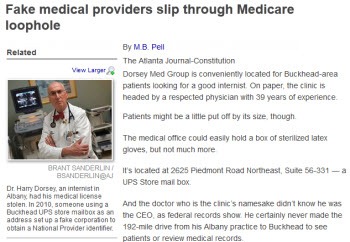
The Atlanta newspaper covers the case of an internist whose stolen identity was used to apply for a National Provider Identification number, then used to incorporate a fictitious Buckhead medical clinic using a UPS Store mail box as an address with “Olga Teplukhina” named as the clinic’s CEO. The paper then did its own investigation, finding 131 CMS-registered medical providers that used an Atlanta UPS Store as their practice location, resulting in OIG looking into at least two dozen of them. One UPS Store-based company was found to have billed Medicare for $1.2 million in fraudulent injections, but is still in business because companies that are barred from billing Medicare can still bill private insurance. Despite the fact that the newspaper created the list of 131 practices using minimal effort and desktop software, CMS says it doesn’t have the technology to recognize private mailboxes since they carry a regular street address. The article says CMS pays claims that it really should deny under existing regulations because it worries that legitimate provider mistakes would unduly delay payments. One doctor complained to CMS that his name was being used to bill Medicare fraudulently, but two years later, the phony provider still has an active NPI that uses the doctor’s name.


Reader Comments

From Diminutive Avian: “Re: Epic. Most people don’t know that Epic has one final implementation check. Judy has to personally give the go-ahead. If she doesn’t like what she sees, she tells the customer she’s pulling out and gives them their money back. That’s another reason why the company has only successful implementations. Unlike publicly traded vendors, Epic is more than willing to walk away if the client is botching the install and ignoring Epic’s recommendations.” I’ve been told that at least two big academic medical centers are in precisely this predicament as we speak. From what I’ve heard, Judy gives the client two choices: (a) agree to let Epic send in a SWAT team to take over the project, or (b) find themselves another vendor.

From BubbaLove: “Re: Duke University. Heard they’re being sued by Deloitte for breach of contract due to mismanagement of the Epic implementation.” Unverified. Perhaps HITEsq or another attorney reader can scour the legal databases and report back. UPDATE: two well-placed sources and one even better second-hand source contacted me to say there’s no truth to this rumor. I’ve also had no volunteers tell me they’ve turned up any legal documents. I’m concluding that the reader’s report report, which they admitted was second hand, is inaccurate –the Duke and Deloitte working relationship hasn’t changed as the project continues.

12-4-2012 7-18-57 PM

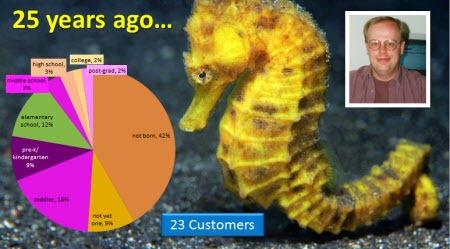
From Current Epic Employee: “Re: Epic’s employee ages. In the November staff meeting it was announced that Epic’s #2 Carl Dvorak has worked for Epic for 25 years. He showed a slide saying that 42 percent of the current employees weren’t born then — i.e. are under 25 — and 78 percent are under 31.” People get nervous at the idea of fresh graduates telling major medical centers how to run their business, but it seems to work and it’s brilliant on Epic’s part. You take new graduates whose career prospects are negligible, plant them in Wisconsin where there aren’t many other jobs, and pay them more than they would make otherwise but less than everybody else pays their more senior HIT people. You train them in skills with minimal value elsewhere, like MUMPS programming, and give them job perks that make them feel like they’re working for Google. The young folks don’t complain much, they don’t bring in all the bad habits they learned working for less successful vendors, and by following the formula they almost always get the job done. That makes Epic almost infinitely scalable unless Midwestern universities stop graduating liberal arts majors with high GPAs. Nobody seems to mind except the experienced people who Epic won’t hire.

From UKnowMe: “Re: IBM. Seems like several high-ranking healthcare people are getting very connected on LinkedIn lately. A sign of change to come?” I don’t know, but I think your observation has business merit for LinkedIn. They could sell the names of companies that have a large percentage of current employees updating their profiles (preparing to bail) or companies newly added to a lot of profiles (on a hiring binge).

From HC IT Advisor: “Re: AeroScout, recently acquired by Stanley Black and Decker. Has issued a cease and desist order to Centrak and will be filing a patent infringement suit. Apparently Centrak is using the patented CCA capability in their new WiFi tags.” Unverified. Calling HITEsq again, either that or I need to sign up for one of the lawsuit databases like PACER so I can look these up myself.


Acquisitions, Funding, Business, and Stock

Health analytics and research company Decision Resources Group acquires the UK-based Abacus, a health economics consulting firm.

12-4-2012 10-02-32 PM

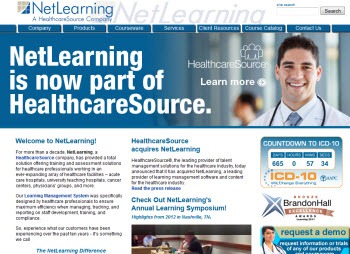
Talent management software provider HealthcareSource acquires NetLearning, which makes learning management software for the healthcare industry.

12-4-2012 9-37-29 PM

Nuance acquires Accentus, an Ontario-based transcription, documenting imaging, and remote coding technology vendor.

An article in the San Antonio newspaper questions whether Gene Powell, chairman of the University of Texas Board of Regents and co-founder of AirStrip Technologies, should have disclosed that Vanguard Health Systems, which the board chose to launch a new $350 million children’s hospital in San Antonio, had a pending business deal with AirStrip at the time. Powell did not vote on the issue, did not recommend Vanguard, and was not legally required to make any disclosure since he owns no Vanguard stock and is not a Vanguard employee, so perhaps it was a slow news day.

The former Big Five accounting firm Arthur Andersen, driven out of business in 2002 for its role as Enron’s auditor, is ordered to pay an additional and final $9.5 million for its similar auditing involvement in the 1999 merger of McKesson and HBOC. Andersen agreed to pay $73 million to settle McKesson HBOC-related class action claims in 2006, with the possibility of contingent payment claims.


Sales

12-4-2012 12-33-35 PM

Children’s Hospital of Central California will implement athenaClinicals, athenaCollector, and athenaCommunicator across its 127-provider system.

Marietta Memorial Hospital (OH) extends its IT services contract with CareTech Solutions for an additional three years.

Twenty-one VA medical centers will implement GetWellNetwork’s interactive patient care solution, including the new Interactive Patient Whiteboard.

12-4-2012 12-26-37 PM

Memorial Health System (IL) purchases the Omni-Patient enterprise master data application and the WebFOCUS BI platform from Information Builders.

MemorialCare Health System (CA) renews and expands its relationship with MedAssets to include GPO services for supplies and purchased services and MedAssets Capital and Construction solutions.

12-4-2012 10-08-07 PM

Huntsman Cancer Institute at the University of Utah selects Wolters Kluwer Health’s ProVation MultiCaregiver EHR.

Contract resource organization NCGS selects Merge’s eClinical OS and clinical trial management solution.

Consulting firm AmpliPHY will provide Wellcentive’s data analytics platform to primary care practices.

Managed care company Amerigroup Corporation chooses McKesson Clear Coverage for point-of-care utilization management, coverage determination, and network compliance.

Michigan Health Information Network Shared Services signs with HIPAAT International for technology that allows patients to control the sharing of their PHI and allow them to view an audit log of who has viewed it.


People

12-4-2012 7-09-38 AM

Qualis Health hires David Chamberlain (Cardiac Science and Criticare Systems) as CIO.

12-4-2012 11-56-27 AM

Saint Francis Hospital and Medical Center (CT) names Sudeep Bansal, MD as the organization’s first CMIO. 

12-4-2012 7-49-18 PM

Todd Johnson, former president and CEO of Salar and SVP of Transcend Services/Nuance after Salar’s acquisition, is named CEO of HealthLoop.

12-4-2012 8-41-37 PM

Michael Waldrum, whose roles at the UAB Health System included a five-year stint as CIO through 2004, is named CEO of University of Arizona Health Network.

12-4-2012 9-43-44 PM

Charlie Baxter, AVP of Iatric Systems and former Army captain, died Friday at 48. The guest book is here.


Announcements and Implementations

Allscripts EHR customer Primary Physician Partners (CO) becomes the first practice to connects to the CORHIO.

The Indiana HIE says that more than 750 physicians and 174 practice sites have agreed to publicly post their clinical quality measure scores on the Quality Health First Program’s public reporting website.

12-4-2012 10-09-35 PM

Imprivata announces that more than 250 healthcare organizations enrolled in its Cortext HIPAA-compliant, pager-replacing text messaging solution its first 60 days of release. Pricing ranges from free (unlimited users, unlimited messaging, unlimited photo messages, standard support, 30 days’ archiving) to $5 per user per month (upgraded support and archiving).

Elsevier integrates its ExitCare library of discharge instructions and patient education with Meditech’s EHR.

ICSA Labs and IHE USA unveil a certification program to test and certify the security and interoperability of HIT, with three tiers of certification: conformance to IHE profiles, demonstrated interoperability among disparate systems, and validated implementations of deployed certified technologies. Participants in January’s 2013 NA Connectathon in Chicago can register for testing at the event.

12-4-2012 6-46-59 PM

Montrue Technologies releases a free version of its Sparrow EDIS iPad-based emergency department information system. I interviewed Co-Founder and CEO Brian Phelps, MD earlier this year.


Government and Politics

12-4-2012 11-34-27 AM

Recovery auditors collected $2.2 billion in overpayments in fiscal year 2012 and gave providers $109 million in underpayments. Net 2012 corrections were $2.4 billion, compared to 2011’s $939 million.

Congressman Mike Honda (D-CA) introduces the Healthcare Innovation and Marketplace Technologies Act to foster more healthcare innovation through the development of marketplace incentives, challenge grants, and increased workforce retraining. The bill would also establish an Office of Wireless Health at the FDA.


Innovation and Research

A Microsoft Research documentary shows the organization’s work in using technology to fight tuberculosis in India, including development of a biometric monitoring system to make sure patients keep their healthcare appointments and systems that trigger an SMS message to a manager when a patient misses scheduled medication doses. Treatment is effective and straightforward, but requires more than 40 clinic visits in six months. Non-compliance causes TB spread, drug resistance, and nearly 1,000 deaths per day in India.

12-4-2012 8-49-58 PM

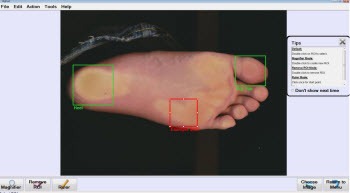
UCLA engineering school researchers create BigFoot, a software package that allows people with chronic foot problems to track their conditions using a PC and flatbed scanner.


Other

Streamline Health, which acquired Atlanta-based Interpoint Partners a year ago, will move its corporate headquarters from Cincinnati to Atlanta. The company will continue to operate the Cincinnati and New York City offices.

12-4-2012 8-28-41 PM

Cerner analyst Staci Klinginsmith is crowned Miss Kansas USA.

University of Virginia Medical Center warns patients that a mobile device used by on-call IV pharmacists in its home health agency is missing and contains patient information, including diagnoses, medications, and Social Security numbers used as health insurance ID numbers.

HIMSS, responding to OIG’s recommendation that the bar for Meaningful Use payments should be raised via pre-payment reviews, improved EHR MU reporting, and improved EHR reporting certification, supports CMS developing guidelines that will help providers prepare and retain audit-related documentation. In other words, like CMS, HIMSS isn’t a fan of pre-payment reviews.

I’ve spent a considerable amount of money and energy on programming workarounds required to make HIStalk work on the incredibly buggy and standards-breaking Internet Explorer, but I’ve noticed its gradual improvement. I’m encouraged that Microsoft gets the lack of browser love it receives and can even poke fun at itself with a fun “it sucks less” video (above) and a new site, www.browseryoulovetohate.com. I’m checking it out in Firefox, of course, since I’m not that forgiving of IE’s past transgressions, but I may download the IE10 beta just to see what all the fuss is about.

A new JAMA article finds that the average dentist now out-earns the average physician, with pharmacists not too far behind.

12-4-2012 7-50-34 PM 12-4-2012 7-59-43 PM

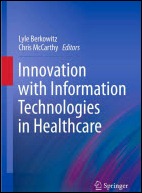
Lyle Berkowitz, MD (Northwestern University) and Chris McCarthy, MPH, MBA (Kaiser Permanente Innovation Consultancy) are editors of the newly published Innovation with Information Technologies in Healthcare. DrLyle says it tells the stories of 20 organizations who are HIT innovators in improving care quality and value, with details that he describes as “a big cookbook of recipes on how to innovate with HIT” divided into sections covering electronic medical records, telehealth, and advanced technology. I took a quick skim over a couple of the sample chapters he sent over and it’s meaty, without the usual fluff that makes some HIT books seem like a handful of good ideas and thoughts that were shamelessly padded to justify an author credit and a higher selling price. The book is $74.14 on Amazon and you can use the Look Inside! option to try before you buy.

A Colorado Public Radio article covers EMR adoption, showcasing a five-physician practice that expected its new EMR to increase patient capacity by 25% and get its bills out more quickly. That turned out to be wishful thinking on the salesperson’s part. They never got back up to more than 80 percent of their pre-EMR workload, they found that their Medicare patient volume was too low to qualify for incentive payments, one doctor quit over frustration with the EMR, and the remaining four partners were on the hook for the $200,000 they had borrowed to buy it. The end result: they had to sell their practice.

Use of mobile technology to view patient information and to access non-protected health information is on the rise, according to a HIMSS mobile technology survey. Key uses include collection of data at the bedside, bar code reading, monitoring data from medical devices, and capturing visual representation of patient data. Funding and security concerns are the top barriers to mobile technology adoption.

12-4-2012 12-53-22 PM

Athenahealth’s Jonathan Bush channels Dr. Mostashari on Fox Business wearing a holiday-red bowtie and pitching healthcare technology.

12-4-2012 2-33-03 PM

A local paper shares the story of a clerical supervisor in a British Columbia hospital who was conducting training on the Vocera communication system when the device issued a Code Orange, warning of an impending flood. Clinical staff moved patients to safety just before a wall collapsed in a flood of water, while the supervisor scrambled to save paper charts and the hospital’s stockpile of 75 Vocera badges.

Weird News Andy is really fired up about use of the Liverpool Care Pathway for palliative care in the UK. An audit of records from 178 NHS hospitals finds that nearly half of the dying patients who had life-saving treatment (drugs, fluids, food) withdrawn via the protocol weren’t told that fact, 22 percent had no documented evidence that their care and comfort was maintained, and a third of the families didn’t receive literature explaining the process. A proposal is on the table to require consulting with the patient or family before initiating the pathway, which leads to patient death in an average of 29 hours.

WNA could contribute only a “sheesh” to this article, which finds that Dallas mothers and daughters are bonding over cosmetic surgery procedures, often motivated by reality TV shows that make that practice seem normal.

A former Microsoft manager takes advantage of newly legalized marijuana in Washington by opening a “premium marijuana” retail business, expressing his desire to position his brand of weed like fine brandy or cigars to high-income baby boomers. He says, “Think of us as the Neiman Marcus of marijuana … the buzz is in the air.” He says he came up with the plan while high and will name the business after his marijuana-farming great-grandfather.

12-4-2012 9-23-41 PM

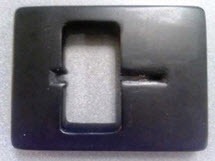
In Brazil, an apparently computer-savvy thief robs an ATM by replacing its USB security camera with a Plug and Play keyboard and a USB stick, then restarts the machine and keys commands to withdraw all its cash. He was caught. The article mentions the recent discovery of several ATMs at Inova Fairfax Hospital (VA) that were rigged with “ATM skimmers” that fit over the card slot, capturing the card’s number and in some cases using video recording to capture the user’s PIN.


Sponsor Updates

12-4-2012 12-10-39 PM

  • Aspen Advisors hosted 62 associates at its annual retreat in Fort Lauderdale, which included a run fun that raised $1,000 for the University of Miami Health System.
  • Besler Consulting representatives will present at upcoming New Jersey and Metropolitan Philadelphia HFMA seminars.
  • Santa Rosa Consulting announces E2E Activation Support, a service line that will provide elbow-to-elbow EMR go-live support.
  • The Black Book Rankings names DrFirst the top vendor for e-prescribing and recognizes Emdeon for outstanding developments in clinical exchange solutions. Other HIStalk sponsors earning honors include Allscripts, e-MDs, Vitera, Aprima, SRS, Quest MedPlus Care 360, and McKesson.
  • A local paper profiles eClinicalWorks CEO Girish Kumar Navani and the success of his company.
  • AT&T names its top five healthcare trends for 2013, which emphasize growth in mobile apps and telehealth.
  • Sacred Heart Health Systems (FL/AL) shares how Iatric Systems’ Security Audit Manager has aided privacy compliance by capturing audit log data from its Siemens, McKesson, and Picis systems. 
  • Three Informatica customers win Ventana Research Leadership Awards, including HMS Holdings (IT Leadership Award for Analytics and Overall IT Leader); Moffitt Cancer Center (Business Technology Award for Big Data); and  Ochsner Health System (IT Leadership Award for Information Management.) Informatica’s PowerCenter Big Data Edition also won the Ventana Research Technology Innovation Award.
  • Mark Van Kooy, Myra Aubuchon, and Dawn Mitchell of Aspen Advisors present a December 5 Webinar on addressing EMR value with a hospital board.
  • 3M Health Information Systems offers a Webcast featuring 3M CMIO Sandeep Wadhwa’s presentation on improving ACO efficiency and outcomes.
  • Cumberland Consulting promotes Charles Taylor to principal and Jose Gonzalez to executive consultant.
  • The Advisory Board Company’s Southwind program recognizes Dignity Health (CA), Adirondack Region Medical Home Pilot (NY), and Lancaster General Health (PA) for successful physician partnerships.
  • Covisint releases a white paper that outlines the evolution, growth, and future of HIEs.
  • Beacon Partners employees assemble 108 care packages for troops during the company’s annual meeting.
  • Wellcentive’s VP of Product Strategy Mason Beard discusses interface strategies for population health management in a blog post. 

Contacts

Mr. H, Inga, Dr. Jayne, Dr. Gregg.

More news: HIStalk Practice, HIStalk Connect.

Curbside Consult with Dr. Jayne 12/3/12

December 3, 2012 Dr. Jayne 5 Comments

clip_image002

There’s been a lot of chatter (via Twitter and other social media) about the hospital battle going on in Boise, Idaho. More than half of the physicians in town are employed by St. Luke’s Health System or a competitor. Independent physicians have shared allegations of skewed referrals, rising patient costs, and other unfair practices.

I’ve never been to Idaho, but after reading several articles about the situation, I find it not much different than what I’m seeing in my own market. Certainly there is some degree of this going on just about everywhere, regardless of whether health systems are non-profit or for-profit. Some control over referrals stems from value-based care initiatives and contracts where providers and their sponsoring institutions assume financial risk. Other moves seem to be merely profit-motivated.

In addition to demanding referrals, health systems are demanding that their member physicians refer exclusively to hospital-owned laboratory and ancillary services unless the patient refuses. Patients are left holding the bag, as they may have separate co-pays and/or deductibles for hospital-based (as opposed to reference lab) services.

I’ve personally had issues with hospital-based radiology departments whose cumbersome processes take complex registration and billing inefficiencies to a new level when they try to merge the hospital way of doing things with an ambulatory patient’s expectations. The hospital where I am on staff charges a screening mammogram at more than three times the charge of the freestanding radiologist-owned imaging center (which also provides private waiting areas and on-site immediate results as well as being a bargain). Since I’m on an insurance plan where I have a fixed amount of money to spend on preventive services, guess where I’m headed?

Let’s also talk about provider-based billing, where the hospital assumes control of a practice, names it a “hospital outpatient clinic,” and starts billing a facility fee in addition to the fee for provider services. I experienced this recently when a minor dermatology procedure (for which my ambulatory practices charge about $100) showed up on my bill as several hundred dollars because it was performed by a member of the medical school faculty. Practically speaking, her practice is no more a “hospital department” than mine is – despite the hospital’s assertion that Joint Commission accreditation and being part of a monstrous bureaucracy merit a different charge structure.

Unfortunately, overcharging individual procedures and services is just the tip of the iceberg. CBS ran a story this weekend on Health Management Associates. The story alleges coercion of emergency department physicians to admit patients who didn’t require admission. An interesting component includes the use of a software program to order extensive panels of tests on patients based largely on their ages rather than their presenting complaints or histories. It’s a fair bet that other organizations could be accused of the same thing.

Although my hospital’s emergency department intake process contains numerous wasteful components (like performing suicide screening on every patient who walks through the door – even a three-year-old needing stitches from tripping into a coffee table) I’ve never been pressured to increase admissions. Frankly, I’m not sure where we’d put them, as we’re constantly waiting for beds upstairs and end up boarding patients in the ED hallways. In my opinion, our major source of waste is the practice of defensive medicine, which results in overuse of tests and imaging because physicians are afraid they’ll be sued if they miss something.

Earlier in my career when I was in full-time primary care practice, I experienced a lot of pressure. The first few years it was personality-driven: the chief of staff complained I wasn’t referring enough to him. In fact, I was referring to one of his junior partners who started at the hospital at the same time I did and with whom I had better rapport. The hospital continued to reinforce that they wanted to earn our business and our referrals, even to the point of purchasing a high-quality competitor specialty practice to whom most of our primary care practices referred. Once they were in the corporate fold, however, referrals were expected and even demanded.

Back in the day, we knew our hospital tracked referrals for imaging services. A couple of times, I received cards thanking me for my referrals when my volumes had increased. I didn’t mind that so much, but now our hospital sends detailed reports to providers comparing their referral volumes to that of their peers. I find that extremely distasteful. The provider group’s administrators also mine data in the EHR and distribute referral reports that highlight which providers are referring out of the system and which are “loyal.”

No matter how recently we completed training, this certainly isn’t what any of us signed up for. I’m not delusional enough to think that Marcus Welby is still out there somewhere, but there has to be something better than this.

Have a story about a health system that earns its referral business rather than demanding it? E-mail me.

Print

E-mail Dr. Jayne.

EHR Design Talk with Dr. Rick 12/3/12

December 3, 2012 Rick Weinhaus 6 Comments

The Snapshot-in-Time Design

There are two basic EHR designs for presenting the patient information that accumulates over time (see my last post).

By far, the most common EHR design solution is to display a summary screen of the patient’s current health information, organized by category (Problem List, Past Medical History, Medications, and so forth). Past information is available in date-sorted lists or indicated by start and stop dates.

The other design solution is to display a series of snapshots that capture the state of the patient’s health at successive points in time. While this design was at the core of paper-based charting (see Why T-Sheets Work), it is an uncommon EHR design.

In my opinion, the snapshot-in-time design has three advantages:

  • It supports our notion of causality – we see how earlier events affect subsequent ones.
  • The patient’s story is presented as a narrative that gradually unfolds. Humans excel at using narrative to organize and make sense of complex data.
  • Perhaps most importantly, a series of visual snapshots allows us to makes sense of abstract data by organizing it in visual space.

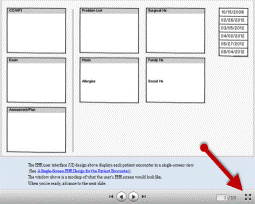
The following EHR screen mockups display a patient’s story as snapshots in time. While these illustrations are for an ambulatory EHR, the design works equally well for hospital-based systems.

To see the mockups, click on the PowerPoint link below. Once PowerPoint is open, expand the view by clicking on the full screen button in the lower right corner (indicated by arrow).

clip_image002


Rick Weinhaus MD practices clinical ophthalmology in the Boston area. He trained at Harvard Medical School, The Massachusetts Eye and Ear Infirmary, and the Neuroscience Unit of the Schepens Eye Research Institute. He writes on how to design simple, powerful, elegant user interfaces for electronic health records (EHRs) by applying our understanding of human perception and cognition. He welcomes your comments and thoughts on this post and on EHR usability issues. E-mail Dr. Rick.

Monday Morning Update 12/3/12

December 1, 2012 News 12 Comments

11-30-2012 6-26-29 PM 

From NoNamesPls: “Re: MD Anderson. They will replace not only their in-house developed EMR, but also commercial systems for pharmacy, lab, RIS/PACS, and ADT/Scheduling. Epic and Cerner are the frontrunners.” Another reader forwarded me the internal e-mail from the deputy CIO and the CMIO, which says MDACC spends $20-$30 million per year on its homegrown ClinicStation but still can’t keep up with federal regulations. The RFP goes out in January. It’s interesting that the e-mail suggests that they’re happy with the patient benefits of their existing system, but will spend hundreds of millions of dollars to replace it for non-patient reasons. Somehow you have to wonder if that’s really a good thing.

12-1-2012 7-59-39 AM

From Upon Further Review: “Re: three hospitals of Dignity Health (formerly CHW). Scrapping their Meditech 6.0 and Medhost implementation that was supposed to start going live last week and moving to Cerner. Go-live required by January 1, 2014.” Above is part of Friday’s letter sent to employees by Chuck Cova, president and CEO of Marian Regional Medical Center, which says, “We are not confident in the Medhost and Meditech system’s meaningful use and ability to perform at a high level for optimal use.” It went down to the wire: Medhost was to supposed to be brought live starting November 26, but the project was delayed on November 13 and then killed on November 30.


DZA MD replied to my Time Capsule editorial from 2008 in which I suggested that patient encounters be recorded on video now that multimedia storage is cheap (security cameras are running everywhere, after all, and your encounters with Las Vegas card dealers are recorded in multi-angle splendor). Here’s what DZA MD had to say:

Imagine how well behaved everyone would suddenly be! Patients and caregivers. Both are in need of civility IMHO.

Though certainly not the first, I proposed this solution to patient care documentation to interested academics at my institution  round the millennium. It was not taken seriously and was viscerally scary in a dot.gov sort of way, but the time has arrived. Some consequences (positive):

  • Documentation. Real-time video and audio. Obvious. Supplement with dictated or keyed notes into the EMR, capturing decision-making and care coordination / consults. Even online research pertinent to the visit (can sarcoidosis cause GI symptoms?) could be incorporated into the record (browser history), supporting decision making and due diligence. These AVI files are completely portable without need for interface language.
  • Billing. How about simply paying an hourly rate for time spent, like lawyers? Time stamps on audio and video, post-visit data entry and online patient care research would serve as indisputable evidence of billable time.
  • Legal. ‘Nuff said. Patients who opt in to AV documentation assent to legal arbitration. And benefit from reduced insurance costs associated with this documentation product. Patients who opt out must use the traditional tort pathway, but are exposed to the added expense of that course of action.
  • Patient education and self care. An electronic copy (edited or not) of the visit can be provided to the patient. Presumably the interaction involves patient education elements from the clinician.
  • QA. NLP can sort through audio files for key words related to quality metrics. AV files can be used for clinician feedback for both physical exam skills as well as interpersonal behavioral skills.
  • Cost.  Memory is cheap. AVI files are portable, searchable, and easily indexed and archived. Insurers could develop pilot programs using this technology to study cost impacts in preparation for wide release if promising.

I hand-picked this week’s Spotify playlist with music sharing only one attribute: I like everything I included. On it: Pond, RPWL, The Killers, Band of Horses, Marina and the Diamonds, Turtle Giant, and a searing live version of “Little Wing” from Clapton/Winwood. Here’s a trivia throw-down: what movie (one of my favorites) opens with Tune #13 as buses drive by in the night? If you want to play along at home, I also created this empty playlist to which you can add your song du jour — I’ll listen to them and choose some for next week’s playlist (it’s like a clinical inbox for music referrals).

 11-30-2012 6-45-18 PM

Welcome to new HIStalk Platinum Sponsor Fujifilm, which offers the Synapse product line (RIS, PACS, 3D suite, virtualization, managed services, and teleradiology RIS). The Web-based Synapse radiology management solution provides hospitals and outpatient imaging facilities such capabilities as integrated dictation, a referring physician portal, electronic dashboards, mammography reporting, peer review that meets ACR guidelines, and critical result notification, all included at no extra cost. Users can craft their own workflows via built-in tools for instant messaging, automated e-mail notification, and digital forms creation. They can also use drawable consent forms, inventory tracking, and real-time eligibility checking. The RIS integrates with every PACS on the market, including of course Synapse PACS. It even includes teleradiology capabilities. You can choose Synapse RIS as a turnkey system that includes software, hardware, hosting, system management, upgrades, and optional disaster recovery services and off-site archiving. Customers pay by exam volume rather than per user or per site, which makes it affordable for facilities ranging from small imaging centers to multi-facility enterprises. Thanks to Fujifilm for supporting HIStalk.

Here’s an overview of Fujifilm’s Synapse RIS that I found on YouTube.

Thanks to the following sponsors, new and renewing, that have recently supported HIStalk, HIStalk Connect, and HIStalk Practice. Click a logo for more information. 

11-30-2012 7-26-48 PM 
11-30-2012 7-24-37 PM 
11-30-2012 7-15-05 PM 
11-30-2012 7-18-33 PM
11-30-2012 7-16-38 PM
11-30-2012 7-25-31 PM 
11-30-2012 7-28-03 PM 
11-30-2012 7-22-54 PM 
11-30-2012 7-23-44 PM
11-30-2012 7-19-44 PM

 11-30-2012 6-00-37 PM

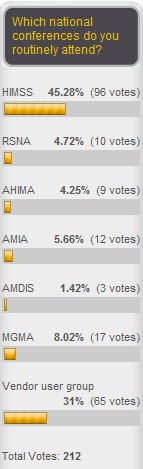
The vast majority of survey respondents believe that transcription is a commodity service differentiated primarily on price. New poll to your right: should the government require more upfront proof of attaining Meaningful Use before before sending payments?

Few people buy traditional software (i.e. PC programs in a box instead of apps in a Web store) these days, and those who do are rarely delighted. I’m happy to report an exception. I bought the just-released Dragon Naturally Speaking 12 and it’s amazing. The accuracy approaches 100 percent and it’s quite fast. I bought the premium version from Amazon for $126, which also includes the ability to transcribe pre-recorded dictation, sort of like Nuance’s eScription server-based speech recognition (the Home Version is only $50). You can speak at least three times faster than you can type, not to mention saving your wrists. I’ve used previous versions as well as the Windows 7 speech recognition and Siri and there’s no comparison. (Disclosure: Nuance is a sponsor and has offered me free copies several times, but I paid out of my own pocket so I wouldn’t feel bad about saying I hated DNS if that was the case). DNS 12 is one of the most amazing things I’ve ever seen run on a PC, although as critics always point out, you can’t use it with an EMR since that requires the more expensive medical version. But if you want to feel like Bill Shatner sprawling back in a chair on the Enterprise bridge and barking out orders for the computer to obey, you need it. It must be a miracle for people with handicaps who can’t use computers in traditional ways.

Scanadu, the 20-employee company whose tagline is “Sending your Smartphone to Med School,” announces that it will release three consumer tools by the end of 2013. The $150 Scanadu Scout is held to the temple and in less than 10 seconds, checks pulse, heart activity, temperature, and pulse oximetry and sends the results via Bluetooth to its smartphone app. Project ScanaFlo is a disposable cartridge that turns a smartphone into a urine analysis reader (pregnancy complications, gestational diabetes, kidney failure, or UTI). Project ScanaFlu is a saliva tester that detects cold symptoms by checking for strep, influenza, adenovirus,and RSV. Scanadu is best known for working on a tricorder-like health assessment device and these modules are the first components of it. Above is a Friday interview with the co-founder and CEO, who seems to be at a loss of how to explain medical principles to the sing-songy twenty-something interviewer who nods intently while saying “sort of “ and “you know” a lot while clearly not understanding most of what he’s saying.

It appears that Blackstone Group has become the frontrunner to acquire Allscripts, although the company is rumored to be holding out for more money than Blackstone thinks it’s worth. Shares dropped 11 percent Friday, having lost most of the gains that occurred after rumors of the company’s sale slipped out in late September. The other bidders were claimed to be Carlyle Group LP and TPG Capital Management LP. I don’t understand SEC rules, but this business of running newspaper stories quoting insiders about who’s making offers and at what price sure seems to open the door for cheating, like intentionally leaking out news that will move the share price up or down in a way that will benefit the leaker.

CareFusion announces that Children’s Hospitals and Clinics of Minnesota has gone live on wireless connectivity between its Alaris smart IV pumps and Cerner Millennium.

Health Management Associates warns investors that a “60 Minutes” report is expected to claim that the for-profit hospital operator’s contracted ED doctors were pressured to admit patients who didn’t need to be hospitalized. Both HMA and Community Health Systems have disclosed in SEC filings that several government agencies are following up on whistle-blower allegations by requesting admissions information. HMA says it thinks authorities want to know how more about its vendor-provided ED software and whether it was programmed to admit patients unnecessarily. Tenet Healthcare had accused competitor CHS in early 2011 of using ProMed Clinical Systems software to boost its admissions in a lawsuit, but a judge dismissed the claim. HMA is also a user of ProMed’s Web-based vEDIS software, which is ONC-ATCB certified. I seriously doubt that ProMed makes admission decisions that the ED docs can’t override, so if there’s a smoking gun, I’d expect to find it in internal e-mails, meeting minutes, or in interviews conducted with the actual ED docs.

12-1-2012 7-52-49 AM

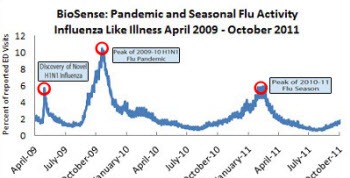
Kansas Health Information Network becomes the first HIE to connect directly to the CDC’s BioSense outbreak tracker, allowing hospitals to quickly share information about threats and report them to CDC to investigate possible outbreaks.

Advanced Data Processing announces that it has fired an employee who admitted stealing data from an ambulance billing system it runs and selling it to a criminal group suspected of using the information to file fraudulent tax returns to collect refunds. The information came from Cape Fear Valley Hospital Health System (NC). The same scam has led to the arrest of three people in Florida, at least one of them an employee of Florida Hospital Tampa, who used hospital patient billing information to collect $1.5 million in IRS tax refunds.

Why can’t American healthcare strikers be this much fun? Public health workers in Spain protest government spending cuts and healthcare privatization by performing a flash mob dance outside La Paz Hospital in Madrid.

GE CEO Jeff Immelt says, “The next holy grail is about decision support and analytics.”

A rare Weird News Andy weekend update: in France, a man is awarded $250,000 in his lawsuit against GSK, maker of the Parkinson’s drug that he claims caused him to become addicted to gay sex and gambling. The suggestion that gay sex is a shameful addiction that requires compensation is kind of insulting, but apparently the jury bought it.

Bizarre: a pharmacist pleads guilty to planting mercury in areas of Albany Medical Center Hospital (NY) in the hopes that the ensuing panic would drive patients away. Police searching the home of the man, who was upset that the had hospital billed him for treatment, found child pornography, Nazi memorabilia, and a stockpile of guns and ammunition.

Also bizarre: a Washington veterinarian and aspiring EMT is charged with animal abuse after former employees claim he punched and choked animals under his care. He had already admitted to stealing and using drugs from his practice. The owner of one animal that was allegedly mistreated summarized, “Well, I wouldn’t want him to be my first responder. Golly.” The doctor’s Facebook blames disgruntled former employees and lawyers trying to change the state’s veterinary malpractice laws, which limit plaintiffs to recovering the “market value” of their animal with no pain and suffering award available for the lawyers to skim their 33 percent of.

Vince covers the fascinating HIS-tory of CPSI this time around, getting some help from Troy Rosser, SVP of sales there.


Contacts

Mr. H, Inga, Dr. Jayne, Dr. Gregg.

More news: HIStalk Practice, HIStalk Connect.

Time Capsule: I’ll Alert the Media: Why Not Use Cheap, Easy Multimedia to Store Patient Information?

November 30, 2012 Time Capsule 1 Comment

I wrote weekly editorials for a boutique industry newsletter for several years, anxious for both audience and income. I learned a lot about coming up with ideas for the weekly grind, trying to be simultaneously opinionated and entertaining in a few hundred words, and not sleeping much because I was working all the time. They’re fun to read as a look back at what was important then (and often still important now).

I wrote this piece in February 2008.

I’ll Alert the Media: Why Not Use Cheap, Easy Multimedia to Store Patient Information?
By Mr. HIStalk

mrhmedium

Clinical systems vendors don’t seem to have noticed that it’s now easy and cheap to record and store photos, audio, and video on computers. Everybody’s snapping a digital photo, recording MP3 audio, or using a cheap camcorder, camera, or cell phone to make a video recording that, while not exactly “Lawrence of Arabia” quality, is plenty good for nearly every other purpose. Storage isn’t a problem, either, now that you can dash into Best Buy and leave with a terabyte of external disk under your arm for $229.99, according this week’s ad.

Maybe doctors haven’t noticed either. Otherwise, why wouldn’t they be retooling their practices to take advantage of cheap media? A picture is easily worth a thousand words, especially at today’s transcription rates. Doctors will peer endlessly and intently at diagnostic images and try to describe them in great detail with words, but are happy to read another doctor’s description of a wound or surgical procedure instead of demanding to see the actual photo or video of it.

Having something more than a mountainous chart (most likely paper, but possibly either electronic or an ugly hybrid of both) would sure be an advantage in trying to remember what the patient said two visits ago, what their infected eye really looked like, or what their exact words were in describing their chest pain.

Instead, doctors jot down a few illegible notes, taking time away from the patient to perform that secretarial work they complain bitterly about when it’s CPOE or e-prescribing.

Medical schools must be training them wrong. They’re documenting care and interventions like it was 1908. If this was Playboy, there would be no centerfold, just a wordy description to go along with the World Peace interview.

It would sure be nice to have the patient’s information captured in the EMR in something other than black letters on a white background. “Nice” is being too kind. It’s just ridiculous that our supposedly savvy move from paper to computer means only that the screen looks just like the paper.

I could rattle off hundreds of clinical benefits, but instead, I’ll play my most convincing trump card first and save us both the time: lawsuits.

Lawsuits are always “he said, she said.” The patient claims they weren’t warned, or the doctor says they weren’t told, or the surgeon swears he removed the sponge that somehow stayed inside the patient. Healthcare volumes are so high that no one remembers accurately, if they even remember at all.

That guy with the infected toe that the ED doc saw for 90 seconds comes back without the toe, but with a lawyer. There’s just no way for the doctor to look good trying to decipher a ratty pile of badly written paper in front of a puzzled jury and a mad-dog ambulance chaser.

Imagine if every exam room had a constantly running camera recording audio and video. Everything the patient says, everything they are told, every action that was performed – all recorded perfectly. At the patient’s next visit, it would take seconds to call up a fast-forward version, prepping the doc to impress the patient by noticing that her hair has been attractively cut or his wedding ring is now an untanned finger line.

If the lawyer is in tow (no pun intended), there is no gray area. Every scrap of information is right there in low-res video and audio, plenty good to stop most lawsuits cold (unless the doc is a quack, in which case the cameras and microphones should be avoided like the plague).

It’s as easy and cheap as having multiple security cameras in an office building or a Nanny-Cam. Privacy issues would need to be worked out, but those relating to technology and cost are done deals.

Today’s media can capture every nuance of physical fact, verbal cues, and the dynamics of a particular interaction, all permanently, cheaply, and easily retrievable. For that reason, it seems ideal for the practice of medicine, nursing, and other healthcare delivery, not to mention the educational and performance aspects. Maybe everybody’s just too busy to have noticed.

An HIT Moment with … Patricia Stewart, Principal, Innovative Healthcare Solutions

November 30, 2012 Interviews Comments Off on An HIT Moment with … Patricia Stewart, Principal, Innovative Healthcare Solutions

An HIT Moment with ... is a quick interview with someone we find interesting. Pat Stewart is a principal with Innovative Healthcare Solutions of Punta Gorda, FL.

11-30-2012 4-03-08 PM

What kinds of projects are clients looking for help to complete these days?

Many clients are struggling simply to meet such basic IT objectives as maintaining and increasing IT services to support the organization’s business and clinical strategic goals, optimizing investments in IT so the organization receives maximum value for their investments, and mitigating risks to business processes and patient care associated with IT. All while pushing to meet Meaningful Use requirements, dealing with the impact of healthcare reform, and understanding the developments in the purchaser and payer arena. These are broad initiatives and there is pressure to move forward in all of them concurrently.

Organizations are being bombarded with a host of industry changes — accountable care and medical home models, Meaningful Use and health information exchanges, ICD-10, and the call for business intelligence. Now more than ever, healthcare organizations need solid IT strategies. Typically, however, there are limited IT resources to support these strategies. This has created many opportunities for our consulting services.

The majority of our engagements fall into three main categories. Engagements to help clients implement one or more of McKesson’s Horizon suite of products with the goal of reaching MU. Engagements to help clients implement a new system, such as Epic or Paragon. Engagements to help clients transition and support their legacy McKesson applications while they convert to a new vendor, such as Epic or Paragon. We are also seeing more requests for assistance in system and workflow optimization and analytics projects.

What are some innovative implementation ideas you’ve used or seen?

It’s still not common to manage a project from start to finish according to an overall business strategy. Or for IT groups to collaborate with stakeholders to understand their needs and challenges. These practices create innovation and success.

One of our clients created co-management arrangements with each physician service line that included quality of care, patient satisfaction, value analysis studies, and EMR adoption. They established strong teams with lean experts to develop implementation approaches for issues that affect physicians directly, such as CPOE, bedside barcoding, and medication reconciliation. The teams design the implementation approach, success factors, and metric-driven financial rewards for physicians.

Clients have created dedicated teams for testing and identifying build and process issues. They have pulled operations people into a workflow and process team to identify gaps between current and future state, to make decisions about process changes, and to provide go-live support. Some clients have cut back on classroom training and instead allocated those resources for "at the elbow" user support during go-live, which also makes financial sense since these resources can be cheaper than the cost of implementation specialists. 

The company has been around for several years. During that time, the Epic business has taken a big swing up and lots of people have formed small consulting companies to take advantage of the demand. How do you see that market and your competition changing in the next few years?

Our management team has been working in the HIT environment for many years and we have never seen the kind of market growth we’re seeing now. This demand has led to a rush of people entering the consulting profession, and — as you mentioned — a lot of new consulting companies. While we’ve seen more people choosing to become consultants, we haven’t seen a corresponding increase in the experience and skill levels these individuals bring to the table.

Unfortunately, financial opportunities instead of missions, goals, and aptitude are leading people to the market. We think it is inevitable that the market will slow down, and when it does, there will be consulting companies that drop out of the market. Few are built for long-term survival.

We credit our success to a corporate mission, culture, and identity based on simple core values: do the right thing for our clients, do the right thing for our consultants, and never forget there is a patient at the end of what we do. 

What are the best jobs in healthcare IT right now, and which ones would you advise industry newcomers to prepare for?

System and process optimization. Implementations over the last few years have occurred under stressful conditions with short timelines and limited resources. System implementations have not aligned with an organizational strategy. For organizations to be successful, they must understand how their systems impact business operations. Organizations must answer the questions: what value are we getting from the systems and how are they supporting our strategic goals? What processes must change to maximize our investments and achieve our goals?

One way facilities can meet system optimization resource needs is by creating transitional programs that take strong clinical experts and train them in application support roles. With shrinking inpatient census and greater focus on clinical quality and readmission initiatives, organizations can put clinical experts with IT aptitude on a path to IT knowledge. Facilities can grow bench strength from within. It is a long-term strategy and requires investment, but we believe it’s better than searching for talent – expensive talent – that isn’t part of the organization’s culture.

Jobs that leverage data to manage patient populations and outcomes. These jobs require an understanding of the system design so the right information is captured. Their roles and responsibilities will include using predictive analytics to proactively manage outcomes and maintain reimbursement.

What subtle industry trends are you seeing now that will become important down the road?

Systems and IT resources must support initiatives that allow healthcare to transition into community settings. We must focus on managing population health and creating effective support systems to transition patients into community care settings

The emergence of the Chief Clinical Information Officer. The melding of CMIO and CNIO for a less siloed approach.

Increased ability to adopt and manage change. With the implementation of so many complex systems, healthcare organizations and providers now have a wealth of data. With it comes a greater responsibility to respond quickly to conditions that affect patient outcomes, positively or negatively. To meet that responsibility, healthcare organizations and providers must be more nimble than ever. They must adapt efficiently and effectively to changing conditions. Having years or even months to implement changes and gain adoption will not be an option.

Morning Headlines 11/30/12

November 30, 2012 Headlines 1 Comment

Medicare Is Faulted on Shift to Electronic Records

A review by the Office of the Inspector General finds that Medicare is not adequately overseeing the Meaningful Use program, leaving it vulnerable to paying incentives to Eligible Providers and hospitals that have inaccurately claimed their compliance.

After All the Time and Money is Invested, Will e-Health Ever Deliver on its Promise?

A Toronto newspaper reviews Canada’s ambitious and expensive e-health program that still leaves it behind much of the industrial world, with 80 percent of physician practices still using paper charts.

MIT Media Spin-Out Ginger.io raises $6.5 Million Series A Round

The startup, which summarizes its smartphone-based population management tool as a “check engine” light for humans, raises its investment total to $8.2 million in a round led by Khosla Ventures.

Guidance Regarding Methods for De-identification of Protected Health Information in Accordance with the Health Insurance Portability and Accountability Act (HIPAA ) Privacy Rule

HHS issues a guide describing acceptable method for de-identifying patient information to comply with HIPAA’s privacy rule.

Hospitals Get New Grades on Safety

Leapfrog Group issues its second set of hospital grades on patient safety, with a significant number of hospitals moving two letter grades up or down due to new data and an adjusted methodology. One of the 25 hospitals that earned an F is Ronald Reagan UCLA Medical Center, while Cleveland Clinic’s grade slipped from a C to a D.

News 11/30/12

November 29, 2012 News 7 Comments

Top News

11-29-2012 8-05-24 PM

The Office of the Inspector General finds that CMS has not implemented adequate safeguards to verify the accuracy self-reported EP and hospital data for the MU program. It also says that the audits CMS plans to conduct after the fact may not work, either. OIG recommends that CMS randomly select providers to provide supporting documentation for pre-payment; issue guidance detailing the types of documentation that providers should maintain to support compliance; and require certified EHRs to produce reports verifying the achievement of MU measures. Medicare hasn’t audited any of the $3.6 billion it’s paid out so far. Acting CMS administrator Marilyn Tavenner doesn’t like the idea of pre-payment review, saying it could “significantly delay payments to providers” and “impose an increased upfront burden on providers.”


Reader Comments

inga_small From Uncorked: “Re: MyWay switch. I’ve learned the upgrade that Allscripts is offering  its customers from MyWay to Pro does not include a detailed conversion of financial data, meaning users have to work the old balances in MyWay. Sounds painful.” The details on the MyWay to Pro upgrade are on the client-only section of the Allscripts Web site, so I can’t verify. However, since detailed conversion of financial data between disparate systems can be quite complicated and time consuming, maybe the balance forward option is actually the lesser of two pains.

11-29-2012 7-45-21 PM

From NoNamesPls: “Re: MD Anderson. To release an EMR RFP in January.” Unverified.

From Lucille Carmichael: “Re: Nuance. Planning to spin off Salar, which it acquired with its Transcend acquisition, possibly as early as Friday.” Unverified.


HIStalk Announcements and Requests

inga_small If your week has been anything like mine, you are still recovering from all your thankfulness last week. In case you missed any HIStalk Practice news, here are some highlights. ONC says the percentage of physicians e-prescribing on the Surescripts network through an EHR has jumped from seven percent in 2008 to 48 percent as of June 2012. Almost 10 percent of US residents now receive their healthcare through an ACO. The highest-rated EMRs in an AAFP-member survey are Praxis, Medent, Healthconnect, Amazing Charts, and SOAPware. Pediatricians lag other specialties in EHR adoption. Practice Wise’s Julie McGovern offers key points for selecting an EMR vendor. Dr. Gregg muses about corporate chaos and HIT. Thanks for reading.

On the Jobs Board: Marketing Programs Manager, Meditech Clinical Trainer, National Sales Director, Ambulatory Implementation and Deployment Managers — athenaclinicals.


Acquisitions, Funding, Business, and Stock

The mobile interactive health advice platform HealthTap acquires the health business of Avvo, including its directory and network of providers.

11-29-2012 9-32-47 PM

Ginger.io, which analyzes sensor and patient-entered smartphone data to for the equivalent of a “check engine light” for patient populations, raises $6.5 million. The investor is Khosla Ventures, whose founding partner Vinod Khosla famously predicted several weeks ago that machines will replace 80 percent of doctors (some of his other investments include iPhone attachments for heart monitoring and diagnosing ear infections). Ginger.io is based on research conducted at the MIT Media Lab. The company acquired another startup, Pipette, earlier this year for its technology that claims to reduce hospital readmissions by reviewing patient-reported outcomes. Travis reported the acquisition on HIStalk Connect back in March, where he concluded,

Ginger is a company we are going to hear a lot more about in the coming years. They have a clear focus on learning about patient behavior and proactively trying to address potentially costly events. The main question will be how much money can Ginger make quickly from pharma research or how much money can it raise to sustain itself until the healthcare industry is ready to pay for services like this. Either way, this acquisition is good for mobile health startups and Rock Health.


Sales

Stormont-Vale Healthcare (KS) selects Hyland Software’s OnBase enterprise content management solution for integration with its Epic ambulatory EMR.

Yale-New Haven Hospital contracts with Mediware for its Transtem software for tracking the use of stem cell products in providing patient care.

OnFocus Healthcare adds 75 hospital clients of its OnFocus | epm software during the company’s fourth quarter.

11-29-2012 7-47-52 PM

Pomona Valley Hospital Medical Center (CA) selects Dell and Siemens Healthcare to provide diagnostic image archiving and sharing services.

BJC Healthcare (MO) expands its use of the Surgical Information Systems perioperative information system to Saint Louise Children’s Hospital and Barnes-Jewish West County Hospital.

11-29-2012 7-50-45 PM

Santa Clara Valley Health and Hospital (CA) awards CSI Healthcare a contract to support its Epic initiatives.

Beaufort Memorial Hospital selects the Medseek Empowered solution to expand its patient engagement initiatives.

St. Joseph Health System (TX) chooses GroupOne Health Source for EHR medical billing services.

Ophthalmic Consultants of Boston (MA) deploys MedAptus for professional charge capture in its office and ambulatory surgical center locations.


People

11-29-2012 1-30-21 PM

SPI Healthcare appoints Ken Christensen (Health PCP) SVP of operations.

11-29-2012 2-34-35 PM

CareTech Solutions names Robert M. Johnson (Palace Sports & Entertainment) CFO.

11-29-2012 6-29-52 PM

Joseph Kvedar, MD, director of the Center for Connected Health of Partners HealthCare,  signs on as a principal with Wellocracy, but will continue in his role at CCH. The new company will focus on personal activity trackers and motivation tools that integrate healthy activities into busy lifestyles, initially producing books. He’ll be joined by a self-help author, a personal trainer turned physician, and a media relations expert.

11-29-2012 6-45-31 PM

Bill Bria, MD (Shriners Hospital for Children) is named chief medical officer of business intelligence software vendor Dataskill.

11-29-2012 9-47-40 PM

Peter Henderson (PatientKeeper) joins social networking-based employee wellness vendor ShapeUp as COO.


Announcements and Implementations

Washington DC Mayor Vincent Gray announces the go-live of Direct Secure Messaging in the district using Orion Health’s technology platform.

RelayHealth announces that it will provide an open, vendor- and payer-neutral platform for patient identity management, patient consent management, and other technology services to enable a longitudinal patient record. The technology will allow providers to embed a cross-entity MPI into their native systems and enable patient identification across multiple systems.

11-29-2012 7-51-45 PM

Jennie Stuart Medical Center (KY) goes live on Ingenious Med’s Impower charge capture solution.

The Kansas HIN and ICA share patient data with the CDC’s Biosense public health tracking system.


Government and Politics

An opinion piece in The Wall Street Journal written by former US Senator George LeMiuex (R-FL) says the government is doing little to stop the estimated $100 billion per year that Medicare loses to waste, fraud, and abuse. He had proposed a credit card-like fraud prevention system that would stop questionable claims before they’re paid, but that’s the $77 million system developed by Northrop Grumman and Verizon that had stopped less than $8,000 in questionable payments in its first eight months. He concludes that the problem is “bureaucrats hiding in their own ineptitude.”

11-29-2012 3-09-34 PM 

CMS has paid more than 150,000 EPs and 3,238 hospitals $8.4 billion in MU incentives through the end of October.

CMS extends the Medicare MU attestation deadline for New York and New Jersey hospitals affected by Hurricane Sandy. Eligible hospitals must submit to CMS and extension application to extend the attestation deadline from November 30, 2012 to the spring of 2013.

11-29-2012 6-48-13 PM

HHS issues a guide for de-identifying patient data to meet HIPAA privacy rule requirements.


Technology

11-29-2012 8-44-55 PM

British troops in Afghanistan are using a portable 3D camera to assess battlefield injuries and send images around the world for second opinions.

Surgical Theater LLC sells its first 3D imaging surgical rehearsal platform. It generates statistical models from an individual patient’s scanned images, providing life-like feedback using flight simulator technology that allows the surgeon to practice the procedure hands on. The first customer is University Hospitals Case Medical Center (OH), which isn’t surprising since its co-originator is the chair of the hospital’s neurosurgery department and the product bears his name. FDA approval is pending. The co-founders are former members of the Israeli Air Force, with my reason for calling out that fact becoming more clear as you read further down the page.


Other

The California Department of Public Health fines Prime Healthcare Services $95,000 after determining that Shasta Medical Center violated patient confidentiality when it shared a woman’s medical information with journalists and sent an e-mail about her treatment to several hundred hospital employees. The disclosures were made when the hospital was seeking to respond to a news story featuring the woman and the hospital’s alleged overbilling of Medicare.

11-29-2012 1-56-22 PM

Philips moves from last place to first place in KLAS’s review of the MRI market.

11-29-2012 2-58-34 PM

A survey finds that promoting EHRs and mobile health are a low priority for voters compared to other healthcare issues. When asked where federal healthcare spending should be cut, 50 percent of voters said payments to providers should be reduced, while 42 percent said the government should spend less on healthcare IT.

11-29-2012 8-18-21 PM

Leapfrog Group’s second round of hospital safety ratings show significant swings in the months since the original report after it changes its methodology and uses newer data, with 103 hospitals moving from a C to and A, two changing from A to D, and an overall 8 percent moving at least two grades. Ronald Reagan UCLA Medical Center earned an F grade along with 24 other hospitals, while Cleveland Clinic took home a D. Predictably, the high-profile hospitals with the bad grades denounced the methodology when stung by local press coverage of their embarrassing results, claiming they’ve improved vastly in the 1-3 years since the information was collected.

The Bureau of Labor Statistics predicts that IT positions in healthcare and social assistance will account for about 28 percent of all new jobs by 2020.

A New Zealand sleep expert blames mobile devices for a 50 percent jump in sleeping pill consumption by young people, saying, “People go to bed with their iPhones and iPads and expect to be able to then go straight to sleep, but realistically, you can’t do that. You really need to put these devices down about an hour before you go to bed.”

11-29-2012 7-52-48 PM

I was interested in the answer Kobi Margolin gave to my interview question about why Israel produces so many healthcare IT companies that sell products to the US. He suggested reading Start-Up Nation, which describes the business climate there. I plan to do so, but from the Amazon reader comments, some of the reasons that the country is so successful despite being constantly at war, surrounded by enemies, and devoid of natural resources are: (a) mandatory military service that encourages innovation and forges early social networks; (b) Jewish tradition; (c) open immigration that encourages brilliant innovators to come there; (d) a tradition of young people traveling all over the world due to the small size of the country; (e) government policies and culture that supports entrepreneurism and the questioning of authority; (f) a flat hierarchical society; (g) acceptance of failure in the quest for success; (h) early maturity and lack of belief that people shouldn’t start businesses without a lot of experience, emphasizing instead agile, problem-solving generalists; (i) mashing up technology with other disciplines in fresh ways; and (j) great universities. In other words, pretty much exactly opposite what we have in the US except for the great universities part. If you’ve read the book, feel free to chime in.

An article in The Wall Street Journal raises the question of the ownership of data created by implanted medical devices like defibrillators. It’s your body, but only the device manufacturer (and possibly your doctor, if you see one regularly) can see what it’s emitting. A Medtronic spokesperson says, “Our customers are physicians and hospitals” and says demand is low and patients couldn’t make sense of their data anyway, but then admits that the company is thinking about selling its patient data to health systems and insurance companies. Another senior Medtronic executive calls the information it collects “the currency of the future.” The company has created a data unit specifically charged with creating a business around selling patient data, working the loophole that only providers are covered by the 17-year-old HIPAA regulations, not device manufacturers. One patient paid $2,000 to take a technician’s class for reading the reports, but still has to pay his cardiologist for a visit to get the data.

Remedy Health Media launches a service that will send electronic newsletters to patients with specific conditions under the name of their doctor, who pays the company for use of its patient data management system. The company says health reform gave them the opportunity, while advertising drug companies give them their profit. It’s a double-opt in service due to comply with spam laws, meaning patients need to sign up and then click a link on a welcome e-mail indicating their interest to receive further e-mails. Some of the company’s brands include HealthCentral, The Body, RemedyMD, and My Refill.

Attendees of an auction at a bankrupt and closed Pennsylvania hospital claim to have seen unattended medical and employee records and computers up for bid that were displaying patient information. The bankruptcy trustee claims the medical records were in roped-off areas and the computers had been wiped clean, but a bidder says that’s not the case.

An excellent article in the Toronto newspaper questions whether e-health will ever deliver a return on investment in Canada. It calls out the massive spending on eHealth infrastructure, implying that it’s a desperate shot at addressing the question, “Could the elderly bankrupt Canada?” but points out that for all the investment, Canada is still well behind most of the industrial world, with 80 percent of its physicians still using “a fax machine running full blast against a ceiling-high backdrop of manila files.” It says that Canada’s efforts are looking a lot like those of the UK, where ambitious and expensive programs tanked with little to show for it other than billions of taxpayer pounds transferred to consultants and contractors. A former deputy health minister had an interesting thought: instead of buying EHRs for everybody, which he says will cost more than the healthcare services they consume, he suggests providing them only for seniors and people with chronic disease since 1 percent of Ontario patients have been found to consume 50 percent of hospital and nursing home costs.

Weird News Andy wonders if this is where we’re headed. In England, sick babies are being put on “death pathways,” with the rather lurid newspaper article quoting one doctor who admitted that he took part in “starving and dehydrating ten babies to death in the neonatal unit of one hospital alone.” A hospital nurse calls it “euthanasia by the back door.” An investigation will determine whether hospitals earned bonuses for hitting death pathway targets.


Sponsor Updates

11-29-2012 9-57-58 PM

  • Nuance gives the $73 (at Walmart) Philips Digital Voice Tracer dictation recorder its highest rating for recording and voice recognition accuracy with Dragon Naturally Speaking.
  • 3M announces details of its 2013 Client Experience Summit, set for April 2-4 in Tysons Corner, VA.
  • Liaison Healthcare announces that four out of five global pharmaceutical companies use its integration and data management services.
  • The Orlando paper spotlights Kony Solutions and its “cutting edge” app development.
  • Levi, Ray & Shoup publishes a case study highlighting the benefits that Memorial Hermann Healthcare (TX) realized simplifying output management.
  • SuccessEHS integrates the Midmark IQvitals device with its EHR.
  • BridgeHead Software releases a white paper highlighting the crucial concerns of image availability.
  • Besler Consulting offers a free comprehensive summary of the Hospital Outpatient Prospective Payment System final rule.
  • API Healthcare offers five tips for payroll success in hospital mergers and acquisitions.
  • Informatica introduces a global messaging routing capability for the Informatica Ultra Messaging environment.
  • The Tampa Bay Technology Forum honors MedHOK with the 2012 Emerging Technology Company of the Year Award.
  • Ingenious Med releases software upgrades for its Web and mobile solutions that include a Virtual Superbill to improve charge capture.
  • Health Language Inc. releases new terminology mapping to support providers and EHR vendors meeting Stage 2 MU requirements for SNOMED-encoded problem lists.
  • iSirona releases Software Makes Sense, a five-part video series detailing the specific configurations and their advantages used by iSirona’s hospital customers to sync medical devices and EHRs

EPtalk by Dr. Jayne

Friday is the last day for HIMSS 2013 Interoperability Showcase submissions. Demonstrations must include health information exchange between at least three healthcare organizations.

Friday is also the last day for Eligible Hospitals and Critical Access Hospitals to register and attest for incentive payments in fiscal year 2012. CMS has a tutorial on YouTube which, strangely, enough seems to have been filmed in front of a green screen that wasn’t replaced by graphics, rendering it nauseatingly distracting.

Finally, a data breach that doesn’t involve a lost laptop or stolen hard drive. A resident physician terminated from the University of Arkansas for Medical Sciences kept patient lists and notes after being terminated in 2010. The resident began to produce the records during a lawsuit against the residency program, leading to a court order to prevent further release.

Discussions at RSNA reveal mixed opinions about releasing radiology results directly to patients. I think many providers would prefer to release only annotated results to patients – those results to which the ordering physician has added comments that explain the clinical significance of the radiologist’s interpretation. There are a lot of vague terms used by some radiologists (clinical correlation recommended, questionable presence of something, etc.) and that leads to fear of patients misunderstanding, which leads to fear of being transparent with results. If health systems are going to release without annotation, maybe they should require radiologists to document results at the 5th grade reading level: “Your chest x-ray looks like the chest x-ray of every other person who lives in your part of the country. I don’t see anything that doesn’t belong there.”

clip_image001

For those whose providers have embraced transparency and are offering patient portals and other engagement platforms, the Family Caregivers Video Challenge offers a chance to tell how health information technology or eHealth tools have helped manage a loved one’s care. Video submissions are due by December 10 and prizes worth $8,350 are at stake.

My hospital has been lucky that this hasn’t happened to us (yet). A NYU staffer inadvertently sends an e-mail that allows a student to accidentally “Reply All” to nearly 40,000 of his classmates. Thousands of students jump on the bandwagon, creating what some termed the “replyallcalpyse.” It’s only a matter of time before it happens here.

Print


Contacts

Mr. H, Inga, Dr. Jayne, Dr. Gregg.

More news: HIStalk Practice, HIStalk Mobile.

CIO Unplugged 11/28/12

November 28, 2012 Ed Marx 6 Comments

The views and opinions expressed in this blog are mine personally and are not necessarily representative of current or former employers.

Chasing Mercury … Leading with Excellence

Each year, I participate in a couple of dozen races. Everything from 5K runs to complex endeavors like Ironman, Spartan Beast or Escape from Alcatraz. I train like I race; I work like I live—purposeful, intending to win.

I don’t like losing. Although I enter races knowing my podium chances are slim, I still race to win. I push as hard as I can.

What hurts more than losing is missing the podium by one athlete. Fourth-place finishes kill me. I can recall every race where I lost because I gave up the will to win or I compromised my performance.

Heading into this year’s Thanksgiving Day half-marathon, I wasn’t about to take another fourth-place slot. As we assembled at the starting line, I saw a man with the wings of Mercury tattooed on his ankles. I figured if I followed on his heels, I’d have a chance for the podium. I chased Mercury for much of the race.

During athletic events, my body talks. Loudly. A fast heartbeat. Strenuous breaths. Muscles strain. Then my mind takes over and makes up appealing excuses. If I heeded my body’s instinctive impulses, I’d stop. I’d hop on the couch, turn on Netflix, and throw down a beer.

Of course, I don’t stop. Instead I start to justify the very behavior I loathe. I slow down or walk. Worse, I become delusional in believing that the lead I built early in the race gives me the right to go on cruise control. Why push harder if I’m already ahead? Does it really matter as long as I finish? Nobody else is working hard, and they are doing just fine. Who would know?

This same digressive situation manifests in the workplace.

Come on, we all wonder how those leaders we consider inept got into their positions in the first place. The Peter Principle explains some, but not all. So what happened to the others? You gotta figure they performed with excellence at one time, but then something changed. Did the energy and passion drain? Perhaps they lost focus. How did the clarity that once existed vanish?

Somewhere along the trail, rationalization turned intolerable excuses into tolerable performance. Many leaders finish the race, but few do so with excellence. I fear embracing the fourth-place mindset in my work.

At Mile 5, with Mercury in sight, I felt strong. But my body was already trash-talking me. I ignored the impulses and stayed focused. At the turnaround point, I could tell I was in the top six, but I had the chase group on my heels.

I thought about those fourth-place finishes and what it would take to stay in the lead pack—a resolve to win. I shunned the mind games and pushed towards the finish. In the last two miles, a few passed me, but I still saw Mercury. I set a personal record for the half-marathon and finished first in my age group.

True leaders don’t give into complacency or entitlement, no matter their age, status, or tenure. Yesterday’s performance made you the CIO, but it won’t make you a podium finisher without an unrelenting resolve to win. Leaders push for the gold, bringing out the best in themselves and in others.

Chase Mercury.

Ed Marx is a CIO currently working for a large integrated health system. Ed encourages your interaction through this blog. Add a comment by clicking the link at the bottom of this post. You can also connect with him directly through his profile pages on social networking sites LinkedIn and Facebook and you can follow him via Twitter — user name marxists.

HIStalk Interviews Kobi Margolin, Founder and CEO, Clinigence

November 28, 2012 Interviews Comments Off on HIStalk Interviews Kobi Margolin, Founder and CEO, Clinigence

Jacob “Kobi” Margolin is founder and CEO of Clinigence of Atlanta, GA.

11-28-2012 4-02-40 PM

Tell me about yourself and about the company.

I’m the CEO and founder Clinigence, my third venture in healthcare IT. I am semi-Americanized, an Israeli originally. In the mid-1990s after seven years in an intelligence branch of the Israeli Defense Forces with a group of colleagues that I met in the military, we started Algotec, a medical imaging company. With Algotec, I came to Atlanta in 1999 to start US operations. 

We sold the company to Kodak in 2004. I then joined a startup at Georgia Tech that focused on the Software-as-a-Service (SaaS) model in medical imaging.

At my first company, Algotec, we were pioneers of bridging web technologies into the PACS market. These were days when medical imaging went through the electronic revolution. Our technology was all about distributing clinical images across the enterprise and beyond. My second company, Nurostar Solutions, capitalized on this electronic revolution and the SaaS model to facilitate new business models for imaging services. In those days, teleradiology was exploding and we became the leading technology platform for these services.

In 2008, I started on a path that led me to Clinigence today. 2008 was an election year. In the days leading to that election, I looked at what was going on in the market and thought that there might be new opportunities opening up around electronic medical records. I had followed the EMR market since my first HIMSS in 1997 in San Diego. The market was advancing, as one of the analysts put it, at glacial speed. Then in 2008 or 2009, suddenly an explosion of funds was allocated for this market. I started thinking about what was coming next. Let’s assume that the market is already on electronic medical records. What impact is that going to have?

That led me to the concept of clinical business intelligence, which in essence is, how do we make sense of the data in electronic medical records from both the clinical and business or financial standpoint for the benefit of healthcare providers, for the benefit of medical practices and their patients? This is when we started Clinigence.

Officially started in 2010, we had our first beta in February 2011 and our first commercial installation in October 2011. Today we are in over 70 medical practices with about 400,000 patients on the platform, with two EMR companies as channel partners. We just signed our second partner a few weeks ago and our first ACO customer just a few days ago.


How do you position yourself in the market and who do you compete most closely with?

In the clinical analytics industry, we are unique in that we are entirely provider centric. We jumped into clinical analytics with the vision that everything is going to be inside clinical operations and everything is going to be electronic. We have created a technology foundation that uses electronic medical record data as its primary source.

If you look at clinical analytics, that is a multi-billion dollar industry. Pretty much all of that industry has focused on healthcare payers or health plans. The technologies are based on administrative or claims data. There are specific benefits ,we believe, in the use of EMR data as your primary source. The number one differentiator for us is in the use of EMR data, which allows us to do three things.

Number one, our reports are real time. We create a real-time feedback loop that takes the data from the provider system and goes back to the providers and helps them change the way they deliver care to their patients in more proactive ways.

Number two, our reports are very rich in outcomes. We all know that the ultimate goal of everything we’re doing in health reform today and healthcare transformation is patient outcomes. Yet a lot of the reports you look at today in the market don’t give you any outcomes in them, because the data that’s used to generate them is data for billing purposes that doesn’t include clinical outcomes.

Number three, because we focus on the system that comes from the healthcare provider organization itself, we give providers the ability to break the report all the way down to individual patients and individual clinical data elements. The reports are not anonymous for them. The reports are something that they can trust, something they can work with. With that, we have the power to change the behavior of providers and affect behavior change in their patients, which improves outcomes.


If a physician is receiving reports from your system, what kind of improvements might they suggest?

The reports from our system drive a process, the process of improvement. It’s like peeling layers of an onion. We focus today almost exclusively on primary care. When we go to a primary care practice, we first have the physicians look at how they document clinical encounters today. 

Oftentimes the outer layer of the onion is helping the practice or the individual physicians with their documentation practices — making sure that they’re documenting everything that needs to be documented. We often find that physicians say, “Oh, we do these things,” but when you look down at their report, it doesn’t show it. It turns out that they’re doing things, but they’re not always documenting them or not documenting them correctly.

Then the second layer is we help the practices compare their performance, the compliance of their staff, with medical guidelines, recommended care, and sometimes their own protocols within the organization or the practice. You go into a practice and you ask the doctors, “Do you follow these protocols?”

For example, in family medicine, diabetes is chronic disease number one. The recommended guidelines, recommended care protocols for diabetes are pretty well established. We know the things we need to do. You go in and ask the physicians and they always say, “Of course we follow medical guidelines. Of course we do all the things that we’re supposed to.”

Then you start breaking the data down to reports across the organization, across the staff within the practice. Almost inevitably you find that there are variations in care, differences among providers and their compliance with these protocols which lead to gaps in individual patient care. We help them find these variations in process compliance, close these gaps, and improve their compliance with those medical guidelines and protocols.

The deepest layer of the onion, which only a few of the practices we’re working with are at that level — certainly in the ACO market we think that there’s going to be more of that — is about going into the effectiveness of your protocols within the practice in driving outcomes and that goes both to patient outcomes and eventually to business or financial outcomes for the practice. In this context, we give the customer the power, essentially, to do things like comparative effectiveness, look at various protocols that they use and see which ones are driving the outcomes or the results that they want.


The ACO concept is new enough that I’m not sure anybody really understands how they’re going to operate. Does anybody know how to use the data that you’re providing to manage risk, specifically within an ACO model? Or is it just overall quality and that’s what ACO should encourage?

I think that the ACO market is indeed still a baby. OK, it’s a newborn. Everybody is at the beginning of a journey. Even some of the organizations that have been doing this for the longest, like the pioneer ACOs, are still in very early stages.

We are focusing in the ACO market on finding organizations that we think have the best shot of going through this journey and being successful in going through this journey. We come to them and offer them a partnership in the journey, where we become somewhat of a navigation system for them with the kind of reports I mentioned earlier. Then really all that our technology can do — empower them with those navigation tools to find the roads that lead to the holy grail of accountable care, to find the roads to the triple aim of health reform.

As I’ve said, we’ve just closed our first ACO customer, so it’s going to be presumptuous of me to say, “Yes, the answers are already there.” But with the three things that I mentioned earlier, specifically, primary care driven and physician-led ACOs have unique potential of identifying, figuring out the ways to get to that holy grail. We think that our technology is a critical piece that can help them and then accelerate them in their path towards that holy grail.


Describe the patient-centered medical home model and the data capabilities physicians need to operate under that.

In primary care, we are doing much more work on medical homes than ACOs because ACOs are still few and far between. There is great interest in the patient-centered medical home model.

The patient-centered medical home model in itself is only a care delivery model. It does not come with a payment model attached to it, but there are certain markets where payers actually offer incentives to those practices that go to the patient-centered medical home model.

To become a patient-centered medical home, there are specific areas that the practice needs to address. NCQA offers a certification process that has become the de facto standard in certification as a medical home. They don’t necessarily force you to have an electronic medical record, so you can potentially become a patient centered medical home even without one. But what we would say is, as you look at your goals in the patient-centered medical home — specifically goals around continuous quality improvement, goals around population health management — using electronic medical records becomes necessary, a prerequisite to your ability to engage seriously in those kinds of efforts. 

We typically come in with our technology after the practice implements or adopts electronic medical record technology and help them take the data in their electronic medical record and translate that into a clear path towards quality improvement.


Is it hard to get physicians to follow your recommendations?

Most physicians are independent. They don’t like to be told what to do. Before I started Clinigence, I looked at clinical decision support and decided not to jump into it, basically because I didn’t want to be in a position to tell physicians what to do. Instead, I selected clinical business intelligence. It was more around telling physicians how well they’re doing and how well their patients are doing. 

One of the unique aspects of what we’ve built is that we created a “declarative classification engine,” which in essence means that the physicians can ask the system whatever question they want about their operations, about their patients, about their quality. We give them flexibility to go around the medical guidelines that come from the outside sources, build their own protocols, and then look at compliance and look at their performance relative to the protocols that they have set up for themselves.

You have to be somewhat careful when you do that. If you’re looking for success under a specific pay-for-performance program, then you have to abide by whatever the payer or some outside authority has set for you, and it is not uncommon for us to have variations or flavors of the same guideline. One that measures performance for the outside reporting purpose, and then a second one or even a number of them that give the practice the ability to create their own flavor of protocols. 

Then it’s no longer somebody telling you – Big Brother telling you — what to do. You have the power to determine what to do. I think the ACO model — and to some degree, also the patient-centered medical home as a step towards the ACO model – puts the physicians within those ACOs in the driver’s seat. Nobody is telling them where to go or what road to try in order to drive the success of the ACO.

There are 33 quality metrics for an ACO that are defined by Medicare. We say, “Is this sufficient?” Clearly these metrics are necessary; you have to report on those to Medicare. But are these sufficient? Will these guarantee your success? 

It is clear to everybody in the ACO market that the answer is no. These may provide a starting point, but nothing more than that. You have to carve your own way to achieve the outcomes. We know what outcomes are desired, but as far as how to get there, much is still unknown. There’s great need for innovation in fact in the market to figure it out.


A number of Israel-based medical technology companies have come in to the U.S. market, a disproportionate number based on what you might expect. Why are companies from Israel so successful in succeeding here?

My personal story may be a bit of a reflection of the success story of Israeli medical technology. Israel has become a Silicon Valley, an incubator of technology. Israel has more technology companies on Nasdaq, I think, than all of Europe combined. A lot of it is around the medical field.

Why has Israel has become that? I can speak from my own personal experience. There’s a book called Start-up Nation that was written by Dan Senor that looked more generally at this same question. His thesis in the book is that the military in Israel is the real incubator, the real catalyst for innovation.

I can say from my experience it really was like that. In my first company, Algotec, we started fresh out of the military. We were a group of engineers in the military. We knew very little about healthcare, certainly not healthcare in the US.

What we knew — and what the military instilled in us — was the desire to do something, to innovate, to create something. Beyond the desire, also the confidence to think that at the early age and early in our careers as we were back then, that we could do something like that. We could go and make a difference like that. 

There’s a lot of that going on in the medical field. I joke around that every Jewish mother wants her kid to be a doctor. Certainly there’s a lot of that here in the States. When I was growing up, somehow I was never really attracted to that. I was more on the exact scientific side. For my undergrad, I chose math and physics. In grad school, medical physics for me was a way to bridge the gap, to fulfill at least a portion of the wishes of my mother.


Any concluding thoughts?

You asked me about the process that we go with practices and I said it’s like peeling layers of an onion. Today, mostly with our clients we focus with them on some of the outer layers. We help them comply with pay-for-performance or create a patient-centered medical home. 

But where I think all of this gets really exciting and interesting is when you start getting to the deeper layers. We took great efforts to build a platform that’s very flexible. The unique piece I mentioned earlier in this context was the declarative classification engine. We also built what we believe is the first commercial clinical data repository that’s based on semantic technologies. Now this may sound to some folks like technology mumbo jumbo, but what’s important here is the ability to get data — any type of data — and make sense of it, so the system can understand the data even if it has never seen data like that before.

We think that over time, as our healthcare system goes through this journey of figuring out how to deliver more effective and efficient care, we can with technologies like that drive or create a bridge in between medical practice and medical science or medical research. Imagine that all of medical research — pharmaceuticals that go to the market or new devices that go through clinical trials — where they test the devices on hundreds or thousands of patients. We are building a system that can collect data from many millions of patients. Already today we are collecting data on hundreds of thousands of patients every day in medical practices.

Imagine what kind of insights we can get out of the data that we’re collecting, and then how this can then accelerate medical knowledge. Not just in the context of the holy grail of accountable care – helping deliver care that’s more efficient and effective – but really advancing medical science, identifying new things, new treatment protocols that otherwise we would never know about or would take us generations potentially to find.

News 11/28/12

November 27, 2012 News 16 Comments

Top News

11-27-2012 1-34-54 PM

OIG includes “integrity and security of health information systems and data” as one of the top management challenges faced by HHS for 2013.


Reader Comments

11-27-2012 9-01-37 PM
From Image Is Everything: “Re: RSNA. As a vendor, some of us had to go to Chicago the Monday before Thanksgiving and work through the weekend. The trick was to take your spouse, since the Magnificent Mile had beautiful displays, shopping, tourists from around the world, and lots of nice people. The problem was Thanksgiving dinner – think the Chinese restaurant in ‘A Christmas Story.’” I accompanied Mrs. HIStalk to a Chicago conference a few weeks ago, the first time I’d been there since the wintry HIMSS conference of 2009. We had a pretty good time this trip – stayed at the Hyatt on the river, ate at semi-touristy places (XOCO, the Walnut Room, South Water Kitchen, and the Metropolitan Club in Willis Tower), bought Frango Mints, and tried to stay warm since the temperature dropped from the mid-70s the first day to the 40s the rest of the week, ruling out the architecture boat tour. I wouldn’t say Chicago is my favorite city (I think Seattle and San Diego probably top my list), but I at least liked it better than when snow and fellow HIMSS attendees were swirling around me.

11-27-2012 7-00-21 PM

From The PACS Designer: “Re: 3D printing. TPD has posted about 3D software solutions in the past, and now you’ll become aware of a retail 3D printer called MakerBot. This company reminds TPD of when Xerox was first to introduce a new way of high quality printing decades ago. MakerBot just opened the first 3D Photo Booth in NYC, its home base, and I’m sure when the photos are viewed, word will spread across the country quickly. Healthcare could benefit by employing this 3D solution to view images of the anatomy, especially the heart, by practitioners and patients undergoing treatment.” 

From Keystone: “Re: EMR. I’m involved with five practices being implemented and all are complaining that their efficiency is going backwards because of extra keyboarding. Do you think this is due to added documentation that they should have been doing all along, poor system design, or both? These are mostly primary care physicians and they are definitely seeing fewer patients per session. Also, do you know of bolt-on products to support dictation or other simpler input tools?” Readers, I’m sure Keystone would welcome your comments, which you can add at the end of this post.

From Cloud Dancer: “Re: PACS. Your blog is incredible! Was wondering about your coverage of cloud imaging solutions like Merge as well as other trends in PACS going cloud.” One thing I excel at is recognizing my innumerable limitations, among them being paucity of in-depth knowledge about imaging and lack of time to learn since I’m a full-time hospital employee. I could use an expert contributor if anyone is interested in taking HIStalk a bit deeper into that area. The other areas that people seem to want more coverage about include HIT-impacting federal policy activity, patient-centered technologies, and startups and other innovation. You might think it would be easy to find and engage experts to contribute to HIStalk, but it’s not – they’re either too busy or not all that interested in writing regularly since it’s harder than it looks.


HIStalk Announcements and Requests

11-27-2012 8-50-43 AM

inga_small I am back from my Thanksgiving break, which included a bit of holiday shopping. I was remarkably restrained in my purchasing, though I did note quite a few items for my letter to Santa. Topping the list: Christmas tree ornaments for the shoe lover.

11-27-2012 9-04-09 PM

Thanks for the nice comments folks have sent about the redesign of HIStalk Connect (the artist formerly known as HIStalk Mobile). Next up: a revamp of HIStalk Practice and HIStalk, which will have a different look that’s more appropriate to longer posts. I haven’t changed the appearance of the sites since 2007, so hopefully nobody will be too jarred by the change (me included).

Just in case you have any doubts about the financial literacy of the average American, check out the lines of people waiting to buy tickets for the $500 million Powerball lottery. These are the folks who couldn’t be bothered to play when the prize was only a couple of hundred million. Does that make sense? Do you suppose a lot of statisticians are plunking down their cash given the impossible odds of getting it back? Maybe the feds should run a lottery to help pay down the smothering national debt – it’s like a tax that nobody complains about.

11-27-2012 5-55-07 PM image

Welcome to new HIStalk Platinum Sponsor Innovative Healthcare Solutions. The 12-year-old Punta Gorda, FL-based company offers clinical and revenue cycle implementation services, with a focus on Epic and McKesson (ambulatory and inpatient EMR, STAR, Pathways, and Horizon, including upgrades and optimization.) They’ve been a Best in KLAS winner for the past two years in the Clinical Implementation – Supportive Work category. They also do assessment, optimization, testing, and strategic planning. Their approach is proven and cost effective, with the recognition that healthcare organizations are required to focus on both financial and clinical excellence for success. The principals have lot of industry experience – Robin Bayne was at McKesson for many years and Pat Stewart has been in healthcare for more than 30 years. Thanks to Innovative Healthcare Solutions for supporting HIStalk.


Acquisitions, Funding, Business, and Stock

Healthrageous announces that Partners HealthCare participated in its recent $6.5 million round of Series B financing.

11-27-2012 9-08-13 PM

Hello Health, which offers an EHR platform that’s paid for by patients ($5 per month, according to its site) instead of doctors, secures $11.5 million in financing.

11-27-2012 6-25-21 PM

VisionMine launches a service and Web portal that will match small startups with big companies trying to solve specific technology problems. The company will grade startups for the review of the large companies and will coordinate introductions when there’s mutual interest.

Merge Healthcare files a lawsuit against orthopedics PACS vendor Medstrat, claiming the company’s false claims and unfair business practice have cost Merge tens of millions of dollars in revenue. The suit claims that Medstrat sent e-mails and advertisements to Merge customers implying that the company’s announced plan to seek strategic alternatives was an indication of instability, tagging one e-mail with the phrase, “Why go through more pain? Converting is simple.” MRGE shares closed Tuesday at $3.31, down more than 50 percent since February.


Sales

11-27-2012 9-02-58 AM

Valley Medical Group (MA) contracts with eRAD for its PACS and speech recognition solution.

Intermountain Healthcare (UT) signs an $11.7 million, multi-year contract for Siemens Image Sharing and Archiving.

Adventist Health System will expand its use of Cerner’s P2Sentinel solution for auditing clinician access to patient data.

11-27-2012 9-11-52 PM

Virtua (NJ) implements the Vergence and proVision identity and access management solutions from Caradigm.


People

11-27-2012 9-50-11 AM

Cadence Health (IL) names Dan Kinsella (Optum Insight) CIO and EVP, replacing the recently retired Dave Printz.

11-27-2012 1-24-59 PM  11-27-2012 1-23-57 PM  11-27-2012 1-23-05 PM

Orion Health names Tracey Sharma (Baxter) sales director, Sergei Maxunov (Bell Canada) senior solutions consultant, and Health Linkletter (EMIS) project manager of its Canadian eHealth team.


Announcements and Implementations

HIMSS honors the family practice of Jeremy Bradley, MD (KY) as a winner of the 2012 Ambulatory HIMSS Davis Award of Excellence.

Cerner and telecommunications information company Global Capacity partner to deploy Cerner Skybox Connect, a high availability private network for the healthcare industry.

11-27-2012 9-59-23 AM

Children’s of Alabama implements Accelarad’s medical image sharing network to enhance care coordination with referring facilities.

11-27-2012 10-04-07 AM

Jefferson Radiology (CT) deploys Repair, a remote MPI management service from Just Associates.

NextGen Healthcare and Microsoft launch NextGen MedicineCabinet, a free app for the Windows 8 platform for the management of personal medication records.

Nuance Healthcare announces Assure for Powerscribe 360 | Reporting, which uses clinical language understanding to QA radiology reports before they’re signed.

Medsphere marks its tenth anniversary by noting that more than 70 percent of its OpenVista customers have achieved Meaningful Use Stage 1 so far.

Wellcentive announces that its Advance Outcomes Manager population health management and analytics solution has earned NCQA certification.

11-27-2012 6-35-21 PM

GetWellNetwork and Sharp HealthCare (CA) develop and launch what they say is the first in-room collaborative patient whiteboard. It identifies care team members, tracks visits and family questions, provides a daily schedule and plan, and allows patients to communicate with their family members.

11-27-2012 6-54-44 PM

University of West Georgia in Carrollton, GA, whose graduates make up a third of Greenway’s employees, names its new sports stadium building “Athletic Operations Building, sponsored by Greenway, Inc.” and adds the company’s logo to the building.

Cerner lists all of its customers that have successfully attested for Meaningful Use Stage 1.

11-27-2012 7-55-29 PM

Chicago-based Valence Health, which offers population management and reimbursement risk management tools and services to providers, announces that its 2012 revenue will increase by 75 percent to over $30 million compared to 2011. The announcement mentions new hires Eric Mollman (Staywell Health Management) as CFO, Kevin Weinstein (ZirMed) as chief marketing officer, and Prasanna Dhungel as VP of product development.

The Panama City, FL paper writes up the expansion of local business iSirona,which also announces that Mercy Medical Center (IA) has contracted for its medical device integration in the OR.


Government and Politics

CMS awards a 10-year, $15 billion contract to eight vendors to compete to build various aspects of a virtual data center for the agency’s IT infrastructure, including claims processing and hosting services for a national data warehouse application.

CMS picks the Kansas City Improvement Consortium, the Health Improvement Collaborative of Greater Cincinnati, and the Oregon Health Care Quality Corporation to be the first organizations to participate in a Medicare claims sharing initiative to assess provider performance.

November 30 is the last day for eligible hospitals and critical access hospitals to register and attest for an EHR incentive payment in fiscal year 2012.

Tennessee’s Medicaid program requests $9 million to replace its obsolete IT system with the VA’s VistA.


Other

The Madison, WI paper looks at the growth of Epic and its impact on the region. Epic left Madison several years ago for Verona, which has seen huge jumps in property values, but Madison has also benefited by increased demand for rental property and more employment opportunities. Madison city officials say Epic visitors are driving revenue to the hospitality industry, resulting in a 30 percent increase in city room tax receipts from 2010 to 2012.

11-27-2012 4-15-16 PM

A new KLAS report concludes that the top global radiology PACS vendors vendors are those offering meaningful and timely upgrades with expanded usability. Infinitt and Intelerad rated highly as innovators, along with DR Systems, McKesson, Novarad, and Sectra.

A Weird News Andy literature review notes that two new studies conclude that “flu vaccine is a heart vaccine” since people in the study who got a flu shot experienced 50 percent fewer cardiac events and 40 percent lower heart-related mortality. I’d need to review the original research to feel good about that conclusion, about which I’m skeptical otherwise.  

Also from WNA: in the UK, ministers are warned that a plan to implement “virtual clinics” powered by Skype will save billions of pounds immediately, but could leave less technology-savvy patients behind. The Health Minister expects video visits to reduce unnecessary hospital stays, saying that a third of patients can be managed without a face-to-face appointment, leaving more capacity for those who need to be seen in person.

WNA also notes this nugget: the Cincinnati-based TriHealth health system fires the 150 of its 10,800 employees who did not get a mandatory and free flu shot.

I’ve mentioned Italian brain cancer patient (and artist, engineer, and TED fellow, as it turns out) Salvatore Iaconesi several times for his “My Open Source Cure” appeal for treating his condition, much of which involves the struggle to share his records electronically with experts around the world who volunteered to help. CNN ran his story on its main page Tuesday morning. You should watch his newly published TEDx talk above on the challenges created by the medical establishment and his views on wellness and cures (the human being, not the “patient”). I don’t agree with everything he says, but he will definitely make you think, especially if you’ve been a patient with a serious condition. He is exchanging information with 15,000 people and 60 doctors and reviewing 50,000 strategies sent to him with the help of 200 volunteers.

MMRGlobal is awarded a fifth EMR-related patent, proudly proclaiming that despite having supposedly harassed companies into signing $30 million worth of license agreements for its newly-issued patents, the company is not a patent troll since the patented technology is part of products it sells itself. Or tries to, anyway – according to this month’s quarterly filings, the company’s total quarterly revenue was $346,000 with a net loss of $1.5 million, with current liabilities exceeding current assets by $8 million and only $42,000 cash in the bank as it seeks additional financing from its founder and anybody else willing to loan it money. OTC-listed shares are at $0.0147, valuing the whole enterprise at $7 million and obviously reflecting serious market doubt about the company’s banking the $30 million it claims to be owed for its newly created intellectual property portfolio.

11-27-2012 8-16-43 PM

Cleveland Medical Mart announces that it has signed Cleveland Clinic and GE Healthcare as tenants. HIMSS, which had signed on with a similar project in Nashville that went bust, has toured the facility, which is three-quarters complete and scheduled for a September 2013 opening.

The local paper in Edmonton, Alberta gets its hands on the expense records of the former CIO of the Capital Health region, whose boss there was found to have been reimbursed $350,000 for questionable expenses that included opera tickets and a butler. Donna Strating, who like her boss was billing $2,700 per day as a consultant, was reimbursed for large restaurant tabs, movie tickets, and snacks.


Sponsor Updates

11-27-2012 12-55-37 PM

  • Employees of Digital Prospectors supply 30 Thanksgiving meals to the New Hampshire non-profit Families in Transition.
  • MModal releases software updates to its Fluency for Imaging Reporting technology platform to support report creation and clinical documentation workflow.
  • Merge Healthcare makes its iConnect Enterprise Clinical platform available through EMC Select.
  • The GPO Yankee Alliance offers its healthcare members connectivity solutions from Lifepoint Informatics.
  • Frost & Sullivan honors Acuo Technologies with its 2012 Market Share Leadership Award in Imaging Informatics.
  • Visage Imaging announces a new video about its enterprise imaging platform, Visage 7 – Speed is Everything, at RSNA.
  • Frost & Sullivan awards TeraRecon its 2012 New Product Innovation Award in Medical Imaging Informatics.
  • Telus Health executives Francois Cote and Brendan Bryne are quoted in a newspaper article on the digital transformation in healthcare.
  • The Web Marketing Association awards Imprivata its 2012 WebAward for Outstanding Achievement in Web Development in the Best B2B Website category.
  • The Detroit Free Press recognizes CareTech Solutions with its fourth consecutive Top Workplace award in the large company category.
  • Frost & Sullivan awards Humedica the 2012 North American Health Data Analytics Customer Value Enhancement award.
  • BridgeHead Software releases a white paper outlining strategies for addressing concerns about image availability.

Contacts

Mr. H, Inga, Dr. Jayne, Dr. Gregg.

More news: HIStalk Practice, HIStalk Mobile.

Healthcare IT from the Investor’s Chair 11/26/12

November 26, 2012 News 2 Comments

A reader recently asked me about the mechanics of insider trading – out of pure curiosity, I hope, with no criminal intent! When do companies “know” what their quarterly numbers will be? How do they maintain them in secret? What prevents in-the-know employees (not to mention any NDA’d companies doing diligence) from taking advantage of what they know?

At the risk of providing a how-to guide to insider trading, today’s post answers these questions and gives some pointers on what’s permissible to ordinary knowledgeable people.

First, let’s consider Google’s recent leak of a draft third quarter earnings report as an example. That was a classic “oops” moment, when someone at its financial printing company pushed the wrong button and the data were filed with the SEC (and hence the wire services) before they should have been. Typically this information is “embargoed” properly (just like with PR firms and news outlets), so a mistake like this doesn’t happen. But let’s talk about the key issue here.

Don Berwick, former head of CMS, made a remark in a totally different context, but highly relevant to insider trading (and much more) at the Health Evolution Partners Leadership Summit this year:

“When values are strong, rules aren’t necessary; when values are weak, rules are ineffective”.

The rules in this case refer to insider trading.

SEC rules clearly prohibit “beneficial insiders” (such as corporate officers) from buying or selling stock based on “material non-public information”, of which clearly an earnings release would be a textbook example. It also requires others, such as a printer, investment banker, or PR agency employee to be considered “insiders,” thus owing a fiduciary duty of confidentiality.

In a case of a PE investor doing diligence on a target company, before even disclosing the name of the target, the banker typically requests the investor to sign a NDA (non-disclosure agreement) specifically stating that they would be a beneficial insider and bound to certain rules. In the case of corporate employees below the officer level, information is kept on a strictly need-to-know basis and public companies typically have codes of conduct and even blackout periods during which time the company’s stock can’t be traded.

That said, insider trading is a fact of the equity markets and simply can’t be completely prevented. In my experience, information often leaks. I’ve seen stocks move up or down in anticipation of good or bad news too many times to believe it’s a coincidence or simply an example of market efficiency. The SEC is focusing more on this phenomenon, and with the help of Big Data, is getting ever better at locating suspicious trades and catching more perpetrators.

The recent high profile case of Rajat Gupta – the former leader of McKinsey (of all firms) who sat on multiple boards and was convicted of passing secrets to the Galleon Partners hedge fund — is a case in point. The Gupta case involved wiretaps and a lengthy investigation, though. What about everyday cases? They, too, can be detected in the data. 

For example, if you’ve never shorted a stock (sold it, anticipating it will go down) and then suddenly do so for an unusually large amount of money, and then by great coincidence, it then does go down, you might get a call from the SEC. Because options allow even greater leverage (you can buy or sell options for many more shares for the same amount, because they have expiration dates), options activity is scrutinized even more heavily. The SEC has made some fairly impressive busts, even tracing Eastern European shill buyers to Goldman Sachs junior bankers.

In spite of the SEC’s increasingly sophisticated watchdog activities, we don’t know what we don’t know. In a recent conversation I had with a former US Assistant Attorney General who focused on white collar crime, she estimated that less than 1 percent of insider trading is actually caught.

Even so, it’s a bad idea and I recommend against it. If the unethical nature of insider trading doesn’t stop you, consider that the penalties are harsh and the publicity career-destroying. Further, it’s not the victimless crime some see it to be. Information asymmetry to this extent is patently unfair, and further, it erodes the public’s faith in the capital markets that drive our economy.

A better (and entirely legal) way to trade on semi-proprietary knowledge is one which I expect most readers of HIStalk can easily do. If you think, “Wow, this EMR strategy is terrible. There’s no way it can be sustained,” or, “Wow, this is the best product I’ve seen in my career,” and you do some research on the stock and see it’s expensive or cheap relative to its peers and historical trading range, maybe it makes sense to buy or short the company.

If you do it, though, spend only amounts you can afford to lose. This is high risk, and sometimes an investment thesis takes longer to play out than you expect.

A cautionary note to the physician readers of this blog. If you’re participating in a clinical trial and have knowledge about the compound and its manufacturer, trading on that knowledge is another no-no, as the even more recent case of SAC Capital trading on a clinical trial result showed (or will show once the indictments are finalized).

This was a great question. My thanks to the reader to who asked it! If you’re curious about another investment, Wall Street, or investment banking-related topic, please let me know and I’ll use it as a future blog topic.

As we recover from Thanksgiving, I wish everyone a great holiday season. Near-term events that are investor-relevant include the RSNA conference this week, the ever-popular JP Morgan Healthcare Conference, and the bet-worthy question of who’s going to buy Allscripts and what they will pay.

Ben Rooks spent a decade as an equity analyst and six long years as an investment banker. In 2009 he formed ST Advisors to work with companies on issues that don’t solely involve transactions. He has been a beneficial insider countless times (but never traded inappropriately) and appreciates e-mail.

Curbside Consult with Dr. Jayne 11/26/12

November 26, 2012 Dr. Jayne 5 Comments

clip_image002

Last week Mr. H took a break from compiling the news, which meant that I took a break as well. Baking is one of my hobbies, so I used the free time to turn out a couple of “oldie but goodie” recipes. I’ve been making one of them since I was in junior high school but hadn’t done it in a couple of years and it was a nice treat. I find working in the kitchen to be therapeutic. The steady rhythm of knife work and the stress-relieving properties of making pastry are good reminders of getting back to the basics.

I’ve been doing more traveling lately than usual, so the downtime this week was much appreciated. The perfect storm of my specialty society meeting, a tech conference, and MGMA hit entirely too close together. Although tiring, the upshot of hitting three meetings in two months was being able to see (actually in person!) a lot of people that I typically only interact with in the virtual world. In this age of emerging communications tools, I think that the concept of friendship has evolved as well.

Although I have plenty of local friends, some of my best friends are those that I may only see once or twice a year. It’s easy to stay close when you’re only a few keystrokes and a mouse click away. The things you previously had to wait to hear in the annual Christmas letter are now presented real time via Facebook. When you meet in person, it’s almost like no time has passed since your last get-together and that is a wonderful thing.

I find that I’m closer to work friends because we interact through social media. Although I don’t like my News Feed clogged with pictures of what people ate for lunch or which beer they’re drinking tonight, I enjoy seeing what colleagues are up to when they’re not at work and seeing their children grow up. I’m thankful to be able to keep in touch with people who have moved on to new challenges or to other parts of the country.

Our HIStalk readers provided some extra special Thanksgiving moments by reaching out to say how much they appreciate our team. Sometimes it still seems a little unreal that we do this every week – IT workers by day, bloggers by night. It’s good to hear that you think we’re making a difference.

My favorite e-mail of the week was one asking me for a favorite Christmas punch recipe, and I’m excited to be thought of as the Martha Stewart of the health IT world. Let’s face it, I’ll never keep up with Inga as the fashionista, so I’ll settle for being the happy homemaker.

Since Thanksgiving seems to be the official start of the holiday office party season, I offer up Dr. Jayne’s Holiday Recipe Guide. Having spent most of my career in non-profit healthcare, I’m used to partying in the potluck style. Since HIStalk is your virtual water cooler for IT news and gossip, we’re happy to be part of your office potluck as well. Choosing something from the list below will allow you to avoid another year of shame after being labeled as “that guy who brought the case of White Castle Hamburgers.”

Appetizers

Hot buffalo chicken dip

Best made in a small crock pot on your desk since I’ve never worked in an office that has an oven.

Super-lazy cheese and crackers (perfect for purchasing on the way to work)

Unwrap a block of Neufchatel cheese (might be labeled as “light cream cheese”) and place on a rimmed serving dish. Pour Bronco Bob’s Roasted Raspberry Chipotle Sauce liberally over the cream cheese and around the dish. Serve with Wheat Thins or similar crackers.

Main Dishes

White Chicken Chili

Cranberry Cocktail Meatballs

(thanks to Mr. Z. – and I totally appreciate the notes on how you actually make them vs. what the recipe says)

2 pounds lean ground beef

1 cup cornflake crumbs

1/3 cup finely chopped parsley

2 eggs, lightly beaten

¼ teaspoon pepper

garlic powder to taste

1/3 cup catsup

2 tablespoons thinly sliced green onions and soy sauce

Thoroughly mix all ingredients. Roll into balls (about 1 to 1 ½ inches). Bake on cookie sheet at 500 degrees. It says five minutes, I think I do about seven. They are great as is for spaghetti.

Sauce

1 can whole cranberry sauce

1 12 oz bottle tomato based chili sauce

1 tablespoon each brown sugar and lemon juice

Warm in pot, drop in meatballs. I make my meatballs ahead of time and nuke them on medium to bring to room temp and drop in.

Desserts

Libby’s Pumpkin Roll 

It’s a little tricky to make without it cracking, but it looks (and tastes) like a million bucks. And yes, a seventh grader can make it.

Insanely Good Chocolate Cake

It goes by a variety of names and with subtle variations.

Bake a dark chocolate cake in a 9×13 pan according to package directions. Before it cools, poke holes all over the cake (using a serving fork or a bamboo skewer) and pour on a 14 oz can of sweetened condensed milk, then pour on an 8 oz jar of caramel topping. Refrigerate overnight. Immediately before serving, cover with whipped topping and sprinkle with crushed Heath bars.

Drinks

Christmas Punch

Martha Stewart Style and not for the office party, unless your office lets you have vodka.

Christmas Punch

Cooks.com style.

Sherbet Punch

Good for when you have to throw an office baby shower, too.

Place ½ gallon of sherbet in a punch bowl – I like raspberry personally. Slowly pour over 1 liter ginger ale and ½ liter of Fresca or Sun Drop. You can change the colors by changing the sherbet, but know that rainbow sherbet turns an unappealing color if you try to use it.


If you have favorite office party recipes, be sure to share. I’m always looking for something new and delicious. See you around the water cooler and in the buffet line.

Print

E-mail Dr. Jayne.

Monday Morning Update 11/26/12

November 24, 2012 News 6 Comments

11-23-2012 9-15-15 PM

From Non Sequitur: “Re: UNC. I told you I would submit the official Epic announcement when it was released. Since you have already mentioned this, it’s not really newsworthy.” Au contraire – it’s nice to get official verification, which apparently came from UNC Health Care System (NC) on November 19 with its Epic announcement. Cerner and Siemens were the also-rans. Assembly of the implementation team will start early in 2013, with 80-120 folks tapped to begin the rollout of Epic to UNC Hospitals, Rex Healthcare, Chatham Hospital, the UNC Physicians Network, and UNC Physicians & Associates.

11-23-2012 9-38-53 PM

From Max Headroom: “Re: CES Unveiled. The consumer electronics show had a lot of Fitbit-type companies, but the coolest and most Thanksgiving relevant was the HAPIfork from a Hong Kong company. The USB-connected fork tracks how many bites you eat over what time, with the premise that eating more slowly has more positive effects on metabolism. It even has a reminder to eat more slowly, so people can get alert fatigue from eating.” That sounds somewhere between creepy and  pretty smart, at least if you believe that eating slower means eating less and if you don’t eat a lot of fork-free sandwiches or soup. The fork records everything without being USB connected, then uploads to an online dashboard and to Facebook if you want (I guess that would be social net-forking). 

11-23-2012 8-29-06 PM

Welcome to new HIStalk Platinum Sponsor Acuo Technologies of Bloomington, MN. The company offers Universal Clinical Platform (a vendor-neutral archive) and clinical data migration solutions that let customers liberate their clinical content from departmental silos (including enterprise medical images). The result: putting patient information where it’s needed, with customers executing their own clinical strategies instead of meekly following those dictated by their technology vendors. It often makes sense to pursue a selective best-of-breed strategy for wound care, pathology, and neurosurgery, and Acuo’s technologies allow making data from those systems liquid while ensuring vendor independence and multi-site support. The benefits include lower TCO, built-in business continuity and recoverability, better network utilization, implementation of IHE-profile standards and vendor neutrality, and the ability to monitor system health via a single dashboard. Not to mention that the client owns both the data and the archive. The DoD chose Universal Clinical Platform a few weeks back to consolidate images from 62 Army and Navy PACS sites located around the world – UCP works with every major radiology and cardiology PACS. The company just released a white paper that describes how three of its hospital customers weathered Hurricane Sandy, along with an overview of the business continuity possibilities offered by UCP. If you’re at RSNA this week, drop by booth #7146 and tell the Acuo folks that you saw them mentioned in HIStalk. Thanks to Acuo Technologies for supporting my work.

From my usual YouTube cruise, here’s a video featuring customers talking about their Acuo implementation.

11-23-2012 8-46-54 PM

HIMSS and vendor user group conferences are those national meetings most commonly attended by poll respondents, with the other events lagging far behind them. New poll to your right, following up on a Dr. Jayne question: is transcription a commodity service that’s differentiated mostly on price? Feel free to click the poll’s Comments link after you’ve voted to editorialize your position.

11-23-2012 8-54-12 PM

I’ve been revamping HIStalk Mobile over the last several days. The site has a new look and a gradually changing name – HIStalk Connect. Travis is posting from the physician and entrepreneur perspective while Lt. Dan is handling the daily news posts. If your interests include startups, cool technologies, consumer health IT, and telehealth, you might consider becoming a regular contributor, a guest author, an interview subject, or a news tipster. I’ll have some new sponsors to announce shortly.

11-23-2012 8-58-33 PM

The First Minister of Wales opens Clinithink’s research and development center in Bridgend, emphasizing the government’s commitment to stimulate economic growth by supporting technology companies. That’s Rt. Hon. Carwyn Jones SM on the left, Clinithink CEO Chris Tackaberry on the right (he wrote a Readers Write article a week ago). The company offers the CLiX clinical language indexing engine for ICD and SNOMED that turns medical notes into coded data.

I create an eclectic music playlist every week in the hopes that folks who’ve been stuck in a musical rut going back to their college days (or since computers took over most musically related chores) will find something fresh to listen to. The one for this week includes a mix of genres and vintages: Soundgarden, Auf Der Maur, Zip Tang, Morrissey, Lana del Rey, and some cool surf tunes. Some of the tracks were recommended by readers. Let me know if anything speaks to you.

11-23-2012 10-36-47 PM

I was thinking about HP’s accusation that its recent acquisition target Autonomy had fraudulently misstated earnings, forcing it to write down $9 billion as announced last week. I’m beginning to be skeptical that Autonomy was the lone gunman. HP has been a train wreck in every conceivable way, so it seems suspicious that the company chose the day of a bad quarterly report to trot out excuses from an acquisition that closed a year ago. Peering deeper into the numbers, HP says the magnitude of the alleged accounting fraud was a few hundred million dollars, which caused it to pay $5 billion too much. That would seem to imply that the other $4 billion that was written down was because HP vastly overpaid (which was why companies better than HP had already passed on the deal). All of this happened before Meg Whitman took over as CEO (she was hired September 22, 2011), but the (literal) bottom line is that the company peed away $9 billion, with the only question being which aspect of HP’s due diligence stupidity (valuation or forensics) was at fault. It would appear that HP’s bragging rights for hiring (and most puzzlingly, retaining) the least-competent board of directors in the country remains unthreatened.

An NIH-funded project to match DNA samples from 100,000 volunteer Kaiser Permanente patients with their electronic medical record information is creating a “playground of incredibly rich data” that is already turning up medical discoveries. Researchers have discovered genetic variations that seem to influence the effectiveness of statin drugs. They’ve also found something that sounds like a like a palm reader’s life line – a specific genetic component whose physical length seems to correlate with lifespan.

Accretive Health writes $4,000 checks to 90 Minnesota patients who complained that the company harassed them with abusive medical collection practices.

A UK doctor blames the death of one of his patients on the practice’s EMR, saying he failed to notice that the patient had stopped taking proton pump inhibitors and died of a stomach ulcer as a result. The doctor says of the since-replaced system, “In a highly-charged meeting with a patient, when you’re discussing very important matters, I failed to notice the absence of a D on the computer screen. The systems fail to flag up under-use in an adequate way. It’s a hazardous system.”

Also in the UK, a patient dies after an erroneously programmed IV syringe pump delivers a 24-hour narcotic dose over just 12 hours. The nurse who set the pump admits that she isn’t sure that she understood the pump instructions another nurse gave her.

11-23-2012 10-22-34 PM

UC Davis Children’s Hospital (CA) tries its hand at crowdfunding, seeking donations for the purchase of specific items that range from $30 toys to a $12 million NICU wing. A “medical computer suite” costs $2,210 just in case you’re up for providing a stocking stuffer.

Decision support tools from Dallas-based cardiology software vendor Emerge Clinical Decision Solutions are chosen by the HeartPlace cardiology practice for use in 31 clinics and 25 hospitals. Software algorithms review patient symptoms and histories, with the company claiming that identification of some cardiac conditions is increased by 300 percent.

11-24-2012 7-05-09 AM

I noticed a drug study authored by a pharmacist from Cerner Research. That reminded me that Cerner mines and sells the patient information stored by its hosted EMR clients.

I’m annually amazed that RSNA convinces 60,000 people to leave their families Thanksgiving weekend to head off to chilly Chicago. If you are there, enjoy the conference.

The Milwaukee business paper takes a field trip to Children’s Hospital of Wisconsin to check out its $129 million Epic implementation. At 263 beds, that’s a truly Epic cost of almost half a million dollars per bed.

As more Americans get fatter, so does their mental picture of what ideal weight should be. Sixty percent of people think their weight is about right despite CDC statistics showing that 69 percent of Americans are overweight. I theorize that foreign travel will suffer as junk food eating and expandable pants wearing Americans realize that they stand out like lumbering giants when immersed into a culture of svelte locals in Asia, Scandinavia, and almost everywhere else. I blame vanity sizing, where clothing manufactures make everything several sizes bigger than the label says so customers can pretend their mirrors are defective. Not appropriate post-Thanksgiving talk, I know.

Strange: an air conditioning technician files a $1 million negligence suit against Kingwood Medical Center (TX) after stinging bees cause him to plunge through the hospital’s skylight.

The re-domesticated Vince picks up where he left off with the HIS-tory of CPSI, founded by Denny and Kenny (one of them really was a rocket scientist). Vince thrives on memory-refreshing reader e-mails, so if you have interesting nuggets or current contacts from the sepia-toned HIT of yesteryear, he would enjoy hearing from you.


Contacts

Mr. H, Inga, Dr. Jayne, Dr. Gregg.

More news: HIStalk Practice, HIStalk Mobile.

Text Ads


RECENT COMMENTS

  1. Re: Deliberately Faked Academic Papers in Nature See, this doesn't surprise me at all. Of course AI quotes these bogus…

  2. Challenger exploded on lift-off when the O-rings failed. Columbia disintegrated on reentry after one of the heat shield tiles were…

Founding Sponsors


Platinum Sponsors


Gold Sponsors


RSS Webinars

  • An error has occurred, which probably means the feed is down. Try again later.