CIO Unplugged 4/16/14

April 16, 2014 Ed Marx 6 Comments

The views and opinions expressed in this blog are mine personally and are not necessarily representative of current or former employers.

How Snow White Changed My Life

image

OK, life change is a stretch, but Snow and some of her peer princesses did remind me of a critical aspect of leadership—creating special moments. In the case of Disney, it’s “where dreams come true.” For my Starbucks aficionados, it’s, “Handcrafted beverages are the secret to making life better.”

Five years ago, I added “create perfect moments” to my personal strategic plan. It’s one technique to help ensure “creating perfect moments” moves from bench to bedside. In the big things of my life, this has worked well, but not the common everyday stuff of earth.

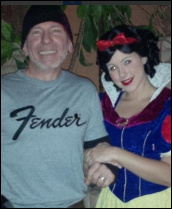
While in Orlando recently, I spent time exploring Disney’s Epcot. Just for fun — and to make my wife and 20-year-old daughter smile — I decided to grab a photo op with Snow White.

Was my pride ever challenged! There I was, sandwiched between animated toddlers and star-struck preteens, in line to take a pic with Ms. Purity herself. Seemed everyone was dressed like a princess except me. I stood close to one toddler hoping passersby would think I was part of her family. Heaven forbid someone I knew might see me standing in line at Disney for a personal princess pic.

My turn came. I sheepishly held my arm out for Snow White. My friend took the pic.

I was ready to run, but Snow would not let me go. Help! She turned, looked me in the eye, and engaged me in conversation. I was pulling away, but she kept me there. It was longer than a moment, but not excessive, maintaining eye contact the entire time. As if someone just discovered my hand in the cookie jar, I was about to break out in a nervous sweat.

image

I texted the pic to my wife and daughter and they both replied ROTFL. So when I saw Sleeping Beauty, I stepped in line again.

This time, I carefully observed all the interactions between the princess and her devotees. Miss Beauty held eye contact with every fan and engaged in brief conversation.

My turn came, and though I tried to pull away, she clung to my arm until we talked. Awkward, yes, but so enlightening. Ditto with Belle, Cinderella, and last but not least, Ariel. They were indeed making dreams come true for their fans. They made me feel important.

How can we take something as simple and yet profound as a Disney princess engagement formula and put it into practice ourselves? How can we allow this to become a natural part of who we are?

As leaders, we are so rushed. I preach to myself here. We walk past our staff with nary an acknowledgement. When we do stop to talk, we are thinking about the meeting we are headed to.

image

On one hand, we claim that the right people in the right places are our most valuable assets. But do we give them the gift of our time, fully present, even for just a minute? This proves a contradiction in our leadership.

Since my return from Disney, I’ve been doubling down on creating special moments, this time with my staff. I am making sure every interaction, however brief, is meaningful. Eye contact. Genuine interest. While the other person may be rushed, I will remind myself that my agenda is their agenda, and my role as a leader is to serve them. True, not every person will want the time, but for those who do, I am there.

Before the end of my final day at Disney, I was looking for the next princess. Why? Because I enjoyed the way they made me feel. Special. If a princess can do this for strangers, we can do it for those we serve. Pics or no pics.

Create special moments.

Ed Marx is a CIO currently working for a large integrated health system. Ed encourages your interaction through this blog. Add a comment by clicking the link at the bottom of this post. You can also connect with him directly through his profile pages on social networking sites LinkedIn and Facebook and you can follow him via Twitter — user name marxists.

HIStalk Interviews Jim Prekop, CEO, TeraMedica

April 16, 2014 Interviews Comments Off on HIStalk Interviews Jim Prekop, CEO, TeraMedica

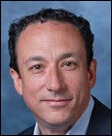
Jim Prekop is president and CEO of TeraMedica of Milwaukee, WI.

image

Tell me about yourself and the company.

I’ve been in health IT for about 30 years. The last 10 have been with TeraMedica. Before that, I was in the EMR space and companies like PeopleSoft and Dun & Bradstreet software.

TeraMedica is middleware. The industry term is vendor-neutral archive. We collect clinical objects and are responsible for making them available to the source system, but also making them available in a patient-centric view to additional consumers of that data, whether they’re outside in institutions, exchanges, or new technology that gets adopted by the provider. We perform that role in the healthcare architecture.


How has the unbundling of PACS from single-solution vendors changed the demand for vendor-neutral archives and what’s the end result for the provider and the patient?

It’s a natural progression. With systems, historically, the new idea is a more or less a closed-loop answer. It’s the same way with accounting systems going back decades. 

What was a box has now become a layer in the architecture, the process of acquiring and managing an image and then making it available down the road to new consumers or later in my lifetime. The solution has had to evolve. The VNA, or the ability to seamlessly have the interaction with departmental activity but yet be the conduit into the enterprise, it’s a natural progression. It’s not to say that PACS is bad, just that the focus going forward on PACS will be different, just as the responsibility for the VNA will change over time as well.


What about universal viewers?

The universal viewer is interesting. They’re approaching this through the lens of the physician, whereas the VNA approaches it from the infrastructure up. 

The advantage for the enterprise viewer is that they can combine data from multiple sources. But the other thing that has to be kept in mind is that there is response time and there is certainty that is needed in what is delivered to the enterprise viewer. You get into a federated discussion of going after 20 different data sources, combining that answer, and then delivering it in one view to the clinician versus the ability to have all of that patient matching resolved by the VNA. It’s one-stop shopping. It goes to any consumer of the VNA.

We see the consumers being an EMR. We see the consumers being an enterprise viewer. Going forward as more adoption comes into the United States, it will be different exchanges that imaging will become part of. So to us, it’s just a consumer. We optimize its ability to be confidently assured that they’ve asked for and gotten the right information and that all the information is there. If you have a federated view and make a request and one of those systems is down, you might not get the answer.


Enterprise viewer implies that there’s behind the scenes fetching going on that then presents a unified view, as opposed to the VNA where it’s actually stored in a single system.

Yes. It’s already stored and normalized and you’re having one conversation behind the scenes. 

Unless somebody’s invented something new in IT that I haven’t seen, you pretty much have to ask the same question across multiple systems or go to some sort of index and find out all the Jim Prekops and then go and find out where they’re located, go get them, and then present it to me in an organized way. Can those enterprise viewers do that? Absolutely, and we have great partners in that space. Is it the best experience for the provider or the clinician? Maybe not.


What are the optimal ways to integrate a variety of images into Epic or Cerner?

I call it a landing page. EMRs address all the departments in the organization and rightfully so. But if I want to go look at all the different clinical objects that Jim Prekop created in a facility, chances are the links to that information are within various locations within the EMR. 

One of the advantages that TeraMedica brings to the table to leverage the investment that the provider has in the EMR is to give a patient-centered view of all the clinical objects, should they want that. That’s an option in our system. We can be tied to a report and just show that image, or we can present a complete inventory of what we have in the VNA, so that in one location, a clinician can see things that might be related to other departments. I don’t necessarily have to navigate over to that section of the EMR to see those objects.


It’s probably important to note that all images are objects but not all objects are images. Are you seeing demands for new object types?

Absolutely. When I first got here, I had to get an education on DICOM and all the nuances and it was a big education. But not everything is DICOM when it comes to clinical objects. 

Our customers asked us very early to not just manage DICOM. It’s a wonderful thing and is the heavy lifting in our business. But to be truly patient-centric, you have to address all different types of file types, whether it be JPEGs, MPEGs, PDFs, a Word document, or in the case of cancer care, lots of calculations are done using Excel and other types of planning systems.

To represent that an image is just a DICOM object is not fair. It’s usually one of the arguments when you try and decide what a VNA really is. There are lots of folks that manage DICOM and they do a good job, but they declare themselves as the VNA. That doesn’t meet our definition of a VNA.


What’s the distinction between storing non-DICOM data in its native format instead of using a DICOM wrapper?

Unlike other industries where you can create data marts and if there’s a problem you just snap another copy of the data, we’re into terabytes and hundreds of terabytes of data. As you acquire that information as the VNA, you have to be clinically responsible to the source system. If I go get a PDF of Jim Prekop from a clinical system and I wrap it in DICOM and that system wants it back, I either have to create duplicate storage — which is not cost productive — or I have to be able to unwrap it from that DICOM and enter that as a PDF to that source system.

The overhead of doing that simply doesn’t work and it doesn’t scale. To believe that you have to wrap everything in DICOM so it follows how your system works … I would suggest you have the wrong system if it only works with DICOM.

A well-known VNA consultant who comes from a PACS mentality is adamant that everything should be wrapped in DICOM. We needed to get him to sign an updated non-disclosure agreement, so I had my engineers wrap our NDA in DICOM before I sent it to him. His asked me what I had sent him since he operates on a Macintosh that doesn’t understand the file type, which is a .UCM. He didn’t even recognize that I had sent him a DICOM file. He didn’t understand that he was essentially justifying the reason why we believe that it’s DICOM and non-DICOM.


Who are your main competitors and how do you differentiate your product from theirs?

Since the VNA term was adopted — I prefer Vendor-Neutral Architecture — lots of folks put their hat into the game. As you would expect, a lot of PACS vendors have begun to open up and allow multiple DICOM systems to enter data in there.

It’s usually TeraMedica and Acuo that end up being the finalists in any evaluation. There are some other ones that are out there that do some of the things that we do. There’s some newcomers — Mach7 is out there, but I think they have more activity outside the US than they do within the US. But there are others that are coming into the space, and rightfully so. It’s a competitive market.


Hospitals acquiring medical practices and each other have left them trying to figure out how to get their systems to talk to each other. Is that true of imaging systems or other systems that would populate a VNA?

There’s two aspects of that. We’re having organizations that are buying us because they’re strategically positioning themselves to acquire other entities. They know that they can’t rip out those clinical systems, so they will use us as part of their strategy to get control of the data and share it across the enterprise.

As far as the other way, we have sites that are established either because of acquisitions or because of differences on campuses that have multiple EMRs. Our technology allows, again using myself as the example, Jim Prekop to be referenced, and if I know the request is coming from Epic, I’ll behave one way to put it properly in Epic. At the same time, I can put it into Cerner. There’s one source of the truth.

One of the value propositions that we bring as a VNA is that we can identify consumers and react accordingly. We can also respond to multiple consumers, but yet give them the exact data that they’re looking at, whether they come in through the physician’s office with one EMR or they come in through the hospital with another EMR. It’s one source of the truth with multiple consumers.


Where do you see the company going in the next three to five years? 

I think it’s based around being a good partner with our customers and bringing to them more use cases, more managing the data. As you would expect, we can sit behind a PACS, but the thing about VNAs is we’ve had to come around the curtain. We’ve always considered doing the plumbing behind the scenes. But now we’re very active in different departmental workflows.

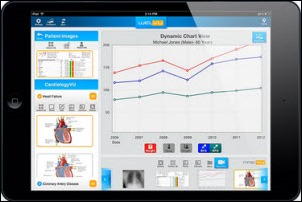
We’re getting involved with our iPad app, as an example, in departments like wound care and dermatology, where the clinicians are actually interacting with our software and we are part of the EMR, but the clinician doesn’t even know we’re there. A lot of times when someone says, “I didn’t know you were there,” that’s a bad thing. For us, that’s a good thing, because we want seamless integration into these different systems. I can see us doing more of it.

I can see us taking responsibilities for more functions of a generic nature in the provider space so that they can optimize the platform that they’ve invested in. Clearly the leading investment is the EMR. But the VNA is also a strategic investment, and we need to do more for them when it comes to clinical workflow.

News 4/16/14

April 15, 2014 News 8 Comments

Top News

image

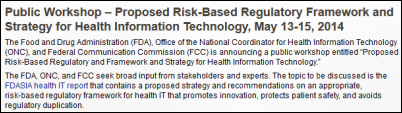
FDA left unanswered questions about its FDASIA report, such as how to submit the comments the report solicits. The agency announces a free, three-day public workshop May 13-15 at NIST in Gaithersburg, MD that will also be presented via webcast. Comments on the FDASIA report can be left here.


Reader Comments

From Lois Lane: “Re: short label names for ICD-9, CPT, and MS-DRGs. Any source for these other than an EMR vendor?” If anyone knows, please leave a comment.

image

From Guillermo del Grande: “Re: signs that whoever is talking about Epic doesn’t know what they’re talking about.” GDG’s list:

  1. “Model the Model”
  2. “EPIC”
  3. They think NVTs are actually meaningful.
  4. They ask where they can buy Epic stock.
  5. They wonder why Epic doesn’t hire doctors and nurses to help improve their product.
  6. They don’t know that the god-awful screen they are looking at is customizable.
  7. They think Epic was born as a billing product.
  8. They don’t know real people work there, just implementers.
  9. They actually think there’s no internal politics at Epic.
  10. They think Epic’s the only software running a MUMPS descendant.

From Bill Kilgore: “Re: VerbalCare. I think you might like these guys. Very cool product.” Inpatients get an VerbalCare icon-driven tablet instead of the 1950s-era call button, allowing them to choose the icon describing their need instead of just pushing a call button or trying to communicate through a drive-through quality speaker-microphone. Employees can receive and acknowledge requests on their smartphones or from a central console. The interactions are also tracked for later analysis. VerbalCare offers a commitment-free pilot. Everything looks good except they spelled HIPAA as “HIPPA” on their site, which is almost unforgivable. You should at least correctly spell the name of the requirement with which you are claiming compliance.


HIStalk Announcements and Requests

image

Ms. Dayton, a Teach for America teacher in Arizona, sent pictures and her thanks to HIStalk readers for supporting her magnet school sixth graders by providing them with math stations. She explains, “You have truly transformed my classroom. My students now look forward to math and enjoy the time spent playing the wonderful games that you donated. On a daily basis I hear from my students, ‘Ms. Dayton, can we play the games today?’ or ‘Ms. Dayton, can we skip writing and do math all day?’ I hear these things because of you!”


Upcoming Webinars

April 16 (Wednesday) 11:00 a.m. ET. Panel Discussion: Documents, EMRs, and Healthcare Processes. Sponsored by Levi, Ray & Shoup. Presenters: Charles Harris, senior technical lead, Duke University Health System; Ron Peel, technical advisor, LRS; and John Howerter, SVP of enterprise output management, LRS. IT department in hospitals implementing EMRs often overlook the role of document-driven workflows. Prescriptions, specimen labels, and discharge orders, and other critical documents must be reliably delivered with minimal impact on IT and clinical staff. This panel discussion will discuss the evolving use of documents in the “paperless/less-paper” environment.

May 1 (Thursday) 1:00 p.m. ET. Think Beyond EDW: Using Your Data to Transform, Part 2 – Build-Measure-Learn to Get Value from Healthcare Data. Sponsored by Premier. Presenters: Alejandro Reti, MD, senior director of population health, Premier; and Alex Easton, senior director of enterprise solutions, Premier. Once you deploy an enterprise data warehouse, you need to arrive at value as quickly as possible. Learn ways to be operationally and technically agile with integrated data, including strategies for improving population health.


Acquisitions, Funding, Business, and Stock

image

Truven Health Analytics acquires Simpler Consulting, a provider of Lean enterprise transformation services to healthcare, government, and other commercial organizations.

image

Struggling BlackBerry invests in Patrick Soon-Shiong’s NantHealth. The companies are jointly developing a smartphone optimized for viewing diagnostic images, scheduled for a late 2014 release.

image

Vocera opens an innovation center in Bangalore, India.


Sales

4-15-2014 11-28-31 AM

Lahey Health (MA) selects Phytel’s population health and engagement platform in support of its ACO.

Dialysis Clinic, Inc. will implement Sandlot Connect and Sandlot Dimensions from Sandlot Solutions for care coordination and analytics.

image

Shenandoah Medical Center (IA) will deploy Allscripts Sunrise solutions for its 78 beds.

The 260-provider Phoebe Physician Group (GA) selects athenahealth for EHR/PM and care coordination.

image

Citizens Medical Center (TX) will implement T-System’s EV emergency department information system and Care Continuity patient transition management solution.


People

4-15-2014 11-32-14 AM

Explorys appoints Tom Chickerella (Vanguard Health) COO.

4-15-2014 1-11-16 PM 4-15-2014 1-12-15 PM

Precyse promotes Christopher A. Powell from president to CEO, replacing company founder Jeffrey S. Levitt, who will assume the role of executive chairman of the board.

4-15-2014 12-41-48 PM image 

ESD promotes John Alexander to testing practice director and hires Mia Erickson (Epic) as Epic practice director.

image

CHIME names George McCulloch (Vanderbilt University Medical Center) as EVP of membership and professional development.

image image

Edifecs names Dave Arkley (Parallels, Inc.) CFO and Michiel Walsteijn (Oracle) EVP of international business.

image

Health Data Specialists promotes Angie Kaiser, RN to clinical informatics officer.

image

Donna Scott (McKesson Health Solutions) joins USA Mobility as SVP of marketing.

MHealth Games names investor Keith Collins, MD as its board chair. He was at one time CIO of the University of Massachusetts Medical School.

Medicomp appoints Michael Cantwell, MD (National Library of Medicine) to its MEDCIN terminology team.

Healthcare technology services provider CitiusTech names Gary Reiner and Cory Eaves (both of its recent investor General Atlantic) to its board.


Announcements and Implementations

4-15-2014 11-38-14 AM

Kids First Pediatrics Group (GA) integrates PatientPay’s electronic billing and payment solution with its Greenway PrimeSUITE practice management system.

Memorial Community Hospital & Health System clinics (NE) will transition to Epic starting June 25.

The HEALTHeLINK clinical information exchange launches an automated syndromic surveillance state reporting service.

image

North-Shore-LIJ (NY) rolls out the Allscripts FollowMyHealth patient portal for its Plainview and Forest Hills hospital patients.

image

Geisinger Health Plan (PA) implements Caradigm Care Management for population health.


Government and Politics

4-15-2014 11-58-28 AM

CMS introduces a Code-a-Palooza Challenge to encourage developers to create apps that use the new Medicare payment data to help consumers improve their healthcare decision-making.

4-15-2014 1-46-19 PM

CMS, which has been strangely quiet about the implementation delay for ICD-10, finally acknowledges the legislation but notes only that it “is examining the implications of the ICD-10 provision and will provide guidance to providers and stakeholders soon.” Meanwhile, CMS still lists October 1, 2014 as the date ICD-9 will be replaced by ICD-10.

image

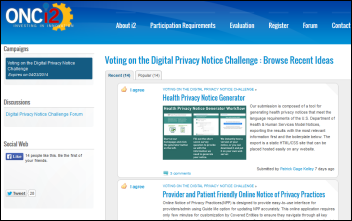
ONC invites voting for ideas submitted in its Digital Privacy Notice Challenge, which include games, responsive templates, a Web widget, and an NPP generator.


Innovation and Research

Meaningful Use of EHRs was not found to be correlated with performance on clinical quality measures in a study published in JAMA Internal Medicine. The  research compared quality scores of 540 physicians affiliated with Brigham and Women’s Hospital who achieved MU with those of 318 physicians who did not. Critics note several factors making the validity and applicability of the study difficult to evaluate, including the fact that MU quality metrics are so specific that they exclude many patients with particular conditions.


Technology

4-15-2014 9-16-13 AM

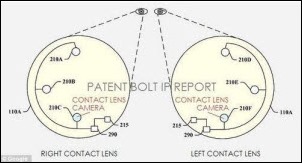
inga_small Google files a patent for a contact lens system that would include a built-in camera and could potentially be used as an alterative to Google Glass. That’s technology I could embrace since I don’t see myself as one of those nerdy hipster-types that Dr. Jayne and I continually made fun of as we walked the HIMSS exhibit floor.

Awarepoint introduces an RFID tag that monitors room humidity.


Other

SNAGHTML1c0f9e64

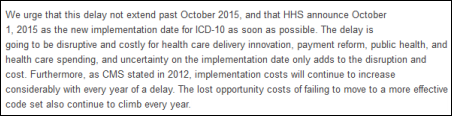
The Coalition for ICD-10, an industry advocacy group whose members include CHIME, AHA, and AHIMA, calls on HHS to establish October 1, 2015 as the new ICD-10 implementation date.

The Oklahoman looks at the soon-to-be-launched Oklahoma City-based Coordinated Care Oklahoma HIE and the more established Tulsa-based MyHealth Access Network and considers the impact of having two competing networks in the state. It’s a scenario that will undoubtedly be repeated numerous times in coming months as funding disappears for older HIEs and newer organizations emerge.

An InstaMed report on trends in healthcare payments finds that patient payments to providers jumped 72 percent from 2011 to 2013, with the average amount increasing from $110.86 to $133.15.

Attorneys specializing in representing whistleblowers in healthcare pounce on the newly published Medicare data to search for evidence of fraud.

image

Travelers who pass through Madison, WI’s Dane Country Regional Airport (MSN) can now enjoy free Wi-Fi courtesy of Nordic.

image

The SMART project at Boston Children’s Hospital, which has been pretty quiet since its big “EMRs should work like smartphone apps” announcement four or so years ago, names a 14-member advisory board to promote its mission.

inga_small I paid a visit to my neighborhood ER over the weekend. Despite being the patient, I couldn’t help but check out their use of IT systems. It’s a boutique ER attached to a surgery center about two miles from my house. I was the only patient at the time (good to know that all my neighbors had better things to do on a Saturday night.) In terms of IT, what surprised me the most was the lack of it, at least at the point of care. They must have some sort of EMR because they printed out all my information from a visit last year, but everyone who treated me used pen and paper to note my vitals and whatnot. At discharge they handed me a generic patient education sheet with aftercare instructions, but no details on what meds they gave me (I recall one was a narcotic) and no medication information sheet warning me about possible side effects. They advised me to follow up with my regular doctor, but I’m now realizing that in my narcotic-induced haze I didn’t ask anything about the results of the tests from my blood draw. I’m sure if I had gone to the ER at the big chain hospital another 10 minutes away I would have left with more complete information, but I chose (and probably would again) the more convenient ER that otherwise provided good care. For all the great stories we constantly share about the amazing strides in automating healthcare, I’m sure there are just as many anecdotes that serve as a reminder that we are not “there” yet.


Sponsor Updates

image

  • Talksoft Corporation makes its appointment reminder app Talksoft Connect available for Android devices.
  • Columbus CEO magazine profiles CoverMyMeds in an article highlighting characteristics of top workplaces.
  • The AHA exclusively endorses MEDHOST PatientFlow HD patient flow management solution.
  • LifeIMAGE celebrates the growth of its network, which connects 533 hospitals and has exchanged 1.1 billion images over the last five years. 
  • Health Catalyst releases a free eBook that explores common approaches to data warehousing in healthcare.
  • AdvancedMD introduces the 1.5 version of its iPad app.
  • A NueMD ICD-10 survey conducted prior to the official delay shows that the majority healthcare professionals participating wanted the ICD-10 transition to be pushed back or canceled.
  • The Boston Business Journal ranks Nuance number two on its list of  top publicly traded Massachusetts software companies based on its $5.2 billion market capitalization.
  • Kareo CMIO Tom Giannulli will discuss the role of technology in improving patient care at UBM Medica’s Practice Rx conference May 2-4 in Newport Beach, CA.
  • Madhavi Kasinadhuni, consultant for The Advisory Board, explains the importance of measuring care episodes and not just individual encounters when identifying missed revenues.

Contacts

Mr. H, Inga, Dr. Jayne, Dr. Gregg, Lt. Dan, Dr. Travis, Lorre.

More news: HIStalk Practice, HIStalk Connect.

125x125_2nd_Circle

Curbside Consult with Dr. Jayne 4/14/14

April 14, 2014 Dr. Jayne 8 Comments

clip_image002

I wrote last month about our health system purchasing another physician group in a bid to strengthen its primary care base for Accountable Care activities. The IT team is always brought into the acquisition phase too late, which is a shame. Our ability to identify potential issues and prepare for a smooth transition is always forgotten until we’re later asked to deliver a miracle after the ink is already dry. That was the beginning of my “pastry therapy” sessions, which have progressed significantly.

At the time, my biggest worry was figuring out how to get them through the EHR upgrades needed to get their first-timers ready to attest for Meaningful Use. My team was tasked with preparing for the upgrades, which is a standard duty for us. In reviewing what they had done to the EHR, I was entirely unprepared for the volume of customizations they have put in place. I was also unprepared for how ridiculous some of them are.

They have a robust EHR that allows creation of custom workflows even though the out-of-the-box workflows are pretty solid. This is good for customers who have specialties the EHR doesn’t cover, but not good for customers that use the EHR as a means of managing physician behavior.

After several weeks of reviewing their content and consulting with our development, training, and support teams, I was ready to meet with the combined medical leadership of our two organizations with a plan to gradually bring their workflows to our standard so that eventually we can convert them onto our database. (Initially the Powers That Be wanted an immediate conversion, but I was able to convince them we couldn’t do it on the timeline we have.)

Allowing for a slow retirement of their customizations would allow us to make two smaller steps rather than one giant leap, which I felt would be better for physician adoption and user acceptance. The first move would happen with their upgrade to the EHR version certified for 2014 and would involve addressing customizations that either impaired MU data-gathering (such as creating custom fields rather than using existing vendor fields that feed canned reports) or didn’t make sense (extra navigation buttons that cluttered up the screen and distracted from important clinical data.) The first step would also allow them to get used to our training style and expectations so that next time we can just use our proven franchise model with them.

The second step would be the true move onto our content, although we’d keep them on their own database until the dust settled. The final step would be to perform a relatively quiet migration a few months later.

Although the overall plan would take more than a year, we felt it would adequately balance the need to keep the volume of change manageable with the fact that we aren’t getting very many additional resources or dollars to pull this off. Although we’re going to assimilate their IT and training teams, we quickly discovered that they only had a rudimentary knowledge of the software since they had referred nearly all their changes out to consultants and contractors. We’ll have to retrain them not only on the product, but also add some discipline and critical thinking to the mix if they’re going to stay with us.

Our meeting with the medical leadership started out well with them nodding at all the right places as we presented the high-level plan. They agreed in principle, but it started turning ugly when they began asking about which specific customizations we planned to retire in the first phase.

My ever-OCD development manager quickly produced a spreadsheet. Her team had carefully catalogued every customization on a template by template basis with helpful information including why we recommend retiring it and what the proposed replacement workflow would be. They also attempted to gather information on why the changes were made in the first place, but for the vast majority, there was no compelling business case that any of the analysts could remember.

I was proud of my team for pulling this together in such detail on a tight timeline, especially when they had absolutely no documentation to work from. They literally had to do a visual inspection of each part of the workflow because our new partners apparently had never heard of a build specification document, let alone an approval tracker or anything else.

We began to work through the spreadsheet and were immediately stopped by our new colleagues. For every item we proposed retiring (even if it was actually contrary to the stated goals of meeting Meaningful Use, being an ACO, and providing quality care) they had an excuse why we needed to keep it. Many of the excuses took the form of, “This is something Dr. Jones really needs,” but they couldn’t provide any concrete reasons to back their statements.

After a dozen or so of these exchanges, it became apparent that rather than only modifying the EHR when it was deficient, they had been using EHR design changes as a way to appease cranky providers.

I’m all for modifying the EHR when it’s needed – if it’s truly deficient, if the workflow is inadequate, or if you are trying to document a specialty that’s not available from your vendor. Our group has been at this nearly a decade and all our customizations have a robust business case and have been vetted through a formal review process. We have design standards that keep pace with our vendor, so even when we customize, it appears seamless to our users.

We also log every single customization with our vendor so they know there’s a deficiency, defect, or workflow need. We can’t fault them for not designing to meet our needs if we haven’t told them what our needs are. Often we find that in the process of logging an enhancement request, the vendor is already coding what we want in their next version. We can make our customization look like what they’re doing so that when we upgrade, it is truly seamless.

I finished my mini-lecture on rational customization. The folks on the other side of the table just sat there with blank stares. They clearly either weren’t buying what I was selling or simply didn’t care.

Pulling out my best behavioral health “motivational interviewing” skills, I tried to get them to at least acknowledge a need to change even if they didn’t like it. It became obvious that they are scared to death of having to actually deal with their peers, let alone actually manage employed physicians.

Our trainers are pretty tough, but if management is not going to help us lead the physicians through a meaningful change process, we are never going to be successful. What makes me the angriest, however, is that we’ve been through this. We know what needs to be done to achieve success. We were in the same place many years ago. We have a proven track record of not only bringing practices live, but actually achieving clinical transformation and improved outcomes. We also have been able to do this without a significant change in practice revenue or any loss of clinical quality.

Unfortunately, we’re now being faced with providers who have been coddled and apparently don’t know the meaning of being an employee. Rumor has it that some of them are so politically charged that they’re being paid above fair market value just to keep them from leaving.

With those kinds of forces at play, the idea of achieving standardization seems impossible. If we can’t get them to agree on EHR workflows, how are we going to get them to agree on clinical content such as order sets or care protocols for chronic disease management? Looking at the impassive faces across from me, it was clear that we’re going to have to bring some bigger guns to support us. I’ve scheduled a follow-up meeting with our CIO and CFO as backup, but I’m not optimistic.

There’s nothing in medical school or informatics training that prepares you for this. I’d love to be able to turn to some of my CMIO pals for advice, but the idea of admitting this level of dysfunction — even to my closest confidantes — makes me squirm. It’s good, then, that I can turn to my virtual colleagues for advice. Leave a comment if you have some words of wisdom.

For those of you who just want some pastry therapy, that was Martha Stewart’s Chocolate, Banana, and Graham Cracker Icebox Cake. I didn’t have any milk chocolate, so I pulverized and melted several dark chocolate Easter rabbits, which was therapeutic in its own right. I also left off the whipped cream topping that Martha recommended – it was a little too over the top for my primary care brain.

Email Dr. Jayne.

HIStalk Advisory Panel: IT Service Management

April 14, 2014 Advisory Panel 1 Comment

The HIStalk Advisory Panel is a group of hospital CIOs, hospital CMIOs, practicing physicians, and a few vendor executives who have volunteered to provide their thoughts on topical industry issues. I’ll seek their input every month or so on an important news developments and also ask the non-vendor members about their recent experience with vendors. E-mail me to suggest an issue for their consideration.

If you work for a hospital or practice, you are welcome to join the panel. I am grateful to the HIStalk Advisory Panel members for their help in making HIStalk better.

This question this time: Does your organization use a formal IT service management program such as ITIL, and if so, what results have you seen?


Responses indicating no: 4.


[from a practicing physician] No , I am not aware of any formal IT management program used by my now very large company, but that is not to say that they do not need one.


We started with one, but we didn’t have the institutional memory to keep it alive. As new people came, it became increasingly difficult. Some good remnants remain, but only if somebody remembers to enforce them.


Yes and no. We’re a small shop, so we use ITIL and other models as a source of best practices and implement what makes sense for us. We don’t want to reinvent the wheel, but a full-scale implementation in a small organization is not cost-effective. The processes, templates, etc., that we have pulled in are extremely useful and allow us to more efficiently manage a large workload with a small team.


Not at this time. We have evaluated the use of ITIL and COBIT, but our plates are too full at this time to put any formal processes in place. Luckily the management team has experience with ITIL, so we apply the concepts to change management and service delivery as much as possible.


We have begun to install ITIL. It has been challenging given we are short on resources and when busy, people tend to fall back into the old way of doing things. We have had success with incident management, which is a good thing.


I was one of the first to enthusiastically jump on the ITIL bandwagon, many years ago, then I saw firsthand how the ITIL process became the goal, not a means to a goal. After two ITIL implementation attempts with two different teams, in which internal client satisfaction with IS declined and my employees became demoralized drones, I threw away any philosophy to implement the details of ITIL and instead focused on the concepts and the end goals. Those end goals are (1) internal customer satisfaction with IS; (2) IS employee satisfaction; and (3) achievement of both #1 and #2 at the lowest possible IS budget.  Since then, I’ve watched ITIL spread to other organizations and watched the same pattern that I experienced. There seems to be an inverse relationship, or at least a tipping point of inflection, between dogmatic adherence to ITIL and IS success and creativity.


At this time we don’t have a formal service structure methodology. We are beginning to look at this due to our organization growing and that all areas now have a major IT component. We most likely would lean towards ITIL.


Yes, we do. If you agree that using ITIL can be helpful and that every part of ITIL may not apply to your operations, it can provide consistency in support that many organizations need. We have found that it is helpful in many aspects of providing end-user services more consistently and more timely with much fewer variations.


We do not use ITIL formally. We will soon be joining a larger system and they have adopted ITIL and we are comparing our current practices to this framework.


We have been trained in the basics of ITIL and have incorporated several concepts and processes. We have not gone full out at this point.


HIStalk Interviews Kyle Silvestro, CEO, SyTrue

April 14, 2014 Interviews Comments Off on HIStalk Interviews Kyle Silvestro, CEO, SyTrue

Kyle Silvestro is founder and CEO of SyTrue of Chico, CA.

image

Tell me about yourself and the company.

I’ve been in the world of clinical natural language processing and semantic interoperability for the last decade. My team collectively has been in the industry for more than 45 years. 

As a company, we focus on the world of data. We look at ourselves as an oil refiner, taking all the data that’s being created — transcription, dictation, typed notes, structured order entry, what have you — and creating a refinery process that we put it through. On the other side of that, we get structured data that’s semantically interoperable. 

We focus on that pipeline that allows organizations to create normalized data to drive down to processes like analytics, decision support and population health.


People often get natural language processing confused with speech recognition. Describe NLP.

It’s the ability for the computer to go through a written document — a Word document, PDF, or something that is the by-product of speech recognition – and recognize and understand the content. Not only the content, the meaning behind the content as far as it’s something positive, something negative, or something concerning. Beyond that, be able to make decisions as far as how that should be encoded with a terminology or medical knowledge base such as SNOMED, ICD-9, or ICD-10.


I’m a huge fan of keeping the clinical narrative and patient narrative and not just discrete data element factoids. Is there a demand for that?

It’s interesting what’s occurred over the last decade and really the last several years. Data has become important and incentives are changing to where they’re making data much more relevant in the chain of care. As organizations are looking at this, they’re looking at a lot of claims data, which gives you an incomplete picture.

Until you start marrying the clinical narrative with the claims data, you are not going to see the outcomes or the population that needs to be managed comprehensively as you would just looking at a single point of data. The market is realizing that the data is important and the data is the key for them to being successful.


How good is NLP’s inference capability in reliably turning free text into discrete data?

That’s a question we get asked frequently. My response back is, how accurate is the physician’s note? At times, and depending on where you are across the nation, the note may mean different things. Words may mean different things, context may be a little bit different. 

It’s about being able to create a ability to normalize that information and then continuously learn on top of it. Create a feedback loop of this data to ensure that the inferencing or accuracy gets extremely high. Once it’s extremely high, you can build some rules around that to flag inconsistent actions or items that may not be just exactly right for manual review.

It’s great for a number of different processes, but there are still some situations like Core Measures or others that do require clinical opinion. In that context, it assists organization significantly and it’s highly accurate.


Google Flu Trends stopped working because it was measuring indirectly captured data that Google didn’t control or understand as it changed. Is that a risk in using NLP to analyze EMR data of a somewhat uncontrolled origin?

No. You have to put it through a process where you can turn data into semantically interoperable content, to create a process that fits an organization and its work flow.

I’ve been at one hospital and seen 152 different ways that they document the section heading of medications. In one hospital. How do you give organizations the ability to normalize that data and to ensure that the section heading of medications corresponds to the appropriate LOINC code and that all these 152 ways all roll up to a single code of medications, if that’s what the organization desires?

It’s about giving them the ability the look inside a black box that was formerly called NLP and terminologies and being able to use that information in line with the organization’s objectives, work flows, and outcomes. Each document can have a different purpose in life and have a different recipient in life based upon on the data that’s within it. Being able to give organizations that flexibility that they haven’t had in the past to be able to perform actions like this changes the paradigm and maybe the questions that are being asked. 

What can end up is organizations get to highly accurate data that’s interoperable, that drives downstream processes, can identify patients that are at risk for medication non-compliance, and a whole other host of activities that are either going to reduce cost, help alleviate risk, or identify opportunities for revenue.


You mentioned that the system can learn. How does that work?

In the case of ICD-10 right now, it’s a documentation issue. A lot of the problems that we’re facing in healthcare come back down to documentation. It may not be as sexy as some of the other topics that are out there, but at the end of the day, if you can get to the point of care with a document or parts of documentation are being created, what you’re doing is able to add almost real-time support into that encounter, or creating something along the lines of a encounter-based analytics. As you’re moving forward in this process, it’s about identifying the points in the work flow that can make a difference to have that impact that you’re looking for. 

I think the answer really is yes to your question. Organizations are seeing that value.


How much setup is required to get the information that you need from the EMR and to figure out its structure?

The US government is, I think for the first time, focusing on standards. If the laws around Meaningful Use are still upheld in October, that standard’s going to be Direct over the Blue Button. If you’re able to then able to pull information out of these standards, process it, put it together in a consolidated CDA, you’re able then to hand that off to the next person in the chain.

If organizations start complying with this thought of interoperability and data mobility, we all  — vendors or third parties to the record or to the process – can help move forward this continuous care to increase outcomes and value within the healthcare system. Their thinking, and what we find, is the closer we go to the data, the easier it is, and the further away, the harder it becomes. We end up pretty close to the data source. 

Going forward, we’re anticipating this model where we can get that in real time via a standards-based approach that would allow organizations to create something like a meta layer or meta data of smart intelligence. Then the EMR and HIE that can add value into that record in real time. 

Organizations that work with us are up and running within an hour more often than not, minus some of the interfaces that they have to create.


What are some examples of what people are doing with your system?

Organizations are looking to identify populations that may be at risk for heart attack or stroke. They are looking through their more often than not transcribed documents, because these are high-value specialties that use maybe a limited piece of an EMR to identify patients that might have been missed or have not been recalled in a certain period of time to follow up for a visit.

We’re being used to look at site selection for clinical trials, by being able to identify possible patients that would fit within a certain selection. Other areas to alleviate risk, or feed data into third-party systems to assist their predictive analytics, decision support, or business intelligence. We act as a platform across different organizations so they can send data and have it refined, processed, and get that refinement back out in order to add value to what they’re currently doing.


You compete with least one or two big companies that offer NLP-based services, including Nuance and its Clinical Language Understanding. Why is your product a better choice?

There’s a very large untapped market. It’s a matter of focus. We’re heavily focused in areas that Nuance isn’t and we’re able to add value along those lines.

As I look at the industry and I look at the last 10 years of being in the business, I’ve probably failed more than most in failure of sales, but I’ve also been quite successful. I think I’ve come to understand the bottlenecks and the impediments and the push-backs that have always been around clinical natural language processing. I think we’ve addressed those and we’ve focused on those points. 

Building that into our pipeline and workflow that will allow both a rapid adoption and a platform-type view of this data, where many people can tap into via a Web service-based approach. It will utilize technology that gives them the ability to do natural language queries and then to be able to bring a refined data set into any one of their processes. 

While there’s a lot of competitors out there the market and a lot of new companies emerging, I think it’s the collective 45 years of experience my team has that give us an advantage in the way that we look at the marketplace and the solution that we’ve brought to bear.


Where do you see the company going forward?

We just started releasing the product commercially. We’ve been hand-selecting our clients and beta sites to ensure that we have something that is meaningful that will make a difference in the market. 

When people looked at it, they’d say wow, I’ve never seen anything like that. HIMSS was the first time that we started showing that off. That’s kind of the response that we’ve gotten, at HIMSS and almost every other discussion that we’ve had. 

The company is focused on methodically growing its client base and delivering beyond expectations to our current users. We’ll continue to add clients based on our reputation and our delivery.


Do you have any final thoughts?

We have a very interesting time in front of us. The world and specifically healthcare is opening up to the idea that clinical documentation is important. It’s the needle in the haystack. If you can look there, you’re able to look across the longitudinal record and add value to the people’s lives who matter, who feel like the forgotten soldiers in this, which are physicians and patients. If you can remove the impediments and barriers to that, everything will go forward and healthcare will be a fundamentally different place.

Monday Morning Update 4/14/14

April 12, 2014 News 3 Comments

Top News

image

The New York Times says the White House decided that Kathleen Sebelius needed to go as HHS secretary after her “wooden” appearance on “The Daily Show with Jon Stewart” in October (during which Stewart speculated openly that Sebelius was lying to him about Healthcare.gov) and the pressure she was getting from Republican members of Congress. The President waited until last week until the Healthcare.gov crisis was over to give her the hook, with the Times calling it a “slow-motion resignation.” It may be a first that a Cabinet member was forced out because of a TV show appearance and for antagonizing the other party. Even her carefully orchestrated Rose Garden farewell speech was marred by technical difficulties – she stumbled because her notes were missing a page. I don’t expect much to change with her replacement – Congress and the White House can’t keep their hands out of what HHS is doing, so the Secretary’s job is to announce big changes rather than to propose them (and to be the President’s unusually obedient lap dog in Sebelius’s case.)


Reader Comments

image

From Anon: “Re: Wipro. Remember how they were going to save the day with low cost IT managed services? Won a $200m contract with Catholic Health Initiatives? Big problems. They can’t even keep Microsoft Exchange running, service applications, HR system, let alone CHI’s various EHRs. Unplanned downtime is becoming a daily occurrence.” Unverified. CHI signed the deal with the India-based Wipro in March 2013, saying it expected to save $42 million over five years.

image

From NoPicis: “Re: Picis. Just been in a meeting where complaints were ventilated on Picis not being MU2 certified. Nobody at Picis took the time to let their customers base know about their non-compliance.” Unverified. I contacted Picis/Optum but didn’t hear back. ONC shows Picic products as being certified under 2011 criteria.

From Pokey: “Re: Cerner-Intermountain partnership. The baby has a name!” The project will be called iCentra, which is how I would picture Brits pronouncing “eye centre” based on how they spell it.

From Biller: “Re: 1500 format. On April 1, 2014, CMS has required the use of new formats to submit bills, replacing the 1500 format. Our vendor was desperately unprepared and did not have the code to make the change.  And when they did, systems were crashing like cars in a sleet storm. Were the other vendors of billing systems so unprepared?” Readers: if you had this problem, leave a comment and name your vendor if you like.

image

From Mark: “Re: Oconee Medical Center (SC). A Paragon site, about to be absorbed by Greenville Health System, which is moving to Epic.”


HIStalk Announcements and Requests

image

It was political maneuvering that caused the ICD-10 delay, according to more than half of poll respondents. Anydoc had a good comment: “For sure, the lack of both provider and vendor readiness in an election year. One could easily imagine the backlash in November elections after a year of debating at nauseum the failures of Healthcare.gov compounded by providers frustrations with payment delays, lost productivity, etc. only one month before going to the polls.” New poll to your right: who is most responsible for the ACA failures like Healthcare.gov that led Kathleen Sebelius to step down?

Saturday is my grammar pet peeve day. Topping my list this week: people who write “it’s” as a possessive. Please, I know it isn’t logical, but the possessive form is “its” so just live with it, OK? Also driving me crazy: people who say “thanks but no thanks” thinking it’s cute, which requires double the number of syllables to say precisely the same thing as just “no, thanks.” OK, one more: using the word “very,” which when used often is either superfluous (“very interesting”) or incorrect (“very unique.”)

Listening: Superdrag, a decent, defunct alterna-pop band from Knoxville, TN. Not to be confused with my favorite Superchunk, which is better, non-defunct, and in fact celebrating their 25th anniversary.

I had HIStalk and the other sites migrated to a much larger server this weekend. It’s a dedicated one running a four-core Xeon processor, 16GB of DDR3 memory, a terabyte of 7,200 rpm disk, an identical second drive just for backups, MySQL databases running on a 120GB solid-state drive for extra speed, and 20TB of premium transfer. OS is CentOS Linux 64 bit and Litespeed. HIStalk keeps growing and response time was slowed at times when hundreds of readers were on at the same time, so the new server should be fast with plenty of capacity for continued growth.


Upcoming Webinars

April 16 (Wednesday) 11:00 a.m. ET. Panel Discussion: Documents, EMRs, and Healthcare Processes. Sponsored by Levi, Ray & Shoup. Presenters: Charles Harris, senior technical lead, Duke University Health System; Ron Peel, technical advisor, LRS; and John Howerter, SVP of enterprise output management, LRS. IT department in hospitals implementing EMRs often overlook the role of document-driven workflows. Prescriptions, specimen labels, and discharge orders, and other critical documents must be reliably delivered with minimal impact on IT and clinical staff. This panel discussion will discuss the evolving use of documents in the “paperless/less-paper” environment.


Acquisitions, Funding, Business, and Stock

image

A lifeIMAGE blog post says Nuance will enter the image sharing market in a Monday announcement that it will acquire “a small, Atlanta-based company.” I hear (unconfirmed) that company is Accelerad. KLAS ranked the company’s SeeMyRadiology.com #1 in image sharing in November 2013. It’s an odd business for Nuance to be entering, but shareholder pressure to deliver better results may have made diversification attractive for either strategic or accounting reasons even though it strays from the company’s traditional core mission of speech recognition and consumer apps (Dragon, Siri, and software for scanning and PDF editing.)

image

Medical cart maker Enovate Medical will expand its Murfreesboro, TN headquarters, with plans to create 410 jobs in the next five years.


People

image

Vermont Commerce Secretary Lawrence Miller, who was tapped to rescue the state’s Vermont Health Connect health insurance exchange after a rocky rollout, is named as the governor’s point person for healthcare reform. His previous background: he founded a brewing company and ran a business that sells pewter jewelry. Meanwhile, the state auditor will investigate Vermont Health Connect and its struggles with vendors Oracle and CGI after a consultant blamed the site’s problems on politics and inexperienced leadership. Vermont has up to $170 million in federal money to spend, gave CGI a contract worth $84 million, and has paid $54 million so far for a crippled site.


Announcements and Implementations

image

Penn Highlands Healthcare (PA) goes live on its patient portal, or actually “portals” in the plural since the some are Cerner, some are NextGen, and others don’t appear to be from either vendor.


Government and Politics

image

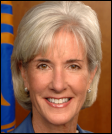
HIMSS loves Kathleen Sebelius and any other politician who helps divert taxpayer money into HIT vendor and provider pockets, so naturally they gave her a laudatory send-off, saying “the health IT community was blessed” to have her running the department overseeing HITECH payments (and plugging its own EMR Adoption Model in its praise.) I’m suspicious of anybody who refers to a “community” without defining it or explaining how they know what that “community” thinks, especially since most members of the health IT community are citizens paying the ever-rising taxes needed to fund HITECH, Healthcare.gov, and Medicare. Personally, I’m not feeling all that blessed.

image

The State of Maryland threatens to sue Noridian Health Care Solutions, the $85 million prime contractor of its health insurance exchange.


Technology

image

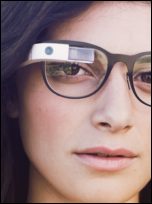
April 15 is more than just tax day for nerds jealous at their peers wandering around wearing Google Glass: anybody can buy a $1,500 Glass for that day only without being part of the Explorer program. The downside: it could go into commercial production soon at a lower price and possibly with better features.

The Heartbleed bug in OpenSSL that has exposed web server information (including passwords, credit card numbers, and potentially patient information) for years on two-thirds of the world’s websites was caused by programming error that wasn’t caught by the QA review of the small, open source project, according to the German developer who identified the exploit.


Other

The American Medical Association releases a laundry list of warnings about correlating Medicare payments information to physician incomes. A subset:

  • The information could contain errors and CMS doesn’t allow doctors to report inaccuracies.
  • Claims filed under a given National Provider Identifier can include services rendered by residents or other healthcare professionals.
  • Payments include the cost of physician-administered drugs, which are low margin for doctors.
  • Physician payments are actually practice payments that must also cover practice overhead – the physician doesn’t just pocket the Medicare check.
  • Medicare’s coding and billing rules vary over time and even by location.
  • Doctor’s don’t make all their income from Medicare.

SNAGHTMLd5fe046

A JAMA editorial by Farzad Mostashari, MD and colleagues from The Brookings Institution says that each primary care physician is in essence a CEO in charge of $10 million in annual revenue, that being the overall annual healthcare spending of the average practice’s 2,000 patients. It concludes that PCPs are underused and that physician-led ACOs will work better than those run by hospitals, but that success has been limited because practices haven’t spent enough on IT or on practice transformation services. It warns PCPs that they will lose control if they just continue with business as usual or sell out to hospitals. I’ll go with that: if you want to encourage efficiency, save money, and improve health and not just episodic healthcare services delivery, the last group you’d want to talk to would be hospitals.

image

Cleveland Clinic, which anyone who has walked its halls can tell has always treated a cash-paying Middle Easterners, will open a 364-bed hospital in Adu Dhabi, with CEO Toby Cosgrove, MD saying, “We look at it as our petrodollars coming home to Cleveland.”

I missed this announcement from earlier this month: ECRI Institute Patient Safety Organization launches a partnership to identify and learn from health IT safety issues. Among the collaborating organizations are HIMSS, AHIMA, AMIA, ISMP, and AMDIS. Several experts serve on its advisory panel, including David Bates, MD (Brigham and Women’s), Peter Pronovost, MD, PhD (Johns Hopkins), and Dean Sittig, PhD (UT Health Science Center at Houston.)


Contacts

Mr. H, Inga, Dr. Jayne, Dr. Gregg, Lt. Dan, Dr. Travis, Lorre.

More news, HIStalk Practice, HIStalk Connect.

125x125_2nd_Circle

HHS Secretary Sebelius Quits

April 11, 2014 News 6 Comments

image image

President Obama has accepted the resignation of Health and Human Services Secretary Kathleen Sebelius, according to White House officials. Her five-year tenure was marred by political acrimony over the flawed rollout of the Affordable Care Act and Healthcare. gov, a source of embarrassment for the Obama administration. 

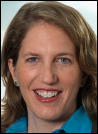
The President will on Friday nominate Sylvia Mathews Burwell, who has been director of the Office of Management and Budget for one year, to replace Sebelius. She was previously president of the Walmart Foundation, worked at the Bill & Melinda Gates Foundation,  and held several positions in the Clinton White House.

News 4/11/14

April 10, 2014 News 5 Comments

Top News

4-10-2014 1-52-20 PM

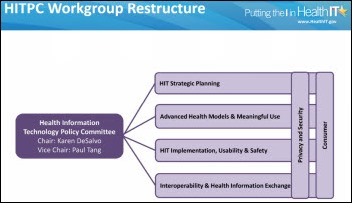
ONC head Karen DeSalvo proposes dissolving the agency’s workgroups and forming four new ones in order to reduce redundancy and create a “less siloed” approach. The proposed workgroups would focus on (a) health IT strategic planning; (b) advanced health models and Meaningful Use; (c) health IT implementation, usability, and safety; and (d) interoperability and health information exchange.


Reader Comments

4-10-2014 11-33-18 AM

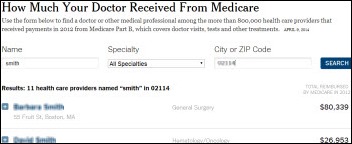
inga_small From Jeff: “Re: Medicare reimbursement data. If you use the New York Times tool, it becomes very, very easy to look up your local docs and their payouts.” CMS released Medicare payment data on Wednesday on 880,000 providers who collectively received $77 billion in Medicare payments in 2012. I struggled to manipulate the data using Excel, but it took me just seconds to look up details on all my doctors (and a few doctor friends) using the Times tool. While I understand why doctors aren’t happy that the world can now see much of our tax dollars ended up in their individual bank accounts, the potential analytics value of the data is pretty exciting.

From Lincoln: “Re: Medicare reimbursement data. What’s your take, Mr. H?” The government didn’t release the data until forced, so chalk up one for the Freedom of Information Act and the responsible publications that pressed the issue. I agree with Inga that the information is interesting, but I think it will raise more questions than it answers. The public doesn’t realize how screwed up Medicare payments are, so the nuances of payments made to groups, doctors being paid directly for administering drugs, and other quirks are going to sail right over their heads. CMS isn’t known for outstanding customer service, so who’s going to answer that deluge of questions about specific examples that are so easy to find? Probably the high-earning providers themselves, who are getting calls from their local papers looking for a hot story. What will they say about Medicare rules allow a single specialist to crank out enough high-paying procedures to earn many millions vs. primary care guys barely making a living – it’s better than fraud, but brings up the whole value question that CMS encourages by paying heavily for procedure medicine. I’m also annoyed at the CMS insinuation that citizens should help them fight fraud –  why don’t some of their bureaucrats who understand the rules and are paid to enforce them look at the information themselves and realize that paying some doctor $20 million in a single year might be cause for concern instead of waiting for amateur SAS jockeys to point that out? Our “pay and chase” system is great for providers and great for hiding government inefficiency that would manifest itself as infinitely delayed payments, but it’s not so great for taxpayers. Patients don’t even know what is being billed and paid on their behalf and checks and balances are non-existent. The great thing about releasing this information is that everybody should be embarrassed at the sorry state and high cost of government-funded healthcare, especially the politicians who let it happen.

From CIO D: “Re: eating your own dog food. Here’s our policy on PC lockdowns. If the PC is used predominately by one person (i.e. that’s Joe’s Computer) it is NOT locked down. If the PC is used publicly by many people (i.e. at a nurse station or in a patient room) it is locked down. I think that’s a fair way to handle it.”


HIStalk Announcements and Requests

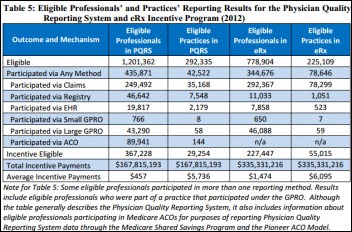
inga_small A few highlights from HIStalk Practice this week include: satisfaction is climbing among primary care EHR primary care users that implemented their system more than two years ago, according Black Book Rankings. Why I found  a Huffington Post article on patient etiquette offensive. CVS wants MinuteClinic to complement and support the broader healthcare landscape. The PQRS and e-Rx program saw sharp increases in physician participation in 2012. CMS offers a Stage 2 MU Attestation Calculator to assess readiness. Independence Blue Cross and DaVita launch a new healthcare business model aimed at reducing care costs. Securing a new-patient appointment is easier for individuals with private insurance. Culbert Healthcare Solutions’ Brad Boyd discusses three factors for success in using informatics. Thanks for reading.

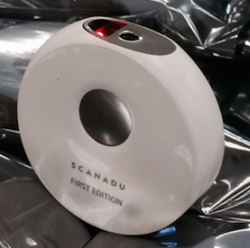
This week on HIStalk Connect: Dr. Travis discusses CRM for healthcare and the shift within emerging healthcare startups to focus on technology that enhances the doctor-patient relationship rather than building patient engagement apps. HIStalk Connect’s Q1 Digital Research Recap highlights some positive findings across telehealth, patient portals, and EHR-driven outcomes research. Scanadu halts shipments on its Indiegogo-backed, tricorder-like Scanadu Scout.


Upcoming Webinars

April 16 (Wednesday) 11:00 a.m. ET. Panel Discussion: Documents, EMRs, and Healthcare Processes. Sponsored by Levi, Ray & Shoup. Presenters: Charles Harris, senior technical lead, Duke University Health System; Ron Peel, technical advisor, LRS; and John Howerter, SVP of enterprise output management, LRS. IT department in hospitals implementing EMRs often overlook the role of document-driven workflows. Prescriptions, specimen labels, and discharge orders, and other critical documents must be reliably delivered with minimal impact on IT and clinical staff. This panel discussion will discuss the evolving use of documents in the “paperless/less-paper” environment.


Acquisitions, Funding, Business, and Stock

Minneapolis-based Healthcare Engagement Solutions, which offers physician collaboration tools, closes a $550,000 angel investment.

Drchrono secures $2.69 million in convertible debt funding, bringing the company’s total to $6.77 million.


Sales

4-10-2014 6-46-02 AM

Enclara Health will implement CoverMyMeds to automate prior authorizations in its hospice pharmacies.

4-10-2014 1-17-29 PM

Lakeland Regional Health Systems (FL) will expand its use of Allscripts ambulatory EHR and PM, use the company’s managed services, and implement its Payerpath financial management software.

4-10-2014 1-21-34 PM

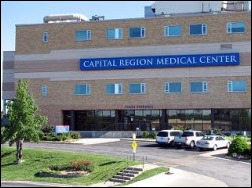
Capital Regional Medical Center (MO) selects Patientco as its patient payment automation solution.

Health information organization SacValley MedShare (CA) selects ICA as its HIE vendor.

4-10-2014 1-26-29 PM

Deaconess Health System will integrate its network with Availity for clearinghouse and RCM services at five of its southern Indiana hospitals, 20 primary care clinics, and several specialty facilities.

4-10-2014 1-29-36 PM

The Greater Houston Healthconnect selects DICOM Grid to electronically deliver medical images to area hospitals and physicians at the point-of-care.

4-10-2014 1-30-57 PM

Bay Area Medical Center (WI) signs a  three-year agreement with Zix Corporation for email encryption.


People

image

Kareo names Tom Patterson (Teletrac) CFO.

4-10-2014 1-27-55 PM

Nextech hires Rhonda Russell (McKesson) as COO.

Carl Byers (Fidelity Biosciences) joins the board of Cureatr.

IMedicor promotes Srini Vasan from SVP of technology to CTO.


Announcements and Implementations

4-10-2014 6-24-19 AM

Dignity Health, Box, and The Social+Capital Partnership name WelVU the winner of their developer challenge for personalized patient engagement solutions. WelVU, which allows providers to create customized educational videos during appointments, received a $100,000 convertible note and one-month office space and mentoring.

New Jersey Health Commissioner Mary E. O’Dowd announces the launch of the New Jersey HIN, which connects six regional health information organizations and 9,000 providers.

4-10-2014 1-32-54 PM

Wesley Medical Center (KS) adds Lincor’s LINC Technology platform for patient engagement and entertainment to newly updated patient rooms.


Government and Politics

ONC renews its Cooperative Agreement with DirectTrust, a non-profit trade alliance that promotes secure HIE via Direct Protocol.


Technology

image

The folks at Vonlay remind Epic users that while the Heartbleed OpenSSL vulnerability doesn’t affect MyChart or EpicCare Link because Microsoft’s IIS isn’f affected, the non-Epic parts of the setup might be, such as the load balancer. Web servers can be checked here, assuming the guy who developed the page knows what he’s doing.


Other

An Institute of Medicine report recommends including information about patients’ social influences and behavioral habits in their EHRs to improve outcomes and advance public health research efforts.

4-9-2014 2-08-21 PM

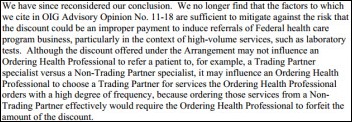
HHS OIG reverses a 2011 advisory opinion that had allowed athenahealth to charge $1 to providers not on the athena network for processing their test orders, saying the arrangement could violate anti-kickback statutes. The termination means that athena can no longer discriminate between in-network and out-of-network providers and will therefore charge $1 for all orders. Athenahealth calls the reversal a “setback” for sustainable HIE.

Third-party ACO vendors outperform EMR vendors when it comes to meeting the needs of physician-led ACOs, according to KLAS. Epic and eClinicalWorks earned the top scores among EMR vendors in meeting physician needs.

Researchers at the UK’s Birmingham Women’s Hospital find that doctors save an hour per day using a tablet vs. paper.

inga_small I never cease to be amazed by physicians who totally ignore the business side of their practices. Case in point: a Pennsylvania woman, whose job duties included making bank deposits for her physician employers, is charged with stealing $106,000 over a six-year period, the time it took for anyone to notice that the deposits didn’t match collections.

Weird News Andy might have been predictable in titling this story “Nothing to sneeze at.” An MIT study finds that cough and sneeze droplets may travel up to 200 times further than previously thought, which should be comforting to think about when you hear that guy hacking up a lung 10 rows back on the plane.


Sponsor Updates

  • Visage Imaging announces Version 7.1.5 of its Visage 7 Enterprise Imaging Platform.
  • CCHIT certifies NextGen Emergency Department Solution version 6.0 as a ONC 2014 Edition criteria EHR module.
  • HCI Group launches the HCIsustain service line to provide long-term EHR support.
  • Greenway Health partners with TrustHCS to assist PrimeSUITE users with their ICD-10 preparation and transition.
  • InterSystems will showcase its healthcare solutions and technology at the Ministry of Health and HIMSS Middle East Conference next week in Saudi Arabia.
  • T-System CMIO Robert Hitchcock, MD is re-elected to the Emergency Department Practice Management Association board.
  • Coastal Healthcare Consulting selects Divide to build its BYOD program.
  • Holon is participating in this week’s Texas Organization of Rural and Community Hospitals Annual Conference & Trade Show in Dallas.
  • Elsevier Clinical Decision Support posts two short, fun videos explaining how InOrder sets improve quality of care.
  • MaineGeneral Health equips its newly-opened Alfond Center for Health with Versus RTLS and seven Versus applications.
  • Coastal Healthcare Consulting offers a case study highlighting their data extraction project with Nebraska Medical Center.
  • Marla Simmet, executive consultant for Beacon Partners, shares tips for surviving a MU audit on the company’s blog.
  • Perceptive Software introduces Content 7, the latest version of Perceptive’s enterprise content management technology.
  • UNC Charlotte and Premier partner to develop tools aimed at helping providers improve population health.

EPtalk by Dr. Jayne

The hot news in the physician lounge (and in the elevator, the parking garage, and the locker room) this week was the publication of the Medicare physician payment data. Most of the websites I looked at played up the sensational aspect – the 344 physicians who received more than $3 million in payments in 2012. The AMA and other organizations have tried to block access to the data, citing physician privacy concerns and the potential for inaccurate information. Patient advocacy and consumer groups argue that the data will help the public identify providers who provide quality, cost-effective care.

I looked at the data in a couple of different formats:

  • The data files directly available from CMS
  • The New York Times site
  • The Wall Street Journal site

I searched not only for myself in the database, but several of my friends and quite a few physicians who make me crazy at work. Just from eyeballing, I can see that there may be issues with the data. My OB/GYN BFF was cited as receiving barely more than $1,000 from Medicare – 18 breast exams and 15 pap smears. I’ve seen her data in our billing system and she saw (and was paid for) many more Medicare procedures in 2012 including hysterectomies, endometrial biopsies, and more. She doesn’t participate in Medicare Advantage plans, so I’m not sure why there are amounts missing.

In my opinion, the Wall Street Journal site had the best explanation about the data and what it does or does not represent. In short:

  • It may not present the full picture about a physician’s practice and its revenue
  • The complexity and similarity of CPT codes make it hard to compare physicians
  • Physicians may have been paid for others working under their supervision
  • Physicians caring for complex patients may be paid more
  • It doesn’t include Medicare Advantage payments or procedures that a physician performed on 10 or fewer patients, nor does it include payments for services billed under an employer’s provider number
  • Physicians who bill for imaging or other high-overhead services may receive higher payments
  • Medicare payments are different across the country

The New York Times site had an explanation about the source data, but it wasn’t nearly that comprehensive. One CMS administrator was quoted as saying, “We want the public to help identify spending that doesn’t make sense.” I’m not sure how providing the data as it currently exists would help the general public decide whether it makes sense or not.

The payments also include reimbursements for drugs – from flu shots to high-dollar chemotherapy agents. Depending on the specialty and type of drug, the physician may be receiving anywhere from less than the cost of the drug to a significant markup or even rebates.

Major institutions including the Cleveland Clinic, the Mayo Clinic, and the University of Michigan Health Systems issued statements explaining how some of their physicians are compensated. Many are employed physicians. Others may be part of project such as the Michigan Primary Care Transformation demonstration project, where the director was tagged for more than $7.5 million in payments for 207,000 patients cared for by 1,600 physicians.

Given the nature of the data released, I don’t see how anyone could extrapolate quality of care or cost effectiveness. I would be concerned, though, if my physician was an outlier among those in the same area or specialty. Looking at one of the physicians who makes me crazy at work, he received more than four times the amount of payments of some of his colleagues. I know that he sees an insane amount of patients, works 12-14 hours a day six days a week, and is essentially a robot. His patients know he’s a robot because he refuses to address more than one patient concern in a single visit. Knowing those facts, maybe his numbers make sense.

If you’re a physician, did you look at your own data? Did you look at that of your peers? If you’re in IT like me, did you check out the physicians based on whether they are naughty or nice? What’s your take on the data? Email me.


Contacts

Mr. H, Inga, Dr. Jayne, Dr. Gregg, Lt. Dan, Dr. Travis, Lorre.

More news, HIStalk Practice, HIStalk Connect.

125x125_2nd_Circle

CMIO Rant with … Dr. Andy

April 9, 2014 Readers Write 5 Comments

CMIO Rant with … gives CMIOs a place to air their thoughts or gripes. Yours are welcome.

The Great Prescription Pad Race
By Andy Spooner, MD

image

Which is more usable: a prescription pad or a computer?

That’s a no-brainer. For writing a prescription, the pad wins, hands down. Consider its features:

  • Instant-on. No booting up. Just reach in your pocket and you are ready to go.
  • Compact, lightweight. Did I mention your pocket?
  • Self-documenting. No need to print a summary describing the prescription.
  • No irritating pop-ups with irrelevant alerts.
  • Patient-centered. The pharmacist can fill in missing information (liquid or tablet or capsule? brand or generic?) based on patient preferences.
  • Flexible. Can be taken to any pharmacy. No need to route it to a specific place, or even to ask the patient about a preferred pharmacy.
  • Streamlined. No need to worry about pharmacy benefit management rules. The pharmacist can sort all that stuff out.
  • Information-persistent. If the family has a question about an apparently erroneous prescription, they can read the details right off the prescription when talking to the after-hours nurse.
  • No record-keeping clutter. Patients can just tell us about their prescriptions next time we see them. They could just bring in the bottle or something.

With all of these advantages, surely only the geekiest of pencil-necked CMIOs would advocate an electronic method of prescribing, right?

Of course not.

The prescription pad is easier only if we define the work as the minimum possible activity that a doctor can do to get a prescription into a patient’s hands. The truth is, we are not done with the task of prescribing when we hand the slip of paper to the patient. If we think we are, then the pad seems far easier to use—more usable—than any electronic health record or e-prescribing system.

The above competition is absurd, of course, in an era when, according to the CDC’s National Ambulatory Medical Care Survey, over 80 percent of office-based physicians in 2013 used electronic prescribing. That rate rose from less than 60 percent over the past three years. E-prescribing is here to stay.

But we still hear about how unusable electronic medical record systems are. In The Atlantic this month, we read that a doctor who sees 14 patients a day spends “1-3 hours” each day entering orders. Assuming that each patient needs some orders for health maintenance (screening lab work), prescription renewals, and maybe a few diagnostic tests and referrals, it’s hard to take that statistic seriously. It’s clear that the writer is irritated at his EMR, and there may be some legitimate design or implementation issues with it. But 1-3 hours of ordering per day? C’mon.

Somewhere between the slapdash paper prescription and the three hours of daily ordering is the truth. Managing clinical information takes some amount of time, and some of it should be done directly by physicians. Some of this activity serves a “compliance” goal that you may not like, but all of it is a part of building a system of healthcare that serves a worthy goal.

If we insist that all clicks are wasted time, then we can’t have a conversation about usability, because under the prescription pad scenario, the only usable computer is one you don’t have to use at all.

On the other hand, if we insist that our current systems are bad because of hyperbolic, data-free assertions about how the EMR is making our lives miserable, we are similarly blocked from making productive plans to improve usability because, well, it’s just too darn much fun to complain.

My thesis, then, is that EMR usability is not as much about design as about expectations. Variations in what these expectations ought to be between different perspectives will lead to unproductive conversations (or no conversations at all) about what it means to have an EMR that’s easy to use.

All I know for sure as a CMIO is that physicians want all of this stuff to be easier to use. We also want these systems to read our minds, but that’s at least a couple of versions away, if I am understanding the vendor presentations at HIMSS correctly.


Andy Spooner, MD, MS, FAAP is CMIO at Cincinnati Children’s Hospital Medical Center. A general pediatrician, he practices hospital medicine when he’s not enjoying the work involved in keeping the integrated electronic health record system useful for the pediatric specialists, primary care providers, and other child health professionals in Cincy.

Health IT from the CIO’s Chair 4/9/14

April 9, 2014 Darren Dworkin 8 Comments

The views and opinions expressed in this article are mine personally and are not necessarily representative of current or former employers. Objects in the mirror may be closer than they appear. MSRP excludes tax. Starting at price refers to the base model, a more expensive model may be shown.

ICD-WHEN …  But It Is Not Fair!

I have an 11-year-old daughter (I have a nine-year-old daughter too, but she is not part of this post, which ordinarily would be a problem except that HIStalk has a fairly low readership among the nine- to 11-year-old girl demographic, so I’m probably safe just referencing one kid.) My wife and I hear a very common phrase from our 11-year-old, which is, “But it is not fair!” (as you read the line, insert a foot stomp, a hand on the hip, or some exaggerated facial expression.) The good news is I’m told that challenging fairness or having an exaggerated sense of being wronged are normal things for a girl her age.

So why I am raising this?

A couple of weeks ago, our daughter told us the ultimate “But it is not fair!” story at the dinner table. She had a lot of homework and had stayed up late doing it, only to be told by her teacher the next day that since many kids complained, everyone would be given an extra day to complete the assigned work. She had strong feelings that, “But it is not fair!”

Let’s fast-forward to the shocking news we all heard on Thursday, March 27. The House had voted to delay ICD-10. Emails were flying around. Some were forwarded by well-intended people thinking they were breaking the news by passing on various listserv posts. Most were from leaders or team members deeply involved in the ICD-10 project. These emails — while sometimes containing more colorful language – essentially proclaimed, “But it is not fair!”

As I have thought about it, I guess that really is the right phrase to describe our ICD-10 delay situation. The root of the issue is that those organizations that have been preparing and working really hard at ICD-10 and sacrificing other things to get ICD-10 done feel wronged. We studied hard for the test, we made the sacrifices, we checked in with our bosses to be sure this was something we really had to do. Then, without warning, poof! Another delay.

Others feel ICD-10 has not been fair all along. This point of view would say that a break is needed from all the bureaucratic burdens, especially for small hospitals and solo physician offices.

So how do the pros and cons of this all play out?

On the cons side:

  1. Momentum. Many organizations had made room for the project and spent a lot of money to get ready. It will be hard to rally the troops again for the big ICD-10 project now that it has been delayed. ICD-10 with its many delays can officially be called ICD-WHEN? It will be hard  to insist with credibility to physicians and others that we have to aim for a new hard date.
  2. ICD-9 was developed in 1979. That kind of stands on its own. That was 35 years ago. Things have changed, but the ICD codes have not.
  3. Monies have been invested and spent on training. Training, like computer hardware and milk, just don’t age well.
  4. We have transparency problems in healthcare today. Better coding was not going to solve that in itself, but it was going to help.
  5. Better analytics will come from better data. ICD-10 was going to help us get better data.
  6. It will be hard to quantify the opportunity cost of ICD-10. Since we all thought we had to do it, we skipped doing other things. More importantly, our vendors skipped doing other things. I bet folks have an impressive list of opportunities on their to-do lists.
  7. Many of our systems are now in limbo. Code is loaded and tested, but now those systems need to stand down.

On the pros side:

  1. Folks who need the extra time will have it.
  2. Heck, I guess ICD-11 is just around the corner.
  3. I suppose some version of phased go-lives might be possible with systems at larger hospitals on track.
  4. More dual coding data means more testing. It’s hard to say more testing is bad.
  5. With our extra time, we can find more obscure ICD-10 codes and make fun of them, like “V95.43, spacecraft collision injuring occupant.”

I’m disappointed that ICD-10 was delayed, probably equal parts for the delay itself and the way it was delayed. But in the end, I think this one is best summarized by my daughter: “But it is not fair!”

1-29-2014 12-54-46 PM

Darren Dworkin is chief information officer at Cedars-Sinai Health System in Los Angeles, CA. You can reach Darren on LinkedIn or follow him on Twitter.

HIStalk Interviews Ryan Beckland, CEO, Validic

April 9, 2014 Interviews 1 Comment

Ryan Beckland is CEO of Validic of Durham, NC.

image 

Tell me about yourself and the company.

My co-founder Drew Schiller and I started the company back in 2010. Originally we were a health engagement company doing incentivized weight loss programs. That product was fine. We just needed to expand it in order to make it more interesting for our customer base.

One of the ways we wanted to expand it was by building a bunch of API integrations into mobile health apps and devices. We built this incentivize system that took advantage of API integrations from consumer technologies and took it out to the market. 

People would say, “You’re saying you can take the data from all these apps and devices and deliver it to our database?” We’d say, “Yeah, and then you know, we’ve got incentive programs and assessments and blah blah blah.” They’d say, “But the data … I can put it right in my portal?” I’m talking about health engagement, but they’re talking to me about data.

Drew and I heard that enough times where we finally said, wait a second, what if we just got rid of everything else we‘re doing and just gave the customer a single API access point? It gave you access to all these APIs that we had integrated. That’s when we started to hear people in healthcare say, “That would be great, because we have all these problems with integration.” That was the germ of it in the fourth quarter of 2012.


Other companies have jumped in offering tools for developers who might otherwise struggle with healthcare-specific issues such as HIPAA. How are your offerings different?

We’re a very specific niche. We’re not every layer of infrastructure in health IT, nor do we want to be. We’re just a network that connects mobile health apps and devices to the healthcare system. 

Think of Validic as a phone company. You pick up the phone, not because you want to call AT&T, bur because you want to make a call to another person that’s on the network. You connect with Validic in order to get access to data. We just make it really easy to get access to data. 

There are other companies doing things like HIPAA-compliant server architecture, data storage, file storage, stuff like that. That’s not what we do. We grab data from databases and move it to other databases. We just make it really simple for healthcare customers to get access to those data sources.


How are companies using your product?

There’s a very wide range. Within the hospital environment, we have hospitals spinning up new models of patient care based on better maintenance of chronic conditions and ongoing interventions. Population health management within the hospital system is a big thing. Patient engagement is huge right now. We fit nicely into both patient engagement strategies.

Outside hospital IT, we have health insurance companies using data to create better risk management models and attract less-risky customers. Everything from pharma companies doing clinical trials to population health management or corporate wellness companies doing different types of health engagement strategies. It really runs the whole broad range of healthcare.


What interest are people expressing in collecting information from wearables or other body sensor type devices?

Certainly some of what we’re hearing is exploratory. People are trying to figure out what’s useful about this data.

There’s a couple of things going on. We have a proliferation of technologies in mobile health. To categorize mobile health as step tracking or basic activity tracking is a little unfair. Not that you’re doing that, but I think it’s a little unfair by the industry.

Mobile health runs the range of home blood pressure monitors, glucometry, COPD and asthma treatment devices, the whole gamut. We think of mobile health as being any app or device for the provision of medical care outside the context of the four walls of the hospital. Any device that is used either in the provision of care or in health engagement outside of a hospital has a very difficult time getting data from the device back to the actual provider. That’s where we fit in.

We get interest from a very broad range. Some people only care about blood pressure. Some deployments only care about glucometry. Some only care about fitness and activity tracking. It’s not that people are just grabbing a lot of data to figure out if there’s any value to it. Our customer typically has a clear a strategy about why they’re integrating with Validic, what exactly they want to do with the data they’re going to get, and they’re executing on that strategy.

At the same time, there is a lot of exploration going on as well, where people take that specific use case and say, “If I can also get a bunch of activity data and mash that up with the glucometry data that I really care about, maybe there’s something interesting there.”


You must have more than just interfacing since you need the infrastructure to acquire the data and move it out to the cloud.

What we do is mostly a pass-through. We do persist data in our system, but all the data within Validic is de-identified.

The patient will log in to the patient engagement portal. Within that portal, they have the ability to connect apps or devices. When they connect their Omron blood pressure monitor, we facilitate that, grab the data from the online database, and deliver it back to the hospital. But we never actually know who that individual is. We don’t know their name. We don’t know their address. No identifiable characteristics whatsoever. 

In terms of the infrastructure itself, Validic is not designed to be a data storage mechanism or anything like that. We’re mostly just a pass-through that de-identifies everything with regard to the HIPAA safe harbor standard to make it safe to connect this universe of apps and devices back to the hospital without HIPAA risk or data liability risk. 

It’s a robust infrastructure behind the scenes to do that in scale. Our population today is quite large and growing really, really fast. Any time you have an infrastructure technology that’s growing really fast, you can get that there’s a whole bunch of smart technologists behind it, running as fast as they can to keep everything working.


You’re sending the hospital de-identified data along with some sort of key that lets them re-identify it?

Yes, exactly. The patient will log into the portal and connect their Omron device. They pass us a token that represents a user. We deliver Omron’s authorization page to give the hospital permission to grab the Omron data. That also provides us a token. We just match the two tokens together. We don’t have to know anything about the actual end user at all.


I noticed that you’ve got at least the beginnings of an app store. What kind of an ecosystem do you foresee developing around the companies that use your technology?

We do have a type of an app store. I guess you could think about it that way. Today we have 87 deployed app devices and we’ll be adding roughly 40 more in the coming weeks.

What’s happening today is that we’re in a very, very nascent market in this mobile health space. There’s a lot of apps and devices that are going through trials now. We know this because we sponsor a bunch of health-focused accelerator programs. But we also have good relationships with a lot of big manufacturers. We know that there’s stuff coming out in 2015 and 2016 that is going to many, many steps beyond basic activity tracking. But today, there’s not a ton that’s out there. There’s not a ton of different disease categories you can target through mobile technologies today, but there’s a lot more coming. That’s very exciting for us.

I think what we’re going to see is a lot of work being done in COPD and asthma. We’re going to see a lot done in medication adherence. We’re going to see a lot done in smoking cessation, which isn’t clinical per se, but it’s definitely important. Those are the key areas that we see a lot of activity happening. Frankly, I wish we could find more in smoking cessation. There’s some interesting things happening. I think there’s a lot of work to do there. 

It’s really cool that we have things like the Qualcomm Life X Prize, which is a $10 million prize. It’s a tricorder prize. They’re trying to incentivize teams to create a tricorder, the thing from Star Trek that scans your body and tells you what’s wrong and can even do basic clinical treatment. Qualcomm put up $10 million to say, “Hey, who can build a tricorder or the closest thing we can build to it with today’s technology?“ There’s a lot of teams competing for that. 

I think there’s going to be a lot of interesting technologies that spin out as the result of that big carrot sitting out there. That’s something we’re watching very closely. There’s a great deal of interest to see what comes of it.


Where do you see the company’s focus in the next two or three years?

We have a lot of work to do on just integrating apps and devices in the ecosystem. We’re very fortunate that the healthcare community has embraced Validic with very open arms. A lot of people have been waiting for this type of a solution. 

There’s just a lot of work to do still on integrating apps and devices. That’s our primary focus. Improving the breadth of the marketplace that we have. Helping to foster business models for the apps and devices that are out there. These are all core focuses for us over the next couple of years. There’s just a lot of work to do.


Do you have any final thoughts?

Just to give you a little context on the breadth of the demand for mobile health technologies today, when we launched the market 12 months ago, we had zero people on the platform. Zero population size. Today our population size is about 30 million. Actually, it’s a little more, it’s about 33 million lives. That’s growing by about 40 percent month over month. There’s a huge amount of demand.

This is a very exciting time in healthcare, particularly in mobile health. We’re just honored to be part of the growth in that space.

Validic is committed to helping bring mobile health technologies into the primary provision of healthcare. To that end, we are supporting research projects focused on the utilization of mHealth data in the provision of healthcare, specific disease verticals, population health management, and other innovative areas that drive forward our mission. We are looking for research projects that can make use of our robust set of API connections to help the healthcare ecosystem better understand how mHealth works within the context of clinical care.  

There is still a lot of work to do to help doctors understand and leverage the power of mHealth, but we are excited that Validic is helping pave the way.

News 4/9/14

April 8, 2014 News 6 Comments

Top News

image

Minneapolis-based Medicare billing technology vendor Ability Network (formerly VIsionShare) will receive a $550 million strategic investment from Summit Partners. The company characterizes the investment as a recapitalization rather than an outright sale. CEO Mark Briggs has spent time with Carefx, NaviNet, and QuadraMed.


Reader Comments

image

From Smartfood99: “Re: Meditech. First it was a 400+ hospital in NJ, now an even larger academic hospital in GA. Does Epic not control this space any more?” Phoebe Putney Hospital (GA) will upgrade from Meditech Client/Server to Meditech 6.1, with the 691-bed hospital choosing that system because of its integration and lower cost of ownership. It would be fun to talk to someone there to find out what Epic and Cerner put on the table.

image

From Chris: “Re: OneReach Health. What do you hear about them?” Chris is a hospital guy and not a company shill, so I took a look. The Denver-based company offers Web-based VoIP phone solutions: inbound IVR-powered call management, text messaging, appointment confirmation, reminders, smart inbound call routing based on previous calls, and integration with EHRs. They were in the Startup Showcase at the HIMSS conference. That’s all I know.  

From Reluctant Epic User: “Re: eating your own dog food. I don’t see us doing that in my own IT shop. On the desktop side, we give our users a poorly configured, un-optimized desktop image and strip them of administrative rights so the machine that they have to use each day is so locked down it becomes unusable. Outside of the IT shop, the majority of us get our healthcare elsewhere, too.  IT users should be forced to use the same desktop image as everyone else. I would be curious to hear if others are attempting any sort of dogfooding.” I’ve often railed against IT shops that lock down PCs without regard to individual user expertise, solely to reduce  support desk calls, with IT and usually the finance departments being exempt. Readers are welcome to chime in – do IT department users get treated the same as the rank and file whose technology they oversee? 

From For Real: “Re: [PM / EHR /secure email vendor name omitted]. Word is they are finished. Layoffs and not paying vendors. No loss to the industry.” Shares dropped 23 percent Tuesday to $0.01, valuing the company at $6.5 million. For the last fiscal year, it reported revenue of $106,000 and a net loss of $7.2 million. As a comment on a stock message board questions, “Why does this thing even trade?” I omitted its name because it’s publicly traded, although at a penny a share nobody probably cares much.

From Dim-Sum: “Re: Defense Department EHR. DHMSM is rounding out their final RFI, but the DoD is wondering, ‘Did we ask the right questions?’ Vendors are scratching their heads wondering what am they are signing up for, and where is the ‘assumptions’ section? Do COTS vendors really want to sift through almost synchronized-archaic pre-Aramaic scribe data from CHCS – CHCS II, and AHLTA? Do they know the agony of making AHLTA data useful? Could the incumbent purveyor of AHLTA actually spell ONTOLOGY?  You are going to have to embrace the pain of migration and conversion. If you think that is bad, wait until you meet ‘Mr. MODS’ (Military Operational Deployment System) designed by a firm that cannot spell HealthKare. Rumor has it that the DoD wants to consolidate the solutions from Air Force, Army and Navy. As the SIs finalize their wooing of COTS vendors, we wonder will CSC announce that they are partnering with an outfit from Overland Park, KS? Will Leidos keep searching for a tenable partner or are they running on the fear that they may lose the re-compete? I guess Accenture and Leidos are not sure if they want to go to the prom together? Will IBM convince the DoD that once in for all a hardware company can install ‘Badger State’ software? Could anyone have predicted that the incumbent would have bowed out after a few phone calls to HCA Healthcare references? Where did McKesson go? Did the Allscripts Eclipsys ever come to fruition? Is it true that the Greek Goddess of Wisdom, Warfare, Divine Intelligence, and Service Oriented Architecture actually find their acute companion in Malvern, PA? And what about the VistA cult? Expect the RFP to drop Q4 2014 and your dreams should resonate on Q3/Q4 2015 when the prize will be rewarded to the team that approaches DHMSM from a practical, methodical, and sound technological foundation (as well as a sense of humor.)”

image

From FDASIA Work Group Member: “Re: FDASIA report. I’m not sure it’s fair to describe the work group members as pro-vendor. Much of the discussion was about increased regulation in certain domains, but unfortunately due to time limits, that didn’t make it into the report because we couldn’t come to agreement on what that would look like. I would have guessed the FDA would have regulated more given our discussion, but they also have to consider how practical enforcement would be as well as politics.”

From Epic Consultant: “Re: Epic post-live problems. I have worked with four relatively large places with consistent themes of failures in physician productivity, poor revenue cycle performance, and inability to manage patient navigation. It’s not news that later adopters are having issues given the sheer number of installed clients, but for every vendor that got to be Epic’s size, there was a rise in post-live problems where productivity never made it back to the baseline. I’m not sure if this is a general trend.” Readers are welcome to describe their experience.

image

From Graham Grieve: “Re: CDA security issues. Readers might be interested.” HL7-provided style sheets that display C-CDA documents have made 2014 Certified EHRs vulnerable to attacks from maliciously composed documents, according to ONC’s SMART project. If you are a vendor of a Web-based EHR, you should pay attention.


HIStalk Announcements and Requests

image

Welcome to new HIStalk Platinum Sponsor Validic. The Durham, NC-based company offers the healthcare industry’s premier technology platform for connecting health systems, providers, drug companies, payers, and health systems to 80 mHealth apps and devices (in-home monitoring, wearables, and apps) all with one easy connection. Its mobile ecosystem delivers standardized, FDA Class I MDDS, HIPAA-compliant consumer health data covering 30 million lives. Customers use it for monitoring patient engagement, monitoring patients remotely, collecting clinical trials data, and monitoring medication and preventive wellness adherence. Thanks to Validic for supporting HIStalk.

I learned something from this recent YouTube video about Validic that I found: Mark Cuban is an investor and talked up the company at SXSW a few weeks ago.

A tweet from an attendee of a healthcare marketing conference says that a survey by Agency Ten22 found that HIStalk is the most-read blog of hospital C-suite readers. Thanks if you are one of them.

Listening: new from Austin, TX-based Ume, a female-led melodic, guitar-heavy rock band (they sound a bit like Metric) that should be wildly popular but isn’t.


Upcoming Webinars

April 9 (Wednesday) 1:00 p.m. ET. Think Beyond EDW: Using Your Data to Transform, Part 1 – Avoiding Analysis Paralysis. Sponsored by Premier. Presenters: Kristy Drollinger, senior director of population health analytics, Fairview Health Services; J.D. Whitlock, corporate director of clinical and business intelligence, Catholic Health Partners; Sean Cassidy, general manager of information technology services emerging business unit, Premier, Inc. Are you ready to invest in an integrated data platform? Do you have a strategy to make the information accessible and actionable? How will enterprise data warehousing transform care delivery? There’s more to data analytics than simply deploying an EDW. Learn what goes into becoming an information-driven enterprise in the first webinar in this series.

April 9 (Wednesday) 1:00 p.m. ET. The Path to Shared Savings With Population Health Management Applications. Sponsored by Health Catalyst. Presenters: Eric Just, vice president of technology, Health Catalyst; and Kathleen Merkley, clinical engagement executive, Health Catalyst. The presenters will look under the hood at several advanced applications built on a Late-Binding Catalyst data warehouse, showing how to identify care variability, define populations, report key indicators, apply flexible risk stratification models, and measure process metrics.

April 16 (Wednesday) 11:00 a.m. ET. Panel Discussion: Documents, EMRs, and Healthcare Processes. Sponsored by Levi, Ray & Shoup. Presenters: Charles Harris, senior technical lead, Duke University Health System; Ron Peel, technical advisor, LRS; and John Howerter, SVP of enterprise output management, LRS. IT department in hospitals implementing EMRs often overlook the role of document-driven workflows. Prescriptions, specimen labels, and discharge orders, and other critical documents must be reliably delivered with minimal impact on IT and clinical staff. This panel discussion will discuss the evolving use of documents in the “paperless/less-paper” environment.


Acquisitions, Funding, Business, and Stock

image

Wellframe, developer of a mobile care delivery and management platform, secures $1.5 million in seed funding from multiple investors, including Jonathan Bush (athenahealth), Russ Nash (Accenture), and Carl Byers (Fidelity Biosciences).

Care management software developer Bjond raises $3.25 million in Series A funding.

image

Allscripts CEO Paul Black made 22 percent less income in 2013 than in 2012 because he didn’t earn a bonus, giving him $7.1 million in compensation for the year. CFO Richard Poulton’s total compensation was $3.9 million.


Sales

Antelope Valley ACO (CA) selects eClinicalWorks Care Coordination Medical Record for population health management.

The Defense Logistics Agency awards GE Healthcare’s Datex Ohmeda division a $19.8 million contract for patient monitoring systems and services.


People

image

Trace Devanny joins Nuance Communications as president of the company’s healthcare division after spending 30 months as chairman and CEO of TriZetto, leaving that company a month after it relocated its headquarters to Colorado.

4-8-2014 9-42-25 AM

EDCO Health Information Solutions promotes Andy Williams from director of field operations to VP of business quality and process improvement.

4-8-2014 11-51-58 AM

Huron Consulting Group hires Rob Schreiner, MD (Kaiser Permanente Georgia) as managing director of its healthcare practice.

4-8-2014 12-09-00 PM

Cumberland Consulting Group names Amy VanDeCar (Compliance Implementation Services) senior principal of its life sciences practice.

image

Freeman Health System (MO) names Thomas Glodek, MD (The Physician Advisory Services Group LLC) as CMIO.


Announcements and Implementations

4-7-2014 3-55-54 PM

Quest Diagnostics launches the MyQuest by Care 360 portal to provide patients direct access to their lab test reports. The release coincides with a federal rule going into effect this week that allows patients to view test results without physician approval.

Nine health systems and medical groups will adopt the OpenNotes movement in making clinician notes available to their patients Washington and Oregon, including Kaiser Permanente Northwest, which starting providing its information to members on Tuesday.

The Canadian Intellectual Property Office awards EDCO Health Information Systems a patent for its Solarity medical record scanning and indexing technology.


Government and Politics

4-8-2014 10-47-48 AM

CMS paid 367,228 eligible professionals $168 million under the PQRS program in 2012 and $335 million to 227,447 EPs under the e-Rx incentive program. Payments under the PQRS program decreased 35 percent from the previous year with EPs earning an average of $457. Under the eRx program, incentive payments jumped 18 percent and the average incentive payment was $1,474 per provider.

CMS releases Bonnie, a tool for testing implementation of electronic clinical quality measures (eCQMs) in EHRs. CMS also posts updated specifications for the Eligible Hospital eCQMs under Stage 2 MU.


Other

4-8-2014 1-08-10 PM

Lexicode, Anthelio, and KForce earn the top overall performance scores in a KLAS report on outsourced coding. Two-thirds of providers say they plan to keep or expand their current service.

4-8-2014 1-19-38 PM

A Computerworld IT salary survey finds that application development is the most sought-after skill in the IT world, followed by help desk and IT support. In 2013, IT salaries grew 2.1 percent and bonuses increased less than one percent. 

image

I love this list of things to look for before trusting the conclusions of an article or survey. Pay attention to these and you’ll ignore nearly every loudly trumpeted study or survey that earn simplistic headlines from sites too lazy to read beyond the executive summary:

  • The headline may hype a conclusion that the research doesn’t deliver.
  • The authors work for vendors or otherwise stand to benefit.
  • It may conclude that A caused B rather than the actual fact that A was correlated to B without necessarily causing it.
  • The sample size may have been too small, or even more importantly, may not have been carefully chosen as a proxy for the group it claims to represent.
  • The authors focus on one aspect of a study and ignore the less-favorable findings.
  • The publisher doesn’t have high review standards.

A low-income clinic requests that commissioners of  Durham County, NC give it $1 million to pay for an Epic implementation, with Duke University Health System offering to pick up the remaining tab of the $2 million project. Commissioners were surprised that the money was requested immediately in preparation for an implementation and go-live in three months.

image

Voters soundly defeat a $9 million property tax levy that would have allowed 40-bed St. Bernard Parish Hospital (LA) to replace its dysfunctional billing system and to implement electronic medical records. 

Crain’s New York Business reports that for former CEO of Barnabas Health (NJ) was paid $22 million when he retired in 2012, while the CEO of Atlantic Health made $10 million in the same year.

Beth Israel Deaconess Medical Center (MA) launches a pilot project in which it will share clinician notes with psychiatric patients,

Weird News Andy calls this article “New Organs from Old,” suggesting its use for giving a diabetic patient a new pancreas or a CIO a new liver. Stem cell scientists rebuild a functional mouse thymus by reversing age-relating shrinking.


Sponsor Updates

  • Summit Healthcare and S&P Consultants partner to provide an enterprise-wide Cerner downtime solution.
  • e-MDs adds PDR Brief to its EHR, giving users enhanced drug information and alerts from PDR Network.
  • Borgess Health (MI) reports a $9 million increase in appropriate revenue within a year of implementing the Nuance Compliant Documentation Management Program.
  • Health Data Specialists will attend the Cerner Pacific West Regional Users Group meeting in San Diego, CA on April 22-24 and will also attend the 2014 Texas Regional HIMSS Conference on April 22-23 in Dallas, TX.
  • Cornerstone Advisors will offer two presentations at the 2014 Texas Regional HIMSS Conference on April 22-23 in Dallas, TX.
  • The American Board of Internal Medicine uses Truven Health Treatment Pathways 3.0 to help identify wasteful healthcare as part of its Choosing Wisely initiative.
  • Levi, Ray & Shoup introduces Independent Document Bundling, a document automation solution to automate the retrieval and merging of documents in different formats from various sources.
  • Navicure posts its April and May events calendar.
  • BlueTree Network co-founder Ted Gurman offers tips for making the most of the ICD-10 delay in a company blog post.
  • Acadiana Center for Orthopedic and Occupational Medicine (LA) shares details of the benefits it has realized since implementing Greenway’s Intergy EHR and Practice Analytics.
  • RazorInsights releases its April conference schedule.
  • Deloitte seeks applications for its 20th annual ranking of the Technology Fast 500.
  • Wolters Kluwer Health releases Lippincott Advisor App for Android and Apple smartphone and tablets.
  • Perceptive Software launches its hybrid cloud foundation Perceptive Evolution at this week’s Inspire 2014 in Las Vegas.
  • Bottomline Technologies announces the general availability of its Healthcare 5.1 platform, which includes enhanced functionality for eCapture, eSignature, and On-Demand forms.

Contacts

Mr. H, Inga, Dr. Jayne, Dr. Gregg, Lt. Dan, Dr. Travis, Lorre.

More news: HIStalk Practice, HIStalk Connect.

125x125_2nd_Circle

Curbside Consult with Dr. Jayne 4/7/14

April 7, 2014 Dr. Jayne 3 Comments

I renewed my battle today with Big University Medical Center in trying to get my information corrected on its patient portal. Unfortunately, my efforts were derailed by a much more sinister problem – basic office chaos.

Luckily I’m a nice, stable patient so I only have to visit Big University’s outpatient clinic once a year. They run chronically late. I’ve learned to always schedule the first appointment of the morning so I can have a chance to make it to my own office before noon. I make sure to arrive on time if not early because they tend to triple (if not quadruple) book appointments and I want to be the first of the cohort to be roomed. I also bring plenty of reading material so I don’t go out of my mind when I inevitably end up waiting.

I shared the elevator with a member of the office staff who was reviewing a printed patient appointment schedule (including names, appointment reasons, and dates of birth.) I’m not sure why anyone would need to take home a printed schedule since they have a big-time EHR system with remote access and plenty of redundancy and they definitely shouldn’t have been reviewing it openly in the elevator.

I hit the floor 15 minutes early (as instructed by my appointment reminder that came through the patient portal) only to find the doors locked and six patients standing in the hallway. The weather was decent, so bad roads or traffic weren’t a viable excuse. They finally opened the doors just a few minutes before my appointment time and all the patients hustled to the check-in desk.

Since the office doesn’t use sign-in sheets (purportedly for HIPAA purposes) they told everyone to sit down and they would call us up in appointment order. Most of the patients were retirees and began grumbling. While we were waiting, we were treated (via the open floor plan check-in desk) to one of the receptionists chatting about some birthday party she was invited to.

By now, it was past the first appointment time and we got to watch her start up her computer, stow her personal items, then walk away. 

My process improvement brain had engaged. I decided to do an impromptu time and motion study. She was gone four minutes and came back with an open cup of coffee. I know there are no OSHA requirements about coffee at a desk, but there ought to be some rules about open liquids and eating around computers. Not to mention that slurping coffee in front of patients is unprofessional. 

The first receptionist had checked in two patients and had called me up before the second one was ready to start working. The receptionist apologized about my wait. I mentioned that their reminders tell everyone to come early. She said she knew it was a problem and they’ve asked to have the message modified several times because they don’t open early. They didn’t have a printed patient information form to verify, but rather read all our demographics aloud and asked for verbal verification.

I felt bad asking her about my patient portal problem and spared her the long story. I simply asked if they had a help desk number I could try before I left the office since all the demographics are correct at the practices where I’m seen but are wrong on the portal. The only advice she could offer was to try the help feature from within the portal.

By this time, they had four patients checked in. It was 15 minutes after the first appointment time (assuming I was actually in the first slot as I had requested) and not a single patient had been called back by the clinical staff.

I was placed in an exam room with the door left open. While waiting for the patient care technician to start my visit, I was treated to conversations about other patients coming later in the day, various people walking back and forth chatting about their weekend activities, and a physician who normally doesn’t work at the satellite location who didn’t know what exam rooms he should work from or who his assistant would be. Not exactly a vote of confidence for patient privacy or engagement.

Last year my physician had used a scribe to document my visit in the EHR. I figured at least once they would try to blame the EHR for the delays. As they started my visit, I realized they wouldn’t be scapegoating the EHR – the office had gone back to paper. The tech started documenting my visit on a photocopied paper template. She did reference the electronic allergies documented in the EHR and re-documented them on paper, so score one for patient safety. She also reviewed the previous note input by the scribe as well as a “backup” paper note that apparently was documented during my last visit.

I let her know I wanted to talk about a new concern that popped up in the three months I waited for my appointment. She responded by letting me know my physician was no longer caring for “routine follow up” patients and I would have to find a new doctor if the new concern didn’t turn out to be anything serious. I’ve already been handed off multiple times within this practice, so I’m no stranger to starting over, but I thought the timing was poor.

I finally saw the physician 45 minutes after my scheduled appointment. She remembered that I’m a member of the community teaching faculty for Big University and offered to keep me as a patient even though my new concern turned out to be nothing. I should probably feel grateful to not have to change physicians again, but I think I’m going to anyway. Their office is a mess and I get aggravated every time I go. Simple things like a) cutting the personal chatter while there are multiple patients waiting; b) being vigilant about behavior when the practice has an open floor plan; and c) manifesting obvious “hustle” when you know you’re late opening would go a long way towards reducing that aggravation.

Now they’re not using EHR any more, so my data isn’t available to share with other physicians. There’s not an advantage of staying there vs. finding a physician at one of the other institutions in town. If my records are going to be in silos, it doesn’t really matter if the silos are 20 miles apart or right next door. The clinic always posts a loss and blames it on the number of Medicaid and charity patients they see, but after several years of this routine, I’m fairly convinced that poor management has as much to do with it as patient mix.

I’ve never received a patient satisfaction survey from this location, but hope I get one today. I’ve got some choice recommendations to share with them, although I don’t think it will make much of a difference. It doesn’t matter how much we spend on IT or whether the systems have outstanding usability if we can’t get back to the basics and actually manage our offices, whether they’re academic clinics, private practices, or hospital outpatient departments.

Making sure that IT functions support our mission by synchronizing automated reminder messages with actual office practice, having help desk support for patient-facing systems, and ensuring staff come in early enough to turn their computers on before they start assisting patients are a must as well. There are numerous stressors on all our healthcare systems and personnel. We have to come up with ways to fix them.

Have any creative ideas? Email me.

Email Dr. Jayne.

HIStalk Interviews C.T. Lin, MD, CMIO, University of Colorado Health

April 7, 2014 Interviews 1 Comment

C. T. Lin, MD, FACP is CMIO at University of Colorado Health.

image


Tell me about yourself and the health system.

My title is chief medical information officer of UC Health. We were just University of Colorado Hospital and now we are now a five-hospital partnership.

That role allows me to continue to practice medicine, both inpatient and outpatient. It’s about 20 percent of my job to see patients in general and internal medicine. Then 80 percent of my job is overseeing the deployment of our electronic health record, the physician-computer interface, and the information flow through the organization.


Is it important that you continue to see patients to be successful in the other 80 percent of your job?

Yes, both for my own sanity and a reality check. Because I feel like if I stop seeing patients, I become more of a suit and less of a healthcare provider. Also because, as one of my colleagues said,  you have to eat your own dog food sometimes. I find that to be a helpful grounding. I also enjoy seeing patients. So for several reasons, I think it’s important for me to continue.


You’ve used the terms “secretive” and “paternalistic” about hospitals sharing patient information with the patients themselves. Is that a challenge in most places and is it changing?

Yes and yes. It’s a challenge in many places. I’ve been talking about opening up the patient’s chart for both online communication as well as release of test results — and soon, opening up their progress notes — for over a decade. We started working on this in 2002.

Even now — perhaps a little bit less so than back then — there’s a lot of resistance from physicians, from administrators, to thinking that, “Why would we? This is doctor’s work. This is not patient information. It’s too hard to explain. it’s going to increase our workload.” There’s lot of potential fears, and unfortunately, there’s very little research data.

It’s a little better. We’re helping to contribute to the data. But a lot of it’s theoretical fear with no grounding in the research data or real-life experience.


There’s not a lot of pressure being brought on hospitals and doctors to force the issue. Are there any signs of a growing movement that will increase expectations?

I agree that there’s not a lot of pressure. There’s not a lot of organized patient pressure, aside from the Society for Participatory Medicine. You probably have interviewed Danny Sands or he’s been a contributor before. I really like what that group is doing. In fact, we’ve published in their journal as well, in terms of our views on trying to be more transparent.

But aside from groups like that, which are applying some pressure, hospitals do not feel a lot of direct pressure from their individual patients. Meaningful Use has helped with that in terms of saying that certain fraction of your patients need to receive and be able to download and transmit their own patient information. But that’s viewed as a government regulation, not as the right thing to do just yet. So unfortunately, that’s the case.


Describe how the My Health Connection portal supports how patients want the healthcare system to work.

Patients want to be treated with respect. They want doctors to be responsive to them. They want to have convenience of accessing advice. 

We make it so hard for them. We say that our office hours are from here to here. You can then talk to an on-call person, who may or may not know you. We put high school graduates on the phones so that when patients have symptoms, you have to struggle through the first line of defense with the front desk staff. If you’re lucky, maybe you get the triage nurse. And boy, it’s all nearly unheard of that you actually get to talk to the doctor on the telephone.

Part of that is intentional, because we think that doctors are overworked, and part of it is old structure. Allowing us to have online transactions allows patients to bypass all of that. They can get directly to medical knowledge. They can get directly to opinions from others. They can get directly to other patients’ experience, as well as get directly to their doctor.

This improves patient satisfaction, but threatens the hierarchy of the doctor being in the center of the spider web. Sometimes they’re not any more. Sometimes they’re not up on the latest research on Familial Mediterranean Fever, whereas the patient spent 12 hours reading on the latest thing. The hierarchy is being overturned. Physicians who are not ready for this change are being very much threatened by it.


Is today’s practice of medicine configured correctly for the expectations of population health management, where instead of seeing patients sitting in front of you, you are managing patients who may not have reached out to you at all?

Boy, that’s an hour’s conversation. Yes, I think that medicine is not configured appropriately for the coming pressure of population health management. 

We have several big things standing in our way. One is the payment structure, which we still are in for the most part fee-for-service. That’s beginning to change and it is changing in the right direction. In some ways, it’s back to the future where we had capitated care and you were paid per-member, per-month. You could be motivated to say, for my 2,500 patients in my panel, it’s more efficient for me to make phone calls. In some cases, my staff to make phone calls, in some cases, me to do online conversations. Then restrict in-person visits to my sickest, most complex patients.

If we were paid for that sort of model, which I think is coming, then online transactions will become a much more attractive option for physicians, who currently look at online transactions as stealing from my mouth because I don’t get to bill for that work at this point.


Will motivation change in the right direction under a risk-based or value-based model?

I hope so. Certain organizations have tried this a couple of times before with variable success. I don’t have a crystal ball, but I’m hopeful that payment reform will push us much more towards online or creative ways of not forcing patients to come see us in clinic.


All of us in healthcare are patients ourselves at one time or another and we’re usually just as unhappy as everyone else with the result. Do you hear a lot of those stories?

Yes, but unfortunately less so from the decision makers in the organization. Does that make sense? I mean, you hear it in meetings occasionally, “Hey, I was really frustrated when my mother, XYZ.” But the folks who really need to internalize that need to be the C-suite folks who need to say, you know, this is so important to us that we need to move forward.

We had a CEO, this was a couple of CEOs ago, who really championed and passed for us. He had a saying: “We should not make any changes in our systems unless a patient feels a beneficial impact.” I thought that was a brilliant way of taking a filter towards all of the activities at the hospital and the clinics.


Is the health system using patient input for more substantial decision-making in areas that would have been strictly in the medical domain before?

Yes, we’re starting to. We formed a patient and family-centered care group. It’s a 30-member panel of former and current patients who meet monthly. We frequently take topics to them.

For example, when we have concerns or complaints from patients about, “You released this test result too soon,” or, “How come you wait a whole week to give me this test result? I think you need to change that,” it’s no longer a C.T. plus a couple of physician champions making a decision. We take that to the PFCC group and we say, “One of your patient colleagues says this. What do you guys think?” Then they give us feedback on that sort of thing. Increasingly, we’re trying to insert one of the PFCC representatives into many of our committees for hospital decision making in general, but that’s a slow process.

I borrowed John Halamka and CareGroup’s rules on release of test results to patients. To this day, when I go to the Epic meetings and formerly Allscripts meetings and talk about our policy on test results release, people are aghast that we are this aggressive. I think the rules are to release all blood tests with no delay, with the exception of HIV and genetics testing. Then we release all plain film results with no delay. In fact, patients see it the same time as the doctor does, with only a seven-day delay on CAT scans, MRIs, and PET scans, and then a 14-day delay in pathology. That served us well since 2009, so it’s been five years now.

Then we’re moving towards OpenNotes. We were invited to be part of the Open Notes project back in 2011, but it turns out that was the year that we were deploying Epic and ripping everything out from underneath all the doctors’ feet. We did not have an appetite to do that. But we’re looking to get primary care into OpenNotes by summer of this year.


Is the primary patient benefit of giving patients access to their results that they can be relieved at getting a normal result, or do they have other reactions?

What we’re seeing from patients is, “Why is there any delay? This is about me. This is not for you to sit on and think about for a week or two. I want to know for myself. And if I have a question, I have Google and millions of hits and pages I can read about, so that by the time I have an interaction with my doctor, I can have an intelligent question.” That was perhaps the biggest push from our patients who value the immediate release.

Secondarily, we insist that our physicians also send an interpretation message along, but we ask patients their forgiveness that it could take up to two business days for our doctors to comment on the test result. Commonly, they’ll get their lipid panel, and then two days later, their doctor will say, “This looks pretty good and here’s what I would recommend next.” 

In fact, one of my patients said, “What I really like about your system is that not only is it on my portal, but my portal’s mobile on my phone. It’s like having my doctor in my pocket. It’s really a very positive loop.” 

The other thing that patients tell us is, “When you show this to us this transparently, it means you have nothing to hide. I don’t often look at my test results in real time, but the fact that I get a ding and know that it’s on its way and you’re not hiding anything from me really increases my trust in the organization.”


It has always puzzled me that for inpatients, there’s no patient equivalent of the medication administration record or a daily itinerary. We make the patients sit there in a box and either come to them or wheel them out when we want something. Do you see any pressure to make them feel more in charge during their admission?

Absolutely. In fact, I think it was Tom Delbanco who wrote a nice opinion piece challenging physicians on the inpatient side that just because the paradigm is that we never share anything with a patient, is that truly the best care? He challenges us, and I agree, that having the patient look over their med list allows them to get more educated; allowing a family member to look it over as well. It’s another set of eyes for safety. 

We are striving to move in that direction. The challenge is, even we don’t know sometimes what’s happening with the patient that day. The primary care team comes by and says, we consulted GI, we think you might need an endoscopy. A few hours later, the GI team comes by. They have to decide whether endoscopy is the right thing to do for this patient and whether or not to bump someone else off the schedule so that this patient gets the endoscopy. The plans may change three or four times during the day. 

Being able to show that to the patient in a way that’s comprehensible. The patient wakes up in the morning and says, where’s my schedule that says my endoscopy is at two? Well, five times during the day that schedule plan will have changed. Is that worse or better for the patient to see that you’re on the schedule, you’re not on the schedule, you’re at the end of the day, you’re at 2:00. No, you’re off the schedule again. “What are you guys doing? Are you not talking to each other? This is crazy.” 

We have some practical things we have to solve in order to be able to present something to the patient that makes sense and that doesn’t increase anxiety.


Is the system so illogical that to expose any of it to a patient can do nothing but harm?

I don’t necessarily agree with it, but it’s not a straightforward, obvious answer of, “Let’s just open the kimono, it’ll be great.” That’s not true.

At the same time — I know I’m talking out of both sides of my mouth — I want to push hard for transparency. But you have to leaven that with some realistic expectation that it appears to be chaotic unless you are very familiar with how a hospital works. The first time you see it, you’re like, “What the heck is going on here?”

Releasing test results on the inpatients is something else that we have written about. But if you go to JOPM, the Journal of Participatory Medicine, we wrote a two-page editorial or case study about a patient who we had signed up through My Doctor’s Office and clinic when they were a transplant candidate. This patient underwent a transplant and went into the ICU. When he was unconscious, his wife was using his portal to access inpatient test results because we did not filter them out. 

As a consequence, the patient was telling the nurse, “Hey, that potassium result is back, how come you’re not doing anything about it?” We had an emergency call from that nurse to our office saying, “I didn’t realize that patients could get their own test results. This is a terrible idea. You need to turn this off. You are ruining my ability to care for this patient.” 

That alarmed us. We did not make a change, but we went to investigate. The next nurse on shift, said, “This is the best thing ever. I finally have a way to engage the patient and the family in a way that I could never do before. I could ask them, you know, if you would just let me know when you see that test result — I’m looking as well, but when you see that blood gas come back and I haven’t seen it yet, feel free to give me a buzz. I can come over and we can have a talk about what we’re doing and why.” 

We have completely divergent ICU opinions about whether this is a good idea for test results release on the inpatient. We think fundamentally it’s the right thing, but we have to retrain our nurses and our physicians and our staff, to be able to accommodate that sort of conversation, because in many cases we’re not ready for it.


What technology possibilities have the most promise to improve patient engagement in the next three to five years?

Three to five years is a long horizon. Three to five years ago, there was no such thing as an iPhone. 

We’re completely upside down, and I think mobile has really moved along a great way. It would be neat to have patients be able to gather virtual teams to care for them. Moving into the future, personalized medicine is a big catch phrase, but means different things to different people. In some cases, it means being able to use my genetics and customize a treatment for me. That’s been well written about.

What’s been a little bit less written about is personalized medicine, where for a patient can aggregate a group of experts that he wishes to put together, not necessarily what the physician wants to put together, and be able to have a multi-disciplinary conversation. I’m not exactly sure what form that takes, but you could have a primary care-internal medicine input, you could have a cardiology input, you could have a pulmonary input and some way — whether it’s asynchronous or synchronous conversation — get your experts to communicate together about your care.

That would be an astounding way of moving forward using transparent records and transparent communication as a foundation. I’m not quite sure exactly what that looks like yet.


Do you have any final thoughts?

I wear a couple of hats in addition to my CMIO hat. One of them is on physician-patient communication. I teach a workshop at University of Colorado to our medical students and our residents called “Difficult Physician-Patient Relationships.” There are communication tools that we teach that, unfortunately, many of my colleagues don’t regularly use. What’s worse is that when we move to electronic tools like personal health records and electronic health records, we know that emotional connections between patients and physicians are 60 percent body language and 30 percent tone of voice and pace of speaking. It’s only about 10 percent the actual words that you use.

When you strip away 90 percent of a connection between a physician and patient and leave the words behind, it’s proportionally more difficult to establish a good relationship. I’m not sure many people are looking at that unintended consequence as we’re moving to virtual communication and virtual relationships. There’s probably a need for explicit retraining of physicians to handle an altered relationship in order to continue to derive the most value from it going forward.


Monday Morning Update 4/7/14

April 5, 2014 News 4 Comments

Top News

image

Thoughts on the months-late FDASIA report (based on an earlier work group report) that proposes minimal FDA oversight of healthcare information technology:

  • Vendors should be breathing a sigh of relief. The report contains nothing new and in fact takes FDA further away from having health IT responsibilities.
  • The report proposes that IT vendors continue to be self-regulated without FDA’s involvement, turfing any new responsibilities to ONC rather than FDA.
  • The report is intended to stimulate discussion about what other parties might do. FDA’s only to-do is to “actively engage stakeholders” to implement the framework the report proposes. In other words, the report doesn’t impose responsibilities on anyone.
  • The report seems uncomfortable addressing the issue that an IT system may or may not be safe depending on how its users implement and maintain it, which is a clear distinction compared to single-purpose medical devices approved for use in specific ways. That may have been the overriding factor – vendors could product a perfectly safe IT system that is rendered unsafe by how a customer does with it.
  • Products will be regulated only if they post significant risk to patient safety. FDA does not propose regulating anything it isn’t already regulating. If it’s not a medical device, FDA won’t regulate it. The FDA’s definition is above, although it is more appropriate for distinguishing a medical device from a drug than for determining whether a given information technology is a medical device.
  • The report proposes grouping products into three categories, but that’s irrelevant from a regulatory standpoint since the medical device category would continue to be the only one regulated.
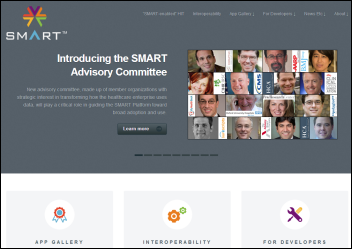
  • FDA’s recent Class 1 recall of an anesthesia information system that displayed the wrong patient information seems at odds with the draft, which says that FDA will focus only on the medical device portion of such a system.
  • It’s still user beware when it comes to clinical decision support systems, order entry, and results reporting since FDA proposes no change in their current unregulated state.
  • The report suggests that ONC create a Health IT Safety Center in collaboration with FDA, FCC, and AHRQ, which in effect puts IT patient safety under ONC’s purview rather than FDA’s.
  • The report says that while ONC’s certification program addresses only EHRs, it has the authority to certify other health IT systems. That’s an interesting observation given that “certification” as it exists today only affects providers interested in collecting government handouts, but the implication seems to be that such certification should address all vendors and users. 
  • Better interoperability standards and testing criteria are needed, the report says.
  • The report urges adoption of practices for healthcare IT implementation that address installation, customization, training, contracting, and downtime, suggesting the use of ONC’s SAFER Guides as a starting point.
  • The report proposes that vendors and products undergo “conformity assessment” that could include product certification, testing, inspection, or vendor attestations. It suggests private industry conformity assessments except in situations where patient safety is critical, in which case government assessments would be appropriate. It mentions NIST’s usability standards.
  • The report notes that vendor contract terms and customer fear of liability impede the free flow of information.
  • The report agrees with IOM in suggesting that vendors be required to list products that include any degree of patient risk with ONC. That’s a new suggestion, that ONC require software vendors to register products that meet specific criteria.
  • The report has a 90-day comment period, although I could find no stated process for submitting comments.

The FDASIA’s original work group whose recommendations from last summer were incorporated into this report contained an industry-friendly mix of members. By my count, 15 of the 30 members represent vendors or investors, six come from government or associations, four are academics, three are providers, one is from a testing organization, and one is a consumer.


Reader Comments

image

From Jack: “Re: John Muir Health. It has been a long time coming, but we’ve arrived: our state-of-the-art electronic health record (EHR) and revenue cycle system are now live within John Muir Health! With today’s go-live, all of our hospitals, outpatient clinics, Home Health, John Muir Medical Group practices and several IPA practices are on our single, integrated EHR, as are our patients’ health records. This is great news for John Muir Health, and even better news for the patients and communities we serve. With the entire health system up and running on Epic, all patients will benefit from improved service and care coordination.”


HIStalk Announcements and Requests

image

Only 12 percent of respondents say they’ve benefitted as a patient from an HIE. New poll to your right: what force is to blame for the delay in ICD-10 enforcement? Clicking a radio button alone doesn’t provide much insight, which is why it would be swell if you’d click the “Comments” link at the bottom of the poll after voting to explain your position.

Thanks to the following sponsors, new and renewing, that recently supported HIStalk, HIStalk Practice, and HIStalk Connect. Click a logo for more information.

image
image
image
image
image
image
image
image
image
image
image
image
image
image
image
image
image
image
image
image
image
image
image
image
image

Listening: San Diego-based No Knife, apparently defunct since 2003 other than a few reunion shows. The were kind of emo-indie with quite a bit of complexity. Also: the re-formed and touring Zombies, with Rod Argent and Colin Blunstone (both 68 years old) sounding amazing on new stuff as well as “Time of the Season,” “She’s Not There” and Argent’s “Hold Your Head Up.”

image

I added my Twitter support to the Thunderclap project of OpenNotes. As a patient, I should able to see the notes providers have made about me. The fact that this is a controversial issue tells you how paternalistic and patient-unfriendly healthcare is.

The Twitter word that signals someone is about to do some stealth bragging: “honored” (us when humbly but firmly announcing their recent success in being published, featured as a speaker, or given a high-visibility role.)


Upcoming Webinars

April 9 (Wednesday) 1:00 p.m. ET. Think Beyond EDW: Using Your Data to Transform, Part 1 – Avoiding Analysis Paralysis. Sponsored by Premier. Presenters: Kristy Drollinger, senior director of population health analytics, Fairview Health Services; J.D. Whitlock, corporate director of clinical and business intelligence, Catholic Health Partners; Sean Cassidy, general manager of information technology services emerging business unit, Premier, Inc. Are you ready to invest in an integrated data platform? Do you have a strategy to make the information accessible and actionable? How will enterprise data warehousing transform care delivery? There’s more to data analytics than simply deploying an EDW. Learn what goes into becoming an information-driven enterprise in the first webinar in this series.

April 16 (Wednesday) 11:00 a.m. ET. Panel Discussion: Documents, EMRs, and Healthcare Processes. Sponsored by Levi, Ray & Shoup. Presenters: Charles Harris, senior technical lead, Duke University Health System; Ron Peel, technical advisor, LRS; and John Howerter, SVP of enterprise output management, LRS. IT department in hospitals implementing EMRs often overlook the role of document-driven workflows. Prescriptions, specimen labels, and discharge orders, and other critical documents must be reliably delivered with minimal impact on IT and clinical staff. This panel discussion will discuss the evolving use of documents in the “paperless/less-paper” environment.


Acquisitions, Funding, Business, and Stock

image

Interesting points on the big IPO of IMS Health. The company was taken private a few years ago and its three main private equity investors (who bought in for $5.2 billion) will nearly triple their money by taking it public again. As often happens when the private money guys take control, IMS has loaded itself with debt along the way, jumping from $1.3 billion in debt before they got involved to a current $4.9 billion. It will use the IPO proceeds to pay the debt down to $3.95 billion. Annual revenue is $2.5 billion.

image

Shares of athenahealth plunged 11 percent on Friday, with shares dropping 28 percent in the past month.


Sales

Etransmedia Technology licenses its Connect2Care patient engagement platform to Merge Healthcare.


People

image

Gary Lakin (Microsoft) is named CEO of Australia-based oncology vendor charmhealth.


Announcements and Implementations

image

Scanadu starts distributing its wildly hyped $199 tricorder-type diagnostic to its Indiegogo backers, but has to stop when it finds a several problems, including algorithm errors, incorrect temperature readouts, and breakdown of the machinery that creates the device’s case. The Scanadu Scout can’t be sold until approved by FDA, so the backers had to sign up as study participants. With those kinds of problems, it’s a long shot that FDA will ever approve the device.


Government and Politics 

US CTO Todd Park has been minimally visible since the Healthcare.gov rollout fiasco and the ensuing Congressional subpoena, but he shared celebratory champagne with contractor QSSI early Tuesday morning after the site exceeded its goal of enrolling 7 million people.

The Wall Street Journal recaps the five states with the most problem-plagued health insurance exchanges, all covered here previously: (1) Oregon (still not working); (2) Maryland (dumping its dysfunctional system and moving to the one Connecticut developed); (3) Massachusetts (still not working); (4) Nevada (carriers are being sent incorrect information); and (5) Hawaii (not being used because state law already required employers to provide insurance).

Influential House lawmakers continued Thursday to press the Department of Defense and VA for failing to create a single EHR that would follow service members during and after their service. According to Rep. Rodney Frelinghuysen (R-NJ), who chairs the committee that funds the DoD, “It’s enormously frustrating. It makes us angry. … This is way beyond the claims backup VA has. It’s pretty damn important.” Rep. Pete Vicslosky (D-IN) added, “We fought a world war in four years. We’re talking interoperability of electronic medical records from 2008 to 2017, and I’m appalled.” The DoD’s assistant secretary of defense for health affairs says the current approach is to allow the two separate systems to talk to each other, which is says has been a problem nationally and why DoD wants to buy its own commercial product for $11 billion instead of using the VA’s VistA for free.

image

The State of Connecticut says that Windows XP, which finally goes off support Tuesday after Microsoft replaced it in 2008, still runs 20 percent of its computers, including all of the Department of Corrections and 43 laboratory instruments. The state is planning to pay Microsoft $250,000 to continue receiving Windows XP security patches, which may or may not keep it safe from potential HIPAA violations for running an unsupported and potentially compromised operating system. According to Microsoft, “Businesses that are governed by regulatory obligations such as HIPAA may find that they are no longer able to satisfy compliance requirements.” Another report finds that 77 percent of British companies still run XP and only a third of those surveyed plan to upgrade.

image

The Missouri House sends a bill to the Senate entitled the “Second Amendment Preservation Act” that would make it illegal for a healthcare professional to use an EMR that requires information about a patient’s access to firearms.


Innovation and Research

Maybe we really do need Amazon to get into healthcare. Check out its new Dash device that allows easy ordering through its AmazonFresh grocery delivery program (only available in Southern California, San Francisco, and Seattle for now.)


Technology

Billionaire AOL founder Steve Case decides on a whim to invest $100,000 each in all 10 startup teams pitching at the inaugural Google for Entrepreneurs Day. Among the companies funded is Nashville-based InvisionHeart, a Vanderbilt spinoff that is developing technology that converts EKGs to digital form for sharing in the cloud.
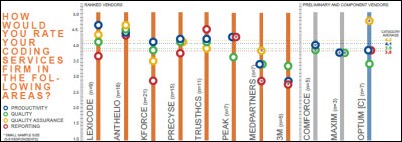

Other

image

The local paper covers the $33 million Cerner go-live at Beebe Medical Center (DE), featuring CMIO Jeff Hawtof, MD.
The two HIEs located in Columbia, MO (Missouri Health Connection and Tiger Institute Health Alliance) say they may talk about sharing information despite disagreements that arose when Missouri Health Connection demanded that Tiger Institute pay it. The current setup means that two Columbia hospitals could be close together but unable to share information because each participates in a different HIE.


Contacts

Mr. H, Inga, Dr. Jayne, Dr. Gregg, Lt. Dan, Dr. Travis, Lorre.

More news: HIStalk Practice, HIStalk Connect.

125x125_2nd_Circle

Time Capsule: Can’t We All Just Get Along? Why IT and Clinical Jobs are Different

April 4, 2014 Time Capsule 5 Comments

I wrote weekly editorials for a boutique industry newsletter for several years, anxious for both audience and income. I learned a lot about coming up with ideas for the weekly grind, trying to be simultaneously opinionated and entertaining in a few hundred words, and not sleeping much because I was working all the time. They’re fun to read as a look back at what was important then (and often still important now).

I wrote this piece in April 2010.


Can’t We All Just Get Along? Why IT and Clinical Jobs are Different
By Mr. HIStalk

125x125_2nd_Circle

I worked several years in hospitals before I went over to the IT dark side, spending time in both frontline patient care and operational management. It’s a lot different than working in IT. For those who’ve spent their entire healthcare careers sitting at a desk in front of a monitor, I thought I’d point out some of those differences as I see them.

The most dramatic difference is the timeline. IT people are the Pentagon generals fretting over long-term plans and organizational structure. Clinicians are the ground troops who are under siege by an enemy of superior number, hoping only to survive until the end of their shifts. Picture the soldiers in “Platoon” sitting in on a Pentagon press briefing — that’s how IT project meetings go down when clinicians are invited. Fragging is inevitable.

The biggest divide between IT people and patient care employees is that those people on the front lines don’t get to eat lunch out. Ask a surgery nurse about good restaurants and they’ll only know about close-by Chinese buffets willing to box up group order takeout clamshell boxes for 20 co-workers. Meanwhile, the IT people know all the fancy places with great appetizers and patio dining, although they don’t always know the prices since vendors often pick up the tab and even drive (anyone who knows anything about hospital parking will see the value in being picked up and dropped off curbside).

Team relationships are different for the front-liners. Clinical job skills are theoretically interchangeable, so the biggest difference between one nurse and another doing similar work is their attitude and work ethic. They don’t get to coast because they’re the only Oracle DBA or the last surviving in-house COBOL programmer. Out on the floors, nothing matters except what you got done during your last shift and how well you supported those around you. 

In my experience, IT’ers stab each other in the back a lot more. It’s an organizational behaviorist’s dream to put a bunch of Type A IT management people in a conference room and watch them skillfully undercut each other, lobby for suck-up points with the ranking person in the room, and dodge ugly assignments, all without being obvious.

Non-IT’ers are not nearly as subtle in the art of war. If they get mad, there will definitely be shouting, scowling, and storming out of the room. Their blow-ups are more spectacular, but are over almost immediately and everybody makes up, most likely with immediate hugs all around and a cake brought from home the next day (frontline workers eat on the job a lot). Come to think of it, that matches the timeline above — IT people are playing an intricate, involved chess game while the frontline workers go right for the boxing gloves.

Clinical people are blunt compared to their reserved and polished IT counterparts. If an application sucks, they’ll tell the CIO directly. They don’t mind ripping the "helpless” desk in front of the people who manage it or to complain that all the IT’ers are fast asleep in their beds when the network crashes at 2 a.m. Out on the floors, communication is urgent and potentially life-saving, so the ability to be soothing and politically correct is not valued. IT skin toughens a little after dealing with crusty night shift nurses who call people by their last names or that 25-year OR veteran who can make cardiac surgeons cry. You might as well expect eye-rolling and watch-glancing if you drag out a 45-minute PowerPoint that’s more propaganda than useful information.

Floor people don’t know or care about C-level management. To 90 percent of hospital employees, "management" means a nurse manager, supervisor, or ancillary department manager, not the $500K suits sitting in the really nice offices. They have probably never seen a hospital office that had good furniture, secretaries, and carpet on the floor. They also question (probably rightfully so) whether those suits really understand what it’s like to actually deliver the services that hospitals are paid to deliver. To the frontline worker (and, truth be told, probably to patients as well), nobody is vital to the mission if they aren’t working weekends and holidays. That’s why IT executives make a big show out of bringing in donuts at 6 a.m. during go-lives.

The biggest dividing line is salary, of course. IT pays better than actually delivering patient care, so IT is always stealing clinicians away from the bedside. That doesn’t win friends and influence people.

I can’t say one job is better than the other. Working on the floor is great because you can go home on time tired, but knowing exactly what you accomplished and you get to start over the next day with a clean slate. IT is a slog because it’s just the same old thing day after day, with little feeling of progress or individual accomplishment.

All things considered, though, I’d take the higher salary. Plus, eating lunch out whenever you want is undeniably cool.

Text Ads


RECENT COMMENTS

  1. Re: Deliberately Faked Academic Papers in Nature See, this doesn't surprise me at all. Of course AI quotes these bogus…

  2. Challenger exploded on lift-off when the O-rings failed. Columbia disintegrated on reentry after one of the heat shield tiles were…

Founding Sponsors


Platinum Sponsors


Gold Sponsors


RSS Webinars

  • An error has occurred, which probably means the feed is down. Try again later.