News 5/16/14

May 15, 2014 News 2 Comments

Top News

image

image

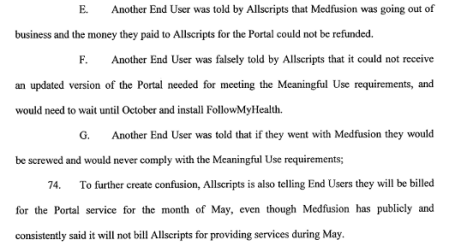
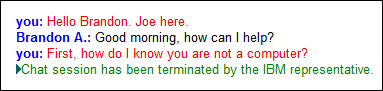
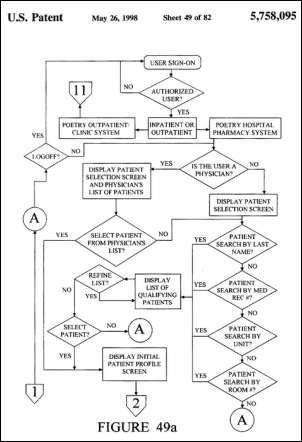
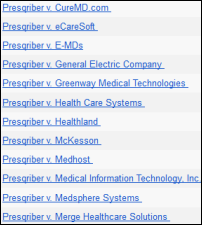
Medfusion files suit against Allscripts, claiming the company didn’t live up to its agreement to resell Medfusion’s patient portal to EHR customers of Allscripts. Medfusion says Allscripts owes it $5 million, with damages potentially tripling the lawsuit’s value. The lawsuit claims:

  • The companies signed a five-year agreement valid through July 17, 2014.
  • Allscripts delayed implementation and billing of the Medfusion portal for more than a year for some customers, creating an unpaid backlog for Medfusion and causing the companies to amend the agreement to require Allscripts to start billing new customers within 30 days. Medfusion says that backlog cost it more than $10 million.
  • Because Meaningful Use requirements were expected to boost demand for patient portals, Allscripts agreed to include the Medfusion portal in every new Enterprise and Pro deal it signed and market the product as its only portal solution.
  • Allscripts refused to integrate Medfusion’s online forms capability.
  • The companies amended their agreement to give Allscripts 55 percent of net revenue and recurring charges while Medfusion would get 45 percent.
  • Allscripts acquired Jardogs early in 2013 and announced it without warning at HIMSS13, where Medfusion was co-marketing its portal with Allscripts.
  • Allscripts started marketing the Jardogs product as its preferred solution (FollowMyHealth) before its contract with Medfusion ran out and also started converting customers waiting to have Medfusion’s portal implemented to the FollowMyHealth product.
  • Allscripts created marketing material that compared the FollowMyHealth product to Medfusion’s with the conclusion that its own product was better.
  • Allscripts stopped developing its end of any portal enhancements and blamed Medfusion when clients reported issues.
  • Medfusion accused Allscripts of breach on April 14, 2014, saying it had not paid $5.5 million worth of outstanding invoices. Allscripts, it says, sent payment of just under $1 million in response and disputed the remainder.
  • Medfusion says customers told it that Allscripts made misleading statements in trying to get them to sign three-year contracts with Allscripts, including that: (a) Allscripts had terminated the agreement due to Medfusion problems; (b) Medfusion was going out of business; (c) Medfusion wasn’t providing portal updates and the customer would have to implement the Allscripts product to qualify for Meaningful Use; and (g) customers would be invoiced for May even though Medfusion wasn’t invoicing Allscripts that month because of their dispute.

Reader Comments
image

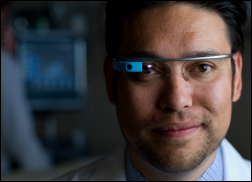
From Hobie Cat: “Re: Google Glass. Being handed out to all medical students at UC Irvine. The link made the rounds this morning with the subject, ‘Does this have HIPAA violation written all over it?’ Perhaps someone from UC Irvine can chime in with thoughts on how they’re approaching HIPAA. I’ll also be curious about how patients respond to this technology during rounds and the perception of a student talking to themselves and head nodding toward the ceiling to wake up Glass while in the room with the patient… ‘Just turning on the Glass, yo!’” The medical school says students in their first two years will use Glass during anatomy and clinical skills courses, while those in their third and fourth years will wear it during their hospital rotations, especially in the ED and OR. Google stores the information saved by off-the-shelf Glass, so in the absence of a business associate agreement with Google (which they probably won’t sign since it’s a consumer device) and because Glass doesn’t encrypt, I would say its use in patient care settings is a HIPAA problem. However, the UCI announcement says they are using proprietary software that is HIPAA compliant, probably the Pristine system they were piloting earlier this year, so they are trusting their vendor.

From TooMuchCoffee: “Re: UK’s Royal Devon. Going to Epic, although ‘affordability is a huge issue.’ At least they’ll get something that works – NHS spent billions on a failed decade-long project involving GE Healthcare and other vendors that produced nothing.” Royal Devon and Exeter NHS Trust chooses Epic as vendor of choice. It will now undertake a 12-week study to see if it can afford it.
image

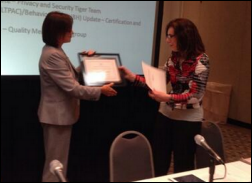
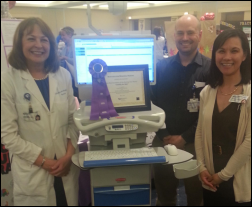
From Fighting Accountants: “Re: Northwestern telestroke team. Congratulations for winning the Innovation Award at their annual nursing fair. They save lives and improve outcomes where it wouldn’t otherwise be possible. Not all health IT is as painful as an EMR.”

From Joey Junior: “Re: Mayo. Heard any rumors about the Cerner-Epic faceoff?” I haven’t. I will defer to readers.

From Concerned: “Re: voice mail messages. I need HIStalk reader insight. A large academic hospital organization would like to store their voice mail messages on Exchange Server. I don’t feel that this is ideal, but does it actually violate HIPAA?” I’m sure an expert will weigh in, but my interpretation is that voice mails left by patients (which I assume is the content you are referring to) are not covered by HIPAA since they didn’t start out in electronic form, the provider didn’t listen to them initially, and nobody suggested the patient leave PHI-containing voice mails. Providers leaving messages for each other might be problematic, though, but the server is still inside the firewall and the messages can’t be forwarded outside or accessed without security credentials. I haven’t convinced myself, so let’s hear some other viewpoints.


HIStalk Announcements and Requests

image

Several of the reader-submitted items you see here came from the all-purpose contact form, which accepts comments and attachments and whisks them straight to my inbox, where they may age gracefully until I get to them.

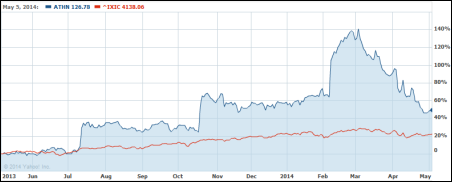
Highlights from HIStalk Practice this week include: Xerox fares poorly when it comes to state Medicaid management systems. GA-HITREC’s Dominic Mack, MD weighs in on the HIMSS 2014 Regional Extension Survey results. Physicians have differing opinions about the business model of CrowdMed, which is looking to turn a profit via crowdsourced medical advice. ONC approves ANSI for a second term as an approved creditor for its HIT certification program. Athenahealth finds itself in the same quagmire as Facebook and Tesla. "Anonymous" sends letters to 30 patients alerting them to the ease of stealing their medical information. A solo-practice physician becomes the first in New Jersey to attest for MU Stage 2, thanks to help from NJ-HITEC. Thanks for reading.

This week on HIStalk Connect: Dr. Travis discusses the state of patient engagement and questions whether the Patient Engagement Framework, developed by the National eHealth Collaborative and HIMSS, is an ideal tool for benchmarking progress. Researchers at Johns Hopkins develop a smartphone-based carbon monoxide breathalyzer that they hope will provide smoking cessation programs the tools to objectively measure smoking abstinence more easily. Cedars-Sinai Health System announces that it has formed a partnership with MemorialCare Health System to create a shared health technology VC fund called Summation Health Ventures

image

Ms. Barnes sent this photo from her Mississippi kindergarten classroom, for which we as HIStalk readers provided write-and-wipe boards and markers (you can see them in front of the students) in response to her DonorsChoose grant request. She reports that the class is using them for practicing their writing and they wouldn’t have them otherwise because of district budget cuts.


Acquisitions, Funding, Business, and Stock 
image

Oscar, a technology-powered startup that sells medical insurance only to New York residents so far, raises another $80 million in funding, bringing its valuation to nearly $1 billion.


Sales

image

The VA chooses Agilex and Calgary Scientific for enterprise viewing of radiology images on a variety of devices.


People

image

Applied Health Analytics hires Craig Smith (The Advisory Board Company) as president of its Coalesce consulting division.

image

Lee Fowinkle (McKesson) joins InformedDNA as CTO.


Announcements and Implementations

image image

Mercy Hospital (MO) breaks ground on its four-story, 120,000 square foot, $50 million virtual care center that will house its 300 telemedicine program employees for remote management of ICU, stroke, cardiology, sepsis, radiology, pathology, nurse on call, and home monitoring.
image

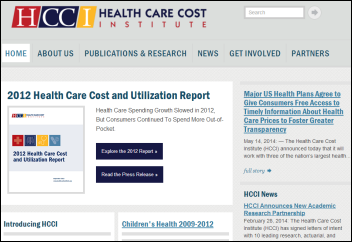
Health Care Cost Institute, a non-profit funded by UnitedHealth Group, will in Q1 2015 make available to the public medical claims data from private insurers, the first non-government healthcare pricing data to be released. Aetna, Humana, and Kaiser Permanente have signed on.


Government and Politics

HHS’s Medicare Fraud Strike Force charges 90 people, including 27 clinicians, for fraudulently billing Medicare for $260 million. The defendants were charged with a variety of activities that include paying pharmacy kickbacks, billing for undelivered products and services, charging the government for 1,000 unneeded power wheelchairs, and laundering money using Medicare beneficiary information. HHS also announced that it has indicted the Brooklyn surgeon who billed Medicare for $85 million worth of surgeries that he didn’t actually perform.

ONC chooses ANSI for a second three-year term as the accreditor of its certification bodies.


Innovation and Research

A study of primarily Iowa VA hospital ICUs finds that telemedicine didn’t reduce 30-day mortality rates or length of stay.


Other

A free, eight-week online course, “Exploration of SNOMED CT Basics,” runs through June 13 if you have time to double up on the video lectures to finish in time.

The Chicago-area nurses union National Nurses United launches a heavy-handed campaign against “experimental, unproven medical technology” (specifically, EHRs.) Much of it rings true, unfortunately, even the dot matrix printer.


image

image

Roshni Nadar Malhotra, the only child of a technology billionaire from India, will spend $168 million to build a network of Johns Hopkins-affiliated health clinics starting in New Delhi. She says IT will be a key component.

image

The Pittsburgh business paper reviews the federal tax forms of West Penn Allegheny Health System, noting that Allscripts was its second-highest paid contractor at $7.3 million.

Employees of a company that won a $1.2 billion HHS contract to process paper insurance applications from health insurance exchanges are staring at computer screens with nothing to do, a whistleblower claims. The whistleblower says the employees have been told to refresh their screens every 10 minutes to give the appearance that they are accomplishing something. Serco, the British contractor that won the big contract, is under investigation in England for overbilling the government. I wrote about the company in October 2013, including the patient harm it caused when it took over the largest pathology labs in England’s NHS in 2009.

image

An editorial by Newt Gingrich on the VA’s problems says the VA and DoD need to integrate their IT systems (which is much more of a DoD problem than a VA problem):

Every effort to integrate Department of Defense and VA medical record systems has failed. The result has been an absurd process of transitioning from active duty health services to VA health services. At a time when you can instantly make airline and hotel reservations or get money from an ATM worldwide in seconds, it takes 175 days to transition a veteran’s care from the Defense Department to the Department of Veterans Affairs. The DoD and VA spent $1.3 billion to build a joint electronic medical record system for their health care services before the two secretaries announced in February that they were abandoning the effort. This is on top of the over $2 billion the Defense Department has spent on a failed upgrade to its own electronic medical system.
image

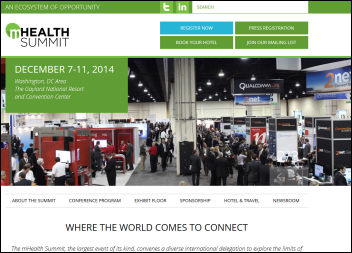
The mHealth Summit opens its call for presentations for the 2014 meeting, due June 27. The meeting will be December 7-11 in National Harbor, MD.

image

Interesting: a suspicious fire in the medical records department of a psychiatric hospital in Trinidad and Tobago erupts one month after the health authority requested copies of the hospital’s medical equipment purchasing records. The hospital, which is looking at EHRs, says it will have to create records by asking patients about their history. It hopes to make a second set of paper records for patients to take home.

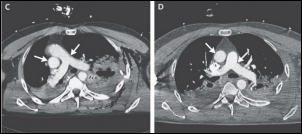
Weird News Andy says when it comes to cancer vs. measles, it’s no contest for this patient. Mayo Clinic doctors try a desperate cancer treatment in injecting enough genetically modified measles virus into a female patient to inoculate 10 million people. The doctors say the use of viruses to fight cancer, known as oncolytic virotherapy, has been tried since the 1950s and in this patient’s case, seems to have worked.


Sponsor Updates

  • Extension Healthcare sponsors the National Coalition for Alarm Management Safety.
  • Capario shares five facts about eligibility verification.
  • Capsule’s Halley Cooksey relates the NFL draft to selecting a committee to evaluate technology.
  • PatientKeeper posts its summer conference event schedule.
  • Orchestrate Healthcare posts an article called “What is Healthcare IT Integration?”
  • HDS will attend MUSE on May 27-30 in Dallas.
  • Park Place International offers seven tips for project managers to get and stay organized.
  • Jennifer Crowley from MedAptus discusses the importance of time in the daily life of a provider.
  • The Outsourcing Center names Springhill Medical Center (AL) and Allscripts winners of its 2014 Outsourcing Excellence Award in the Best Healthcare category.
  • TriZetto will offer  grouping, edit, compliance and pay-for-outcomes logic from 3M in its NetworX Pricer and NetworX Modeler solutions.
  • Iatric Systems launches Business Associate Manager as a tool for compliance with the HIPAA Omnibus Final Rule.
  • Sentry Data Systems completes a Service Organization Control 3 examination.
  • Summit Healthcare joins the federal initiative for standards-based healthcare communication DirectTrust.
  • Black Book names ADP AdvancedMD, Allscripts, Aprima, Care360 Quest, eClinicalWorks, eMDs, Greenway, Kareo, McKesson, and Optum to its list of top EHR, PM, and billing vendors.

EPtalk by Dr. Jayne

I was excited to hear about HR 4077 , which would exempt physicians and other healthcare professionals from antitrust laws when they take part in contract negotiations with health plans. Although it doesn’t apply to Medicare, Medicaid, or other governmental payers, it seems like it could help independent physicians as they fight the big payers. Having been part of such a physician network in the past (although it was determined that we violated antitrust laws and our contracts were voided) it could be a help for many providers.
clip_image002

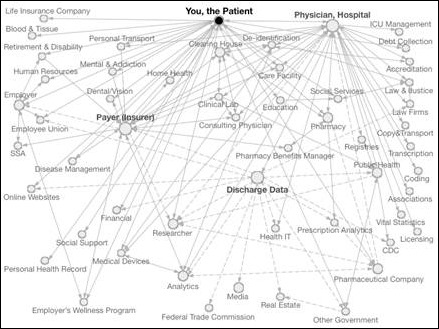
My informaticist friend @techydoc tweeted a link to this healthcare data map last week. It’s amazing all the places our data goes, sometimes whether we want it to or not. Apparently one place data doesn’t go, however, is to my mom’s doctor appointment. Her physician recently moved from one practice location to another within the same physician group. Despite the fact that they’re on a common EHR platform and also have an HIE in place, she was told they had to key in all her information again. It’s a shame they didn’t catch her last name and give a better answer, because I implemented the EHR and HIE in question. Sounds like someone needs an in-service.

HIStalk Practice picked this up first, but I wanted to throw in my two cents on this study that concluded that costs rise when hospitals own physician practices. The data used for the analysis was for the period 2001-2007. It doesn’t take into account the shared savings plans that have come into play during the last six or seven years. There are also just too many confounding factors present. To get an accurate analysis, I think you’d have to have to control many more of the variables. Maybe in a couple of years we can get some robust data from Accountable Care Organizations that have both employed and independent provider participants.

From The Major: “Re: site visits. As usual, thanks for sharing. I have been through a site visit (as a consultant, and my client was the jerk) like that. We had an hour ride back from the site to his hospital, where I naively told him he wouldn’t learn anything if he didn’t listen and ask good questions.” Several readers wrote to commiserate about my recent site visit experience. I’m happy to report that I received a note of apology and a cookie basket for my staff. Either the CMIO understands his behavior wasn’t appreciated or one of his accompanying colleagues is trying to smooth things over for him.

From Oceans Eleven: “Re: site visits. A long time ago we were an early adopter of a particular vendor. Based on our success, we eventually did about 100 site visits over the first few years. What became apparent after the first few minutes with a couple of them was that they had no intention of signing with any vendor. Much to the chagrin of the sales guys, we immediately scaled back our planned agenda and sent them on their way to the beach, which was probably the covert reason for the visit.” I’ve looked at dozens of products over the years and that approach hadn’t occurred to me. I’m thinking the next site visit we do might have to consider geography as well as how similar the facility is to ours. Besides, it’s been a long winter and I’m feeling a little pale. I’m sure an increase in my Vitamin D would be beneficial.
clip_image004

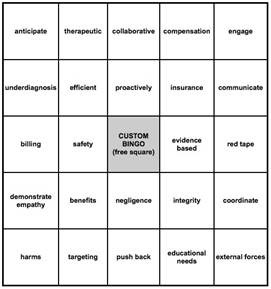
Anyone who has ever engaged in a friendly game of Office Bingo should appreciate this card, courtesy of a reader at Authentic Medicine. I used it during a recent pep talk from our chief medical officer. She was trying to explain why it was a good idea that all the experienced emergency physicians are being let go so we can replace them with cheaper independent contractors who don’t know our hospital or our patient population. Did I mention the emergency department is barely a third of the way through with a massive construction project that has required everyone involved to bend over backwards to preserve quality patient care? The hospital is transitioning in a little over a month – it will be interesting if nothing else since we’ll have new residents and new attending at the same time. I reached BINGO after barely a handful of sentences.


Contacts

Mr. H, Inga, Dr. Jayne, Dr. Gregg, Lt. Dan, Dr. Travis, Lorre.

More news: HIStalk Practice, HIStalk Connect

Get HIStalk updates.

125x125_2nd_Circle

Readers Write: FDASIA and Healthcare’s Moon Shot Goal of ICU Safety

May 15, 2014 Readers Write 7 Comments

FDASIA and Healthcare’s Moon Shot Goal of ICU Safety
By Stephanie Reel

image

Preparing for the FDASIA panel was an energizing opportunity. It allowed me to spend a little time thoughtfully considering the role of government and the role of private industry in the future of health IT integration and interoperability. It gave me an opportunity to think a great deal about the important role ONC has played over the past few years and it made me question why we haven’t achieved some of the goals we had hoped to achieve.

As I was preparing my remarks, I reflected on the great work being done by my colleagues at Johns Hopkins and our vendor partners. We have the distinct privilege of having the Armstrong Institute at Hopkins focused on patient safety and quality, which is generously funded by Mr. Mike Armstrong, former chairman of our the Board of Trustees for Johns Hopkins Medicine. It is unequaled and a part of our fabric and our foundation. The Armstrong Institute is inspirationally led by Dr. Peter Pronovost, who is an incredibly well-respected leader in the field of patient safety, and also a trusted colleague and a good friend.  

We in IT at Hopkins receive exceptional support from our leadership – truly. We also have amazingly strong partnerships with our school of medicine faculty, our nurses, and our enterprise-wide staff. I suspect we are the envy of most academic health systems. The degree of collaboration at Hopkins is stunning – in our community hospitals, physician offices, and across our academic medical centers. Our systems’ initiatives derive direct qualitative and quantitative benefit from these relationships. Our CMIO, Dr. Peter Greene, and our CNIO, Dr. Stephanie Poe, are the best of the best in their roles. The medical director of our Epic deployment, Dr. John Flynn, is a gift.  

We are luckier than most. We could not do what we do without them. But despite this impressive and innovative environment, we still have significant challenges that are not unique to Hopkins. 

Despite huge investments and strong commitments to Meaningful Use, we have challenges across all  health IT initiatives. They aren’t new ones and they aren’t being adequately addressed by our current commitment to Meaningful Use criteria. We are still not operating in a culture adequately committed to safety and patient- and family-centered care. We are still not sufficiently focused on technologies, processes, and environments that consistently focused on doing everything in the context of what’s best for the patient. 

We decided to try harder. All across Johns Hopkins Medicine, we published a set of guiding principles that guide our approach to the deployment of information technology solutions. These guiding principles reduce ambiguity and  provide constancy of purpose. They drive the way we make decisions, prioritize our work, and choose among alternatives – investment alternatives, deployment alternatives, vendor alternatives, integration tactics, and deployment strategies. They provide a “true north” that promotes the culture we are hoping to create.

Our first guiding principle expects us to always do what is best for the patient. No question, no doubt, no ambiguity. We will always do what is best for the patient and for the patient’s family and care partners. We are committed to patient safety and it is palpable. This is our true north.

Our  second guiding principle allows us to extend our commitment even further. We commit to also always doing what is best for the people who take care of patients. So far, we have never found this to be in conflict with our first guiding principle. We view the patient and the patient’s family as our partners. Together, we are the team. Our environment, our work flow, our processes, and our technologies need to do what is best for all members of the team and all of the partners in the process of disease prevention, prediction, and treatment.

Our remaining guiding principles deal with our commitment to integration, standardization, and best practices. We know that unmanaged complexity is dangerous. We know that there are opportunities to improve our processes and our systems if we are always focused on being a learning healthcare system. We know we can achieve efficiencies and more effective solutions if we also achieve some degree of standardization and data and system integration. This is essential, critically important, and huge. It is something FDASIA (the FDA,FCC, and ONC) and the proposed Safety Center may be able to help us address. 

Is this the best role for government?

Government has an important role and government has the power to convene, which is often critical. But I also feel strongly that market forces are compelling and must be tapped to help us better serve our patients and the people who care for our patients. Health systems and hospitals have tremendous purchasing power. We should ensure we define our criteria for device and system selection based upon the vendor’s commitment to integration, standardization, and collaboration around best practices. We must find a way to promote continuous learning if we are to achieve the triple aim. 

We need to step up. We need to say we will not purchase devices, systems, and applications if the vendors are not fully and visibly committed to interoperability and continuous learning. This must be true for software, hardware, and medical devices. It must be true for our patients and for the people who care for our patients.

Moon shot goal

This relates my plea that we define a moon shot goal for our nation. We must commit to having the safest healthcare delivery system in the world. We should start with our intensive care units. We must ensure that our medical devices, smart pumps, ventilators, and glucometers are appropriately and safety interoperable. We must  make a commitment to settle for nothing less. We must agree that we will not purchase devices or systems that do not integrate, providing a safe, well-integrated solution for our patients and for the people taking care of our patients.

Let’s decide as a nation that we will place as much emphasis on safety as we have on Meaningful Use. Or perhaps we can redefine Meaningful Use to define the criteria, goals, and objectives to be achieved to ensure that we meet our moon shot goals. We will ensure that we have the safest hospitals in the world and we will start with our ICUs, where we care for the most vulnerable patients. We might even want to start with our pediatric ICUs, where we treat the truly most vulnerable patients.

More than 10 years ago, I was given an amazing opportunity to “adopt a unit” at The Johns Hopkins Hospital as a part of a safety program invented at Hopkins by Dr. Peter Pronovost. Each member of our leadership team was provided with an opportunity to adopt an ICU. We were encouraged to work with our ICU colleagues to focus on patient safety. We were educated and trained to be “preoccupied with failure” and focused on any defects that might contribute to patient harm. We didn’t realize it at the time, but we were learning how to become a High Reliability Organization.  

I learned quickly that our ICUs are noisy, chaotic, extremely busy, and not comforting places for our patients or their families. I learned that our PICU was especially noisy. Some of our patients had many devices at their bedside, nearly none of which were interoperable. They beeped, whirred, buzzed, and sent alarms – many of which were false alarms — all contributing to the noise, complexity, and feeling of chaos. They distracted our clinicians, disturbed our patients, and worried our family partners. 

Most importantly, they didn’t talk to one another. So much sophisticated technology, in the busiest places in our hospitals, all capable of providing valuable data, yet not integrated – not interoperable – and sometimes not even helpful.

I realized then, and many times since I adopted the PICU, that we all deserve better. Our patients and the people who care for our patients deserve better. We must build quiet ICUs where our care team can listen and learn and where our patients can receive the care they need from clinicians who can collaborate, leveraging well-integrated solutions and fully integrated information to provide the safest possible care. Many of these principles influenced the construction of our new clinical towers that opened two years ago. Again, we are fortunate, but huge challenges remain.

What about Quality Management Systems? Are we testing and measuring quality appropriately?

In many ways, I think we may focus too much on the back end. Perhaps we focus too much on testing and not enough time leading affirmatively. A commitment to excellence – to high reliability – might lessen the complexity of our testing techniques. I am very much committed to sophisticated quality assurance testing, but it seems far better to create and promote a culture that is committed to doing it right the first time. It will also be important that we affirmatively lead our design and deployment of systems that rely only on testing our solutions. 

With that in mind, I would prefer to see an additional focus or strategy that embraces High Reliability at the front end in addition to using quality management techniques. We undoubtedly need both. 

As I have recently learned, most High Reliability Organizations have much in common related to this dilemma. We all operate in unforgiving environments. Mistakes will happen, defects will occur, and we need to be  attentive. But we must also have aspirational goals that cause us to relentlessly focus on safety at the front end. We must remain passionate about our preoccupation with failure. We must recognize that our interventions are risky. We must have a sense of our own vulnerabilities and ensure we recognize we are ultimately responsible and accountable despite our distributed and decentralized models. We must continue to ask ourselves, “How will the next patient be harmed?” and then do everything possible to prevent harm at the front end as well as during testing.  We must create a culture that causes us to think about risk at the beginning.  And of course, we must be resilient, reacting appropriately when we do recognize errors, defects, or problems.

I should note that many of these ideas related to High Reliability are very well documented in Karl Weick and Kathleen Sutcliffe’s book, Managing the Unexpected. They encourage “collective mindfulness” and shared understanding of the situation they face. Their processes are centered around the five principles: a preoccupation with failure, reluctance to simplify interpretations, sensitivity to operations, commitment to resilience, and deference to expertise.

Why the moon shot goal?

As Dr. Pronovost at Johns Hopkins Armstrong Institute often says, “Change travels at the speed of trust.” We need to learn from one another. We need to be transparent, focused, and committed to doing what is best for our patients and for the people who care for our patients. We must commit to reducing patient harm. We must improve the productivity and effectiveness of our healthcare providers. We must have faith in our future and trust our partners. We need to make a commitment to no longer expect or accept mediocrity. 

From a recent study performed at the Armstrong Institute under Dr. Pronovost’s leadership, we know that patients around our country continue to die needlessly from preventable harm. Healthcare has little tangible improvement to show for its $800 billion investment in health information technology. Productivity is flat. Preventable patient harm remains the third leading cause of death in the US.

In addition, costs of care continue to consume increasingly larger and unsustainable fractions of the economy in all developed countries. While cutting payments may slightly decrease the cost per unit of service, improving productivity could more significantly deflate costs. Other industries have significantly improved productivity, largely through investments in technology and in systems engineering to obtain the maximal value from technology. Yet healthcare productivity has not improved. Our nurses respond to alarms — many of them false alarms – on average, every 94 seconds. This would be unthinkable in many other environments.

Despite my view that we must encourage market forces, we know that we have a long way to go to have an ICU that has been designed to prevent all patient harm while also reducing waste. Clinicians are often given technologies that were designed by manufacturers with limited usability testing by clinicians. These technologies often do not support the goals clinicians are trying to achieve, often hurt rather than help productivity, and have a neutral or negative impact on patient safety.

Moreover, the market has not yet integrated technologies to reduce harm. Neither regulators nor the market has applied sufficient pressure on electronic health record vendors or device manufacturers to integrate technologies to reduce harm. The market has not helped integrate systems or designed a unit that prevents all patient harm, optimizes patient outcomes and experience, and reduces waste. Hospitals continue to buy technologies that do not communicate.

It is as if Bloomberg News would have been successful if there were no standards for sharing of financial and market data. It would be unthinkable that Boeing would continue to partner with a landing gear manufacturer that refused to incorporate a signal to the cockpit informing the pilot whether the landing gear was up or down. We need the same engineering, medical, clinical trans-disciplinary collaboration expectations to ensure the same is true for healthcare.

Back to the moon shot….

An ideal ICU is possible if we decide it matters enough. If we agree to combine trans-disciplinary collaboration with broad stakeholder participation and demand authentic collaborations, we can get there in less than five years. But it won’t be trivial. It will require a public/private partnership.

The cultural and economic barriers to such collaborations are profound. Engineers and physicians use different language, apply different theories and methods, and employ different performance measures. We must take a holistic approach to create the ideal ICU and the ideal patient and family experience.

A safe, productive system is possible today. Technology is not the barrier. Let’s make it happen. Let’s have a goal for 2020 that we will have the safest ICUs (and the safest hospitals) on the planet – focused on patient- and family-centered care, disease prevention, and personalized and individualized healthcare.

Stephanie L. Reel is CIO and vice-provost for information technology at Johns Hopkins University and vice-president for information services for Johns Hopkins Medicine of Baltimore, MD.

Health IT from the CIO’s Chair 5/14/14

May 14, 2014 Darren Dworkin 7 Comments

The views and opinions expressed in this article are mine personally and are not necessarily representative of current or former employers. Objects in the mirror may be closer than they appear. MSRP excludes tax. Starting at price refers to the base model; a more expensive model may be shown.

Hockey and Health IT Innovation

I grew up in Montreal, Canada, so hockey is in my blood. With the playoffs in full swing, I thought I would write my post themed to my hometown sport.

clip_image002

(There was no reason to include this photo, it just seemed like a fun thing to do.)

Innovation is on everyone’s mind in healthcare today. Much of that focus is either directly or indirectly tied to IT. As healthcare models continue to evolve, many believe that given the rapid pace expected, IT innovations will be needed to fuel the change.

As health systems prepared in the past to meet the demand for EMRs, what will they need to do differently to meet this growing expectation of delivering innovation?

Using hockey as a backdrop, here are eight themes.

  1. Learn to skate. Learning the fundamentals is clichéd advice for a reason. In health IT, this means implementing an electronic medical record. EMRs can be big, complicated projects and can lead to great things, but having an EMR only means you can skate. It is the starting point to becoming a hockey player. Innovation starts after the go-live.
  2. You have to lose a lot to win. The teams with the best regular season records won just 56 of 82 games this season, which means they lost 34 percent of the time. To innovate, you have to be prepared to fail. Hospital cultures are not set up up for this mindset. On the other hand, new entrepreneurial companies are often forced to pivot to new models to stay alive — it is in their DNA by design.
  3. Icing is a delay-of-game penalty. Delays or failing to make a decision will not work in today’s rapidly changing healthcare environment. Yesterday’s news was the need for change. Today’s news is improving our velocity of change. Health IT innovation needs to be supported around a model adoption. This is what a health system team can do best. Others who are better equipped to iterate might need to create the innovations themselves.
  4. Three referees are on the ice during the whole game. Like hockey, healthcare has rules, regulations, and operating procedures. They are in place to help protect everyone. But that does not mean you can’t play aggressively, increase your tempo, and skate hard. Playing hard also does not mean the rules don’t matter. Health systems are experts at operating procedures. Find a way to be part of the process without feeling the need to own it.
  5. The team is more that just a star player. Healthcare is no doubt a team sport, but sometimes the team needs to viewed as being beyond the four walls of the hospital. The innovation team should not be viewed as just employees, but also all of your great partners. If you don’t have great partners, it is time to make that a priority.
  6. If you can’t make the shot, pass. Making the great shot is often about being in position. If you are not in the right position, then pass to someone who is. Some of the best hospital IT departments I have seen are amazing at implementing and understanding the complex workflows of healthcare. That does not mean they are best positioned to develop new software.
  7. Skate to where the puck is going to be, not where it has been. What has worked in the past for healthcare and health IT will not necessarily work in the future. The puck has moved.
  8. You miss 100 percent of the shots you don’t take. Innovation in health IT is all about taking the shot (and the risk.)

Game on!

1-29-2014 12-54-46 PM

Darren Dworkin is chief information officer at Cedars-Sinai Health System in Los Angeles, CA. You can reach Darren on LinkedIn or follow him on Twitter.

HIStalk Interviews Sai Raya, PhD, CEO, ScImage

May 14, 2014 Interviews 2 Comments

Sai Raya, PhD is founder and CEO of ScImage of Los Altos, CA.

image

Tell me about yourself and the company.

I’ve been in medical imaging for a long time. For 30 years, from my university days at Hospital of the University of Pennsylvania. I started a little company for 3D imaging workstations and that kind of stuff. 

After that company, I started this company with a different mindset, with zero investment from any external people. I wanted to take one customer at a time and build a good ecosystem with customers. That’s what we have done.


What effect have publicly traded conglomerates and startups had on the healthcare IT market?

The fundamental problem with quarter-to-quarter financial reporting is that middle managers are forced to sell whatever they can, say whatever they can, and show the numbers. In the process, they have to go out and acquire new companies and change the solutions and whatnot.

Over time, they are working with one hospital. Maybe in about 10 years, there may be a couple of forklift updates. They acquire Company A and they have a solution for that. Then they acquire a new company, so they take the Company A solution out and put the second company’s solution in. In the process, hospitals are paying more. They don’t have the continuity in terms of what the hospital would like to do with data mining and all that stuff. 

Small companies, on the other hand, can’t survive without proper financial backing. It is a competitive world. 

From the lessons that I learned in my first venture, it’s very clear to me that the only way to build a solid company with a good financial foundation and bring that equilibrium is to have customer loyalty, and then continue the same solution over and over again. That’s why we have customers still with us since 1996. We never did the forklift update. The programs that we rolled in 2000 still work fine. That’s why there’s a kind of loyalty and a relationship between vendor and the hospitals and the physicians. That’s what we’re trying to enjoy.


It’s tough being an early adopter, like those pioneers who wanted to get rid of film and paper and move to PACS and EMRs before those systems were ready. Did hospitals jump on board too early?

Absolutely. Some people jumped on board without much thought. Somebody came and said, if you go to digital, you will save 50 cents per film or something like that. But first generation is first generation. They chose certain solutions. 

Now we may be in the third generation. But in the grand scheme of things, digitization of the enterprise is just the first phase of what is going to happen to this healthcare IT in general. Whatever digitization that we’re trying to do these days, it is not dead yet. We’re maybe 70 percent of the way there. 

This becomes kind of a building block for the future healthcare IT, where information and imaging have to co-exist. There cannot be any boundaries between these two things. A patient record is a patient record. It has to have everything that patient has ever done.


How do you see the market shaking out as imaging systems and EMRs try to figure out that co-existence?

If you went to something like RSNA in 2007, everybody was a PACS vendor. Everybody was changing film. But if you went to the latest RSNA, some companies went away and some got merged. A lot of consolidation is going on. In the process, certain hospitals learned something and some did not. 

Images are growing. The image pointer that’s in the EMR seems to be the buzzword right now. That will go on for some time.


What are the most important workflows that an imaging system needs to address?

When we started this product we call PICOM, the fundamental point that I was trying to make was, if you go to any department — doesn’t matter, radiology or other — you see images and information. You have images and then lots of requisition sheets and observations and tech notes and physician notes and all kinds of things.

We wanted to create a platform that combines images and information together. Of course, we’re talking data in terms of components in the departments. We’re not talking EMR kind of systems.

For some of them, we had standards like DICOM and document exchange kind of things. Others we did not. We started acquiring them in their native format and put that solution together.

These days, if you go to any kind of imaging system, you have people talking about not just images, but information. Once this total data package is available, it needs to be seamlessly available to the front-end portal that the physician is going to interact with. There’s a lot of work to be done there. In my opinion, that is going to be the key for people that are involved with imaging.


How often do physicians who aren’t radiologists want to see the original image versus the interpretation from the radiologist?

We are coming from a multi-departmental type of company. We treat both radiology and cardiology together. In fact, we deal with radiology, cardiology, OB-GYN, and orthopedics all together. That’s one product for us.

Any patient that goes to the hospital many times, you get the ECG done more than you get chest film done. Images and waveforms are all together. In the case of ECG-type studies, as soon as the physician gets some kind of test result for the patient and before the physician wants to consult with the patient, they do want to take a look at these waveforms to tell them exactly what’s going on. 

Modalities like ECG where the waveforms and interpretation are together – they are bound to open those kinds of things. Similarly these days, mainly for the orthopedic things, they generally use the images, but if it is a big CT study, I don’t think they’ll be using it.


What’s the status and challenges of sharing images across organizations?

The basic problem is there’s no universal patient identifier. We have our own way of doing it, but fundamentally it’s exchanging information from one PACS system to another system or one ordering system.

We created what is known as a universal MPI translator. That’s what we do. Right now, 20 percent of our business is interoperability, where we have to pull and push information from disparate systems and consolidate the reading and that kind of stuff. 

That seems to be the name of the game for the next two years before somebody has to come up with a standard. If that somebody is the government, it’s not going to happen any time soon. [laughs]


What are the most pressing issues you are seeing from providers?

On one side, it’s the image life cycle management. It’s well defined and many companies have good solutions, including us.

But in the whole process, the diagnostic physician contributes the most complex and important content. The diagnostic physician’s impressions need to be distributed everywhere, wherever it’s needed. In fact, even for Meaningful Use, we have to take certain key measurements or key statements that need to be delivered to the EMR in a separate channel. 

These are all the challenges. We have doubled up a good set of tools to do those things. Of course other people have also done that. But in the process, we’re still learning. 

I see the importance of  driving the subset of information from the diagnostic report and making that information co-exist with the image pointers or images and making them travel across the enterprise or make them travel outside the enterprise. That is the challenge.


Is there anything that’s being discussed that would allow images to be searched on qualities that weren’t noted by the interpretation, like the content of the image itself that might interest a researcher?

We have a lot of metadata in these images. If you want to search by image type or study type, it is possible. But the quality of the image, still it’s a visual perception, and a trained eye is the only one that seems to be doing a good job in terms of image quality audit.

But in terms of searchable images using, for example, something like “mitral valve prolapse,” that is easy to search and get information. It depends on the system. Some systems can do it. 

In our system, we maintain an outcomes database and analytics and other things that we take very seriously. Every data object that comes into our system has the metadata latched on. It’s embedded right there in the image itself. It becomes easy to share that information or maybe make it available as an API for other systems to search.


With the rise of the vendor-neutral archive, what data types are people wanting to store that you wouldn’t have expected five years ago?

That’s funny. In 2000, we started an online “PACS in the cloud” type of environment called PICOM Online. Those days it was not cloud — it was an America Online-type of company name, so we called ourselves PICOM Online. [laughs] 

My fundamental thing there was exactly this. It’s not just images. You’ve got to get all your documents, your spreadsheets, your PowerPoint presentations, and your business documents or billing statements — whatever is needed. They all get packed up into one object. It’s called study object. That study gets archived. The intelligence on the back end of the archiving system should handle based on how the client is interacting with it.

That’s exactly what we have done. After 14 years, more than 100 hospitals are using our online cloud solution. It’s a complete PACS, including reporting, voice recognition, and all kinds of crazy things. Some of the big companies these days are now finally opening their eyes and looking at the importance of delivering the documents with the images.

But 80 percent of the industry is still DICOM in, DICOM out, DICOM in, DICOM out. That’s all they talk about.


What’s the future of the industry or the company or both over the next few years?

Interoperability and making the image pointers universal. That’s one thing. 

Security seems to be the biggest factor now, in terms of how securely we can encrypt this data and make it available to the right people at the right place at the right time and have the complete audit trails going with it? That is the key technology that we as an imaging provider needs to provide to the EMR companies.

No matter what, the biggest companies like Epic, when it comes to imaging intensified activity, it’s going to be with PACS vendors and image workflow vendors. We collect the data and then we have to make this data properly available to these people. That is a growing opportunity for us and I think it’s going to be there for a long time to come.

There’s going to be major consolidation and all that stuff, but still lots of hospitals don’t like this cookie cutter type of an approach. They would like to have customizable solutions that works for their hospital. That’s the opportunity smaller companies like us have.


Do you have any final thoughts?

We like what we are doing and we’re having fun. Being a private company with a good balance is a nice thing to do. We’re enjoying our little company.

News 5/14/14

May 13, 2014 News 7 Comments

Top News

image

image

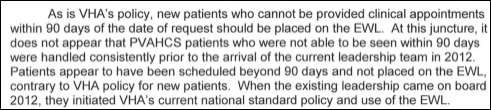
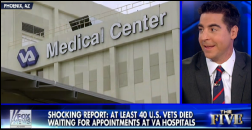
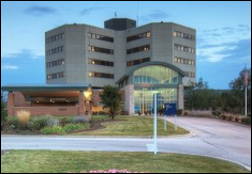
The Phoenix VA hospital that is charged with creating a secret waitlist to hid months-long treatment delays waited until the last minute to implement the electronic waitlist system whose VA rollout started in 2001. According to a former VA official, “Phoenix was one of the very last to deploy. Transition from a paper-based system to the electronic one was not handled well. From what I hear, there was a great deal of resistance from staff as well.” The electronic system was introduced to increase transparency and reduce paper-based mistakes.


Reader Comments

From KD: “Re: Epic. I heard a rumor they will buying InterSystems. Any chance you can get the lowdown?” I haven’t heard anything and my one possible source hasn’t responded. I’m highly skeptical. Arguments for: Epic customers pay a lot for InterSystems Cache’ licenses and Epic and its customers are heavily dependent on that company as a result. Arguments against: almost everything else. The companies have been working collaboratively together for decades, their founders are billionaires and don’t need the money, Epic has never done an acquisition and that would be a huge one, and both companies generally stick to their knitting (the exception being a couple of InterSystems application acquisitions years ago.) I can’t imagine this is true.

From Lee Brother: “Re: MU Stage 2. At a conference, John Halamka says most hospitals will either apply for an exemption or quit the program completely.” That’s likely given that only four hospitals have attested so far. Running your business is more important than running after government money that comes with strings attached.


Acquisitions, Funding, Business, and Stock

image

Pharma commercialization services vendor Quintiles will acquire consulting firm Encore Health Resources, hoping to use real-time EHR information to give drug companies outcomes data. Houston-based Encore has 250 consultants.

image

McKesson announces Q4 results: revenue up 25 percent, adjusted EPS $2.55 vs. $1.48, beating consensus estimates of both. From the conference call:

  • Technology Solutions revenue was down 1 percent on the quarter, up 5 percent on the year.
  • The company expects Technology Solutions revenue to “decrease modestly” in FY2015 because of declining Horizon business and “the impact of eliminating a low-margin product line.”

image

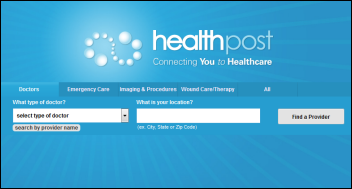
The Advisory Board Company says in its earnings call that it paid $25 million to acquire HealthPost, a physician finder and appointment scheduling site that will be rolled into the company’s Crimson analytics offerings that are used by 1,400 hospitals. HealthPost has seven employees, seven customers, $1 million in annual revenue, and is break-even on the P&L side. According to Advisory Board Chairman and CEO Robert Musslewhite,

“HealthPost is a cloud-based ambulatory scheduling solution that enables health systems to reduce referral leakage and track new patients by using it. It does it with what we felt like was a market leading SaaS technology that enables physicians and consumers to identify the right provider of care, based on certain criteria, especially in terms of geography and it makes it a very easy one-click appointment booking experience for either the provider or the patient. So we’re excited about it. In terms of how we’re going to roll it out, it’s still TBD. I imagine we will have a program launch coming from it, then more news on that down the line. But your question — as your question indicate, its certainly very complimentary to a lot of the works that we do in Crimson Market Advantage and with our MRS acquisition from last summer.”

image

WestView Capital Partners makes a minority growth investment in Meditech technology solutions provider Park Place International.

image

Three Lawson Software founders will pay $5.8 million to settle insider trading charges related to the company’s 2011 acquisition by Infor.


Sales

Partners HealthCare (MA) will consolidate several laboratory, pathology, and blood banking systems in moving to systems from Sunquest.

image

Saint Francis Health System (OK) will deploy Perceptive Acuo VNA. 

image

University of Louisville Physicians (KY) selects Shareable Ink’s Anesthesia Cloud and ShareMU for 45 of its providers across 20 operating rooms.

image

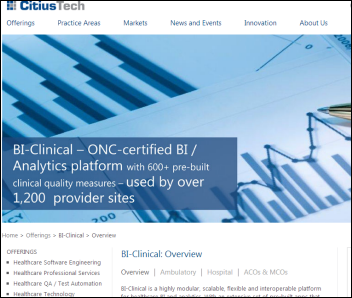
Vanderbilt University Medical Center (TN) chooses CitiusTech’s BI-Clinical health content and analytics.

image

UW Medicine (WA) hires Versio (formerly known as ScribeRight Transcription Agency) to bring legacy ambulatory data into its new Epic system.


People

image

Medfusion names Michael Raymer (MModal) as VP of solutions management.

image image

Predixion Software names Costa Harbilas (HP Software) as SVP of global sales and Terri Avnaim (Quest Software) as VP of marketing.

image

Abington Health (PA) hires Jonathan Sternlieb, MD (Holy Redeemer Health System) as CMIO.

Greg Shorten (Allscripts) joins Shareable Ink as chief growth officer.


Announcements and Implementations

Nominations are open through Thursday for Mosby’s Superheroes of Nursing contest.

EClinicalWorks says that more than half (580 of 1,147) of Federally Qualified Health Centers use its products, four of them being Davies winners.

image

Cerner’s community health work in Nevada, MO is profiled in the Kansas City paper, which points out that the healthcare IT market is maturing and the project can help generate consulting revenue for Cerner and enhancement of its Healthe Intent population health management software. According to Cerner’s population health VP, “It’s in the DNA of our company to have the vision and passion to fix what’s broken in health care. We’ve solved the data problem. Now, it’s not about what the doctor does. It’s about what the individual does.” According to an analyst of the all-important stock market, “Other than goodwill with the client, I’m not sure how they get paid for thinking about real-world population management.” The Healthe Intent system is running at two hospitals, one in Chicago and another in Vancouver, with a third to be announced.


Government and Politics

image

The Massachusetts Health Connector health insurance exchange failed because the three state agencies involved didn’t communicate with each other, according to a board member of the $57 million site, which the state will be replacing. "There wasn’t a single point of management. It was poorly set up and it was this horrible combination where the contractor [CGI] would get different orders and would do none of them."

image

North Carolina’s HHS signs a data use agreement with the NCHIE as part of a House bill that requires hospitals to submit the demographic and clinical data of Medicaid patients to the HIE, allowing DHHS to monitor services and patient safety.


Innovation and Research

Researchers develop a smartphone app that analyzes the voice tone of callers with bipolar disorder to provide an early warning of mood changes.

The SVP/MD of medicine and technology of medical device maker Medtronic says the company’s biggest competitor won’t be current players, but rather “will be Google. I am certain of it.” He cites Google’s $8 billion annual R&D budget and its recent work on a smart contact lens that can measure glucose levels. He adds about healthcare, "It’s where the money is. We’re spending 18 percent of the GDP on healthcare. Why wouldn’t they think that’s where they want to be? We spend more on healthcare than we do on manufacturing in the US, so everybody thinks it’s their destiny.”

image

Venture capitalist Beth Seidenberg, MD of Kleiner Perkins Caufield & Byers offers advice for entrepreneurs trying to get a foothold in the tricky world of digital health:

  • Build interfaces to open up intentionally built data silos
  • Help customers make their own decisions.
  • Figure out a revenue model upfront.
  • Make healthcare apps social so users don’t get bored.
  • Include healthcare experts on the management team.

Other

image

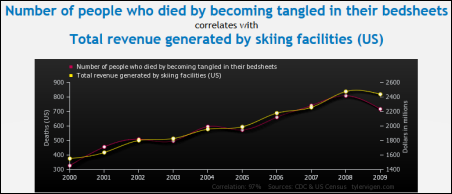
Confused about “correlation” vs. “causation” when a shoddily created study claims that Event A must have caused Event B because they happened together? See the chart above from a website devoted to ridiculous examples of “Spurious Correlations.”

image

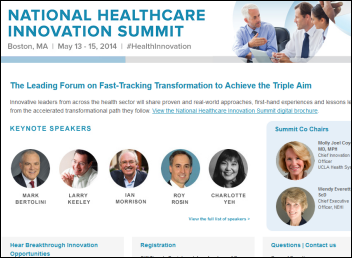
It seems there’s a national healthcare IT conference every week, and despite claims that everybody in healthcare is struggling financially, somehow those conference rooms (and $300 hotel rooms) keep filling up with attendees. I suspect many of those attendees just keep popping up at one conference or another since I don’t know many working people who have the travel budget and time off to support endless conference attendance. One conference I hadn’t heard of is running now: the National Healthcare Innovation Summit in Boston. It’s put together by HIMSS, apparently, since membership gets you a $700 discount on the $1,095 registration fee and the browser’s tab title is “HIMSS Innovation Summit.”


Above is a tweet from Microsoft HealthVault GM Sean Nolan, who says Meaningful Use complainers are “whiny.”

Financially struggling Cochise Regional Hospital (AZ) is fined for violating its license by not providing surgical services for two years, last cleaning its operating rooms in July 2012. The 25-bed hospital says part of its correction plan is to spend $2 million on an EHR. Its website touts its advanced technology from Empower Systems, which I’ve only mentioned once in HIStalk, in 2011 when the company’s CEO quit.

A report finds that at least 15 hospital executives in Connecticut were paid more than $1 million last year, including six from Yale New Haven Hospital alone. The VP of psychiatry at Hartford Hospital made $3.24 million.

The UPMC employee who sued her employer for a data breach drops payroll processor Ultimate Software Group from her suit, saying she was mistaken in thinking that UPMC used its services.

image

University of Mississippi Medical Center CIO David Chou lists 10 technologies that are revolutionizing health IT:

  1. Smartphones
  2. WiFi
  3. BYOD
  4. Government mandates
  5. VoIP
  6. Social media
  7. Virtualization
  8. IP-based medical devices
  9. Mobile health
  10. Big data

image

Johns Hopkins School of Nursing offers a free, five-week course (known as a MOOC, or massive, online course) on “The Science of Safety in Healthcare” starting June 2. Pay $39 and you get a certificate; add another $60 for CNE hours. Peter Pronovost is one of the instructors.

image

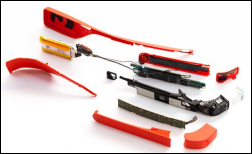
Two tear-down analyses of Google Glass find that the $1,500 gadget contains either $80 or $152 worth of parts.

Weird News Andy questions, “Dim bulbs or bright lights?” Two British doctors refuse to use energy-saving light bulbs in their homes and instead stocked up on the obsolete incandescent types. One claims the bulbs cause sunburn-type damage over time, while the other worries about the possibility of cataracts and macular degeneration.


Sponsor Updates

  • Portland (OR) IPA certifies a pilot group of clinics for NCQA’s Patient-Centered Specialty Practice Recognition using the IRIS referral management system of Proximare Health.
  • Allscripts announces GA of Sunrise Surgical Care 14.2.
  • GetWellNetwork CIO David Muntz will deliver the keynote address at the DoD/VA Healthcare Summit in San Antonio, TX next week.
  • TriZetto will offer Enkata’s claims processing system to its consulting clients.
  • EDCO Health Information Solutions publishes a blog post, “True or False: Decentralized Records Scanning Reduces Chart Quality.”
  • A Beacon Partners blog post urges providers to use the ICD-10 delay to gain a competitive advantage.
  • Visage Imaging will demonstrate its enterprising imaging platform at the SIIM annual meeting in Long Beach, CA this week.
  • Holon discusses the use of HIE for for identifying and reducing ED frequent fliers in a recent blog posting.
  • Wolters Kluwer will sell POC clinical decision support solutions to nursing schools for use in their curriculum.
  • CliniComp will participate in the Association of Women’s Health, Obstetric and Neonatal Nurses 2014 Convention June 14-18 in Orlando.
  • Health Catalyst shares its history, goals, and direction.
  • AirWatch expresses its intention to continue working with BlackBerry.
  • Shareable Ink announces the members for its newly-formed Anesthesia Leadership Board.
  • ADP AdvancedMD offers a guide on how financial reporting is changing the way private practices operate.
  • Terry Edwards, CEO of PerfectServe, will speak at the WLSA Convergence Summit in San Diego May 14.
  • Arcadia Healthcare Solutions, Certify Data Systems, and CTG Health Solutions executives weigh in on the challenges of forming and operating an ACO.
  • Truven Health Analytics will provide technical support for CMS during the Testing Experience and Functional Tools demonstrations in Community-Based Long Term Services and Supports program.
  • CommVault extends its relationship with Microsoft to provide data management and protection.
  • Navicure achieves faster product development times by using of VMware vCloud Suite for provisional testing and development environments.
  • MModal opens a healthcare technology center in Bangalore, India.
  • Lexmark’s Perceptive Software passes all integration tests at the 2014 IHE North American and European Connectathons.
  • NextGen Healthcare earns its third Surescripts White Coat of Quality award.

Contacts

Mr. H, Inga, Dr. Jayne, Dr. Gregg, Lt. Dan, Dr. Travis, Lorre.

More news: HIStalk Practice, HIStalk Connect

Get HIStalk updates.

125x125_2nd_Circle

Encore Health Resources, HealthPost Acquired

May 12, 2014 News Comments Off on Encore Health Resources, HealthPost Acquired

image

Drug research and services vendor Quintiles announced this morning that it will acquire health IT consulting firm Encore Health Resources. Terms were not disclosed.

According to Quintiles CEO Tom Pike:

Today’s announcement signifies the increasing importance of leveraging EHR and real-world information to inform our customers and improve their probability of success. Encore has significant EHR expertise, strong relationships with many large U.S. provider networks and academic medical centers as well as experienced consultants, proven tools, and methodologies. It will be a key strategic addition for our business that will extend our services suite and allow us to work with Encore to strengthen its provider-focused solutions.”

Encore Health Resources was founded in 2009 by Ivo Nelson and Dana Sellers.

image

Another Nelson-related company, online provider search and booking site HealthPost, has been acquired by The Advisory Board Company, according to an announcement this morning. No details were announced.

Curbside Consult with Dr. Jayne 5/12/14

May 12, 2014 Dr. Jayne Comments Off on Curbside Consult with Dr. Jayne 5/12/14

Mr. H recently asked the HIStalk Advisory Panel to weigh in on how the ICD-10 delay will impact their organizations. My organization had asked me to put together an impact statement, but I was waiting a few weeks to see if CMS issued a final date. Now that we know it will be October 1, 2015, we can start quantifying the costs. Some of them are fairly straightforward, but others are a bit more nebulous.

Like many of the Advisory Panel respondents, we will have a fairly significant cost for retraining physicians. We had already started many of our employees through a training program. Although initially it was informational and high level, we were set to accelerate rapidly into the summer. At this point, we have placed all training on hold and will plan to start from scratch again next January.

One of our training strategies included interactive Web sessions which are invoiced monthly based on our number of licensed providers. I was pleased to find out that our legal department had inserted a clause that addresses any delay of ICD-10, so we won’t be losing much on that contract. We’ll see if the vendor tries to renegotiate, however.

We had planned to have additional last-minute training sessions provided by contractors in September. We won’t lose much on those, either. The vendor involved doesn’t charge for cancellations that occur with at least 60 days’ notice. Given the fact that we’re going to have a longer training window, I doubt we’ll need those resources for the next go-round.

One of our major costs, however, will be the training that we’ve already put into our existing coding staff. Although the majority of our ambulatory physicians are expected to do their own coding, there are some subspecialties (particularly surgical) where coding staff are deeply involved. Additionally, we have our internal compliance and audit teams. We had already sent those teams through specialized training and they may need a refresher. Due to their specialized training and knowledge of our organization, we had provided retention bonuses for several of them to stay at least through November. Given the fact that many organizations will be retraining, I suspect their value will continue to increase and we’ll likely be extending those retention payments.

We will also have increased upgrade and testing costs. Our upgrade plan was pretty straightforward since our ambulatory vendor’s ICD-10 version is also their Meaningful Use 2014 version — we were planning to kill two proverbial birds with one stone. We had already done the majority of the testing and the code is already in production, so we thought we were home free. Now we’re going to have to take at least one if not two updates prior to ICD-10, which means more testing. Worst-case scenario, there could be more updates, because it seems like every time CMS issues a new FAQ or refines an existing answer, our vendor has to create a hotfix.

I feel bad for our vendor. As a high-visibility client, I have come to know many of the senior development team members personally. I know they have agonized over the hours they put into meeting certification and regulatory requirements and the fact that those projects have cut into clinical and usability issues. Even though they’re a vendor, I know they don’t have an endless pot of money or endless resources. Hard choices had to be made. There were a few times in the past few years where I sat on focus groups with other clients to discuss various development initiatives and rank potential work, so I know directly how much consideration went into those decisions.

That opportunity cost will play forward to our providers as lost functionality. I know our vendor has plans to use this honeymoon period to shift back to usability enhancements and adding functionality. Although this is a good thing, I would bet that due to the increased regulatory and certification complexity, they will take more time to deliver new features. We’ll be playing a game of chicken to decide which updates to take based on existing vs. future features and the testing timeline as we approach October 2015.

In my mind, though, one of the more significant issues isn’t really quantifiable. I’m not sure how much of an impact it will be. Many of our providers now assume we are on a slippery slope towards skipping ICD-10 altogether. I had forgotten everything I learned in middle school about voice votes vs. roll call votes, but the nuances of how the actual legislative timeline unfolded on this one have been an interesting read. I’m not sure if Congress used this as a deliberate jab to undermine the very clear statements by CMS on there being no delay or if they were just oblivious to the nuances of the ICD-10 portion of the bill. Who is to say that some crafty legislators won’t sneak something in later?

The only good news I’ve heard out of Washington recently is the reopening of the Washington Monument after being damaged by the 2011 earthquake. I’m a big fan of our National Parks and had visited shortly before it was closed. I hadn’t been aware that half of the $15 million restoration was funded by a private contribution and was pleased to learn it was completed on time and on budget. Maybe something inside the beltway can be done right, after all.

Email Dr. Jayne.

HIStalk Interviews Alexis Gilroy, JD, Partner, Jones Day

May 12, 2014 Interviews 1 Comment

Alexis Gilroy, JD is a partner with the Jones Day law firm of Washington, DC. She served as a subject matter expert for the Federation of State Medical Boards, which recently issued its model policy for telemedicine.

image

My interpretation of FSMB’s model policy is that it focuses on trying to prevent online pill mills rather than expanding telemedicine, emphasizing that requirements are the same for both traditional visits and telemedicine encounters.

I think that’s right. Certainly to draw parallels between traditional in-person medicine and practicing medicine using telemedicine technologies. But really, there’s no difference. It’s still the practice of medicine with the same standard of care.

But the only caveat to that is that there are different standards that currently exist in some states for telemedicine services versus in-person services. The new policy would provide for more expansive use of telemedicine in contrast to states like Texas and Alabama and a new proposed rule in Tennessee, which limits the utilization of telemedicine without some prior in-person exam or visit or things like that.


Are FSMB’s model policies usually adopted by state medical boards without changes?

If we look back at a couple of different examples from other activities of the Federation, like their licensure and statement on where medical practice occurs, being where the patient is actually physically located … I went back to a paper letter they wrote in the 1980s that now we find most states have some form of either law or regulation that ties the location of where the practicing medicine occurs to the location of the patient. Which is a really important factor from analyzing licensure requirements.

If you think about it from that perspective, as history tells anything, it does tell us that Federation policies tend to inform and educate and hopefully advance various regulations and statutes of medical boards and regulators. But certainly regulators can pick and choose or choose to go a different direction as it relates to telemedicine from this model policy.


I’ve heard two interpretations of the model policy. One says that says telemedicine can be used to both establish and maintain a physician-patient relationship in the same way as an in-person visit. The other interpretation is that the initial encounter has to be conducted in person. Which is the case?

It’s my read that even in your initial encounter with a patient, the policy indicates that you can initially establish a doctor-patient relationship using telemedicine technologies. Which is a new and different view from some states, like the Texas and Alabama model and the proposed rule in Tennessee, which currently would require for establishment of a doctor-patient relationship through some prior in-person visit first before you can then have telemedicine encounters with a patient. 

The model policy takes a much more expansive view of telemedicine. Assuming that you meet the standard of care, you can establish a doctor-patient relationship for the very first time using telemedicine technology.


Some groups like the model policy, while some don’t. Was input solicited from groups or public comment or was it a closed door discussion?

In full disclosure, I participated and sat on what the federation referred to as the SMART work group. I acted in the capacity of an advisor on what’s the state of various regulations and legal issues out there when it comes to this topic and would answer questions from time to time from the medical board members that  over a period of a year met about this issue, discussed it at length, had done a pretty full survey of various laws and regulations. 

There were a number of other participants from the industry on the insurer side, the technology side, and the provider side that participated in those discussions, all in the realm of advisors to the board. It’s the medical board members and delegates that made the determination, the decisions, for what is going to be ultimately in the policy. But they did ask for industry participants and I believe also the policy was circulated among all the medical boards several months prior to the vote in April. There was clearly at least an attempt to consider input from a number of different resources.


Some people may have expected that the model policy would address the issue of state-specific licensure and oversight vs. national licensure. Are changes being considered that would make it easier for physicians to obtain licensure in multiple states?

Absolutely. There was a statement to indicate that this policy really doesn’t change licensure. It is what it is currently on the books in various different states. But there is a separate effort from the Federation of State Medical Boards to move forward an interstate compact of sorts that would address facilitating easier access to licensure. Not just for telemedicine providers, but for doctors who are conducting in-person services.

There’s also a number of different efforts in federal legislation that would push forward different licensure agendas, some related to specific Medicare-enrolled participants or Department of Defense individuals seeking care from healthcare providers. There are a number of different efforts going on.

This issue, although it does make a statement about licensure, really isn’t intended to speak toward or change or advance the case of licensure at all.


Secure messaging seems to fall under the model policy’s definition of telemedicine technology, while a telephone call clearly doesn’t. If I’m a patient from Ohio on vacation in Florida, I can call my Ohio doctor and they can diagnose and treat me without being licensed in Florida. The model policy would seem to prohibit that same conversation if was conducted via secure messaging. Is that your interpretation?

That’s not my interpretation. The intent here is rather than to focus on one type of technology, to indicate, number one, that you can establish doctor-patient relationship using telecommunications if you meet the standard of care and that that standard of care is going to be aligned with general principles of traditional medicine. 

Where this hits a rub when it comes to different technologies is every individual practitioner really needs to consider are the facts and circumstances such with using store and forward technology, using secure messaging, using telephone, using videoconferencing, that given the facts and circumstances, do I have enough information to make a diagnostic decision in compliance with traditional standards of care? 

There are certainly circumstances, I’m sure, where especially if you have a pre-existing relationship between the doctor and patient, that some practitioners would feel they would have enough information and history that when a patient contacts them by secure messaging or by phone, that they would be able to adequately determine what’s going on with a patient and assist them merely through those technologies.

There was some language in the policy that went along the lines of generally telephone-only doesn’t provide enough information to meet the standard of care. From sitting in the room and listening to medical boards discuss that concept and their thinking behind adding that language, it was rather than to limit the use of one type of technology or to box it out of telemedicine, that was by no means the case. Rather it was to indicate that without some pre-existing relationship or without the capability to get other data, whether it’s visual through video or whether it’s text data or pictures through store and forward or whether it’s claims data or other biometric data from a patient, they felt that in most cases — not all cases, but in most cases — if you only are able to talk on a telephone and it’s your first encounter with that patient, it may not be enough to meet the standard of care. 

They were trying to indicate that in that circumstance, they would feel like if you were in a case where you’re testing the standard of care,that’s probably not enough, rather than pinpointing or saying a particular type of technology is outside the bounds of telemedicine. It is a hard concept and it has been confused and probably will continue to be confused and debated. But that’s where we are on that issue, and that is how I interpret it and heard folks discuss it and talk about it.


Does the policy create a new standard of care that you can’t do an encounter by telephone for an ongoing patient who is not presently in the provider’s state of licensure because it’s not considered telemedicine? Or that the provider can’t conduct that encounter by secure messaging because it is considered telemedicine?

It doesn’t create a different standard of care because the standard of care depends on the facts and circumstances in each case. But what it should do is remind practitioners to consider — whether it’s telephone, whether it’s videoconferencing, whether it’s any form of technology, and this is the only means by which they have to engage with the patient, and in particular with only telephone being used — am I able to get enough information through that to diagnose the patient? 

I think that’s what the medical boards were attempting to do here, to highlight something for practitioners that they should be careful that in scenarios where they’re only able to just talk by telephone and nothing else with a patient that they may only be meeting for the first time. Are they able to get enough information? 

There certainly may be some facts and circumstances where they are. Perhaps with mental health scenarios, other sorts of scenarios, that may be perfectly capable and meet traditional norms of research and other standards to meet the standard of care to get them the relevant information. But I think it should cause practitioners to take some pause and to consider whether any type of technology, used alone or in a particular circumstance, gives them enough information. In most cases, they’ll find and consider that absolutely it does. They’re able to gather the history that they need, determine whether given the facts and circumstances that this is an appropriate diagnosis, and that they can move forward and treat the patient. 

That’s the good news of what this policy does. It says that we’ve got these amazing tools now available to us today that we call telemedicine. We can change the models and delivery paths with which we can provide medicine and the medical boards aren’t going to get in the way of that. We just need to use our discretion appropriately and consistent with traditional standards of care.


How would the policy have addressed the recent Idaho case where the physician has been threatened with loss of board certification for taking a telephone call from a patient in which she was licensed and issuing a prescription for an antibiotic?

It’s a really good example. This is a scenario, if I’m a telemedicine practitioner in Idaho, now it informs me about, well, wait a minute, how are the Idaho regulators actually looking at this topic? Should I go in and educate them further about how I can use telecommunications to gather information and help me as a practitioner appropriately diagnose and treat a patient? And maybe that should be happening? 

Should I, though, look at this and say, now I have a better idea about what Idaho might be thinking and adjust my practices and procedures appropriately. Maybe I should also seek claims data or seek some other verification rather than just a telephone information.

I think things would perhaps have been different in that case had the practitioner had a pre-existing relationship. Most medical boards do view that very, very differently than no prior relationship. I think it does inform you. That’s sort of the point.

These are all very individual fact-specific circumstances and that was telling to see how a board would react to it. You have to take that into account when you’re building your business model around telemedicine and when you are, as a practitioner, using telemedicine technologies to engage with patients. And hopefully educate the regulators.

It will be an evolving process with regulators. I always encourage telemedicine companies and practitioners to engage with the boards. That education is very, very important.


Where do you see the discussion going from here?

Where we need to see more discussion is around things like the mobile devices, like you mentioned earlier. The secure messaging, the non-traditional telemedicine.

Telemedicine is a fairly new technology, but in some cases, it’s been around for a long time, especially the doctor-to-doctor telemedicine. How we’re using smartphones and apps in different ways, and does that allow us to engage with the patients and providers in many different ways? Not just physicians, but ancillary healthcare providers. 

The other issue in addition to the very first question you mentioned around –is this just really restating the obvious, there’s nothing new here — many states are actually silent on much of this. Which, to some, you might feel, well, that’s great – let’s go ahead and do it if there’s no prohibitions on it.

The problem is many of the traditional healthcare laws are written in the context of traditional bricks-and-mortar and in-person practice, things like how you supervise various different healthcare providers or how you engage with them in an in-person environment. The laws are just written with that in mind, so it’s very difficult to analyze them in the context of many of these new technologies. 

I think engaging with health regulators around those topics is really the next stage of this, in helping them understand. I’ve yet to find medical boards and members and regulators who aren’t anxious to hear about new, good use cases that advance the quality of care. They may be hesitant to modify regulations, but if you have very thoughtful and positive engagement with them, it usually leads to a good end result.

Monday Morning Update 5/12/14

May 10, 2014 News 3 Comments

Top News

image

Catholic Health Initiatives files a lawsuit against an unknown hacker, hoping to convince Microsoft to turn over the identities behind several of its email accounts that were used to breach CHI’s systems from Pakistan. The John Doe hacker redirected internal emails to his or her own account and  took control of some of the organization’s domain registrations. The systems of CHI affiliate Franciscan Health System were compromised in March when employees were fooled by a phishing scam into providing their login credentials to a hacker site.


Reader Comments

From Iron City: “Re: reduced readmissions. These stories get a lot of attention, but it’s easy to overstate the gains on readmissions from situations where the same patients were simply kept in the ER or observation instead. That is cheaper and still a partial success, but not the same as avoiding the readmission cost completely.” That’s a good point. You would have to take a guess at which patients would have been readmitted, then examine claims data to see if they were treated in other hospital settings instead. Just looking at the overall readmission percentage wouldn’t provide the full picture. I also question the historical inability of hospitals to understand their true marginal cost of an admission vs. their average cost of an admission – putting one more patient in a bed for the night doesn’t necessarily trigger the same high expense as having a post-up cardiac surgery patient occupying a similar bed during that same night.

image

From Blockade Runner: “Re: SuccessEHS. We are a FQHC with a grant to implement the product, which was bought by Greenway. The CEO failed to mention a long-term plan for it in a recent webinar even after saying it has 8,000 providers using it. We’re thinking about starting a search. We have specific needs for our UDS reporting and our sliding scale fees based on the Federal Poverty Line. Are any FQHCs using something that works?” My caution there would be to give Greenway a chance to address your concerns directly rather than reading too much into lack of encouraging news in a webinar. If you like their product, put your concerns in contractual T&Cs and see if they approve them – if not, your worst fears are probably justified.


HIStalk Announcements and Requests

image

Three-quarters of poll respondents say doctors should be licensed nationally rather than by individual states. New poll to your right or here: athenahealth got a lot of stock market attention last week. What was your reaction, if any?

Listening: new from Atlanta indie-soul singer Curtis Harding, sweet 1970s-style horns over a hip-hop beat. One track even goes disco while managing to sound great. I’m also still playing a lot of Georgia grunge rockers Dead Confederate.


Acquisitions, Funding, Business, and Stock

image

Friday’s market close share performance after Thursday’s earnings announcements: Castlight Health up 10 percent, Allscripts unchanged, Nuance down 3 percent, The Advisory Board Company down 2 percent.

image

From the Allscripts conference call:

  • Quarterly bookings grew 26 percent, with recurring revenue making up 78 percent of the total.
  • The $3 million drop in revenue came from an unnamed outsourcing client that took its $20 million per year effort in-house.
  • Allscripts says constrained provider capital and a lack of enthusiasm for rip and replace projects will help it sell portal and interoperability products.
  • The company says the 10-year, $500 million agreement it signed with Xerox’s ACS subsidiary in 2011 has “challenging economics” and may require changes.
  • Paul Black says that hosting systems without owning any of the underlying infrastructure has “created a more virtual environment than we’re comfortable with” and that the company will be “much more active managers of our destiny.”
  • Black says he feels “pretty good” about the company’s functionality for inpatient, outpatient, revenue cycle, population health management, and patient portal.

image

RadNet says in the earnings call that all of its 260 diagnostic imaging centers will be running eRAD RIS/PACS within a year. RadNet acquired the Greenville, SC-based eRad in September 2010 for $11 million.

image

A site promoting Utah tech business profiles Health Catalyst, which it says will generate up to $100 million in revenue this year and will IPO in 18-24 months.


People

image

Justin Barnes, VP of industry and government affairs at Greenway Medical, announced this week that  he’s leaving the company at the end of May. He tells our Jennifer Dennard that he’ll be stay busy over the summer with plans to start two companies (one of them in healthcare IT, with a nod toward consumerism, interoperability, and patient engagement), join a tech incubator, and continue his involvement with government issues in an unstated capacity. He says his Greenway departure is friendly and unrelated to its November 2013 acquisition by Vista Equity Partners or the April 2014 departure of Greenway President Matt Hawkins.

SNAGHTML43bce9

Speaking of Matt Hawkins, who was CEO of Vitera when it was acquired by Greenway in November 2013 — he’ll be replacing Richard Atkin as president of Sunquest, according to internal sources.


Government and Politics

image

The CEO of HMSA, Hawaii’s biggest medical insurance company, says the state should either shut down the Hawaii Health Connector insurance exchange site or let the federal government take it over. The exchange received $200 million in federal taxpayer money, spent $100 million developing the site, signed up just over 9,000 customers, and raised only $40,000 in user fees that were supposed to fund its ongoing operation. Hawaii didn’t really need the exchange at all since a state act requires employers to provide subsidized insurance to their employees.  In an interesting story twist, the state’s legislature passed a bill last week ordering HHC to kick out the insurance company members of its board, among them HMSA, which in that role oversaw the site’s creation and is now calling for its shutdown.


Other

Hospital music videos have probably reached the Peak of Inflated Expectations on Gartner’s hype cycle now that the marketing people are cranking them out for commercial benefit, but you might still be cheered up this Monday morning by HHC Elmhurst Hospital Center’s cover of “Happy.” Or not, since it probably drives cynics and pessimists crazy (although I’m both and I like it.) 

You also might be inspired (or not) by “Steve Jobs’ 13 Most Inspiring Quotes.” My favorites:

  • "Remembering that you are going to die is the best way I know to avoid the trap of thinking you have something to lose. You are already naked. There is no reason not to follow your heart."
  • "I’m as proud of many of the things we haven’t done as the things we have done. Innovation is saying no to a thousand things."
  • "Being the richest man in the cemetery doesn’t matter to me … Going to bed at night saying we’ve done something wonderful … that’s what matters to me."

The Massachusetts House passes votes to eliminate a law that would have required physicians to demonstrate EHR competency or Meaningful Use certification as a condition of earning or renewing their medical licenses after January 1, 2015. The House voted to delay from 2017 to 2022 a requirement that all providers use EHRs that are connected to the state HIE.

An interesting patient-centered technology example on ReelDX: the mother of a patient records her toddler’s respiratory symptoms on her smartphone. The question: why can’t the video (or other media) be included in the EHR?

image

Weird News Andy submits a spinning heart story from NEJM: a motorcyclist survives an accident in which his heart rotates 90 degrees due to air pressure in his chest. Doctors removed the air and the heart shifted back. And in a WNA-like story that he didn’t actually submit (yet), an English hospital admits that a man scheduled for an unspecified “minor urological procedure” was instead given a vasectomy.

image

A UPMC employee sues the health system and a payroll processing firm after a data breach in which hackers filed fraudulent tax returns using the identities of UPMC employees. What’s unusual about the lawsuit: (a) the employee is only asking for identity theft protection, which is usually offered anyway, although she wants 25 years of it instead of the usual one year; and (b) UPMC isn’t a client of the payroll processing firm she sued, according to that company.

image

Strange: Kosair Charities sues Kosair Children’s Hospital (KY), claiming the hospital is mismanaging its donations, while the hospital responds publicly that the charity isn’t giving it enough money. According to the IRS documents I found, the charity brings in $15 million per year, holds $163 million in assets, and gave the hospital $4 million in the most recent year. Hospitals are last on the list of charities I would support given the waste, mismanagement, and self-serving agendas I’ve seen firsthand in having worked for a few of them. Supporting hospitals isn’t the best way to support patients.

image

Here’s a brilliant flow chart whose author I can’t credit because it is has been tweeted / retweeted / incorrectly retweeted so many times I can’t figure out its source. Someone shares my intense annoyance at pedantic blowhards who hijack the microphone after a conference speaker has opened the floor to questions that turn out to be eloquent expressions of self love. Use the microphone kill switch, moderators, or take responsibility for the trampling injuries that will result from the mad dash for the exits.


Contacts

Mr. H, Inga, Dr. Jayne, Dr. Gregg, Lt. Dan, Dr. Travis, Lorre.

More news: HIStalk Practice, HIStalk Connect

Get HIStalk updates.

125x125_2nd_Circle


Advisory Panel: How Will the ICD-10 Delay Affect Your Organization?

May 9, 2014 Advisory Panel Comments Off on Advisory Panel: How Will the ICD-10 Delay Affect Your Organization?

The HIStalk Advisory Panel is a group of hospital CIOs, hospital CMIOs, practicing physicians, and a few vendor executives who have volunteered to provide their thoughts on topical industry issues. I’ll seek their input every month or so on an important news developments and also ask the non-vendor members about their recent experience with vendors. E-mail me to suggest an issue for their consideration.

If you work for a hospital or practice, you are welcome to join the panel. I am grateful to the HIStalk Advisory Panel members for their help in making HIStalk better.

This question this time: How will the ICD-10 delay impact your organization?


The ICD-10 delay will cost us more for the implementation. It could be up to $1 million in implementation resources. Our project team will extend for another year, upgrades will stay on track, and we will dual code for longer than planned. We have hired coders who only know ICD-10 and we have to retrain them for ICD-9 so that they can be productive. Unless our vendors come out with yet another ICD-10 version, we should be finished with upgrades by this summer and have a year or longer to test.


[from a vendor member] The delay won’t impact our organization at all  We were ready a while back and so honestly the bad part of this is that all our hard work as compared to other vendors will somewhat go unrecognized. That said, it’s really not that bad since it just means our solution will be even better given the year delay.  Our clients who were already on the track for ICD-10 readiness are all staying focused on ICD-10 preparations regardless of the delay.


Overall I am neutral on the delay. We have done a great deal of preparation, but most of that is helpful with ICD-9 or 10. It would have been a much bigger relief and benefit if MU Stage 2 were delayed. We had already begun an aggressive Clinical Document Improvement (CDI) program aligned with our ICD-10 project. We will continue that program and will also complete our Computed Assisted Coding (CAC) project as it is well underway and has the added impact of allowing us to outsource much of our coding function. Most of the software upgrades came with the MU S2 changes so that testing was needed. The places we will cut back on is training, testing, and outsourced project manager costs. The CDI related training will continue and coder training will be slowed. All other ancillary training and provider ICD-10 specific training will be put on hold. Testing with payers will be delayed for as long as it takes. Unfortunately, this does not really make any resources available to do all the other projects on the list!


This hospital was in the midst of individual system testing and had worked with a few payers to do some combined testing when the delay was announced. Most systems had been upgraded and others were close. We had implemented computer-assisted coding in 2013 to ease the transition into dual coding and had that project live. We had purchased ICD-10 training content, had our coders trained, and had started scheduling provider training. I’d like to say the ICD-10 delay was good because of everything else we have going on in IS (MU Stage 2, an anesthesia go-live, new clinics opening, etc.) as well as all of the other pressures placed on our providers. The reality is that this organization is going to absorb even more expenses than planned due to the delay. The opportunity costs alone concern me. We could have done more productive things this past year that could have had positive impact to our bottom line or patient care. We will have some repeat work to be done in testing and training for the next run at things (unless it’s delayed again – ICD-11 anyone?) I’d like to see us push through and get the rest of the systems upgraded and get our providers trained. The rest of the organization wants to put everything off until we have to do it.


The good news is that we have more time to modify application systems that fell behind schedule for ICD-10 updates. We will be adding more acceptance testing of system changes, especially for our physicians. On the coding side, we will expand our dual coding efforts to identify where improved clinical documentation is needed. Physician training will be delayed. The longer the work spans the higher the cost. So far we’ve estimated an impact of $500,000 to $1 million extra expense due to our need to extend resources.


We are one of the few sites that are rejoicing over the delay. We were woefully late (I have not been here long) and were trying to do too much before the deadline. We will maximize the delay to our benefit.


We were all ready, but stopped cold and now have some smart team members who can do other things. It also meant the government has lost all credibility in this area and we will not try and be too ahead of the curve next time. 


The ICD-10 delay shouldn’t impact us terribly, so I don’t see it as good or bad. Our primary systems have been set up for dual coding for several months now. The majority of our coders are through a vendor, so our primary target is the physician population. The focus with the physicians to date has been better documentation rather than ICD-10 so we will continue this strategy. We are also implementing computer-assisted coding with a live date of June so that will continue as well.


Time was tight for us but we were on track to be ready by 10/1. Although we had begun training, it was organizational / high level therefore we don’t see the time wasted. We are going to use the time to focus on more of the plumbing prior to launching additional training before the next requirement date kicks in. Overall we see the delay as good organizationally.


It is good for us. Generally speaking, it is hard to see how the good of ICD-10 outweighs the bad. With everything else going on in healthcare and healthcare IT, having another year to prepare is a good thing. I have been somewhat surprised to see our professional organizations (CHIME, HIMSS, AHIMA) come out so strongly in favor of keeping it in 2014 when almost half of the provider organizations feel positive about the delay.


We would have been ready for ICD-10 this fall. While the delay does give more time to test, etc. we see it as a negative. We will continue with our testing (integration underway) and will move forward with the majority of our plans this year regardless of the delay. Main impact is around the timing of training – this will be delayed and we have to now reassess our plans to keep ICD-10 “fresh” for those coders that were in process. Also, it causes us to have to extend our resource commitments – whether internal or consulting – which will cause additional expense. We also now have to reassess several large go-lives whose schedules were made based on ICD-10 happening this year.


We have already implemented tools to support ICD-10 in our EHR and will use the delay time to get our users used  to more specific documentation to support ICD-10. Will shift our planned education push to meet new schedule.


As an organization, we are not happy with the delay. We believed we were well positioned for October 1, but we were unsure how our payers, especially CMS, would be ready. The delay will cause us to slow down our physician education, but we are continuing our work on infrastructure like reports and having them ready to go. Concerned they may decide to skip ICD-10 and go to ICD-11 and have another delay.


It gives us time to complete the required upgrades without the intense pressure and also focus on a clinical replacement. Being a McKesson Horizon customer, we have to select a new system.


[from a vendor member] The delay is unfortunate and bums me out.  If folks weren’t ready, we need vendors who step up to take care of the transitions, not more delays. We were ready and spent a tremendous amount of effort to get ready so the biggest negative impact to us is all the things we could have done instead. What could we have done for caregivers instead of using our resources on ICD-10? High opportunity cost.


Kill me now. This is the most ridiculous thing I have ever encountered in my health IT career. We make plans for big projects at least a year ahead of time. Much of our project planning for converting hospitals to Epic was designed around avoiding the immediate post ICD-10 period. Since CMS has been silent—are we to assume the next date is October 1, 2015? We need to make plans and are in a holding period once again. Does anyone have any credibility on this topic?


We’re not stopping, but we are slowing down. We’re in the middle of a bunch of other projects (MU, physician documentation, revenue cycle revisions, massive system upgrades to non-clinical systems, etc.) that need attention. Most of our vendors will have compliant systems long before the deadline, so that all we really will have to do is flip switches. I consider this a neutral to positive. We’ve got limited staff resources to address everything and this gives us one space where we have a little breathing room.


The ICD-10 delay gives us a chance to spend more time implementing and more thoroughly testing our solutions end to end. I for one was thankful for the delay as we just had too much going on at one time. The only question I have is whether or not the Feds will start leaning toward ICD-11 instead.


News 5/9/14

May 8, 2014 News 5 Comments

Top News

image

image

image image

Google Ventures invests $130 million in oncology data platform vendor Flatiron Health, which will use some of the money to acquire oncology EMR vendor Altos Solutions. The two 20-somethings who founded Flatiron Health sold Google their online advertising platform for $81 million in 2010. They knew nothing about advertising or healthcare before starting their companies. Their first Flatiron oncology rollout was in 2013. It’s a lot of money, so let’s hope Google’s investment outcomes exceed their healthcare ones.


Reader Comments

image

From Dave Miller: “Re: UAMS. We are now live fully everywhere on Epic. It has gone really well, with just a few of the usual minor bumps (printing, security, scanning, etc.). I think this has been the best of my three Epic go-lives (University of Chicago, Carle Foundation Hospital, now UAMS). I guess you can teach an old dog new tricks. We also did enterprise speech recognition, device integration, and barcoding among other things. We went from a HIMSS Stage 4 to a Stage 7 (application in process). My lab team made me an honorary member of the Beaker team with the shirt above, maybe because I am a former med tech.” Dave is vice chancellor and CIO of University of Arkansas for Medical Sciences in Little Rock. Congratulations to the team. I told Dave he has more Epic experience than some of the consultants out there.

image

From Joe: “Re: IBM’s Watson. I followed your link from HIStalk and got a Chat Now window on IBM’s page. I’m curious about Watson in healthcare, so I accepted. See the transcript – I decided to open with a (perhaps obtuse) nod to Alan Turing, which I figured any good IBMer should appreciate. Touchy, touchy! Or maybe they have an algorithm that indicates anyone skirting around Turing Test references is clearly a cycle-wasting tire kicker.” I replied to Joe, “Maybe the IBM rep was indeed a Turing fan and decided to prove in the most definitive way possible that he’s not a computer!” Joe says he’ll try again, asking, “Did you kill our previous session because you ARE a computer, or you are a human trying to PROVE that you’re not a computer?”

From Trey Hermanos: “Re: athenahealth. Can somebody tell me how many providers athenahealth has on their network? An article says 37,000, but Jonathan Bush said 52,000 at a recent conference. Their implementation is a breeze compared to others, but in their quest for growth and relevance, they risk losing the 1-10 doc practices that made them what they are today, the practices that aren’t getting decent service and call-backs from their account managers. They gave their award for improved patient experience to Target’s clinics, the same corporation that compromised the identities of millions. The company doesn’t think you need to see a doctor for ‘small things,’ a view held by many despite the fact that the knowing when something is simple or not requires skill and sophisticated knowledge. A recent article called ‘Nurses are not Doctors’ said you have to know a lot to do primary care – the Target and Walgreens clinics are there to sell what’s on their shelves. There is no respect for knowledge and we spoil our patients the way we spoiled our kids to the point they have no coping skills and grow up entitled. Athenahealth must feel undervalued and not appreciated enough, sort of like primary care.”

image

image

From HIT ESQ: “Re: patent troll. A company called Presqriber is filing a massive number of patent infringement cases against EHR vendors. It has no Google hits except these cases. Its patient is for an ‘Interactive Medication Ordering System.’ They appear to be the first major patent troll in a few years.” The patent is from 1998, so I bet someone bought it from a defunct vendor (“Poetry” is referenced as the system name, which had some California pharmacists and urgent care people involved and is presumably long gone) and hopes to milk vendors for go-away money. They hit all the majors in their list of 20 except one – Epic, who has a history of launching a full-scale legal counteroffensive on patent trolls. HIT ESQ also called attention to two class action lawsuits brought against Cerner for claimed labor standards violations, which although I can’t pull up the documents since I don’t have access to the PACER system, usually means a salaried employee claims they should have been paid for overtime because they were misclassified and should have been hourly. 


HIStalk Announcements and Requests

Highlights from HIStalk Practice this week include: A report finds that higher payer doesn’t necessarily equal higher job satisfaction. Another says the physician industry generates $26 billion in sales revenue and supports $15 billion in wages and benefits. Northwestern Memorial Physicians Group and Northwestern Medical Group merge to form the second-largest physician group in Chicago. A trio of ophthalmologists turns to crowdsourcing to fund their digital physician on-call answering system. A study uncovers the fact that hospital prices and privately insured patient spending increase when hospitals acquire physician practices. A physician pleads with Forbes editors to get RAC bounty hunters off his back. Arizona Care Network and Northeast Medical Group launch separate ACO initiatives with payers. Don’t write athenahealth’s eulogy just yet –several company partners make product announcements. 

This week on HIStalk Connect: Google continues its move into healthcare, as it grows its team of A-list genetic scientists working on its Calico moonshot project. Google also led the massive $130 million Series B funding round of oncology data analytics startup Flatiron Health. In other non-Google related news, PatientsLikeMe CEO Jamie Heywood discusses the details of its recent Genetech deal. 

Listening: new from Brody Dalle, the former (female) lead singer of The Distillers.

image

Want to get in touch? I created a new contact form that covers everything I could think of. Submissions go straight to my inbox (which is usually overloaded, so keep expectations modest.)  There’s a link at the top of this page, too.


Acquisitions, Funding, Business, and Stock

image

Castlight Health reports Q1 results in its first report as a publicly traded company: revenue up 339 percent, adjusted EPS -$0.72 vs. –$1.19, beating on revenue but missing earnings estimates by a mile. The company, whose market capitalization is around $900 million, had revenue of $8.4 million and lost $24 million in the quarter. Shares have dropped nearly 75 percent since CSLT’s March IPO, which some analysts called at that time “the most overpriced IPO of the century.” Castlight Health was founded in 2008 by Todd Park (White House CTO and athenahealth co-founder), Bryan Roberts (Venrock), and Giovanni Colella, MD (RelayHealth). Shares that rocketed to $40 on IPO day are now worth around $10 less than two months later.

image

Allscripts reports Q1 results: revenue down slightly, adjusted EPS $0.07 vs. $0.09, missing expectations on revenue.  

image

Nuance reports Q2 results: revenue up 5.5 percent, adjusted EPS $0.28 vs. $0.34, beating expectations on both.  

image

The Advisory Board Company reports Q4 results: revenue up 15 percent, adjusted EPS $0.34 vs. $0.34, beating expectations on both.

image
image
image

Hedge fund manager David Einhorn sent athenahealth’s stock price reeling this week when he said his firm has shorted the company’s shares because athenahealth is a faux cloud vendor whose real business is unsexy business process outsourcing that doesn’t deserve high share valuation. He didn’t just blurt it out – his slides from the investor conference presentation summarize his analysis:

  • The company has failed to meet its 30 percent organic growth target for 2013, analysts have cut revenue expectations for the next two years, and earnings estimates keep going down.
  • He says ATHN and some of the friendly analysts who cover it use a lot of buzzwords in describing what the company does, hoping to make it sound cooler and deserving of high share price, instead of what it is – an efficient business process outsourcer similar to lower-margin companies like MedAssets and Accretive Health.
  • The valuation numbers of Morgan Stanley, which also happens to be ATHN’s largest shareholder, are shaky (although that company might also question Einhorn’s negative analysis since he, too, is providing supposedly unbiased information that could move ATHN share price in a personally beneficial direction.)
  • Einhorn questions Morgan Stanley’s assumption that athenahealth’s inpatient business will jump from 0 to 40 percent of its revenues and that it will launch an inpatient revenue management service that will bring in $2.5 billion a year.
  • The report says Epic is unbeatable in hospitals and will expand into other markets, including gaining ground with hospital-acquired small practices that might otherwise be athenahealth prospects.
  • He says that HITECH is winding down and practices that wanted EHRs have already bought them, with Kareo, eClinicalWorks, and CareCloud offering lower-priced RCM and EHR products as athenahealth competition.
  • Capitation would hurt athenahealth, he says, because providers would be paid upfront and wouldn’t need its help.
  • He predicts a worst-case share price of $14 vs. then-current $127 (now $107), saying ATHN is like the 2004-era WebMD.

image

Meanwhile, Jonathan Bush said Thursday that Einhorn doesn’t understand the company, which he then compared to Uber, Airbnb, and Amazon. He added, “The right price of athena is … completely out of my pay grade,” but told also CNBC that he’s sure ATHN is a $1,000 stock and then said, “Who cares about net income?”

image

Streamline Health will acquire the assets of cost and spend management solutions vendor CentraMed.

Cedars-Sinai Health System (CA) and MemorialCare Health System (CA) form Summation Health Ventures, a healthcare IT development fund that will seek startups not only for potential return, but their capability to create technology that the hospitals can use.


Sales

image

Lake Taylor Transitional Care Hospital (VA) will implement HCS Interactant for its LTACH and SNF service lines.


Announcements and Implementations

An engineer who helped develop ride service Uber launches Pager, which allows Manhattan residents to request an off-hours telephone consultation or house call from participating doctors. Telephone calls cost $50 (of which Pager skims $10), while house calls run $300 and the company keeps $50. Like Uber, Pager is thinking about surge pricing, raising charges when demand is high. It has only 20 doctors participating during its launch testing period. He should have chosen a less-generic name: Uber was always easy to find, but I couldn’t locate anything on Pager despite extensive Googling.

image

Policy documentation software vendor PolicyMedical will integrate with the Access electronic forms system.

image

Hybrent announces a medical supply ordering application for clinical staff.

image

Mandi Bishop, Nick Kypreos, and Lauren Still put together Team FloriDUH to create open source data visualization tools. They’ve been invited to compete at Health Datapalooza in Washington, DC June 1-3 and have formed a non-profit foundation to distribute tools they build. They are hoping to raise $10,000 in a Medstartr project that starts Friday, May 9 to cover travel costs and extend their product offerings.


Government and Politics

image

HHS Secretary Kathleen Sebelius, who I assumed was long gone but apparently isn’t, leads a thinly veiled cheer for the Affordable Care Act in touting its supposed benefits as analyzed from HHS’s databases: a tiny reduction in readmissions and a nine percent drop in hospital-acquired conditions in 2011-2012 and a claimed 15,000 lives and $4 billion in healthcare spending saved. President Obama’s nominee to replace Sebelius, Sylvia Burwell (above), faced her first Senate confirmation hearing Thursday and received near-universal compliments, even from Republicans.

New York-Presbyterian Hospital and Columbia University will pay $4.8 million to settle charges related a 2010 privacy breach in which the medical information of 6,800 patients was exposed when a CU physician-programmer tried to deactivate a personally owned server he had connected to NYP’s network, opening up the patient information it contained to the Internet. The error was discovered, as it always is, by someone Googling individuals and turning up inpatient clinical information. Neither organization had checked the server’s security, conducted a risk analysis of all systems, or developed policies and procedures for database access. It’s the largest HIPAA fine ever.

image

Health Information Technology Exchange of Connecticut will be shut down since the HIE has spent its federal grants without accomplishing a whole lot.


Other

image

A former Epic intern and employee who worked directly for Judy Faulkner for a time writes about his experience in a Madison online publication. He says Judy isn’t reclusive, just more interested in tending to her company and its customers than gabbing with reporters. He anguishes over whether the company spends too much on fancy buildings. He says Epic is good place to work because it quickly jettisons underperforming employees, but wonders if it shouldn’t hire more experienced people even if Judy’s long-held belief is that she can turn a new college grad into an “Epic person” in three years while experienced hires would take twice as long.

Weird News Andy reacts to this story by saying, “Mmmmm, bacon.” Scientists question the 1950s study that claimed saturated fats cause heart disease, saying the researcher chose specific countries that would prove his point, used small sample sizes, and studied one country during Lent when nobody was eating meat or cheese. The Wall Street Journal essay by the author of a pro-saturated fats book says that funding by Crisco’s manufacturer, Procter & Gamble, made the American Heart Association a national force and the group later spearheaded a move to vegetable oil for a “healthy heart” even though proof was lacking.


Sponsor Updates

  • Alan Worsham (Sutter Health) and Joe Schmidt (Emory University School of Medicine) join Culbert Healthcare Solutions as practice directors.
  • InterSystems TrakCare gains the largest share of non-US hospitals and is named a clear leader by KLAS.
  • Perceptive Software’s Larry Sitka will speak on breast tomosynthesis and John Hamdor will present on image-enabled EMR management at the SIIM14 conference.
  • Tampa General Hospital (FL) is live on Wolters Kluwer UpToDate Anywhere integrated into Epic.
  • Extension Healthcare releases a two-part white paper to aid hospitals with compliance with clinical alarm safety.
  • Capsule Tech celebrates National Nurses Week by posting celebrations and nurse-focused activities on the company’s blog.
  • Merge’s Mark Bronkalla explains the service model of PACS shifting to enterprise IT in a recent blog posting.
  • Gwinnett Medical Center and Connance will co-present at the Healthcare Business Insights’ Spring Member Retreat on “How Revenue Cycle Can Change Patient Loyalty.”
  • ICSA Labs certifies 29 vendors in April, including HIStalk sponsors Iatric Systems, Quest Diagnostics, and Orion Health.
  • Netsmart advocates for behavioral health providers on Capitol Hill.
  • Visage Imaging offers a NVIDIA case study in connection with a video detailing the architecture of the Visage 7 Enterprise Imaging Platform.
  • Aspen Advisors Founder and Managing Principal Dan Herman and principal Jody Cervank discuss IT’s impact on operations, clinicians, cost and productivity at a regional VHA COO/CFO Joint Affinity Group.
  • Ashish Shah and Brian Ahier of Medicity discuss the landscape and future direction of data exchange networks in a recent article.
  • Carolinas HealthCare System shares how Medicity was instrumental in its HIE CareConnect success.

EPtalk by Dr. Jayne

clip_image002

We hosted a site visit at the office yesterday. It’s been a long time since we’ve done one and I had somewhat forgotten what an adventure they can be. We’ve been a reference site for our ambulatory vendor for years, but because of everything going on with upgrades, Meaningful Use, and ICD-10 preparation, we had taken a break.

We’re old pros at site visits since we were early adopters of EHR and had put our ambulatory physician practices through an accelerated implementation that was not only rapid, but successful. We had only been live for a few months before the vendor started asking us to host site visits. Initially I was naïve enough to think it was simply because we had done a great job. Only later (after I swiped our vendor contract from an unattended filing cabinet) did I learn that our CFO had leveraged potential site visits against discounts on our initial software purchase. I’m glad he was confident in our potential abilities!

Our formula for site visits is pretty standard. Our local vendor exec and the prospect’s vendor exec bring the entourage to our corporate headquarters. We start with a presentation on the history of the physician group and our ambulatory project. We share some fairly detailed information about our methodology, decision making, and implementation processes and then talk about results we’ve achieved over the years.

Although most of the groups that visit us ask to go to the practices and shadow physicians, we have a strict policy of not allowing it. We make that clear when the site visit is scheduled. The disruption to patient care is aggravating to our physicians, and if I was a patient, I wouldn’t want a bunch of visitors looking over my doctor’s shoulder and asking questions about the software.

Instead, we invite some members of our clinical advisory board to join the group for lunch. Most of them will have their laptops or tablets with them, which allows for hands-on discussion of workflow or how they handle challenges. Not all of them are serious fans of EHR, but they usually provide a balanced perspective.

Although members of the vendor sales team are usually present, they’ve learned to just sit back and let it unfold. There have been a couple of account reps that tried to jump in and camouflage deficiencies in the product, but being on the receiving end of our evil eye usually shuts them up. We’re completely open about what the clinical and billing systems will (and won’t) do. Most of the reps have learned that prospects appreciate that level of candor.

We’ve had some visitors that were squeamish about having the vendor in attendance. When that’s the case, we’re happy to kick the vendor people across the street for coffee. Other visitors have tried to beat up on the vendor with them in the room in the hopes of increasing their negotiating power by making the product seem deficient.

My favorite site visit was a couple of years ago. The revenue cycle director and I are good friends and have done so many talks together that we decided to mix it up and do each other’s parts in the presentation. I’m not sure the prospect fully understood the humor of what was going on, but the sales execs could barely keep straight faces as I chatted about denial management and my billing colleague started talking about clinical quality.

Even though we’re somewhat contractually obligated to host site visits, our vendor has never asked us to hide anything or to portray anything other than our real experience. They’ve been respectful when we simply have too much on our plate and understanding when we refuse to do them because we’re waiting for delivery of code that’s been delayed and we want to make a point. We actually have fun doing them since we get to tell our story and we’re proud of what we’ve accomplished in an industry that’s still in its relative infancy.

You never know how visitors are going to behave in a site visit until they start talking. This one was one of those doozies.

It was a bit of an unusual visit to start with. The visitors were already live on our vendor’s platform, but had “paused” their implementation. They were coming to us to see an example of a success story and to hopefully learn ways to improve when they restarted their project. They are a high-value client, so a vendor VP and some other execs came along for the ride. Although they had provided us the back story beforehand, it was interesting to watch the visiting CMIO explain that his initiative was essentially a failure / money pit without actually admitting as much.

We set the stage with our group’s profile, which was similar to theirs when we started our project. We went through our financials, success metrics, clinical quality indicators, and then jumped into the discussion of our implementation methodology and physician adoption strategy. No matter what platform you’re on, the latter two are critical in my book. Implement faster than your organization can handle or slower than it needs and you have a mess. Fail to think about physician adoption and you have the same mess, but exponentially larger and more painful.

Barely two slides into our EHR implementation presentation, the visiting CMIO started interrupting. Every time I would talk about how we did something, he would jump in with a counterargument about why that wasn’t a good idea. I would talk about how we implemented our pilot practices in phases and he would explain that in his master’s coursework, they had discussed that phased implementations are a mistake. I’d talk about how we brought laboratory and document interfaces live with the billing system (months before EHR) to pre-populate charts and he’d argue with me about medico-legal risk. I would say the sky was blue and he would try to tell me it was brown.

I thought I was holding it together pretty well in the face of his bad attitude, but I had to work to not laugh at my co-workers, who kept darting their eyes around to see how people were reacting to his bluster. I spotted a sidebar conversation that I knew was probably an attempt to guess how long I was going to let him continue his boorish behavior. The sales execs were increasingly agitated and tried to redirect him without being adversarial, but no one from his hospital tried to intervene.

Finally, I reached my breaking point. You can make fun of some of our user engagement strategies. You can think we’re goofy at times with how we do team building and change management. But don’t diminish the product of thousands of hours of hard work by our staff and end users, especially when you’ve got your own project on hold and your vendor is flying you around the country trying to help salvage your implementation. And definitely don’t try to tell us our strategy “can’t possibly be effective” when we have brought hundreds of physicians live successfully with no real revenue impact to them.

I gave him my best “steely-eyed missile man” look – the same one I give medical students when they appear particularly unprepared and which has been honed by years of craziness in the ER. I simply said I guessed we didn’t have anything to really teach them and handed the presentation controller to my revenue cycle colleague.

She’s usually the master of the poker face, but this time her expression said it all. I thought I heard a couple of people suck in their breath, but they were drowned out by the sound of the vendor VP choking on his breath mint.

To her credit, my colleague rapidly advanced through the rest of my slides and dove right into the wonders of the central business office without missing a beat. I caught a couple of smirks among our site visit guests, so I’m encouraged that there is hope for them even though their boss is clearly a jerk. The CMIO seemed to be trying to figure out what had just happened and started sputtering and trying to backtrack, but my colleague pressed ahead. I’m betting our vendor won’t be inviting him to any other client sites any time soon. I’m hoping our next guests leave their confrontational physicians at home.

Are you a reference site? Have any good stories? How do you deal with adversarial visitors? Email me.


Contacts

Mr. H, Inga, Dr. Jayne, Dr. Gregg, Lt. Dan, Dr. Travis, Lorre.

More news: HIStalk Practice, HIStalk Connect.

125x125_2nd_Circle


Readers Write: What is a Patient Safety Organization and Should You Join One?

May 7, 2014 Readers Write Comments Off on Readers Write: What is a Patient Safety Organization and Should You Join One?

What is a Patient Safety Organization and Should You Join One?
By Brenda Giordano, RN, MN

image

Can they really say that?

In 2011, the government asked Walgreens for information about two of its pharmacists. Walgreens said “no” to the request. There was nothing the government could do about it — Walgreens belonged to a Patient Safety Organization (PSO).

If you are a provider and are unfamiliar with PSOs, take six minutes to read this article. You’ll not only learn how to have a more just and fair culture of safety, but also how to have stronger legal protections for the work your teams do with safety events.

Nine years ago this July, Congress passed the Patient Safety and Quality Improvement Act of 2005, also called the Patient Safety Act. This law created a system of voluntary reporting to Patient Safety Organizations (PSOs) of safety events, near misses, and unsafe conditions, similar to what is available within aviation. At the same time, a Network of Patient Safety Databases (NPSD) was established so data could be analyzed and we could all learn why safety events occur and how to avoid them. 

The ultimate aim is to improve safety, but in a manner that also creates environments where working through the nitty gritty of what happened and why it happened can be done with legal protection and confidentiality. This freedom to fully explore safety events and safety data should foster a Just Culture, where reporting an event does not result in punishment, but rather in learning.

Let me take a pause here to lay this out very plainly. Provider organizations (hospitals, skilled nursing facilities, pharmacies, home health, ambulatory care, physician and dentist offices, laboratories, renal centers, ambulance and paramedic services, and so forth) can receive legal protections from discovery in the case of a civil law suit if they belong to a PSO and put together a Patient Safety Evaluation System. This means that if, heaven forbid, you, as a provider find yourself being sued, there are strict limits on what can be “discovered” (think “uncovered.”)

Two things can be discovered: the facts of the case (what is in the medical record) and the billing and discharge information. Everything else — with exceptions that make sense, like the committee meetings where specific safety events are discussed or the information gained from root cause analysis – is legally protected.

If you hang around a hospital, clinic, or any of the above-mentioned care areas, you probably know that after an event, the Risk people often rush in and tie people’s hands on what is documented. They are afraid that a lawsuit will uncover all kinds of things that the facility would be liable for, that would make them look bad, or that would hurt their reputation.

This is a logical approach, but sometimes the end result is that few things are learned and progress on safety is slow since everyone’s mode is CYA (the only acronym I decided to not spell out). I really wish it was not like this because I truly believe that complete transparency is the better road to take.

The reality is that few organizations have the guts to be fully transparent. The legal protection provided by this law tries to break up that bad cycle of “burying our mistakes” and remove the fear so that honest work on safety improvement can happen.

Comparative information in safety is hard to obtain. To that end, the Agency for Healthcare Research and Quality (AHRQ) created a common format so that event information from any safety reporting system can be placed into 10 categories. Research can then be done on falls, medication errors and so forth. PSOs send de-identified information to AHRQ in this common format for addition to the Network of Patient Safety Databases.

Here are few reasons for joining a PSO.

  • It encourages a healthy culture of safety. It’s hard to learn when you are worried that you’ll be punished or found out in a public way. A PSO helps to remove the “‘whack of the ruler across the knuckles” attitude that does not help anything. The intent of the law is to foster learning, not place blame. We all want to improve safety and quality for our patients. A healthy Just Culture of safety can foster this.
  • Do it while it’s voluntary (unless you have really bad readmission.) Joining a PSO is voluntary, but in the future, hospitals with 50 beds or more need to have a Patient Safety Evaluation System in place to participate in state insurance exchanges (the exact date is not set). By joining a PSO now, hospitals can be prepared for this eventuality with a good system in place. No one knows if the PSO program will ever be mandatory, but knowing the government… About the readmission exception, courtesy of the Affordable Care Act, if the Secretary of HHS has determined you are eligible, well, you probably know who you are and why you need to be part of a PSO.
  • Remove wasteful costs that come with poor safety. Safety-related lawsuits are costly to defend. In addition, liability carriers increase premiums when they have to defend you a lot. Imagine having your carrier tell you, “Your premiums will be going down because we’ve had so few cases where we needed to defend you.” Wouldn’t that be nice?
  • Compare and collaborate with other organizations. PSOs can provide de-identified regional and national safety benchmarks. Knowing where you stand can help you to focus your improvement efforts and where to give praise. PSOs can also broker collaboration among their members so they can share what they have learned. It’s great to have a buddy outside your own system where mutual learning is not just allowed, but encouraged.

There are around 80 PSOs. Some are specialty based, others are state based, and many will cover multiple types of providers across the US. I hope you will consider joining one.

Brenda Giordano, RN, MN is operations manager of the Quantros Patient Safety Center, a federally-listed PSO serving 4,000 facilities, of Milpitas, CA.

Readers Write: The Engaged Healthcare Consumer is a Myth

The Engaged Healthcare Consumer is a Myth
By Tom Meinert

Although I am a reader, this may be more appropriately titled “Patient Writes.” I have been feeling cynical lately regarding healthcare. It seemed to culminate with a recent experience with my health insurer.

My daughter had to get an MRI. Shortly thereafter, I received the bill for my portion and it was a nice, whopping $1,000. Aside from the sticker shock, I was surprised because I had an MRI about a year and a half ago and I only had to pay $400. It’s the same Insurance plan for both of us, and although the MRIs were done at different places, the difference of the sticker price of the MRIs was $250. I was expecting to pay a bit more, but somehow a $250 difference actually cost me $600 more out of pocket. 

I called my insurer. After 40 minutes, I learned the following.

  • It’s not just what the hospital charges, but how they bill it. That may significantly change how much I have to pay out of pocket.
  • The people I call don’t have the information about the true cost to me.
  • Even if they have this information, they can’t share it with me.

This call confirms what has bothered me all along. Despite all the talk and hype regarding patient engagement, consumerization of healthcare and mHealth ushering in a whole new world along with the ACA, the concept of an engaged and informed consumer of health care is a myth.

I have worked my entire professional career in healthcare IT. I believe it can help change it for the better. Admittedly, most of my time has been spent working on projects that help improve care within a hospital.

But the more articles I read, conferences I attend, and apps I play around with, as I compare my own experiences as a patient, I am not impressed. Even more, I can’t see how healthcare is going to fundamentally change for the better.

I am frustrated and powerless. Over the past four years, my health has improved greatly. I have lost weight. My cholesterol is way down, along with my blood pressure and resting heart rate. Yet over this time, my personal out-of-pocket costs and premiums have increased.

I live in Massachusetts, which is at the forefront of healthcare reform. I can’t see a PCP without booking nine months in advance. I can see them only once every two years because that’s what insurance covers for a well visit.

Like more and more of us who were pushed into a high-deductible plan, I can only begin to empathize with patients who have complex problems who try to navigate the world of billing.

I hardly feel as though I am a consumer of healthcare. The truth so far seems to be that the definition of a healthcare consumer is simply proportional to the amount of costs pushed on to me. The more out-of-pocket costs I have, the more of an engaged consumer I am.

However, pushing costs on to me certainly does not make me an empowered and informed consumer. And it certainly doesn’t incentivize me to be healthy.

Going back to my phone call, it ended as expected. There was no real resolution. I still have to pay the bill. 

Those calls are recorded “for quality,” so I included one last comment out of frustration. Despite this company telling me that they have no real way to get at this information, someone there has it readily available at all times — the person who sends out all those bills that are accurate down to the last cent.

HIStalk Interviews Lindy Benton, CEO, MEA/NEA

May 7, 2014 Interviews Comments Off on HIStalk Interviews Lindy Benton, CEO, MEA/NEA

Melinda “Lindy” Benton is president and CEO of MEA/NEA of Norcross, GA.

image

Tell me about yourself and the company.

I started my career in district programs serving multi-challenged preschoolers. Through that experience, I began to develop interest in technologies that could help those kids. But with that in mind, I’ve done healthcare technology software and service companies. They’re all dedicated to driving innovative technologies in healthcare. The decision I made to come to MEA was exactly for that reason. 

We are a critical link between payers and providers, which is a highly underserved market in our industry. We provide secure, compliant exchange of information. We have developed proprietary technology. We support bidirectional communication of requests, responses to those requests, and real-time access to documents by any authorized parties. They all have distinct relationships to the initial document that was requested.

We are the leading electronic provider. We have about 100,000 providers and 550 health plans. Our largest competitor is the US Mail and second to that would be a Fedex or UPS type sender. 

We have been innovating around a secure exchange of the medical transaction for 20 years. We are unique in the industry in the way that we capture and get rid of paper and conversations between the payer and the provider and the provider back to the payer.


How big is the company?

We have 75 people that spend every day working on this very niche-y transaction.


It’s an unusual company name. Is that because you operate two kinds of businesses?

They are two distinct businesses. The NEA side manages the conversations between dentists and their payers. The medical side is the providers, so that’s really more hospitals, doctors’ offices, and the payers. There are two companies.

The MEA/NEA brand is 20 years old. It has migrated over the years, becoming the exchange of attachments. We do not do claims — we have partners that do claims – but other than attachments, it was the only conversation that happened between a payer and provider other than the claim — the denial, whatever. 

It started there. But today, there are so many other paper conversations that happen in that world. Those are the conversations we address.


Most people would be surprised that submission of electronic attachments to support claims is such a big deal since it sounds as easy as an email attachment. Describe how that process works and why it’s so important.

Our technology enables the healthcare industry to reduce or eliminate the amount of paper. In 2012, we looked and there’s an estimated  0.9 billion to over 1.9 billion referrals or prior authorizations that were made across the healthcare system. That’s just in the revenue cycle.

There’s 8 billion pages of paper that are provider-to-payer messaging. I don’t think a lot of the offices that we serve today realize how much paper they have moving back and forth and the ultimate cost of that paper. People think of the cost being a stamp or a Fedex.

We did a study at a small community hospital. We have since spent about a year, probably a year and a half on that. About 40 percent of their claims were getting denied as a result of attachments only. It’s one little piece of the paper. This year, they have saved close to $500,000 just on getting zero denials. They went from getting denials because it was done by paper — it was too late, it came back, and all that stuff that happens that gets missed in the middle. 

By automating just that one little piece, they save $500,000. This is a 400-bed hospital. Multiply that times all the hospitals. It’s a huge problem that a lot of people don’t think of it as a priority, but you can save some real money.

We support scan and fax, but the ultimate goal is preventing the creation of paper in the first place. We’re addressing that, too.


Even though claims are electronic, there’s still a paper component in some significant percentage of them?

Correct. Call it anywhere between 13 and 15 percent of the claims — it just depends on which specialty — drops to paper. When there’s an attachment requested, the claim will drop to paper also, because they want it all to be together. Don’t blame them, right? You want the all documentation for that claim to support it.

They drop the claim to paper, so it does not go electronically. Which leaves a lot of room for not understanding the handwriting, misinterpreting, not getting it. It goes to a mail room. Payers are spending billions of dollars on mail room technologies.

If you and I had to communicate about a date on our calendars and we had to write each other letters and wait for responses and then the date’s wrong when you send it back — that is what’s happening today in the conversation between payers and providers. That’s what we solve. It’s a big problem.


It sounds as though both ends of the conversation receive benefit. Who pays for your service?

Both ends. The provider generally pays a flat fee. The payer pays per page.


Let’s say CMS is auditing a provider. How would it work with and without your system?

One of the four certified auditors will send a paper request to a health system or a physician asking for which charts they want to audit. If they did not use the gateway, they would take the paper and mail that chart and mail all the supporting documentation back to the auditor. That’s a paper transaction.

About a year and a half ago, Medicare, the CMS office, built this gateway. You had to get certified. A lot of people have come in and out of that certification because it’s not as easy to maintain as some think. There’s different changes in the regulations. We’re one of the top senders, if not the top, of the 18 or 20 of them. 

When you put it in the mail, there’s a lot of the “I didn’t get it” on the other end, whether it’s the payer, auditor, or requester. We allow for an audited, verified transaction. We send receipts back and say it got picked up. We know when it got picked up and we know when it got read. It’s almost like a read receipt that you get on your email. That doesn’t exist in paper.


You are the only company that does this?

There are other portals that payers have where they will ask for attachment through their portal. The problem with that portal is it is payer specific. I guess you could call that a competitor when you’re in an area where a provider is only using that single payer. We have not found one of those yet.

When you have a hospital that has multiple payers, we allow them to have the same work flow. We are part of their work flow. We will take care of sending it to the payers where it needs to go. It is not the onus of the hospital to go figure out which portal they need to use to go with which payers. You can imagine their desktop would have 50 icons on it where’d they have to go figure out the workflow for each. That’s what we prevent.


Accel-KKR took majority position in the company in September. What’s been the impact of that investment?

AKKR is a larger network of companies that we can partner with. KKR is the holding company, for lack of a better word, for Accel. They own very large companies like Mitchell, who do a lot of transactions in property casualty and worker’s comp. It allows for us to even add more services to our portfolio. 

It’s one-stop shopping. Rather than just the medical claims attachments that go between payer and provider, we can now add services for some of the other partners that they have in their portfolio. That’s been a big change.

The other is the broad thinking that Accel has around some of their portfolio companies and the industry. They have a lot of knowledge across a broader range of services that allows us to  utilize those in our network.


Where do you see the company going over the next few years?

We see ourselves leading the charge. We like to say that we are innovating the front of the curve. The curve is obviously the EDI 275 patient information transaction and getting that mandated and getting it out. That’s not there yet, but they are moving toward that. 

We see ourselves evolving into full-service revenue enhancement company. We want to get rid of all the paper that exists in the industry today, and that means a manual exchange of faxes and scanning and what they do today to get it to us. In order to get us a piece of paper today, somebody at the other end has to have some method of getting it in electronically.

We are working on the enhancement of our product. With our partnerships with the claims clearinghouses, the EHRs, and the practice management systems, that transaction by the end of next year will be digital for those who are adopting it … where the payer is going to request some additional documentation.

It will go back through the claims clearinghouse. We will take that transaction and go into the electronic health record or the practice management system. We will grab the document that’s requested and bring it in. What we need and what we’re developing through partnerships and internal development is there’s got to be some intelligence around the piece of paper. When they ask for the lab results for X, I have to be able to go read that. That’s the intelligence we’re developing.

Then we will try to get those health organizations and physicians to stop producing paper. That’s the industry trend — no more paper. When that happens, I don’t want them printing a piece of paper in order to give to the payer as supporting documentation. We are moving along that ride with the rest of the healthcare organization to produce that digital transaction.


Do you have any final thoughts?

The demands of the healthcare environment have never been more challenging. With emerging care and payment models, the collaboration between payers and the providers and that process that exists today, the exchange of HIPAA-secure documentation that’s paper-based and goes in fax and mail — that’s not efficient. That’s not HIPAA secure. That has to be eliminated. There’s tremendous cost and lawsuits and all the other things that are happening around that industry when it stays on paper.

The drug industry now drives patients to request a specific drug from their providers. We walk in and tell them what antibiotic we want. Providers need to demand from their payers the ability to communicate electronically so they have an audit trail, so they can track it, so it’s secure. That demand is not just a cost of doing it. I demand that you allow me to be secure in my transaction and not have a piece of paper that I’m faxing or Fedexing that’s going to sit on your doorstep.

I think we can change this a lot quicker than it’s changing. Payers have a lot on their plate. It’s not that they’re not talking about this, but to change the importance, providers need to start driving that contractually when they sign up with their payers — that they want that exchange to be electronic. They can help drive the industry.

News 5/7/14

May 6, 2014 News 12 Comments

Top News

image

Comments from hedge fund manager David Einhorn send shares of athenahealth down nearly 14 percent Tuesday after he tells investment conference attendees that ATHN is one of a few “bubble stocks” trading at high valuations for no good reason. He added that athenahealth really isn’t a cloud vendor deserving of high share price multiples since its main role is as a business process outsourcer of mundane back-office physician practice tasks. He also said that athenahealth’s promotional videos are full of buzz words and that “Epic’s dominance will only grow” as “the undisputed winner from the fragmented IT market.” He predicted the company’s shares will drop 80 percent. Above is the one-year chart of ATHN (blue) vs. the Nasdaq (red), with shares closing Tuesday as Nasdaq’s fifth-largest percentage decliner.


Reader Comments

From Bratman: “Re: Vonlay acquisition by Huron Consulting. The acquisition price was $35 million, all cash, and was a 1.2 times multiplier on revenue. There were several interested acquirers. The price may have ended up lower since Epic forced the Vonlay owners to modify the terms of the Vonlay-Epic agreement to extend the non-compete for former Epic employees from one year to two years. Epic required this change before it would agree to transfer the Vonlay agreement to Huron. The legality of forcing Epic employees into non-compete agreements they never knew about or agreed to is definitely up for debate and the length of the new non-competes likely makes them unenforceable. Epic seems to be using its power to try to minimize employee attrition and limit the supply of certified third-party consultants.” Unverified.


Upcoming Webinars

May 7 (Wednesday) 1:00 p.m. ET. Demystifying Healthcare Data Governance. Sponsored by Health Catalyst. Presenter: Dale Sanders, SVP, Health Catalyst. Challenged with governing data? This vendor-neutral discussion will cover the need to develop a data governance strategy, including general concepts, layers and roles, and the Triple Aim of data governance (quality, literacy, and exploitation.)


Acquisitions, Funding, Business, and Stock

image

QPID Health raises $12.3 million in a Series B funding round and adds a board member from New Leaf Venture Partners.

image

Radiology outsourcer Alliance HealthCare Services acquires the assets of OnPoint Medical Diagnostics, which offers a cloud-based scanner quality control system used by 81 hospitals, for $1 million in cash and two years’ of royalties.

image

Huron Consulting Group closes its acquisition of Epic consulting firm Vonlay of Madison, WI.

image

Pittsburgh-based teledermatology technology vendor Iagnosis raises $2.8 million from angel investors.

image

Xerox will acquire ISG Holdings, which offers workers’ compensation software systems under the StrataCare and Bunch CareSolutions brands, for $225 million.


Sales

image

Valley General Hospital (WA) chooses Medsphere’s OpenVista EHR for its 68 beds.

Alere Accountable Care Solutions will build a community-wide HIE for Whittier Independent Practice Association (MA).

Emerald Physicians ACO (MA) selects the eClinicalWorks Care Coordination Medical Record.


People

image

Oneview Healthcare names Jeff Fallon (Fallon Strategy) as president, North America.

image image

ESD hires Cinthia Tenorio, LPN (Lake Health System) as CDI practice director and John Ortego (CTG) as Meditech practice director.

image

Tracy Gregory (Linguamatics) joins SyTrue as chief scientist.

image

Patrick Clark (Vonage Business Solutions) joins Wellcentive as CFO.

image

Accenture CEO Jorge Benitez will retire from the company at the end of August.


Announcements and Implementations

image

MModal announces enhancements to its Fluency Flex mobile dictation application for iOS devices.

image

In Australia, Sydney Children’s Hospital Network announces plans to use commodity software for its telemedicine program, including Lync videoconferencing and Skype video calling, both from Microsoft.

RadNet goes live on Nuance PowerScribe 360 at the first of its 250 imaging centers and 27 practices.

Advocate Medical Group of Chicago (IL) implements Forward Health Group’s PopulationManager and The Guideline Advantage.

image

Propeller Health earns FDA approval for the new generation of its inhaler-measuring asthma monitoring system.

image

St. Joseph’s Hospital Health Center (NY) goes live with Epic.

image

Zoeticx makes available an API that it says will allow developers access to “any EMR system.”


Government and Politics

image

Massachusetts announces that it will abandon its $57 million CGI-built health insurance exchange website and hire hCentive, which developed three other state marketplaces, to build a new one. The state also says that just in case that doesn’t work, it will just join the federal exchange in November. Massachusetts isn’t sure if it will need to ask the federal government for more money than the $174 million it already received since it is disputing its CGI contract, but the “dual track” option it chose (the sequel to its disaster movie) will cost another $100 million.

image

CMS reports that only 50 doctors and four hospitals have successfully attested for Meaningful Use Stage 2 through (or “thru,” as the slide says) May 1. CMS also reports that it has approved 66 of 72 applications for hardship exceptions.

image

Michelle Consolazio of HHS tweeted this photo of the HIT Policy Committee thanking outgoing member and Epic CEO Judy Faulkner, who has been replaced as its vendor representative after four years by Cerner CEO Neal Patterson.

image

The talking heads in this hysterically partisan and sensationalist Fox News program seem exceptionally clueless yet smugly superior about nearly everything, but Jesse Watters (I don’t watch TV, so I don’t know who he is) outdoes himself at the 12:40 mark when talking about the VA wait list controversy by declaring, “They’re still using paper records at the VA. They’re not even computerized yet.” That’s embarrassing no matter what your political persuasion, but of course he only plays a journalist on TV and can’t be expected to differentiate between disability claims forms and medical records.

National Coordinator Karen DeSalvo, MD says her husband, also a doctor, uses a “clunky” EHR. A bit of Googling suggests that her husband is (or at least was) an ED doc at Lakeview Regional Medical Center in Covington, LA, so perhaps his clunky EHR could be identified. I assume it’s Meditech since it’s an HCA hospital.


Innovation and Research

image

MedStar Health (DC) will co-locate some of its employees in the offices of DC-based incubator 1776, connecting the health system with technology startups to arrange pilot projects. MedStar will also provide education for the 20 percent of 1776’s companies that deal with healthcare.

image

IBM names 25 finalists in its Watson Mobile Developer Challenge. Those that are healthcare-related include GoGoHealth (telemedicine), Ultramatics (personalized health answers), Ringful Health (patient-physician communication), GenieMD (health management), Biovideo (information for expectant mothers), and Sense.ly/MyIdealDoctor (medical information).


Other

image

Community Hospital (IN), which is treating the first US patient to be infected with Middle East Respiratory Syndrome (MERS), used its Versus RTLS system (along with video surveillance recordings) to identify employees that had come in contact with the patient, earning a mention on the local TV news report. Hospital CMIO Alan Kumar, MD says, “We can tell down to the second how long they were in contact with the patient, and how long they were in the room, and provide data to CDC.” According to the state’s health commissioner, “MERS picked the wrong hospital, the wrong state, and the wrong country to try to get a foothold.”

image

Durham County, NC commissioners vote to give Lincoln Community Health Center $500,000 to install Epic, half the amount it requested. The $2 million implementation would allow the clinic to connect with Duke University Health System’s Epic system. Commissioners suggested hitting up Duke for more than the $1 million it offered toward the cost, with one saying, “In the big scheme of what’s been invested at Duke, between $500 million and $700 million, this additional half a million, I would hope they would be able to absorb that and do what needs to be done.”

Investor Lisa Suennen (“Venture Valkyrie”) writes a blog post about the recent Health Evolution Partners Annual Summit that is brilliant in both insight and wit.

And this group of people, who know everything there is to know about how we got into such a healthcare system mess (because they helped create it) and what has got to be tackled to fix it (even if not how to do that exactly) is dealing with quite a conundrum. They are caught in a vortex where they have to straddle the old world and new world—the land where healthcare decisions are mostly still driven by volume and not quite ready to chuck it all for a world based on “value.” … it is impossible to train the entire hospital to act in two completely different ways based on the patient who shows up. You simply can’t run two different workflows and two different case management programs and two different follow-up programs efficiently. Most of the time the actual caregivers in a hospital—physicians, nurses, etc.—don’t even have a clue in what insurance program or risk-pool the patient is enrolled; certainly no one is yet handing out bar-coded wrist bands that tell the caregiver whether to minimize or maximize services, based on the financial motivation (I hope).

image

Points from the 2014 HIMSS Regional Extension Center Survey, with 37 of 60+ RECs (which have received $677 million in taxpayer support) responding:

  • Nine out of 10 say their #1 business issue is staying alive, with several respondents saying financial sustainability isn’t possible or isn’t something they’ve planned adequately.
  • One-fourth of the RECS say they won’t be viable by the end of the year, and half of those that say they’ll survive expect state grants to keep them solvent.
  • Three-fourths of them want more ONC grants to keep afloat.
  • One-fourth of the respondents say they will partner with other RECs to ensure their viability.
  • Staffing ranged from two to 80, with an average of 23 FTEs.
  • The #1 services priority is providing information services related to business intelligence and data warehouses, while optimizing EHRs and providing Meaningful Use services came in right behind.

image

Fitch downgrades the bonds of Centegra Health System (IL), blaming its acquisition of physician practices and its EHR rollout (McKesson Paragon, I believe) for “light operating profitability.”

image

Blue Cross Blue Shield of North Dakota fires its CEO right after the company reports an $80 million loss largely due to problems in its Noridian Healthcare Solutions subsidiary, which developed Maryland’s failed health insurance exchange website. Paul von Ebers had vowed Thursday to improve the organization’s financial position by reducing administrative overhead, which its board took to heart in unanimously voting Monday to fire him effective immediately.

image

Guess which vendor is looking for a marketing director? Wrong … it’s HIMSS, trying to find someone to help push its many publications.

@deansittig tweeted out a link to an Epic promo-type video by Lucile Packard Children’s Hospital Stanford (CA) that is well done, but I liked the one above better.  

Some hospitalists at the annual conference of the Society of Hospital Medicine focus on IT issues, urging their peers to “establish ourselves for the informatics role we have taken” by earning informatics subspecialty board certification.

Weird News Andy intones that “exercise can kill you.” In Portland, OR, a naked man doing pushups in the middle of the street at 4 a.m. is run over and killed by a car, with predictable toxicology results pending. WNA can’t keep his hands off his Oregon as he files another story that he calls, “is there a governor in the house?” as ED doc and Oregon Governor John Kitzhaber jumps out of his limo to perform CPR on a collapsed woman (WNA wonders he couldn’t spare some compressions for Cover Oregon.)

image

The family of a Miami doctor sues the driver of the Lamborghini in which he died when it crashed into a car stopped at a light at over 100 miles per hour two weeks ago. The driver, the founder of a vodka company, was drunk when he and the doctor left the Versace Mansion after discussing investments. The non-practicing doctor had a vodka company, too, going by the nickname Dr. Vodka.


Sponsor Updates

  • Deloitee’s Harry Greenspun, MD is interviewed about mobile health devices on Federal News Radio.
  • Strata Decision Technology, MedAssets, and Prominence Advisors are named to Becker’s “150 Great Places to Work in Healthcare.”
  • Helen Figge with Alere Accountable Care Solutions discusses how to still meet requirements for MU Stage 2.
  • Capsule’s Michelle Grate explores healthcare as a complex adaptive system and explains why it matters.
  • Beacon Partners recommends five steps for developing a CDI program as part of preparation for ICD-10.
  • Voalte releases a white paper offering three key elements to secure physician texting.
  • Advanced Data Systems will integrate Merge Healthcare’s iConnect Network with its MedicsRIS.
  • Truven Health reports that premature or low-birth weight infants funded by Medicaid cost nine times more than uncomplicated newborns.
  • T-System’s Elizabeth Morgenroth offers three reasons to start documenting for ICD-10.
  • Aventura CEO John Gobron discusses awareness computing bringing intelligence to the clinician workflow at the Healthcare IT Institute in Sarasota, FL.
  • Cottage Hospital (NH) reports that it has saved over $100,000 in interface fees since going live on Summit Healthcare’s interface engine.

Contacts

Mr. H, Inga, Dr. Jayne, Dr. Gregg, Lt. Dan, Dr. Travis, Lorre.

More news: HIStalk Practice, HIStalk Connect.

125x125_2nd_Circle

Curbside Consult with Dr. Jayne 5/5/14

May 5, 2014 Dr. Jayne 2 Comments

clip_image002

It’s time for another update in my ongoing saga about the physician group that our health system purchased. We’re in the process of preparing them to upgrade to the 2014-certified version of their EHR software. Initially, they balked at any suggestion of retiring their custom content. Our team has been diligently working on them and has convinced them to agree to approximately half of our recommendations.


At this point and given their resistance, I can get on board with half. It’s certainly more than none. Through discussion of their actual needs and observing their workflow, we’ve even identified a handful of customizations that we’re going to advocate that our vendor incorporate into the product out of the box. Ultimately, what allowed us to get the agreement we achieved was the idea they will be piloting the changes for a couple of months after the upgrade and then we’ll revisit them.

We added the pilot approach when we sensed they were stuck in analysis paralysis. The reluctance of the identified physician champions to make decisions was palpable. They feared backlash from their colleagues and claimed to be unable to reach consensus.

I’ve been through this enough times to know what kinds of darts their colleagues might start throwing, so I was happy to offer myself as a virtual human shield. If using the larger health system as the scapegoat for required change is what it takes to move them ahead, so be it.
Now that the decisions are made, it’s time to get their build underway and start preparations for testing and training sessions. I’m grateful the build will be fairly easy. Although large in number, most of the customizations are very easy. If we get in a bind on the timeline, we can always bring in contractors to knock it out quickly. As for the testing requirements, though, I think we’re going to be in for another fight.

Typically we bring in key end users to help us with testing. That way we can ensure that any unusual workflows they’ve come up with get put through their paces using the new software. Over time, we’ve aggregated many of these scenarios for our physicians into test scripts that our analysts can use to replicate their workflows.

The new group is a little bit of a mystery. though. I’m sure there are plenty of aberrant workflows we’ve yet to discover, so having access to their actual staff will be essential.

As we suspected, they didn’t want to let us pull anyone out of the offices or create a situation where overtime might be needed, so we had to get a little creative. I was able to pull together data from our previous go-lives and upgrades and convince them that if they let us leverage the users now, they will need less training right before the upgrade.

It still seems somewhat contrived that we have to produce data to convince them of a proven solution. I just have to keep reminding myself that they’ve come under our umbrella under circumstances that were less than willing.

I know there will be culture shock when they experience our training program as well. We require not only attendance, but participation in our sessions. Users are expected to demonstrate competency before they are signed off.

We use both written and practical evaluations for non-provider users. Providers are expected to demonstrate mastery by replicating 15-20 past patient encounters in the new system. Ideally I’d like to get them to do more, but we’ve found that’s about all we can get them to agree to.

We find that when users have completed a certain number of scenarios, they are able to get back up to speed more quickly in the days following the upgrade. It’s not rocket science – it’s a simple matter of practice.

Nevertheless, we often have physicians who fight us about the need to practice. It’s difficult to help them understand that documenting quickly and accurately in EHR while preserving the integrity of the patient visit is a skill, just like anything else they do. They wouldn’t try a new procedure on a patient without supervised practice.

Some of them try to tell us that they didn’t need any special training to document on paper. Although I’d agree that they didn’t need “special” training, they did need training. As medical students, we wrote hundreds if not thousands of patient notes, notes that were critiqued by our interns, residents, and attendings. Those of us in employed practice models had our notes further critiqued by coding and compliance auditors as well.

We plan to have our first testing and training event in a few weeks. We’re bringing in the non-physician staff first and will do our best to make the sessions not only educational, but fun and interactive. By winning their hearts and minds, it should make for an easier battle when it’s time to address the physicians.

I always like to bring homemade goodies to user events and this won’t be any exception. Right now this quick bread (made with an insane amount of butter, sugar, and sour cream) is a leading contender. Despite the calorie count, I can at least pretend it’s a health food. After all, it’s got bananas — how can it not be?

Email Dr. Jayne.

HIStalk Interviews Keith Neilson, CEO, Craneware

May 5, 2014 Interviews Comments Off on HIStalk Interviews Keith Neilson, CEO, Craneware

Keith Neilson is CEO and co-founder of Craneware of Edinburgh, Scotland.

image

Tell me about yourself and the company.

I was born in Edinburgh, Scotland and live there to this day. My background was in physics. I was very poor at physics, so I migrated into computers and computer science and around those areas from sales and marketing positions, but also technical and development positions. 

In 1999, along with my co-founder Gordon Craig, we decided to form a software company. We met a healthcare consultant based in New Jersey called Nora McNeil, whose company did charge master management for a large proportion of the New Jersey and New York hospitals. We partnered with her to write some software to produce the first automated charge master solution in the marketplace.


It must have been tough to get those first customers to sign on with a company located outside of the United States. What was your story that led them to have that confidence?

In the early days, we were selling through the consultancy company. It was an extension to the services that the consulting company was providing. 

We started to develop our own direct sales force and direct sales after probably about the first year or so and started to move through from there. In the first year, it was all through Nora McNeil’s consulting company. We were writing software that her consultants were then using out in the field.


How many employees does the company have and how many of those are in the United States?

We’re about 220 in total, of which I think about 130 or 140 are in the US.


What are the key revenue cycle issues that hospitals are struggling with?

We started in charge master. I still believe that’s an untapped asset in many hospitals. The charge master is a valuable control point within their hospital operations.

We’ve widened towards a more transactional basis. We have transactional software that deals with claims generation, claims processing, and denials management. We have some RAC audit software in there as well and third-party payer audit software. At the front end, we’re starting to move more into patient access and into the consumerization of healthcare.

There’s probably three, maybe four areas that hospitals should be looking at. One is around, are they billing correctly and getting everything that they’re entitled to? Because they should be. Future revenues will be based upon their success in doing that currently, and equally we know that revenues are going to get tighter in the future. It’s going to be proportioned in different ways with the Affordable Care Act and different areas from there.

Hospitals should also be considering their cost base and looking at their supply side and their supply chain and whether they’re getting value out of that. 

The data that’s flowing through the revenue cycle, whether they’re capturing that and whether they’re utilizing that to the best value.

Lastly, it’s the consolidation trend. How do you manage? If you’re a consolidator, how do you get value out of the hospitals that you’re buying or the facilities that you’re buying to be able to achieve the economies of scale that people are looking for? Equally on the other side, if you are being acquired, how do you manage to continue to provide quality of care within your community and provide your mission and your needs from there?  

To me, those are the four things that are going to be the biggest challenges going forward.


How do you see the supply chain systems market shaking out given that many hospitals bought ERP systems but don’t seem to be getting the value from them they expected?

I think hospitals are probably getting exactly what they need from some of these systems — or certainly have the ability to get exactly what they need from them — which is very, very good quality stock management systems. In the healthcare environment, though, more uniquely than many other environments, supplies and pharmacy have to be tracked in a different way. Equally, they are billed in a different way because they are typically billed independently — or at least recorded independently — and in high volumes. It’s very different from many other industries. 

If  we take the car manufacturing industry, the car is the sum of many different parts. It is recorded within the ERP system as being the sum of many parts. But they don’t bill that way. They don’t claim that money back. They don’t get reimbursed on the individual parts. They get reimbursed on the car in its entirety.

In healthcare, that’s not the case, and I believe certainly for the foreseeable future that will not be the case. You’ll still need to have detailed out what drugs, what supplies are actually going in, for both a health and safety perspective of knowing where supplies and drugs have been administered, implantable devices, those kind of things. But also just from an accountability perspective, were they actually supplied to the patient? Did the patient actually consume them? Were they medically necessary?

Also record details of them from a perspective of trying to drive future cost savings in healthcare by understanding the use of implantable devices, new med tech as it’s coming through, general supplies, but also both the current wave of pharmaceuticals and the new wave of smarter pharmaceuticals that are coming through as well so that people can learn from that. 

Supply chain is quite a critical area for hospitals. I think the latest statistics I saw from American Hospital Association was that up to about a third of costs come from supplies and pharmaceuticals for hospitals. That drives directly to reimbursement as well because many of these things are on very thin margins and many hospitals are running very thin margins. That’s a significant amount of spend that I don’t think gets enough attention both from a financial and from a data perspective at this stage.


You mentioned getting paid for the components of a car rather than the whole car, but new payment models push more toward getting paid for the car. How do you think that will change your business?

On the surface, we’ll look at individual payments there. I would be very surprised if people don’t still want the detail and the data underneath.

If we are moving to electronic health records with a purpose of better understanding the patient interaction so that we can better anticipate cost and the need for investment in healthcare going forward, why would we go to the stage where we would then take that data and destroy that data? We’ll still need that data at a later stage.

I also think that there’s a potential that bundling ACO models were not necessarily indicating that need for data will be relatively short-lived. We already have a case just now where if we think about it, we have our DRGs, and within the DRGs, we have ambulatory payment classifications, which take over a higher level than the individual procedural codes below that. But although the individual procedural codes are not necessarily billed individually. You still have to record that you’ve carried out those individual procedures and you’ve proved the individual pharmaceuticals supplied down to the patient so that people know that they’re getting value and they’re getting the full treatment.

I think we’ll have a similar thing with bundled payments and in the ACO model. I don’t think that level of detail will disappear from underneath. It actually will become more critical as we go forward. The genie’s out of the bottle.

If we go to Volkswagen, although they sell one car, they don’t record all the data and all the component parts of that car and just say, well, that’s a Volkswagen Beetle. They look at all the individual components and have them all listed and have a full understanding of what the cost implication of supplying part A or supplying part B is to make up a brake caliper. 

From there, I think that level of detail is only going to increase underneath. And of course, with ICD-10, potentially ICD-11 — whenever that rolls out to bring coding in line with the rest of the world — you’re increasing that level of detail again.


The company has talked about acquisitions for some time. You’re publicly traded. You have a big footprint, with a fourth of US hospitals as customers. What are you looking for in terms of potential acquisitions, especially with regard to analytics?

Certainly from a data perspective, we believe that we should be continuing to invest in our internal data platforms to be able to take the information that we gather and build that into better products. That’s been a longstanding commitment from us to do that. In fact, we’ve had tools in that marketplace since I want to say 2005, but what we’ve tended to do is roll them into our other products rather than have them as standalone.

Part of the reason for that is that analytics themselves, I believe, are becoming more and more of a commoditized marketplace. You can buy off the shelf a whole series of Microsoft tools that even four years ago, we couldn’t have dreamt we would have had that kind of analysis ability at our fingertips. I think the actual analysis itself will become more and more commoditized.

Where I think we need to focus more of our efforts as an organization – and where I believe our customers are focusing and starting to look — is more of the content that goes alongside that to make those analytics intelligent. A combination of both predictive analytics, truly looking at how we can model the future to try and get an understanding of today and current short-term performance as well as long-term performance. How do we do that with predictive analytics?

But also looking at content and value add of, what do those analytics actually tell you? If you’ve got this traffic light, what does it really mean? How do you improve the performance of your operations with the ultimate aim of then improving patient care? What’s the thing or the 10 things that make the difference to improve that patient care and do that in an environment where you can afford to be able to do that?

That’s the bit that we’re trying to concentrate on more of. That’s what you see as quite a common theme throughout our products. It’s about applying that intelligence and doing more than just providing the tools, but providing some of the structure and some of the workflow in that as well. If you do highlight a problem, how you can correct that and manage it through?


How do you see the future playing out in terms of acquisitions?

We’ve made it quite clear and been quite public that we continue to look for acquisition opportunities that extend the range of our product set or augment the range of our product set. Particularly in our supply chain side of things, particularly in patient access. We’ve got some very good products in there, but we don’t have what we would call a gateway product in there, a product that’s strong enough as a standalone elite product that we can take in to a brand new customer.

From there, find revenue from that, then generate more sales and provide benefit to the customer as well and incremental extra benefit to the customer. We’re looking to add into patient access, and equally, we’re looking in around revenue cycle and revenue integrity with a slant towards supplies and pharmacy. That’s where we’re looking.

We are a publicly traded company, as you said, on the London Stock Exchange. We have been successful, but we believe we can be far more successful. We believe we can do far more to help our customers and provide value to them, and therefore through that, grow our business. We’ve only just scratched the surface of that.

In the future, I certainly would see us getting that scale and building that scale through a combination of both organic growth and through acquisition. Then to be able to look at potentially becoming a public company in the US as well.


I wouldn’t say you fell by accident into becoming an entrepreneur, but it sounds like it took some turns that wouldn’t have been expected. What are the most surprising things that you’ve learned in becoming an entrepreneur and now running a publically traded company?

I think it’s fair to say I fell by accident into healthcare, definitely. [laughs] That’s something that I’ve really enjoyed and certainly haven’t regretted at all. I  feel that we’re making a difference there.

From the entrepreneurial side of things, from a very early age, I’ve been writing software and selling software and doing things from there. I think what that can bring to healthcare is a very fresh approach. I think that both the combination of what we did both in 1999 and hopefully we have consistently done through today is try to tip some of those sacred cows over. Trying to look at healthcare as an organization and trying to understand where the differences are between healthcare and other industries and how we can bridge those gaps, predominantly how we can bridge those gaps with technology. 

We’ve been very much about trying to produce solutions which are easy to implement and easy to roll out for our clients and give them maximum benefit as quickly as possible.

I’m not sure if I answered your question. The lessons are being able to be dynamic in terms of your approach, being able to be flexible to the circumstances and the changing legislative landscape. But also being able to put those changes into context and look at them over the long term rather than just over short term. By short term, even cycles of two or three years, and trying to look at cycles of five and 10 years and see how we can have long-term sustainability.

Those are some of the things learned through the course of this journey and my previous work, but particularly are relative for healthcare just now.


Do you have any final thoughts?

I know that many of your readers will be potentially very frustrated with some of the changes that are coming through with the Affordable Care Act and some of the uncertainties that come with whether ICD-10 is coming in this year or next year and all the various different vagaries of that.

But underlying, healthcare in the US has the potential to be absolutely phenomenal. There is wastage there. There are areas that can be improved. But there are areas that can be measurably improved within the resource bands that are there just now. That sometimes gets lost in the noise. 

We talk about ACOs and we think, OK, everyone’s going to be an ACO. Actually, that’s probably not going to be the case. We talk about, everyone’s going to be driven by these quality measures and it’s going to be quality or everyone’s going to be affected by just having bundled payments. Actually, that’s probably not going to be the case.

What’s most likely going to happen is most facilities are going to claim and be reimbursed through a variety of different models. What they need to do is very calmly and rationally think through what the data implications of that are going to be. What data can they influence? What data do they need? What tools to be able to help understand and analyze and correct? 

There are tools being generated just now. We’ve seen a huge change in even just the last two or three years with the software that’s available and the adoption of software within facilities. I think the next two or three years and beyond that will have equally aggressive change coming forward. A lot of that will be for the better. 

There tends to be a big despondency and malaise out there, but actually things are turning out not quite as bad as people were expecting. I think a little bit of optimism should be there.

Text Ads


RECENT COMMENTS

  1. Re: Deliberately Faked Academic Papers in Nature See, this doesn't surprise me at all. Of course AI quotes these bogus…

  2. Challenger exploded on lift-off when the O-rings failed. Columbia disintegrated on reentry after one of the heat shield tiles were…

Founding Sponsors


Platinum Sponsors


Gold Sponsors


RSS Webinars

  • An error has occurred, which probably means the feed is down. Try again later.